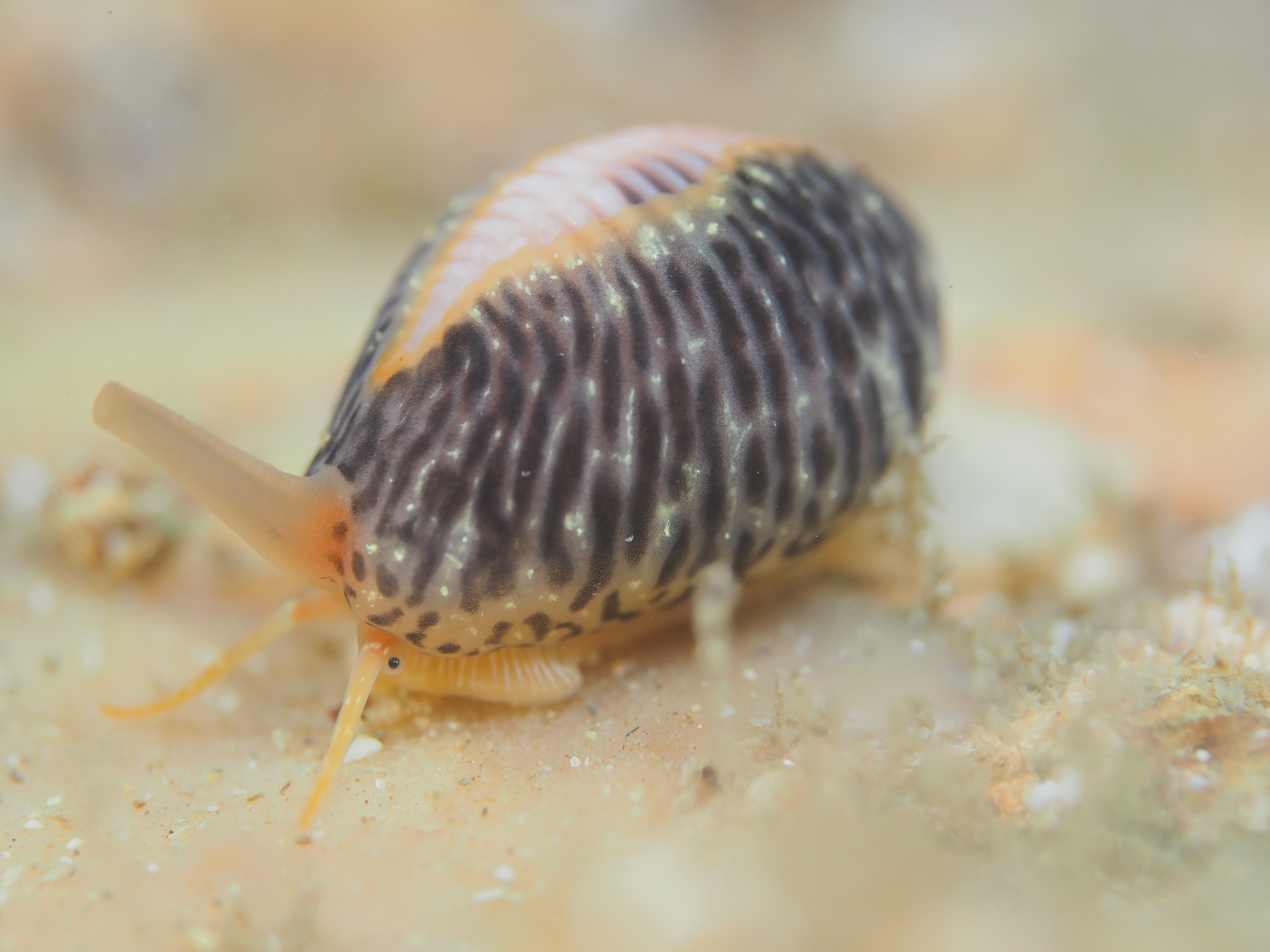
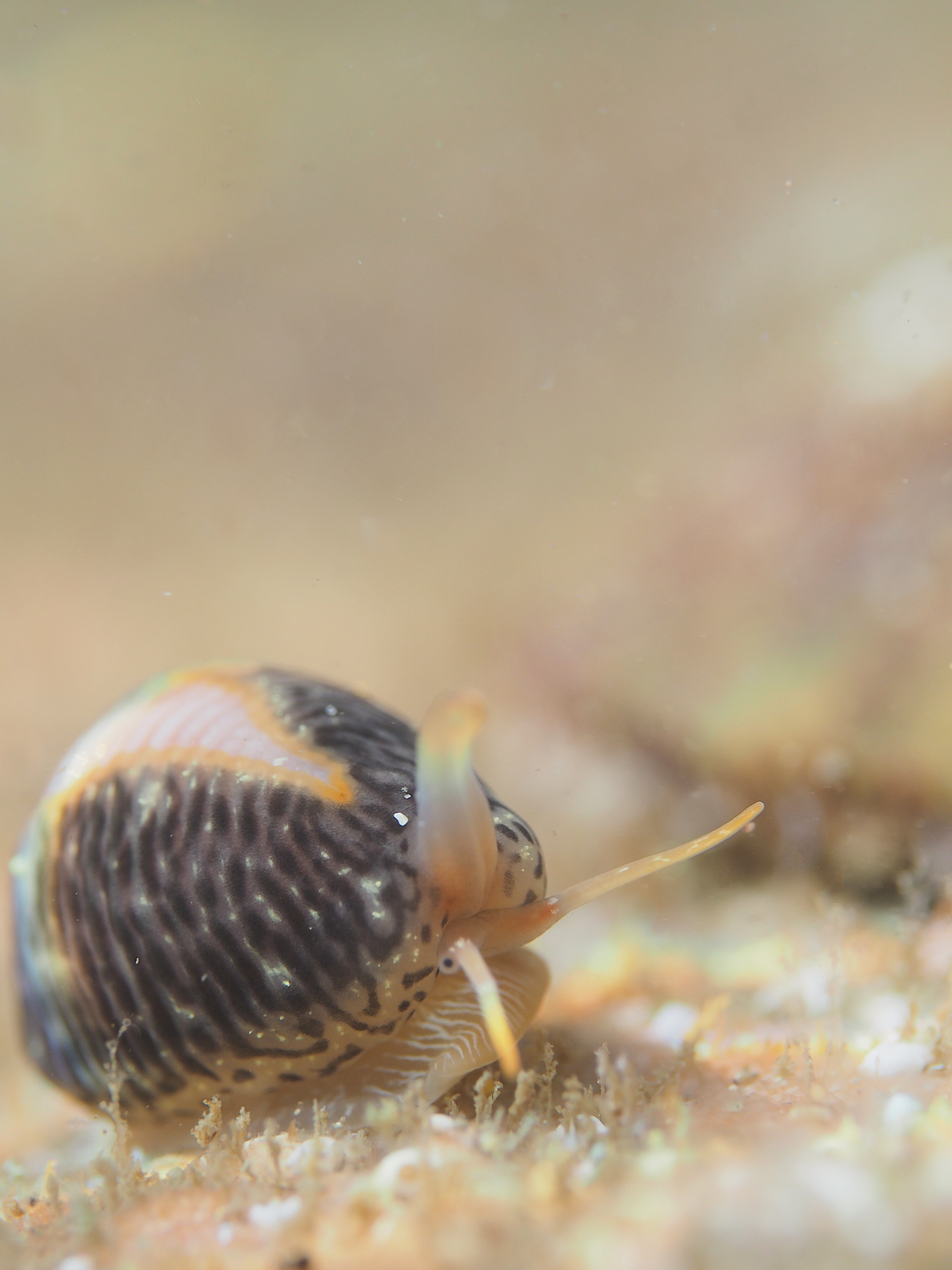
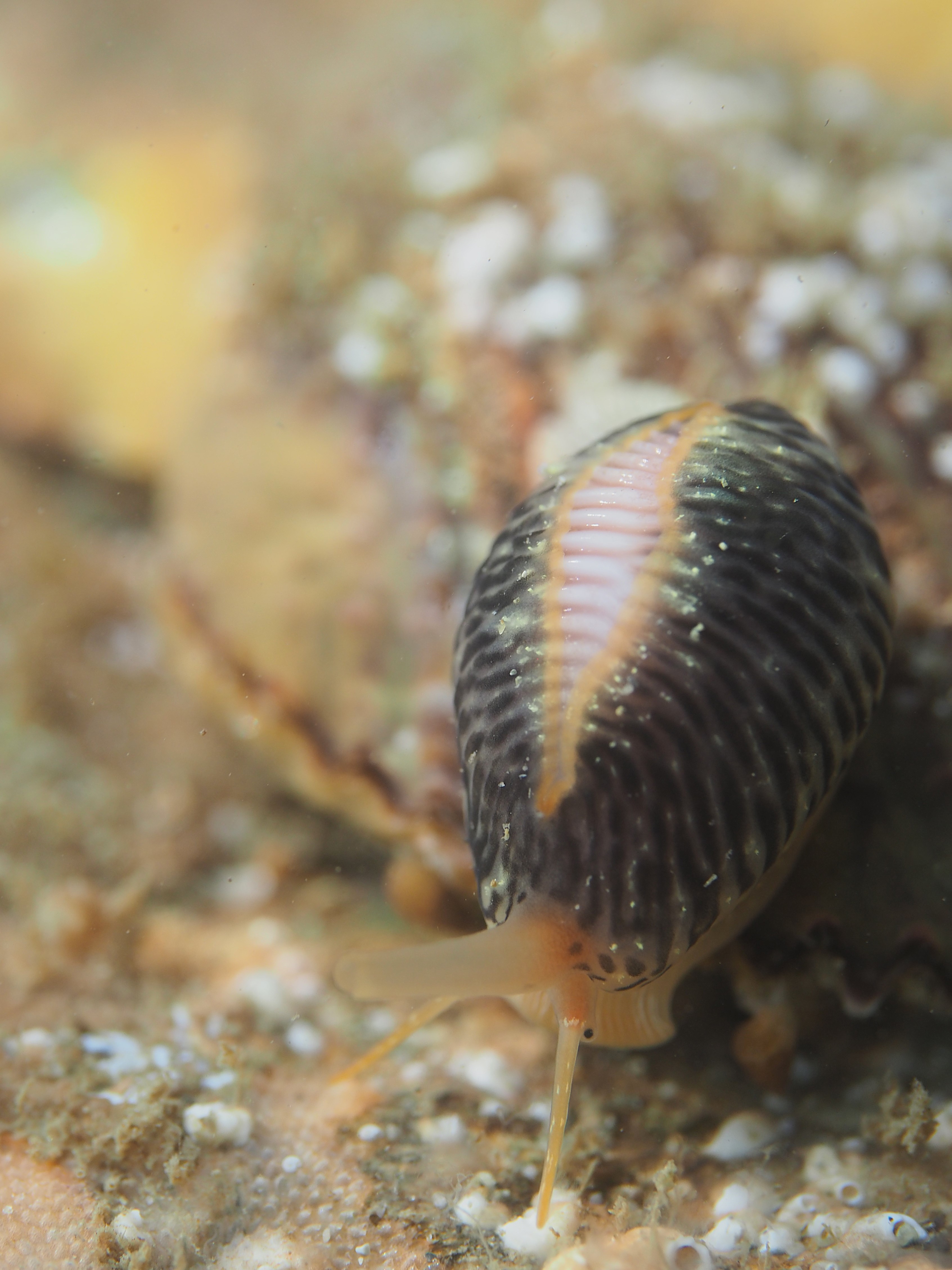
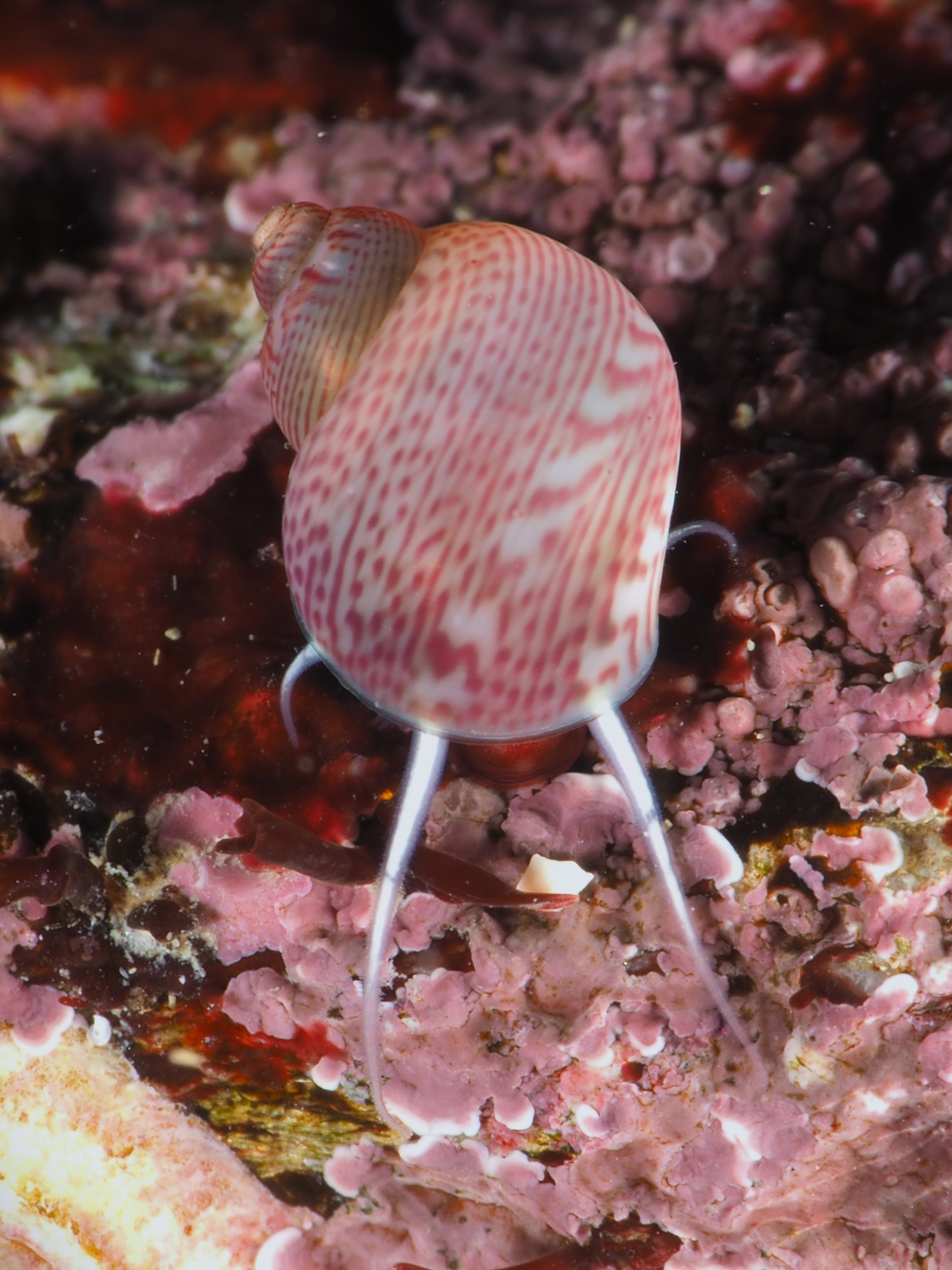
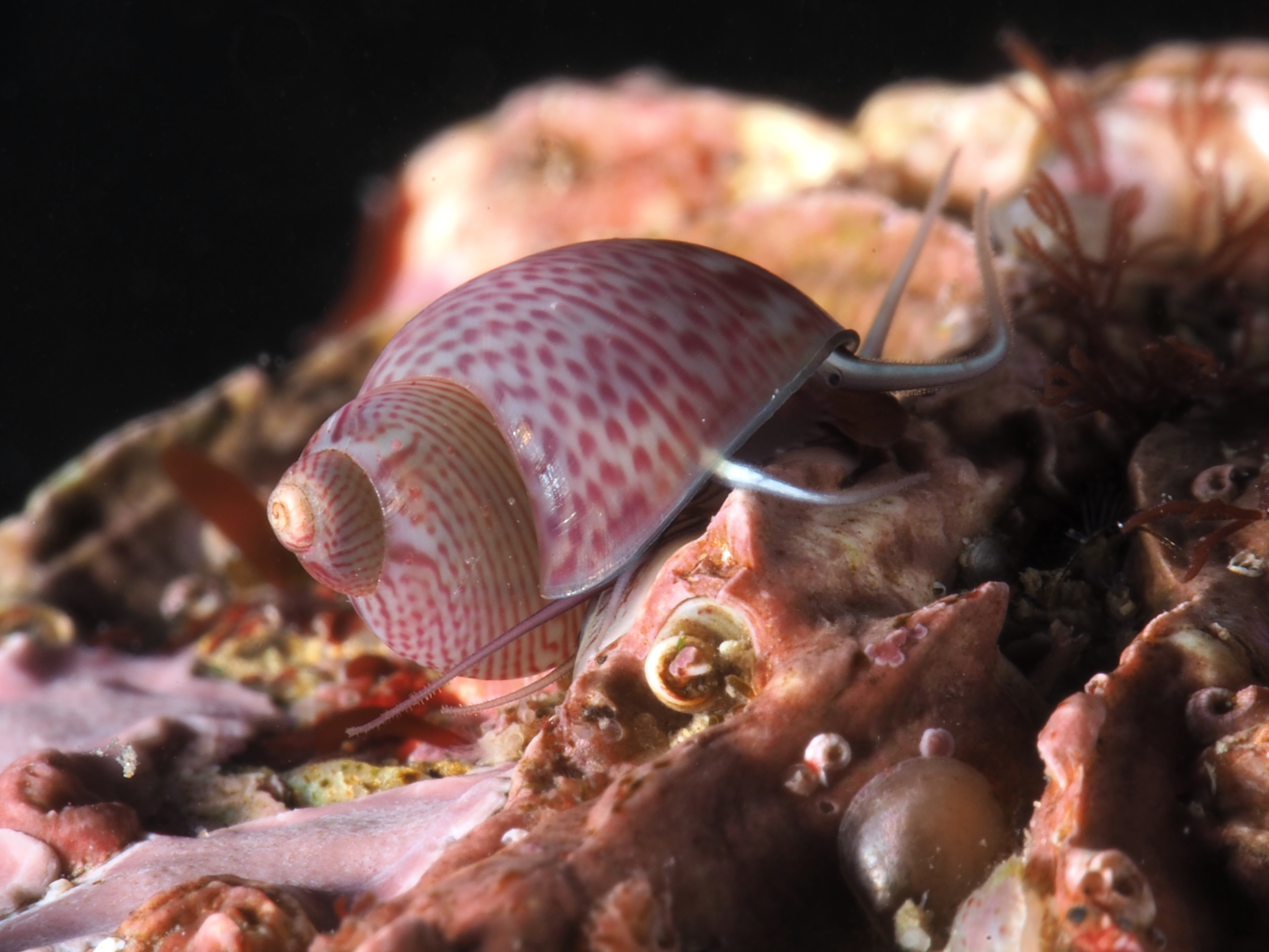
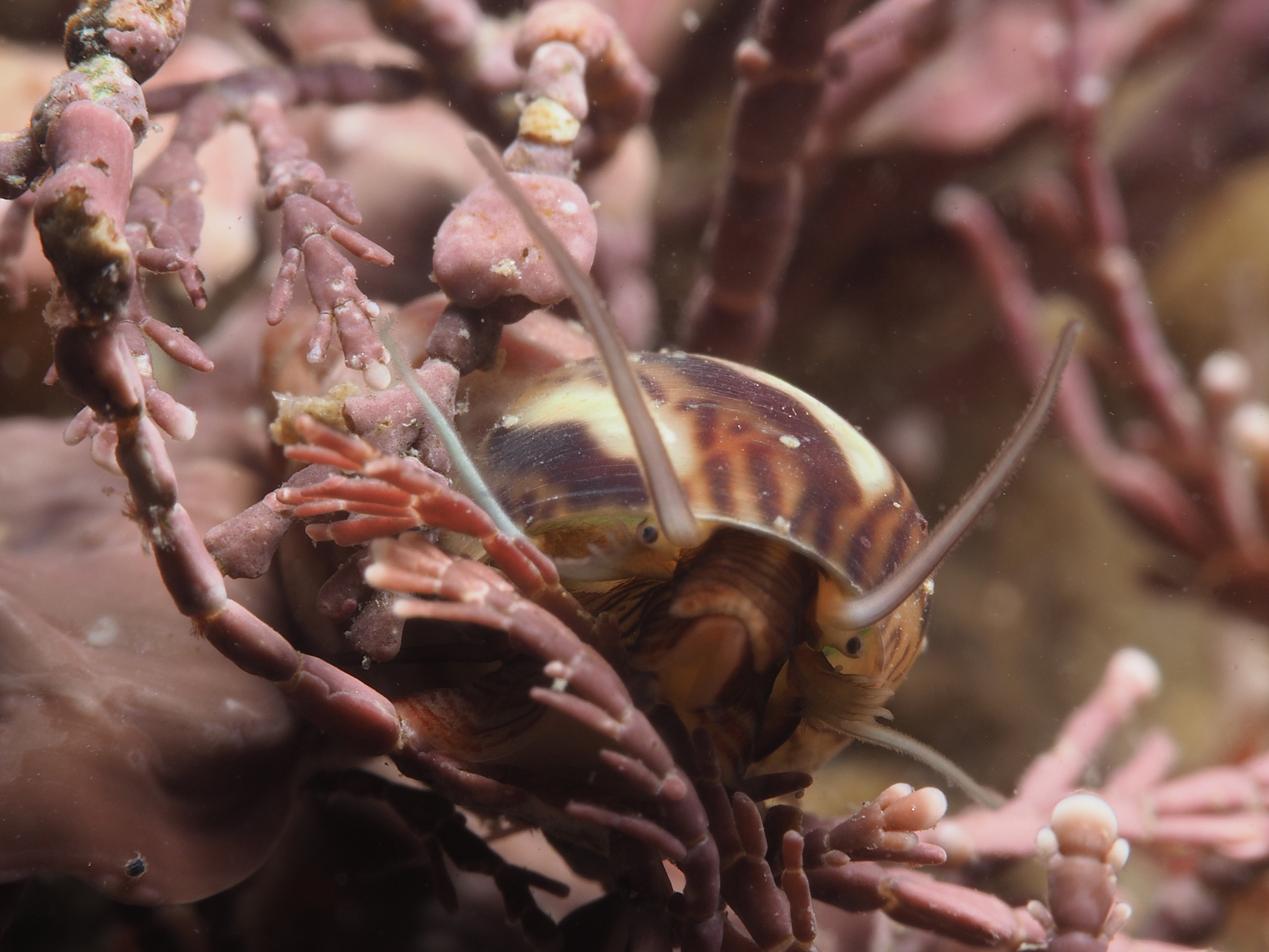
I have a lot more pics from this year to put on the blog but those have to wait, as I want to post some photos from last Saturday first, when there was little wind, a low tide and some sun! The viz was not great as expected, so I brought the macrolens and went in search for some small critters. No special finds, but I was very happy with my shots of a common little mollusc the European Cowrie (Trivia monacha). Most people will be familiar with this species as beach finds of empty shells, but not know how it looks like when it is alive, when its mantle covers most of the shell, it shows its striped tail at the back and a siphon and cute little eyes at the front. I used a shallow depth of field (f/4) to get rid of the ugly cluttered background, which worked well if I may say so myself (I need to try this technique more often!).
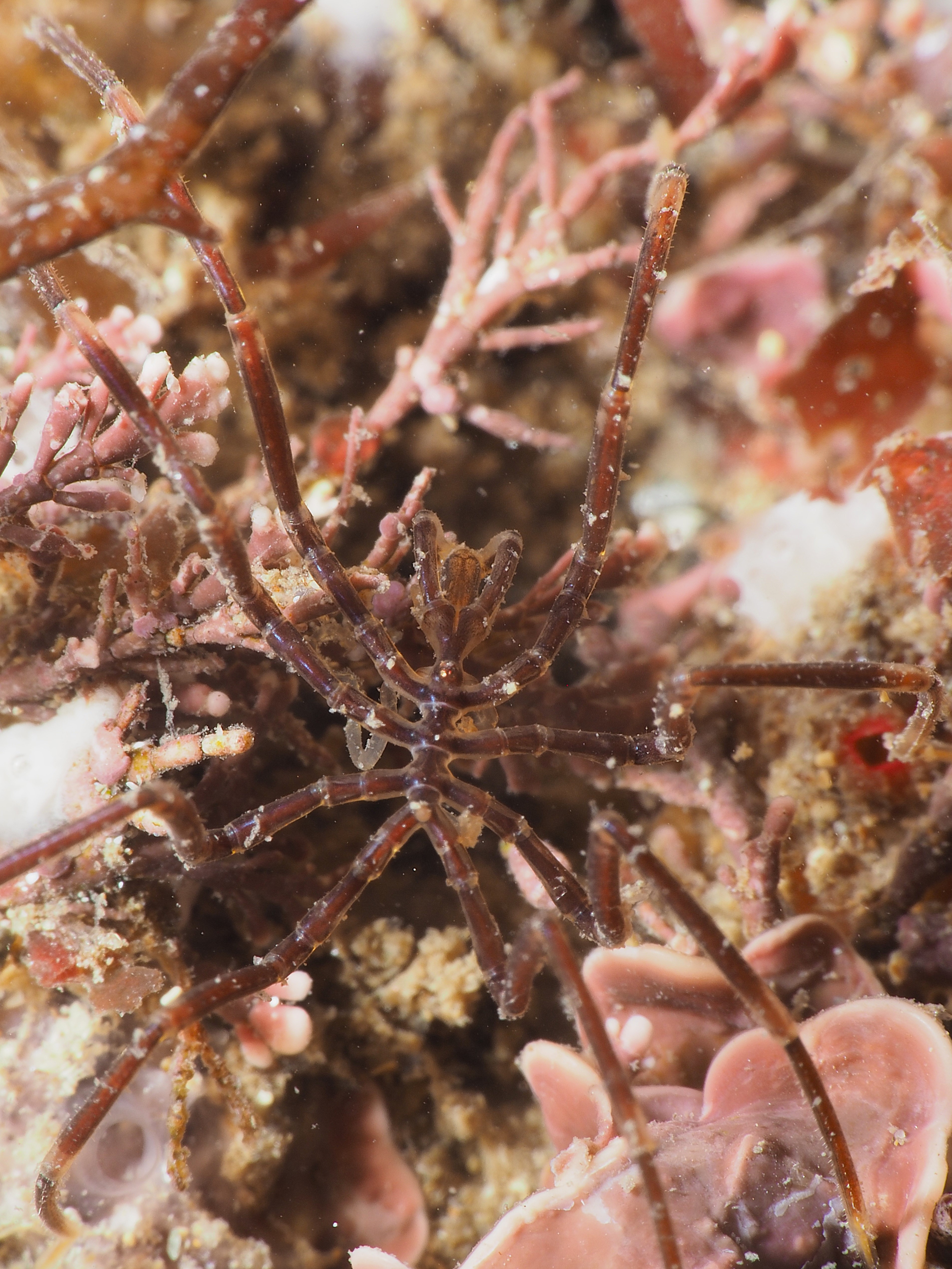
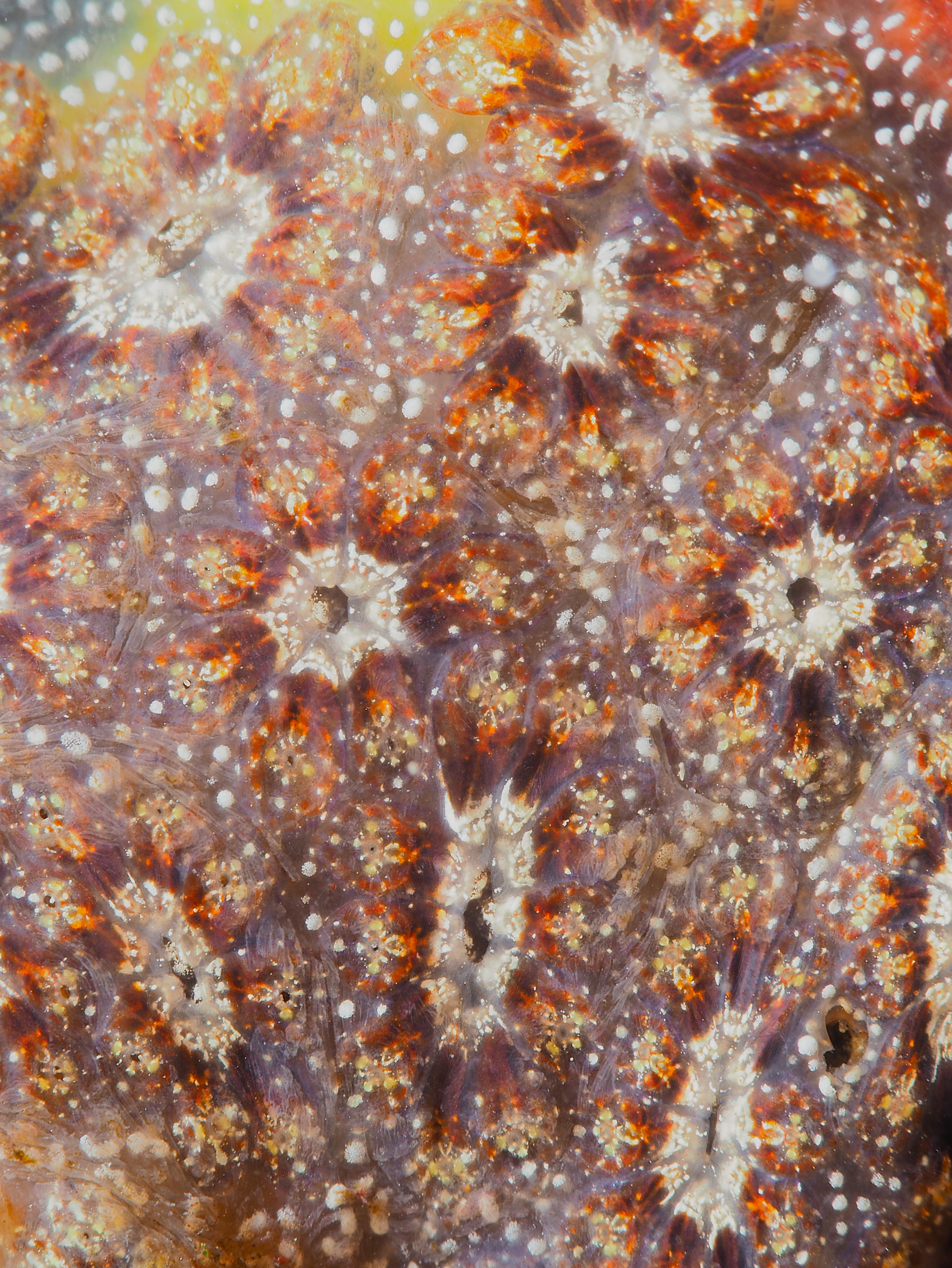
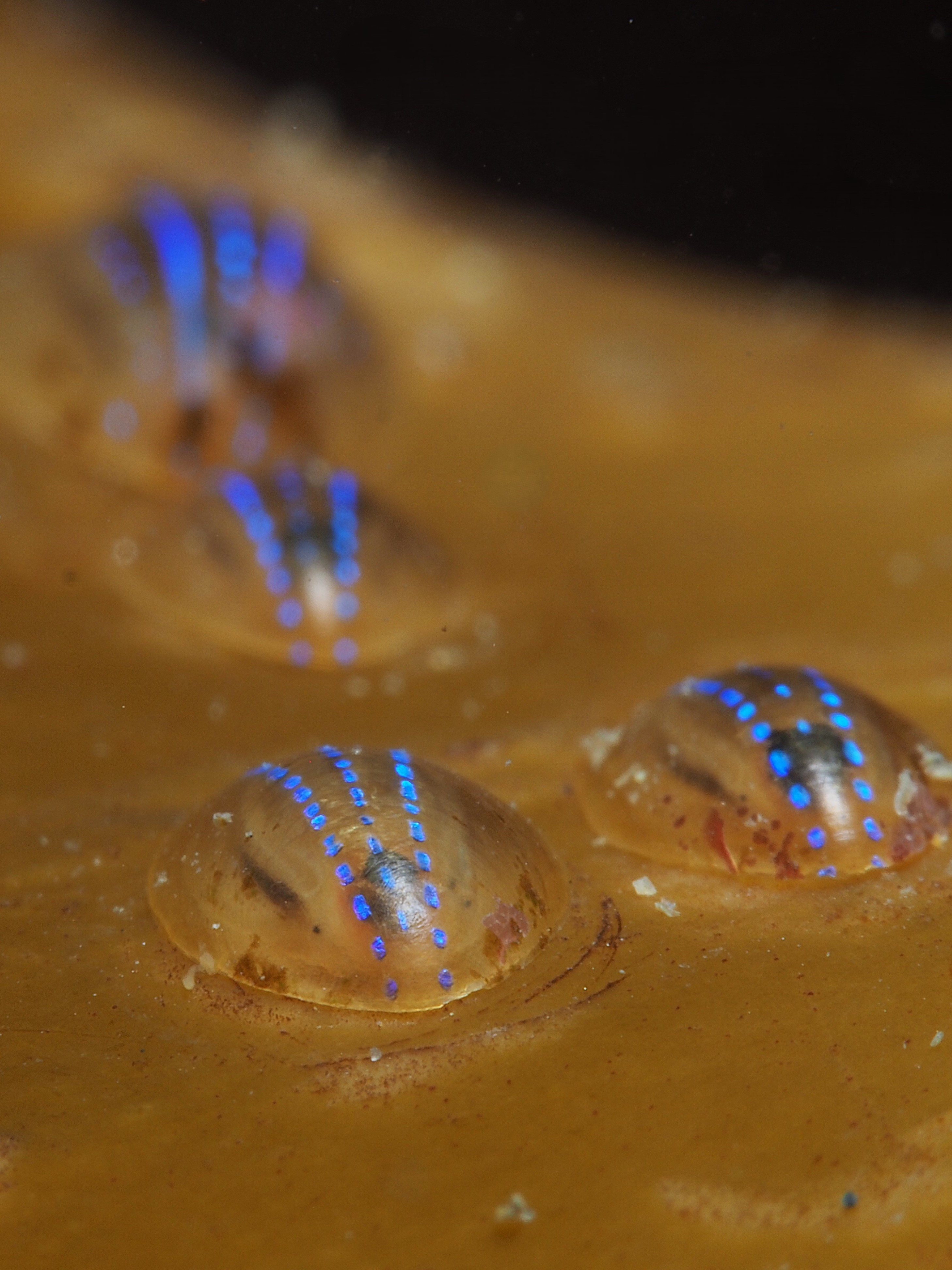
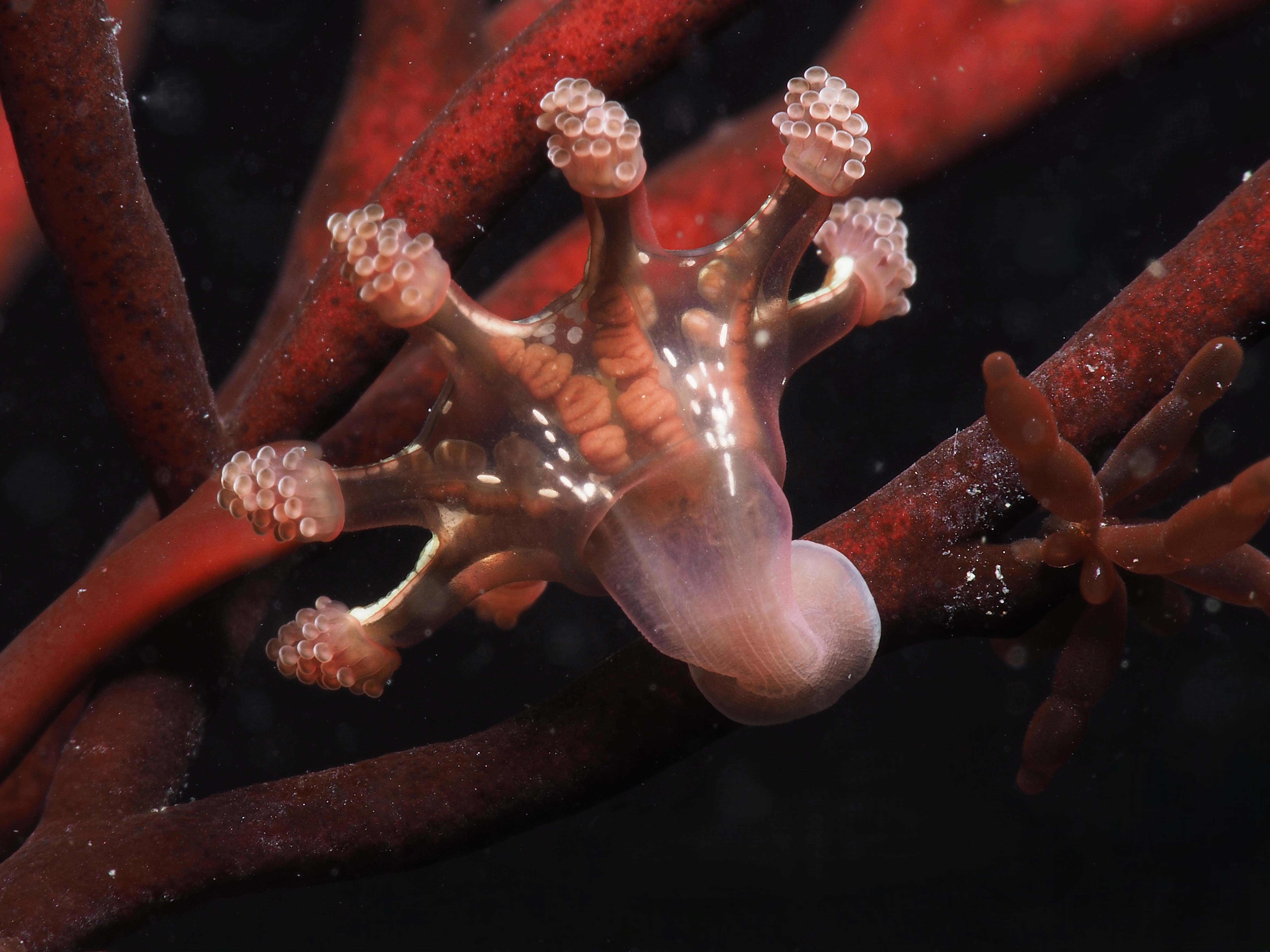
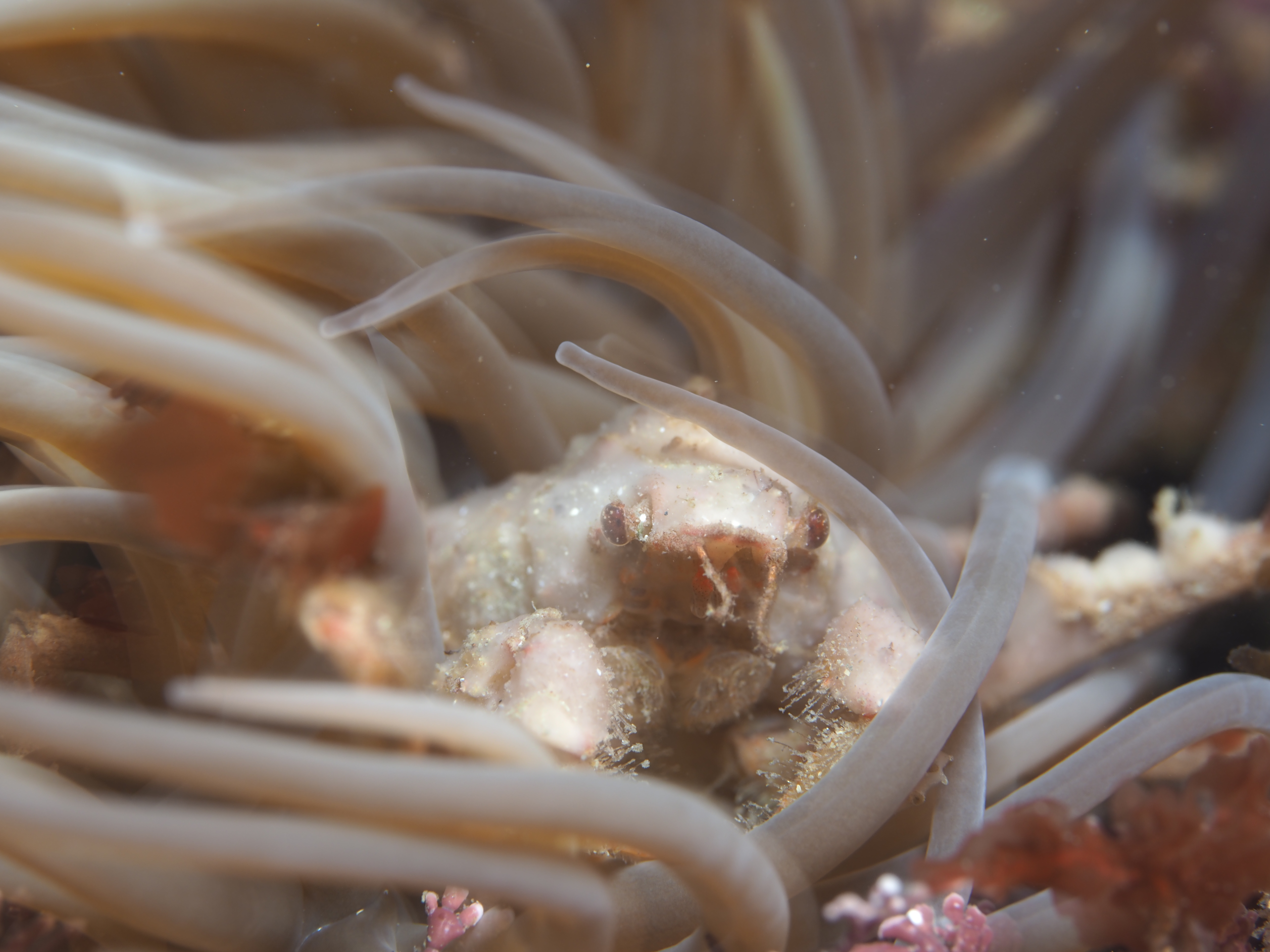
Many other critters were found too and I took shots of a selection. First, a Sea Spider, all legs and crawling away. A tiny mat of colonial tunicate that looked like a persian rug on drugs. A quick shot of the ubiquitous (if you know where to look – on kelp fronds) blue-rayed Limpets and a stalked jellyfish. Finally, I spent a lot of time taking shallow-depth-of-field AND slow shutter-speed photos of a scorpion spider crab in a snakelocks anemone to get some sort of ‘artistic’ shot. It did not really work, but it was fun nonetheless and I will have a go at it again. After almost 2,5 hours in the water I stumbled back to the car to get changed – an afternoon well-spent!
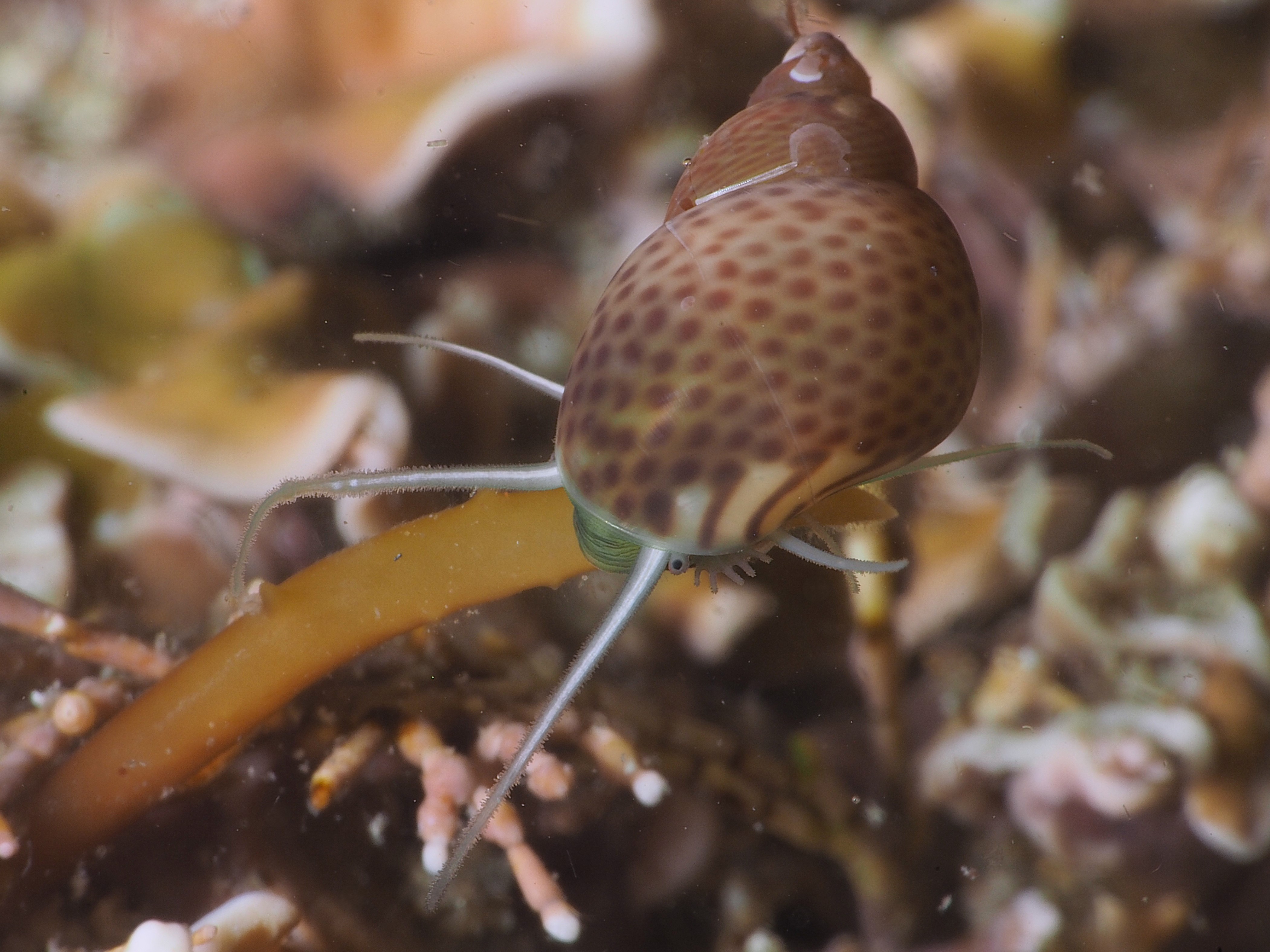
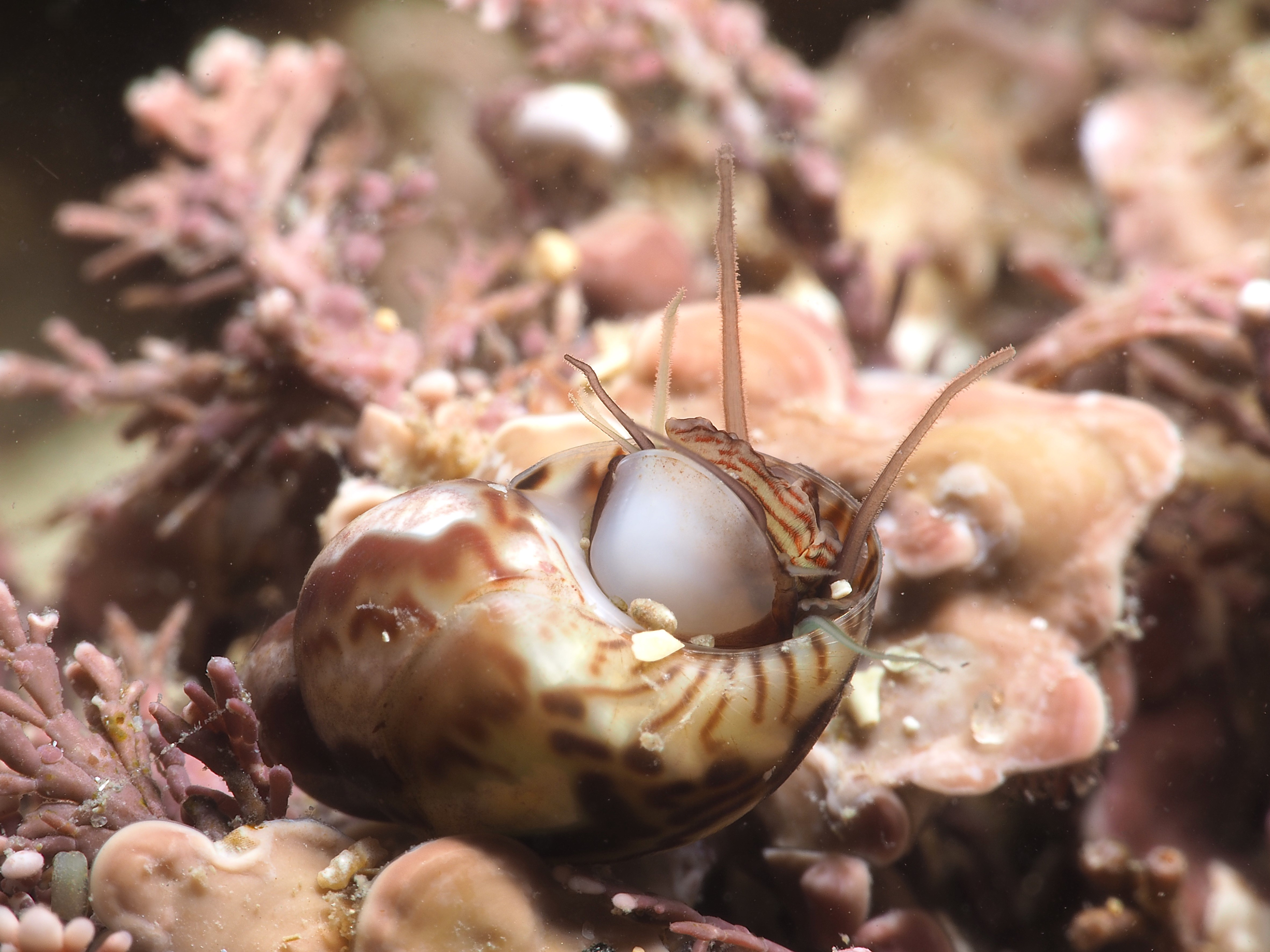
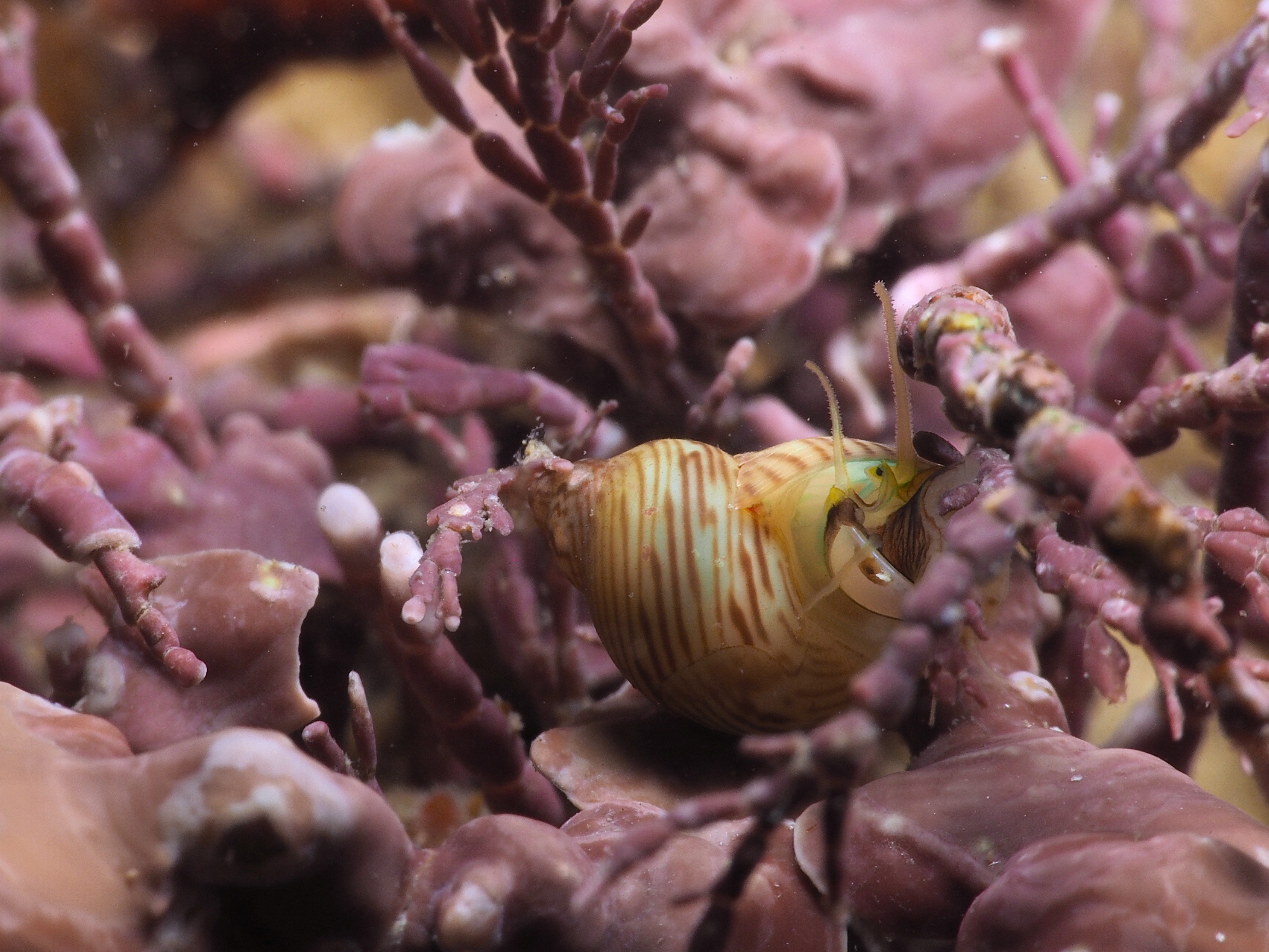
The Pheasant Shell is one of my favourite little critters in the rockpools in Falmouth. It is a bit weird to refer to these organisms as ‘shells’ actually, as they are living things and the nonliving shell is ofcourse only a part of them. The confusion extends to its scientific name: this species was previously known as Tricolia pullus, but has recently been split into a Southern European T. pullus species and a Northern European T. picta species. Perhaps the dust needs to still settle on that one.
I have taken these photos, on different occasions, with the mzuiko 60mm macrolens and the nauticam cmc-1 wetlens. The extra magnification the latter lens (screwed onto the housing) offers is great; although somehow I always want to get even CLOSER! I have not nailed the Pheasant Shell shot either. Reflecting on these pics I think I need to use a shallower depth of field to get rid of cluttered backgrounds. Next time.
The calcified operculum (the little door to close the shell) is clearly visible in the first photo above, as are the tentacles. On the second photo above you can even see that the left ‘neck lobe’ is more deeply digitated (fingerlike) than the right one. For more detailed (studio)shots of this and other molluscs please see Morddyn’s flickr account. I will post more macroshots of other mollusc species soon!
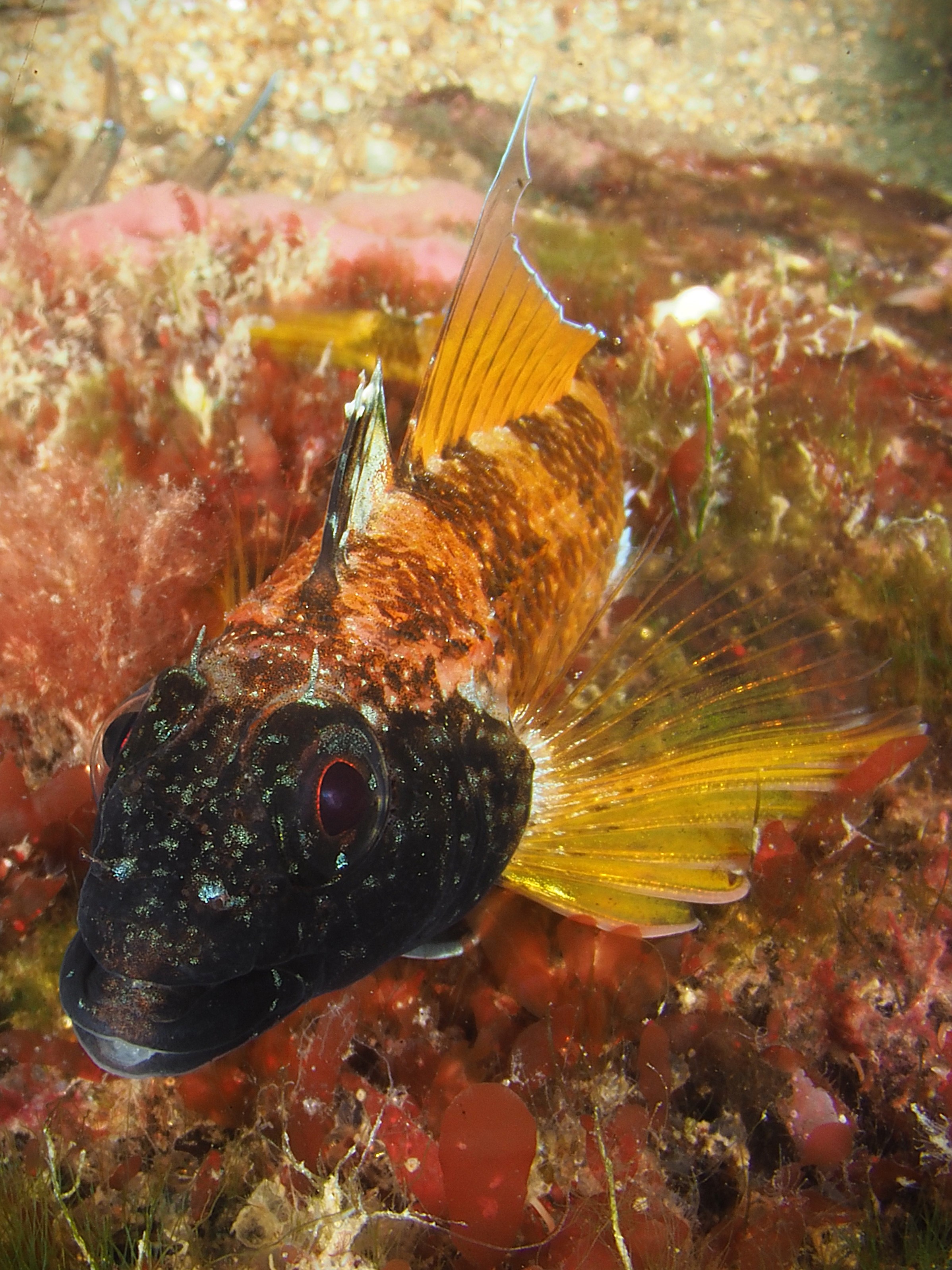
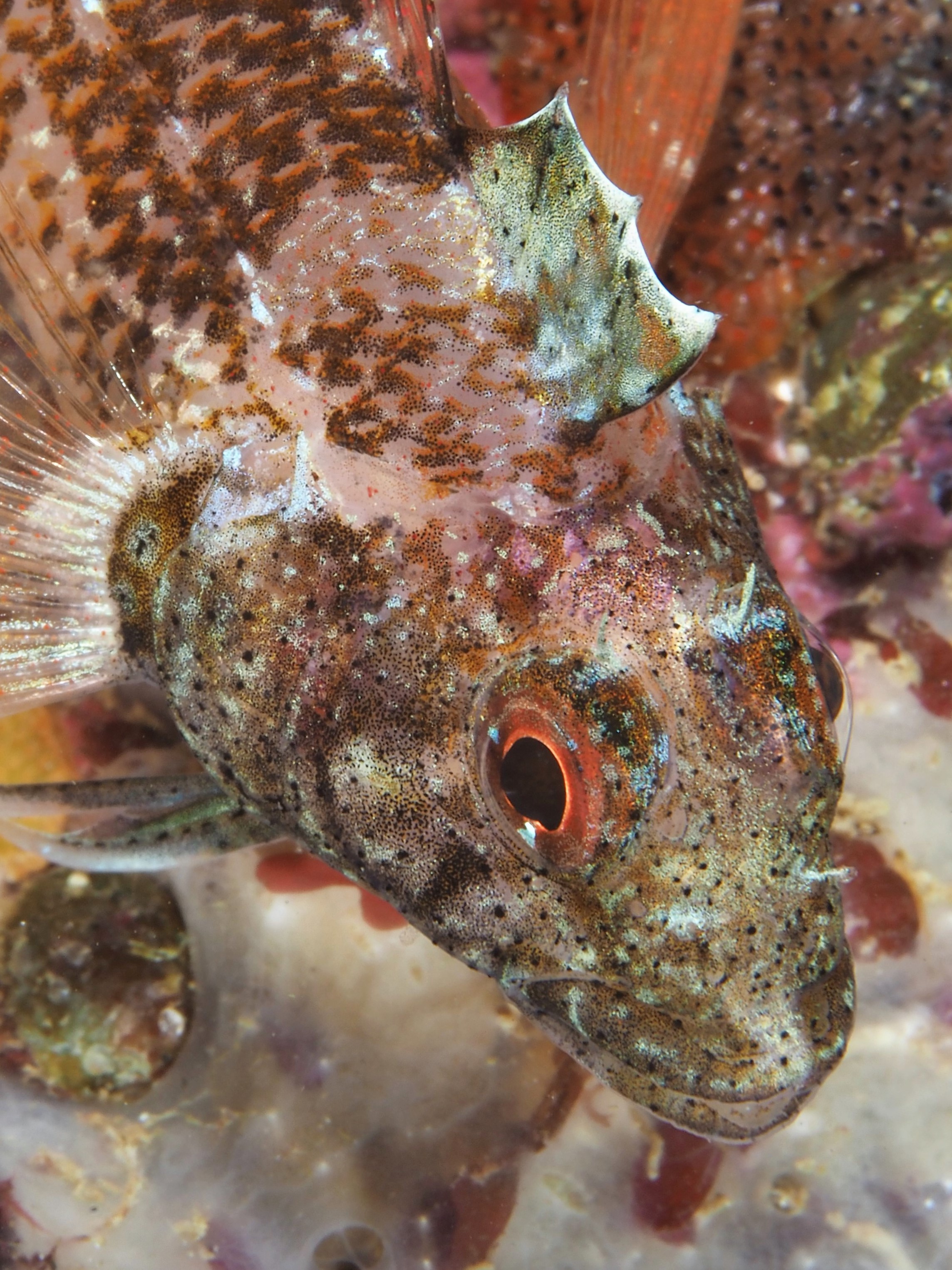
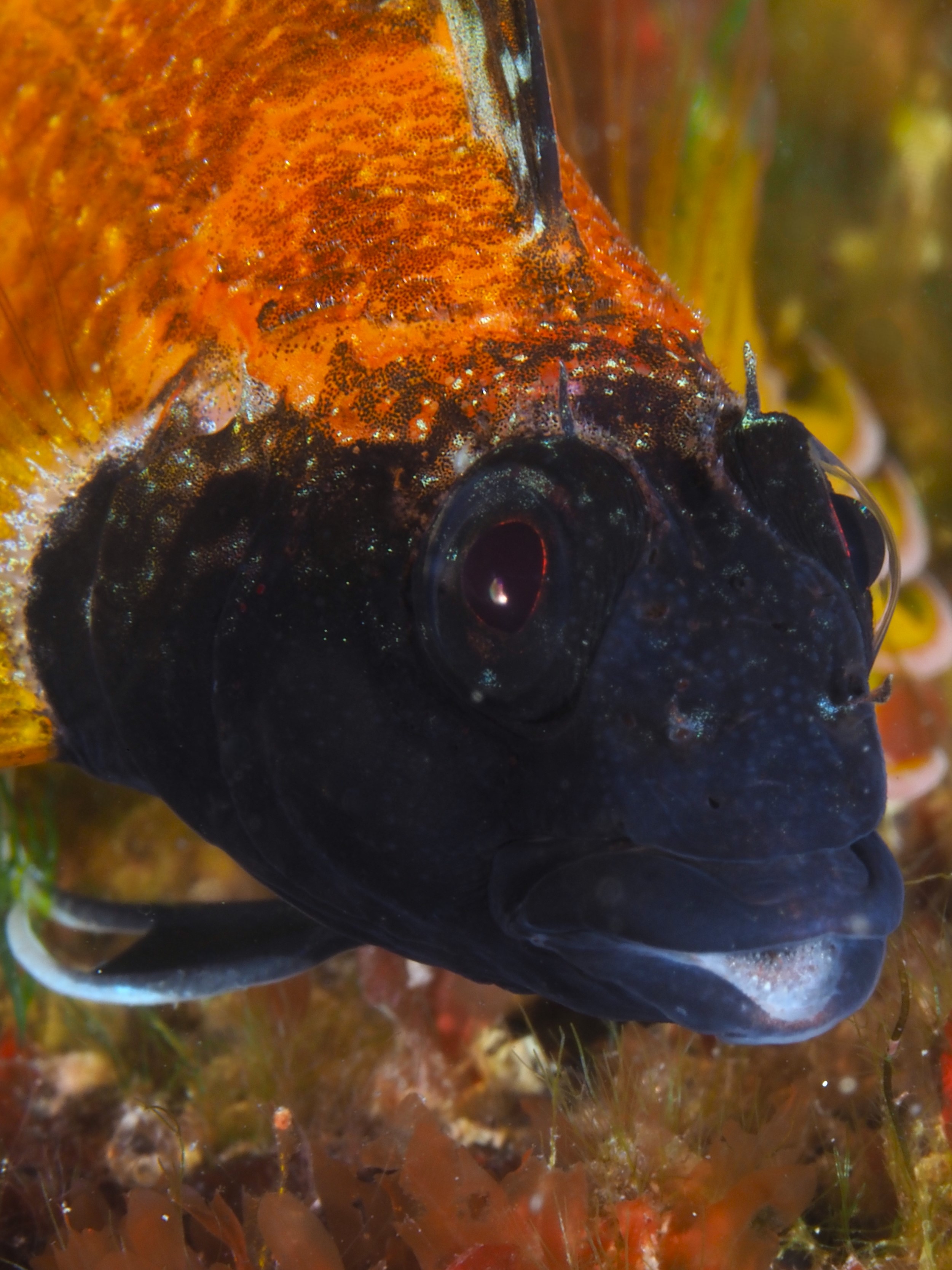
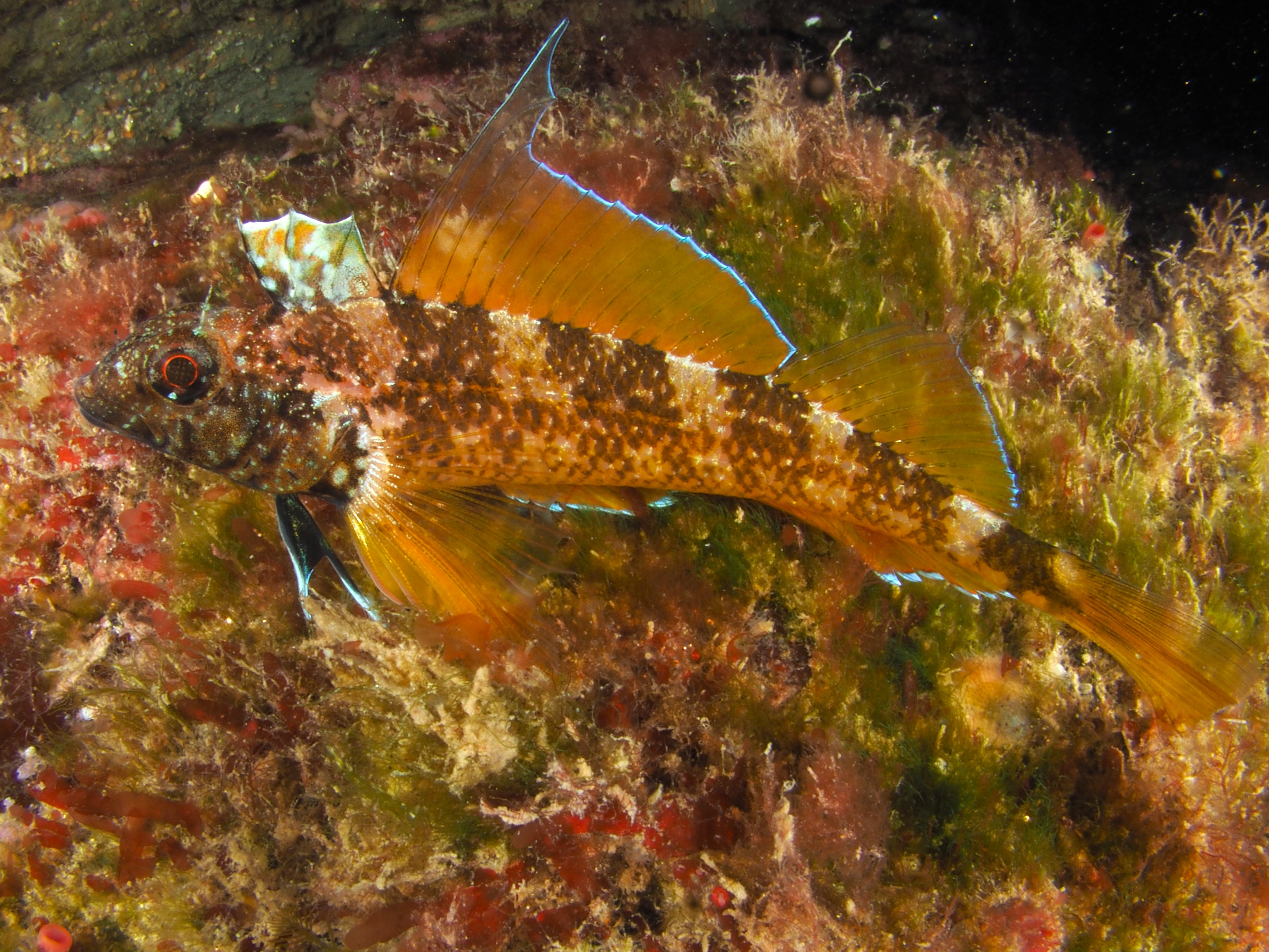
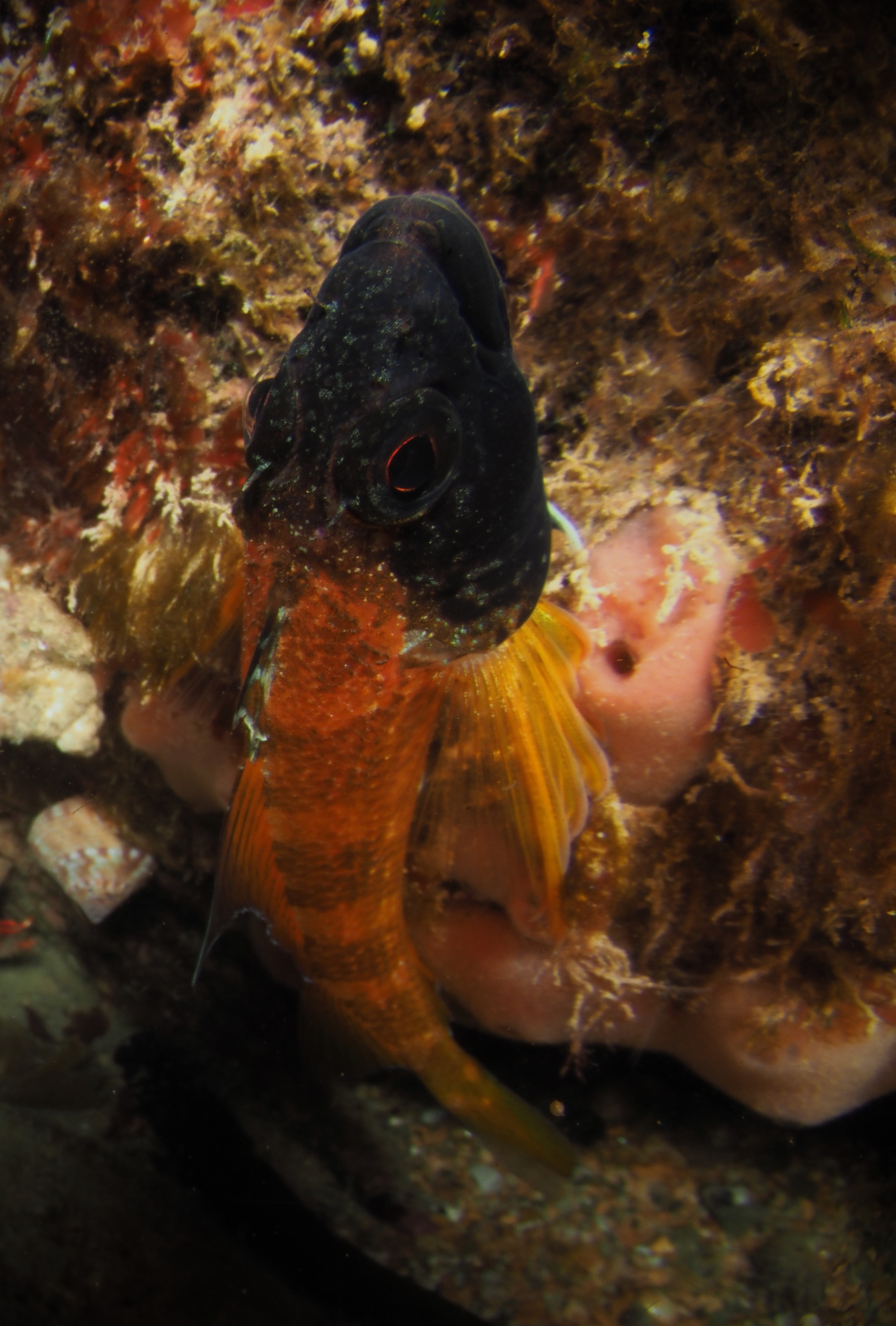
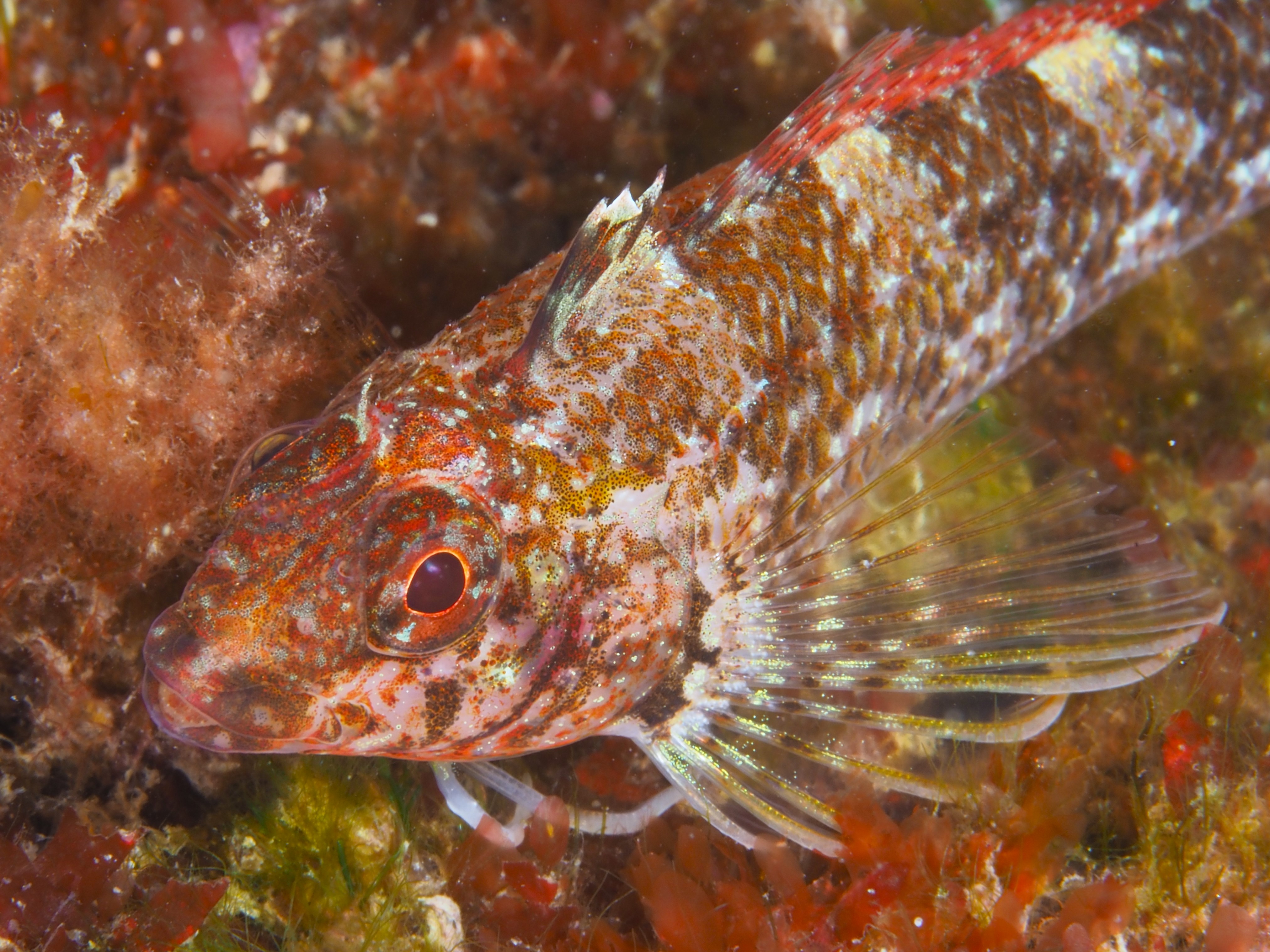
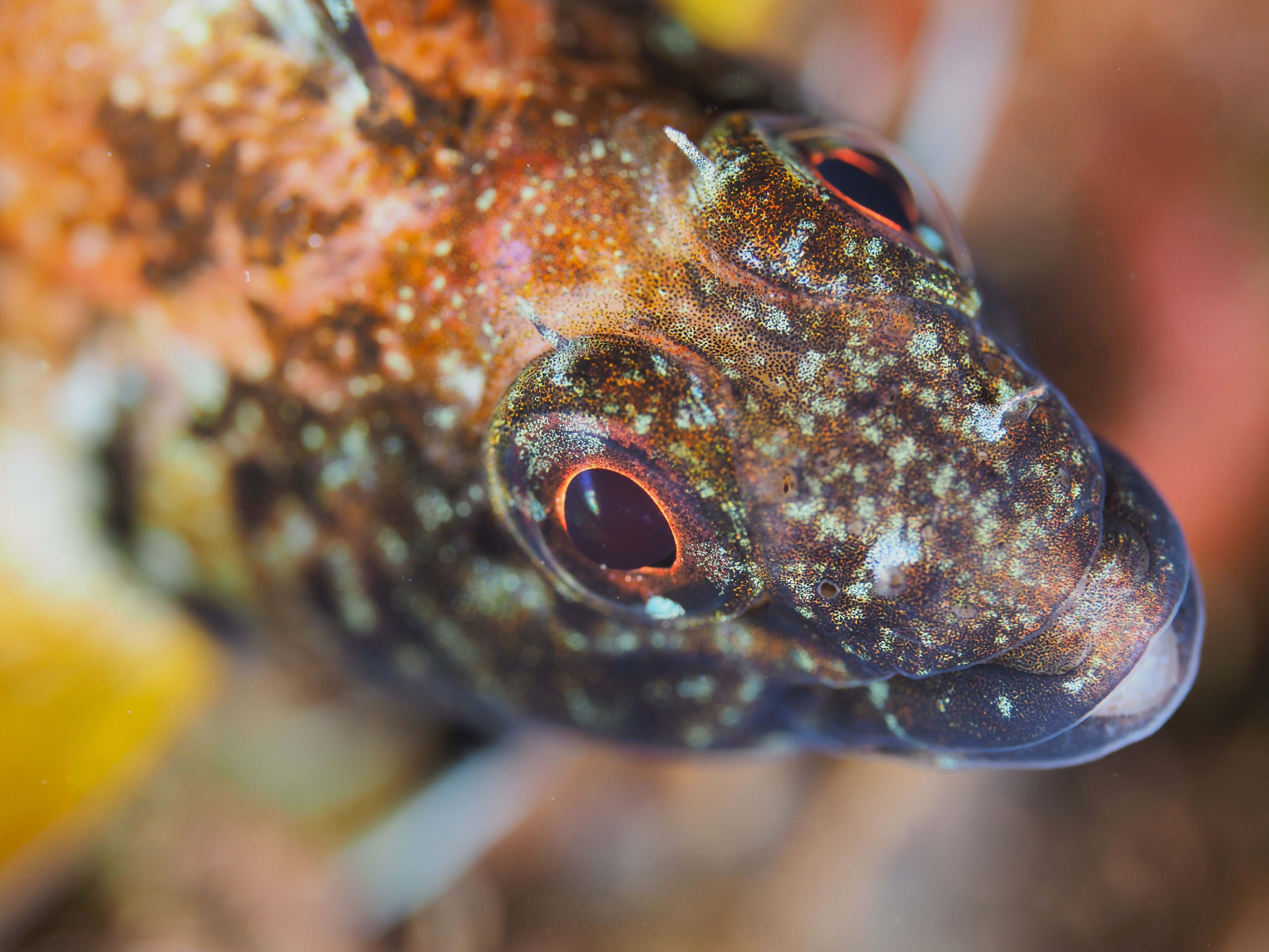
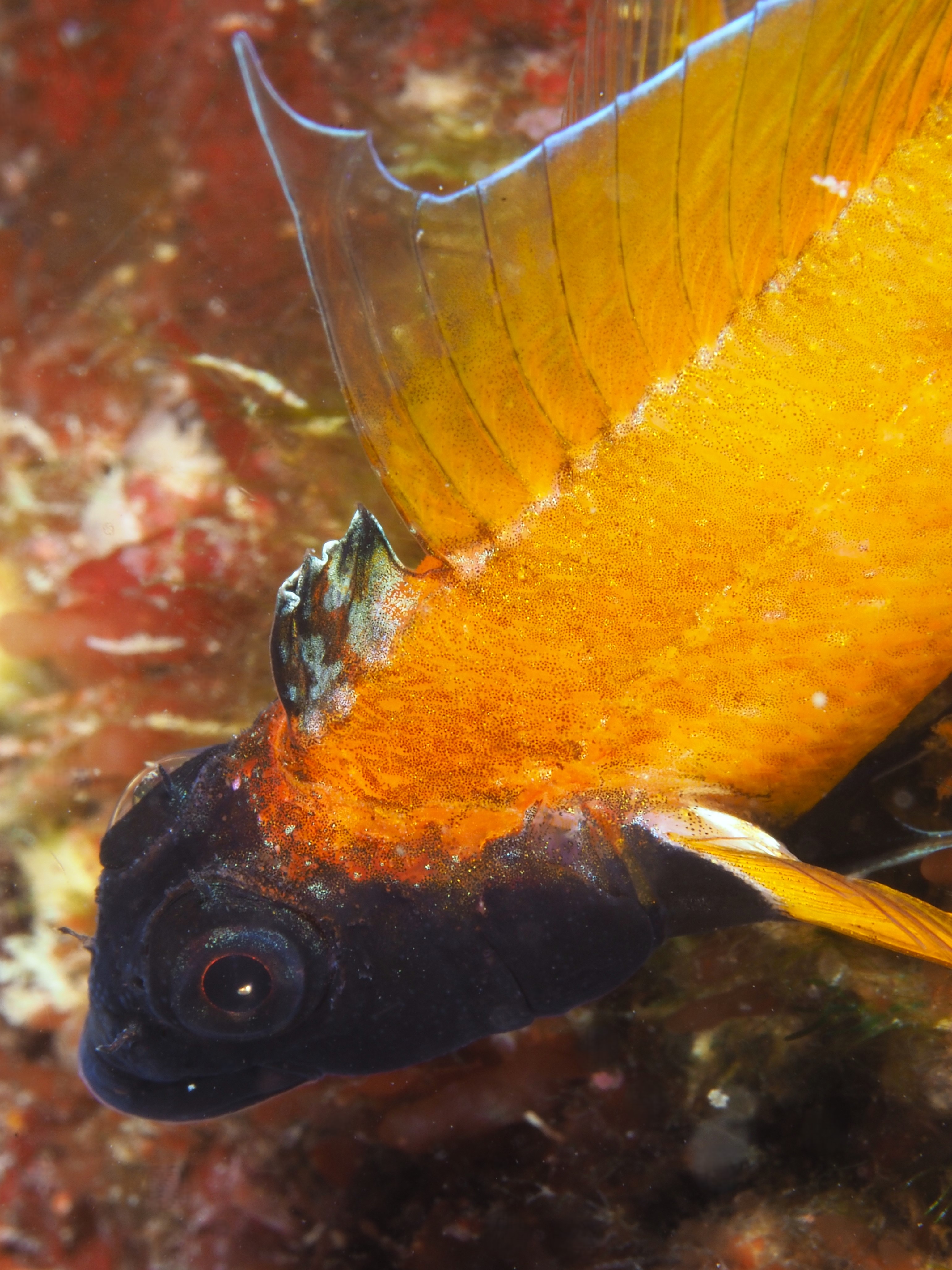
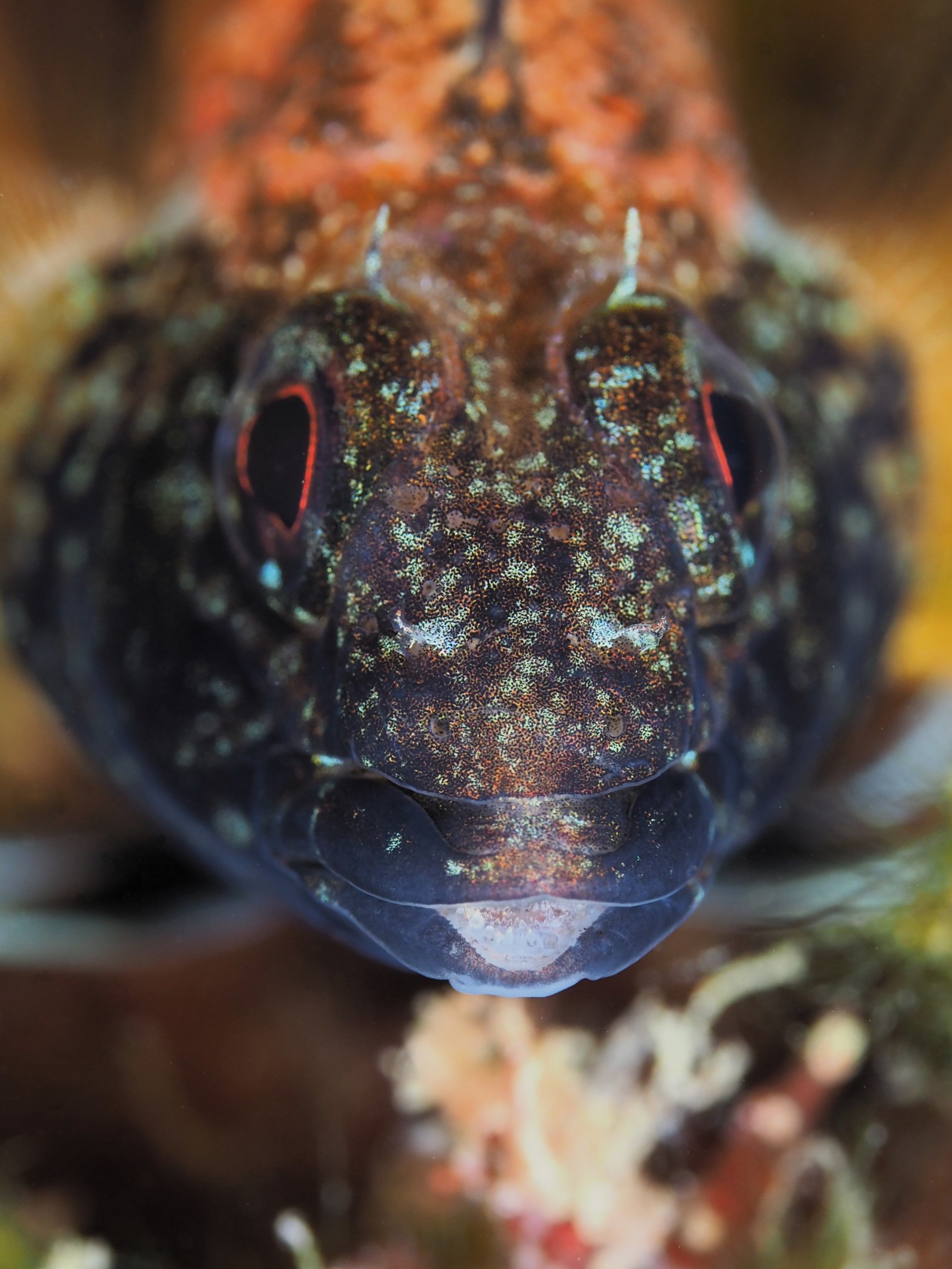
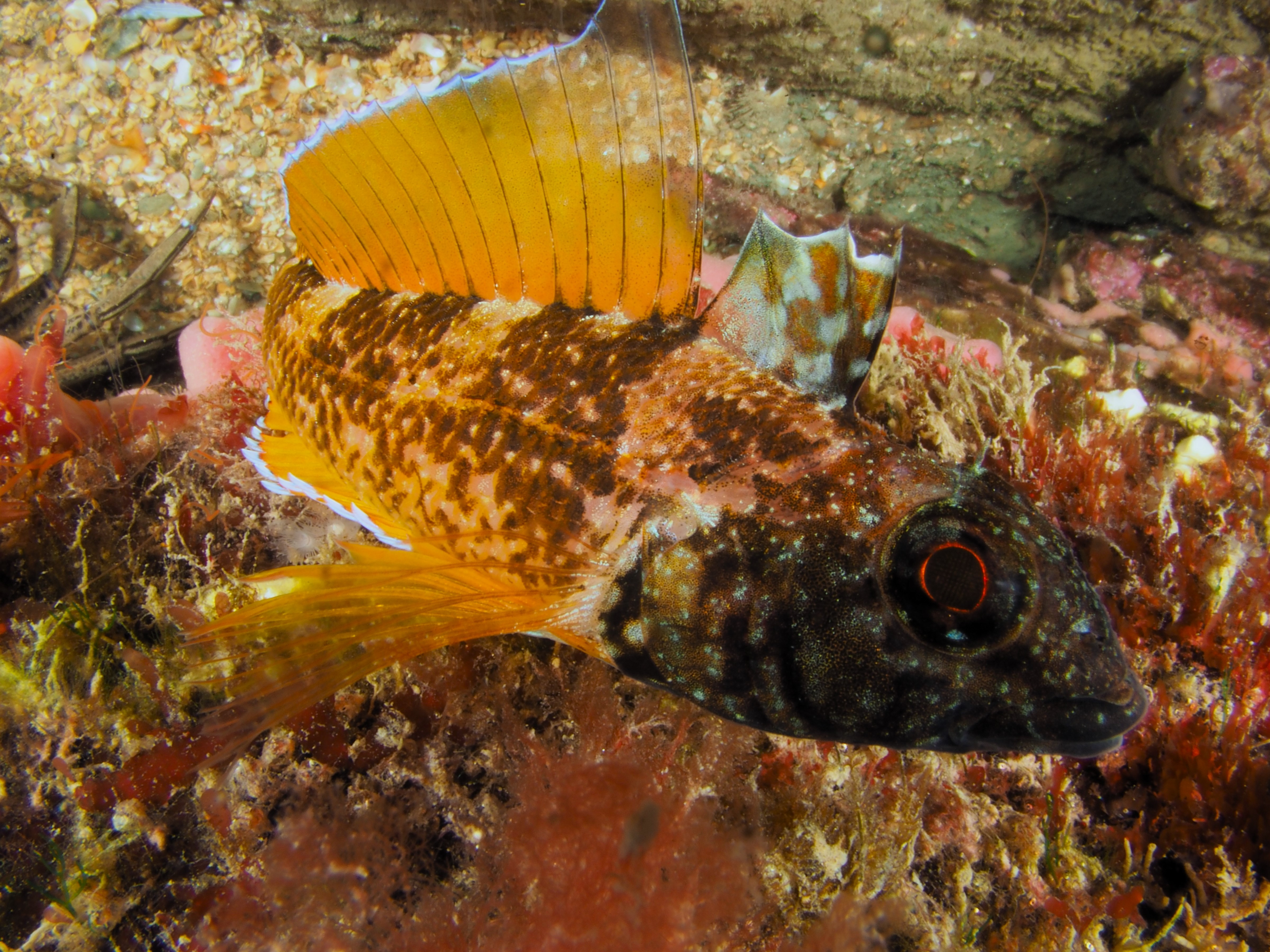
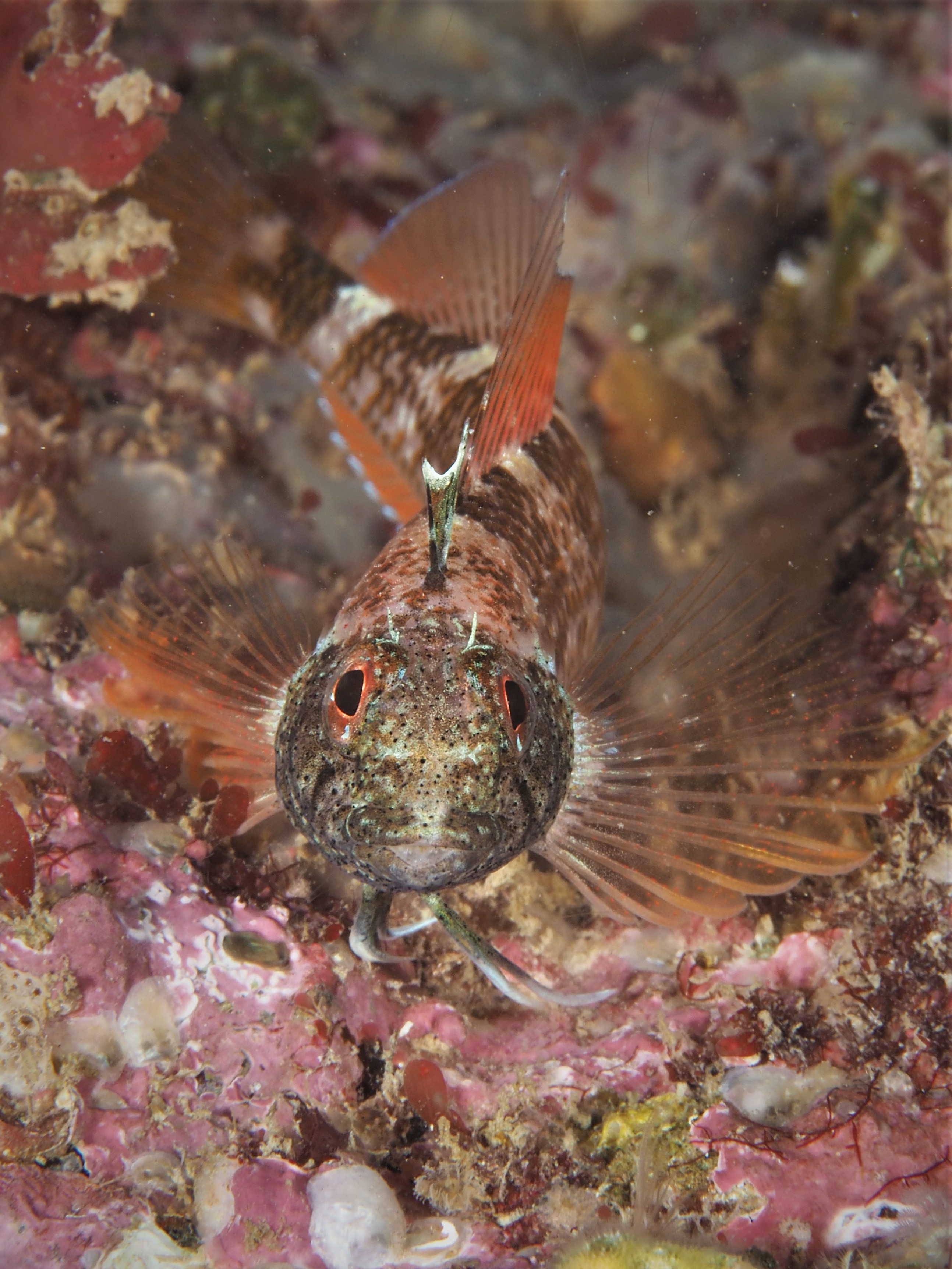
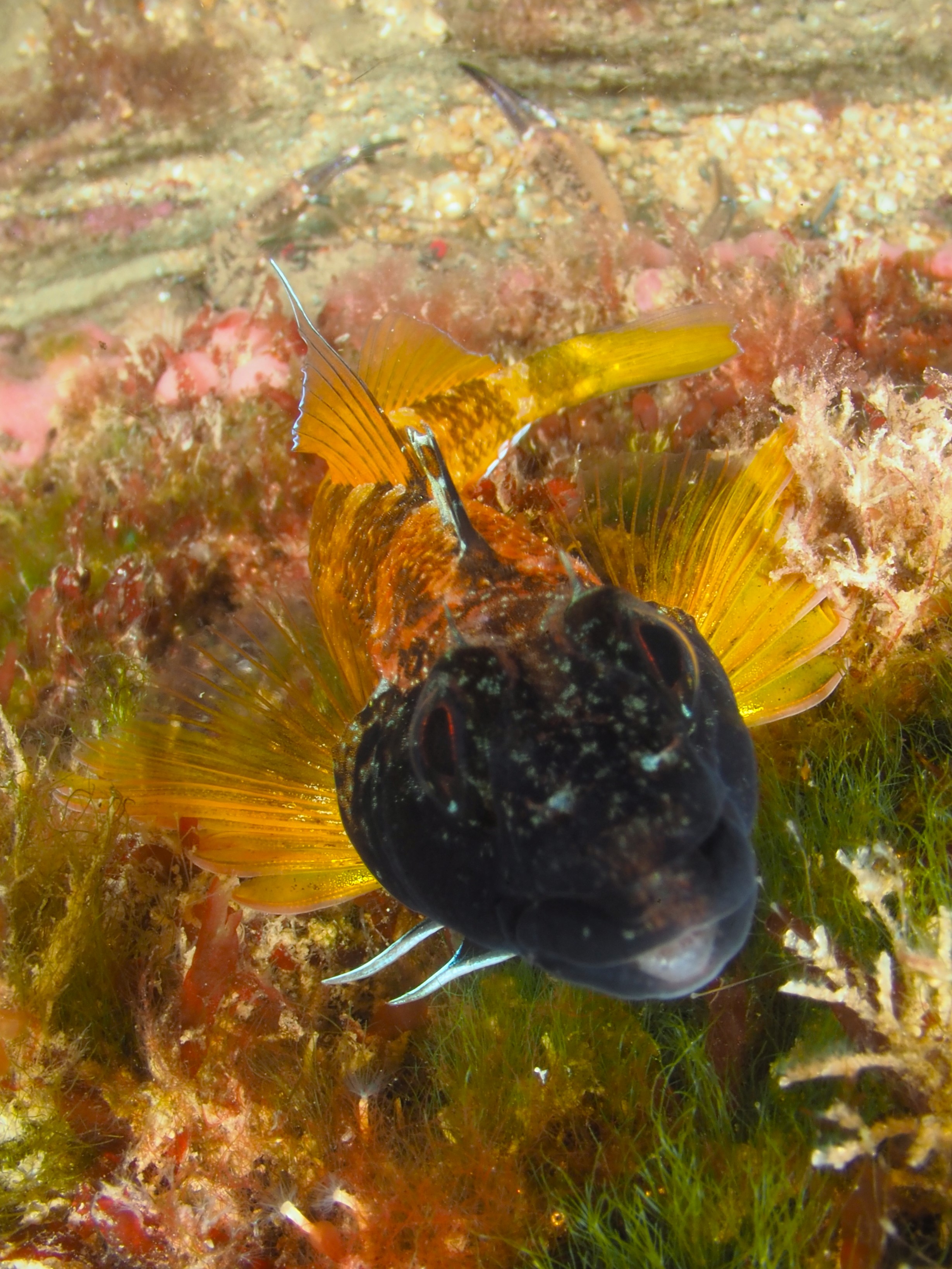
Dear reader, it has been a while! With the weather taking a turn for the worse, I thought it would be high time to start updating the blog again. I have taken more photos this year than ever before, and actually have dived my local shore site “Silver Steps” in Falmouth ‘to death’, so now have plenty of material. I’d thought I start with a post on one of my favourite fish, the Black-faced Blenny (Tripterygion delaisi). This is a beautiful little fish (a triple-fin blenny, not a ‘true’ blenny) that lives under rock overhangs, usually perched upside down. Breeding males are bright yellow with a black head and an electric blue edged dorsal fin, while females and males outside of the breeding season have a mottled brown-white coloration (which is equally beautiful testified by the pic on the top right). These fish (especially the females) are skittish and also require a bit of contortion to photograph under the overhangs but it is more than worth it! Below a photo-dump of fish shots taken with my 60mm macro lens and a combination of that lens and a superduper macro-wide-angle wetlens (details of which I am bound to bore you with in coming posts!).
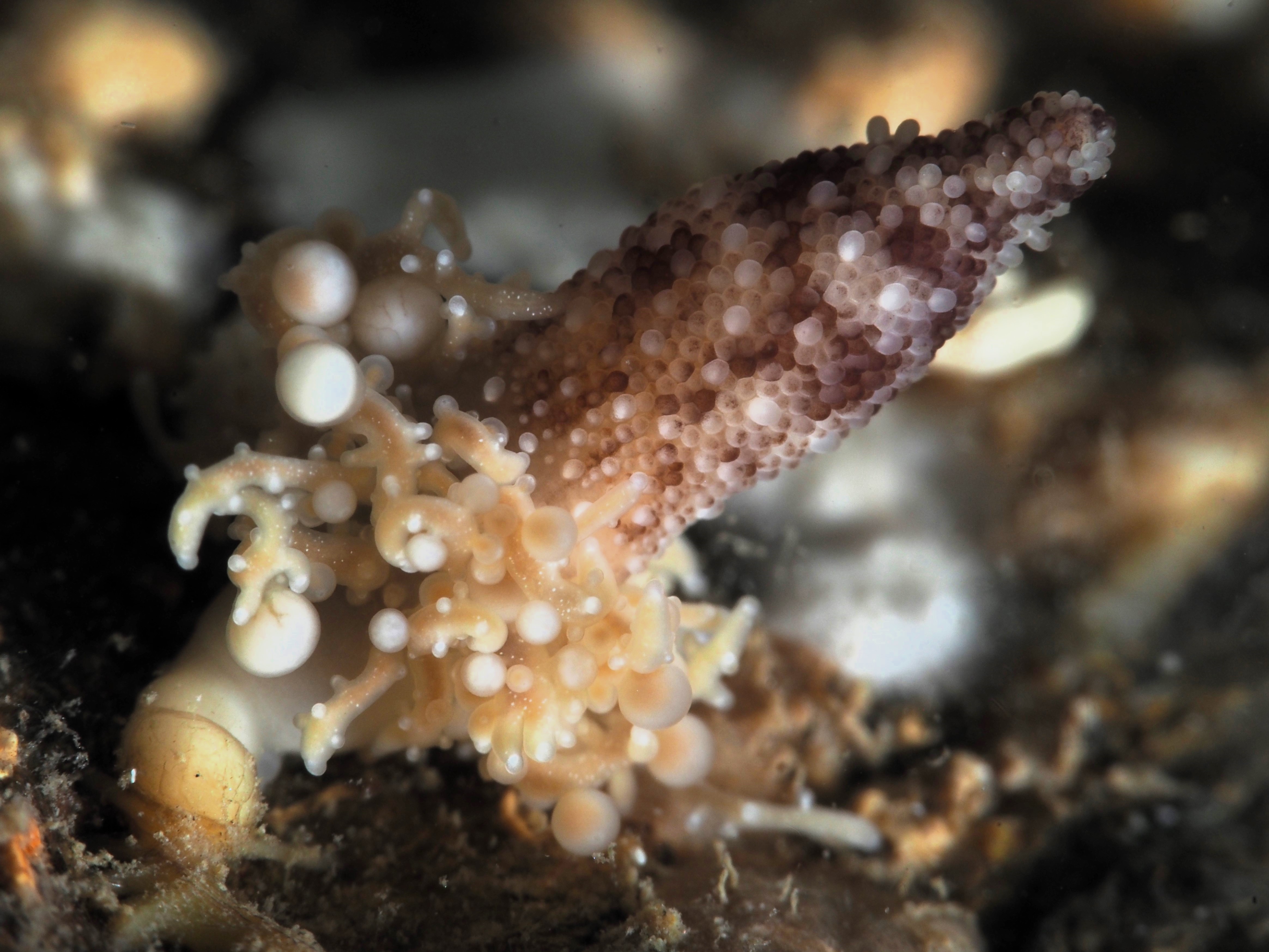
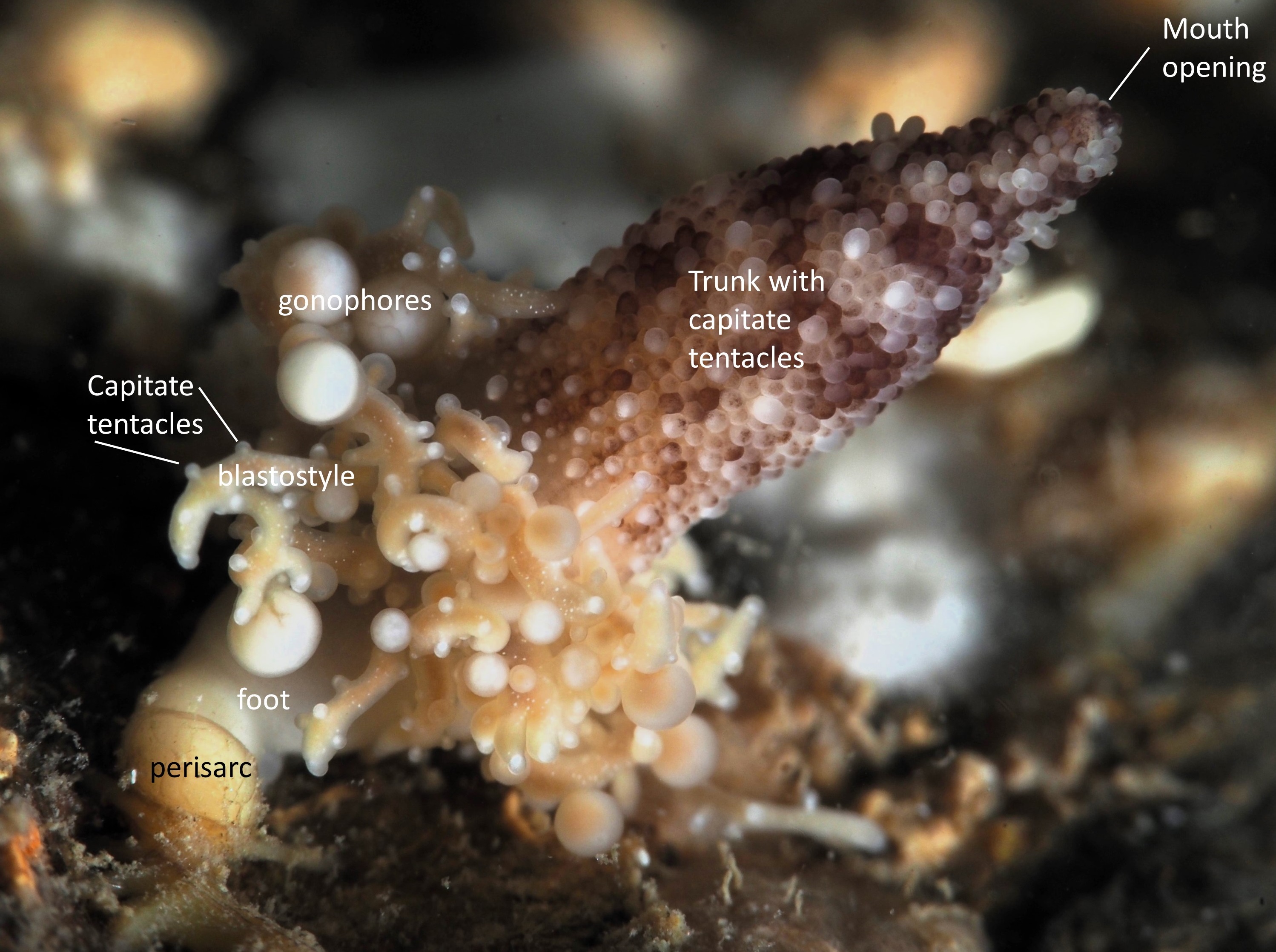
This is a weird little hydroid and so only has a Latin name to go by: Candelabrum cocksii. It was first described by Cocks in his ‘Contributions to the fauna of Falmouth’ in the 1850s and it is quite common locally. I find them mostly as pictured here, but sometimes I see them with their foot extended, going from a centimetre to 8 centimetres or so in length. This allows them to rove over the rock surface in search of tiny (crustacean) prey. Their mouth is located at the end of the trunk which is covered in ‘capitate’ tentacles (see the pic below for anatomical labels). The white spheres are gonophores used for reproduction. It should be possible in summer when these hermaphrodites reproduce to see dedicated clasper tentacles holding the embryos, that would be cool (to me at least!). Btw, I remembered I posted about this species not even that long ago! See here and also see this link and this link from fellow enthusiasts across the pond who likewise have been fascinated by Candelabrum.
This seems like a familiar way to start a blog post but here I go again: ‘the weather has been terrible lately and I have not been in the water!’. March used to be my favourite time for snorkeling because the seaweeds look at their best, but the last three years it has been windy and wet, surely because of climate change…
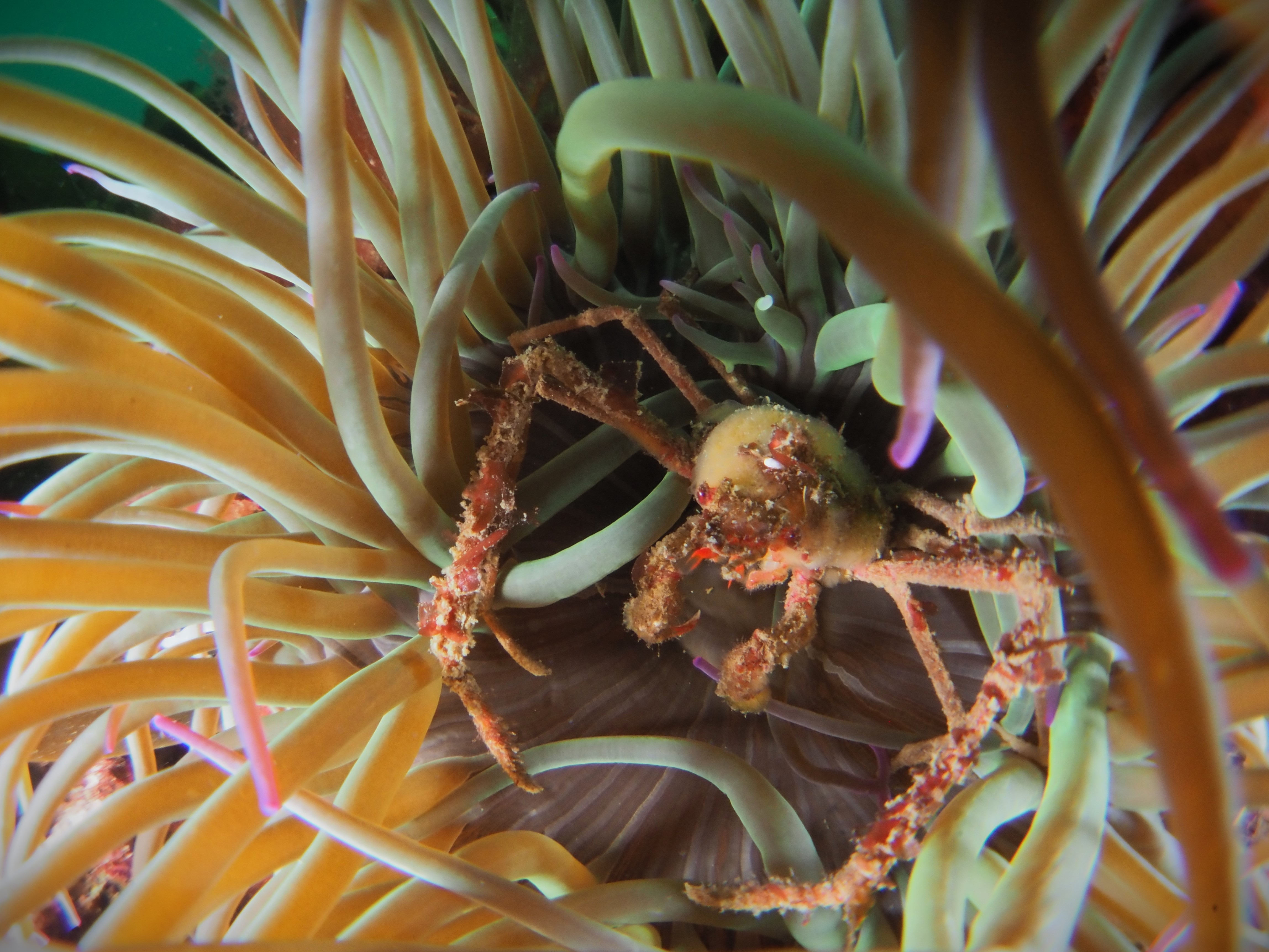
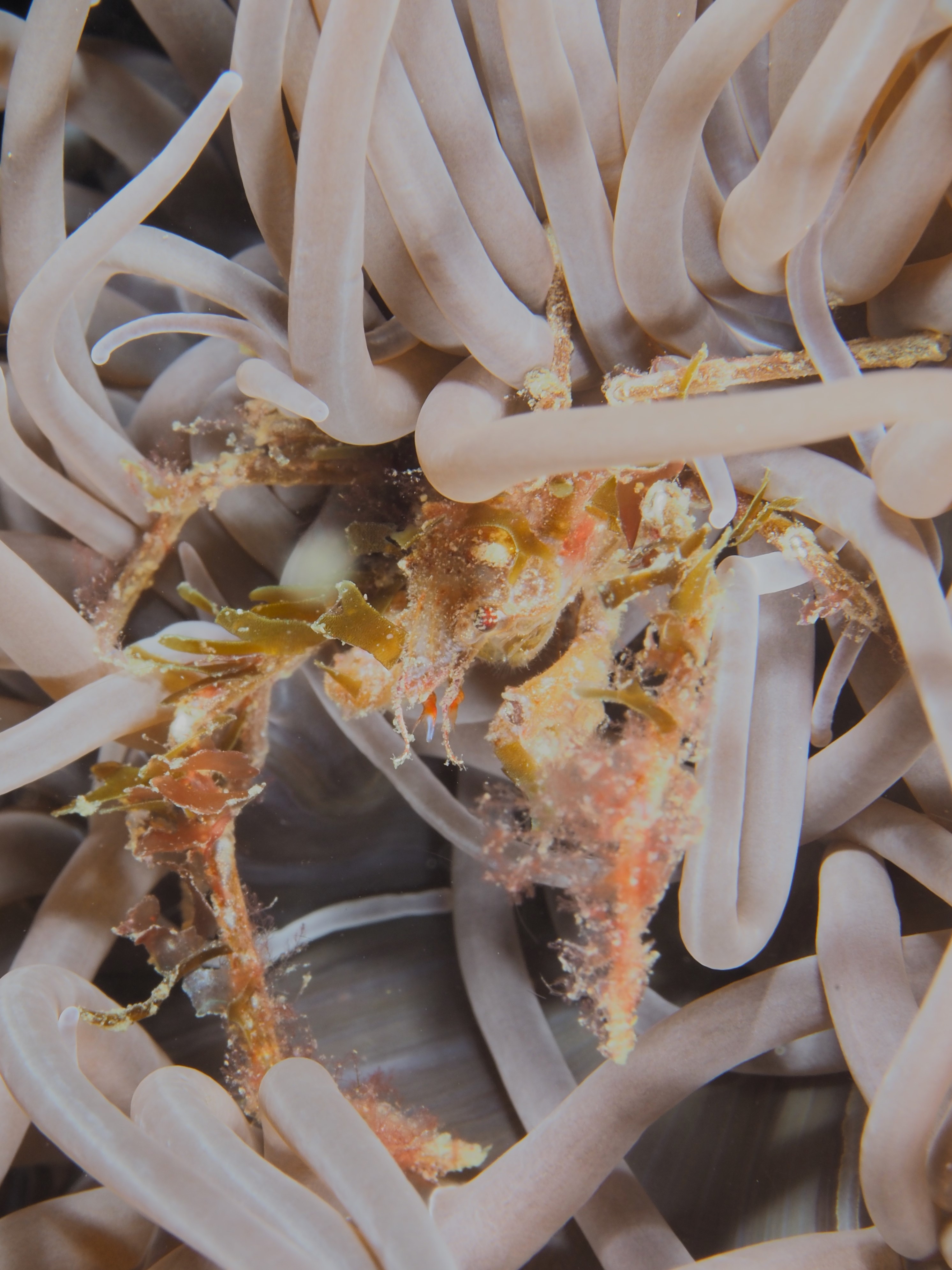
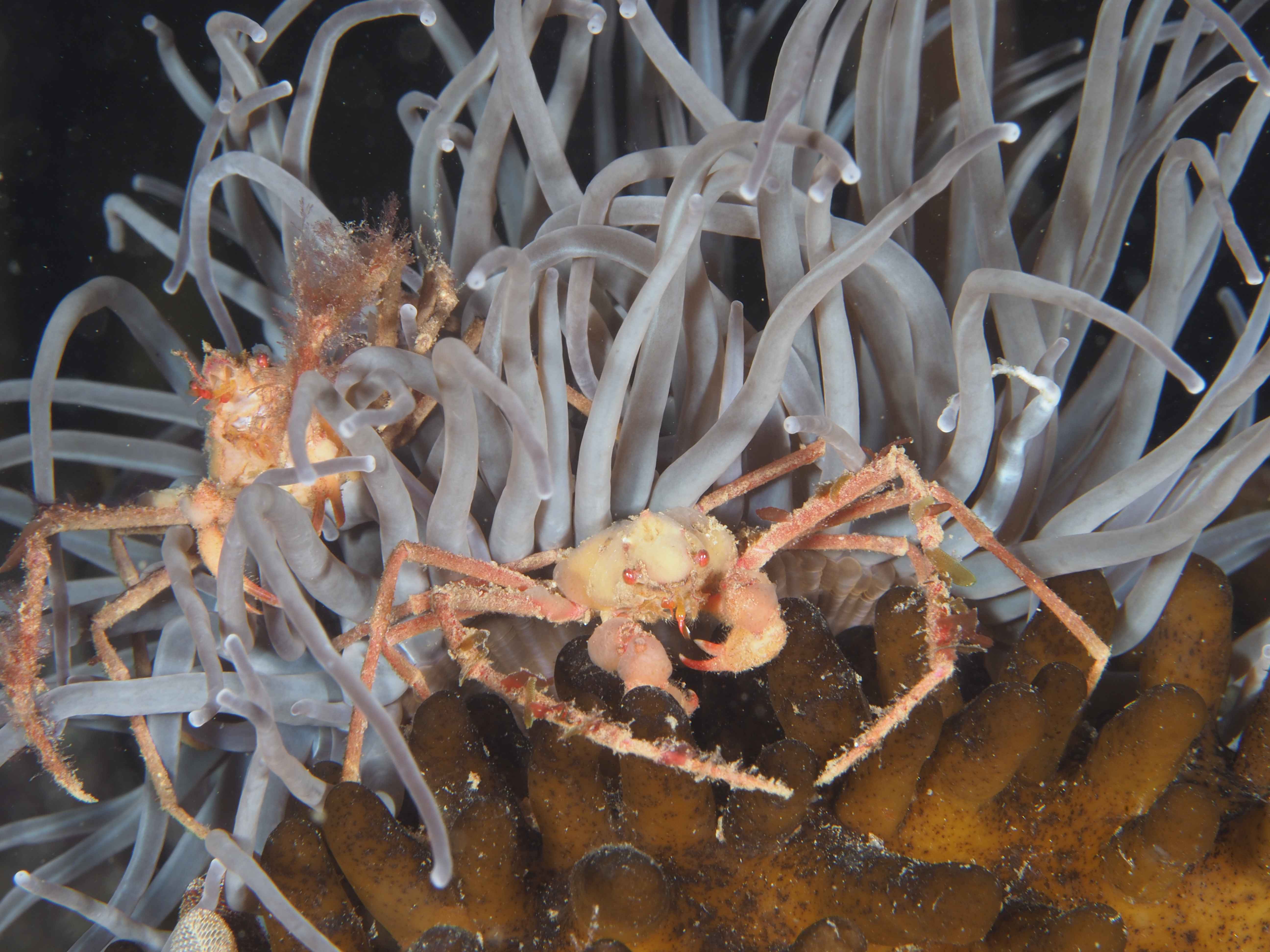
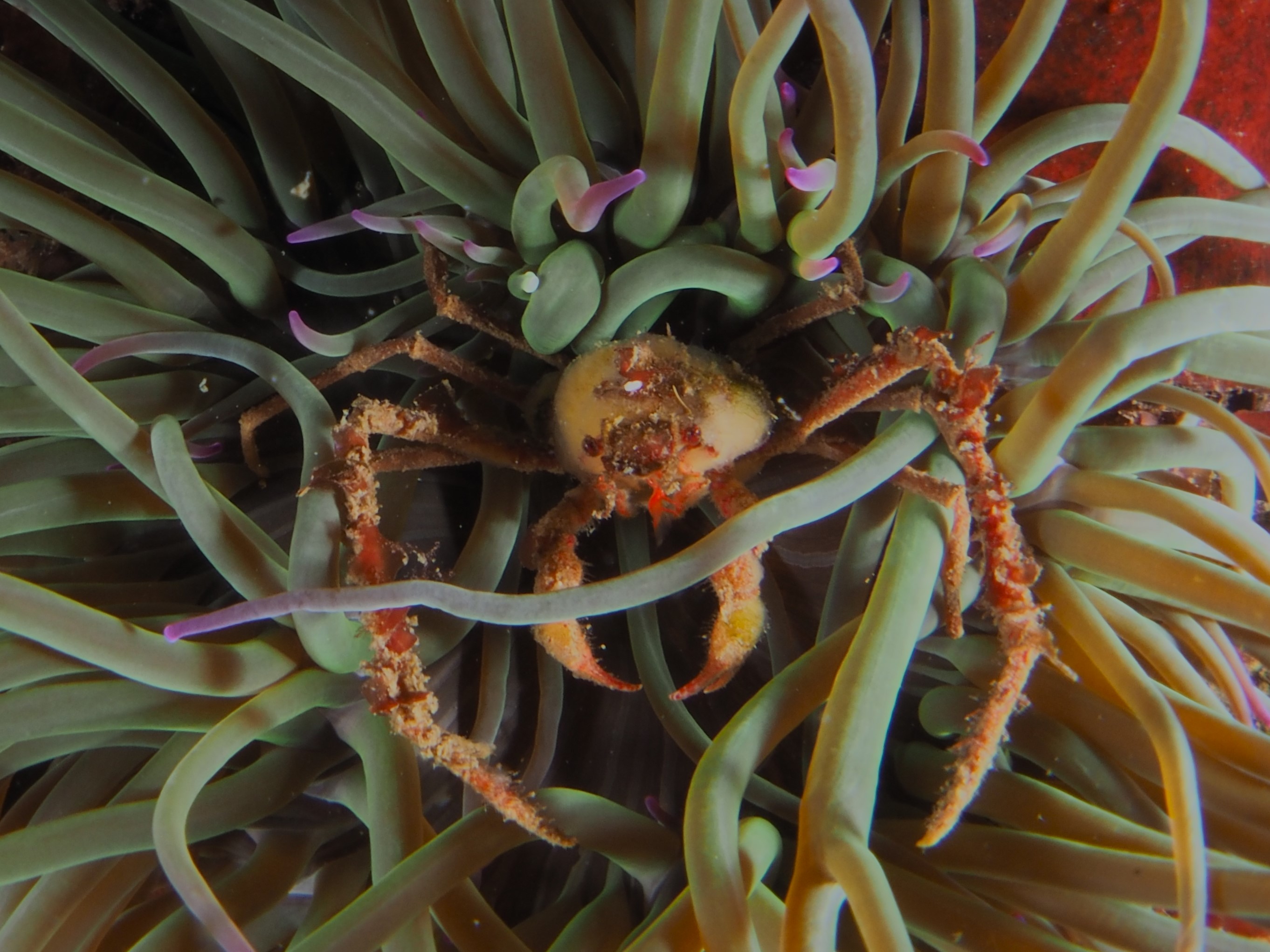
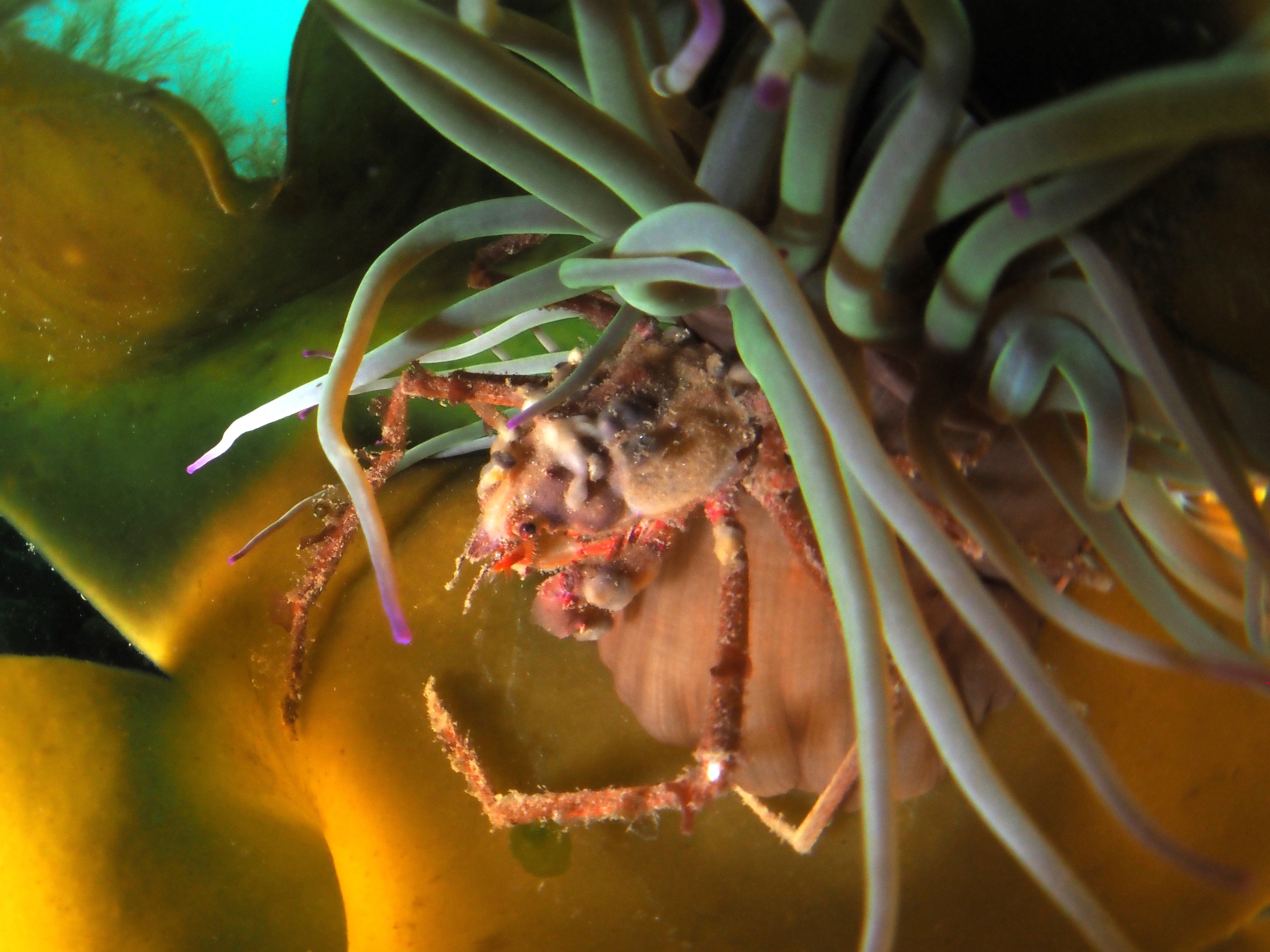
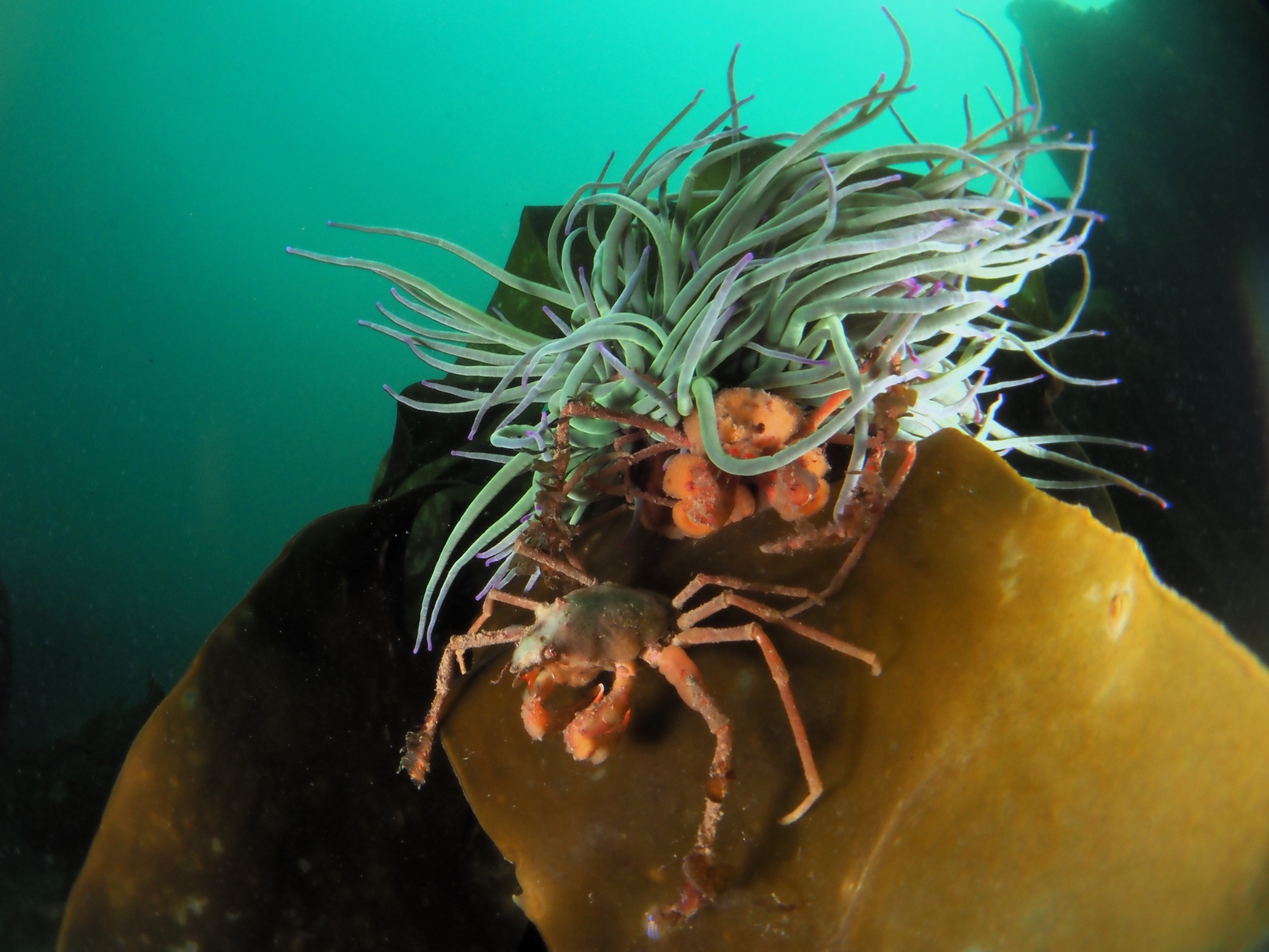
To keep the blog going (a bit), I have dug out some images from a few dives last year featuring Inachus spider crabs. There are three species, I. phalangium, I. dorsettensis and I. leptochirus, which can be told apart by the arrangement of tubercules on their carapace, but these are often obscured by epiphyte growth, and so I am keeping it to Inachus sp. All species are associated with Snakelocks Anemone (Anemonia viridis) hosts. The photo above is taken using a weird ‘wide angle macro’ wetlens (INON UFL-M150 ZM80). This perspective always fascinated me but it is difficult to achieve. This lens does the job, although it is incredibly ‘soft’, especially around the edges. The close focusing also makes it difficult to direct the strobe light on the subject. So there is a tradeoff between getting the surroundings in view and sharpness. Below first some sharper shots using my 60mm macrolens, followed by some macro wide angle shots (they happen to be each of the different Anemonia colour morph):
I will leave you with the following interesting bit on the biology of these crabs by Diesel (Ethology, 1986):
I. phalangium females are site-constant, and live in the protection of one anemone or group. Males travel frequently between anemones harbouring females due to spawn; they copulate and guard the females until spawning, after which the male leaves again. A male operates in a patrol area containing 3-8 anemone groups and up to 8 females, visiting each female in turn repeatedly just before it is due to spawn. Patrol areas of different males may overlap, with resulting competition to fertilize a female’s next brood. Large males have higher reproductive success than small ones. Females live up to 8 months after the moult of puberty and hatch up to six broods, and males live up to 7 months as adults. A male could fertilize a calculated 26,000 eggs, whilst a female’s reproductive potential is ca. 4,200 eggs. Mortality risks are higher for males than for females, probably because of increased predation while leaving the protection of anemones in order to visit females. Males learn the positions of anemones harbouring females in their patrol areas, and when these are due to spawn. This allows a male to travel with a target and arrive punctually to fertilize the next brood due in his circuit. I. phalangium is the first marine invertebrate reported to use a “schedule” of localities and times for visiting prespawning females. In this way males minimize searching time and mortality risk, and maximize the number of broods fertilized.
During an otherwise uneventful macro-dive at Silver Steps this week I looked under a small rock overhang around 8 meters deep and noticed an unusual little fish. At first glance it resembled a Tompot Blenny (see pic of a showboating individual below), only darker, more skittish and, upon closer inspection, with much smaller tentacles on top of the head. I knew this must be a Variable (or Ringneck) Blenny, Parablennius pilicornis, as we’d seen many of them on holiday on the Basque coast this summer. It is a southerly species that was first recorded in Britain in 2007 but is increasingly spotted. Not a first for Cornwall, but there are still few observations and so I have recorded it on iNaturalist (making it available for later inclusion on the NBN Atlas, the UK’s largest repository of publicly available biodiversity data). Another warmer water species joining our shores due to climate change…
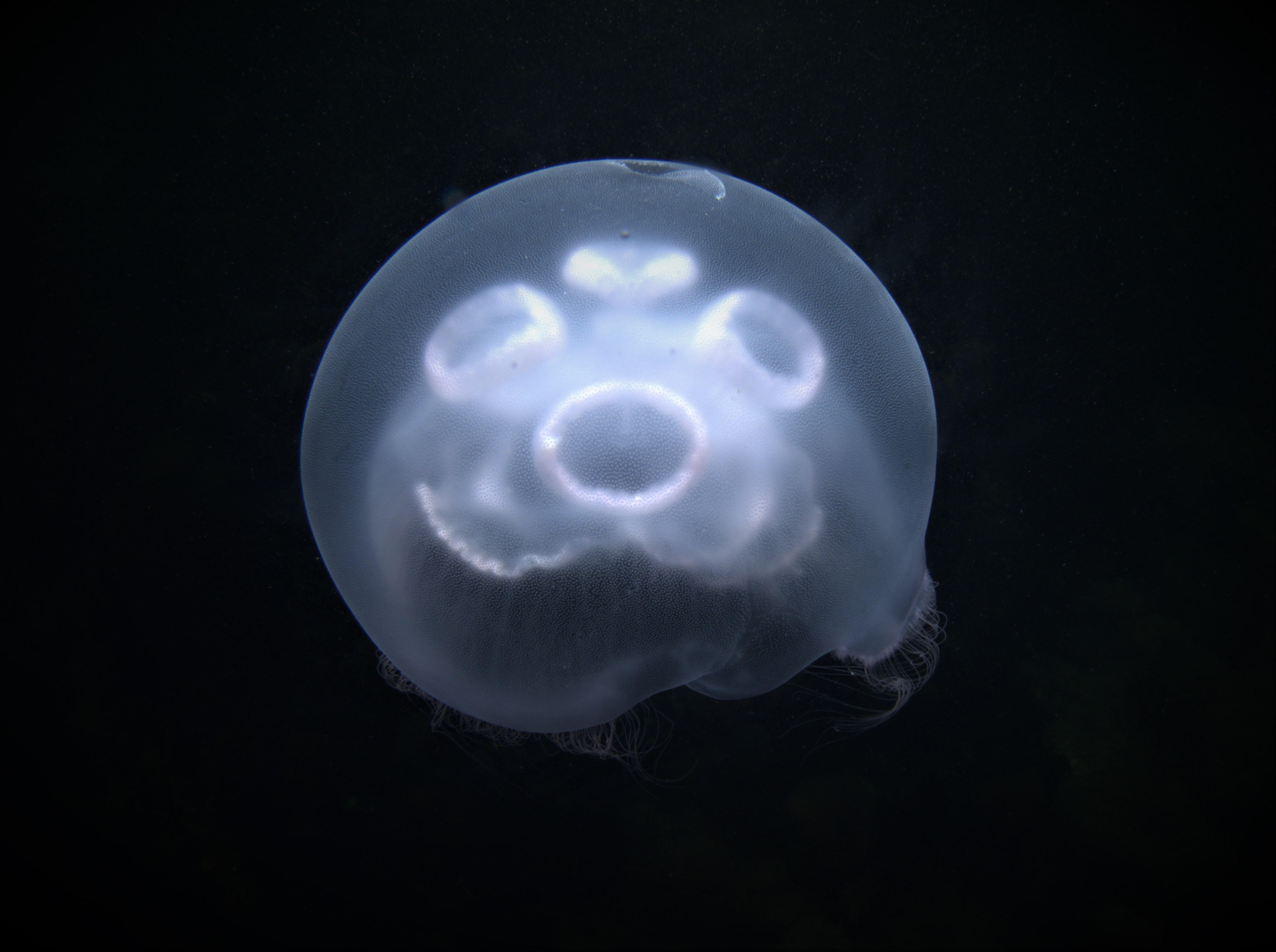
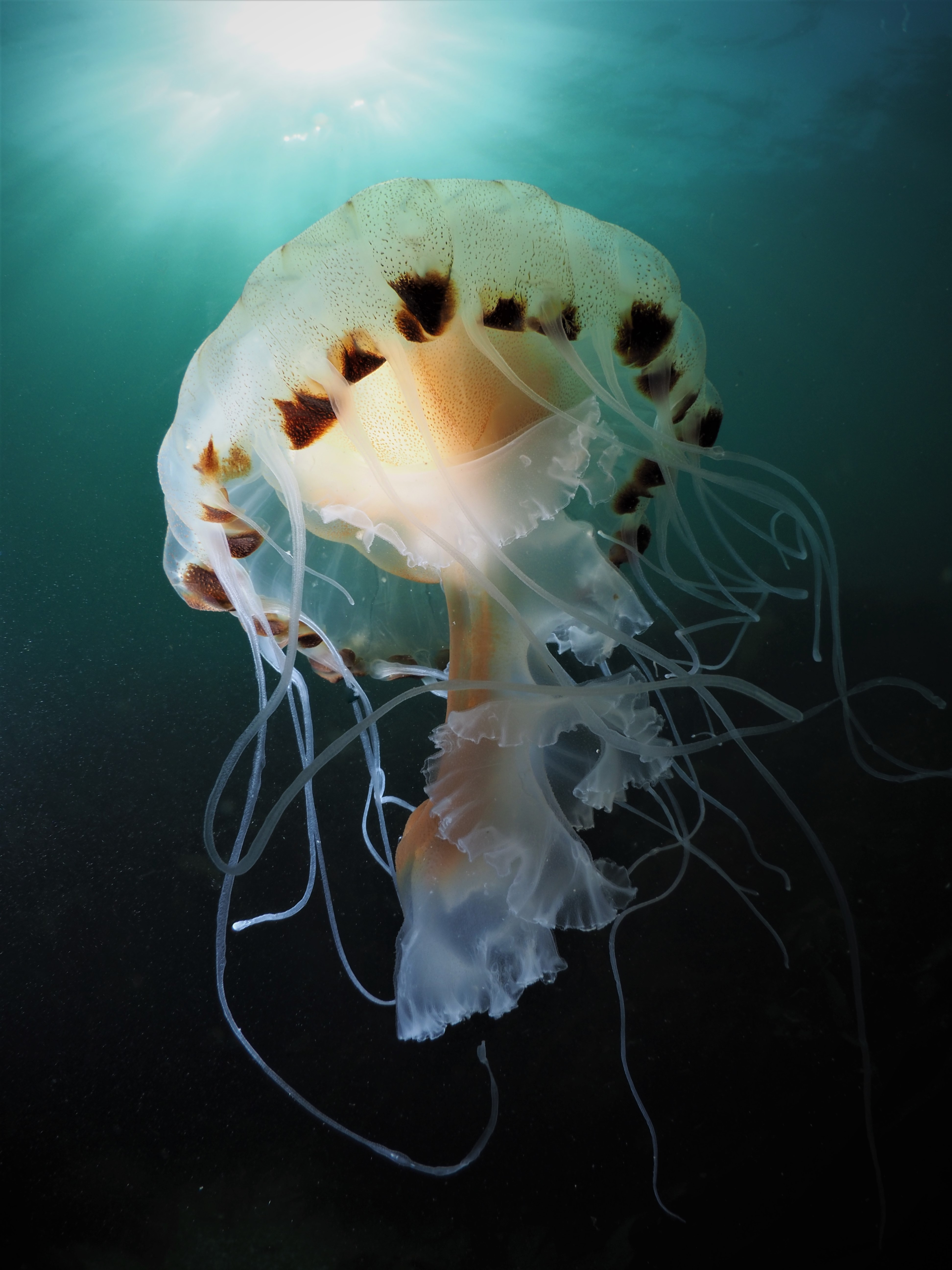
It is the time of year where the rock pools look less attractive (for an example see this old post) and jellyfish appear in the sea beyond. As they are pretty and slow moving, they make for excellent subjects and so I have ventured out over the kelp recently to look for them. I now have a reliable INON D-200 strobe (actually I have two such strobes, it is just that the second arrived 6 weeks ago but not its fibre optic cable…) which makes a huge difference in the types of shots you can take. Photos taken using natural light only can be pretty (see for example here for previous attempts) but a strobe just opens a whole new range of possibilities. I was quite pleased with myself with the shot above of a Compass Jellyfish that seems to float in outer space. Here, the strobe lights up the jelly (which is really close in front of the camera) but it cannot light the ocean behind. Using a fast shutter speed, the ambient light (that would make the water blue) is not let into the camera, resulting in a black background. An exception is the bright sky, which is visible in Snell’s Window, and which looks a bit like a planet against the black background. Of course, even with using a strobe you can choose to let in ambient light, leading to more conventional shots such as the one below (however the jellyfish is a bit further away and not very nicely lit up by the strobe):
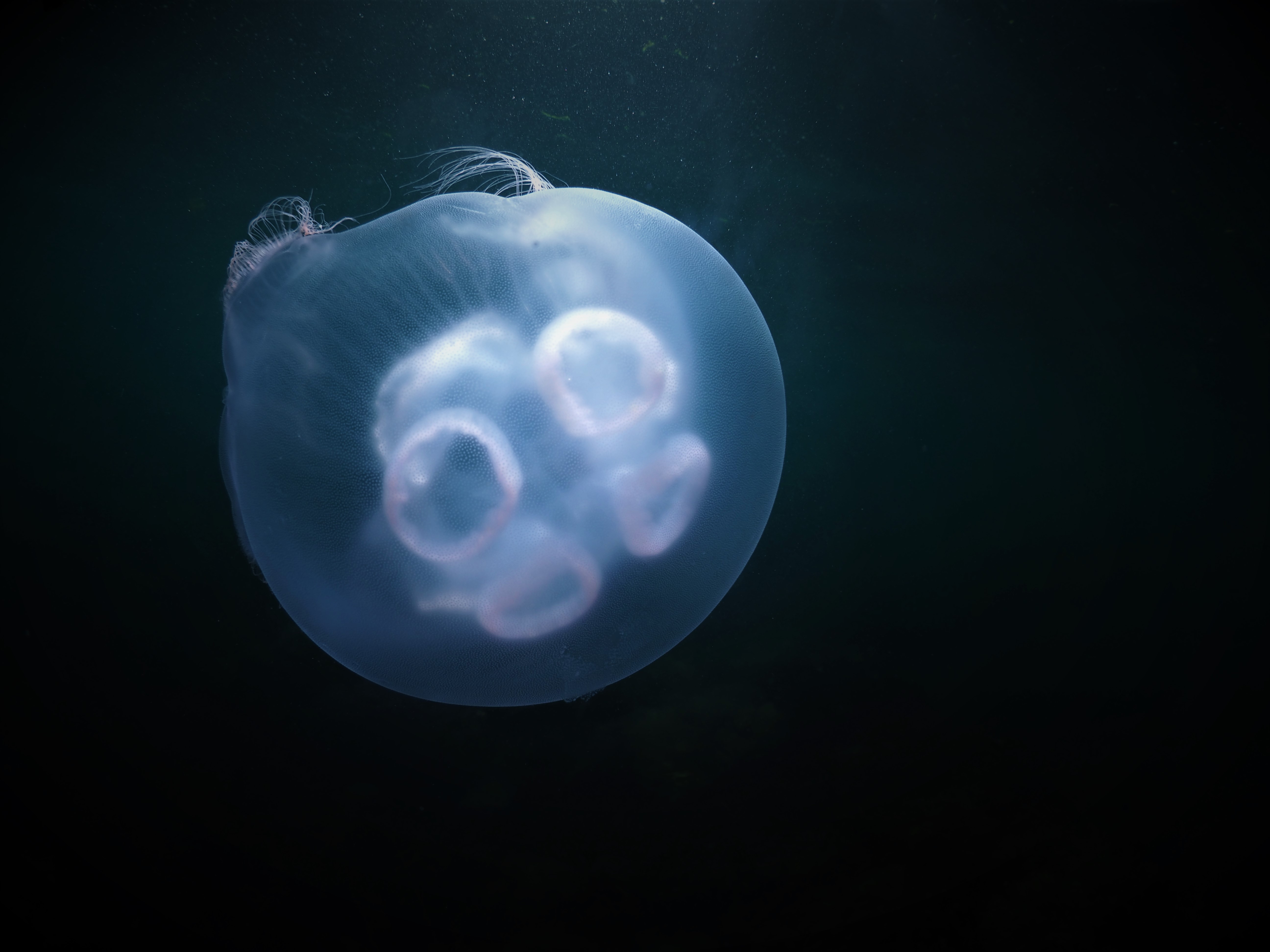
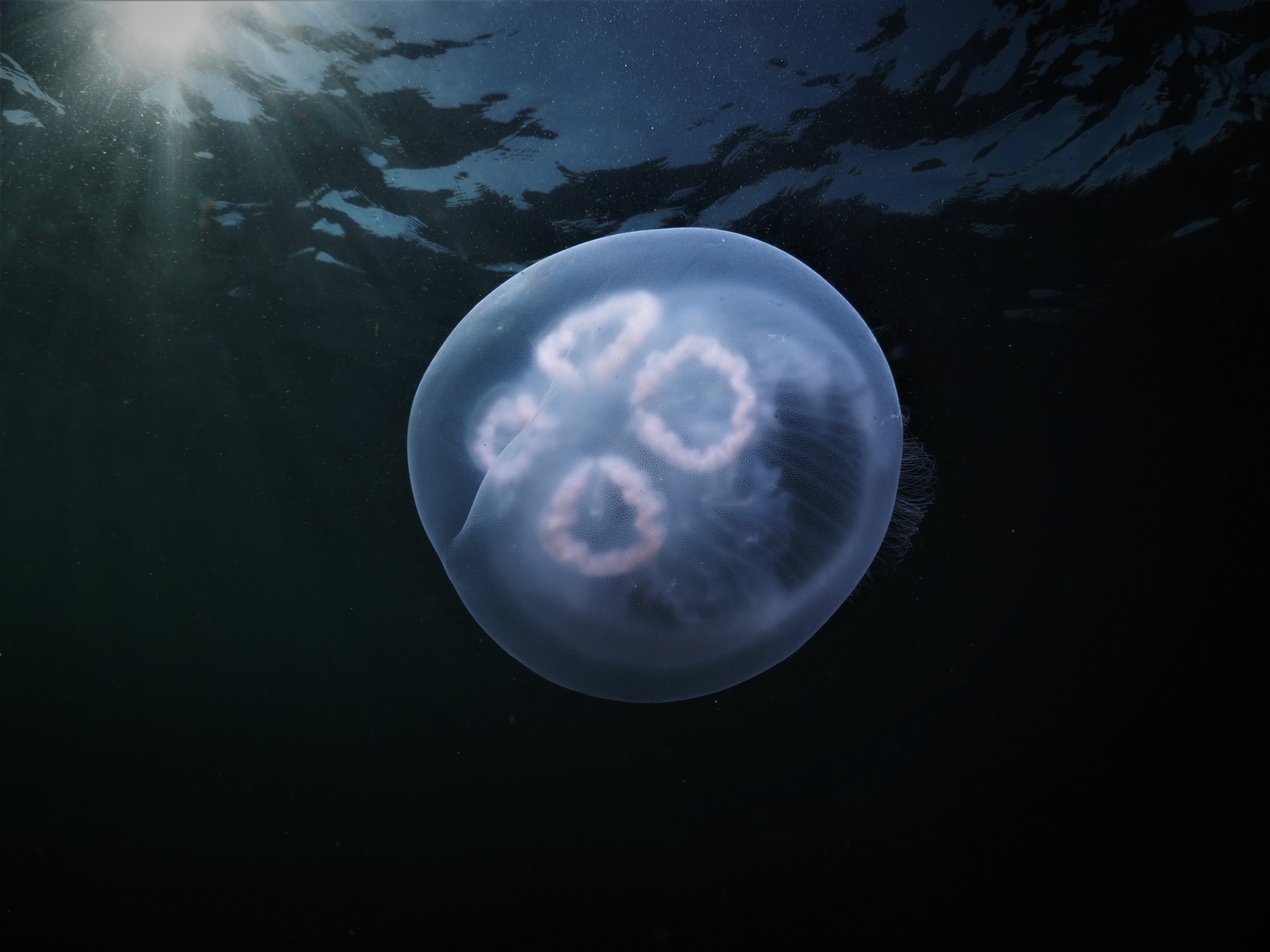
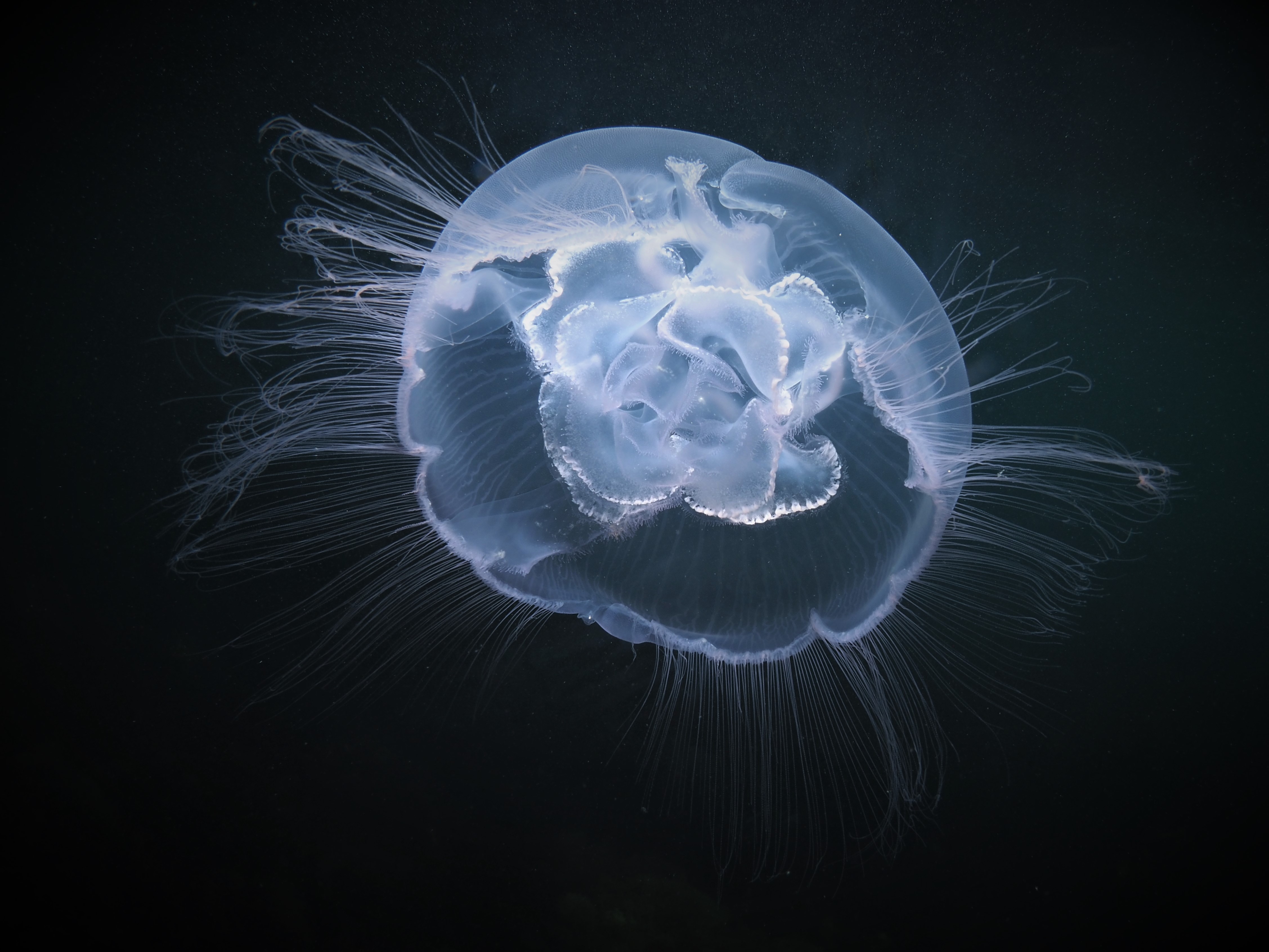
By pointing the camera downwards and getting rid of much of the sunlight, the fast shutter speed black background effect is even stronger, even on a sunny day. An example is the Moon Jellyfish below. Btw, I have touched these photos up with the generic Windows photoviewer (a poor man’s Adobe Lightroom) whch performs quite well. It is however tricky to get rid of some of the backscatter (particles in the water that light up because the strobe is incorrectly positioned, illuminating not just the subject but also the water in between subject and lens). This effect can be seen above the jelly in the second photo even after editing in Windows Photo:
It is great fun to practice photography with these jellies. In principle one strobe is enough (and many pro photographers recommend to try shooting with a single strobe). However, there are situations where two strobes are clearly better, namely when a subject needs to be lit up from two sides. The photo below was taken with the camera turned 90 degrees with the strobe to the left side (notice the remaining backscatter after using the clone stamp tools in Windows Photo). Having had another strobe to the right would have avoided the shadows (but probably have added backscatter!):
Some more shots below. The visibility has been poor lately but I hope to be able to practice some more over the weekend.
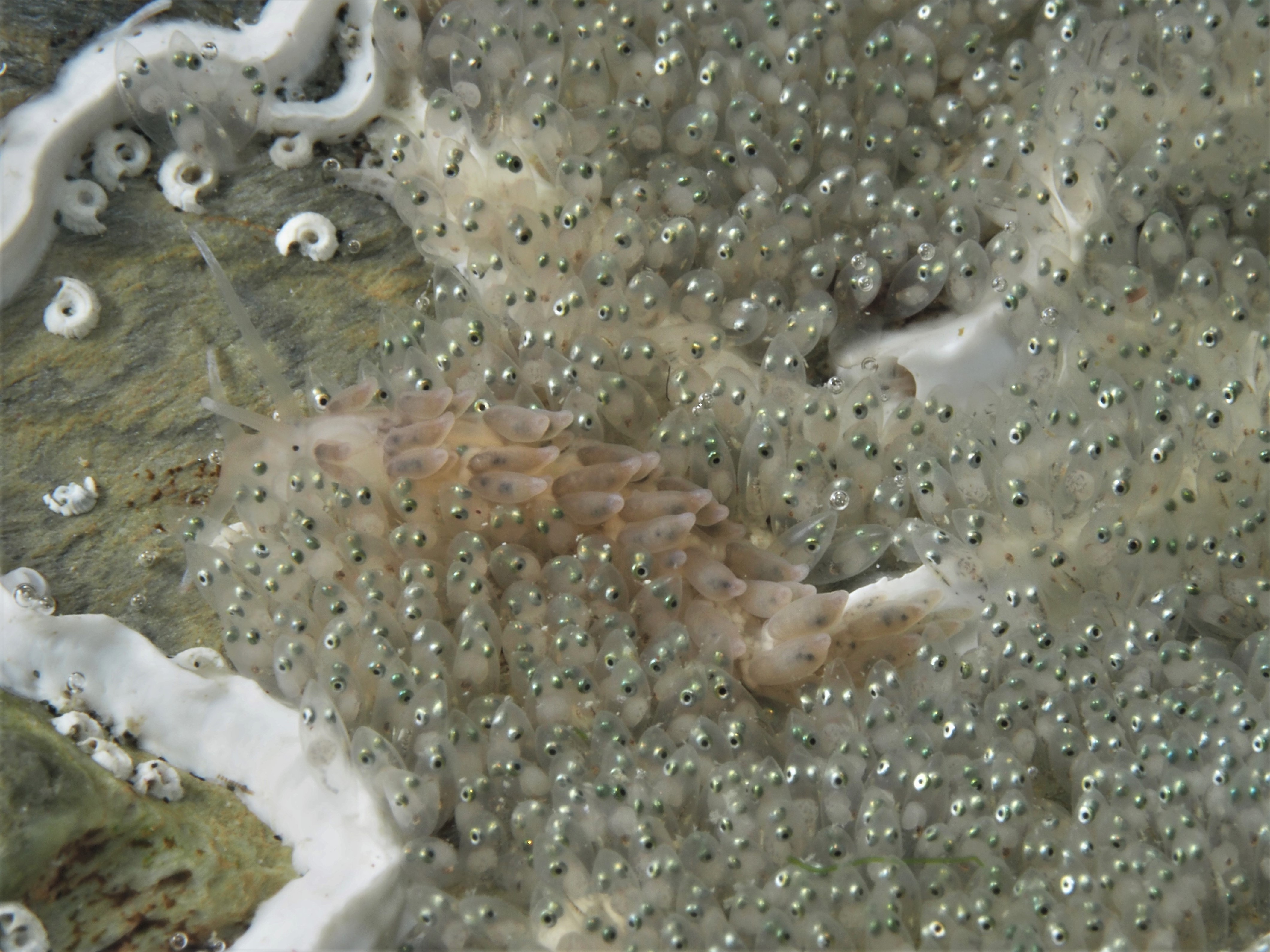
Two entries back I posted photos of the Goby egg-eating seaslug Calma gobioophaga. Last week I was lucky enough to spot its cousin, Calma glaucoides, who is a bit less fussy and eats different types of fish eggs, as well as cephalopod eggs. I found it by turning over a rock whilst snorkeling in a very shallow (<50 cm!) pool. Next to a depleted patch of clingfish eggs, it was circling around, busily depositing eggs of its own. A fantastic surprise, and I really need to get on with recording such findings.
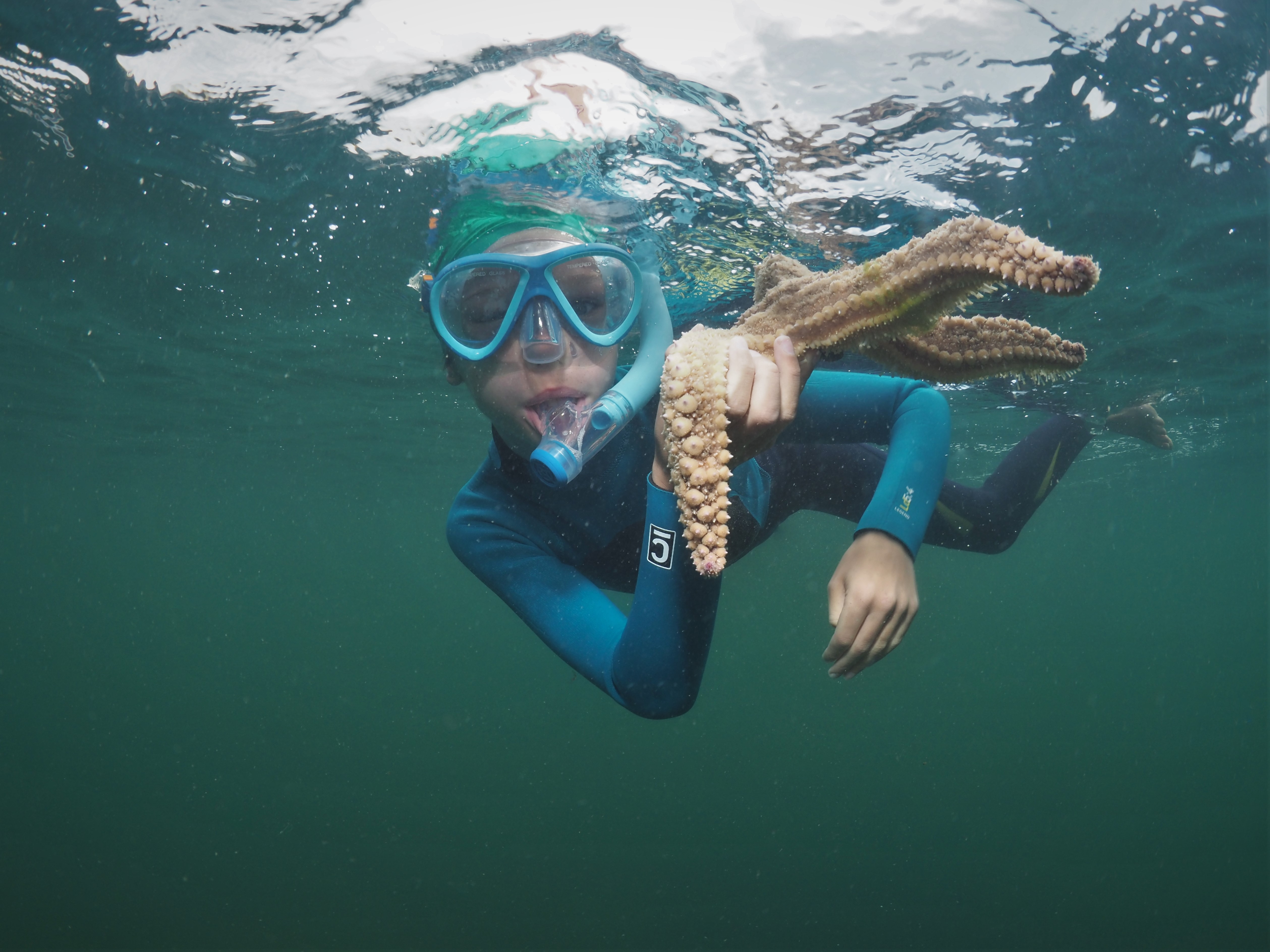
The sun is shining (most days) and the water has warmed up, so ideal conditions for a bit of snorkeling. I have been out at my usual spot in Falmouth (rockpools and kelp forest) and my local beach in Flushing (seagrass) (and yes, I really count myself lucky every time that l live here!). The last couple of times I have brought my son along, as he is now old enough (nine). He is a nature freak just like his dad, actually probably more so! I need to get him fins and a weight belt soon, but he has been doing fine in the water already.
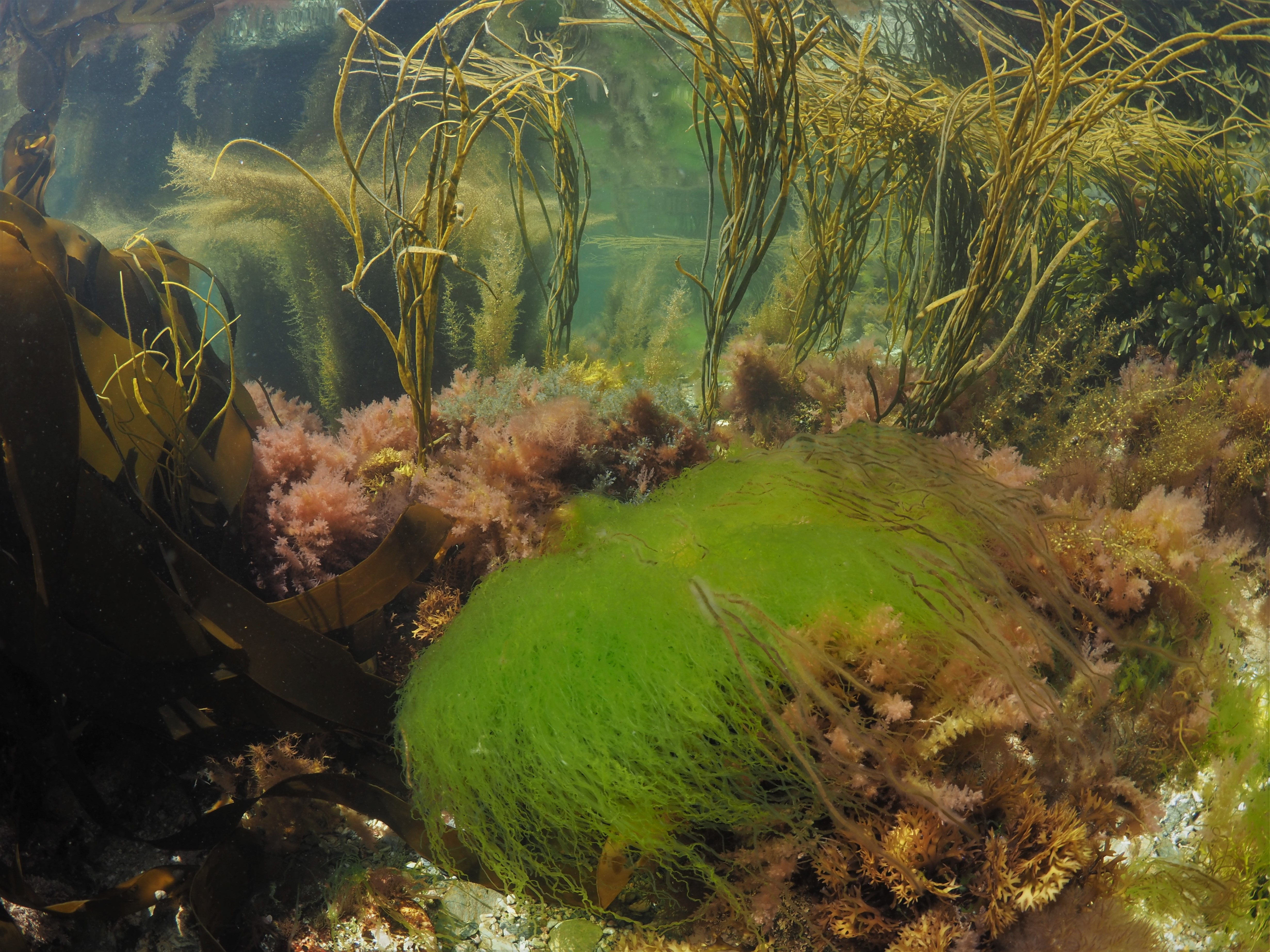
The photos above and below illustrate the state of the rock pools at the moment: quite brownish with the Sargassum and Himanthalia growing everywhere. The red, pink and purple species have largely disappeared (apart from Harpoon weed) and there is quite a bit of green Ulva growing. The water teems with juvenile pollack in the rock pools and schools of sand eels a bit further out. Diving over sandy patches, you can see the latter species shooting out of the sand en masse. It is crazy how such a silvery pelagic fish can also burrow in the sand. I guess it does take its toll, as there are quite some dead ones to be seen too.
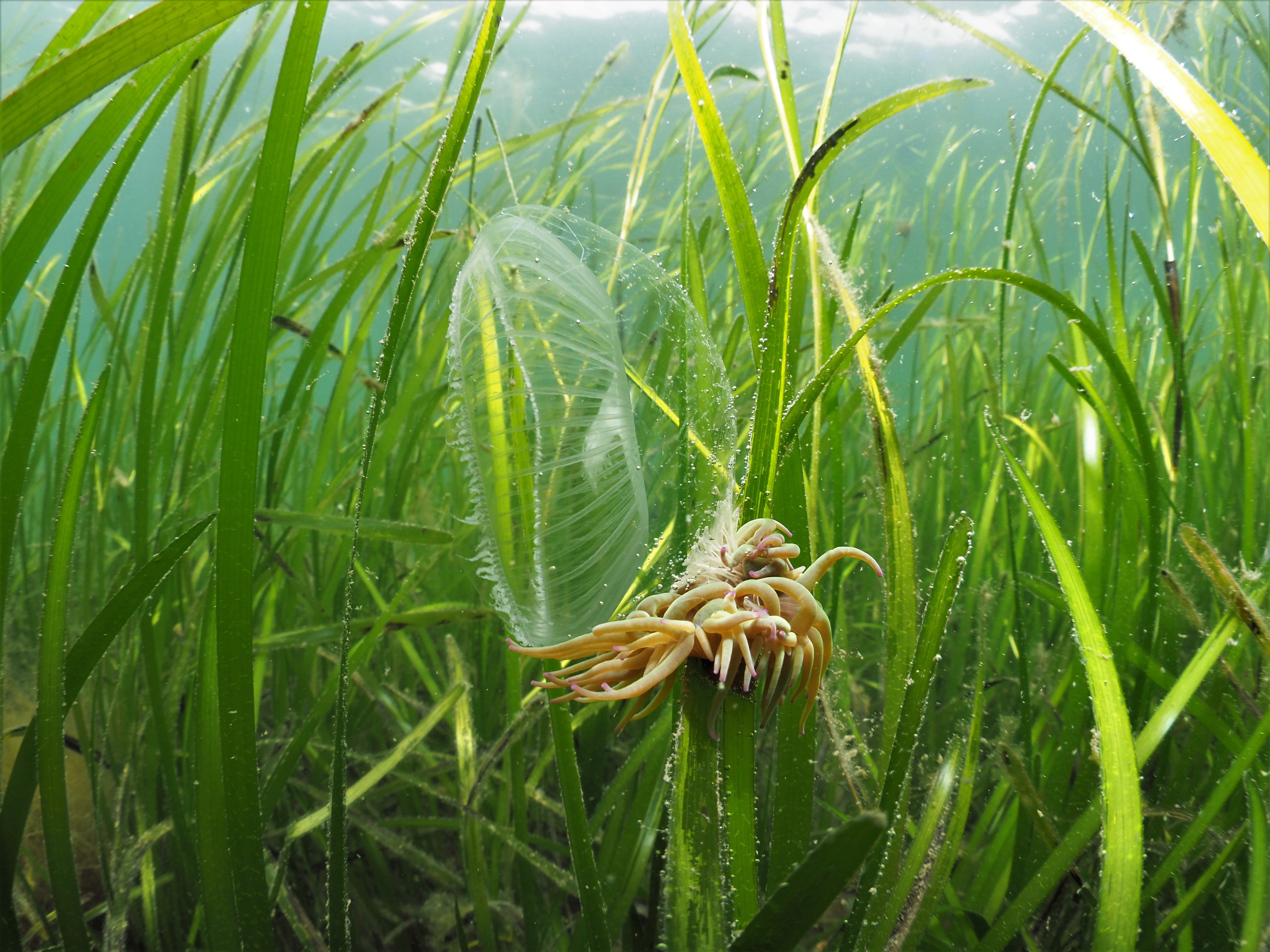
The Flushing snorkel site is very different, no (deep) rockpools, only a little bit of kelp but with a very healthy patch of seagrass. No catsharks or thornback rays when we went in, just the odd small sea bass. There are many small Snakelocks anemones on the seagrass. I used to think that it was mostly the purple form that did this but I now noticed that most were the green variety, so the morphs do not seem to differ in this respect after all. One anemone had ‘caught’ a crystal jellyfish (an Aequorea medusa). Not sure if it was in the process of being digested or just ‘stuck’.
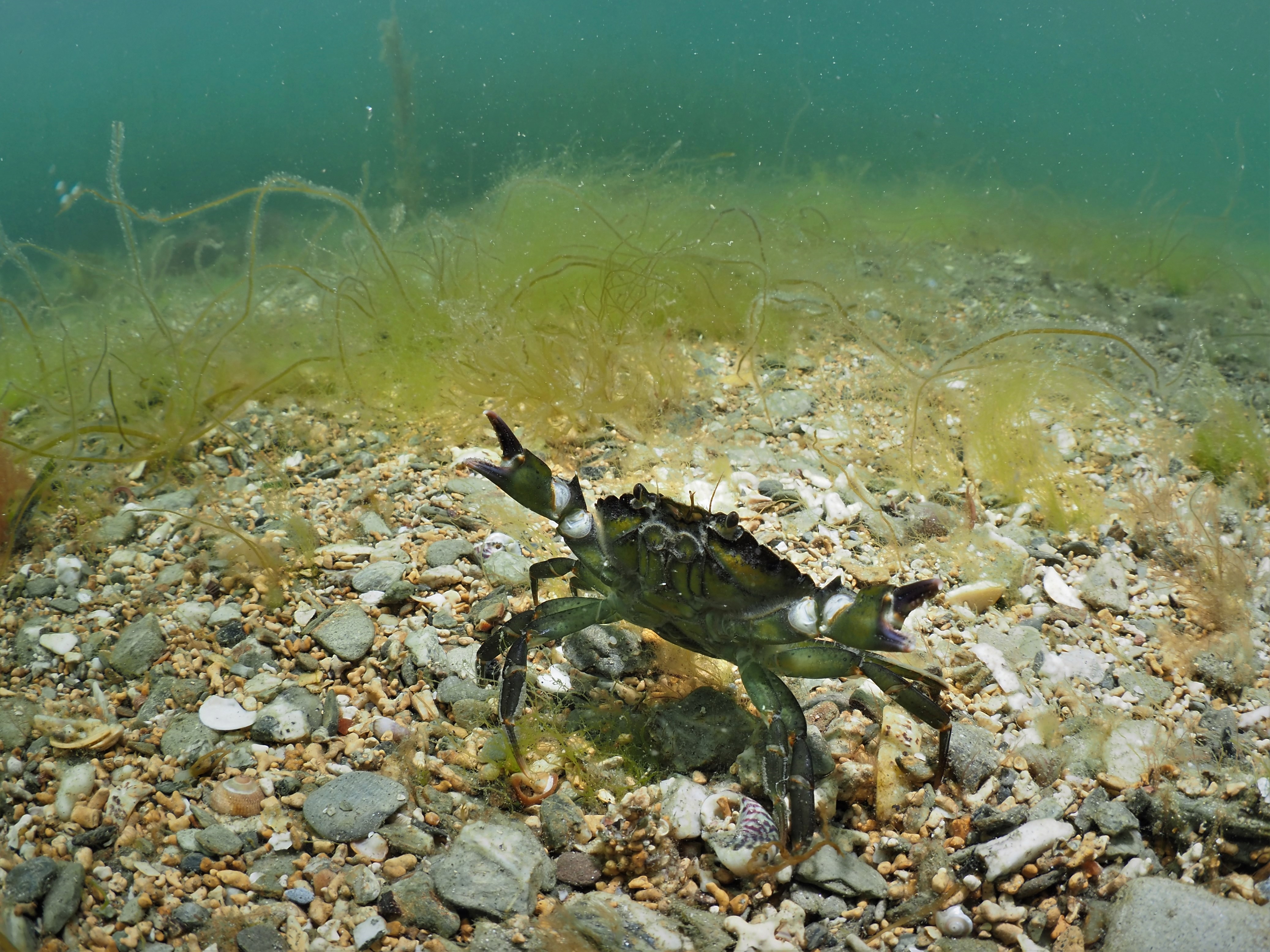
I have played around with my new INON strobe, which works a lot better than my old strobe. I have ordered a second one for Wide Angle photos too….(as you can see there is quite some backscatter in the pic of the Shore Crab above). I will need to get back to some shore diving to make optimal use of two strobes, as I am too lousy a freediver to get the lighting and exposure right in one breath!
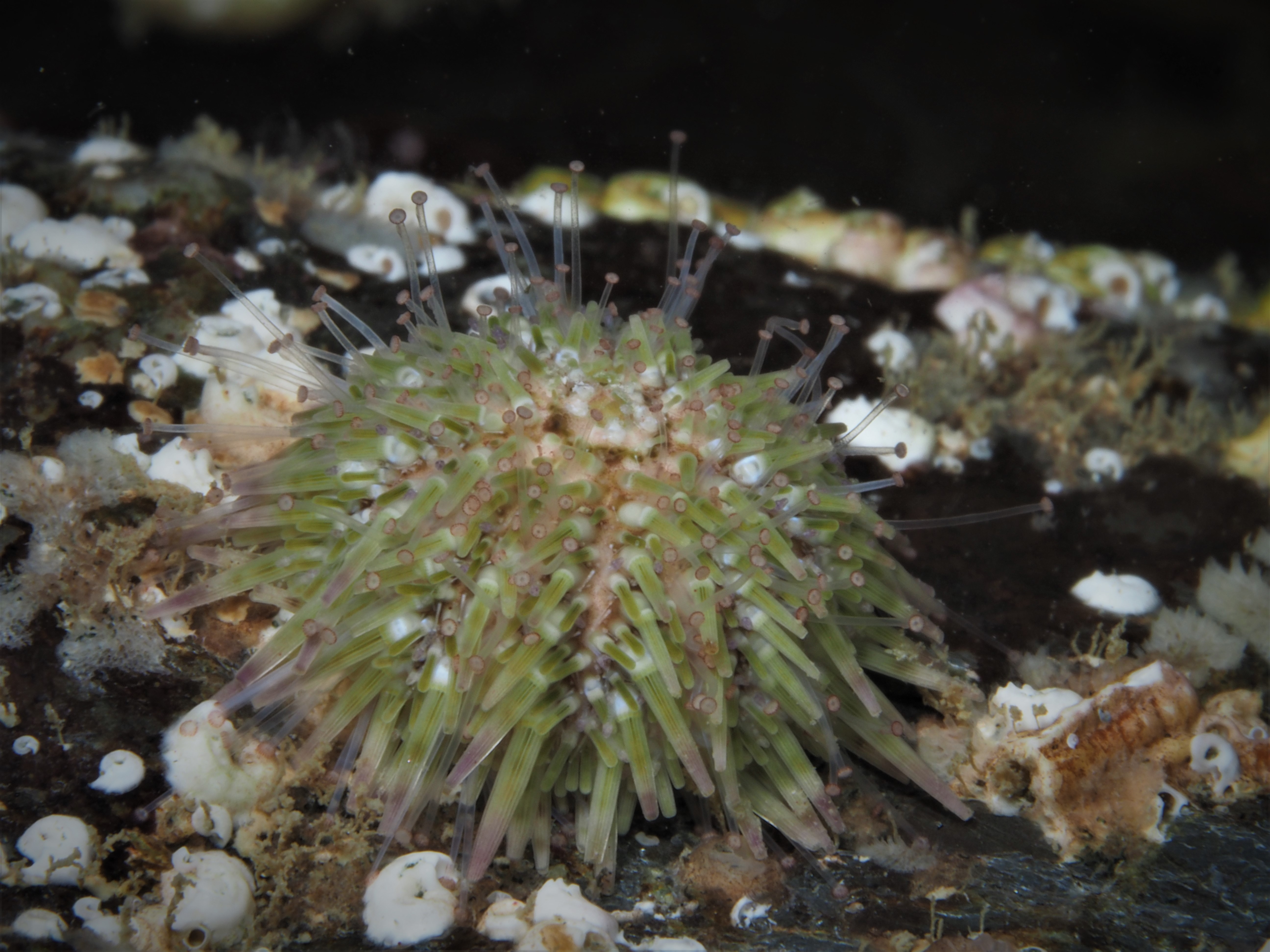
Long time no post! Due to a combination of not-so-good weather and work I have not been in the water much the last few months. I attempted some seaweed photography but most times the viz was bad; the one time the conditions were great, somehow all my photos turned out to be a bit meh and I could not be bothered to post them. (For some older shots on seaweed diversity see here, and many older posts as well.) Anyhow, my exciting news is that I finally bought a new strobe (an INON D-200 for those who are interested) because my old Sea&Sea strobes just proved to be too temperamental. Something I should have done a long time ago, but the thrifty Dutchman in me just never pulled the trigger. I have now taken it out twice this weekend and it works like a charm! Now I just need to practice, as it is actually still very hard to go from an OK photo to a truly good pic. Above a shot of a baby urchin Psammechinus miliaris. The true stars of the weekend however were nudibranchs.
A very special find (shown to me by fellow rockpool photography enthusiasts Martin and Greg) were two Goby egg-eating seaslugs Calma gobioophaga. This tiny species can only be found on the goby eggs it eats. With such a ‘niche niche’ and with very good camouflage it is no wonder that reports of this species are rare. A fun fact: its protein-rich diet means it does not have to poo and it therefore does not have an anus…The rock with the eggs and nudis was very shallow and so it was a challenge to get the port of the camera housing under water. Luckily Greg assisted with pointing out the nudi and holding my strobe in place. Freshly hatched goby fry could be seen hovering above the eggs (the fact that a predator was munching through their brothers and sisters might have triggered some of the hatching). The cerata (the fleshy lobes on the nudi’s back) seem to have two goby eyes in them to make them better blend in!
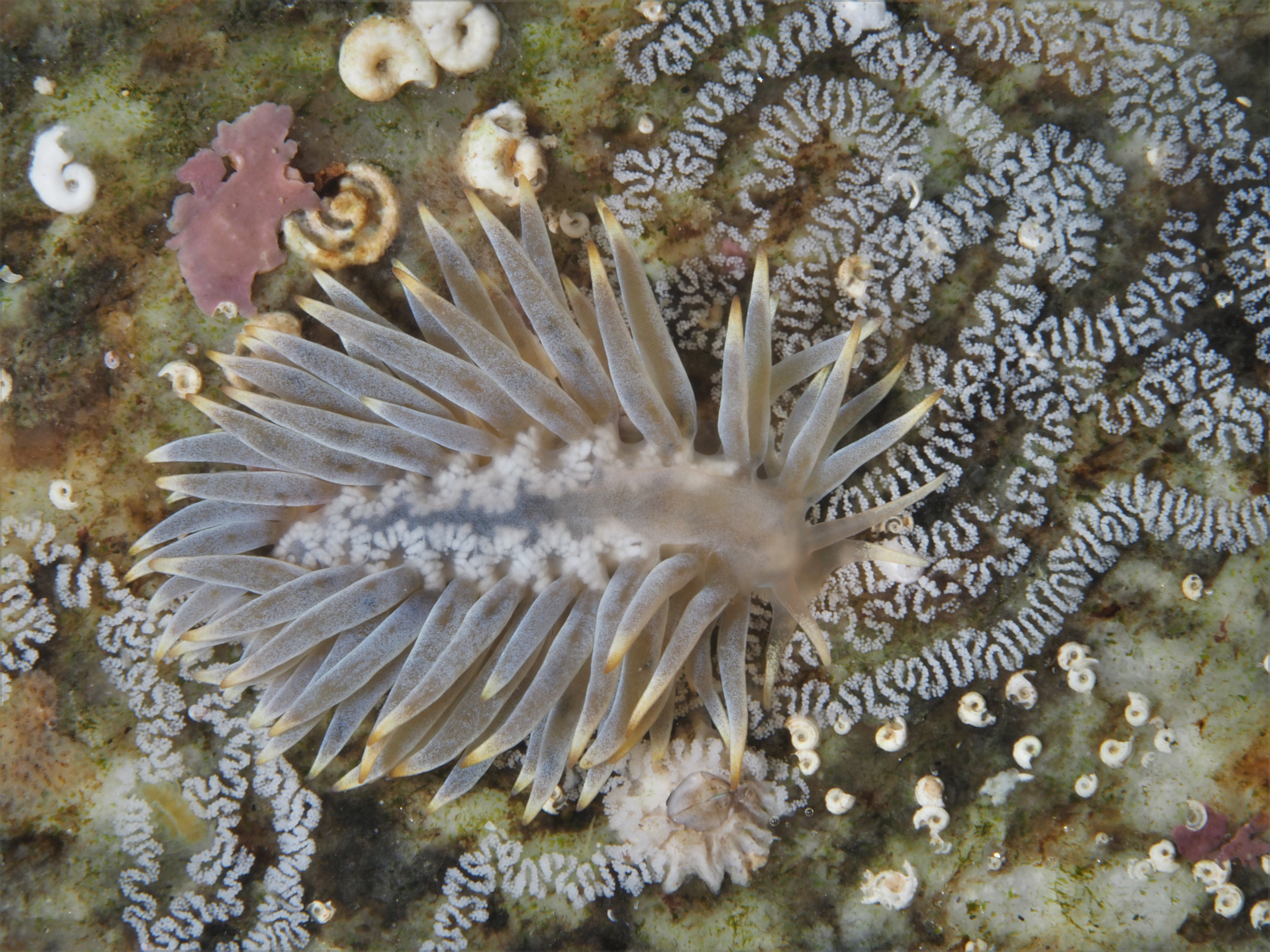
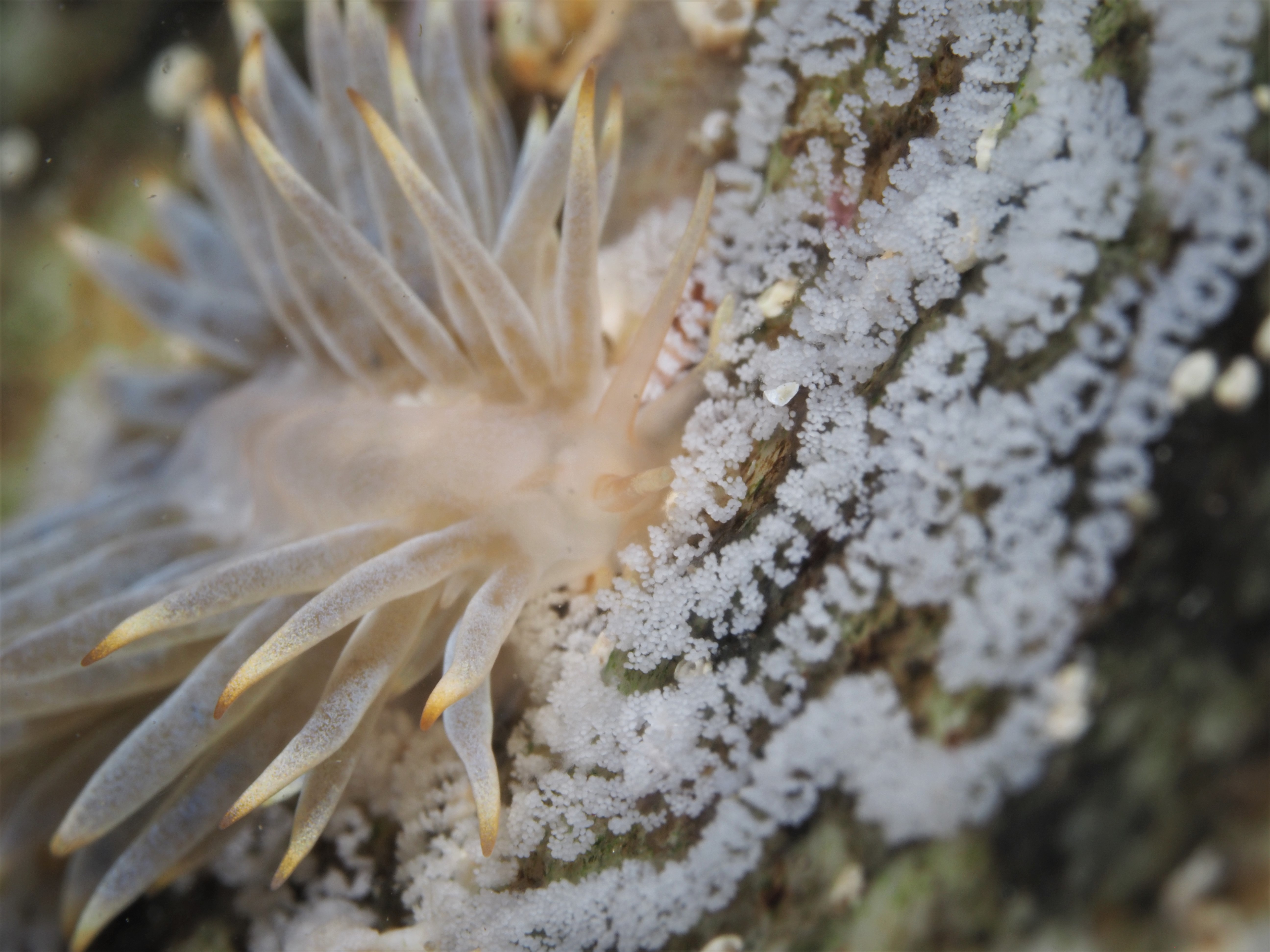
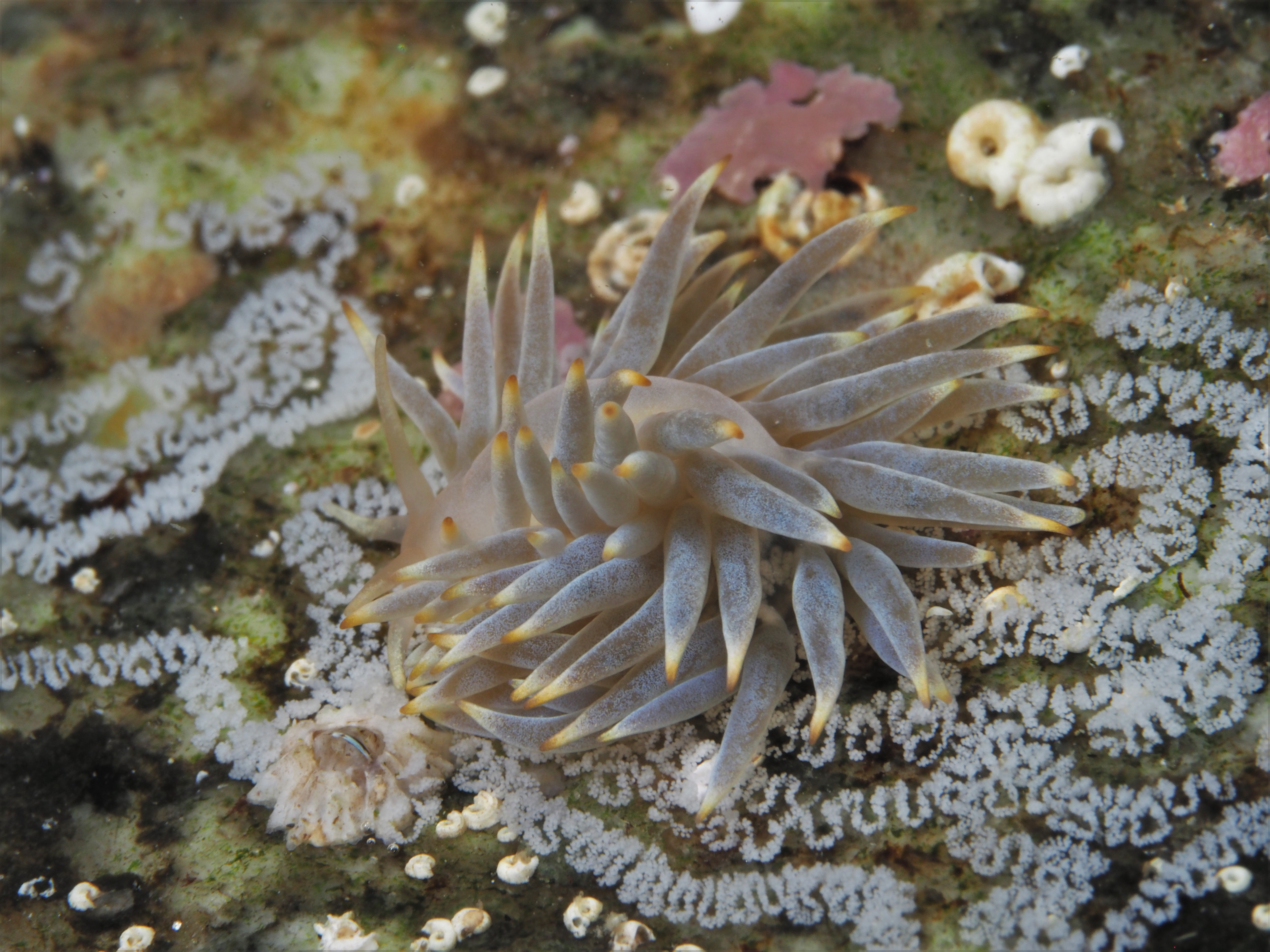
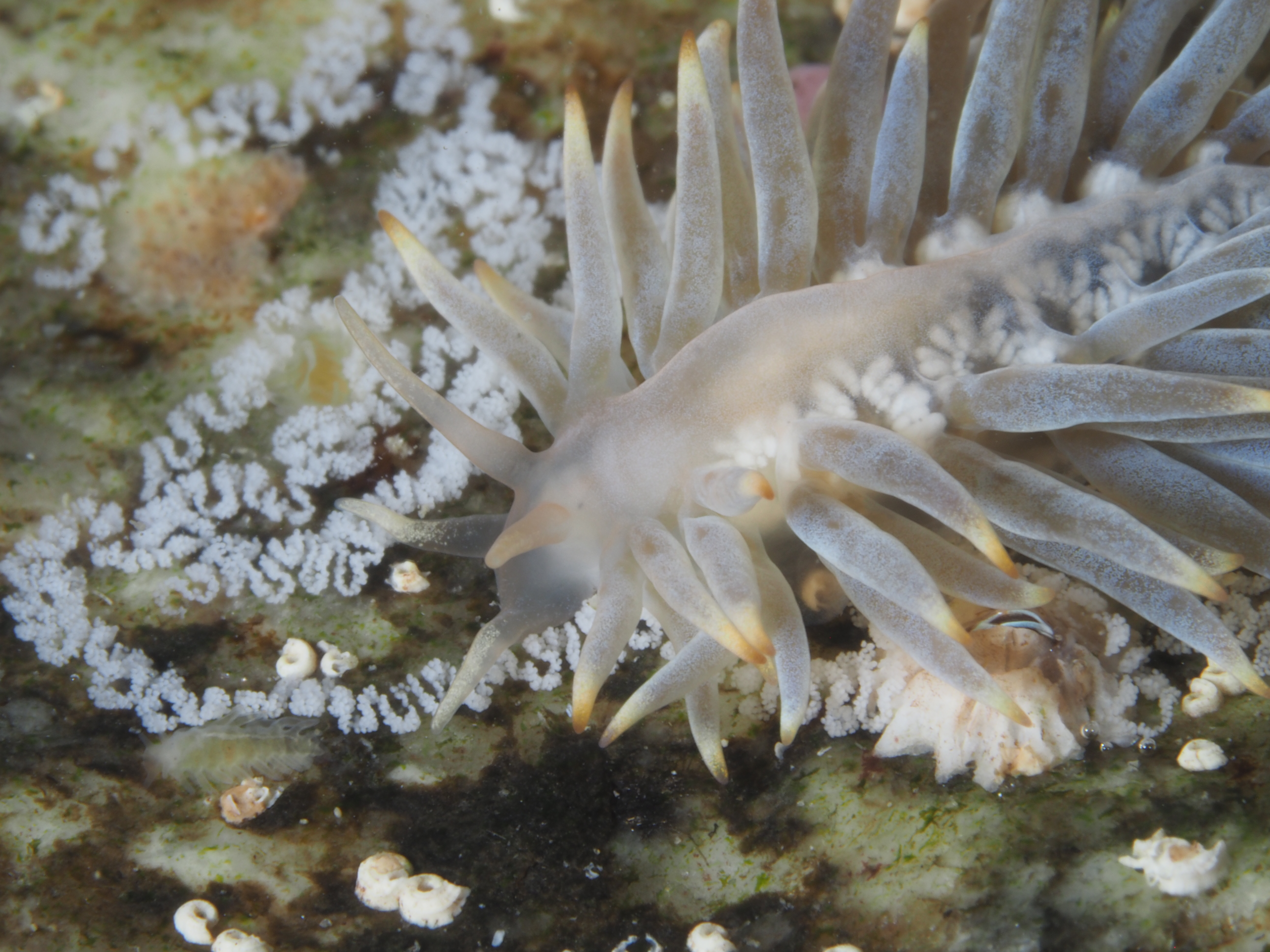
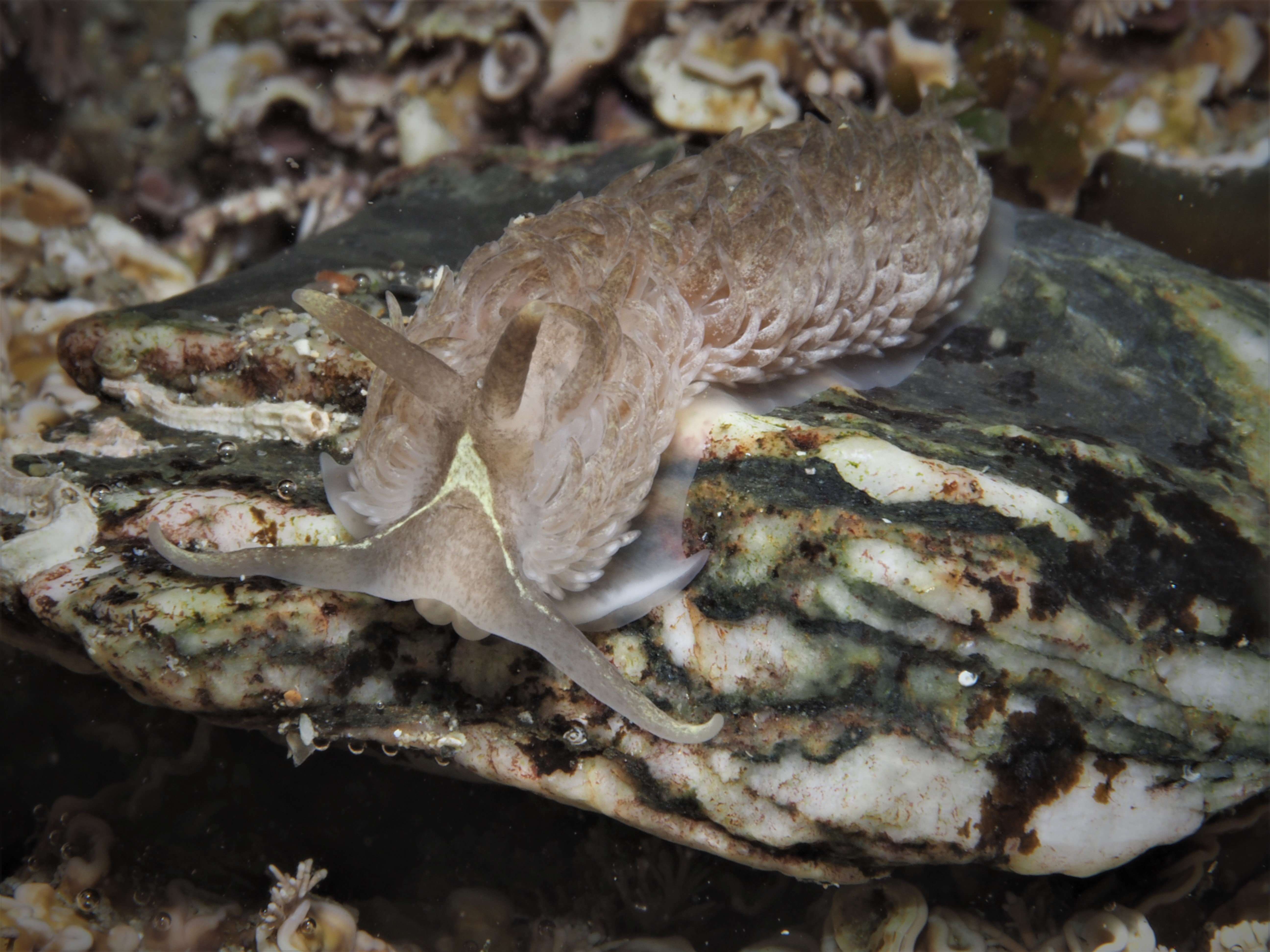
Finally, two other nudibranch species, neither very colourful. Both are predators of anemones: first the largish Grey sea slug Aeolidia papillosa and second the smaller species Aeolidiella alderi. Both adequate shots but I need to practice to make them truly good. I will probably buy a second INON strobe so I can practice wide angle shots as well when diving. I hope to go out a lot more during summer and will make sure to post here about my finds and progress!








 An Bollenessor