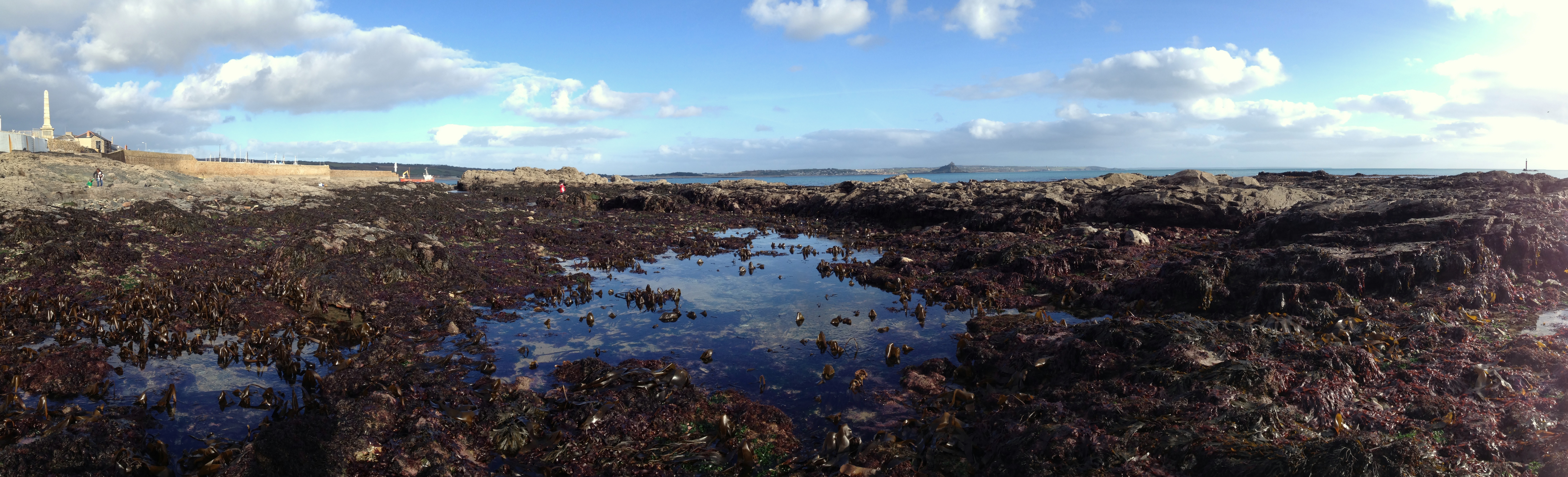
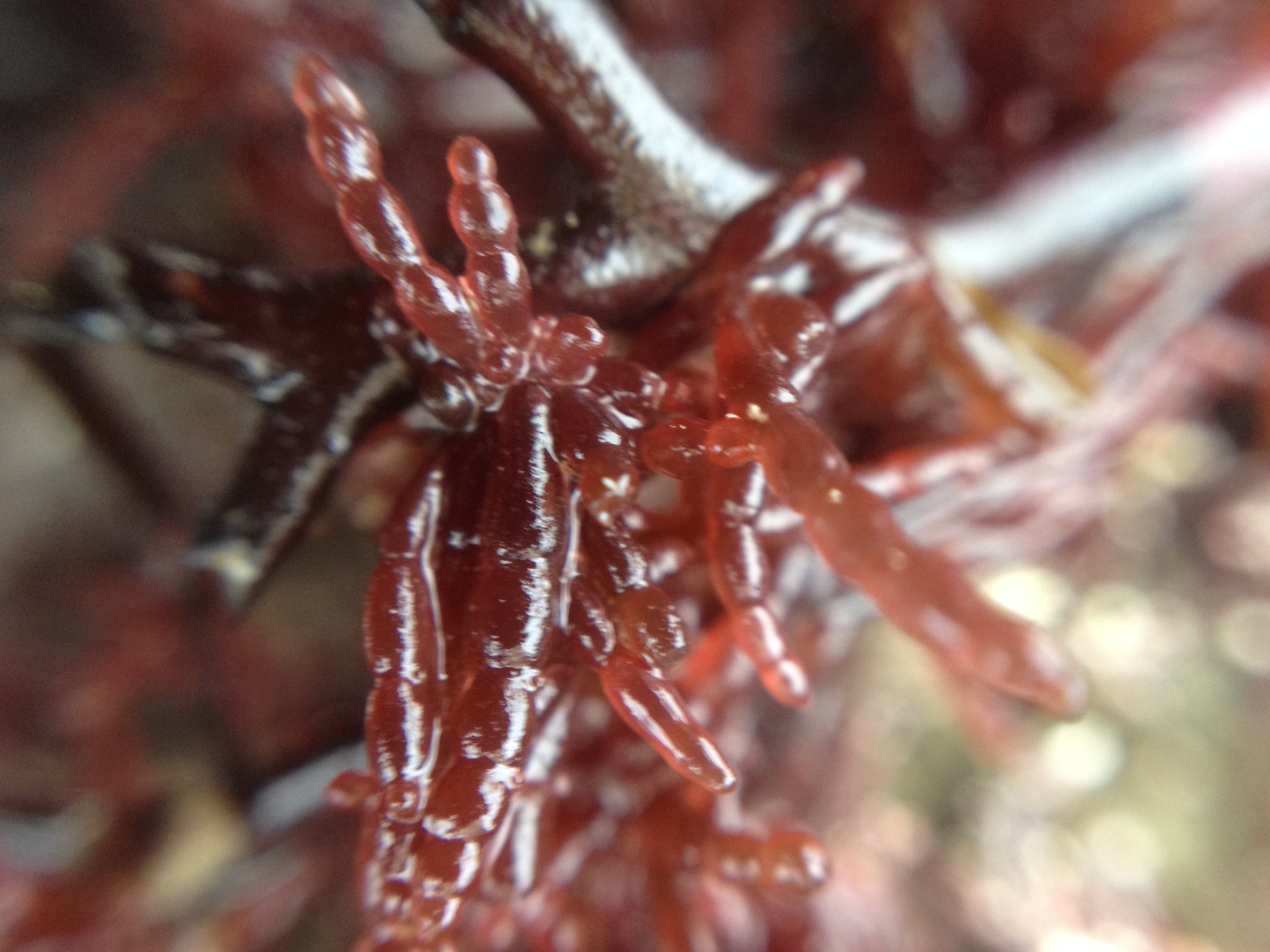
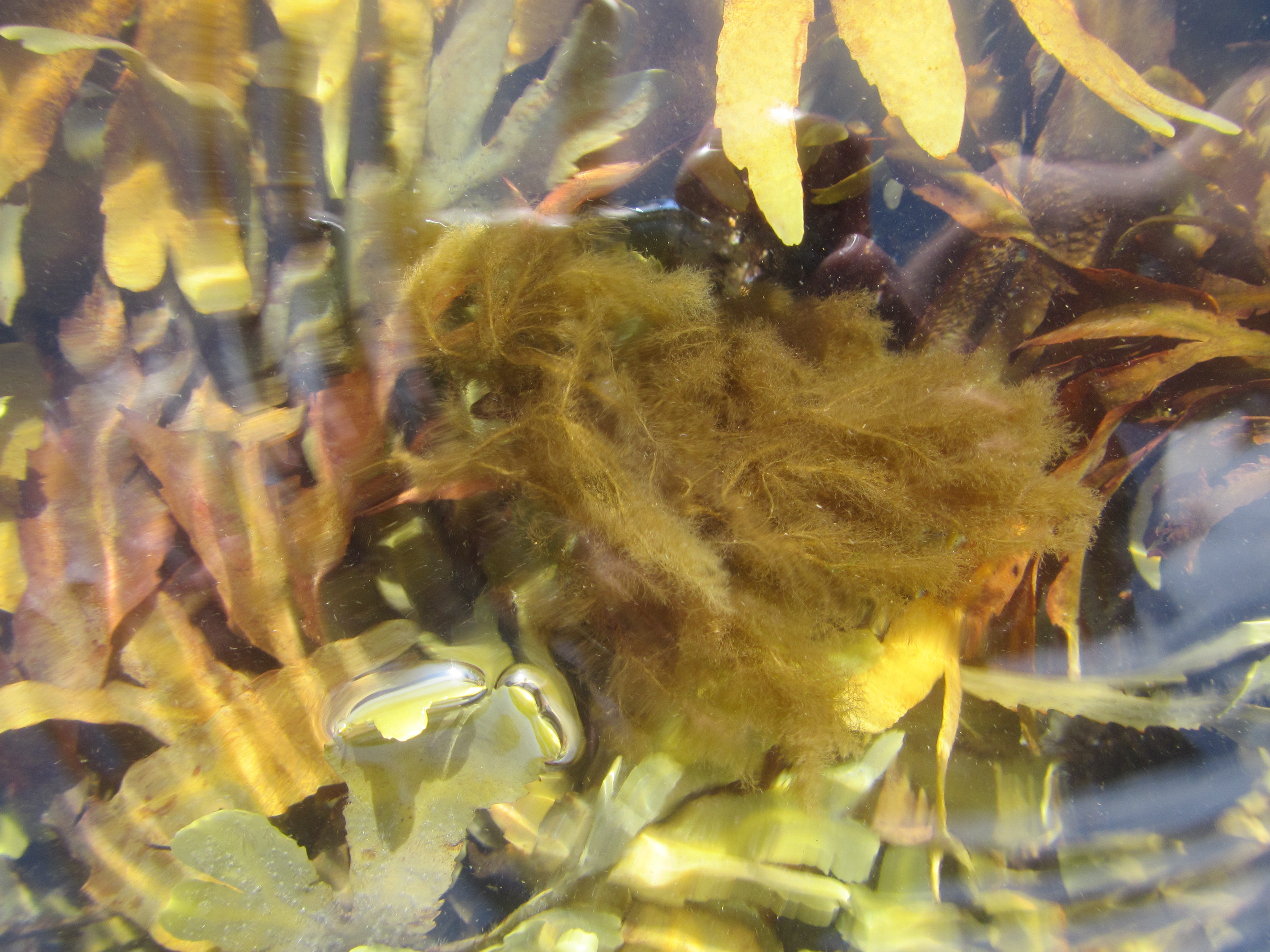
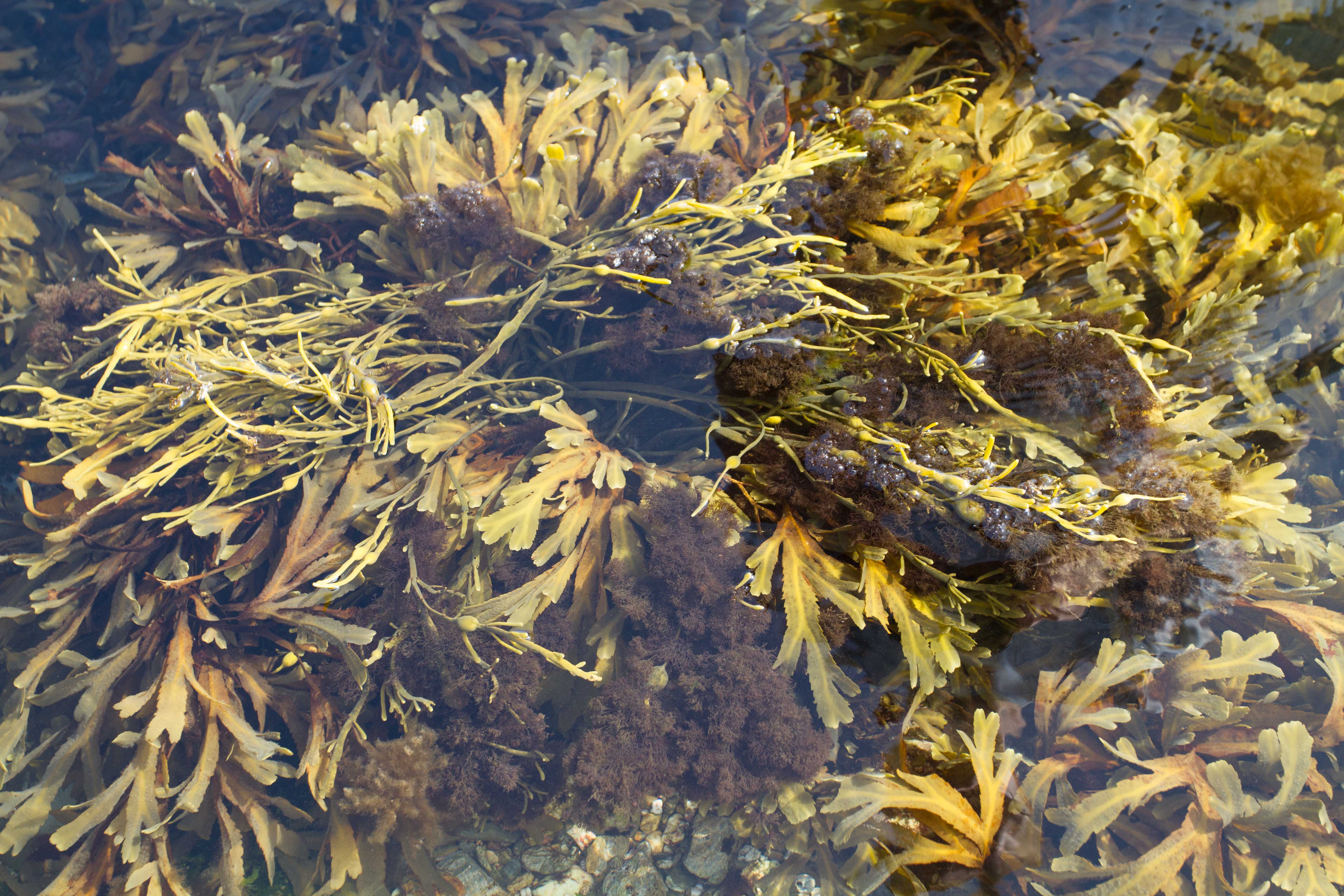
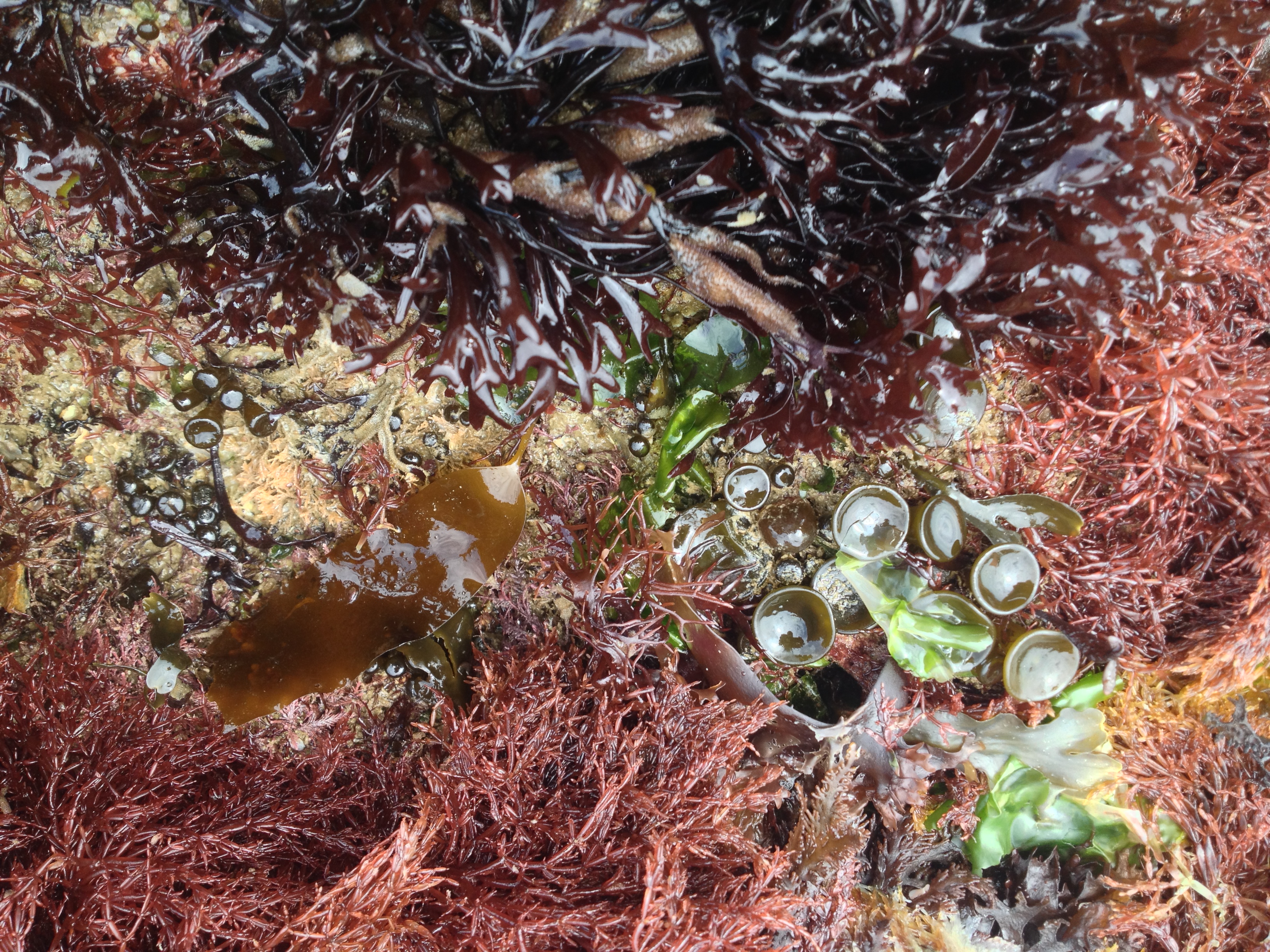
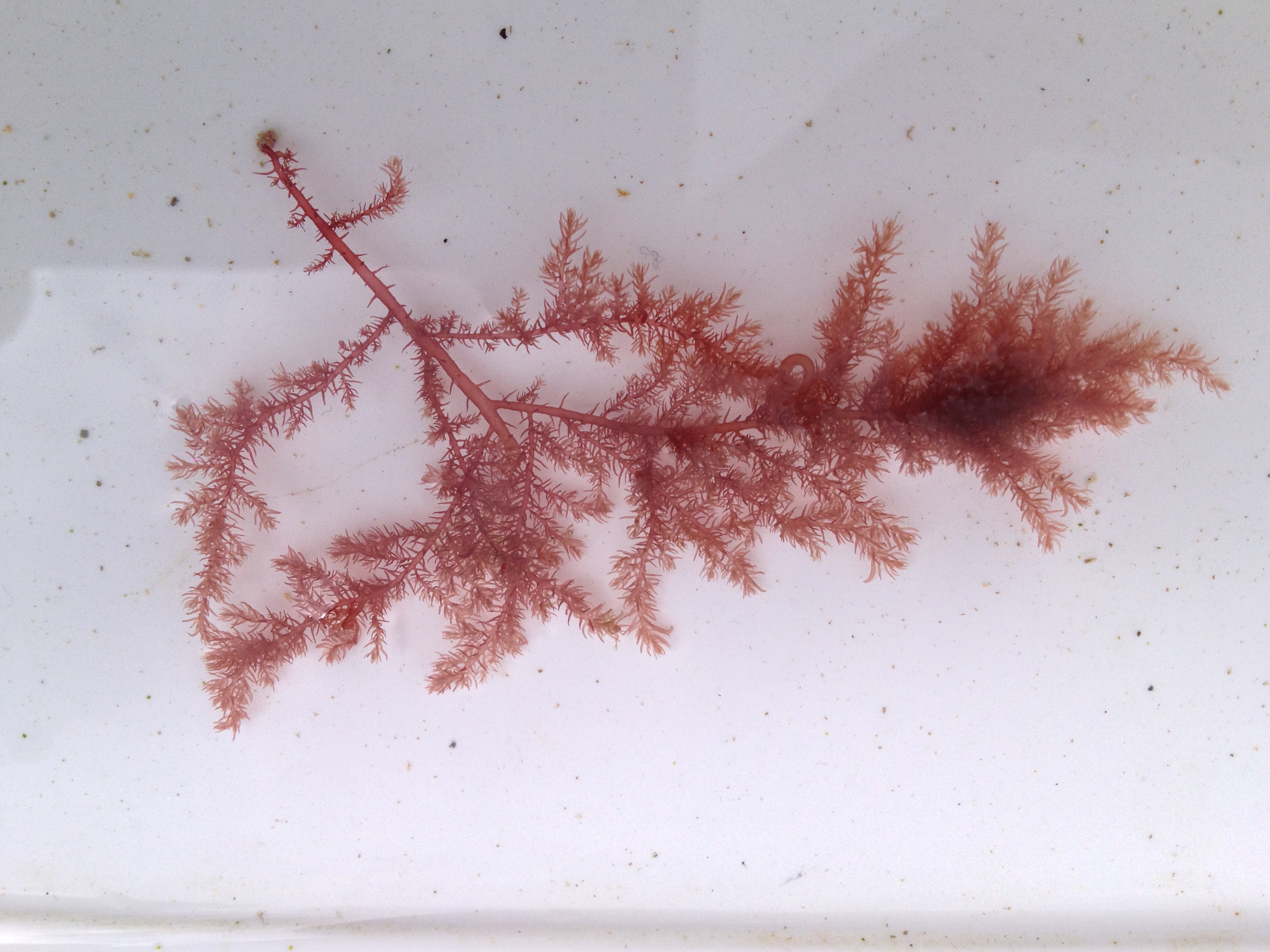
As in Falmouth, the rock pools in Flushing are not looking that great at the moment. Lots of the Corallina has turned white/died (although the clumps in my tank are still their normal purple!). Of course, many species were still thriving, Grape pip weed Mastocarpus stellatus (top), Bunny ears Lomentaria articulata (bottom), new Thong weed Himanthalia elongata ‘buttons’ and a young blade of kelp along with some green Ulva: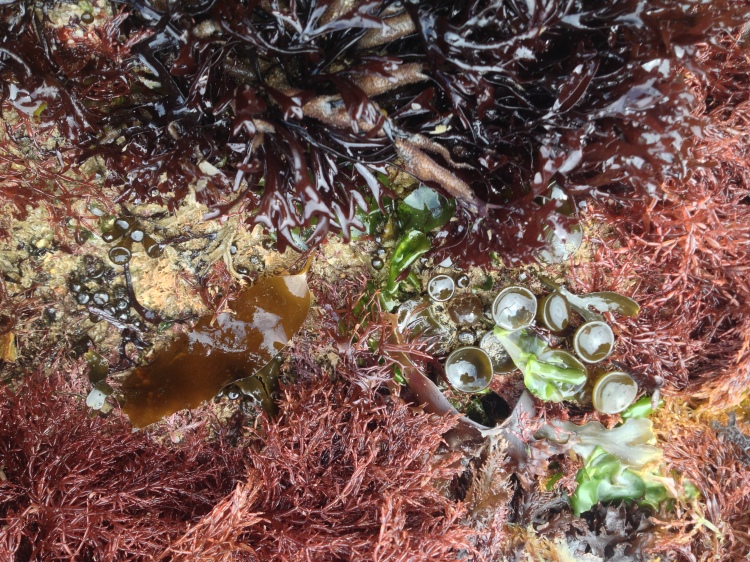 Among the seaweeds that were thriving was Slimy whip weed Chordaria flagelliformis (I am by no means a seaweed expert and I might be wrong about this, please comment if I am!) and also the beautiful Harpoon weed Asparagospis armata growing as an epiphyte on some darker coloured False eyelash weed. Harpoon weed is invasive and so a good candidate to do well int he aquarium (as most invasive species are quite opportunistic and not too finnicky). It died off in the tank before, but I decided to bring some home to try again now I have a chiller.
 Another tangling invasive species: Bonnemaison’s hook weed Bonnemaisonia hamifera (a characteristic curved hook can be seen in the top-middle):
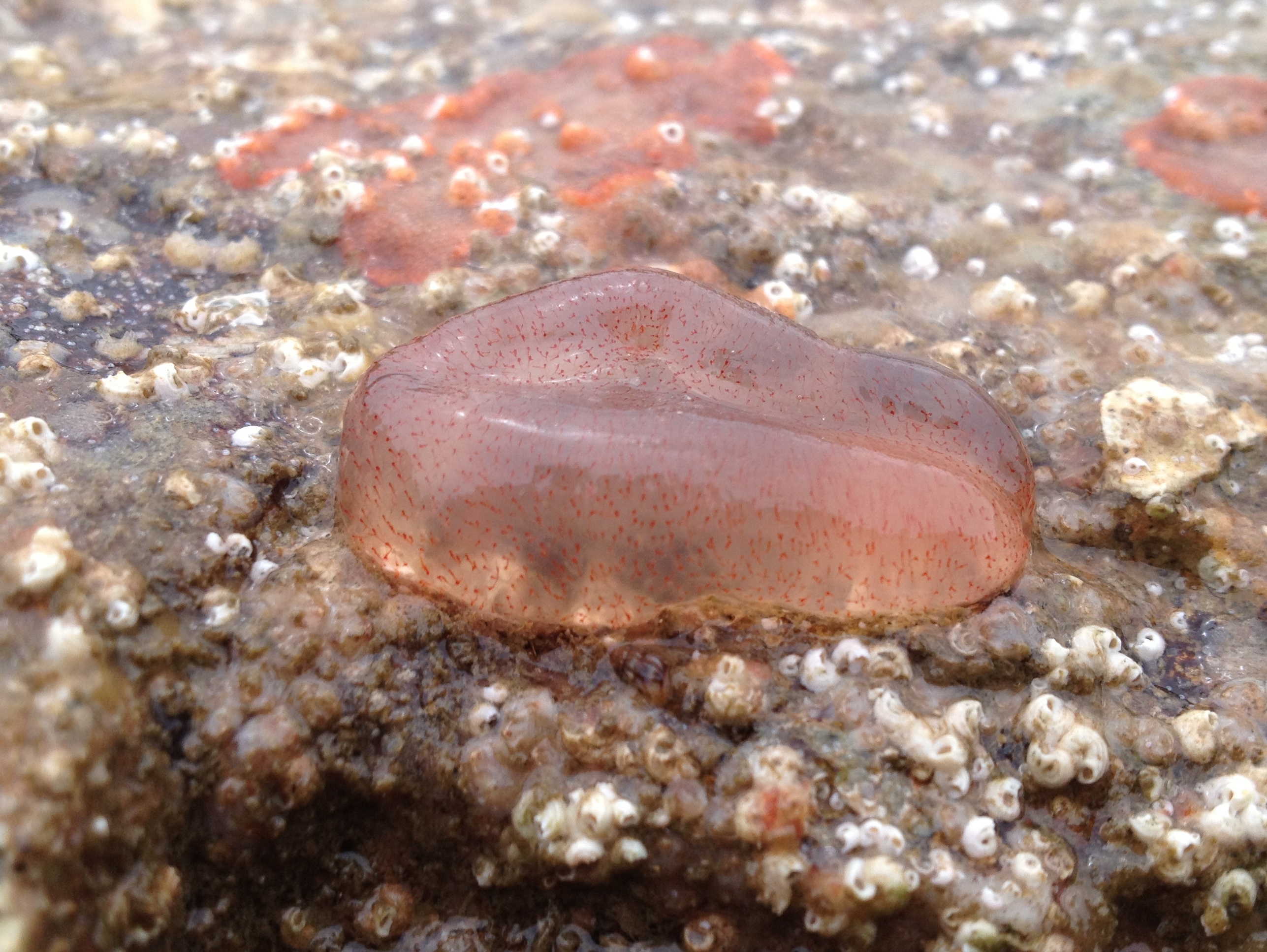
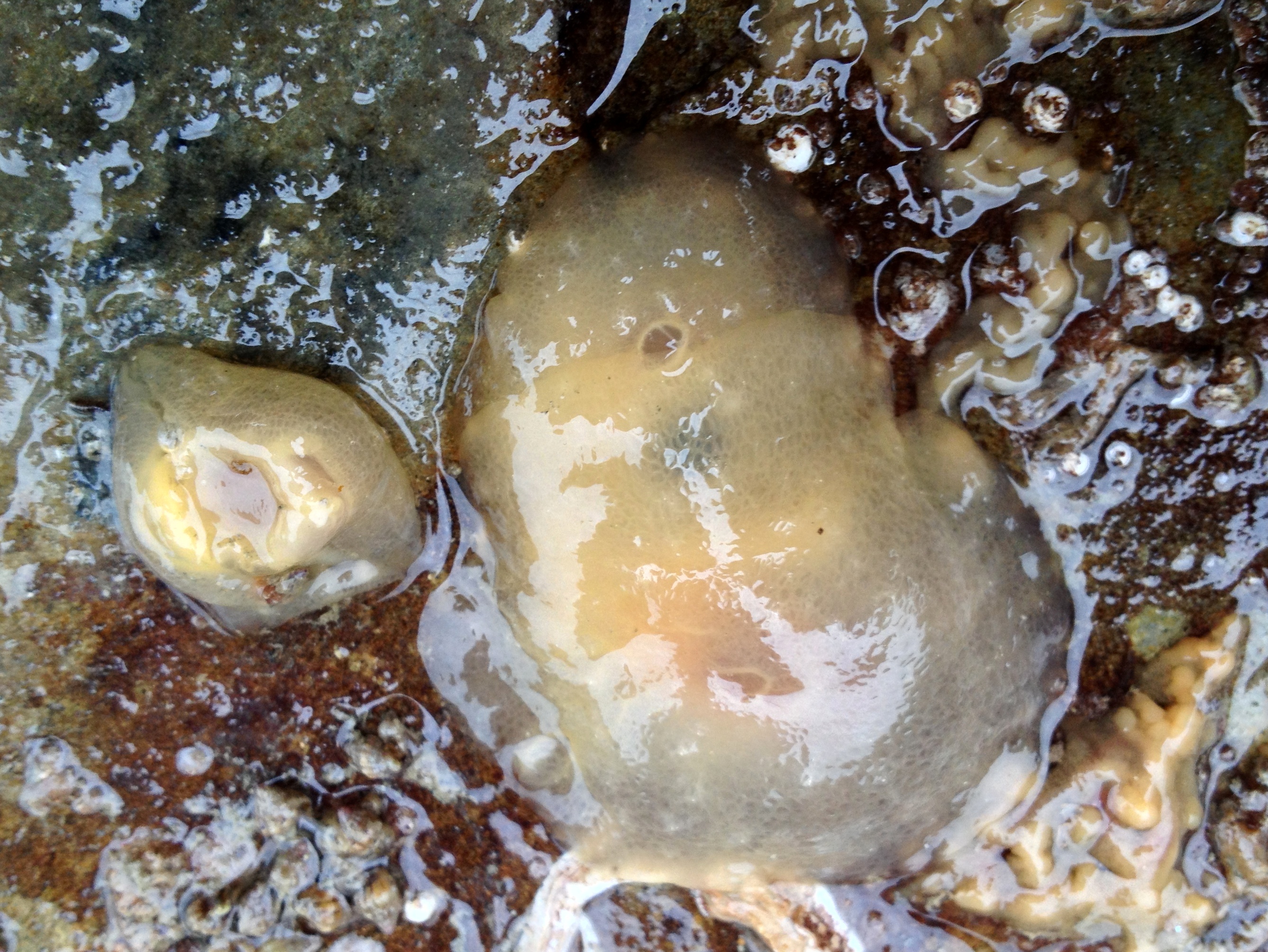
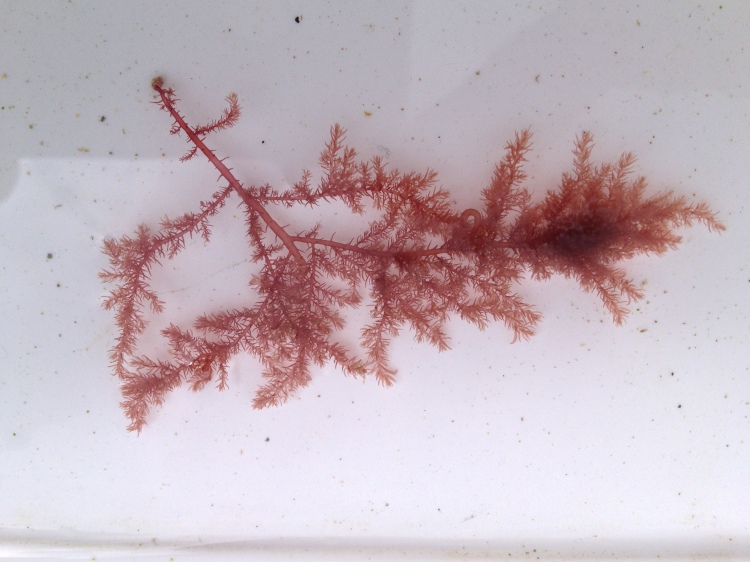 Loads more seaweeds to be found but I will save those for another time. All kinds of tunicates pop up in spring, some of them pretty (see for instance here), some of them less so. For instance the invasive species, the Leathery sea squirt Styela clava and an out-of-focus photo of a second, large (>10 cm) species that did not get a lot of response on the NE Atlantic Tunicata FaceBook group. Aplidium nordmanni was offered, see here for a much smaller version of that species. Not a looker either in any case!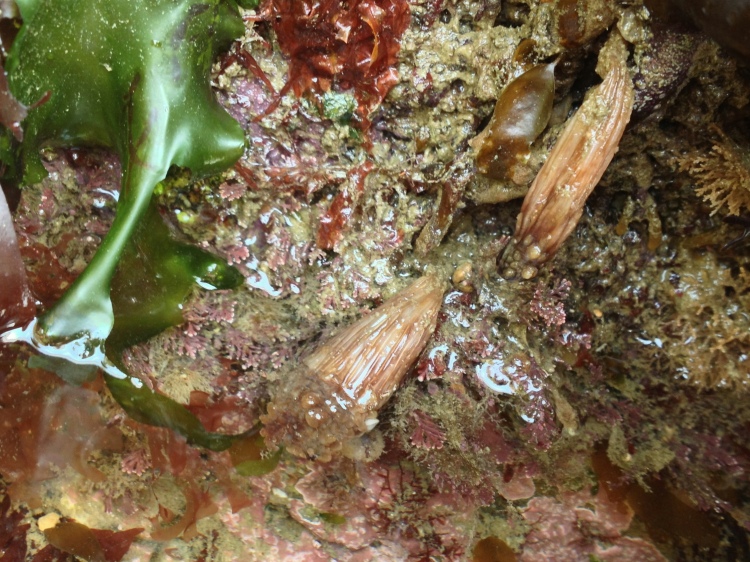
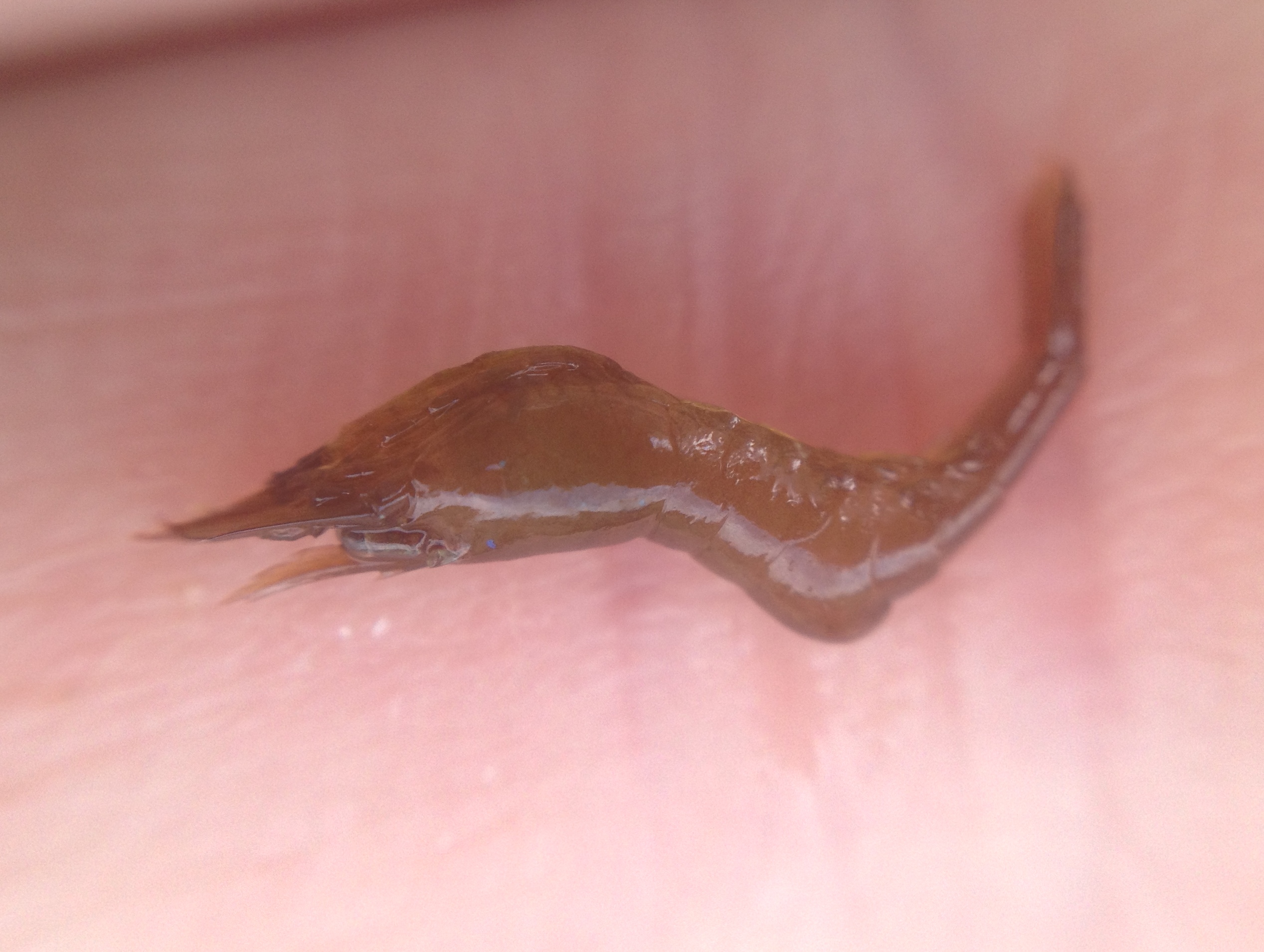
 I brought my little aquarium net and found many juvenile (<1 cm) fish as well as Mysis shrimp. The fish look like gobies but it is hard to see. They were completely translucent and so you can see what this one just ate. I should take some bits of seaweed home to see what comes crawling and swimming out under a little USB microscope (quite easy to make little videos). It is hard to come up with decent images squatting and squinting on a slippery rock with a salt-encrusted mobile phone!


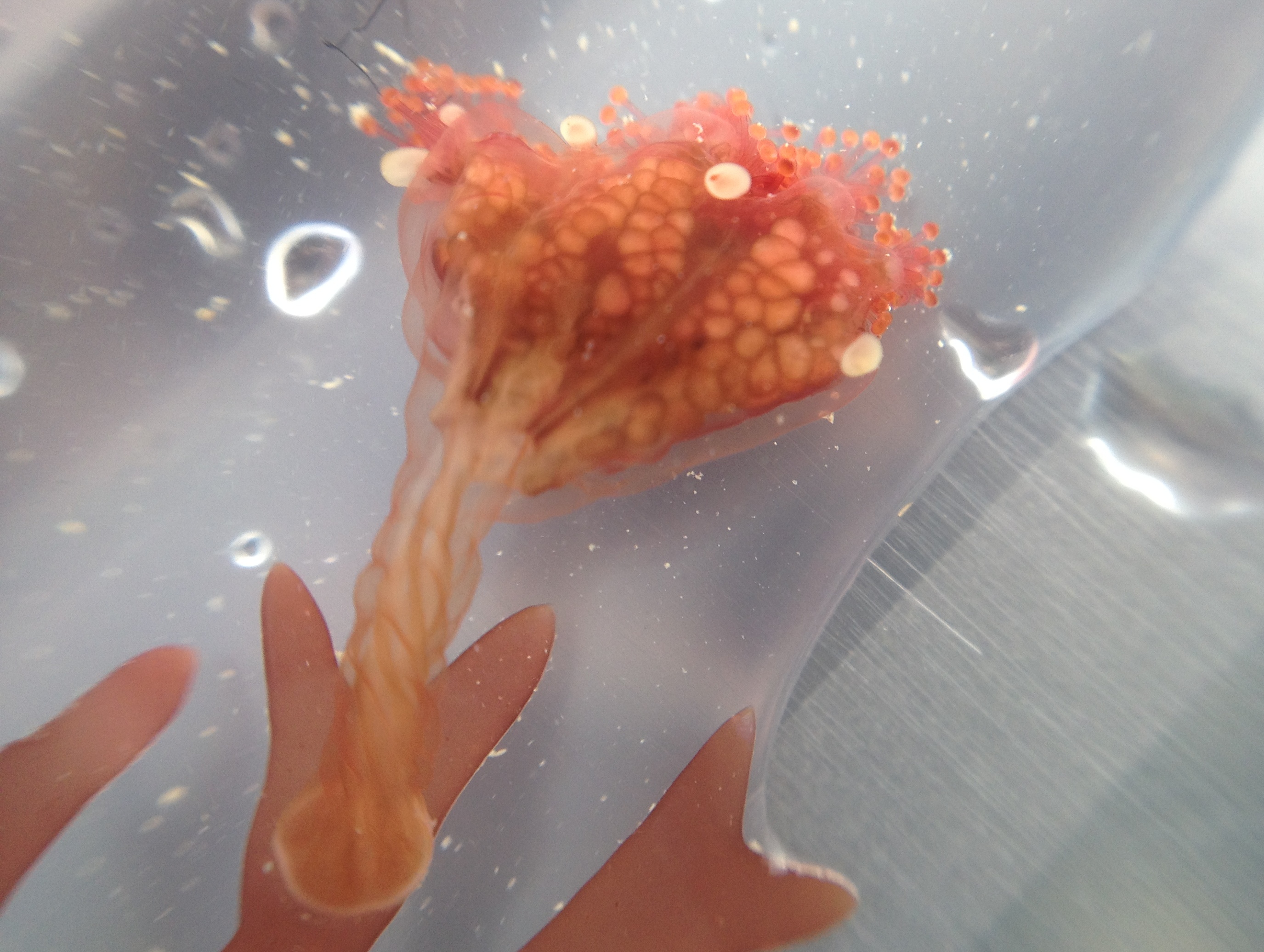
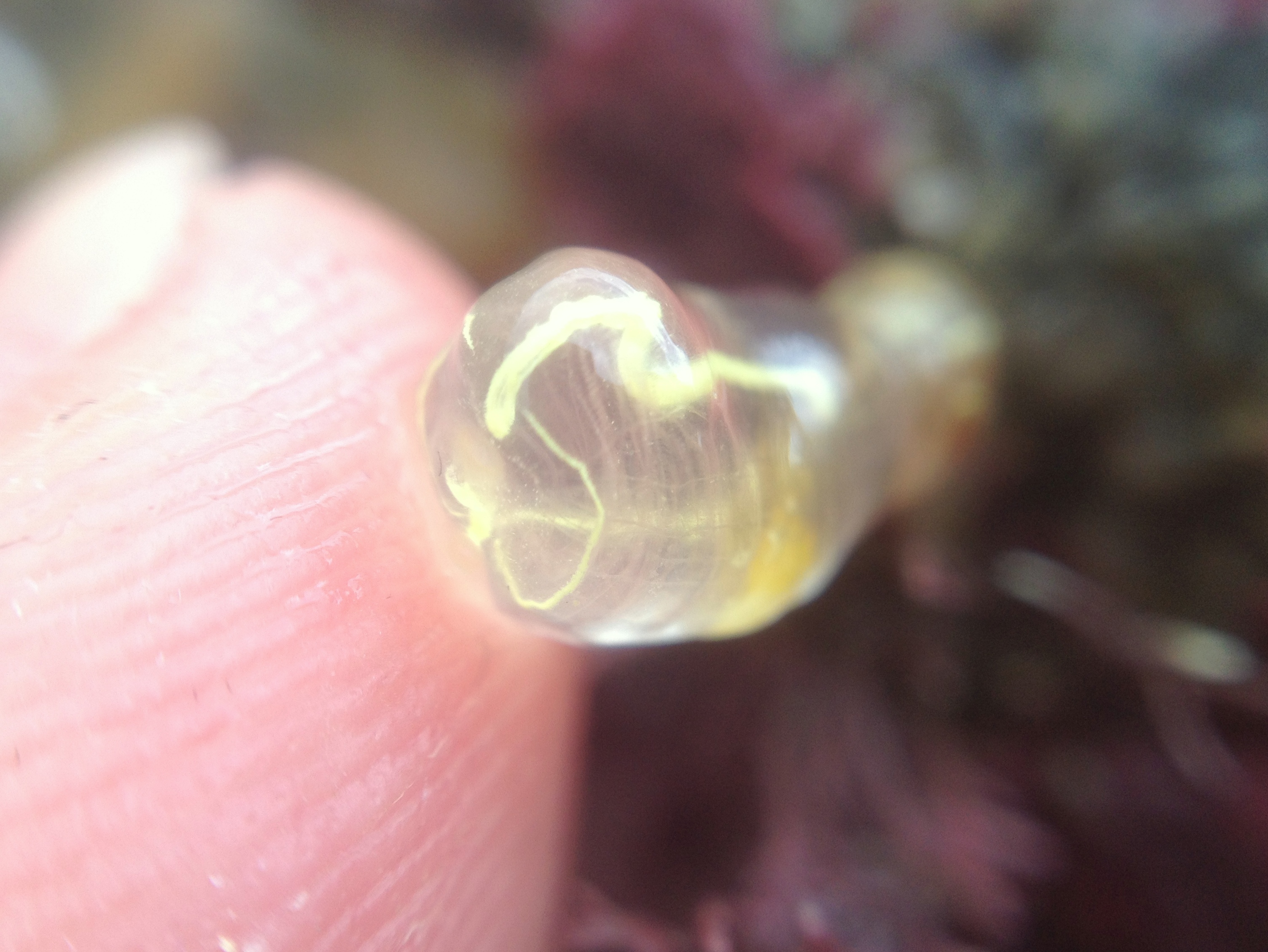
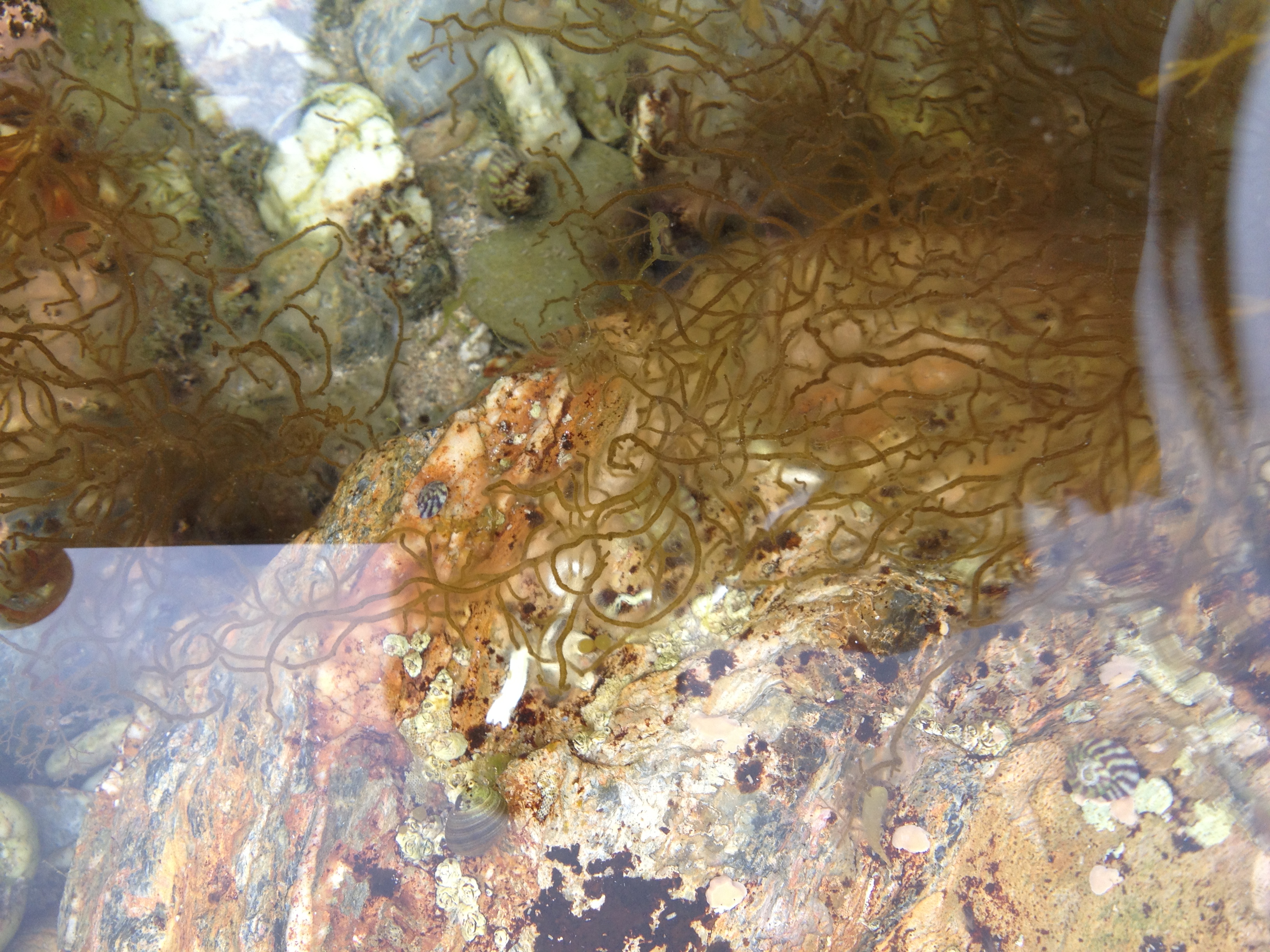
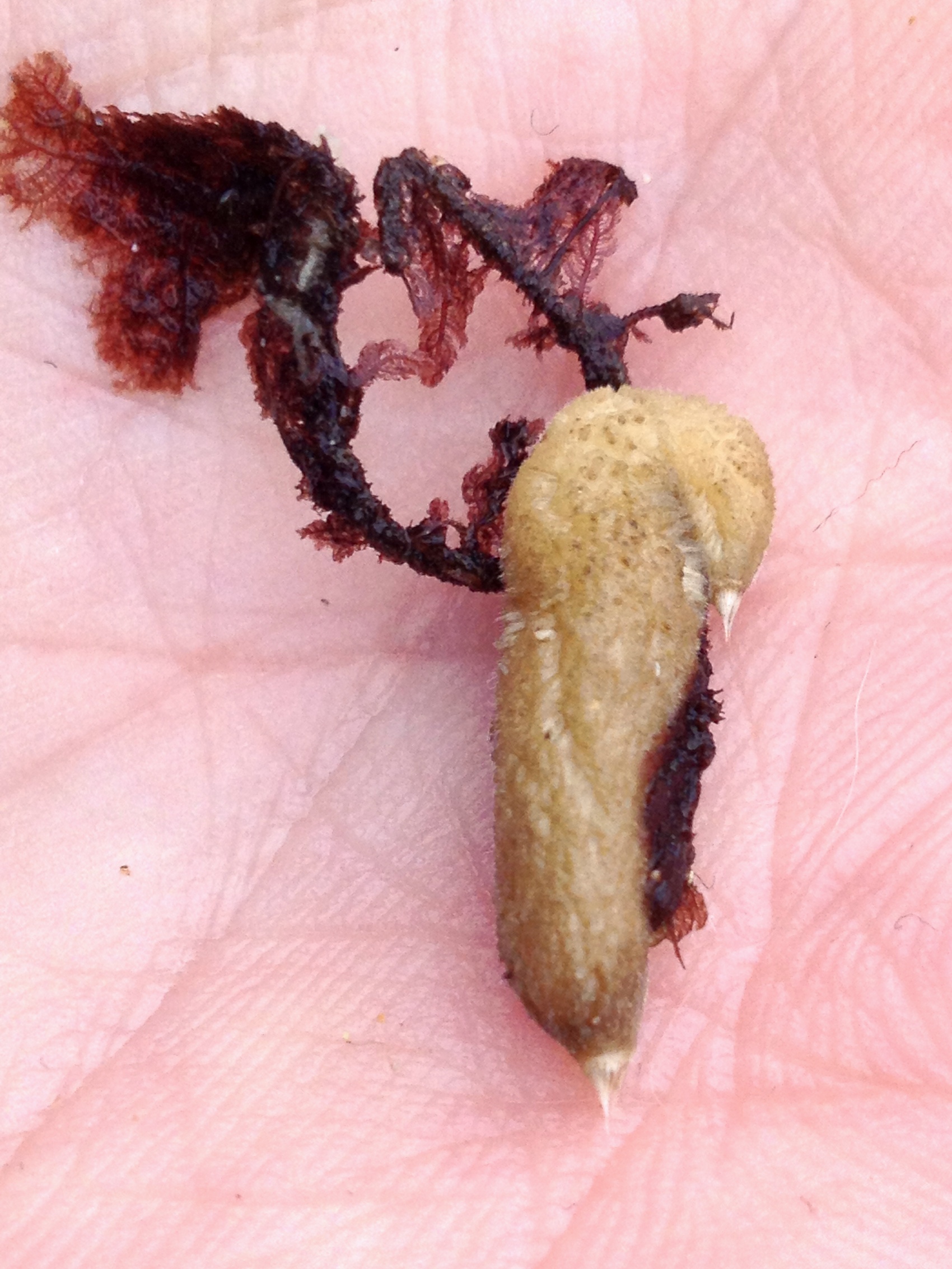
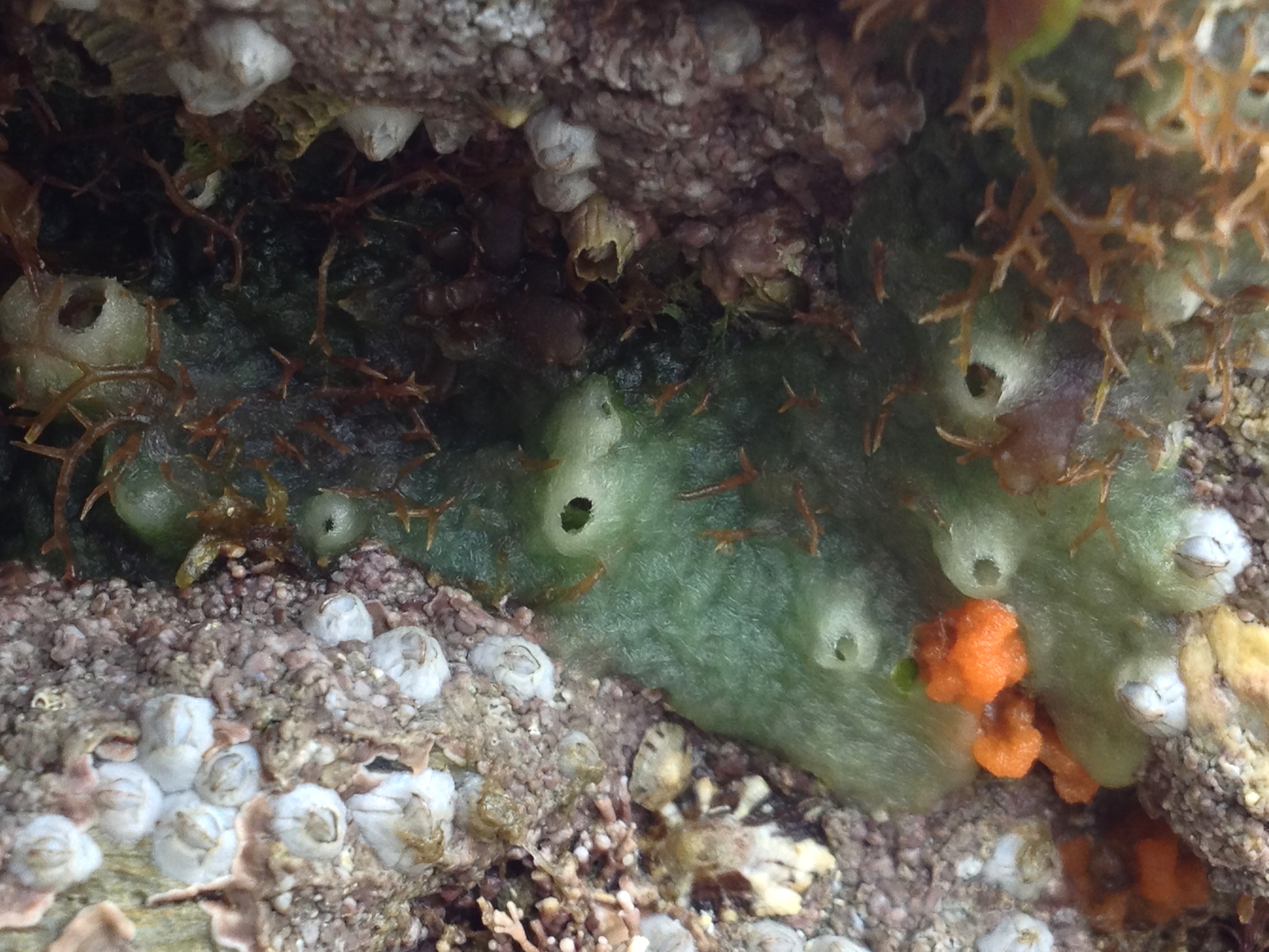
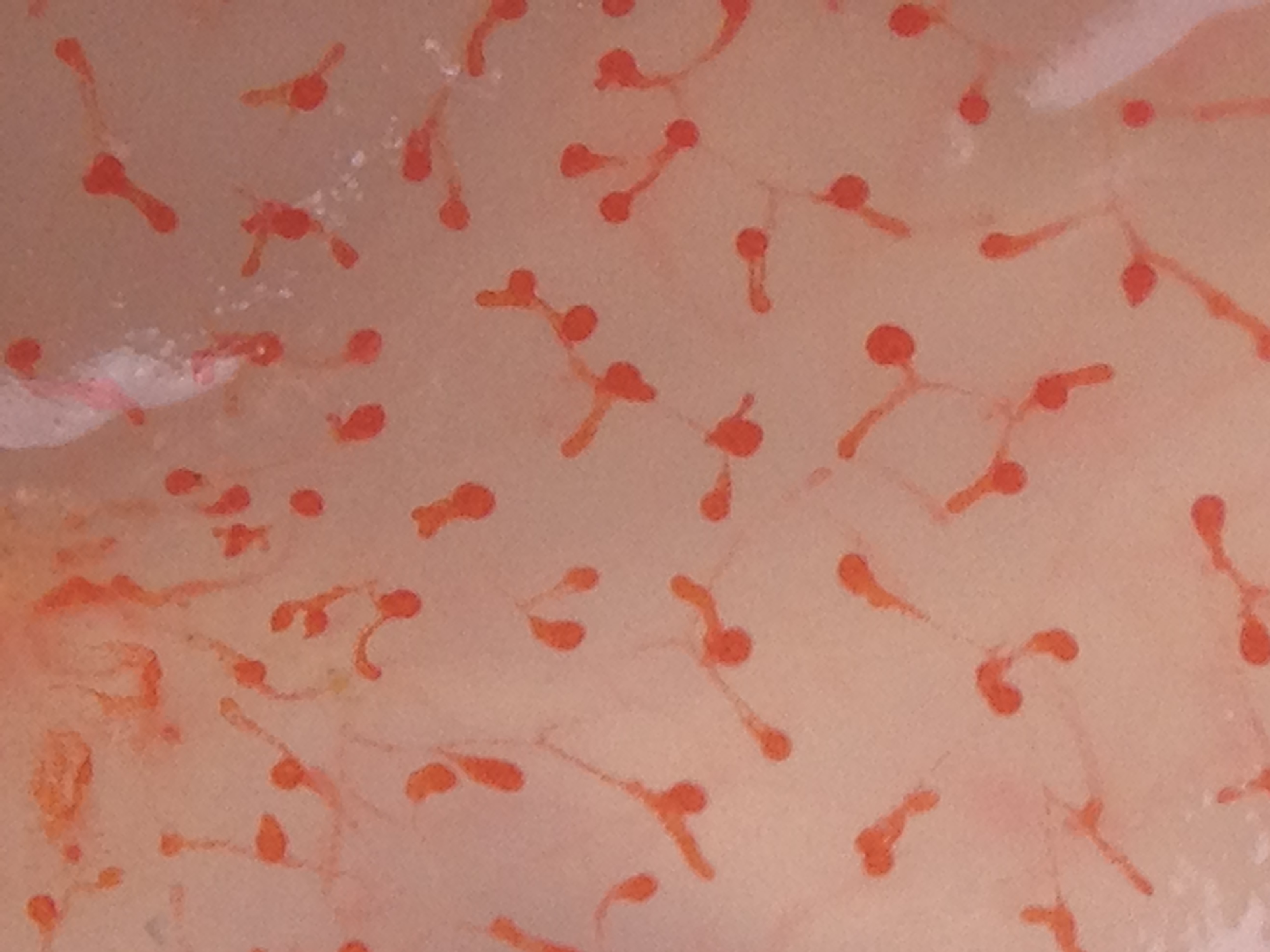
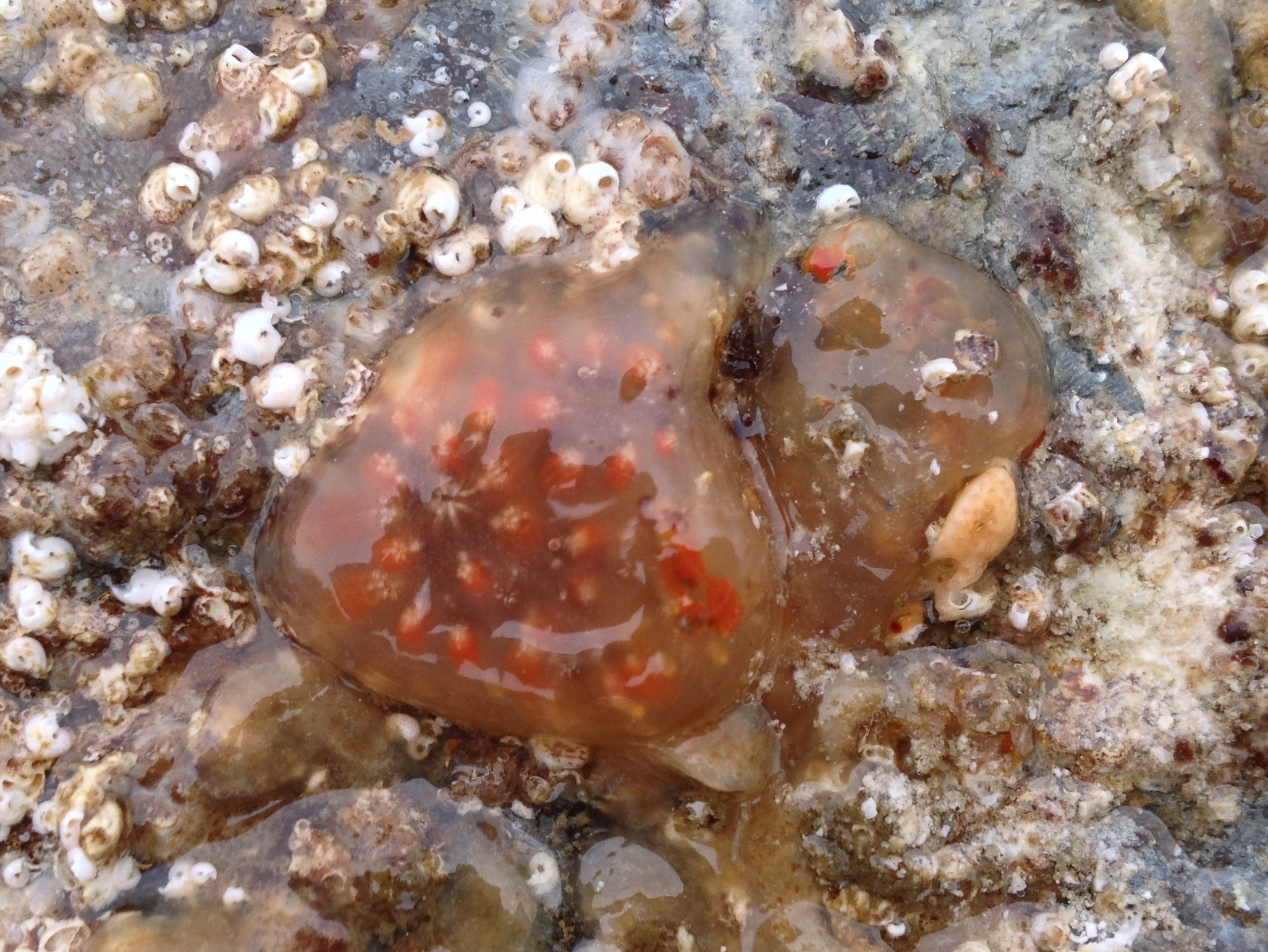
 A trip to Carne Beach on the Roseland Peninsula, east of Porthscato and west of Nare Head. The beach is facing south and the sun was so bright that my iPhone pictures were all overexposed, but I’m not complaining in February! I did not have time to go rock pooling much longer than ten minutes, but in this time, I managed to find Stalked Jellyfish, as described in the previous post. Some very nice rock pools to the east of the beach (the pools to the west where the beach is called Pendower looked even better). On pretty much every Slender wart weed Gracilaria gracilis plant I found a Spotted kaleidoscope jellyfish Haliclystis octoradiatus (see stauromedusae.co.uk for all things stalked jellyfish). I also found a smaller, red species which David Fenwick ID’d as a Lucernariopsis campanulata (last two pictures). I will now keep my eyes out for these beautiful little creatures as their biology and distribution are not well-known and record my findings.









 An Bollenessor