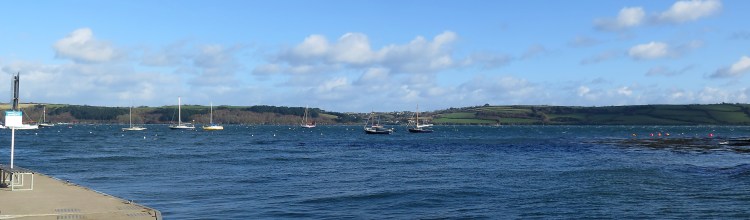
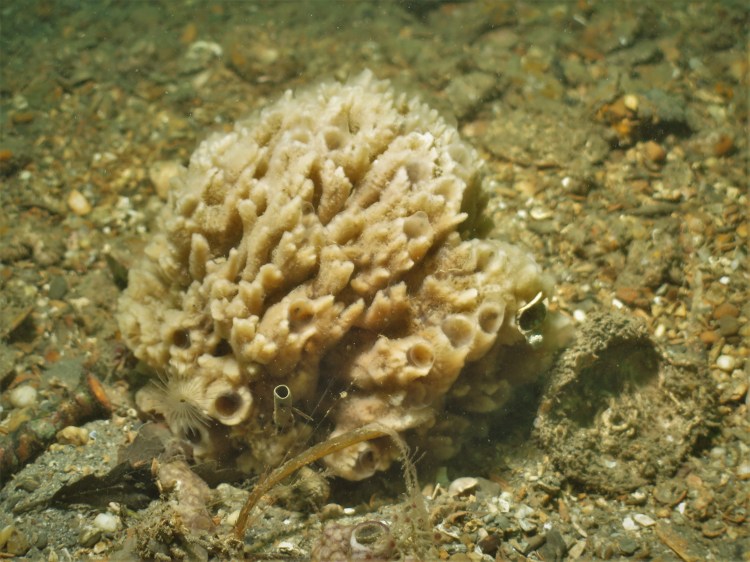
 I had the pleasure to go on two dives with Mark Milburn of Atlantic Scuba on the ‘Stingray’ RHIB this weekend and last, leaving from Mylor Harbour (see photo above). The first dive was in the Helford Pool, a deep area in the otherwise shallow Helford river. Buddied up with Sue and Al, we descended to 18 meters to swim over a gravelly area covered with tunicates and sponges. This was a drift dive but we did not get all the way to the eastern end of the pool where some small maerl beds are located. Swimming crabs and Leach’s spider crabs were very common; there were not many fish though. One exception was a cute little John Dory Zeus faber. I was struggling to take any decent photographs, in part because I have not used my strobe much yet and because I should have two, not just one! Sue Barnes kindly let me use a photo she took of the John Dory for the blog; also added is a photo of a sponge, one of the few half-decent ones I managed to take: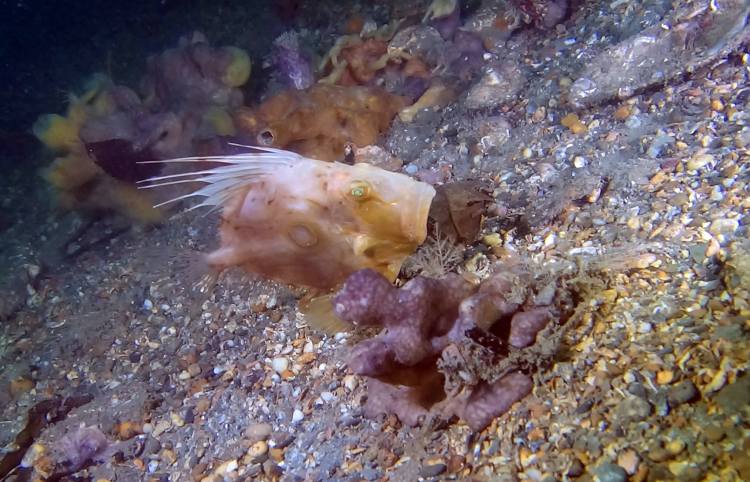
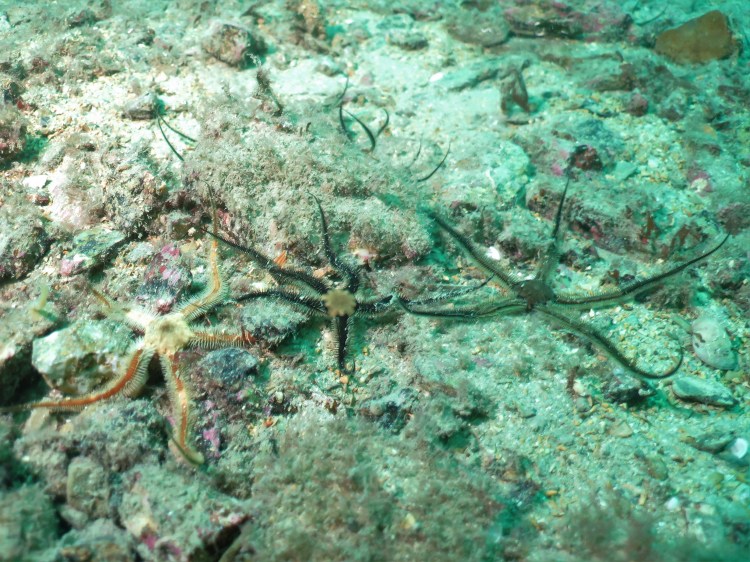
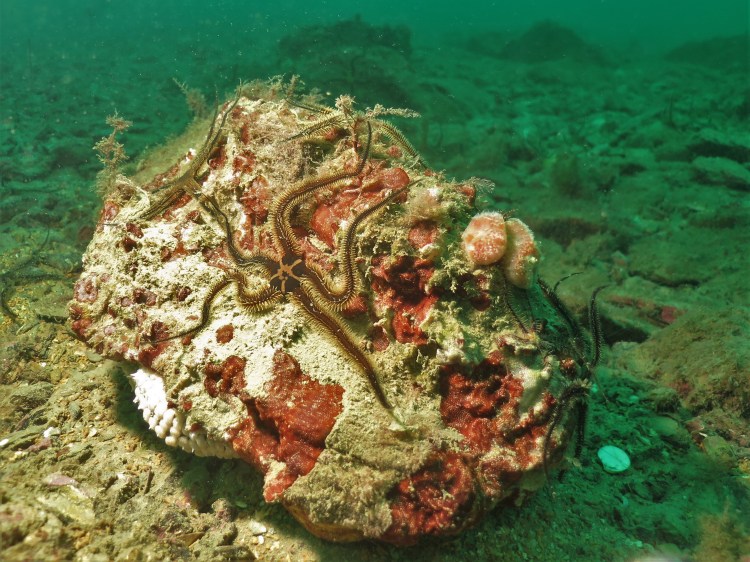
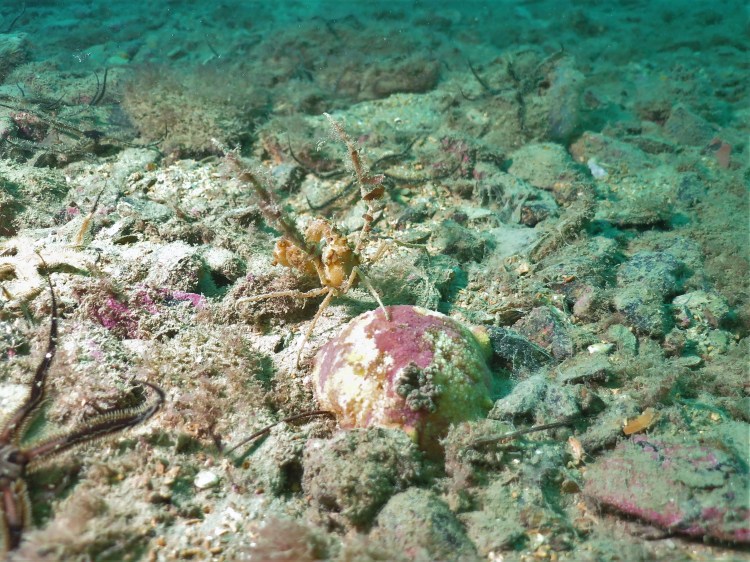
 The dive today took us to the cannon ball site, roughly a mile from Pendennis Castle, and an area where many of the cannon balls fired for practice ended up. With buddy Alex we descended to around 16 m using a shot line. Again a flat ‘rubbly’ area with few fish. The seafloor was covered with Common brittlestars Ophiotrix fragilis. The viz was quite good, and it was much lighter than the previous dive. I also had *a bit* more luck with the strobe. Leach’s spider crabs were common, and we also saw some Sea lemons, Doris pseudoargus, a large seaslug.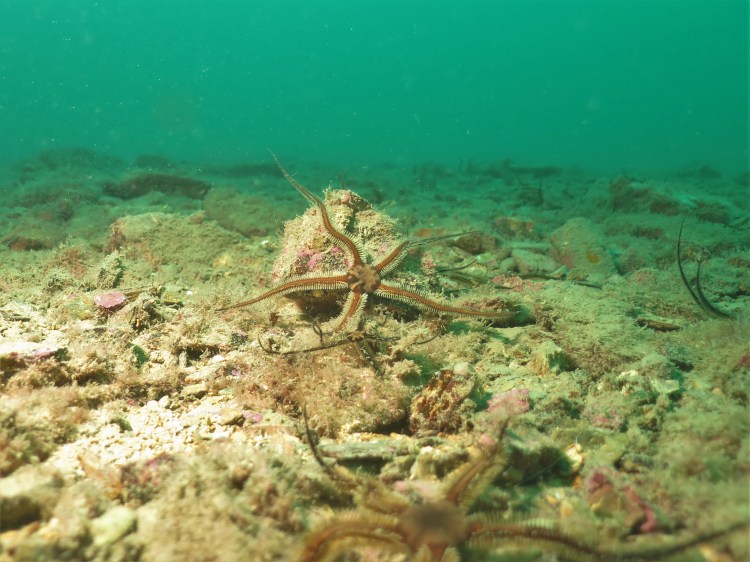
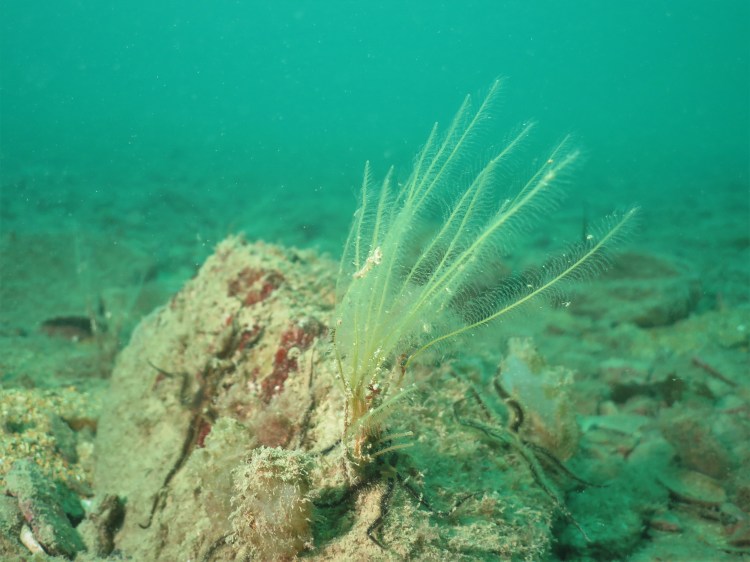
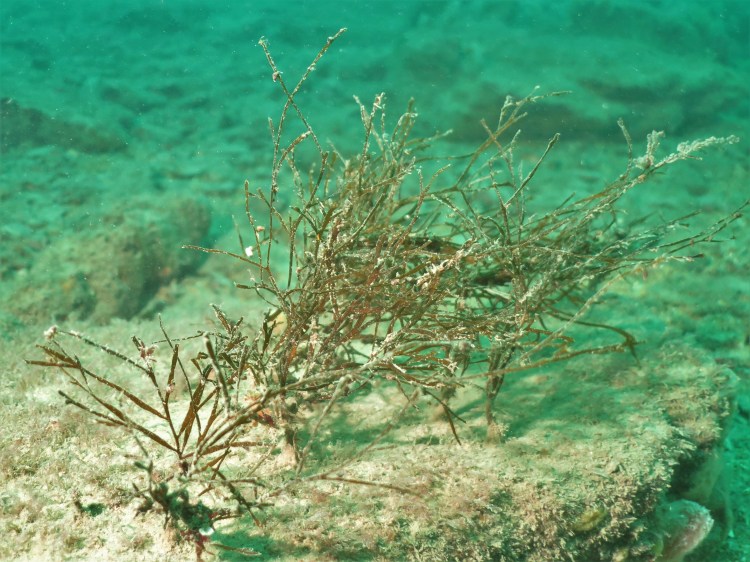
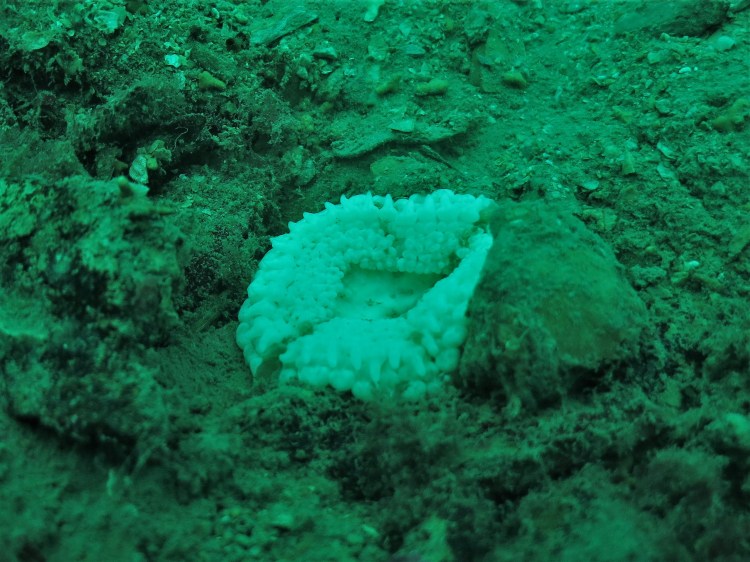
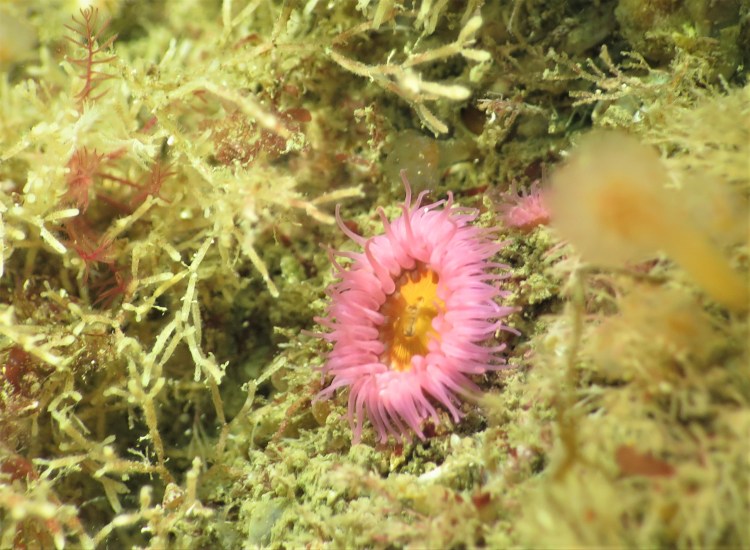
 Up next three common species: a little Rock goby Gobius paganellus, the colonial Antenna hydroid Nemertesia antennina and the colonial sea squirt Aplidium elegans (thanks David Fenwick). I keep my eyes open for seaweeds too of course, there were some small red species and what I suspect is Desmarest’s prickly weed Desmarestia aculeata. I found out back on the boat that I completely missed a small octopus that Alex pointed out, argh! I was very happy though that I managed to spot an Imperial anemone Capnea sanguinea, which is an uncommon species. The photo of this all-white individual was taken without a strobe; I really should have taken more time to get a decent shot. A good reason to go back though, and maybe we can spot some cannon balls then too. The water is 13-14 degrees and so it is still doable to dive with a wetsuit.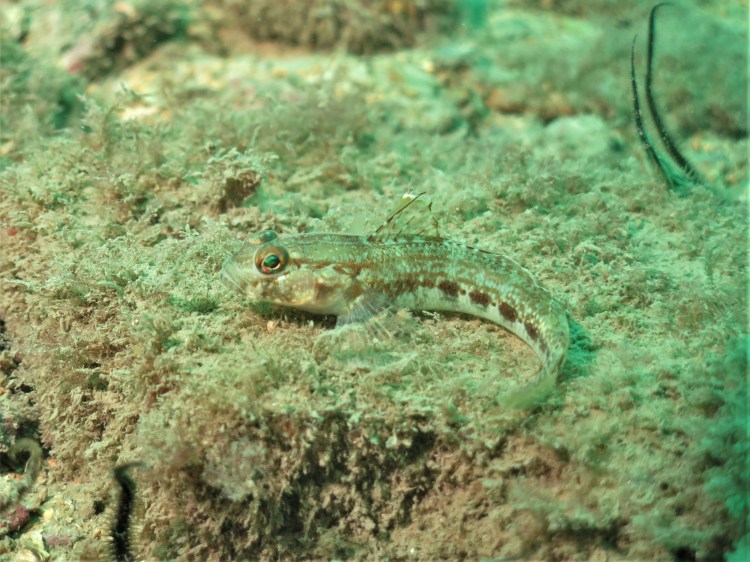
Category Archives: anemones
recent rockpool sightings
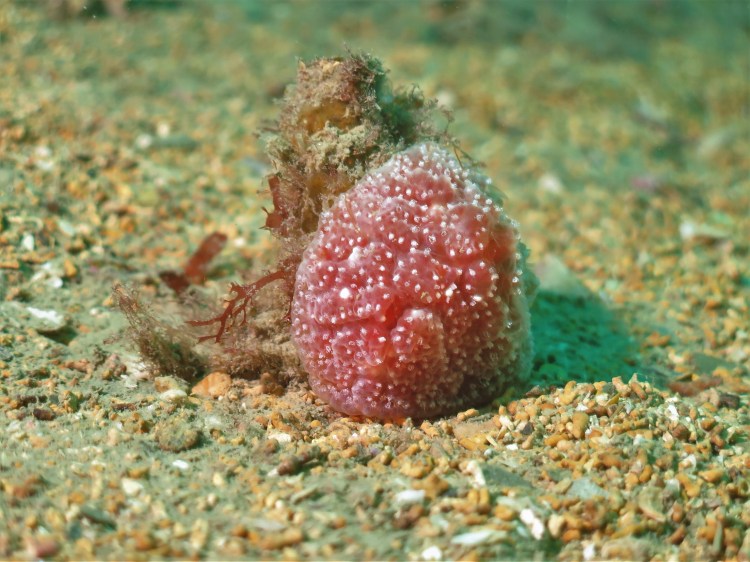
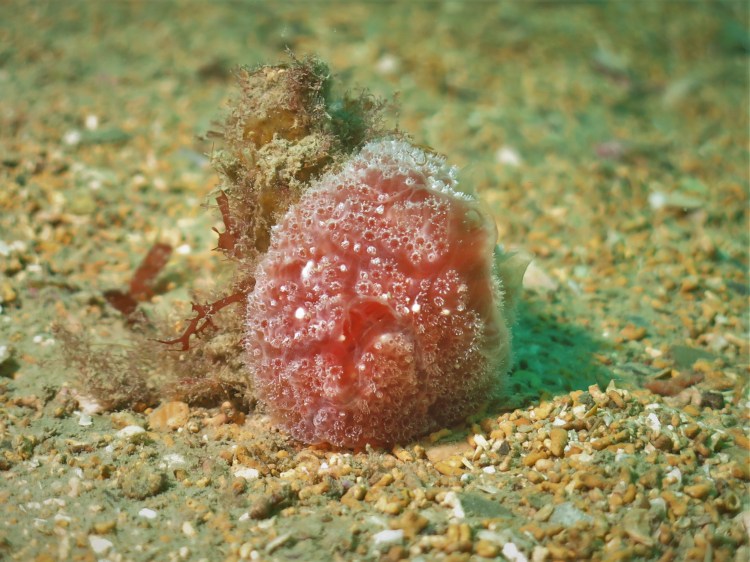
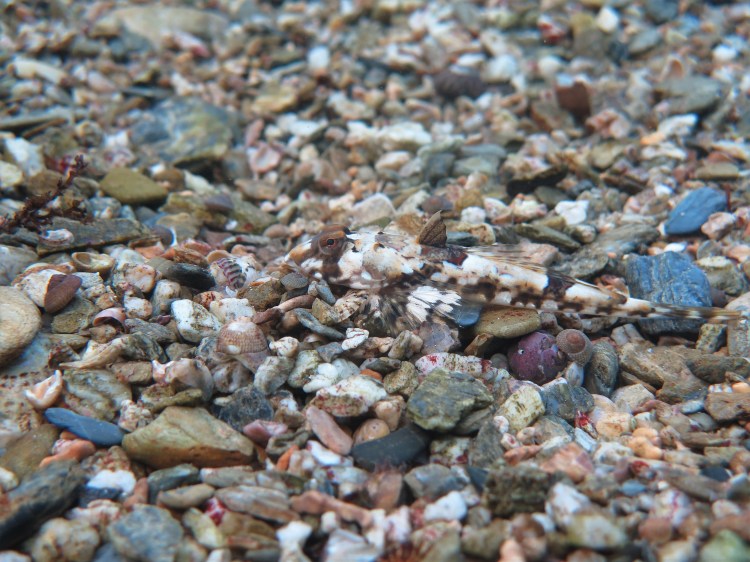
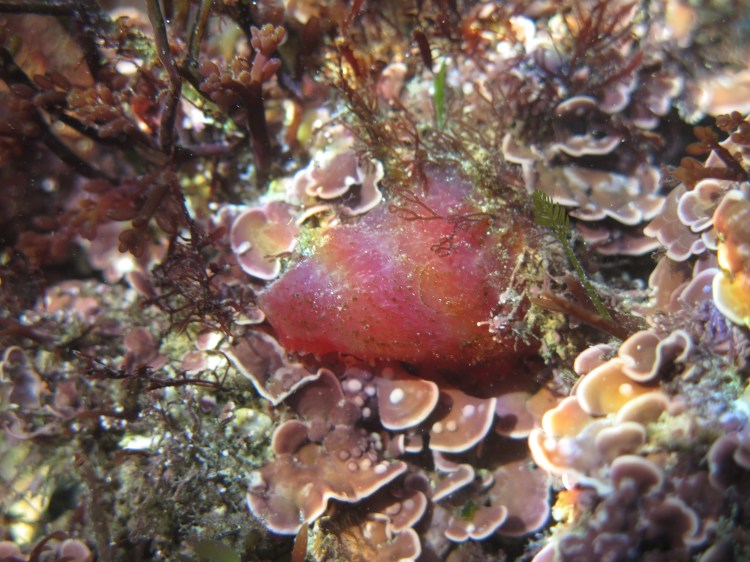
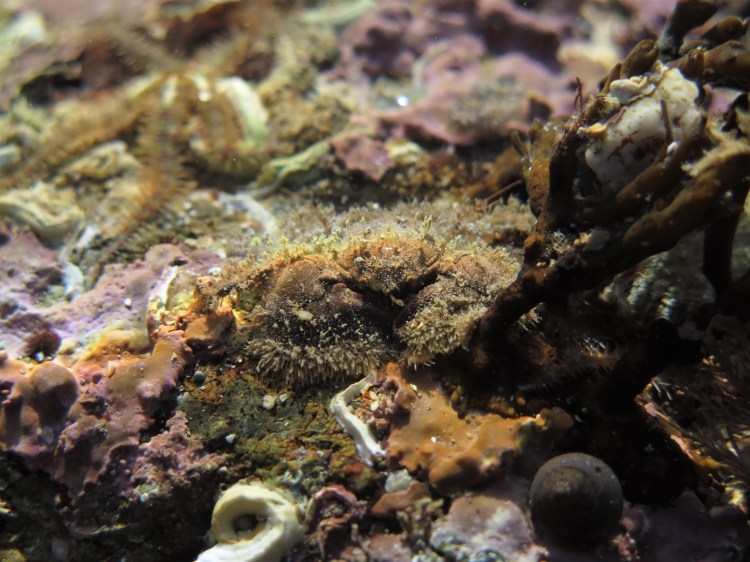
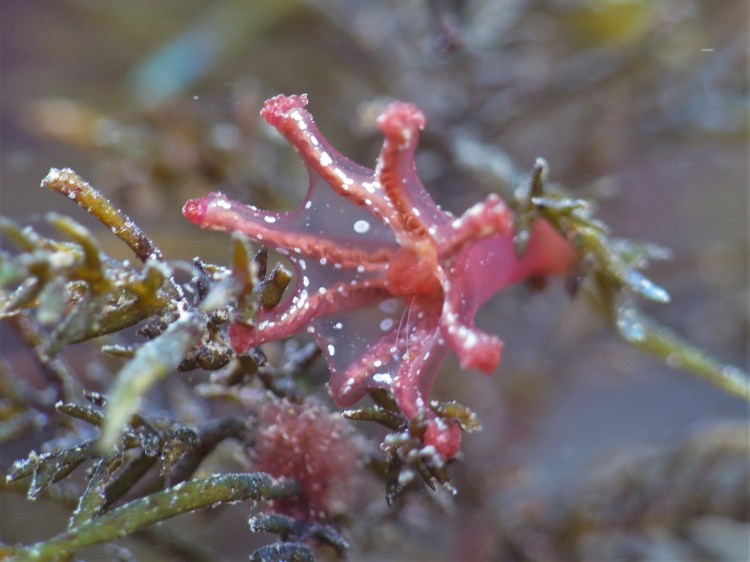
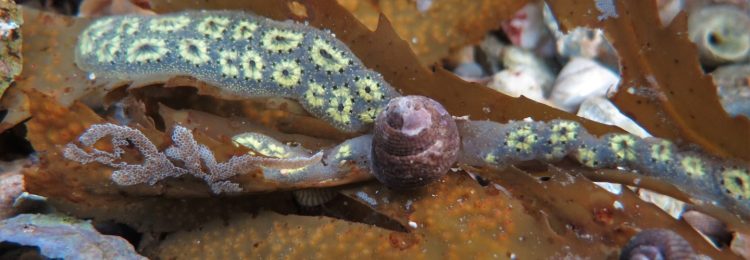 During my ‘seaweed sessions’ I of course keep my eyes open for animals too. Most prominent are the beautiful Snakelocks anemones Anemonia viridis (see also here). Other anemone species seem much more rare, such as the Dahlia anemone Urticina felina. Little schools of Mysis shrimp are very common (and very hard to photograph) but fish seem less common than a few months back. The common dragonet Callionymus lyra is (as the name suggests) not uncommon but hard to approach, the third photo was the best I could do and demonstrates how masterfully it is camouflaged (but see here what fullblooded males can look like!). Next a very pretty pink sea squirt species and a Broad-clawed porcelain crab Porcellana platycheles, completely flat so, very-well adapted to living under rocks. Finally, a tiny stalked jellyfish Calvadosia campanulata. Stalked jellies seemed to have disappeared over summer, but like the seaweeds are making a little comeback during autumn. There are not many around though, I have seen less than one per hour snorkelling (see this post for better stalked jellyfish photos; I need to work on the depth of field!).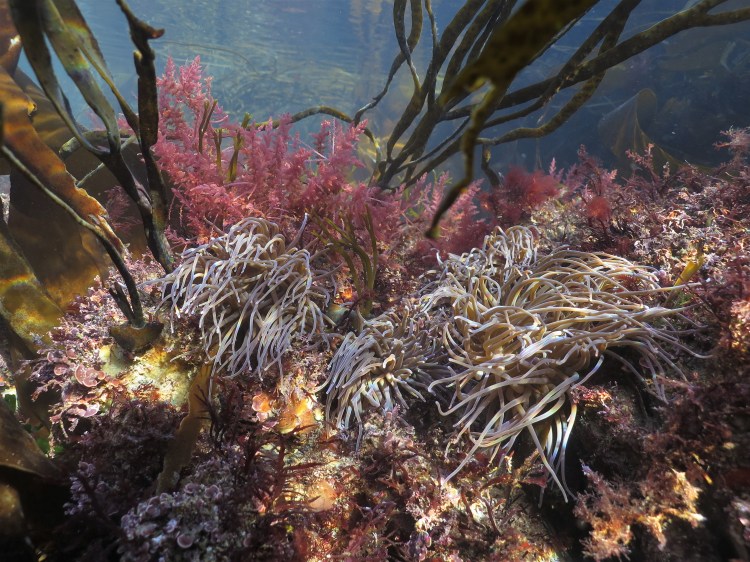
Raglans Reef
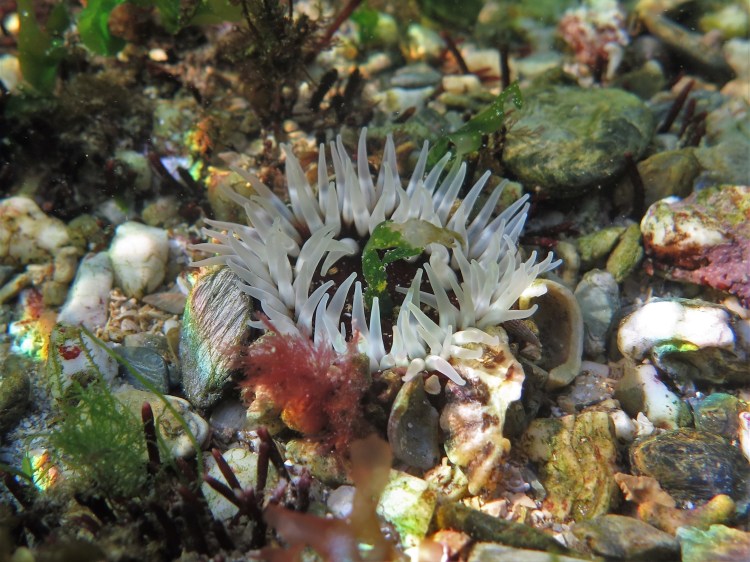
 It has been a long time coming, but I finally managed to go on a boatdive to the Manacles this weekend. I rented my gear at Seaways in Penryn and got on board the Atlantic Scuba rib ‘Stingray’ in Mylor Marina. Nine divers were on board; I was teaming up with Thomas and his intern Andy from HydroMotionMedia (make sure to check out the revamped website), who are working on a documentary about Marine Conservation Zones (the Manacles are one). The Manacles are a group of rocks east of the Lizard peninsula about half an hour by boat from Mylor which historically have claimed many ship wrecks, and they form one of the best dive sites in the UK. The name is an anglicization from the Cornish ‘Meyn Eglos’, meaning church stones. It was a beautiful sunny morning, and when we were close we spotted several Common dolphins Delphinus delphis, who came up to the boat, an awesome start! At slack tide, we descended to about 18 meters to inspect the walls of Raglans reef, the outermost pinnacle of the Manacles group. For the first time, I saw many of the species I was familiar with only from the internet and books with my own eyes: Cuckoo wrasse, Dead men’s fingers (a soft coral), Ross coral (which is not a coral but a Bryozoan), enormous amounts of Feather stars (see this recent post when I found them first on holiday in France), Sun stars and of course the incredibly pretty Jewel anemones Corynactis viridis:
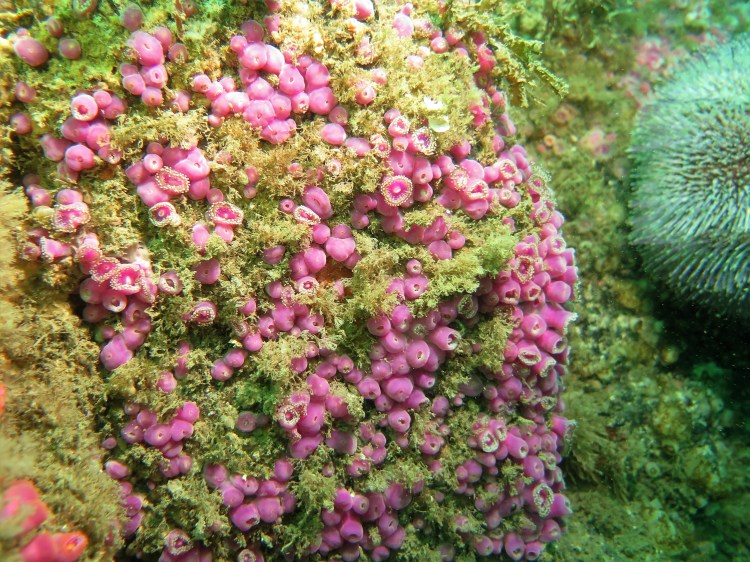
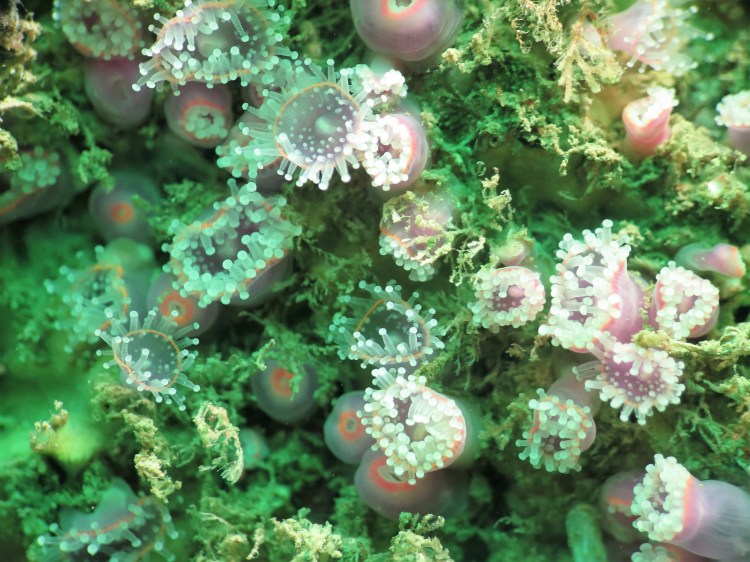
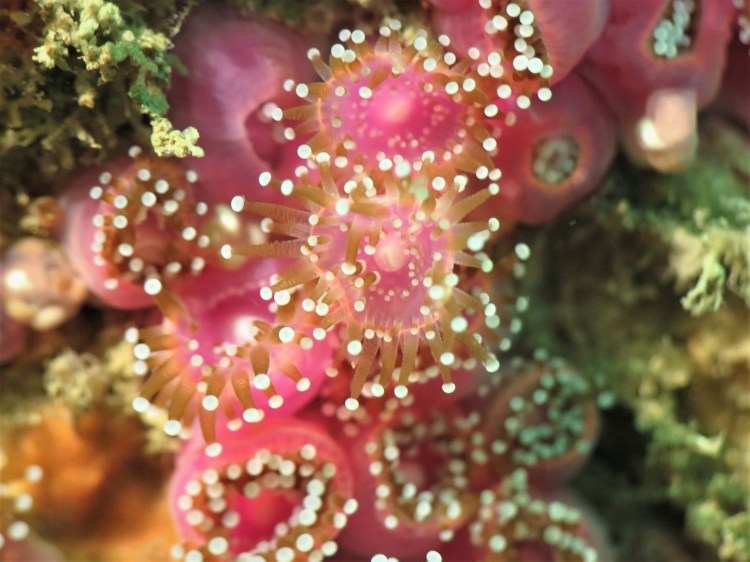
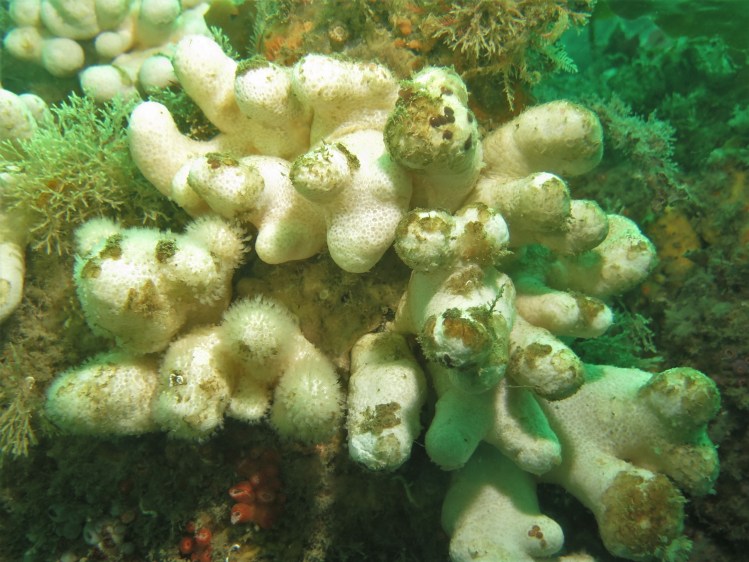
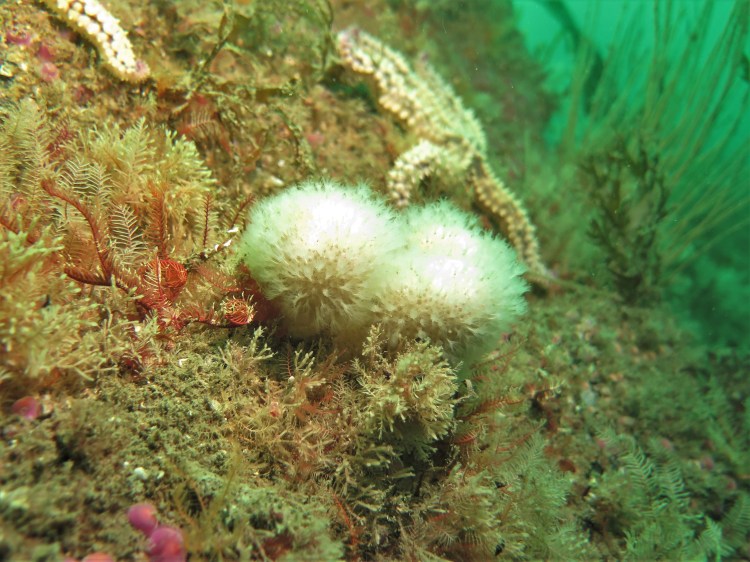
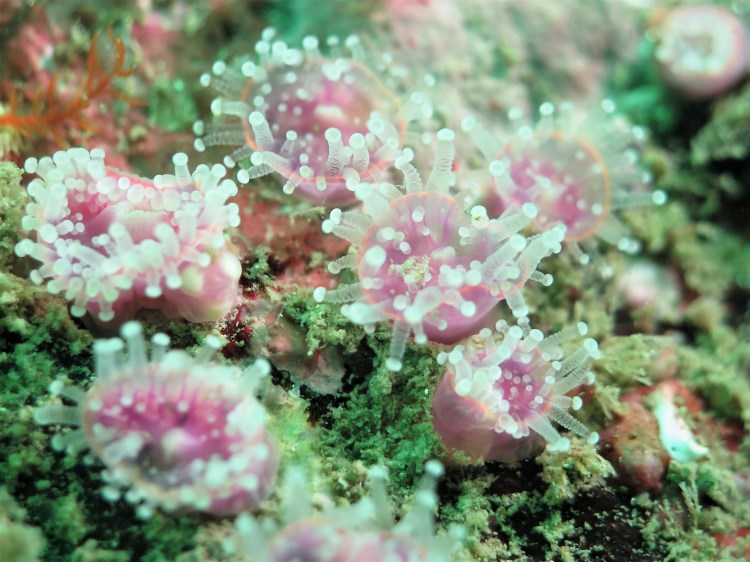 The photos are OK but I could do a lot better, this was in part due to my camera malfunctioning for a bit and my dive was pretty short anyway, as I guzzled too much air (I need to do some sports and drink less beer!). Also, I need a lot more practice with video light and strobe. However, this dive was primarily about checking out the new scenery. Some shots of other species below: the Edible sea urchin Echinus esculentus, Elegant anemone Sagartia elegans (variety rosea) and Dead men’s fingers Alcyonium digitatum. I hope to go back to the Manacles on the Stingray very soon!
Feather Stars in Bretagne
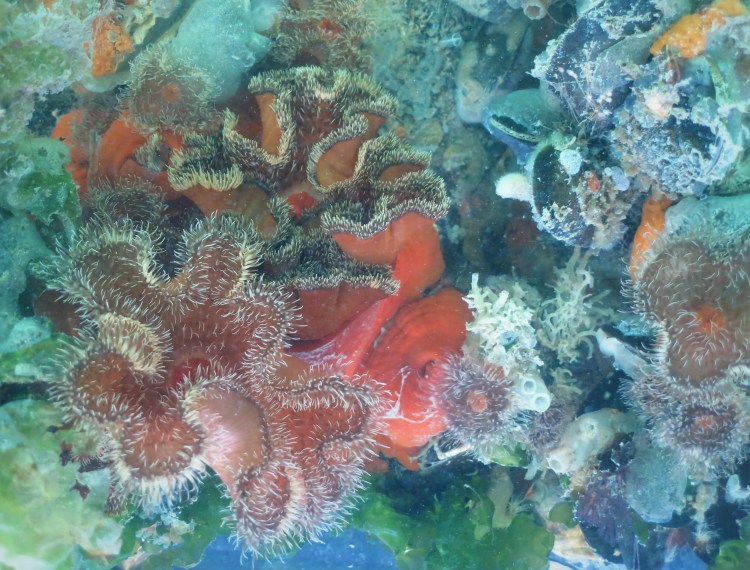
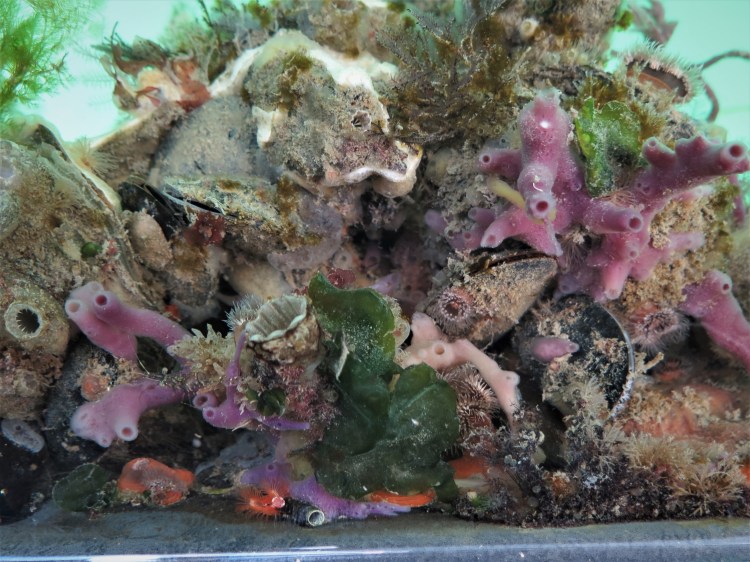
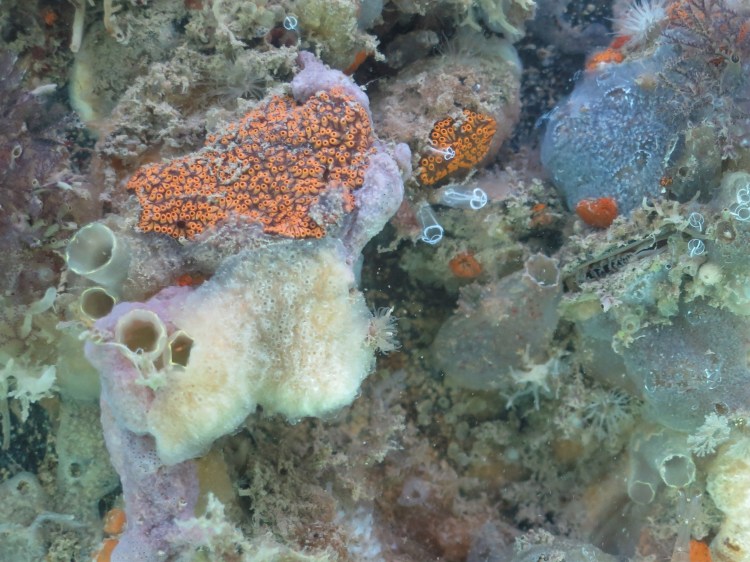
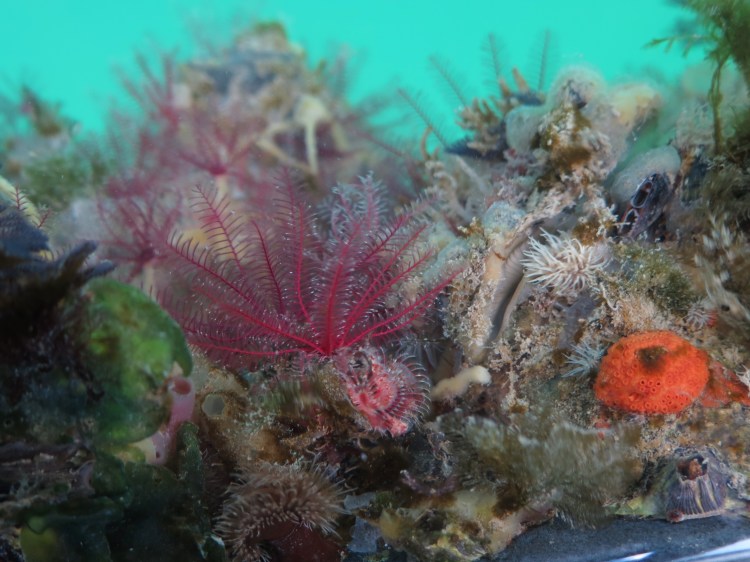 Last week I was on holiday in Bretagne (Brittany), France. There was not a lot of opportunity for snorkelling or rock pooling activities, but the last day I checked out the pontoons of the large marina in Trinité-sur-Mer. I was not disappointed; the pontoons in Cornwall are full of life, but these ones 200 or so kilometers further south were exceptionally diverse. The most striking find was that of orange, red and purple Rosy feather stars Antedon bifida. These also occur in the UK but I had not seen these yet here so I was quite excited. I did not go into the water myself and the photos I took holding my camera under ended up being not great so I took some shots from above water as well, too bad I did not have more time!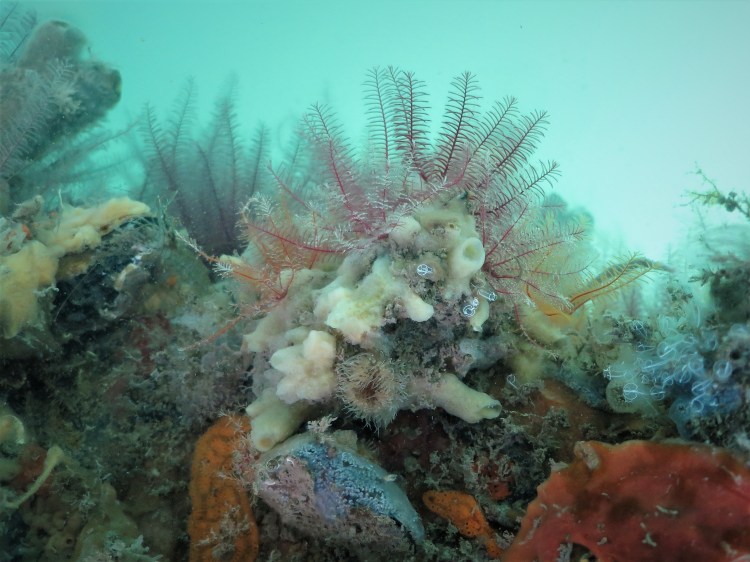
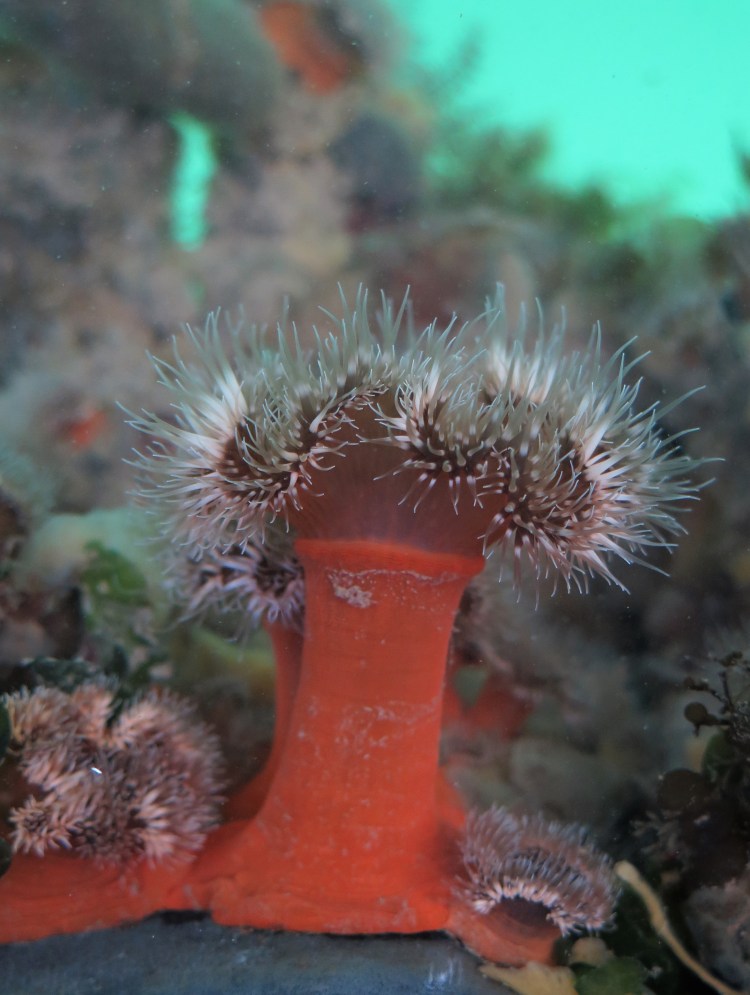
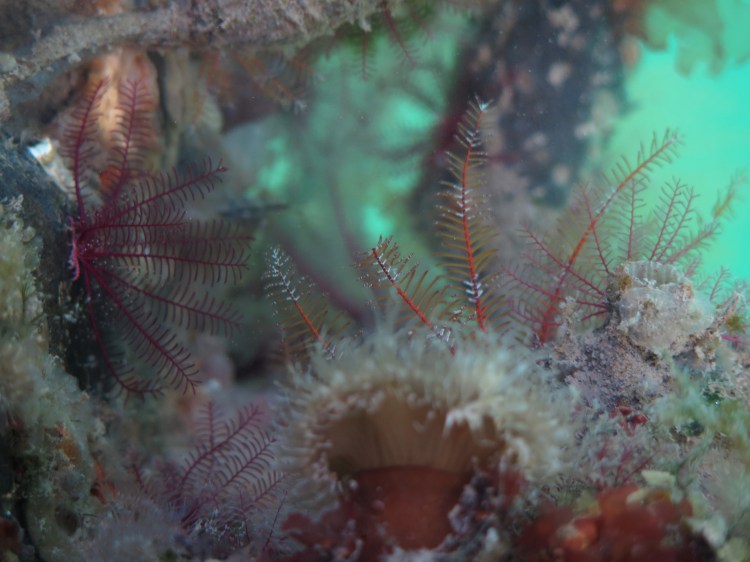 The first photo below gives a good impression of how abundant and diverse life attached to these pontoons is. Many species are the same as the ones I see in Mylor marina, including invasive species such as the Bryozoan Bugula neritina and the tunicate Styela clavata. In addition to the many sponges, anemones, mussels, oysters and colonial tunicates I even saw things such as scallops (not sure which species) and urchins (Psammechinus). The peacock worms were absolutely huge. The plumose anemones Metridium senile looked different to the ones I am used to here to with orange individuals having brown collars which sometimes were really big and wavy. It seems no one that moors their boat in a marina ever takes notice of what is attached to the pontoons, but they should, as the diversity and beauty can almost rival coral reefs. I hope I can go back one time to properly investigate but for now I will check out the local marina’s and keep an eye out for feather stars…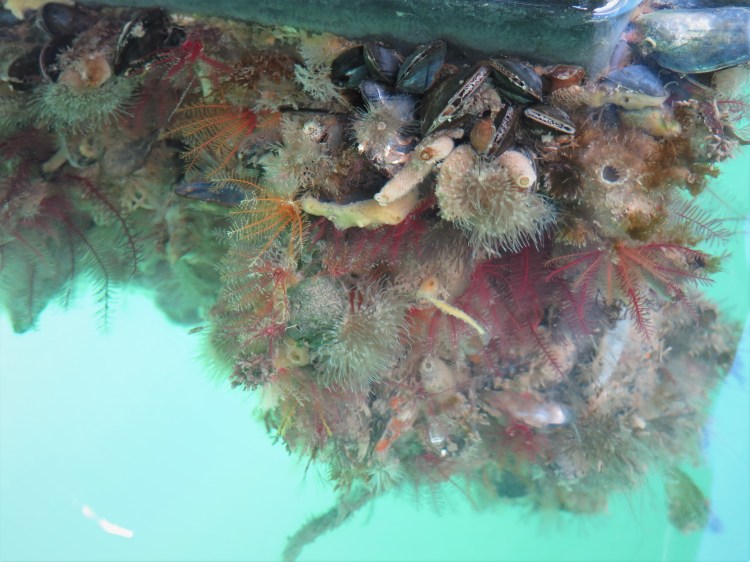
Aquarium Update 17
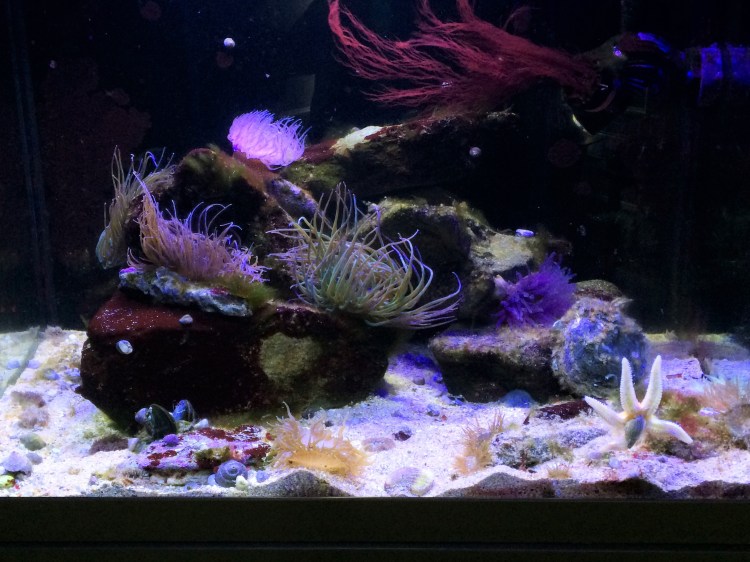 I started this blog mainly to document keeping a temperate marine aquarium; browsing back I see that that was more than four years back already! (see this introduction). Over time, I became more passionate about rock pooling, snorkeling and diving, specifically about seaweeds and photography, and blogged less and less about my aquarium. The aquarium had its ups and downs, as coldwater aquariums tend to be a bit more trial and error (coldwater marine aquariums do not consist of relatively slow growing stony corals as in tropical marine aquariums and house much more (higher order) diversity than tropical or cold freshwater aquariums). Also, I am a lazy man. The last aquarium update was from last November and the aquarium did not look that great, but I have lately spend more time on it and it looks much better now, so here a quick new post.
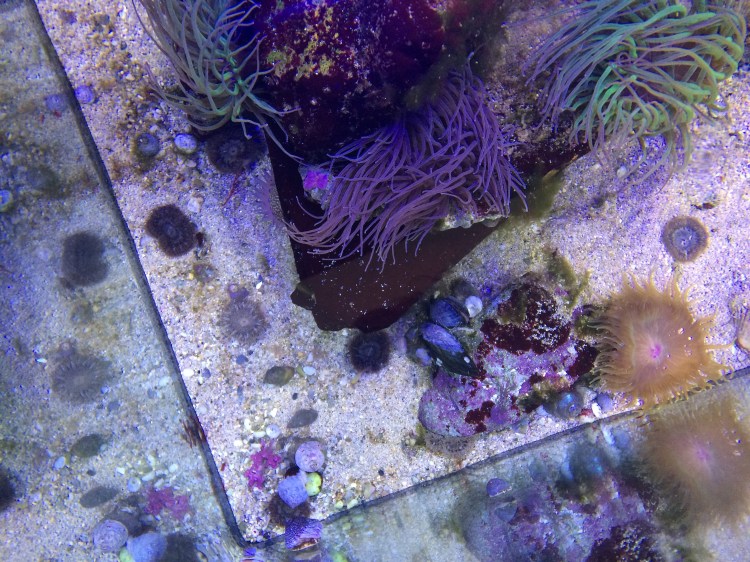 I bought an upgrade Red Sea Max pump (much better) a while back, and more recently a Tunze 9001 skimmer (MUCH better than the stock skimmer, removed years ago as it was so noisy). The only problem is that the pump is so powerful that the water does not get sucked fast enough in the back compartment and it starts to run dry, I need to think how to fix that. The water is very clear though. I only have Cornish suckers as fish at the moment, and it might not be safe to add other fish as there are quite a few anemones at the moment. I have collected a bunch of Daisy anemones Cereus pedunculatus whilst diving (these are very common here in Flushing). I feed all my anemones small pieces of defrosted prawn by hand, these little ones respond very well to that and I hope they will grow much larger. I also collected some more Redspeckled anemones Anthopleura balli (below).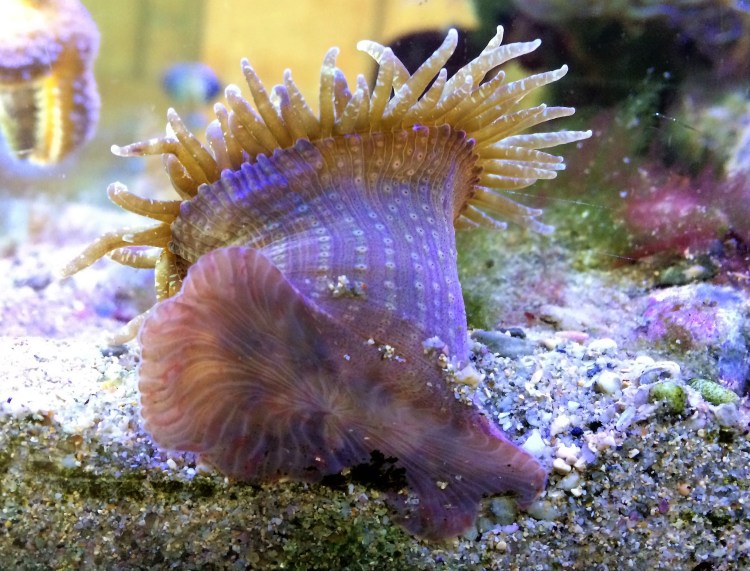
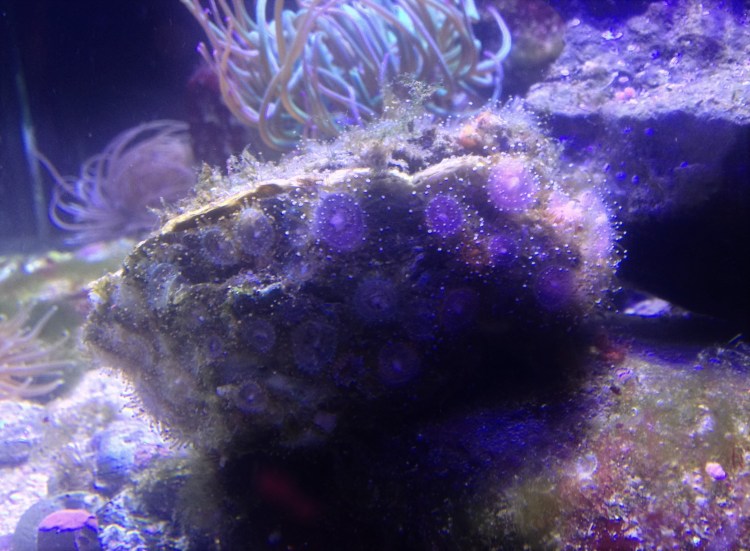 David Fenwick kindly gave me an oyster with many Jewel anemones Corynactis viridis attached (crappy pic, sorry). These did relatively well for a while when feeding fine dry foods (sold for reef aquariums) but they were bothered by the squat lobster and cushion stars and I put the oyster back in the sea (I was also worried the oyster might die and cause a huge nitrogen spike). As an experiment I removed a few jewel anemones with a scalpel and superglued them to frag plugs but they did not survive. Ah well, that might have been a first, so worth a try. With a smaller, dedicated aquarium with better filtration (to deal with many small food particles) it must be doable to keep these. At the moment there are several species of gastropods, a cute little clam, mussels, Snakelocks- Dahlia-, Beadlet- and Strawberry anemones, a small Hairy crab, Cushion stars, green urchins and a Common starfish. The echinoderms seem easiest to keep of all. I actually put the common starfish back as it was picking of all my snails which I need to keep algae in check (and are interesting in their own right of course). I added a Cushion starfish with six legs though (‘Dave’). Hopefully I can find some more anemones when diving over the summer and who knows experiment with seaweeds again.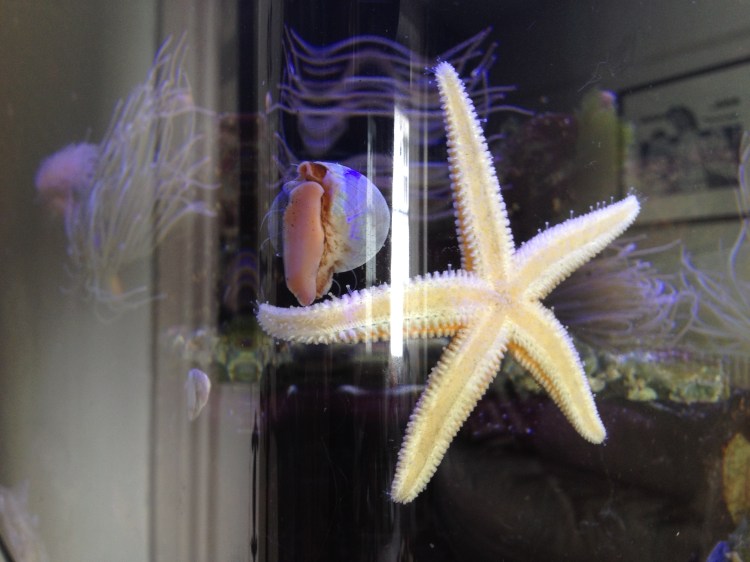
Snakelocks Anemones Anemonia viridis
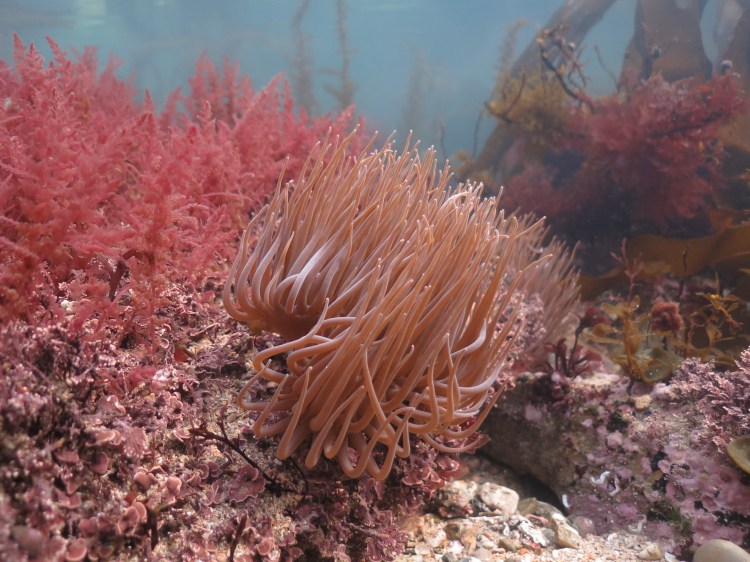 I have been snorkelling a few times in recent days and it has been generally fantastic. The pools are probably at their peak now when it comes to seaweeds, I hope it lasts a little while longer (in June it will most definitely be over, see this old post, actually, they are in decline in May already). It is the plan to get in the water again this week to take some more seaweed photos, but in the meantime some photos on one of the more common anemone species: the Snakelocks anemone Anemonia viridis. There are two colour morphs: the greys and the purple-tipped greens. In Falmouth, they seem equally common, no matter if it is high on the shore or subtidally. I recently learned that in Scotland there are almost only greys, perhaps in the Med there are mainly the other type and it has something to do with temperature tolerance, if you know please let me know in the comments! I really like thuis species, in fact, the very first blog post back in 2013 consisted of a photo of these anemones in my aquarium. I have two of these in my aquarium at the moment, they are very easy to keep. This might be because in addition to being voracious predators, they are also capable of living on sunlight, as they harbour photosynthesizing algae. In any case they grow rapidly (and very occasionally split into two).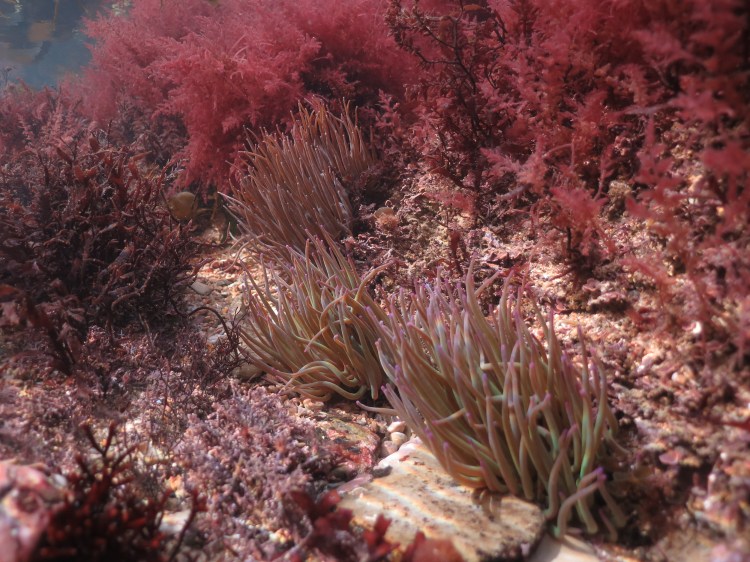
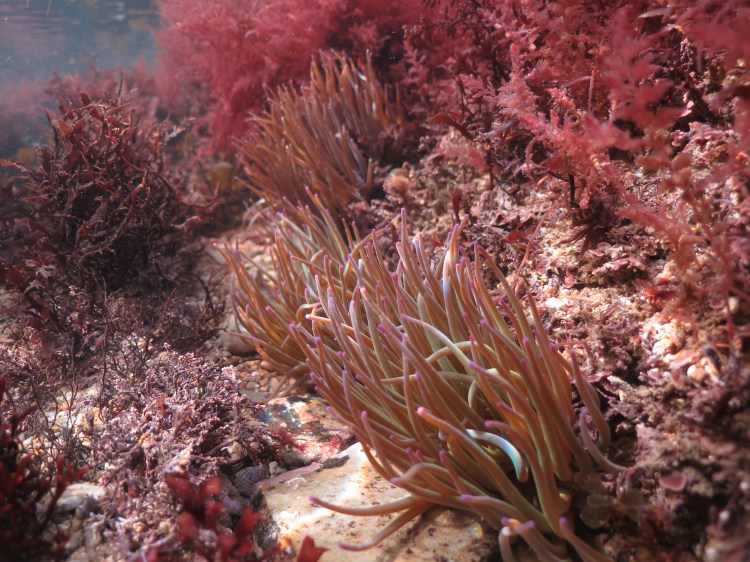
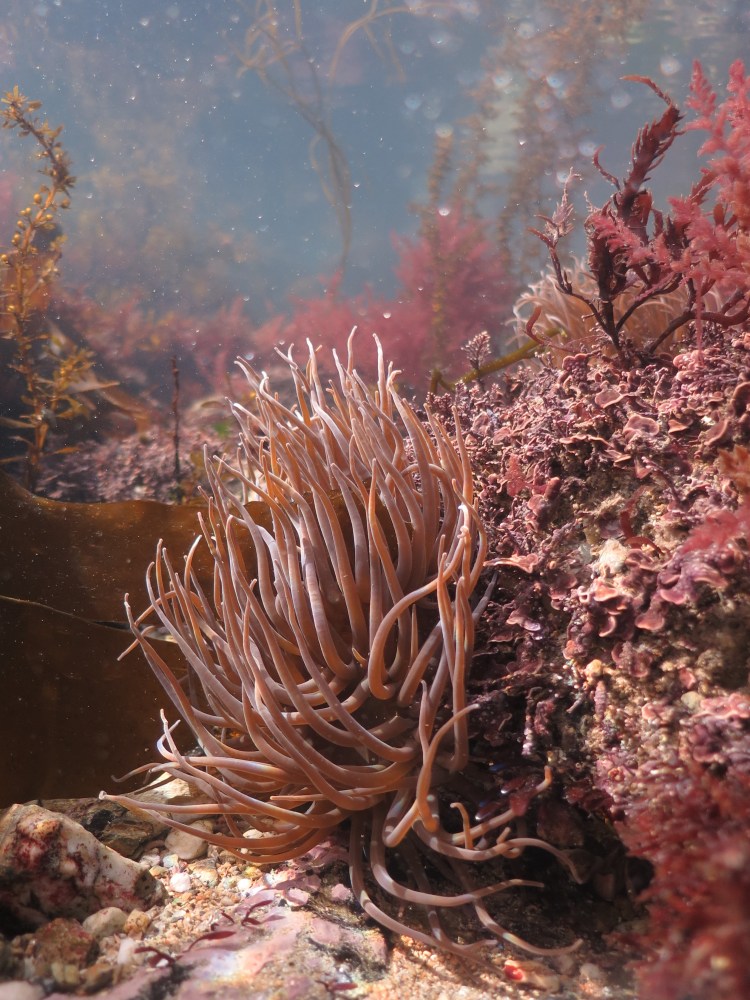
 I took these photos in very shallow water. When scuba diving you can commonly observe the commensal Leach’s spider crab Inachus phalangum sitting under the anemones (see here in the aquarium and here in the wild). (In Dorset there is a beautiful little prawn that lives as a commensal, and in the Mediterranean there is a goby that is associated with this species.) Only very occasionally do Snakelocks attempt to retract their tentacles (see here); tentacles can be quite long and slender or more stout (see here), probably a response to the strength of the currents. I have tweaked some of the photos a tiny bit (but not the nicest one on top for instance). Below two photos taken on different days of the same three anemones with different light conditions and different camera settings (most importantly probably the white balance, which I use to tone down the reds caused by the seaweeds).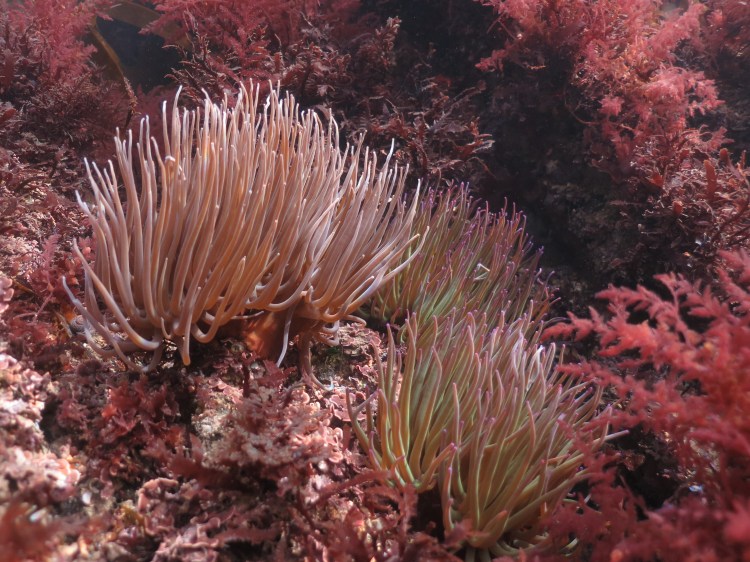

Upper Shore Pool
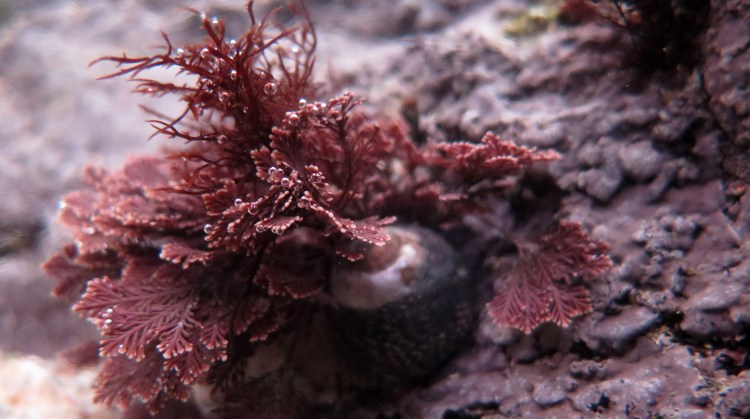 The last day of January I took an hour to explore a pool at the upper part of Castle Beach. The resulting shots turned out a lot better than they did the last time. As most of the pools are bare rock, there are no problems with sand/silt, but they are very shallow and on the receiving end of drainage pipes resulting in rain water mixing with the salt water, affecting visibility (this is not necessarily bad as it can make a photo more interesting). It was overcast and I did not experience problems with overexposure; I actually found that tweaking in Photoshop made the photos look worse. Below a Beadlet anemone Actinia equina, the most common anemone on rocky shores. They can be bright red or a drab brown (the green version is rare here) but have bright blue beadlets, or more technically acroraghi. These contain stinging nematocsysts used in territorial fights. After that a small Daisy anemone Cereus pedunculatus, which are usually more mottled in appearance (and not common here, or perhaps I do not know how to look for them…).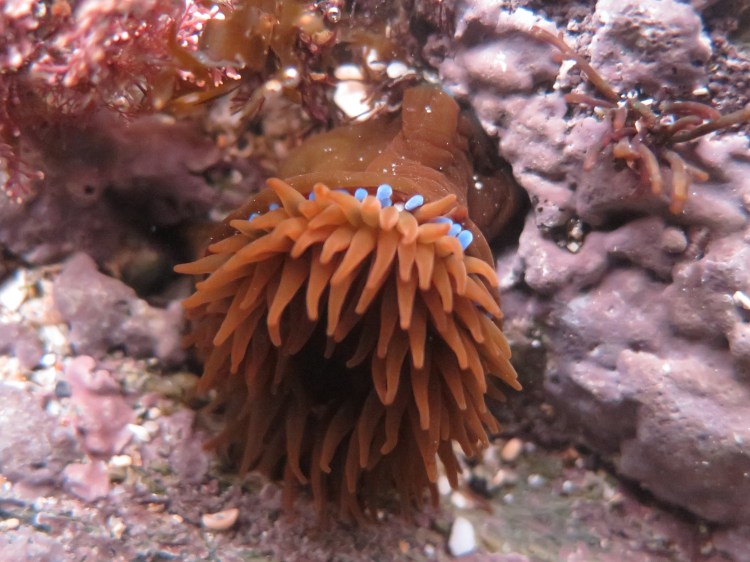
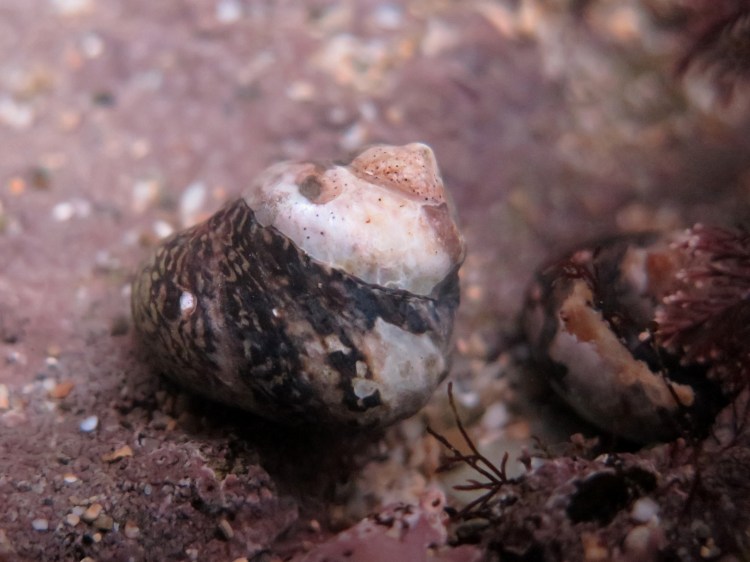
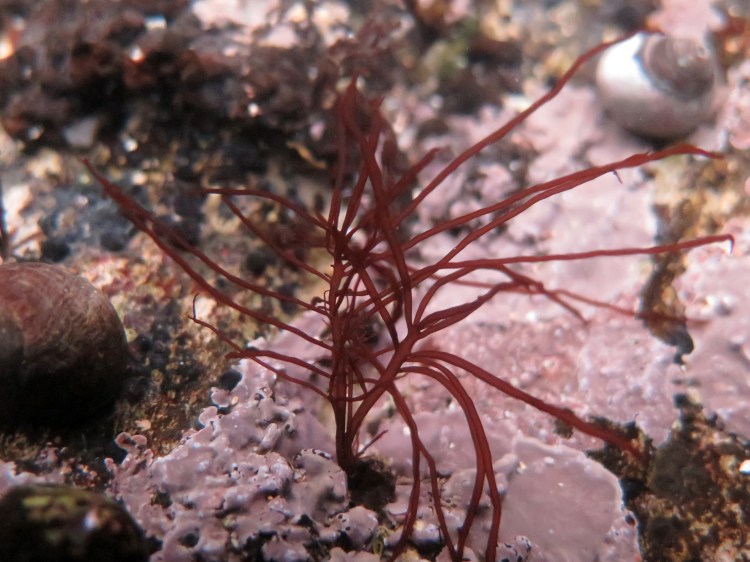
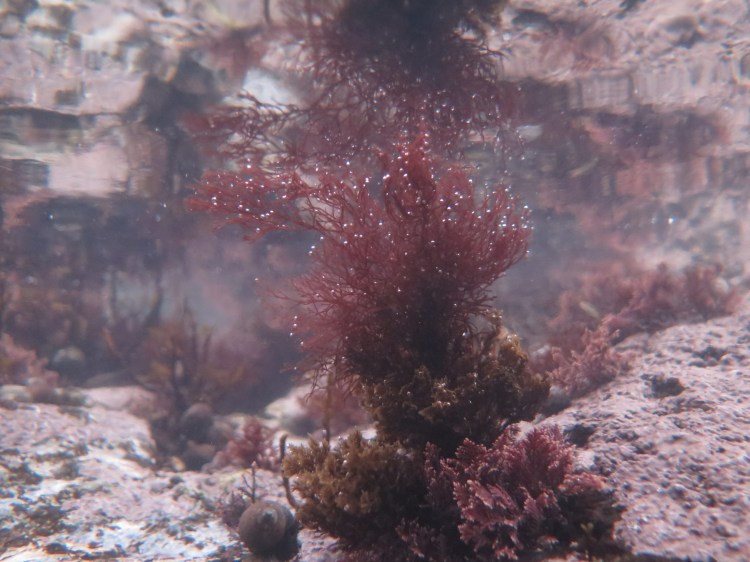
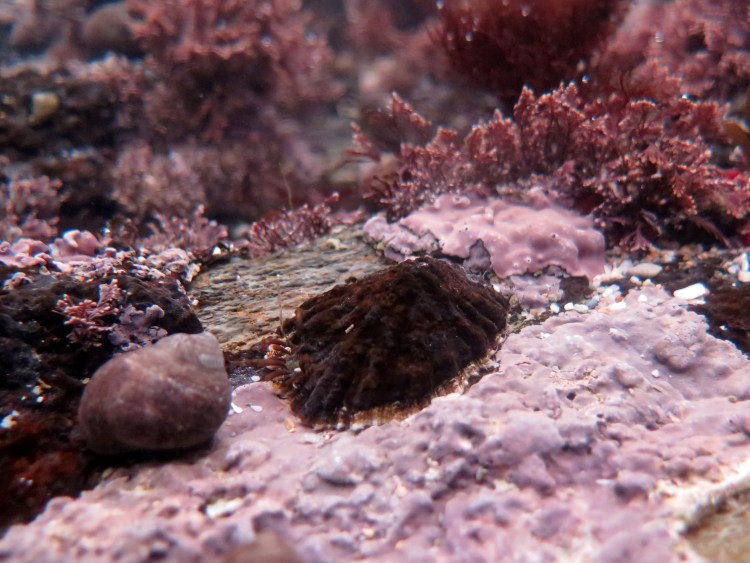
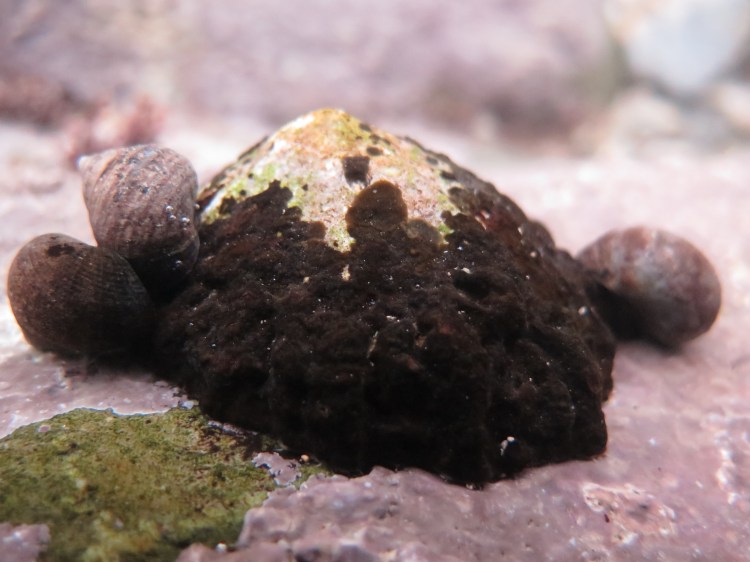
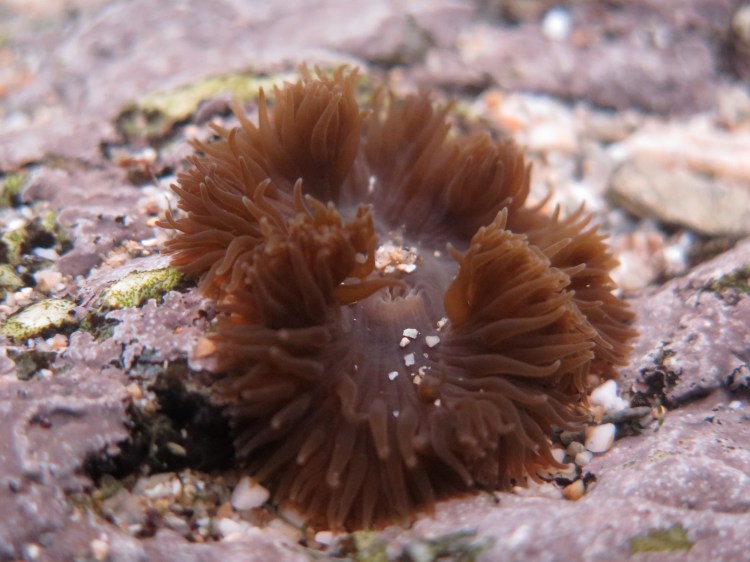 Next up, a red growth which I should have investigated further, I am not even sure if it is a sponge or something else. After that, a worn Thick top shell Osilinus lineatus, a young Dumont’s tubular weed Dumontia contorta, a red Banded pincer weed Ceramium sp. happily producing oxygen and finally Patella limpets covered in Brown limpet paint Ralfsia verrucosa.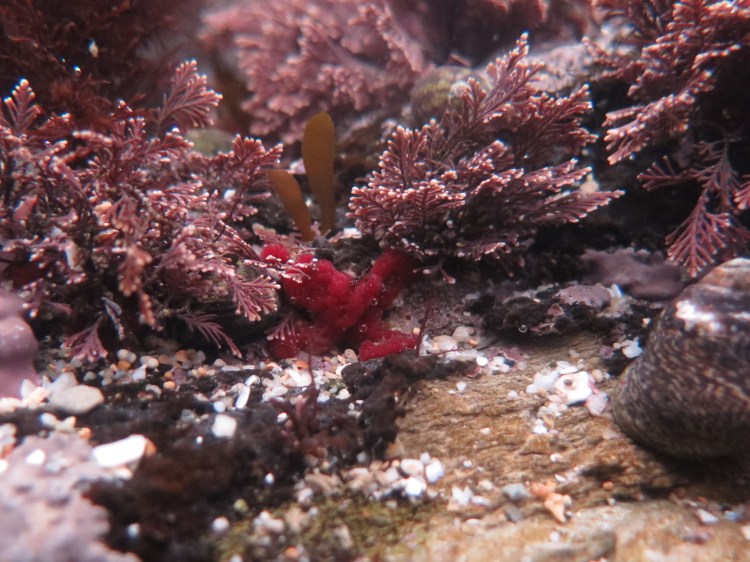
Photography Update
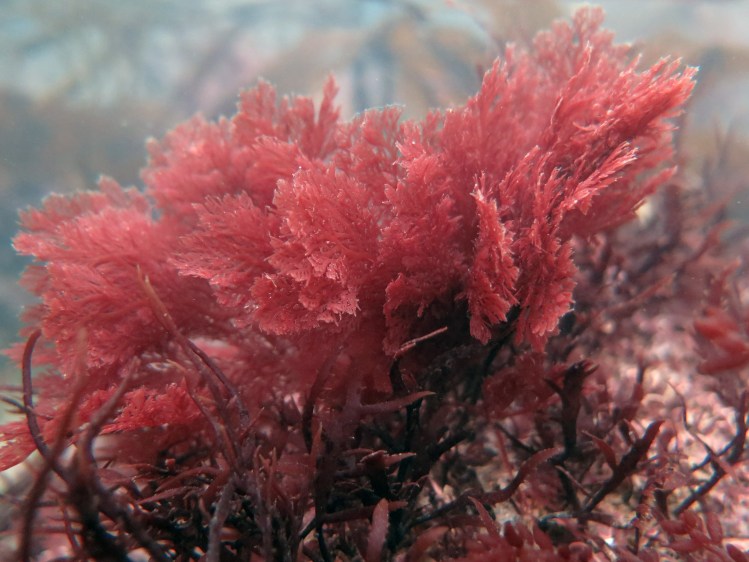
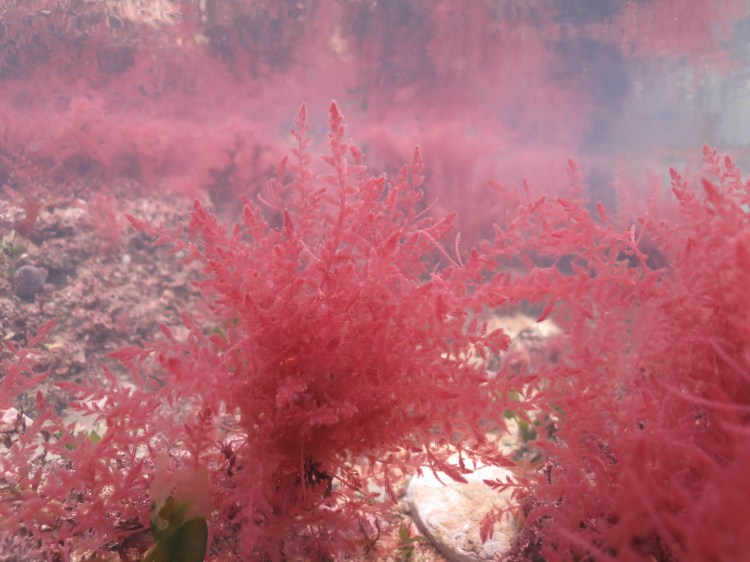
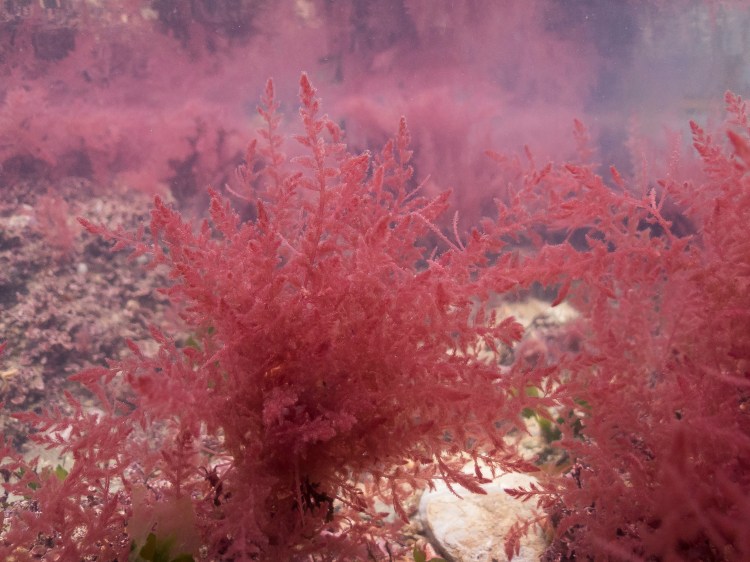
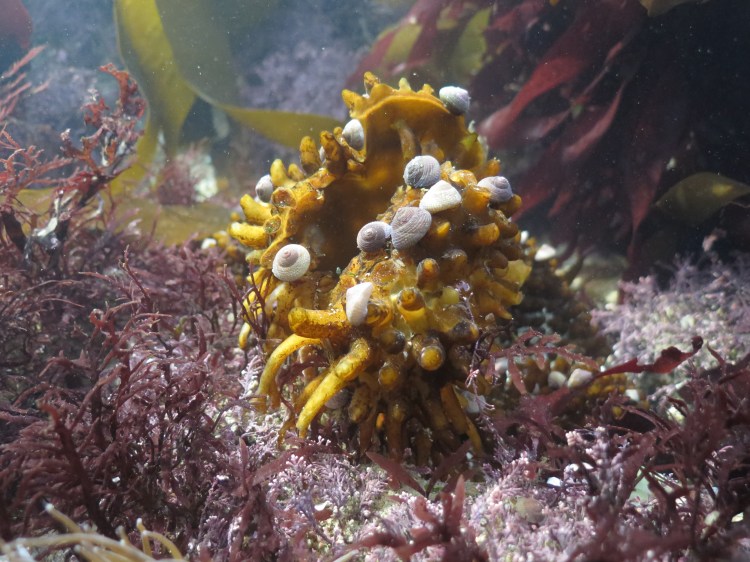
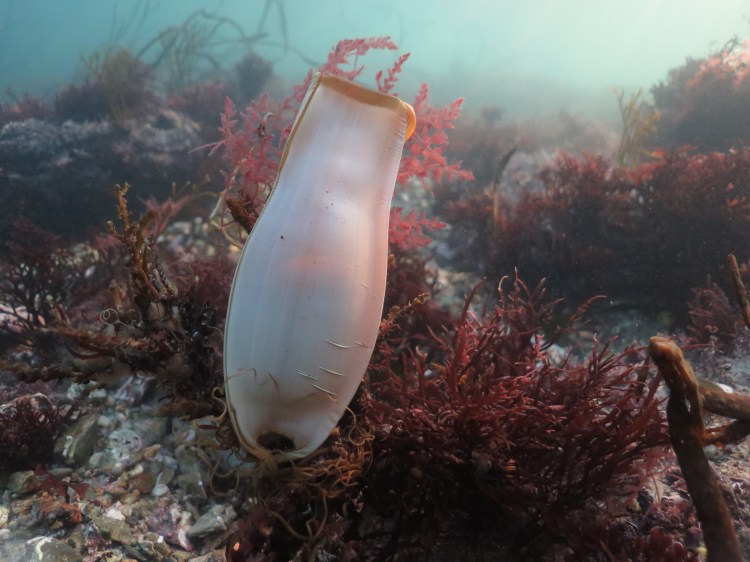 More photography practice lately. I have started to use Photoshop to post-process images, which is hard. I have sat with Thomas Daguerre for a session which was very helpful. For some images, the twiddling is of not much use; the image above of a Bull huss egg case for instance I am pretty happy with as is. Below I have pasted some before and after-Photoshop photo’s. Mostly adjusting highlights and contrast, cropping and playing around with sharpness (in the RAW files), most images tend to be a bit reddish. I have not bothered to tackle the ‘marine snow’ with the Spot Healing brush tool. First, Snakelocks anemones, next, Cocks’ comb Plocamium, then Harpoonweed Asparagopsis armata and an old kelp holdfast covered in feeding Grey topshells Gibbula cineraria.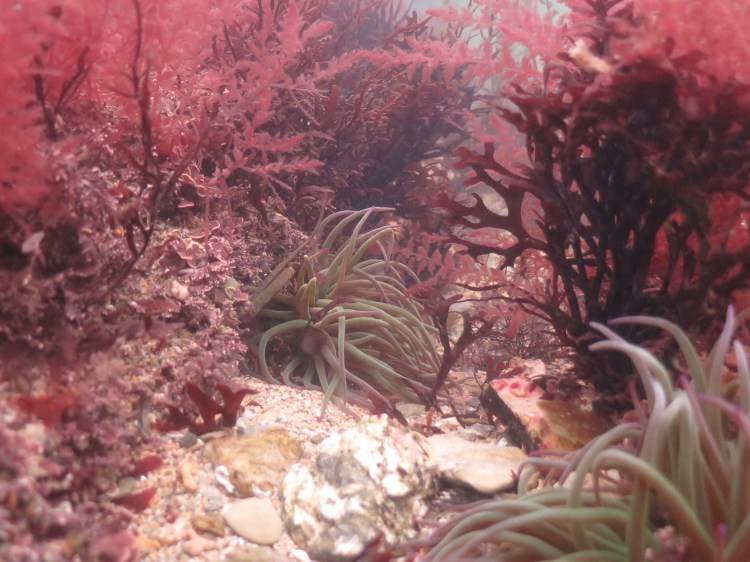


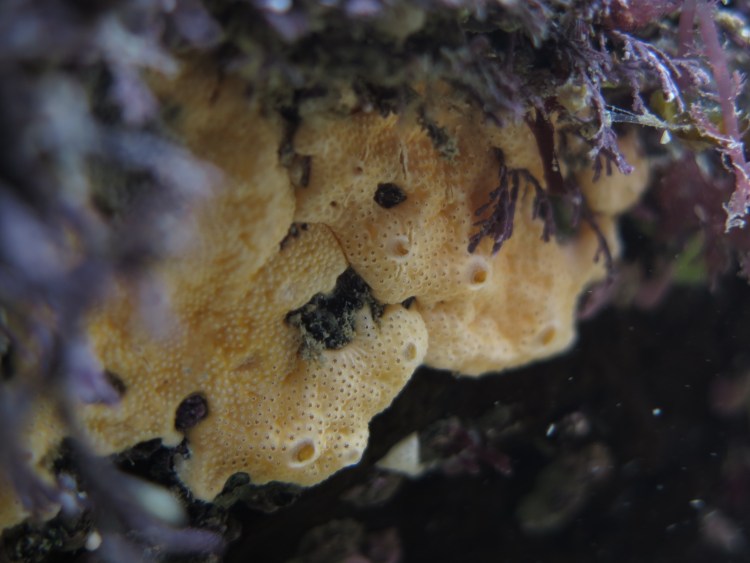
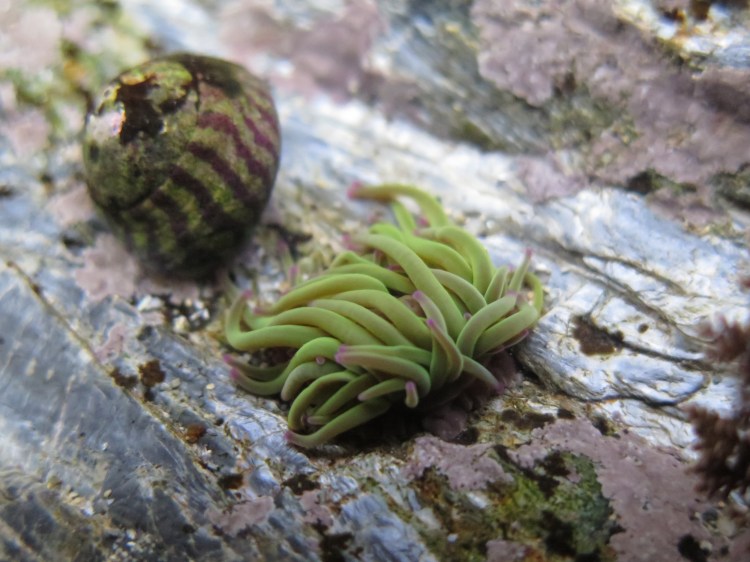
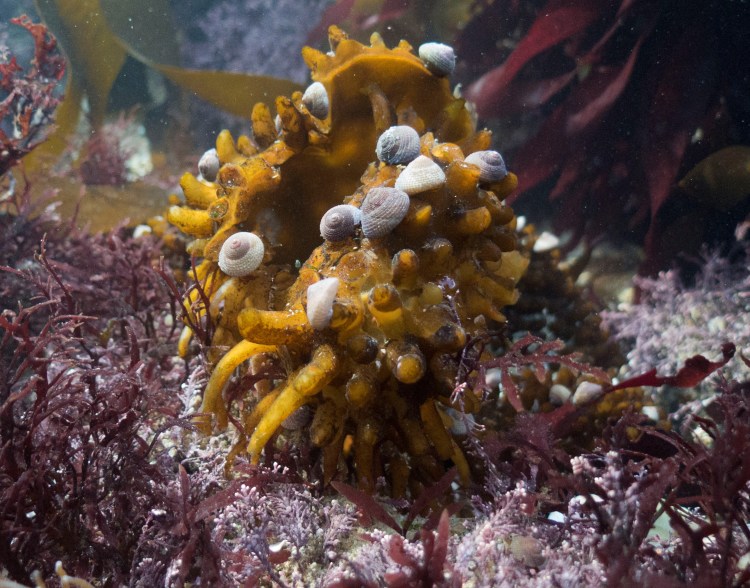 On and under the seaweeds I encounter many interesting tiny animals, but it is hard to take good photo’s without a macrolens. I have pasted a couple photo’s below (none have been edited in any way): the Stalked jellyfish Haliclystus octoradiatus (these can also be reddish or brownish, and can be found on a wide variety of seaweeds), a sponge, a juvenile Snakelocks anemone Anemonia viridis (next to a Flat top shell Gibbula umbilicalis) and the Star ascidian Botryllus schlosseri where I later noticed the fecal pellets underneath. Pooping tunicates, that is what we need more pictures of!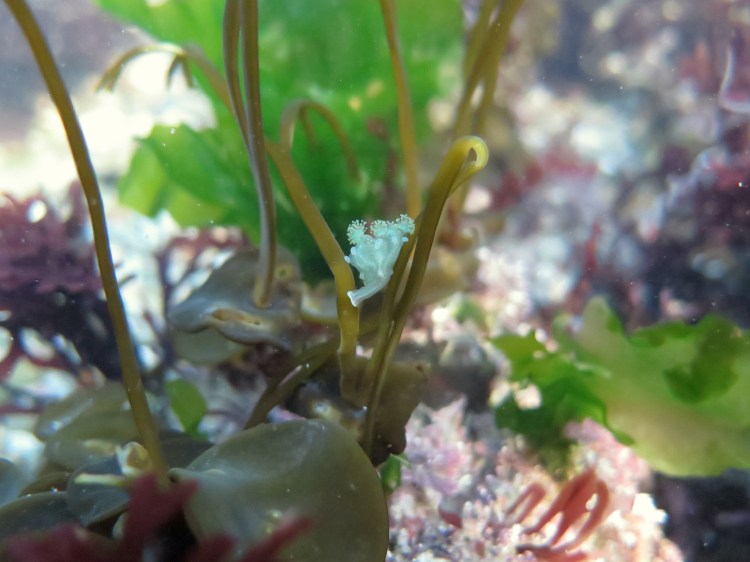
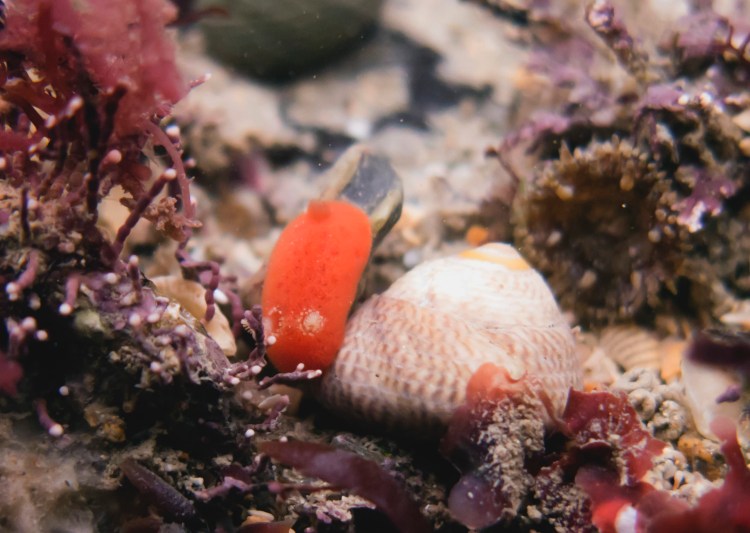
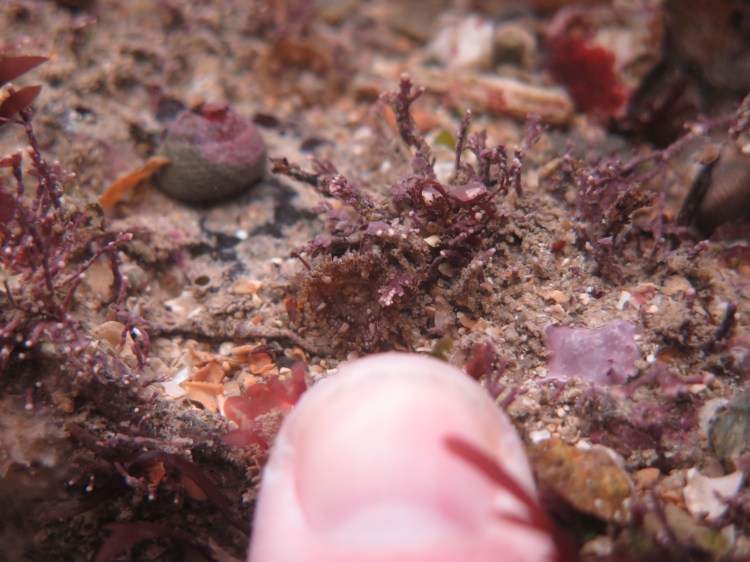
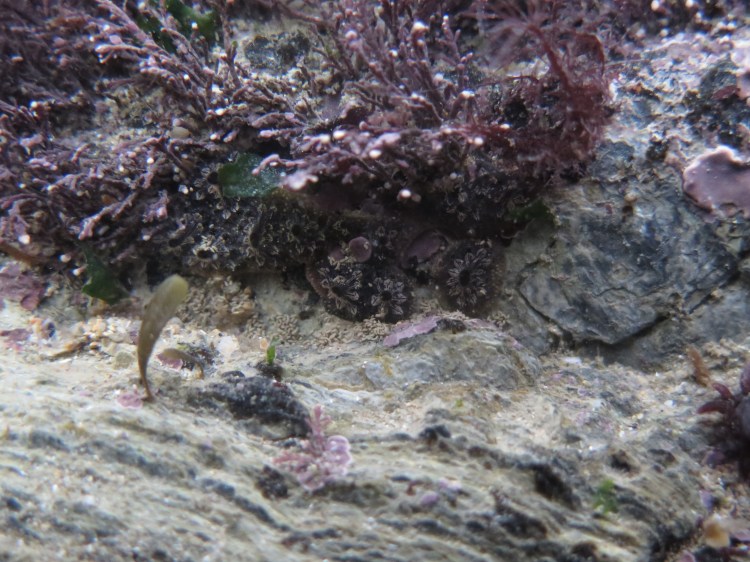 Finally, some more before- and after- Photoshop images. The first is the nudibranch Rostanga rubra (‘Red doris’) which was only 5mm or so (see also the tiny Daisy anemone in the background). I shot it today, very cold: 4 degrees, and the water might have been only 8 degrees, brrrr! Next, a closeup of the seaweed Osmundea (see the first photo of this post) which shows its interesting pigmentation. The photo’s are nothing special yet, but I notice I am making progress. Excitingly, I just have ordered a macro wetlens and so hope to get some proper macro photography going soon!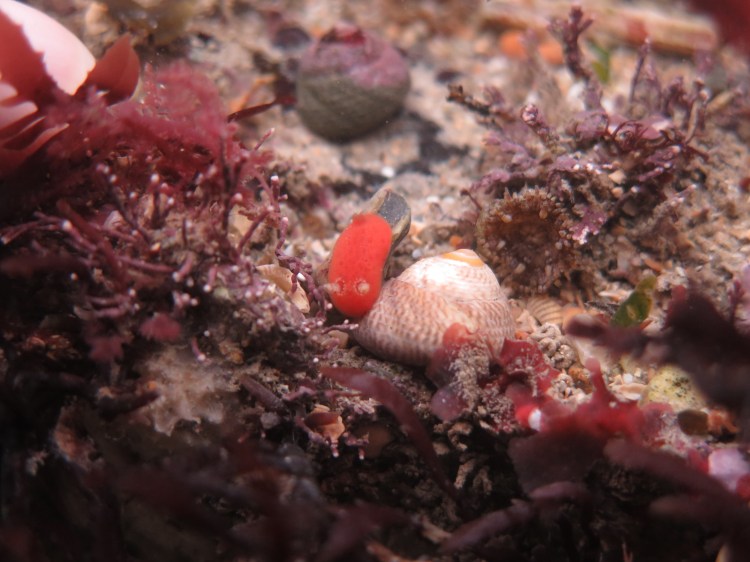
End of Year Pics
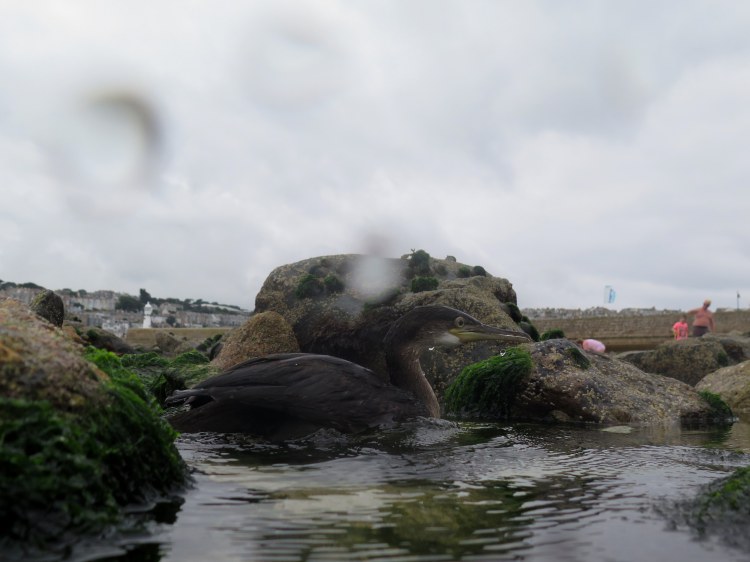
I have not posted as much on the blog as I would have liked this year (in fact, I keep posting less and less: 24 times this year, compared with 33, 46 and 64 posts the previous years). My new year’s resolutions will be to dive more, to go rock pooling more and to blog more. For now, I will post some miscellaneous photos from this year that I did not bother to put on the blog at the time (as I did last year). Below a Beadlet anemone Actinia equina on the beach in St. Ives as well as a young cormorant looking for food taken with my new Canon G16: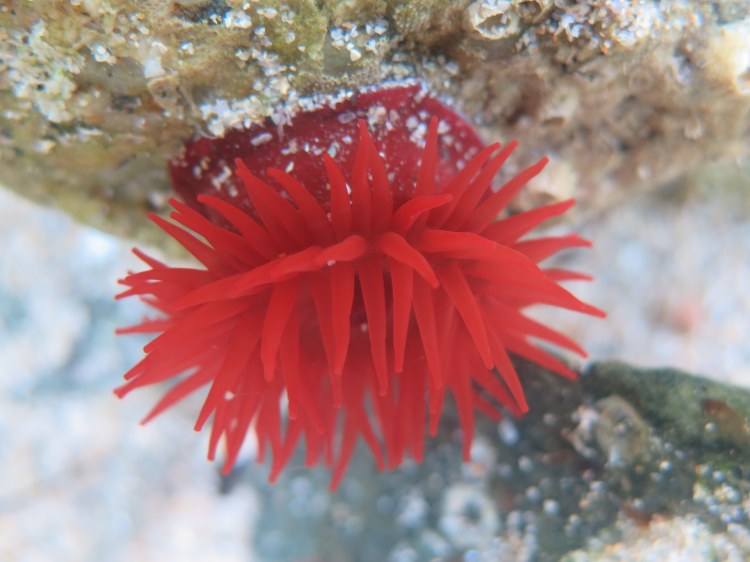
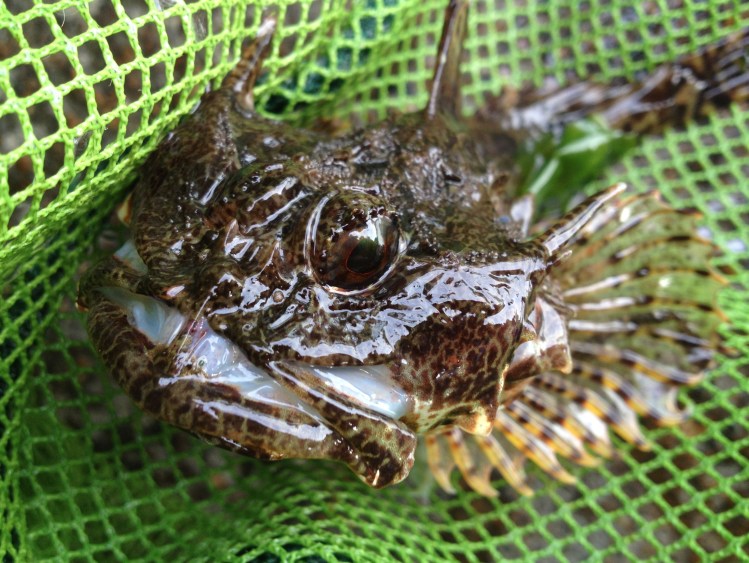
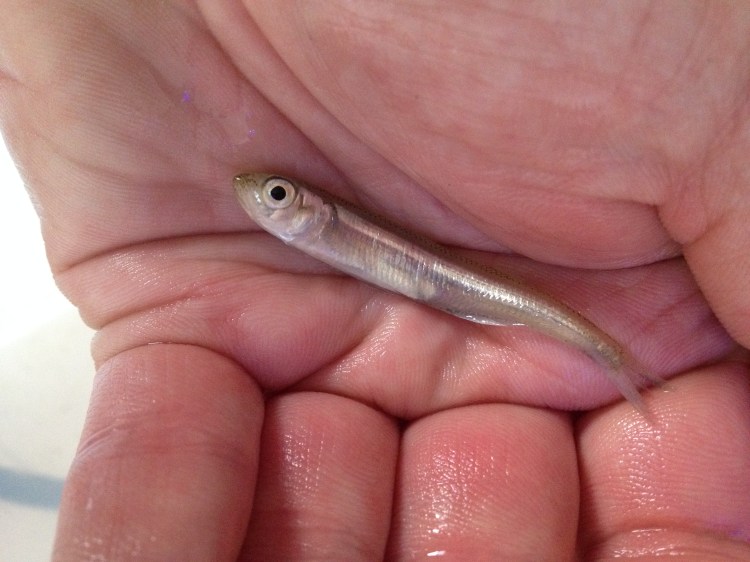
 I caught a number of different fish this year, the first photo shows a small Montagu’s blenny Coryphoblennius galerita in an aquarium net which were fun to watch in a little aquarium. Next a Longspined scorpionfish Taurulus bubalis caught with my big net off the quay and a Sand smelt Atherina presbyter (see here for a movie). The latter species did not last long in my tank unfortunately. I mentioned in the last aquarium update that a Topknot I caught seemed to have died in the tank too, but I found out it is still there, it just likes to hide behind the rocks.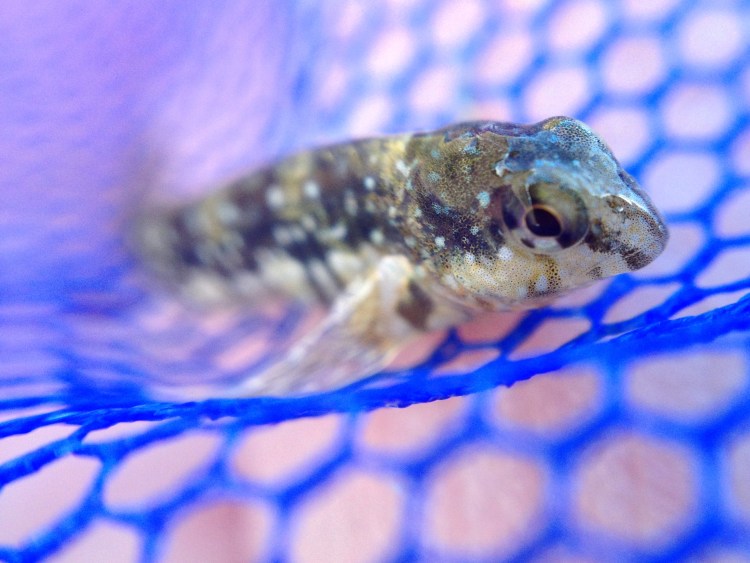
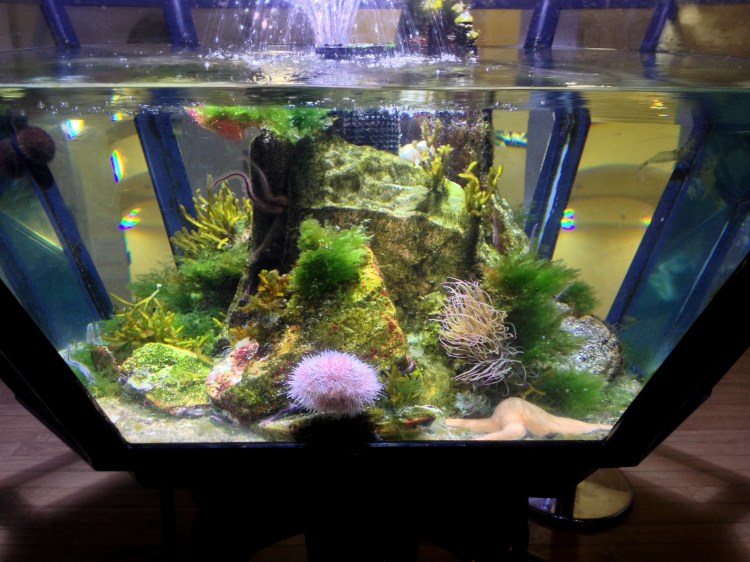
 I visited the quirky Victorian Horniman Museum and Aquarium on a trip to London which features lots of stuffed animals and diorama’s which I find quite fascinating. The aquarium part is small; there is some behind the scene coral (sexual) propagation research going on which sounds very interesting. There were two or three coldwater tanks too, the larger tanks were not much too look at (I know how hard it is…) but I really liked the Victorian fountain-style aquarium. A quick snap here; see this video for a nice overview. I would like to collect some Black brittlestars Ophiocomina nigra next year, they can be very abundant at slightly deeper sites.
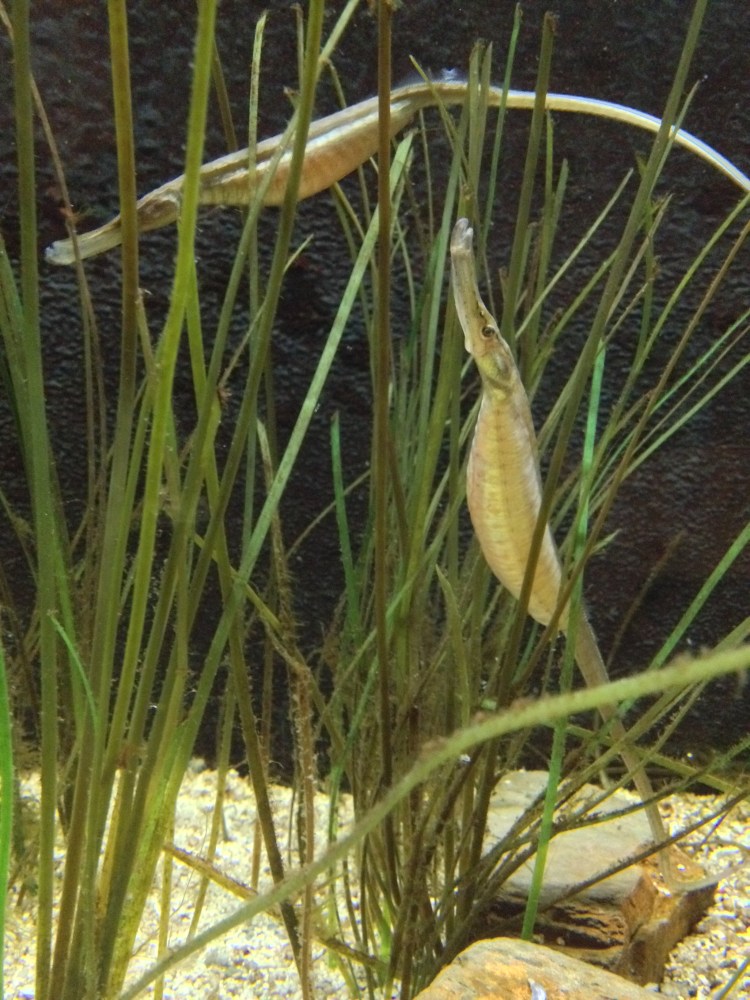
 I also visited the National Marine Aquarium in Plymouth for a second time. It features the deepest aquarium in the UK, complete with plane wreck and some Sandtiger sharks. I was more interested in the coldwater stuff, of which there was quite a bit. I especially liked the Lesser weever Echiichthys vipera which can be caught on sandy shores; their venomous sting would make handling a bit tricky though. There were some cute pipefish (these need live food and I do not want to commit to that) and a round display with loads of Snakelocks anemones (see the first picture posted on this blog). I have placed a couple of these in my aquarium again, perhaps I need to get a few more, as they are so pretty and easy to keep. I did not manage to get a good shot of the very impressive Wreck fish or Stone bass Polyprion americanus in the large coldwater display unfortunately.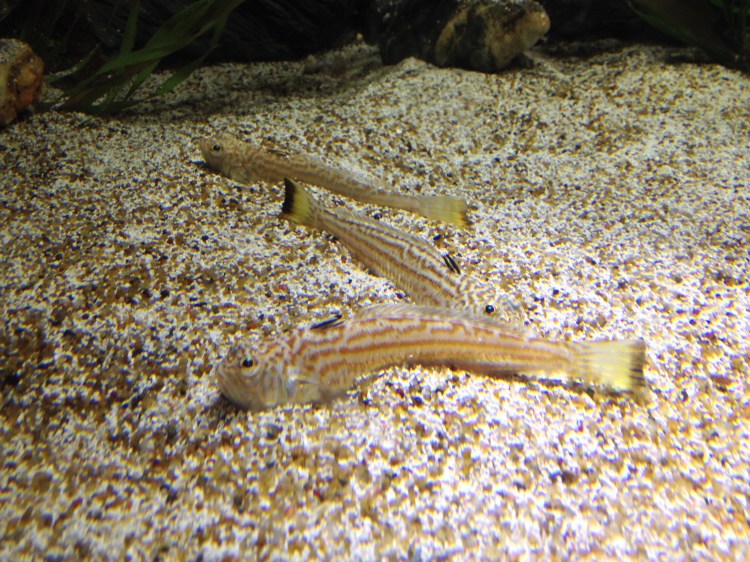
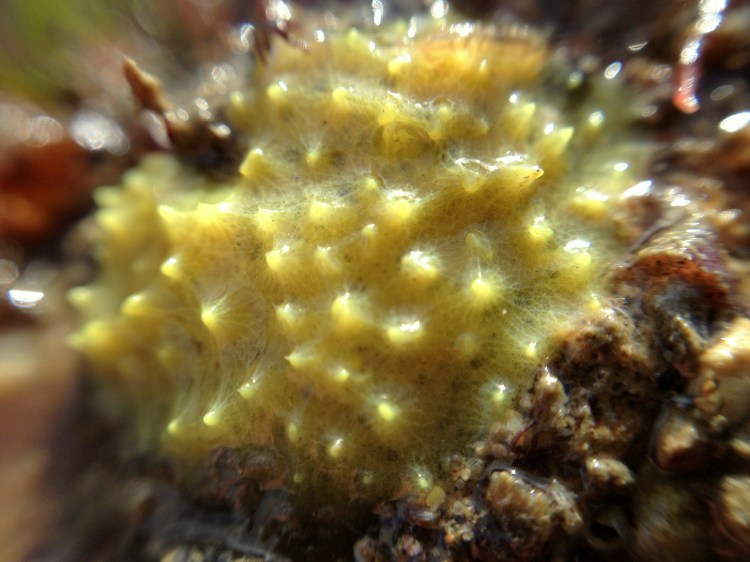
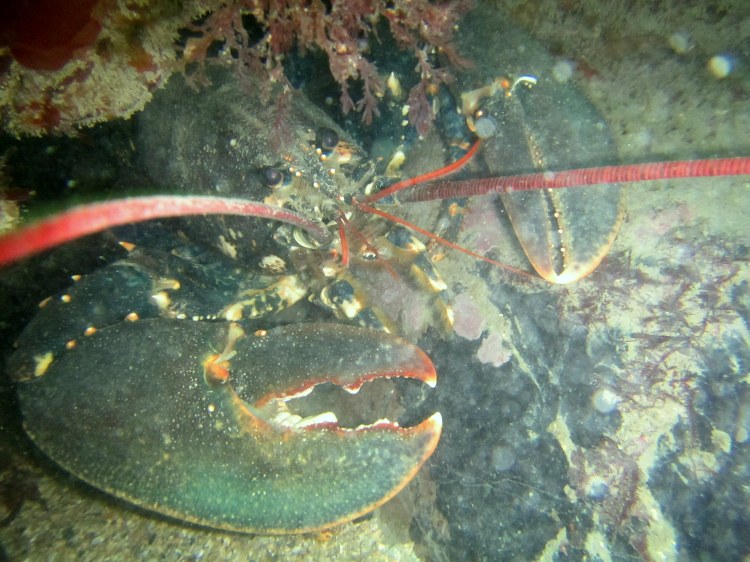
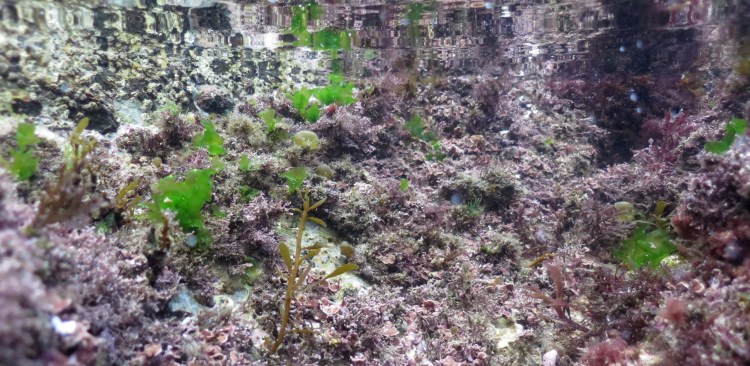
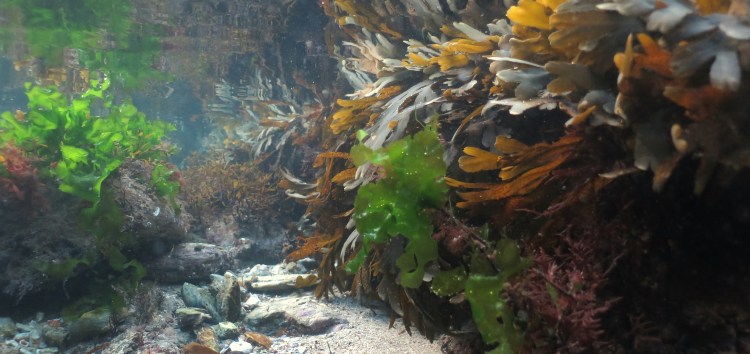
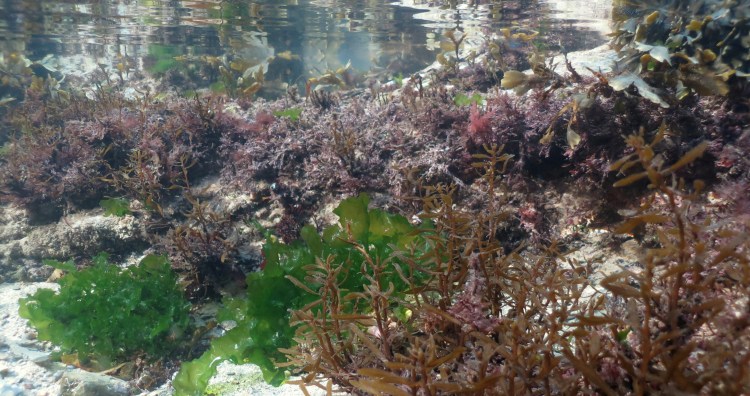
 Next up a washed up sponge in Falmouth (species unknown) and a live one (Aplysilla sulfurea) under a rock, both taken in Falmouth with my iPhone. I have only been diving a couple of times this year and did not post about the rocky shore dives (here some photos of the maerl and eelgrass beds). I have seen a variety of interesting animals, including cuttlefish, a conger eel and lobsters but next year I hope to go out a bit further and dive a bit deeper to finally see jewel anemones and dead man’s fingers. I am not sure I want to commit to a flash and strobes though, instead I’d like to practice my rock pool (seaweed) photography.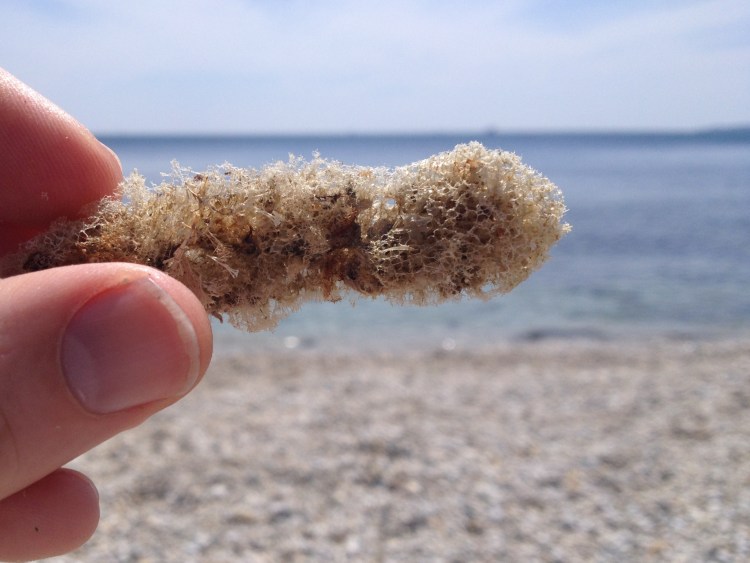
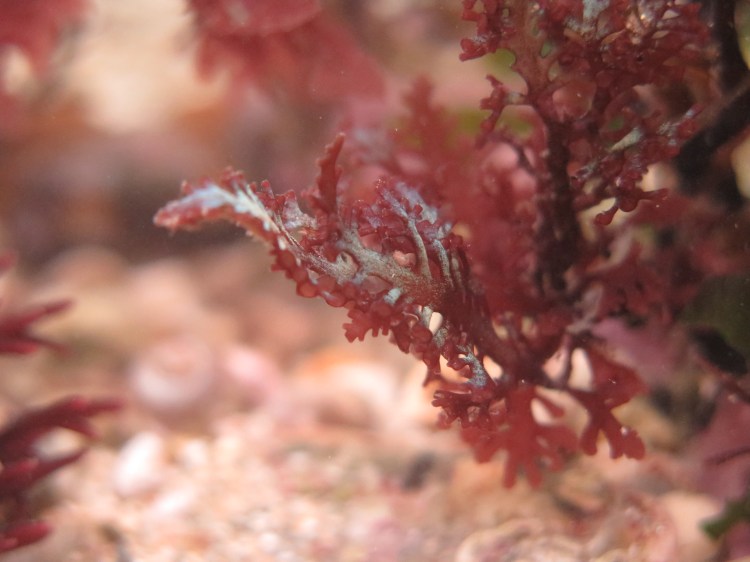
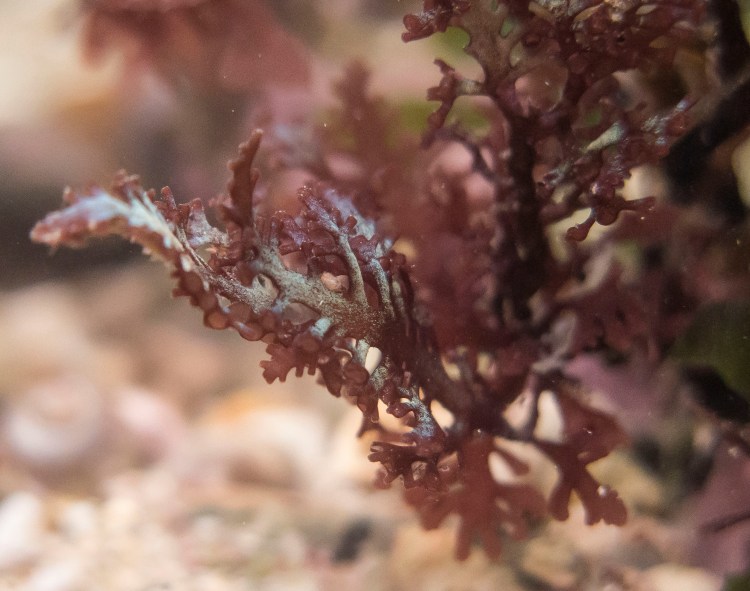
Aquarium Update 16
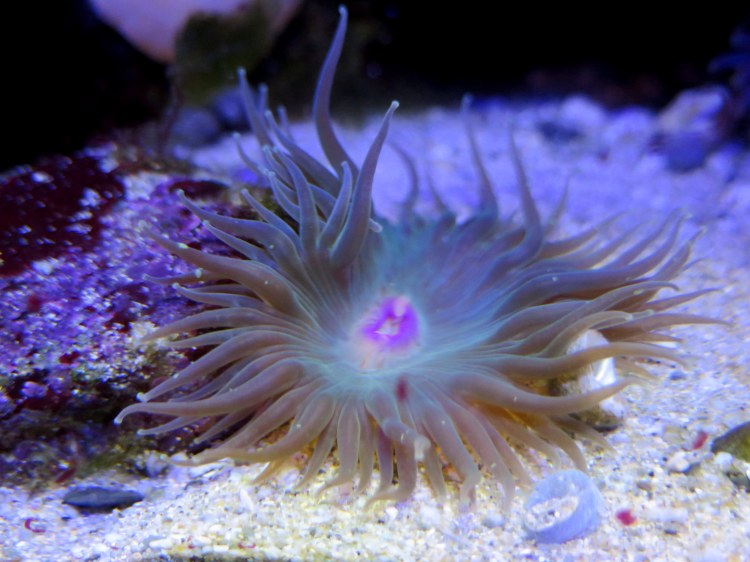
It has been more than five months since the last update on my Red Sea Max 130D so high time for nr 16. I have bought a media basket to force the water more through the filtration material, which cannot be a bad thing, but otherwise have done very little. I have not been diving as much as I wanted, and still have not gone to any of the deeper sites where I perhaps could have found some Dahlia anemones, larger Brittlestars or other interesting things. I have a red seaweed growing from the rocks; it has encrusted all rocks in a deep red colour and grows out of in a bit of a lettuce-shape. At first I thought it was the invasive species Grateloupia but the shape and colour are a bit different, I will enquire at the Seaweeds of the NE Atlantic facebook group what it is. I have some green algae but they grow in tufts that can be easily removed so I cannot complain really. Below a shot of the tank, it does not look great but there you have it: The anemones are still so-so. I think that plumose anemones need very fines foods and water changes, which I do not really do and as a result they are often closed and not growing. The strawberries and beadlets still don’t do as well as they did, no idea why. My Red-speckled anemones (Anthopleura ballii) on the other hand do great and are my favourites. Below a photo of a specimen I collected at a good low tide in Flushing this week and one in my aquarium that has grown quite a bit. It fluoresces in the middle.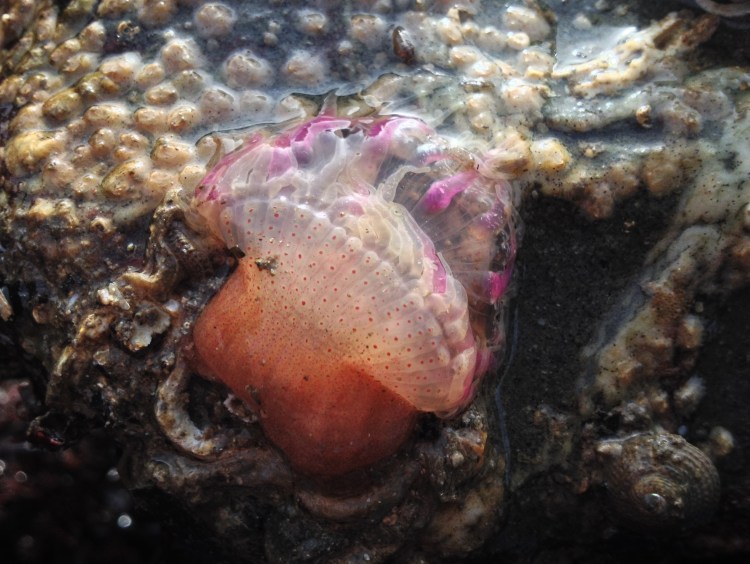
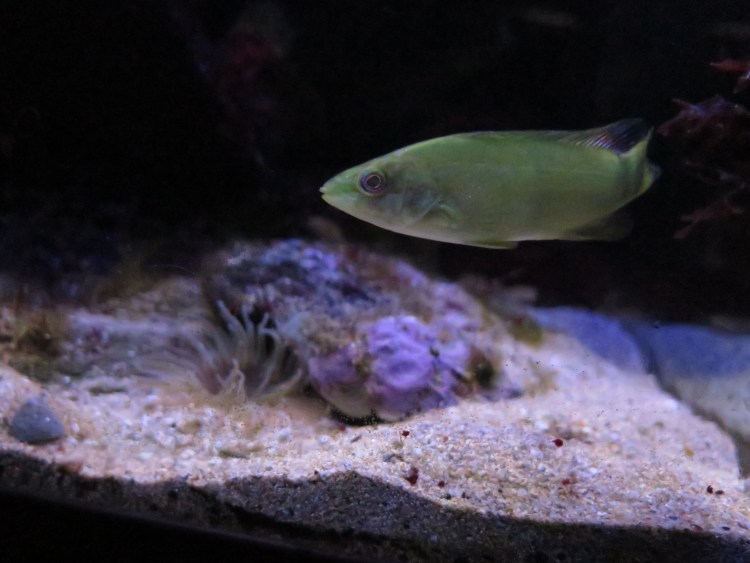
 I have some squat lobsters rummaging around as well as a cool hairy crab. I have got rid of prawns as they are so aggressive! Every time I opened the hood and stopped the pump, they came swimming to the top, legs tickling and scraping on the plastic and attacking my fingers. They are part of the reason that my fish have not fared too well. I had some Pollack for a while but they eventually succumbed. I believe my flow is on the strong side, and with an occasional missed feeding and less energy, the prawns and anemones will not tolerate any slip up! I caught some Sand smelt (see here for two videos) with my big net from the quay but these formed a meal for other inhabitants within the day. I caught a Topknot (by hand) (see here) but that disappeared after a while too. I have two or three Cornish suckers that do well though. As soon as I feed they stick their noses from under rocks and dart out to catch some defrosted shrimp but otherwise you hardly see them. I was lucky to catch a bright green juvenile Ballan wrasse Labrus bergylta of the quay which does great (they are not as nervous as the more common corkwing wrasse). I caught another individual (I only ever caught three) but the first one started picking on it, changing from bright green to a more subdued marbled green. I was not in time to release one of them and the second fish died unfortunately.
 An Bollenessor