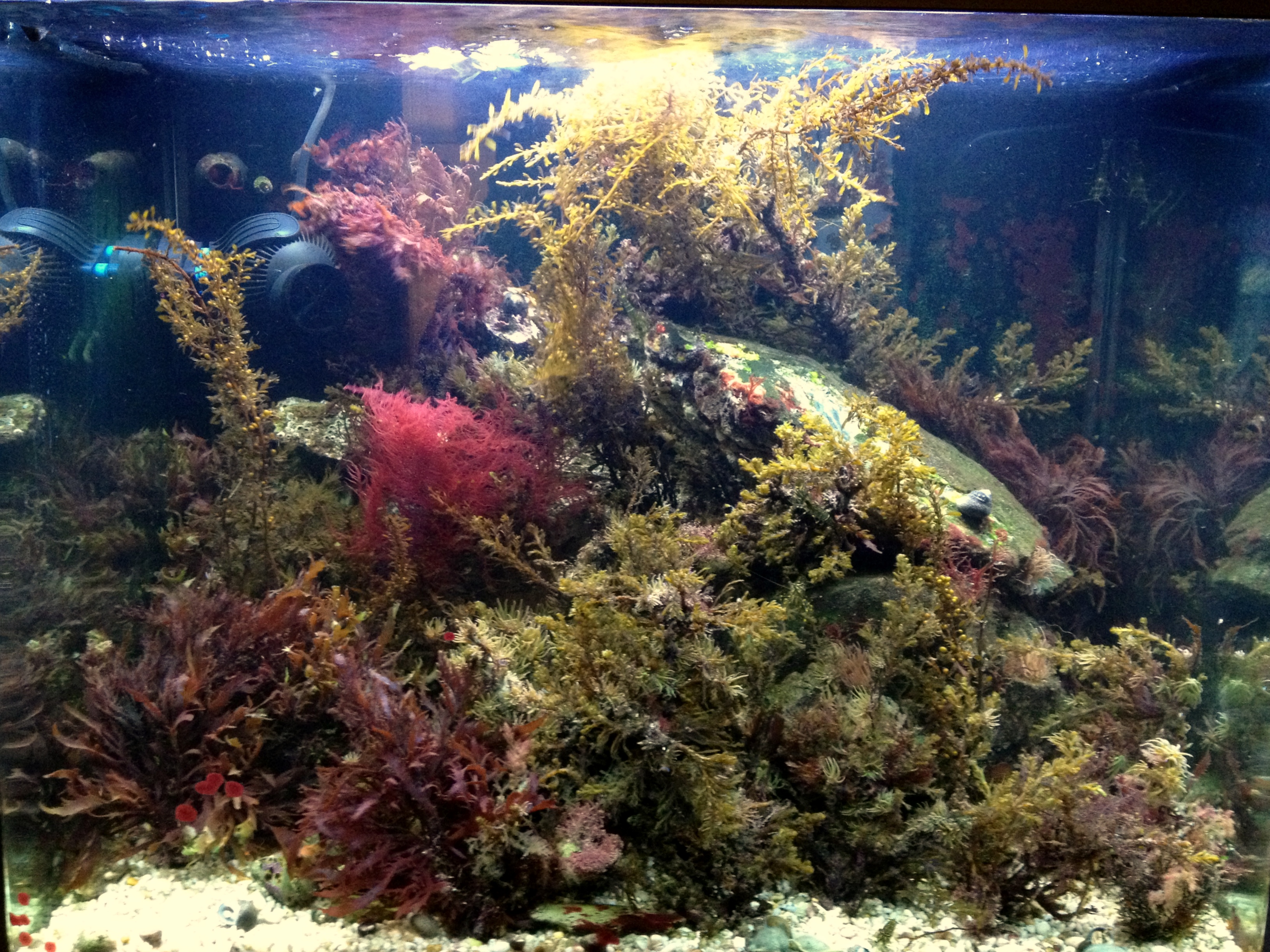
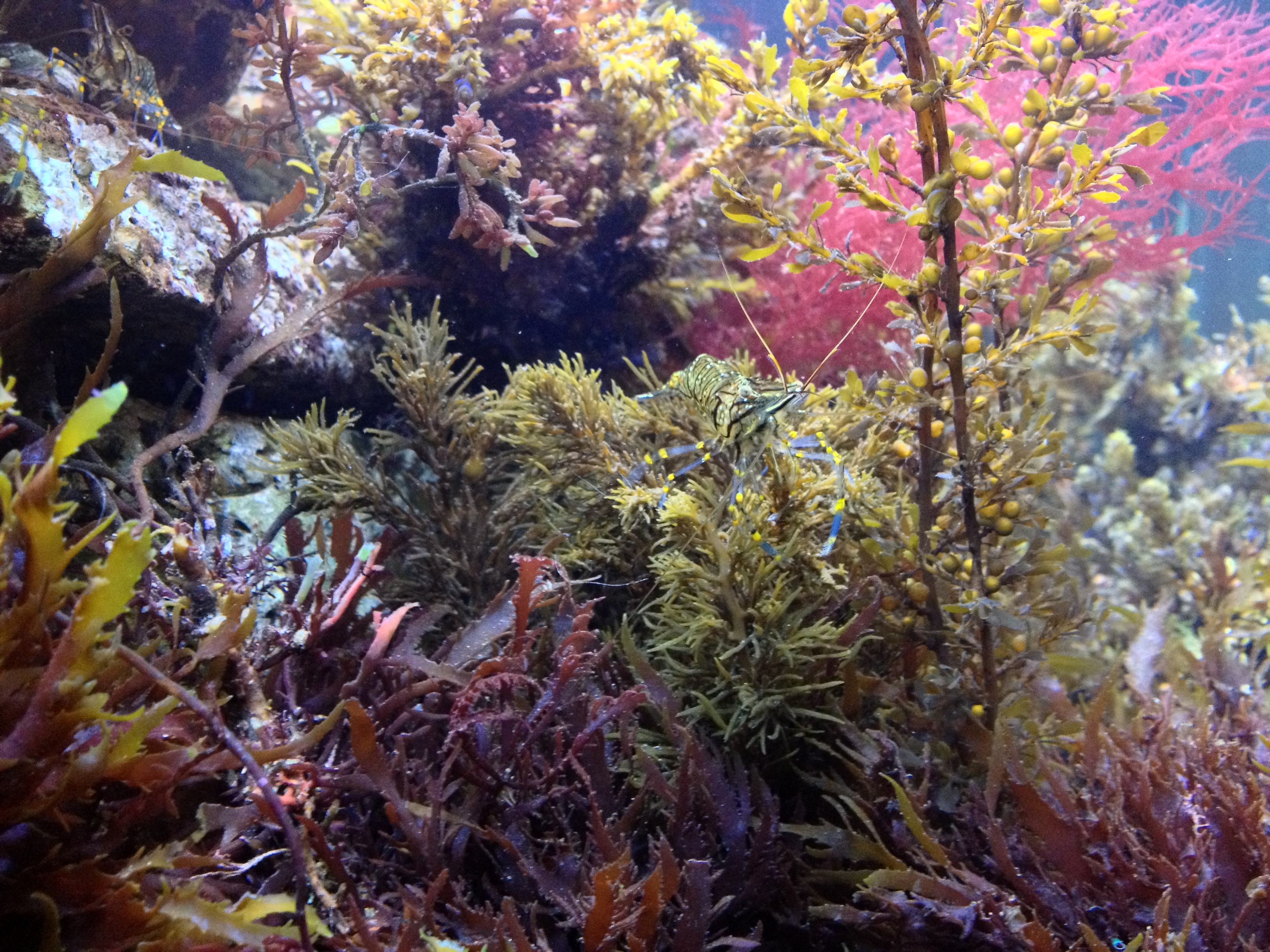
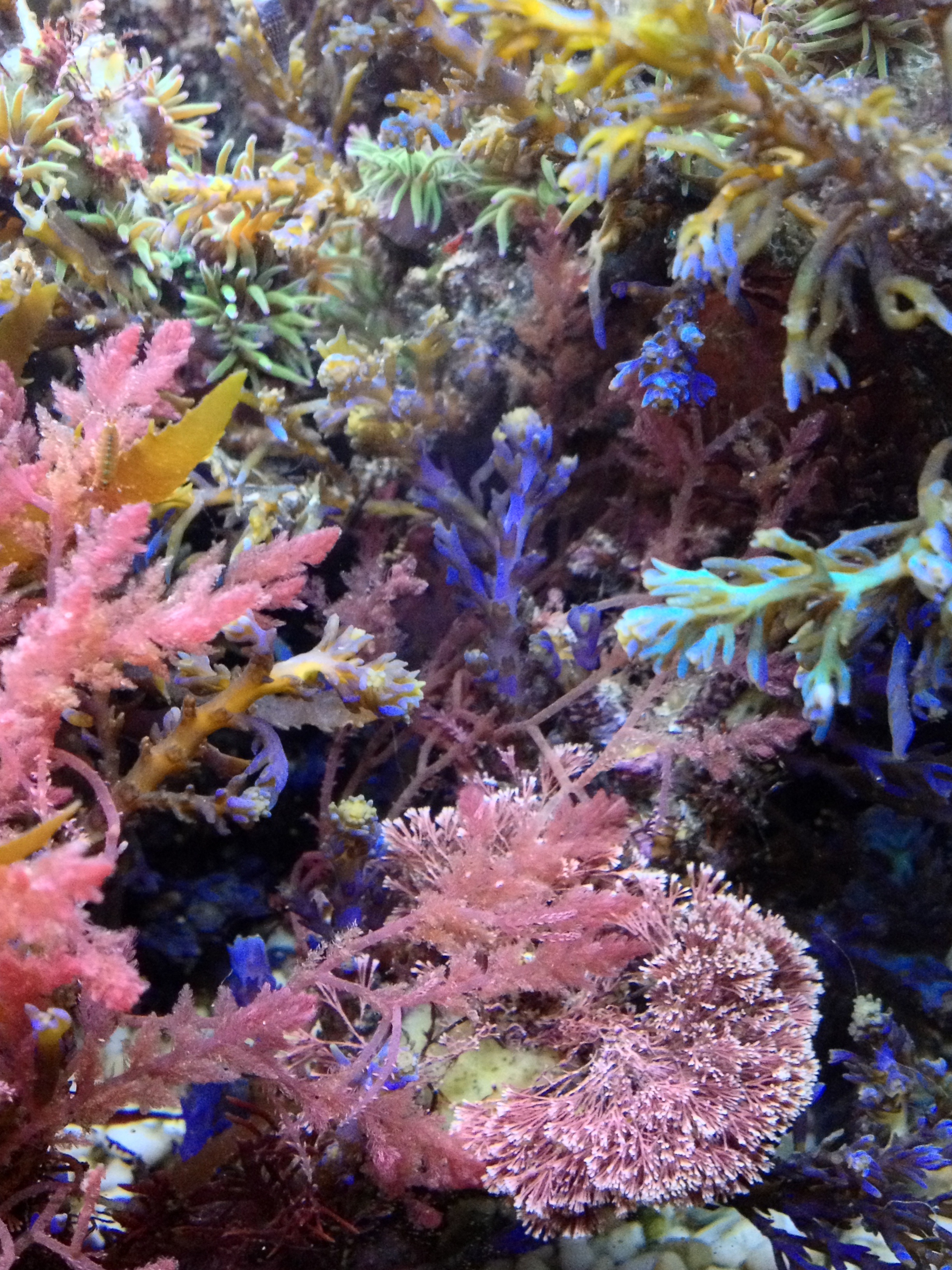
the aquarium: an unveiling of the wonders of the deep sea

I just received an interesting facsimile ordered from Amazon: ‘The Aquarium: an Unveiling of the Wonders of the Deep Sea’ by Philip Henry Gosse, first published in 1854. In it, Gosse describes his rock pooling and dredging trips around the Devonshire coast and his experiences with keeping animals and seaweeds in his marine aquarium. I actually do not know of any other book on temperate marine aquariums, so although it is a century-and-a-half old, it might still be the most current source available (not counting writings on the internet of course). It’s a very interesting read; in the early Victorian era, scientists had only just began to realize that plants and seaweeds produced oxygen for instance.
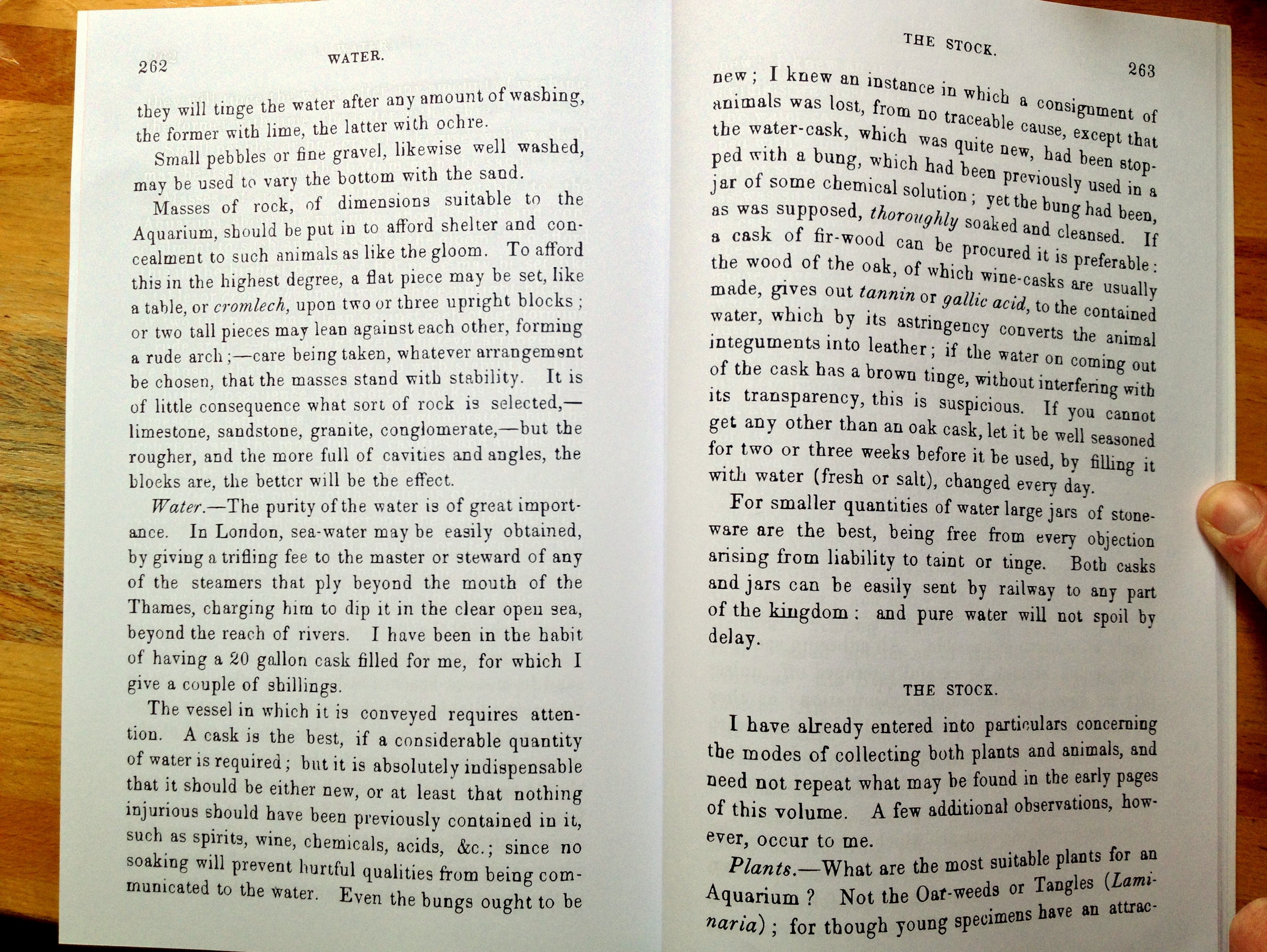
IMG_0118

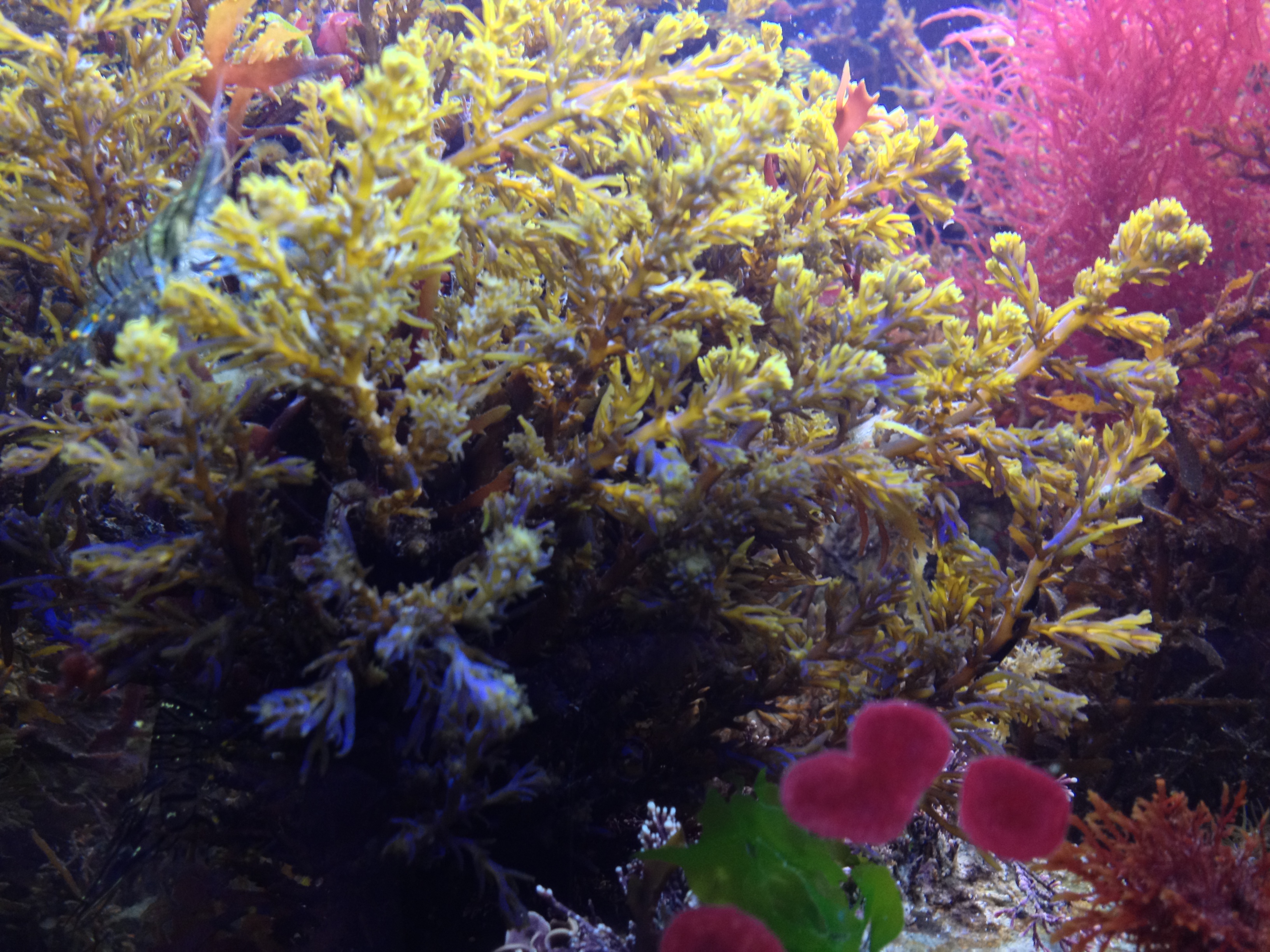
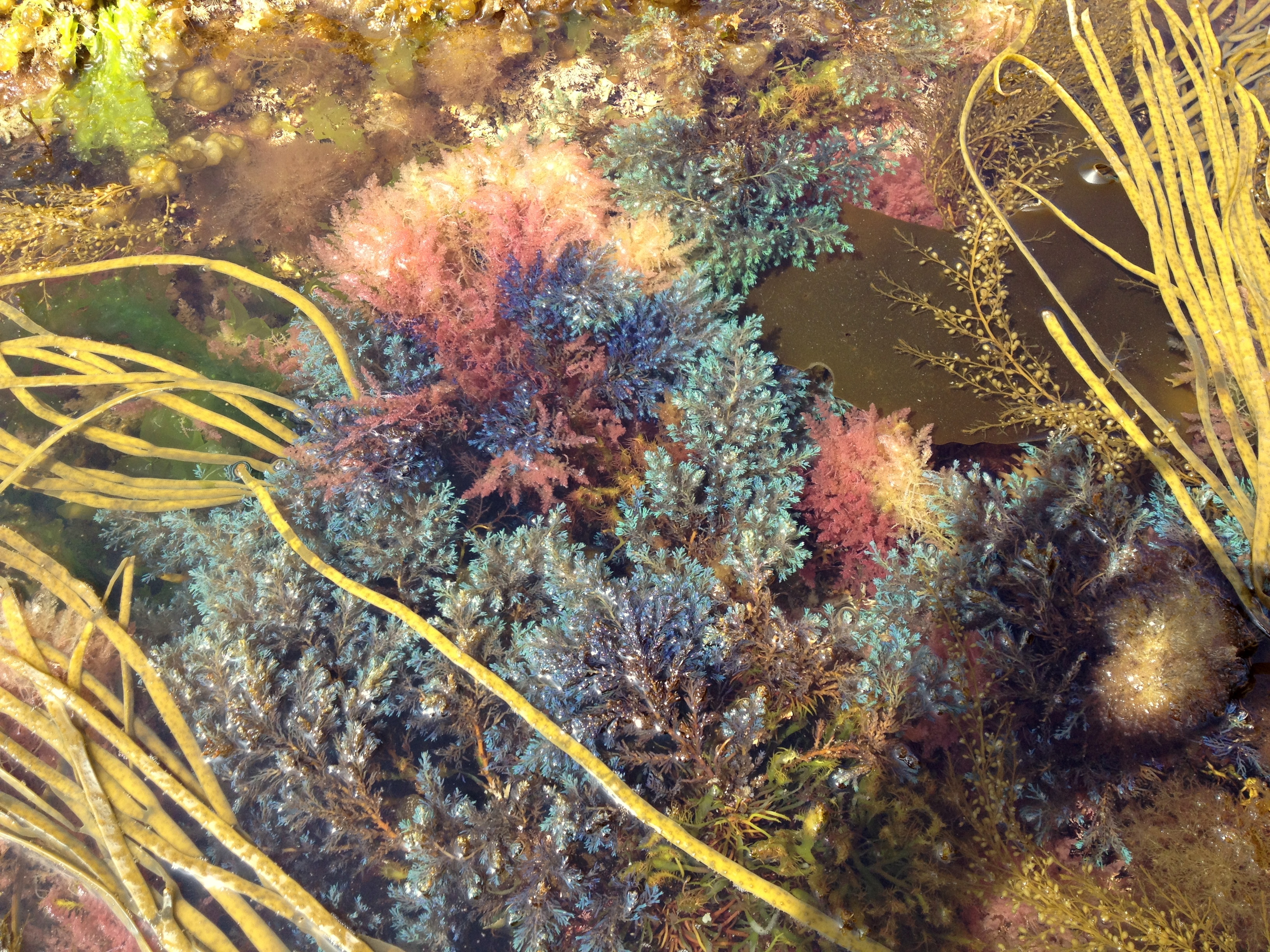
Of course I first looked up his description of my favourite, the Bushy rainbow wrack Cystoseira tamariscifolia. He was able to have this seaweed survive ‘for some time’ in the aquarium, tying branches of dredged up individuals to pieces of rock. He describes how submerged ‘their pale olive branches become invested with a most brilliant flush of iridescent light hue varying in intensity according to the play of light that falls upon it’, but that this remarkable gorgeousness of colour is not visible out of water (although it kind of is):

“Thus, it may be compared to some Christians, who are dull and profitless in prosperity, but whose graces shine out gloriously when they are plunged into the deep floods of affliction.”

They sure don’t write like that anymore! Gosse’s aquarium was small (2*1.5*1.5 feet), with glass plates set in grooves in a slate bottom and corners of birch-wood. He used ‘white-lead putty’ to fasten the glass, which meant that when he first started up his aquarium, everything died within the first day (except for the mullet fry and beadlet anemones). Lucklily, after proper rinsing, lead poisoning could be prevented in the remainign attempts. Of course he had no pump, filter, chiller or lighting. He however had deviced a means to ‘purify’ the water: a ‘drip-glass’ hung above the aquarium, dripping down two or three gallons a day thus aerating the water. All in all his experiences of which organisms do well in the aquarium and which do not, descriptions of rock pooling adventures and animal behaviour and even musings on the spiritual use of natural history make for a very interesting read.

seaweeds in the aquarium Part II

Time for the second post on the topic of seaweeds in the aquarium and I will write a part III as well.

4. What conditions are right for seaweeds?

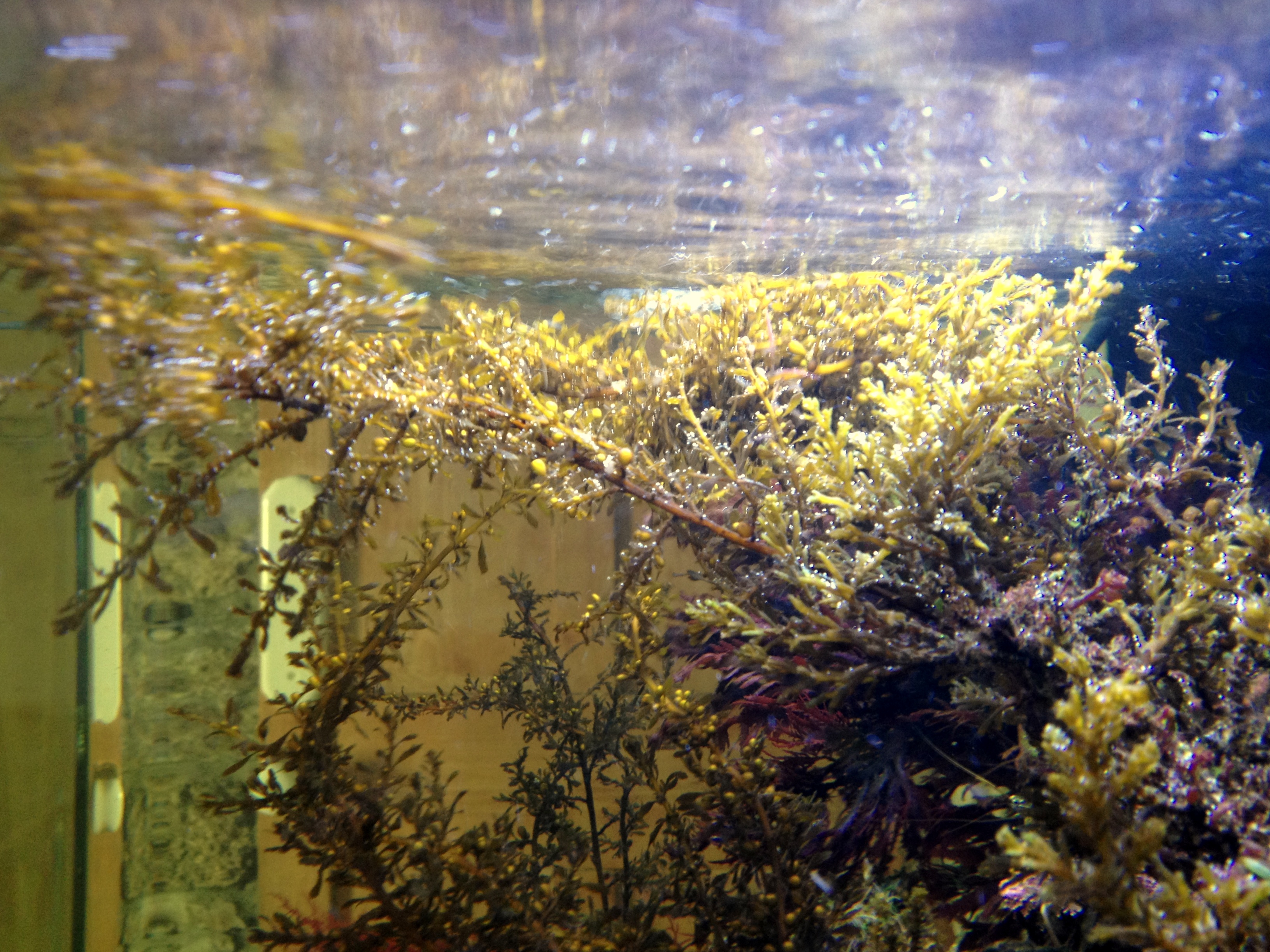
The short answer is: I don’t know yet (and they will vary for different species). I have some clues that add up to a longer answer though. Obviously light is an important factor. Most tanks come with actinic (blueish) light representative of deeper waters. The seaweeds I collect are from shallow water (rock pools) and so are adapted to whiter daylight (as in freshwater planted tanks). I have played around with lighting (see this post) but not in a very systematic way and so am not too sure about what wavelength and intensity is best. Another factor that is important is sufficient wave action. Before I used a Tunze nanostream to create extra flow, I noticed that detritus and algae could settle on seaweeds, see this picture of Serrated wrack Fucus serratus taken from an older post:

IMG_0140

High nutrient levels could benefit some microalgae more than they benefit macroalgae (seaweeds) as is the case for plants in fresh water aquariums and could lead to problems. Another factor that must be very important is temperature. I do not have a chiller and my tank is around 25C (higher than room temperature because of the lighting). Seaweeds from rock pools must have not much problems tolerating this temperature for hours on end, but many might have a problem with it for months on end. I therefore will probably buy a chiller next year…  One very interesting parameter that I have not yet seriously considered is CO2. CO2 can be a limiting factor in photosynthesis, that is why many fresh water aquarium keepers add it (in gas or liquid form) to promote plant growth. I found a very interesting article on the role of CO2 in reef aquariums by a very clever chemist named Randy Holmes-Farley. It could be that CO2 is limiting for seaweeds in my aquarium as well and I’ll definitely need to do some pH tests to find out whether this could be the case. The article lists a table with relative rates of photosynthesis at pH 8.7 compared to pH 8.1 for a number of seaweeds. This is 57% for my favorite seaweed Bushy rainbow wrack Cystoseira tamariscifolia. Very interesting stuff indeed and I shall investigate!

IMG_4783

taking my iPhone underwater

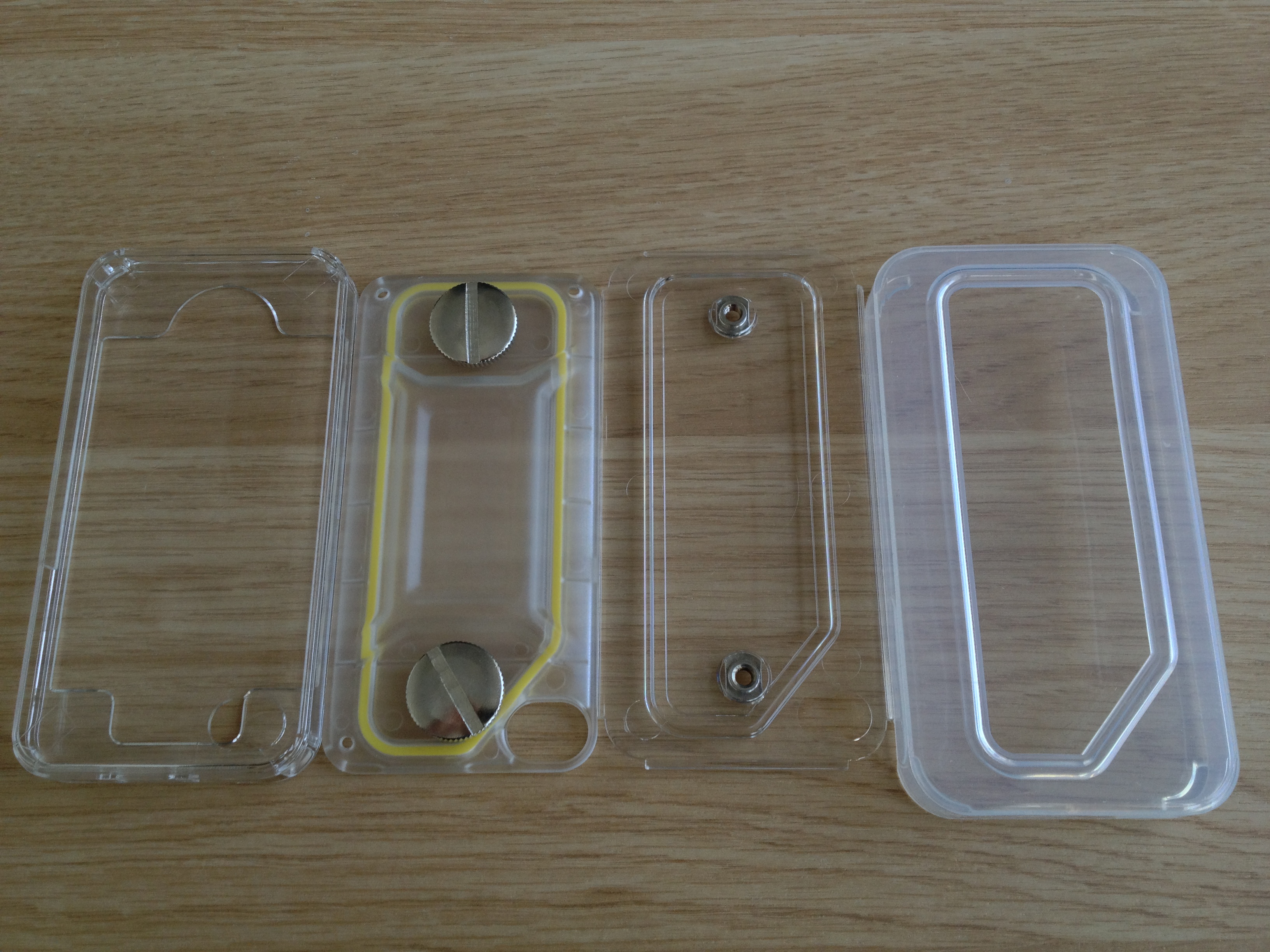
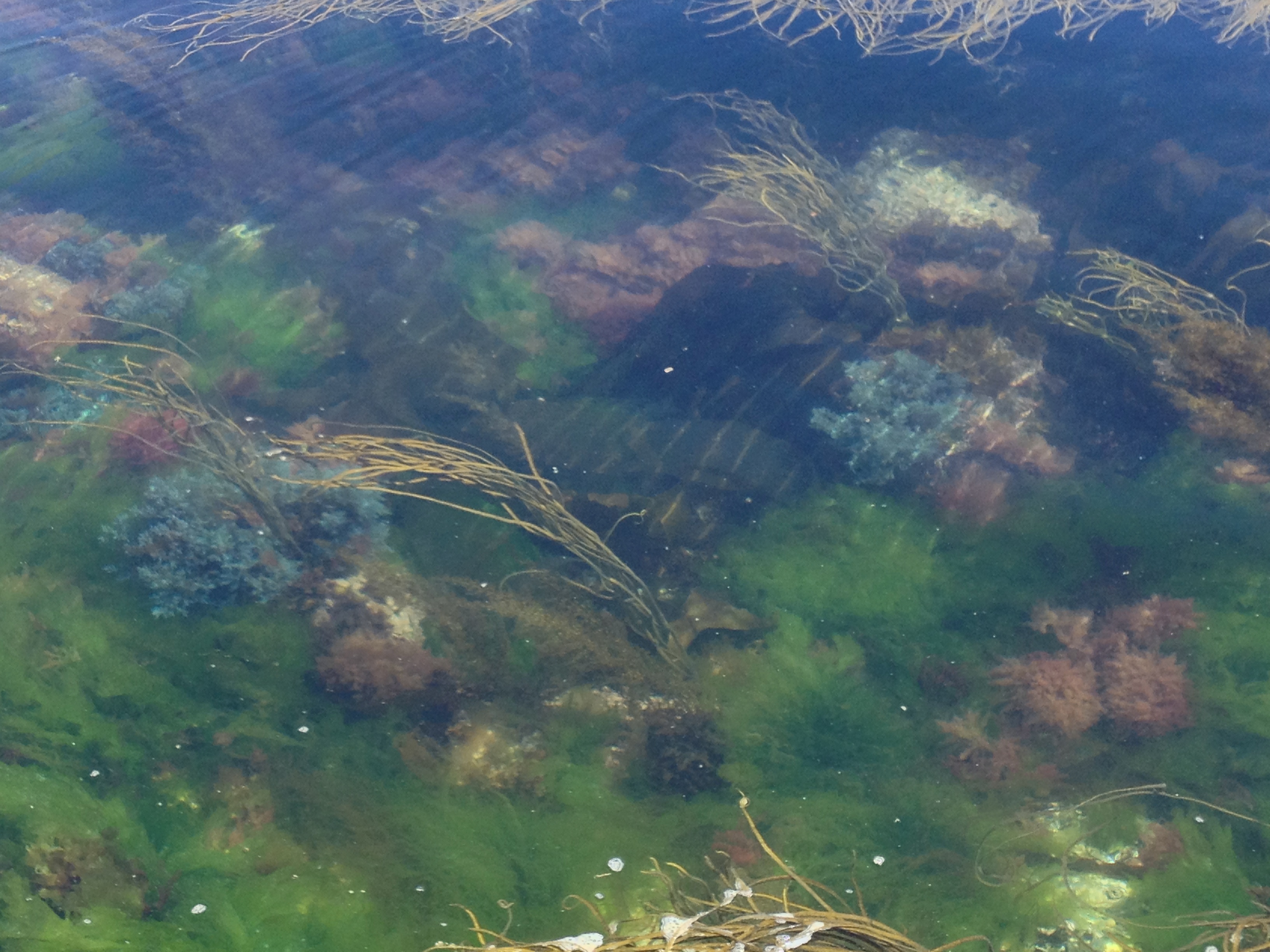
Two weeks ago I went snorkeling with colleague Chris (his hands can be seen in a picture in the previous post) as we figured making a pact would speed up the process of getting in the water. Spring has been so-so and sticking your head beneath the surface was a bit painful but in the end we stayed in for 45 minutes or so. Unfortunately the visibility was very bad. The sea was almost like a soup: you could feel the algae streaming down your face. However, lots of small jellyfish could be seen and occasionally a wrasse darting off. In slightly deeper water, the seaweeds were dominated by Oarweed or Tangle Laminaria digitata. Seaweed diversity seemed much higher in the shallows and the bright light green of the Sea lettuce, the pink of the Harpoon weed and the blue of the Bushy rainbow wrack looked quite amazing.  Last week I went back by myself during a lunch break with the audacious plan of taking some underwater pictures with my iPhone. There are quite a lot of (cheap) underwater housings for iPhones nowadays of which I had bought one recently (the ‘amphibian waterproof case’). I tried it out holding it under a tap with distilled water (if it would leak there would not be any damaging salts at least) and that seemed to work. I later saw a patch of moisture but this was minimal condensation that did not seem to any harm. The case:
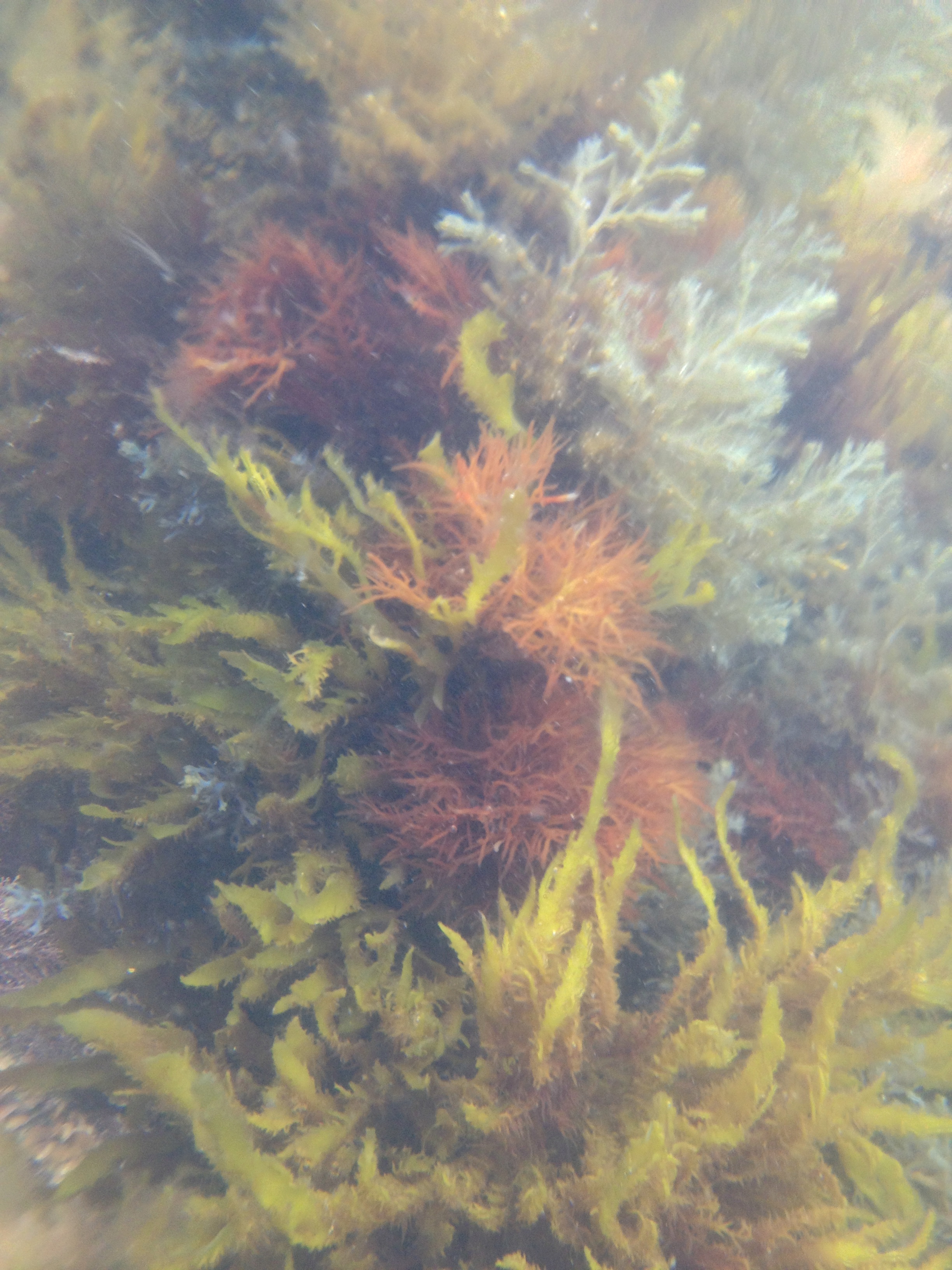
IMG_3402The water seemed quite a bit less cold the second time around and the visibility was slightly better as well. However, Castle beach is exposed and the wave action results in a lot of debris (such as pieces of dead seaweed). Also, it seemed that some of the seaweeds were already ‘over the hill’; the Harpoon weed often seemed discolored for instance and not that pretty anymore. I have noticed the proliferation and die back of some seaweeds before and it makes sense that there is some seasonal succession (I will keep tabs on the growth of the different species month-by-month in an excel spreadsheet). It should have come as no surprise that my plan of taking crisp, brightly colored underwater pictures with my iPhone in a flimsy case turned out to result in blurry, out of focus and badly composed shots, but it was still a bit disappointing. Some of the least crap ones:

IMG_3425

IMG_3436

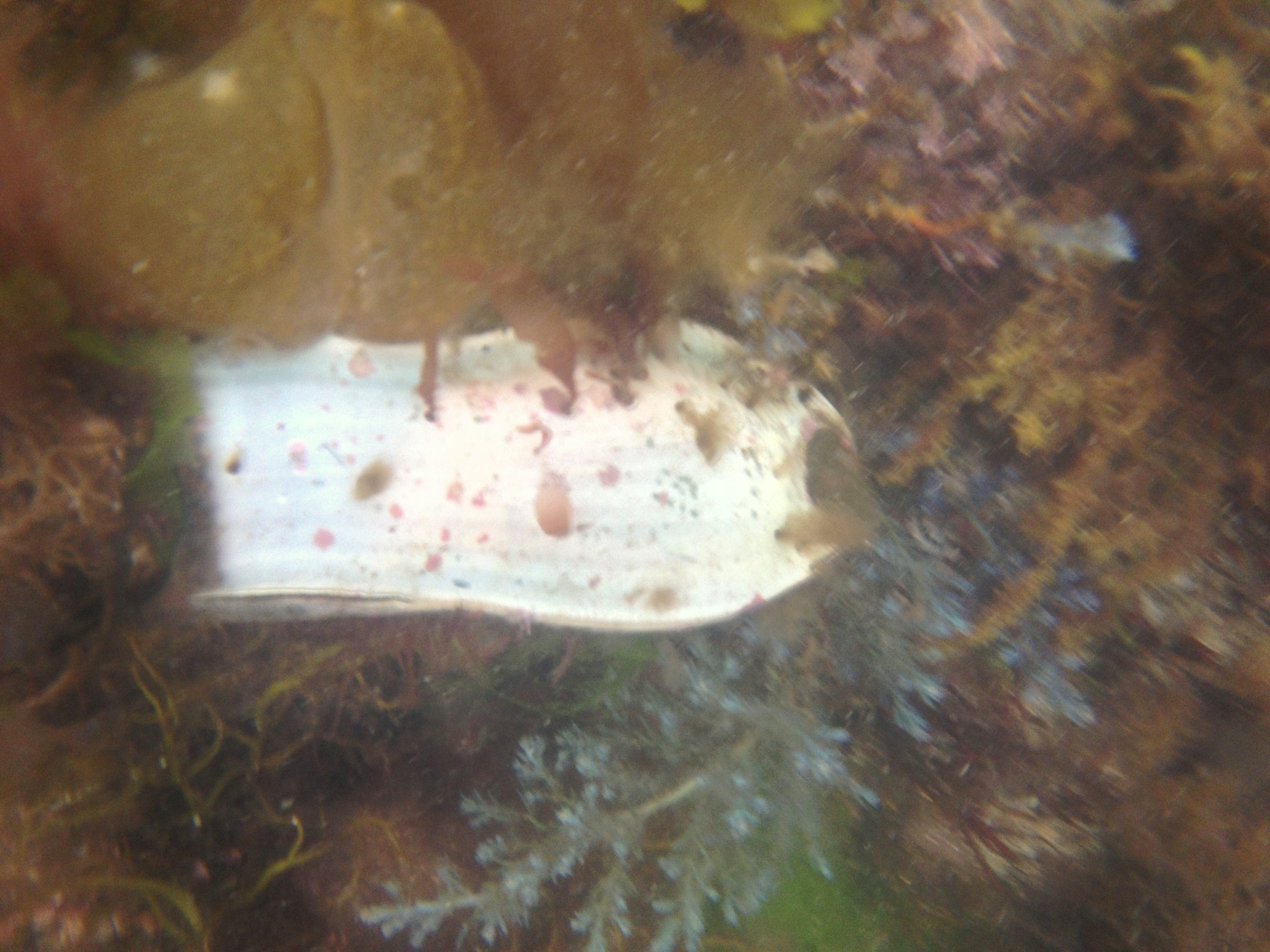
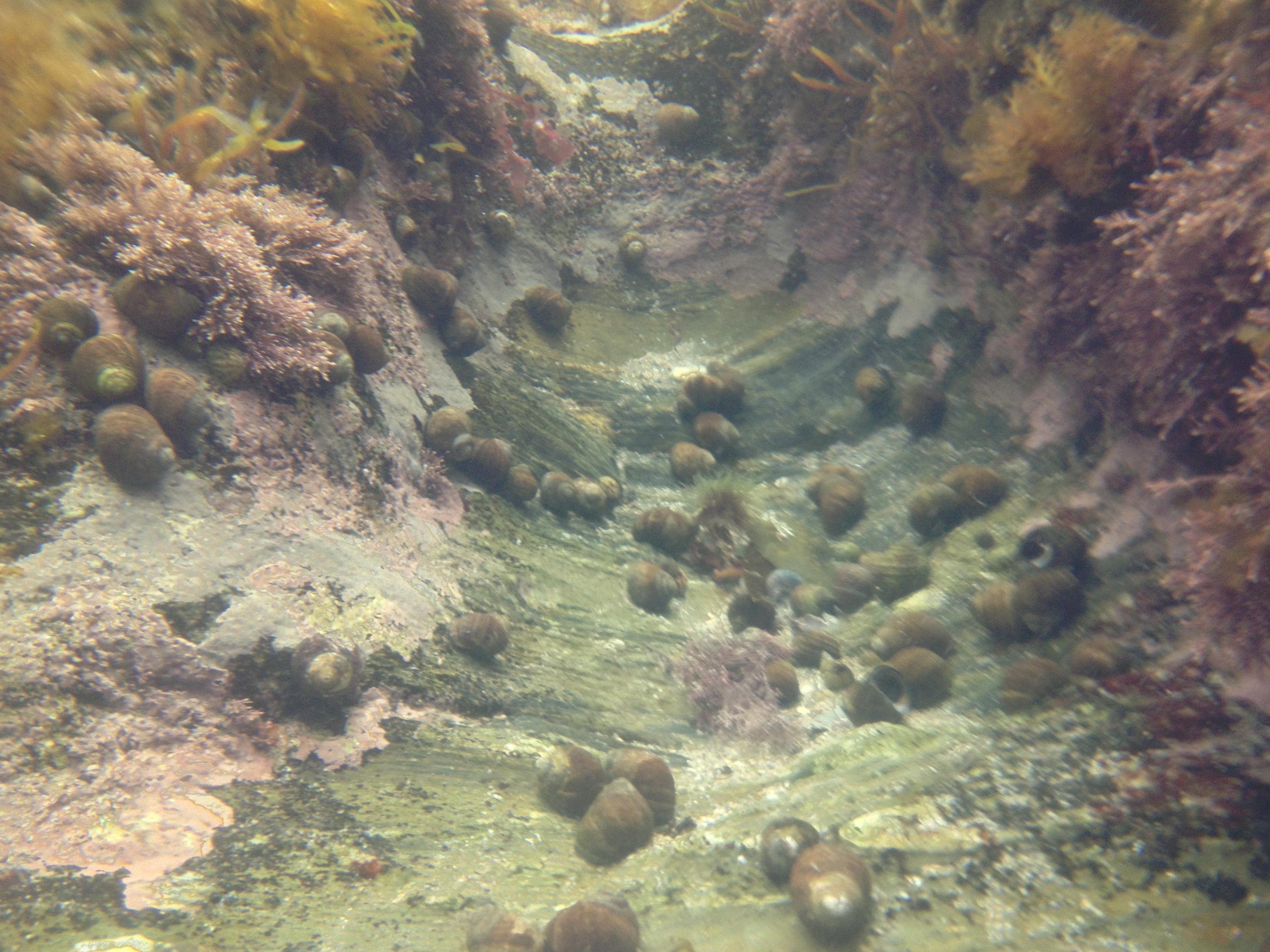
It was quite neat to sea mermaids purses (ray or shark egg cases): bright white and fat (i.e. alive) instead of the black and empty wrinkled ones you find on the beach. I have no idea what species they are but they seemed relatively common and I only found them attached to my favorite, the Bushy rainbow wrack Cystoseira tamariscifolia. *edit, most probably eggs of the Nursehound (or Bull huss) Scyliorhinus stellaris.* I also tried some quick shots in the rock pools as the water is more clear there, but the pictures did not turn out to be too great in there either:

IMG_3470Although quite cheap and -knock on wood- safe, the iPhone case is not a substitute for a real underwater camera. All pictures turned out quite hazy (although this was certainly also due to the bad water conditions). At times it is hard to operate the touch pad and there isn’t a cord to attach it to your wrist which makes the experience a bit less relaxed. I have a Panasonic Lumix that can go 10 meters deep and an old Canon Powershot with an underwater housing which seem to do better (although neither of them in turn can be compared to a SLR in an underwater housing). I will try to explicitly compare some shots with these cameras soon. Next time I go snorkeling I will also try a less exposed spot where visibility will hopefully be better.
castle beach

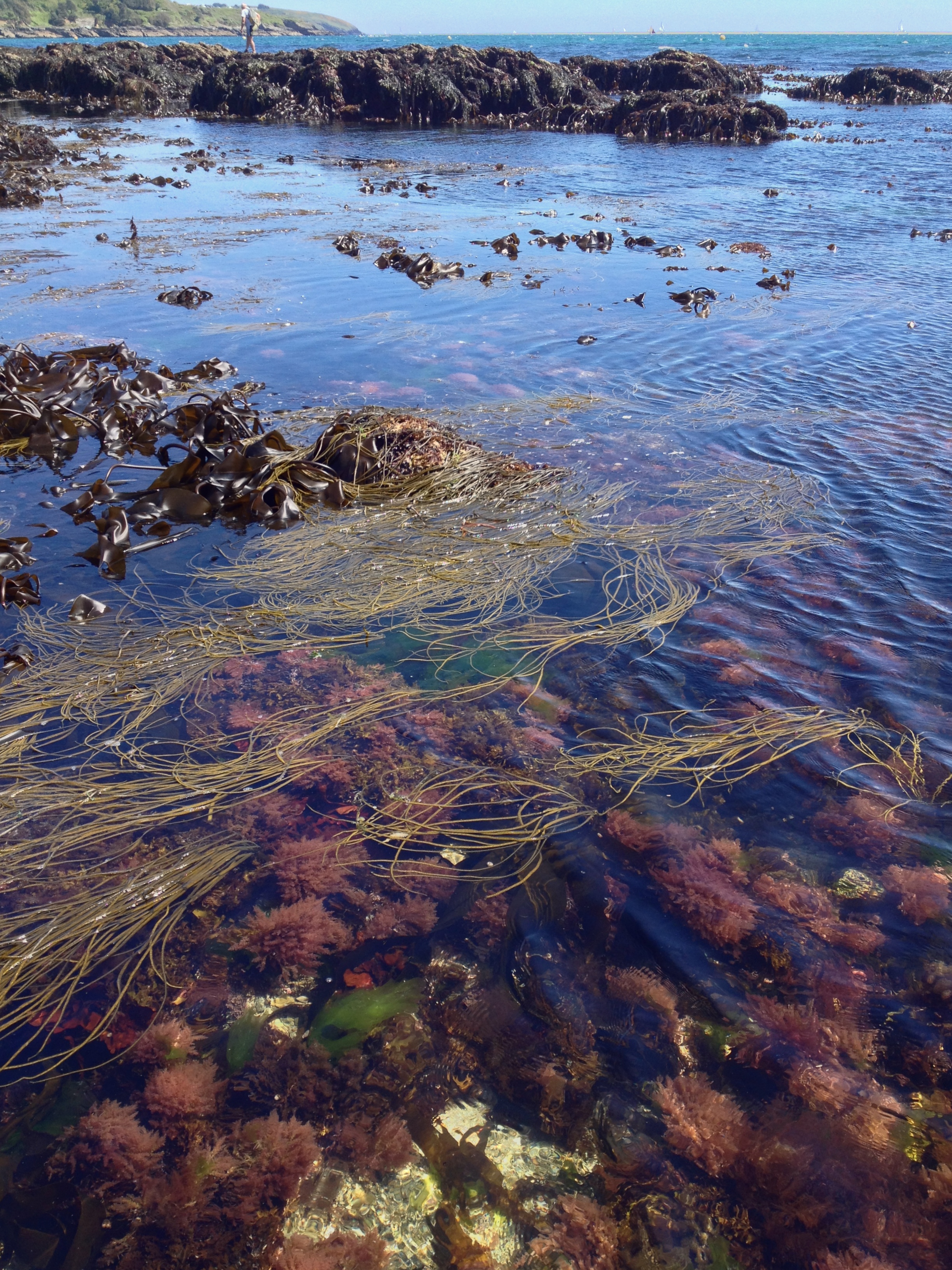
Although cold and rainy on the bank holiday Monday, the weekend weather was glorious (and low tide was ‘low’), so it was off to Castle Beach in Falmouth:

IMG_3261

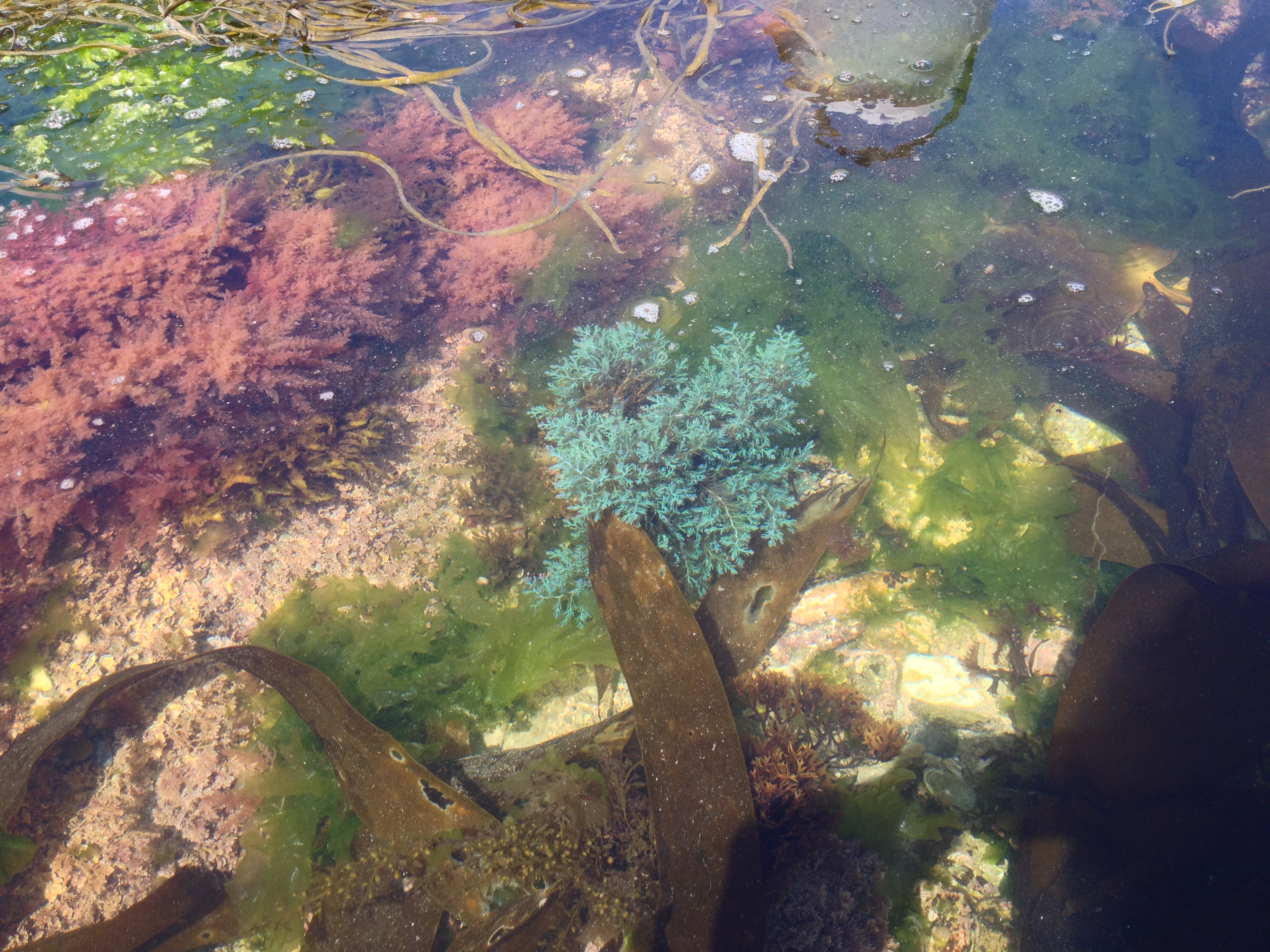
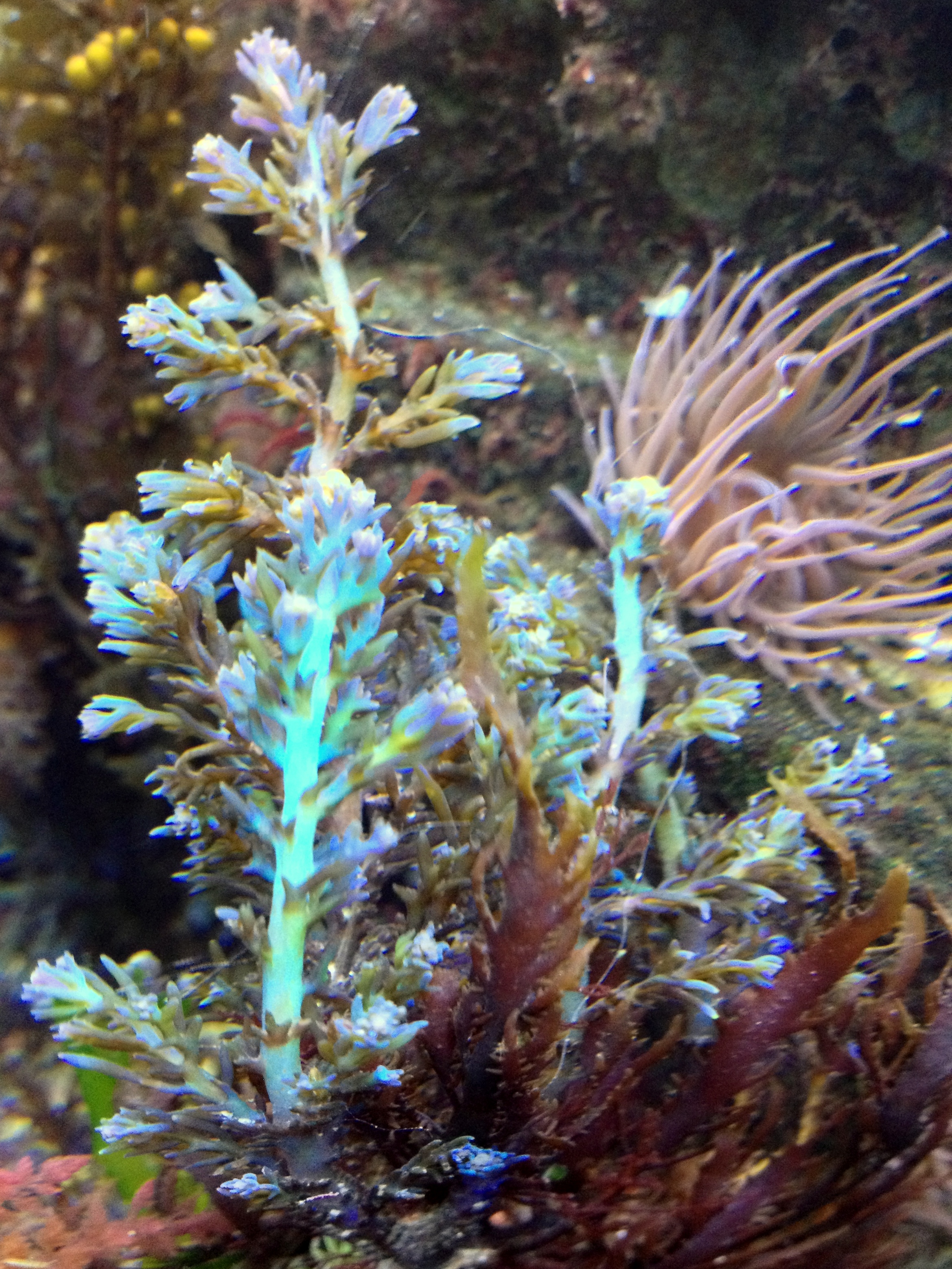
To me this looks as good as a coral reef! Loads of Harpoon weed Asparagopsis armata, Thong weed Himanthalia elongata and Oarweed or Tangle Laminaria digitata (there are two similar kelp species, but these remain more erect when above water my guide tells me). Also quite some of my favorite Bushy rainbow wrack Cystoseira tamariscifolia shining blue:

IMG_3294

IMG_3293

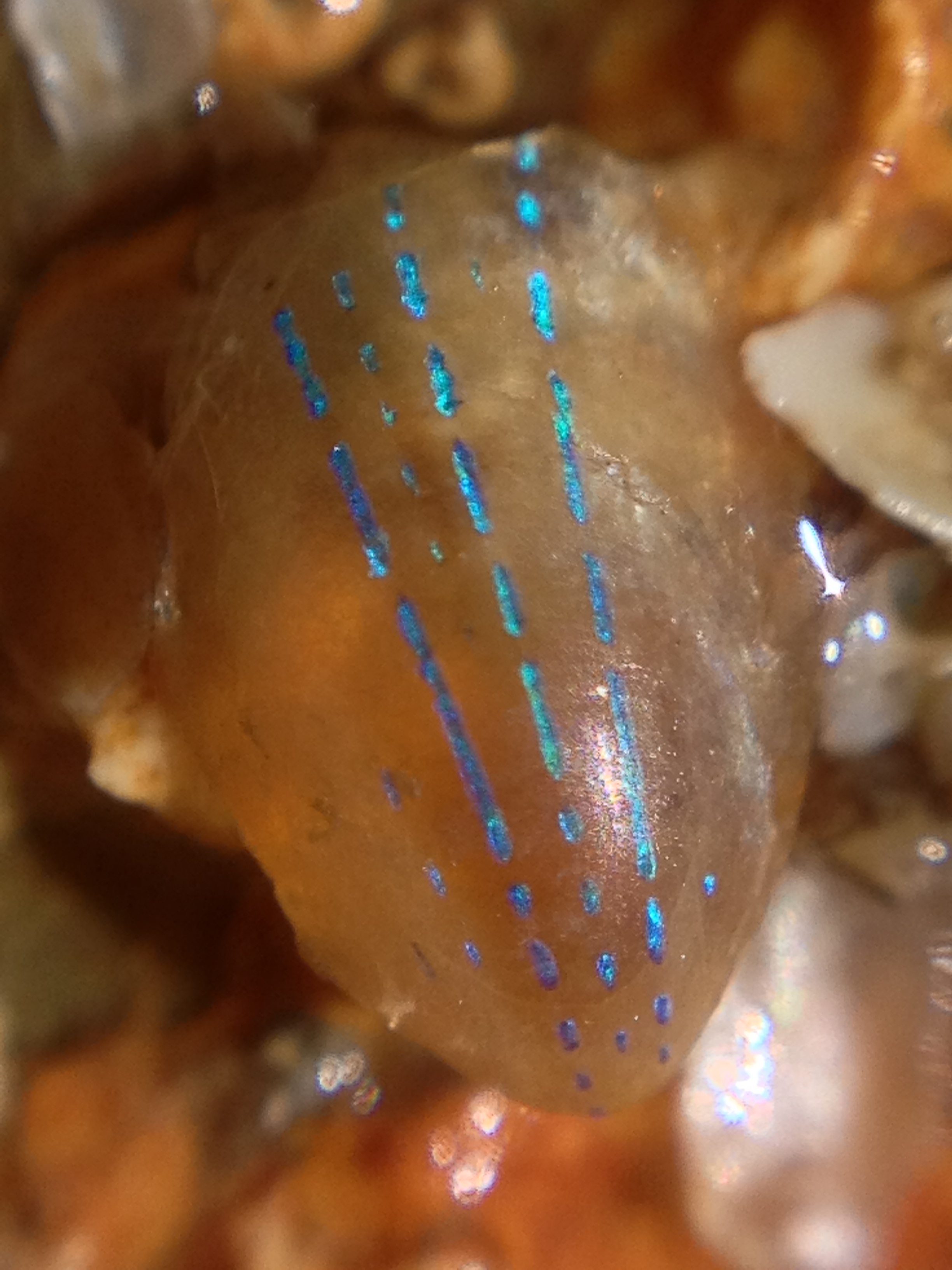
Also iridescent: a tiny (<5 mm) Blue-rayed limpet Helcion pellucidum. Normally found on Laminaria kelp, this one sat under a rock:

IMG_3287

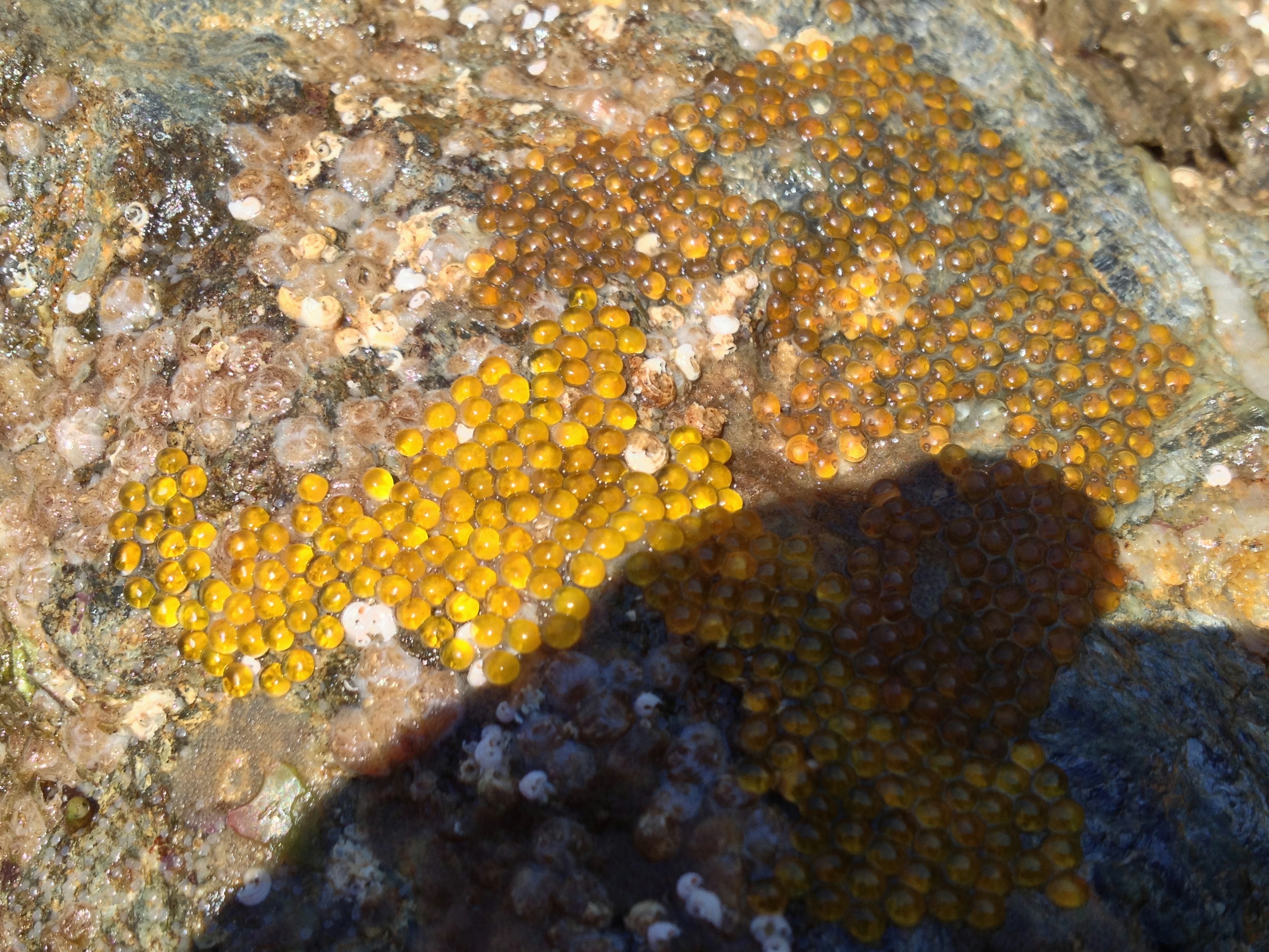
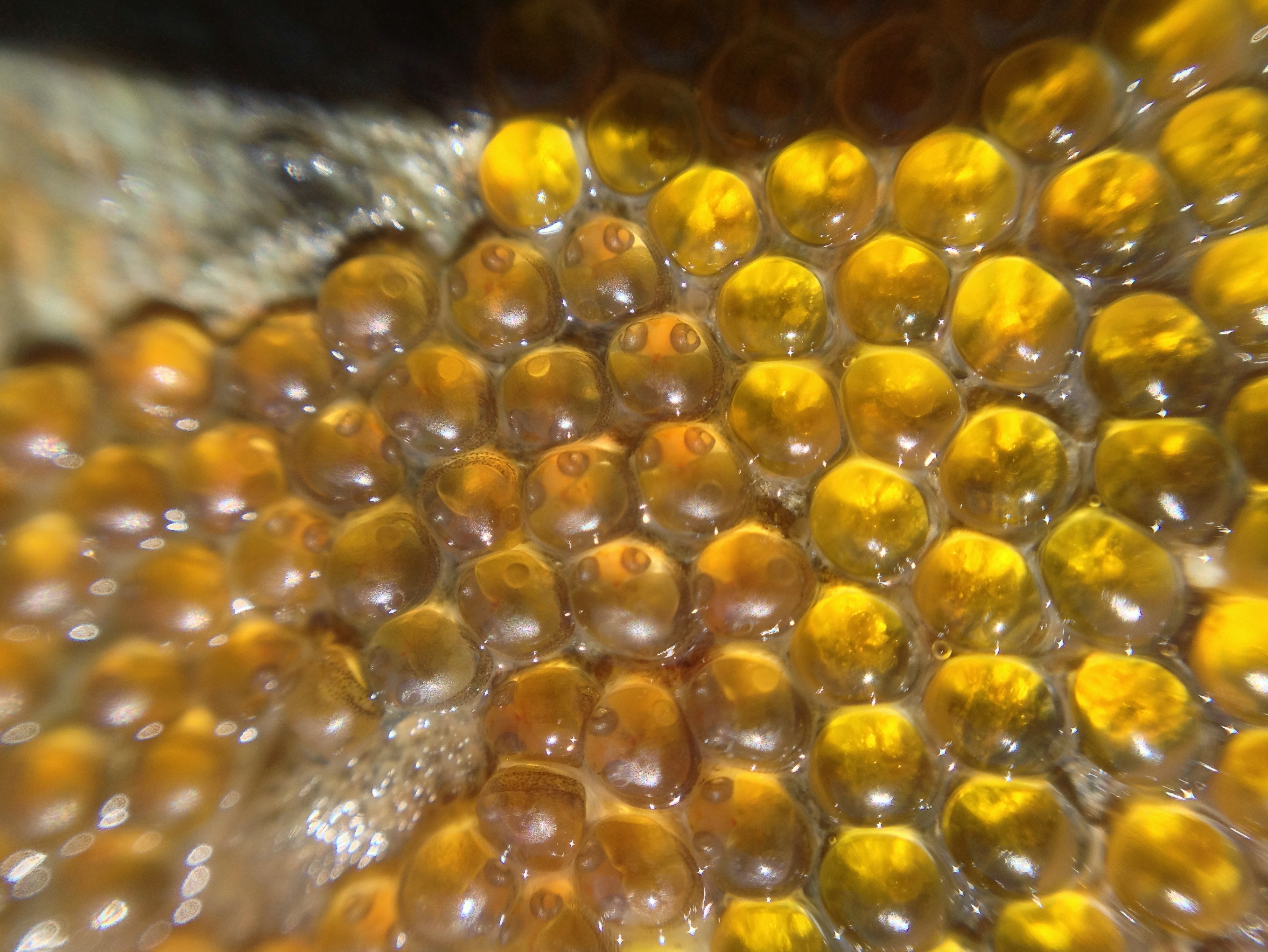
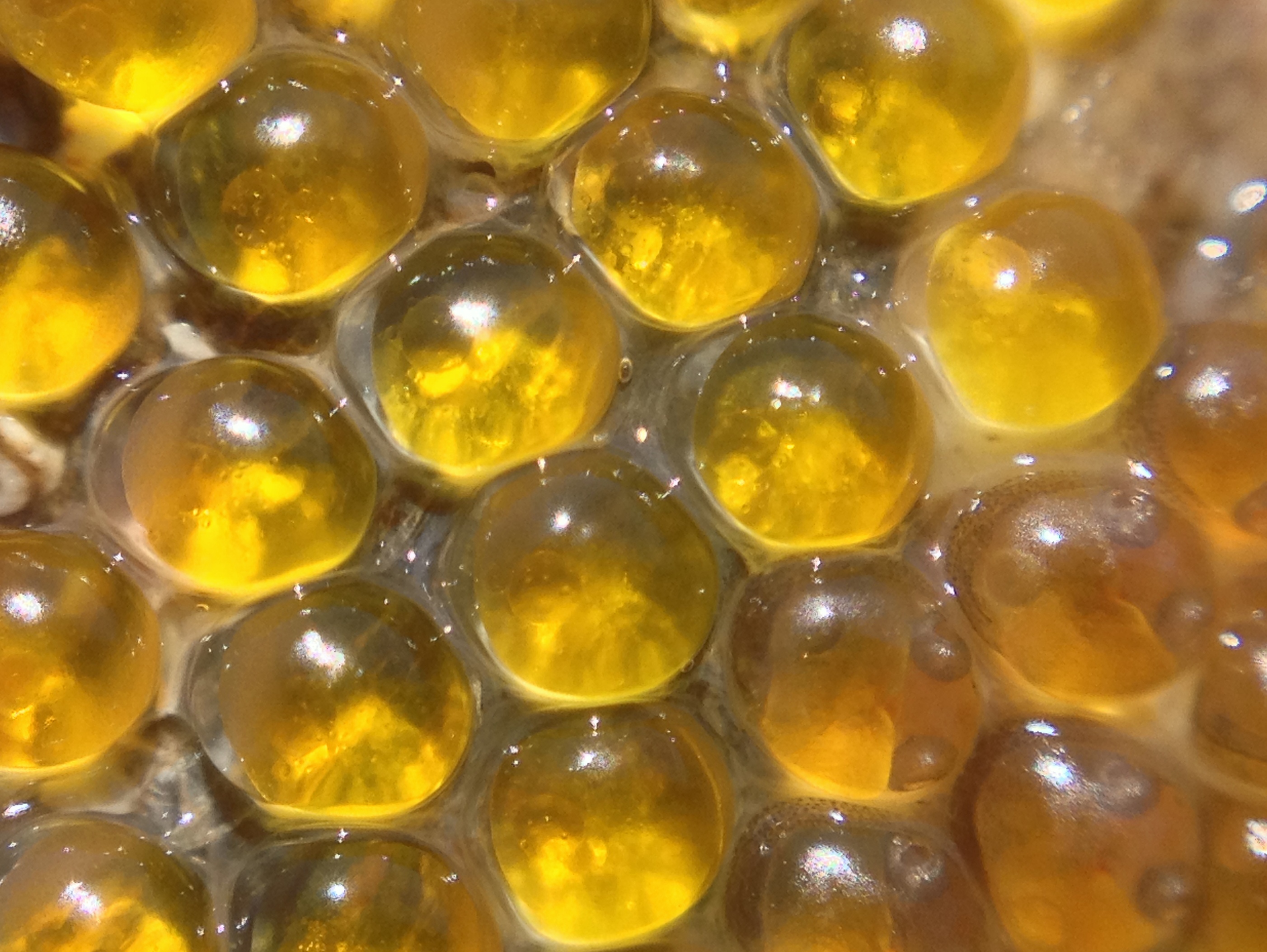
Especially on the middle shore, there was quite some change in seaweed composition, with lots of Ulva and similarly bright green, slimey algae in the rock pools. The abundant Shore clingfish Lepadogaster lepadogaster had been laying eggs under rocks everywhere:

IMG_3270

IMG_3272

IMG_3274

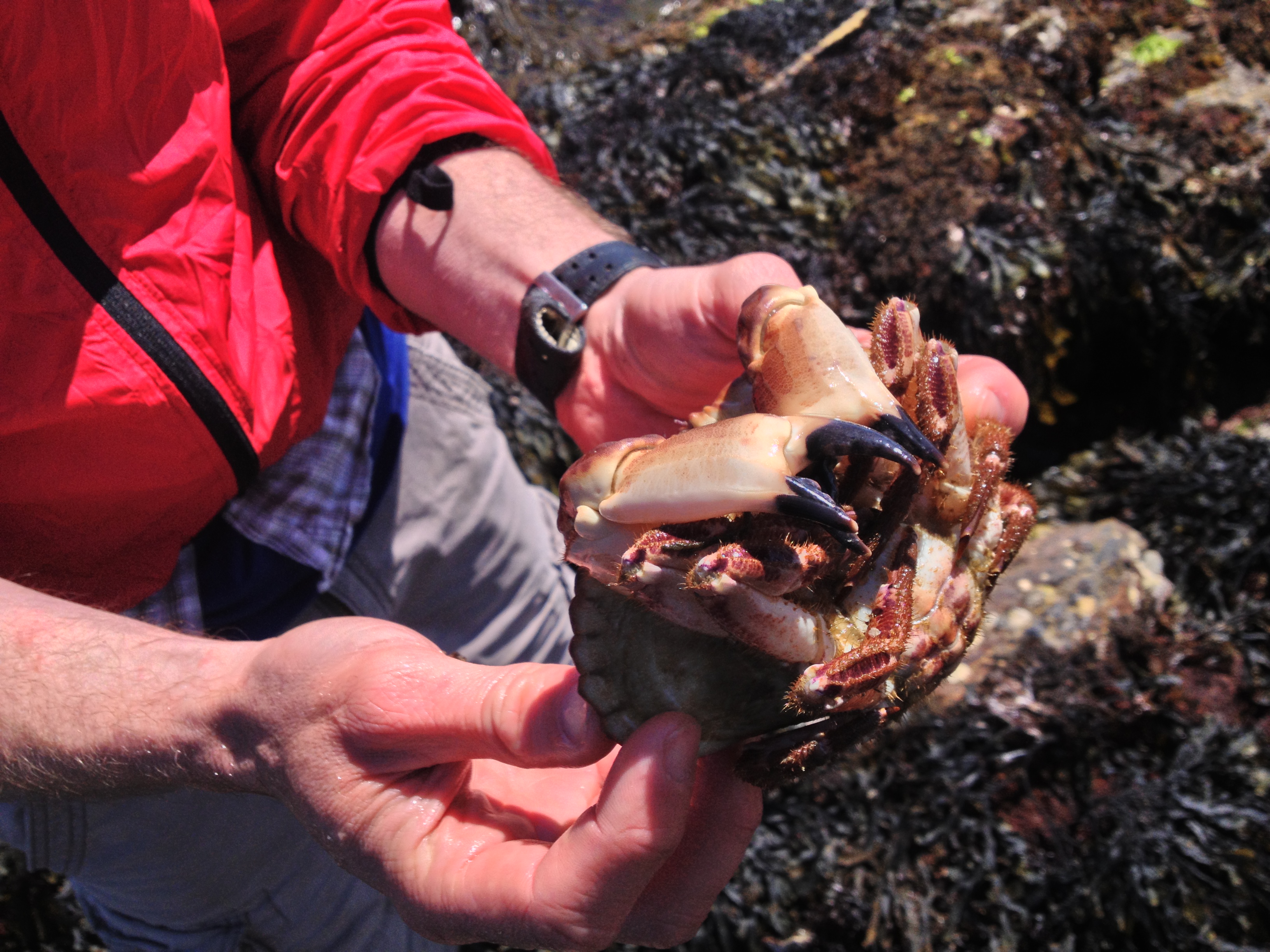
You can even see the embryo eyes, I am very happy with my olloclip macrolens (although photography in the bright sun is difficult, especially if you do not want to disturb the animals/eggs too much). There were a couple of quite big Edible crabs Cancer pagurus around. The combination of a trembling crab and a trembling hand resulted in a sub-optimal macro photo of its carapace but it is still a neat pattern:

IMG_3295

IMG_3301

Strangely (and mostly, annoyingly), the second pump of the aquarium broke down before the weekend and I ordered two new ones. The aquarium has not improved without filtration of course. I will be traveling quite a bit over summer so I will not experiment much with it in the near future.

new sand

Welcome to this most obscure of blogs, my dear reader. The aquarium is a bit of a mess at the moment for a variety of reasons. First of all there are a lot of algae growing; I have a bag with Rowaphos hanging in the back compartment to remove phosphates but this does not seem to help much (I have had good experiences with before though). Second, one of my pumps broke and so filtration runs at half capacity. Third, the mixed success of planting many different seaweeds has left loads of detritus in the tank. I have made large water changes which helped a bit. An additional tank for experimenting would be nice to have… Fourth, I have been unlucky with some of the seaweeds: the Wireweed grew really well, but the large size meant it caught a lot of the current and was easily dislodged. The Dudresnay’s whorled weed Dudresnaya verticullosa was growing really well (see here) but broke off from the rocks and could not be replanted:

IMG_2996

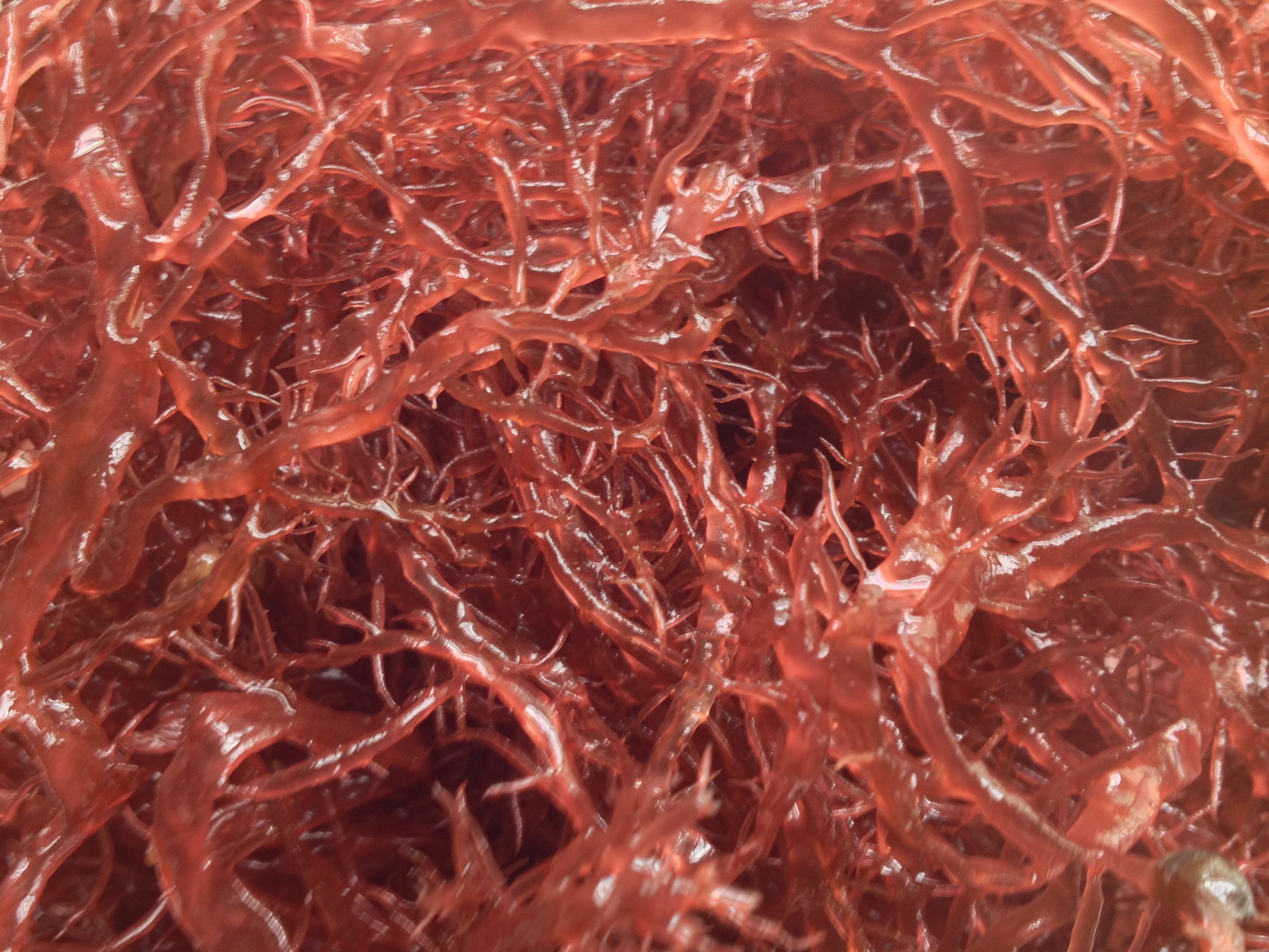
I could not attach the fine red seaweed (see last post) either and did not want to have it floating around so I have removed it. My nice red seaweed streaming from the pump outlet, most probably Devil’s tongue weed Grateloupia turutu (as the name indicates, another invader from the Pacific), broke of. A crap picture of both weeds:

IMG_3128

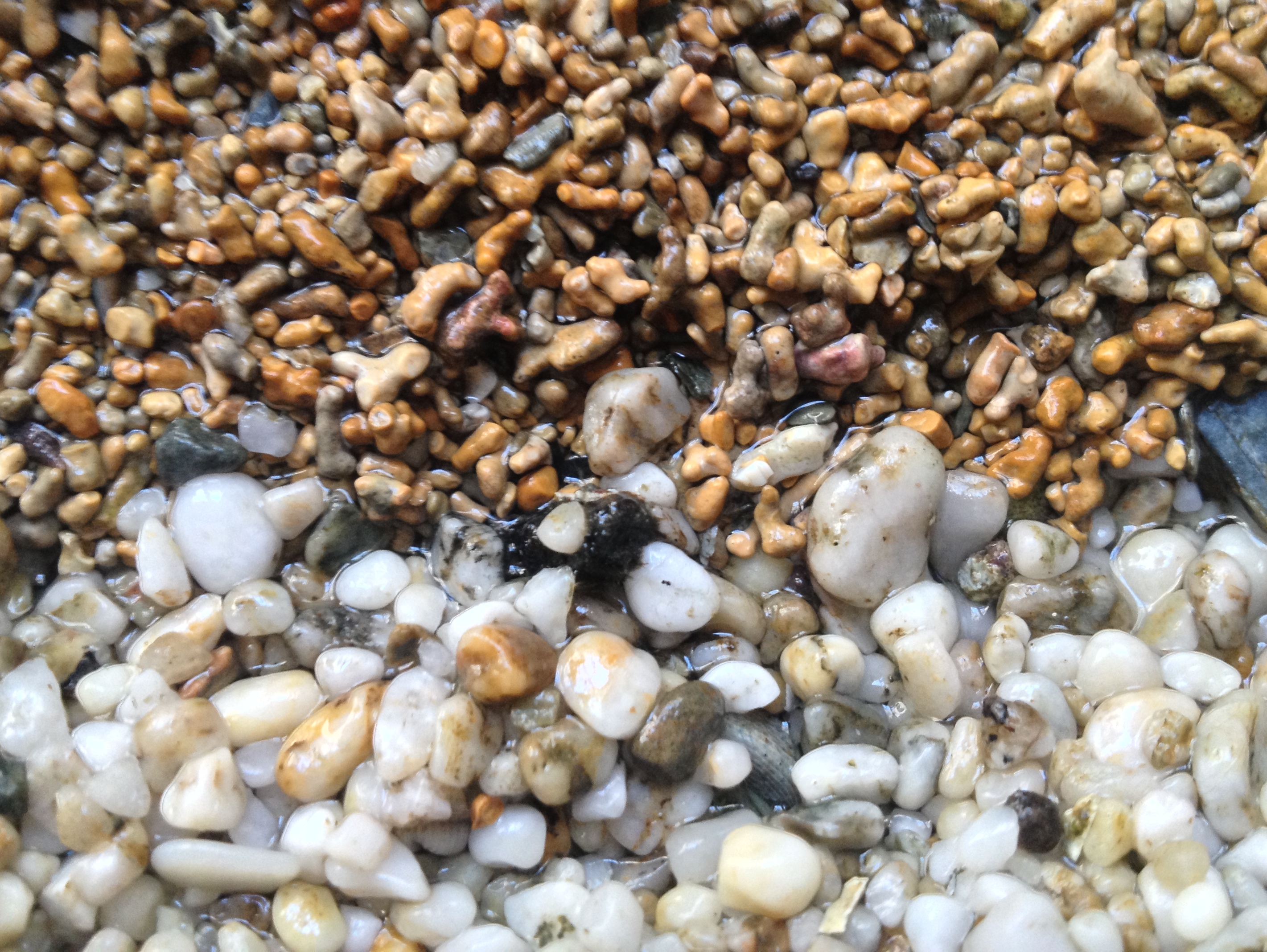
I changed the white gravel with finer, beige Maerl gravel (Cornwall’s equivalent of coral sand, see previous post) here placed in a bowl for contrast:

IMG_3133

I released my Shanny as well as the largest of the two Rock gobies. The former attacked to many of the snails (it was getting a bit of a mollusc graveyard) and the latter was just too voracious in general. The final straw was seeing it swimming around with half a Worm pipefish sticking out of its mouth (I still have a bunch of those). The Shore rockling did not survive, but I caught a glimpse of the Shore clingfish when I removed some of the rocks from the aquarium. The juvenile albino Edible crab (if that’s what it is) and the European sting winkle Ocenebra erinaceus I recently caught both still do well, as is a juvenile Shore crab Carcinus maenas:

IMG_3147

The Netted dog whelk Hinia reticulata is not one of the most impressive looking snails, but they do very well in the aquarium, burrowing and moving around:

 IMG_2167

I am not sure whether replacing one of the actinic lamps with the daylight lamp was such a great idea, the tank looks too yellowish now, especially with the Maerl sand…However, I will stick with it and see whether it helps future attempts to successfully keep Bushy rainbow wrack Cystoseira tamariscifolia (i.e. to retain it’s iridescence). If not, I’ll go back to the original lighting. I will not do too much with the aquarium in the near future as I want to get rid of the algae first. There are not many critters in the tank, which should help (I have only introduced a nice big Snakelocks anemone Anemonia viridis recently). I will do some more water changes and order a new pump. Only then will I slowly start experimenting with seaweeds again.

I am still unsure about the chiller, but with the weather getting warmer it might be more than just a luxury to have one. Apart from the price, it standing on the floor next to the aquarium with tubes sticking out is what I don’t like about the idea though. It will also not be silent, but perhaps I could get away with disabling the noisy hood fans, resulting in an overall quieter aquarium. The stripped-down tank (note that the red encrusting algae/seaweeds at the top of the tank have died (turned white) as they were exposed for a couple of hours when changing water):

IMG_3139


new lighting

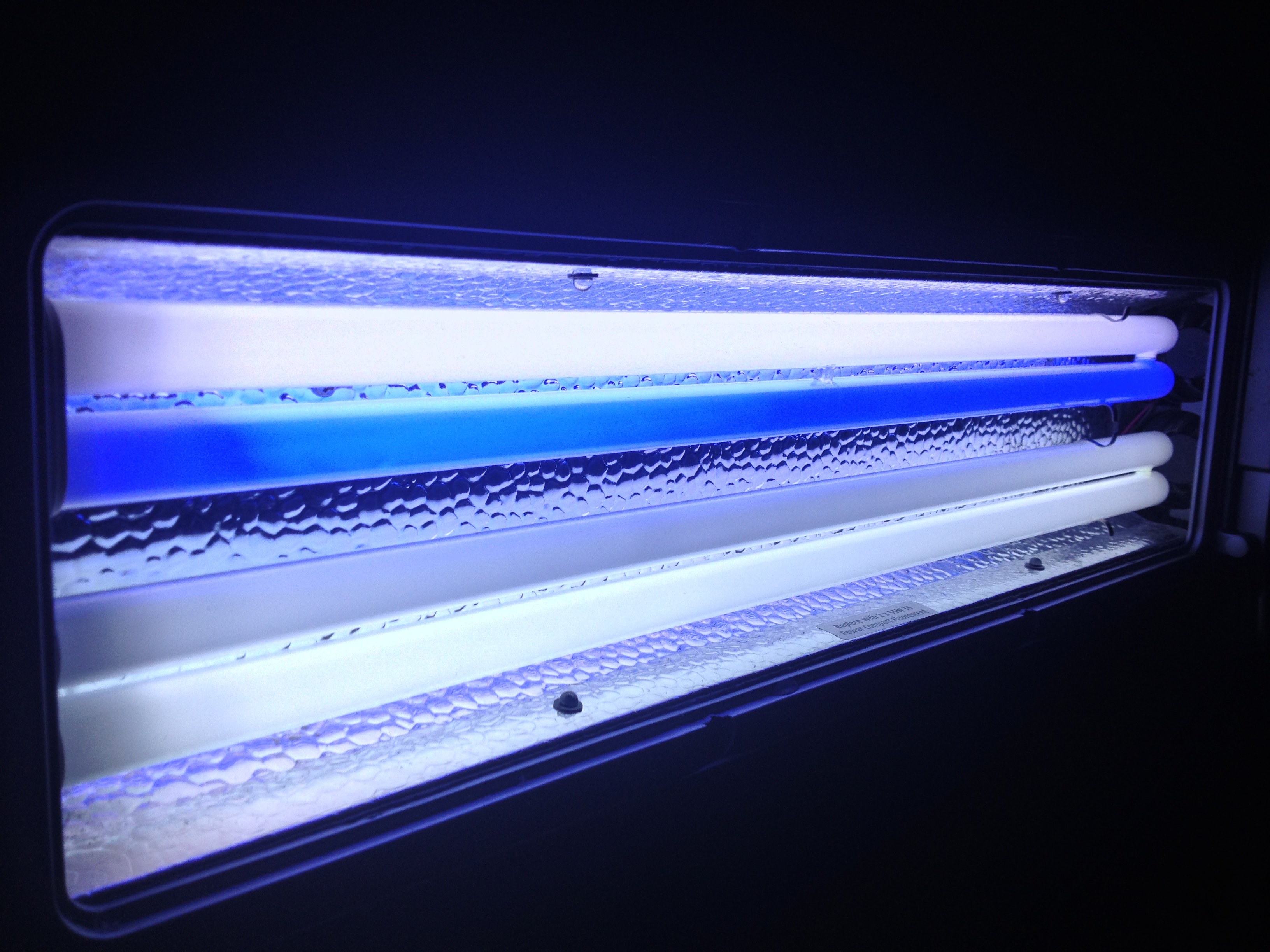
My new 55 watt fluorescent Philips daylight lamps arrived last week. The first picture shows the two standard 10.000 K actinic lamps that come with the Red Sea Max 130D; the second picture shows the two new daylight lamps. I found he light coming from the actinic lamps always looking rather harsh, but the daylight lamps looked awfully yellow. I decided to compromise between photosynthesis and aesthetics and go for one of each type (third picture):

IMG_2870 IMG_2875IMG_2874

As you can see, the Wireweed and Dudresnays whorled weed are doing very well.

IMG_2873

The 10.000 K lamp (top) and the 6500 K lamp. Contrary to my expectation, the temperature dropped using the new lighting: from 25C to 23C, good! I have ‘planted’ some Furcellaria lumbricalis, let’s see what it does:


IMG_2871

Yesterday I discovered a big patch of Bushy rainbow wrack Cystoseira tamariscifolia on Castle beach in Falmouth (I noticed that this seaweed grows quite high on the shore at this location). I should have brought a small plant back to test with the new lighting (and lower temperature and salinity) but I reckoned it would be best to wait a bit until I have a chiller as well to get all conditions right. Hmmm, maybe I’ll go back today…

IMG_2858

IMG_2859

tank update

Time for an update on the tank. Switching to two lamps instead of one looks good but has not brought the iridescence of the Bushy rainbow wrack back. I could not resist putting a new specimen in. Iridescence is defined as the property of certain surfaces to appear to change color as the angle of view or the angle of illumination changes. Left: viewed from below, right: viewed from above.

IMG_2407IMG_2409

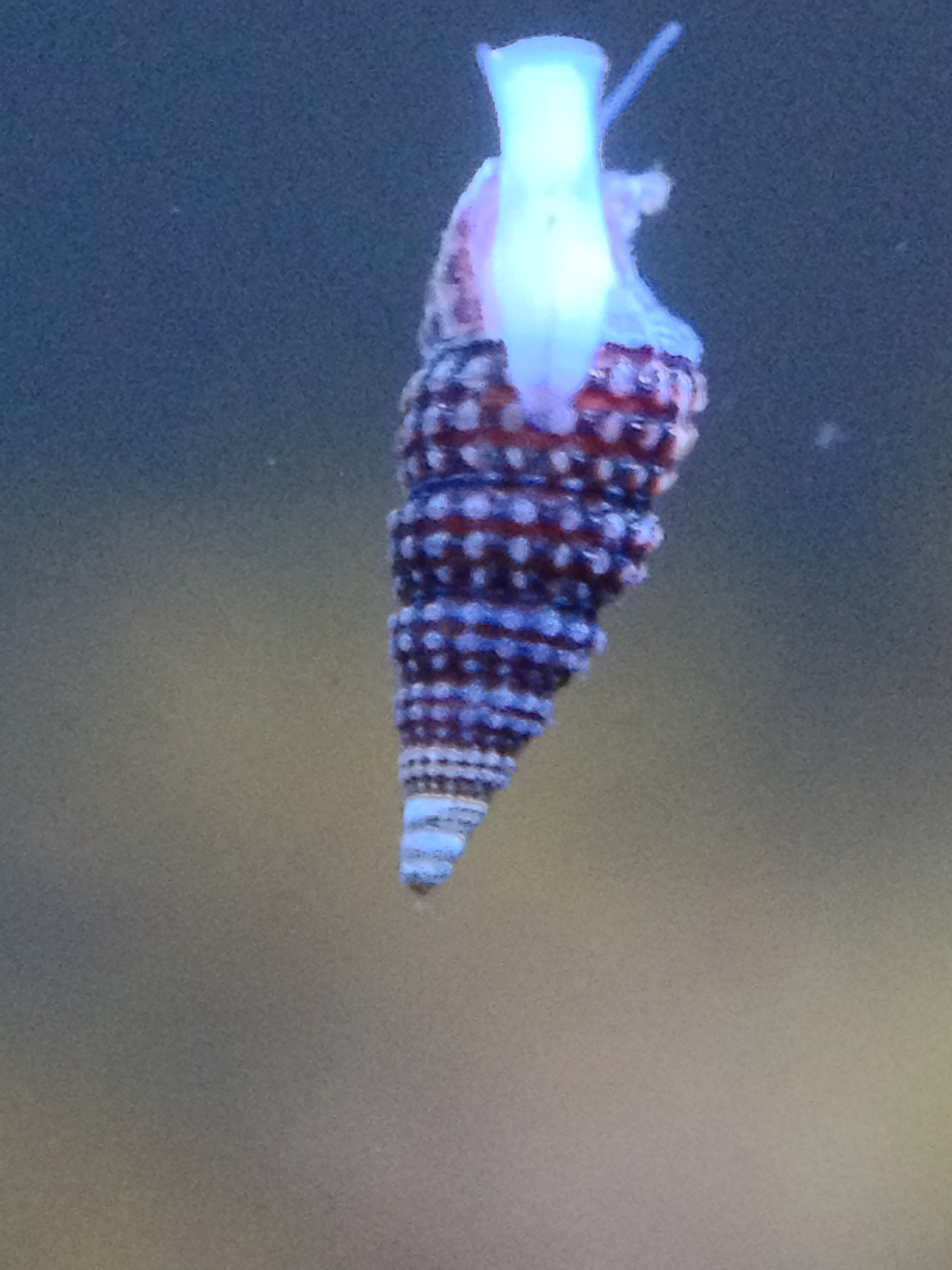
I noticed that the underside of the rock the weed was attached to harbored a nice little strawberry worm, but before I could photograph it, the large rock goby gulped it down. It is noticeable that the fish have full bellies after putting in a new piece of seaweed, which is no surprise as there is so much growing on and in it.I have seen the very cute amphipod Caprella acanthifera which looks like a tiny, marine cross between a praying mantis and a caterpillar, but since they did not come not near the glass I could not get a good shot. I have seen one Cushion star Asterina Phylactica as well, which looks nicer than the light grey Asterina gibbosa I have. I also noticed a couple of Cerithiopsis tubercularis (3-4 mm):

IMG_2102

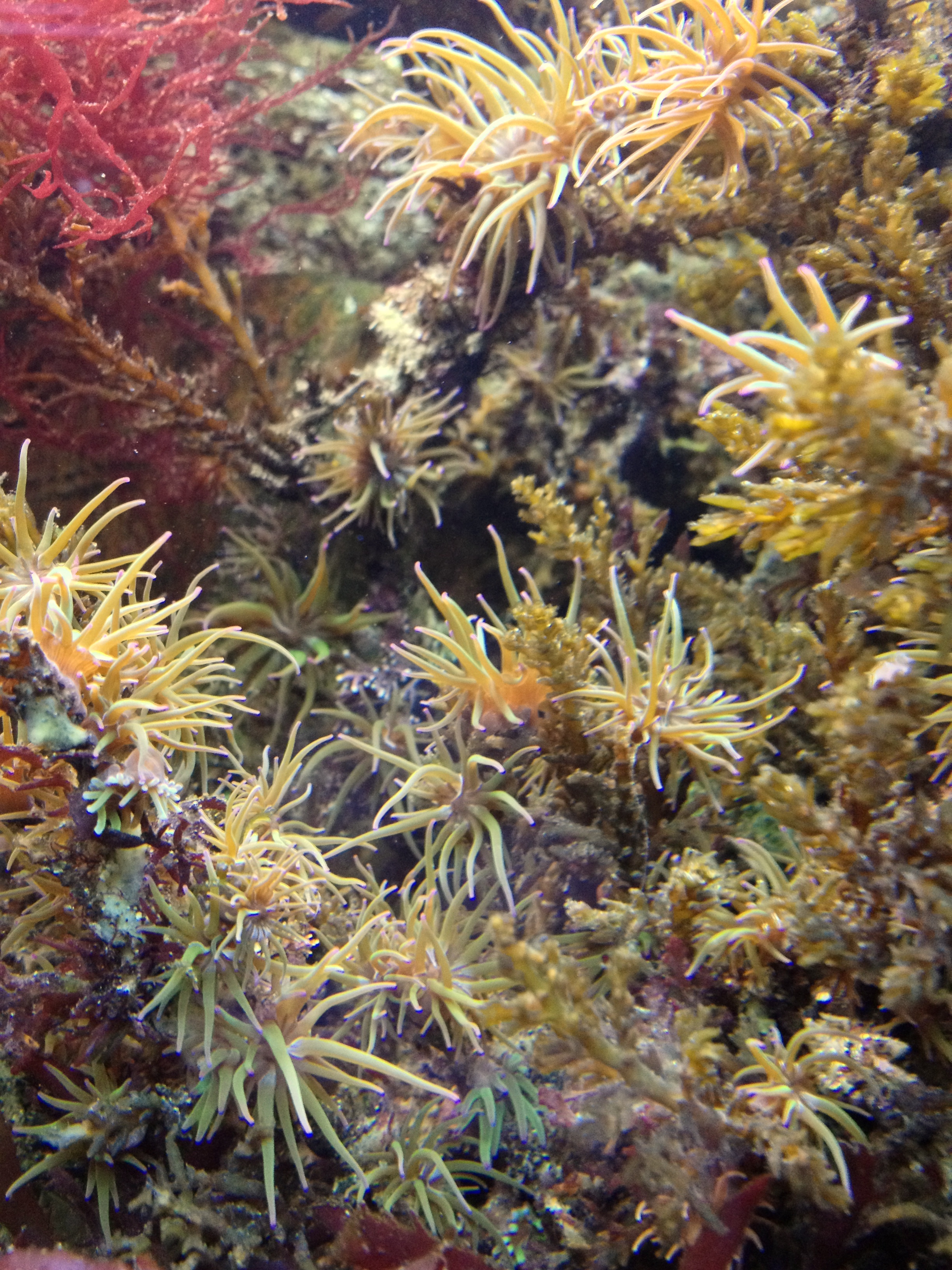
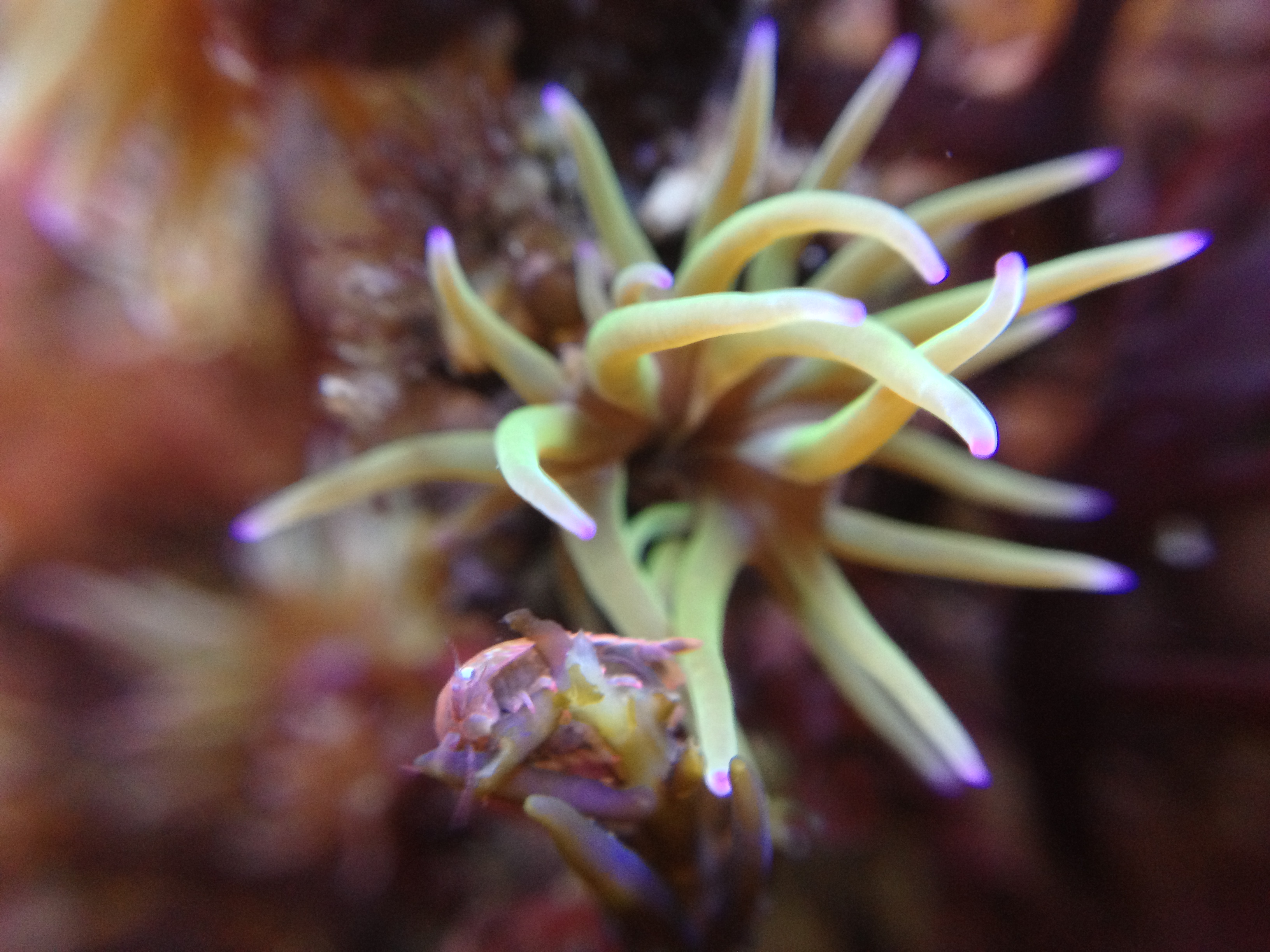
The tank is completely full of snakelocks anemones, hundreds maybe:

IMG_2410

IMG_2107

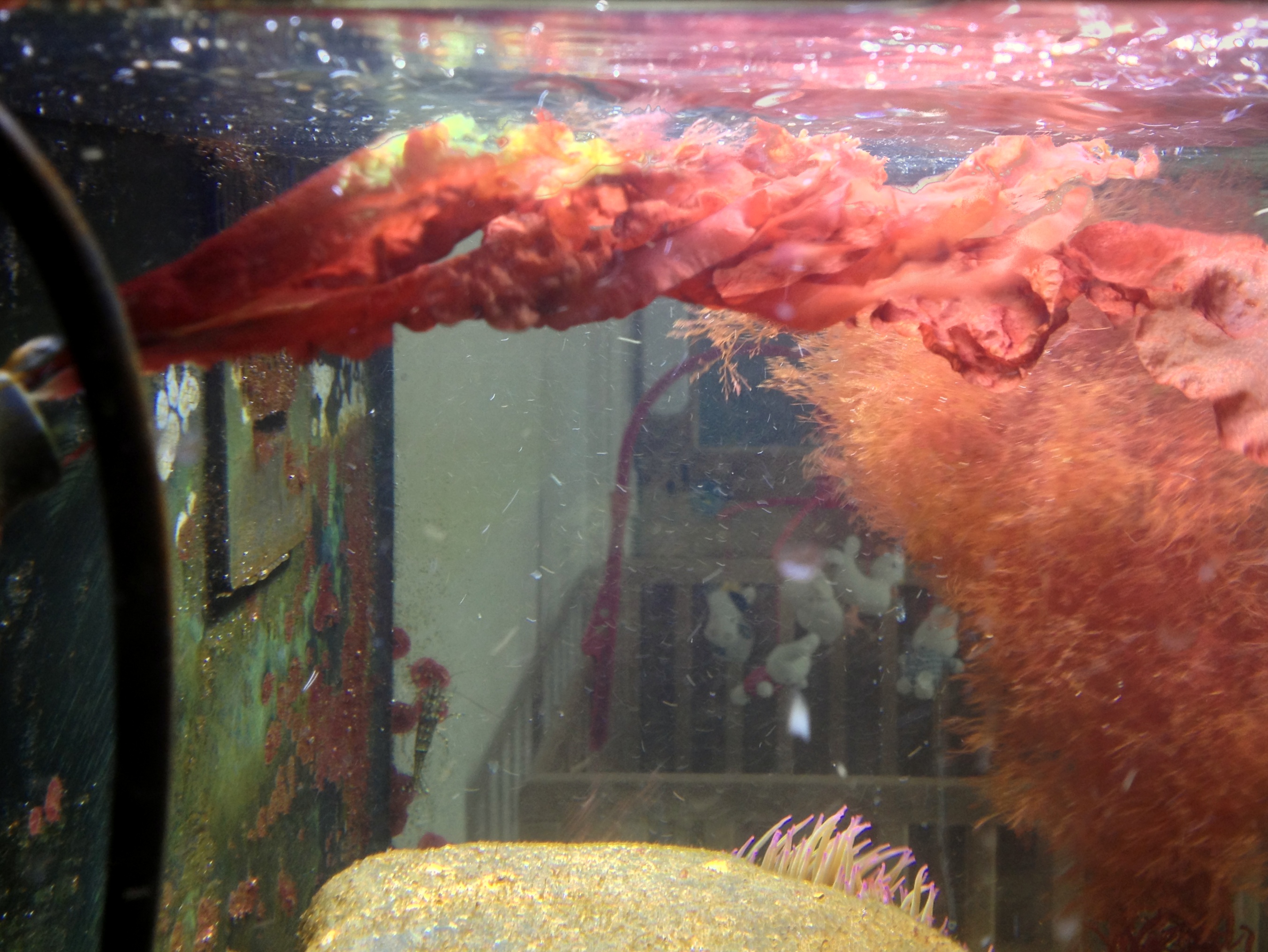
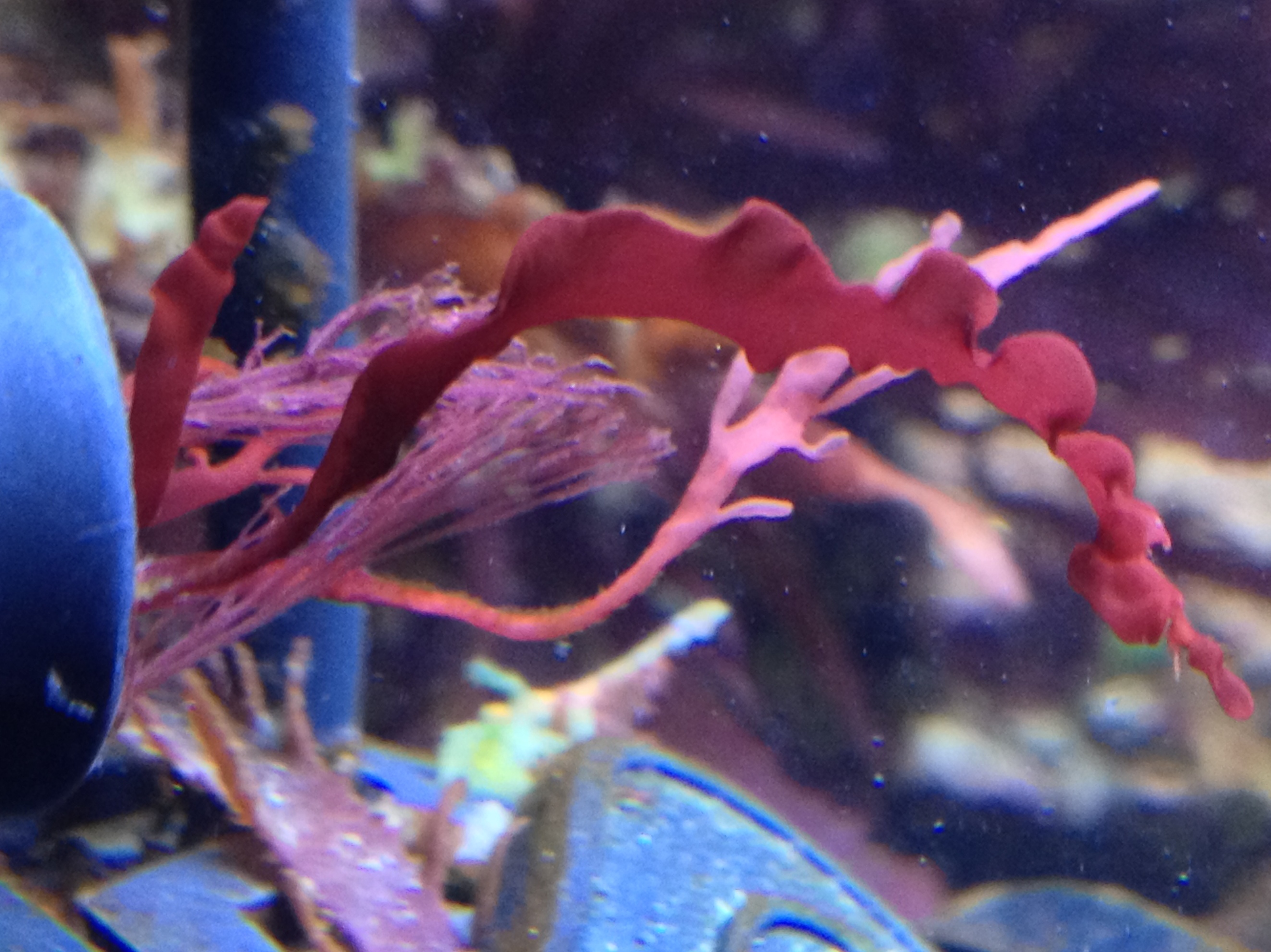
In the foreground an Idiotea isopod; there are many of these sitting on seaweed branches and occasionally swimming around, although most of them will probably be eaten by now. Finally, three seaweeds have started to grow from the pump outlets. Dudresnay’s whorled weed, a fine purple weed and a broadleaved red seaweed. I have placed adult plants of the latter species (30 cm or so)  in my aquarium before, but these were quickly eaten. It is either a type of laver or dulse, but I am not sure. It has also settled on the glass, but seldomly grows ‘leaves’ on there. Growing in the water current protects the weeds from predation from shrimps, let’s see how big they can grow!

IMG_2354

trouble in paradise

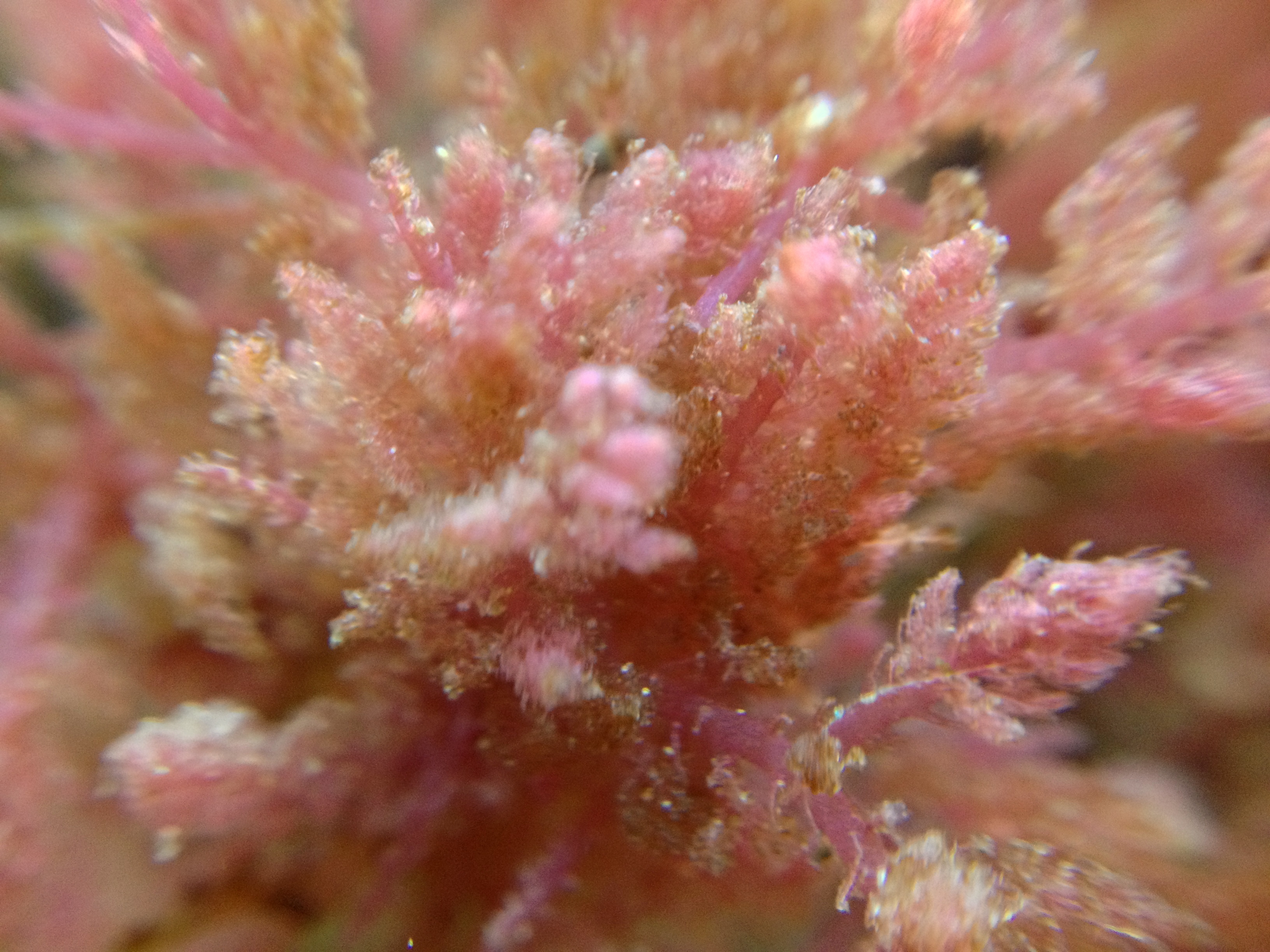
A very corny title indeed but wordpress recommended trying to come up with catchy post titles so that’s my excuse… I was very pleased with the way the tank looked after my first serious session of aquascaping. My satisfaction of course did not last for too long. First, I noticed that the water turned cloudy the next day as the result of a bacterial bloom. I quickly changed two buckets of sea water and turned on the skimmer (the Red Sea Max stock skimmer makes an unholy noise and so is usually only on at night (if I don’t forget)). This seemed to help and the water turned clear again within two days or so. I had not expected a bloom to occur, as I added seaweeds (removing nutrients) rather than animals (adding nutrients), plus I had not been feeding frozen artemia for a while. Anyway, this problem has been solved. It is probably better next time to change the tank in multiple steps rather than making wholesale changes. I next noticed the Harpoon weed starting to whither. This has happened before so it was not a real surprise. A close-up of the Harpoon weed when it was still looking good:

IMG_2111

Some Slender-beaded coral weed made it into the aquarium attached to other weeds. As expected, this weed also died and turned white:

IMG_2225

I next noticed that the branchlets of the Red grape weed turned from a dark purple-brown into a fresh green. Although pretty, that this was not a change for the better was obvious when upon touching the plant many of the branchlets were shed. I removed this plant before this debris would clog the filter.

IMG_2090

The main thing that disappointed me though is that the Bushy rainbow wrack steadily lost its iridescent colors and turned into the brown of the other Bushy wrack species. The fact that I had bright blue, green and purple in my aquarium was the most amazing thing about it. Before and after pics:

IMG_1966
IMG_2244

I reckon this has to do with the light spectrum not being right. The colors are reminiscent of the Jade vine from the Philippines. Its coloration is the result of two pigments, malvin and saponarin, being present at a specific ratio at a specific alkalinity (wikipedia again). Both Jade vine and Bushy rainbow wrack seem to be fluorescent to my non-expert eye, although a quick search on google did not give me anything on fluorescent plants. Anyway, I will make it my goal in life to find the light conditions that bring back these colors!

To properly experiment with any seaweed it will be desirable to be able to vary the light spectrum and intensity. Probably the best way to go is LED lights, although I am not very knowledgeable about lighting yet and it is all quite complicated (LUX, PAR, micro-Einsteins, Kelvin ratings…) It is also not clear to me if (affordable) LED options are on the market that actually allow you to adjust the light spectrum. I will ask around on some forums. It could also be that the light intensity is not right; I have only used one of the two fluorescent T5 lamps provided with the Red Sea Max 130D as I found the lighting too bright when I started. However, now the tank is full of seaweeds, more of the light will be absorbed and it might not look like I have a tanning bed in the living room. I will pop the other light in and see. The RSM lights are so-called 50/50 lamps that give 50% ‘day light’ and 50% ‘actinic’ (blue) light. Who knows some extra actinic light will help. I need to read up on the subject. There must be other factors as well. For instance room temperature might be too high for some species (this reminds me I need to buy a thermometer!). The Bushy berry wrack, False eyelash weed and Wireweed seem to be doing OK though. Here a picture of Wireweed:

IMG_2204

The tank a week after planting:

IMG_2214

some serious aquascaping

With the seaweeds collected, it was time to plant my aquarium. This time I took a more serious approach, I planted lots. Many of the seaweeds had bits of rock attached to their holdfasts which made it easy to anchor them in the gravel. Two of the weeds I tied to rocks with a piece of elastic band, easy peasy:IMG_1981

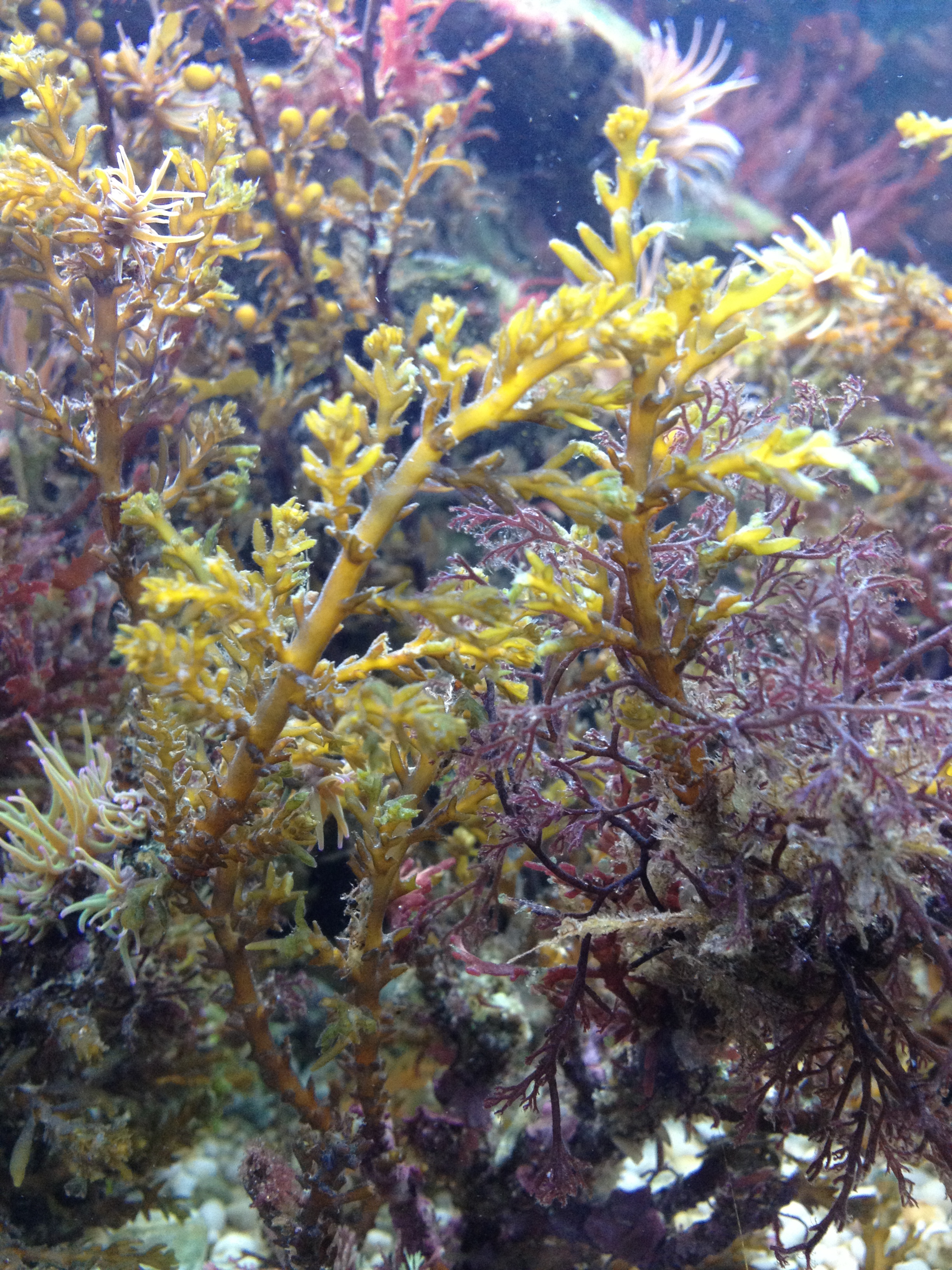
View from the left side. False eyelash weed Calliblepharis jubata in the front, tall Wireweed Sargassum muticum and in the middle some coarse brown sea weed which almost looks like a dead conifer. This is probably Bushy berry wrack Cystoseira baccata: IMG_1990

An expanded view, on the right some Red grape weed Gastroclonium ovatum, in the middle the red pluck of Dudresnays whorled weed Dudresnaya vertillicata that I already had:

IMG_1993

A goby amidst the False eyelash weed lying on top of what may be Purple claw weed, I am not sure:

IMG_1997

The magnificently coloured Bushy rainbow wrack Cystoseira tamariscifolia covered in green Snakelocks anemones Anemonia viridis. In the foreground the pink Slender-beaded coral weed Jania rubens and Harpoon weed Asparagopsis armata.

IMG_1976

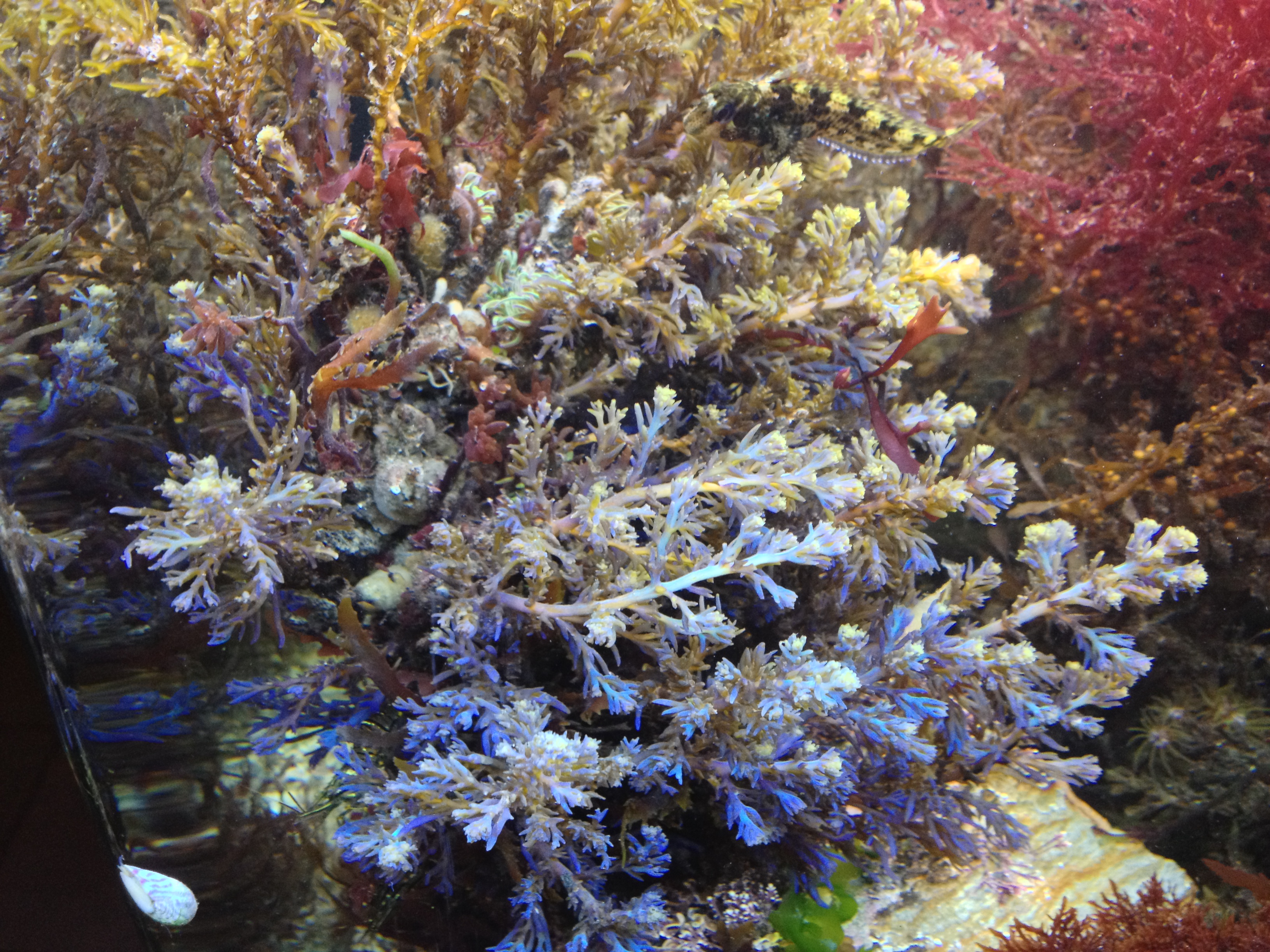
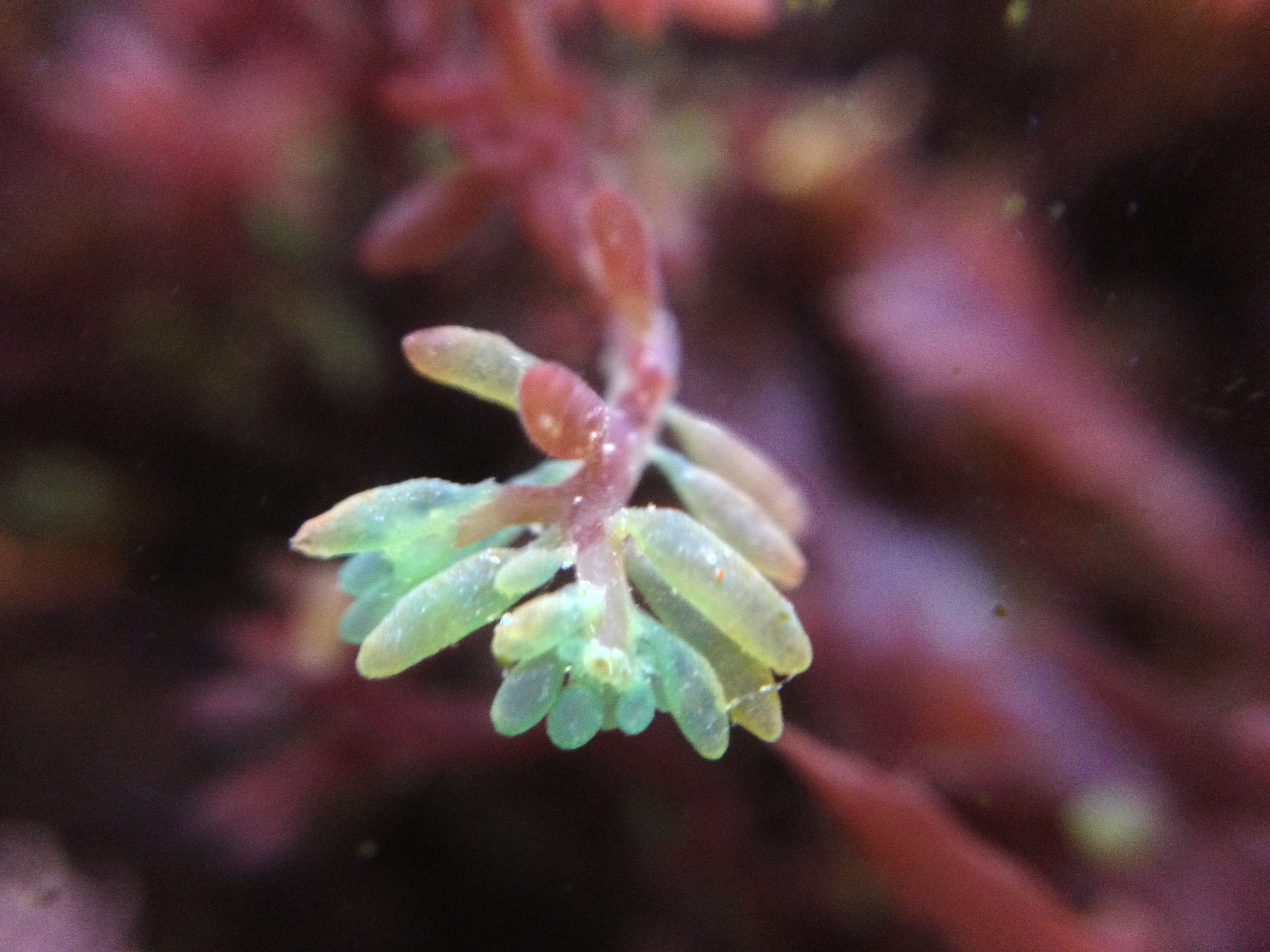
A close-up of the Bushy rainbow wrack. Other plants were bright green or purple. I never knew that seaweeds existed with these iridescent colours. In fact, when I glimpsed one for the first time in a rock pool I disregarded it because I thought it was some seaweed covered in oil slick! These weeds are also have a very cartilaginous texture which give them more of an animal-like appearance.

IMG_1973

I discovered several small whitish Sea lemon nudibranchs Archidoris pseudoargus, very cool.

IMG_1925