Falmouth Seaweeds: Mid-April part I

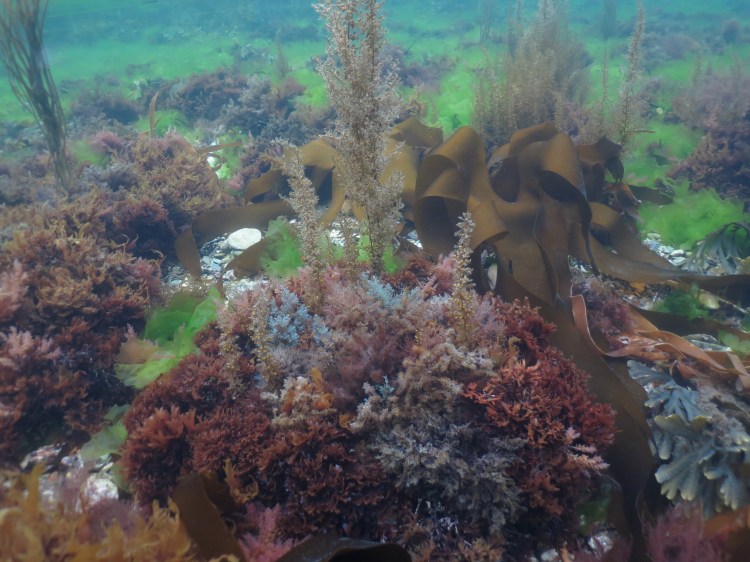
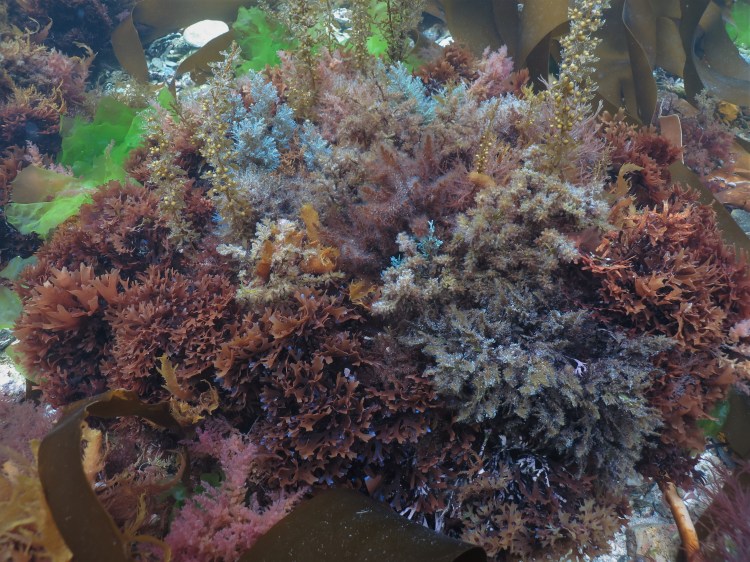
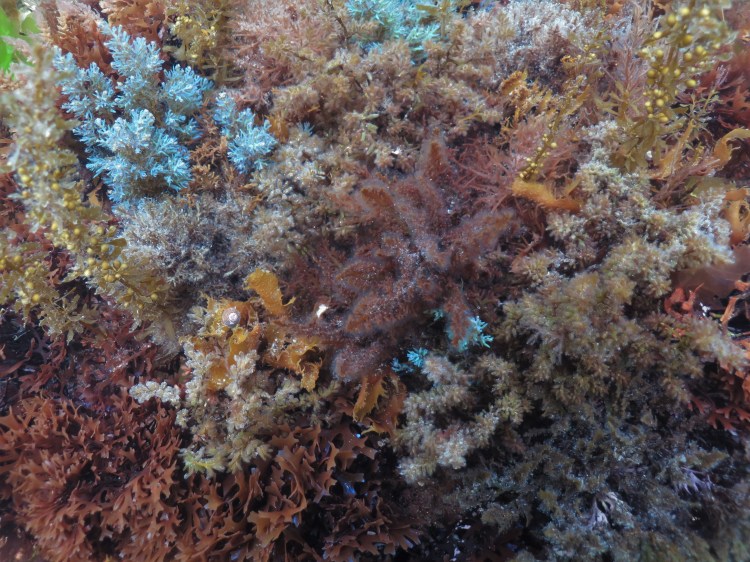
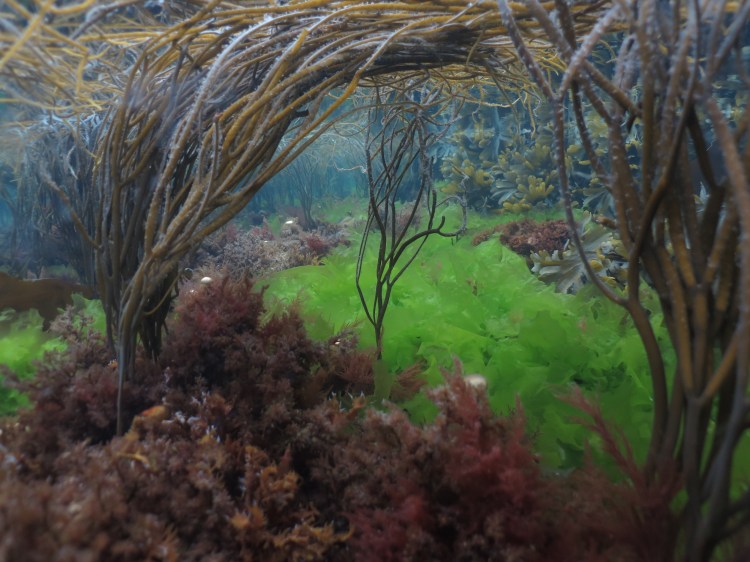
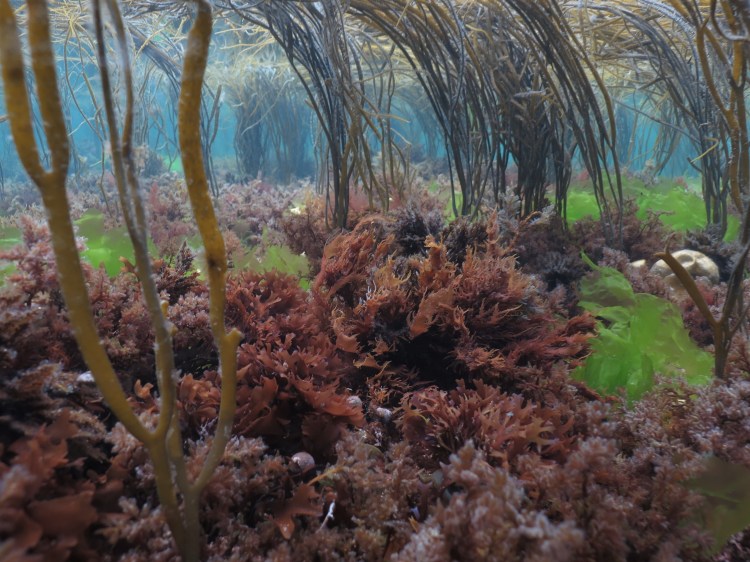
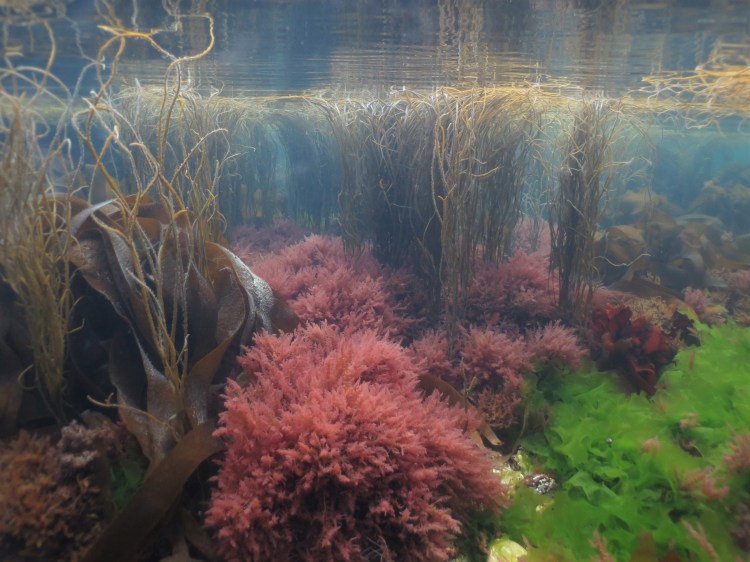
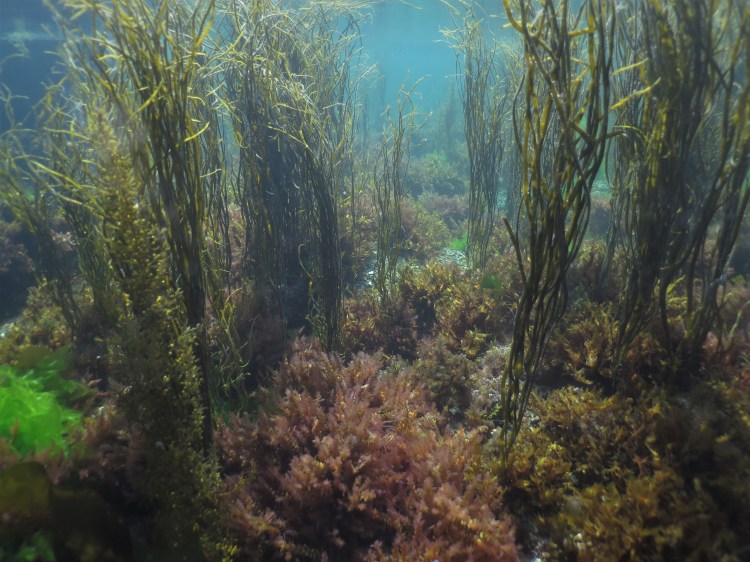
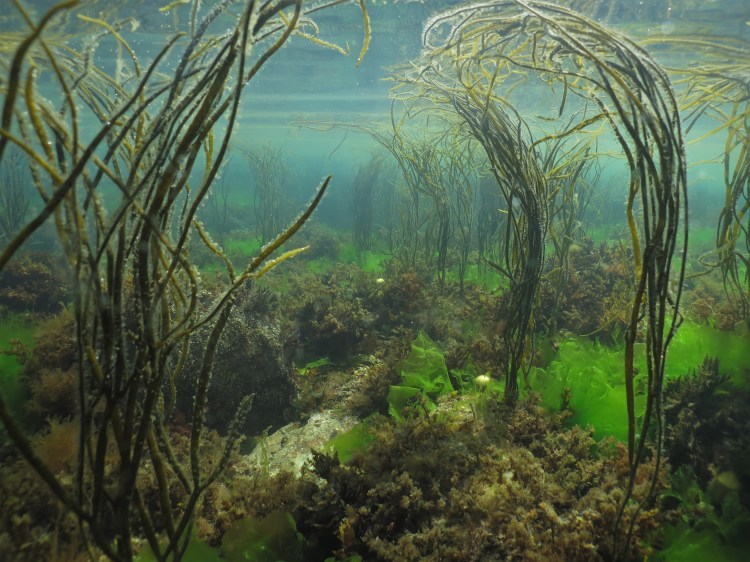
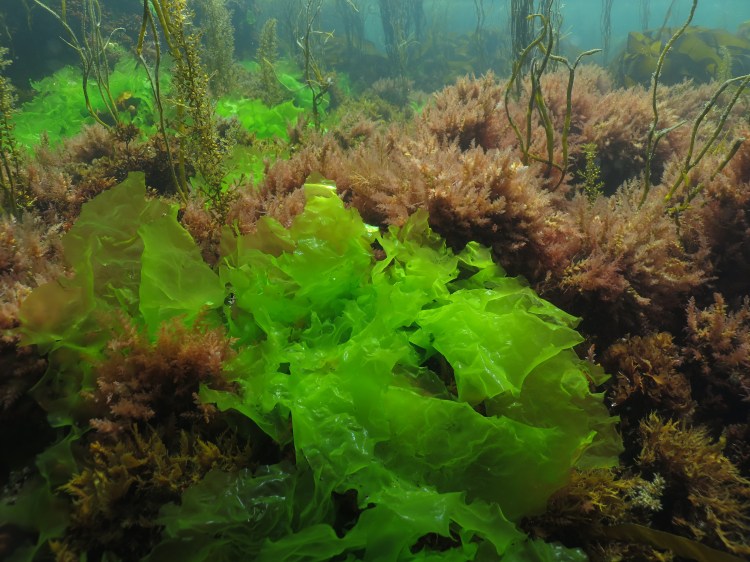
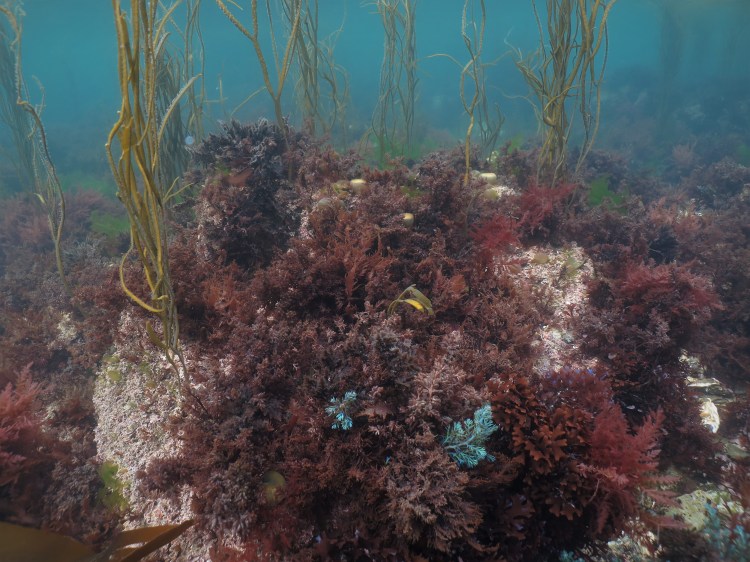
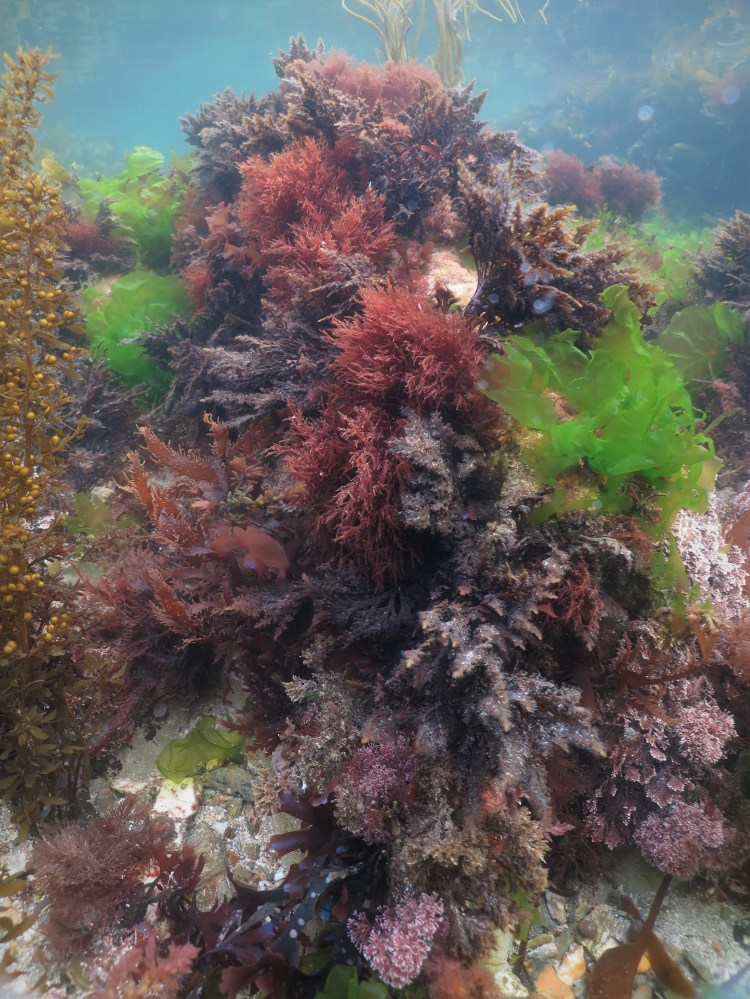
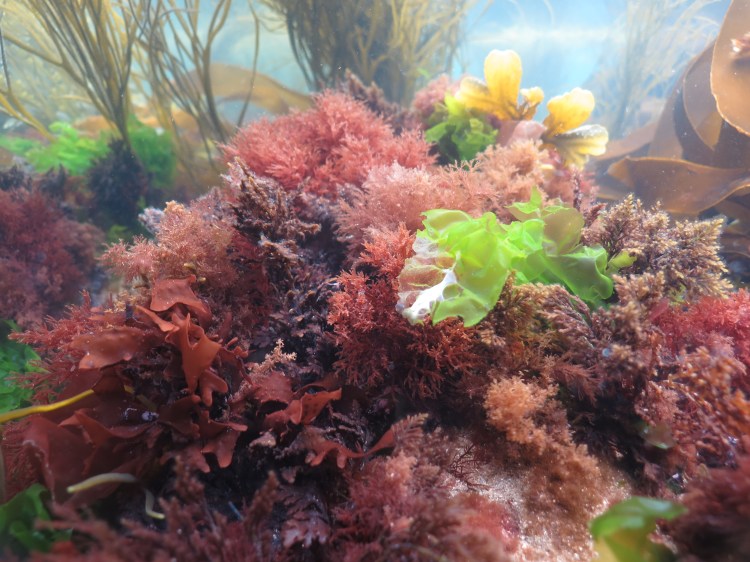
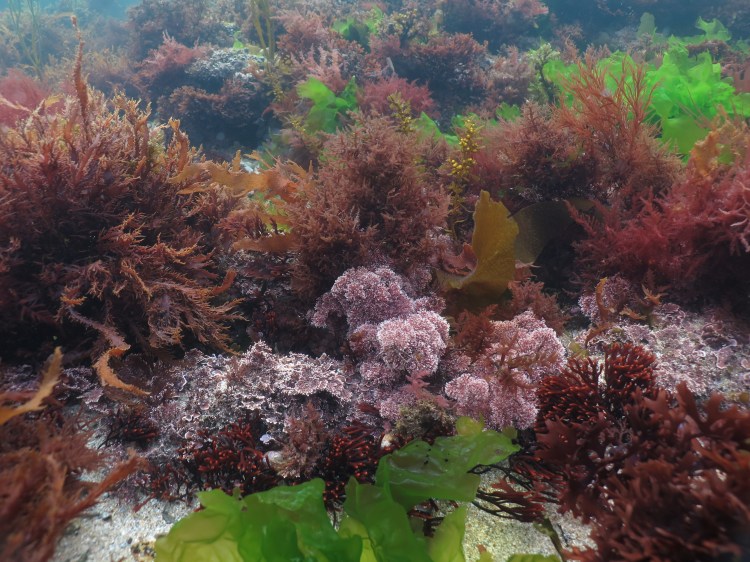
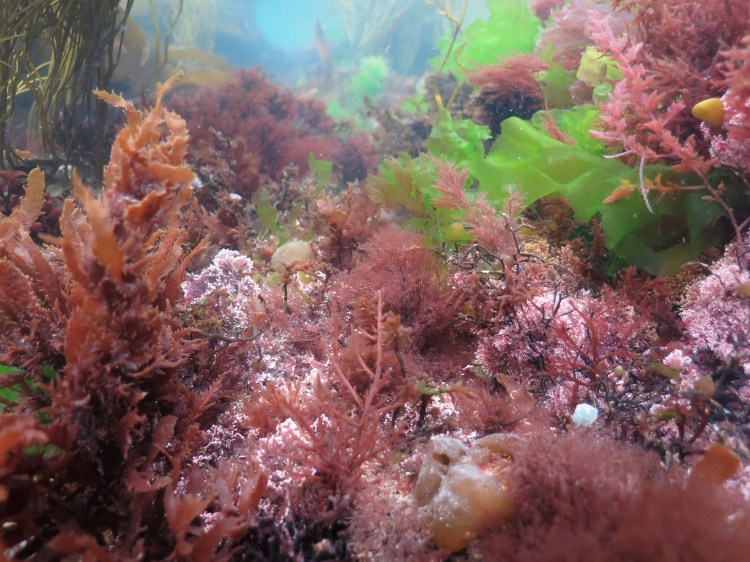
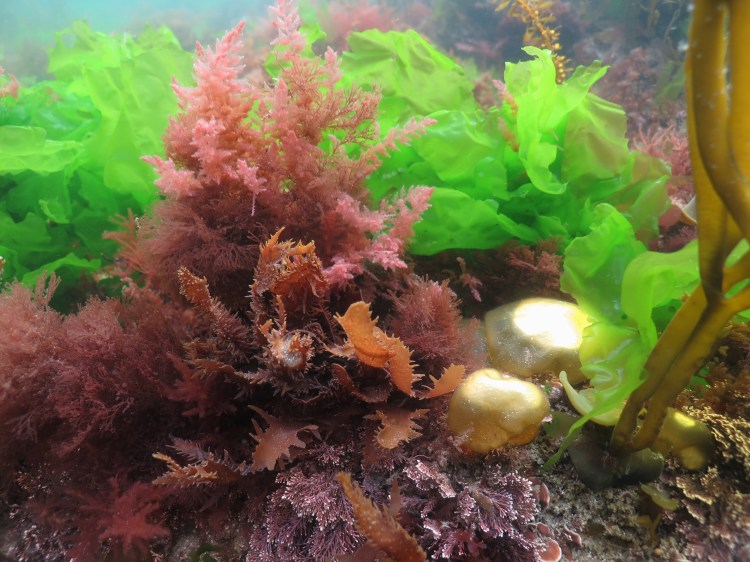
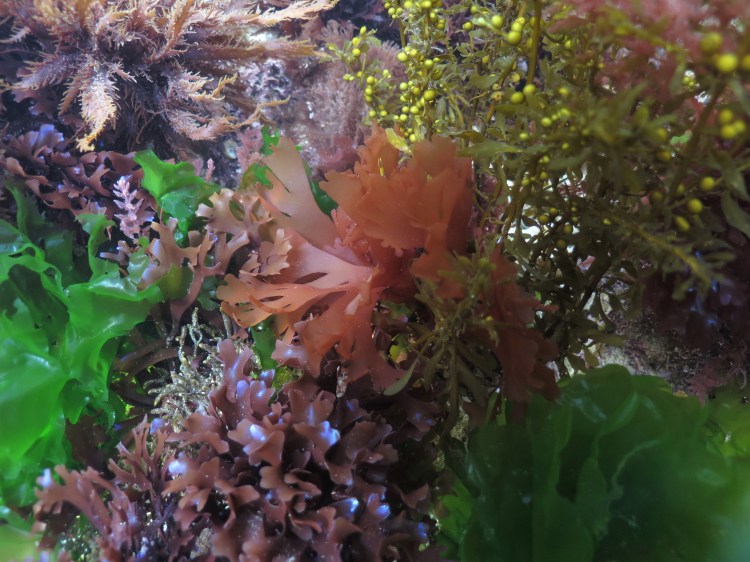
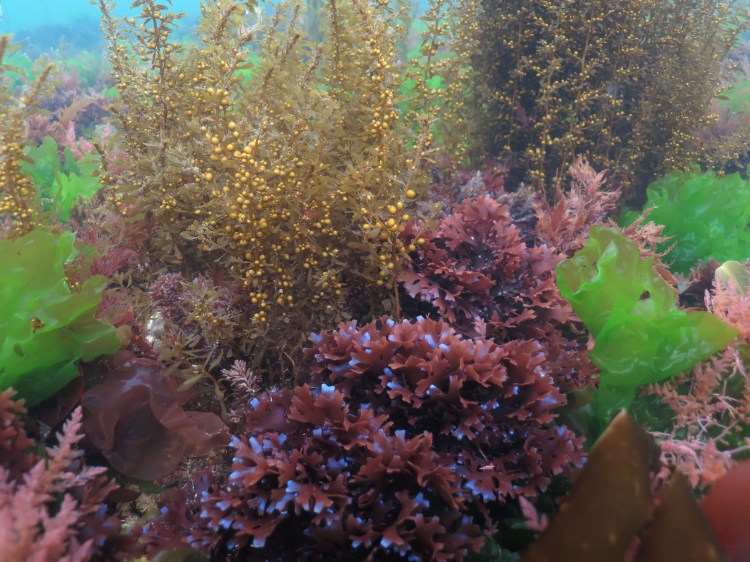
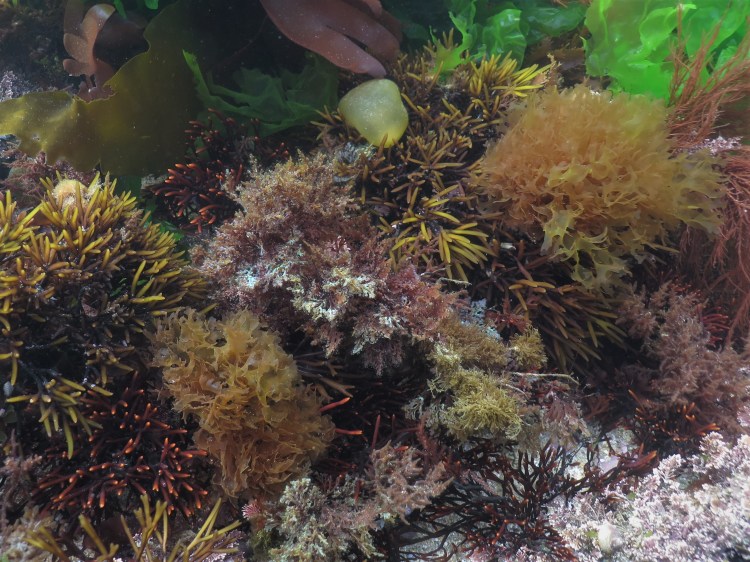
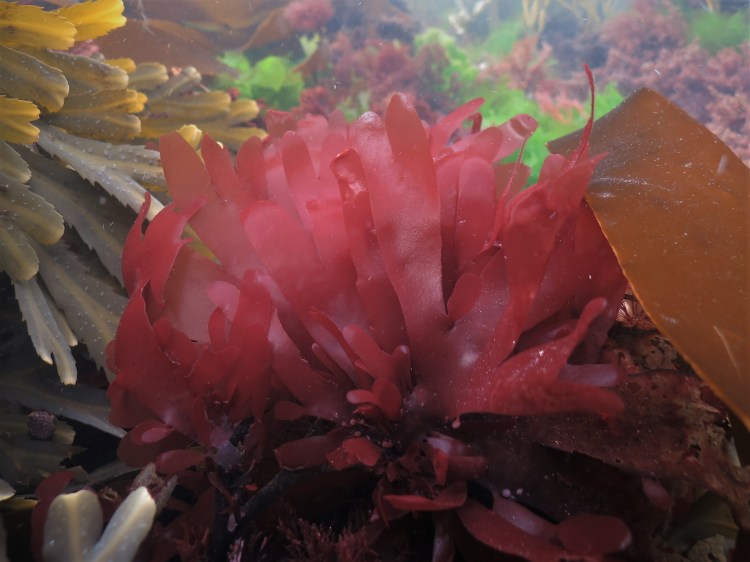
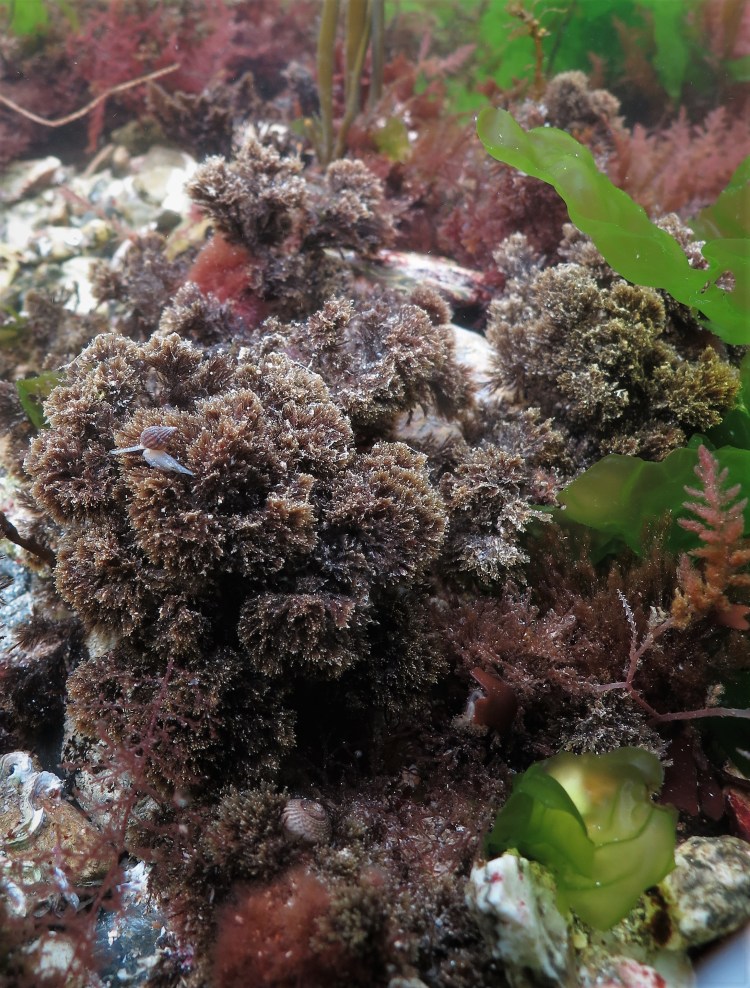
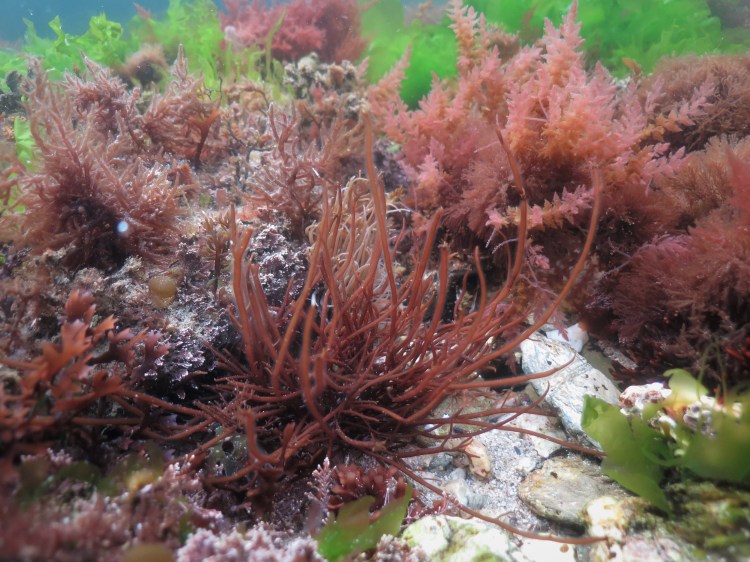
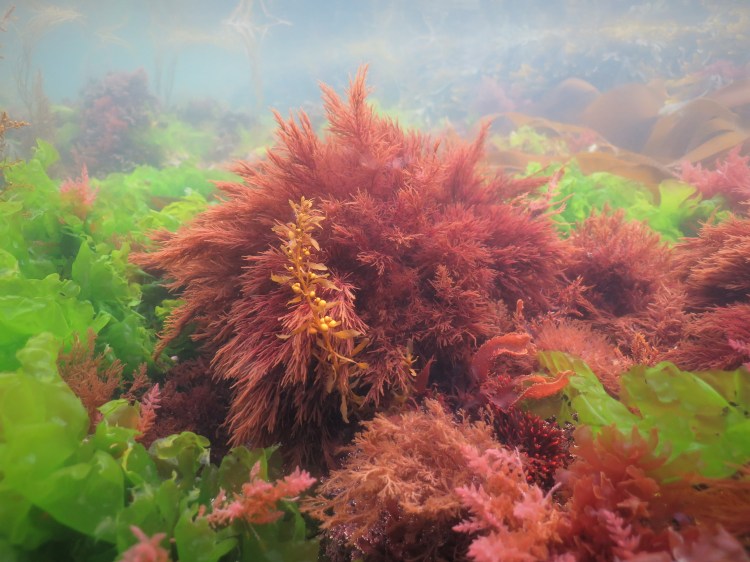
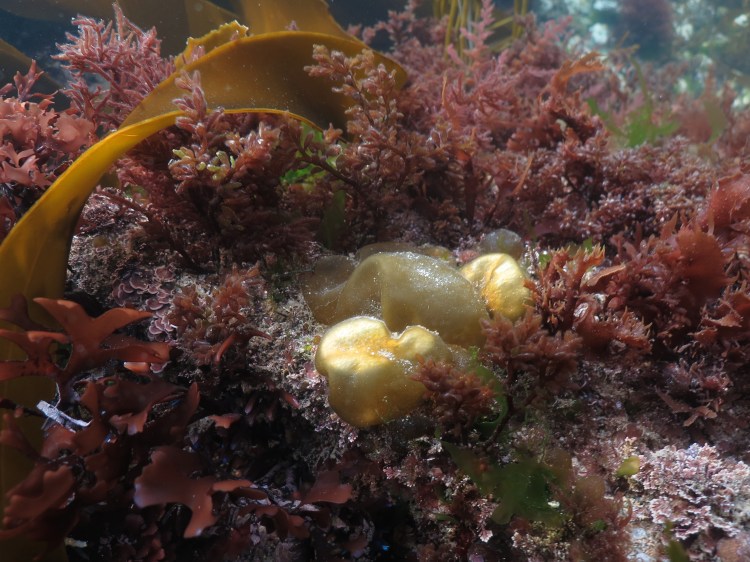
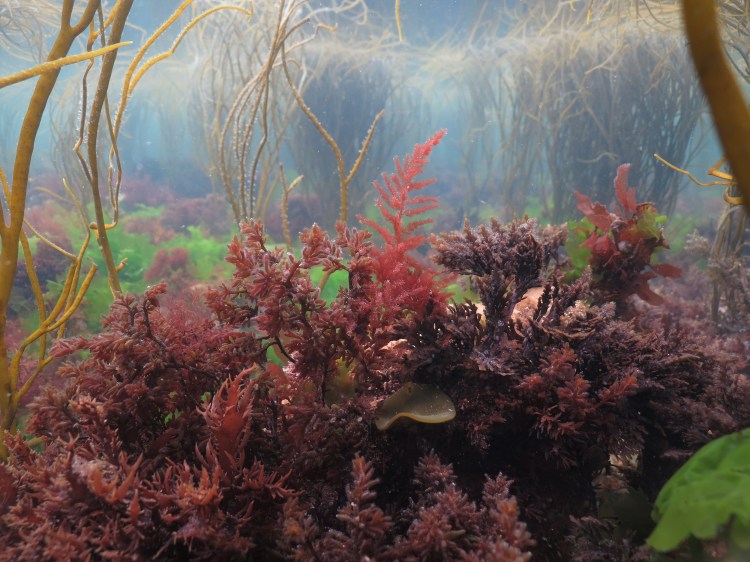
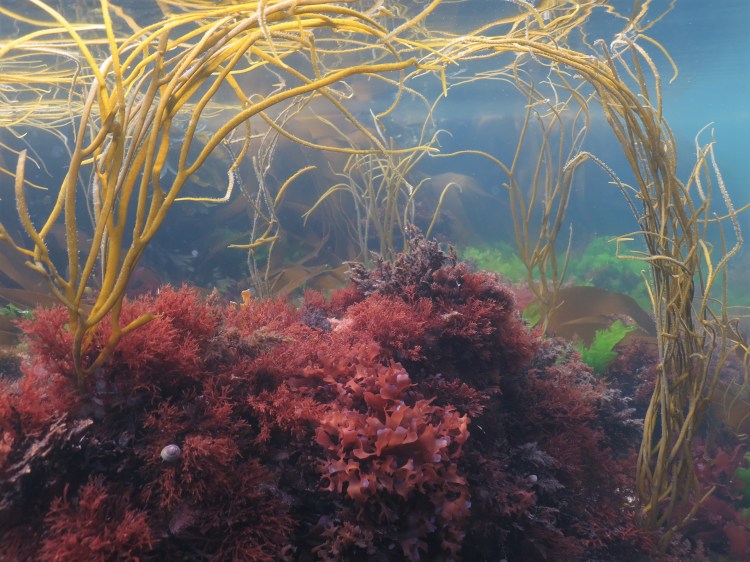
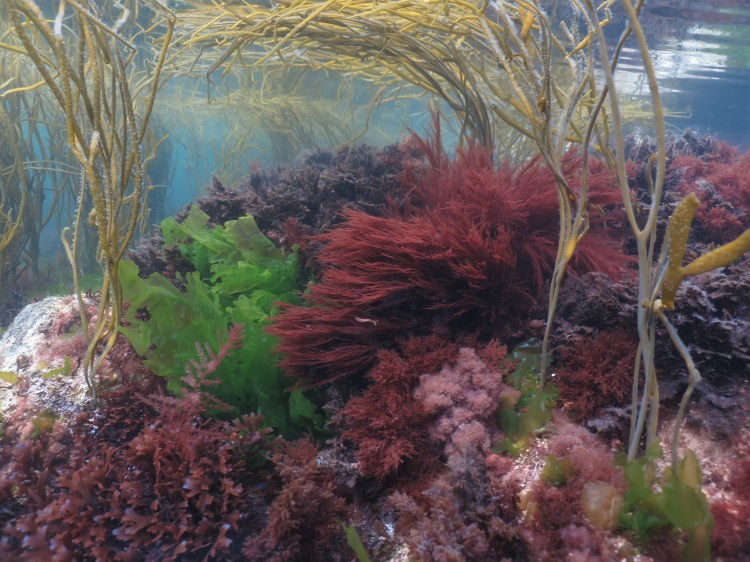
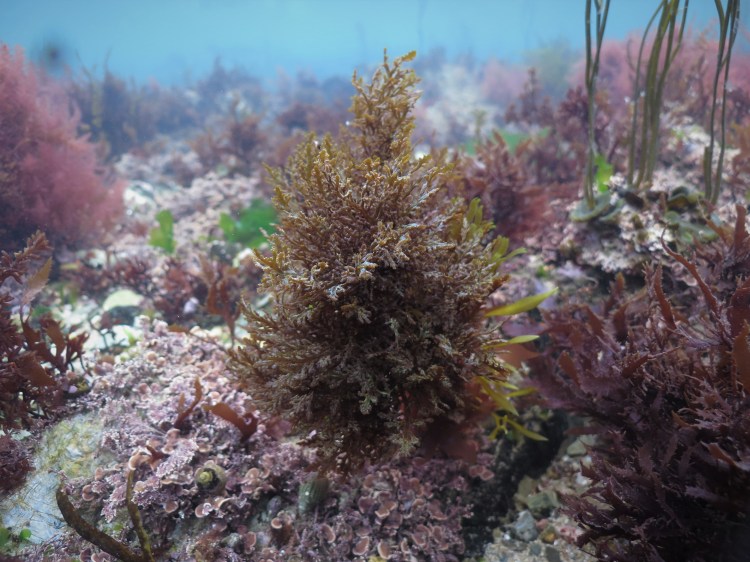
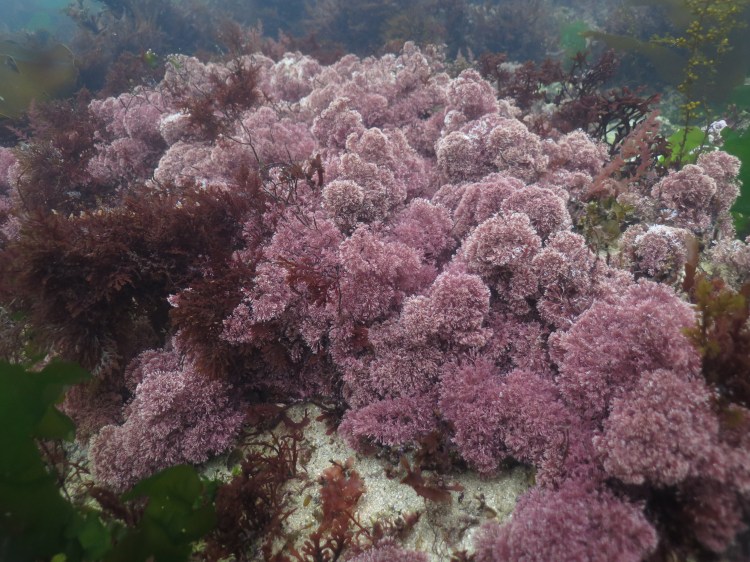
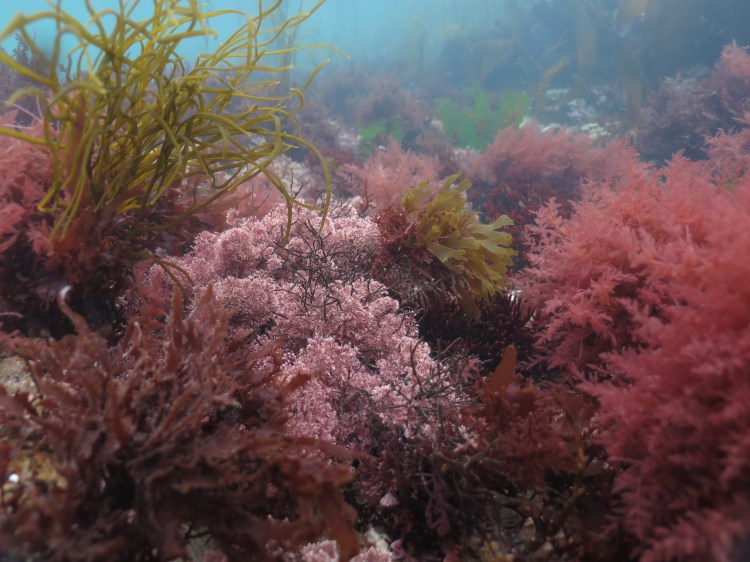
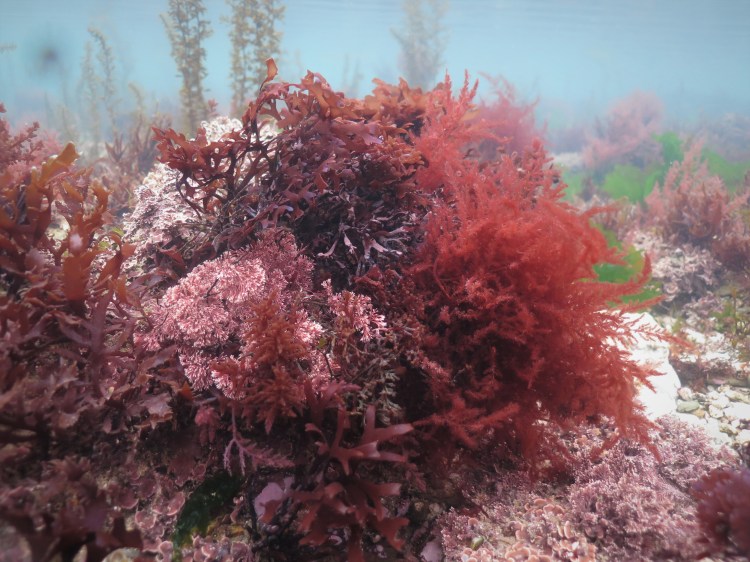
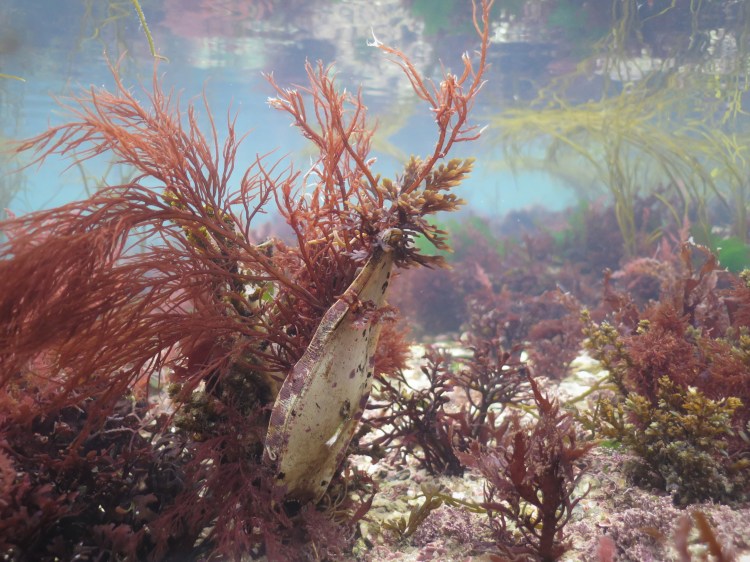
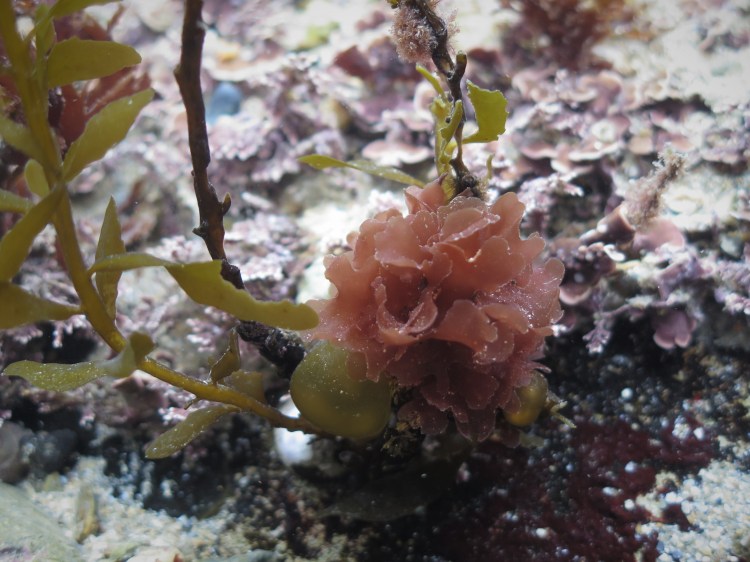
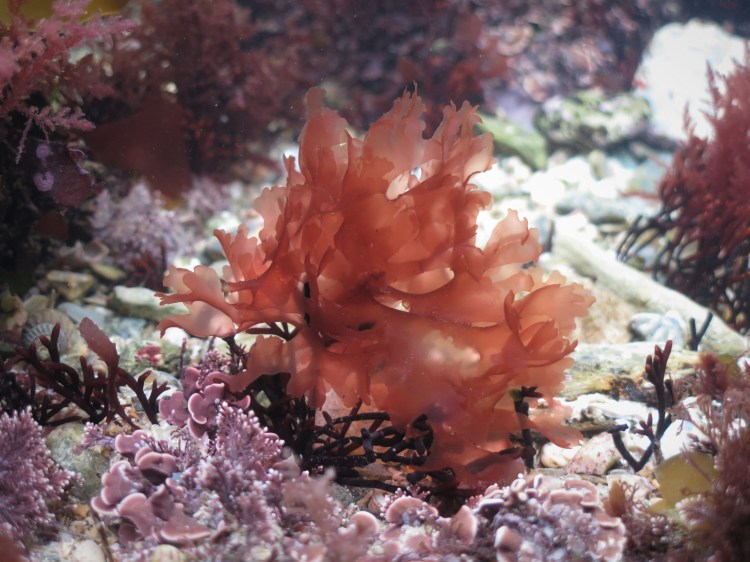
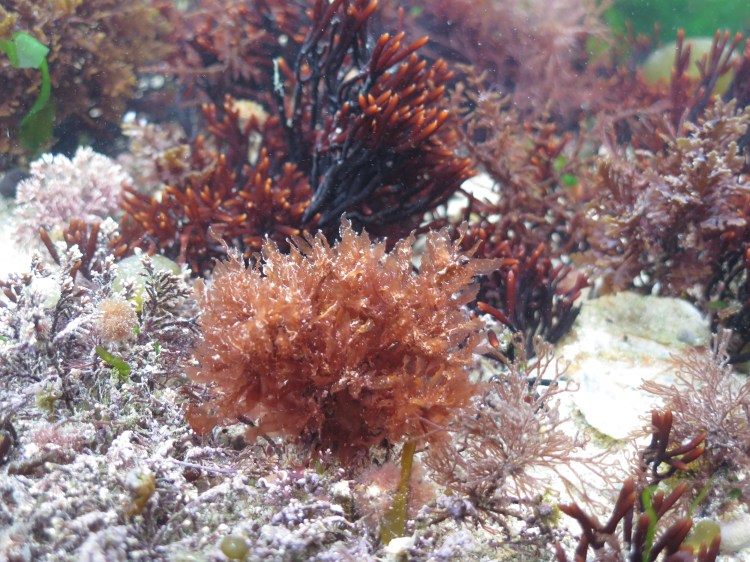
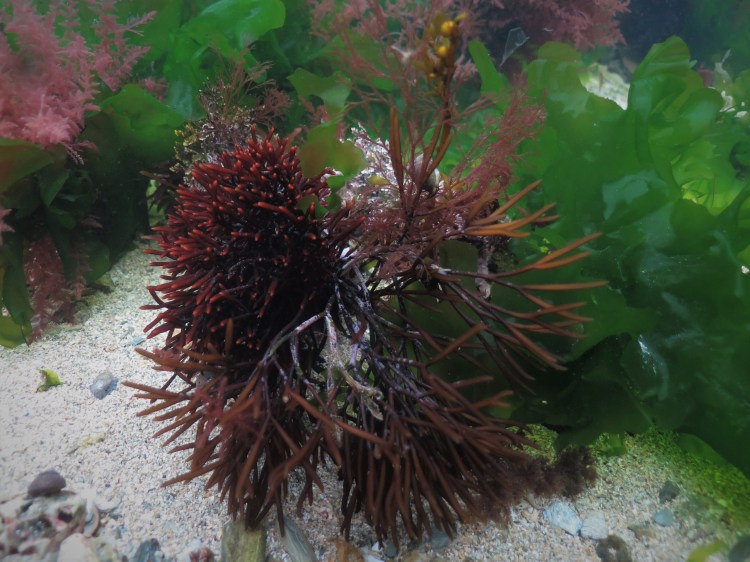
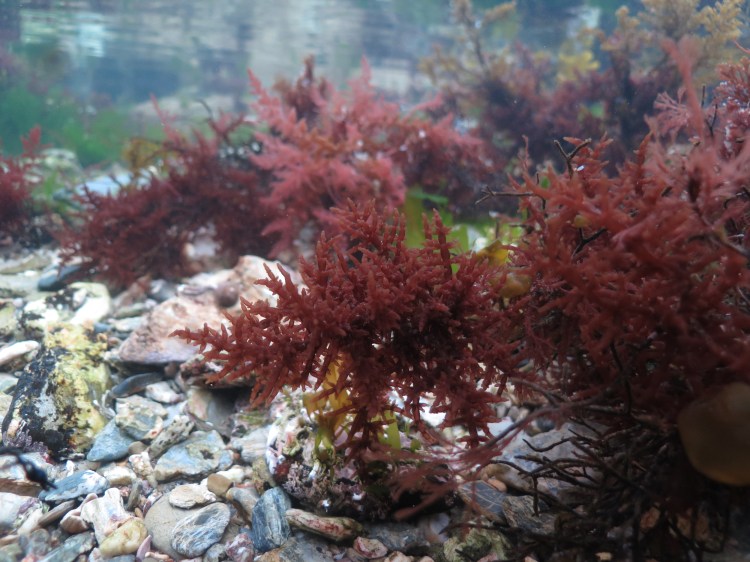
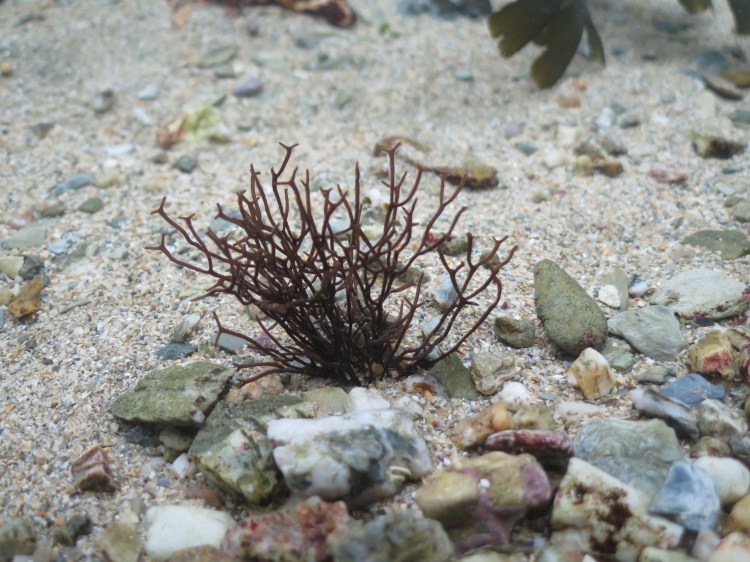
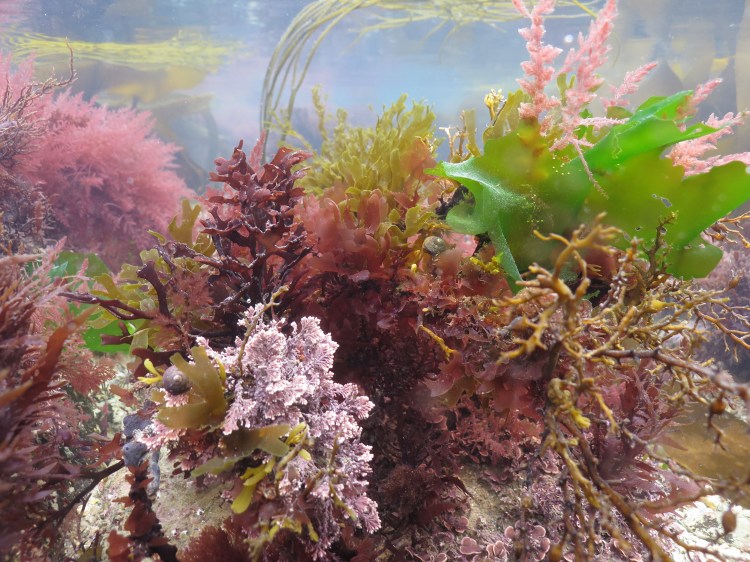
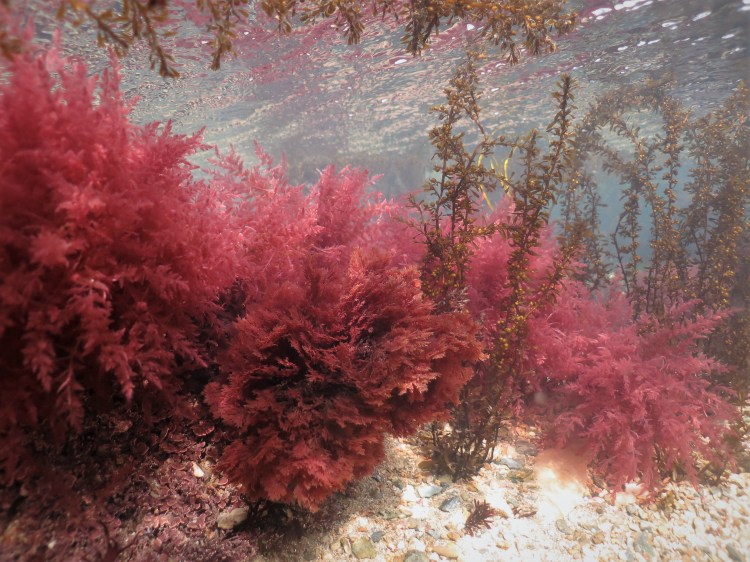
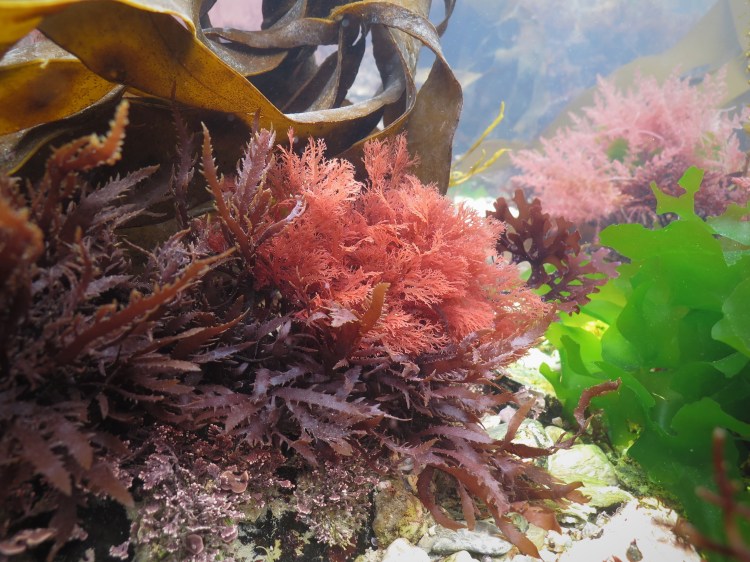
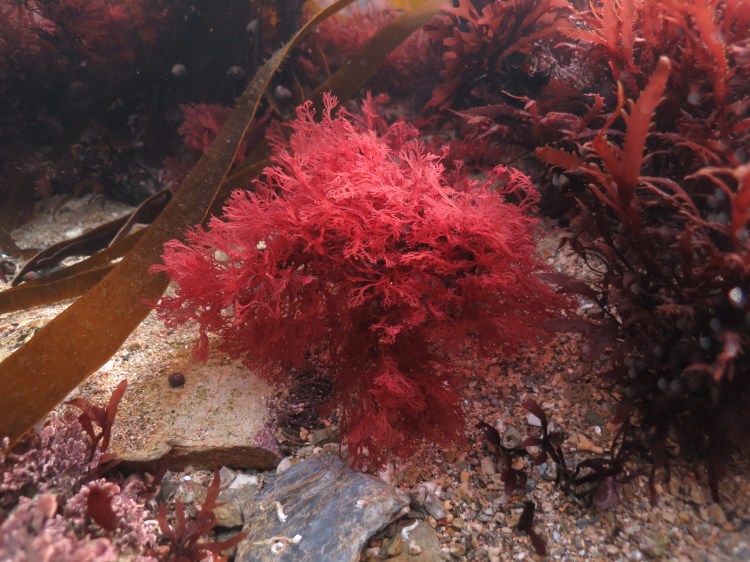
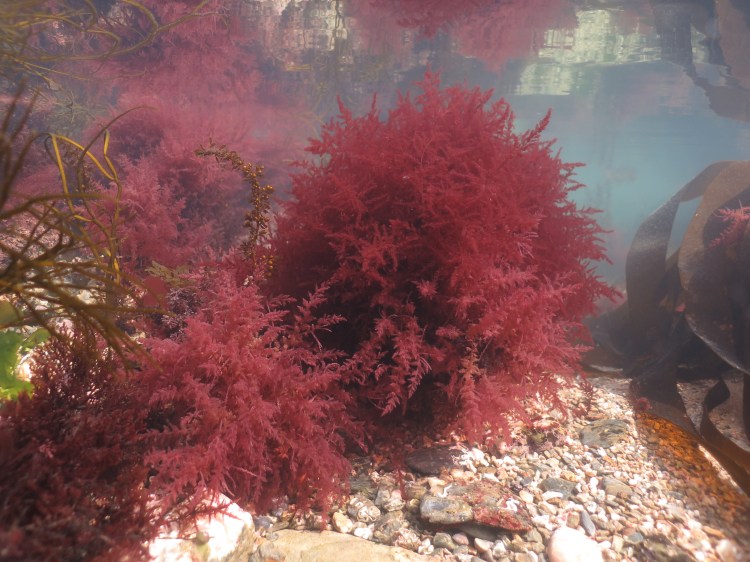
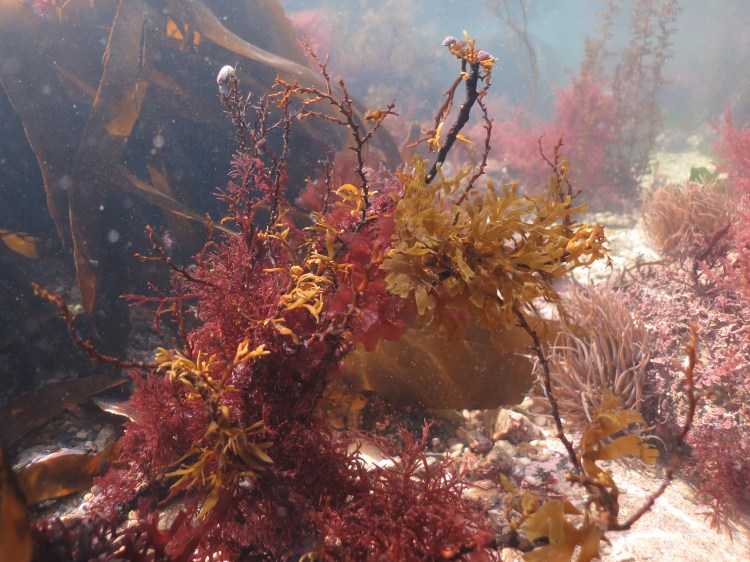
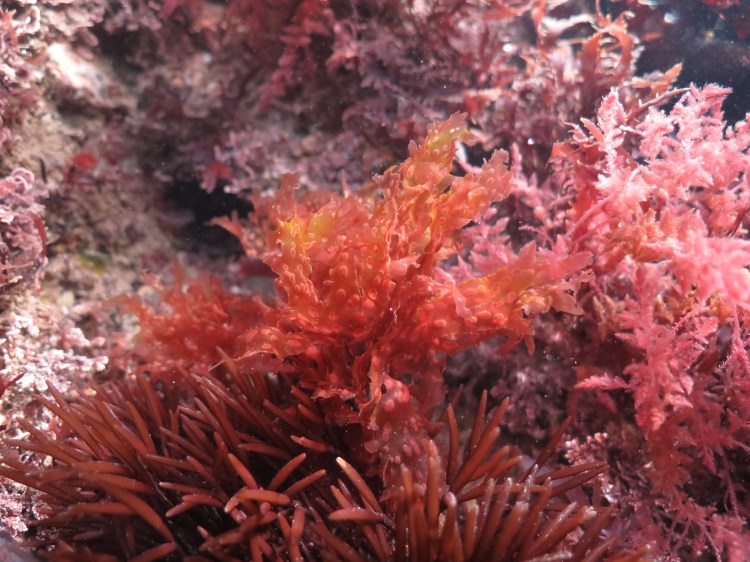
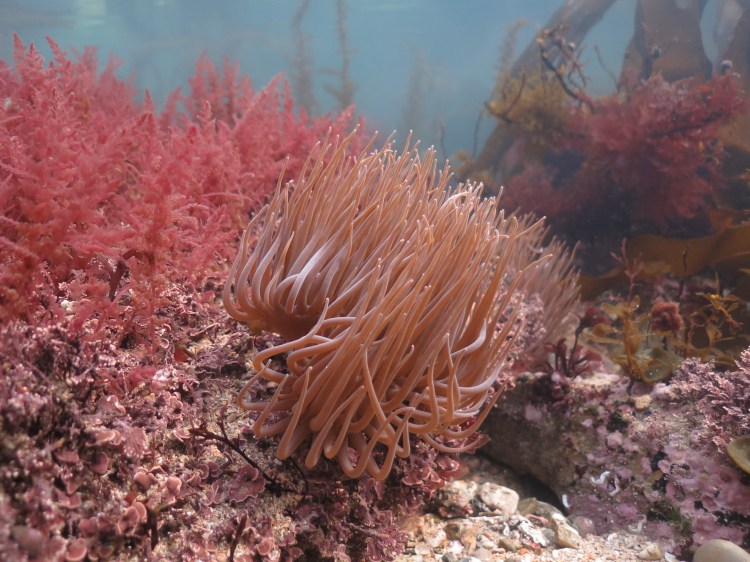
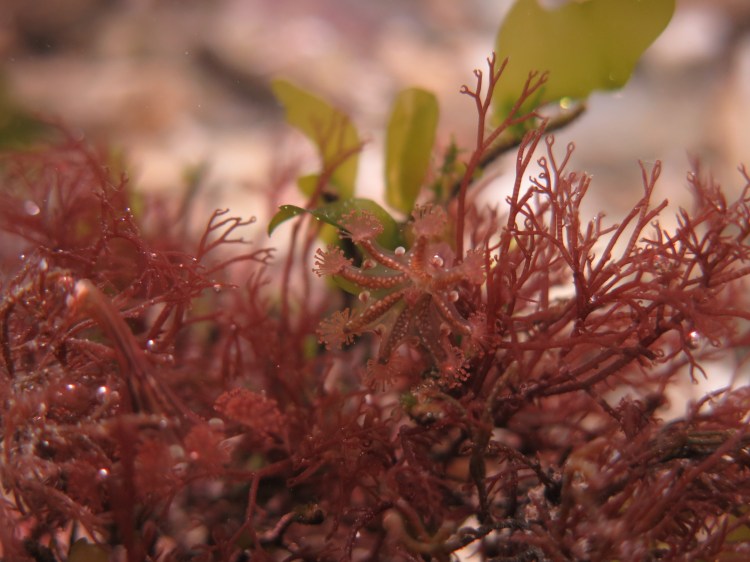
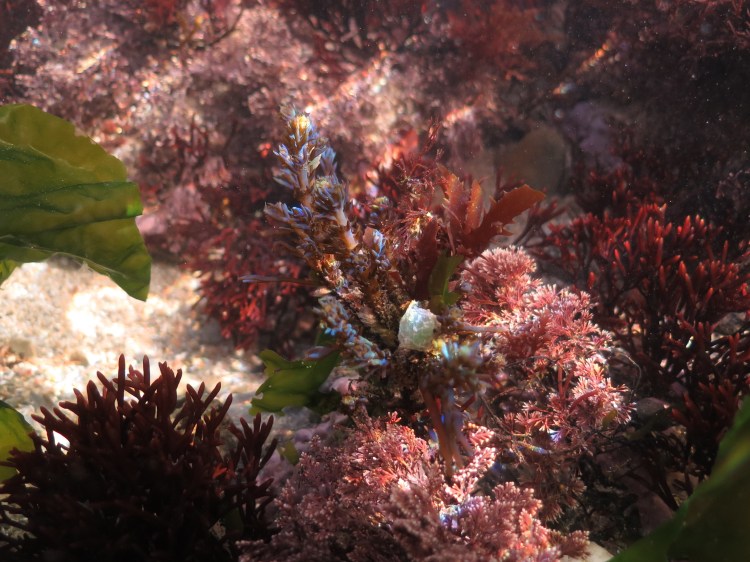
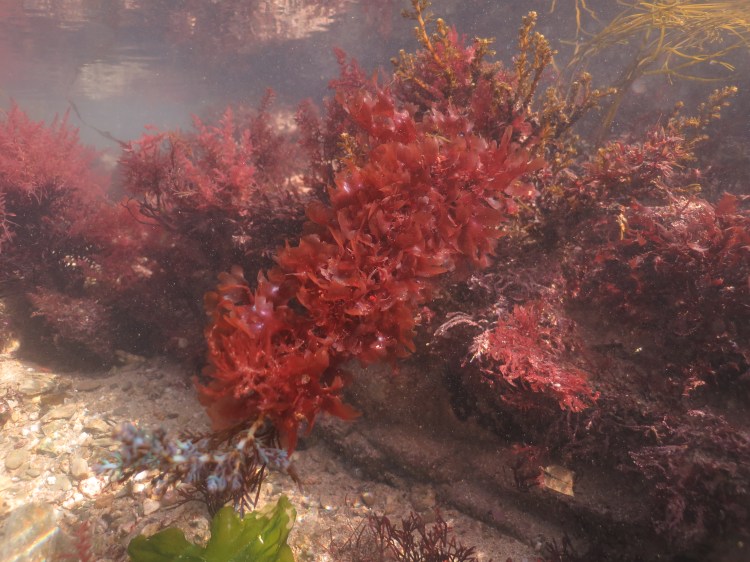
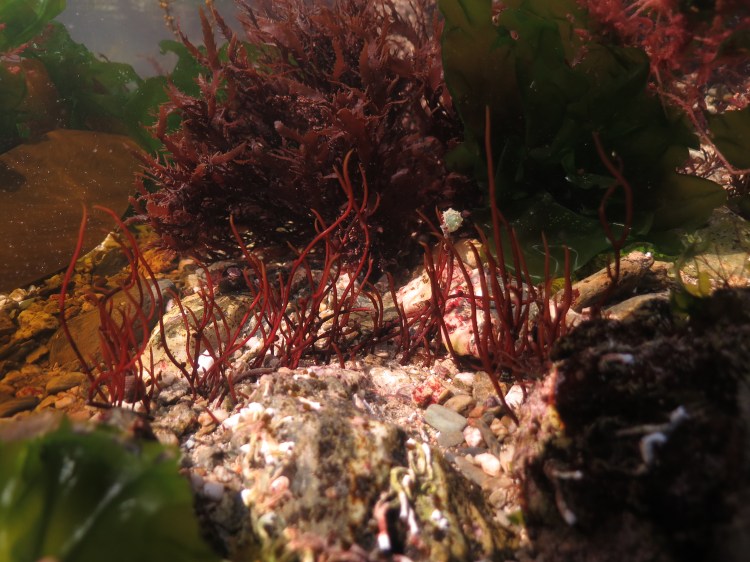
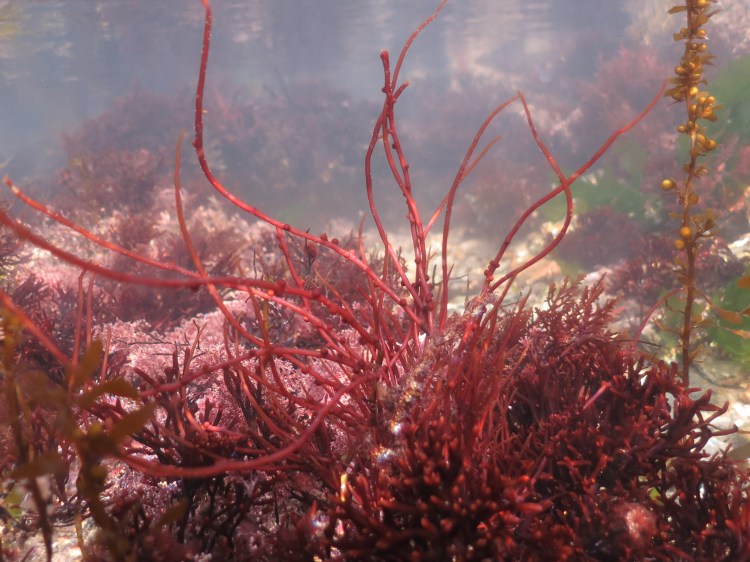
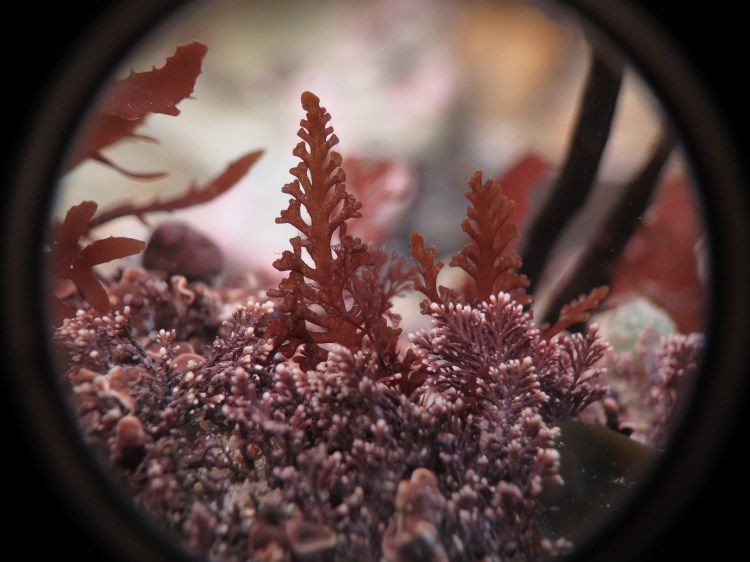
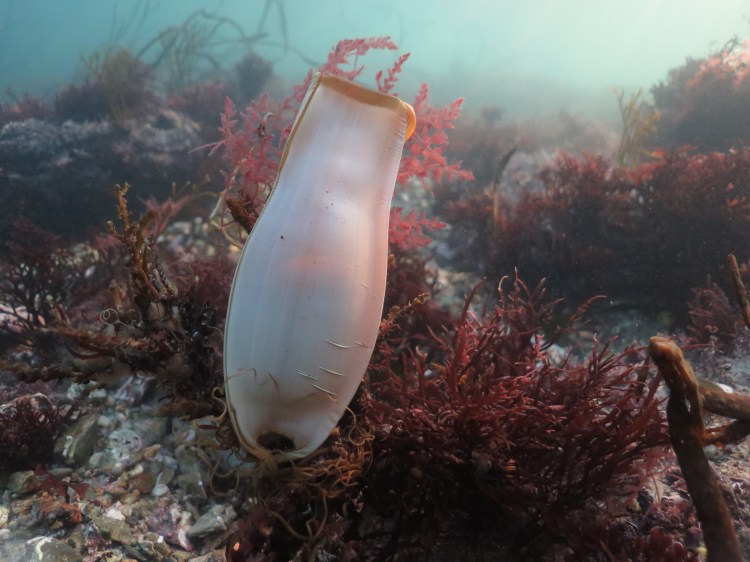
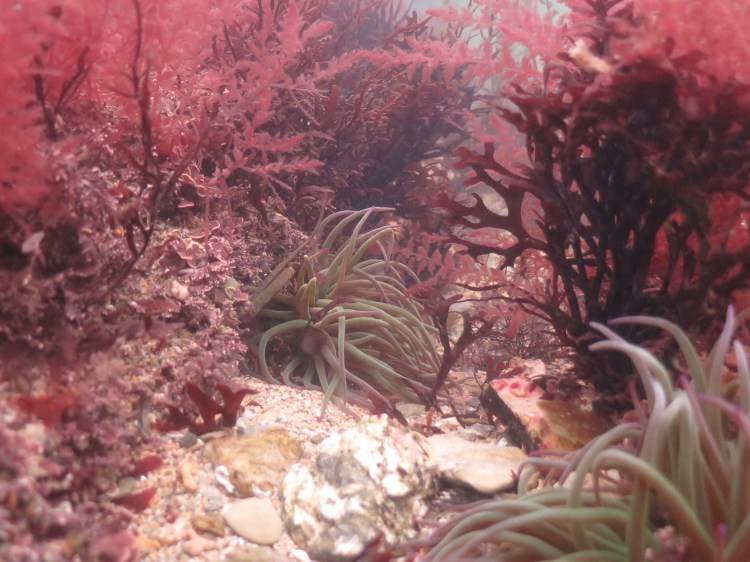
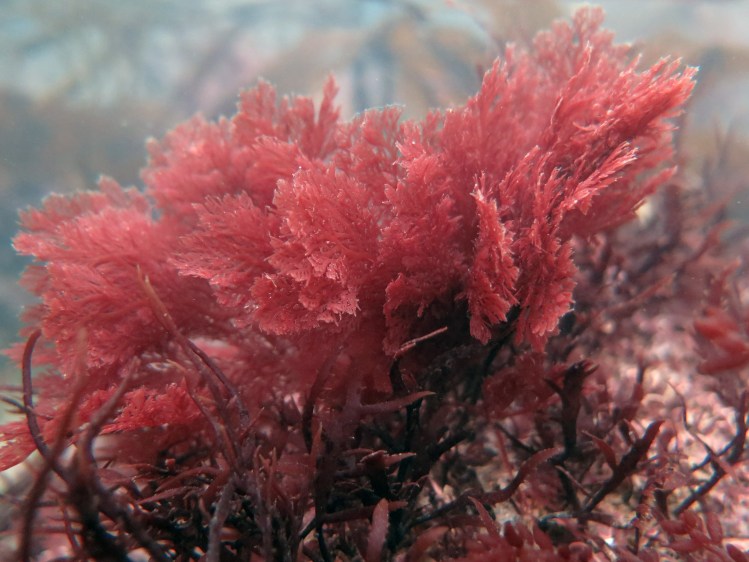
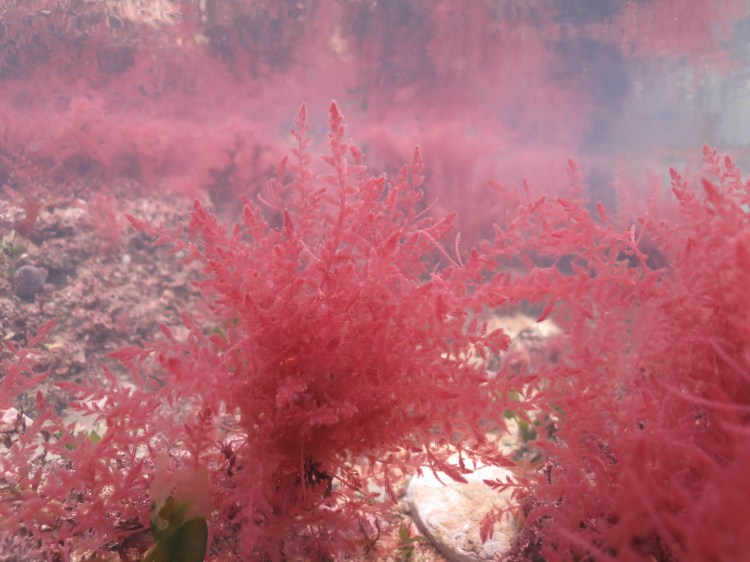
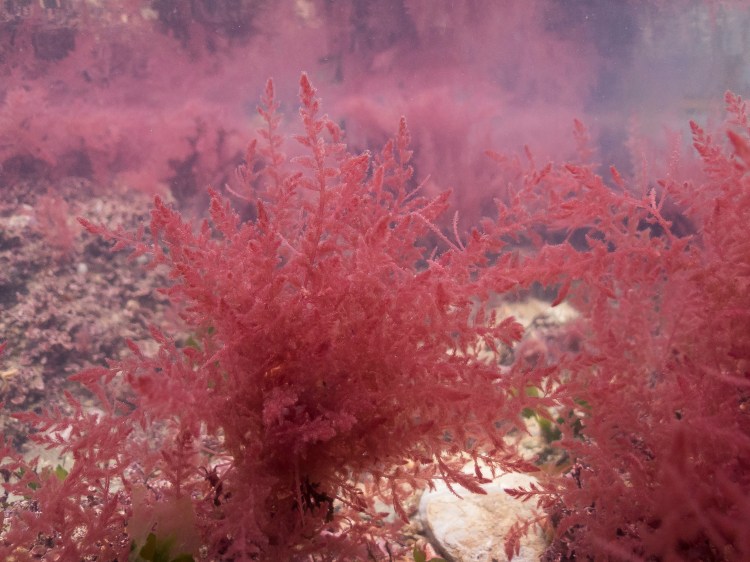
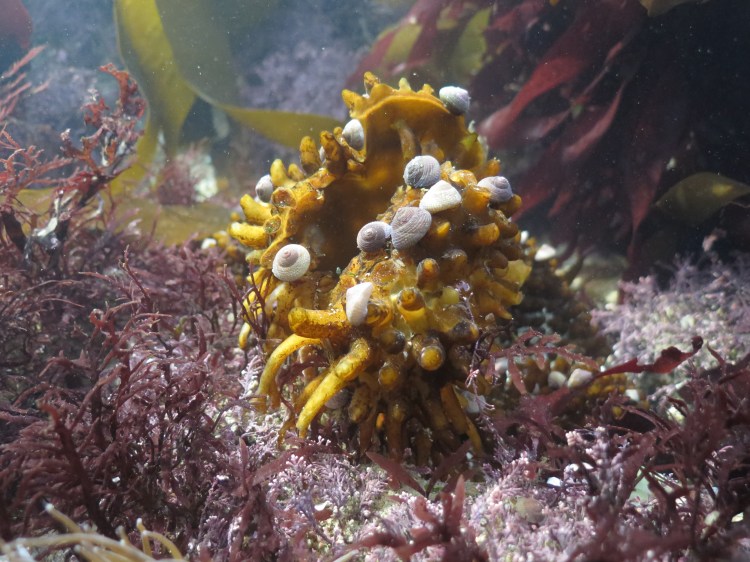
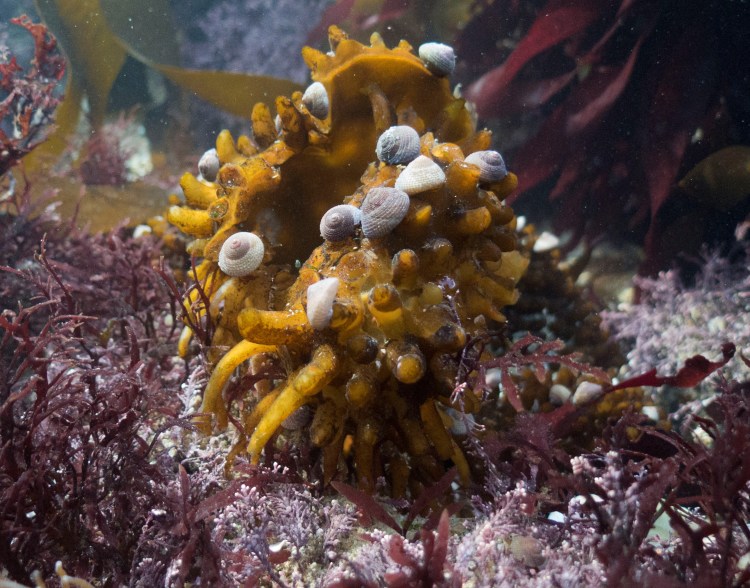
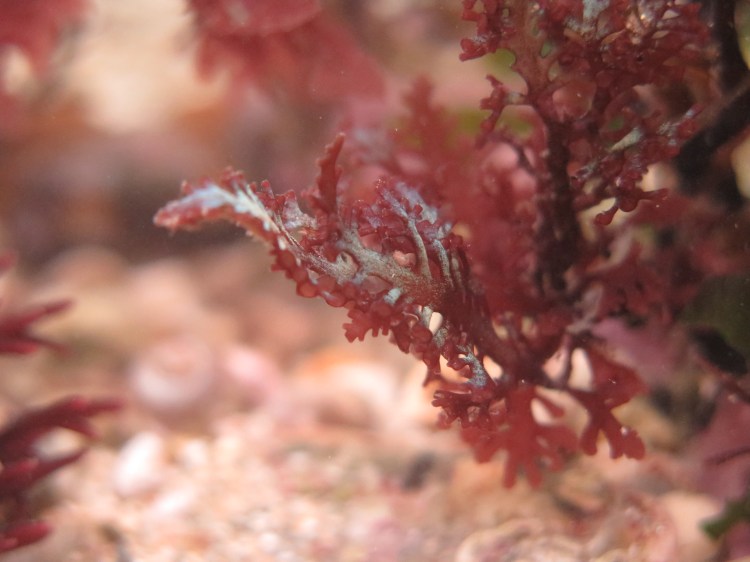
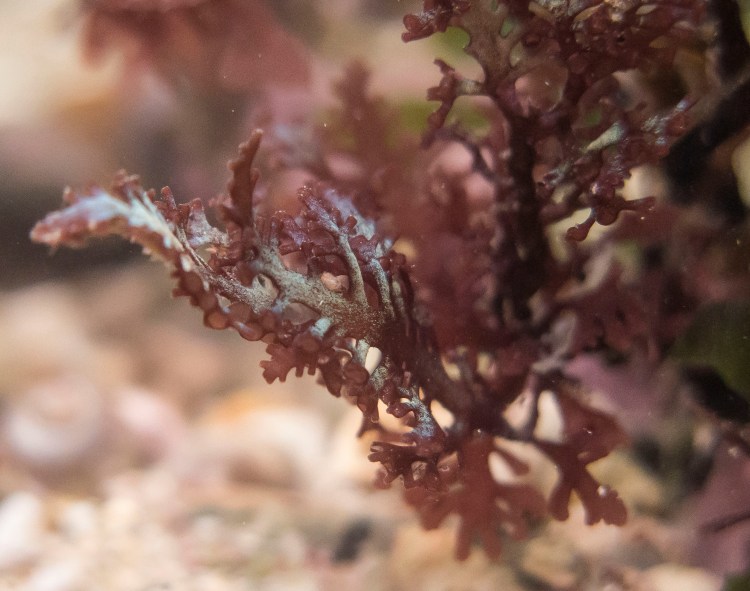
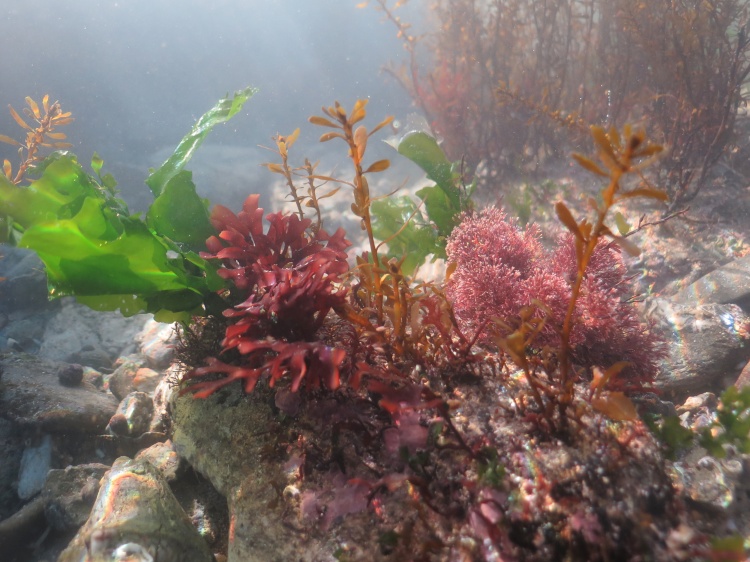
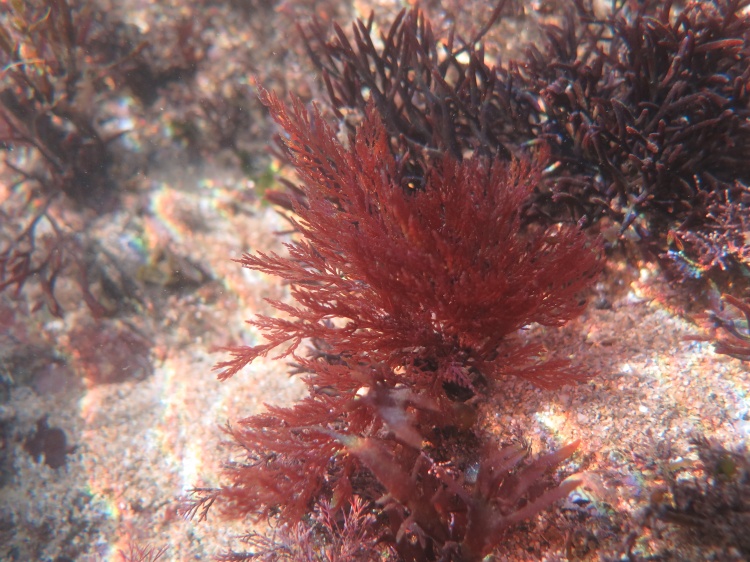
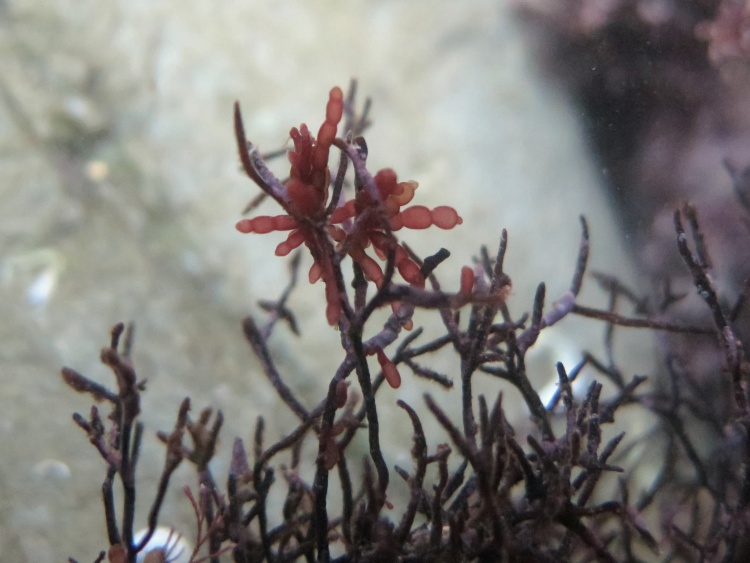
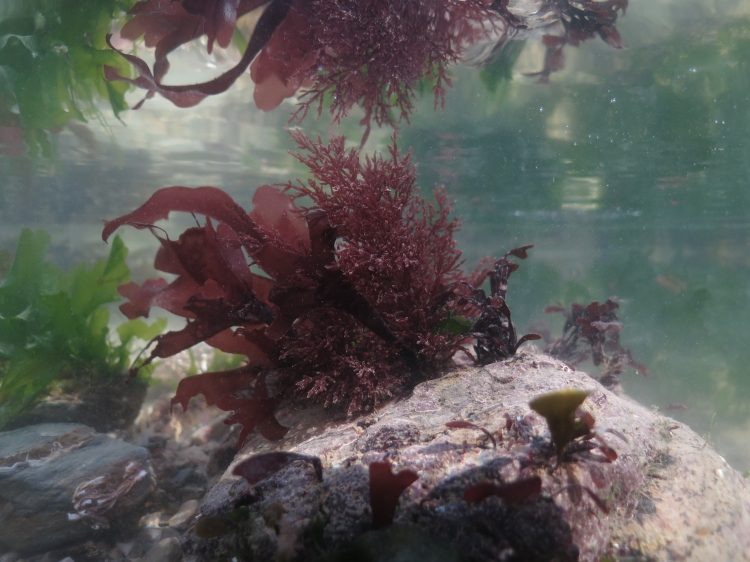
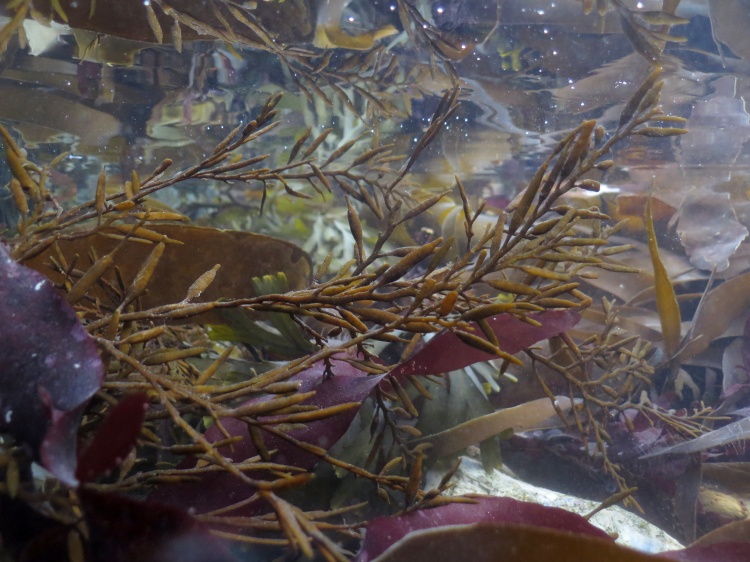
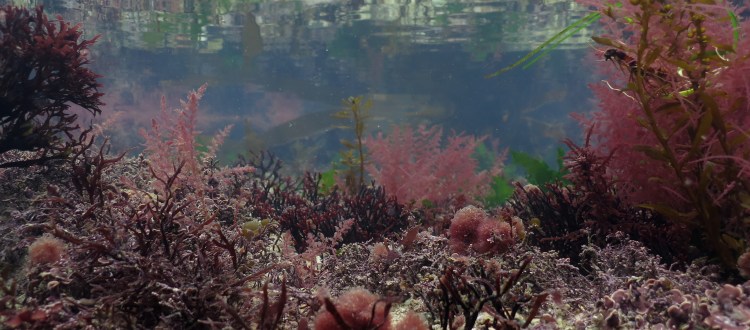
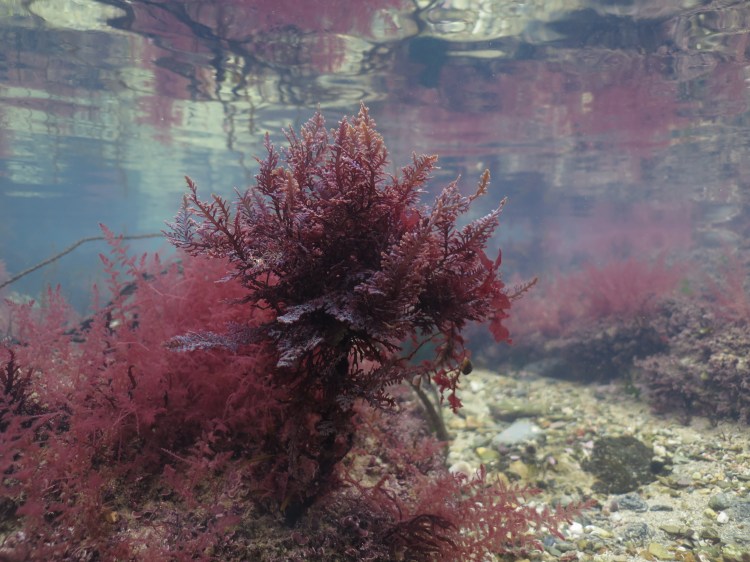
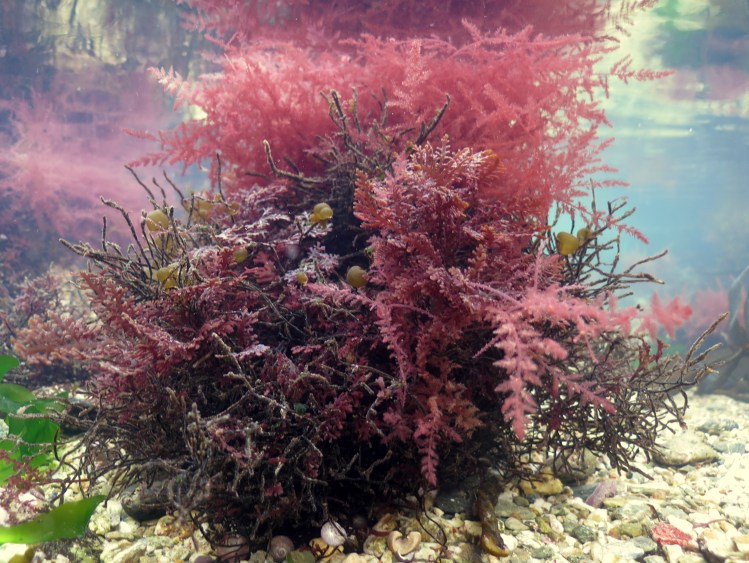
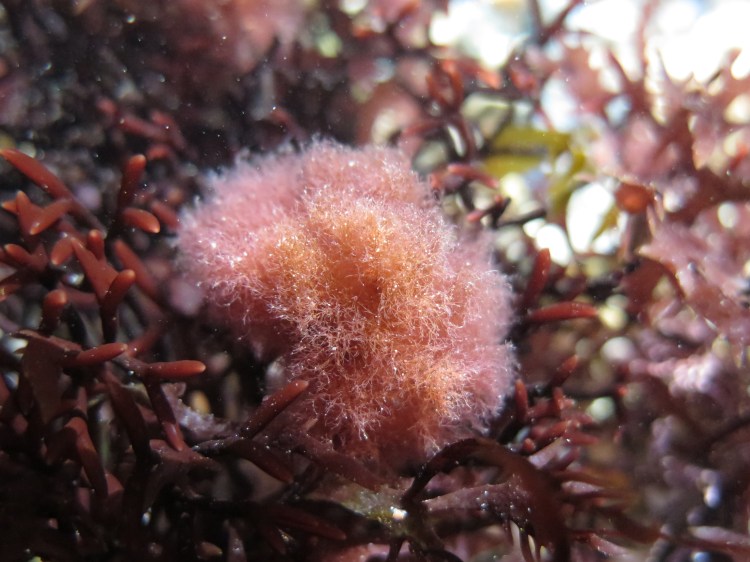
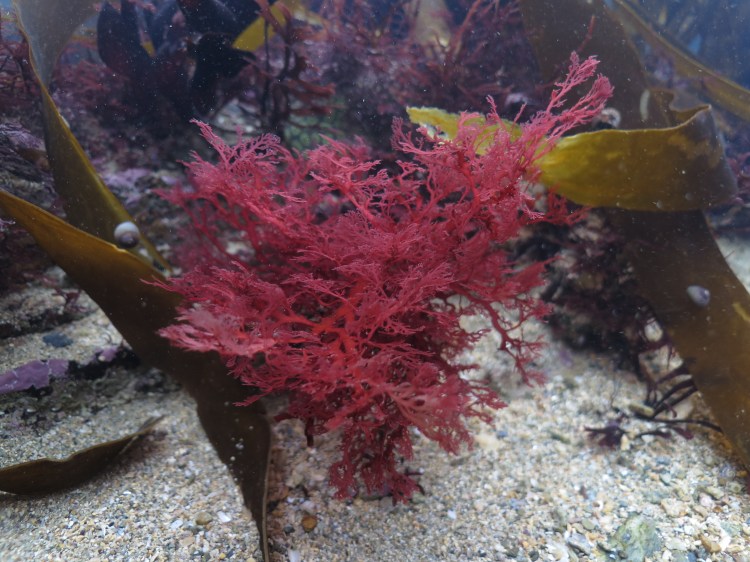
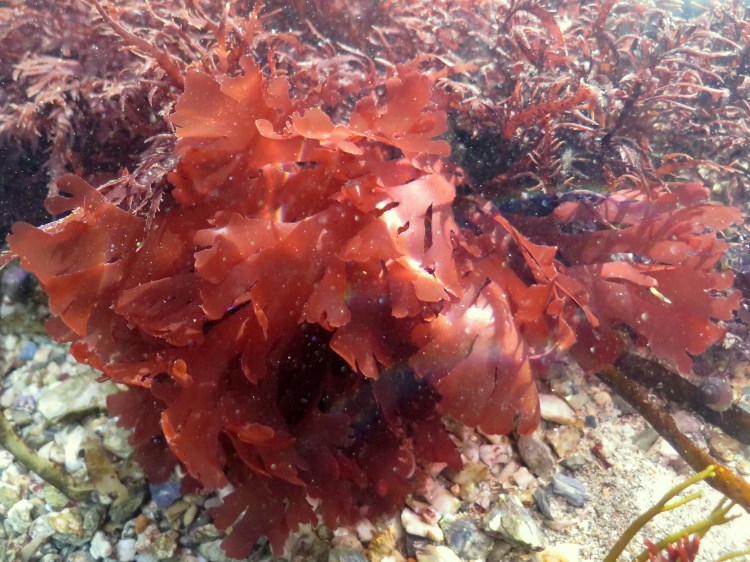
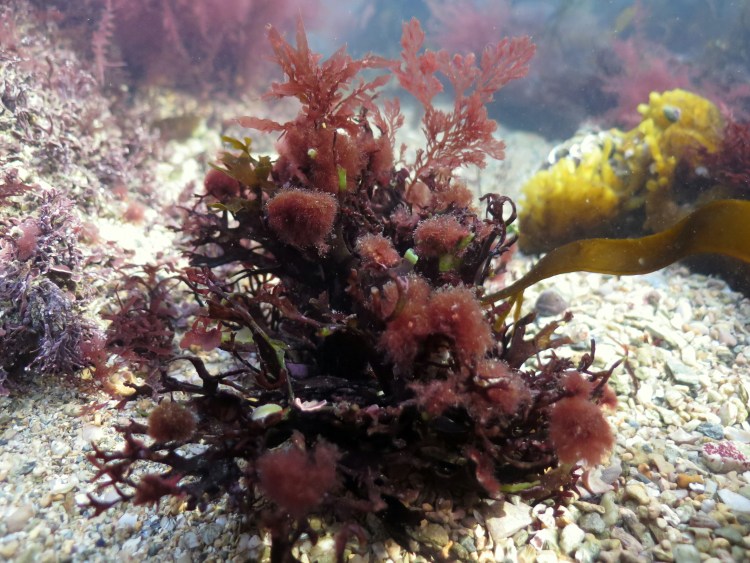
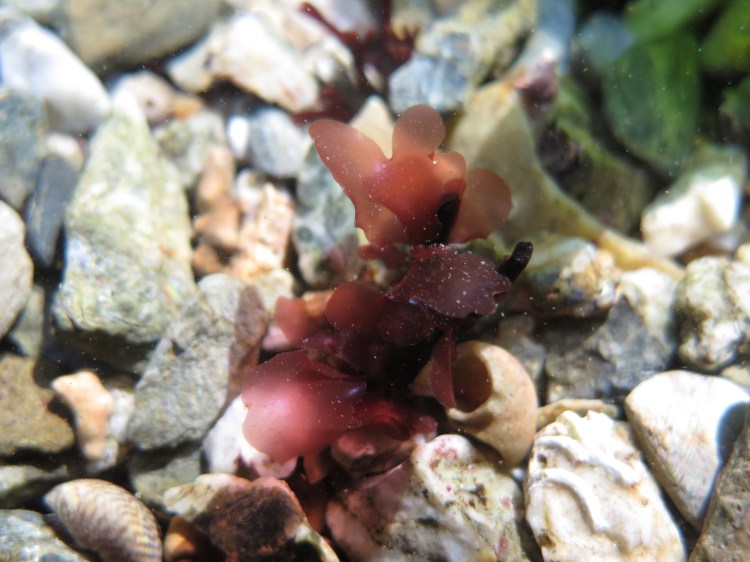
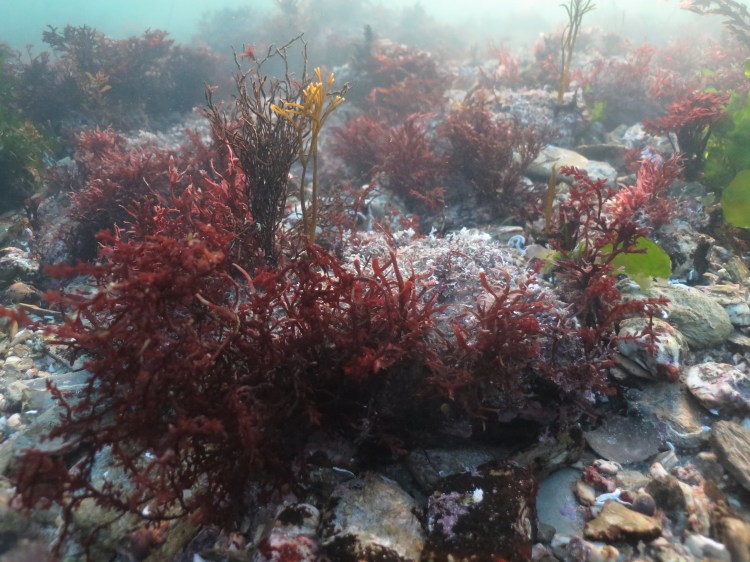
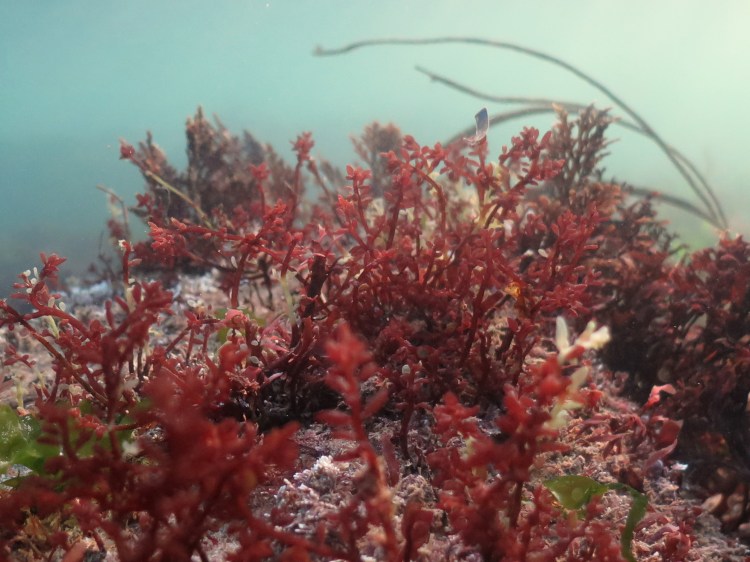
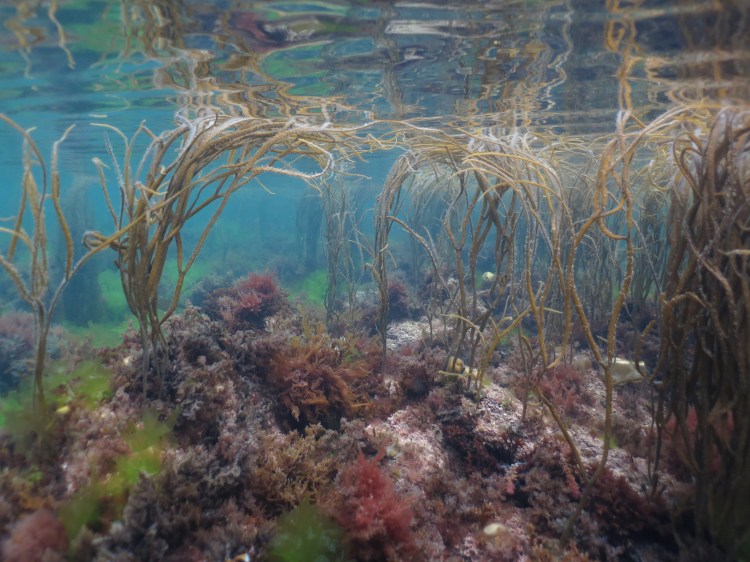
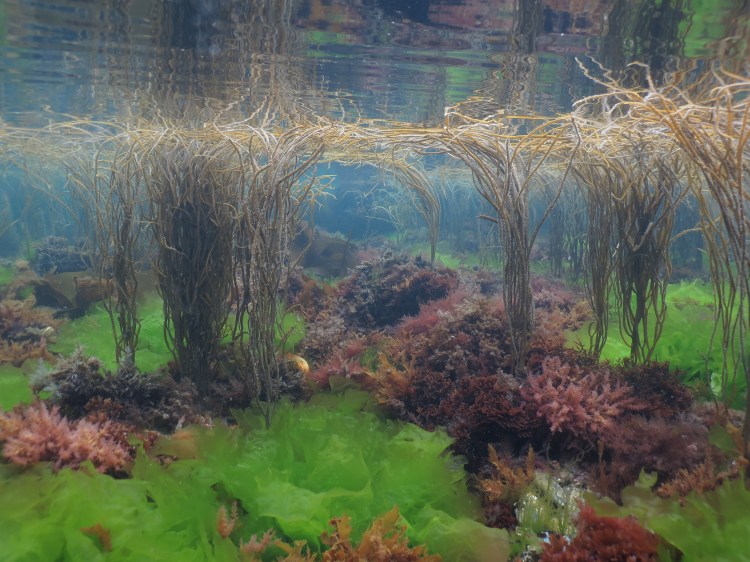
Less than 12 hours back in Cornwall and I managed to slide into the rock pools at Castle Beach in Falmouth this Saturday to see what the seaweeds looked like. There was a noticeable difference with only a week ago. The speed at which seaweeds grow, and decline, still amazes me. I managed to take my best photo yet, of Red rags Dilsea carnosa (surrounded by a whole bunch of other species), above. I made so many photos that I will split them over two posts, with some general ‘seaweeds scapes’ here and with individual species in the next post. The Sea lettuce Ulva has been taking over parts of the pools, turning it a bright green. The reds of the Juicy whorl weed and Berry wart cress and pink of Harpoon weed are less bright, and the Red grape weed and Fern weeds are turning ‘fuzzy’. Still, the seaweeds are much bigger and cover most of the seabed and it looks very exuberant. The Wire weed and the Thong weed (or ‘spaghetti weed’) Himanthalia elongata have been rapidly growing; the latter consisted of ‘buttons’ in January and are now a meter long, so must grow around a centimetre a day. The fronds are covered in flakes (which must be reproductive structures) that come off when you swim through them, clouding the water and so ruining the shot if you do not take it straight away. The sun came out more in the last photos, hence the different light (I have edited most (not all) photos slightly using standard Windows Photos, mainly by decreasing the highlights). More photos very soon!


Falmouth Seaweeds: Early April

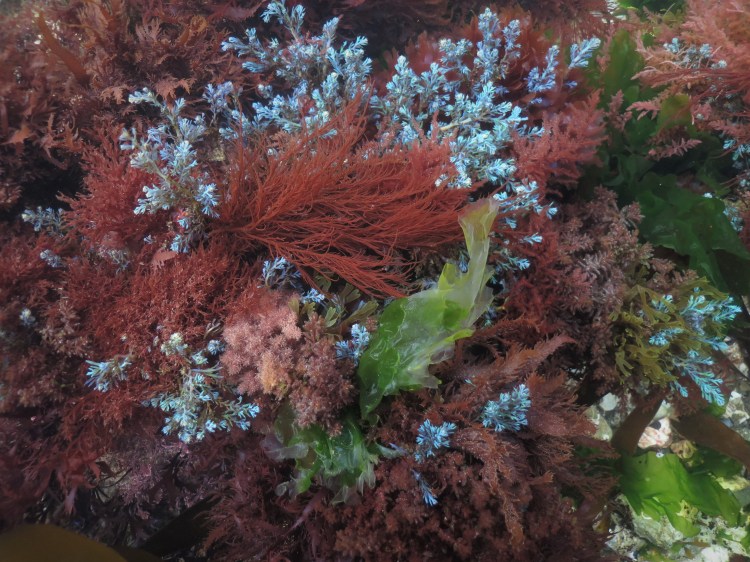
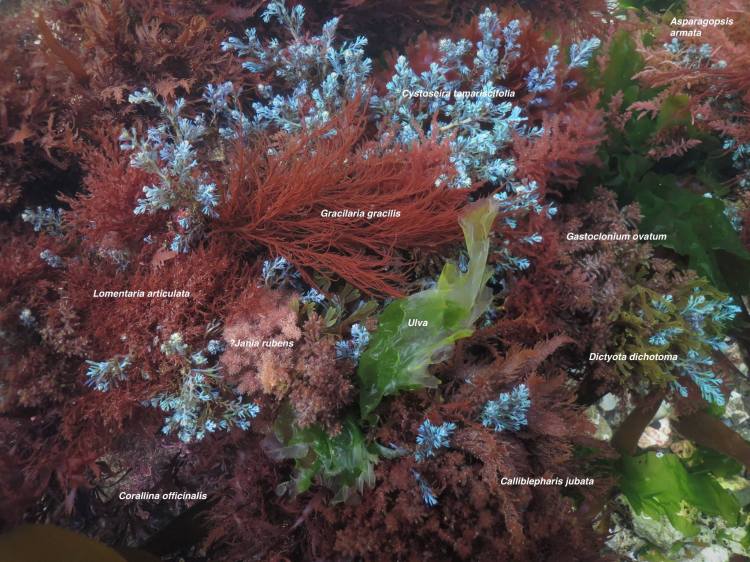
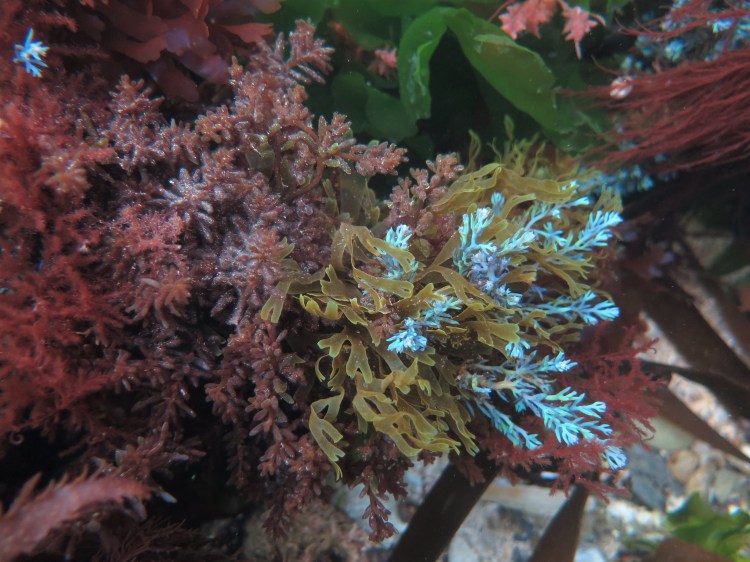
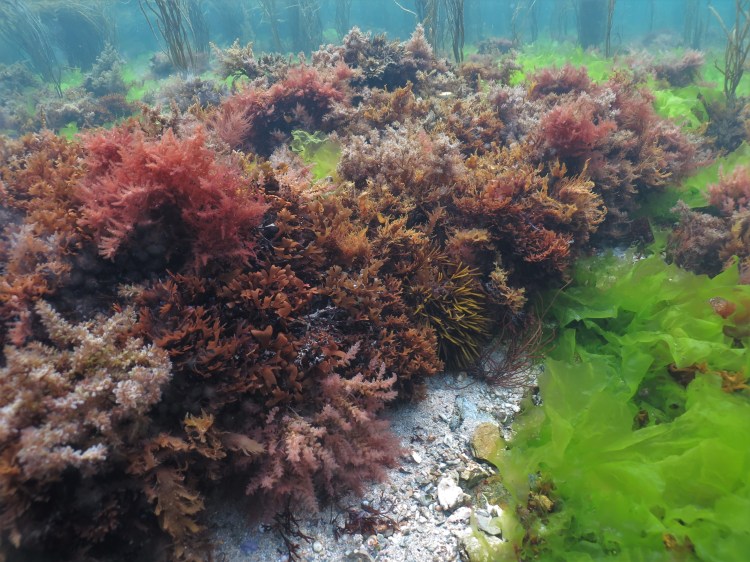
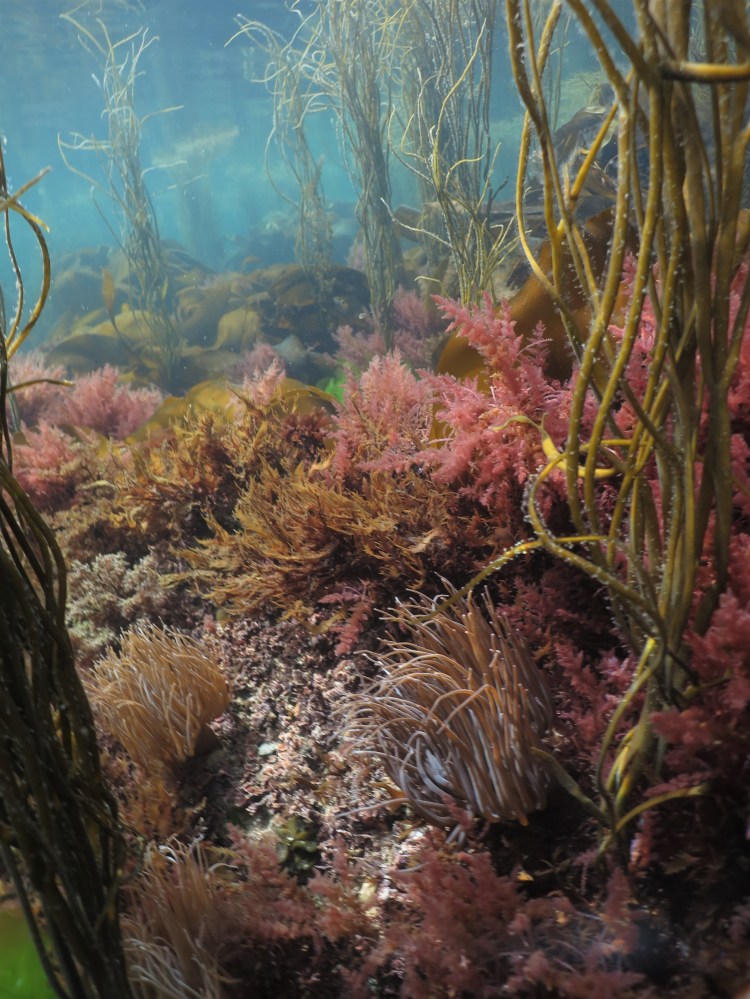
A whole bunch of photos from last Friday, starting out with the prettiest ones depicting a whole range of species, most strikingly the crimson Gracilaria and blue Cystoseira. I was so pleased with it I shared it on the Seaweeds of the NE Atlantic facebook page and Frances Bunker, one of the writers of the highly recommended Seasearch Guide to Seaweeds of Britain and Ireland, kindly uploaded a photo with all scientific names. This is a great idea and I should do the same for future posts (I have not done so yet as I am back home and did not bring the guide). As good as it is to be back in the Low Countries, I am missing out on being able to snorkel in some very good weather and likely better visibility than for the photos in this post. The rock pools have changed markedly since the last post a couple of weeks back, with hardly any patches left without seaweed growth. The colours have changed too, with much more of the green Ulva, and more brown (e.g. Calliblepharis) relative to reds. Some seaweeds seem to be in decline already (e.g. Gastroclonium) while some are more prominent (e.g. Palmaria). Below I have posted a range of photos, some are pretty good, others not so much, but they give a good impression of the diversity (most photos have at least ten species in them but I have not gone through the trouble of typing all the names): I have no clue what the brown, thin, frilly species is above. Below some individual species, first Dulse Palmaria palmata and Sea flax weed Stypocaulon scoparium. Not 100% sure about the next three: Dumontia, Lomentaria and either Laethisia or Colpomenia (I should know this…). Finally, some photos taken under the cover of Thongweed Himanthalia. More photos next week I hope!

Falmouth Seaweeds: Mid-March part 2

More seaweed photos, taken a couple of days after the ones in the previous post, when it was overcast and the water was less clear. The photos are not as good, but there are still a lot of interesting species to see. Below some photos showing the diversity of species next and on top of each other. In the last two months, most species have been growing quite a lot. There are quite large patches of Slender-beaded coral weed Jania rubens. Bushy rainbow wrack Cystoseira tamariscifolia plants are completely overgrown with all kinds of epiphytes, seaweeds, sponges and colonial tunicates, and often have a Nursehound egg case attached. Next, photos of individual species. First some flat reds: Leafy rose weed Rhodophyllis divaricata, Beautiful fan weed Callophyllis laciniata, Branched hidden ribs Cryptopleura ramosa (probably), the invasive species Devil’s tongue weed Grateloupia turuturu and Under tongue weed Hypoglossum hypoglossoides. After that, two species that look a bit similar: left the reddish Discoid fork weed Polyides rotundus and right Clawed fork weed Furcellaria lumbricalis. The former is one of the most common species (also on the photo above it) but difficult to photograph as it usually sits on the white sand. After that, Juicy whorl weed Chylocladia verticillata. Last, two quite unassuming species: Black scour weed Ahnfeltia plicata and Sea flax weed Stypocaulon scoparium. Identifications made possible using the must-have Seasearch Guide to Seaweeds of Britain and Ireland, David Fenwick’s excellent aphotomarine website (and personal communication) and the good people of the Seaweeds of the NE Atlantic facebook group (any mistakes are my own).

Falmouth Seaweeds: Mid-March part 1

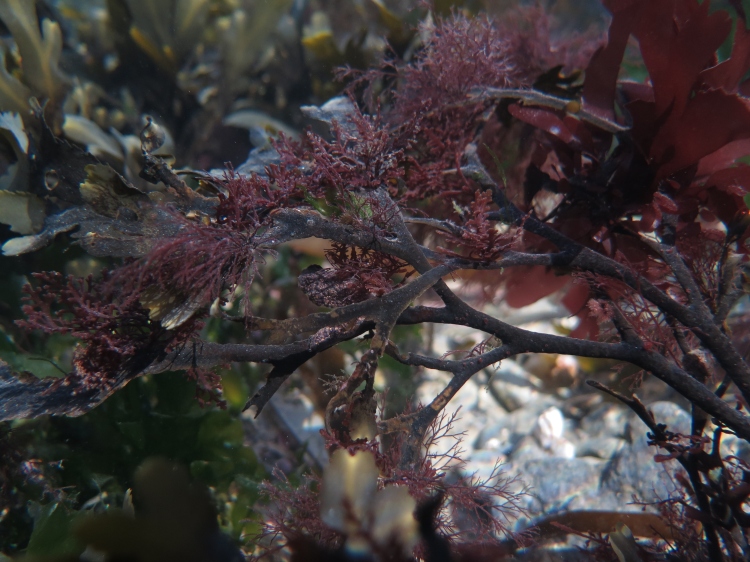
Time for some more seaweed photos. These were all taken during a snorkel when the sun was shining and the water was very clear, and as a result they are some of the best I’ve yet managed to take. Often it is overcast this time of year which means that the colours are not vivid and the water can be turbid too, so I was very lucky. Above a ‘bouquet’ consisting of many species, including Chondrus, Dictyota, Corallina, Ulva, Cystoseira, Mesophyllum, Asparagopsis, Calliblepharis, Himanthalia and (probably) Rhodophyllis.  I might look slightly ridiculous snorkelling in 50 centimeters of water but as long as I can look at this I don’t care! I really like the clarity of the next photo of Plocamium surrounded by Asparagopsis and Sargassum. The photo after shows the red Berry wart cress Sphaerococcus coronopifolius with some bright green Ulva, kelp and the brown red species False eyelash weed Calliblepharis jubata. More Berry wart cress in the photo after.In the first seaweed post of the year, I posted a photo of a tangle of species, mainly Hairy sand weed Cladostephus spongiosus, with Osmundea, Asparagopsis, Bonnemaisonia and Leathesia (here, third photo). Next, a photo of exactly the same tangle, which is now completely overgrown with the dark red Bonnemaisonia (an invasive species, just as the Sargassum and Asparagopsis also in the photo). I plan to take more photos over the months to track this succession. In the photo after that Bushy berry wrack Cystoseira baccata (still quite spindly after the winter) covered with a couple of red epiphytes and the brown Dictyota dichotoma. The last photo shows a beautiful red species covered in reproductive structures, I hope someone can tell me which species it is! Update: Spotted scarf weed Nitophyllum punctatum
Snakelocks Anemones Anemonia viridis

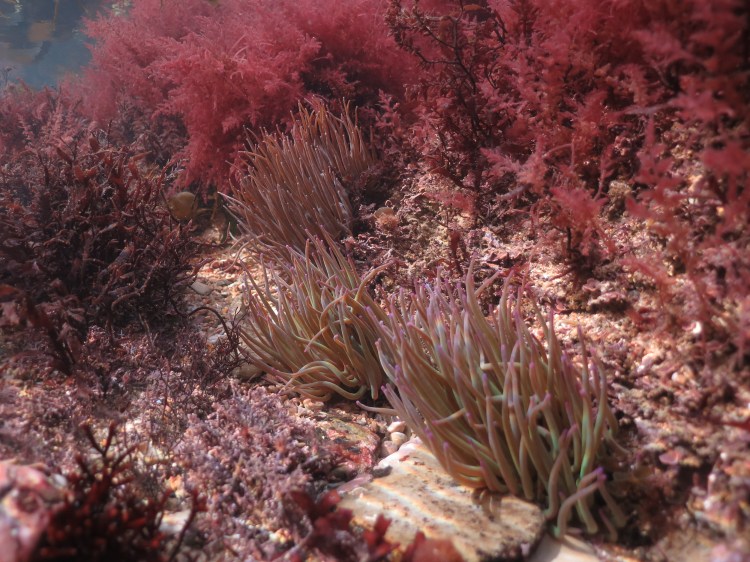
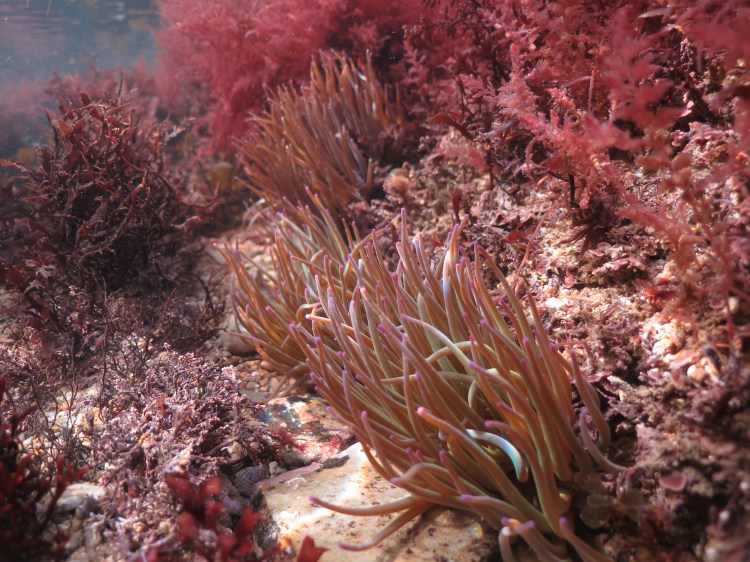
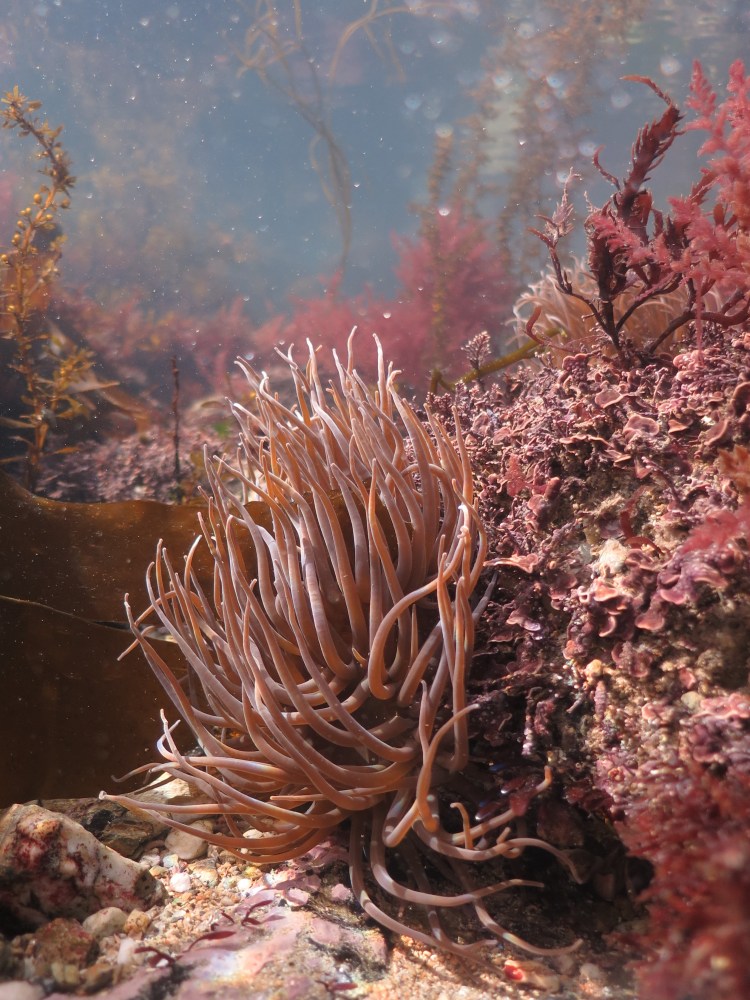
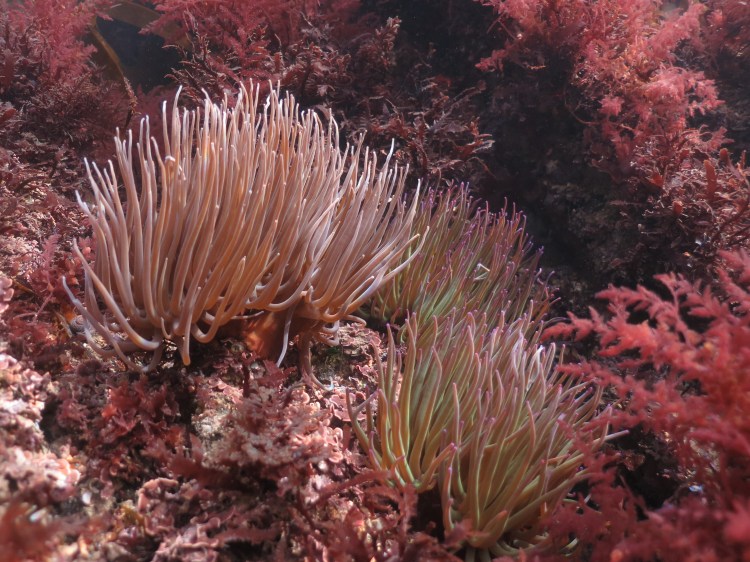
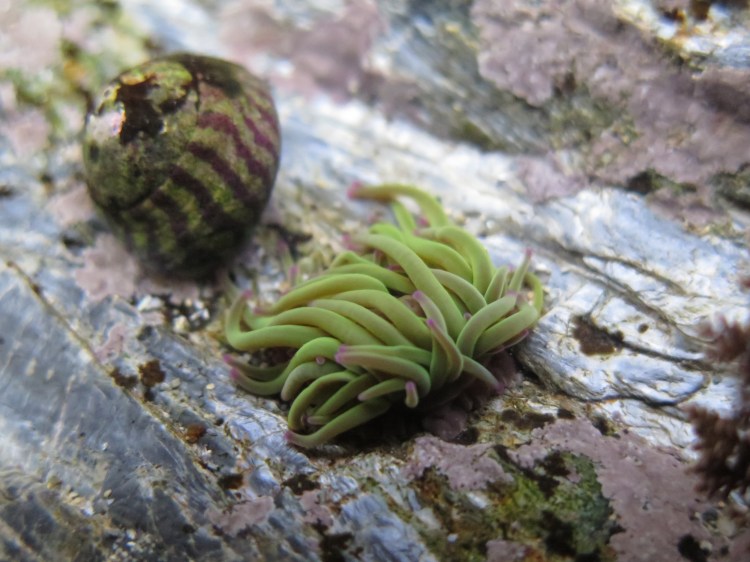
I have been snorkelling a few times in recent days and it has been generally fantastic. The pools are probably at their peak now when it comes to seaweeds, I hope it lasts a little while longer (in June it will most definitely be over, see this old post, actually, they are in decline in May already). It is the plan to get in the water again this week to take some more seaweed photos, but in the meantime some photos on one of the more common anemone species: the Snakelocks anemone Anemonia viridis. There are two colour morphs: the greys and the purple-tipped greens. In Falmouth, they seem equally common, no matter if it is high on the shore or subtidally. I recently learned that in Scotland there are almost only greys, perhaps in the Med there are mainly the other type and it has something to do with temperature tolerance, if you know please let me know in the comments! I really like thuis species, in fact, the very first blog post back in 2013 consisted of a photo of these anemones in my aquarium. I have two of these in my aquarium at the moment, they are very easy to keep. This might be because in addition to being voracious predators, they are also capable of living on sunlight, as they harbour photosynthesizing algae. In any case they grow rapidly (and very occasionally split into two).I took these photos in very shallow water. When scuba diving you can commonly observe the commensal Leach’s spider crab Inachus phalangum sitting under the anemones (see here in the aquarium and here in the wild). (In Dorset there is a beautiful little prawn that lives as a commensal, and in the Mediterranean there is a goby that is associated with this species.) Only very occasionally do Snakelocks attempt to retract their tentacles (see here); tentacles can be quite long and slender or more stout (see here), probably a response to the strength of the currents. I have tweaked some of the photos a tiny bit (but not the nicest one on top for instance). Below two photos taken on different days of the same three anemones with different light conditions and different camera settings (most importantly probably the white balance, which I use to tone down the reds caused by the seaweeds).

Stalked Jellyfish: the Stauromedusae

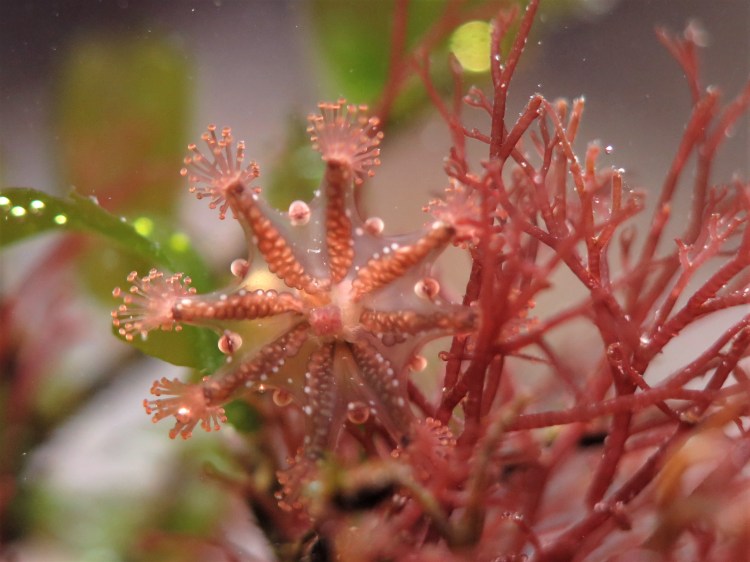
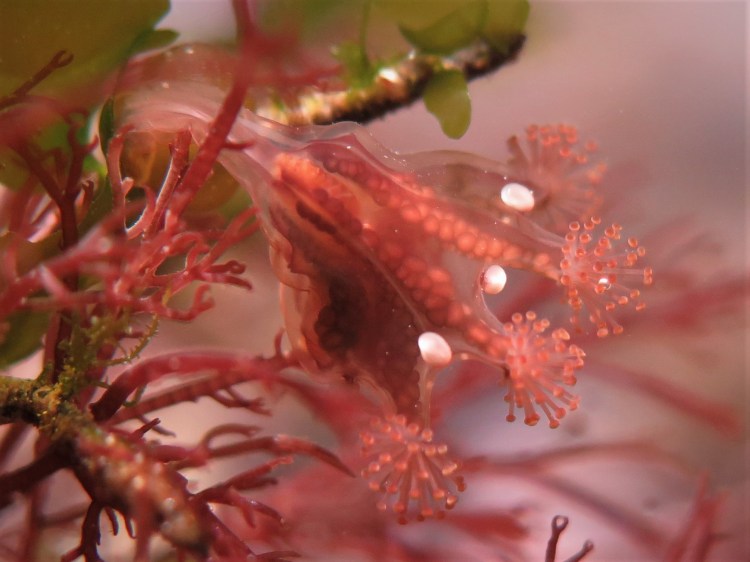
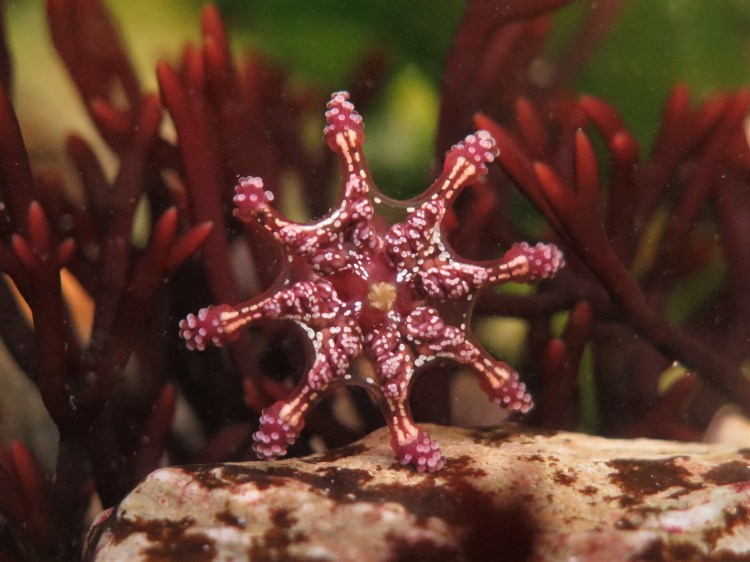
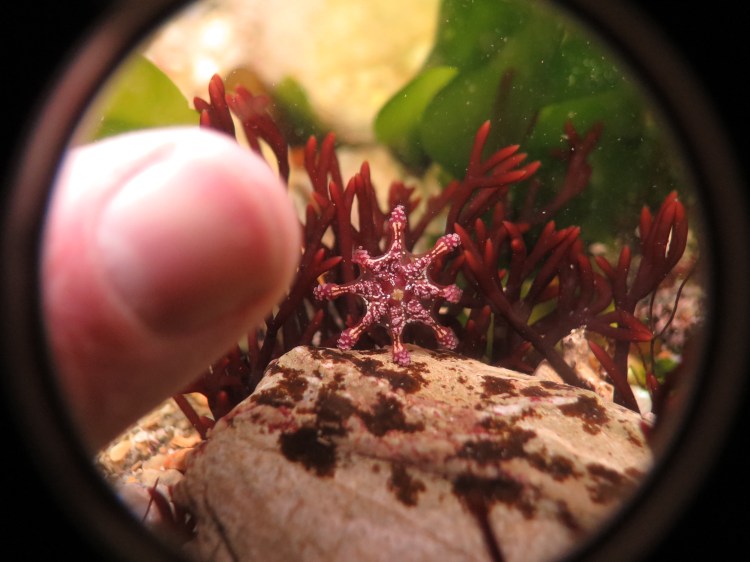
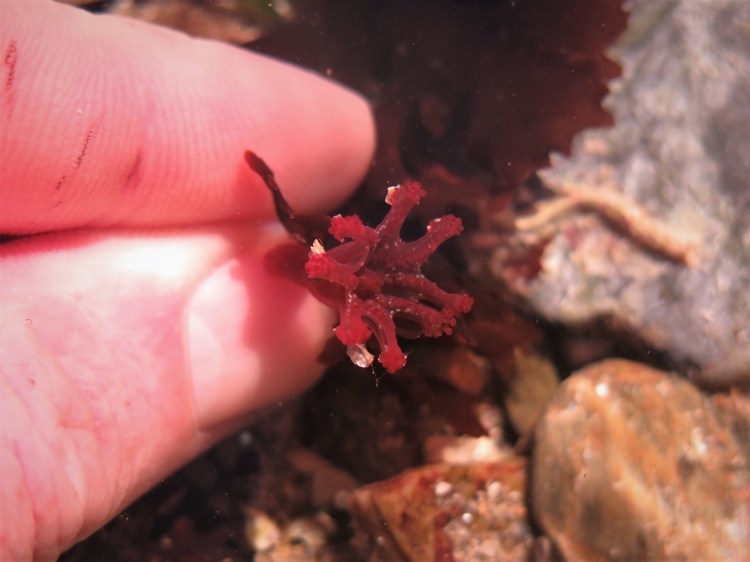
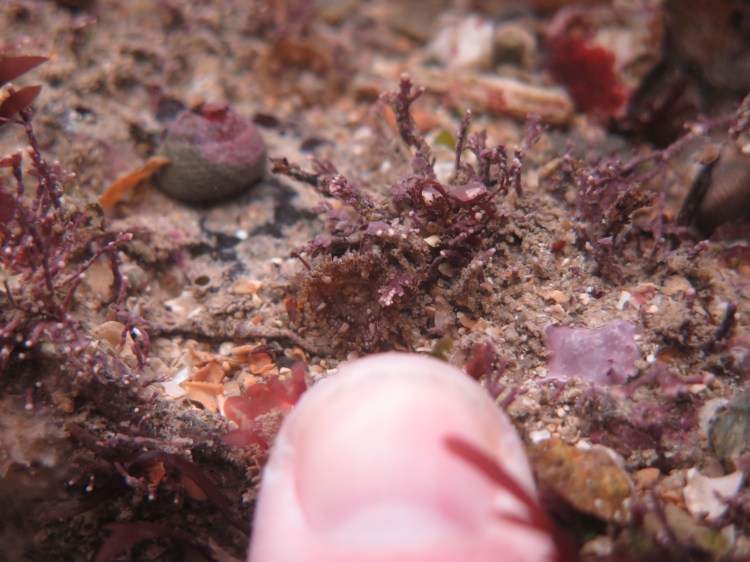
img_9949 img_9983img_0078bI now am the proud owner of a nauticam CMC wetlens. It arrived too late for my first encounter with a nudibranch this year, however, it came just in time for a proliferation of stalked jellyfish. These tiny (around one centimeter), sessile relatives of jellyfish are not very well-known, but seem to be getting more popular, see for some other recent finds the other local blogs Cornish Rock Pools and The Marine Enthusiast. To find them, you need to carefully scan seaweeds in rock pools (they are not very picky when it comes to which species they attach themselves to). The key resource for UK (European even) rock poolers is David Fenwick’s Stauromedusae website. Above, the most common species, the Spotted kaleidoscope jellyfish Haliclystus octoradiatus, recognizable by the primary tentacles or anchors (the white ‘balls’ inbetween the tentacles). Below, St. John’s stalked jellyfish Calvadosia cruxmelitensis, with a zoomed out photo and finger nail to give an idea of scale. Finally, two not so good photos of a third species Calvadosia campanulata taken above-water as these were located just below the surface. One more species can be found on mainland Cornwall (the Goblet stalked jellyfish Craterolophus convolvulus) and one on the Scillies (the Horned stalked jellyfish Lucernaria quadricornis, but who knows this species is also present on the mainland). So some more searching to do! img_0392img_0404img_0408img_0122img_0134

Falmouth Seaweeds: (early) March

img_0355OK, it was the plan to post a general Falmouth seaweed/rock pool photo post every month but I am faltering the second month in… It is not for lack of trying, because I have been sneaking out of the office quite a bit, but the weather has been pretty awful. Lots of wind, choppy waves, rain, cold and bad viz. I had one good day this week and I am posting some of the better pics from that session. Again a photo of Nursehound mermaid’s purses attached to Bushy rainbow wrack, pretty much the only seaweed species these sharks use to attach their egg cases to. This must be because this seaweed species is very sturdy, and especially because it is a perennial: the eggs can take up to twelve months to hatch! Below three more Bushy rainbow wrack Cystoseira tamariscifolia photos. The first photo shows a short plant with few epiphytes but the following photo shows that this species is an especially great substrate for all kinds of other seaweeds, including Harpoon weed, Fern weeds and Juicy whorl weed. The plant in the third photo (unfortunately out of focus) is completely covered by a beautiful flat red species: img_0320img_0312img_0302img_0269Above a general impression of the scene before the sun reappeared. Btw, most of the photo’s have not been post-processed but some I have tweaked a little using the standard photo editor that comes with Windows 10, which is actually really good. The seaweeds have been growing quite a bit since January. A few have become more prominent, such as Slender wart weed Gracilaria gracilis (first two photos) and (I am not 100% sure) Purple claw weed Cystoclonium purpureum in the two photos after that. I have a bunch more photos that show different seaweed species, but I hope that I can take better pictures of these later this month for a follow-up post (I am trying to find a balance between showing what I have seen and posting ‘good’ photo’s, which is a bit tricky!). I have a macro lens now as well, which I will mainly use for animals but also can be used for the smaller seaweeds; the last photo is a first attempt.img_0292img_0322img_0290img_0333img_0436

Photography Update

img_9033More photography practice lately. I have started to use Photoshop to post-process images, which is hard. I have sat with Thomas Daguerre for a session which was very helpful. For some images, the twiddling is of not much use; the image above of a Bull huss egg case for instance I am pretty happy with as is. Below I have pasted some before and after-Photoshop photo’s. Mostly adjusting highlights and contrast, cropping and playing around with sharpness (in the RAW files), most images tend to be a bit reddish. I have not bothered to tackle the ‘marine snow’ with the Spot Healing brush tool. First, Snakelocks anemones, next, Cocks’ comb Plocamium, then Harpoonweed Asparagopsis armata and an old kelp holdfast covered in feeding Grey topshells Gibbula cineraria.img_9739b img_9739cimg_9710img_9710cimg_9733 img_6792eimg_8662new2On and under the seaweeds I encounter many interesting tiny animals, but it is hard to take good photo’s without a macrolens. I have pasted a couple photo’s below (none have been edited in any way): the Stalked jellyfish Haliclystus octoradiatus (these can also be reddish or brownish, and can be found on a wide variety of seaweeds), a sponge, a juvenile Snakelocks anemone Anemonia viridis (next to a Flat top shell Gibbula umbilicalis) and the Star ascidian Botryllus schlosseri where I later noticed the fecal pellets underneath. Pooping tunicates, that is what we need more pictures of!img_8888img_8872img_8685img_9344Finally, some more before- and after- Photoshop images. The first is the nudibranch Rostanga rubra (‘Red doris’) which was only 5mm or so (see also the tiny Daisy anemone in the background). I shot it today, very cold: 4 degrees, and the water might have been only 8 degrees, brrrr! Next, a closeup of the seaweed Osmundea (see the first photo of this post) which shows its interesting pigmentation. The photo’s are nothing special yet, but I notice I am making progress. Excitingly, I just have ordered a macro wetlens and so hope to get some proper macro photography going soon!img_9761 img_6792cimg_9782img_9743img_9743b

some more January Seaweed photos

img_9458It is my plan to post photos of seaweeds from one large rock pool in Falmouth every month. As I am making good on my new year’s resolution of going out to the beach, I have some more photos to post before it is February though. I am slowly learning to take better photos, but will also post ones that are not that great to cover more species. Below, Club bead- or Feathery tube weed Lomentaria clavellosa, the small epiphyte Little fat sausage weed Champia parvula (heavily cropped, I need a macro lens!) and Juicy whorl weed Chylocladia verticillata (with some of the edible Dulse Palmaria palmata on the left of it).img_9456img_9240img_9334I found quite a few more species but the photos ended up a bit meh, so I will have to go back and try harder. Below, two that ended up quite nice. Serrated wrack Fucus serratus covered with a variety of red epiphytes and a piece of washed up Sea oak Halidrys siliquosa.img_9326 img_9383

Falmouth Seaweeds: January

img_8801As I noticed that the rock pools have started to look really pretty, I have gone out snorkelling four times the last week to photograph seaweeds. Bitterly cold (around 10°C) but worth it! It is my aim to post photo’s taken at the same spot every month this year, let’s see. The first three days the tide was very low, making it more of a lying on the sand rather than actual snorkelling. The sun was out and my main challenge was to get to grips with overexposure, checking histograms and decreasing image brightness. The other main challenge is to not stir the sand up and create ‘marine snow’. It makes a world of difference to actually stick your head underwater and look through the viewfinder instead of lazily only submerging the camera. For now, I have only cropped and adjusted contrast of jpegs using Picasa, but I have also shot in raw format and hope to get more out of the shots in the near future. With help from the excellent Seasearch Guide to Seaweeds of Britain and Ireland and the Seaweeds of the NE Atlantic facebook page some of the species could be identified. img_8842img_8807img_8866Above, Osmundea osmunda (probably), which has a very nice blueish (‘glaucus’) tinge (I need to take some close-ups of that next time). In the following photo, a whole tangle of species, mainly Hairy sand weed Cladostephus spongiosus, with Osmundea, Asparagopsis, Bonnemaisonia and Leathesia. Next, another picture of a whole variety of species, I would like to find out what the red epiphyte is. Below some photos of individual species of red seaweeds (mostly not great but it gives an idea of the diversity). First, Leafy rose weed Rhodophyllis divaricata, next Falkenbergia (which is actually not a species but a distinct phase in the life cycle of Harpoonweed Asparagopsis Armata), Berry wart cress Sphaerococcus coronopifolius, Irish moss Chondrus crispus, Beautiful fan weed Callophyllis laciniata, Under tongue weed Hypoglossum hypoglossoides,  Chondrus with Falkenbergia and Hypoglossum and Plocamium on top and a small unknown species. You can see that most photos suffer from overexposure (and notice my crude upped contrasts).img_8313 img_8294img_8852 img_9045img_8407img_7650img_8550img_8297The last time I went snorkelling, it was overcast and the tide was higher. I tried a bunch of shots a greater distance away to capture more of an overall impression, but with more water between the subject and the lens the shots become ‘milky’. The next shot of a whole variety of red, green and brown species (with Clawed fork weed Furcellaria lumbricalis in the middle) could have been really nice with clearer water, better framing and correct exposure! The next shot shows Cladostephus and Thong weed Himanthalia elongata on top of a rock covered with Red grape weed Gastroclonium ovatum (also on the last photo). img_9014img_9030img_9007