aquarium update 11

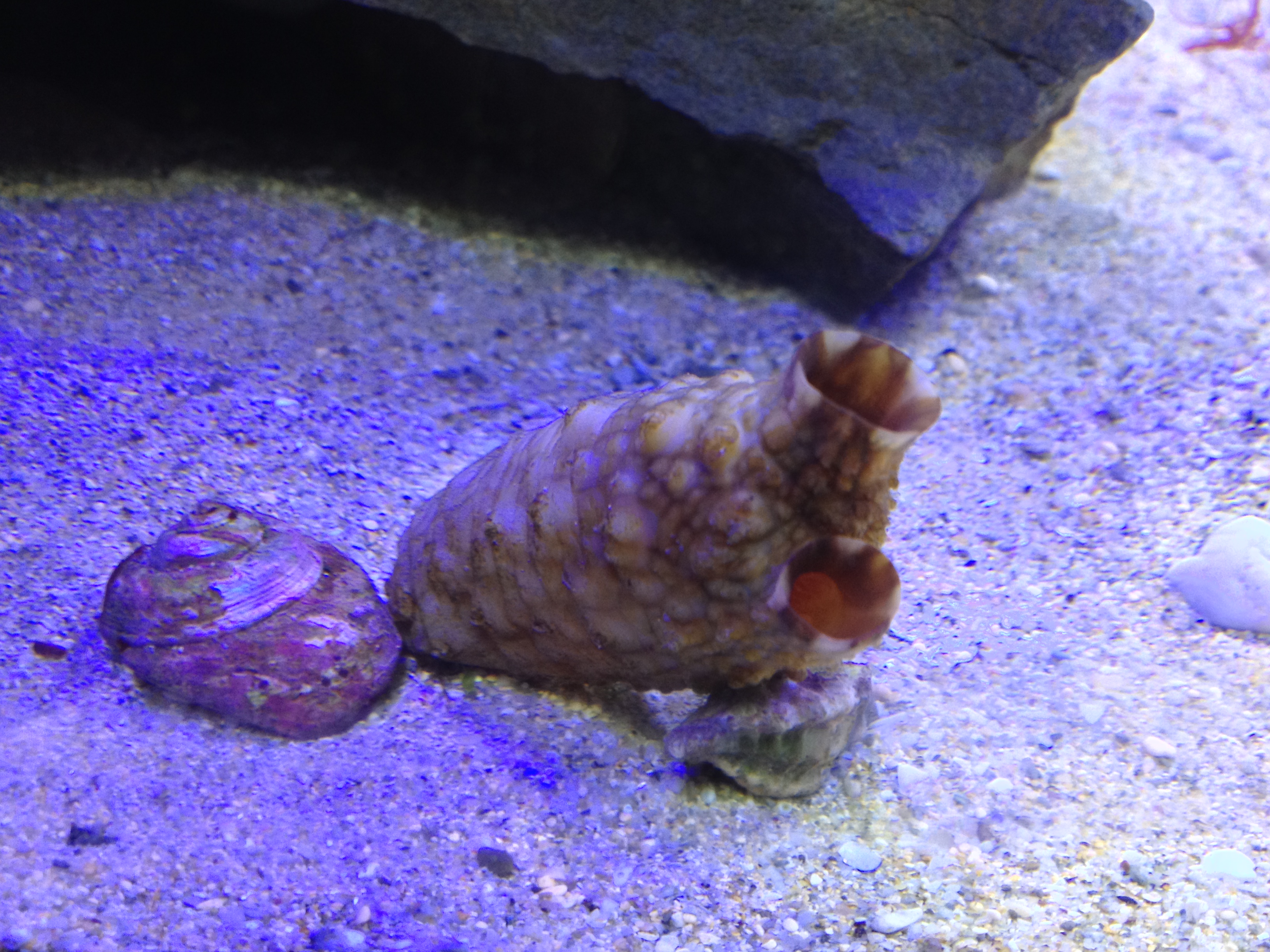
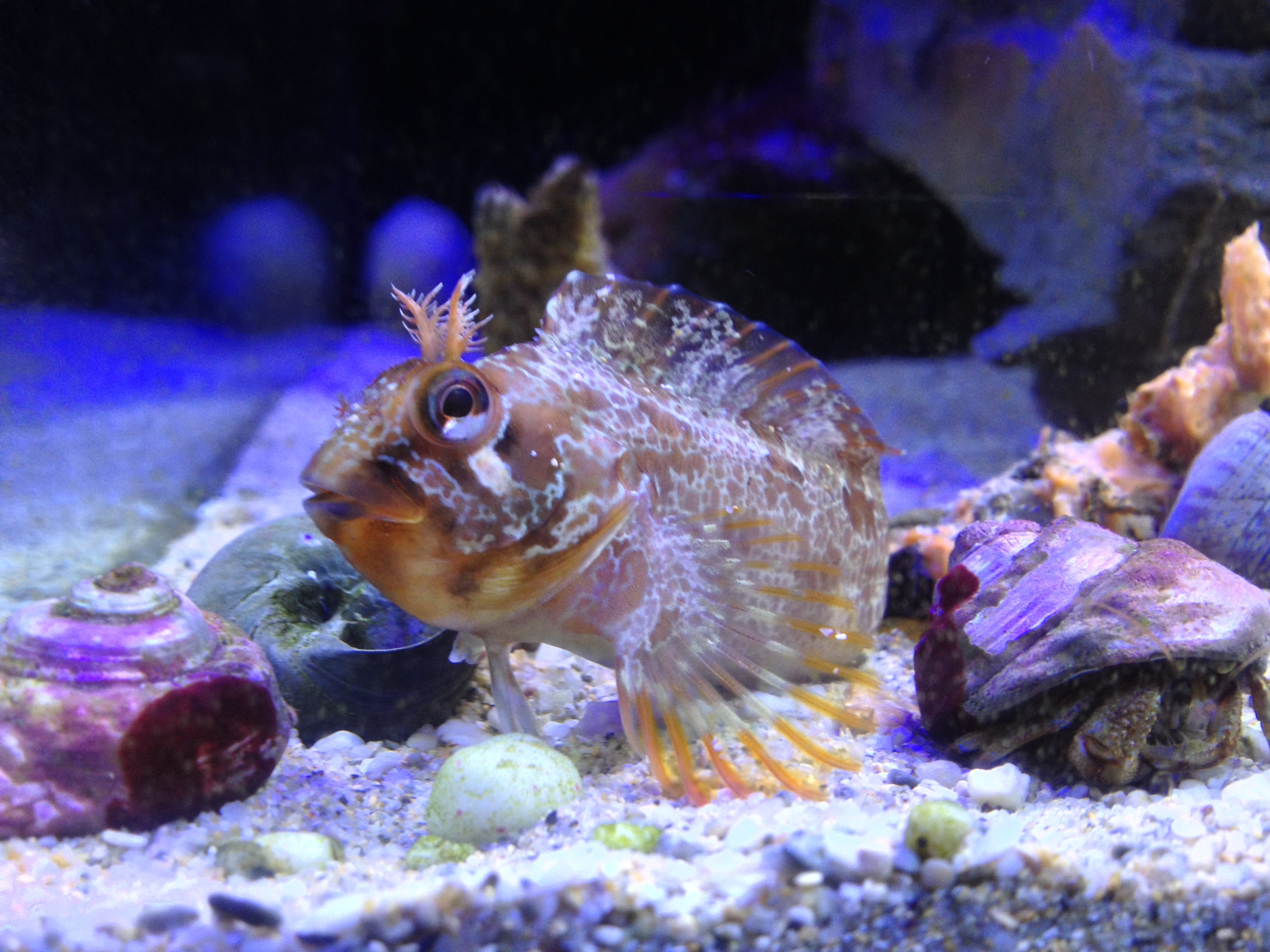
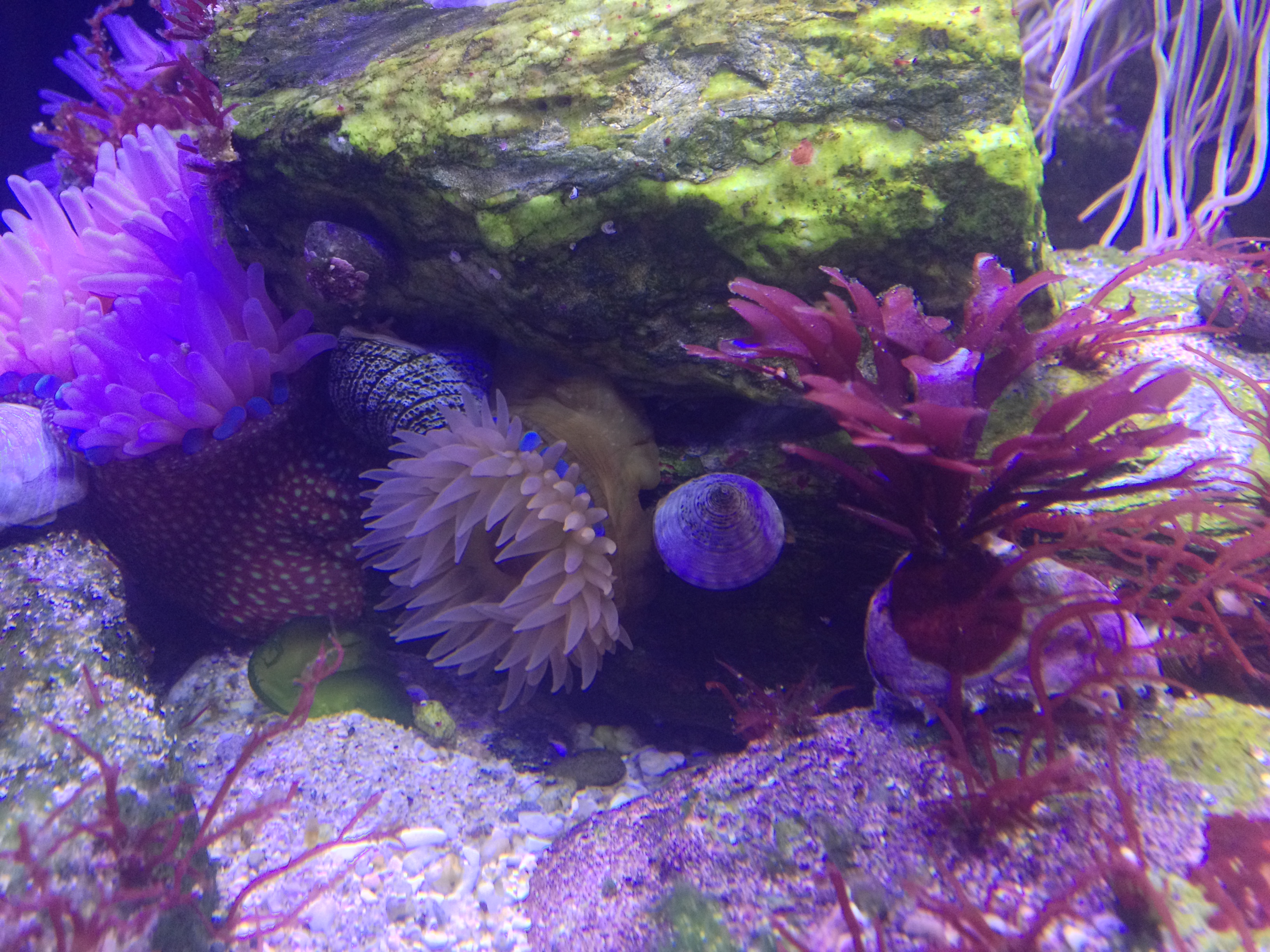
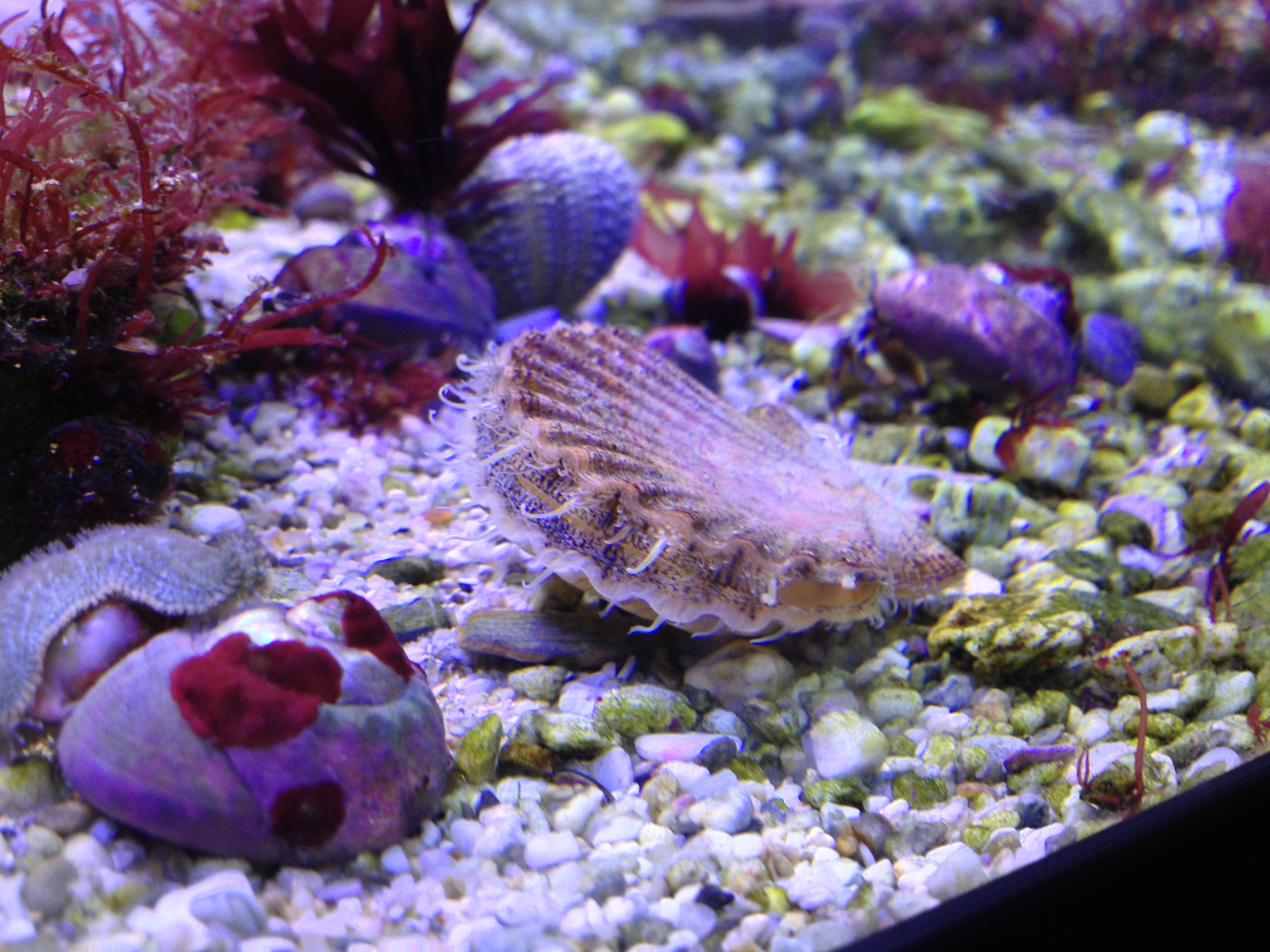
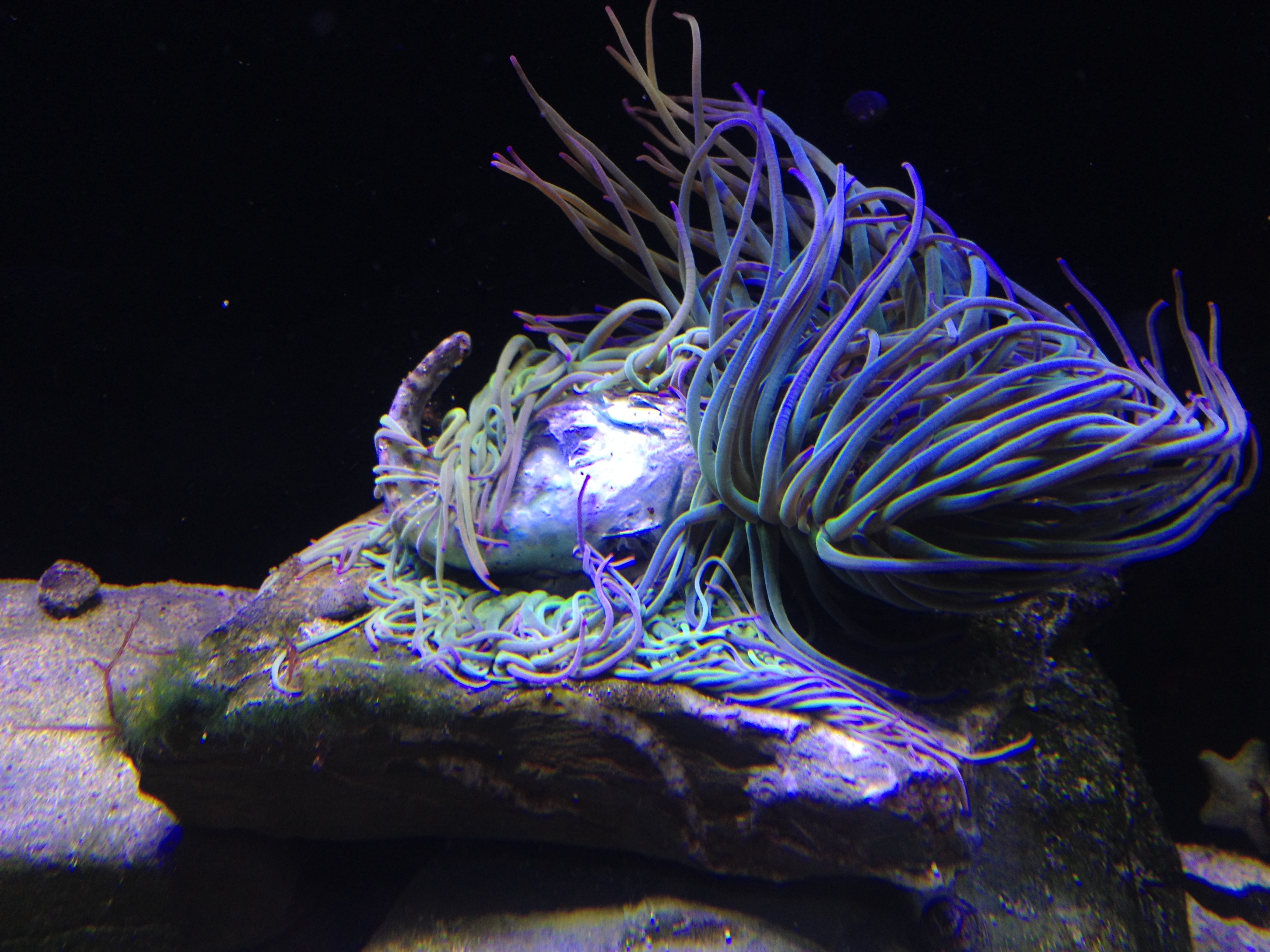
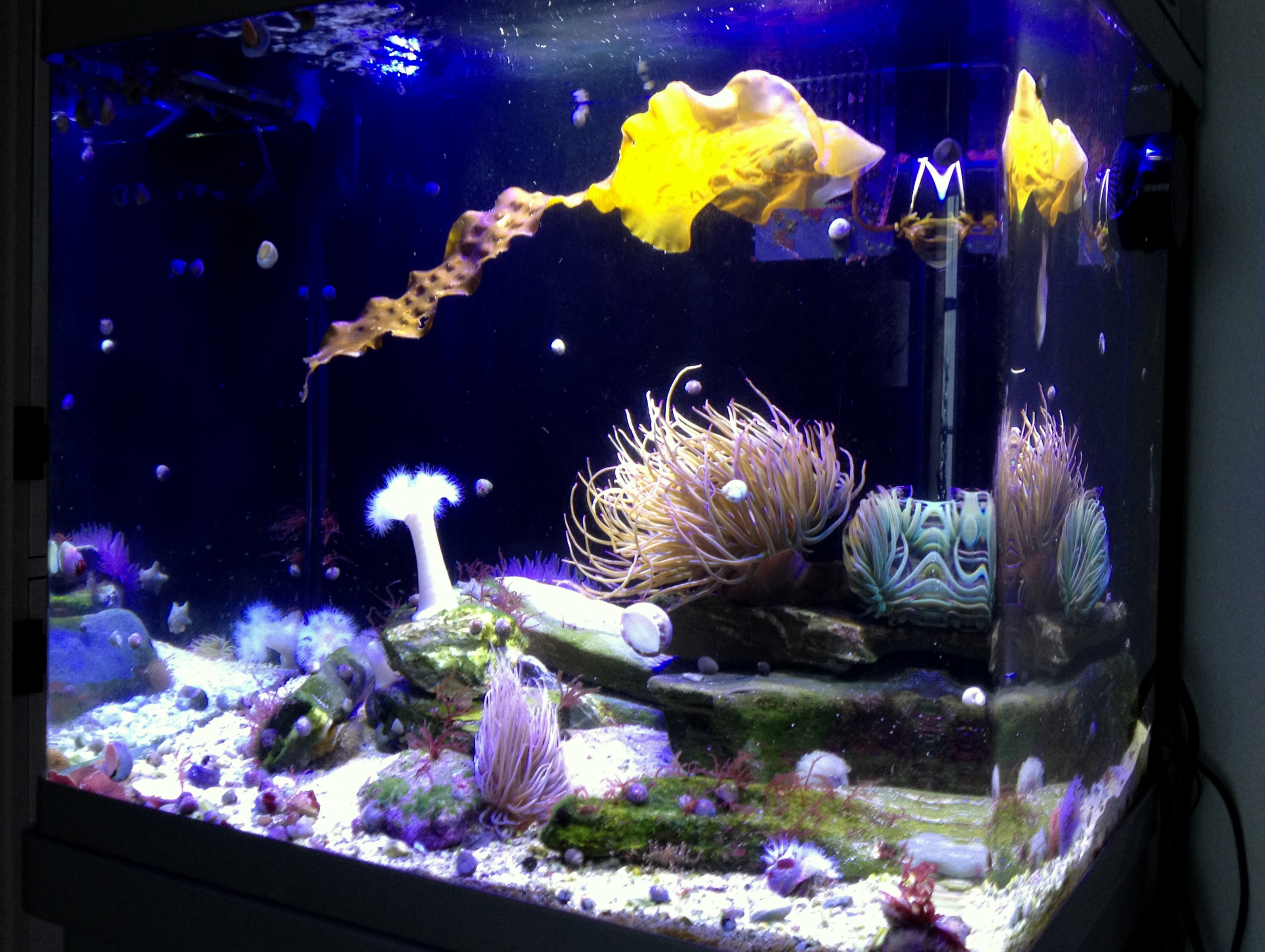
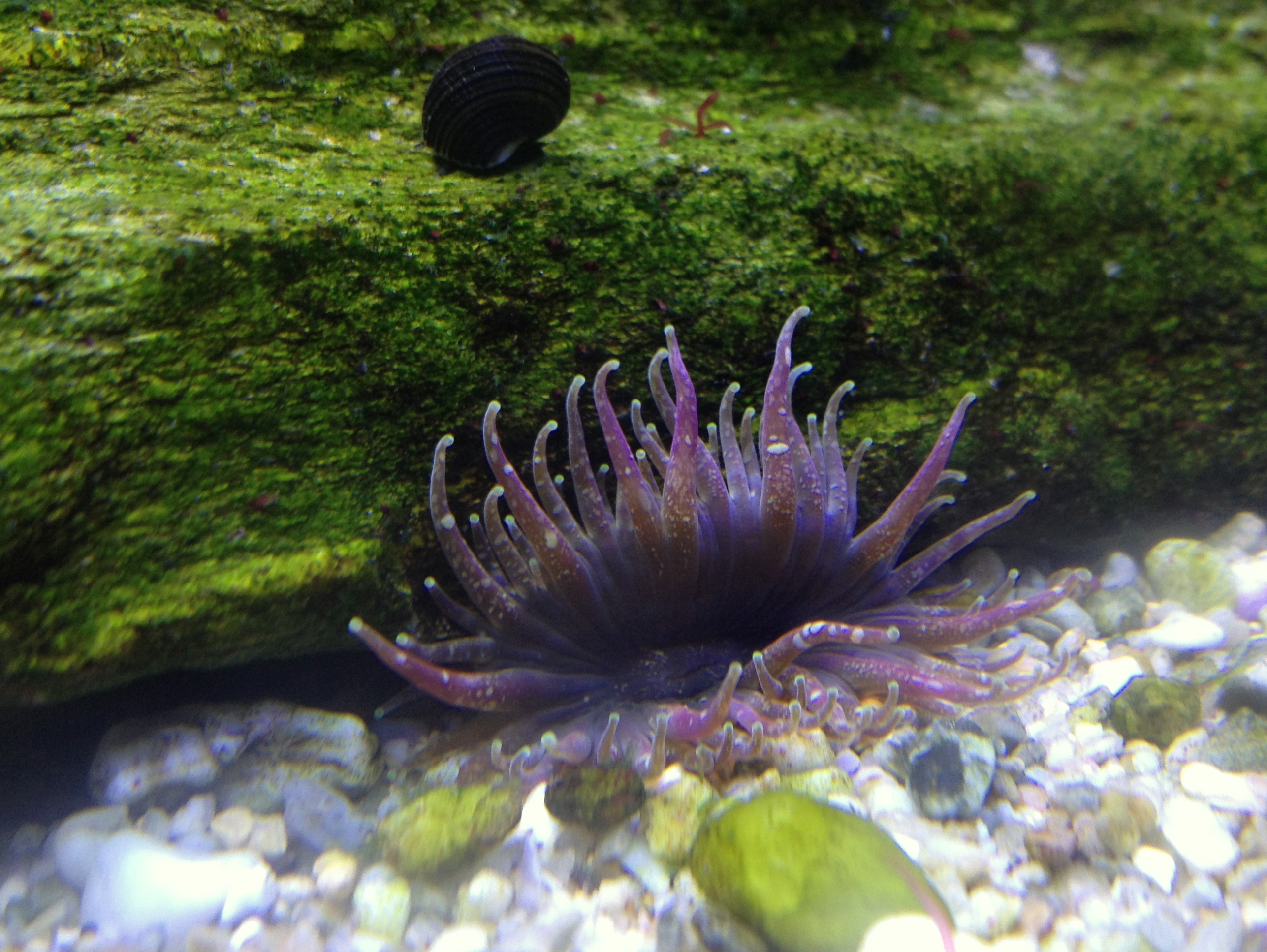
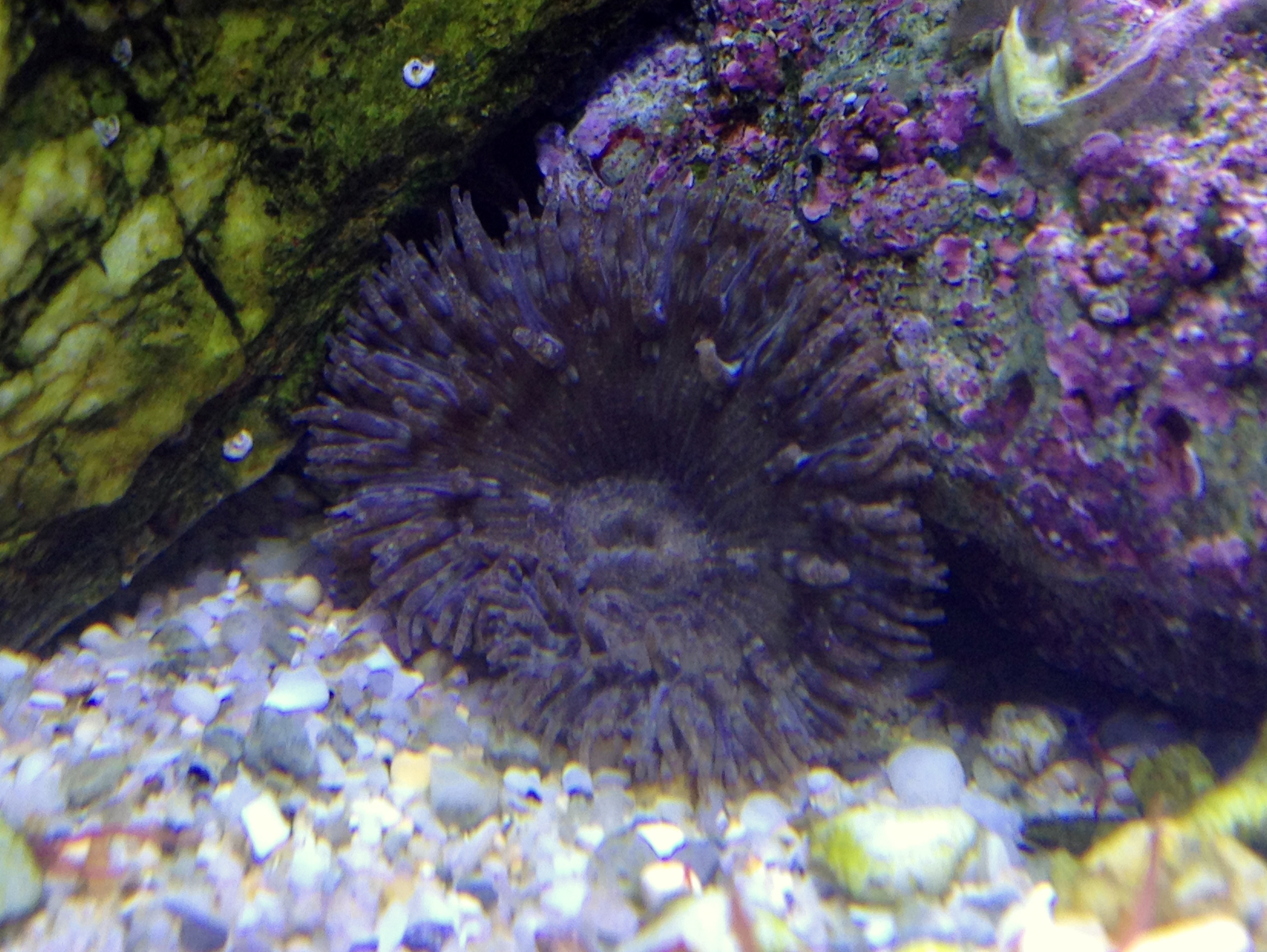
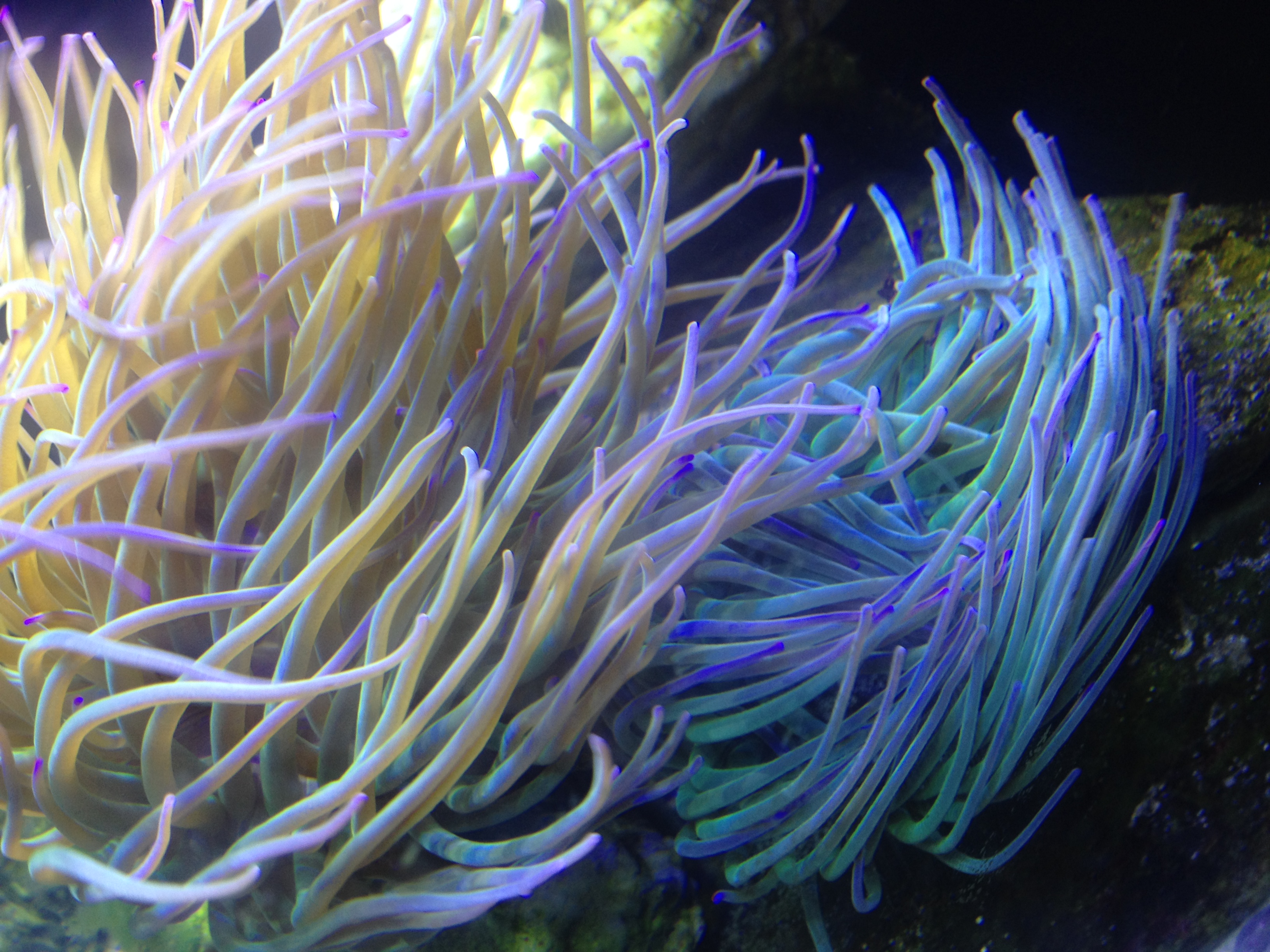
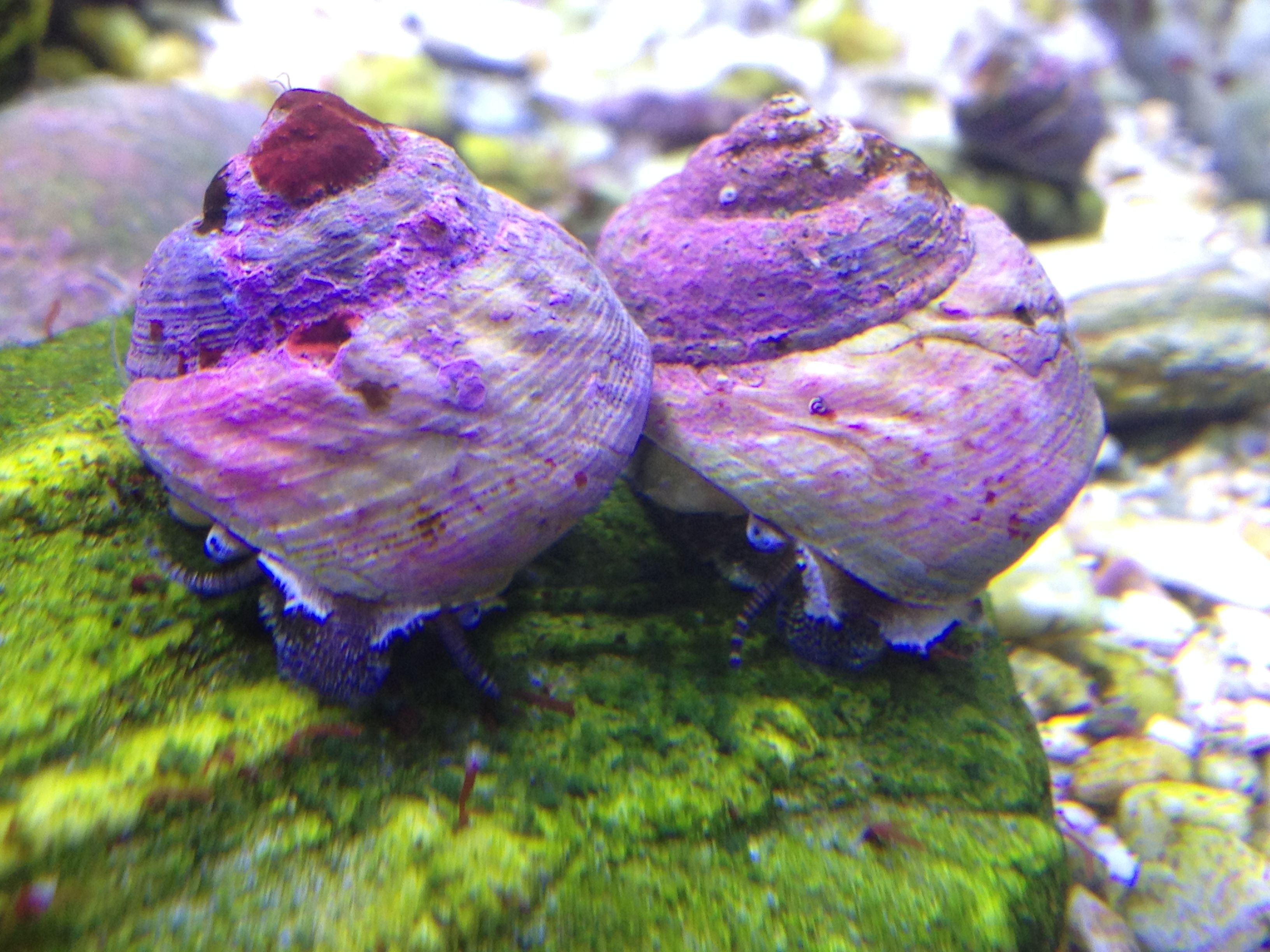
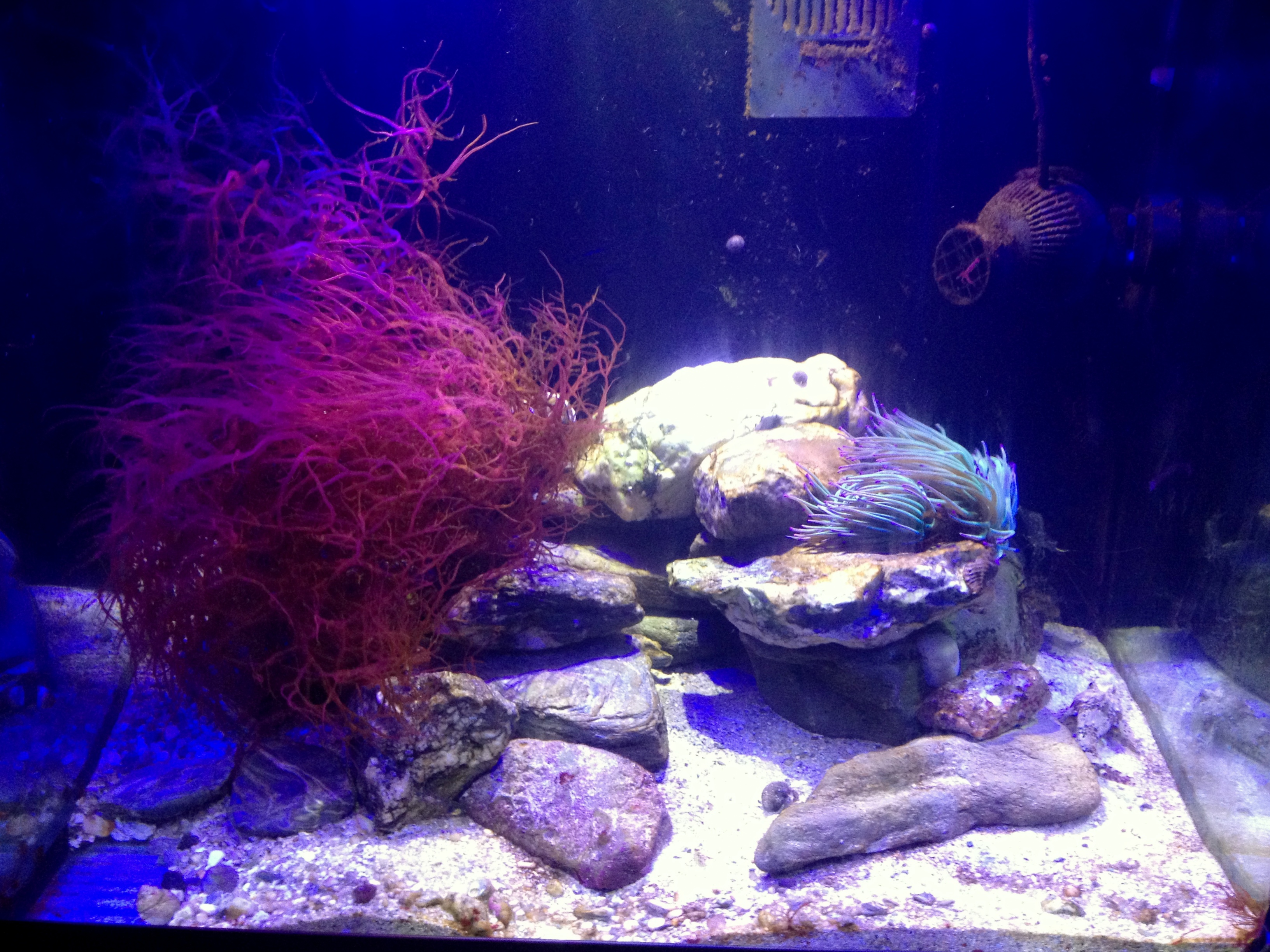
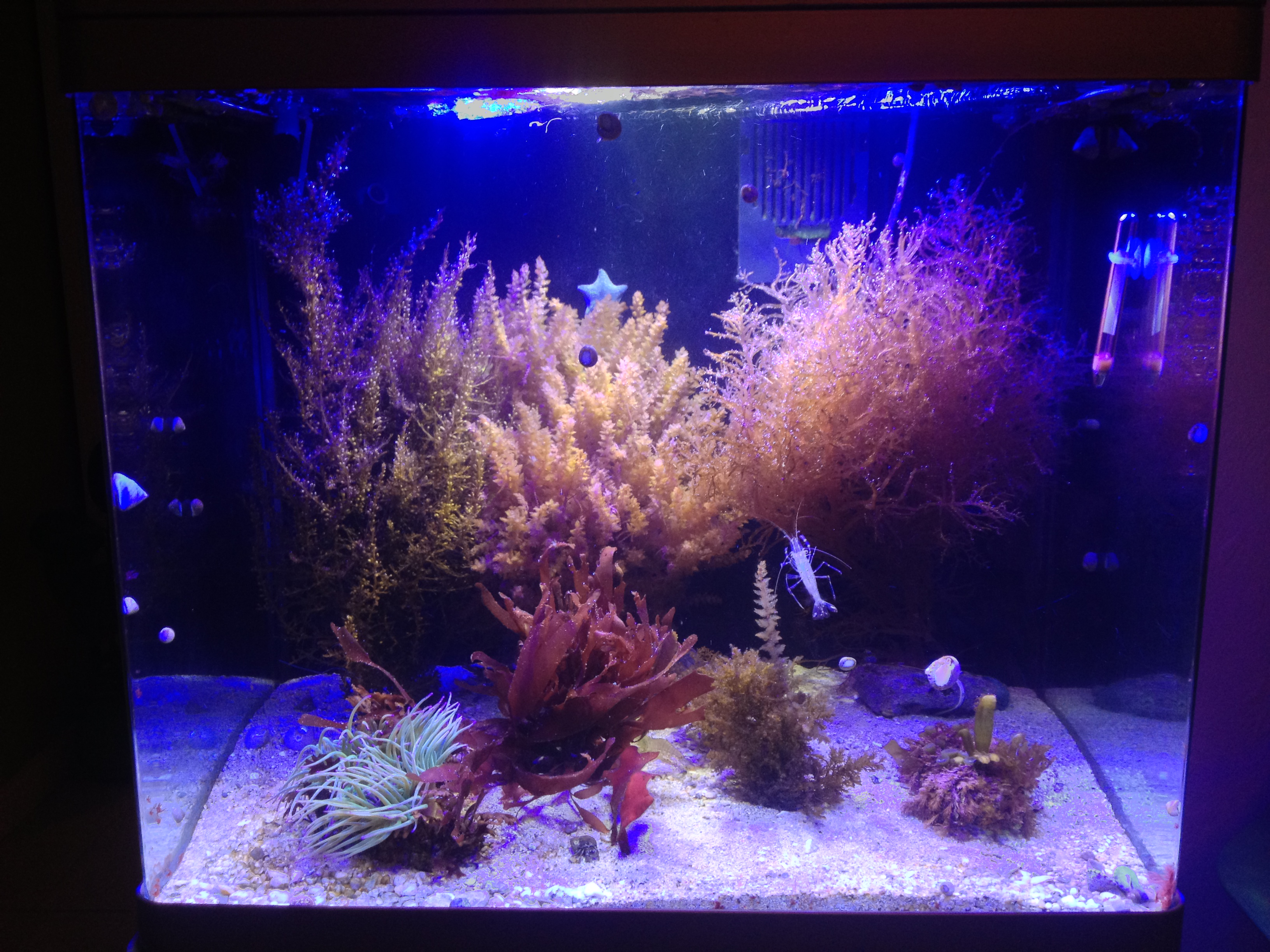
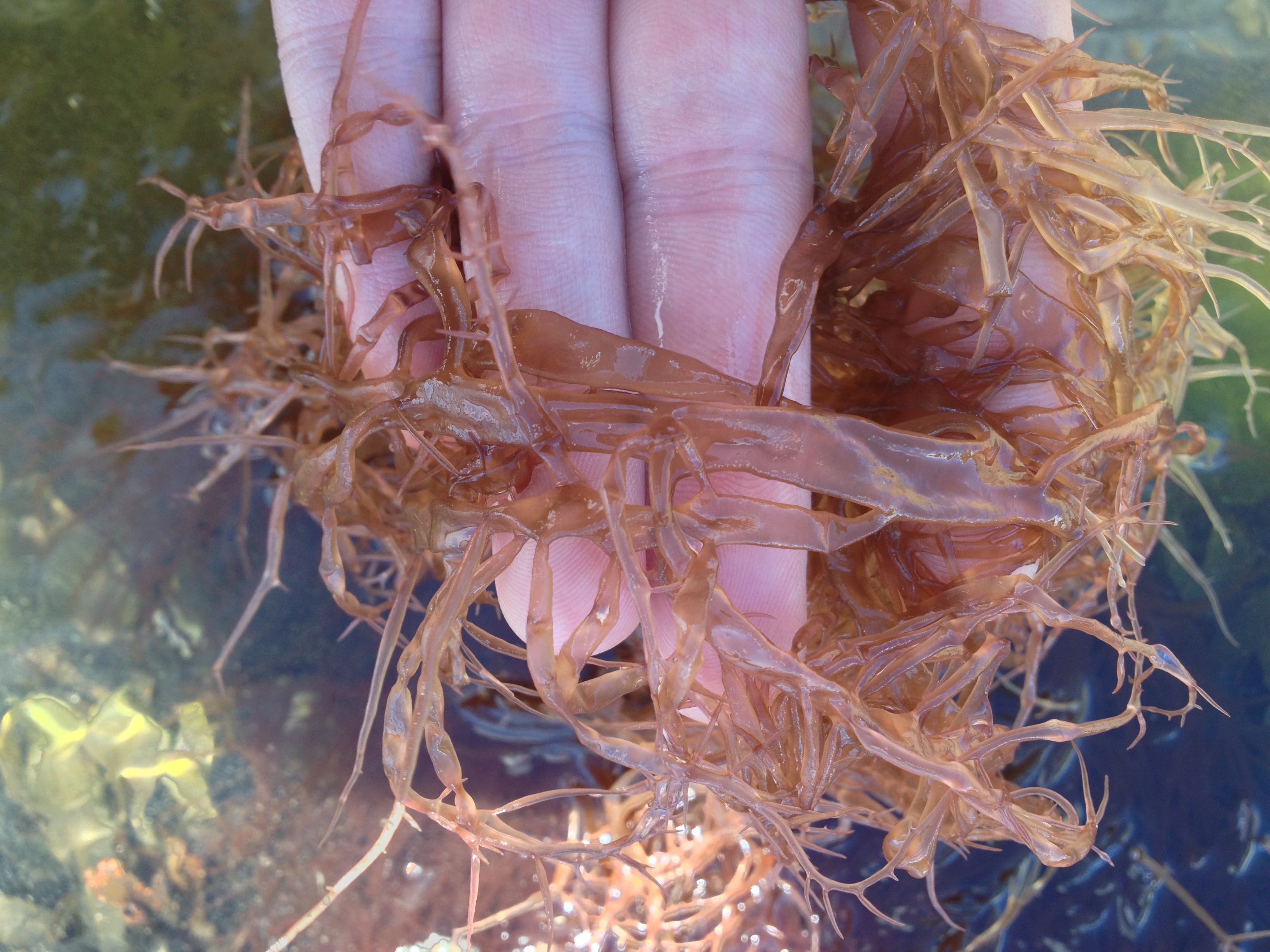
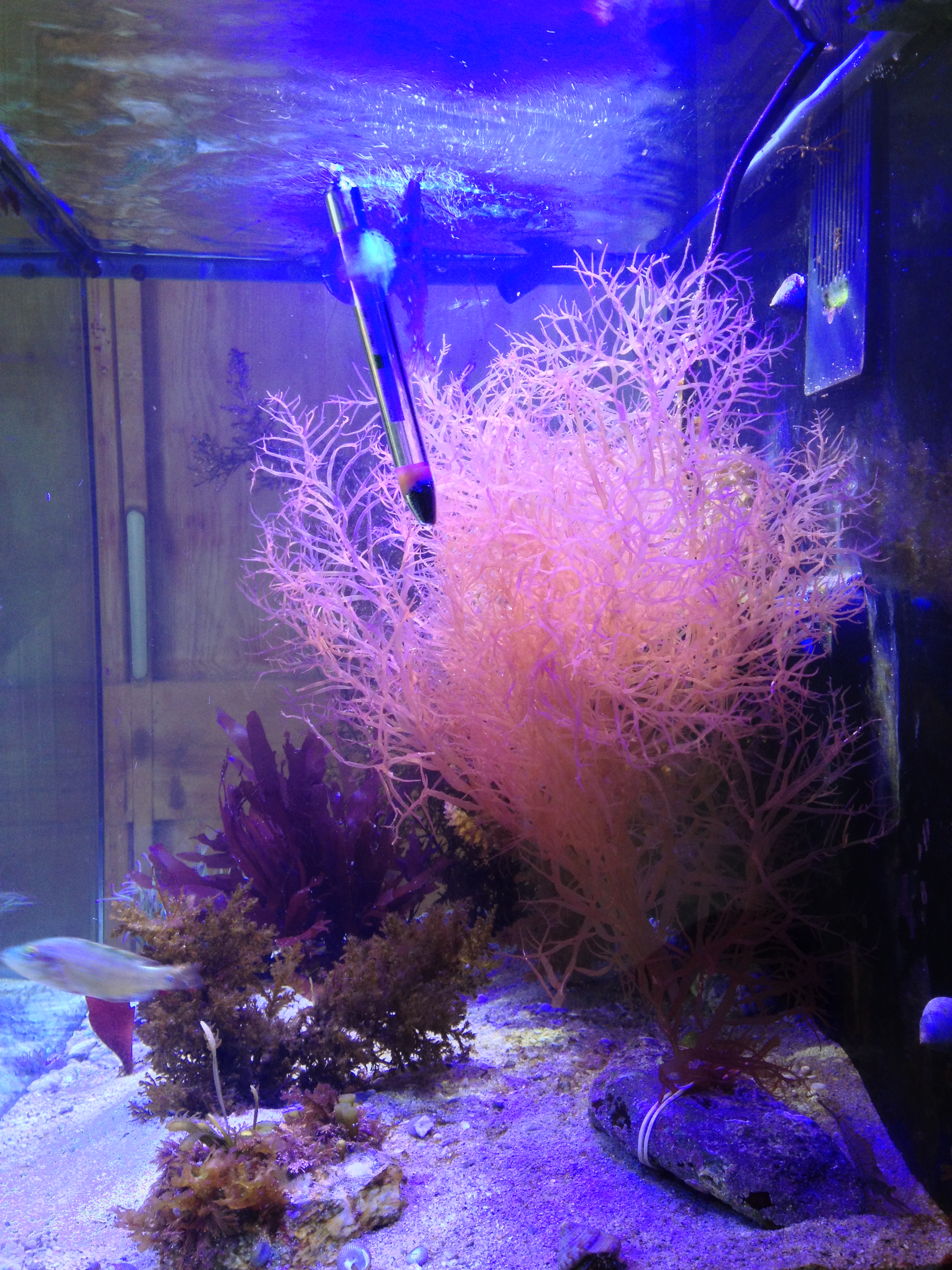
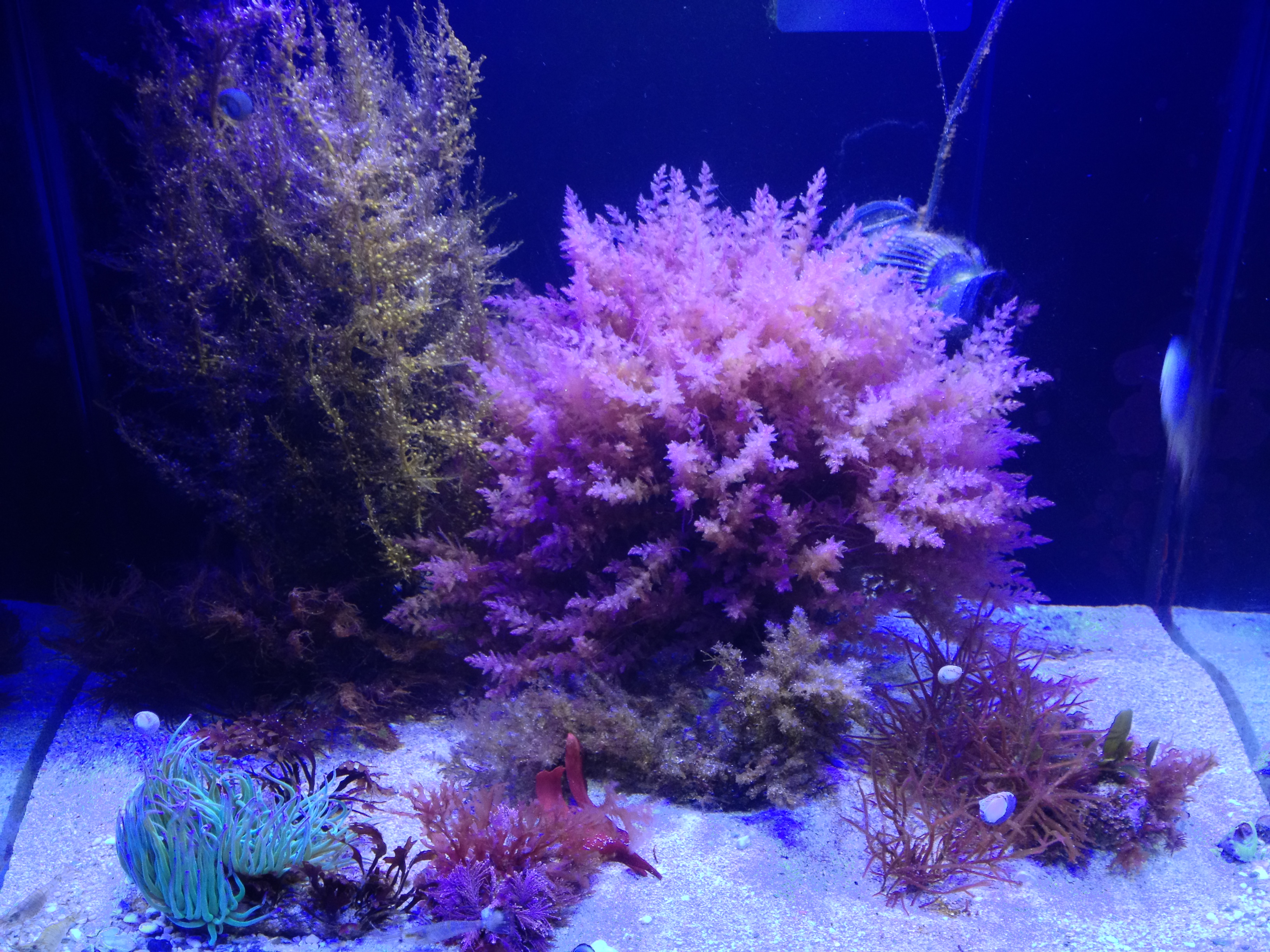
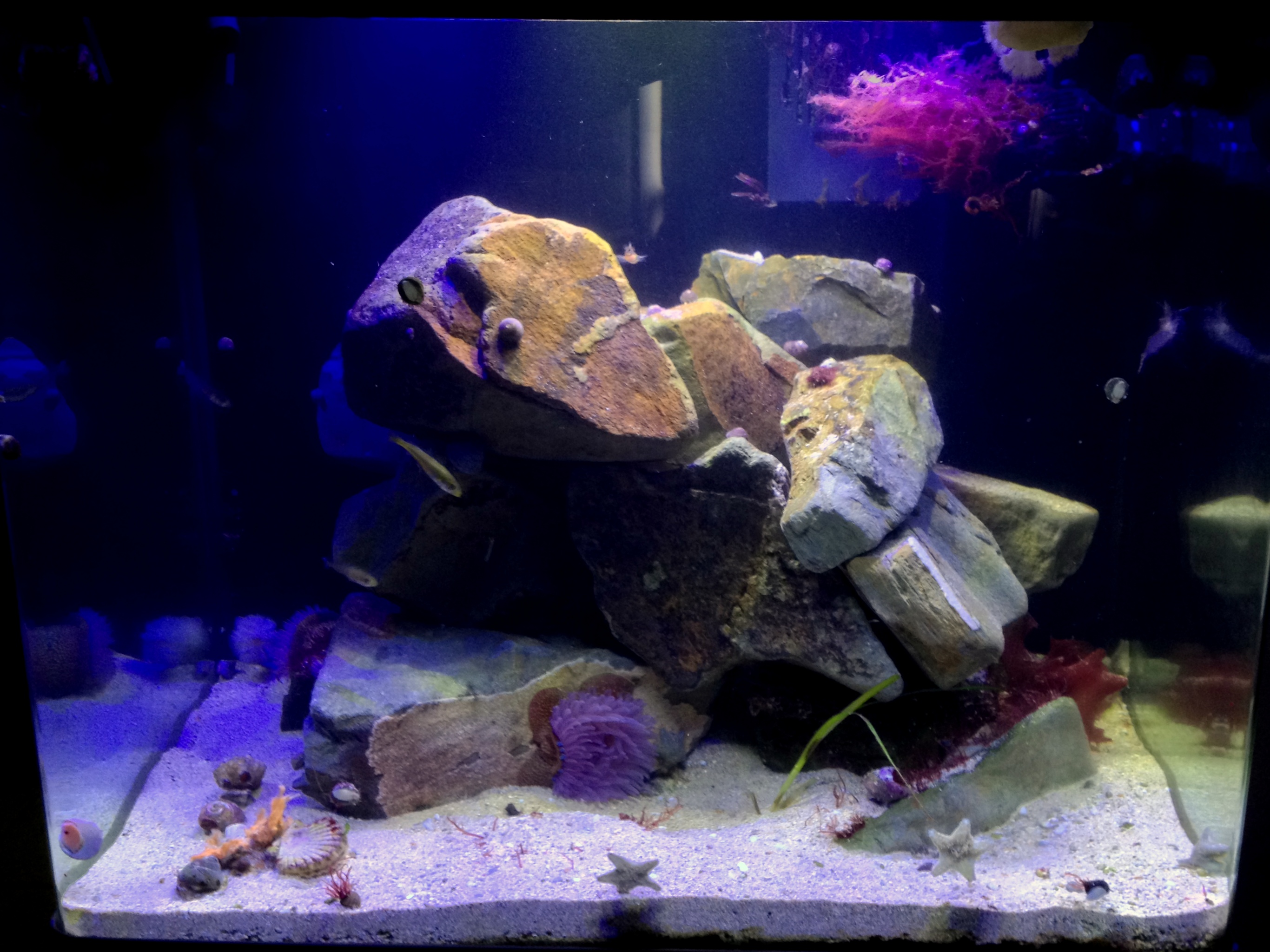
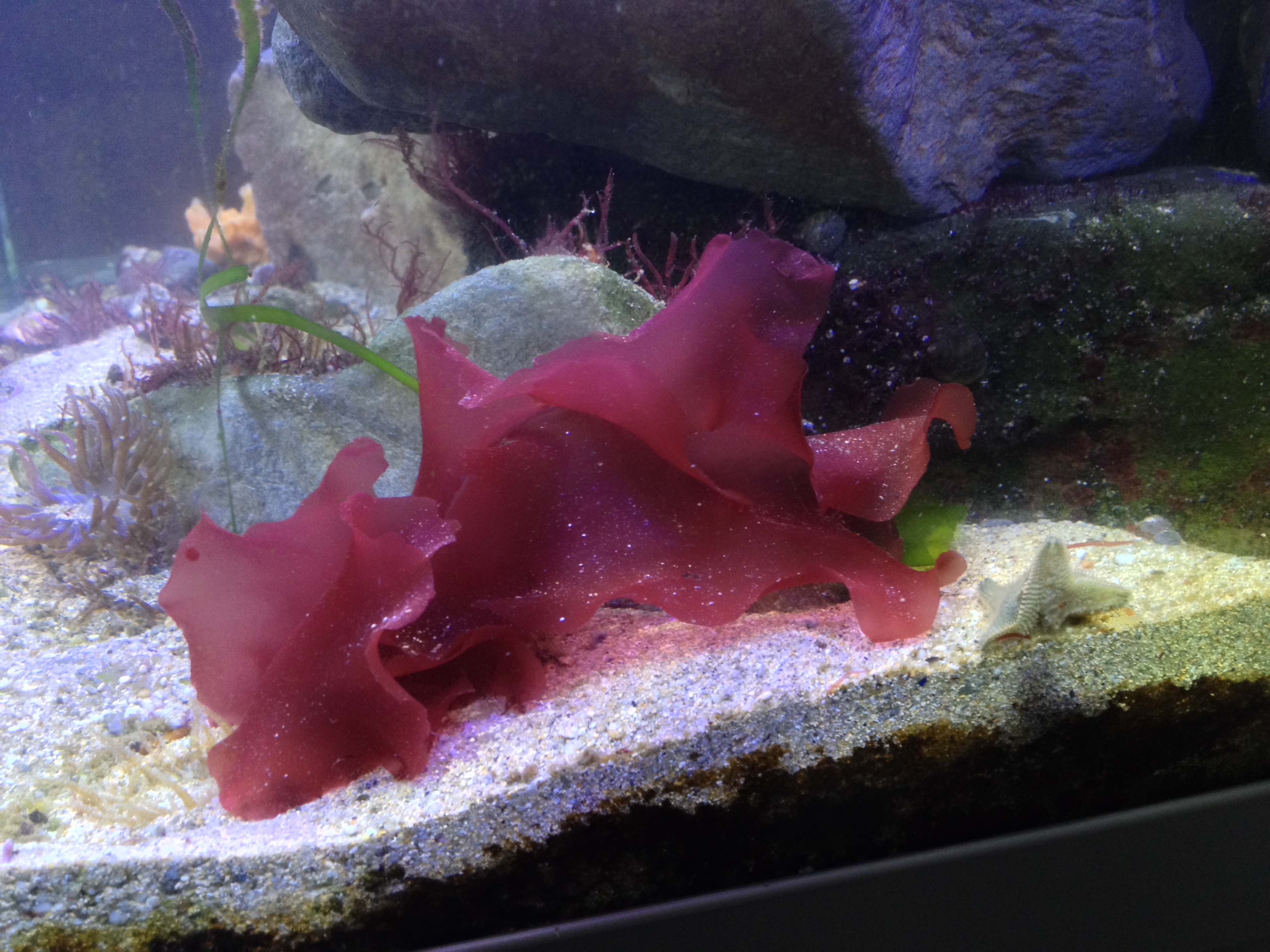
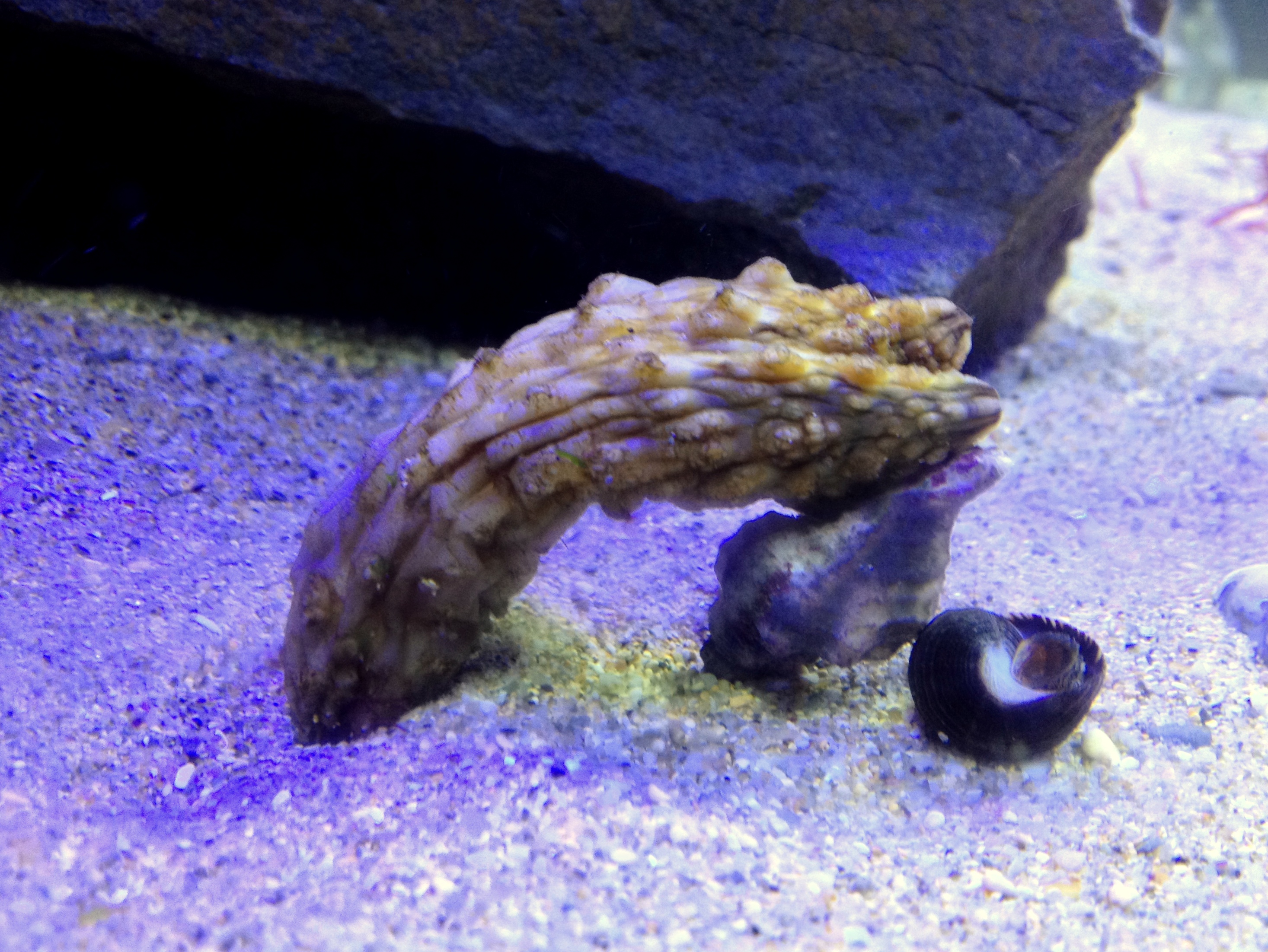
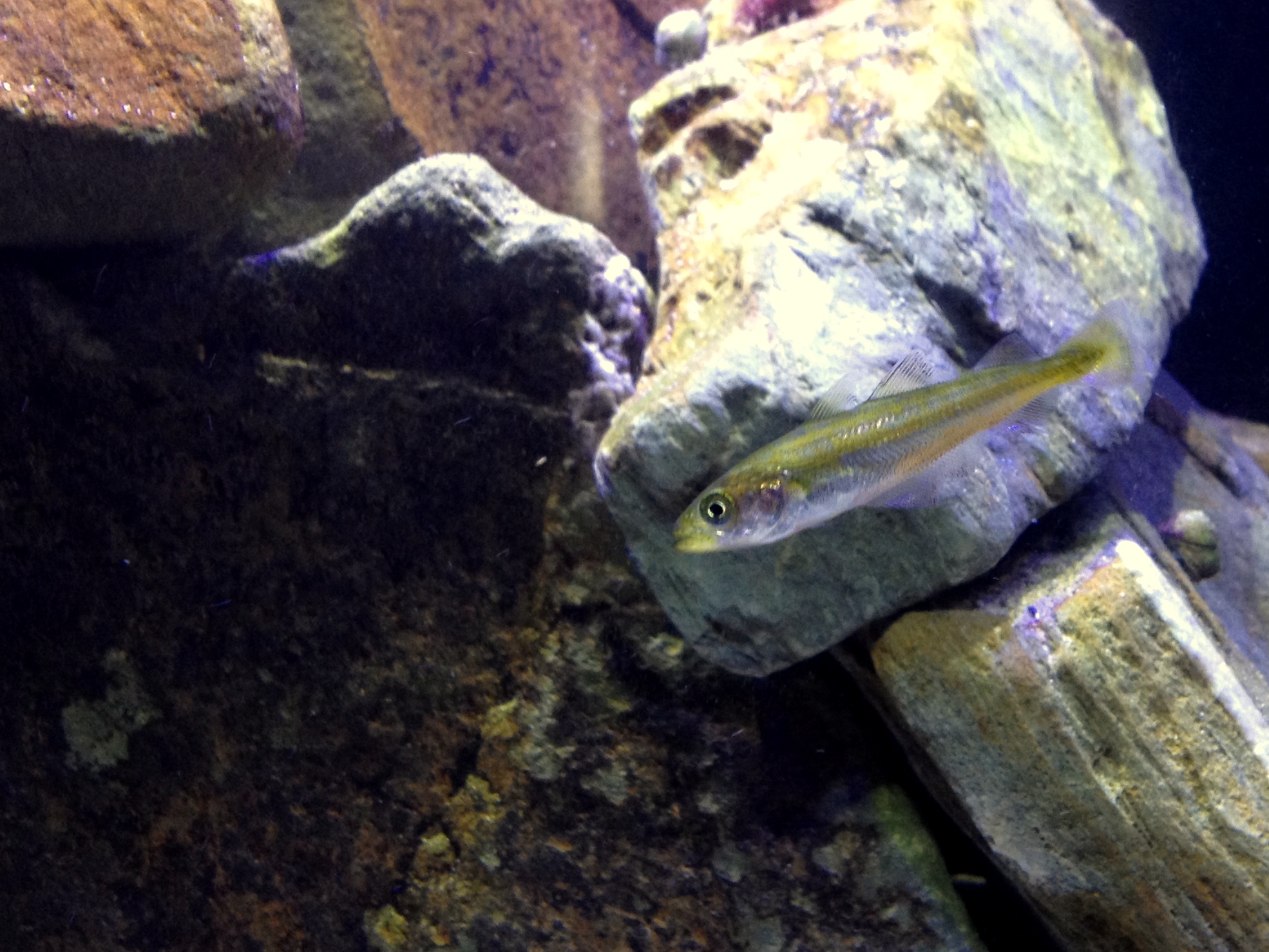
The aquarium was in desperate need of a make-over (again…). I hauled a ton of rocks over from the beach and stacked them up. (I thought at first that I would need something to stick the rocks together (epoxy, superglue or waterfall foam) but that wasn’t really necessary). I also removed most of the gravel and replaced it with sand. So quite a big change but it really looks a lot better. However, my nice burrowing Red-speckled anemones suffered a bit when putting the sand in, and even after siphoning it off again I could not really find them anymore….hopefully they turn up again!IMG_7849 The aquarium is still a bit bare and I have to go out and collect things that will live on the rocks, such as anemones and seaweeds. However, there is some progress on the seaweed front. There is a bit of Irish moss Chondrus crispus growing spontaneosly from the back wall. There are also some patches of pink corraline algae; which must be Coral weed Corralina officinalis judging from one outgrowing patch. Having this species grow would be great, but they do not seem like fast growers. Chrysymenia wrighti is still thriving on the circulation pump; I remove a bit every now and then, so it acts as an ‘algae scrubber’, removing nutrients from the water. I have placed a couple of other seaweeds in the aquarium, a bit risky as they can die off and start trouble, but I can’t help it. The red Soliera chordalis below has done well before but unfortunately has started to die off a little already (first pic). I have a big piece of a flat red species that has started to grow from nowhere as well (second pic).IMG_7908IMG_7652One day, the aquarium was full of strings of Painted topshell eggs. I noticed when feeding a day later that the water was not very cold: I had forgotten to switch the pump/chiller back on two days previously! So the trick to breed this species is to increase the temperature, although I am not expecting much to happen with the eggs. Either the Thick-lipped or Netted dogwhelks are also occasionally sticking their egg masses to the glass. I placed a chunk of orange Estuarine sponge in the aquarium; this was devoured by Painted topshells and Cushion stars, so it is a good bit of live food to add. I had planted a little washed-up eelgrass plant to see if it would survive and indeed it has grown more roots. (If you want to try this yourself, please always use washed up plants and don’t dig out any, as eelgrass beds are vulnerable habitats.) It would be great to have a second tank dedicated to eelgrass….The little scallop is still happy (see close-up). I have added another filter feeder: a Leathery sea squirt Styela clavata. Butt-ugly, but that is actually fun too. I am trying it out as they are an invasive species and so probably pretty hardy. A Sting winkle seems to like it (but not eat it). I have never seen my two Sting winkles eat anything actually. They move about very slowly, but they have grown.IMG_7651IMG_7914Now the snakelocks anemones are gone, I have added some more fish. I have caught some juvenile Pollack Pollachius pollachius with my net. At first I caught ones that were less than an inch, but they did not survive. Of the six two-inch or so ones I caught, three dissappeared after one day, but the remaining three are going strong. Very nice looking fish! I also caught a little Tompot blenny Parablennius gattorugine (by hand at low tide). It is quite shy, but is increasingly showing itself. A beautiful little fish! I have one remaining Two-spotted goby. The Common goby is doing very well and eats from my hand. I think I’ll go for another little tompot, more Pollack and Two-spotted gobies. Ideally I would catch some Leopard-spotted gobies with a trap when diving, let’s see….The other fish I would like to have again is the Goldsinny wrasse: very pretty and not as nervous as Corkwing wrasse. IMG_7887
IMG_7991

Aquarium Update 10

Another short aquarium update (I noticed that the blog has been more about rock pooling recently than aquarium keeping, hence the change in blog header). I had very little time to do much with the tank and have not bothered with water changes or cleaning the mechanical filter. On the upside, there is little algal growth and creatures are generally happy (occasionally eating each other of course). Seaweeds have started to grow spontaneously, see for instance the Irish moss on the Turban topshell on the right of the picture below. On the downside, the aquarium does not look particularly nice overall (the reason I have not included a tankshot). It needs a lot more rocks. Also, the filtration is bad; although the water is very clear, there is quite a lot of debris. This issue is hard to fix, and sometimes I am toying with the idea of getting a larger tank with a sump (instead of dealing with the crappy Red Sea Max back compartment).IMG_6600I will get rid of the sea urchins, as I am not sure the molluscs appreciate getting stuck to them. I have already gotten rid of the voracious snakelocks anemones and put them in a small tank (I will post about that soon). I have added a small scallop (Pecten maximus), which is very cool, and occasionally swims to another spot. I hope it will find enough to eat in the water.IMG_6896So the plan is to get a lot more rocks in. Perhaps I need a second Tunze circulation pump to get rid of debris. Without the snakelocks I can add more fish. Ideally I would like to keep Leopard-spotted gobies Thorogobius ephippiatus (see this old post) but they are extremely shy fish that live subtidally, so that would require a suitable trap and a lot of luck. I would also like more anemones (just like the very nice North American tanks on the Coldwater Marine Aquarium Owners Facebook group, see the links page). I have the impression that larger anemones have a better chance of surviving; perhaps in summer I can find some nice ones when diving. The Dahlia anemone has been eaten by Cushion stars and the smallest Strawberry anemony has been chased throug the tank by Painted top shells, Cushion stars and Snakelocks and now is half dead. So fish and anemones do not always  go well together, the same is true for snails and anemones and (in the case of blennies and gobies at least) fish and snails… Before considering new inhabitants however I need to get the tank looking a bit nicer.

Aquarium Update 9

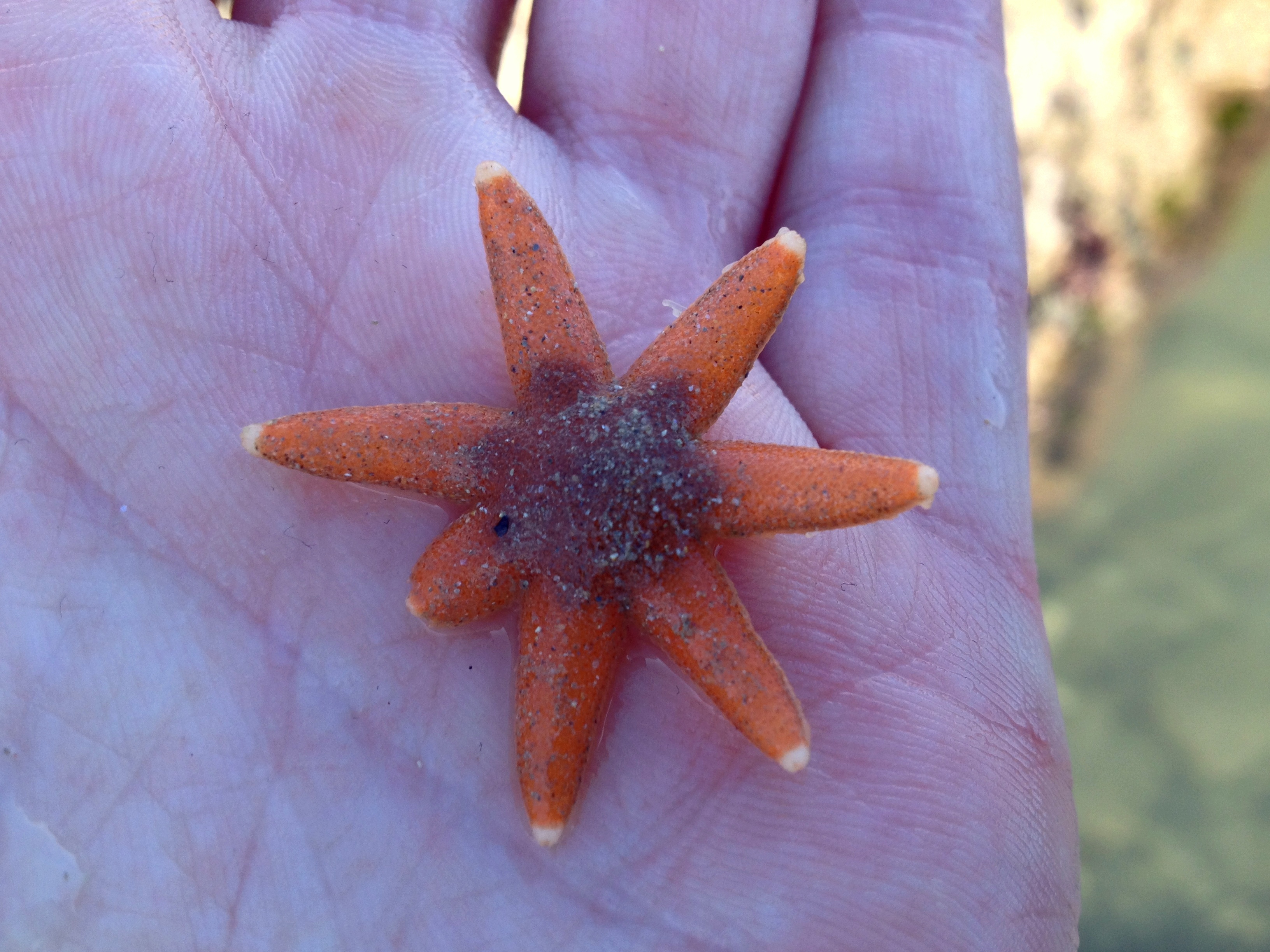
I have not done much with the aquarium recently. The algae are under control after reducing light levels and times. The Chrysymenia weed is growing everywhere and not looking too pretty. I will have to replace some rocks to get rid of them. My only fish is a Common goby Pomatoschistus microps, who eats bits of shrimp out of my hand. It also attacks Grey topshells when it is hungry. I would like to have have some Goldsinny wrasse and Mullet as they are beautiful and do not seem to fall prey to the Snakelocks anemones, but these species are difficult to catch. I will collect a couple of squat lobsters as they are very entertaining to watch. Ideally Spiny squat lobster Galathea strigosa, as they are among the most nicely coloured animals to be found here. They are not common in the intertidal, although they might be common subtidally (I noticed one in a picture I took of some Bispira volutacornis worms recently). The Goby with a full belly:IMG_5775So for now just a little inventory. Molluscs: Turban- Grey- and Purple topshells, a Sting winkle, Thicklipped- and Reticulated whelks and assorted Periwinkles. Crustaceans: Common prawns and Hermit crabs. Anemones: Beadlet-, Strawberry-, Plumose- and Snakelock anemones and a Red Speckled Anemone. Echinoderms: one Sea urchin, a bunch of Cushion stars, the odd Brittlestar and a nice Seven-armed starfish Luidia ciliaris that I recently found in a rock pool on Castle Beach. This species can grow up to 60 cms and hunts for other echinoderms, let’s see what happens!IMG_5735

Aquarium Update 8

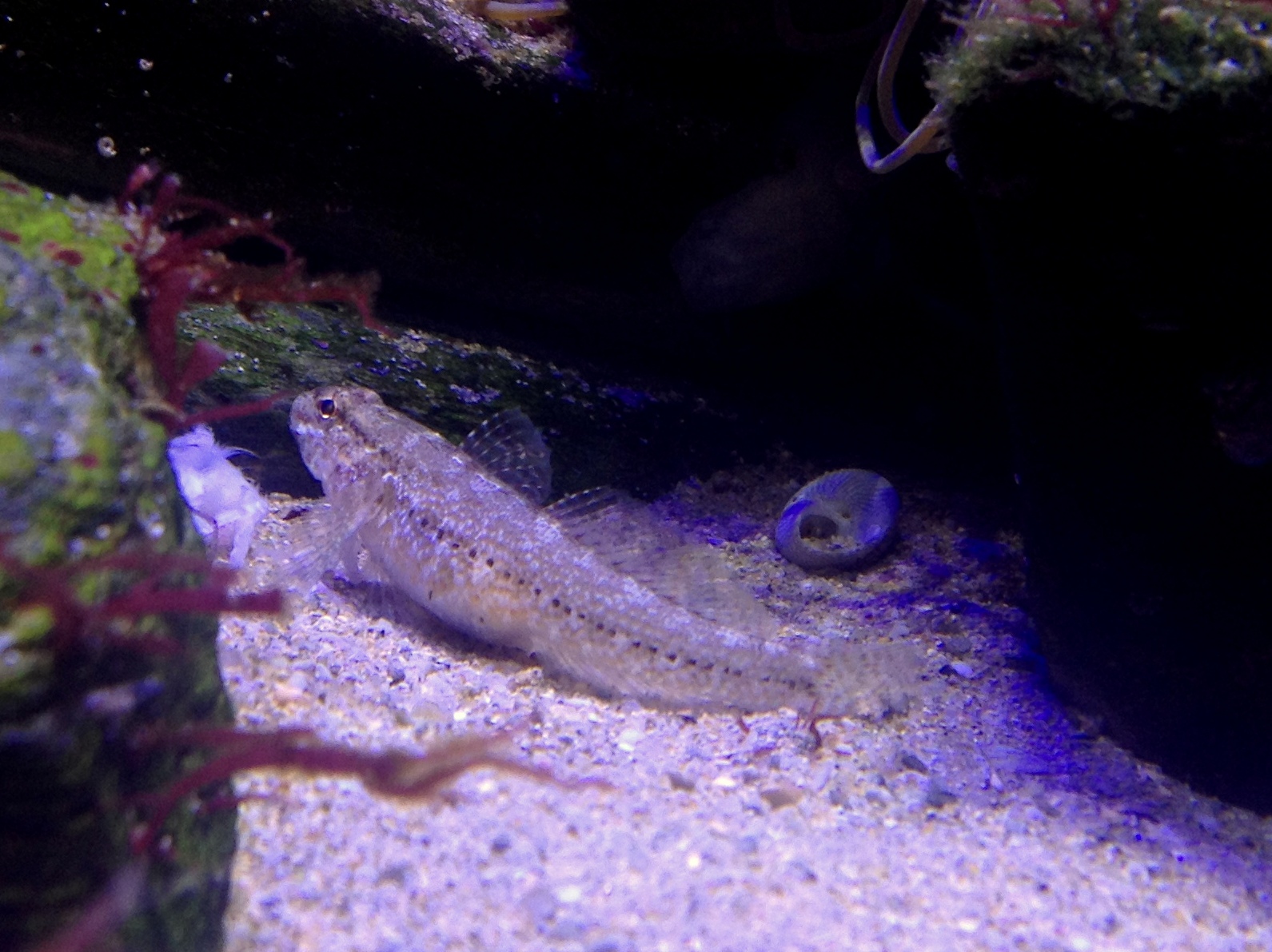
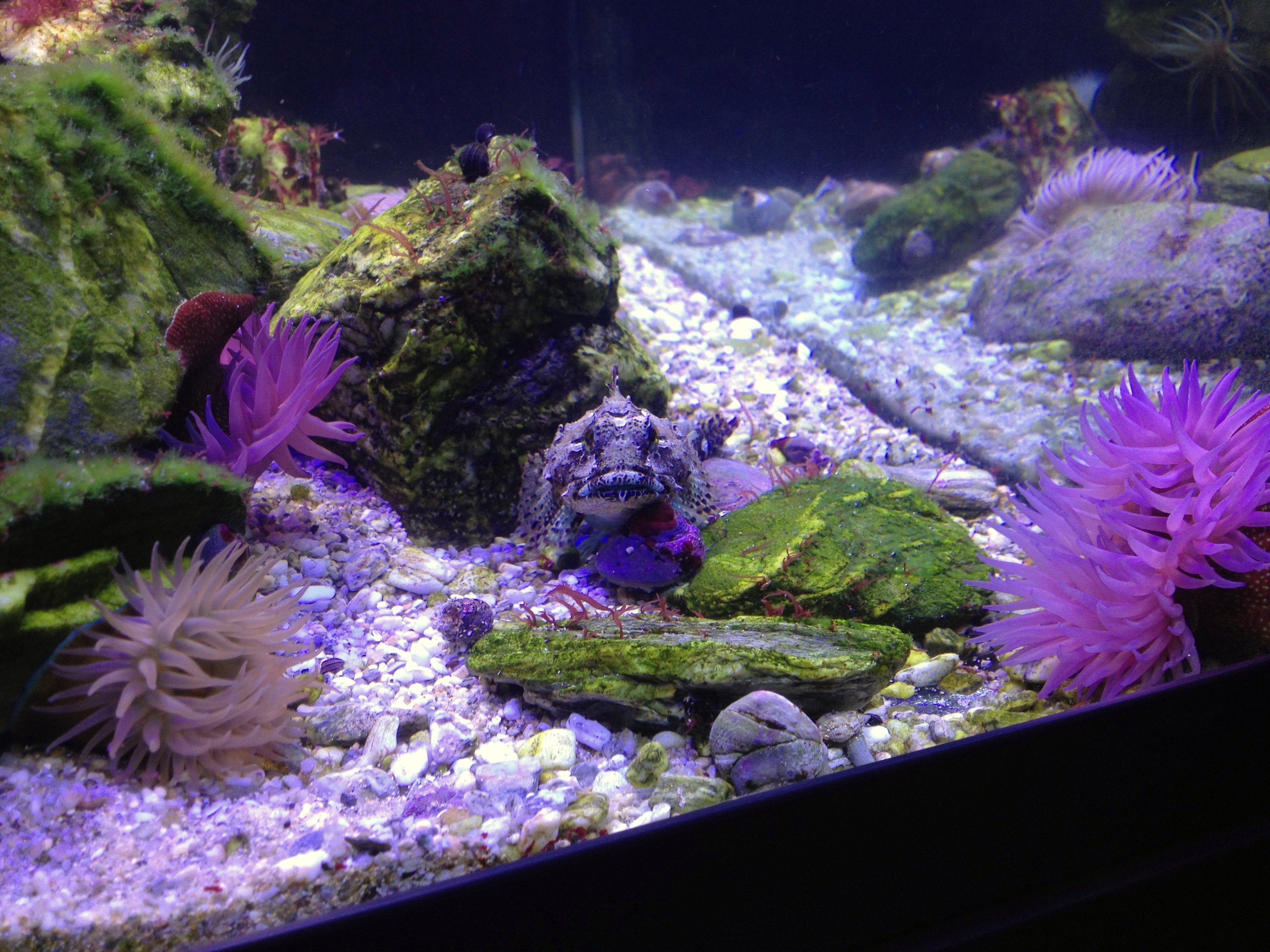
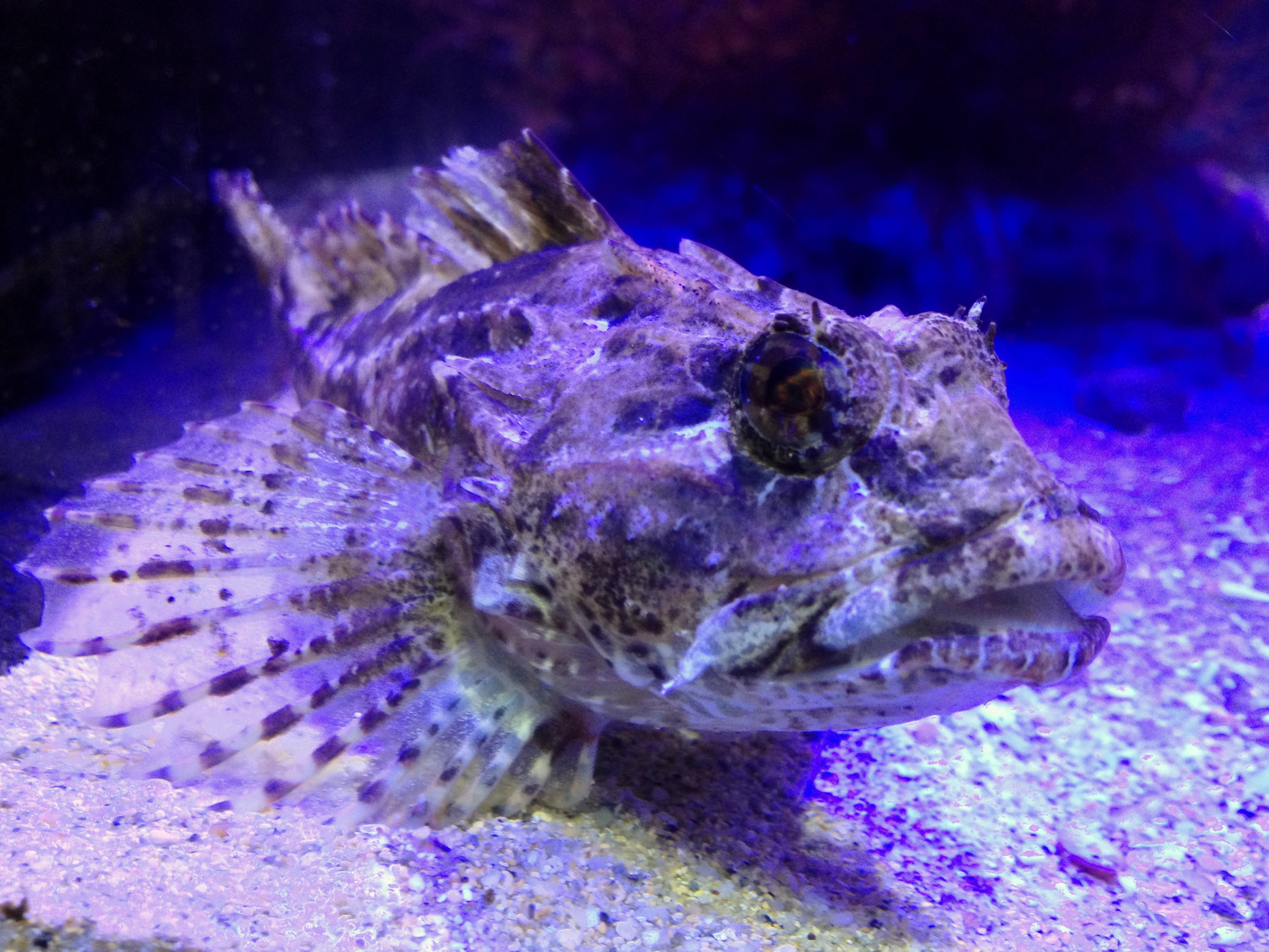
Another long time without a post. A lot has happened to the aquarium and some of what I post here is already outdated, but here goes. My Daisy anemone has buried itself and has not resurfaced but the Red-speckled anemone is growing well. I found the Dahlia anemone I was looking for, but lately it has been pestered by a Purple top shell, which has left a scar on its column, I hope it survives. The most dramatic event was that the Snakelocks anemone managed to kill my Sea scorpion (but not eat it, it was too large). This must have happened when I  removed some of the rocks, startling it and make it swim in the wrong direction:IMG_4963Poor thing (although it had eaten 22 of my mullet so it works both ways I guess…). The good thing was that I could try keeping some other fish again. Using my net, I caught some Two-spotted gobies as well as a Common goby Pomatoschistus microps (I think, there are some very similar species) and a Goldsinny wrasse Ctenolabrus rupestris. The total tally from netting off the Flushing quay is now eleven fish species, not bad. The Goldsinny swims around the tank a lot and does some digging; it seems to be a more interesting fish to watch than the Corkwing:

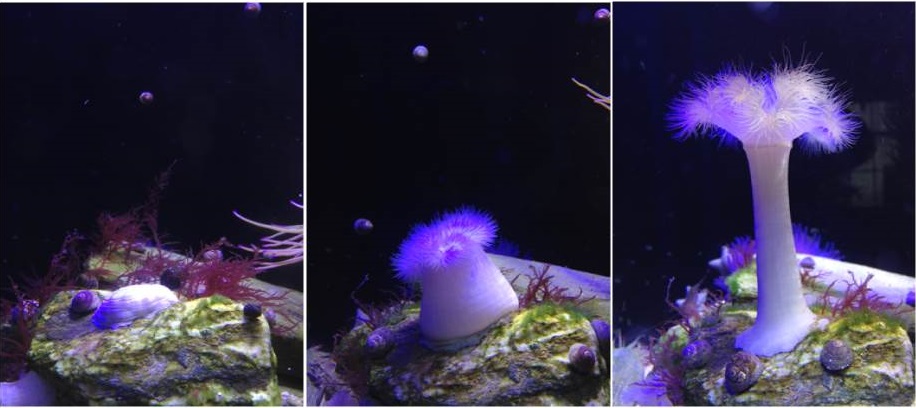
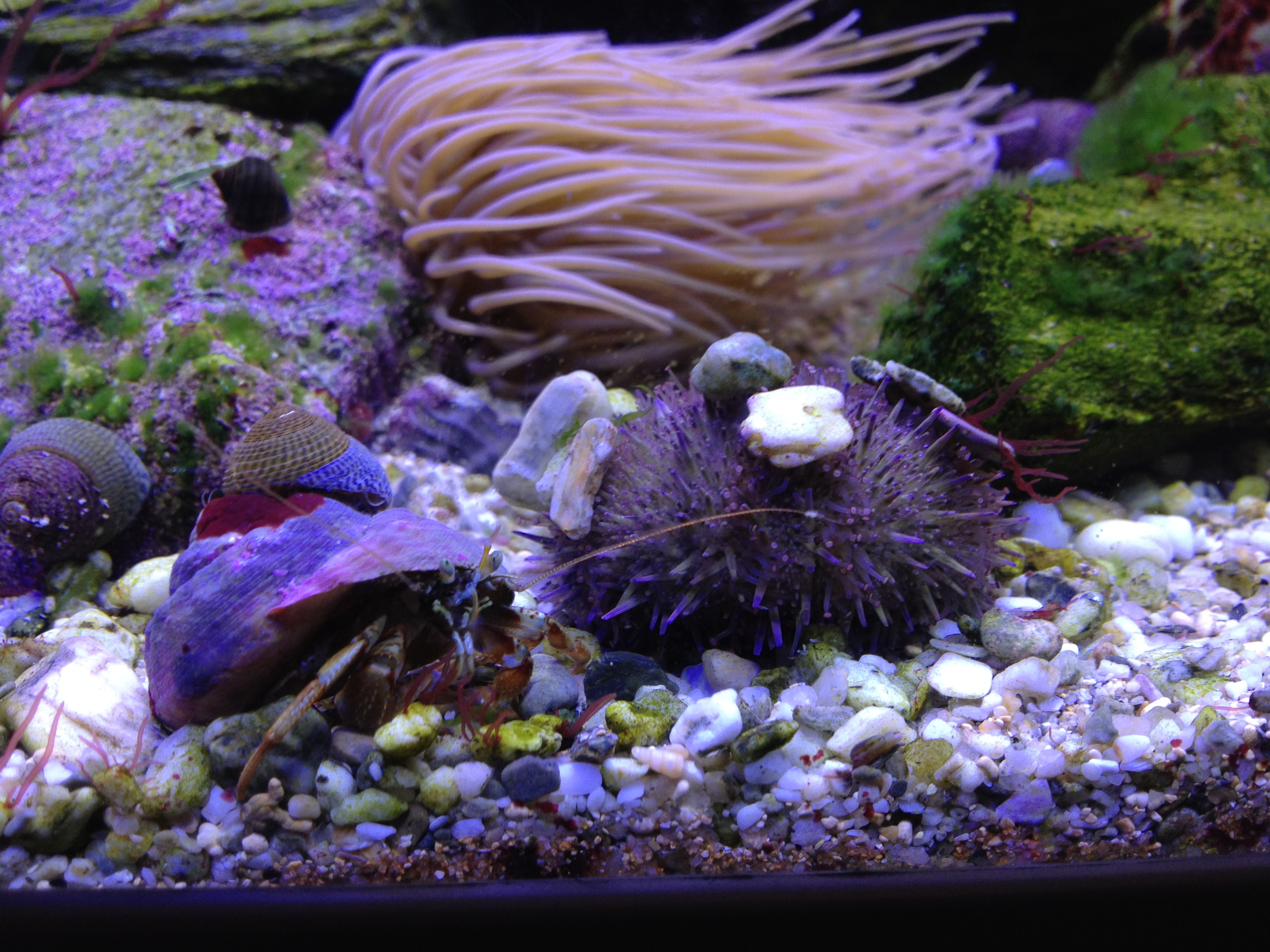
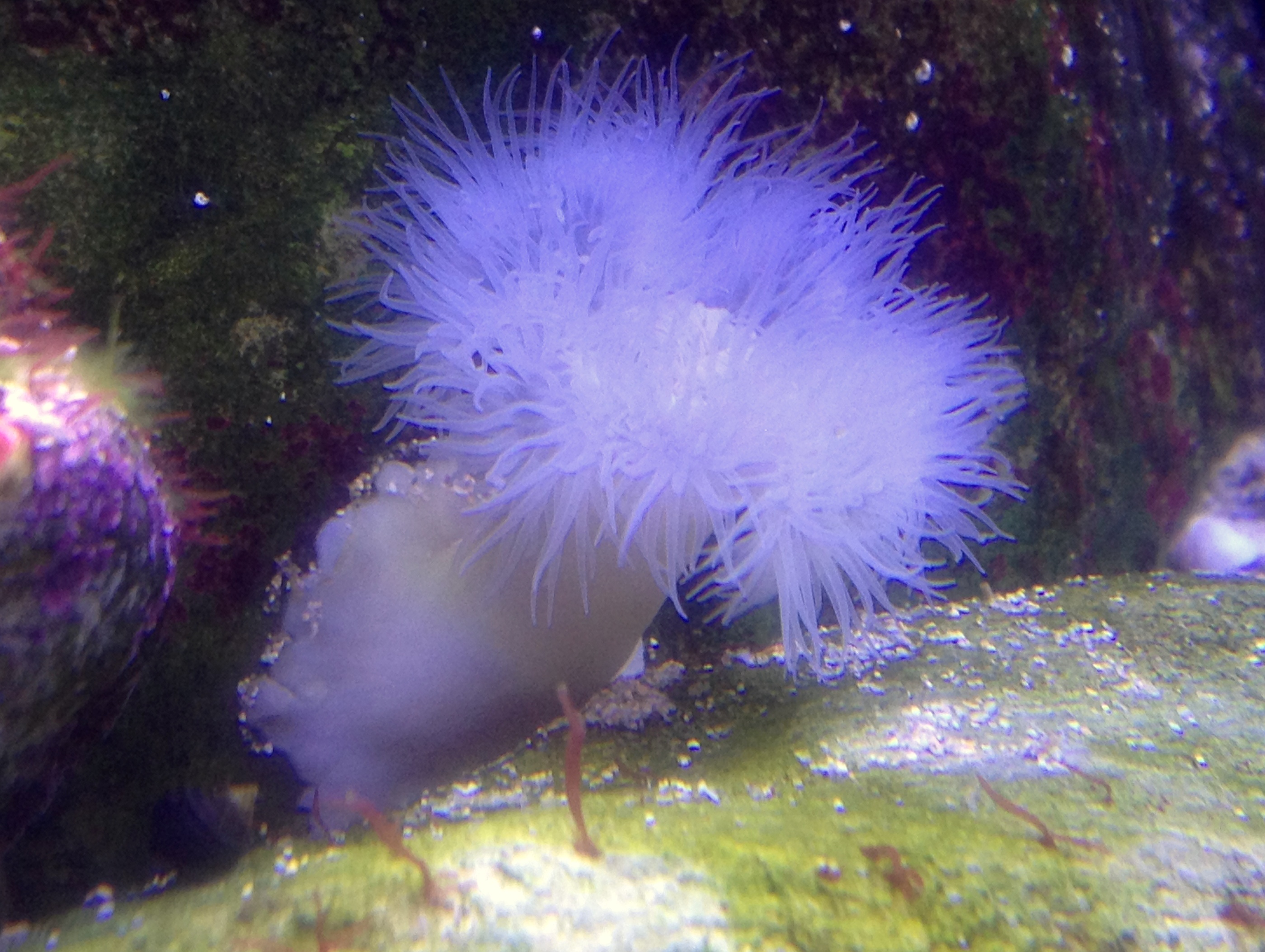
The Plumose anemones Metridium senile are strange, they can be all shrivelled up for days, be short and squat or all extended. Here three pics of the same individual:Presentation1The Turban top shells Gibbula magus are very nice to watch (the Grey topshell Gibbula cinerarea gives a sense of scale). I found a Sea urchin Psammechinus miliaris and decided to try it out. It spends half its time under the gravel and pops up here and there with shells and pebbles attached to it. Let’s see what it does! Lastly a picture of the tank. I had attached a young Sugar kelp Saccharina latissima to the tunze pump with an elastic band and now it has attached itself to the plastic.IMG_5091

IMG_4919

IMG_5097

Aquarium Update 7

Long time no post, just been too busy! The aquarium is doing reasonably well at the moment, especially considering the fact that I have not done any water changes since the last update and I have added a bunch of new organisms. I have added two Beadlet anemones Actinia equina. They are a dullish brown (except for a nice blue band around the base); I have not found the bright red or green individuals yet. Very similar but more striking are Strawberry anemones Actinia fragacea of which I have collected three. They are voracious, I could easily feed them a shrimp a day. The same goes for the Sea scorpion. I am afraid of sticking my hand in now as it comes after me! Time to let this buddy go. This will also give me the opportunity to add some other things such as squat lobsters.IMG_4825I have taken a break from experimenting with seaweeds and am focusing on anemones instead. I have added a bunch of small Plumose anemones Metridium senile that I scraped of the side of a pontoon. Weird fellas, they can fill up with water to be quite large, or just reduce to a crumpled little pancake. I have four white ones; I could only find very small ones of the orange variety and these were all devoured by Cushion stars (interesting). I’d like to have a large orange one as well, but I have to wait half a year until I can go diving again (they are very common in deeper water).

IMG_4812On the sheltered, silty shore of Flushing I found two small anemones attached to rock and half buried in the maerl sand. My excellent Seasearch Sea Anemones and Corals guide told me they were a Daisy anemone Cereus pedunculatus (uniform greay with many very short tentacles) and a Red speckled anemone Anthopleura balli (purplish and speckled, for a better picture of a different colour variant see this old post). Both quickly half buried/half nestled themselves under a rock so only the tentacles and the mouth are visible. They take pieces of shrimp and so hopefully they’ll be able to grow; these species should reach a decent size: IMG_4721

IMG_4729My friend marine biologist Chris gave me a snakelocks anemone that he had cured from its symbiotic algae. A very cool, bright white individual but it has returned to its original purplish colour so it must have taken up symbionts again. The snakelocks I already had, grew big, split into two and grew some more. Interestingly, one of the individuals seems to be turning from the green- to the purple colour variety:IMG_4828So six anemone species in all. I would really like to have some Dahlia anemones, they are very colourful, large, and not uncommon (old pic here). I need to go anemone hunting at a good low tide soon (I have not been out in ages).

I had the Chryseminia seaweed growing attached to the Tunze for a while and it worked OK, but it looks a bit messy and so I will remove it. However, I see that little Chryseminia plants have started to grow from the rock in many places (see top picture). I have to give the glass a weekly clean (with a tooth brush) and the rocks have turned a bit too greenish recently. I have noticed however that near the Snakelocks anemones, tufts of filamentous algae have appeared, as the grazers do not want to come too close to their tentacles (this reminds me of a work by an ecologist friend of mine who studies how seedlings can be protected from grazers when growing close to thorny shrubs, I’ll have to tell him of this observation!).

There has been some snail mortality. I mainly have Grey top shells but there are less than half of them left. I do not know why, part might be predation (which is not all bad as at least they serve as food for other inhabitants). I need to collects some more in any case. The Netted dog whelks are doing well. They are usually hidden below the sand, but as soon as they smell a defrosted shrimp, they come up like a Shai-Hulud. Their plowing through the sand is definitely good in preventing mats of diatoms to appear. Their little cousins the Thicklipped dog whelks are also doing fine. They tend to creep up the Daisy anemone to steal its food. I still have a Sting winkle Ocenebra erinacea which moves slowly but is very pretty. There are a variety of other species such as Blacklined- and Rough periwinkles. The best species however are the truly sublittoral large Turban top shells Gibbula magus (some of which have died as well, one of the shells has been taken over by a hermit crab, wich are also doing fine):

IMG_4737

Aquarium Update 6

Time for a quick update on the aquarium. I could not resist trying to see how a school of mullet would fare with the sea scorpion around. Actually, the prawns formed a bigger immediate danger: one fish was grabbed and killed straight away, another fish I could save just in time, so I decided to remove the bigger prawns from the tank. The Sea scorpion picked off a bunch of the mullet in the first night and a couple in the week after but the number has stabilized at eleven, natural selection in action! Also added two Strawberry anemones. The Chrysymenia seaweed is growing very well and I have had to remove quite a bit already so it is forming a good nutrient sink. I have added more Cushion stars and Grey topshells to keep the algae and detritus in check.IMG_3310

Aquarium Update 5

It was high time to get some rocks in the aquarium; always a bit difficult to do this aesthetically I find. Perhaps I should add some more but for now there are at least surfaces to hide under or attach to. I removed all seaweeds except for the fast growing Chrysymenia wrightii (I have had to prune parts of it already so it might act as a good nutrient sink). It is bright red and there are very few algae on it now I’ve placed it downstream of the Tunze pump. I will not add anymore seaweeds but instead wait for them to naturally settle and grow from the rocks. Tired of die-offs and algae problems! IMG_3193I replaced the first Sea scorpion with a smaller individual. I’ve decided to go for more sea anemones, which means it would be cruel to have small fish (juvenile Corkwings or Two-spotted gobies) around, so I might as well have large predatory fish in there as well. I hope to catch one or two more Sea scorpions (they’ll have to be similarly-sized otherwise they will devour each other). I will make sure I always have some shrimp in the tank to serve as live food (they are fun to watch in their own right of course). I will also add another Snakelocks anemone. It would be nice to also add a commensal Leach’s spider crab but I am afraid it might get eaten by the Sea scorpion so I’d better not. I have added a couple of white and orange Plumose anemones Metridium senile (I found them on a pontoon, more on that in a next post).They are quite small and sometimes shrivel up, so I have been handfeeding them pieces of defrosted shrimp and they already look better. I will try some Strawberry or Beadlet anemones too; other anemone species are hard to find when not diving (although that hopefully wil happen soon too!).

Aquarium Update 4

Hmmmm. After a promising start, disappointment has set in: algae spreading and seaweeds withering. To top it off: the Corkwing wrasse went missing; no dead fish to see but a noticeably larger Snakelocks anemone….After it managed to catch some prawns as well, it decided to split into two. I did managed to find a live Turban (or great) top shell Gibbula magus though and it seems happy (I do not have a good picture of it so see here.) I did some more fishing of the quay with my net and caught many small Corkwings and some Sea sticklebacks as well as a Long-spined bullrout (or Sea scorpion) Taurulus bubalis (see also here). The plan was to only keep them for a couple of days to then bring them to a local outreach event (see here for last years edition). I should have known better: the Sea scorpion ate about six fish overnight and so I quickly released the remaining prey fish…. IMG_2719Keeping a healthy native aquarium is not easy, and I am making it myself a bit too difficult with all the seaweed experimenting. Perhaps I need to try something else? An anemone aquarium could be nice (although that would mean no fish or maybe just a Sea scorpion…). I found a link to a supernice Russian anemone aquarium (very cold, 3-8 degrees), check this out! The aquariums from the US West Coast that I see on the Coldwater Marine Aquarium Owners facebook group also look really nice. I need to get the Tunze going again, replace the Rowaphos, do a water change and start thinking what I want to catch…

Aquarium Update 3

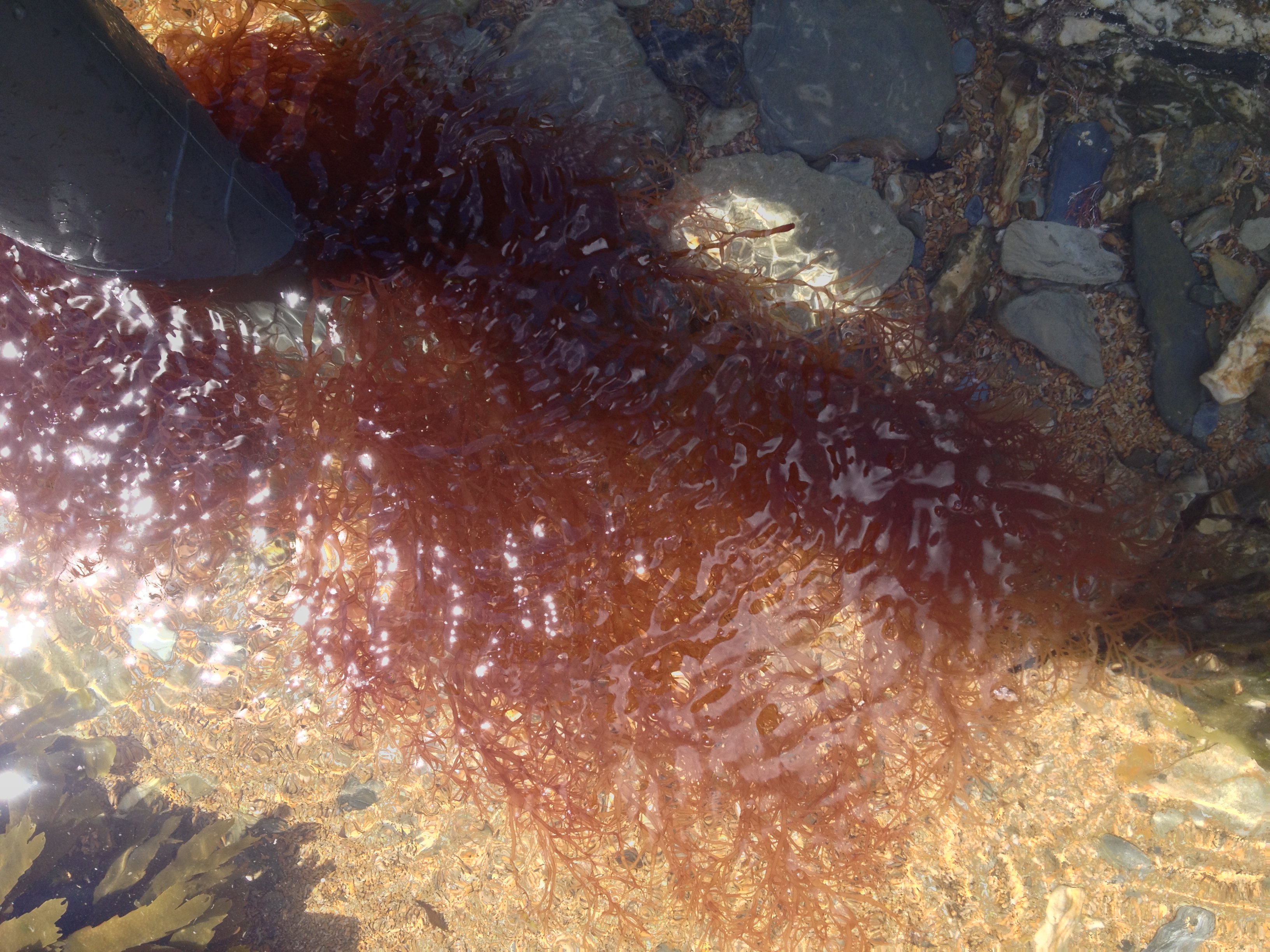
The aquarium is still looking OK. The water is very clear and there are no algae on the glass whatsoever, but the brown algae still spread on the seaweeds, even with frequent skimming and the use of Rowaphos. There is some snail mortality, partly because of the Corkwing (who is not that keen on frozen food). I have added some Dulse Palmaria palmata (front left) and also some Chrysymenia wrightii (right, back), which I had growing in the aquarium succesfully before. This is an invasive species from Japan, first spotted in the Mediterranean three decades ago, spotted more recently in Galicia and now also appearing in the British Isles. (So the ‘back row’ of the tank consists entirely of invasive species, Wireweed, Harpoon weed and C. wrightii). In the Mediterranean it occurs in shallow water whereas in the Atlantic it seems to be a deeper water species (see here). It occasionally washes up in Flushing, see the pictures below of a very large plant I found last week (wellie top left yor scale). I hope to go snorkeling some time soon to try to see how much of it is there.IMG_1574

IMG_1400

IMG_1402

IMG_1455


aquarium update 2

The large mop of Harpoon weed has been added to the tank (tied to a large pebble). I also added Grey topshells Gibbula cineraria, several hermit crabs, two Sting winkles Ocenebra erinacea and five shrimp. Although being potentially dangerous to fish, I could not resist putting in a green snakelocks anemone and it looks stunning under the blueish light . It is quite hard to take good pictures as the blue comes out too strong (using a camera and adjusting the white balance does not really work either, as the photos turn too reddish).IMG_1100The Corkwing wrasse is doing fine but is a bit too obsessed swimming up and down one end of the tank (as in this picture). The Purple top shells Calliostoma zyzyphinum are doing well, as they have laid long strings of eggs several times already. (They are a bit weird though; sometimes they lett go of the glass and just lie still down on the sand for one or two days.) The Tunze pump is switched off, as the Harpoon weed catches too much of the current.  I’ve had to remove some seaweeds as there is a brown algae that is slowly but surely covering them (remarkably it does not grow at all on the glass). I will do some water changes, but I do not expect this to help too much, and it definitely is not a permanent solution. I need to dunk a bag of Rowaphos (and activated carbon) in the filter compartment, I had forgotten about that actually….I am also thinking of trying out the ‘wodka’ method, more about that later…