Crustacean Crevice Dwellers

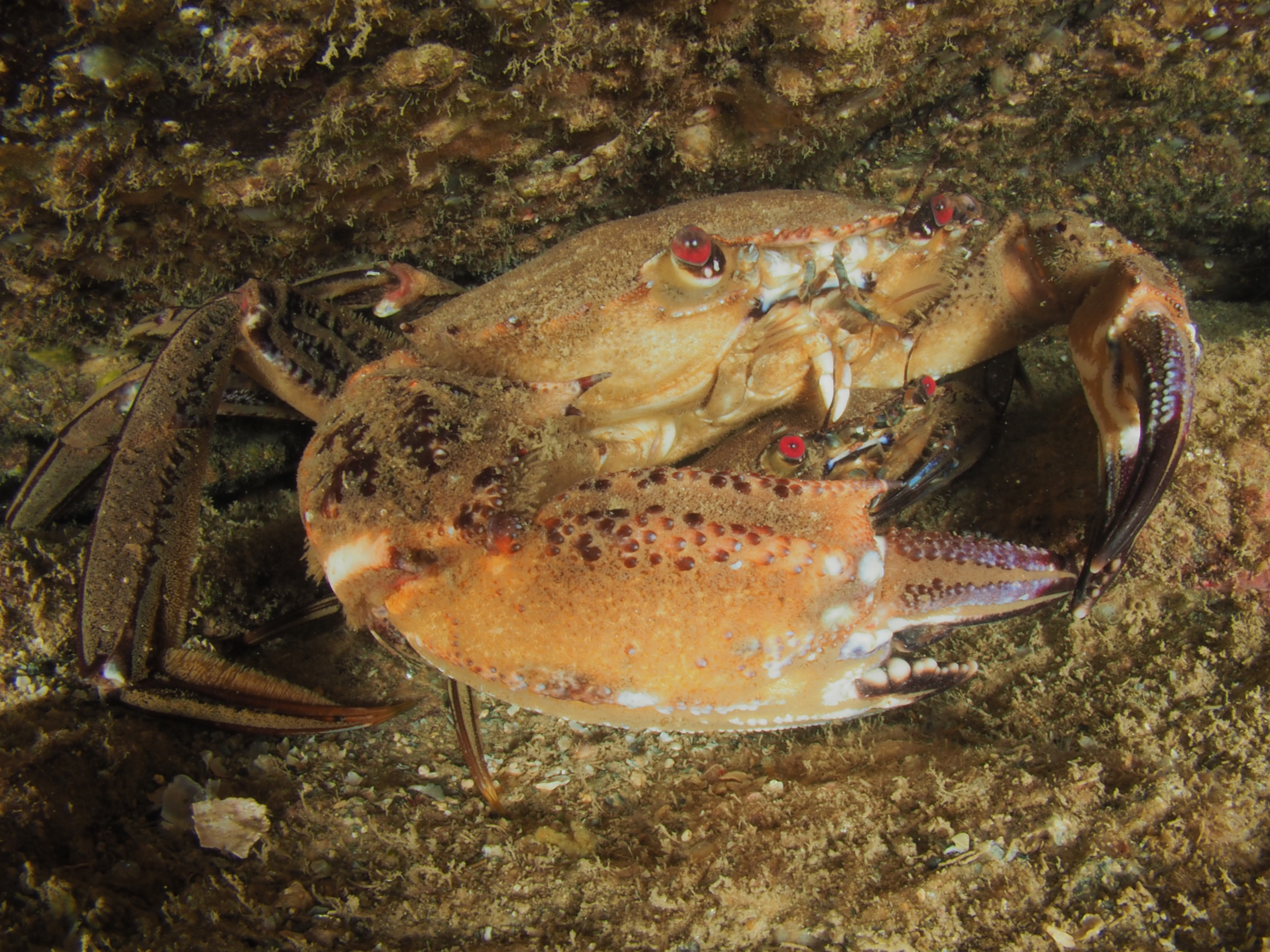
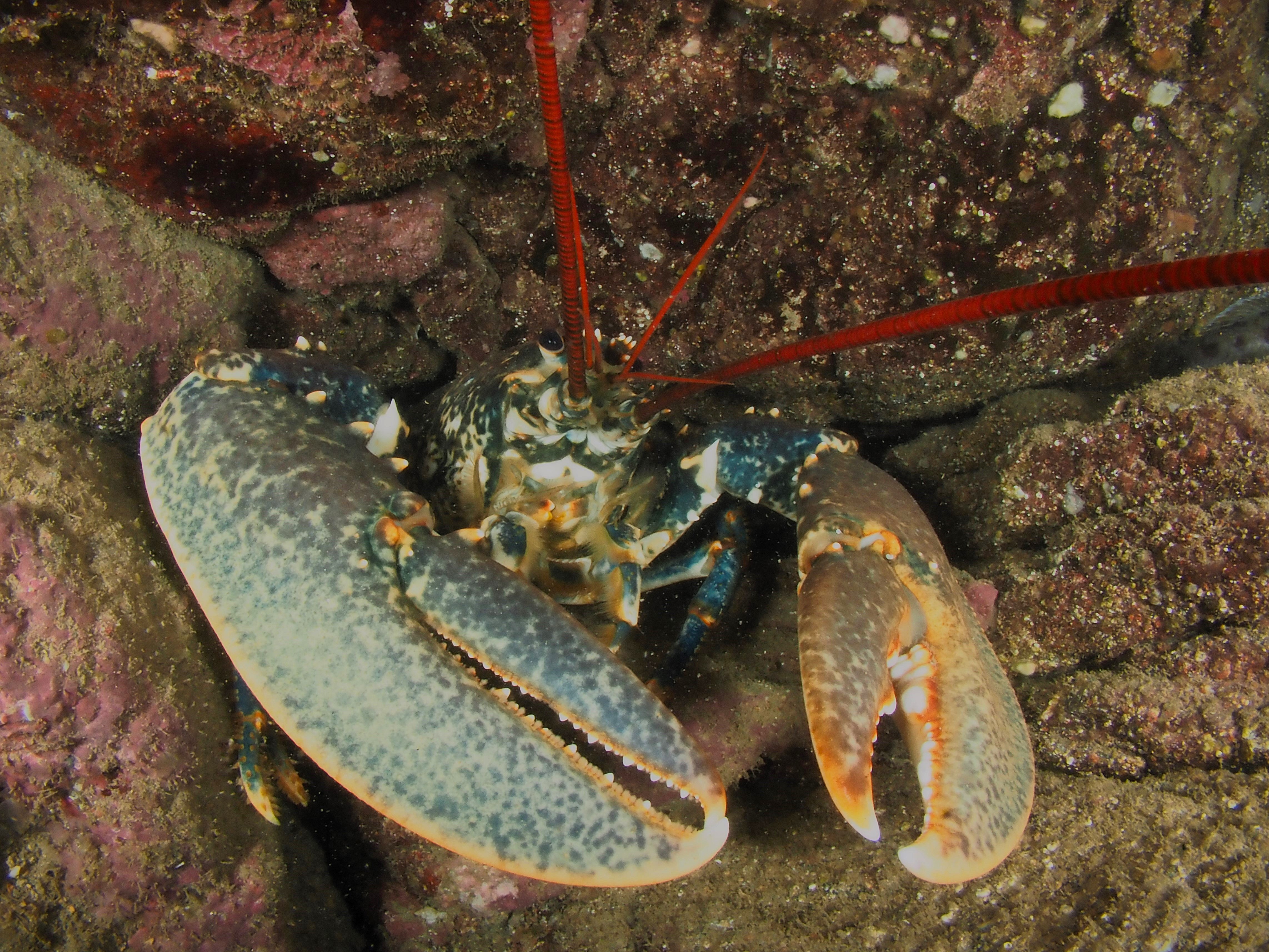
I have done a fair bit of diving at Silver Steps this year and it is high time to publish some of the photos I took there, starting with the Crustaceans that inhabit the cracks in the rocks. Most pics were taken with the macro-wide angle lens, which is not only suited because of its perspective, but also because it is long and thin and so can be poked into the crevices where these creatures lurk. Above, two Velvet Crabs Necora puber, which are abundant and feisty – I only noticed the small female in the photo afterwards! Below a European Lobster Homarus gammarus, also quite common and some of them are quite big. They usually shuffle out of their den quite menacingly only then to retreat again. Although impressive animals, it is hard to get an aesthetically pleasing shot out of them I find.
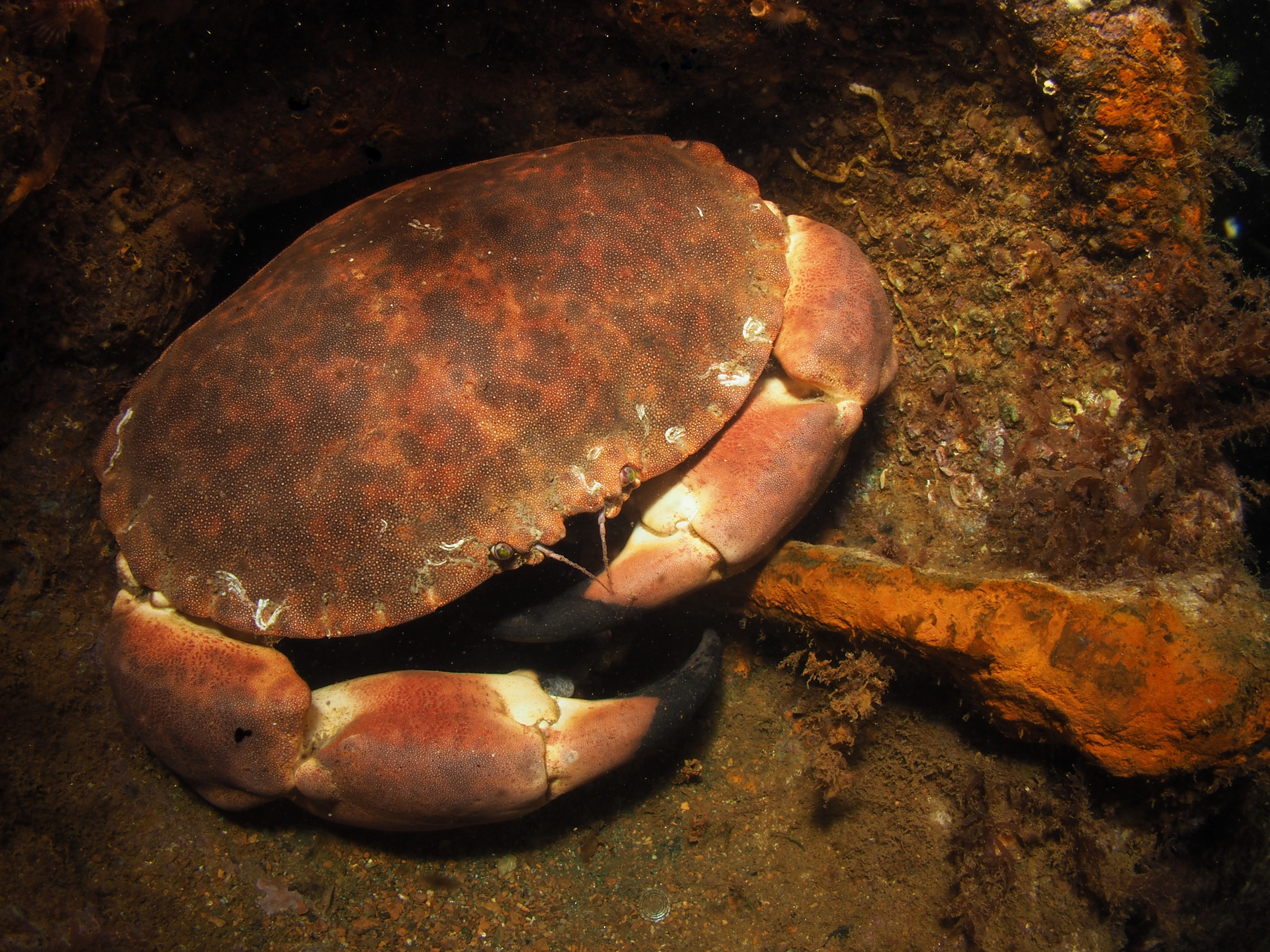
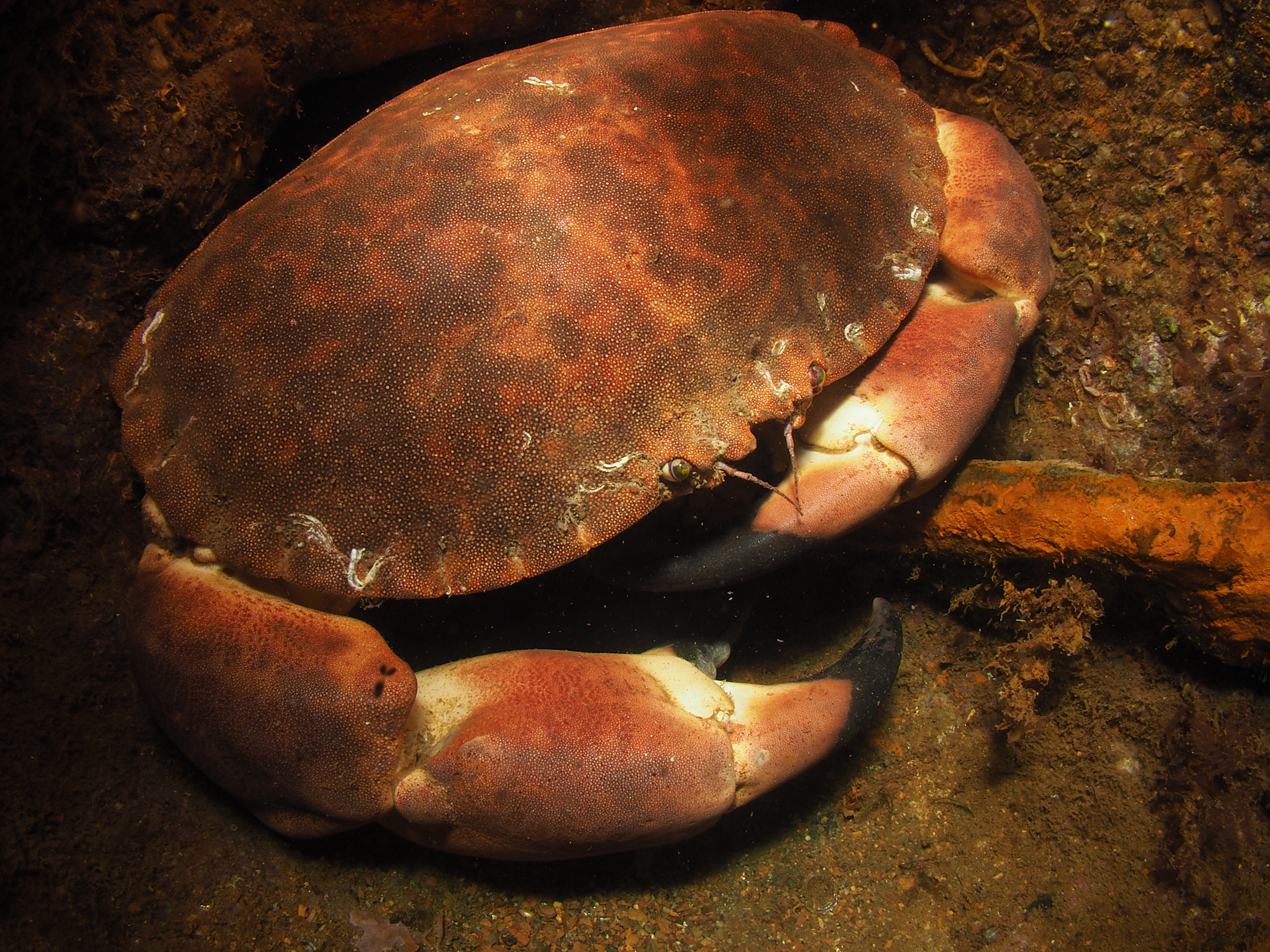
Next, the Squat Lobster Galathea strigosa, also a common, but quite shy species which is just as happy upside down as right side up. Also common are Brown (or Edible) Crabs Cancer pagurus, the individual here not in a crevice but in a piece of steel wreckage.
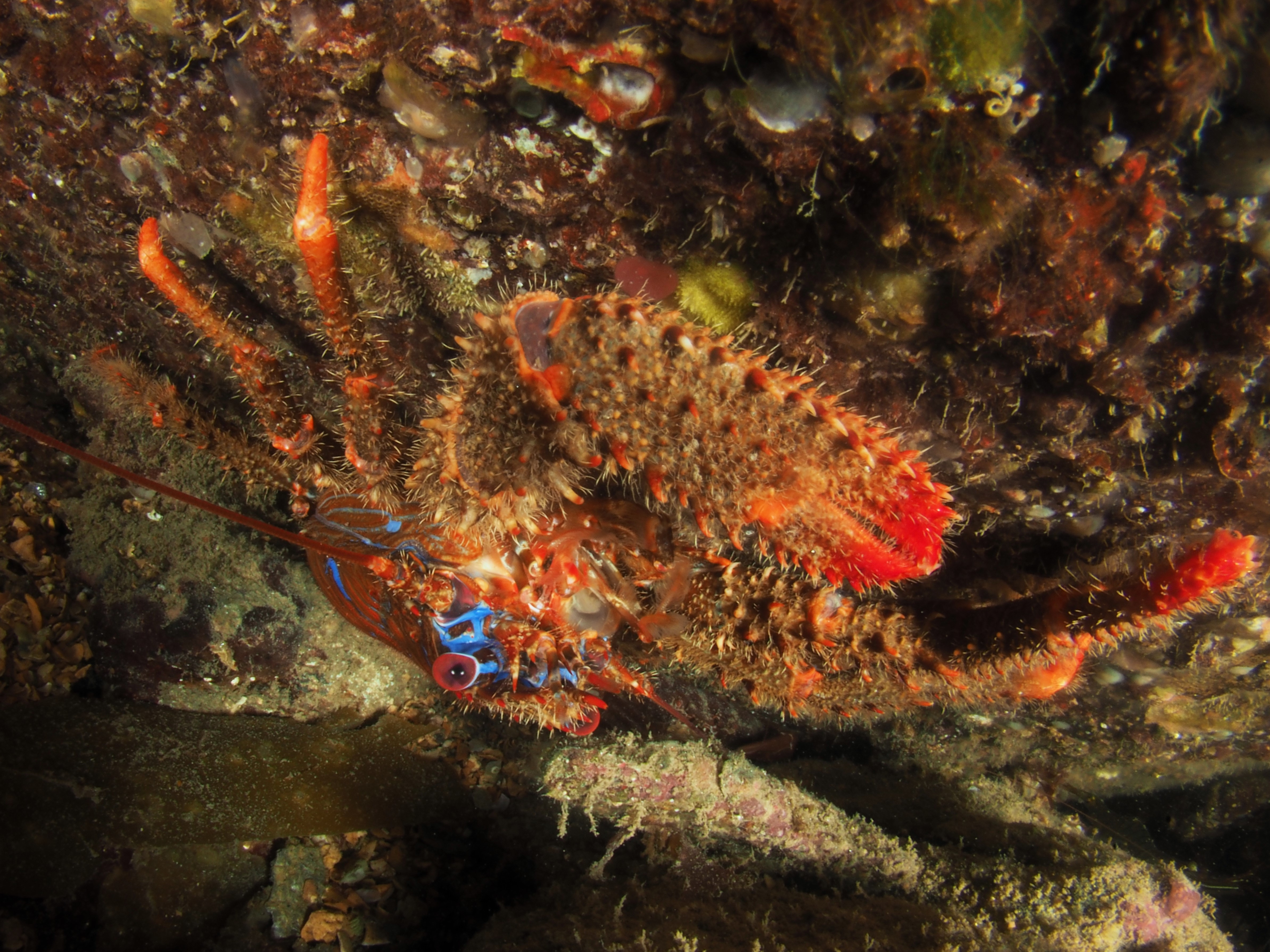
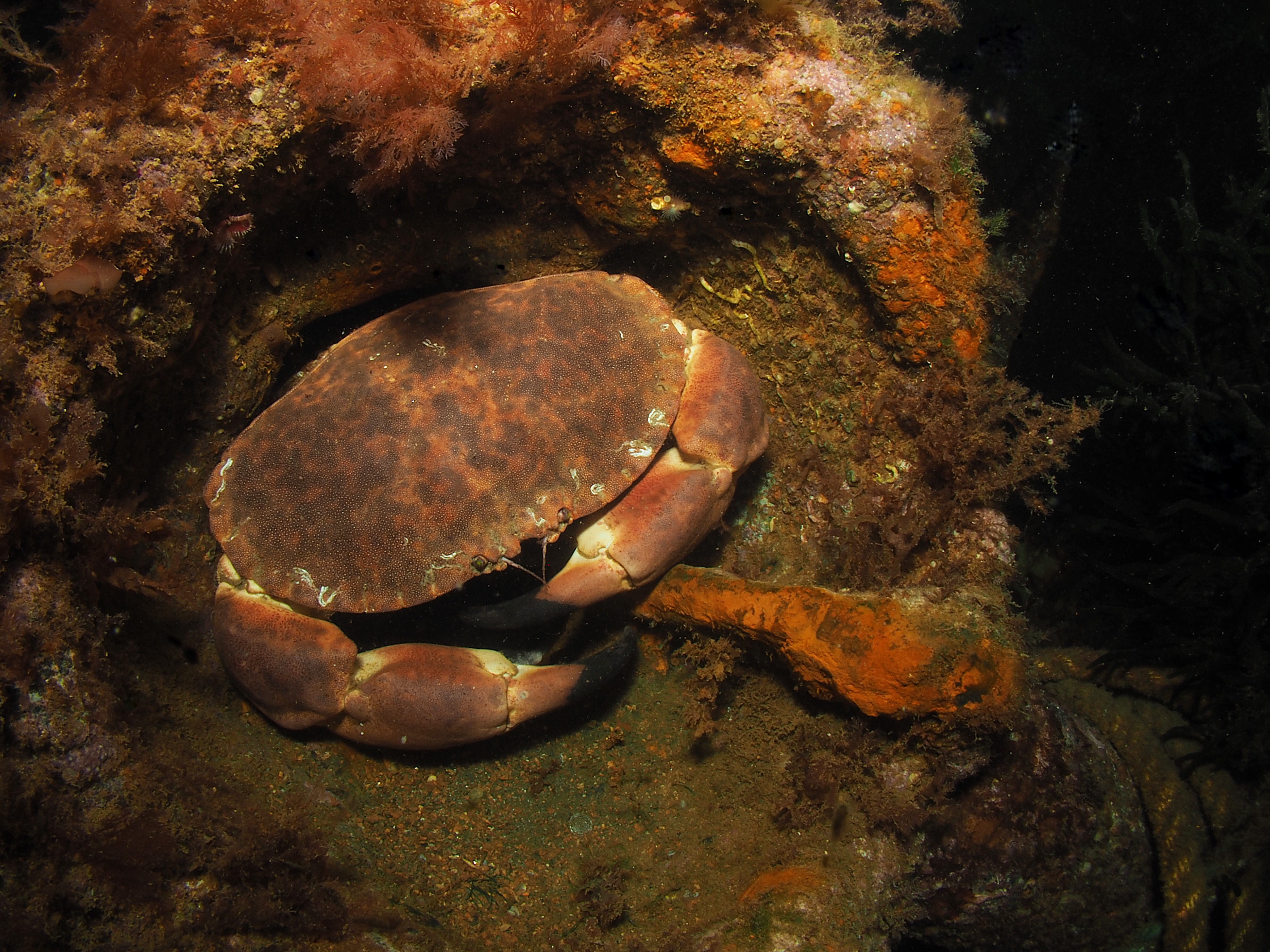
The other big, common Crustacean here occasionally perches on rock walls but usually is found roaming the seabed: the European Spider Crab (rebranded by local fishmongers as ‘Cornish King Crab’ – sounds more appetizing than something spiderlike) Maja squinado brachydactyla. Like the lobster, the behaviour of these guys is a mixture of bravado and fear. The weird lens allows me to get close, but as it lets in very little light, I am forced to use a high ISO and slow shutterspeed, making these images not the crispiest.
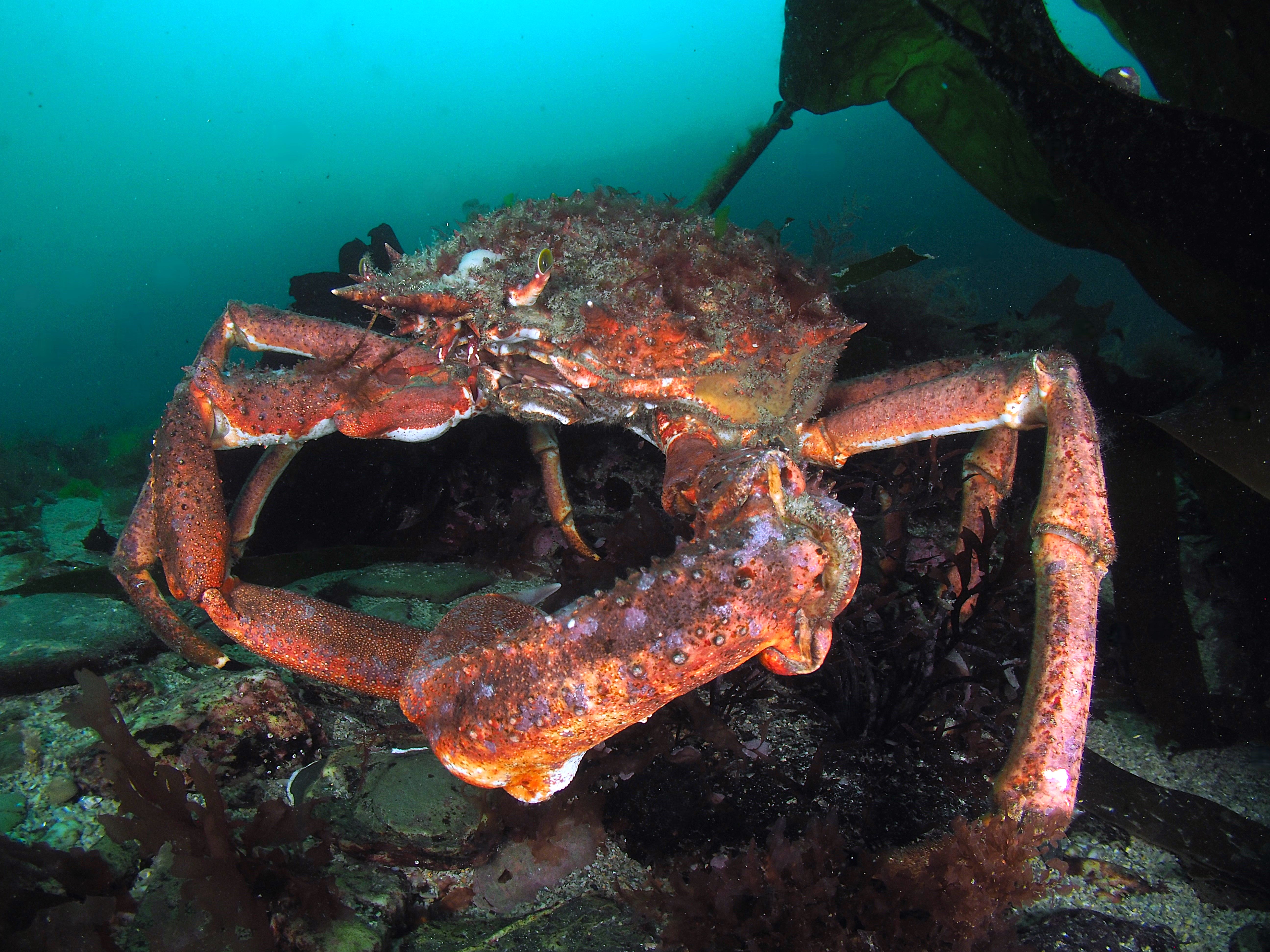
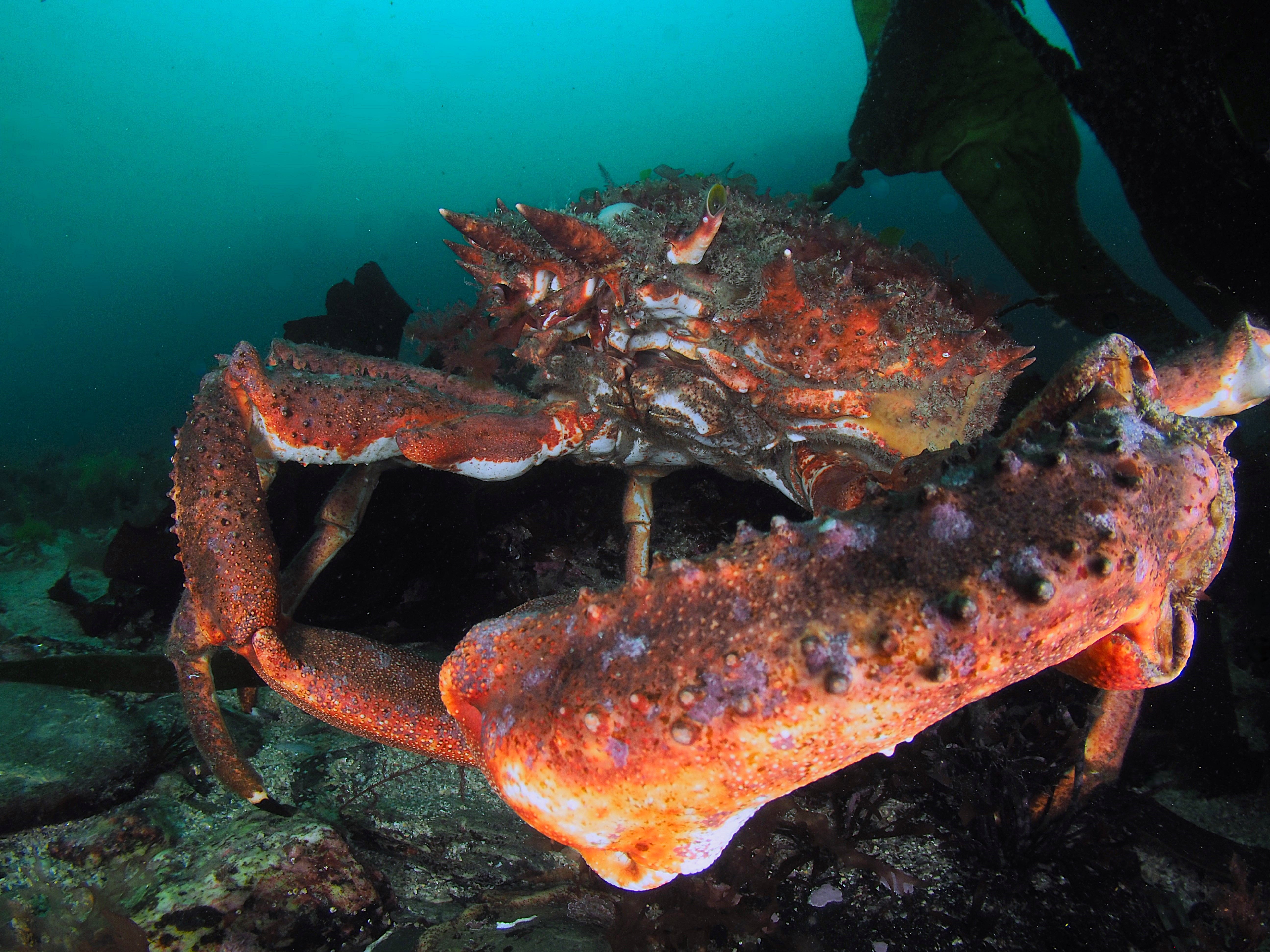
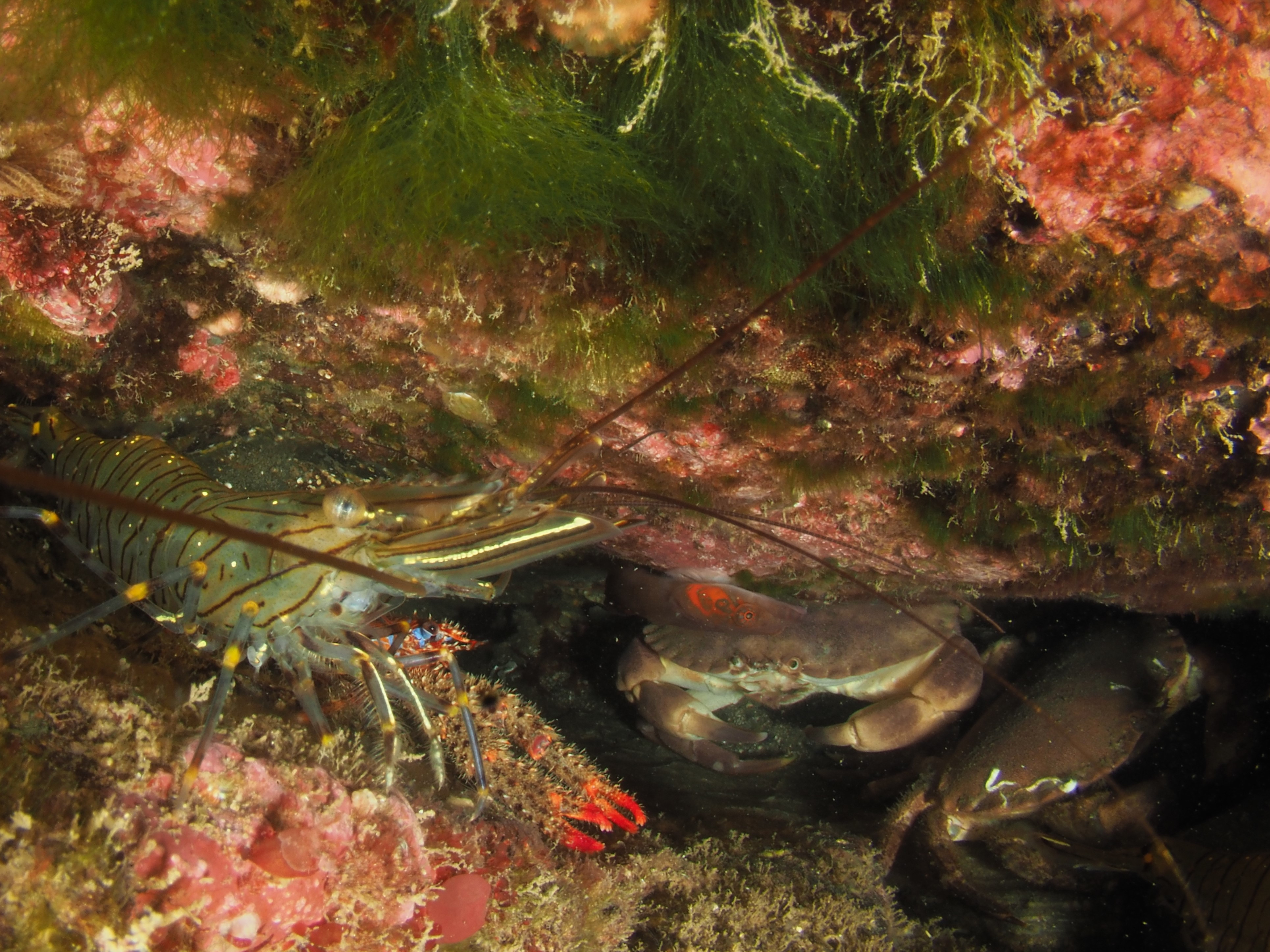
The final photo is technically not great, but I like it because it shows how a range of species apparently gets on quite well at close quarters. On the left, a Common Prawn Palaemon serratus, which can grow quite large and is actually really beautiful with its blue and yellow stripes. Right behind it is a Squat Lobster, with two Edible Crabs lurking in the background and an upside down male Connemara Clingfish Lepadogaster candolii – the next post will be about the fish of Silver Steps!
Aquarium Update 17

I started this blog mainly to document keeping a temperate marine aquarium; browsing back I see that that was more than four years back already! (see this introduction). Over time, I became more passionate about rock pooling, snorkeling and diving, specifically about seaweeds and photography, and blogged less and less about my aquarium. The aquarium had its ups and downs, as coldwater aquariums tend to be a bit more trial and error (coldwater marine aquariums do not consist of relatively slow growing stony corals as in tropical marine aquariums and house much more (higher order) diversity than tropical or cold freshwater aquariums). Also, I am a lazy man. The last aquarium update was from last November and the aquarium did not look that great, but I have lately spend more time on it and it looks much better now, so here a quick new post.I bought an upgrade Red Sea Max pump (much better) a while back, and more recently a Tunze 9001 skimmer (MUCH better than the stock skimmer, removed  years ago as it was so noisy). The only problem is that the pump is so powerful that the water does not get sucked fast enough in the back compartment and it starts to run dry, I need to think how to fix that. The water is very clear though. I only have Cornish suckers as fish at the moment, and it might not be safe to add other fish as there are quite a few anemones at the moment. I have collected a bunch of Daisy anemones Cereus pedunculatus whilst diving (these are very common here in Flushing). I feed all my anemones small pieces of defrosted prawn by hand, these little ones respond very well to that and I hope they will grow much larger. I also collected some more Redspeckled anemones Anthopleura balli (below). David Fenwick kindly gave me an oyster with many Jewel anemones Corynactis viridis attached (crappy pic, sorry). These did relatively well for a while when feeding fine dry foods (sold for reef aquariums) but they were bothered by the squat lobster and cushion stars and I put the oyster back in the sea (I was also worried the oyster might die and cause a huge nitrogen spike). As an experiment I removed a few jewel anemones with a scalpel and superglued them to frag plugs but they did not survive. Ah well, that might have been a first, so worth a try. With a smaller, dedicated aquarium with better filtration (to deal with many small food particles) it must be doable to keep these. At the moment there are several species of gastropods, a cute little clam, mussels, Snakelocks- Dahlia-, Beadlet- and Strawberry anemones, a small Hairy crab, Cushion stars, green urchins and a Common starfish. The echinoderms seem easiest to keep of all. I actually put the common starfish back as it was picking of all my snails which I need to keep algae in check (and are interesting in their own right of course). I added a Cushion starfish with six legs though (‘Dave’). Hopefully I can find some more anemones when diving over the summer and who knows experiment with seaweeds again.