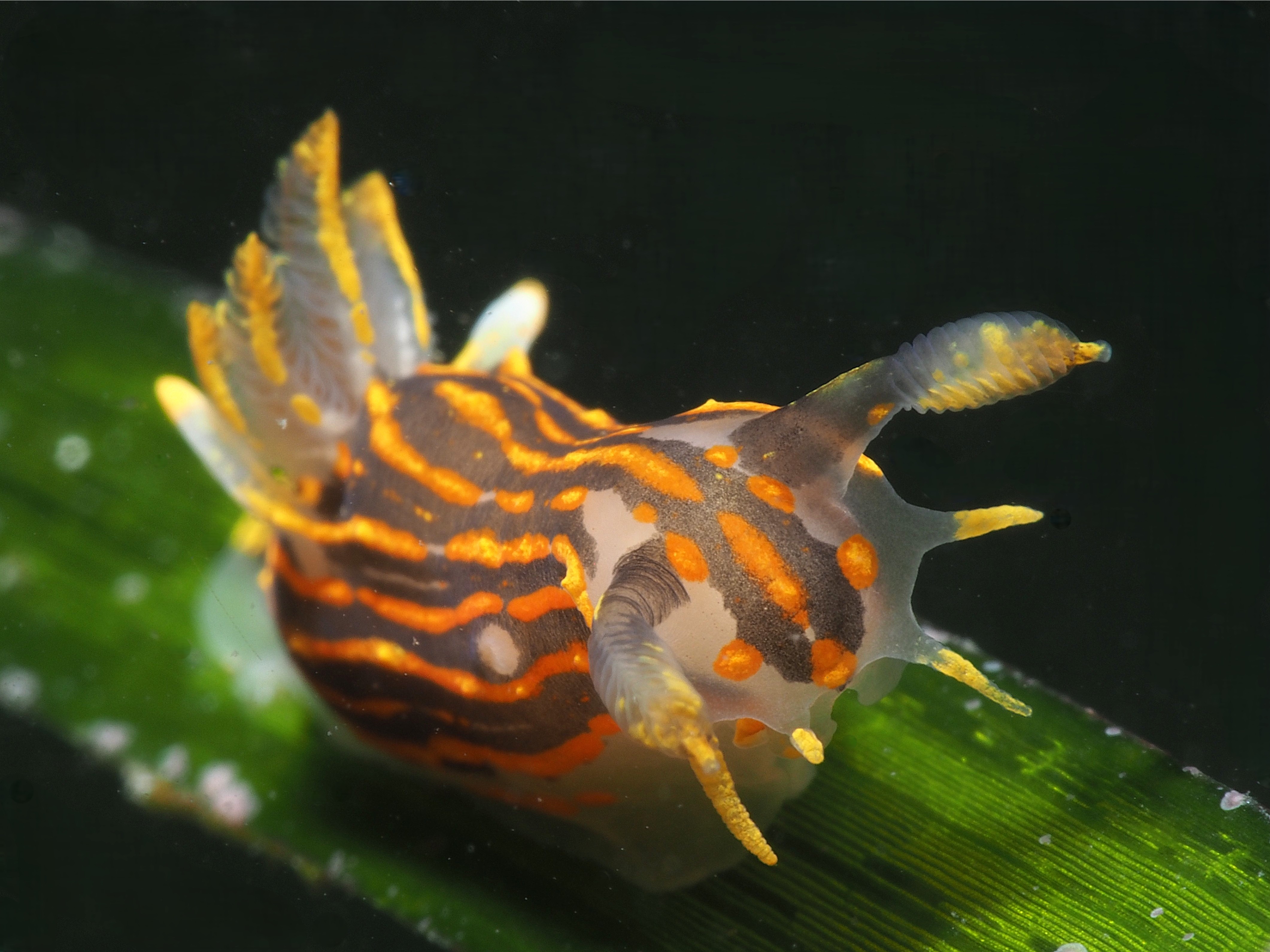
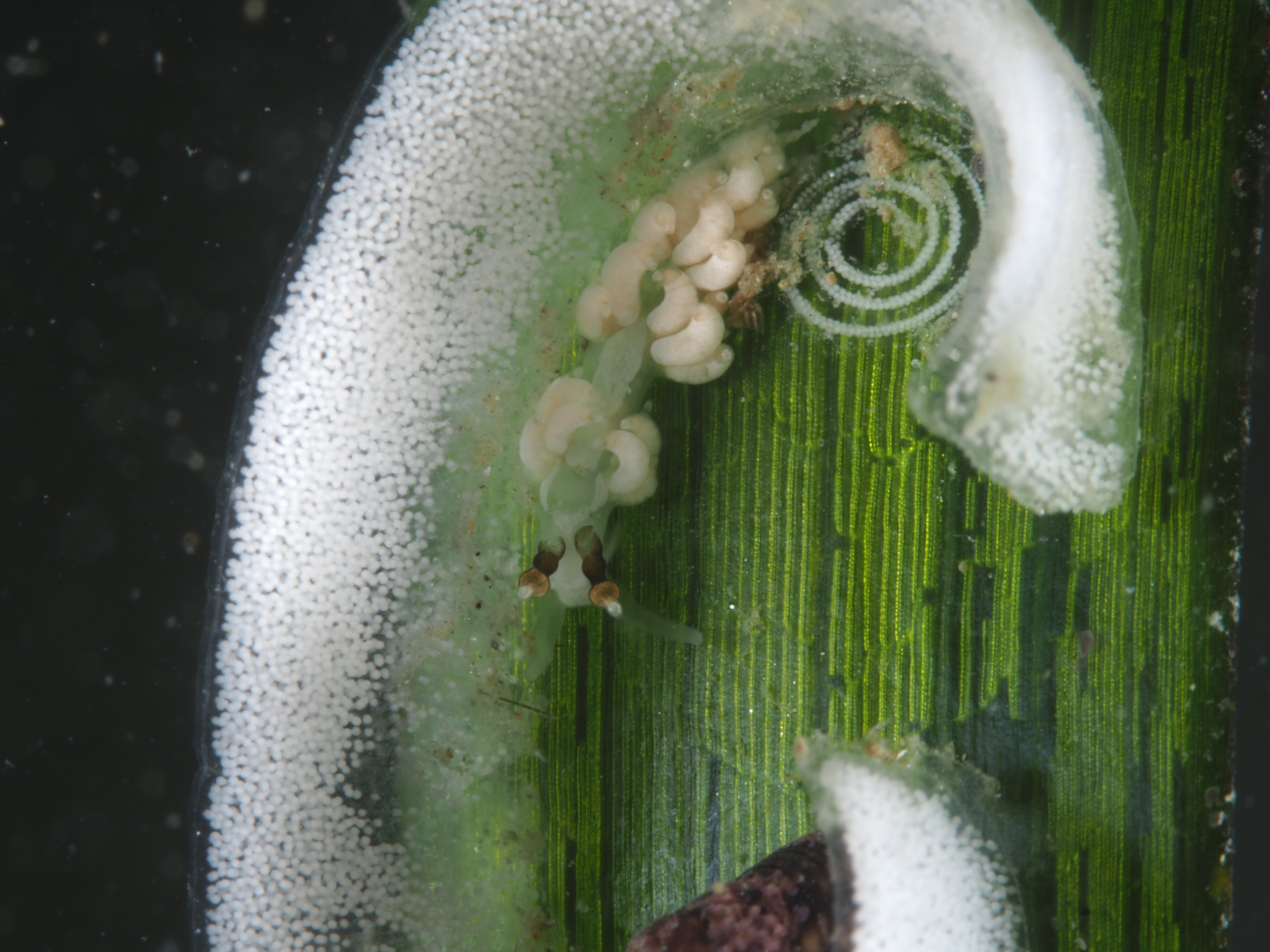
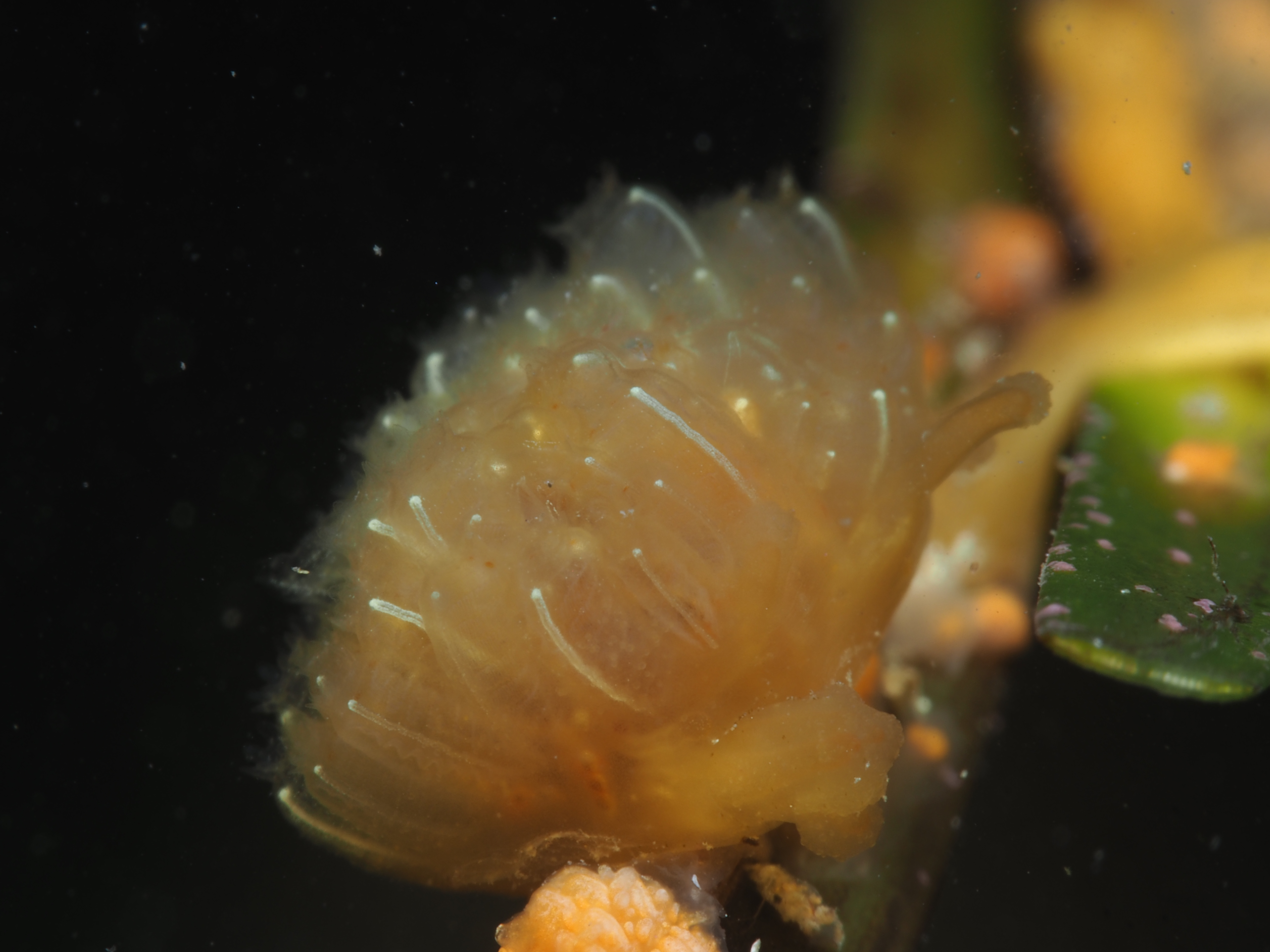
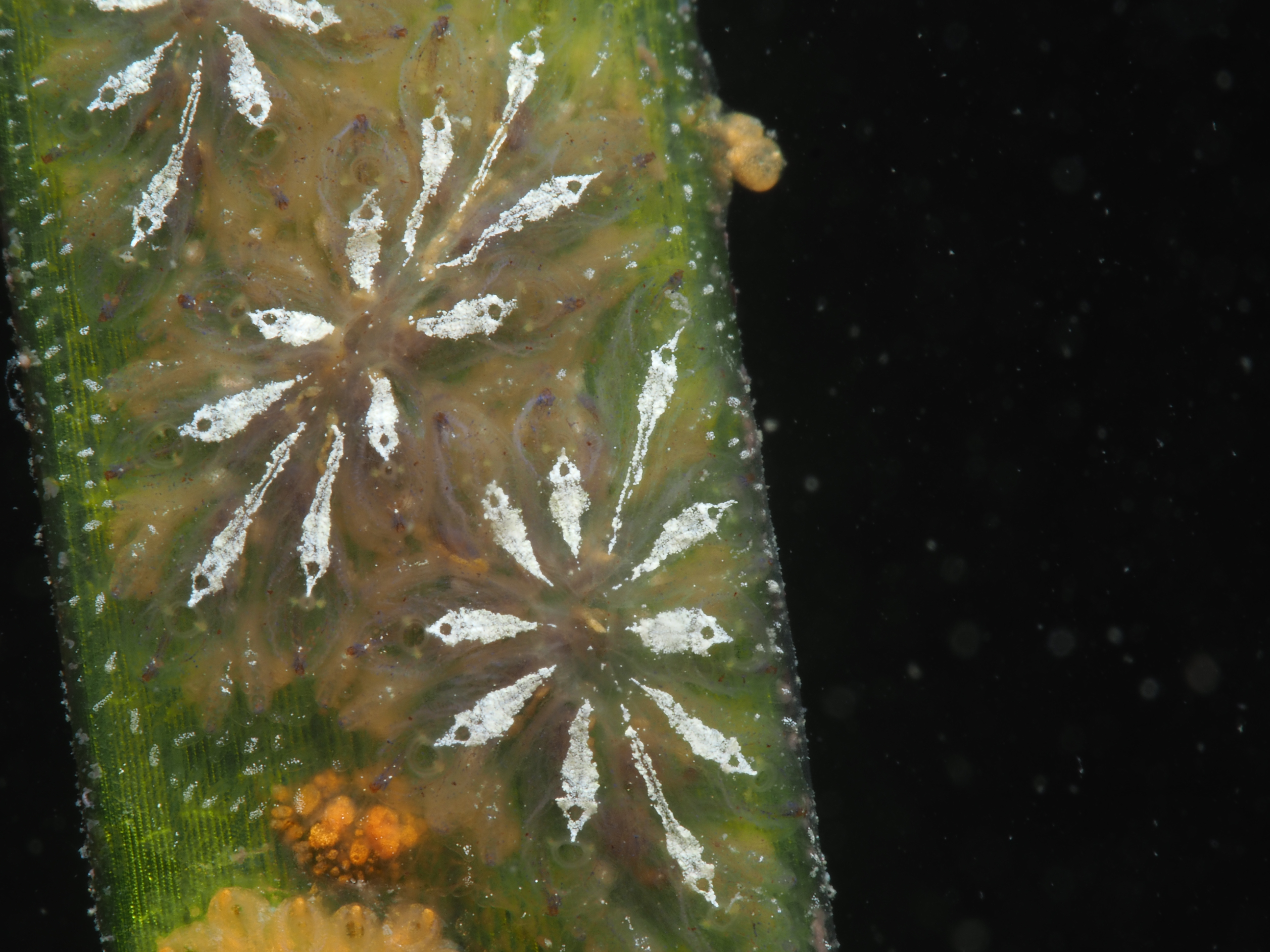
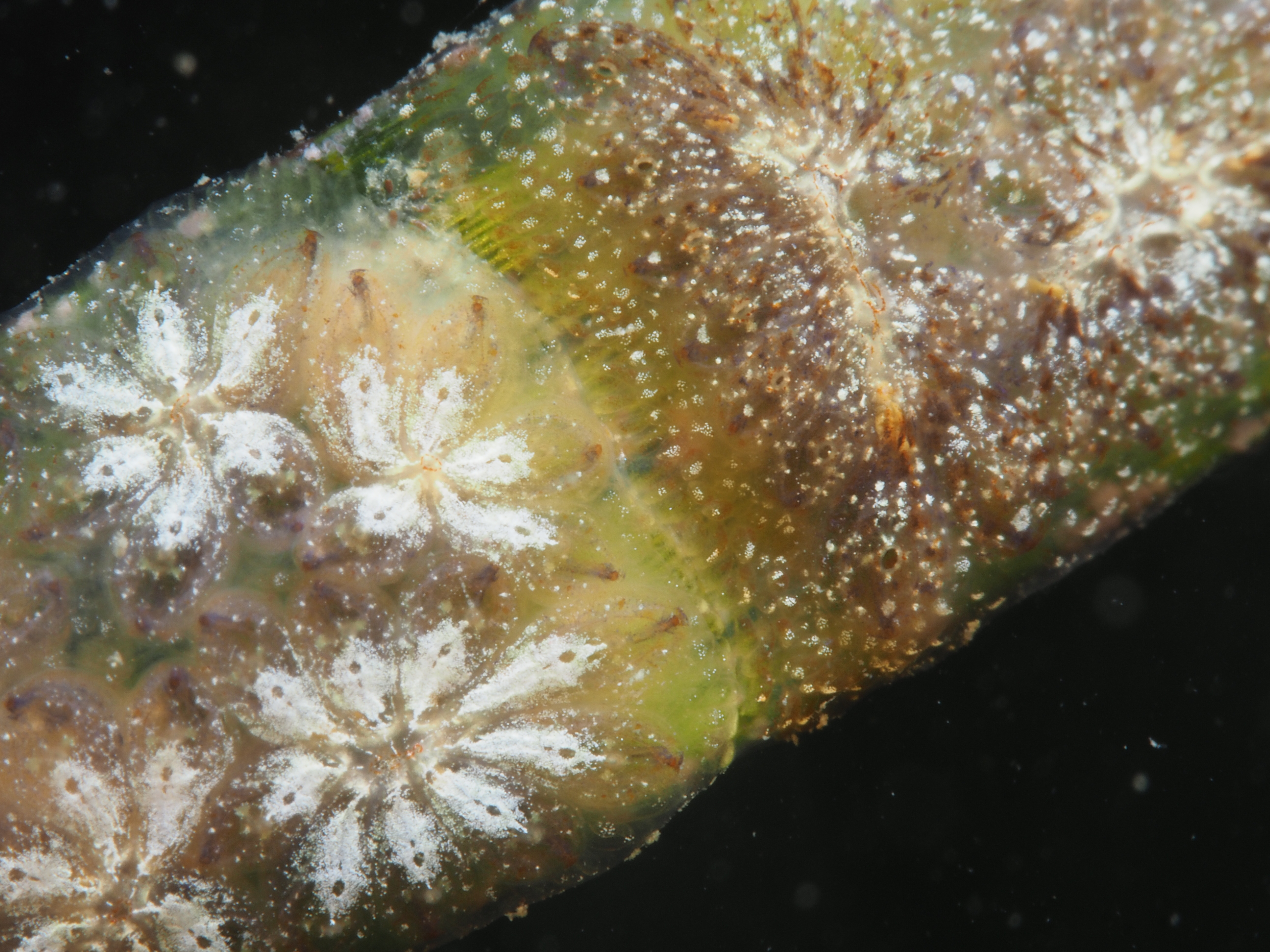
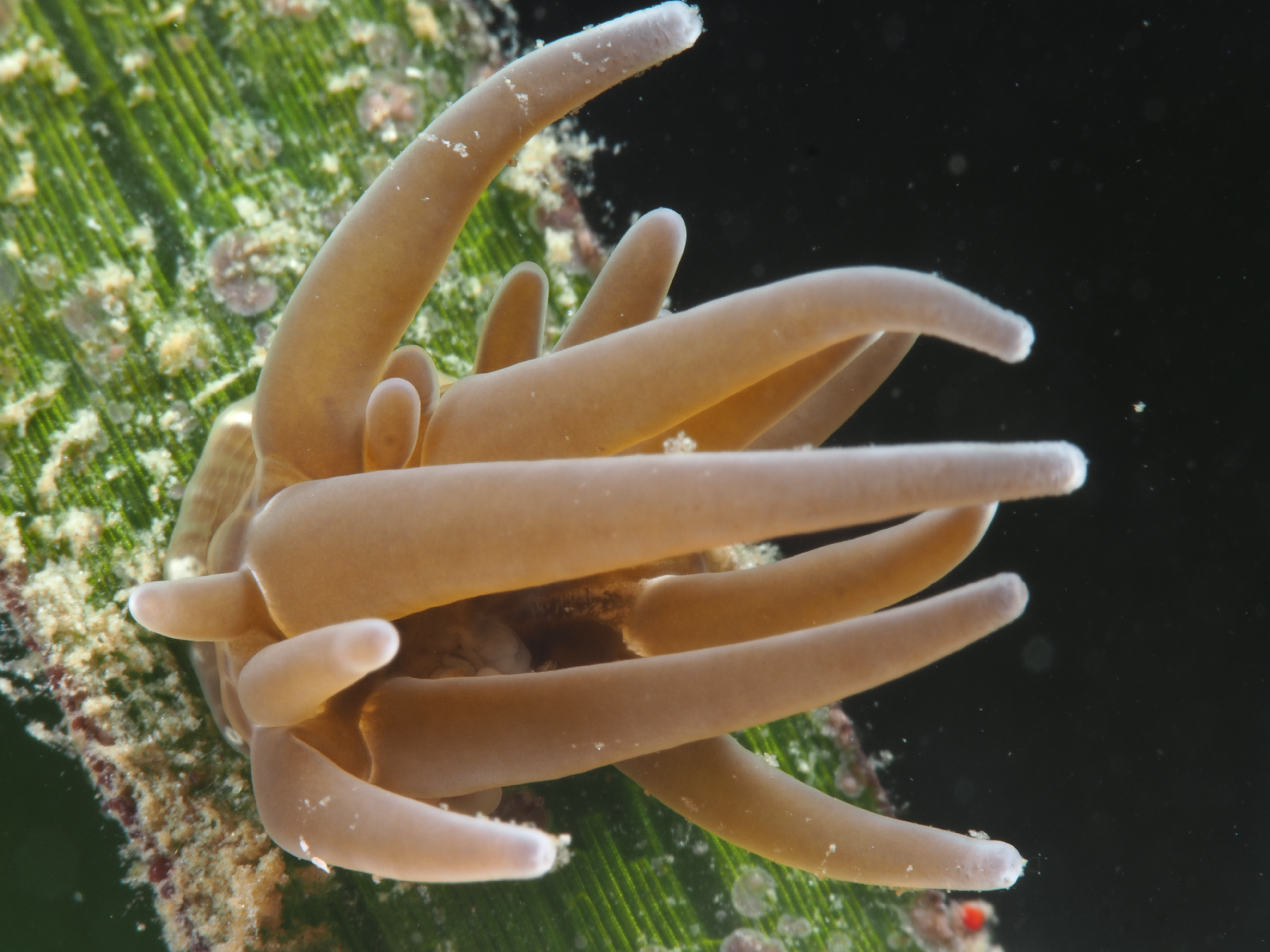
I had a couple of good snorkels at the end of summer in the seagrass beds off my local beach in Flushing. The water at the end of summer is warm enough to go without wetsuit – I just had a weightbelt to let me sink down on the sand at low tide, no fins needed. I managed to do what I normally find very difficult: spot nudibranchs! Mainly one of the more common species, Polycera quadrilineata, but that was fine by me, as they are very beautiful, especially the black colour morph pictured above. I spotted one other species, the egg-eating Favorinus branchialis (with its own eggs also visible). Not great photos, but in my defense they are very small!
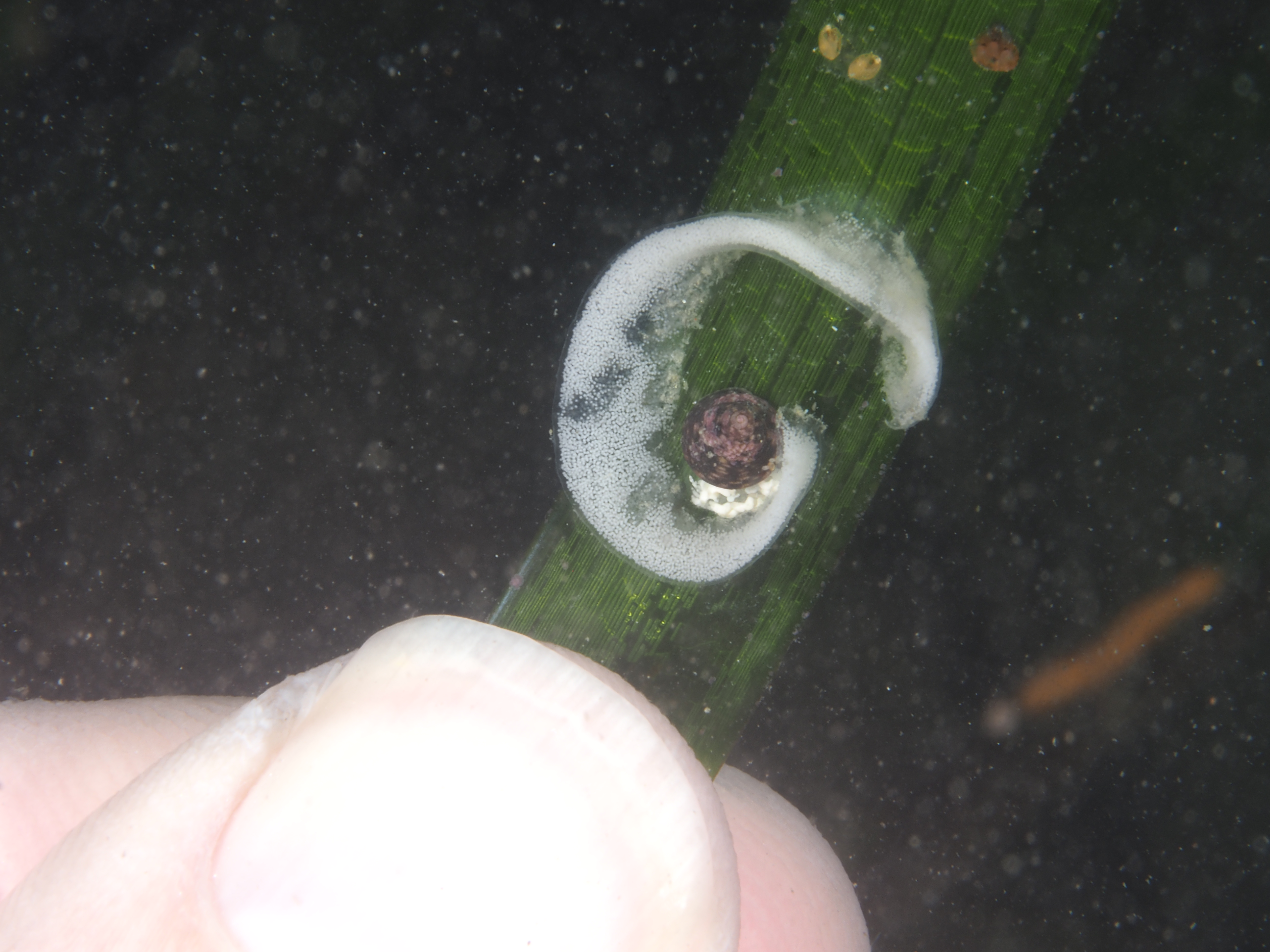
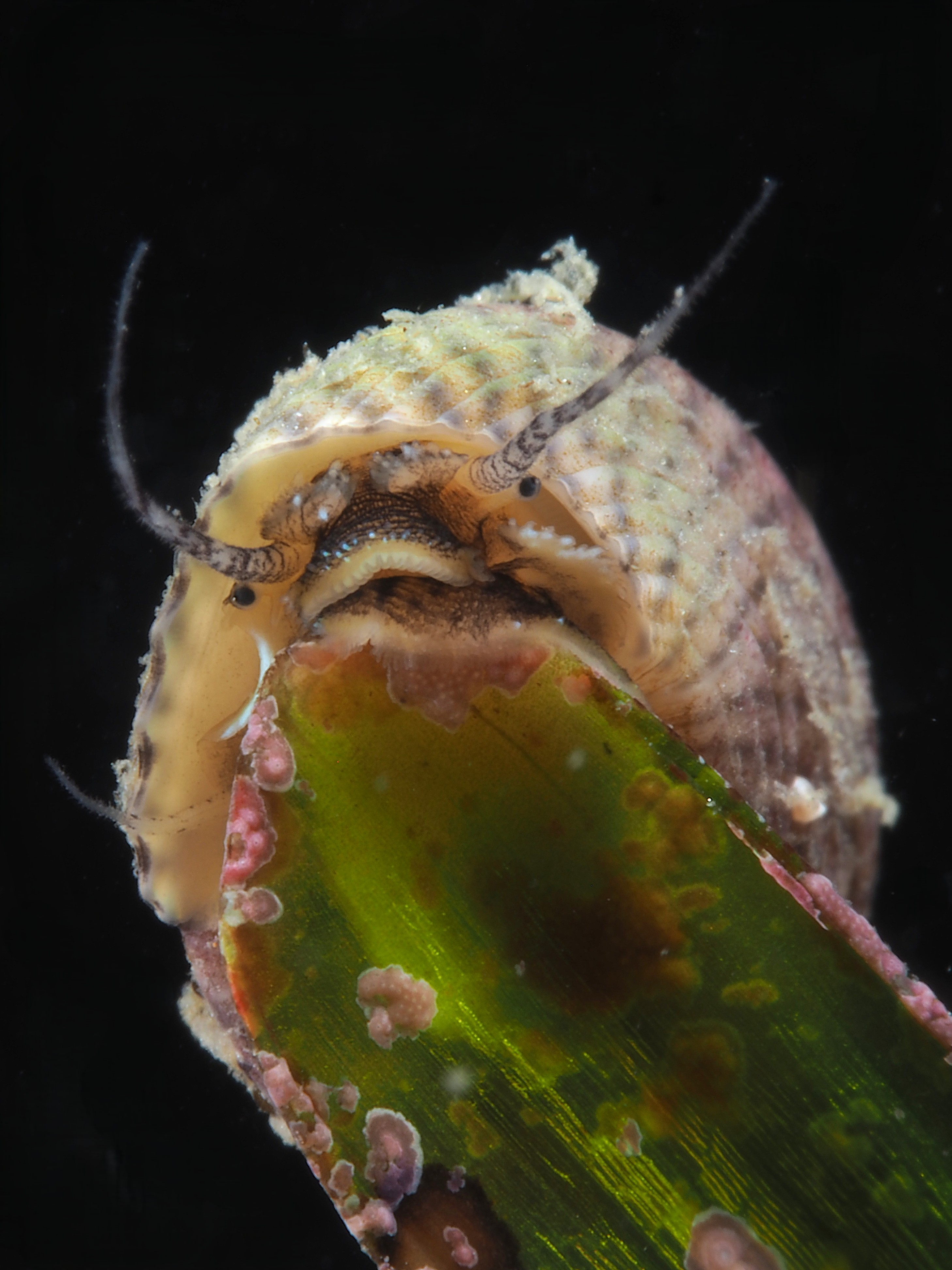
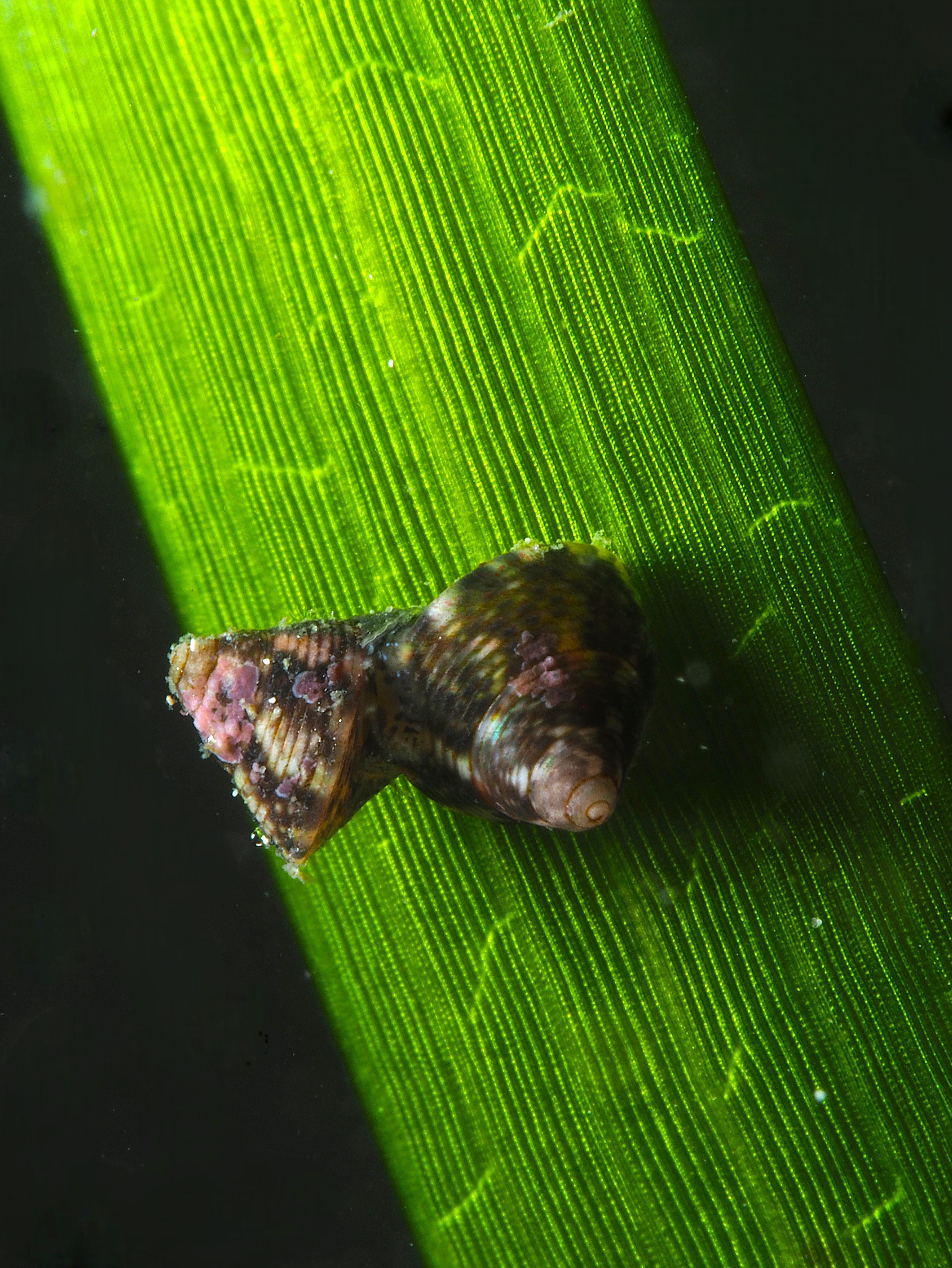
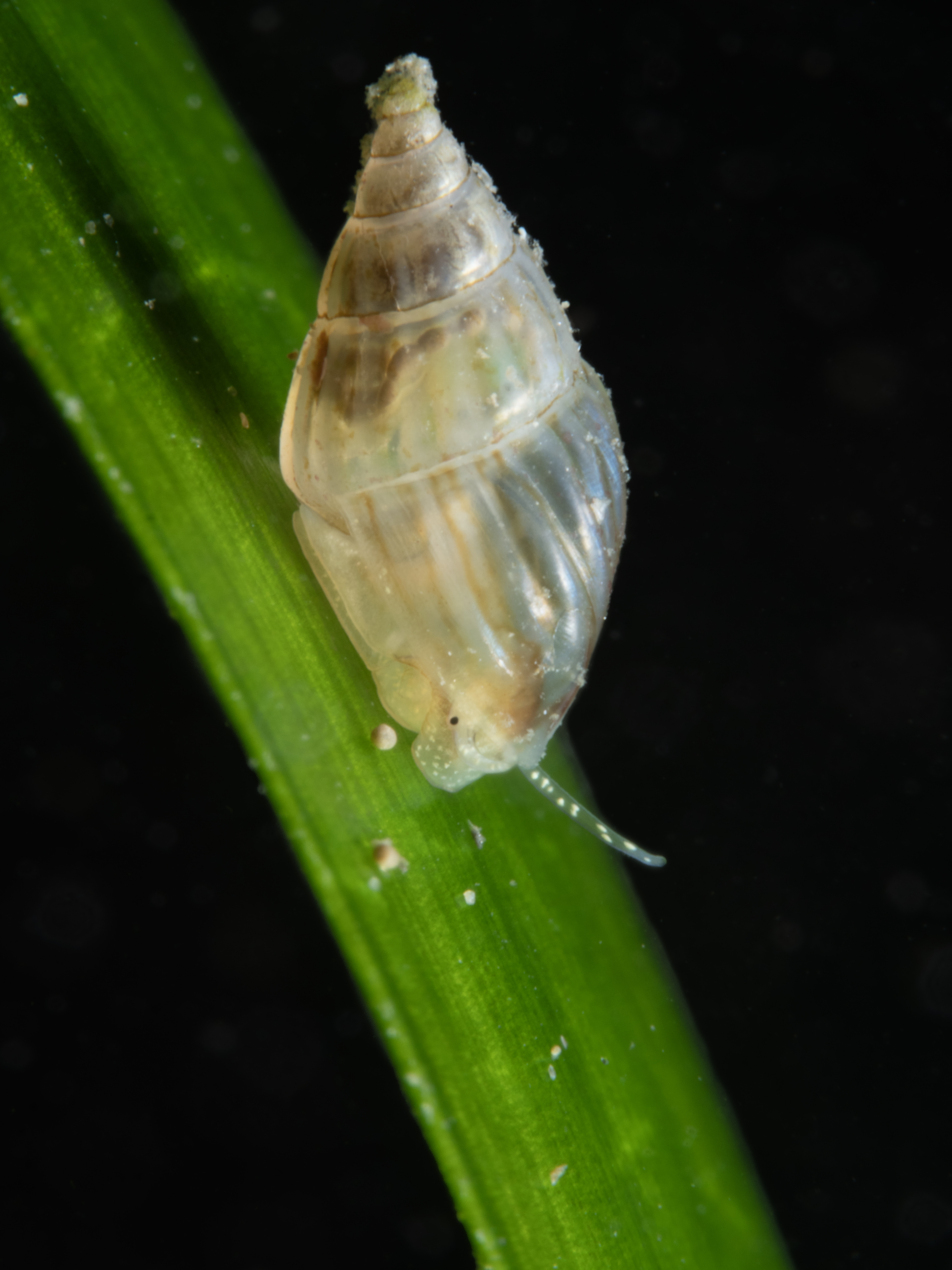
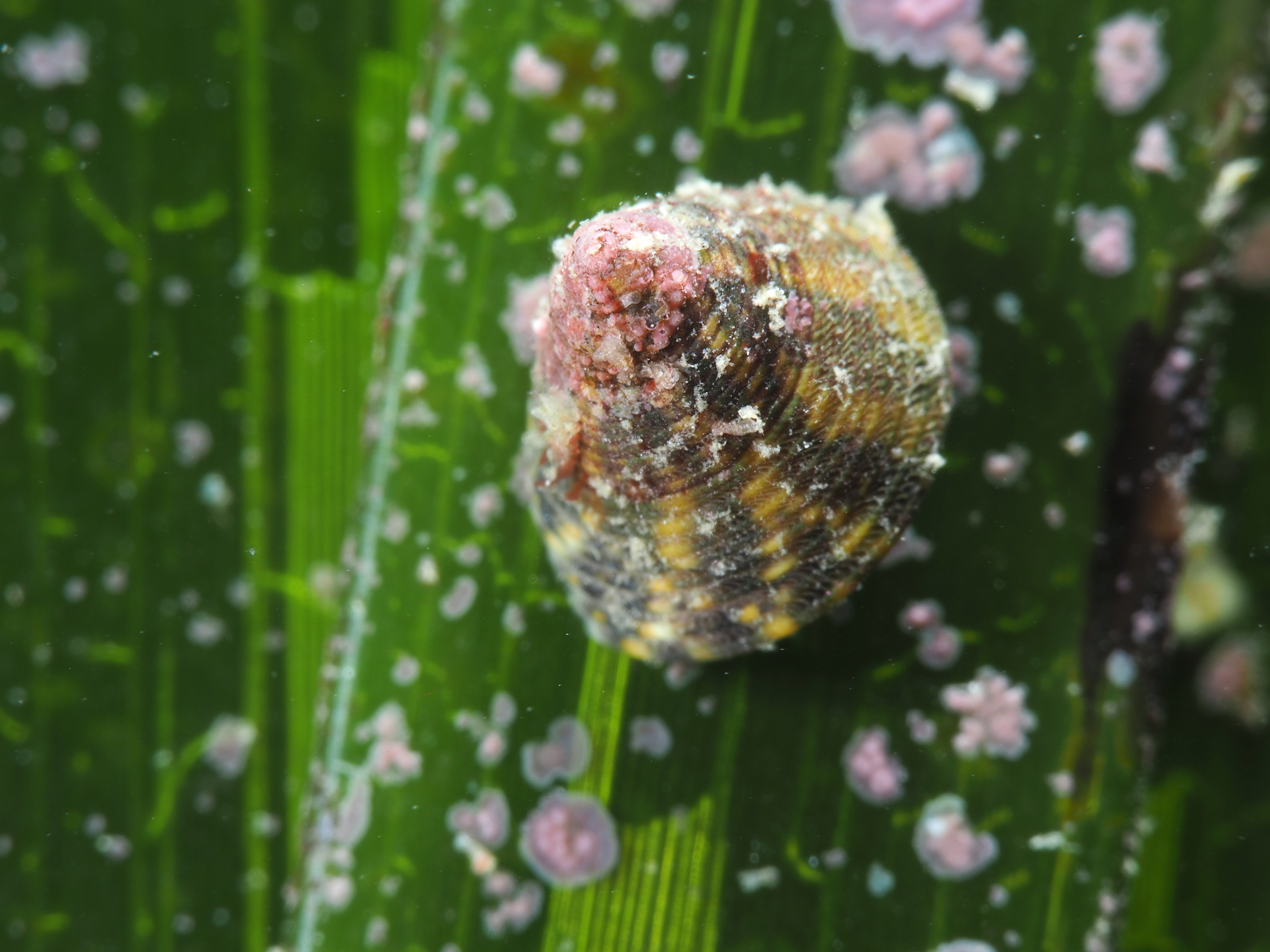
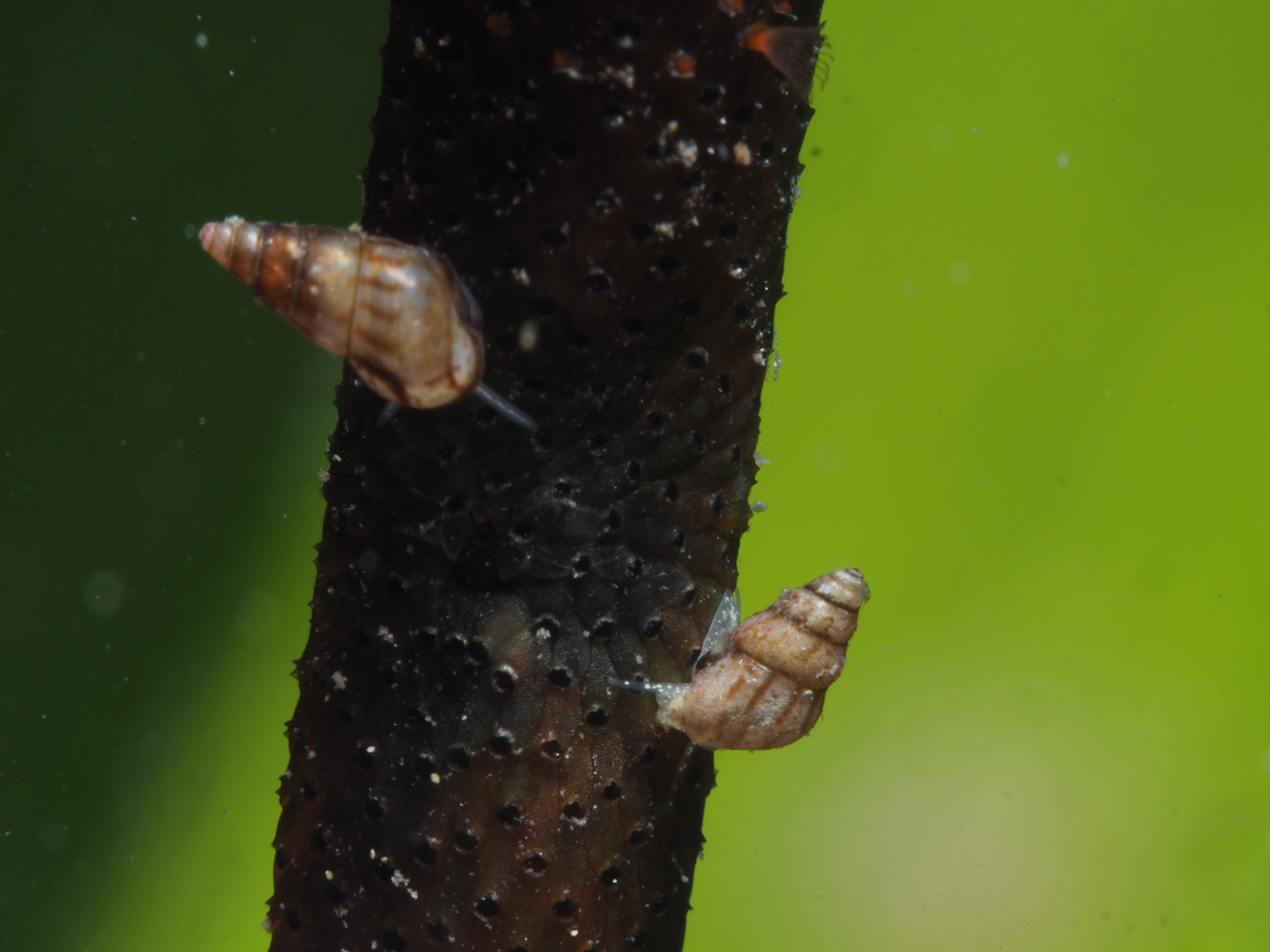
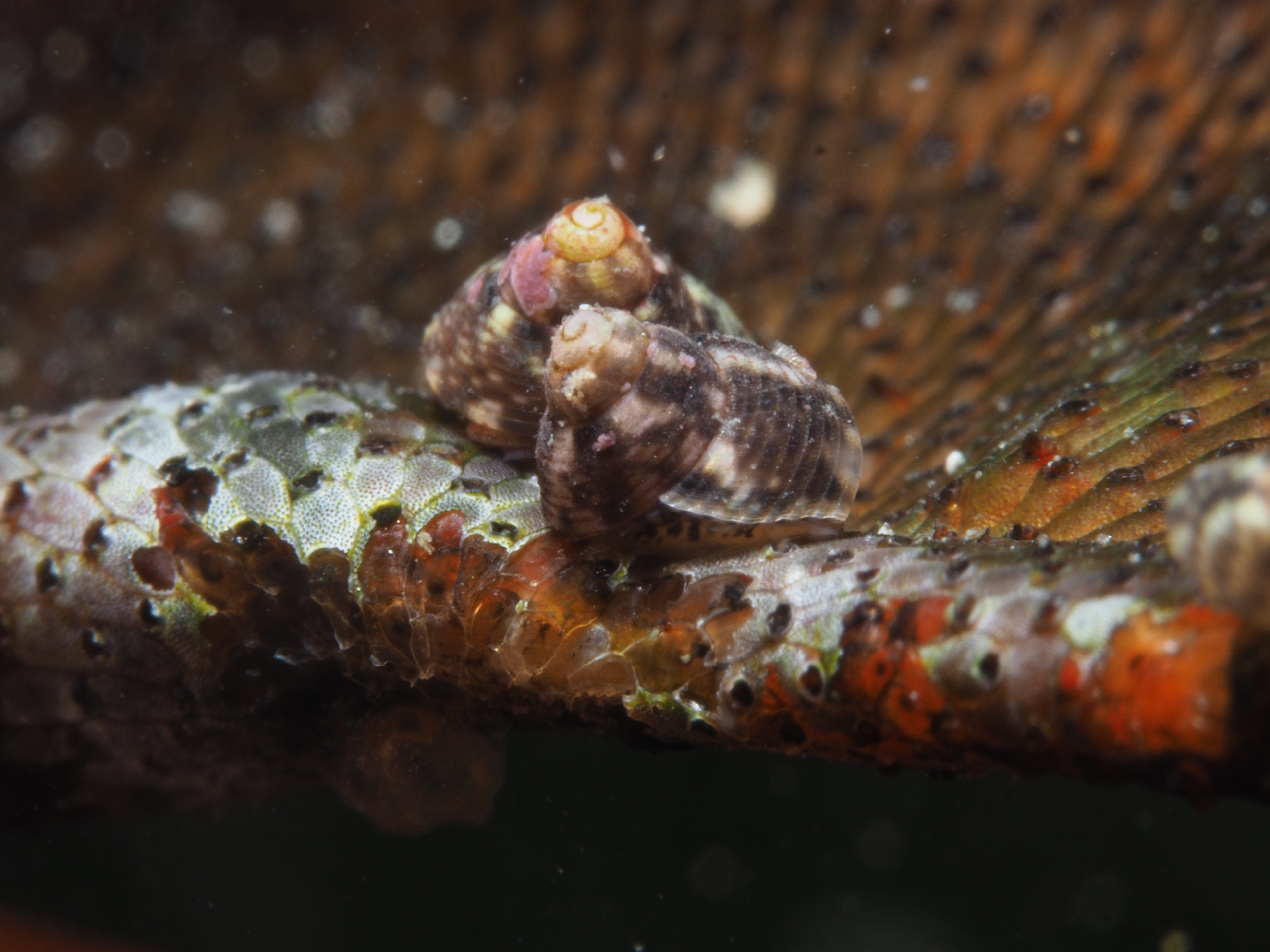
Shelled molluscs are easier to find. Below 1) the ubiquitous Grey Topshell Steromphala cinerarea, 2) the Grooved Topshell Jujubinus striatus and 3) the tiny Rissoa membranacea (faecal pellets on show, even within the shell). The latter two species are strongly associated with seagrass.
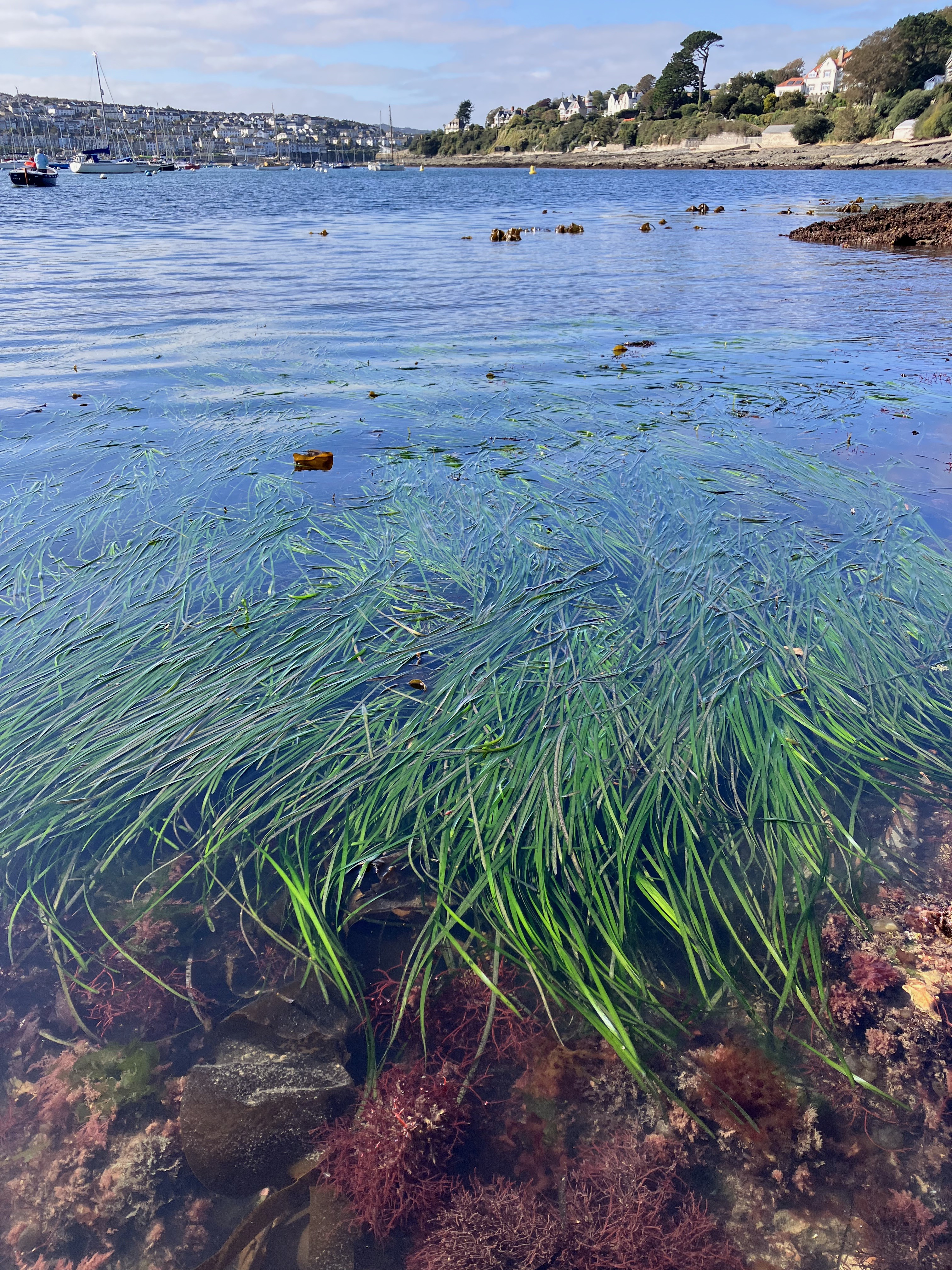
Some assorted macro photos below and at the end a view at a very low tide of the Flushing seagrass site this October.
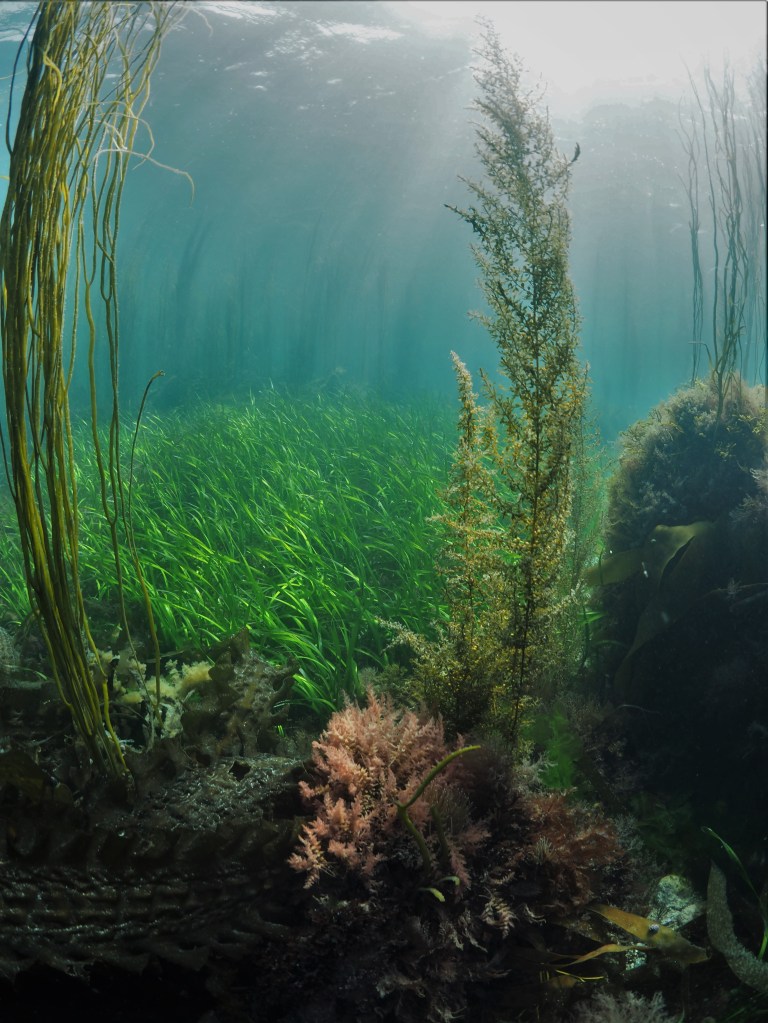
Last week we visited St. Martin, one of the Isles of Scilly again, the first week we were allowed to do so. As a result, the islands were very quiet (and the pub was still closed, aargh!). It was sunny, but the easterlies were still cold and there was even a bit of frost some nights. However, I managed to get a snorkel in almost every day, which was great. I brought all my gear (again stepping on the boat wearing my weight belt…) but only used the strobes the first day; these are still an ongoing frustration of mine! I tried out most beaches, especially enjoying Porth Morran, where the kelp met the seagrass. (The pics in the Gallery are click-able btw.)
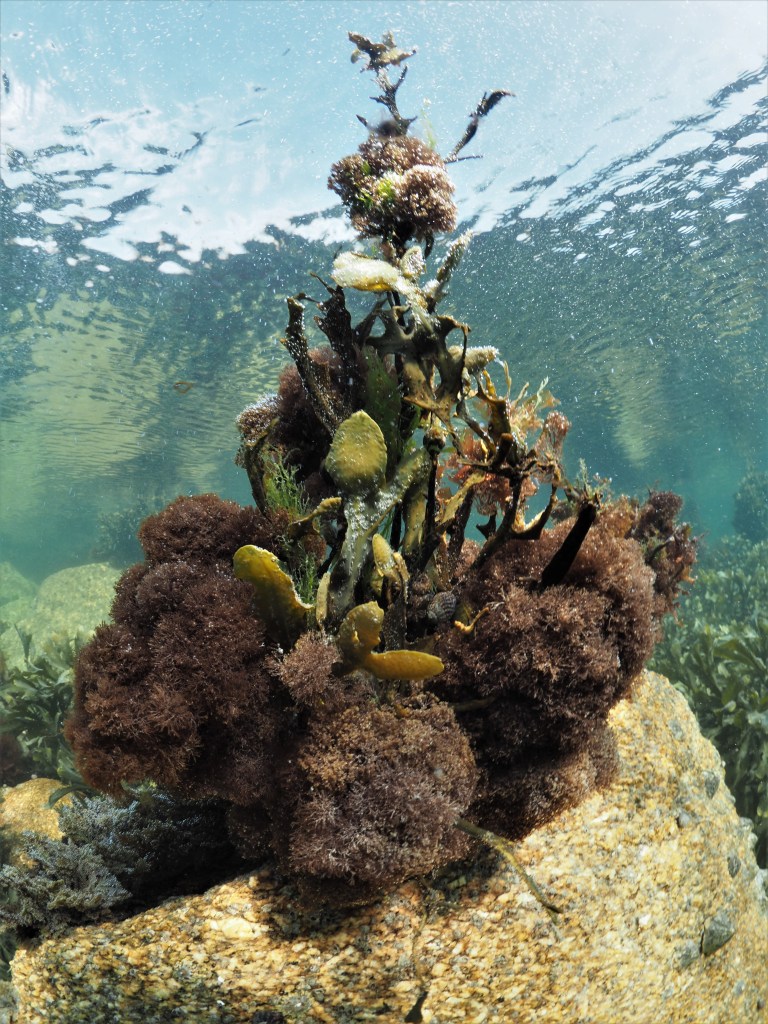
Wrack Siphon Weed Vertebrata lanosa
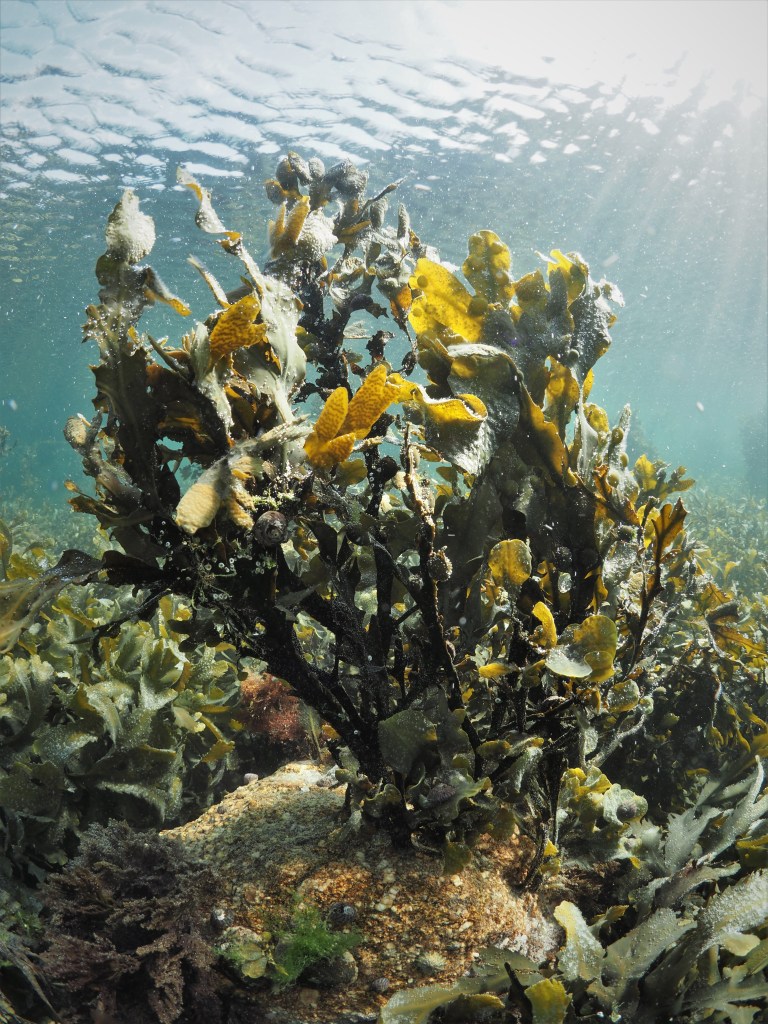
Bladder Wrack Fucus vesiculosus
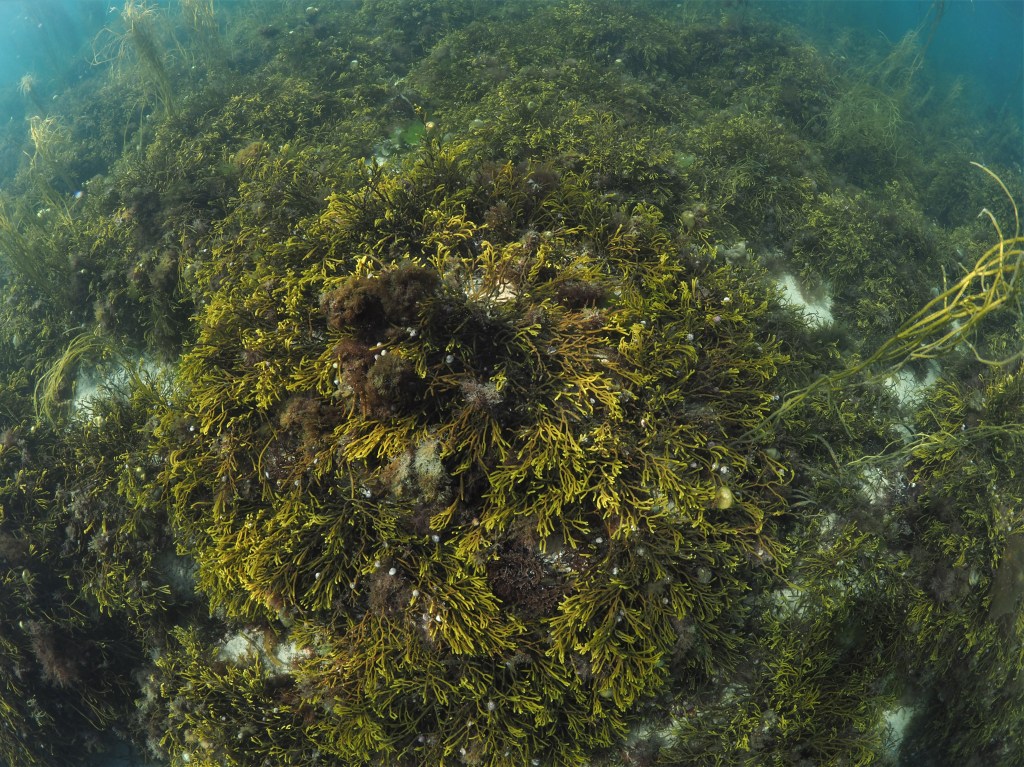
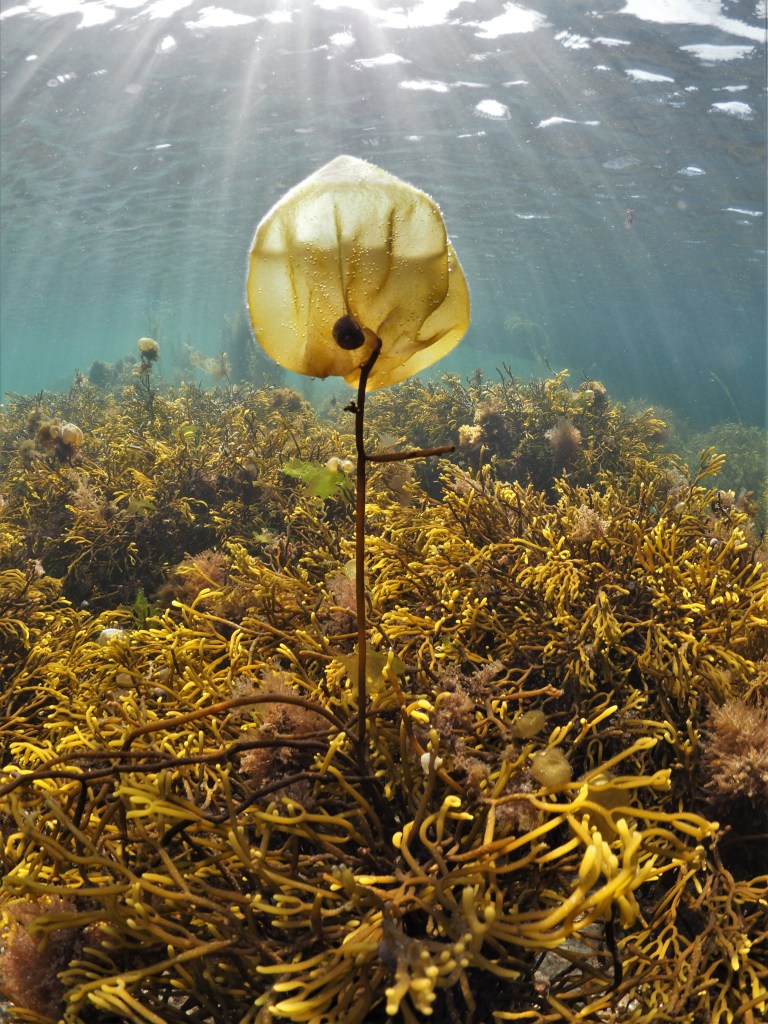
After the wracks, the rocks were dominated by Brown Tuning Fork Weed Bifurcaria bifurcata (with Osmundea, Chondrus, Ceramium and other species mixed in).
Very common on top of the Bifurcaria was either Colpomenia or Leathesia; I should know the difference but I cannot figure it out (even after squeezing between fingers)!
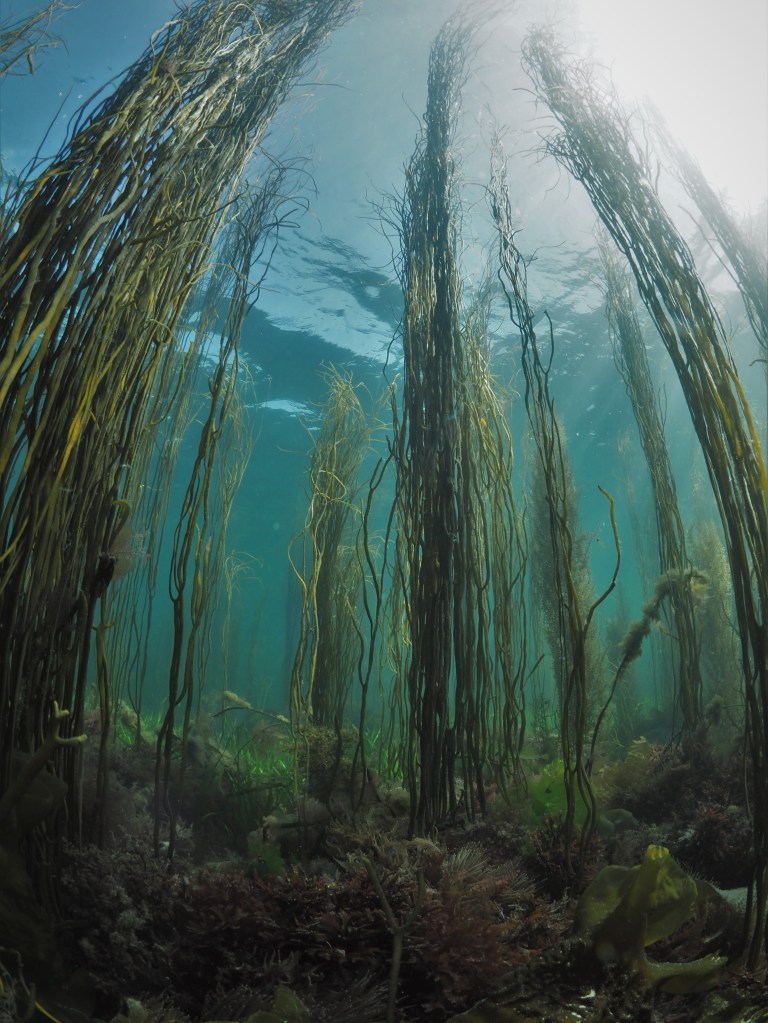
After the Bifurcaria zone dense Himanthalia elongata stands.
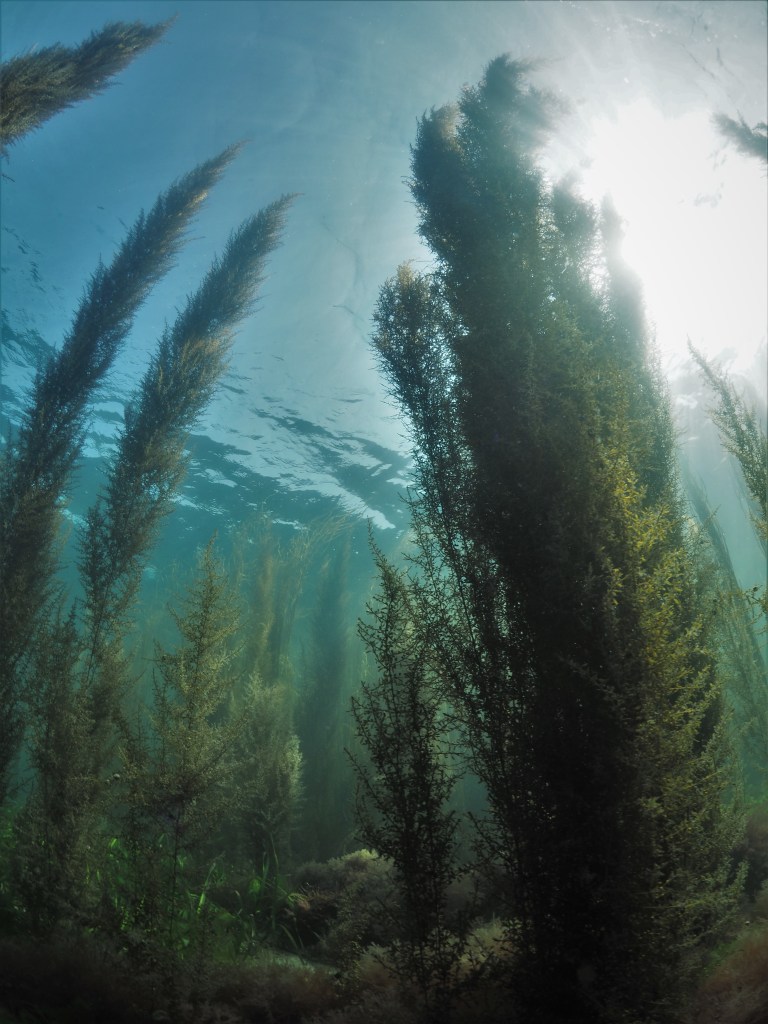
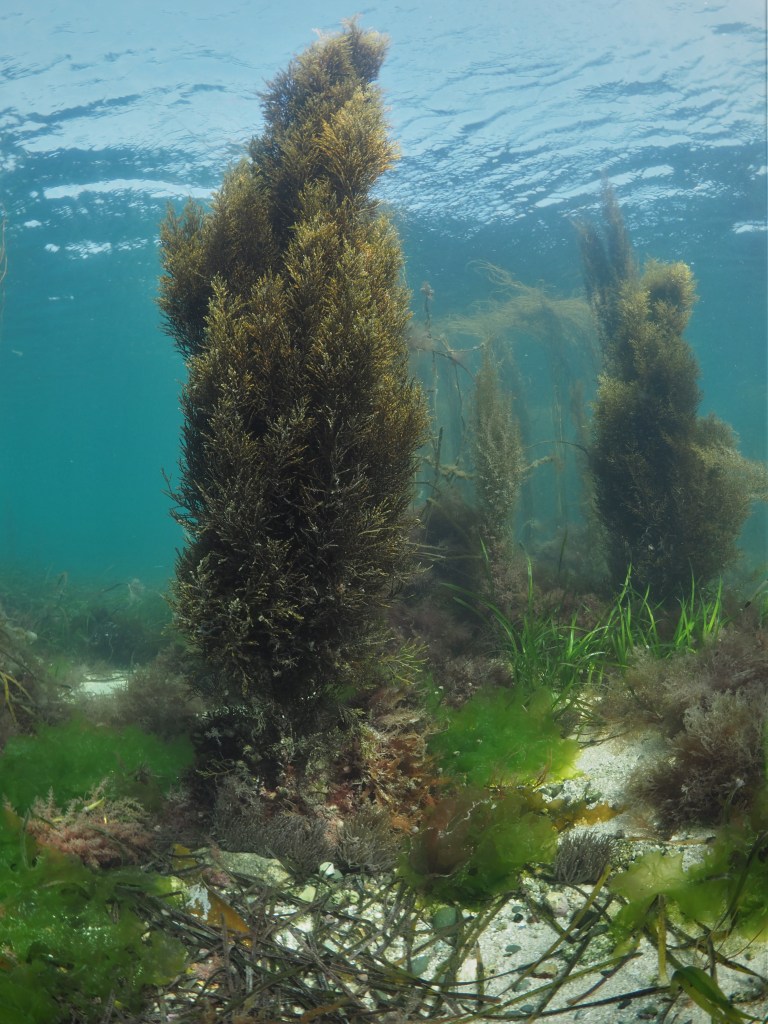
Very tall Sargassum muticum.
Very tall Gongolaria baccata.
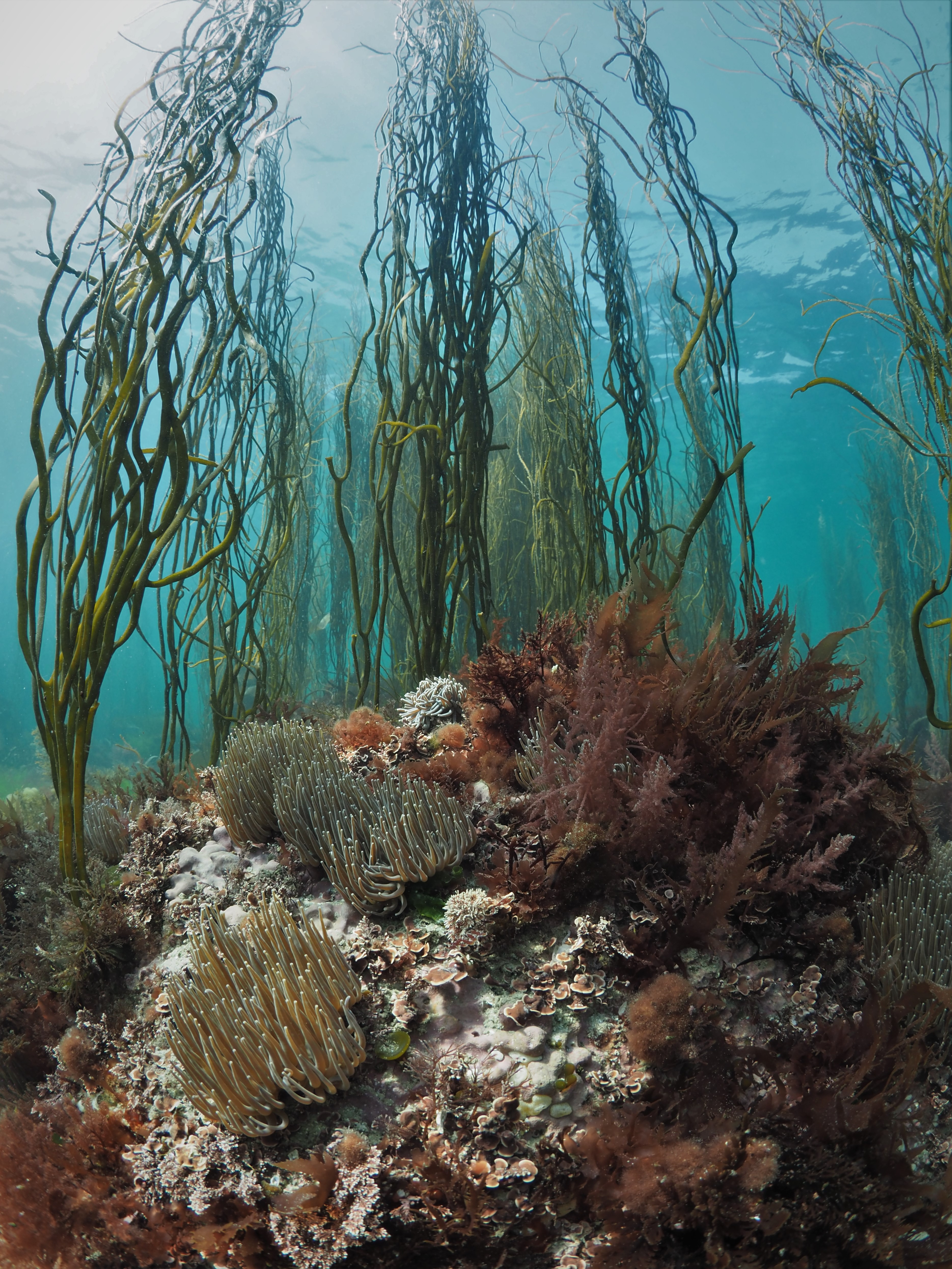
The tall Brown seaweeds, Himanthalia, Sargassum and Gongolaria, were interspersed with seagrass beds, with Ulva, Saccharina and some Asparagopsis inbetween.
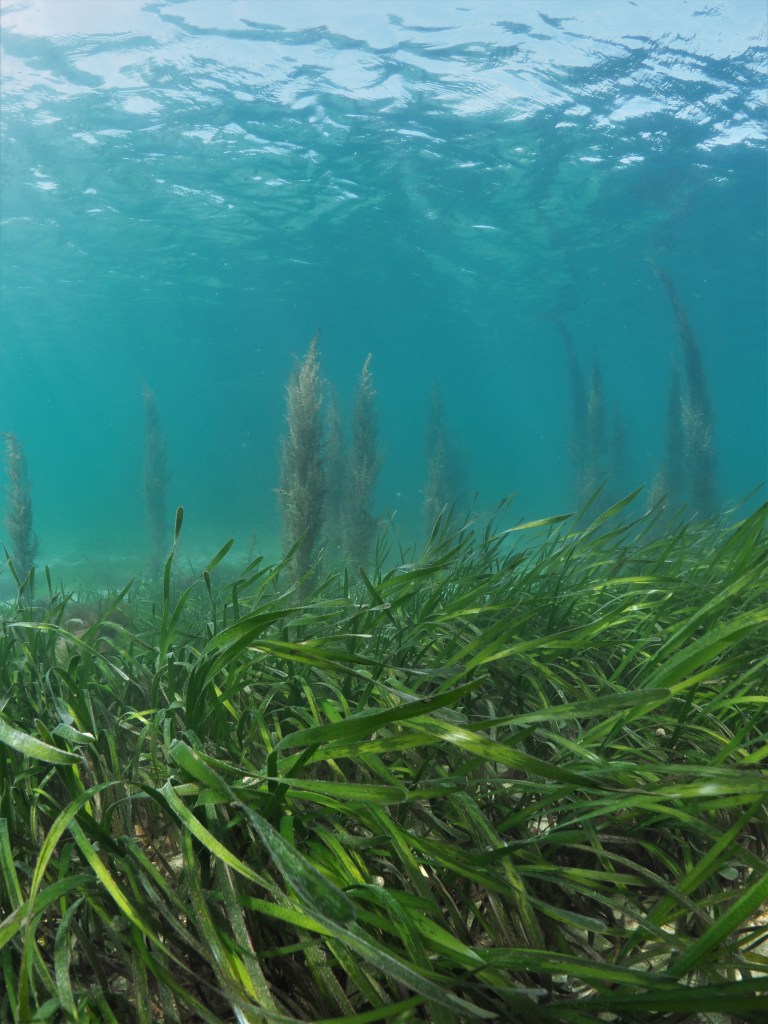
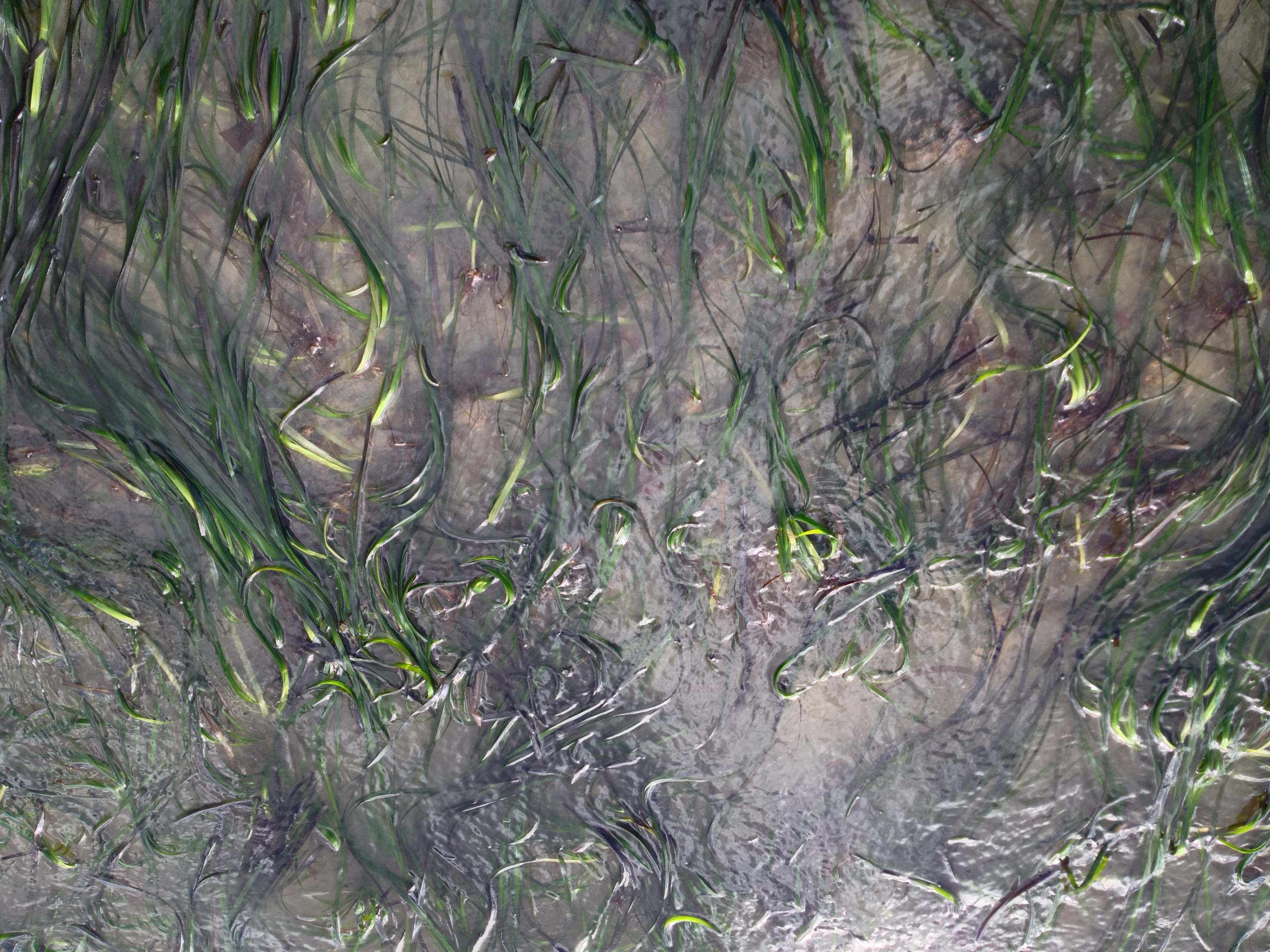
Seagrass
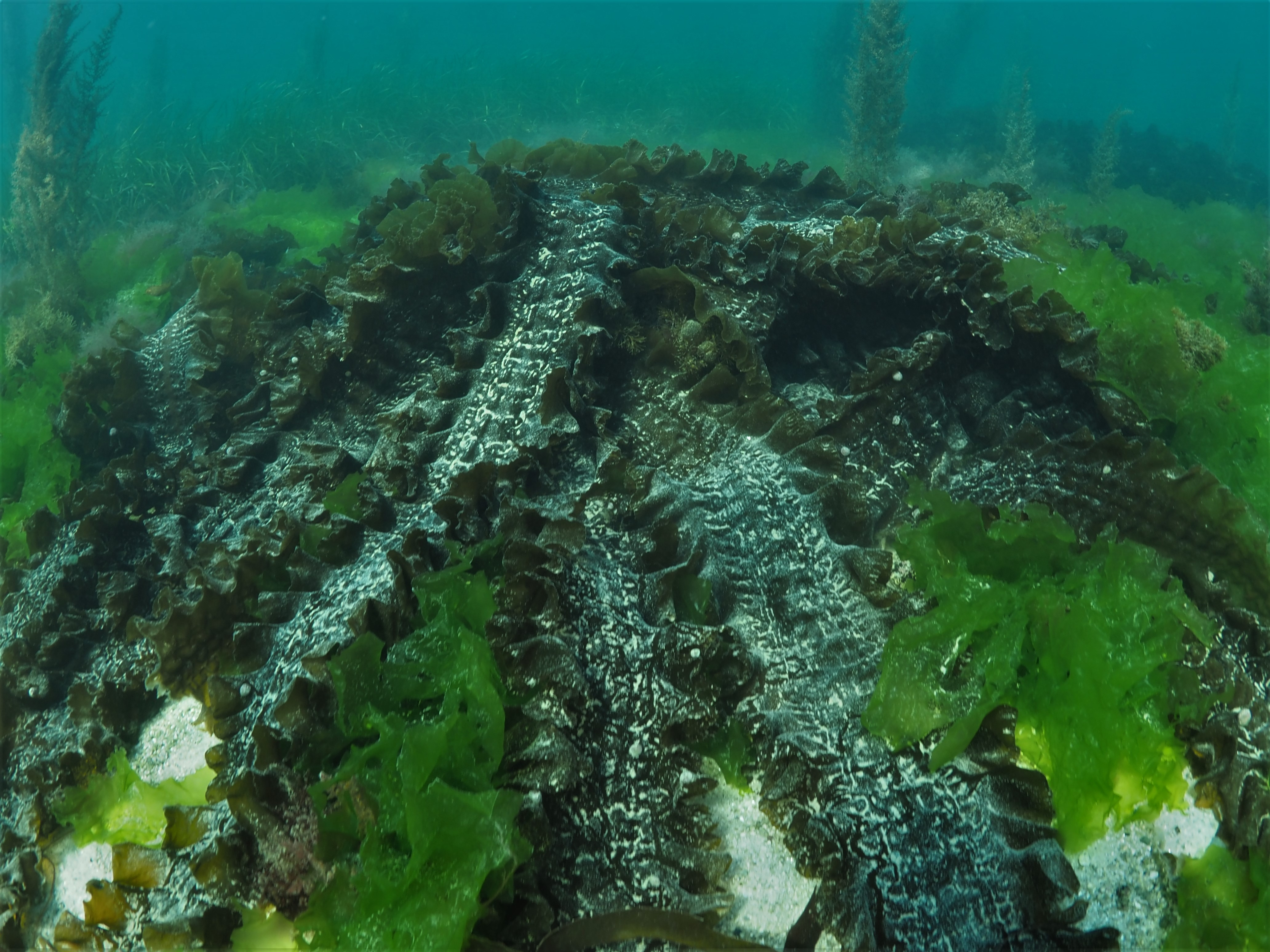
Huge masses of Sugar Kelp Saccharina latissima.
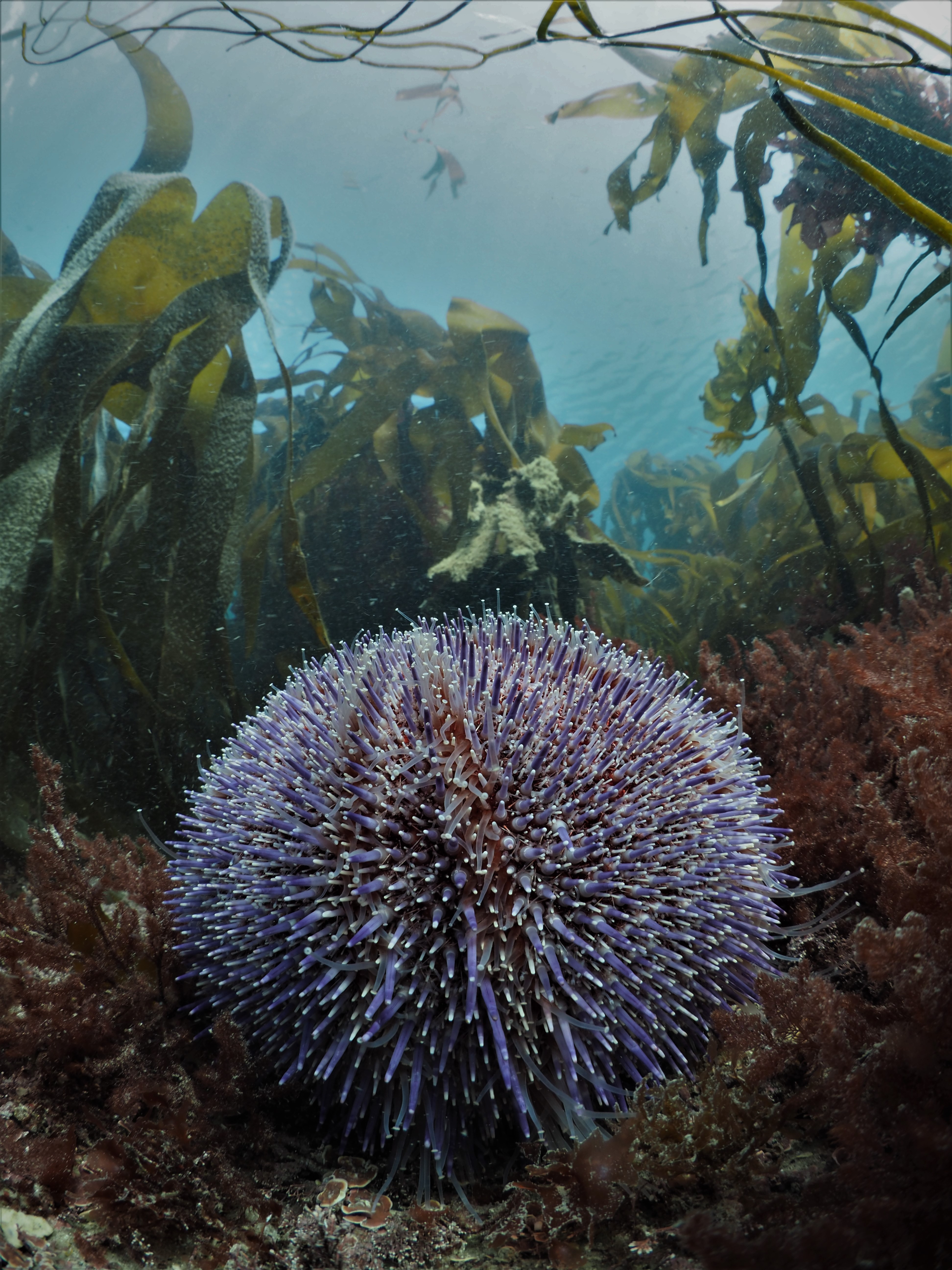
Some sites were dominated by kelp Laminaria digitata with Common Sea Urchins Echinus esculentus munching away. Fish life was very limited; I saw Ballan- and Corkwing Wrasse and Thicklipped Mullet but not much else.
Common Sea Urchin Echinus esculentus
Other sites were more ‘beachy’ with white sand, small rocks covered in Snakelocks Anemones and Seaweeds and Seagrass. The visibility looked very promising but was quite bad some days unfortunately (especially compared to our visit last September, see here). All in all a great time was had and we hope to visit again next year!
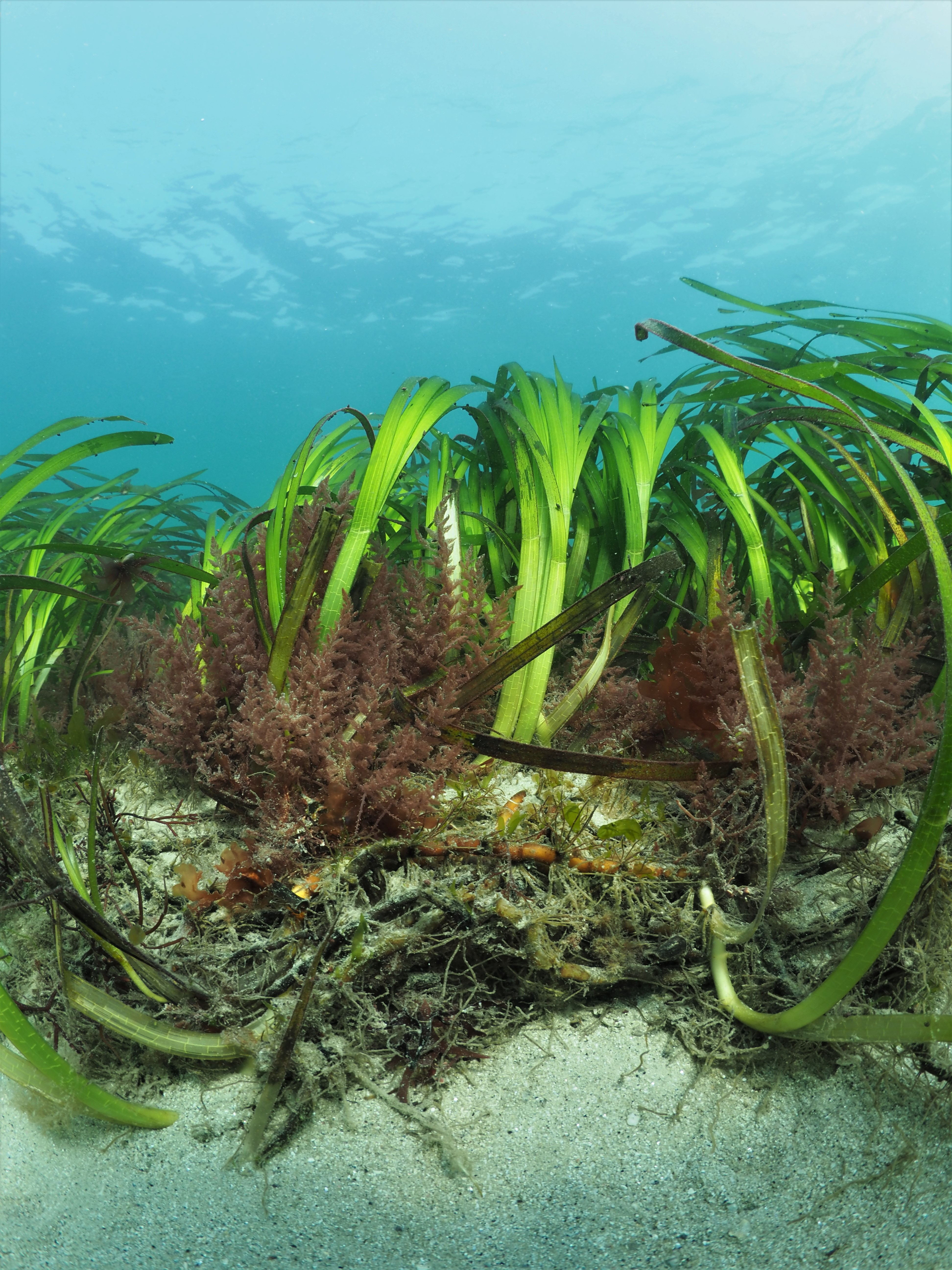
Seagrass, showing the extensive root- and rhizome systems that are so good at storing carbon (in addition, the seagrass beds store carbon by trapping floating particles).
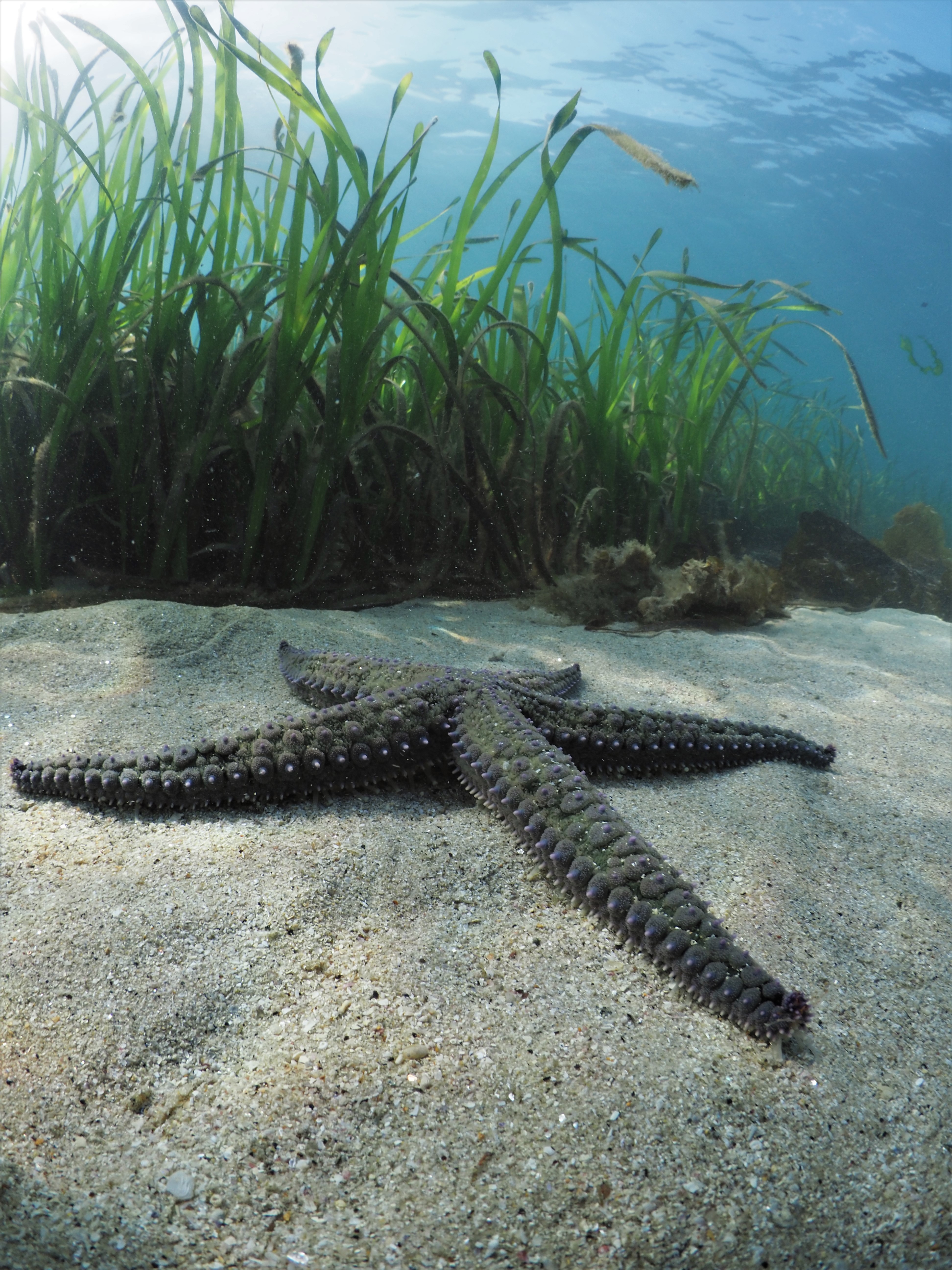
A Spiny Starfish Marthasterias glacialis.
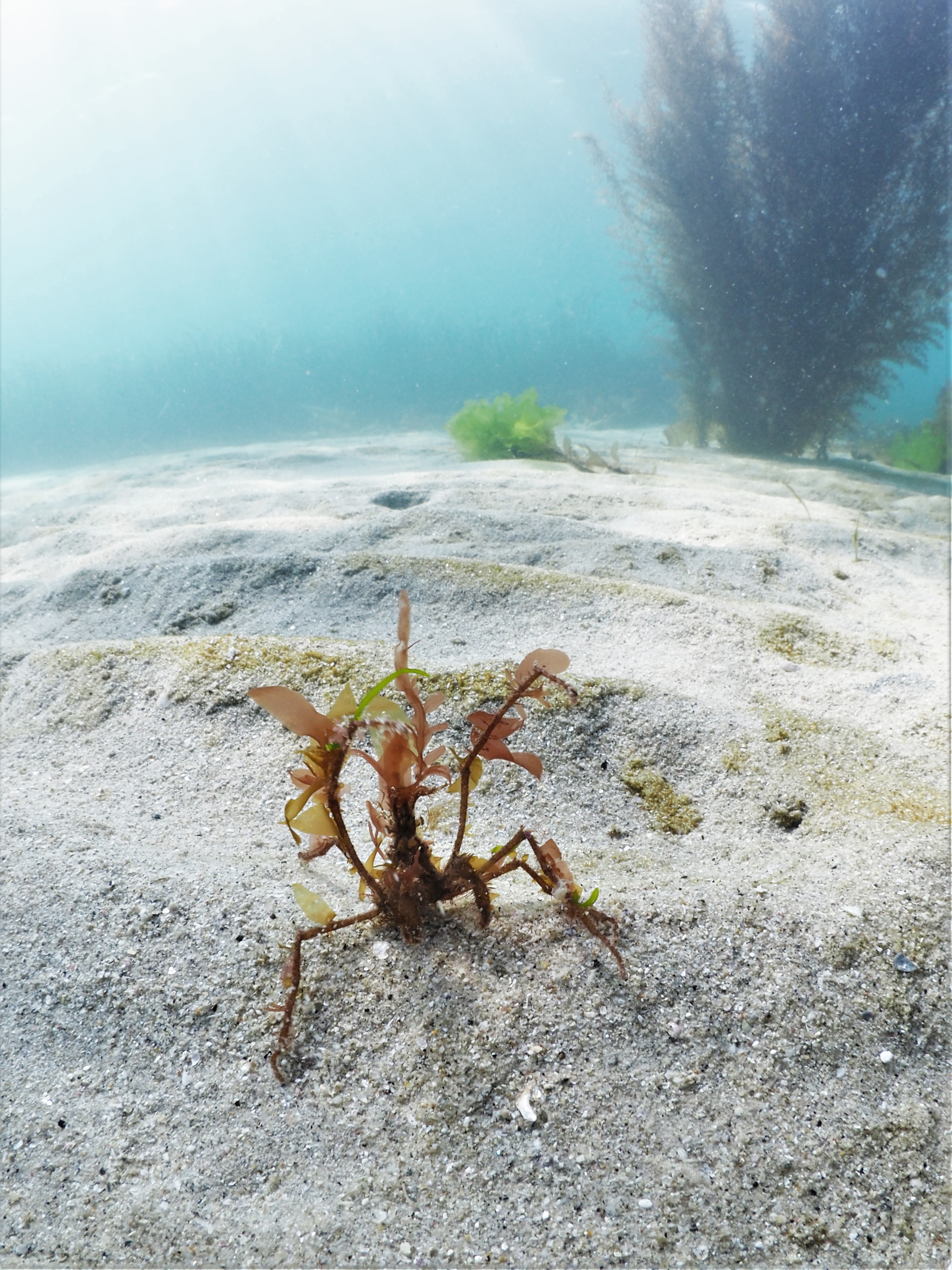
A tiny Macropdia crab covered in seaweed, not done justice without a strobe!
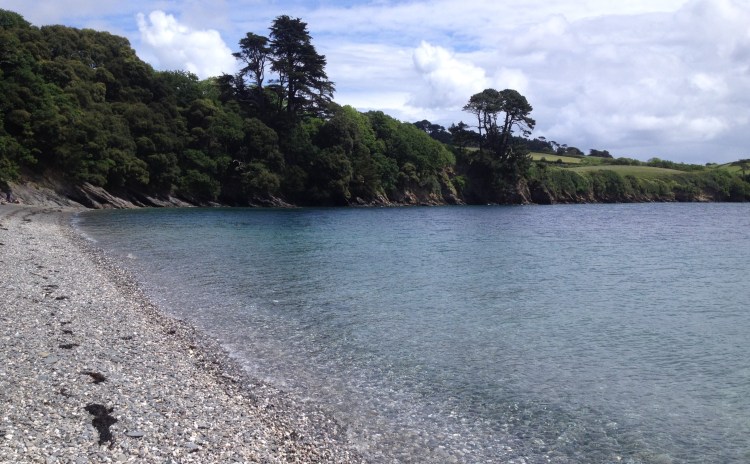
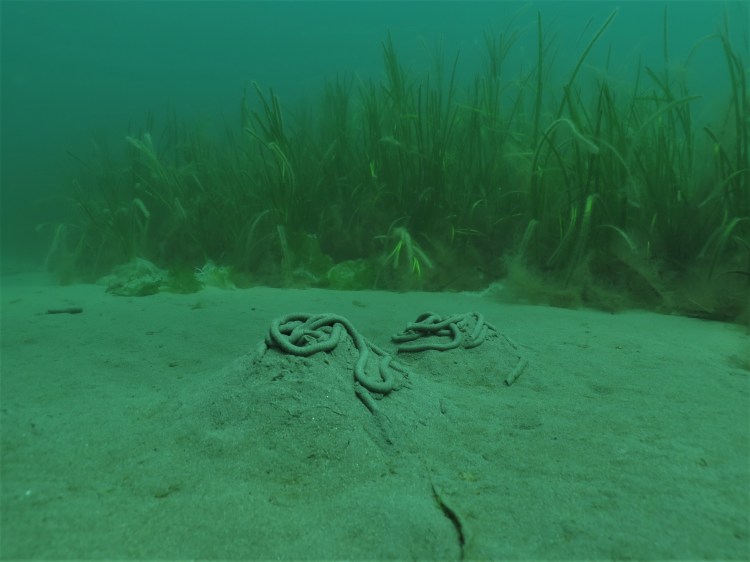
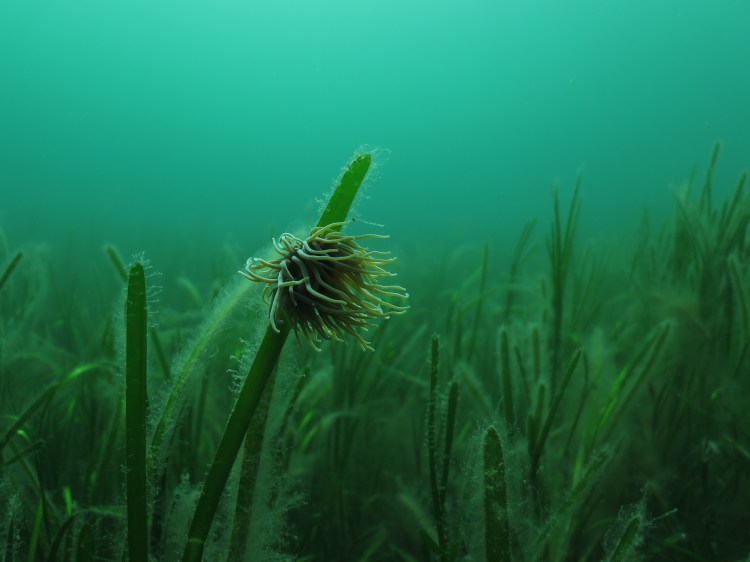
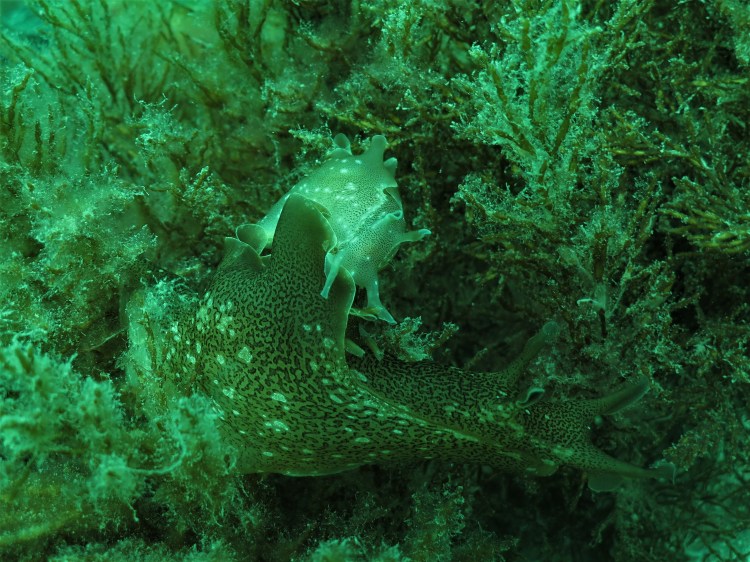
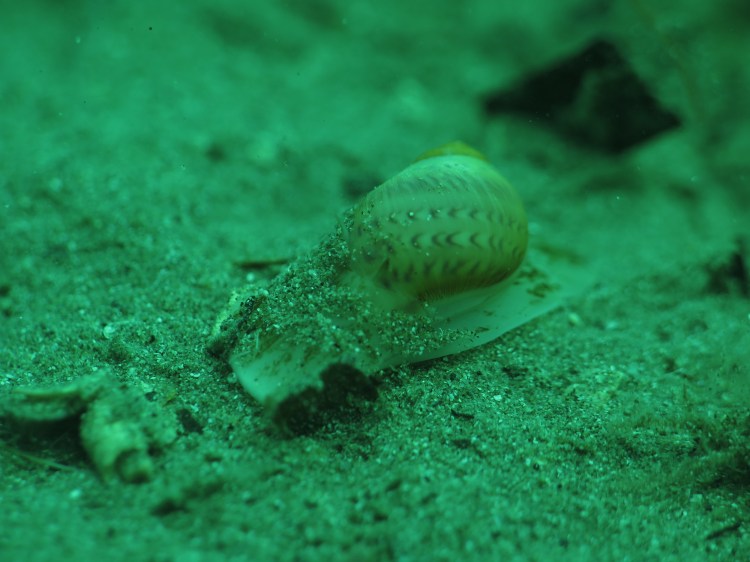
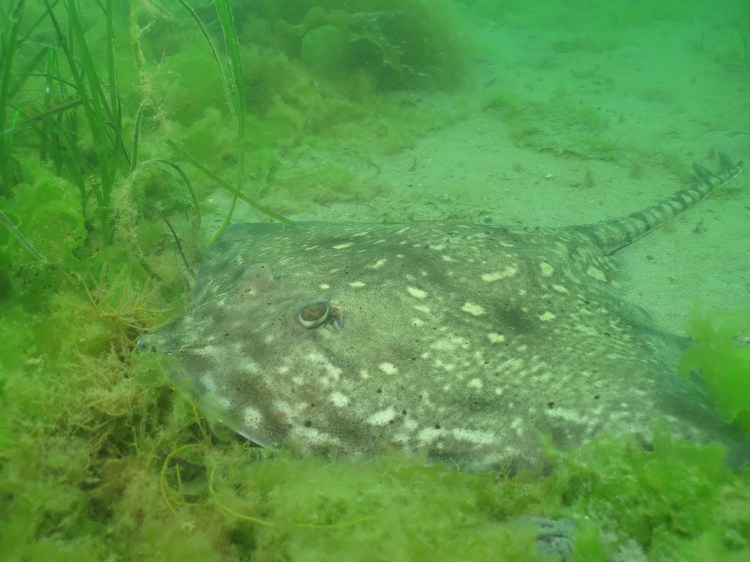
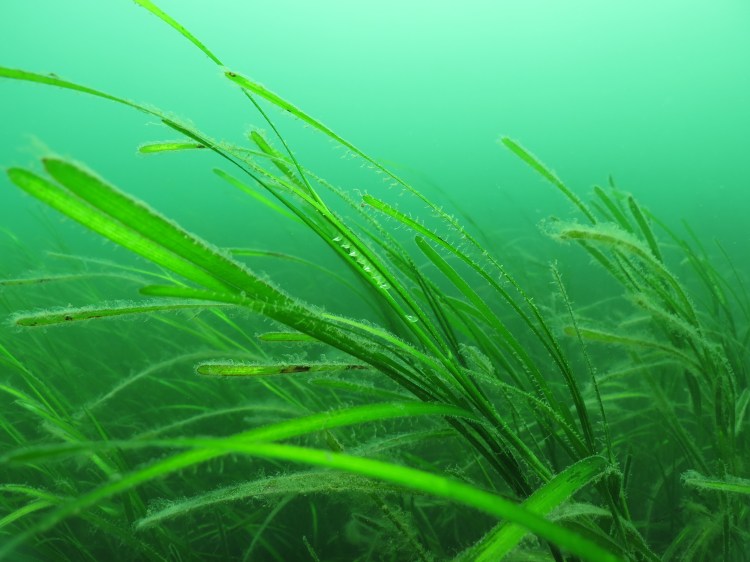
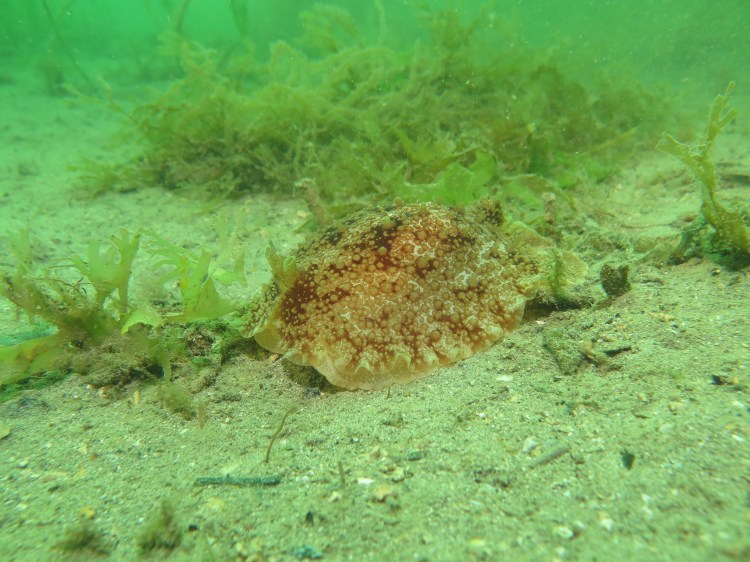
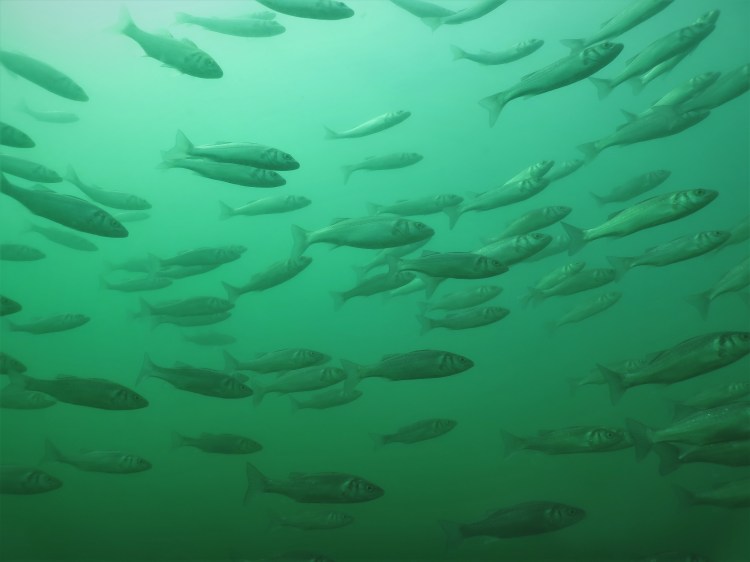
I was lucky to go diving twice this weekend, first at Grebe beach next to Durgan in the Helford Passage. As the photo above shows, this is as pretty as Cornwall gets, and the water looked crystal clear at high tide as well. It was a pain to get all picknick stuff and diving gear down (no parking nearby) but it was worth it. Unfortunately I left my fins in my car, so it was a very slow swim out. I emptied my stab jacket and tried walking over the seabed which half-worked (let’s say it was an interesting way of diving). Unfortunately the viz was not as great as expected. I spotted a small squid but it took off before I could take a snap. Other than that no special sightings. Below two images of the eelgrass, two frisky Sea hares Aplysia punctata and a macro photo of a Necklace shell Euspira catena. I had the rented tank refilled at Seaways in Penryn in case there was an opportunity to go out Sunday. The opportunity turned out to be limited to the village where I live, Flushing (opposite the harbour of Falmouth). I had never seen divers in Flushing or heard of anyone diving there, and judging from the siltier conditions and presence of boats that seemed to make sense. However, I always was a bit curious how this bit looked underwater, especially I wanted to check out the extent of the eelgrass emerging at very low tides (see this old rock pooling post). The visibility was not very good and near the shore there was only decaying seaweed. After a while though, lots of eelgras appeared. I was unsure whether this spot is known for eelgrass so I recorded my findings on the seagrass spotter site. This was the first time I brought my new strobe to have a play with, I need lots of practice for sure. Below a Thornback ray Raja clavata photographed with and without flash (no postprocessing used). The eelgrass looked very tall and healthy and many plants were flowering (middle of the photo). Towards the channel the eelgrass thinned out which allowed to observe little mud dwelling creatures. Sea lemons Doris pseudoargusPleurobranchus membranaceus are not that little actually (egg masses present). Finally, a lucky shot. Looking through the eelgrass, a curious school of Seabass Dicentrarchus labrax circled around me quite closeby. (After I left the water I heard a seal was near too but it would have had to be right in front of me for me to see it.) All in all it was a very interesting shallow dive close to home and I will definitely try to return soon.
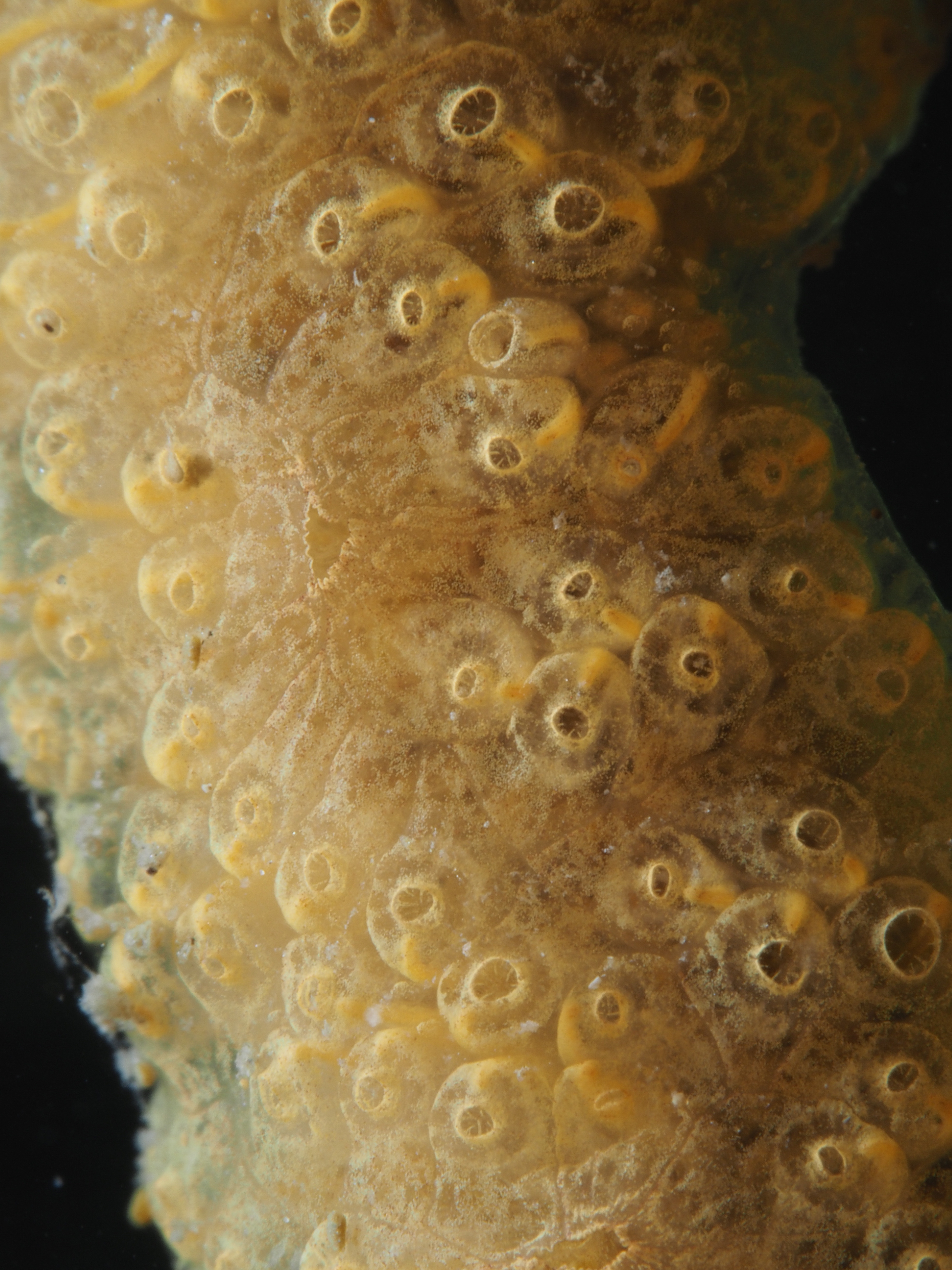
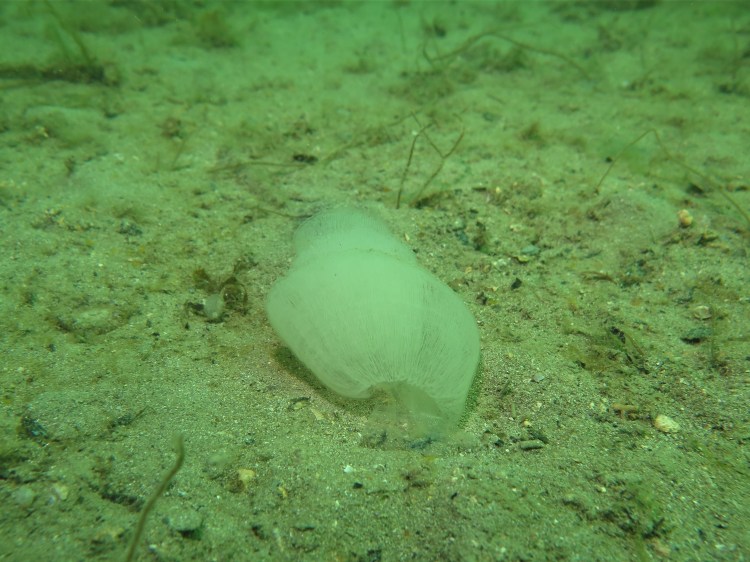
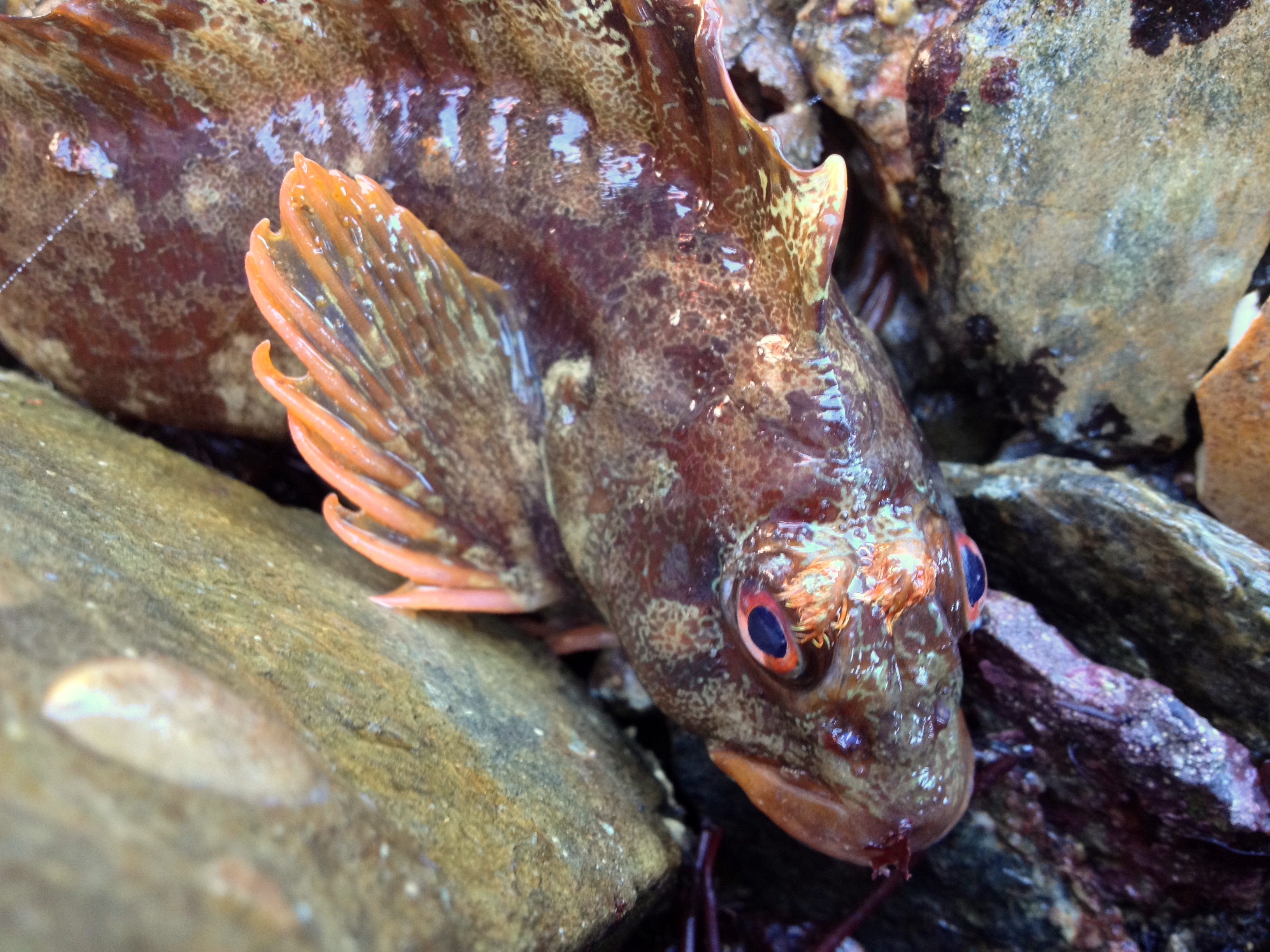
I made some pics last weekend when low tide wasn’t very low, but since this weekend the tides hit record lows I will first post about these finds. First up, the sheltered estuarine conditions in Penryn river in Flushing, opposite Falmouth’s port. The conditions are silty, with lots of sponges, tunicates, variegated scallops, sea lemons, European cowries and enormous amounts of Squat lobsters (see also this old post). With the tide this low, we were able to see some other stuff as well. The water went as low as the Eelgrass:Shannys, Rock gobies, Rockling, Worm pipefish and (to a lesser extent) Butterfish are easy to find in Flushing. Today we saw for the first time two Connemara clingfish Lepadogaster candollei (first pic). Next a Rock goby Gobius paganellus. We also saw many large Tompot blennies Parablennius gattorugine which live subtidally and only now could be seen:
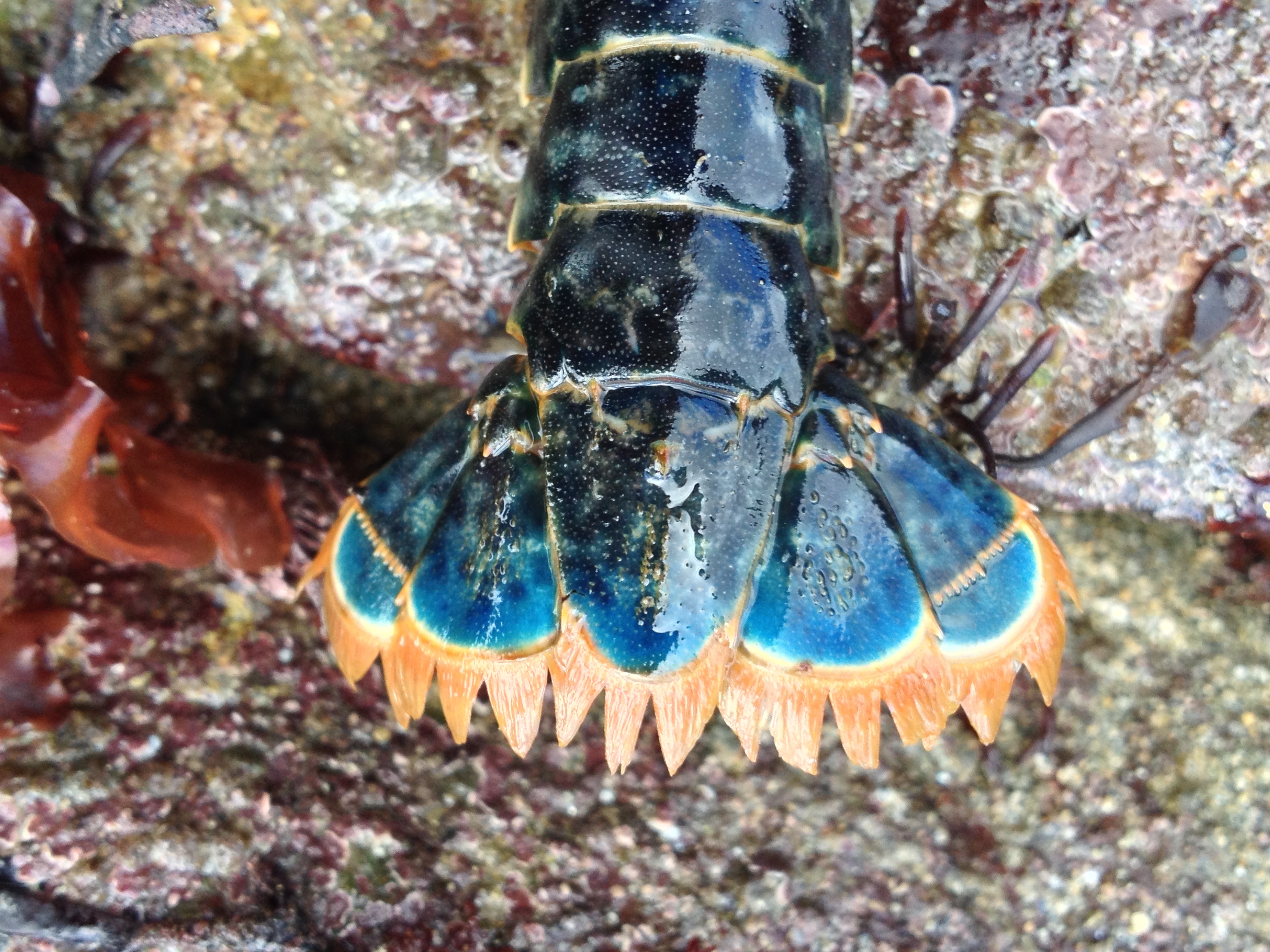
The real surprise of the afternoon was a juvenile Common lobster Homarus vulgaris. All in all a very succesful trip!
 I had the rented tank refilled at Seaways in Penryn in case there was an opportunity to go out Sunday. The opportunity turned out to be limited to the village where I live, Flushing (opposite the harbour of Falmouth). I had never seen divers in Flushing or heard of anyone diving there, and judging from the siltier conditions and presence of boats that seemed to make sense. However, I always was a bit curious how this bit looked underwater, especially I wanted to check out the extent of the eelgrass emerging at very low tides (see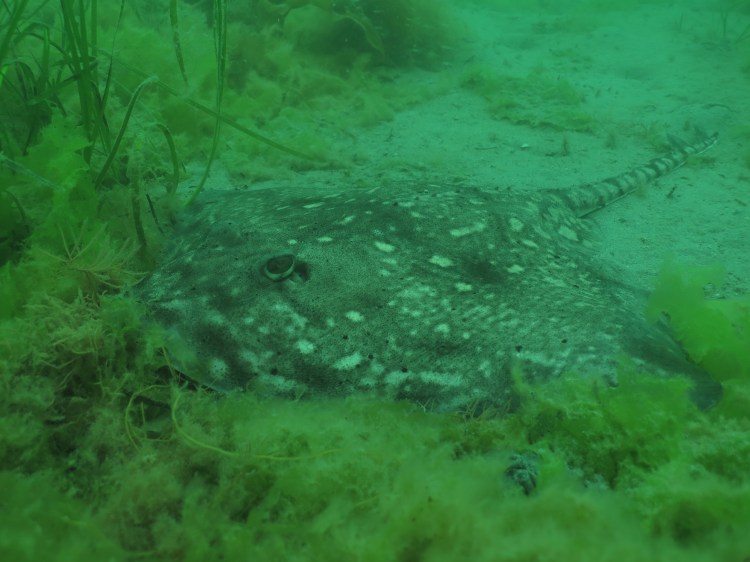
 An Bollenessor