Moods

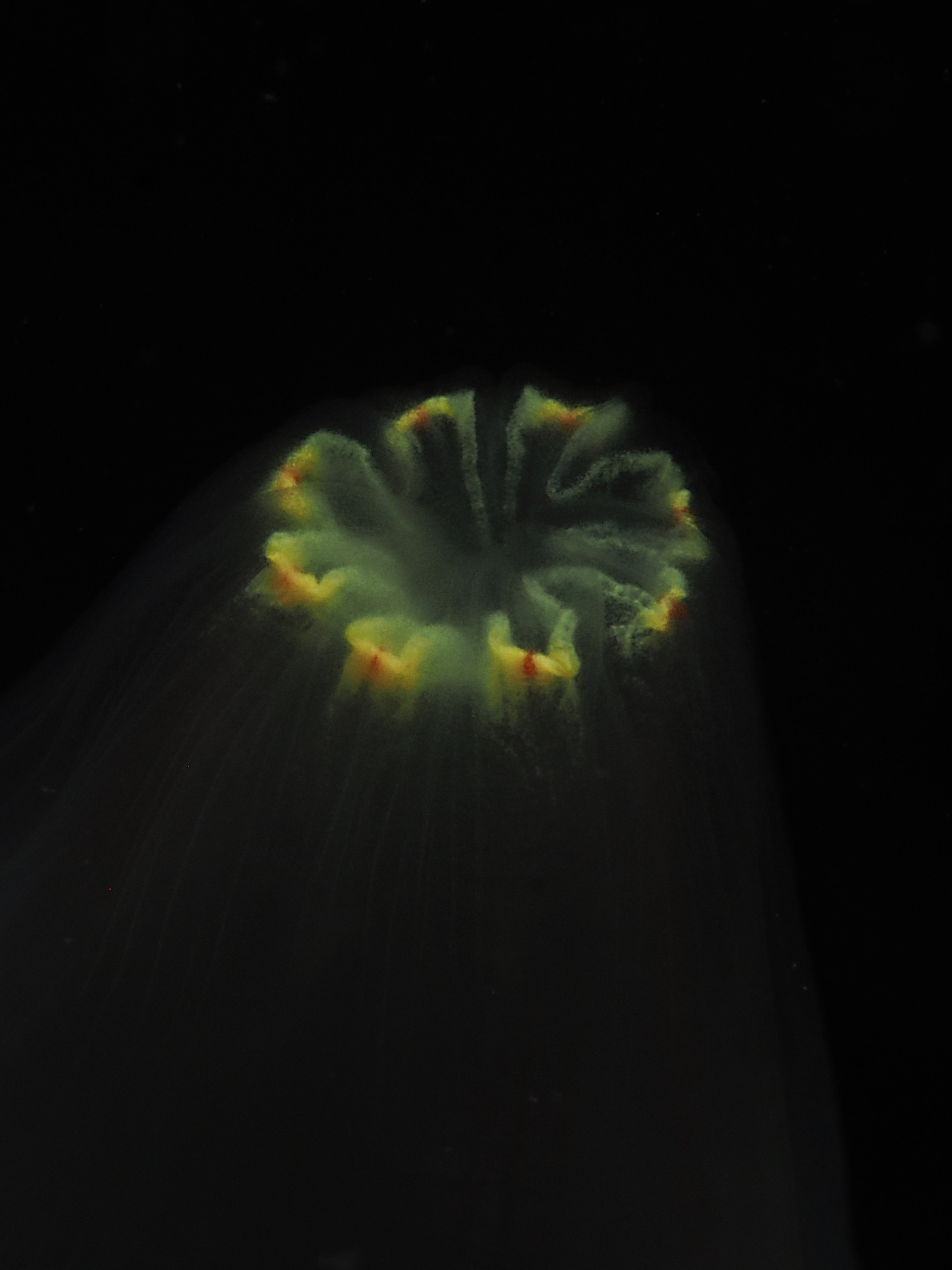
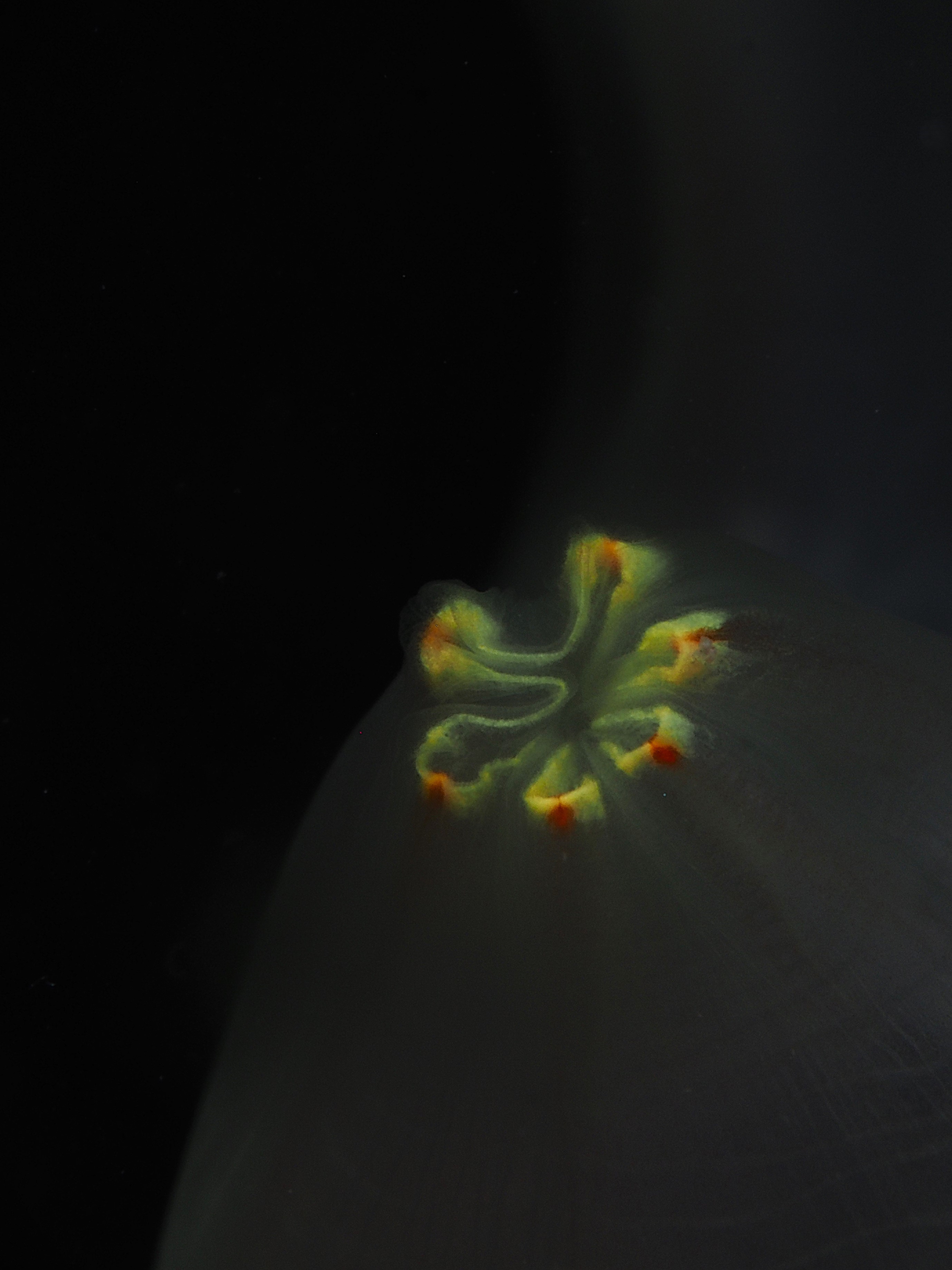
The inhalant (left pic, 8 lobes) and exhalant (right pic, 6 lobes) siphon of the Sea Vase seasquirt (Ciona intestinalis). The pigments are thought to function as photoreceptors. This is a common species, especially in habitats disturbed by humans, and not too pretty (the latin name means ‘pillar of intestines’…) but if you zoom in everything reveals beautiful features! Quite moody shots, to which I have gravitated this year. I like the black backgrounds, which is achieved by letting very little light into the camera, with the strobes only lighting up the subject in the foreground – unable to illuminate anything in the open water (‘negative space’) behind. (A similar effect can be achieved using a ‘snoot’, but I have never managed to get that to work…) I have also tried to get closer and closer up with my macro wetlens, ideally I’d have some sort of microscope underwater! If you are on instagram, check out @an_bollenessor for more pics as ‘posts’ and as ‘stories’.
Buoy

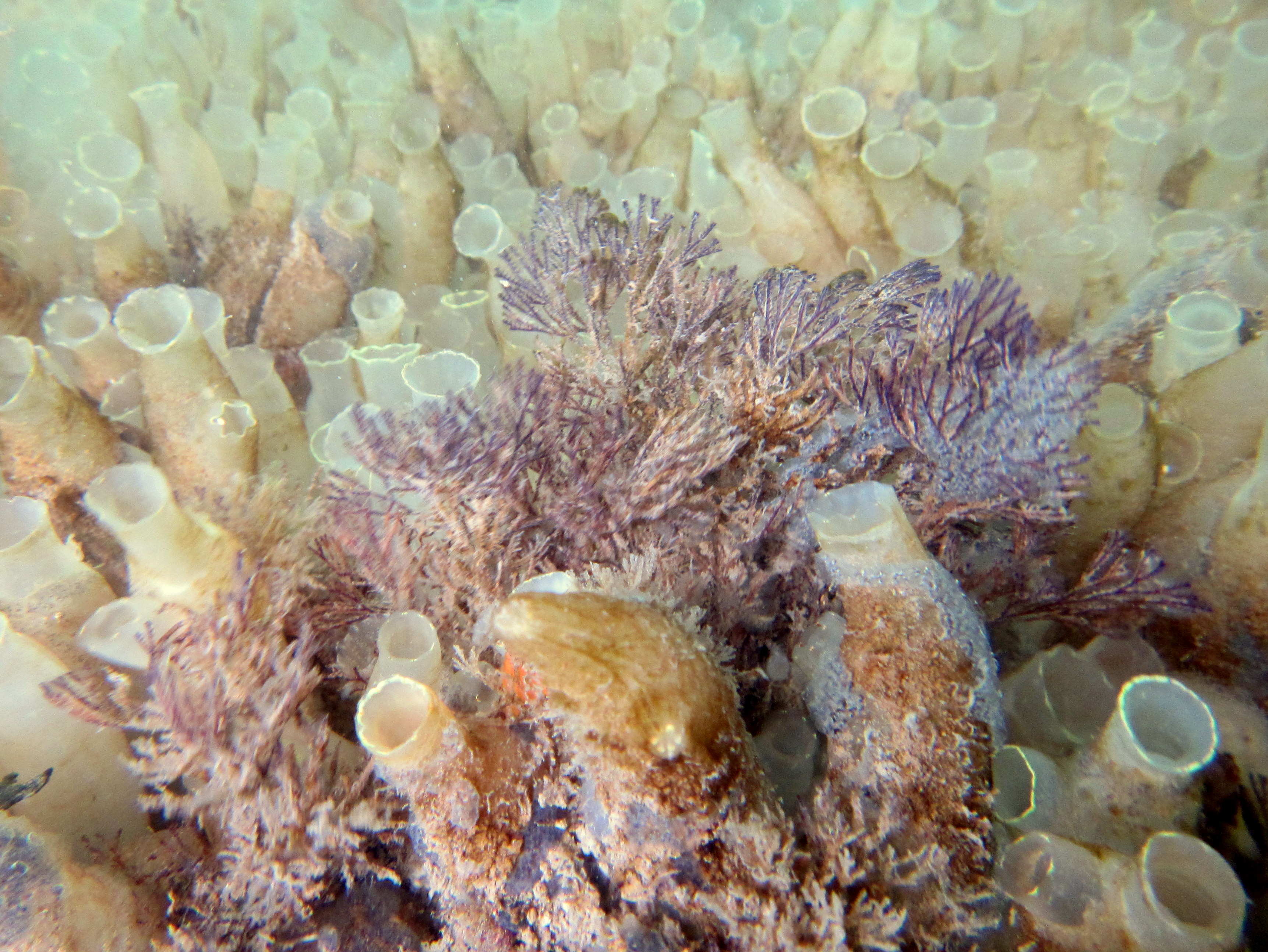
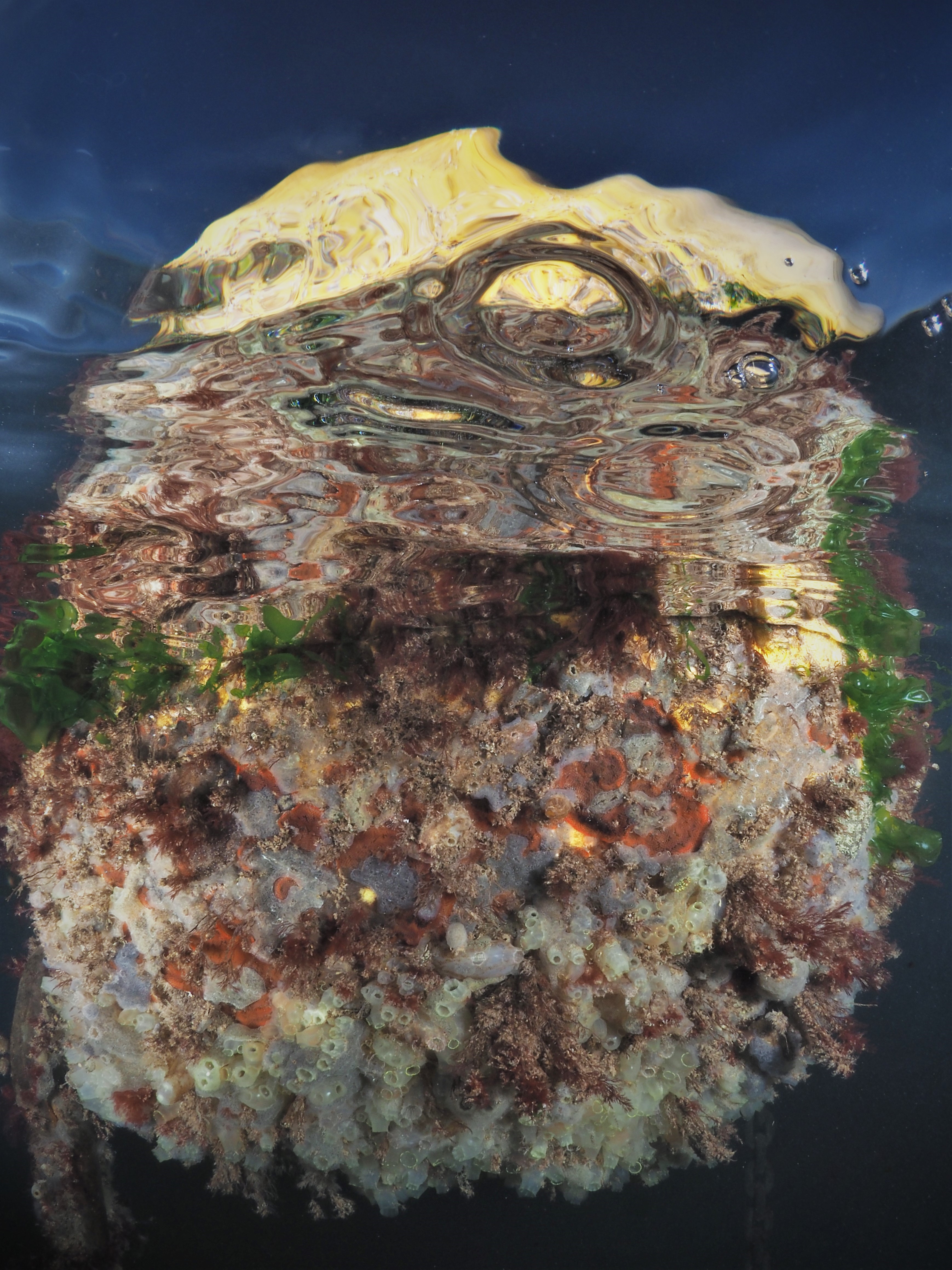
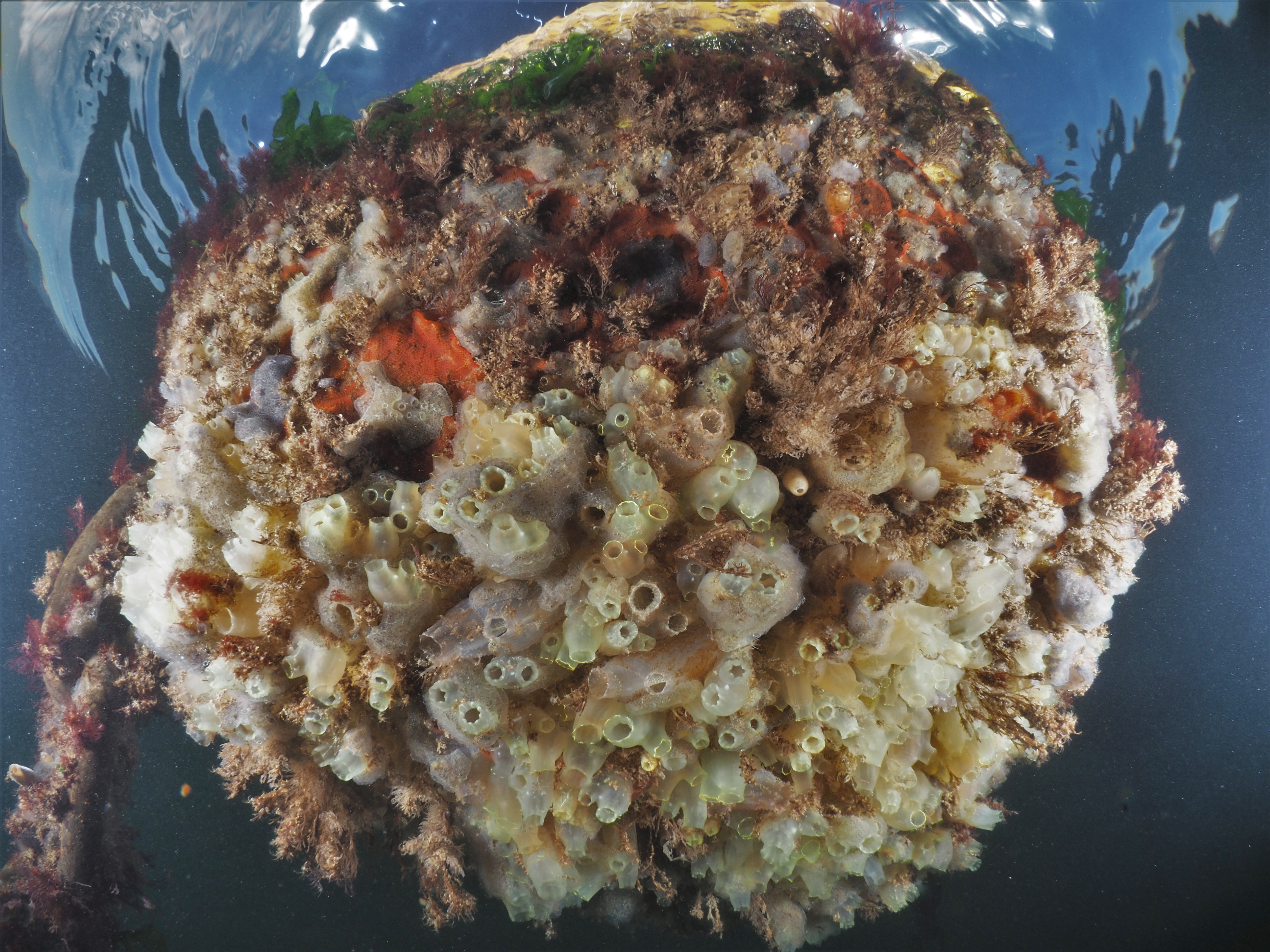
A rare sunny interval on Saturday meant I grabbed my gear for one last snorkel this year before returning to The Netherlands for Christmas. The visibility seemed good the last couple of days (judged by peering down the quay) and there was no wind, but I was quickly disappointed when sticking my head underwater at Flushing beach (also had major brain freeze!). I headed to the nearest buoy to practice some close focus wide able shots with my two strobes (one just arrive back from Japan for repairs). This proved difficult but fun. Lots of adjusting positions; outward when they created back scatter and inwards when the middle of the photo was not lit up. As the buoy was bobbing about I used a fast shutterspeed which resulted in dark water but that too has its charms. Lots of diversity, including the solitary seasquirt Cione intestinalis, colonial seasquirts Botryllus schlosseri, Diplosoma listerianum, Didemnum (maculosum?), bryozoans Watersipora subatra and Bugula and/or Bugulina species, the purse sponge Sycon ciliatum as well as tufts of red seaweeds and green Ulva. There are an enormous amount of tiny critters such as worms and snails hidden between all these species as well. It will be a nice project for next year to take a better wide able pic and complement these with macro pics of individual species.

a weird mollusc in Mylor Marina

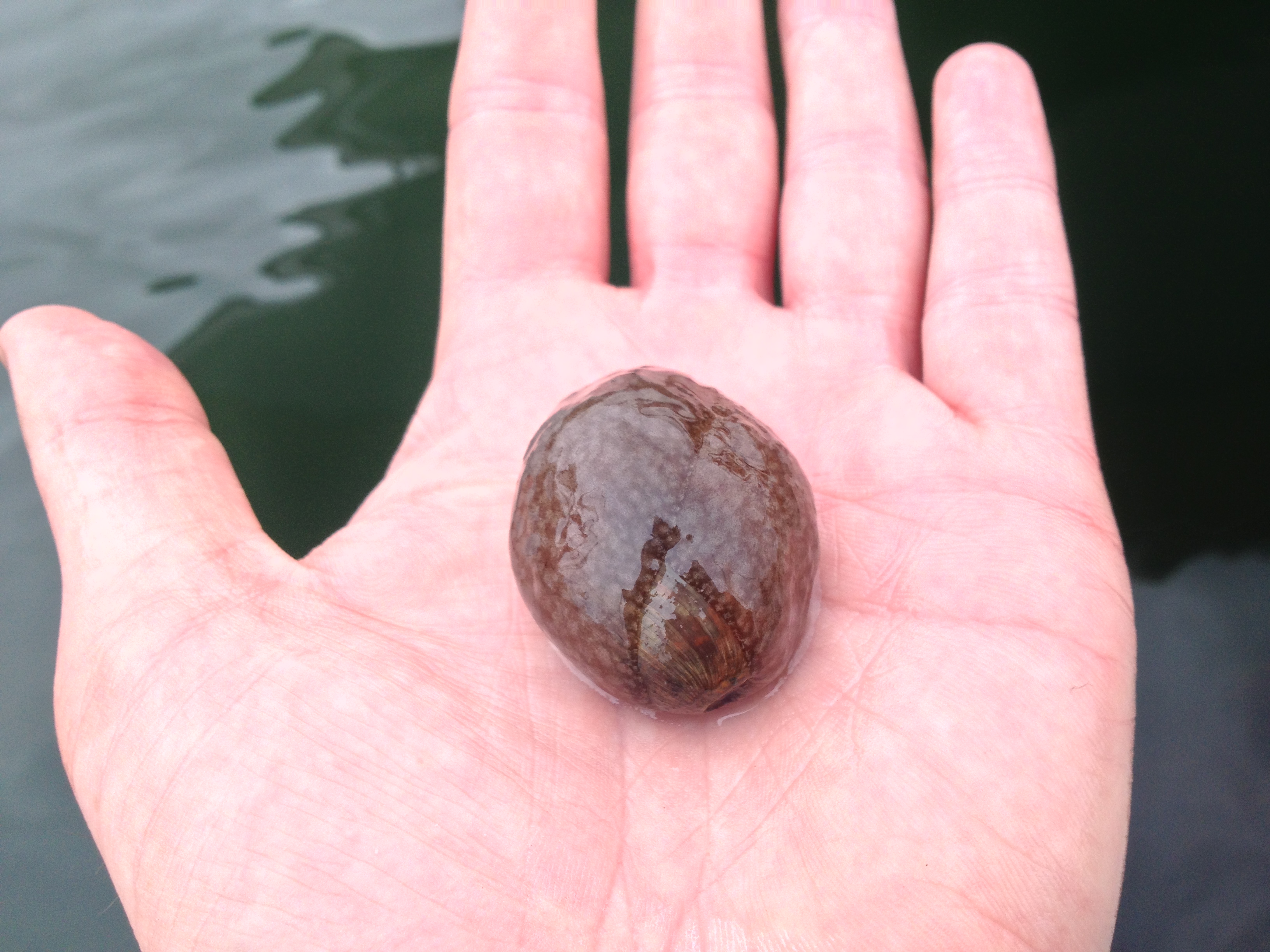
In the series ‘pontooning‘, I returned to Mylor a week ago Friday to have a quick look around in the marina. The water was choppy, but visibility on the sheltered side of the pontoons was OK. I noticed a brown slug-like thing flapping about next to a boat. My first thought was a sea hare (I have seen plenty but have not yet seen them swimming). Upon closer inspection, I saw that it was something else, it had a shell like Haminoea or Akera, species I had never seen, especially not swimming. It turns out that it was Akera bullata, an Ophistobranch mollusc that is rarely seen in Cornwall and generally is observed crawling on the mud, not swimming. Why they swim is not well understood, but they usually swarm in numbers and so there must be some general response to the environment or mating behaviour going on. I saw four other individuals nearby so that fits. I made a couple of movies but as I could not look through the viewfinder the footage is not great (I went back Saturday and Sunday to try and find them back but was not able to). The shell can be clearly seen hanging down (Akera is related to the Sea hare but has retained its external shell). When lifted out of the water, the animal folds its mantle around its shell.

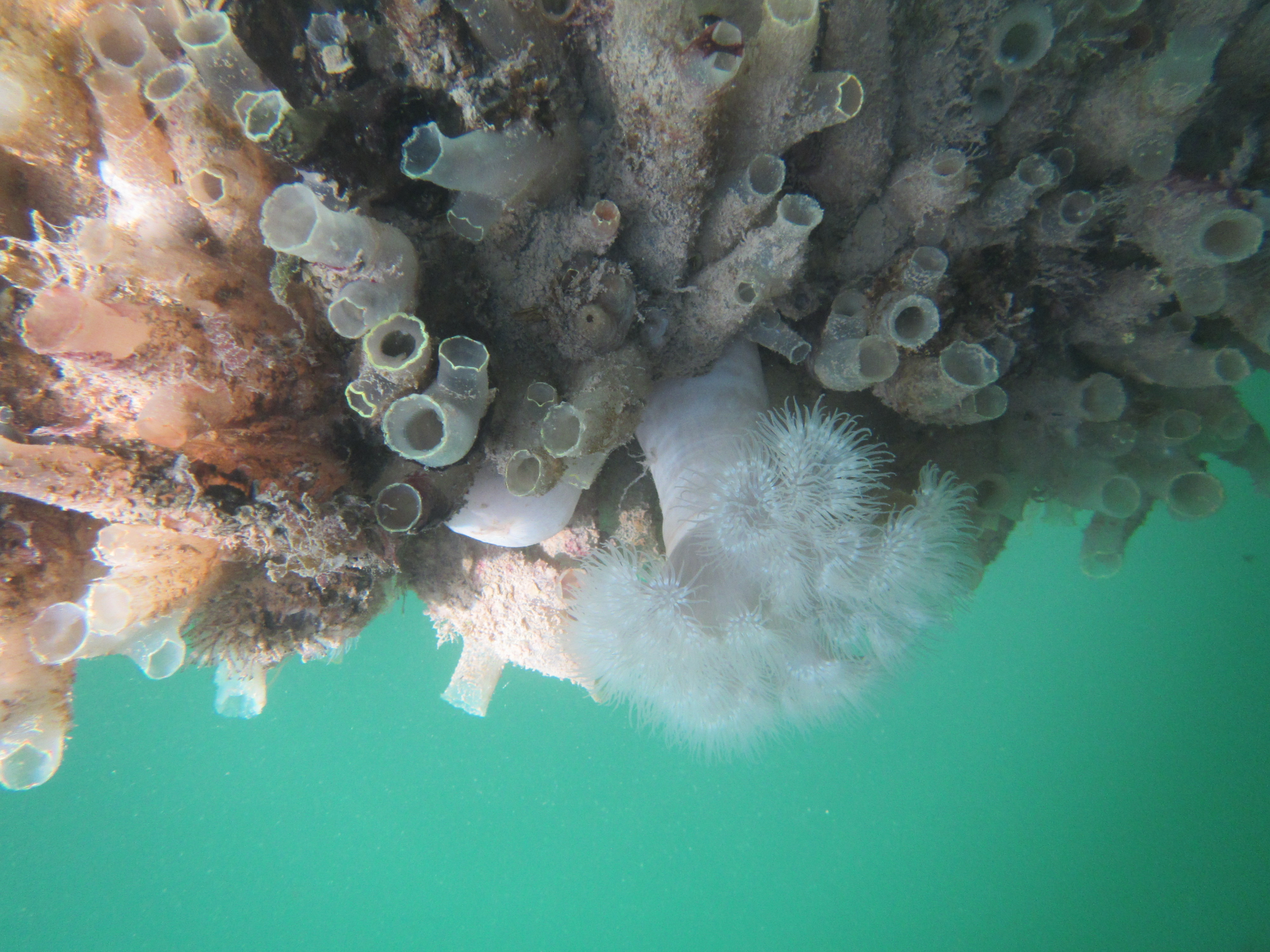
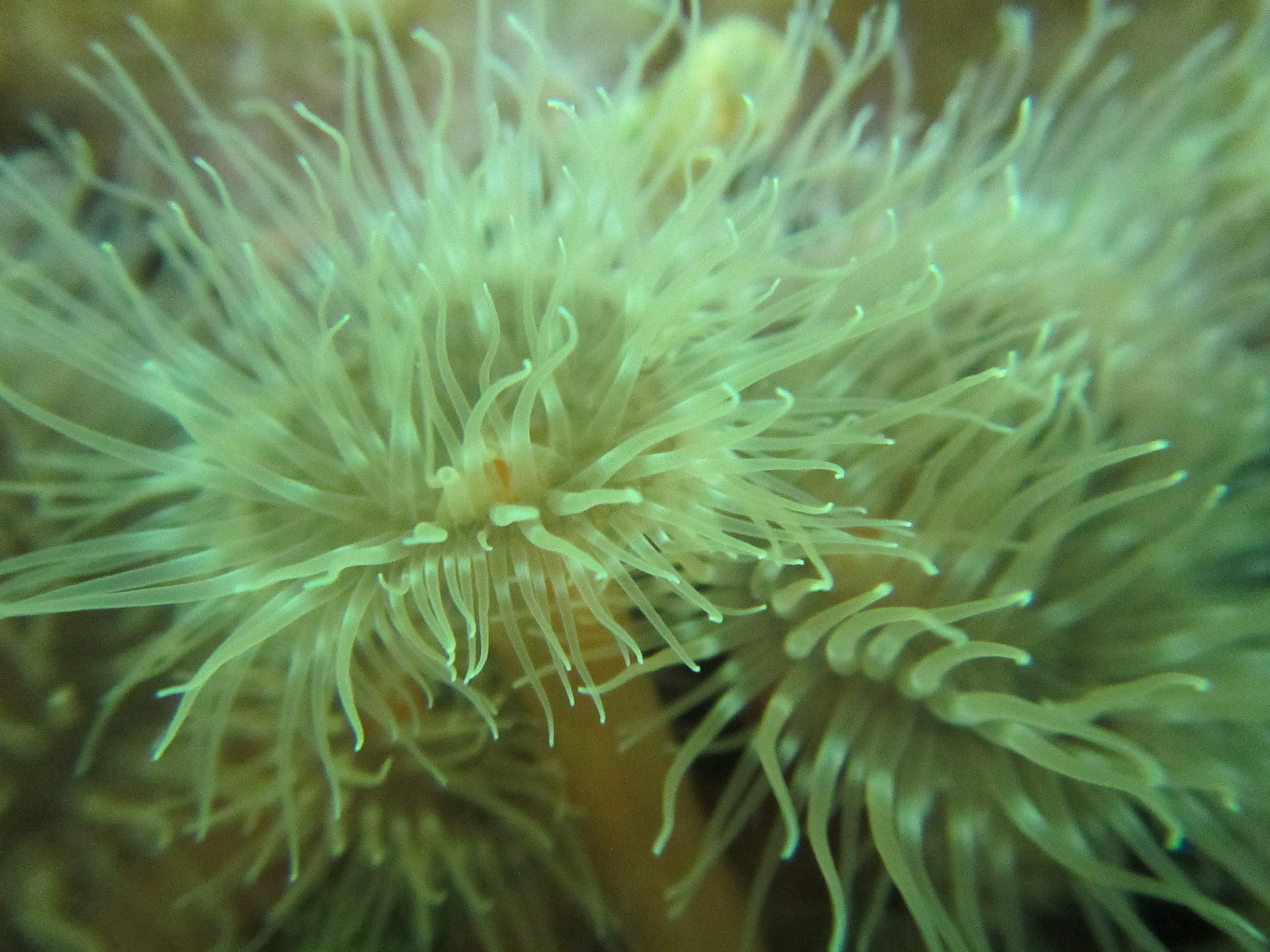
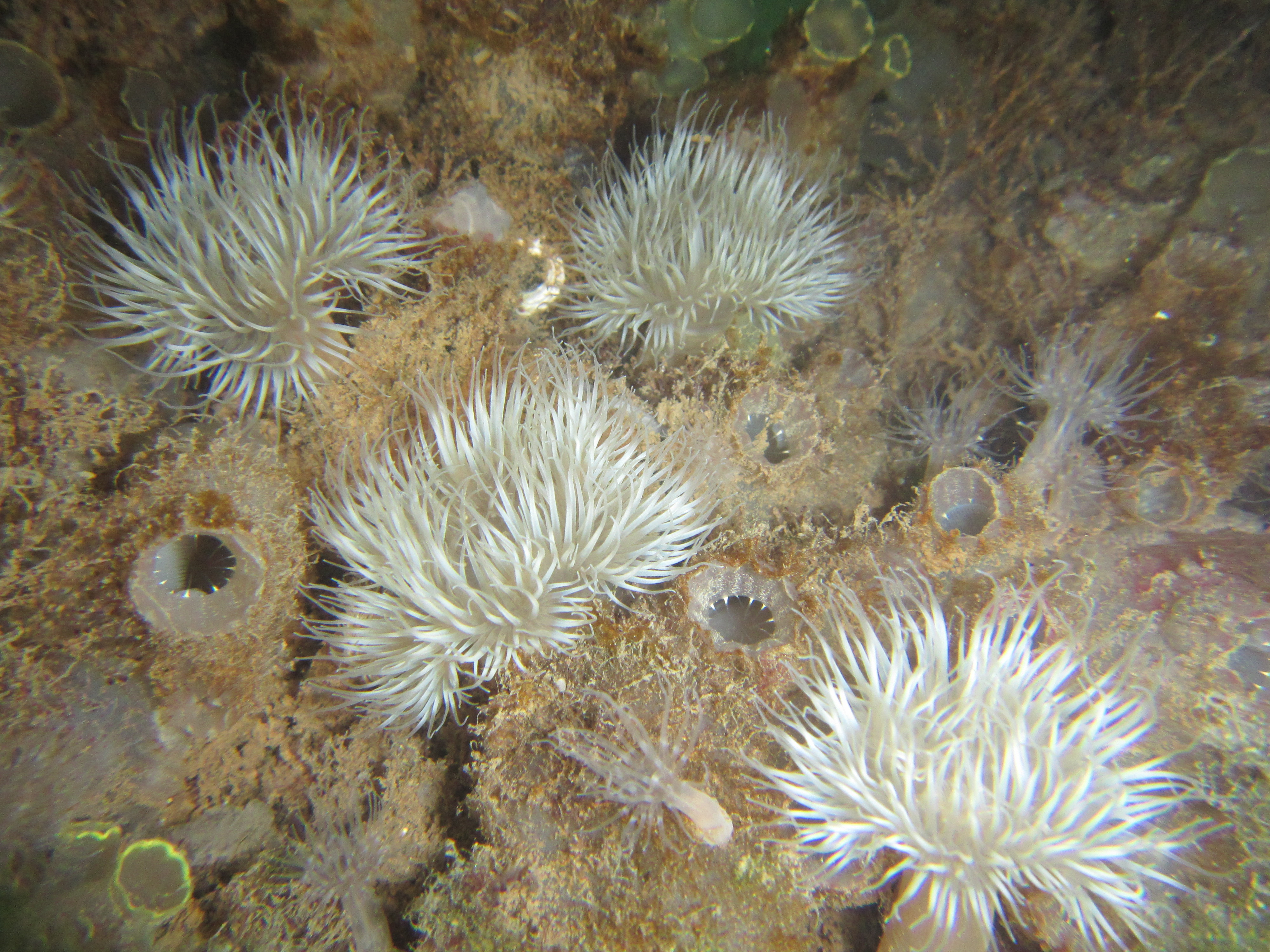
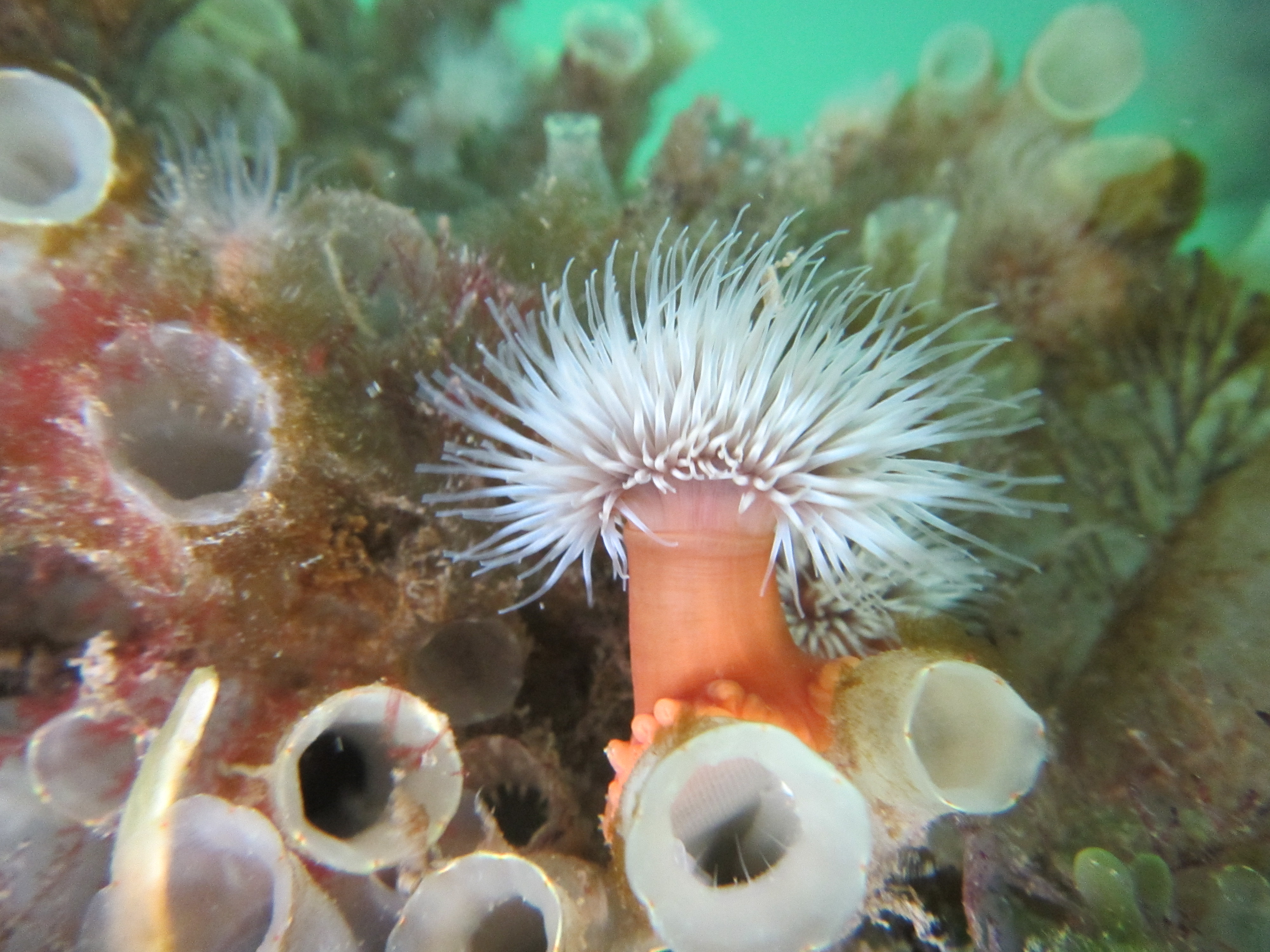
IMG_9973There were some other interesting things to see. The dominant organism on the pontoons is the tunicate Cione intestinalis (I see there are some other tunicate species hiding in these pictures; I will have to take a closer look next time). Amongst it grows the purple invasive Bryozoan Bugula neritina. Next, a colonial tunicate thta could be Botrylloides violaceus, Trididemnum cereum or Didemnun maculosum (or something else again). After that, the beautiful Lightbulb sea squirt Clavelina lepadiformis.IMG_1849IMG_1656IMG_1677IMG_1704Plumose anemones Metridium senile are always common here. I for the first time noticed another species Diadumene cincta, very pretty! IMG_1867IMG_1859 IMG_1754 IMG_1745