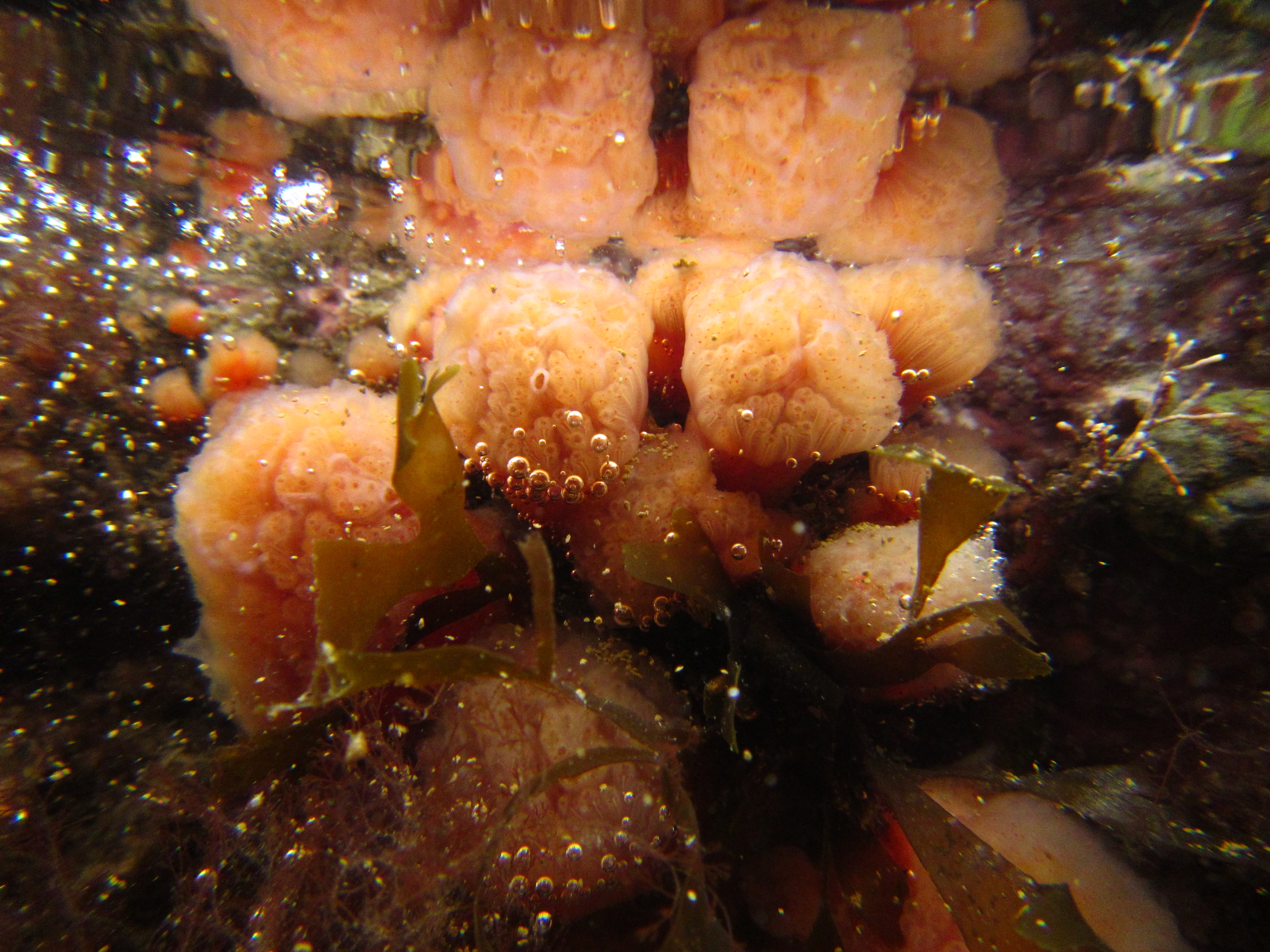
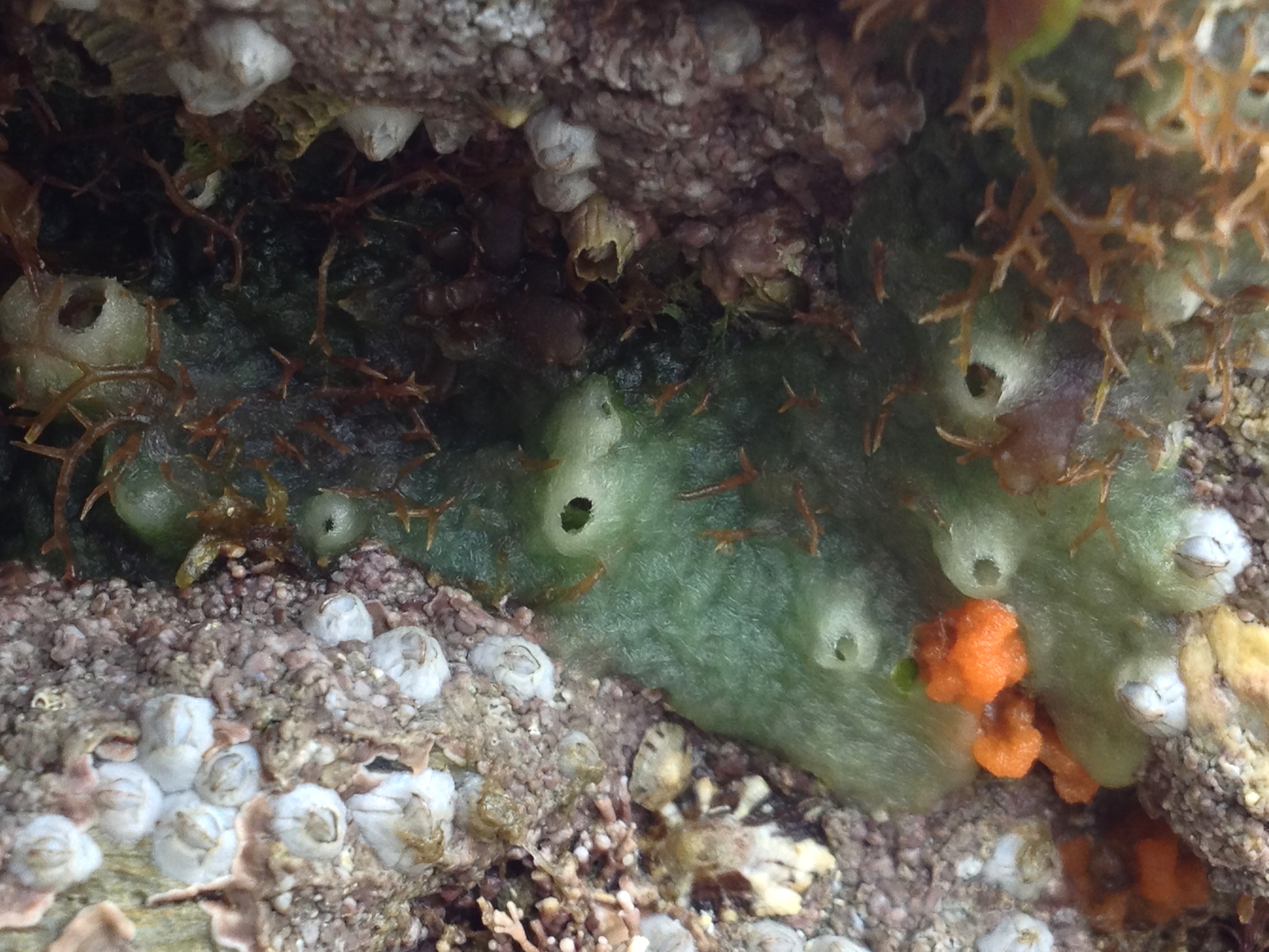
As I drowned my Panasonic Lumix (some pics here) and as my Canon Powershot in an underwater housing (some pics here) is quite cumbersome (forgetting the option of taking my iPhone underwater), I decided to buy a new point-and-shoot underwater camera. All major brands have a rugged (shock-, dust- and water-proof) option and needless to say each has their pro’s and cons. I decided for the Canon Powershot D30 because I know and like the brand and because it goes deepest (24 meters) which would mean I could take in on any future dives. I later read (tip: don’t read more reviews after you have ordered) that the aperture is relatively small (bad for low light (UK underwater) environments) and that it had not been updated significantly from the previous version…so it is not all great. In general, point-and-shoot camera’s won’t give you super great images (although sometimes you strike lucky). However, there is a VERY large price gap between these camera’s and SLRs in housings (with lights). Check here for a nice Beginner’s Guide to Underwater Photography. I tried out the camera just for a little bit as I did not have much time. I went rock pooling which meant I could not look through the viewfinder for any underwater pics. The pools at the moment are dominated by brownish fuzzy algae which do not look great and it was overcast, so conditions were not ideal. Here a snap of Morchellium argum, a colonial tunicate that is common at the moment:
 Two pics for comparison with the iPhone of a Dog whelk Nucella lapillus laying eggs. I will probably still stick with the iPhone for above-water pictures as I prefer tapping the screen to focus as well as having the olloclip macro option. Also, the colours seem more vivid, although to be fair I need some more time to play around with the Canon. iPhone first, Canon second: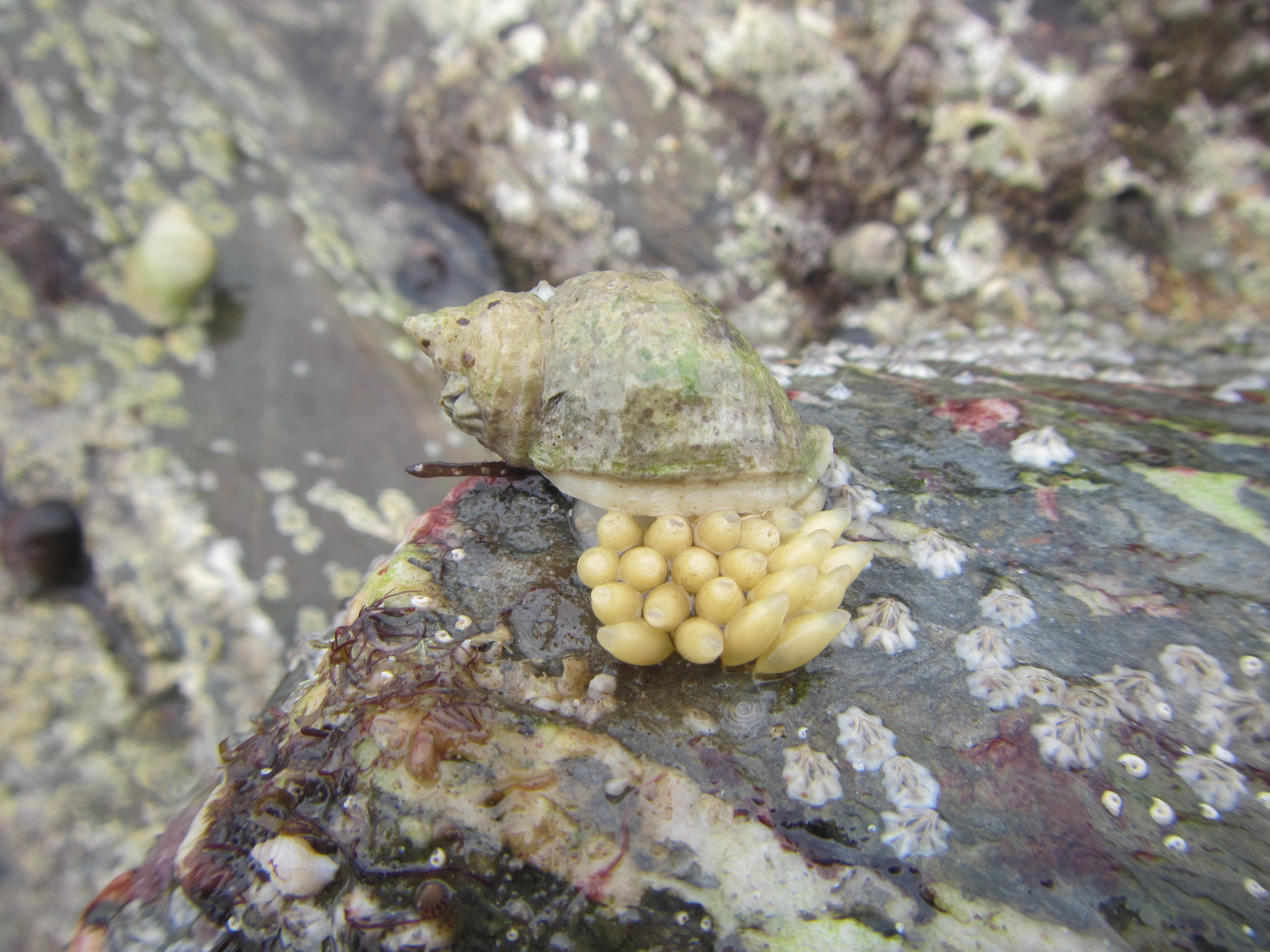
Category Archives: eggs
scummy pools
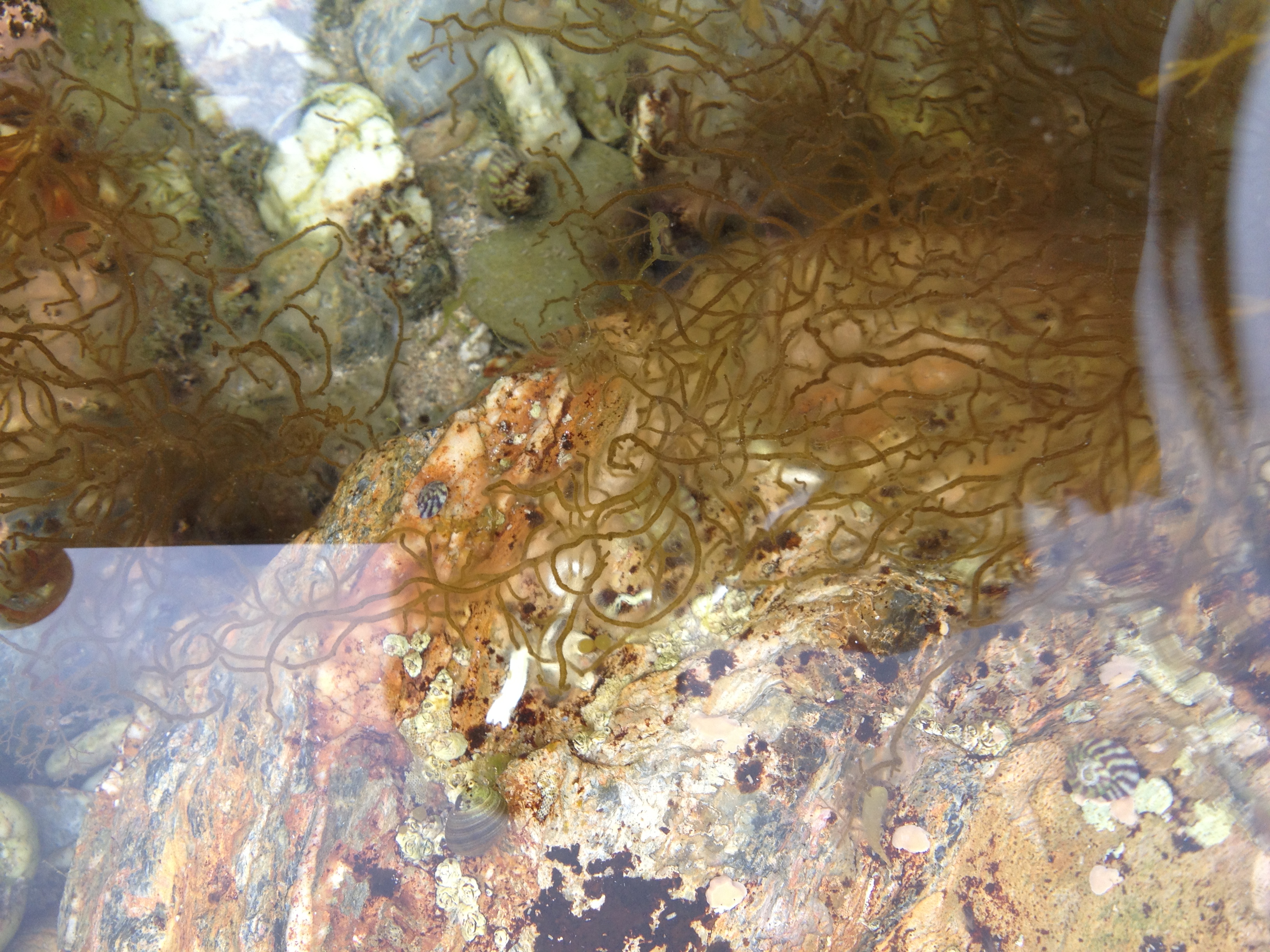
For the first time in a while I had time to nip over to Castle Beach to do a little rock pooling. The tide wasn’t the best and the pools did not look to great either actually; this seemed to be due to a mix of some seaweed species dying off, and some not so great-looking species ones blooming:  Lots of Wireweed, Ulva and very fine weeds (the latter are often very pretty under magnified and in water, but not so much as a blob on the rocks). What might be Desmarestia viridis (but don’t take my word for it):
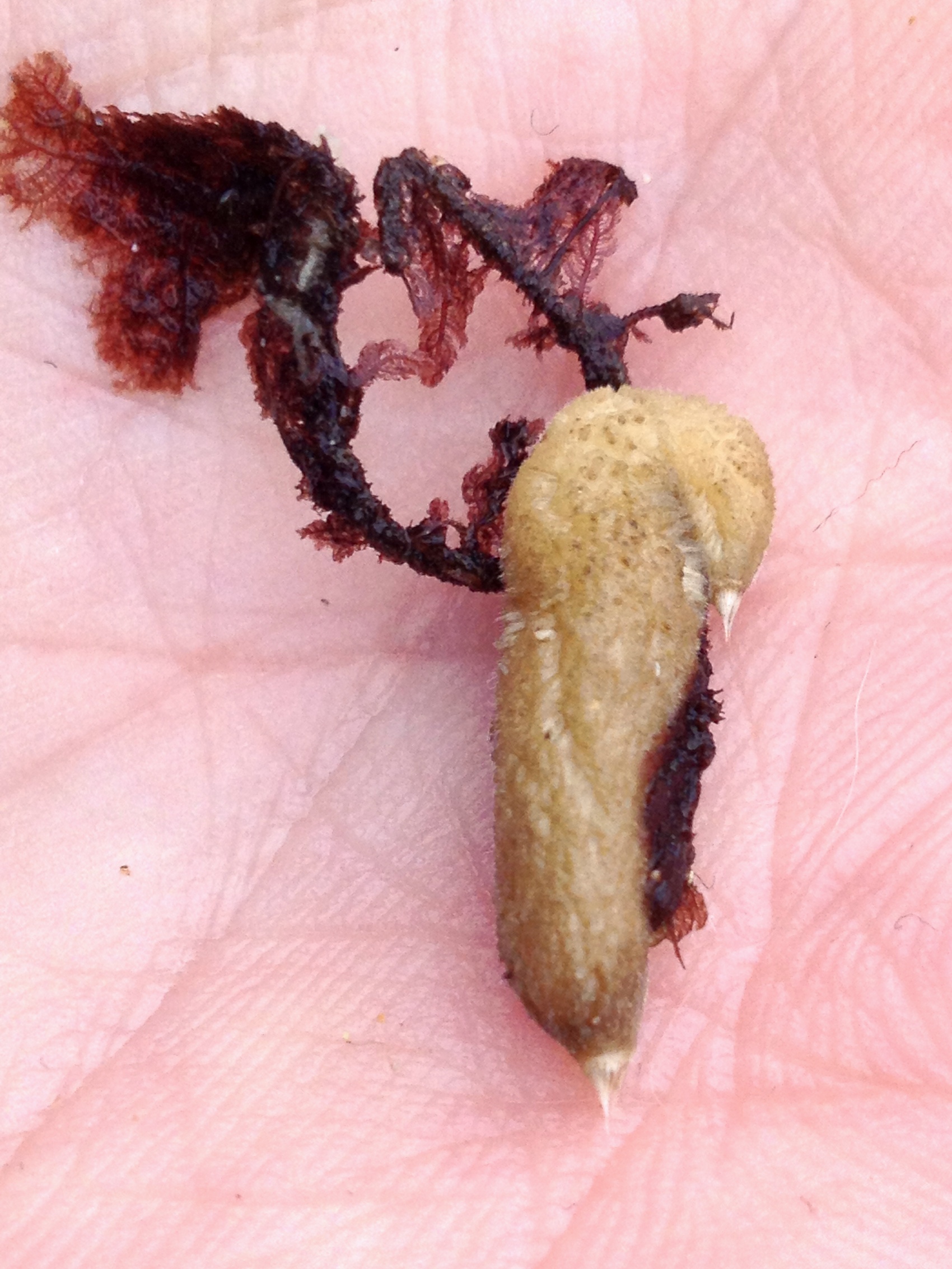
  Still, there was plenty to see: Orange-clubbed sea slugs for instance and one very weird-looking creature I had never noticed before was clinging on in little groups on red seaweeds under overhangs, the annual sponge Sycon ciliatum:
 The Breadcrumb sponge Halicondria panicea can be very nicely coloured:
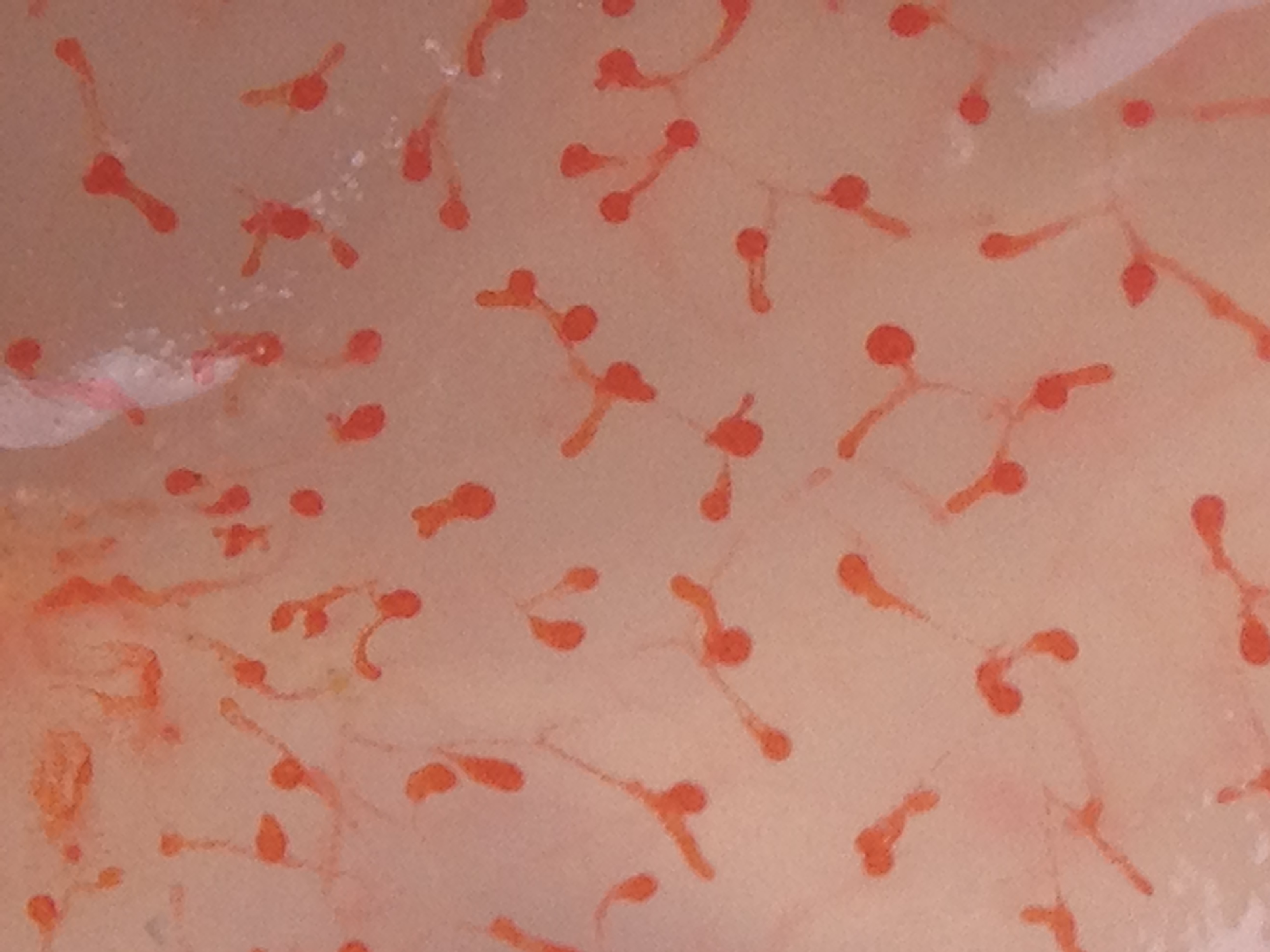
  There were a lot of tunicates about. Colony-forming Morchellium argum for instance and this beauty, probably Ascidia mentula (determined by helpful folks at the ‘NE Atlantic Tunicata‘ facebook group):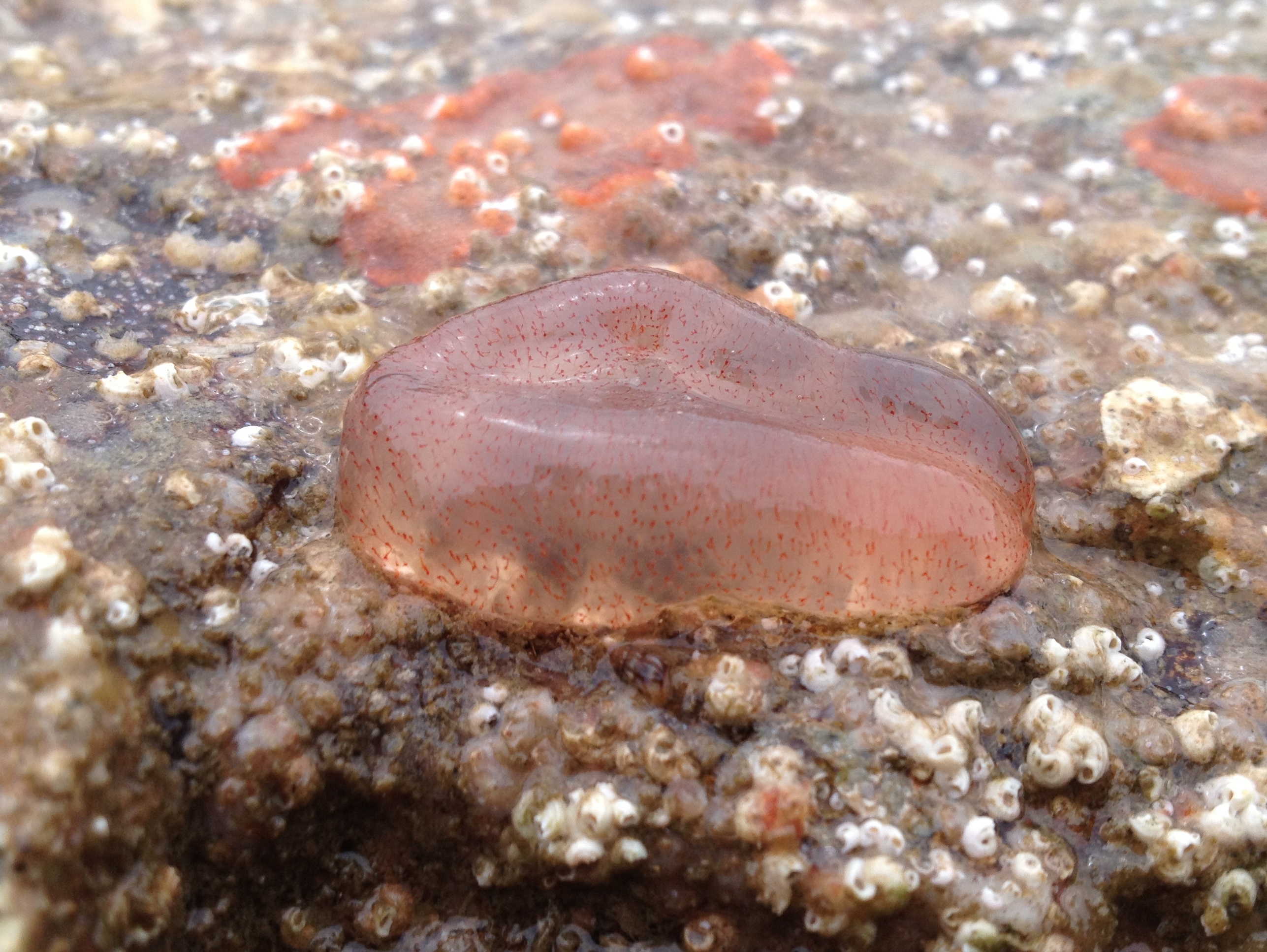
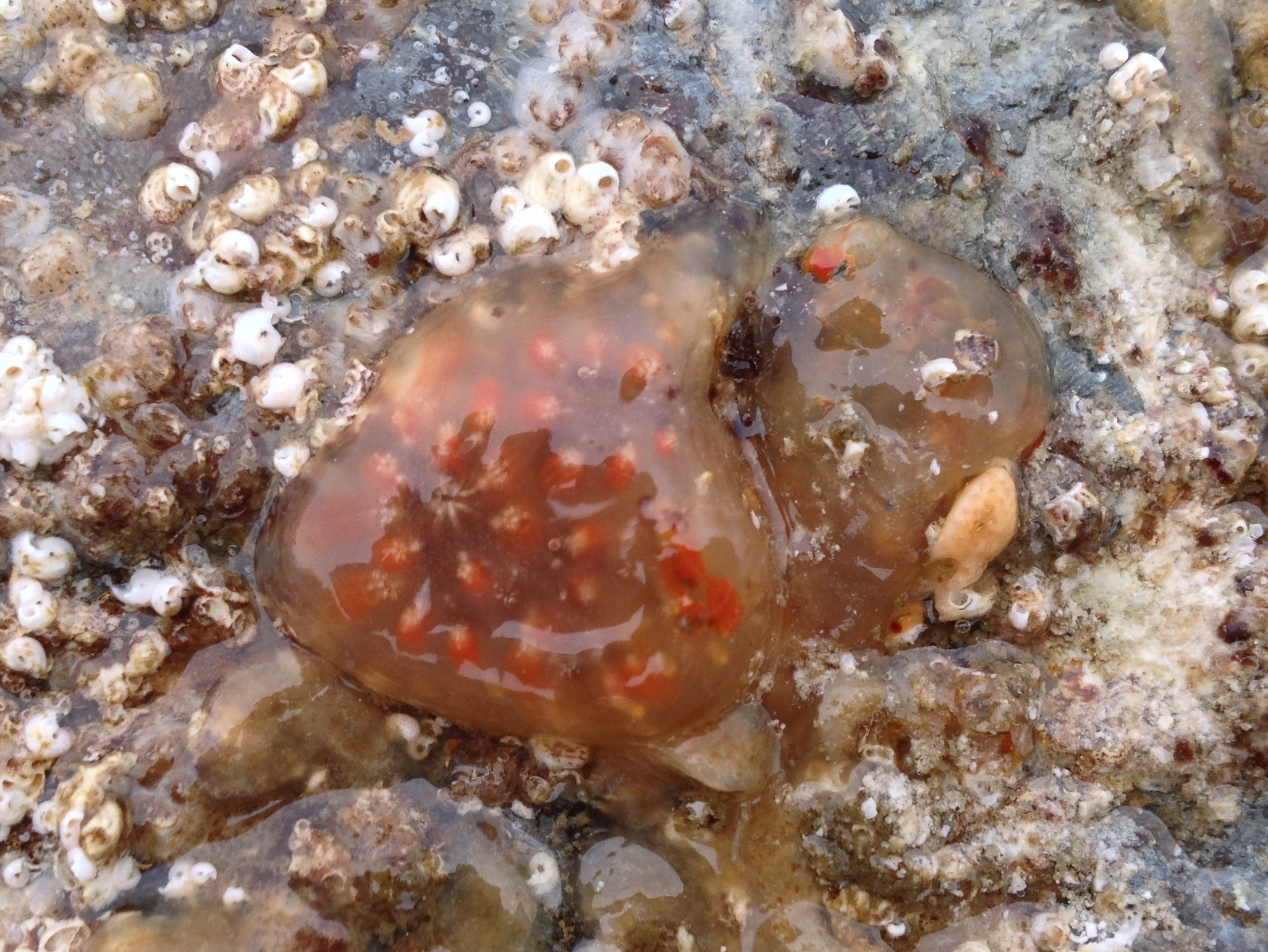
 One colony-forming tunicate looked superficially like Botryllus but was much bigger and less pretty, it might be Aplidium nordmanni:
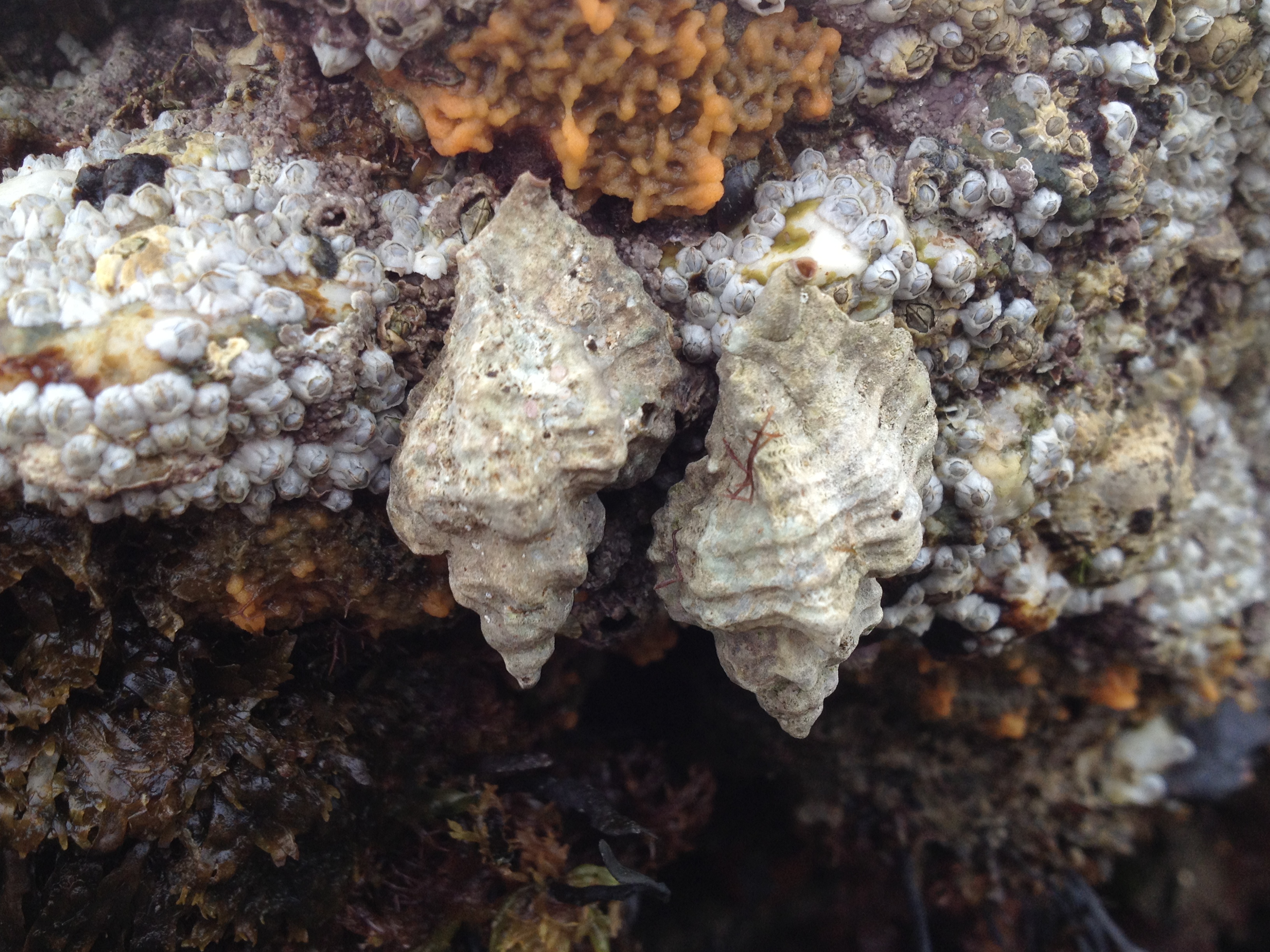
 Quite a lot of Sting winkles Ocenebra erinacea were around as well:
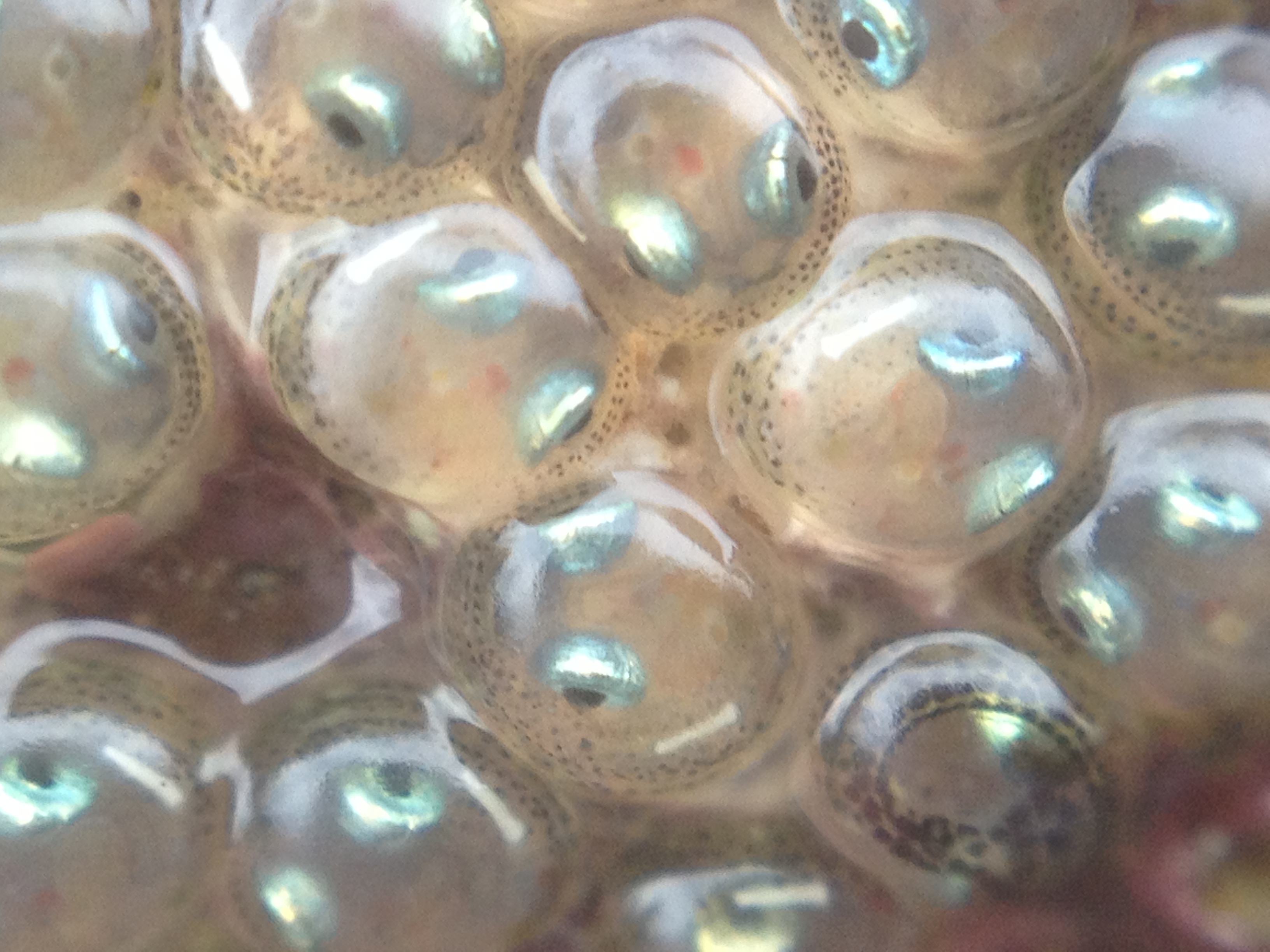
 Finally, I spotted the orange/yellow egg masses of the Cornish sucker (or Shore clingfish) Lepadogaster lepadogaster (see here for an older post on them). However, I also found some that were greyish and had a speckled band, as well as a red dot between the eyes. Local expert David Fenwick told me these are from the Small-headed clingfish Apletodon dentatus, a species I have not yet seen the adults of (see his site for pictures):

two tiny snail species
On my way back from rock pooling yesterday in Flushing I turned one last rock on the upper shore and found two species of tiny snails that I had not noticed before. First, a couple of Two-toothed white snails Leucophytia bidentata, one of the few terrestrial, airbreathing snails that have returned to a marine habitat: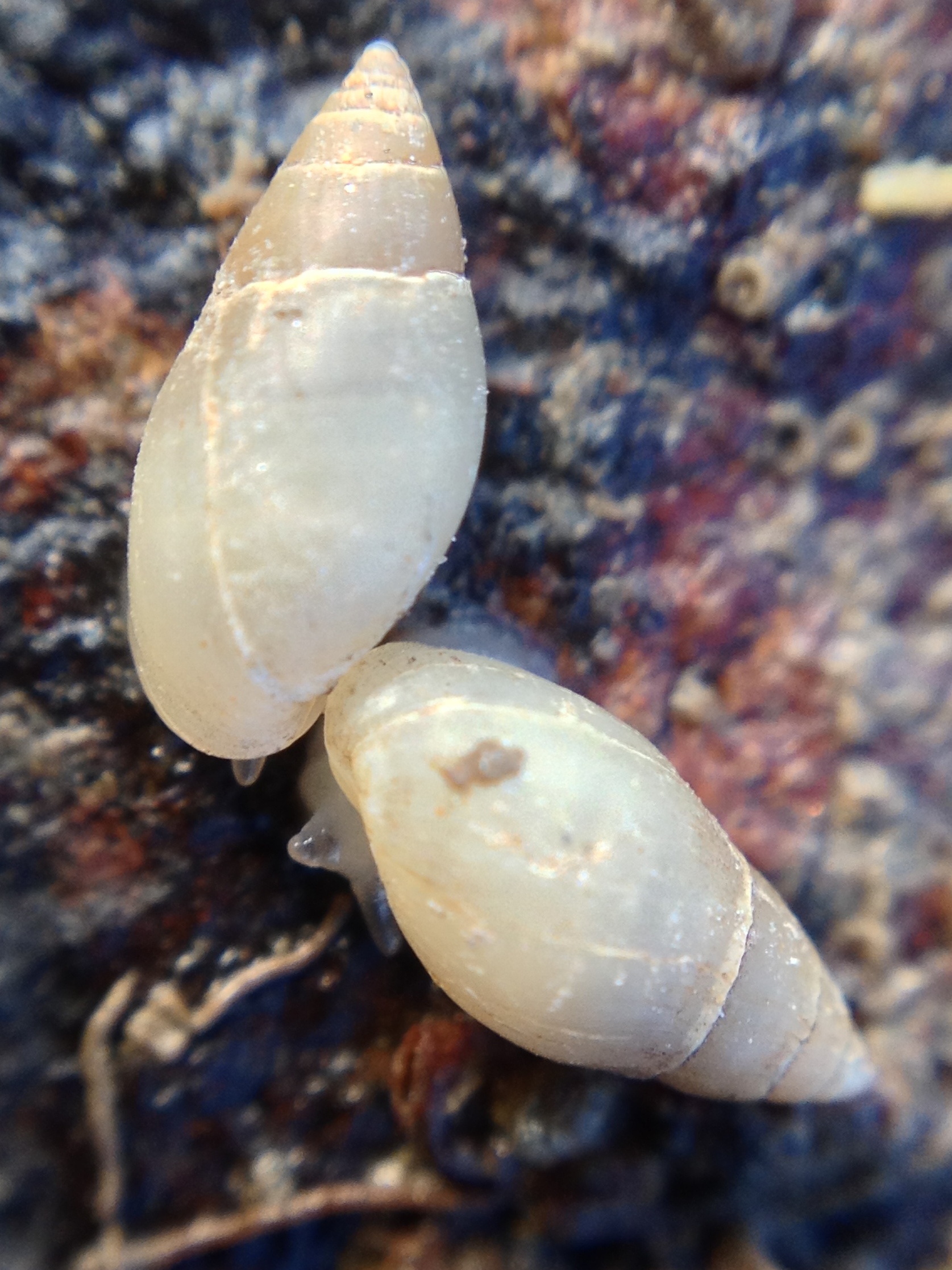 More numerous was the smaller species Cingula trifasciata. Below a group next to a large wormshaped eggmass that my Seasearch Identifications friends quickly pointed out belonged to the Ribbon Worm Lineus ruber: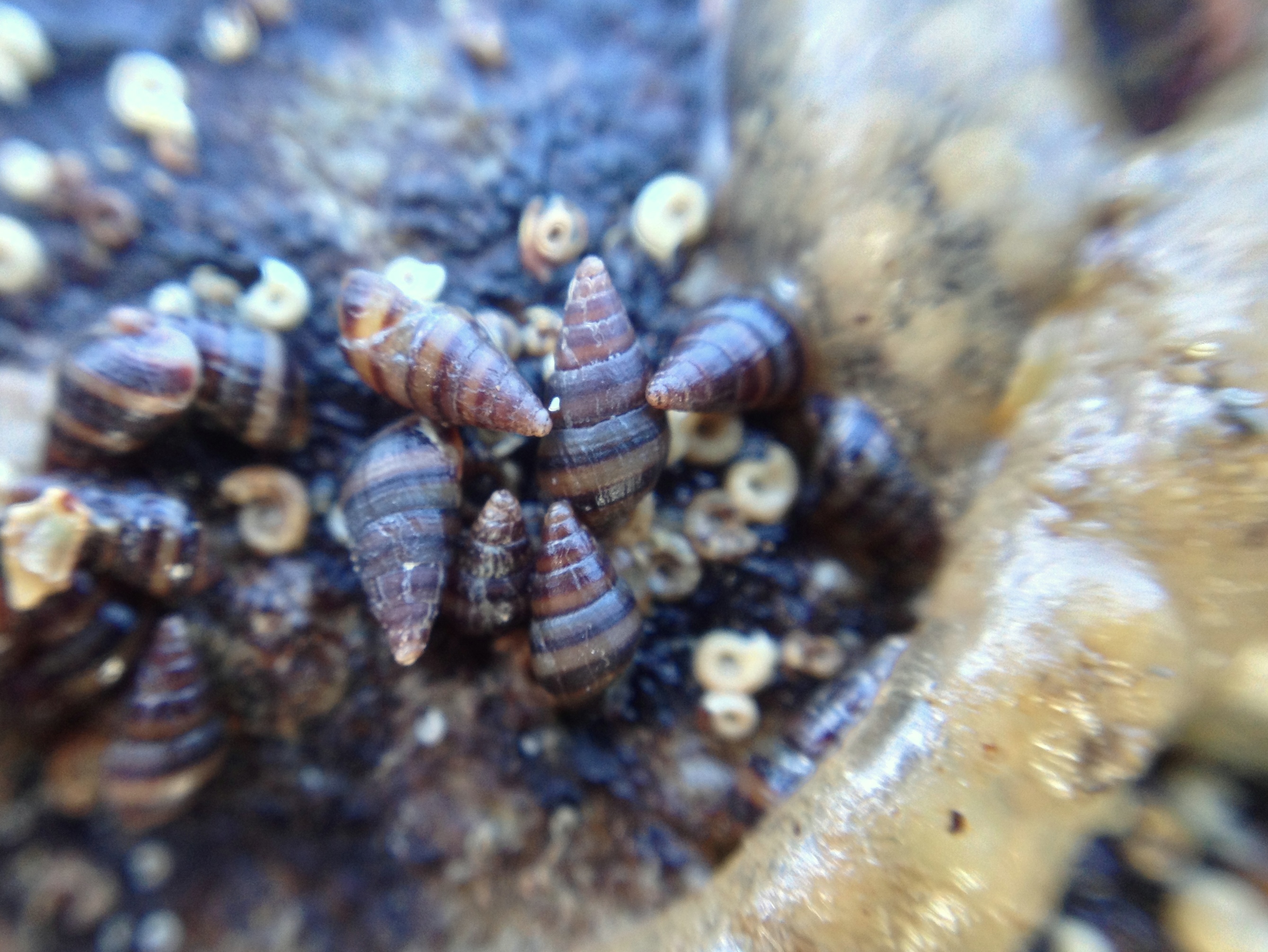
south of maenporth beach
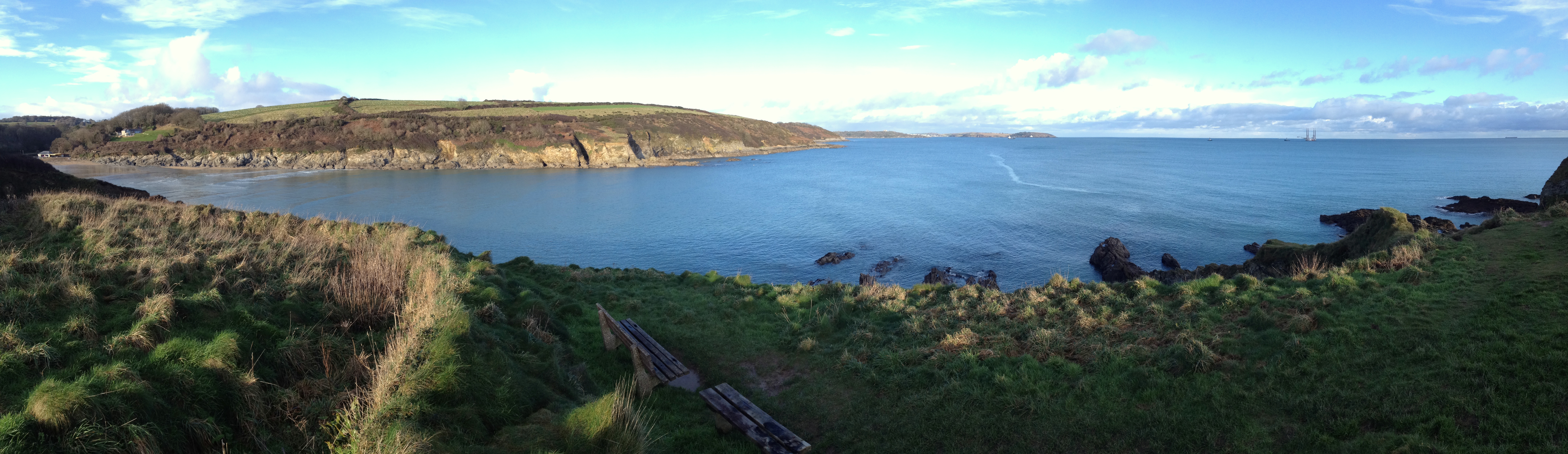
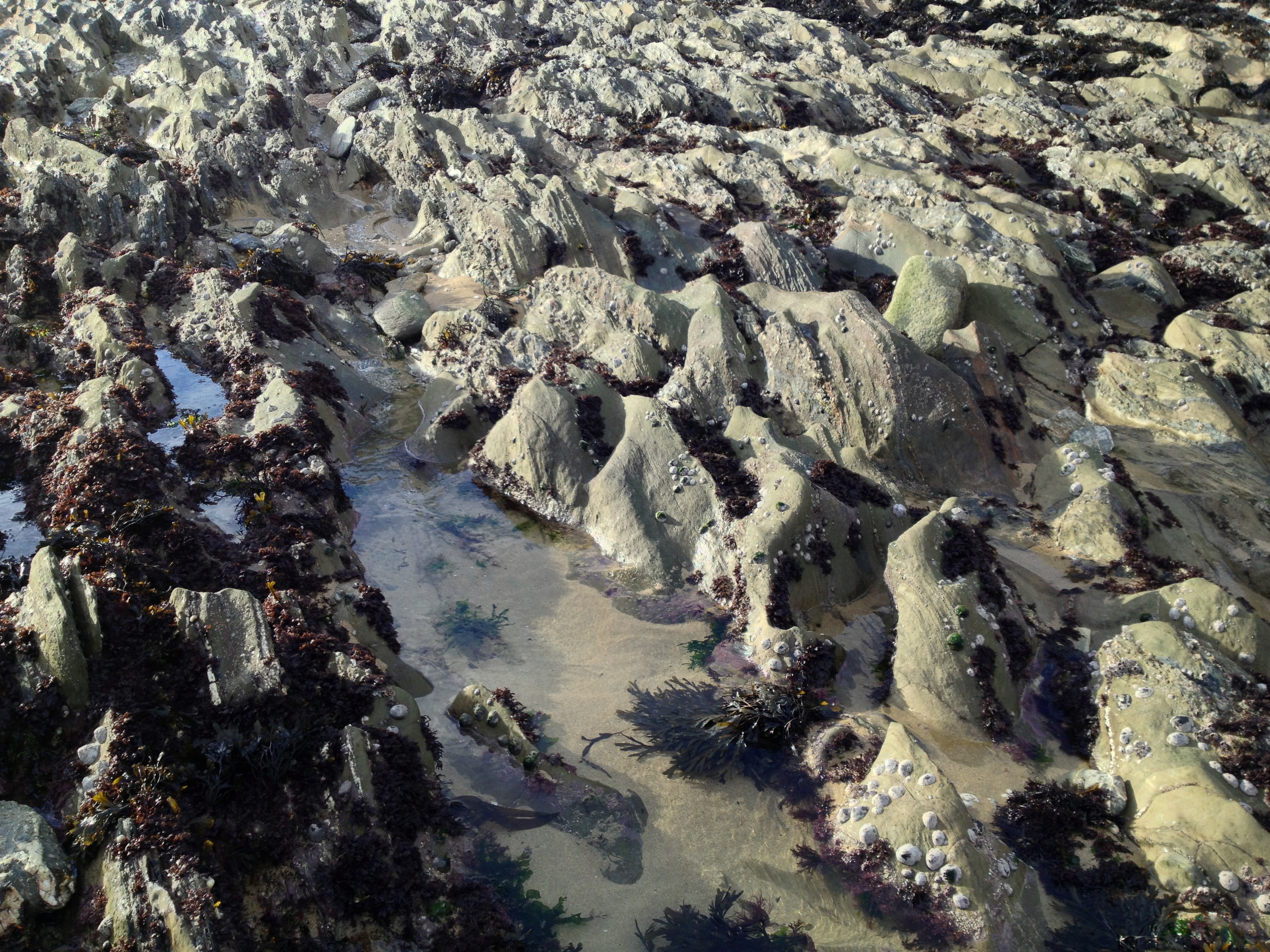
We went for a stroll last weekend in between showers: starting from Maenporth beach, following the coastal path south (direction Lizard). We discovered a nice, rocky beach with an abundance of rock pools. Not that much time to explore, but the pools seemed different from those on Castle Beach: filled with sand and with much more bare rock (probably because of scouring).
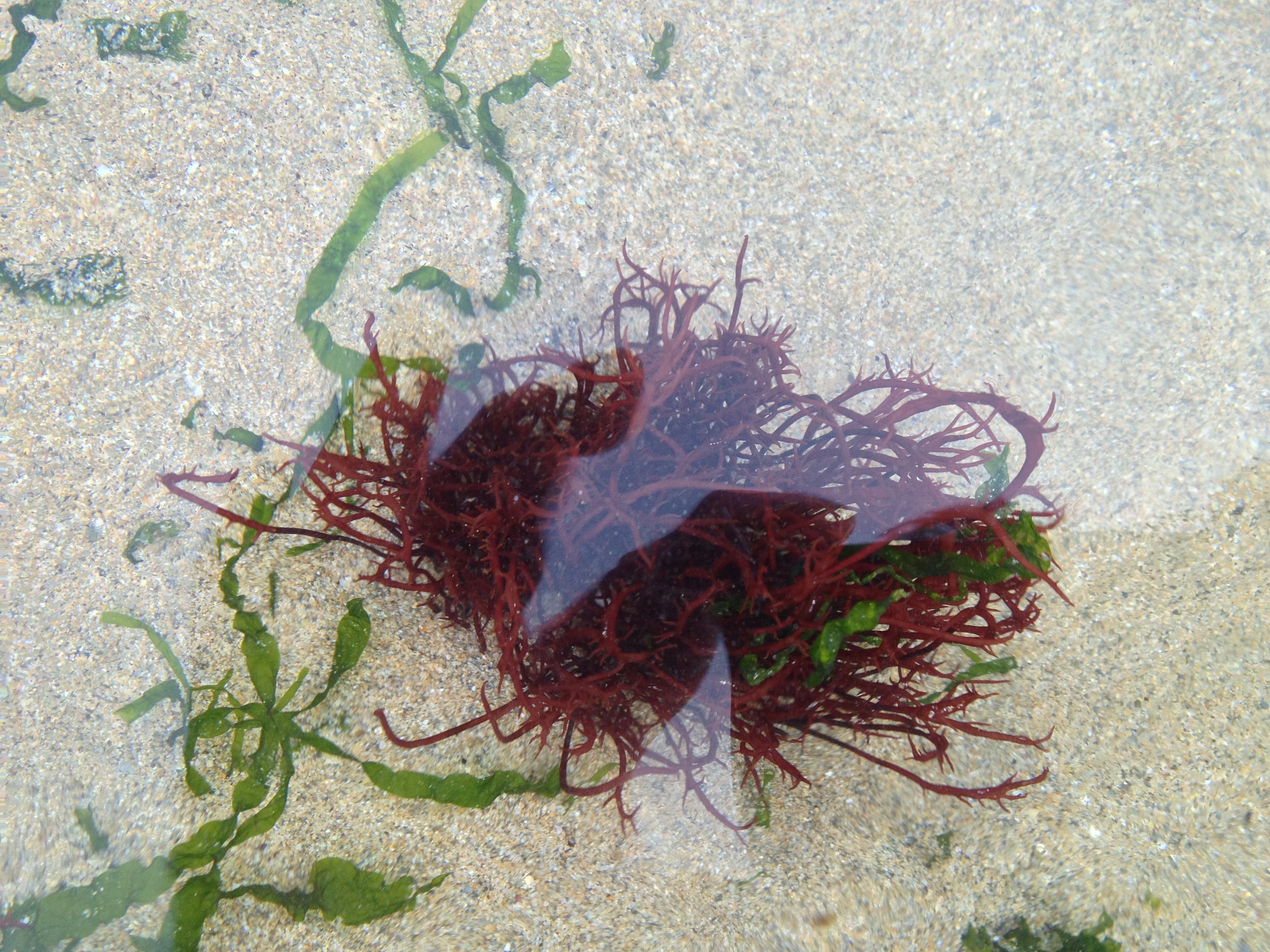
Pestleweed Gigartina pestillata (not entirely sure but a species tolerant to sand cover so that fits) was common. I found a small (5 mm) jade-coloured egg mass on this seaweed that I could snap using my iPhone olloclip macrolens. According to the SeaSearch Identifications facebook group, probably from the Green leaf worm Eulalia viridis. from the snail Lacuna vincta.

Bretagne: Pleneuf-Val-Andre – part 1
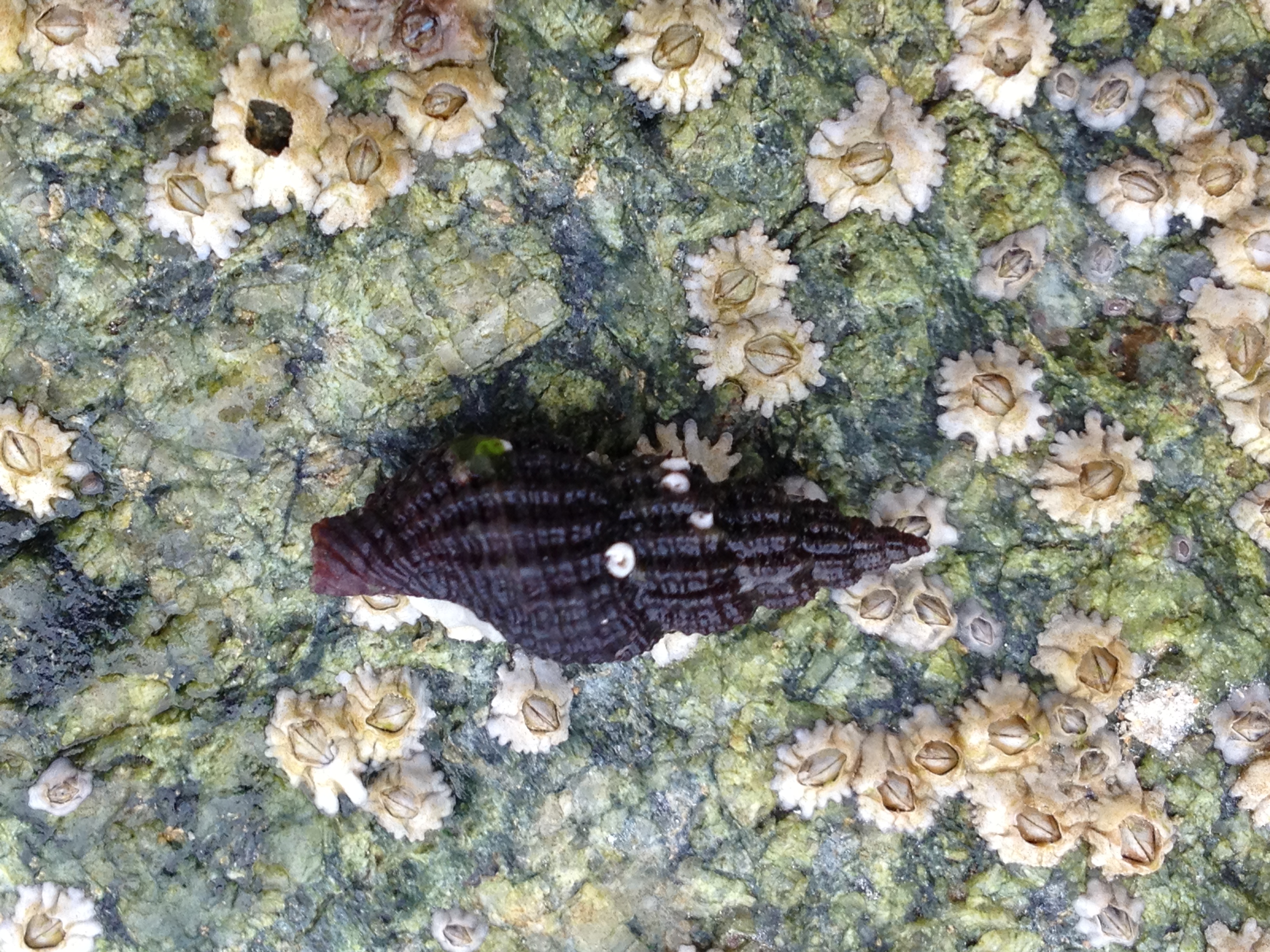
The second good rock pooling session in Bretagne was in the little port of Pleneuf-Val-Andre. The rock pools themselves were very similar to those in Erquy. The only interesting find there was a pretty gastropod I had not seen before (a white snail with a dark brown/black shell about 1,5 cm in length). It looks like a Trophon muricatus, although I am not 100% sure Raphitoma purpurea:
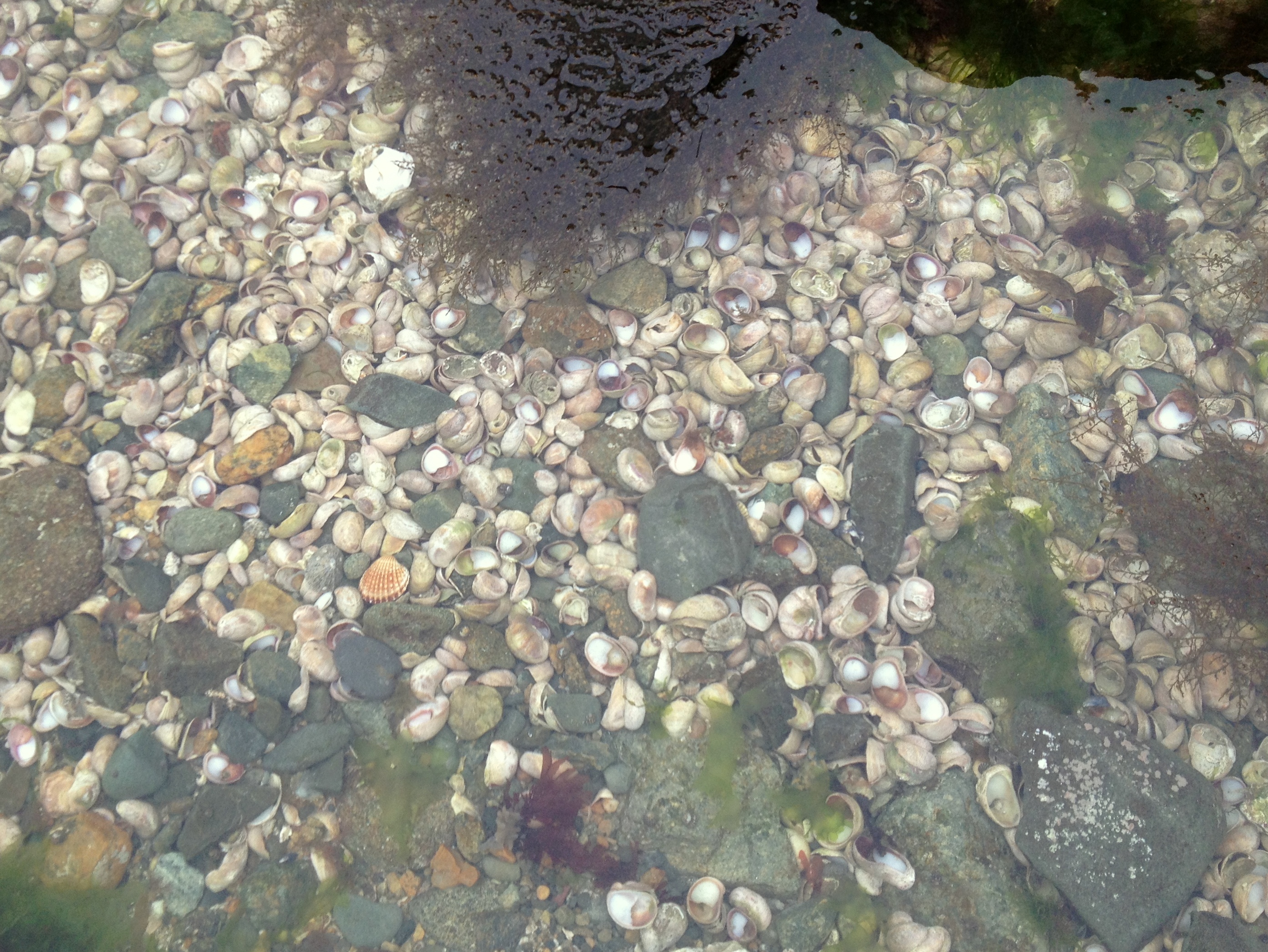
 The number of Slipper limpet Crepidula fornicata (live and dead) was quite amazing, there were whole banks of them:
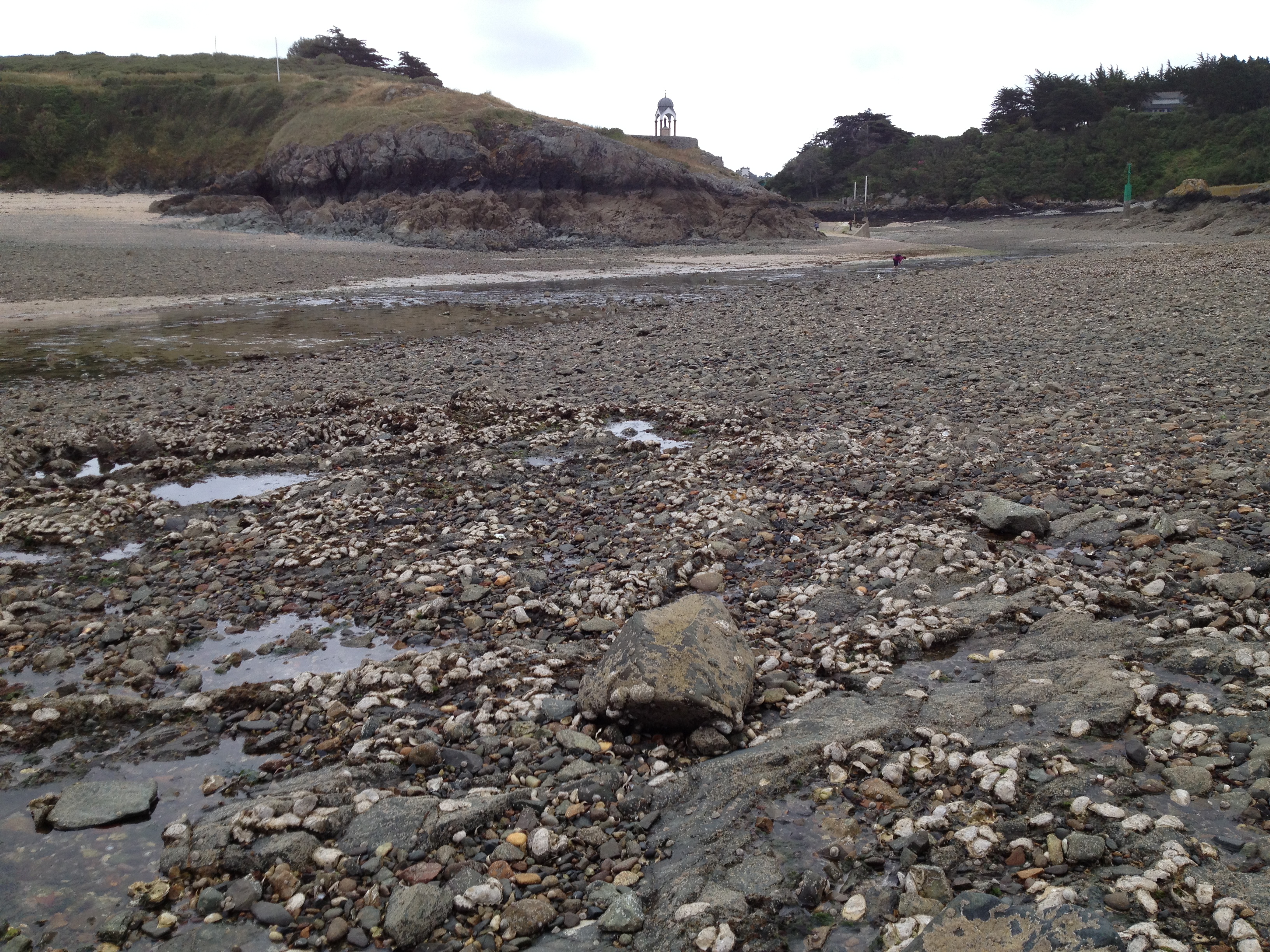
 The little channel from the port to the sea, a mix of sand and rocks, was more interesting than the actual rock pools:
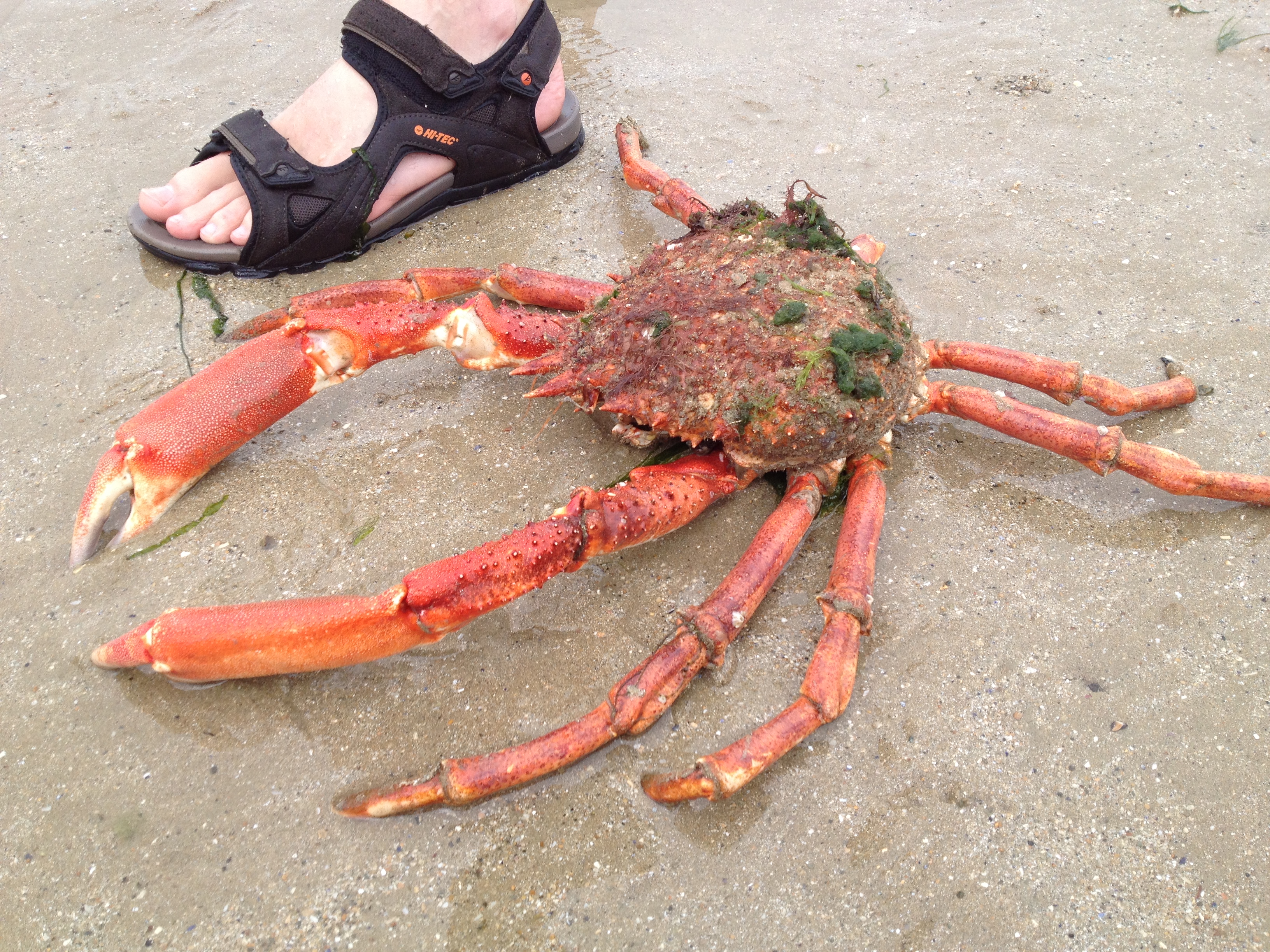
 with a variety of organisms washing up, for instance this large (dead) Common spider crab Maja squinado (European shoe size 45 in the background…):
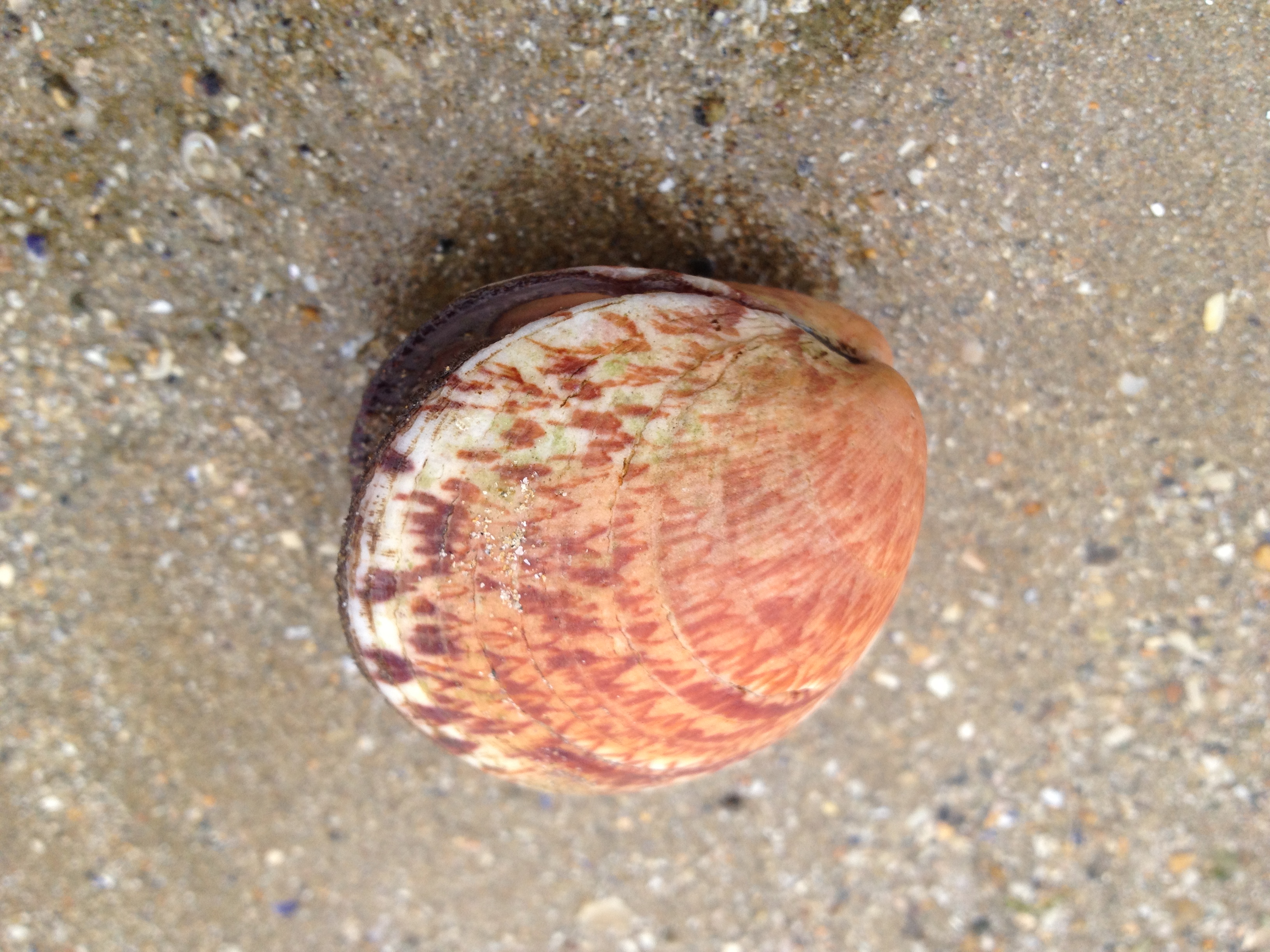
 A Dog cockle Glycymeris glycymeris shell:
 Egg cases (‘a sea wash ball’) of the edible Common whelk Buccinum undatum:
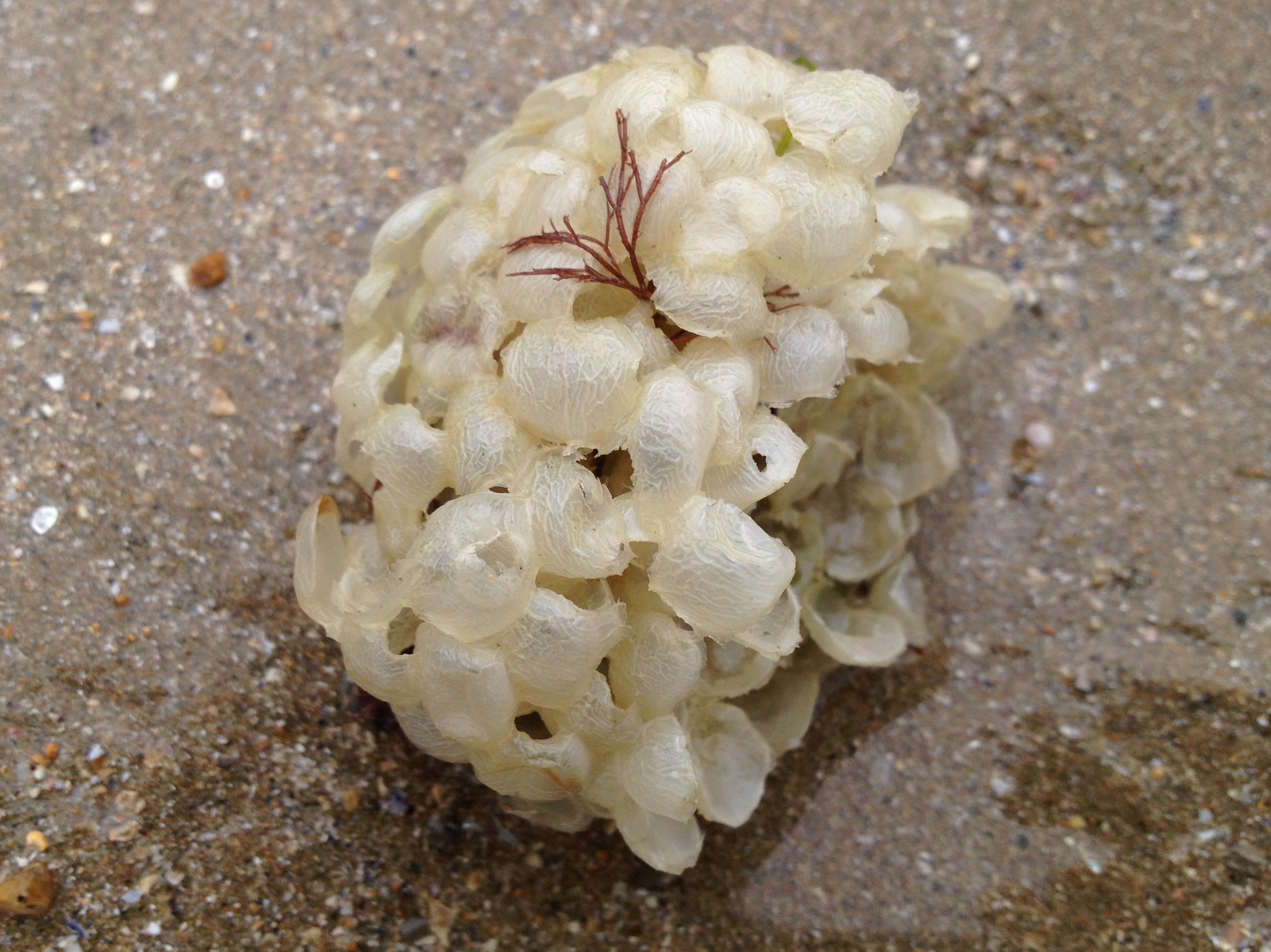
Cuttlebones were scattered everywhere along the shore and we even found a clump of Common cuttlefish Sepia officinalis eggs:
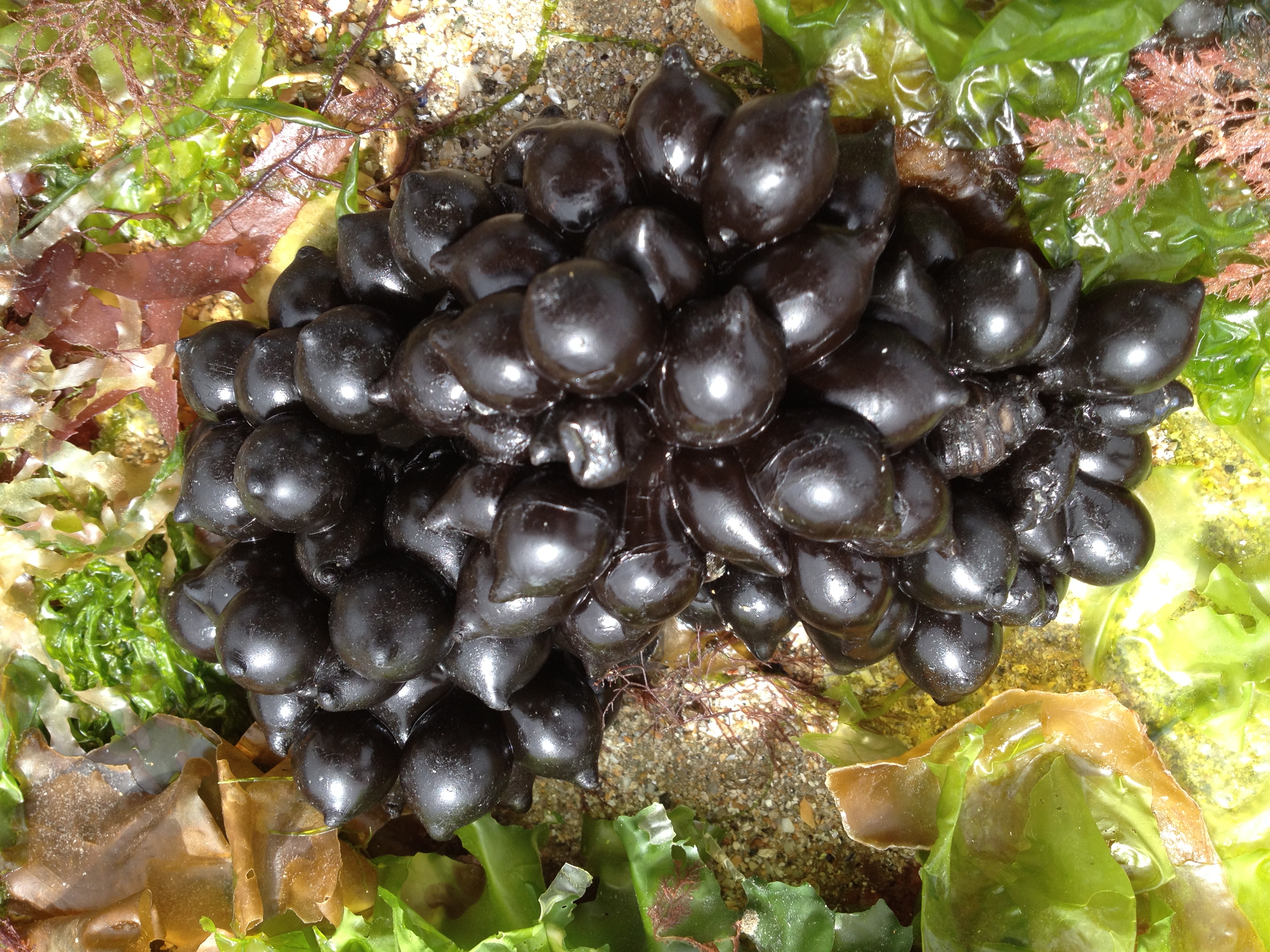
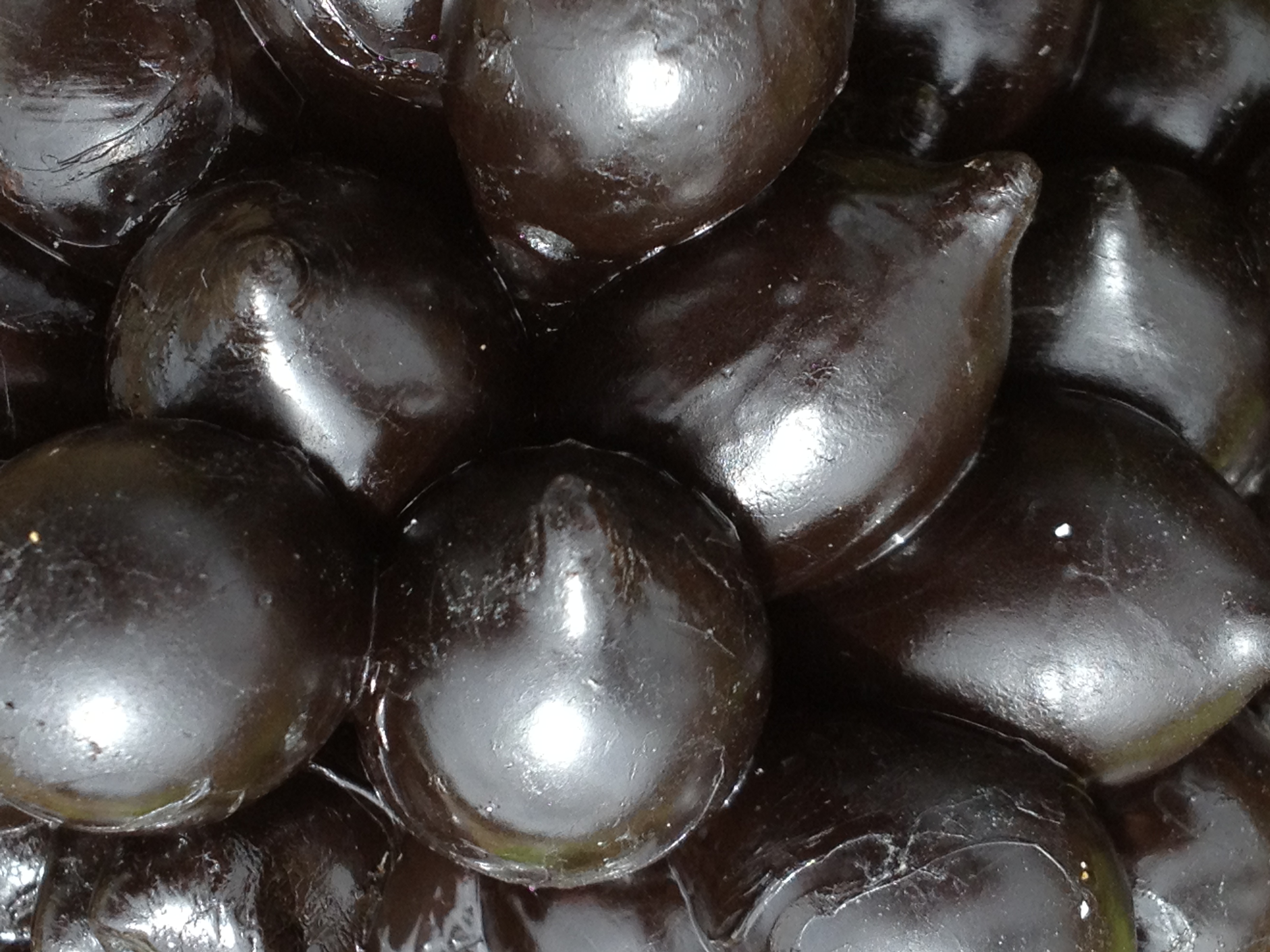 The eggs were quite big and had a weird texture. I don’t know if these egg clumps can survive hours on the beach at low tide, probably not. It would have been cool to take them to an aquarium to see if they would hatch. It is extremely difficult to keep cuttlefish though, they need live food and large aquariums which usually are still too small still to prevent ‘butt burn’ when they jet backwards into the tank wall and their cuttlebone gets exposed right through the mantle. In the next post I will get to the washed up seaweeds.
Bretagne: Erquy
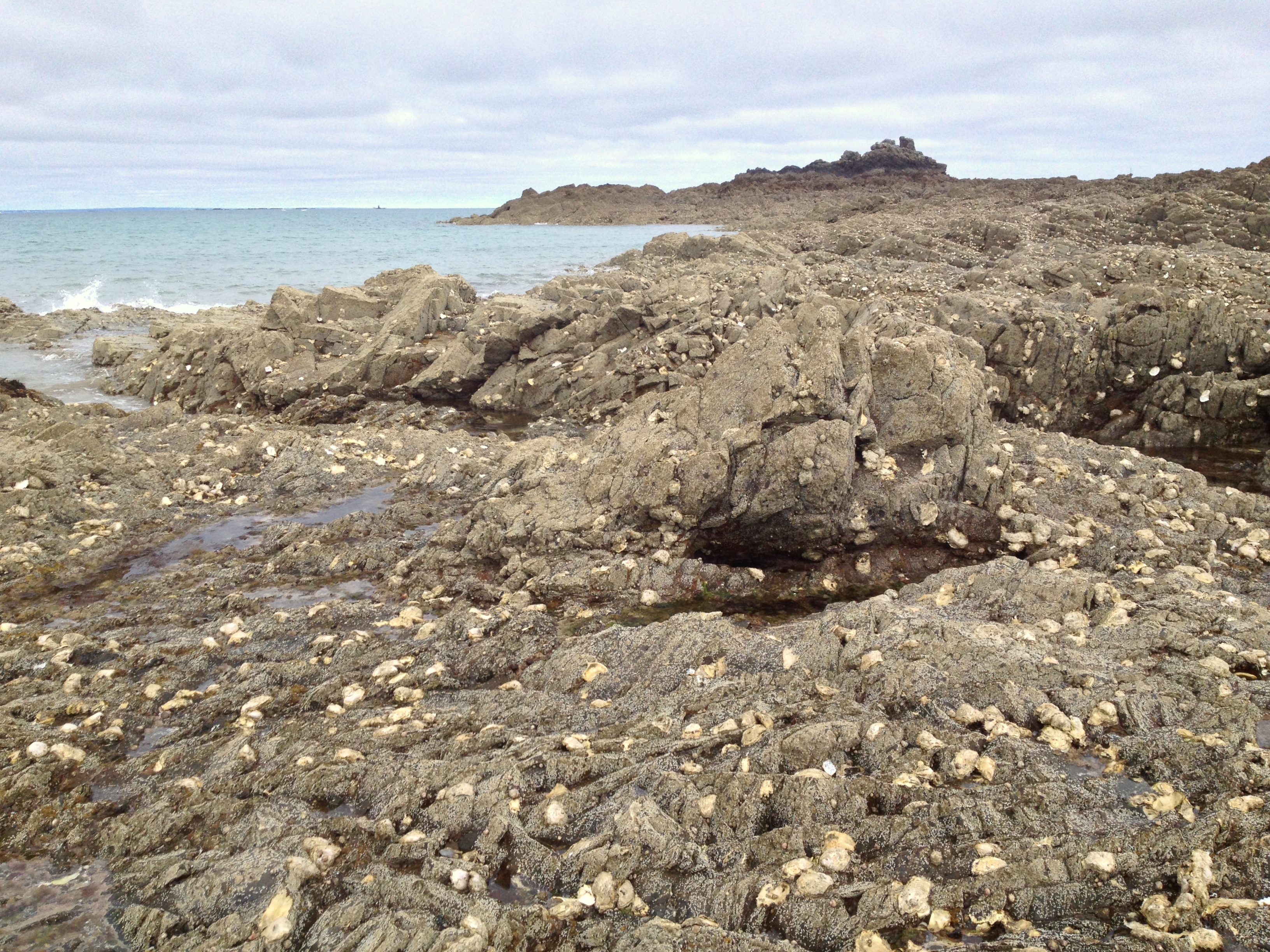
Last week we crossed the channel to attend a friend’s wedding in Bretagne (Brittany). This of course also called for some rock pooling action, first at the village of Erquy. It was interesting to compare the shores of Bretagne to Cornwall (or at least Falmouth and this small stretch of coast in northern Bretagne). Immediately noticeable was the large amount of oysters on the rocks (with some locals busy collecting them, quelle surprise); these are pretty much absent in Falmouth:
Similar to the Cornish coast, wireweed Sargassum muticum was abundant. This Pacific invader surely must have a large effect on the native flora and fauna:
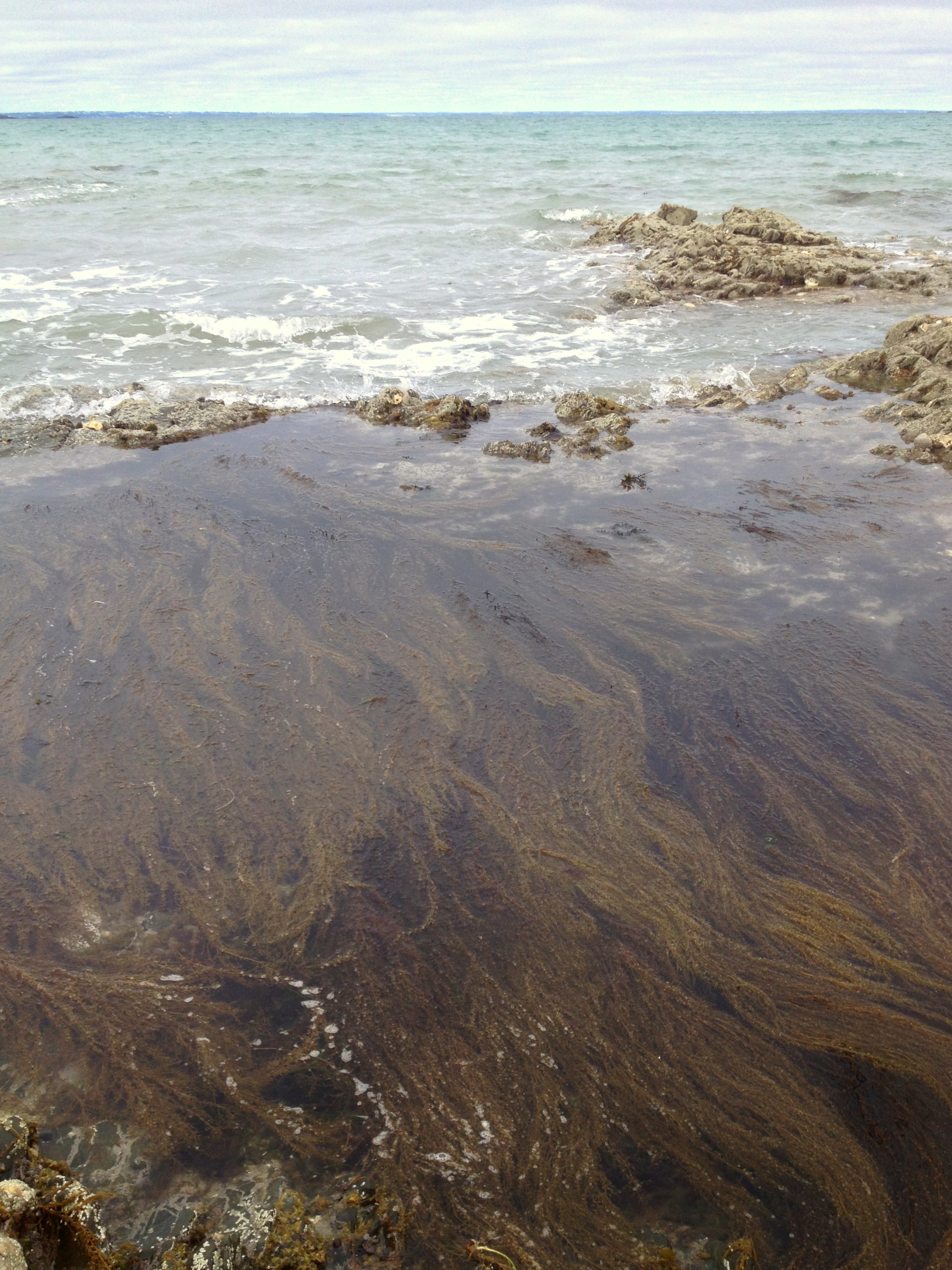
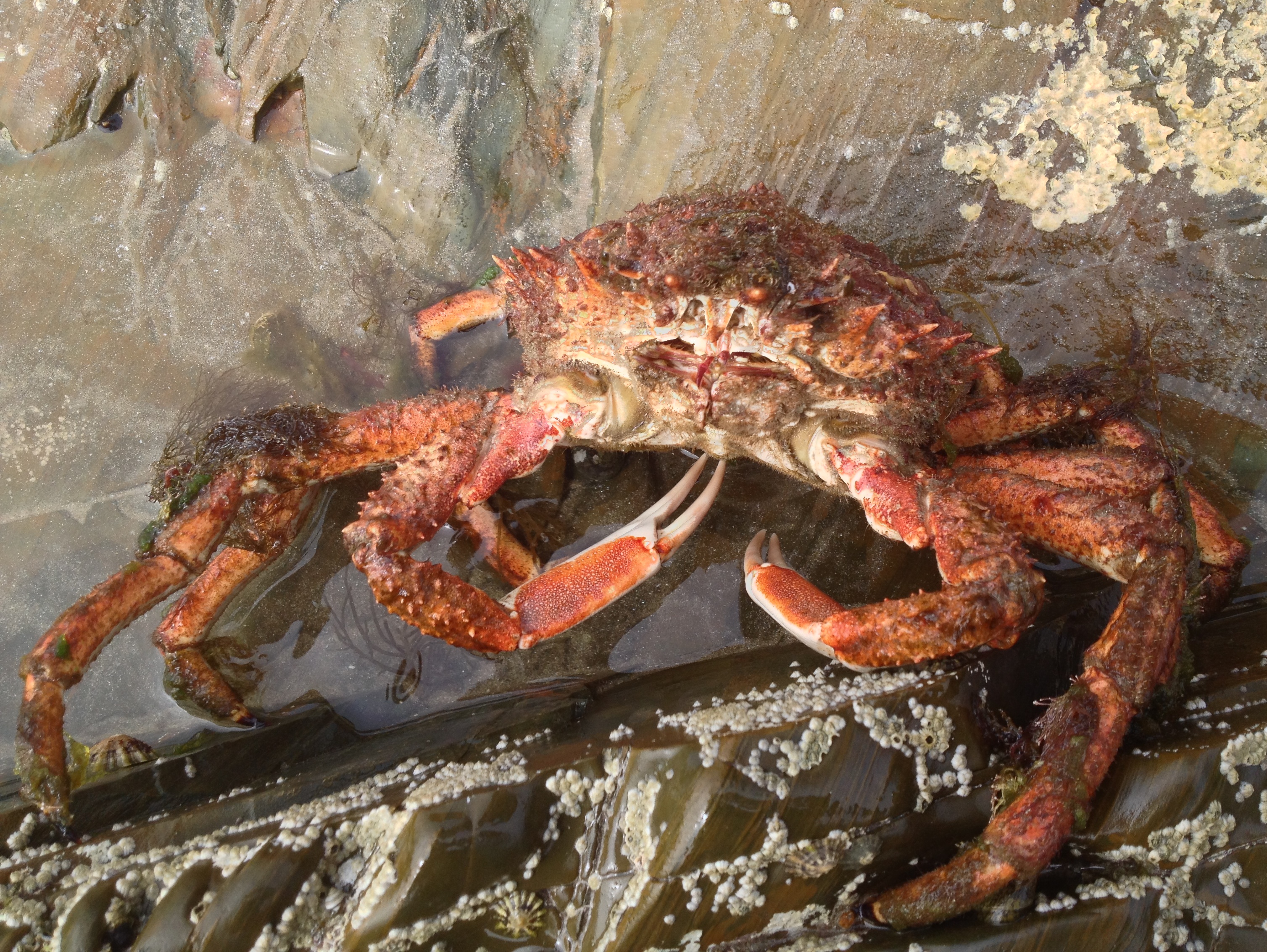
Invertebrate diversity was strikingly low compared to my local rock pools. For example, the only fish to be found were Shannies (and not a lot of them), there were no Cushion stars and no large crustaceans except for the shore crab. However, we did find a Common spider crab Maja squinado:
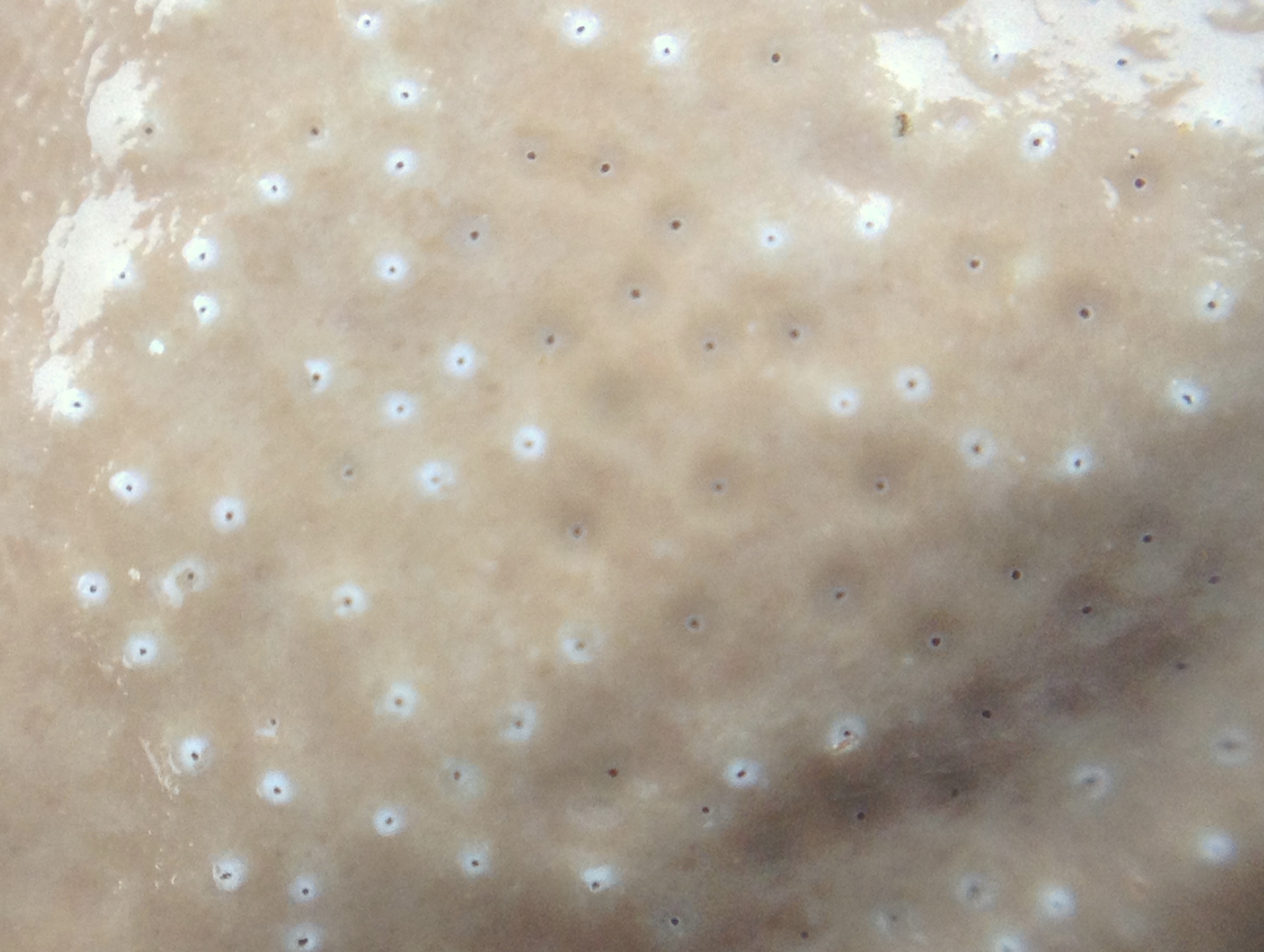
 As there was not that much to see, I turned my attention to some of the less spectacular life forms, such as Pink paint weeds, red algae forming a calcified crust. The particular species pictured below forms a patchwork of individuals, crinkling up at the edges where they meet. This could be Litophyllum incrustans, but species are hard to identify by non-specialists such as myself. The little spots on the surface are the openings of reproductive structures called conceptacles.

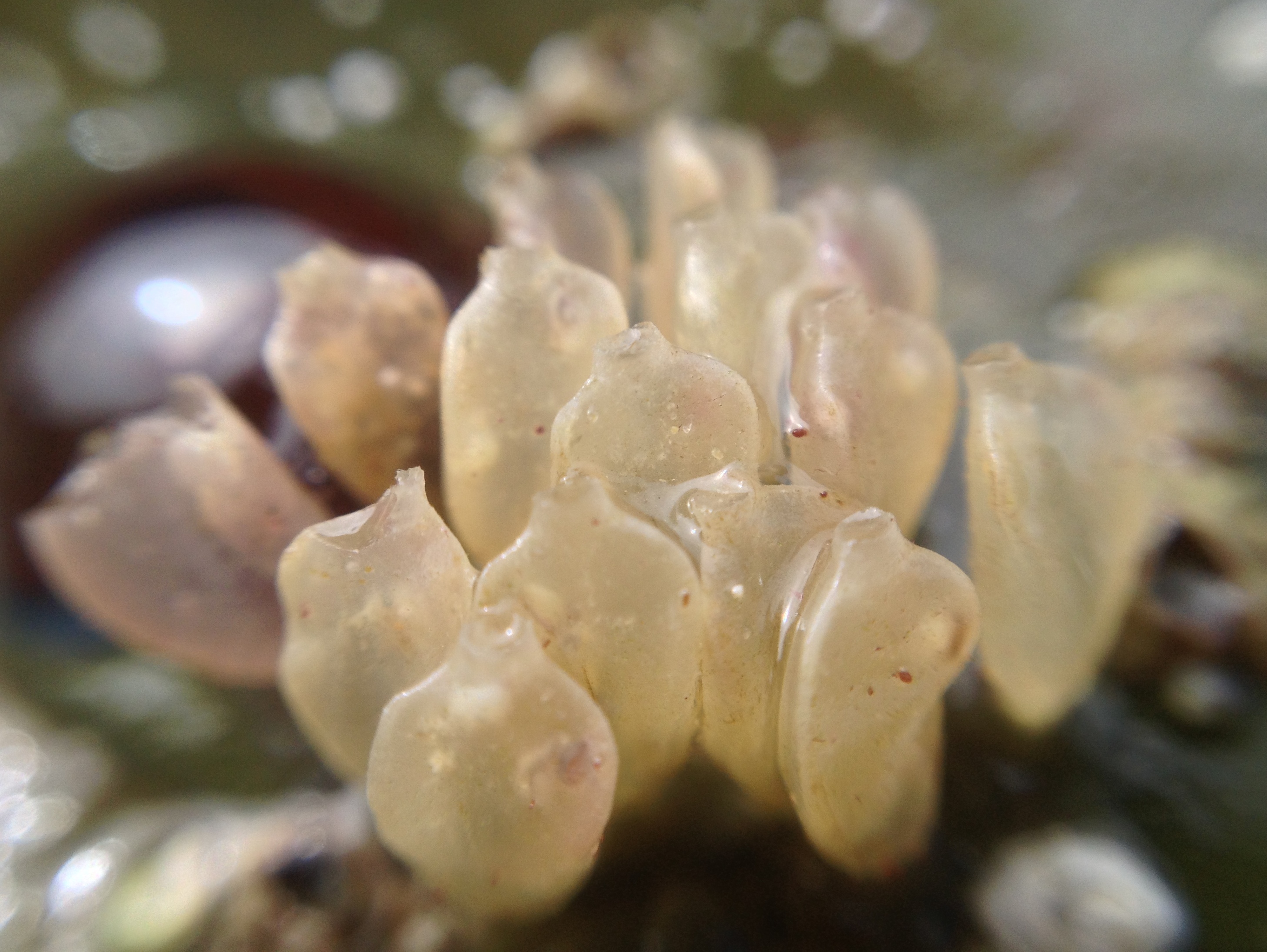
 The European sting winkle Ocenebra erinacea was quite abundant and distinctive vase-shaped egg cases could also be found:

taking my iPhone underwater
Two weeks ago I went snorkeling with colleague Chris (his hands can be seen in a picture in the previous post) as we figured making a pact would speed up the process of getting in the water. Spring has been so-so and sticking your head beneath the surface was a bit painful but in the end we stayed in for 45 minutes or so. Unfortunately the visibility was very bad. The sea was almost like a soup: you could feel the algae streaming down your face. However, lots of small jellyfish could be seen and occasionally a wrasse darting off. In slightly deeper water, the seaweeds were dominated by Oarweed or Tangle Laminaria digitata. Seaweed diversity seemed much higher in the shallows and the bright light green of the Sea lettuce, the pink of the Harpoon weed and the blue of the Bushy rainbow wrack looked quite amazing. Last week I went back by myself during a lunch break with the audacious plan of taking some underwater pictures with my iPhone. There are quite a lot of (cheap) underwater housings for iPhones nowadays of which I had bought one recently (the ‘amphibian waterproof case’). I tried it out holding it under a tap with distilled water (if it would leak there would not be any damaging salts at least) and that seemed to work. I later saw a patch of moisture but this was minimal condensation that did not seem to any harm. The case:
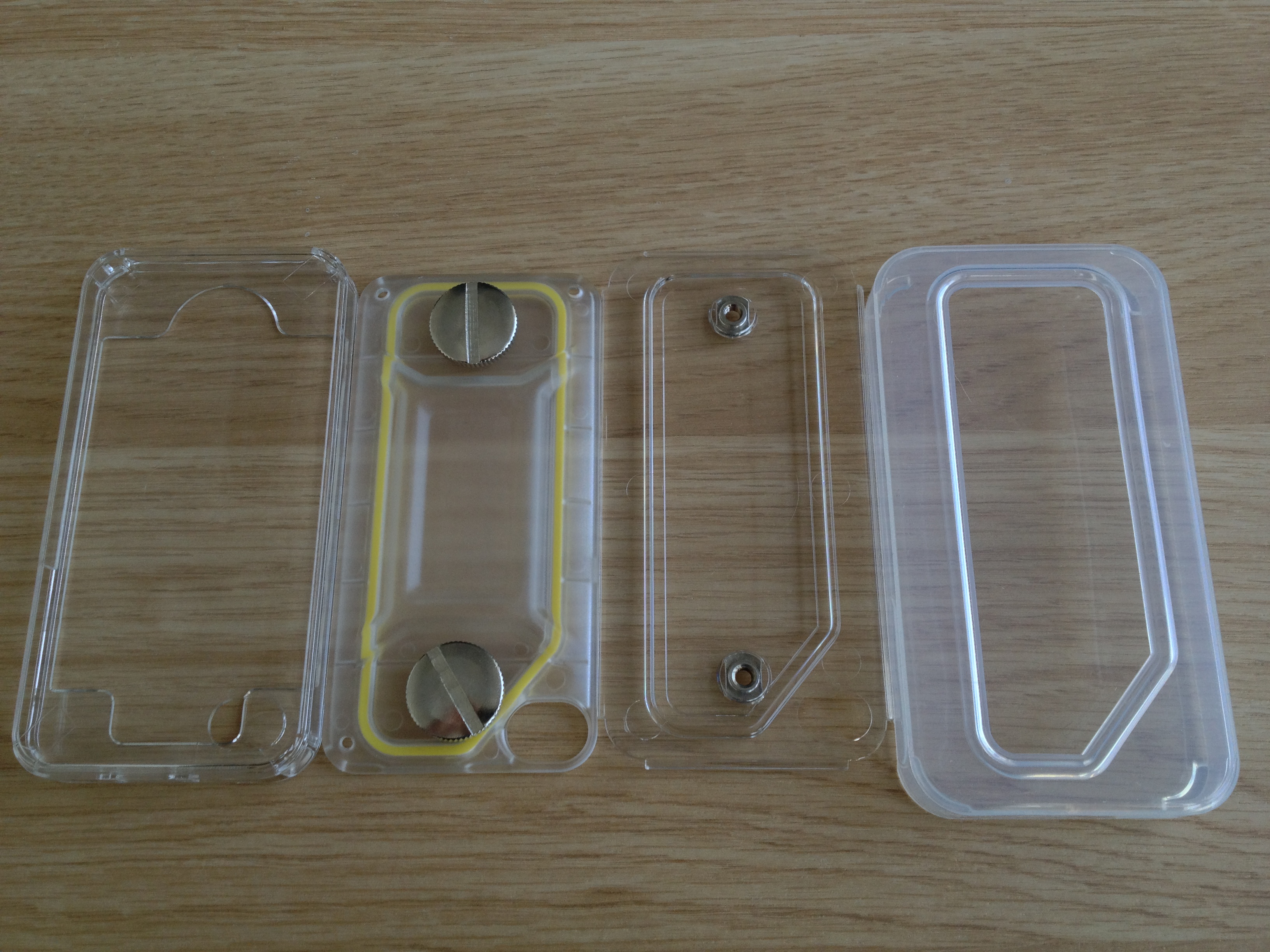 The water seemed quite a bit less cold the second time around and the visibility was slightly better as well. However, Castle beach is exposed and the wave action results in a lot of debris (such as pieces of dead seaweed). Also, it seemed that some of the seaweeds were already ‘over the hill’; the Harpoon weed often seemed discolored for instance and not that pretty anymore. I have noticed the proliferation and die back of some seaweeds before and it makes sense that there is some seasonal succession (I will keep tabs on the growth of the different species month-by-month in an excel spreadsheet). It should have come as no surprise that my plan of taking crisp, brightly colored underwater pictures with my iPhone in a flimsy case turned out to result in blurry, out of focus and badly composed shots, but it was still a bit disappointing. Some of the least crap ones:
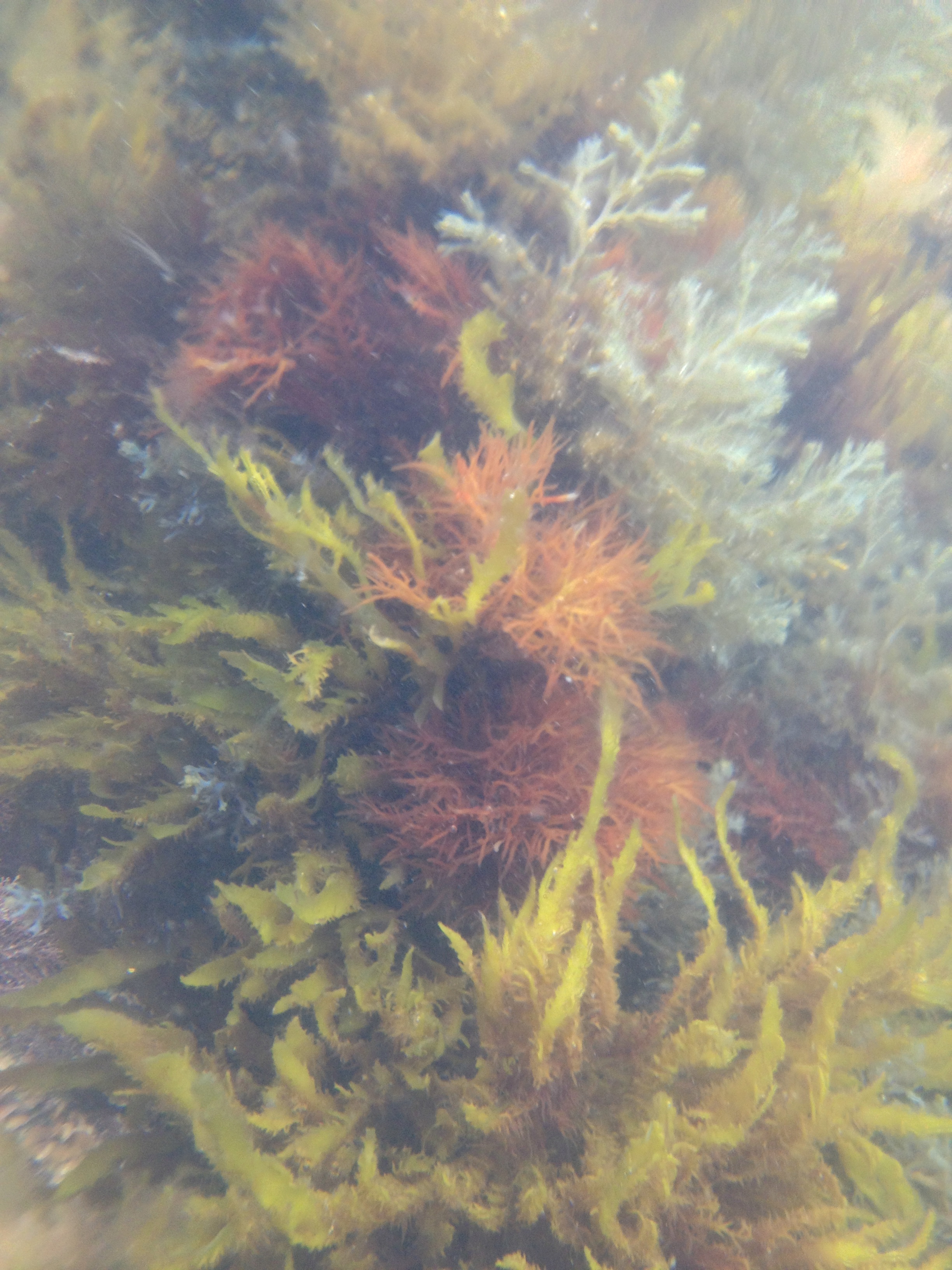
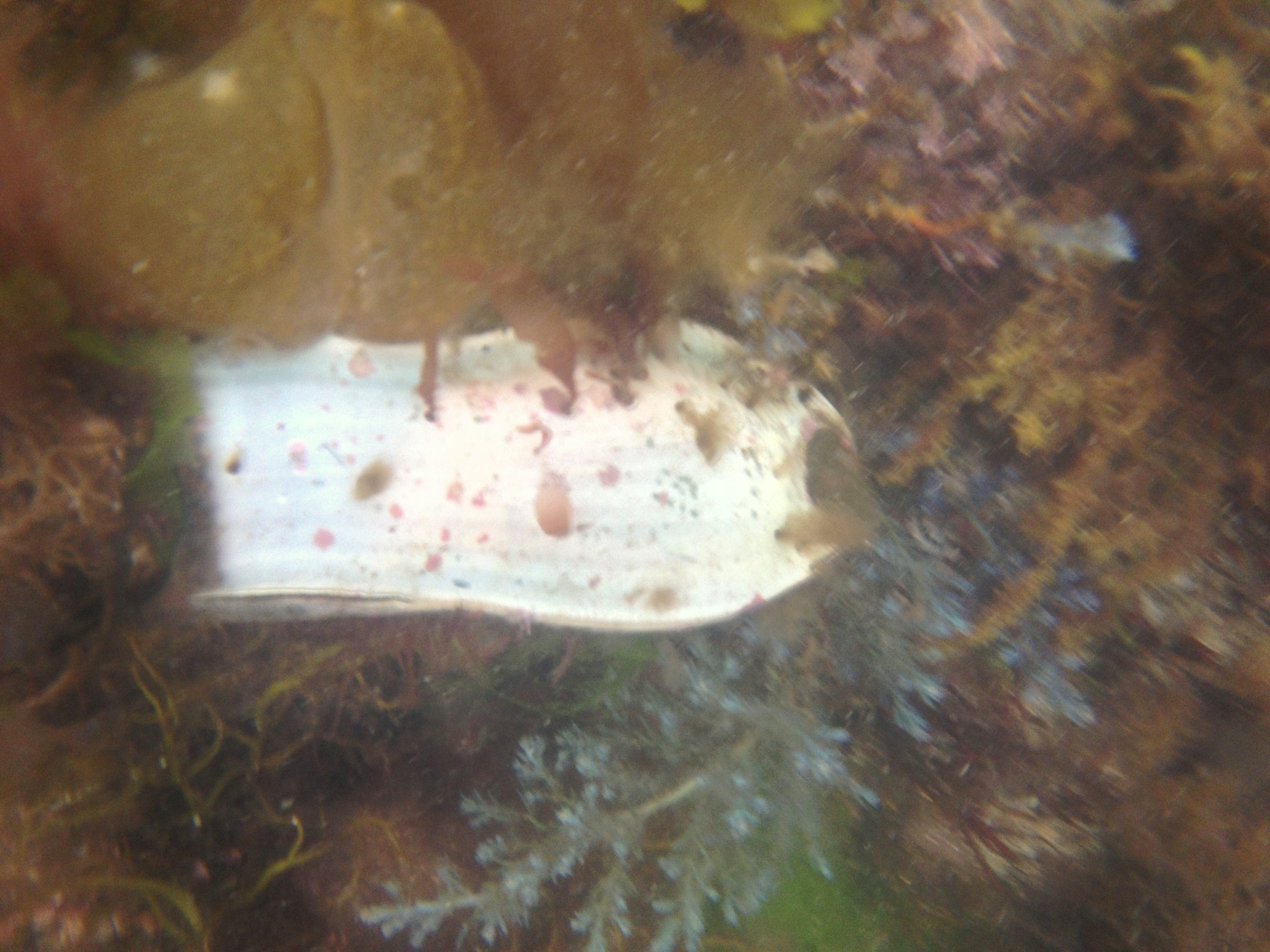
It was quite neat to sea mermaids purses (ray or shark egg cases): bright white and fat (i.e. alive) instead of the black and empty wrinkled ones you find on the beach. I have no idea what species they are but they seemed relatively common and I only found them attached to my favorite, the Bushy rainbow wrack Cystoseira tamariscifolia. *edit, most probably eggs of the Nursehound (or Bull huss) Scyliorhinus stellaris.* I also tried some quick shots in the rock pools as the water is more clear there, but the pictures did not turn out to be too great in there either:
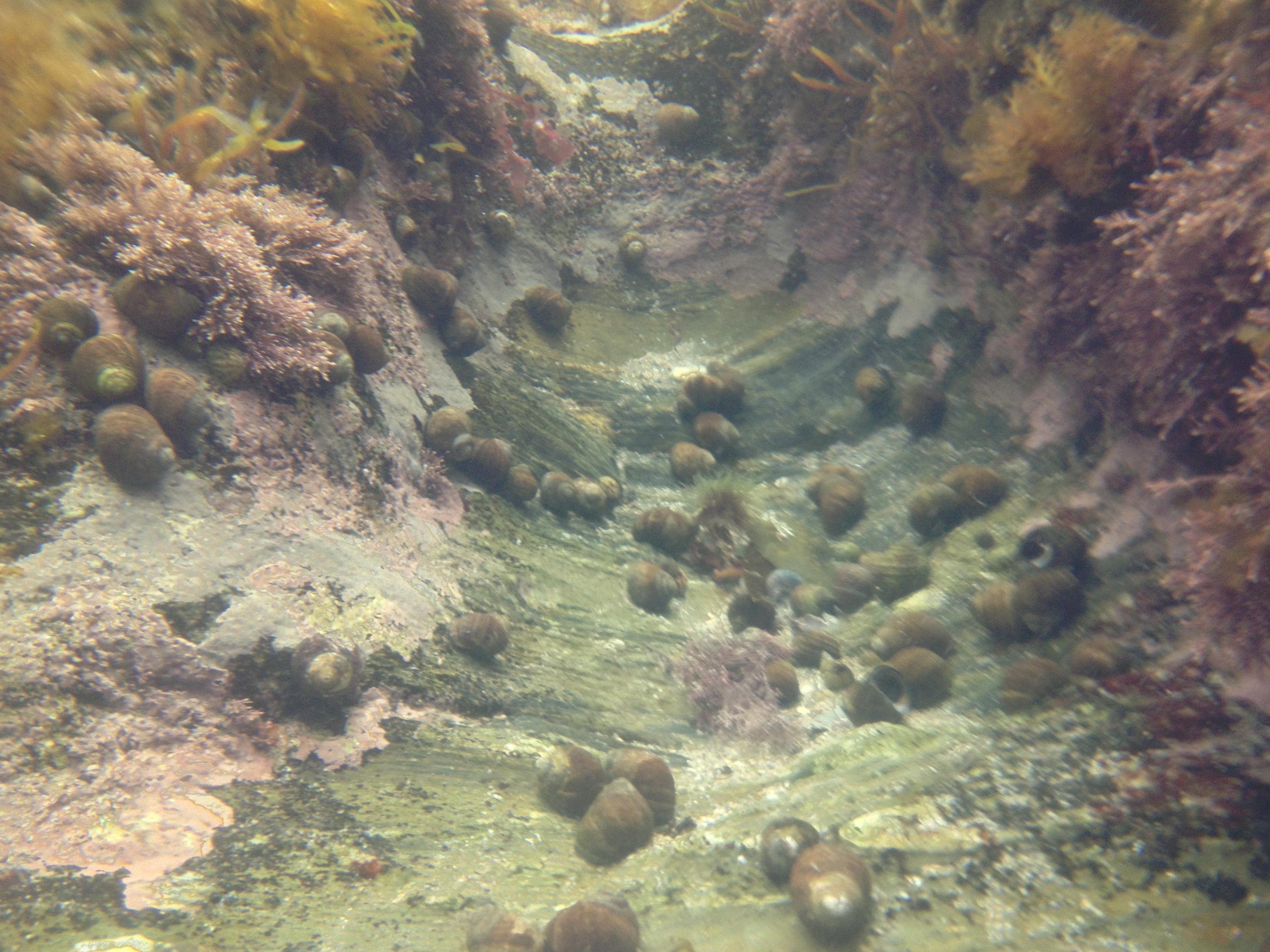 Although quite cheap and -knock on wood- safe, the iPhone case is not a substitute for a real underwater camera. All pictures turned out quite hazy (although this was certainly also due to the bad water conditions). At times it is hard to operate the touch pad and there isn’t a cord to attach it to your wrist which makes the experience a bit less relaxed. I have a Panasonic Lumix that can go 10 meters deep and an old Canon Powershot with an underwater housing which seem to do better (although neither of them in turn can be compared to a SLR in an underwater housing). I will try to explicitly compare some shots with these cameras soon. Next time I go snorkeling I will also try a less exposed spot where visibility will hopefully be better.
castle beach
Although cold and rainy on the bank holiday Monday, the weekend weather was glorious (and low tide was ‘low’), so it was off to Castle Beach in Falmouth:
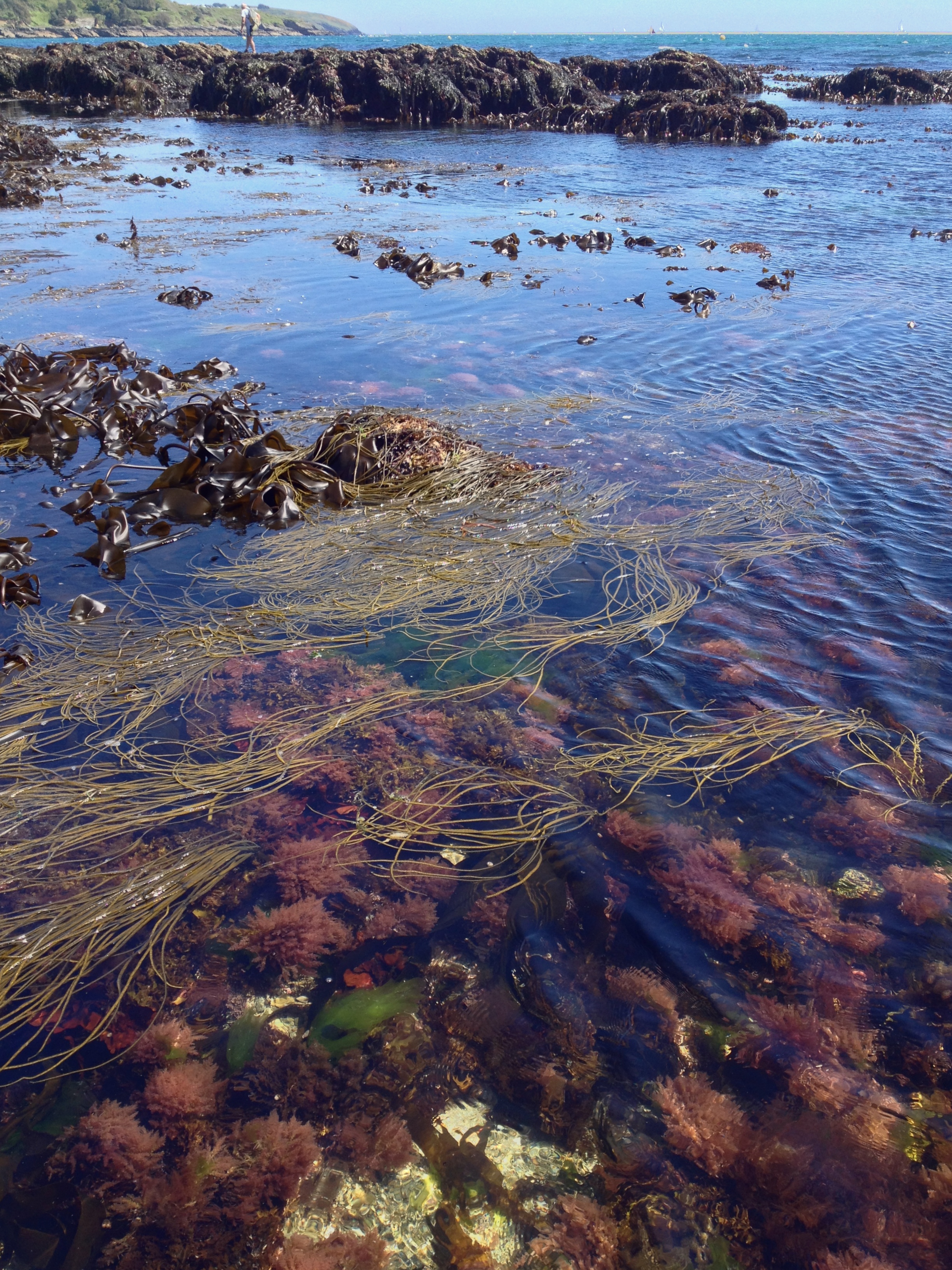
To me this looks as good as a coral reef! Loads of Harpoon weed Asparagopsis armata, Thong weed Himanthalia elongata and Oarweed or Tangle Laminaria digitata (there are two similar kelp species, but these remain more erect when above water my guide tells me). Also quite some of my favorite Bushy rainbow wrack Cystoseira tamariscifolia shining blue:
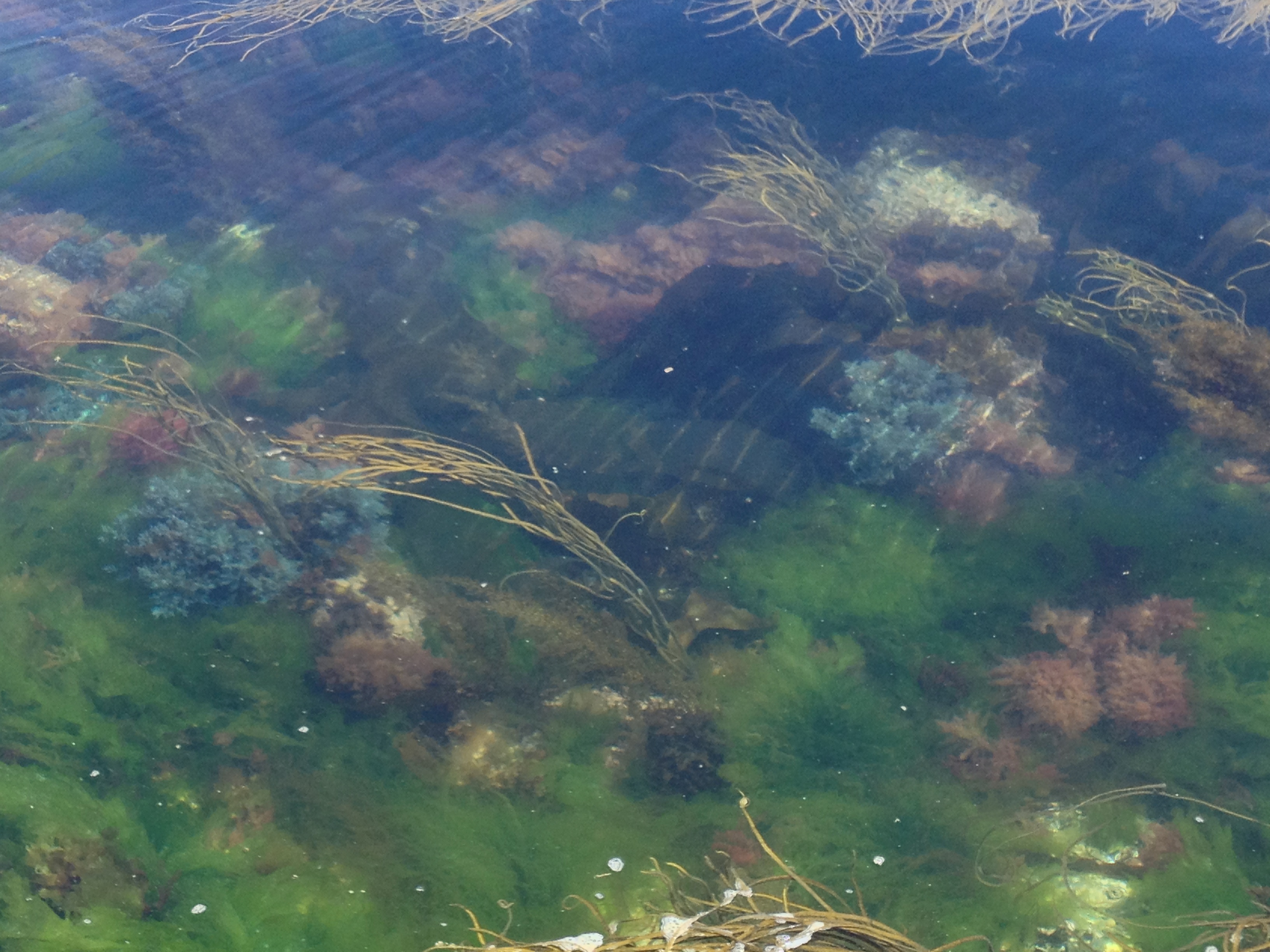
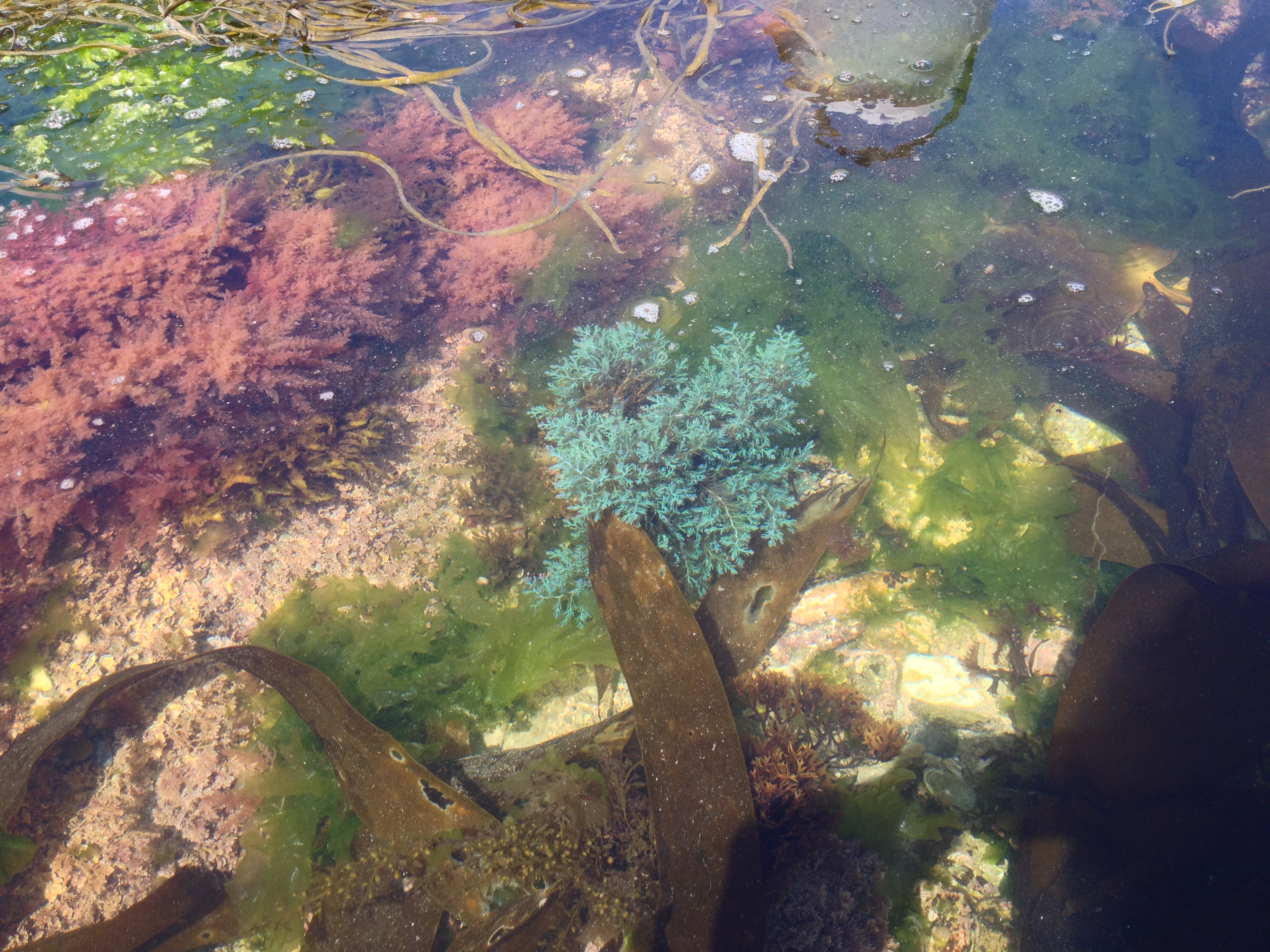
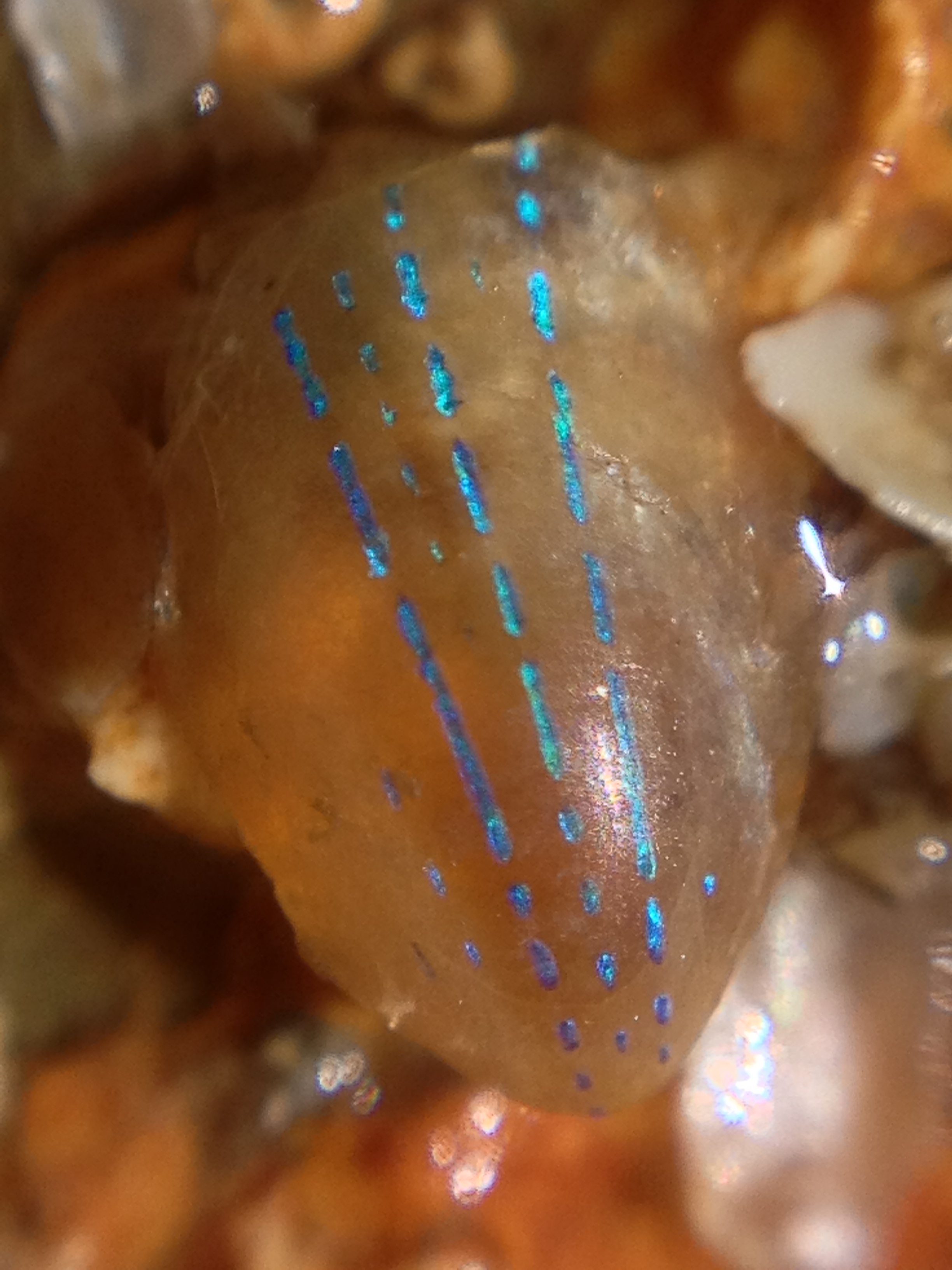
Also iridescent: a tiny (<5 mm) Blue-rayed limpet Helcion pellucidum. Normally found on Laminaria kelp, this one sat under a rock:
Especially on the middle shore, there was quite some change in seaweed composition, with lots of Ulva and similarly bright green, slimey algae in the rock pools. The abundant Shore clingfish Lepadogaster lepadogaster had been laying eggs under rocks everywhere:
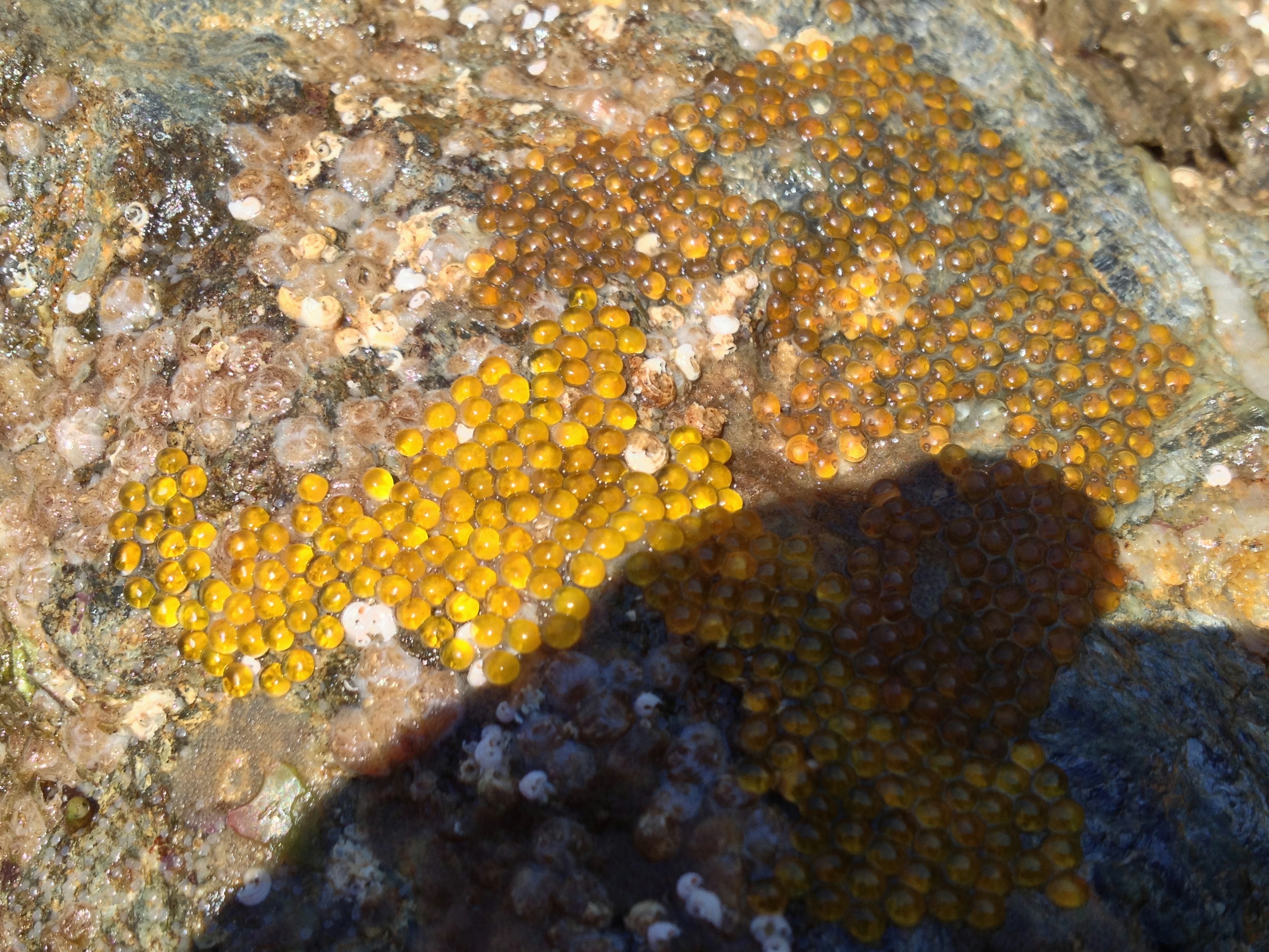
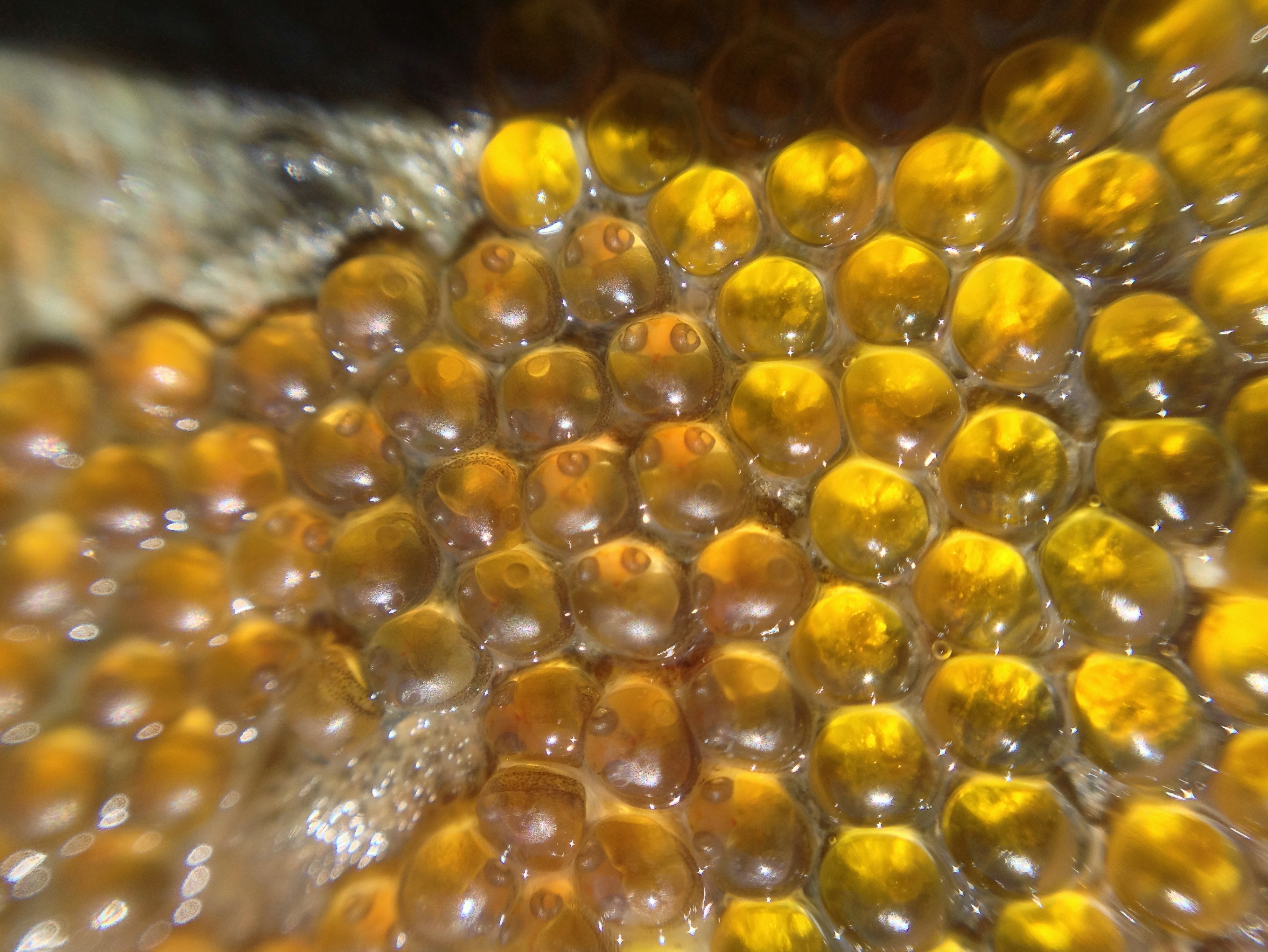
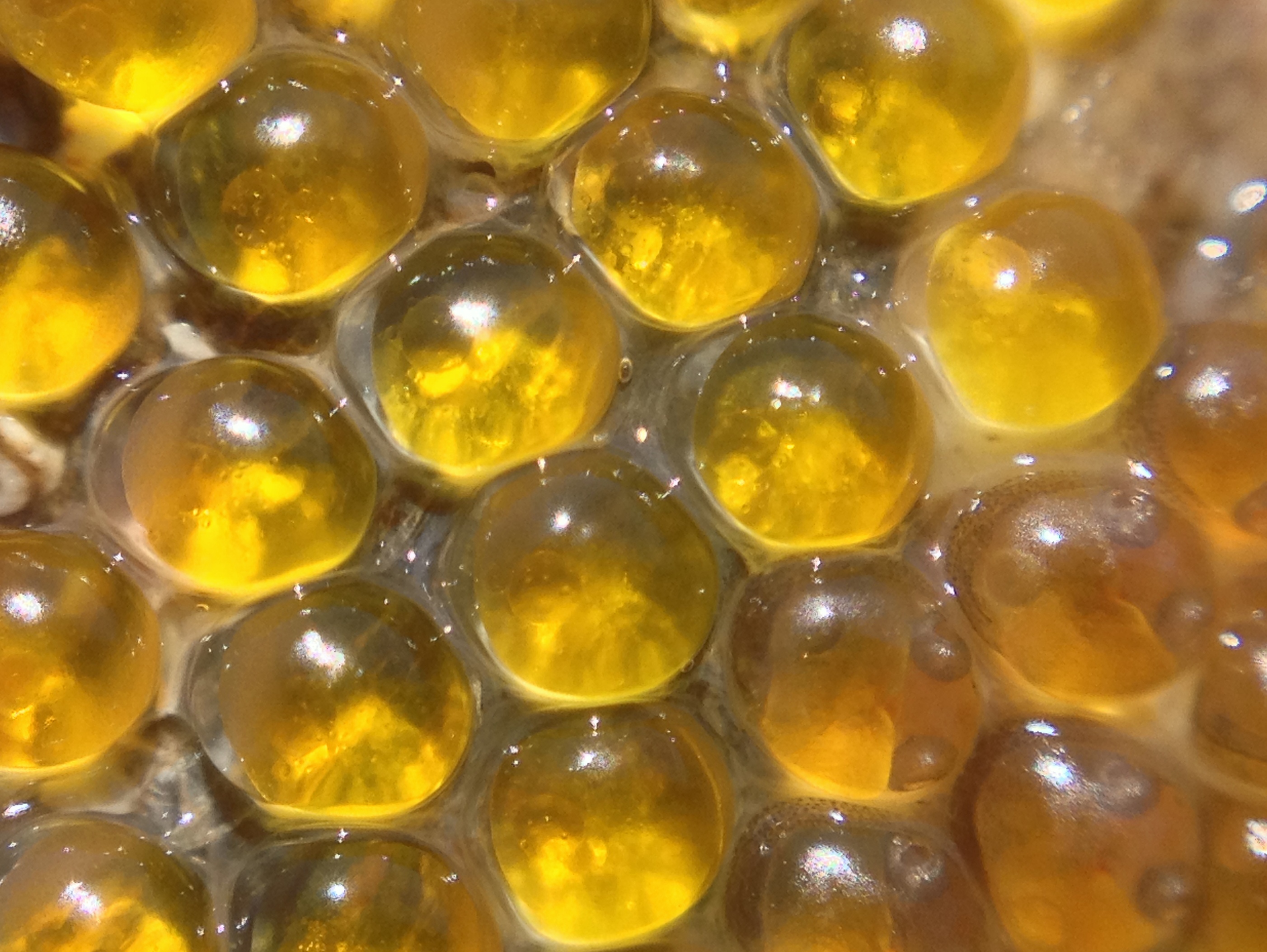
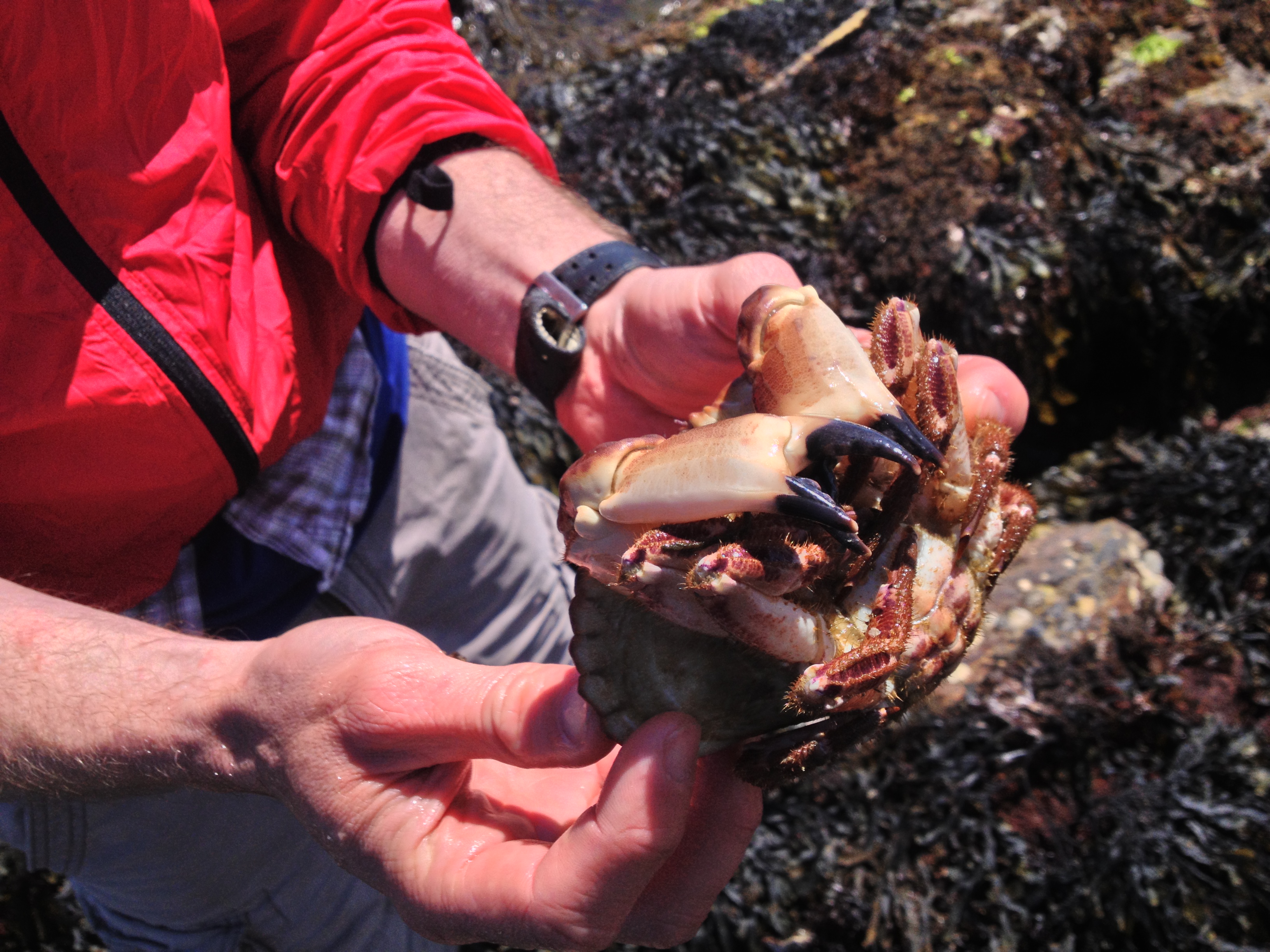
You can even see the embryo eyes, I am very happy with my olloclip macrolens (although photography in the bright sun is difficult, especially if you do not want to disturb the animals/eggs too much). There were a couple of quite big Edible crabs Cancer pagurus around. The combination of a trembling crab and a trembling hand resulted in a sub-optimal macro photo of its carapace but it is still a neat pattern:
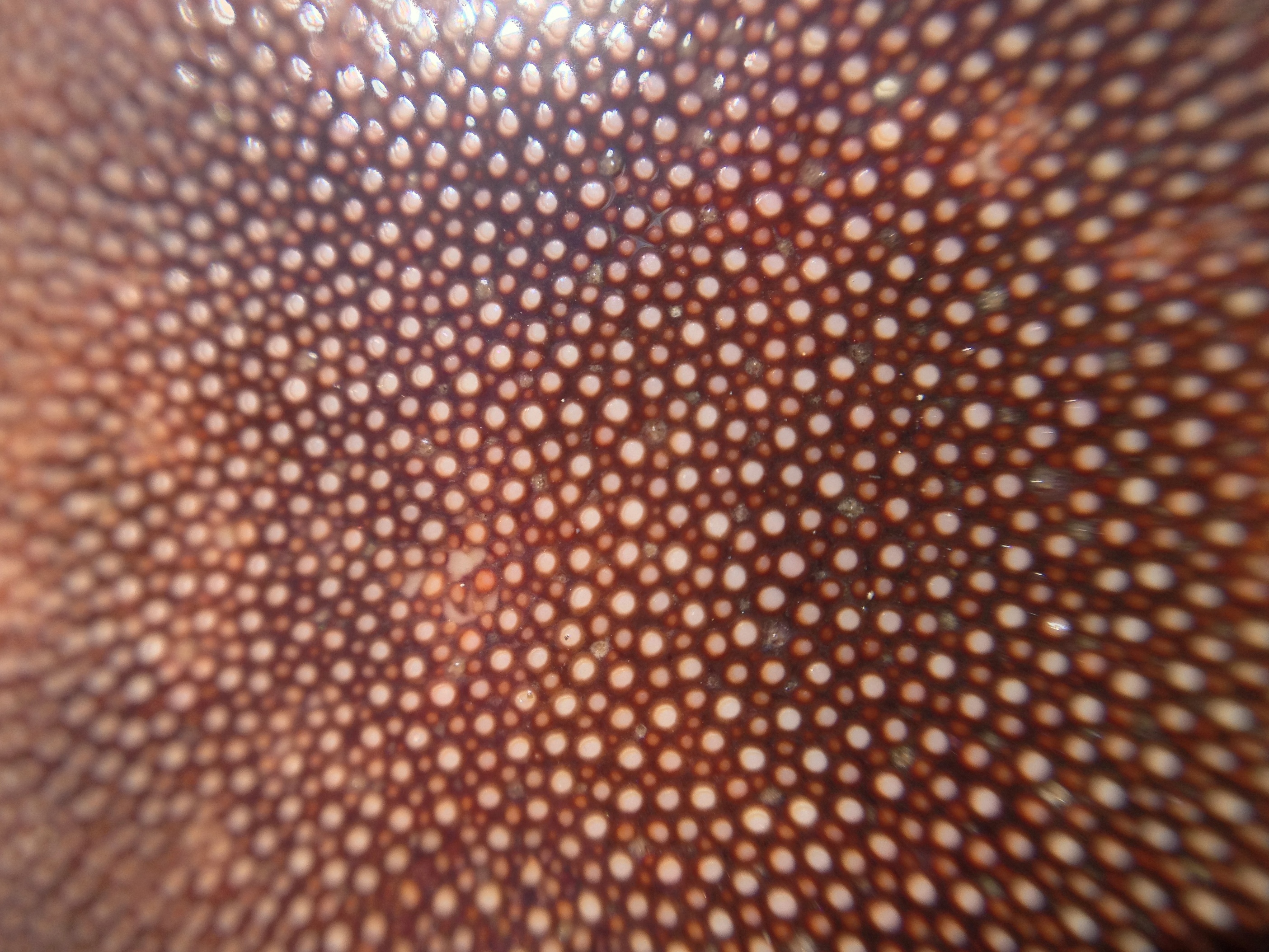
Strangely (and mostly, annoyingly), the second pump of the aquarium broke down before the weekend and I ordered two new ones. The aquarium has not improved without filtration of course. I will be traveling quite a bit over summer so I will not experiment much with it in the near future.
Mud pooling
When it was very low tide last week, I decided to skip the ‘rock pools proper’ on my local beach in Flushing and to check out the zone just below where the rocks and the sandy bottom of Penryn River (an arm of the Fall Estuary) meet. All common rock pool inhabitants – winkles, top shells, edible crabs, worm pipefish and shannies – still live here, but some other organisms are more abundant here than in the rock pools.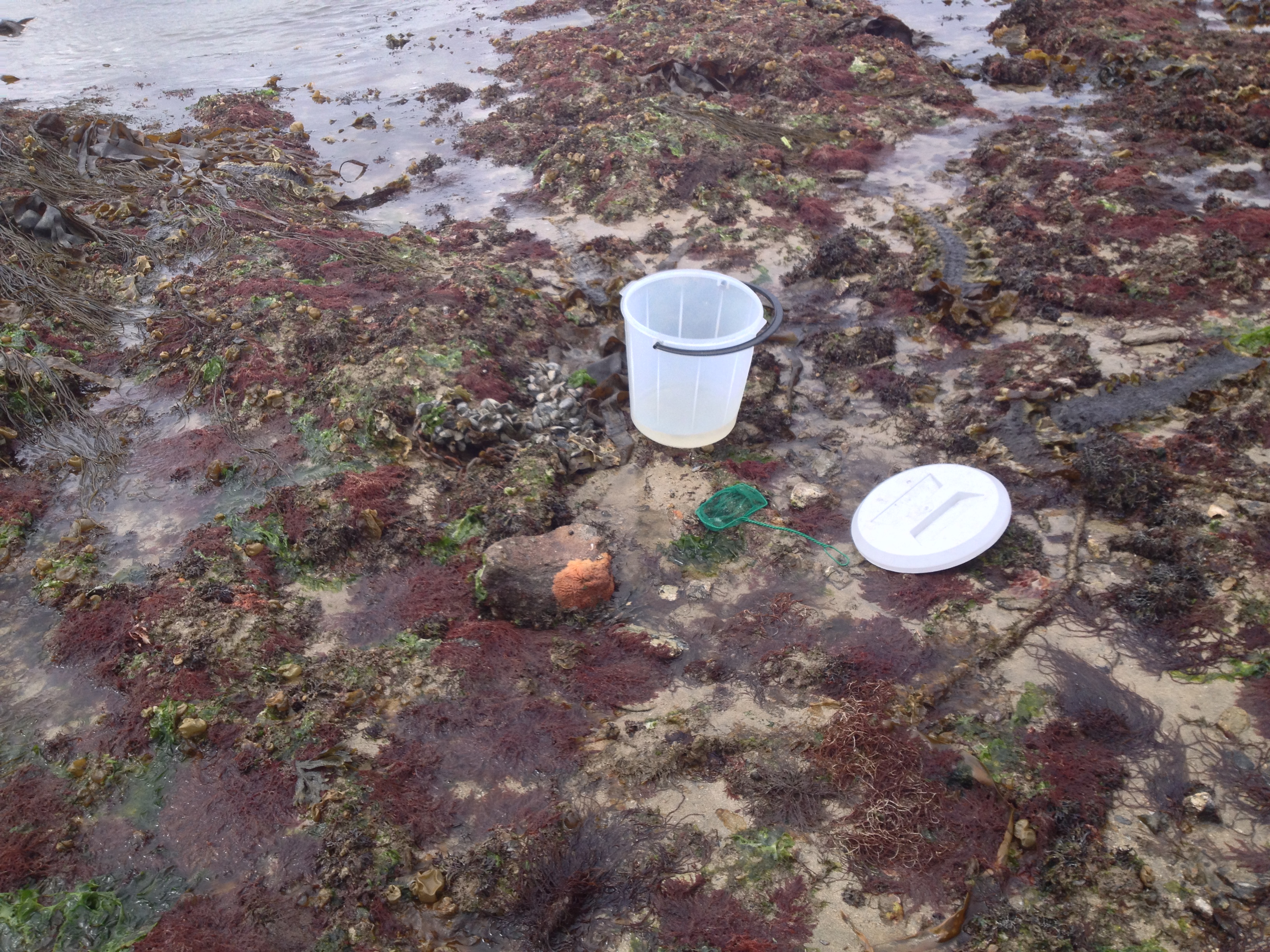
Sponges are very common in this silty environment, especially the Estuary sponge Hymeniacidon perleve: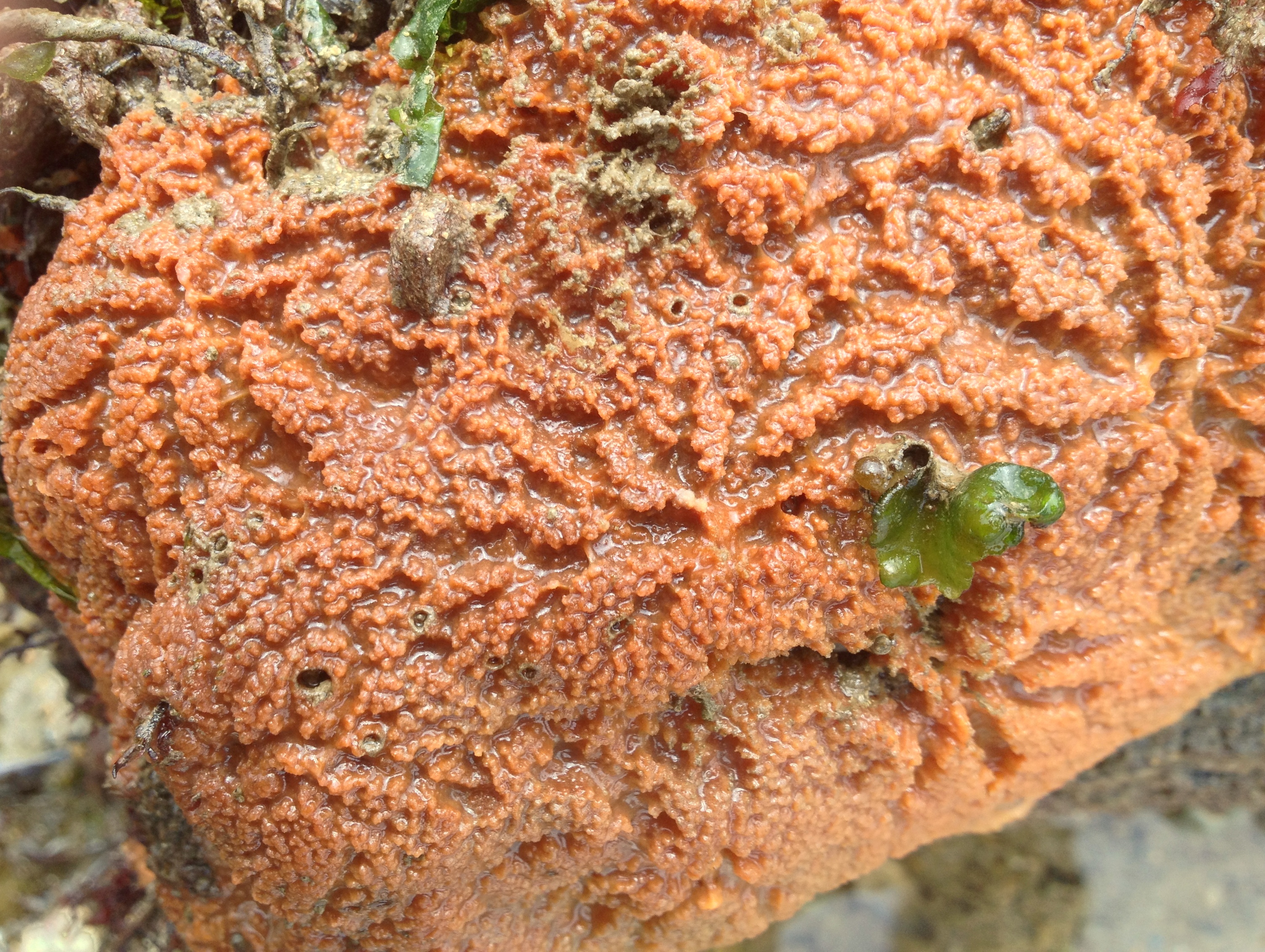
The Breadcrumb sponge Halichondria panicea: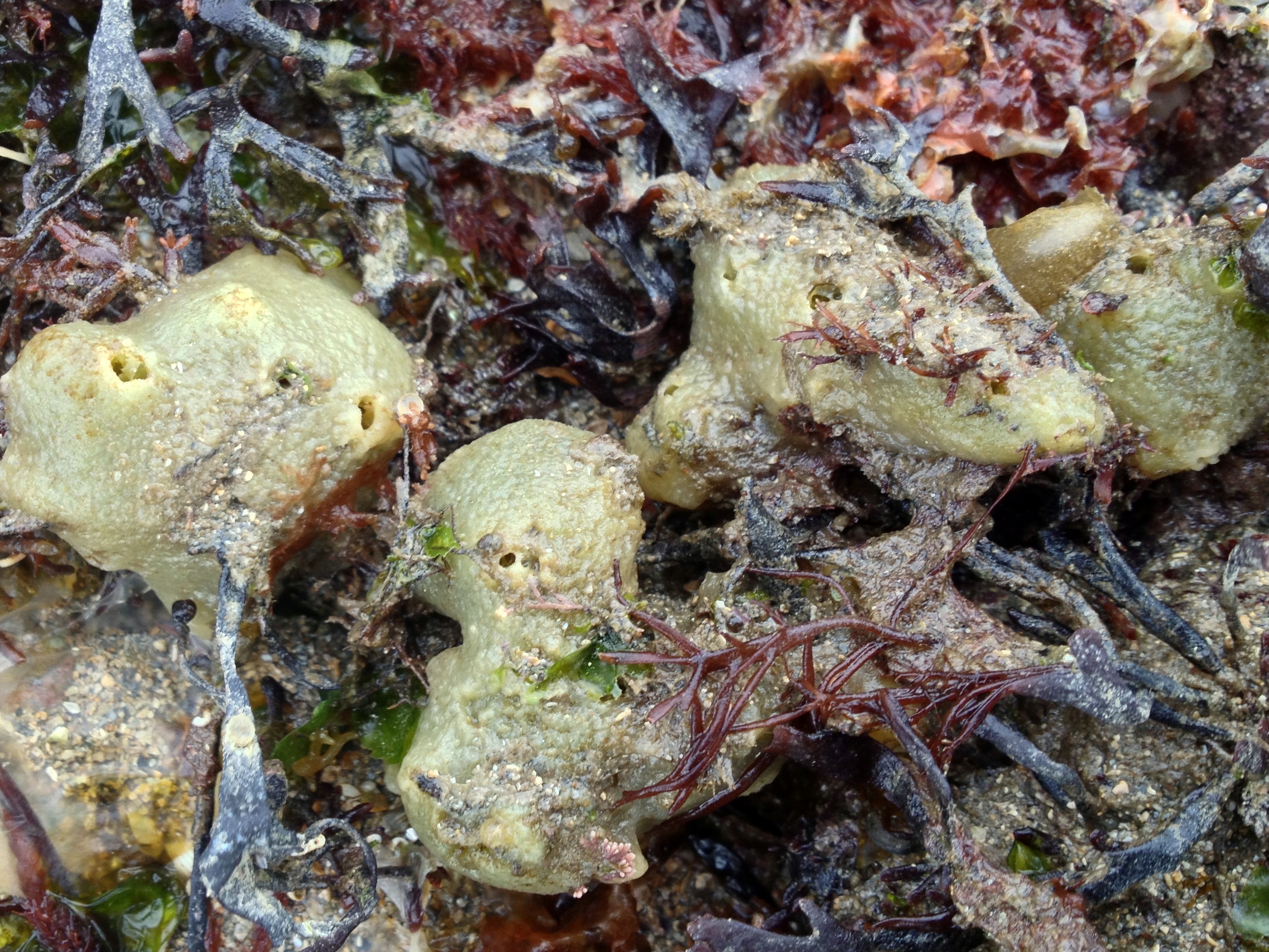
In addition to sponges, I noticed quite a lot of the colony-forming ascidian Botrylloides leachi (see previous post). That explains why I could also find a couple of European cowries Trivia monacha, their predator. Also very common here are the Variegated scallop Chlamys varia and the Thicklipped dog whelk Hinia incrassata (top right picture). I am not sure what the slimy beige stuff is!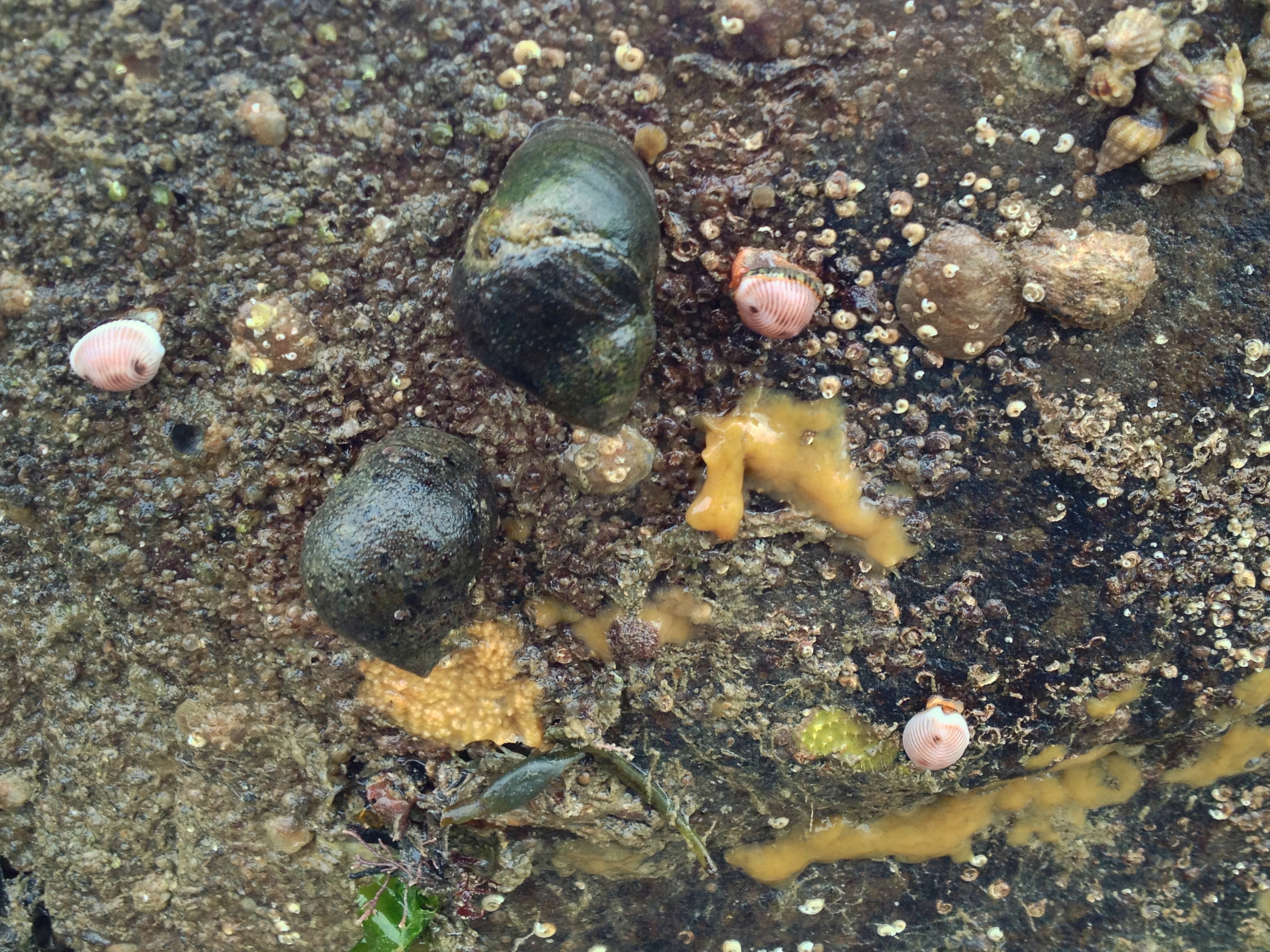
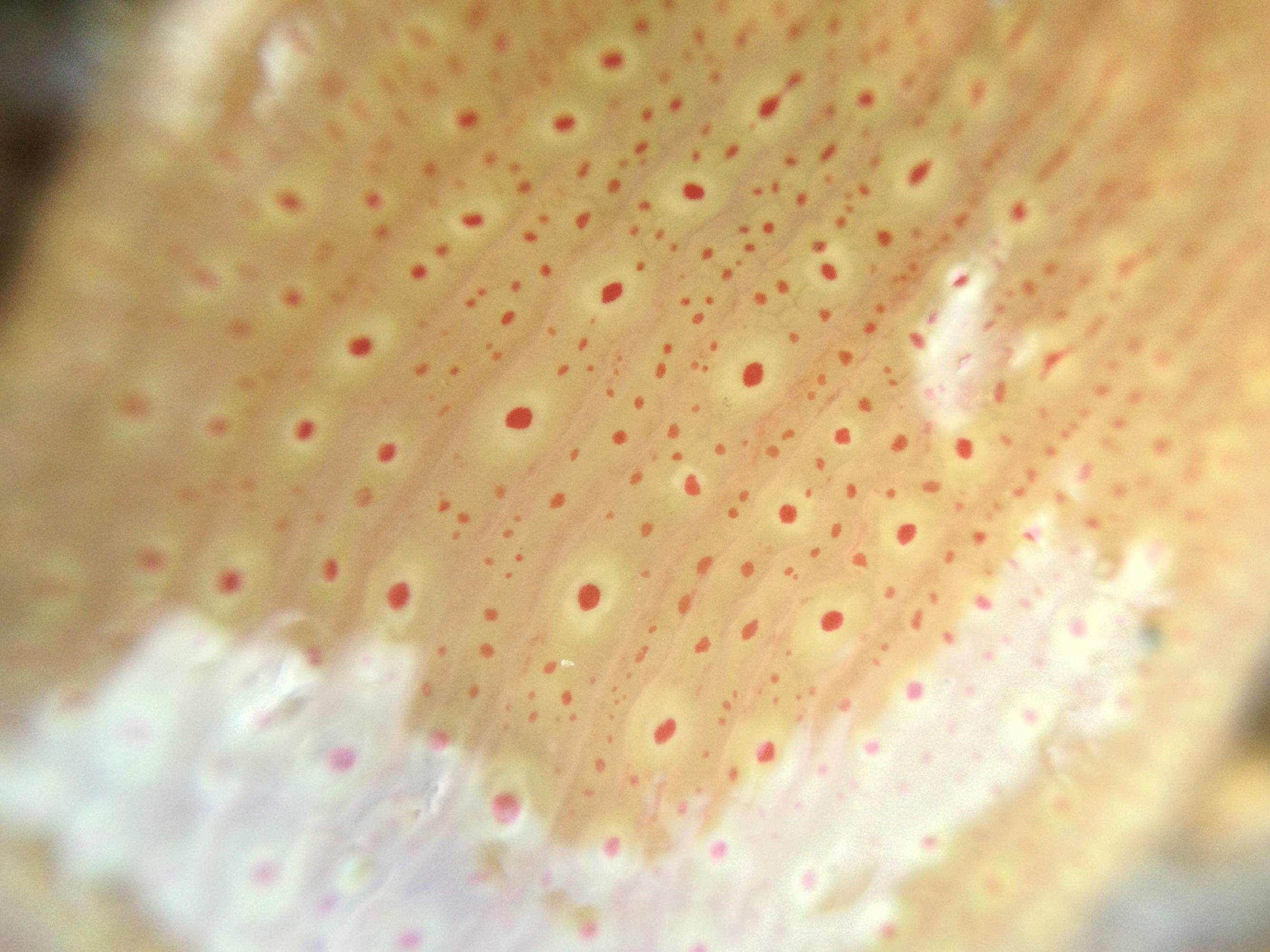
I spotted a couple of new things as well, the Red speckled anemone Anthopleura ballii: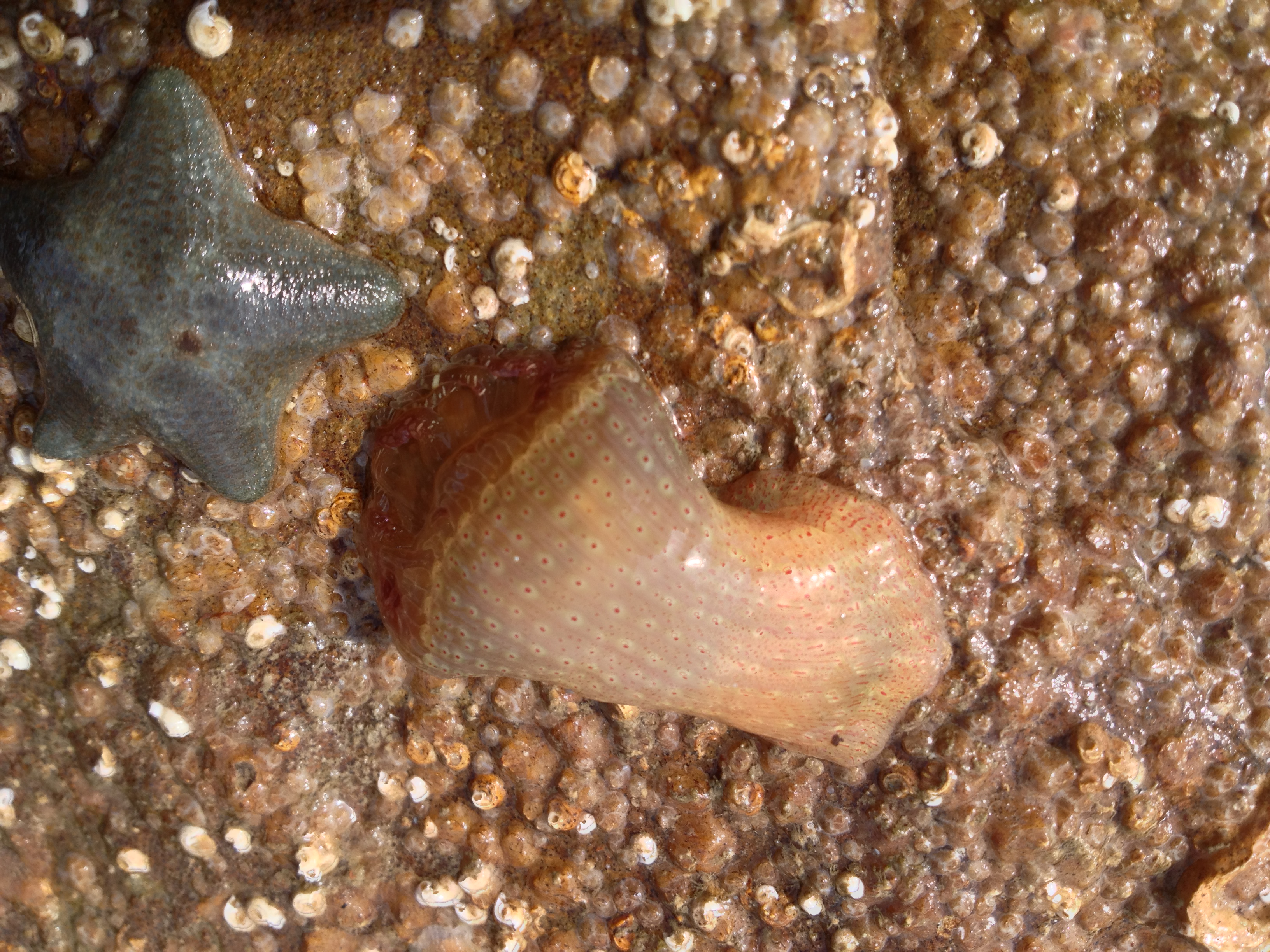
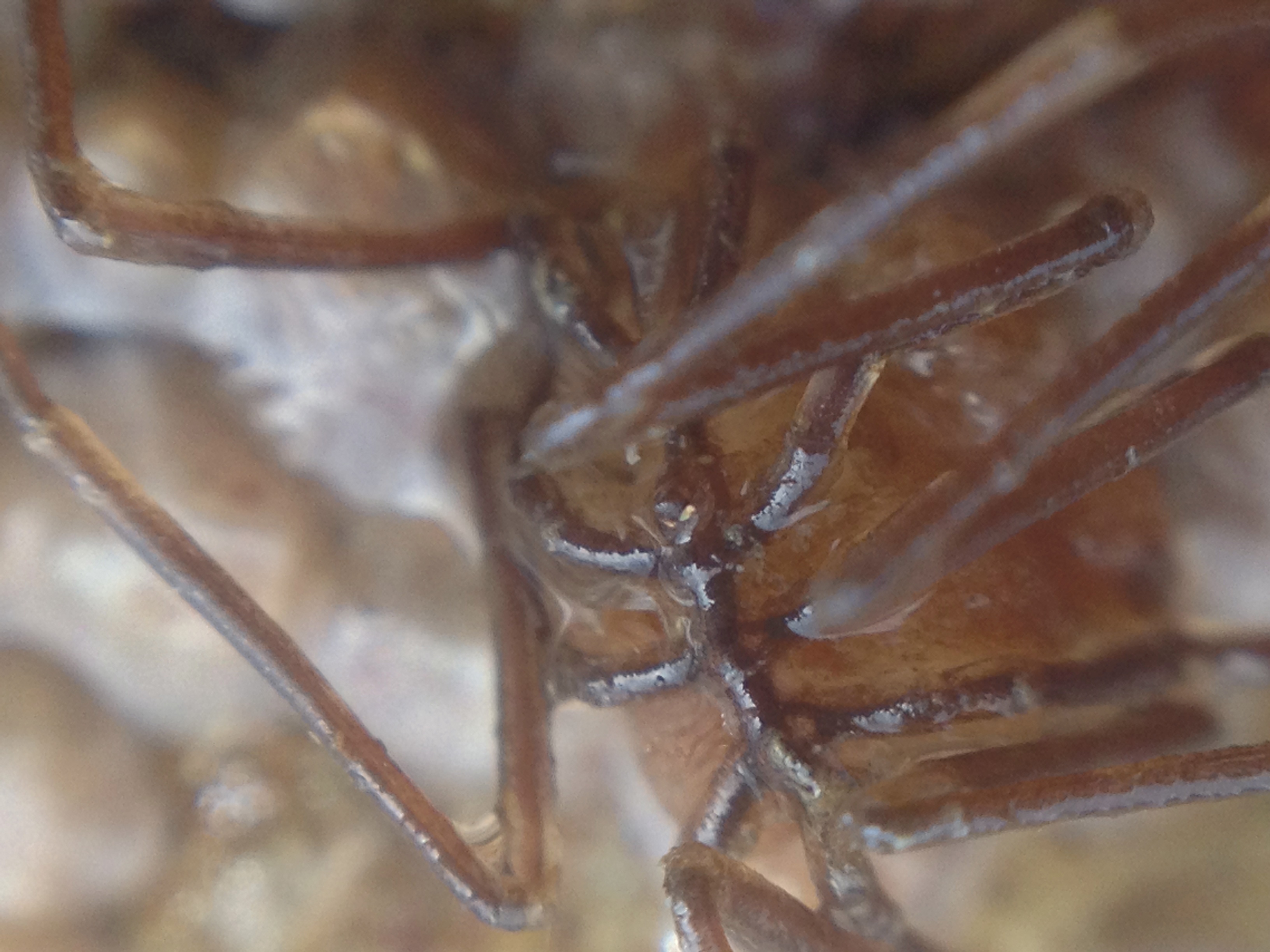
Also a first, a Sea spider Nymphon (gracile?):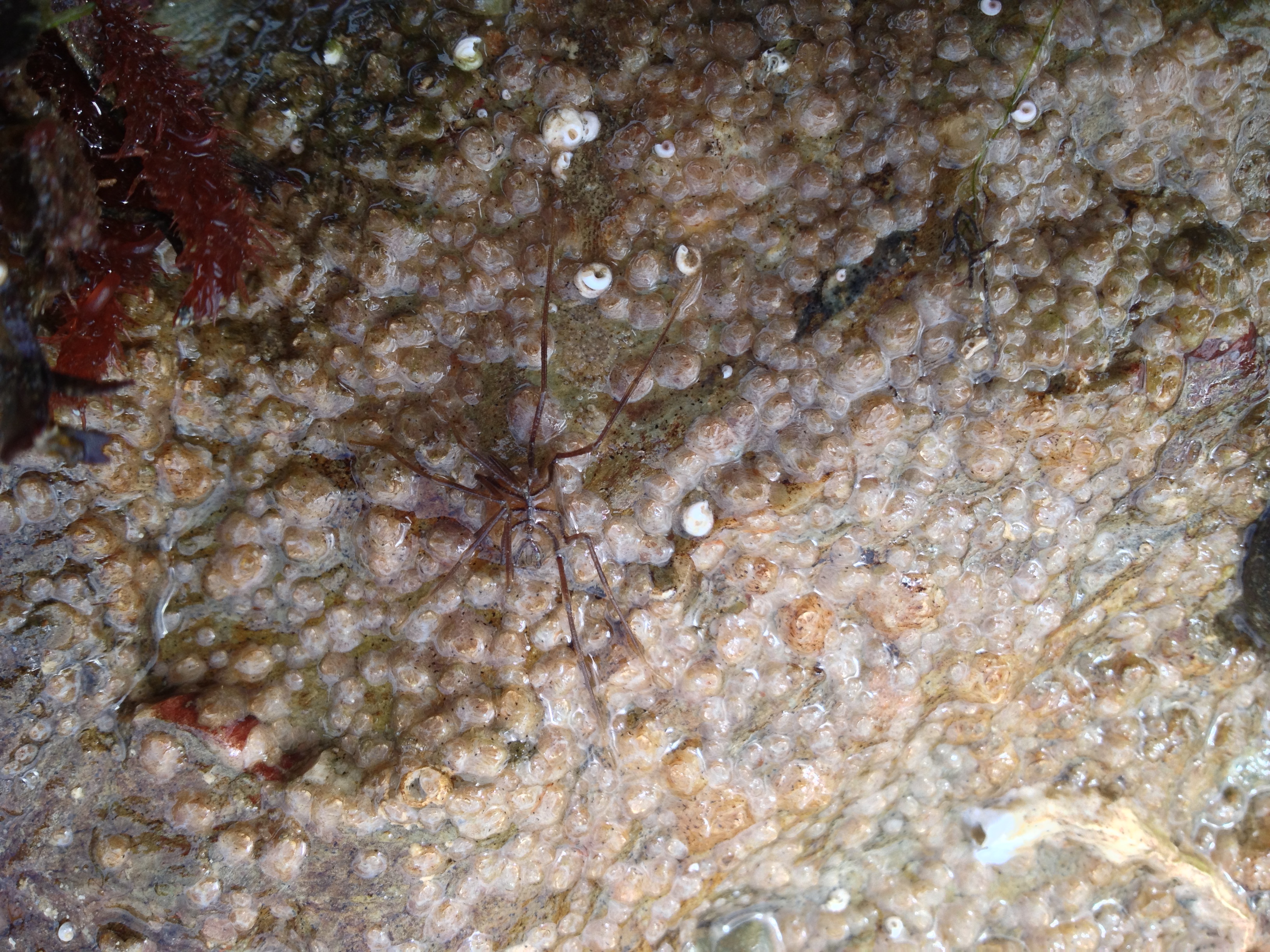
I found a large patch of these beautiful eggs: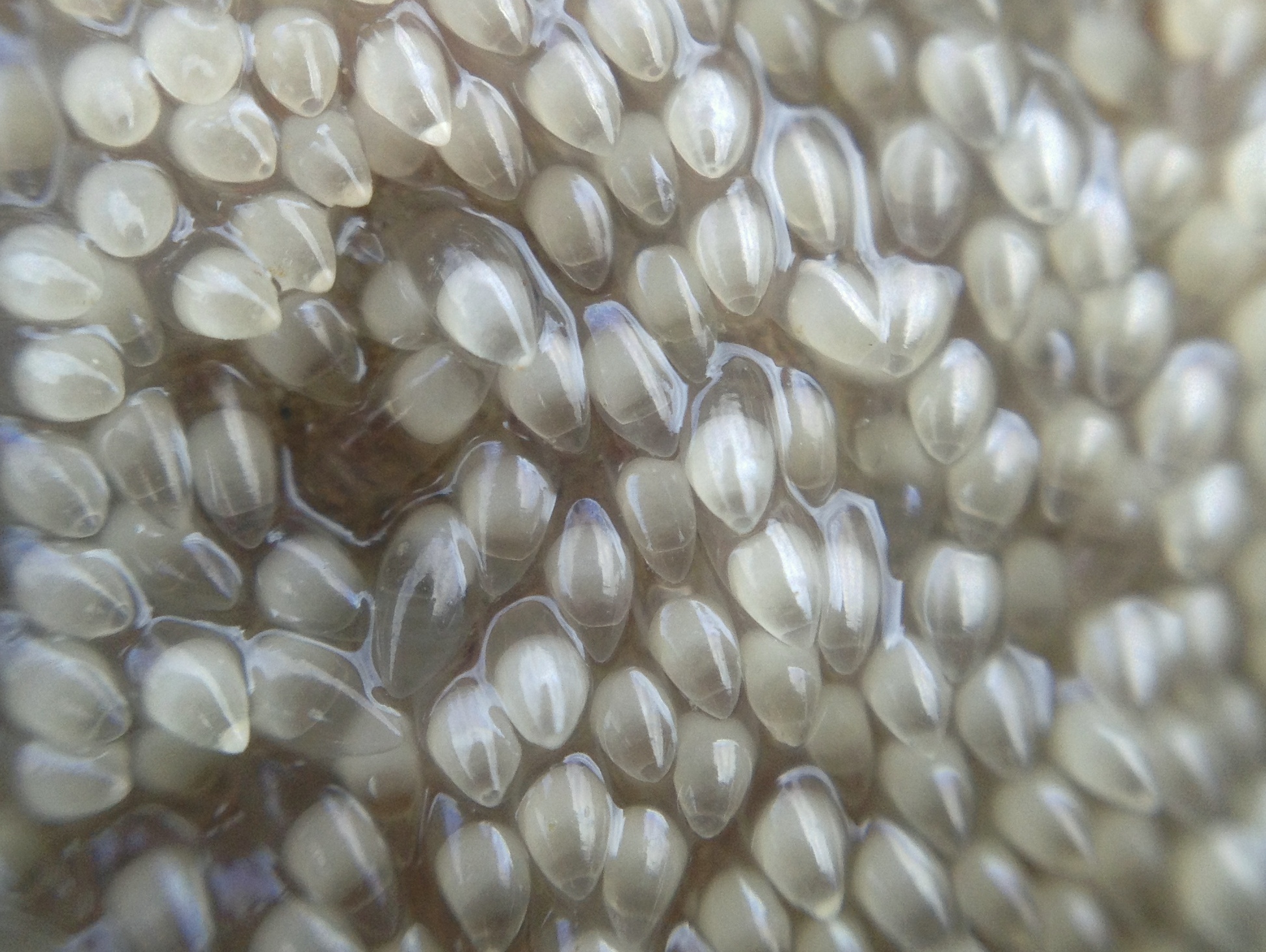
and someone guarding them, a rock goby Gobius paganellus: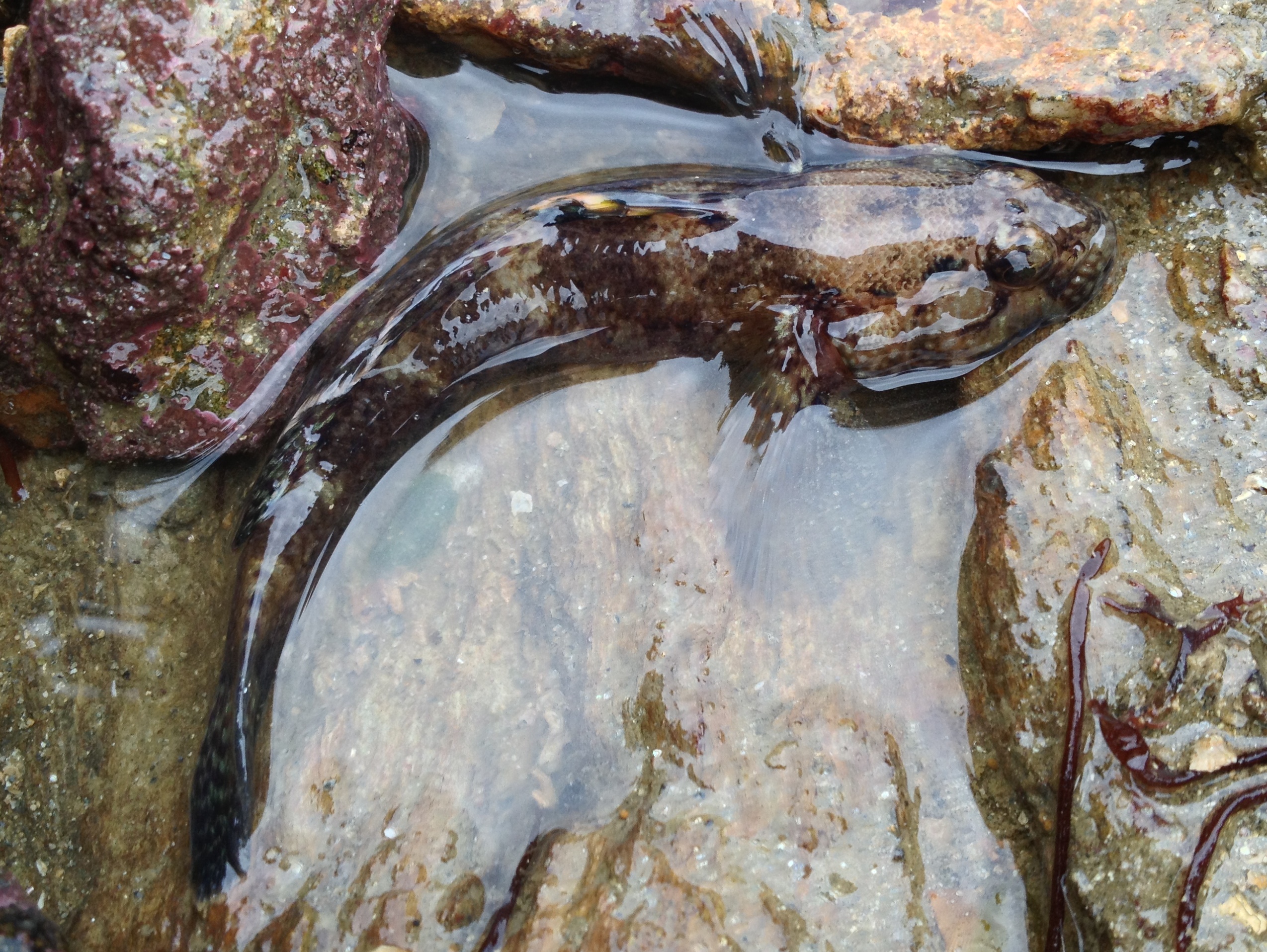
A Butterfish Pholis gunnellus: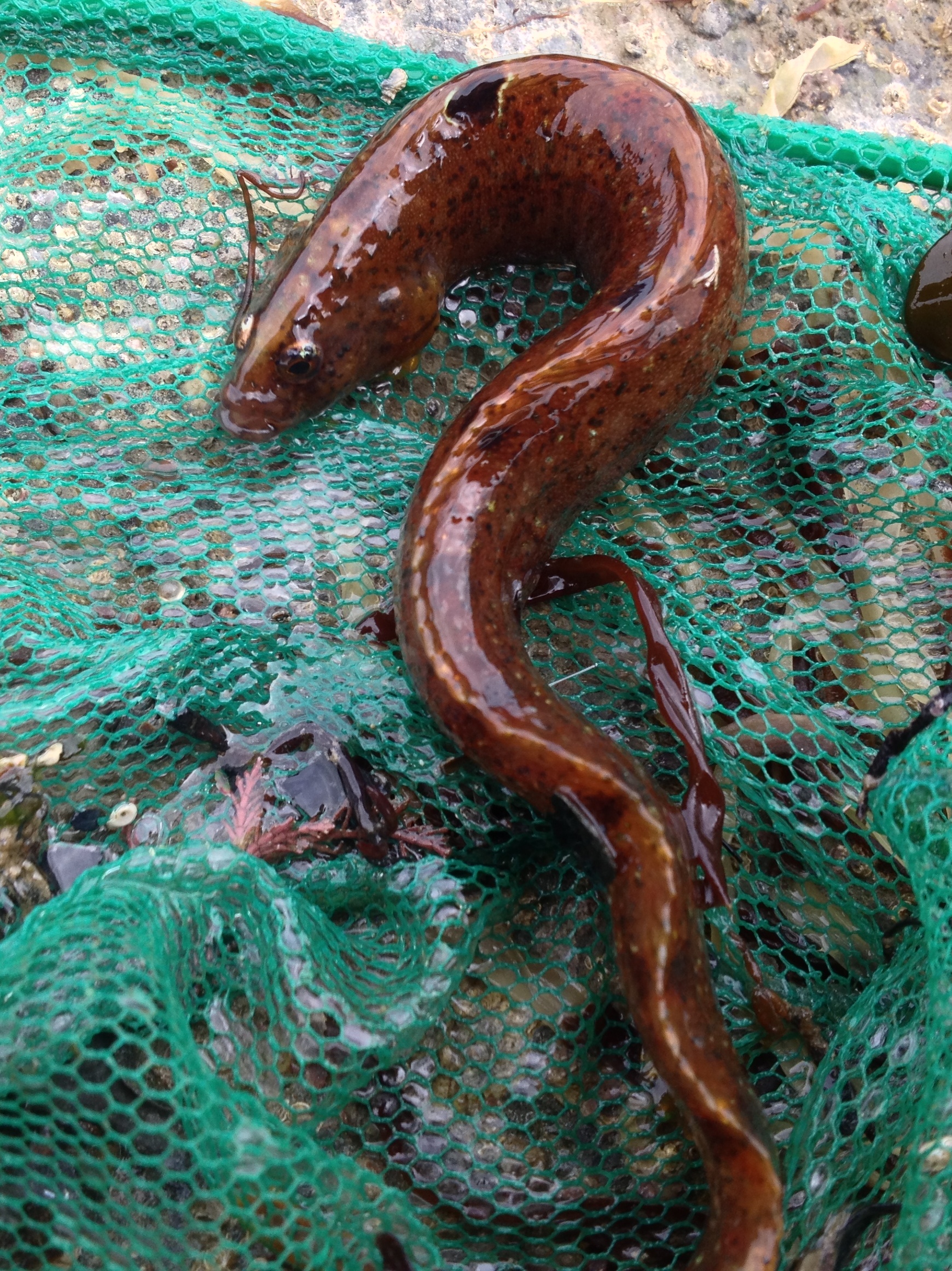
Very common were little Squat lobsters Galathea squamifera (no picture), rapidly swimming backwards to escape. Even more abundant were these little Hooded prawns Athanas nitescens: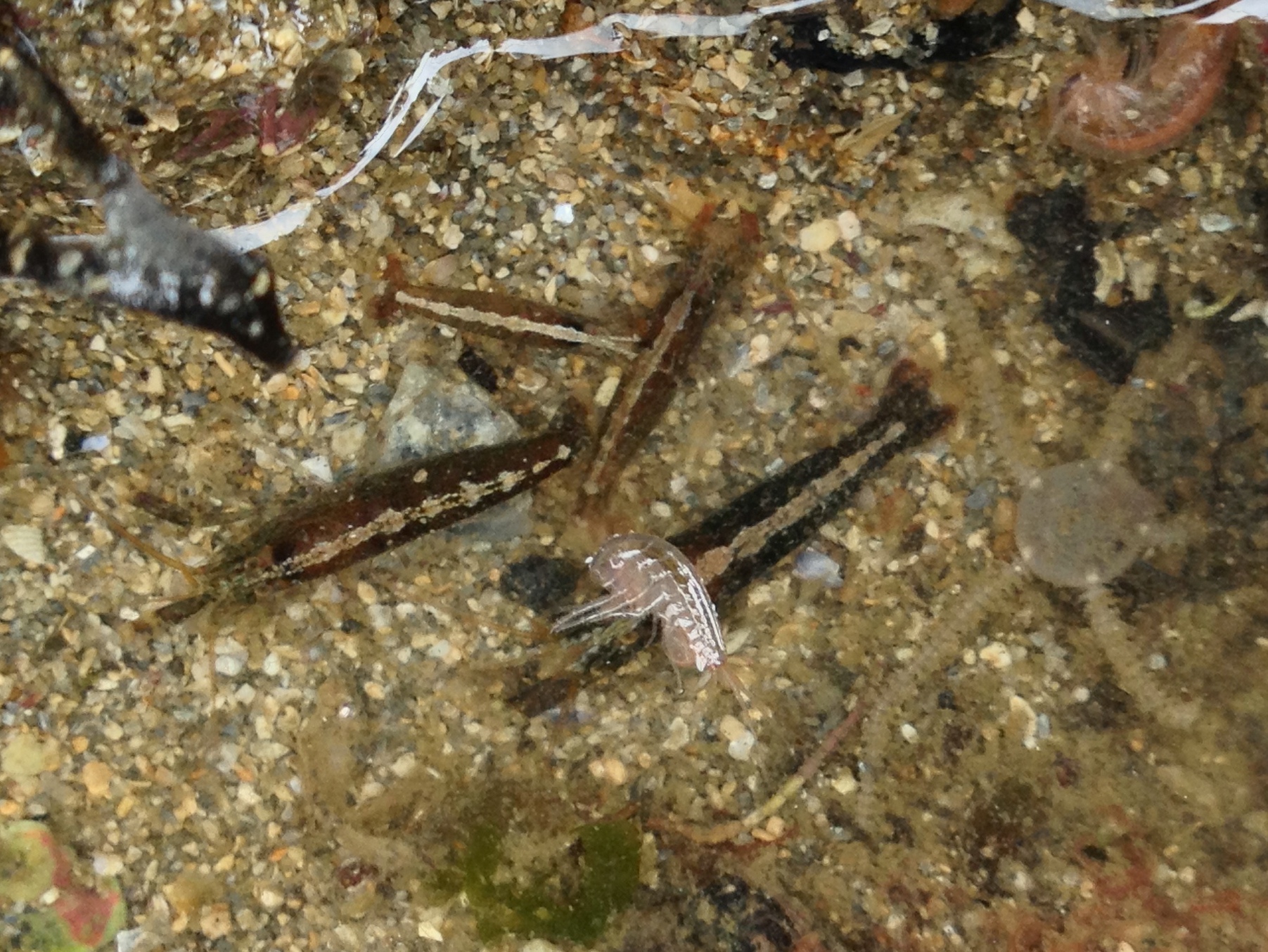
mystery eggs
I saw a couple of these egg clusters some time ago and asked my friends at the British Marine Life Study Society Facebook page what they could be. Unfortunately I have not had any suggestions yet. Do you know who laid these eggs?
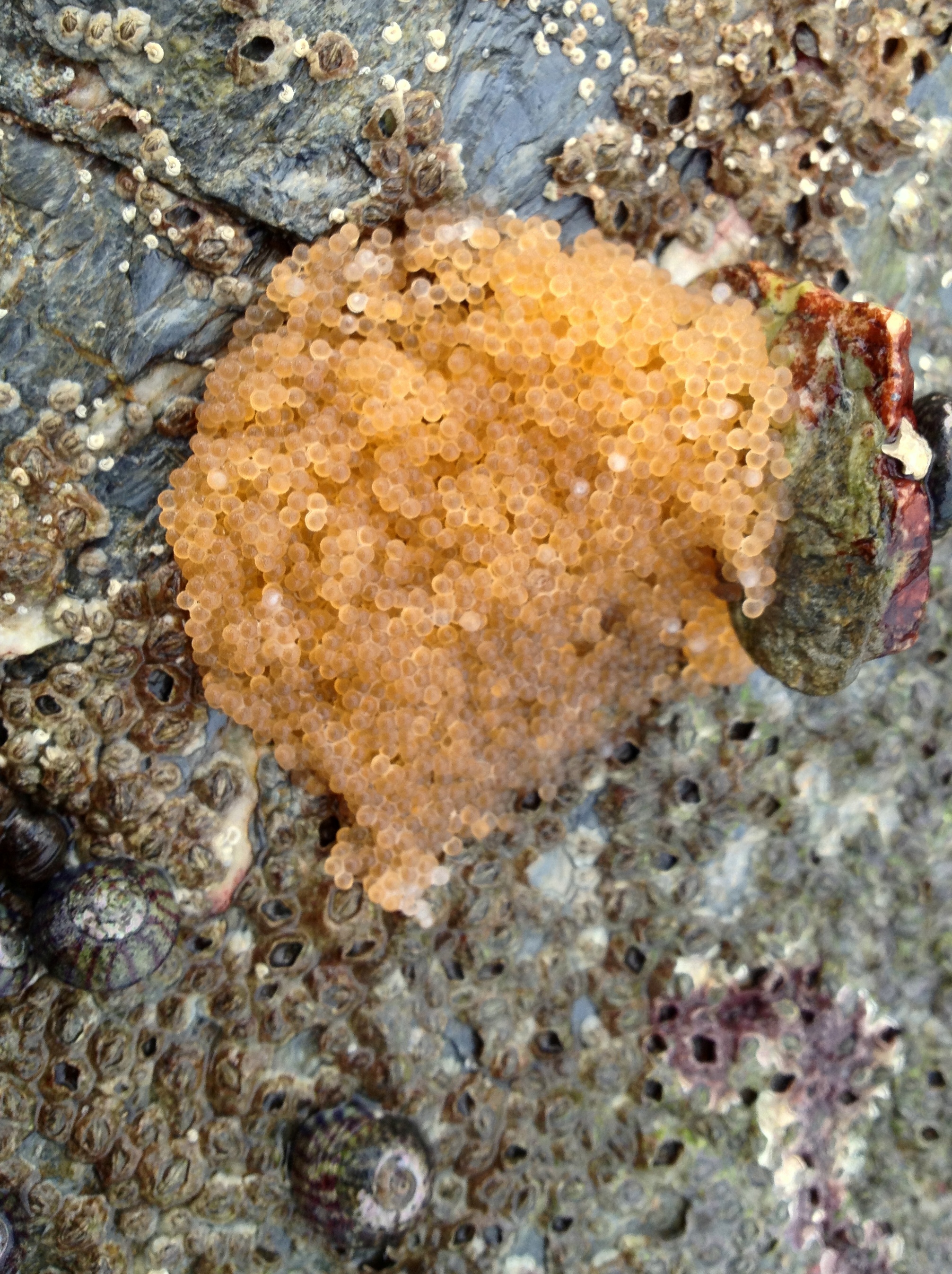
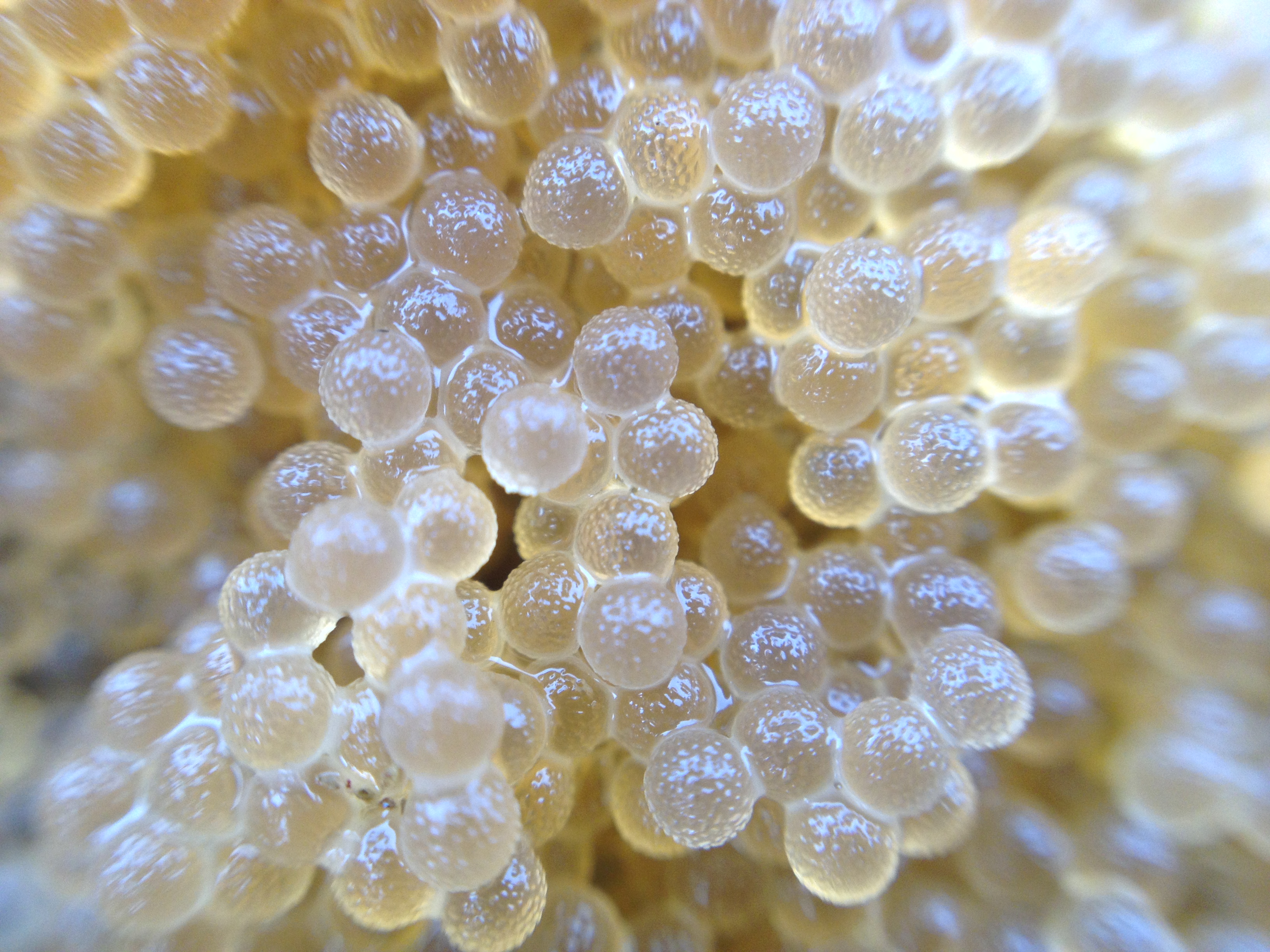
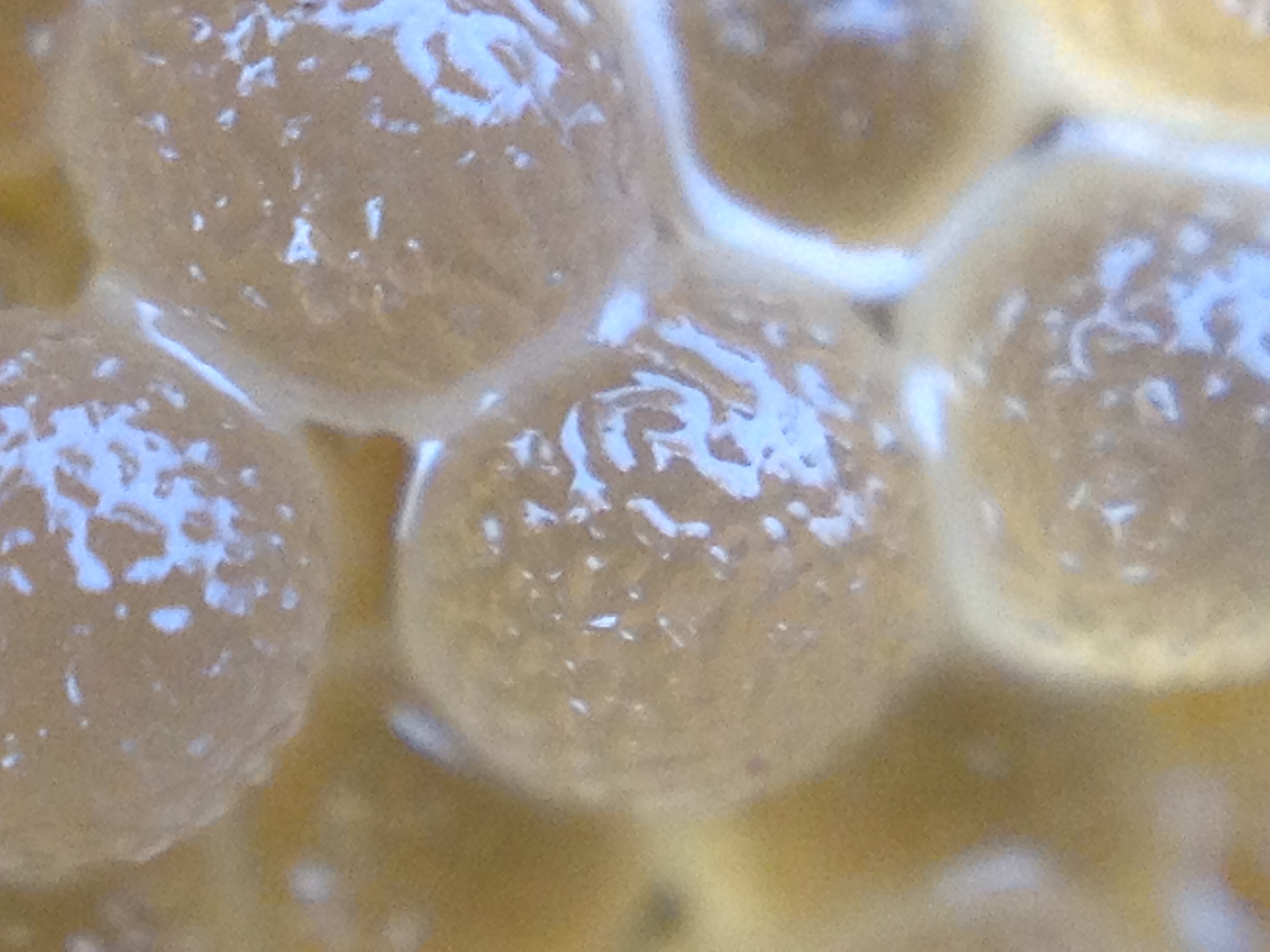
Aha, Bert Roos from the Dutch ‘Noordzee en Koud Zeewater Forum’ reckons these are eggs laid by the Long-spined Bullhead Taurulus bubalis!
 An Bollenessor