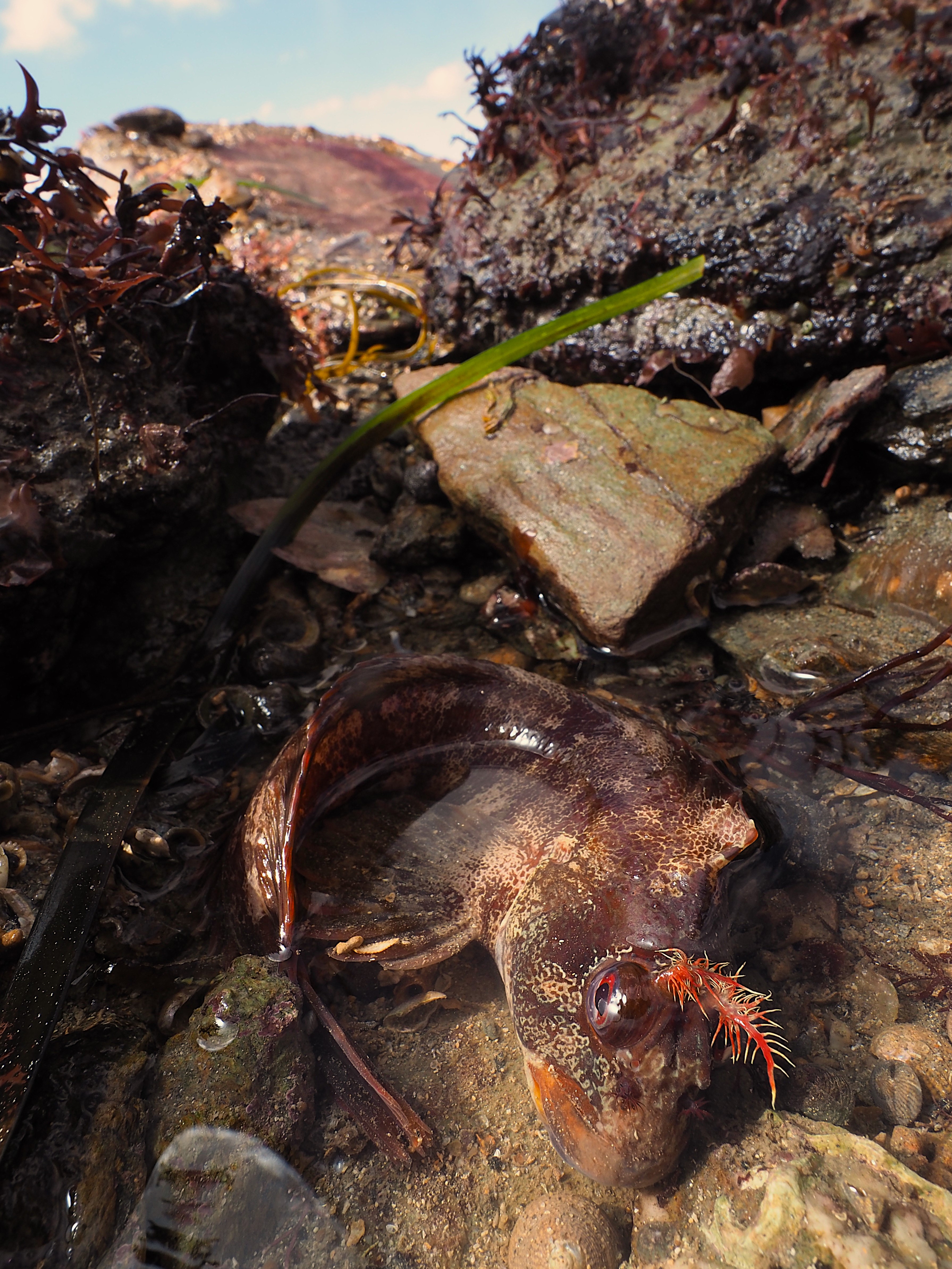
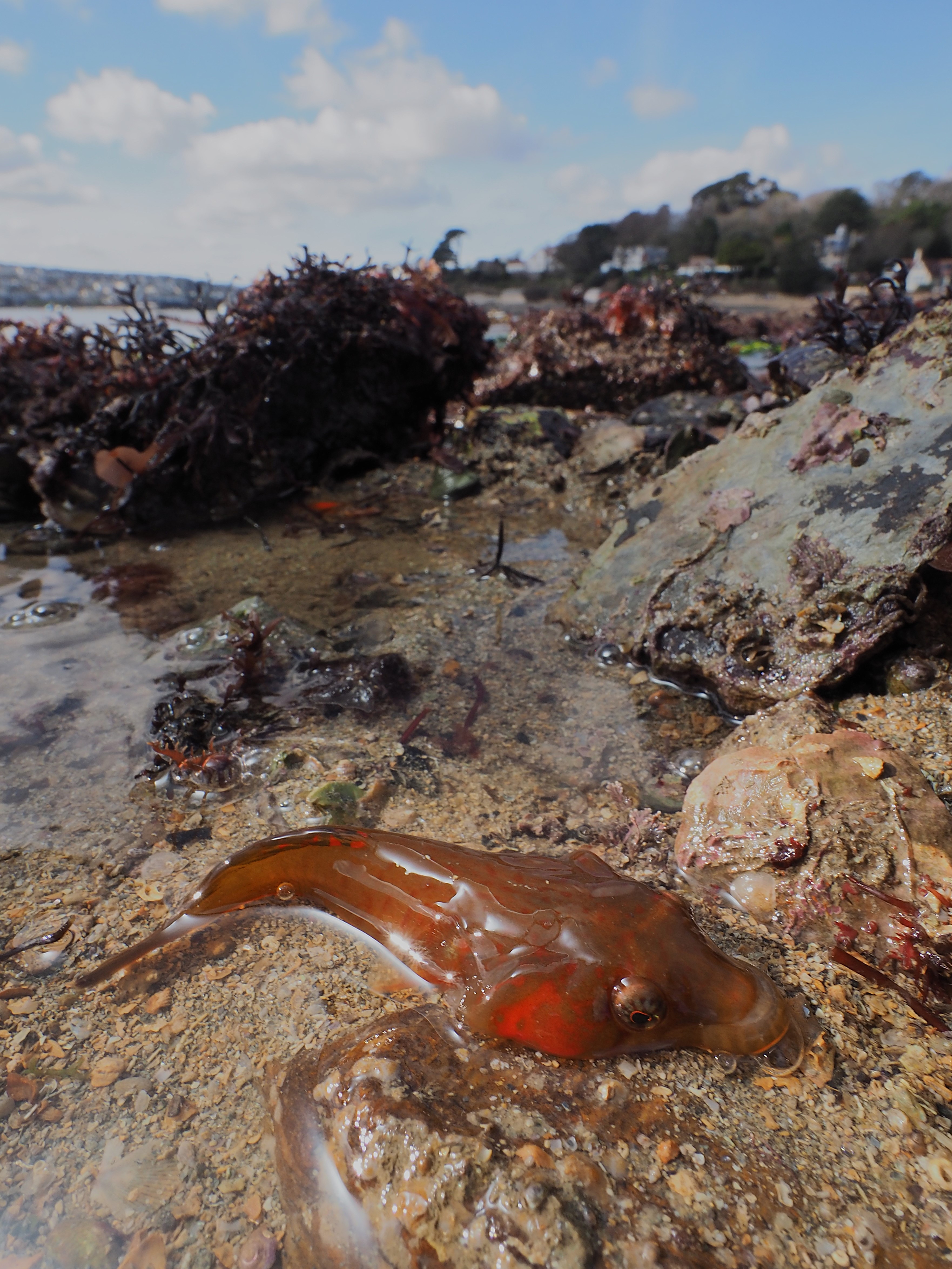
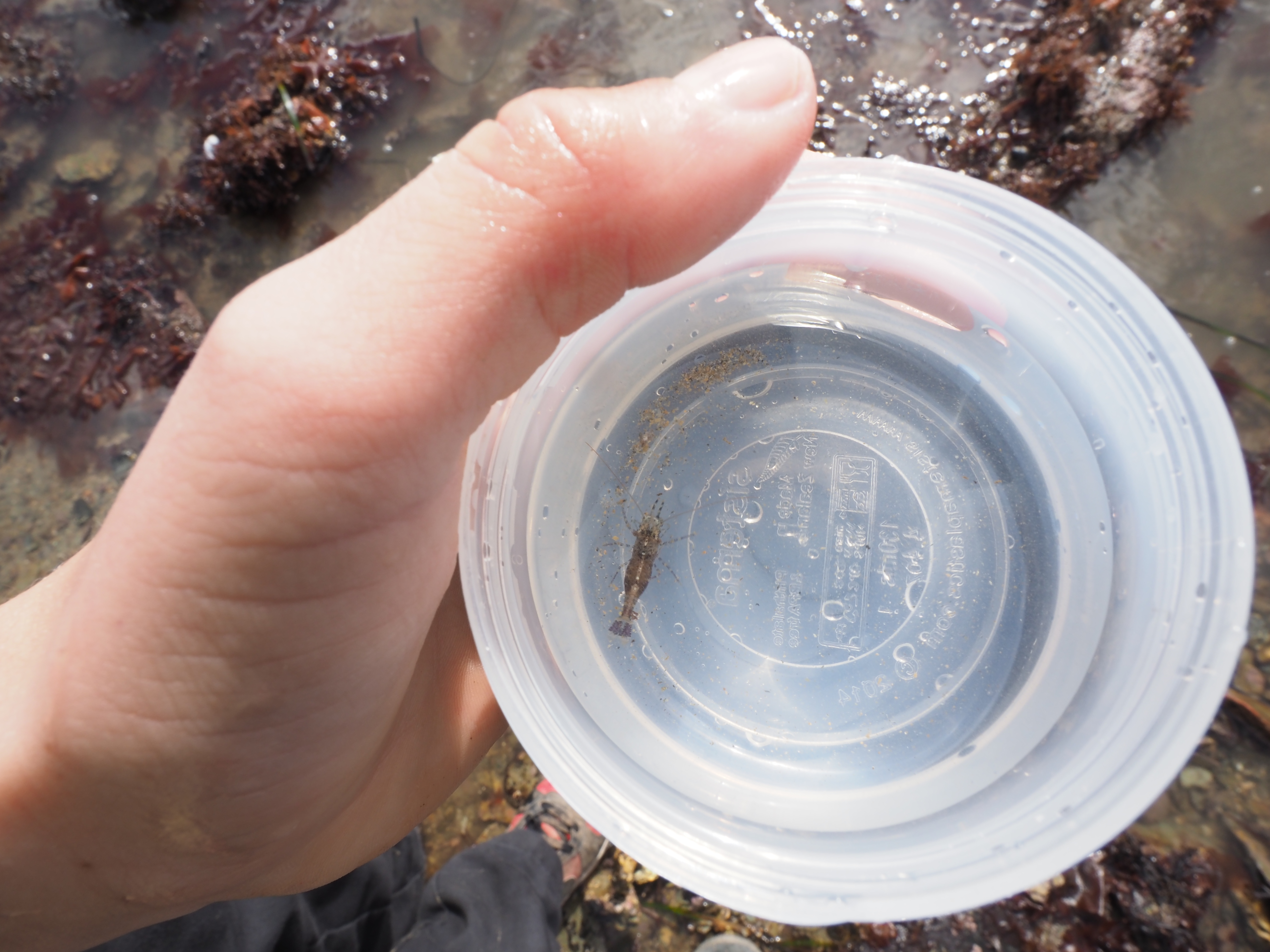
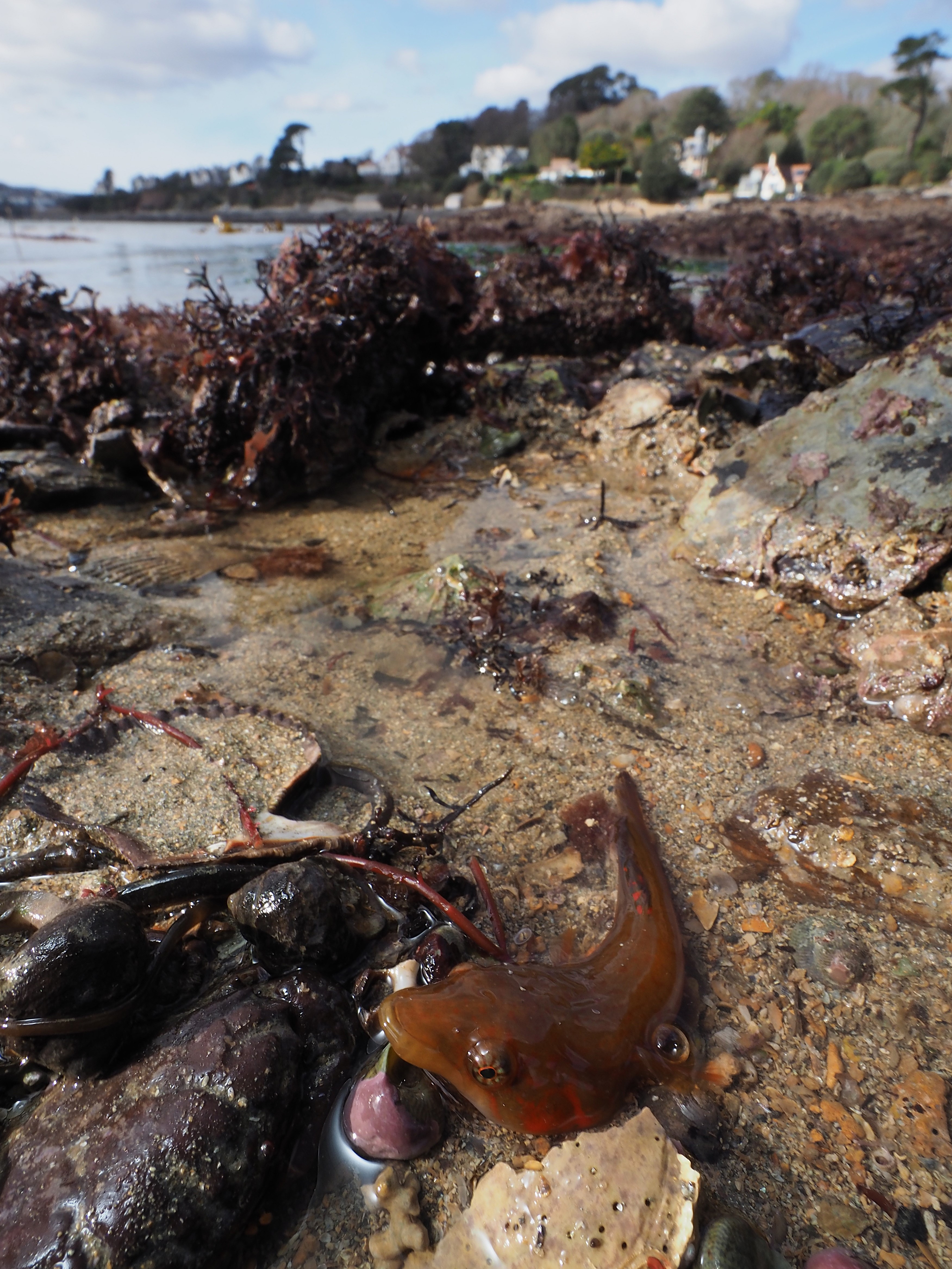
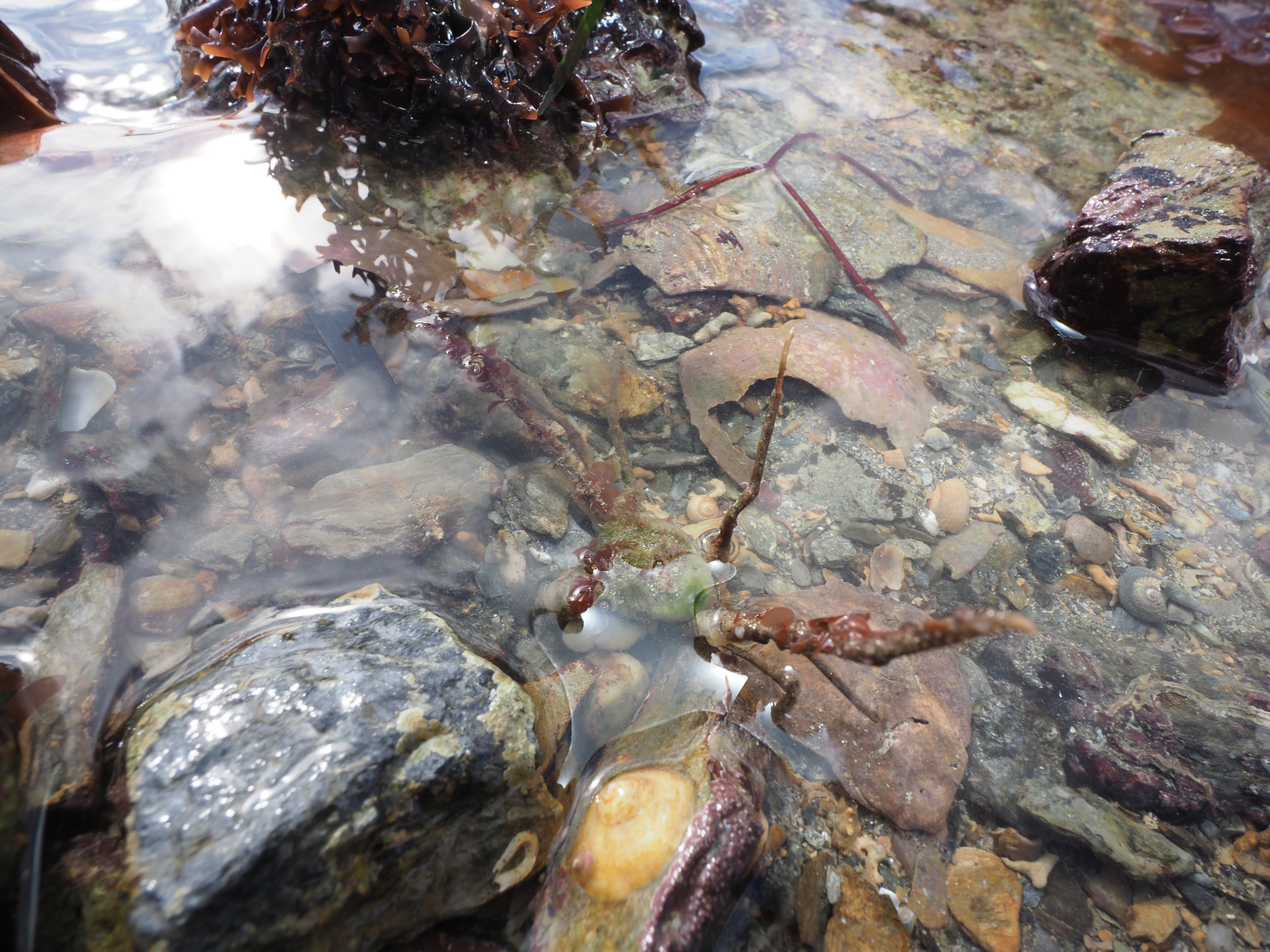
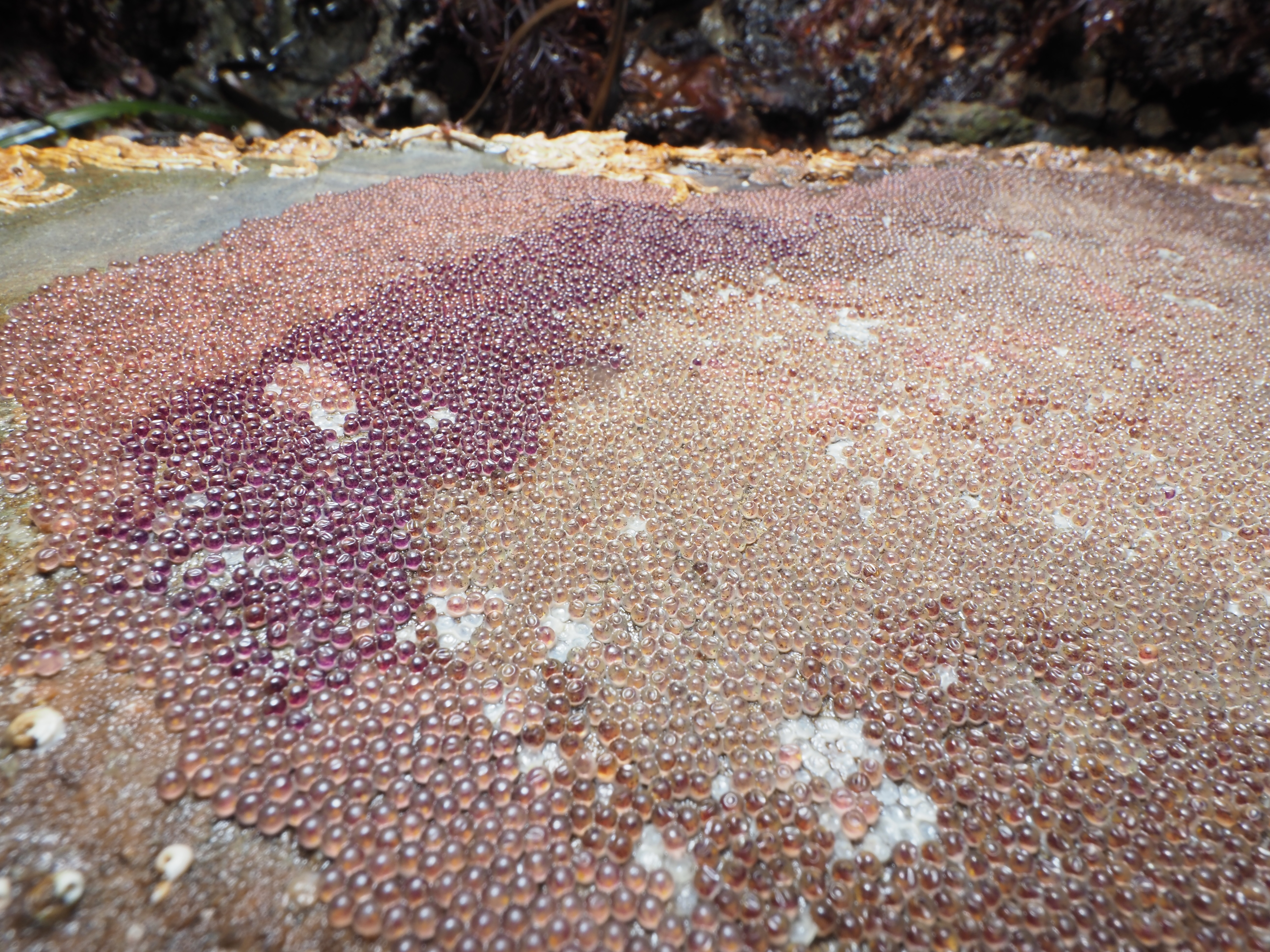
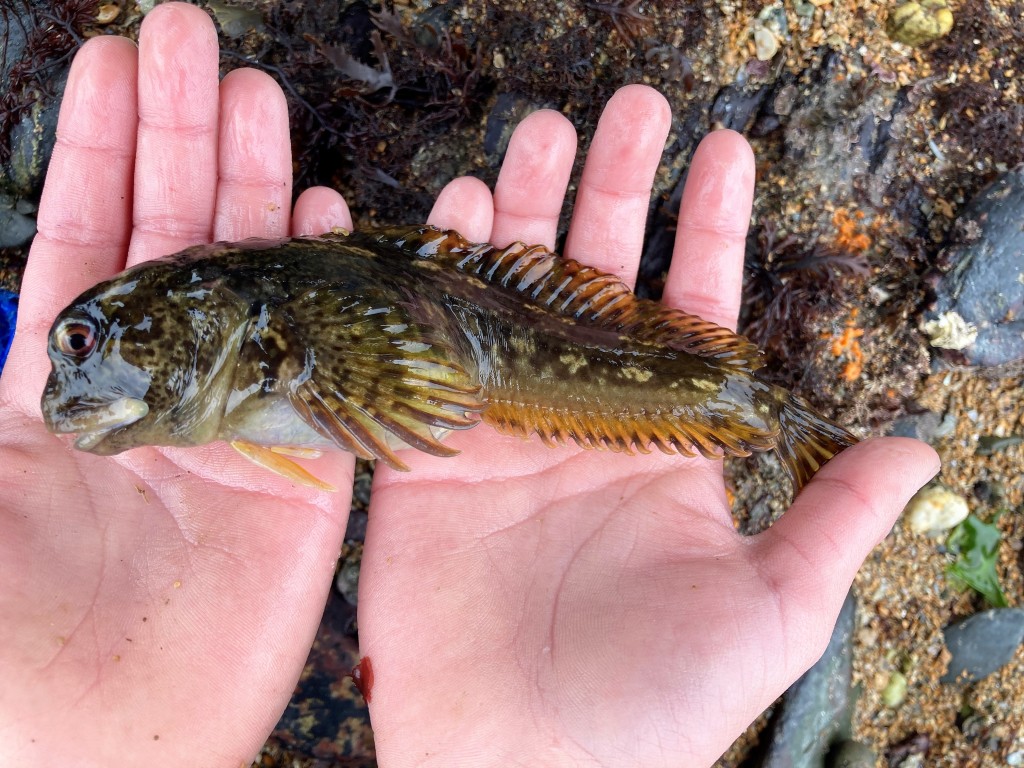
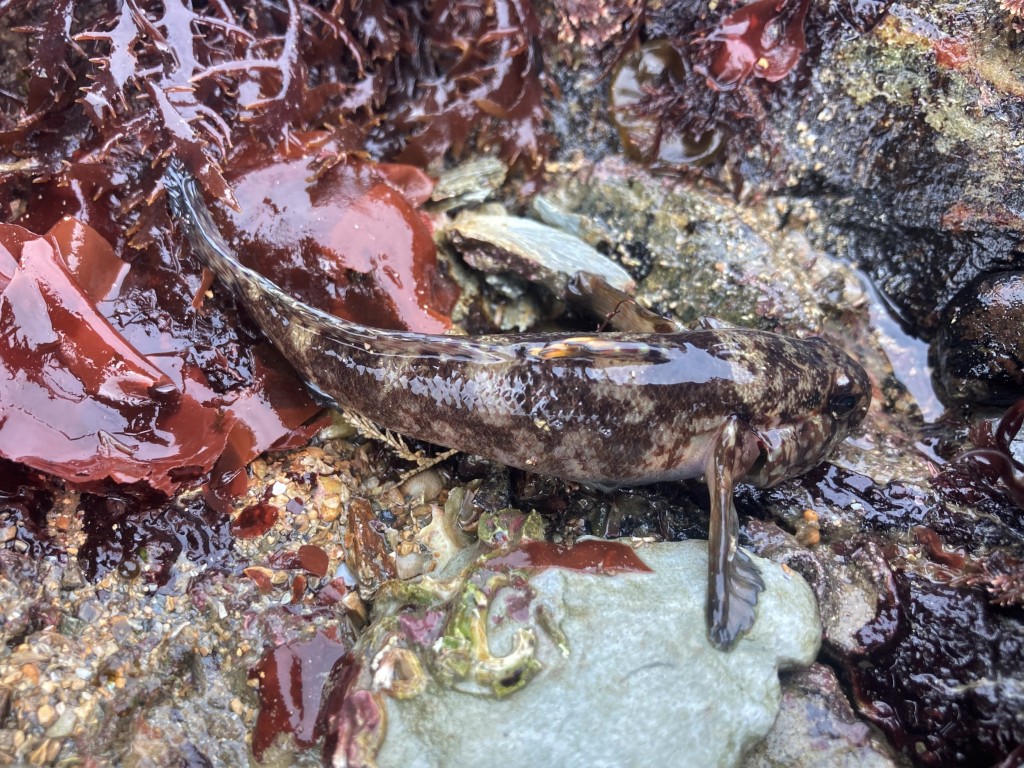
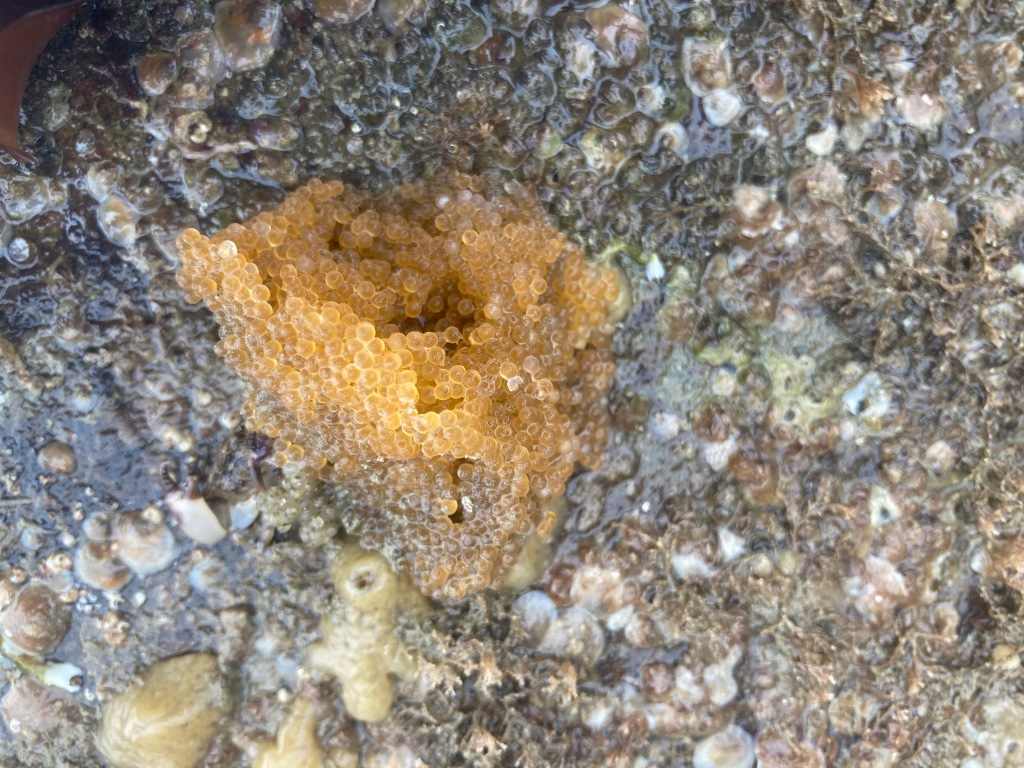
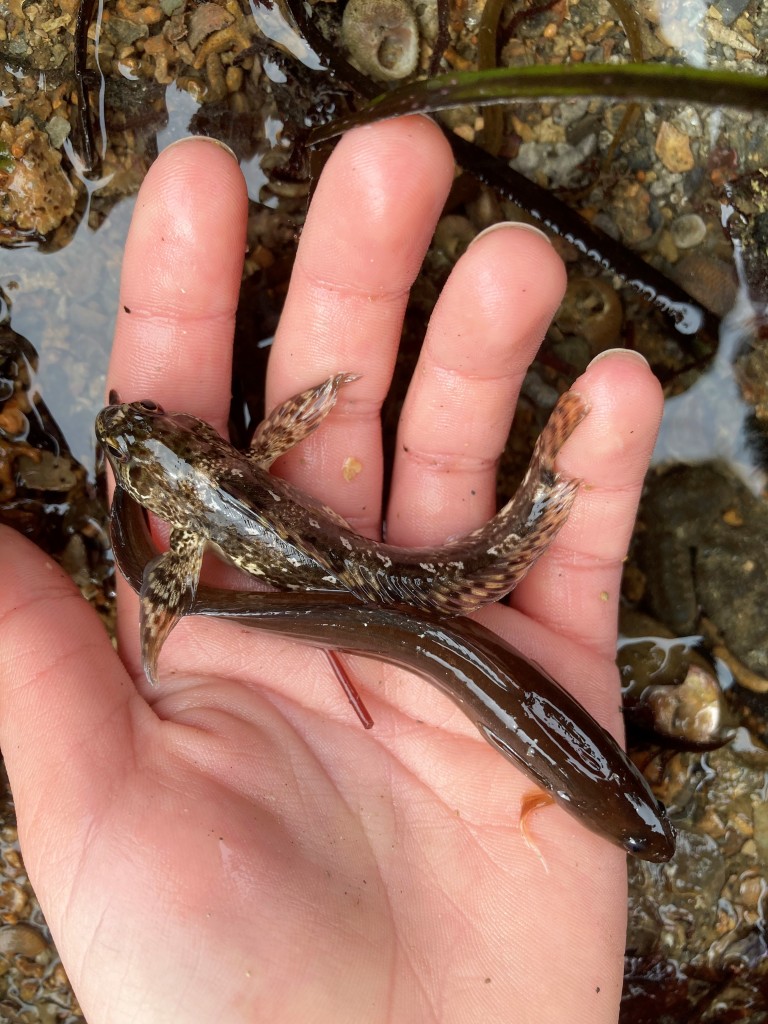
Continuing the theme from the two last posts with some ‘topside’ photos of rockpools. We had a very low tide recently which called for some rockpooling on our local shore here in Flushing. We looked (as always) for anything that we could find, but trying to get some ‘close-focus-wide-angle’ pics of fish with the Panasonic Leica 9mm lens was the main aim. Above a Male Tompot guarding eggs (see pic below) as well as a male Connemara Clingfish (no eggs spotted), recognizable by the bright red cheek markings. I have not been underwater very much, but have a bunch of macro photos of snails and stalked jellyfish that I will put on the blog next. (And remember, I post more frequently on instagram: @an_bollenessor!)
a tiny shrimp, not sure which speciesThe Connemara Clingfish againInachus spider crab in a defensive posture!Tompot Blenny eggs
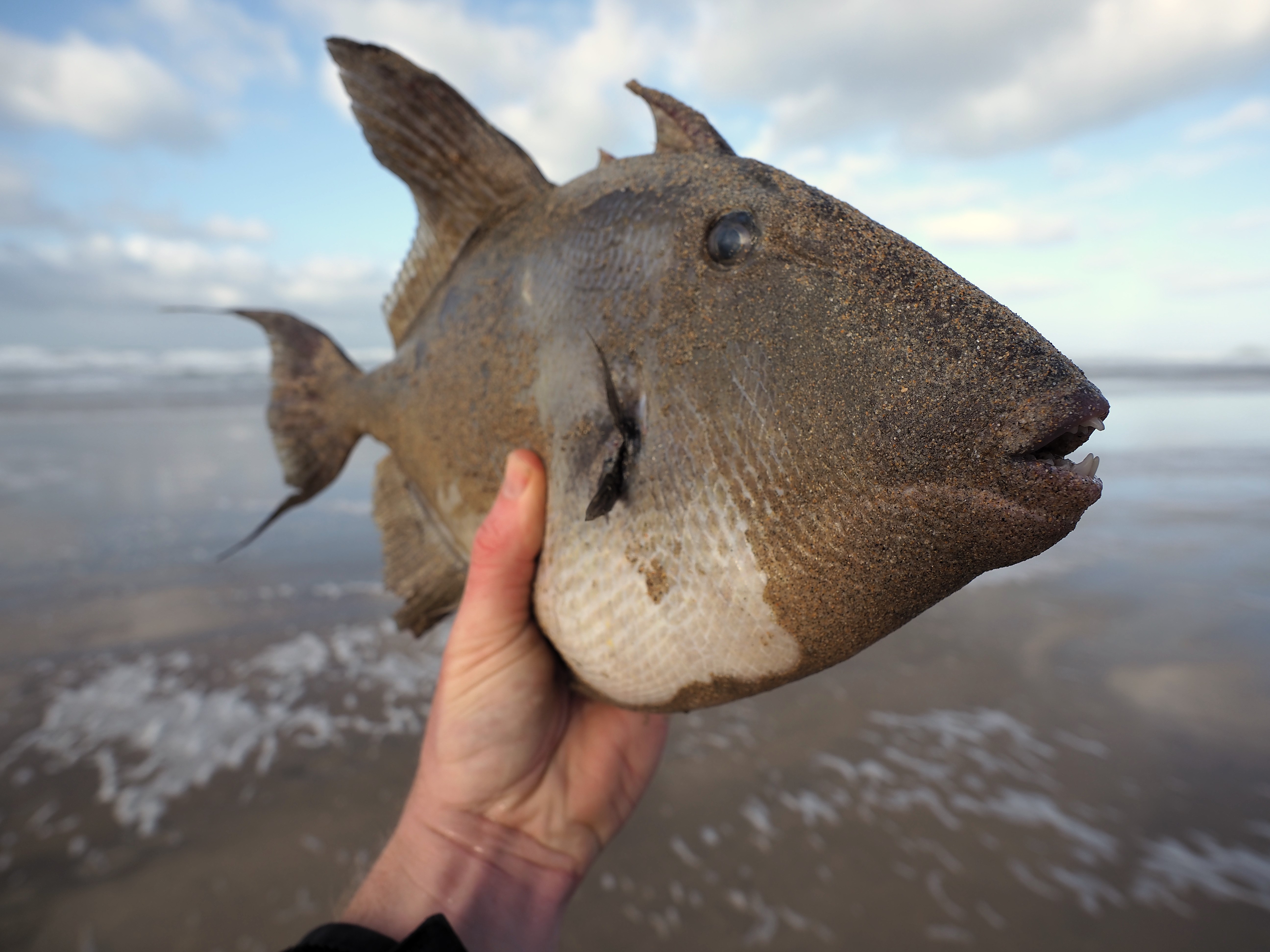
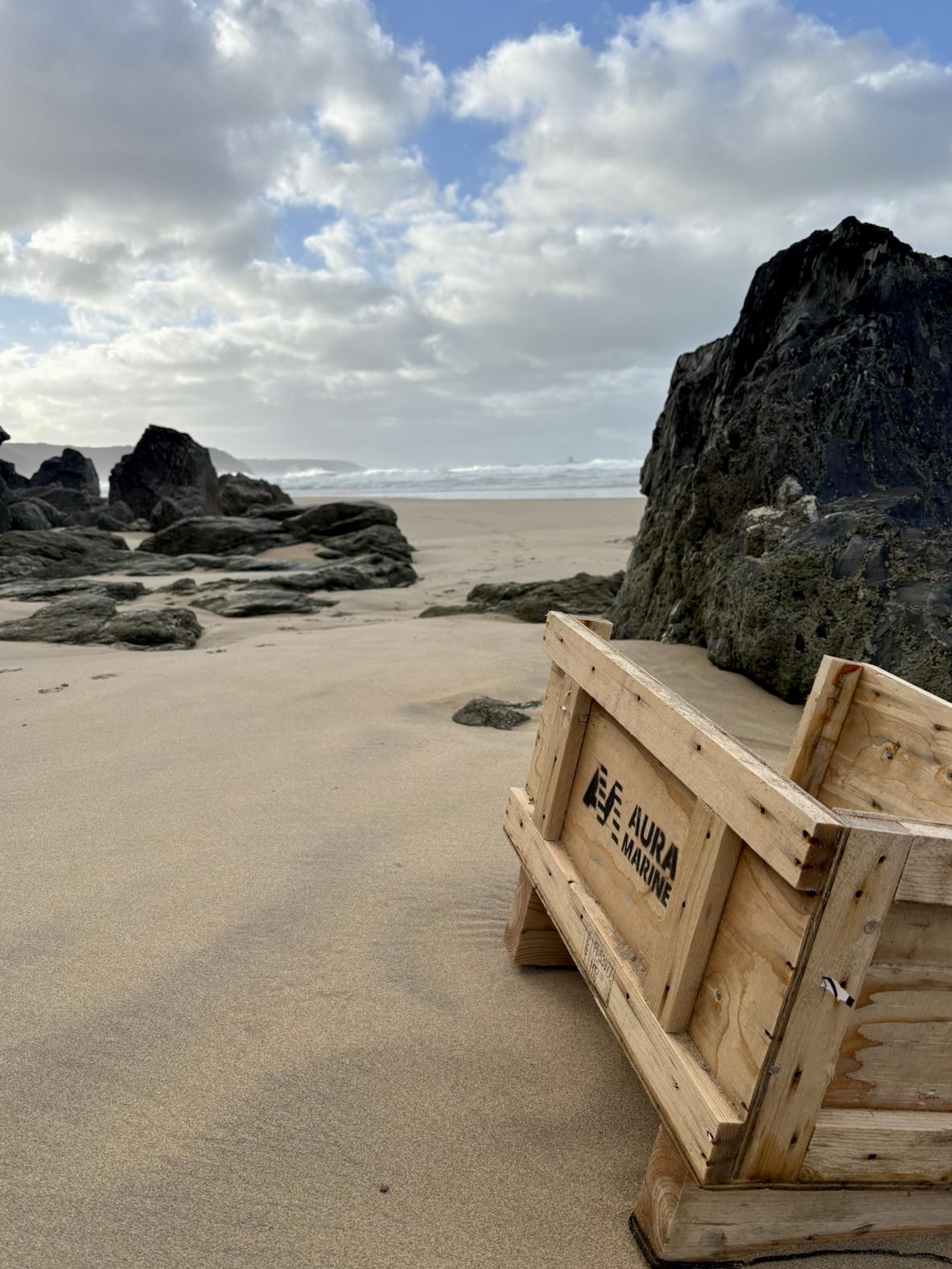
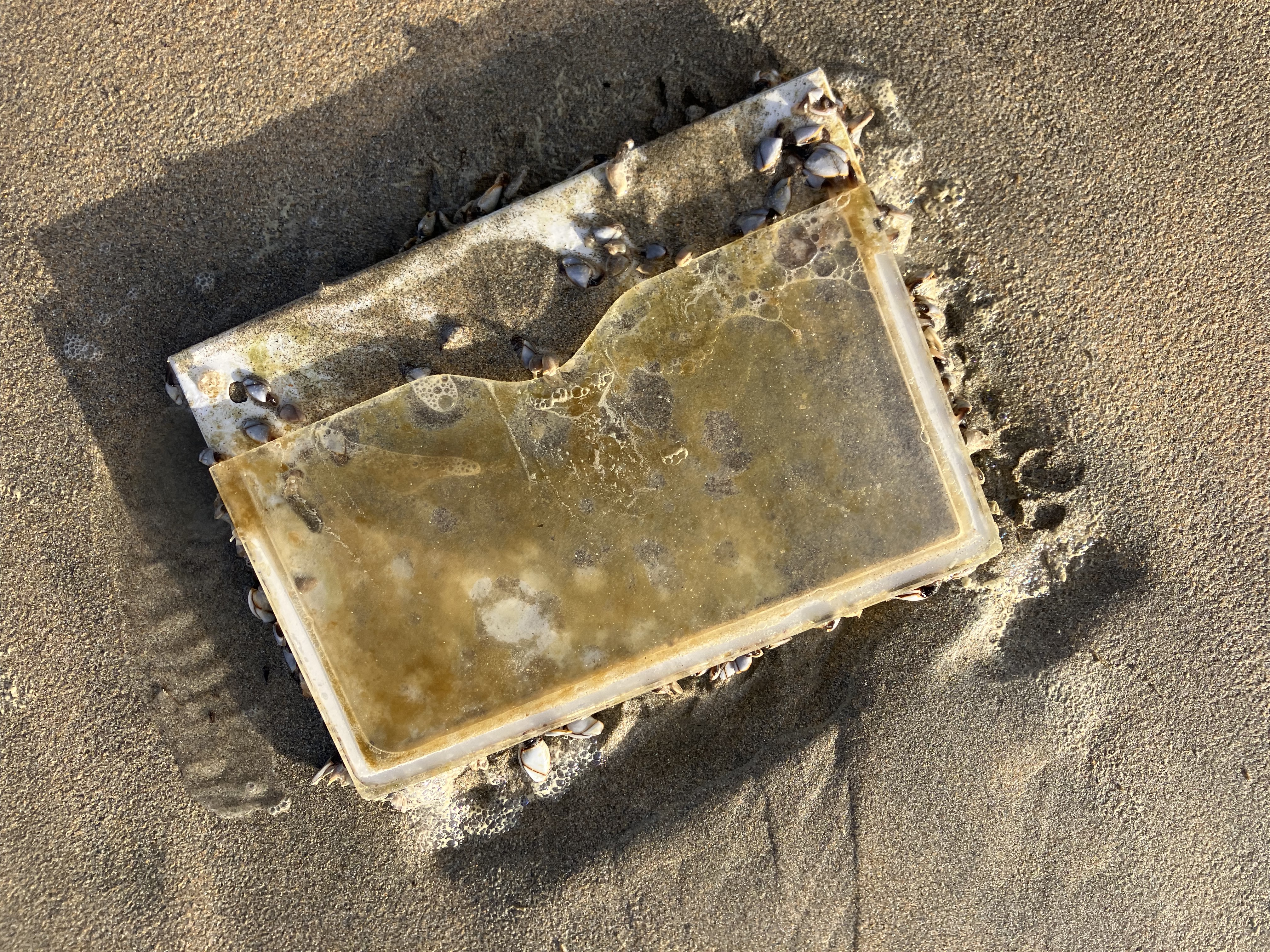
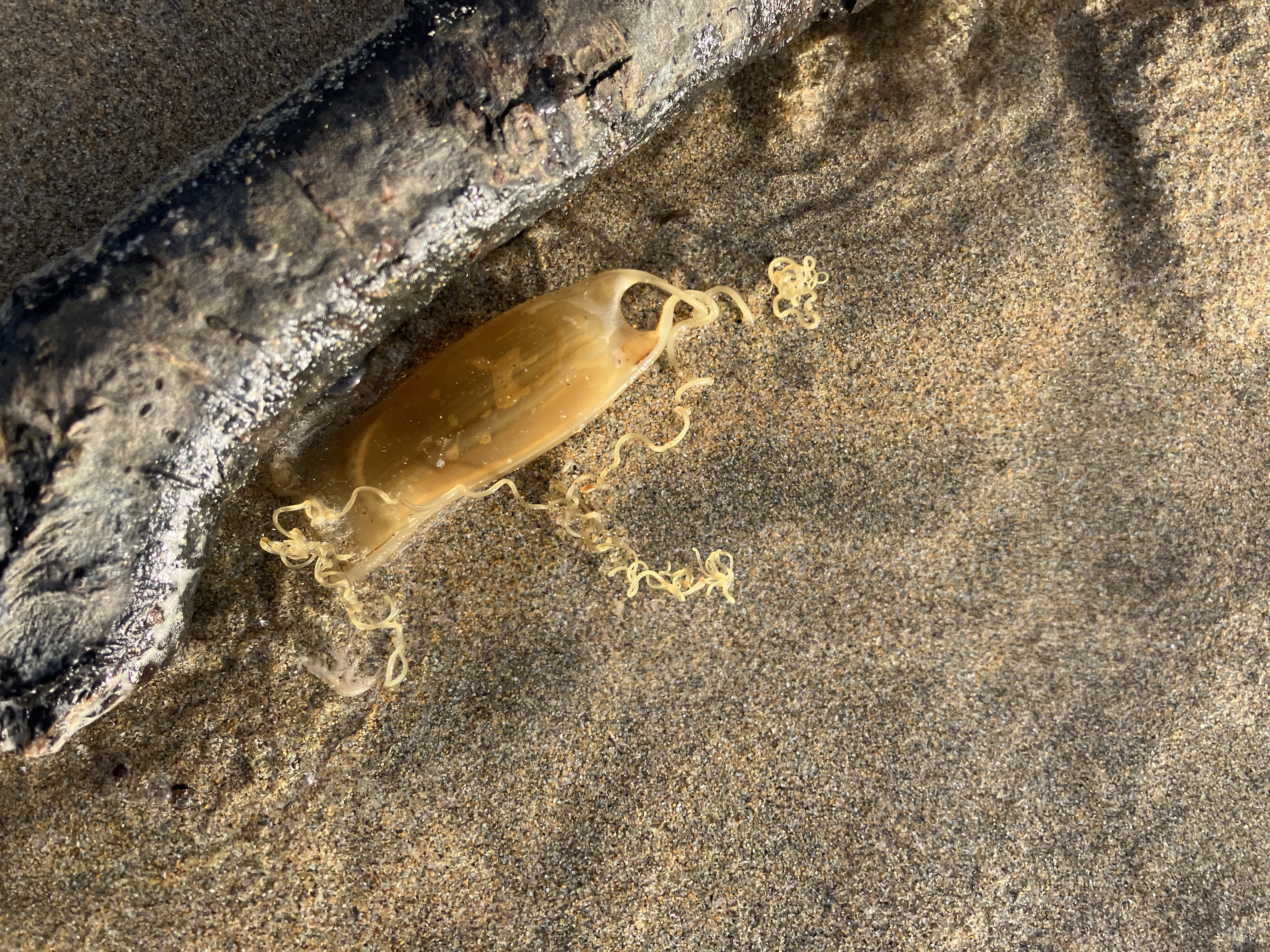
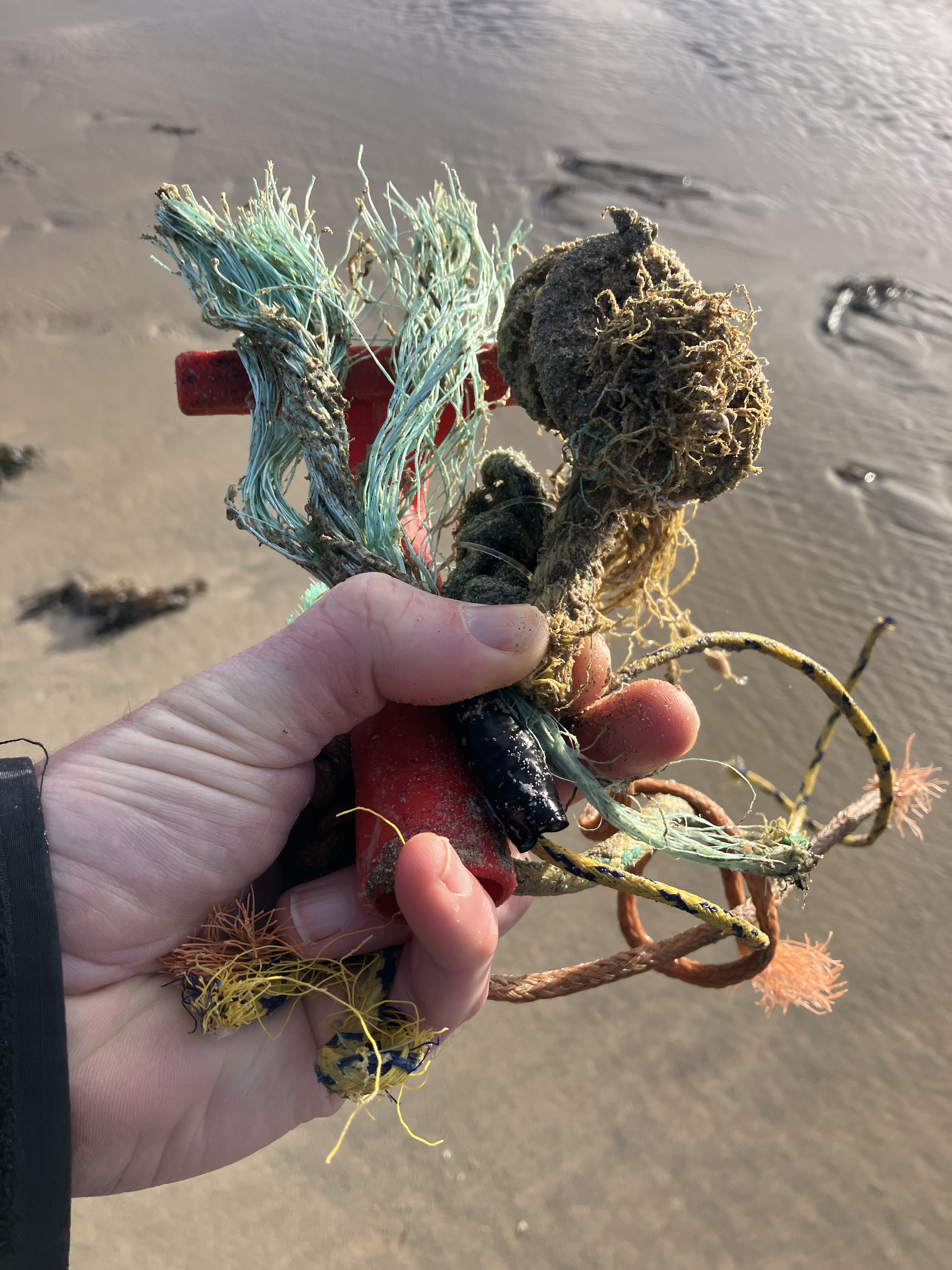
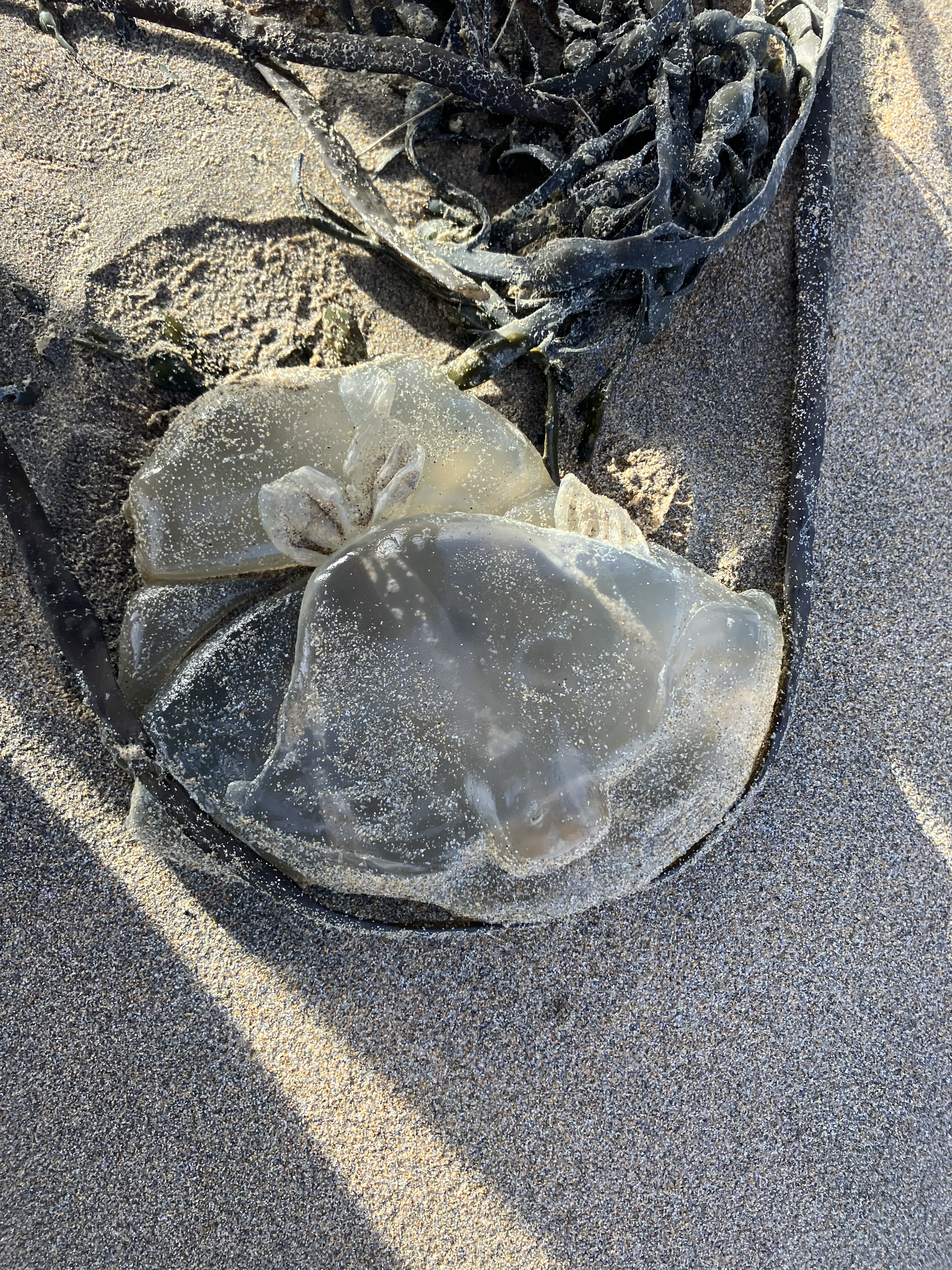
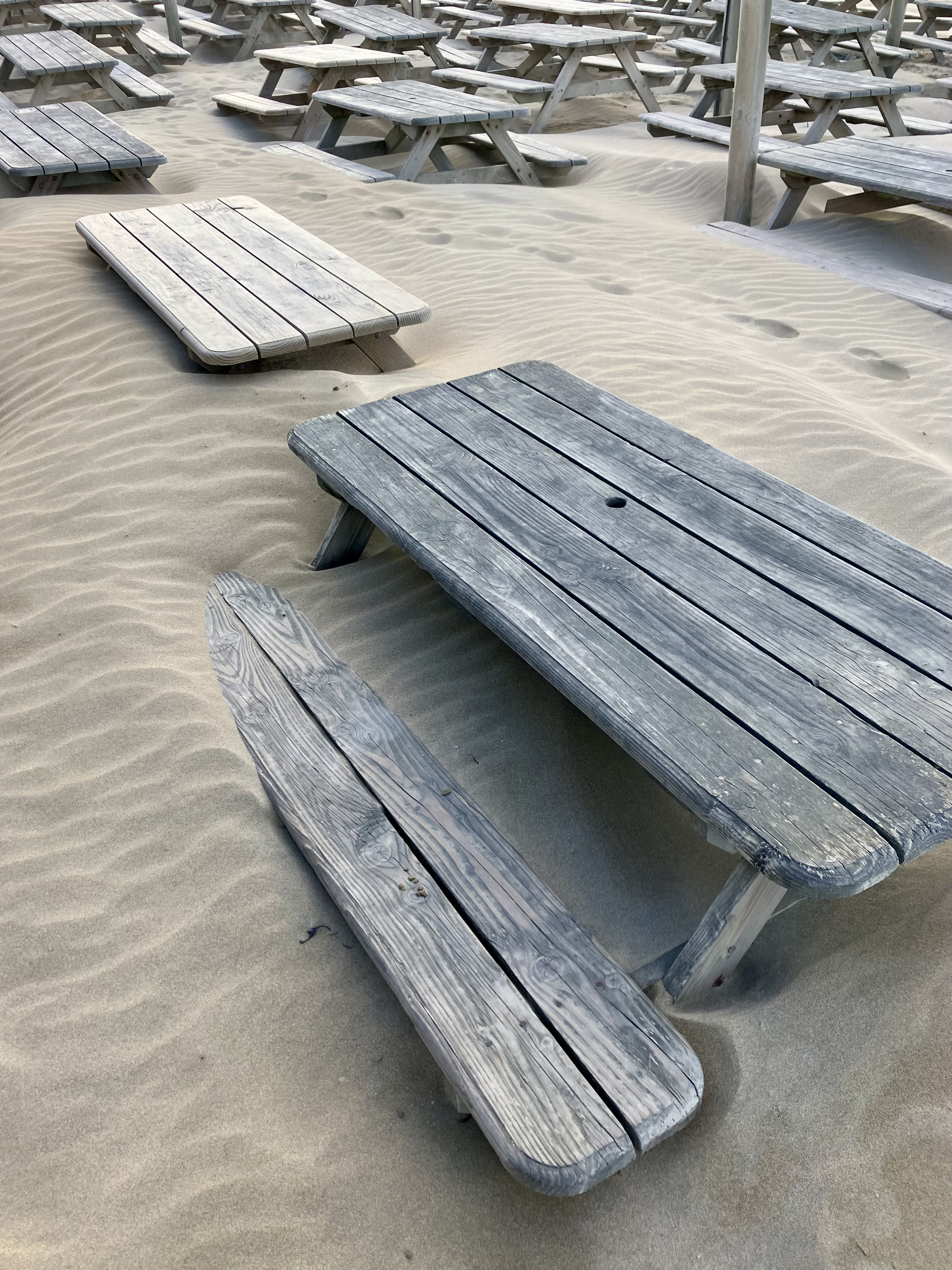
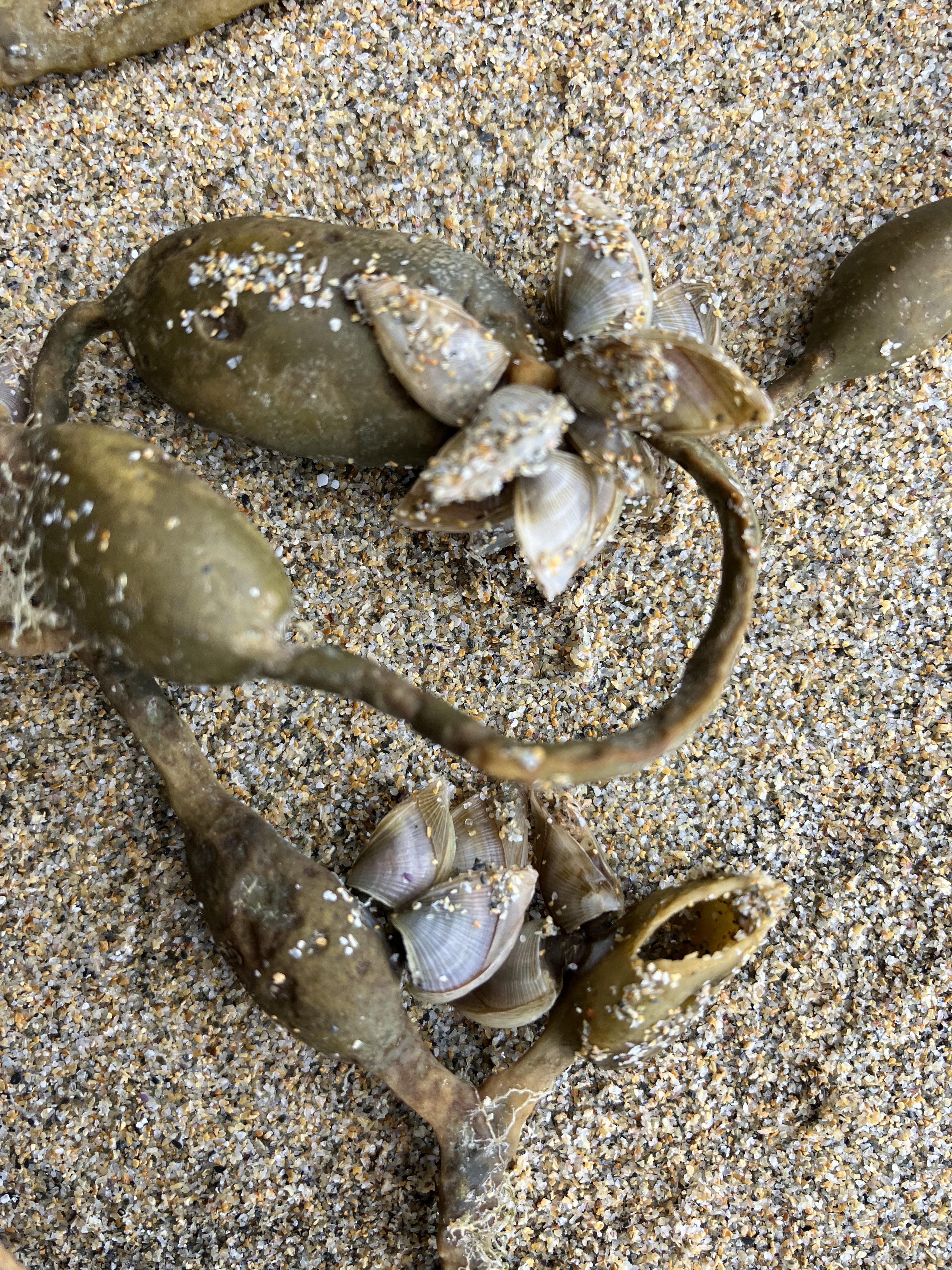
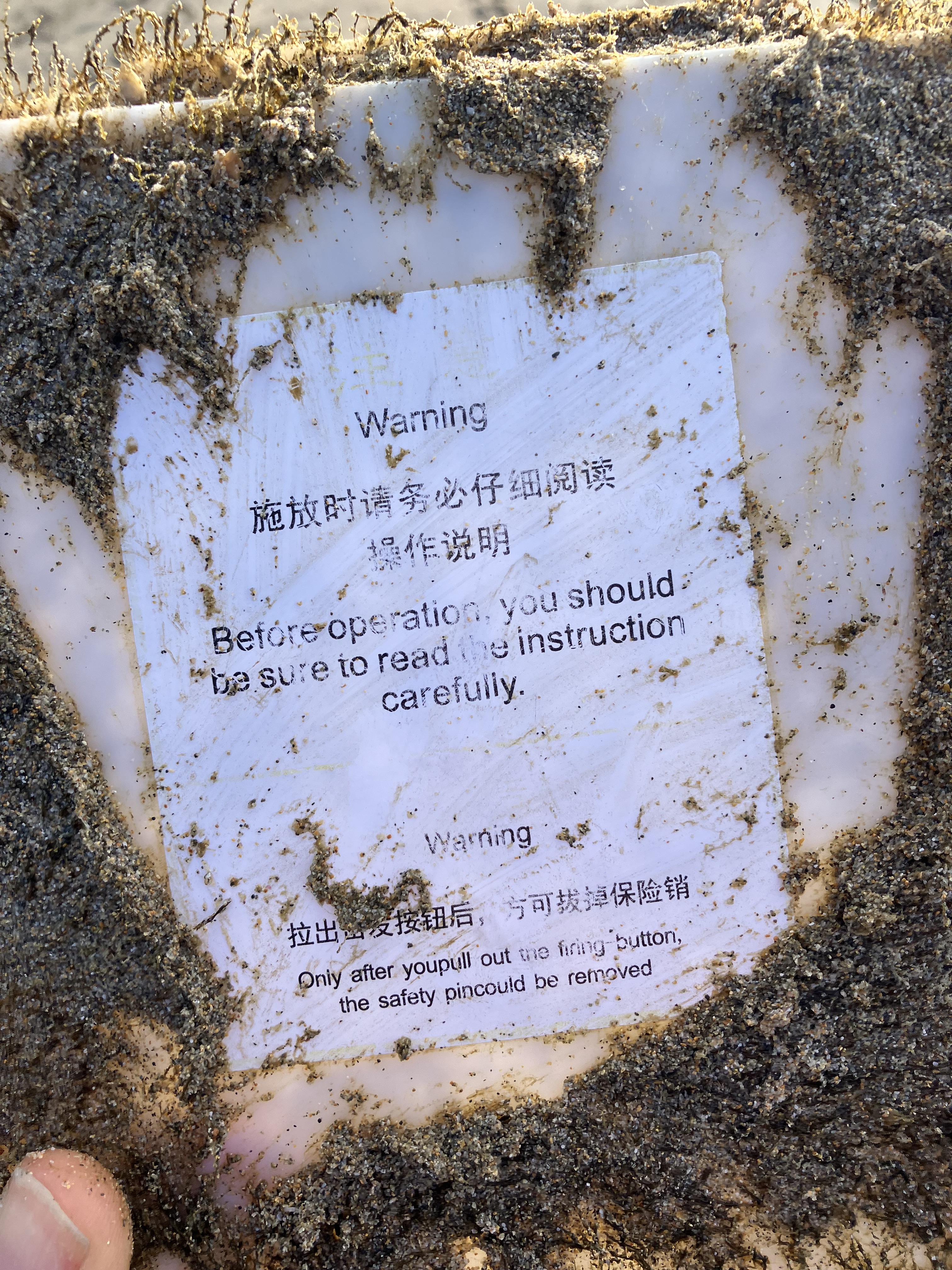
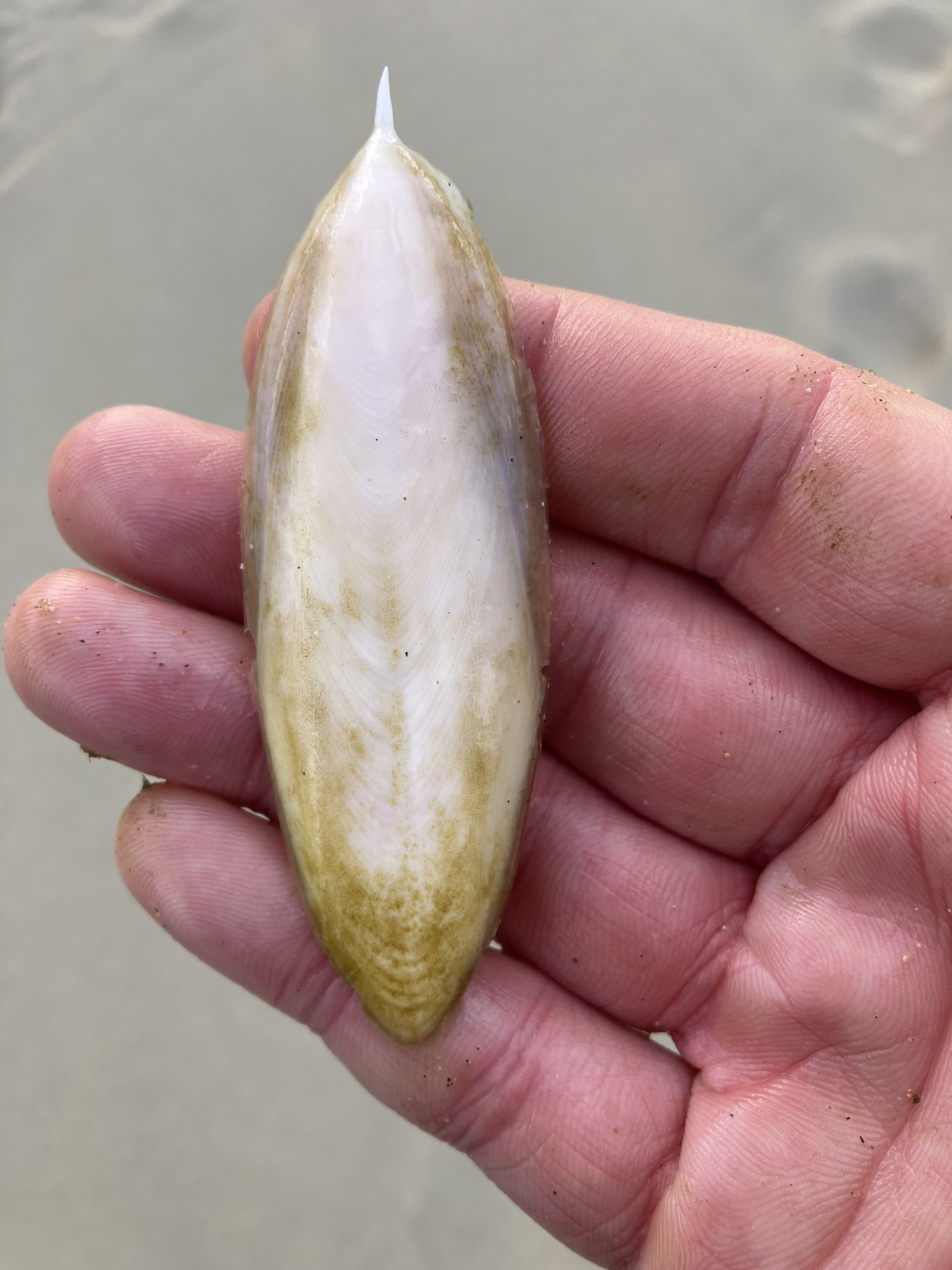
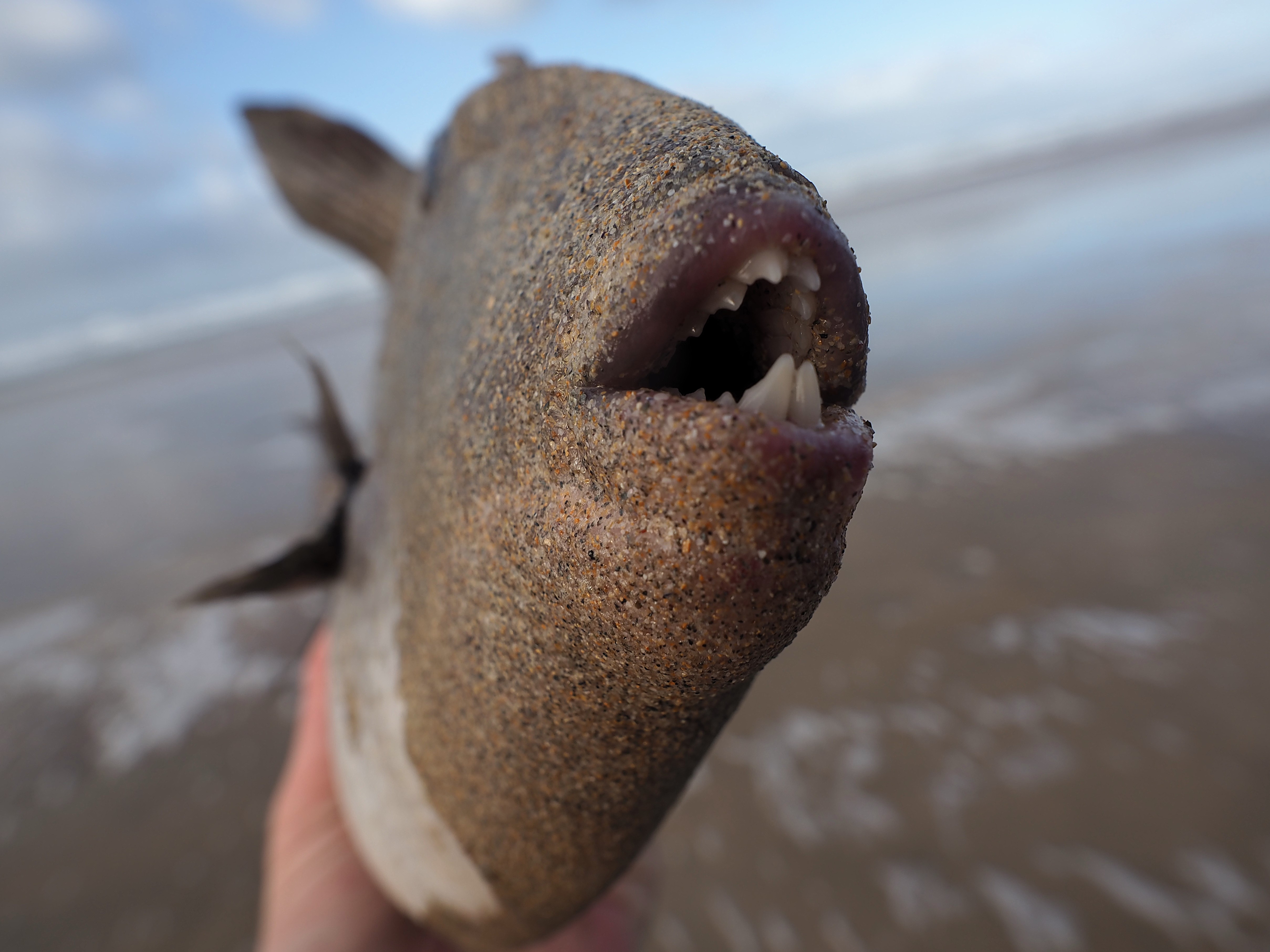
Storm Darragh raged over the UK last weekend – which by itself was not great, apart from the fact that there was a chance interesting stuff had washed up on the beach! As the winds came from the North, we drove to the long beach at Perranporth on the north coast to have a look. It was nice to get sandblasted for a bit and admire the furious crashing waves and icy blue-grey sea. Find of the day was a dead Grey Triggerfish (Balistes capriscus), a generally more southern species that is increasingly observed in the UK. Some other finds in the gallery below (shot with an iPhone; which is actually a lot easier than changing a wide angle for a macro lens on a wet, sandy beach!). Among the finds, Goose Barnacles, a Small-Spotted Catshark eggcase, an unidentified blob and a cuttlefishbone of the Pink Cuttlefish (Rhombosepion orbignyanum).
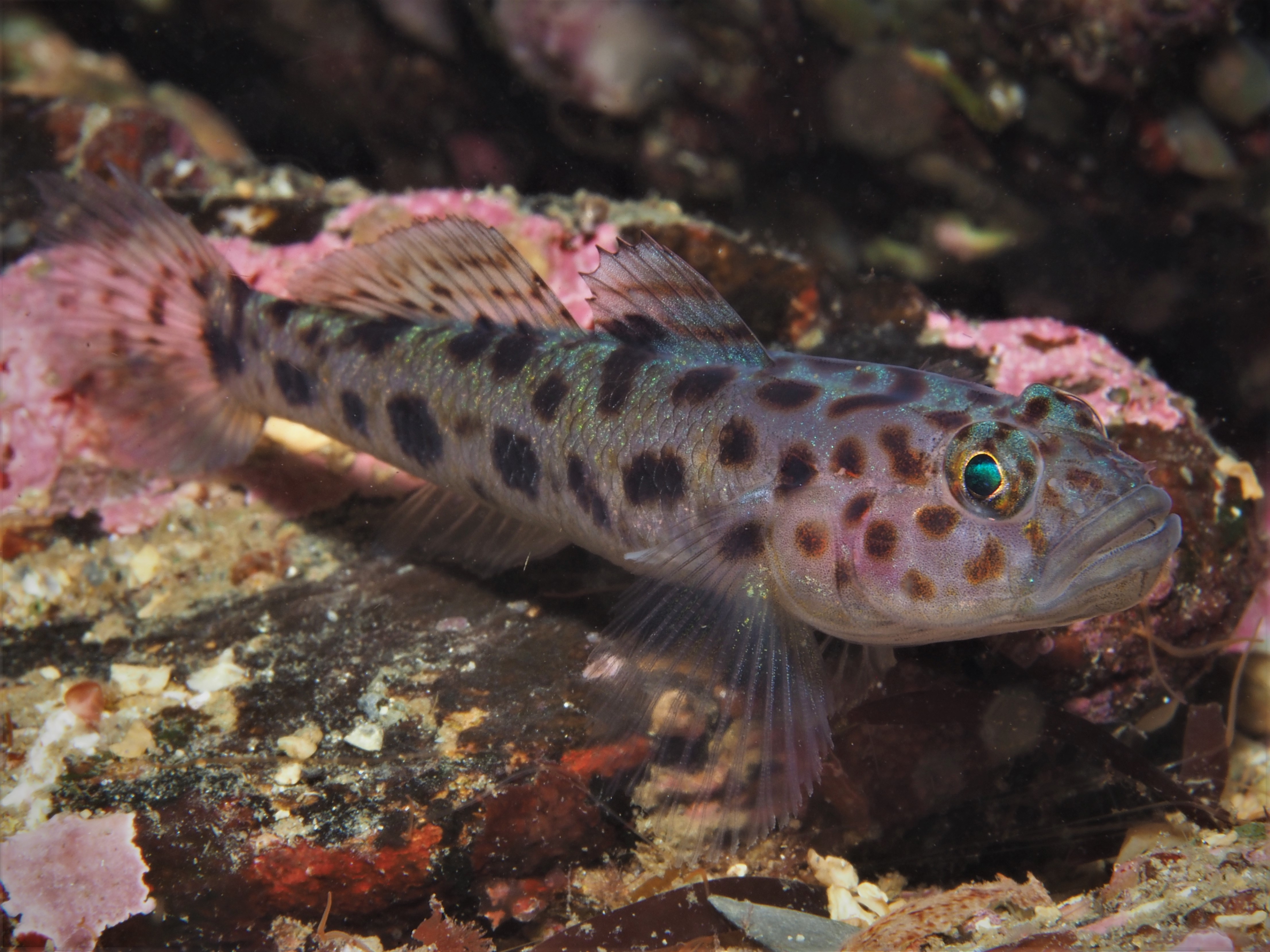
I recently bought (2ndhand) scuba gear and did a refresher dive; with the nice weather this week it was high time to get back under the waves and take some photos! I dived Thu/Fri/Sat at the main local shoredive site ‘Silver Steps‘. I went in by myself, but with a maximum depth of around 10 meters and good conditions this is not risky. The dives did not disappoint, the viz was excellent! Although I spotted cuttlefish every dive, I still opted for the macro lens, as I suspected I could not get great shots of them with my fisheye lens at 1.5 meter distance (I might have been wrong!). Instead of heading out to sea as some divers do, I always stick to the gullies by the rocks, diving below the kelp to see what happens beneath the rocky overhangs. There are three usual suspects hiding there, each with a very different personality. First, Leopard Spotted Gobies (Thorogobius ephippiatus) inhabit cracks in the rocks and are quite shy:
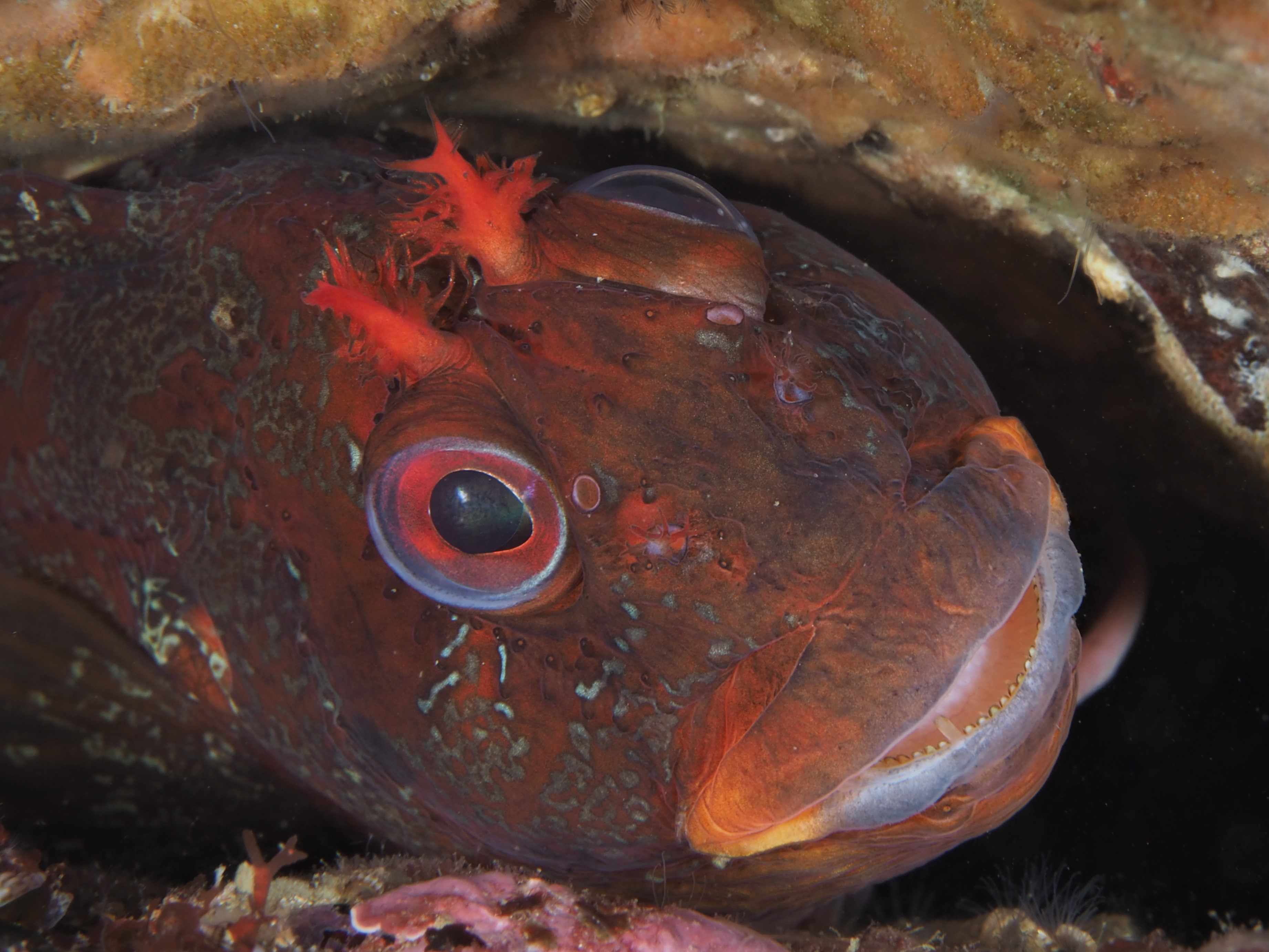
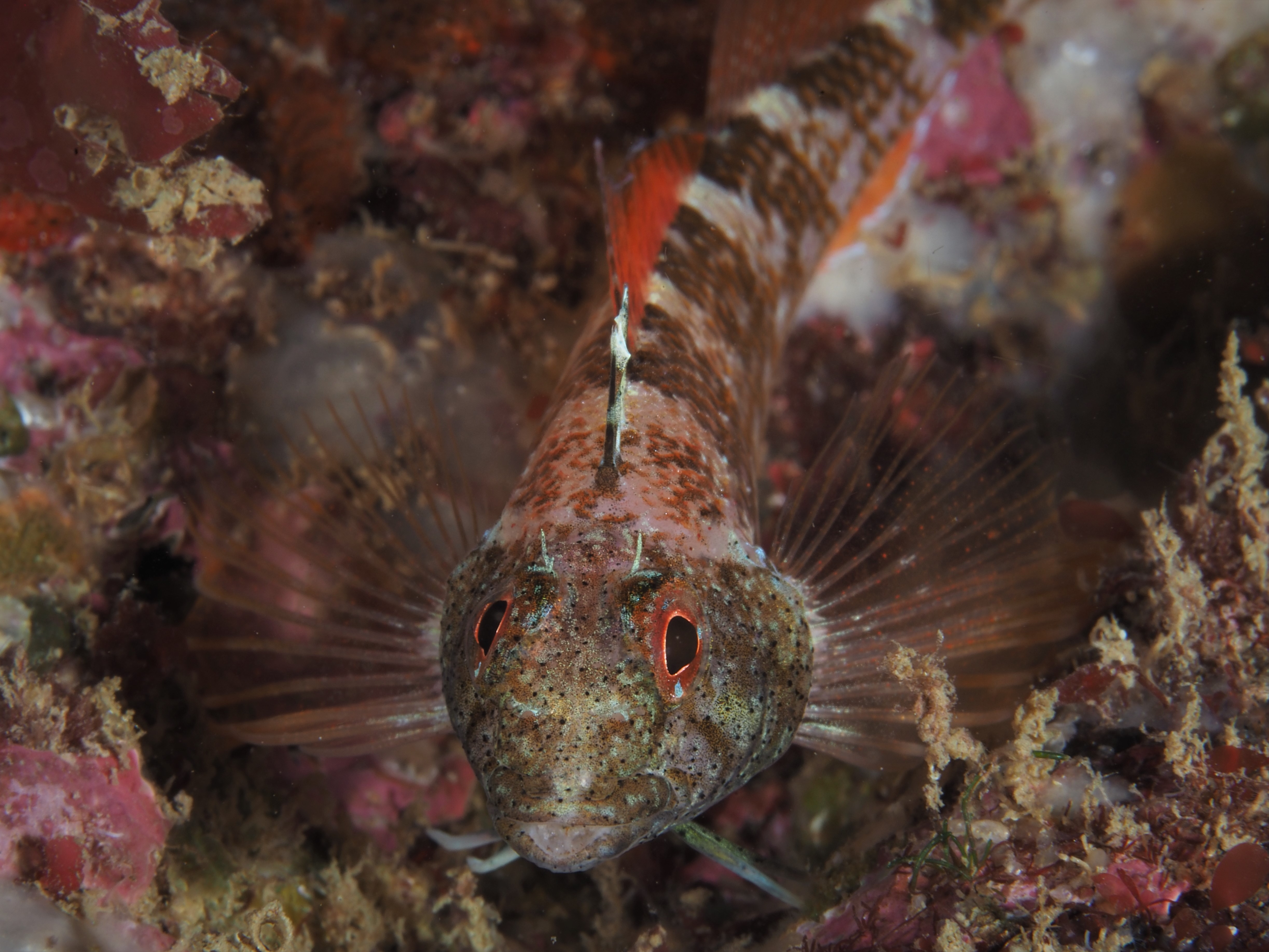
Second, Tompot Blennies (Parablennius gattorugine) are extremely inquisitive, often coming very close to check out what is going on in front of their domain:
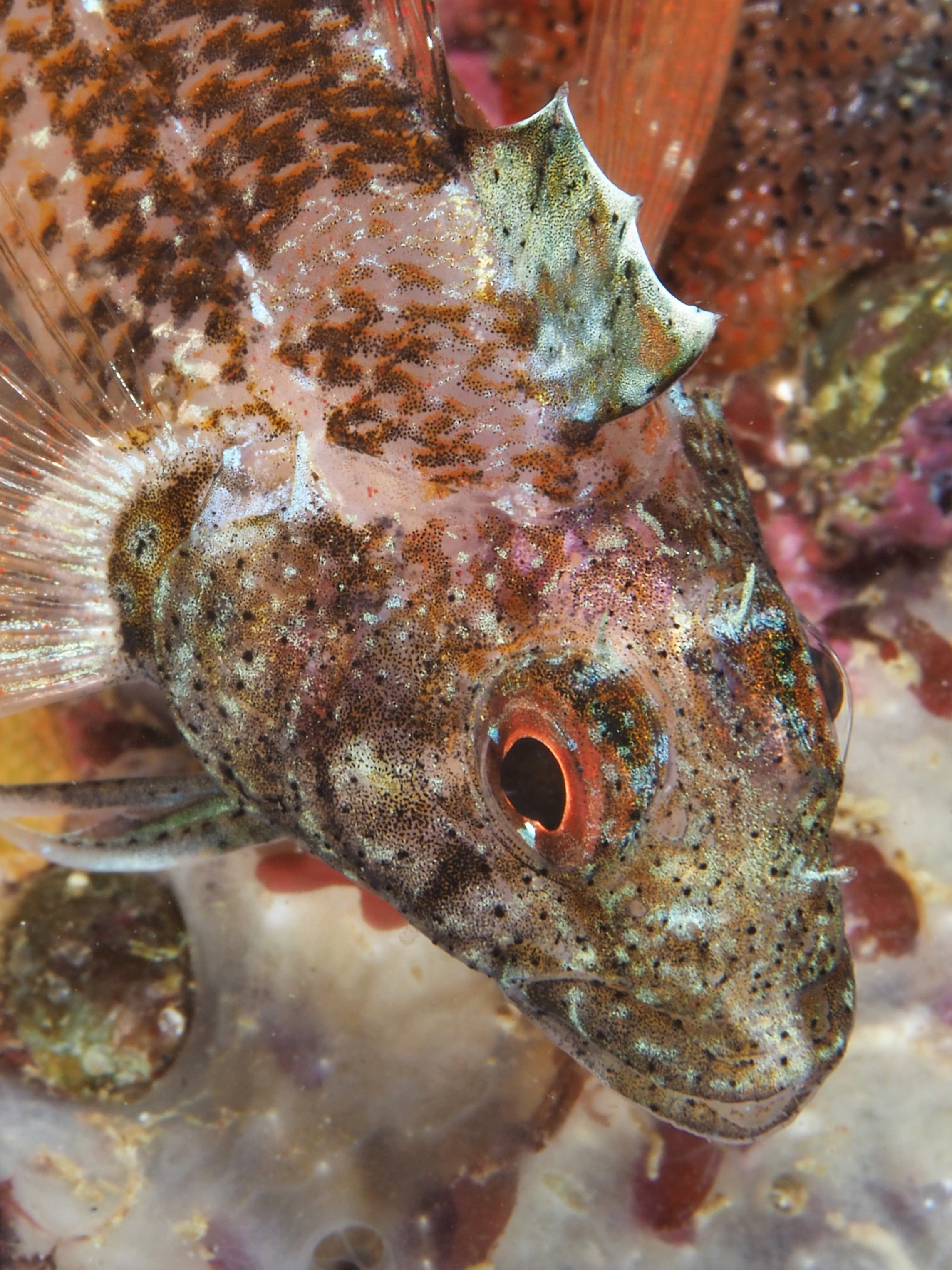
Third, Black-face Blennies (which are not true blennies but triple fins) that only ever live under overhangs, usually head-down. I did not see males in breeding colours (black face, yellow body) but this colour form is even prettier I think:
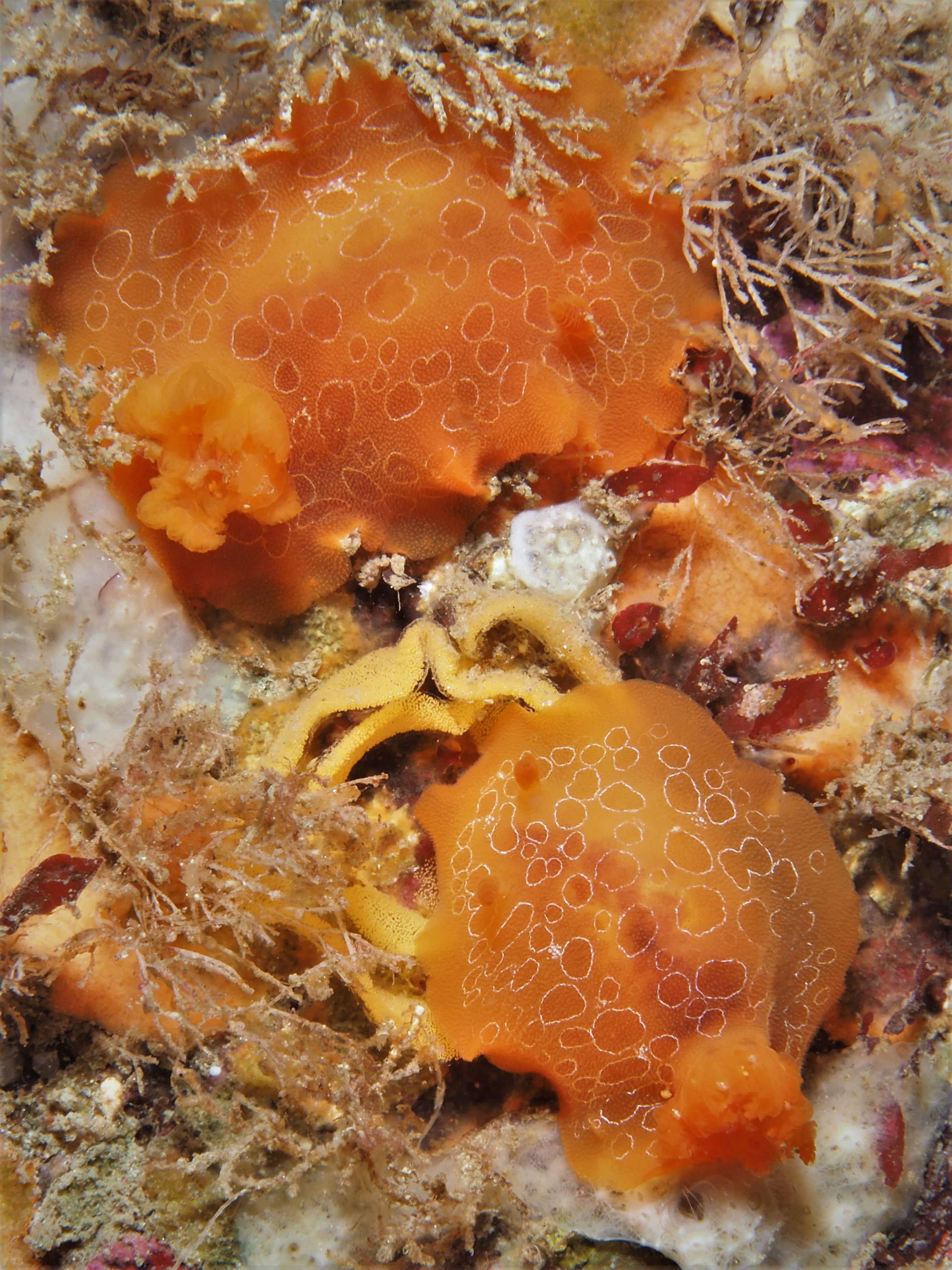
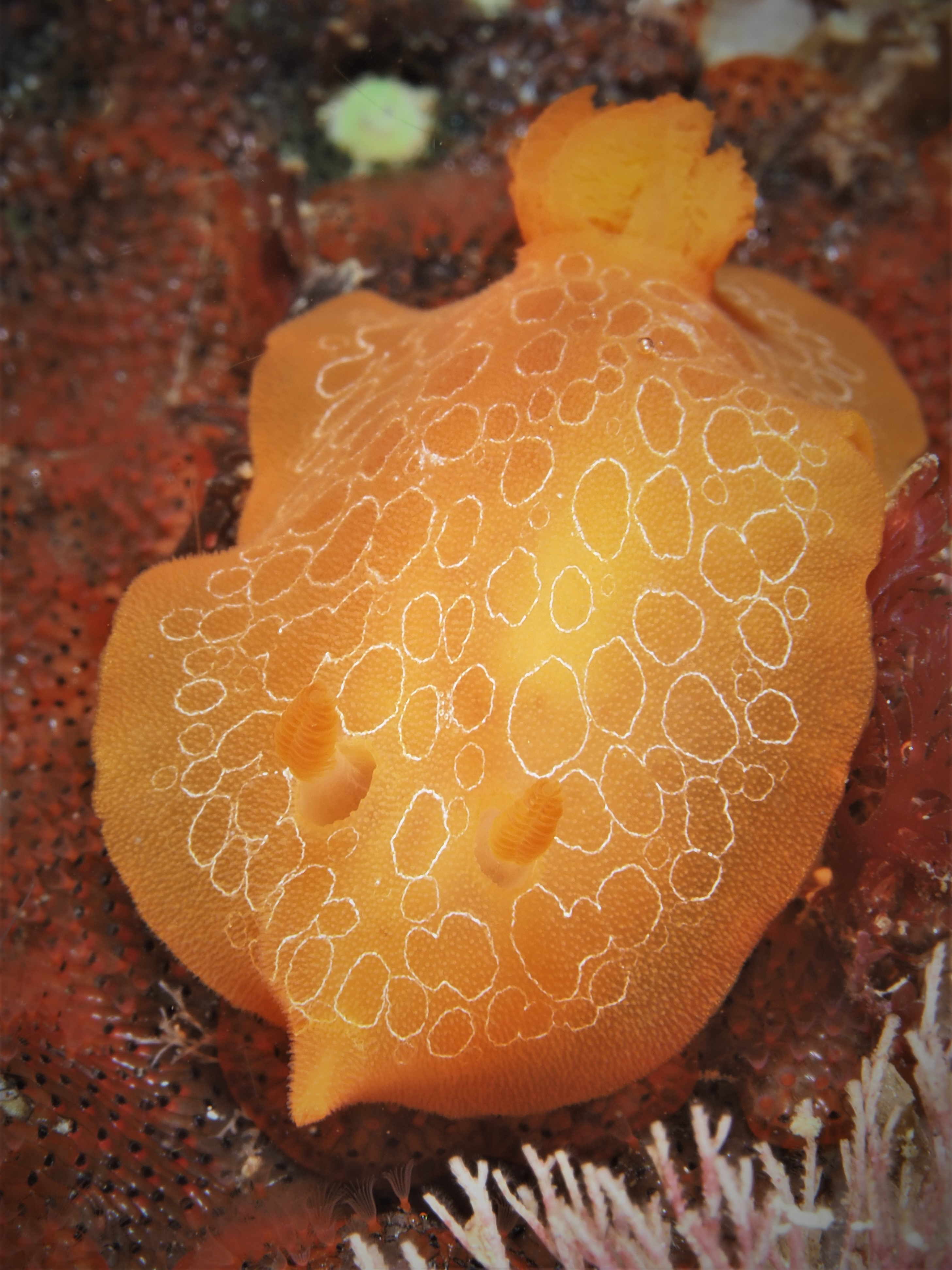
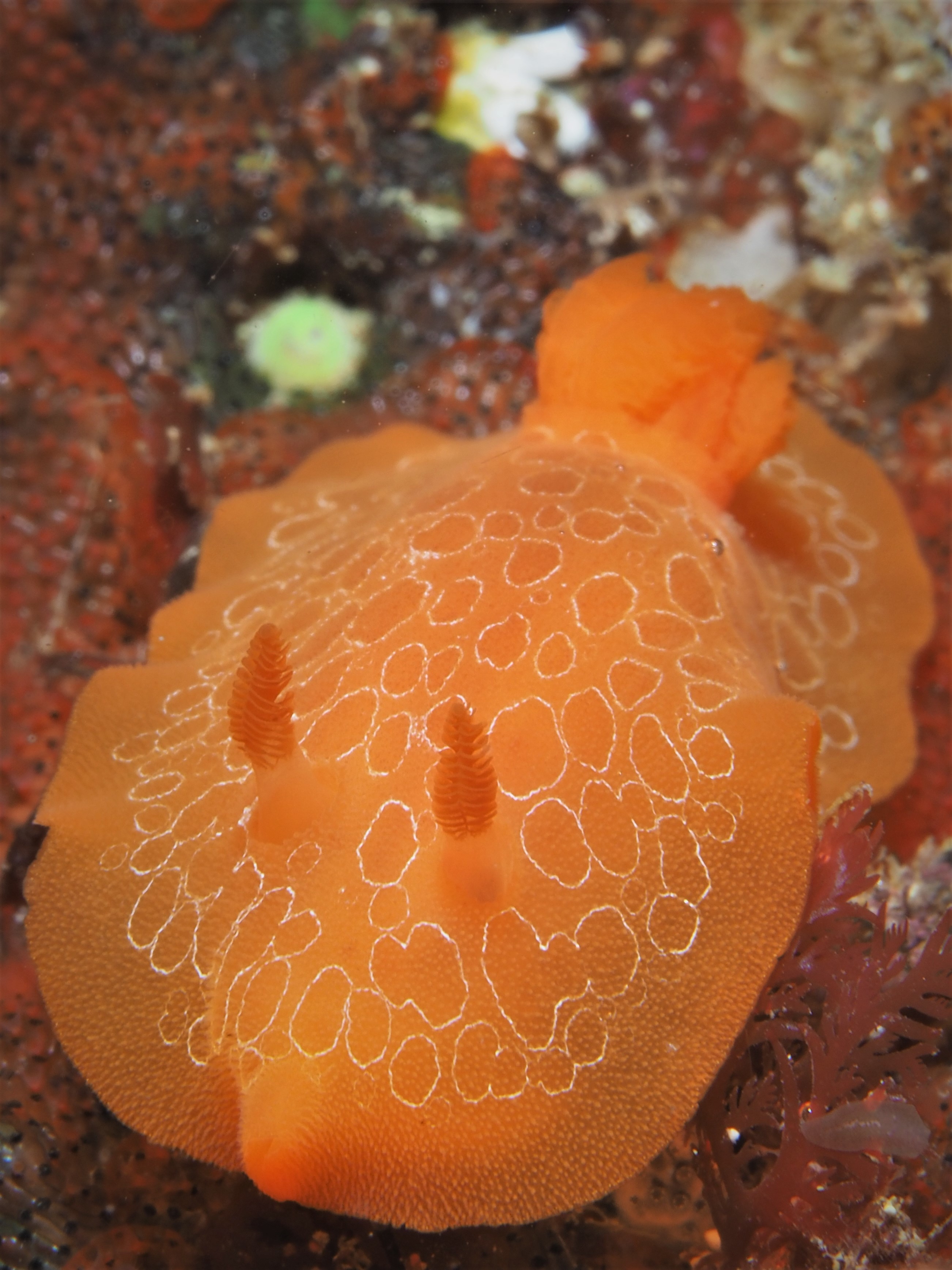
When inspecting the rock walls carpeted in sponges, seasquirts, algae, worms and other things, I kept my eyes out for nudibranchs. Apart from a tiny crested aeolis, I spotted a good number of Discodoris rosi, busy mating and laying eggs. This species has only been observed in the UK for a decade or so but the population now is booming, with many reports coming in from all over Cornwall:
All in all a great enjoyable three dives! Silvery schools of sandeels and sprat/herring, many wrasse, cuttlefish, small and very big lobsters and a greater pipefish were also spotted. Unfortunately the weather has made a turn for the worse this week, however, there are still a few diveable months left this year…
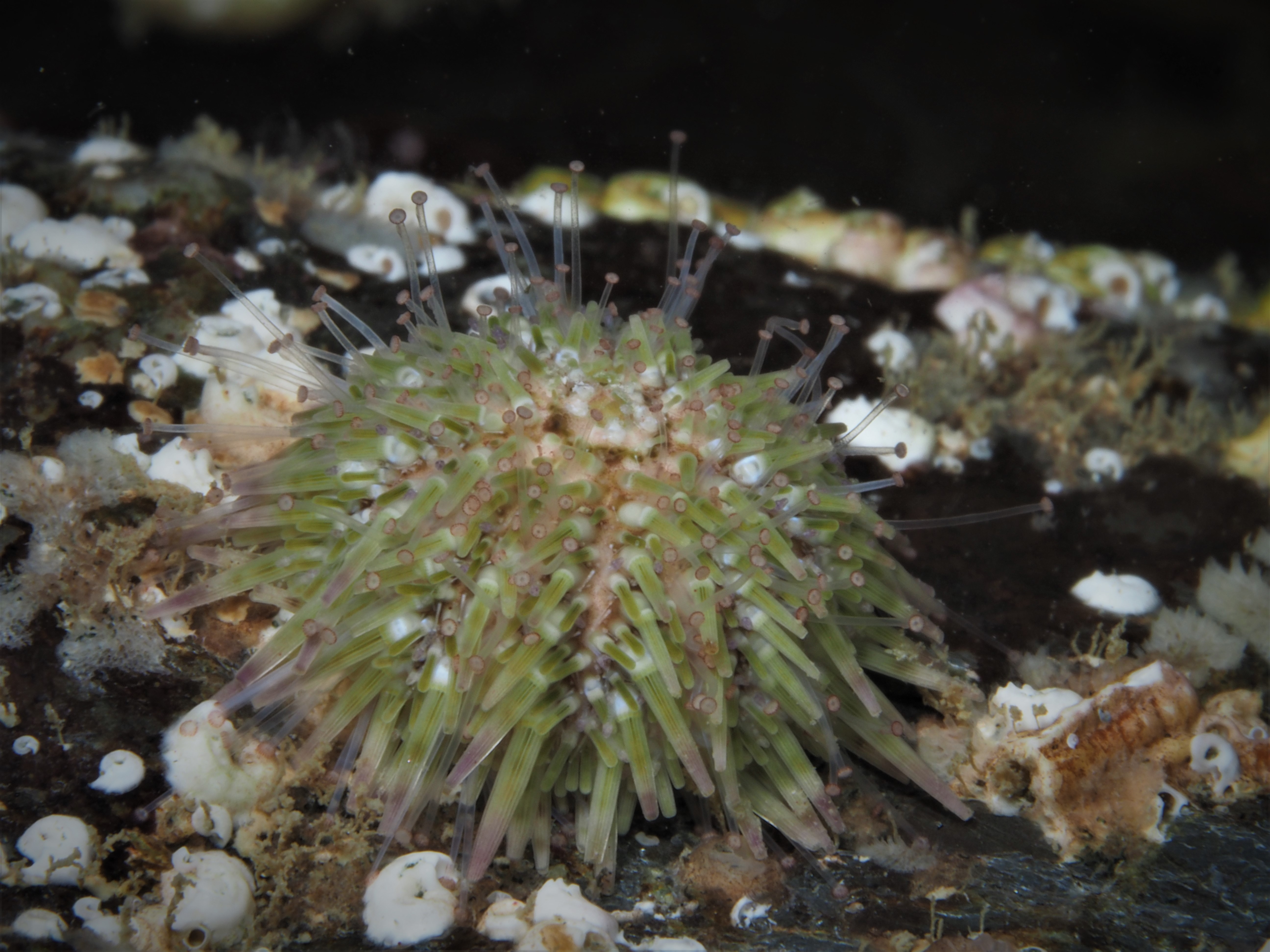
Long time no post! Due to a combination of not-so-good weather and work I have not been in the water much the last few months. I attempted some seaweed photography but most times the viz was bad; the one time the conditions were great, somehow all my photos turned out to be a bit meh and I could not be bothered to post them. (For some older shots on seaweed diversity see here, and many older posts as well.) Anyhow, my exciting news is that I finally bought a new strobe (an INON D-200 for those who are interested) because my old Sea&Sea strobes just proved to be too temperamental. Something I should have done a long time ago, but the thrifty Dutchman in me just never pulled the trigger. I have now taken it out twice this weekend and it works like a charm! Now I just need to practice, as it is actually still very hard to go from an OK photo to a truly good pic. Above a shot of a baby urchin Psammechinus miliaris. The true stars of the weekend however were nudibranchs.
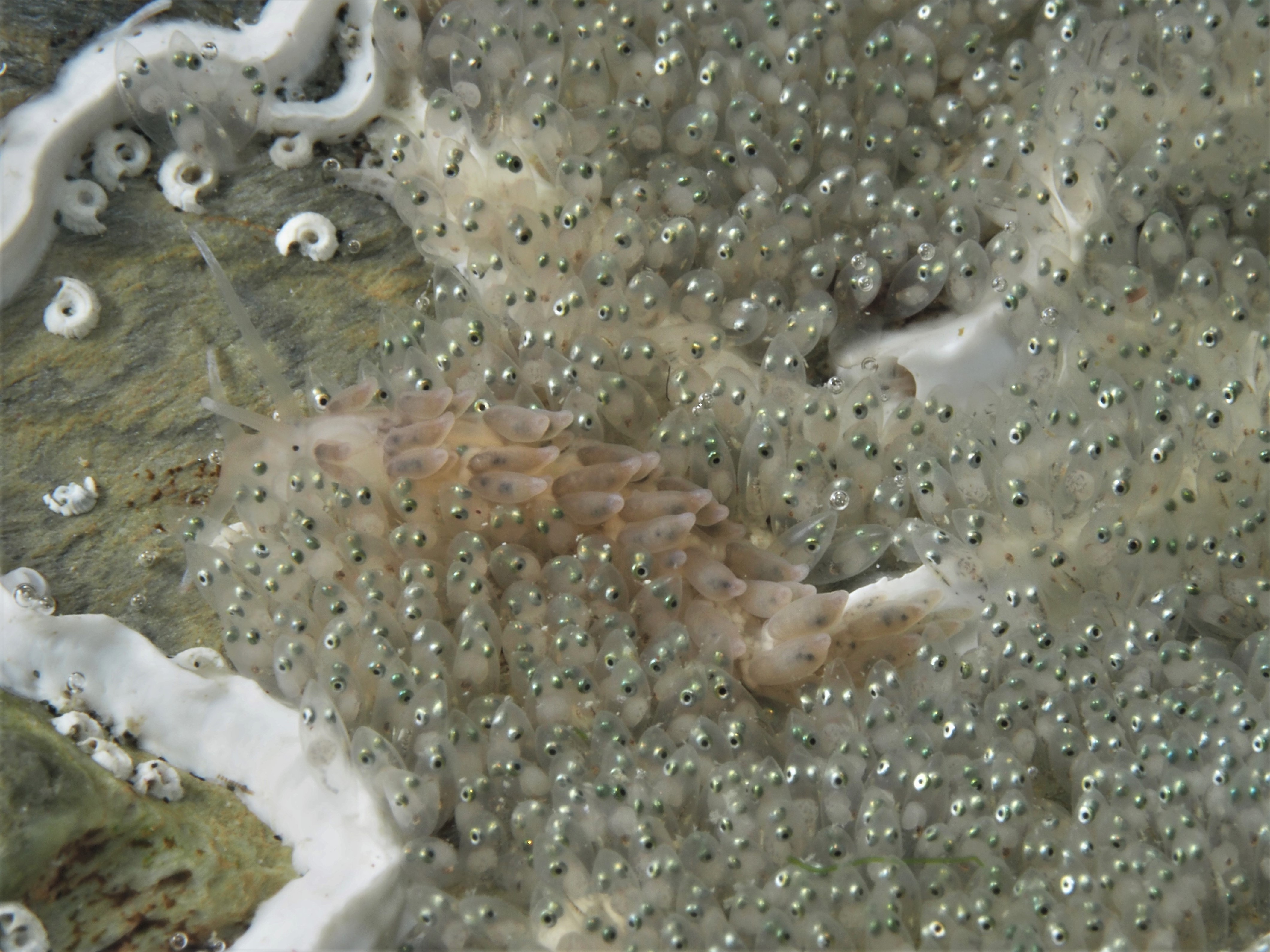
A very special find (shown to me by fellow rockpool photography enthusiasts Martin and Greg) were two Goby egg-eating seaslugs Calma gobioophaga. This tiny species can only be found on the goby eggs it eats. With such a ‘niche niche’ and with very good camouflage it is no wonder that reports of this species are rare. A fun fact: its protein-rich diet means it does not have to poo and it therefore does not have an anus…The rock with the eggs and nudis was very shallow and so it was a challenge to get the port of the camera housing under water. Luckily Greg assisted with pointing out the nudi and holding my strobe in place. Freshly hatched goby fry could be seen hovering above the eggs (the fact that a predator was munching through their brothers and sisters might have triggered some of the hatching). The cerata (the fleshy lobes on the nudi’s back) seem to have two goby eyes in them to make them better blend in!
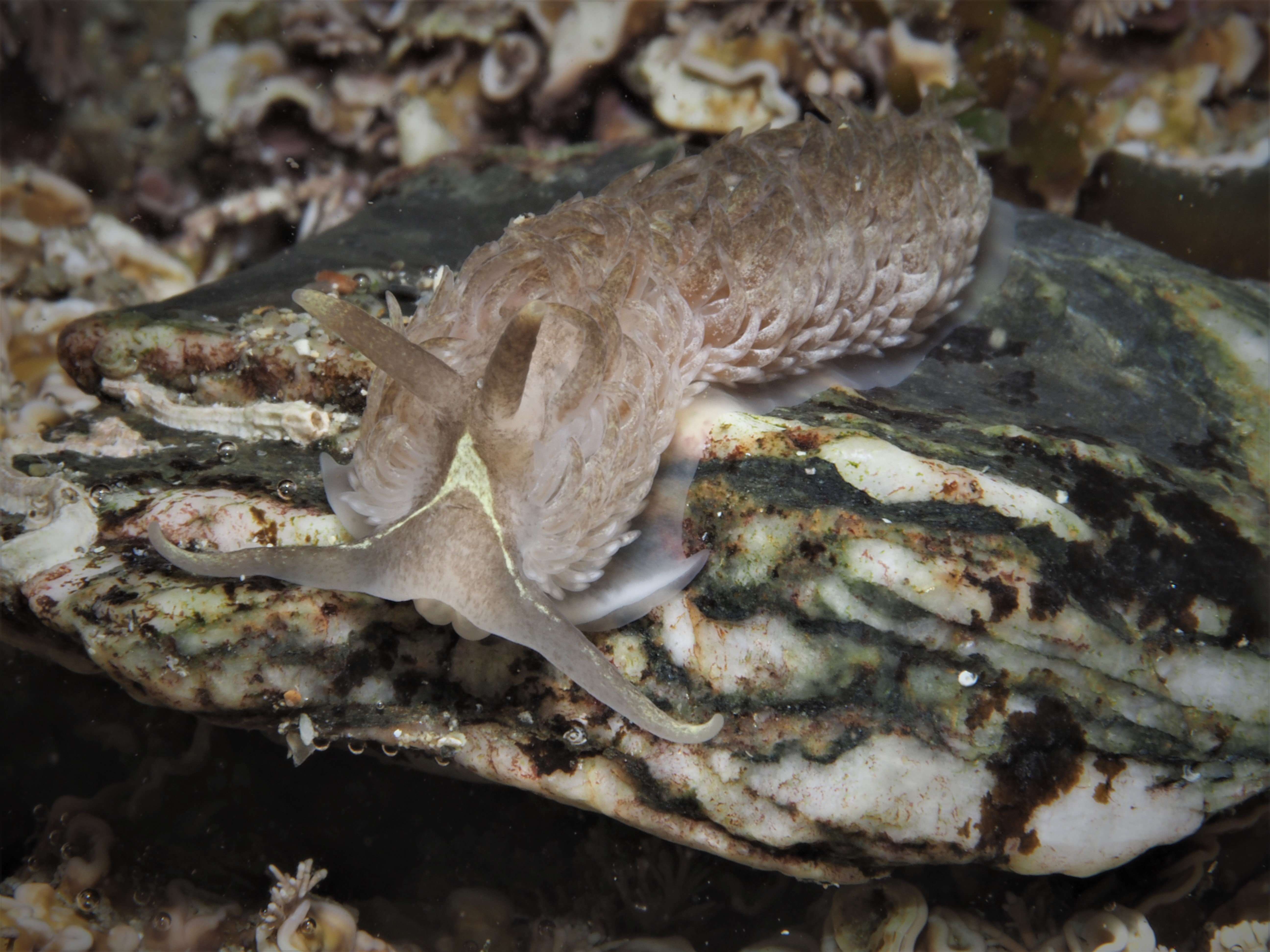
Finally, two other nudibranch species, neither very colourful. Both are predators of anemones: first the largish Grey sea slug Aeolidia papillosa and second the smaller species Aeolidiella alderi. Both adequate shots but I need to practice to make them truly good. I will probably buy a second INON strobe so I can practice wide angle shots as well when diving. I hope to go out a lot more during summer and will make sure to post here about my finds and progress!
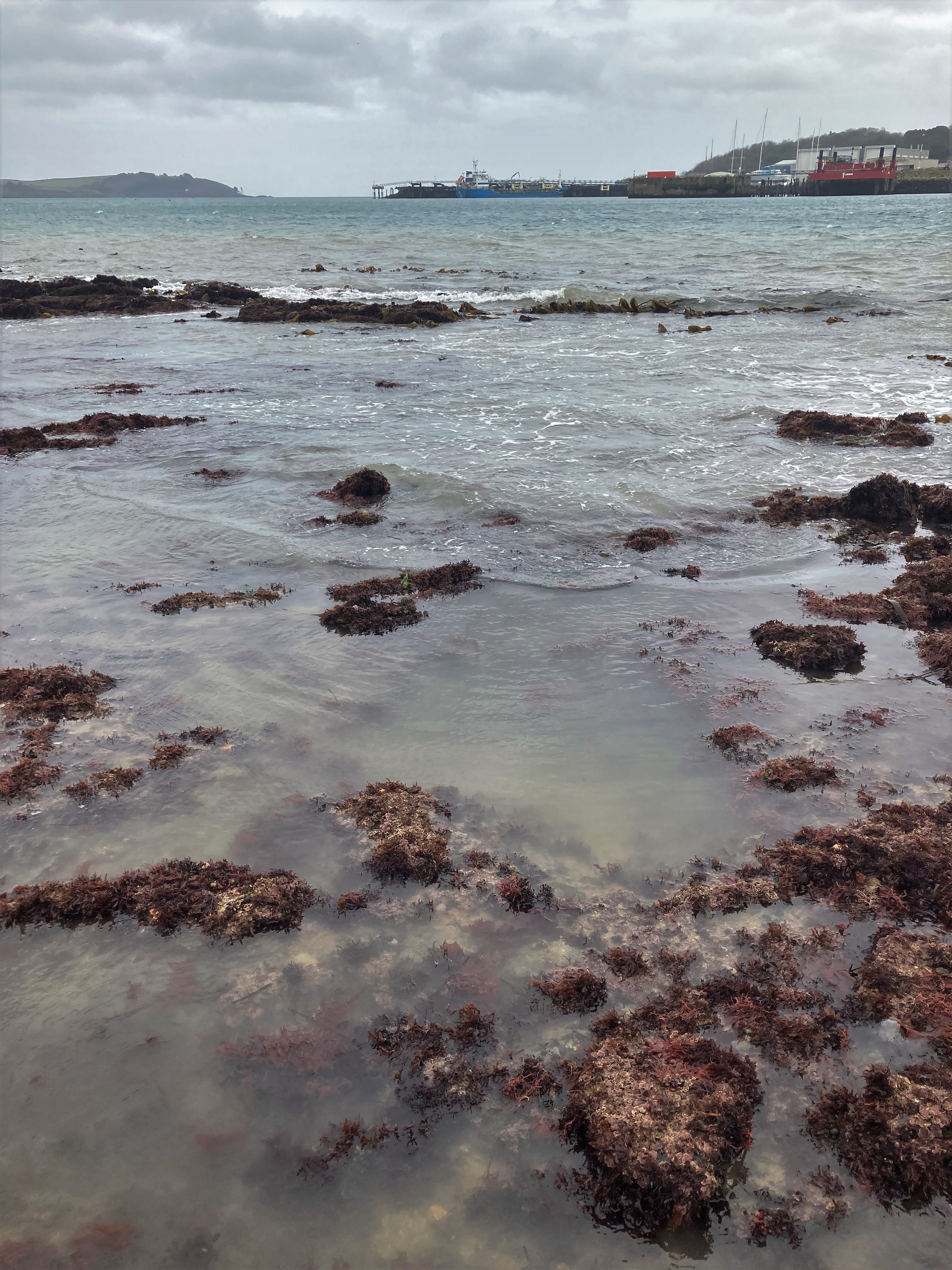
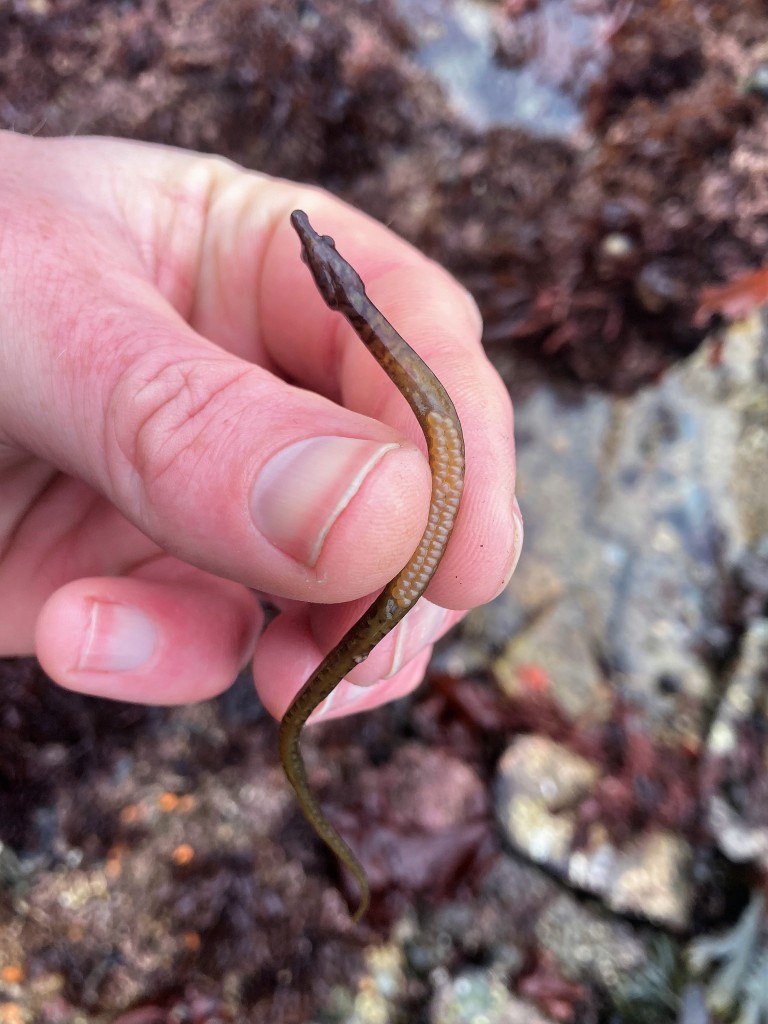
The wind has picked up and will ruin any chances of getting good seaweed shots this week. Too bad, but what can you do? A bit of rockpooling I guess. I took my son out to our local beach in Flushing where the rocks gently slope into Penryn River. Although there are no ‘proper’ rockpools, low tide gives access to a mixture of maerl sand and rocks that can be turned over. It is silty and definitely not very pretty, but there is always something to find. It was an especially good weekend for finding fish, seeing Shannies, Tompot blennies, Rock gobies, Gunnels, Worm Pipefish, Shore Rocklings and a tiny Eel, as well as Sea Scorpion eggs. (One Shanny was quite big and proceeded to bite my son’s hand; he was very brave and we slowly put it back.)
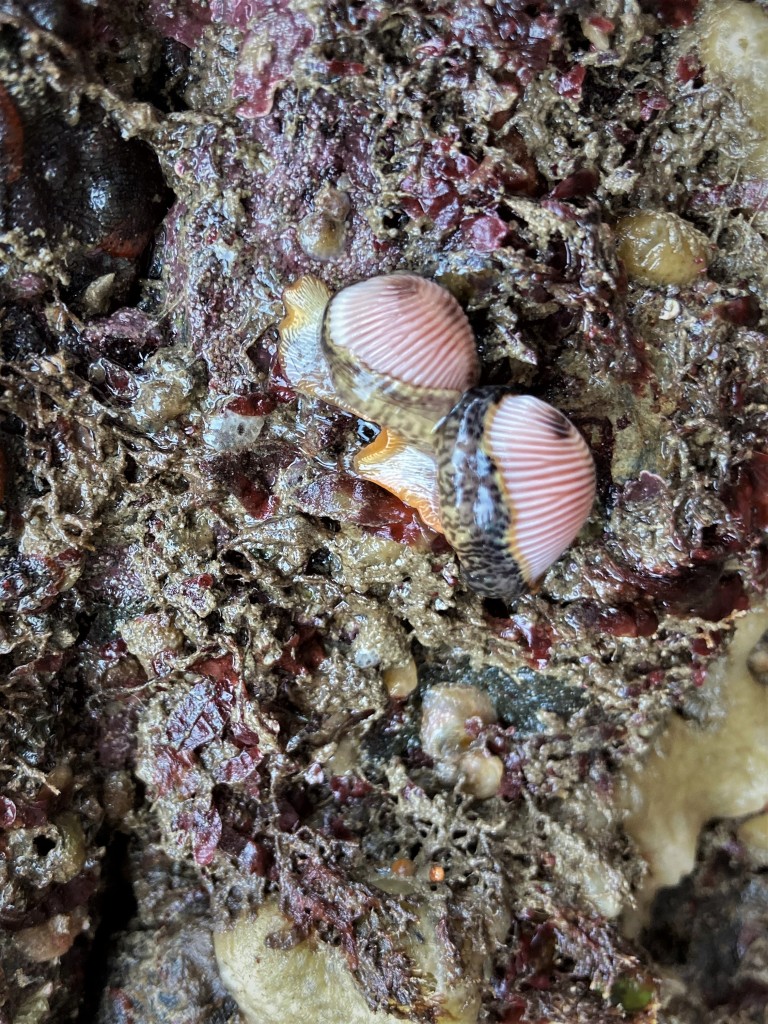
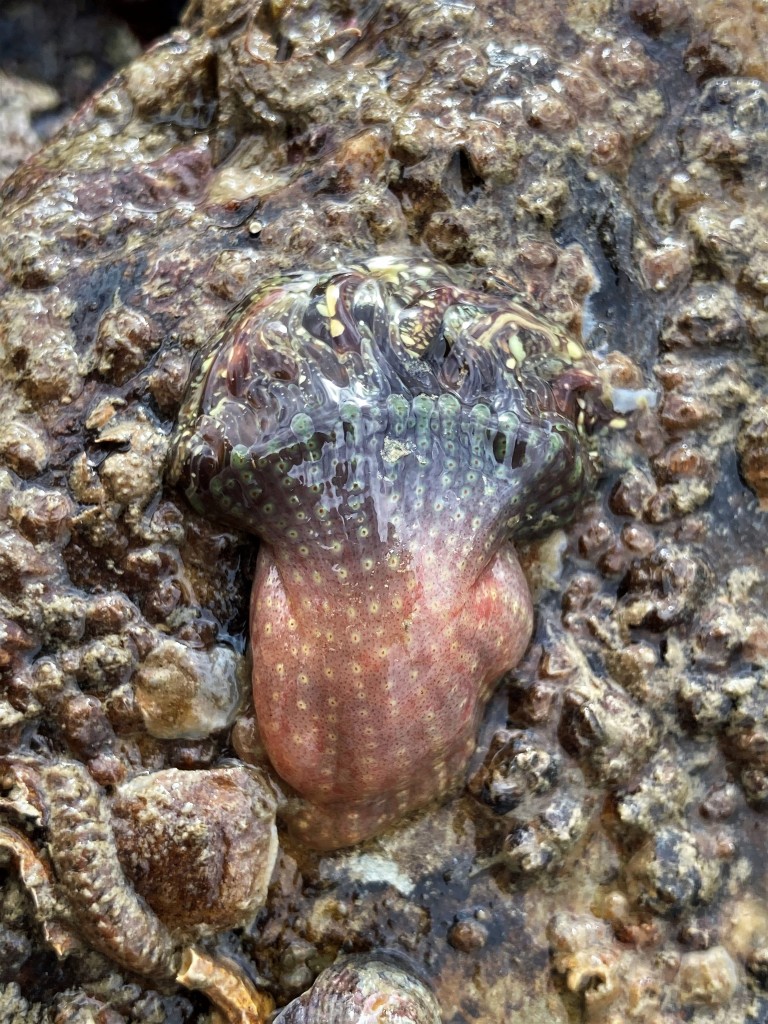
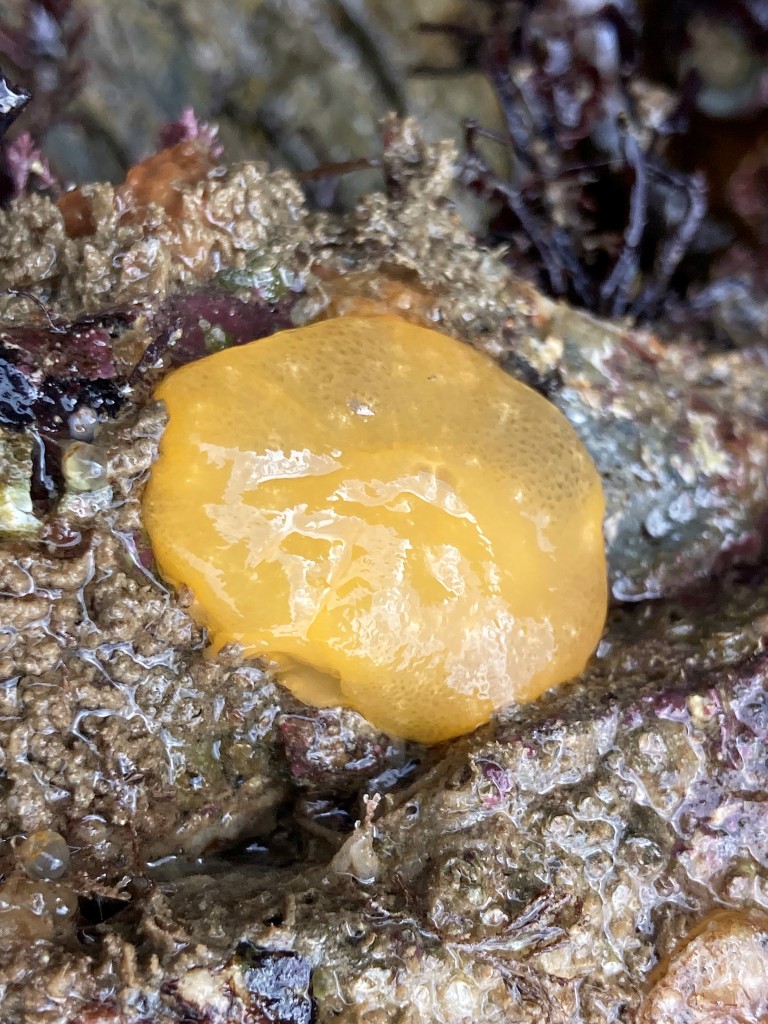
Invertebrates were plentiful too. The main mollusc here is the Variegated Scallop Chlamys varia, which is attached underneath every single rock. We found our smallest Great Scallop Pecten maximus as well. We found some Sea lemons Archidoris pseudoargus and lots of Yellow-plumed Sea slugs Berthella plumula (which apparently can secrete sulphuric acid when disturbed…). A small selection of what we found below, all pics taken with an Iphone.
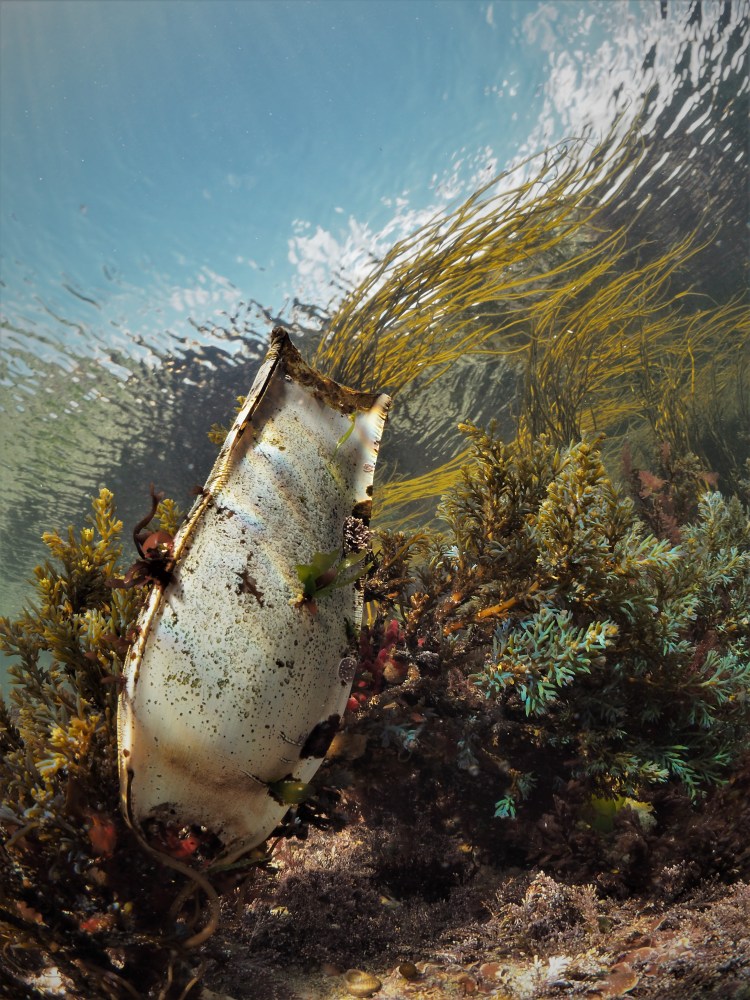
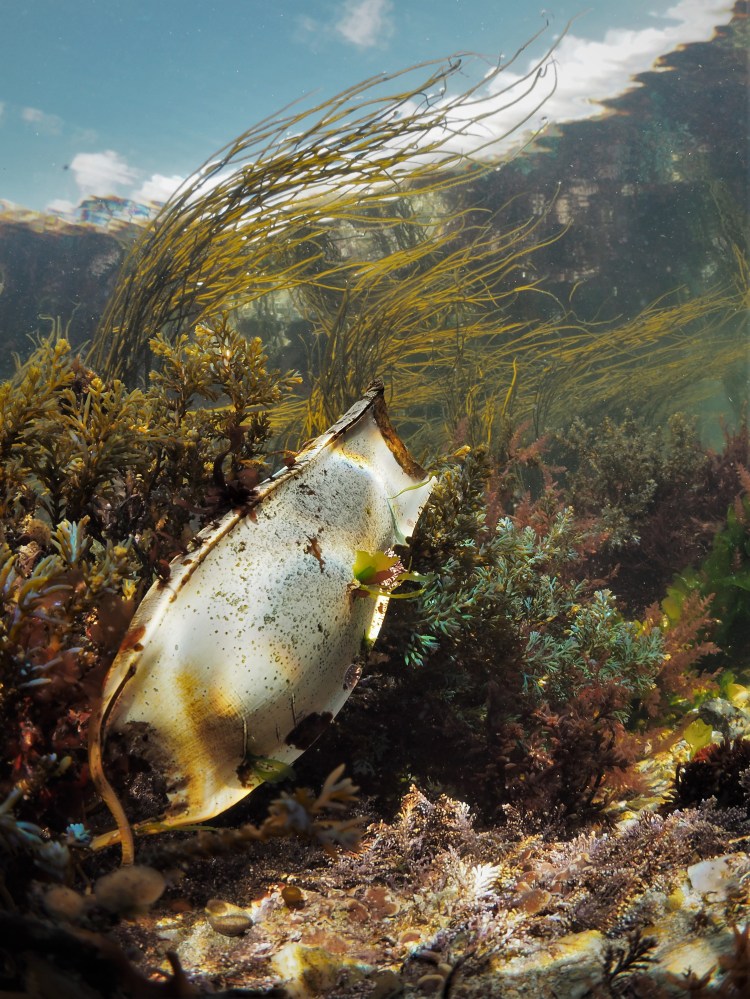
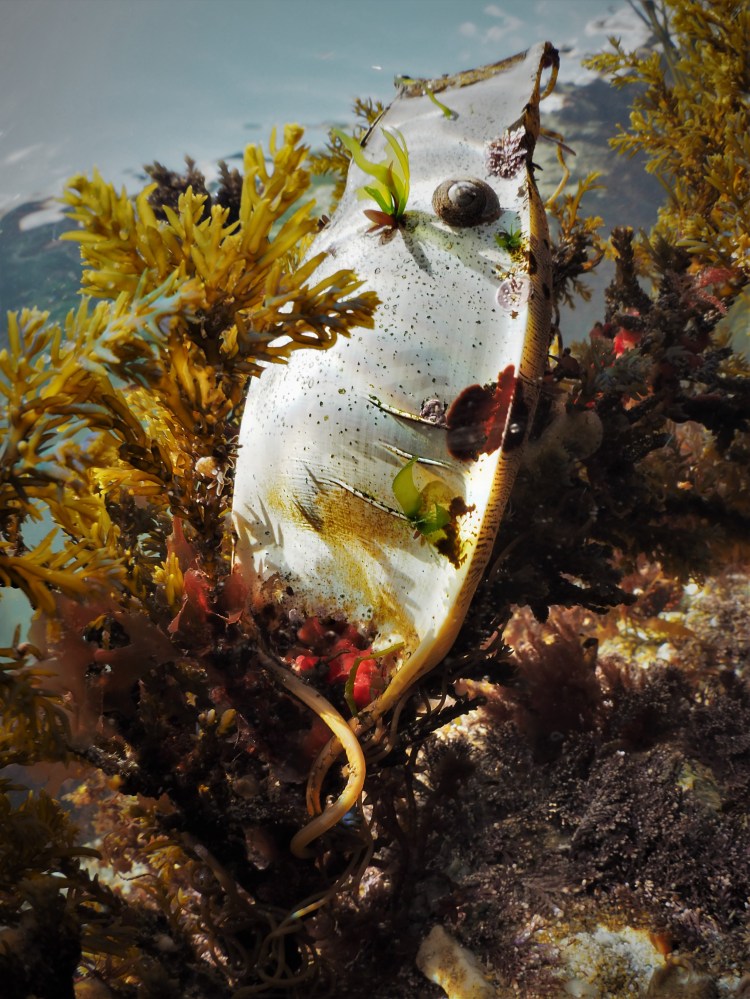
Just three pics of the same shark egg case (‘mermaid’s purse) laid by a Nursehound (Scyliorhinus stellaris), also known as Large-spotted dogfish, Greater spotted dogfish or Bull huss. My camera was only five centimetres away from it (this technique is called ‘close focus wide angle‘). Mostly attached to perennial and tough Bushy rainbow wrack (Cystoseira tamariscifolia).
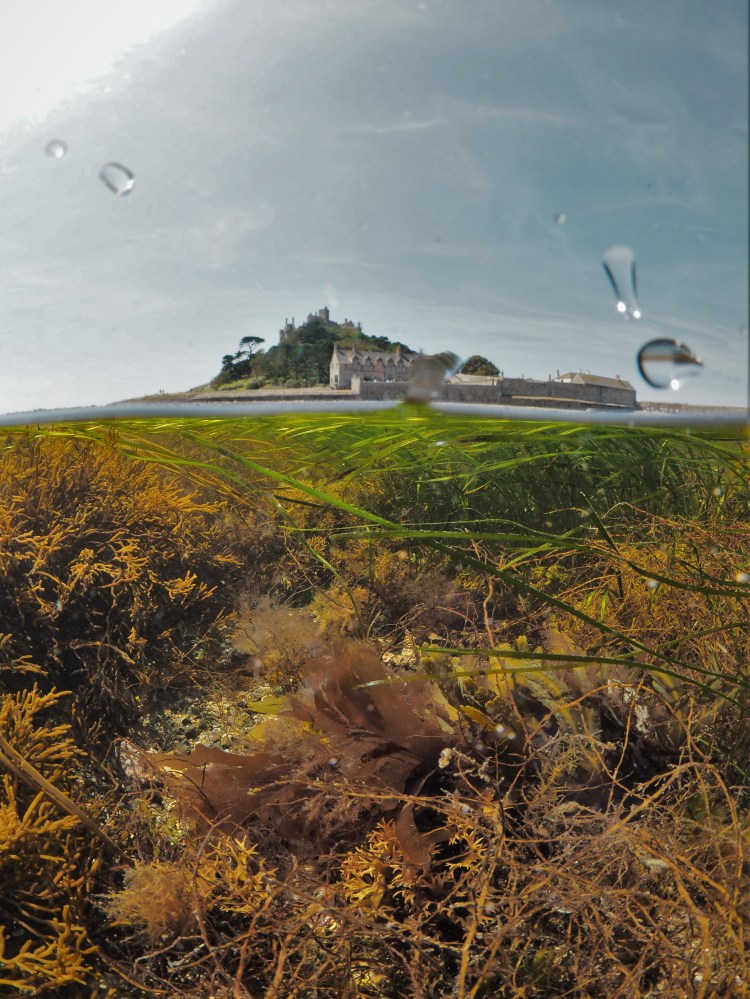
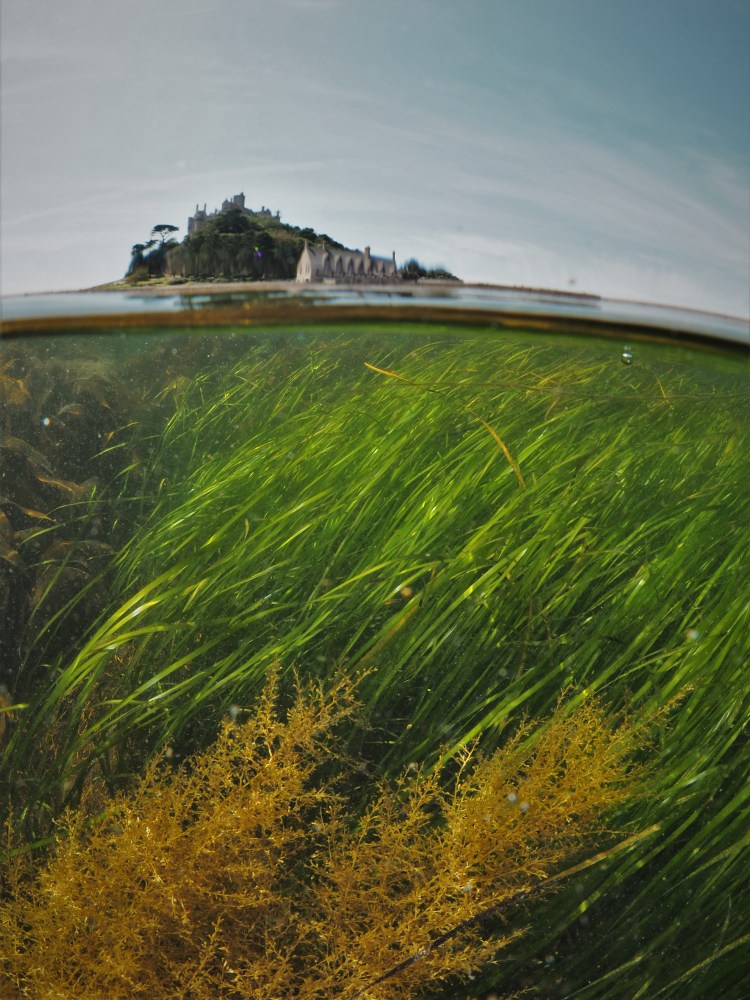
A bit of practice with over under shots two weeks ago when camping near St. Michaels Mount in Marazion. An ancient and beautiful backdrop to a fine sandy beach, with a causeway, rocky outcrops as well as seagrass. I was not alone and did not have much time and importantly no strobe handy, which made the exposure difference between under- and above water tricky. The main problem was however that I could not get up close to the Mount, leaving it quite small in the composition. Still, a great hour in the water. Many two-spot gobies were around and this is a site with lots of egg cases of the Nursehound (or large-spotted dogfish, or greater spotted dogfish or bull huss) Scyliorhinus stellaris.
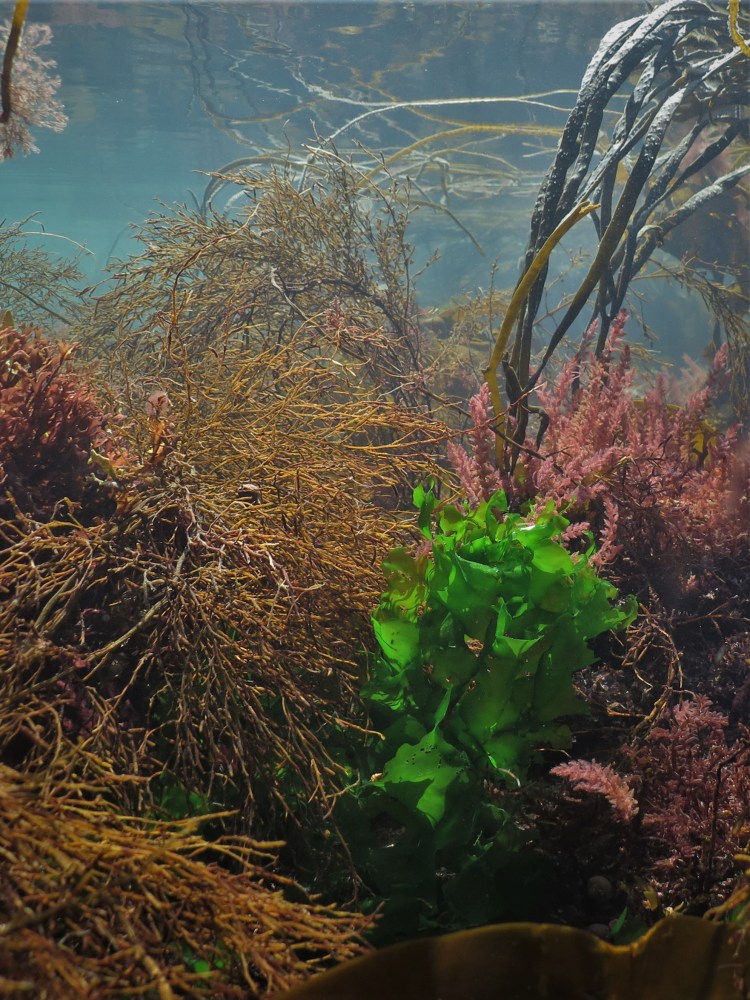
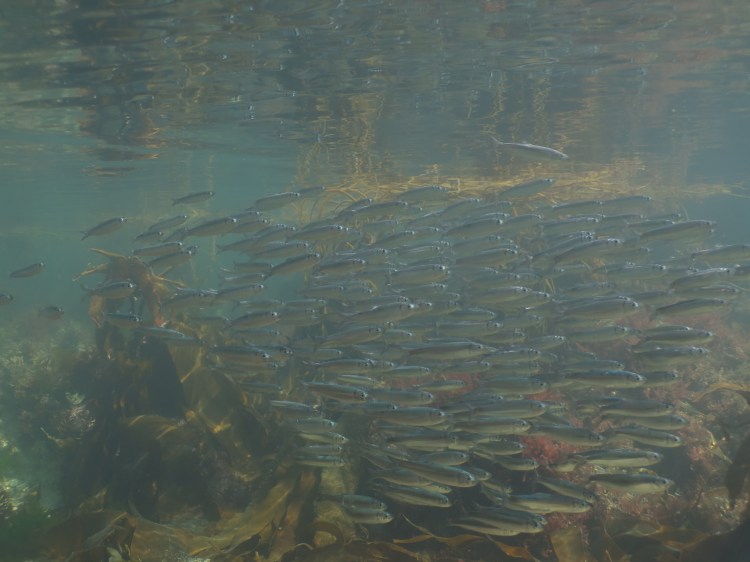
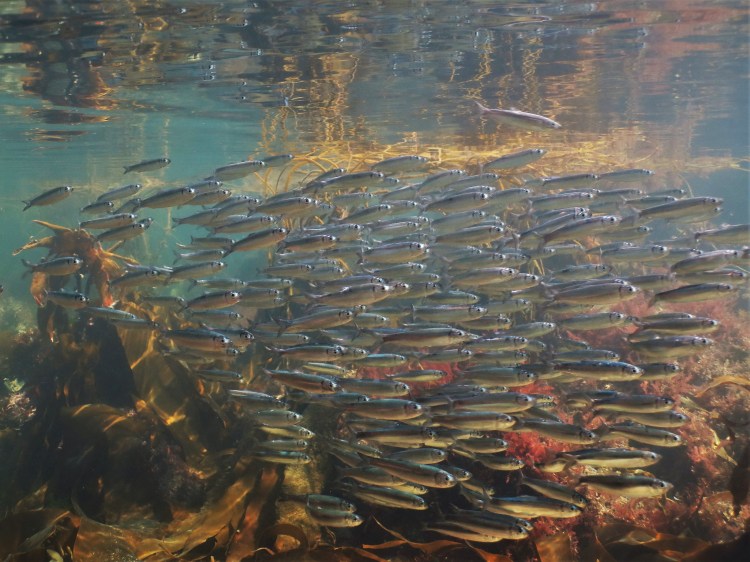
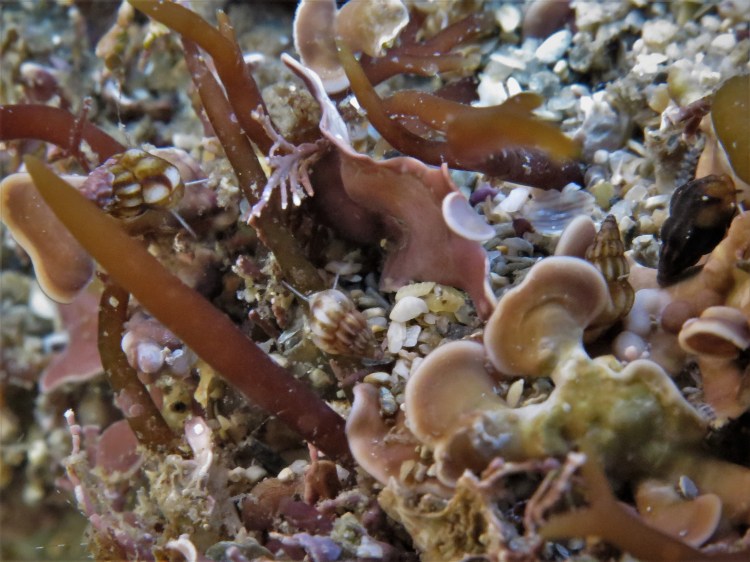
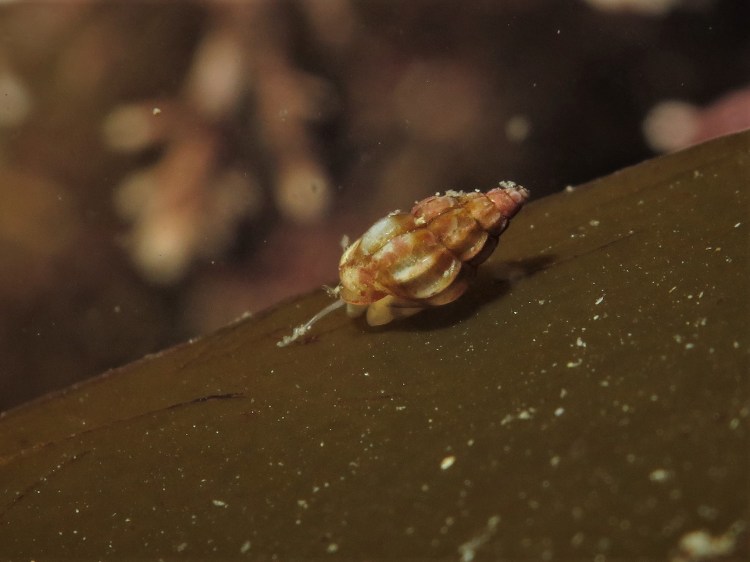
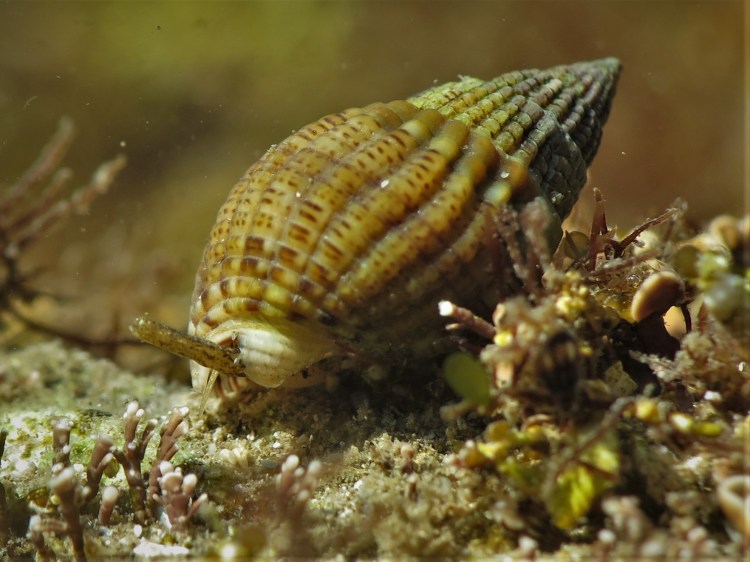
I have been out twice this week with the Canon G16 with the hope of snapping a few good photos (out of the hundreds I take). It was trickier than usual, in part because the viz was not great but also because I am making a bit less progress I feel. Investing in an expensive DSLR + housing will get me further but I do not know if it will be worth the money. However, I still have a lot to do when when it comes to mastering the principles of photography, especially getting to grips with manual settings. In this post I will highlight some of the ‘issues’ am facing; who knows I will be lucky and get some feedback via the blog (and instagram), sharing is caring! As usual, I focussed on the seaweed diversity, although at this time of year it is not the best looking. The photo above is nothing special (the seaweed looks a bit straggly) but I like the blue background. It is interesting the wide diversity of seaweed species on the Red rags in the photo below and I like the contrast of the green sea lettice versus the brown Bushy berry wreck in the second photo but both pics are a bit meh. A main difficulty is that many times the sand (orthe bleached coral weed) contrast with the subject of the photo resulting in excess highlights. I try to counteract this by reducing F-stops (resulting in an overall darker picture) and reduce highlights during post-processing. @chris_exploring recommended to choose overcast rather than sunny days which is probably the best approach (and I will have plenty of opportunities to test this the coming months!) The first pic below of a Two-spotted goby is OK but I could not get quite close enough. The second photo is of course out of focus but I included it anyway to show that some of these photos have great potential. It inspired my own photography rule (the ‘Vos Index’): the beauty of the subject (on a 1-10 scale) times the difficulty of a shot (on a 1-10 scale). We are all trying to score a 100: a perfect capture of a beautiful organism. I am stuck with mediocre captures of beautiful things. Sometimes I get a very good capture but then mostly it is of something not-so beautiful. I shoot JPEG + RAW, which is a bit of a pain as I do not want to clog my hard drive and reviewing and deleting JPEGs and then having to filter for names to delete the associated RAW files is annoying. I actually keep few RAW files because very few photos are worthy of any advanced Photoshop editing, and also the standard Windows photo editing software is not half bad. For example see the photo below of whitebait (impossible to tell if it is herring, sprat or pilchard). It is very low contrast and bluish; by reducing highlights, increasing ‘clarity’ and a bit of cropping the image is completely transformed (although still relatively unusable as the resolution is quite bad). Finally macro. I just cannot seem to get my strobe to work which is annoying so the pics below are all ambient light. I need to up my game with this as there are so many cool subjects around to shoot if you take time to look. Below some tiny (3-4 mm) snails Rissoa parva. I wanted to zoom in more but was unable to unfortunately. Next a much bigger (2 cm) Netted dog whelk Tritia reticulata (sigh, I knew this as Nassarius reticulatus, and Hinia reticulata but the name has changed again). Next, a baby (3 cm) Tompot blenny Parablennius gattorugine which are one of the easiest fish I know to photograph, not very shy! Finally another challenge to photograph, a mermaids purse (egg case) of a Nursehound Scyliorhinus stellaris shark with a tiny (2-3 cm) embryo visible. I had a little light with me that I used to illuminate it from the back but this could be improved upon as well!
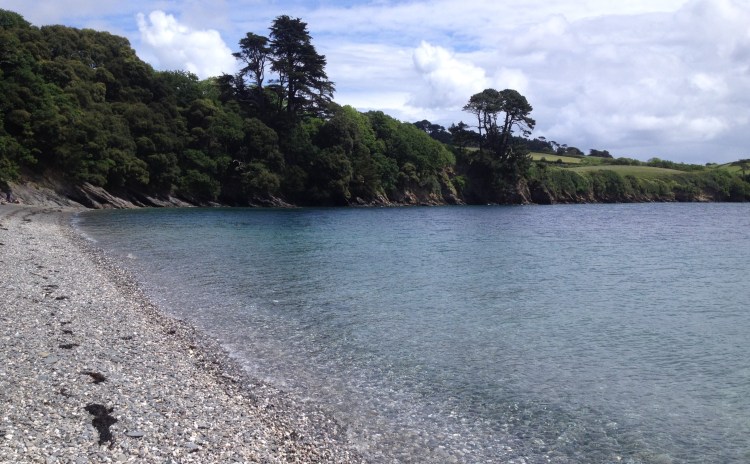
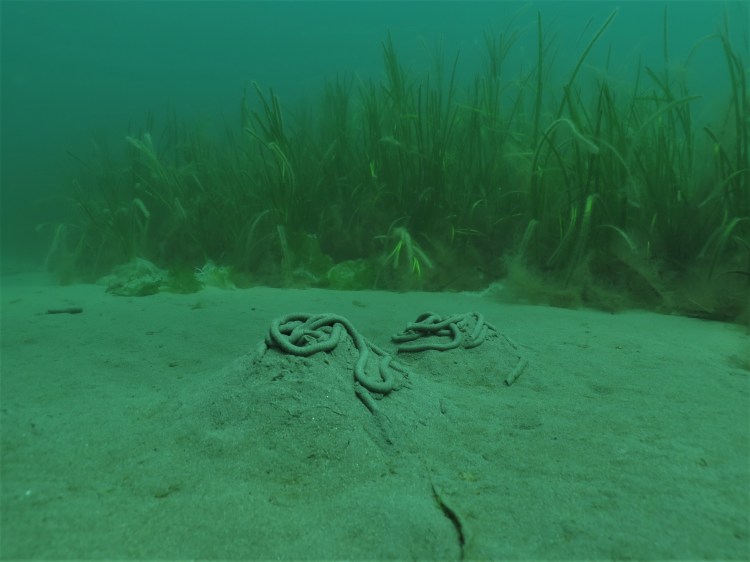
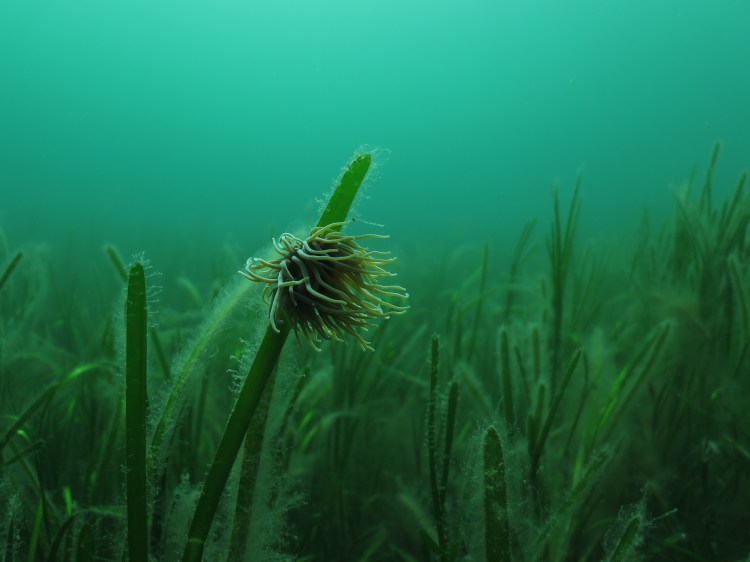
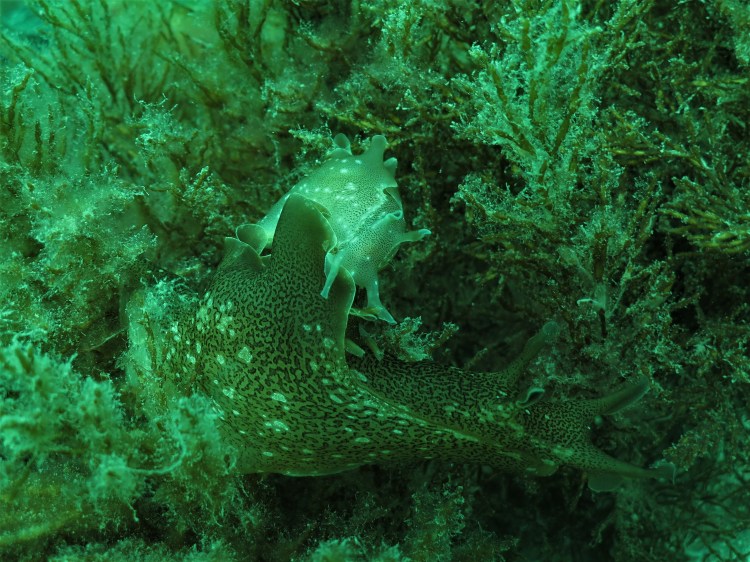
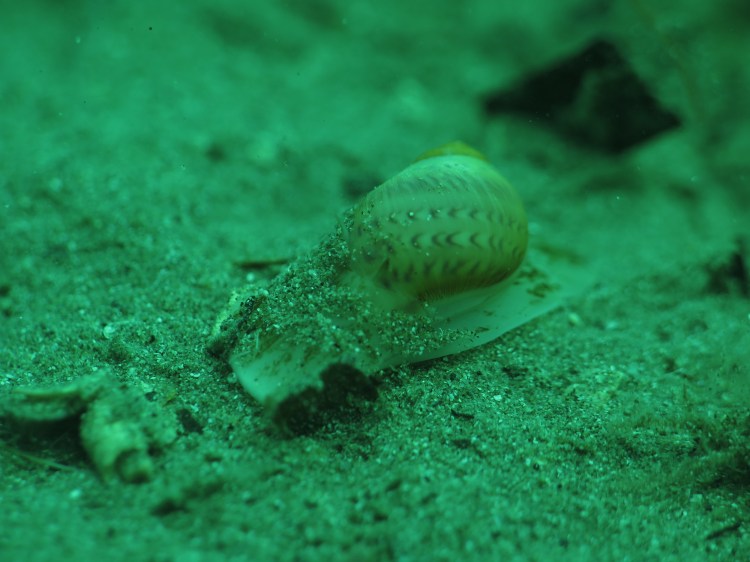
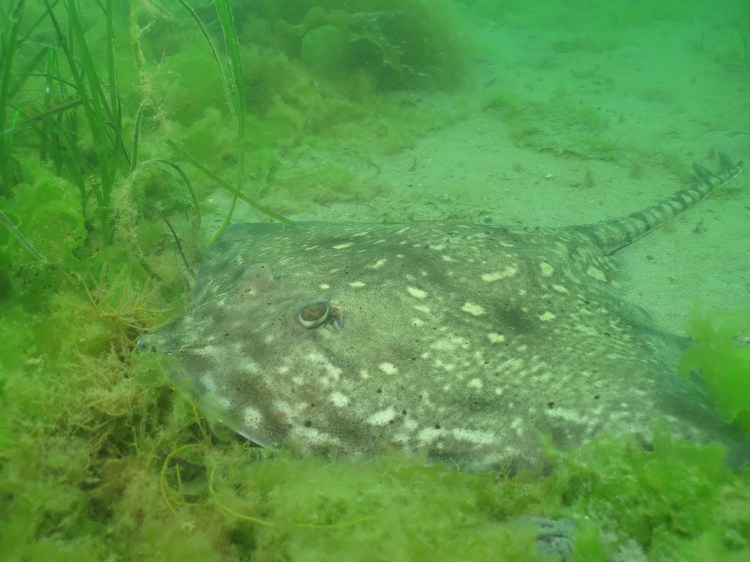
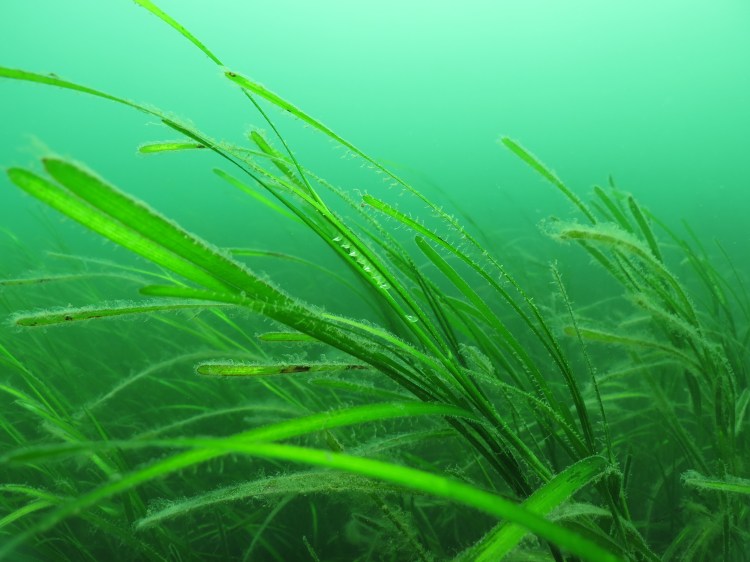
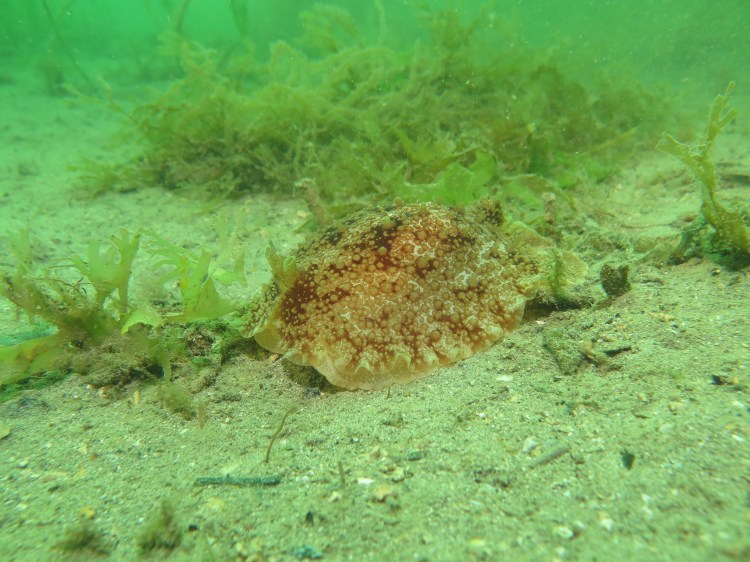
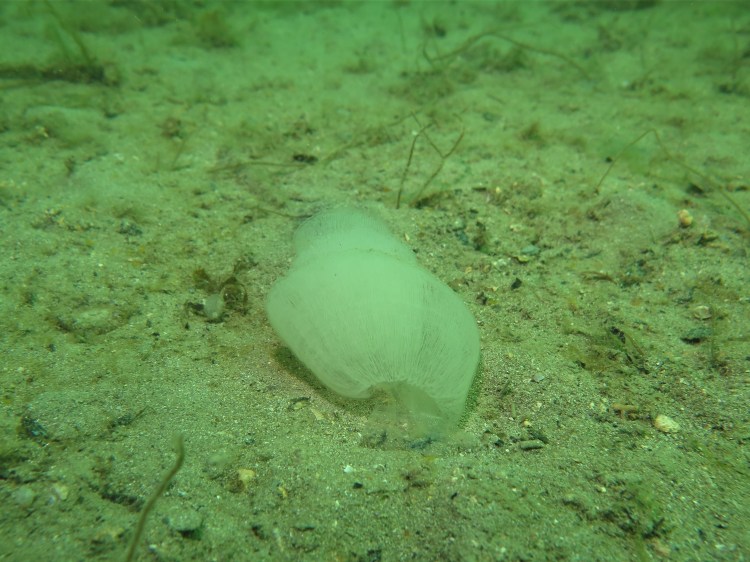
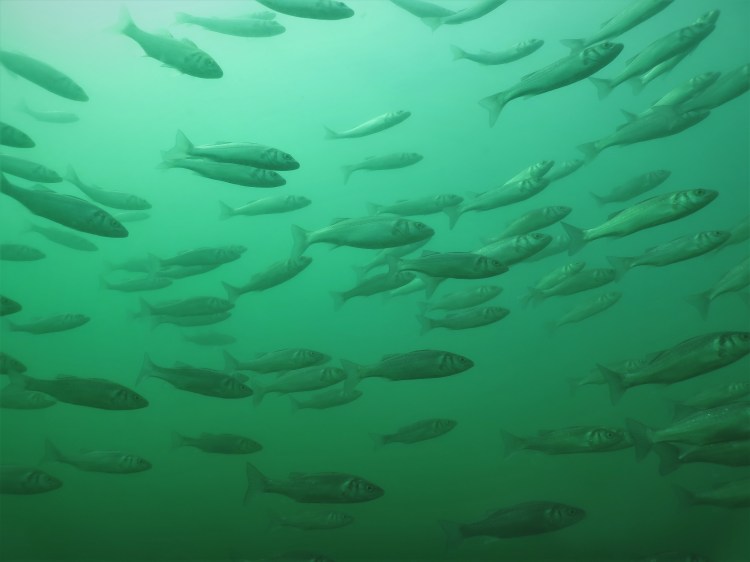
I was lucky to go diving twice this weekend, first at Grebe beach next to Durgan in the Helford Passage. As the photo above shows, this is as pretty as Cornwall gets, and the water looked crystal clear at high tide as well. It was a pain to get all picknick stuff and diving gear down (no parking nearby) but it was worth it. Unfortunately I left my fins in my car, so it was a very slow swim out. I emptied my stab jacket and tried walking over the seabed which half-worked (let’s say it was an interesting way of diving). Unfortunately the viz was not as great as expected. I spotted a small squid but it took off before I could take a snap. Other than that no special sightings. Below two images of the eelgrass, two frisky Sea hares Aplysia punctata and a macro photo of a Necklace shell Euspira catena. I had the rented tank refilled at Seaways in Penryn in case there was an opportunity to go out Sunday. The opportunity turned out to be limited to the village where I live, Flushing (opposite the harbour of Falmouth). I had never seen divers in Flushing or heard of anyone diving there, and judging from the siltier conditions and presence of boats that seemed to make sense. However, I always was a bit curious how this bit looked underwater, especially I wanted to check out the extent of the eelgrass emerging at very low tides (see this old rock pooling post). The visibility was not very good and near the shore there was only decaying seaweed. After a while though, lots of eelgras appeared. I was unsure whether this spot is known for eelgrass so I recorded my findings on the seagrass spotter site. This was the first time I brought my new strobe to have a play with, I need lots of practice for sure. Below a Thornback ray Raja clavata photographed with and without flash (no postprocessing used). The eelgrass looked very tall and healthy and many plants were flowering (middle of the photo). Towards the channel the eelgrass thinned out which allowed to observe little mud dwelling creatures. Sea lemons Doris pseudoargusPleurobranchus membranaceus are not that little actually (egg masses present). Finally, a lucky shot. Looking through the eelgrass, a curious school of Seabass Dicentrarchus labrax circled around me quite closeby. (After I left the water I heard a seal was near too but it would have had to be right in front of me for me to see it.) All in all it was a very interesting shallow dive close to home and I will definitely try to return soon.
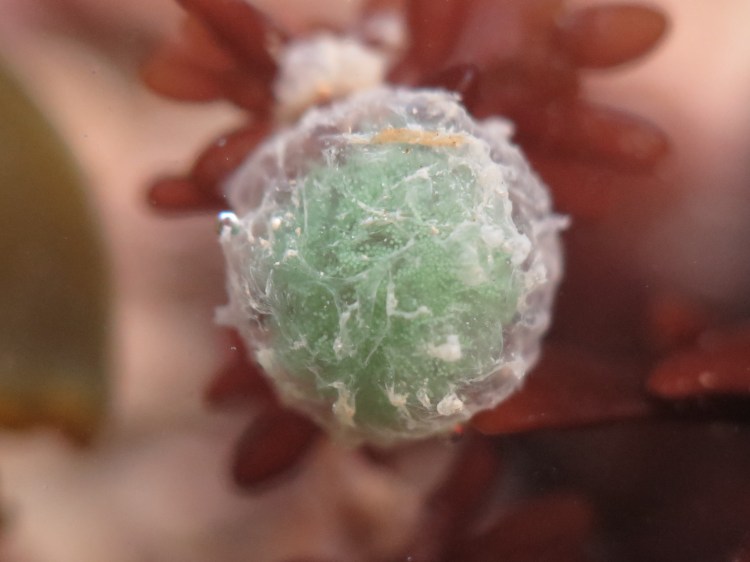
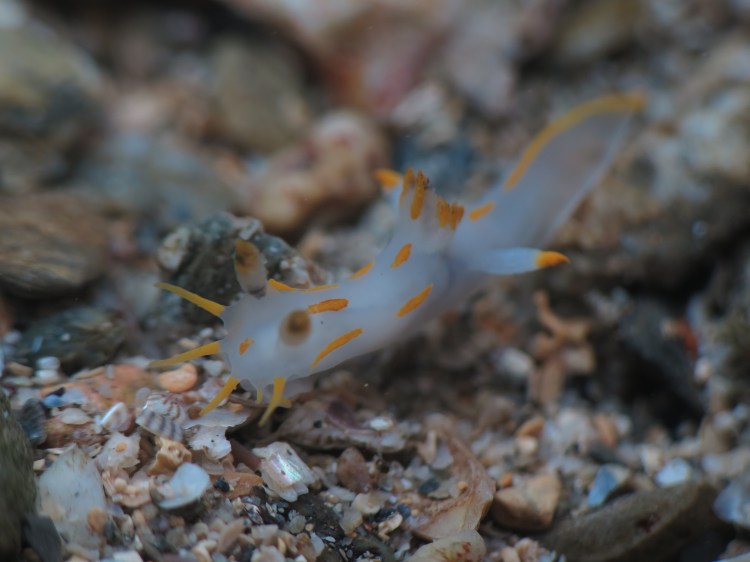
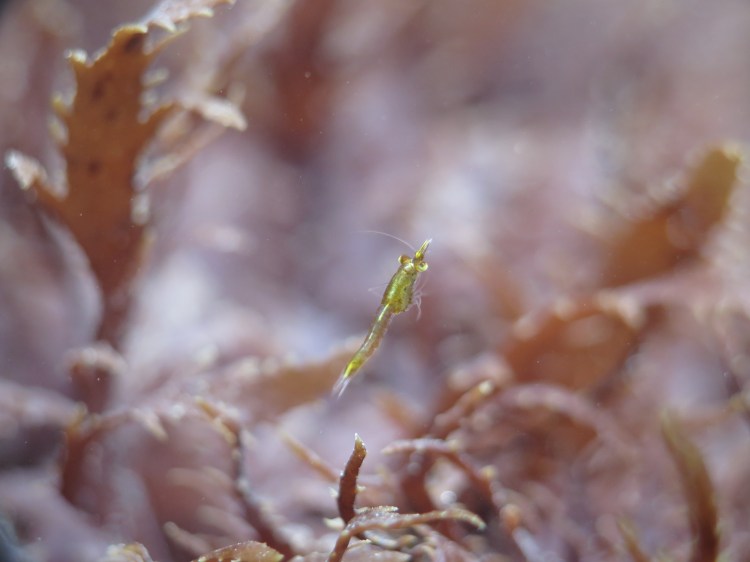
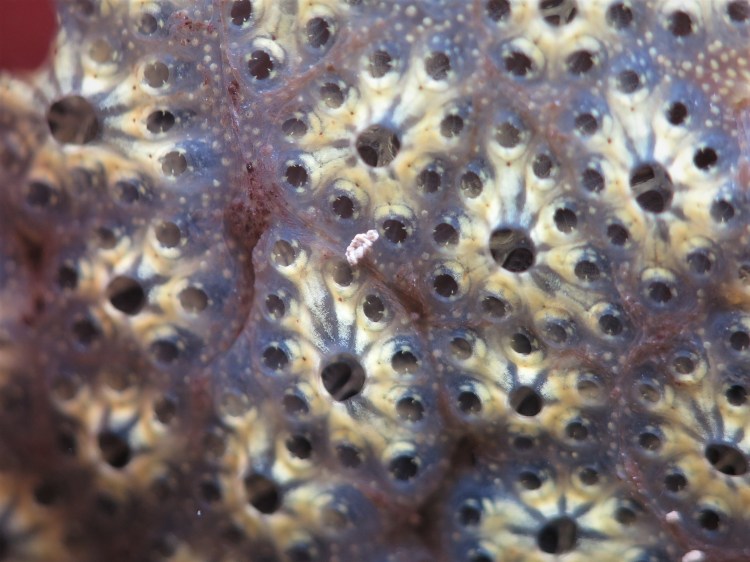
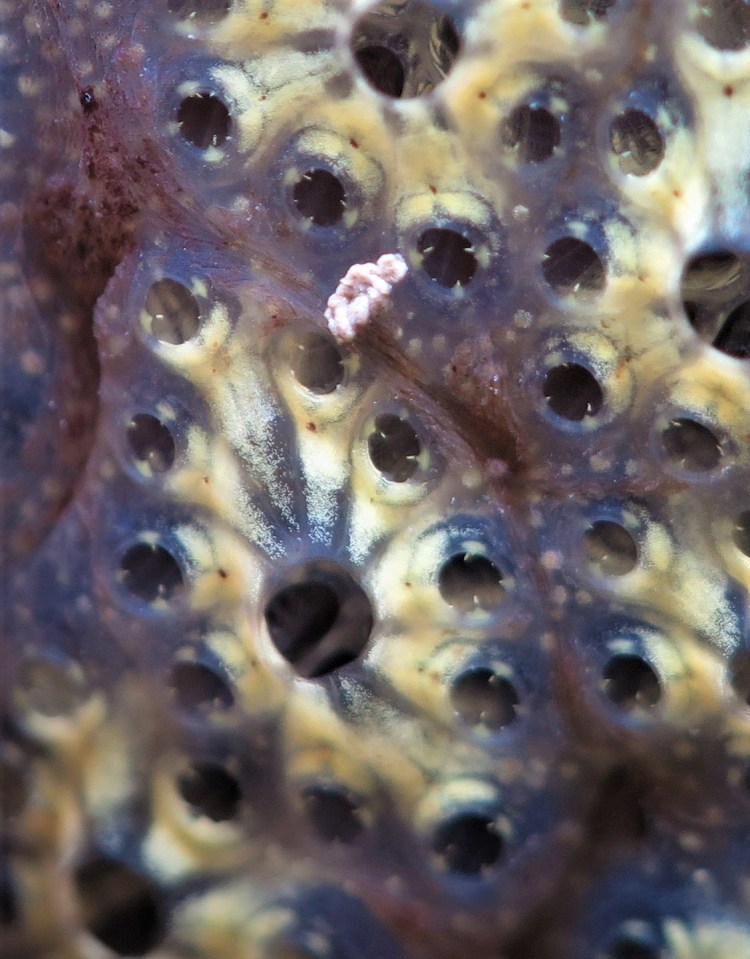
I recently posted my first photos taken with the nauticam CMC macro wetlens using stalked jellyfish as a subject. I since lost my lens, which I in large part blame on the bad fit of the adapter with which it is attached to the housing. The best thing in these cases is not to agonize over it too much, order a new one straight away and keep going, so that is what I did (also I am now a bit more careful of course). Here some more photos of macro subjects. Above a very easy subject as it is very common this time of year and also it does not move….Paddle worm egg capsules (probably Eulalia viridis clavigera). The individual eggs can be just made out in the gelatinous blob. Below, one of the more common nudibranch species Polycera quadrilineata. Nudibranchs come in all kinds of stunning colour variations and are very species rich and so are a favourite of macro photographers (see this old post hunting for them with David Fenwick in Newlyn, and check out the NE Atlantic Nudibranch facebook page for lots of eye candy). Tricky with the narrow depth of field to get the whole animal in focus. Mysid shrimp are quite common and beautiful little animals hovering about in small groups. They need dissection to determine which species it is, but this might be Leptomysis lingvura (around 10 mm). Finally, the colonial star Ascidian Botryllus schlosseri; these form colonies (‘systems’) where zooids have individual inhalant openings and a shared exhalant opening. They are common, sessile, flat, and come in a range of colours so they make ideal subjects for a beginning macro photographer. Not only that, apart from fish they are our closest relatives in rock pools, which is most obvious in the tadpole-like larvae which have a dorsal notochord (a cartilage rod functioning as a backbone). I hope to devote a post to them later in the year.















 I had the rented tank refilled at Seaways in Penryn in case there was an opportunity to go out Sunday. The opportunity turned out to be limited to the village where I live, Flushing (opposite the harbour of Falmouth). I had never seen divers in Flushing or heard of anyone diving there, and judging from the siltier conditions and presence of boats that seemed to make sense. However, I always was a bit curious how this bit looked underwater, especially I wanted to check out the extent of the eelgrass emerging at very low tides (see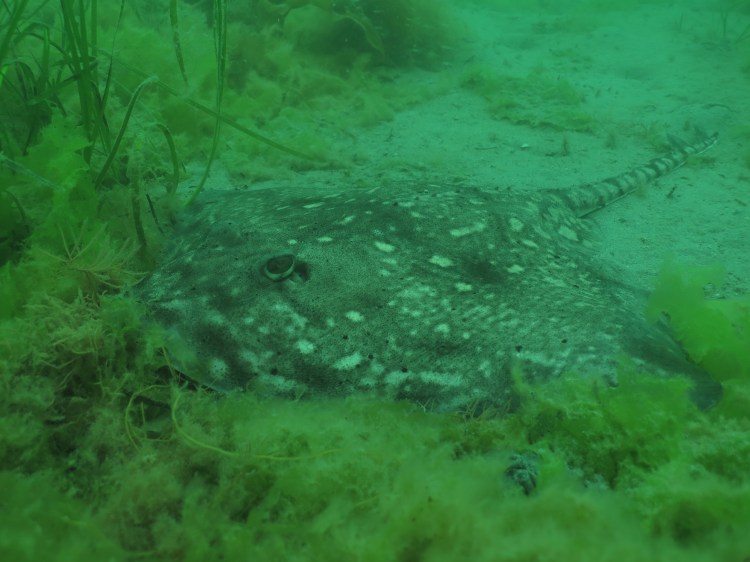
 An Bollenessor