Grevelingen

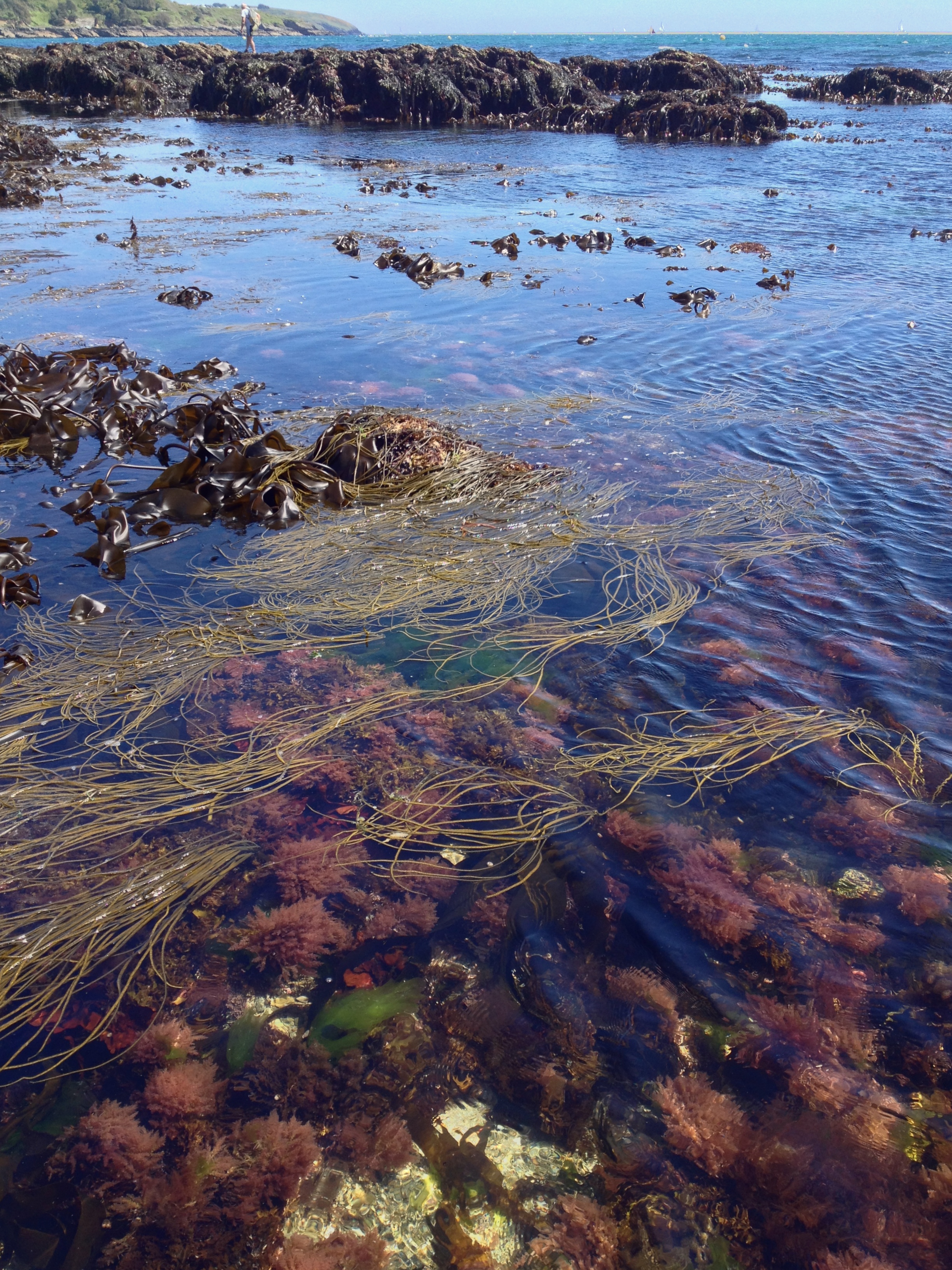
Two weekends ago I was back in The Netherlands for a short visit. The weather was great and we drove in my sisters camper van to the Brouwersdam, connecting the provinces of Zuid-Holland and Zeeland. This dam was built in 1971 and created the largest saltwater lake in Western Europe: the Grevelingen. We first stopped at the North Sea side of the dam though. This is spot is very popular with kite surfers, windsurfers and blokarters, with loads of people travel all the way from Germany even. Although great for sports, the Dutch coast is not the best place for a rock pool hunter (an bollenessor!) such as myself. The Brouwersdam provides hard substrate along an otherwise sandy coast, but there are no true rock pools and relatively few species of seaweed (mainly wracks and Ulva), some mussels and periwinkles and not much else:
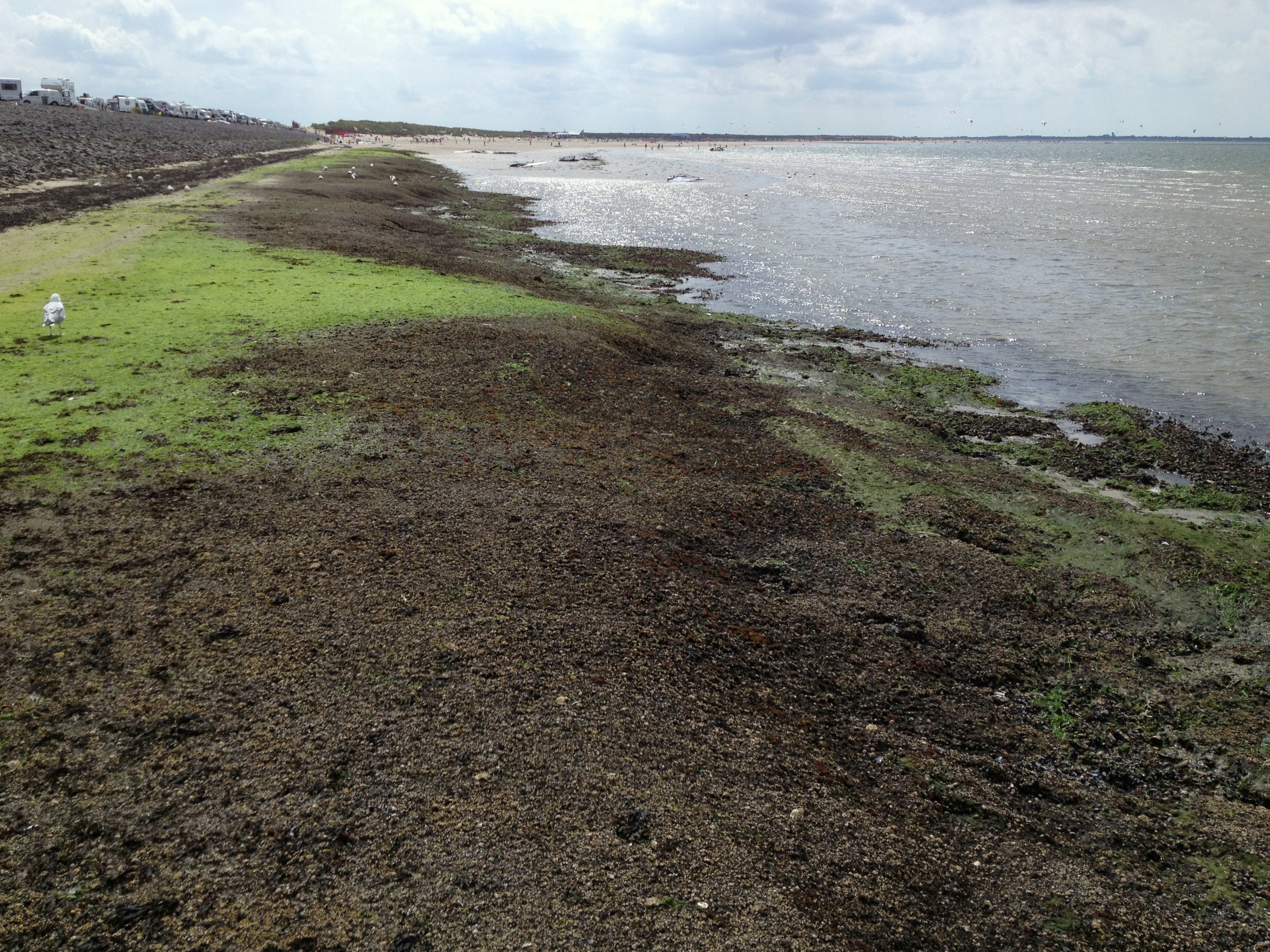
IMG_4901

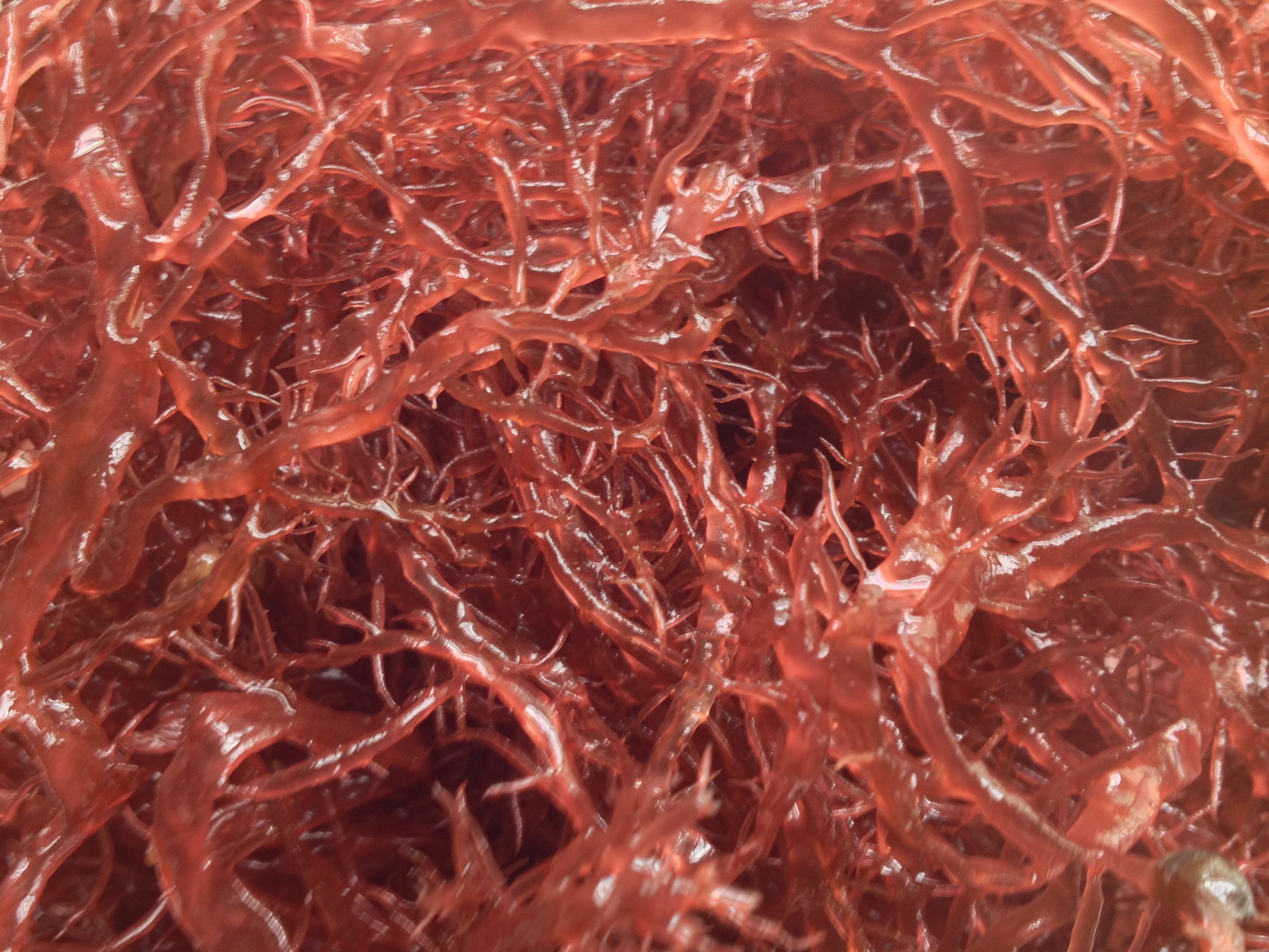
However, this seaweed looked interesting (I also found it in Bretagne recently), but I just cannot get it identified, any suggestions?

*edit* commenter Edwin reckons Chordaria flagelliformis and this was indeed the page in my Seaweeds of Britain and Ireland where I lingered longest, I think he is right!

IMG_4897

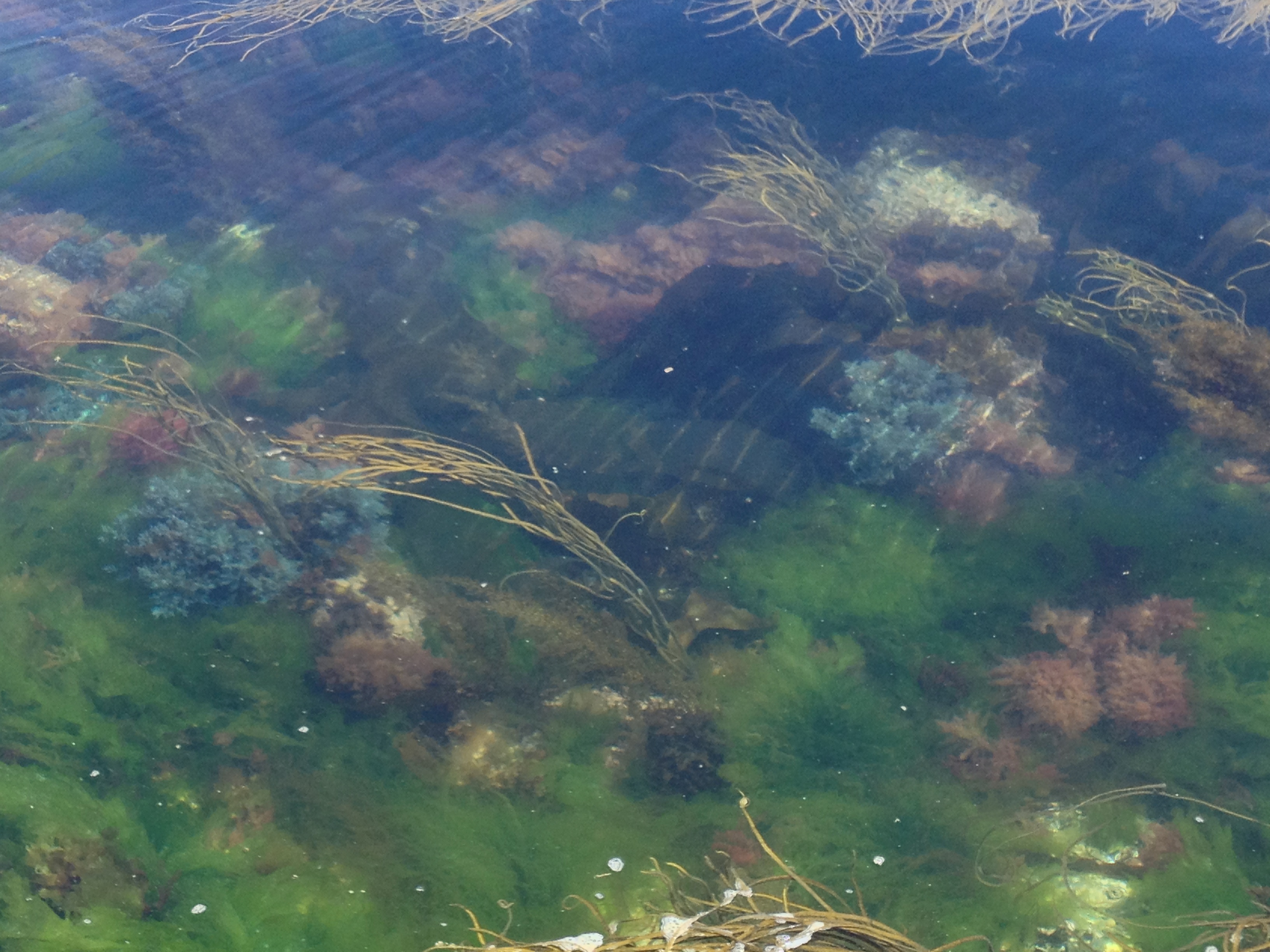
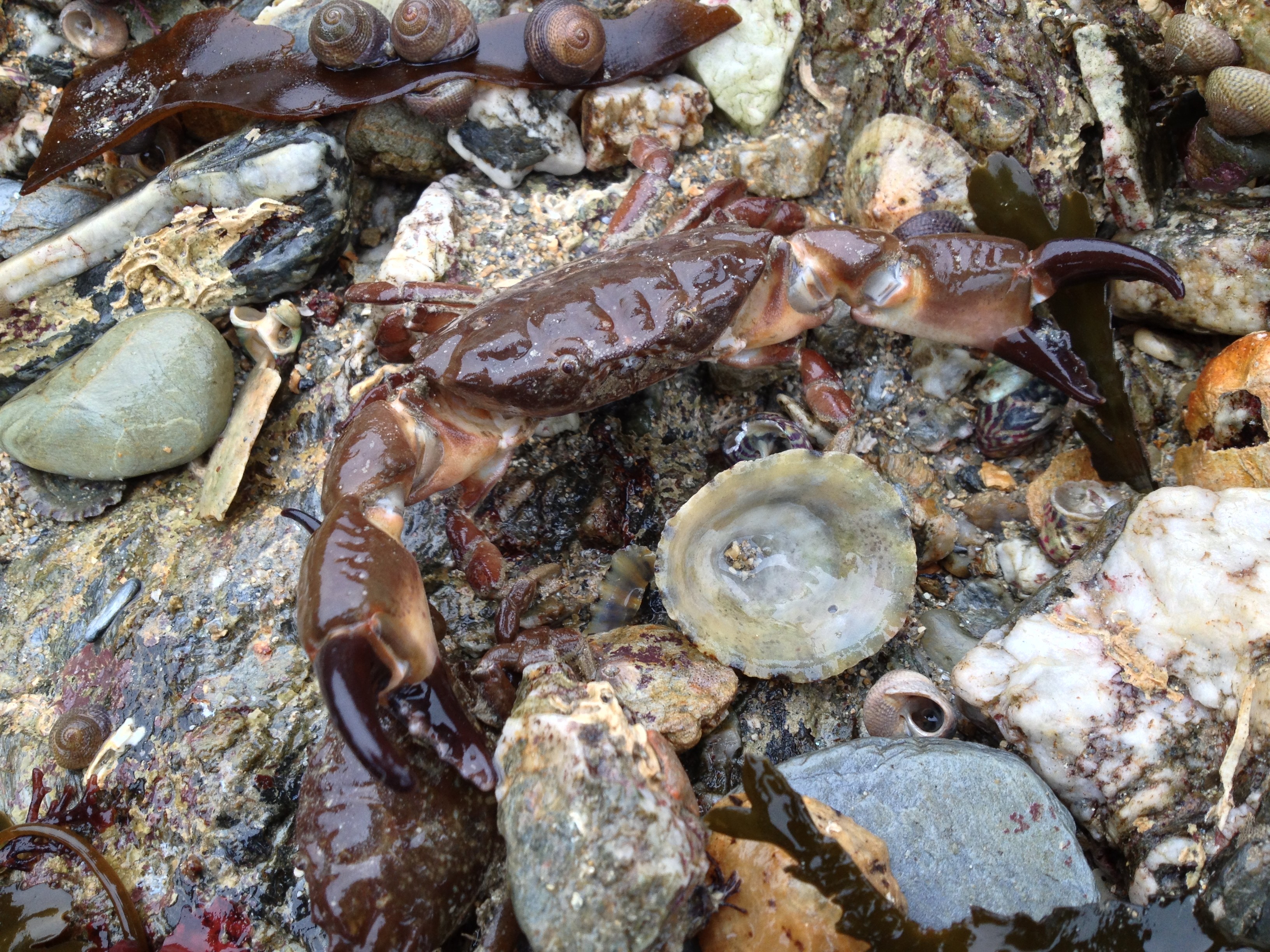
On the way back we stopped at the Grevelingen side. The Grevelingen is an unusual place: the water is salty, but there are no tides. There is only a very limited connection to the North Sea and so little water movement, which creates stratification and anoxic conditions in deeper waters, resulting in a  ‘dead zone’. In shallower water there is plenty of life though (check this site for instance). We waded on mud through very clear water to have a quick look (mud is not stirred up by any current and the lack of any inflowing rivers keep the water relatively nutrient poor en algae-free) . There were many Shore crabs about, and they were quite aggressive, trying to pinch my toes:

IMG_4947

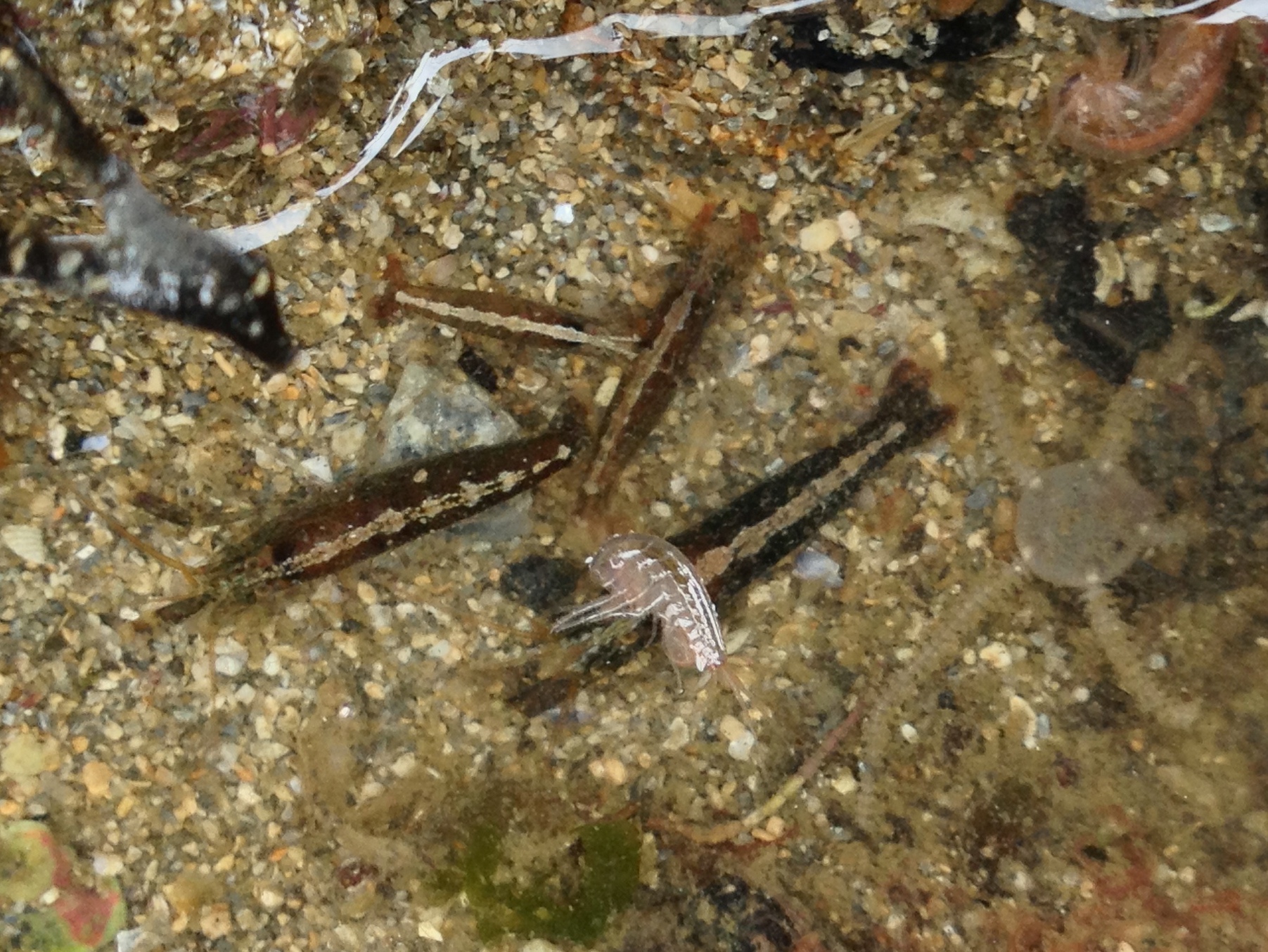
I saw that Wireweed Sargassum muticum is very common here as well (see also this post and this post). These very large plants were colonized by fine red seaweeds and lots of Mysis shrimp were hiding underneath them:

IMG_4934

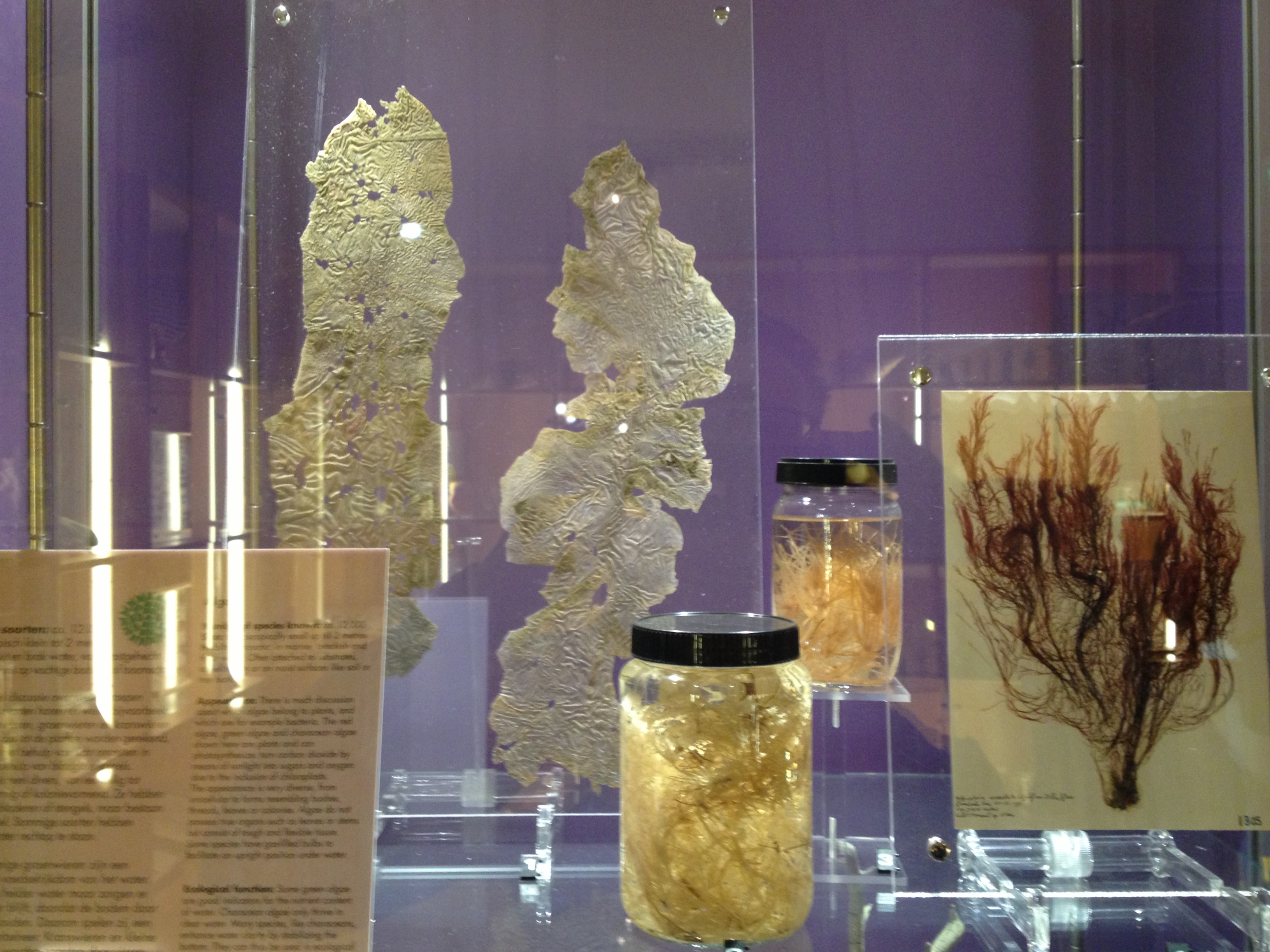
I also stopped by the natural history museum in Rotterdam that I have been a member of over half of my life. I noticed that in their permanent ‘Biodiversity’ exhibition that there was a shelf dedicated to seaweeds. Of course they deserve a place in such an exhibit, but I must admit that they look a whole lot more interesting in the sea than dried or in alcohol/formalin.
IMG_4956

top ten animals for the unchilled aquarium: 5 – 1

OK, part two of my list of fun and easy species to keep in an unchilled native marine aquarium (see here for numbers 10-6). I will later post about species to avoid, and of course also about easy seaweeds to keep.

5: juvenile crabs

IMG_2331

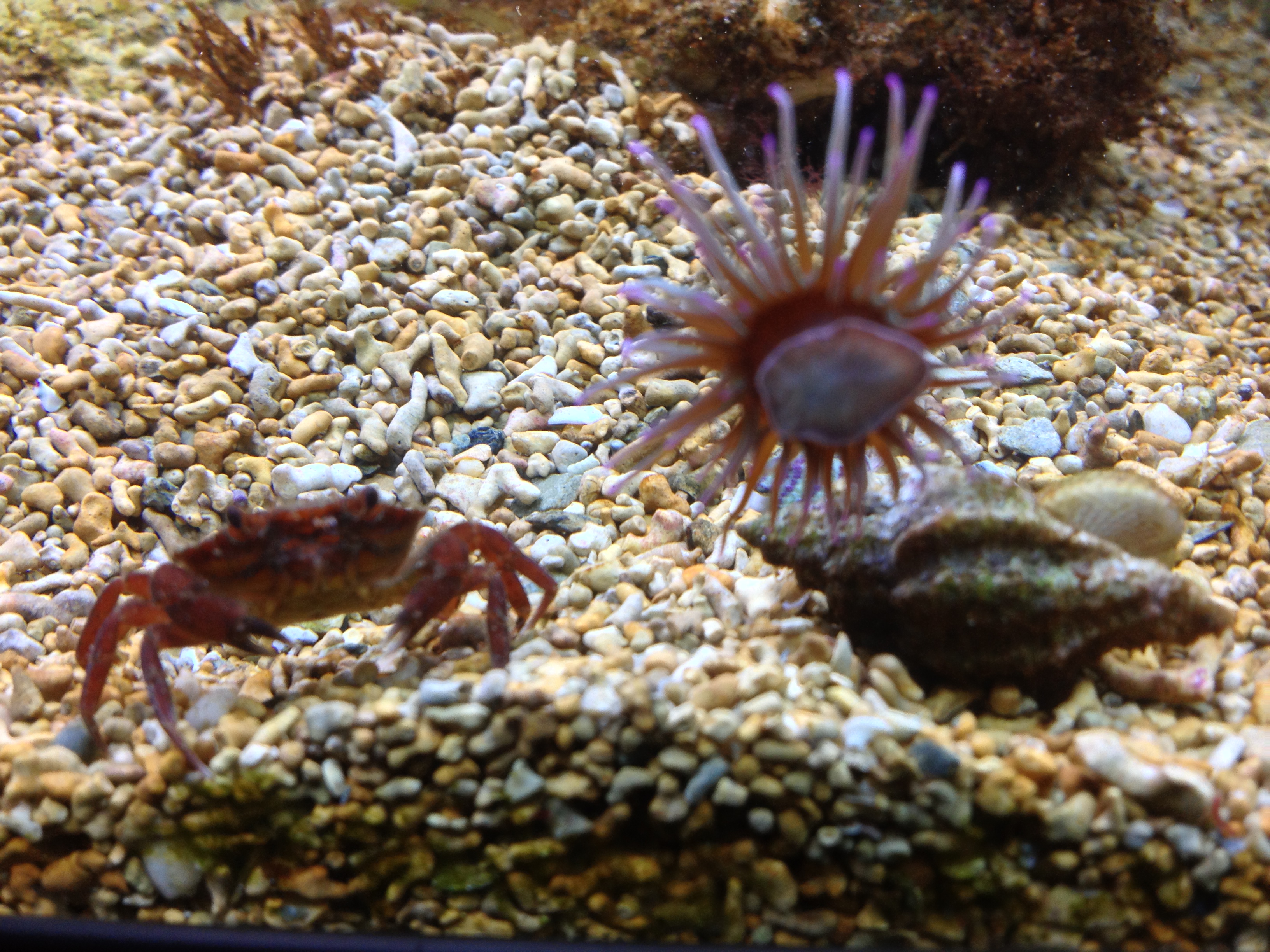
Crabs are active and interesting to watch, however, in a community tank they should not be too large as they can be quite destructive as well. Juvenile Shore crabs Carcinus maenas are an option, or a variety of crab species that stay small, such as Pirimela denticulata (I am not too sure what species the above pictured crab is, but it is still doing well four months after collecting it).

4: Squat Lobster Galathea squamifera

IMG_0094

Squat lobsters Galathea squamifera can be a bit shy but are entertaining to watch as they scuttle about. Very common under rocks in silty areas.

3: Snakelocks Anemone Anemonia viridis

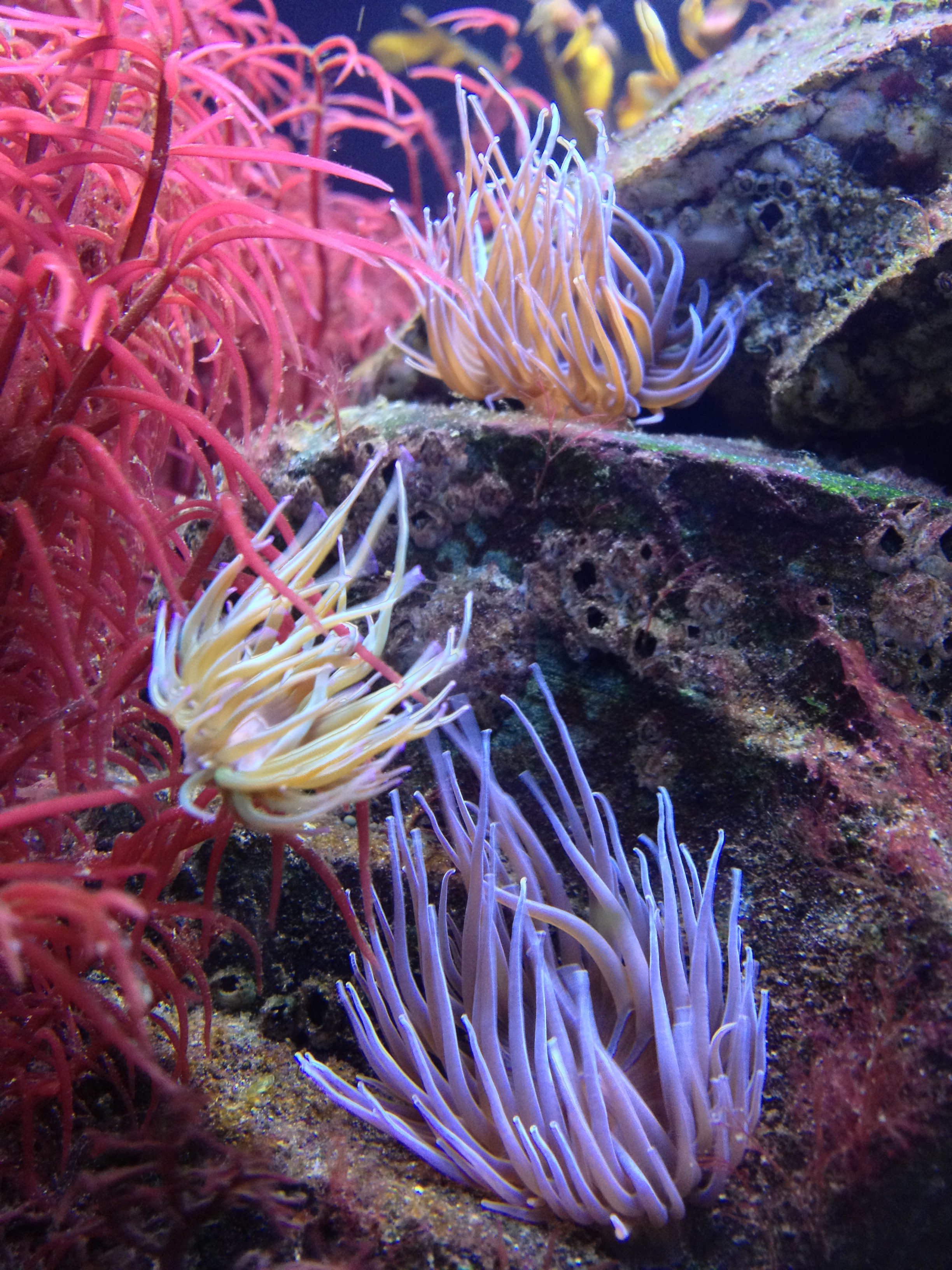
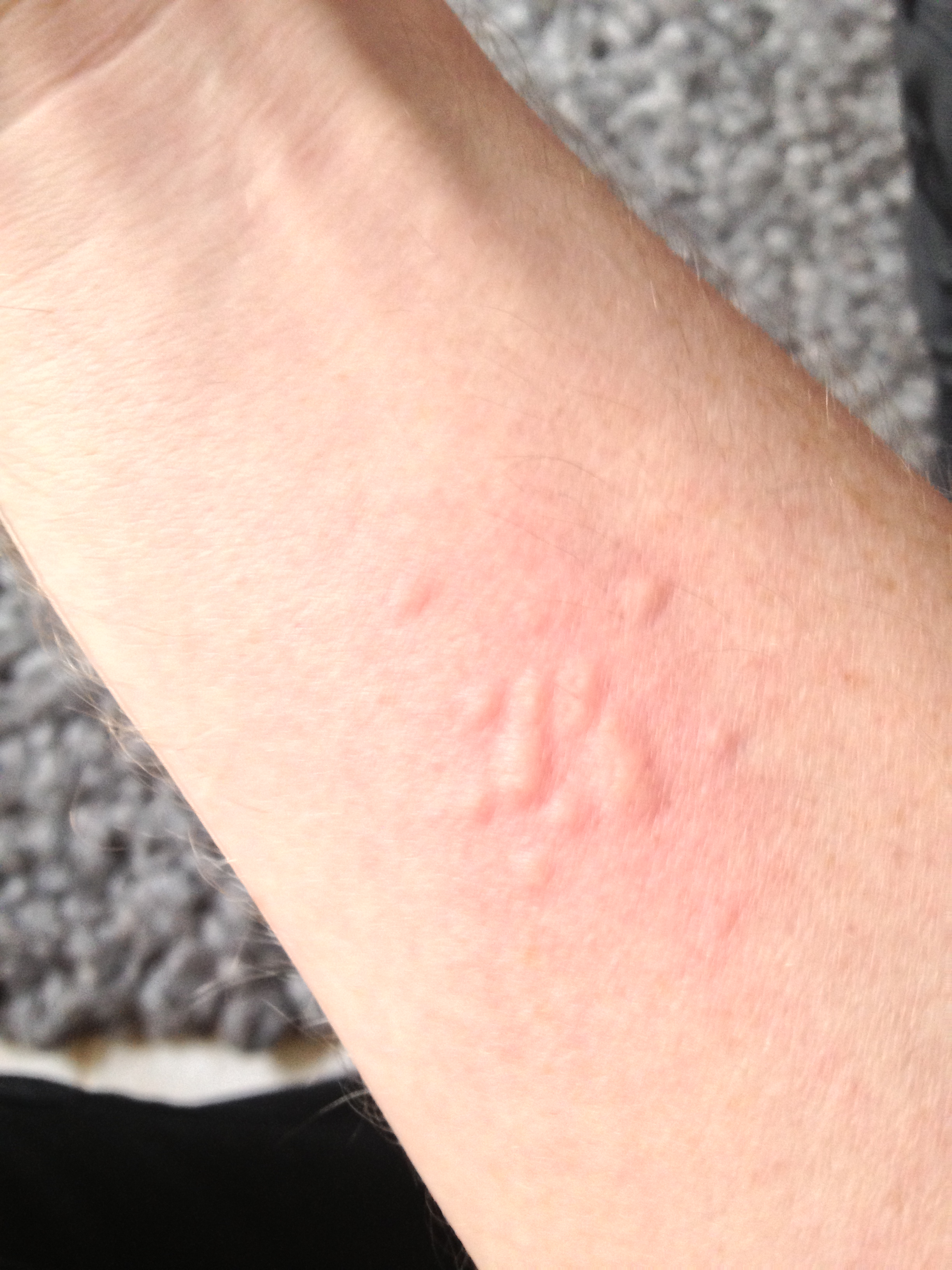
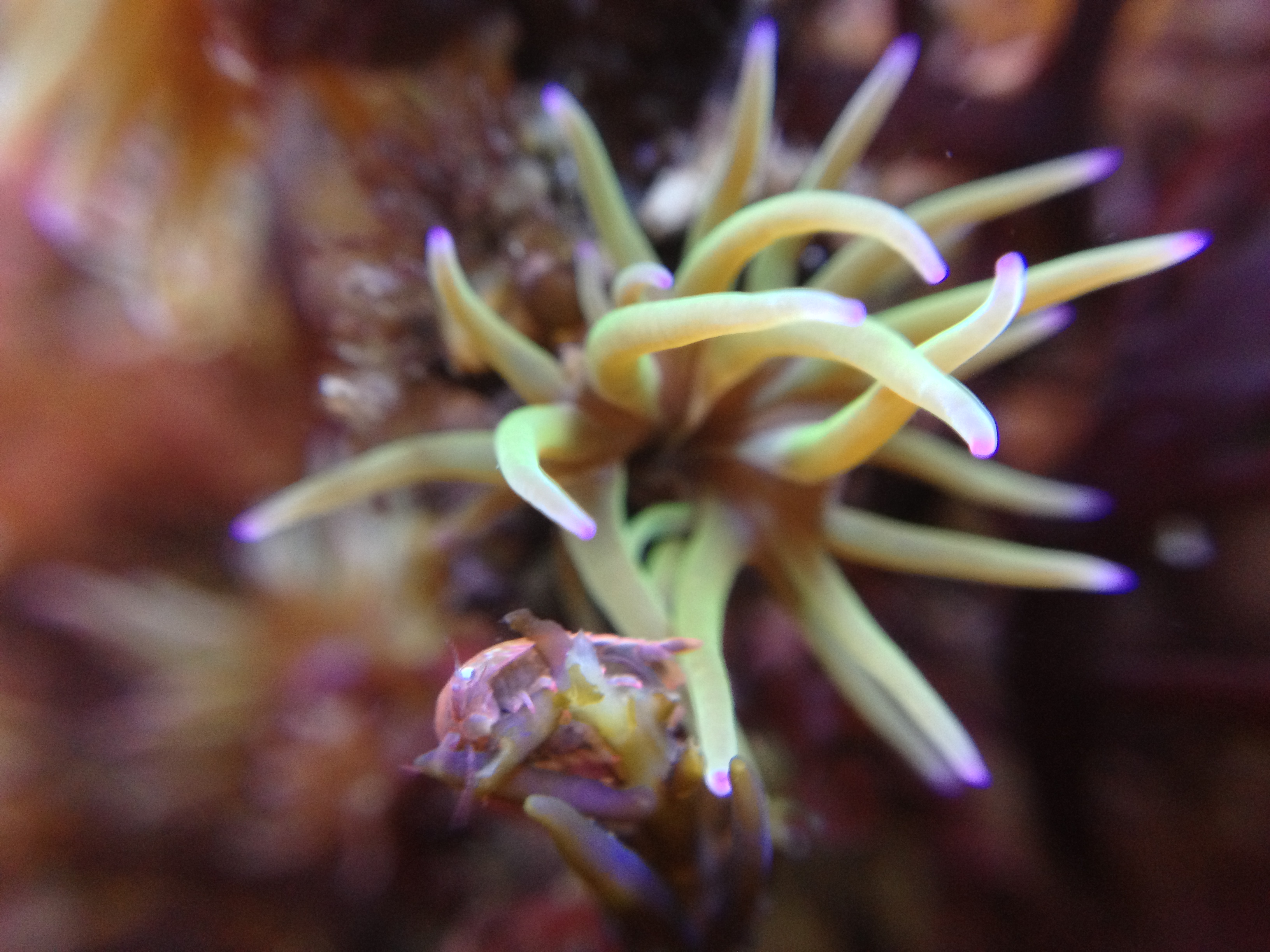
IMG_0102Very pretty and common anemones that are easy to keep. Beadlet anemones Actinia equina and Strawberry anemones Actinia fragacea survived in my aquarium as well but they seemed to shrink a bit over time rather than grow and these species can retract their tentacles which looks less nice. I did not specifically feed my anemones by dropping artemia or food pellets on them. The photosynthetic capabilities of Snakelocks anemones due to their algal symbionts probably makes it easier for them to thrive when food is relatively scarce. Beware for the tentacles of larger individuals though, as they can sting!

IMG_1333

2: Common prawn Palaemon serratus

IMG_2392

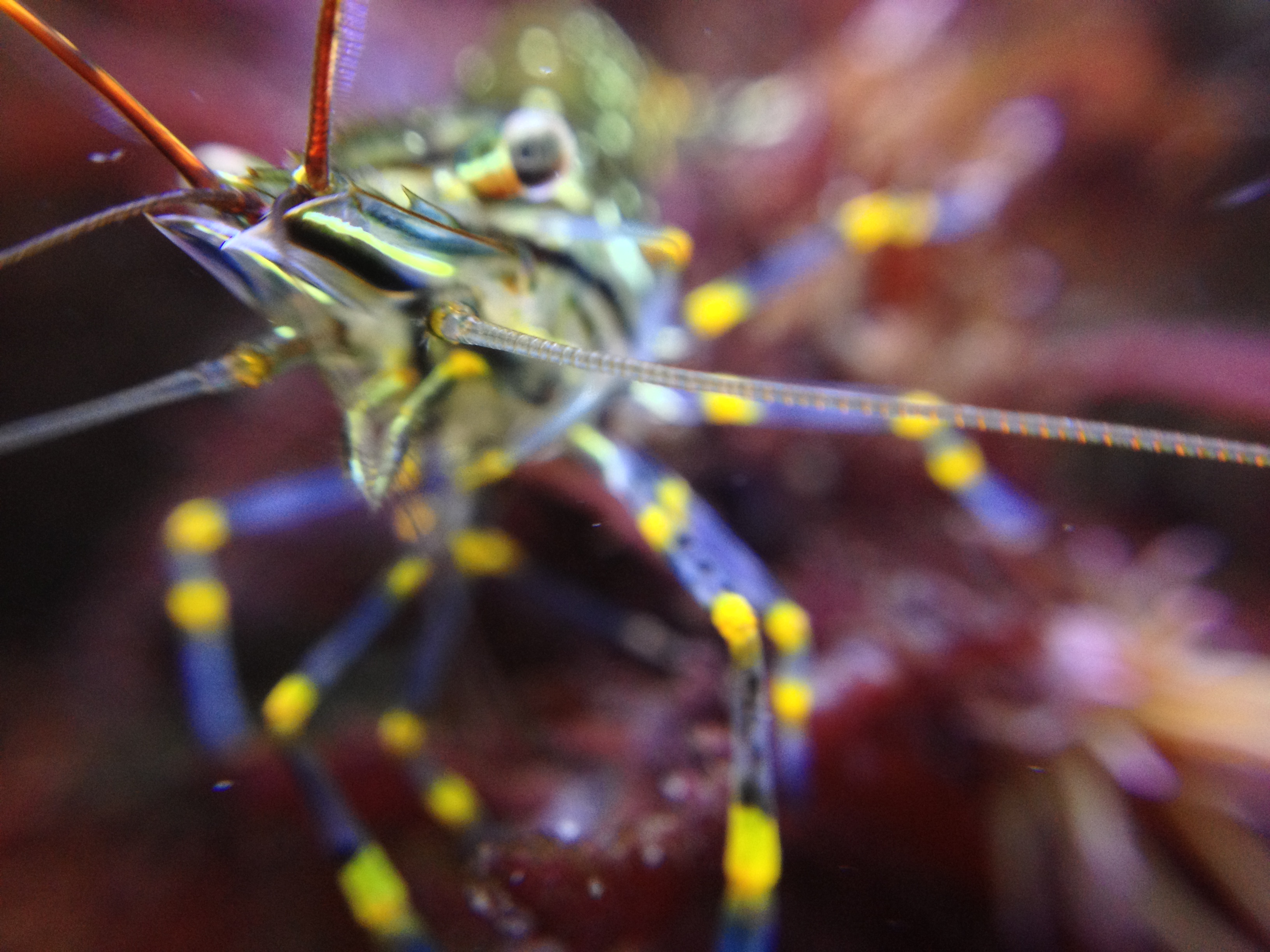
Prawns* have been a rage in tropical freshwater aquariums for years but people forget that there are very pretty ones right in our seas. I must admit I have not got round to checking rostrum (the ‘nose’) structures to differentiate between several closely related Palaemon species, but I think I have the Common prawn. They are always foraging and flock to any new object in the aquarium to check for edible bits. If the pumps are switched off they will swim and compete with the fish for food.

* or shrimp, these two names can mean different things in different English-speaking countries. In other languages ,like my native language Dutch, we only have a single word (garnaal) for these critters

1: Cushion star Asterina gibbosa

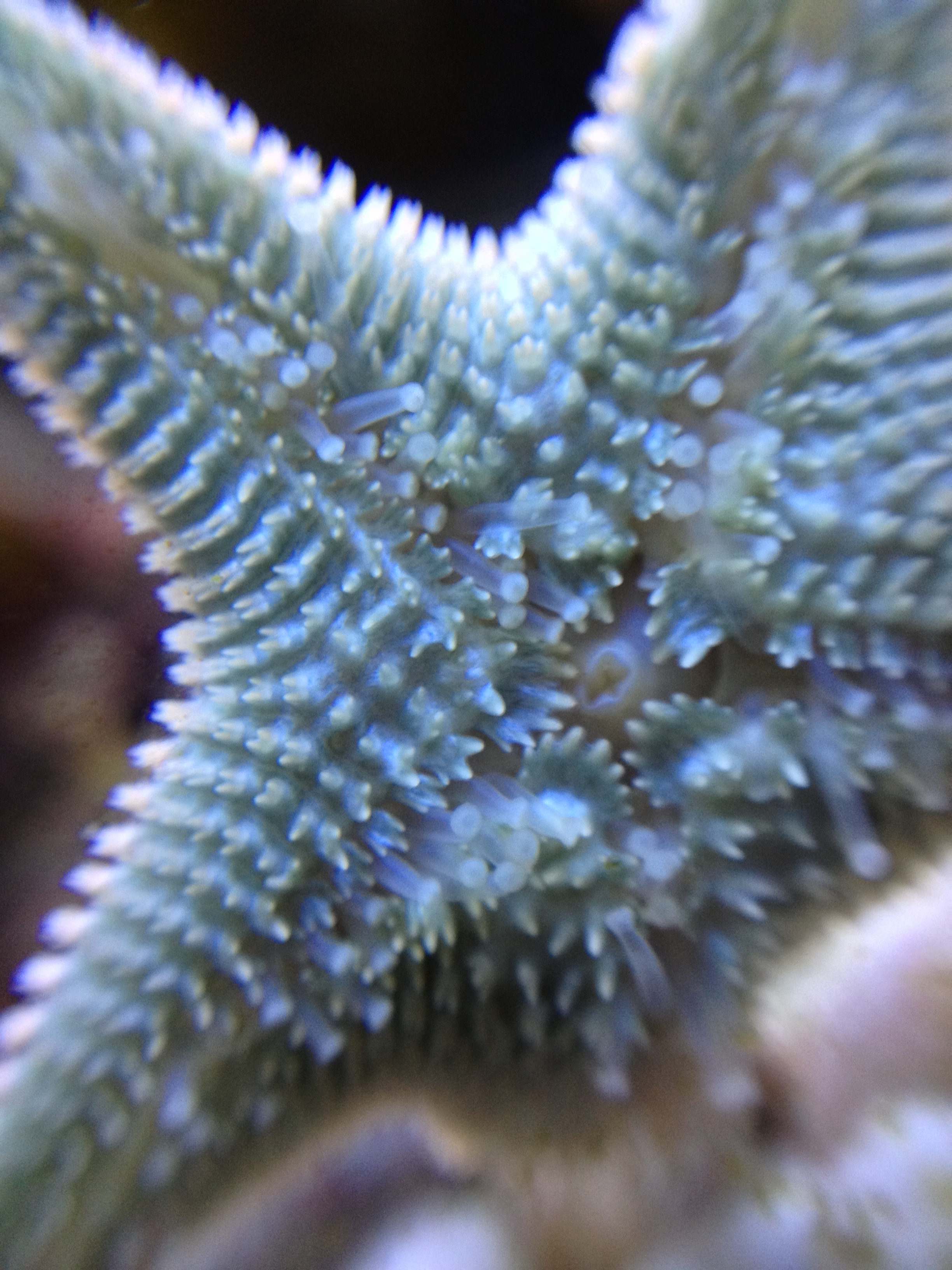
IMG_0356My numbers 2, 3 and 4 could have been number 1 as well, but I ended up picking the very common Cushion Star. Although grey and just an inch in size, these quintessential rock pool inhabitants are active, hardy and just plain cool!

top ten animals for the unchilled aquarium: 10 – 6

As the aquarium is currently in a state of limbo, I thought it would be fun to take a look at the critters that have been most rewarding to keep in the year or so I’ve had my aquarium. Based on my personal experience, I have made an, admittedly completely arbitrary, top 10 of animals for a Cornish (or North-Western European) marine aquarium. I picked animals that were both easy to collect (i.e. common), easy to keep (not requiring live food and resistant to water temperatures up to 25C) and fun to watch. Here goes with the first part of the list!

10: Netted dogwhelk Hinia reticulata

IMG_0748

Not the prettiest of molluscs maybe, but very easy to find and very easy to keep. Burrowing in sand, and moving surprisingly fast over the bottom when smelling food. Their smaller (and prettier) cousins the Thicklipped dogwhelk Hinia incrassata never survived for long in my unchilled tank.

9: Common hermit crab Pagurus bernhardus

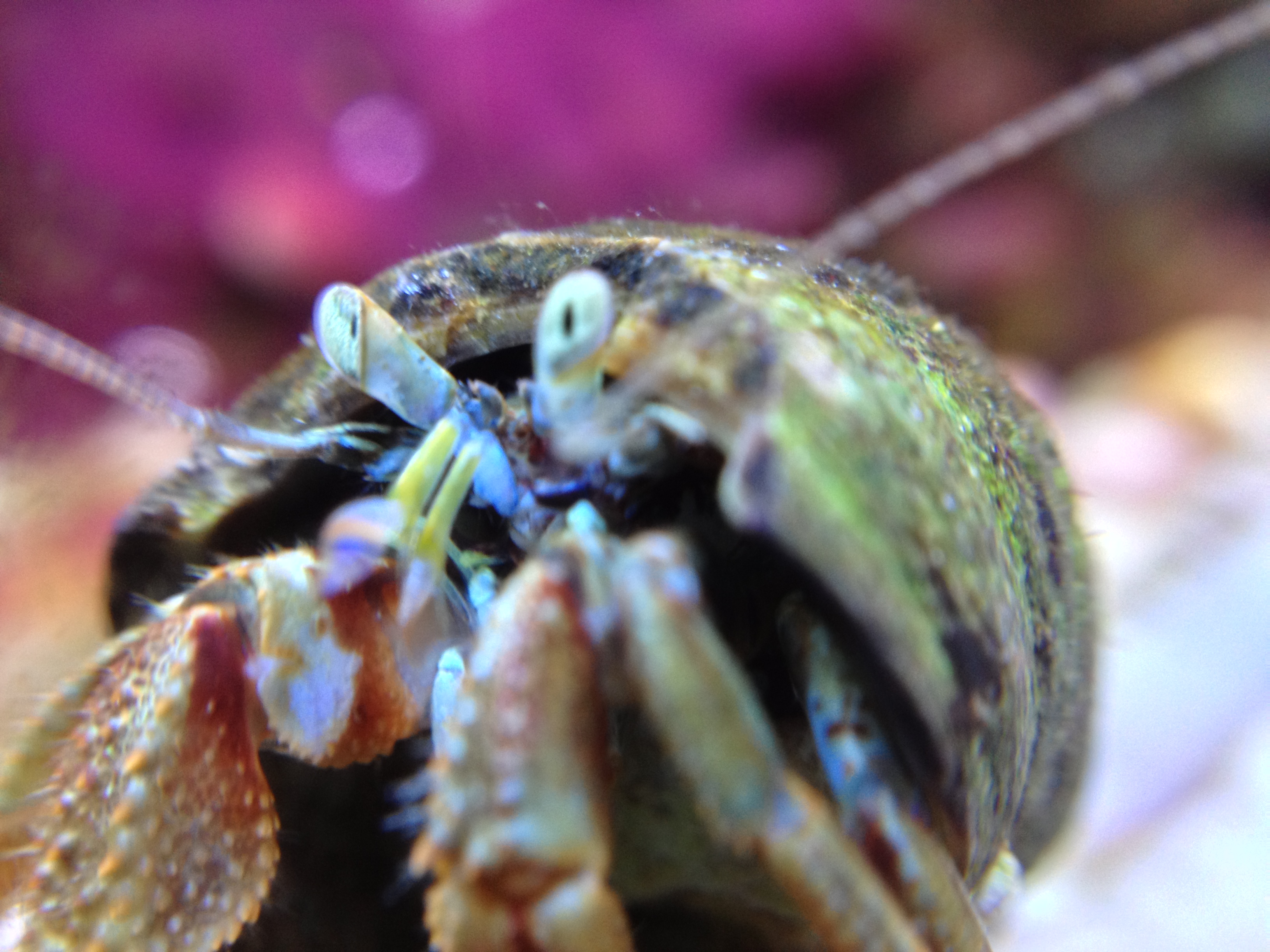
IMG_1020Hermit crabs are especially fun to watch scurrying about. Mine never really lasted very long but that is probably because of predation by blennies and gobies (see below)….

8: Shanny Lipophrys pholis (or Rock goby Gobius paganellus)

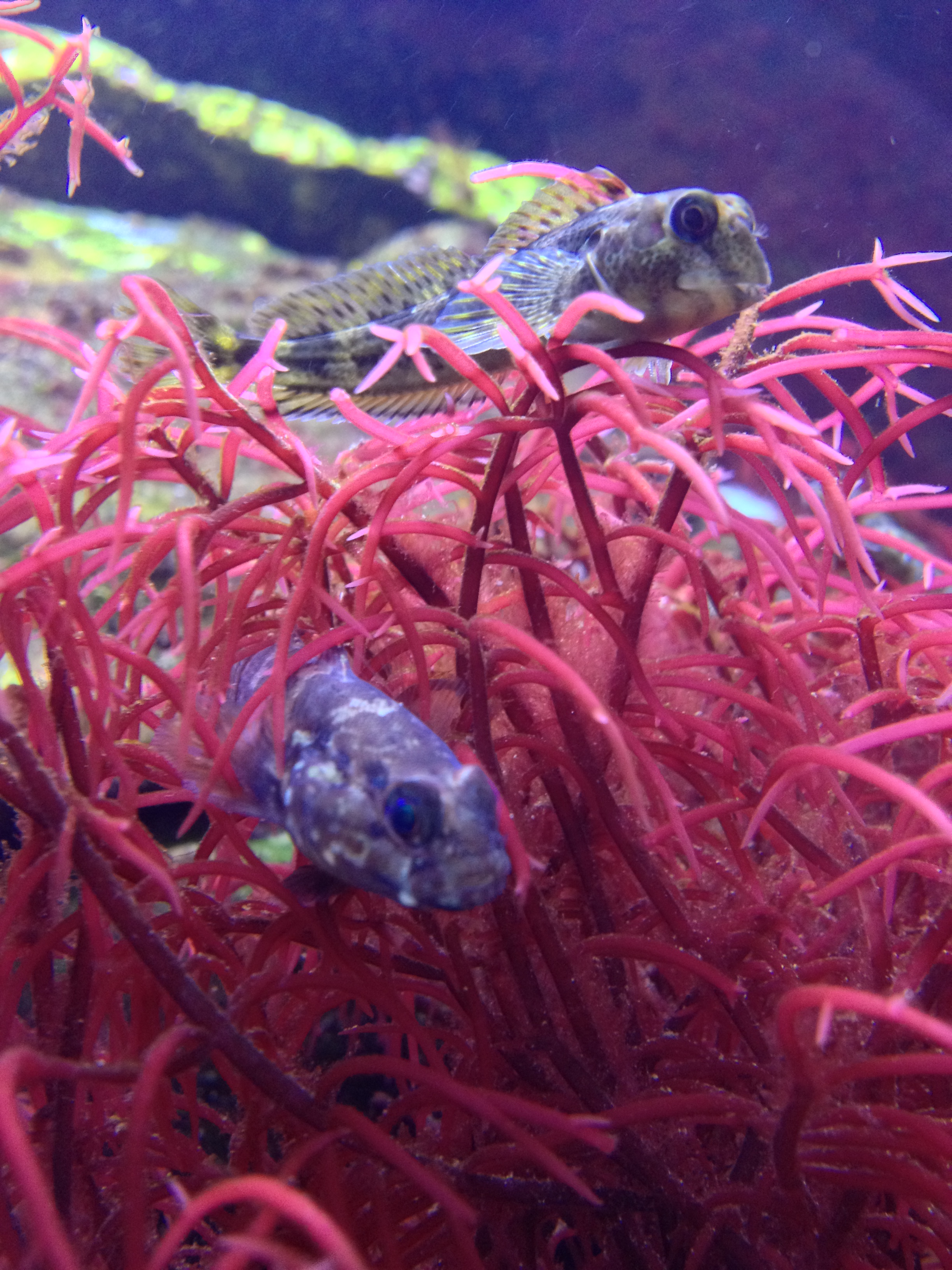
IMG_0203Shannies are probably the most common fish to find in rock pools. They are very easy to keep, their coloration is not particularly vivid but not dull either and they are quite active. The only downside is that they prey on molluscs and other small critters. Feeding them a bit more might prevent this, but especially the rock gobies are so voracious that I doubt that (one was so swollen I thought it was dying, until I realized that it had gorged itself on defrosted artemia…). Montagu’s blenny Coryphoblennius galerita is prettier and smaller than the shanny but much harder to find (see this post for experiences with other fish species).

7. Thicklip grey mullet Chelon labrosus

IMG_0675

Most rock pool inhabitants live on or near the rocks, but it looks nice if the aquarium also have some fish swimming in the water column. Mullet are very common, and small individuals form nice silvery schools (which are almost impossible to photograph as you can see). They don’t really interact with the other tank inhabitants.

6: Painted top shell Calliostoma zizyphinum

IMG_1949

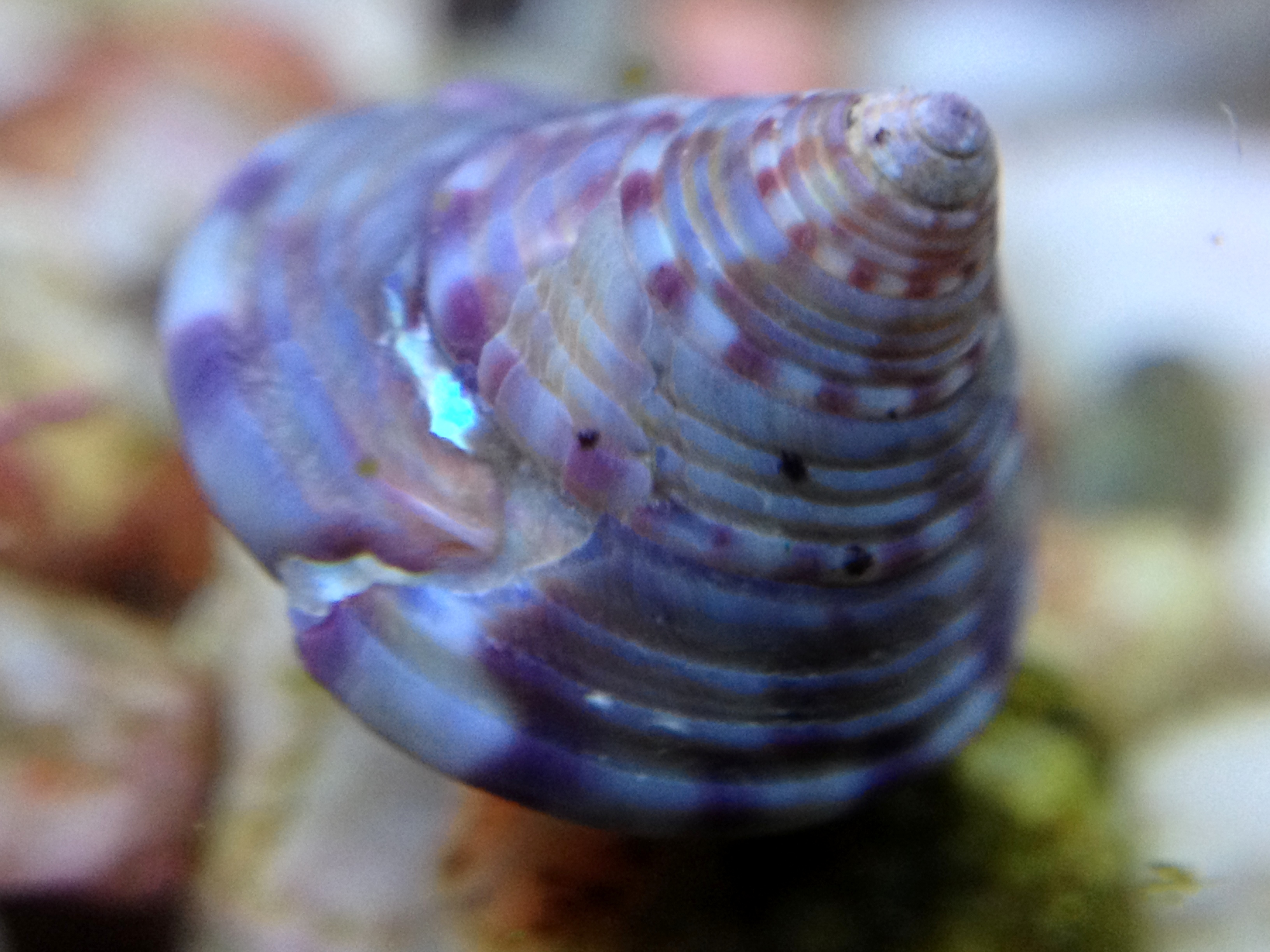
One of my favorite local molluscs: a bright purple shell with an orange colored snail inside. Shells are never covered with algae as the snail wipes it clean with its foot (the shell can still be damaged of course as seen in this individual).

The next post will feature the top 5 of animals for the unchilled aquarium.

Bretagne: Pleneuf-Val-Andre – part 1

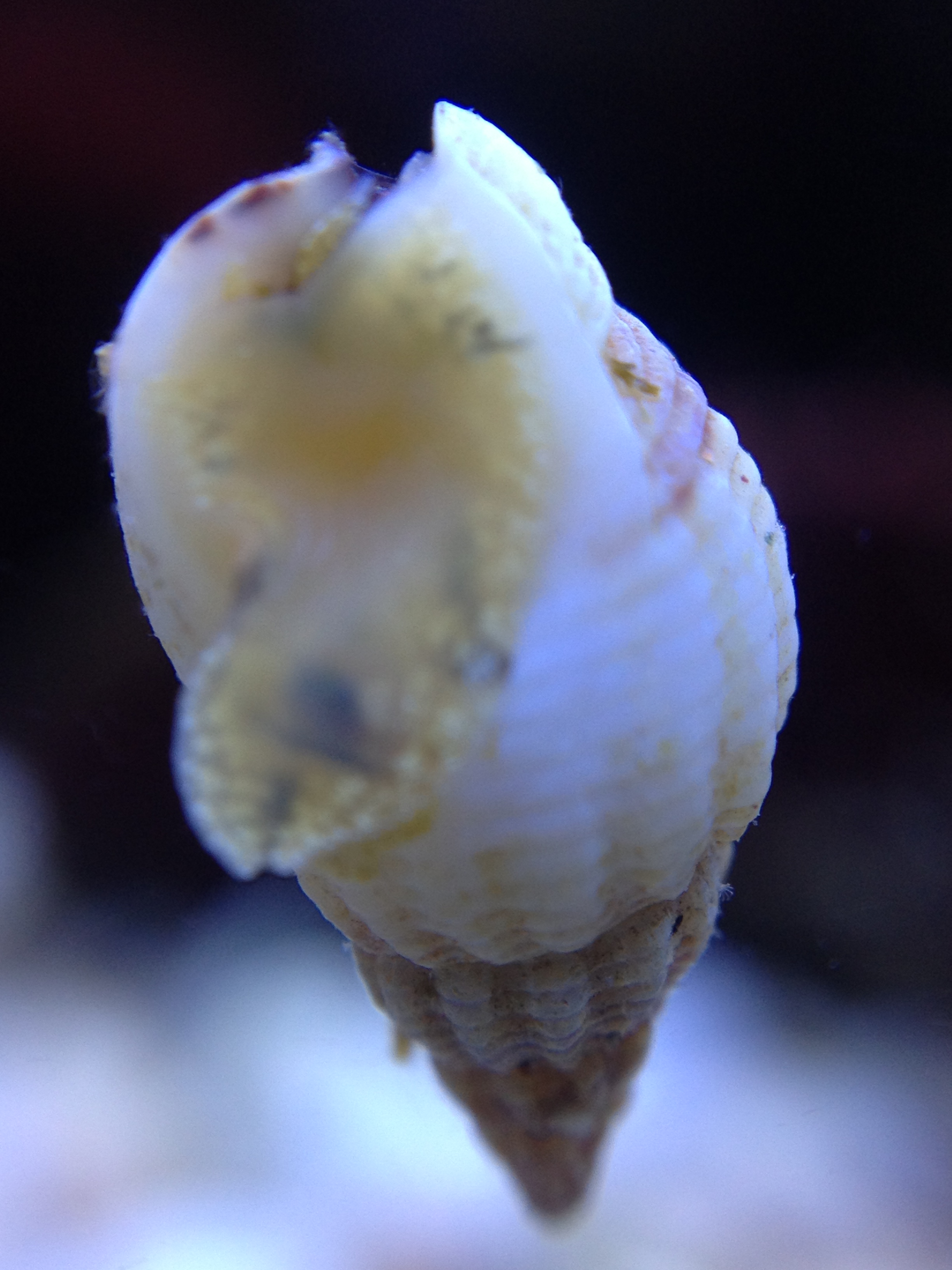
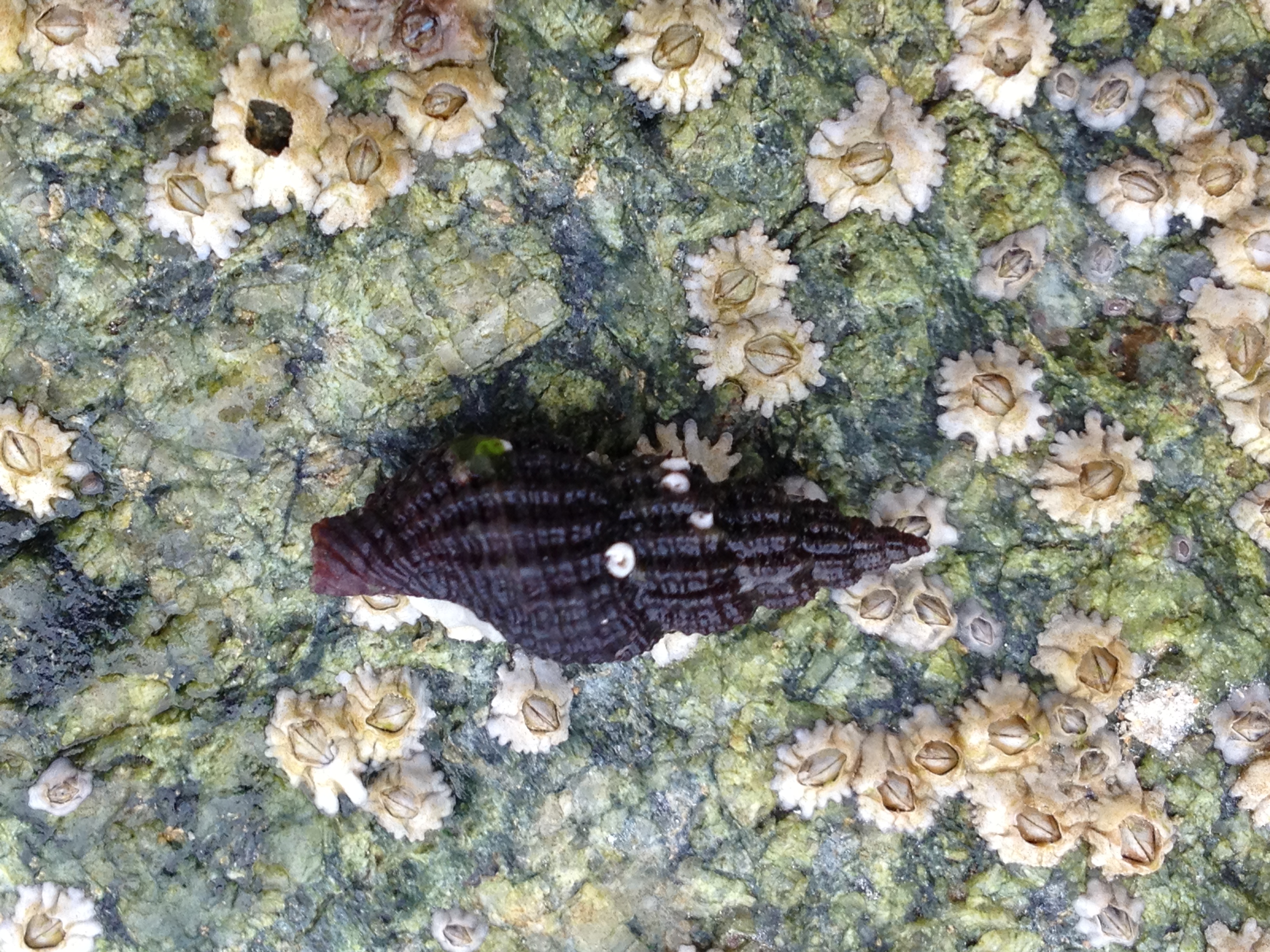
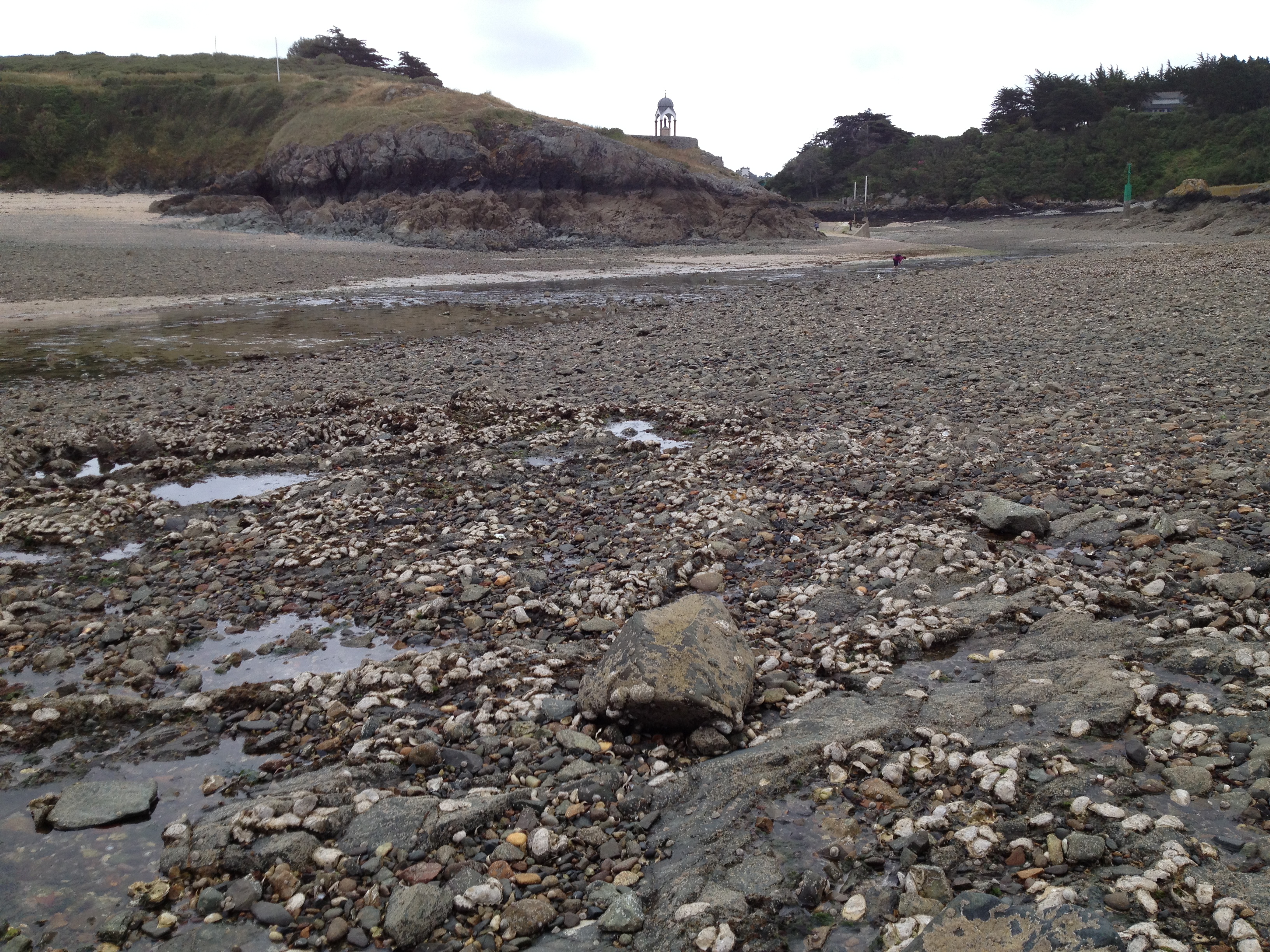
The second good rock pooling session in Bretagne was in the little port of Pleneuf-Val-Andre. The rock pools themselves were very similar to those in Erquy. The only interesting find there was a pretty gastropod I had not seen before (a white snail with a dark brown/black shell about 1,5 cm in length). It looks like a Trophon muricatus, although I am not 100% sure Raphitoma purpurea:

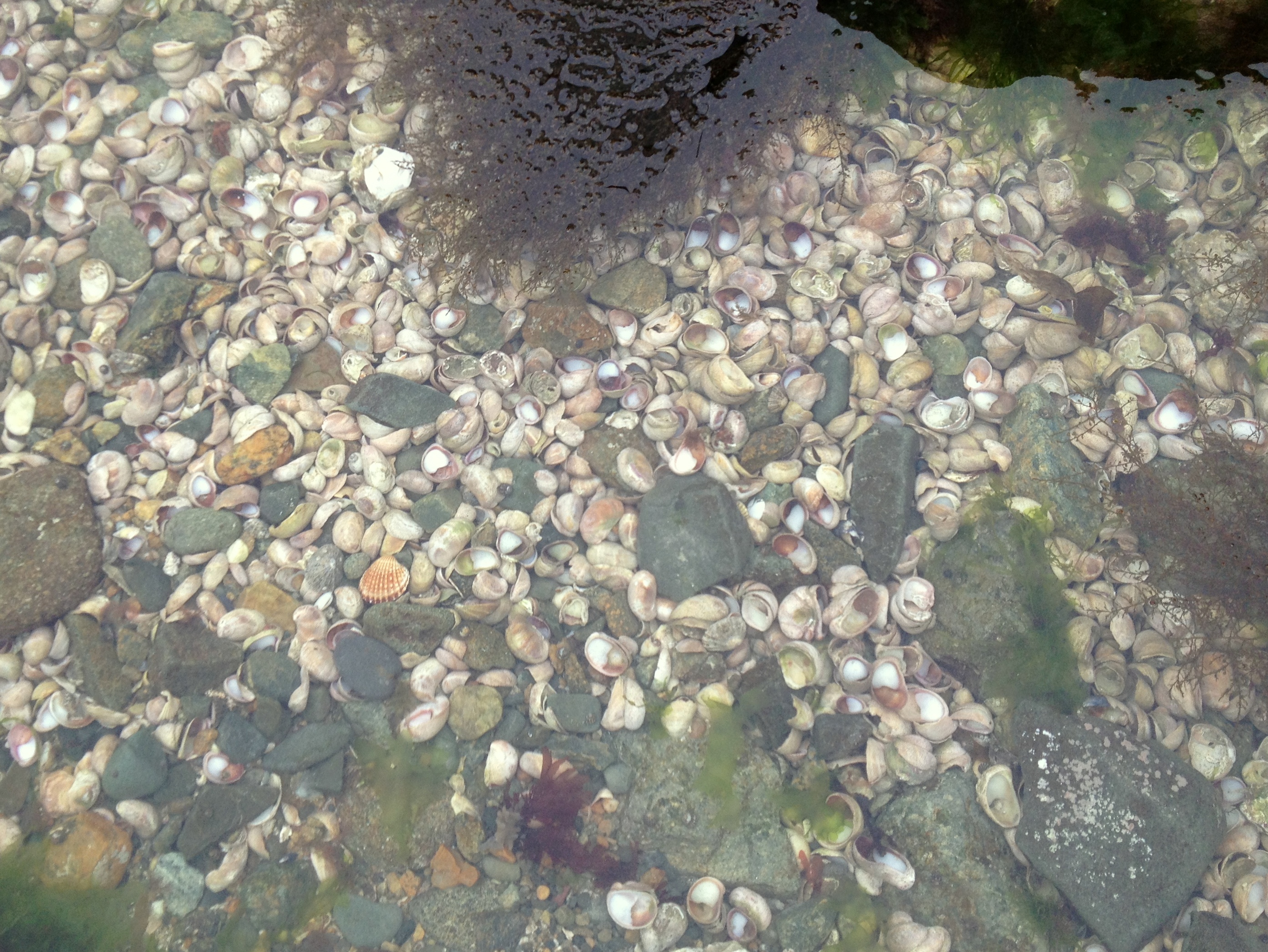
IMG_4640 The number of Slipper limpet Crepidula fornicata (live and dead) was quite amazing, there were whole banks of them:

IMG_4625The little channel from the port to the sea, a mix of sand and rocks, was more interesting than the actual rock pools:

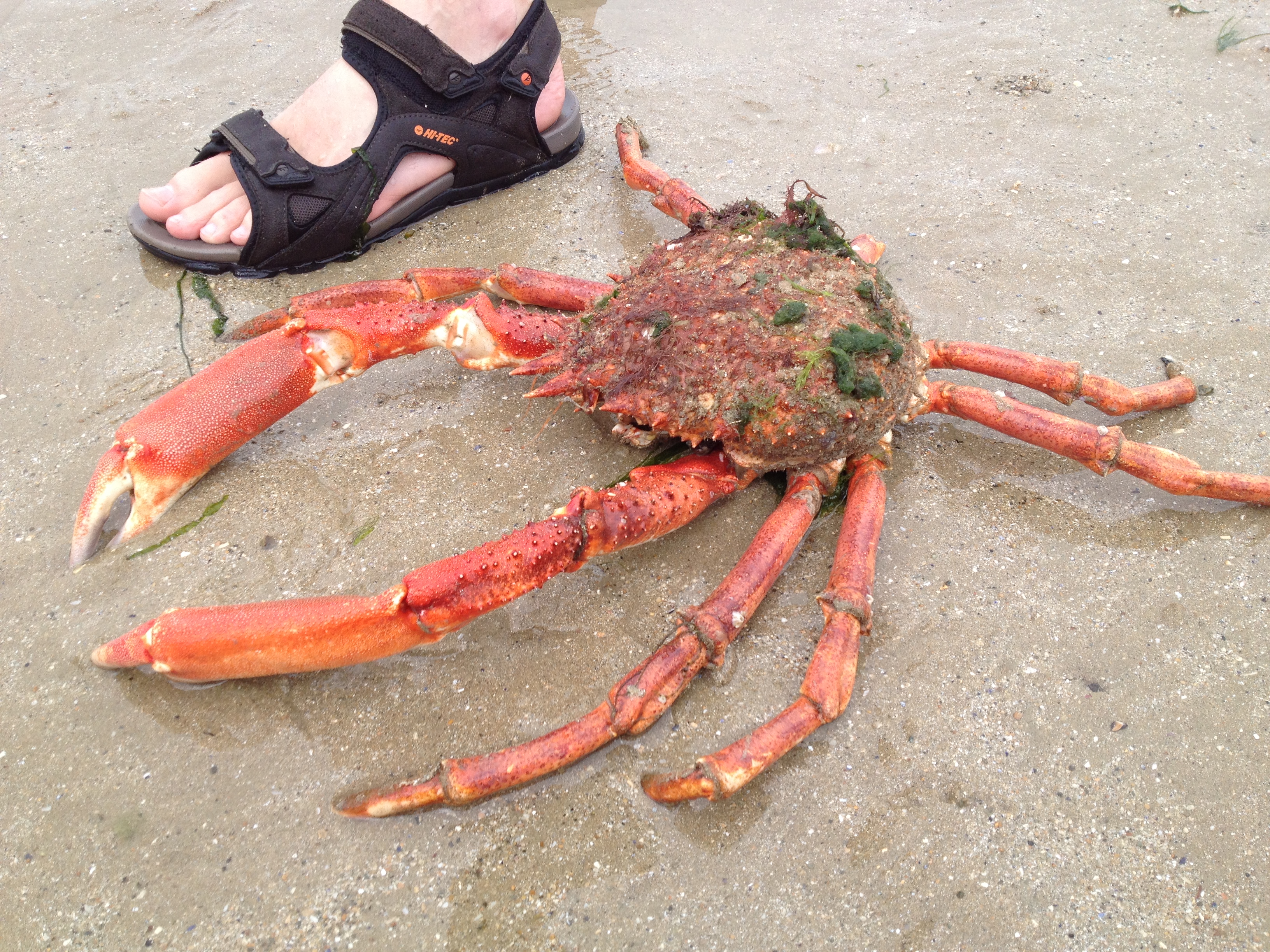
IMG_4655with a variety of organisms washing up, for instance this large (dead) Common spider crab Maja squinado (European shoe size 45 in the background…):

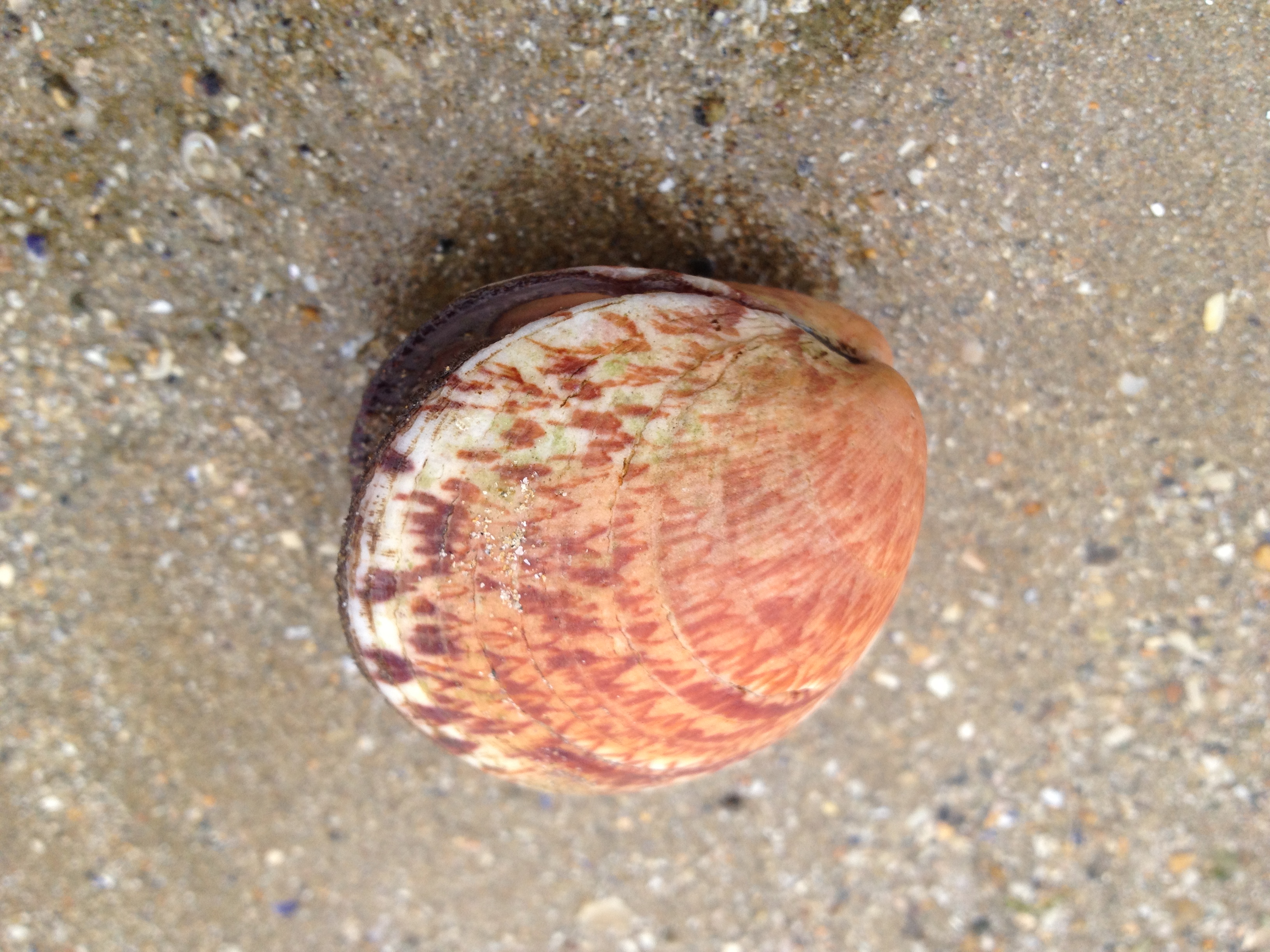
IMG_4604A Dog cockle Glycymeris glycymeris shell:

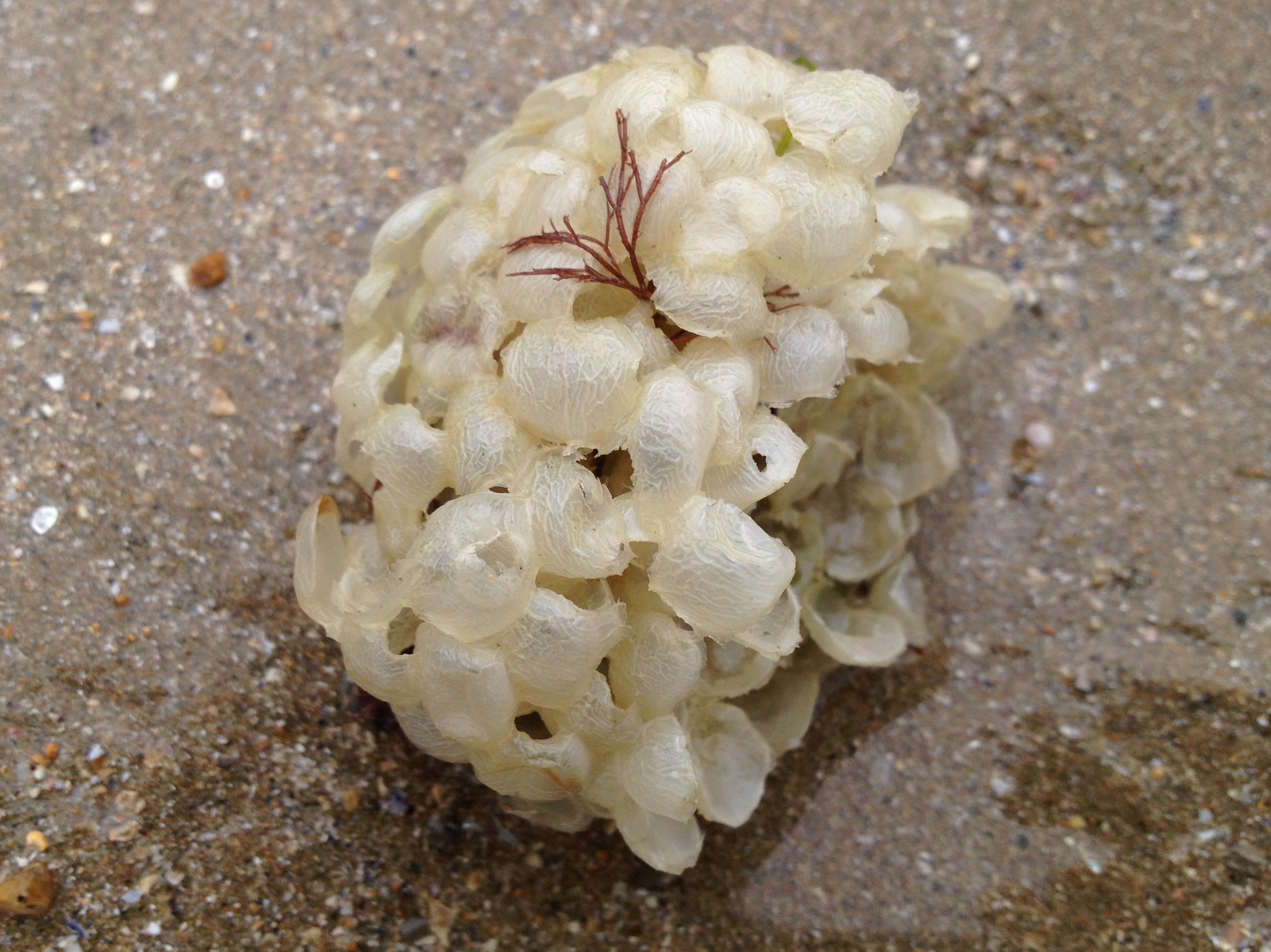
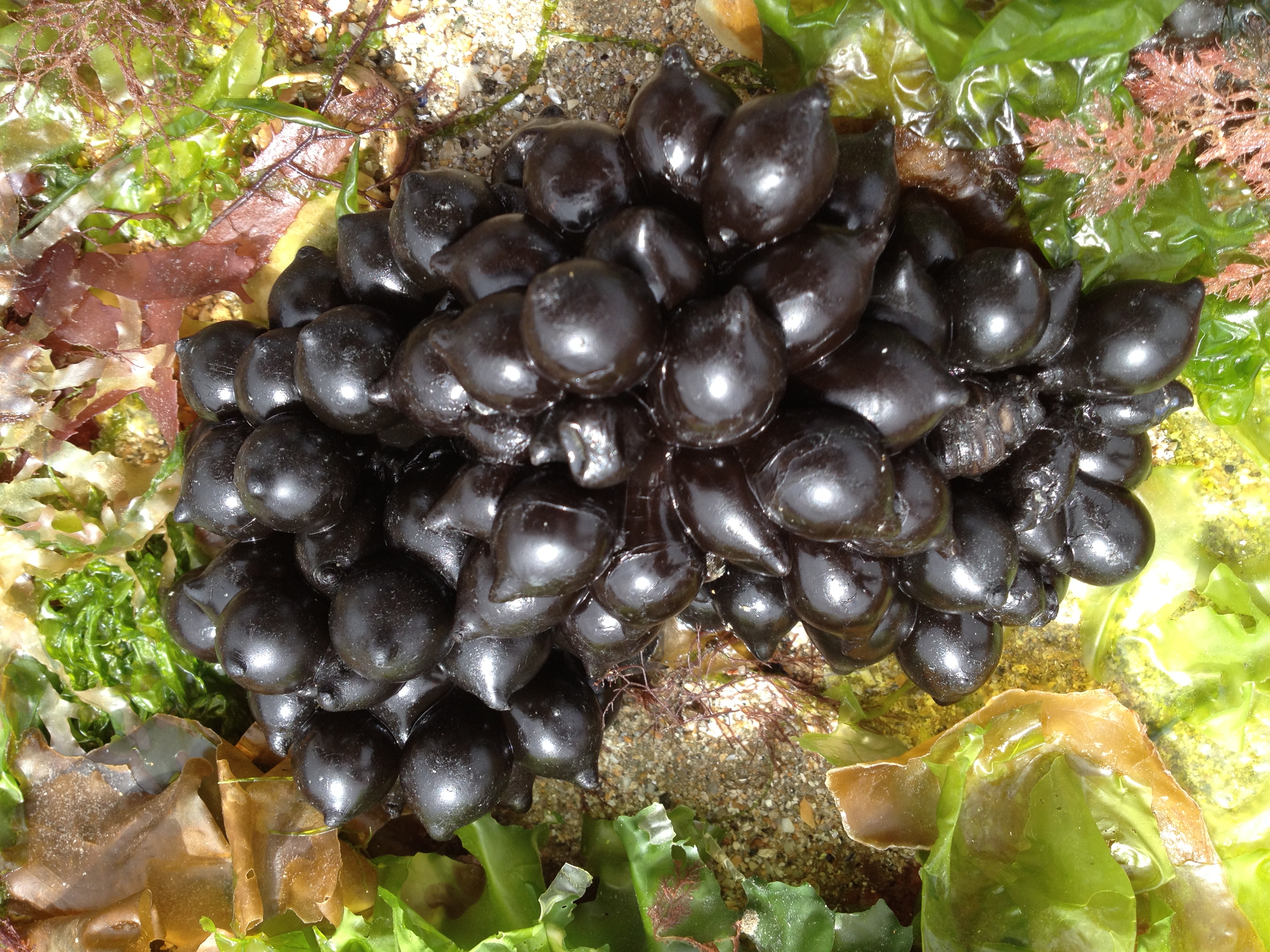
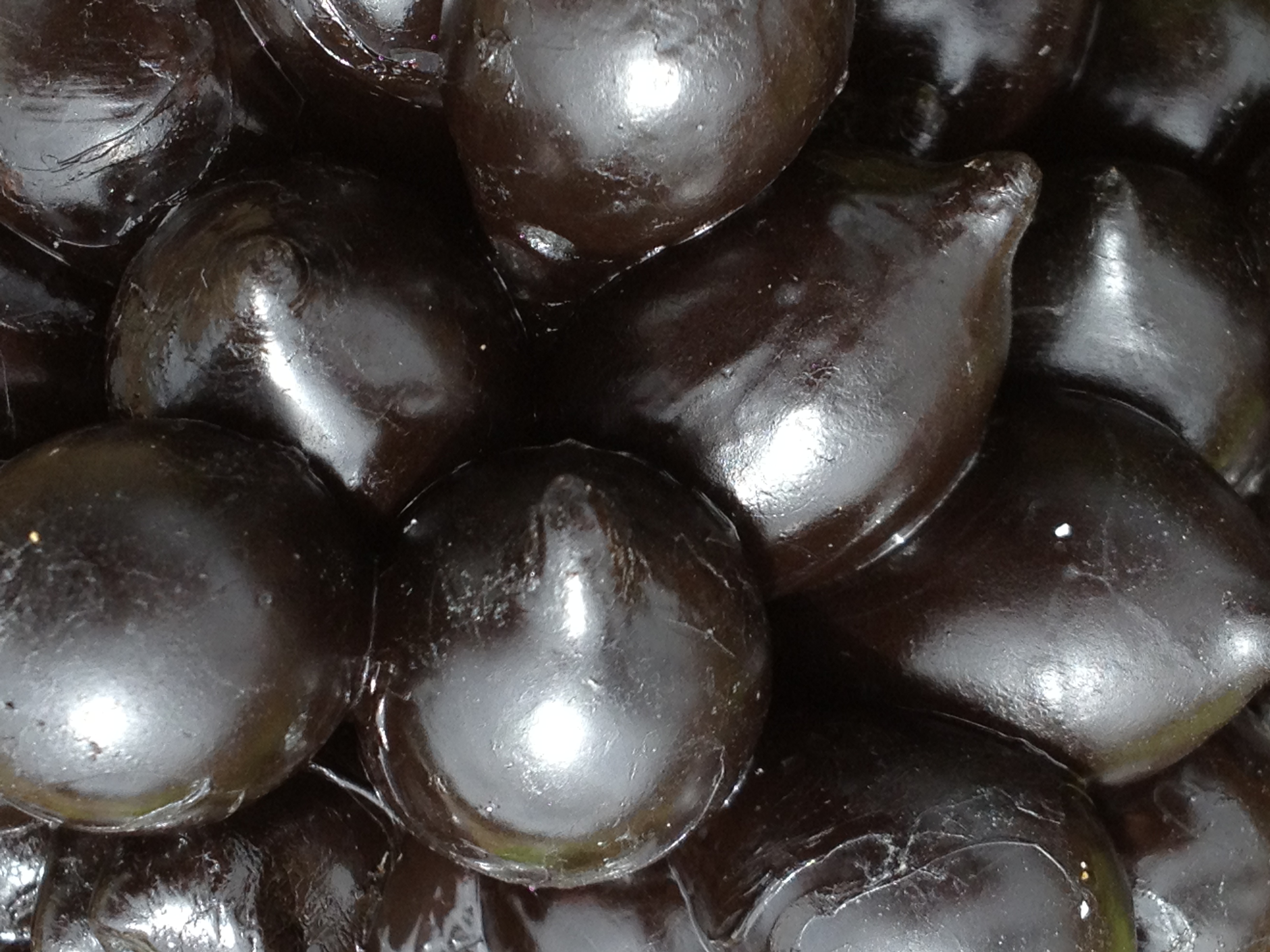
IMG_4605Egg cases (‘a sea wash ball’) of the edible Common whelk Buccinum undatum:

IMG_4607

Cuttlebones were scattered everywhere along the shore and we even found a clump of Common cuttlefish Sepia officinalis eggs:

IMG_4666

IMG_4670The eggs were quite big and had a weird texture. I don’t know if these egg clumps can survive hours on the beach at low tide, probably not. It would have been cool to take them to an aquarium to see if they would hatch. It is extremely difficult to keep cuttlefish though, they need live food and large aquariums which usually are still too small still to prevent ‘butt burn’ when they jet backwards into the tank wall and their cuttlebone gets exposed right through the mantle. In the next post I will get to the washed up seaweeds.

castle beach

Although cold and rainy on the bank holiday Monday, the weekend weather was glorious (and low tide was ‘low’), so it was off to Castle Beach in Falmouth:

IMG_3261

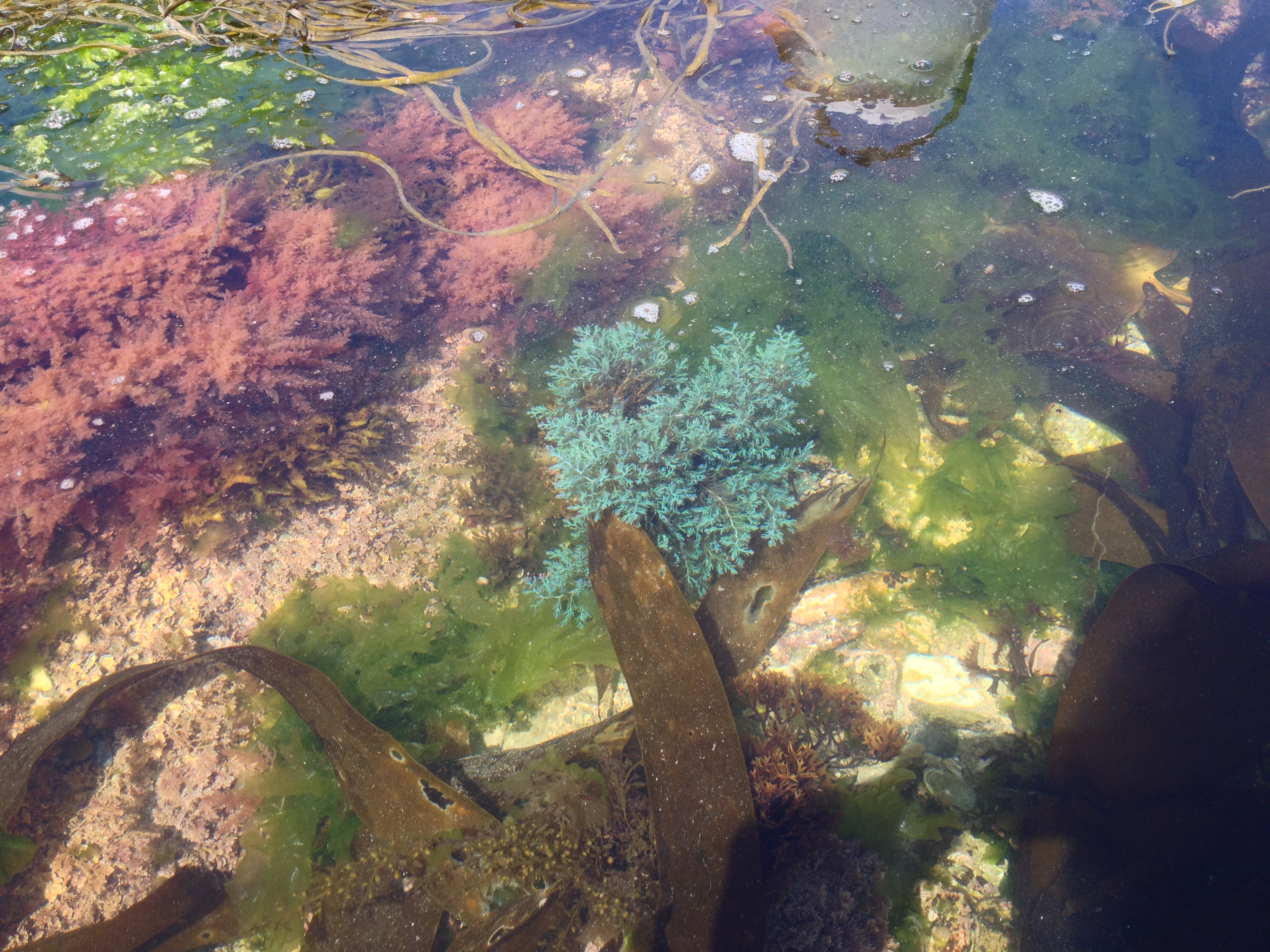
To me this looks as good as a coral reef! Loads of Harpoon weed Asparagopsis armata, Thong weed Himanthalia elongata and Oarweed or Tangle Laminaria digitata (there are two similar kelp species, but these remain more erect when above water my guide tells me). Also quite some of my favorite Bushy rainbow wrack Cystoseira tamariscifolia shining blue:

IMG_3294

IMG_3293

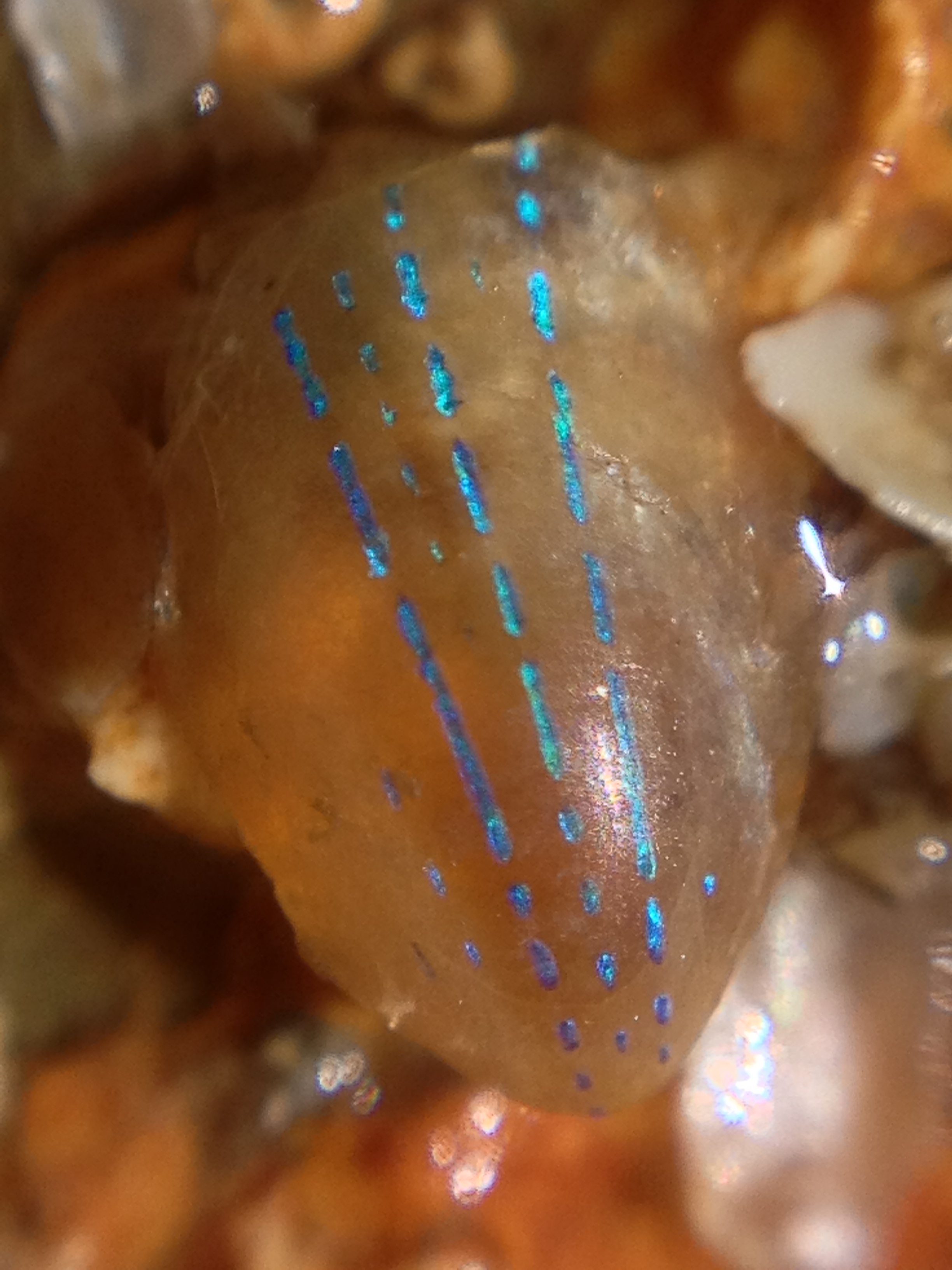
Also iridescent: a tiny (<5 mm) Blue-rayed limpet Helcion pellucidum. Normally found on Laminaria kelp, this one sat under a rock:

IMG_3287

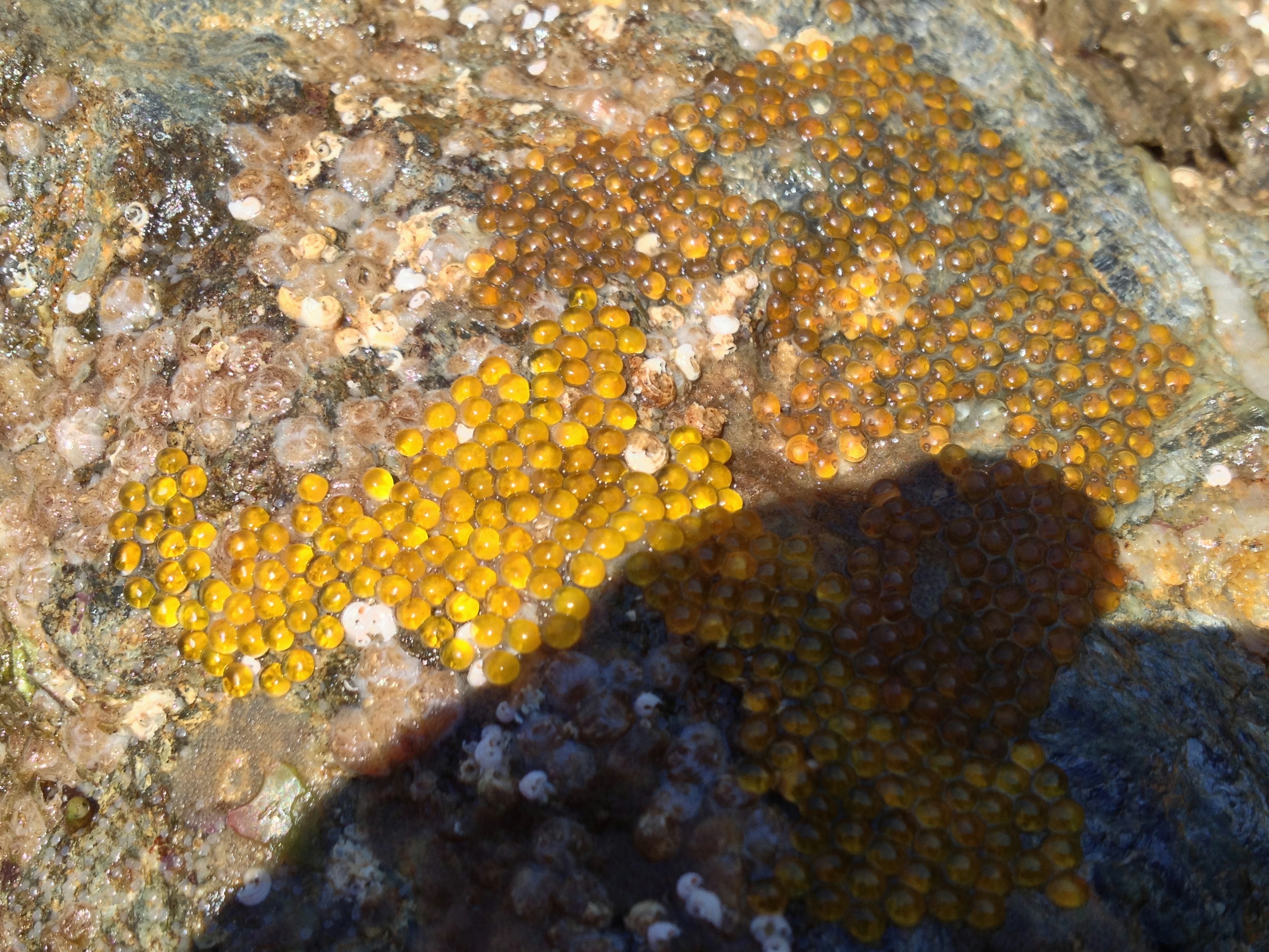
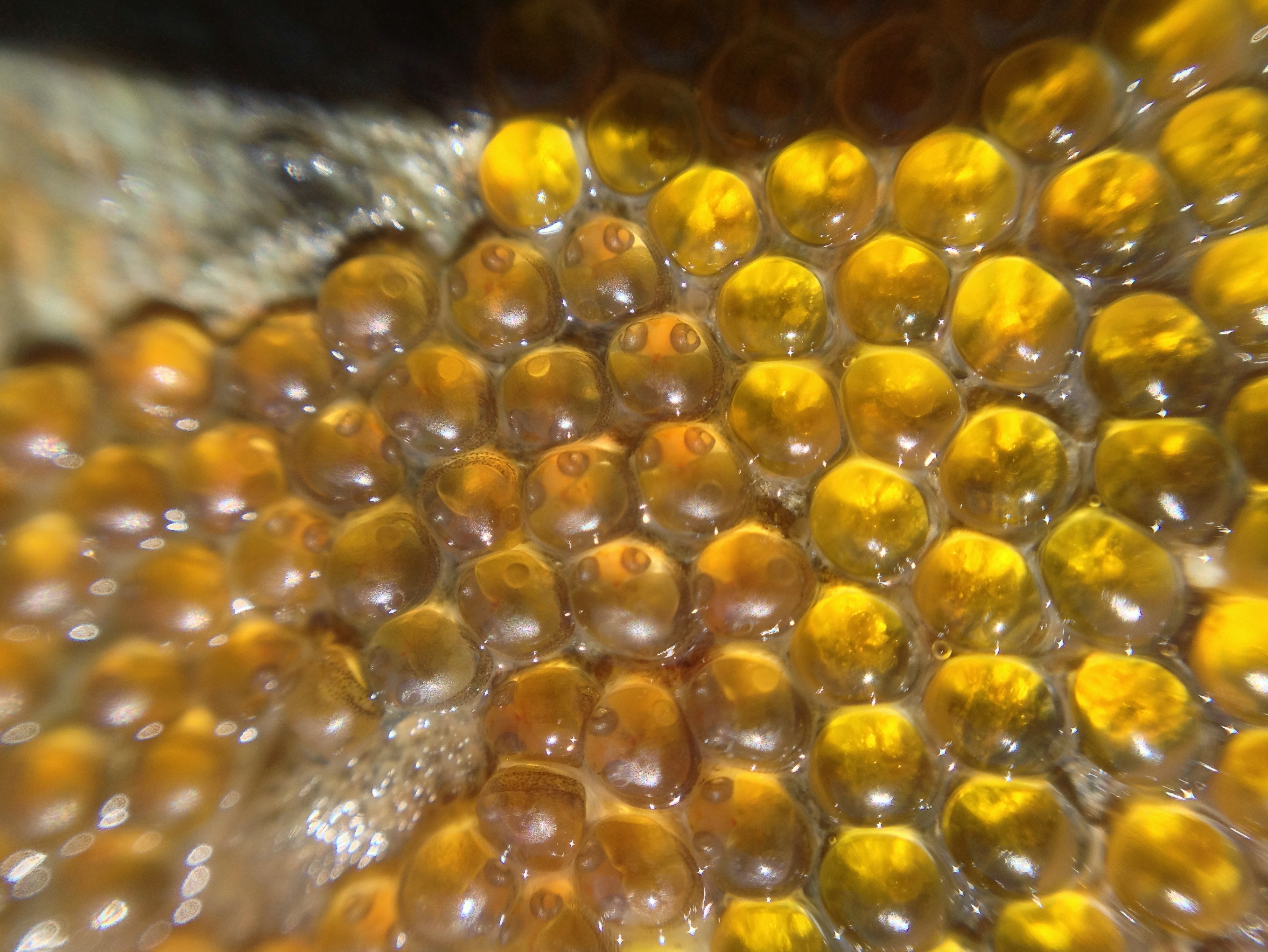
Especially on the middle shore, there was quite some change in seaweed composition, with lots of Ulva and similarly bright green, slimey algae in the rock pools. The abundant Shore clingfish Lepadogaster lepadogaster had been laying eggs under rocks everywhere:

IMG_3270

IMG_3272

IMG_3274

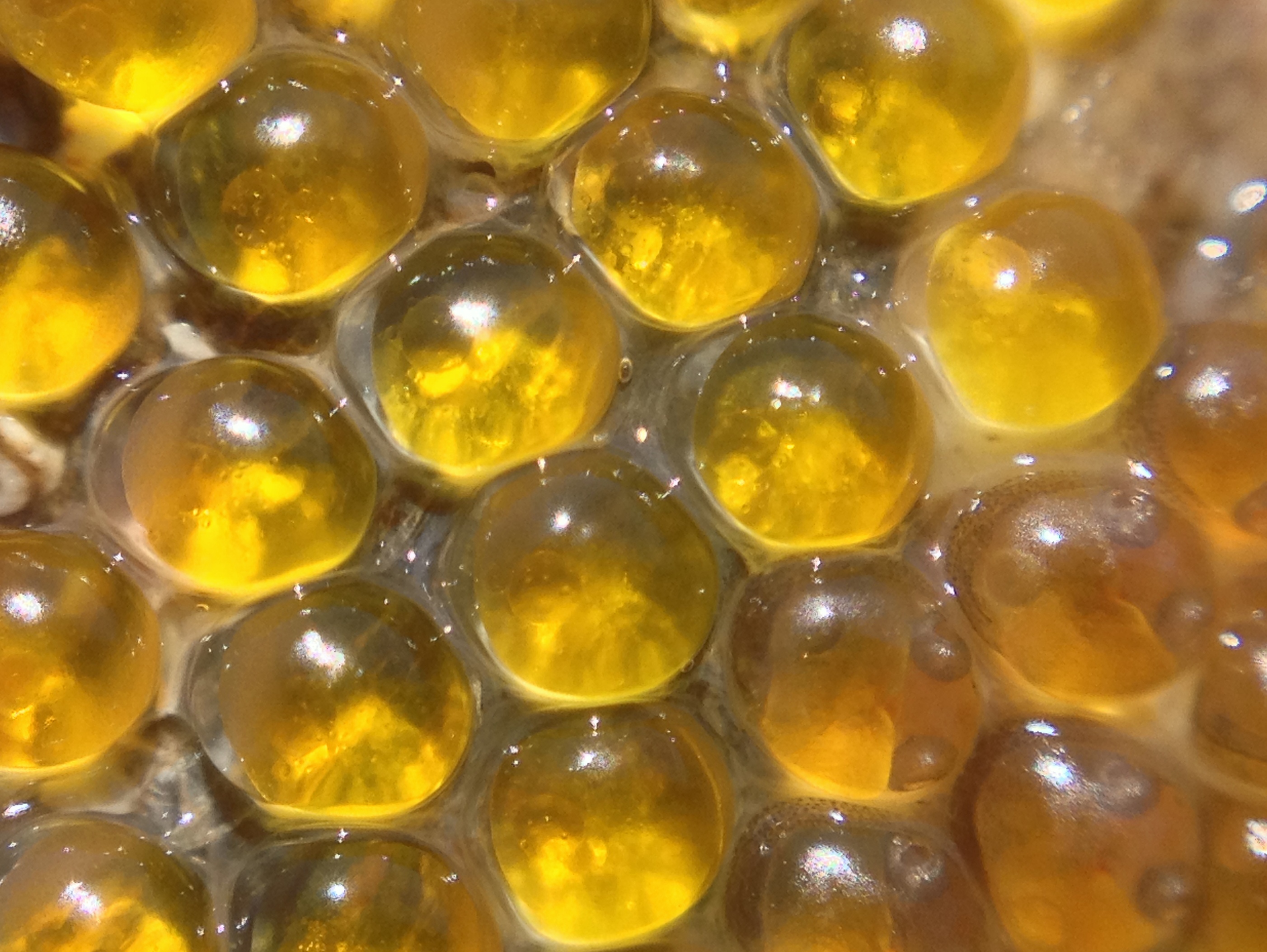
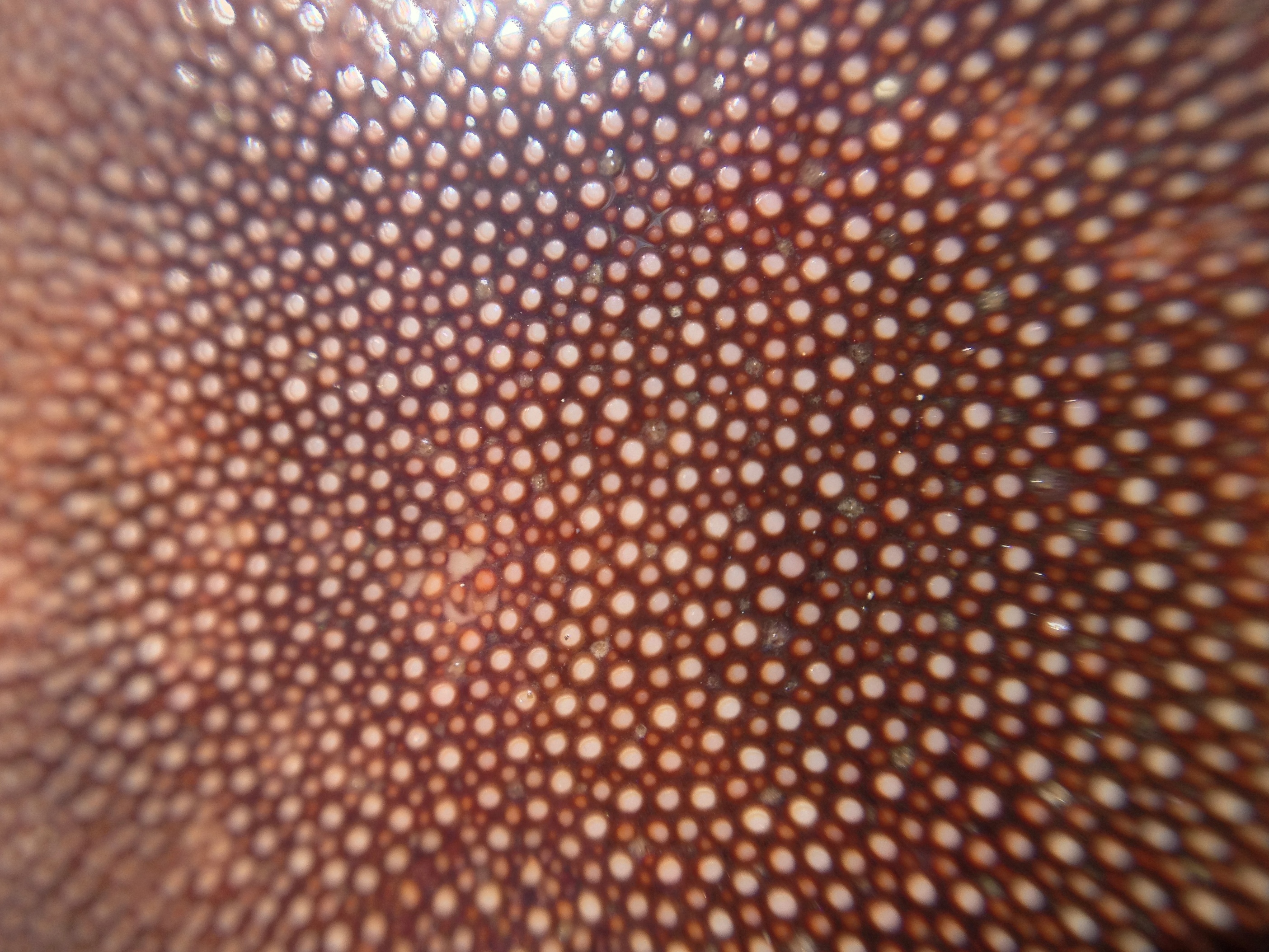
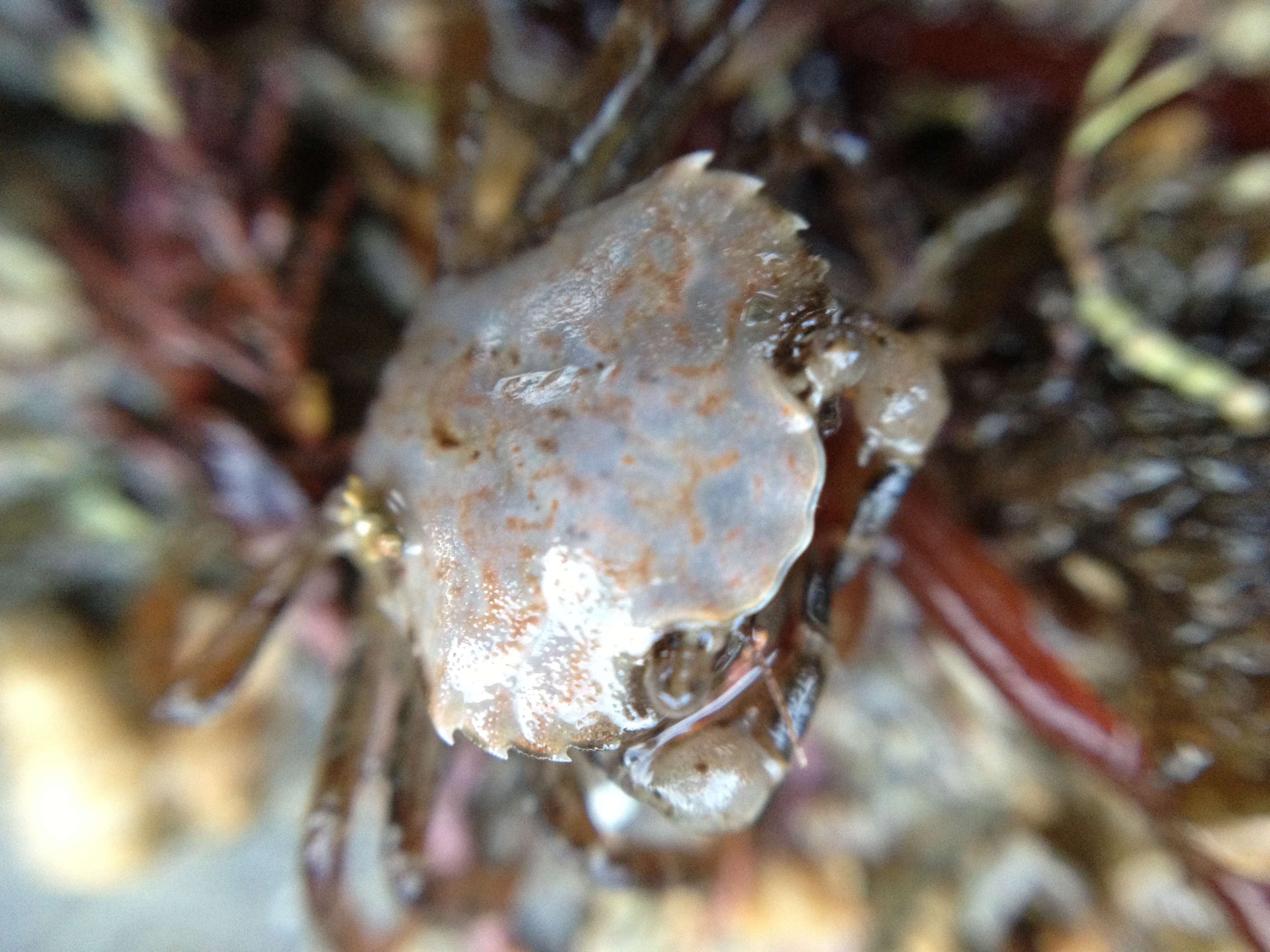
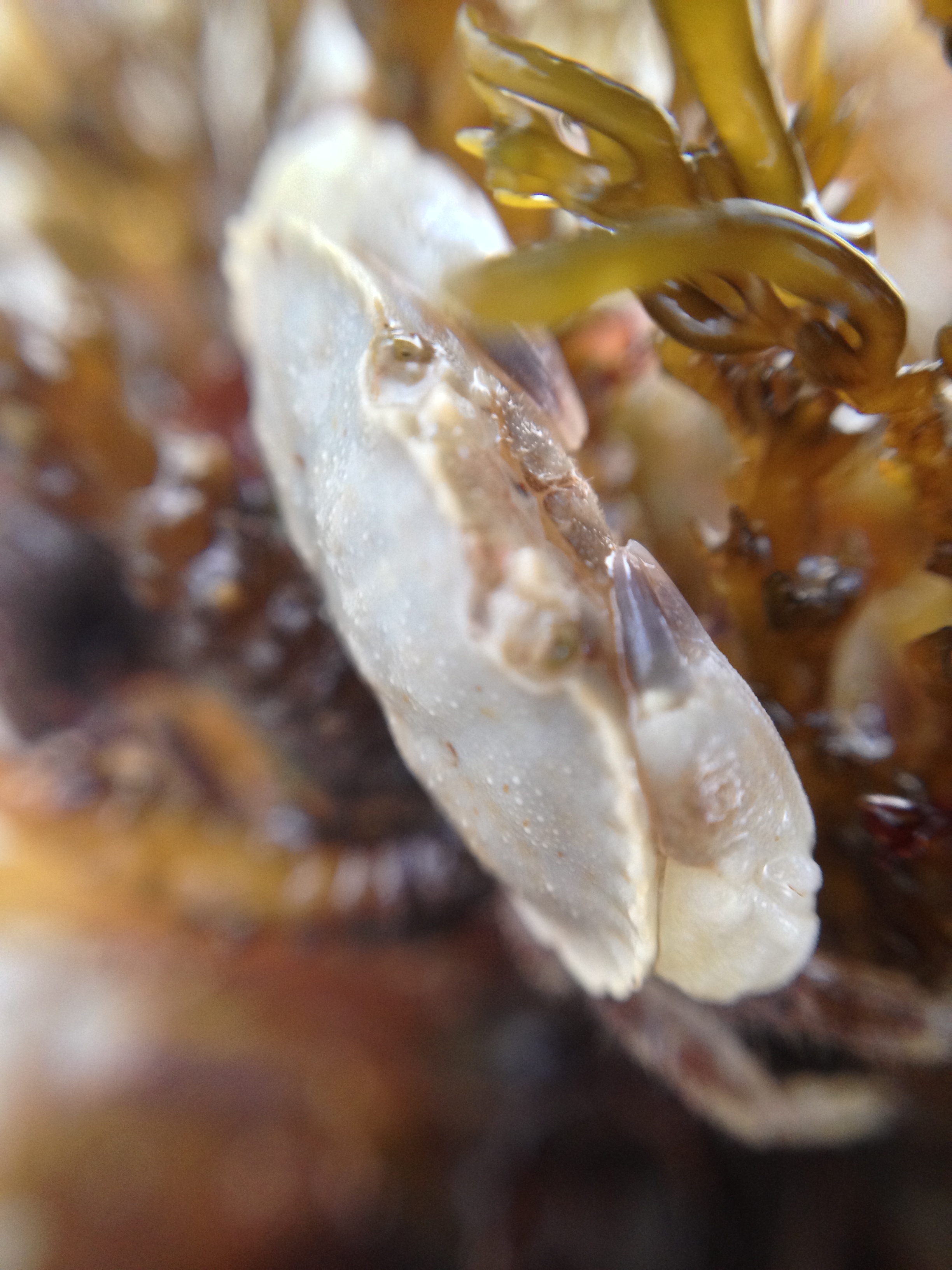
You can even see the embryo eyes, I am very happy with my olloclip macrolens (although photography in the bright sun is difficult, especially if you do not want to disturb the animals/eggs too much). There were a couple of quite big Edible crabs Cancer pagurus around. The combination of a trembling crab and a trembling hand resulted in a sub-optimal macro photo of its carapace but it is still a neat pattern:

IMG_3295

IMG_3301

Strangely (and mostly, annoyingly), the second pump of the aquarium broke down before the weekend and I ordered two new ones. The aquarium has not improved without filtration of course. I will be traveling quite a bit over summer so I will not experiment much with it in the near future.

new sand

Welcome to this most obscure of blogs, my dear reader. The aquarium is a bit of a mess at the moment for a variety of reasons. First of all there are a lot of algae growing; I have a bag with Rowaphos hanging in the back compartment to remove phosphates but this does not seem to help much (I have had good experiences with before though). Second, one of my pumps broke and so filtration runs at half capacity. Third, the mixed success of planting many different seaweeds has left loads of detritus in the tank. I have made large water changes which helped a bit. An additional tank for experimenting would be nice to have… Fourth, I have been unlucky with some of the seaweeds: the Wireweed grew really well, but the large size meant it caught a lot of the current and was easily dislodged. The Dudresnay’s whorled weed Dudresnaya verticullosa was growing really well (see here) but broke off from the rocks and could not be replanted:

IMG_2996

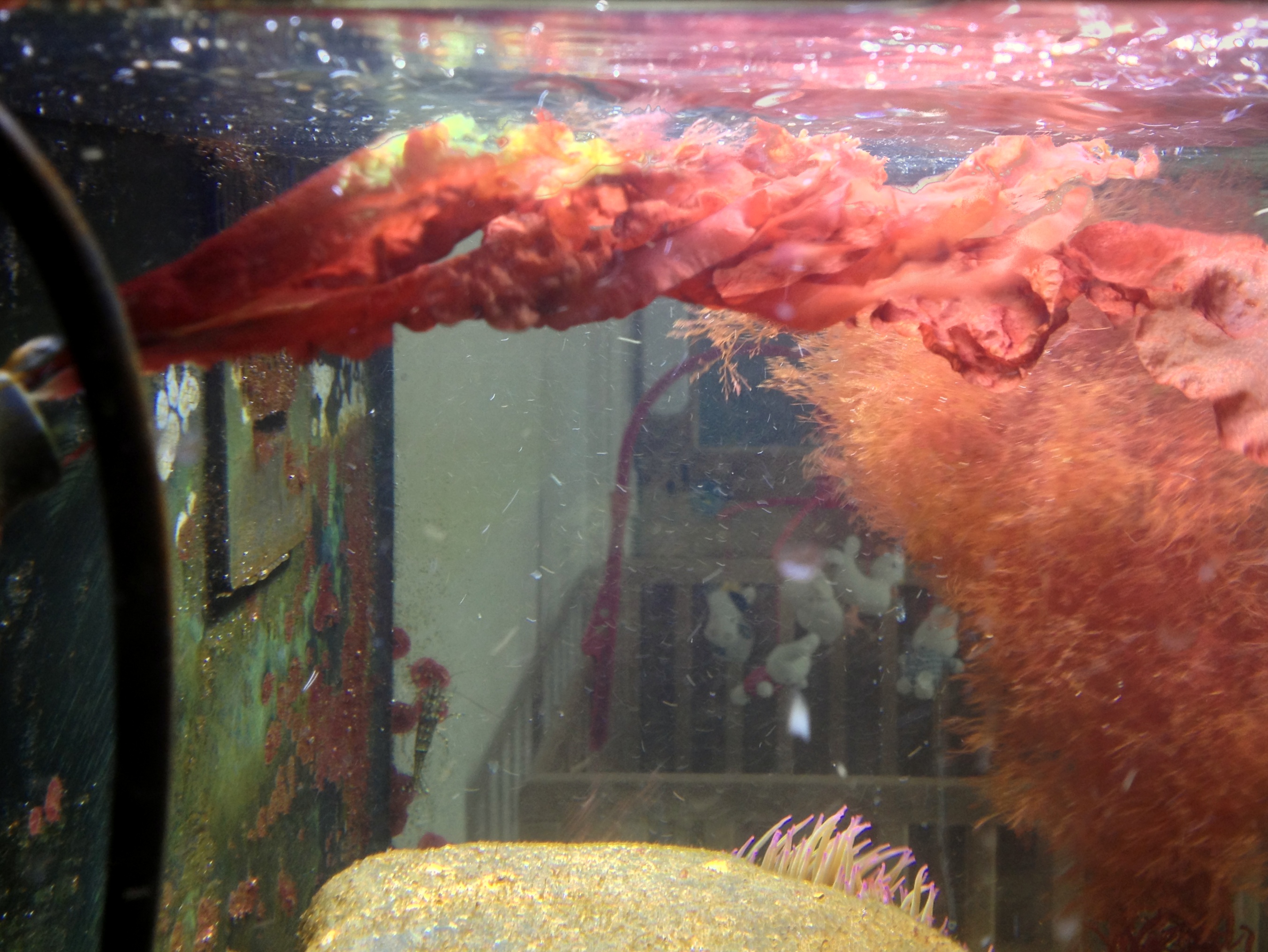
I could not attach the fine red seaweed (see last post) either and did not want to have it floating around so I have removed it. My nice red seaweed streaming from the pump outlet, most probably Devil’s tongue weed Grateloupia turutu (as the name indicates, another invader from the Pacific), broke of. A crap picture of both weeds:

IMG_3128

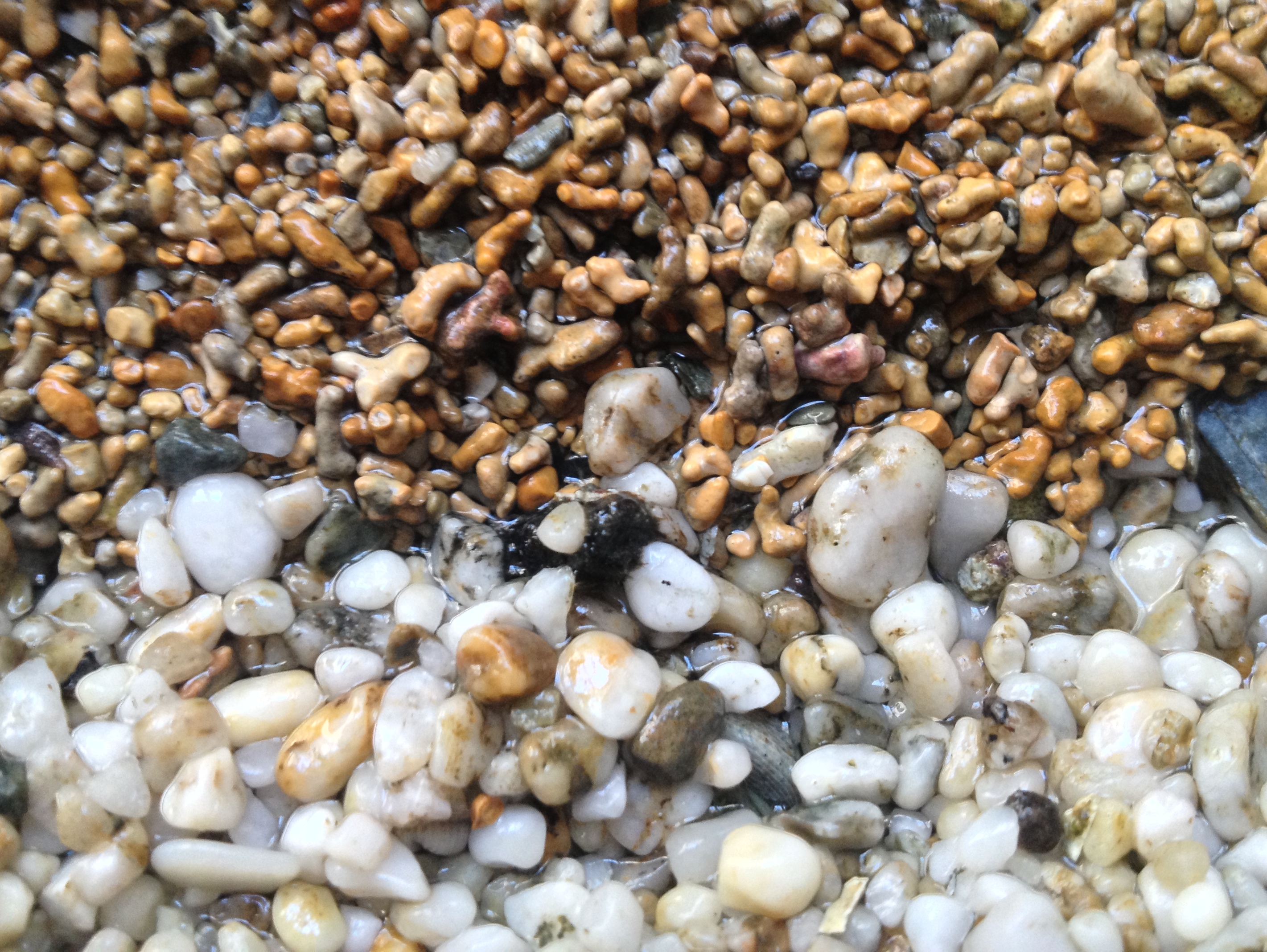
I changed the white gravel with finer, beige Maerl gravel (Cornwall’s equivalent of coral sand, see previous post) here placed in a bowl for contrast:

IMG_3133

I released my Shanny as well as the largest of the two Rock gobies. The former attacked to many of the snails (it was getting a bit of a mollusc graveyard) and the latter was just too voracious in general. The final straw was seeing it swimming around with half a Worm pipefish sticking out of its mouth (I still have a bunch of those). The Shore rockling did not survive, but I caught a glimpse of the Shore clingfish when I removed some of the rocks from the aquarium. The juvenile albino Edible crab (if that’s what it is) and the European sting winkle Ocenebra erinaceus I recently caught both still do well, as is a juvenile Shore crab Carcinus maenas:

IMG_3147

The Netted dog whelk Hinia reticulata is not one of the most impressive looking snails, but they do very well in the aquarium, burrowing and moving around:

 IMG_2167

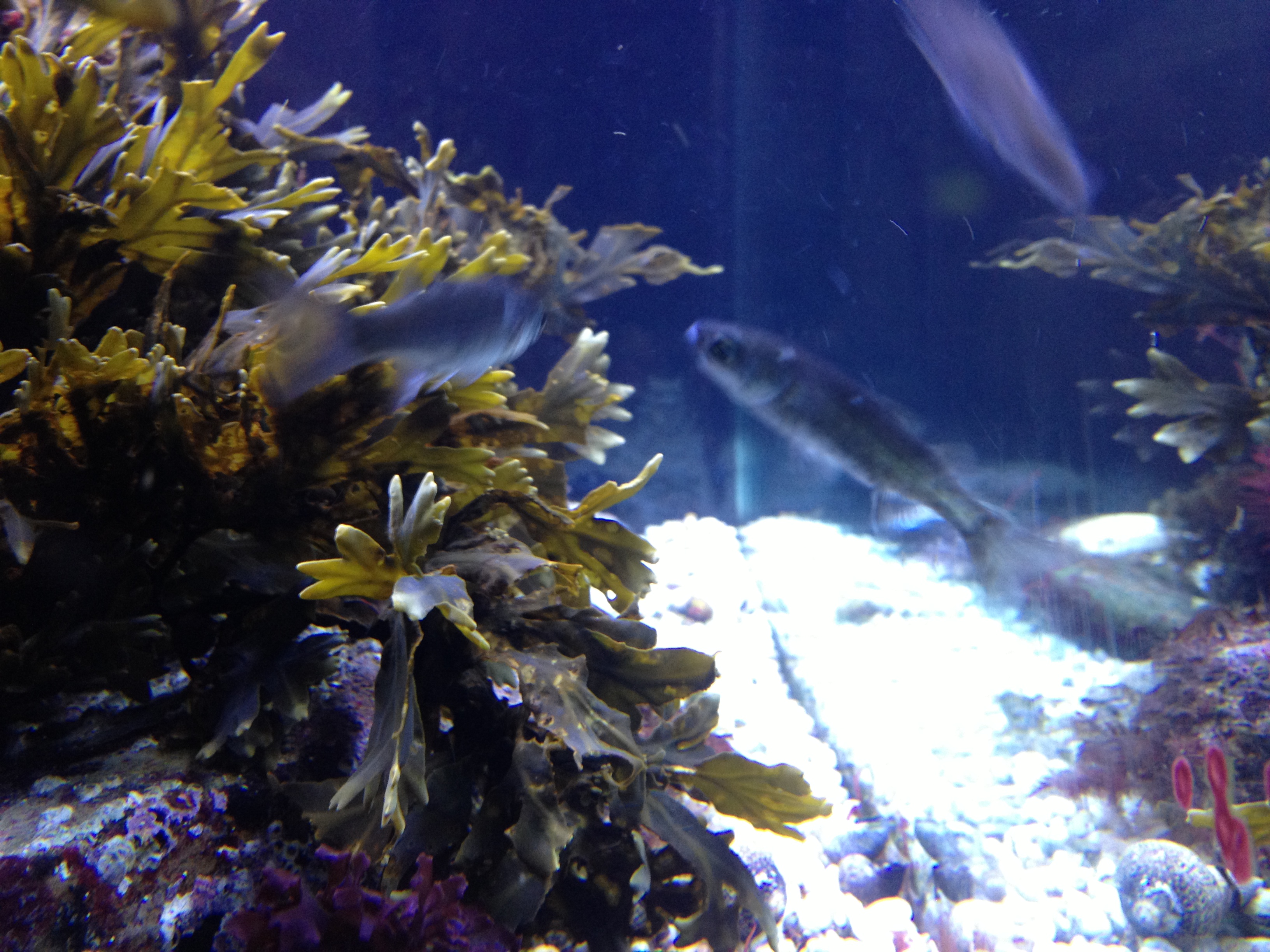
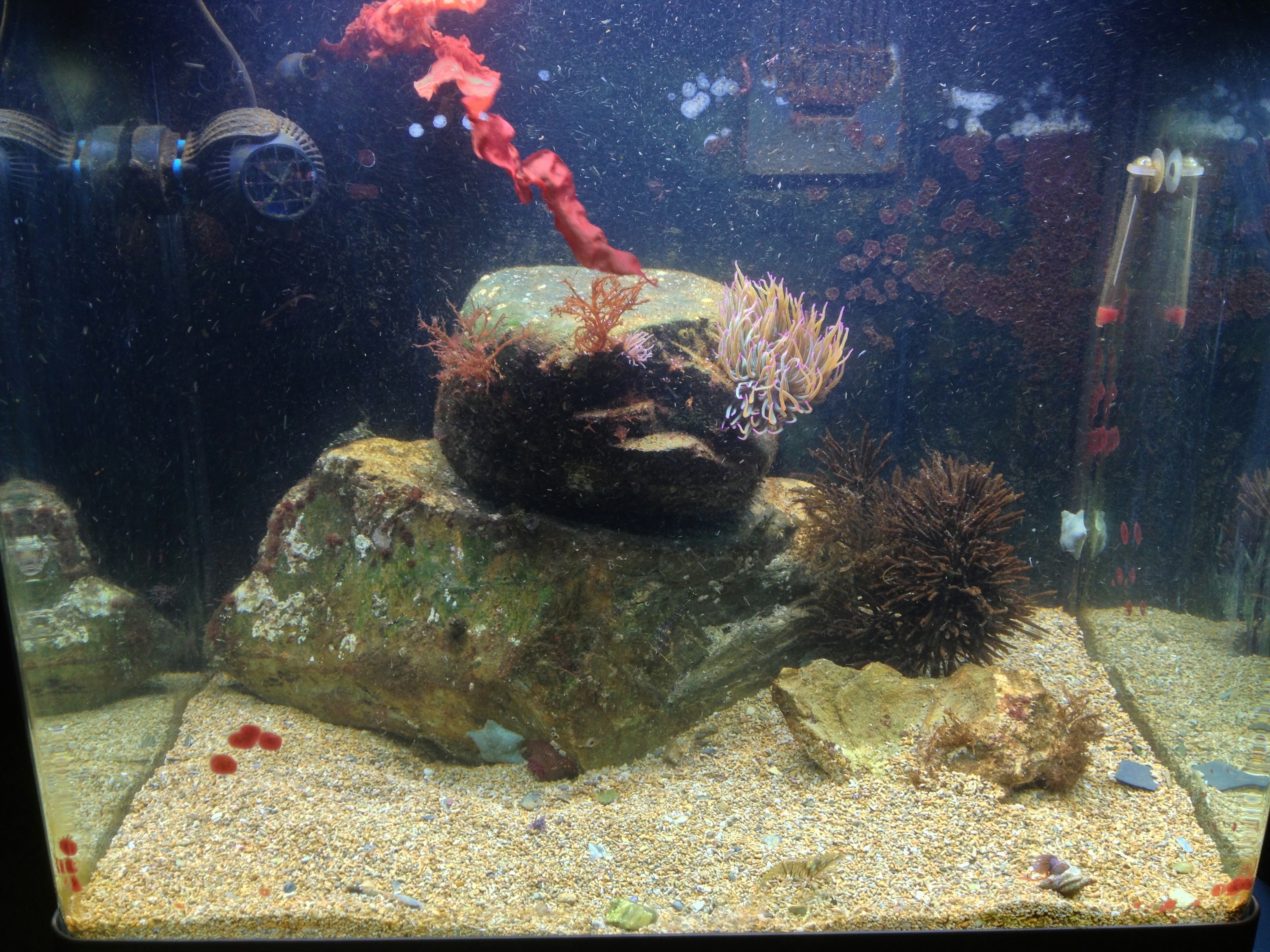
I am not sure whether replacing one of the actinic lamps with the daylight lamp was such a great idea, the tank looks too yellowish now, especially with the Maerl sand…However, I will stick with it and see whether it helps future attempts to successfully keep Bushy rainbow wrack Cystoseira tamariscifolia (i.e. to retain it’s iridescence). If not, I’ll go back to the original lighting. I will not do too much with the aquarium in the near future as I want to get rid of the algae first. There are not many critters in the tank, which should help (I have only introduced a nice big Snakelocks anemone Anemonia viridis recently). I will do some more water changes and order a new pump. Only then will I slowly start experimenting with seaweeds again.
I am still unsure about the chiller, but with the weather getting warmer it might be more than just a luxury to have one. Apart from the price, it standing on the floor next to the aquarium with tubes sticking out is what I don’t like about the idea though. It will also not be silent, but perhaps I could get away with disabling the noisy hood fans, resulting in an overall quieter aquarium. The stripped-down tank (note that the red encrusting algae/seaweeds at the top of the tank have died (turned white) as they were exposed for a couple of hours when changing water):

IMG_3139


Mud pooling

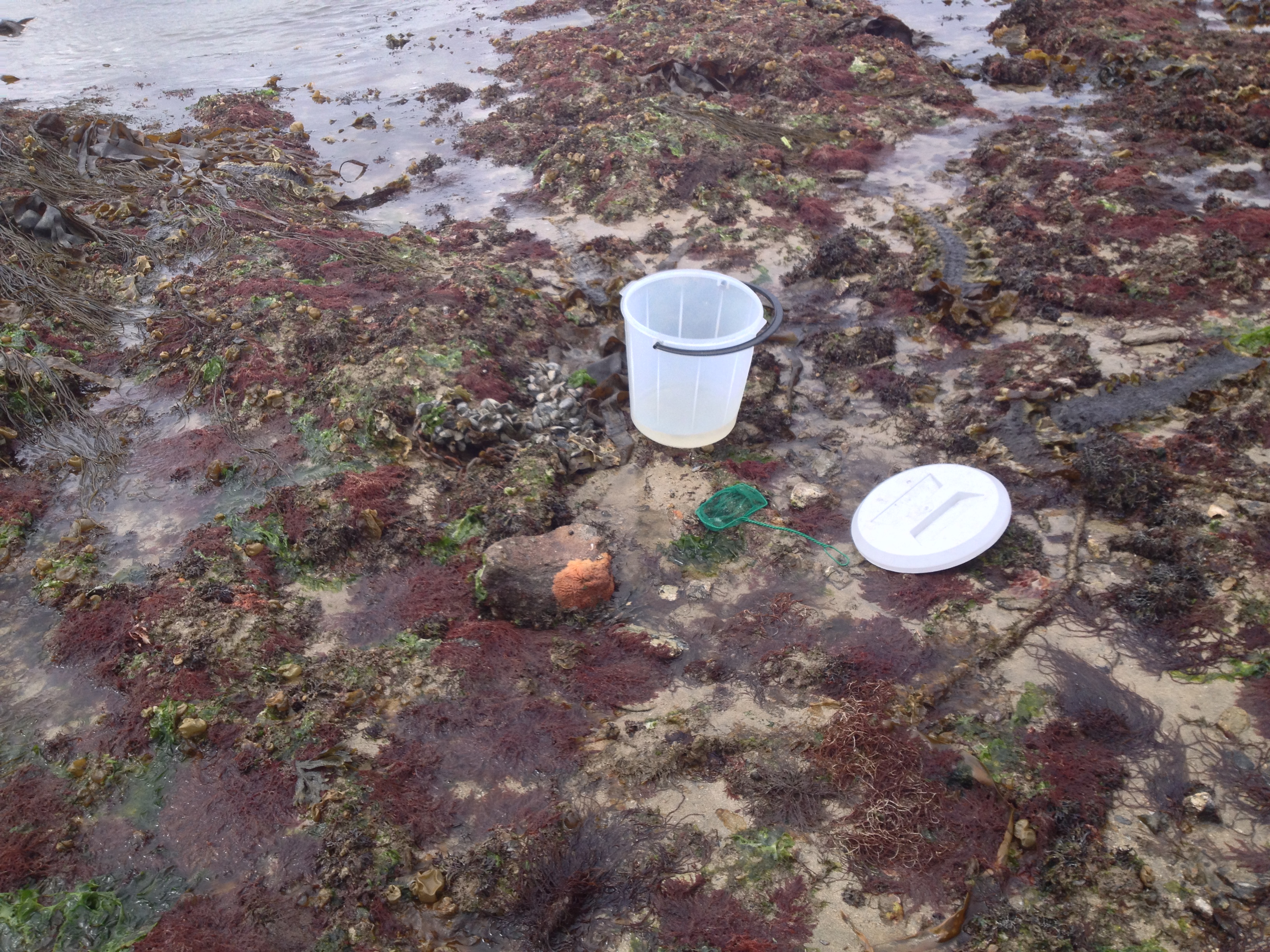
When it was very low tide last week, I decided to skip the ‘rock pools proper’ on my local beach in Flushing and to check out the zone just below where the rocks and the sandy bottom of Penryn River (an arm of the Fall Estuary) meet. All common rock pool inhabitants – winkles, top shells, edible crabs, worm pipefish and shannies – still live here, but some other organisms are more abundant here than in the rock pools.IMG_2881

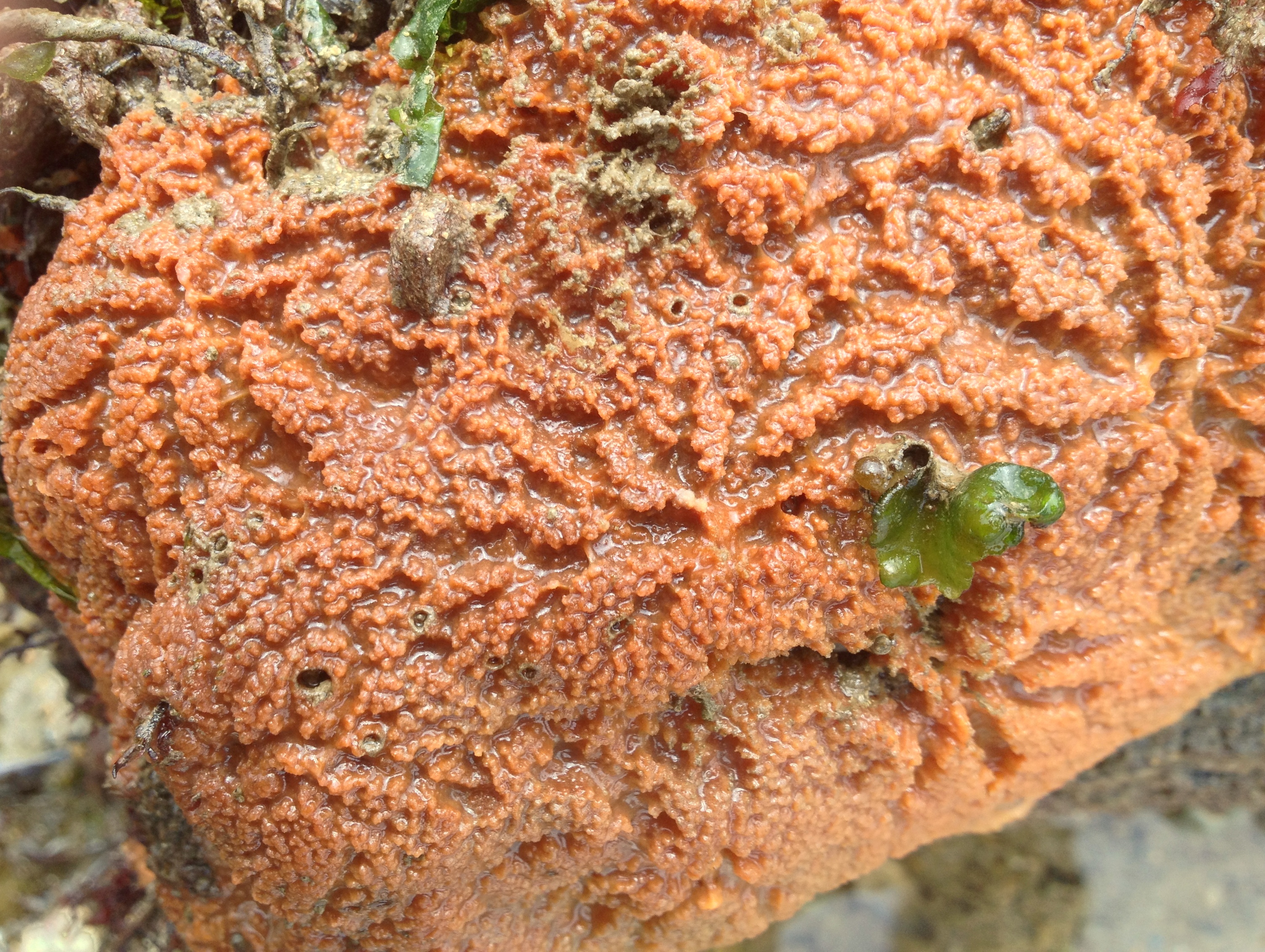
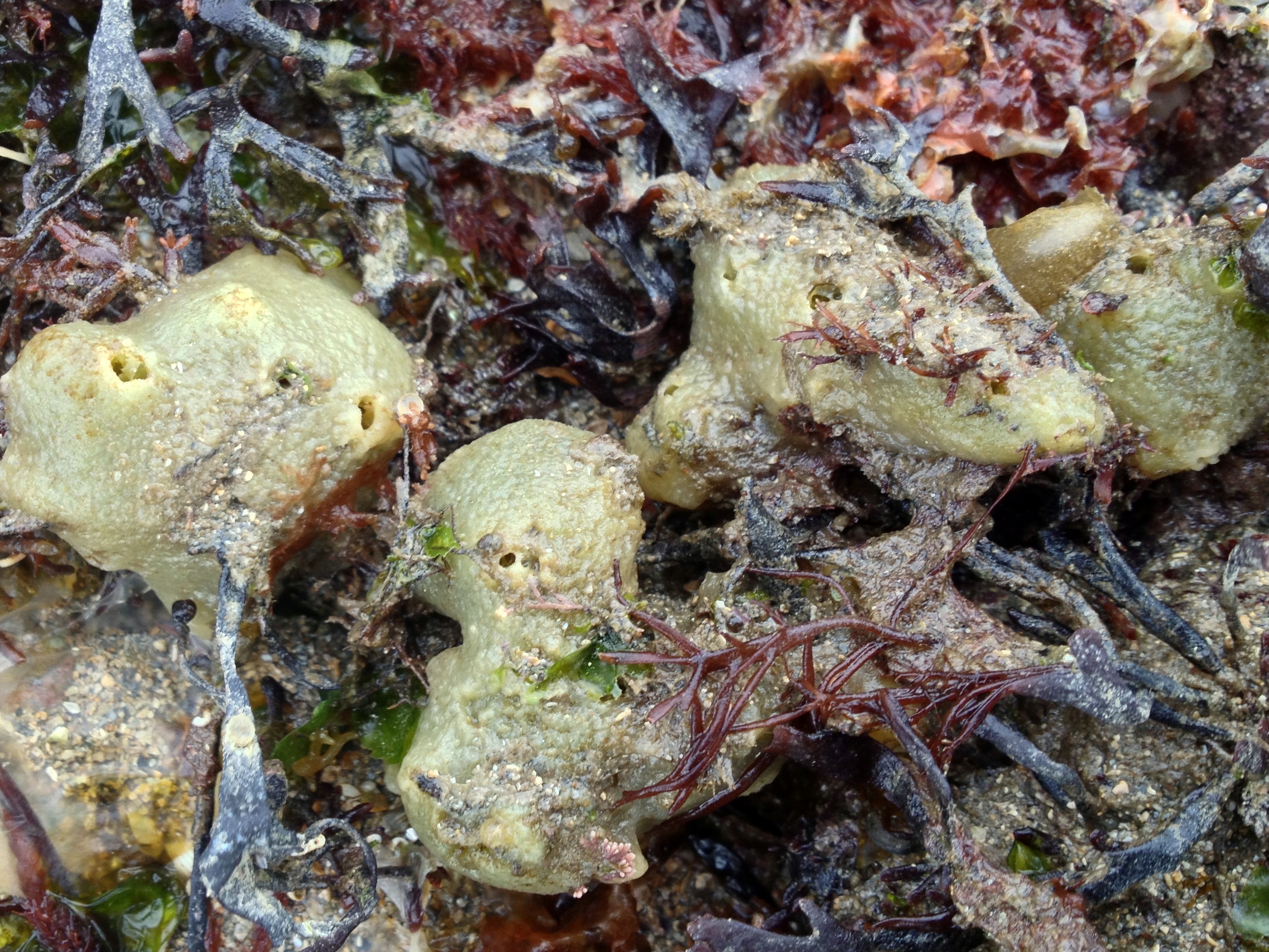
Sponges are very common in this silty environment, especially the Estuary sponge Hymeniacidon perleve:IMG_2877

The Breadcrumb sponge Halichondria panicea:IMG_2882

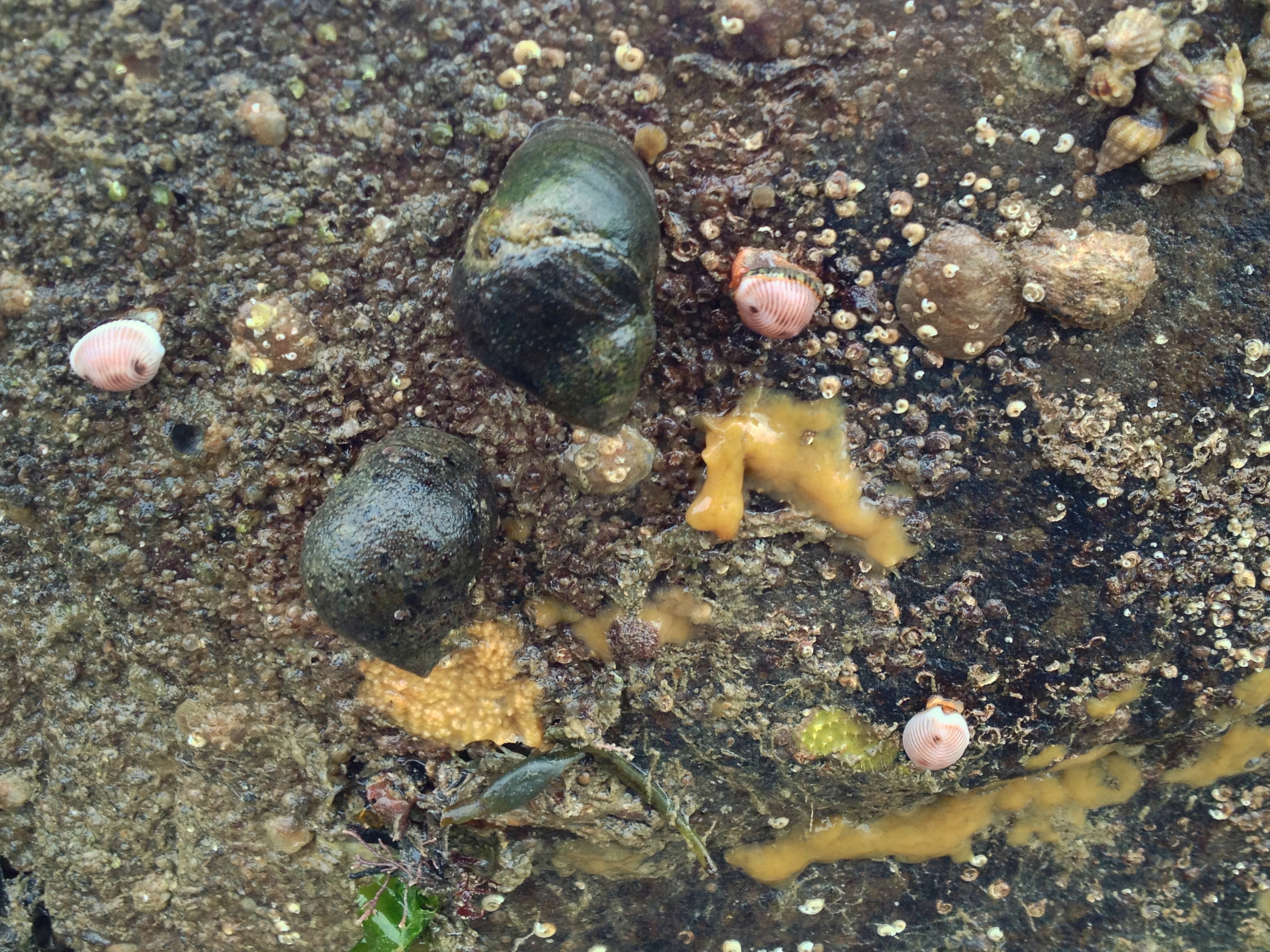
In addition to sponges, I noticed quite a lot of the colony-forming ascidian Botrylloides leachi (see previous post). That explains why I could also find a couple of European cowries Trivia monacha, their predator. Also very common here are the Variegated scallop Chlamys varia and the Thicklipped dog whelk Hinia incrassata (top right picture). I am not sure what the slimy beige stuff is!IMG_2920

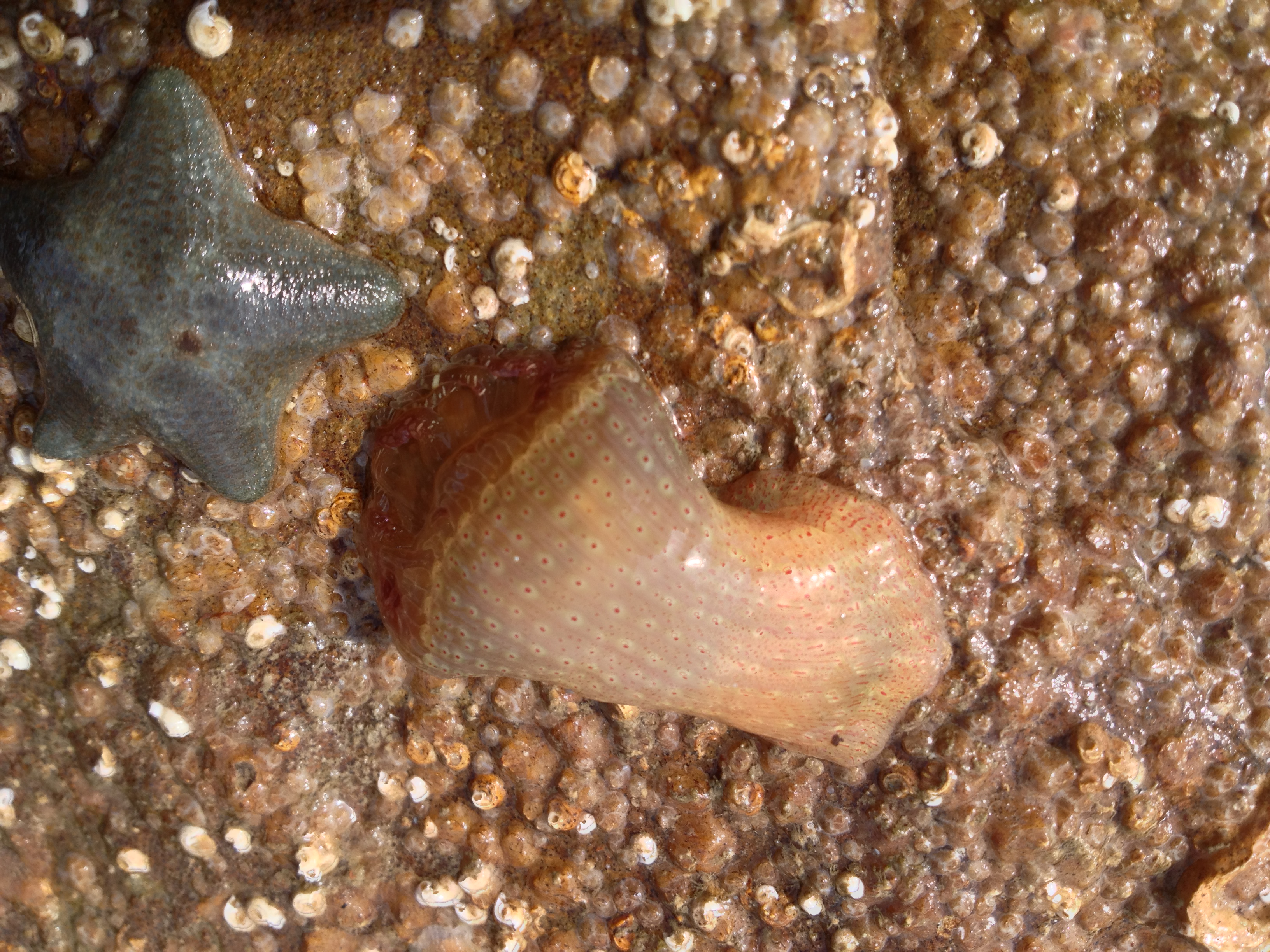
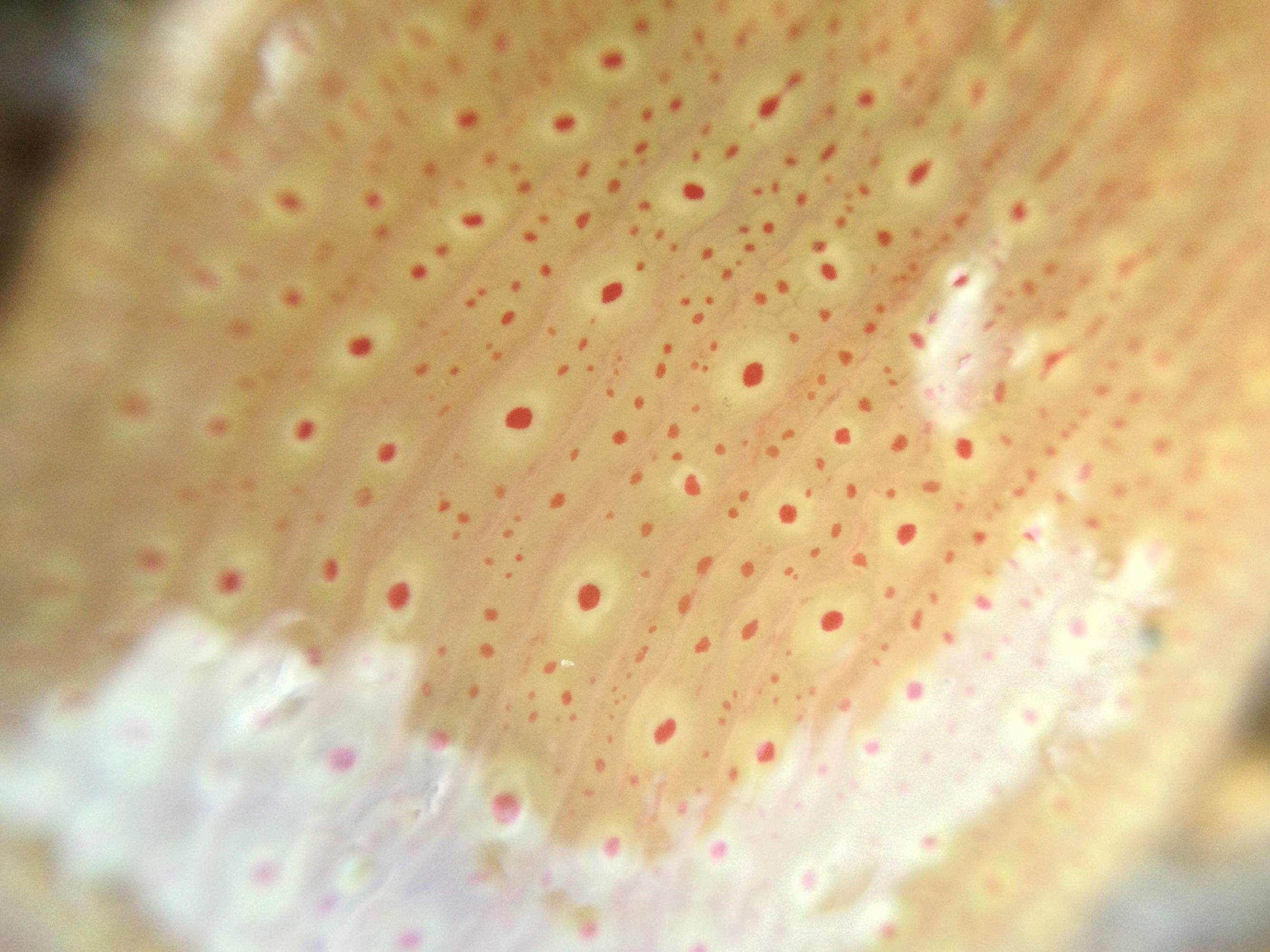
I spotted a couple of new things as well, the Red speckled anemone Anthopleura ballii:IMG_2901

IMG_2905

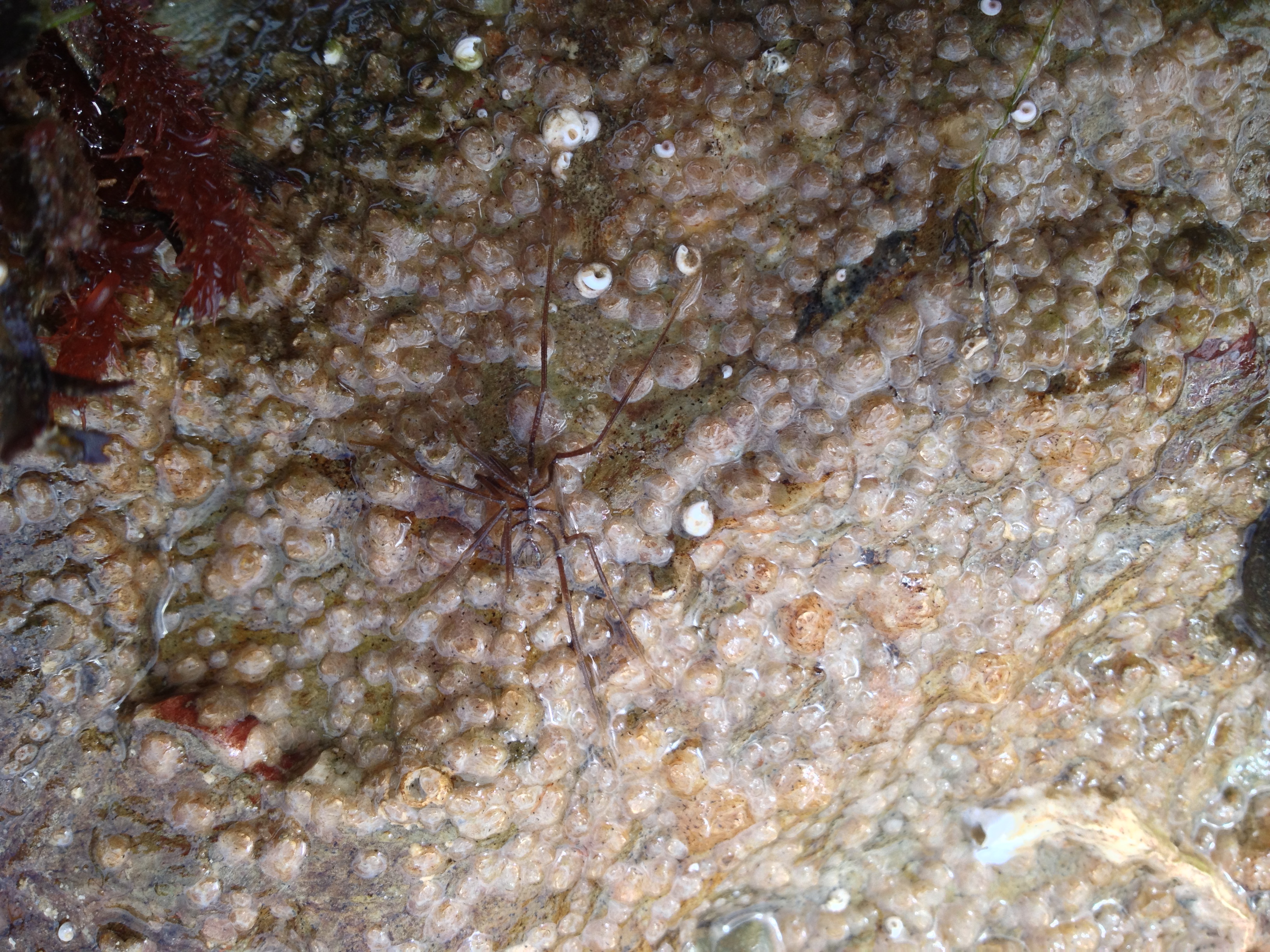
Also a first, a Sea spider Nymphon (gracile?):IMG_2886

IMG_2892

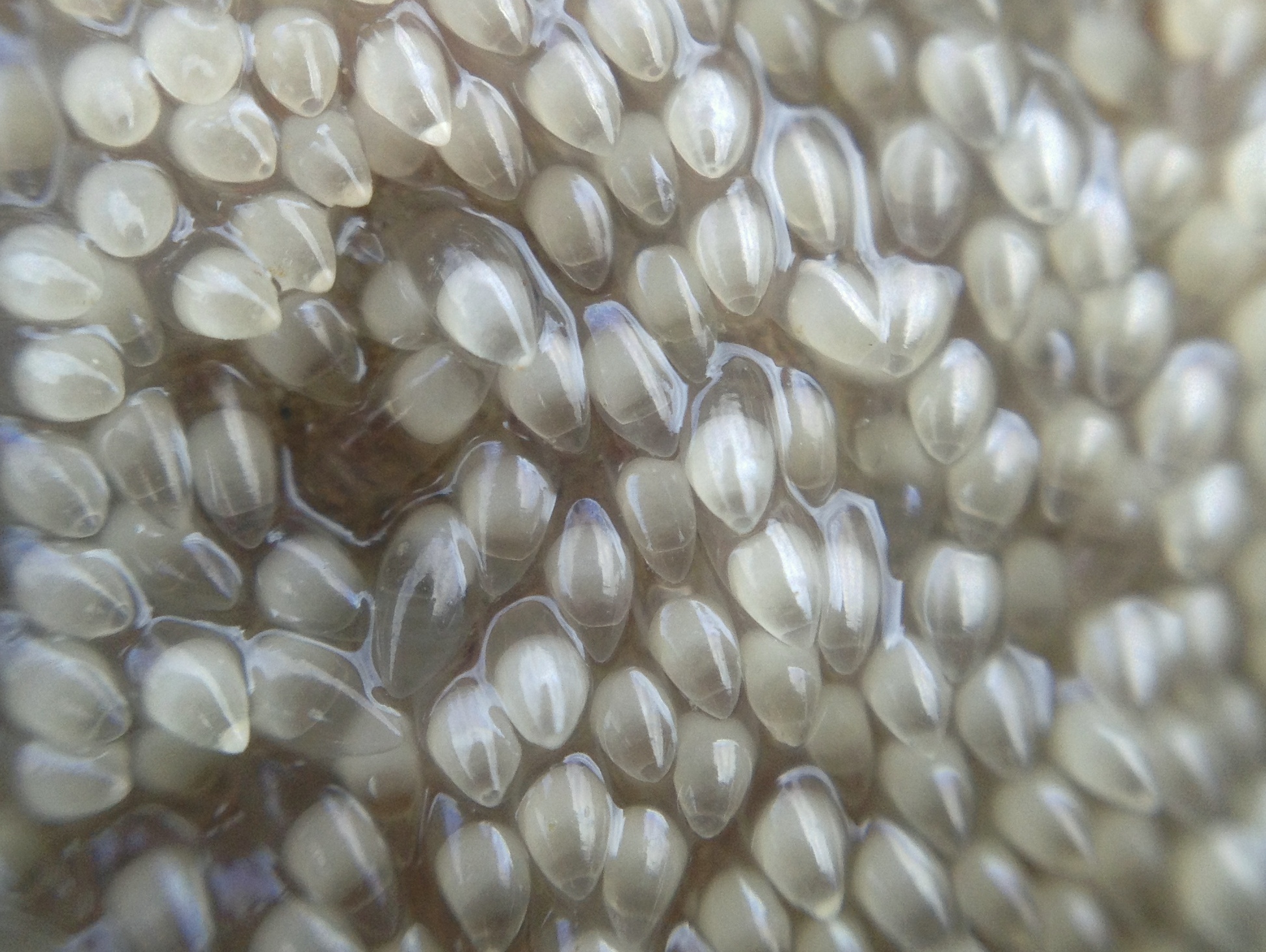
I found a large patch of these beautiful eggs:IMG_2931

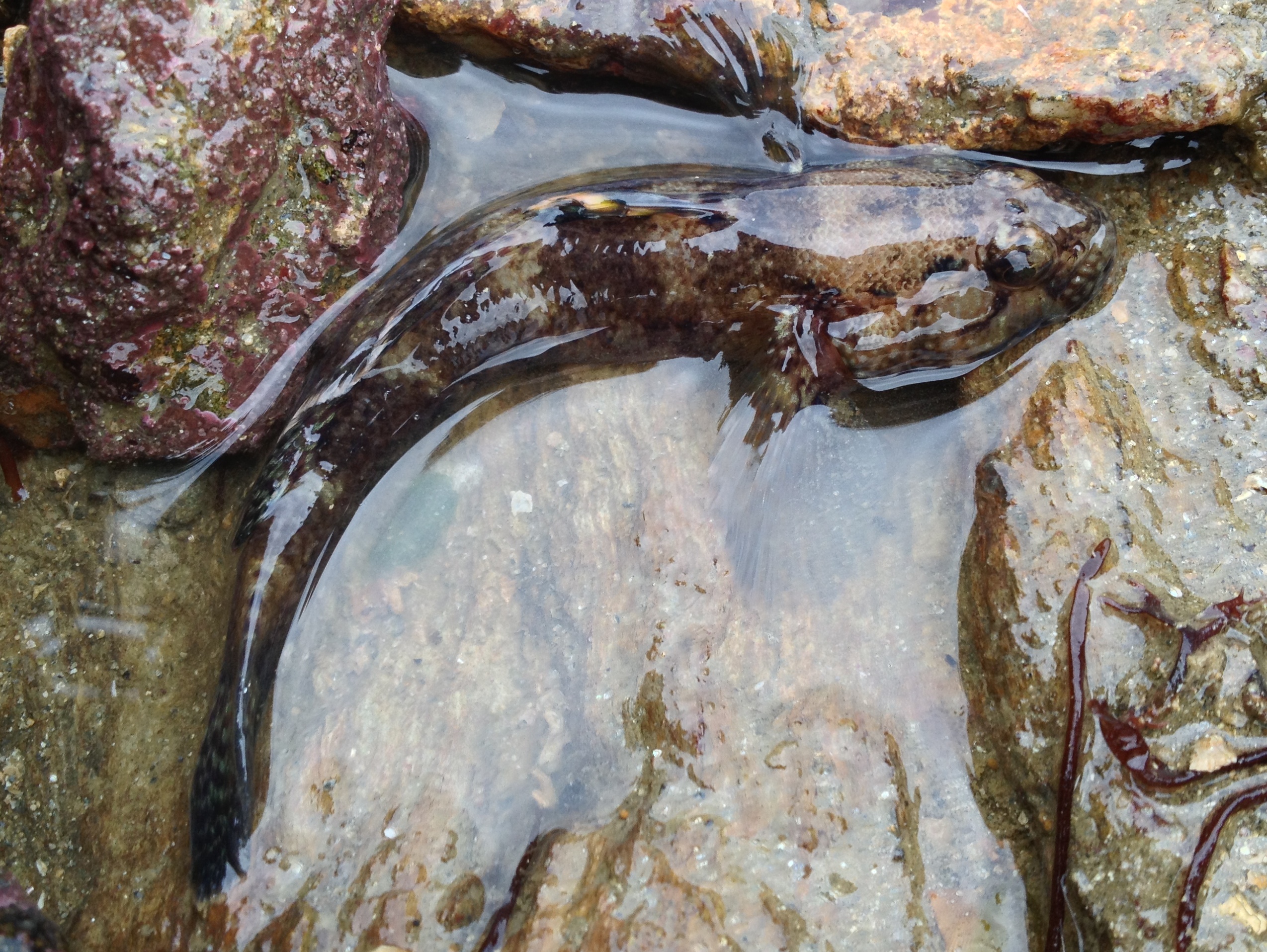
and someone guarding them, a rock goby Gobius paganellus:IMG_2935

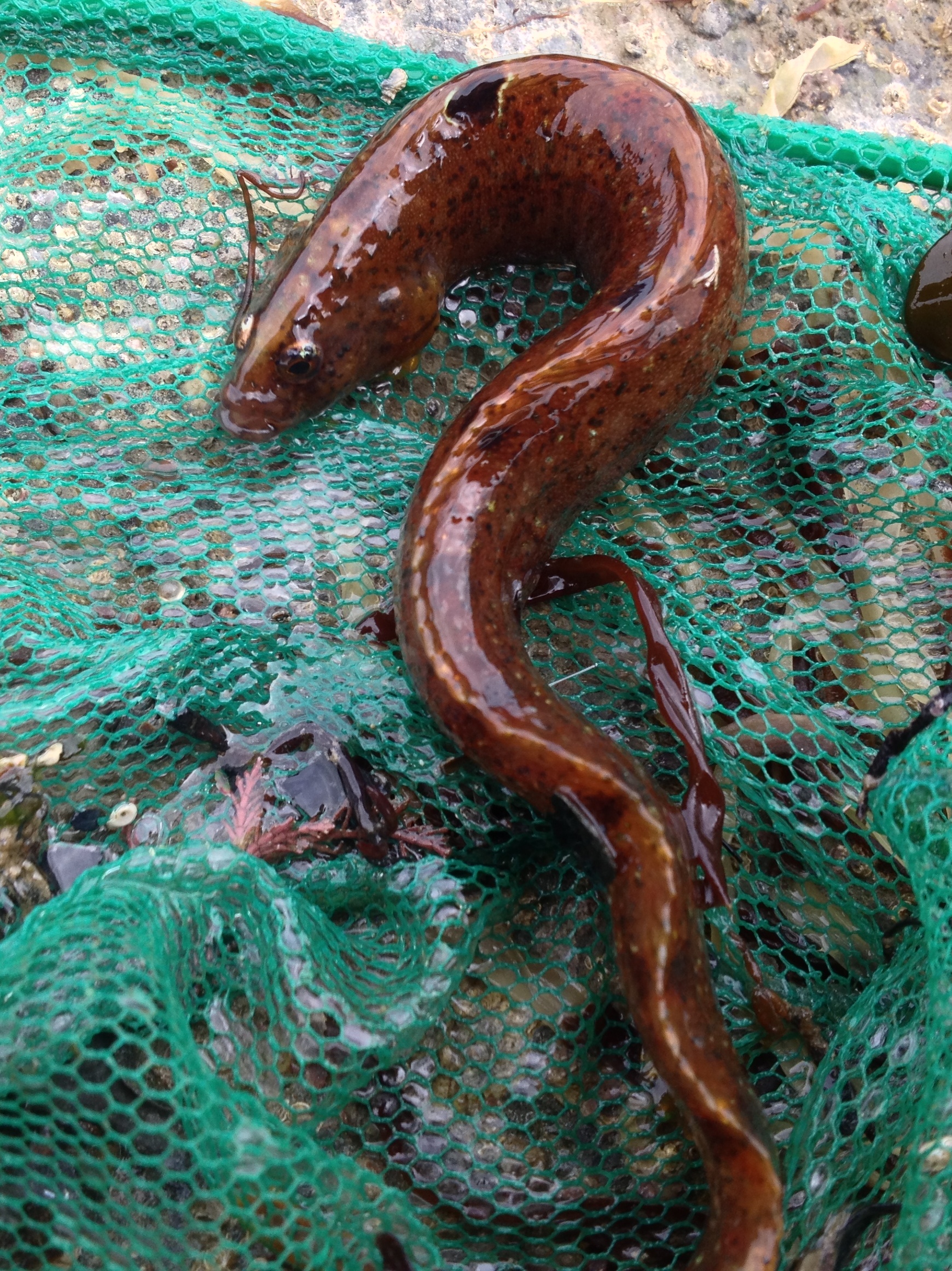
A Butterfish Pholis gunnellus:IMG_2947

Very common were little Squat lobsters Galathea squamifera (no picture), rapidly swimming backwards to escape. Even more abundant were these little Hooded prawns Athanas nitescens:IMG_2924

Three crabs

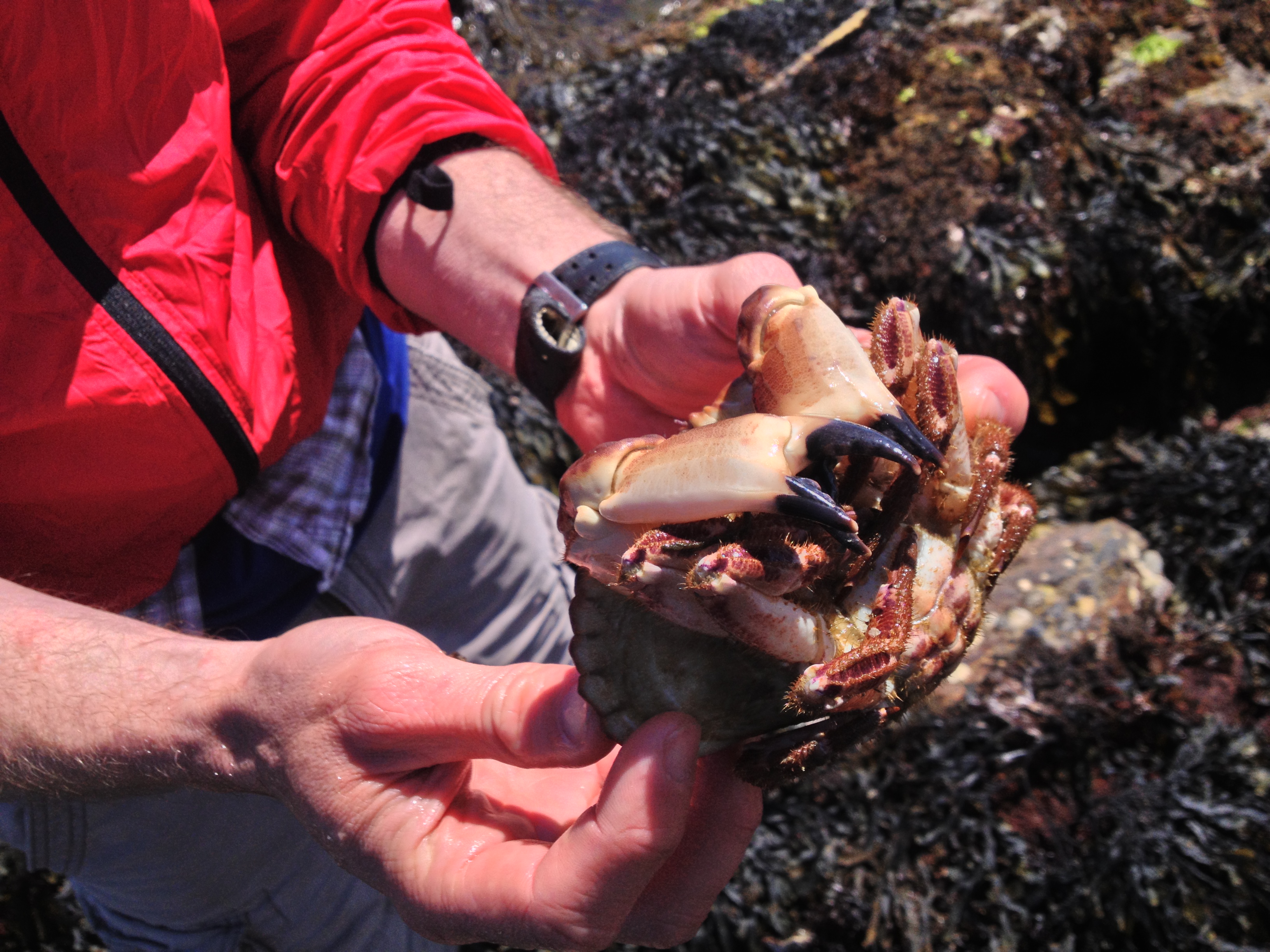
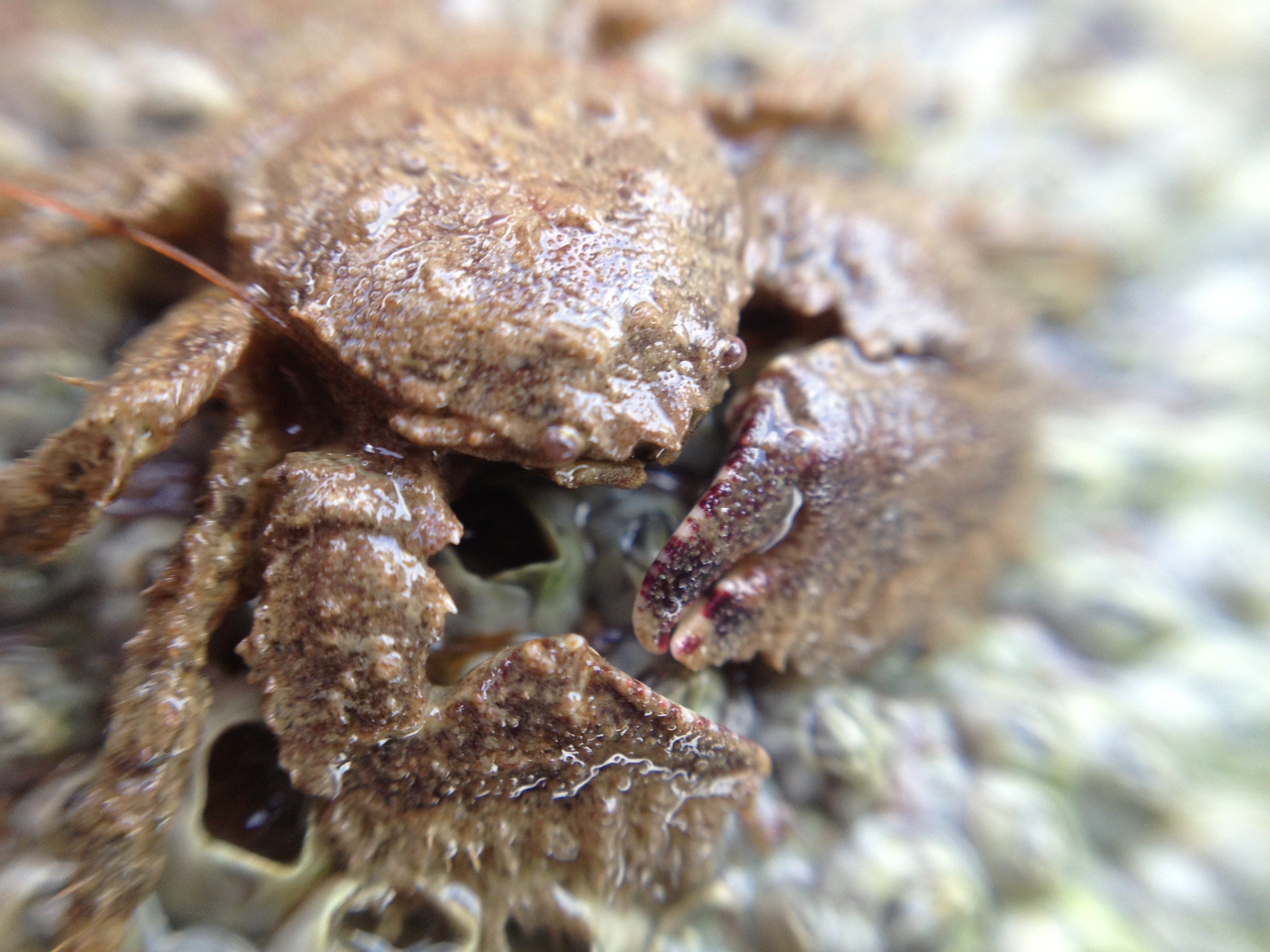
The diversity of crabs here in Cornwall is quite high: it is easy to spot more than five species in just a minute of rock pooling. The Furrowed crab Xantho incisus (or X. hydrophilus) has relatively large claws and can do a lot of posturing when disturbed but it is actually quite docile and never pinches hard:

IMG_1356

I have only once encountered the small crab Pirimela denticulata (but I must say I have not been looking particularly hard):

IMG_0560

The Broad-clawed porcelain crab Porcellana platycheles is extremely common under rocks. I have added a couple to my aquarium when I started but as they just hide under rocks that wasn’t a very smart idea. Months later when re-arranging a rock I found them again so at least they seem to do well in the aquarium:

IMG_1142

quick rockpooling session

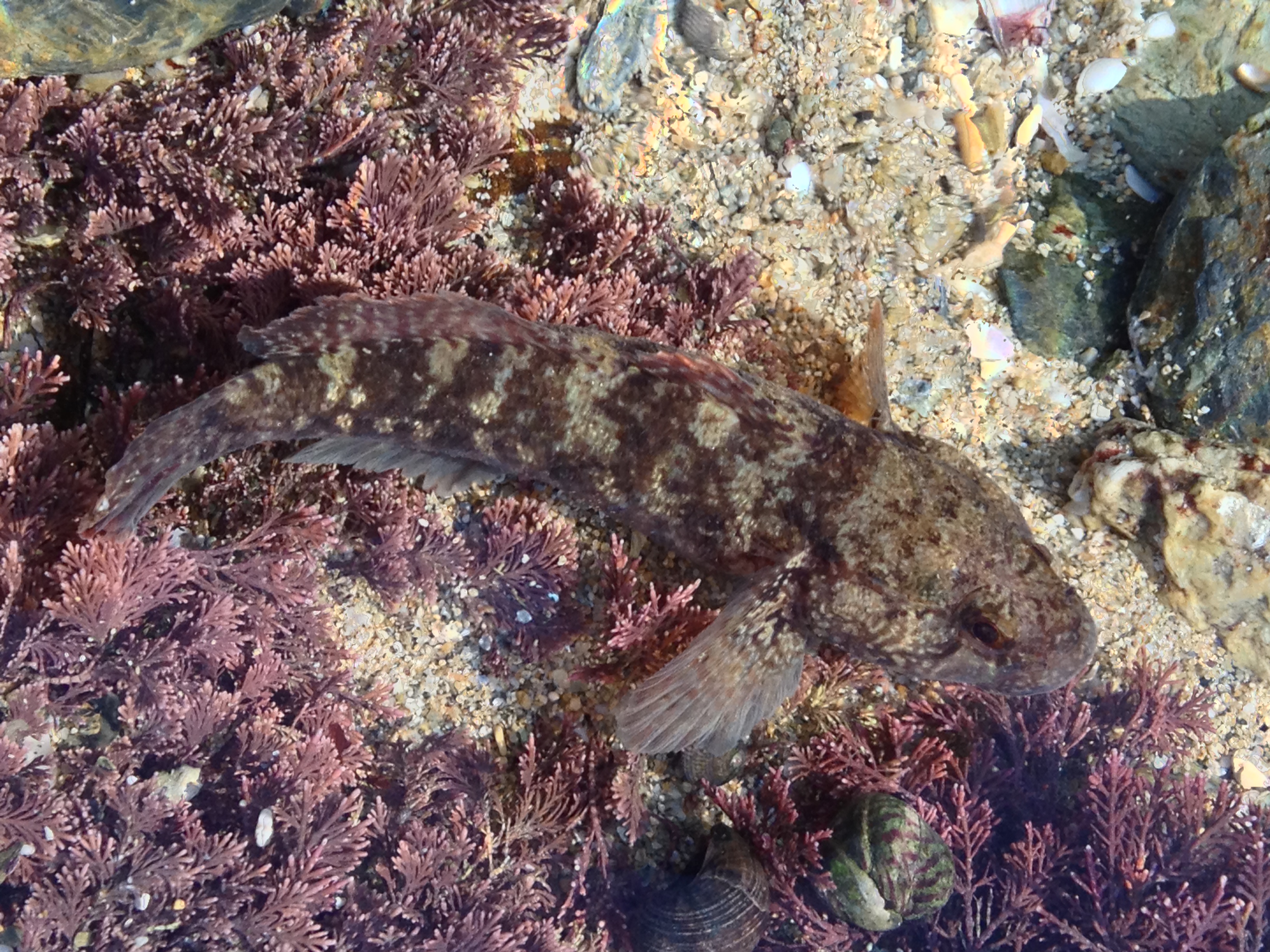
Went to Castle Beach in Falmouth after work this week for a bit of rock pooling. I saw a beautiful grey-red Sea scorpion Taurulus bubalis; I could not tell the difference) or but it was gone before I could even attempt to catch it. Below the much easier to spot Shanny Lipophrys pholis Giant goby Gobius cobitis (after lifting up a rock):

IMG_2297

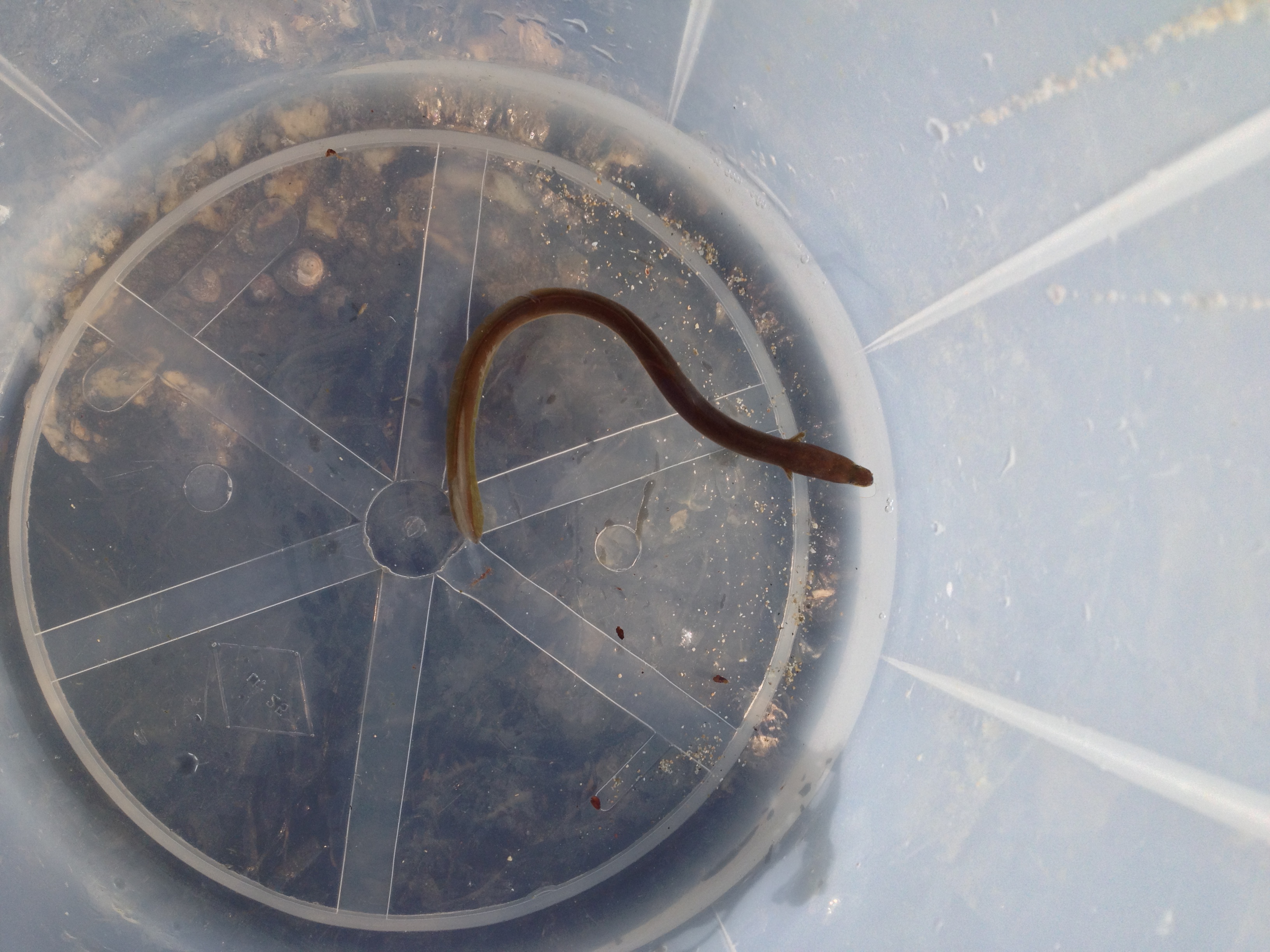
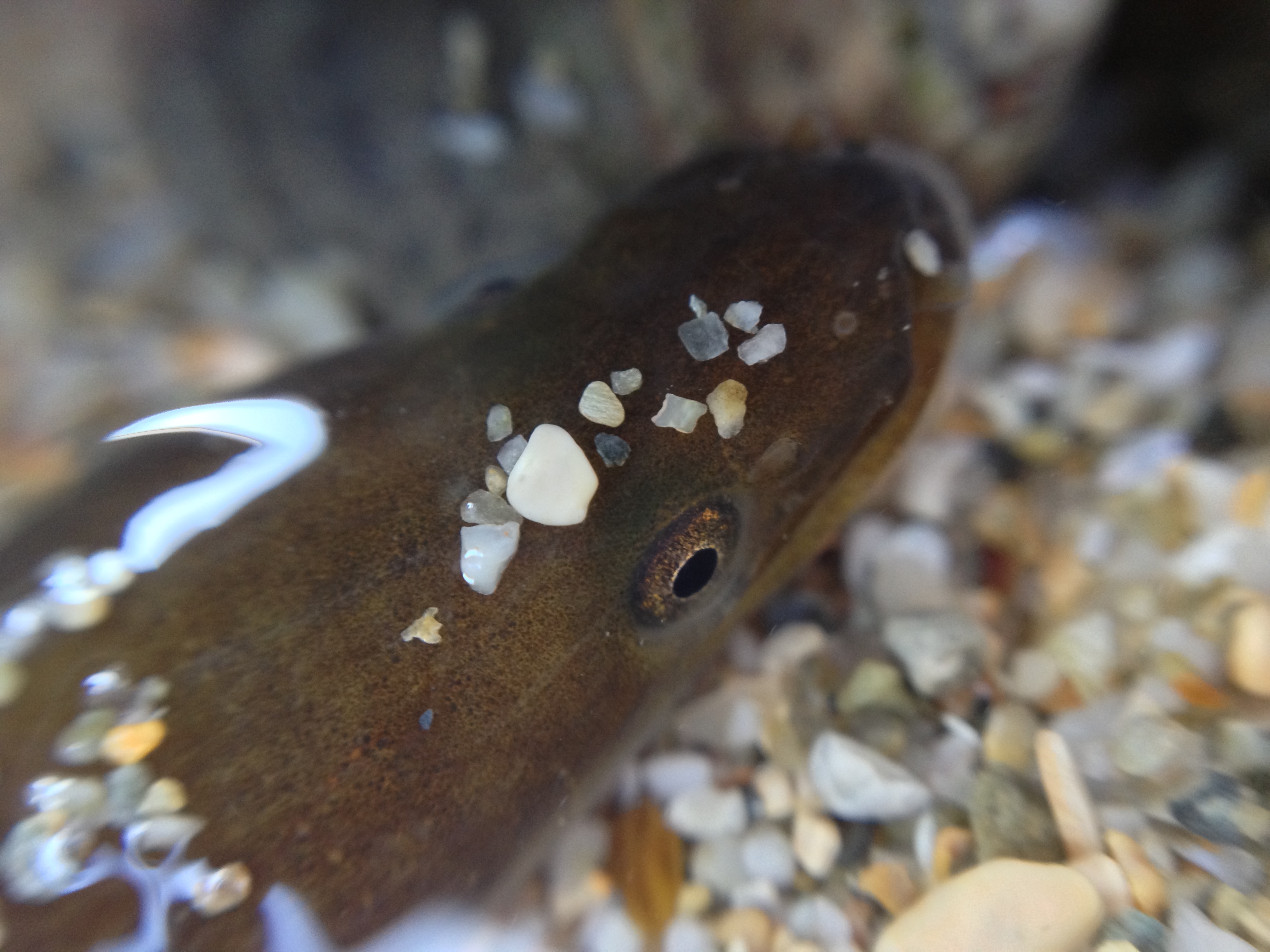
I spotted a small Eel Anguilla anguilla for the first time on the beach; it was quick but I could scoop it up from a very shallow sandy pool. Nice, but not of interest for the aquarium!

IMG_2311

IMG_2322

Also spotted for the first time: a European sting winkle Ocenebra erinacea. This I took home for the aquarium:

IMG_2343

A tiny white Edible crab Cancer pagurus. I do not know if it is an albino or whether juveniles are generally white. I had a bigger one in the aquarium (carapace width 6 cm or so), but every night the light went out it came out of its burrow and started to rearranging the tank, knocking big rocks against the glass. This one is only one cm so I hope it will be better behaved:

IMG_2331

tank update

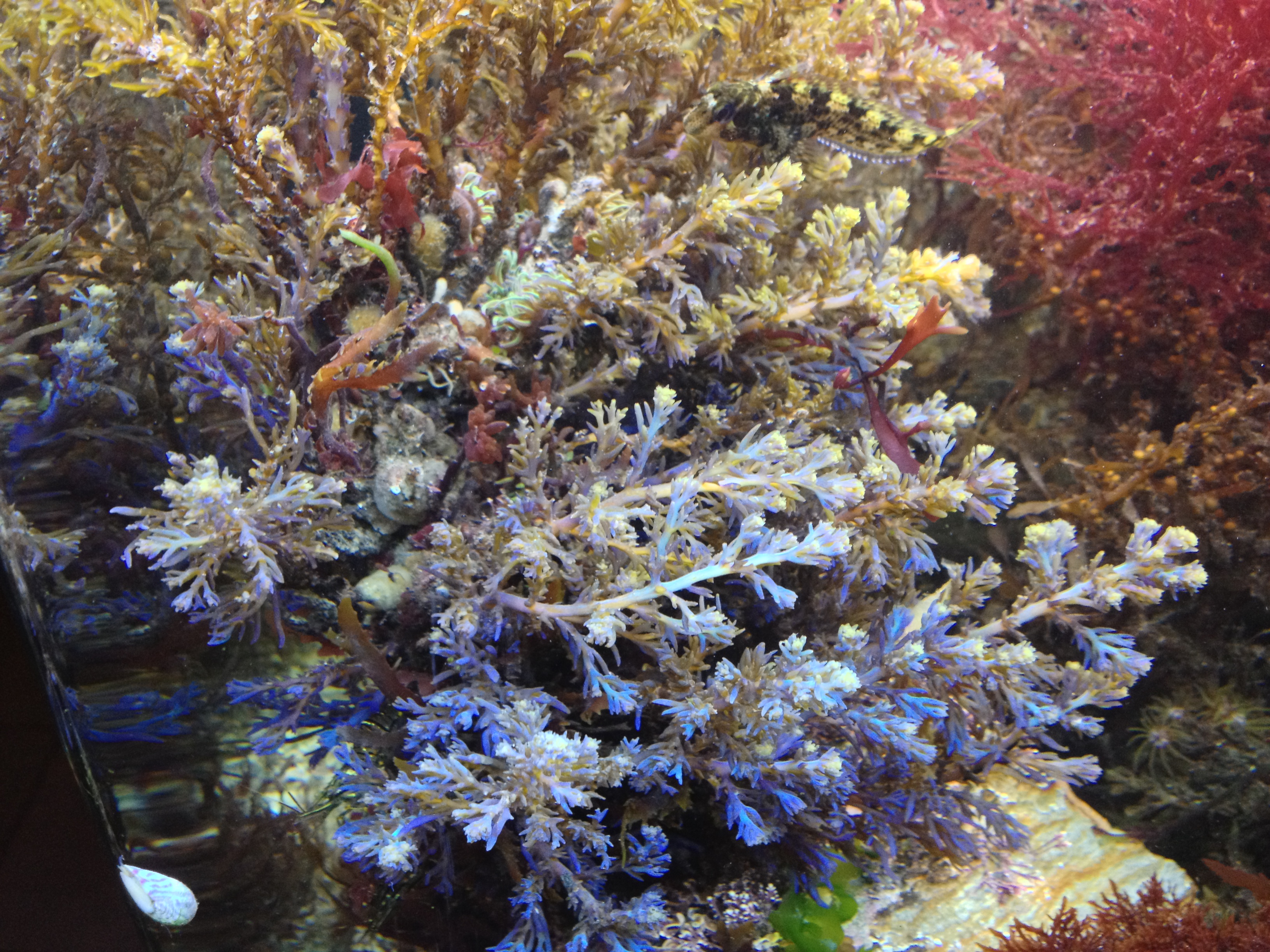
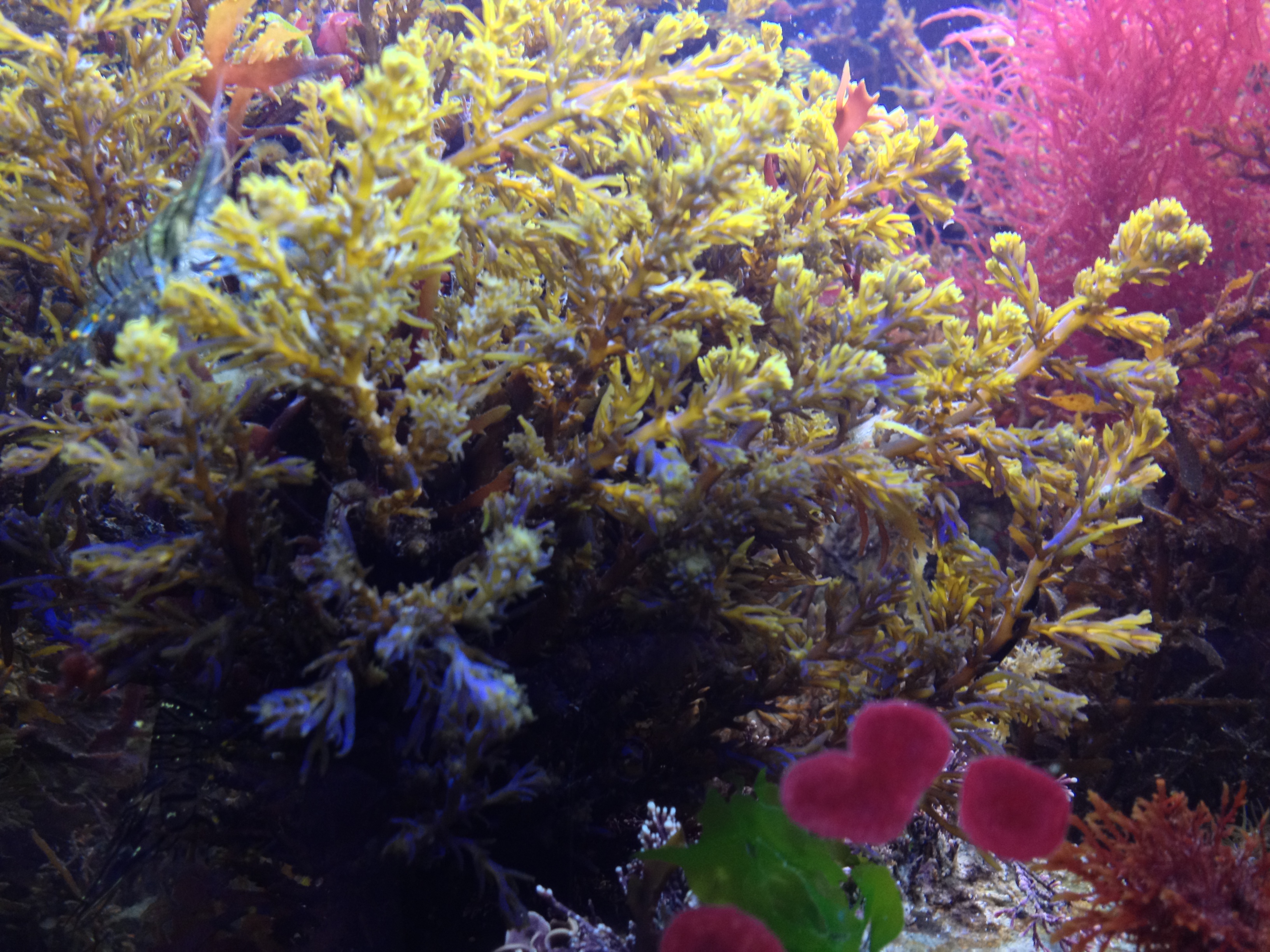
Time for an update on the tank. Switching to two lamps instead of one looks good but has not brought the iridescence of the Bushy rainbow wrack back. I could not resist putting a new specimen in. Iridescence is defined as the property of certain surfaces to appear to change color as the angle of view or the angle of illumination changes. Left: viewed from below, right: viewed from above.
IMG_2407IMG_2409

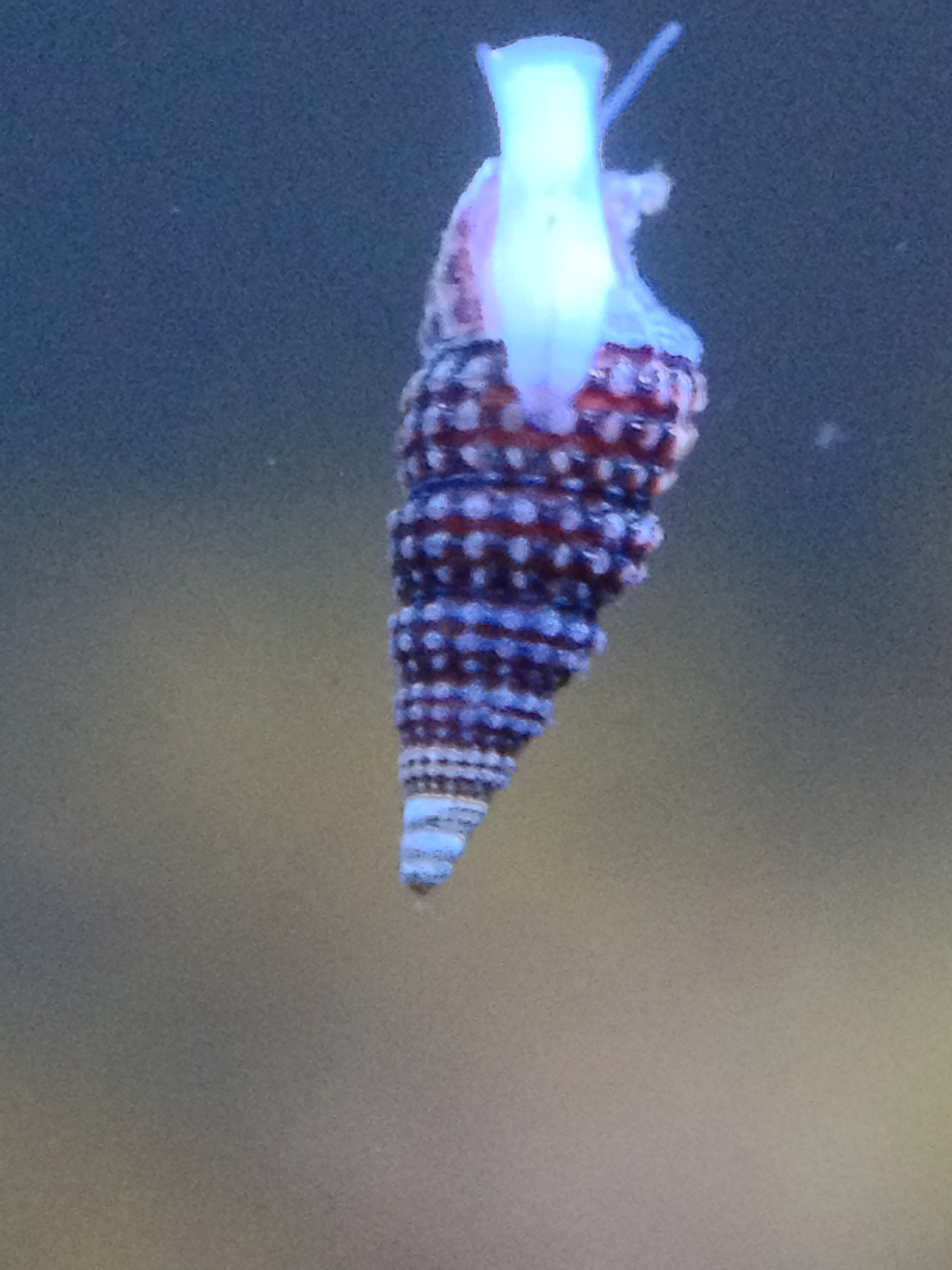
I noticed that the underside of the rock the weed was attached to harbored a nice little strawberry worm, but before I could photograph it, the large rock goby gulped it down. It is noticeable that the fish have full bellies after putting in a new piece of seaweed, which is no surprise as there is so much growing on and in it.I have seen the very cute amphipod Caprella acanthifera which looks like a tiny, marine cross between a praying mantis and a caterpillar, but since they did not come not near the glass I could not get a good shot. I have seen one Cushion star Asterina Phylactica as well, which looks nicer than the light grey Asterina gibbosa I have. I also noticed a couple of Cerithiopsis tubercularis (3-4 mm):

IMG_2102

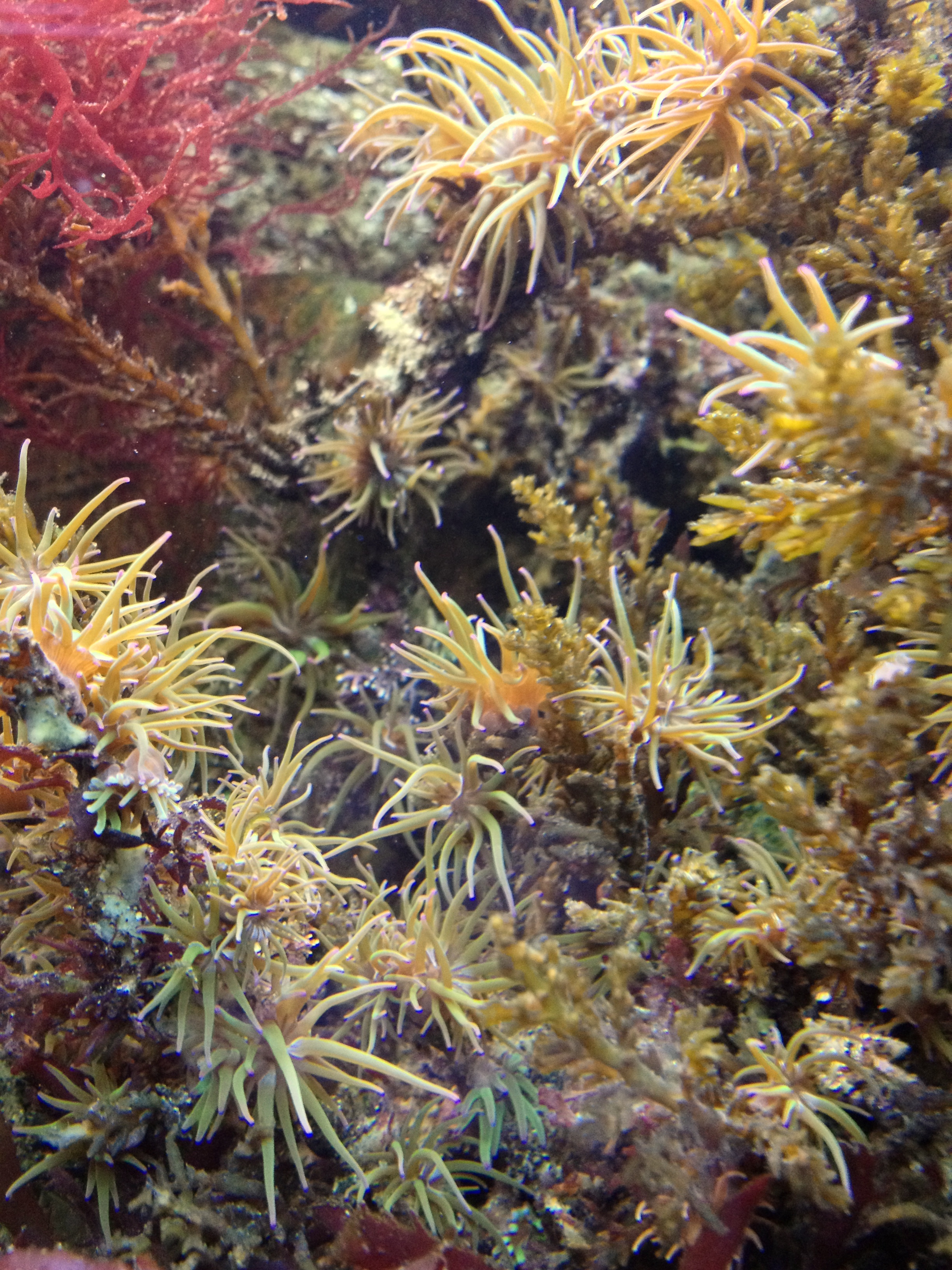
The tank is completely full of snakelocks anemones, hundreds maybe:

IMG_2410

IMG_2107

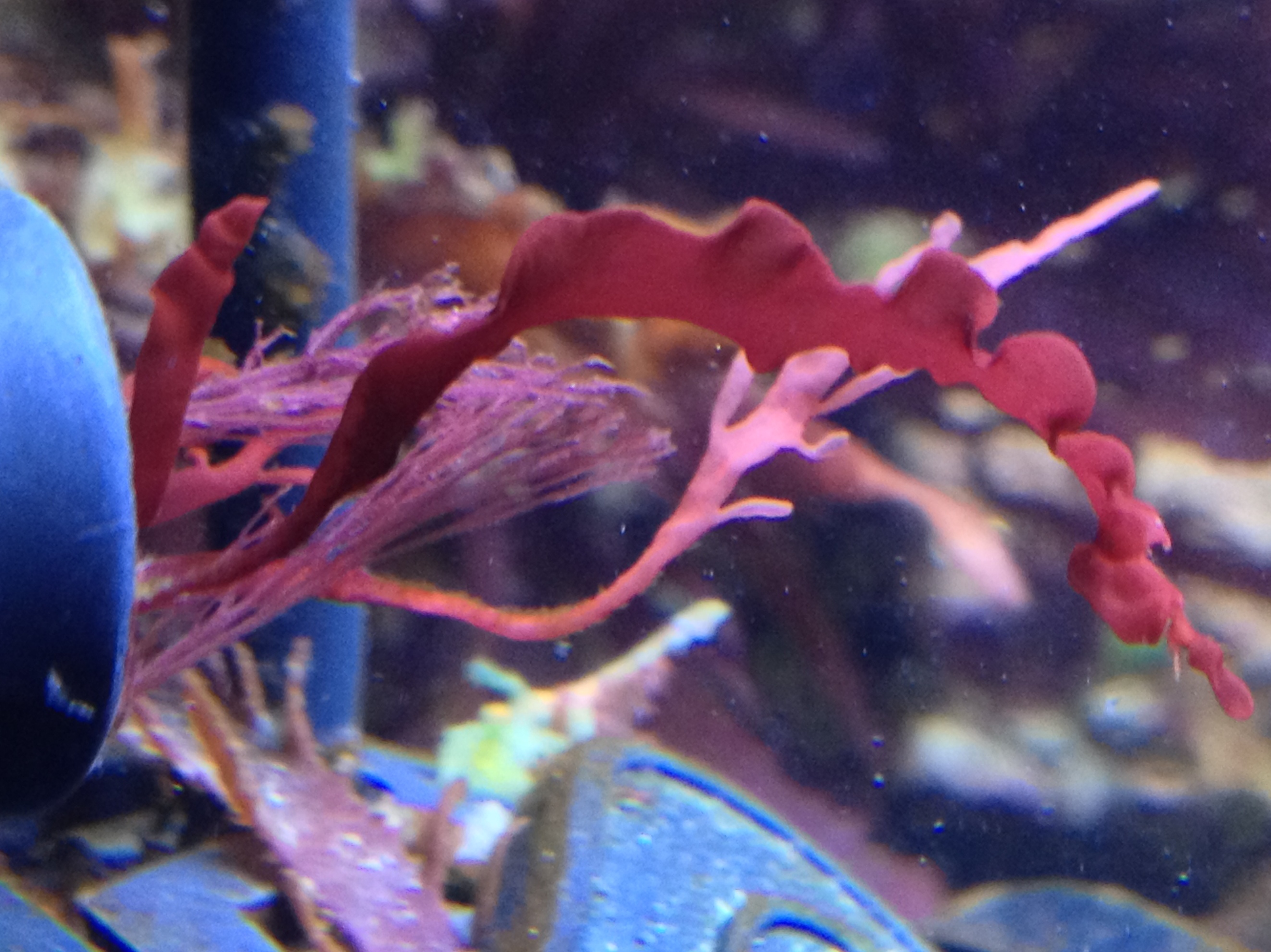
In the foreground an Idiotea isopod; there are many of these sitting on seaweed branches and occasionally swimming around, although most of them will probably be eaten by now. Finally, three seaweeds have started to grow from the pump outlets. Dudresnay’s whorled weed, a fine purple weed and a broadleaved red seaweed. I have placed adult plants of the latter species (30 cm or so)  in my aquarium before, but these were quickly eaten. It is either a type of laver or dulse, but I am not sure. It has also settled on the glass, but seldomly grows ‘leaves’ on there. Growing in the water current protects the weeds from predation from shrimps, let’s see how big they can grow!

IMG_2354