low tide finds at Flushing

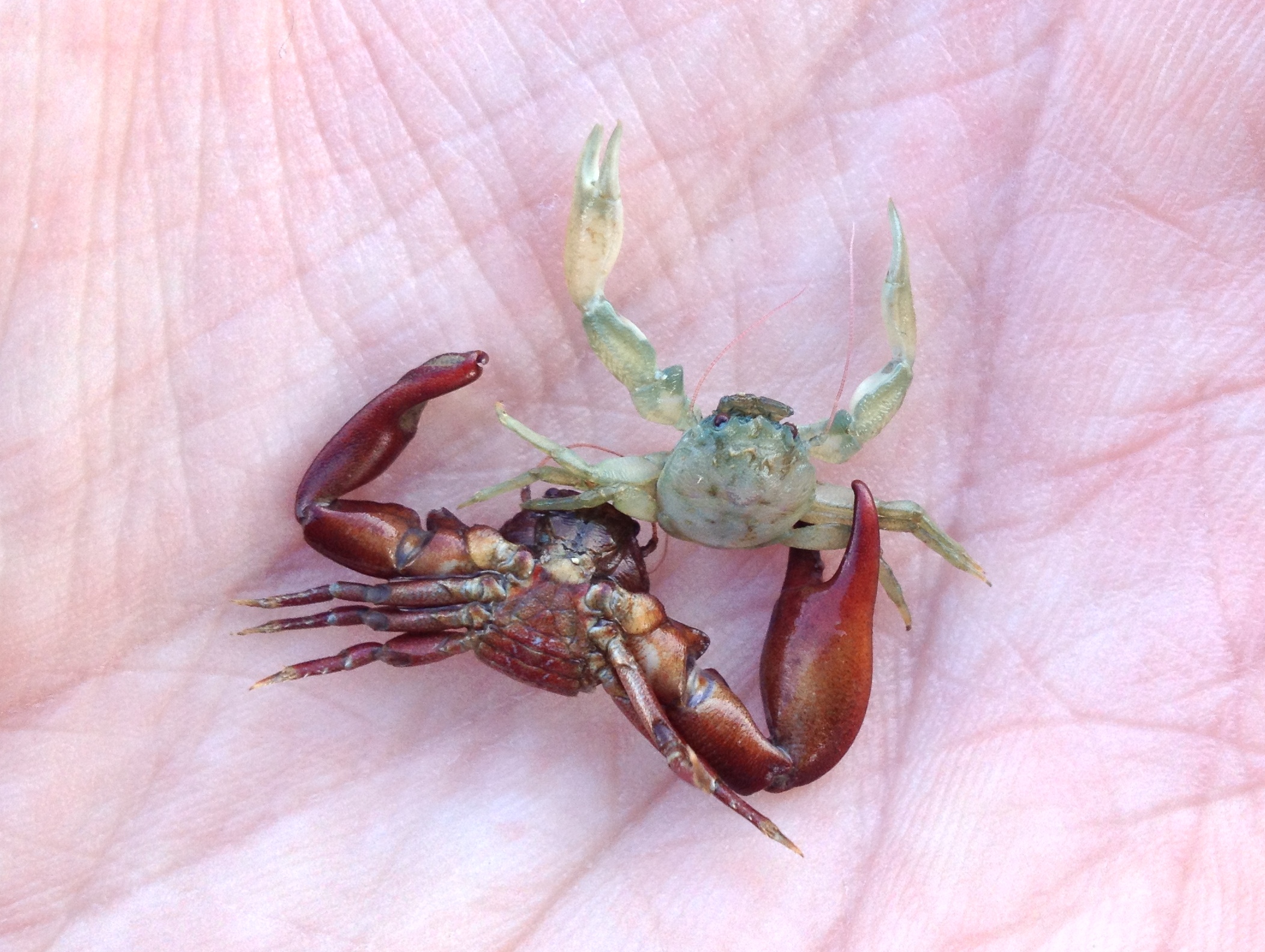
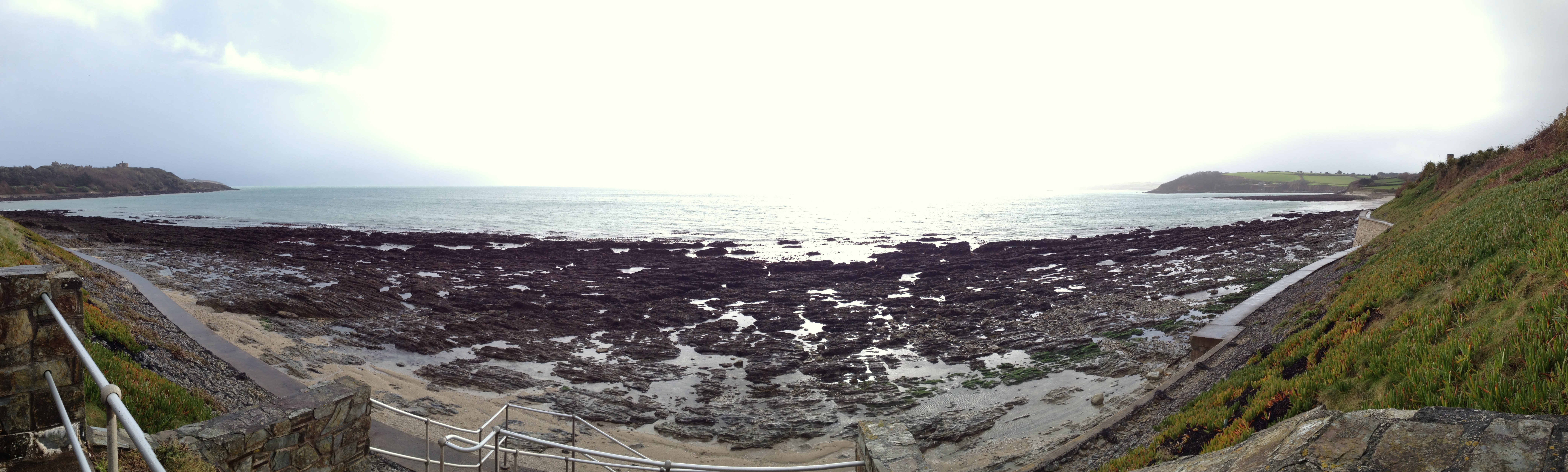
The day after the very low tide excursion in Falmouth, I had a look in Flushing as well. This site is less pretty, more silty and estuarine, and has a slightly different fauna as well, especially on the muddier areas below the rockpools. (I have written a post about ‘mud pooling’ before.) Lots of sponges, Variegated scallops, European cowries, Hooded prawns and Common squat lobsters. This time I noticed that Hairy crabs Pilumnus hirtellus are common here too. Two diffently coloured Long-clawed porcelain crabs Pisidia longicornis:
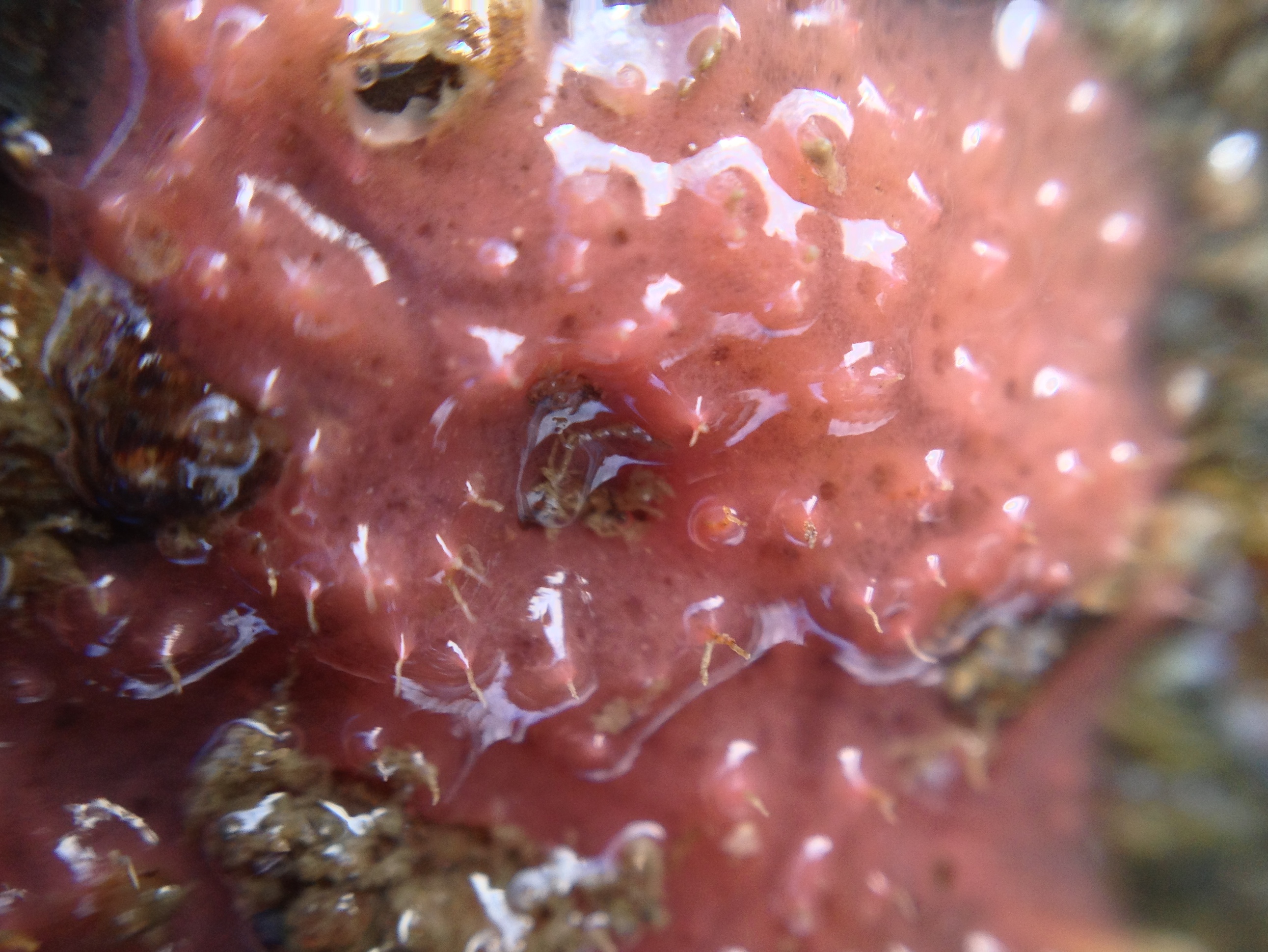
IMG_8030A pretty sponge Aplysilla rosea (determined using the Aphotomarine page as it was not featured in my otherwise excellent Collins guide):
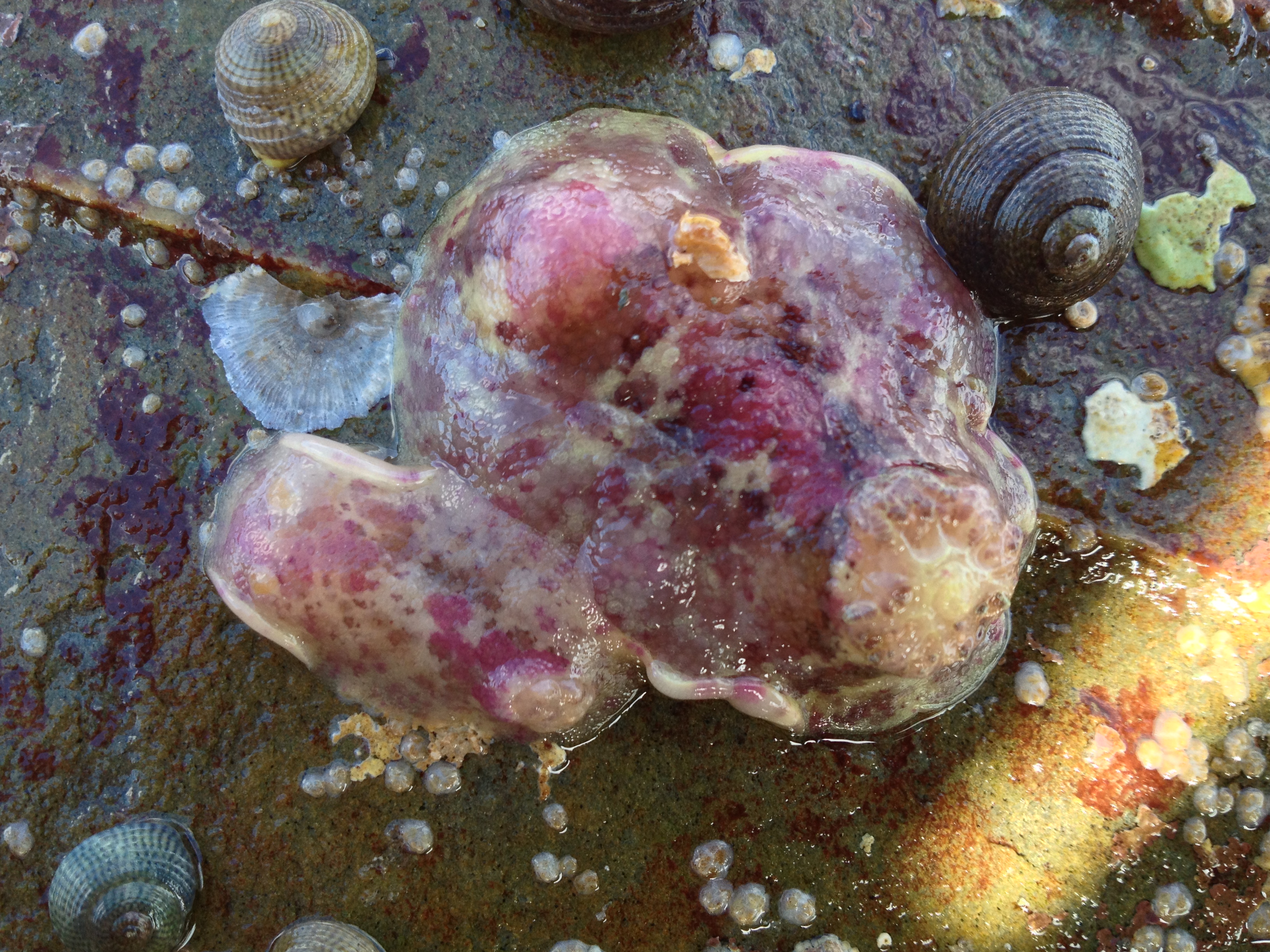
IMG_8041I had seen one before, but with this low tide I found several Sea lemons Archidorus pseudoargus, large sponge-eating nudibranchs. A large one and a small one together (on the right side of each you can see the ‘naked gills’ which are not extended above water):IMG_8098
IMG_8086

Another, bigger individual (European cowries and Thick-lipped dog whelks for scale) again with a smaller individual half under it:
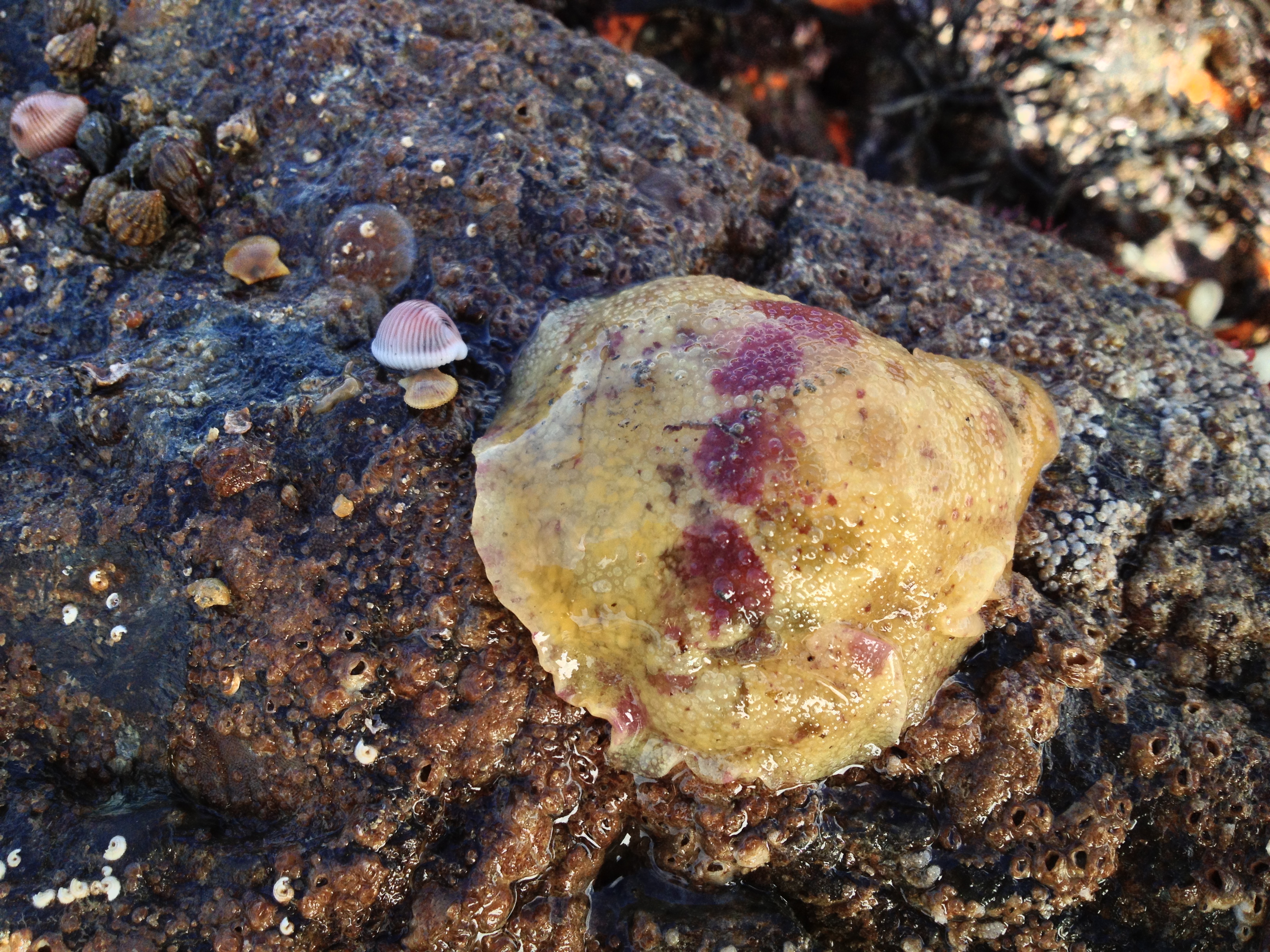
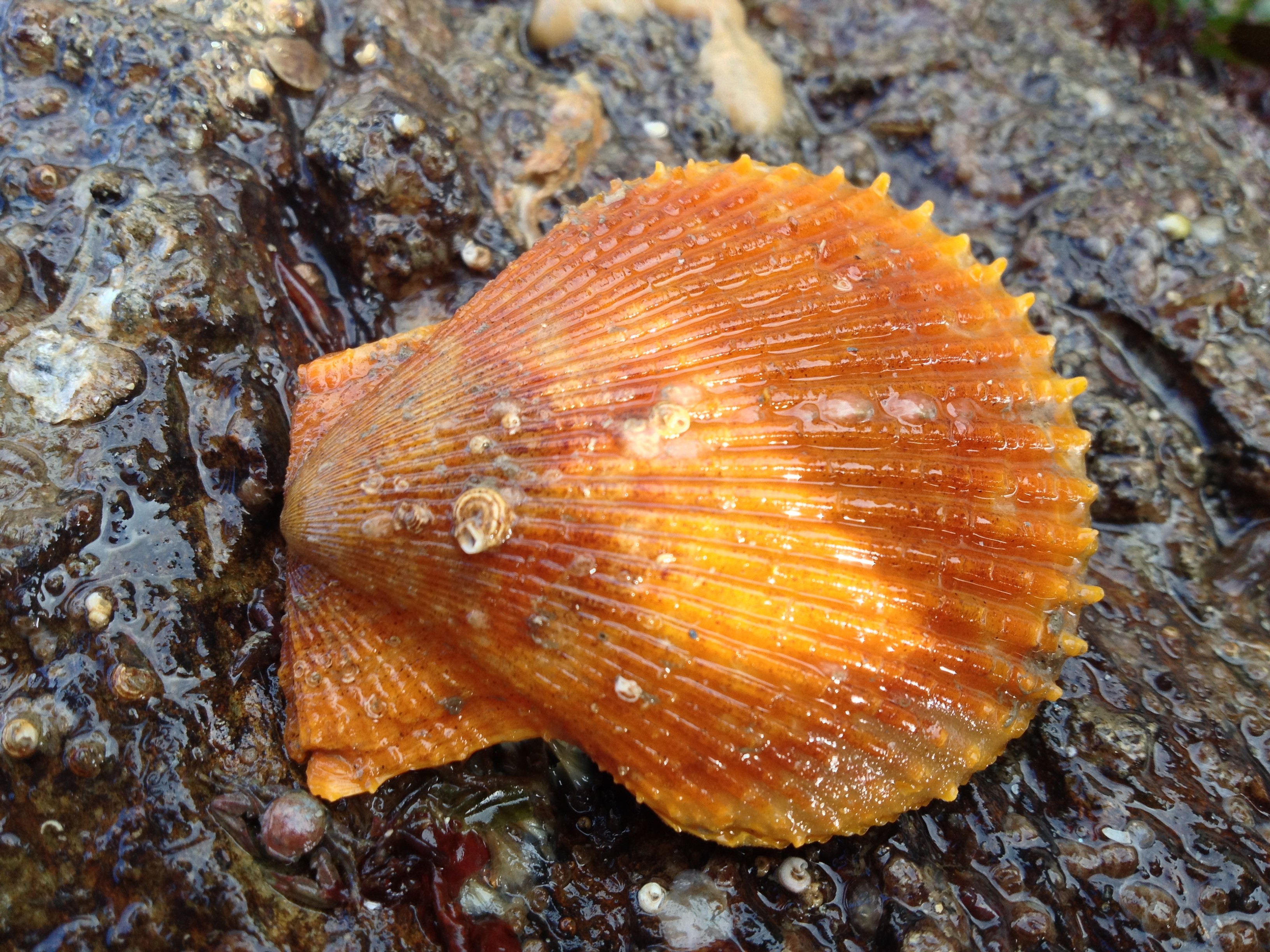
IMG_8073You can see some tiny juvenile Variegated scallops Chlamys varia too. I found my biggest one to date:
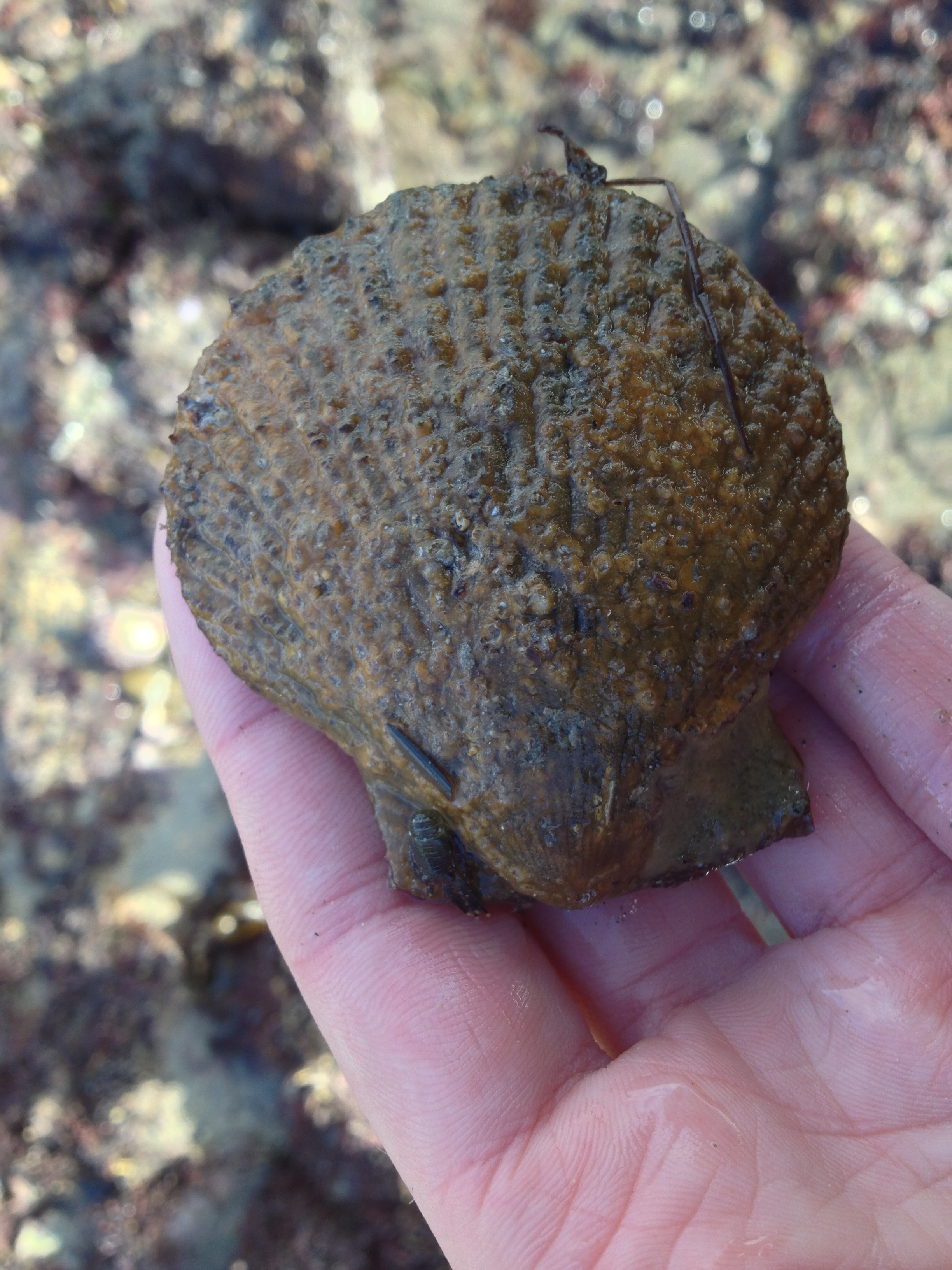
IMG_8082They can be much prettier than that though!
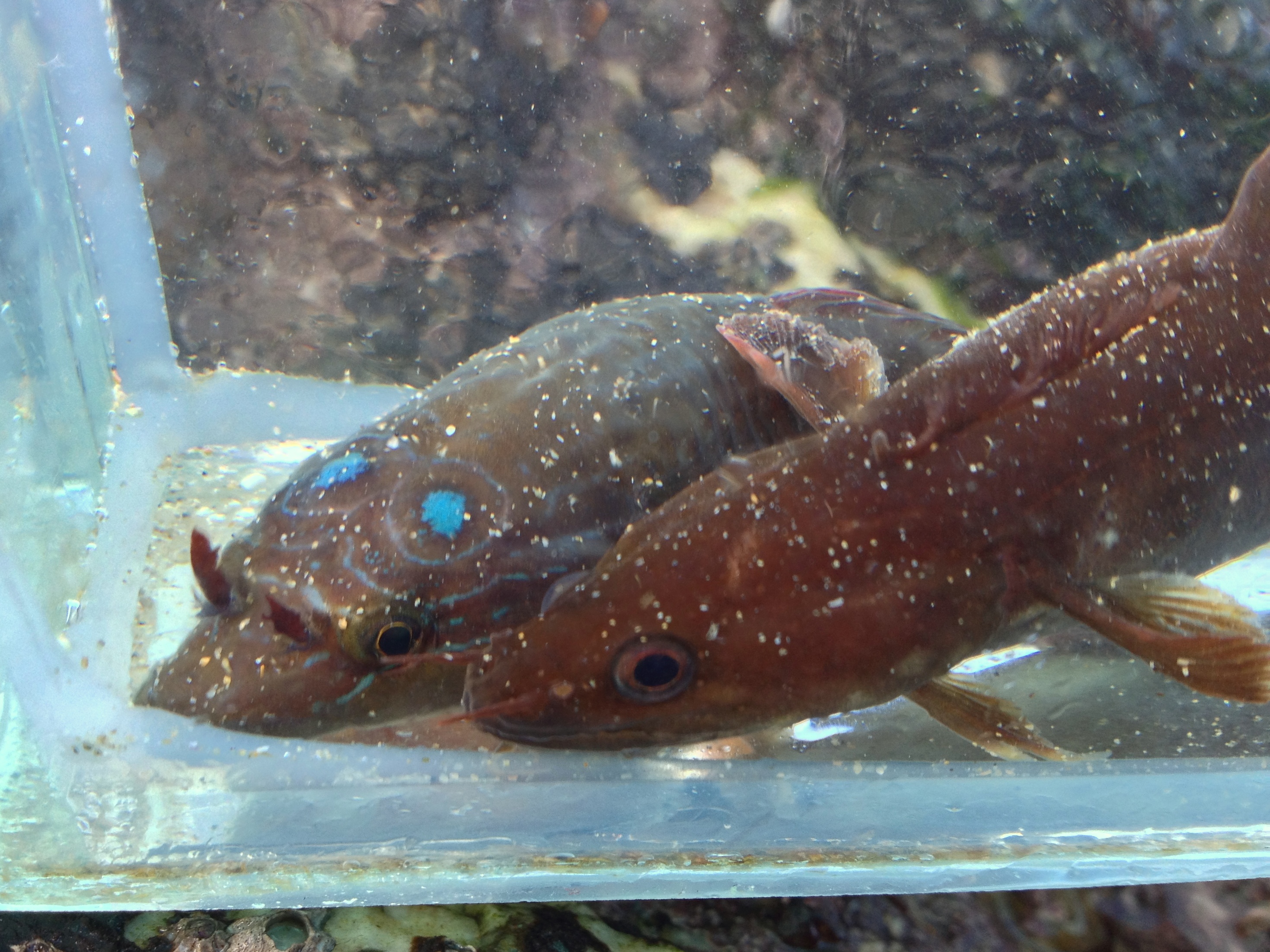
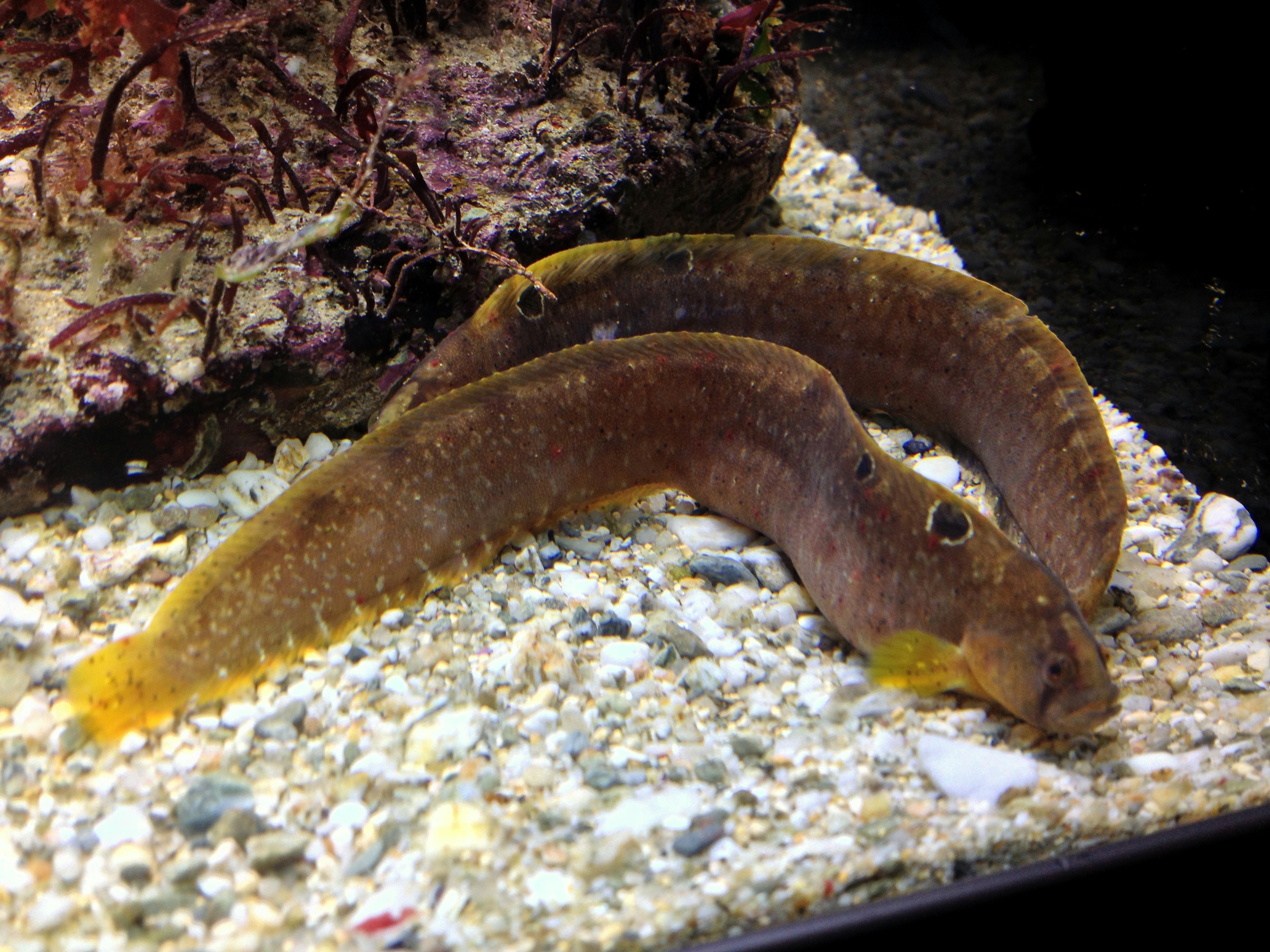
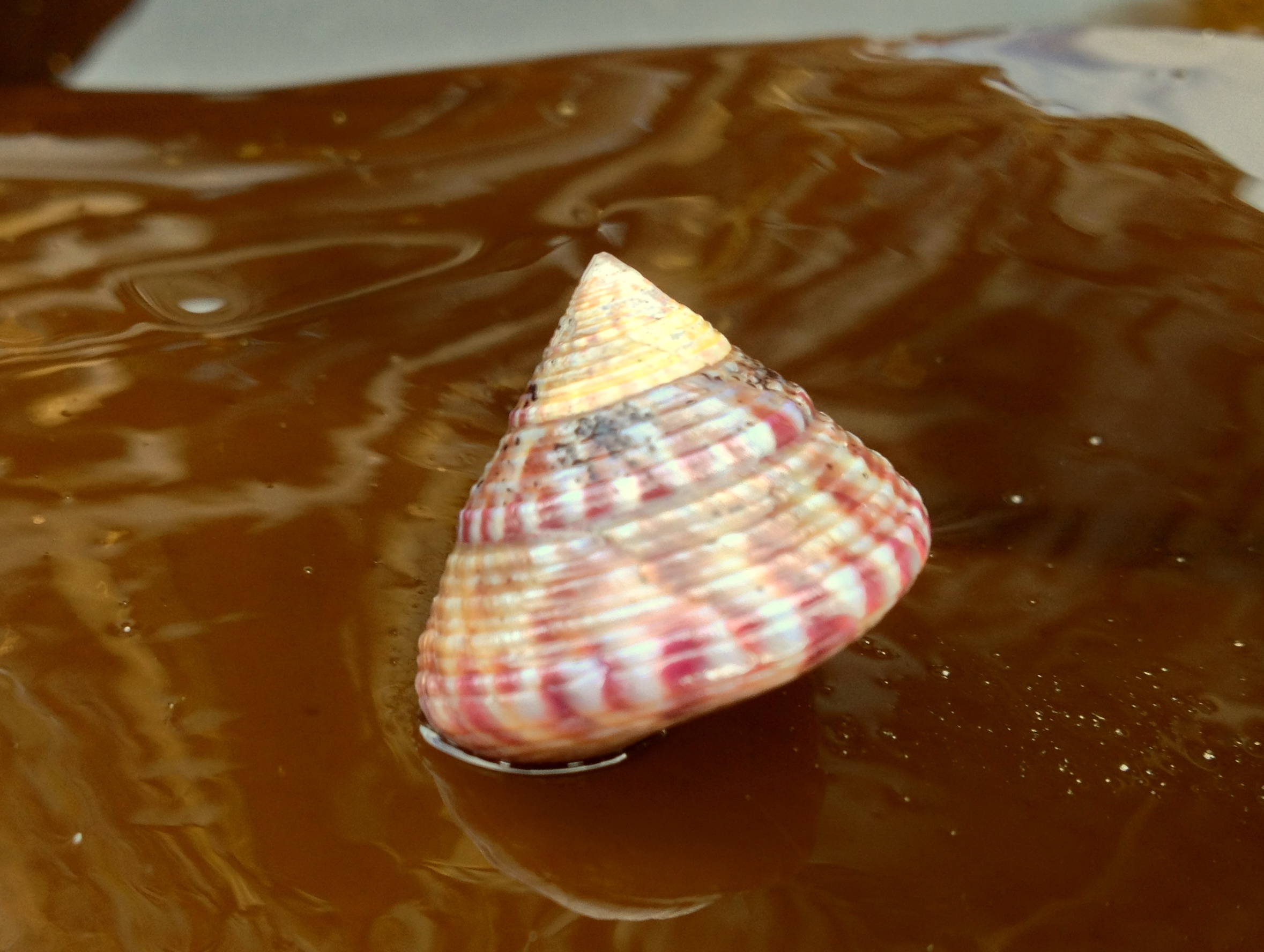
IMG_8026I could not resist taking some stuff home to my aquarium, even though I was still waiting for the chiller and new lights (they both have since arrived, that’ll be my next post). There were loads of Painted top shells Calliostoma zizyphinum, which are very pretty and moreover do not often emerge above water so they might be better behaved in the aquarium, and I took some of those home. I also took a pair of Butterfish Pholish gunnellus and some Sea lemons, mainly to observe them for a week or so and then release them again before starting fiddling with the tank. This was not a great succes unfortunately: both Butterfish died within a couple of days. I had acclimatized them to room temperature and I don’t know what the reason could have been. Clingfish, mullet, a rockling, gobies and blennies have never died in my aquarium. I felt really bad about it; definitely no more Butterfish in my tank!
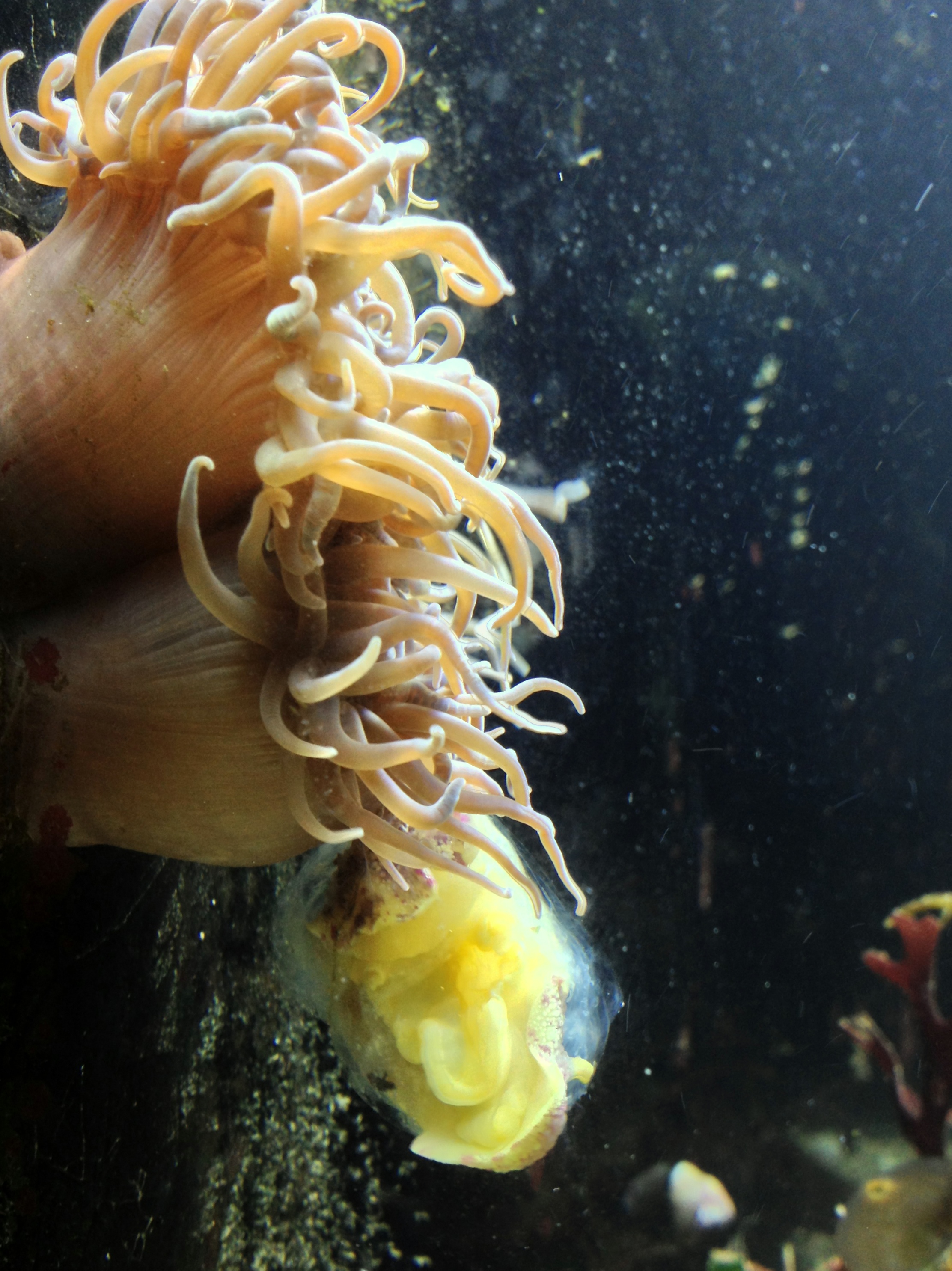
IMG_8115One of the Sea lemons managed to get caught by a Snakelocks anemone….however, it produced copious amounts of slime and it was eventually spat out!
IMG_8117

a very low tide at Castle beach

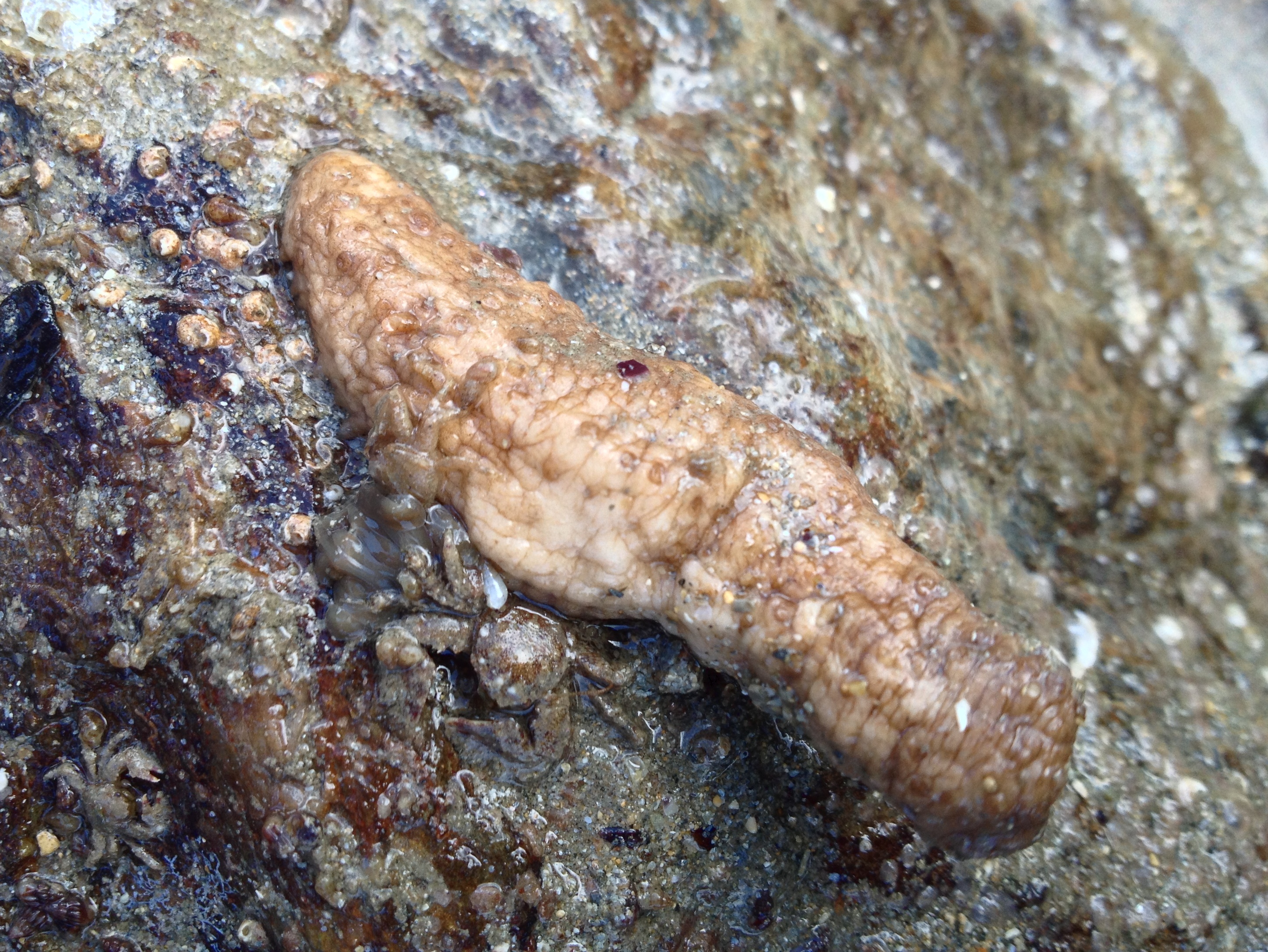
IMG_7884There were exceptionally low tides this weekend so I was quite stoked to get out and find some new species in what is normally the subtidal. It was raining and even hailing quite a bit but we were on a mission! Fortunately, the sun came out later and my jeans could dry up. Sea urchins are not common in the rock pools that are usually accessible at low tide, but they are quite common a little deeper. The same goes for Sea cucumbers. These are hardly ever pretty but the following species is ugly even in holothurian terms. According to David Fenwick it is a Pawsonia saxicola (I have seen a prettier incarnation before):

IMG_7900I noticed a little gastropod which looked vaguely familiar on a Pawsonia when checking my pictures. I could identify it as a Eulimida species in my old Poppe and Goto ‘European Seashells’ book, which also mentioned that many species in this family parasitize echinoderms so that fitted. David Fenwick’s excellent site Aphotomarine has great pictures of pretty much all species occurring here in the Southwest, including a much better one of this Vitreolina philippi Melanella sp (identified through David’s correspondence with Jakov Prkic). David has also just launched a website dedicated to Stalked jellyfish: stauromedusa which looks amazing.

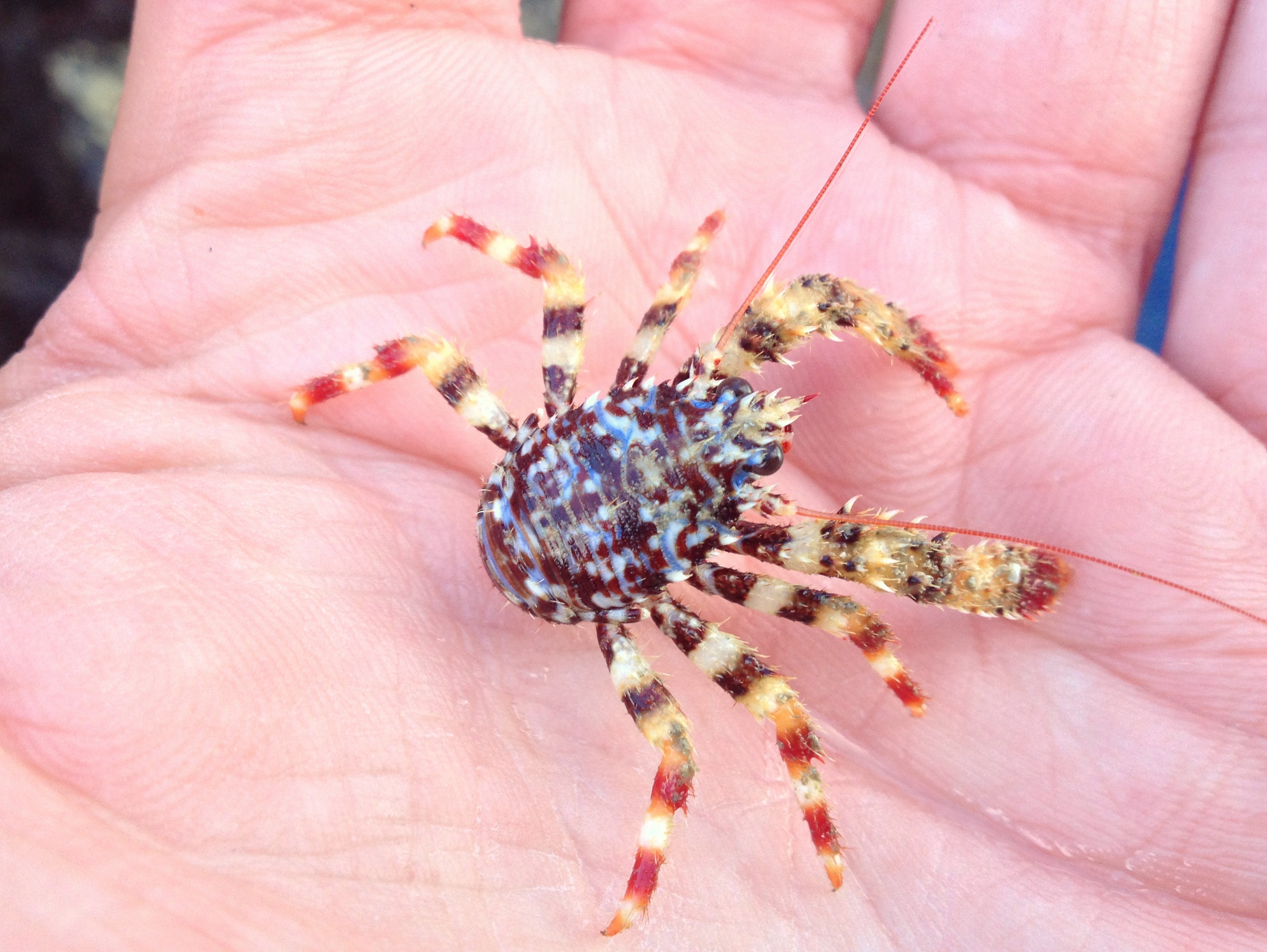
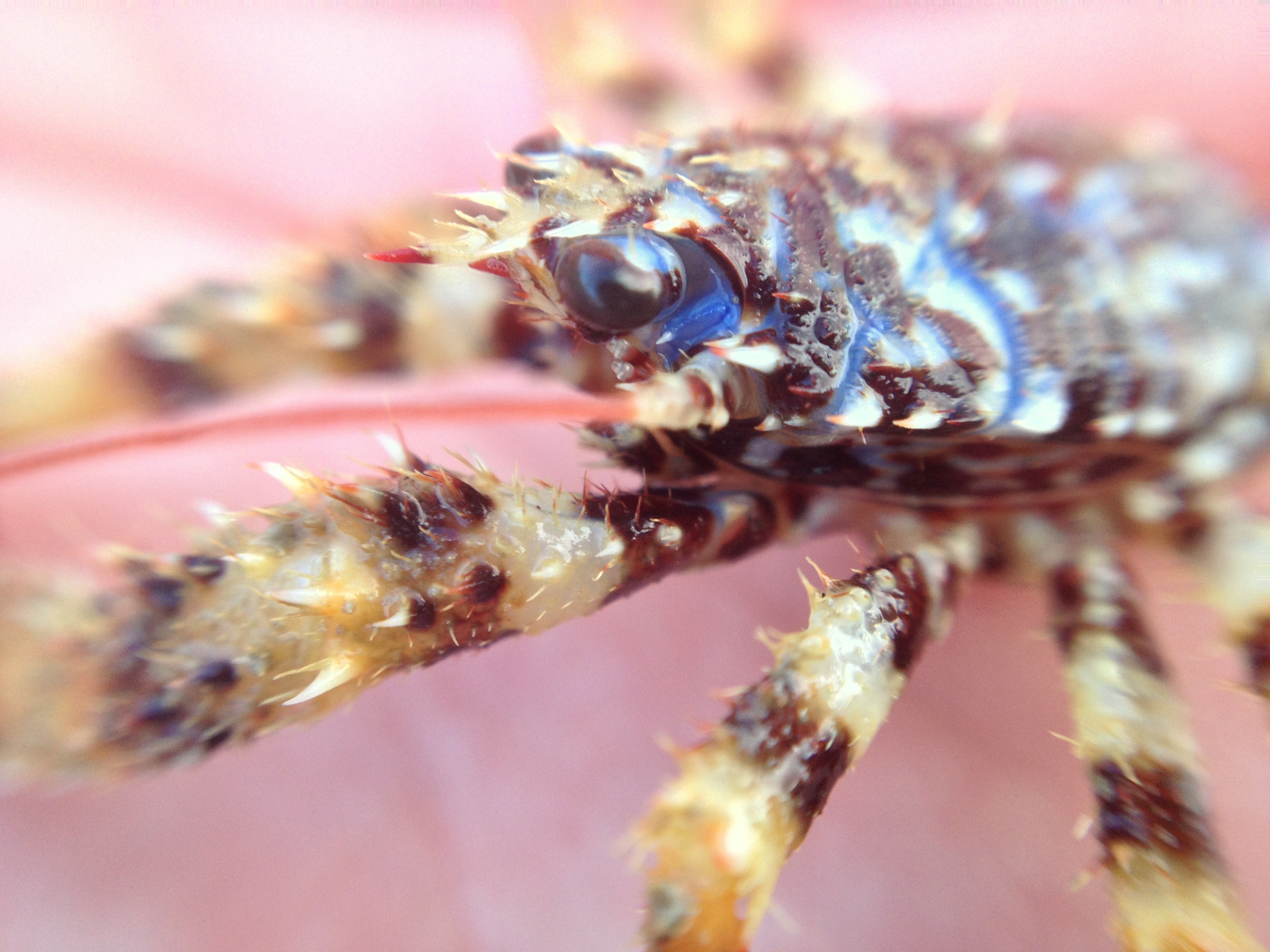
IMG_7891 - CopyAt the end of the ‘session’ I glanced something red, white and blue; a colour combination that I had seen only on photographs before. It was a single, juvenile Spiny squat lobster Galathea strigosa:

IMG_7998

IMG_8010A lot of usual suspects were found as well of course, here a Cornish sucker Lepadogaster lepadogaster and a Shore rockling Gaidropsarus mediterraneus:

IMG_7925The rockling has a groove in front of its dorsal fin filled with hairlike fin rays that are continuously beating. Finally, not a very good picture but I’ve posted it because this is the longest animal in Britain: the Bootlace worm Lineus longissimus can grow up to 10 meters!

IMG_7901

beachcombing

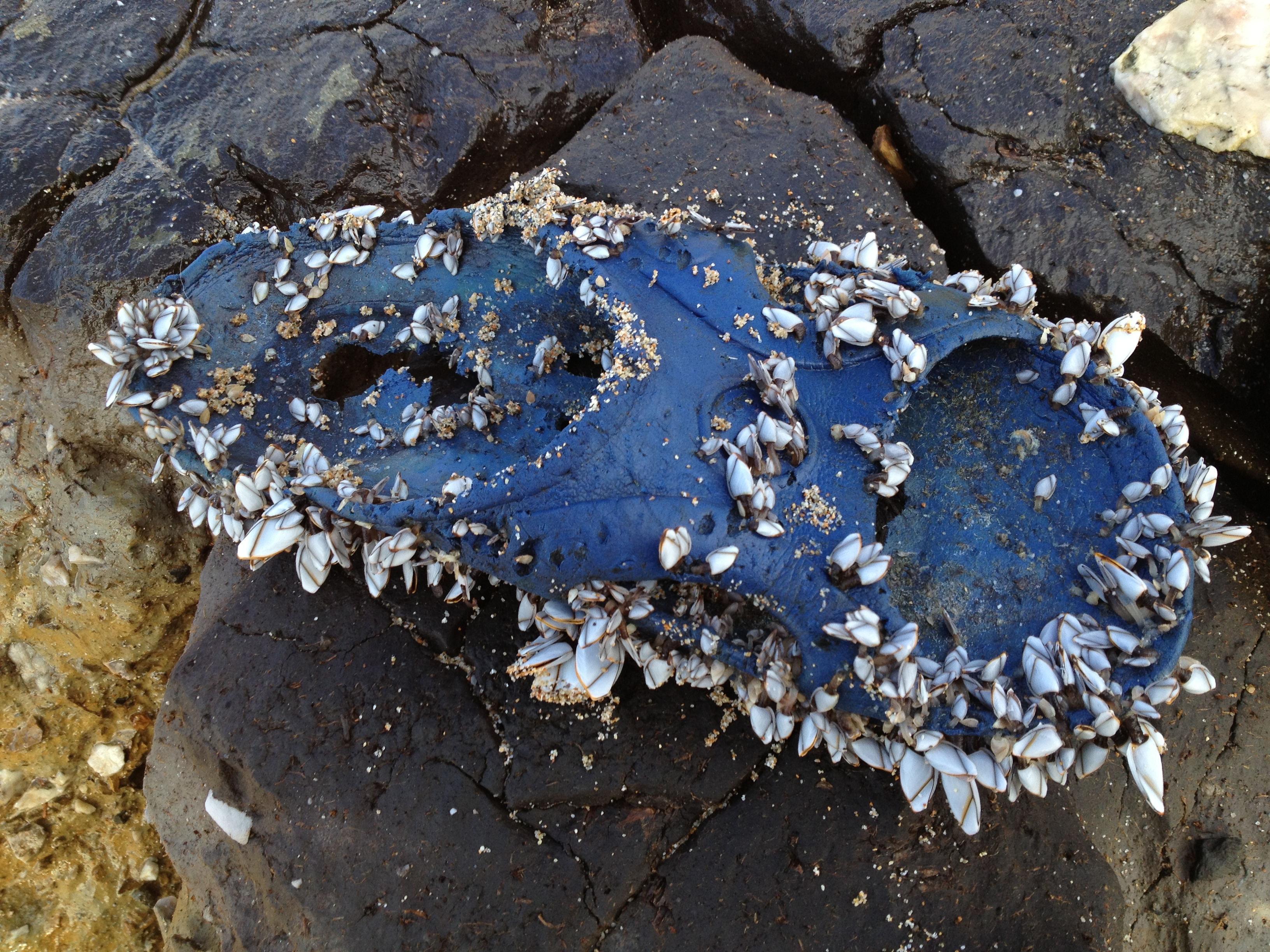
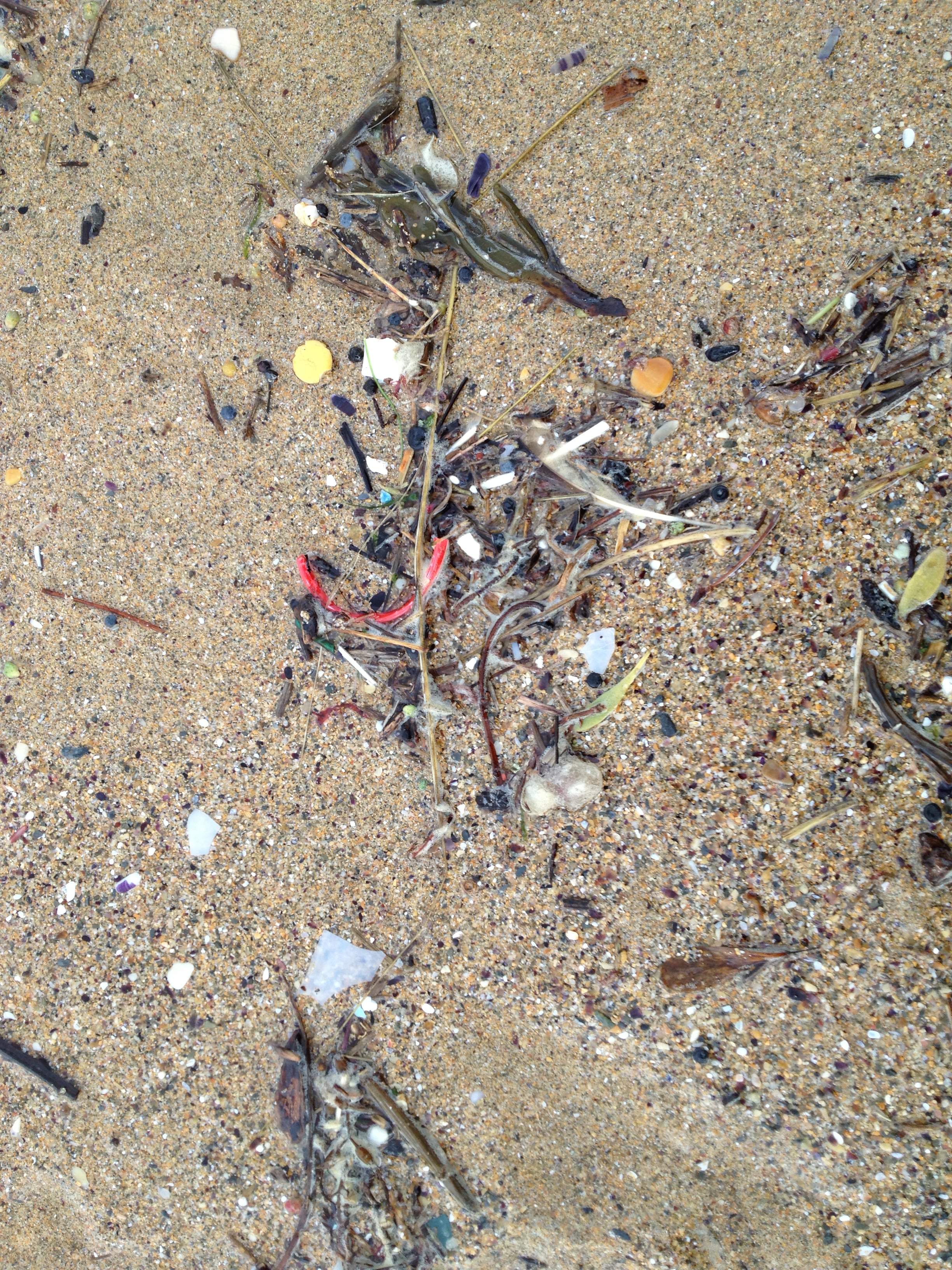
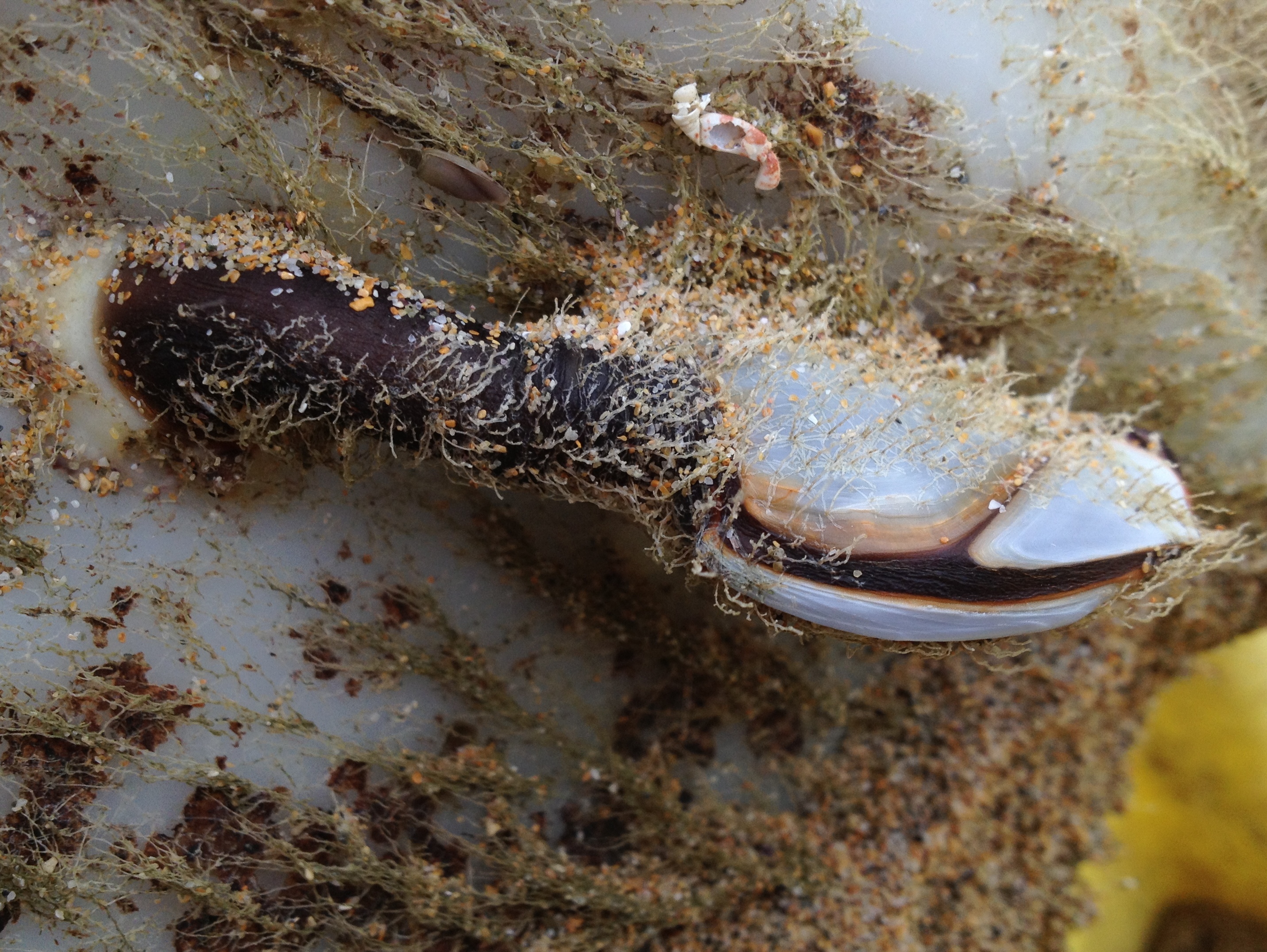
The first weekend after the recent storms and a bright blue sky meant that it was time for some beach combing. The beach at Praa Sands looked glorious in the sun, but we were probably a little late for the serious stuff (if there was any to begin with). So no dead Triggerfish, Columbus crabs or suitcases filled with cocaine. Instead, lots of bits of plastic and rope and some Velella remnants and empty Dogfish (or Small-spotted catshark Scyliorhinus canicula) egg cases. Of course also Common goose barnacles Lepas anatifer:

IMG_7717

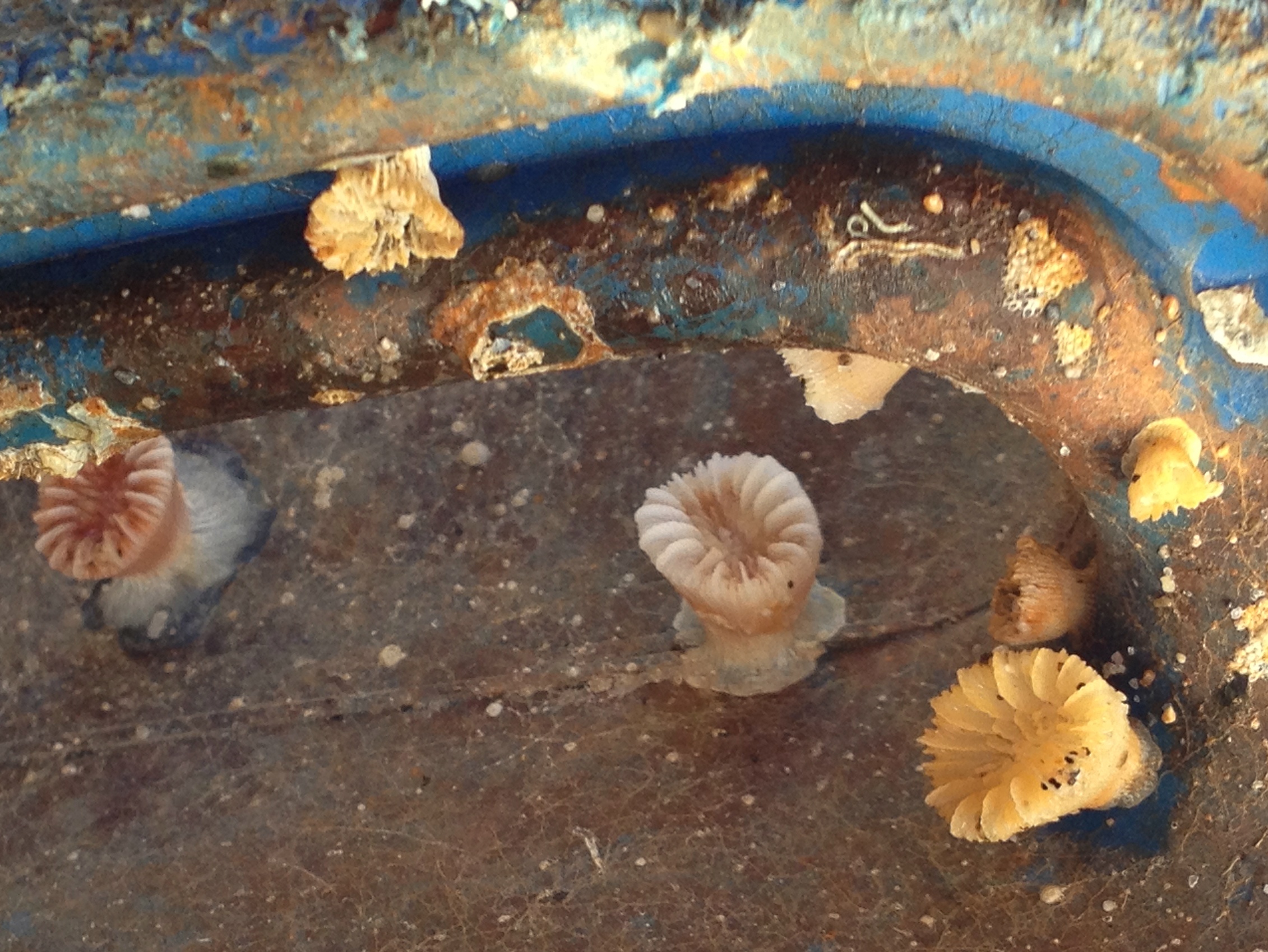
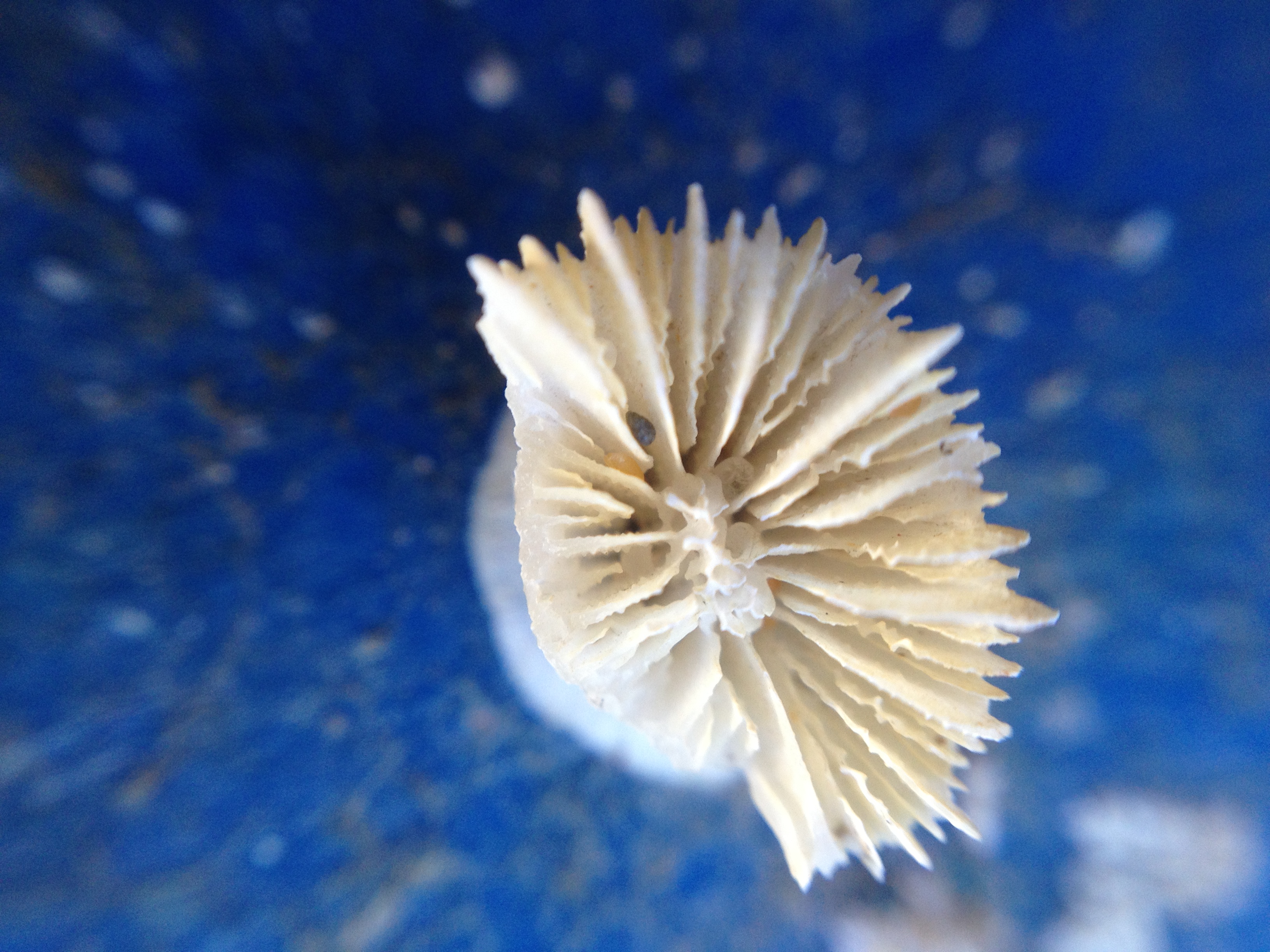
More interesting was a vat with (dead) Devonshire-cup-corals Caryophyllia smithii attached:

IMG_7648

IMG_7661

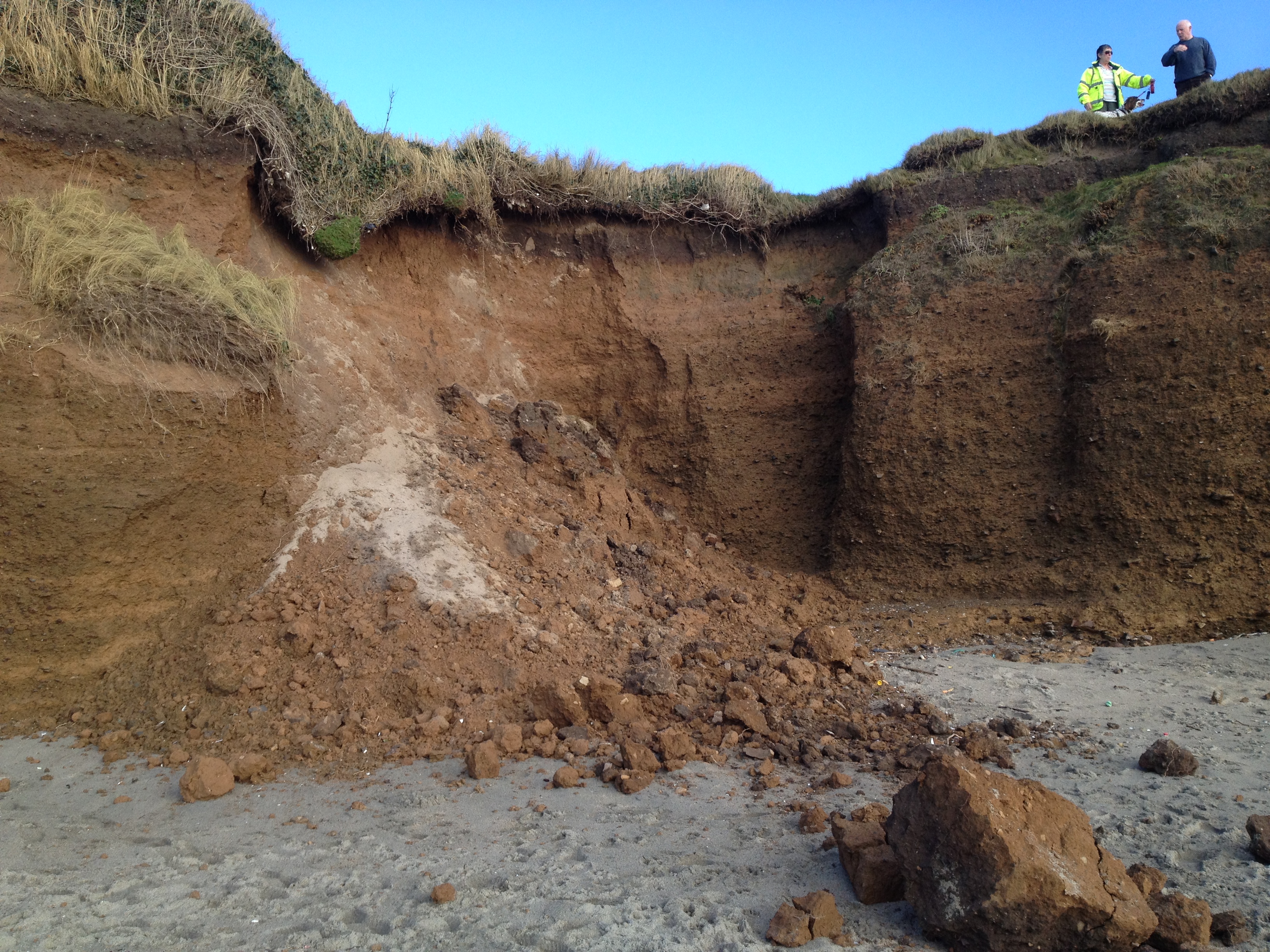
Damage to the coast was evident:

IMG_7689

hairy crab

IMG_7036

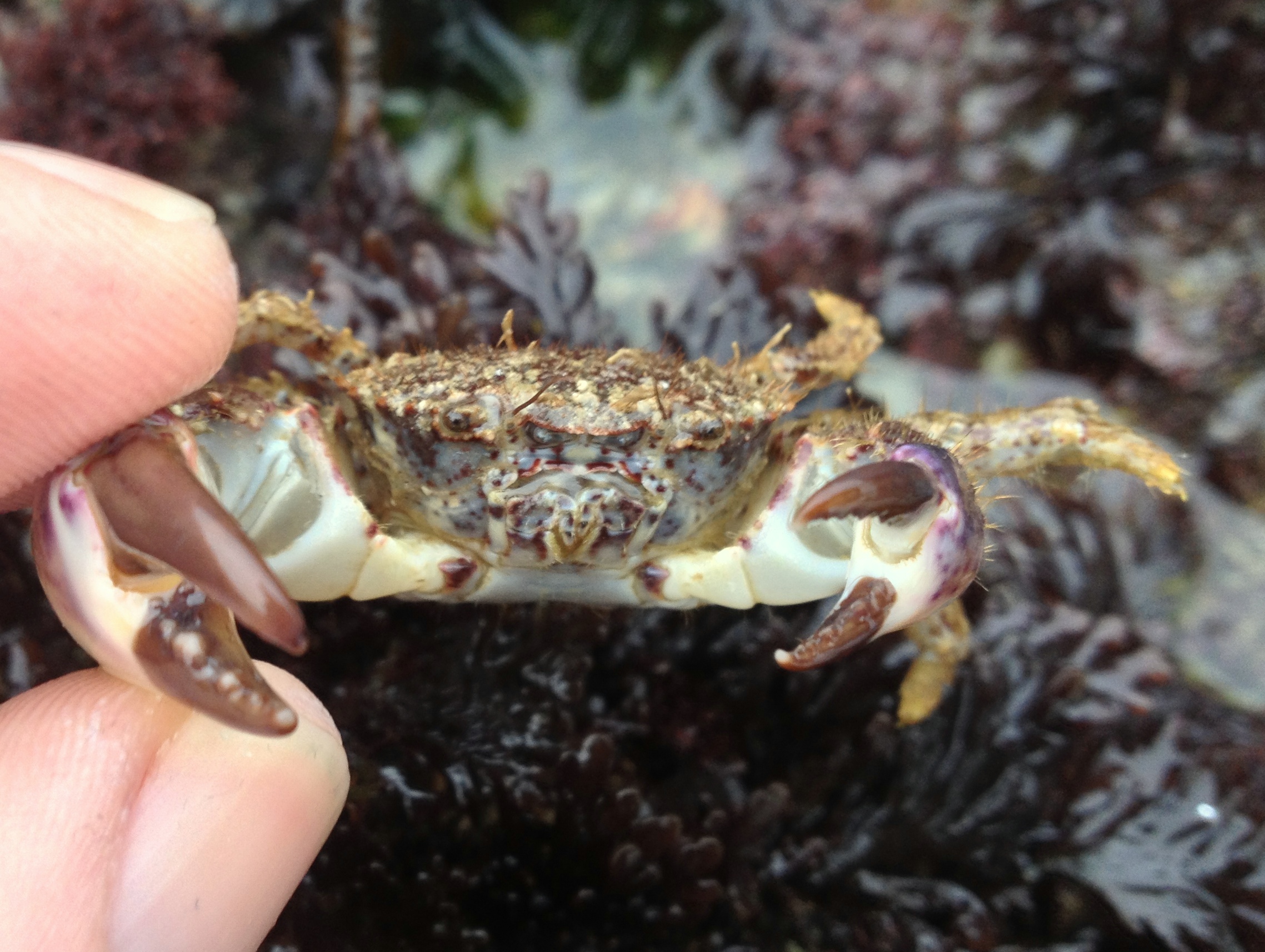
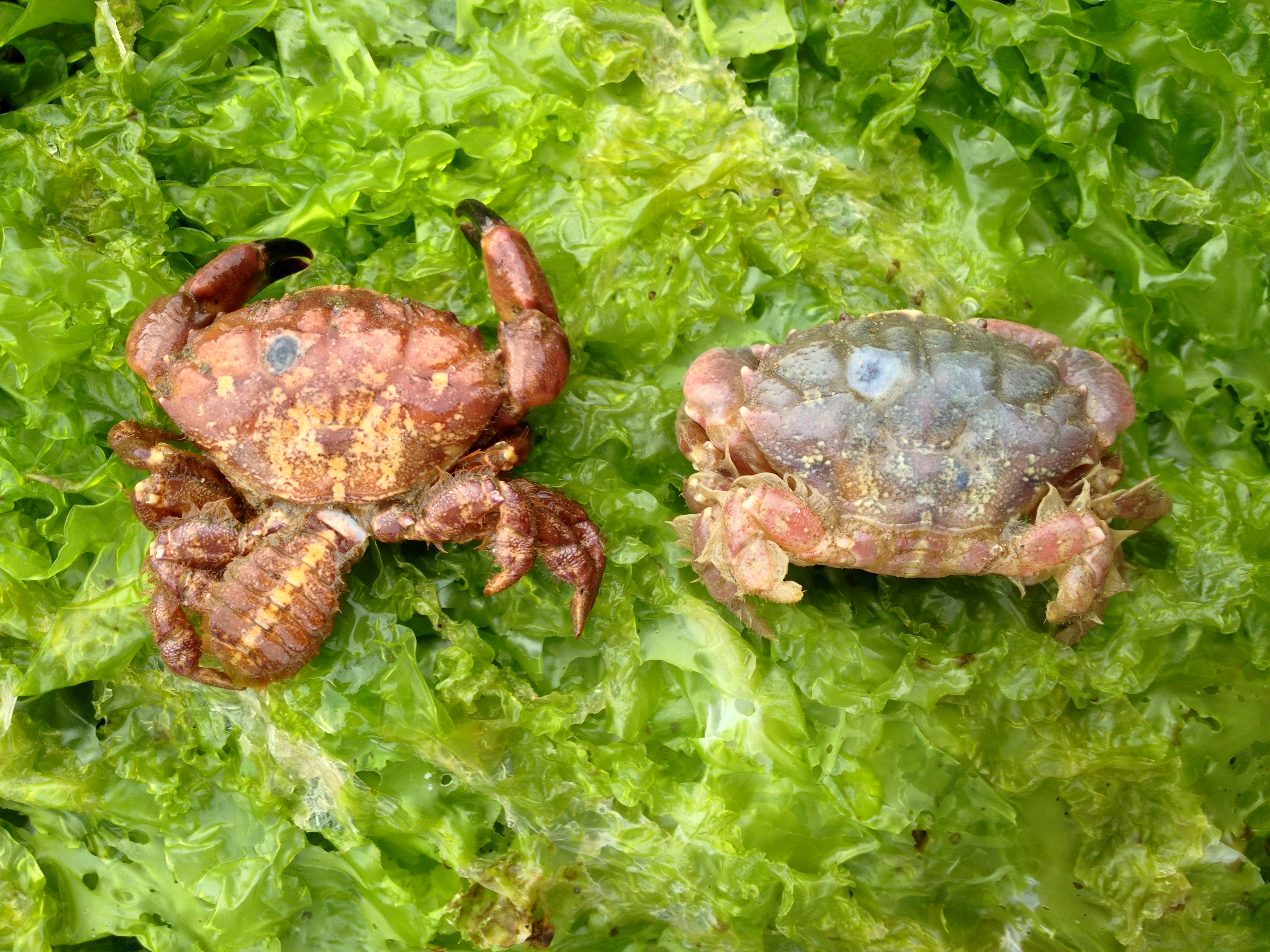
This weekend I stopped by Castle Beach in Falmouth to release some of my Snakelocks anemones (more about the aquarium in a next post…). Although the weather was bad, of course that did not prevent me from turning over some rocks. My curiosity was rewarded with another new find: a Hairy crab Pilumnus hirtellus. A beautiful little crab which is not uncommon but here it definitely is not as ubiquitous as the Furrowed and Edible crabs:

IMG_7020b

IMG_7029

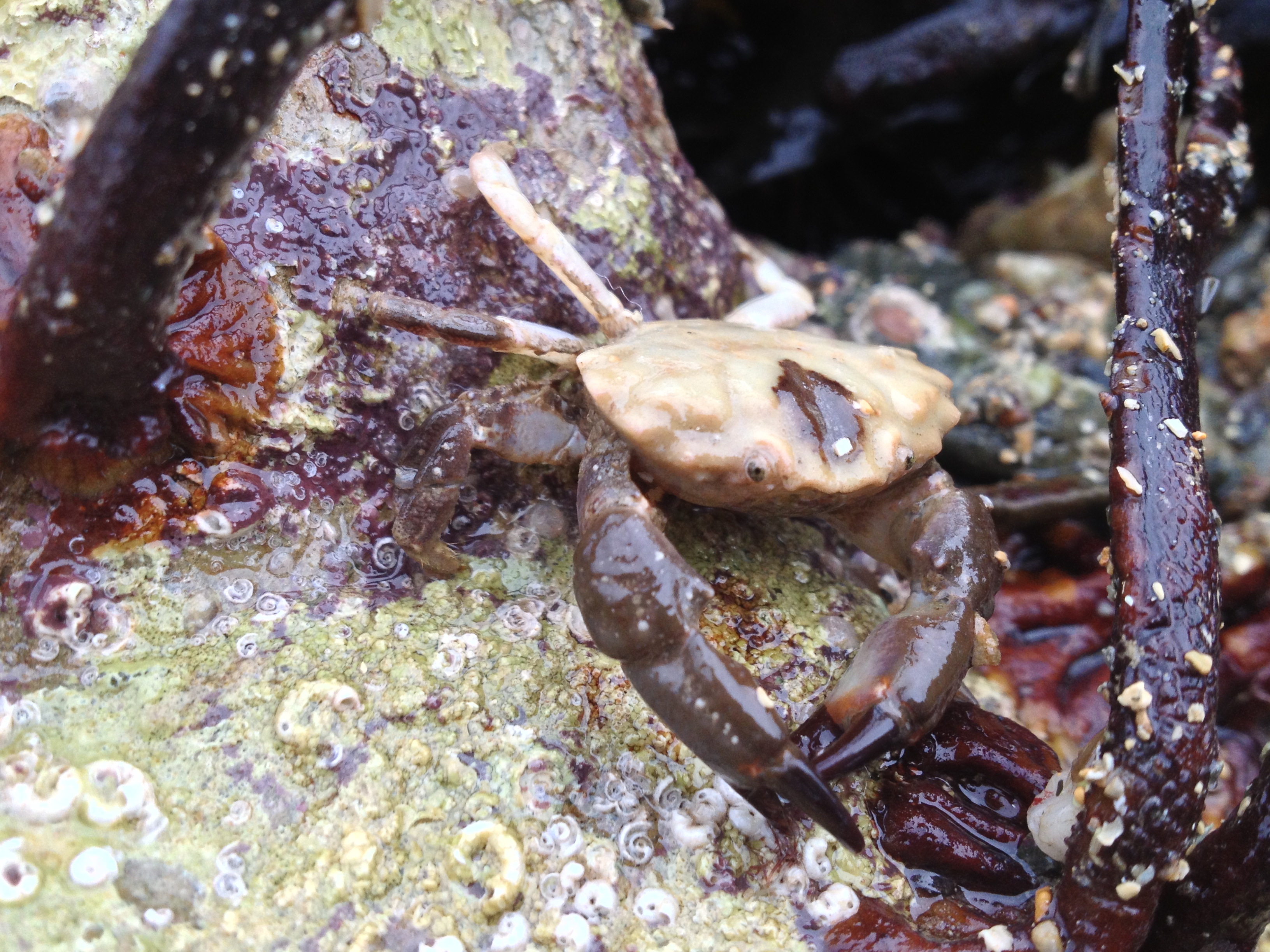
I also found a Furrowed crab Xantho incisus with unusual coloration (perhaps because it had moulted but I did not check):

IMG_7014

By-the-wind-sailor

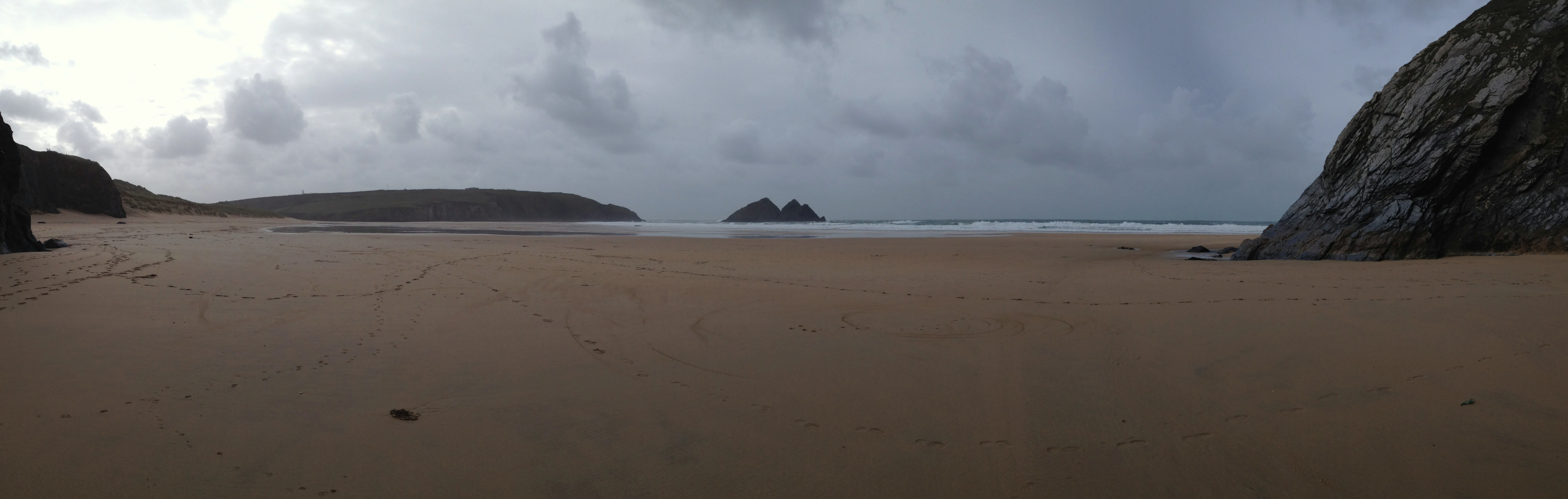
IMG_6629A short walk on a Tuesday afternoon on Holywell Beach west of Newquay: dark, bleak, with a bit of rain and a lot of wind. The upside was that we had the beach pretty much to ourselves. Holywell is named after a well in a cave (see here), and I was quite curious to see it. Unfortunately, although we had a look in some smaller crevices, we seemed to have missed the main cave…Ah well, a good excuse to go back some time.IMG_6635No rock pools here, but there was some good beach combing to do with this stormy sea. For the first time I found the By-the-wind-sailor Velella velella, a Siphonophoran: a colony of specialized polyps, with short tentacles underneath and a little sail on top. They are related to the Portuguese Man-of-War. These organisms live on the open ocean, but can be blown onto shores in storms (mass stranding are common on the West Coast of the USA):IMG_6668IMG_6672The pollution of our seas with plastics is a big problem and becomes very apparent when surveying the strandline. Depressing stuff:IMG_6698

Finally, some washed up crates with a Common goose barnacle Lepas anatifera attached:IMG_6705IMG_6703

aquarium update: snails

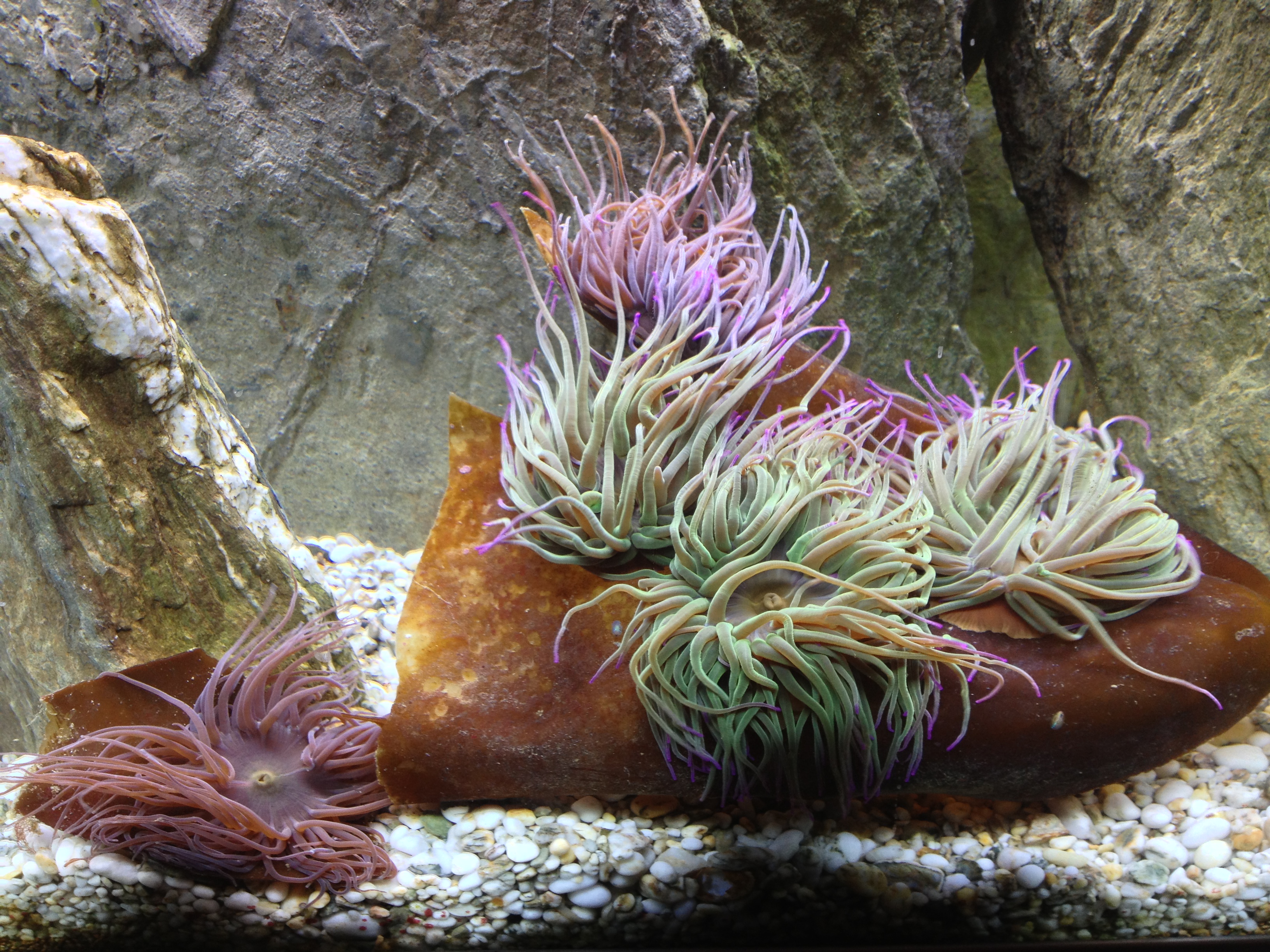
Time for an update. The five Snakelocks anemones have settled and are doing very well (I have fed them some defrosted shrimps which they quickly devour). The Leach’s spider crab was sitting happily under one of the anemones until it decided to move behind a piece of slate and now does not show itself much anymore. Perhaps this has to do with a prawn I introduced, although I have not seen any scuffles. I have to see what I’ll do about this. If it is really shy then I perhaps have to choose between keeping it or introducing fish. In any case I have seen it munching on some algae and a dead Cushion star and it seems to do OK.

IMG_6422

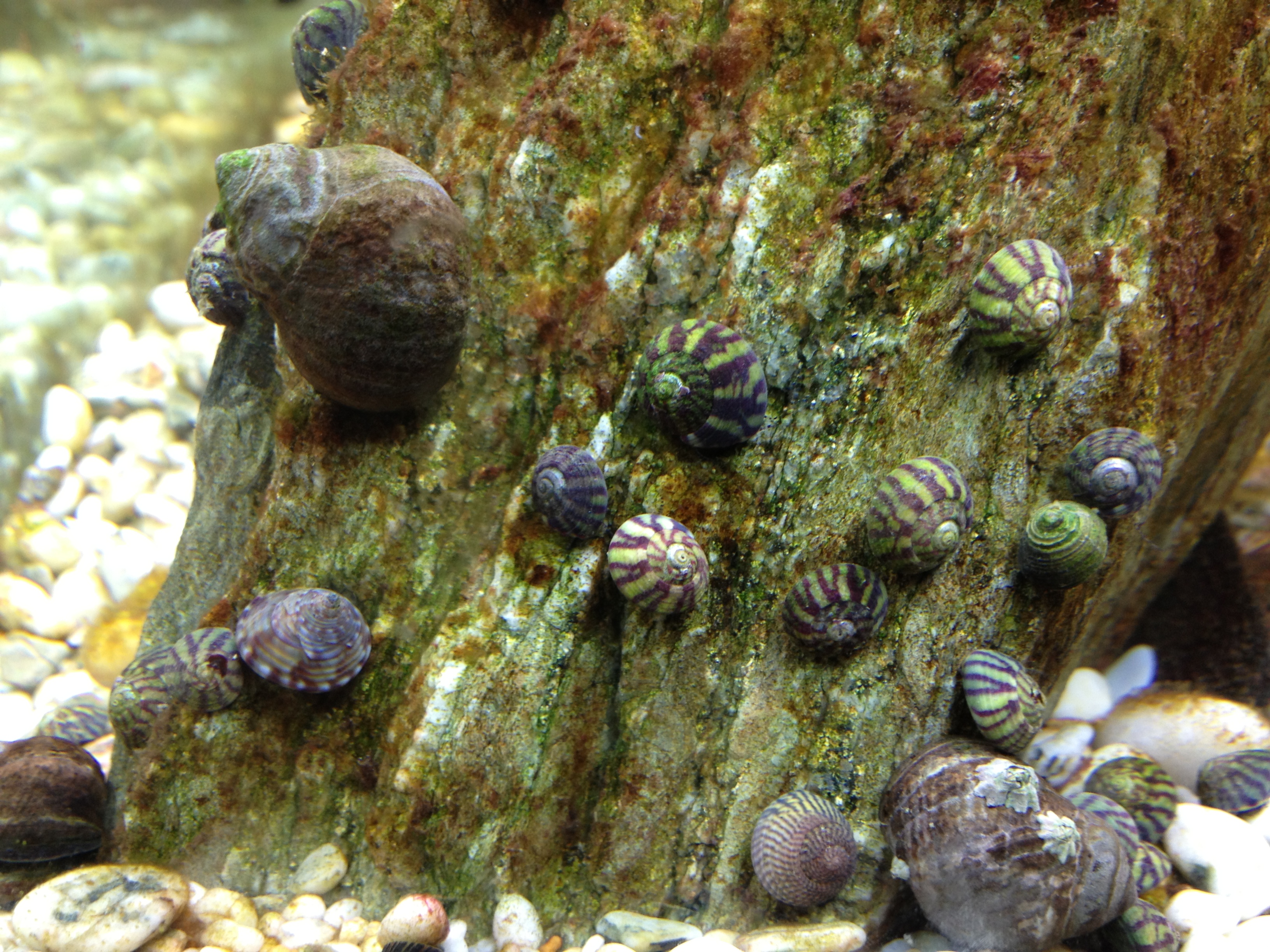
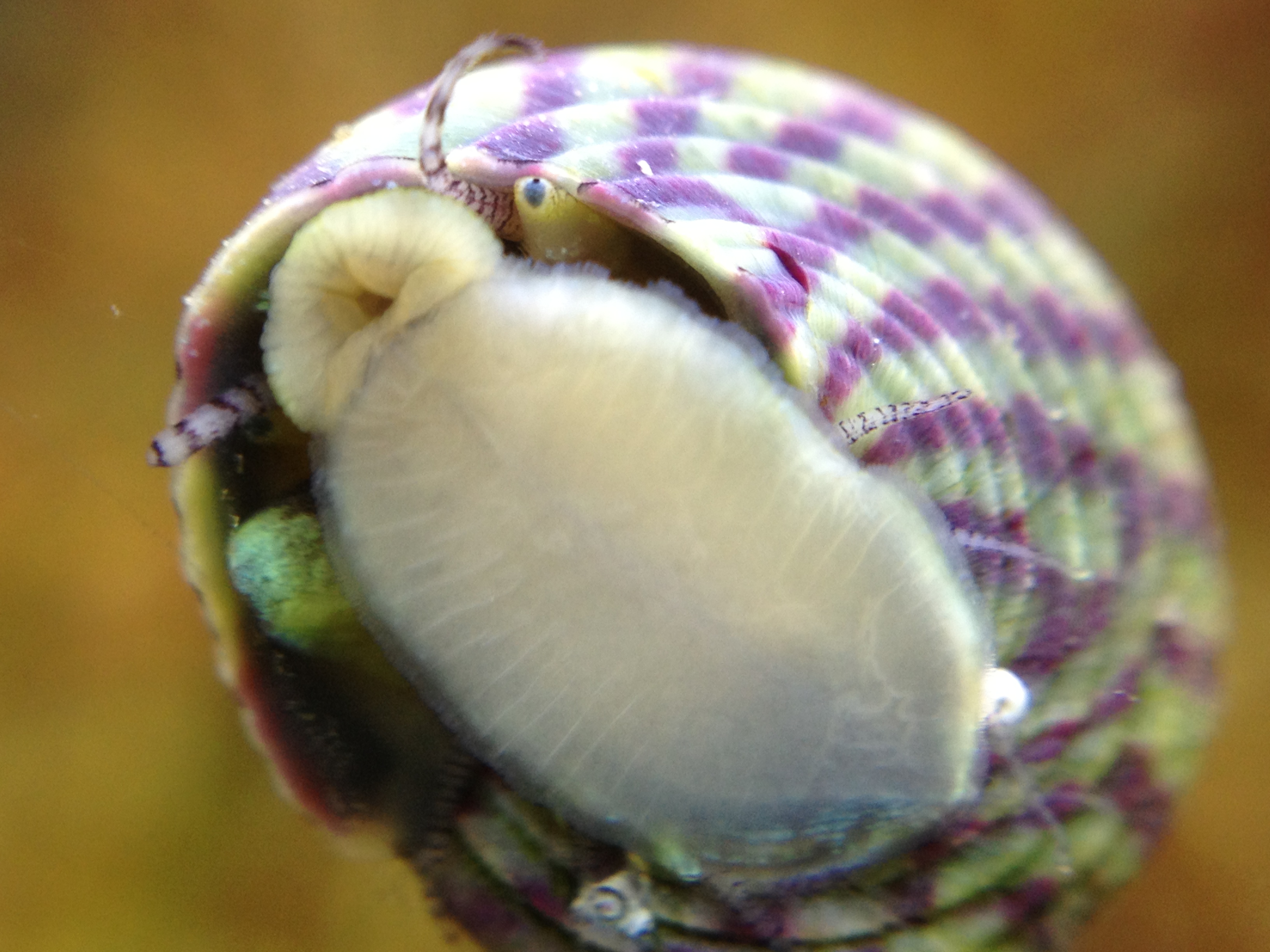
The main problem I have is the dreaded return of algae…There is quite a diversity of them: fuzzy green ones, darker green blotches, slimy purple ones, brown diatoms and more. All interesting organisms surely but I do not want them to take over the tank! I have used food sparingly and used the skimmer most nights, but now have also removed my daylight lamp, to leave a single actinic lamp (see this post about lighting). I still have to get used to this new look, but less light must surely help. Most interestingly, I have enlisted the help of 80 or so grazing snails. Mainly the Common periwinkle Littorina littorea and the Flat top shell Gibbula umbilicalis but also some other species, including two very small Painted top shells Calliostoma zizyphimum. I never had many snails in my aquarium, as they were always eaten by Shannies, but hopefully they will survive this time. I will dunk in a lot more snails, and keep an eye out which species does best. A Flat top shell (picture taken using my olloclip macrolens for the iPhone):

IMG_6468

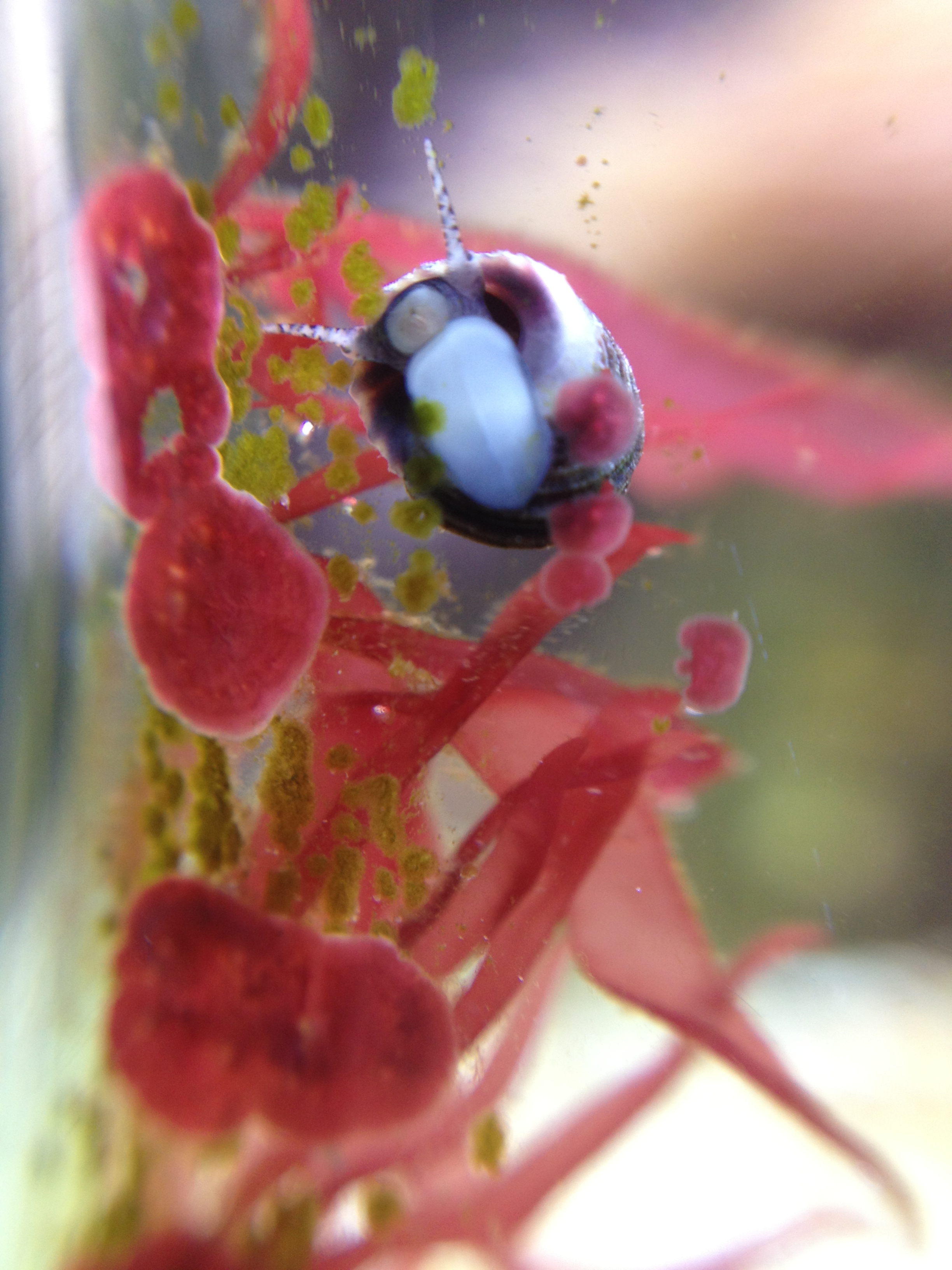
One returning encrusting red algae is actually a seaweed, with new ‘leaves’ growing from the round crusts. I suspect it is Devil’s tongue weed Grateloupia turuturu. I have been scraping it off the glass, except from the corners where the scraper is of no use, but will let the rest sit and see how it grows:

IMG_6431

I also noticed that Sea lettuce Ulva has started to grow from the slate. The aquarium does not look that nice yet, but with the new animals there is plenty to watch in any case!

new inhabitants

Last weekend I went for a bit of snorkeling off Pendennis Point to catch some new inhabitants of my tank: some Snakelocks anemones and a Leach’s spider crab (just one for a start). Although it was overcast and late, it was nice to be in the water. I was lucky to straight away find a diving knife, this helped me to cut of some kelp housing snakelocks. I took a perforated plastic Lidl bag with me in the water to serve as a net for the crab, low tech but it worked fine. The tricky thing was to get the snakelocks from the kelp afterwards (I did not want a load of rotting kelp pieces in the tank):

IMG_6148

With some finicking I could get the anemones off the kelp and on the rocks or gravel. The Leach’s spider crab (decorated with small pieces of red seaweed) quickly hid behind a rock. However, after two days it was accustomed to its new surroundings and found a place underneath one of the anemones right in the front of the tank:

IMG_6216

animals that did not do that well in my aquarium…

A while back I wrote two posts on my personal top ten animals for the (unchilled) aquarium (here and here). Of course, there were also organisms that were not such a success. Animals can be unsuited for the aquarium for many reasons, and of course this depends on the size of aquarium, the combination of animals and what you define by ‘unsuited’; so please keep in mind that the following is a personal account!
Aggressive species: Another reasons that makes animals unsuitable for a community tank is that they are bullish. (Animals becoming too big is not a real problem for the native aquarium as you can release them again and replace with smaller individuals.) Crabs often get rowdy for instance. I kept a small (5 cm carapace width) Edible crab Cancer pagurus for a little while (his name was Barry). It would bury (Barry!) itself during the day, but as soon as the lights turned off it would go about and rearrange the tank. Rocks weighing over a kilo were knocked against the glass and I found a Cushion star cut in two. It was quite an operation to remove it from the tank using a net (but during all that rummaging I interestingly saw bioluminescence in the tank which was very cool). Shannies like to feed on snails and hermit crabs and so in a relatively small aquarium at least, so sometimes you have to choose between one or the other:

IMG_2240

Truly littoral species: I had a couple of limpets Patella vulgata in the aquarium that just sat in the same place on the glass for months. At this time, algal growth was a problem, so I should have known if they had moved during the day or night by the tracks they would have made but they did not move a millimeter. The animals seemed a bit thinner in their shell, but seemingly they can survive for very long periods without food. Not being able to emerge from the water as they do normally seems to be a big problem for these animals.

Secretive species: Other animals simply are too shy or live underneath rocks; no point really in putting them in the aquarium if you cannot see them. This happened with Broad-clawed porcelain crabs, a Shore rockling and also a Shore clingfish (although hidden, all of these animals did survive for a long time). I have seen Brittle stars in a Mediterranean aquarium but the ones found in the intertidal here tend to live under rocks and I never saw one back in the aquarium. A Sand star Astropecten irregularis quickly buried itself in the gravel:

IMG_5177

Filter feeders: I quickly realized that filter feeders, mussels or tunicates for example, were very difficult. There simply were not enough algae growing in the water to feed them (unfortunately, at times there were plenty of algae growing on the rocks and on the glass). One way to keep filter feeders is to separately cultivate algae for food. A really nice blog describing such a project can be found here. Another solution might be to feed these animals with artificial plankton, which is available commercially. This requires very good skimming to get rid of excess nutrients though. Both options I find too cumbersome at the moment. Having said all this, one filter feeder managed to survive for many months in my aquarium: the variegated scallop.

Other fussy eaters: Worm pipefish did OK in the aquarium, but that was probably because I regularly brought in new seaweeds housing fresh zooplankton. Unlike Mullet, Gobies or Blennies, I have never seen them take frozen food and therefore I will not keep them again until I can provide them regularly with live brineshrimp or similar. Snakelocks anemones always did well in the aquarium, but Beadlet and Strawberry anemones didn’t (they actually did not die but seem to shrink rather than grow over time). The former are able to grow because of their symbiosis with photosynthesizing algae and so do not rely as much on food. I must say that the latter two  species are probably relatively easy to keep when you make the effort to regularly dunk a piece of dead prawn on them. The European cowrie Trivia monacha feeds on tunicates which I had trouble keeping alive and so they are unfortunately not an option yet:

IMG_0987

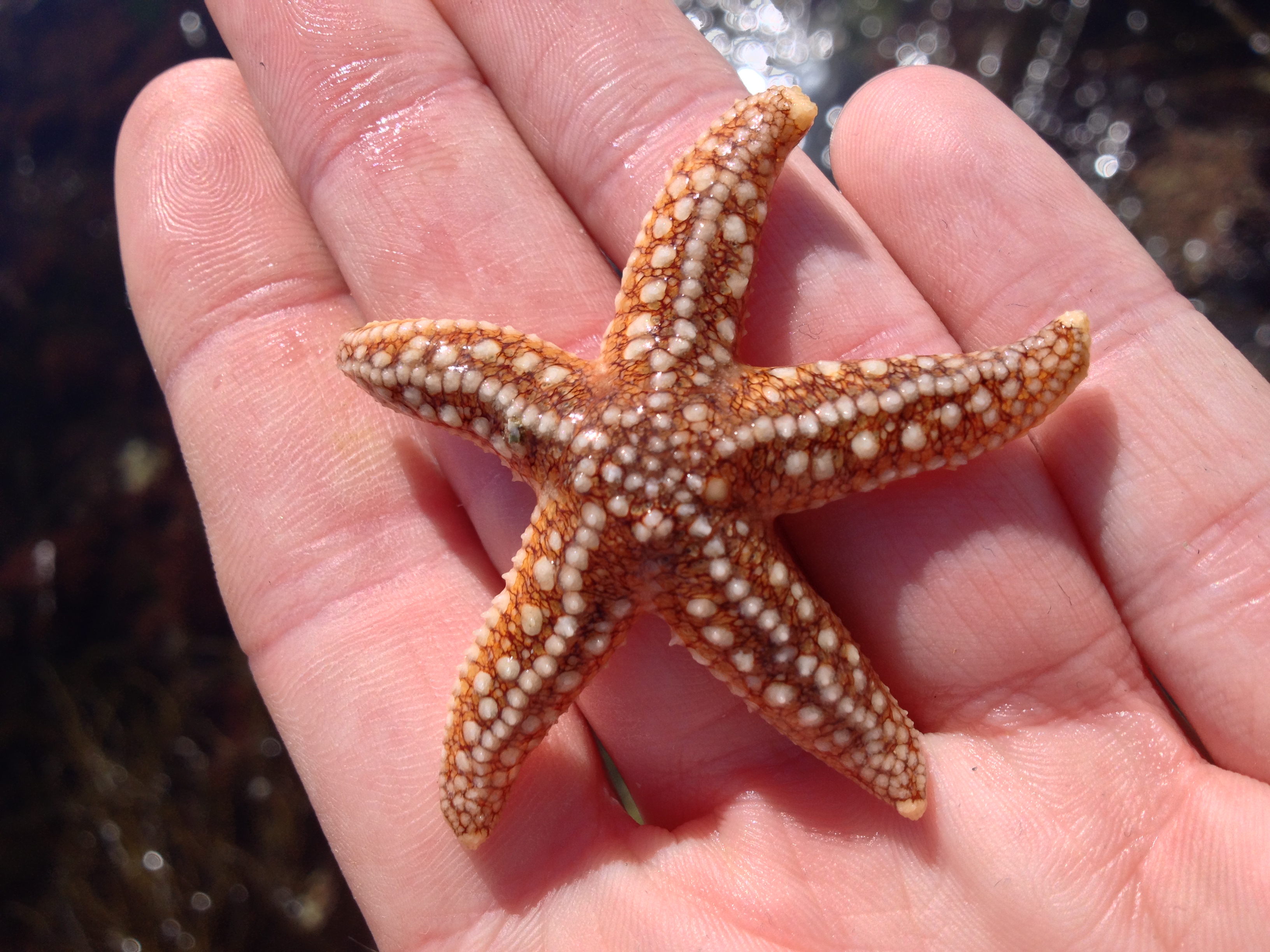
Unknown reasons: On a few occasions a species just died and I had no idea why. The only thing this taught me was to not try that species again. This happened to a Common starfish Asterias rubens:

IMG_2835

snorkeling at pendennis point

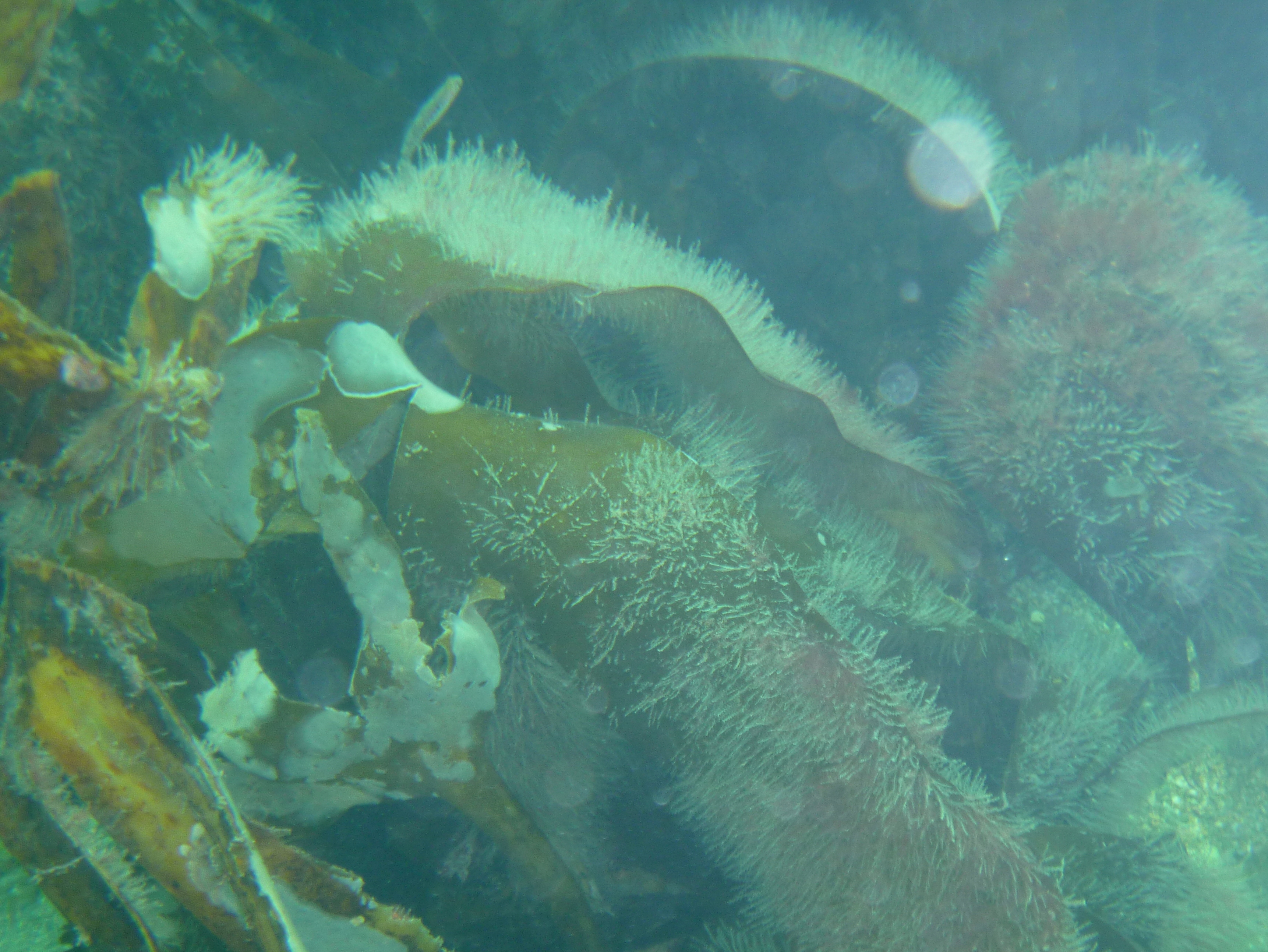
The sun was shining this weekend and the sea water is currently at its warmest so we went out for a bit of snorkeling off Pendennis Point in Falmouth. My experience with the iPhone waterproof case was not that good, so I took my Panasonic Lumix (DMC-FT10) along (which is not too great either!). The seaweeds are dying off mostly; the kelp is covered by bryozoans and hydroids to the point that they are completely fuzzy:

P1030862

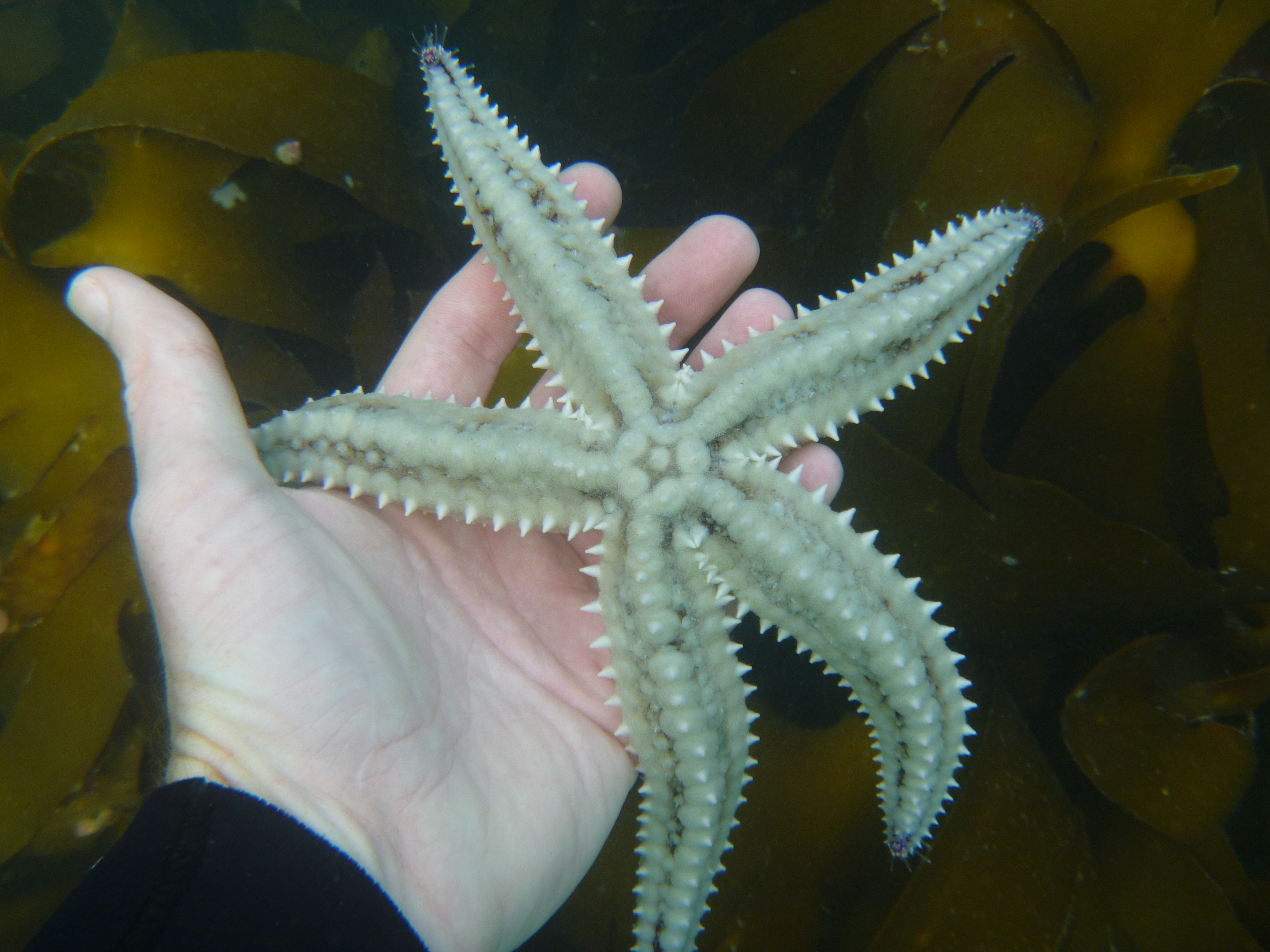
I mentioned in the previous post that the Spiny starfish Marthasterias glacialis was common in rock pools; bigger ones can be found when snorkeling:

P1030845

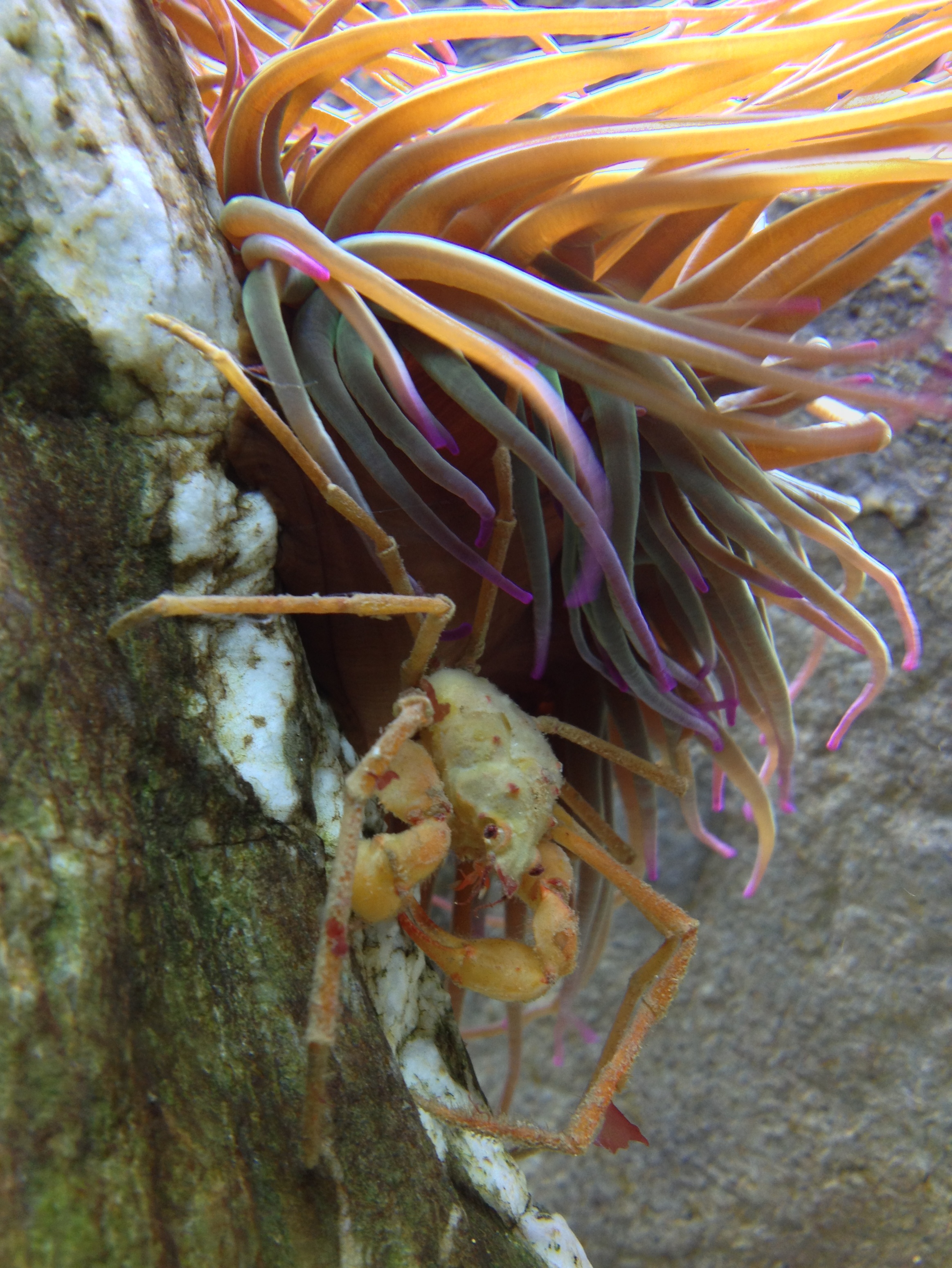
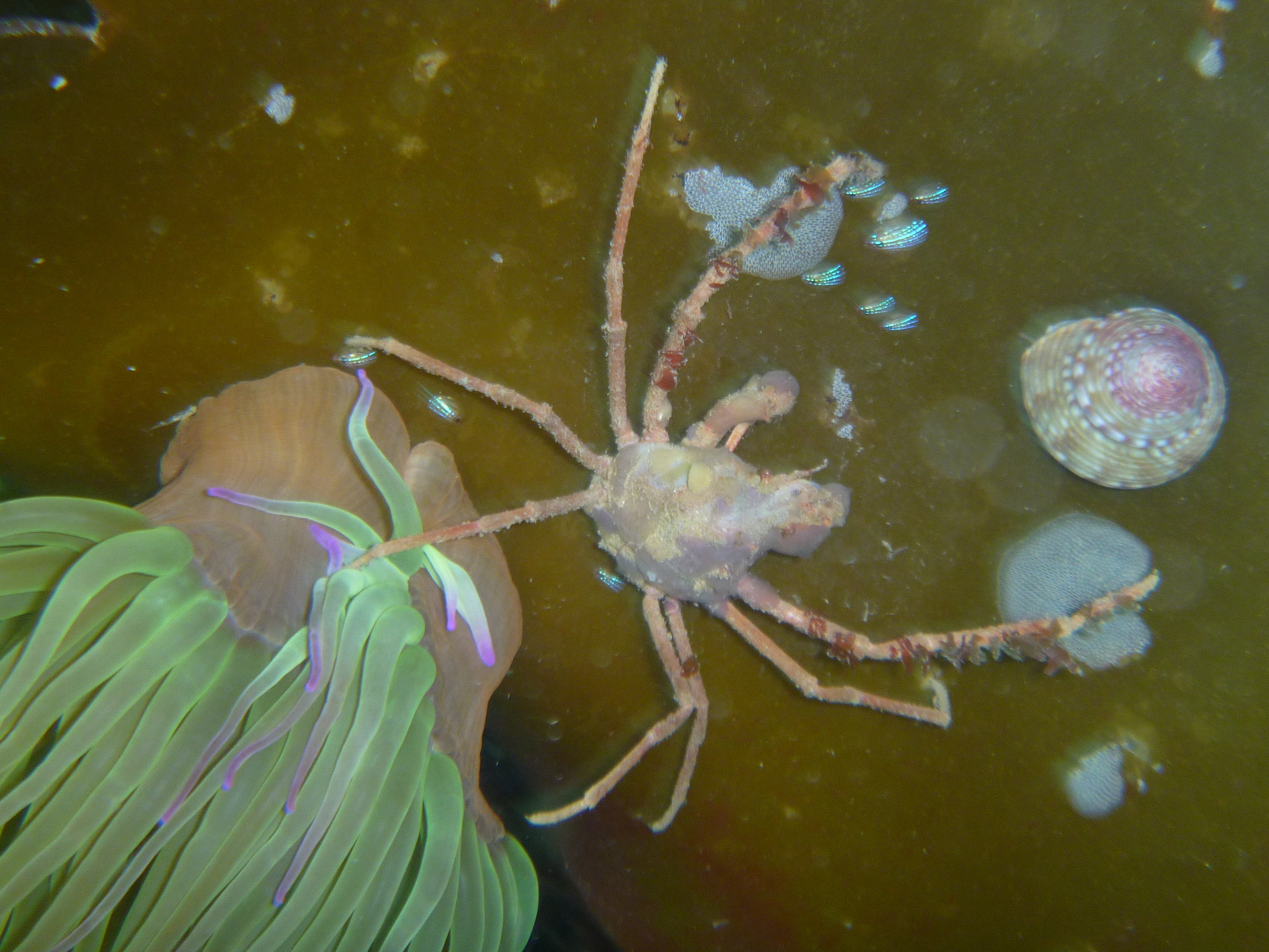
Big Snakelocks anemones Anemonia viridis were everywhere and perhaps half of them had a little Leach’s spider crab Inachus phalangium associated with them. Wikipedia tells me that these crabs eat the anemones’ leftover food and also their mucus:

P1030869

This hour of snorkeling gave me some inspiration for a new aquarium set-up: less seaweeds (specifically less dying seaweeds clogging up the filter and releasing nutrients) and more rocks. On top of these a couple of big snakelocks with spider crabs and some Two-spotted gobies Gobiusculus flavescens. The latter are very common and pretty. I will have to catch them underwater with a net though, which will probably be difficult…

low tide

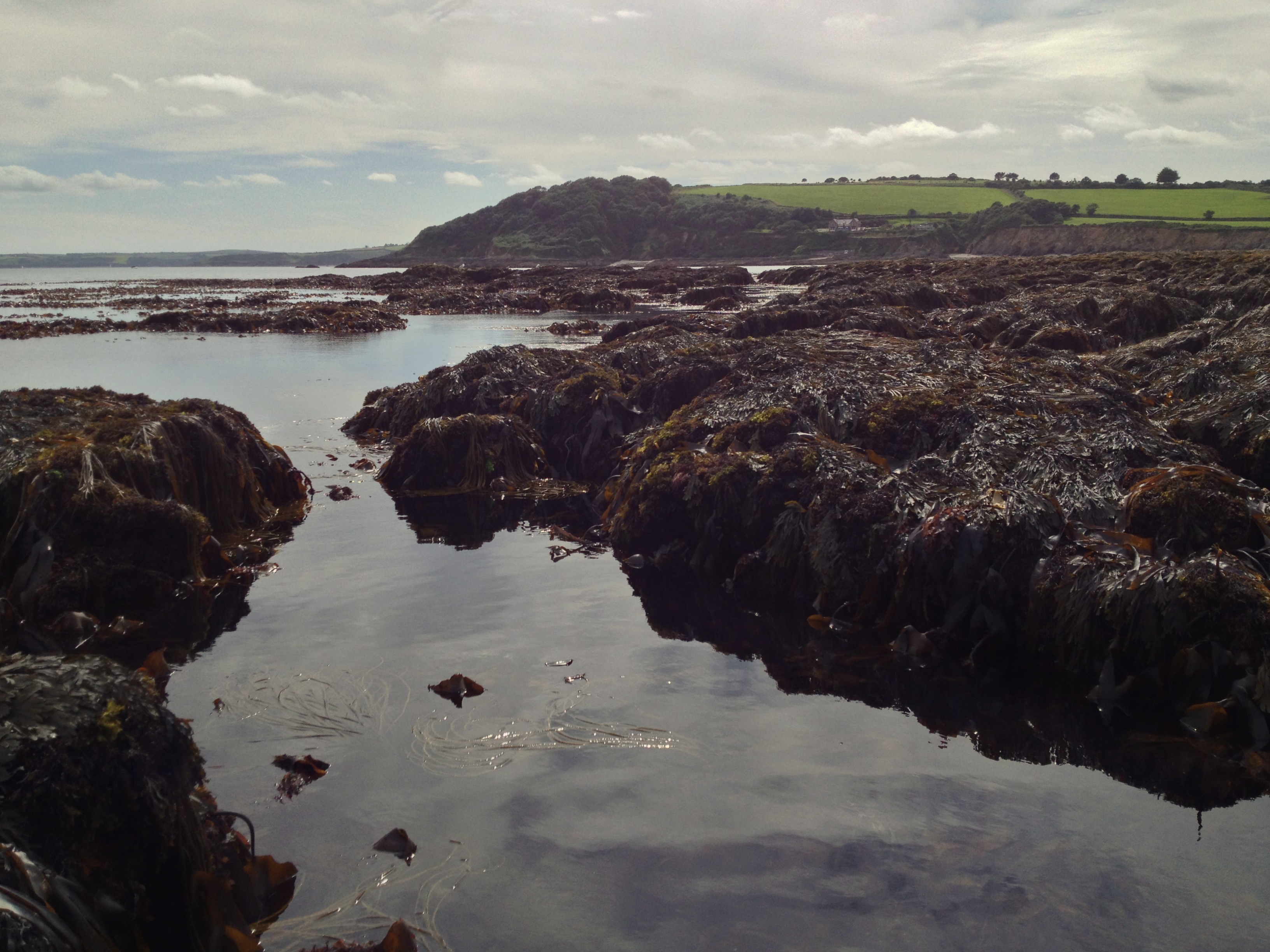
The tides were good this weekend and so we went out to Gylly (Gyllyngvase) Beach in Falmouth, specifically the rocks to the west of the beach (I normally go to Castle Beach to the east):

IMG_5423

Although the tide was quite low, no special sublittoral species were encountered, but everything time you go out you still see something new. For instance, a newly moulted Furrowed crab, Xantho incisus pink and soft next to its old brown carapace: IMG_5469

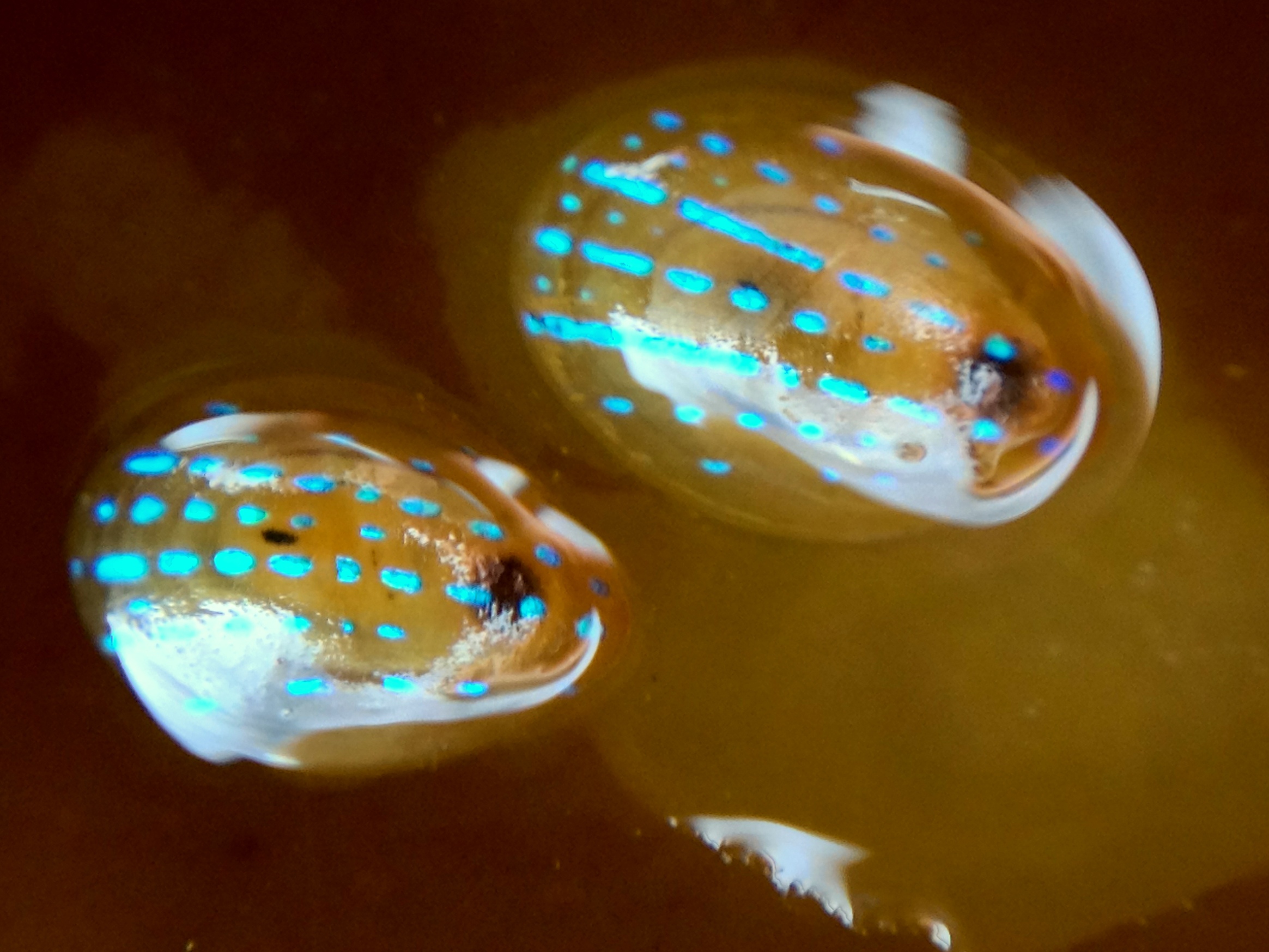
There were very many small Blue-rayed limpets Helcion pellucidum (see also here) on the kelp:IMG_5412

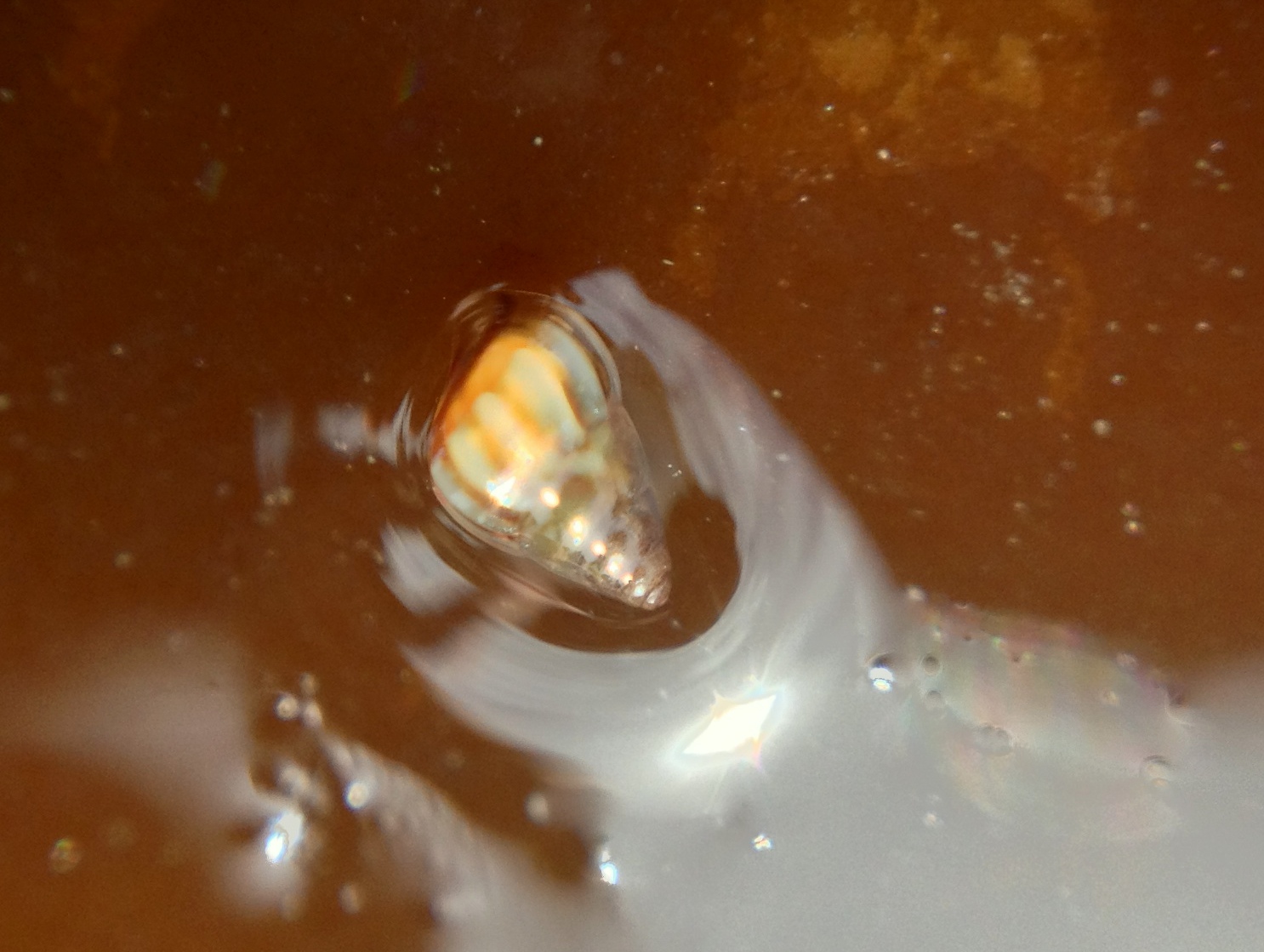
A tiny Rissoa parva snail:IMG_5409

and a Painted top shell Calliostoma zizyphinum:IMG_5457

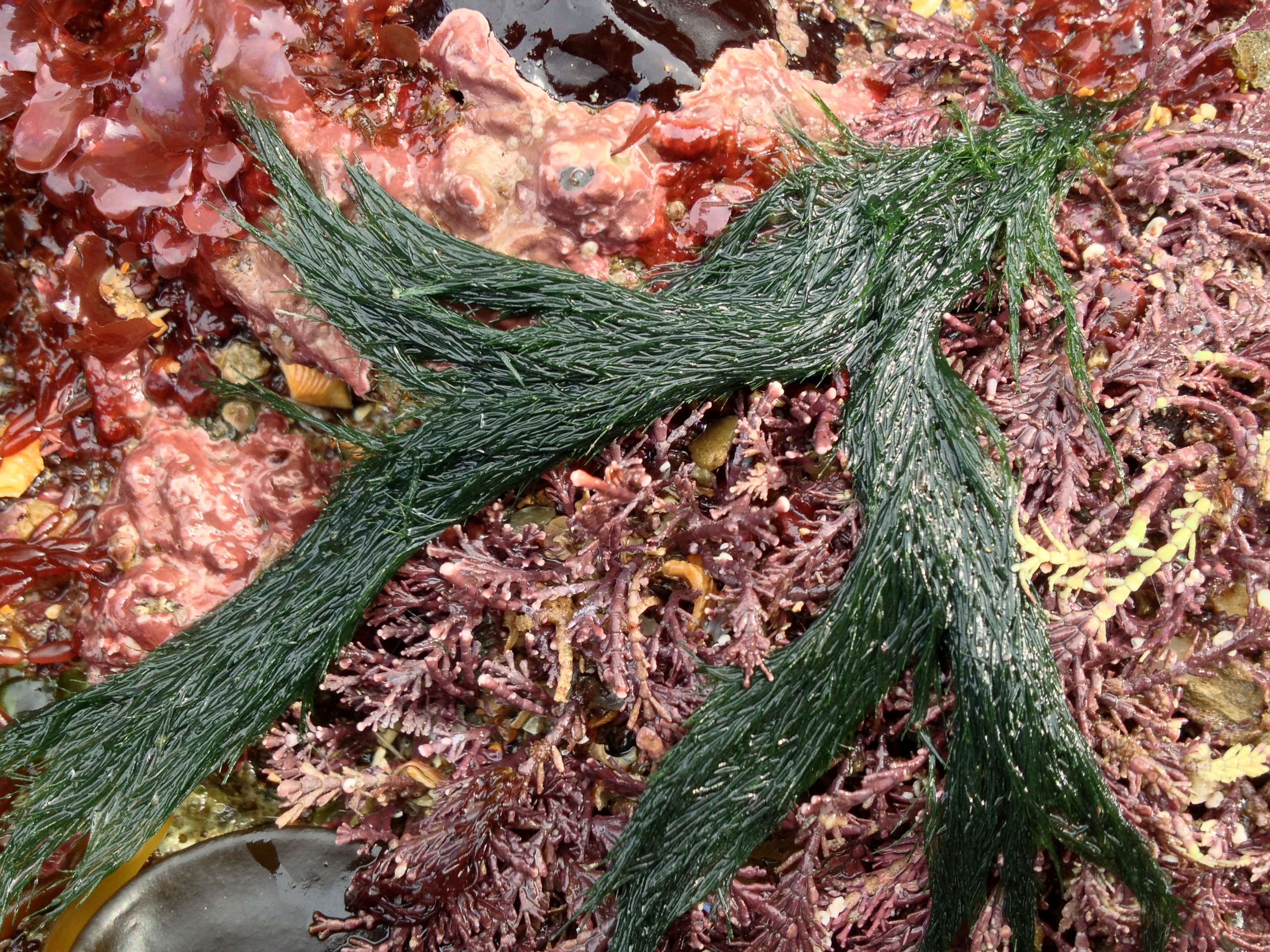
Some dark green Cladophora rupestris:IMG_5437

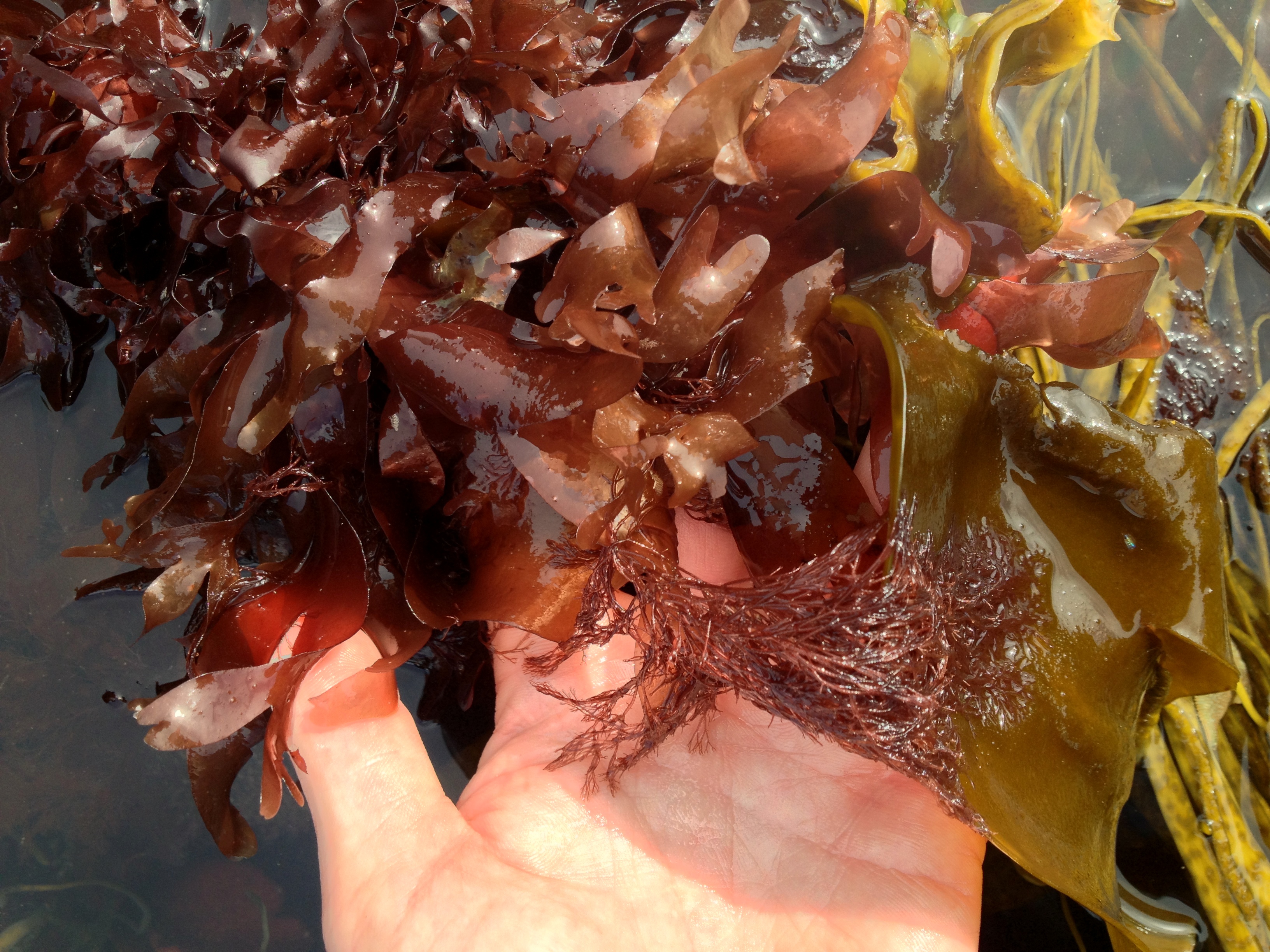
A fine red seaweed (I do not know which one) growing on top of Dulse Palmaria palmata growing in turn on top of kelp: IMG_5455