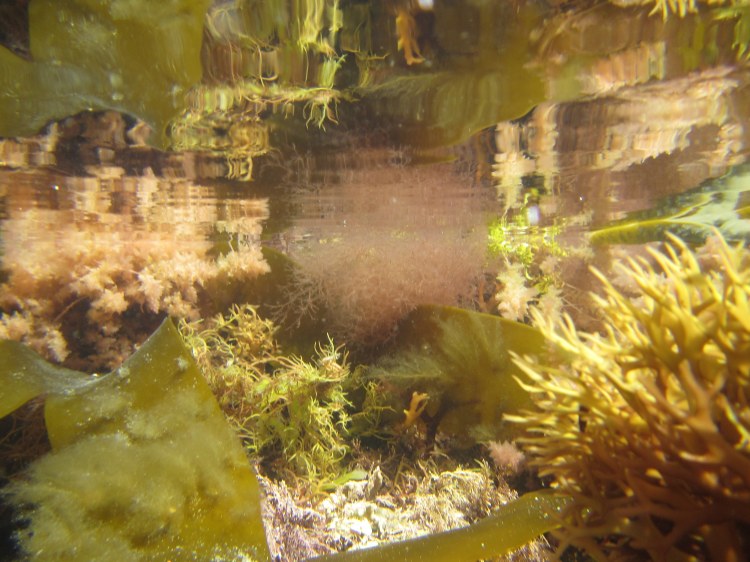
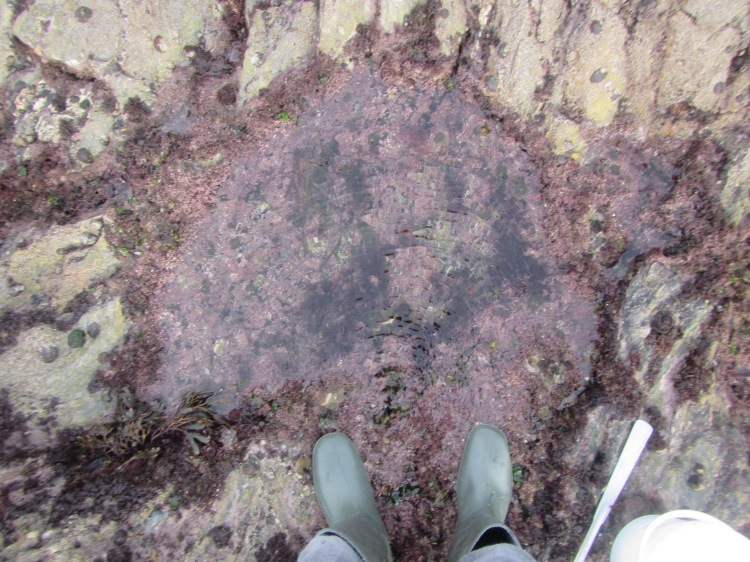
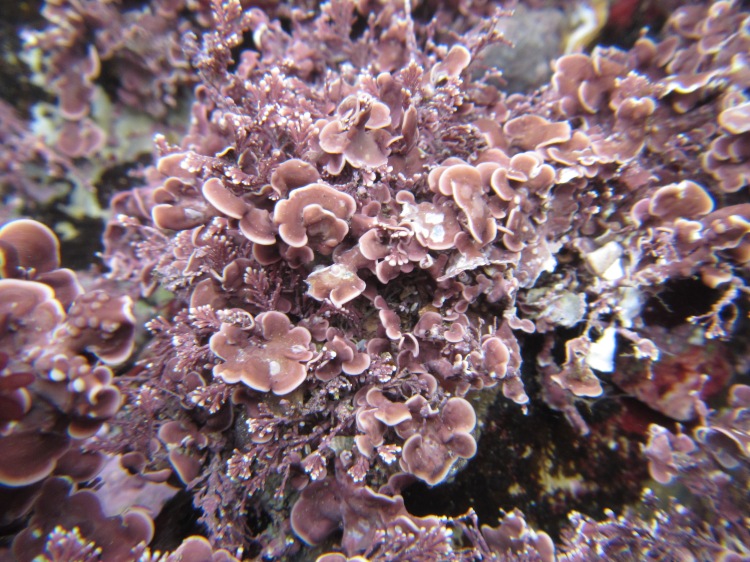
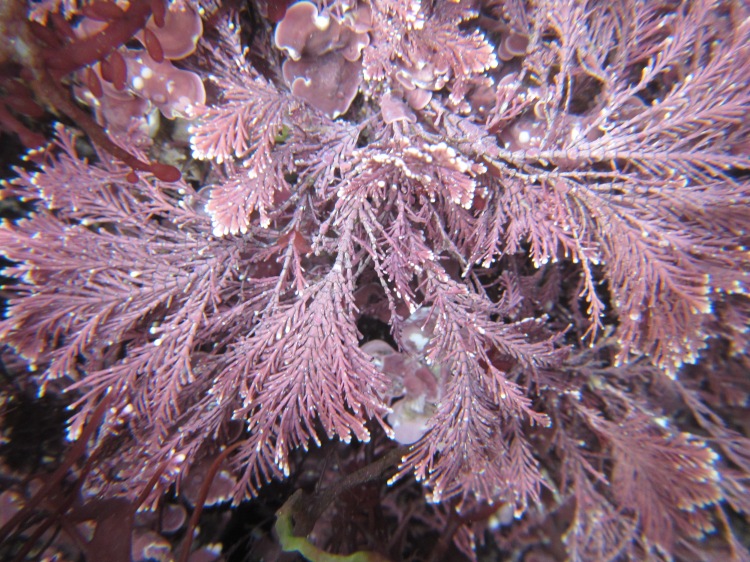
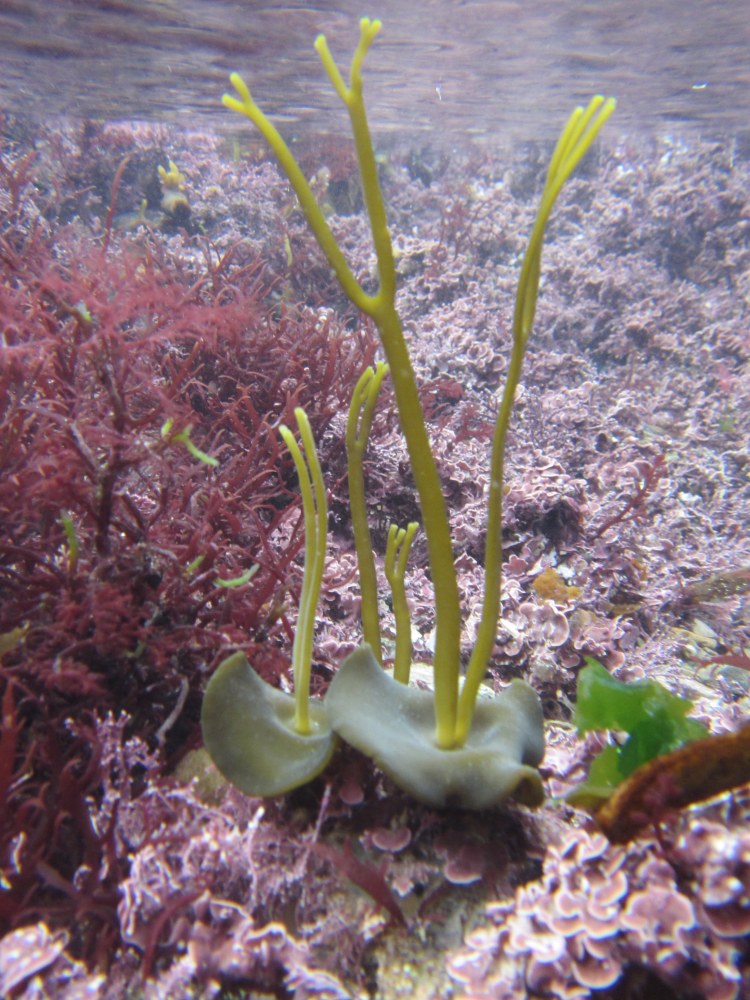
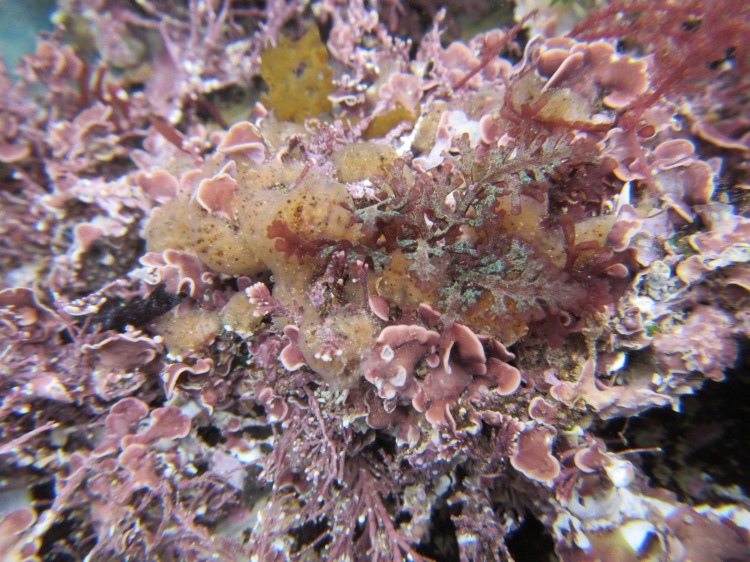
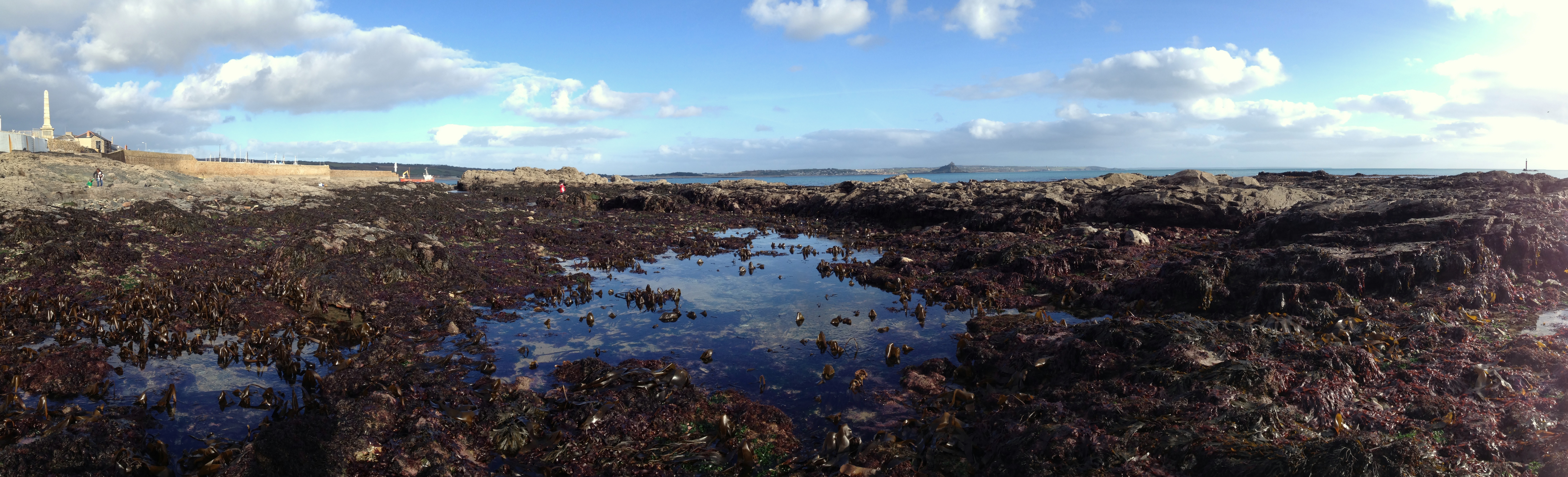
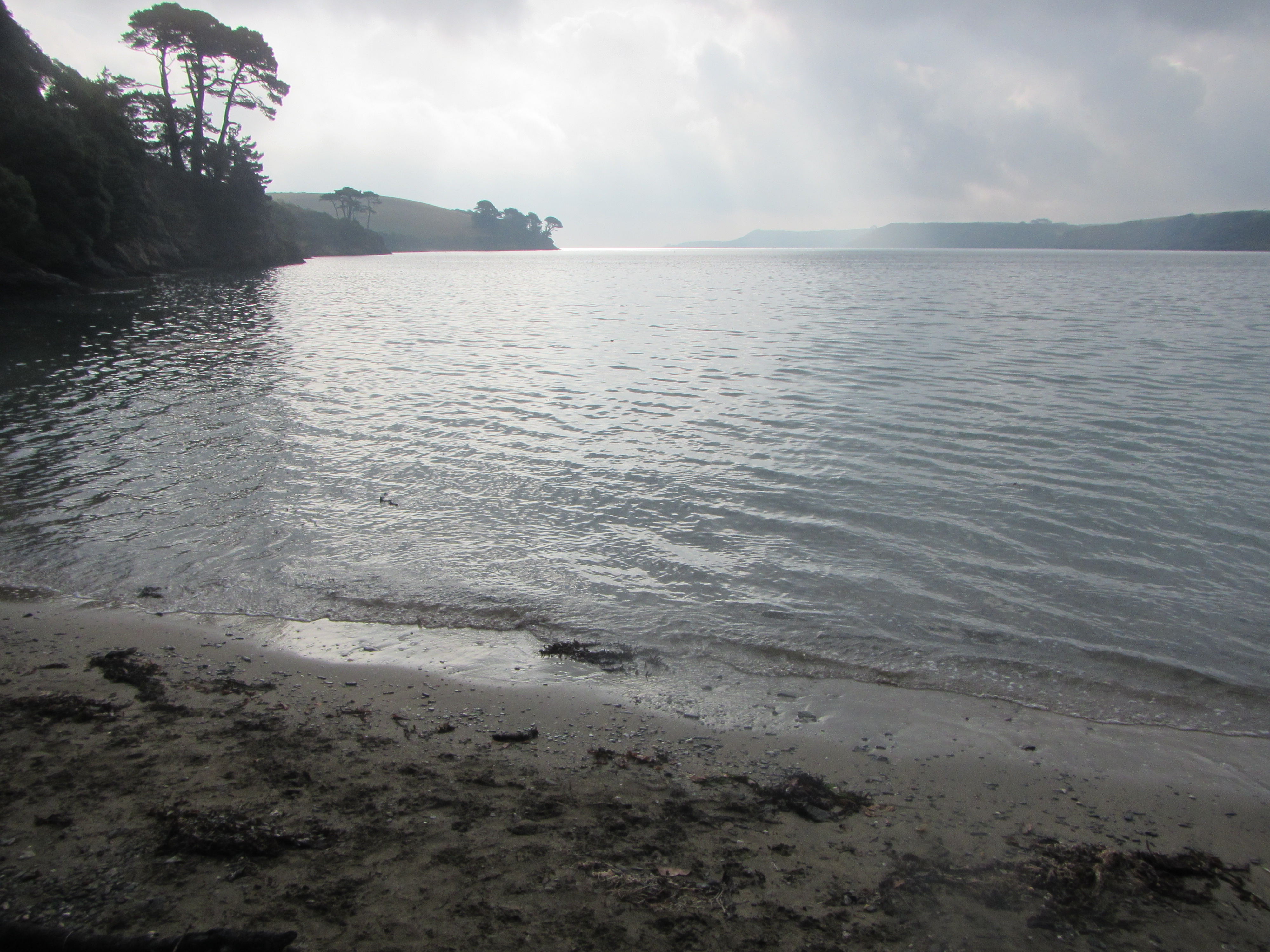
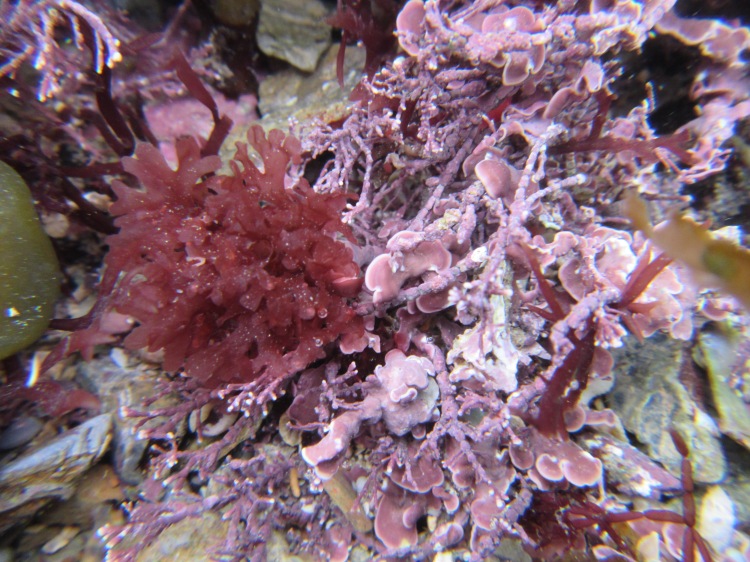
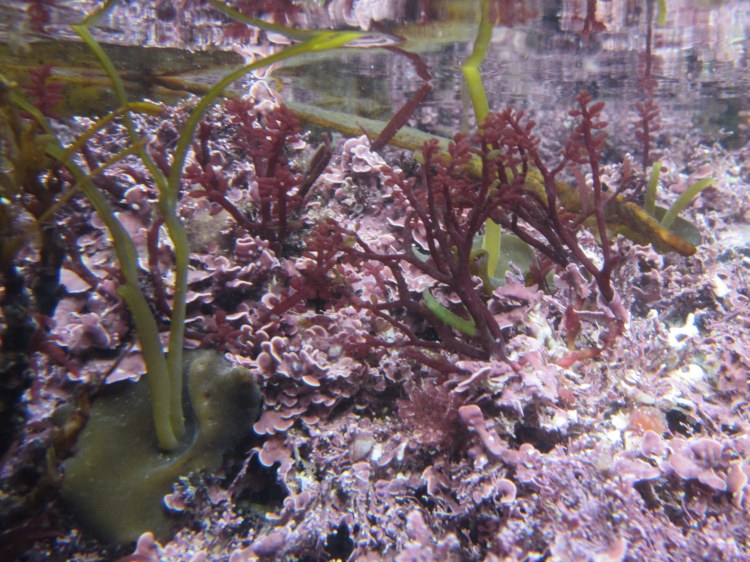
Last weekend I went down to Gylly Beach in Falmouth for a bit of rock pooling. However, the tide was not very low (especially with the inshore wind) and the weather was crap. Moreover, I could not find anything that I had not seen many times before; although rock pool life is very biodiverse, there have started to be dimishing returns when looking for non-microscopic organisms. Clambering over yet another rock, I decided to stop and play around with my Canon Powershot instead. I focused on a tiny pool (around two by four feet) completely covered in corraline algae.
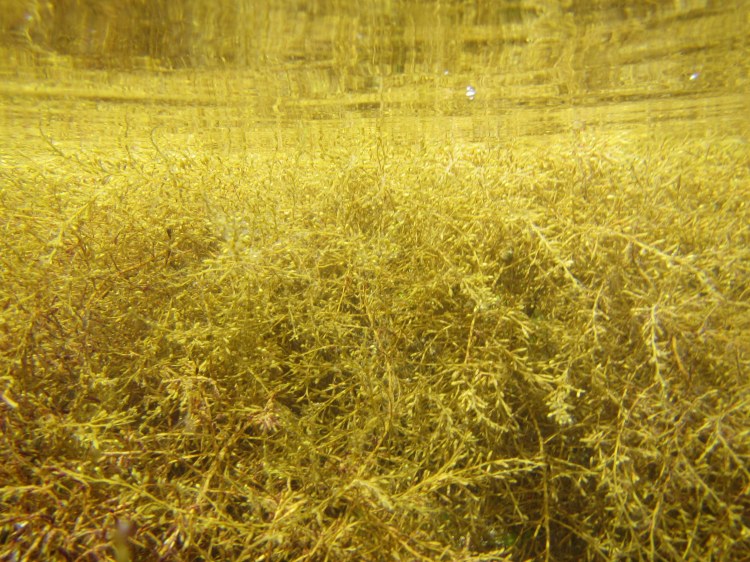
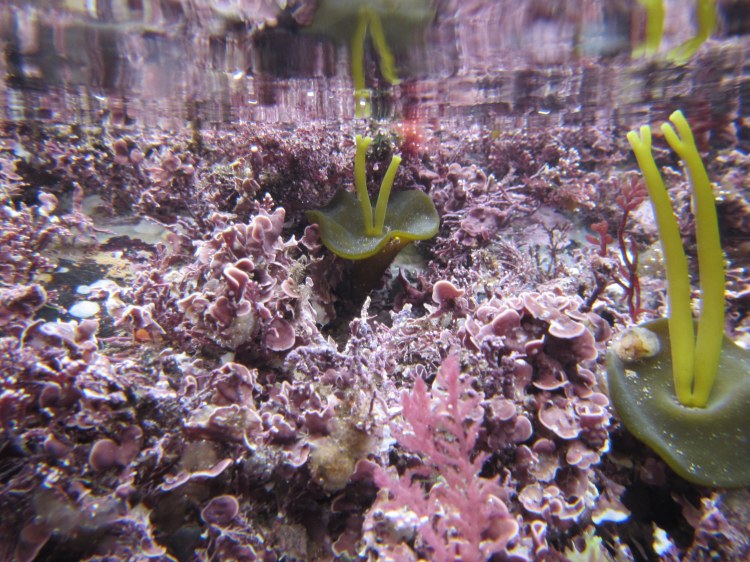
It does not look like much but taking the time for a carefully look was really rewarding. It is tricky to take photographs without being able to see the viewfinder though. My strategy has been to just take loads of pictures and hope some of them work out. The miniature underwater landscape was really beautiful. Pink plates Mesophyllum lichenoides made up the largest proportion of corraline algae (some bearing ‘reproductive conceptacles’). Another species is Corallina officinalis or Common coral weed (third photo). I had some Corallina growing in my aquarium at some point, but it grew very slowly and has now disappeared. Being able to create the right conditions for coralline algae to thrive in a coldwater aquarium would be fantastic, but I have not seen any evidence of anyone being able to cover their aquarium in them yet. (I have tried ‘planting’ Corallina and although it looked very nice at first (fifth pic), these seaweeds quickly died off, turning orange and then white (second pic).)

Some other seaweed species were present as well; Irish moss and Harpoonweed (not pictured), False eyelash weed Calliblepharis jubata occurred in multiple patches, Rhodophyllis divaricata?, an Osmundea species and Red grape weed Gastroclonium ovatum. There were also a few brown seaweeds, the characteristic Thong (or Spaghetti) weed Himanthalia elongata buttons and the invasive (and pervasive) Wireweed Sargassum muticum.
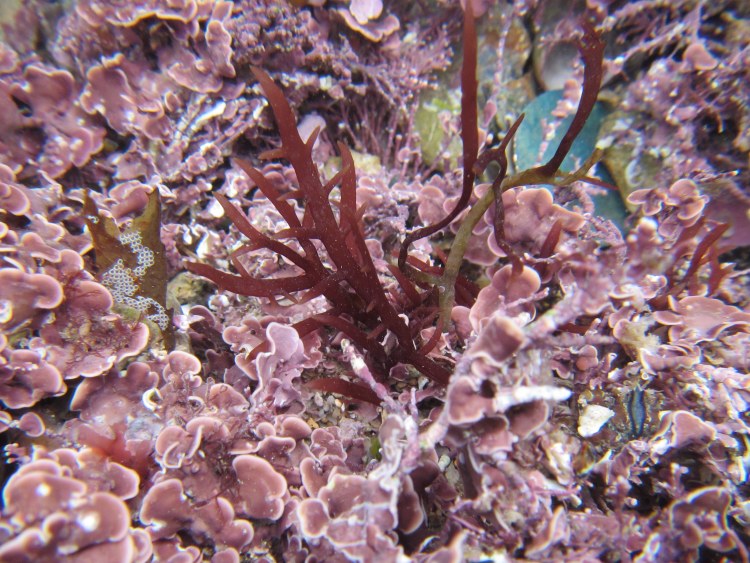

I did not spot too many animals, although I am sure there is an enormous hidden diversity present among the seaweeds. I noticed a red-white Dahlia anemone Urticina felina as well as some patches of a colonial brown tunicate. I’d like to go back soon and take some more pictures, with my Canon powershot or with my GoPro. I have an SLR as well that I have not been using lately as my iPhone is such a good camera and hassle-free. SLR underwater housings are really expensive, but I recently discovered that there are quite cheap waterproof SLR bags available which might be an option to try to take higher quality photos (in rock pools, I would not go diving or snorkeling with them). It would be very cool to try to make panorama pictures of rock pools, especially when taking one each month in the same spot to capture seasonality. More seaweed photos, Canon powershot or otherwise, to follow soon!

Category Archives: cnidarians
Bi-Coastal Beachcombing
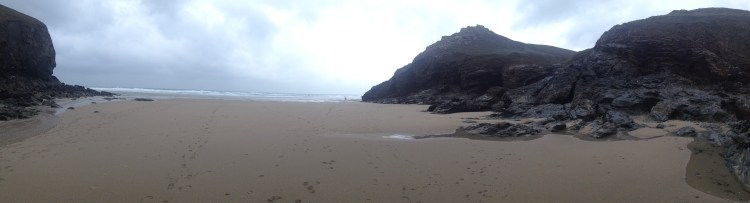
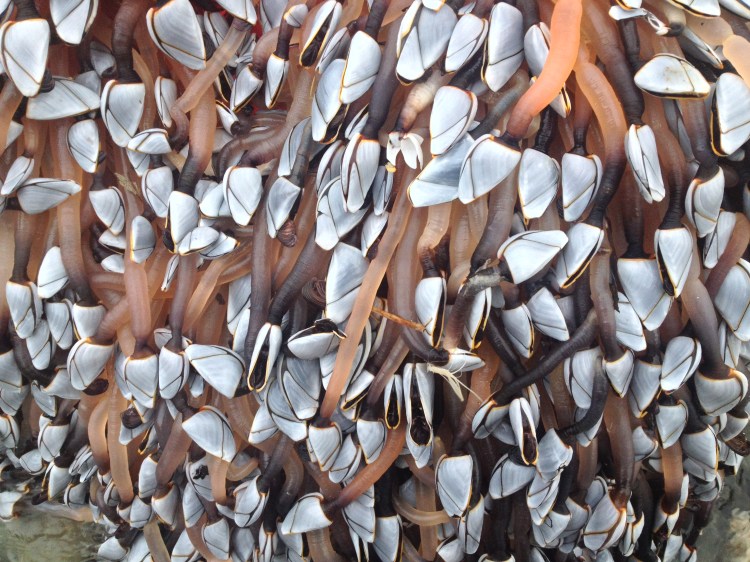
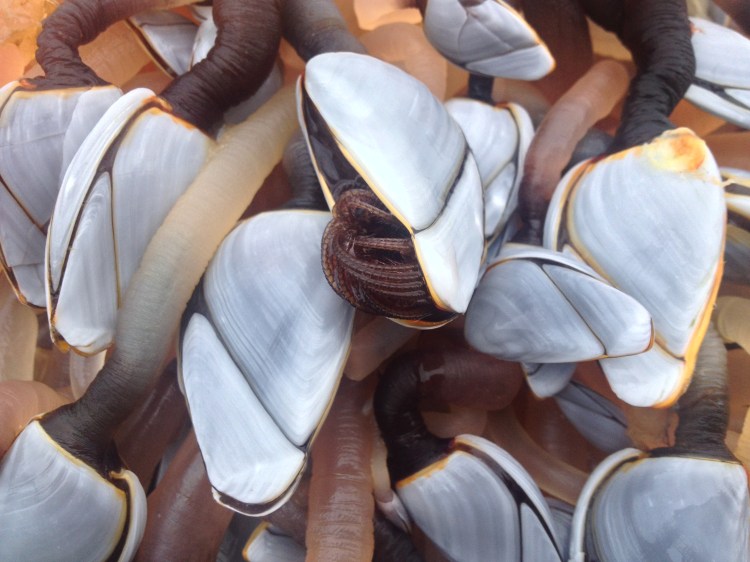
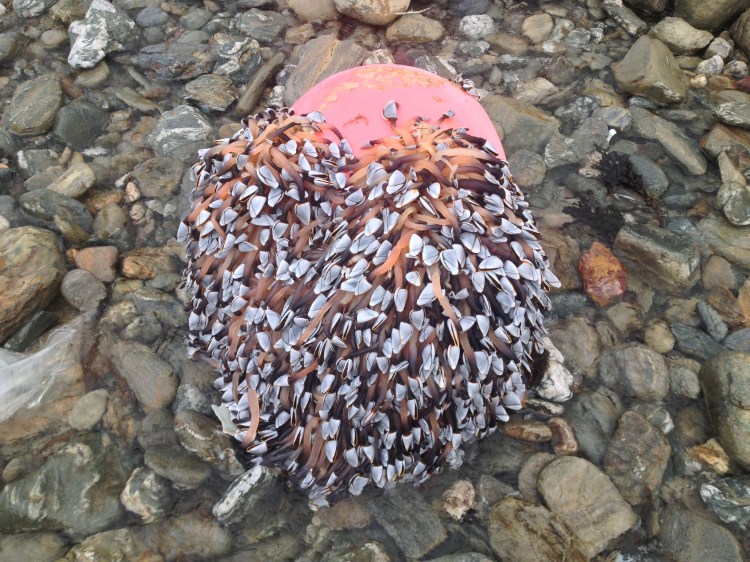
The weather has been awful lately (October in the UK, no surprise there) with lots of wind. A good time for some beach combing! I have not done much of that actually (here one old post) but hope to head out more over the winter. Last week a large piece of a space rocket washed up at the Isles off Scilly, but I am willing to settle for something less exciting… We headed for Chapel Porth Beach west of St. Agnes on the North Coast, a very rugged bit of coast. Because of the rain and the sand blasting, it was not very suitable for the kids so we stayed only for a very short while. Plastic debris high on the shore, some pieces of dead bird and a big buoy covered in Goose barnacles Lepas anatifera and potentially Lepas hilli (thanks David Fenwick); I find it difficult to distinguish between the two.
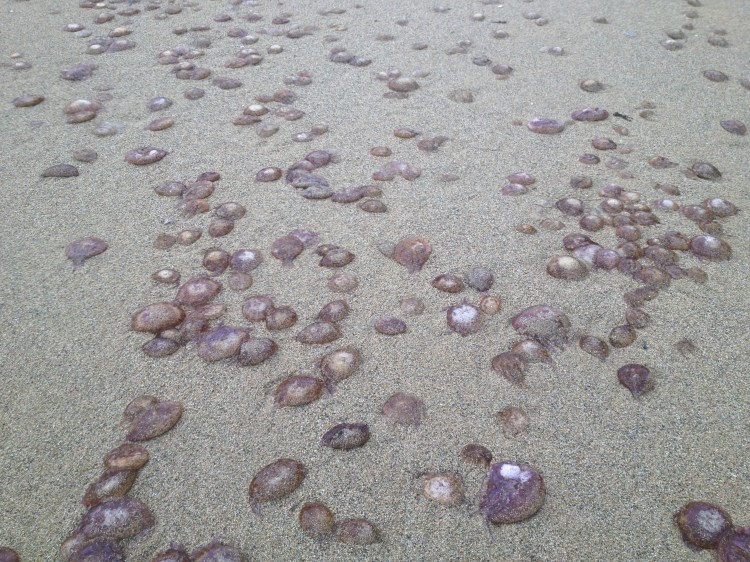
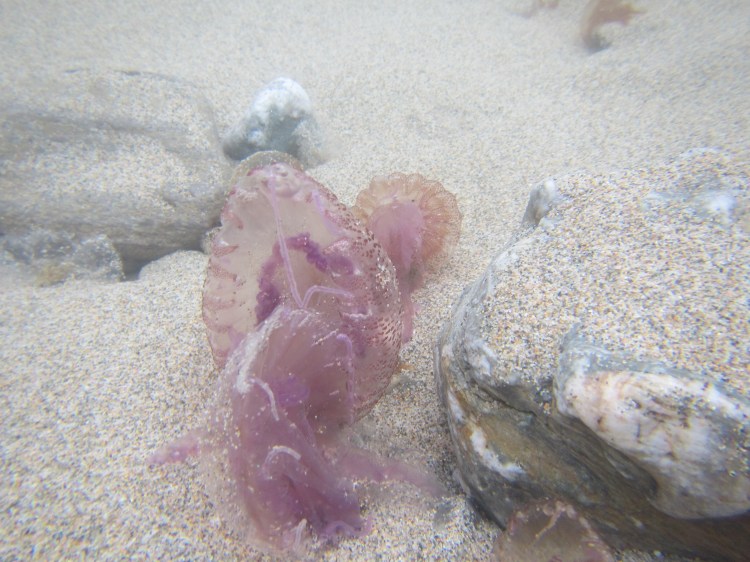
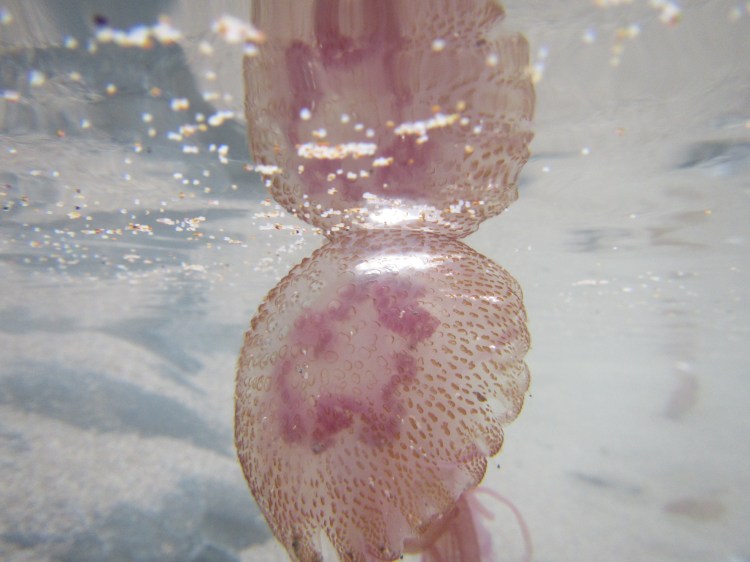
A very large number of small Mauve stinger Pelagia noctiluca jellyfish had also washed up. I tried a couple of quick underwater photos but I should have taken a little more time to get them right. We then took the decision to head from the North coast to the South coast (which are only 25 miles apart), specifically Marazion at St. Michaels Mount. The weather can vary quite a bit locally and we figured it could only be better on the other side. The tide was still low and here the wind was onshore as well, however, not a single object seemed to have washed up. It kept raining and so we cut the beach combing short. Better luck next time!

beach combing on the Roseland
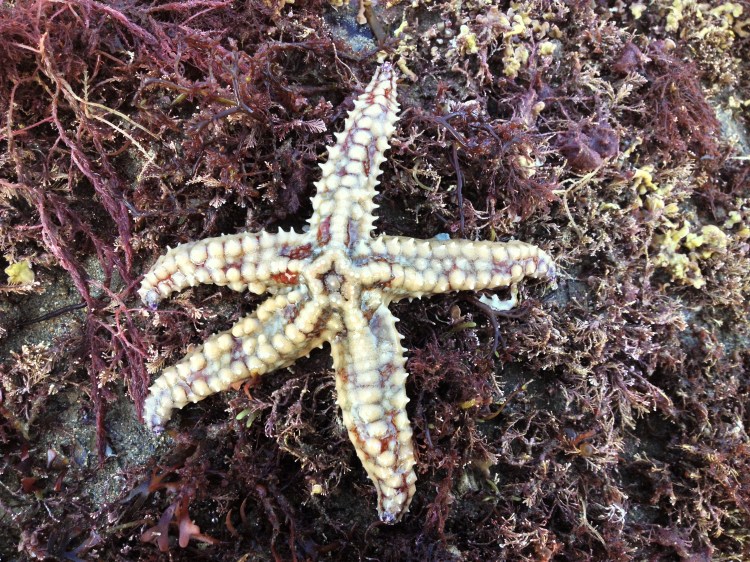
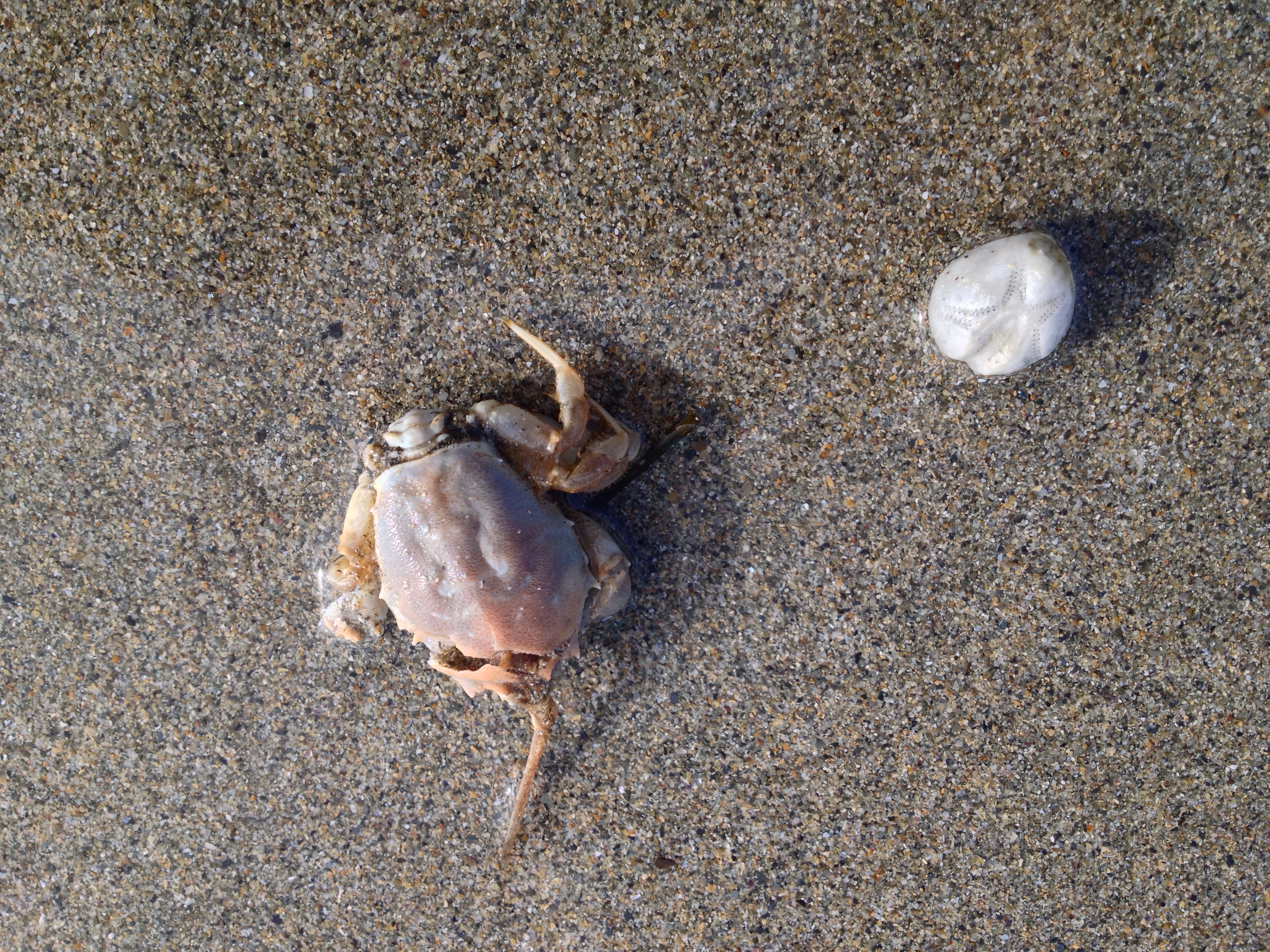
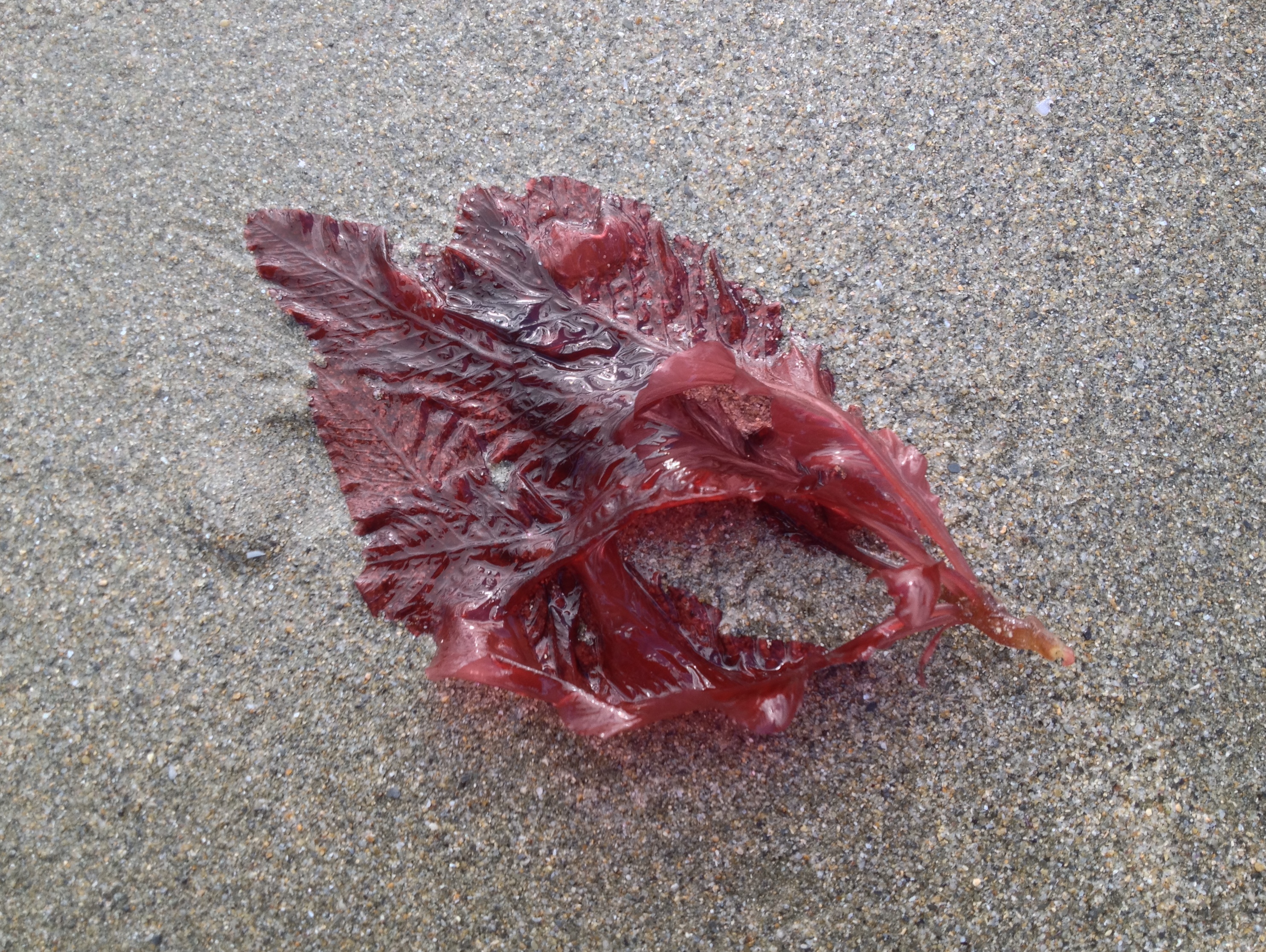
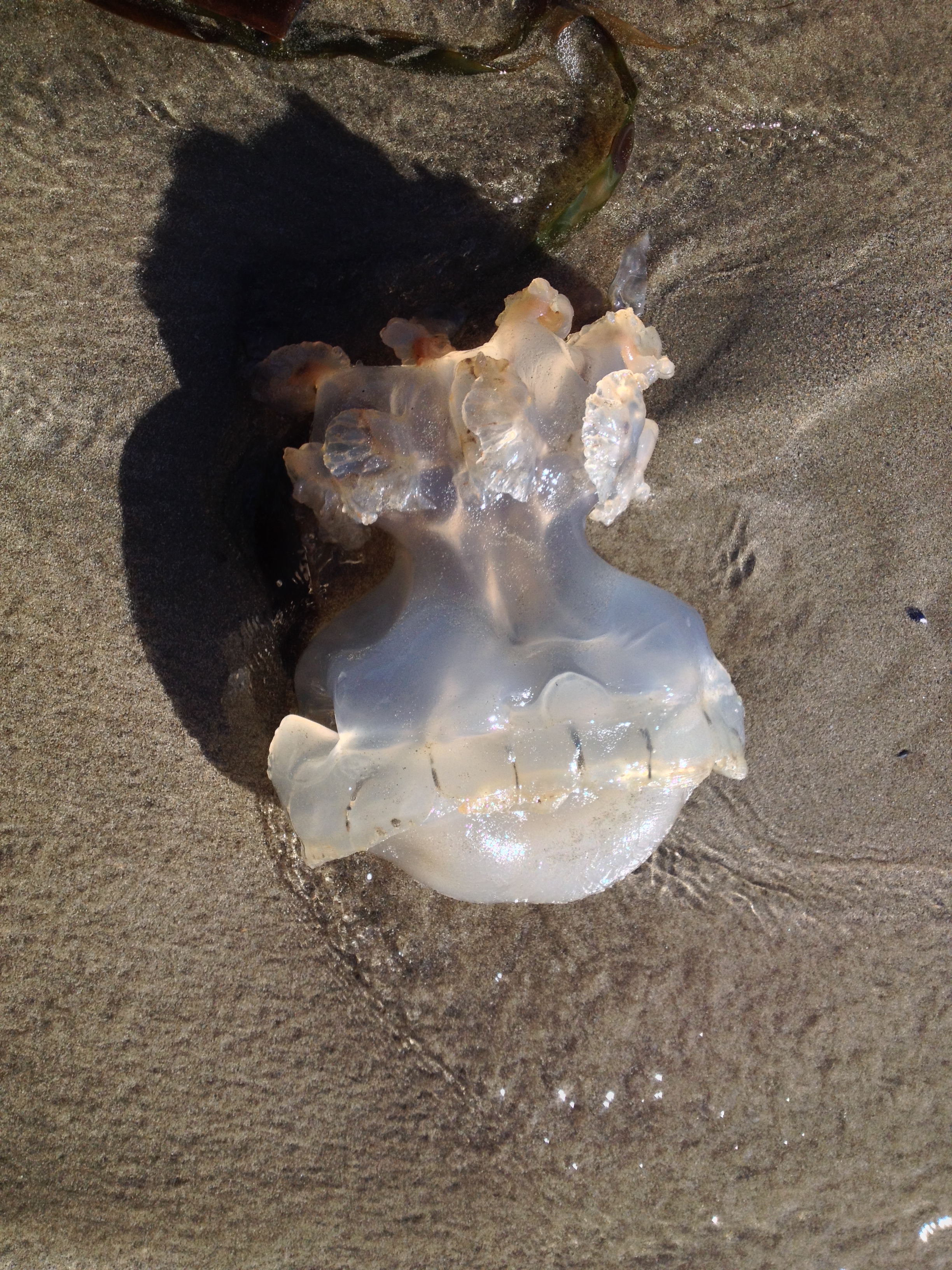
Back at Carne Beach on the Roseland Peninsula. No time for a good rock pooling session, but a nice walk along the beach revealed some nice surprises. Amongst the Laver and Furbellows lay Common starfish, Pod razorshells, Striped venus, Banded wedge shells and Rayed trough shells. A first: the Masked crab Corystes cassivelaunus (a female): common offshore buried in the sand, and usually only seen when washed up dead on the shore as is the case here (next to it a Sea apple). Also a beautiful piece of Sea beach (or Sea oak? the margins seem not ruffled enough though…). Finally, a Barrel jellyfish Rhizostoma pulmo, remarkably firm and heavy. This is a small one, about 20 cm across; 40 cm is normal and occasionally they grow to more than a meter in diameter, making it the largest jellyfish species in British waters.
Stalked Jellyfish
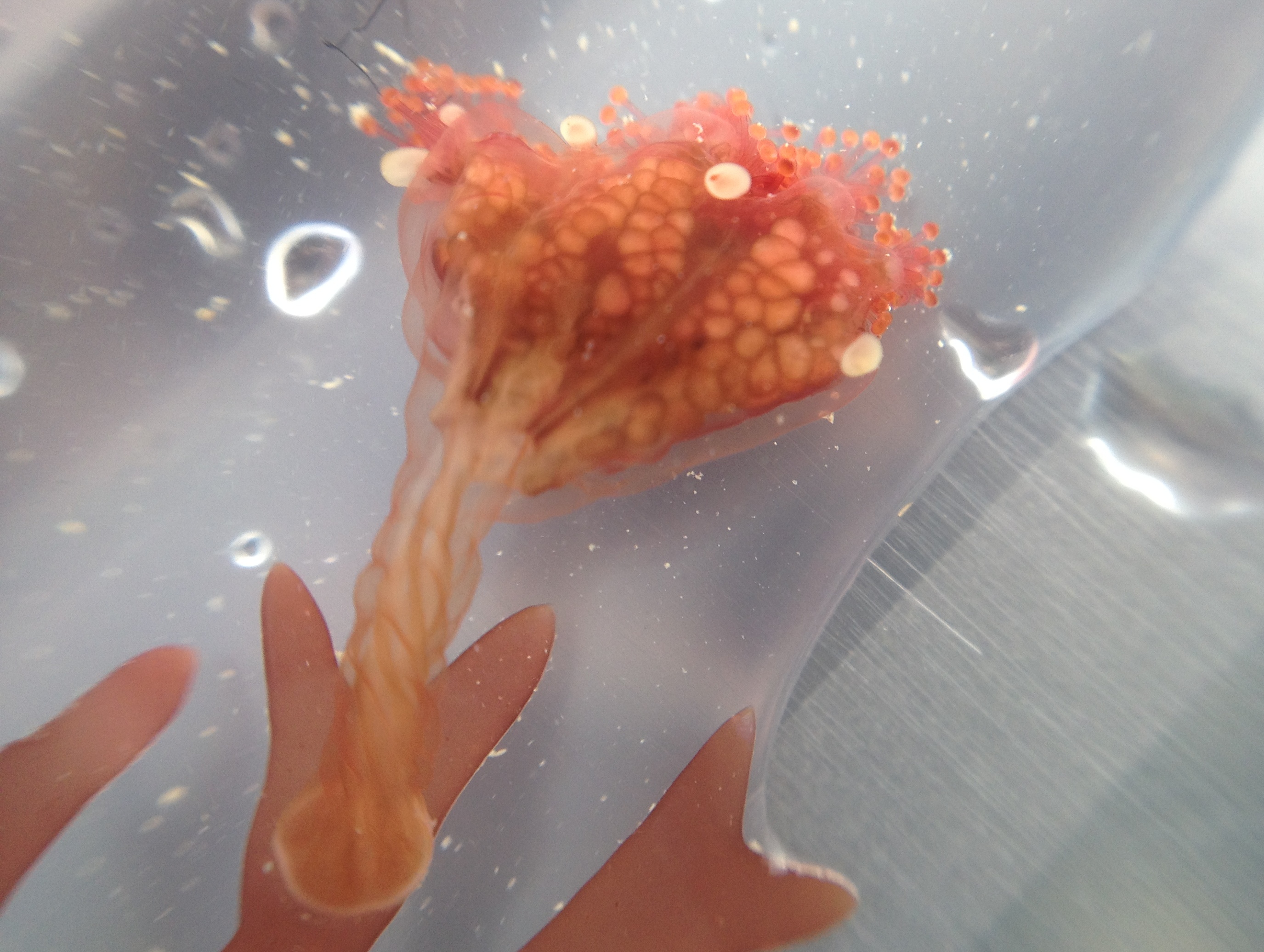
A trip to Carne Beach on the Roseland Peninsula, east of Porthscato and west of Nare Head. The beach is facing south and the sun was so bright that my iPhone pictures were all overexposed, but I’m not complaining in February! I did not have time to go rock pooling much longer than ten minutes, but in this time, I managed to find Stalked Jellyfish, as described in the previous post. Some very nice rock pools to the east of the beach (the pools to the west where the beach is called Pendower looked even better). On pretty much every Slender wart weed Gracilaria gracilis plant I found a Spotted kaleidoscope jellyfish Haliclystis octoradiatus (see stauromedusae.co.uk for all things stalked jellyfish). I also found a smaller, red species which David Fenwick ID’d as a Lucernariopsis campanulata (last two pictures). I will now keep my eyes out for these beautiful little creatures as their biology and distribution are not well-known and record my findings.
Rock Pooling in Penzance
It was a very nice day this Saturday, and the plan was to collect more seaweed species for a student project that I am supervising (see for an introduction my work blog here and for project updates student Abi’s blog). We were very lucky to have David Fenwick Snr and his partner Carol of aphotomarine fame to help us to find and identify species (you might also know him through a variety of UK marine facebook groups). We took to the rocks beneath the Jubilee Pool in Penzance (the end of the Cornish main train line and both the most Southern en the most Western station in England). As the focus was to get new species for Abi’s project, I did not focus on photography or finding other species so I have only a few pictures to show. One exception of course was that we had to see some stalked jellyfish; this is one of the specialties of David and he has dedicated an entire website to these beautiful creatures: stauromedusaeUK. These little animals are related to jellyfish but are attached on rocks and seaweeds on the shore. Ten species have been recorded in the UK. One of the more common ones is the Spotted kaleidoscope jellyfish Haliclystus octoradiatus; although a crappy iPhone photo, the stalk, arms with secondary tentacles at the end, white nematocyst spots and gonadal sacs are clearly visible:
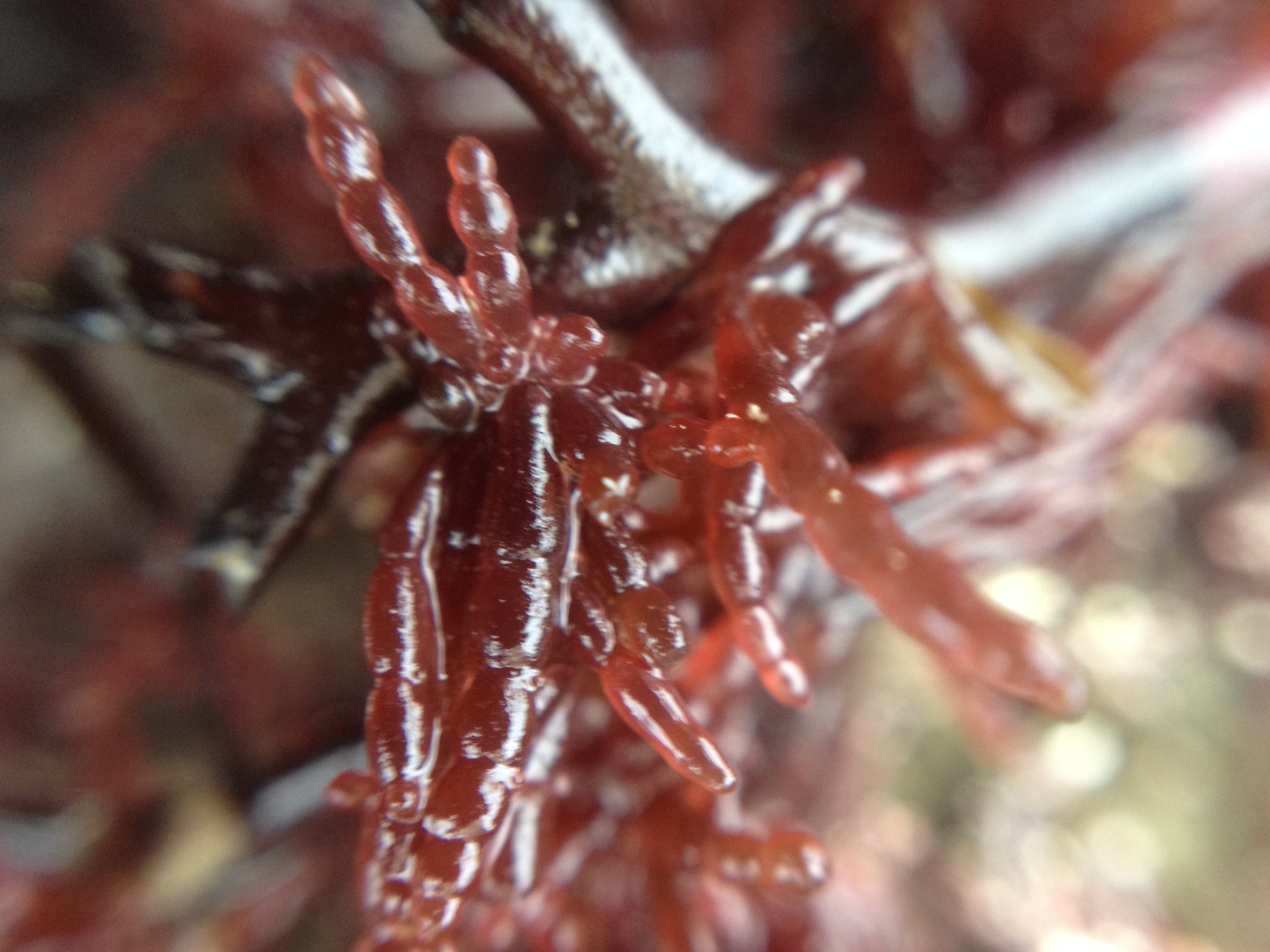
On to the seaweeds: about 15 new samples were collected. A species we did not take was Creephorn Chondracanthus acicularis, which according to Davis memory was last recorded in Penzance in the 1880s (first pic). We did collect a good amount of the epiphyte Champia parvula (second pic). Unfortunately no time to pick up some Wakame from nearby Newlyn marina or go to a spot with some good Prasiola growth but all in all a very successful and enjoyable trip!
Aquarium Update 7
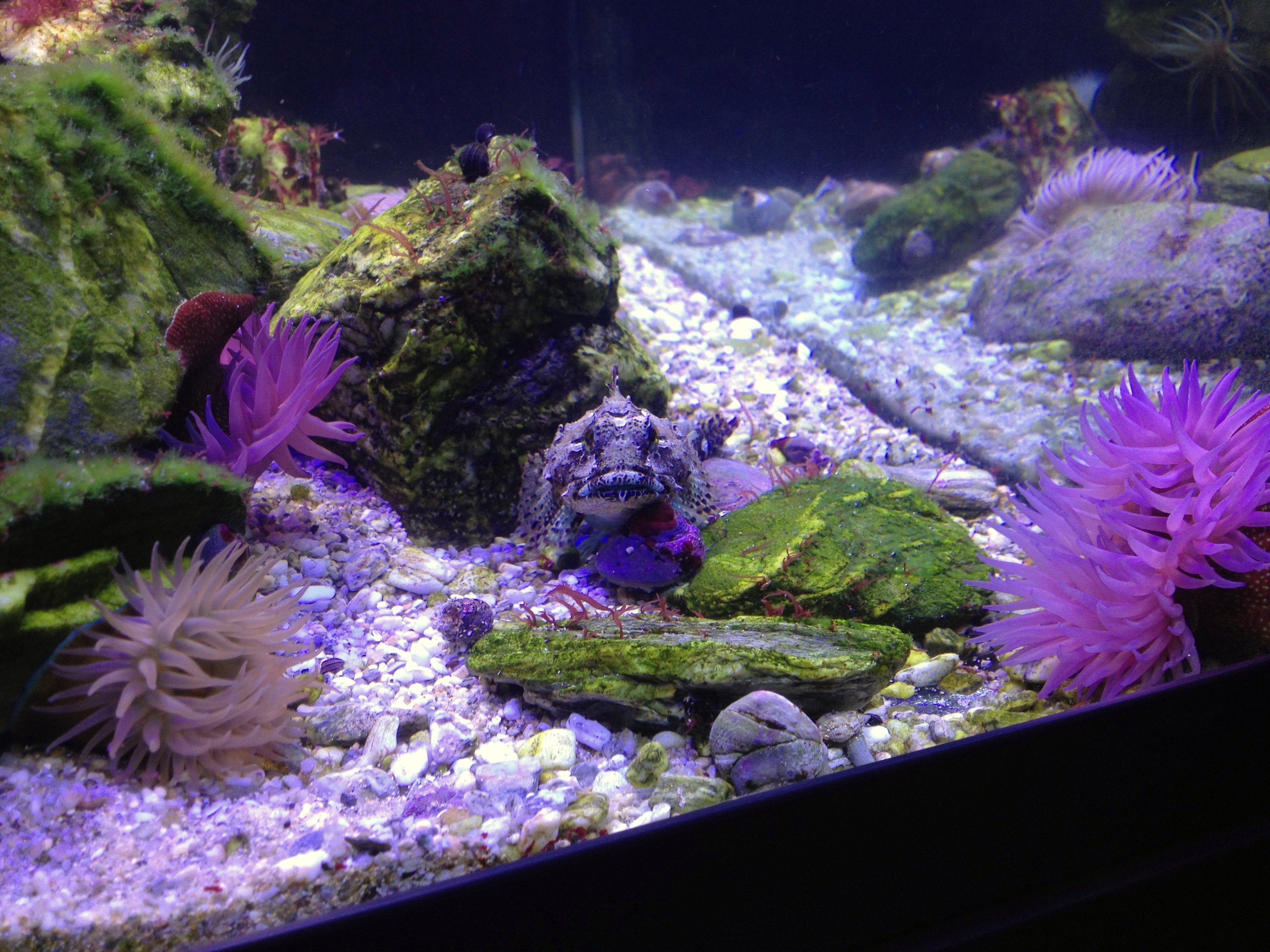
Long time no post, just been too busy! The aquarium is doing reasonably well at the moment, especially considering the fact that I have not done any water changes since the last update and I have added a bunch of new organisms. I have added two Beadlet anemones Actinia equina. They are a dullish brown (except for a nice blue band around the base); I have not found the bright red or green individuals yet. Very similar but more striking are Strawberry anemones Actinia fragacea of which I have collected three. They are voracious, I could easily feed them a shrimp a day. The same goes for the Sea scorpion. I am afraid of sticking my hand in now as it comes after me! Time to let this buddy go. This will also give me the opportunity to add some other things such as squat lobsters.
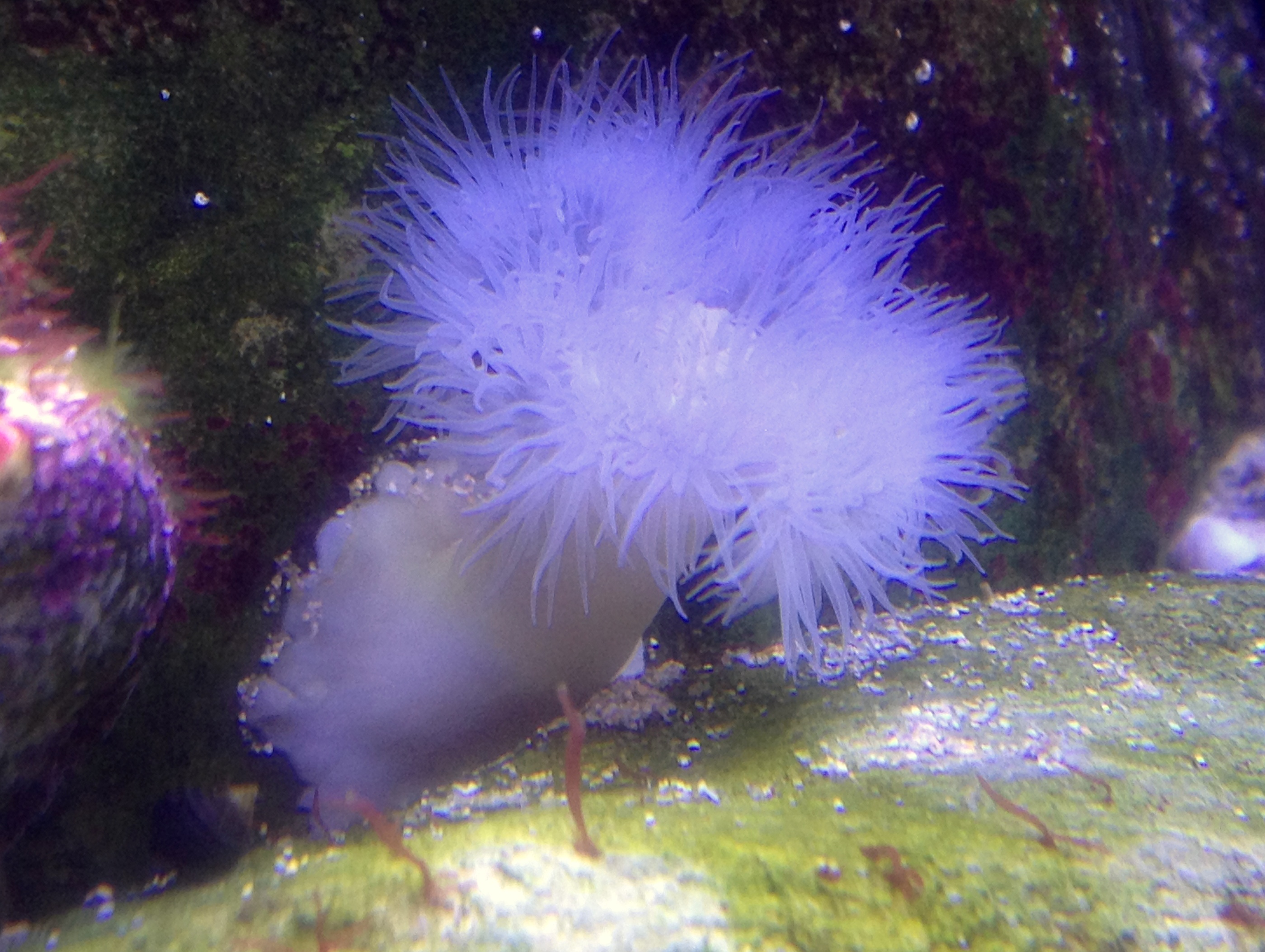
I have taken a break from experimenting with seaweeds and am focusing on anemones instead. I have added a bunch of small Plumose anemones Metridium senile that I scraped of the side of a pontoon. Weird fellas, they can fill up with water to be quite large, or just reduce to a crumpled little pancake. I have four white ones; I could only find very small ones of the orange variety and these were all devoured by Cushion stars (interesting). I’d like to have a large orange one as well, but I have to wait half a year until I can go diving again (they are very common in deeper water).
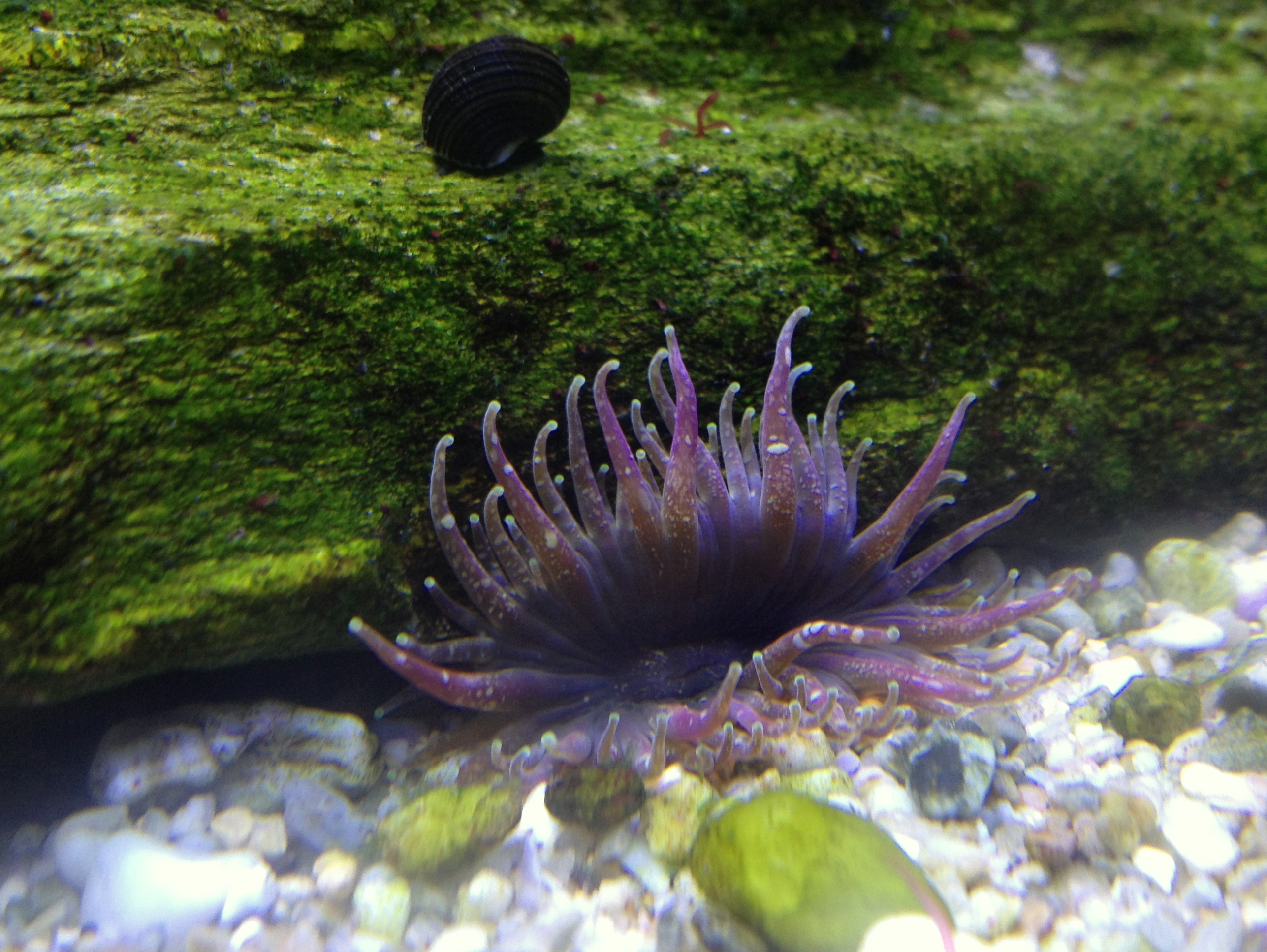
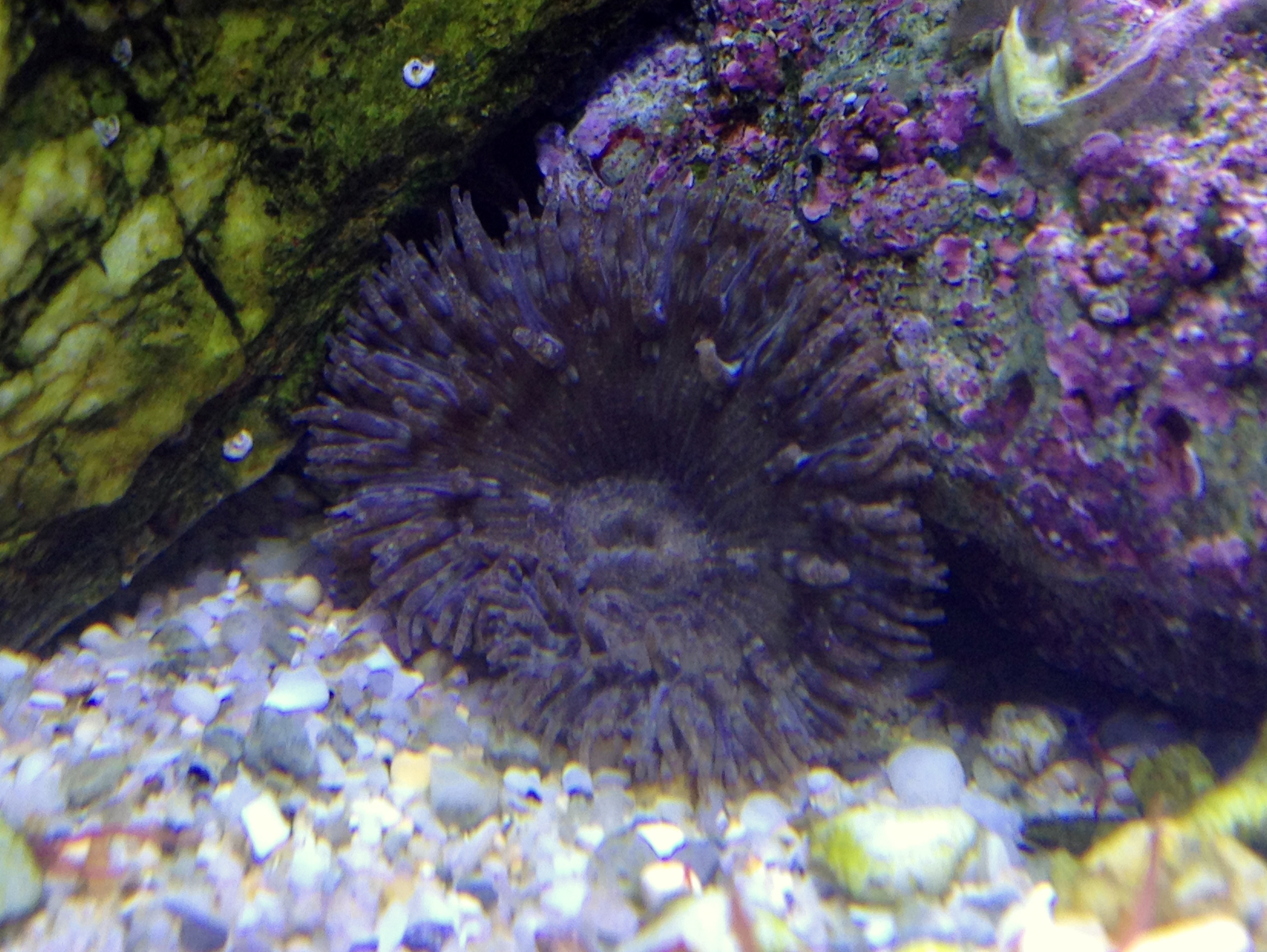
On the sheltered, silty shore of Flushing I found two small anemones attached to rock and half buried in the maerl sand. My excellent Seasearch Sea Anemones and Corals guide told me they were a Daisy anemone Cereus pedunculatus (uniform greay with many very short tentacles) and a Red speckled anemone Anthopleura balli (purplish and speckled, for a better picture of a different colour variant see this old post). Both quickly half buried/half nestled themselves under a rock so only the tentacles and the mouth are visible. They take pieces of shrimp and so hopefully they’ll be able to grow; these species should reach a decent size: 
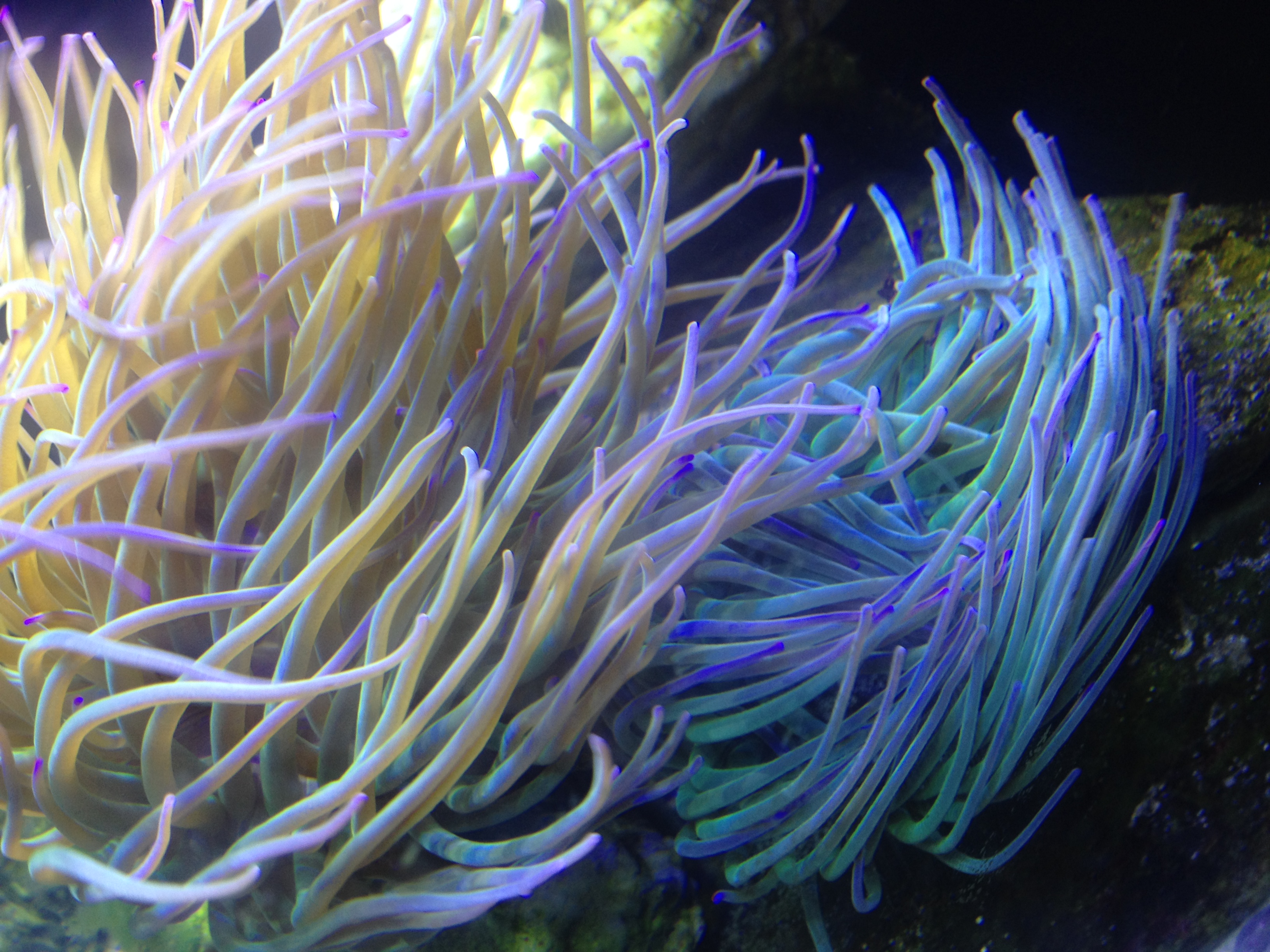
My friend marine biologist Chris gave me a snakelocks anemone that he had cured from its symbiotic algae. A very cool, bright white individual but it has returned to its original purplish colour so it must have taken up symbionts again. The snakelocks I already had, grew big, split into two and grew some more. Interestingly, one of the individuals seems to be turning from the green- to the purple colour variety:
So six anemone species in all. I would really like to have some Dahlia anemones, they are very colourful, large, and not uncommon (old pic here). I need to go anemone hunting at a good low tide soon (I have not been out in ages).
I had the Chryseminia seaweed growing attached to the Tunze for a while and it worked OK, but it looks a bit messy and so I will remove it. However, I see that little Chryseminia plants have started to grow from the rock in many places (see top picture). I have to give the glass a weekly clean (with a tooth brush) and the rocks have turned a bit too greenish recently. I have noticed however that near the Snakelocks anemones, tufts of filamentous algae have appeared, as the grazers do not want to come too close to their tentacles (this reminds me of a work by an ecologist friend of mine who studies how seedlings can be protected from grazers when growing close to thorny shrubs, I’ll have to tell him of this observation!).
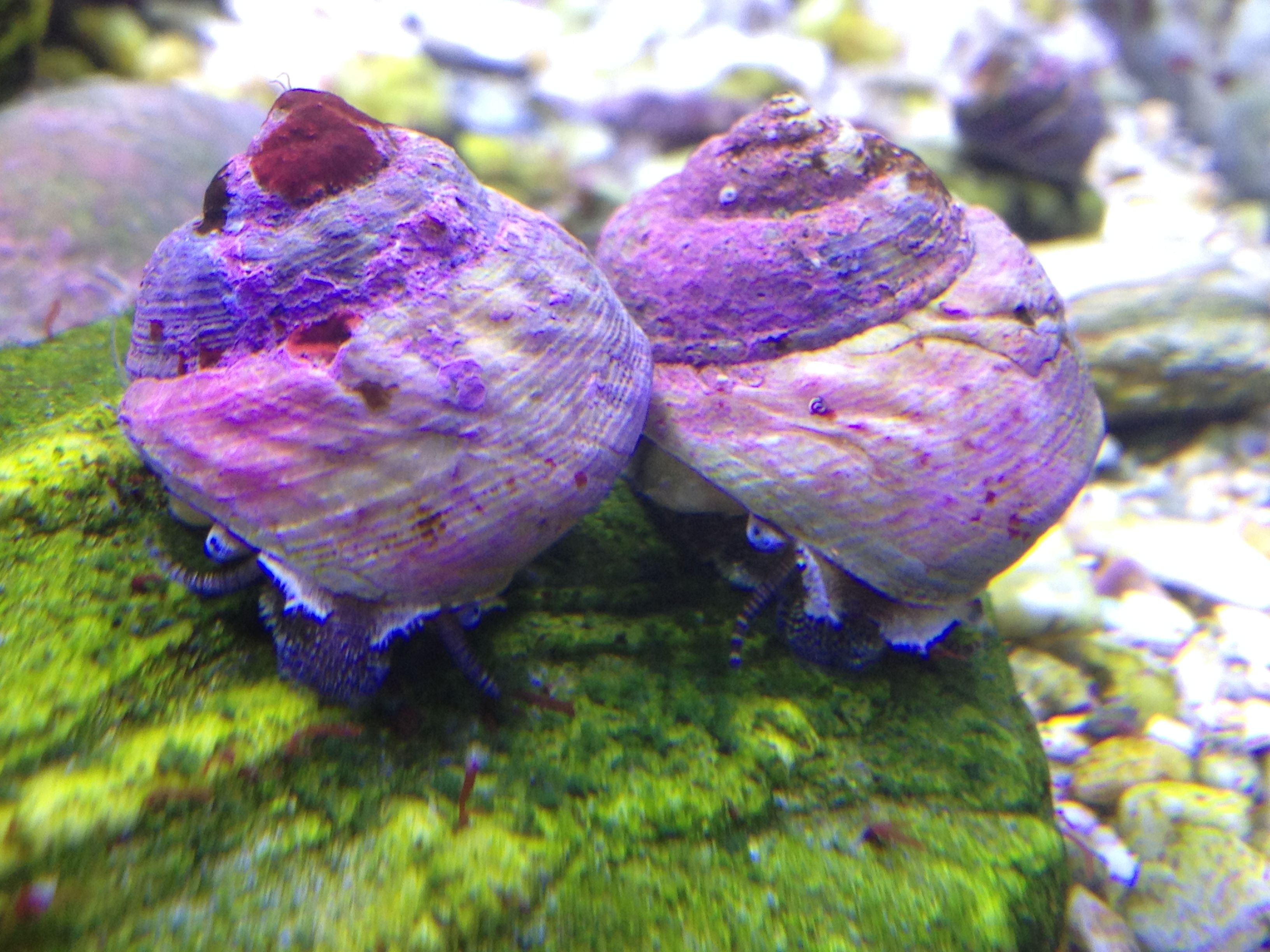
There has been some snail mortality. I mainly have Grey top shells but there are less than half of them left. I do not know why, part might be predation (which is not all bad as at least they serve as food for other inhabitants). I need to collects some more in any case. The Netted dog whelks are doing well. They are usually hidden below the sand, but as soon as they smell a defrosted shrimp, they come up like a Shai-Hulud. Their plowing through the sand is definitely good in preventing mats of diatoms to appear. Their little cousins the Thicklipped dog whelks are also doing fine. They tend to creep up the Daisy anemone to steal its food. I still have a Sting winkle Ocenebra erinacea which moves slowly but is very pretty. There are a variety of other species such as Blacklined- and Rough periwinkles. The best species however are the truly sublittoral large Turban top shells Gibbula magus (some of which have died as well, one of the shells has been taken over by a hermit crab, wich are also doing fine):
More Pontooning
Went back today for some more peering from the pontoons in Mylor Bridge marina. Besides the Thicklipped mullet and Two-spotted gobies, small schools of Sand smelt Atherina presbyter were out and about. A short clip of this silvery, pretty fish made using the Canon Powershot 30D and after that a clip made with a GoPro 3+ (not in HD as it was my 2nd, free upload)):
(Annoying that wordpress makes the 2nd clip smaller!) I managed to find back the single 1 cm Elegant anemone Sagartia elegans mentioned in the last post but again was unable to remove it; seems like this species knowns how to attach itself a bit better than do Plumose anemones. I noticed that besides the tunicates, sponges, bivalves (mussels and oysters), seaweeds, anemones and peacock worms, hydroids and bryozoans are also very abundant. I still have to educate myself a bit about these groups. The peacock worms would be beautiful for the aquarium. Although they would be easy to dislodge, it would be problematic to fasten them to something again. Maybe I’ll find a small object with some attached when I’m diving that I could take back some time (frozen artemia might be too big for them to eat, so I would need to look at artifical plankton products for food).
Pontooning
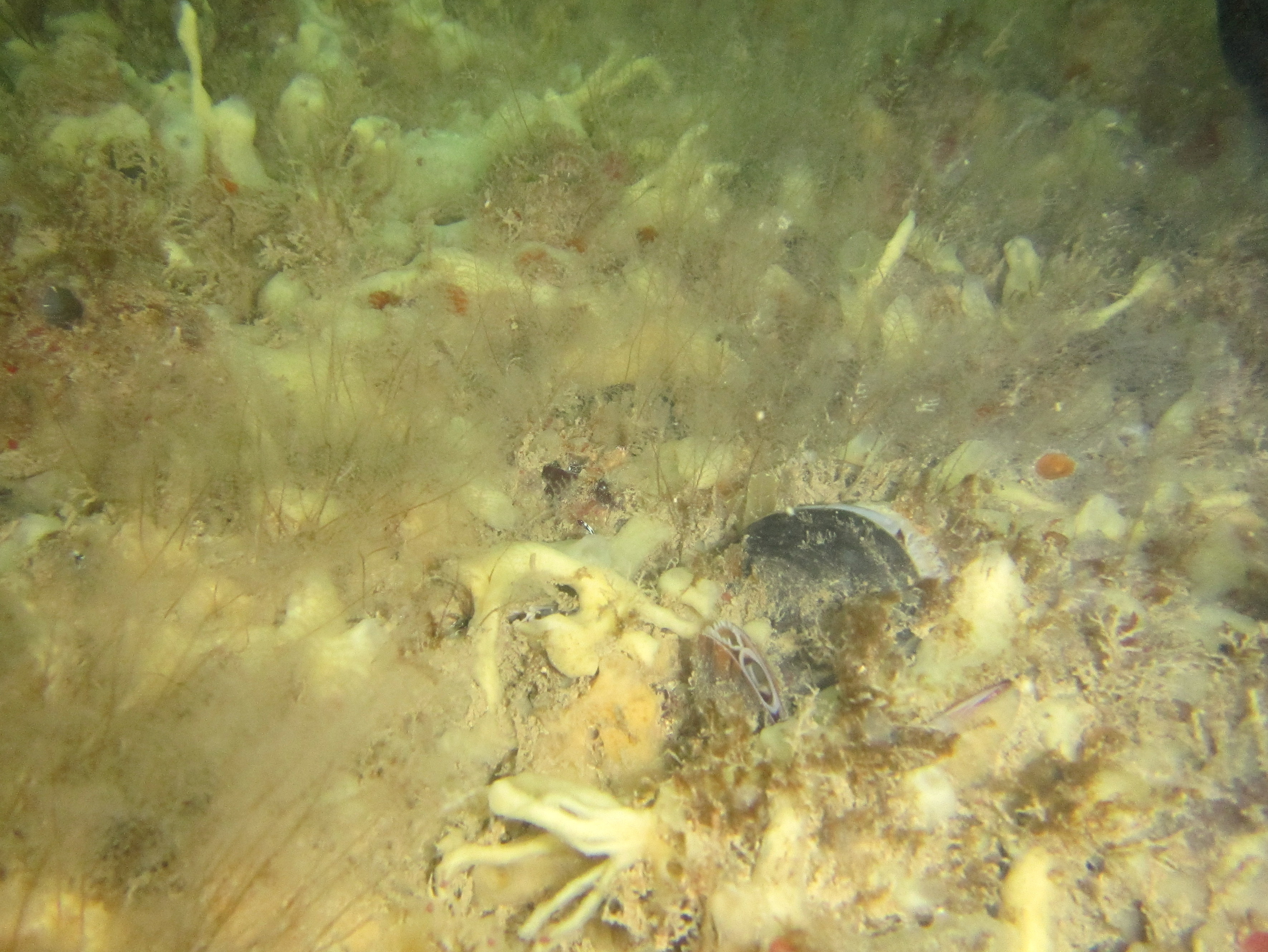
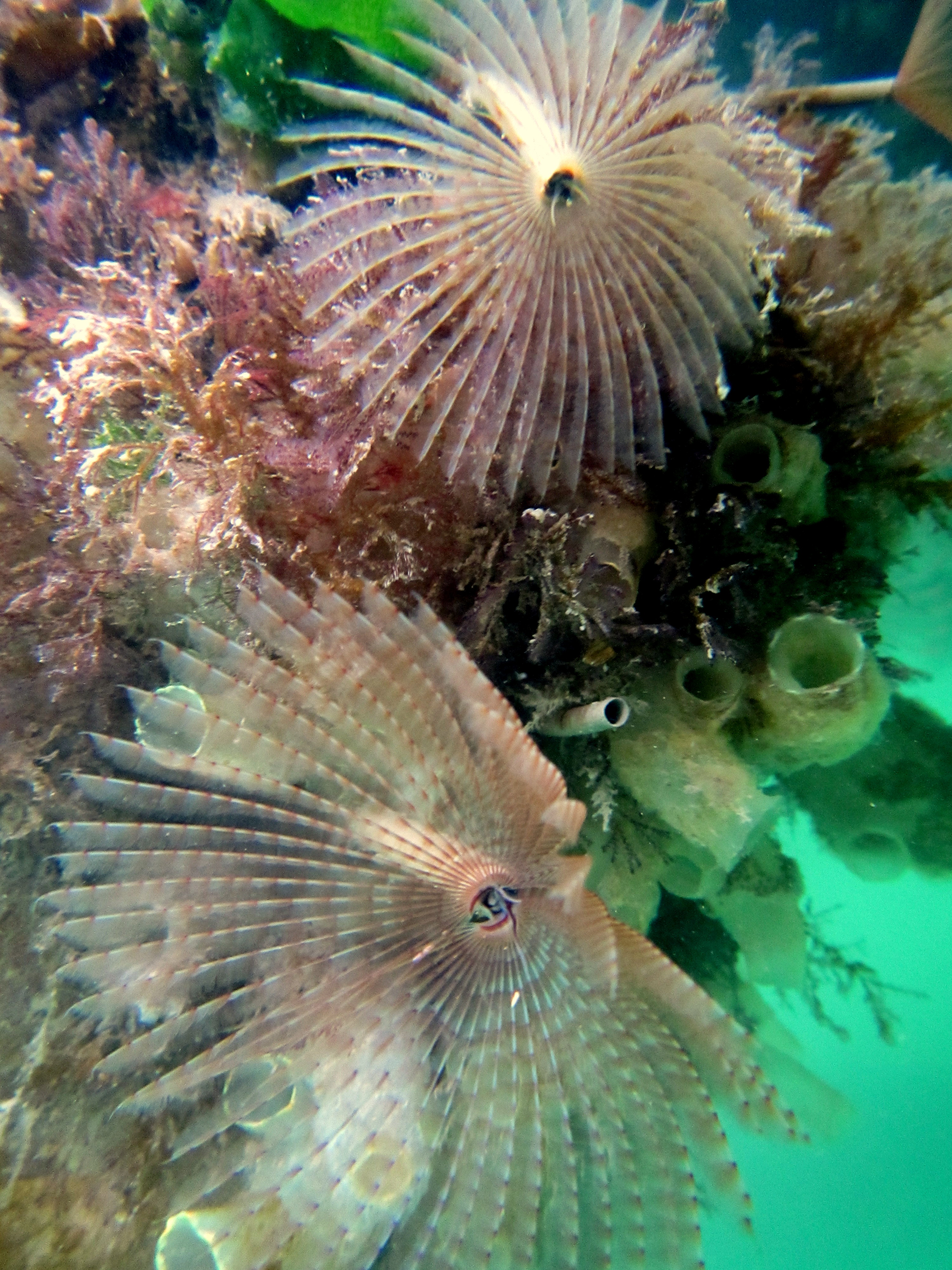
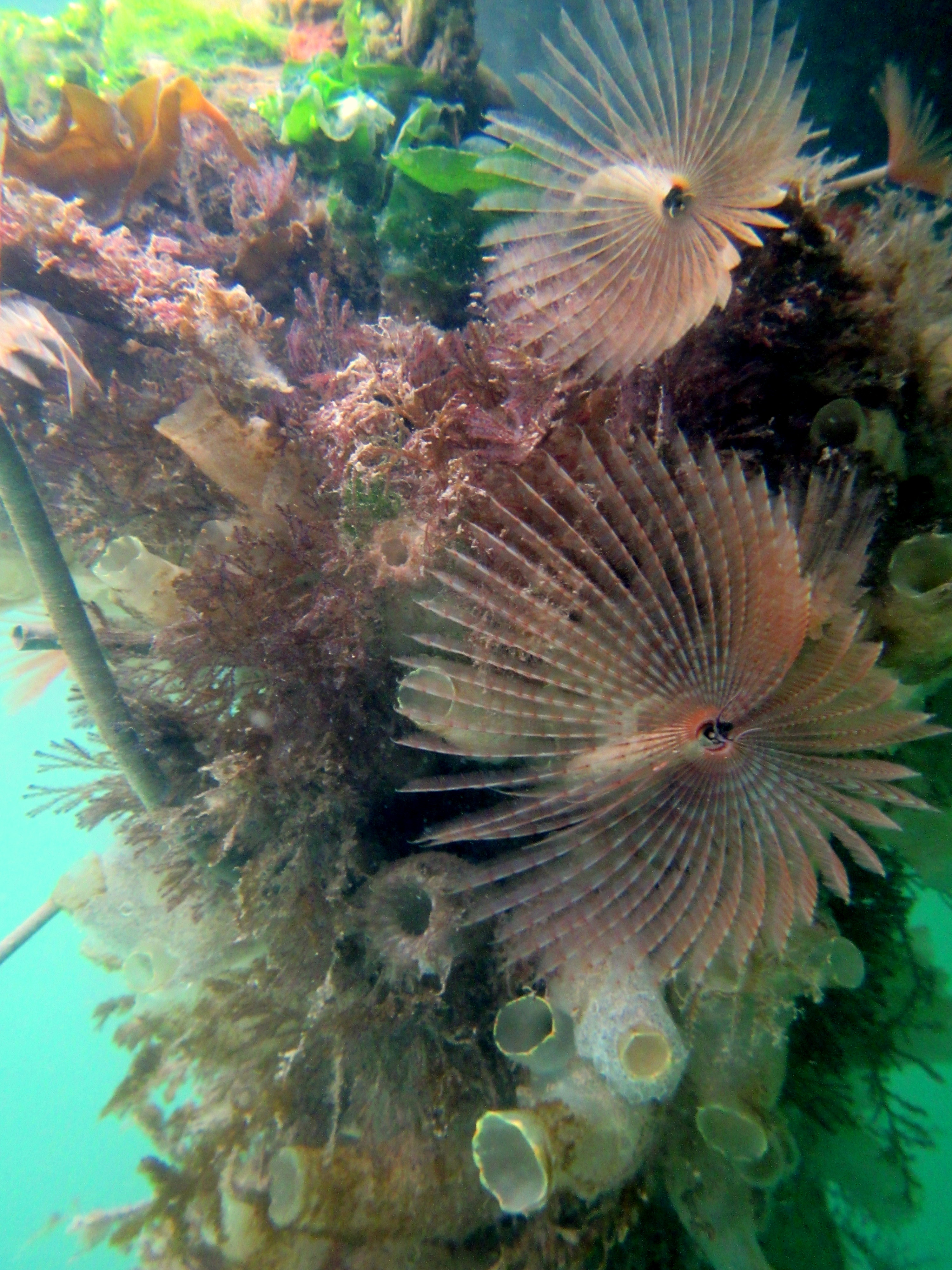
Unfortunately, the weather turned before I had another opportunity to go diving (or snorkeling). The wind and rain have reduced visibility too much and so I’ll have to wait half a year or so before conditions improve….too bad! I missed the low tides recently as well. However, today there was time for a bit of ‘pontooning’, i.e. lying flat on a pontoon and staring at the creatures attached to it. It is quite convenient as it is not dependent on tides and the communities are very different from that of rock pools. There is a very large marina at nearby Mylor Bridge that I had visited before in summer. There was a bit more life then (schools of mysid shrimp, more seaweeds, more tunicates) but it is still looking nice now. I used my iPhone to take pictures before, but holding it above the water was tricky and did not produce good results so I brought my new Canon Powershot instead (still not easy to take pictures as at the same time I had to prevent my two-year old son falling in the water). The bulk of the biomass hanging from the pontoons consists of tunicates (mainly Ciona intestinalis). Small Plumose anemones Metridium senile are common (more about those in the next aquarium update), as well as the sponge Sycon ciliatum. I even found a small Elegant anemone Sagartia elegans (var. venusta). The invasive Bryozoan Bugula neritina is very common; it looks a bit like seaweed even though it is an animal (see here for a description). Finally, the Peacock worm Sabella pavonina is common (and very striking). Just two pictures below as the rest was subpar; I have to go back on my own sometime soon maybe.

diving in the Helford Passage
A new location for the second dive: Helford Passage between Falmouth and the Lizard Peninsula. This is a shallow, sheltered creek with a sandy bottom and eelgrass beds and can only be dived (well) at high tide. A good site to spot Thornback rays Raja clavata we heard and we were indeed lucky to find several of them. We entered the water at Grebe Beach next to Durgan:
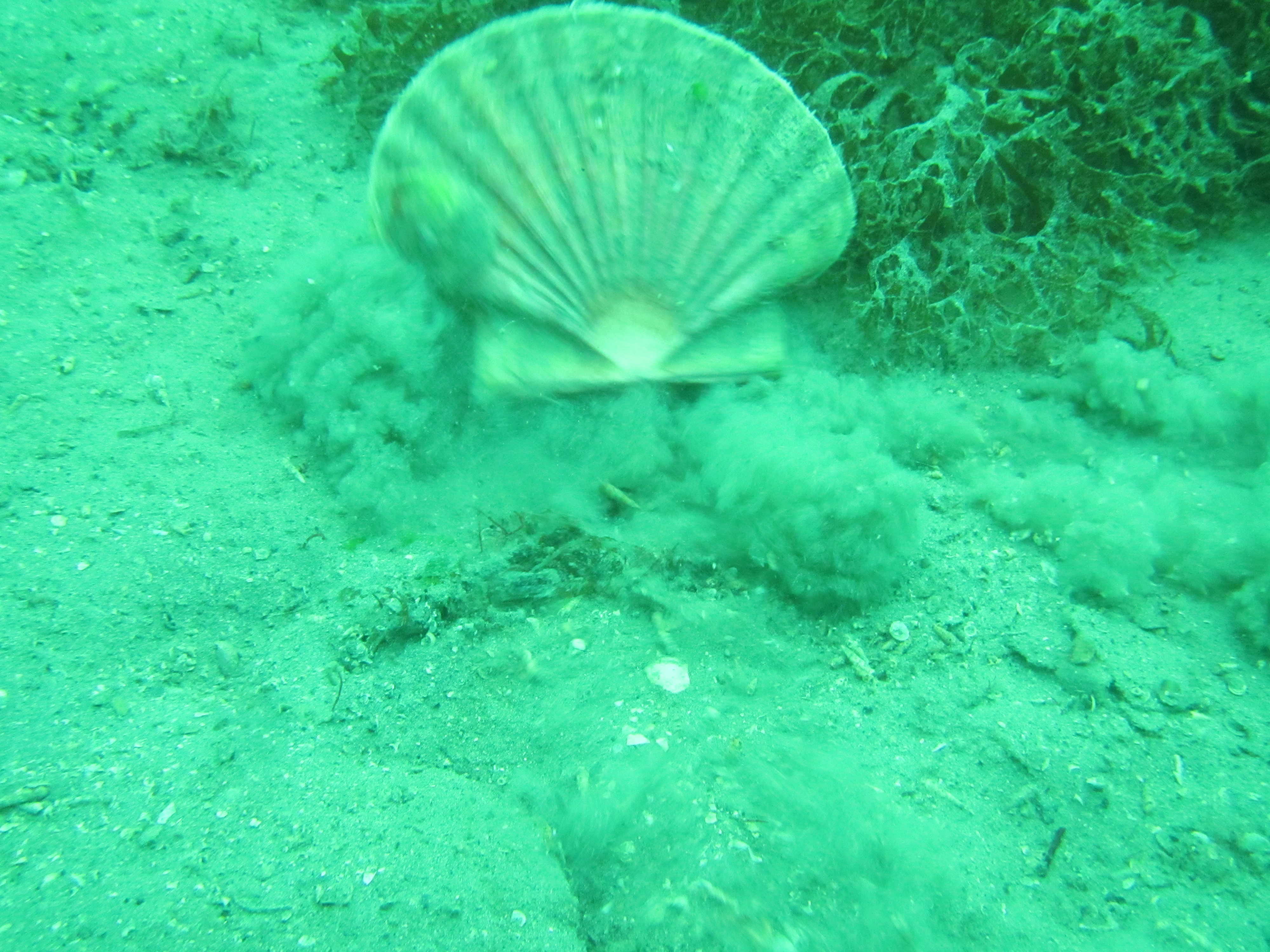
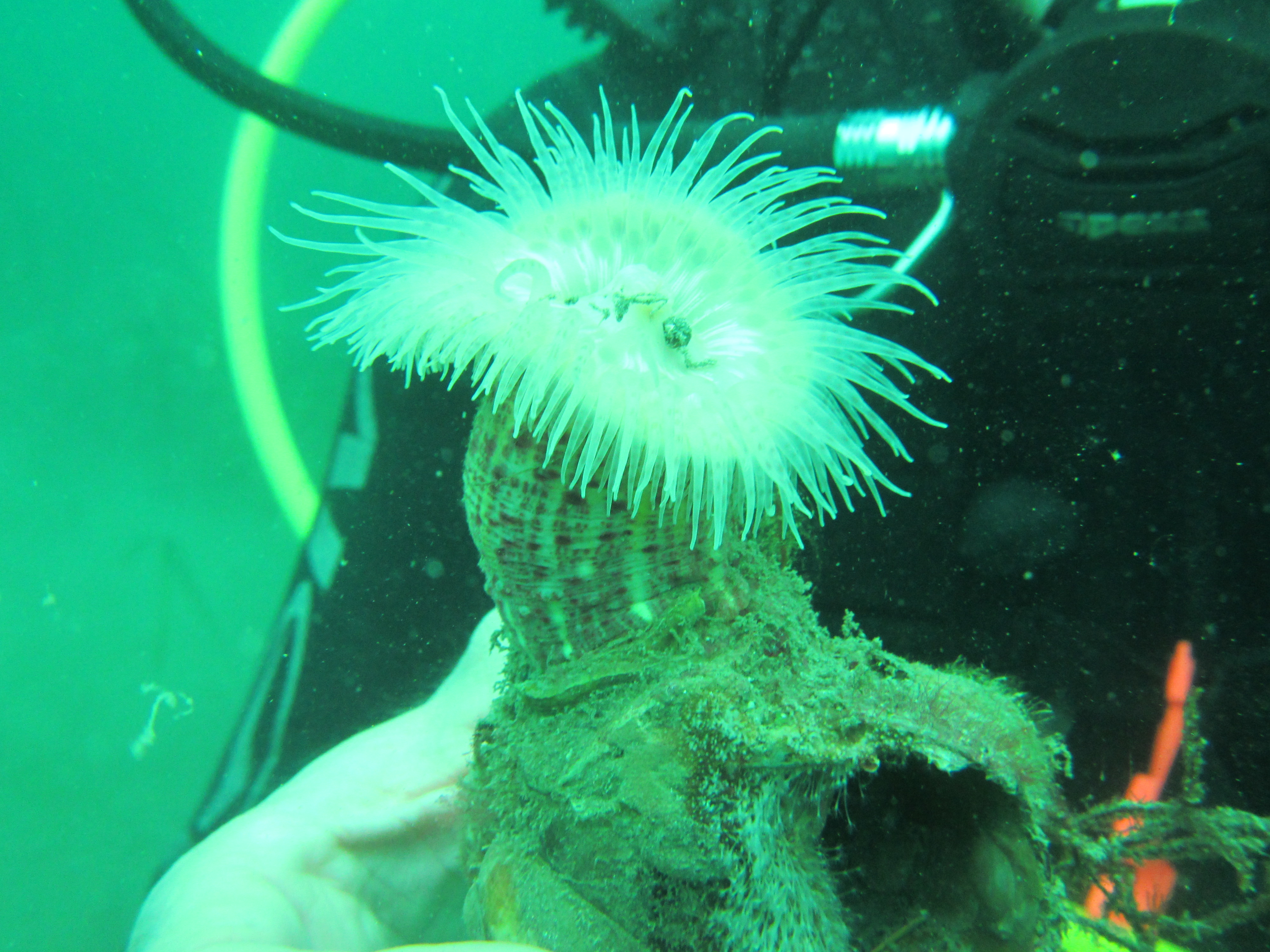
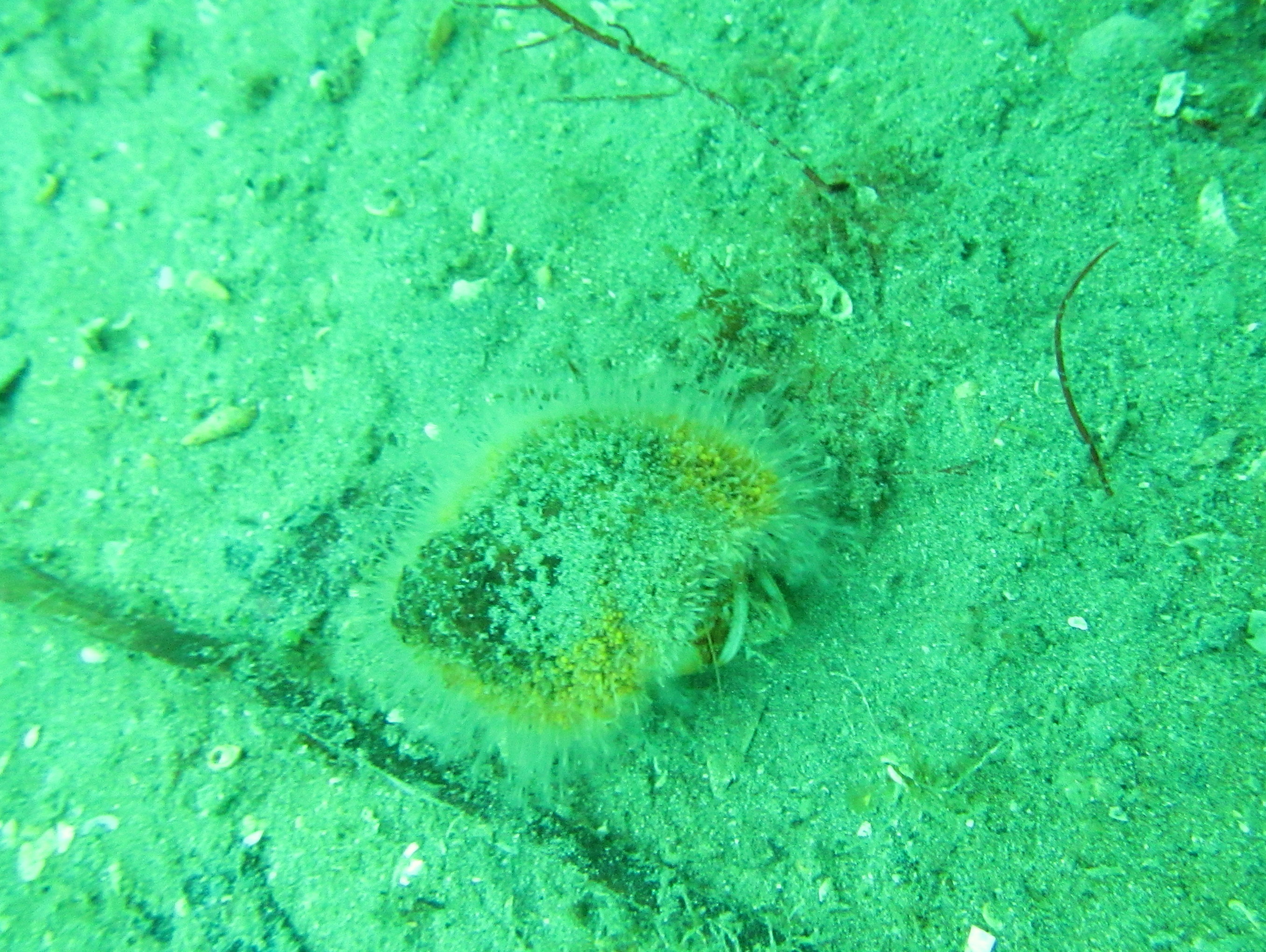
Again, we spotted some cuttlefish, which are not very shy at all. What was very cool were Great scallops Pecten maximus lying around and swimming away for a bit by opening and closing the shell, I will try to film that next time. Many Turban top shells and some large heremit crabs with one or more Parasitic anemones Calliactic parasitica on top. The shells of smaller hermit crabs were covered in the hydroid Hydractinia echinata:
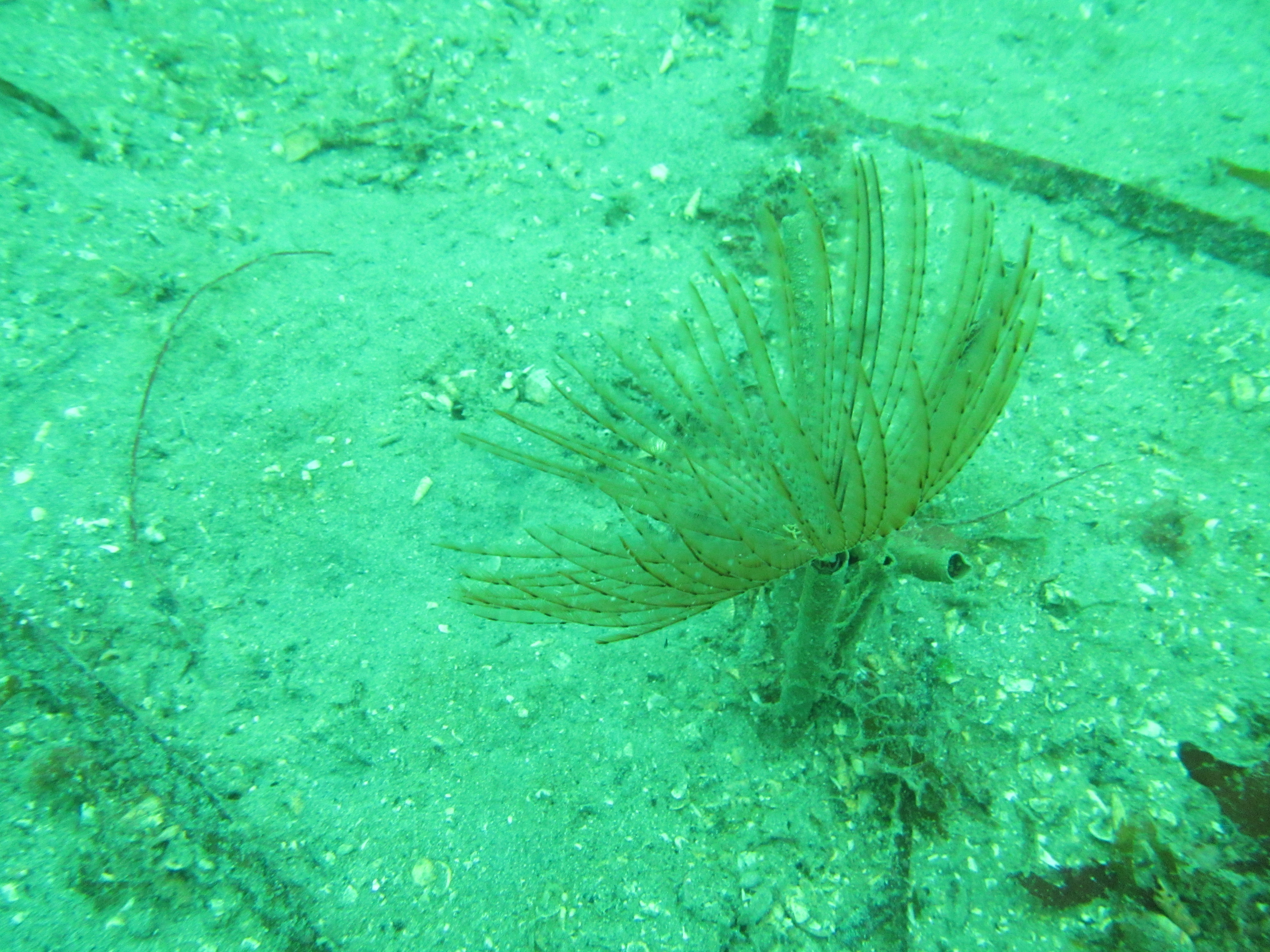
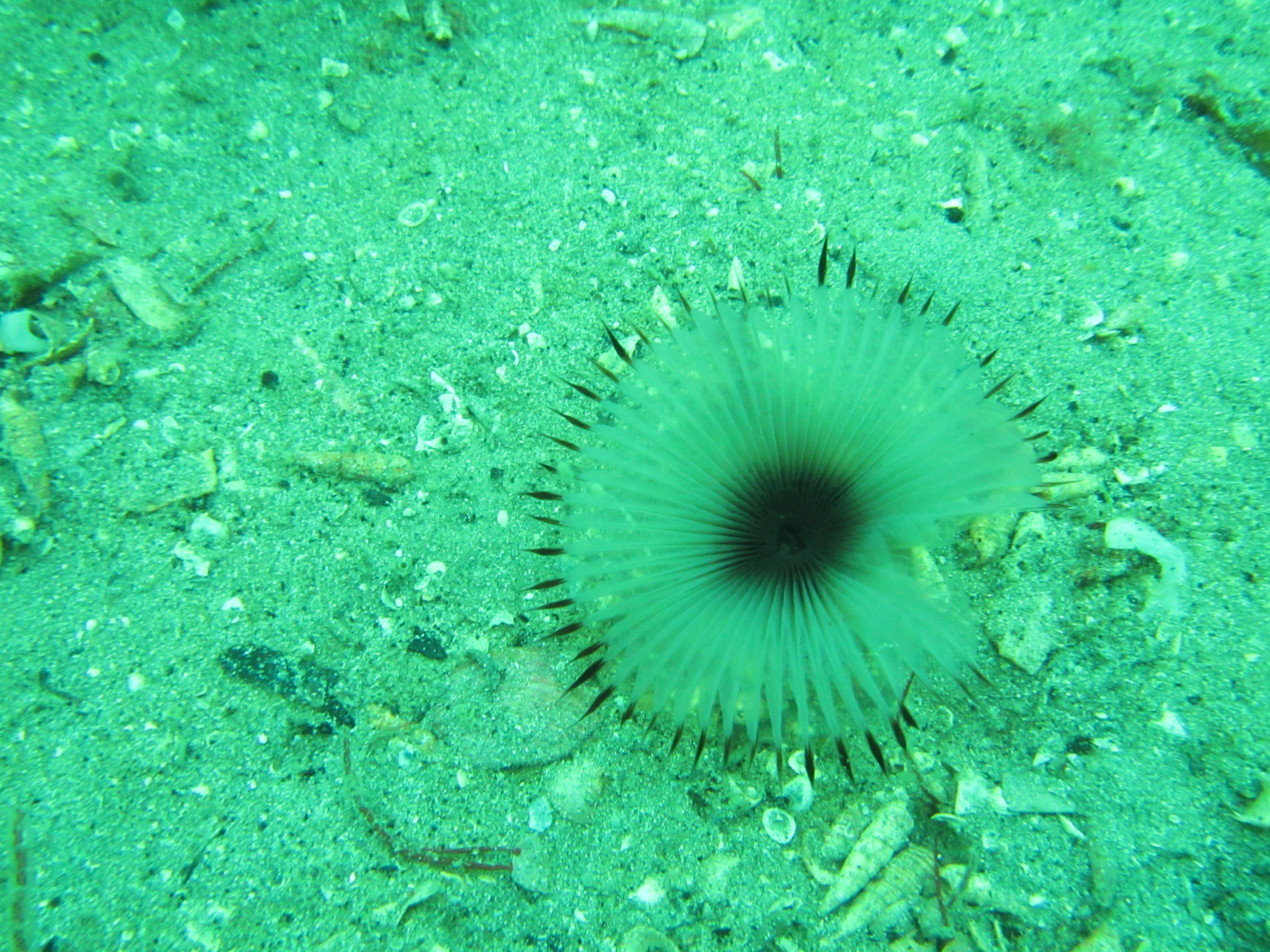
We got to about nine meters depth (near the buoy) and found a large concrete block. Scattered among it lay the remains of crabs and in a hole dug underneath the snout of a Conger eel poked out. As I had to get close for a better look, I stirred up too much sediment and so I do not have a good picture but I will definitely like to go back and have a better look! Interesting was an old crab pot covered in sea squirts (mainly Morchellium) which was swarming with Leach’s spider crabs Inachus phalangium. Normally they sit under a Snakelocks anemone but there were none attached to the pot, strange. Very common were large Peacock Worms Sabella pavonina and Fan worms Myxicola infundibulum:
More Jellies
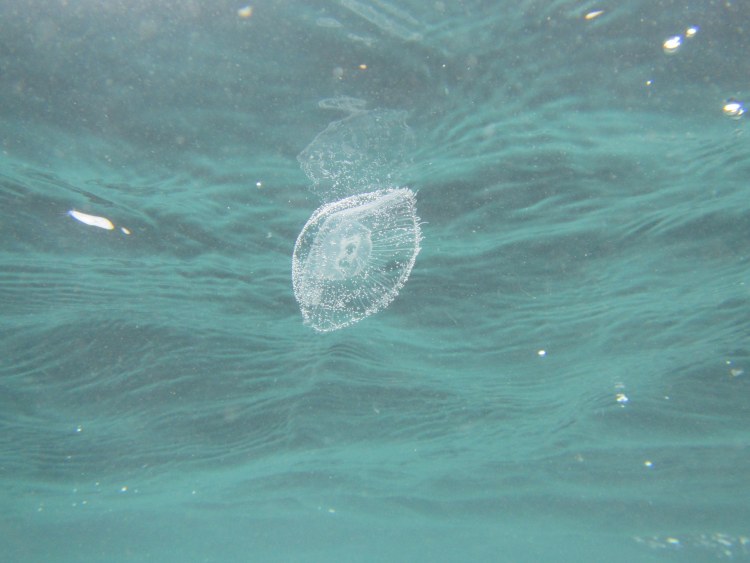
A second, long snorkel session at Gylly Beach yesterday. Loads of Sand eels, no cuttlefish but there were a couple of beautiful Compass jellyfish Chrysaora hysoscella around, with tentacles up to a meter long (first pic). Smaller and less visible was Aequorea forskalea or A. vitrina (second pic)*. A close relative of this species gave molecular biology ‘green fluorescent protein‘ (gfp). 
This time we swam out a bit further, over the sandy bottom which seems quite lifeless compared to the rocky kelp forest. However, the fauna is very different here so it was definitely worth it. I found my first Sea potato Echinocardium cordatum (about to be eaten by a Spider crab). Near the buoys, at around nine meters depth or so there was (sparse) seagrass. Back on the beach I noticed that my lumix camera was flooded. I was somehow convinced that it could go up to ten meters deep but actually the sticker on it quite clearly stated that it was waterproof only up until three meters….Ah well, I will have to switch back to my Canon Powershot with waterproof case then.
*= From the facebook group NE Atlantic Cnidaria: “A. forskalea : up to ca 120 marginal tentacles, usually fewer than the radial canals but ranging from half to twice as many; radial canals 60-80; max diameter ca 175mm” and for A. vitrina: “60-100 marginal tentacles, three or more times the number of radial canals; radial canals 60-100; max diameter ca 100-170mm”.