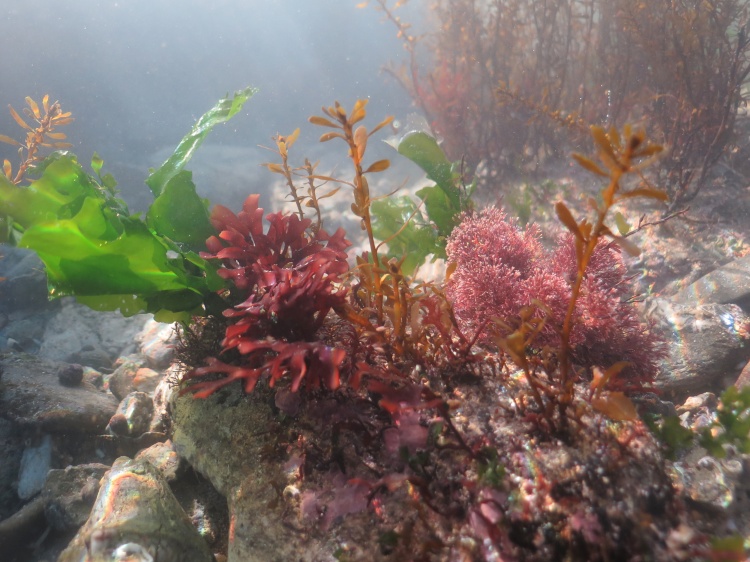
 It is my plan to post photos of seaweeds from one large rock pool in Falmouth every month. As I am making good on my new year’s resolution of going out to the beach, I have some more photos to post before it is February though. I am slowly learning to take better photos, but will also post ones that are not that great to cover more species. Below, Club bead- or Feathery tube weed Lomentaria clavellosa, the small epiphyte Little fat sausage weed Champia parvula (heavily cropped, I need a macro lens!) and Juicy whorl weed Chylocladia verticillata (with some of the edible Dulse Palmaria palmata on the left of it).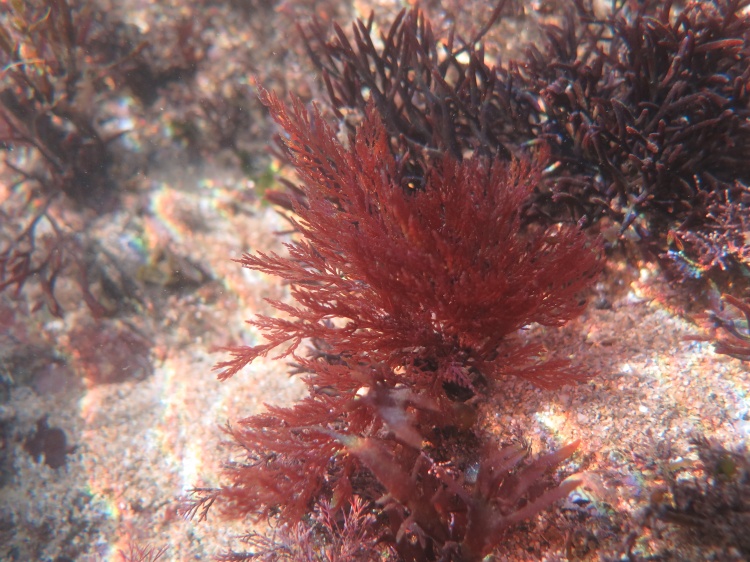
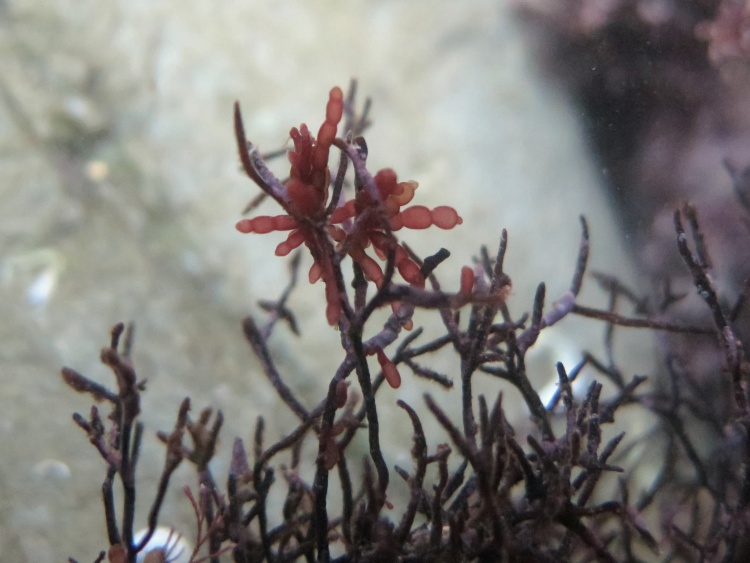
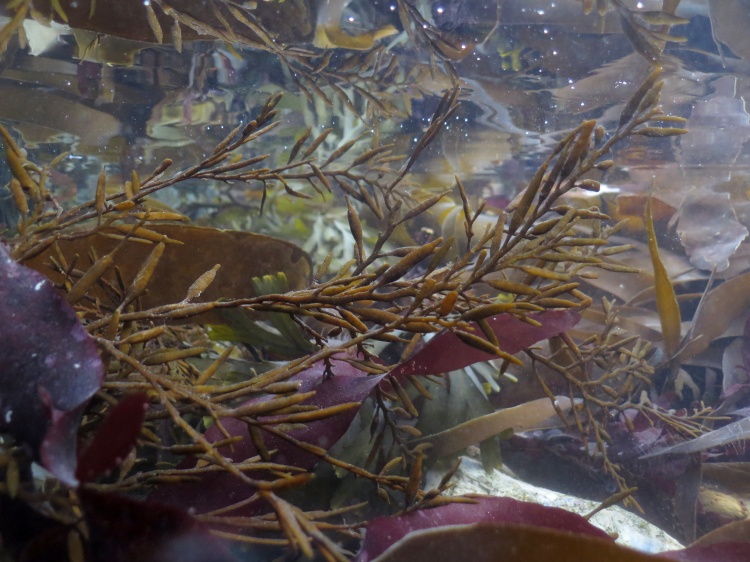
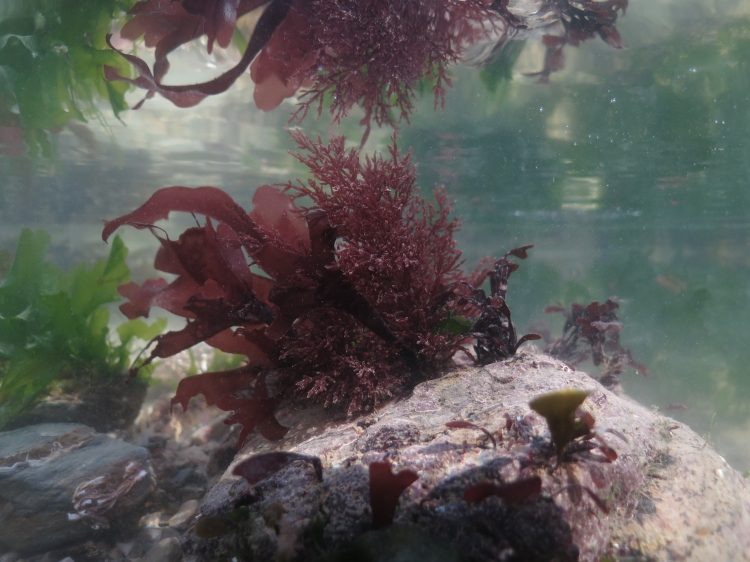 I found quite a few more species but the photos ended up a bit meh, so I will have to go back and try harder. Below, two that ended up quite nice. Serrated wrack Fucus serratus covered with a variety of red epiphytes and a piece of washed up Sea oak Halidrys siliquosa.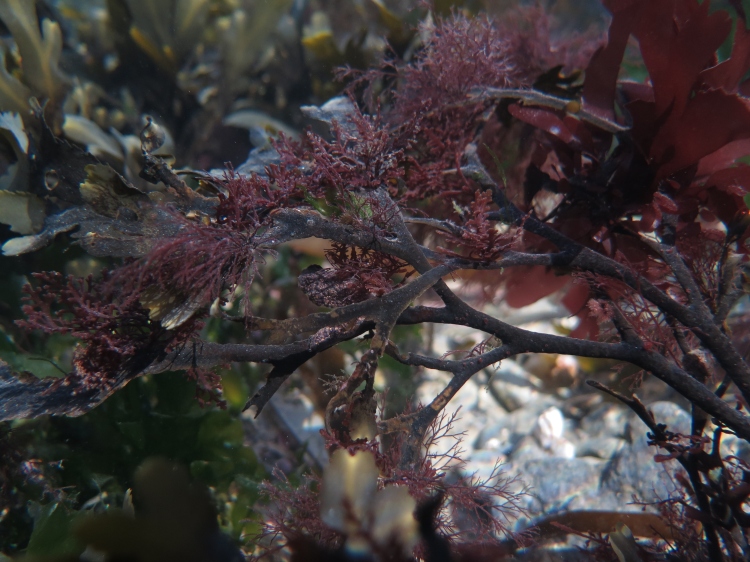
Category Archives: Canon G16
End of Year Pics
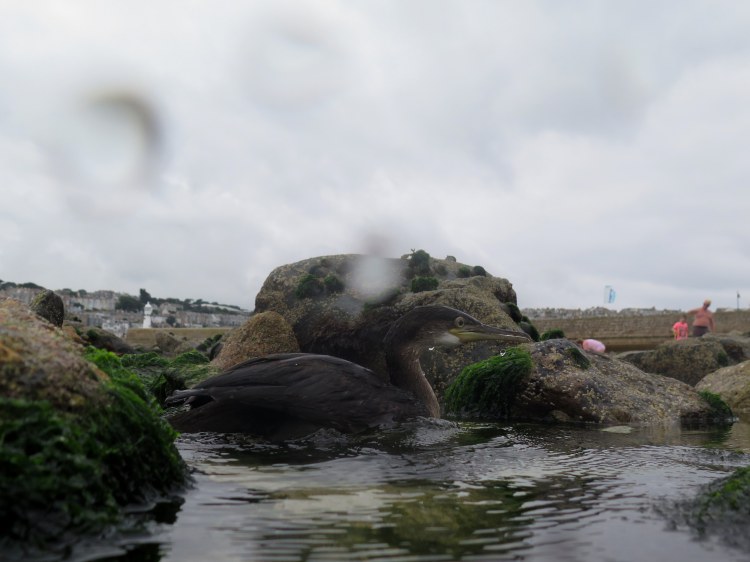
I have not posted as much on the blog as I would have liked this year (in fact, I keep posting less and less: 24 times this year, compared with 33, 46 and 64 posts the previous years). My new year’s resolutions will be to dive more, to go rock pooling more and to blog more. For now, I will post some miscellaneous photos from this year that I did not bother to put on the blog at the time (as I did last year). Below a Beadlet anemone Actinia equina on the beach in St. Ives as well as a young cormorant looking for food taken with my new Canon G16: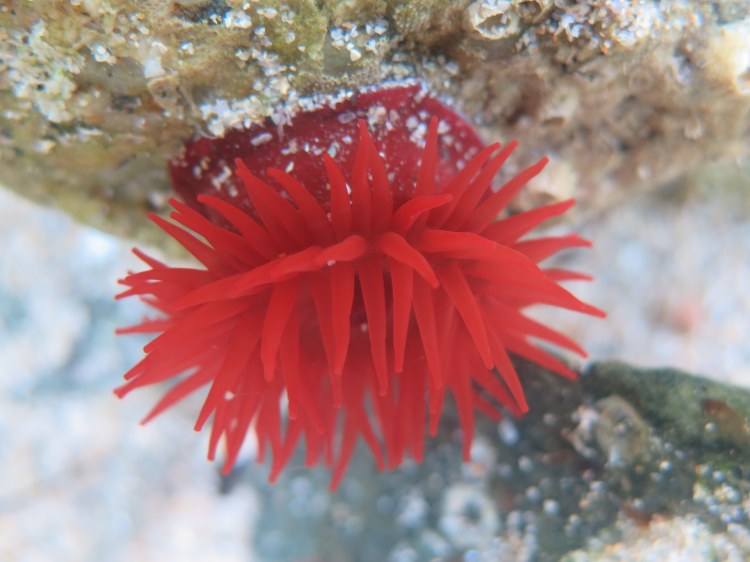
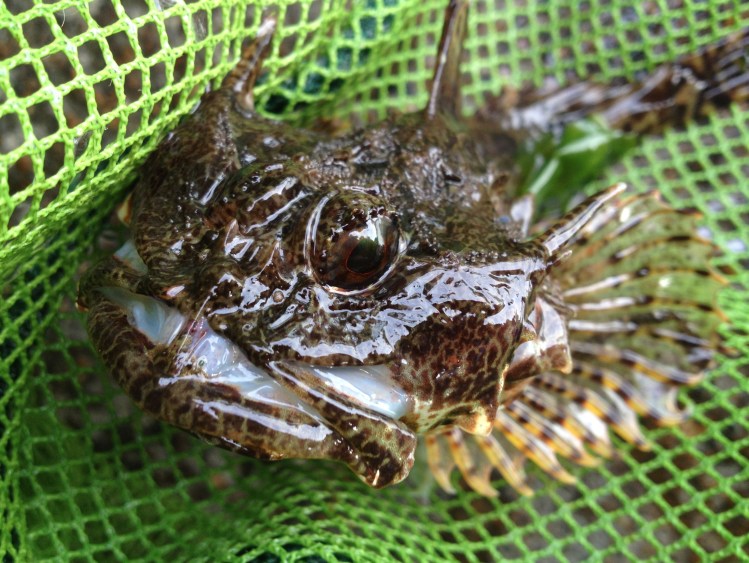
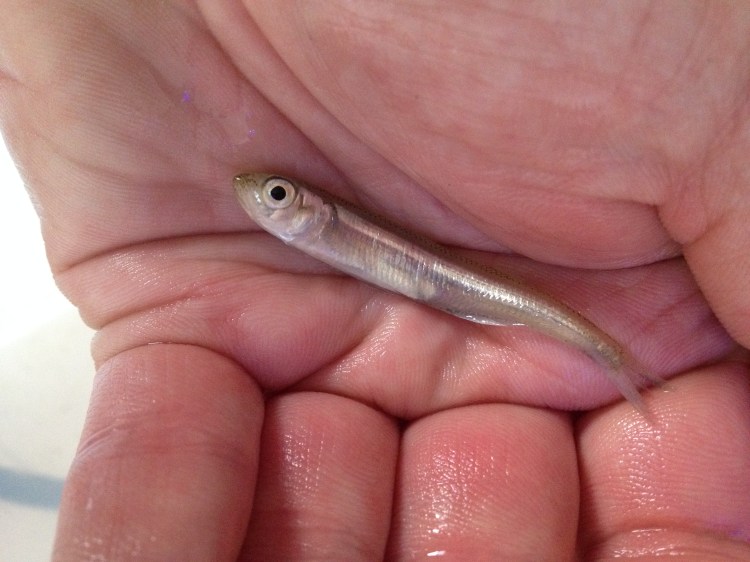
 I caught a number of different fish this year, the first photo shows a small Montagu’s blenny Coryphoblennius galerita in an aquarium net which were fun to watch in a little aquarium. Next a Longspined scorpionfish Taurulus bubalis caught with my big net off the quay and a Sand smelt Atherina presbyter (see here for a movie). The latter species did not last long in my tank unfortunately. I mentioned in the last aquarium update that a Topknot I caught seemed to have died in the tank too, but I found out it is still there, it just likes to hide behind the rocks.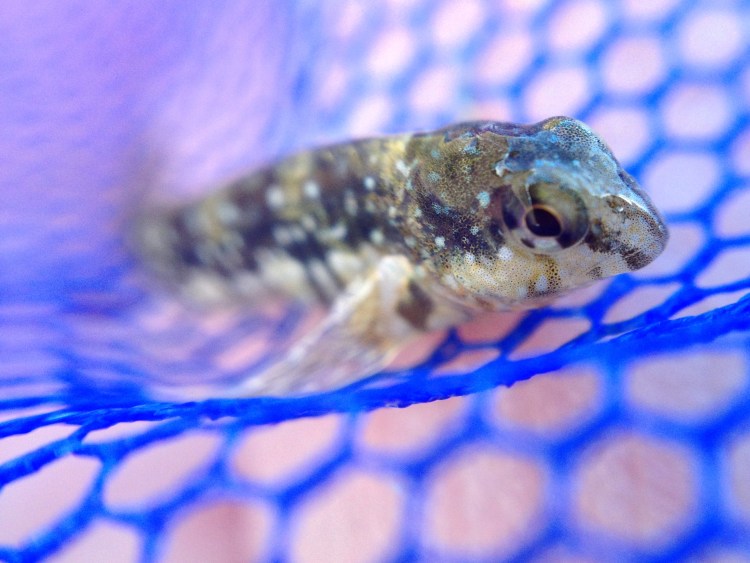
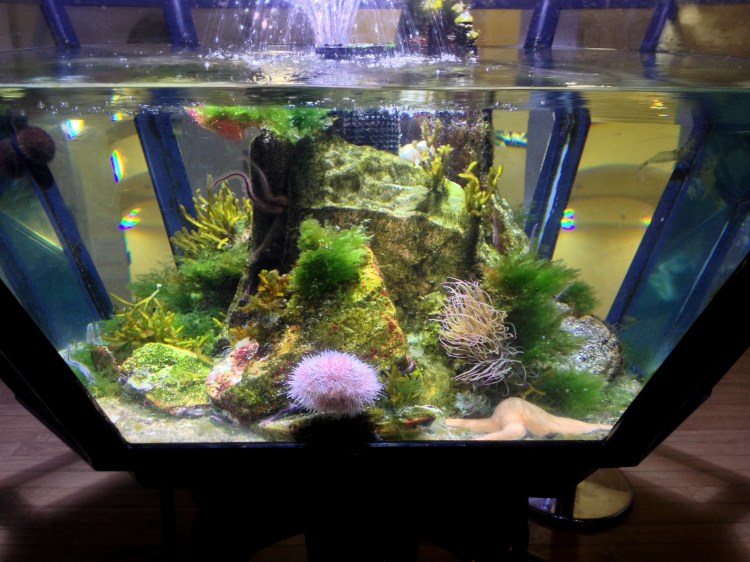
 I visited the quirky Victorian Horniman Museum and Aquarium on a trip to London which features lots of stuffed animals and diorama’s which I find quite fascinating. The aquarium part is small; there is some behind the scene coral (sexual) propagation research going on which sounds very interesting. There were two or three coldwater tanks too, the larger tanks were not much too look at (I know how hard it is…) but I really liked the Victorian fountain-style aquarium. A quick snap here; see this video for a nice overview. I would like to collect some Black brittlestars Ophiocomina nigra next year, they can be very abundant at slightly deeper sites.
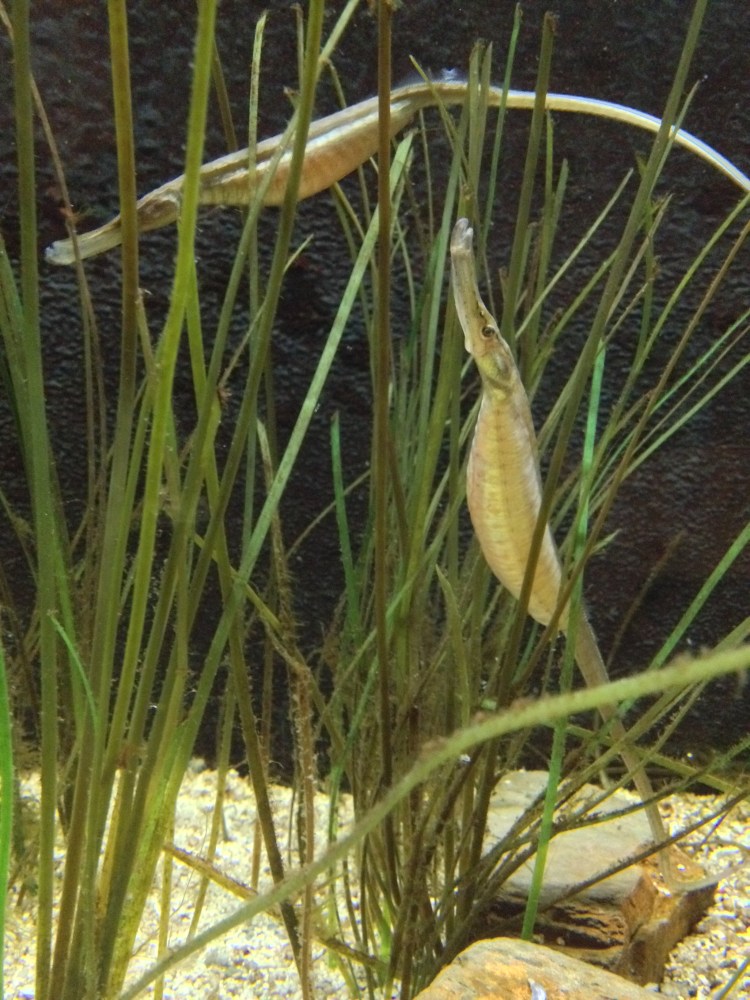
 I also visited the National Marine Aquarium in Plymouth for a second time. It features the deepest aquarium in the UK, complete with plane wreck and some Sandtiger sharks. I was more interested in the coldwater stuff, of which there was quite a bit. I especially liked the Lesser weever Echiichthys vipera which can be caught on sandy shores; their venomous sting would make handling a bit tricky though. There were some cute pipefish (these need live food and I do not want to commit to that) and a round display with loads of Snakelocks anemones (see the first picture posted on this blog). I have placed a couple of these in my aquarium again, perhaps I need to get a few more, as they are so pretty and easy to keep. I did not manage to get a good shot of the very impressive Wreck fish or Stone bass Polyprion americanus in the large coldwater display unfortunately.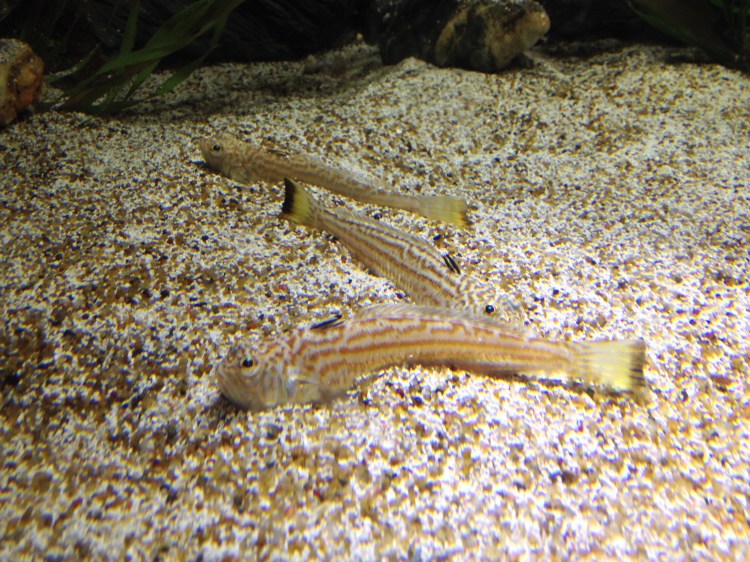
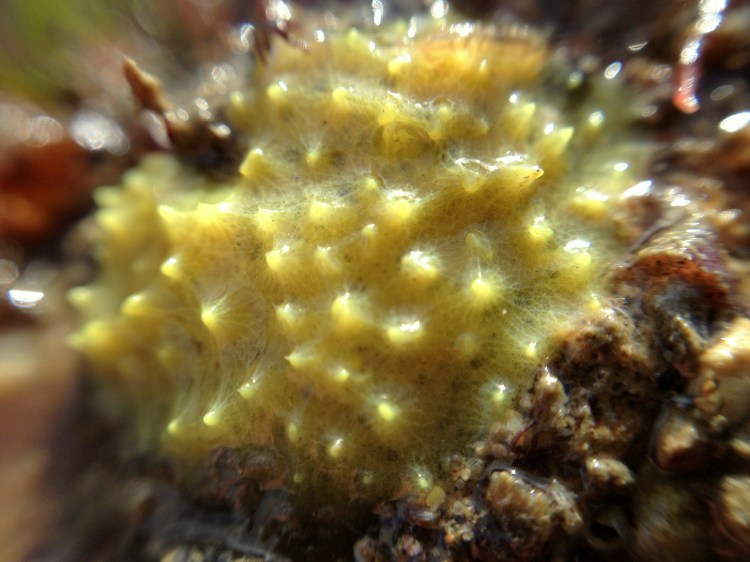
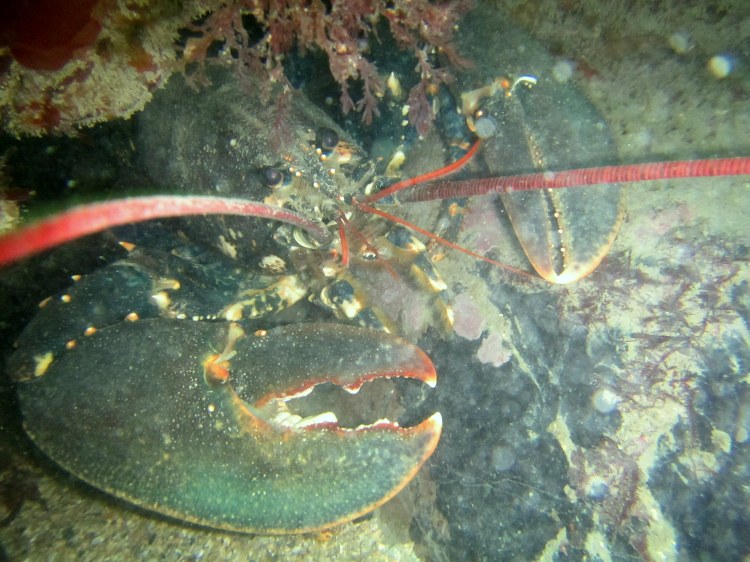
 Next up a washed up sponge in Falmouth (species unknown) and a live one (Aplysilla sulfurea) under a rock, both taken in Falmouth with my iPhone. I have only been diving a couple of times this year and did not post about the rocky shore dives (here some photos of the maerl and eelgrass beds). I have seen a variety of interesting animals, including cuttlefish, a conger eel and lobsters but next year I hope to go out a bit further and dive a bit deeper to finally see jewel anemones and dead man’s fingers. I am not sure I want to commit to a flash and strobes though, instead I’d like to practice my rock pool (seaweed) photography.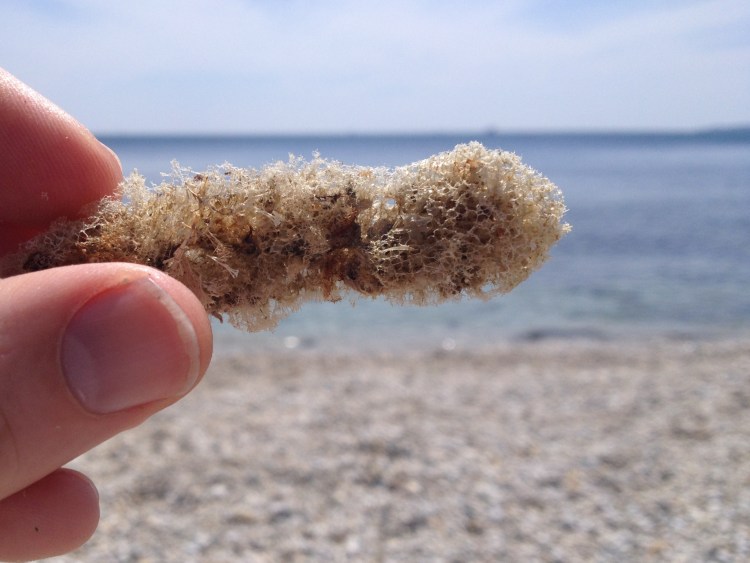
Montagu’s blenny Coryphoblennius galerita in a Microreef pico aquarium
Already a while back I ordered a tiny (‘pico’) aquarium from US-based Microreef, which has a beautiful range of aquariums, especially acrylic tanks which are suited for temperate setups due to their insulating properties. The acrylic tank I ordered was only two US Gallon (7.5l) and came equipped with an IceProbe chiller fitted in a HOB (Hang On Back) filter. The IceProbe is a type of peltier chiller, working very differently from larger conventional compressor-based chillers. I must say that when I first tried it out, the temperature did not drop by that much. Since I first wanted to set up a temporary tank with rock pool critters anyway, I did not bother switching it on. I will have to fiddle around with it some more though. Below a photo with an iPhone to show just how small this tank is: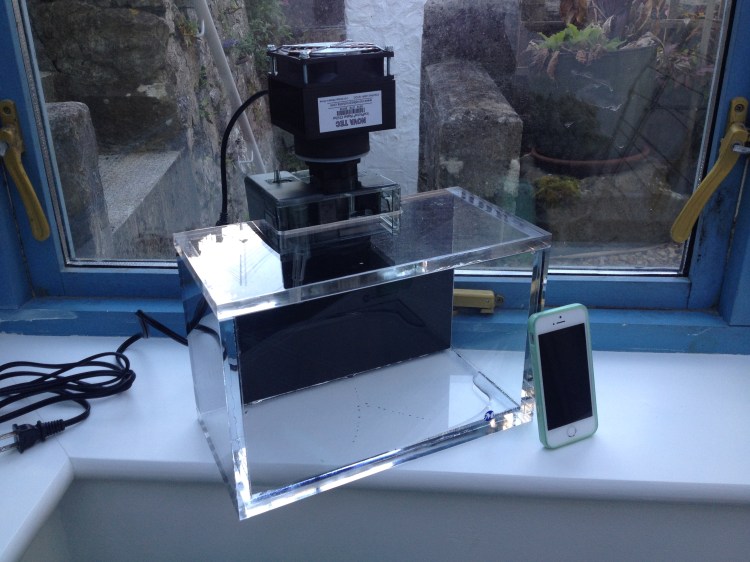 As a first experiment, I caught three Montagu’s blenny Coryphoblennius galerita from the pool described in the previous post. (See this dainty little fish in its natural habitat in one of Thomas Daguerre’s short clips here.) I decorated the tank just with some pebbles and found a tiny (<5 mm) prawn as a hitch hiker. As a light, I used a cheap Arcadia stretch LED. The fish (and prawn) readily fed on frozen foods and generally were quite active. Below a short clip with the largest individual (still less than an inch in lenght) showboating. I have since released the fish as the tank and filter did not do that well with the heavy feeding. I have to think about a new setup, especially with the chiller working and critters that would not be suited to the larger tank (about which I will post an update next).
rock pool photography
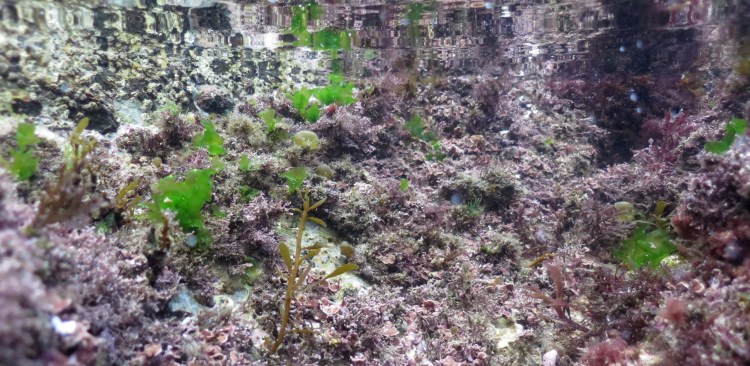
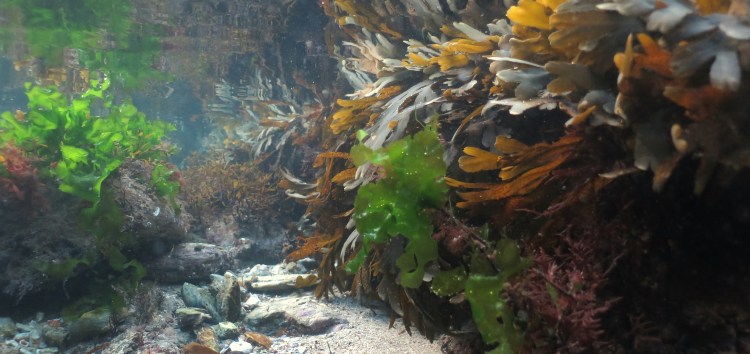
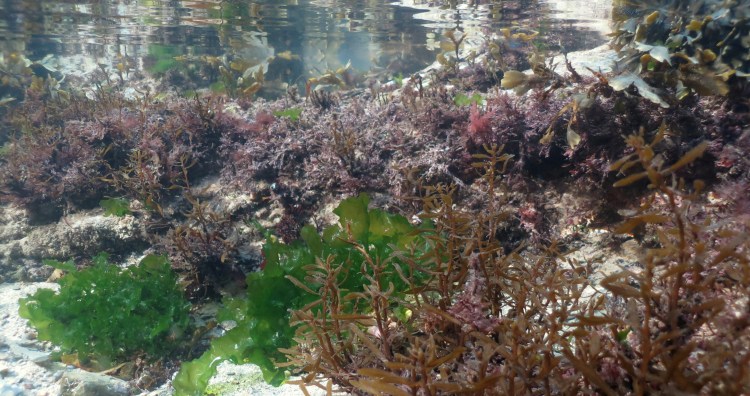
 I had a few rock pooling sessions recently to play with my new camera (and wide angle lens). The main one was a workshop with North coast-based Thomas Daguerre of Hydro Motion Media (facebook). I am just a beginning photographer and so learning the ropes from an experienced hand proved immensely valuable. The session started with going through some of the basics (white balance, focusing etc), after which we headed out to the rock pools to put some of the theory in practice. We headed down to Thomas’ stomping ground of south Fistral Beach (I visited once before). Although the timing was not the best tide-wise, it was a beautiful day. This was the first time I actually submerged myself in rock pools to take photo’s; of course, being able to look through your view finder is the only way to do it right. It is hard to not stir up sediment though and in some pools salinity gradients made for bad viz. I used Thomas’ G16 setup with video lights and a strobe on a tray (something like this; should have taken a picture of it) which was very difficult! As a result of all the experimentation I ended up with few blog-worthy photos, but this session made clear that trying to capture ‘rock pool scapes’ is what I would like to focus on, the variety of seaweed species, colours and shapes I find especially cool.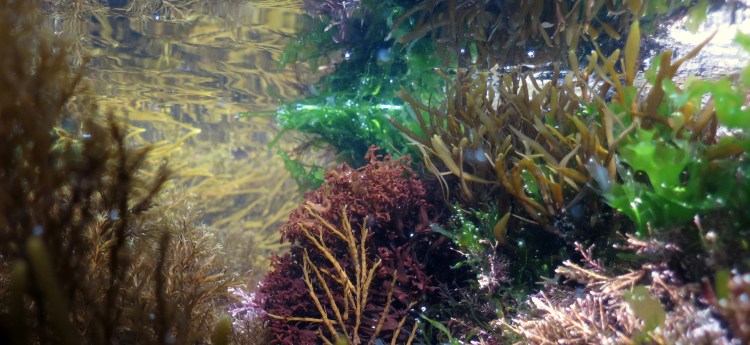
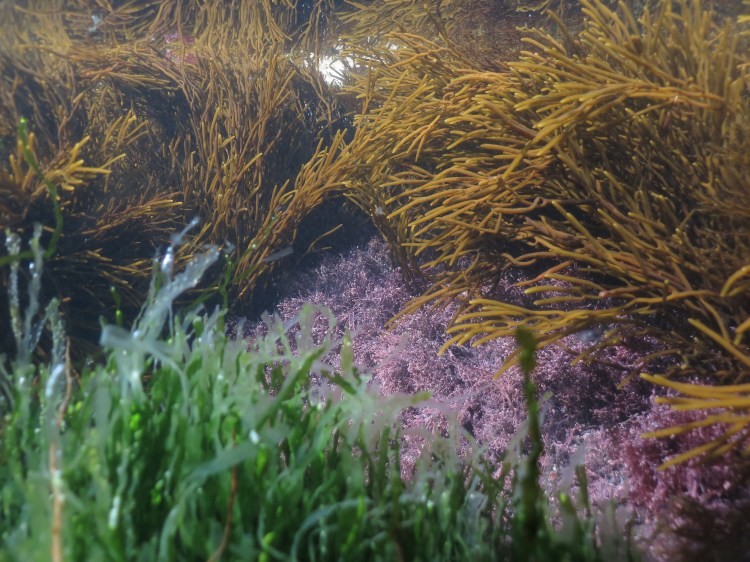 I really need to try to go back to these pools and try to get better photo’s. I also will arrange a second session with Thomas later in the season to start learning how to post-process RAW files. What was very interesting to see is that the pools here teem with Giant gobies Gobius cobitis, a protected species in the UK. We saw two lying side by side in a crevice but they are shy and it was hard to get a good shot. Thomas has recently made an excellent series of short films highlighting various charismatic local marine species, and one of them features the Giant goby (see the Hydro Motion Media site for the other eleven films):
A Seagrass dive with the Canon G16
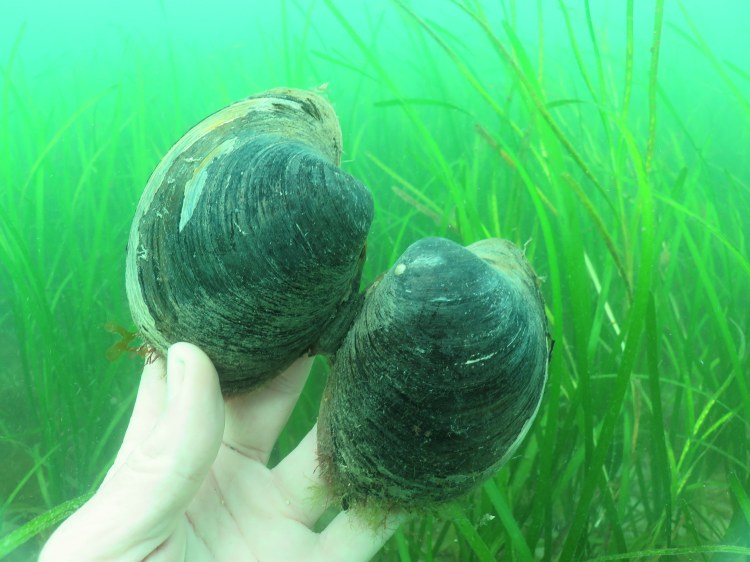
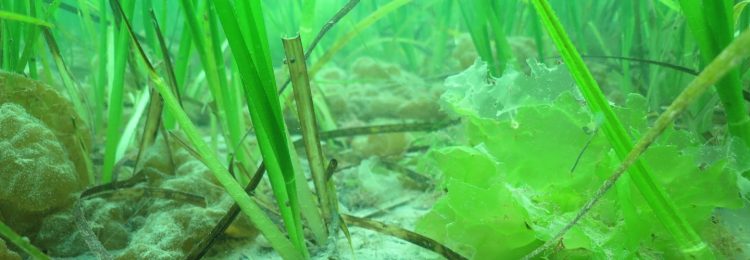 It was a glorious bank holiday morning today and high time for another dive before the season is over. This was a dive just by myself; I had never done that before and I kept it very easy with a maximum depth of 5 meters so could surface with two kicks if needed (it was low tide so I needed to go less deep to begin with). I chose the eelgrass beds of the Helford river to play around with my new camera, a very different habitat than last weeks Maerl dive In the Fal estuary. Unfortunately no catsharks or thornback rays this time, but there were some nice invertebrates to practice on (I did not bother with the fish, way too difficult). Although I still have a long way to go to get anywhere near the quality of some of the photo’s I see on various facebook groups and blogs, it is definitely a lot easier to take good pictures with my new camera. Compare for instance the photo of a Necklace shell Euspira catena below with that of a pic taken with my old camera. Next, two very different molluscs: the Hard-shell clam Mercenaria mercenaria (introduced from North America, there called ‘Quahog’) and the Sea hare Aplysia punctata. The latter can be abundant but it is rare at the moment. The one I saw was not the usual brown but very pale, I have no idea how uncommon this colouration is.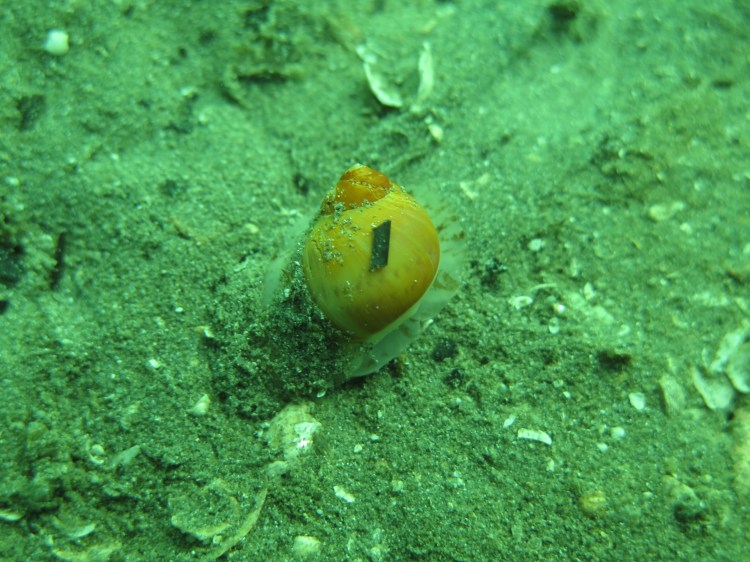
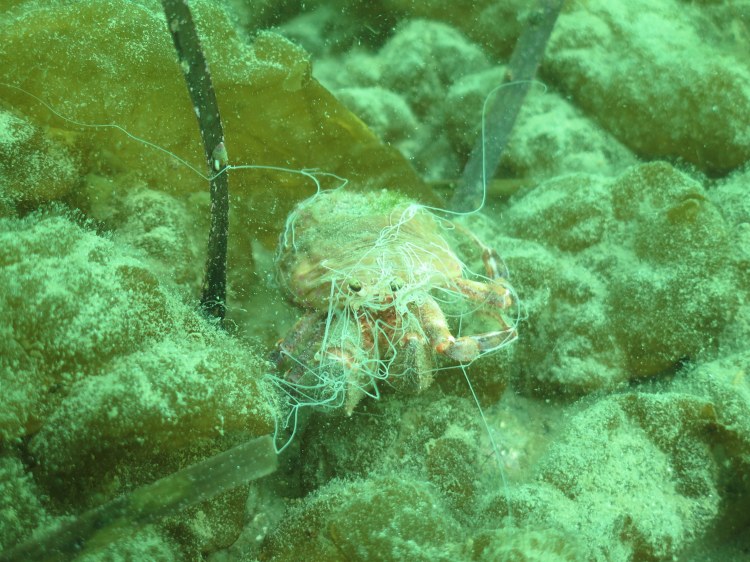
 Hermit crabs are always common here however. Some of these belong to the species Pagurus prideaux, as the shell they inhabit is covered in the Cloak anemone Adamsia palliata (creamy with purple spots on the left of the shell, need to take some close-ups of that one next time). One crab was covered in the thin, white acontia threads of its anemone, which it might have induced from its partner for defence. The last photo is of the Football jersey worm Tubulanus annulatus, a very distinctive nemertean worm that I could easily identify through the excellent aphotomarine website. Now I need to get serious about the camera settings and practice, practice, practice…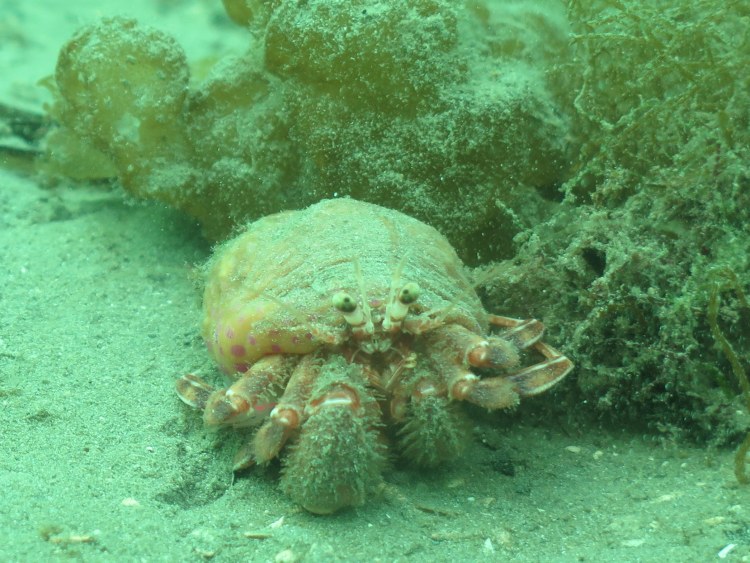

A Maerl Dive with the Canon G16
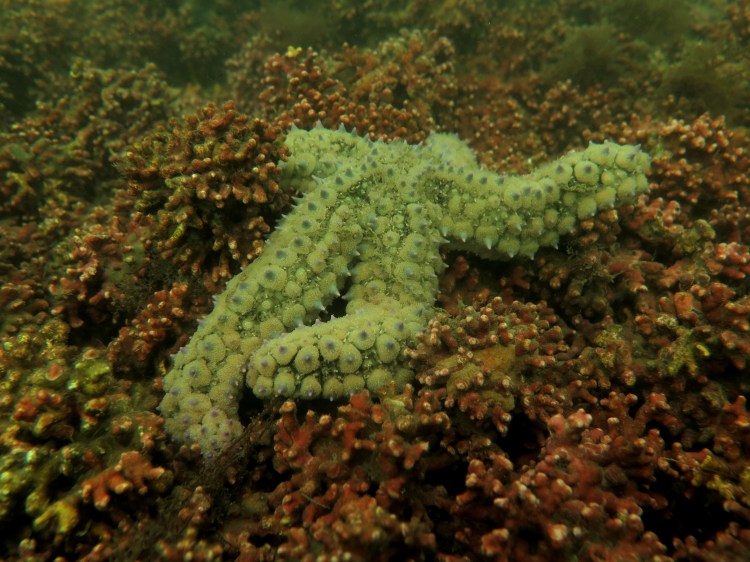
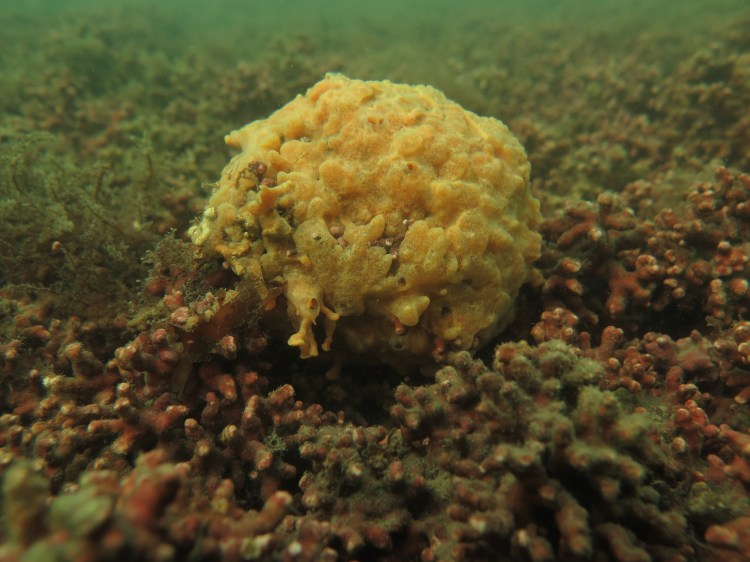
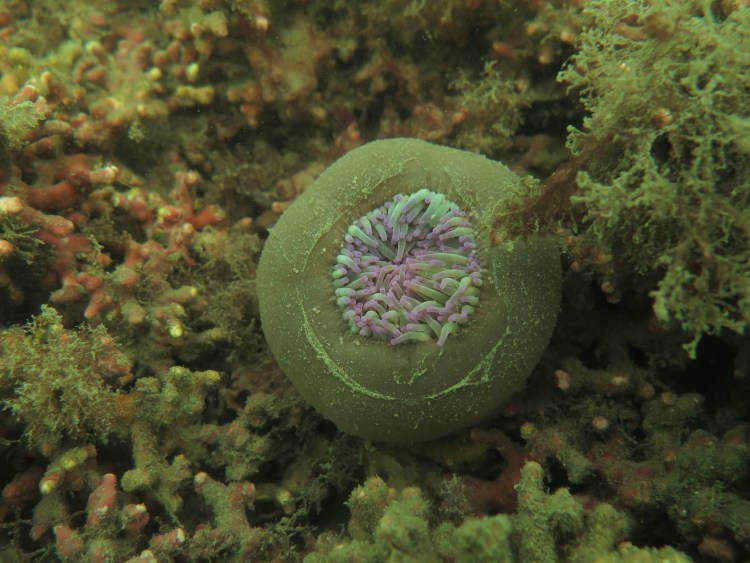
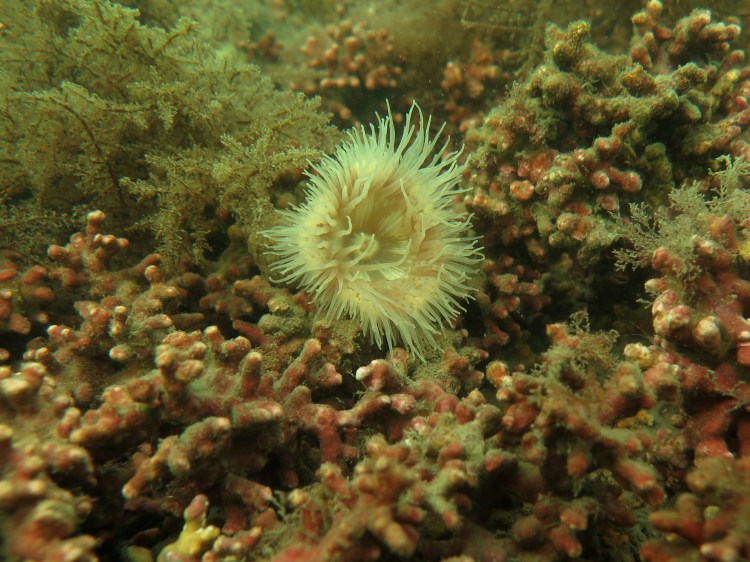
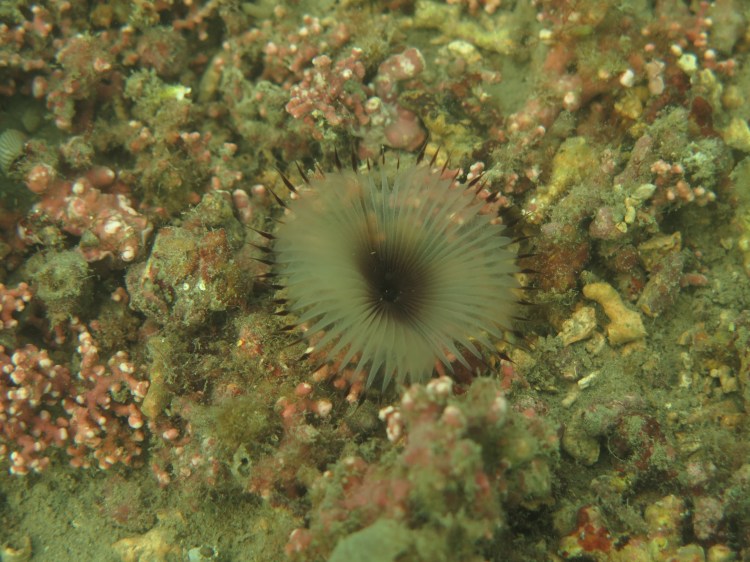
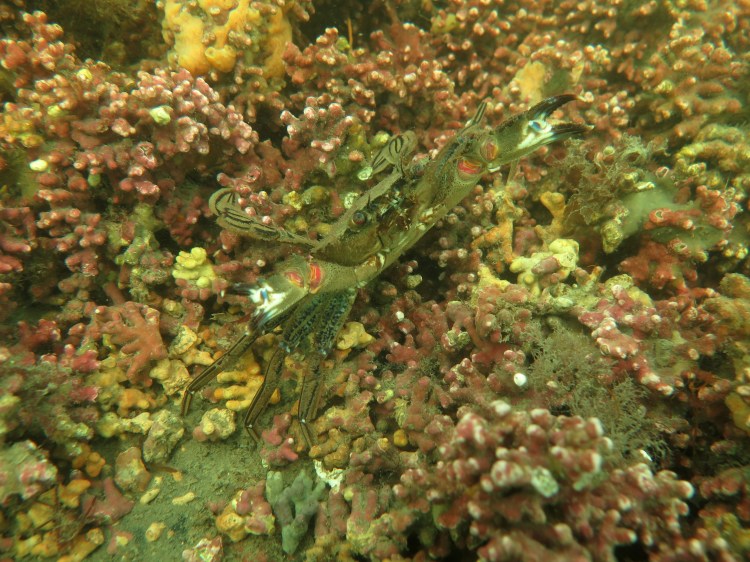
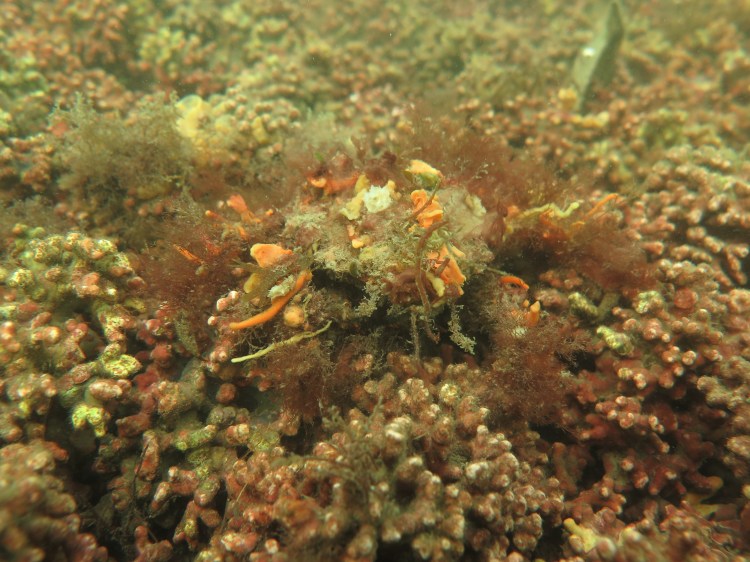
Last Wednesday I went for a sneaky worktime dive across the Fal estuary on the Maerl beds between St Just in Roseland and St Mawes. Maerl is a slow growing, calcified type of seaweed (looks more like coral) which forms a unique and quite rare habitat, see these older posts. The water was 17°C so nice and comfortable and it was probably the shallowest dive I’ve ever done, no deeper than 3 meters. I took my new Canon G16 in a Fantasea housing and went all semi-pro by adjusting the white balance first (not that I had a go at any other settings…). I was really pleased with the results, a world of difference to the Canon D30. The beds are an expanse of maerl nodules with very little to break it up, no rocks, no sand, just the occasional old bottle and so it is hard to get any exciting angles. Still there is always something to see. In order: a baby Smallspotted catshark Scyliorhinus canicula, a Spiny starfish Marthasterias glacialis, a (breadcrumb?) sponge, a closed-up Snakelocks anemone Anemonia viridis (a rare sight), a Parasitic anemone Calliactis parasitica, a Fan worm Myxicola infundibulum, a Harbour crab Liocarcinus depurator, a Velvet swimming crab Necora puber and a very well-camouflaged Spider crab Maja squinado.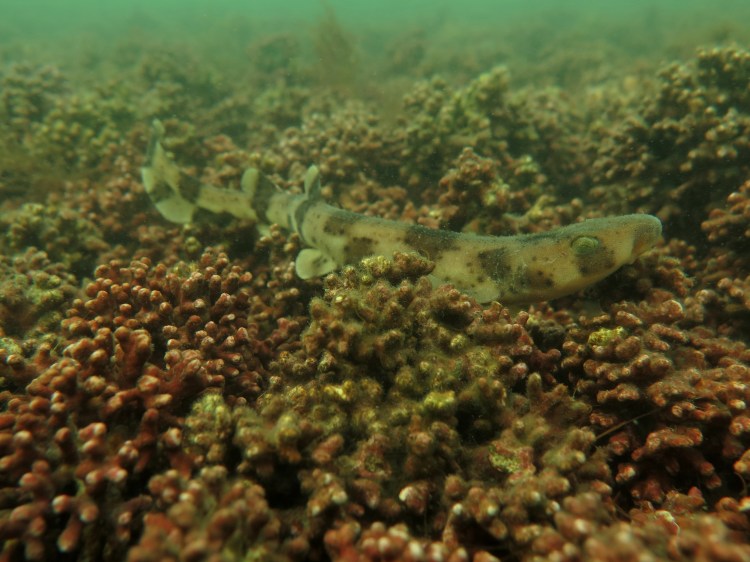

Oregon
 Last month we had a great holiday travelling from San Francisco to Seattle. Nature here is awe-inspiring for the average European; we saw snowcapped volcanoes, giant redwoods, dunes, beaches, mighty rivers and temperate rainforest. This is not the place for a travelogue, however, rock pools were of course checked and that is prime blog material! We had a bit of a happy-go-lucky approach to travelling and I had not checked tide times beforehand. Turns out that the tides on the Pacific West coast work very differently than those in Western Europe: instead of two almost equally low tides a day, there is a proper low tide and a not so low tide, how inconvenient! (This page has a good overview of tide types, including another type with only one low- and one high tide a day.) In the end I had two early mornings on the Oregon coast for rock pooling: Bob’s Creek Wayside south of Yachats (pic above) and Seal Rock north of Waldport (see map). (I actually prefer the more appropiate American term ‘tide pooling’ as of course there are also (freshwater) rock pools that do not experience tides.) The coast in most of Europe is so much more densely populated it is almost strange to see that vast stretches of pristine coastline with hardly any people around, brilliant. Also, the vast amounts of driftwood and logs is almost unseen in Europe, as thewhole continent is pretty much deforested (especially in the UK, my guess is only places like Norway could be comparable in that respect).
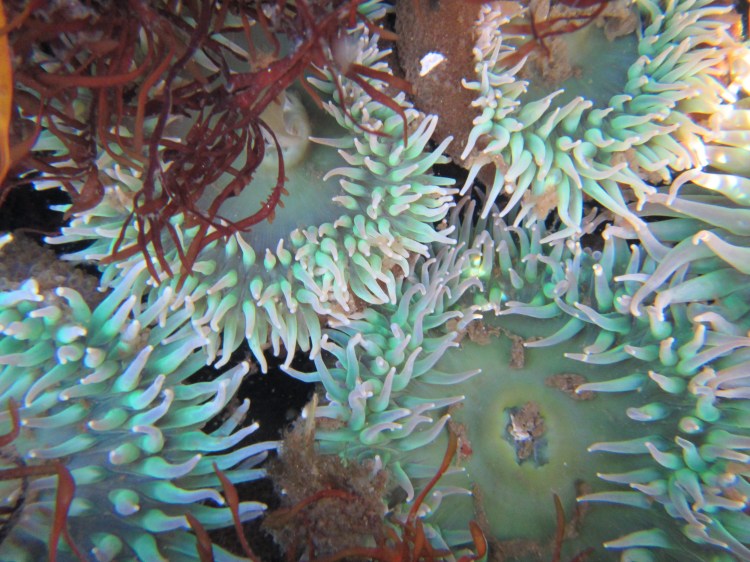
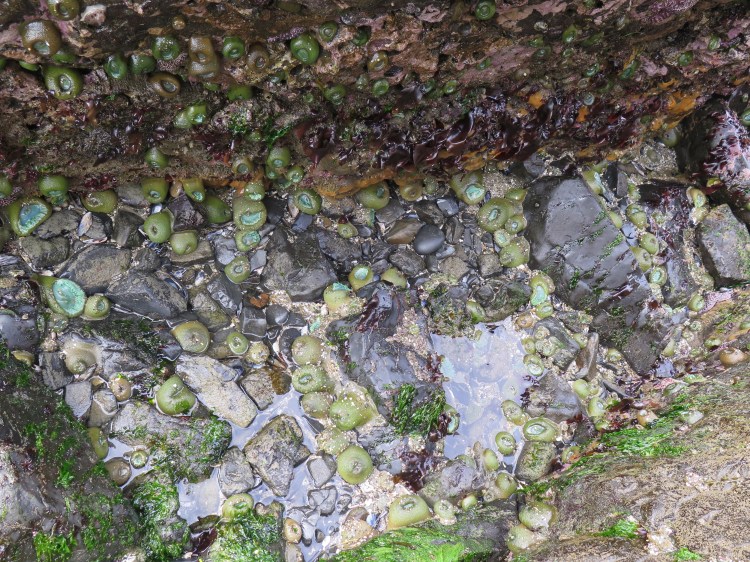 Being at the Pacific Northwest tide pools made me feel like a kid in a sweetshop: I could not decide to stick with a beautiful find or try to move on to the next exciting thing. It seemed a bit useless to just start documenting all the different species in the short amount of time I had. Instead I mainly enjoyed just looking around, especially admiring the Green surf anemones Anthopleura xanthogrammica (above). I know this species mainly from the Coldwater Marine Aquarium Owner group on facebook which has many North American members. Although the diversity of animals and seaweeds in the South West of the UK is amazing, I must admit I am always a bit jealous of the critters in Pacific Northwest tanks! The Green surf anemones are not only strikingly coloured and large, but also incredibly common, along with the Aggregating anemone Anthopleura elegantissima forming dense carpets on the rocks, inhabiting gulleys low on the shore to tide pools quite high on the shore.
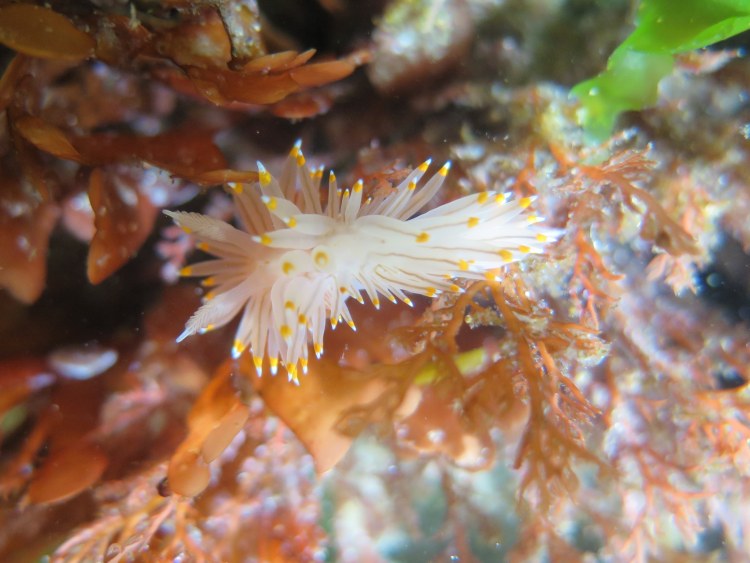
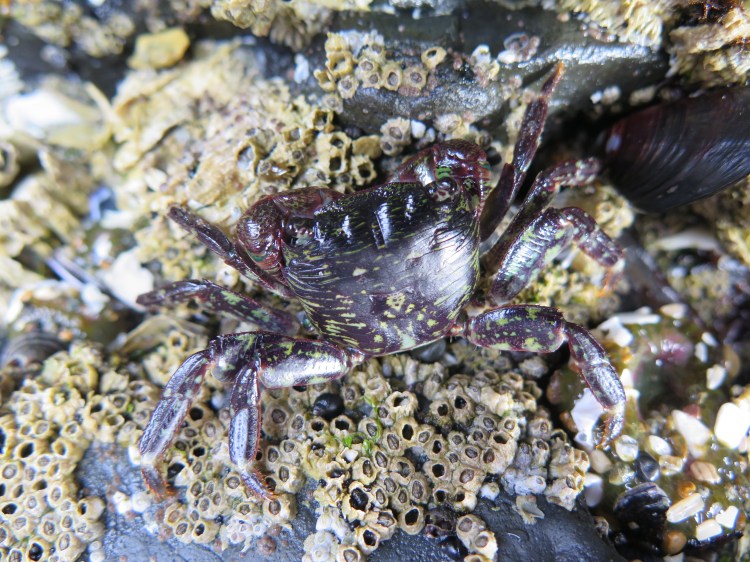
I had taken the plunge and ordered a new camera for this holiday, a Canon G16 with a Fantasea underwater housing (see this post). However, I did feel comfortable with it in its bulky housing yet and so reverted to the more basic Canon powershot D30 and my iPhone for these sessions instead. I saw a couple of the large nudibranchs Hermissenda crassicornis as well as a Janolus fuscus, very pretty. Also below a Lined (or striped) shore crab Pachygrapsus crassipes and an unidentified prawn. Otherwise, most of the photo’s turned out to be not that great; I was just too hasty!
 Although all species were different (except for the Plumose anemones Metridium senile I saw on some pontoons), it was interesting to see the parallels with Cornish rock pools. For instance, all seaweed colours, shapes and textures I knew from home were present here, just in different combinations in each species. There were noticeable differences too. For one, many of the American organisms (chitons, isopods, anemones) are much bigger. The rocks were almost completely covered in barnacles and mussels (again both huge). Seagrass (Phyllospadix) was growing from the rocks!
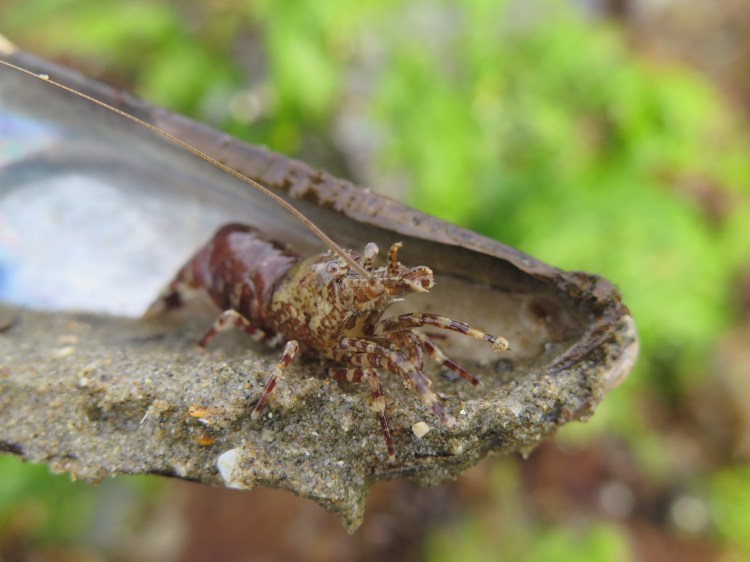
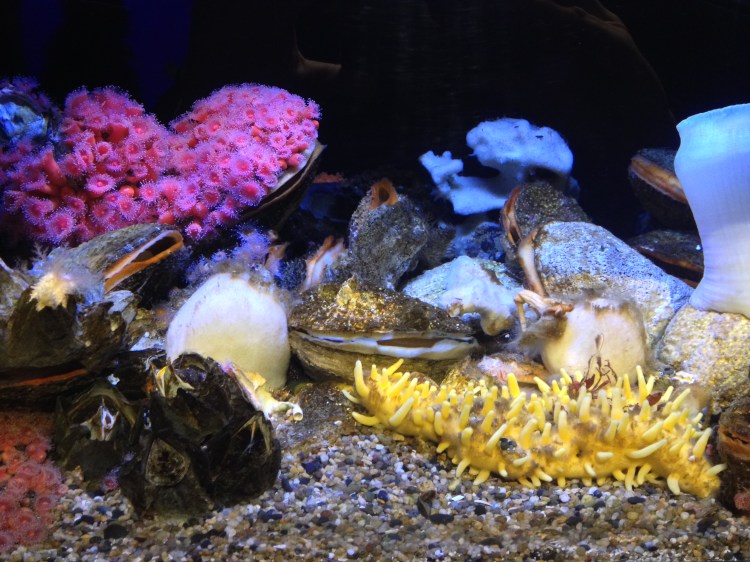
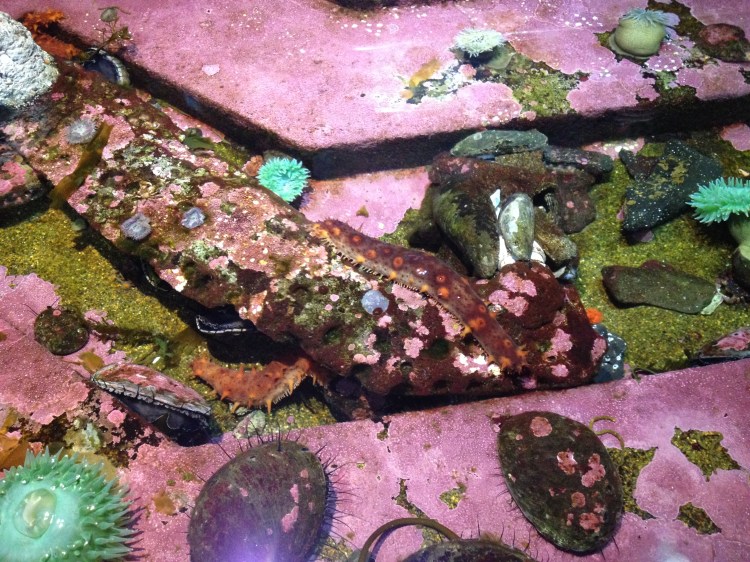
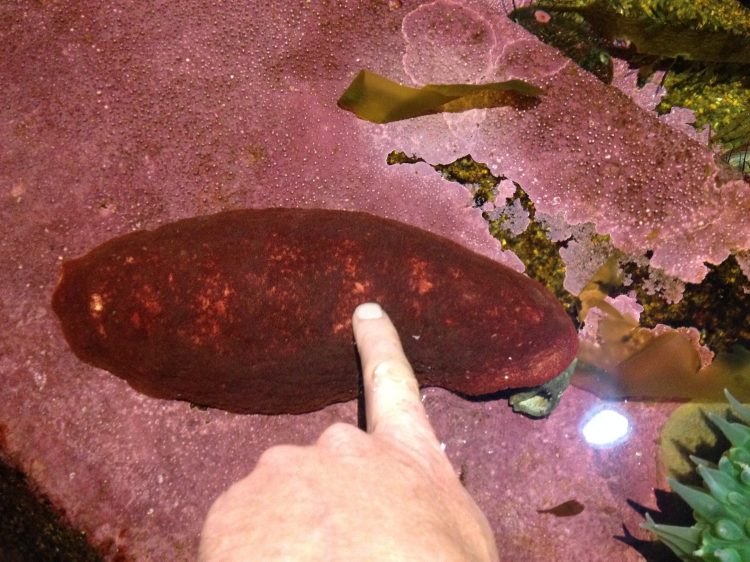
Two mornings of rock pooling in a three week holiday was not enough, but all that was manageable unfortunately. We however also visited the Oregon Coast Aquarium in Newport on the single rainy day we had and that was pretty good. I am not a big fan of the generic aquarium displays (sharktunnels, ‘nemo’s’, scary Moray eels etc) so it was nice to see mainly coldwater aquaria, especially the nanoaquariums that housed a jumble of sponges, anemones, barnacles, chitons and strange fish, such as one of my favourites, the Grunt sculpin Rhamphocottus richardsonii which camouflages as a giant barnacle (first photo, see also here). A touch pool contained sea cucumbers, huge abalones and the largest chiton species in the world, the Giant Pacific (or Gumboot) chiton Cryptochiton stelleri, humongous! I hope one day to be back in this beautiful part of the world.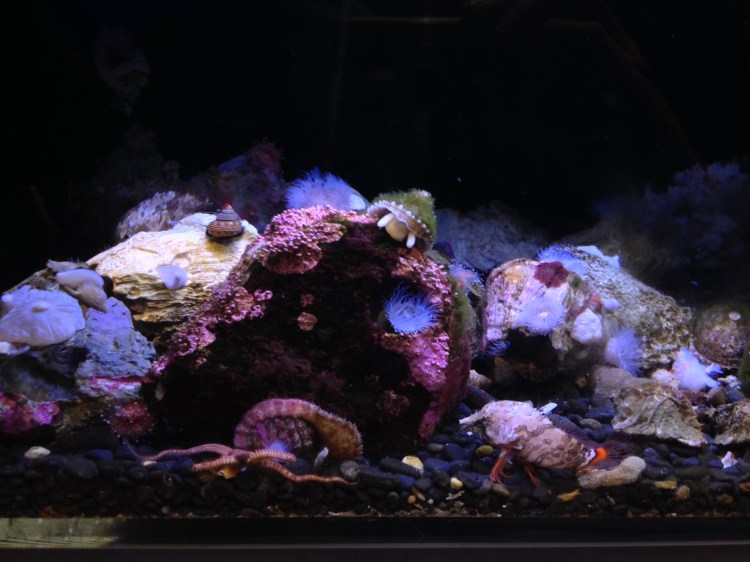
 An Bollenessor