Black-faced Blennies

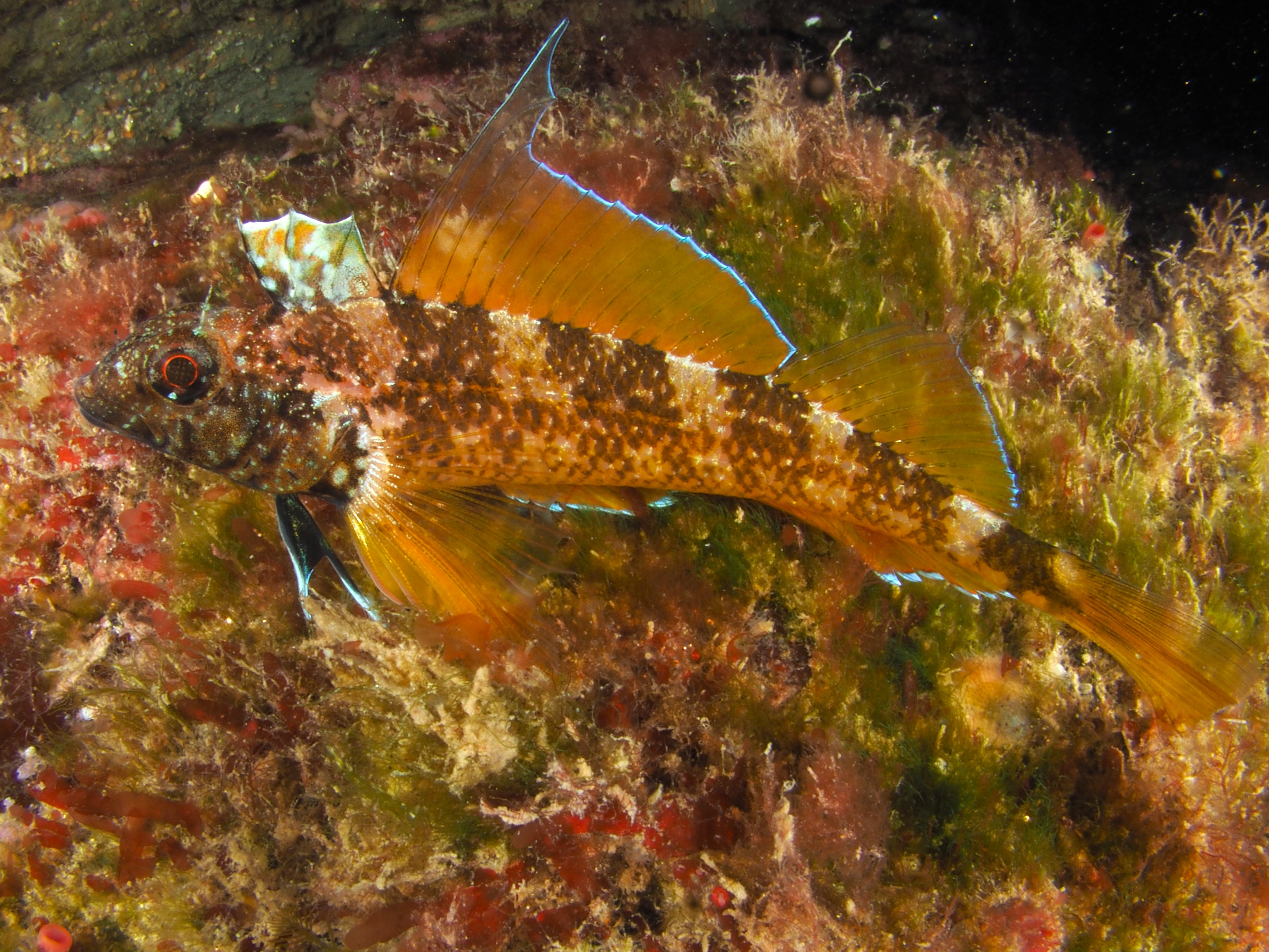
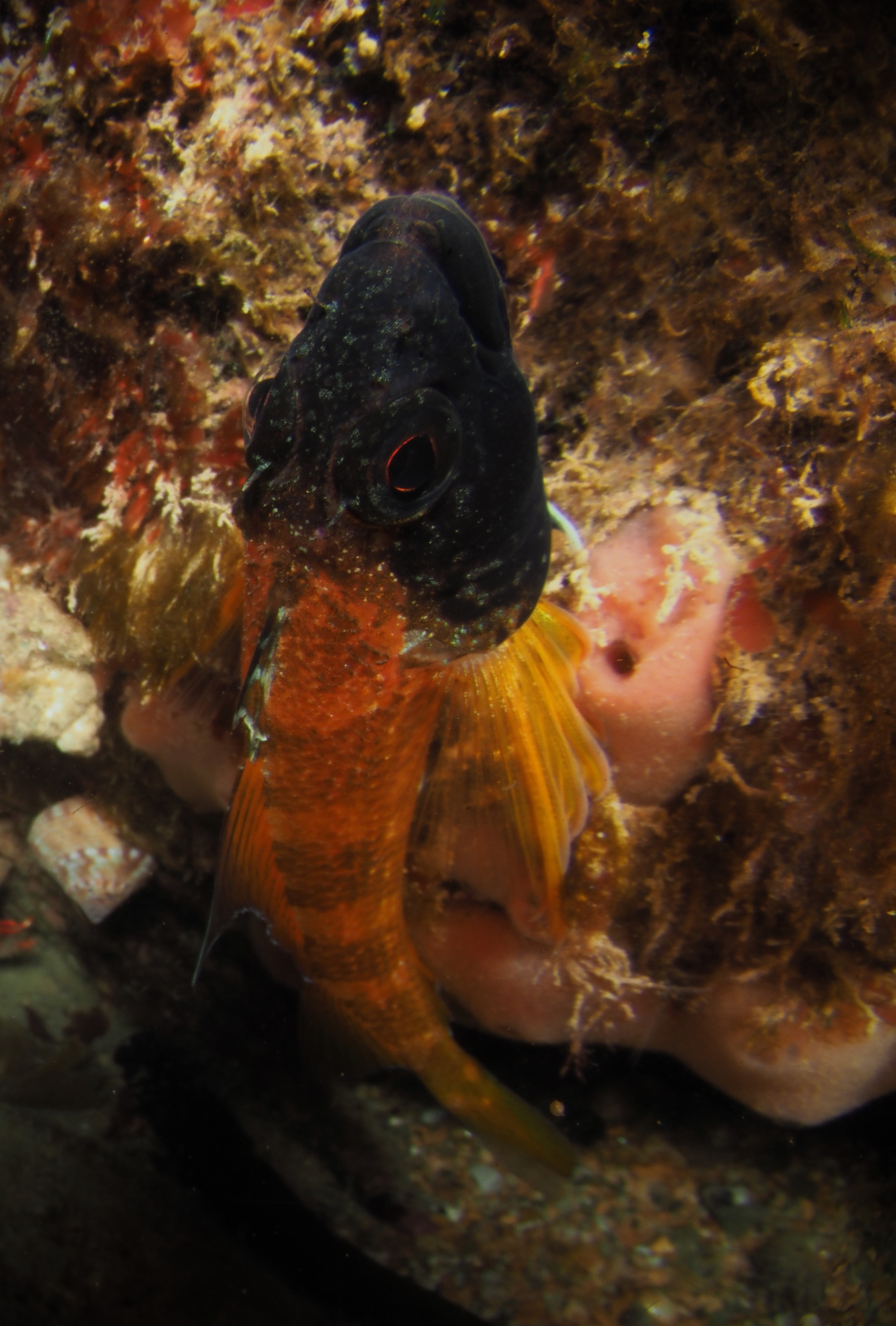
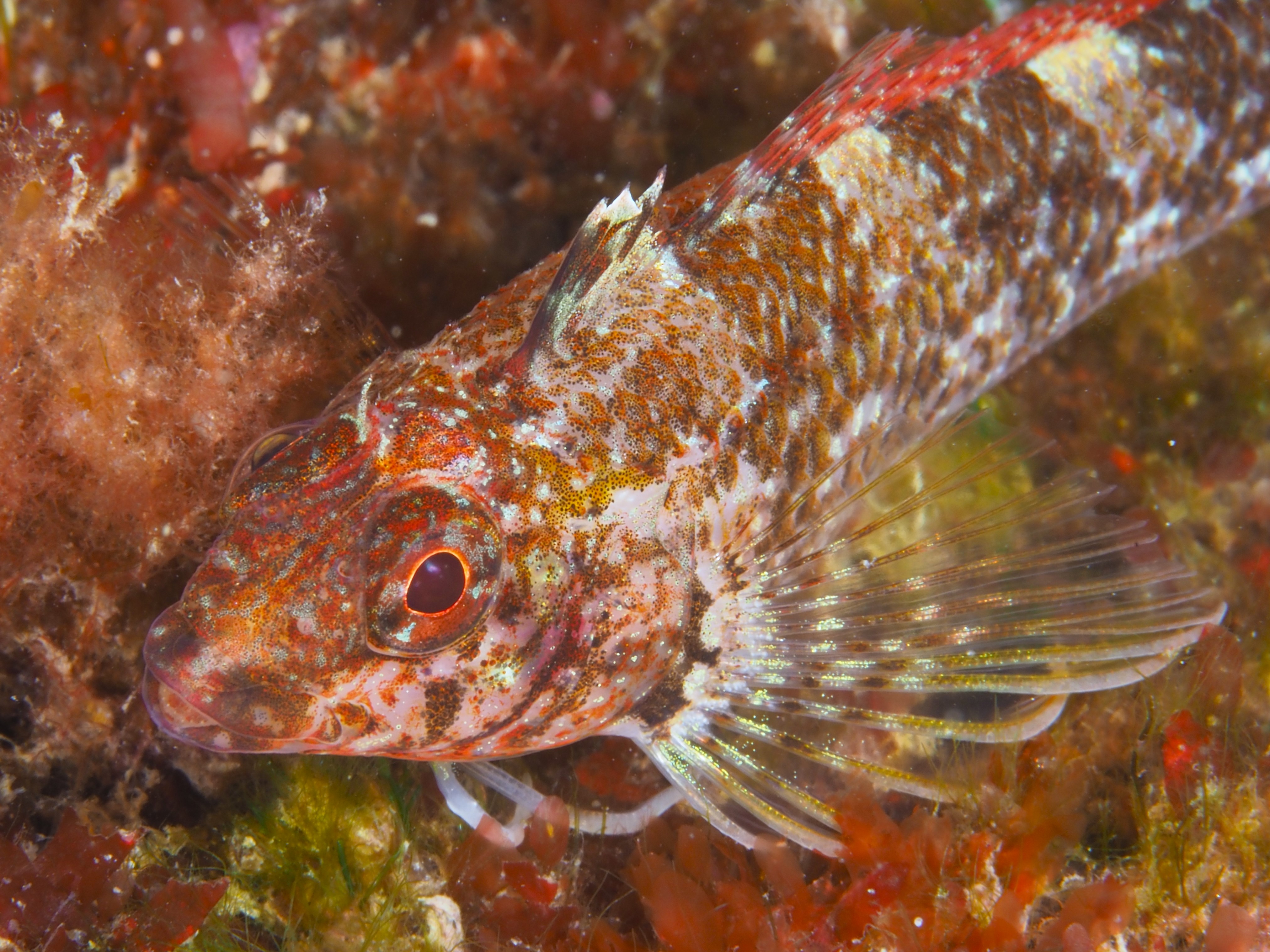
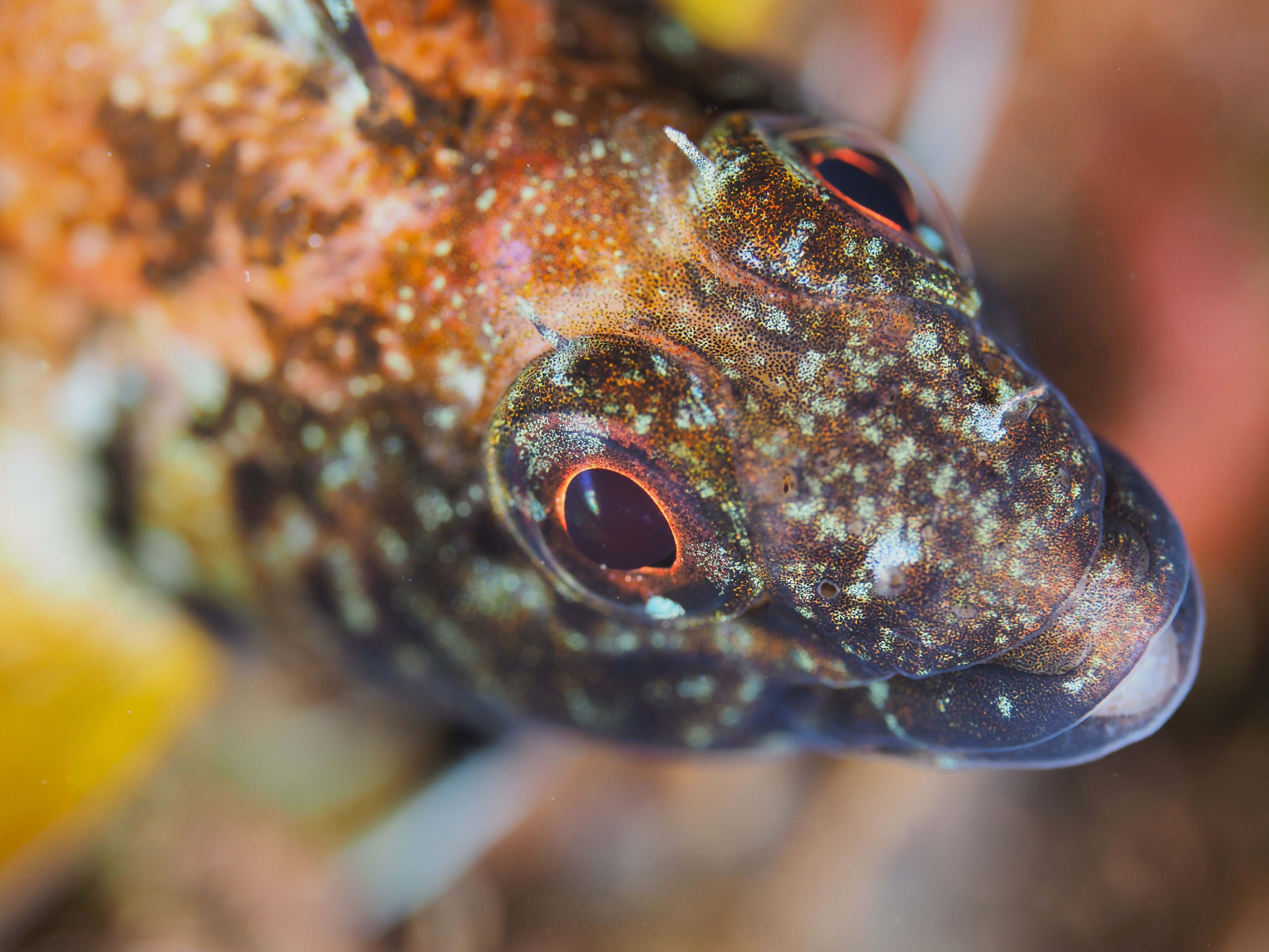
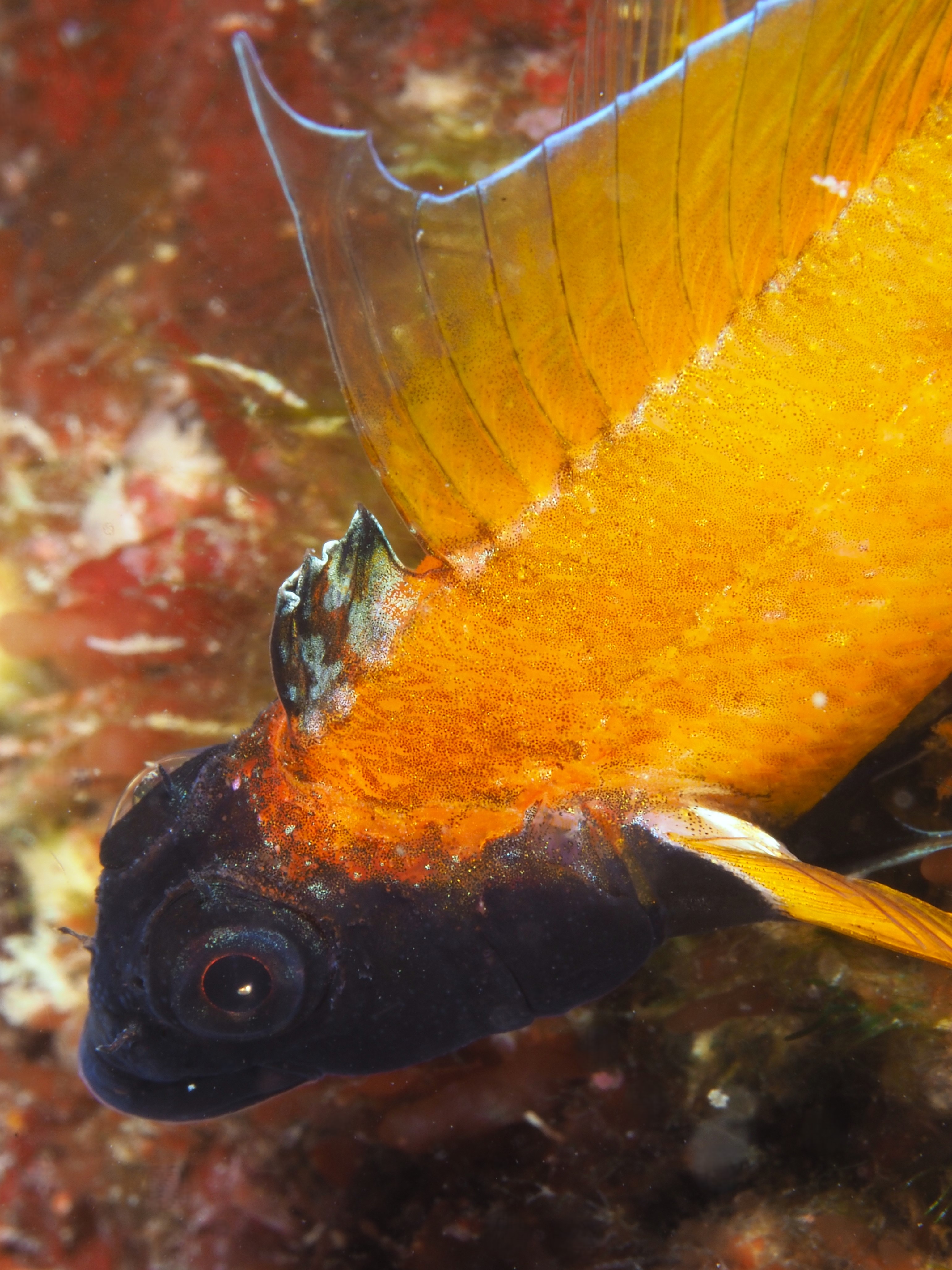
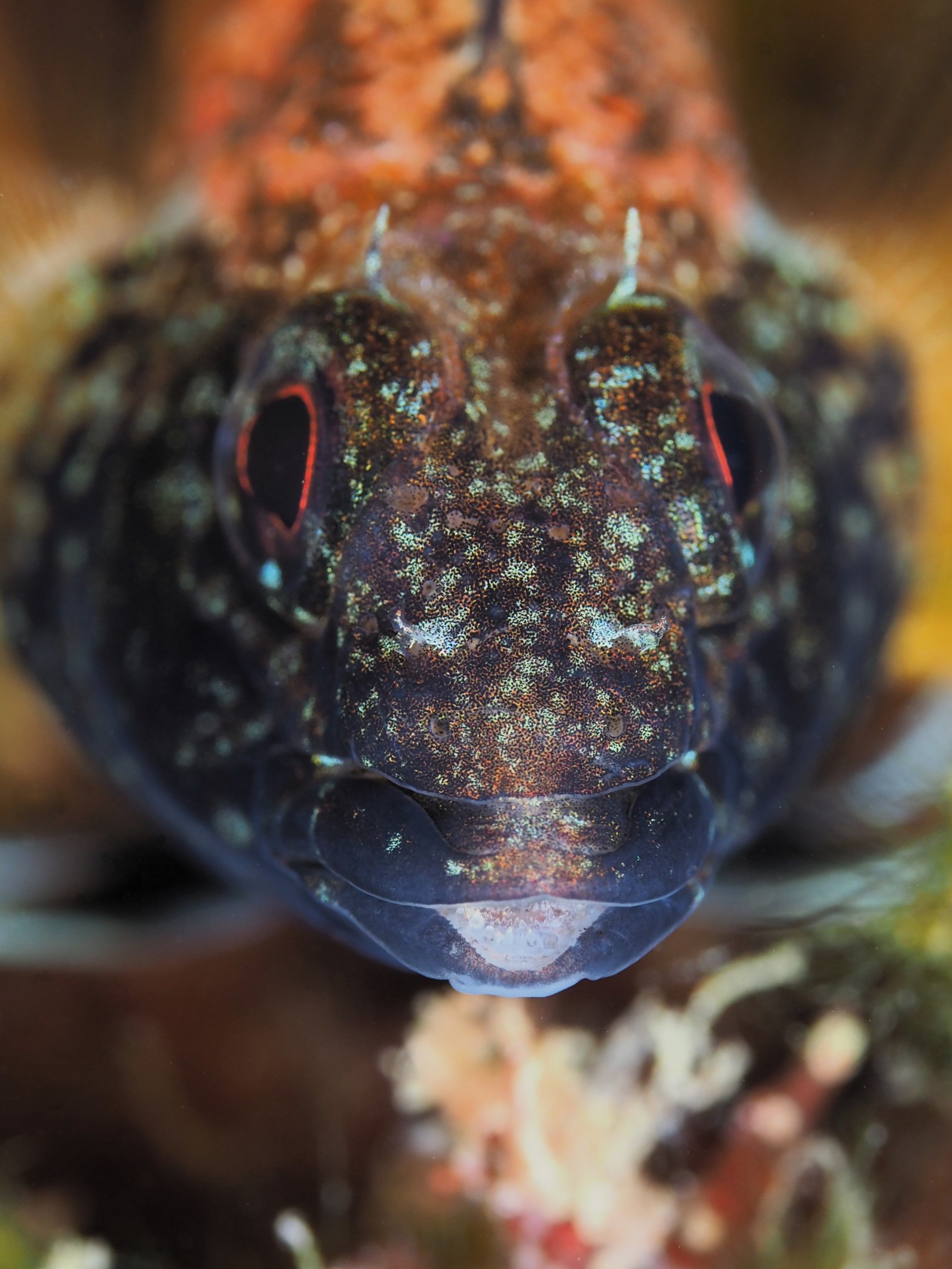
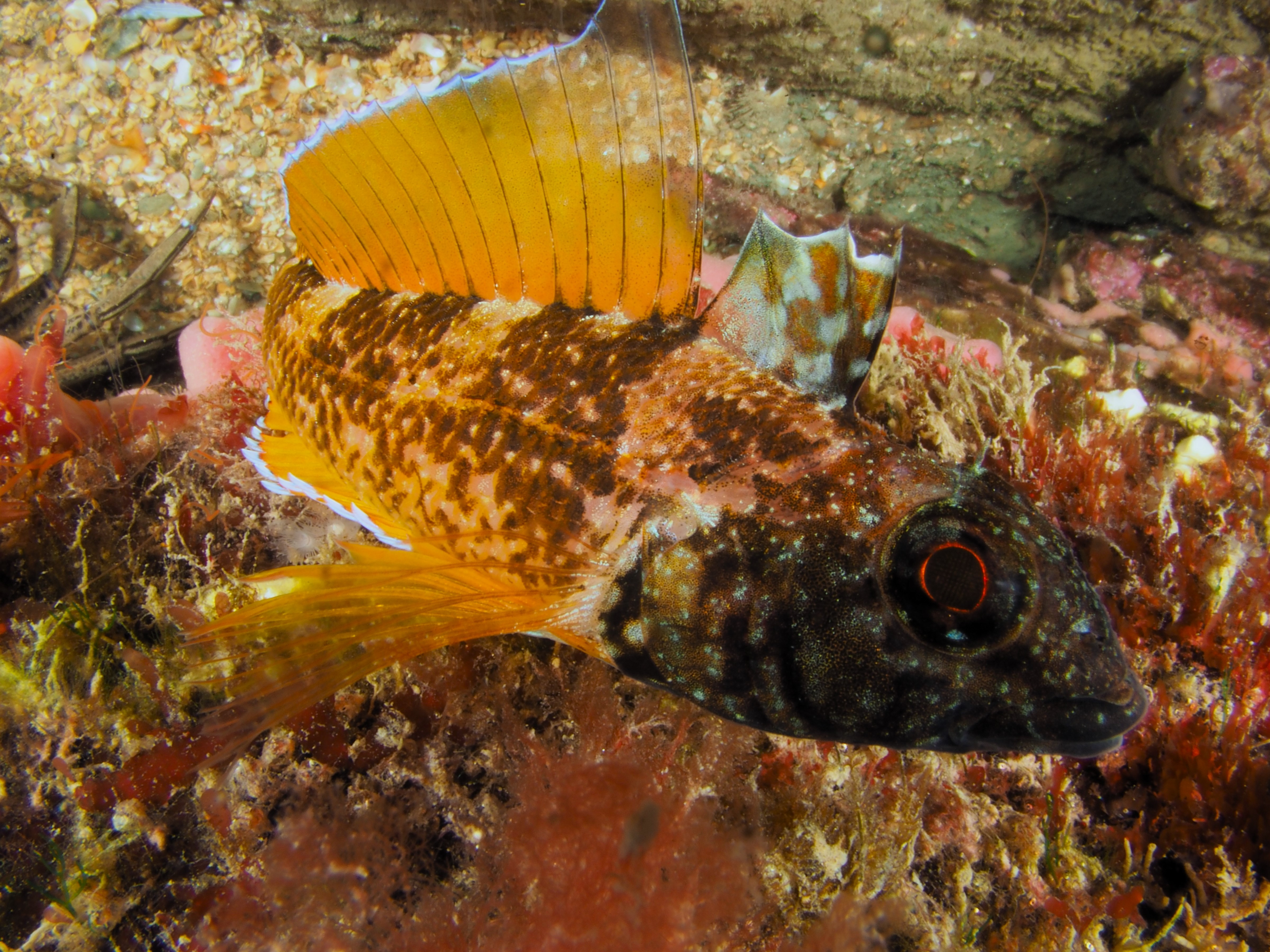
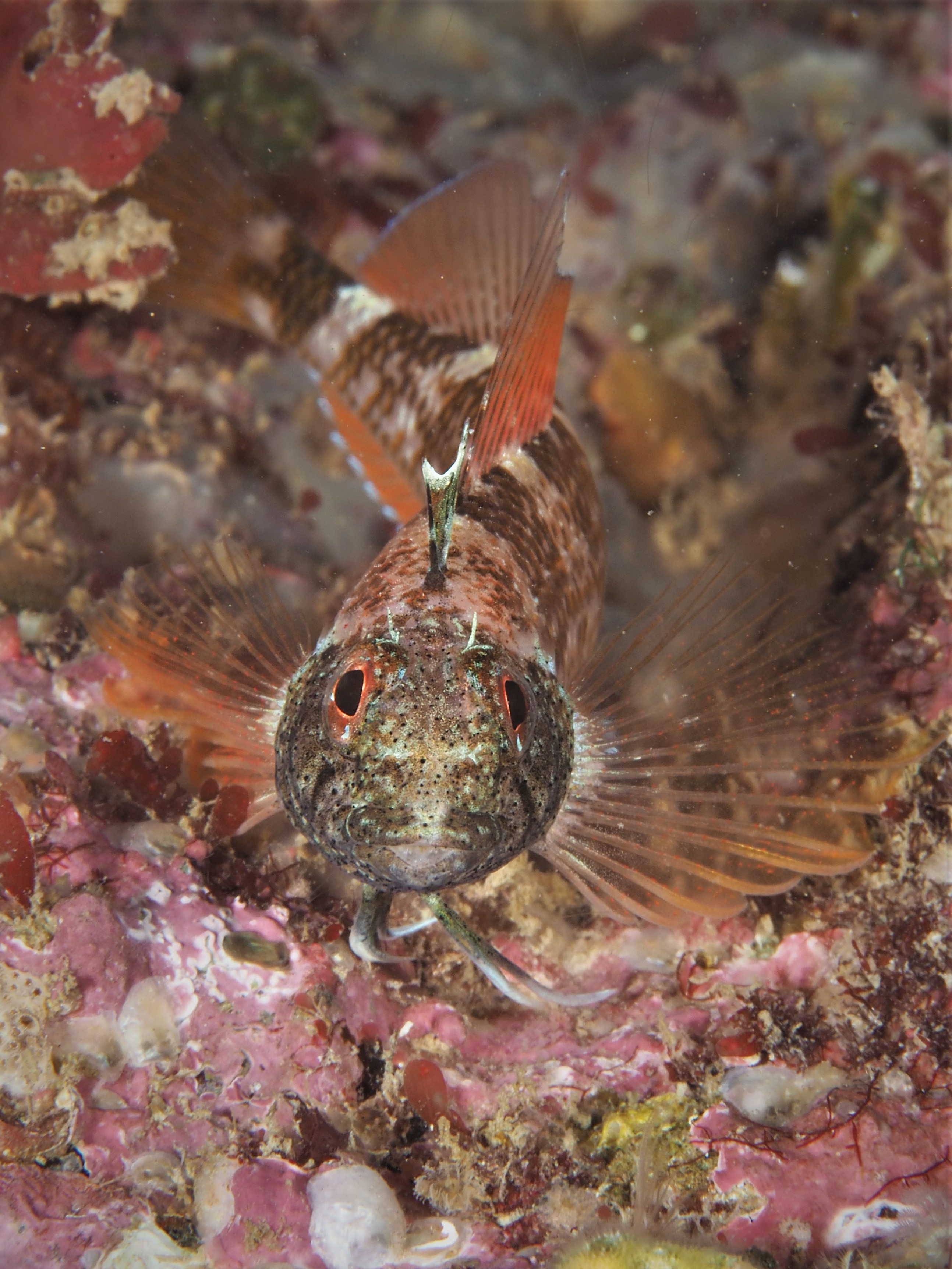
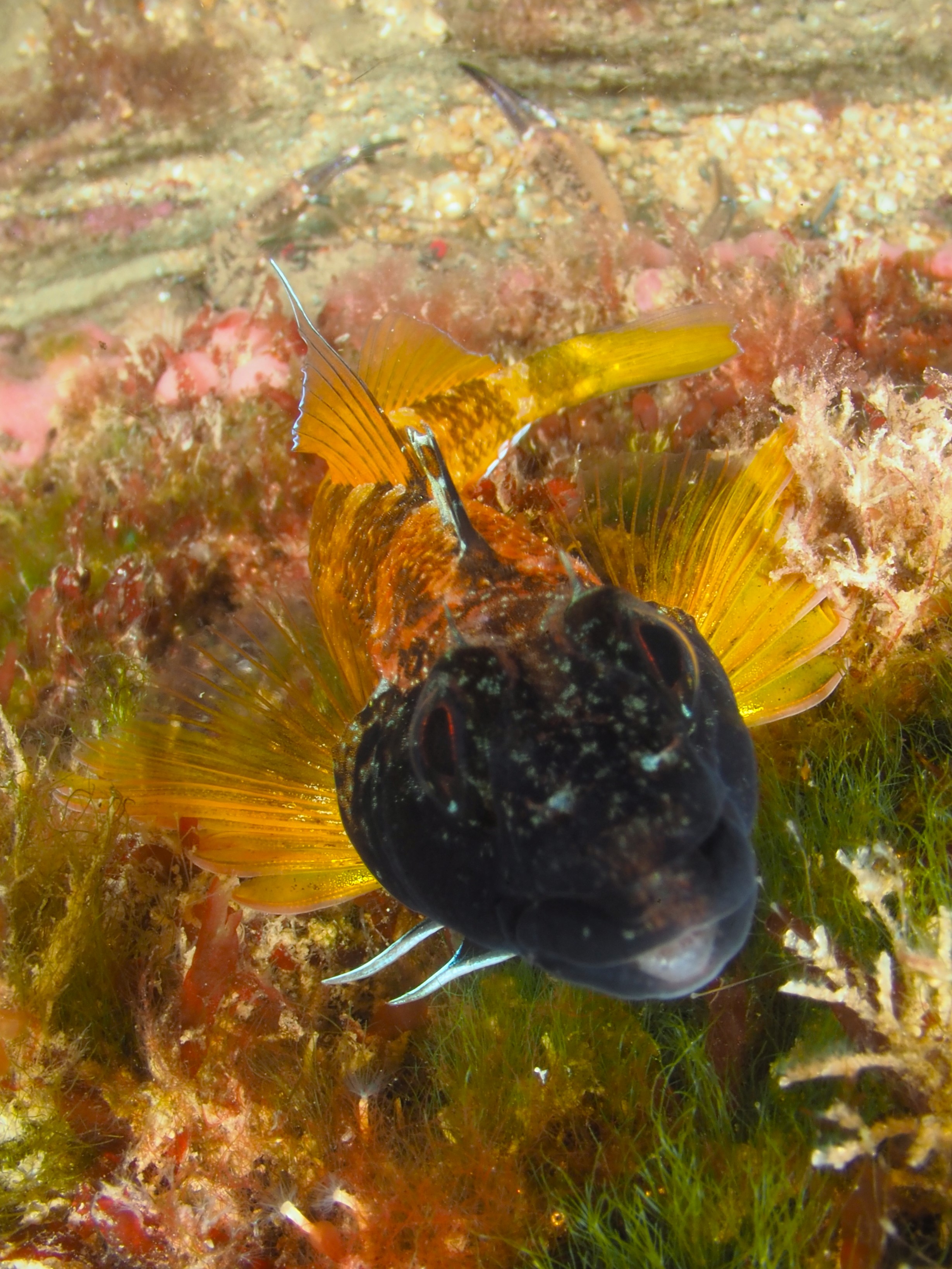
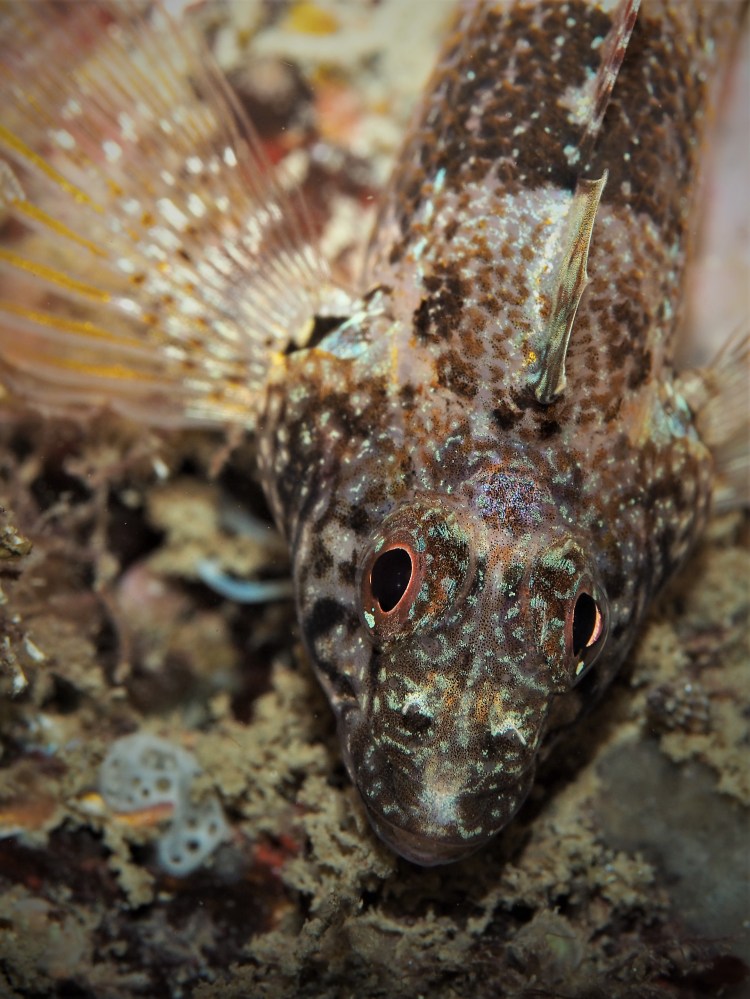
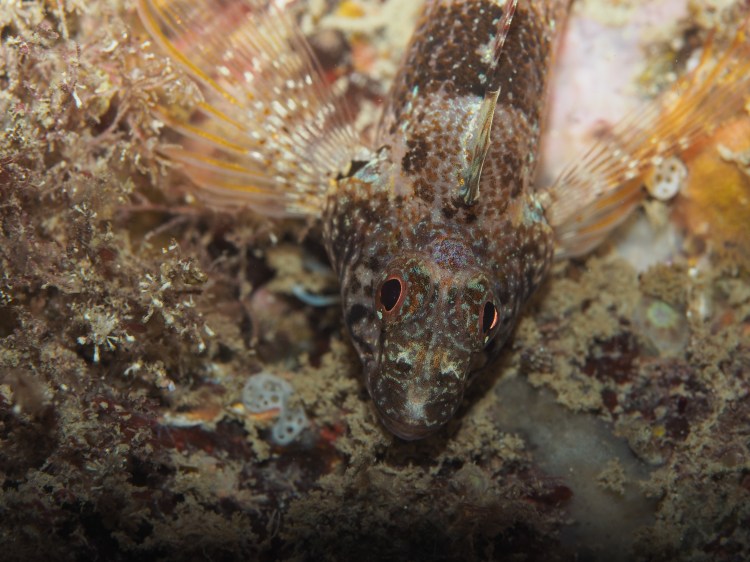
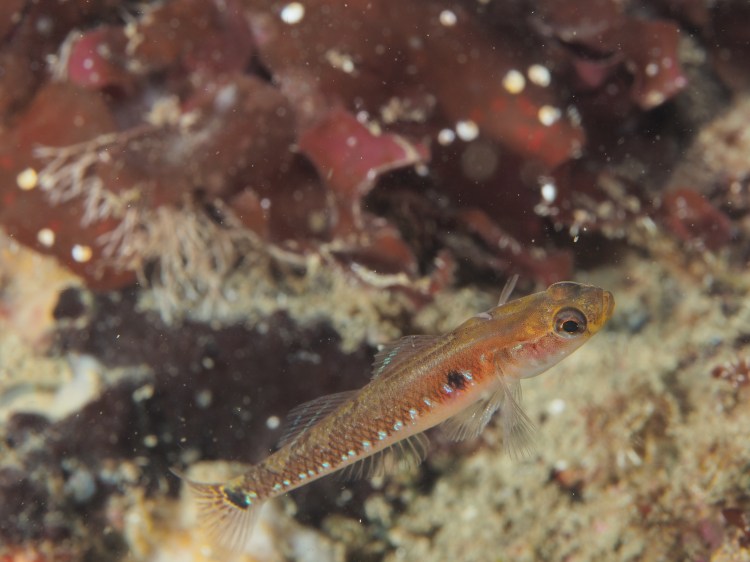
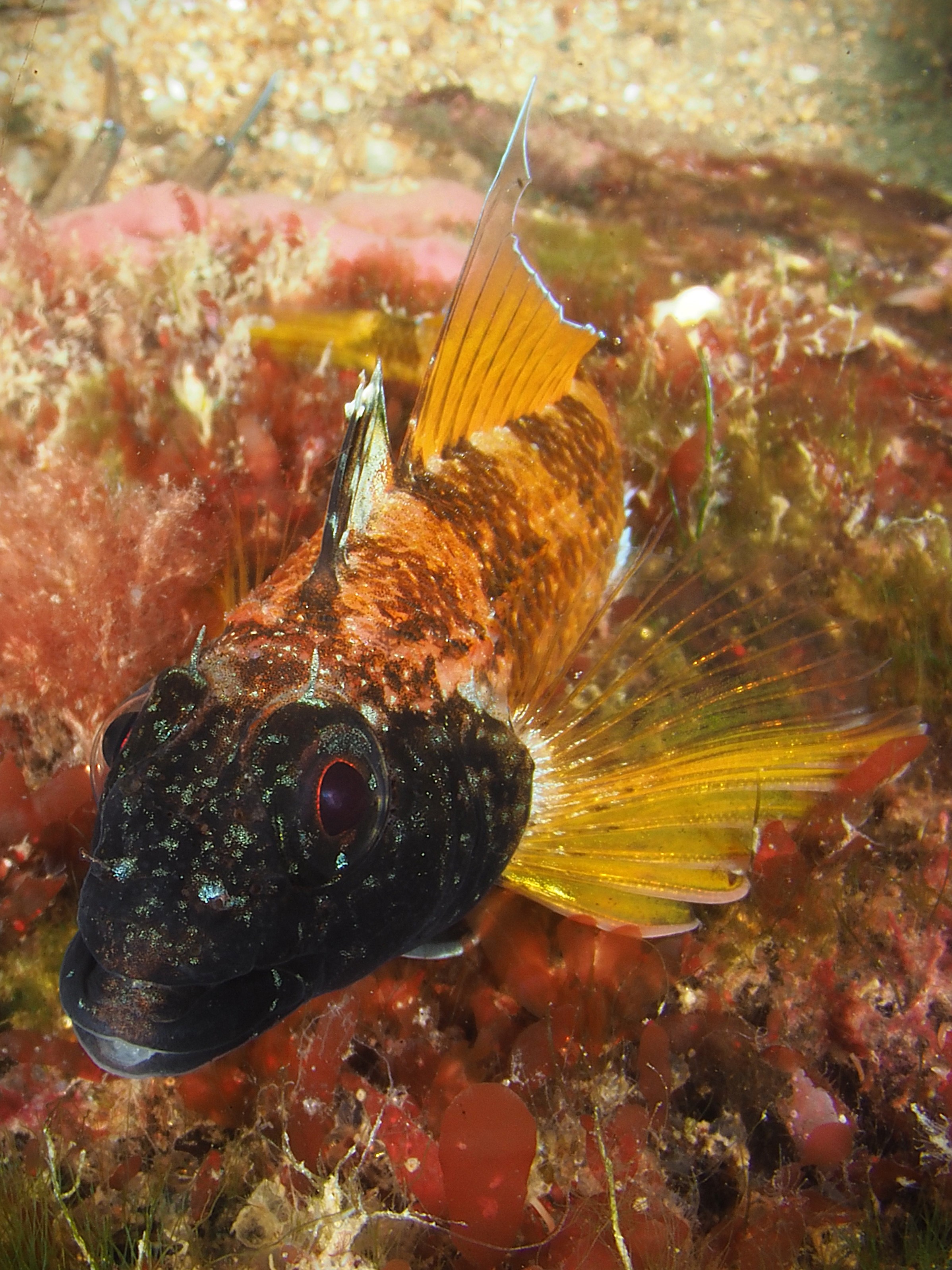
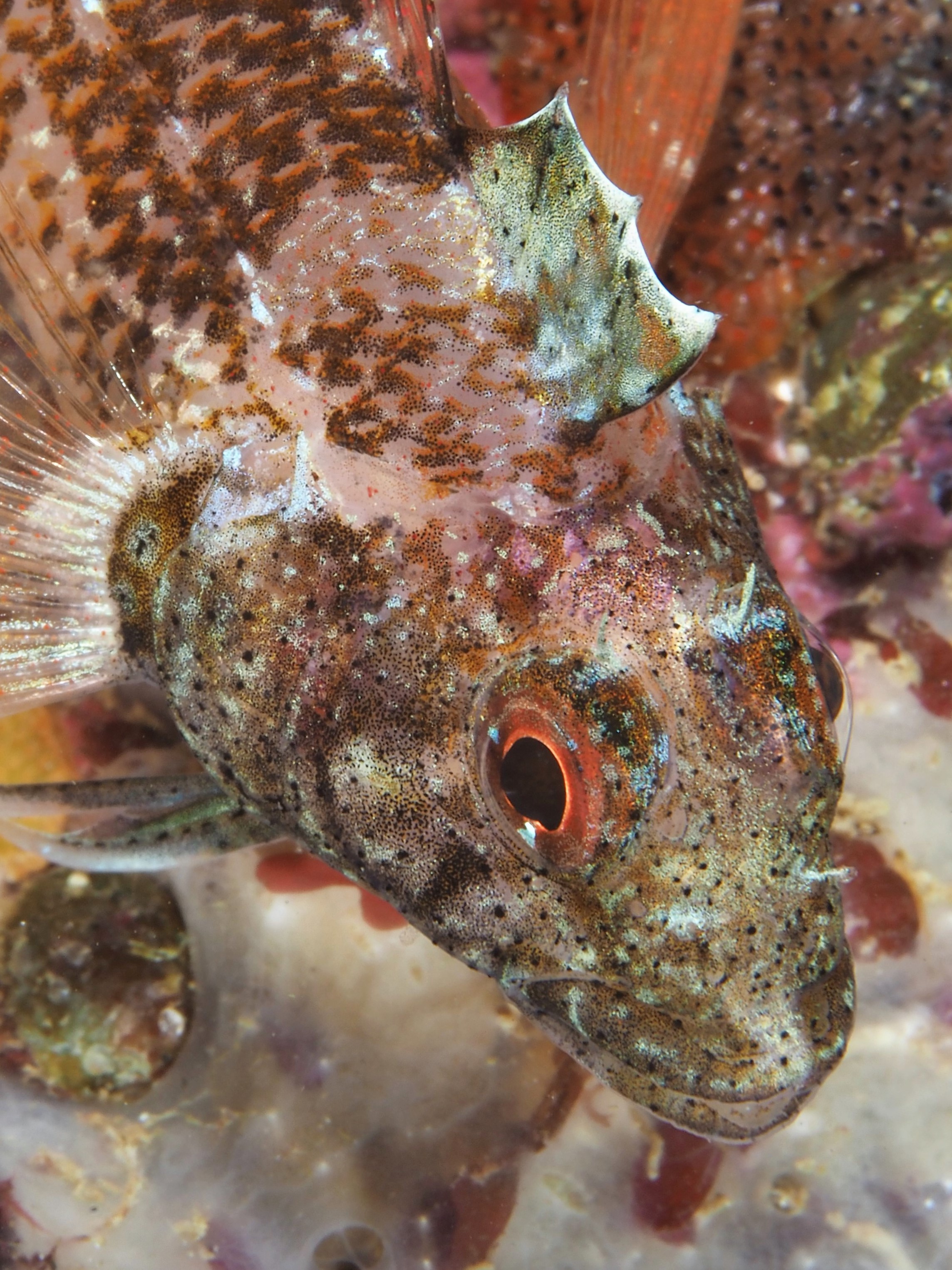
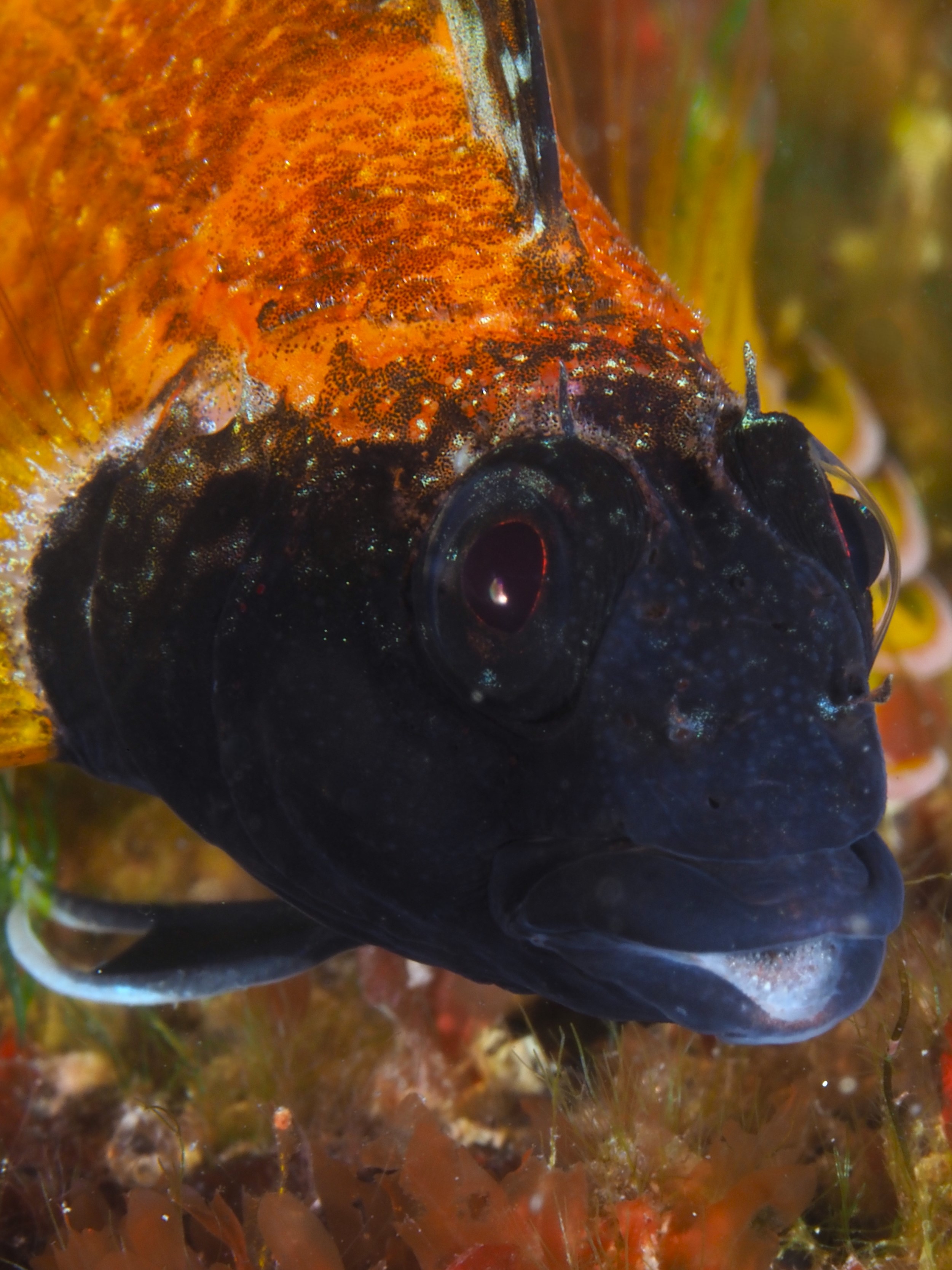
Dear reader, it has been a while! With the weather taking a turn for the worse, I thought it would be high time to start updating the blog again. I have taken more photos this year than ever before, and actually have dived my local shore site “Silver Steps” in Falmouth ‘to death’, so now have plenty of material. I’d thought I start with a post on one of my favourite fish, the Black-faced Blenny (Tripterygion delaisi). This is a beautiful little fish (a triple-fin blenny, not a ‘true’ blenny) that lives under rock overhangs, usually perched upside down. Breeding males are bright yellow with a black head and an electric blue edged dorsal fin, while females and males outside of the breeding season have a mottled brown-white coloration (which is equally beautiful testified by the pic on the top right). These fish (especially the females) are skittish and also require a bit of contortion to photograph under the overhangs but it is more than worth it! Below a photo-dump of fish shots taken with my 60mm macro lens and a combination of that lens and a superduper macro-wide-angle wetlens (details of which I am bound to bore you with in coming posts!).

Silver Steps diving II

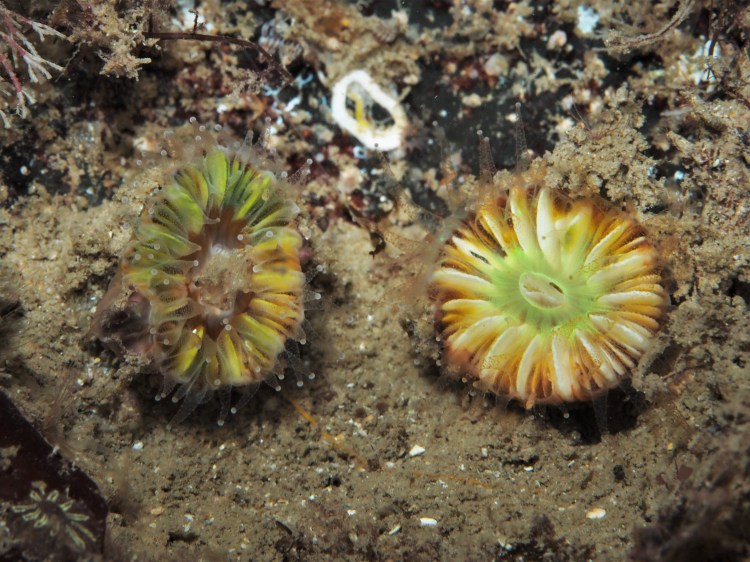
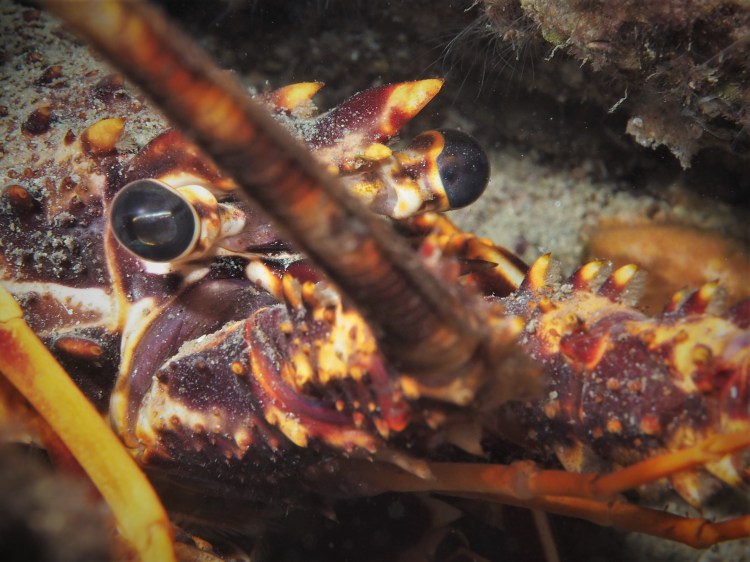
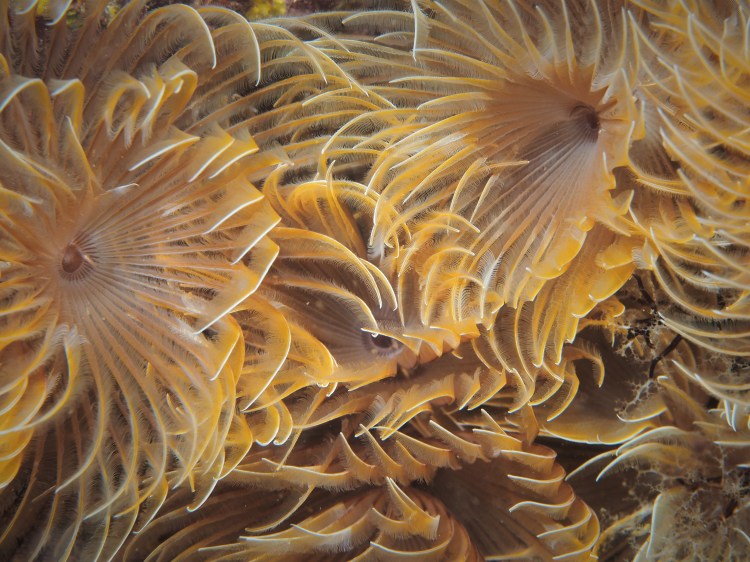
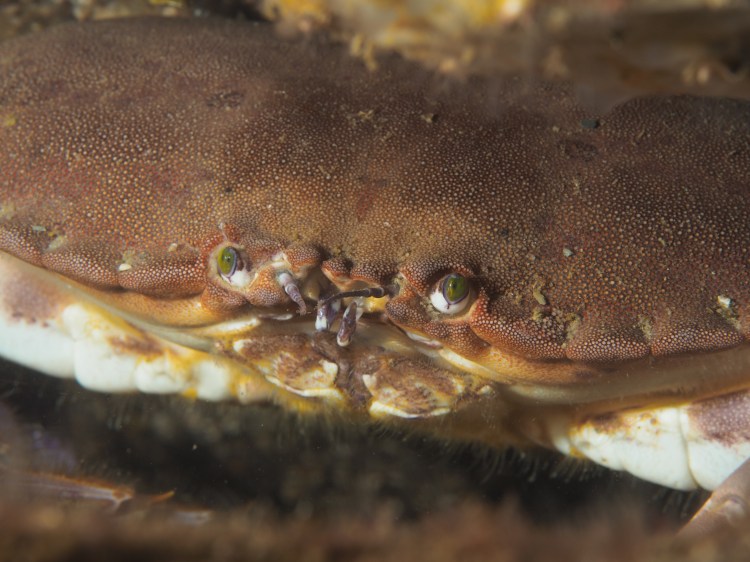
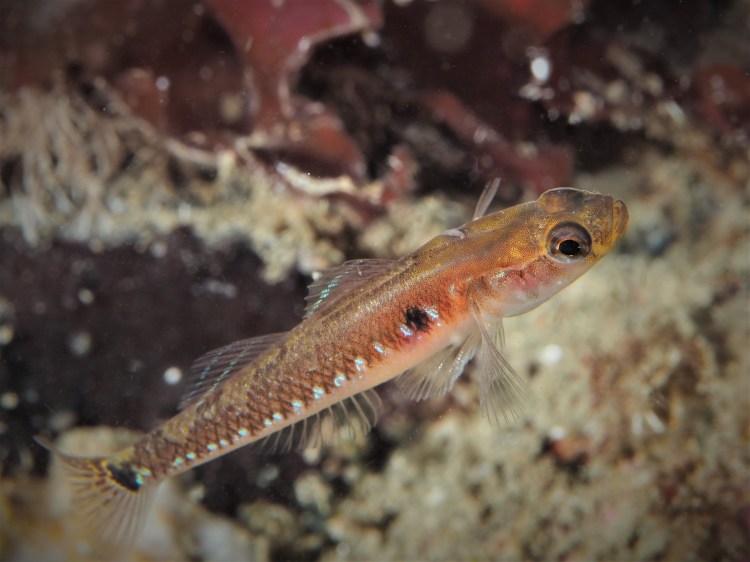
Another Silver Steps shore dive with @shannonmoranphoto and her fellow student Chris on Friday. The conditions were not as good as last time: low viz and a bit of a swell. I had set my camera to a longer focal range to try to take pics of cuttles or larger fish but that did not work out (with better conditions it still might not work out!). I could still shoot macro so that is what I did. Above to Devonshire cup corals Caryophyllia smithii. Pretty decent, but I know I can get a better close-up; I will try again Monday! I will have another go at the one resident Cray (or Craw) fish, which lives very shallow. I will also try the Twin fan worm Bispira volutacornis again, as I think a shot filled with just the fans (and not assorted bits of seaweeds etc) could be really nice. I might try free-swimming fish if they come close, as did this Poor cod Trisopterus minutus. Below some before- and after postprocessing. Just the jpegs in Windows Photos, nothing fancy. A bit of cropping, increasing clarity and contrast works wonders. Only when I have a really good photo I will invest time processing raw files in Photoshop. First the best photo of the dive: a Black-faced blenny Tripterygion delaisi (a female or possibly a non-breeding male). Next, a common Edible crab Cancer pagurus and finally a Twospotted goby Gobiusculus flavescens.

Black-faced blenny Tripterygion delaisi

Went on a good dive at Silver Steps in Falmouth yesterday.The visibility wasn’t that great, but for the most part we were rummaging under overhangs in gulleys just off the coast. Sweeping aside the kelp reveals many fine red seaweeds, sponges, bryozoans and small Devonshire cupcorals. We saw the ubiquitous Tompot blenny Parablennius gattorugine as well as a Bib (or Pout) Trisopterus luscus. Overhead there were many Sandeels as well as some relatively large Pollock Pollachius pollachius hunting them:IMG_1151IMG_1143IMG_1133IMG_1139However, there was a much more remarkable fish we spotted, namely the Black-faced blenny Tripterygion delaisi. We first saw a male, bright yellow with a black head and beautifully skyblue-lined fins. Only after a while we noticed the inconspicuously coloured female. The male is coured this way only in the breeding season. (We later saw another larger male, no female, although that was probably closeby.) My fish guides tell me that this Mediterranean species was first spotted in the UK in the 70s and that it is currently present in only two or three locations on the South West coast. Some browsing on the web has told me that in recent years they have been recorded in more locations but they still must be relatively rare (and I therefore won’t be attempting to catch them). Global warming will likely extend the range of this species more firmly northwards; one of the very few positive effects of our addicition to carbon… Lastly, I now managed to get a shot of the Candy striped flatworm Prostheceraeus vittatus:IMG_1160IMG_1164