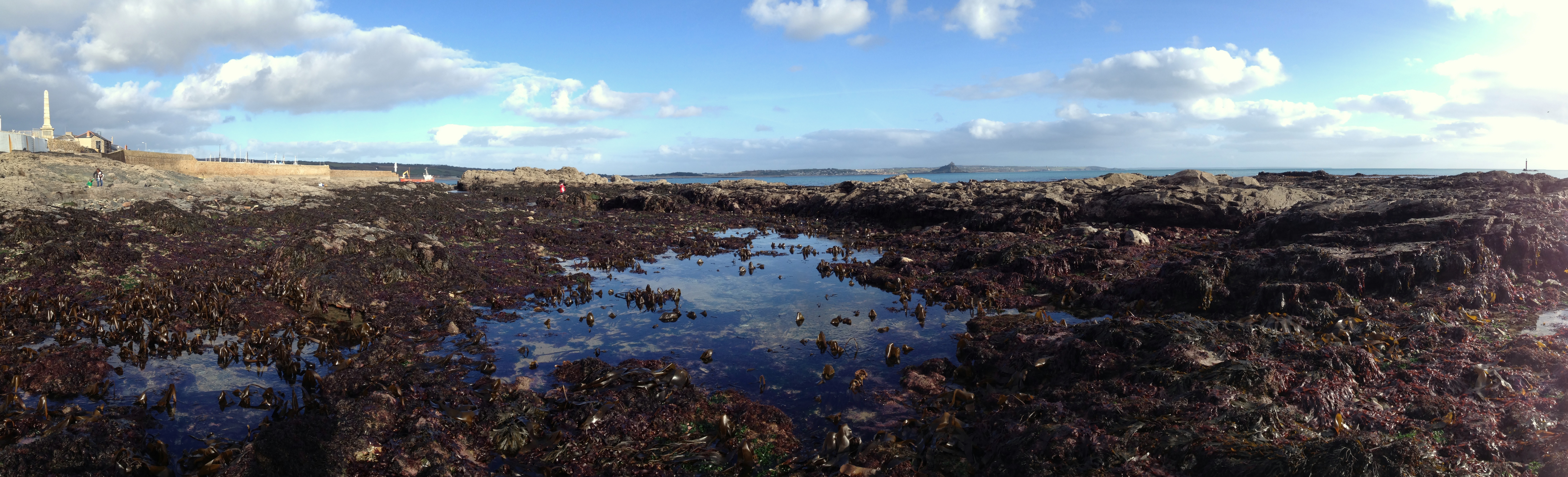
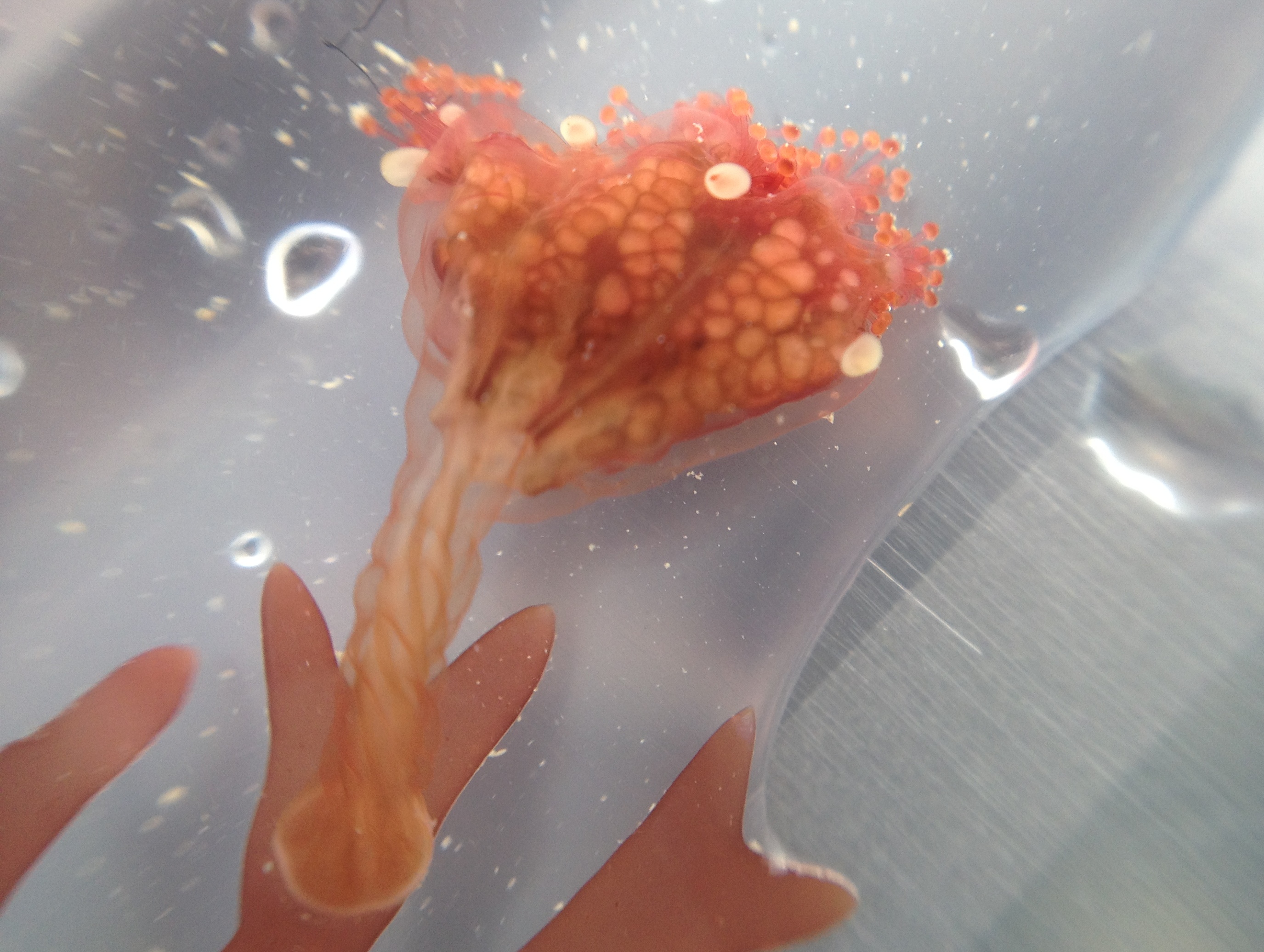
 It was a very nice day this Saturday, and the plan was to collect more seaweed species for a student project that I am supervising (see for an introduction my work blog here and for project updates student Abi’s blog). We were very lucky to have David Fenwick Snr and his partner Carol of aphotomarine fame to help us to find and identify species (you might also know him through a variety of UK marine facebook groups). We took to the rocks beneath the Jubilee Pool in Penzance (the end of the Cornish main train line and both the most Southern en the most Western station in England). As the focus was to get new species for Abi’s project, I did not focus on photography or finding other species so I have only a few pictures to show. One exception of course was that we had to see some stalked jellyfish; this is one of the specialties of David and he has dedicated an entire website to these beautiful creatures: stauromedusaeUK. These little animals are related to jellyfish but are attached on rocks and seaweeds on the shore. Ten species have been recorded in the UK. One of the more common ones is the Spotted kaleidoscope jellyfish Haliclystus octoradiatus; although a crappy iPhone photo, the stalk, arms with secondary tentacles at the end, white nematocyst spots and gonadal sacs are clearly visible:
 On to the seaweeds: about 15 new samples were collected. A species we did not take was Creephorn Chondracanthus acicularis, which according to Davis memory was last recorded in Penzance in the 1880s (first pic). We did collect a good amount of the epiphyte Champia parvula (second pic). Unfortunately no time to pick up some Wakame from nearby Newlyn marina or go to a spot with some good Prasiola growth but all in all a very successful and enjoyable trip!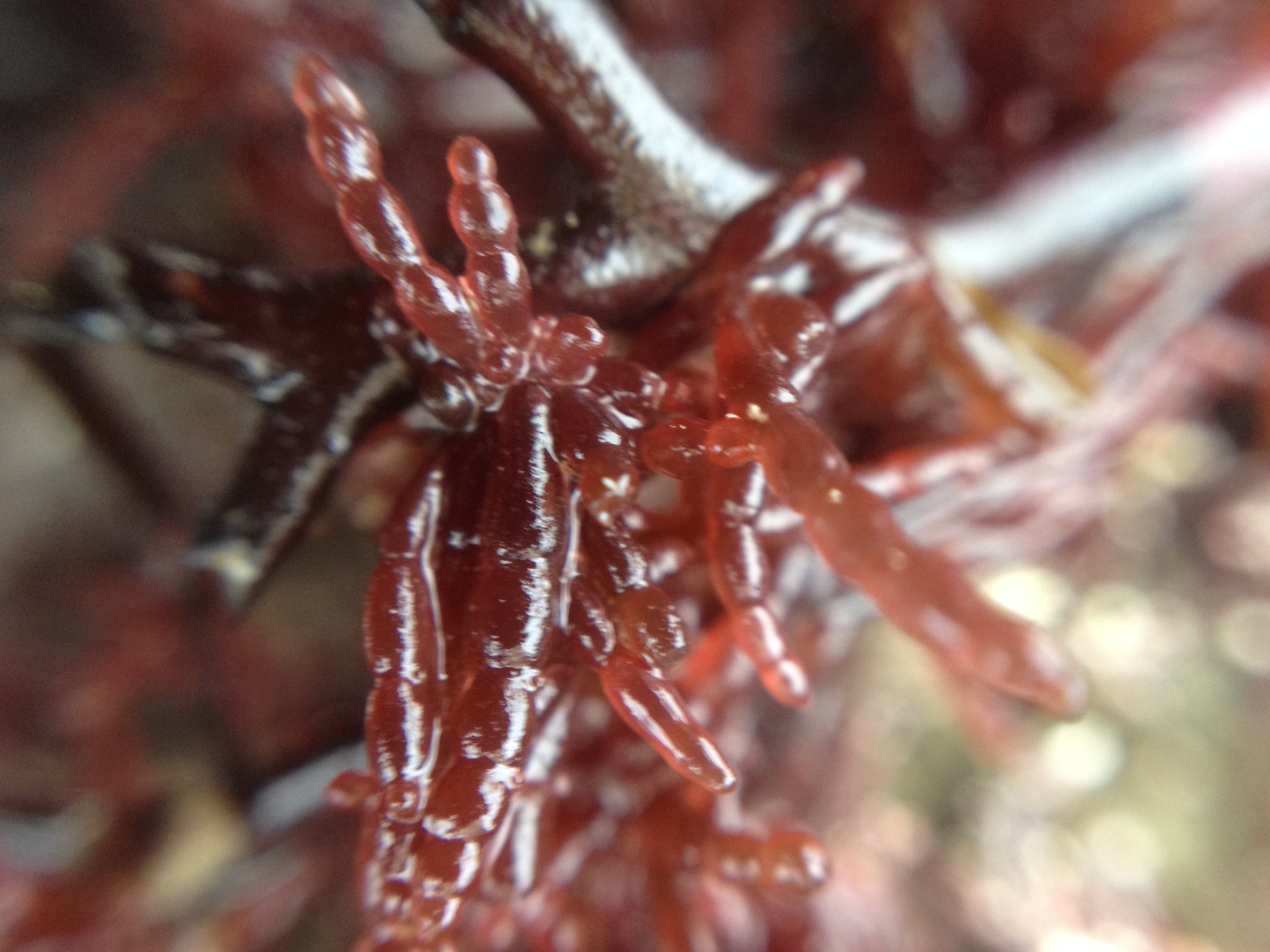


 An Bollenessor