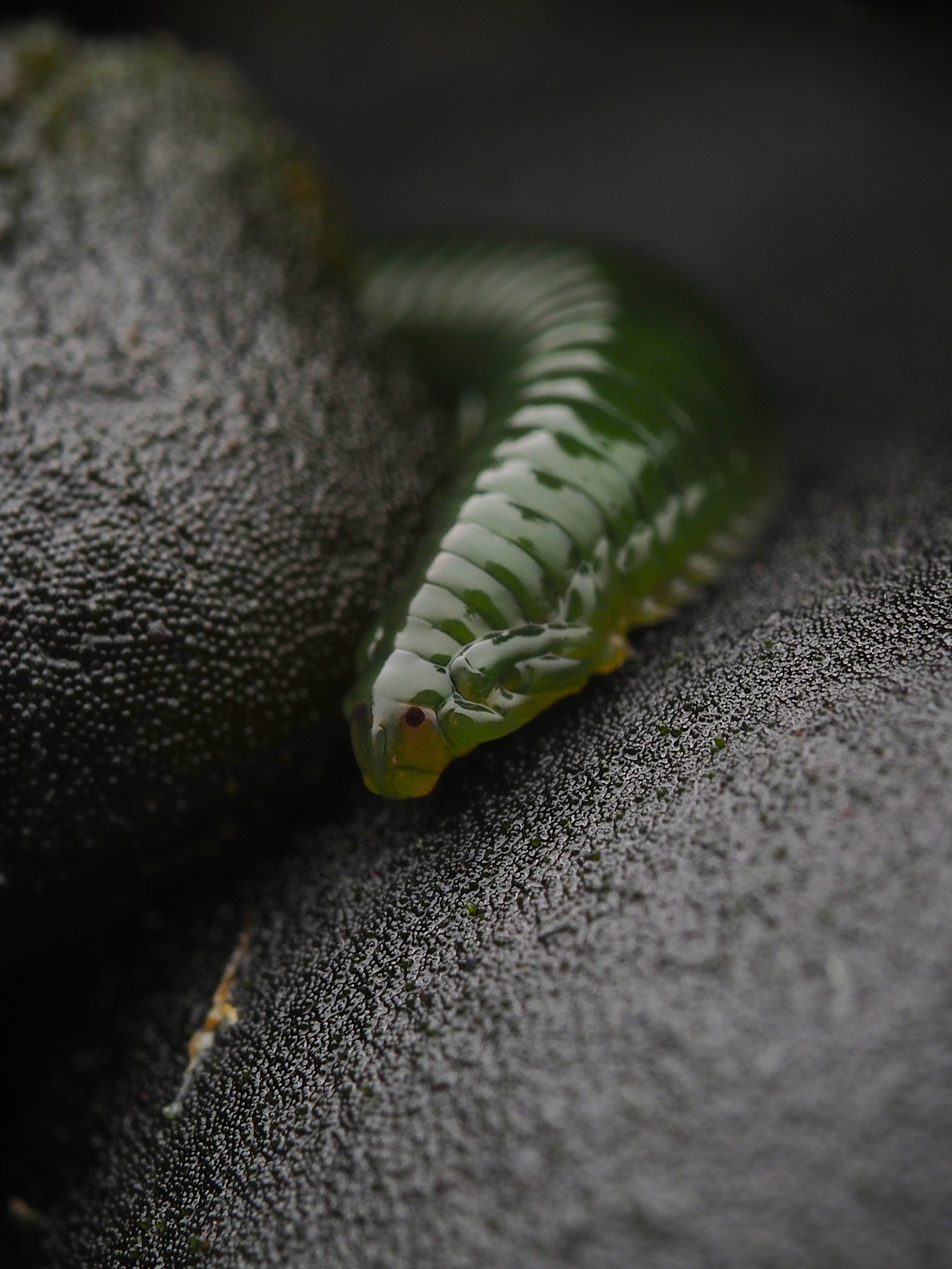
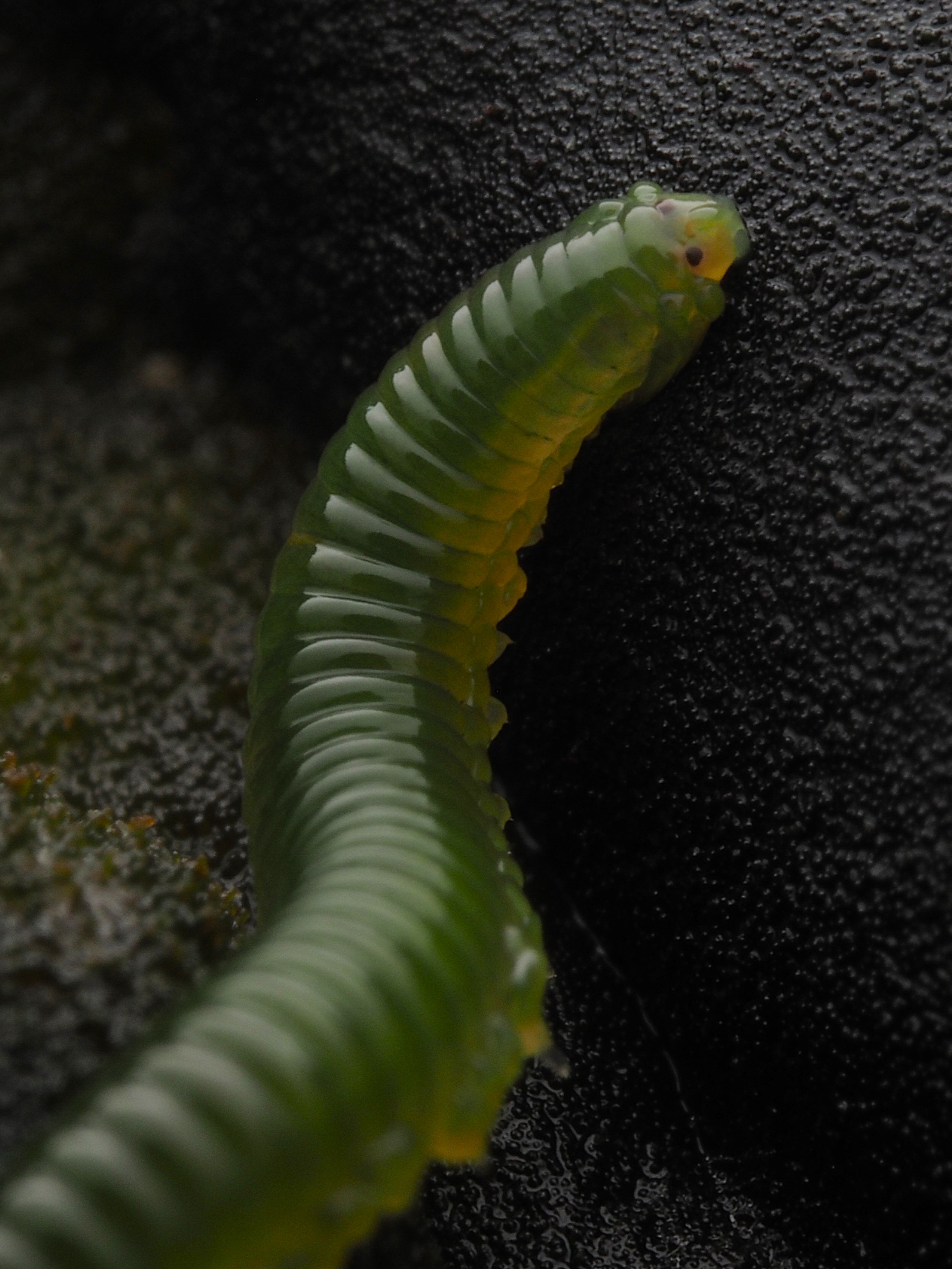
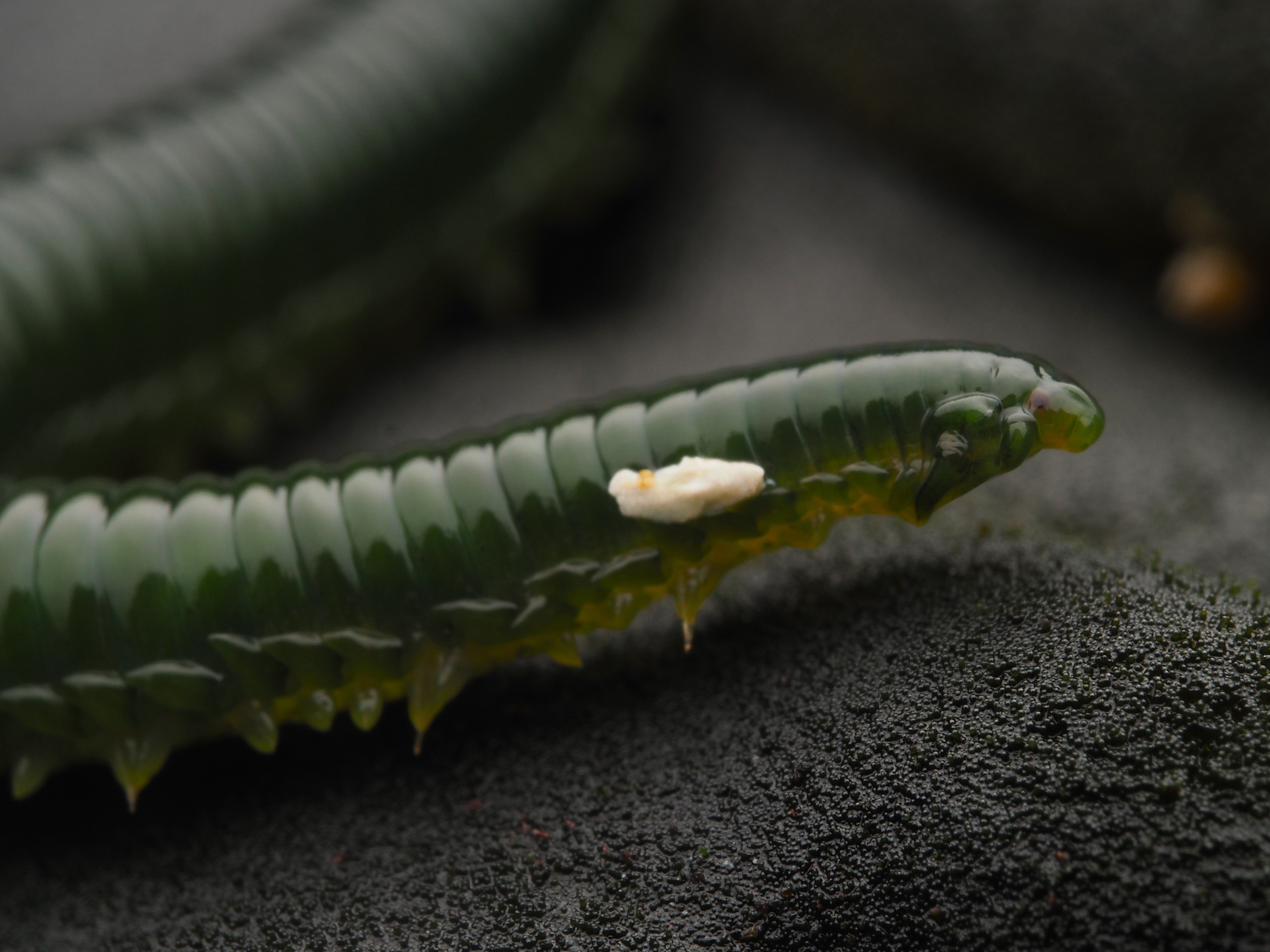
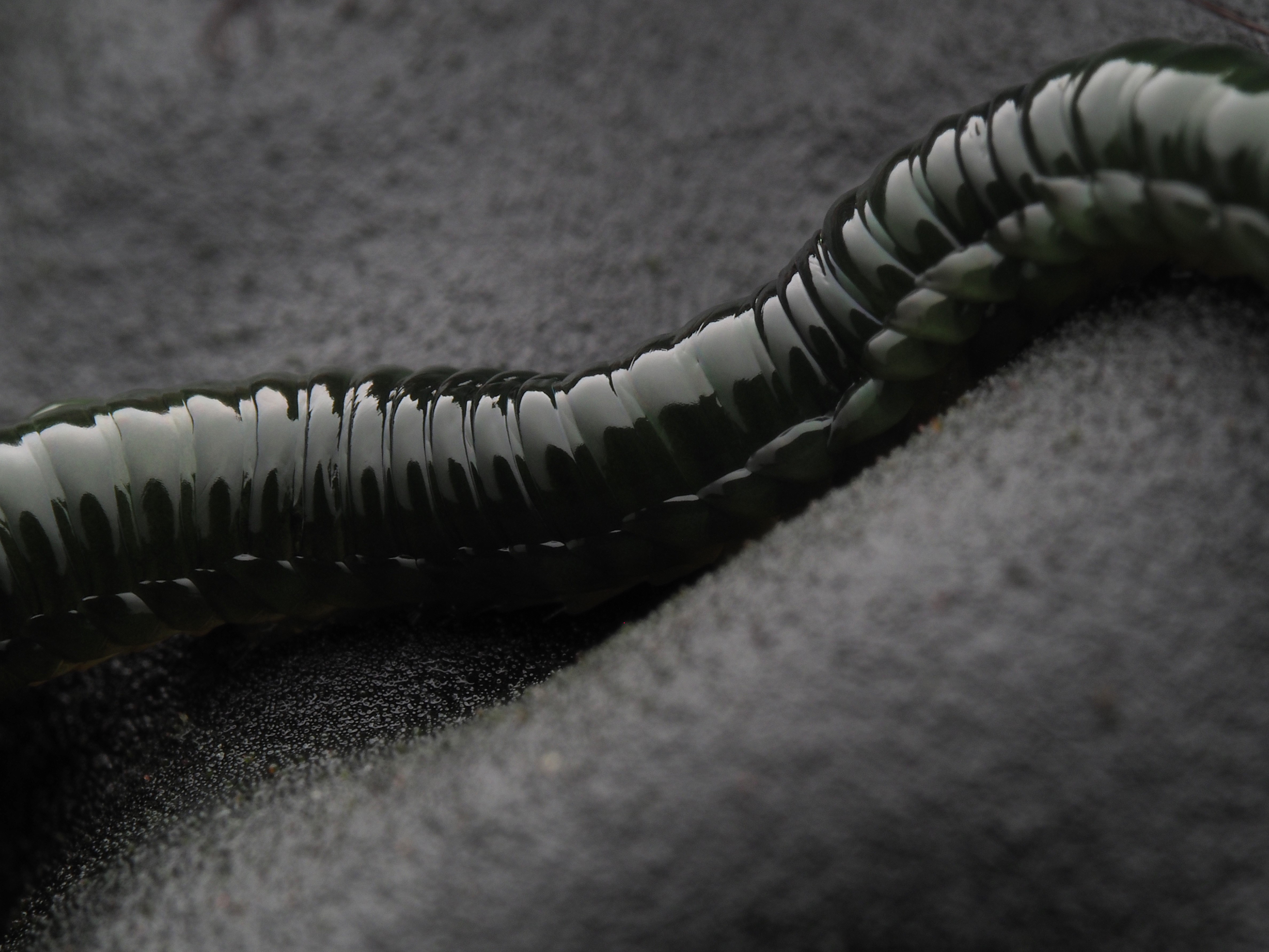
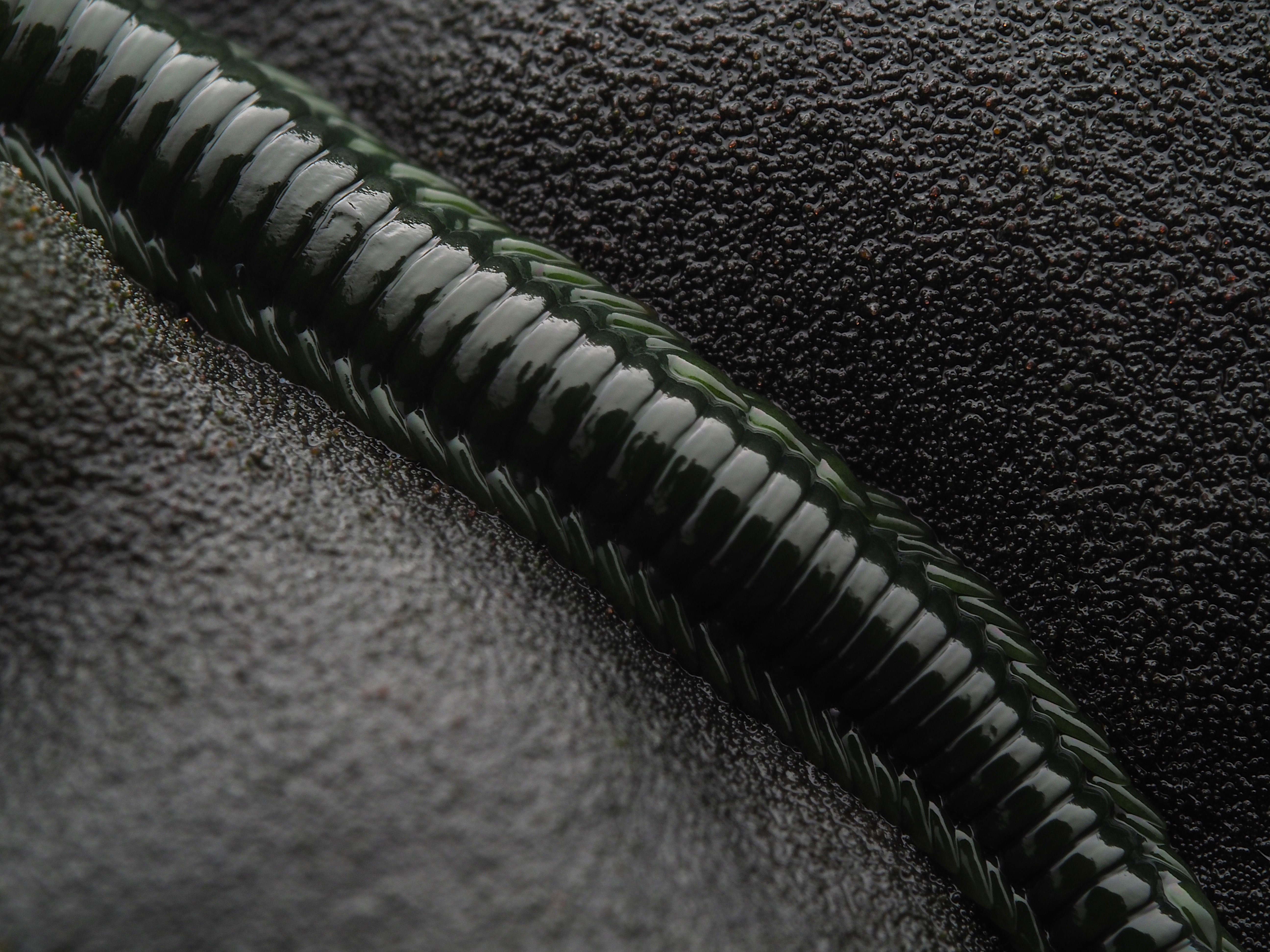
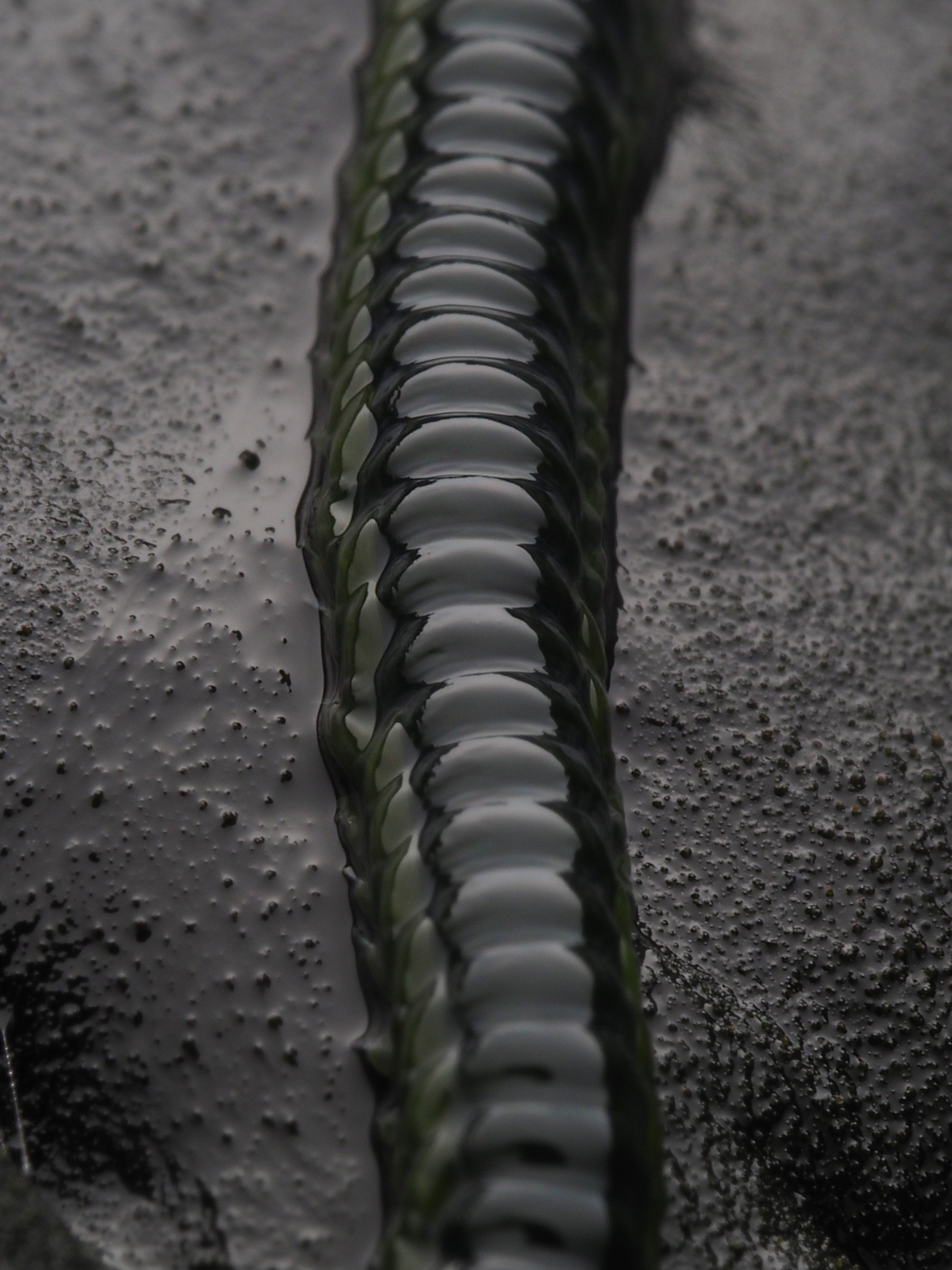
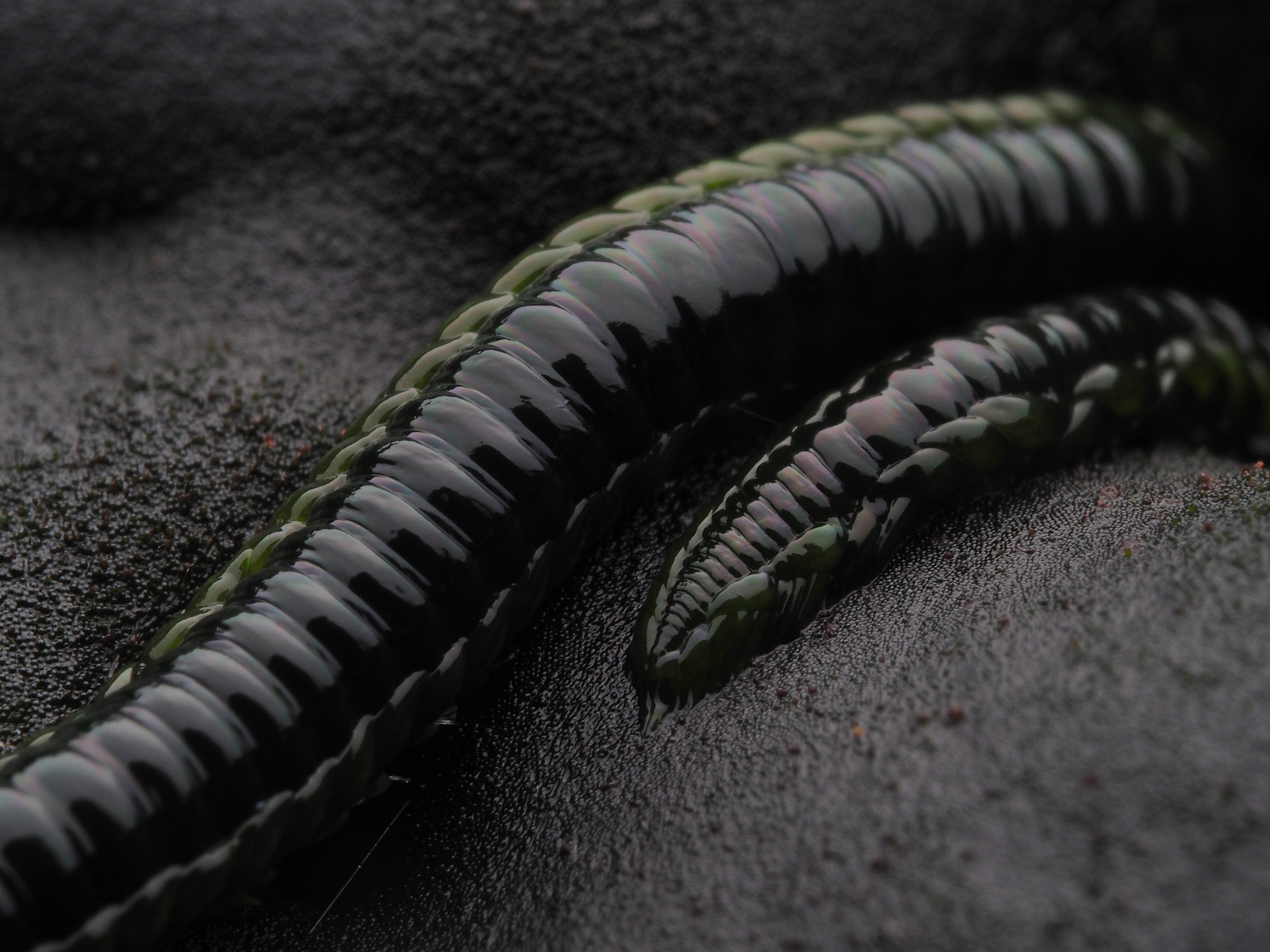
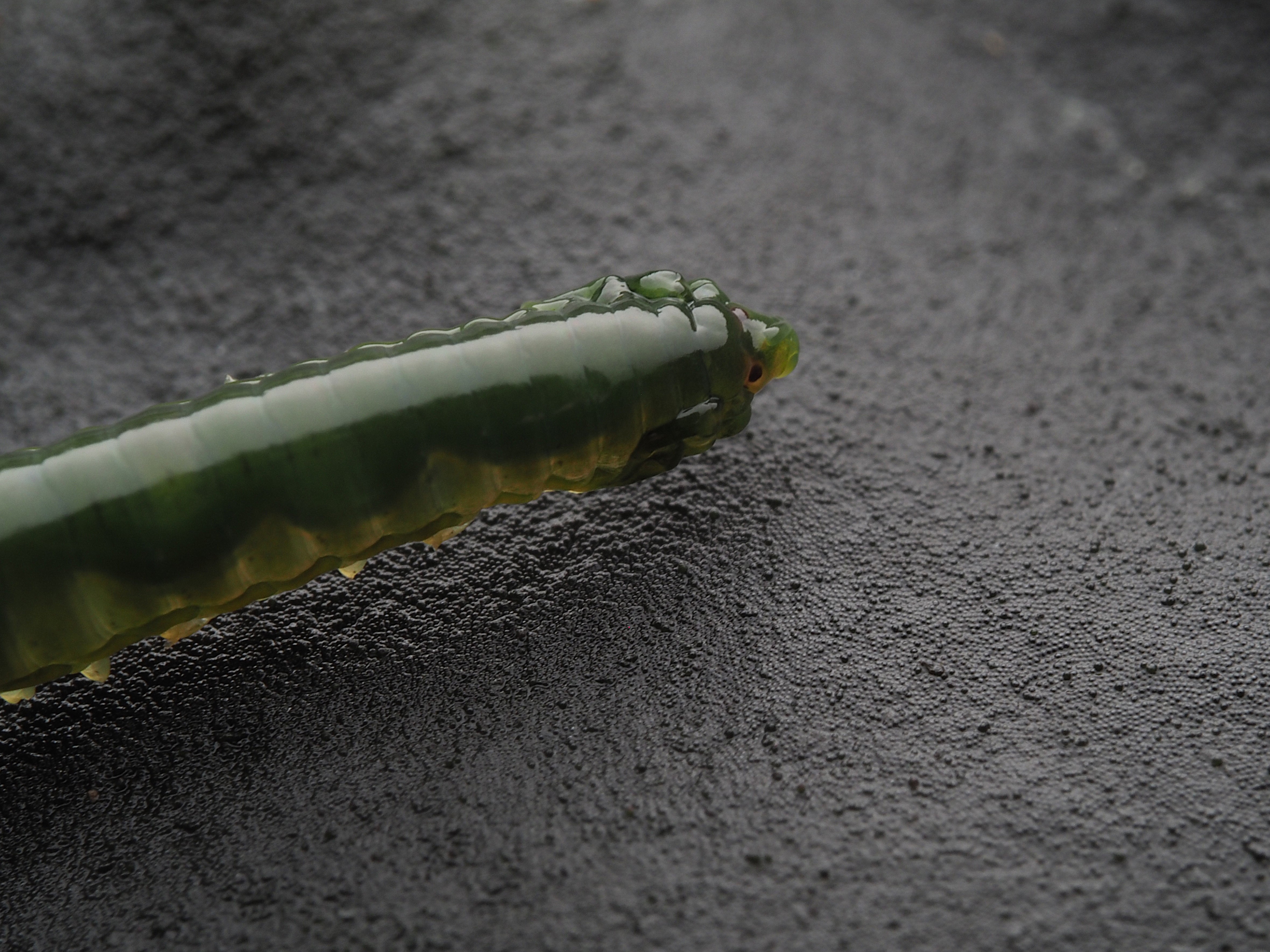
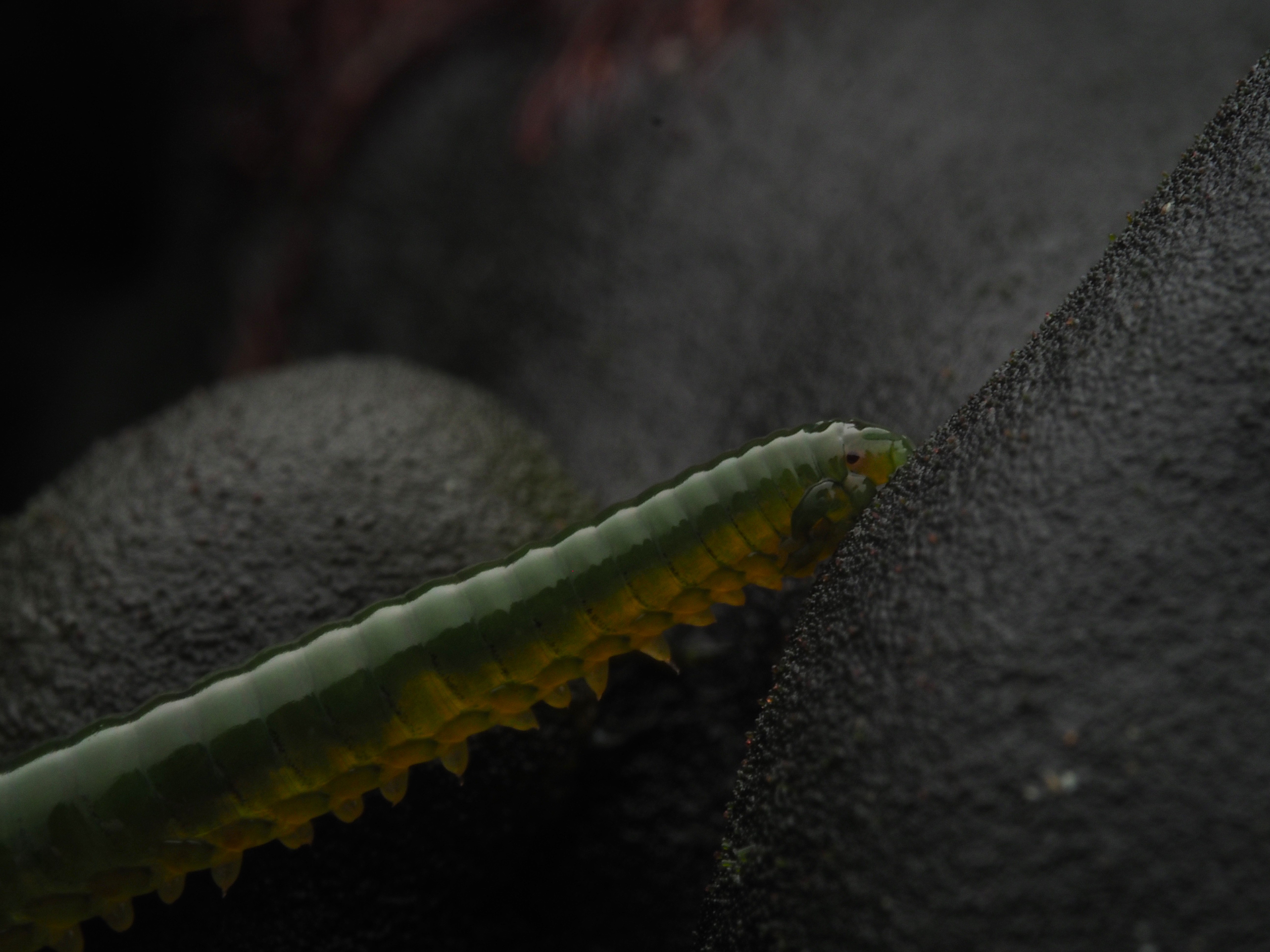
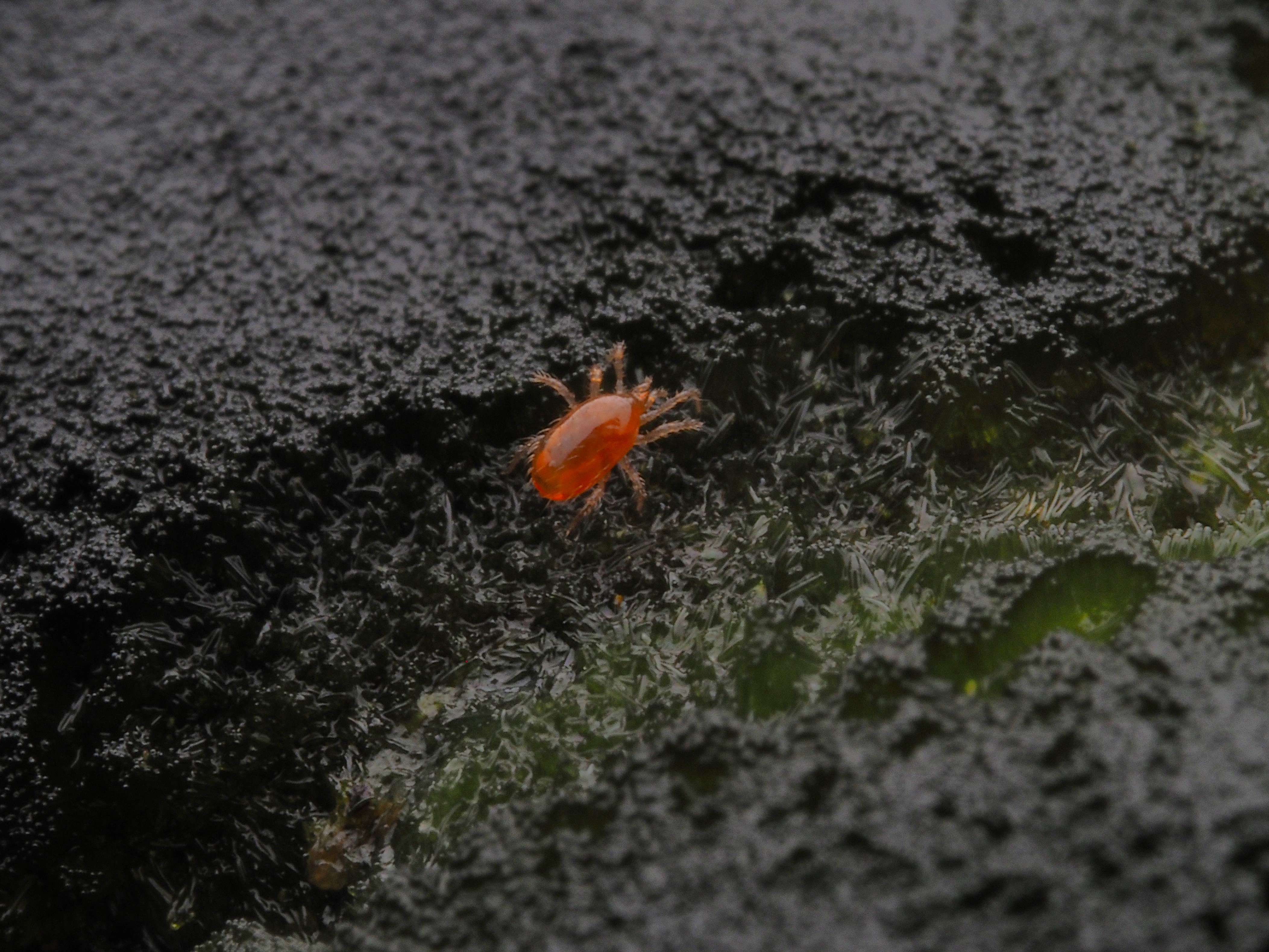
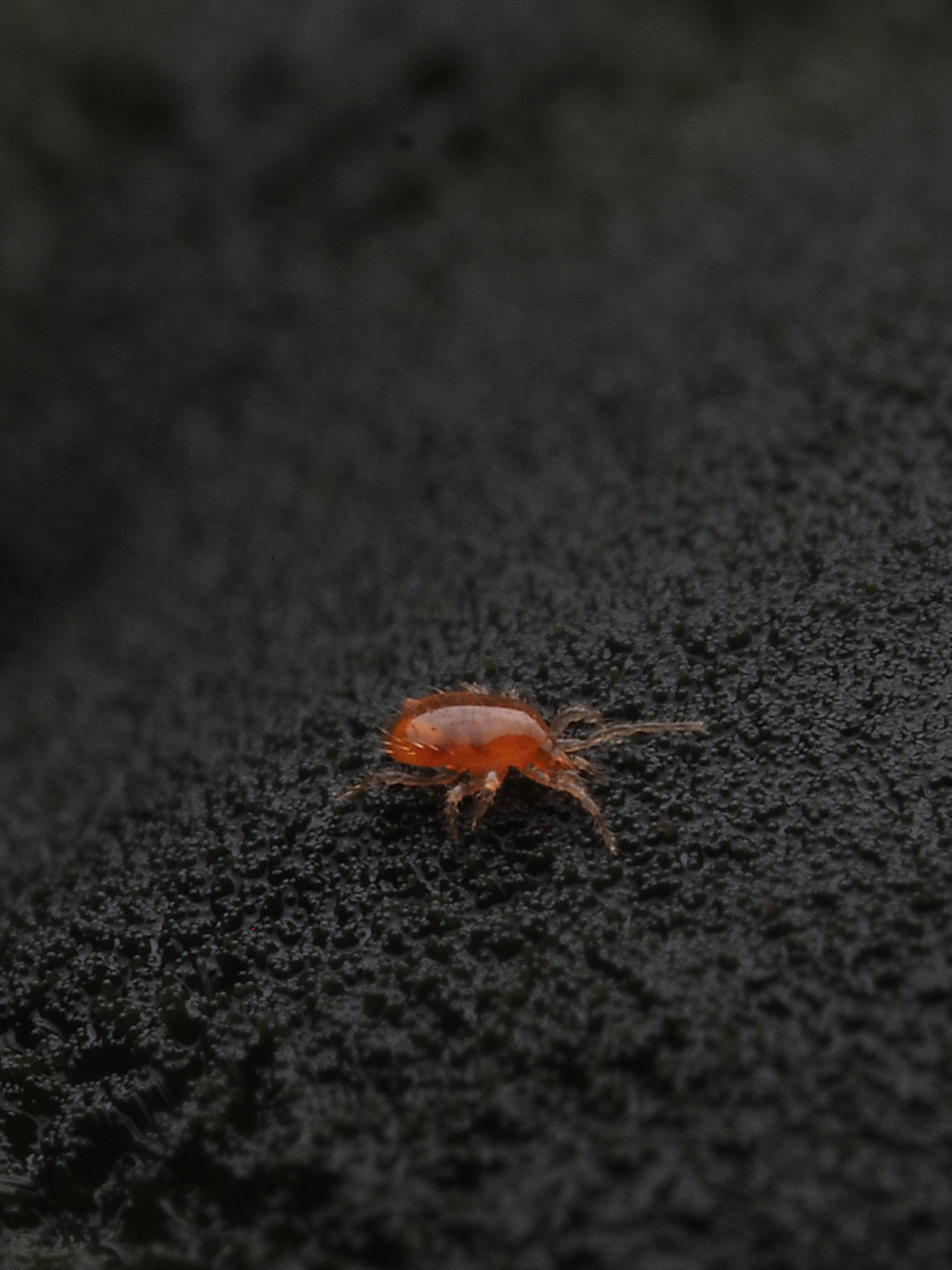
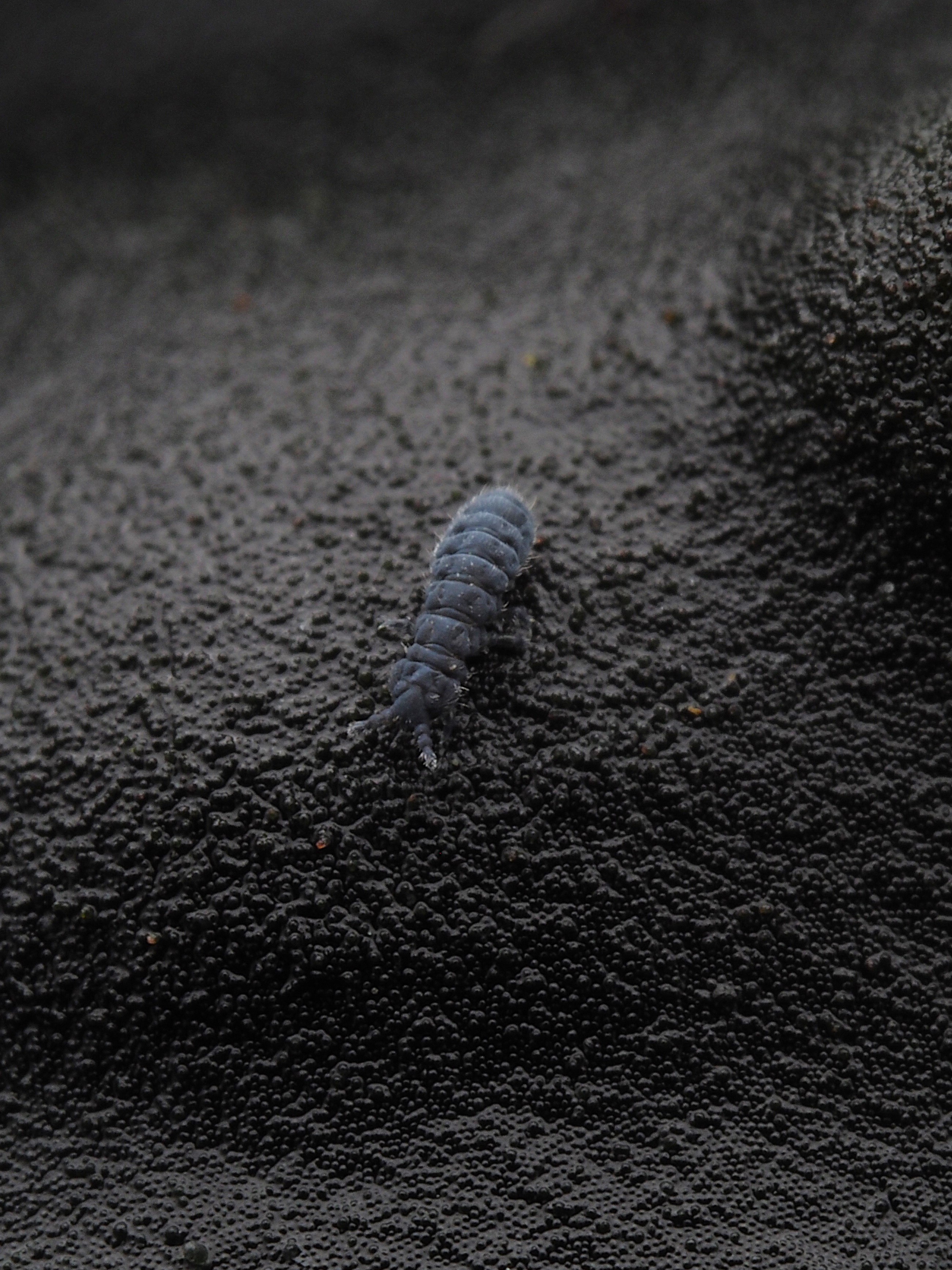
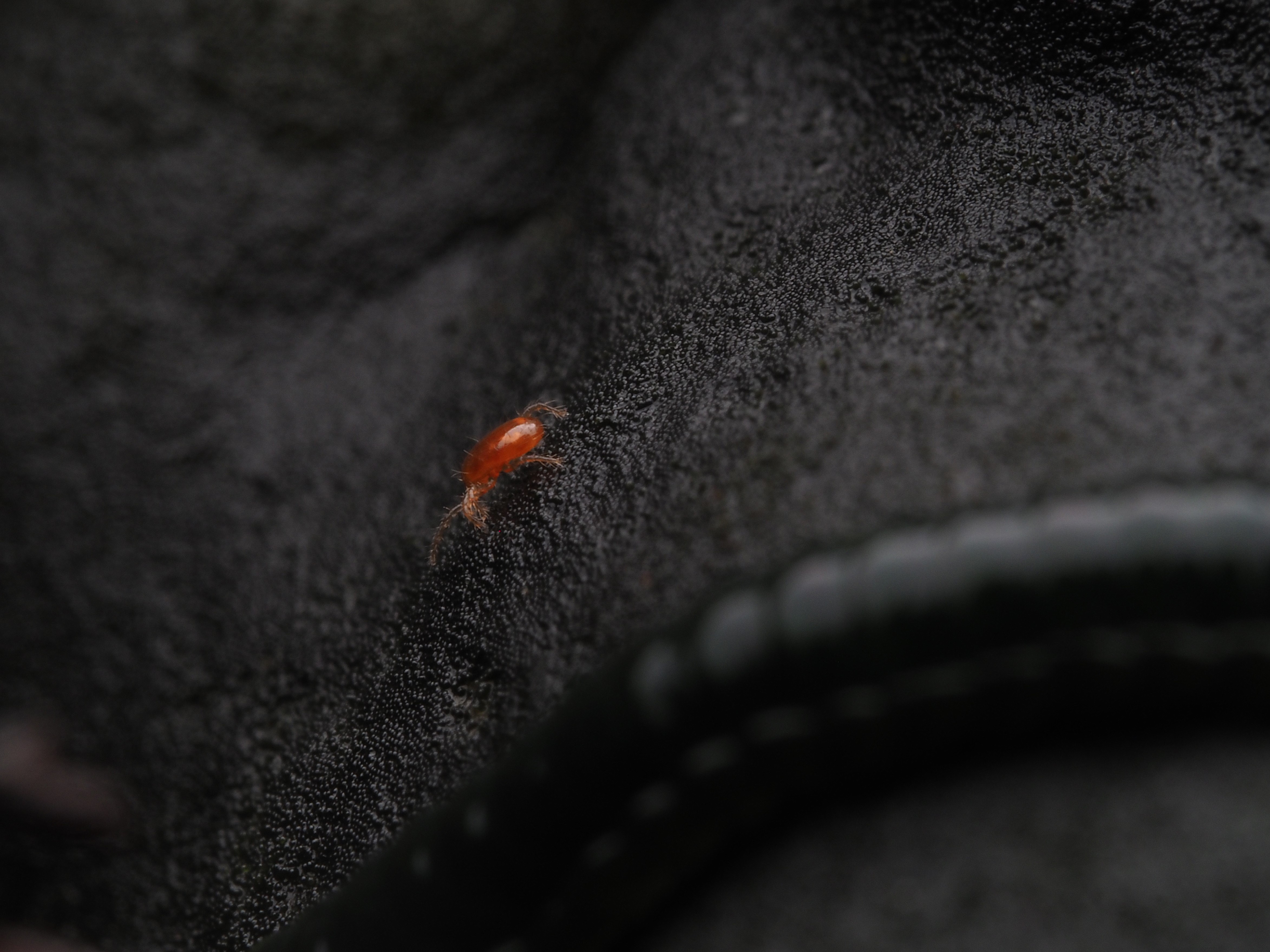
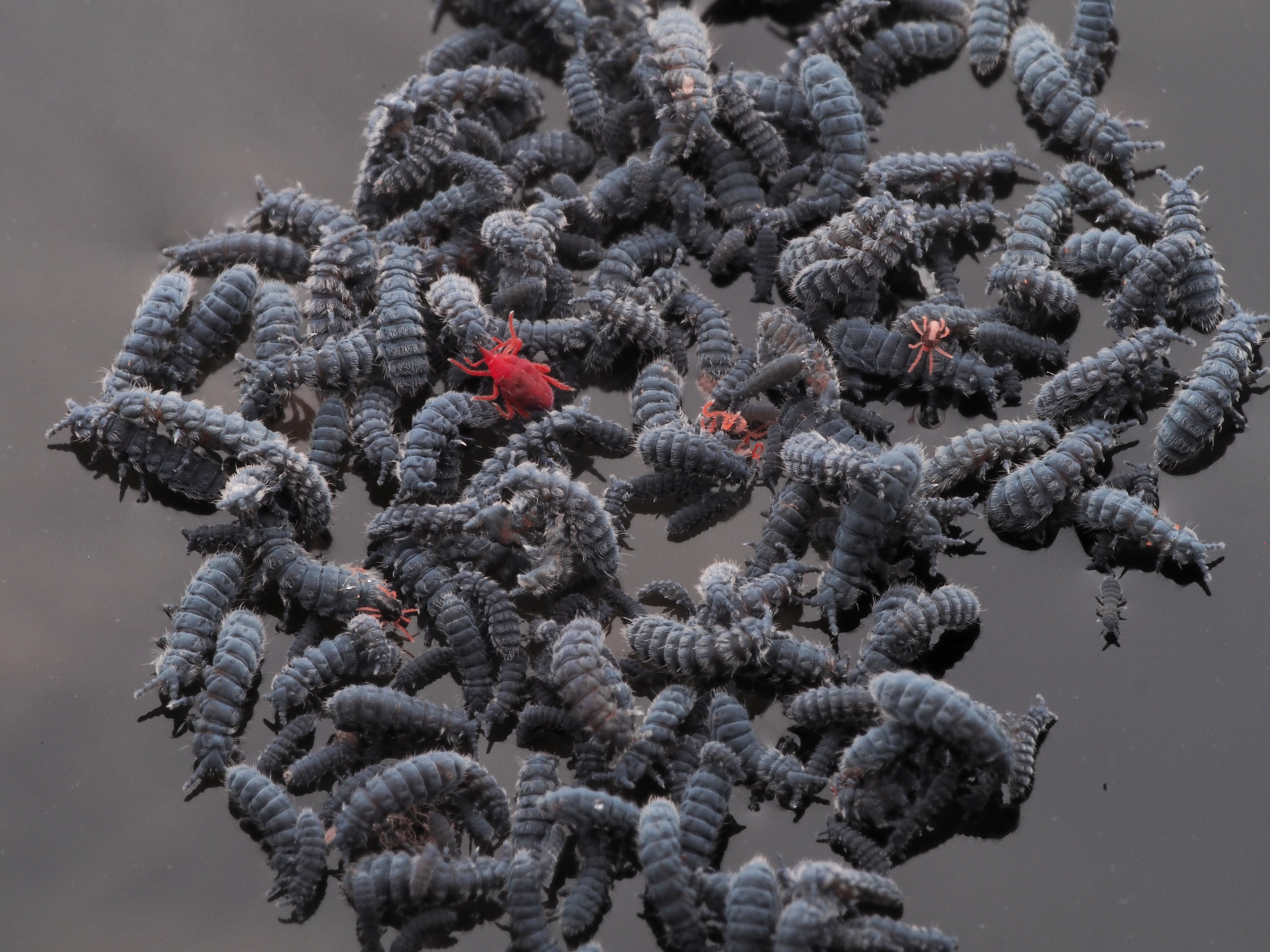
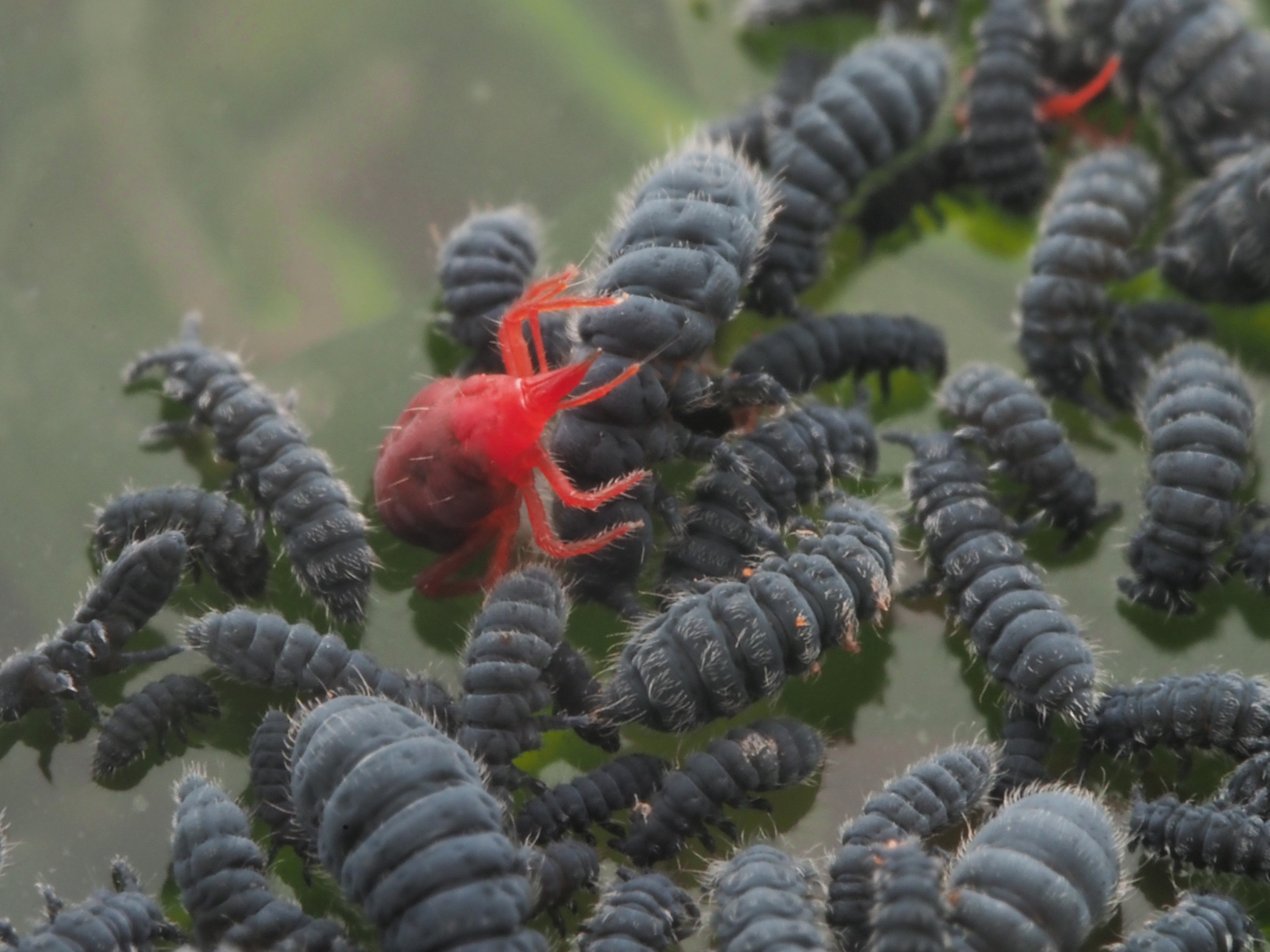
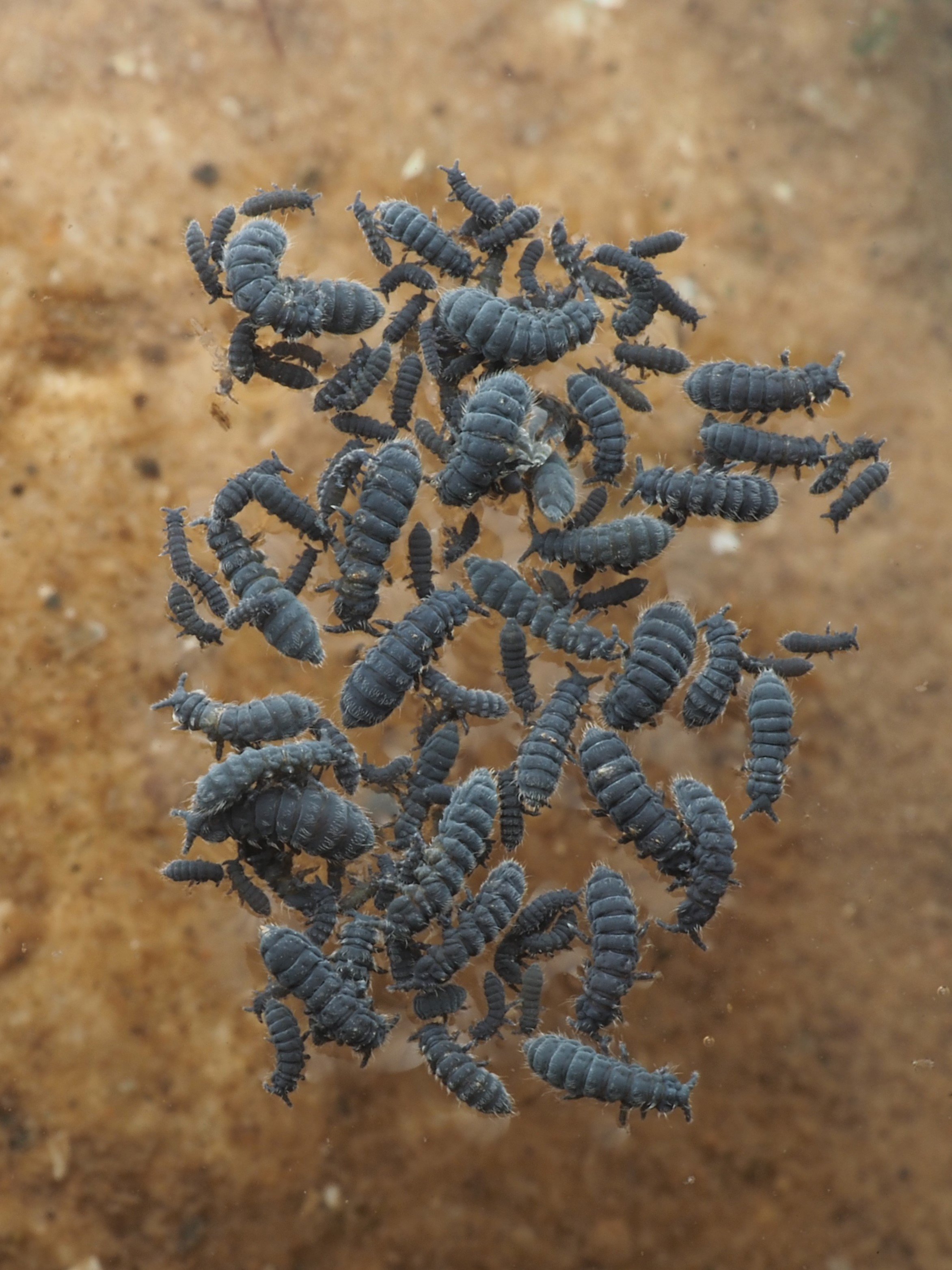
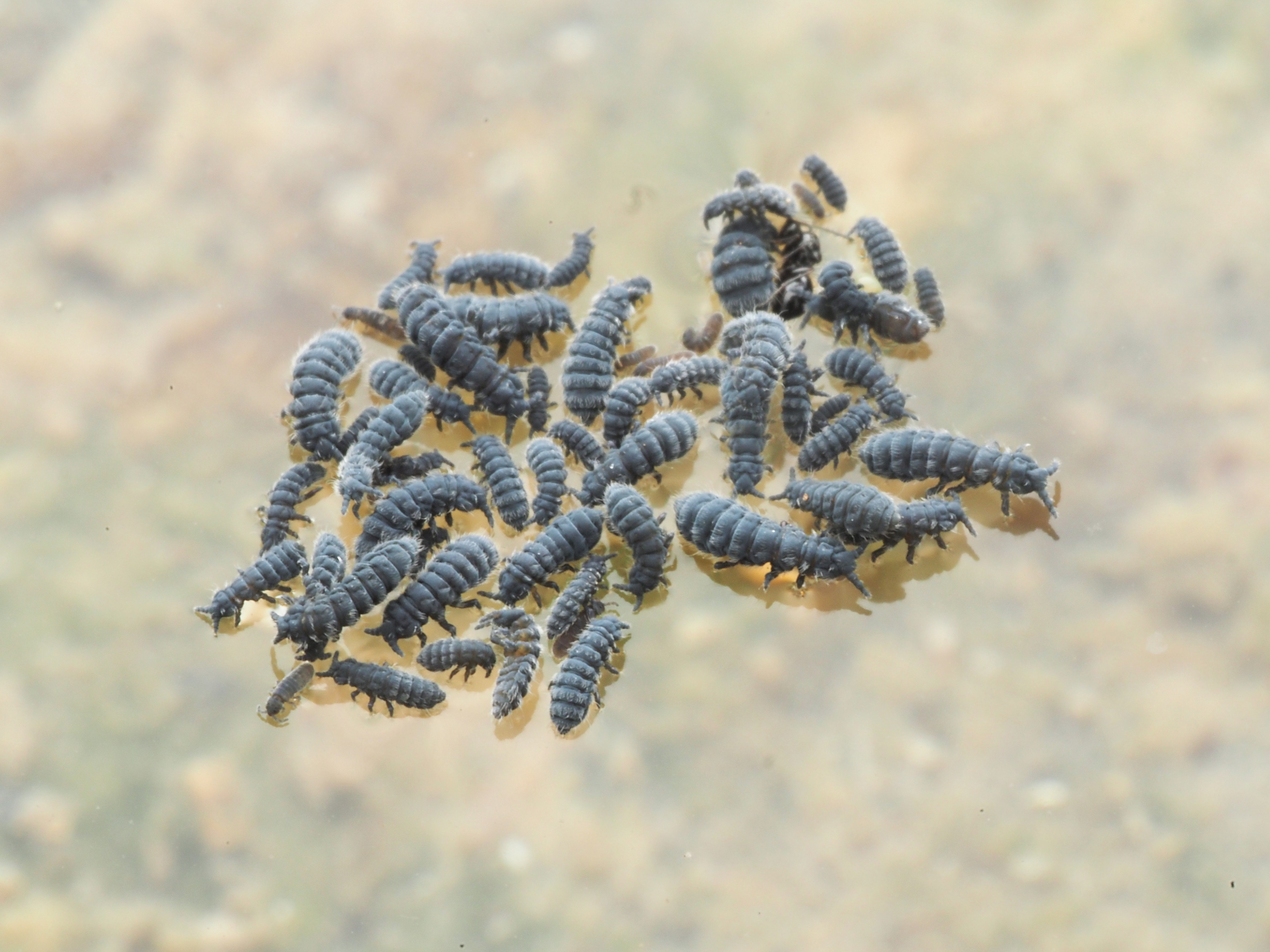
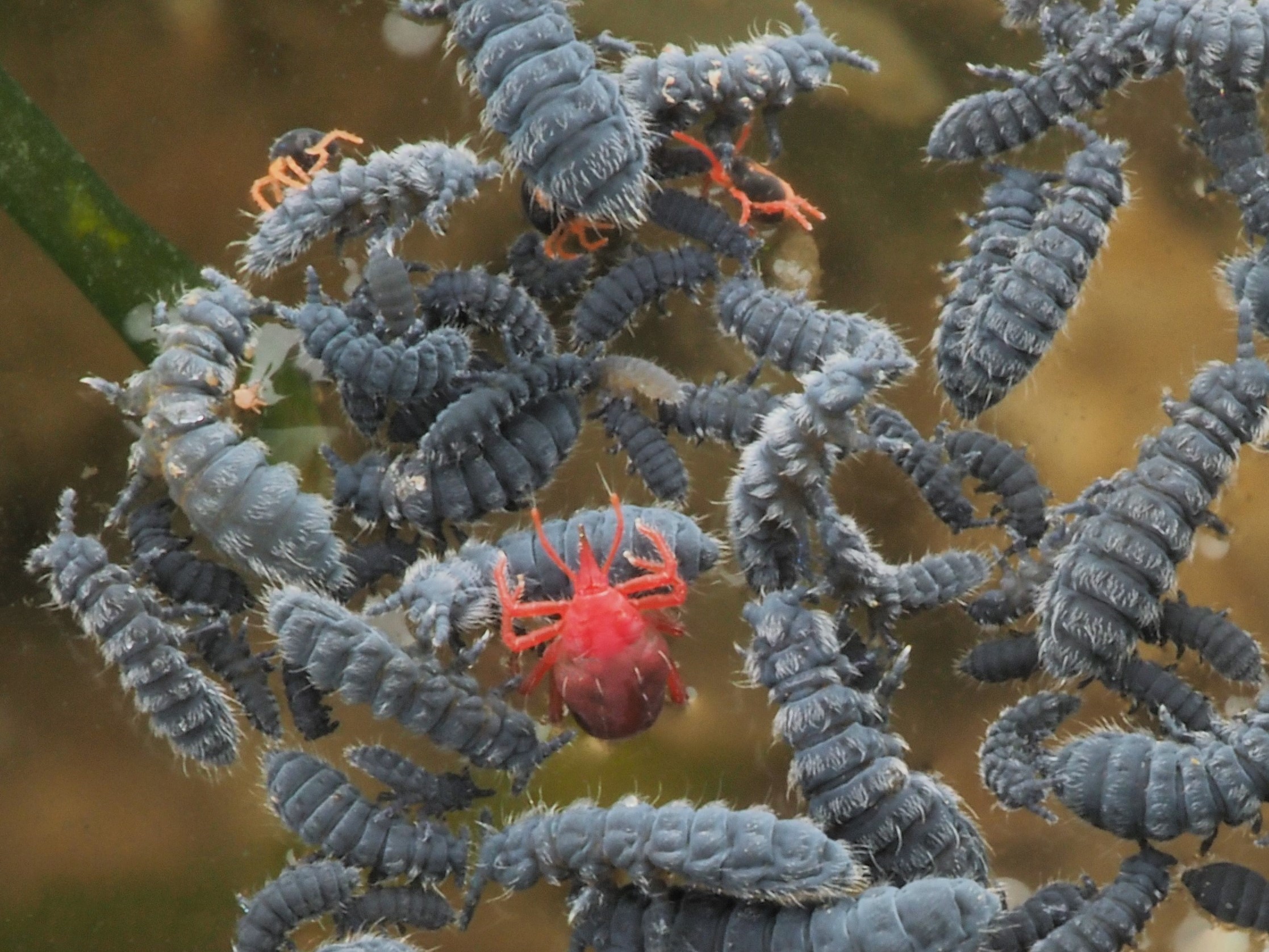
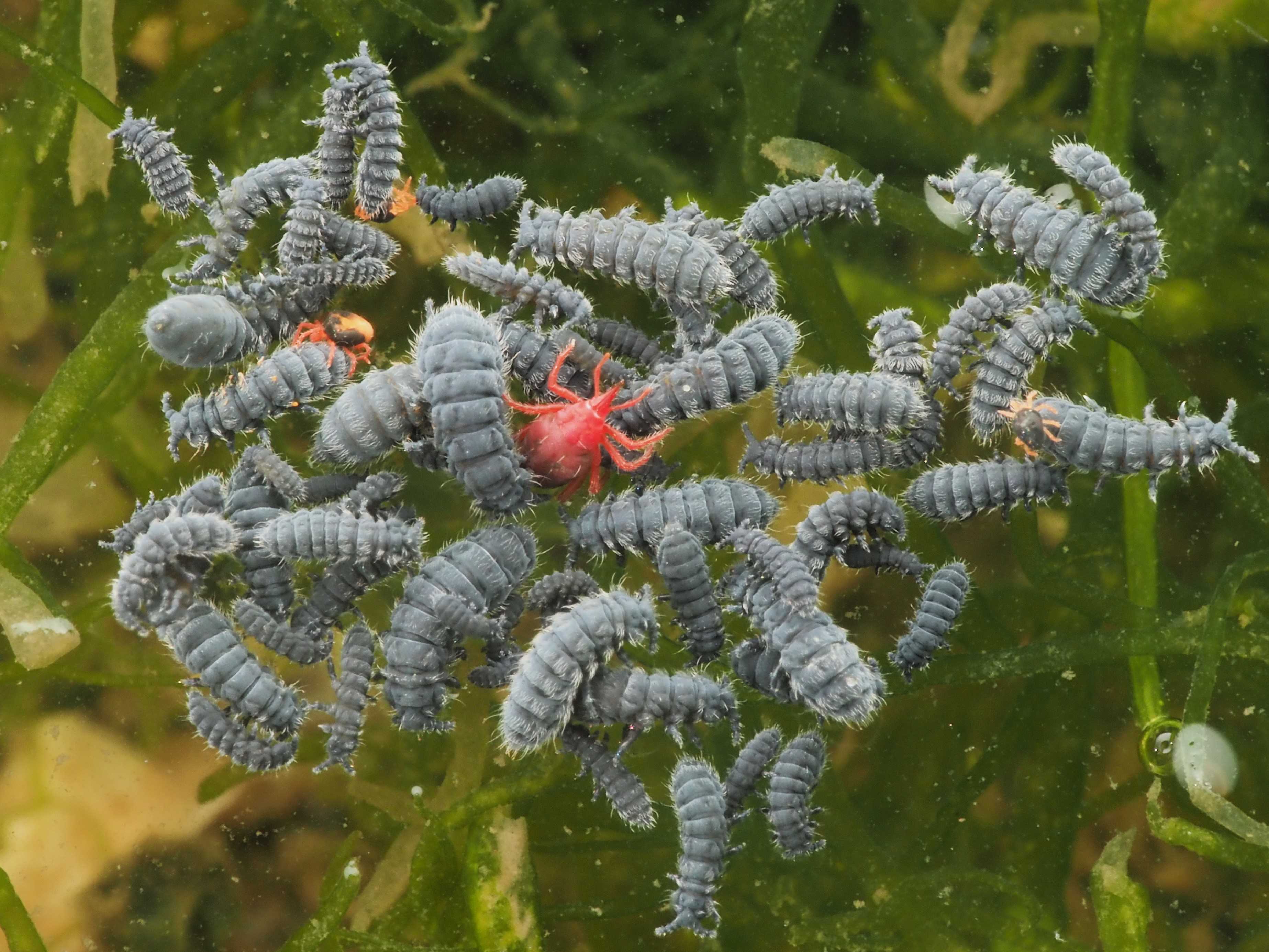
The Emerald Green Paddle Worm (or Green Leaf Worm) Eulalia clavigera ranges from a few to 10 centimetres and is common in rockpools in Britain (although most are probably more familiar with their egg masses, see here). During a recent scramble over the Trefusis Headland I noticed some out of the water on Codium adhaerens seaweed. Using my cygnustech diffuser and a bit of extra magnification courtesy of a Raynox clip-on macrolens I got to work! Taking photos of these worms is difficult as they are continuously on the move. It is also hard to get close to them with the diffuser bumping into the rocks and obscuring the light. However, they are very rewarding subjects; worms are usually overlooked but they are very beautiful! The Codium seaweed proved a perfect background, absorbing all light, a bit like black velvet. When you spend enough time on your knees peering down, you also always notice other things, some tiny springtails Anura maritima as well as some even tinier red mites (see also this old post). One of my new year’s resolutions is to photograph more worms – and the good thing is that there are many other species available, including paddle worm species, one of which is in the process of being described new to science by my friend David Fenwick).
 An Bollenessor