


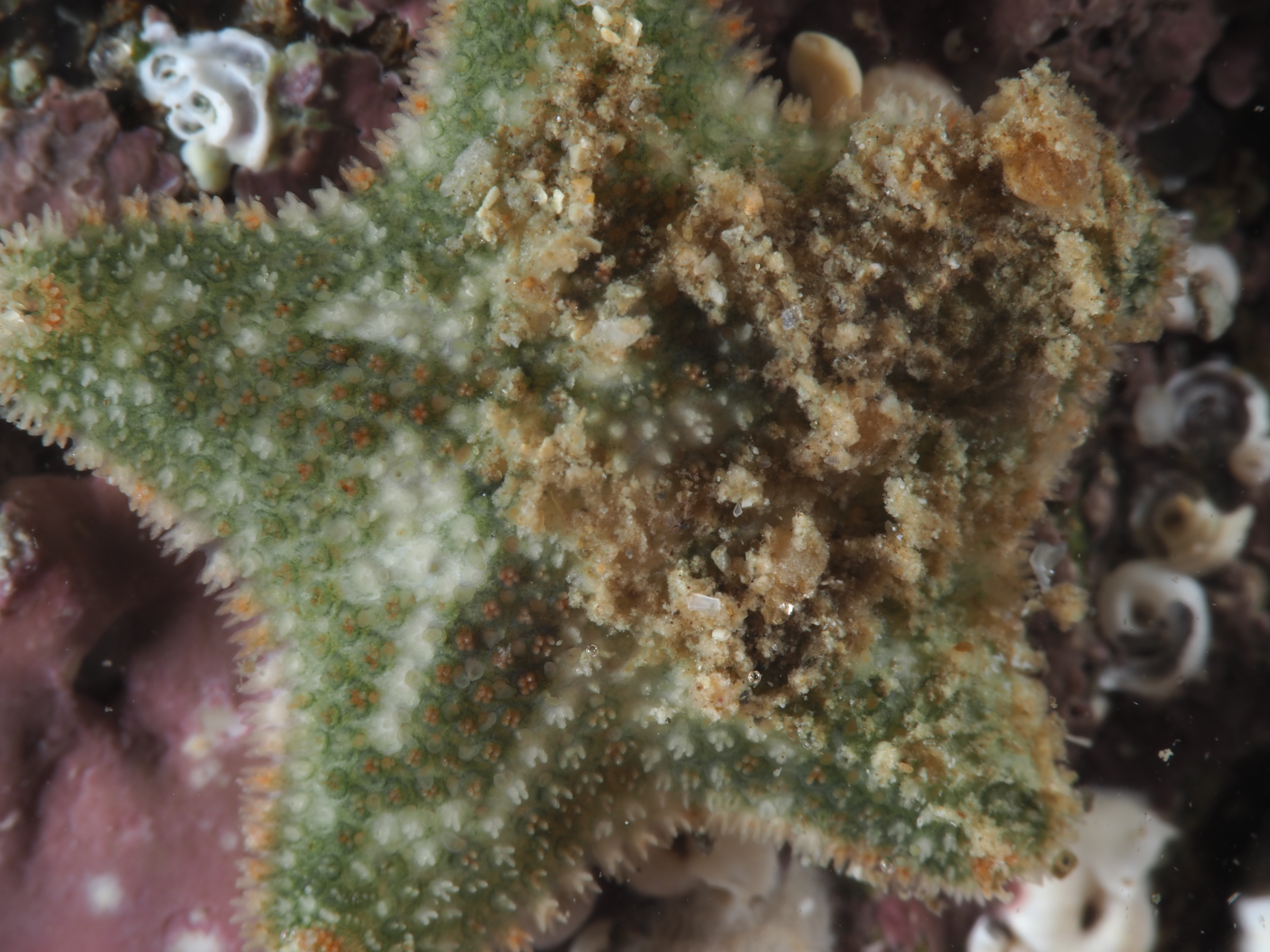
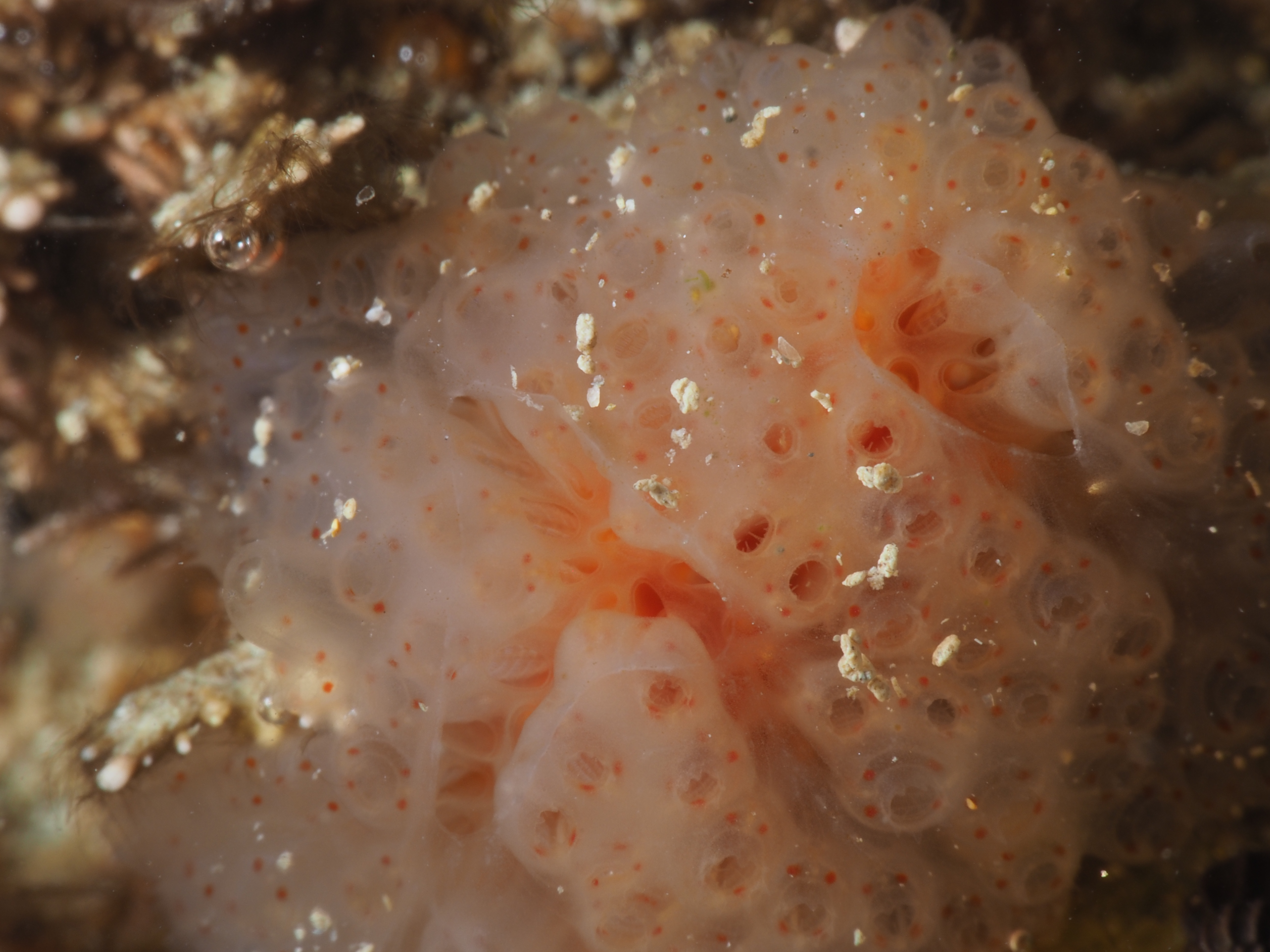
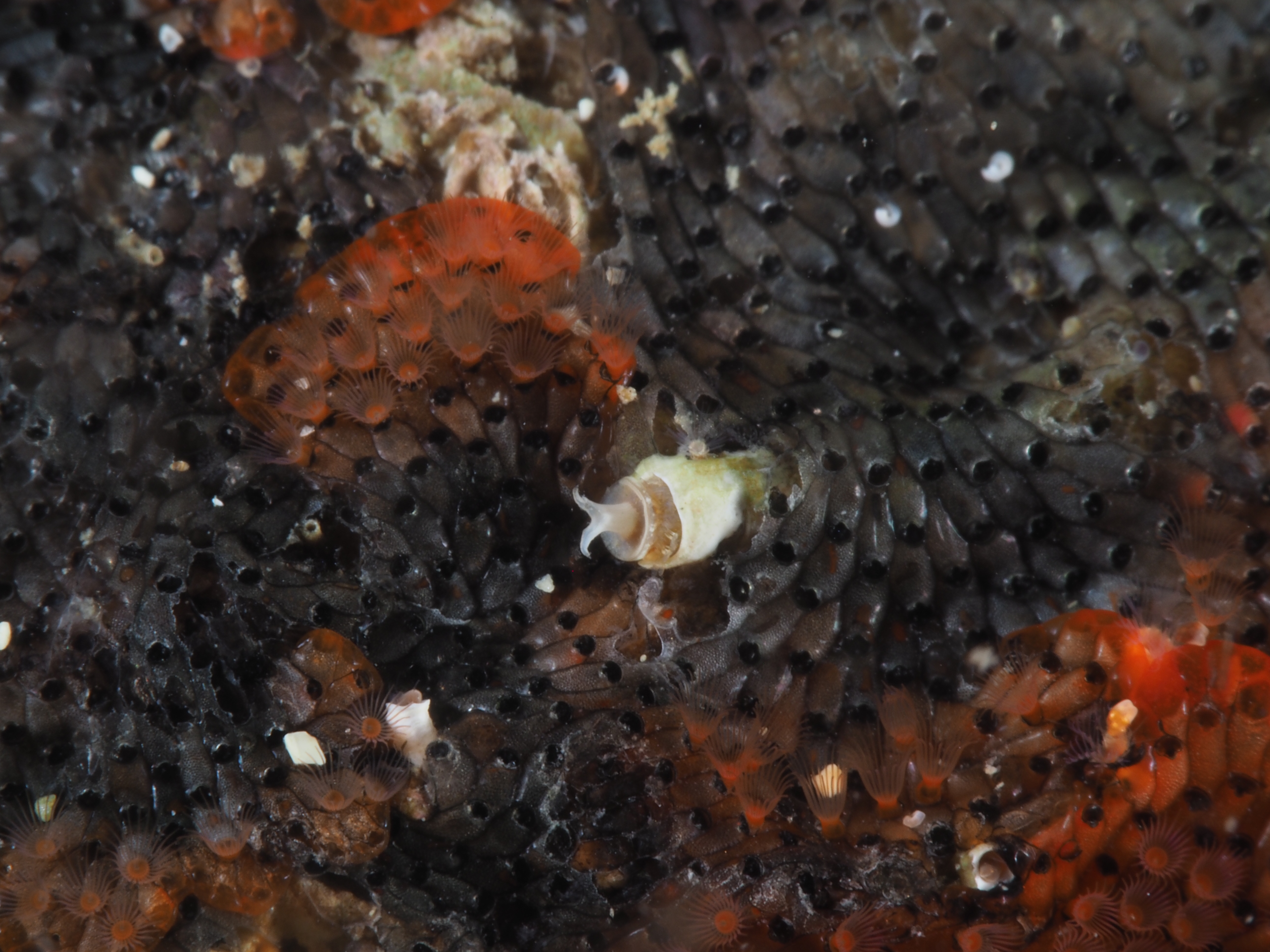

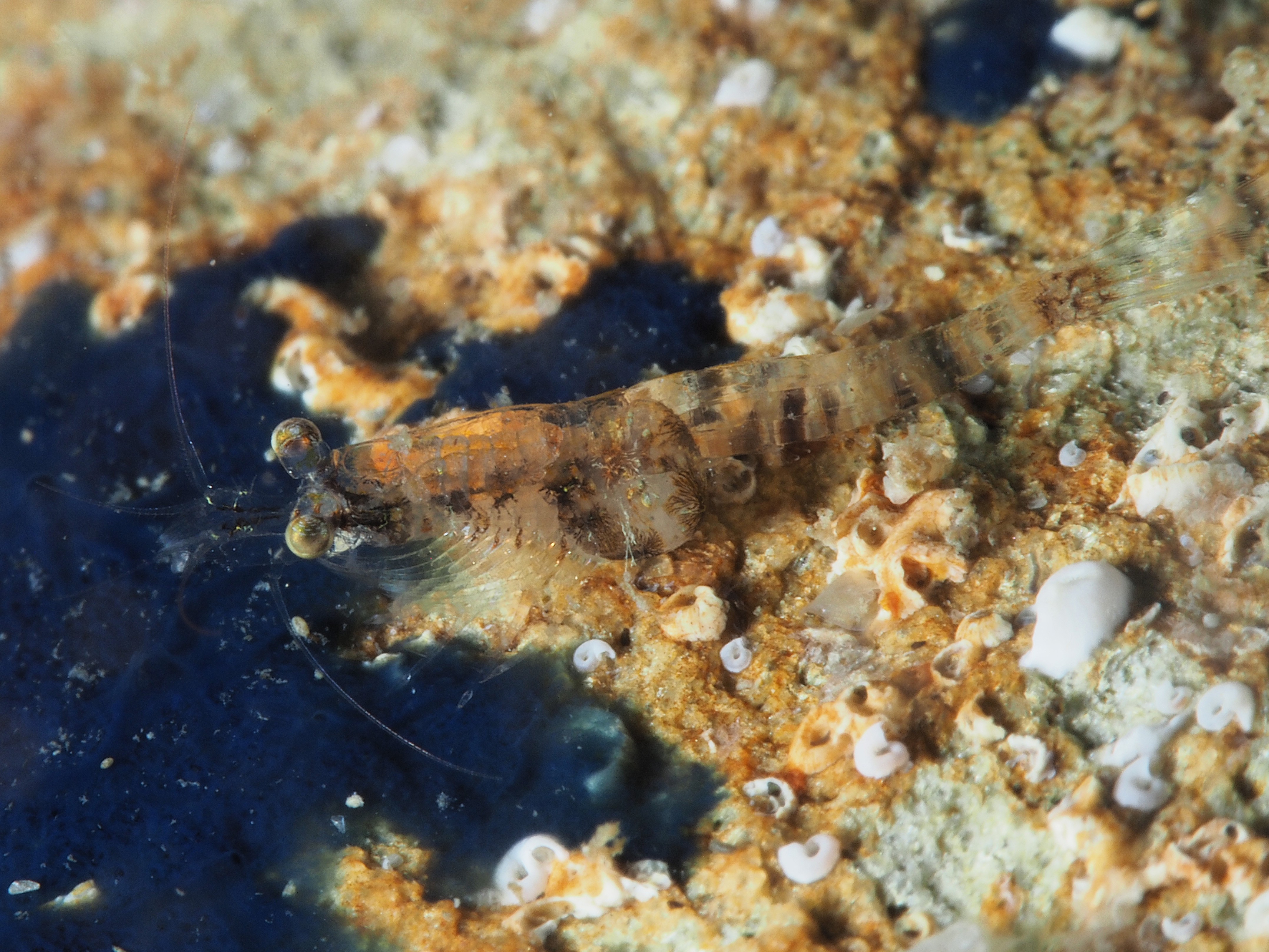
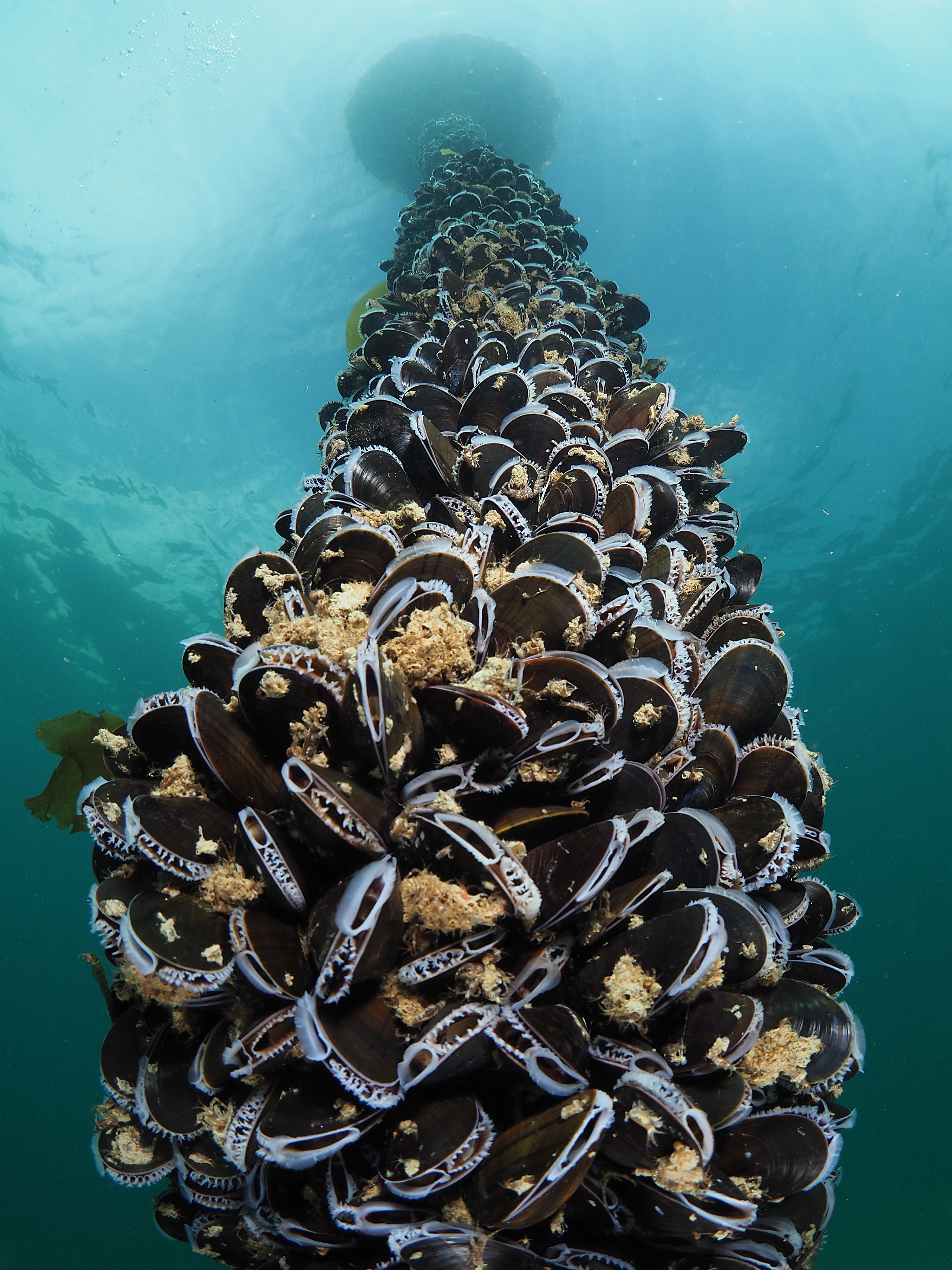
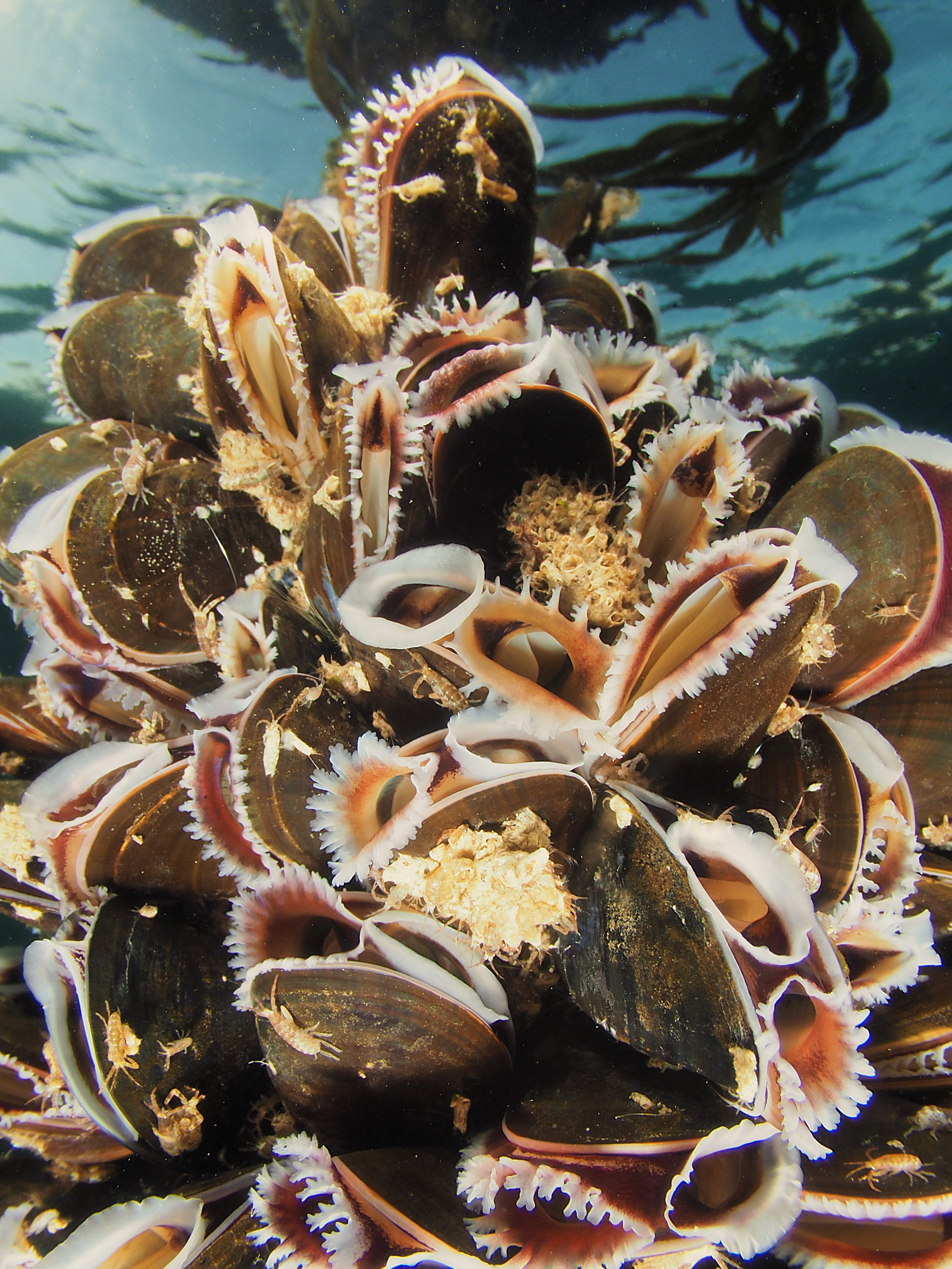
The rain has been hammering down and I am in accute underwater withdrawal… Just a bit of the ole bloggin then! These are some pictures from April, when the phytoplankton had not kicked in and the water was still quite blue. Out of curiousity I swam out to the marker buoys off Castle Beach in Falmouth to see if there was anything interesting growing on them. There was! Lots of mussels, including on the chain going down to the bottom (10ish meters deep). I took my fisheye lens and after much adjusting of strobes (holding the housing sideways for portrait mode, and also up, meaning that the lower strobe needed to be pulled back) I got the nice shot above. Mussels are not a favourite of underwaterphotographers (this is an understatement!) but they are beautiful upclose, the white mantle contrasting with the blueish black shell.
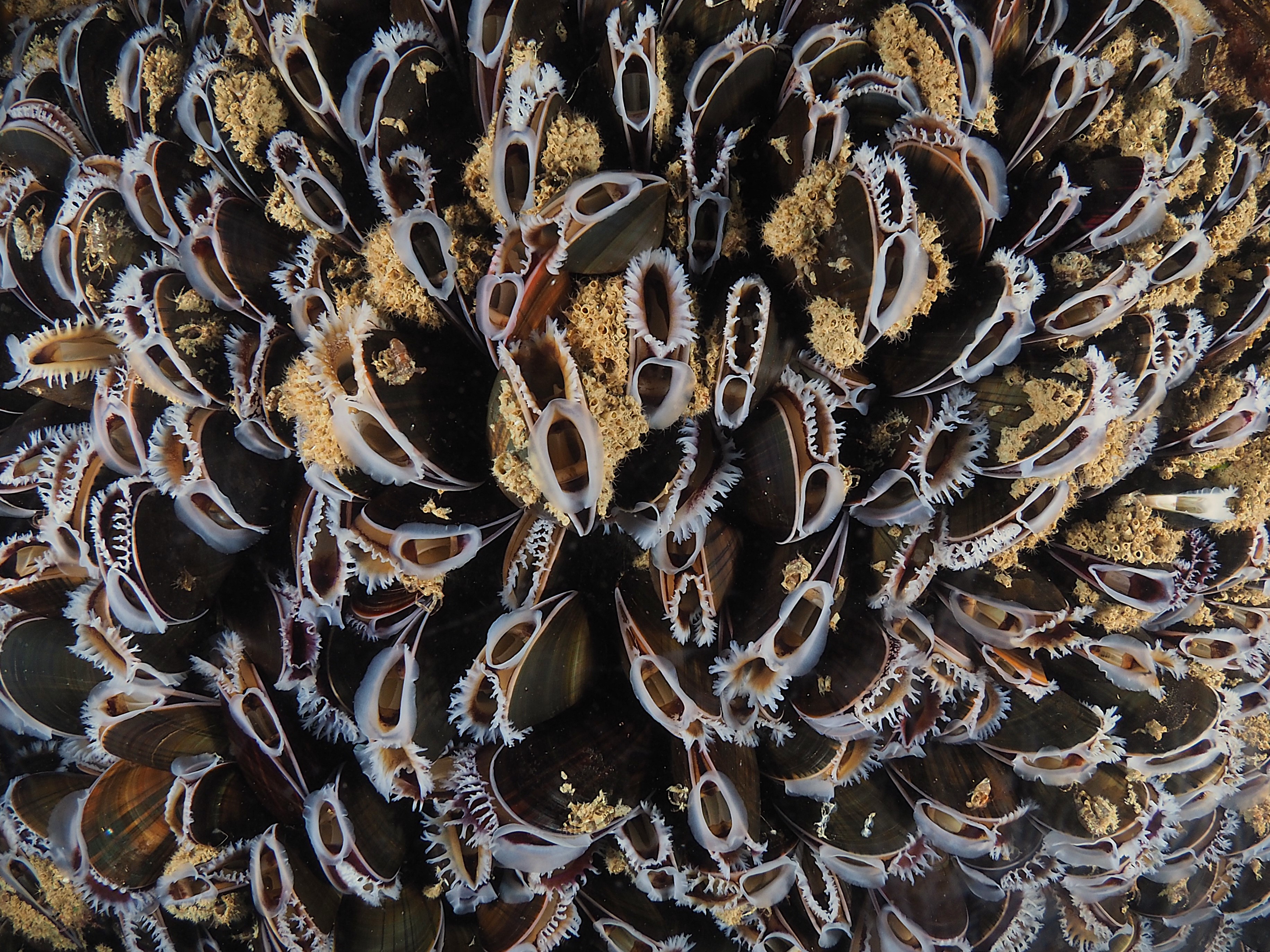
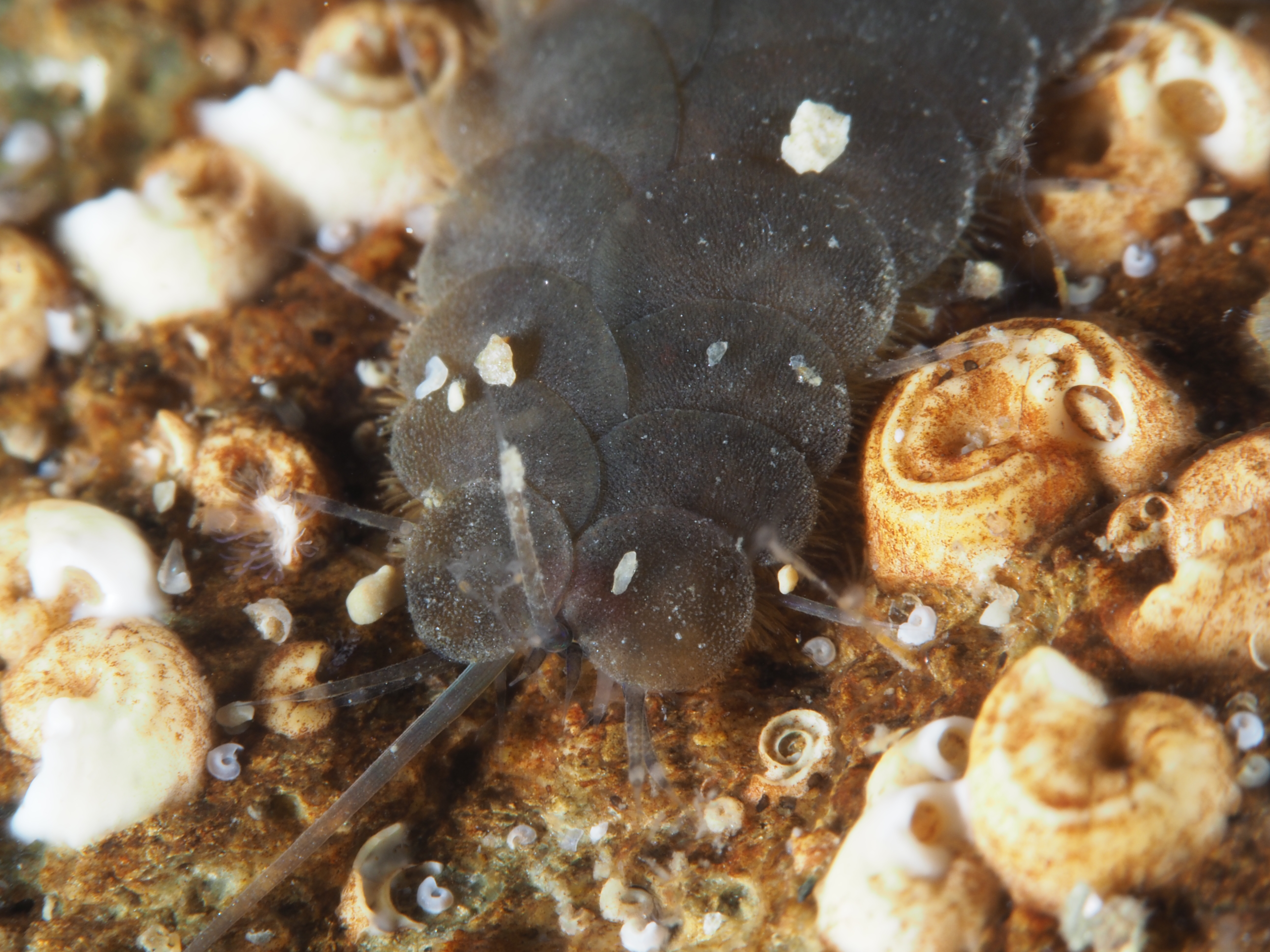
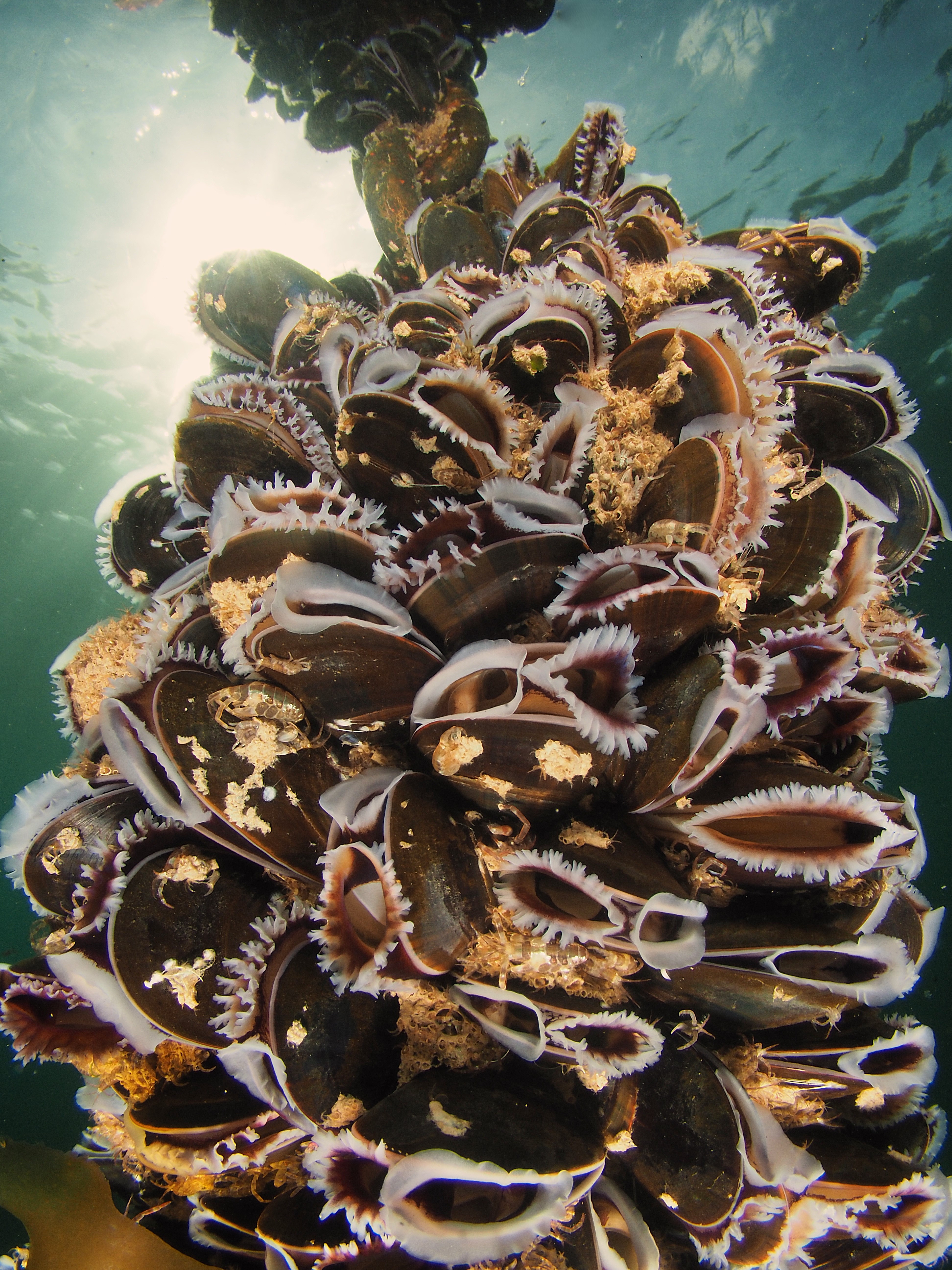
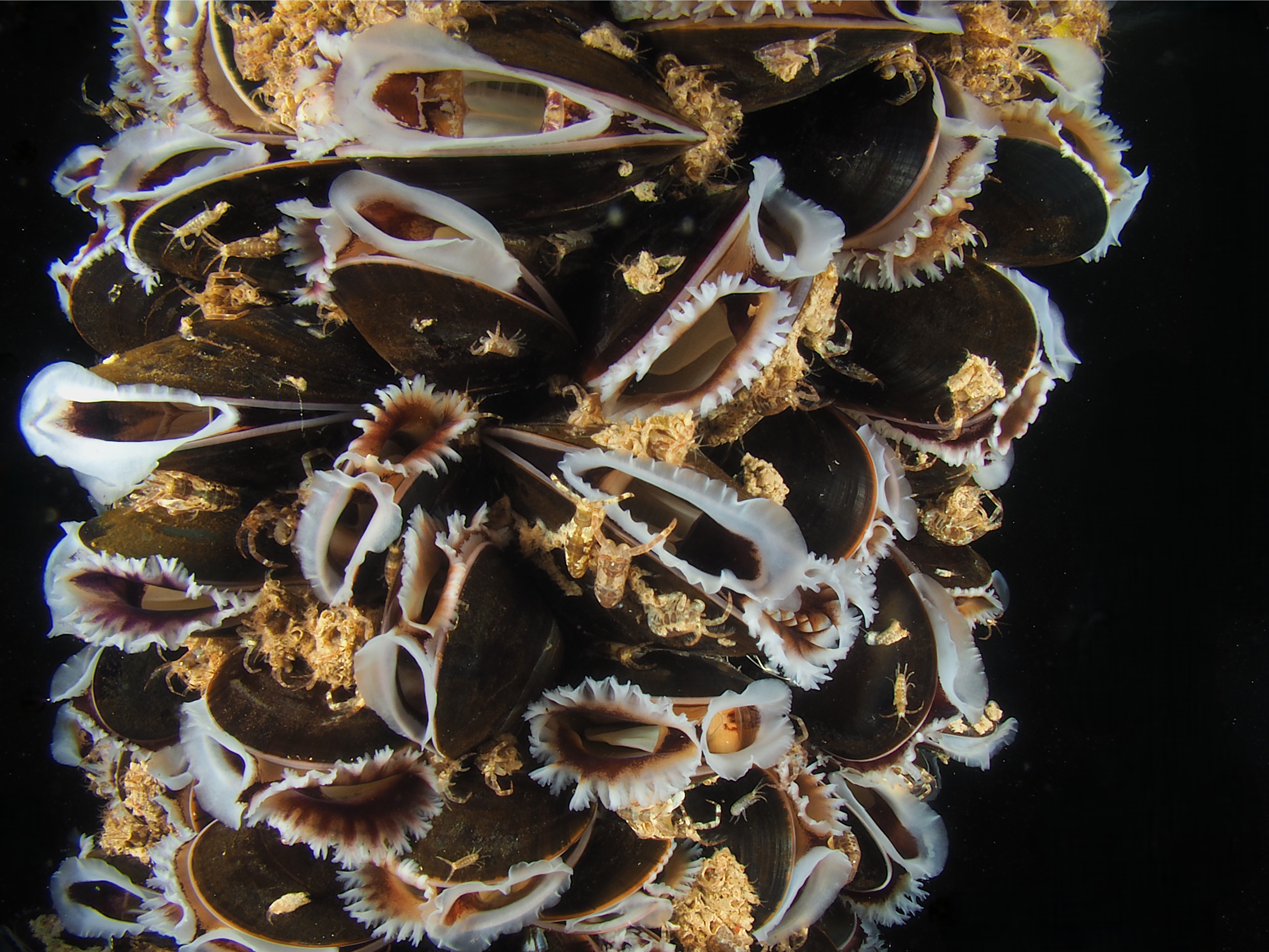
A few days later I returned with my probe lens, as i thought this would offer an original perspective. It was a tricky thing to do as this lens lets in very little light. The difference between foreground and background seems slightly off as well! These photos show that the mussels were crawling with the tubedwelling amphipod Jassa marmorata, a prominent fouling species. I planned to return to try again a few days later, but the chains had been replaced by ‘fresh’ ones, bad luck! I will go back to have a look at them as soon as the weather allows it.
P.S. there are two older posts tagged with ‘buoys‘.
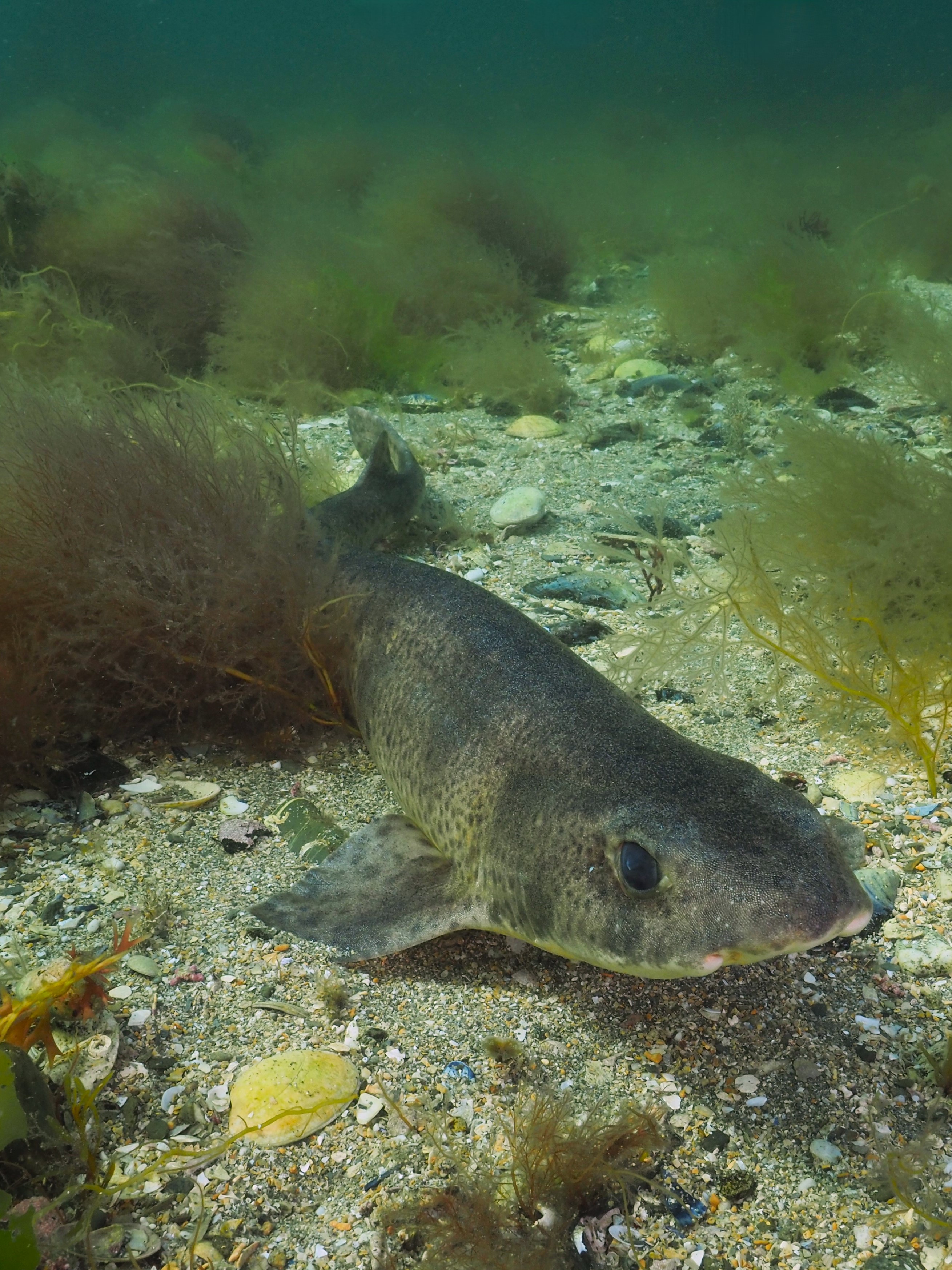
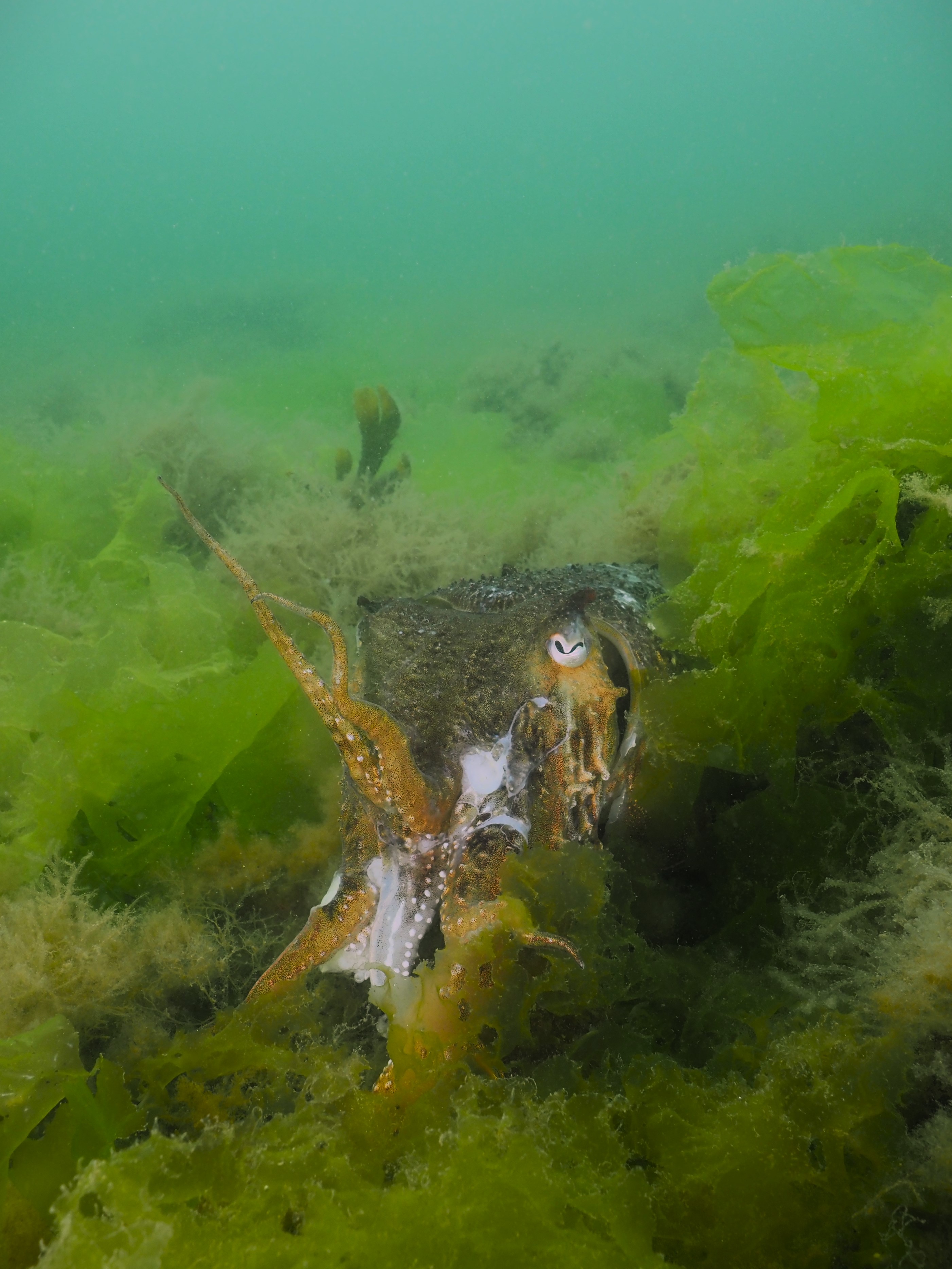
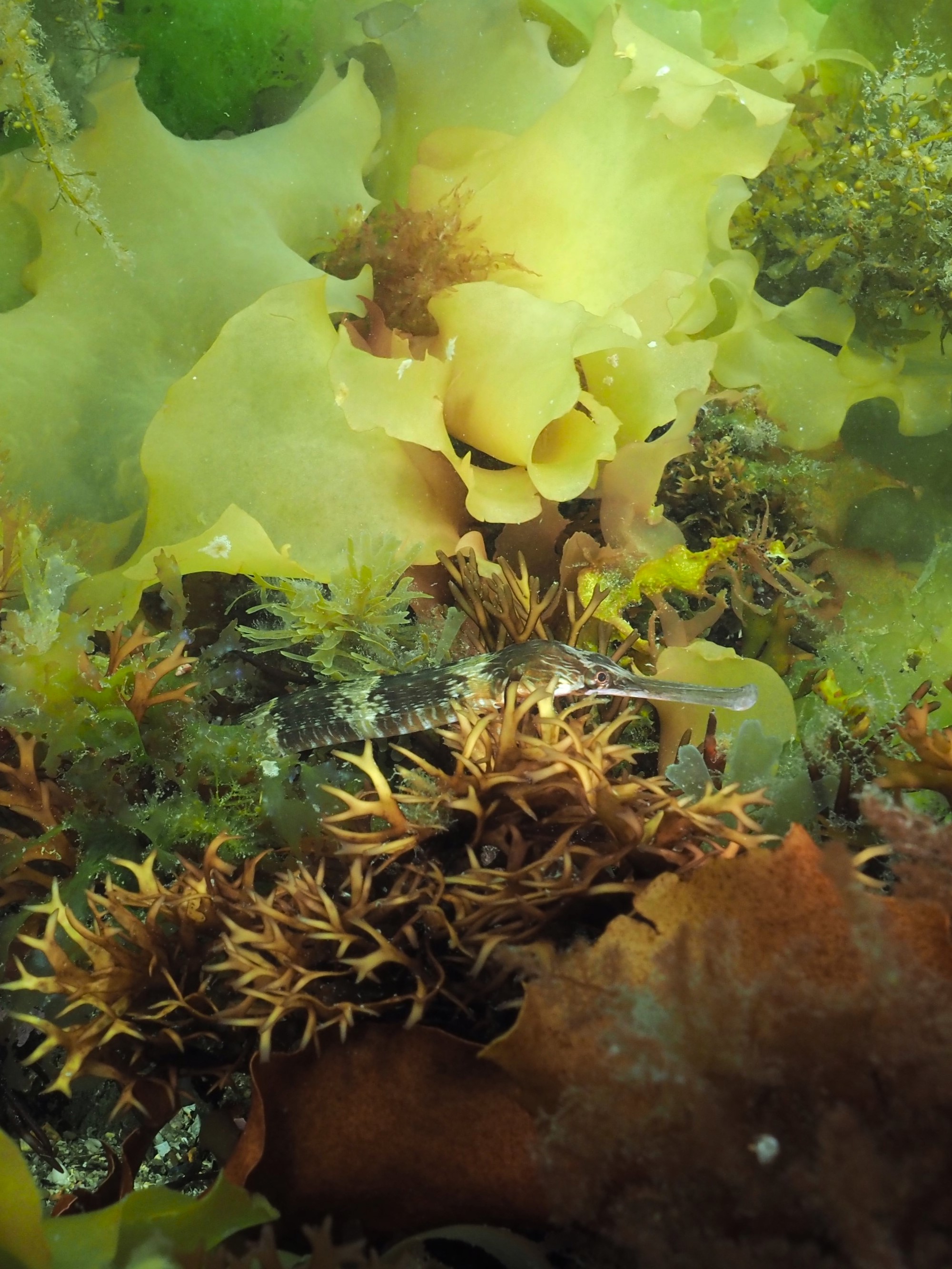
Above some pics of a recent, impromptu snorkel in the Helford; a catshark, a cuttlefish and a greater pipefish which I could snap with the fisheye lens while battling a raging tidal current. I have dived a lot recently, did my PADI advanced open water (to make it easier to participate in some deeper diving in the future ), finally dived Porthkerris, bought a fancy new wetlens and stepped up my iNaturalist game. I took some good photos as well, but for many of these I reckon I could replace them with an even better version. For this reason, and also because there will be plenty of rainy days at the end of the year to blog instead of dive, I will probably remain a bit quiet here for now, add to the collection of photos, and update the blog a lot more later! (P.S. I do post from time to time on instagram: @an_bollenessor.)

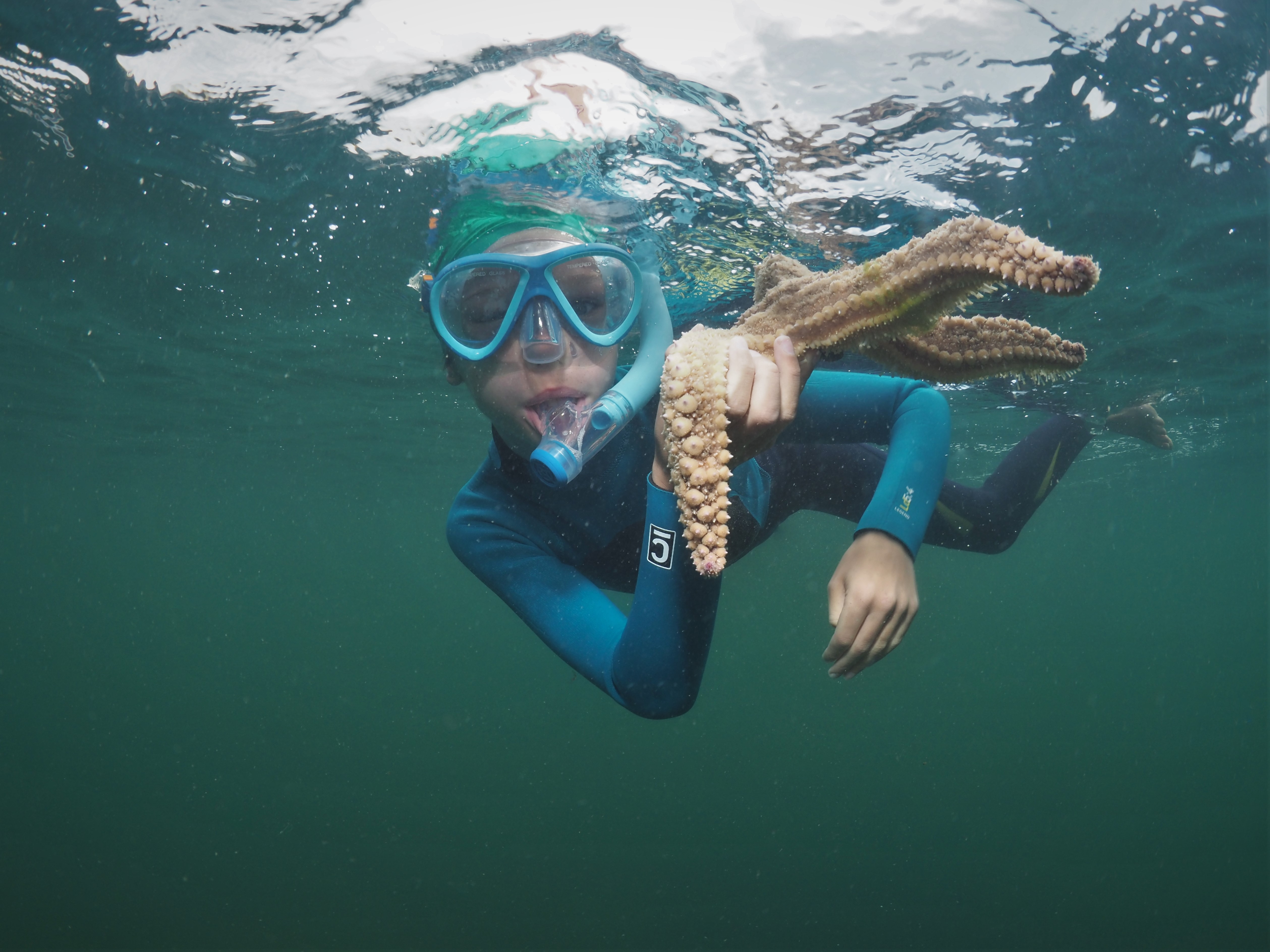
The sun is shining (most days) and the water has warmed up, so ideal conditions for a bit of snorkeling. I have been out at my usual spot in Falmouth (rockpools and kelp forest) and my local beach in Flushing (seagrass) (and yes, I really count myself lucky every time that l live here!). The last couple of times I have brought my son along, as he is now old enough (nine). He is a nature freak just like his dad, actually probably more so! I need to get him fins and a weight belt soon, but he has been doing fine in the water already.
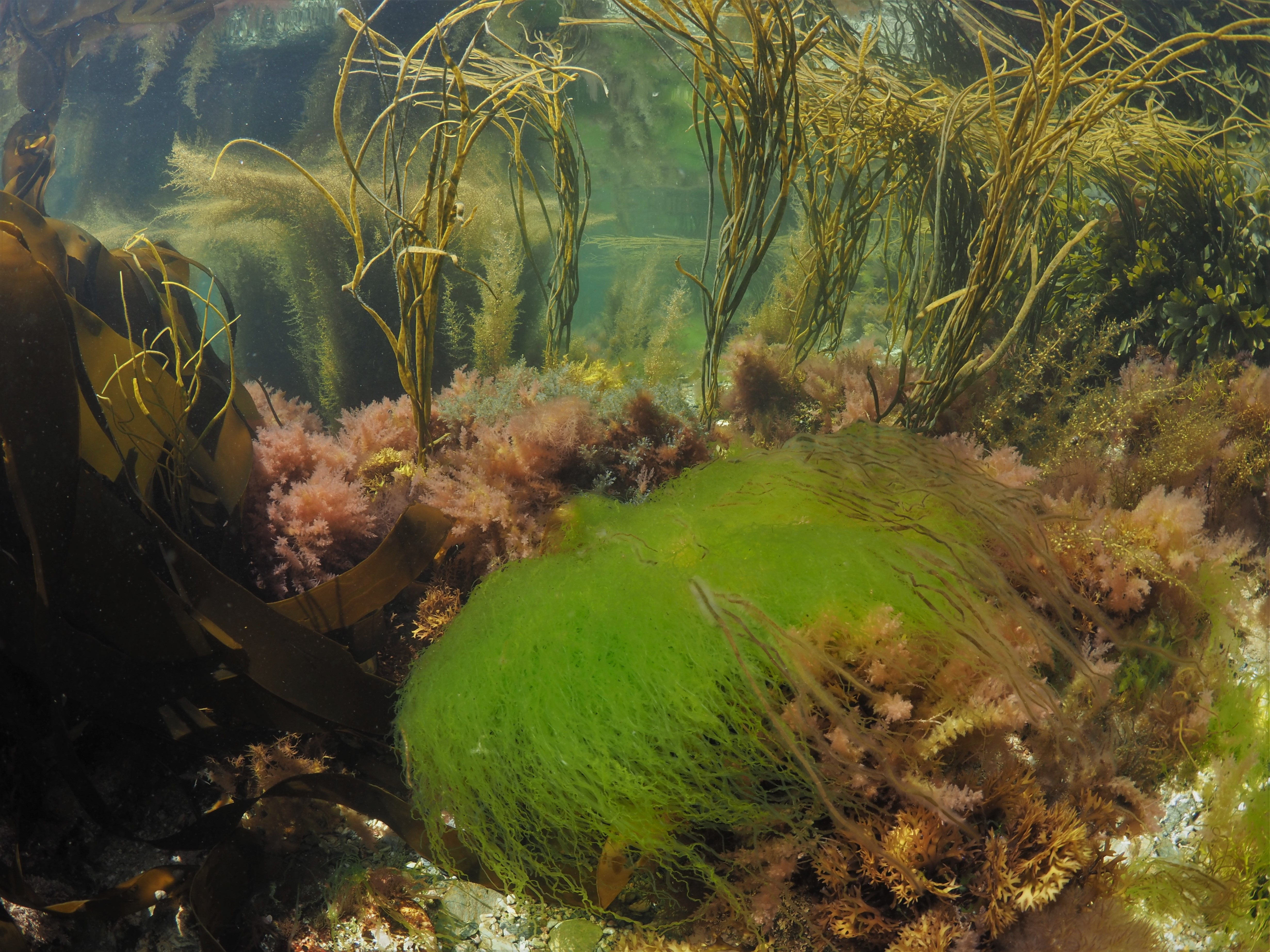
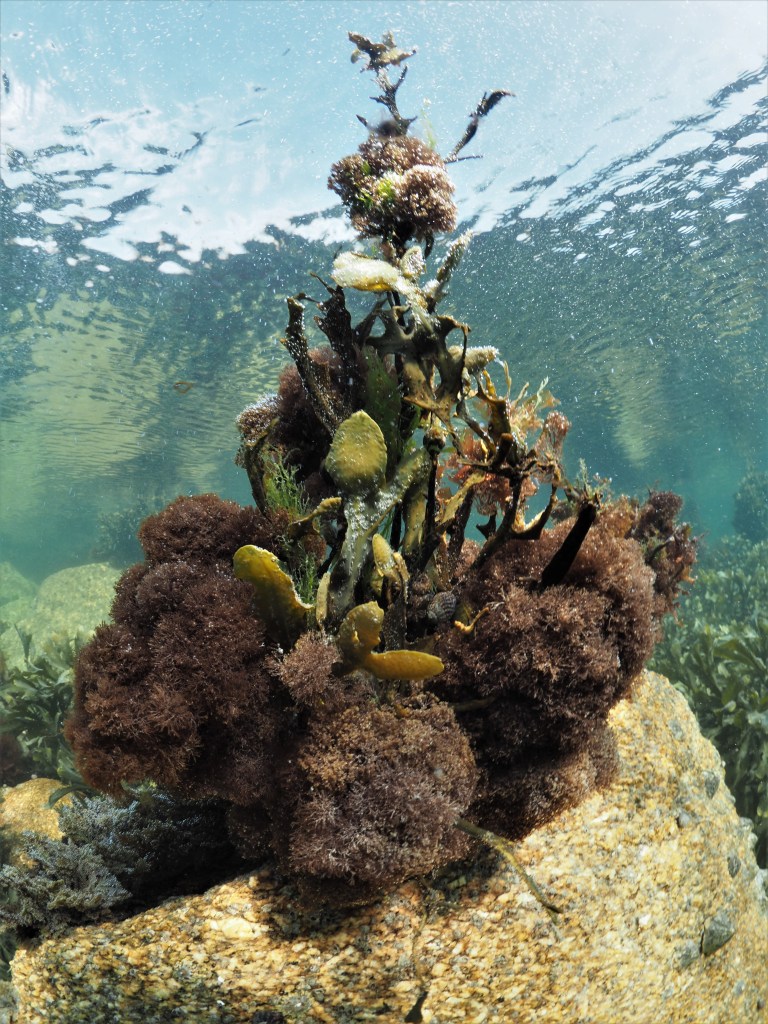
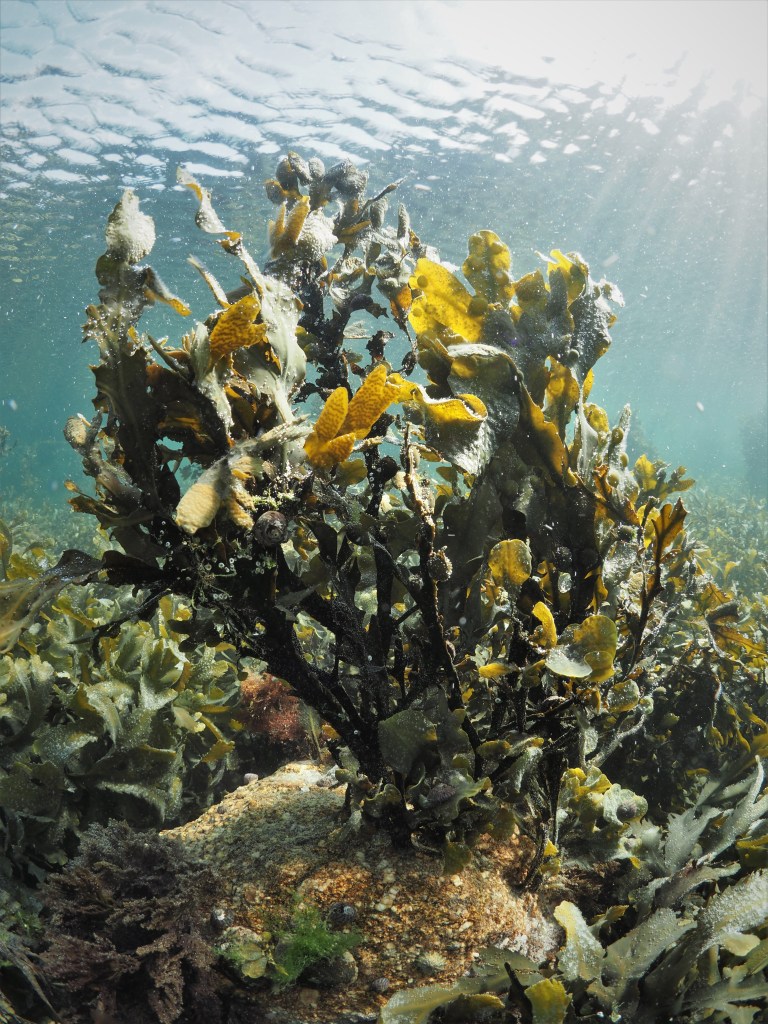
The photos above and below illustrate the state of the rock pools at the moment: quite brownish with the Sargassum and Himanthalia growing everywhere. The red, pink and purple species have largely disappeared (apart from Harpoon weed) and there is quite a bit of green Ulva growing. The water teems with juvenile pollack in the rock pools and schools of sand eels a bit further out. Diving over sandy patches, you can see the latter species shooting out of the sand en masse. It is crazy how such a silvery pelagic fish can also burrow in the sand. I guess it does take its toll, as there are quite some dead ones to be seen too.
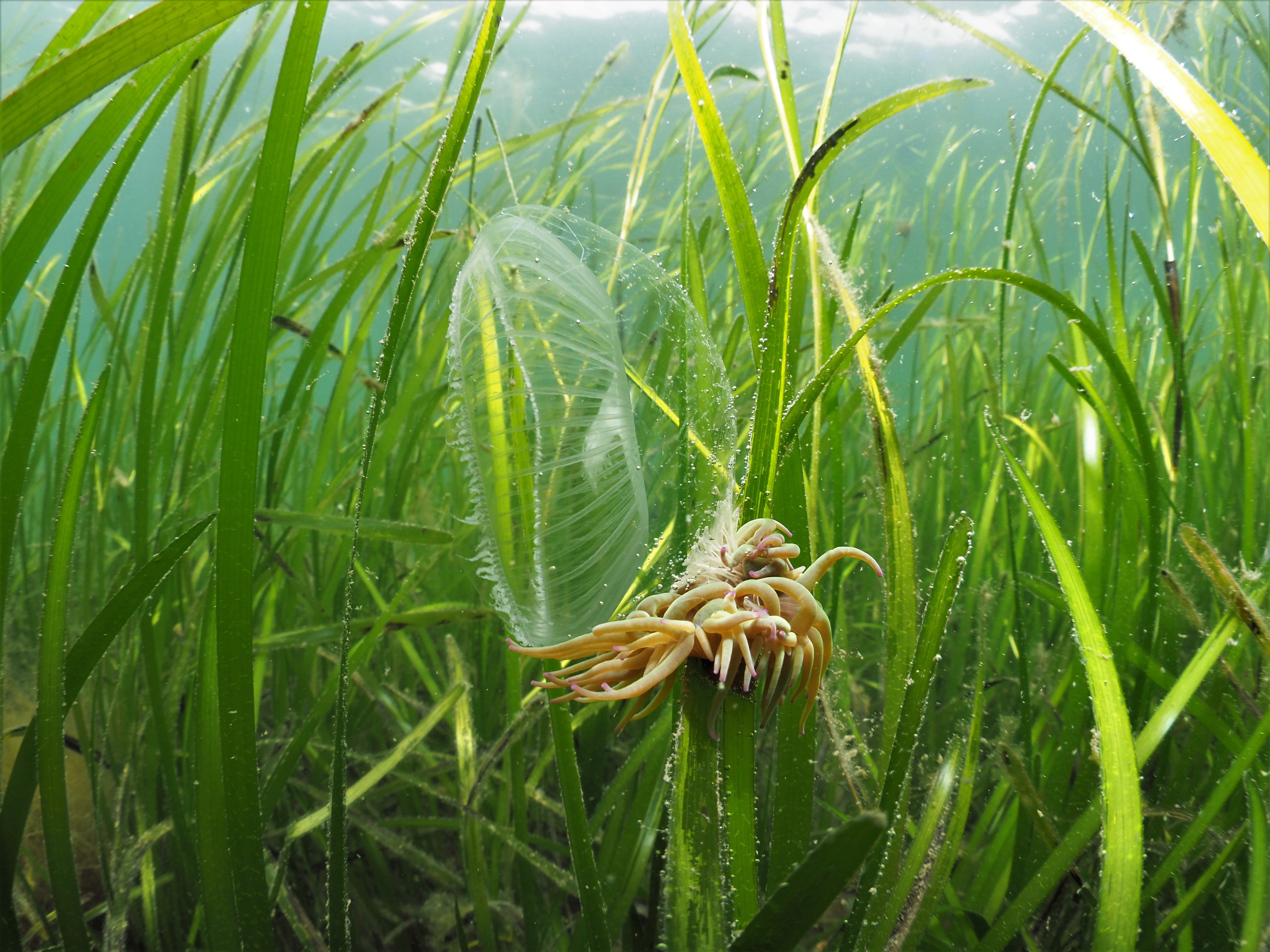
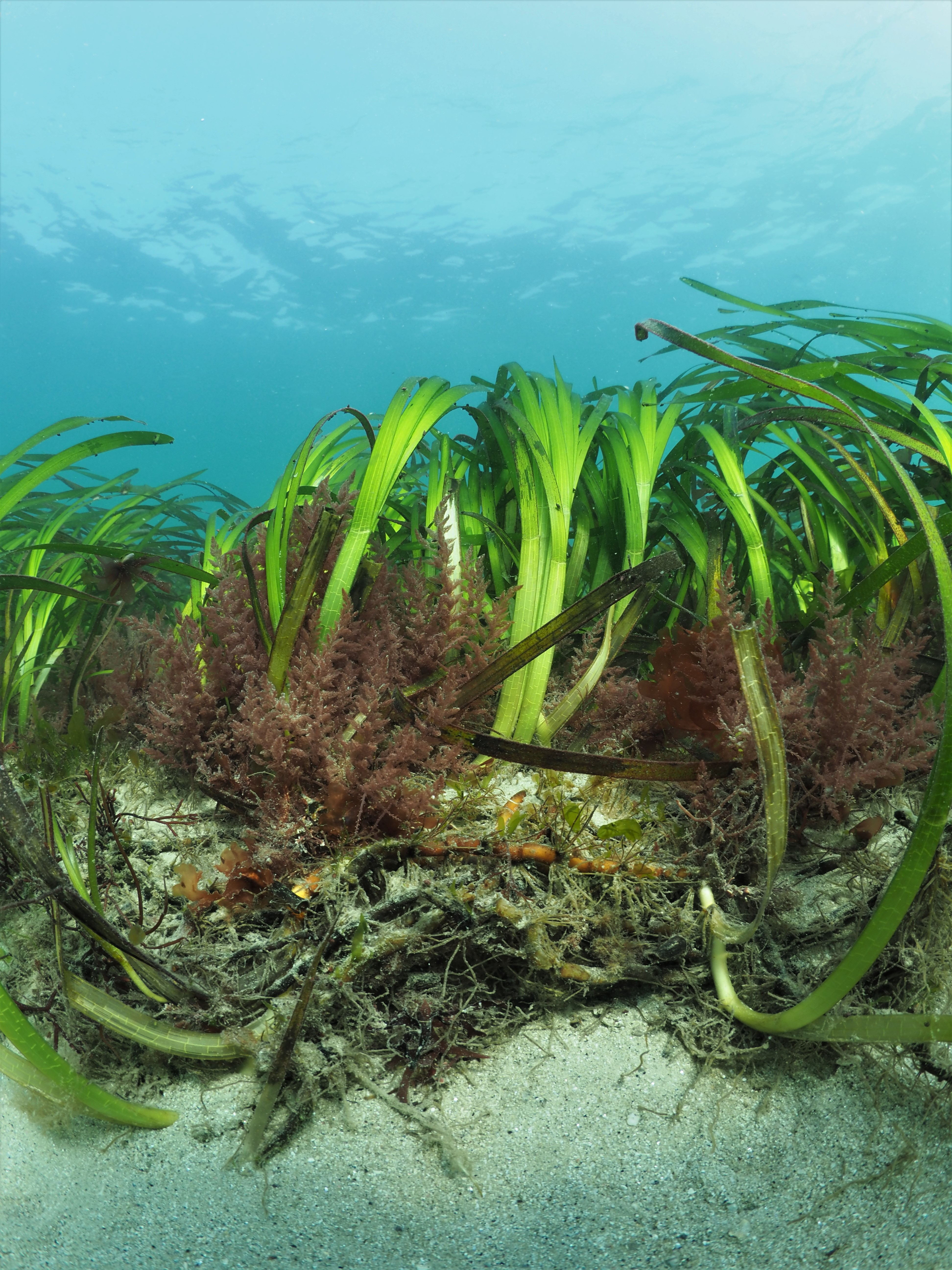
The Flushing snorkel site is very different, no (deep) rockpools, only a little bit of kelp but with a very healthy patch of seagrass. No catsharks or thornback rays when we went in, just the odd small sea bass. There are many small Snakelocks anemones on the seagrass. I used to think that it was mostly the purple form that did this but I now noticed that most were the green variety, so the morphs do not seem to differ in this respect after all. One anemone had ‘caught’ a crystal jellyfish (an Aequorea medusa). Not sure if it was in the process of being digested or just ‘stuck’.
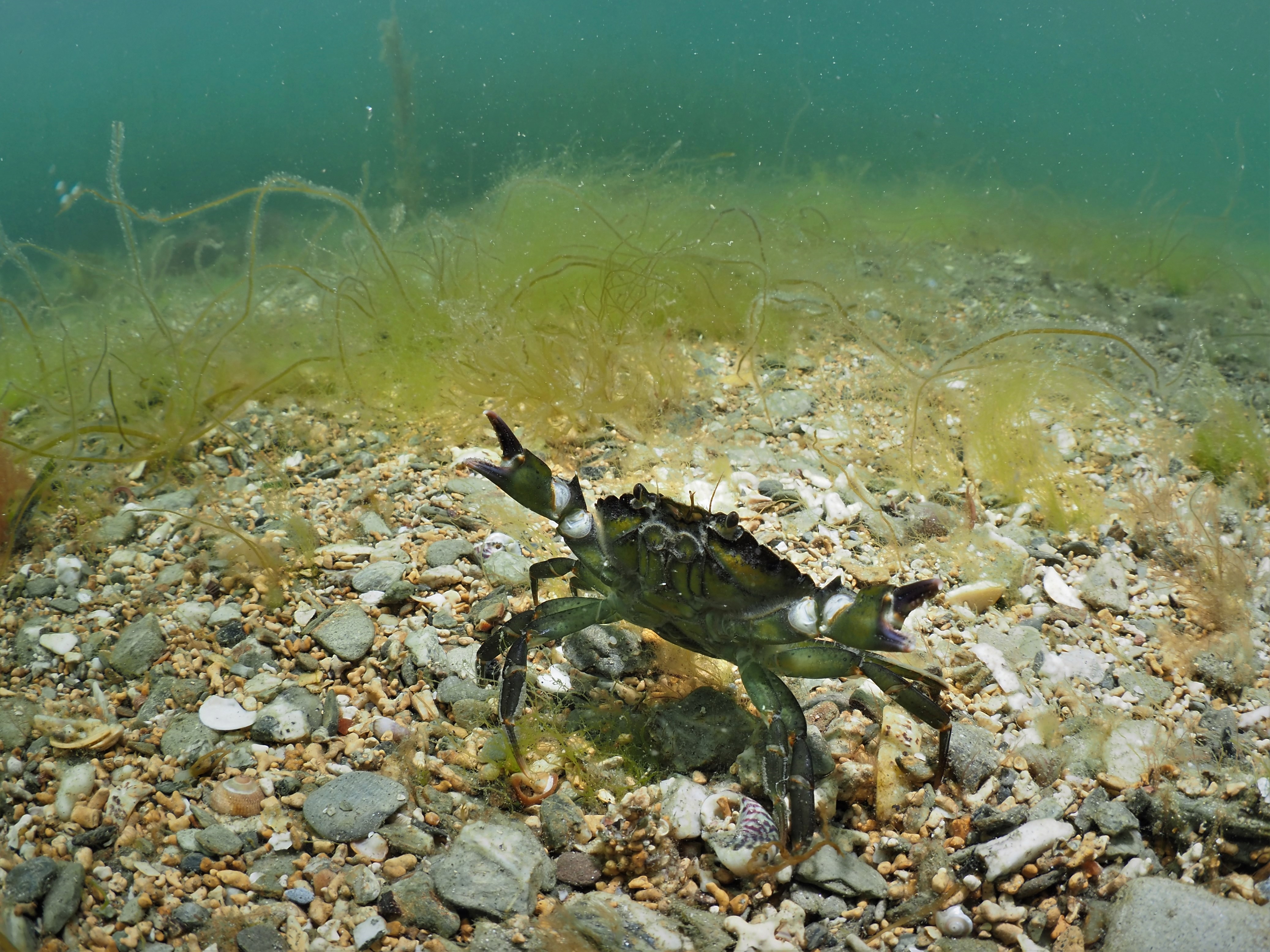
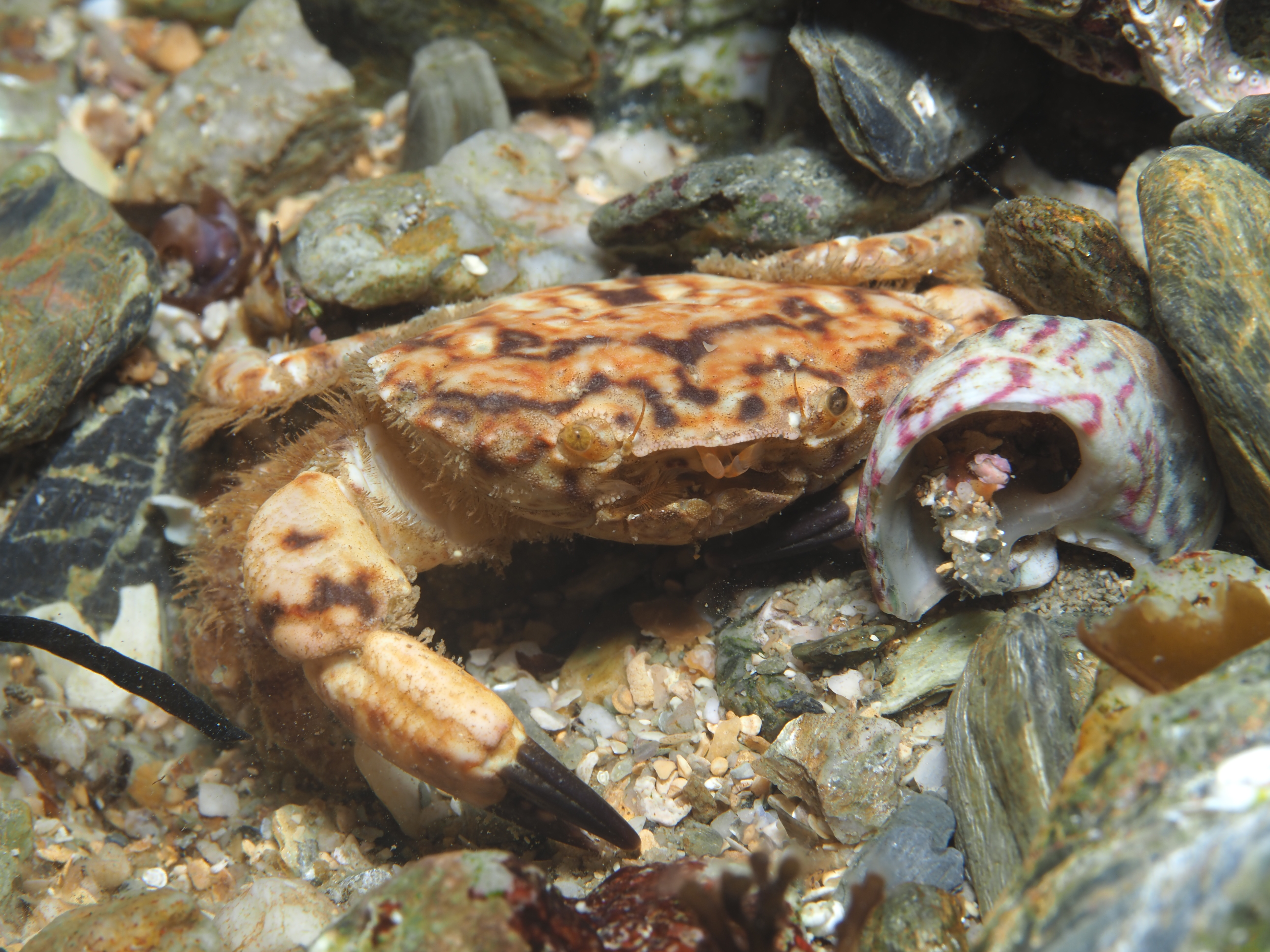
I have played around with my new INON strobe, which works a lot better than my old strobe. I have ordered a second one for Wide Angle photos too….(as you can see there is quite some backscatter in the pic of the Shore Crab above). I will need to get back to some shore diving to make optimal use of two strobes, as I am too lousy a freediver to get the lighting and exposure right in one breath!

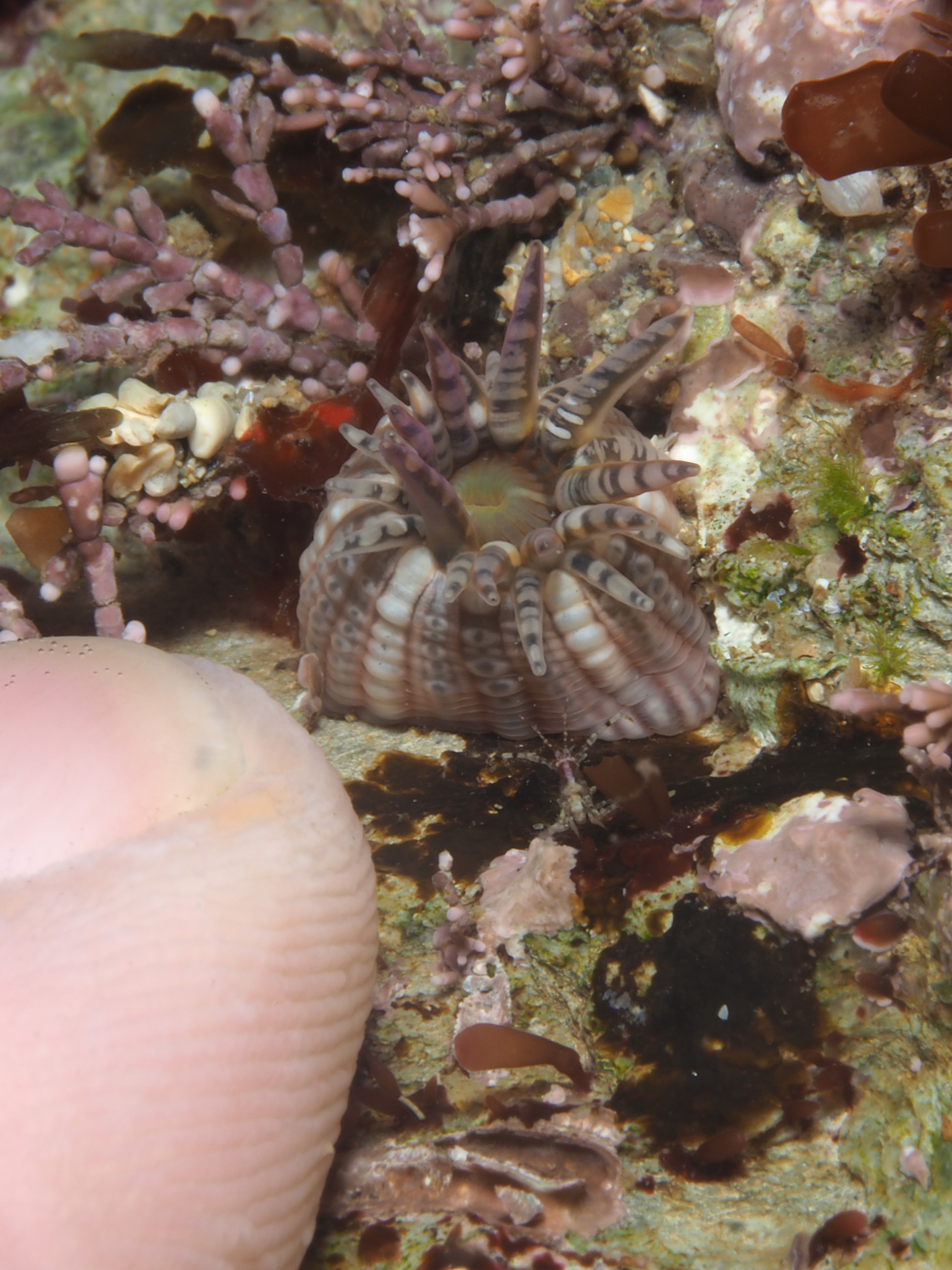
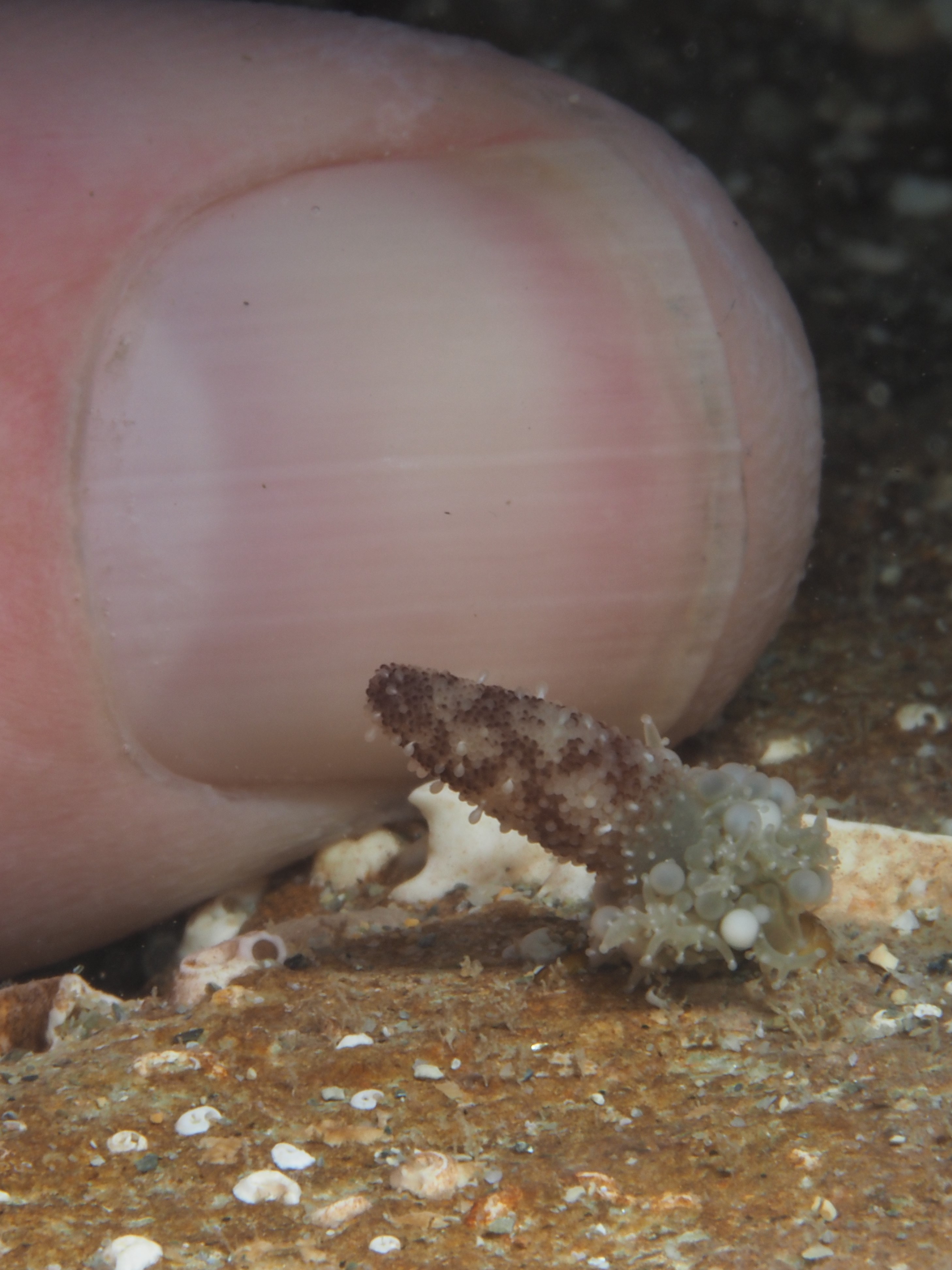
It was a nice day and a good low tide last Wednesday and so I decided to go for a snorkel; I was glad I did! Last year, I had been trying to take photos of this weird little animal, Candelabrum cocksii, but failed miserably, this time it worked. It is a hydrozoan that was first described in Victorian times on the exact beach I always go snorkelling here in Falmouth. It is tiny (see last pic) and lives underneath rocks, so it goes mostly unnoticed (and therefore does not have a common name). To take this photo, I had to do some ‘underwater rockpooling’, turning over a rock to find them. I am not sure what the deal is with these guys; I know the white bulbous structures at the bottom are reproductive structures, and the reddish bit at the top is for feeding (this bit can be stretched out quite a lot). It is colonial just like the Portuguese Man O’War. Please correct me if I am wrong hydrozoan experts! Shout out to David Fenwick and his ID site aphotomarine.com, which I highly recommend.
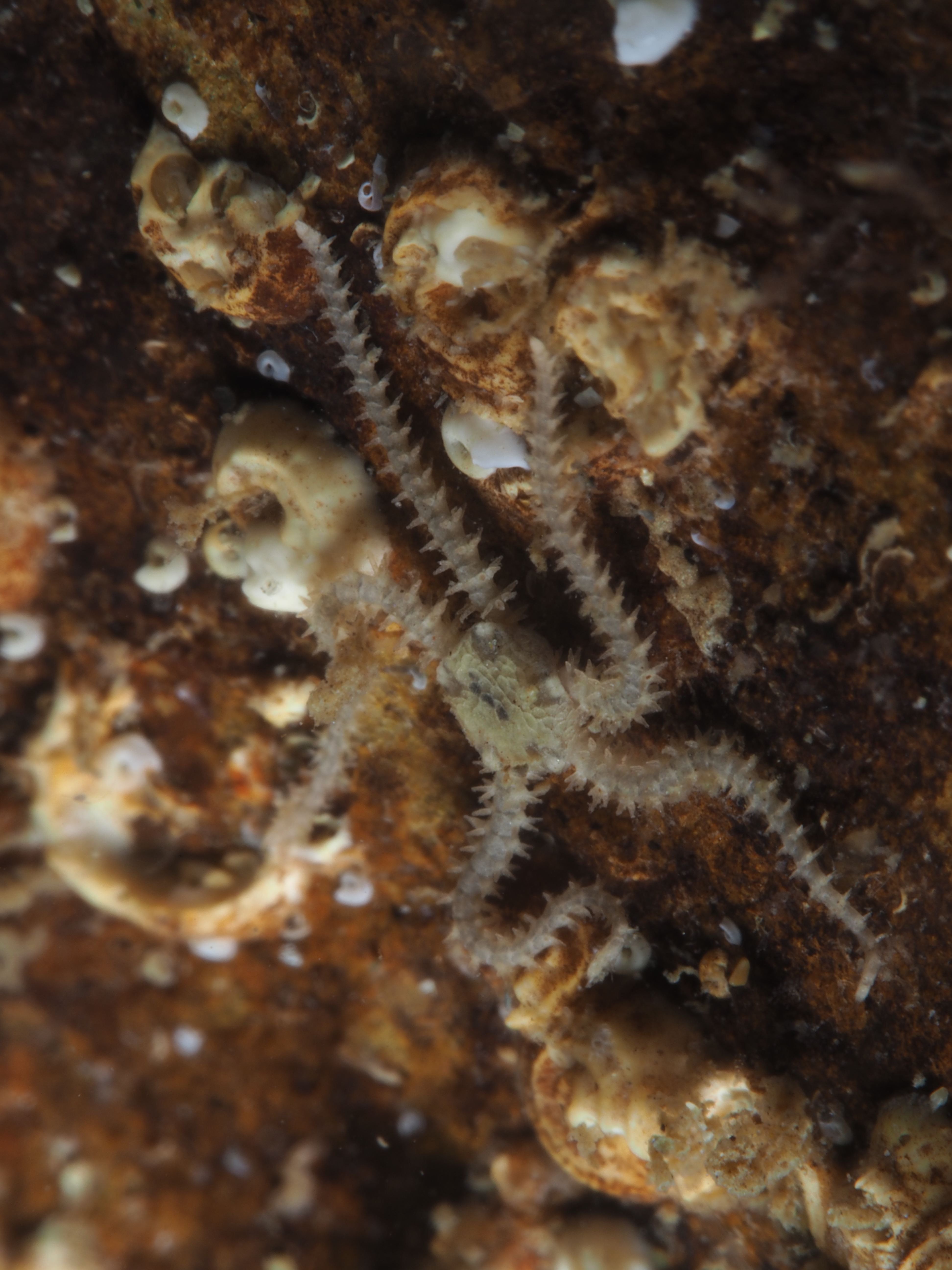
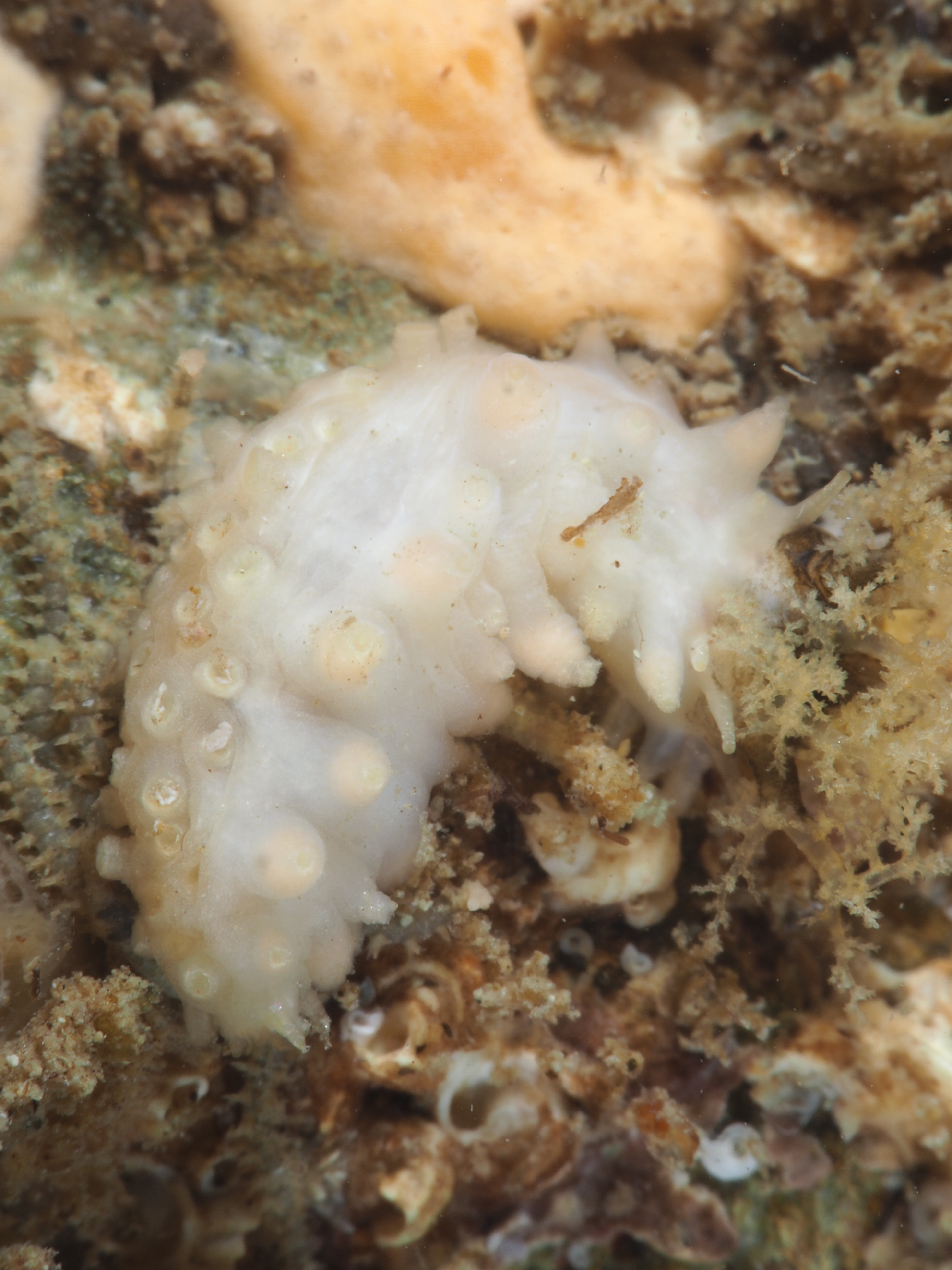
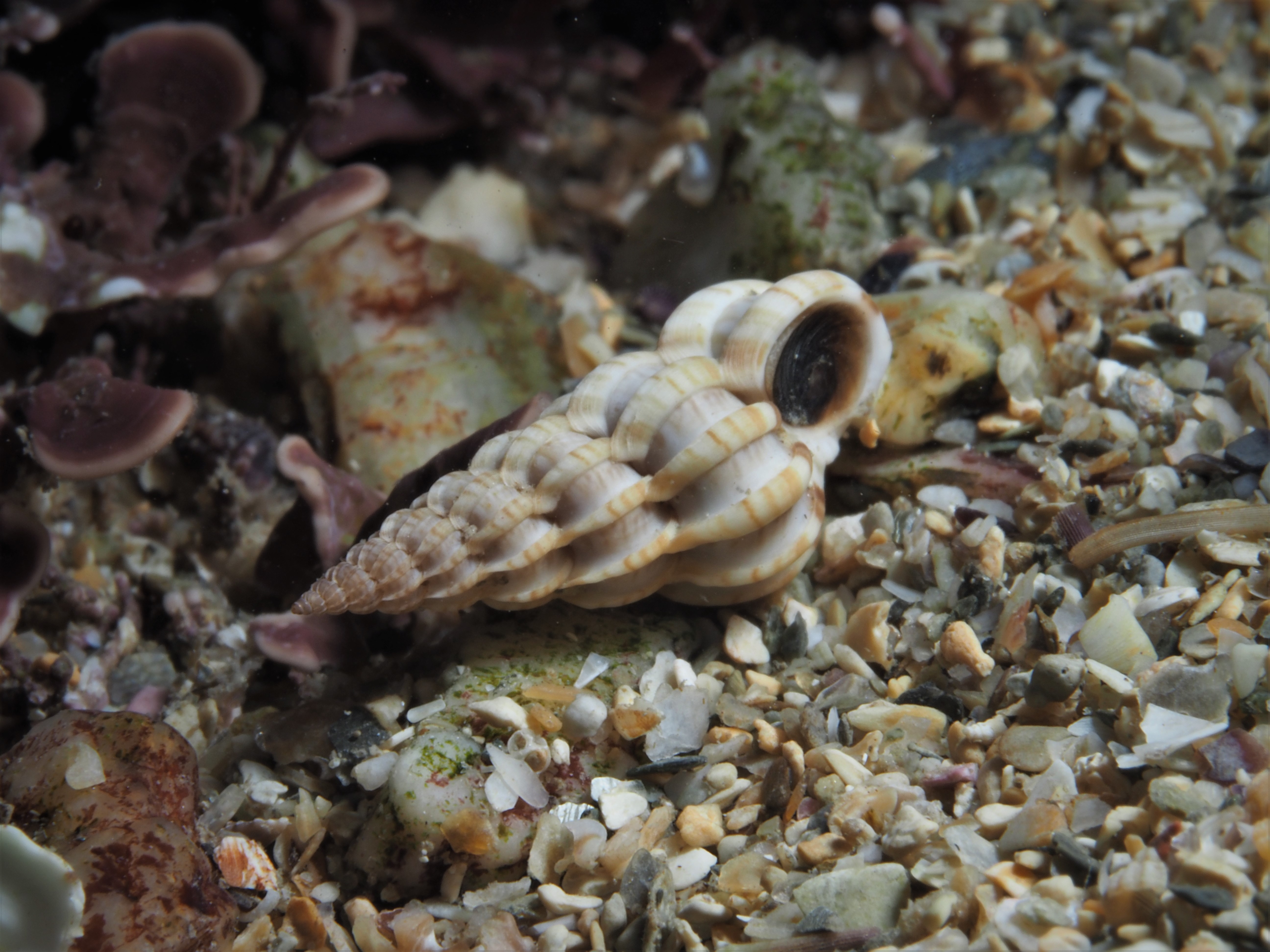
Other notable finds were stalked jellyfish Calvadosia cruxmelitensis and my very first Wentletrap (which is a Dutch word: wenteltrap=spiral staircase) Epitonium clathrus. As I had my macrolens on the camera I could not shoot any general impressions but the pools started to look beautiful again. The big Wireweed and Thong weed plants were all gone (new ones emerging) and the red seaweeds (Sphaerococcus, Plocamium, Chylocladia) were already quite big.
It was great to be back in the water today and it is my New Year’s resolution to spend a lot more time underwater than I did in 2021! Who knows I will even learn how to use strobes. A happy 2022 to all blog readers!


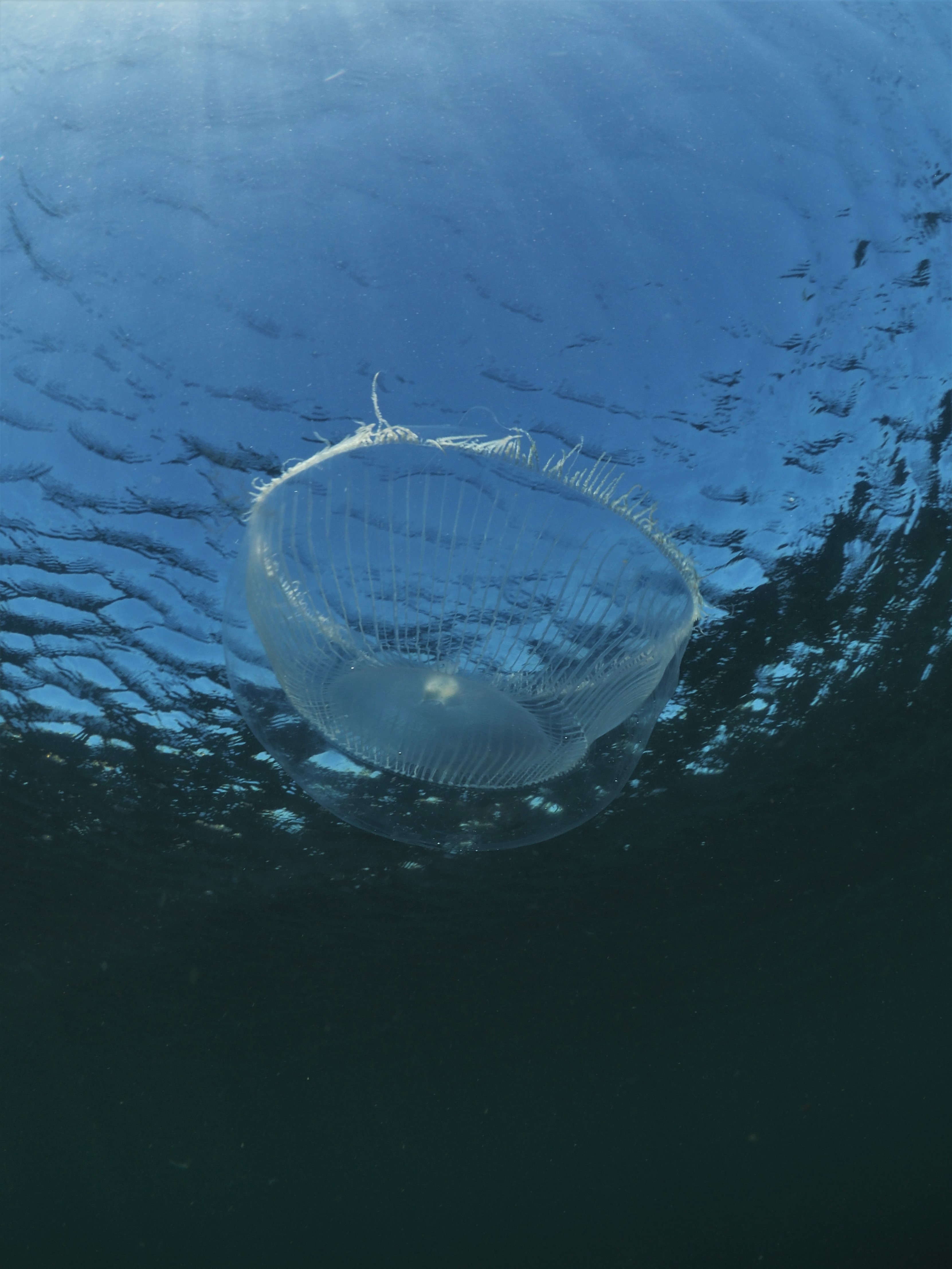
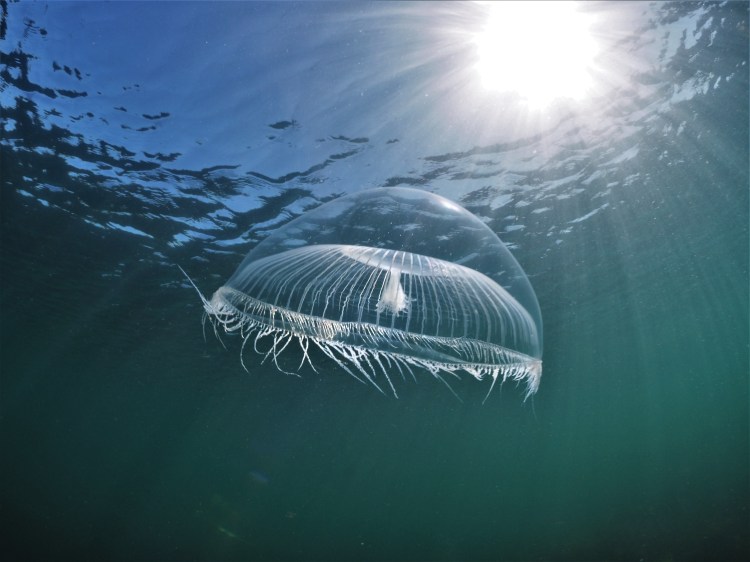
Photography during my last snorkel was a bit frustrating as I could not get my strobes to work. Luckily I was saved by a subject that did not require any extra light: beautiful translucent crystal jellies slowly pulsating near the surface. Crystal jellyfish are not true jellyfish (these belong in the Class Scyphozoa), but hydromedusae (Class Hydrozoa) which have a polyp stage in their lifecycle that bud of these sexual medusae. They are difficult to identify to species level so I keep it to Aequorea sp. I saw a few, around 10 cm in diameter, and had fun diving under them and get them in front of the afternoon sun.

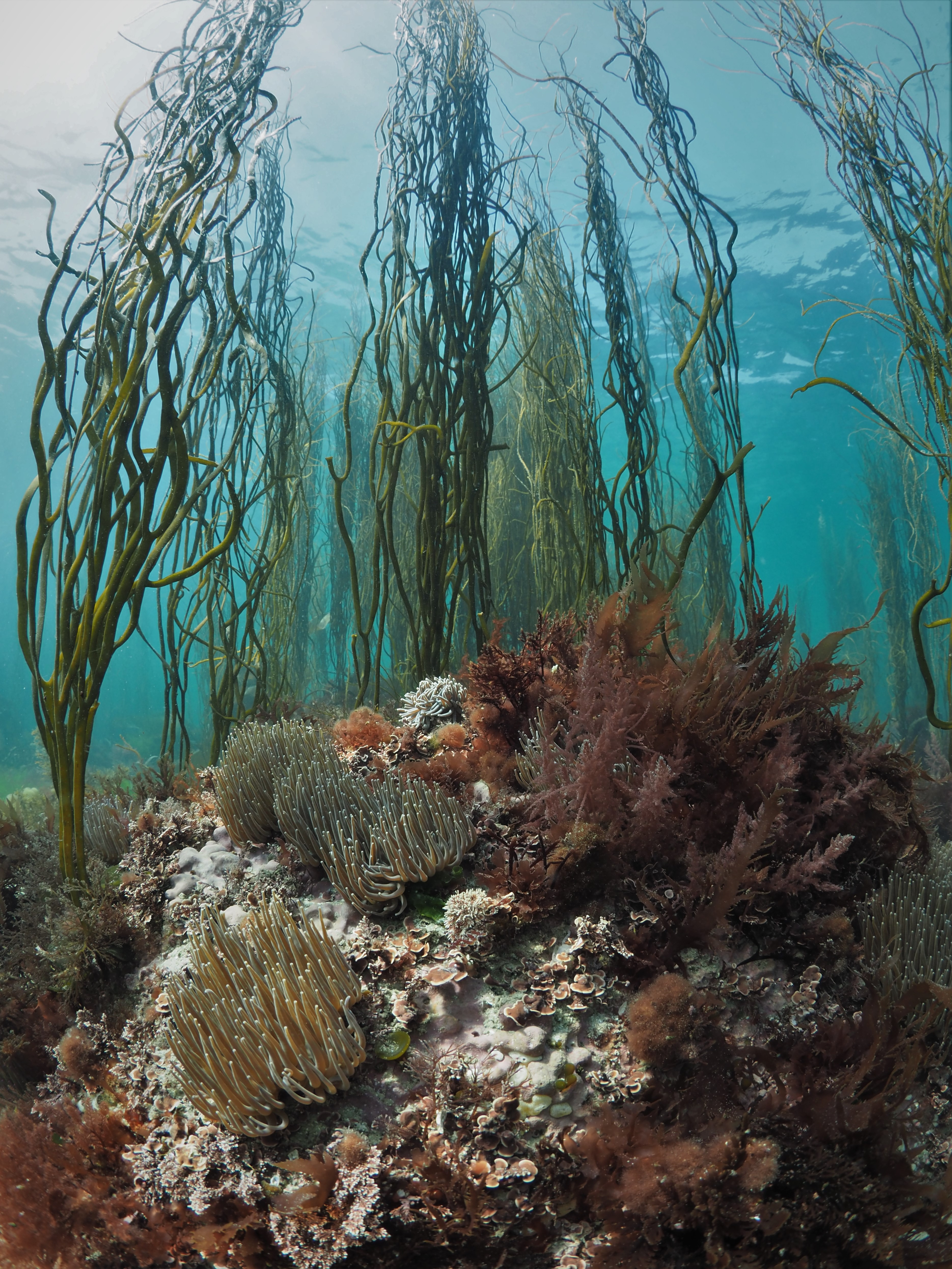
Last week we visited St. Martin, one of the Isles of Scilly again, the first week we were allowed to do so. As a result, the islands were very quiet (and the pub was still closed, aargh!). It was sunny, but the easterlies were still cold and there was even a bit of frost some nights. However, I managed to get a snorkel in almost every day, which was great. I brought all my gear (again stepping on the boat wearing my weight belt…) but only used the strobes the first day; these are still an ongoing frustration of mine! I tried out most beaches, especially enjoying Porth Morran, where the kelp met the seagrass. (The pics in the Gallery are click-able btw.)
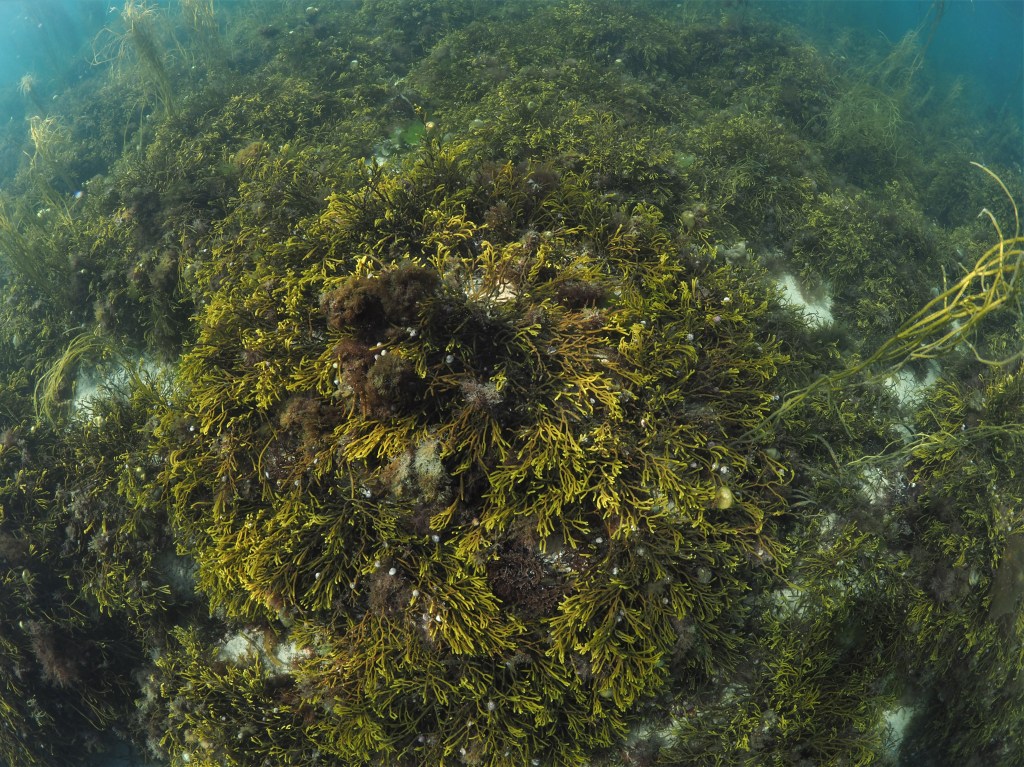
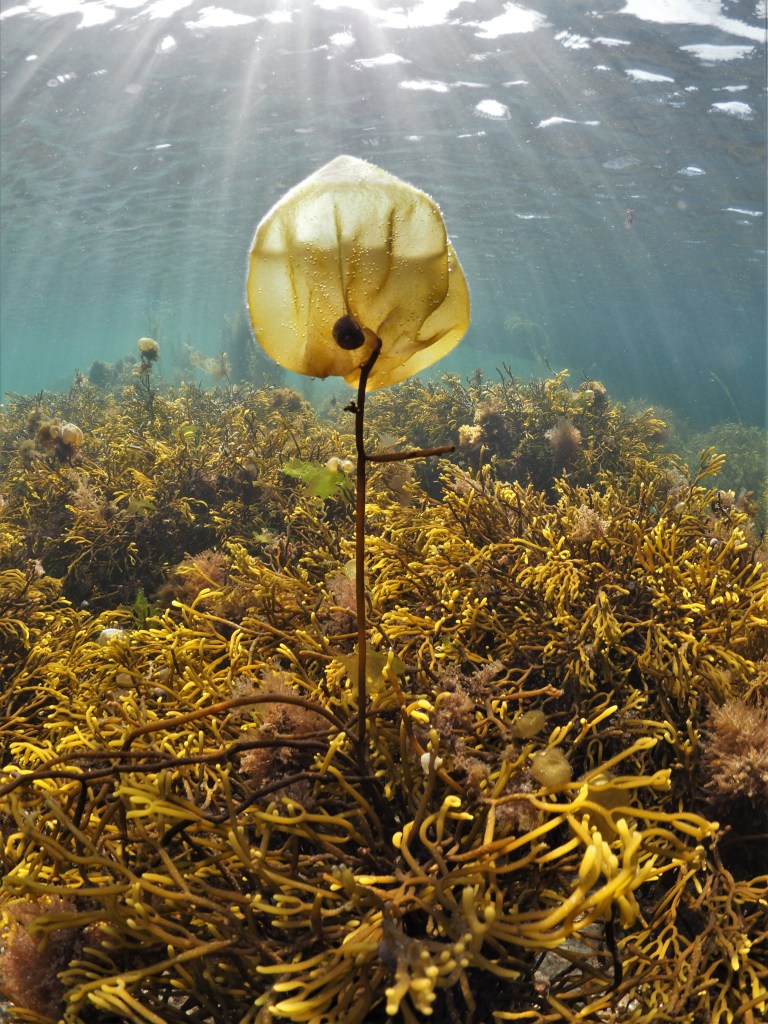
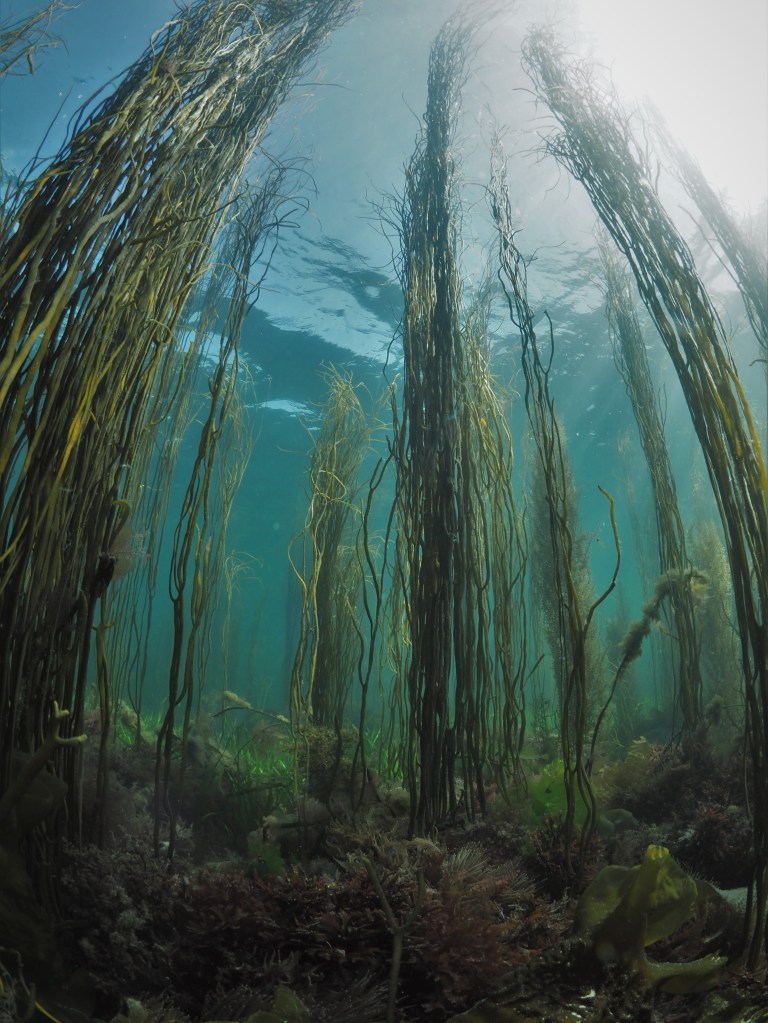
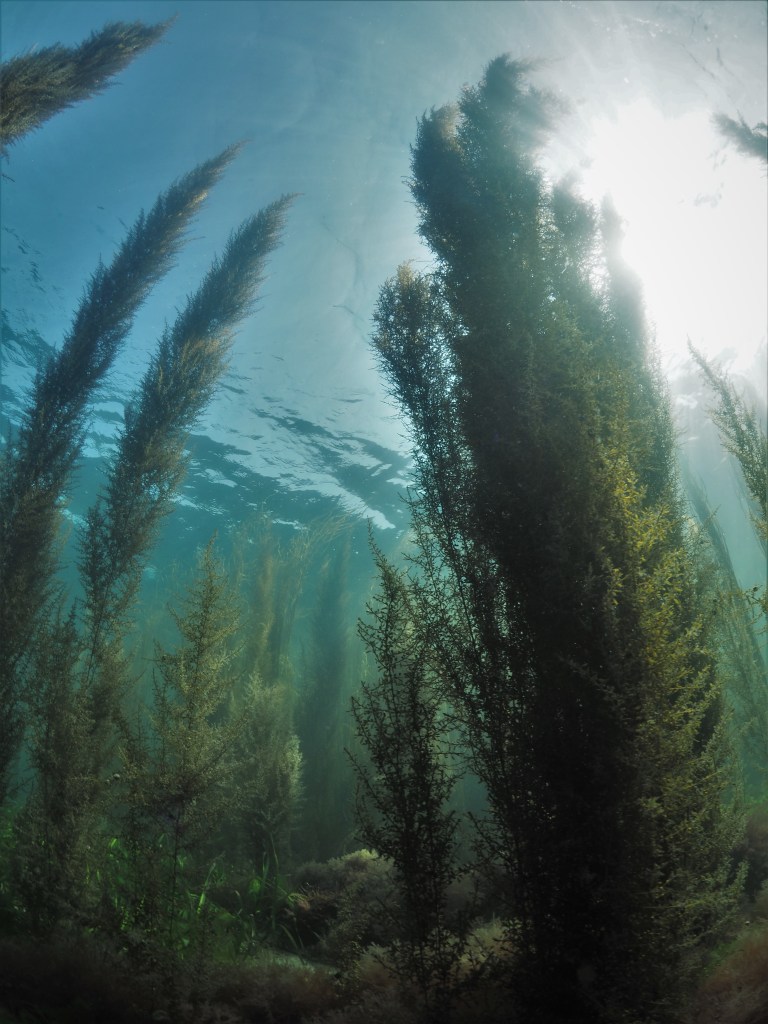
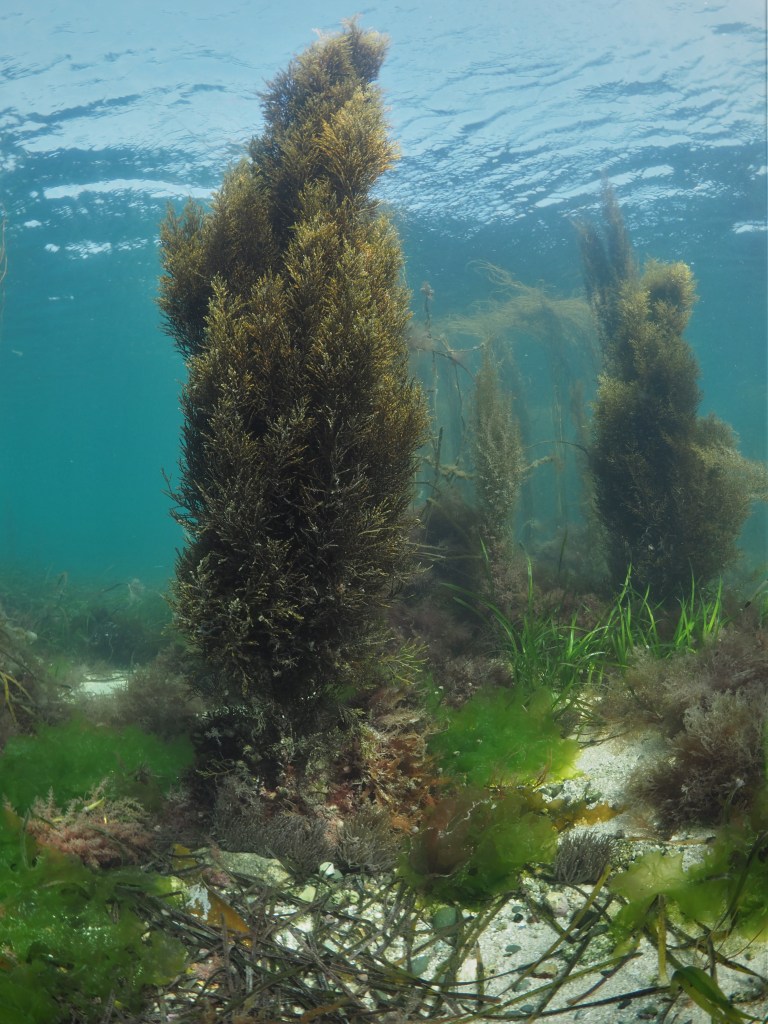
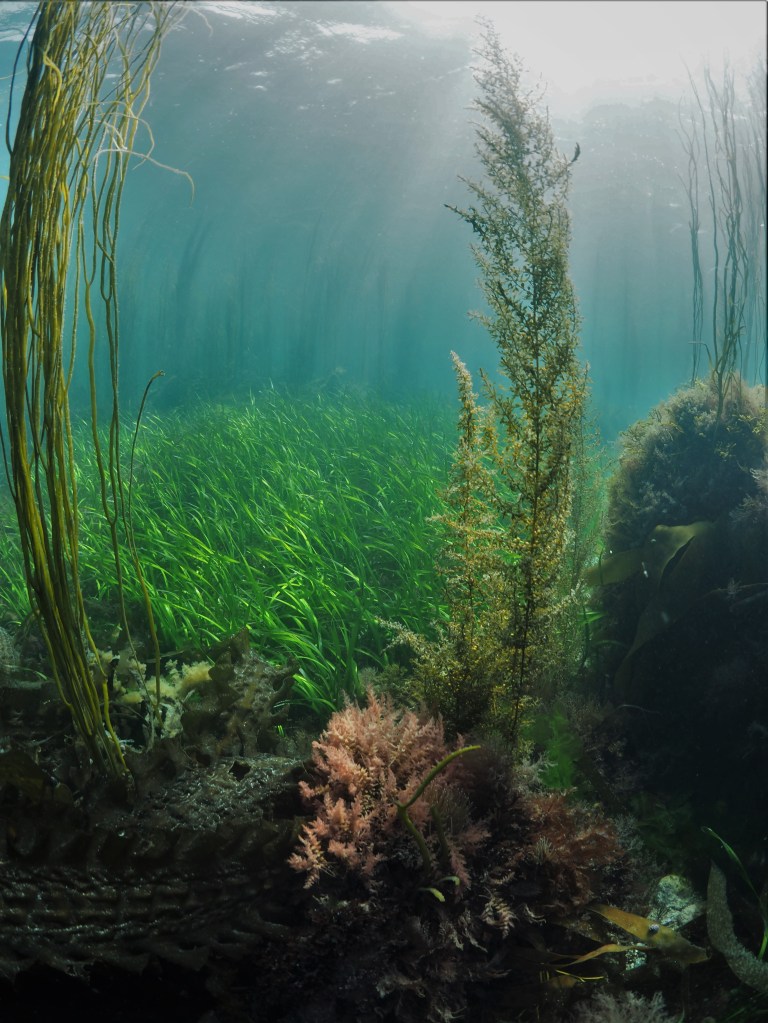
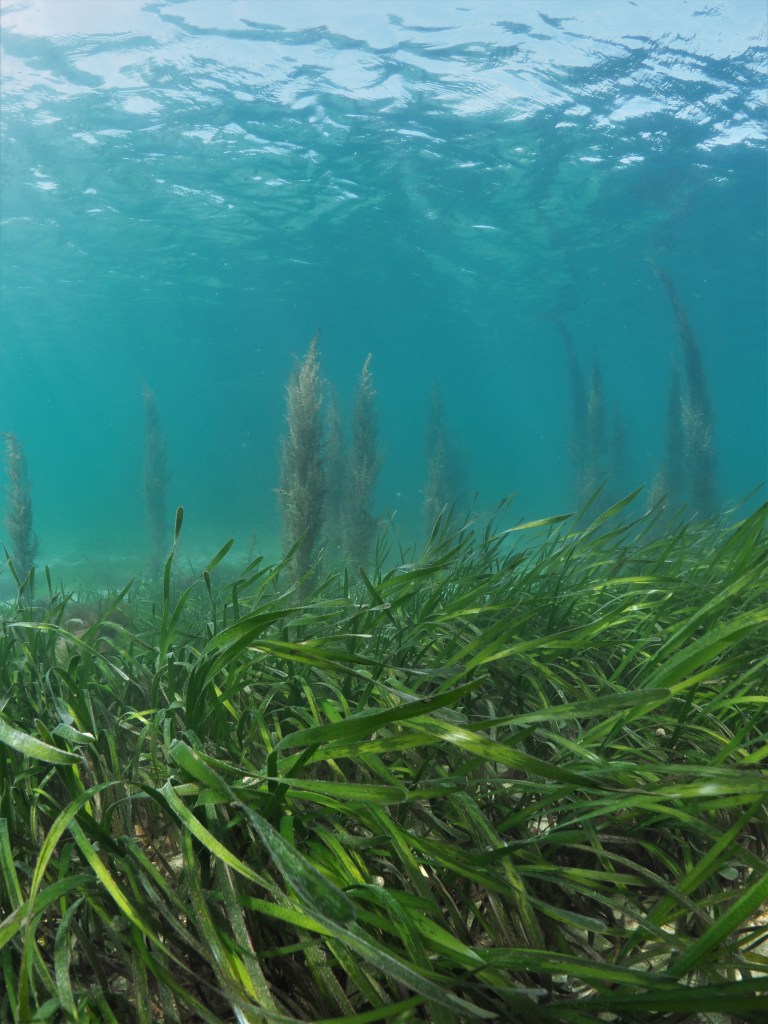
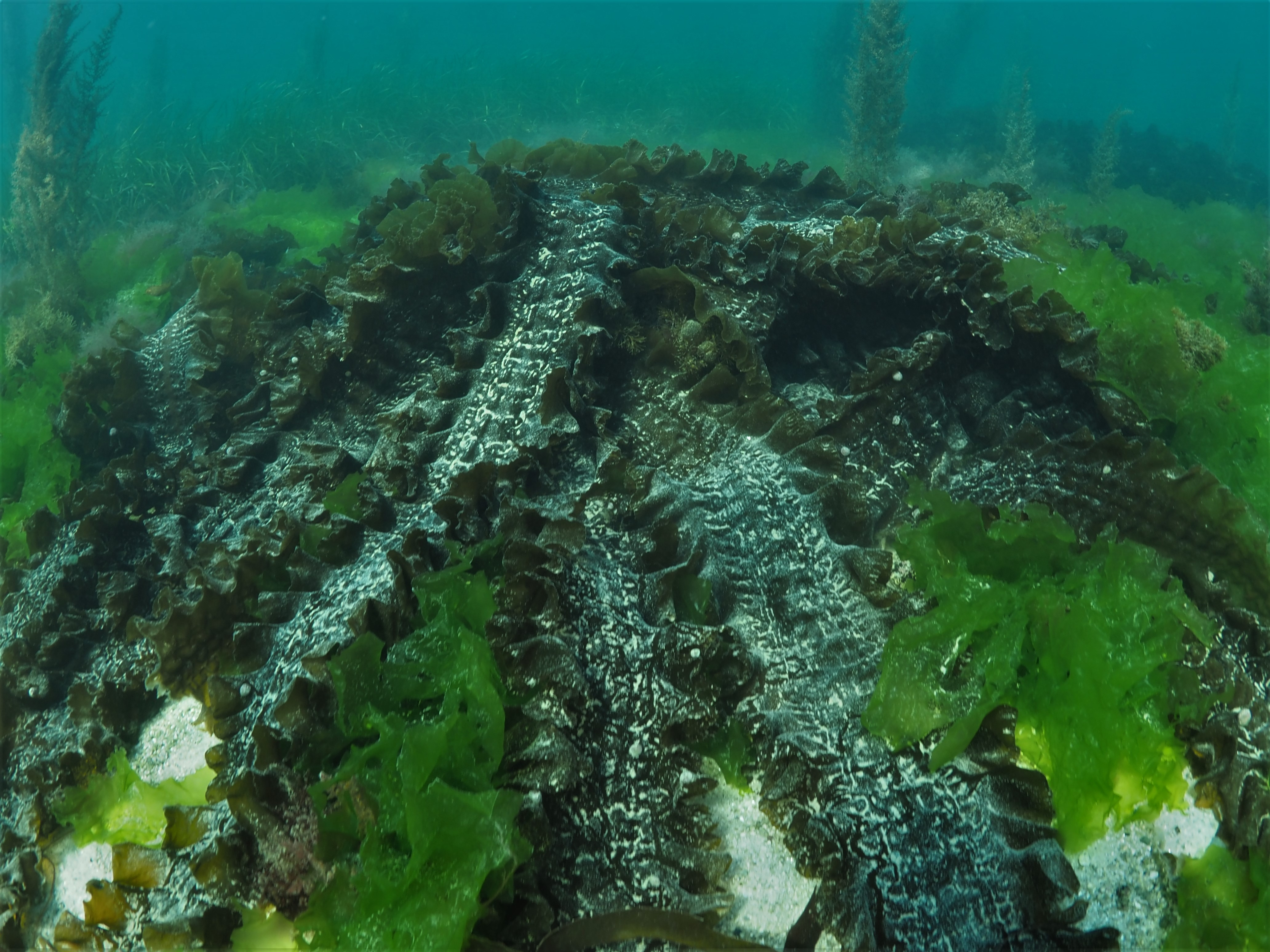
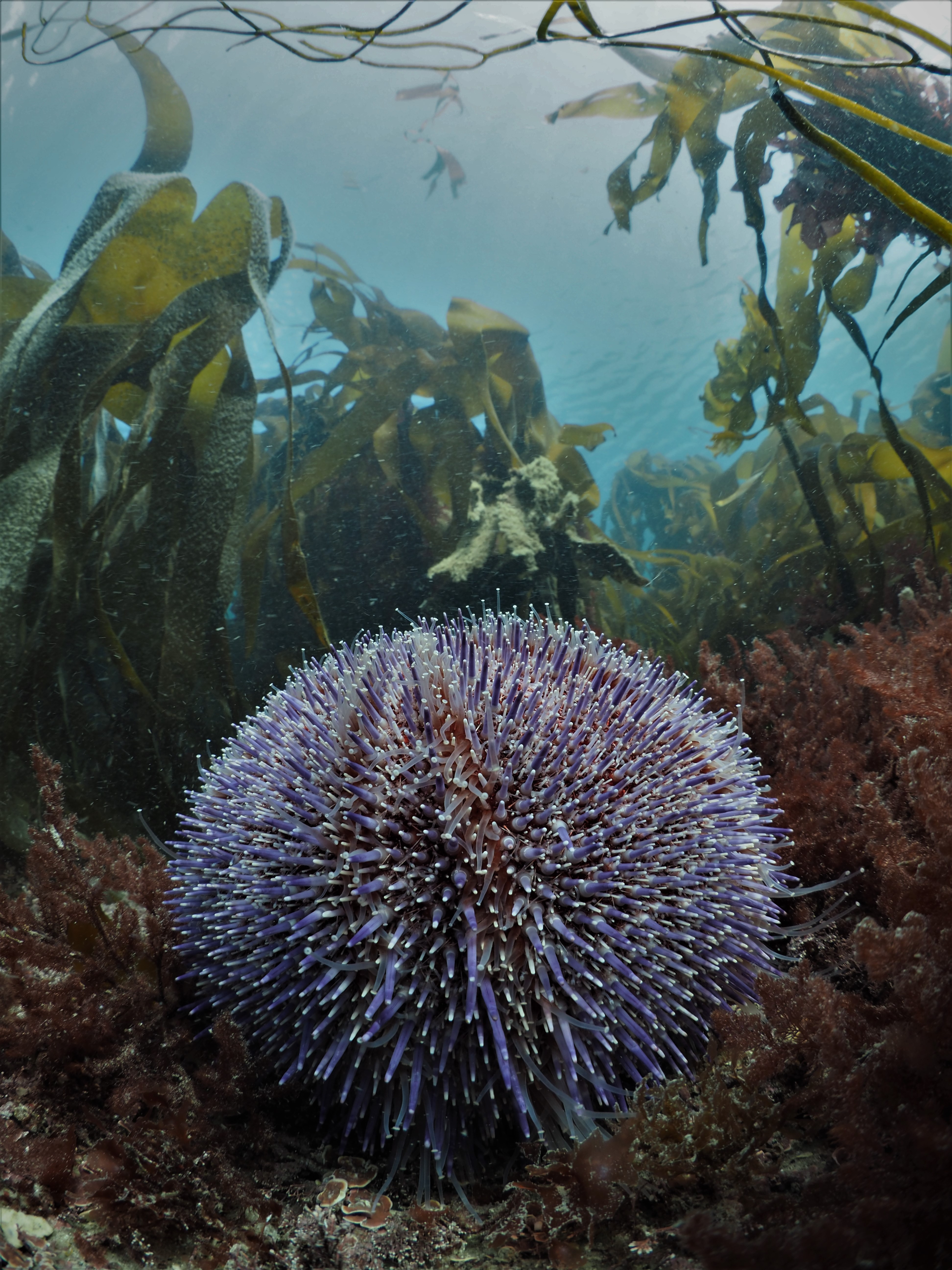
Some sites were dominated by kelp Laminaria digitata with Common Sea Urchins Echinus esculentus munching away. Fish life was very limited; I saw Ballan- and Corkwing Wrasse and Thicklipped Mullet but not much else.
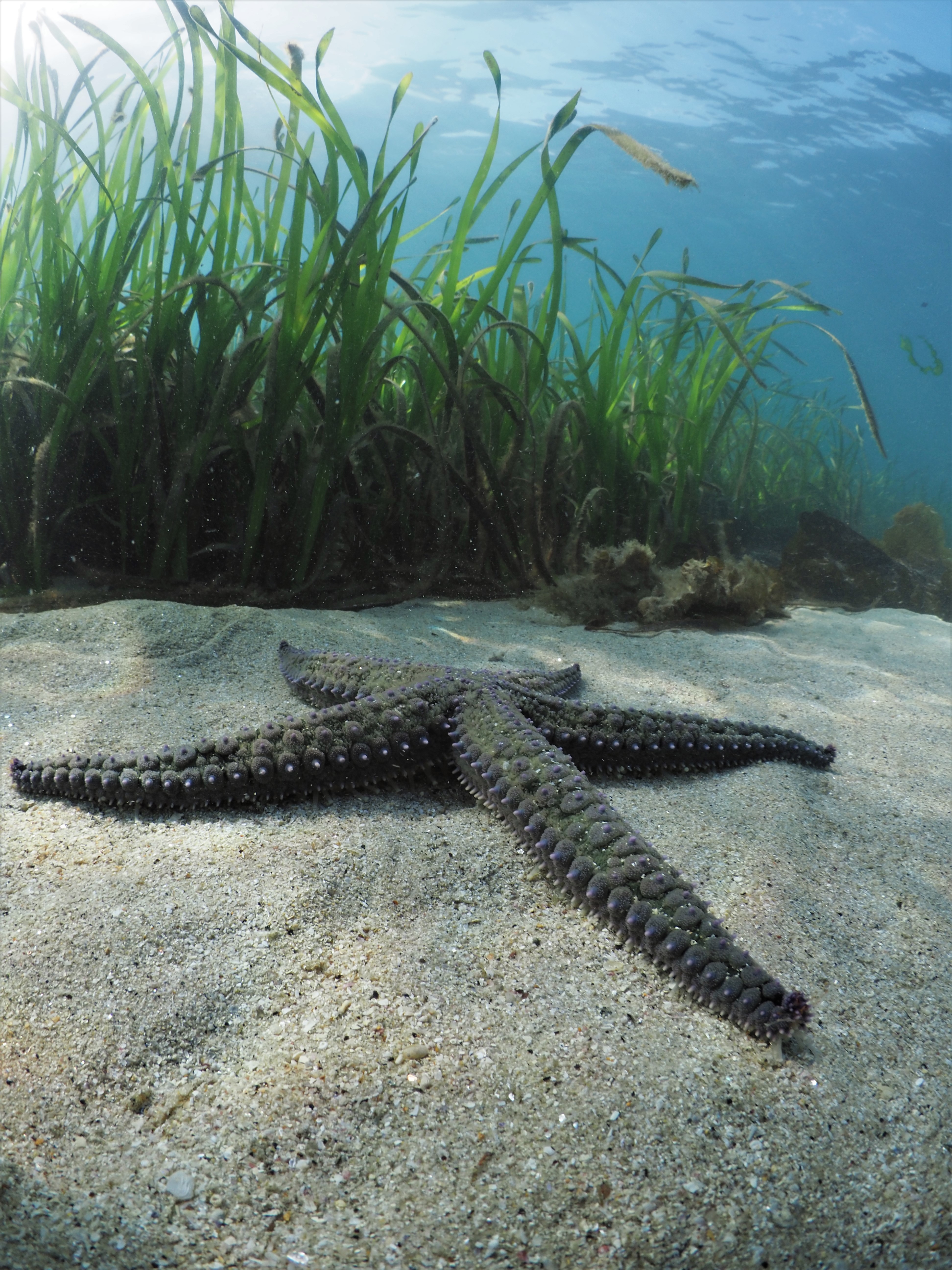
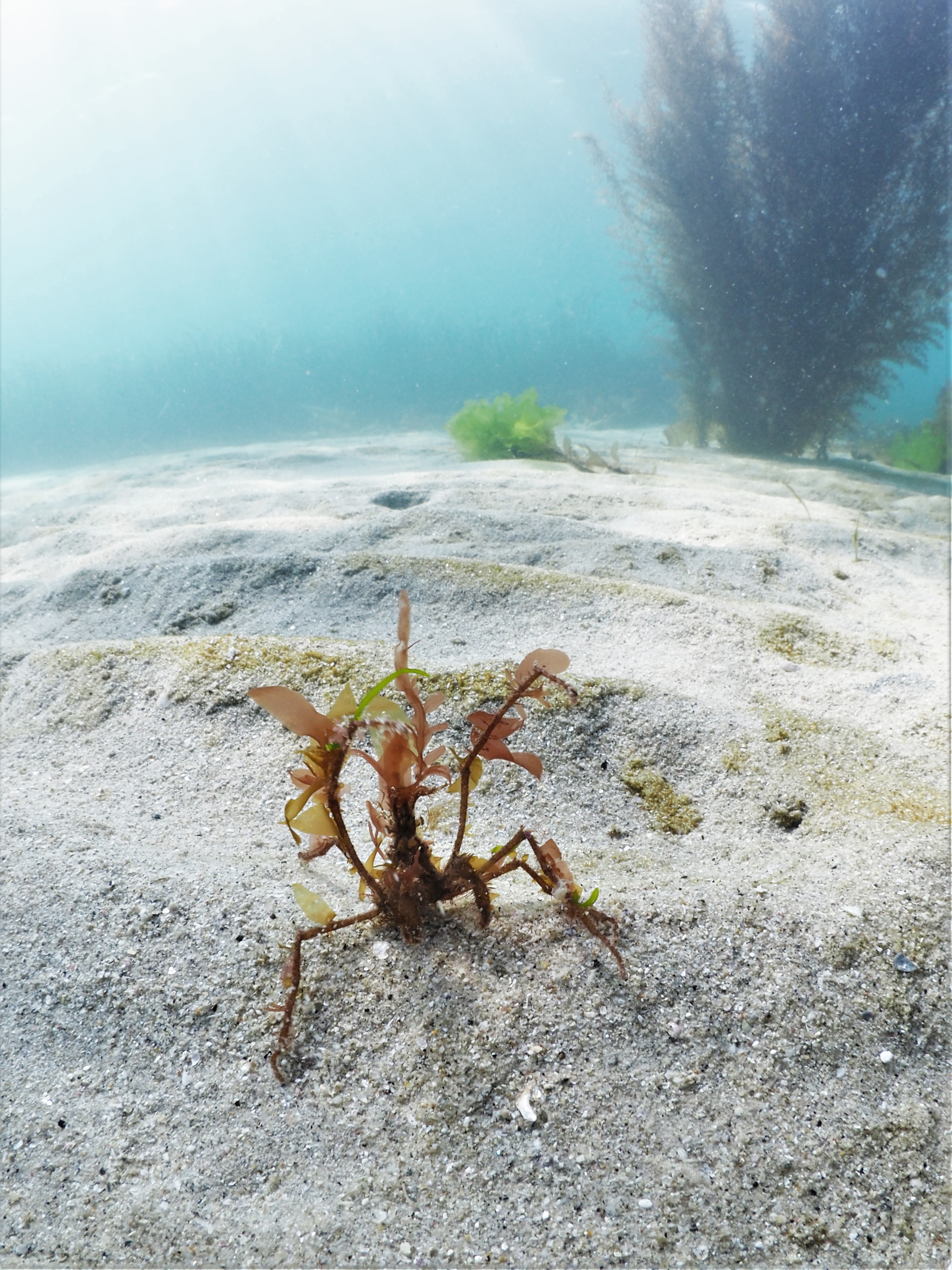
Other sites were more ‘beachy’ with white sand, small rocks covered in Snakelocks Anemones and Seaweeds and Seagrass. The visibility looked very promising but was quite bad some days unfortunately (especially compared to our visit last September, see here). All in all a great time was had and we hope to visit again next year!

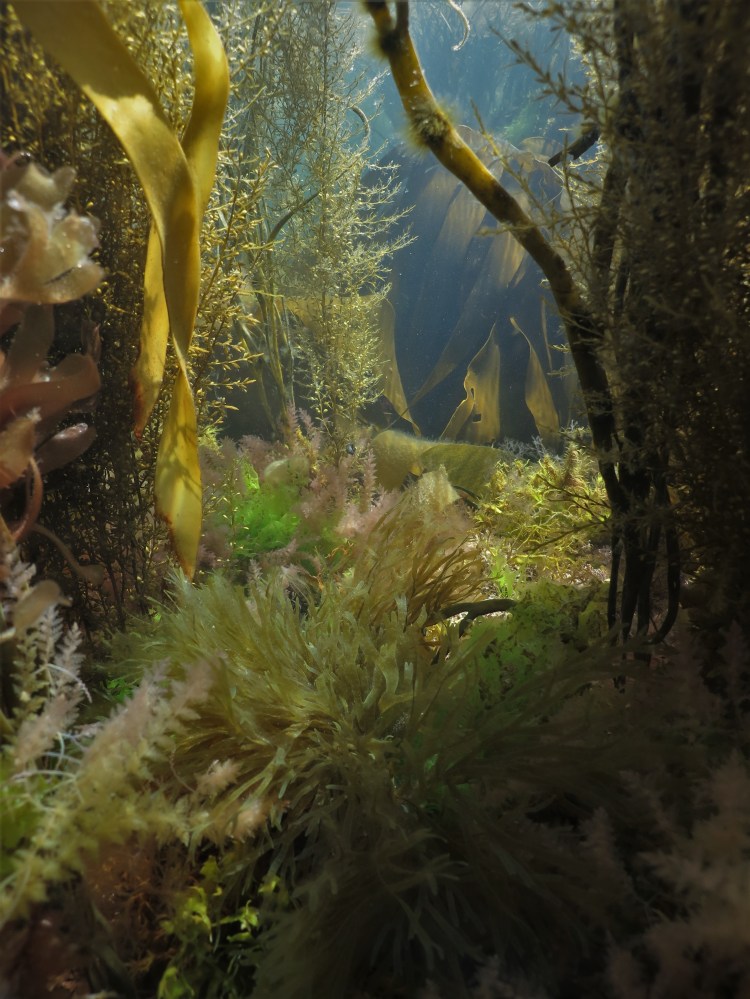
It has been a wile since I last posted. This winter was long and dreary, the sea choppy and grey. I managed to do some rock pooling, and took a bunch of pictures, which I probably should have posted… The good news is that a mishap with my camera housing last year resulted in Olympus giving me a new model housing + a new model camera to fit (OMD EM1 mark 2) AND a new dome, lucky me! Regular readers of this blog know I get very excited in March, as this is when the seaweeds look at their best. This week the tides were low and the wind conditions favourable (the sun was not always out unfortunately), so I made sure to go in the water every day. The water is cold (9C), especially after being in for 2 hours, but it is all worth it. The seaweed growth was lush, with species literally growing on top of each other. I tried to shoot with strobes, but this proved too difficult and switched to natural light. Keeping ISO at 200, I aimed to lower shutter speed to 1/30, managing an F stop of between 5 and 8, depending on cloud cover. I now get the hang of that, but it is difficult to keep photos well-exposed, with enough depth of field and maintain sharpness. Below some examples. I am lazy and will not add seaweed names (but see the Seaweed Gallery page at the top if you are interested). When the tides are low again at the end of next week I hope to go out again!
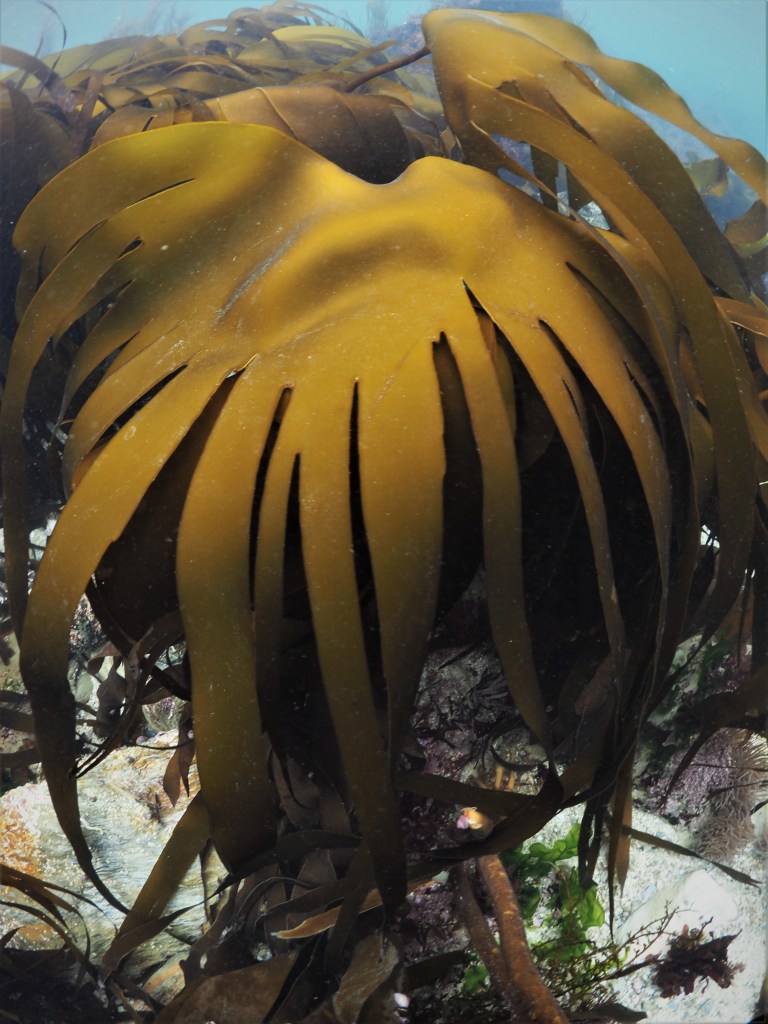

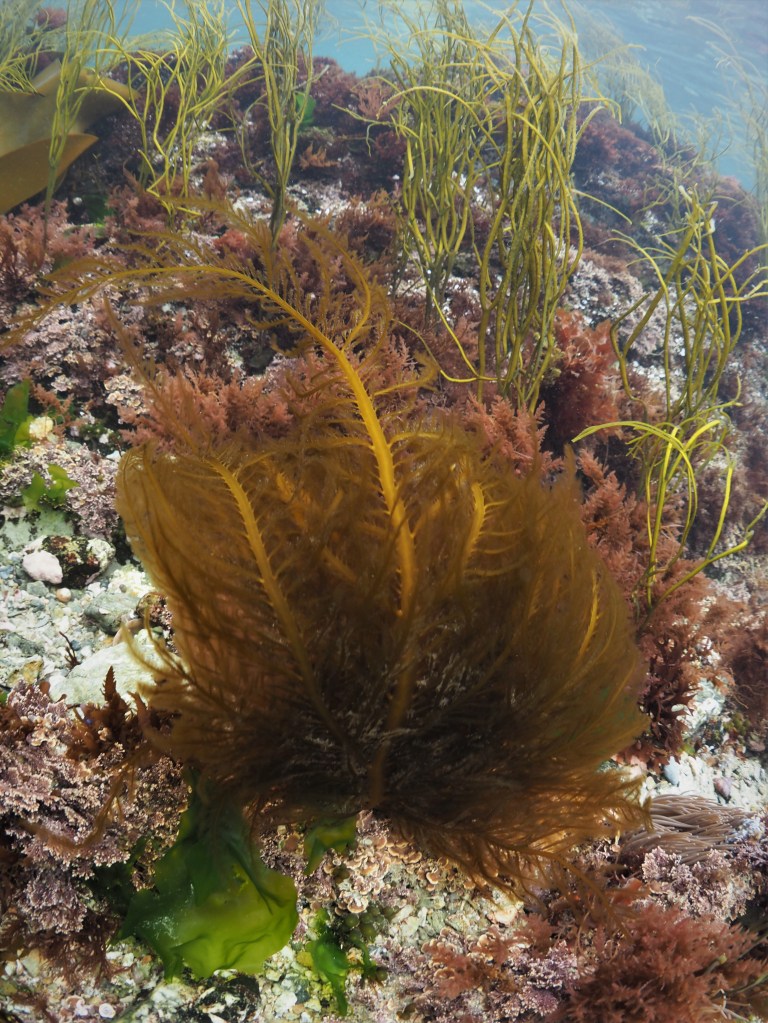
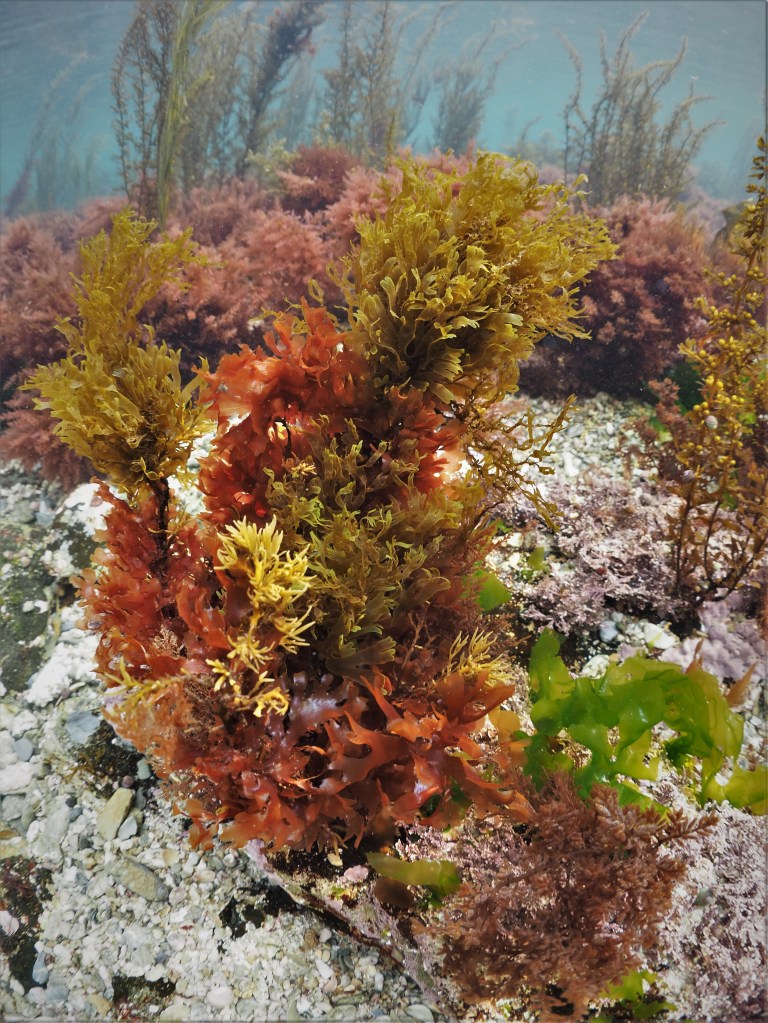
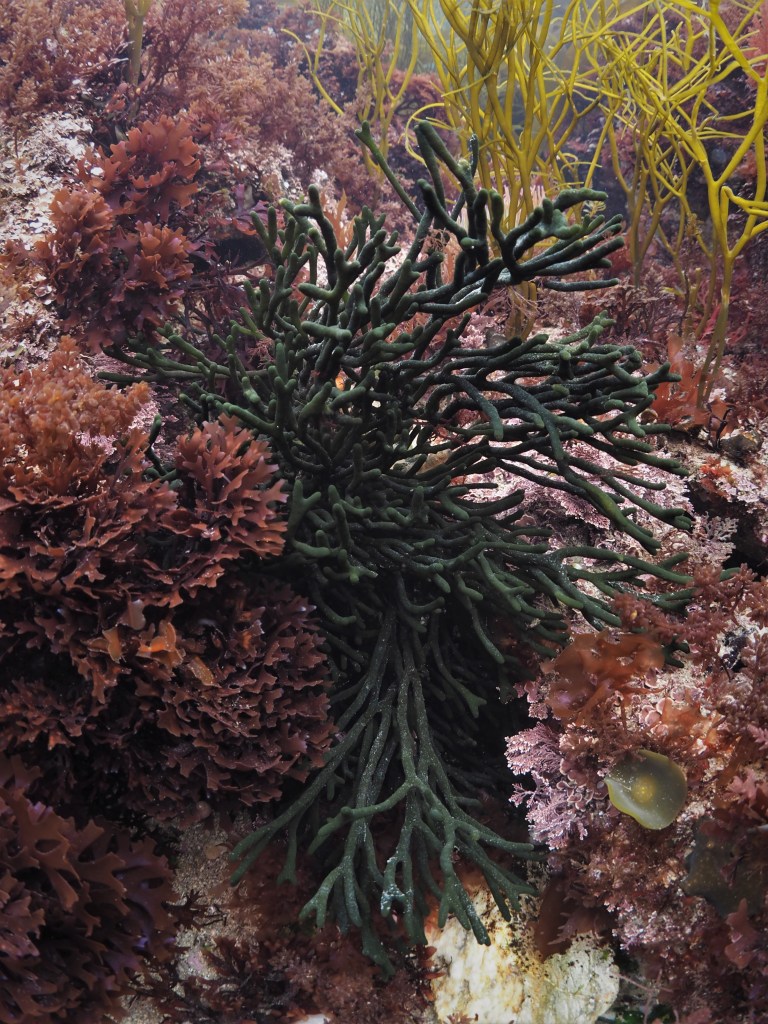
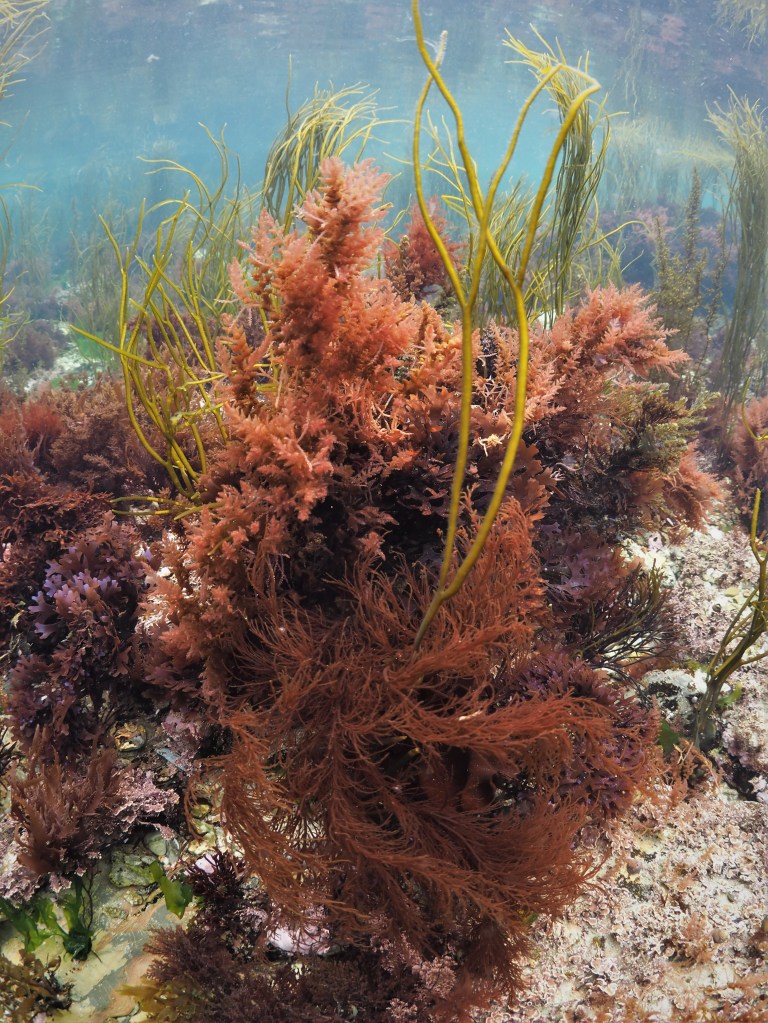

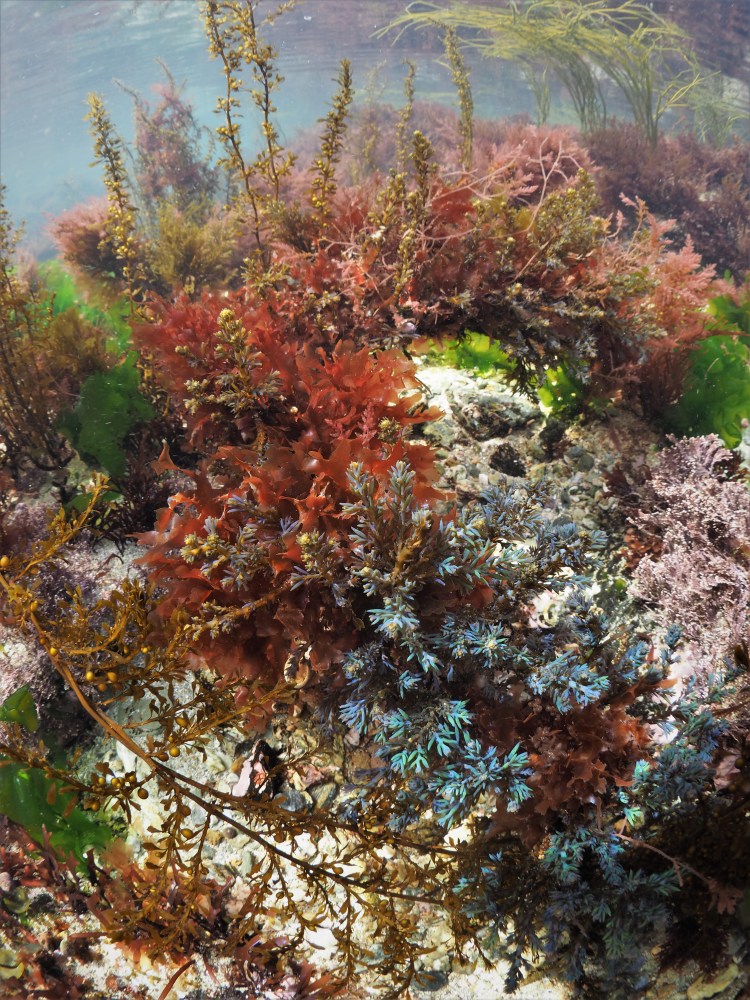


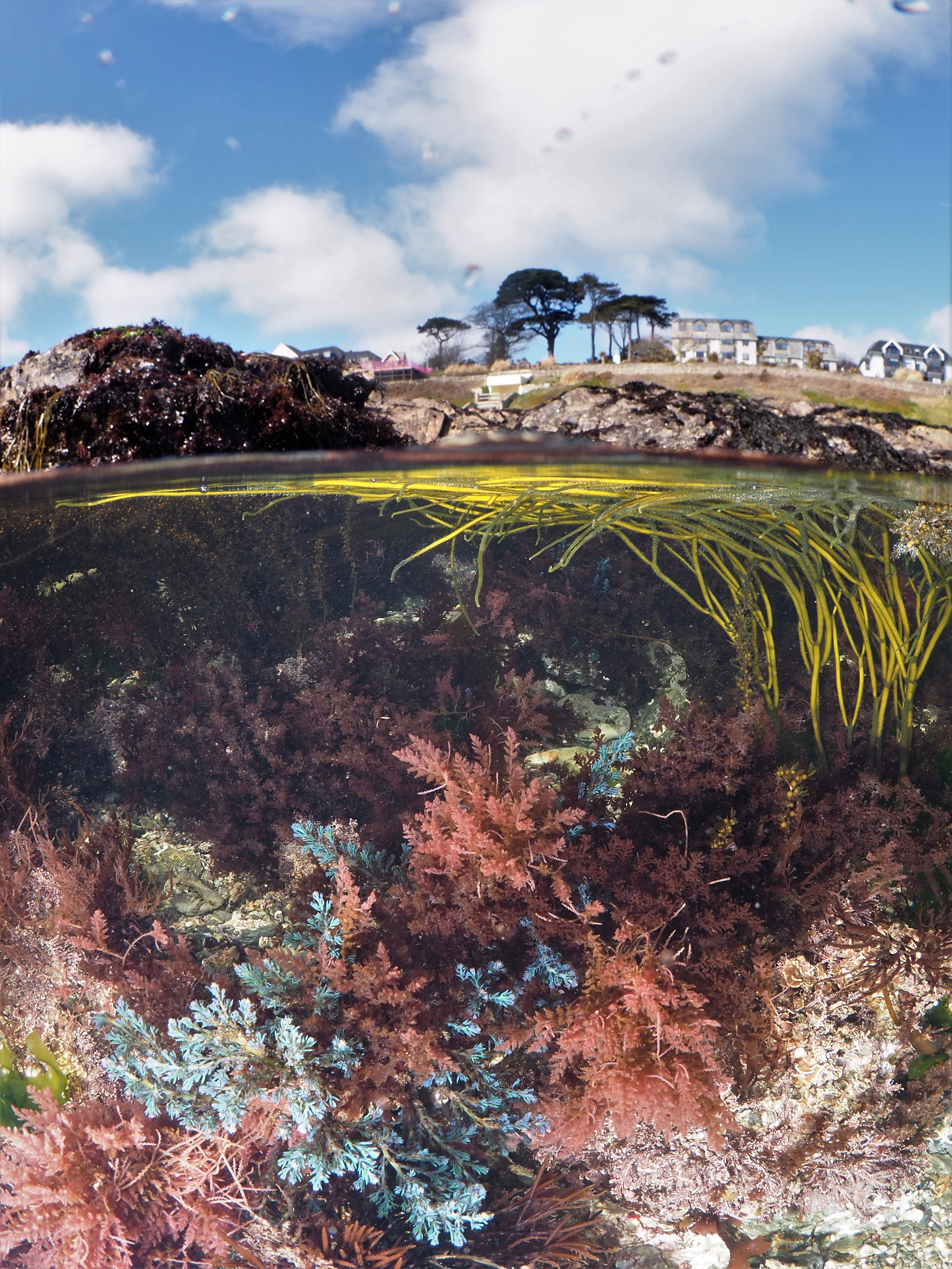
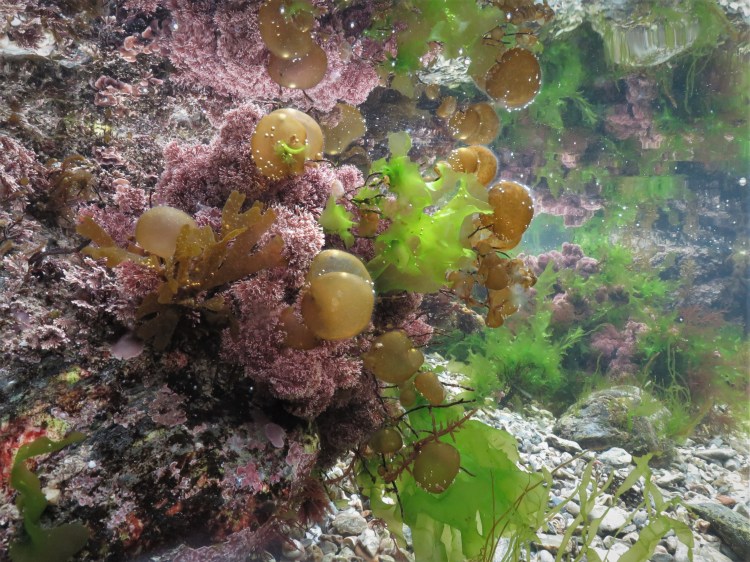
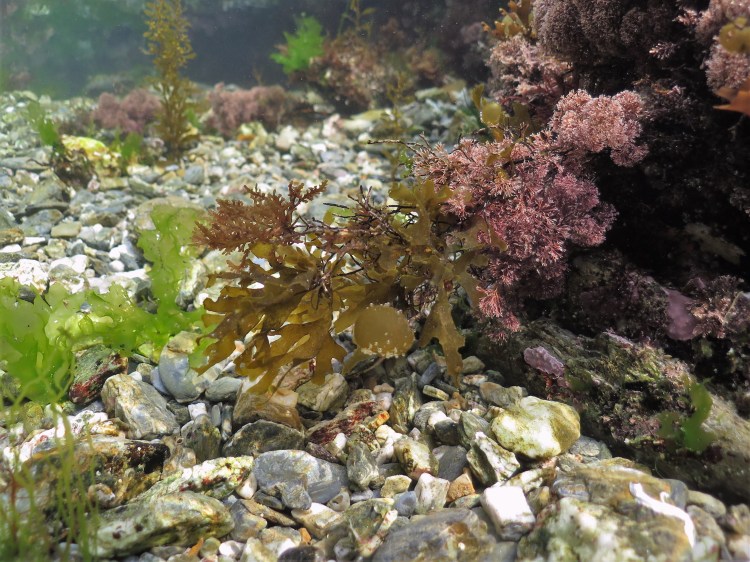
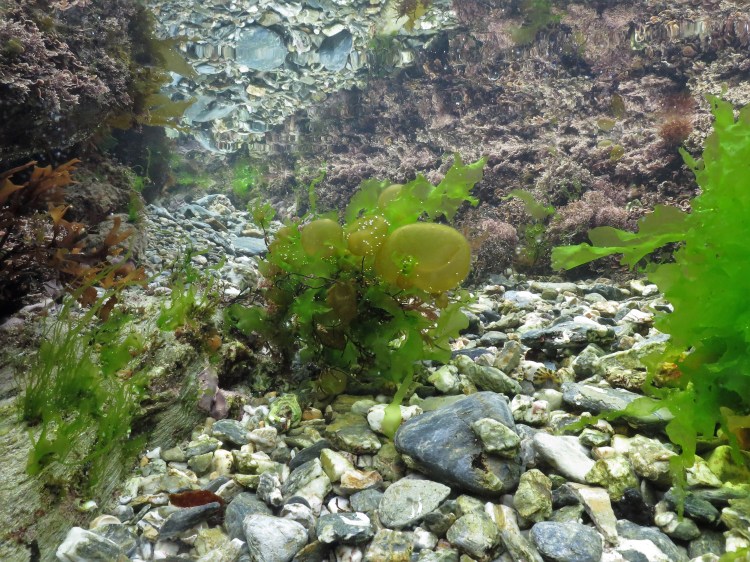
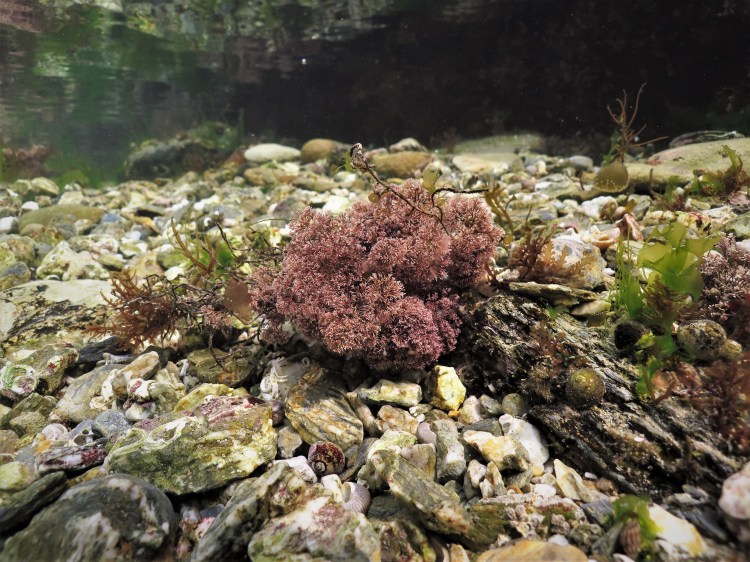
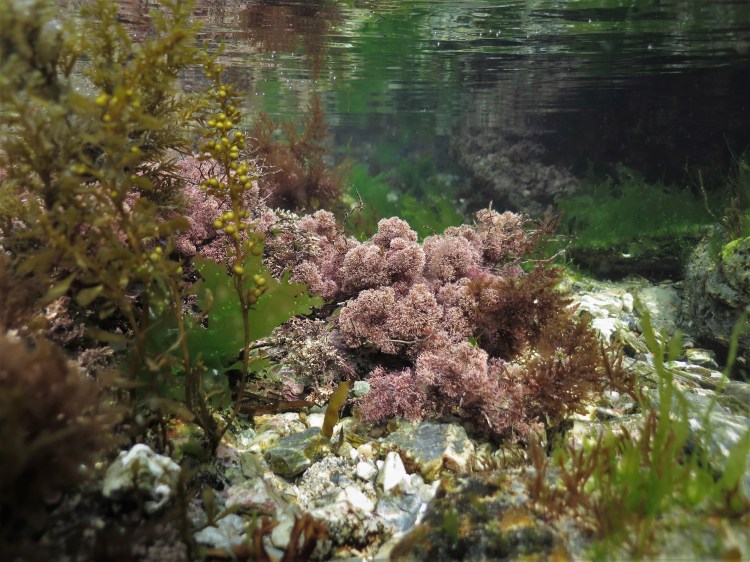
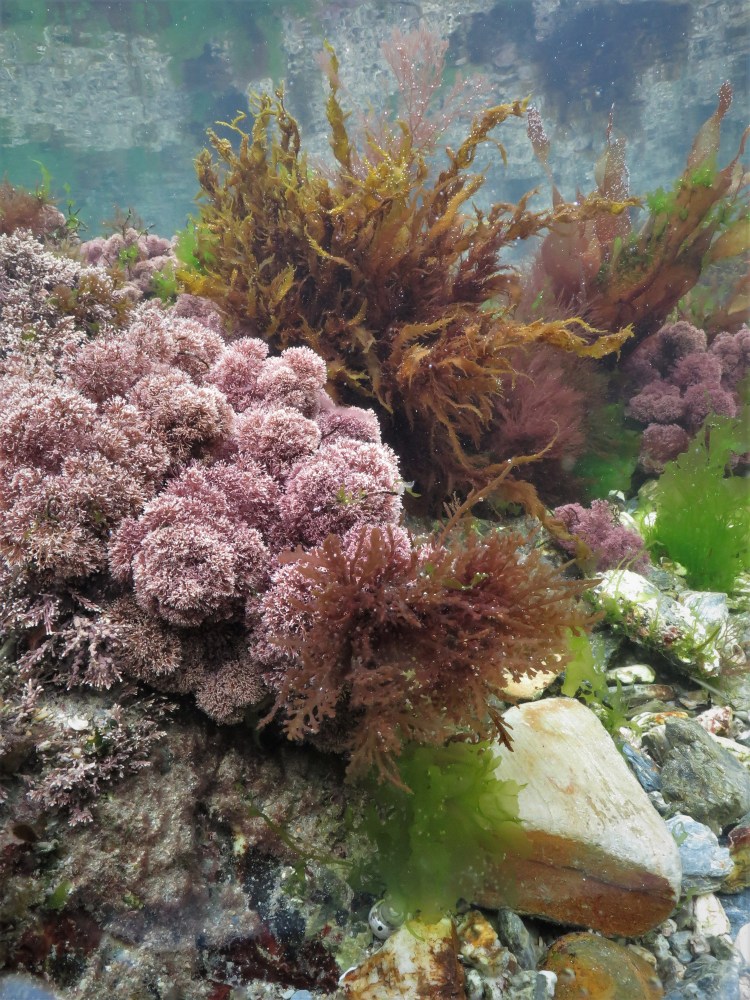
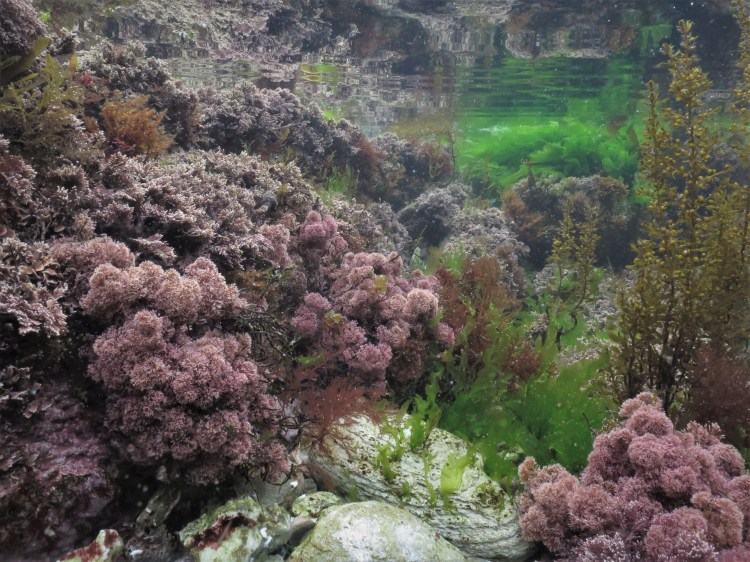 Quick post about an hour worth of snorkelling on Wednesday. Very frustratingly, I had a housing mishap on Saturday, meaning my brandnew Olympus camera and lens got wet. $%&^”! as the saying goes…..I have sent both back for repair and hope all can be fixed relatively fast and cheap. A minor disaster but what can you do? Go out with my old Canon Powershot and wetlens instead I guess! The viz was not the greatest but I can only blame myself for a disappointing haul of photos. I took around 200 (as usual), whittled them down to 75 or so on my camera afterwards and then to 30 or so on my computer. Did some tweaking in ‘Photos’ afterwards but they were 5’s, 6’s and 7’s at most. The midshore pools were looking pretty. Lots of one of my favourite seaweed species Slender-beaded Coral Weed Jania rubens growing on top of (mostly) Hairy sandweed (and possibly Black scour weed). Lots of other epiphytic species grow on top of this assemblage, including Sea lettuce Ulva, Brown fan weed Dictyota dichotoma, Gelidium spp, Ceramium spp, Colpomenia OR Leathisia (I still am not sure of the difference..) and many others.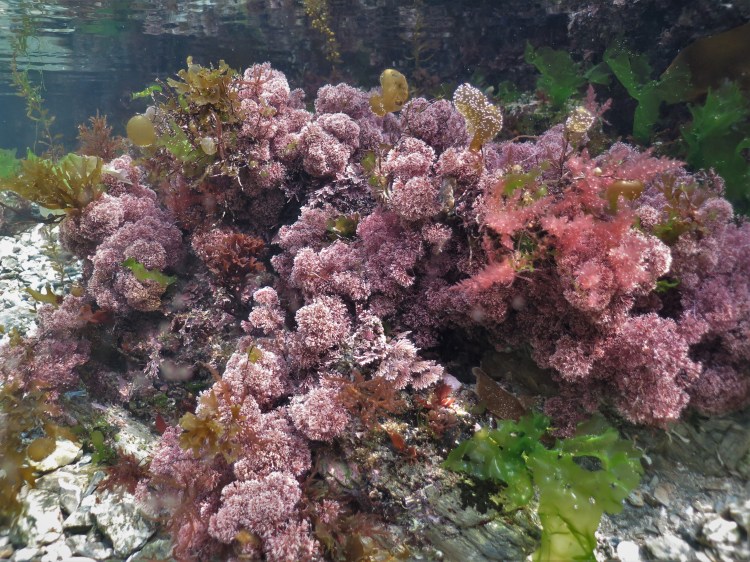
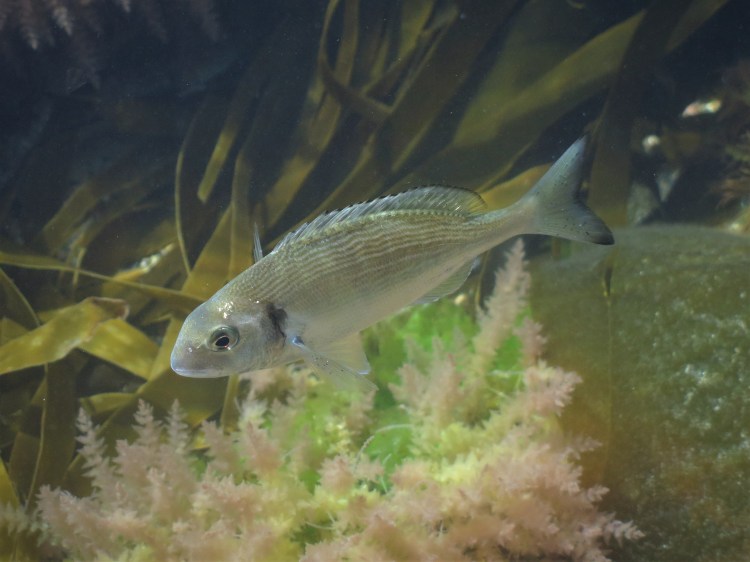 Yesterday I went for a late morning snorkel; although the water looked inviting, the viz was disappointing. I did not see anything of interest until I noticed a Seabream (15-20 cm) hanging about, not a species I had seen before! It goes to show that there is no dive or snorkel session whithout something that makes it worthwhile. The fish was not very shy, but I did not have weight or fins so I could not get down to get a proper shot from the side. I found out that this was a Gilthead Seabream (Sparus aurata). This southern species seems to have become more frequent on the South coast of the UK the last few years, probably due to warming seas. It seems to be known among anglers, but less so among underwater observers (the NBN Atlas only has two records for this species in Cornwall). Other than that the usual Ballan- and Corkwing wrasse, Two-spot gobies, Pollack and even a Blenny (very commonly found under rocks while rockpooling but I hardly ever see them when snorkeling).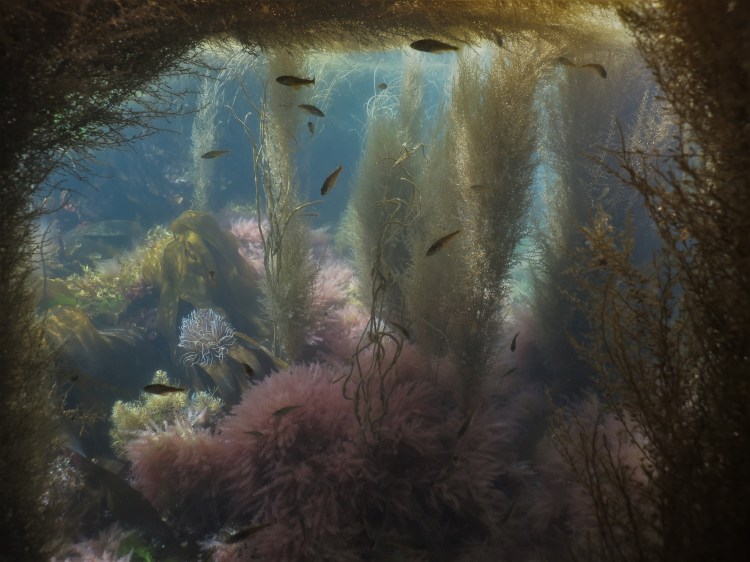
 An Bollenessor