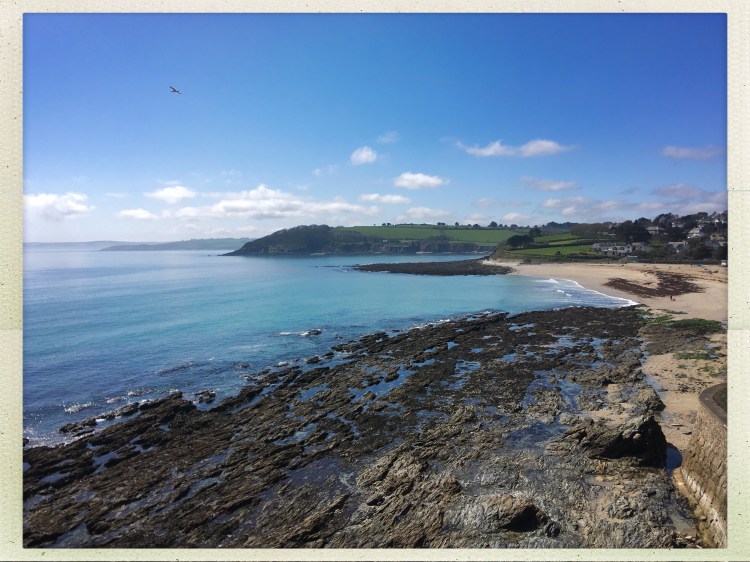
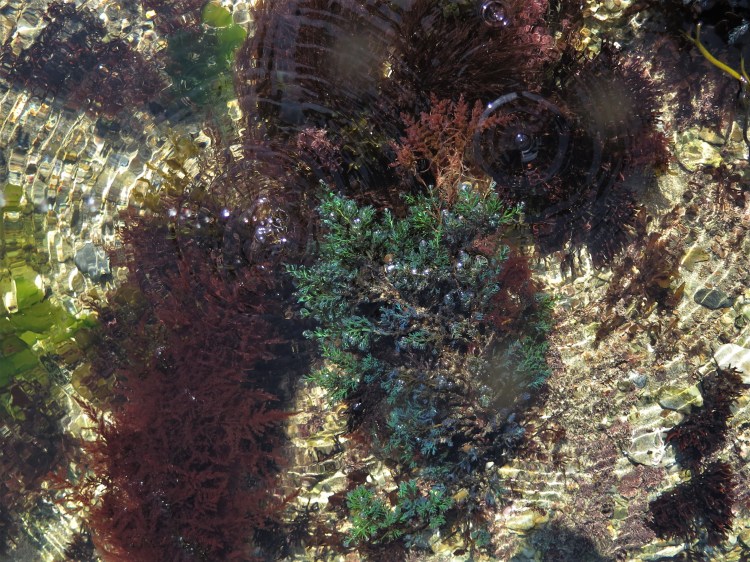
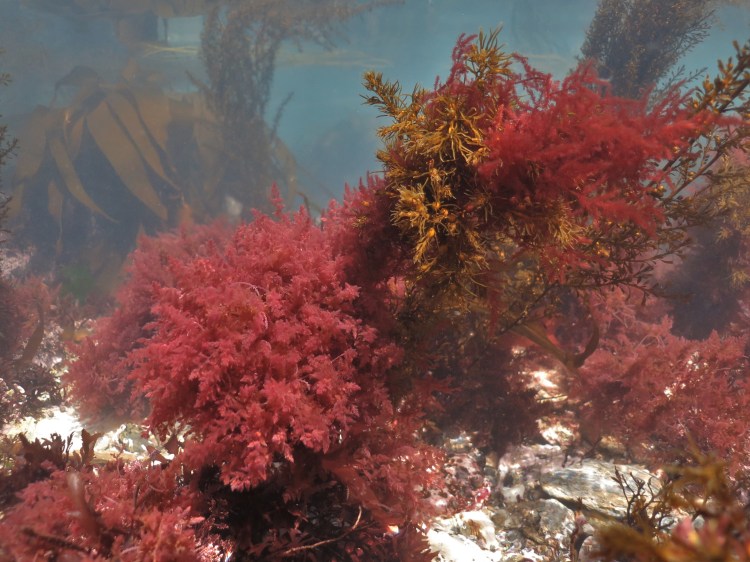
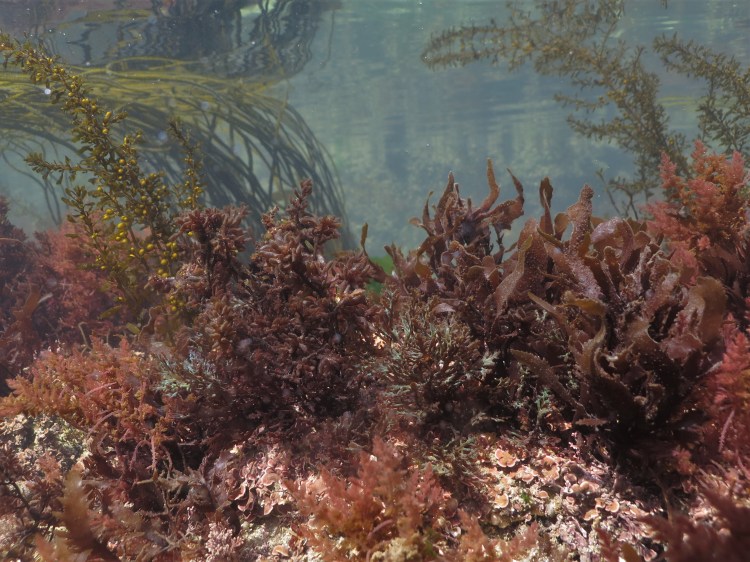
 This Thursday was only sunny, but also not windy, with a good low tide in the early afternoon, which meant I reserved a few hours to go to Tunnel/Castle/Gylly beach for some snorkelling. The photo above shows Gylly Beach, with the start of Swanpool lagoon behind it and the Lizard in the far distance. (I took this with my iPhone using a Hipstamatic filter; for more iPhone pics of Cornwall see cornwall_hipsta on instagram…). The water temperature was OK (9C?) but the viz was not as good as I hoped. The seaweeds are at their peak now and the pools looked very pretty. Not many fish, but I saw a small brown thing floating around which I first thought was Sea hare, but turned out to be a small (perhaps a Connemara) clingfish lazing about until it noticed me and bolted into the seaweeds. I carefully snorkelled in about half a meter of water, admiring the views and trying to take photos close-up (as the viz was not too good) with my wide angle wetlens. Below an above-water shot of some iridescent Bushy rainbow wrack Cystoseira tamariscifolia and the invasive red Bonnemaisonia hamifera (on the left).
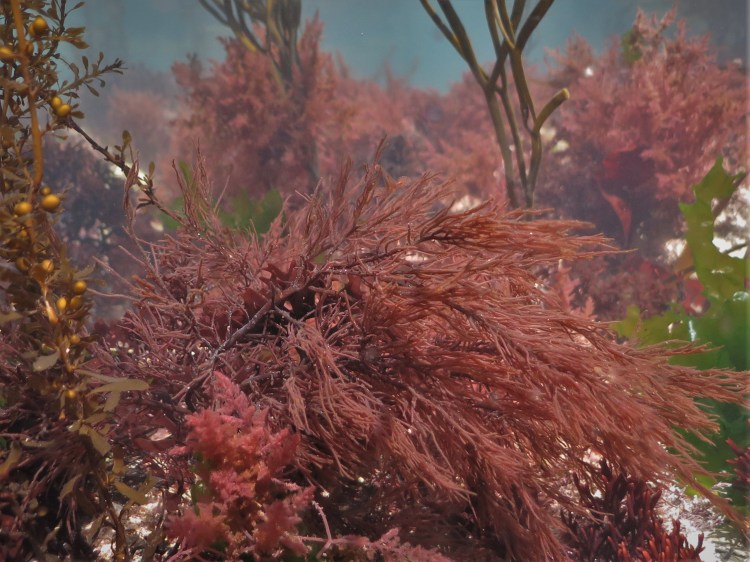
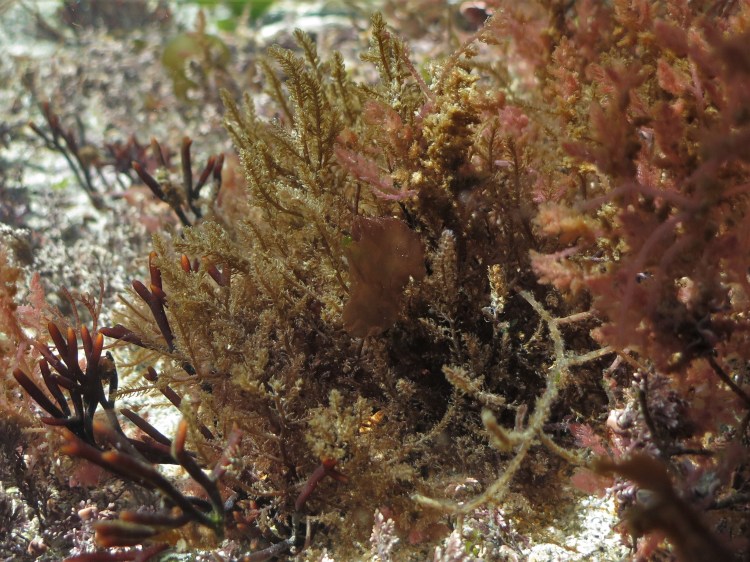
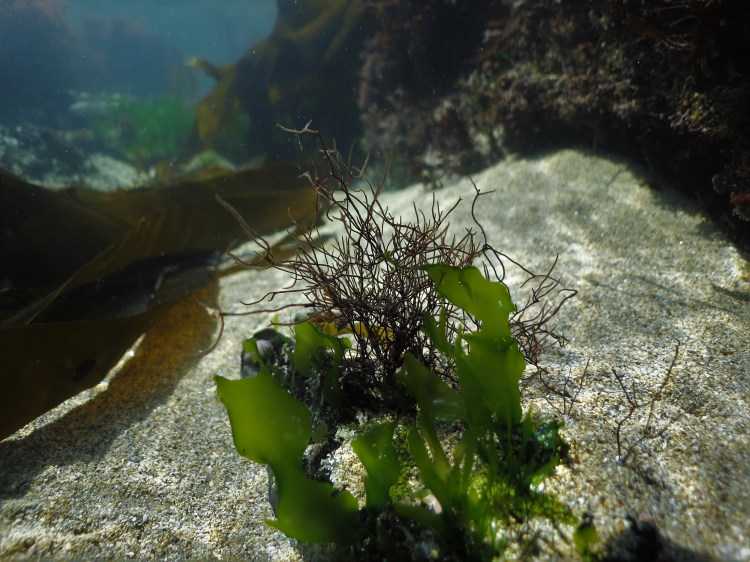
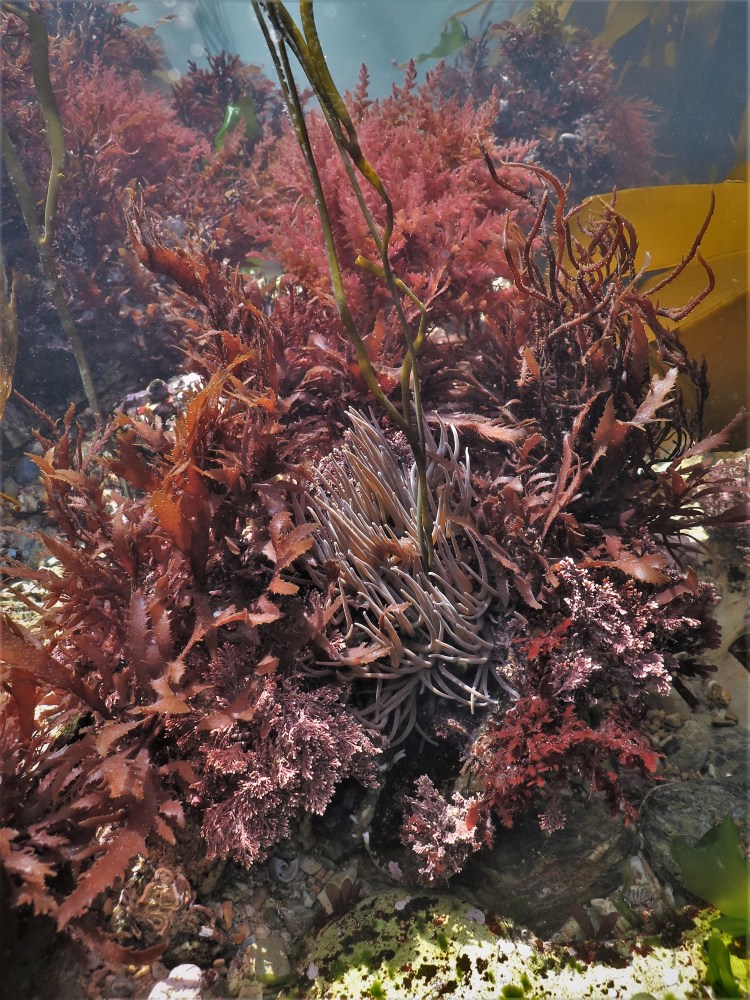
  I need to go back studying photography basics. A main challenge is contrast. The pools have beautiful white sand, which result in hugely overexposed photos (or completely darkened subjects). I have come up with my own law, the Photography Frustration Index (PFI): the beauty of the subject (B) x the difficulty of capturing it (D). The PFI is very high in the case of seaweeds! Next: Bushy rainbow wrack under Thong weed, Purple claw weed Cystoclonium purpureum, Bushy berry wrack Cystoseira nodulosum covered with the epiphytes Asparagopsis (left) and Bonnemaisonia (right), Hairy sand weed Cladostephus spongiosus, Black scour weed Ahnfeltia plicata (you can see they grow in the sand and must be used to scouring) a ‘bouquet’ of different species (with a snakelocks anemone) and a last photo of a variety of species, including the common False eyelash weed Calliblepharis jubata. The tides and weather conditions are unfavourable the coming days but I hope to go snorkeling again end of the week!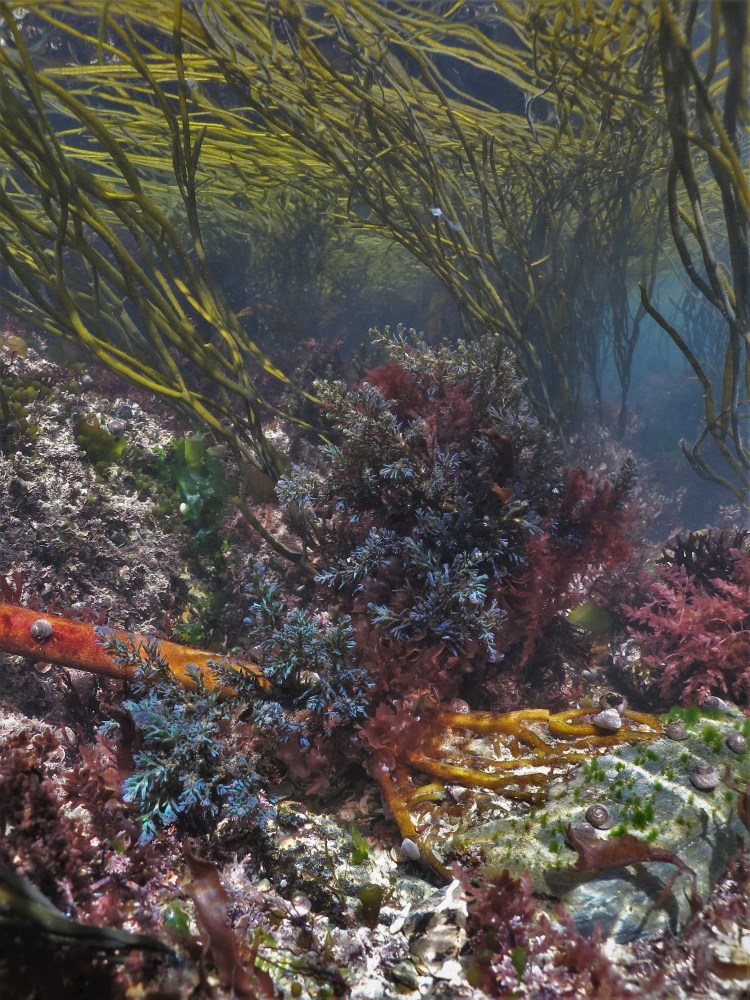
Tag Archives: snorkeling
Whitebait 2
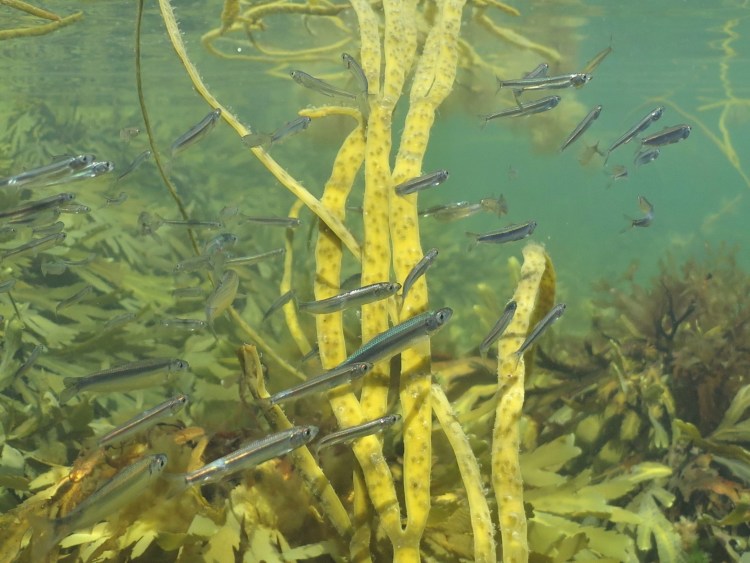
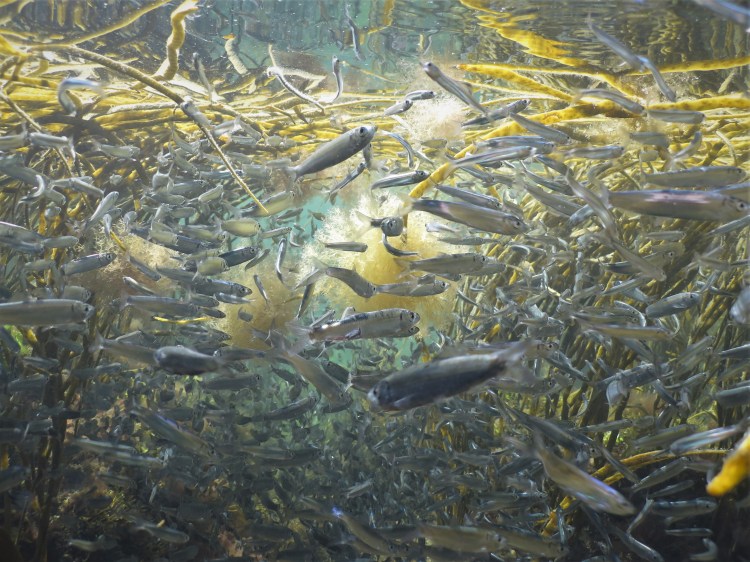 After seeing so many Sand smelt (Atherina presbyter) (EDIT or potentially Herring….very difficult to make out position of fins) schools from the local slip and quay in Flushing this week (see previous post), I went for a snorkel on Castle Beach in Falmouth over the weekend. Lots more were to be found! Below two clips. I have hardly shot any videos with my camera, and it unfortunately shows. Shaky camera movement and I forgot I had the option of shooting at a higher frame rate too, doh! I clearly need more practice. Each school consisted of fish of the same size (the smallest fish were around 3 cm and the largest maybe 9 cm), but when chased by a hapless snorkeller some merged temporarily. If you look closely, you can see about one in a hundred fish have a little bite taken out of them, I did not see any predators though.
Falmouth Seaweeds July
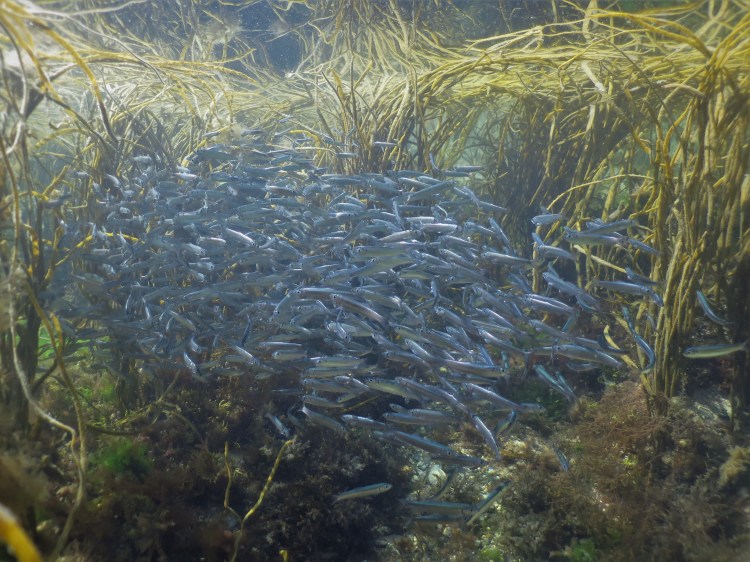
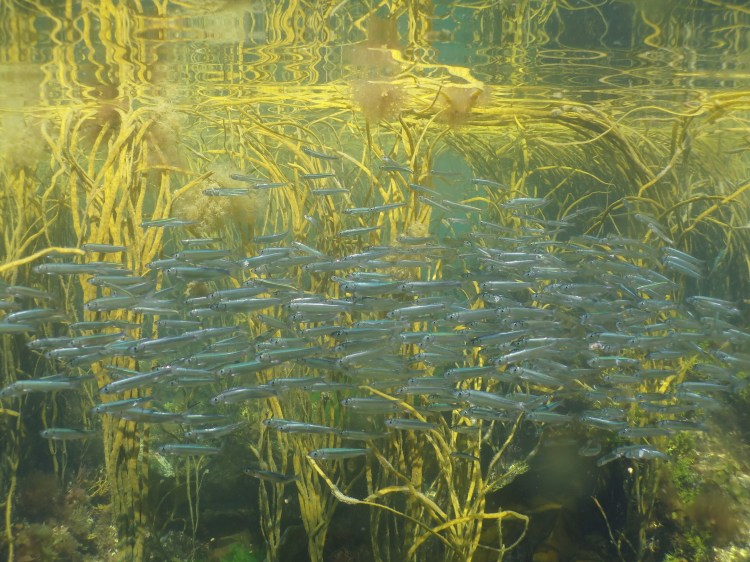
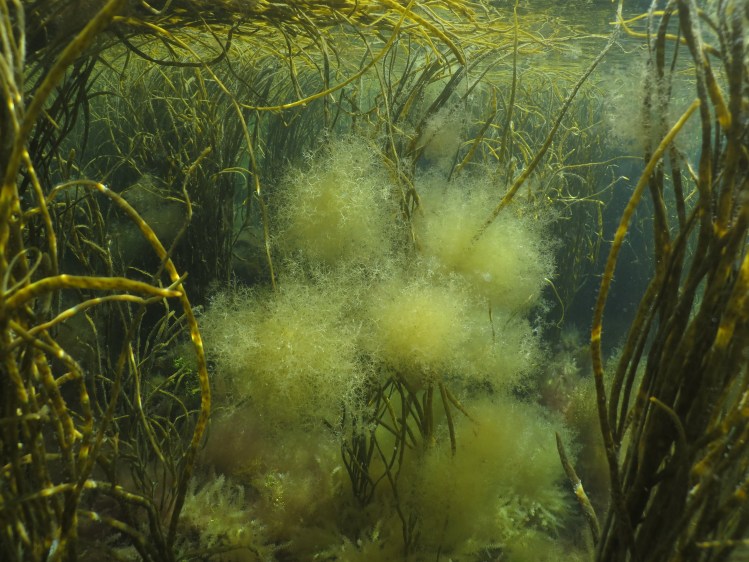
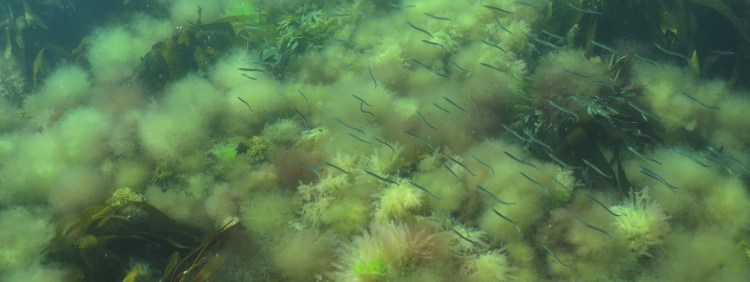 Last week I went for a little swim at the usual spot at Castle Beach. The viz was nowhere near as good as last month, but still OK. There are schools of sand eels and sand smelt and I even saw an eel. The contrast between growing brown seaweeds and withering red seaweeds has become even greater. Below you see some yellowed Harpoonweed and a ‘forest’ of Thong weed covered in epiphytes.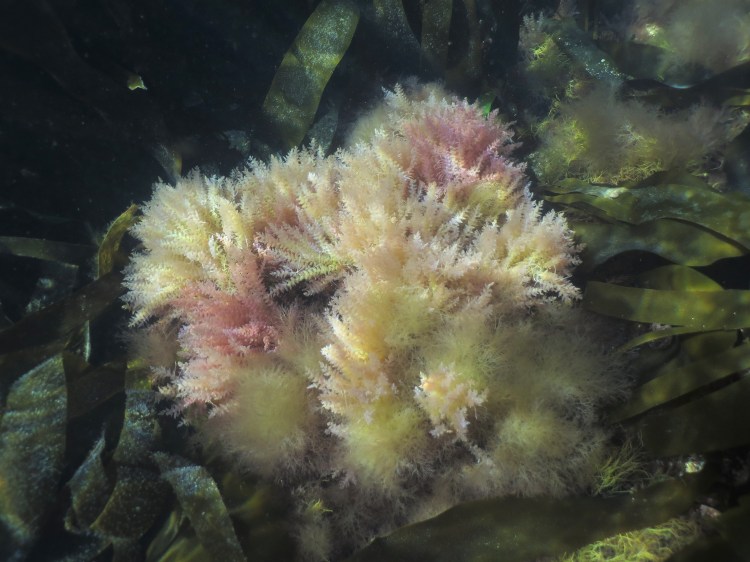
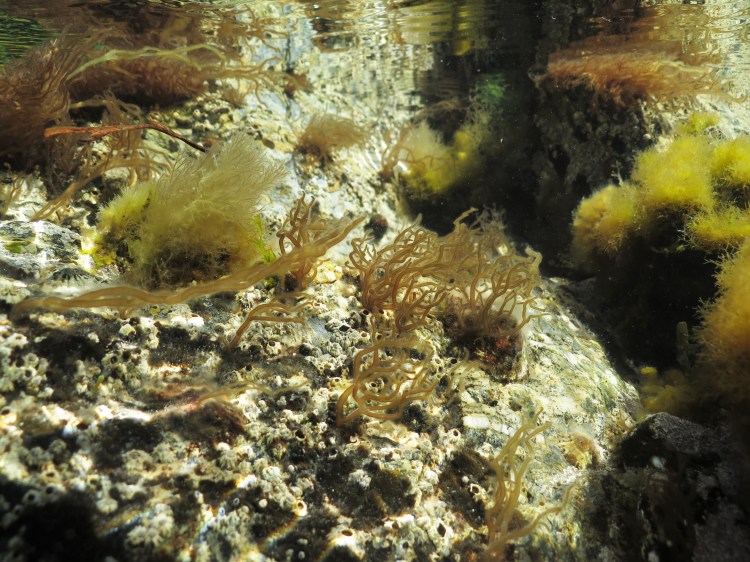
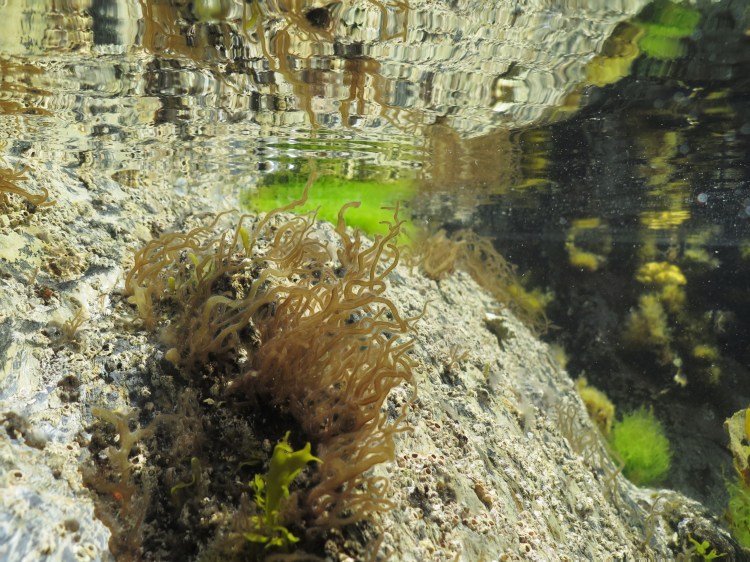
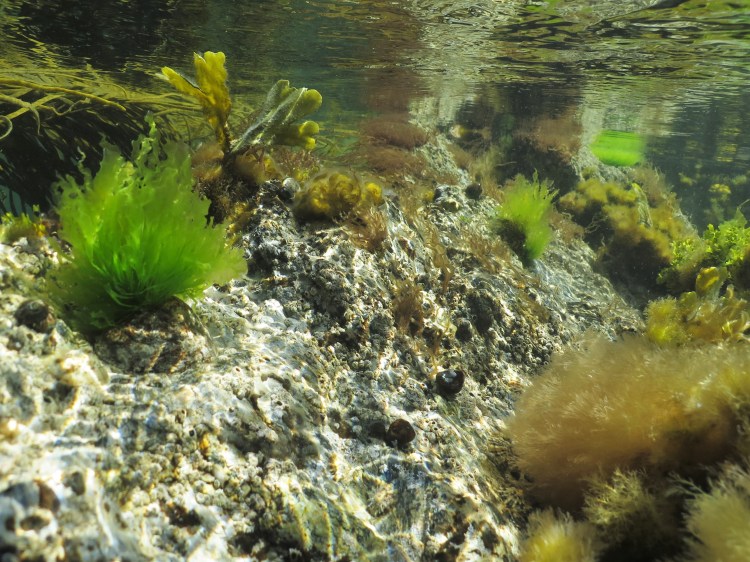
 As the light was a bit subdued, I focused on the most shallow area. The bare parts of the rock are covered with barnacles, dog whelks, sting winkles and limpets. The seaweeds are mainly Serrated wrack Fucus serratus, Sea lettuce Ulva, Grape pip weed Mastocarpus stellatus, some Ceramium and Laver Palmaria palmata, as well as Dumont’s tubular weed Dumontia contorta.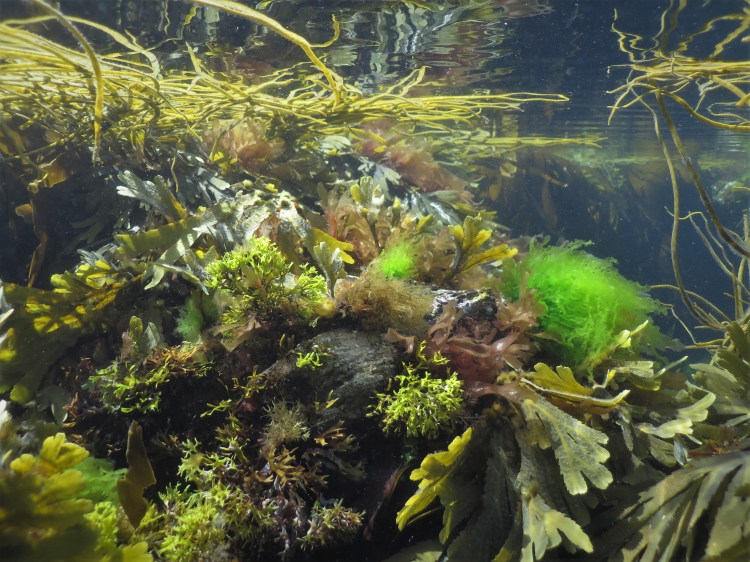
Falmouth Seaweeds (and fish) June
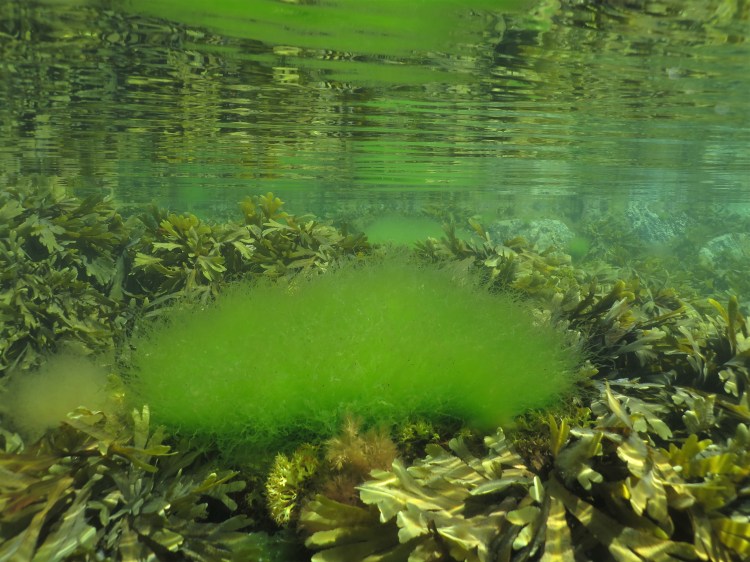
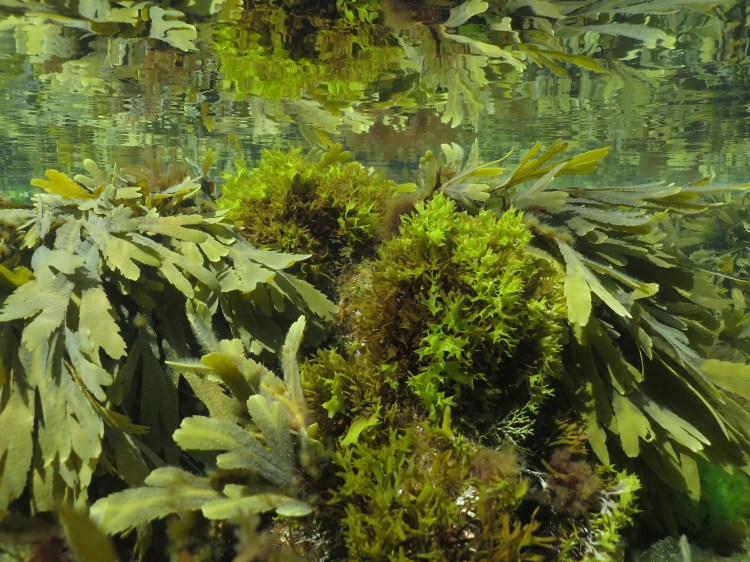
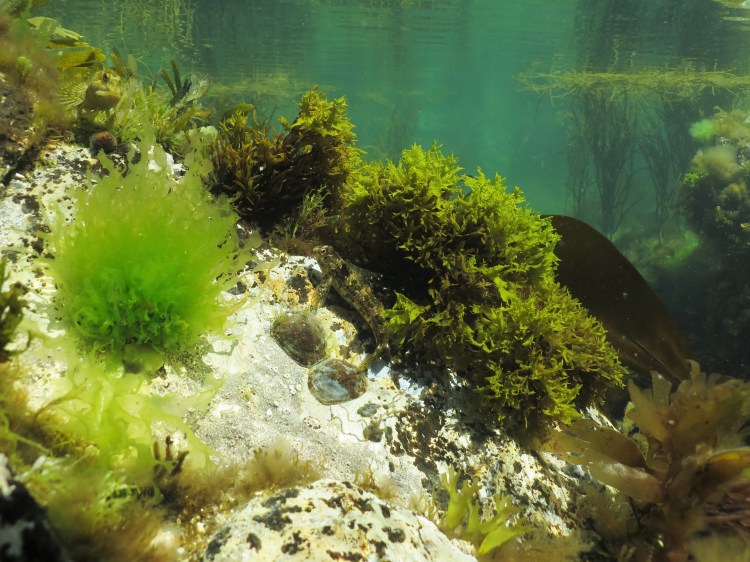
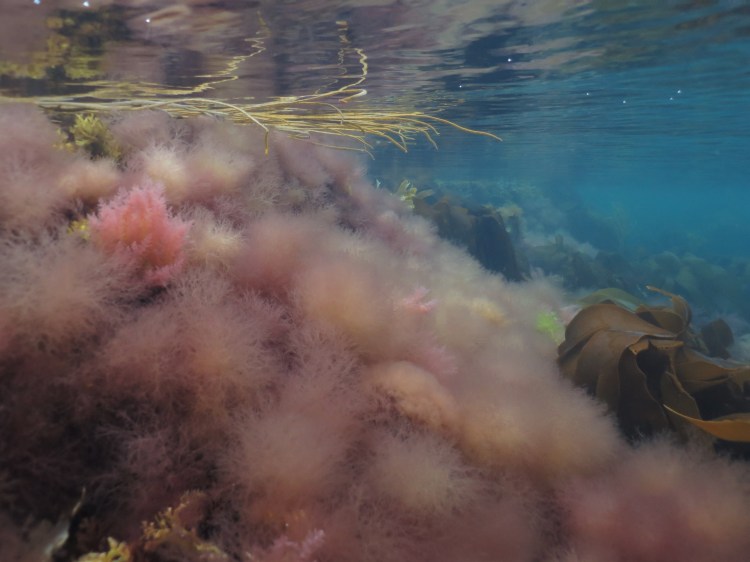
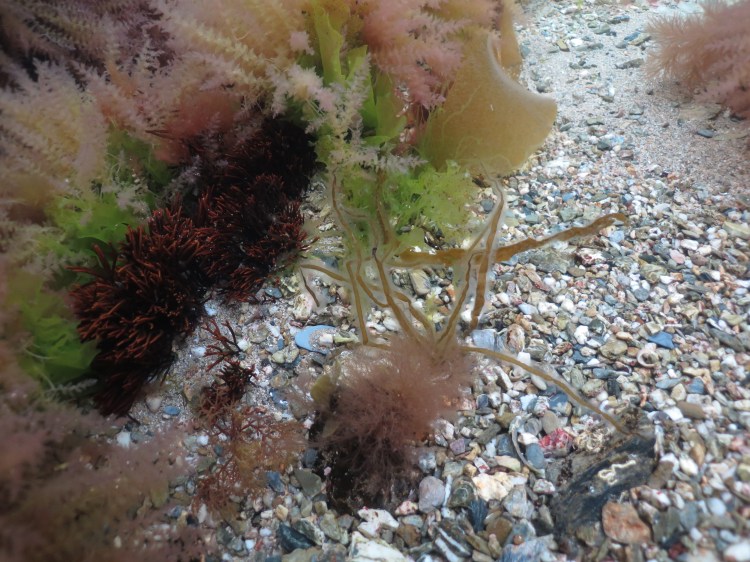
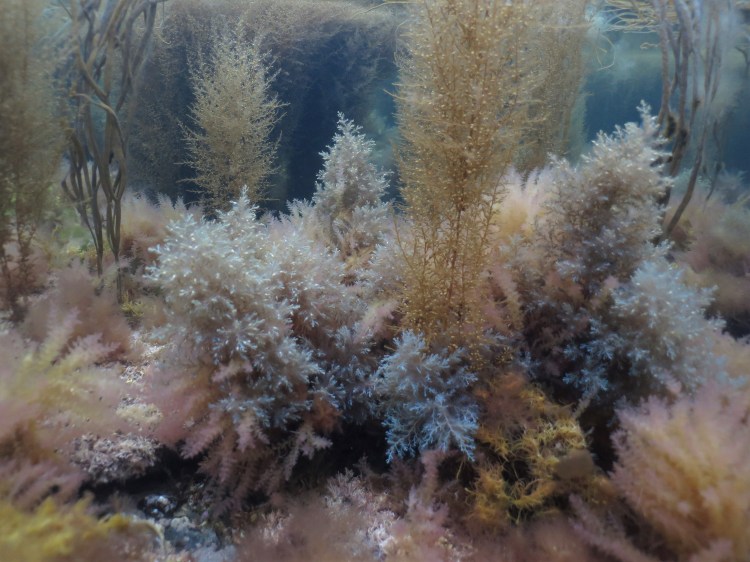
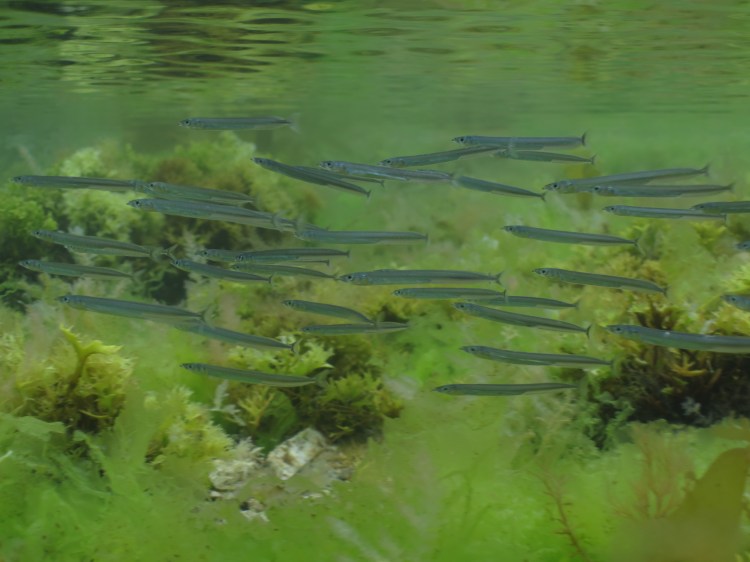 I have been diving three times last week but due to internet problems have not posted about them. I hope to do that in the coming days, but first wanted to blog about this mornings snorkel session in the shallow rock pools at Castle Beach in Falmouth, as I experienced the best viz (visibility) ever here. Apart from the stunning viz, I was very lucky with the fish: I spotted a Tompot blenny, Two-spot Gobies, Fifteen-spined stickleback, Rock goby, Pollack, Ballan-, Corkwing- and Goldsinny Wrasse and Sand eels (above and below). However, I mainly wanted to check what the seaweeds looked like, and things have definitely changed over the last month (see here).
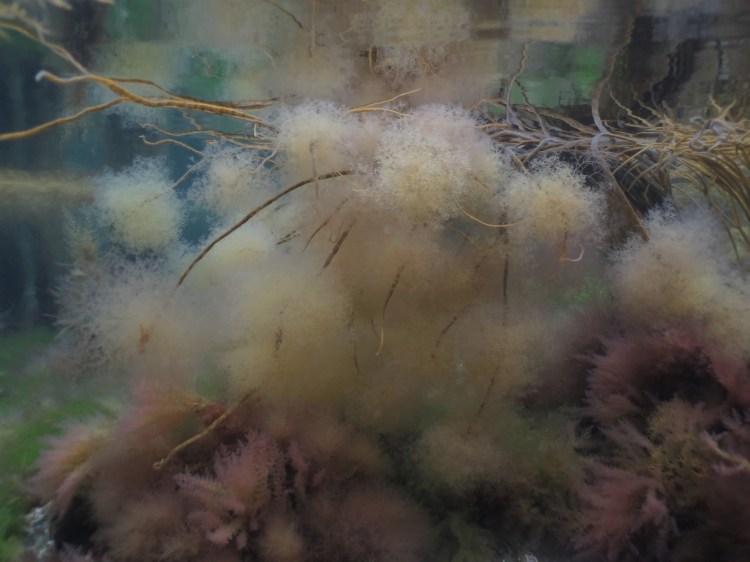
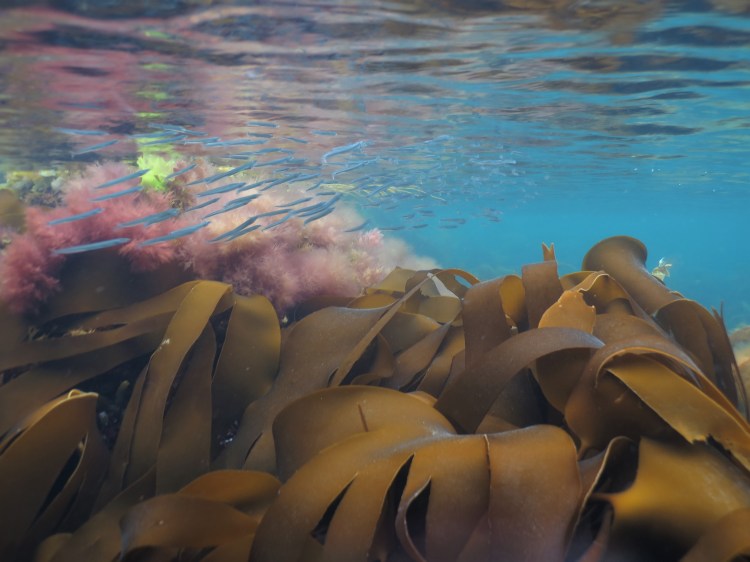 The Wireweed Sargassum muticum and Spaghetti (or Thong) weed Himanthalia elongata are thriving and at low tide hang over the surface creating ‘tunnels’. The Harpoonweed below is in decline, turning from pink to yellow-white (and the Bonnemaisonia is almost completely gone). The fronds of the False eyelash weed have turned from juicy and red-brown to wiry and yellow and the corraline algae are turning white. The Sea lettuce Ulva has died back and is covered in speckles (sporangia?).


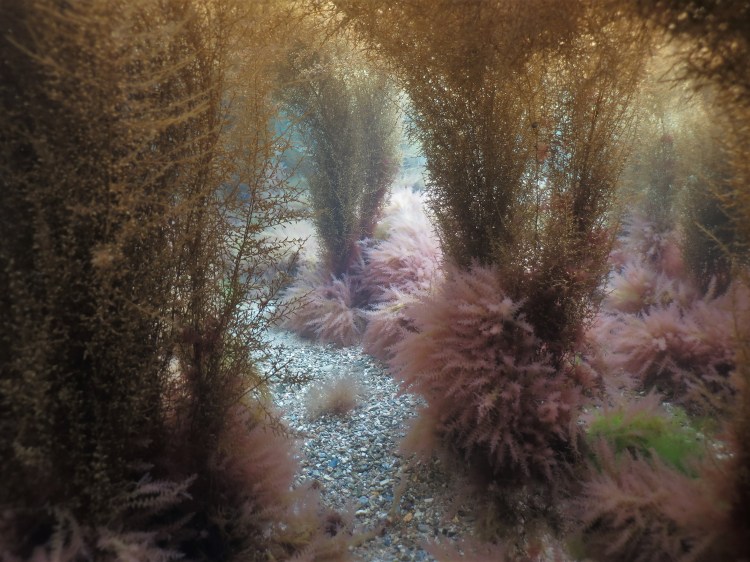
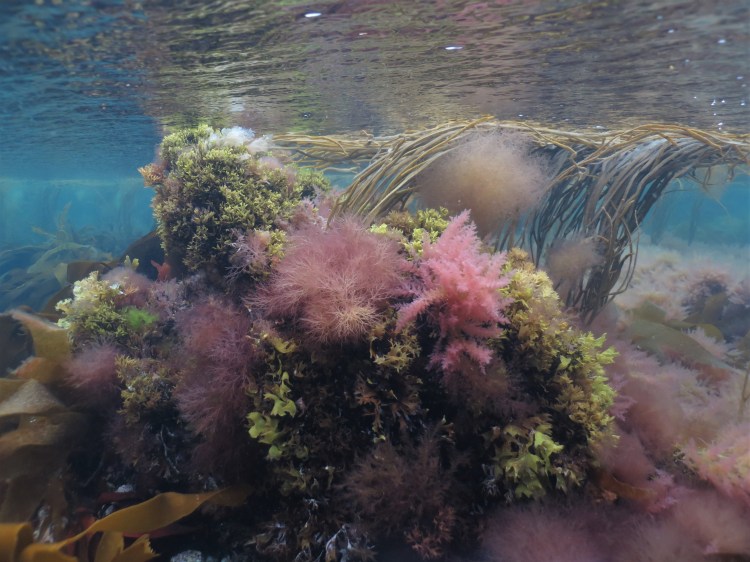
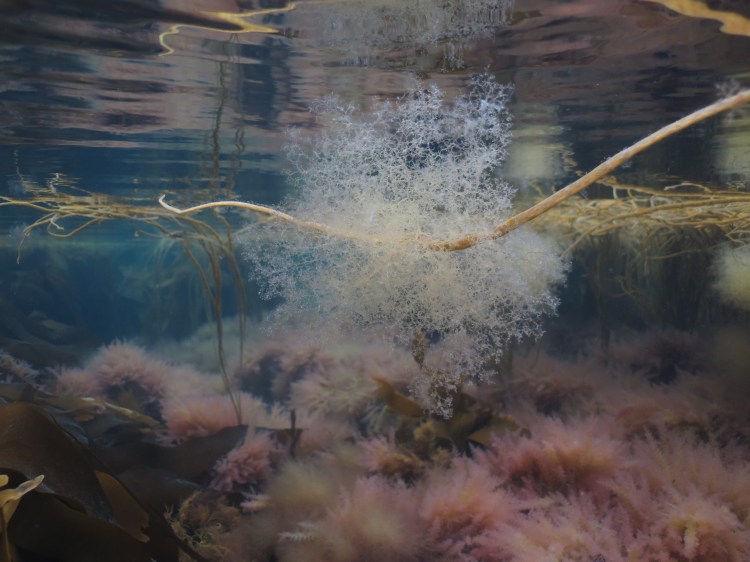
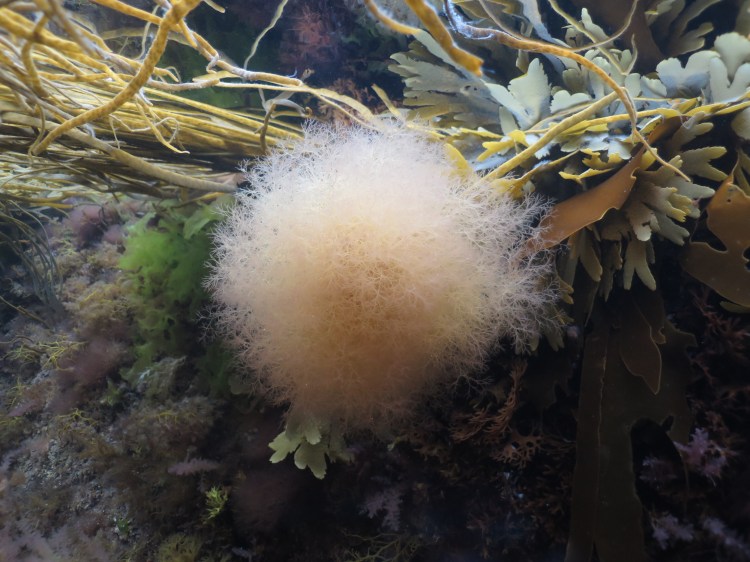
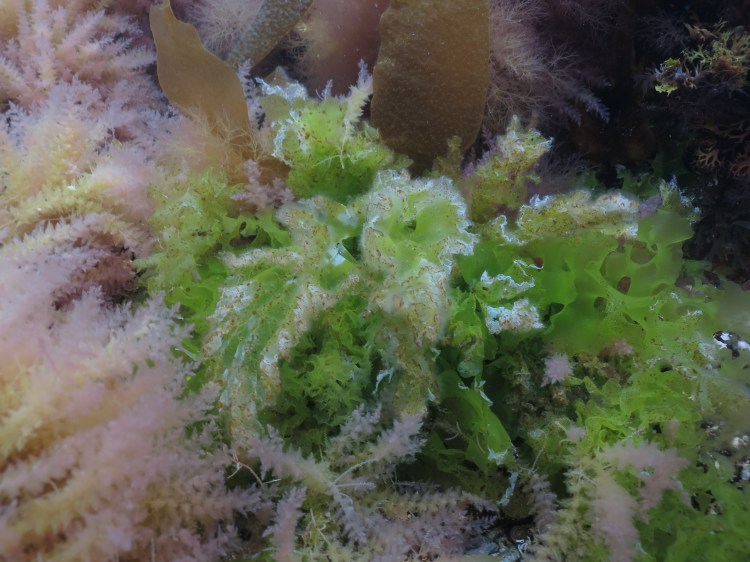 Some epiphytes are thriving, the very fuzzy brown Pylaiella littoralis covers kelp, a Ceramium species grows as pompoms on the Spaghettiweed. One pink and fuzzy species that is growing well I should have taken a closer look at because I am not sure what it is now (I will enquire at the Seaweeds of the NE Atlantic facebook group). The next species I think I can identify: Chipolataweed Scytosiphon lomentaria. The Bushy rainbow wrack Cystoseira tamariscifolia looks fuzzier and greyer than before. Although with less species and more subdued colours, the pools still look beautiful, and I hope the good visibility will last a bit longer!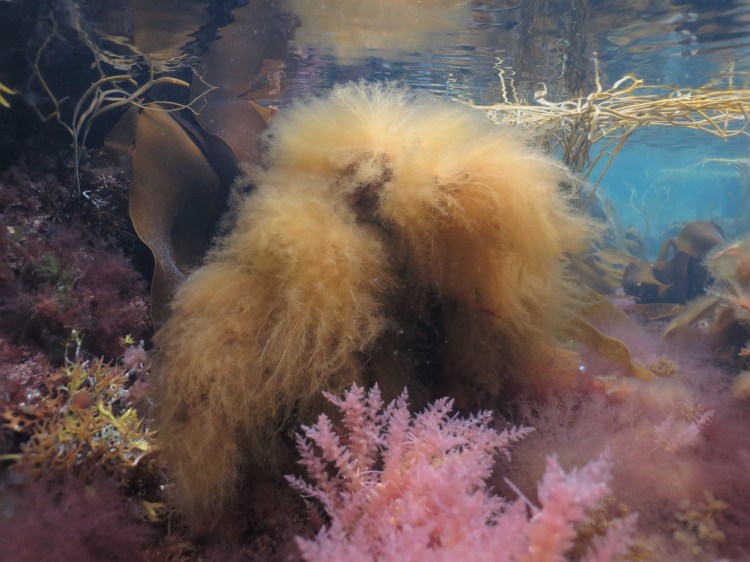

Porthcurno
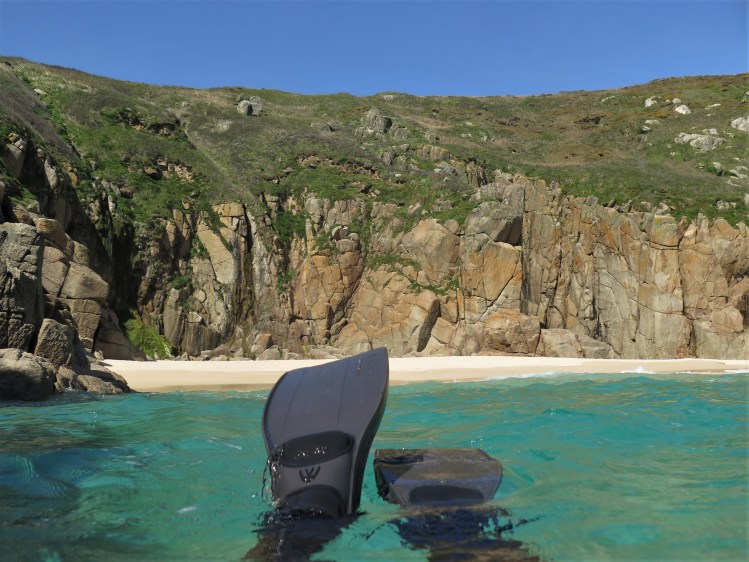 Just a photo to show the beauty of Cornwall in spring! The snorkeling at the beach in Porthcurno (next to the marvellous Minack Theatre) was very pleasant this weekend, although there was not a lot to see: mainly white sand and wave-battered rocks covered in barnacles. I have simplified the “An Bollenessor” domain name and updated the Links page btw.
two great encounters
Another snorkeling post. Last weekend off Gylly Beach and without a wet suit (sea water temperature close to 20C now!). Plenty of fish about, with my first snorkel sightings of Sea bass Dicentrachus labrax and small groups of Red mullet Mullus surmeletus. Much to my surpise I also spotted a Cuttlefish Sepia officinalis half hiding between dead seaweed drifting in the shallows. It was not particularly scared and stayed put while I swam around it but after a while it let out a squirt of ink and moved on. Of course this was just when I did not bring my lumix camera, so the next day I went back and luckily it was in exactly the same spot: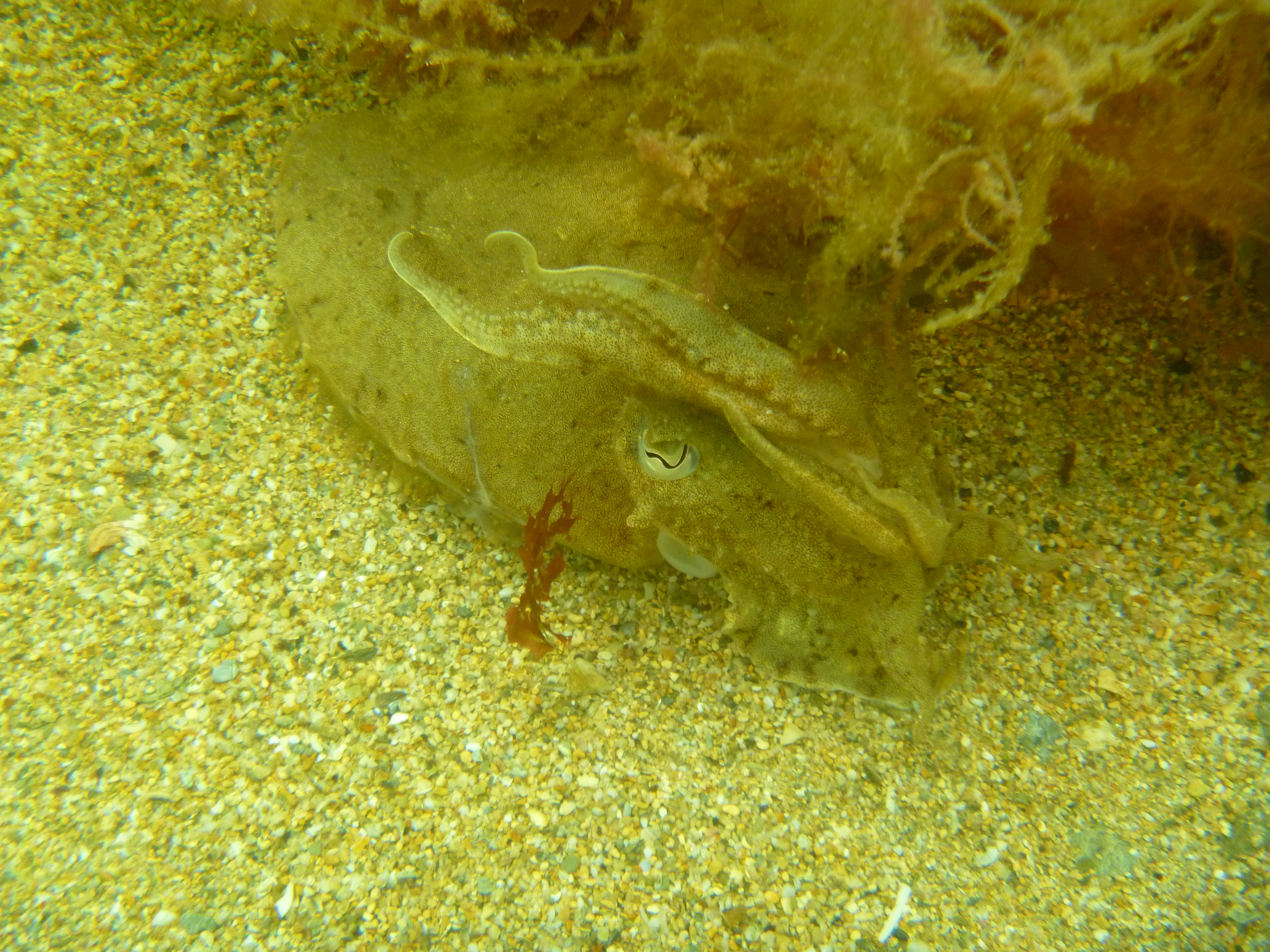 It did not end there. I next spotted a beautiful Blue jellyfish Cyanea lamarckii gently pulsating through the water column. Inbetween the tentacles three tiny fish were hiding, most probably juvenile Horse mackerel Trachurus trachurus: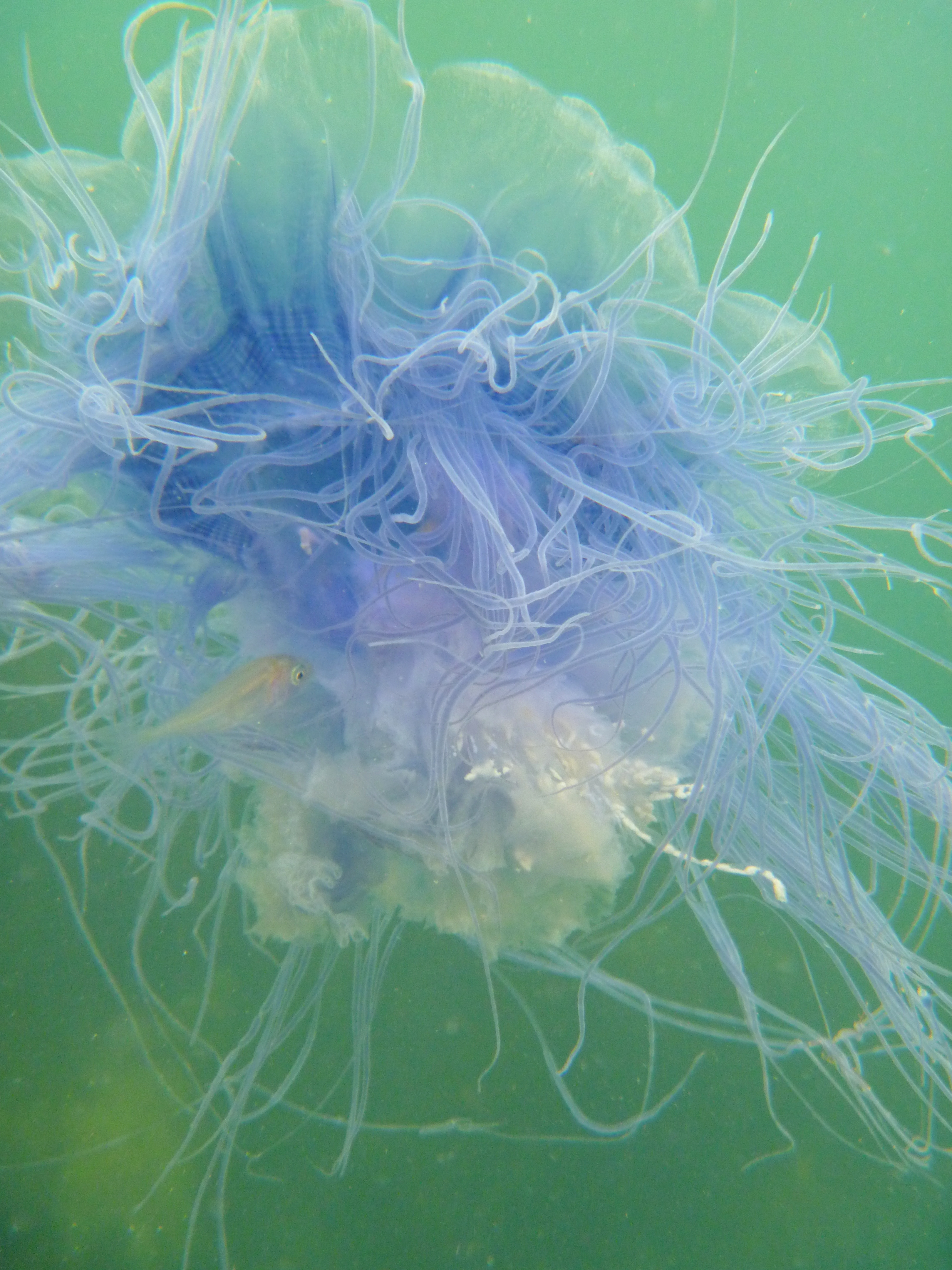
snorkeling at pendennis point
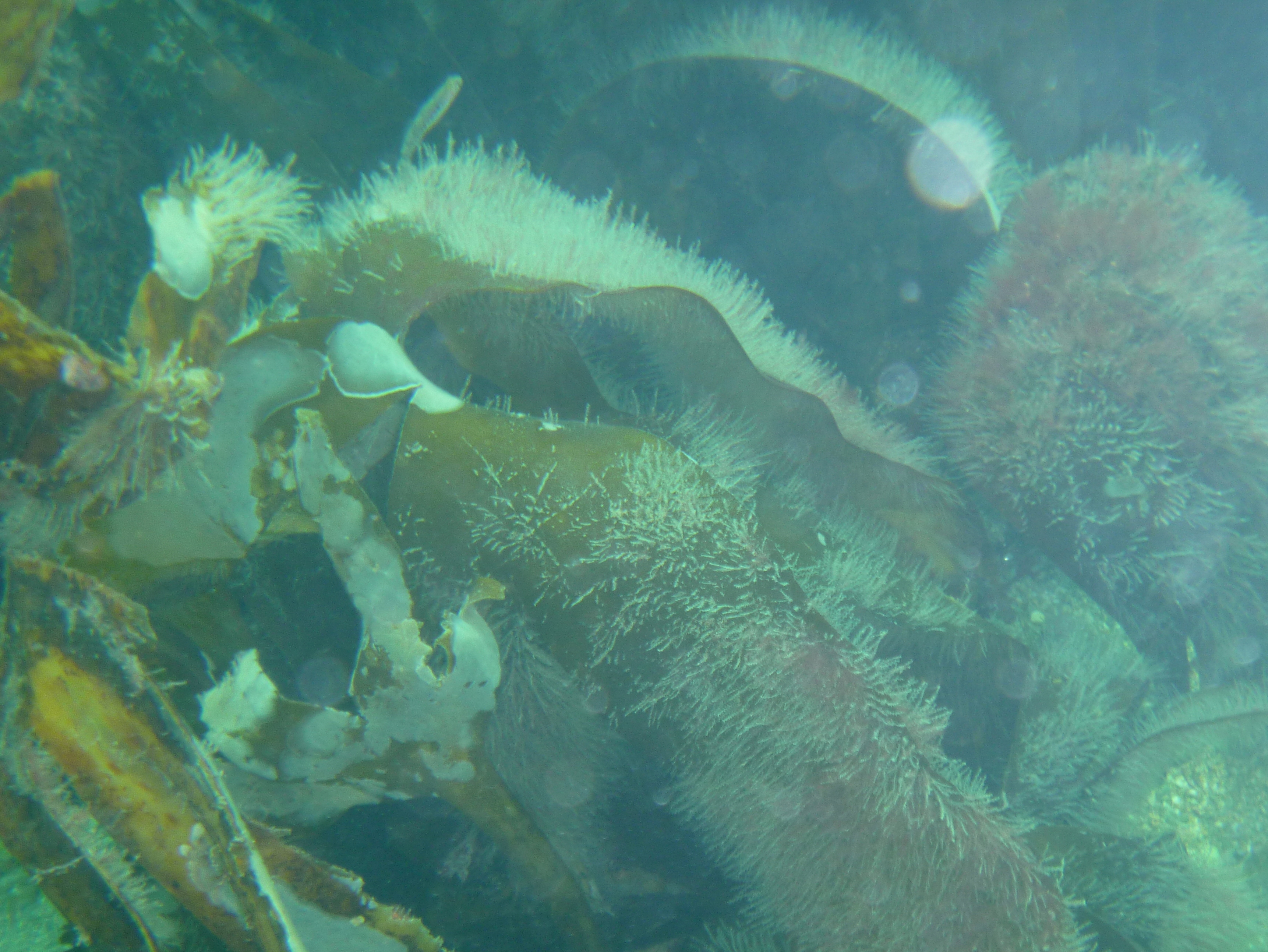
The sun was shining this weekend and the sea water is currently at its warmest so we went out for a bit of snorkeling off Pendennis Point in Falmouth. My experience with the iPhone waterproof case was not that good, so I took my Panasonic Lumix (DMC-FT10) along (which is not too great either!). The seaweeds are dying off mostly; the kelp is covered by bryozoans and hydroids to the point that they are completely fuzzy:
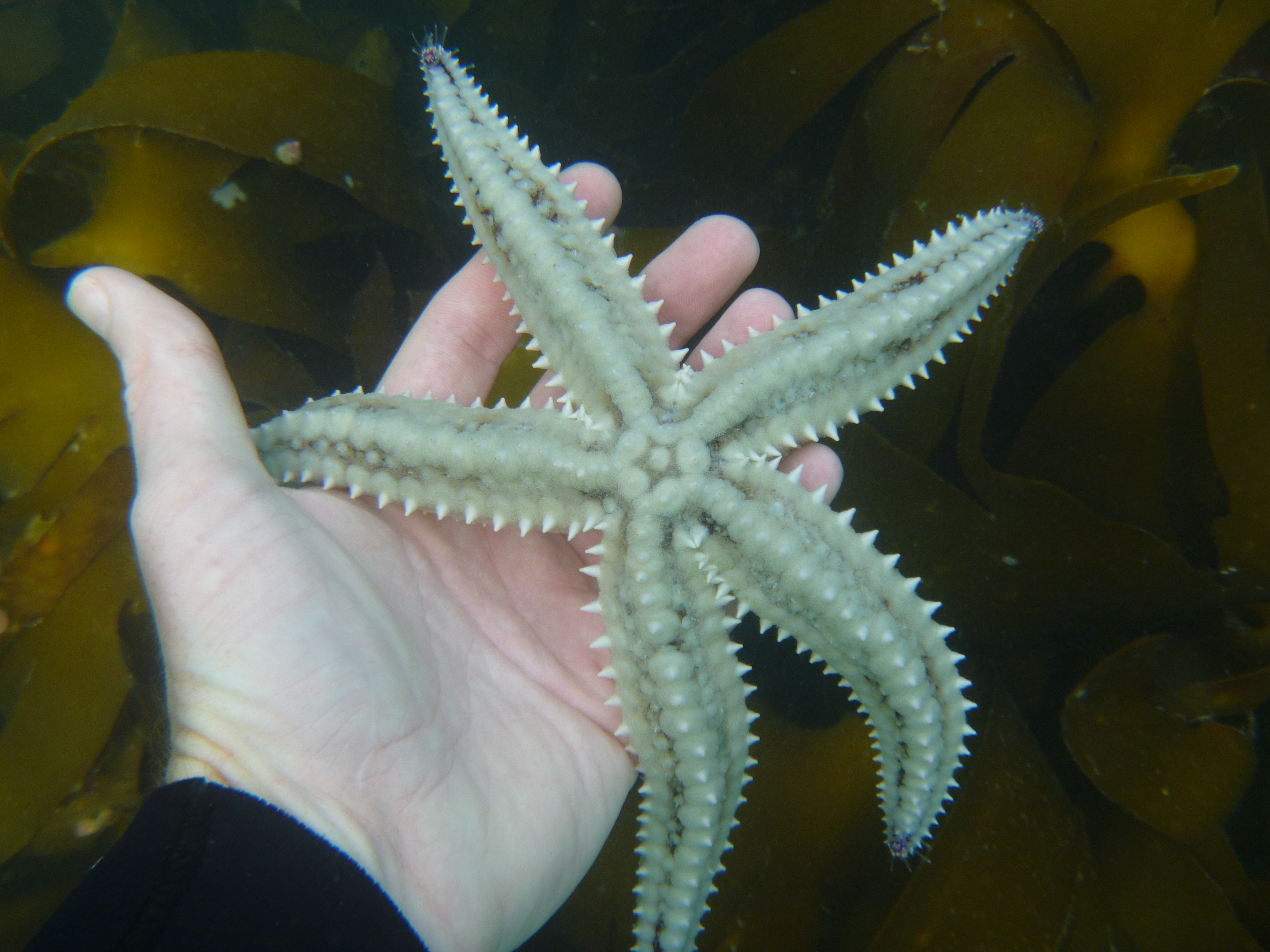
I mentioned in the previous post that the Spiny starfish Marthasterias glacialis was common in rock pools; bigger ones can be found when snorkeling:
Big Snakelocks anemones Anemonia viridis were everywhere and perhaps half of them had a little Leach’s spider crab Inachus phalangium associated with them. Wikipedia tells me that these crabs eat the anemones’ leftover food and also their mucus:
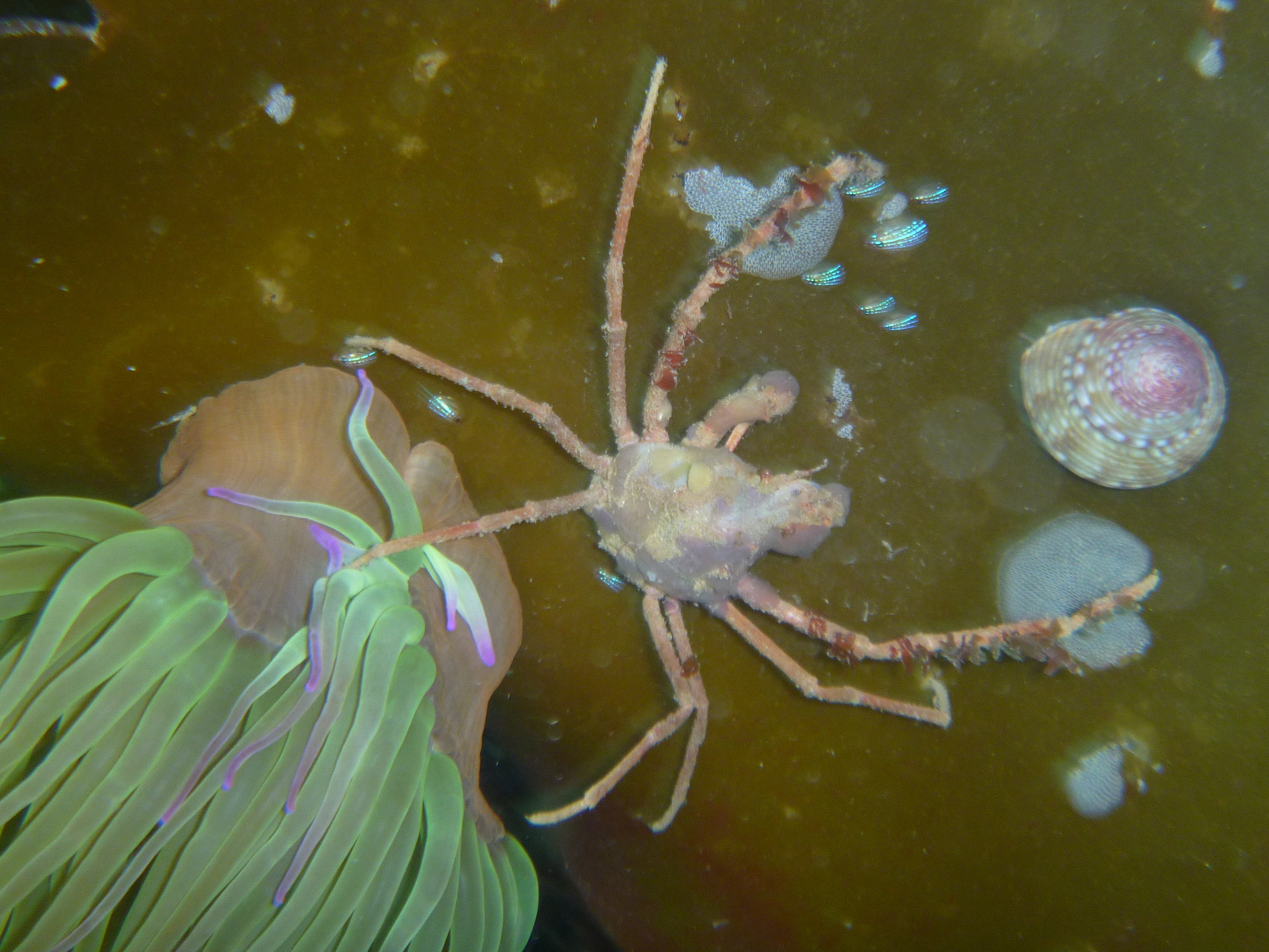
This hour of snorkeling gave me some inspiration for a new aquarium set-up: less seaweeds (specifically less dying seaweeds clogging up the filter and releasing nutrients) and more rocks. On top of these a couple of big snakelocks with spider crabs and some Two-spotted gobies Gobiusculus flavescens. The latter are very common and pretty. I will have to catch them underwater with a net though, which will probably be difficult…
Two starfish videos
I have started a youtube ‘An Bollenessor’ account to be able to embed some of my short iPhone videos here*. First my favourite the Cushion star Asterina gibbosa. My aquarium is more or less empty at the moment, but I still have five of these around. A short movie made with my olloclip macrolens showing how these little starfish move about using their tube feet:
I went out snorkeling yesterday in the mouth of the Helford river (in the rain). A very beautiful spot, I’ll post some pictures of it when I am back and it is sunny. It was high tide and the visibility was bad so I had to dive five meters or so to have a closer look at the Seagrass. I did not see that much but I did spot a Sand star Astropecten irregularis for the very first time. A very beautiful starfish with purple tips and very long tube feet. I took it home and placed it in the aquarium, after which it did what it does best: digging itself in:
*= I use Microsoft Moviemaker to upload files, so had to use my Microsoft account in addition to my Google account, a bit of a hassle. Anyway, it should be easier next time now everything has been set up. For the next videos I will make sure to clean the glass. I probably also should buy a gorillapod to keep my phone still.
 An Bollenessor