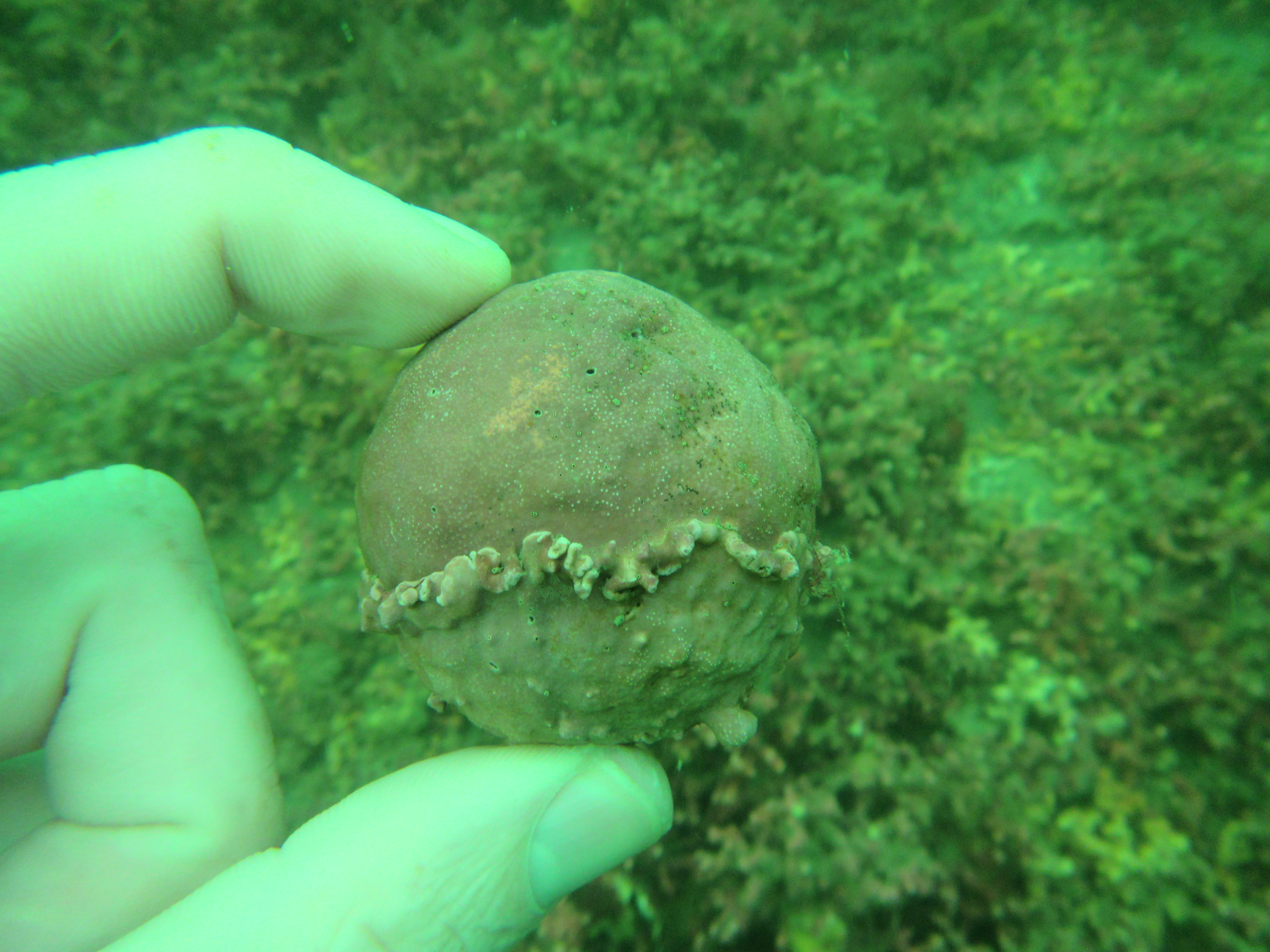
The weather was not great last weekend and we were too late at the diveshop on Saturday to be back in time to get the tanks refilled for a dive on Sunday but the one dive was (as always) worth the effort! We took dive buddy Chris’s boat from Loe Beach in Feock over to the other side of the Fal Estuary (between St. Just and St. Mawes) to explore the Maerl beds. See an earlier post on a snorkel trip to see this bed of ‘Cornish coral’ for some more background information. After the usual faffing about with equipment on board we plunged in the water. I took a single photo of the boat which turned out quite dramatic: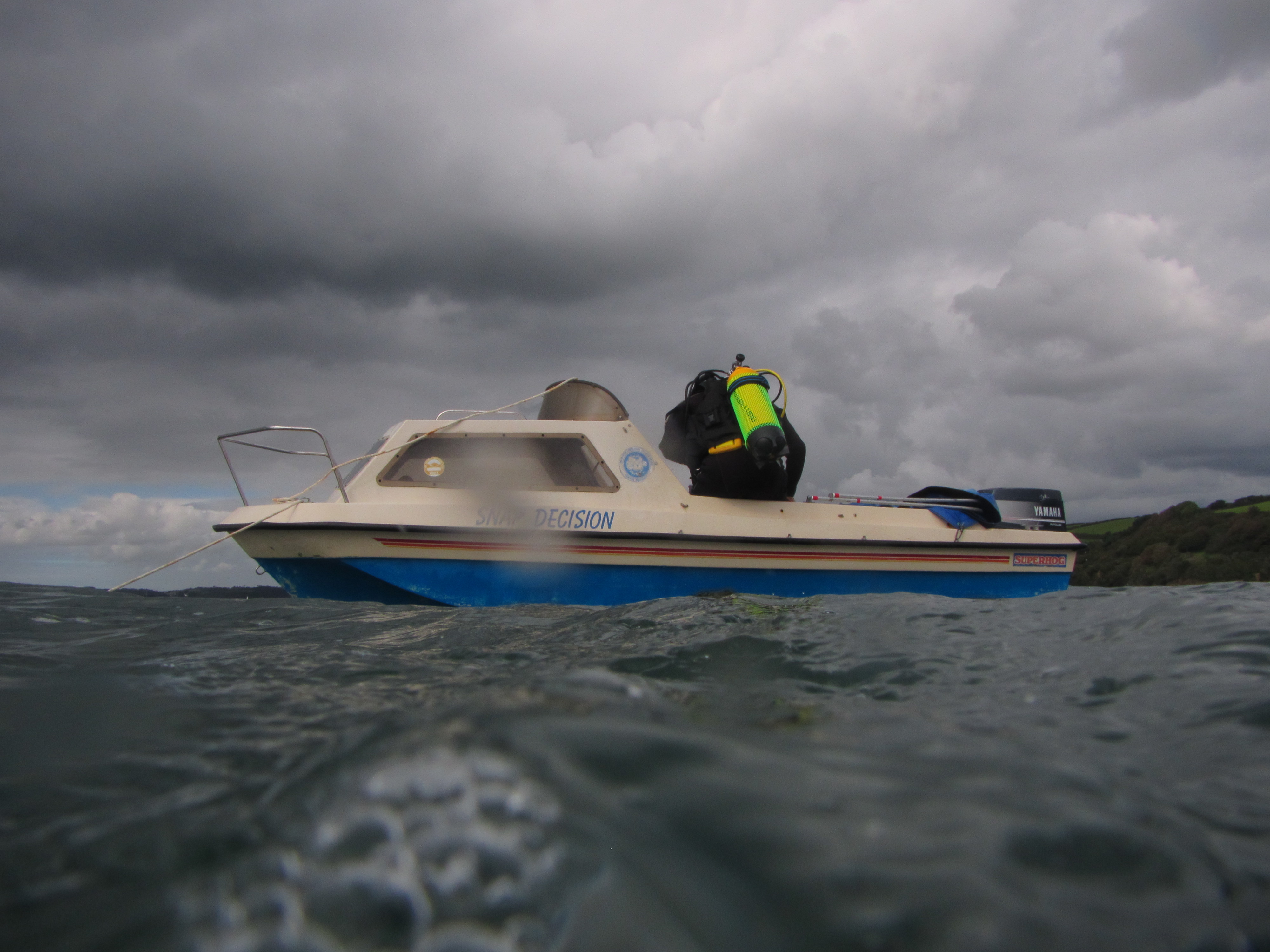 Although we were diving 1-2 hours before high water (the best time, as clear seawater is pushed in the estuary), the visibility was quite bad. After going just a couple of meters down, fields of maerl loomed into view (the dive was really shallow, 5.9 meters max I think!). There were quite a lot of Thornback ray Raya clavata egg cases (foreground first picture) but we did not see the rays themselves. There are two main Maerl genera around here, Phymatolithon and Lithothamnion but their growth forms are varied and there are other encrusting Pink paint weeds that could look similar. We saw a number of golf balls that were completely covered in coralline algae, quite cool.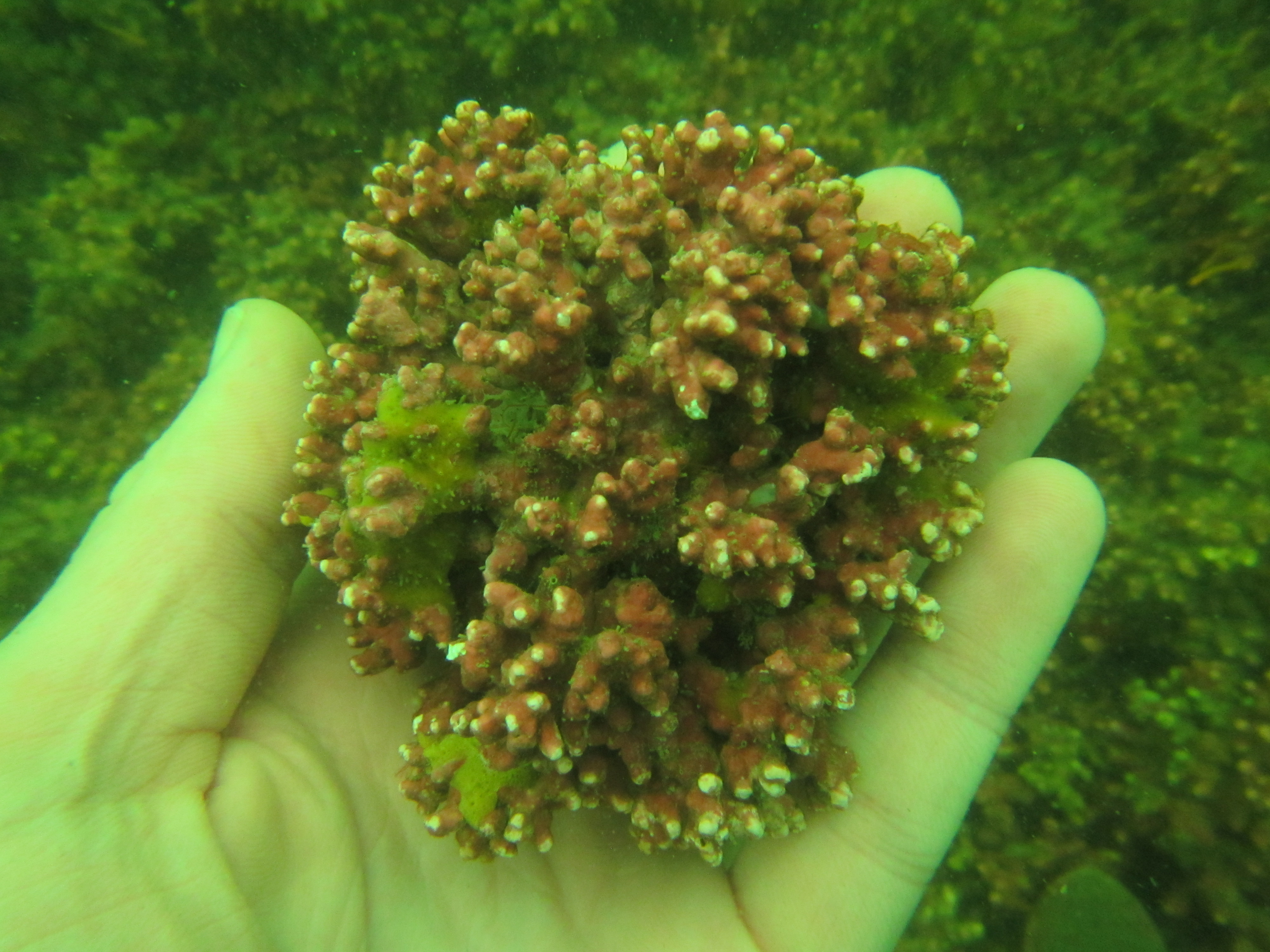
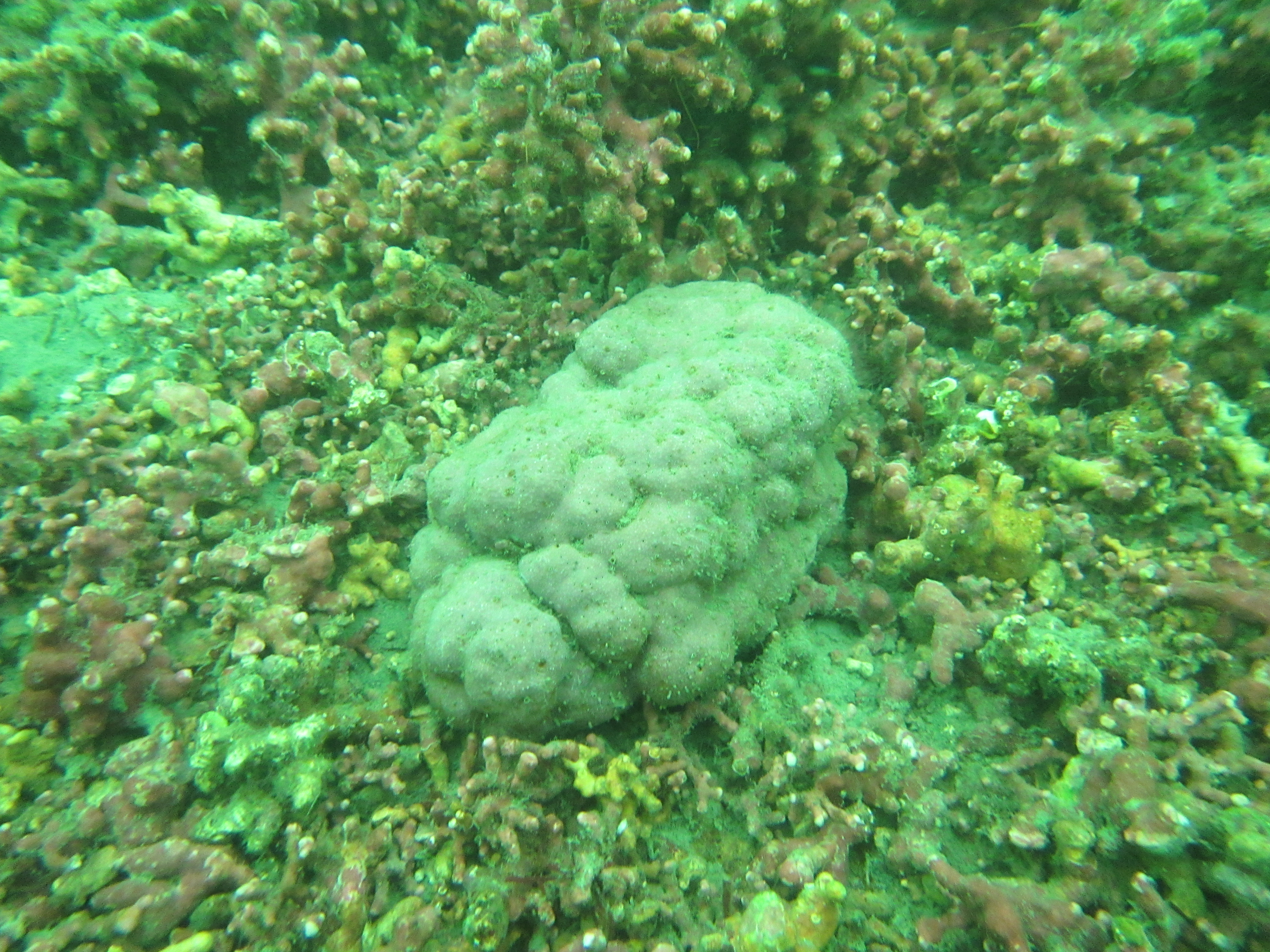
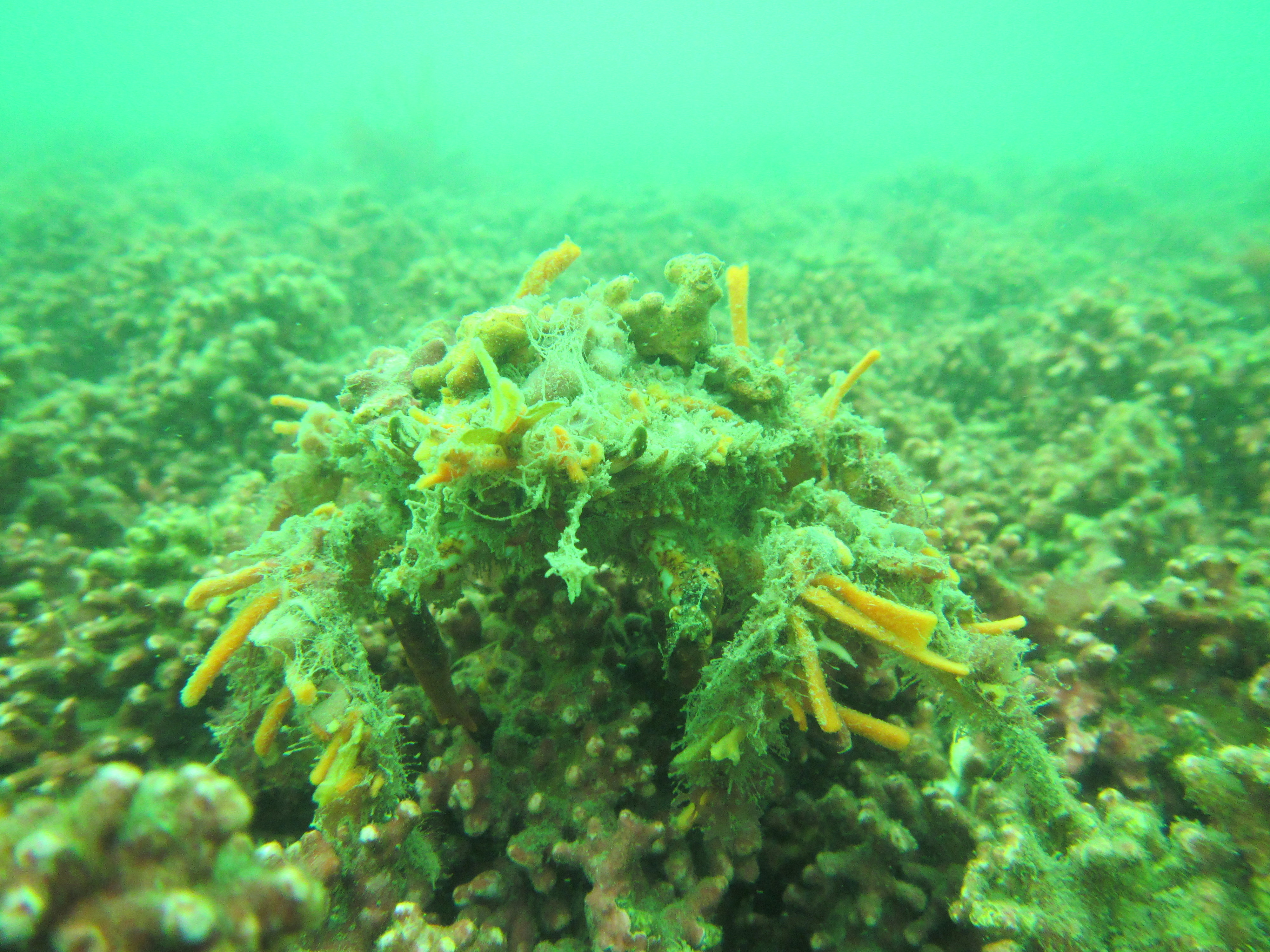
 We saw a couple of *very well* camouflaged crabs sitting about. They were completely covered by sponges, coralline algae and seaweeds. There are a number of crab species shaped like this but most of them seem too small. Best guess is th
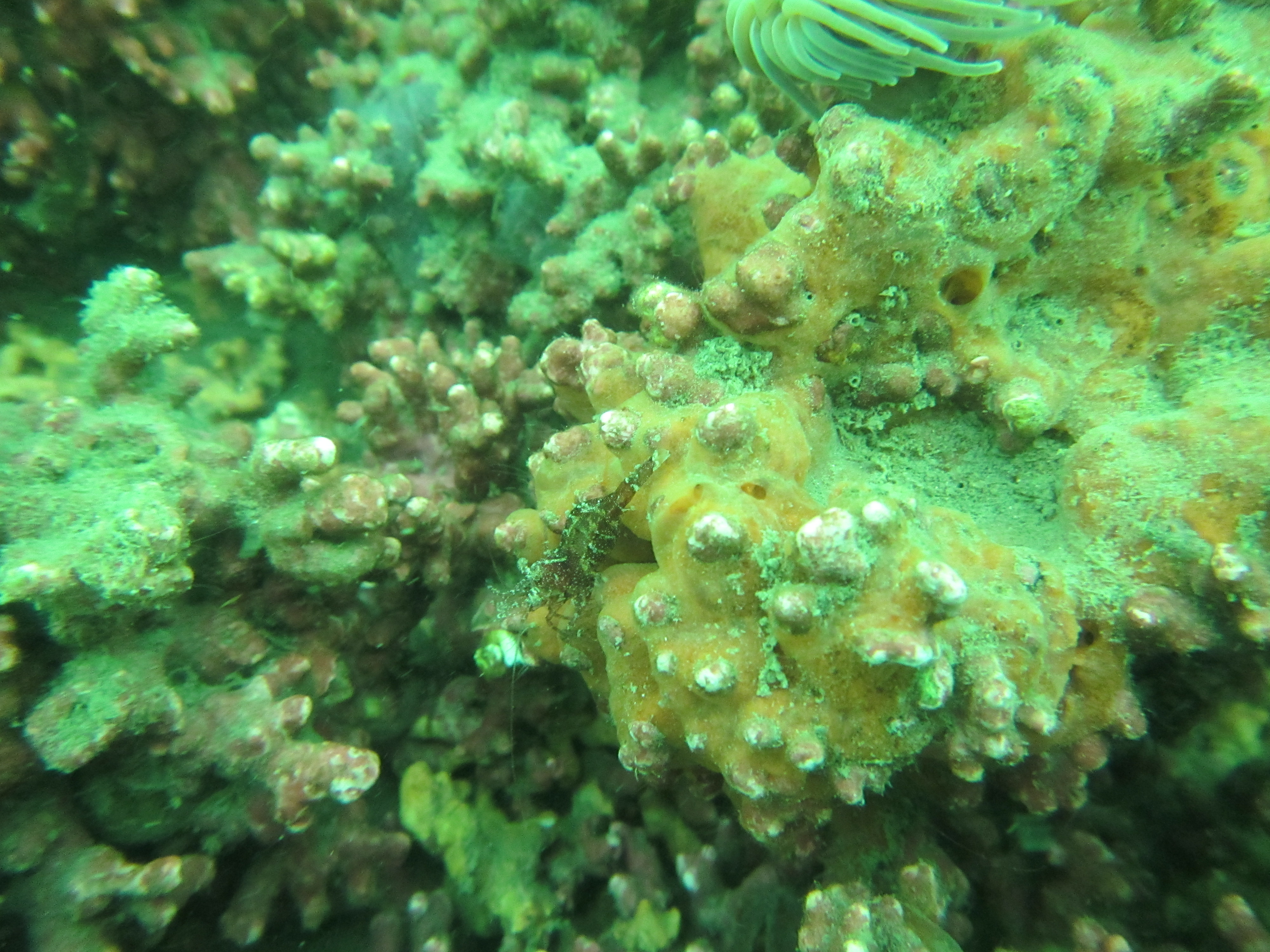
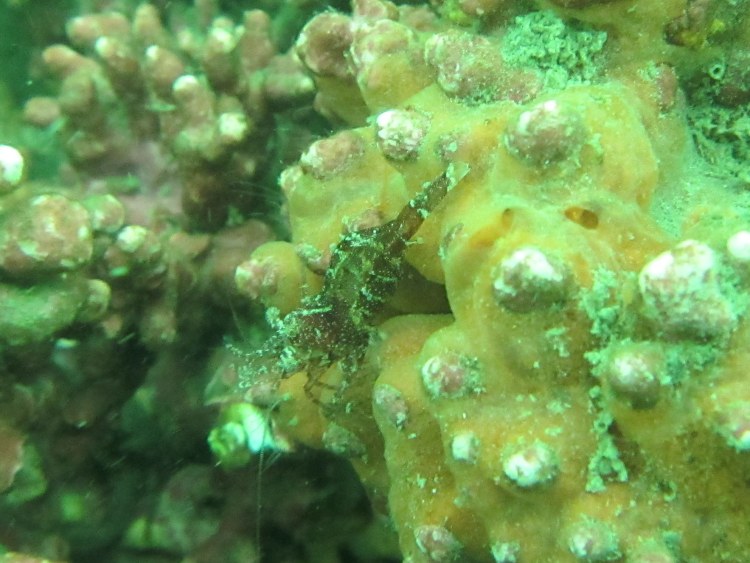
e Toad crab Hyas coarctatus the Europan spidercrab Maja squinado in a particular extravagant mood. There are lots of little things hiding in the Maerl; gobies (rock gobies I think), squat lobsters, swimming crabs, hooded prawns and things that hide faster than I can identify them. I noticed a dainty little prawn sitting about which is probably Thoralus cranchii, although it could also be Eualus occultus (second picture is cropped).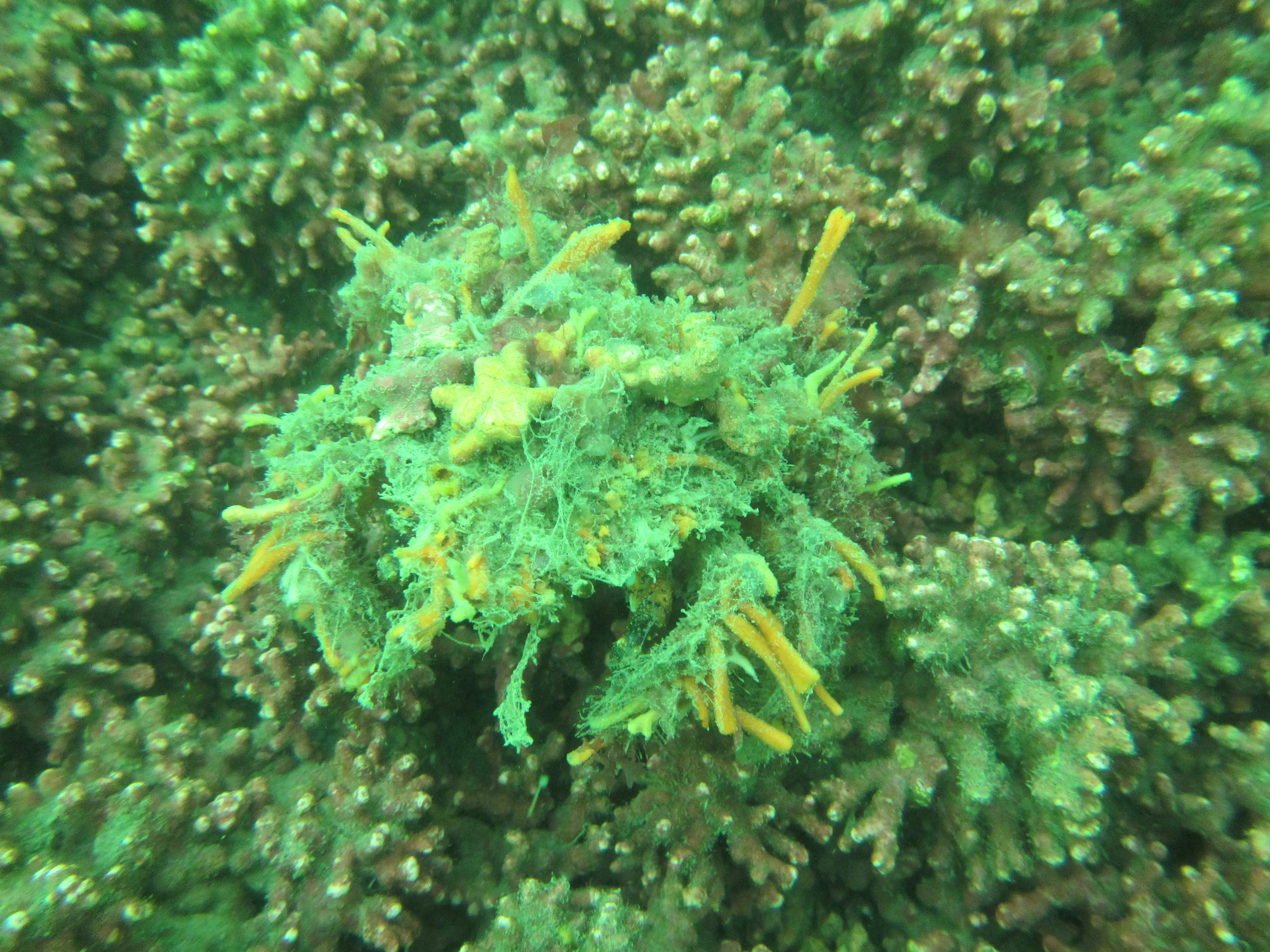
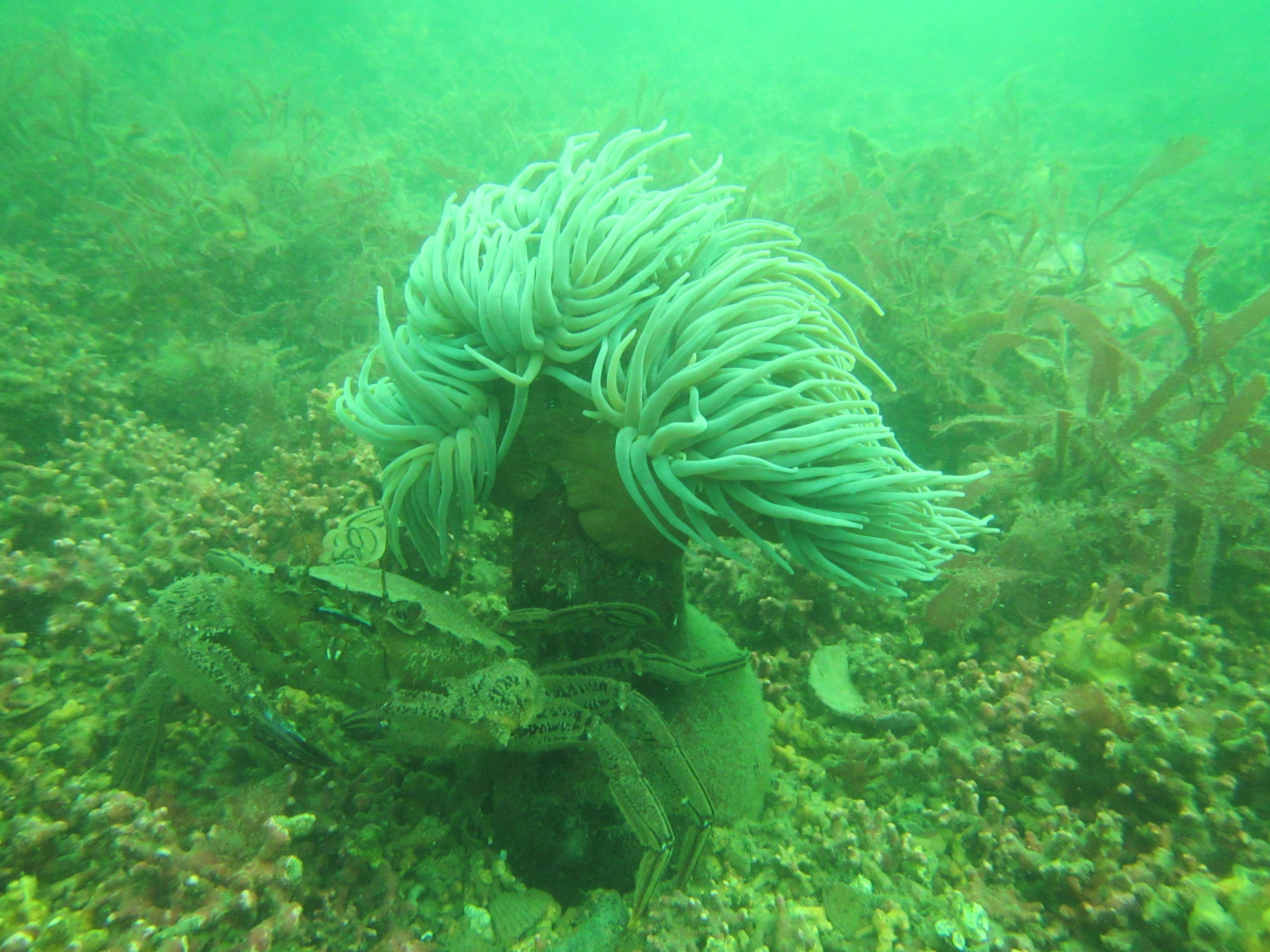
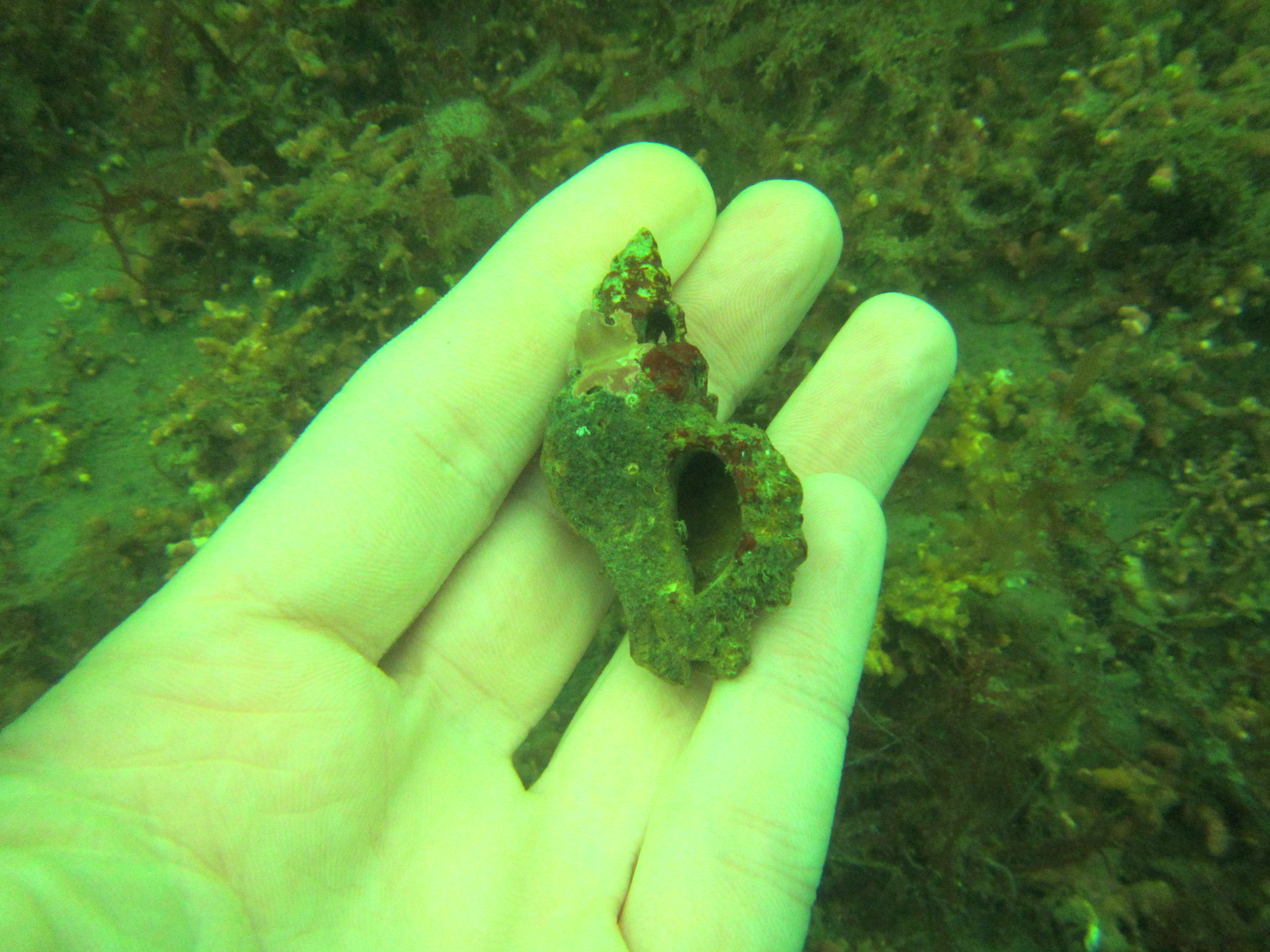
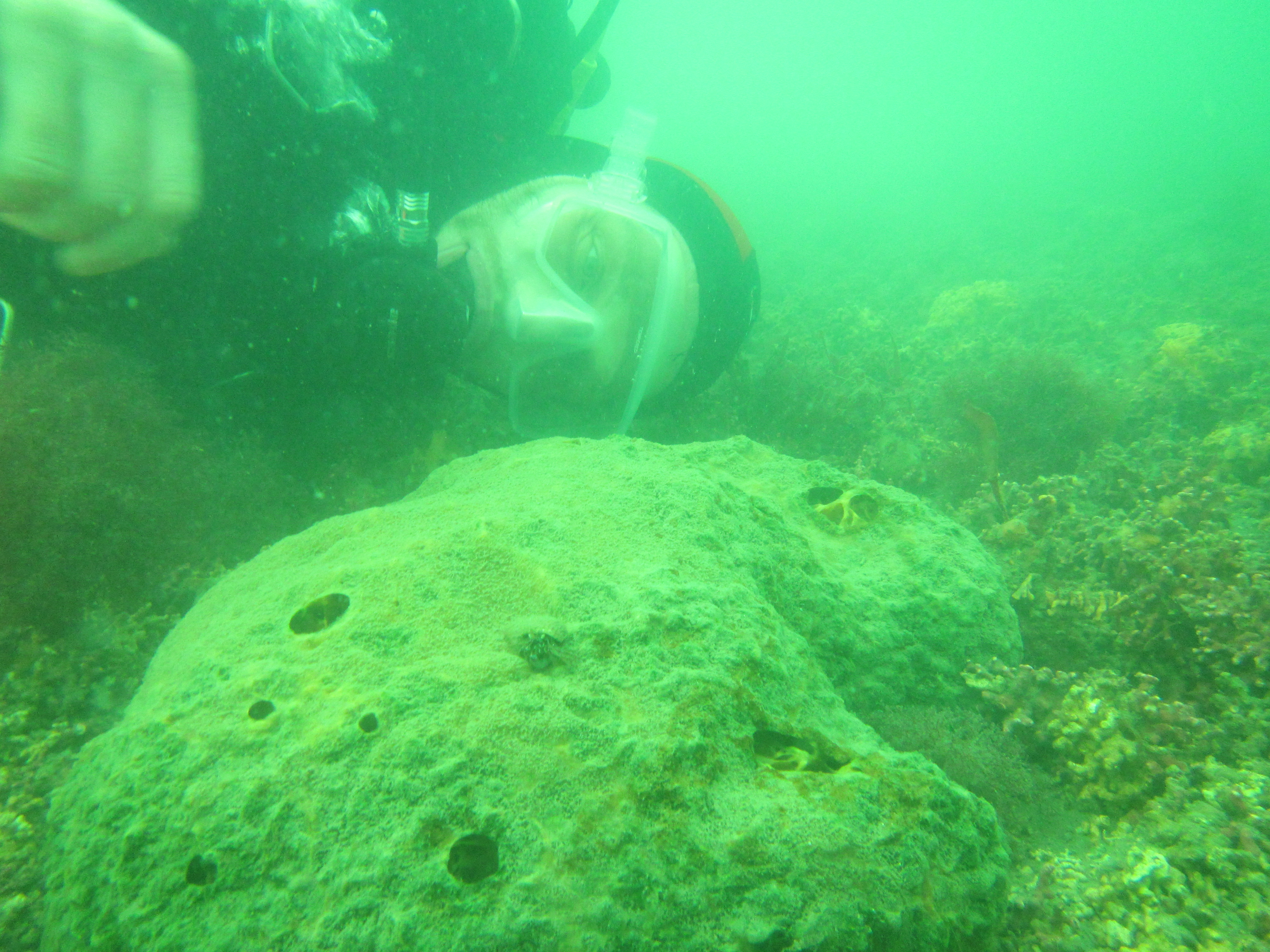
 Swimming crabs were common and probably mostly were the Harbour crab Liocarcinus depurator. The first picture was the only one with flash and shows the Maerl colours a bit better. The second photo shows a Velvet swimming crab Necora puber under a snakelocks anemone sitting on top of a bottle. This species can be very commonly seen rockpooling. Lastly an empty shell of the largest European sting winkle Ocenebra erinaceus I have seen so far and probably the largest sponge I have seen so far too (with a human head for scale).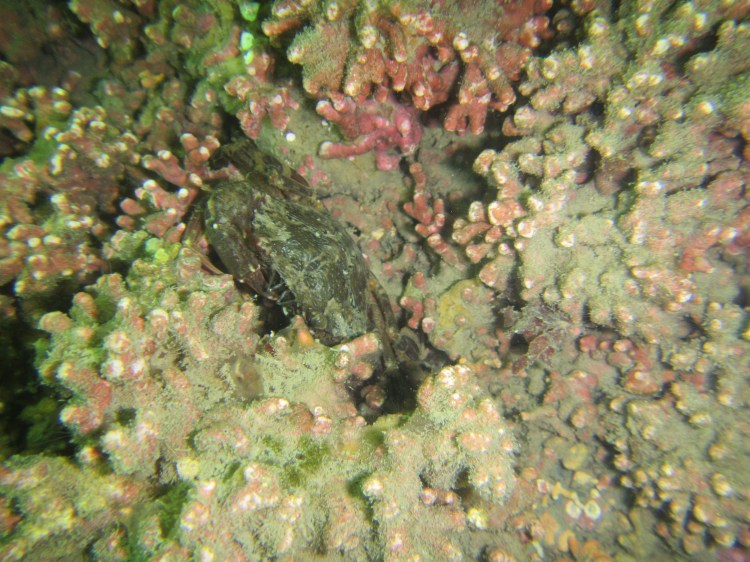
Tag Archives: Pink paint weed
Bretagne: Erquy
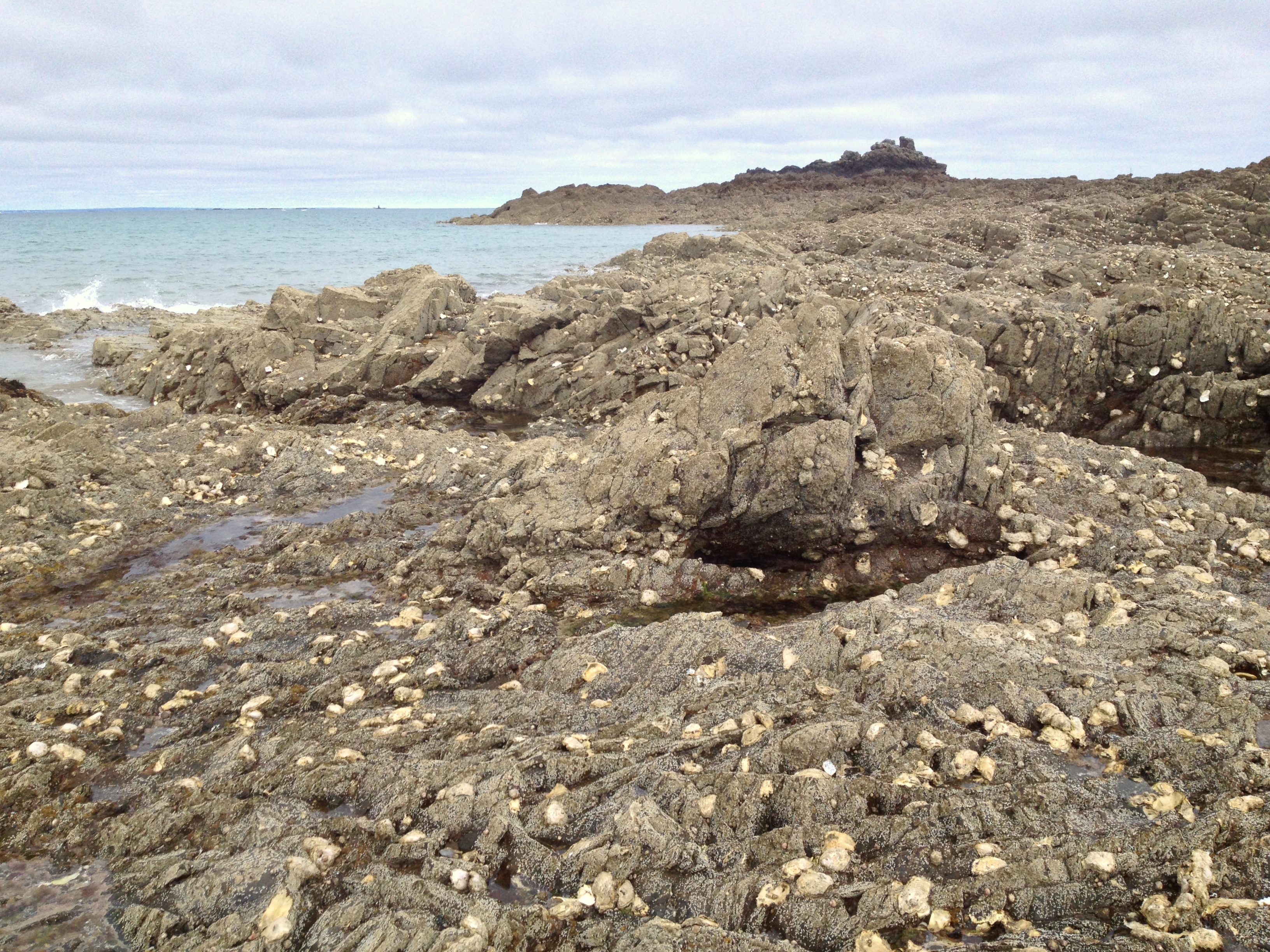
Last week we crossed the channel to attend a friend’s wedding in Bretagne (Brittany). This of course also called for some rock pooling action, first at the village of Erquy. It was interesting to compare the shores of Bretagne to Cornwall (or at least Falmouth and this small stretch of coast in northern Bretagne). Immediately noticeable was the large amount of oysters on the rocks (with some locals busy collecting them, quelle surprise); these are pretty much absent in Falmouth:
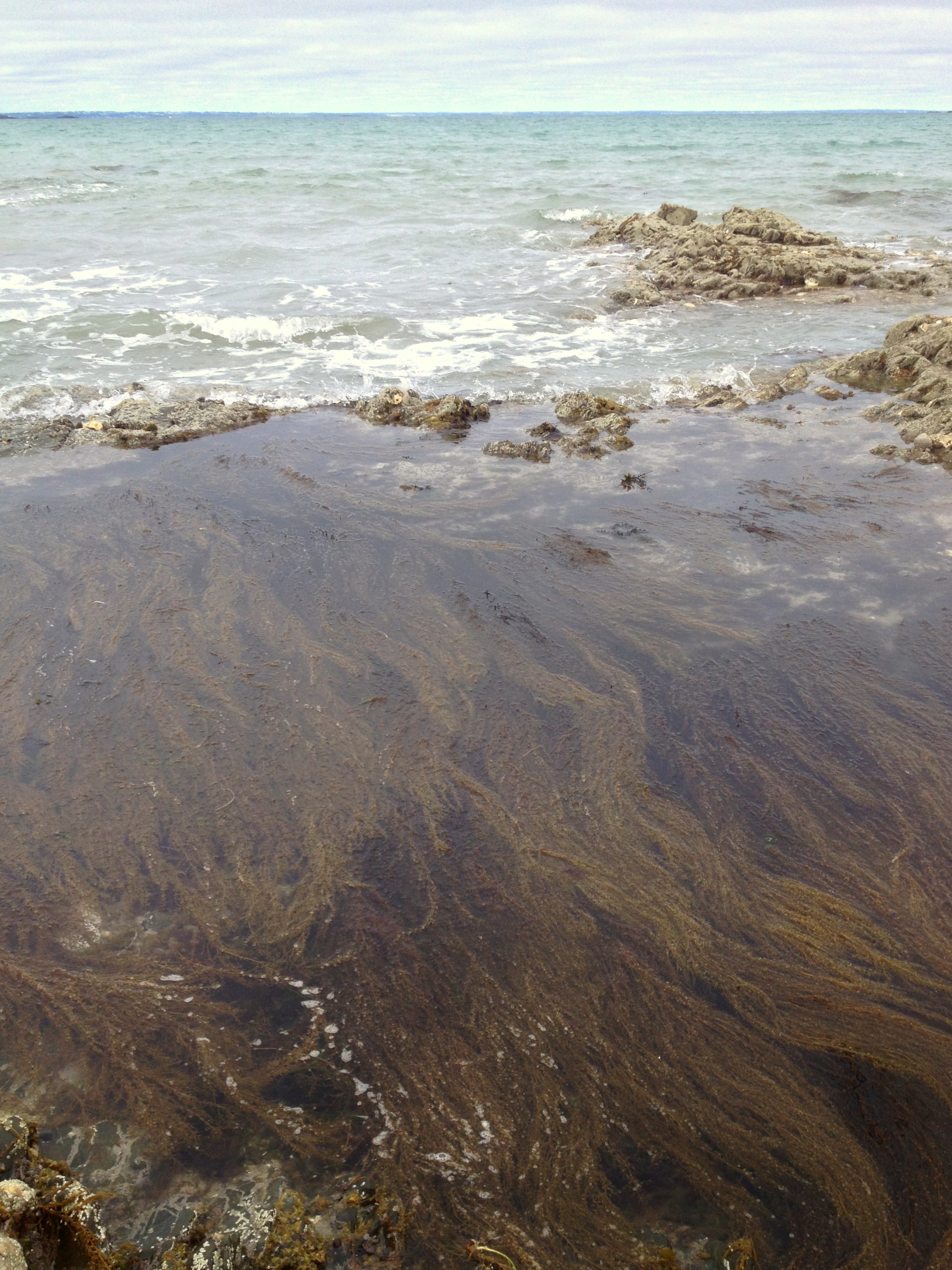
Similar to the Cornish coast, wireweed Sargassum muticum was abundant. This Pacific invader surely must have a large effect on the native flora and fauna:
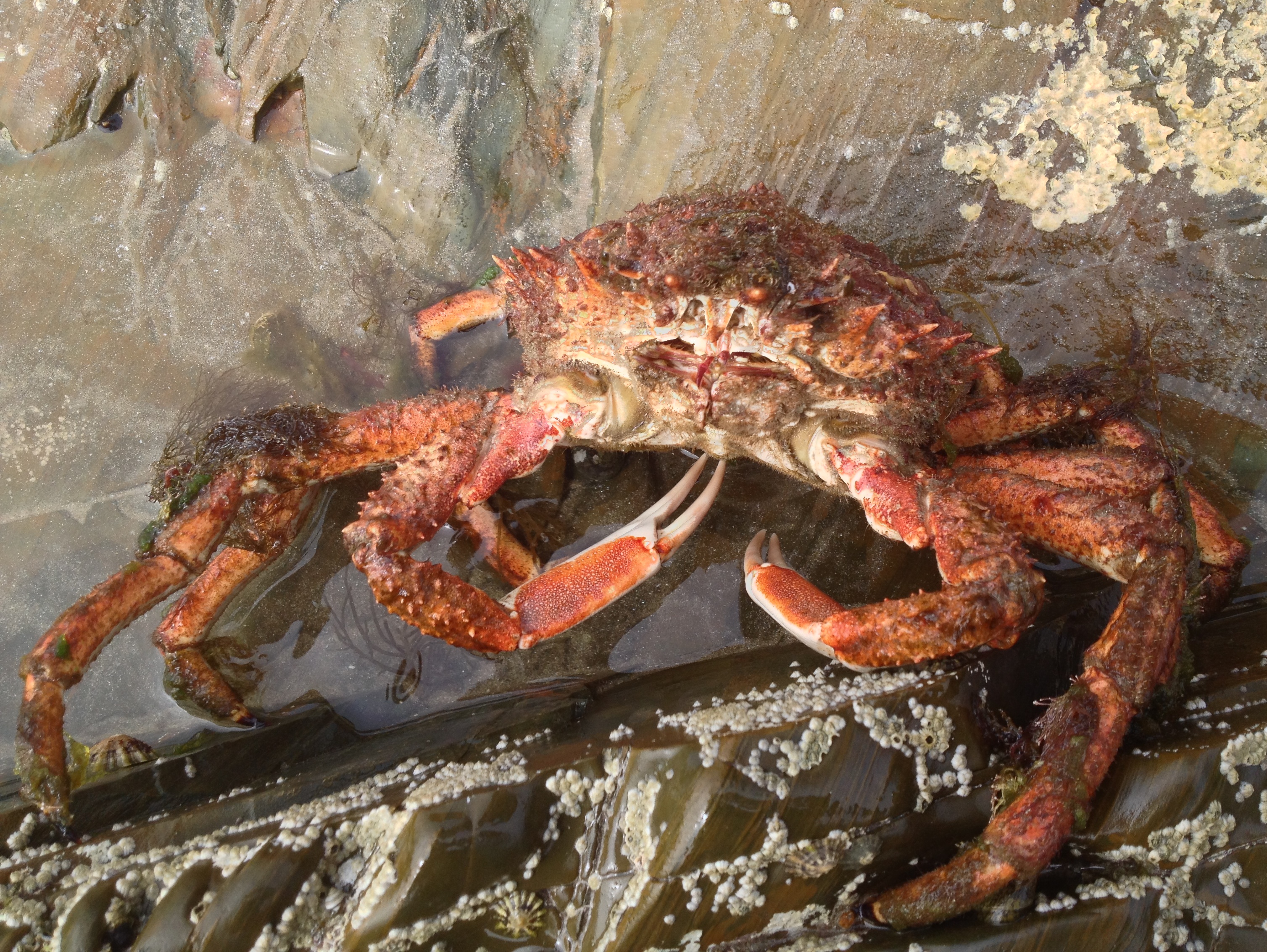
Invertebrate diversity was strikingly low compared to my local rock pools. For example, the only fish to be found were Shannies (and not a lot of them), there were no Cushion stars and no large crustaceans except for the shore crab. However, we did find a Common spider crab Maja squinado:
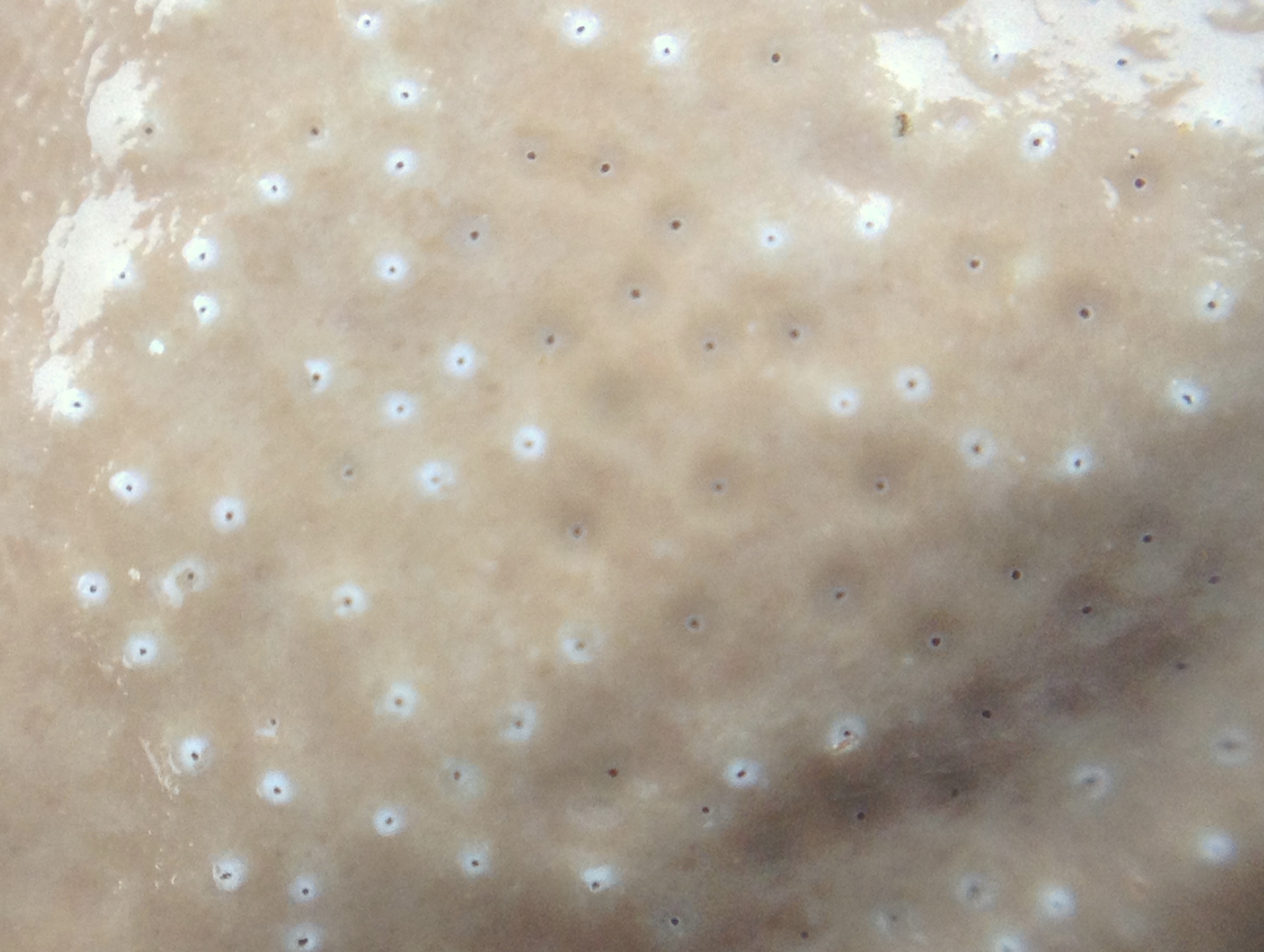
 As there was not that much to see, I turned my attention to some of the less spectacular life forms, such as Pink paint weeds, red algae forming a calcified crust. The particular species pictured below forms a patchwork of individuals, crinkling up at the edges where they meet. This could be Litophyllum incrustans, but species are hard to identify by non-specialists such as myself. The little spots on the surface are the openings of reproductive structures called conceptacles.

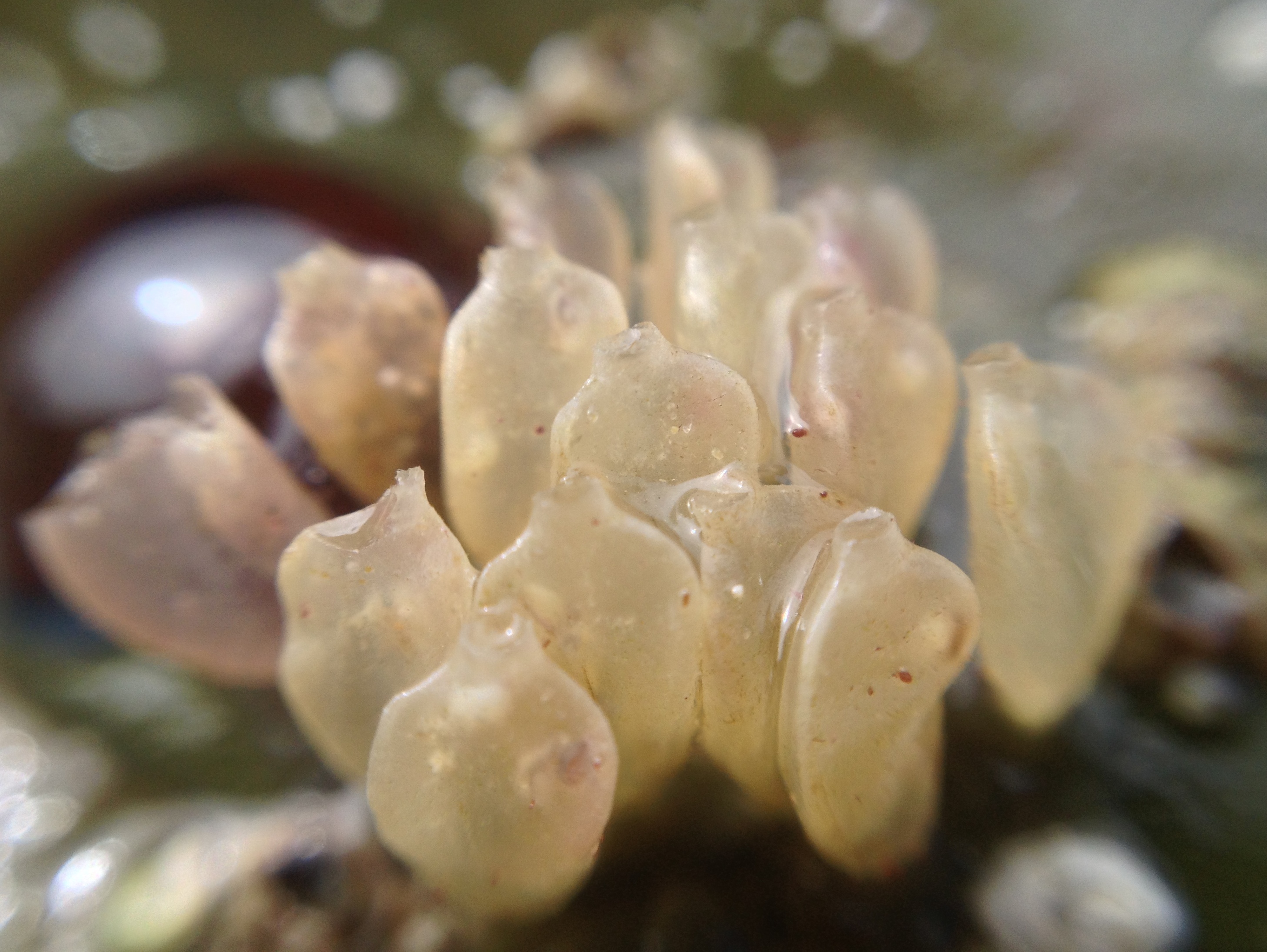
 The European sting winkle Ocenebra erinacea was quite abundant and distinctive vase-shaped egg cases could also be found:

 An Bollenessor