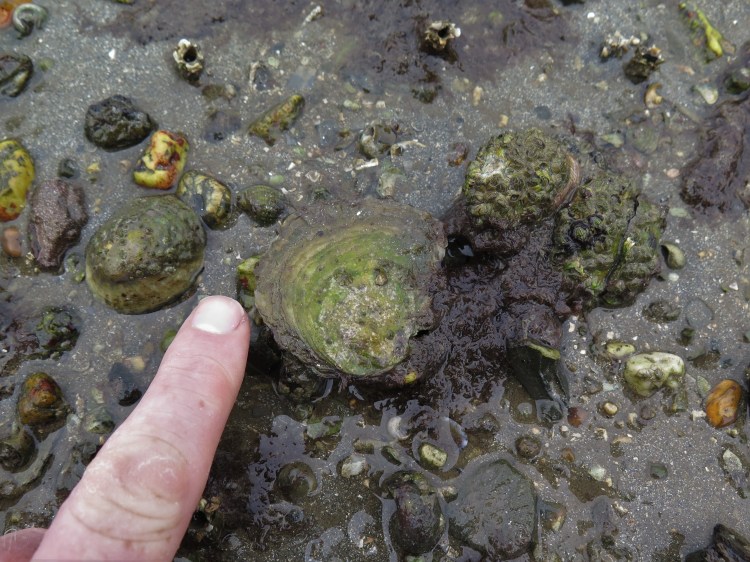
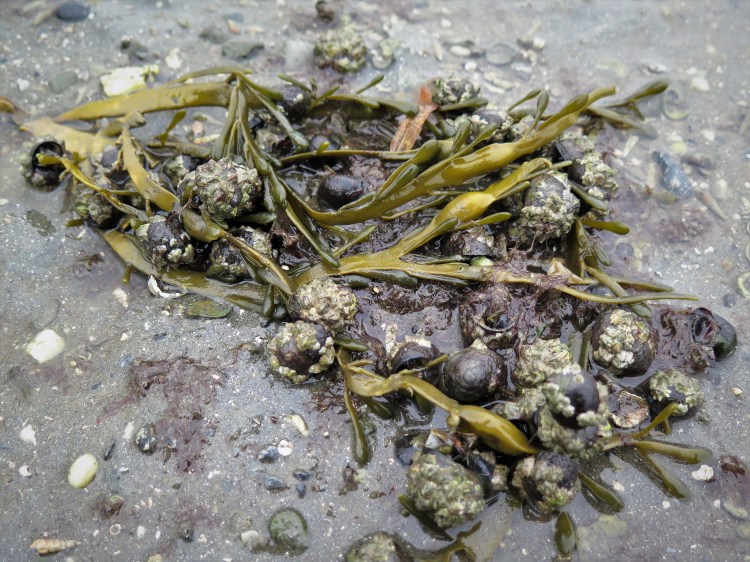
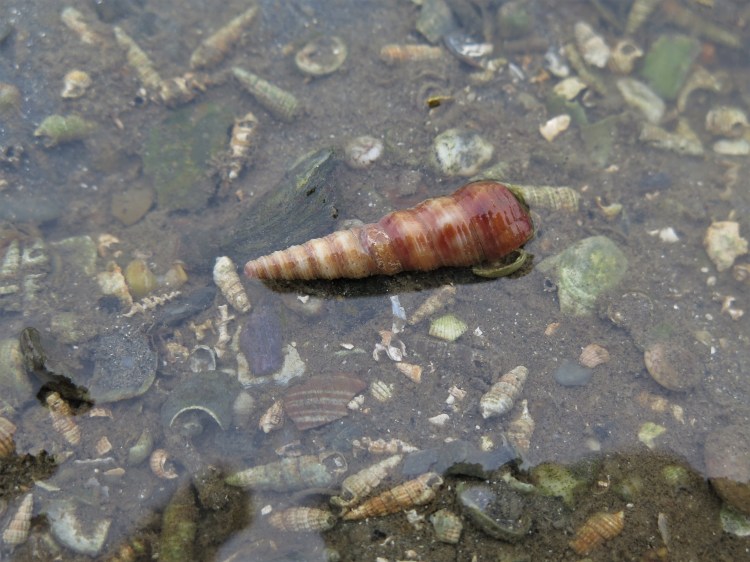
 This Sunday we went on a lovely walk from Helford Village to St. Anthony in Meneage on the south coast of the Helford river. The tide was very low, so we decided to follow the mud flats for a bit before heading to the woodlands. The mud flats are a brown-grey and strewn with shells, pebbels and, unfortunately, litter. Not as pretty as the rock pools, but still interesting. There were small banks with mussels, cockels, slipper limpets and oysters, both the native oyster Ostrea edulis (quite some juveniles) as well as the invasive Pacific (or Portuguese) oyster Magallana gigas. Of course also the abundant, barnacle-covered periwinkles Littorina litorea. I saw my first Auger shell Turritella communis (which does not reflect rarity at all, just the fact that I usually stick to rocky shores); the small shells around it are Needle whelks Bittium reticulatum. Finally a Chinaman’s hat (probably no longer the prefered nomenclature!?) Calyptraea chinensis.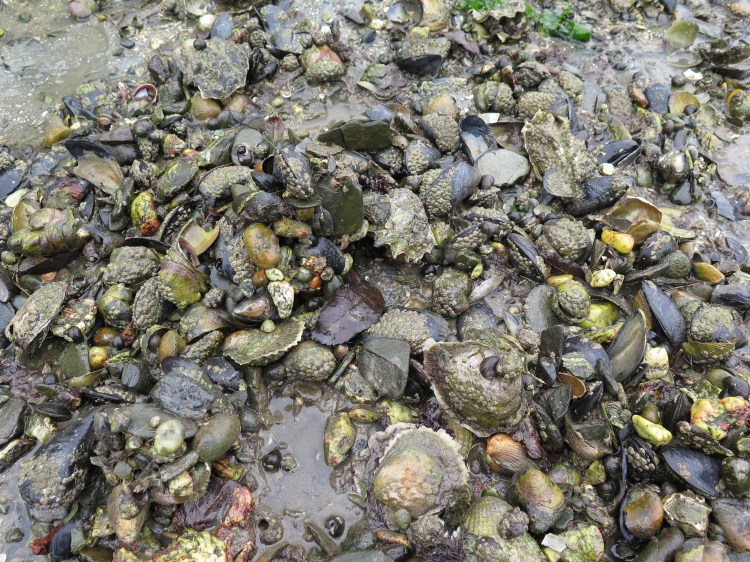
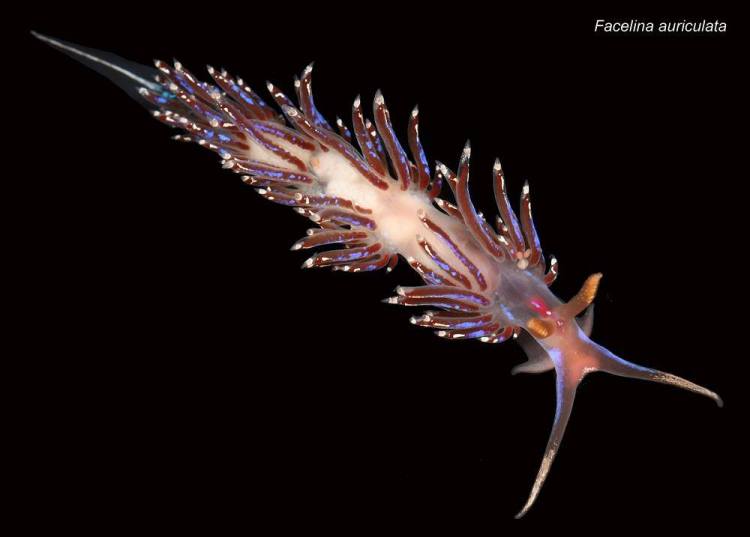
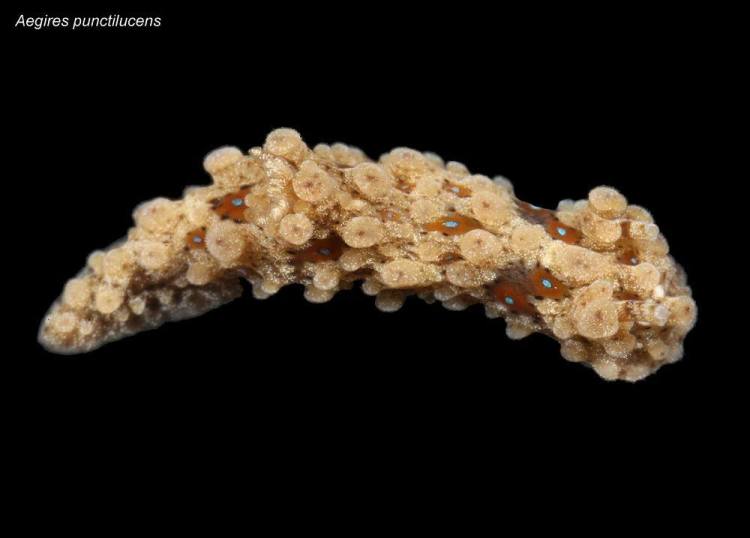
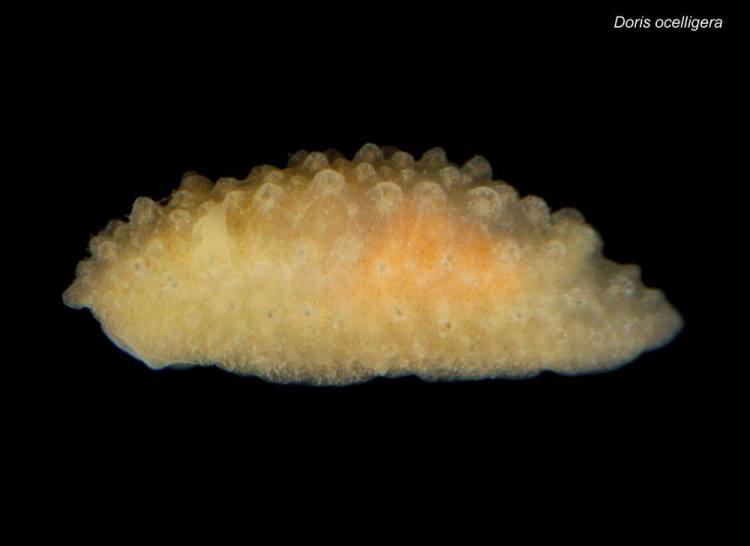
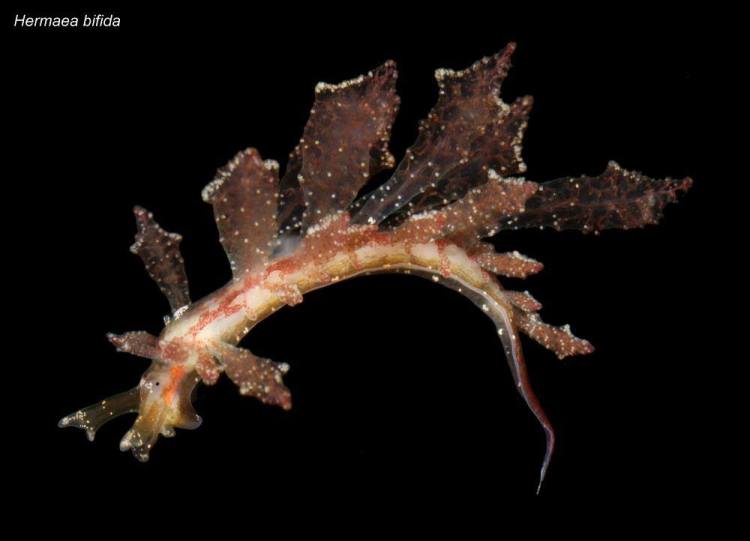
 We met up with David Fenwick and partner-in-crime Carol who were busy sampling around Treath. David’s interest was caught by a mooring rope covered in seasquirts, and a boxful was collected for careful examination under the microscope later. The clump I am holding below shows the Compass seasquirt Asterocarpa humilis (red, middle) (invasive), Morchellium argus (orange, top) (native), the Dirty seasquirt Ascidiella aspersa (three grey ones) (native) and the Creeping seasquirt Perophora japonica (tiny yellow zoids connected by stolons growing over the Ascidiella) (invasive). Astonishingly, by the next day, in a single tupperware box filled with muddy seasquirts, David had found 70 species! (With 142 species recorded in total on the day.) To finish this post full of grey blobs and brownish molluscs, I am adding photos David made of four out of nine species of Heterobranchs (Nudibranchs ‘proper’ as well as Ophistobranchs) present in the sample. Stunning images and proof that there is tremendous biodiversity to be found on a muddy bank if you know how to look for it. More of David’s nudibranch work is featured in this old post. See for his continously expanding collection of images, from seaweeds to fish and from tiny marine fungi to stranded seaturtles, aphotomarine.com.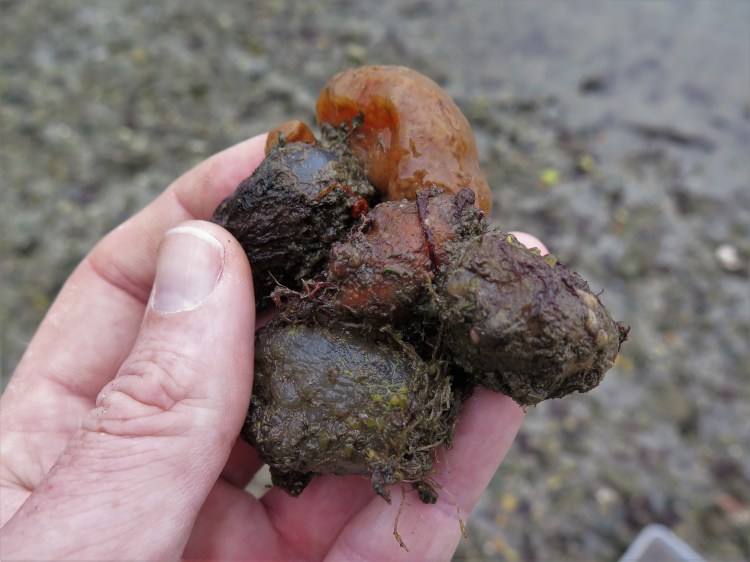
Tag Archives: oysters
Bretagne: Erquy
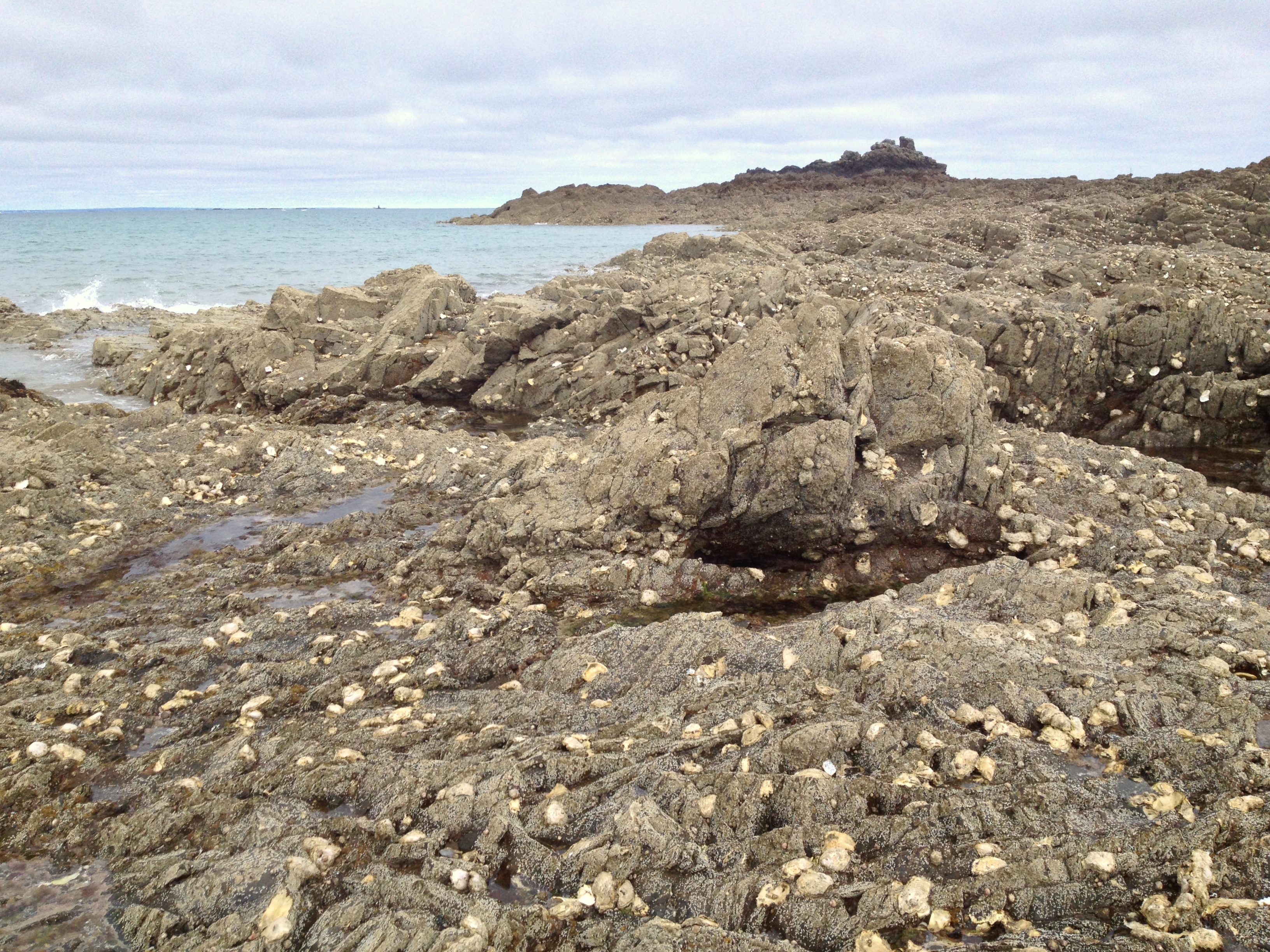
Last week we crossed the channel to attend a friend’s wedding in Bretagne (Brittany). This of course also called for some rock pooling action, first at the village of Erquy. It was interesting to compare the shores of Bretagne to Cornwall (or at least Falmouth and this small stretch of coast in northern Bretagne). Immediately noticeable was the large amount of oysters on the rocks (with some locals busy collecting them, quelle surprise); these are pretty much absent in Falmouth:
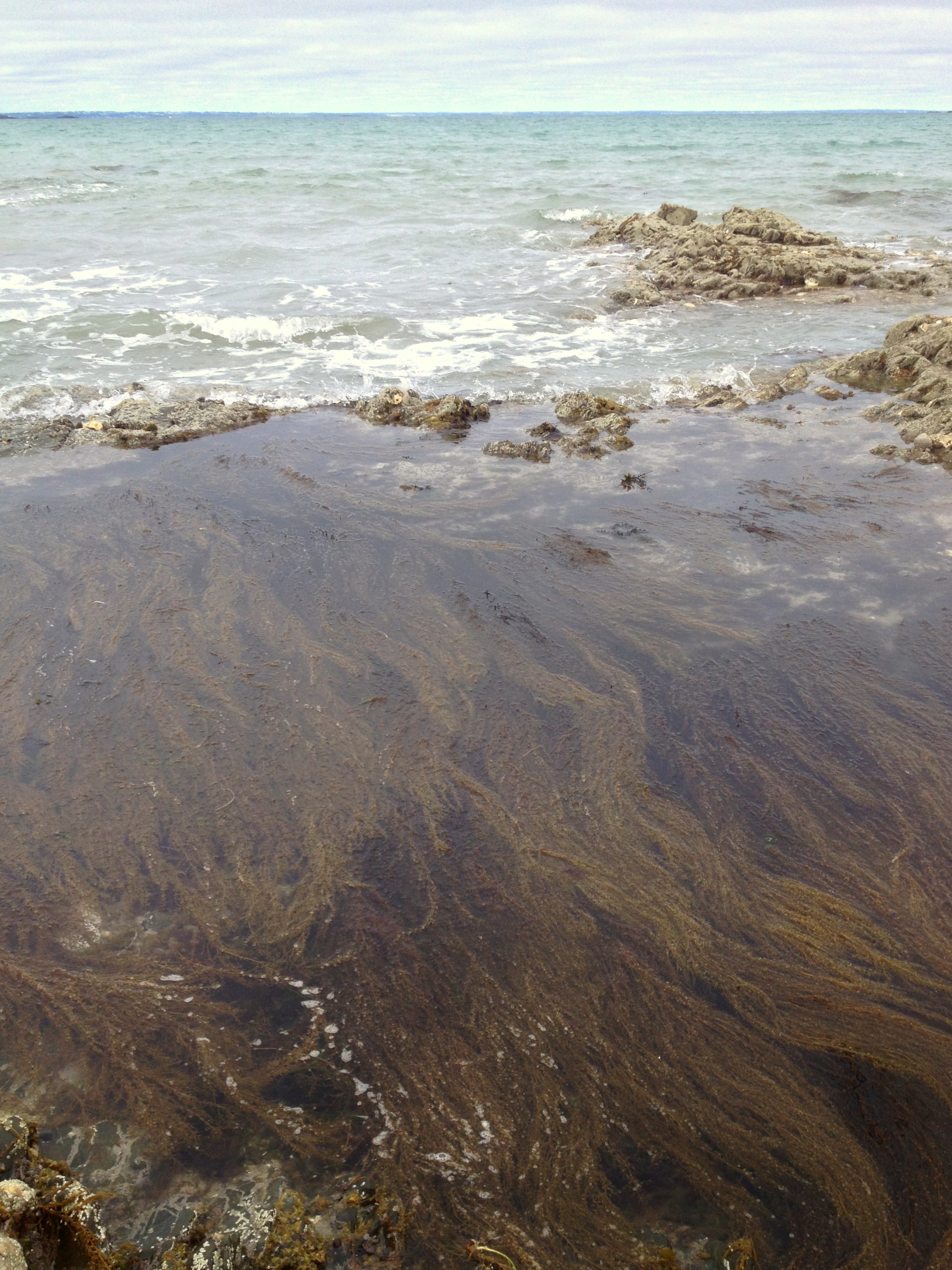
Similar to the Cornish coast, wireweed Sargassum muticum was abundant. This Pacific invader surely must have a large effect on the native flora and fauna:
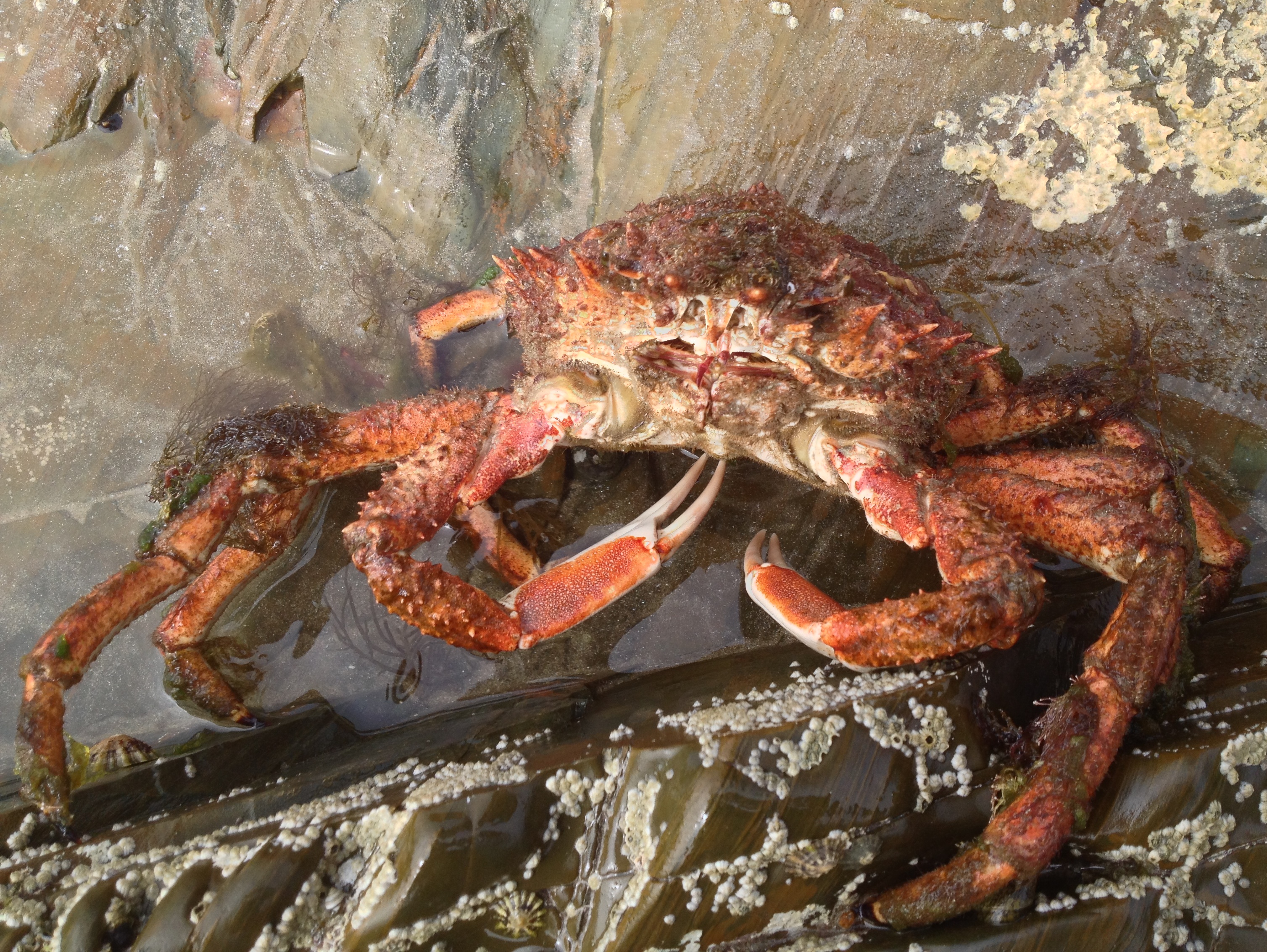
Invertebrate diversity was strikingly low compared to my local rock pools. For example, the only fish to be found were Shannies (and not a lot of them), there were no Cushion stars and no large crustaceans except for the shore crab. However, we did find a Common spider crab Maja squinado:
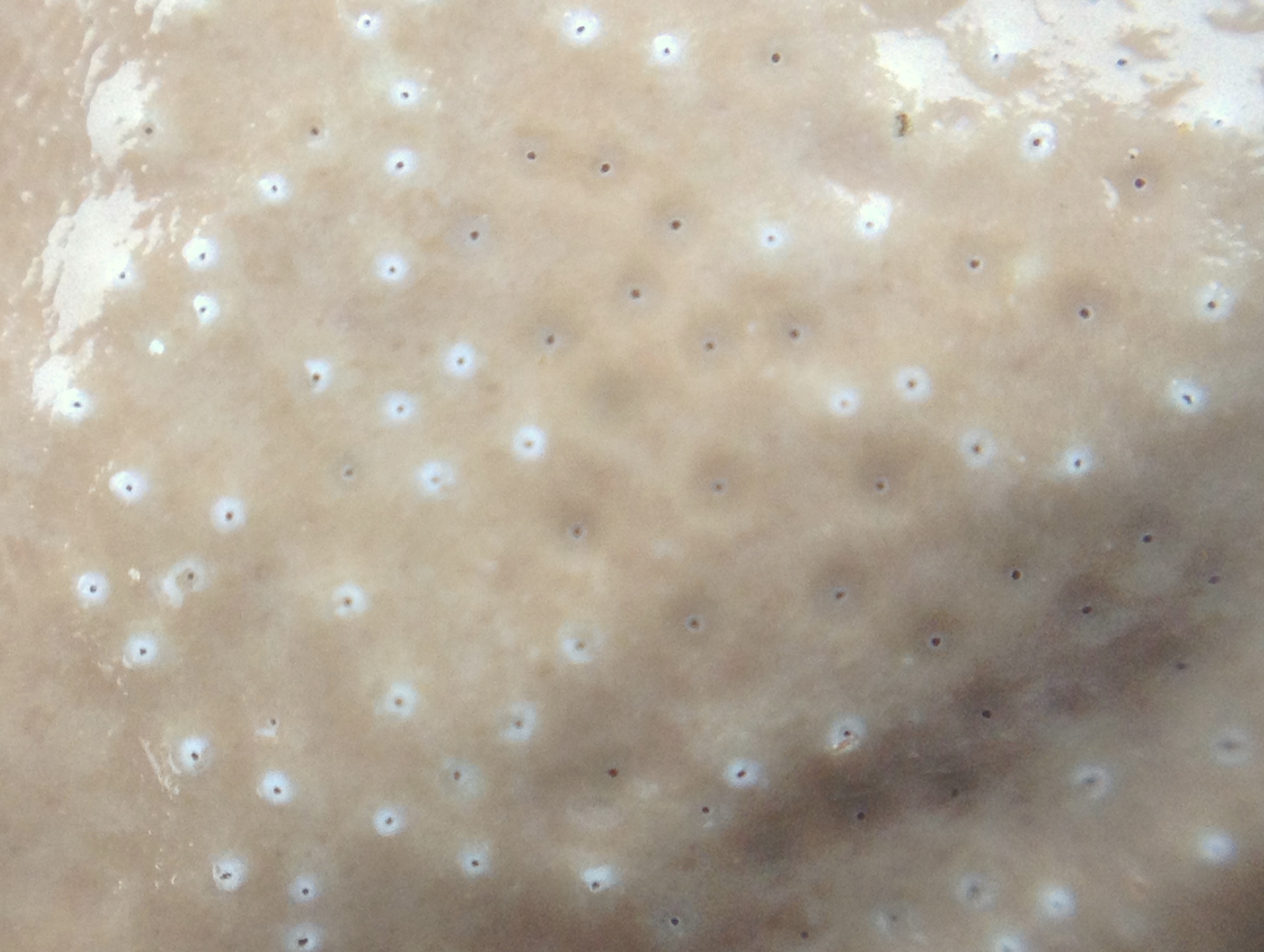
 As there was not that much to see, I turned my attention to some of the less spectacular life forms, such as Pink paint weeds, red algae forming a calcified crust. The particular species pictured below forms a patchwork of individuals, crinkling up at the edges where they meet. This could be Litophyllum incrustans, but species are hard to identify by non-specialists such as myself. The little spots on the surface are the openings of reproductive structures called conceptacles.

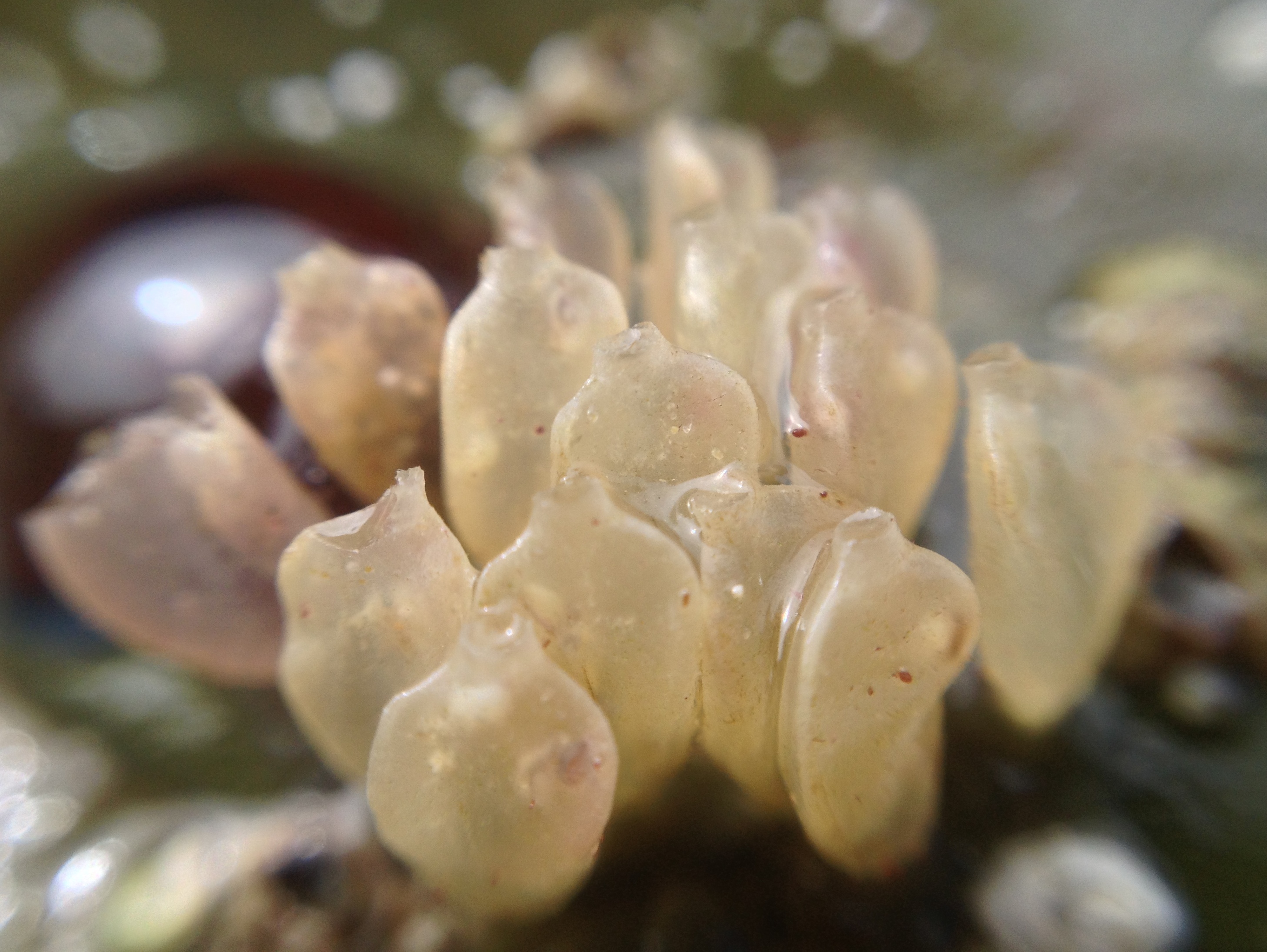
 The European sting winkle Ocenebra erinacea was quite abundant and distinctive vase-shaped egg cases could also be found:

 An Bollenessor