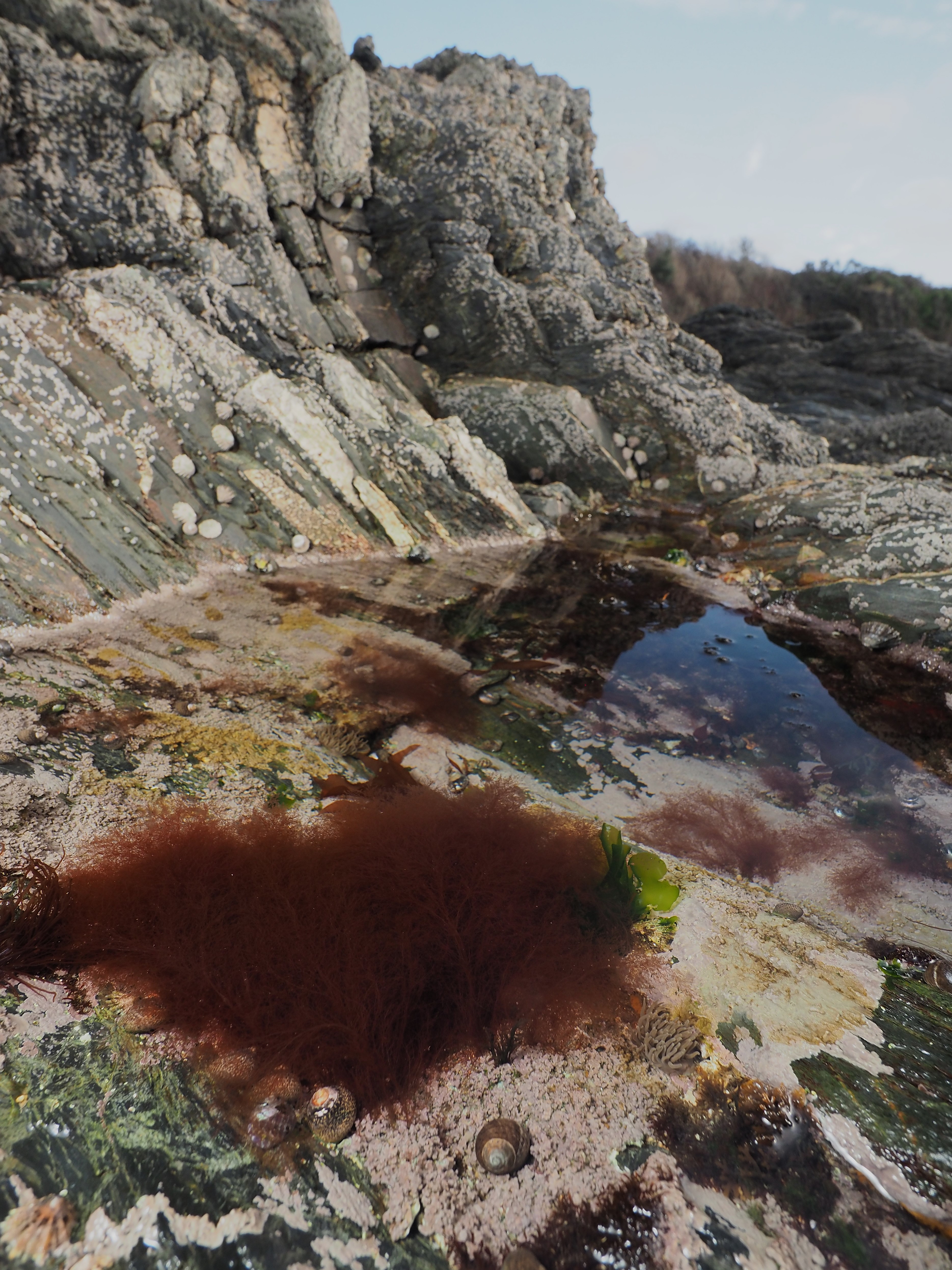
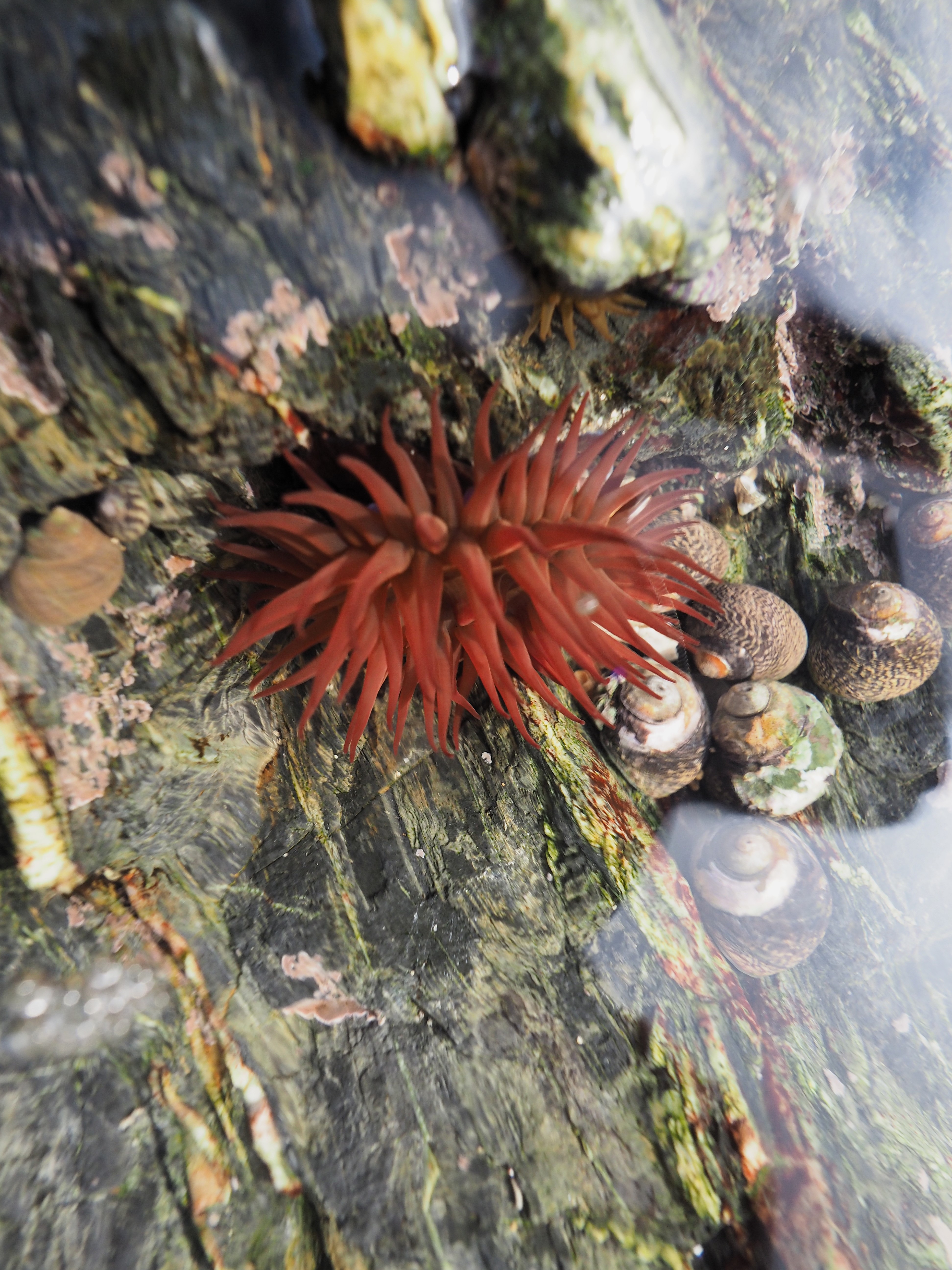
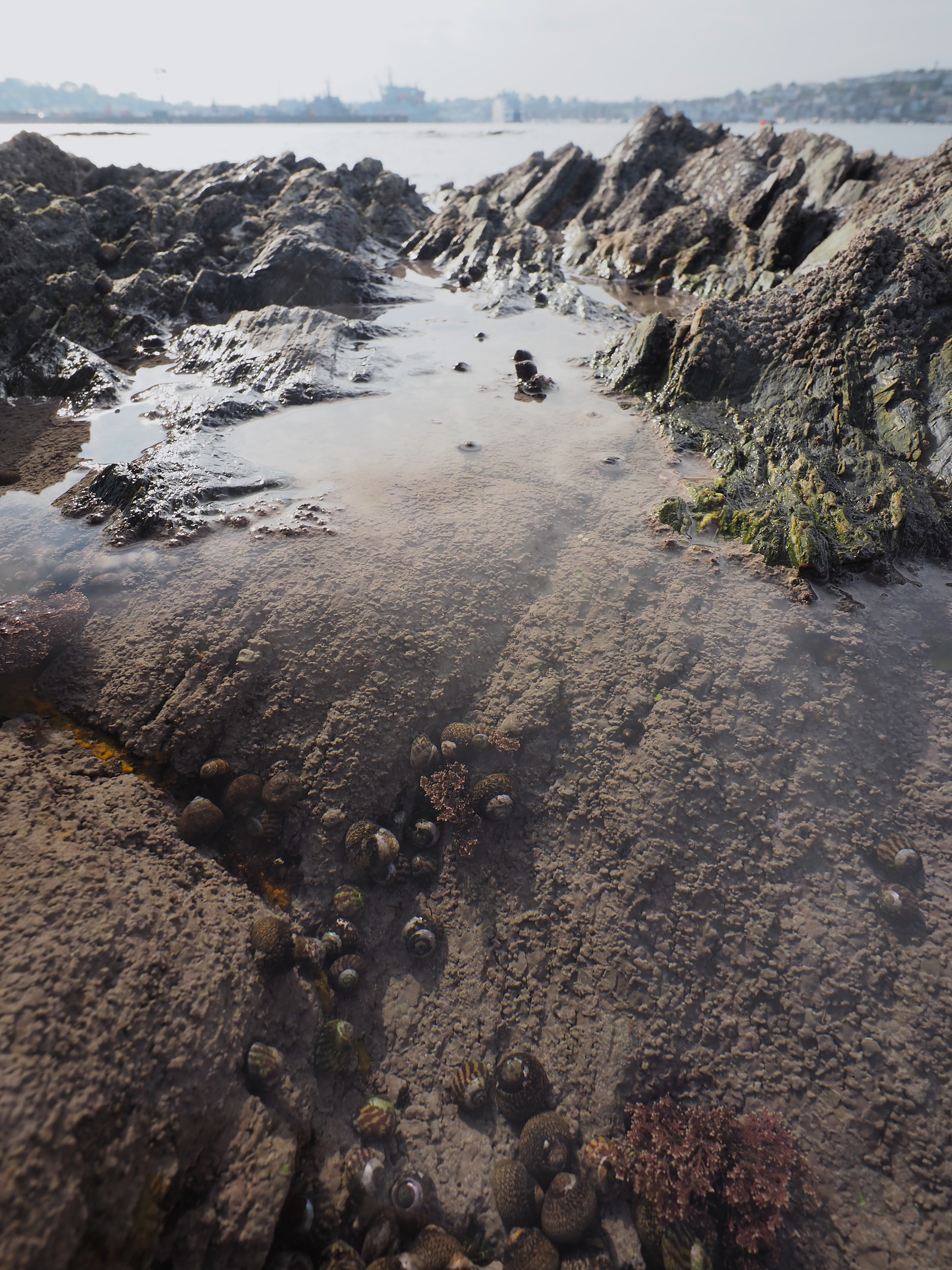
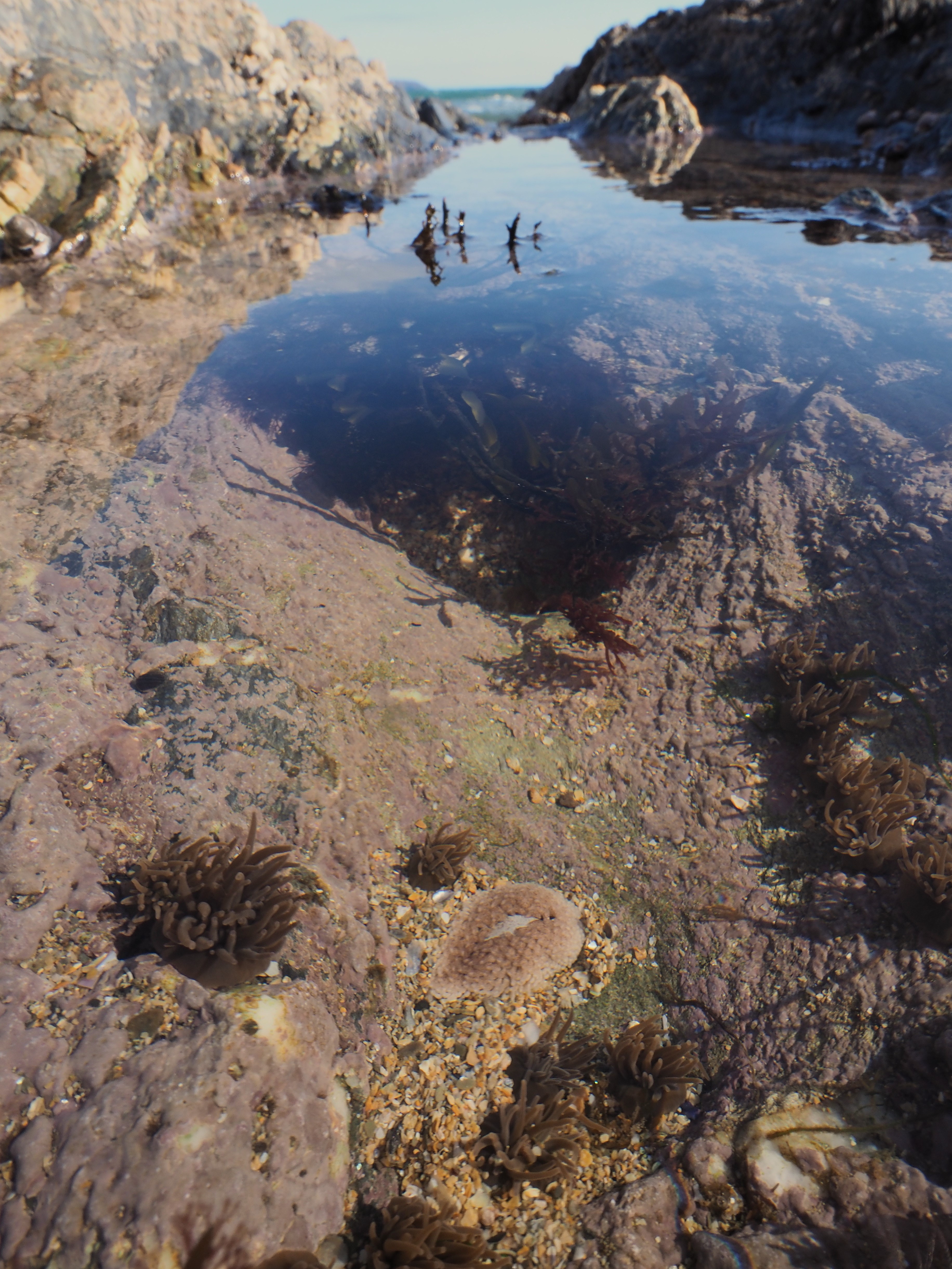
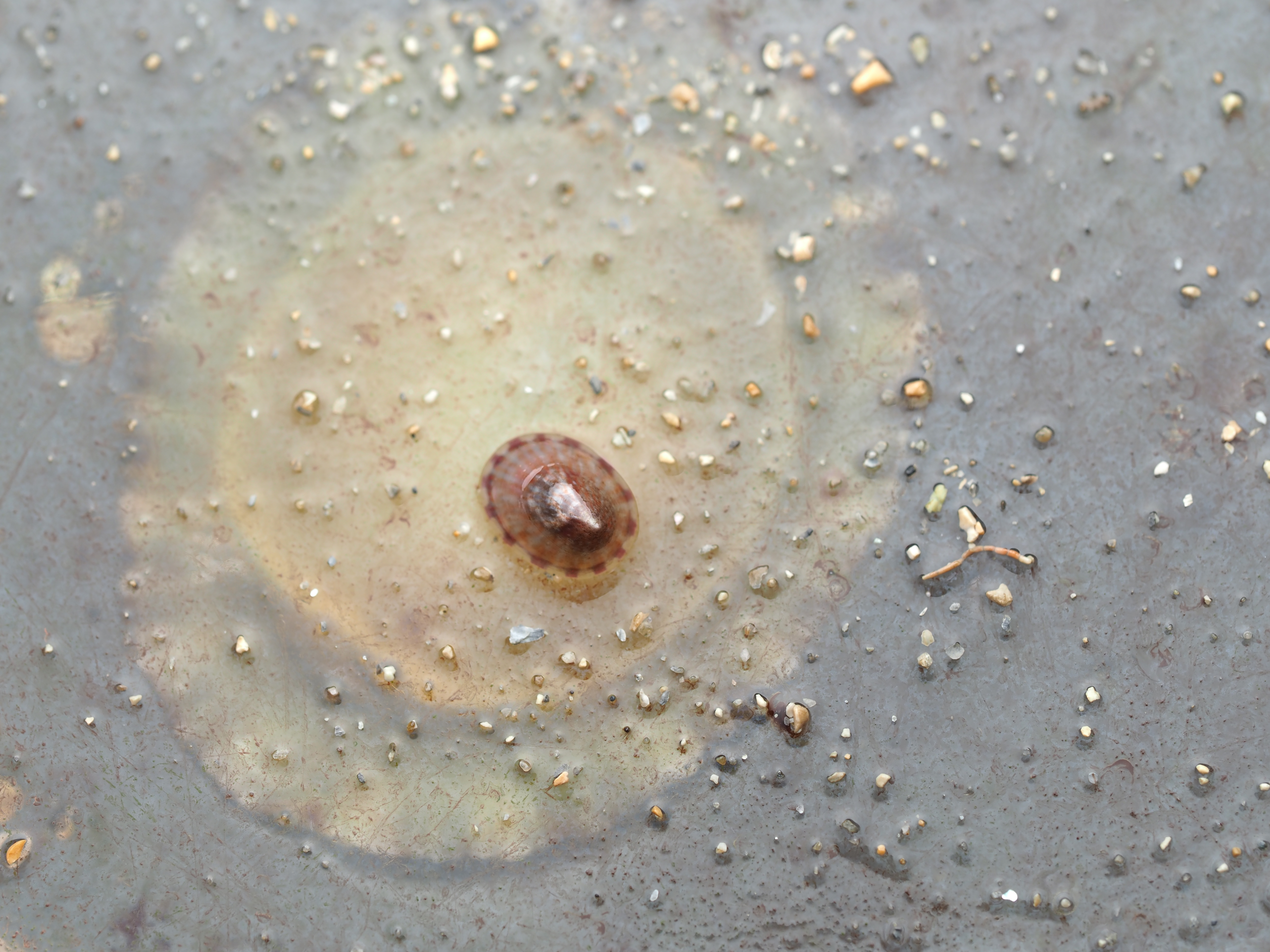
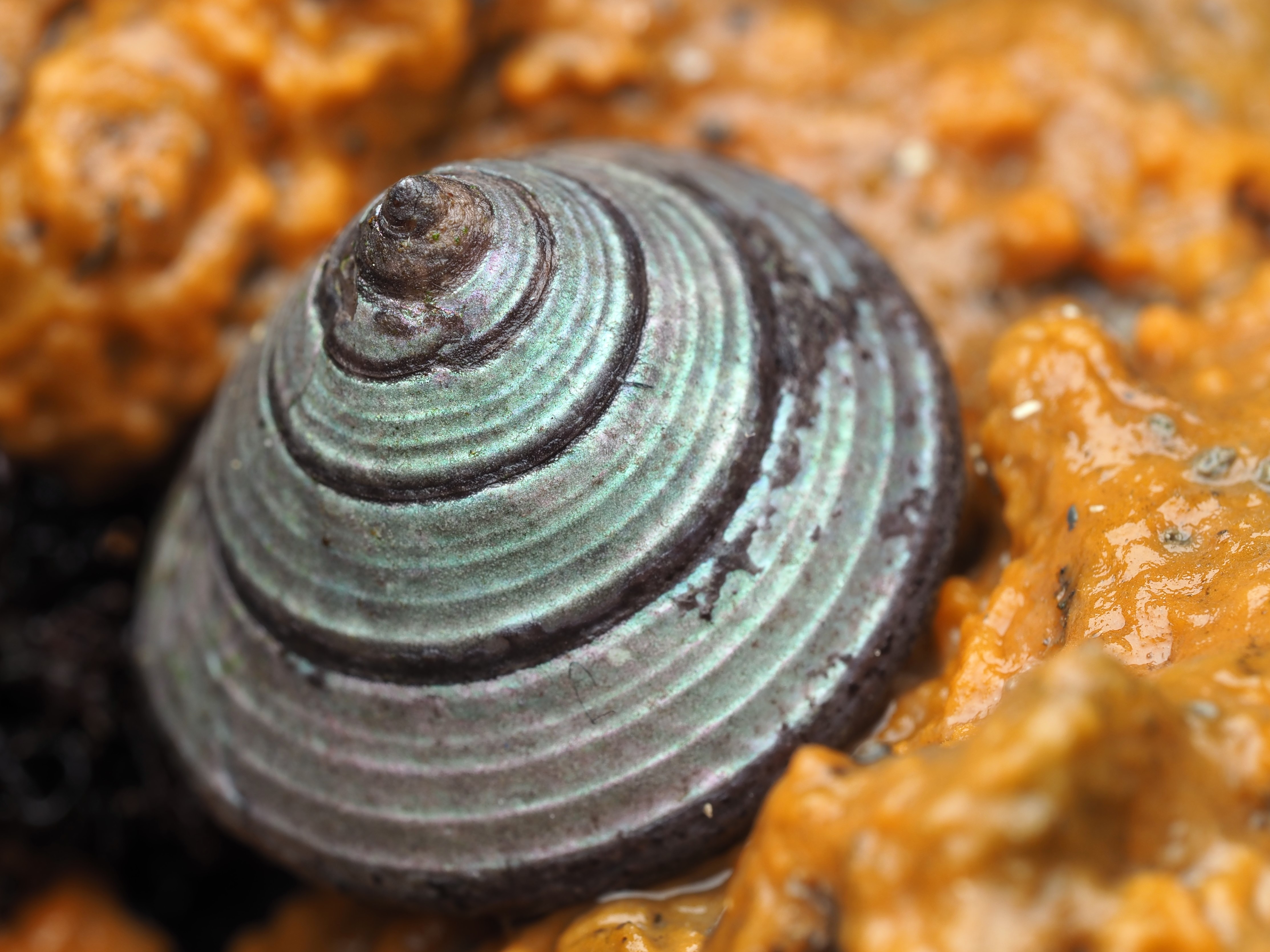
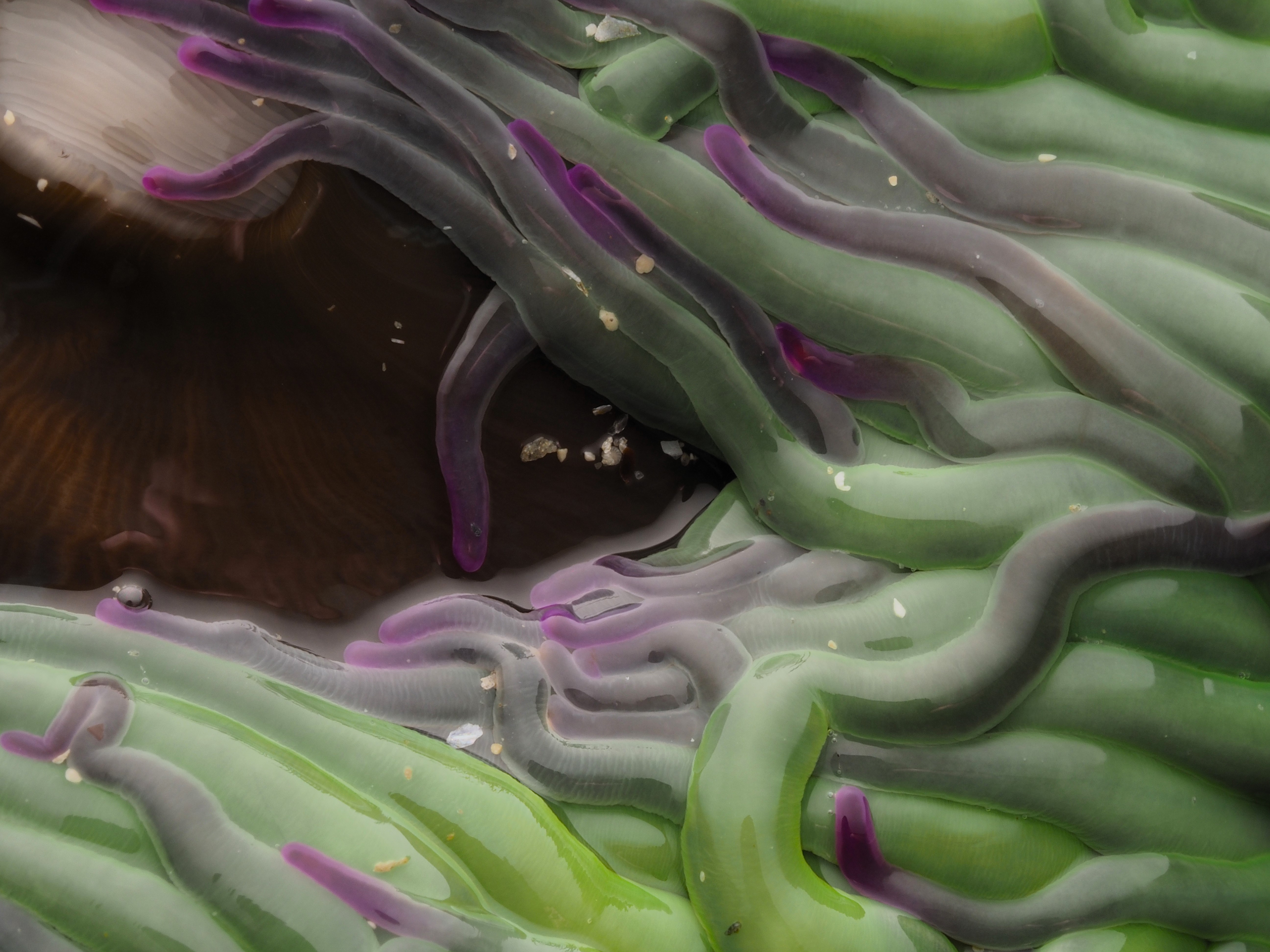
I tried my hand today at taking photos of rock pools above water – tricky! I used my Leica wide angle lens with a polarizing filter and a handheld strobe in a diffuser. It was fun playing around, although felt my back after an hour or so trying! It is difficult to keep the reflection of the flash out of the shot. The tide was not low so these are small, mid-shore pools dominated by coralline algae and some (fine) red seaweeds. Beadlet and snakelocks anemones, limpets, periwinkles, thick- and purple topshells are the most common animals. Some sunshine and blue sky – let’s see when I can try my hand at underwater photos again!
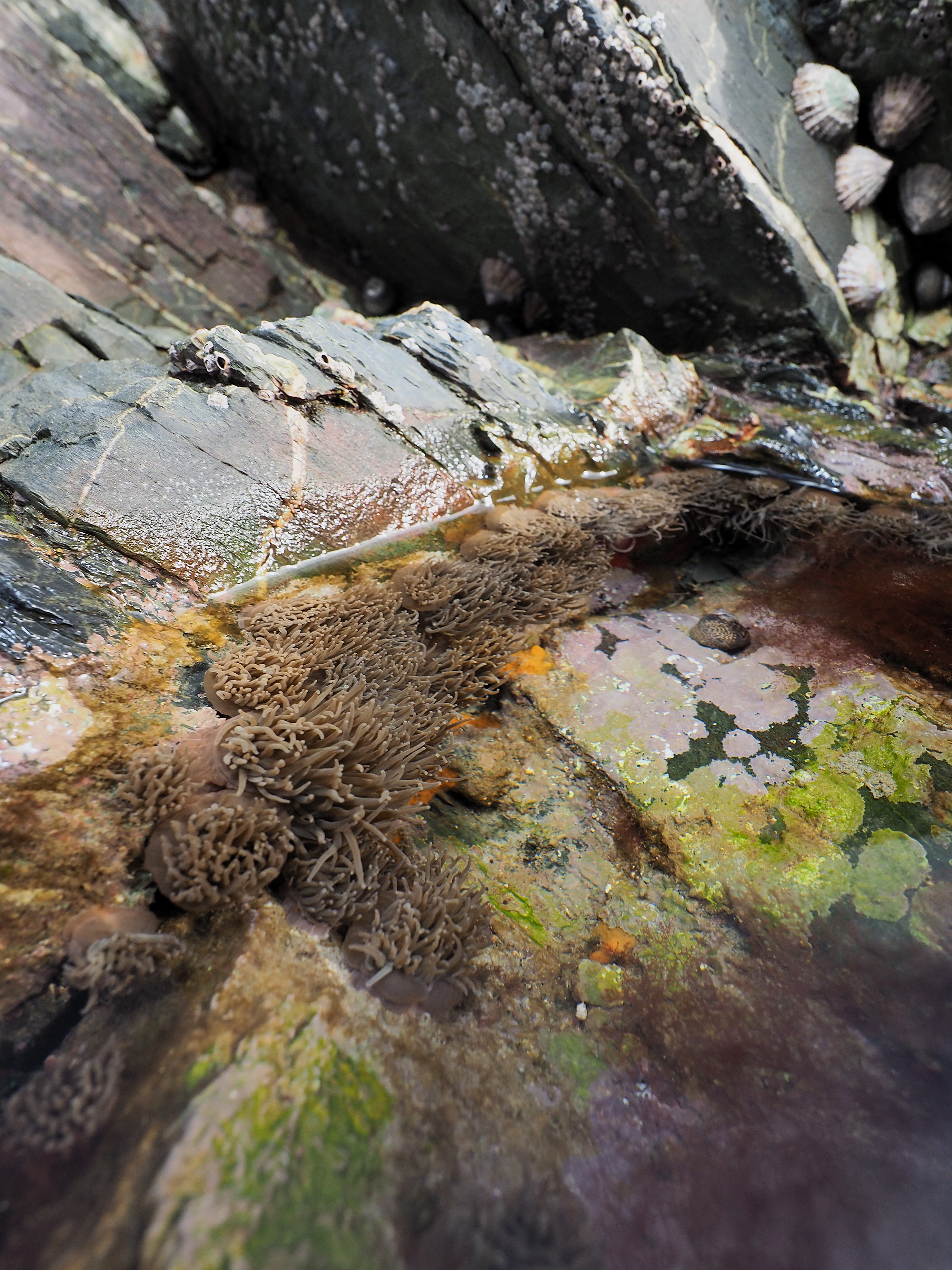
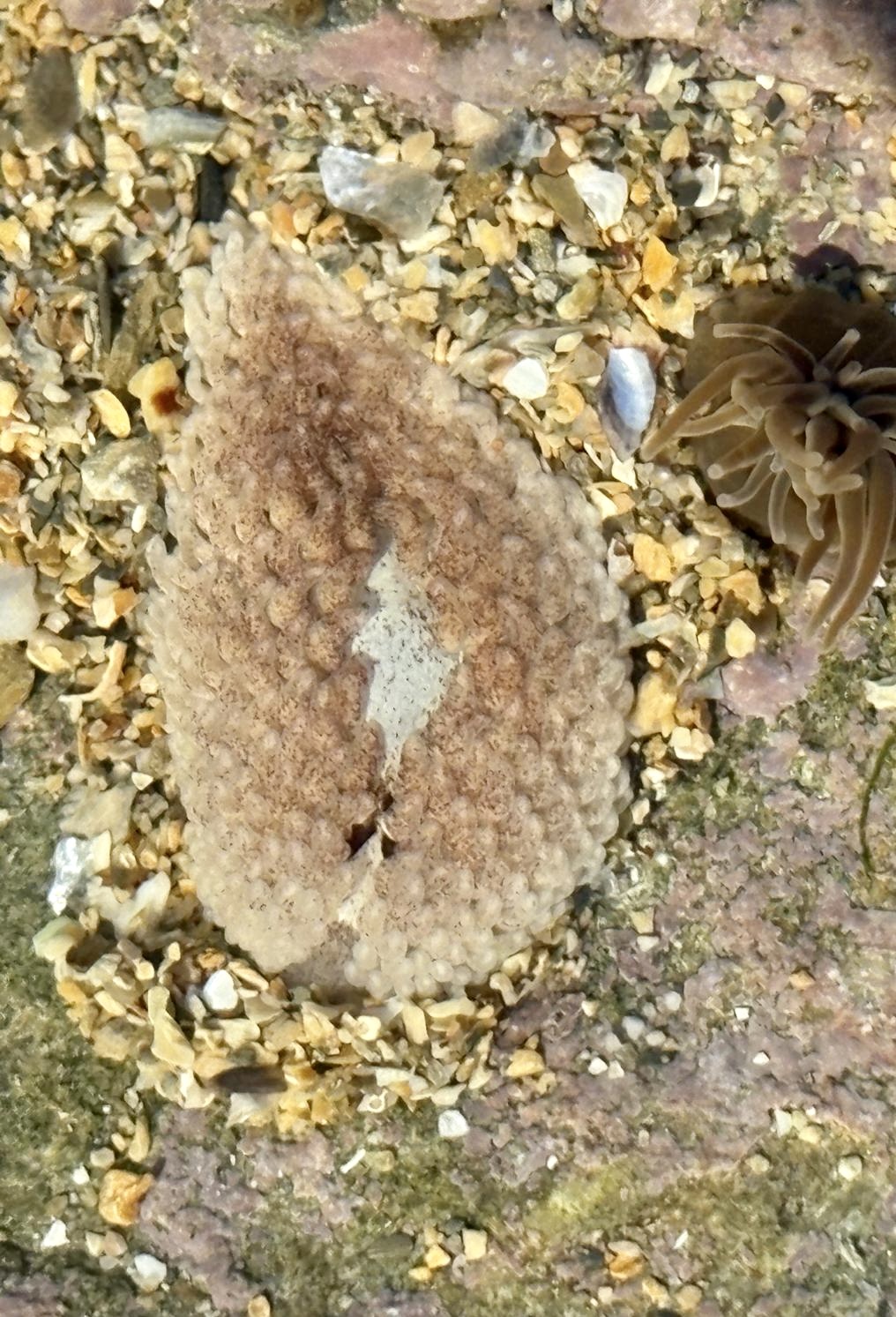
P.S. two extra pics taken a day later (without flash) near Bream Cove featuring an anemone-eating Aeolidia nudibranch.
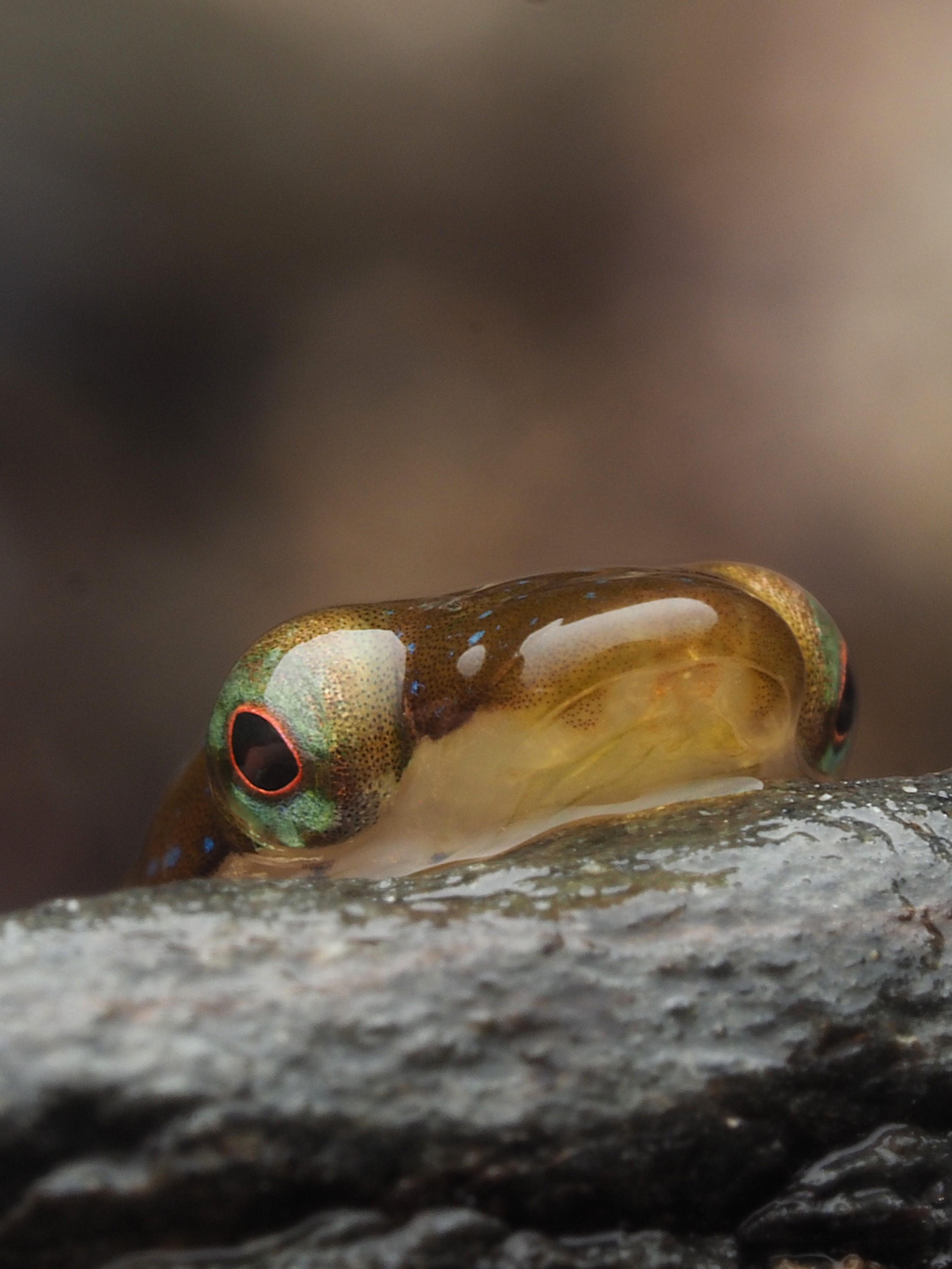
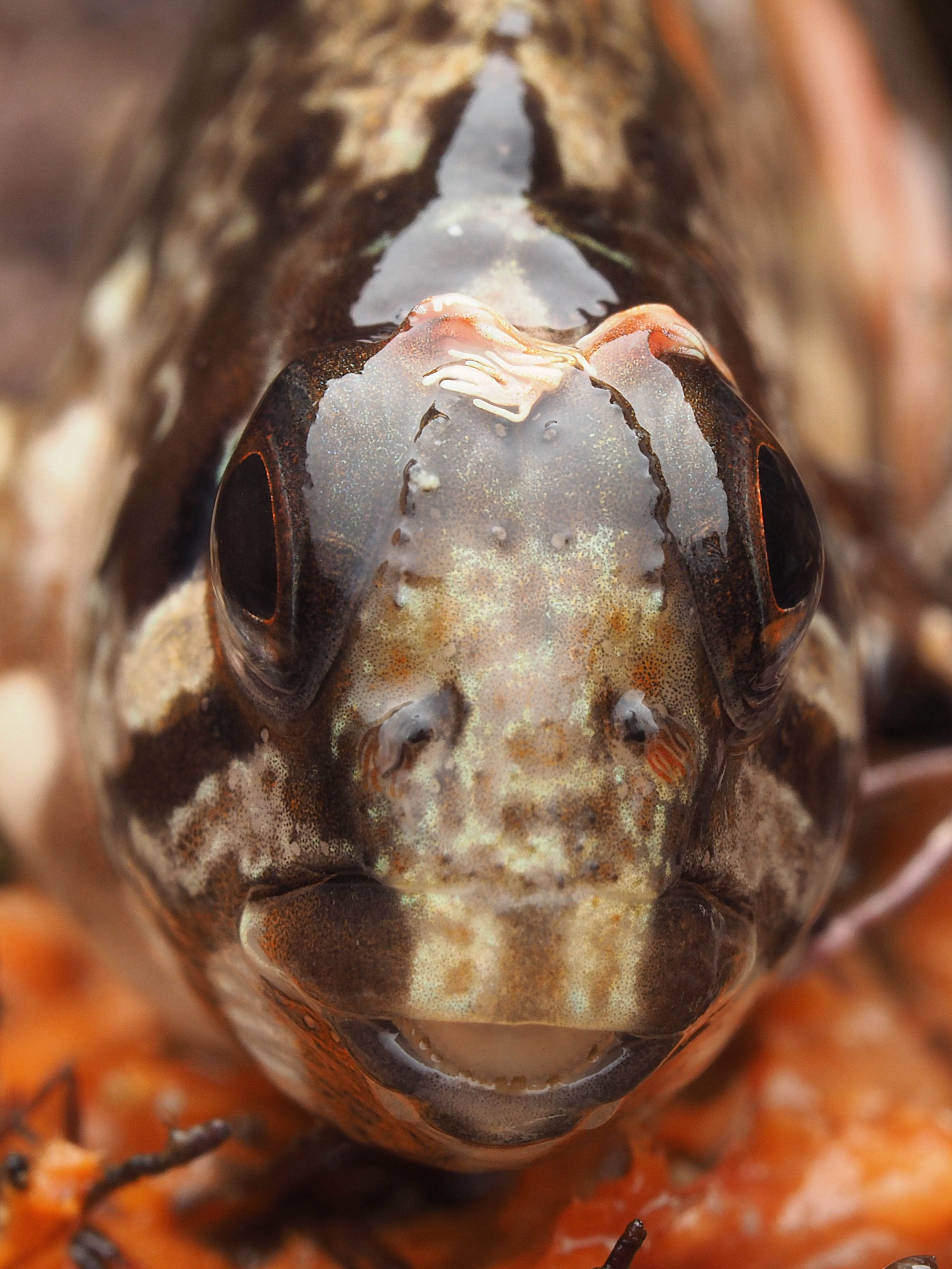
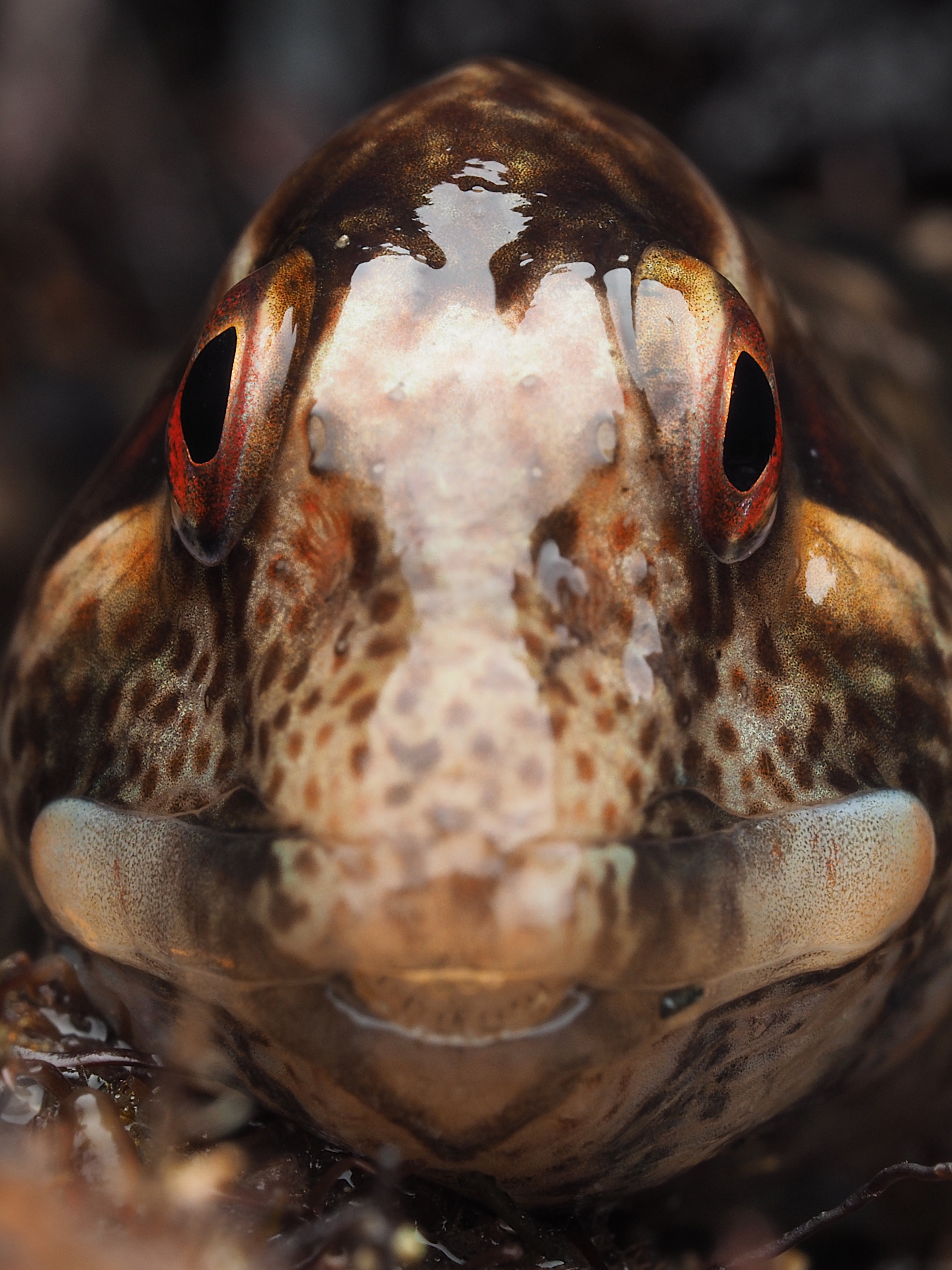
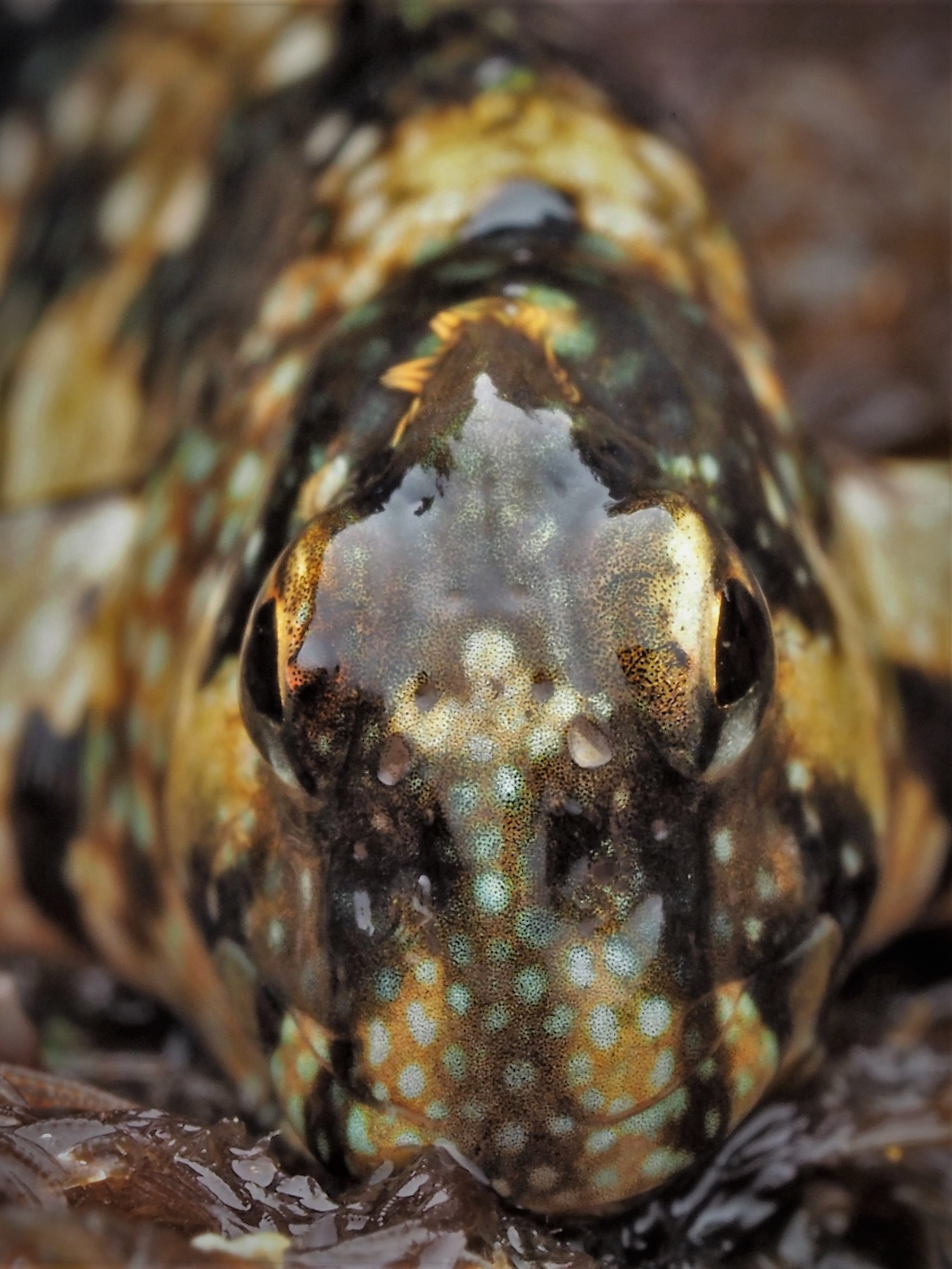
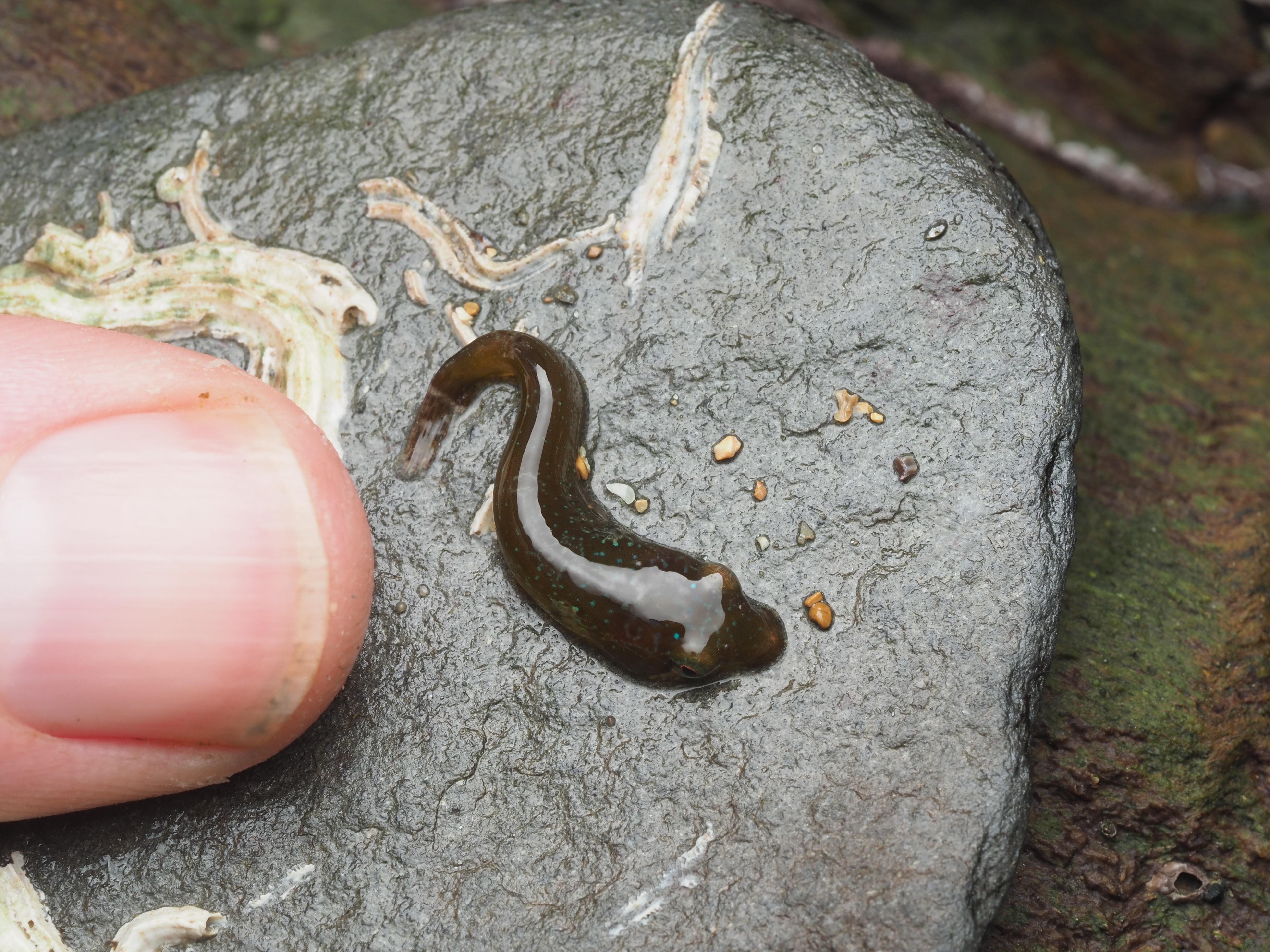
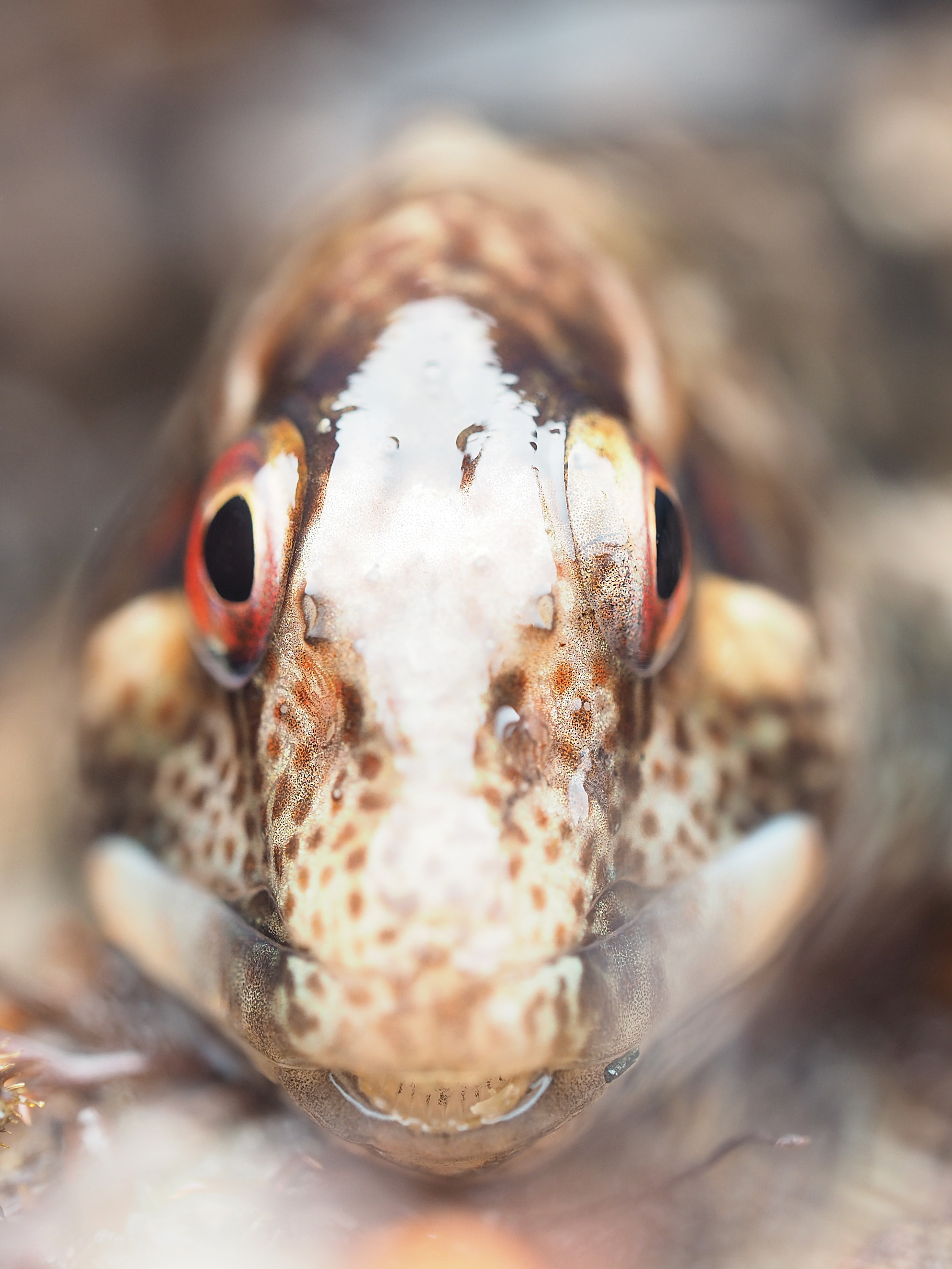
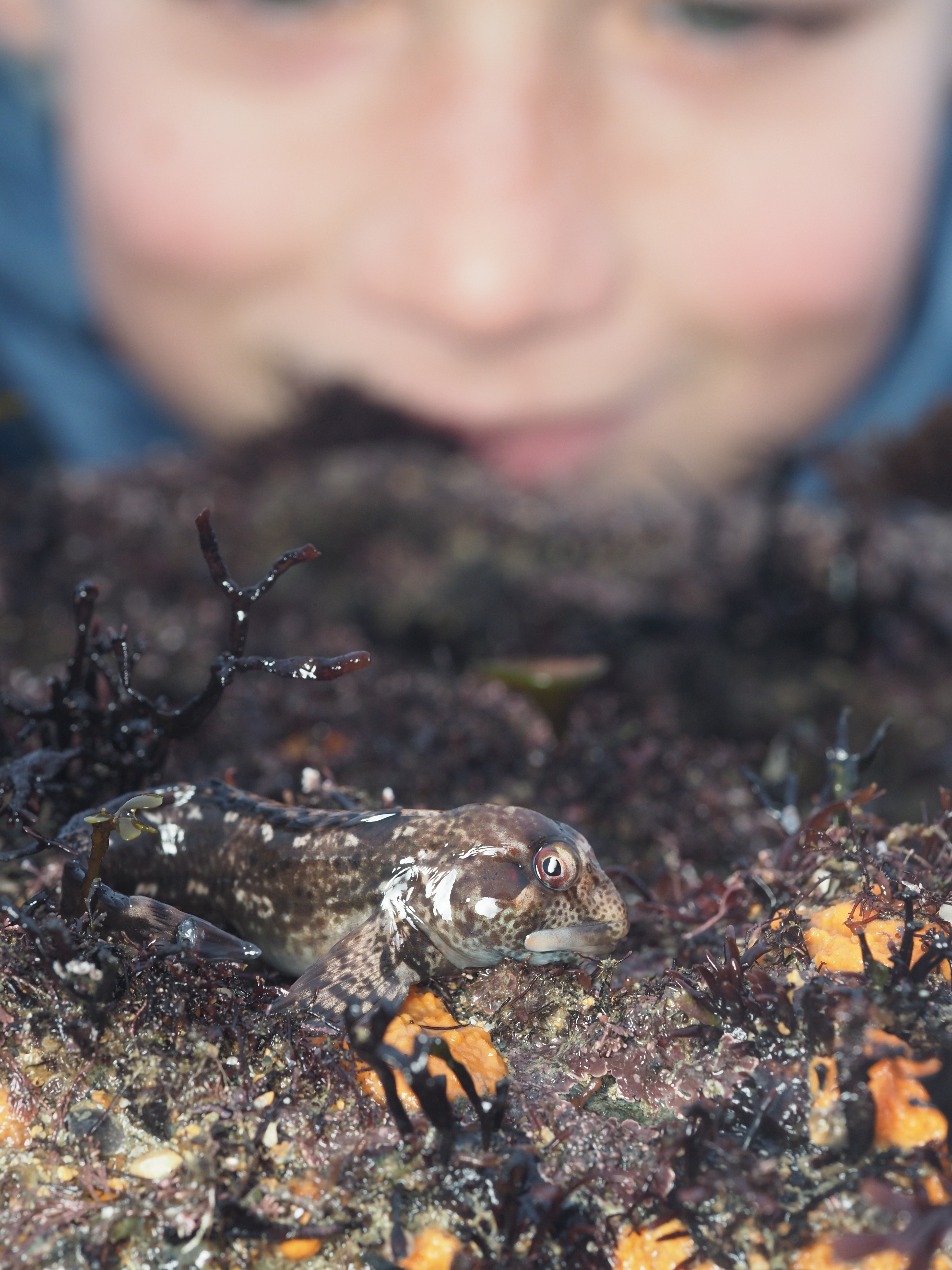
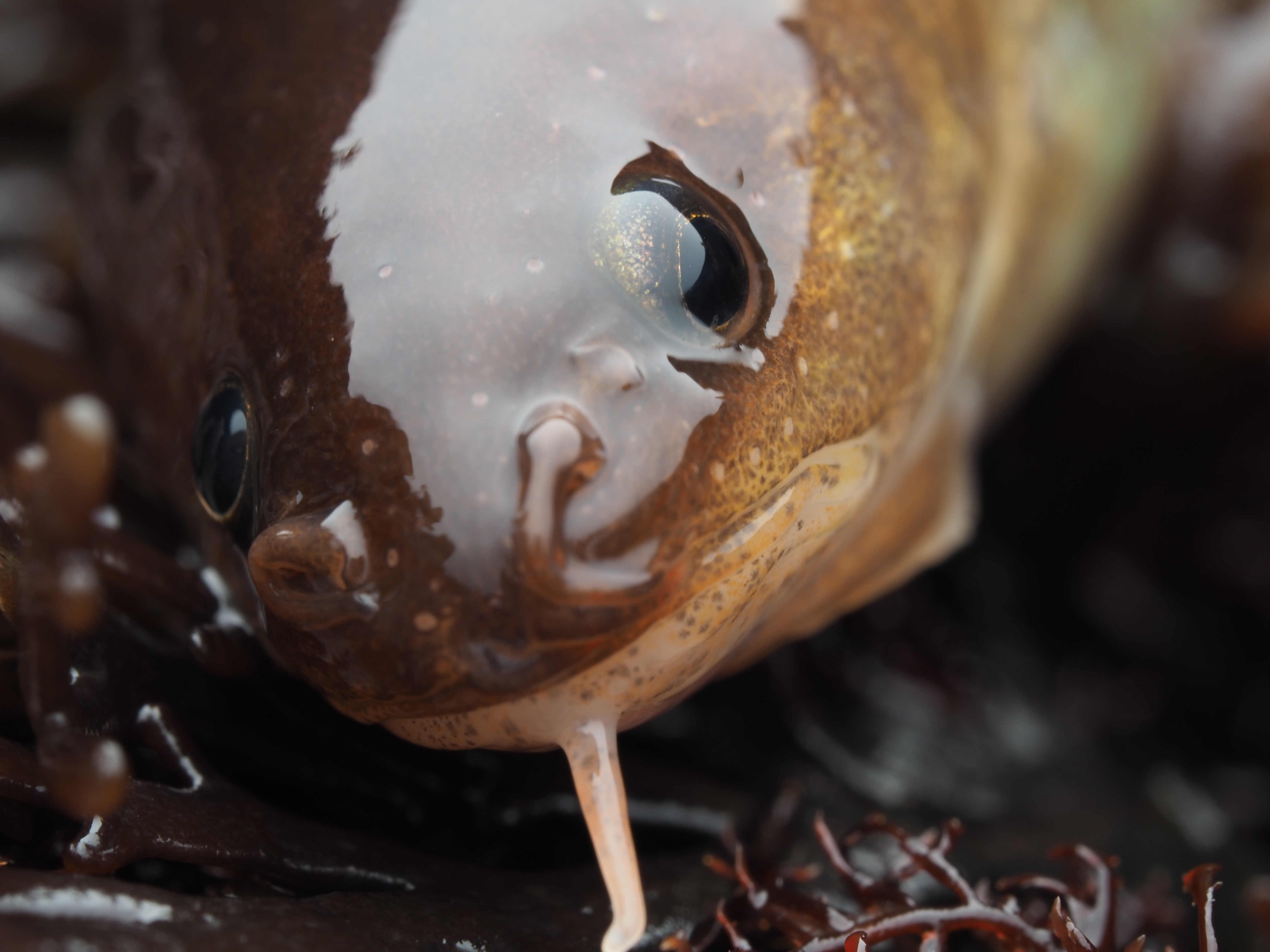
Last weekend the weather was rubbish but the tide was low, and so we went over to our local beach in Flushing for some rock pooling. I did not bring the underwater housing, but just the macro lens and my cygnustech diffuser. Above a little clingfish – this could either be a Two-spotted or a Small-headed Clingfish; they are very hard to tell apart if they are not breeding males (see pic below for scale, I had to use the extra magnification of the Raynox clip-on lens for this one). Below three other fish species: a Tompot Blenny, a Common Blenny (or Shanny) and a Montagu’s Blenny (which is from an earlier post, but I wanted to complete the set here).
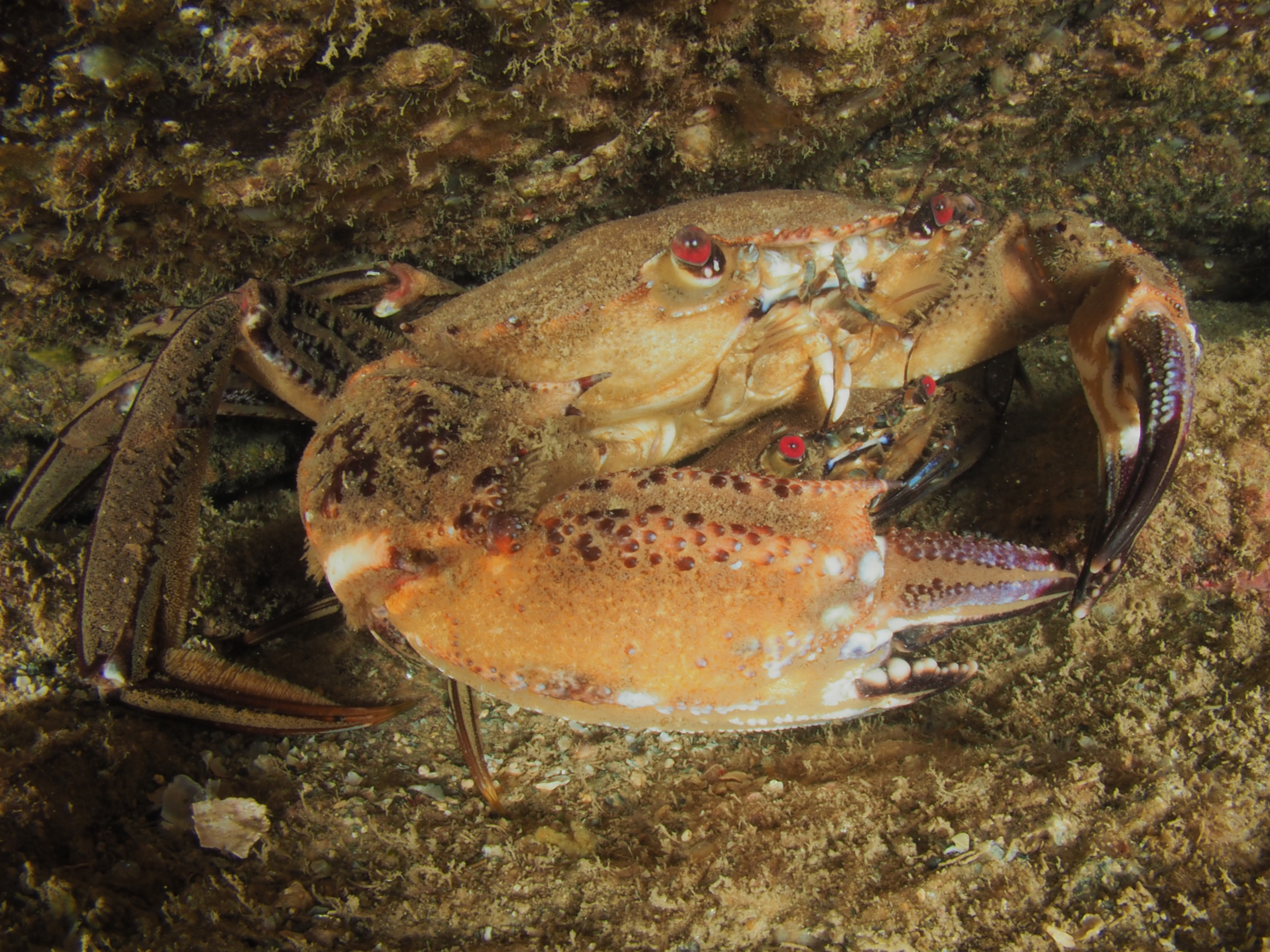
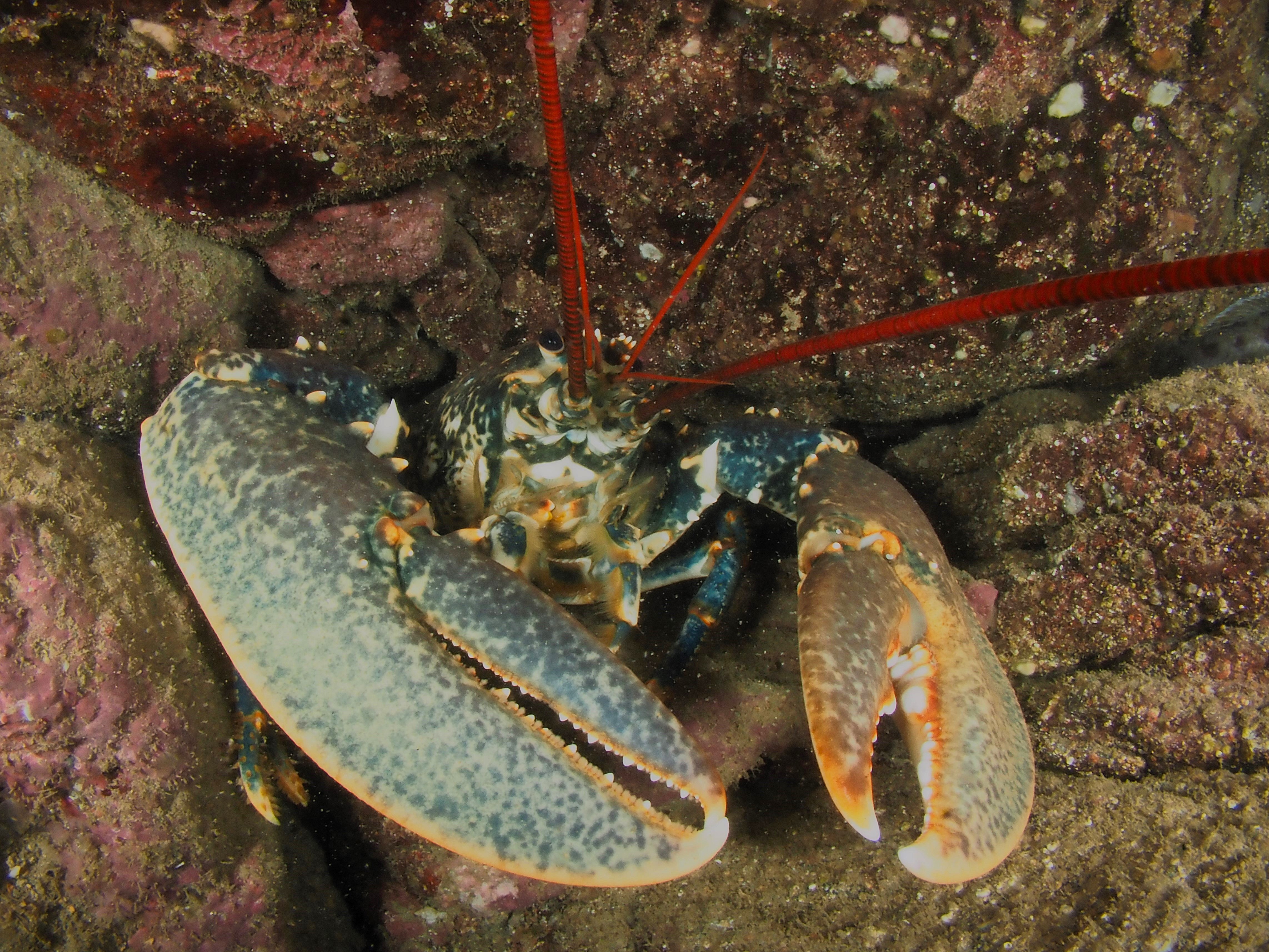
I have done a fair bit of diving at Silver Steps this year and it is high time to publish some of the photos I took there, starting with the Crustaceans that inhabit the cracks in the rocks. Most pics were taken with the macro-wide angle lens, which is not only suited because of its perspective, but also because it is long and thin and so can be poked into the crevices where these creatures lurk. Above, two Velvet Crabs Necora puber, which are abundant and feisty – I only noticed the small female in the photo afterwards! Below a European Lobster Homarus gammarus, also quite common and some of them are quite big. They usually shuffle out of their den quite menacingly only then to retreat again. Although impressive animals, it is hard to get an aesthetically pleasing shot out of them I find.
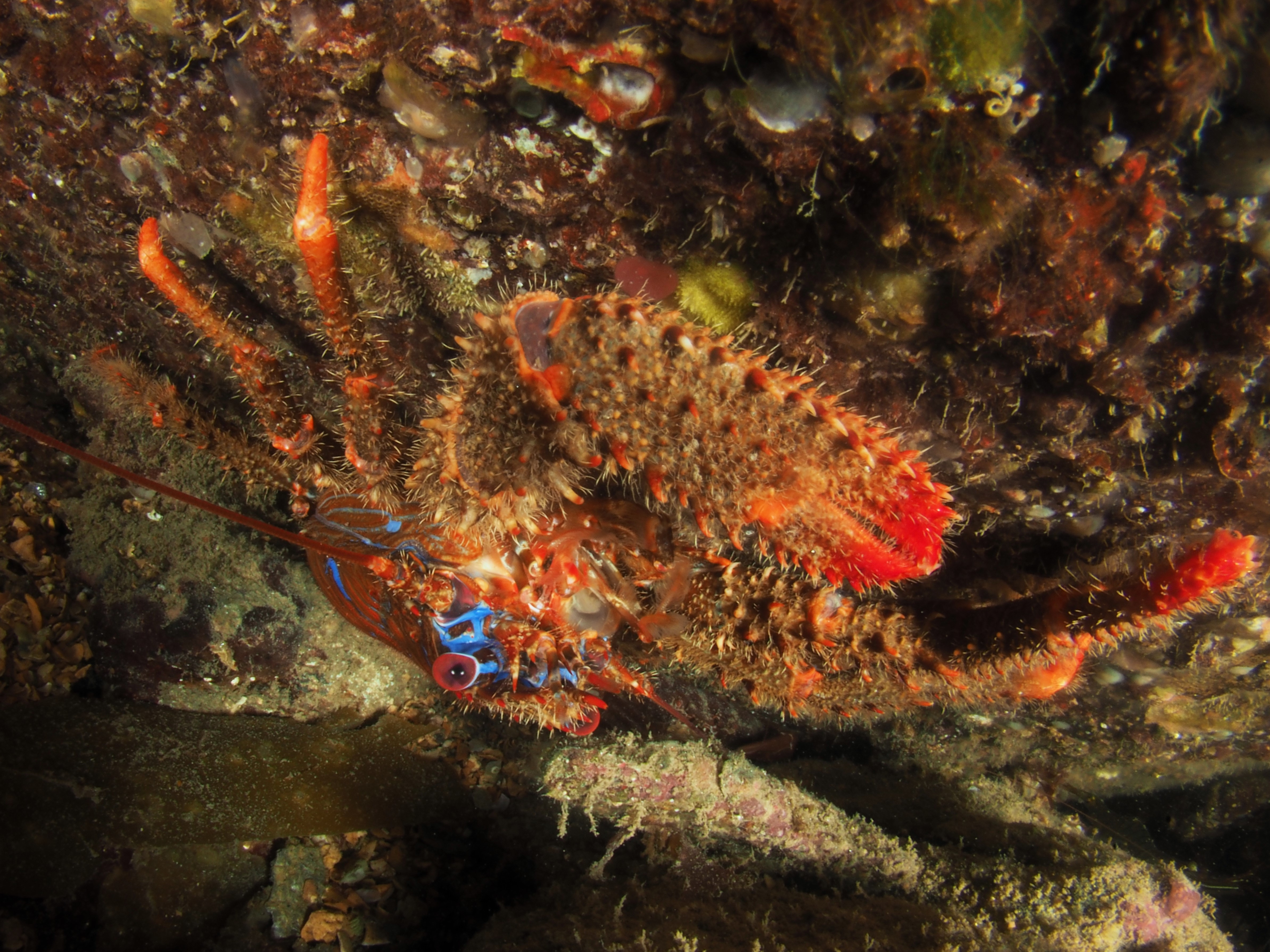
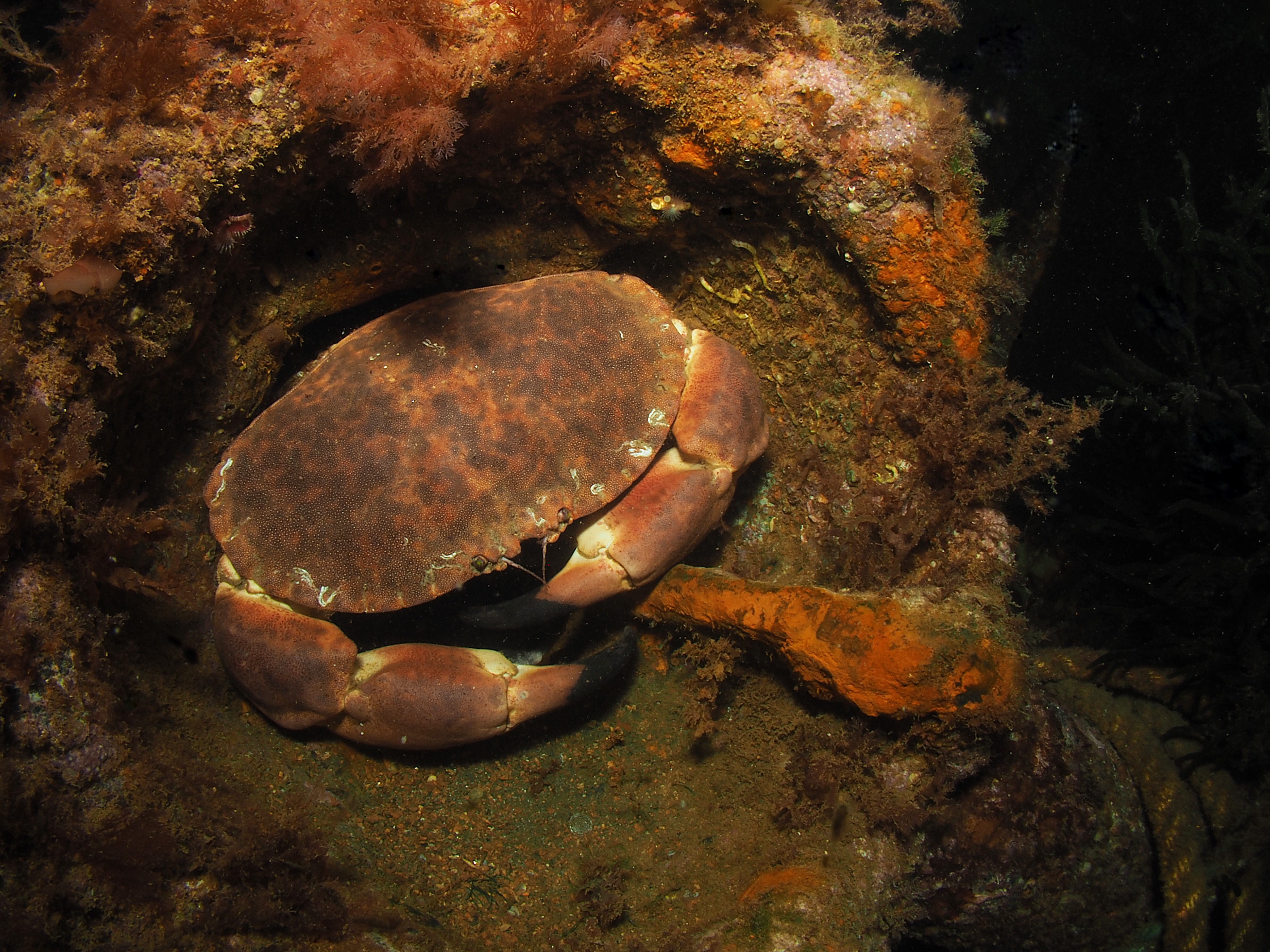
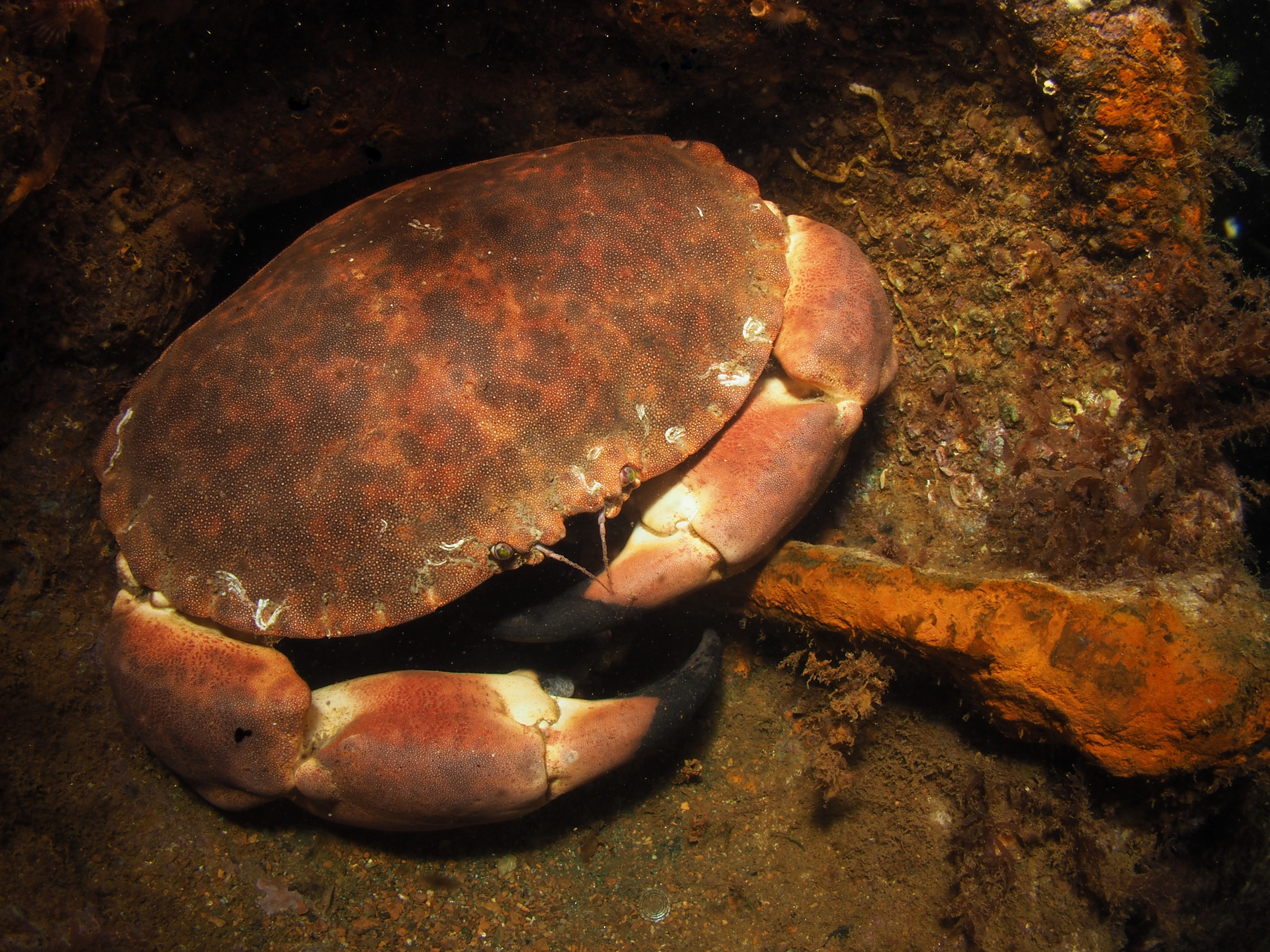
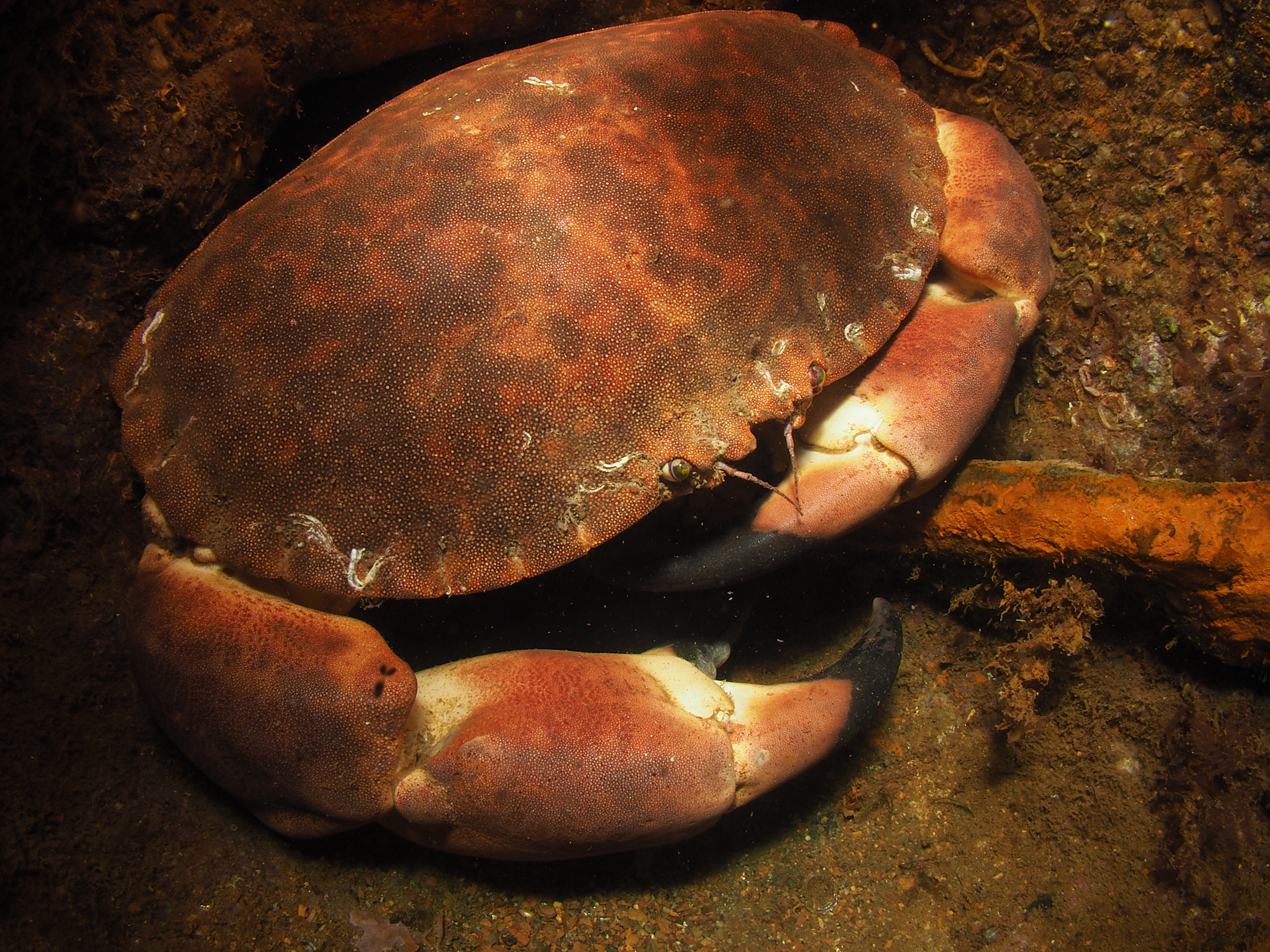
Next, the Squat Lobster Galathea strigosa, also a common, but quite shy species which is just as happy upside down as right side up. Also common are Brown (or Edible) Crabs Cancer pagurus, the individual here not in a crevice but in a piece of steel wreckage.
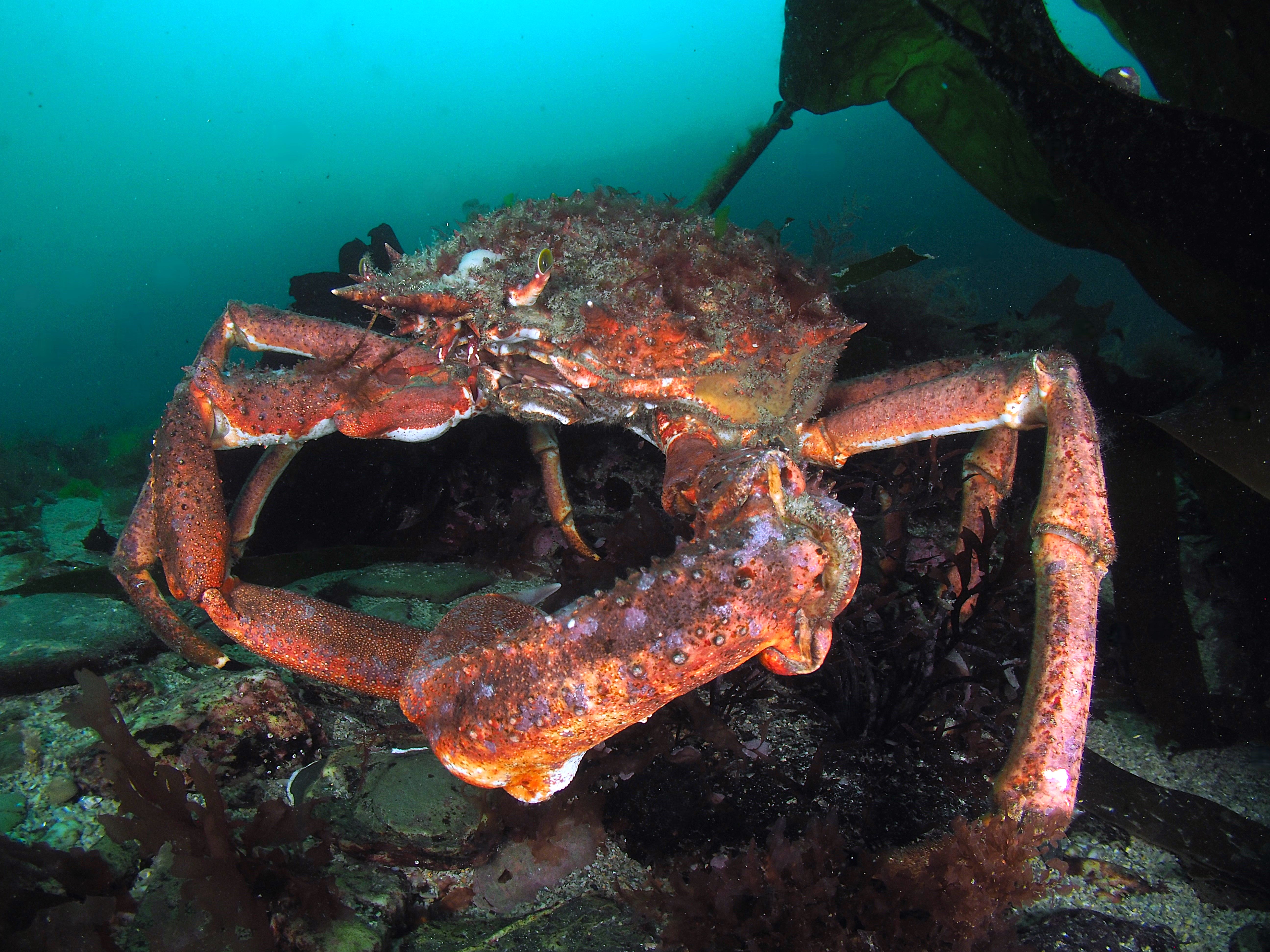
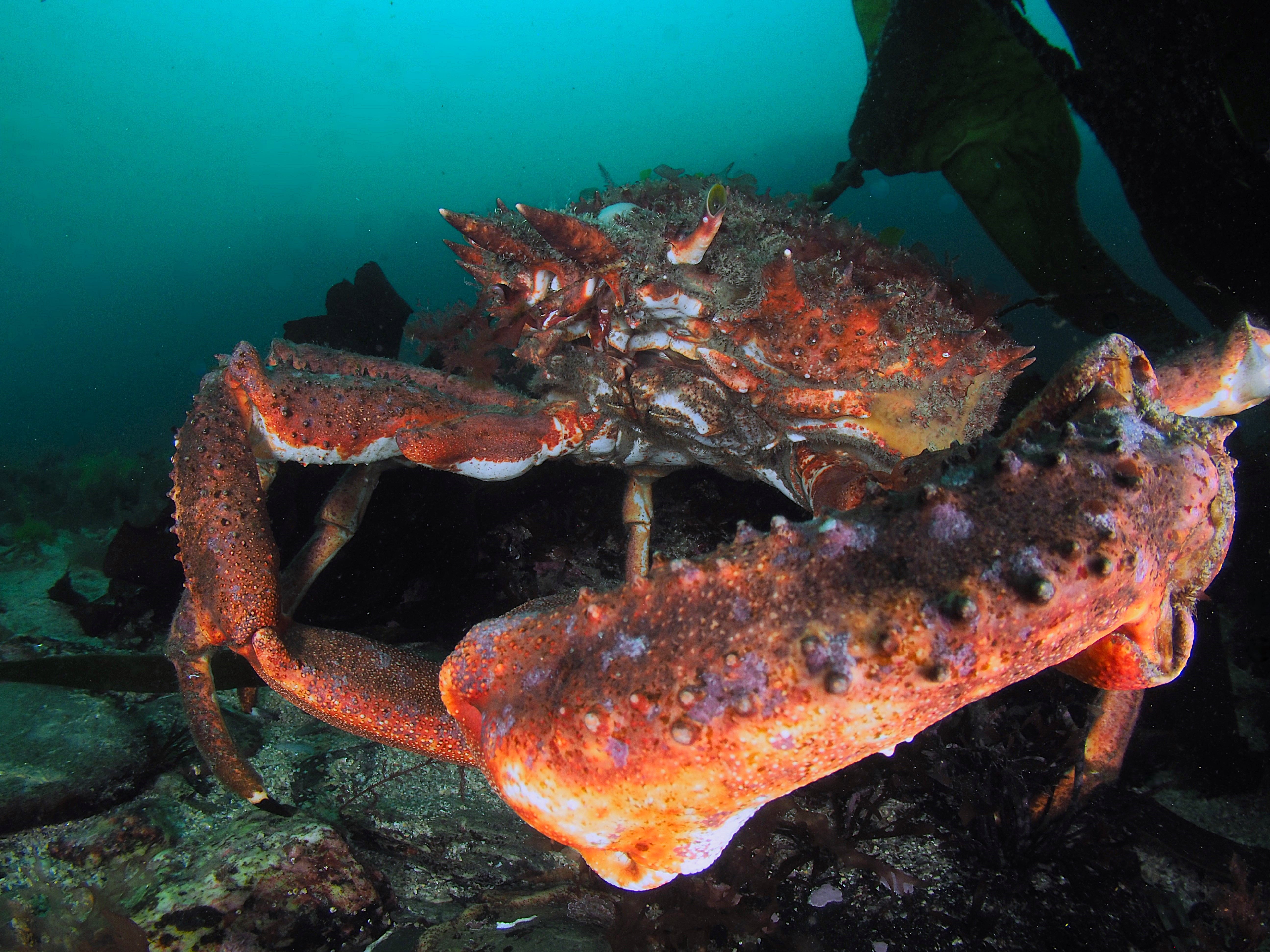
The other big, common Crustacean here occasionally perches on rock walls but usually is found roaming the seabed: the European Spider Crab (rebranded by local fishmongers as ‘Cornish King Crab’ – sounds more appetizing than something spiderlike) Maja squinadobrachydactyla. Like the lobster, the behaviour of these guys is a mixture of bravado and fear. The weird lens allows me to get close, but as it lets in very little light, I am forced to use a high ISO and slow shutterspeed, making these images not the crispiest.
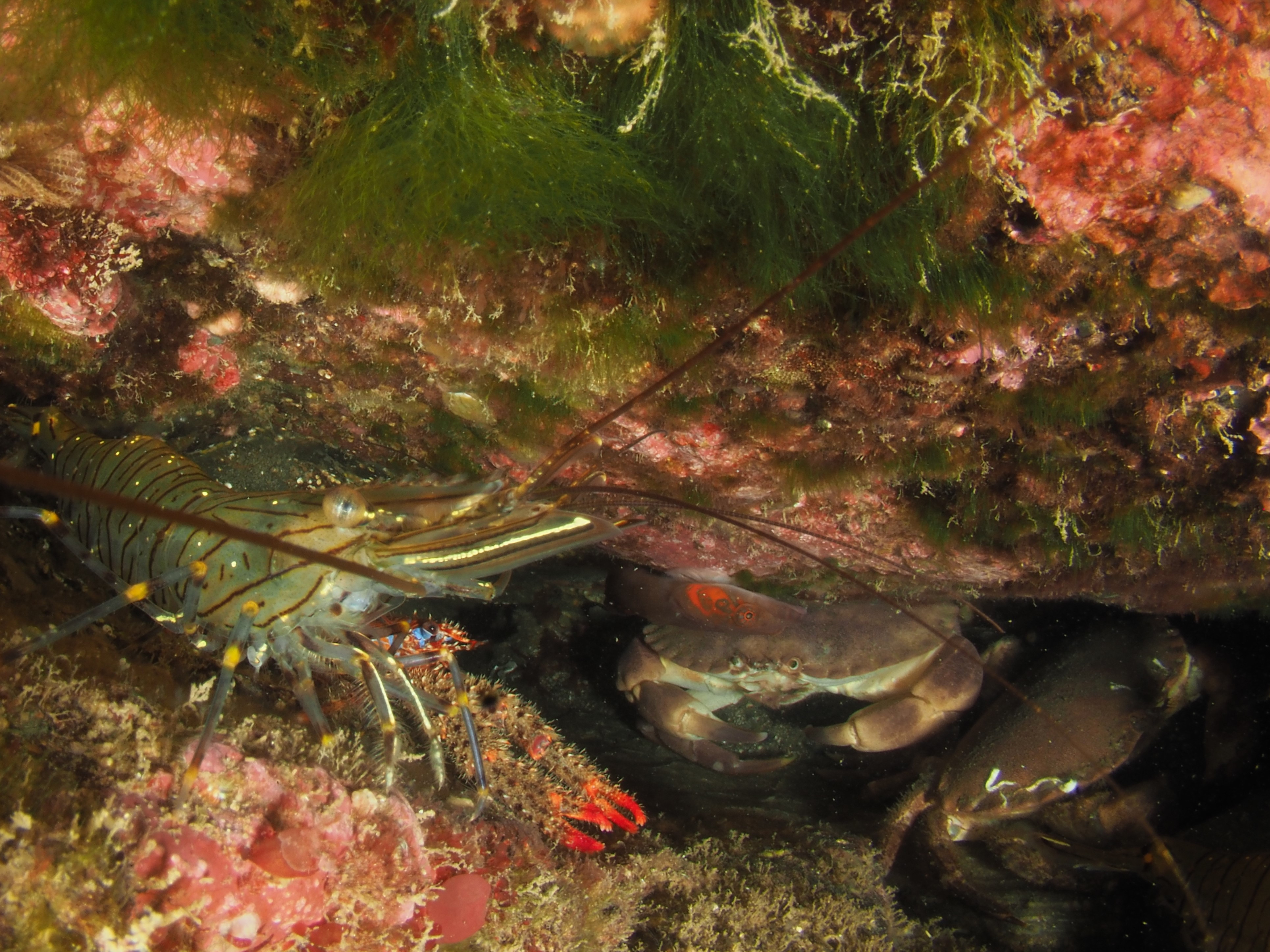
The final photo is technically not great, but I like it because it shows how a range of species apparently gets on quite well at close quarters. On the left, a Common Prawn Palaemon serratus, which can grow quite large and is actually really beautiful with its blue and yellow stripes. Right behind it is a Squat Lobster, with two Edible Crabs lurking in the background and an upside down male Connemara Clingfish Lepadogaster candolii – the next post will be about the fish of Silver Steps!
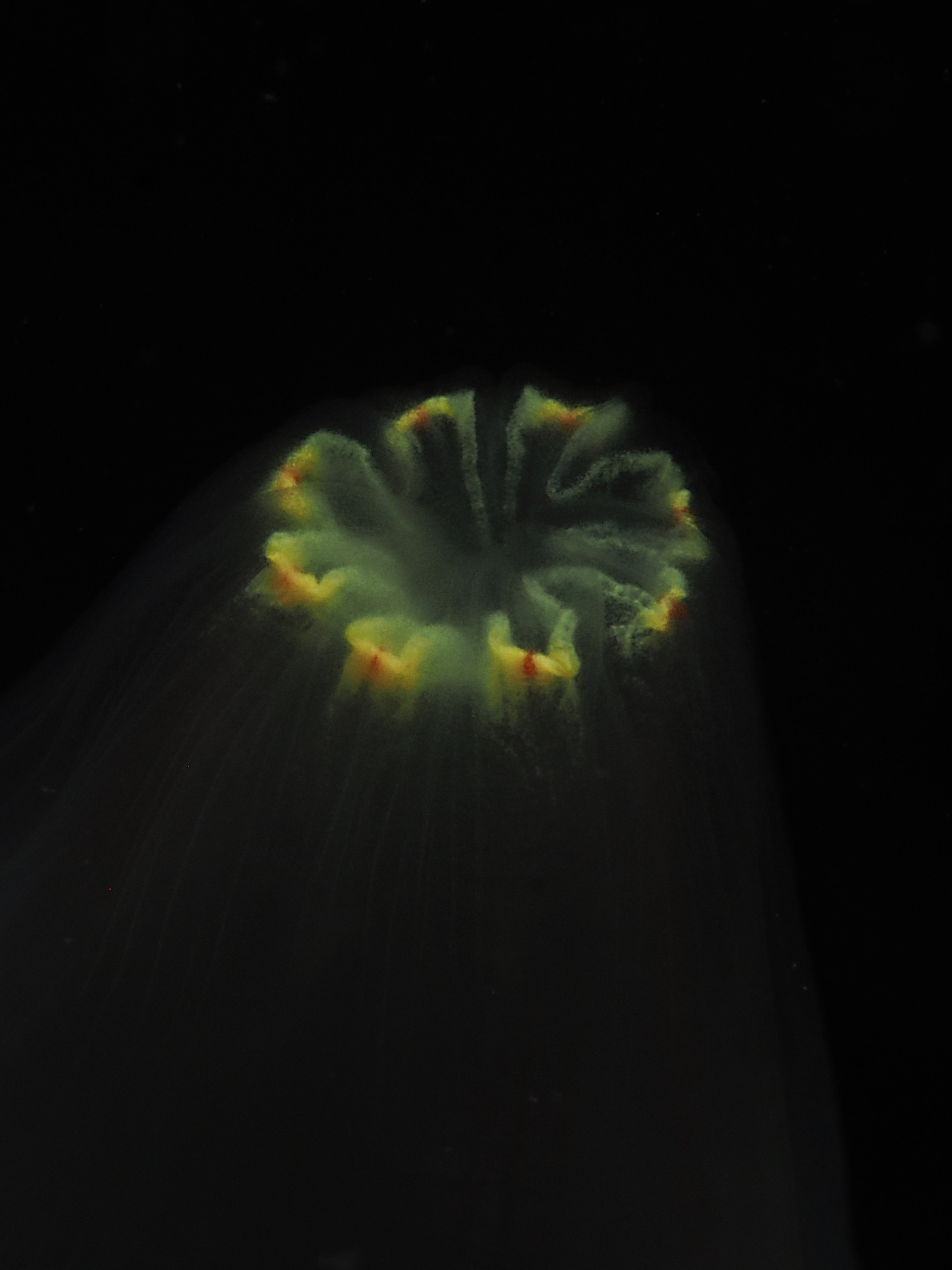
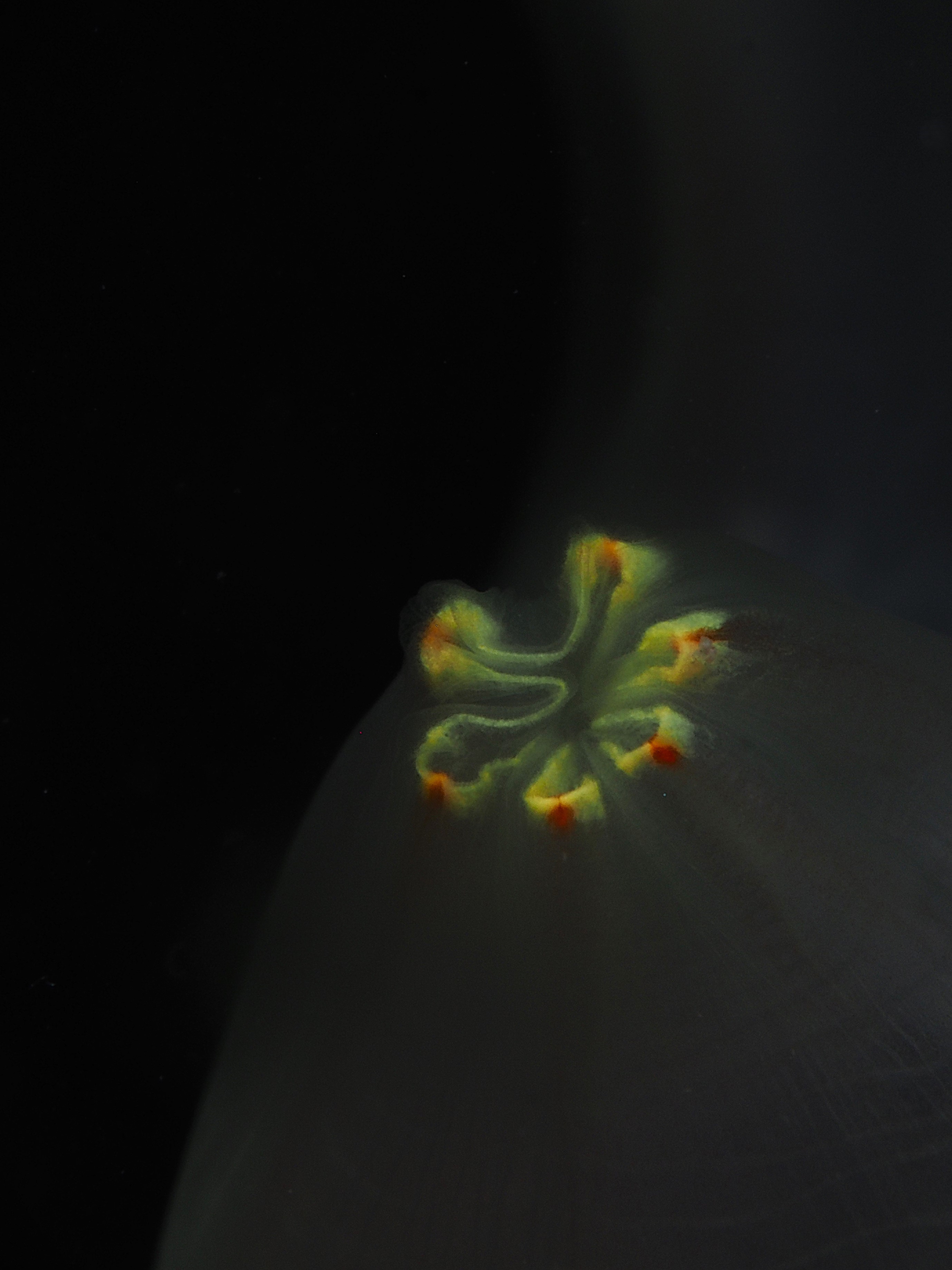
The inhalant (left pic, 8 lobes) and exhalant (right pic, 6 lobes) siphon of the Sea Vase seasquirt (Ciona intestinalis). The pigments are thought to function as photoreceptors. This is a common species, especially in habitats disturbed by humans, and not too pretty (the latin name means ‘pillar of intestines’…) but if you zoom in everything reveals beautiful features! Quite moody shots, to which I have gravitated this year. I like the black backgrounds, which is achieved by letting very little light into the camera, with the strobes only lighting up the subject in the foreground – unable to illuminate anything in the open water (‘negative space’) behind. (A similar effect can be achieved using a ‘snoot’, but I have never managed to get that to work…) I have also tried to get closer and closer up with my macro wetlens, ideally I’d have some sort of microscope underwater! If you are on instagram, check out @an_bollenessor for more pics as ‘posts’ and as ‘stories’.
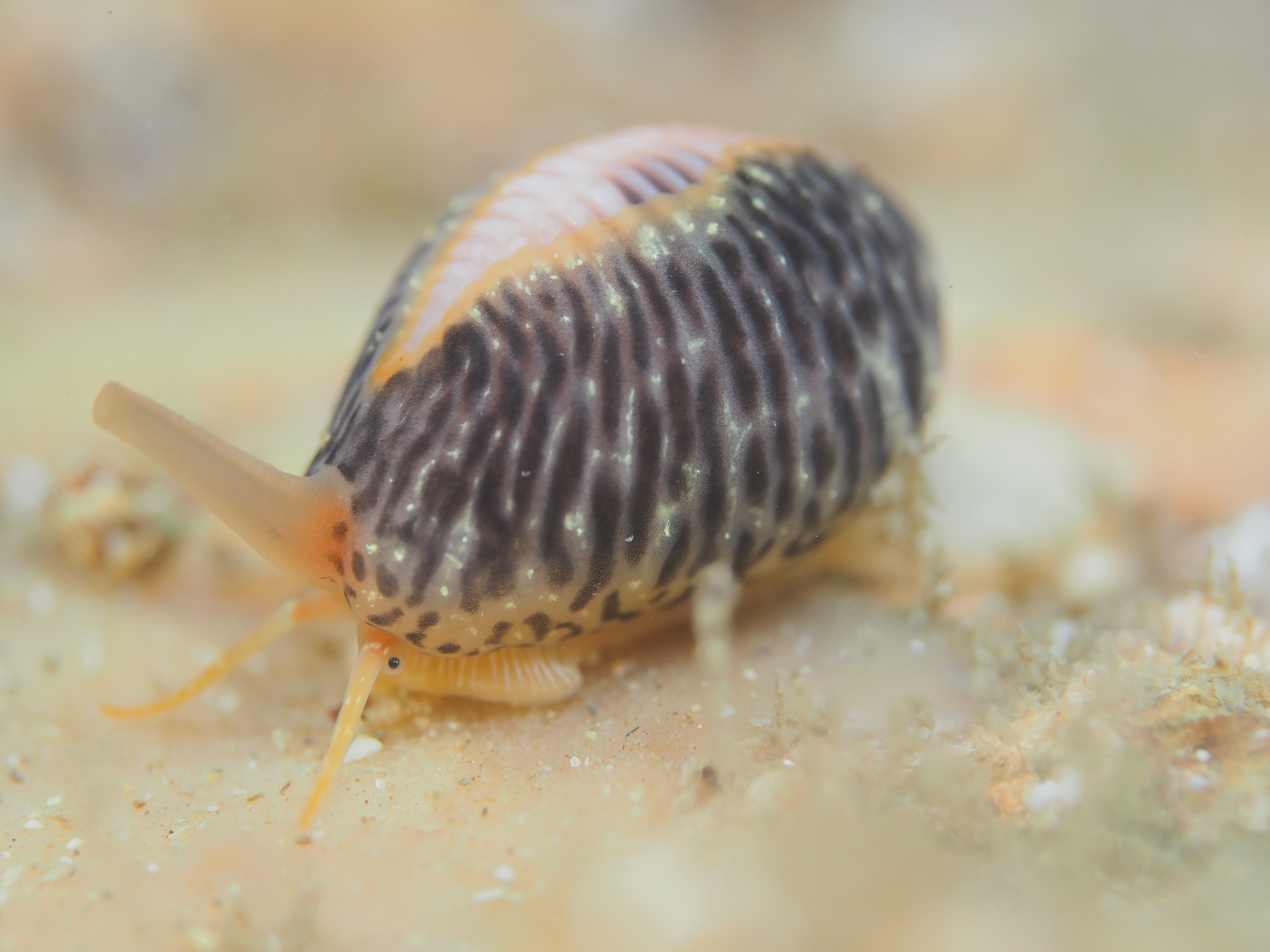
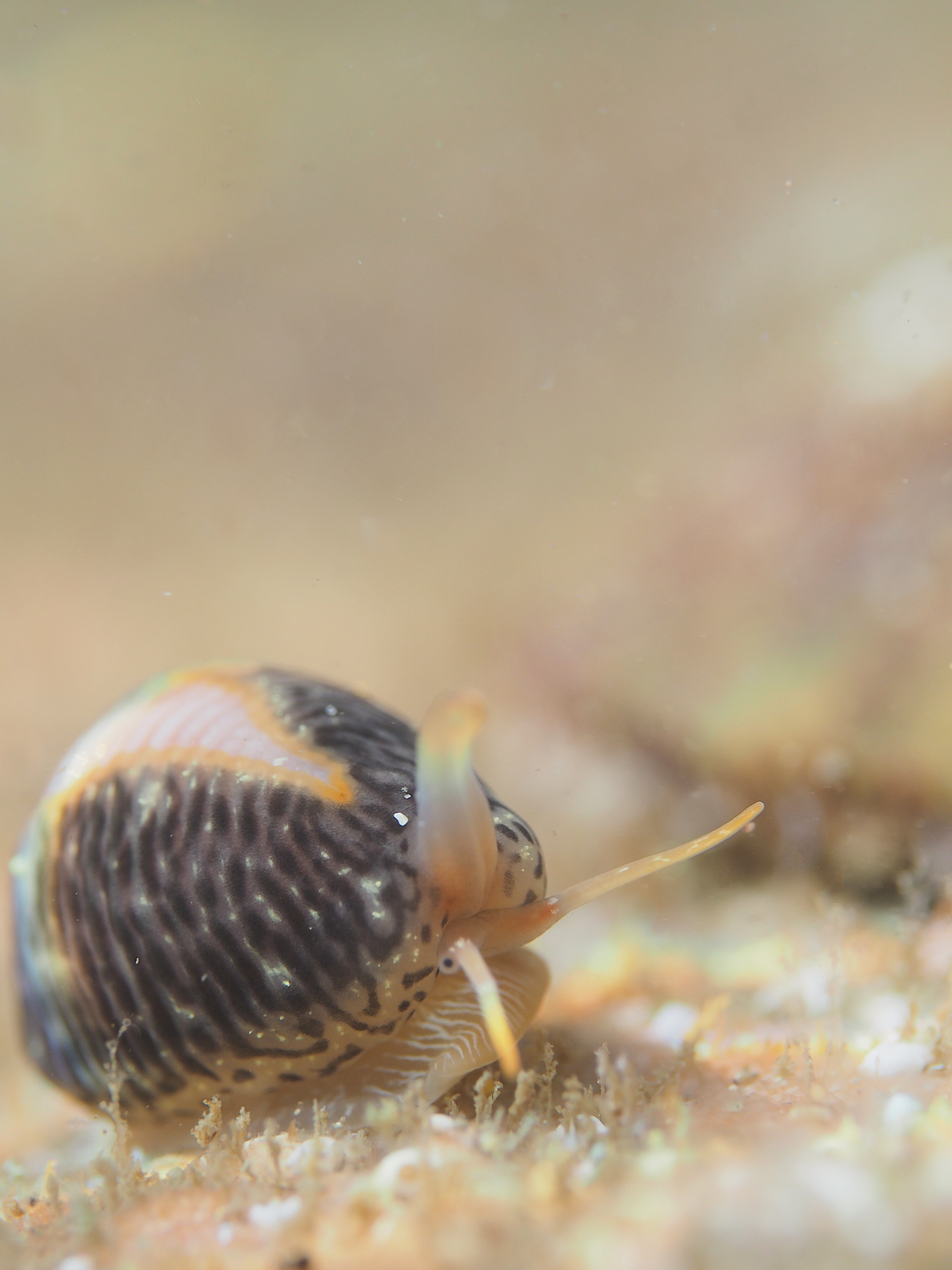
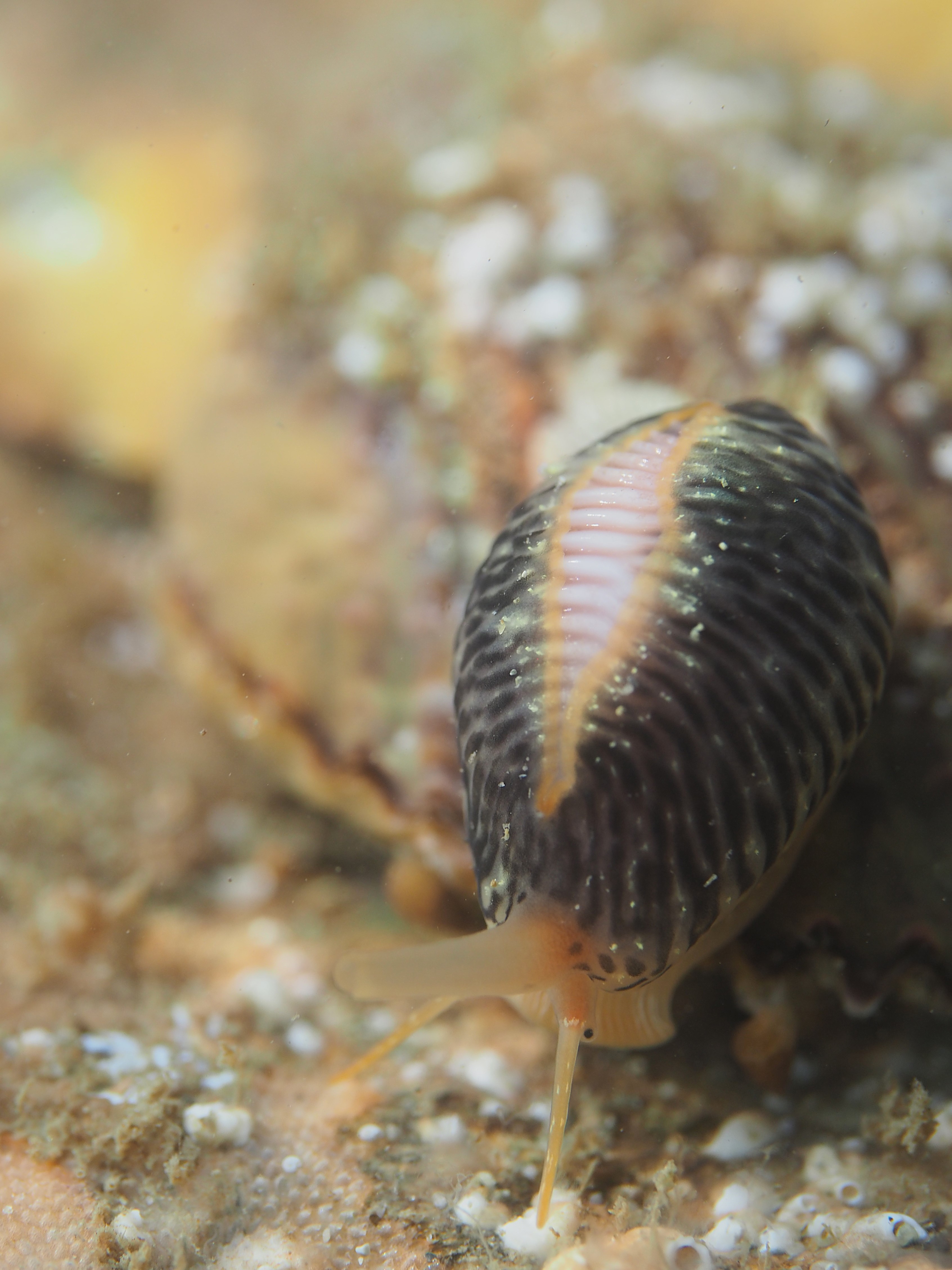
I have a lot more pics from this year to put on the blog but those have to wait, as I want to post some photos from last Saturday first, when there was little wind, a low tide and some sun! The viz was not great as expected, so I brought the macrolens and went in search for some small critters. No special finds, but I was very happy with my shots of a common little mollusc the European Cowrie (Trivia monacha). Most people will be familiar with this species as beach finds of empty shells, but not know how it looks like when it is alive, when its mantle covers most of the shell, it shows its striped tail at the back and a siphon and cute little eyes at the front. I used a shallow depth of field (f/4) to get rid of the ugly cluttered background, which worked well if I may say so myself (I need to try this technique more often!).
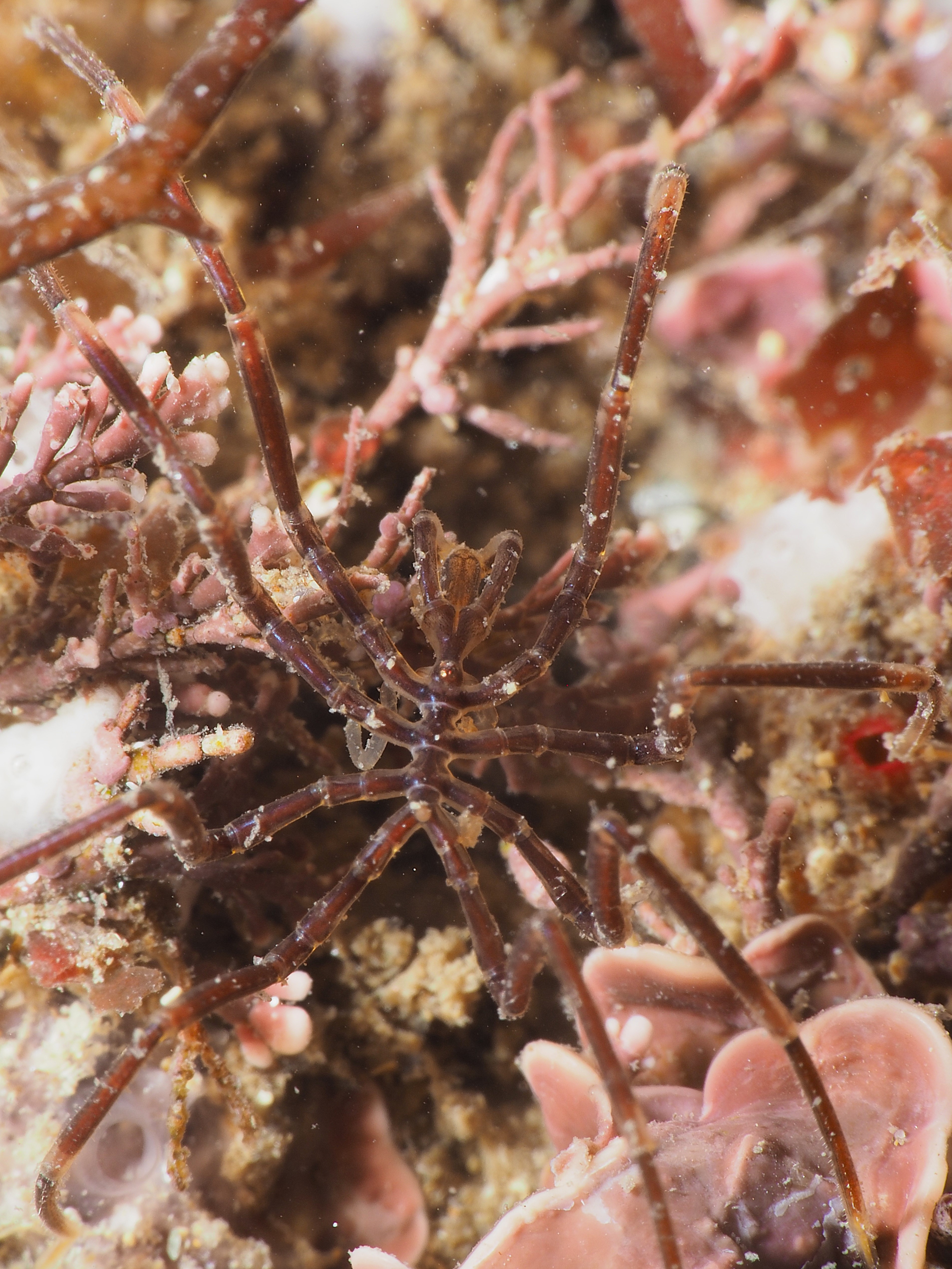
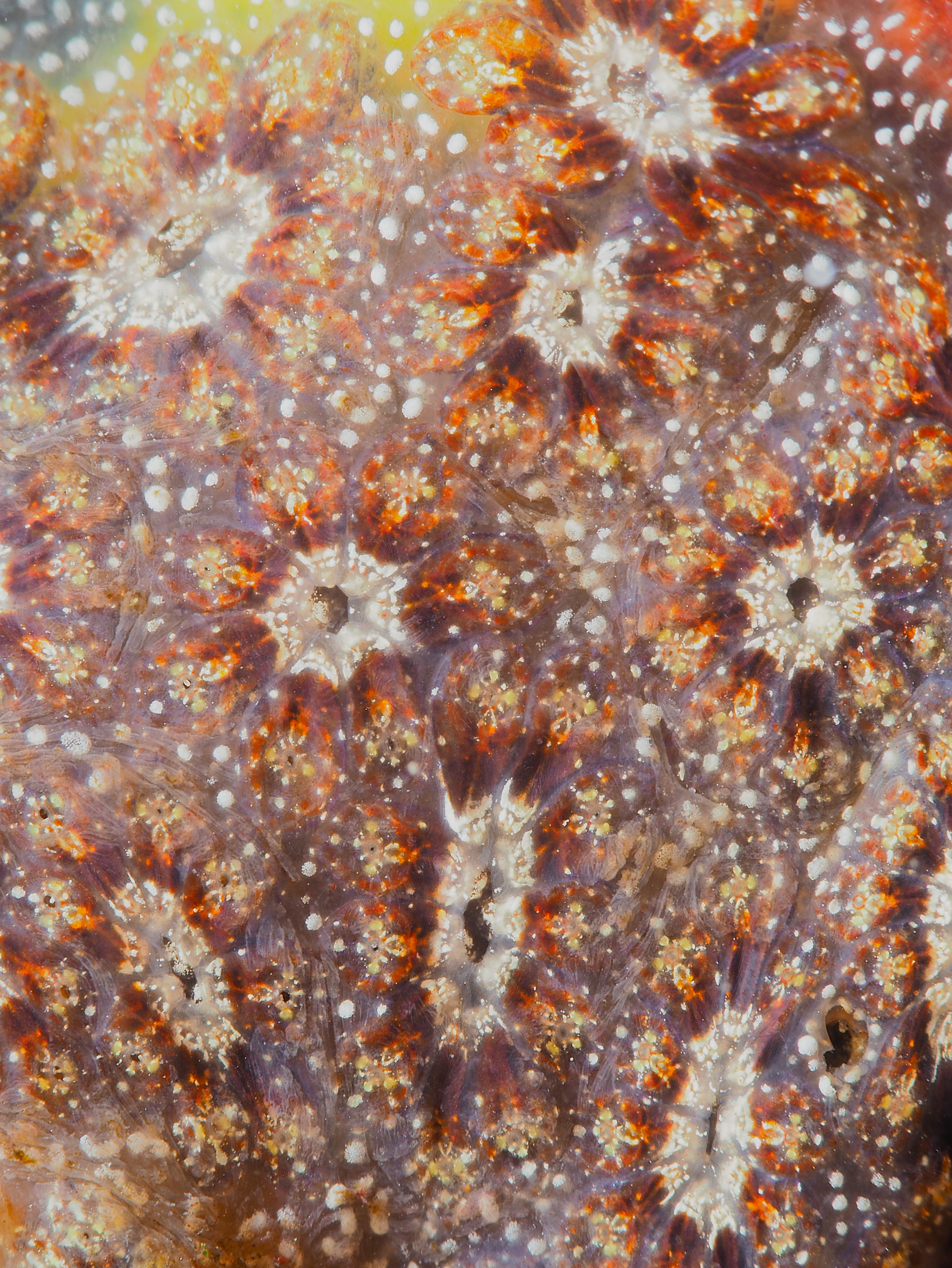
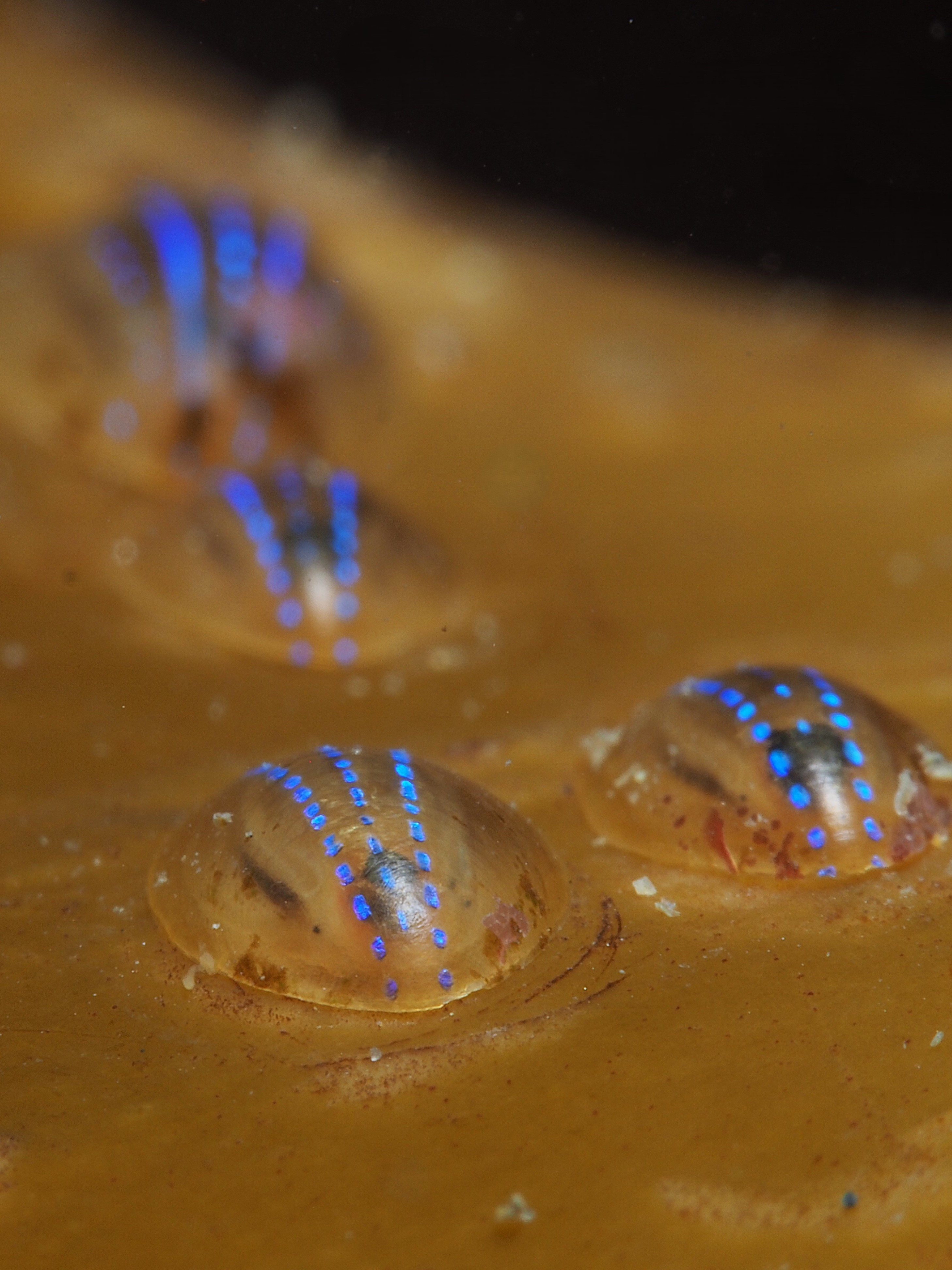
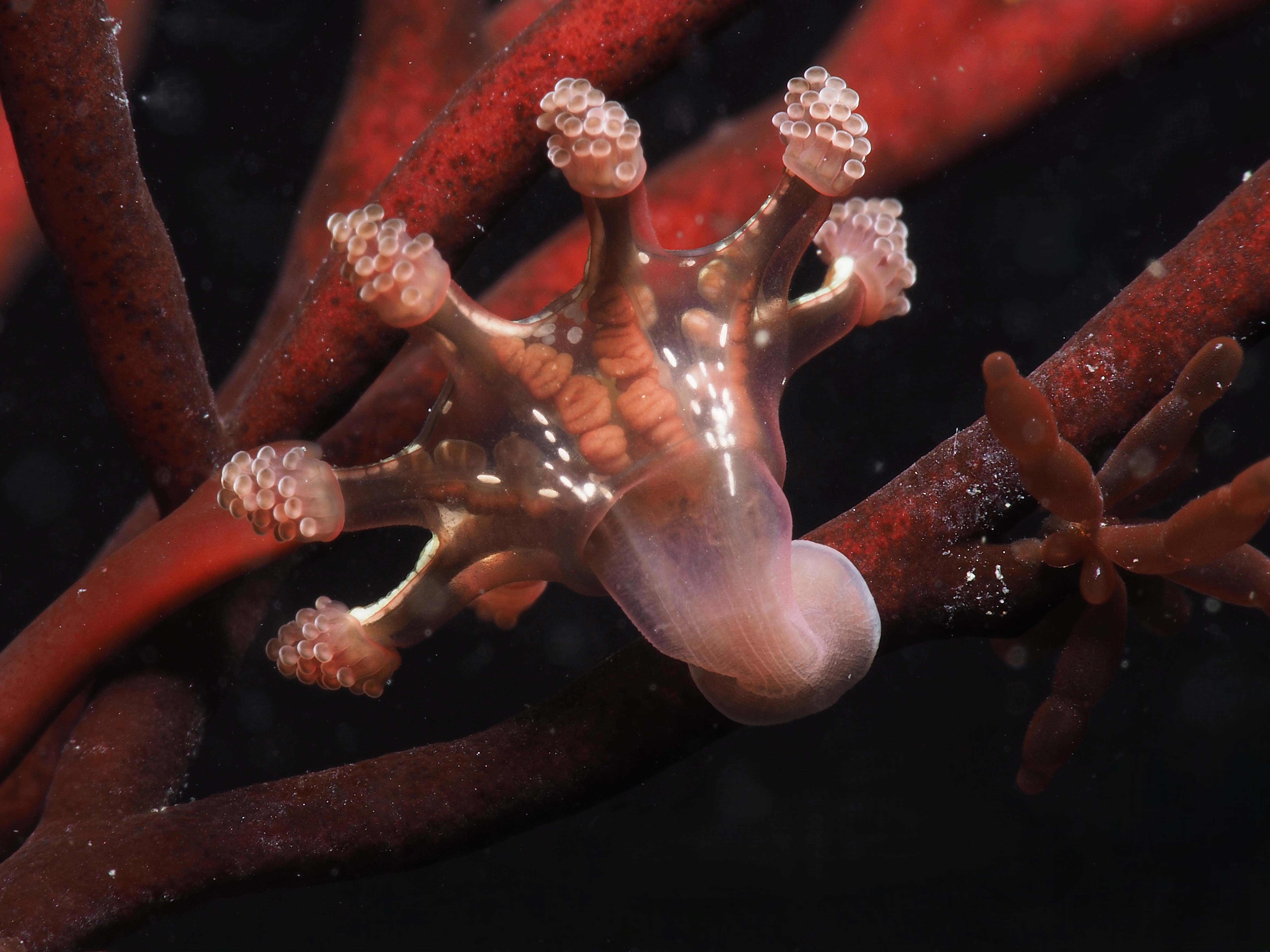
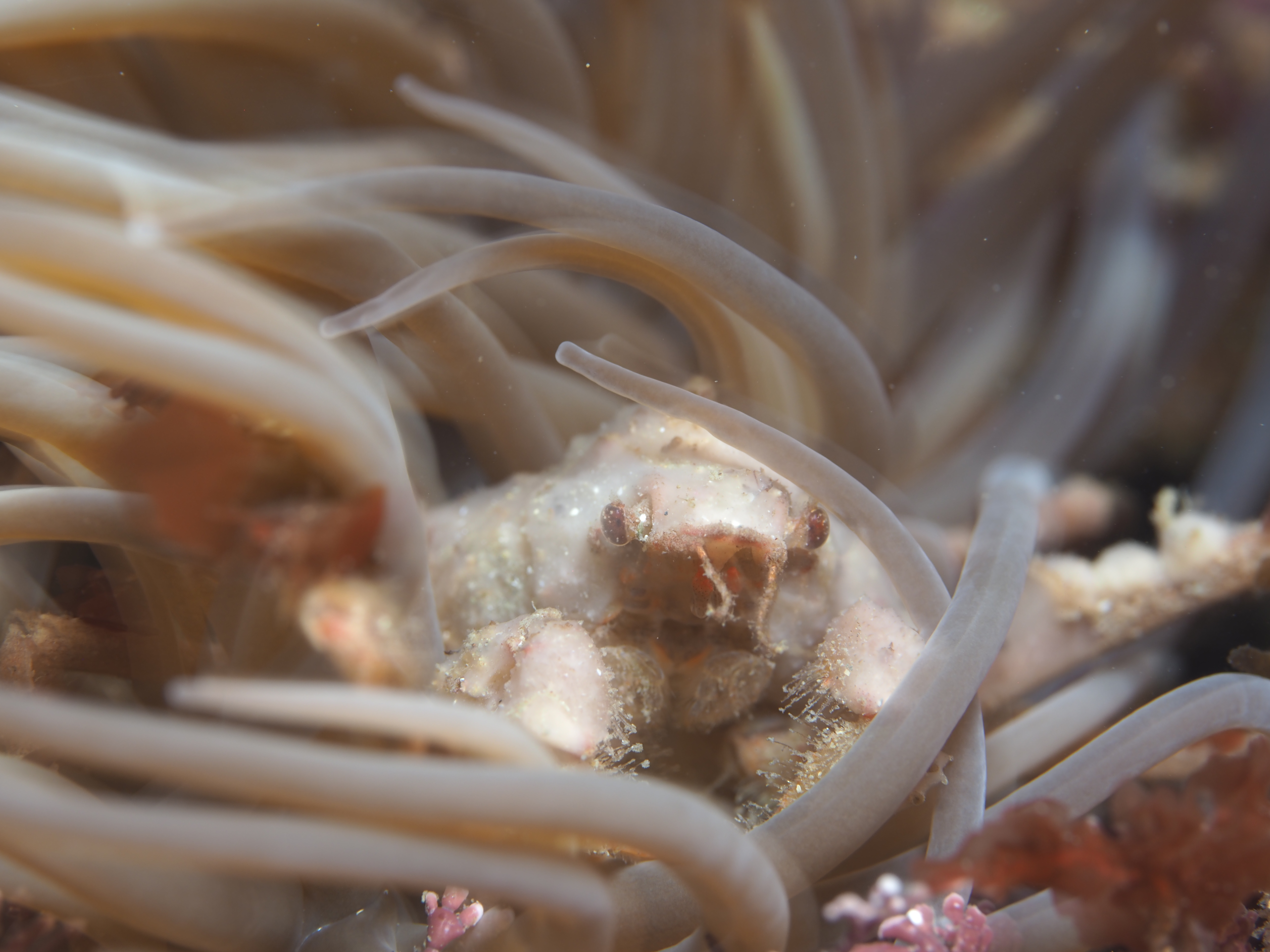
Many other critters were found too and I took shots of a selection. First, a Sea Spider, all legs and crawling away. A tiny mat of colonial tunicate that looked like a persian rug on drugs. A quick shot of the ubiquitous (if you know where to look – on kelp fronds) blue-rayed Limpets and a stalked jellyfish. Finally, I spent a lot of time taking shallow-depth-of-field AND slow shutter-speed photos of a scorpion spider crab in a snakelocks anemone to get some sort of ‘artistic’ shot. It did not really work, but it was fun nonetheless and I will have a go at it again. After almost 2,5 hours in the water I stumbled back to the car to get changed – an afternoon well-spent!
 An Bollenessor