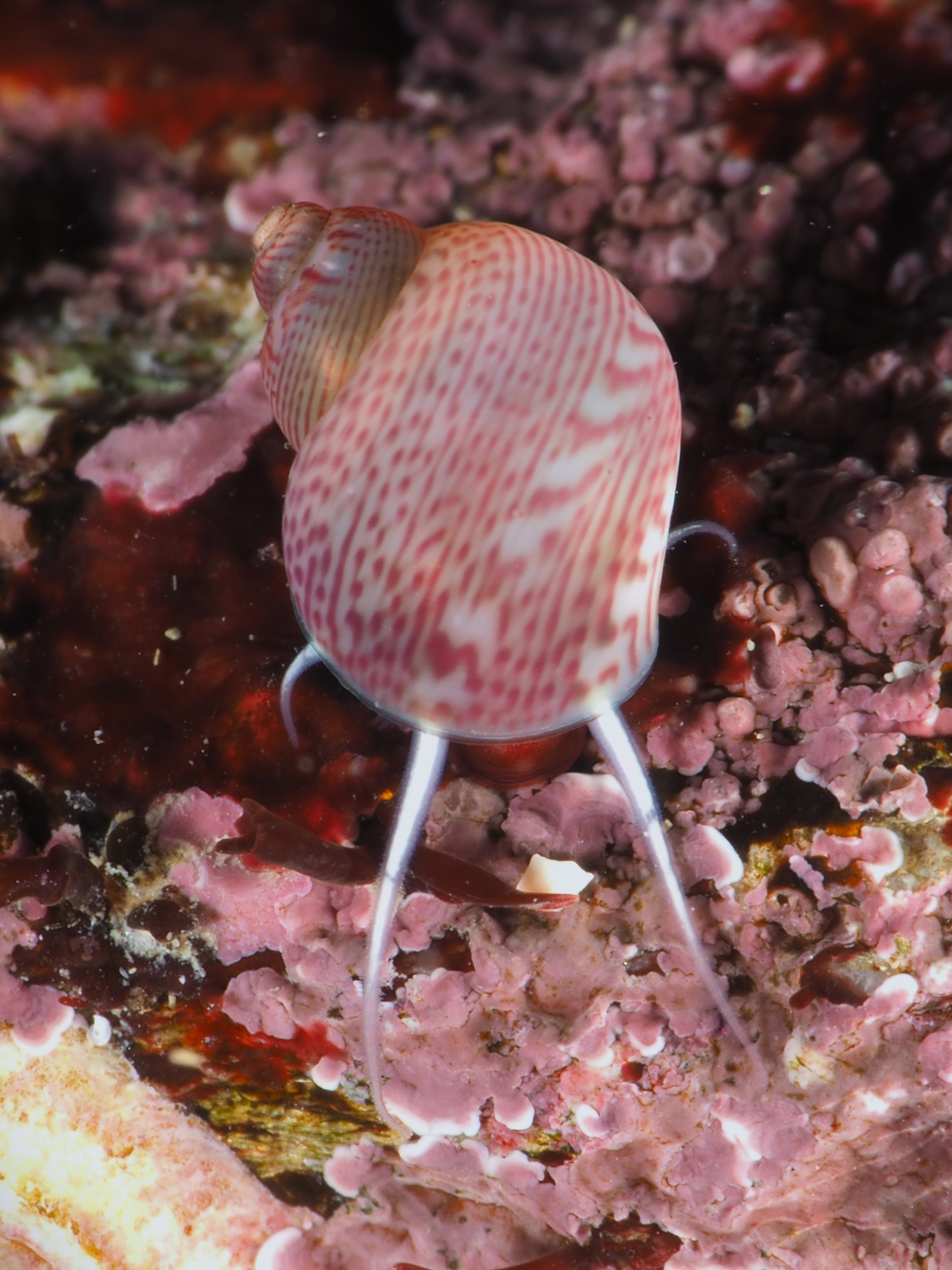
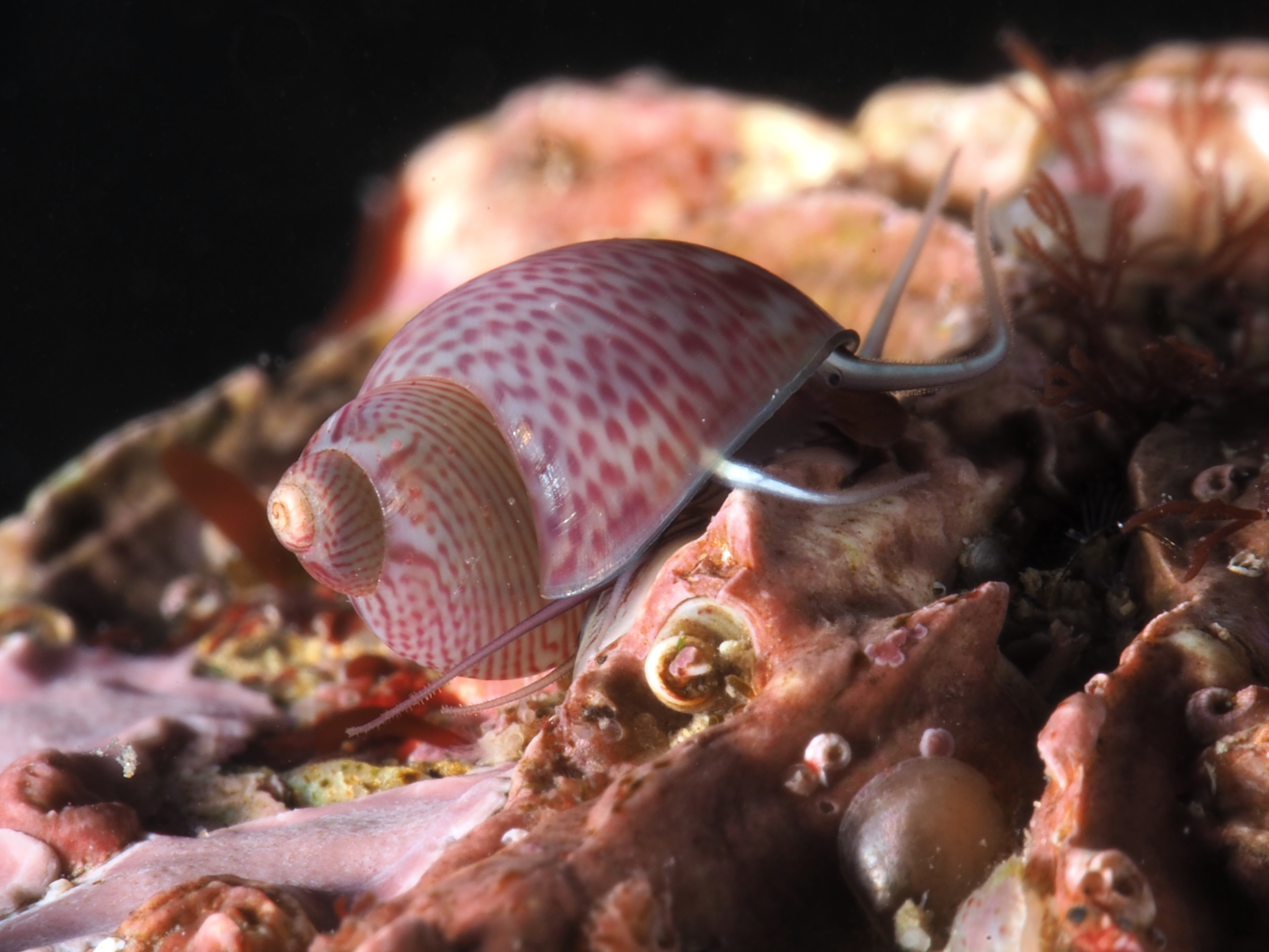
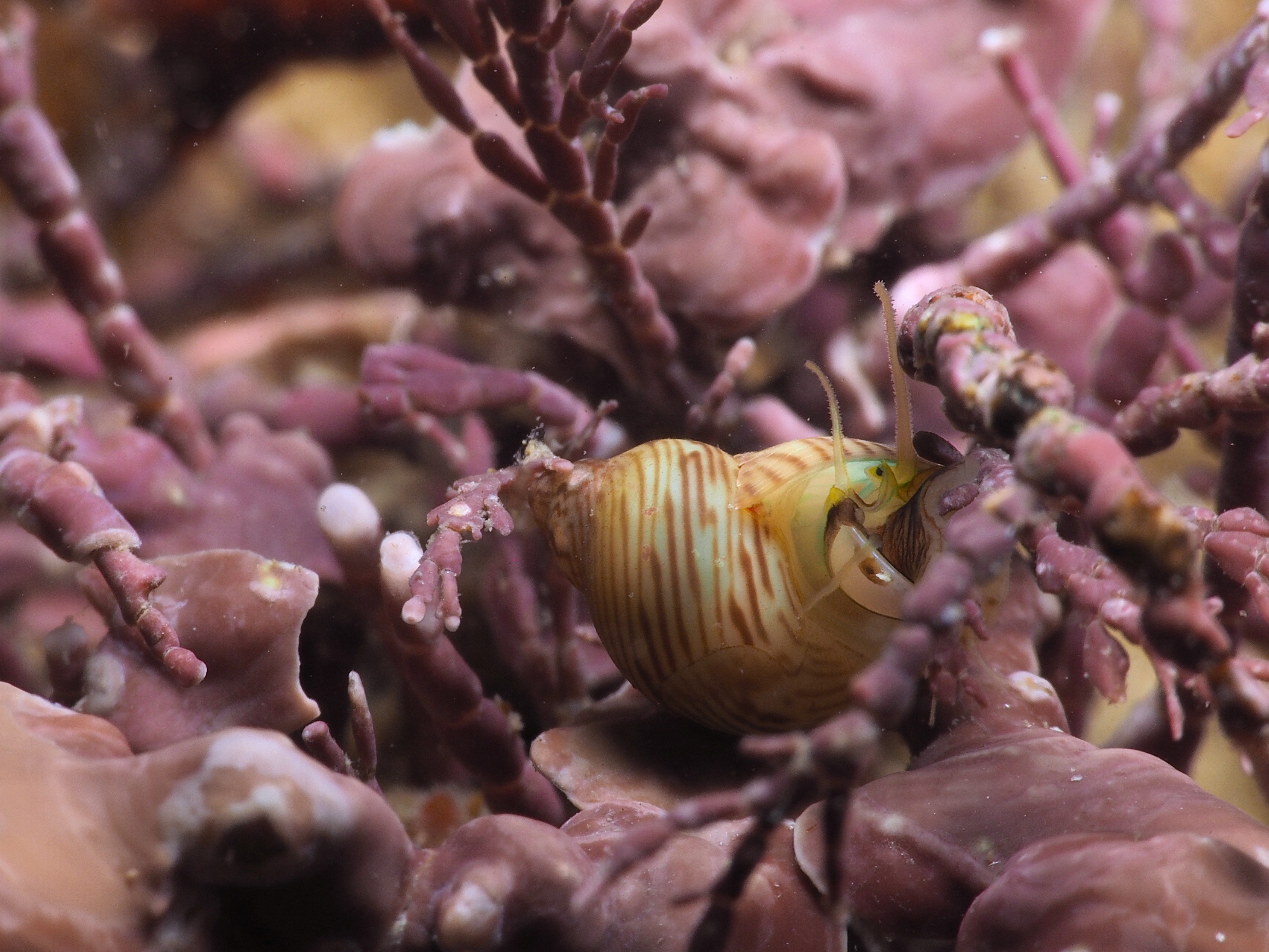
The Pheasant Shell is one of my favourite little critters in the rockpools in Falmouth. It is a bit weird to refer to these organisms as ‘shells’ actually, as they are living things and the nonliving shell is ofcourse only a part of them. The confusion extends to its scientific name: this species was previously known as Tricolia pullus, but has recently been split into a Southern European T. pullus species and a Northern European T. picta species. Perhaps the dust needs to still settle on that one.
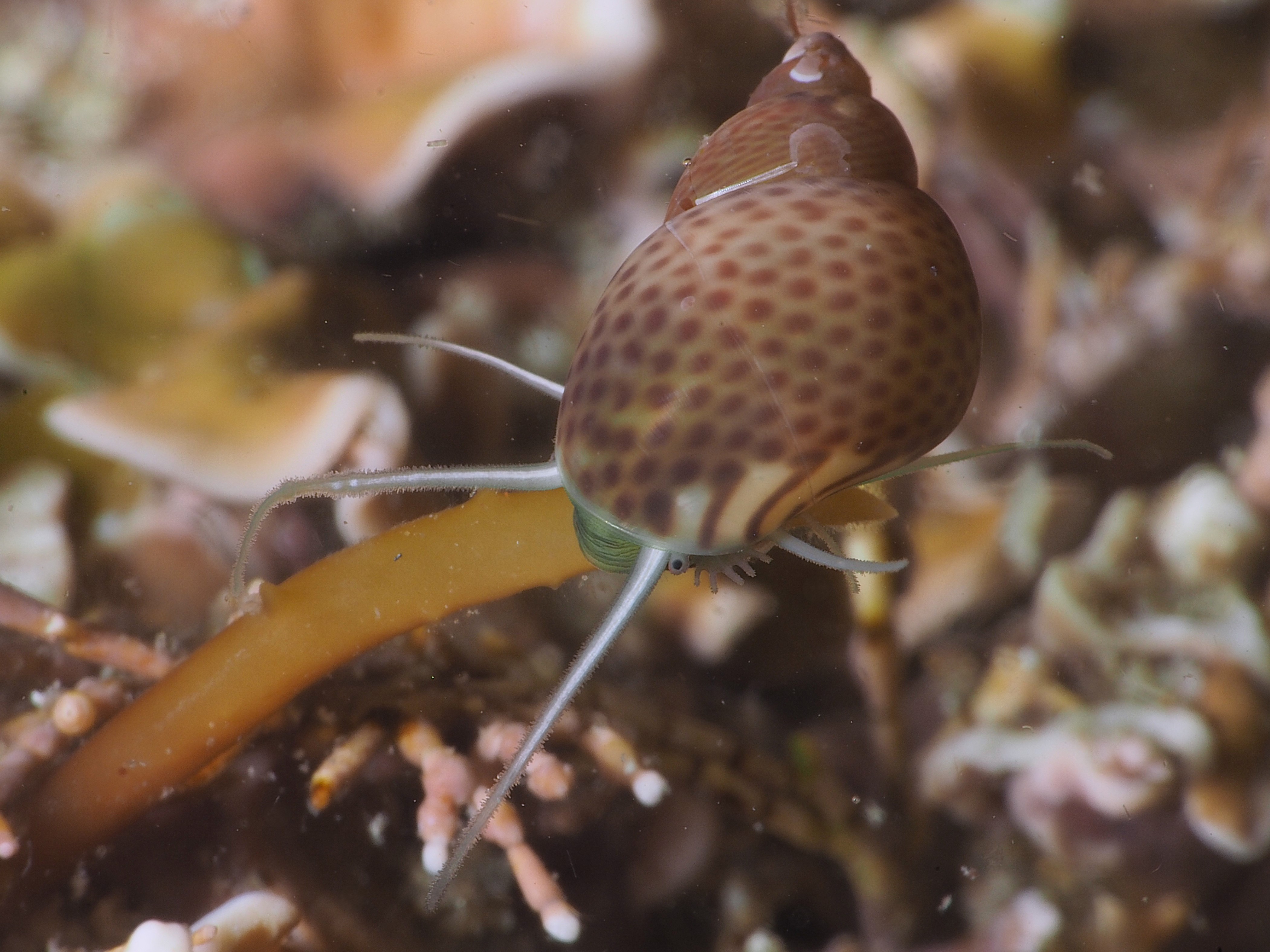
I have taken these photos, on different occasions, with the mzuiko 60mm macrolens and the nauticam cmc-1 wetlens. The extra magnification the latter lens (screwed onto the housing) offers is great; although somehow I always want to get even CLOSER! I have not nailed the Pheasant Shell shot either. Reflecting on these pics I think I need to use a shallower depth of field to get rid of cluttered backgrounds. Next time.
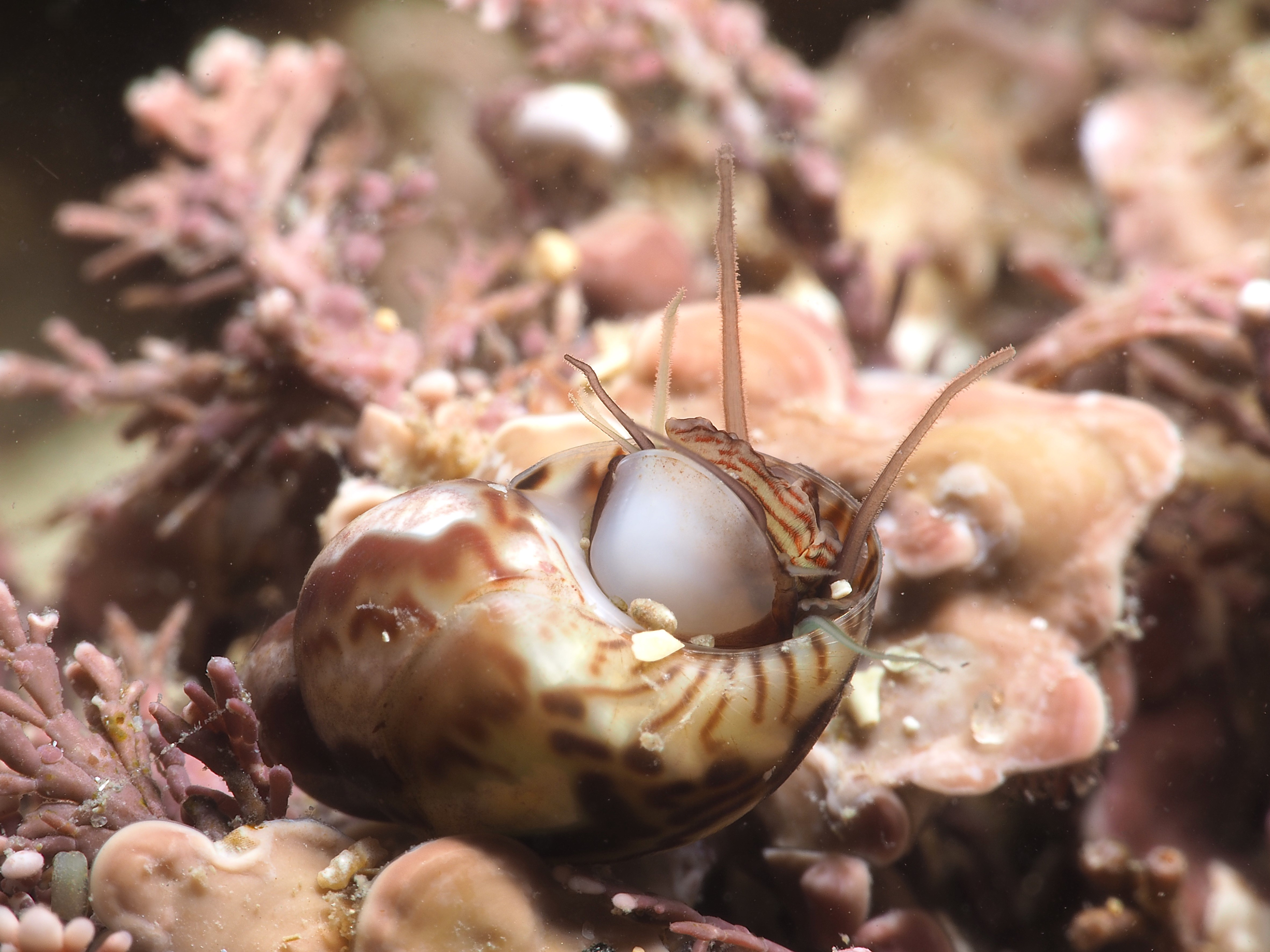
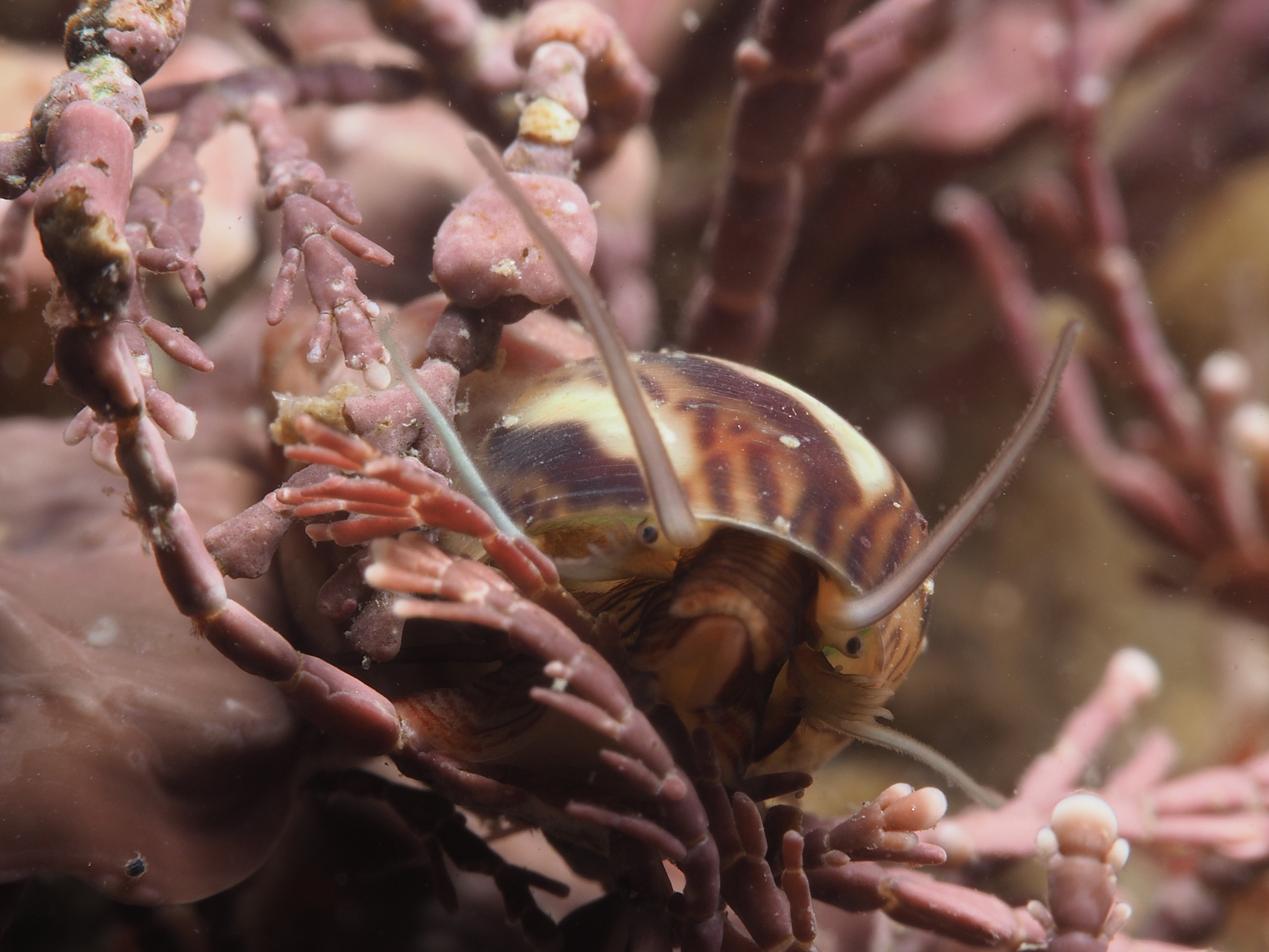
The calcified operculum (the little door to close the shell) is clearly visible in the first photo above, as are the tentacles. On the second photo above you can even see that the left ‘neck lobe’ is more deeply digitated (fingerlike) than the right one. For more detailed (studio)shots of this and other molluscs please see Morddyn’s flickr account. I will post more macroshots of other mollusc species soon!

 An Bollenessor