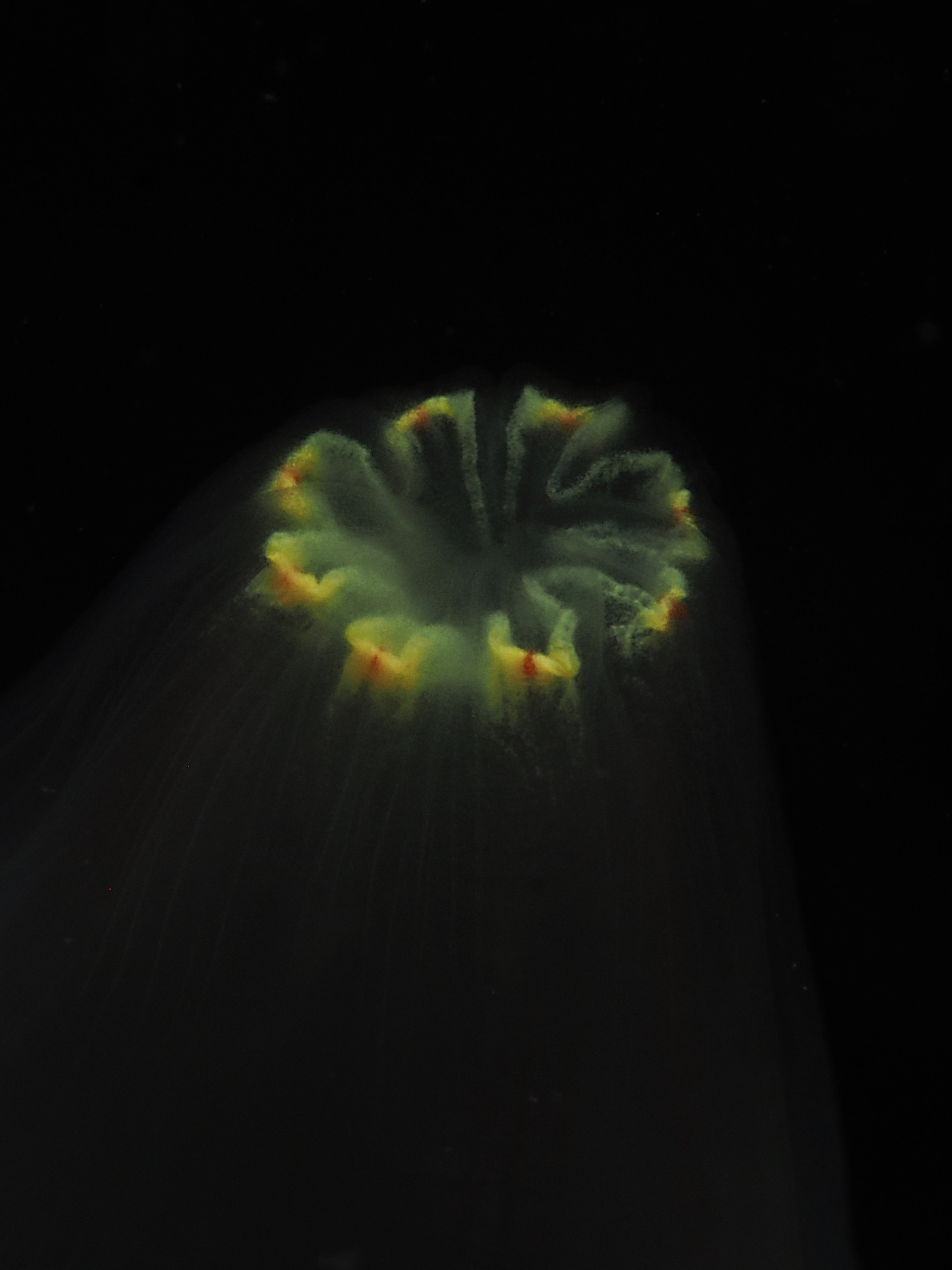
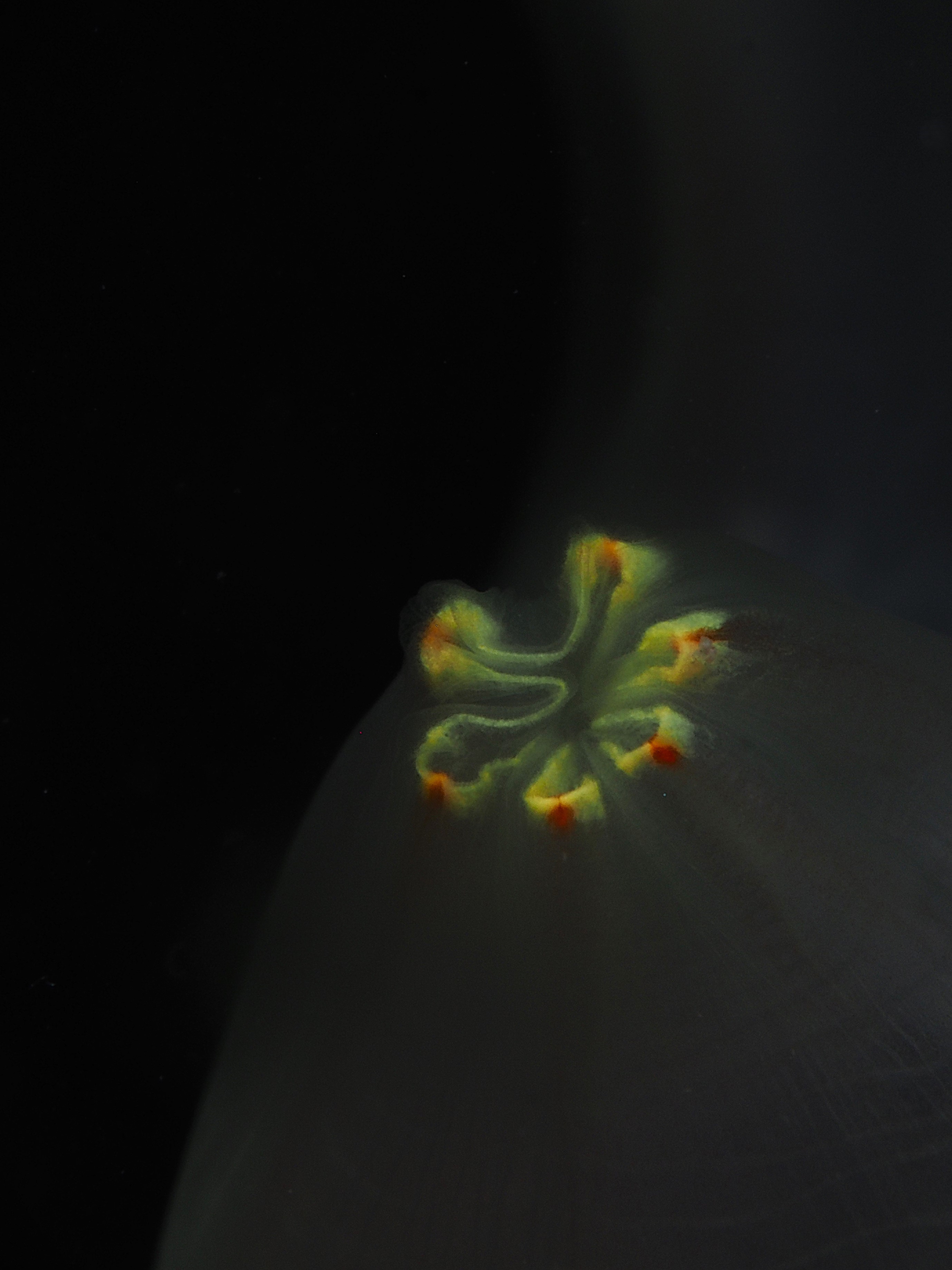
The inhalant (left pic, 8 lobes) and exhalant (right pic, 6 lobes) siphon of the Sea Vase seasquirt (Ciona intestinalis). The pigments are thought to function as photoreceptors. This is a common species, especially in habitats disturbed by humans, and not too pretty (the latin name means ‘pillar of intestines’…) but if you zoom in everything reveals beautiful features! Quite moody shots, to which I have gravitated this year. I like the black backgrounds, which is achieved by letting very little light into the camera, with the strobes only lighting up the subject in the foreground – unable to illuminate anything in the open water (‘negative space’) behind. (A similar effect can be achieved using a ‘snoot’, but I have never managed to get that to work…) I have also tried to get closer and closer up with my macro wetlens, ideally I’d have some sort of microscope underwater! If you are on instagram, check out @an_bollenessor for more pics as ‘posts’ and as ‘stories’.
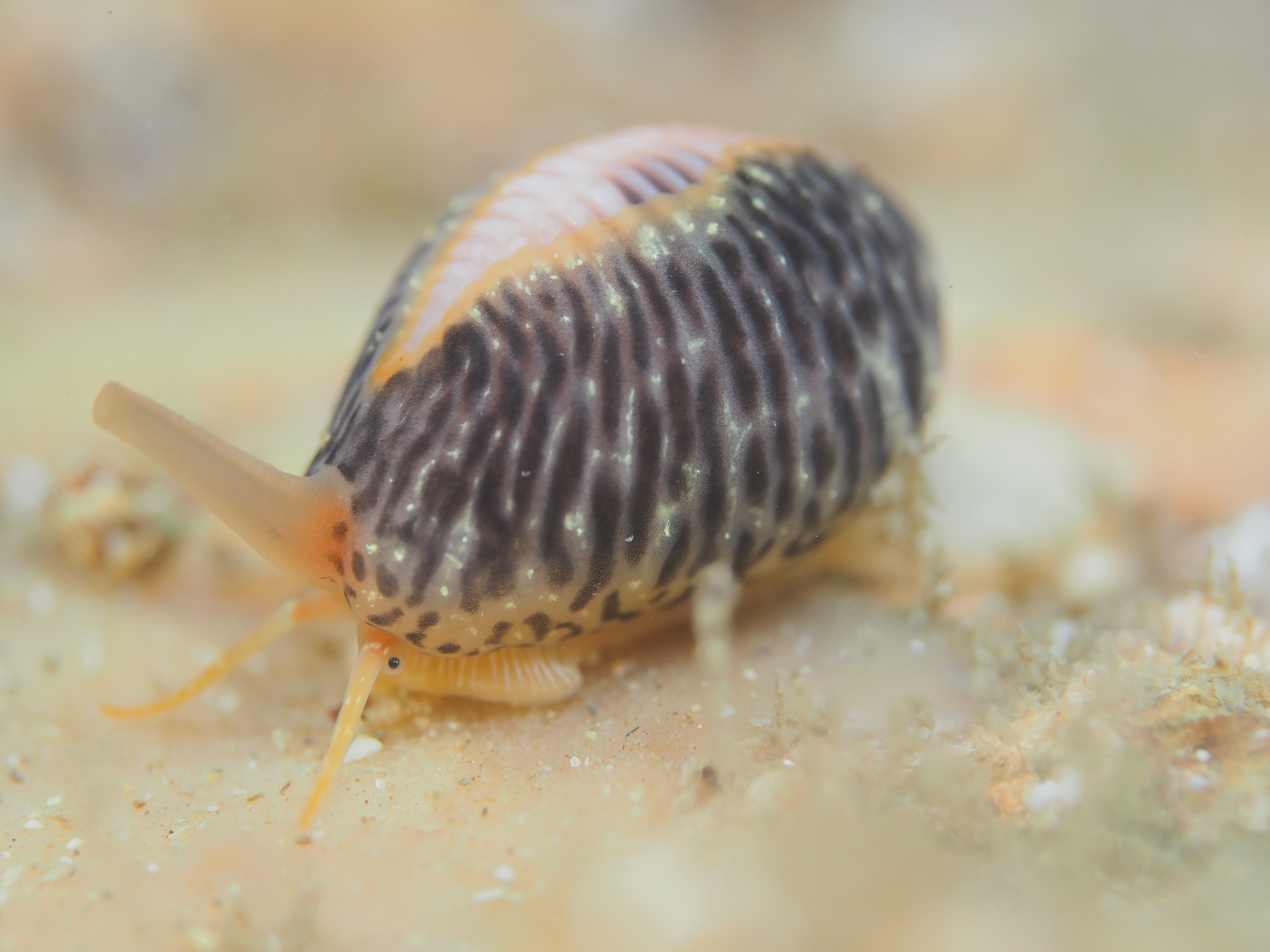
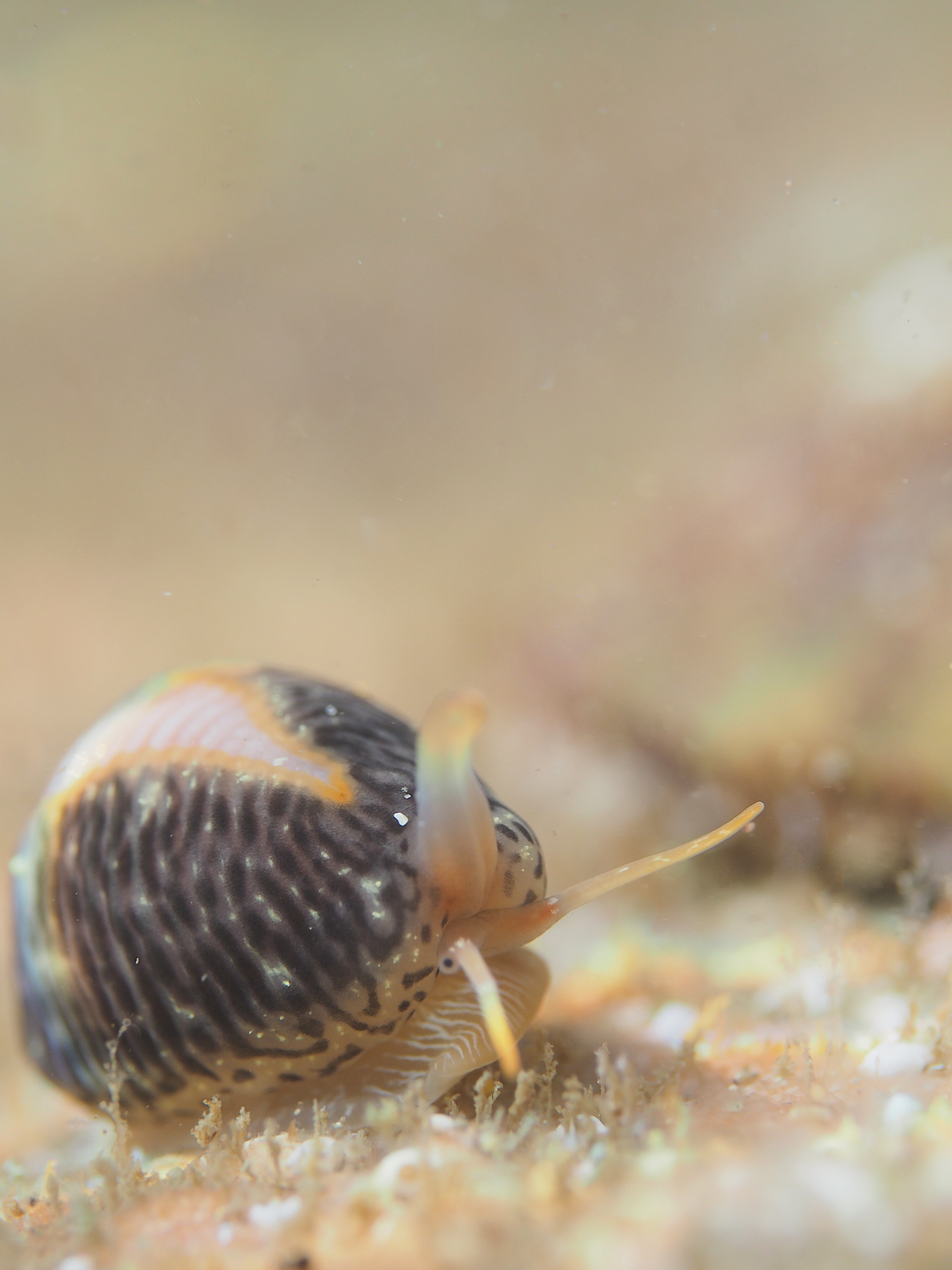
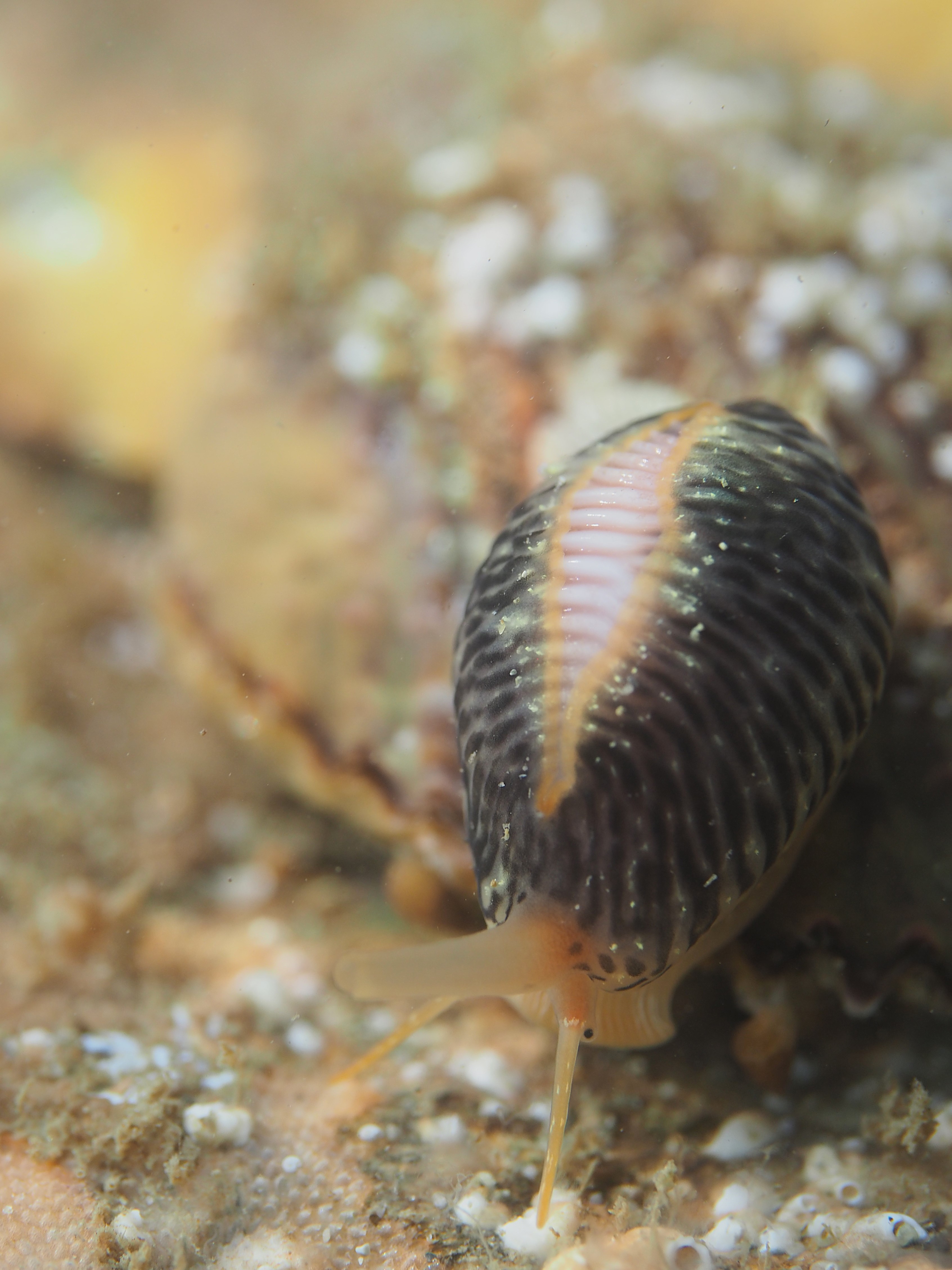
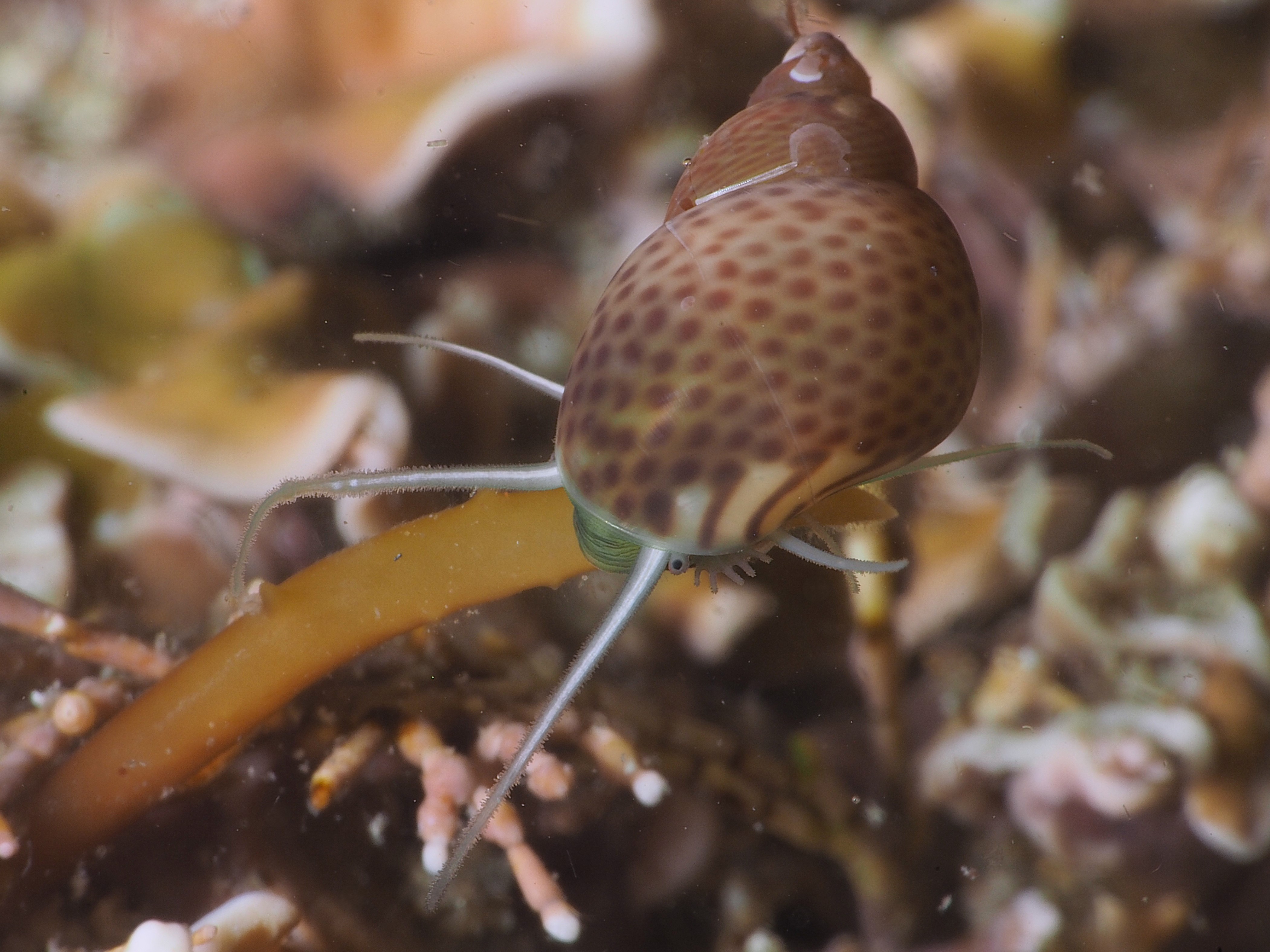
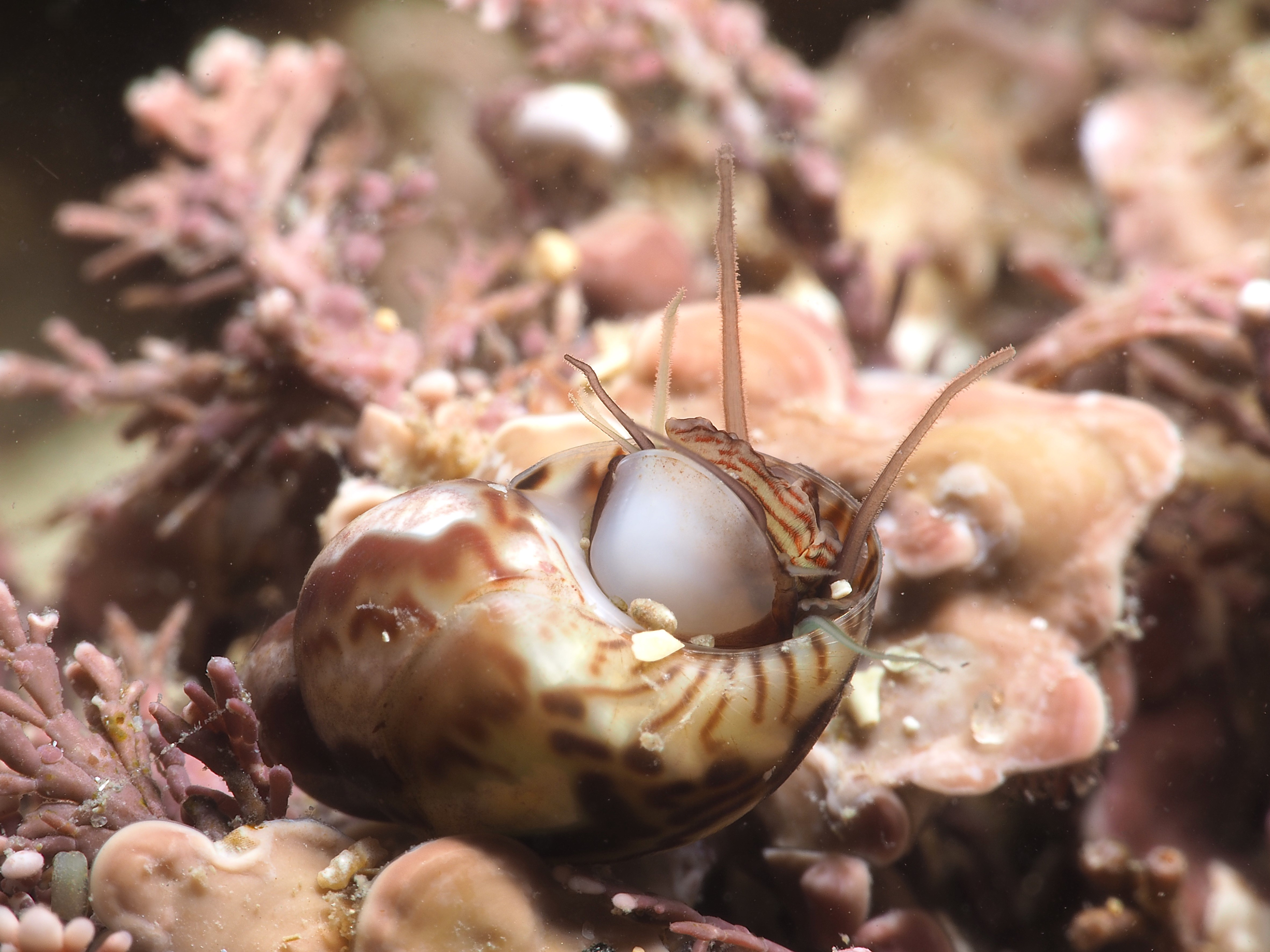
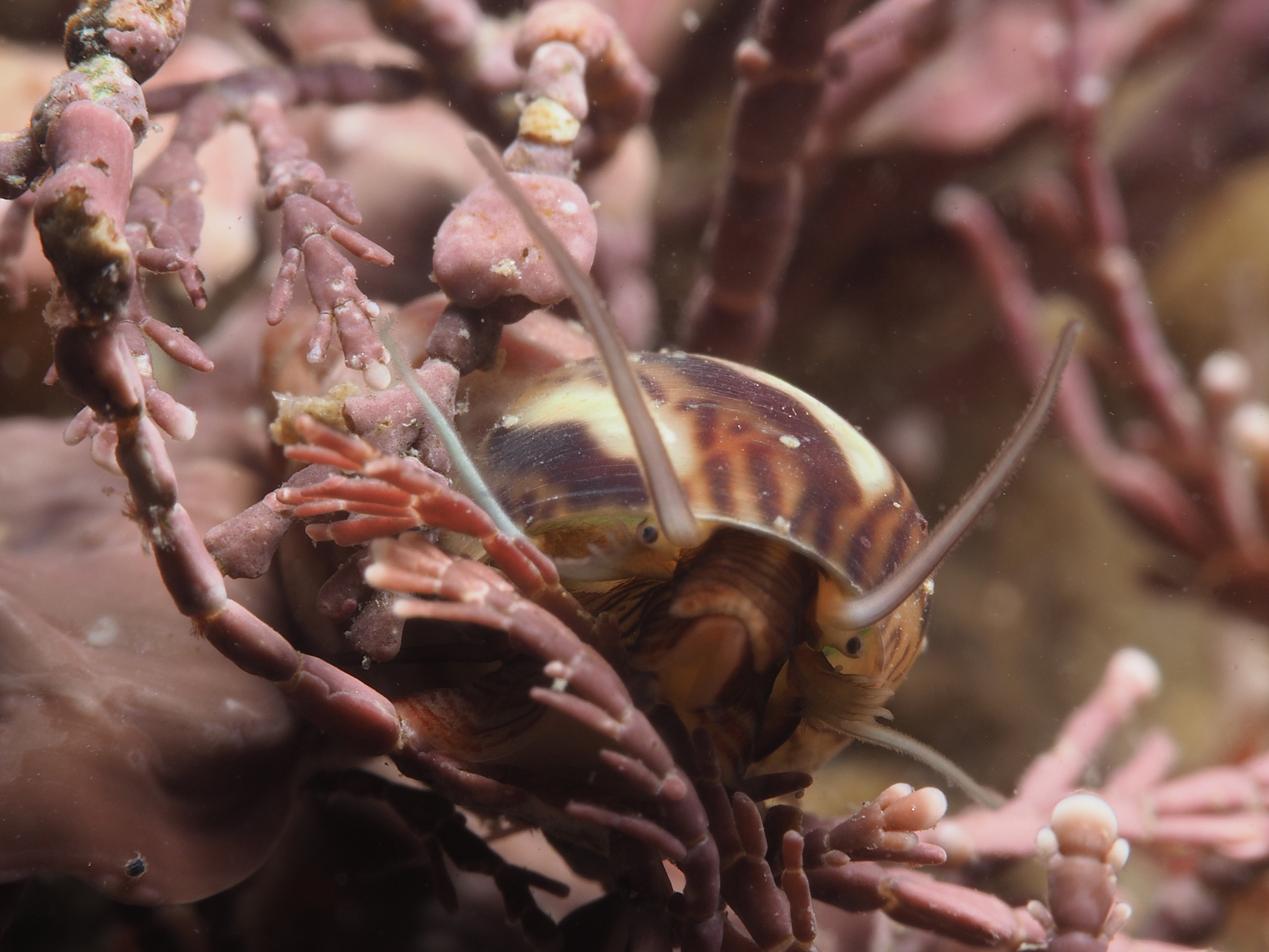
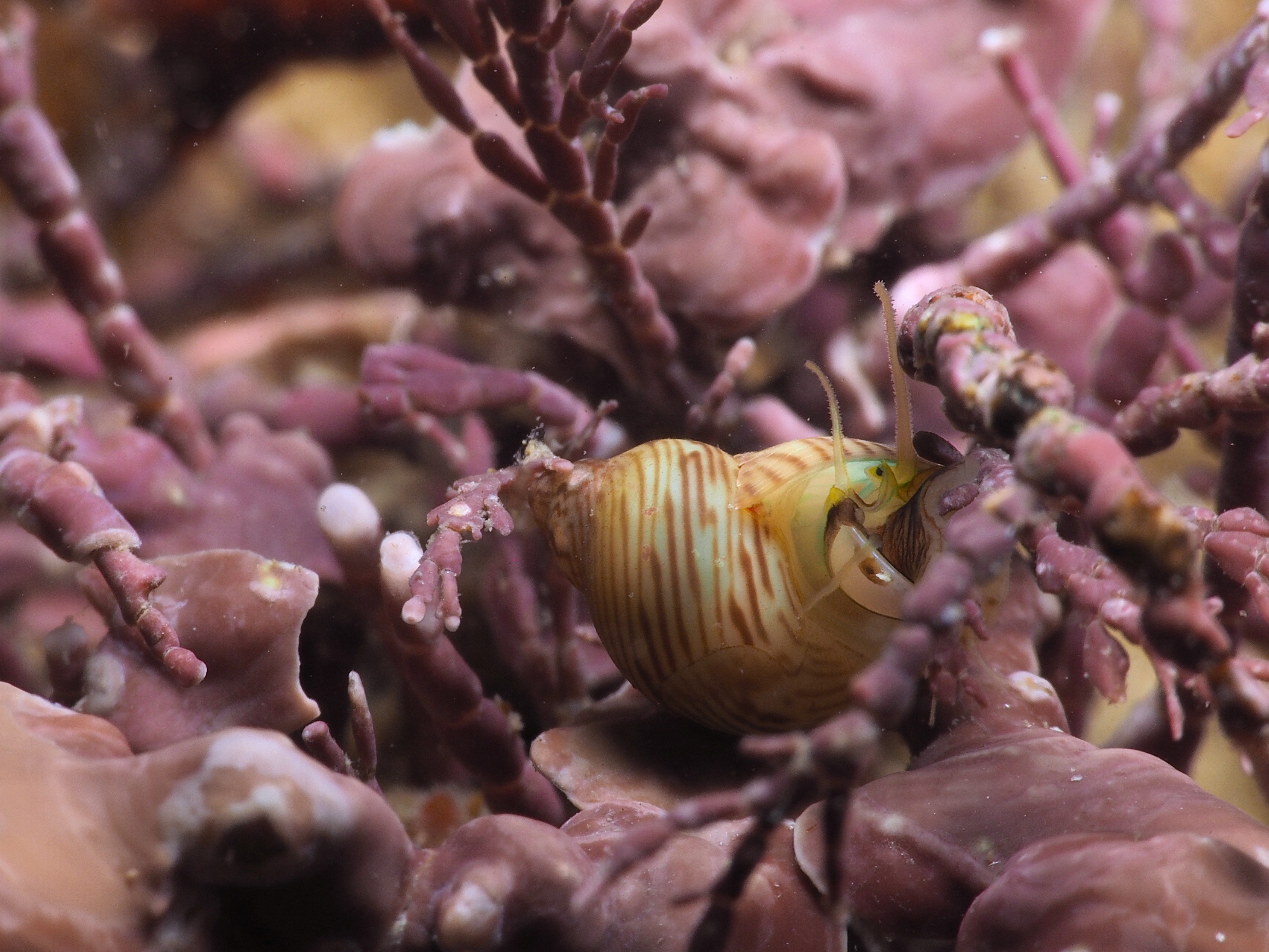
I have a lot more pics from this year to put on the blog but those have to wait, as I want to post some photos from last Saturday first, when there was little wind, a low tide and some sun! The viz was not great as expected, so I brought the macrolens and went in search for some small critters. No special finds, but I was very happy with my shots of a common little mollusc the European Cowrie (Trivia monacha). Most people will be familiar with this species as beach finds of empty shells, but not know how it looks like when it is alive, when its mantle covers most of the shell, it shows its striped tail at the back and a siphon and cute little eyes at the front. I used a shallow depth of field (f/4) to get rid of the ugly cluttered background, which worked well if I may say so myself (I need to try this technique more often!).
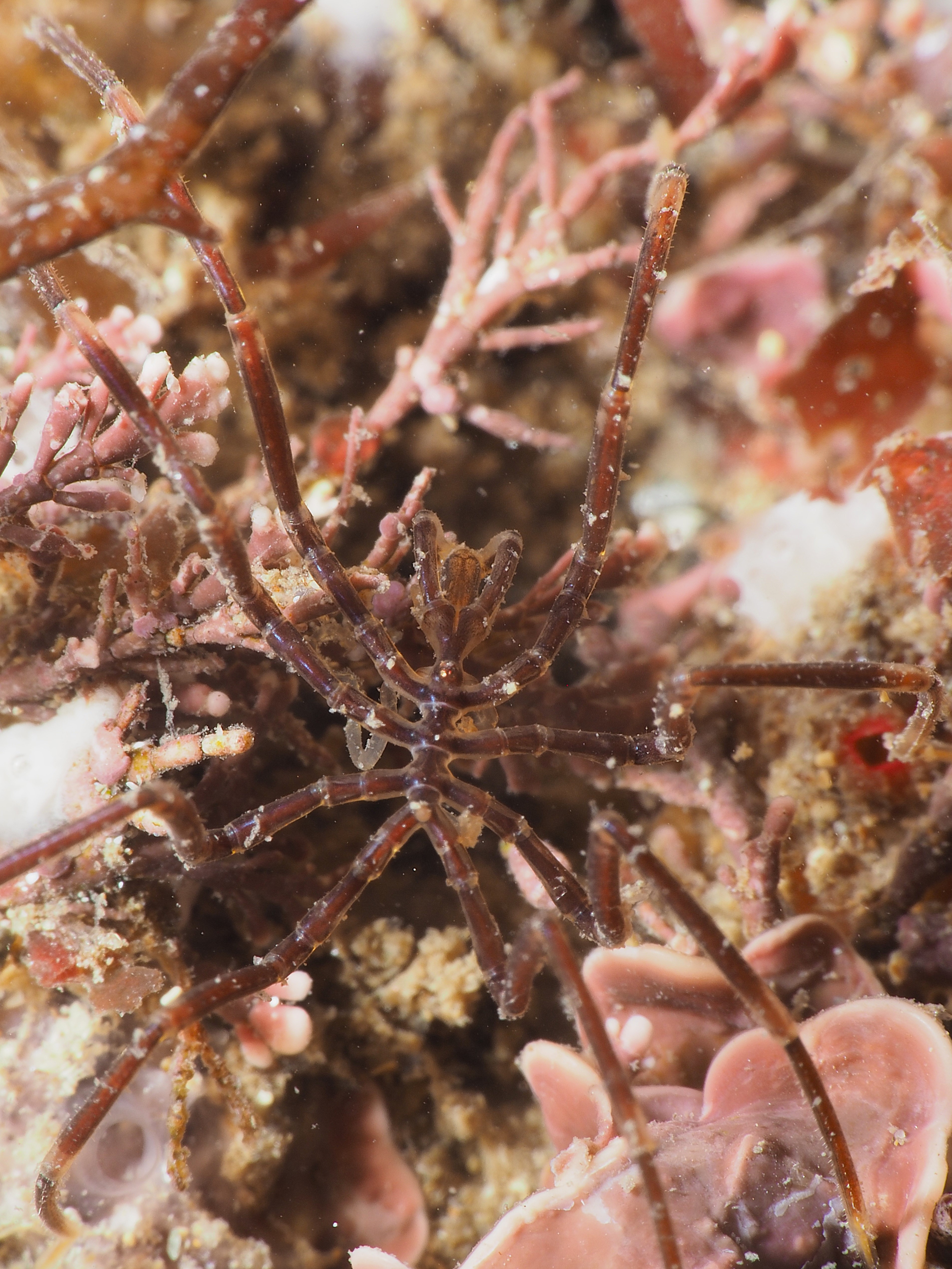
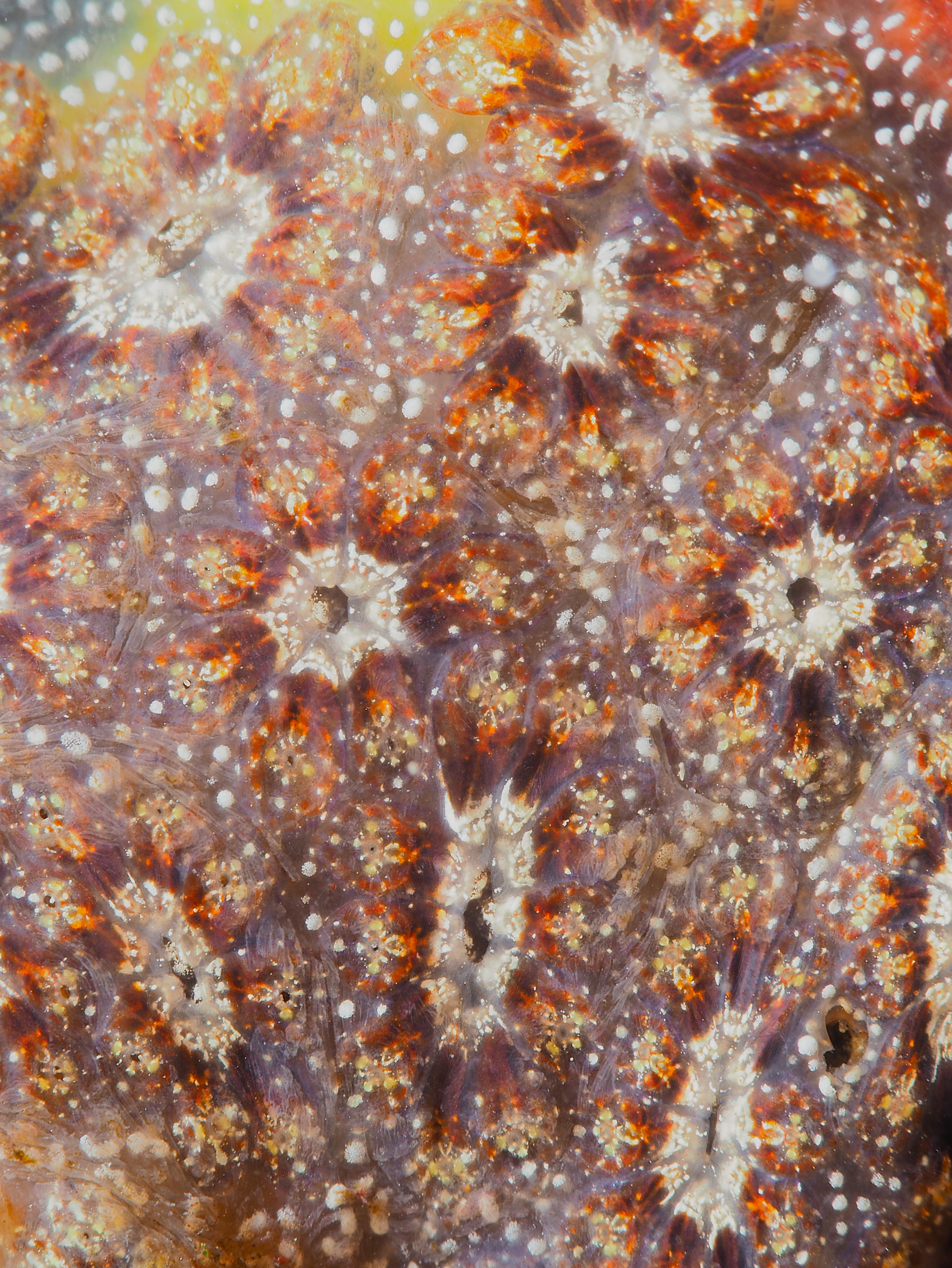
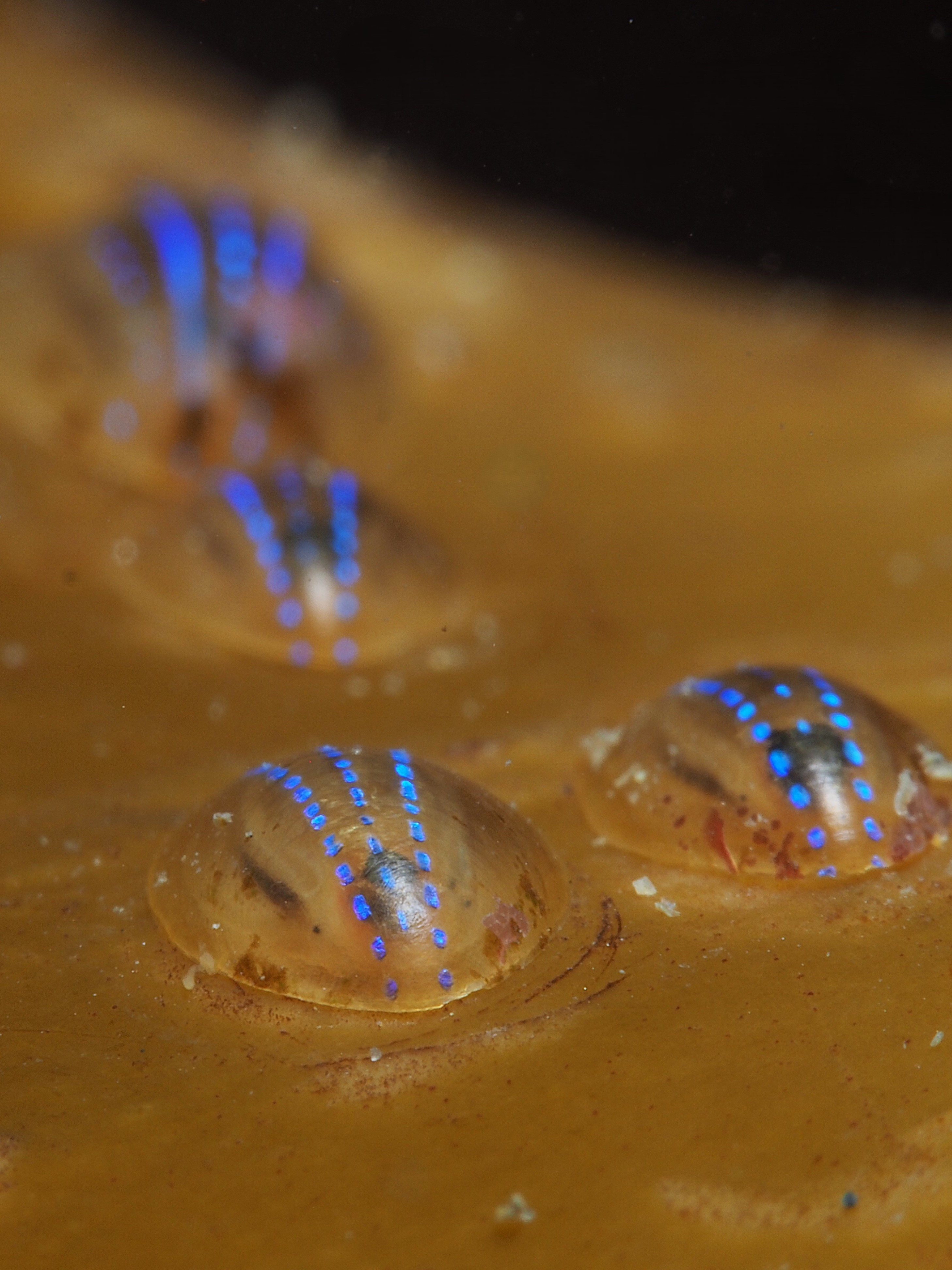
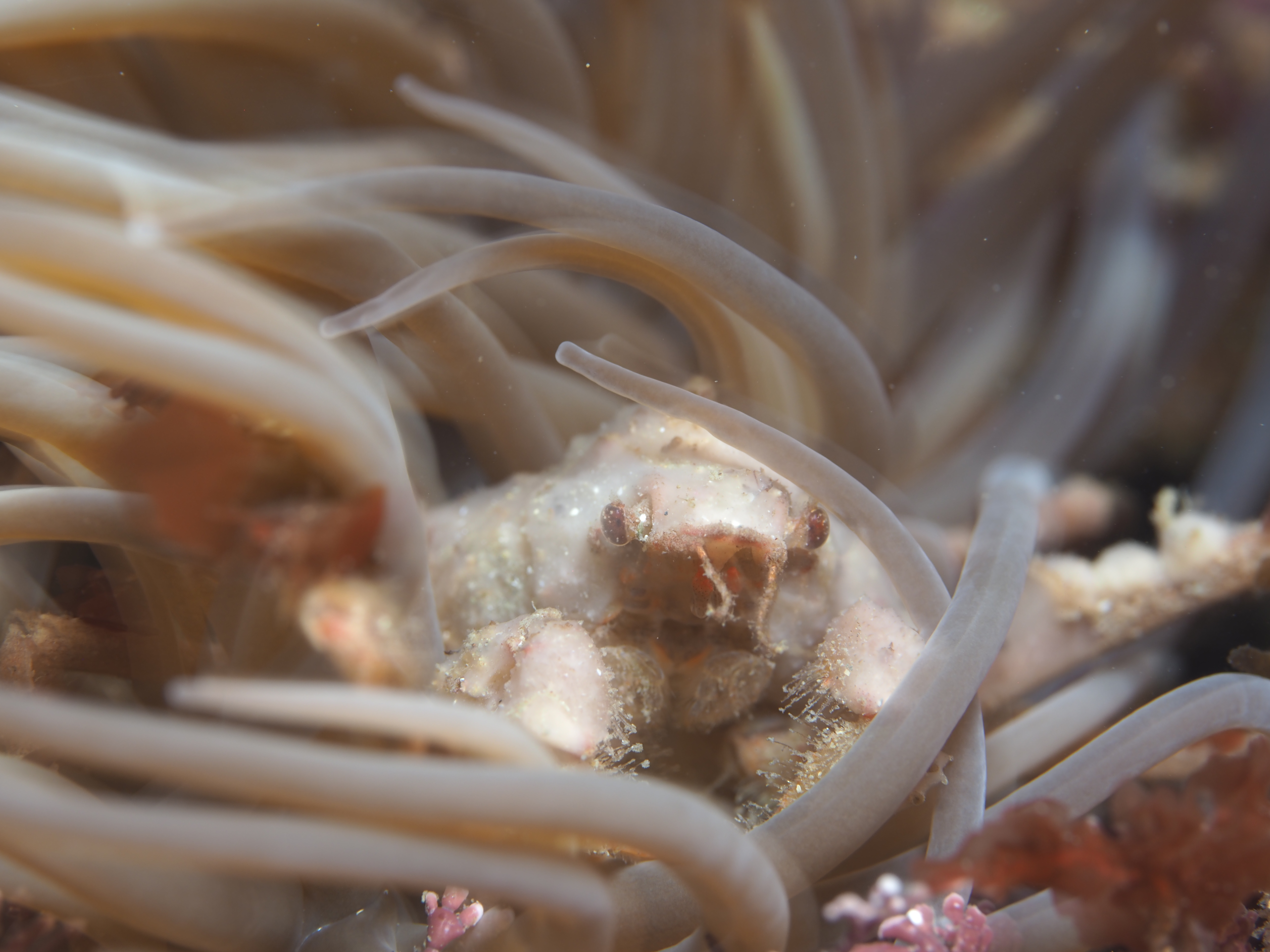
Many other critters were found too and I took shots of a selection. First, a Sea Spider, all legs and crawling away. A tiny mat of colonial tunicate that looked like a persian rug on drugs. A quick shot of the ubiquitous (if you know where to look – on kelp fronds) blue-rayed Limpets and a stalked jellyfish. Finally, I spent a lot of time taking shallow-depth-of-field AND slow shutter-speed photos of a scorpion spider crab in a snakelocks anemone to get some sort of ‘artistic’ shot. It did not really work, but it was fun nonetheless and I will have a go at it again. After almost 2,5 hours in the water I stumbled back to the car to get changed – an afternoon well-spent!
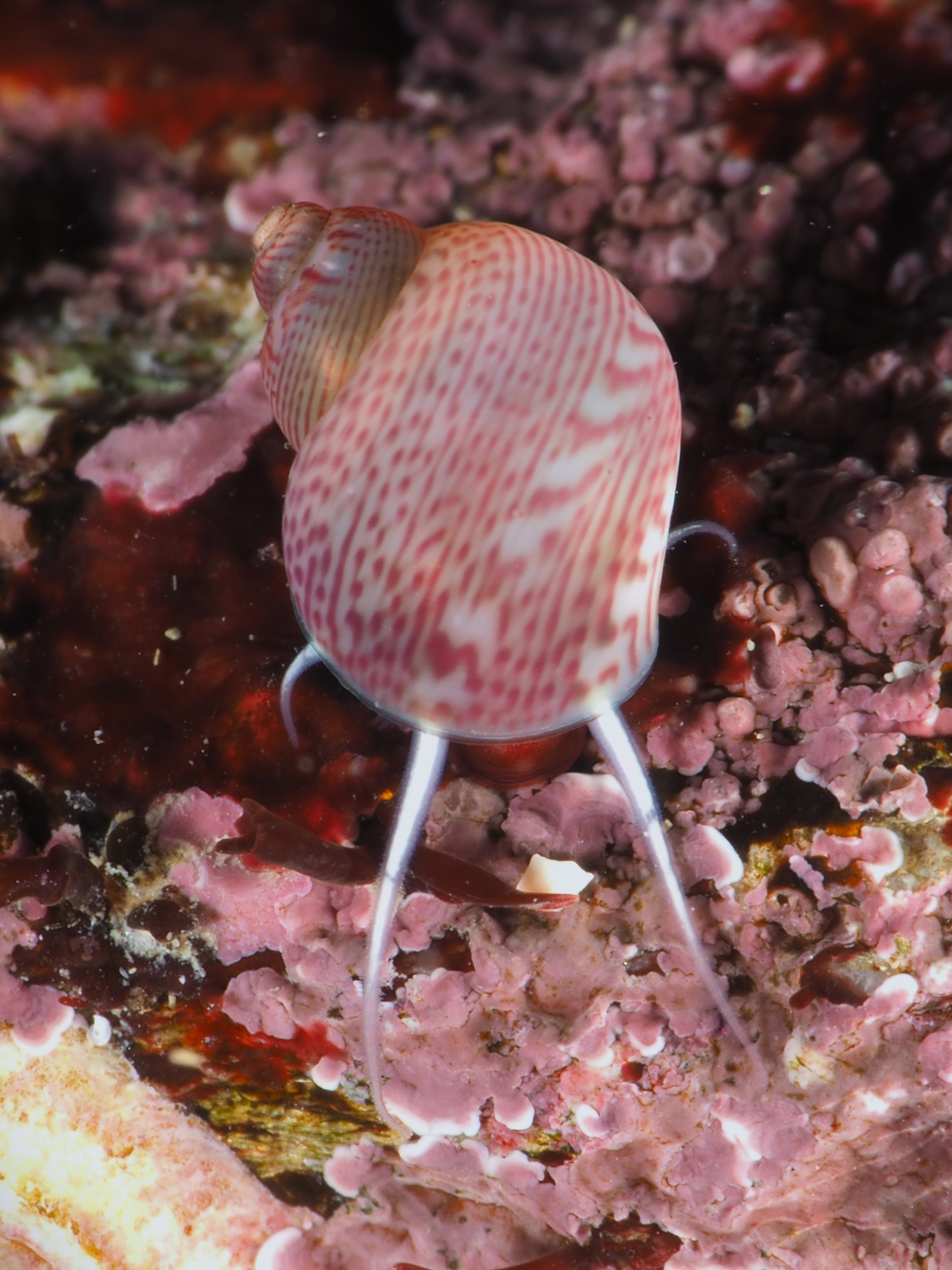
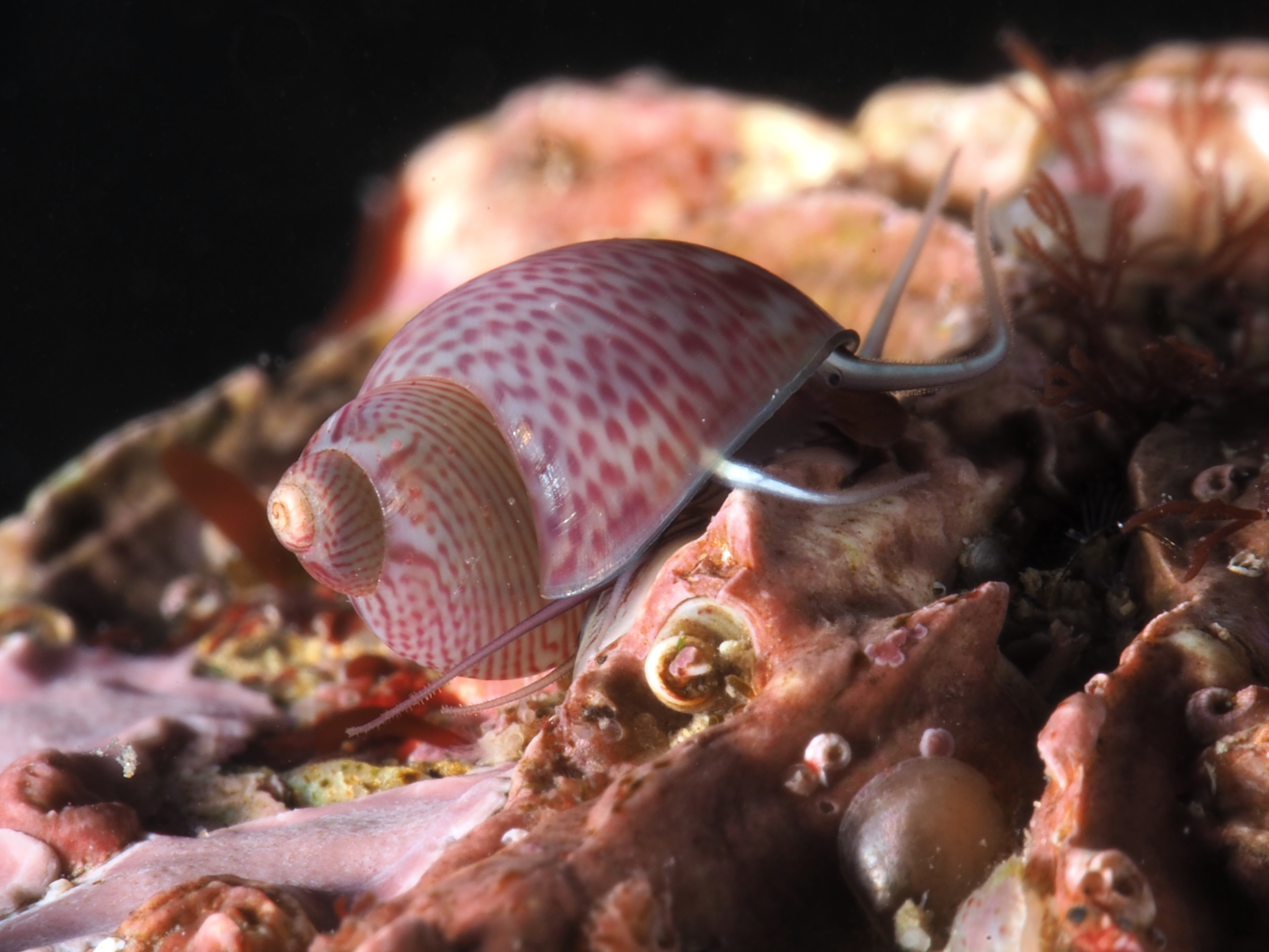
The Pheasant Shell is one of my favourite little critters in the rockpools in Falmouth. It is a bit weird to refer to these organisms as ‘shells’ actually, as they are living things and the nonliving shell is ofcourse only a part of them. The confusion extends to its scientific name: this species was previously known as Tricolia pullus, but has recently been split into a Southern European T. pullus species and a Northern European T. picta species. Perhaps the dust needs to still settle on that one.
I have taken these photos, on different occasions, with the mzuiko 60mm macrolens and the nauticam cmc-1 wetlens. The extra magnification the latter lens (screwed onto the housing) offers is great; although somehow I always want to get even CLOSER! I have not nailed the Pheasant Shell shot either. Reflecting on these pics I think I need to use a shallower depth of field to get rid of cluttered backgrounds. Next time.
The calcified operculum (the little door to close the shell) is clearly visible in the first photo above, as are the tentacles. On the second photo above you can even see that the left ‘neck lobe’ is more deeply digitated (fingerlike) than the right one. For more detailed (studio)shots of this and other molluscs please see Morddyn’s flickr account. I will post more macroshots of other mollusc species soon!
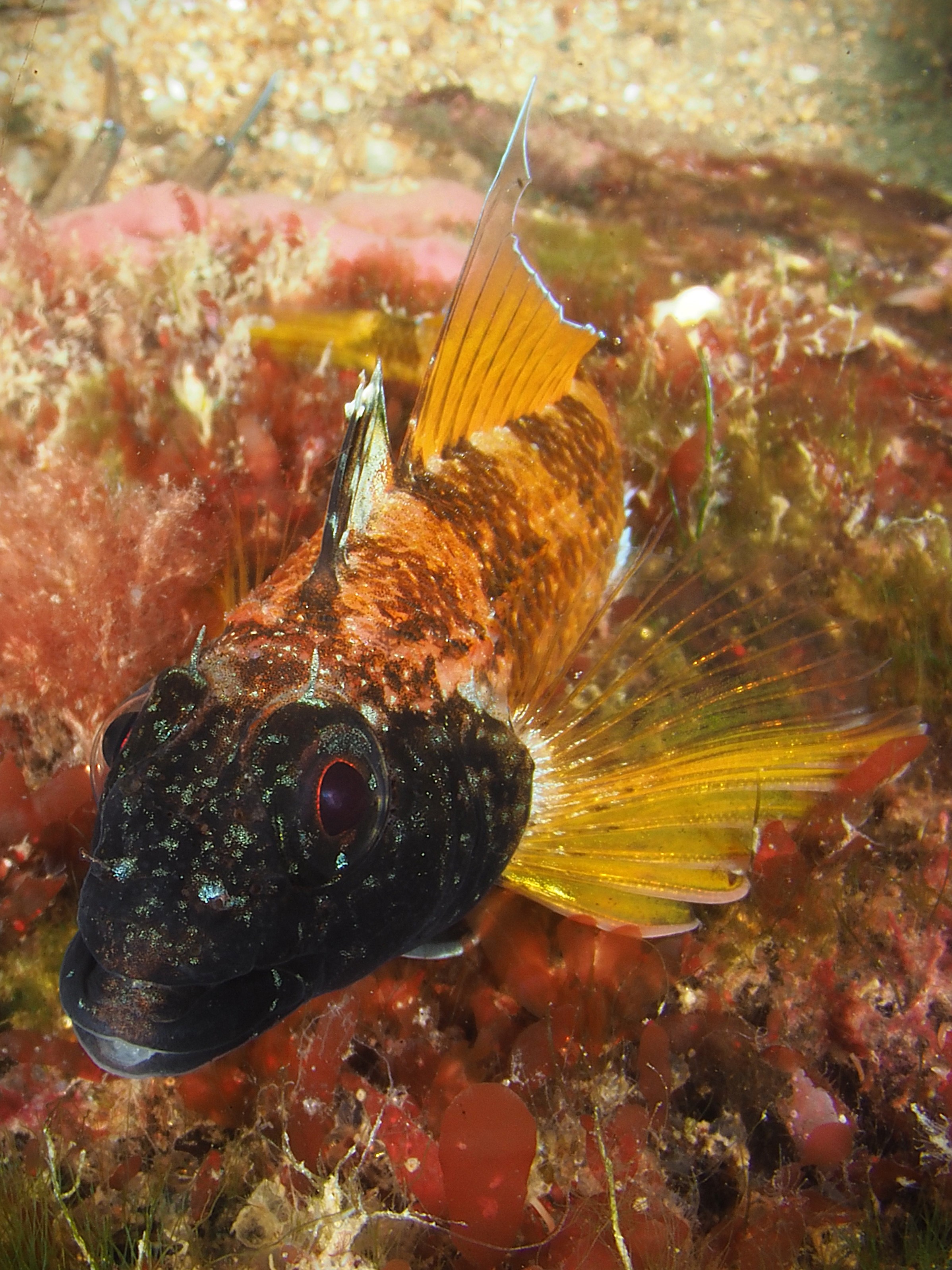
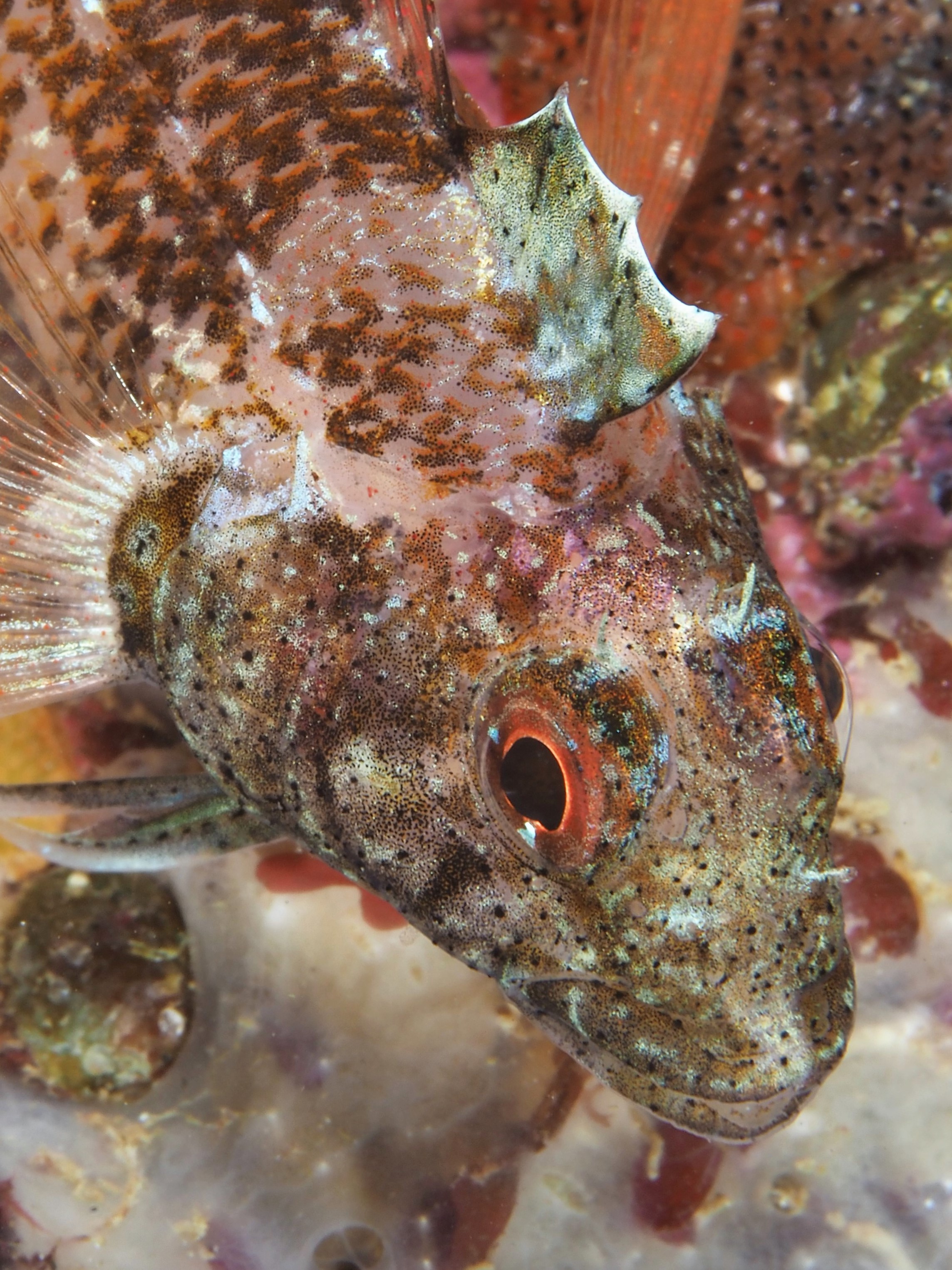
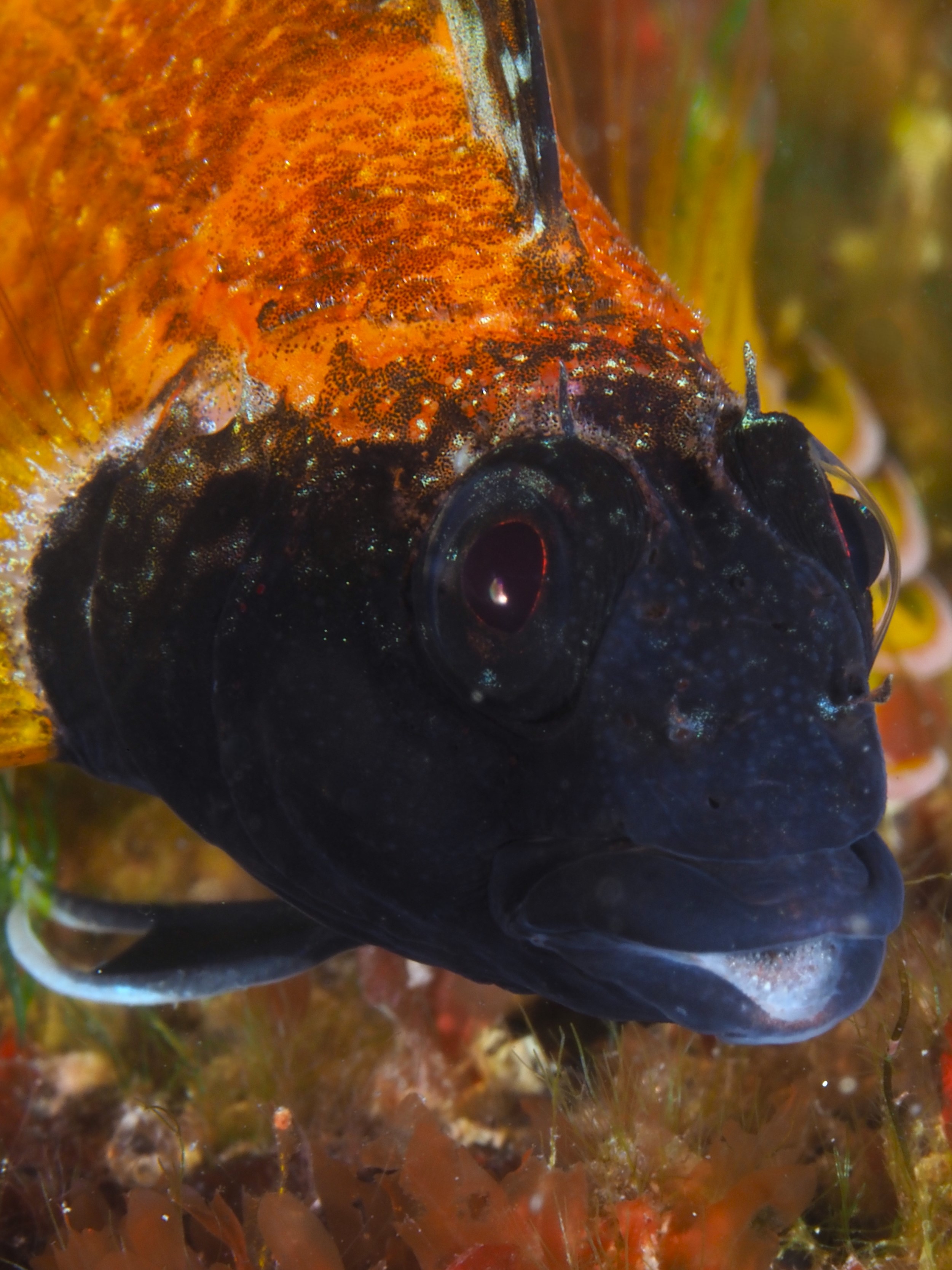
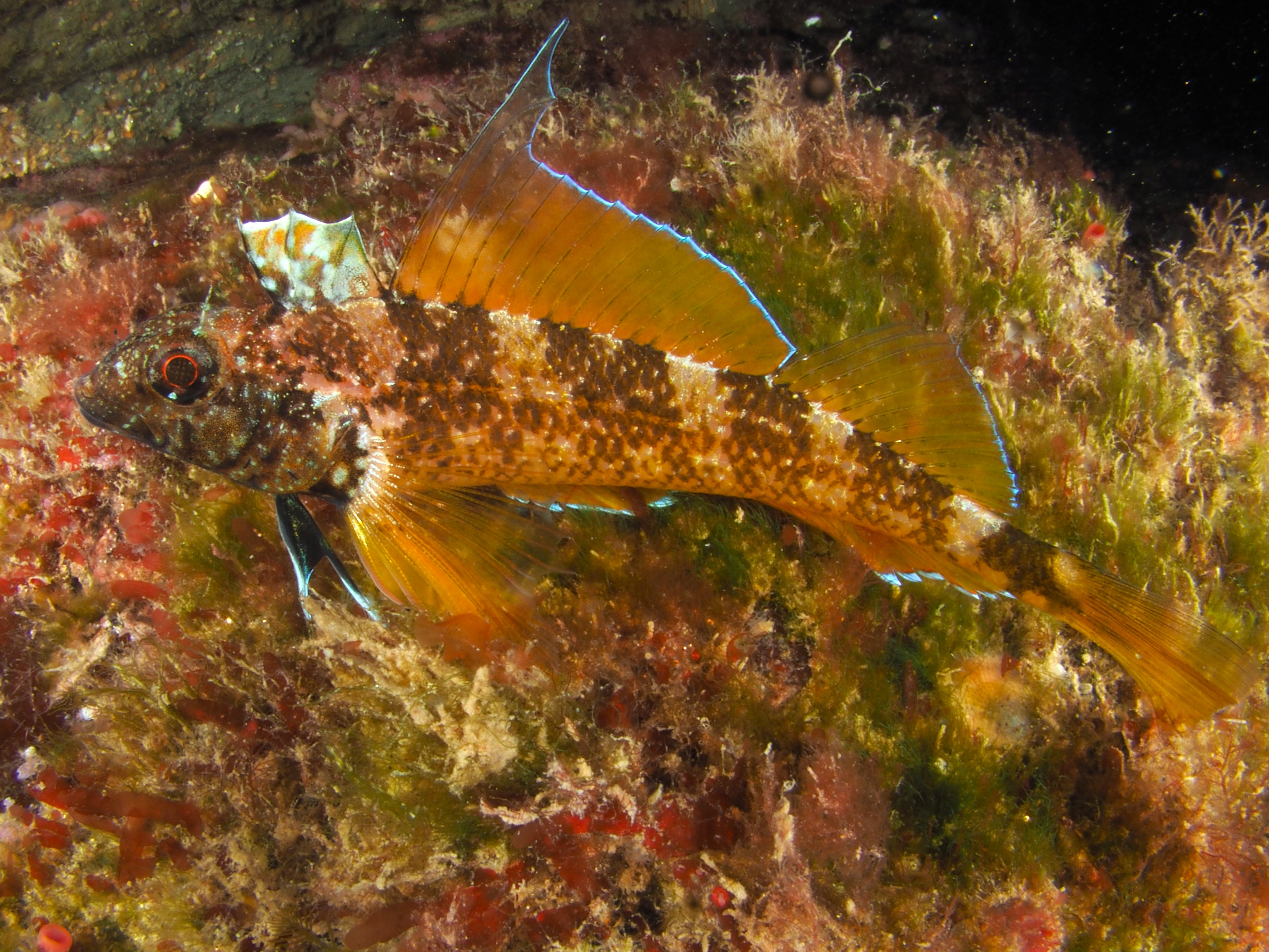
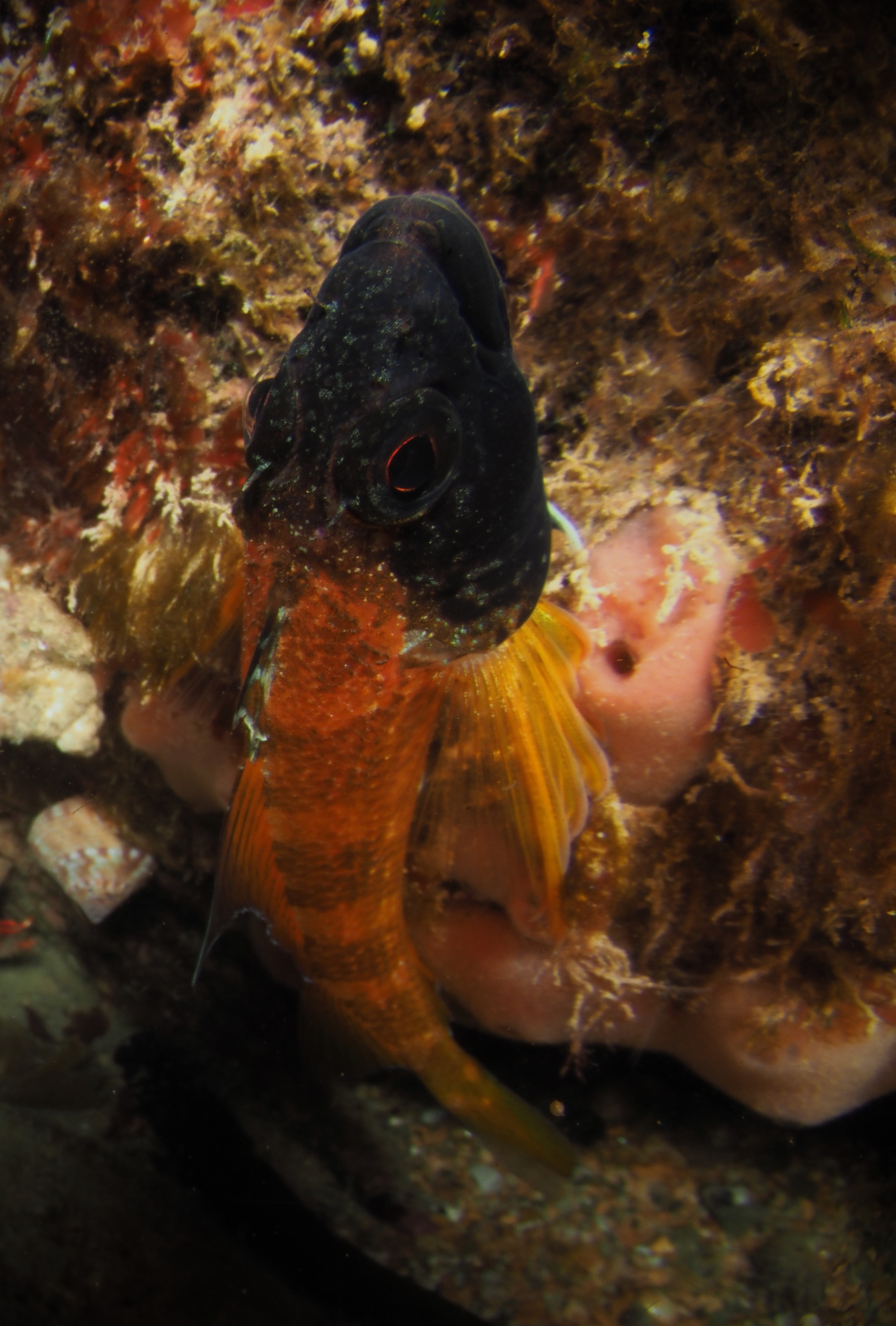
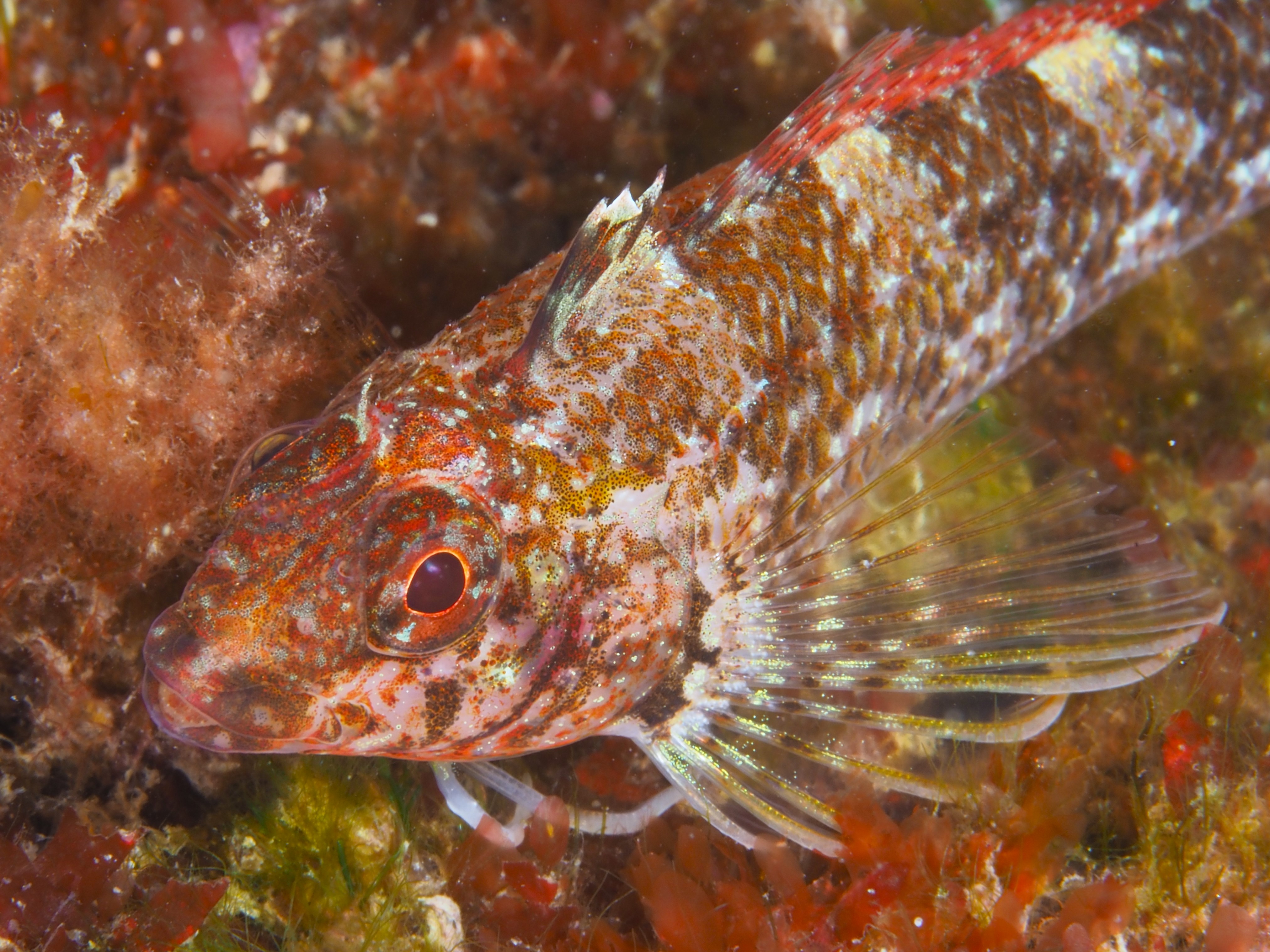
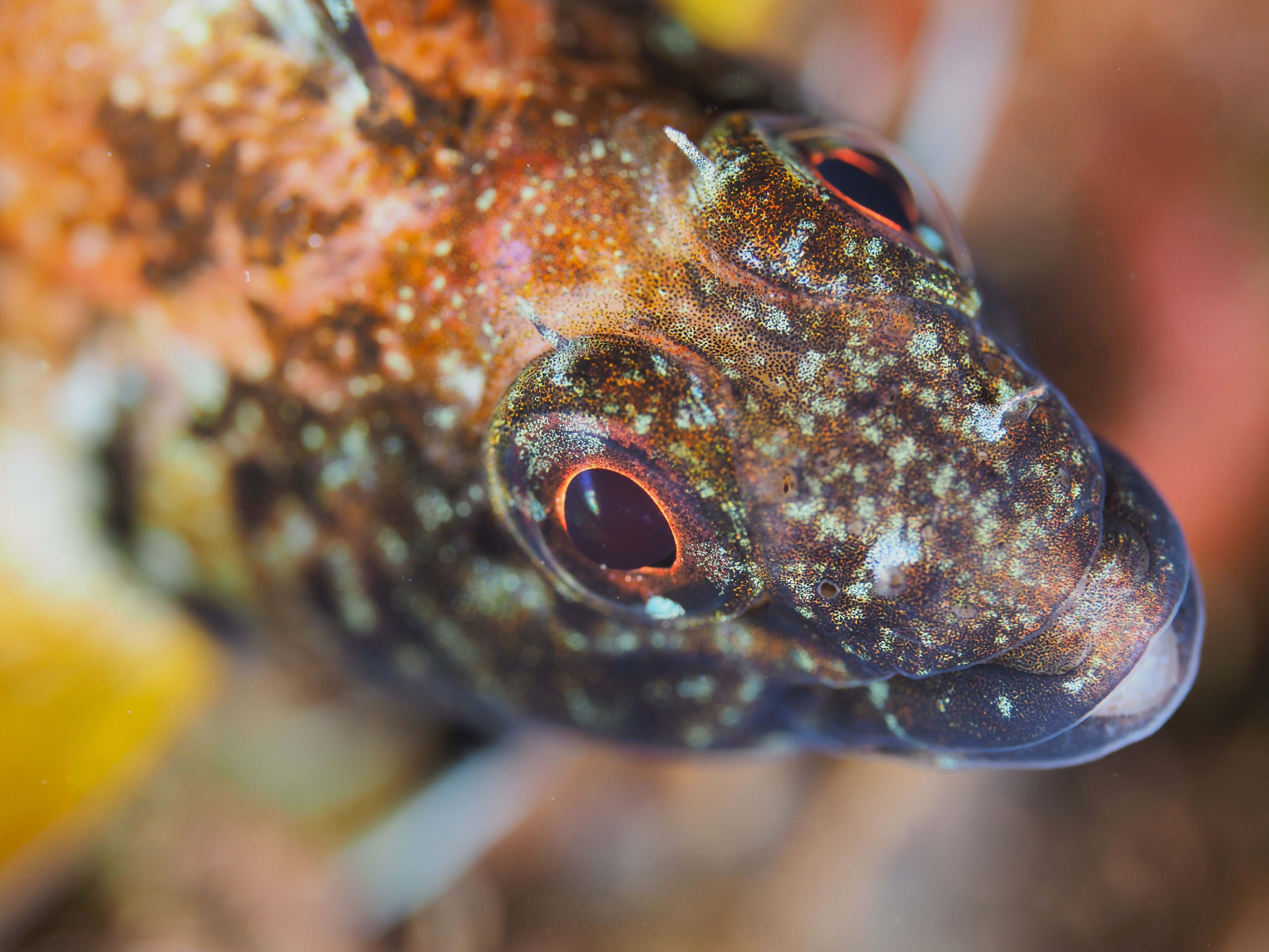
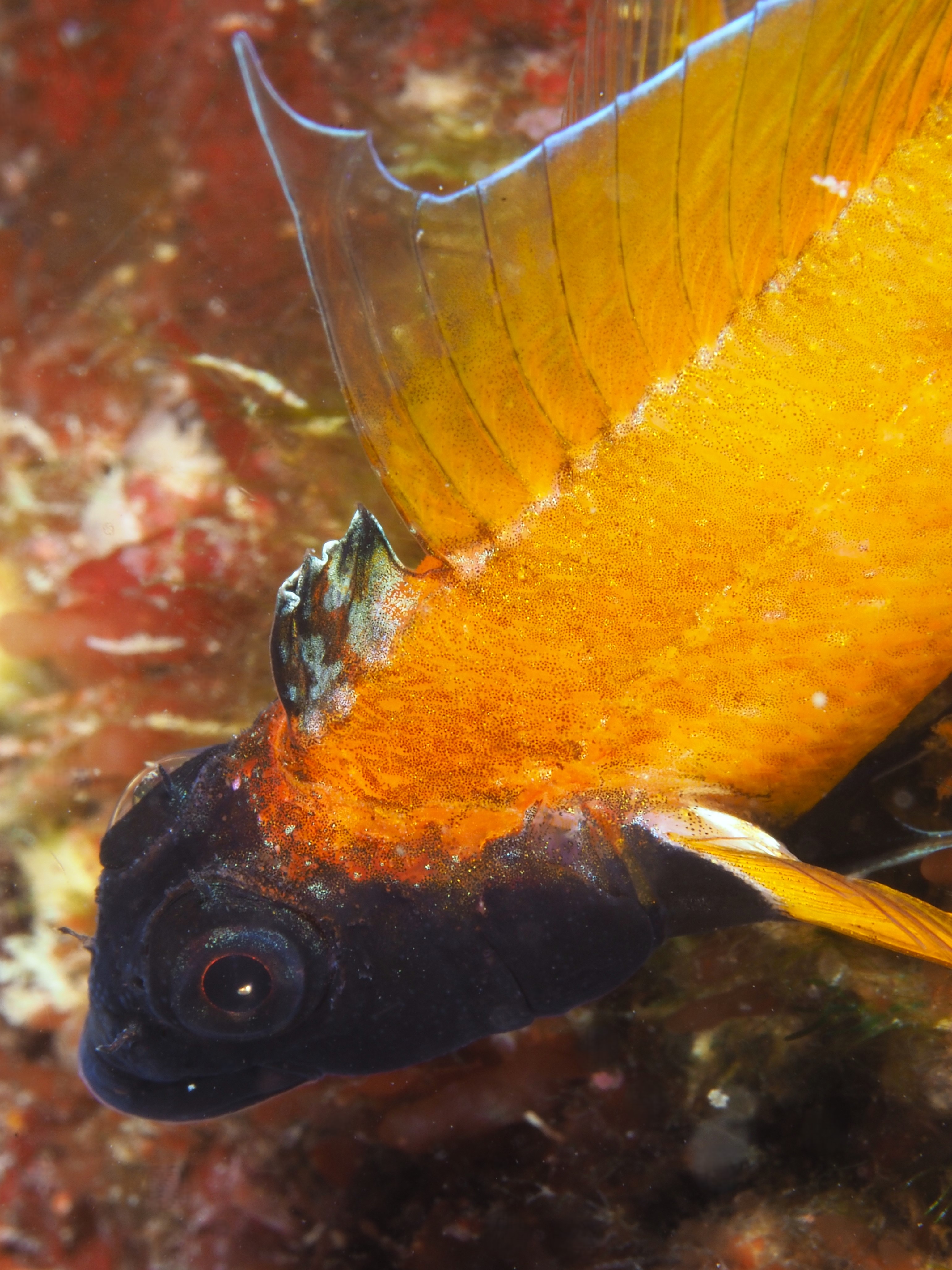
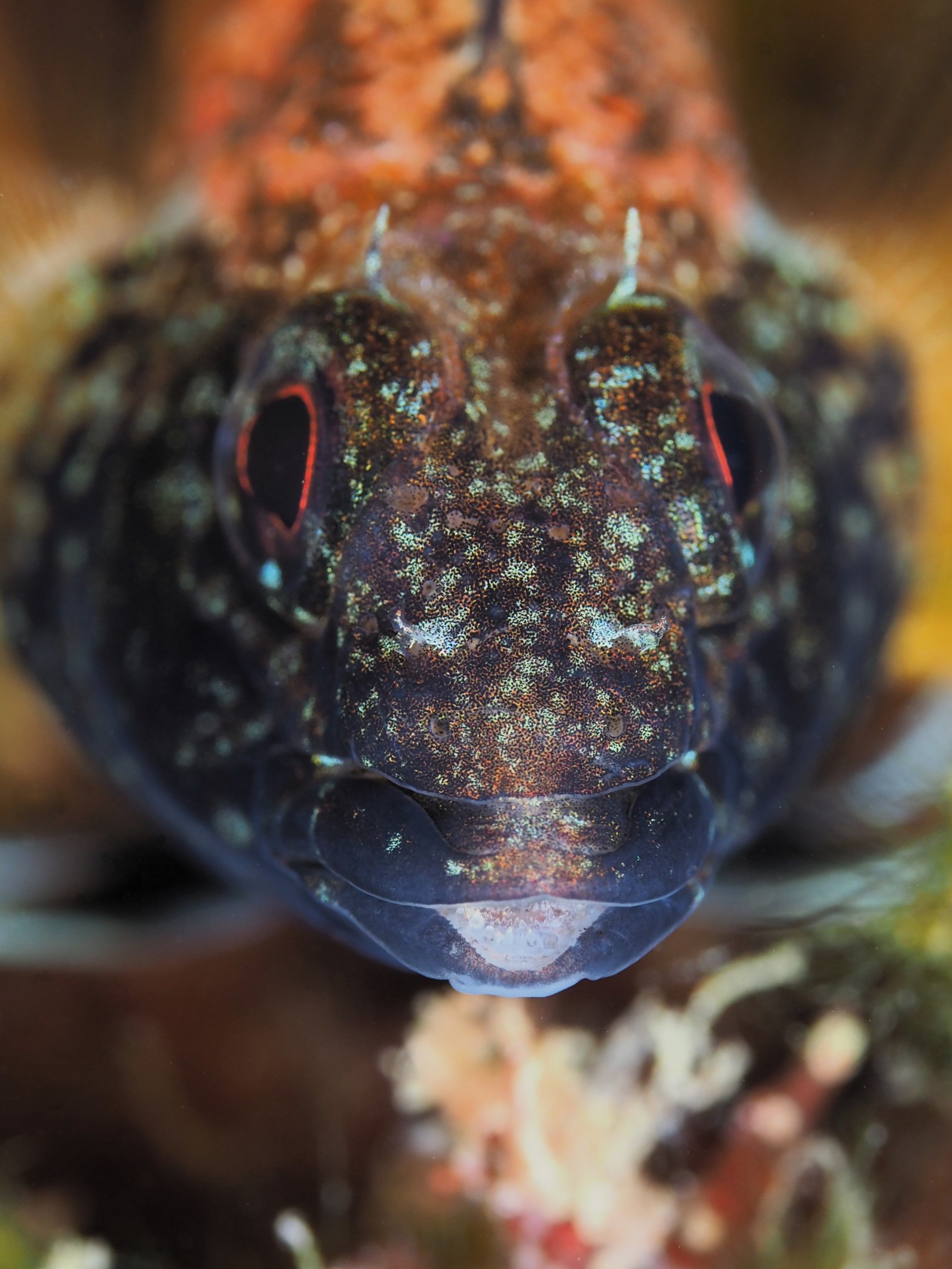
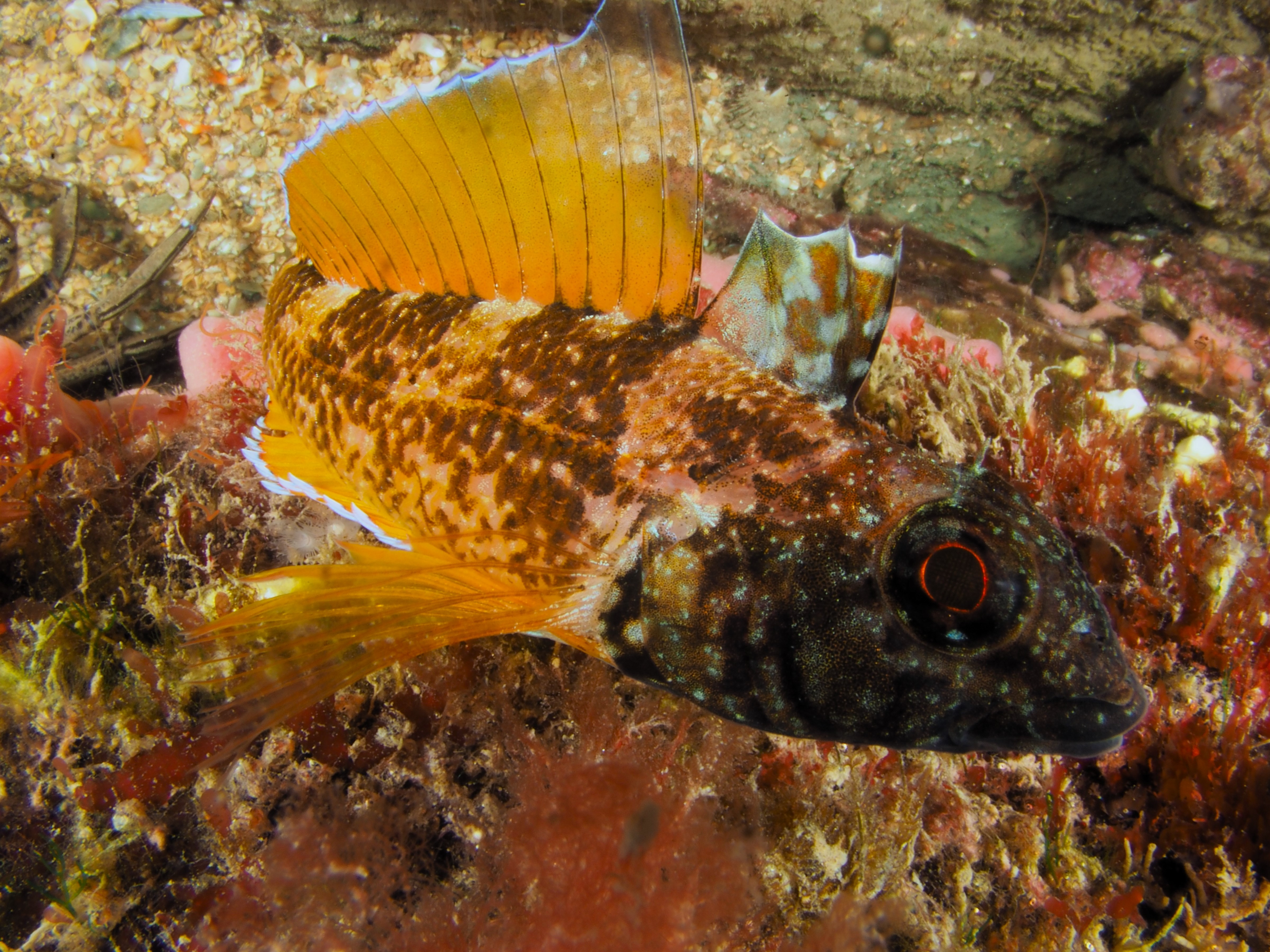
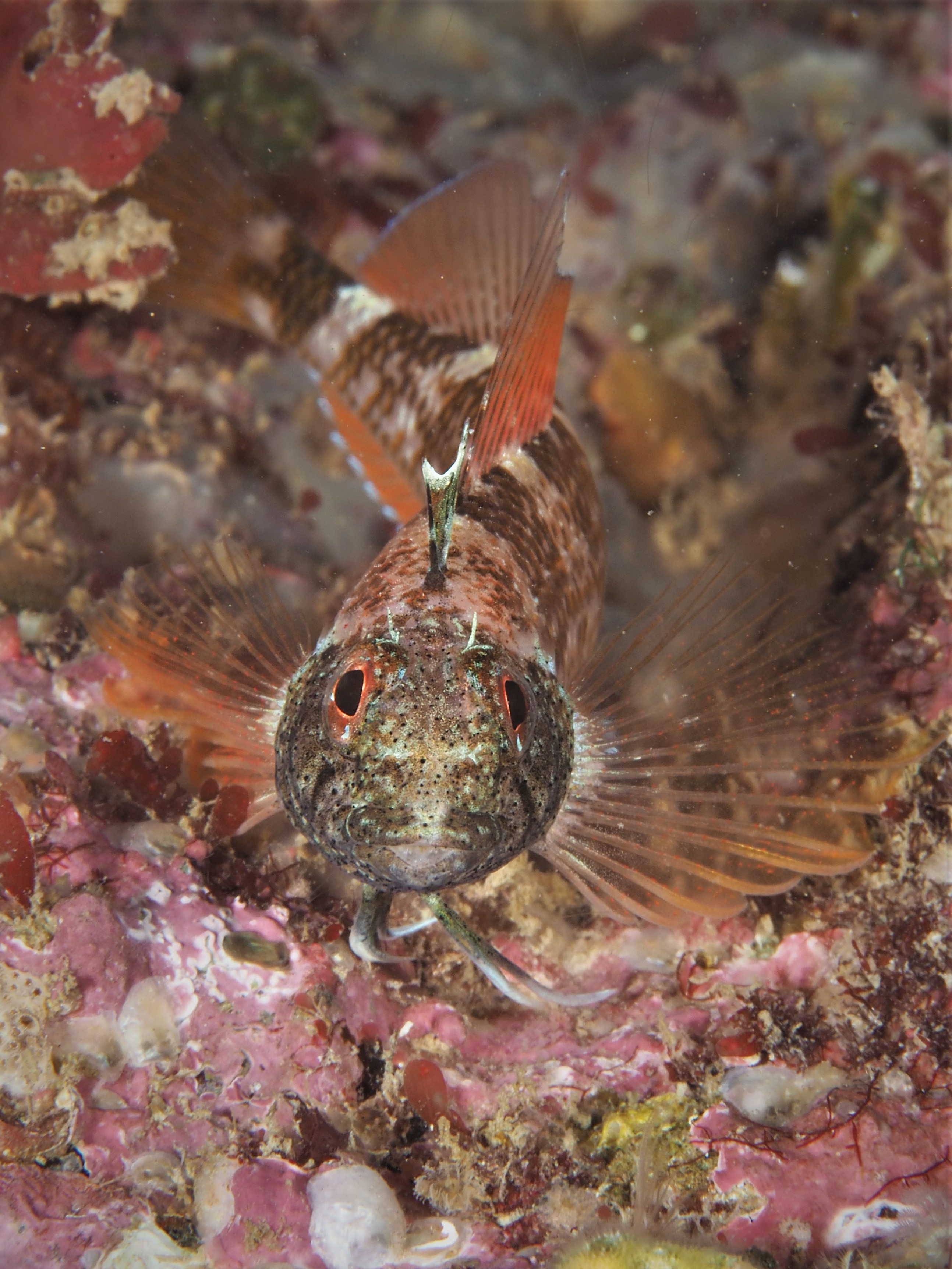
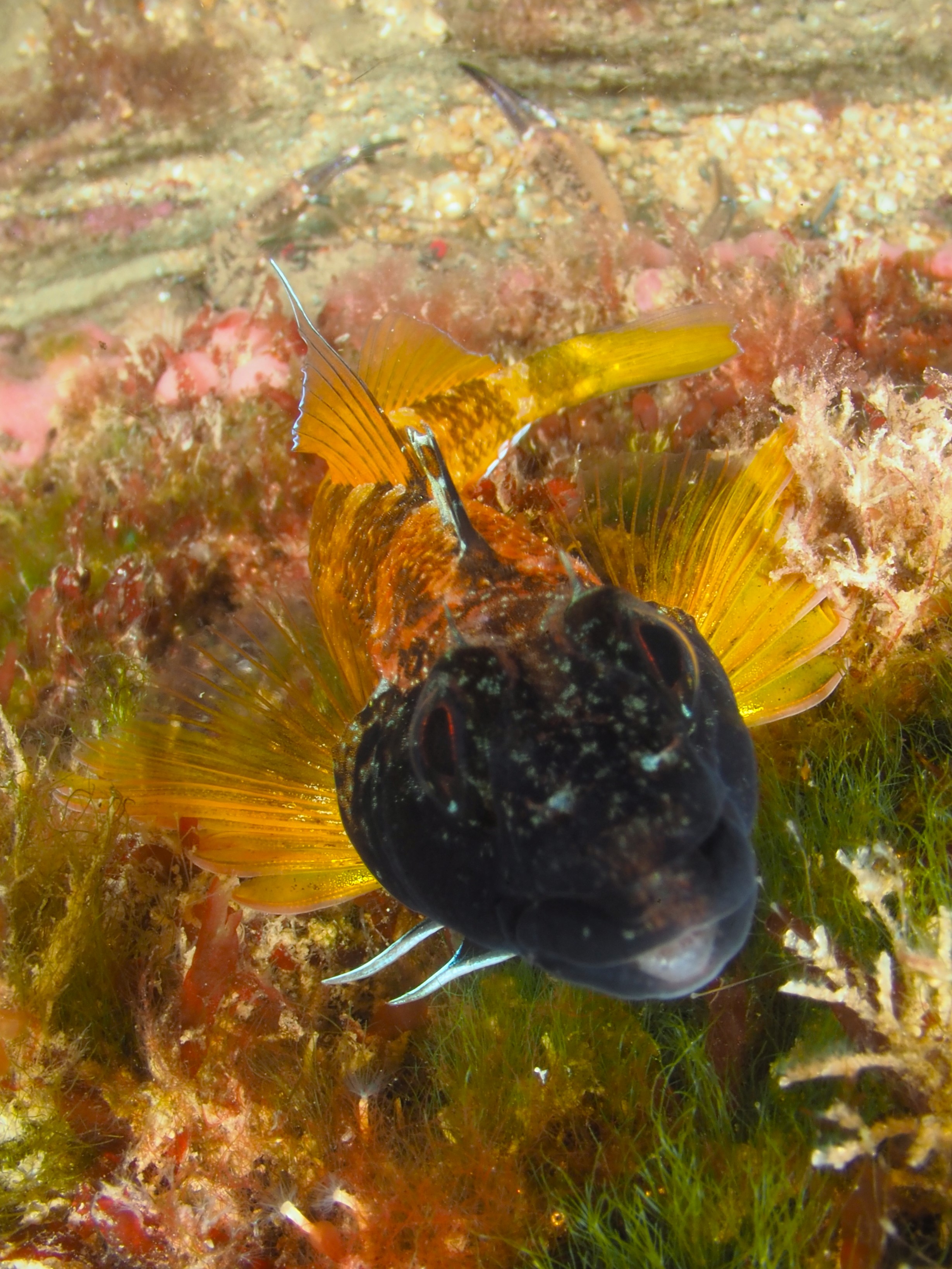
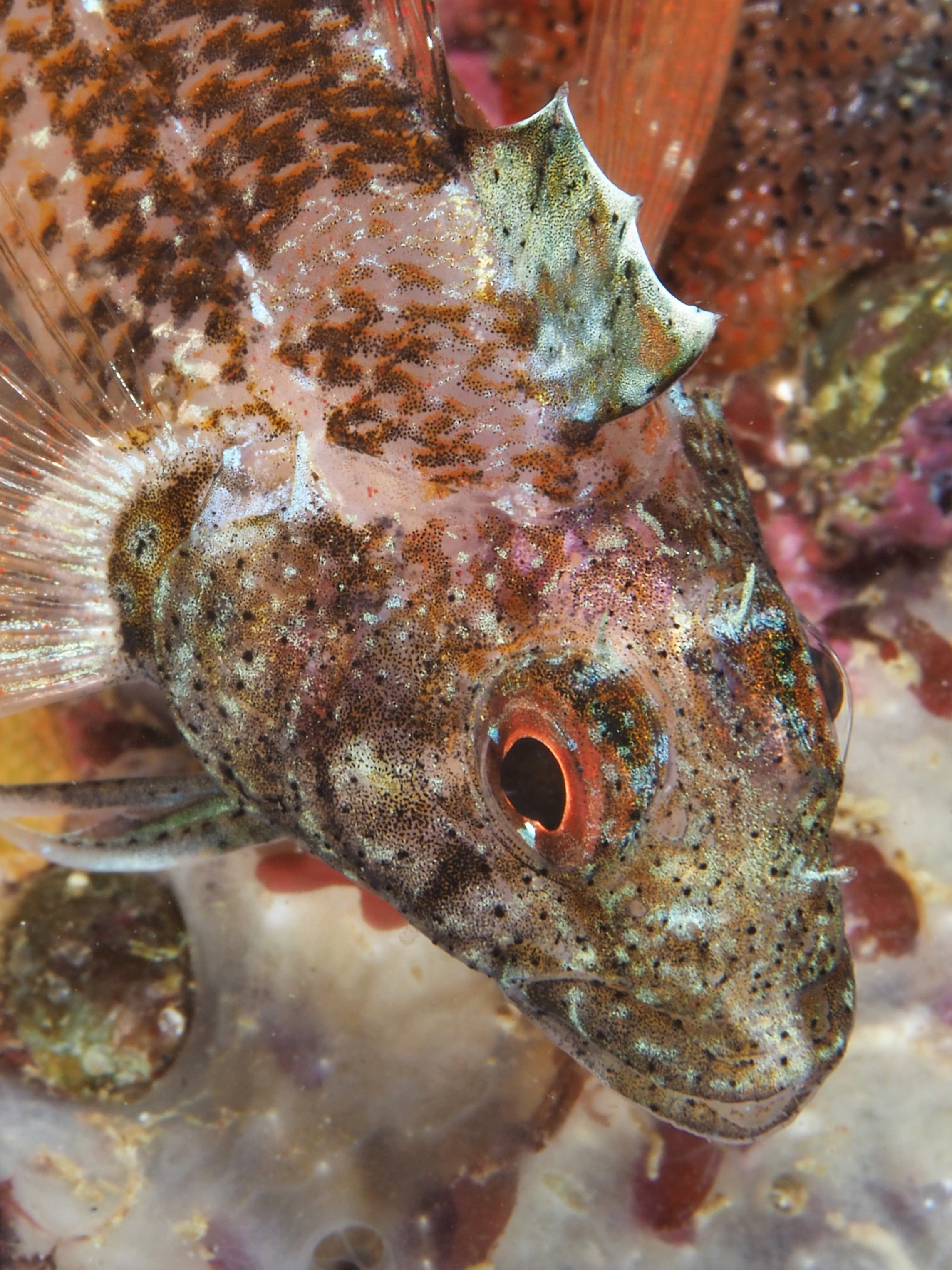
Dear reader, it has been a while! With the weather taking a turn for the worse, I thought it would be high time to start updating the blog again. I have taken more photos this year than ever before, and actually have dived my local shore site “Silver Steps” in Falmouth ‘to death’, so now have plenty of material. I’d thought I start with a post on one of my favourite fish, the Black-faced Blenny (Tripterygion delaisi). This is a beautiful little fish (a triple-fin blenny, not a ‘true’ blenny) that lives under rock overhangs, usually perched upside down. Breeding males are bright yellow with a black head and an electric blue edged dorsal fin, while females and males outside of the breeding season have a mottled brown-white coloration (which is equally beautiful testified by the pic on the top right). These fish (especially the females) are skittish and also require a bit of contortion to photograph under the overhangs but it is more than worth it! Below a photo-dump of fish shots taken with my 60mm macro lens and a combination of that lens and a superduper macro-wide-angle wetlens (details of which I am bound to bore you with in coming posts!).
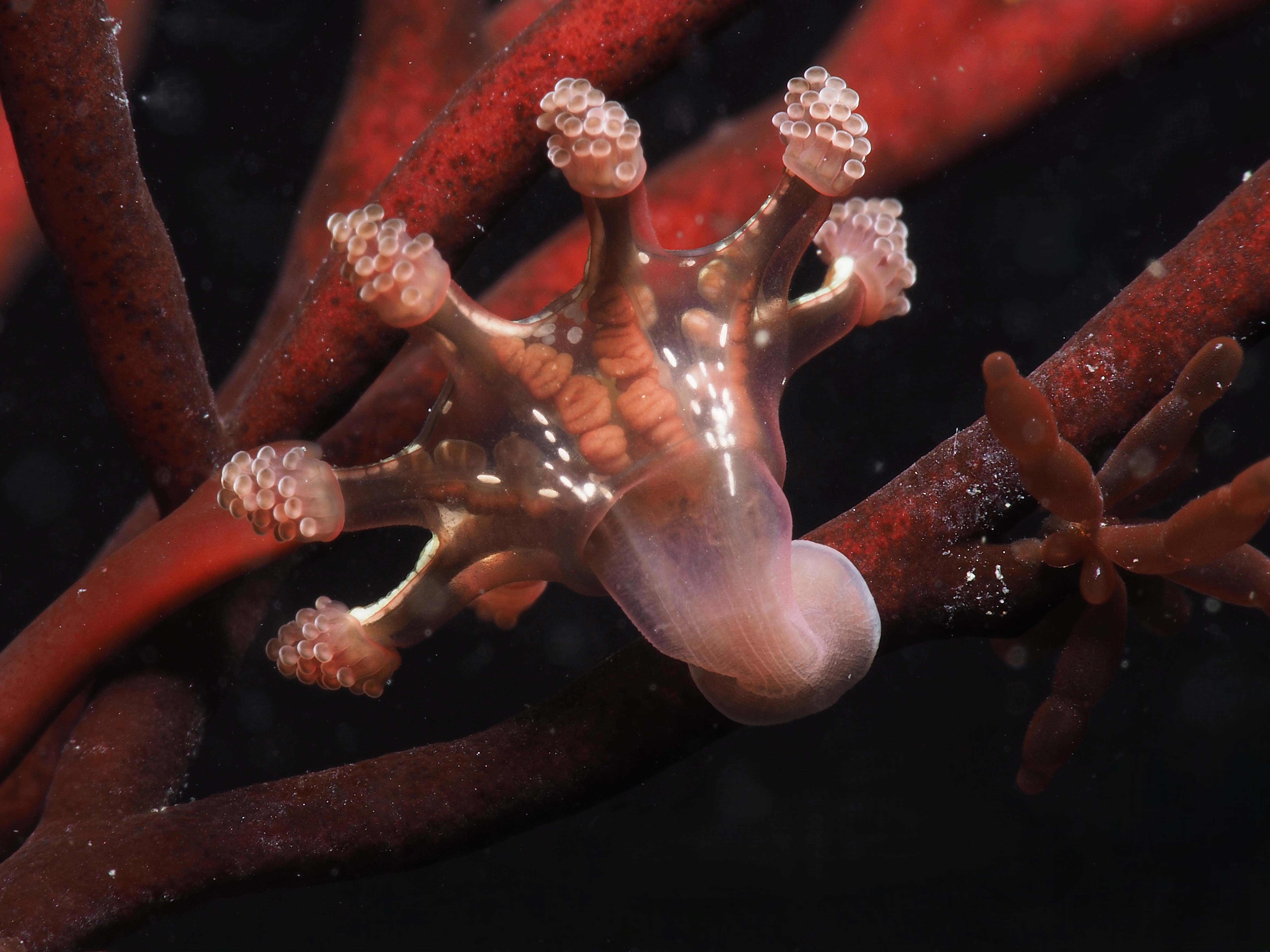
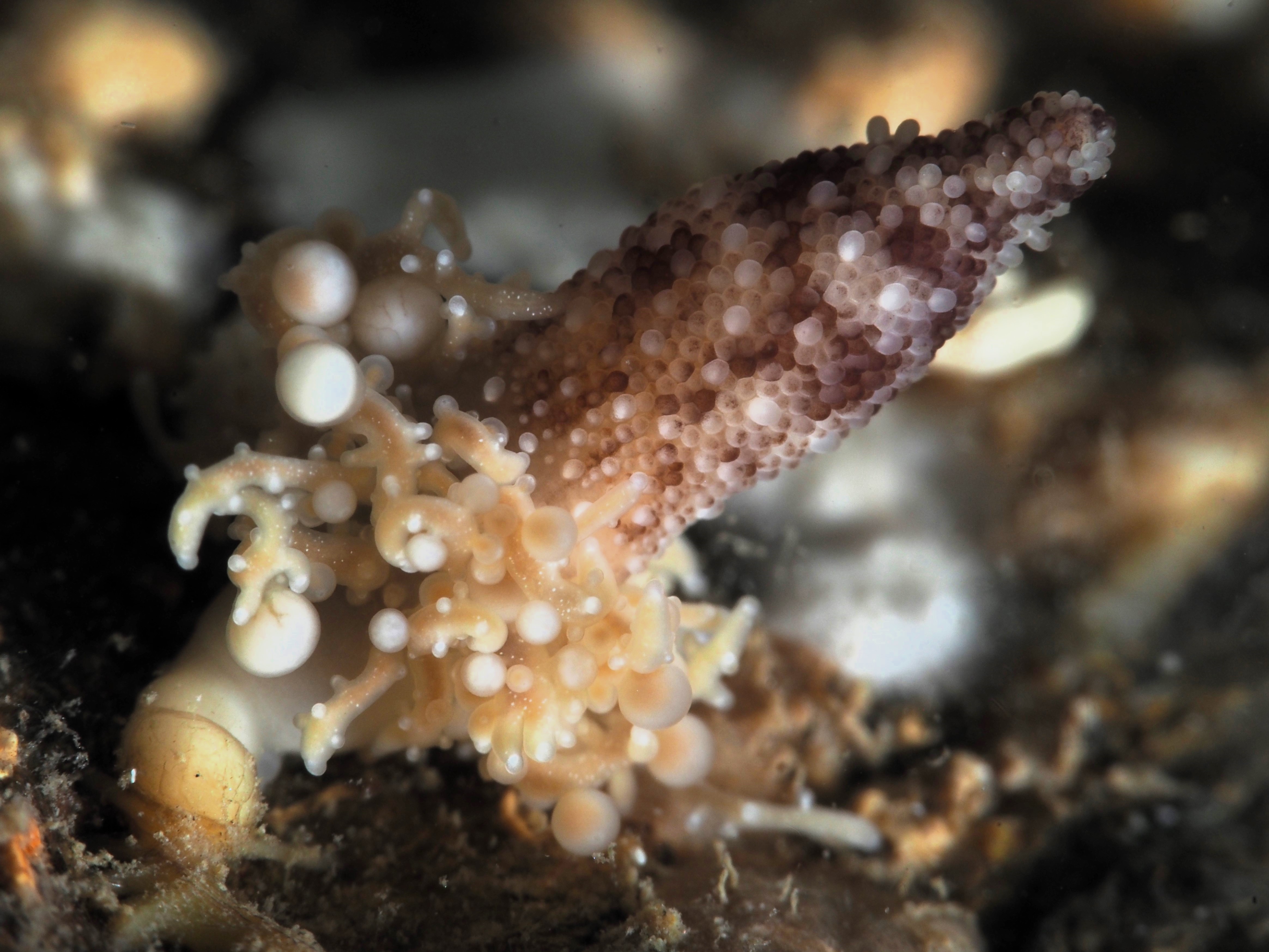
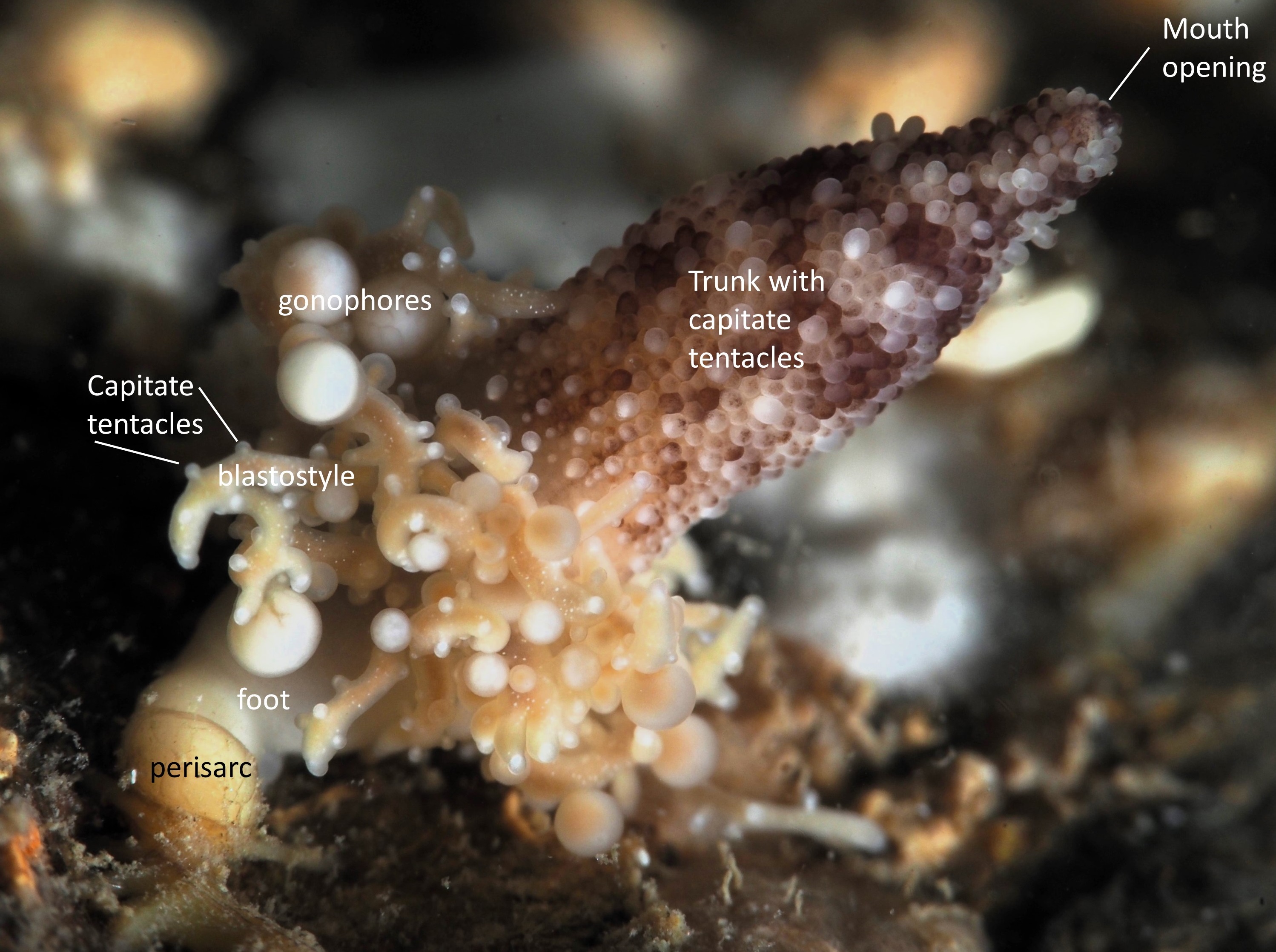
This is a weird little hydroid and so only has a Latin name to go by: Candelabrum cocksii. It was first described by Cocks in his ‘Contributions to the fauna of Falmouth’ in the 1850s and it is quite common locally. I find them mostly as pictured here, but sometimes I see them with their foot extended, going from a centimetre to 8 centimetres or so in length. This allows them to rove over the rock surface in search of tiny (crustacean) prey. Their mouth is located at the end of the trunk which is covered in ‘capitate’ tentacles (see the pic below for anatomical labels). The white spheres are gonophores used for reproduction. It should be possible in summer when these hermaphrodites reproduce to see dedicated clasper tentacles holding the embryos, that would be cool (to me at least!). Btw, I remembered I posted about this species not even that long ago! See here and also see this link and this link from fellow enthusiasts across the pond who likewise have been fascinated by Candelabrum.
This seems like a familiar way to start a blog post but here I go again: ‘the weather has been terrible lately and I have not been in the water!’. March used to be my favourite time for snorkeling because the seaweeds look at their best, but the last three years it has been windy and wet, surely because of climate change…
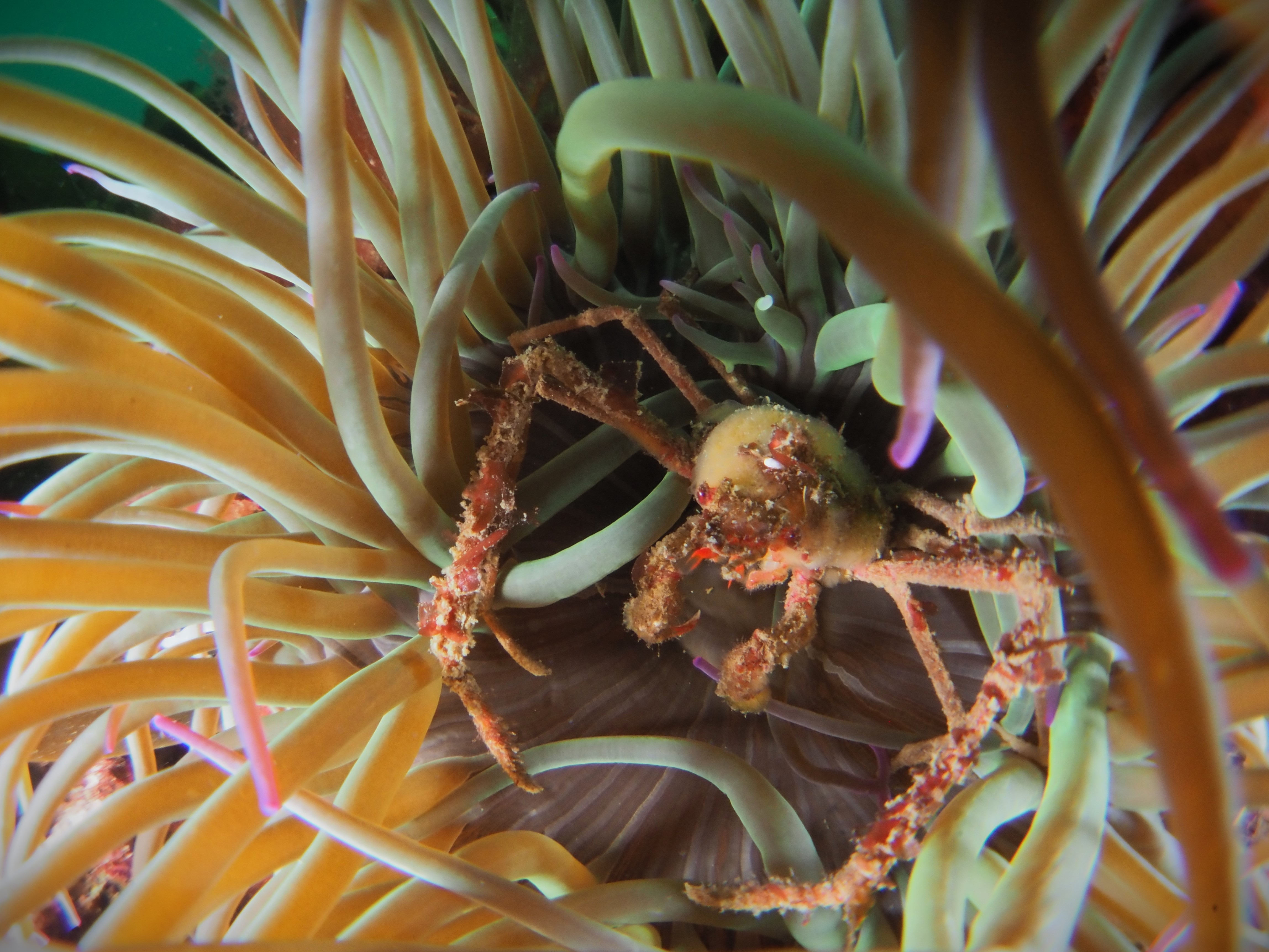
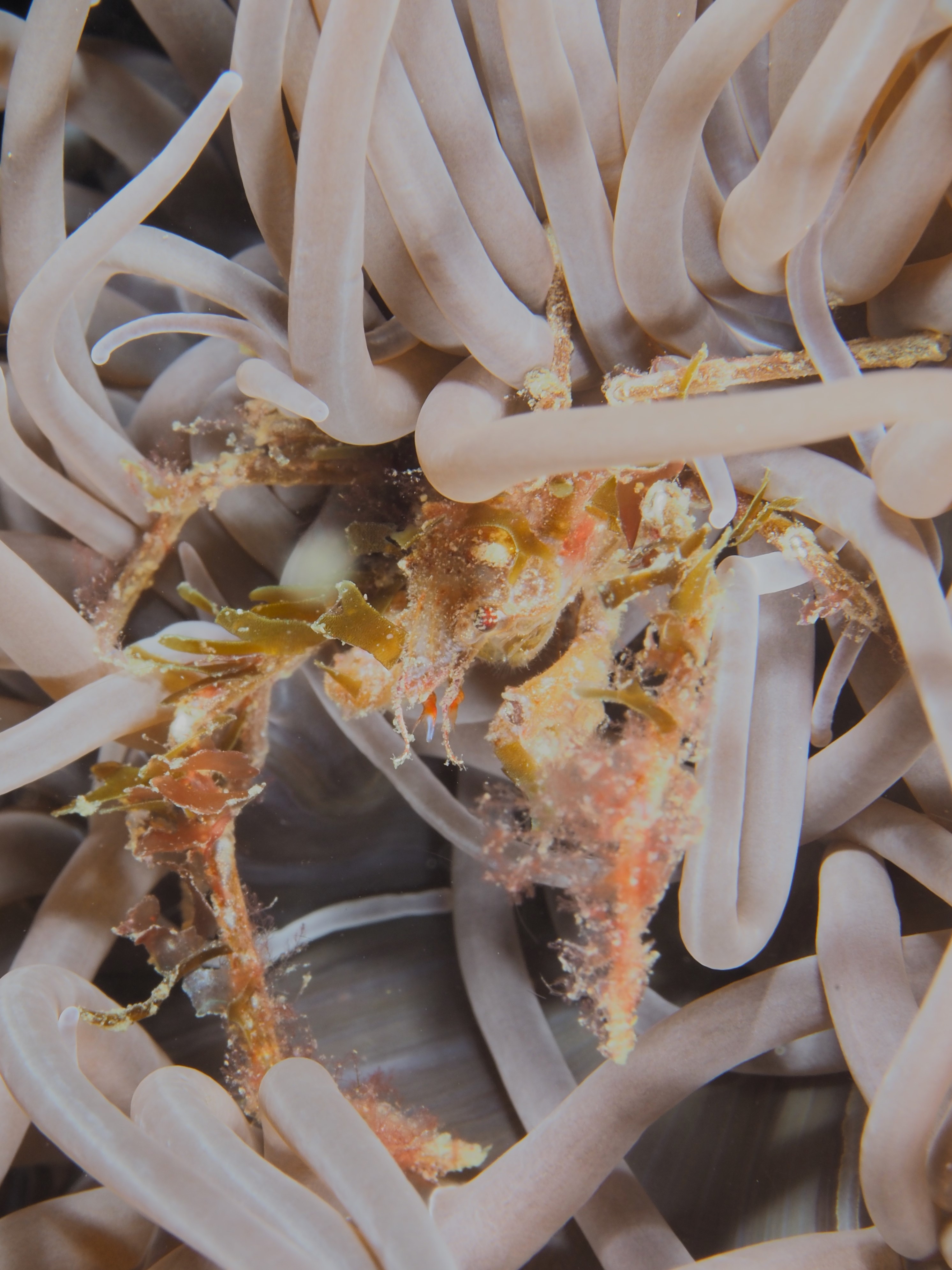
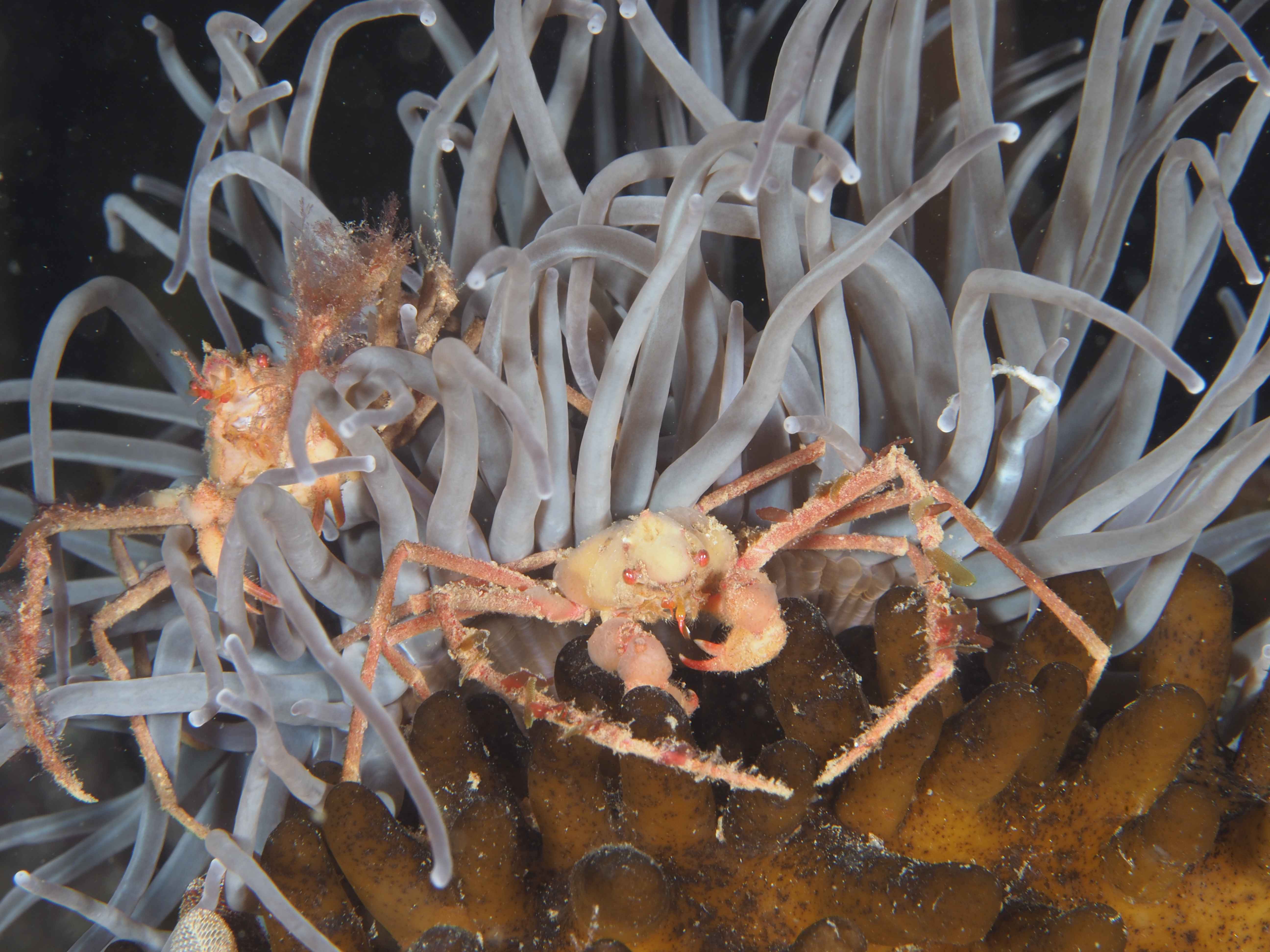
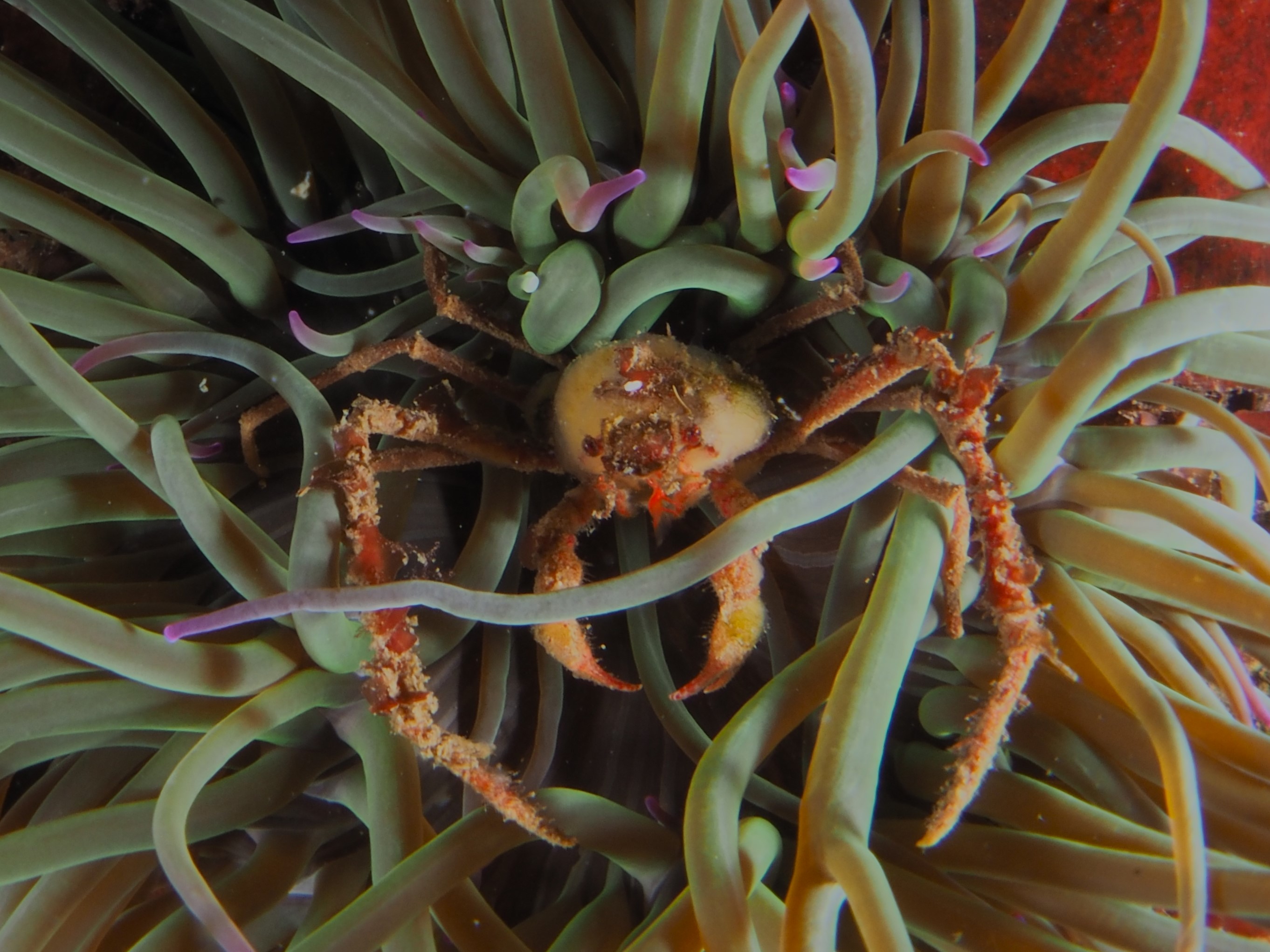
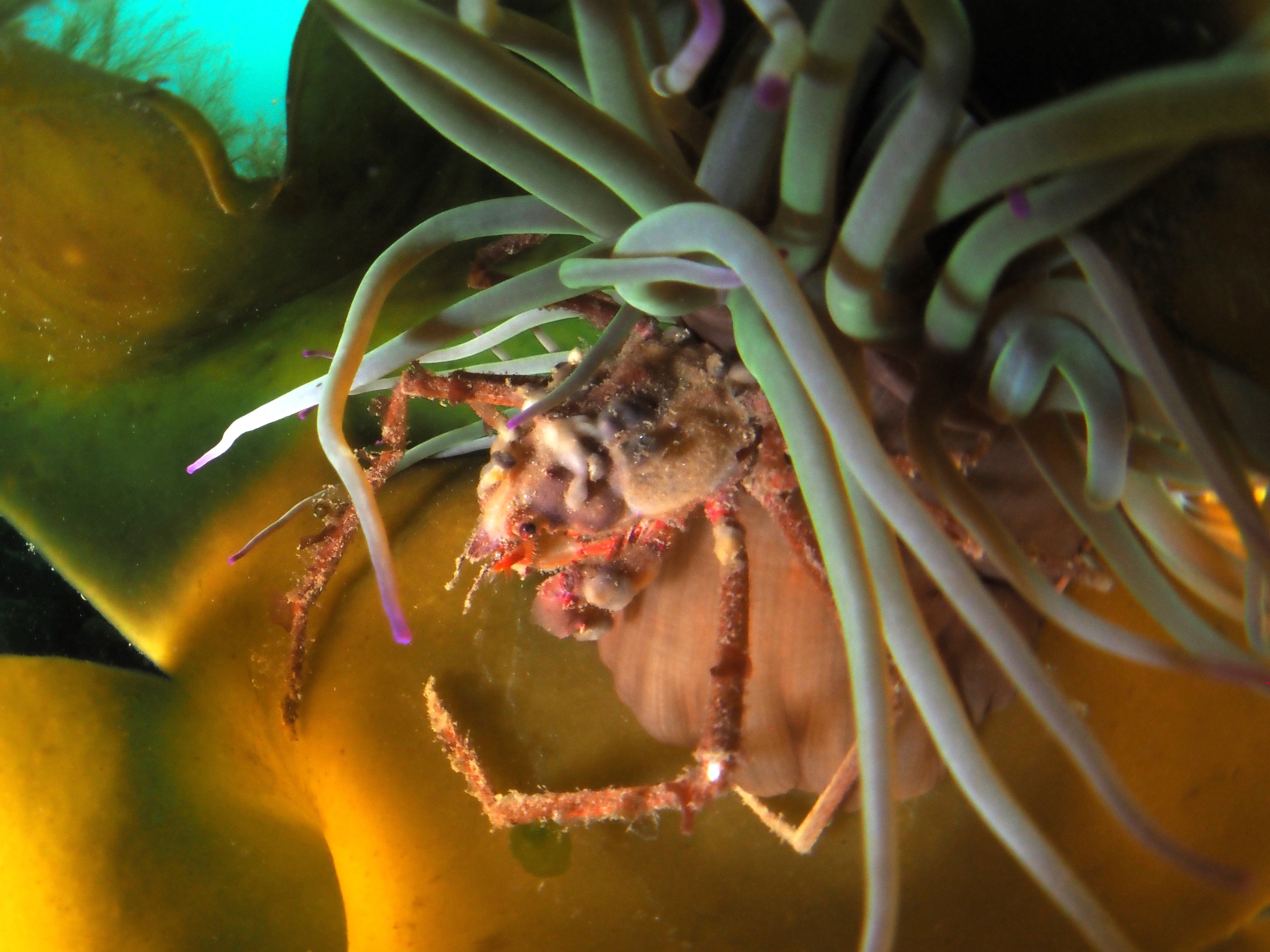
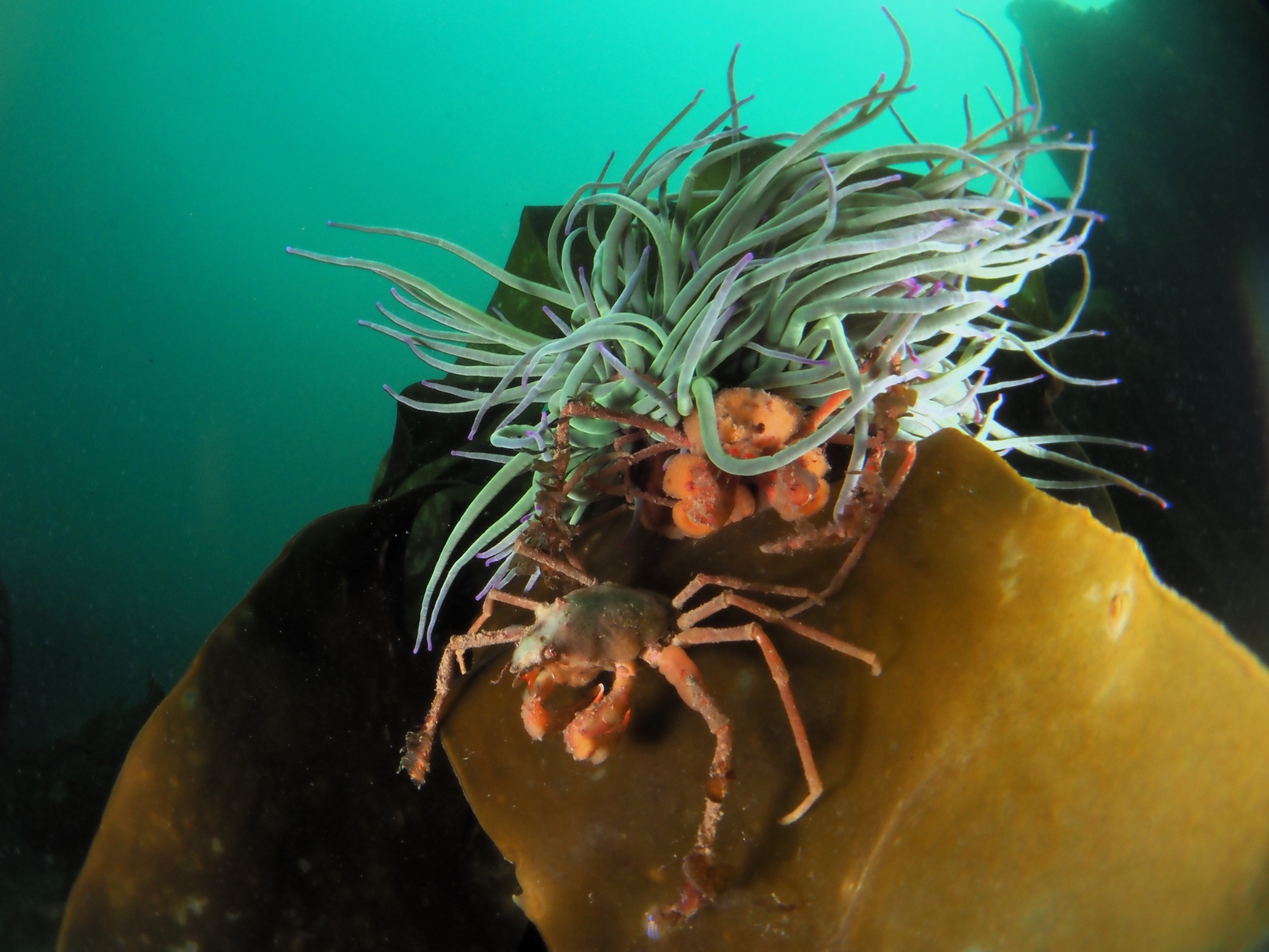
To keep the blog going (a bit), I have dug out some images from a few dives last year featuring Inachus spider crabs. There are three species, I. phalangium, I. dorsettensis and I. leptochirus, which can be told apart by the arrangement of tubercules on their carapace, but these are often obscured by epiphyte growth, and so I am keeping it to Inachus sp. All species are associated with Snakelocks Anemone (Anemonia viridis) hosts. The photo above is taken using a weird ‘wide angle macro’ wetlens (INON UFL-M150 ZM80). This perspective always fascinated me but it is difficult to achieve. This lens does the job, although it is incredibly ‘soft’, especially around the edges. The close focusing also makes it difficult to direct the strobe light on the subject. So there is a tradeoff between getting the surroundings in view and sharpness. Below first some sharper shots using my 60mm macrolens, followed by some macro wide angle shots (they happen to be each of the different Anemonia colour morph):
I will leave you with the following interesting bit on the biology of these crabs by Diesel (Ethology, 1986):
I. phalangium females are site-constant, and live in the protection of one anemone or group. Males travel frequently between anemones harbouring females due to spawn; they copulate and guard the females until spawning, after which the male leaves again. A male operates in a patrol area containing 3-8 anemone groups and up to 8 females, visiting each female in turn repeatedly just before it is due to spawn. Patrol areas of different males may overlap, with resulting competition to fertilize a female’s next brood. Large males have higher reproductive success than small ones. Females live up to 8 months after the moult of puberty and hatch up to six broods, and males live up to 7 months as adults. A male could fertilize a calculated 26,000 eggs, whilst a female’s reproductive potential is ca. 4,200 eggs. Mortality risks are higher for males than for females, probably because of increased predation while leaving the protection of anemones in order to visit females. Males learn the positions of anemones harbouring females in their patrol areas, and when these are due to spawn. This allows a male to travel with a target and arrive punctually to fertilize the next brood due in his circuit. I. phalangium is the first marine invertebrate reported to use a “schedule” of localities and times for visiting prespawning females. In this way males minimize searching time and mortality risk, and maximize the number of broods fertilized.
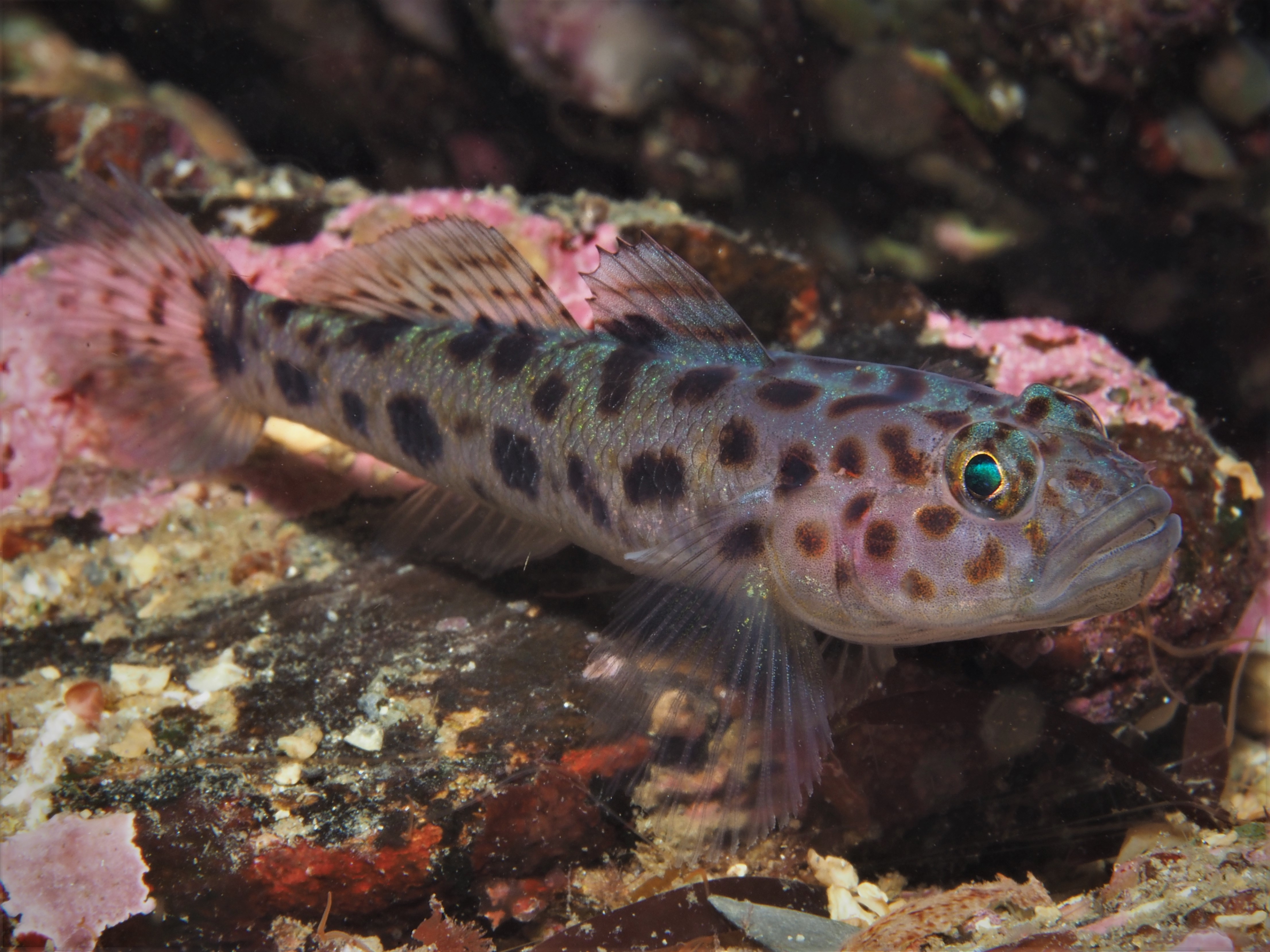
I recently bought (2ndhand) scuba gear and did a refresher dive; with the nice weather this week it was high time to get back under the waves and take some photos! I dived Thu/Fri/Sat at the main local shoredive site ‘Silver Steps‘. I went in by myself, but with a maximum depth of around 10 meters and good conditions this is not risky. The dives did not disappoint, the viz was excellent! Although I spotted cuttlefish every dive, I still opted for the macro lens, as I suspected I could not get great shots of them with my fisheye lens at 1.5 meter distance (I might have been wrong!). Instead of heading out to sea as some divers do, I always stick to the gullies by the rocks, diving below the kelp to see what happens beneath the rocky overhangs. There are three usual suspects hiding there, each with a very different personality. First, Leopard Spotted Gobies (Thorogobius ephippiatus) inhabit cracks in the rocks and are quite shy:
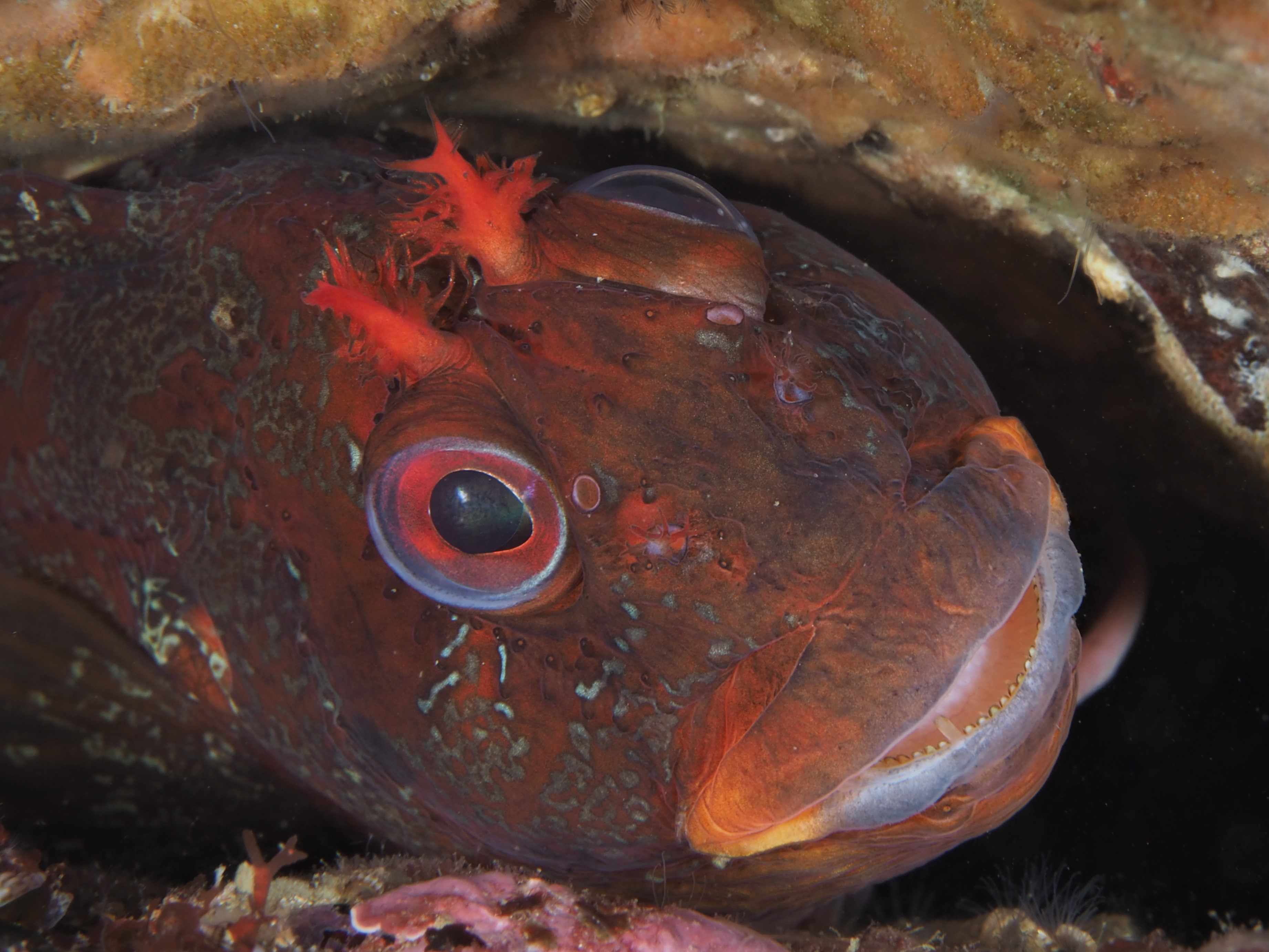
Second, Tompot Blennies (Parablennius gattorugine) are extremely inquisitive, often coming very close to check out what is going on in front of their domain:
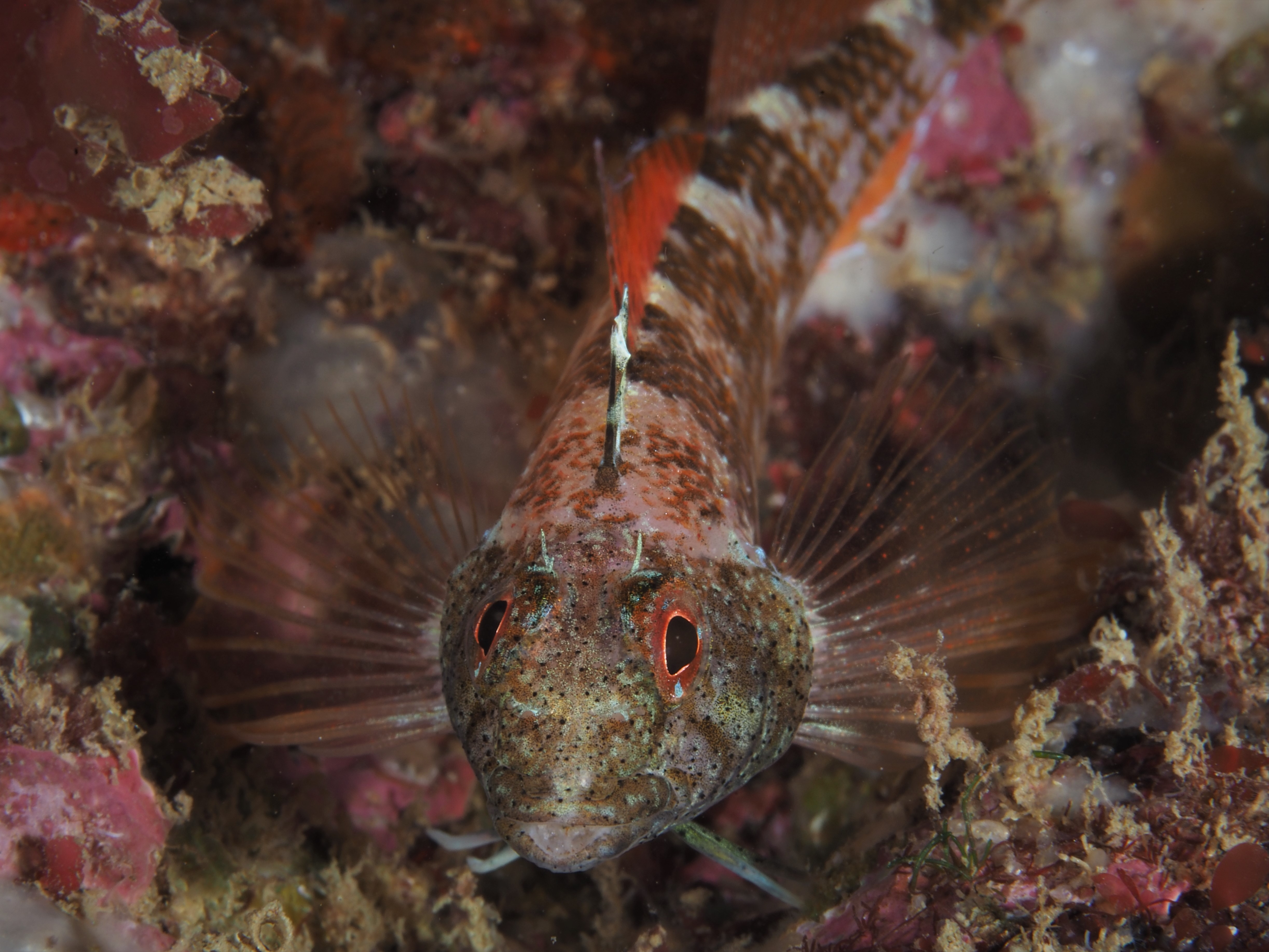
Third, Black-face Blennies (which are not true blennies but triple fins) that only ever live under overhangs, usually head-down. I did not see males in breeding colours (black face, yellow body) but this colour form is even prettier I think:
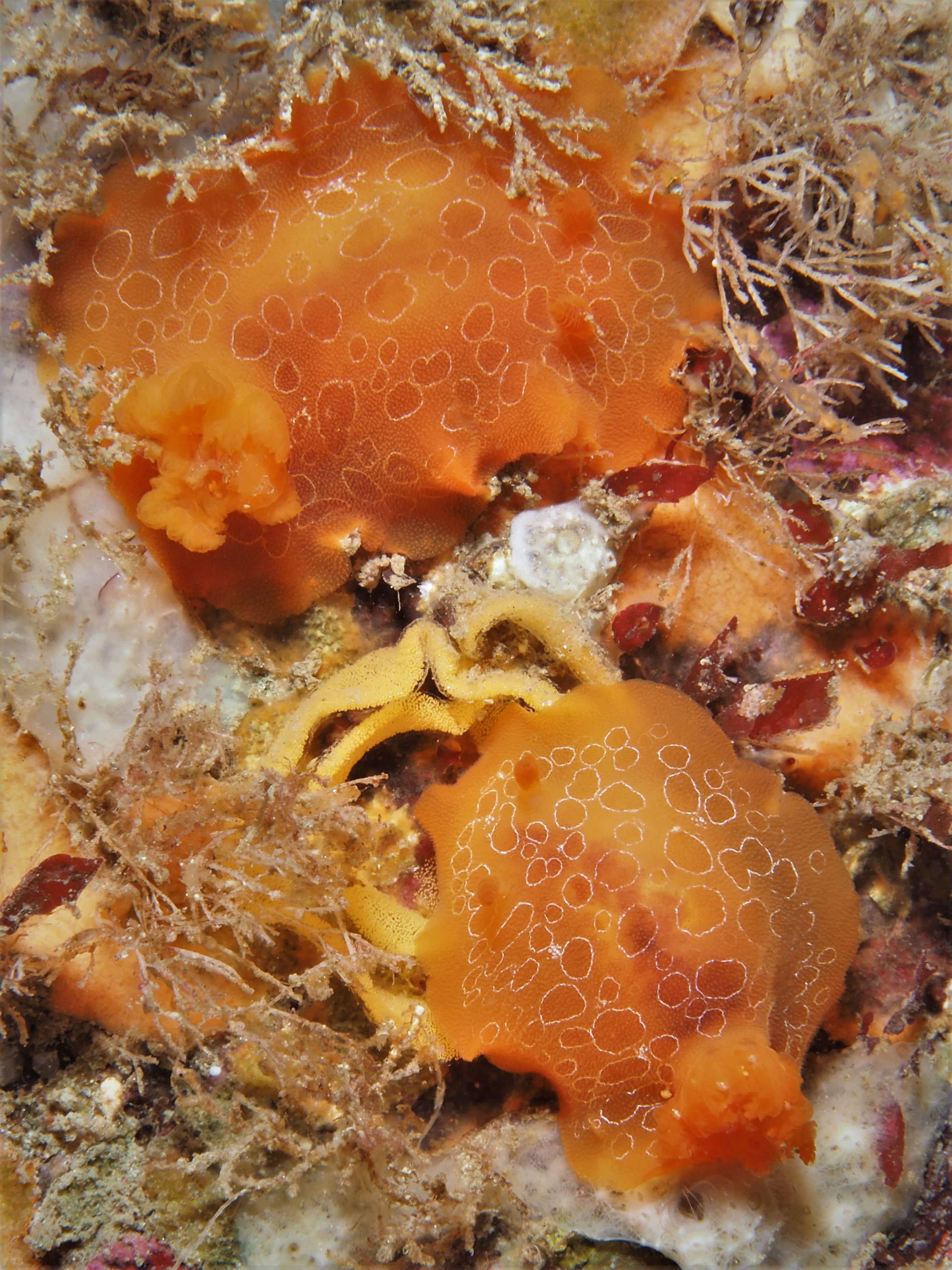
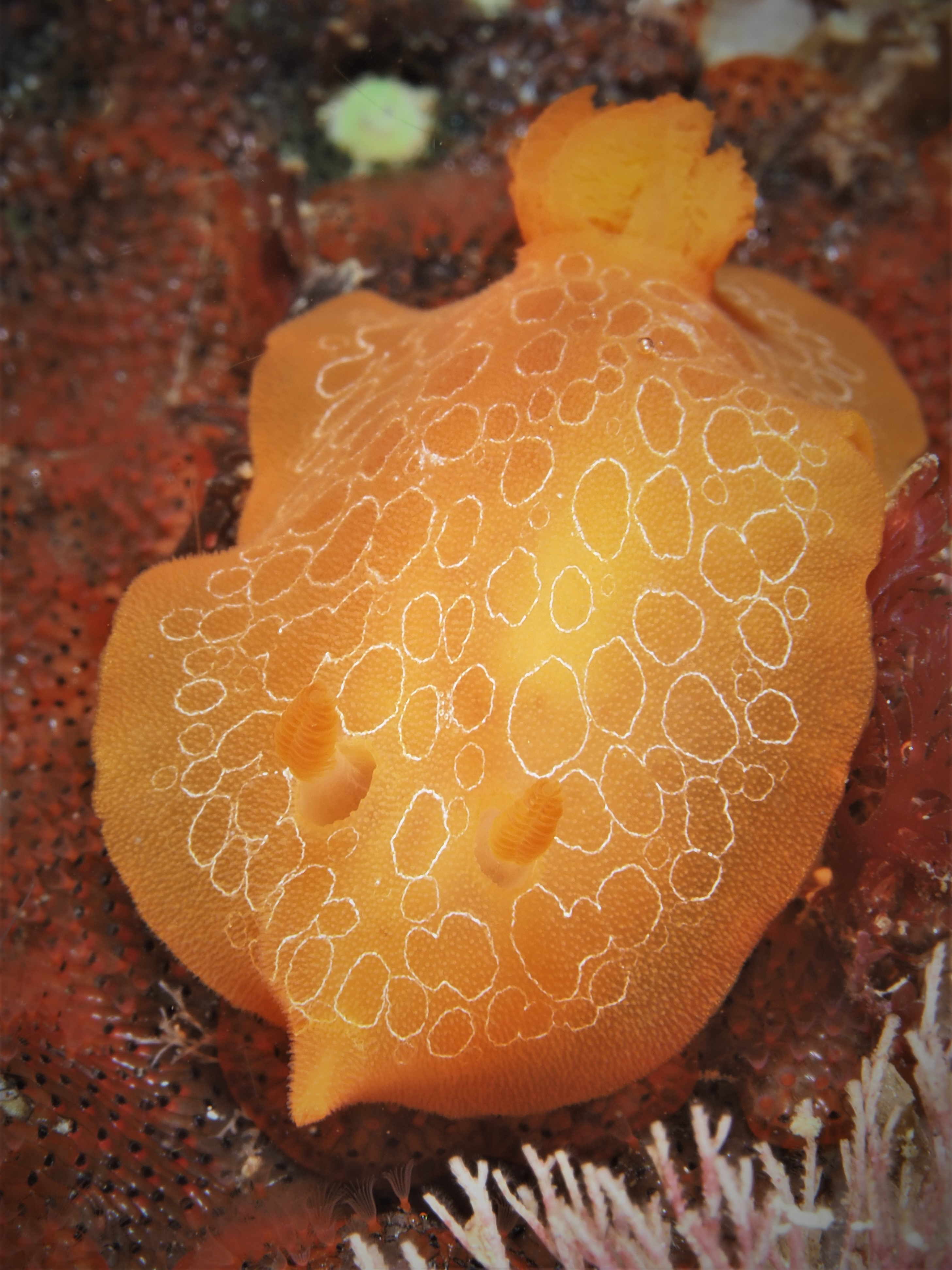
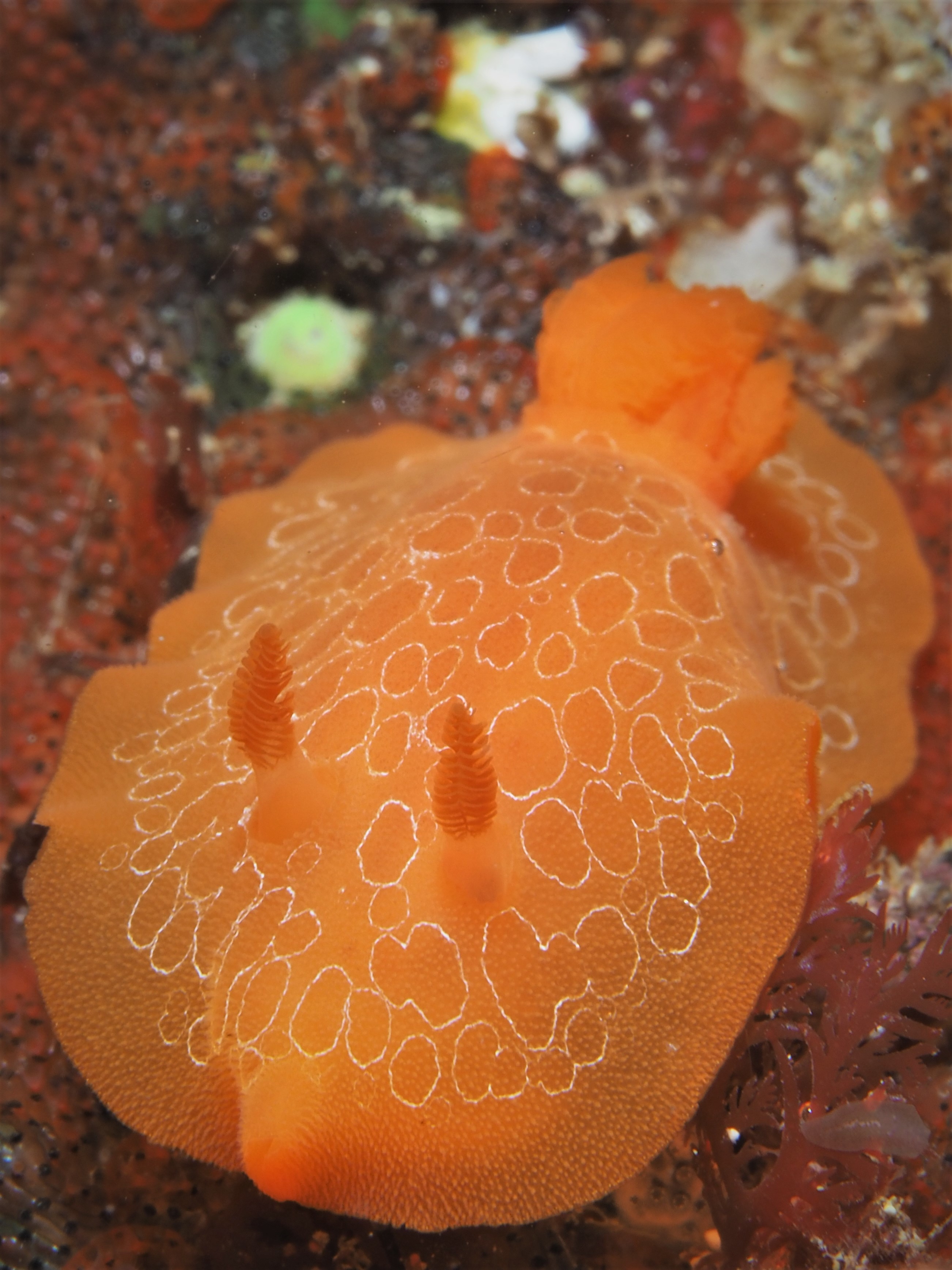
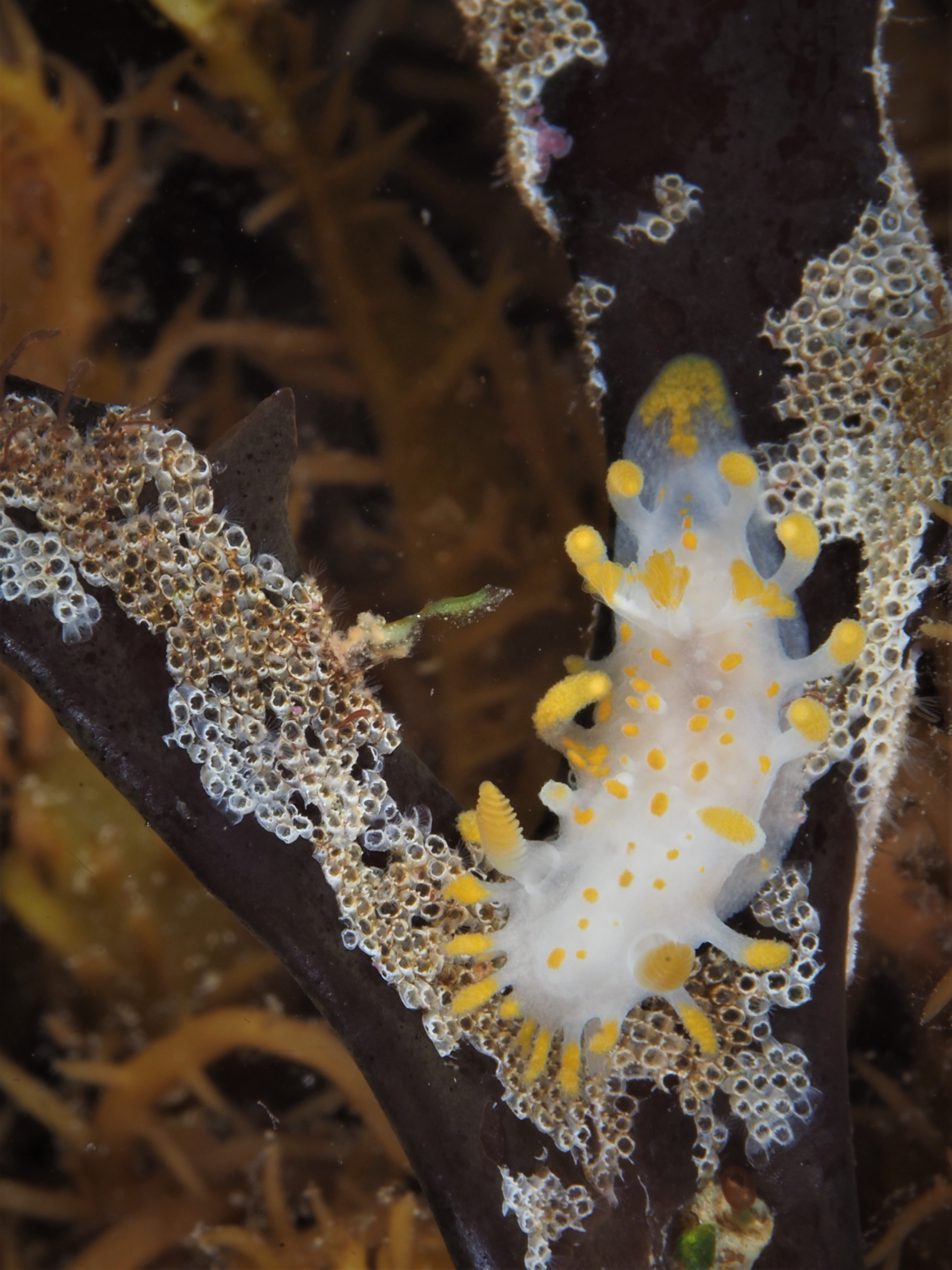
When inspecting the rock walls carpeted in sponges, seasquirts, algae, worms and other things, I kept my eyes out for nudibranchs. Apart from a tiny crested aeolis, I spotted a good number of Discodoris rosi, busy mating and laying eggs. This species has only been observed in the UK for a decade or so but the population now is booming, with many reports coming in from all over Cornwall:
All in all a great enjoyable three dives! Silvery schools of sandeels and sprat/herring, many wrasse, cuttlefish, small and very big lobsters and a greater pipefish were also spotted. Unfortunately the weather has made a turn for the worse this week, however, there are still a few diveable months left this year…
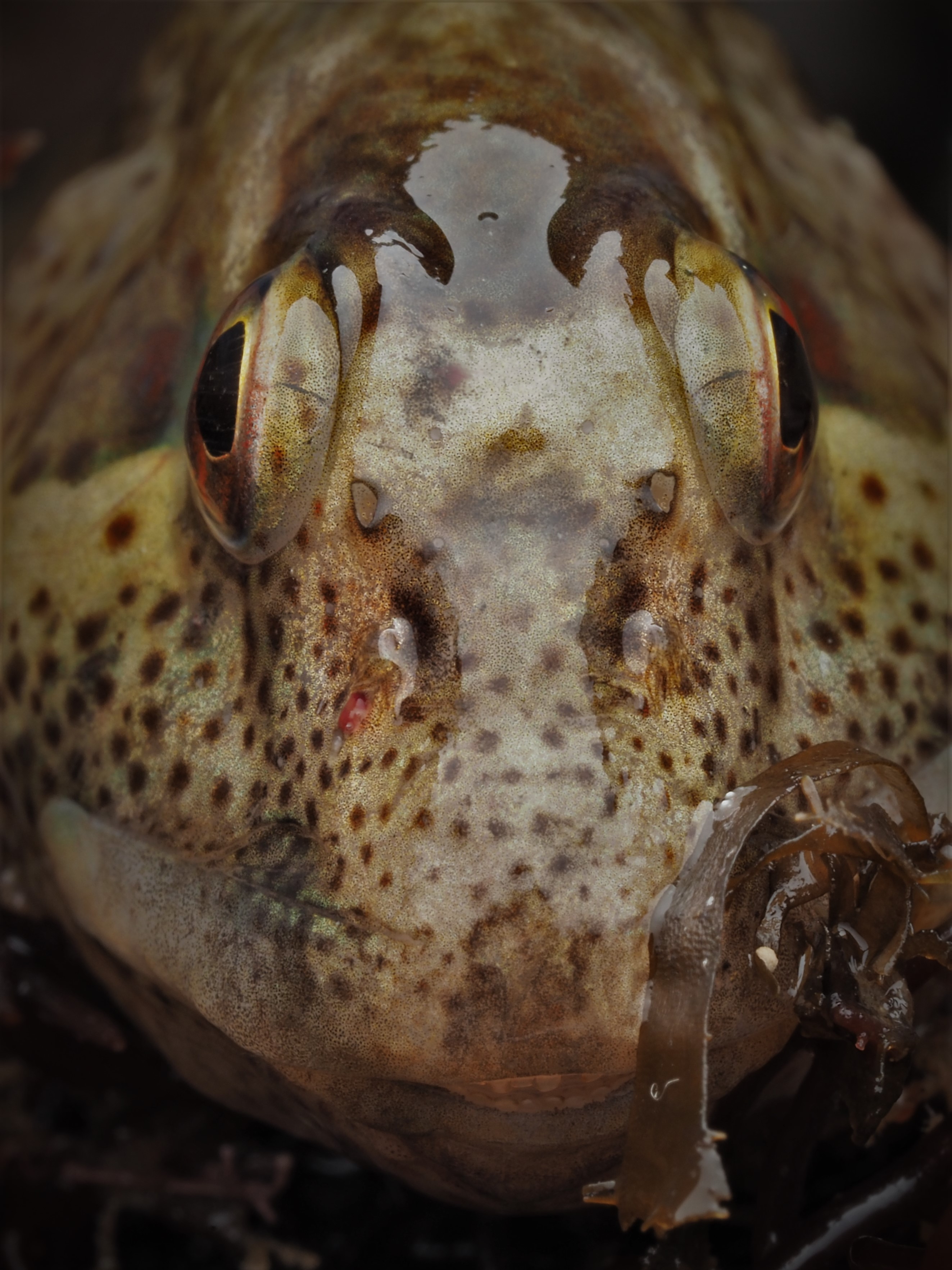
A quick post, again of macro shots on-land using the cygnustech diffuser. A Montagu’s Blenny (Coryphoblennius galerita) and a Shanny (Lipophrys pholis) (check its teeth, it is a combtooth blenny). Due to the recent storm I did not venture into the water but had a wander down the shore here in Flushing. The fish were gently placed on some wet seaweed where they lay still before hopping back in their rockpool. The diffuser really gives the photos a moody atmosphere! I hope one day I can find a Tompot blenny on a very low tide to complete the set.
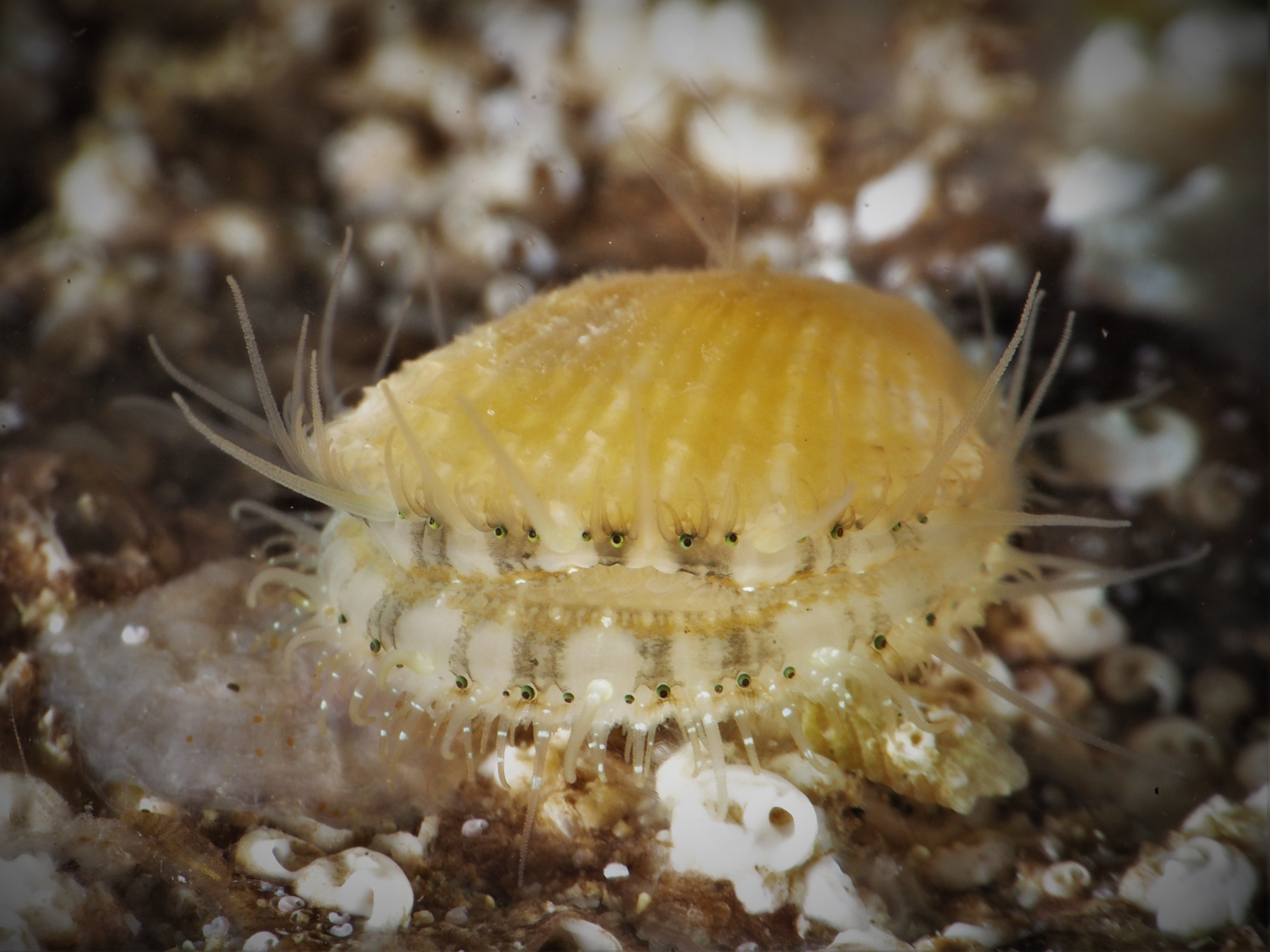
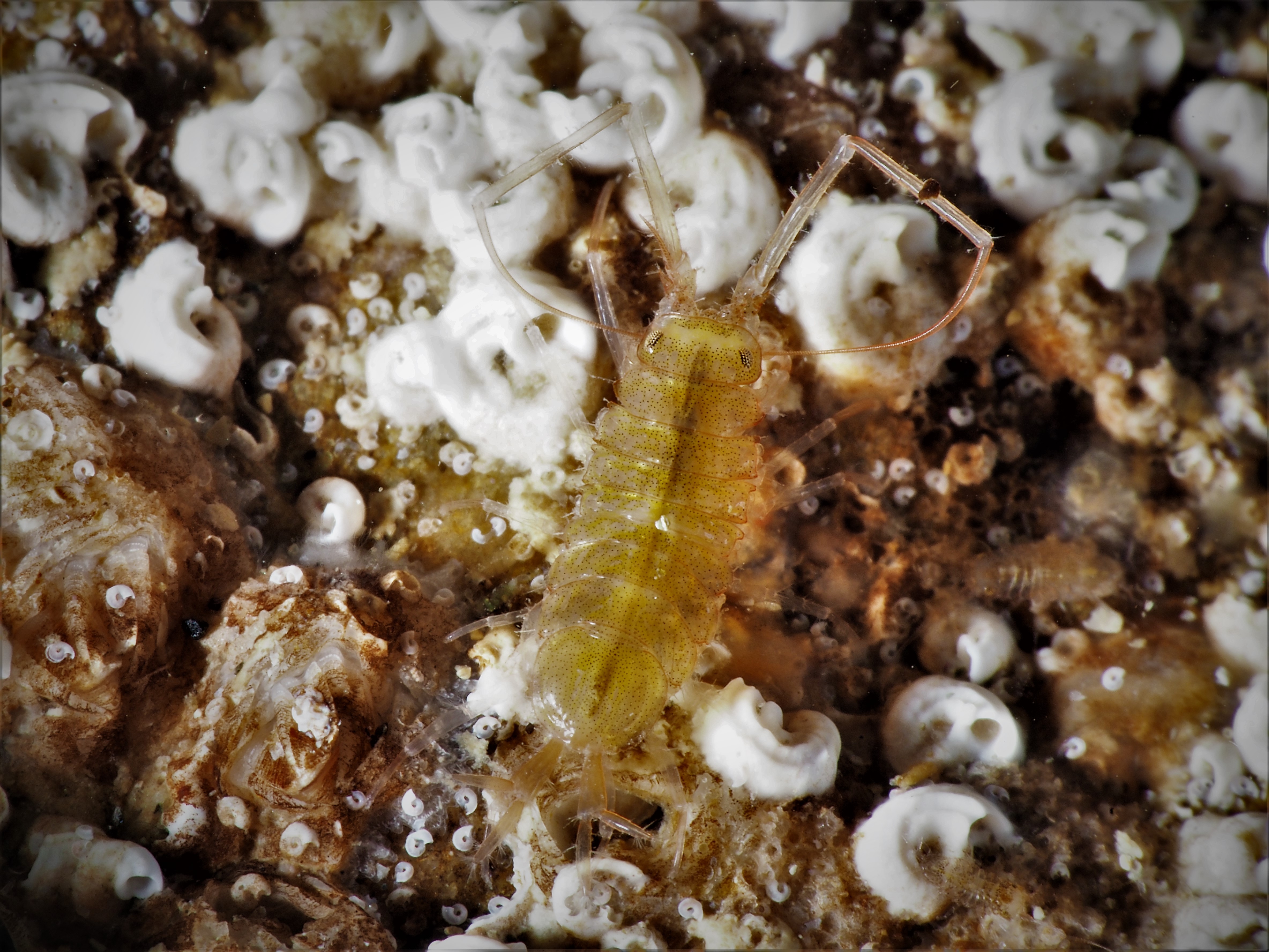
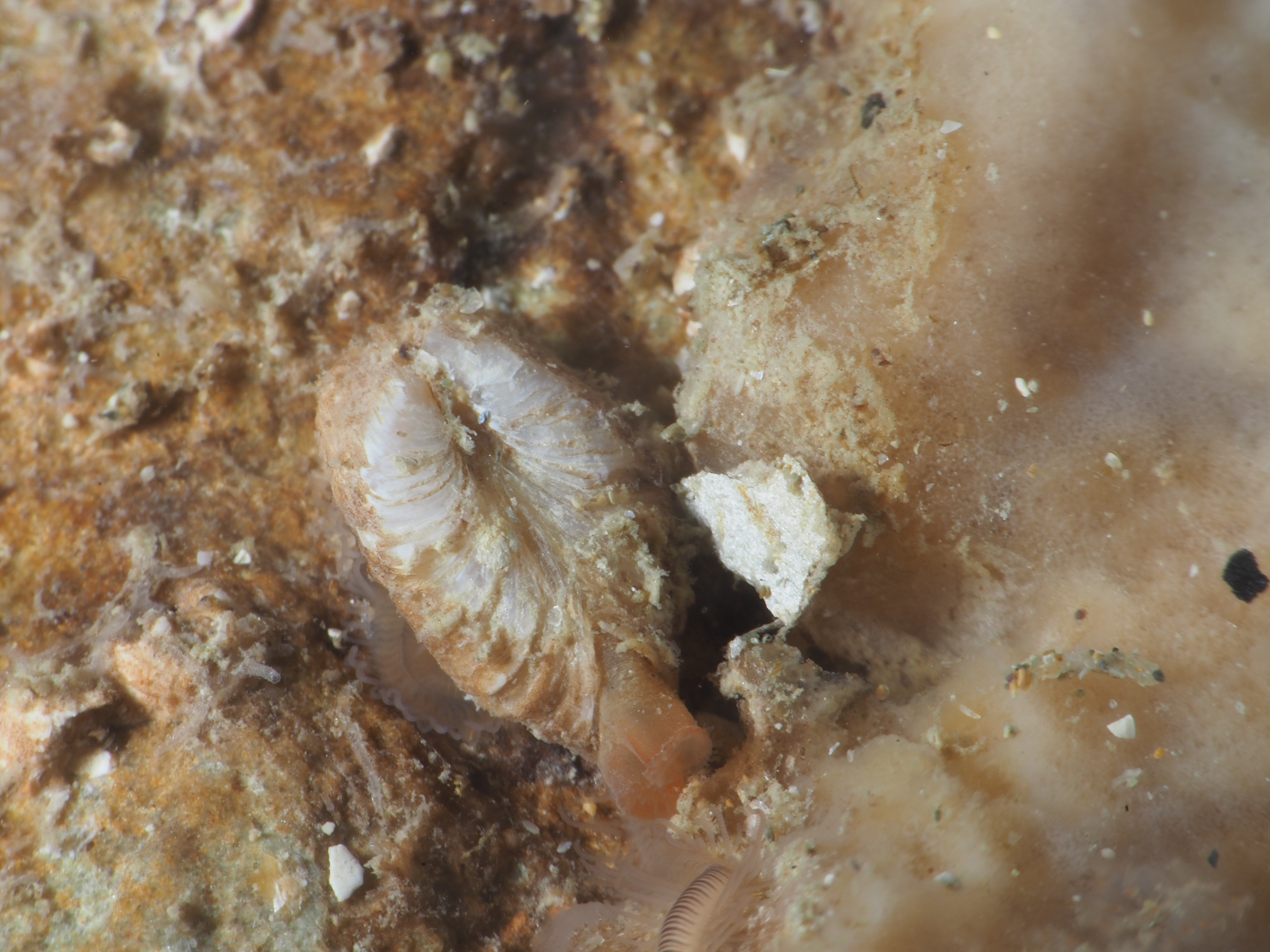
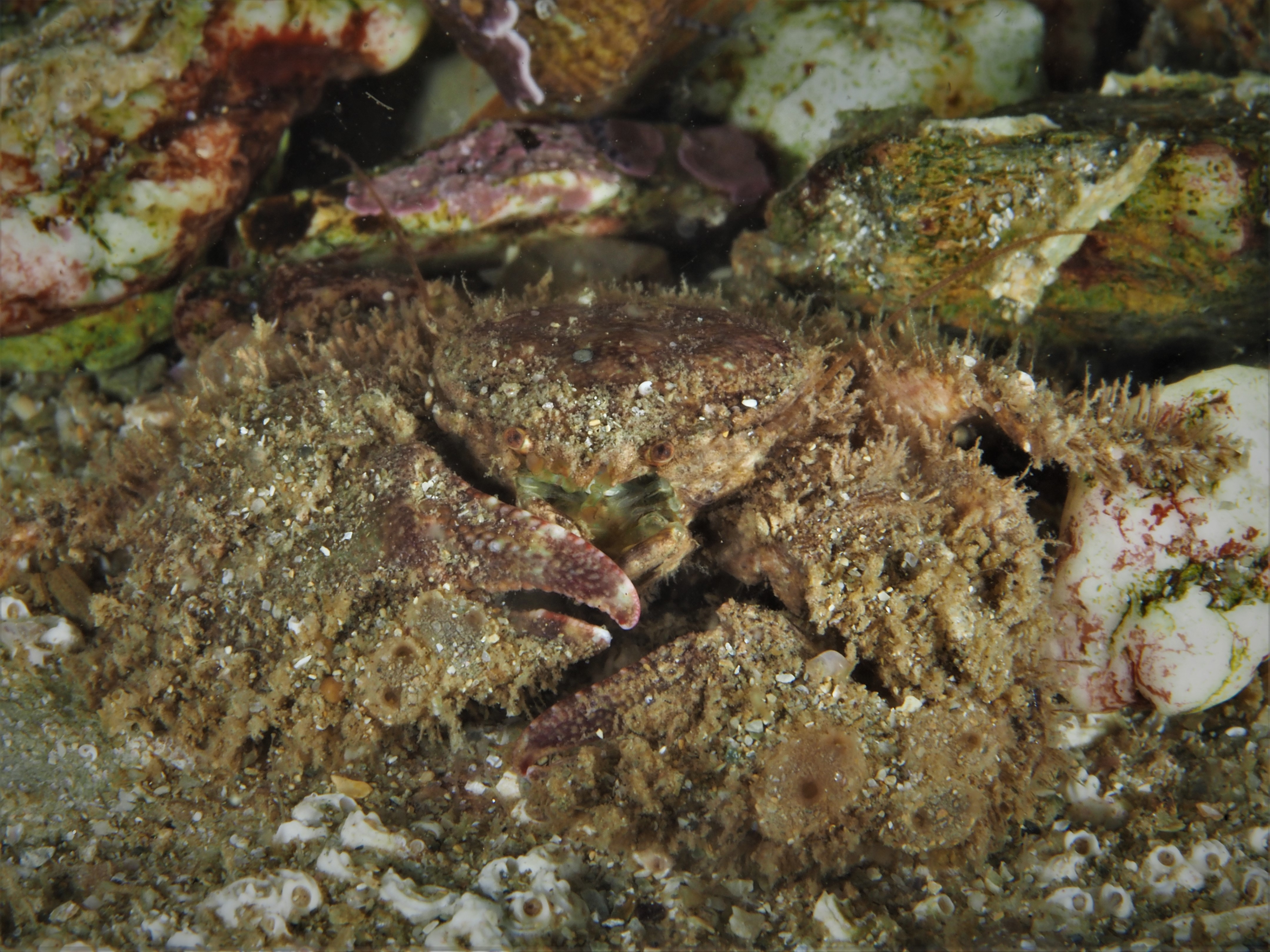
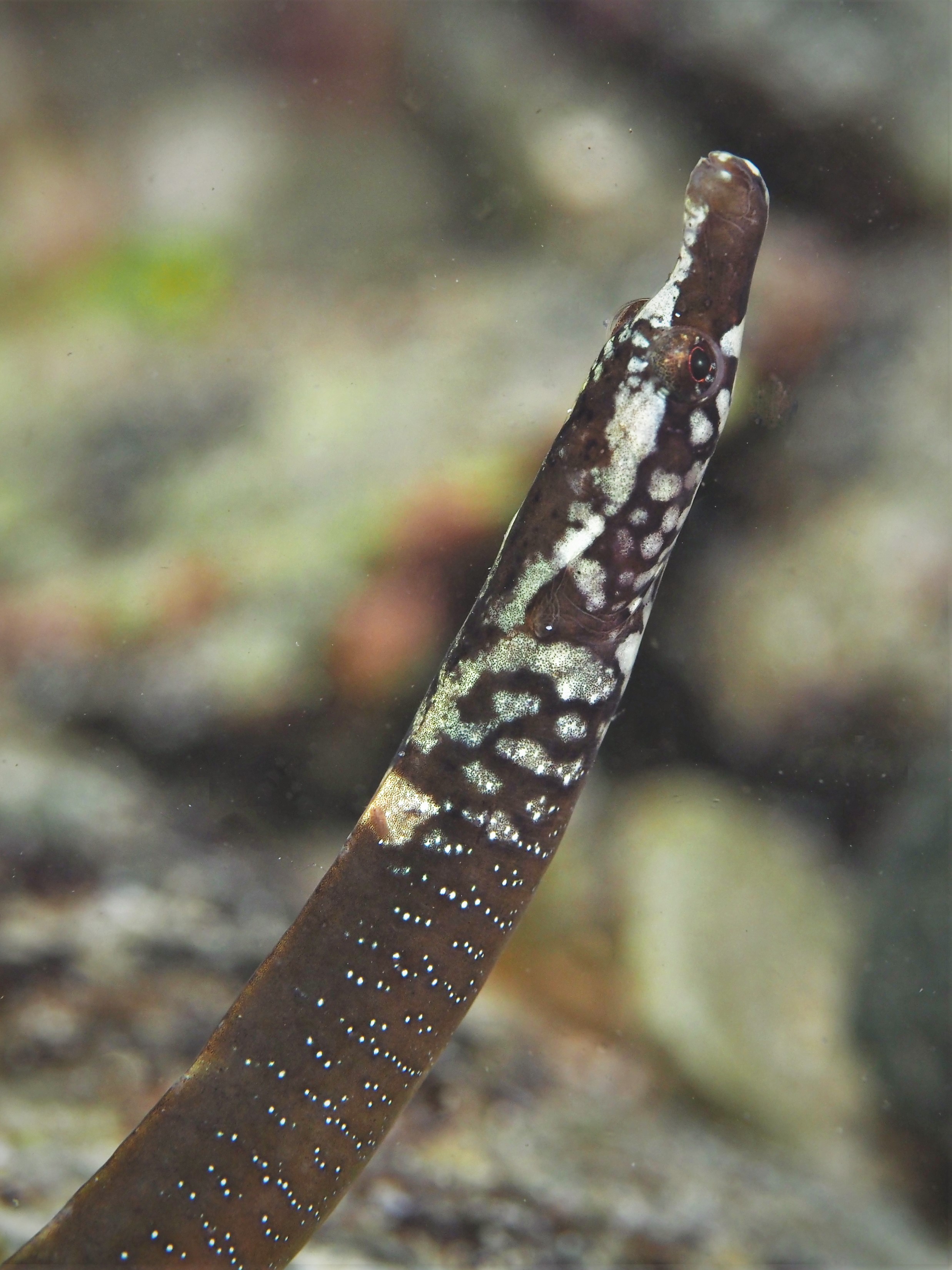
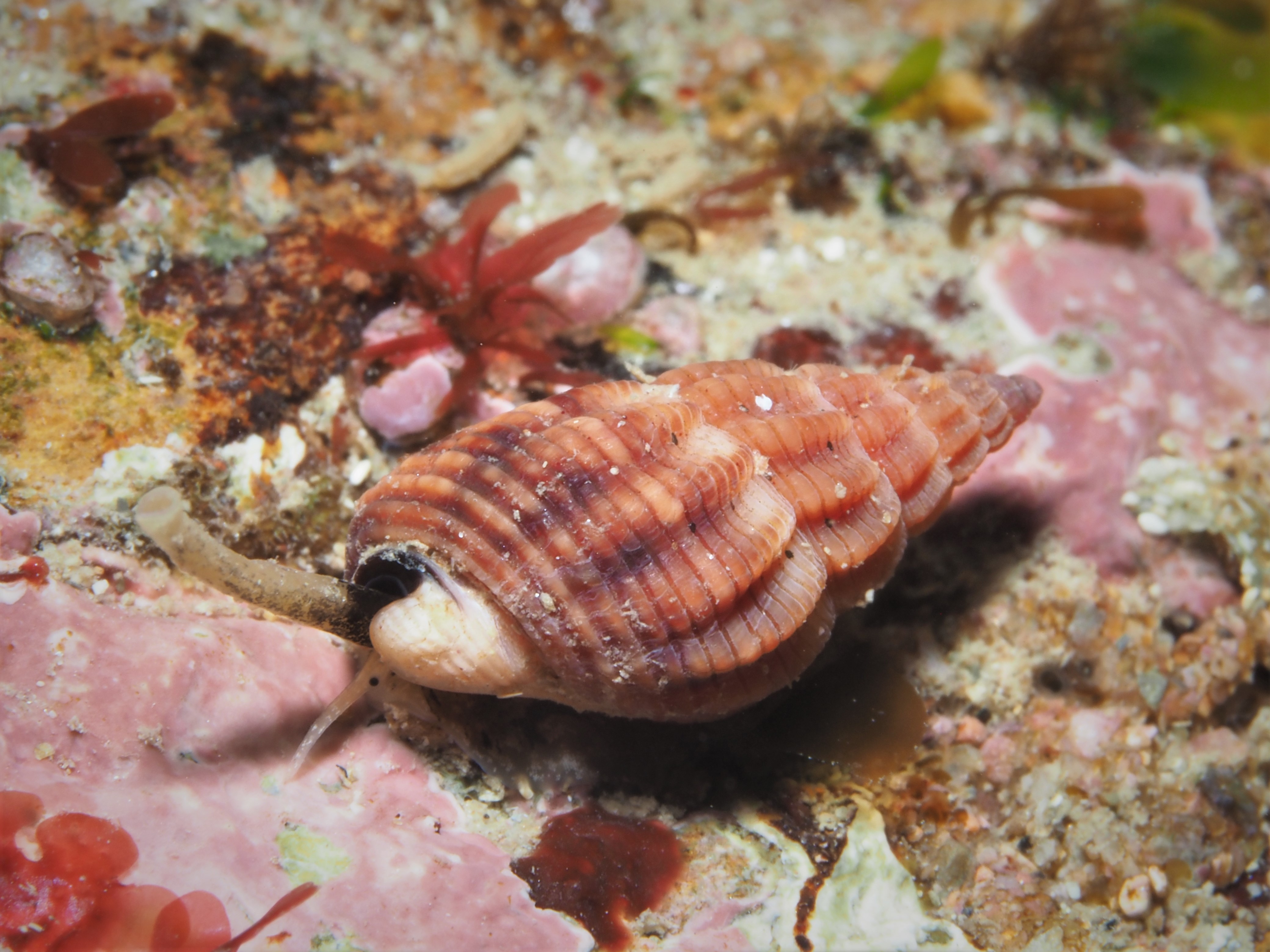
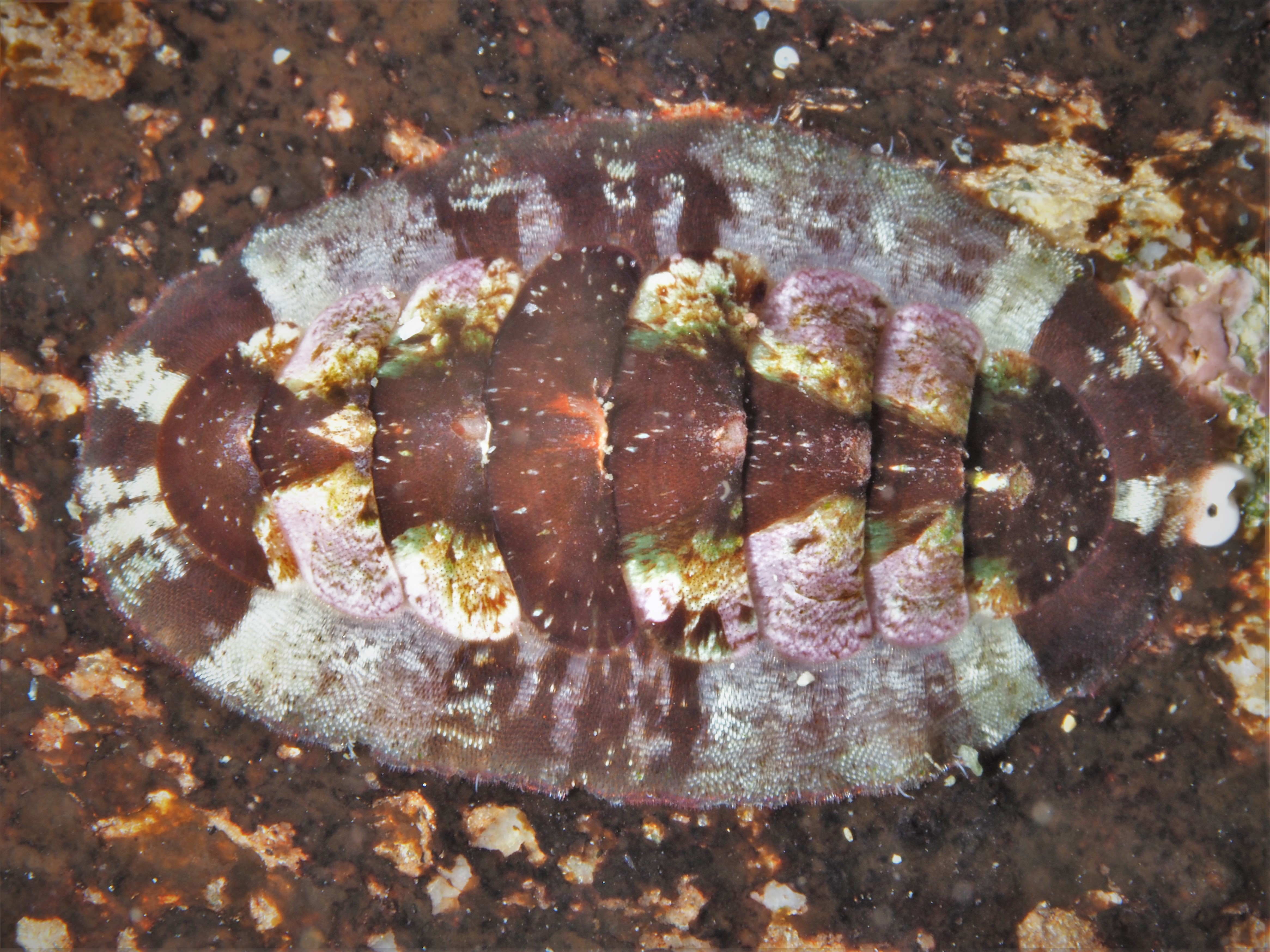
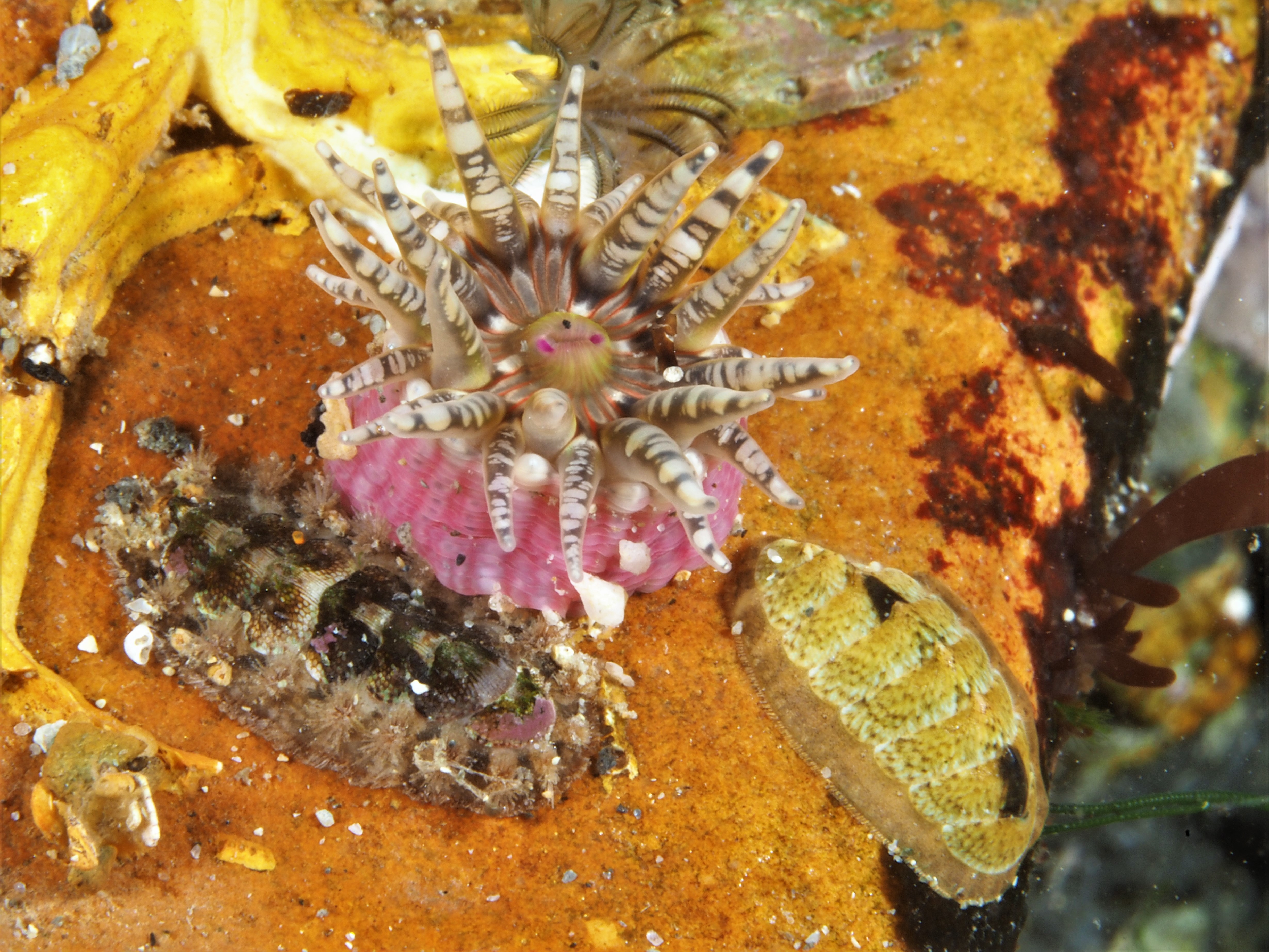
When the viz is bad, I take my macrolens (sometimes with the Nauticam CMC-1 wetlens for a bit of extra magnification) out to the pools. Sometimes I stick to the surface of rocks and seaweeds (to look for stalked jellyfish for instance), but other times I turn over rocks under water to see what hides beneath. Quite a lot! There are larger animals, such as Topknots and different types of crabs (and Worm pipefish as pictured here) but mainly they are quite small (around a centimetre or even less). See the selection below (Tricolia, Bittium and Limacia were not from under rocks but I had to make the grid fit!).
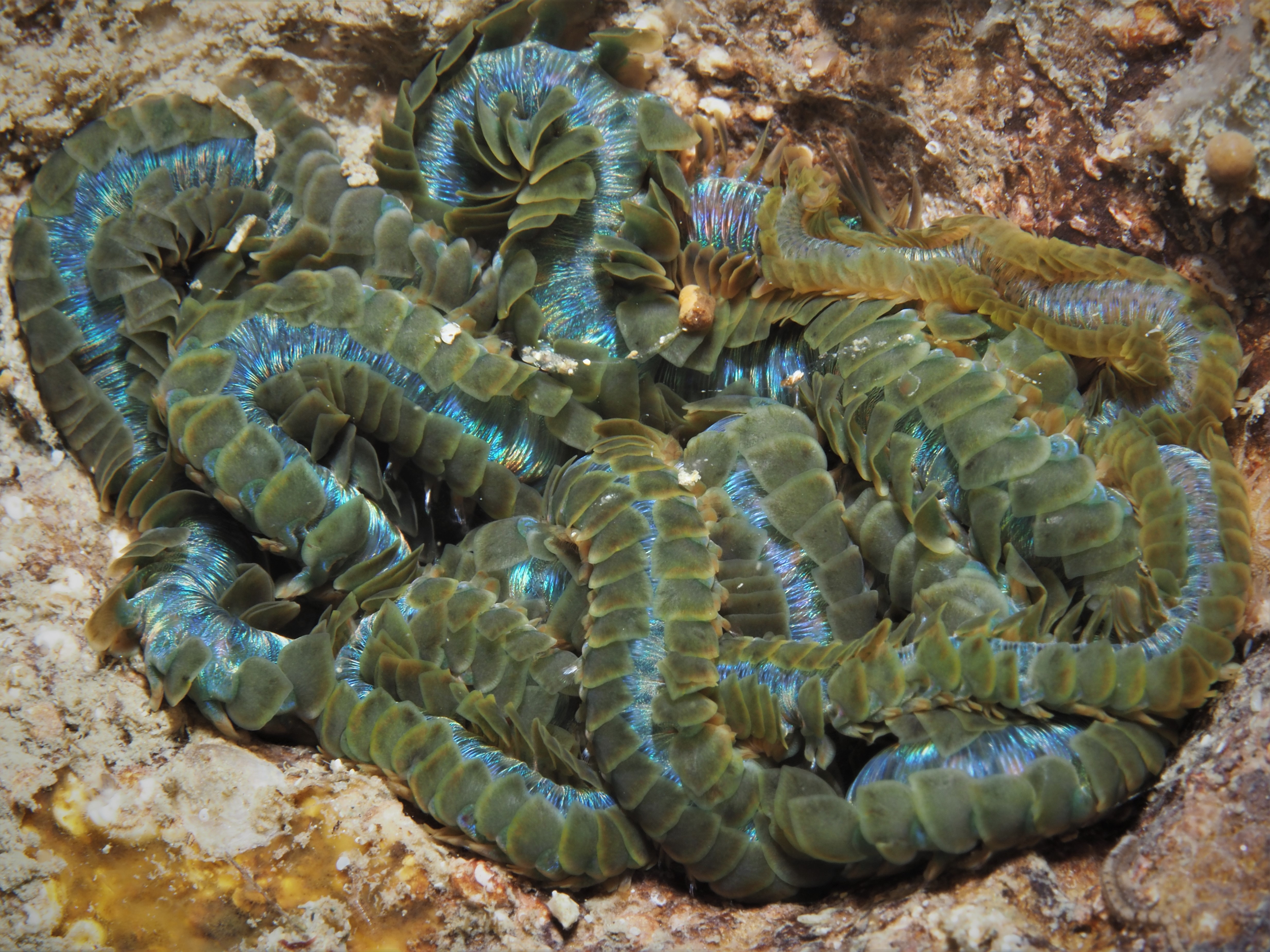
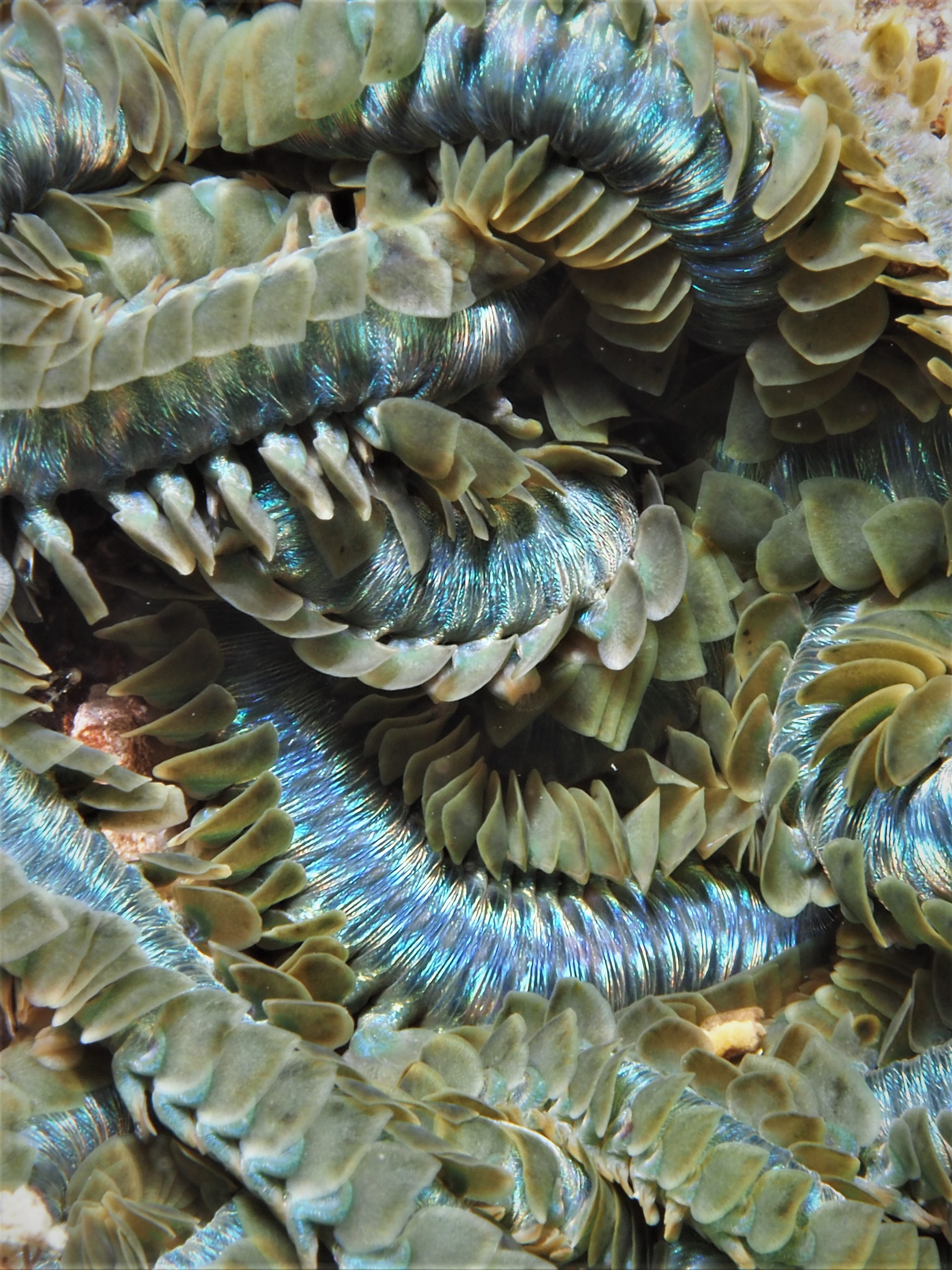
Had a nice snorkel yesterday; the weather was good and with the seaweeds growing I was tempted to go for the wide angle lens but in the end I was cautious and went for macro (where the visibility is not as important). Lots of stalked jellyfish and some nice chameleon prawns but I had trouble aiming the strobe right somehow. I turned over some rocks and found a large ‘worm ball’ wriggling frantically. It was hard to estimate its size but might have been 10-20 cm. It is a Phyllodocid worm, possibly this one. I also managed a closeup which really shows off the lovely green and blue colours.
















 An Bollenessor