This seems like a familiar way to start a blog post but here I go again: ‘the weather has been terrible lately and I have not been in the water!’. March used to be my favourite time for snorkeling because the seaweeds look at their best, but the last three years it has been windy and wet, surely because of climate change…
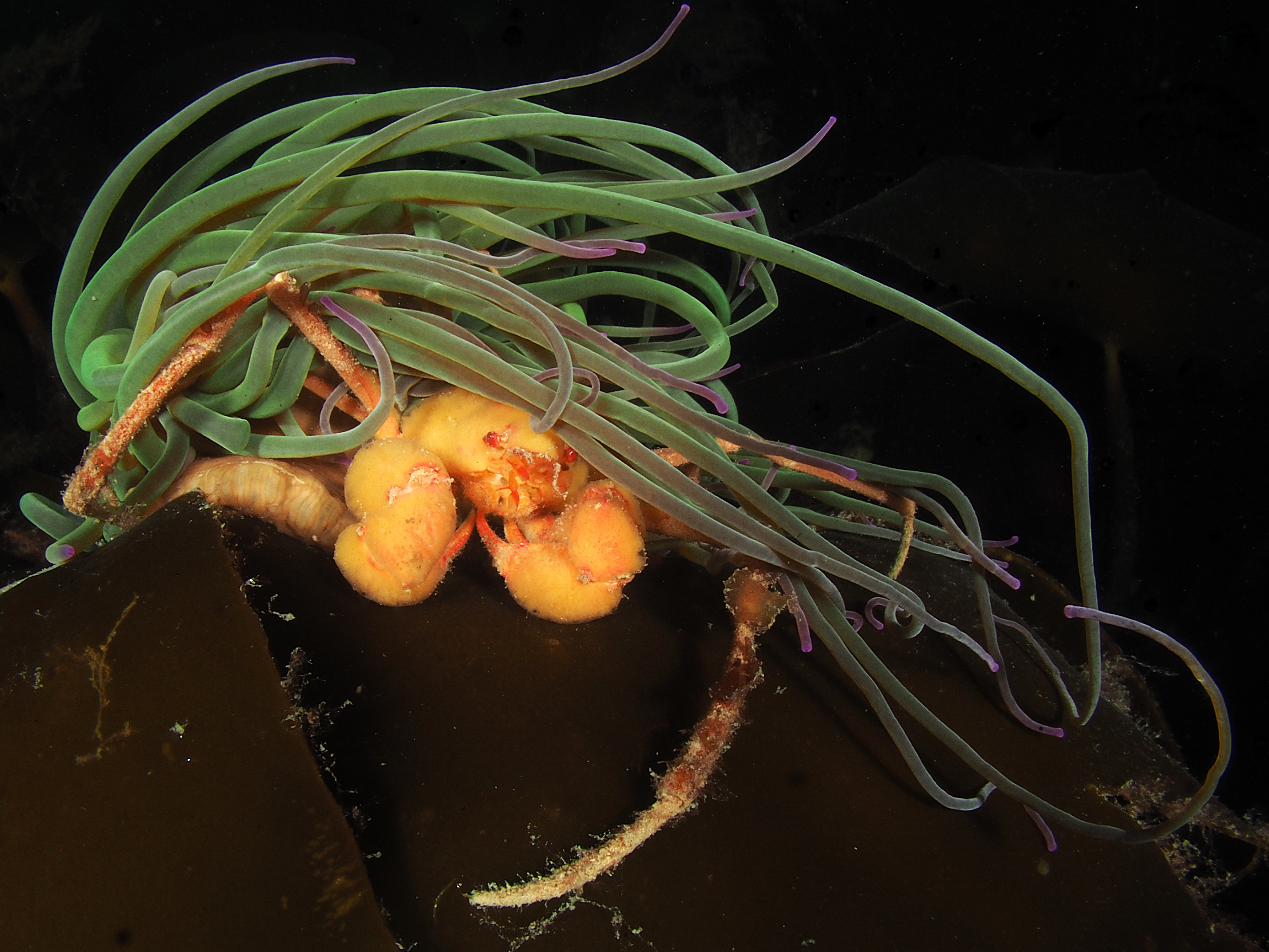
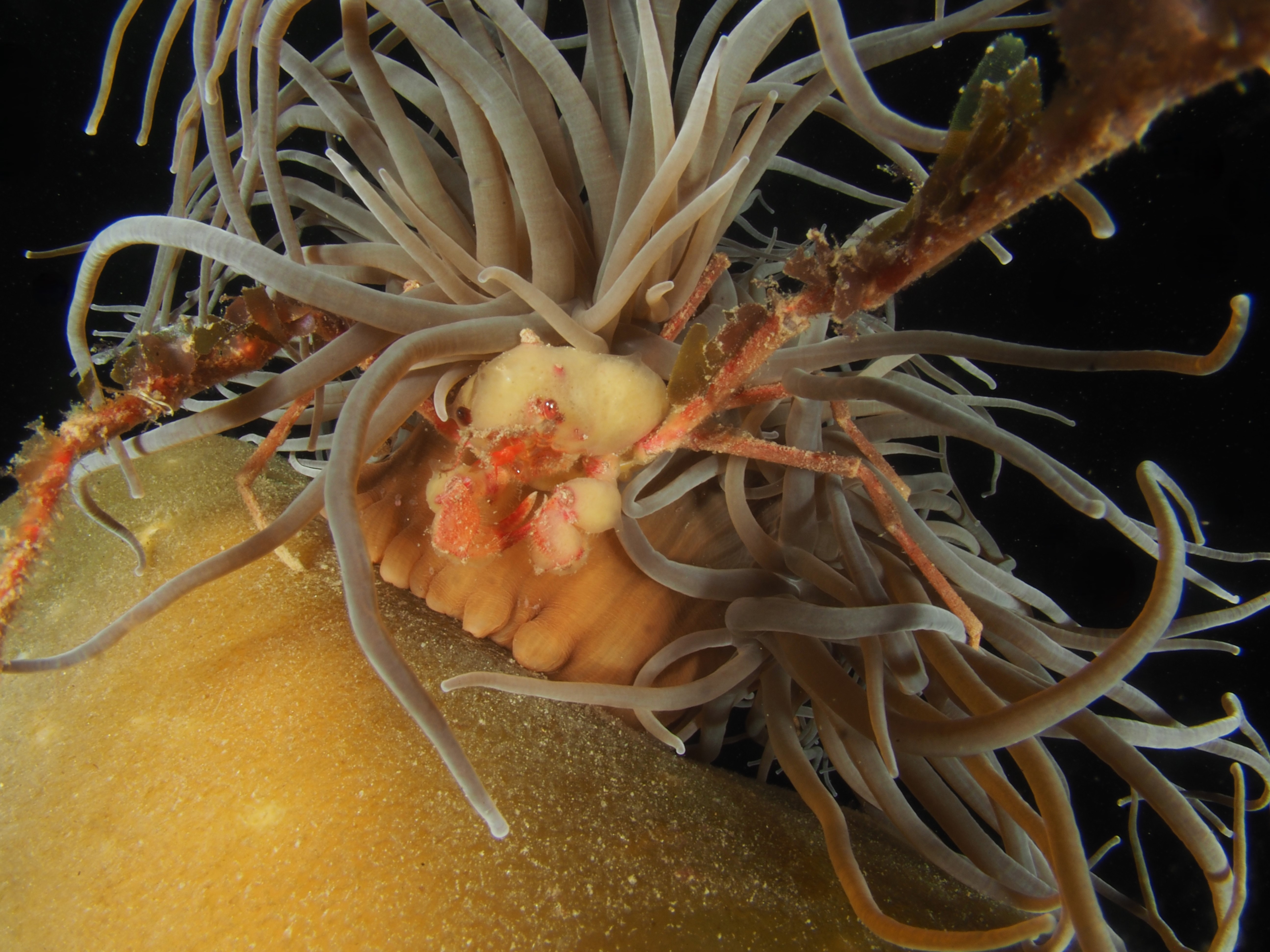
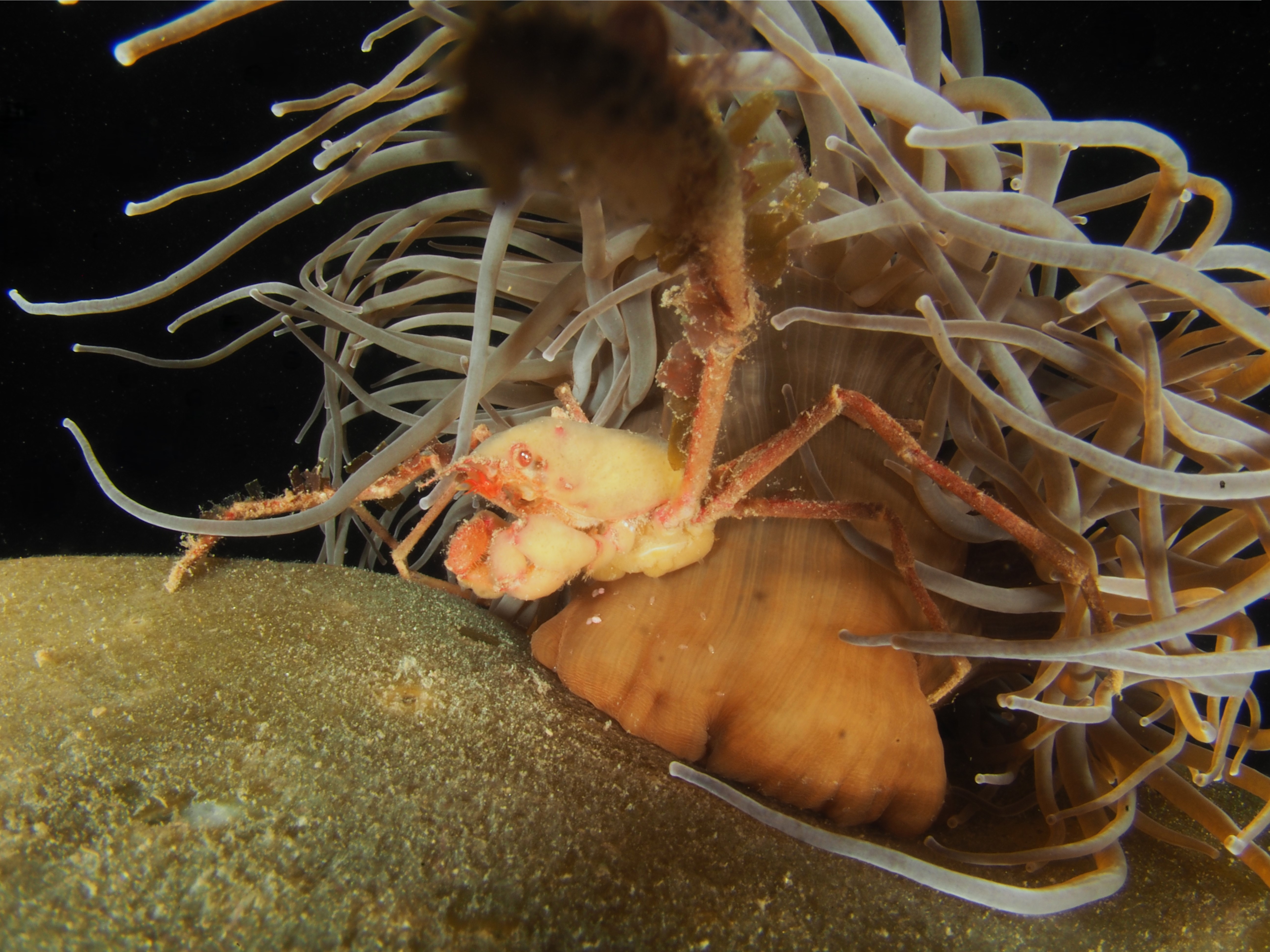
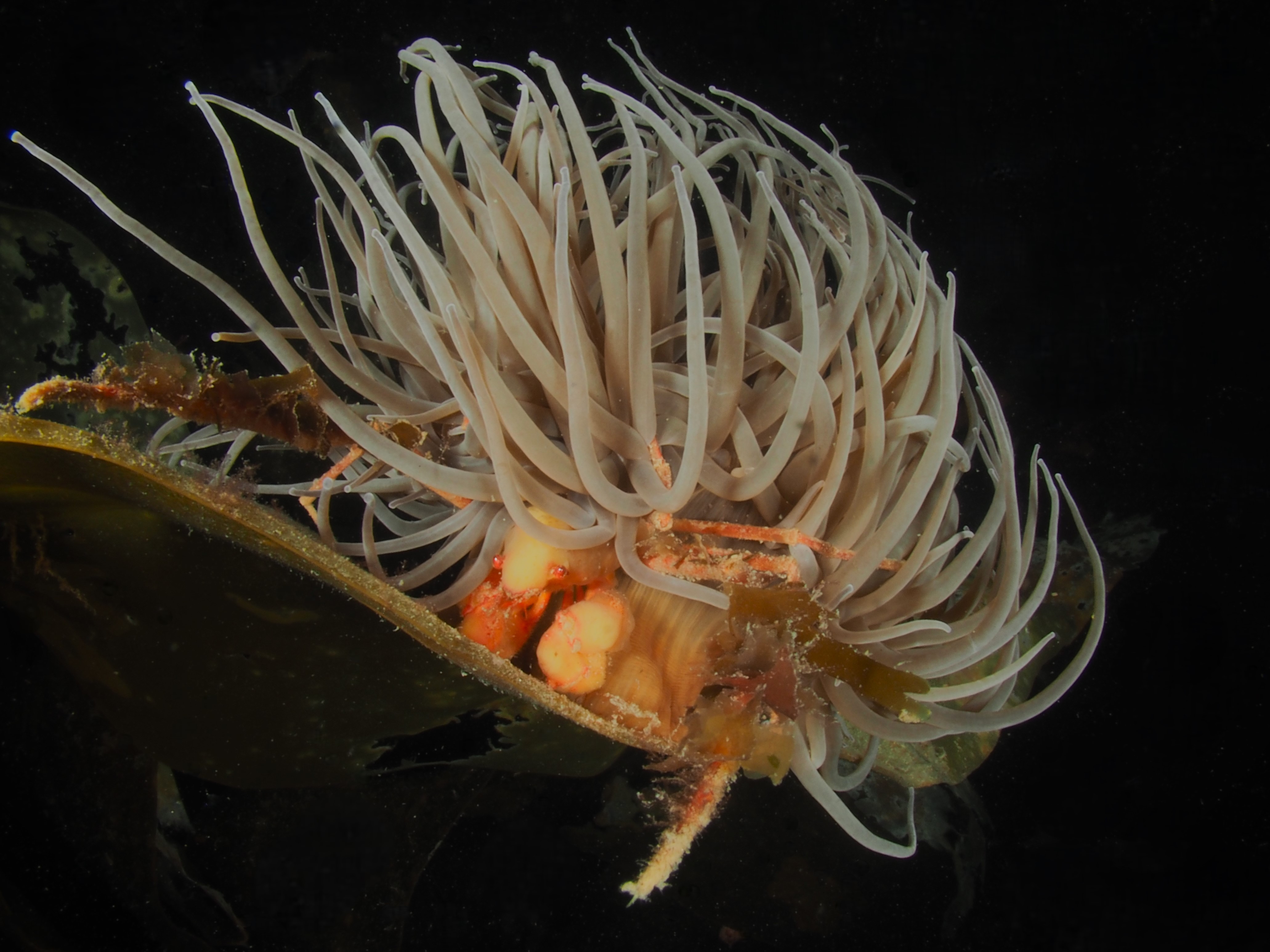
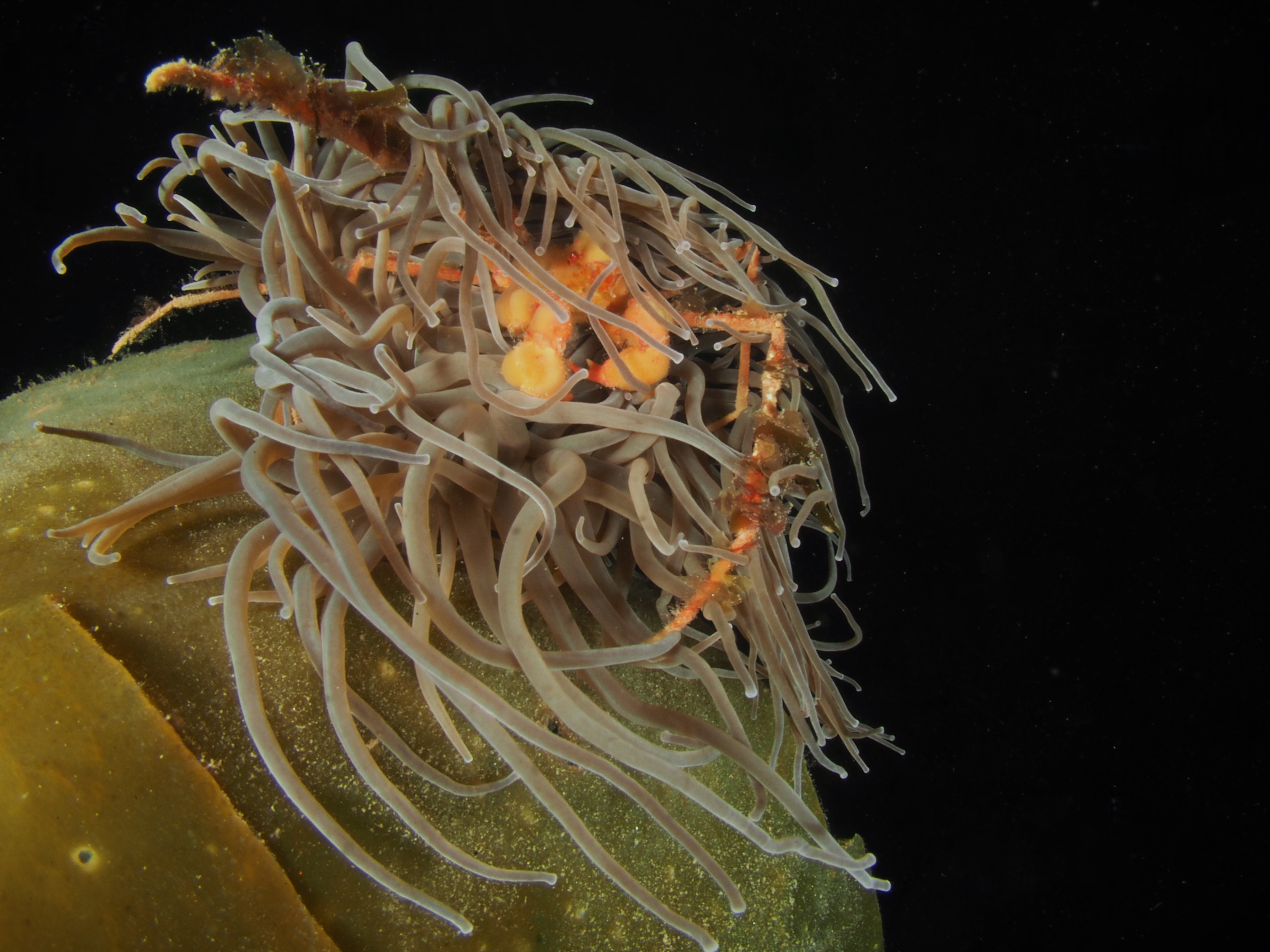
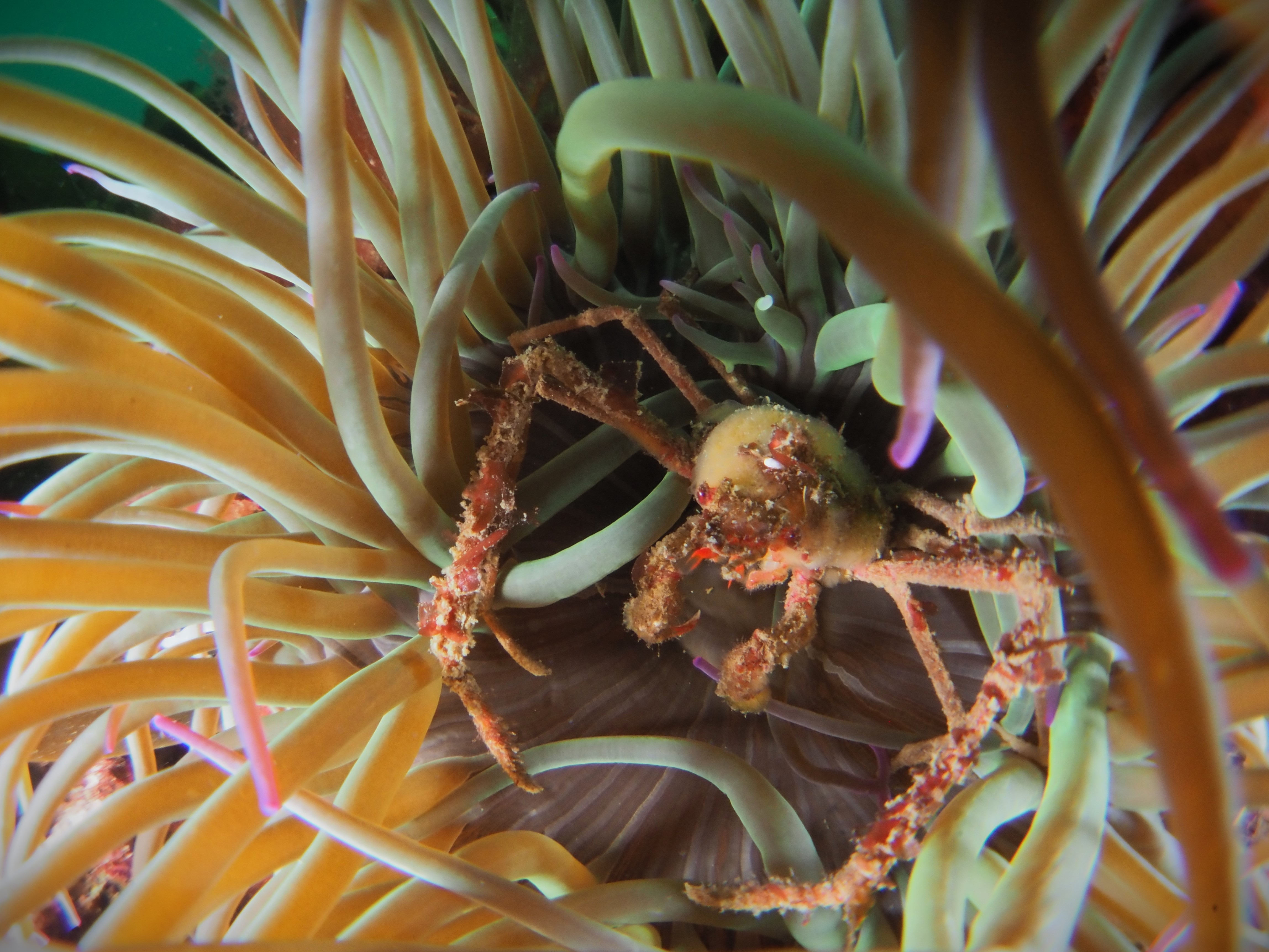
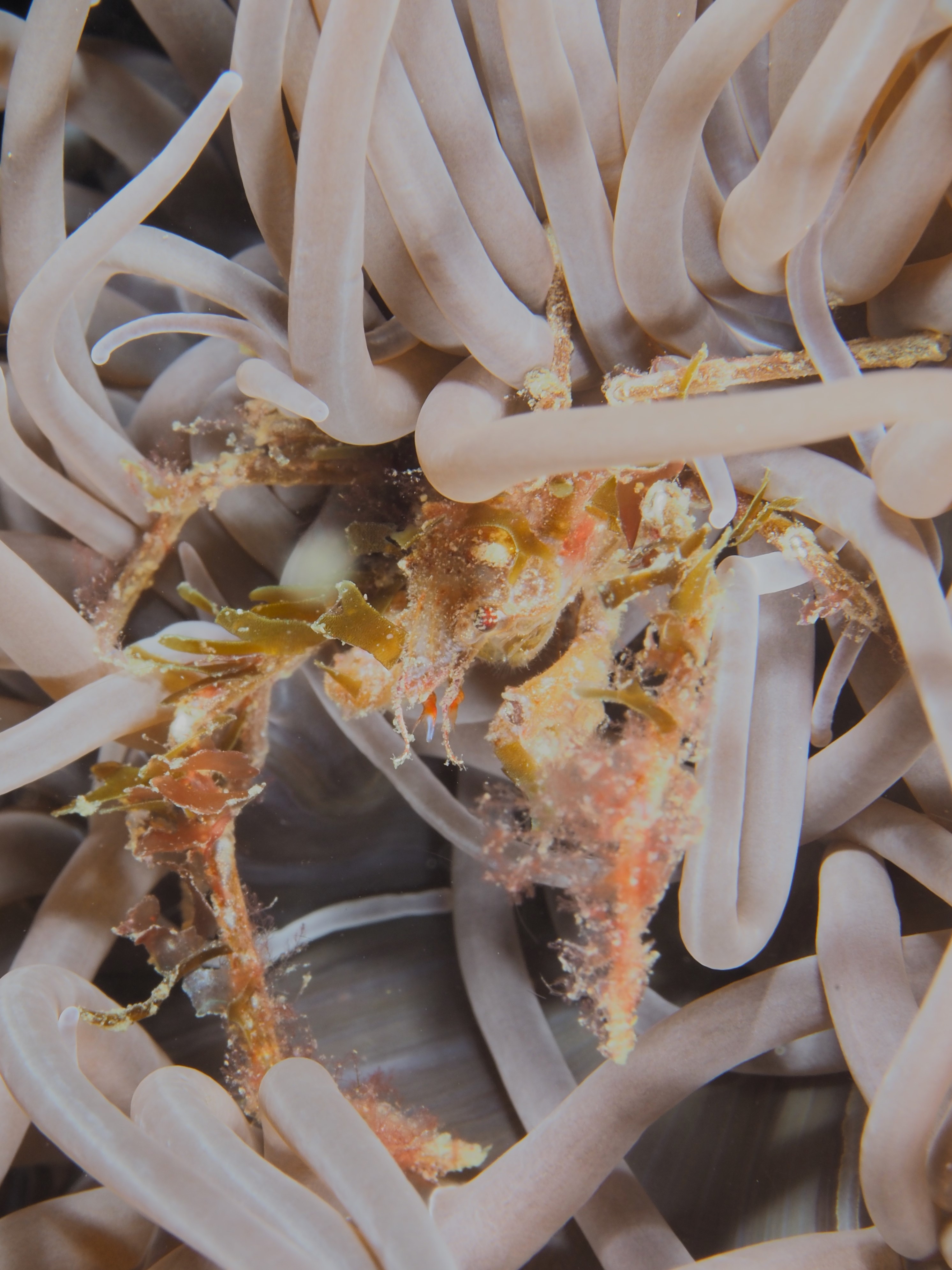
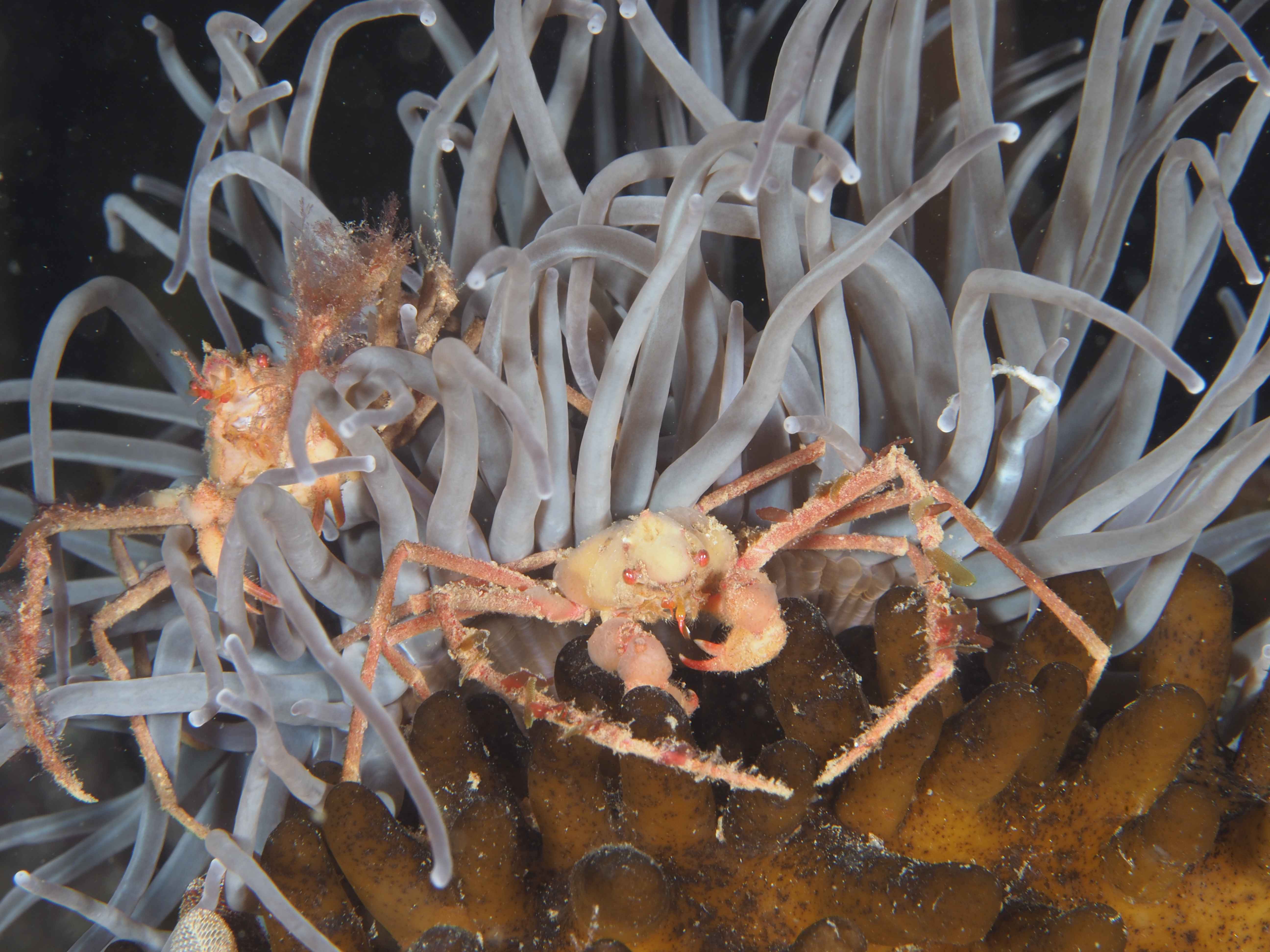
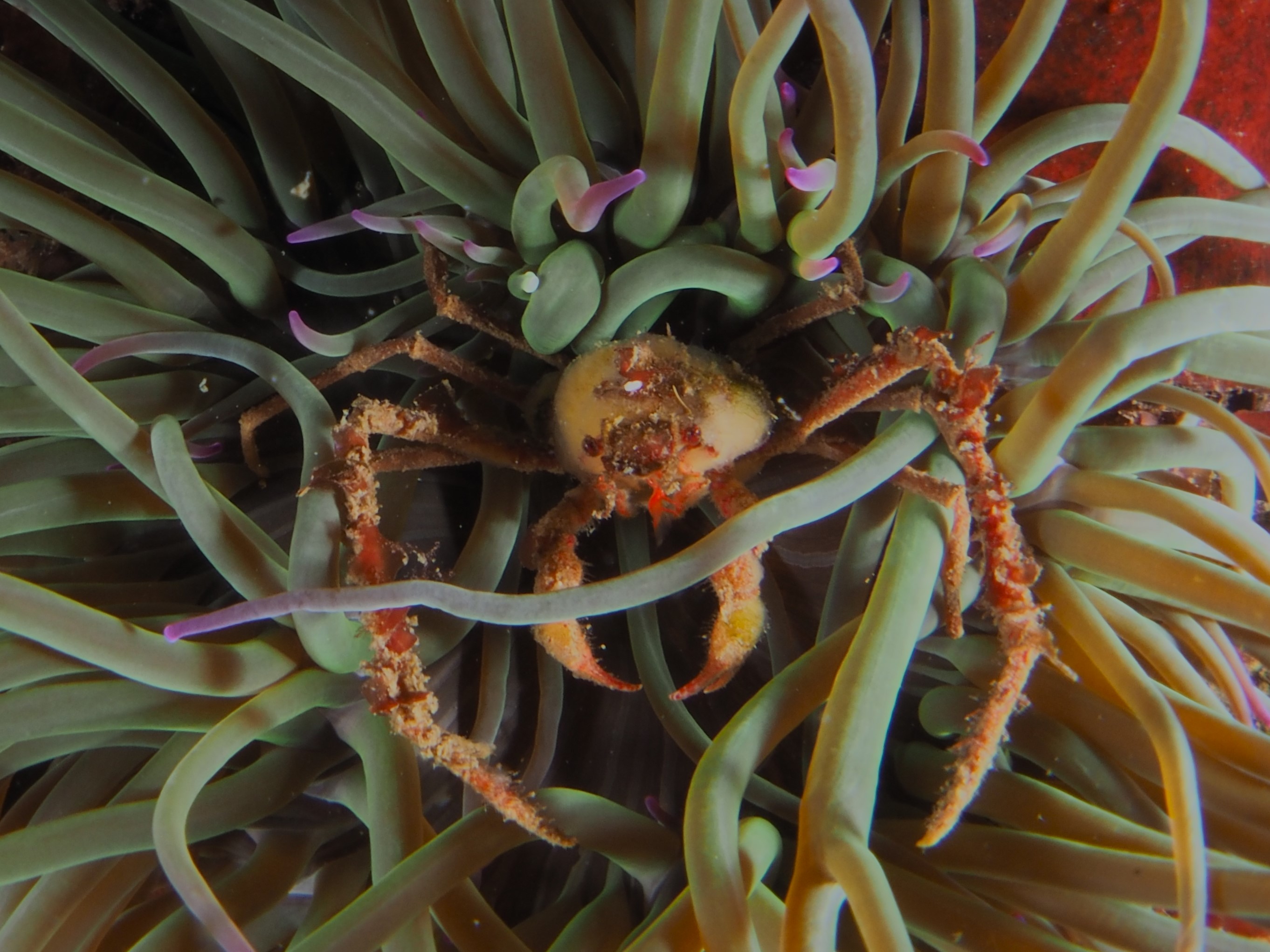
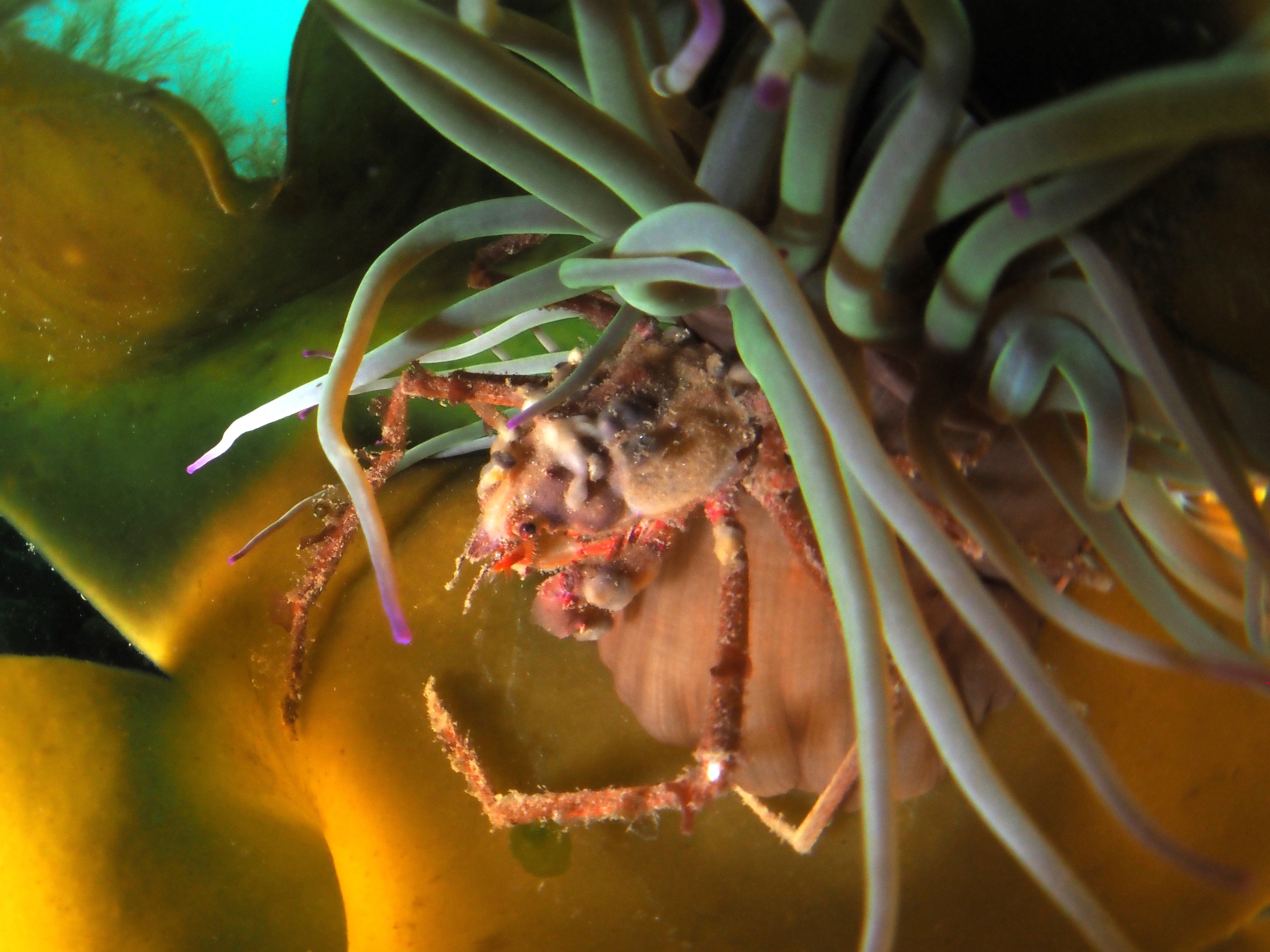
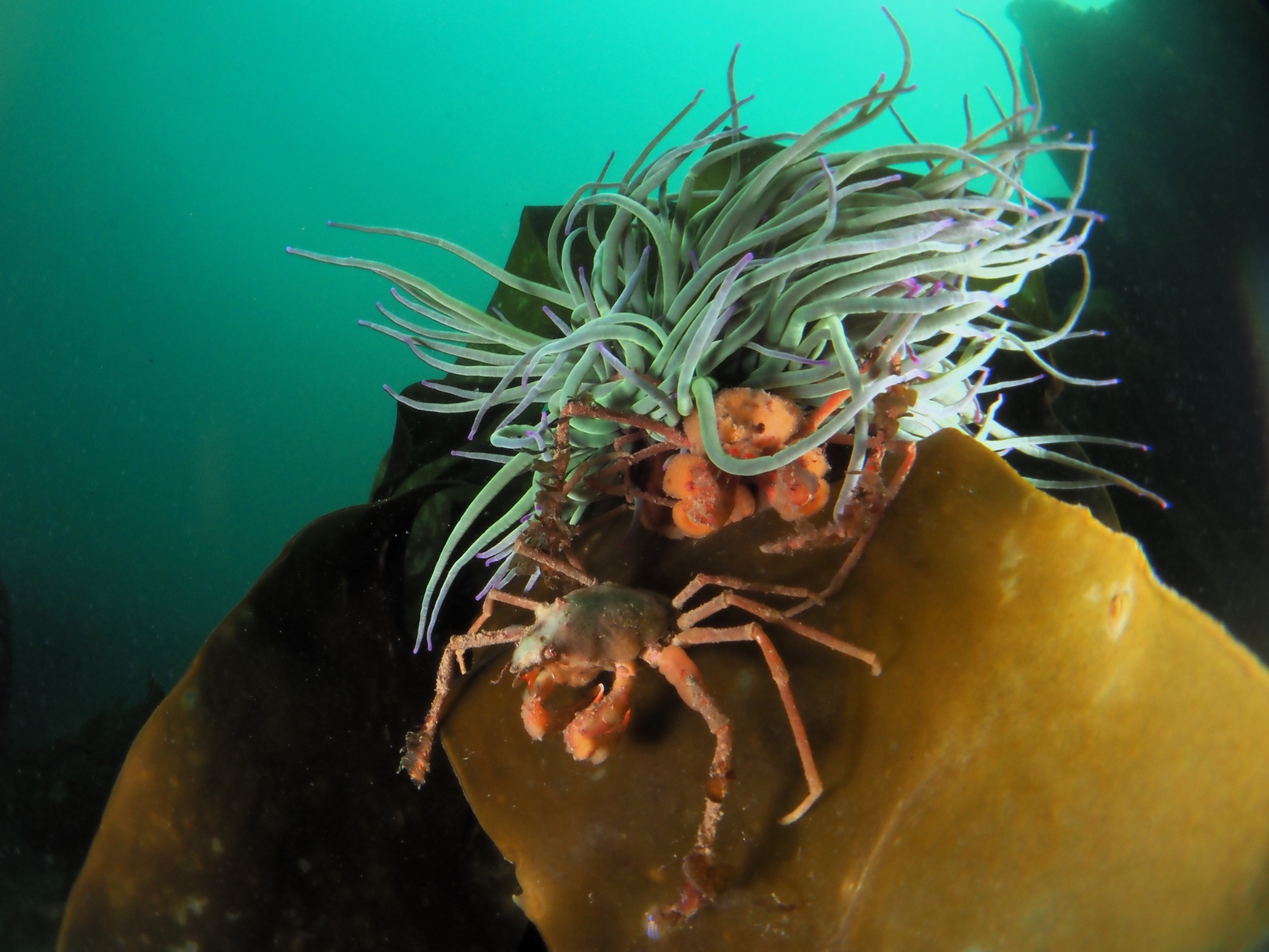
To keep the blog going (a bit), I have dug out some images from a few dives last year featuring Inachus spider crabs. There are three species, I. phalangium, I. dorsettensis and I. leptochirus, which can be told apart by the arrangement of tubercules on their carapace, but these are often obscured by epiphyte growth, and so I am keeping it to Inachus sp. All species are associated with Snakelocks Anemone (Anemonia viridis) hosts. The photo above is taken using a weird ‘wide angle macro’ wetlens (INON UFL-M150 ZM80). This perspective always fascinated me but it is difficult to achieve. This lens does the job, although it is incredibly ‘soft’, especially around the edges. The close focusing also makes it difficult to direct the strobe light on the subject. So there is a tradeoff between getting the surroundings in view and sharpness. Below first some sharper shots using my 60mm macrolens, followed by some macro wide angle shots (they happen to be each of the different Anemonia colour morph):


I will leave you with the following interesting bit on the biology of these crabs by Diesel (Ethology, 1986):
I. phalangium females are site-constant, and live in the protection of one anemone or group. Males travel frequently between anemones harbouring females due to spawn; they copulate and guard the females until spawning, after which the male leaves again. A male operates in a patrol area containing 3-8 anemone groups and up to 8 females, visiting each female in turn repeatedly just before it is due to spawn. Patrol areas of different males may overlap, with resulting competition to fertilize a female’s next brood. Large males have higher reproductive success than small ones. Females live up to 8 months after the moult of puberty and hatch up to six broods, and males live up to 7 months as adults. A male could fertilize a calculated 26,000 eggs, whilst a female’s reproductive potential is ca. 4,200 eggs. Mortality risks are higher for males than for females, probably because of increased predation while leaving the protection of anemones in order to visit females. Males learn the positions of anemones harbouring females in their patrol areas, and when these are due to spawn. This allows a male to travel with a target and arrive punctually to fertilize the next brood due in his circuit. I. phalangium is the first marine invertebrate reported to use a “schedule” of localities and times for visiting prespawning females. In this way males minimize searching time and mortality risk, and maximize the number of broods fertilized.
 An Bollenessor