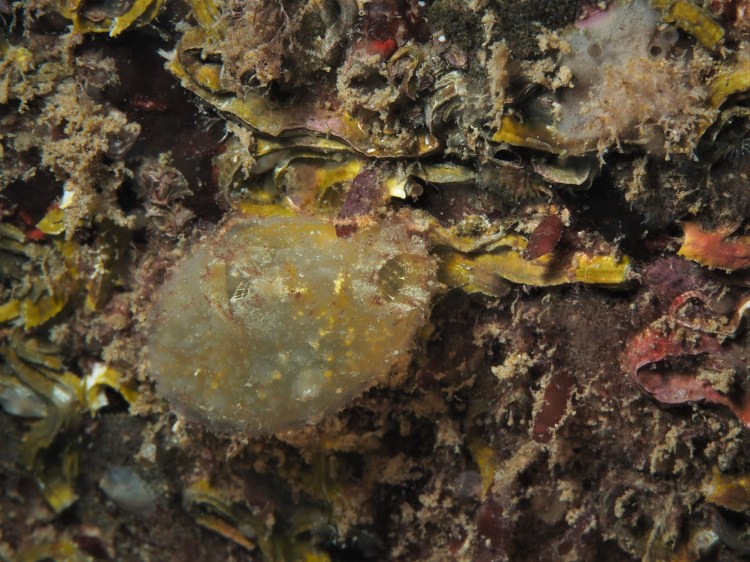
Inachus

This seems like a familiar way to start a blog post but here I go again: ‘the weather has been terrible lately and I have not been in the water!’. March used to be my favourite time for snorkeling because the seaweeds look at their best, but the last three years it has been windy and wet, surely because of climate change…

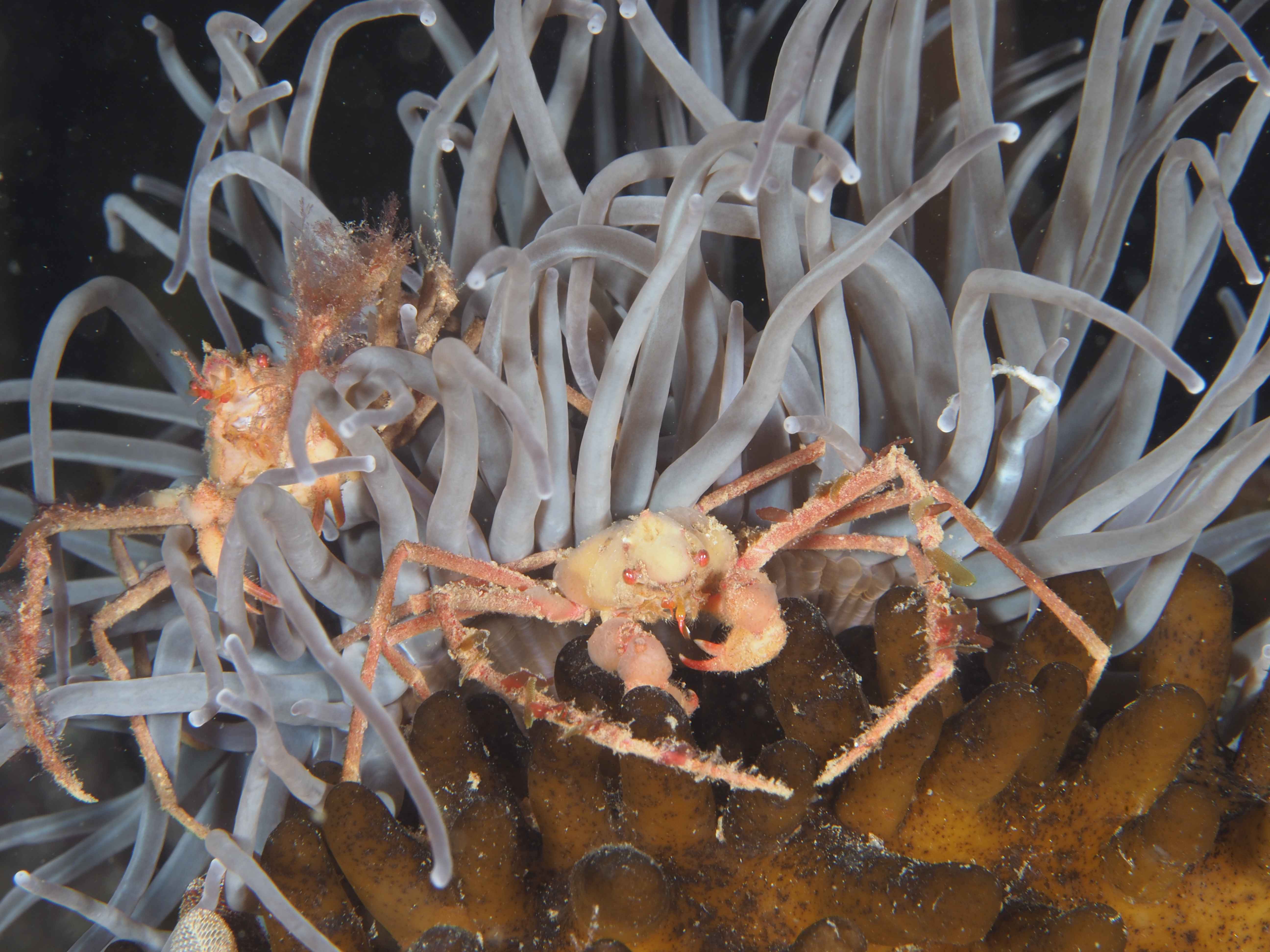
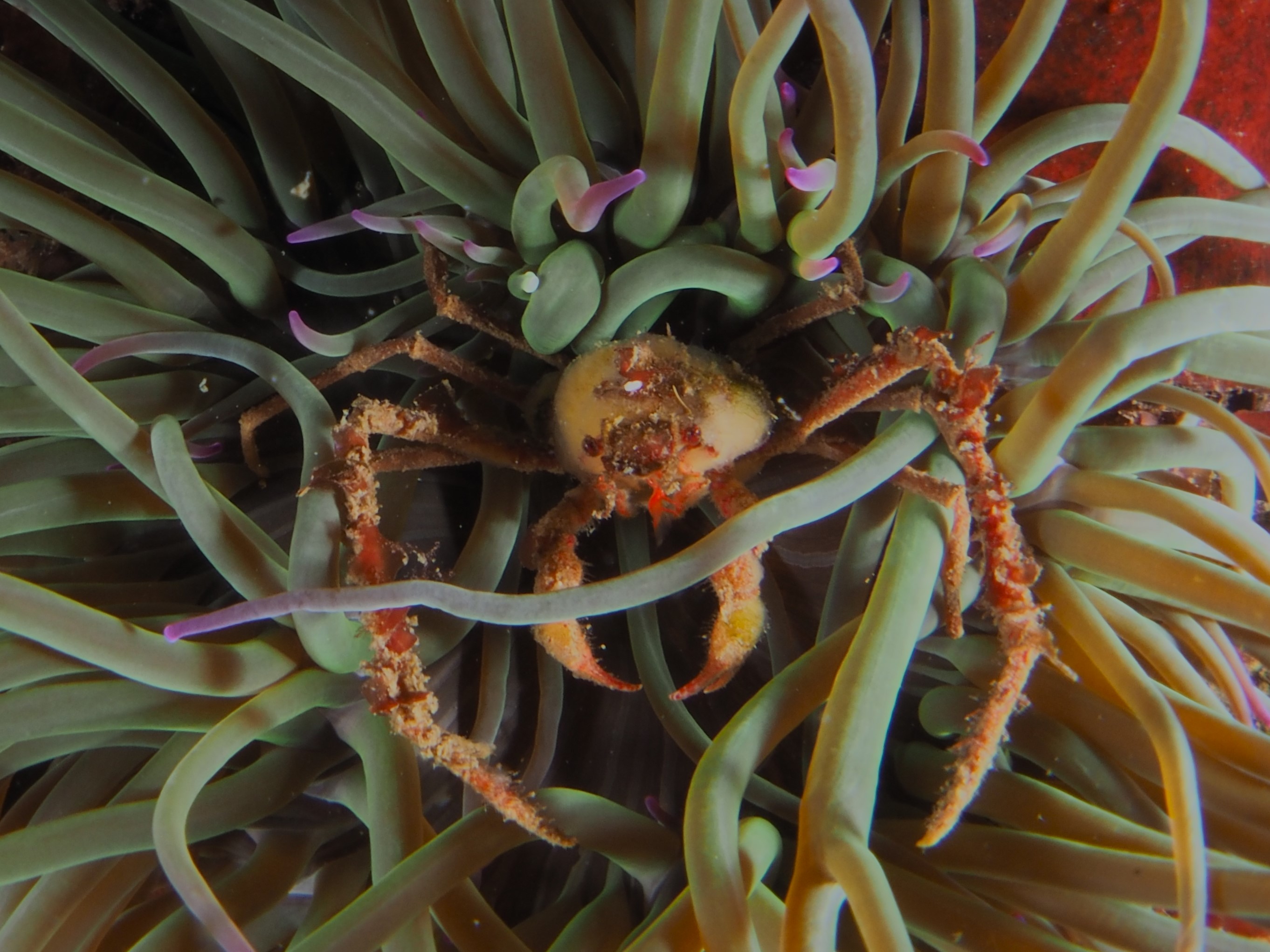
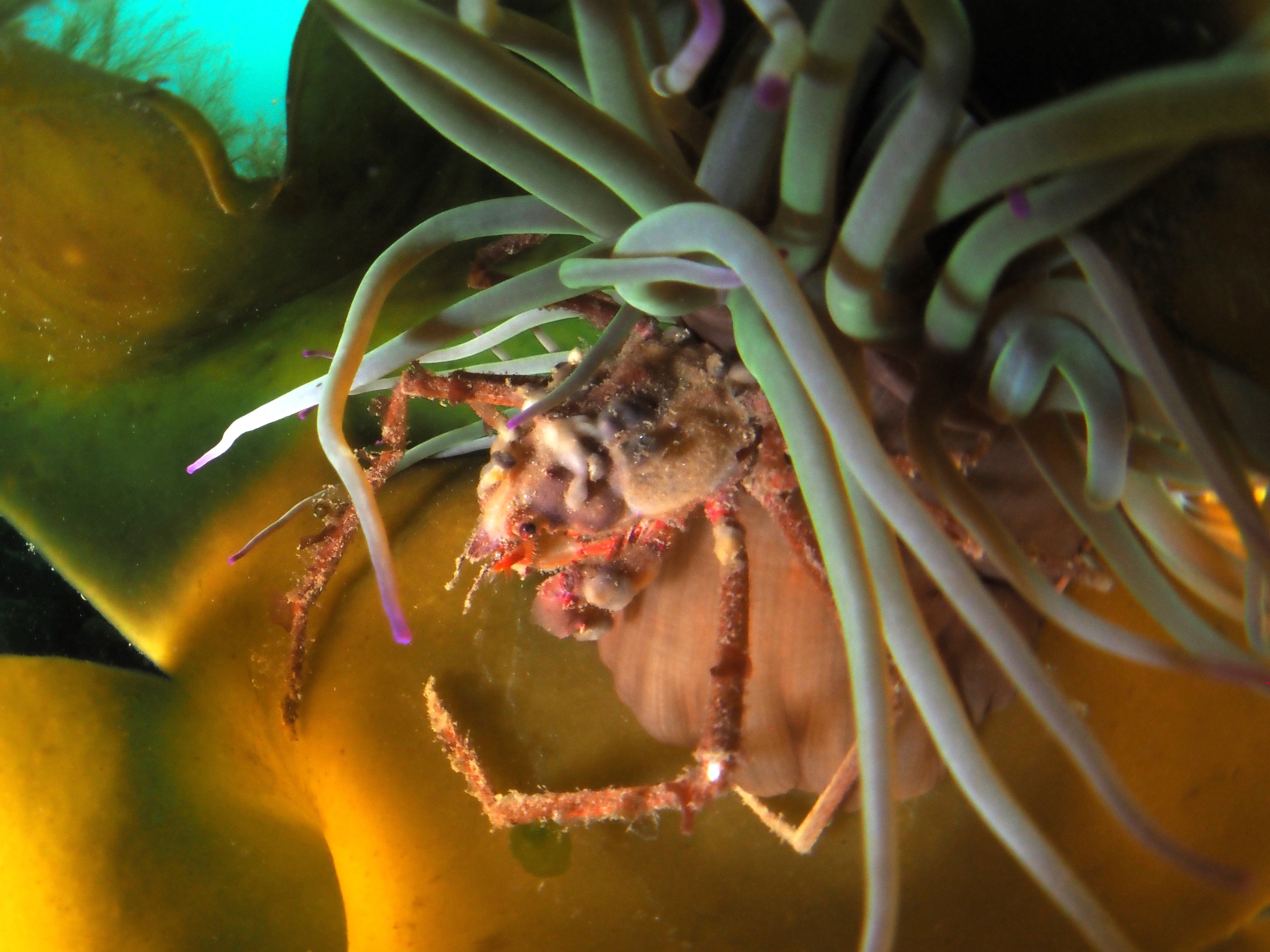
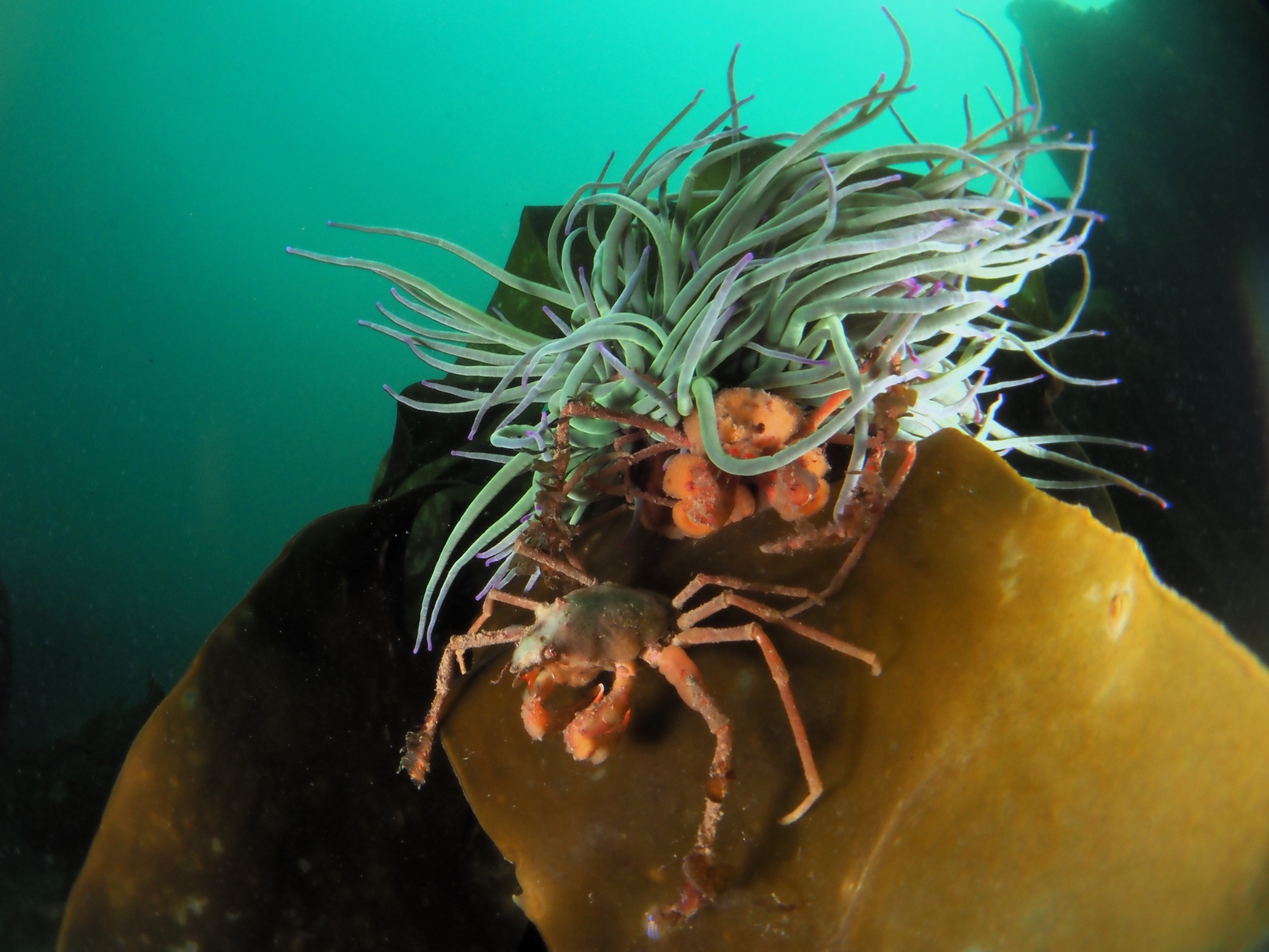
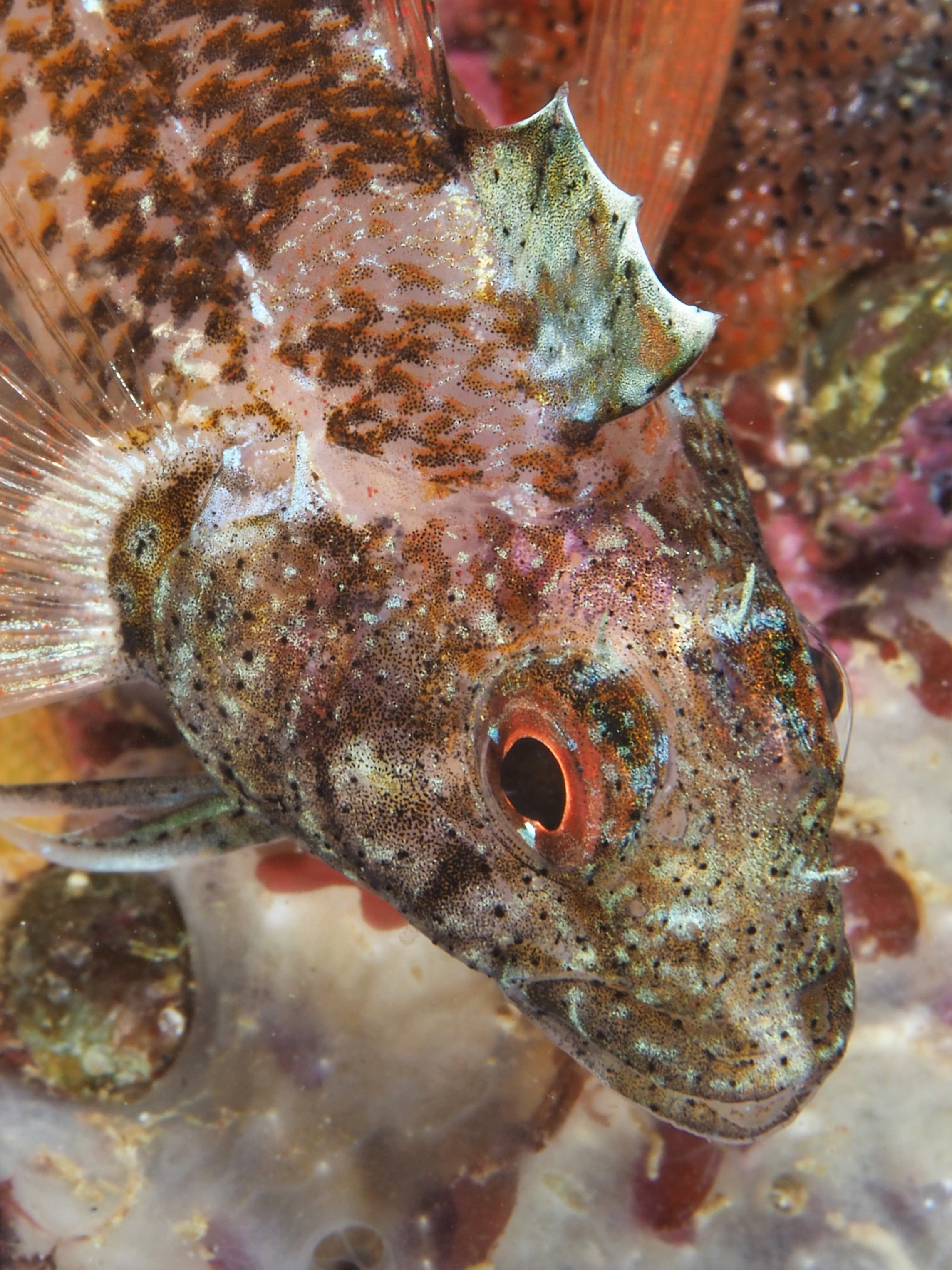
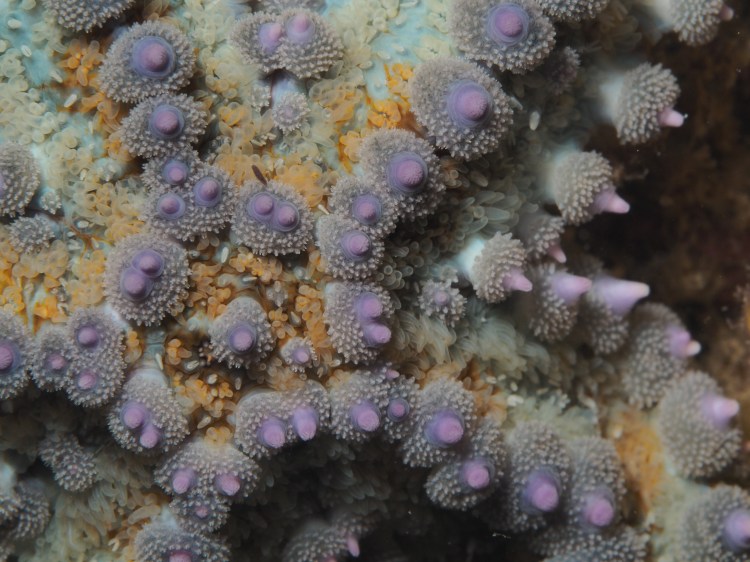
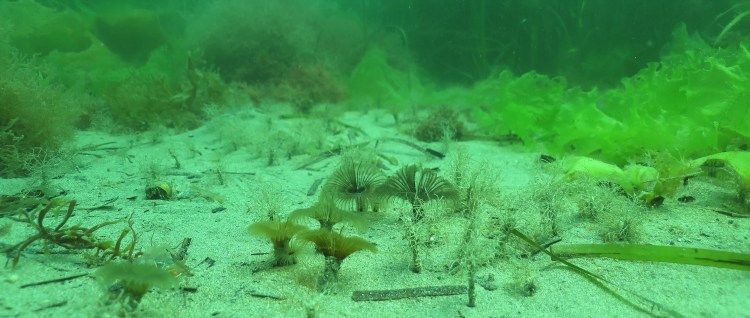
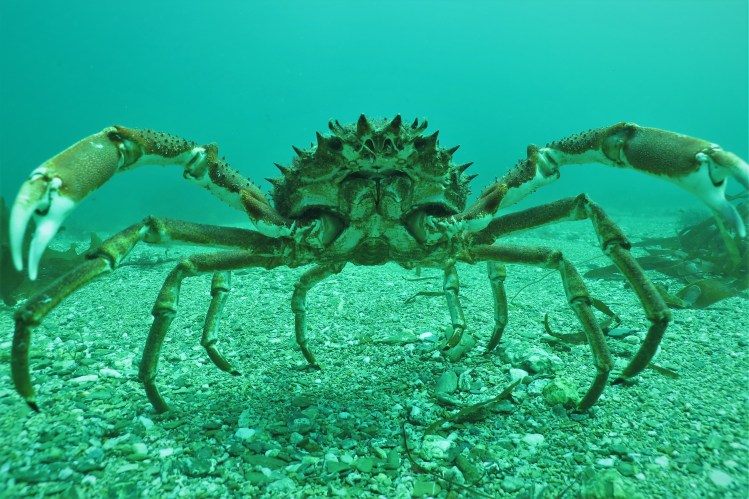
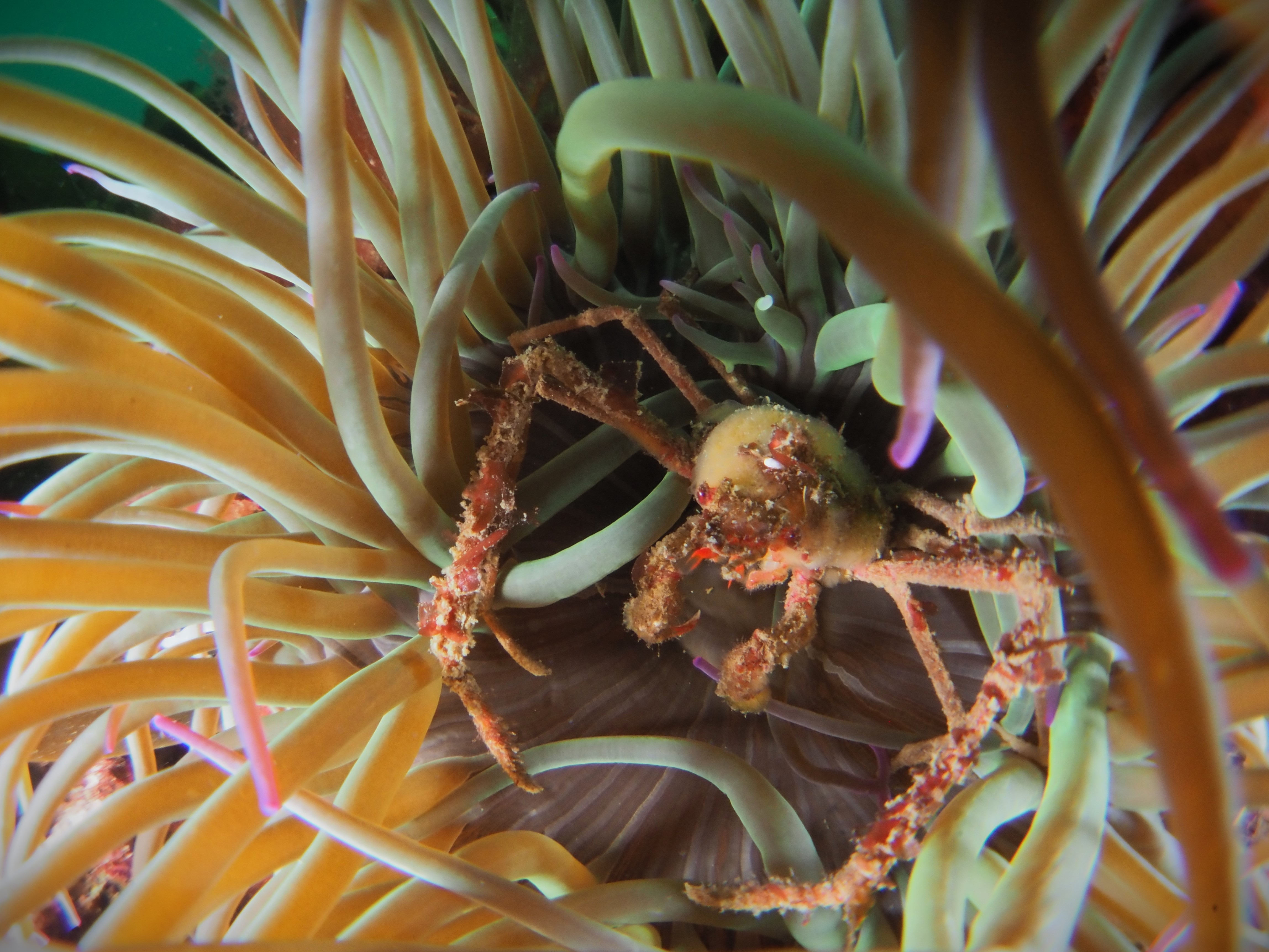
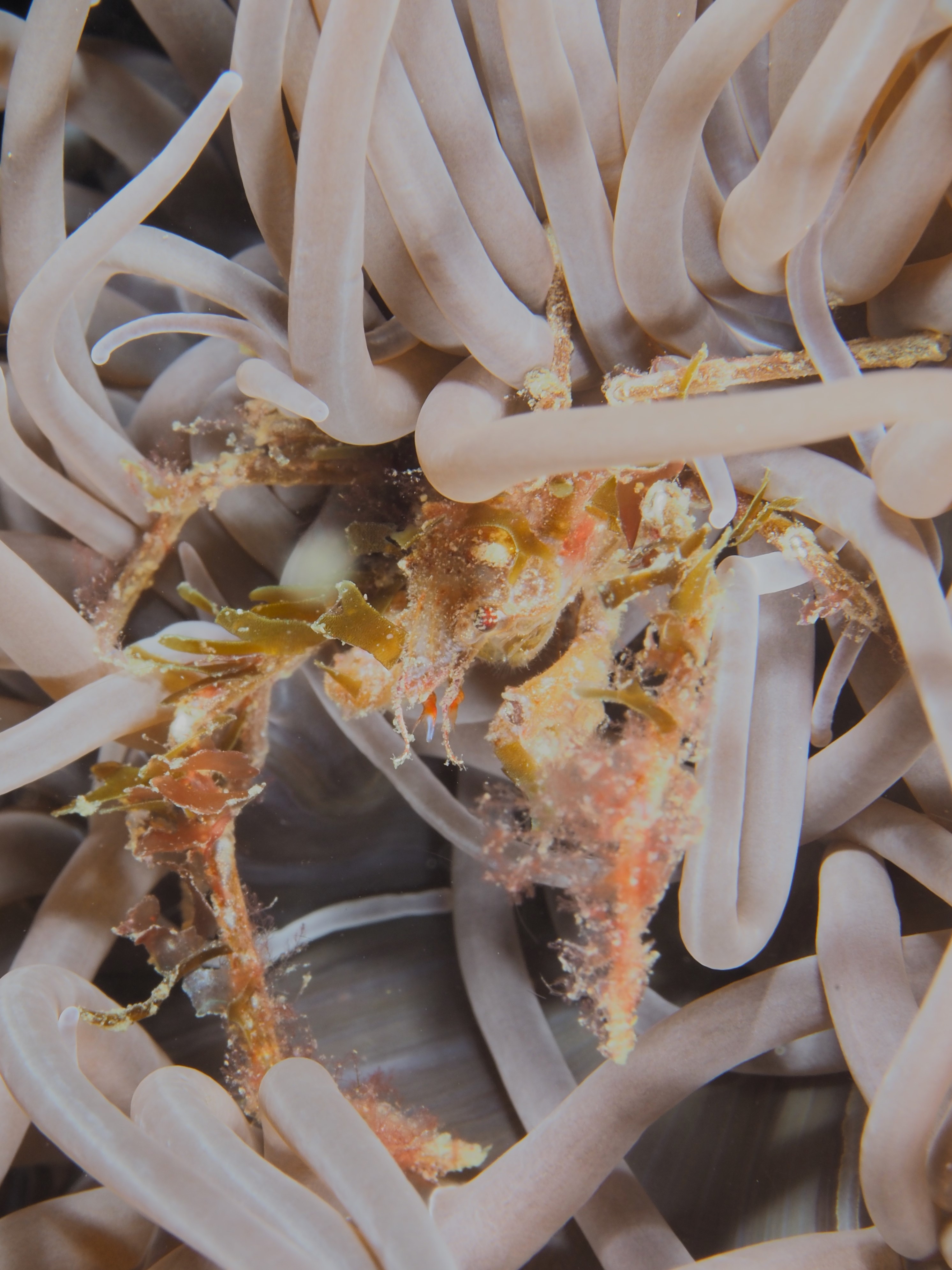
To keep the blog going (a bit), I have dug out some images from a few dives last year featuring Inachus spider crabs. There are three species, I. phalangium, I. dorsettensis and I. leptochirus, which can be told apart by the arrangement of tubercules on their carapace, but these are often obscured by epiphyte growth, and so I am keeping it to Inachus sp. All species are associated with Snakelocks Anemone (Anemonia viridis) hosts. The photo above is taken using a weird ‘wide angle macro’ wetlens (INON UFL-M150 ZM80). This perspective always fascinated me but it is difficult to achieve. This lens does the job, although it is incredibly ‘soft’, especially around the edges. The close focusing also makes it difficult to direct the strobe light on the subject. So there is a tradeoff between getting the surroundings in view and sharpness. Below first some sharper shots using my 60mm macrolens, followed by some macro wide angle shots (they happen to be each of the different Anemonia colour morph):
I will leave you with the following interesting bit on the biology of these crabs by Diesel (Ethology, 1986):

I. phalangium females are site-constant, and live in the protection of one anemone or group. Males travel frequently between anemones harbouring females due to spawn; they copulate and guard the females until spawning, after which the male leaves again. A male operates in a patrol area containing 3-8 anemone groups and up to 8 females, visiting each female in turn repeatedly just before it is due to spawn. Patrol areas of different males may overlap, with resulting competition to fertilize a female’s next brood. Large males have higher reproductive success than small ones. Females live up to 8 months after the moult of puberty and hatch up to six broods, and males live up to 7 months as adults. A male could fertilize a calculated 26,000 eggs, whilst a female’s reproductive potential is ca. 4,200 eggs. Mortality risks are higher for males than for females, probably because of increased predation while leaving the protection of anemones in order to visit females. Males learn the positions of anemones harbouring females in their patrol areas, and when these are due to spawn. This allows a male to travel with a target and arrive punctually to fertilize the next brood due in his circuit. I. phalangium is the first marine invertebrate reported to use a “schedule” of localities and times for visiting prespawning females. In this way males minimize searching time and mortality risk, and maximize the number of broods fertilized.

Variable Blenny

During an otherwise uneventful macro-dive at Silver Steps this week I looked under a small rock overhang around 8 meters deep and noticed an unusual little fish. At first glance it resembled a Tompot Blenny (see pic of a showboating individual below), only darker, more skittish and, upon closer inspection, with much smaller tentacles on top of the head. I knew this must be a Variable (or Ringneck) Blenny, Parablennius pilicornis, as we’d seen many of them on holiday on the Basque coast this summer. It is a southerly species that was first recorded in Britain in 2007 but is increasingly spotted. Not a first for Cornwall, but there are still few observations and so I have recorded it on iNaturalist (making it available for later inclusion on the NBN Atlas, the UK’s largest repository of publicly available biodiversity data). Another warmer water species joining our shores due to climate change…

Back to Silver Steps

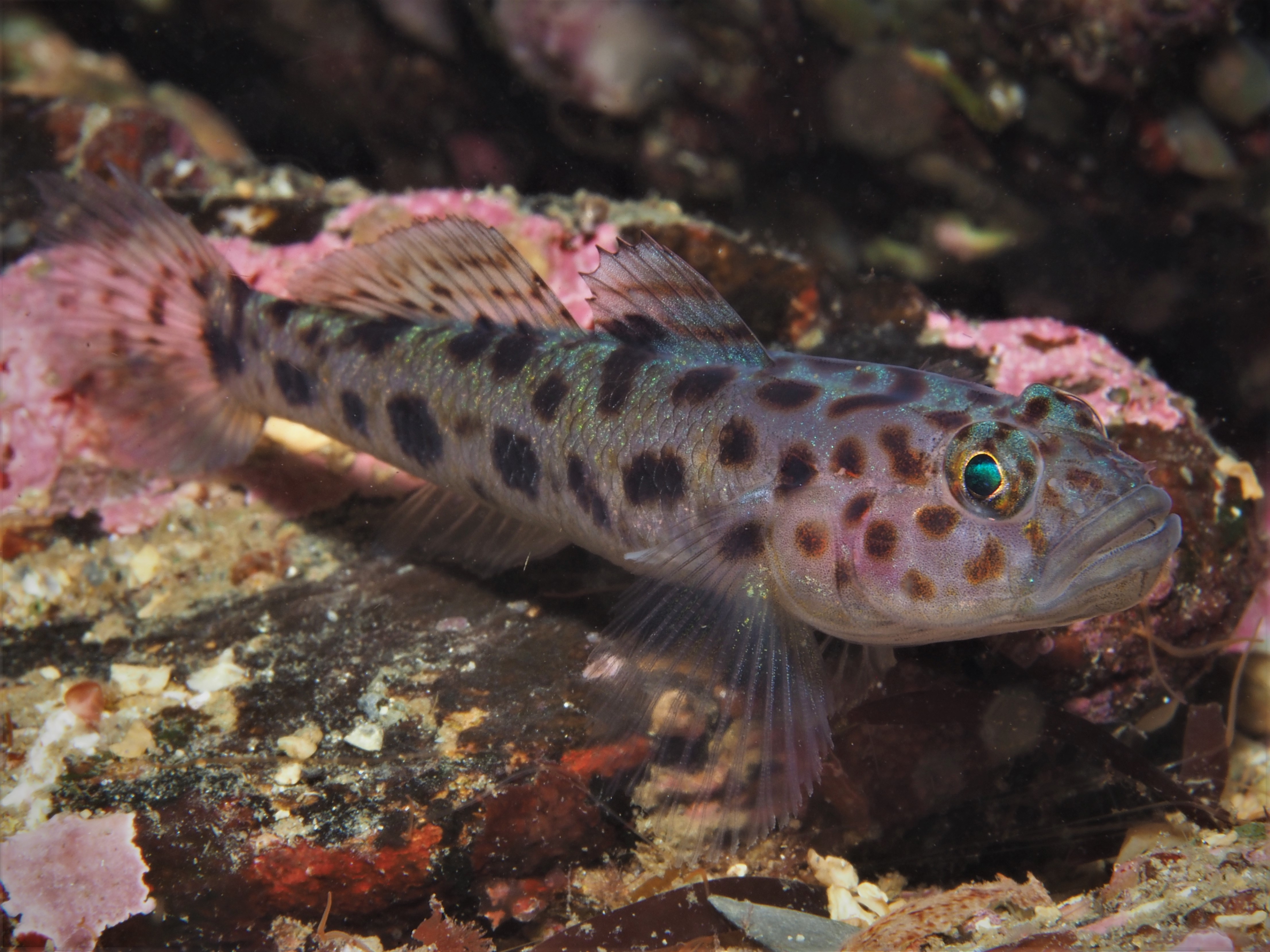
I recently bought (2ndhand) scuba gear and did a refresher dive; with the nice weather this week it was high time to get back under the waves and take some photos! I dived Thu/Fri/Sat at the main local shoredive site ‘Silver Steps‘. I went in by myself, but with a maximum depth of around 10 meters and good conditions this is not risky. The dives did not disappoint, the viz was excellent! Although I spotted cuttlefish every dive, I still opted for the macro lens, as I suspected I could not get great shots of them with my fisheye lens at 1.5 meter distance (I might have been wrong!). Instead of heading out to sea as some divers do, I always stick to the gullies by the rocks, diving below the kelp to see what happens beneath the rocky overhangs. There are three usual suspects hiding there, each with a very different personality. First, Leopard Spotted Gobies (Thorogobius ephippiatus) inhabit cracks in the rocks and are quite shy:

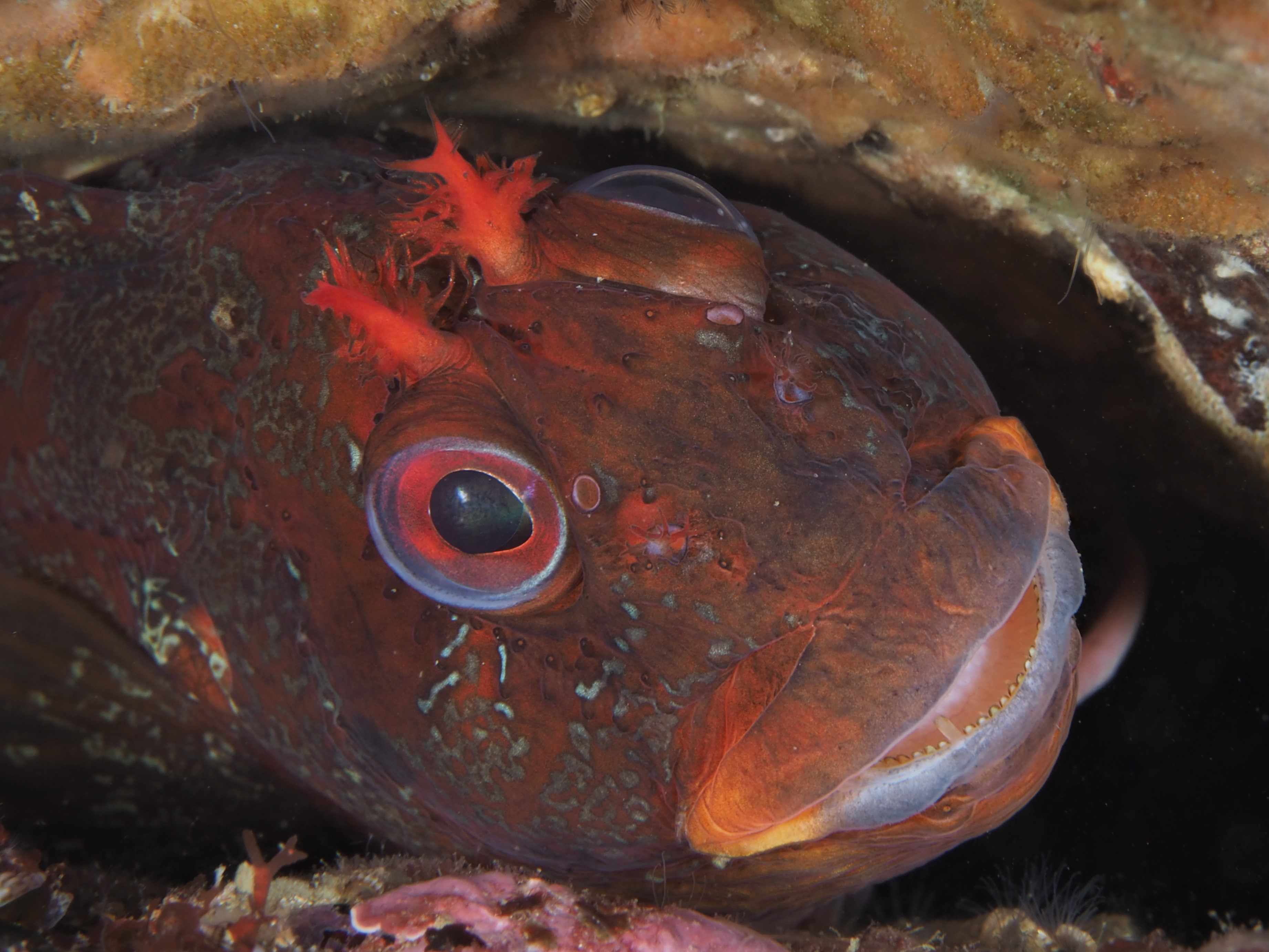
Second, Tompot Blennies (Parablennius gattorugine) are extremely inquisitive, often coming very close to check out what is going on in front of their domain:

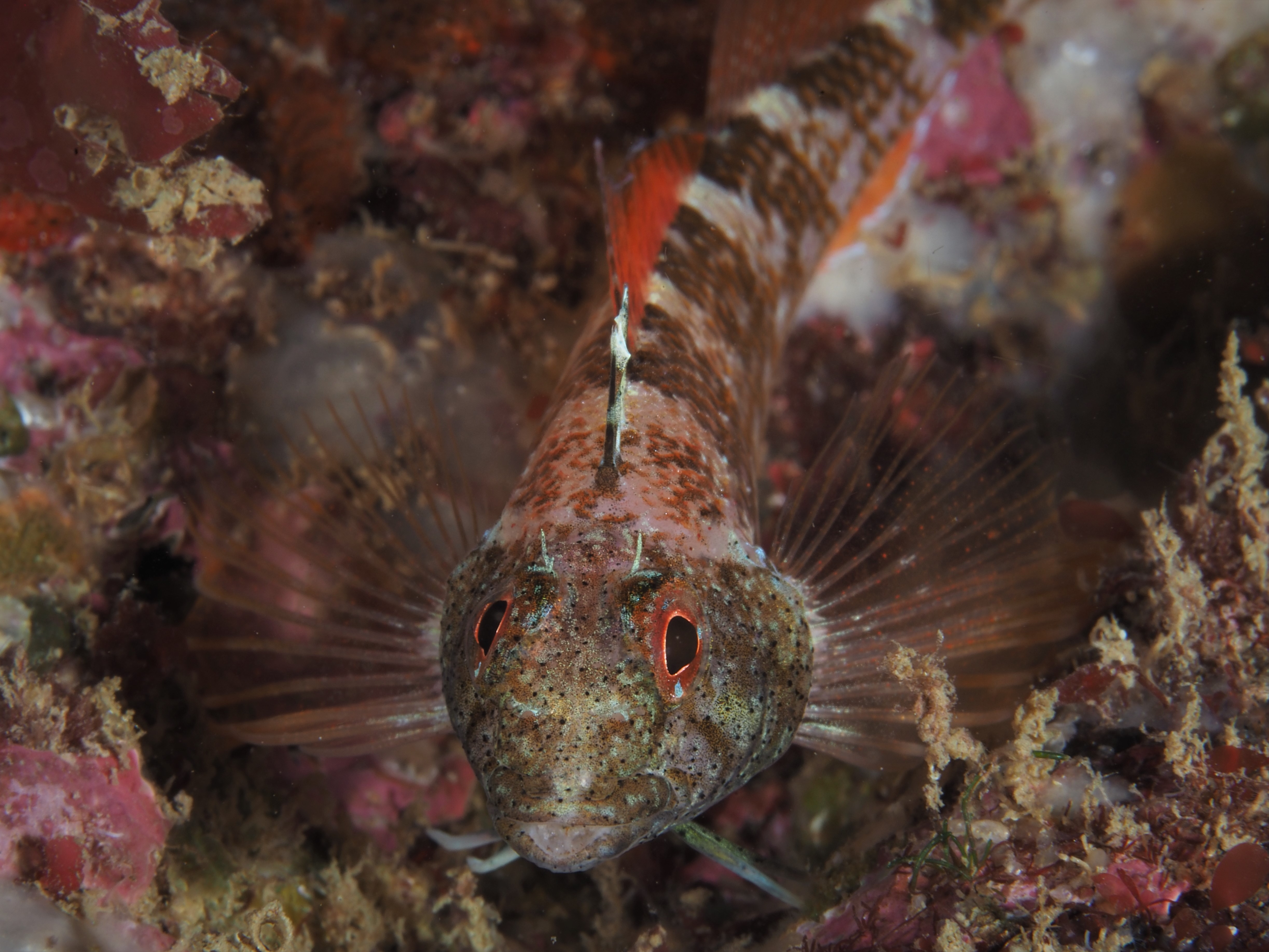
Third, Black-face Blennies (which are not true blennies but triple fins) that only ever live under overhangs, usually head-down. I did not see males in breeding colours (black face, yellow body) but this colour form is even prettier I think:

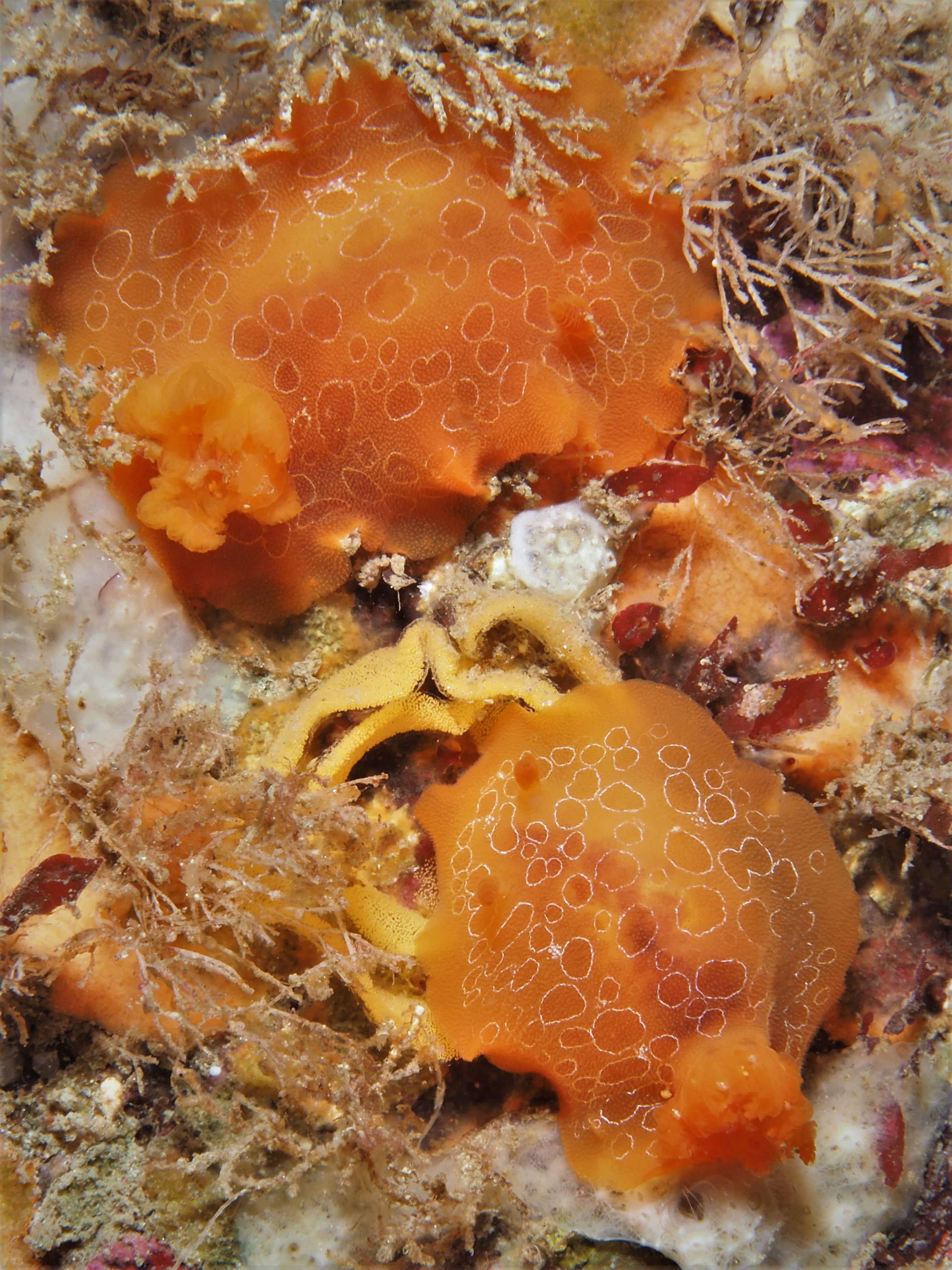
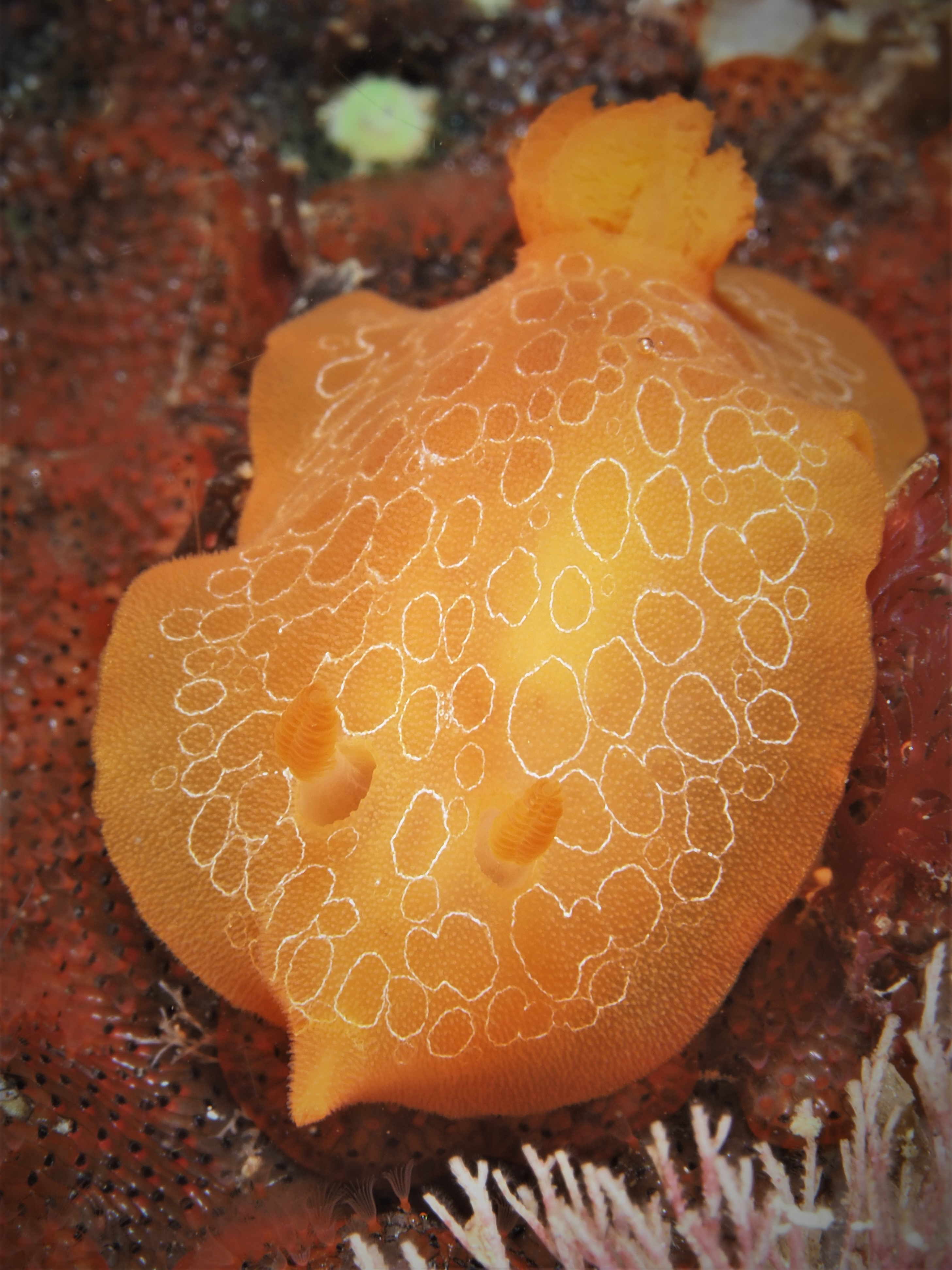
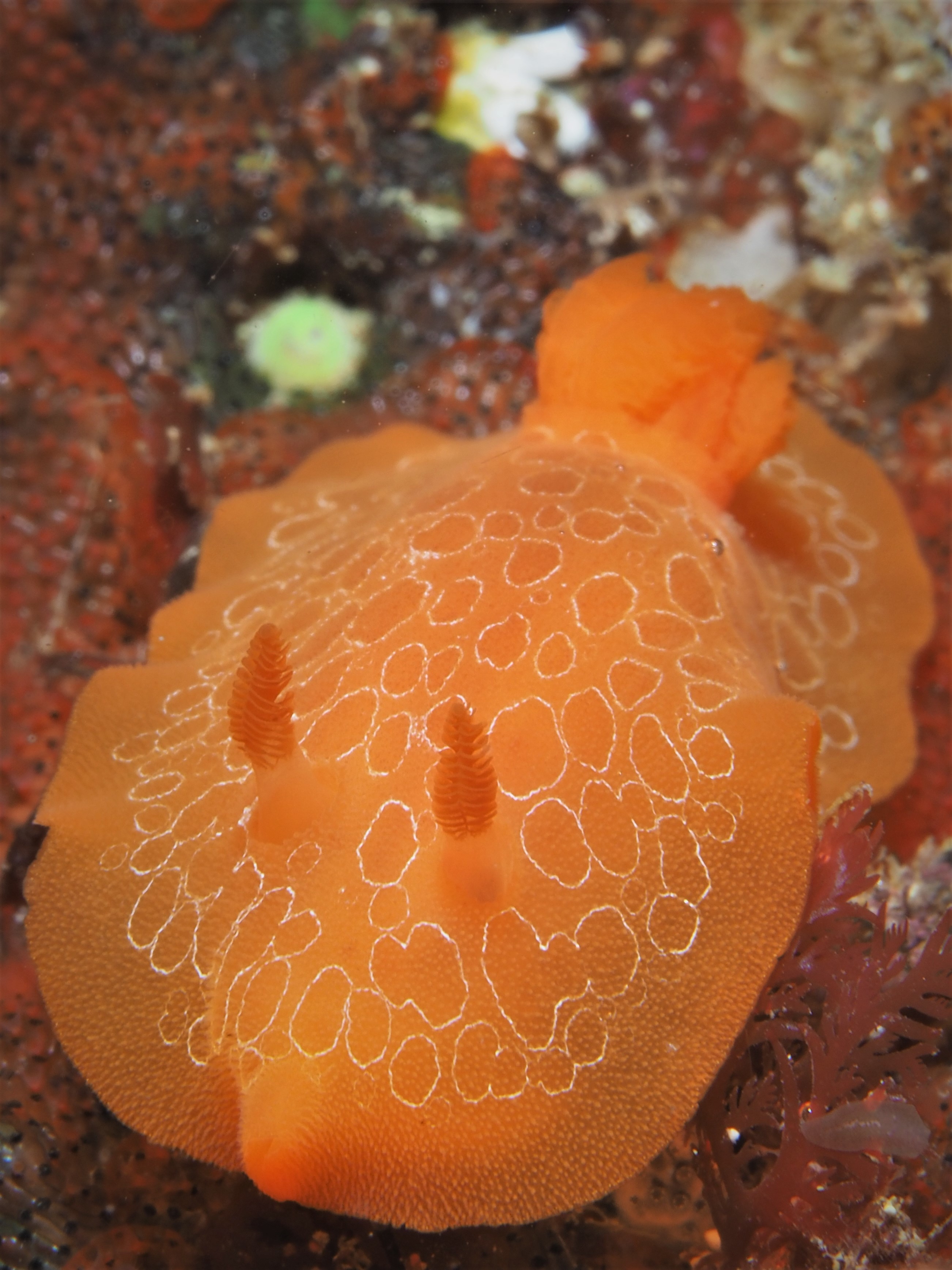
When inspecting the rock walls carpeted in sponges, seasquirts, algae, worms and other things, I kept my eyes out for nudibranchs. Apart from a tiny crested aeolis, I spotted a good number of Discodoris rosi, busy mating and laying eggs. This species has only been observed in the UK for a decade or so but the population now is booming, with many reports coming in from all over Cornwall:

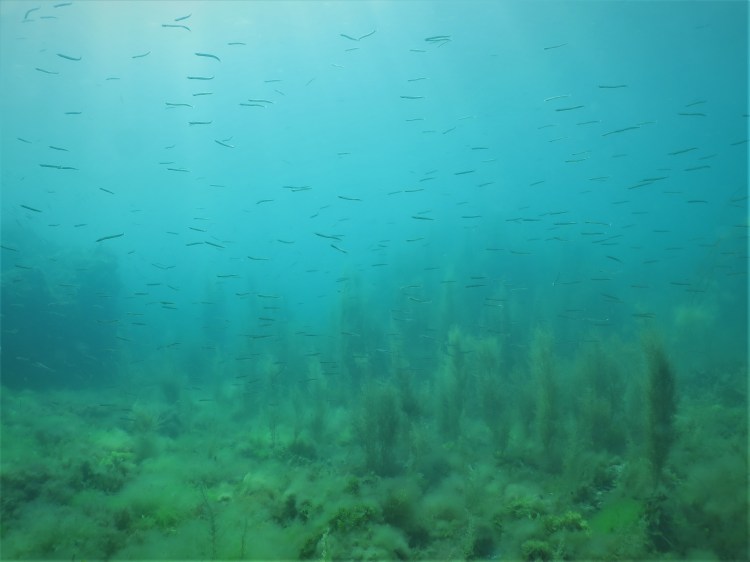
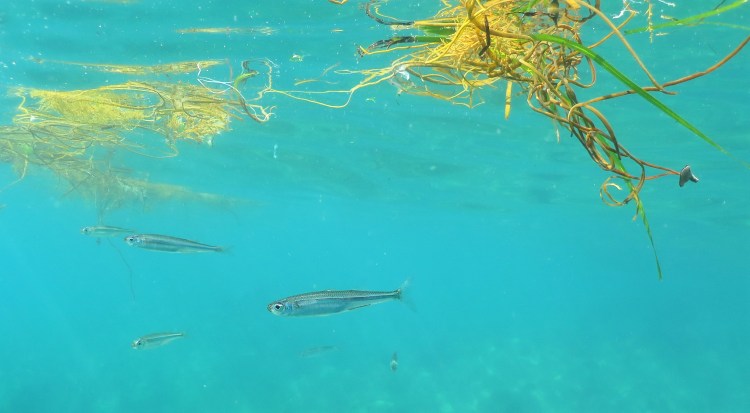
All in all a great enjoyable three dives! Silvery schools of sandeels and sprat/herring, many wrasse, cuttlefish, small and very big lobsters and a greater pipefish were also spotted. Unfortunately the weather has made a turn for the worse this week, however, there are still a few diveable months left this year…
Silver Steps Diving V

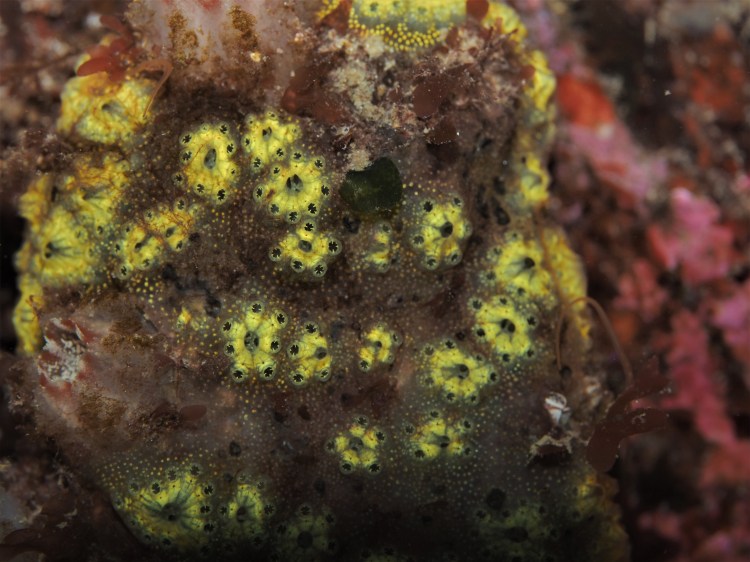
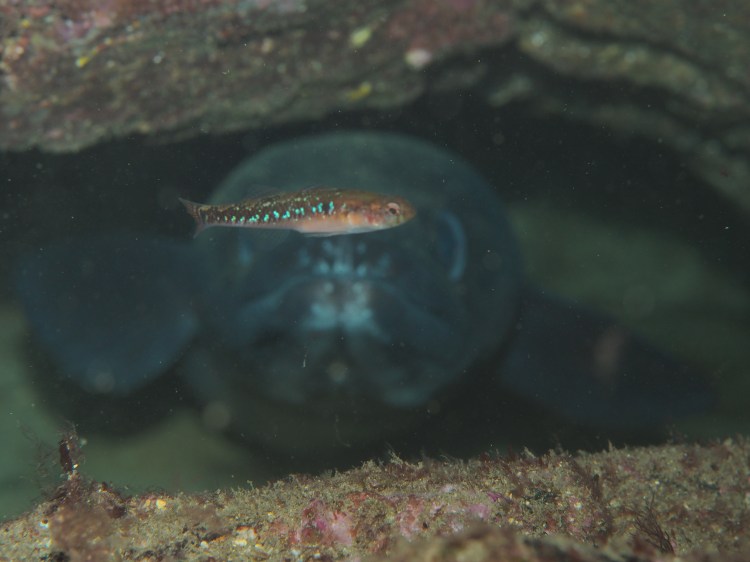
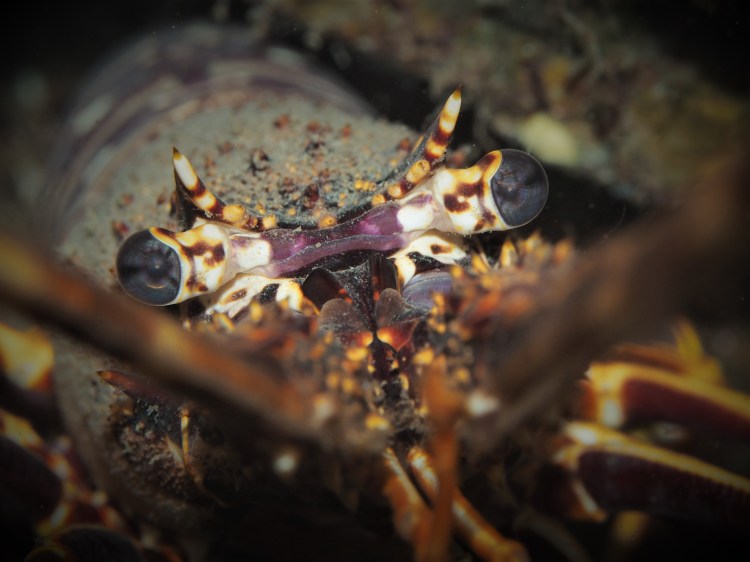
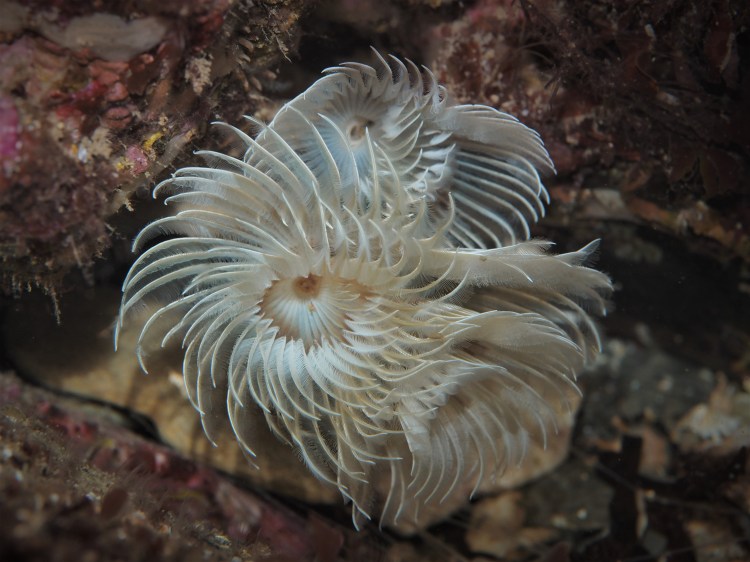
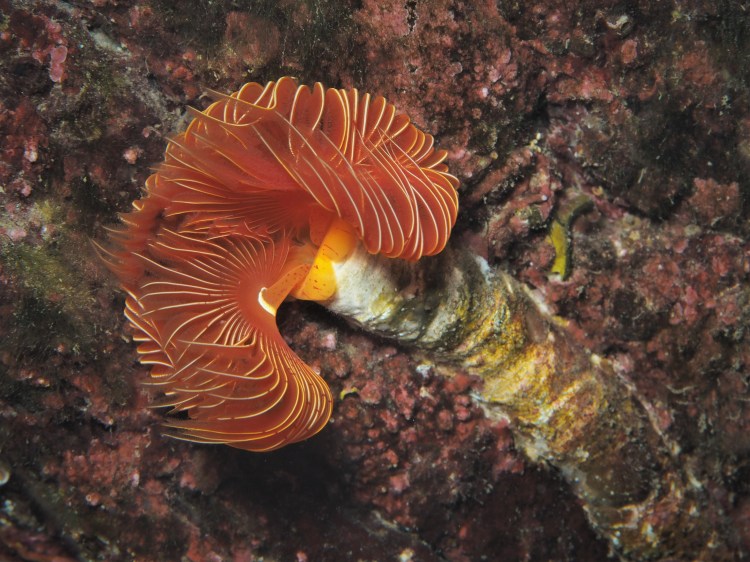
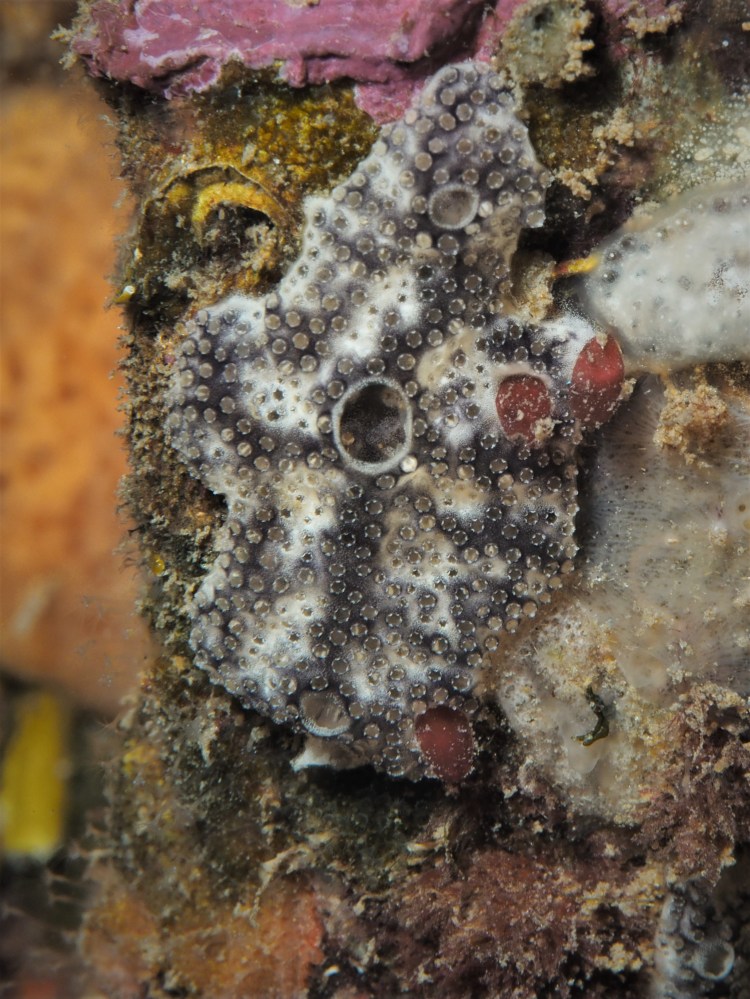
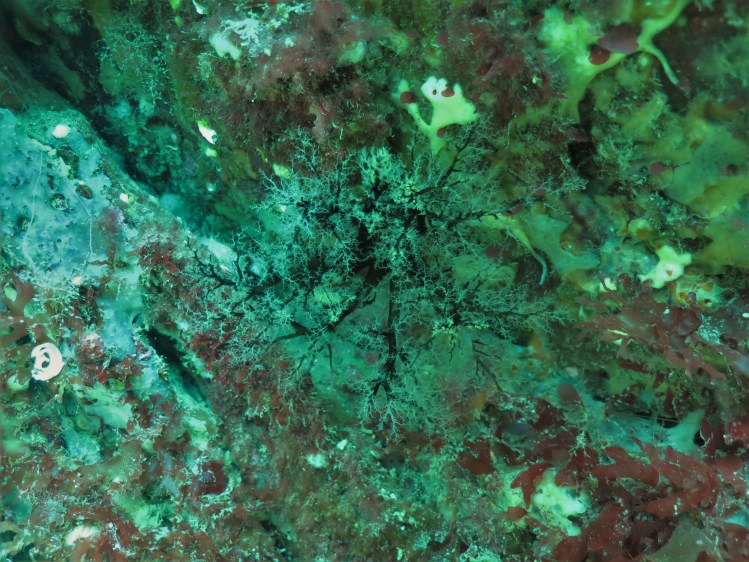
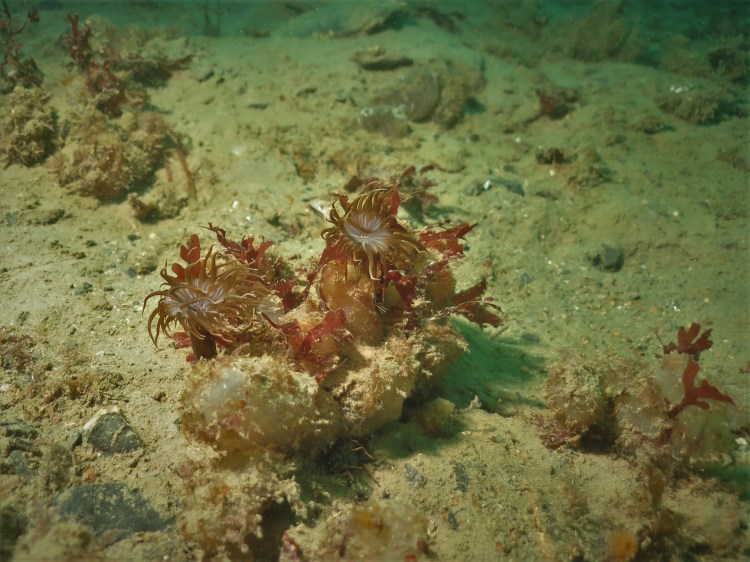
Yet another solo dive (I know, I know, not ideal) this Thursday morning before the easterlies are kicking in. Actually, the water was already choppier than I expected, but for macro photography the viz is not as important. I did not get ‘the’ shot but it was a nice dive all around. I discovered a little swim-under and saw lobster, rock lobster (craw fish) and a huuuuge conger eel. I was focusing on a little tunicate when I looked up and saw it looking back at me from not very far away at all. Its head was as big as mine. I slowly swam backwards, thinking of this encounter…..overall they do seem to be aggressive towards people though, and with my fisheye lens this could have been a really good shot. This later happened again, this time a smaller individual but still sizable. I did not stick my macro lens up its nose but grabbed a halfhearted shot with a passing by Twospot goby almost in focus to give an idea: Some macro shots: again a Twin fan worm Bispira volutacornis and a new one for me, a big bright red Protula tubularia. It would be nice to get some abstract close-ups but these are excellent living motion-detectors so it is difficult. There are some amazing colours under the rock overhangs and I would like to try some more abstract photos such as this Spiny starfish or this Didemnun colonial seasquirt and other encrusting animals (and plants). No diving/snorkelling this weekend because of the wind, but glad I could put a couple of dives in these past weeks, and I will make an effort to go a lot more weather permitting!
Silver Steps Diving IV

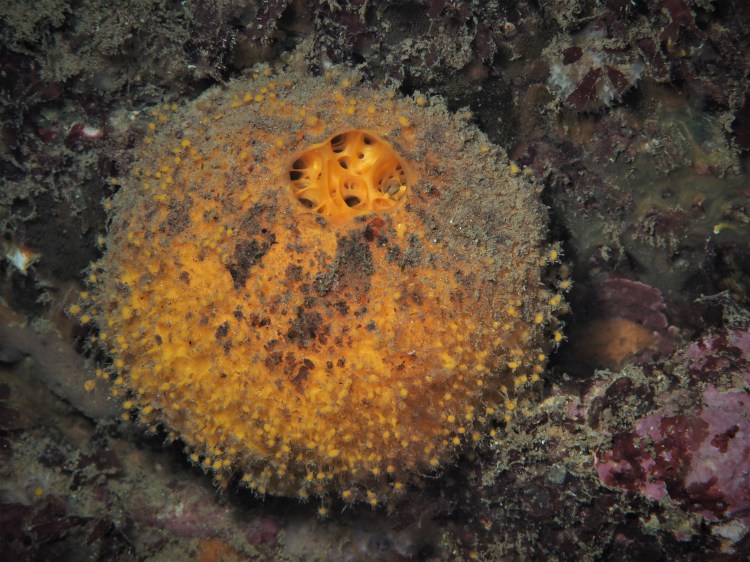
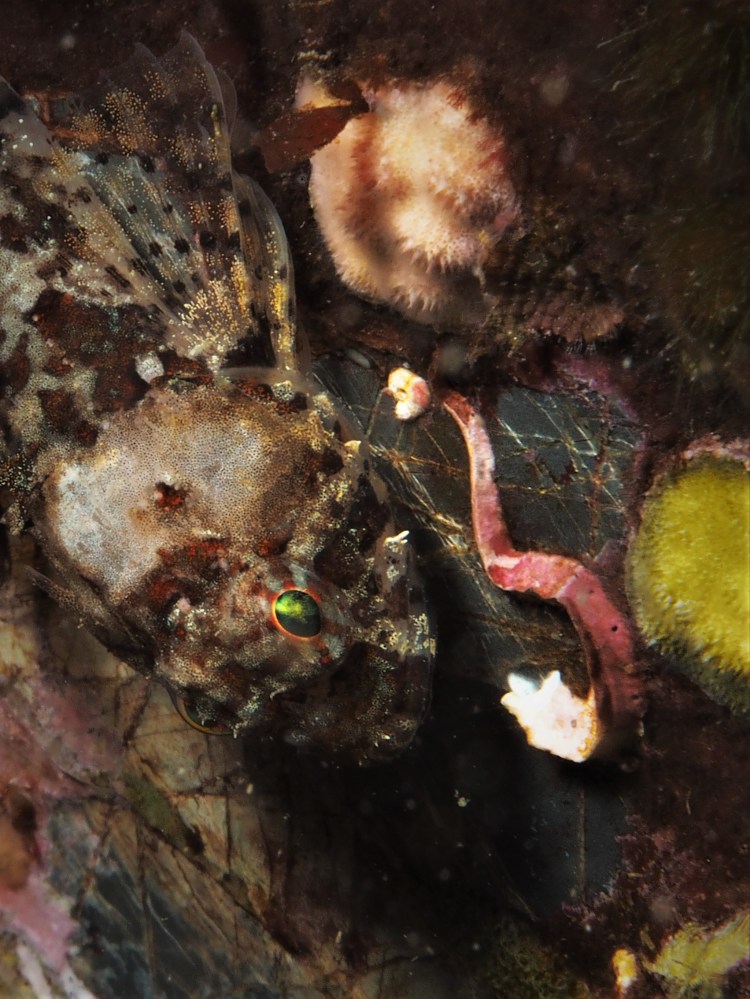
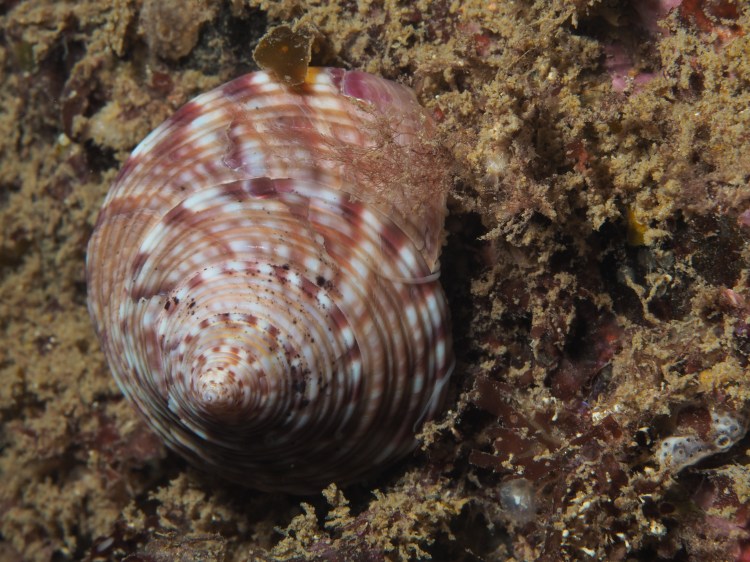
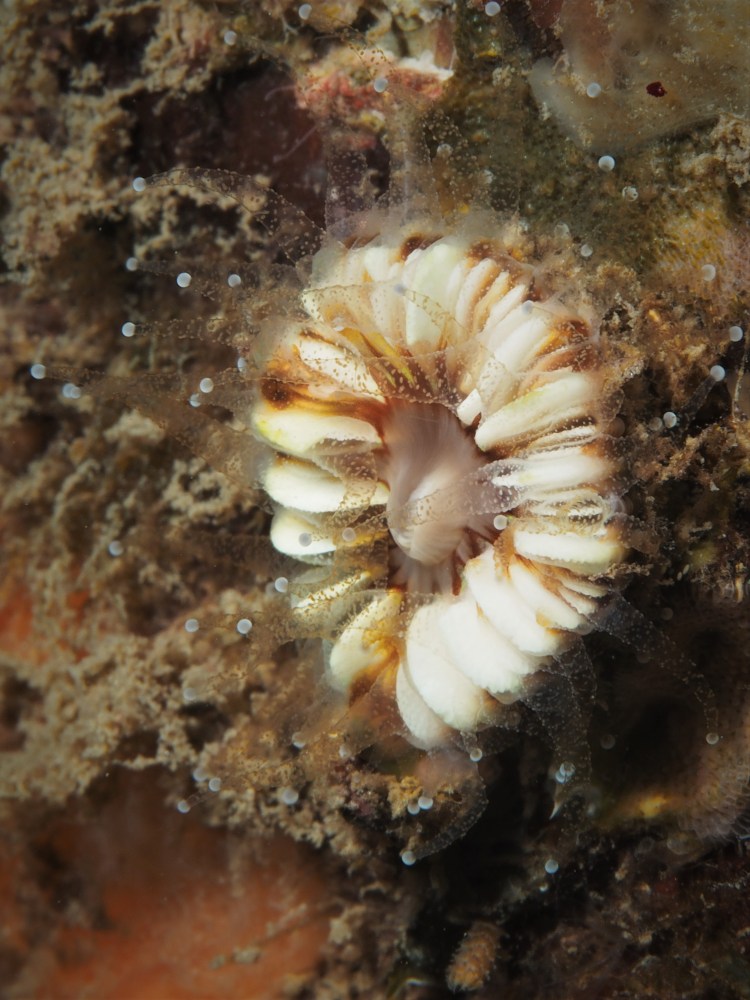
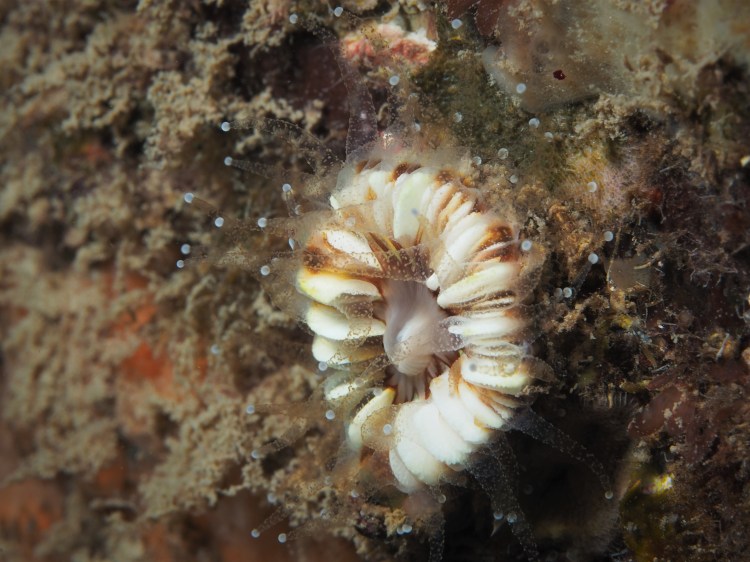
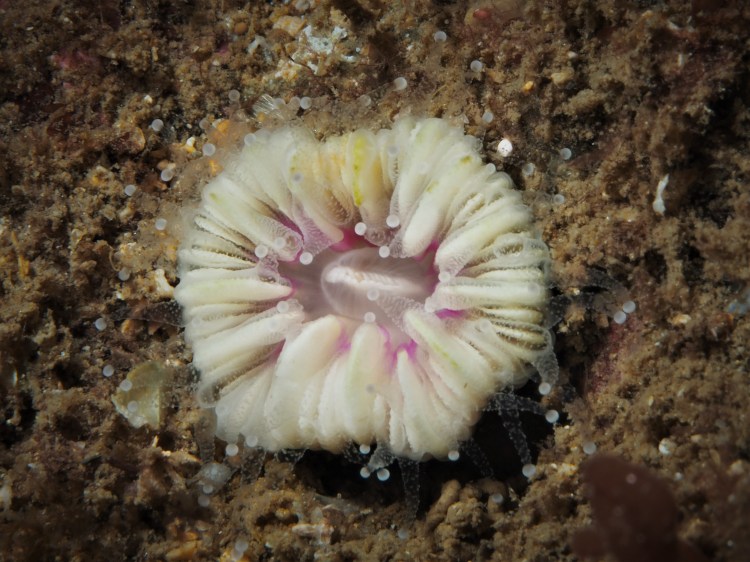
A solo dive early evening at the Silver Steps site. It was a couple of weeks I last went, and this time it was already dusk when I entered the water. My intention was to find cup corals and other small creatures growing on rock overhangs below the kelp line. The viz was good and sure enough I found what I was looking for: Devonshire cup coral Caryophyllia smithii, a solitary stony coral which is relatively common. They are very beautiful and the right size for the macro lens. I will definitely go after them again. Other finds were a golfball sponge Tethya aurantium, a baby Longspined seascorpion (this shot had potential, but it swam away unfortunately), a tunicate and a Painted topshell (very common). At the end of the dive unfortunately it was getting too dark to find objects or too properly focus; I need to sort out a dive light!

Silver Steps Diving III

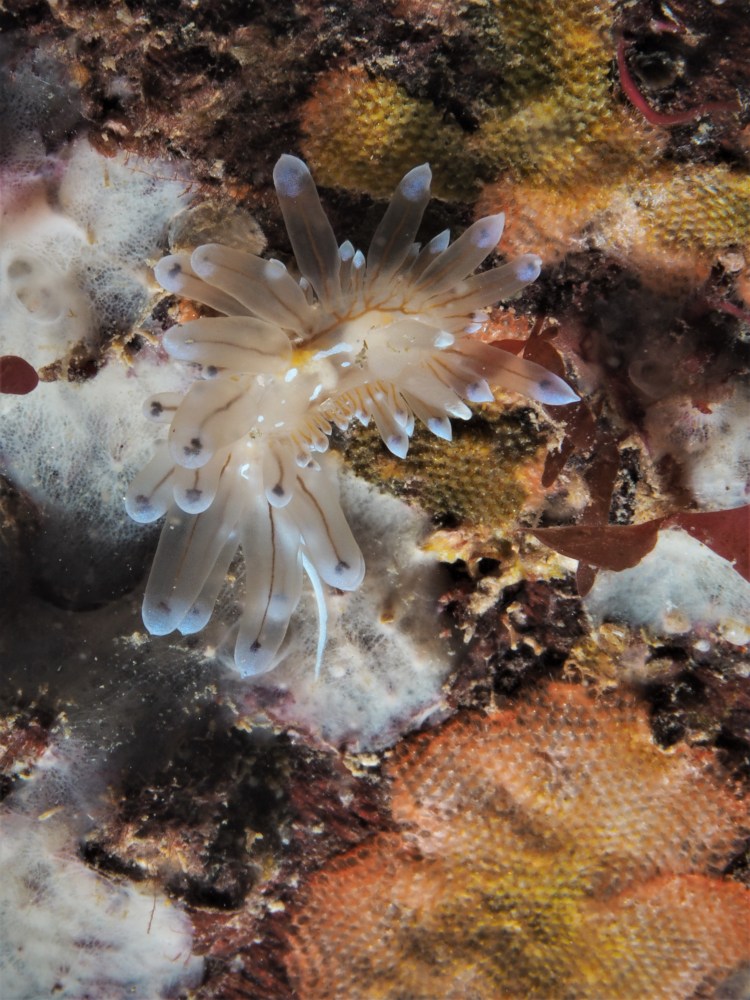
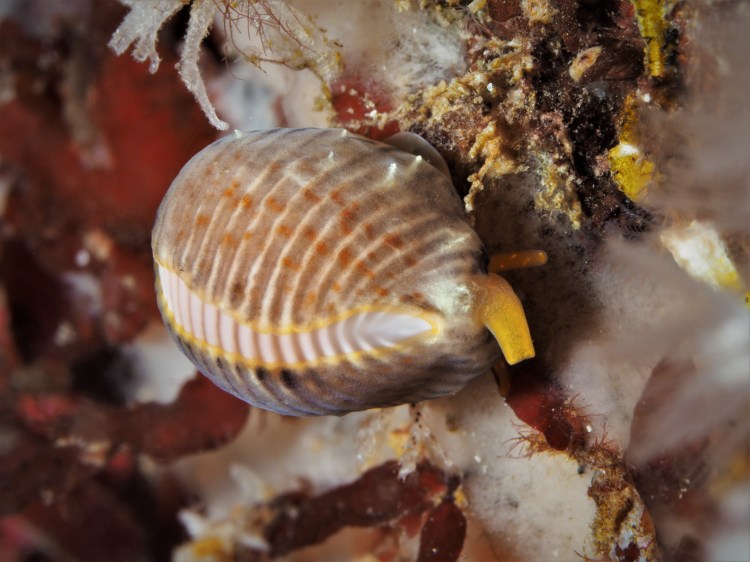
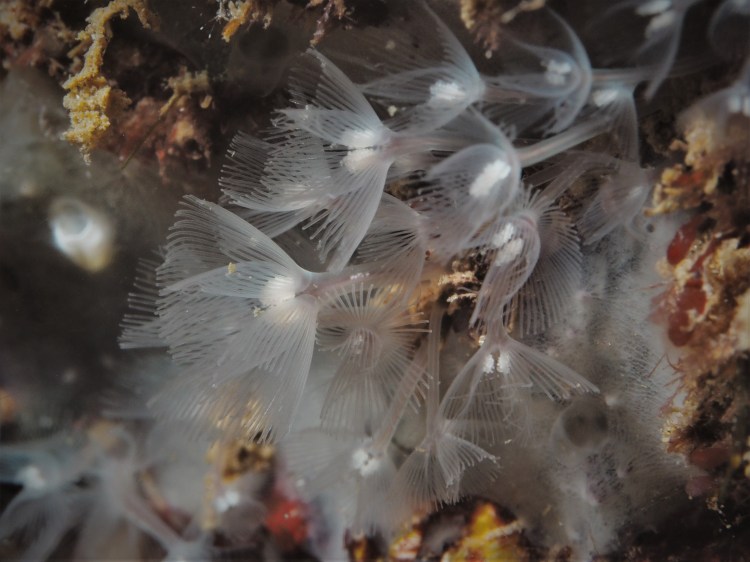
I will keep this post short, as my third Silver Steps shoredive of the year was a week ago. As you can see above, my dive was made by encountering the beautiful nudibranch Antiopella cristata (although I prefer the old name Janolus cristatus…). My camera battery strangely gave up straight after taking these pics (argh!), otherwise I would have bothered it for at least another ten minutes! The 60mm lens is great. Look at the European cowrie Trivia monacha below which is less than a centimeter in length. Not a great shot but it shows that it is possible. Finally, a common Phoronid worm Phoronis hippocrepia (Thanks Allison, please check out her great blog Notes from a California naturalist). I hope the wind will die down and I can go back soon.

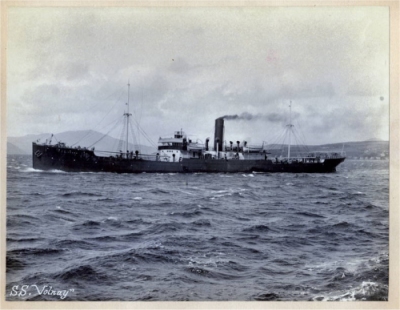
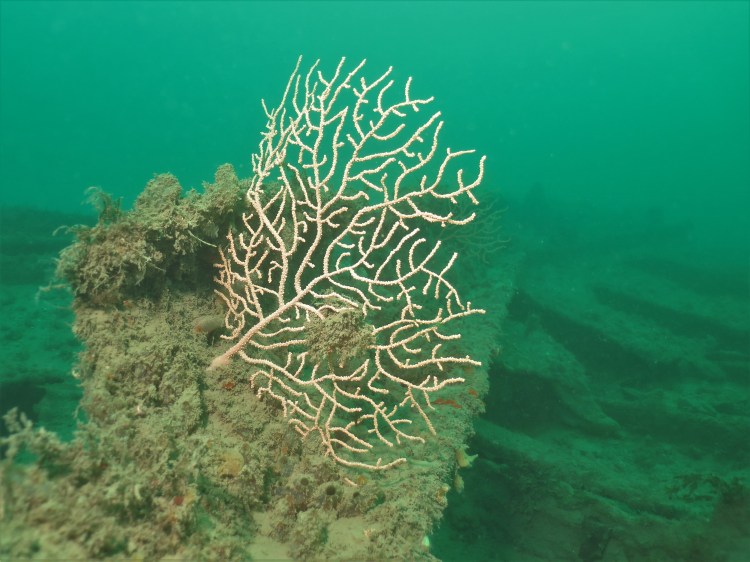
Pink Sea Fans at the SS Volnay wreck

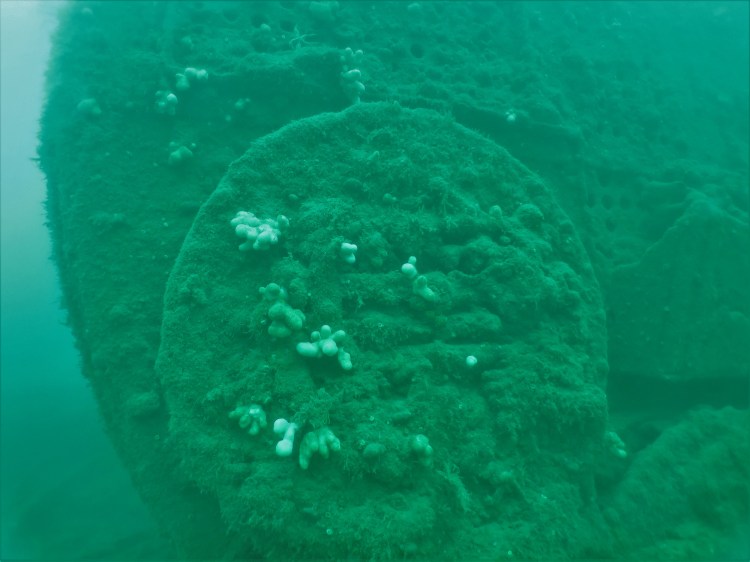
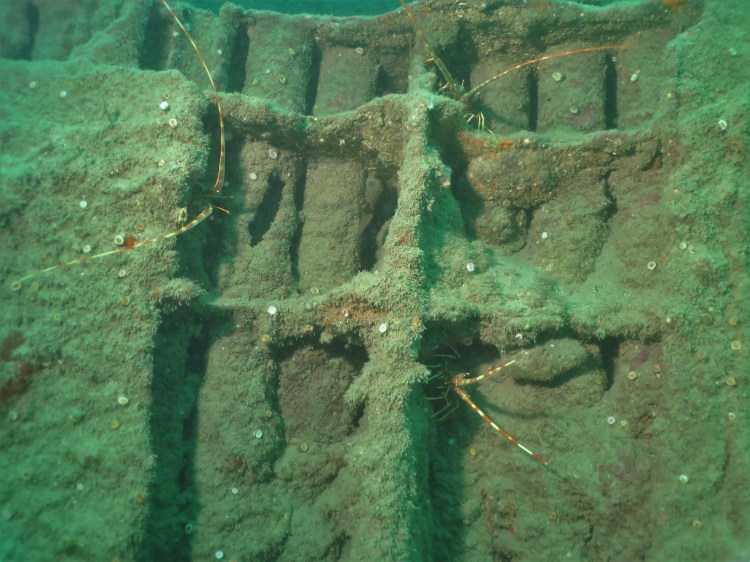
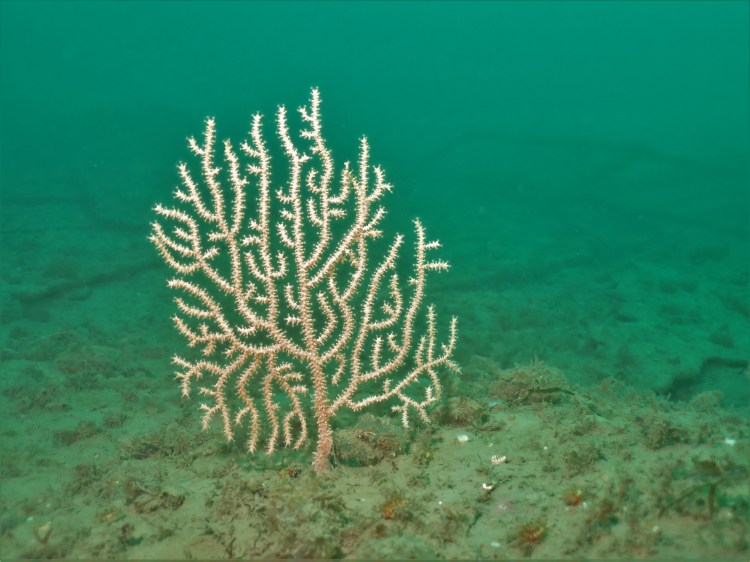
Today I went for my final dive this year, again with Atlantic Scuba, and this time to the wreck of the SS Volnay (see here and here for background). Just off Porthallow on the Lizard peninsula, at around 17 meters (at low tide) lie the remains of this WWI casualty, hit by a mine and dynamited twice after (probably to get rid of unexploded shells), so she is mostly flattened. The boilers still are largely intact and are very impressive though, see the first not very-well composed shot (should have used my buddy for scale); note the white Dead man’s fingers. This dive would guarantee two ‘lifers’ for me, first the European spiny lobster (or Crayfish or Rock lobster) Palinurus elephas, which seems to be getting more common the last few years. Indeed, we did not have to look hard and saw the long antennae sticking out of nooks and crannies everywhere (see also the Devonshire cupcorals on the second photo). Second, and the main thing I was looking forward too, were the Pink sea fans Eunicella verrucosa. I had found some pieces of this gorgonian washed up on the beach before but never seen it alive. Luckily, at this site it is a common species (many juveniles, unbranched little ‘sticks were also present). I took a whole bunch of snaps and edited the jpgs in the standard Windows photo viewer (I keep the RAW files but need to find some time for proper post-processing). Just reducing highlights etc does wonders, but what I really need to do is be more clever with my camera settings in the first place. My New Year’s resolution will be too think ISO and aperture and not lazily rely on presets. I might also invest in a strobe capable of manual control (thanks for tips kelpdiver @dpreview!) High time to up my game! Below, three of the sea fan photos that came out best. Lastly, a nice new species for me: Trumpet anemones Aiptasia mutabilis. My four recent dives with Atlantic Scuba have all been great; a boat full of friendly divers leaving from just down the road in Mylor, skippered by Mark Milburn who has a very deep knowledge of the area. Todays dive with buddy Jan was very relaxed but I still learned a thing or two. More diving next year! P.S. Mark Milburn just published “Falmouth Underwater: a Guide to Marine Life, Wrecks and Dive Sites around Falmouth” (available here) which I highly recommend to anyone planning to dive or snorkel in the area!

more diving

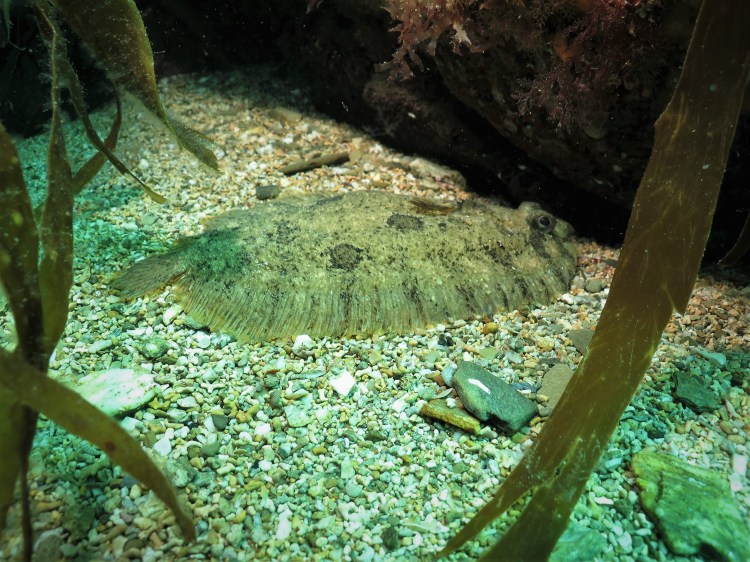
diving silver stepsLast Wednesday I went for a quick dive at Silver Steps in Falmouth, good viz and the water is no longer cold. Buddy Chris (above) and I rummaged around the U-boat wreckage (less impressive than it sounds) and unfortunately did not see any cuttlefish. What was new was a largish Topknot Zeugopterus punctatus which was gone before I could take a decent photo. I also saw seacucumbers for the first time diving (have seen them before when rock pooling, including parasitic snails). They could be Pawsonia or Aslia, but with the bodies wedged in the rocks and only the feeding tentacles visible it is not possible to tell. Sand eels were abundant and Sand smelt Atherina presbyter were also present at the surface. I hope to go back soon to practice with the strobe. I did a second dive in Flushing with Thomas too. Enjoyable but not too many great shots. I included one of Sand mason worms Lanice conchilega and fan worms Megalomma vesiculosum.

First Dive of 2017

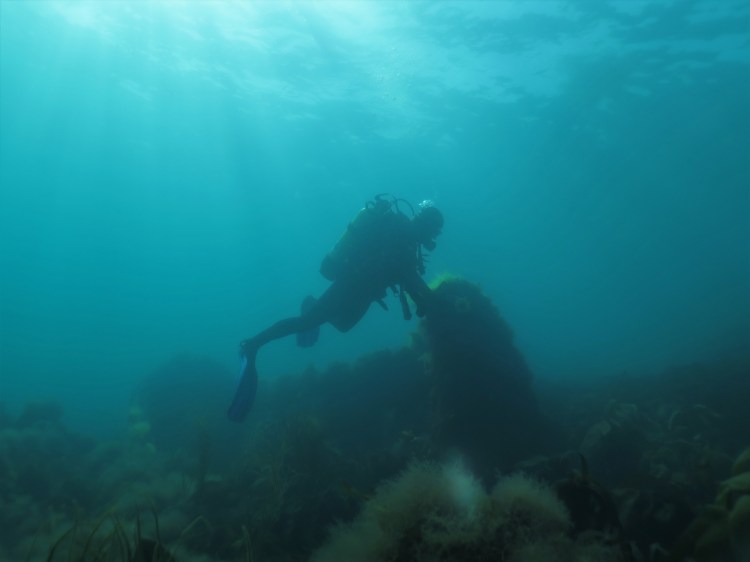
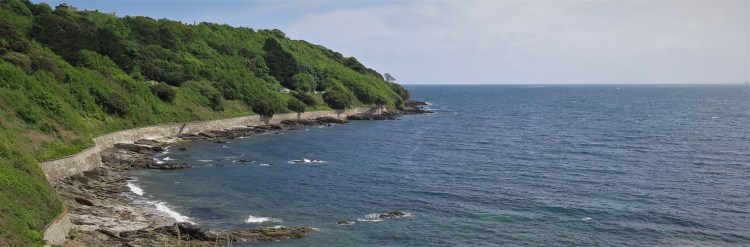
Finally, time for a (solo)dive last Saturday, at probably the most accessible local site: Silver Steps in Falmouth (you can just make out the steps in the photo above). The sun and high tide had attracted quite a lot of other divers too, including University of Exeter and Falmouth University students learning the ropes. I was very keen to get in the water and take photos but my approach is probably not the best: I just shoot whatever happens to be in front of me. Better results could be obtained to specifically look for macro subjects, to stay in the water column and search for jellies, befriend the Ballan wrasse or stay put in front of a Leopard-spotted goby hide-out (or check out seaweeds of course). I’ll do one of these things next time, for now, some random shots. I spotted several Spider crabs; these are always shy and try to quickly retreat, except for one. This big crab came after me as soon as we spotted each other. I should have tried more shots, as unfortunately he did not fit the frame. You can see in the short movie why I didn’t!

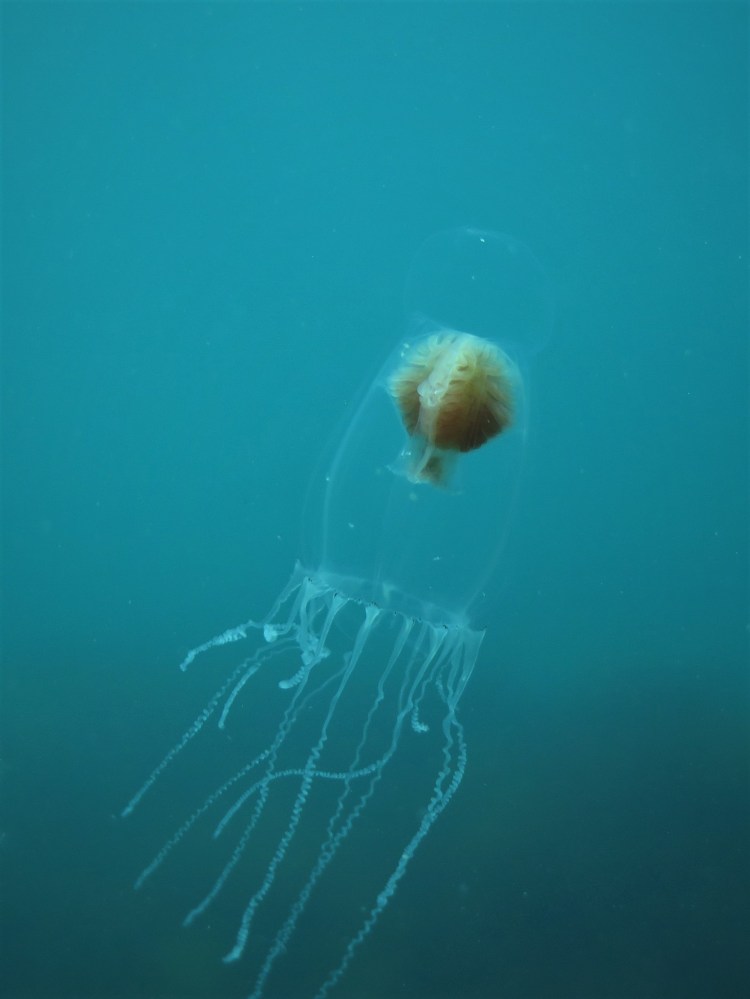
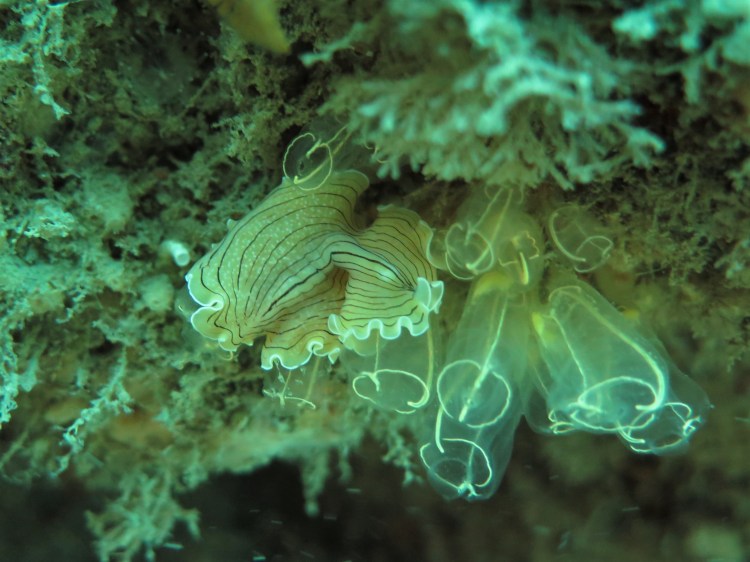
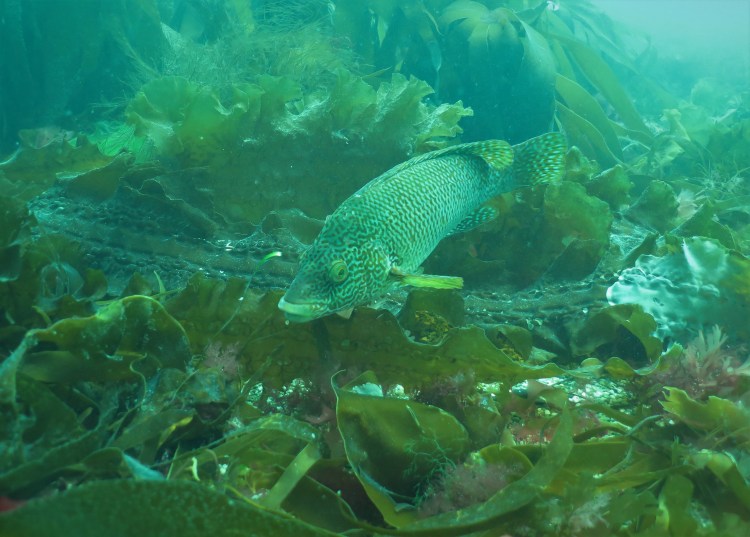
The viz was not great (I find it hard to estimate it in meters though). In the water I noticed a small hydrozoan Leuckartia octona. The underside of some wreckage harboured Light bulb sea squirts (see previous post) and some were predated on by Candy striped flatworm Prostheceraeus vittatus. (I brought my new LED light with me to help bring some colour out but I just ended up with combinations of glare and shadows so stuck to my normal natural light pics.) Next, a curious Ballan wrasse Labrus bergylta. Finally, some not so clear shots that nevertheless give a good impression of how tall the invasive Wireweed Sargassum muticum are growing. Hopefully more dive posts soon!

diving at Silver Steps

I am really getting back into this diving thing! Last week, I made another trip to Seaways Dive Centre in Penryn to rent some gear (£25 for 24 hrs) and go out with dive buddy Chris. First a dive at the end of the day at low tide at Silver Steps in Falmouth. A great encounter a minute after we got in with a cuttlefish:

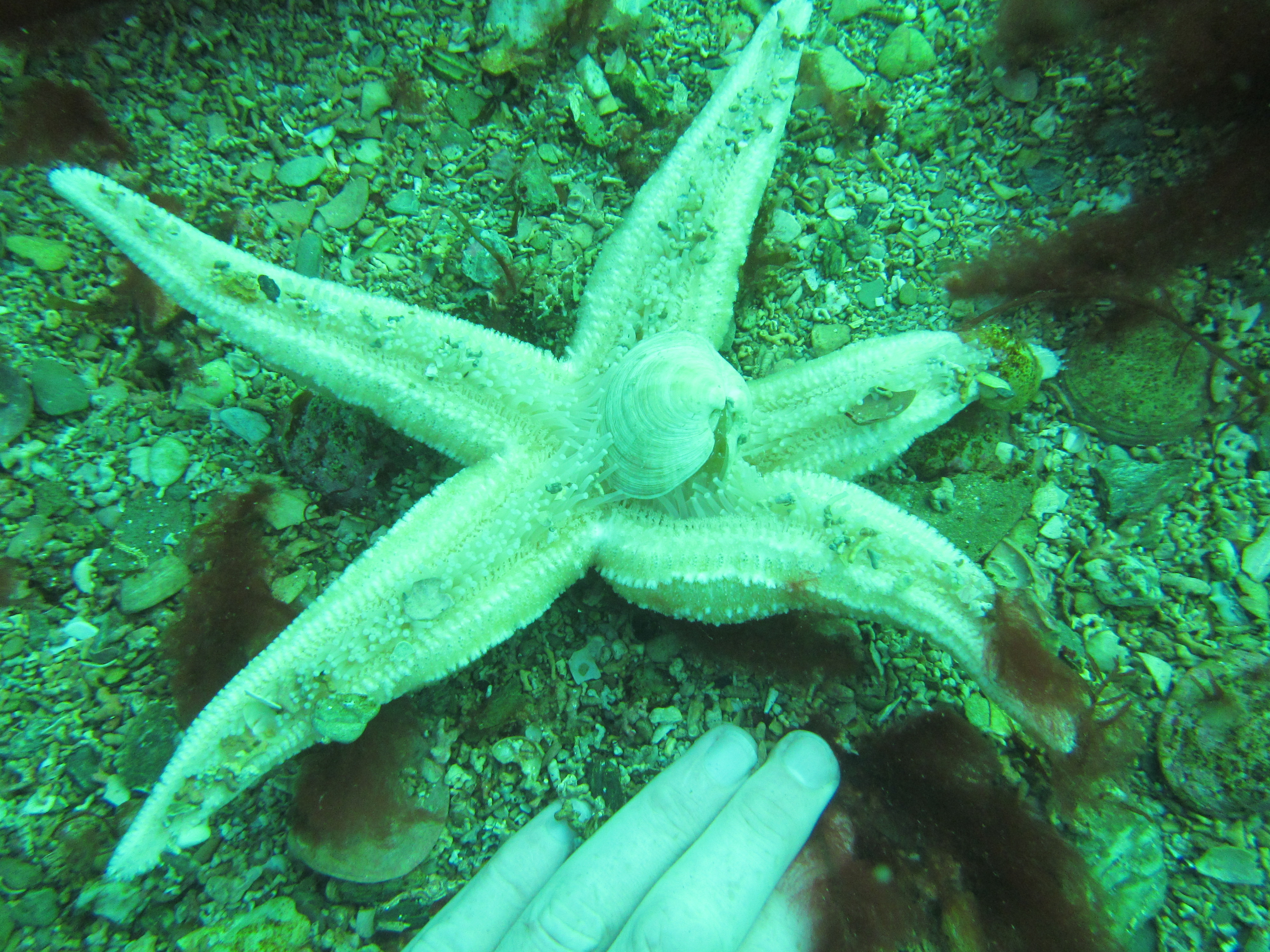
We then set out over the gravel beds towards the open sea. A pretty barren affair, with lots of decaying seaweed. Mainly Spiny and Common starfish and Pulled carpet shell Tapes corrugata, Warty venus Venus verrucosa and Rayed Artemis Dosinia exolata. A picture of the latter being eaten by a common starfish:

IMG_0309

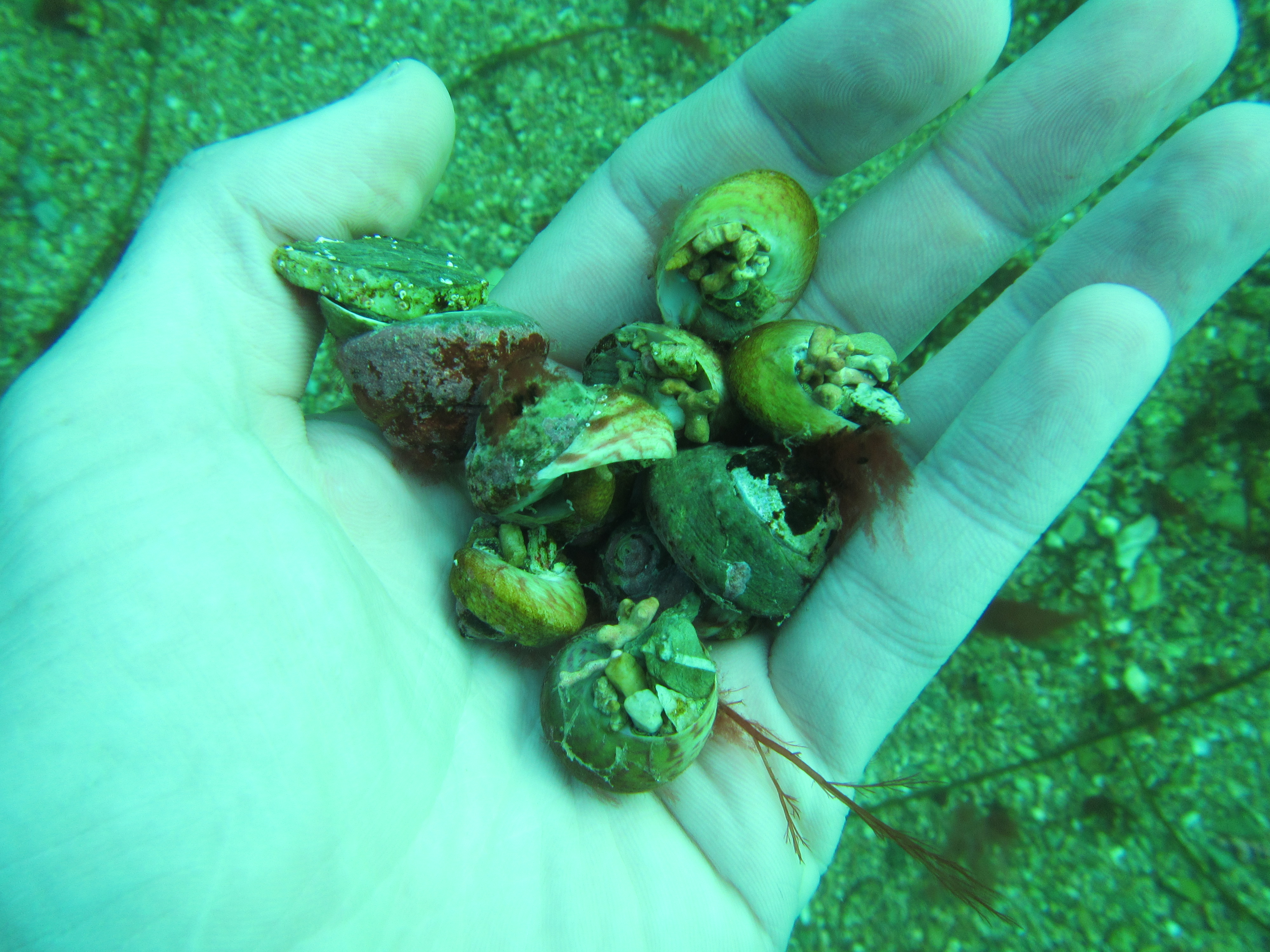
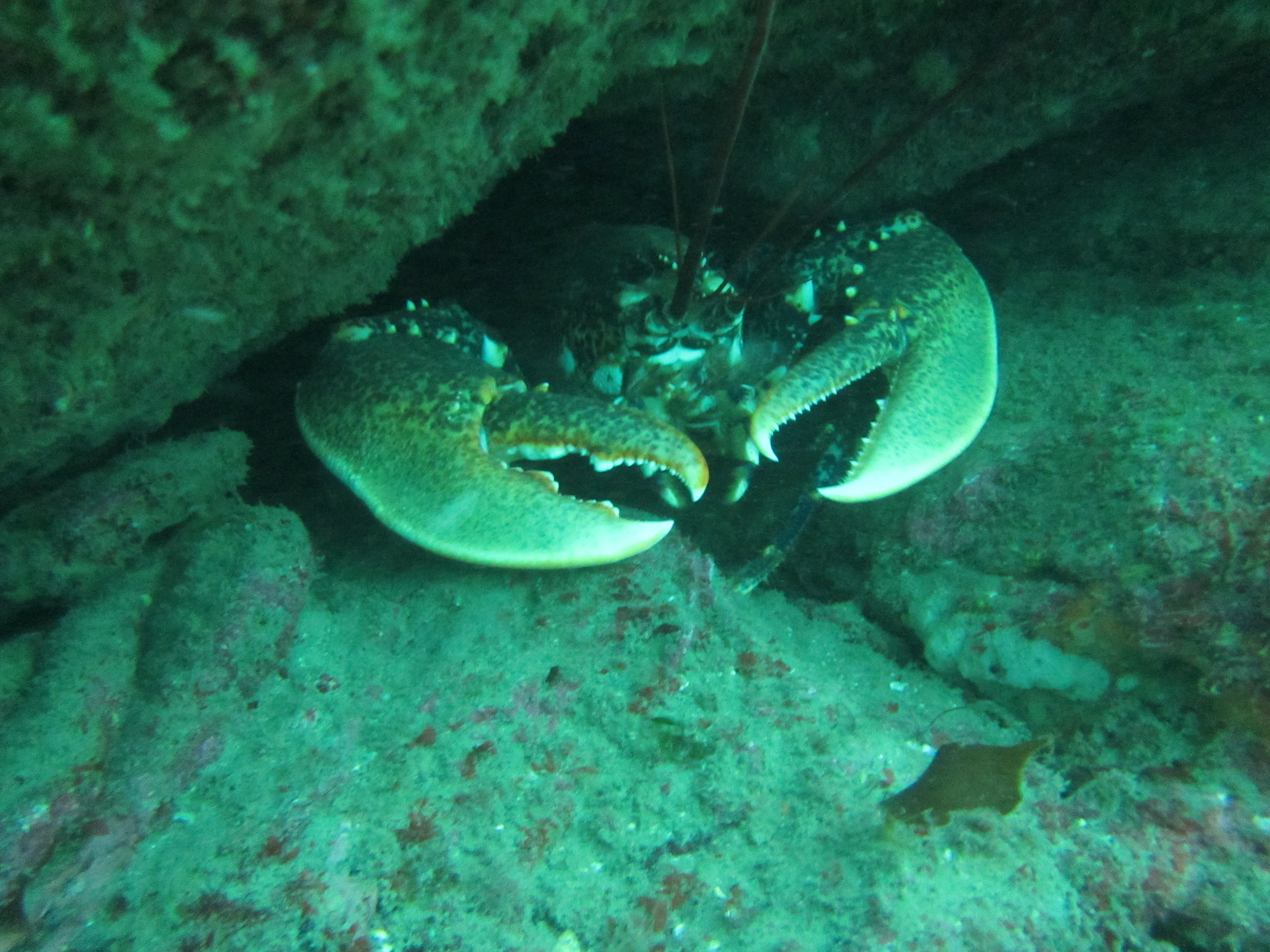
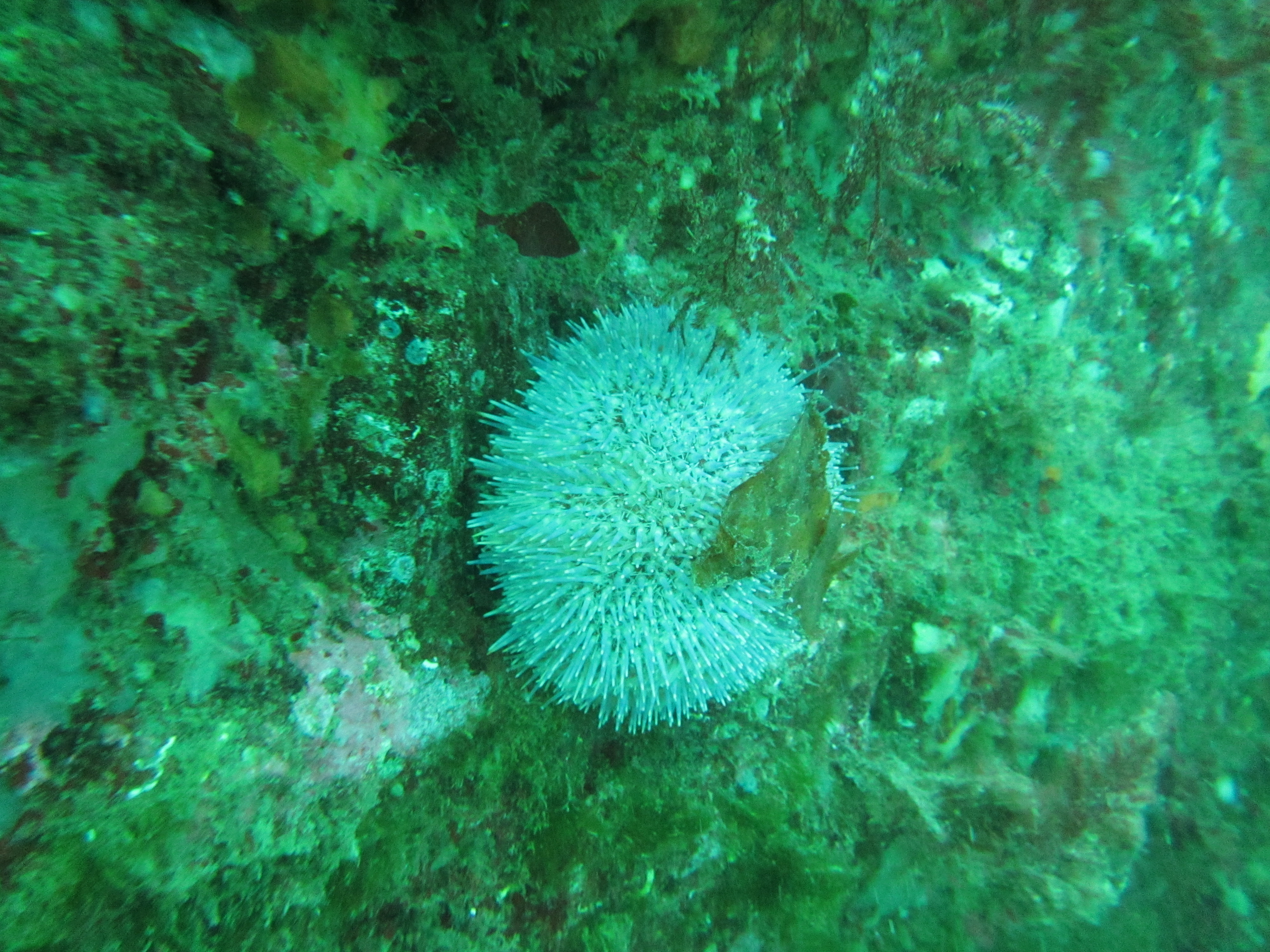
Turban top shells Gibbula magus were on my list to get for the aquarium and I noticed that this species is extremely common (several per square meter) so I took a bunch home. The shells look pretty beaten up with lots of stuff growing on ’em but I think they are pretty cool; truly subtidal so no risk of them creeping out of the tank:IMG_0292We then made it back to the rocky coast and found a nice gully with overhanging rocks with lots of interesting critters. One little cove was home to ten or so shy Leopard-spotted gobies (I plan to go back with my GoPro and leave it there filming for half an hour to pick it up later). We found a big lobster Homarus vulgaris, a beautiful Bispira volutacornis worm (I have already posted pics of these species recently and I will try to show more self-restrainst from now on and not keep posting similar photos). Also for the first time some large Edible sea urchins Echinus esculentus. Probably a really common species when you dive a little deeper but the very first time I saw it. Have to practice a bit more with the new Canon Powershot D30 as I am not completely convinced about its qualities yet (I did not bother to post-process any of the pics btw). IMG_0328

IMG_0327

IMG_0331