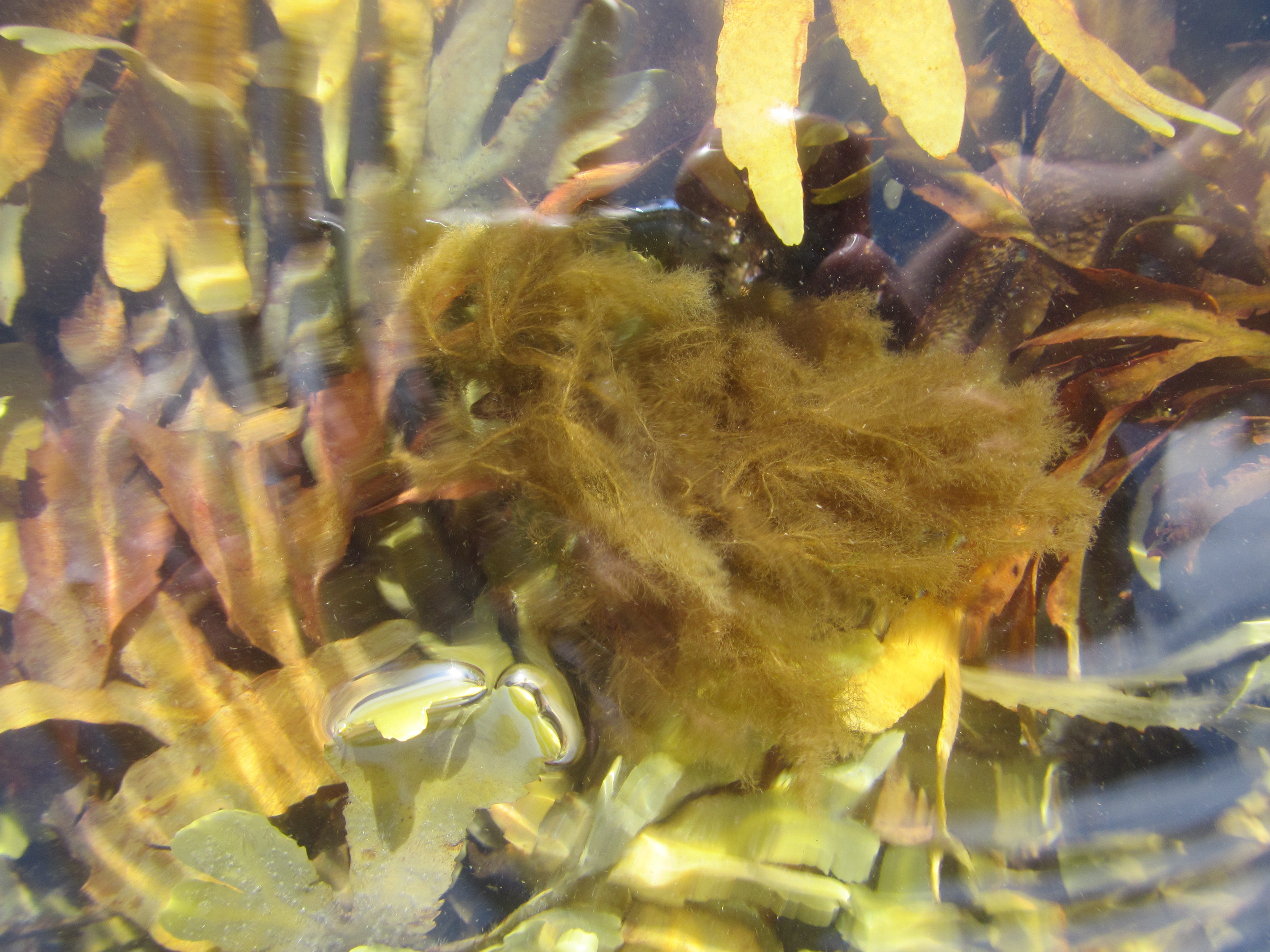
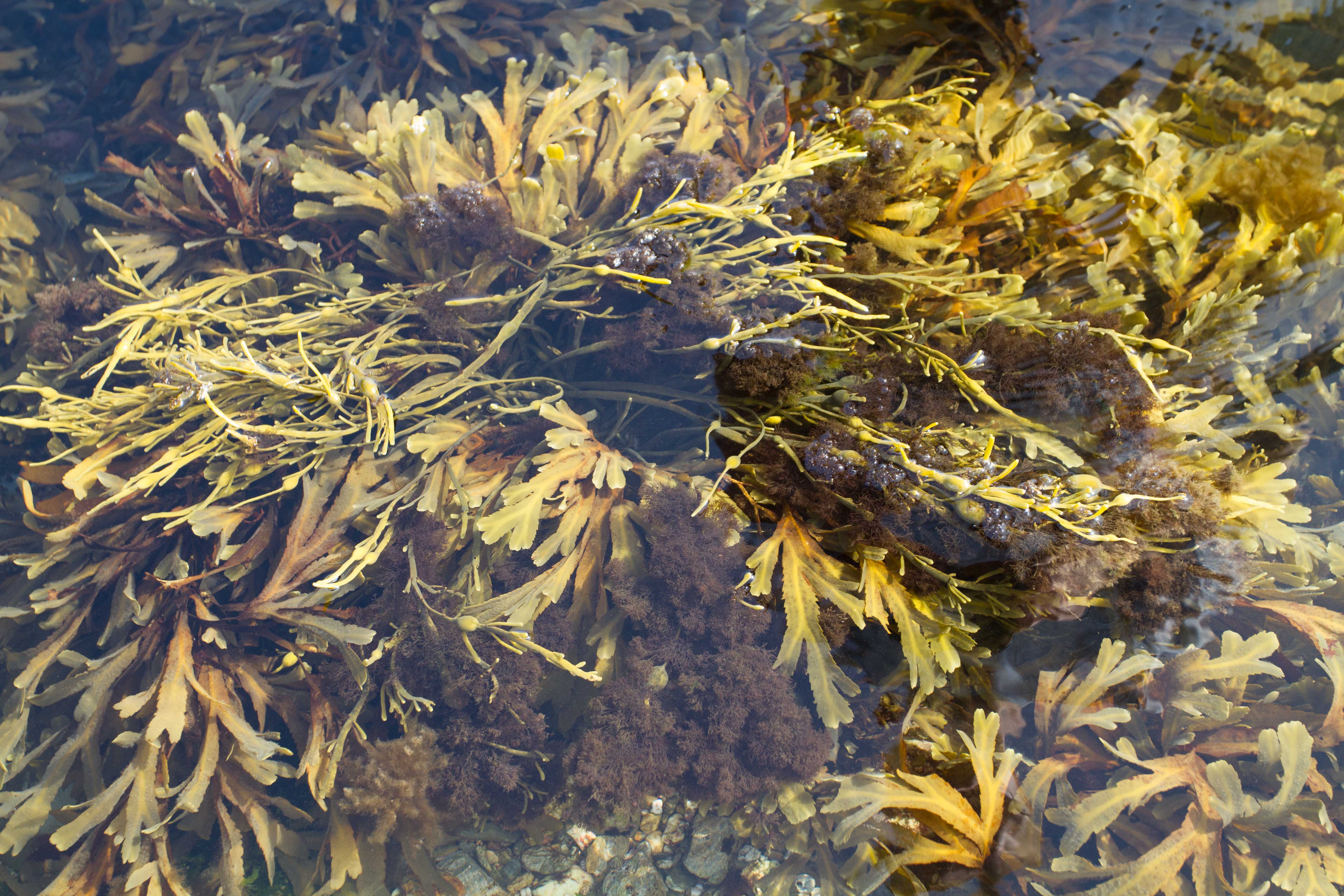
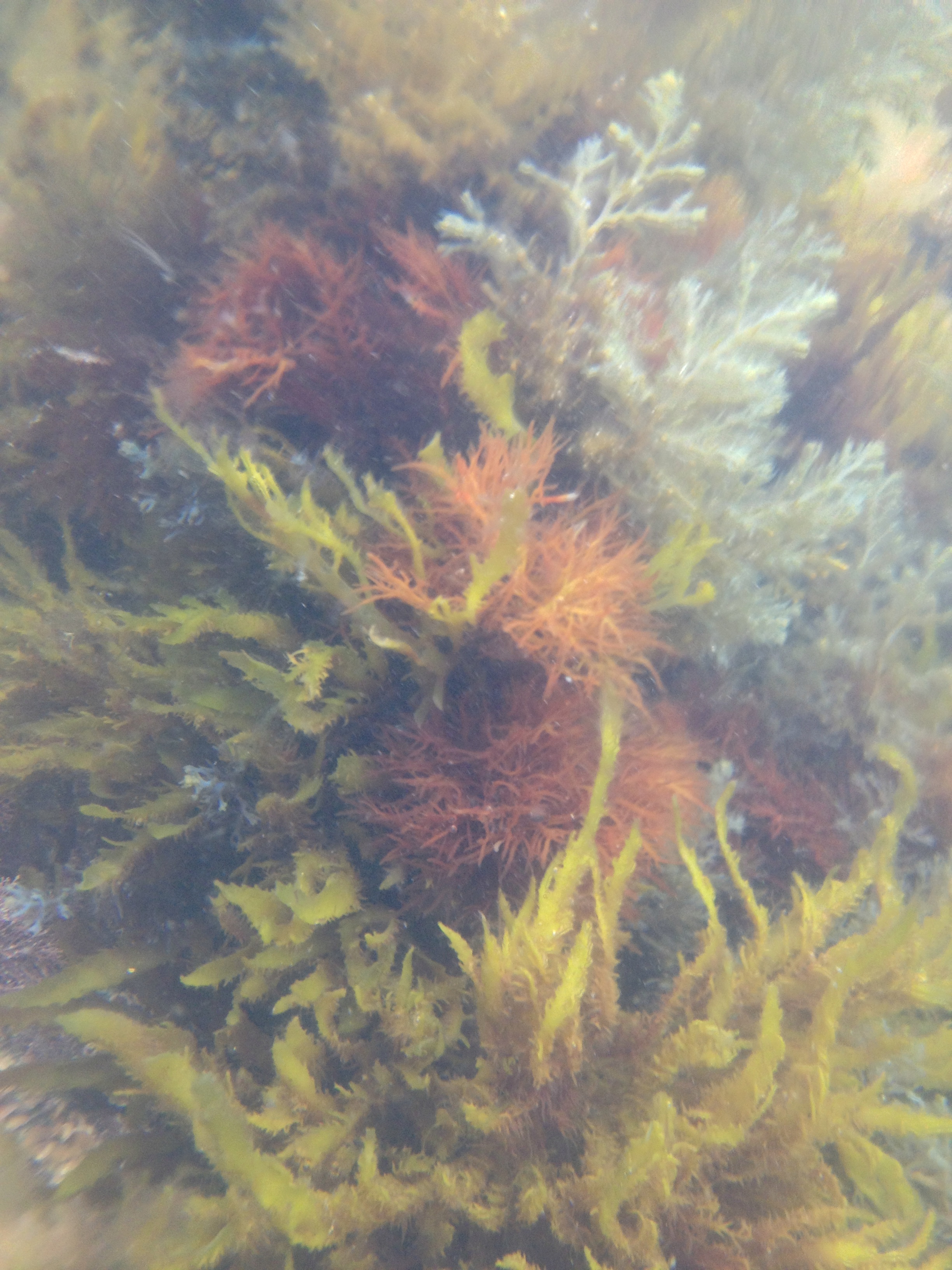
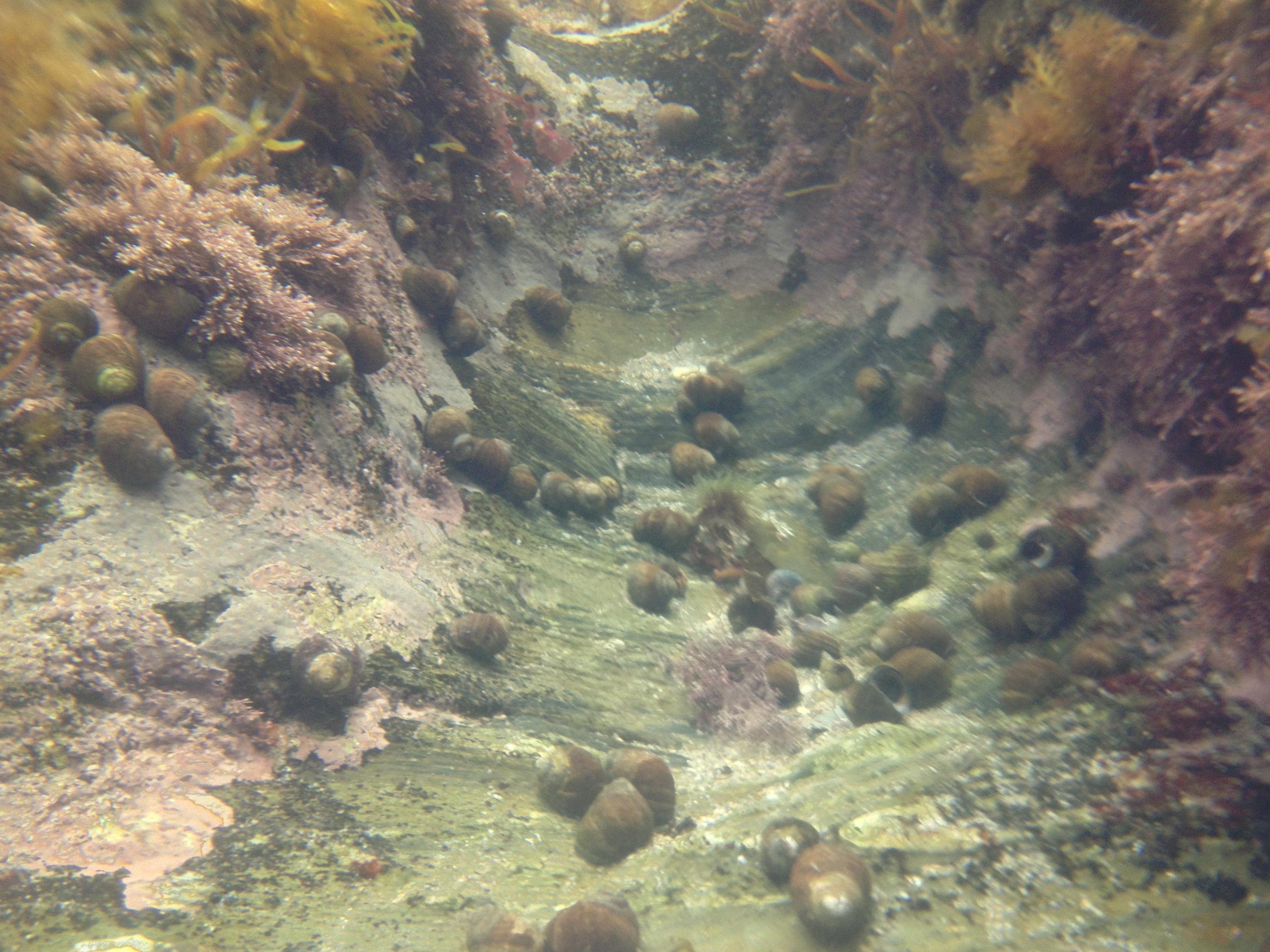
I have not posted too many pictures of seaweeds in rock pools because they are a real pain to properly photograph. However, when rock pooling two weeks ago in Falmouth, my friend Thor took some great pictures using his DSLR, two of which shown here. The IDs of these two epiphytic seaweeds on wracks were verified with invaluable help from Seaweeds of the NW Atlantic facebook group members: the first picture is Pylaiella littoralis (a species I had only seen on kelp sublittorally). The second species is Polysiphonia (or Vertebrata) lanosa: 
Tag Archives: Castle Beach
Orange Lights Sea Squirt
a most peculiar animal
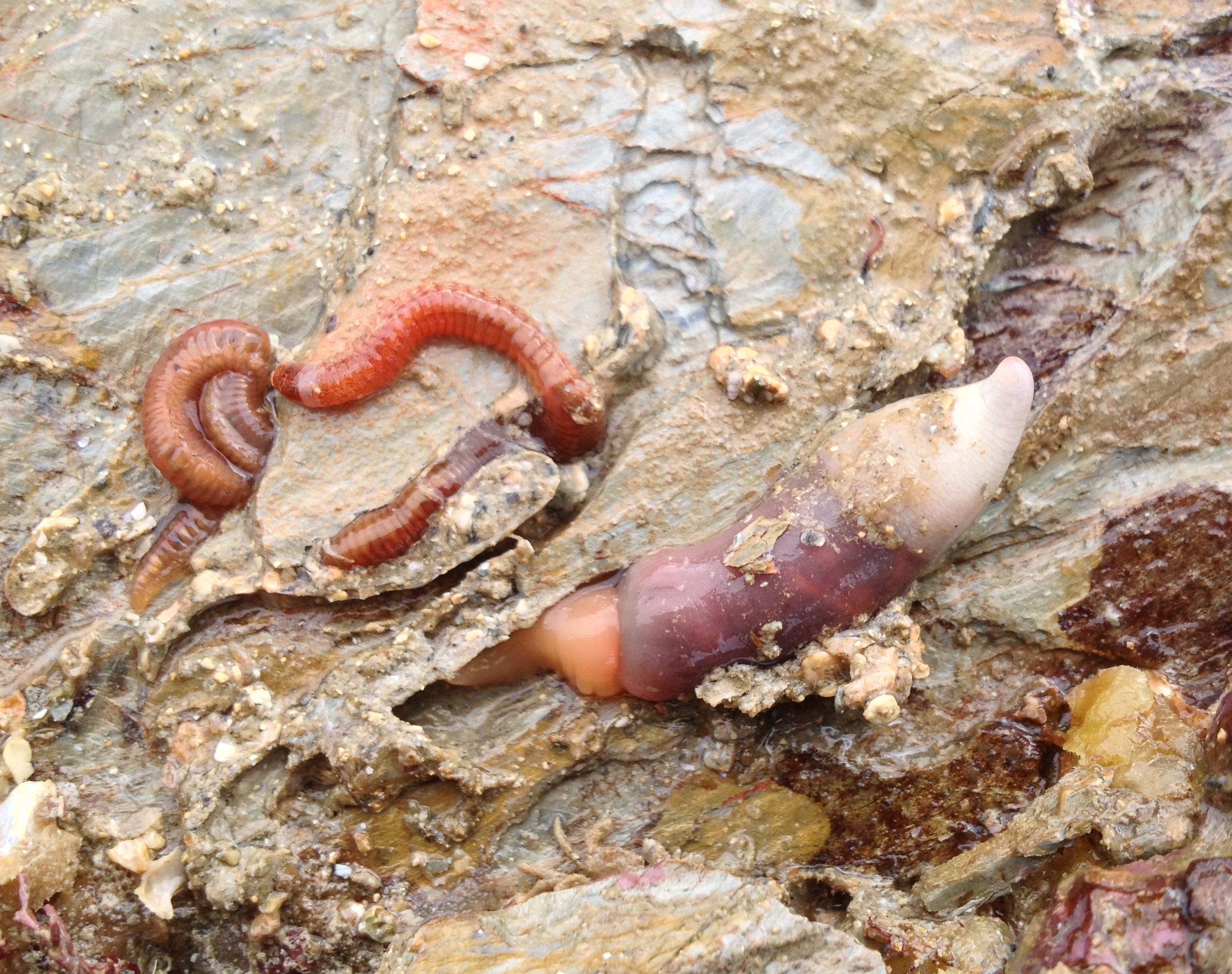
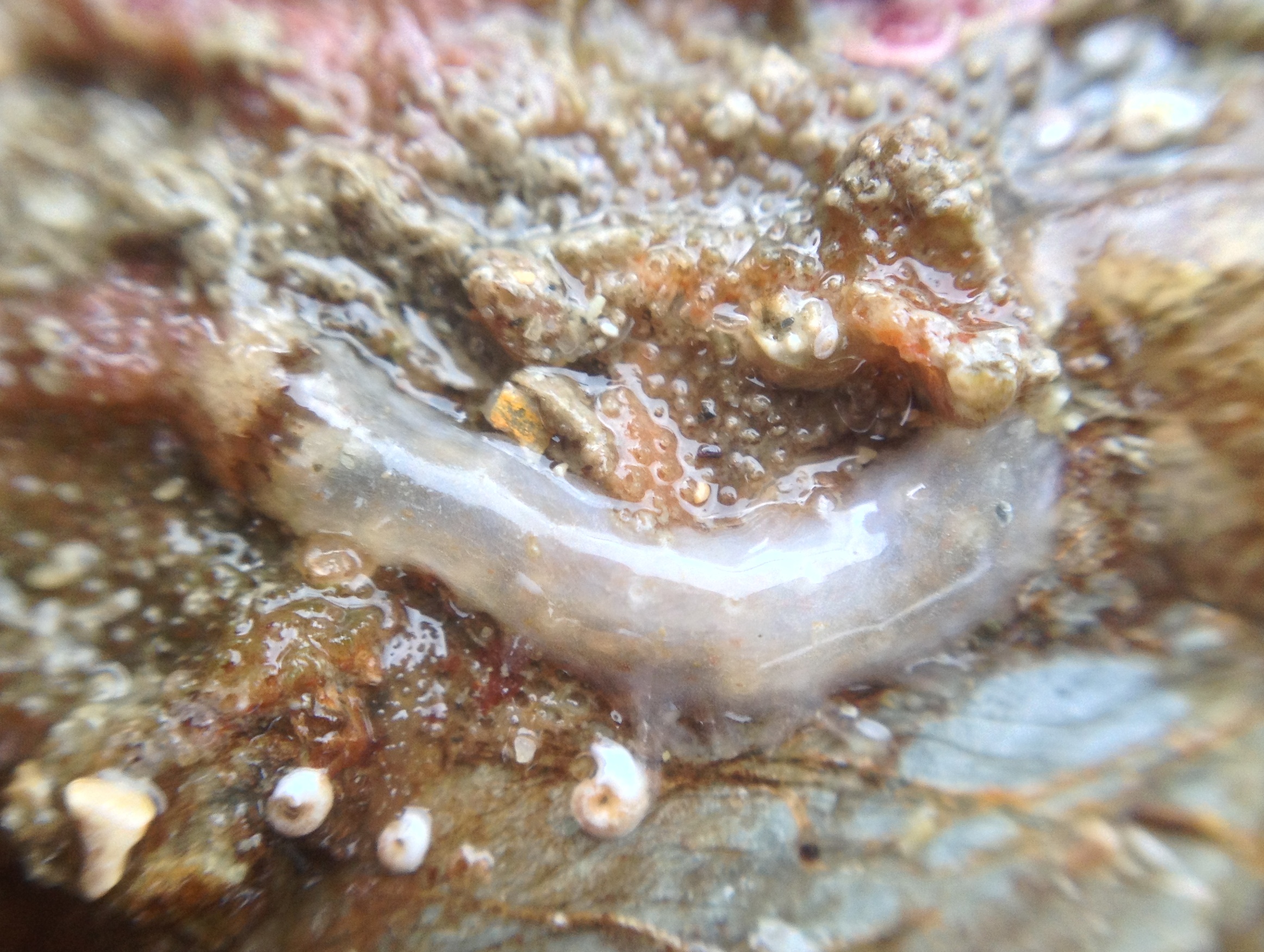
The rock around Falmouth is very soft in places, and when turning over large stones, sometimes they break and reveal interesting things (I have posted previously about the high density of worms in rocks). I recently had another rock crumbling on Castle Beach and I noticed something unusual-looking slipping away in its burrow. A Sipuncula (‘peanut worms’) or Echiura (‘spoon worms’) I thought, something not featured in any old guide anyway, so I browsed David Fenwick’s aphotomarine site where I quickly found the suspect: the Spoon worm Thalassema neptuni. The Echiura are recognised as a separate Phylum in most books, but recent research has revealed that they are not as special as they look: they are actually ‘ordinary’ Annelid worms (see this Open Access paper):
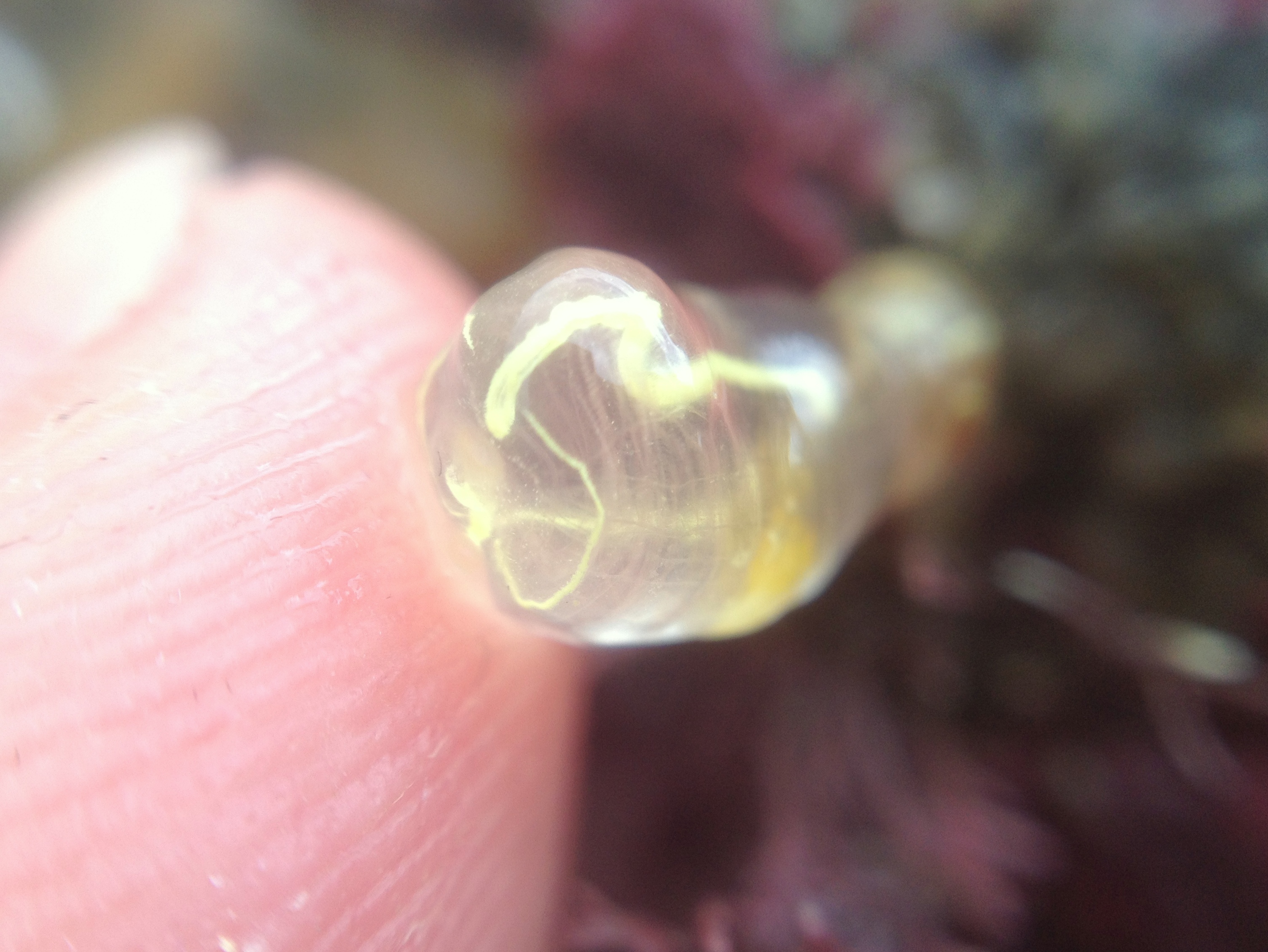
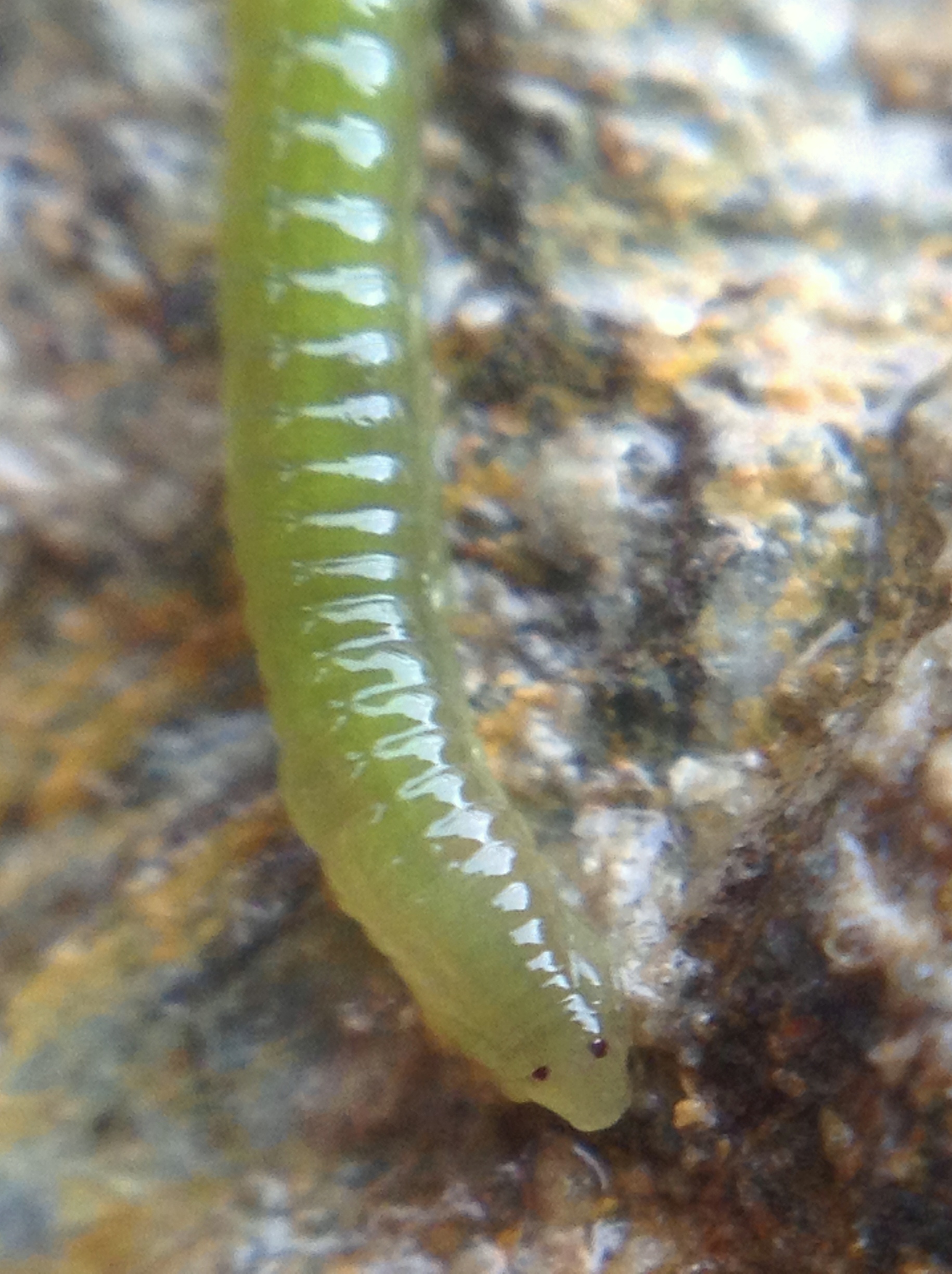
The diversity of life within rocks is actually quite surprising. I have not taken a good look at all the types of worms yet, but this one stands out: a tiny Green leaf worm Eulalia viridis (looks like a sock puppet):
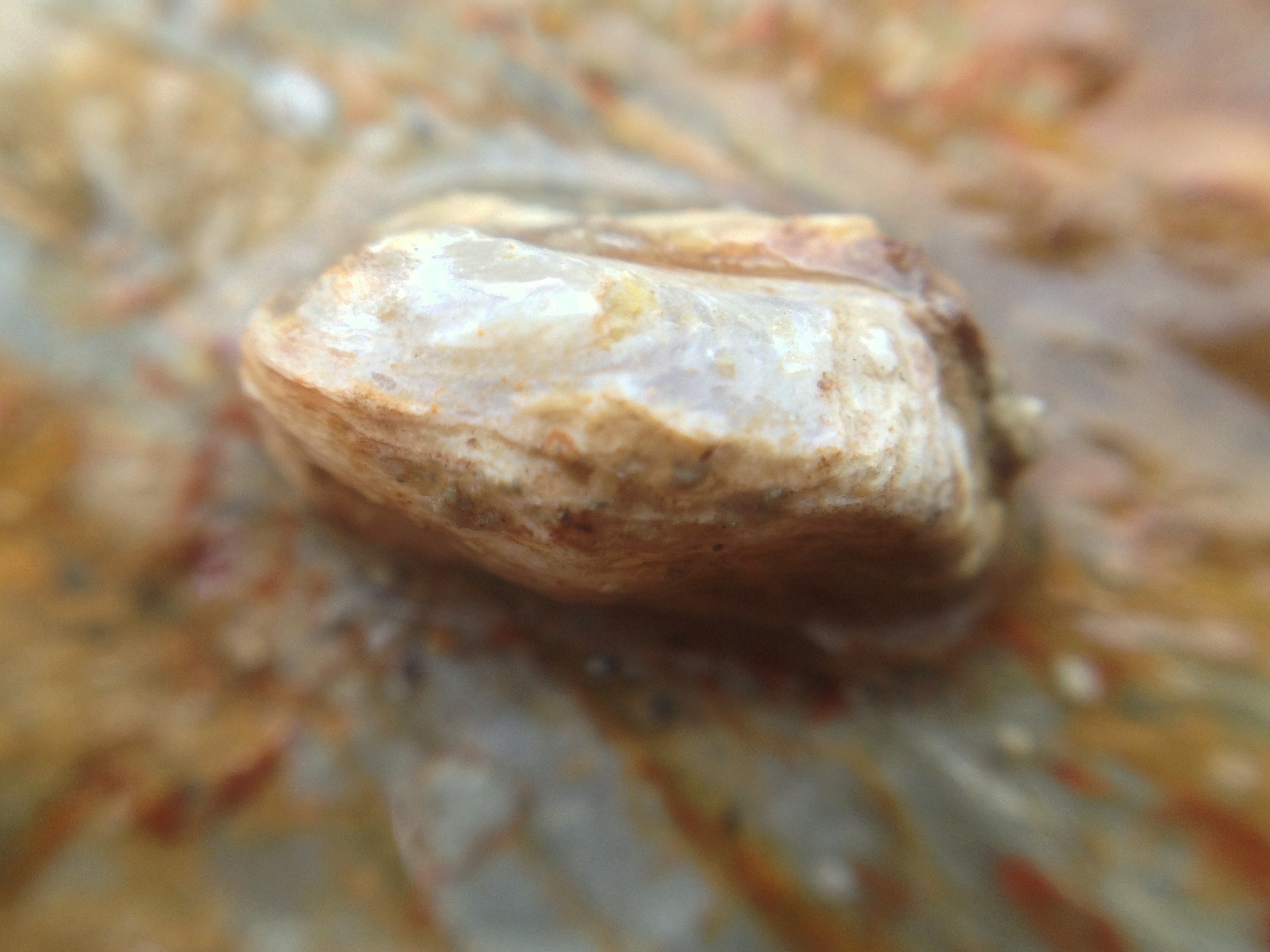
The boring bivalve Wrinkled rock borer Hiatella arctica (a juvenile):
And even a small Sea cucumber:
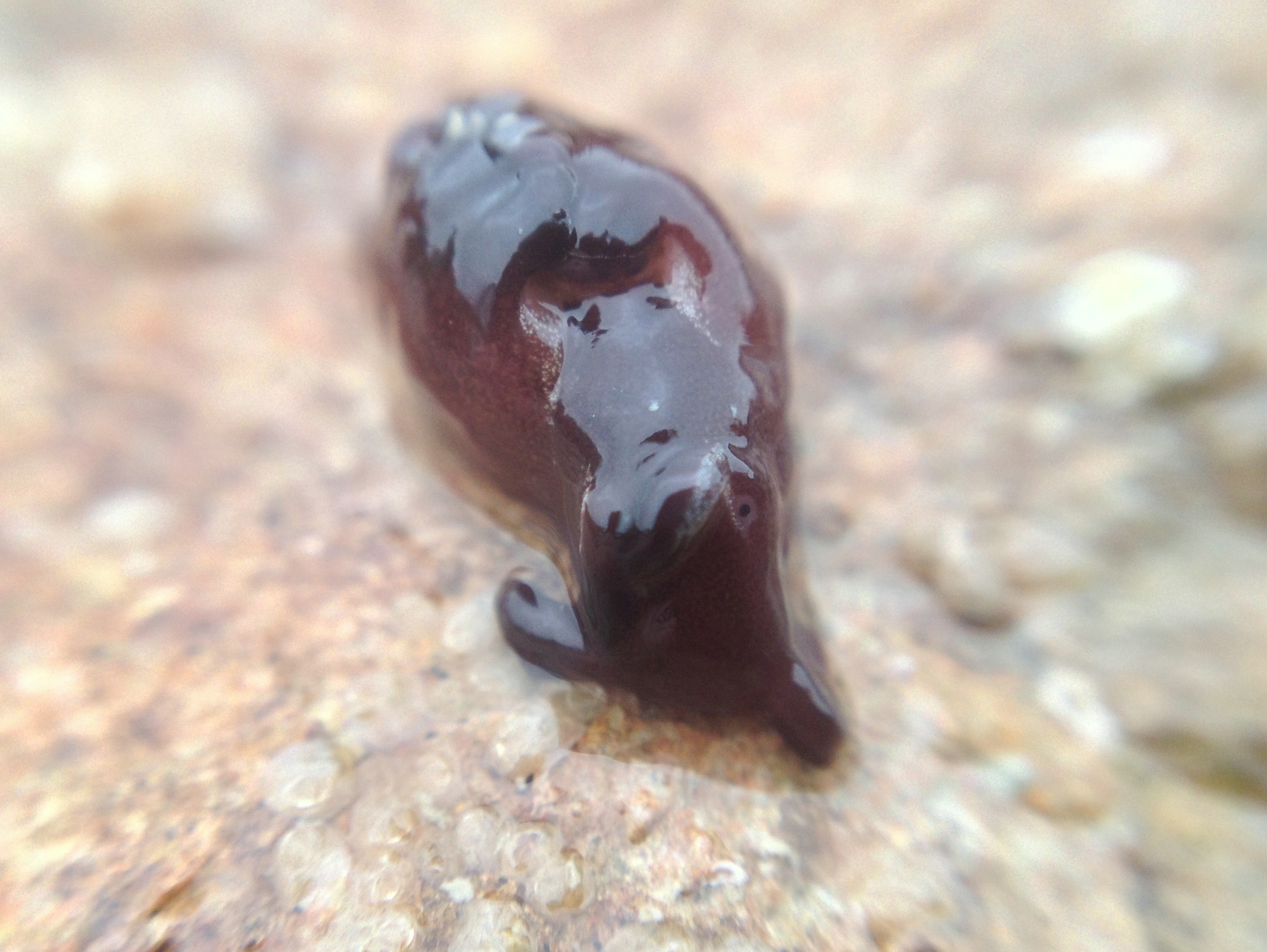
Perhaps I should make a list of all the species living in the rock. Finally, on the rock surface, I sighted a small Sea hare Aplysia punctata for the first time in Cornwall:
miniature species
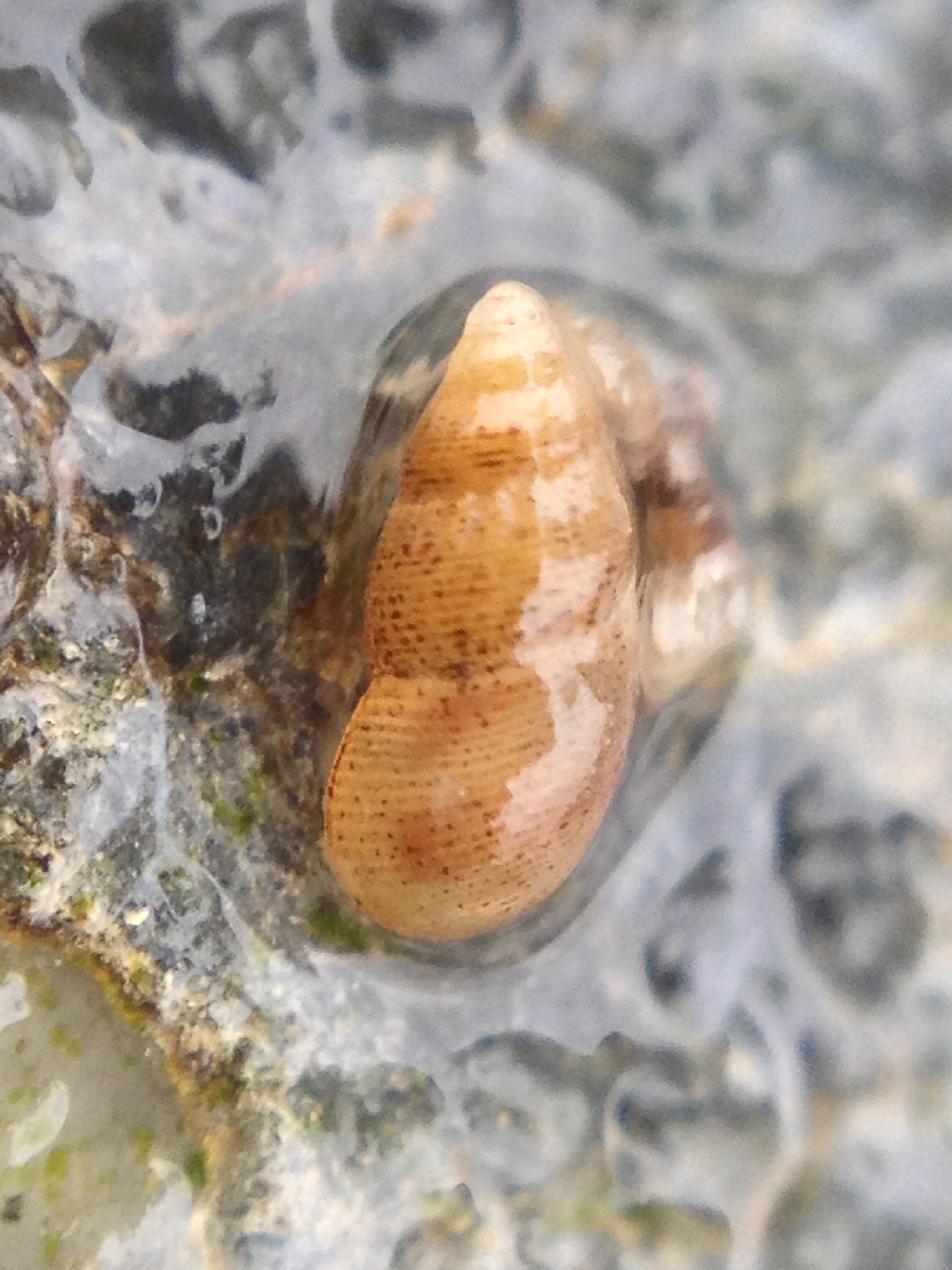
I usually head down straight to the lowest reaches of the shore when rock pooling, but when there is a neap tide and a lot of inshore wind as there was this weekend, you have to make do with turning rocks higher up the shore. Although biodiversity is lower, there are some species that are only found there (see for instance this recent post) and so it is actually nice to have a look there for a change. The very first rock turned over actually had a couple of interesting inhabitants underneath it. Another lifer, the tiny gastropod mollusc Onoba semicostata (surrounded by a couple of even tinier Rissoa parva), very quickly identified by members from the British Marine Mollusca facebook group:
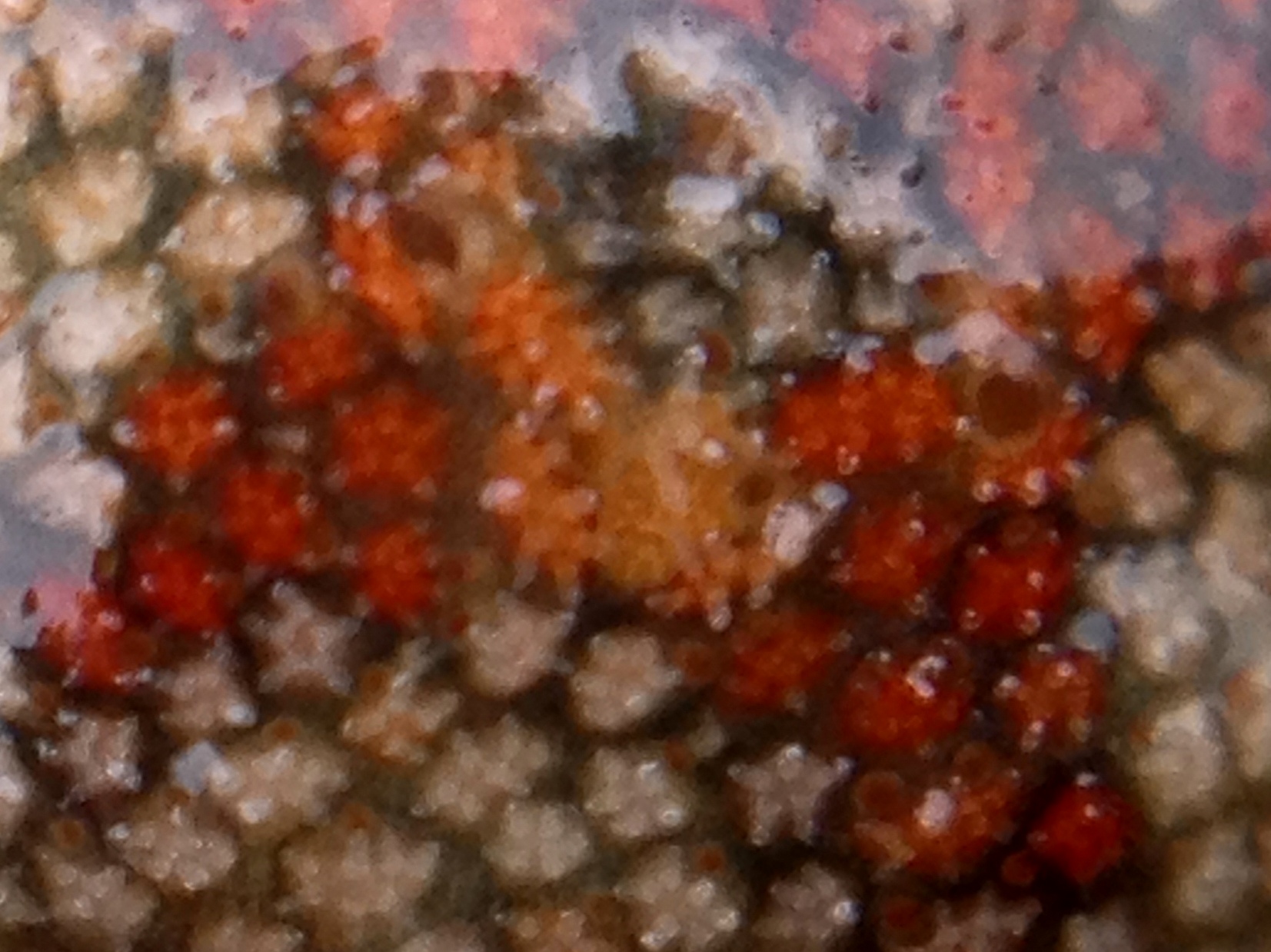
The same rock had a number of the tiny (< 1 cm) Cushion star species Asterina phylactica on it as well. It is prettier than the common Cushion star Asterina gibbosa (one of my favourite aquarium species), but perhaps a bit too small to be an option for the tank.
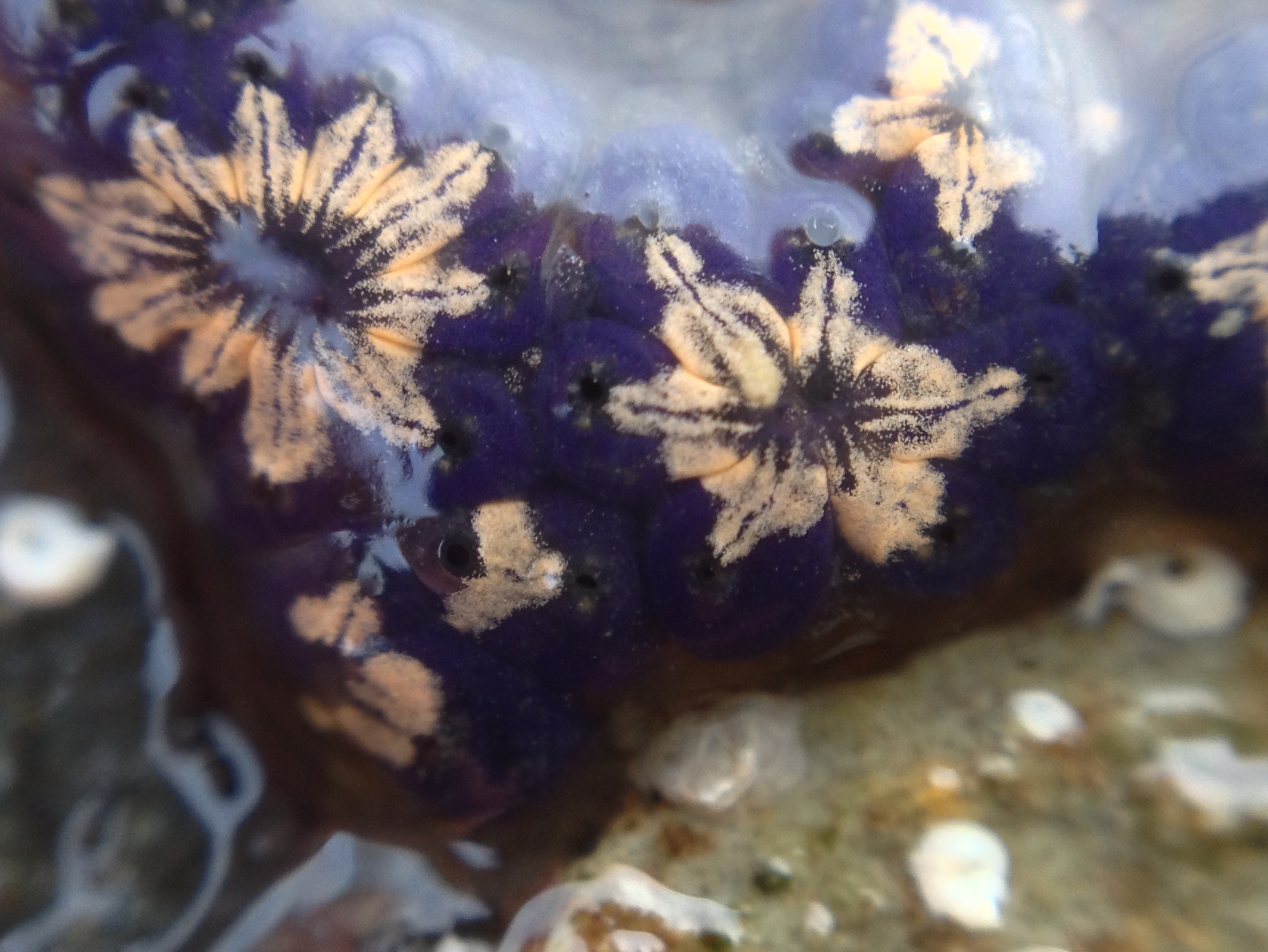
One other beautiful species, the colonial tunicate Botryllus schlosseri, this is a nice blue/purple one:
lifers
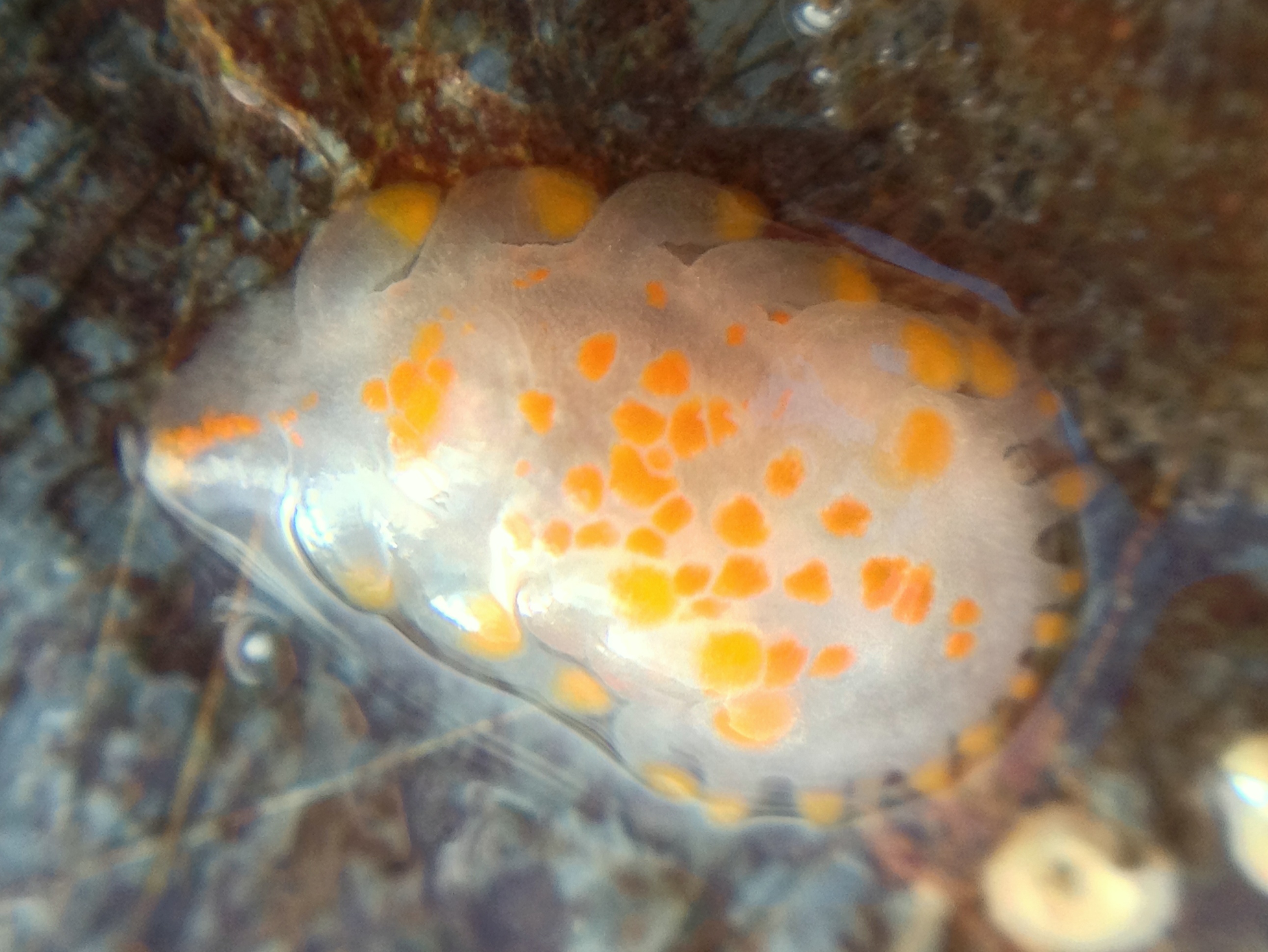
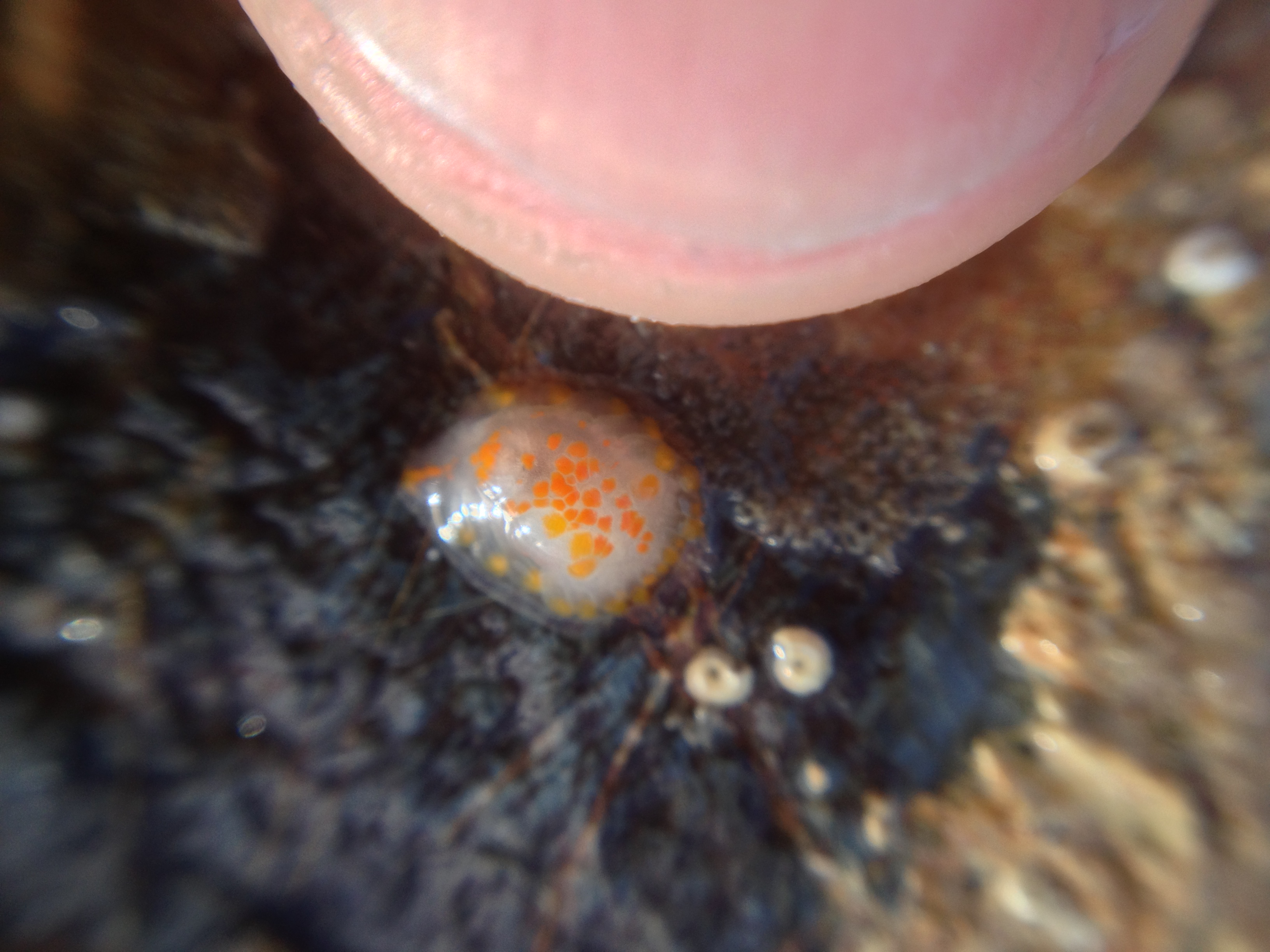
Last weekend we headed out to the rock pools inbetween Gyllyngvase (‘Gylly’) beach and Swanpool Beach (very close to the usual Castle Beach spot). Very low tides and lots of sun: perfect! As always there were some critters about that I had not seen before. An Orange-clubbed sea slug Limacia clavigera; quite small as the second picture shows:
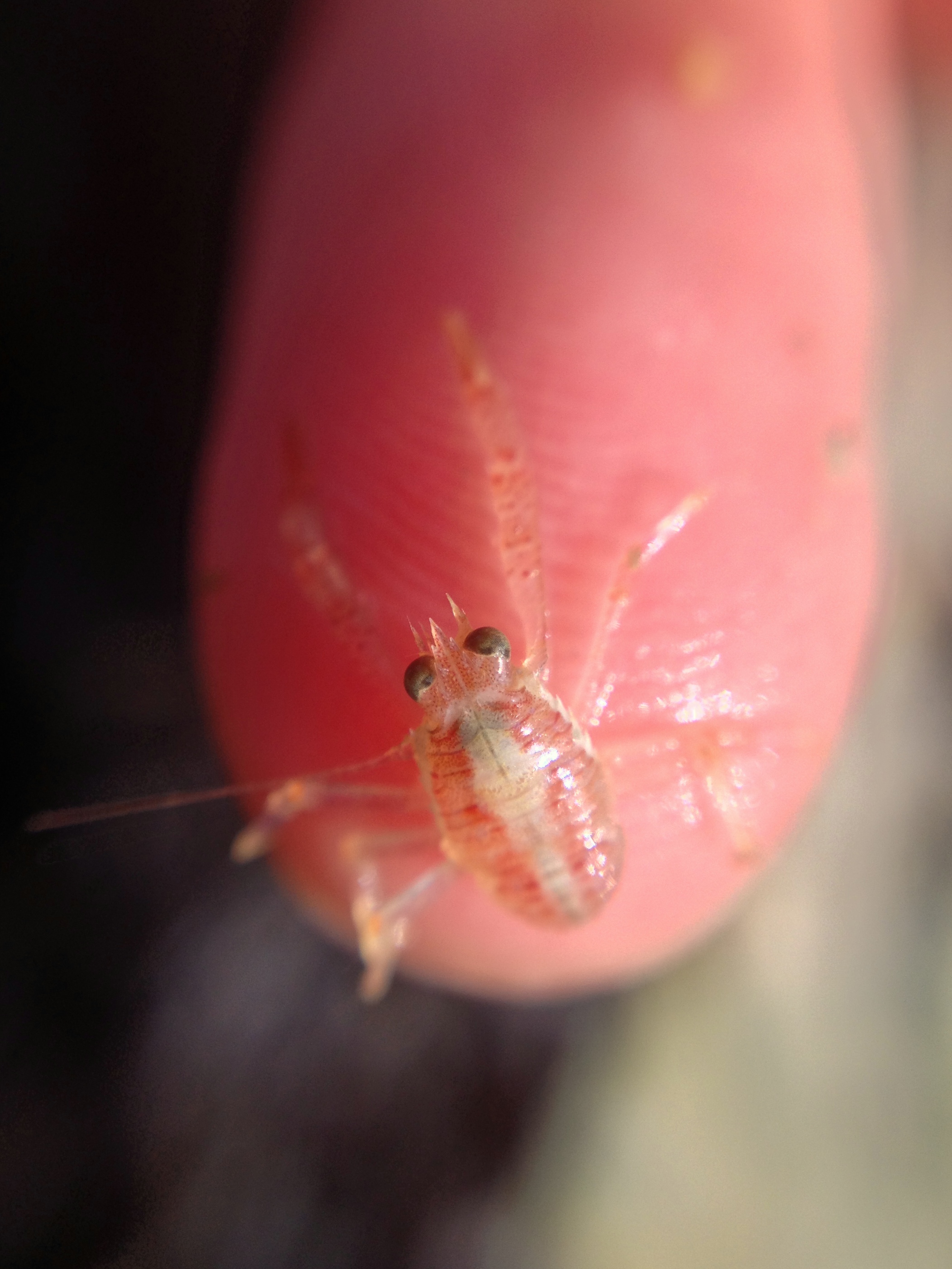
Another tiny critter, a juvenile Squat lobster (don’t know which species):
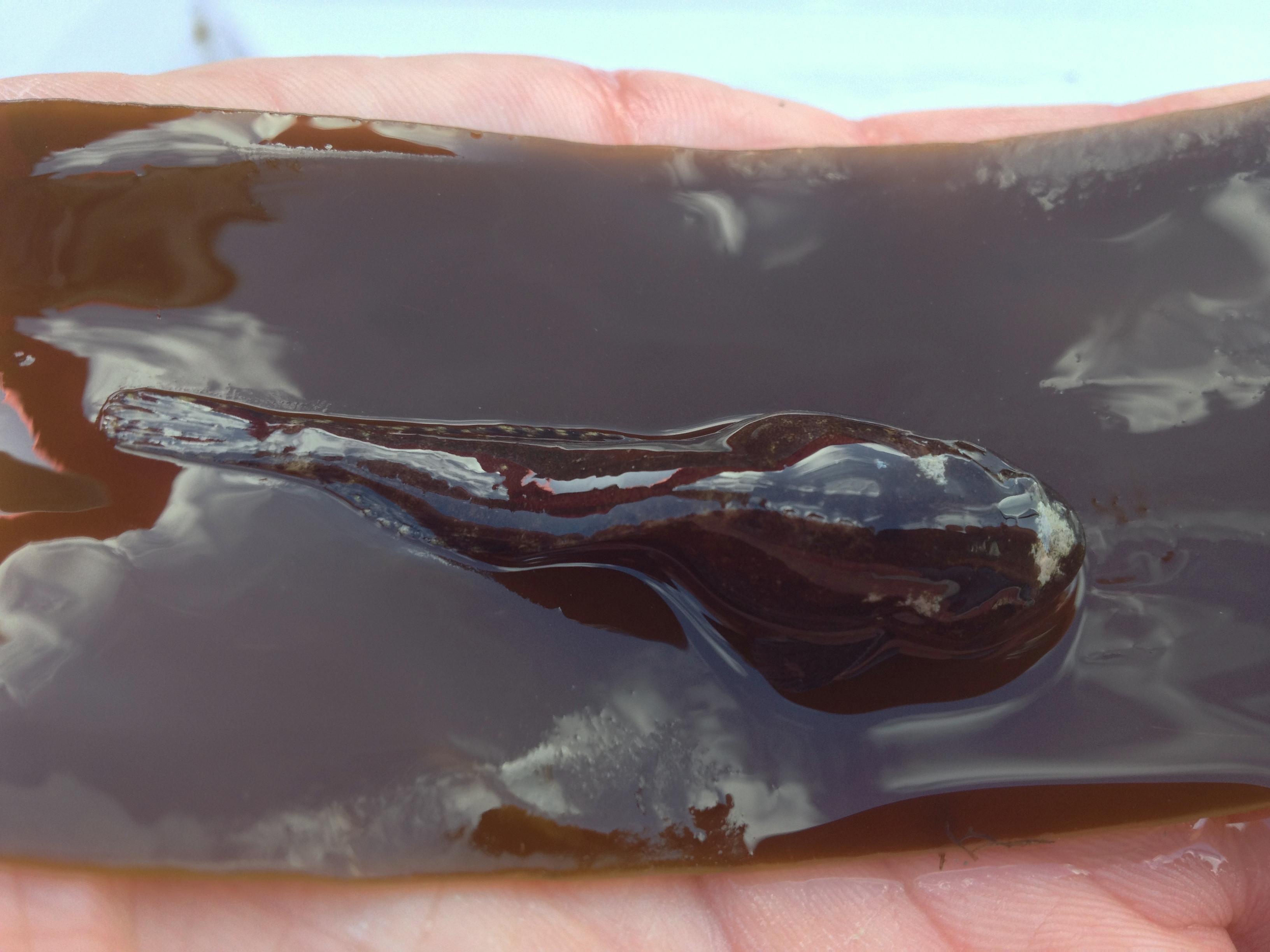
A very cool find: a Montagu’s sea snail Liparis montague. This small fish is scaleless and has a sucker on its belly (like the Clingfish). it looks a bit like a tadpole:
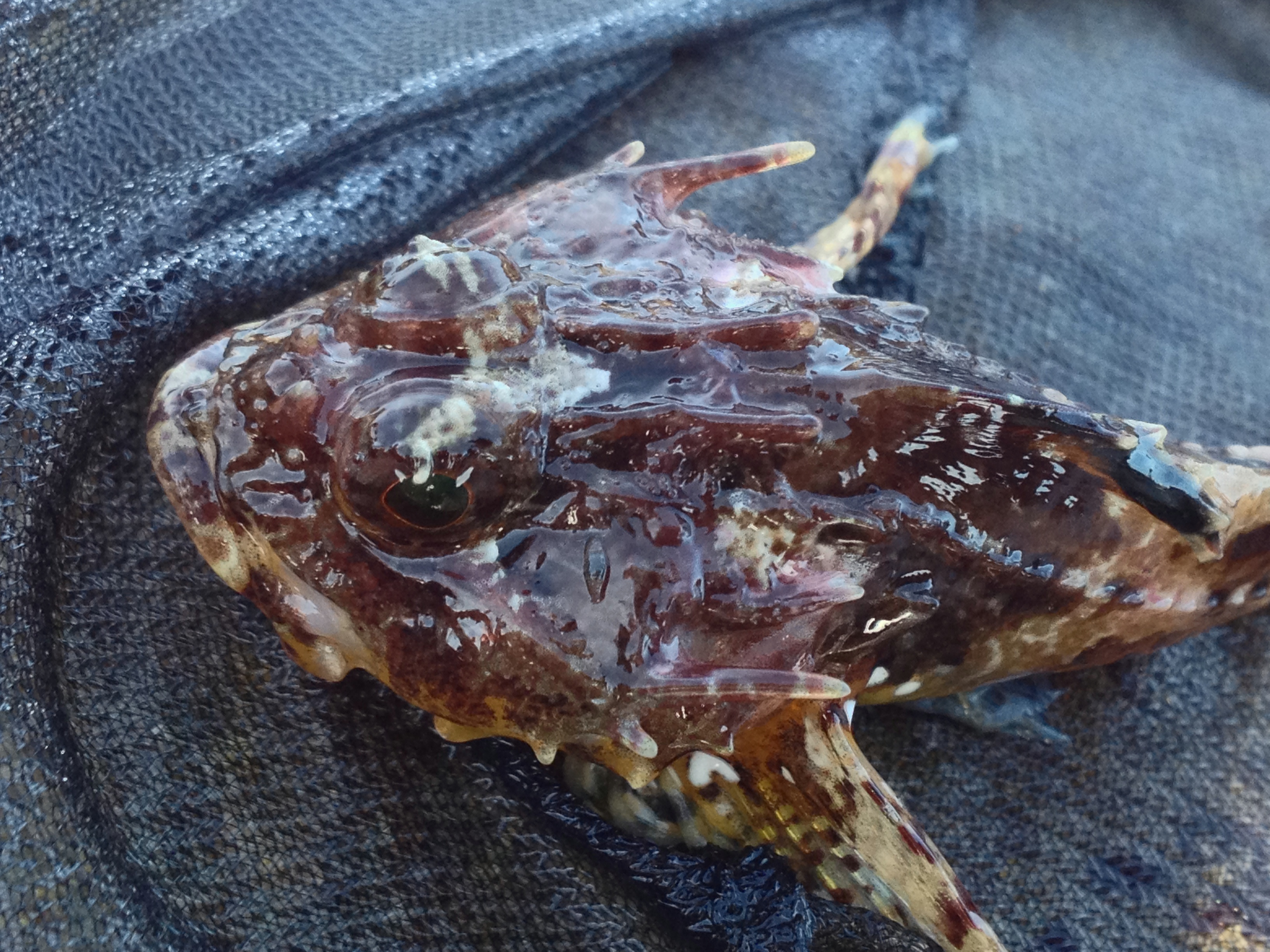
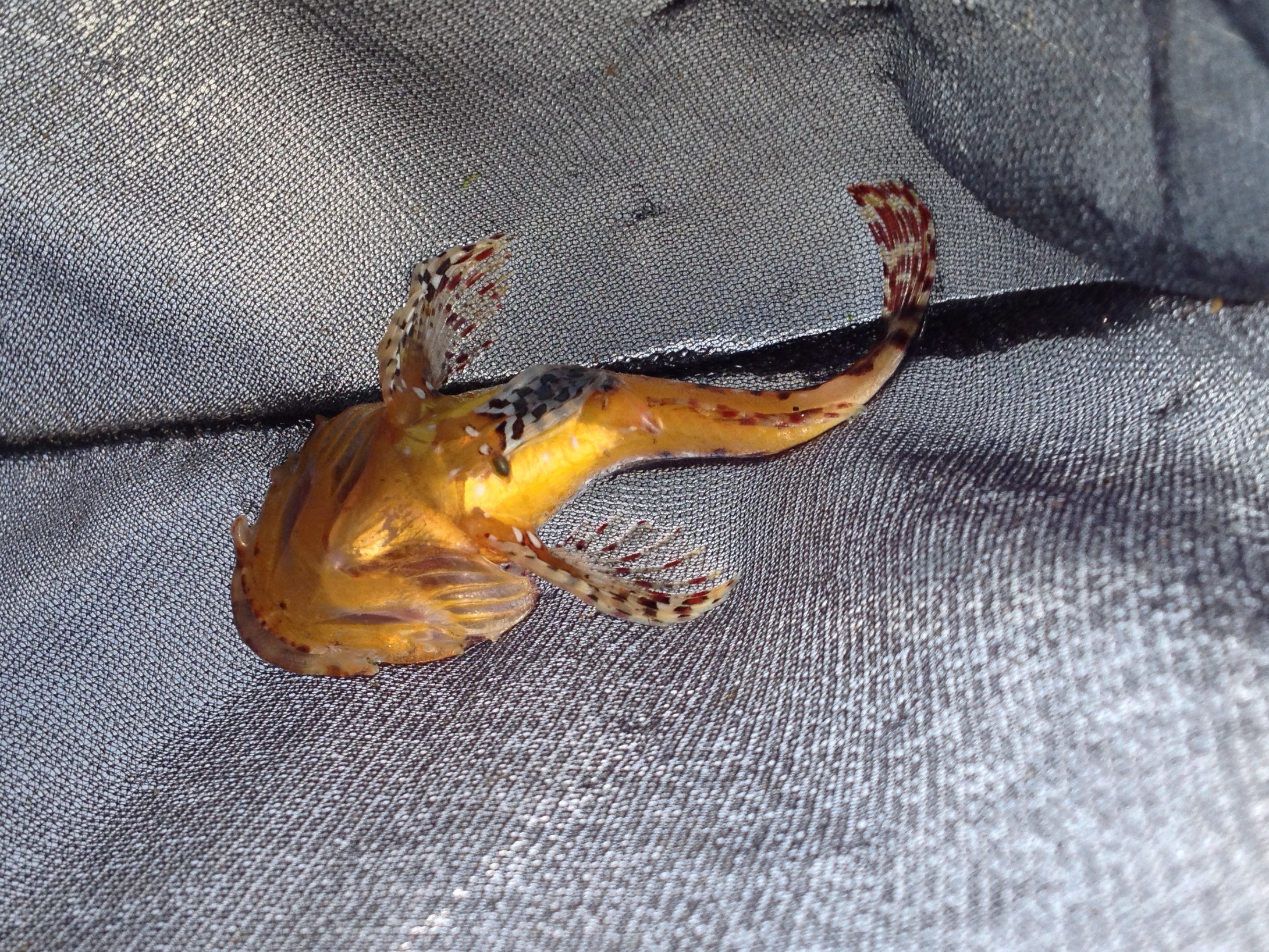
A species I had seen darting off once or twice but had never caught is the Sea scorpion Taurulus bubalis (I have found eggs before):
This species is beautiful but voracious (and so I did not want it for my tank); check out the size of its mouth:
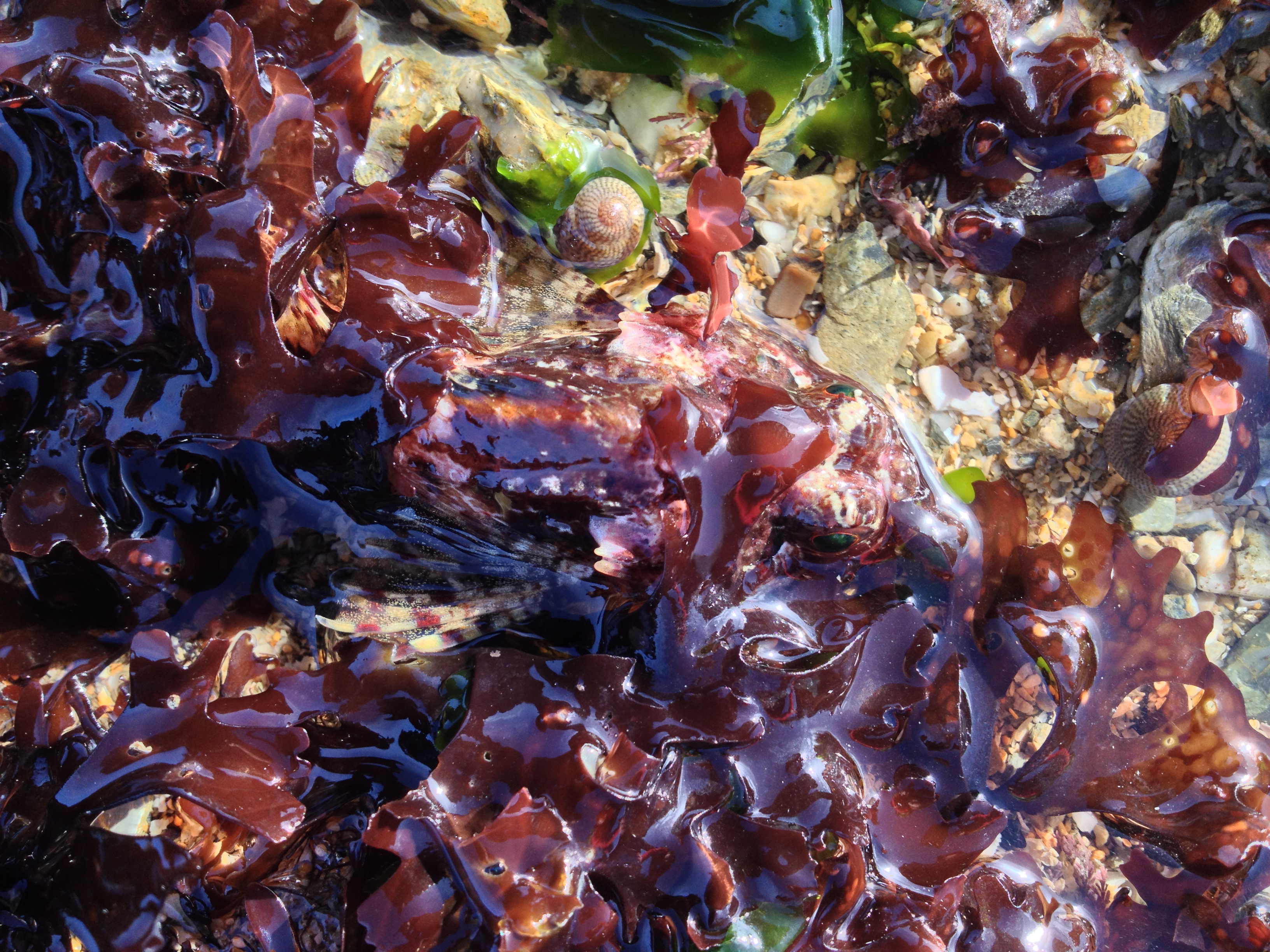
It is expertly camouflaged as well:
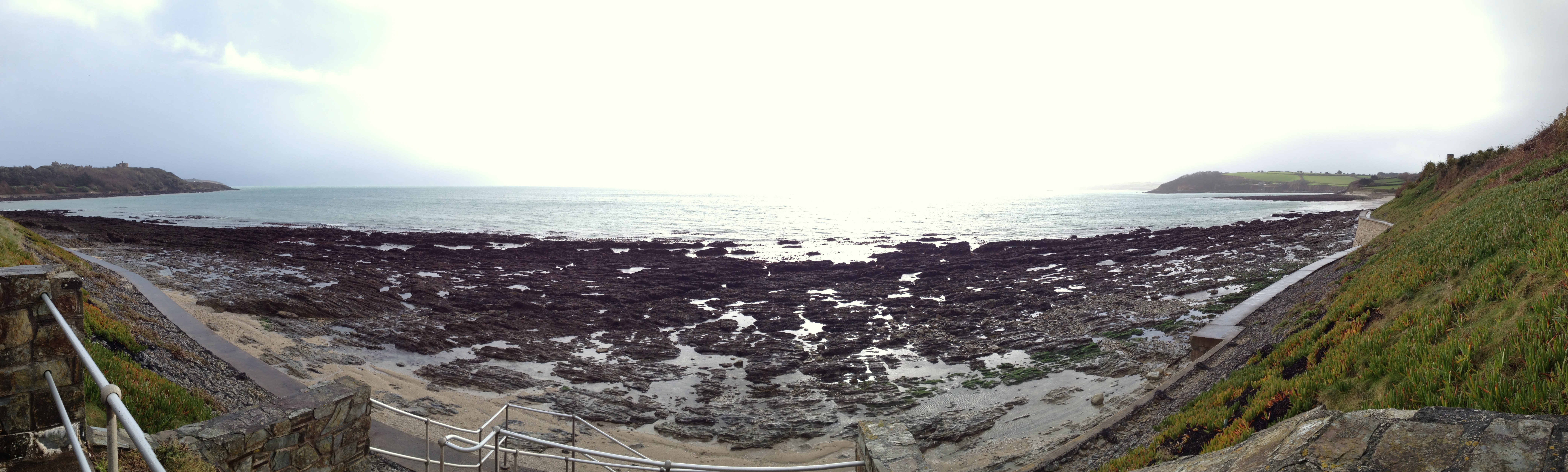
a very low tide at Castle beach
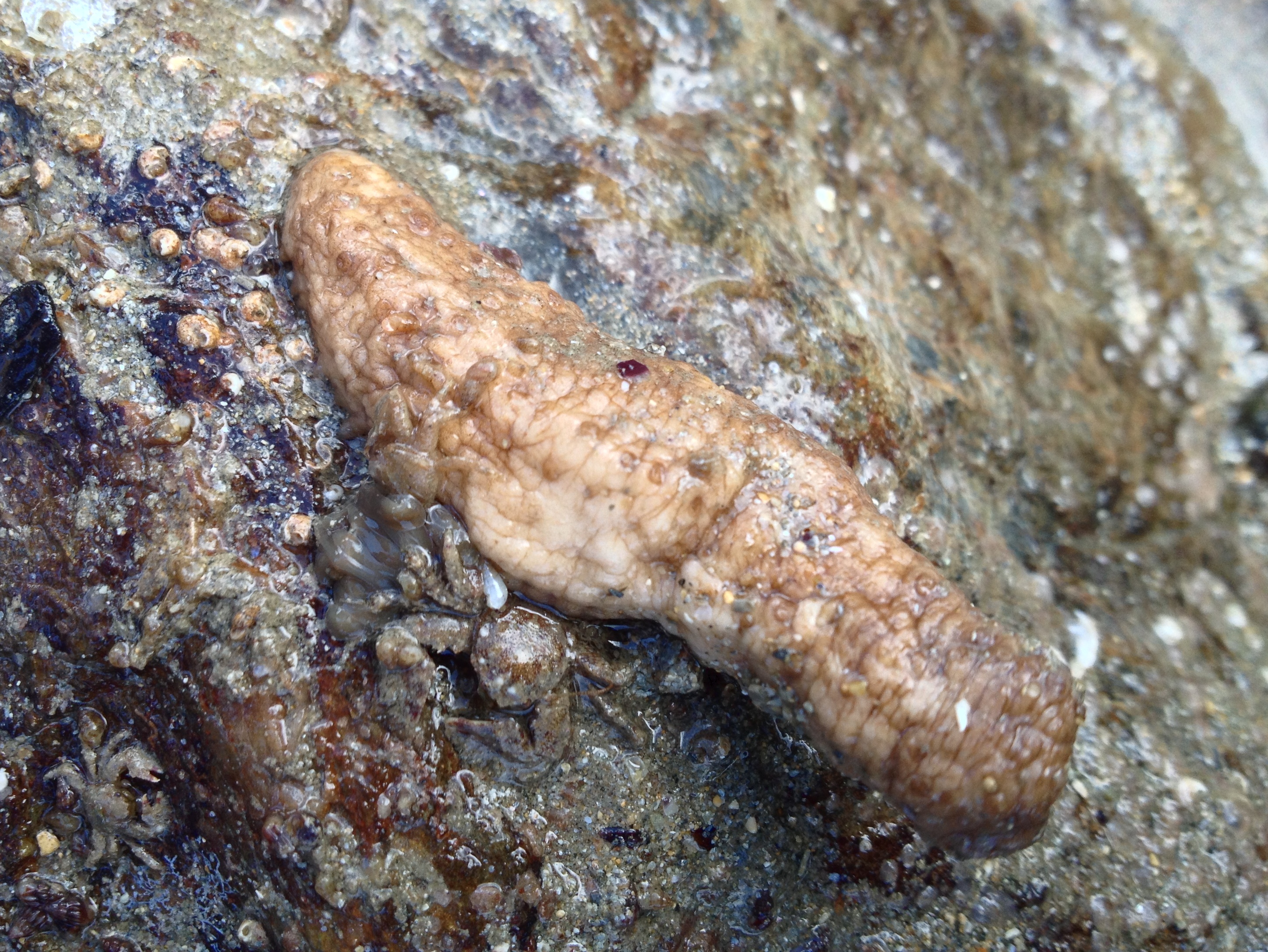
There were exceptionally low tides this weekend so I was quite stoked to get out and find some new species in what is normally the subtidal. It was raining and even hailing quite a bit but we were on a mission! Fortunately, the sun came out later and my jeans could dry up. Sea urchins are not common in the rock pools that are usually accessible at low tide, but they are quite common a little deeper. The same goes for Sea cucumbers. These are hardly ever pretty but the following species is ugly even in holothurian terms. According to David Fenwick it is a Pawsonia saxicola (I have seen a prettier incarnation before):
I noticed a little gastropod which looked vaguely familiar on a Pawsonia when checking my pictures. I could identify it as a Eulimida species in my old Poppe and Goto ‘European Seashells’ book, which also mentioned that many species in this family parasitize echinoderms so that fitted. David Fenwick’s excellent site Aphotomarine has great pictures of pretty much all species occurring here in the Southwest, including a much better one of this Vitreolina philippi Melanella sp (identified through David’s correspondence with Jakov Prkic). David has also just launched a website dedicated to Stalked jellyfish: stauromedusa which looks amazing.
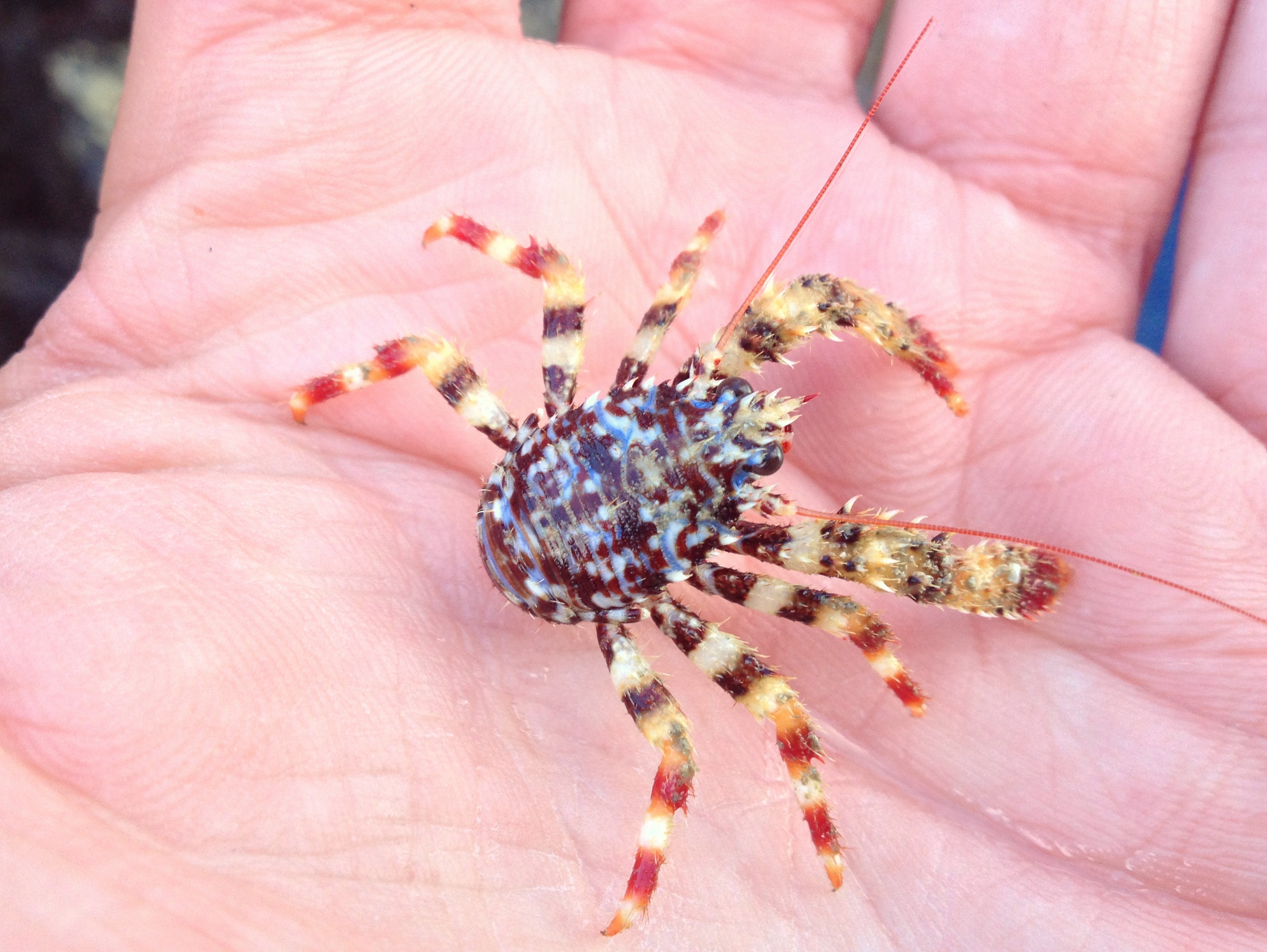
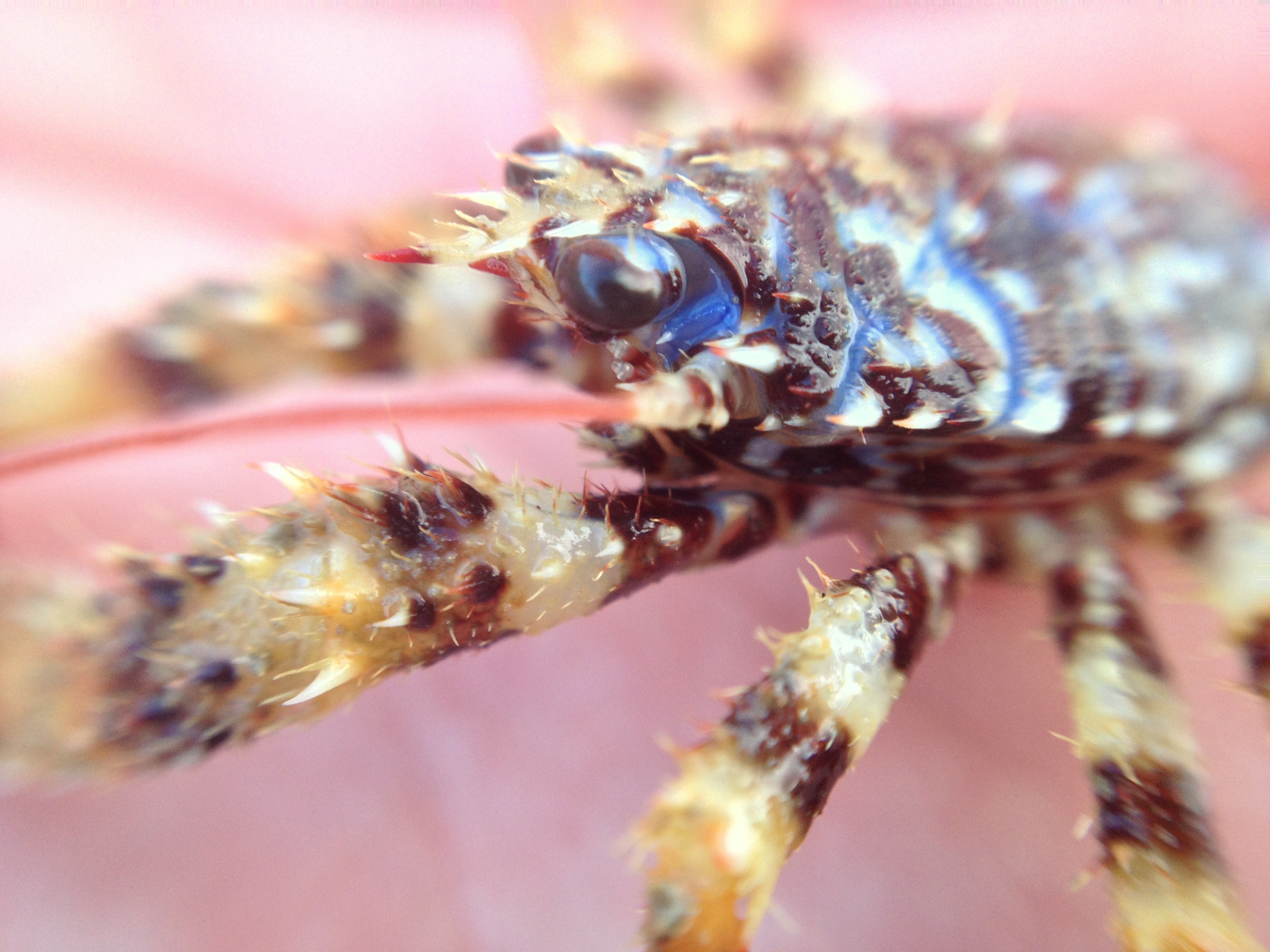
At the end of the ‘session’ I glanced something red, white and blue; a colour combination that I had seen only on photographs before. It was a single, juvenile Spiny squat lobster Galathea strigosa:
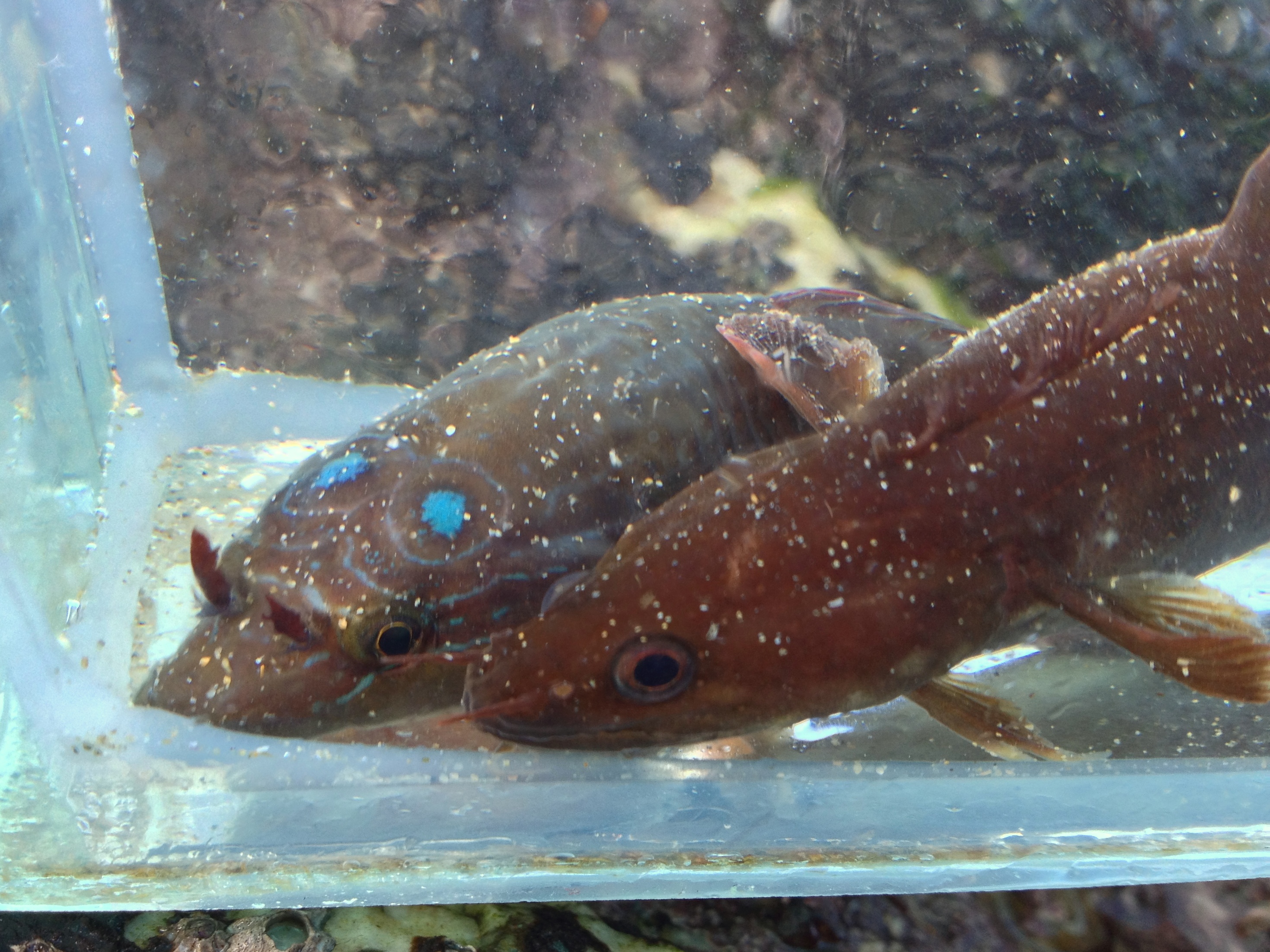
A lot of usual suspects were found as well of course, here a Cornish sucker Lepadogaster lepadogaster and a Shore rockling Gaidropsarus mediterraneus:
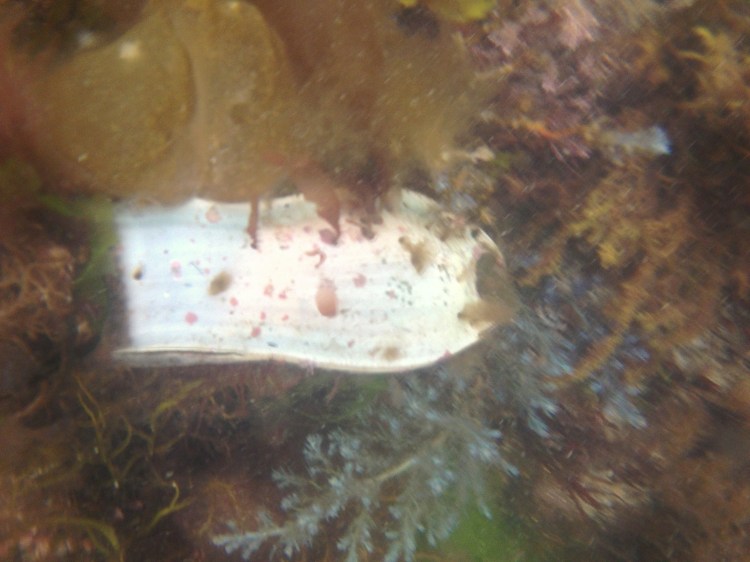
The rockling has a groove in front of its dorsal fin filled with hairlike fin rays that are continuously beating. Finally, not a very good picture but I’ve posted it because this is the longest animal in Britain: the Bootlace worm Lineus longissimus can grow up to 10 meters!
hairy crab
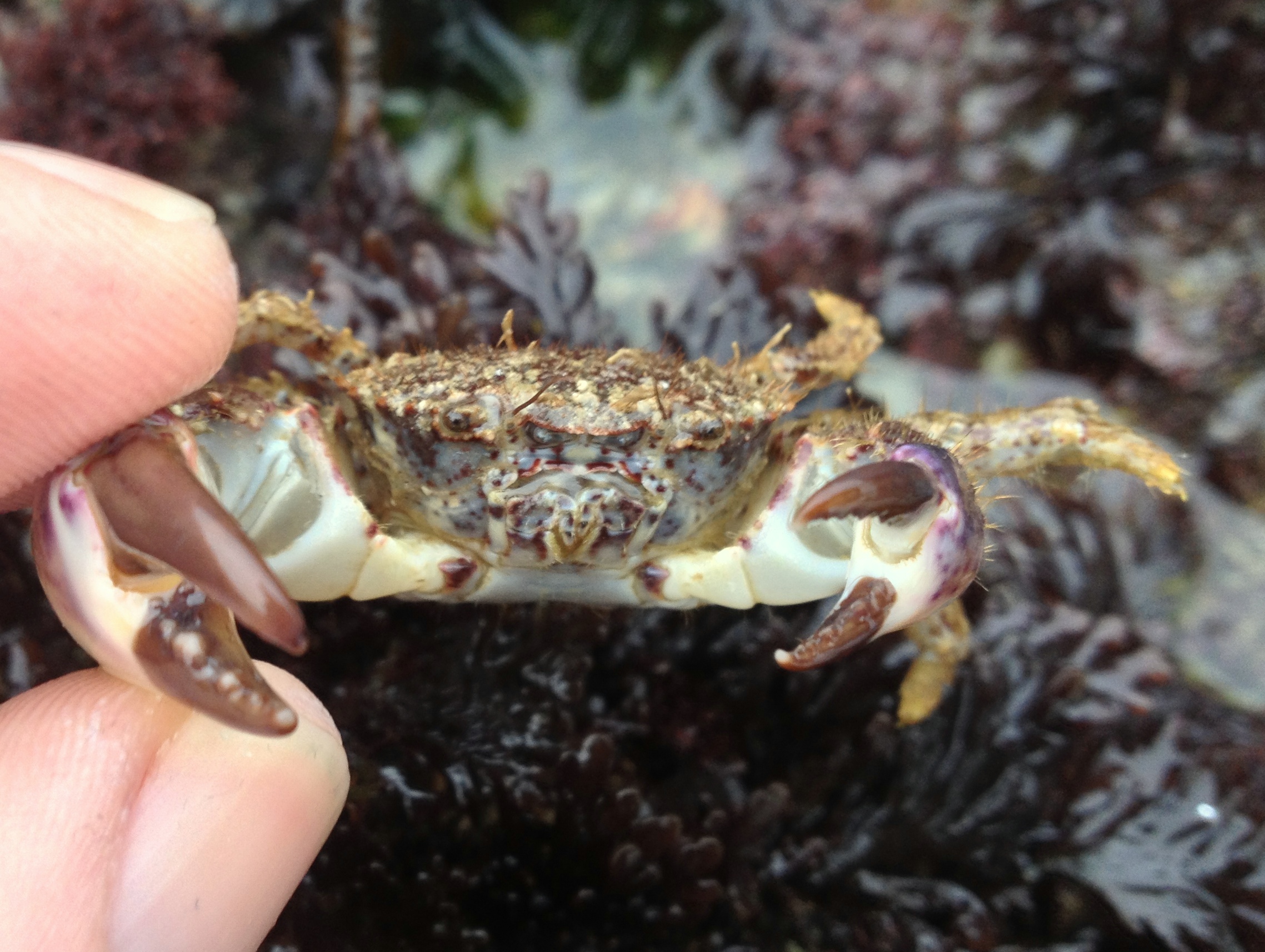
This weekend I stopped by Castle Beach in Falmouth to release some of my Snakelocks anemones (more about the aquarium in a next post…). Although the weather was bad, of course that did not prevent me from turning over some rocks. My curiosity was rewarded with another new find: a Hairy crab Pilumnus hirtellus. A beautiful little crab which is not uncommon but here it definitely is not as ubiquitous as the Furrowed and Edible crabs:
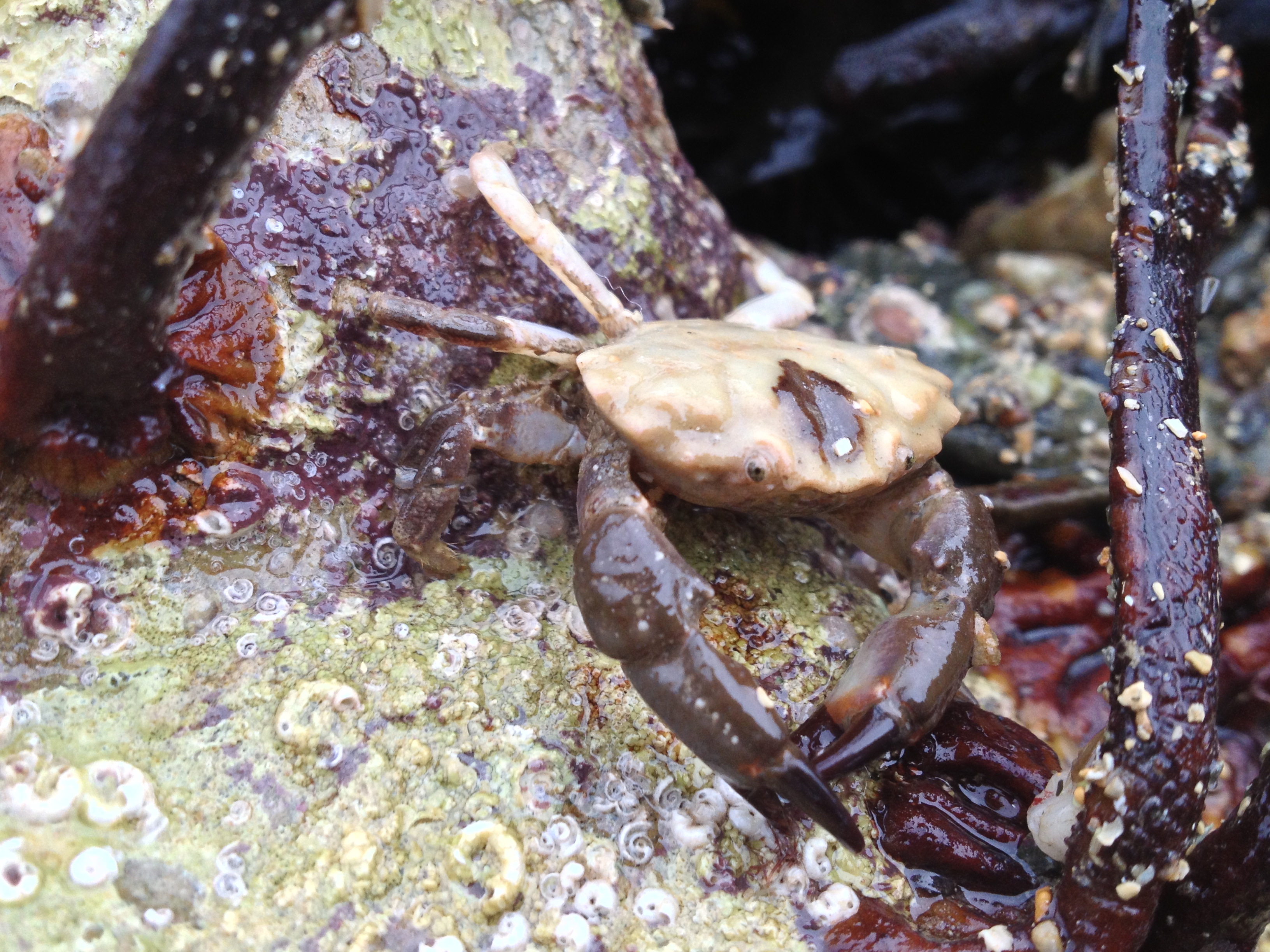
I also found a Furrowed crab Xantho incisus with unusual coloration (perhaps because it had moulted but I did not check):
sea gherkin
Another ‘lifer’ yesterday: a Sea gherkin Pawsonia saxicola, at Castle Beach in Falmouth. It is a small sea cucumber (a relative of the Cushion star next to it); a very cool find indeed!
The main aim though was to collect more snails to help out in the grazing project. This was pretty easy of course. I collected a couple more Painted top shells Calliostoma zizyphinum and many, mainly juvenile, Grey top shells Gibbula umbilicalis. I also picked up a beautiful small Spiny starfish Marthasterias glacialis; this fellow will go after the snails but as long as the predation is not too severe that will be OK, let’s see. Finally, using my little aquarium net, I went after some fish high up the shore and caught a tiny Two-spotted goby Gobiusculus flavescens. I need to catch a bunch more of those, hope to post about that soon
Three echinoderms
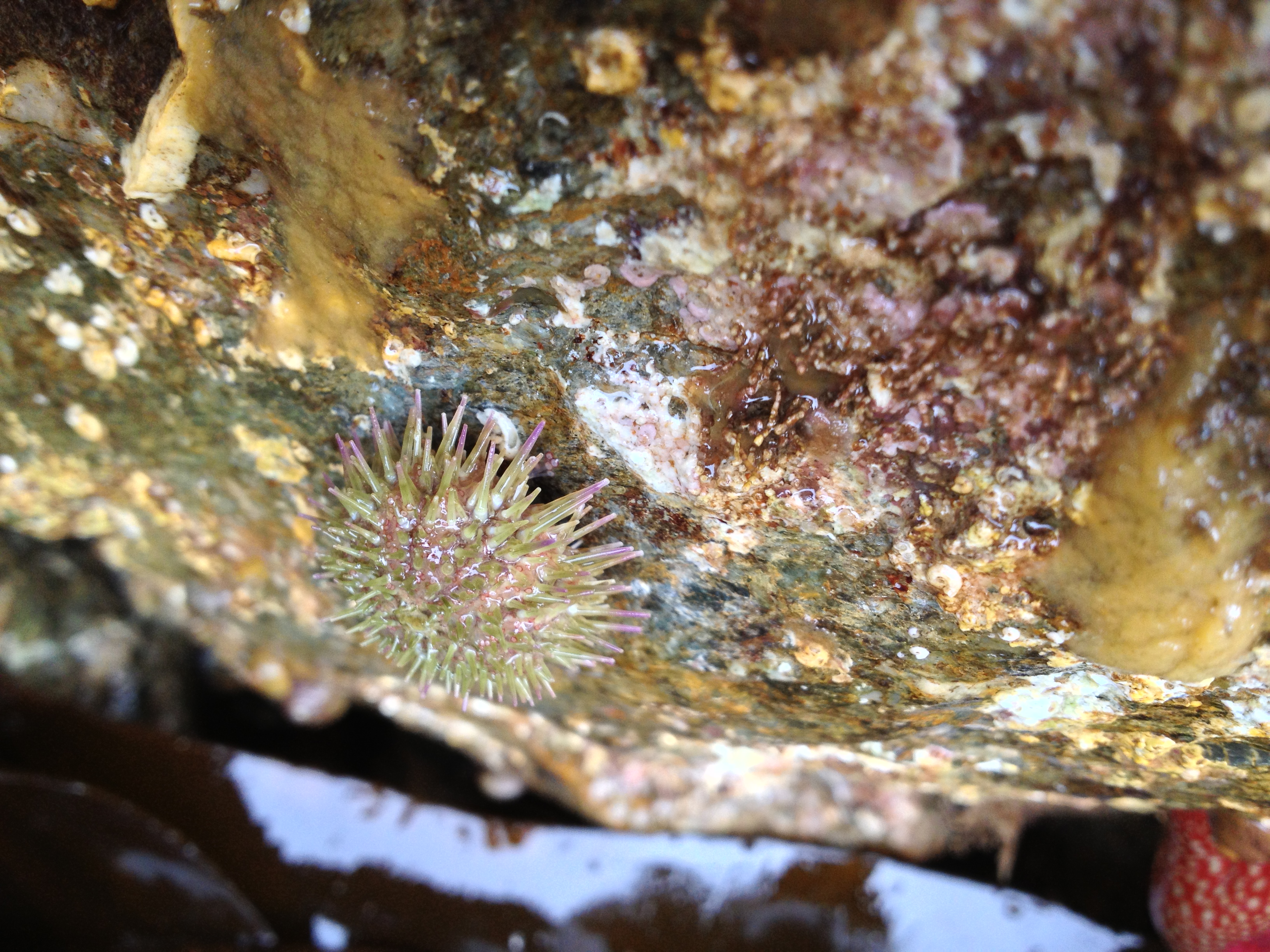
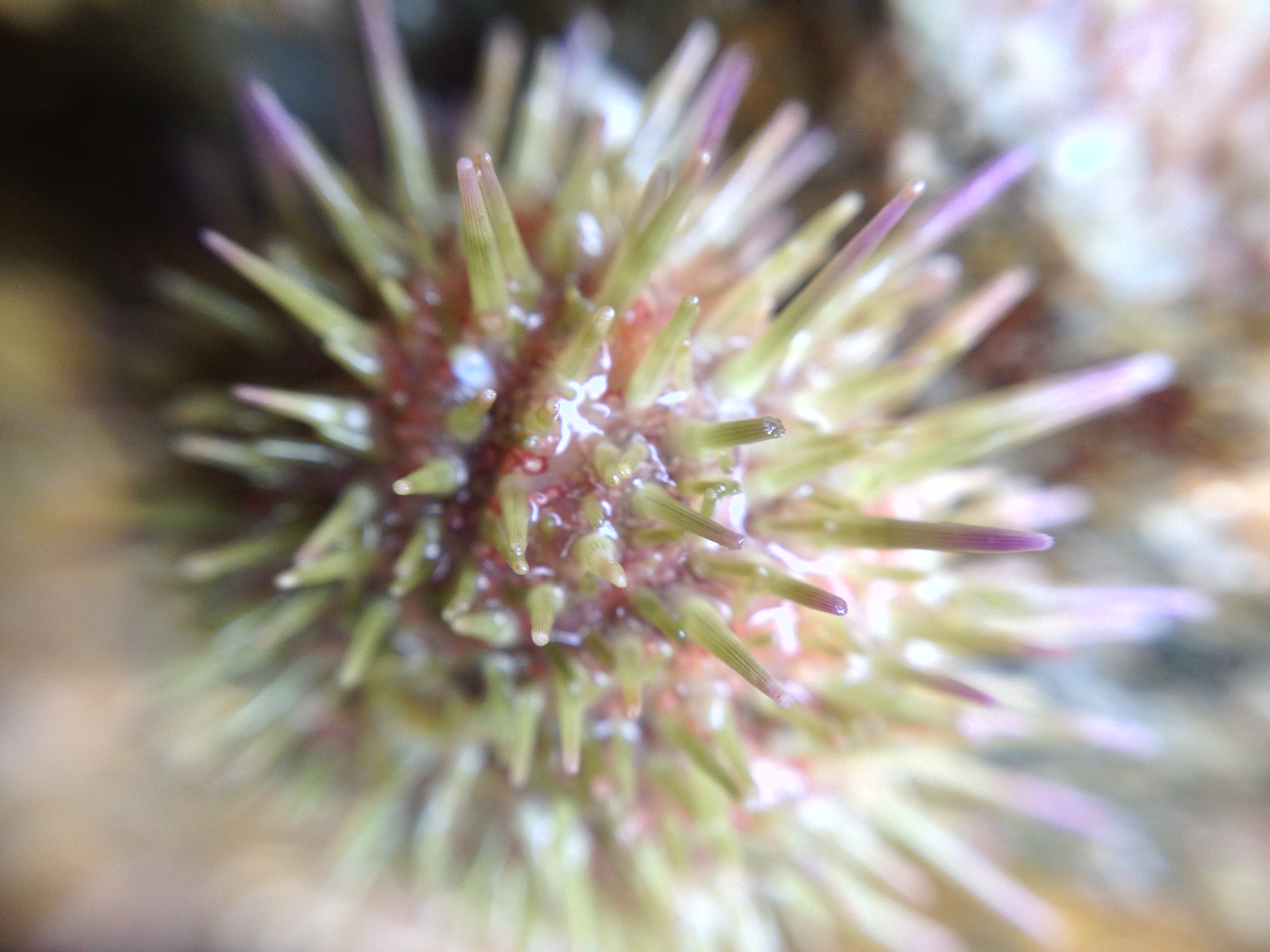
I have been traveling quite a bit over summer but now I am back and hope to soon kick start my aquarium (it just has sand and some cushion stars in it at the moment). I have already gone out rock pooling again a couple of times. For the very first time I have found a sea urchin at Castle Beach in Falmouth, a little Psammechinus miliaris:
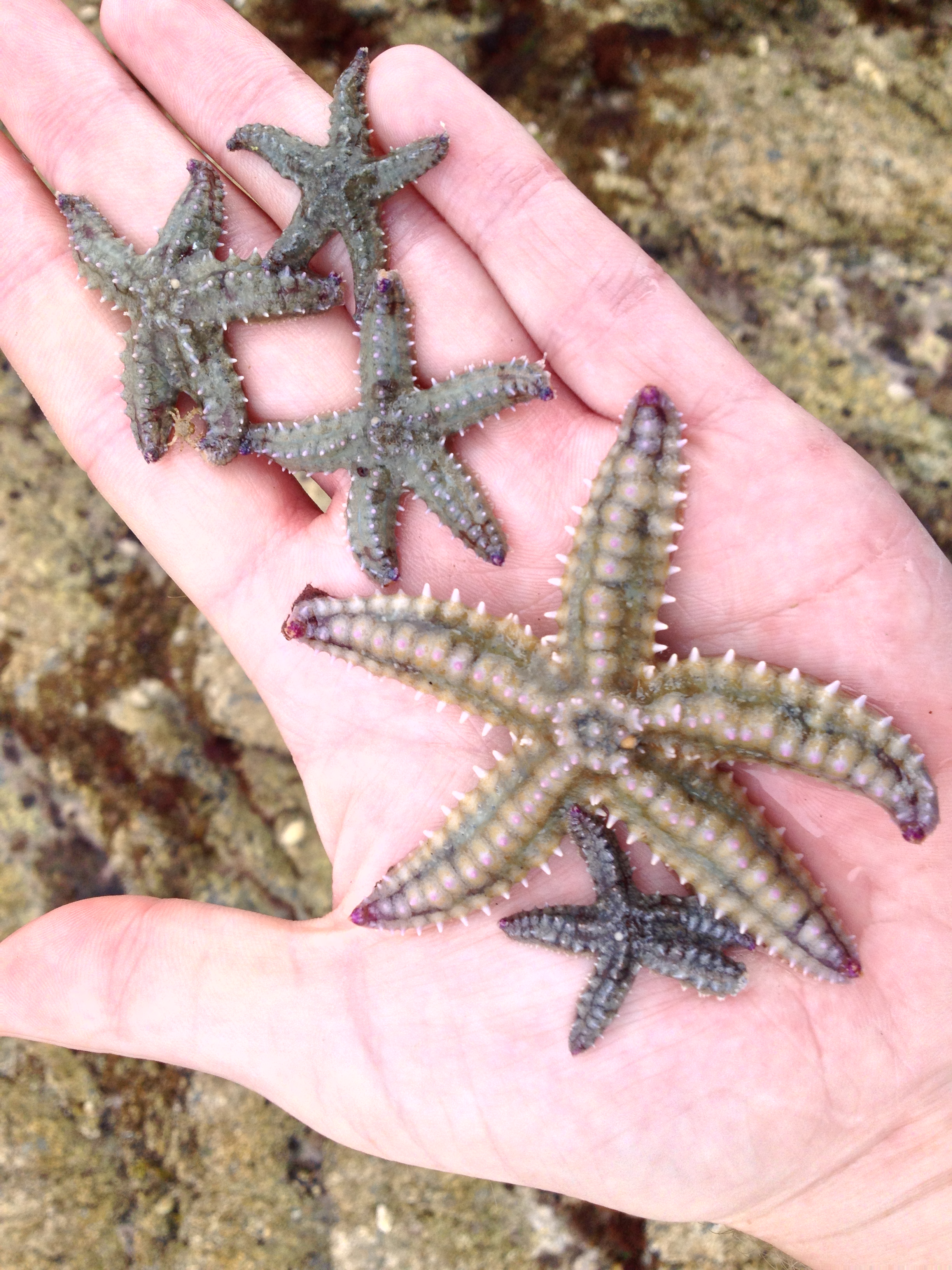
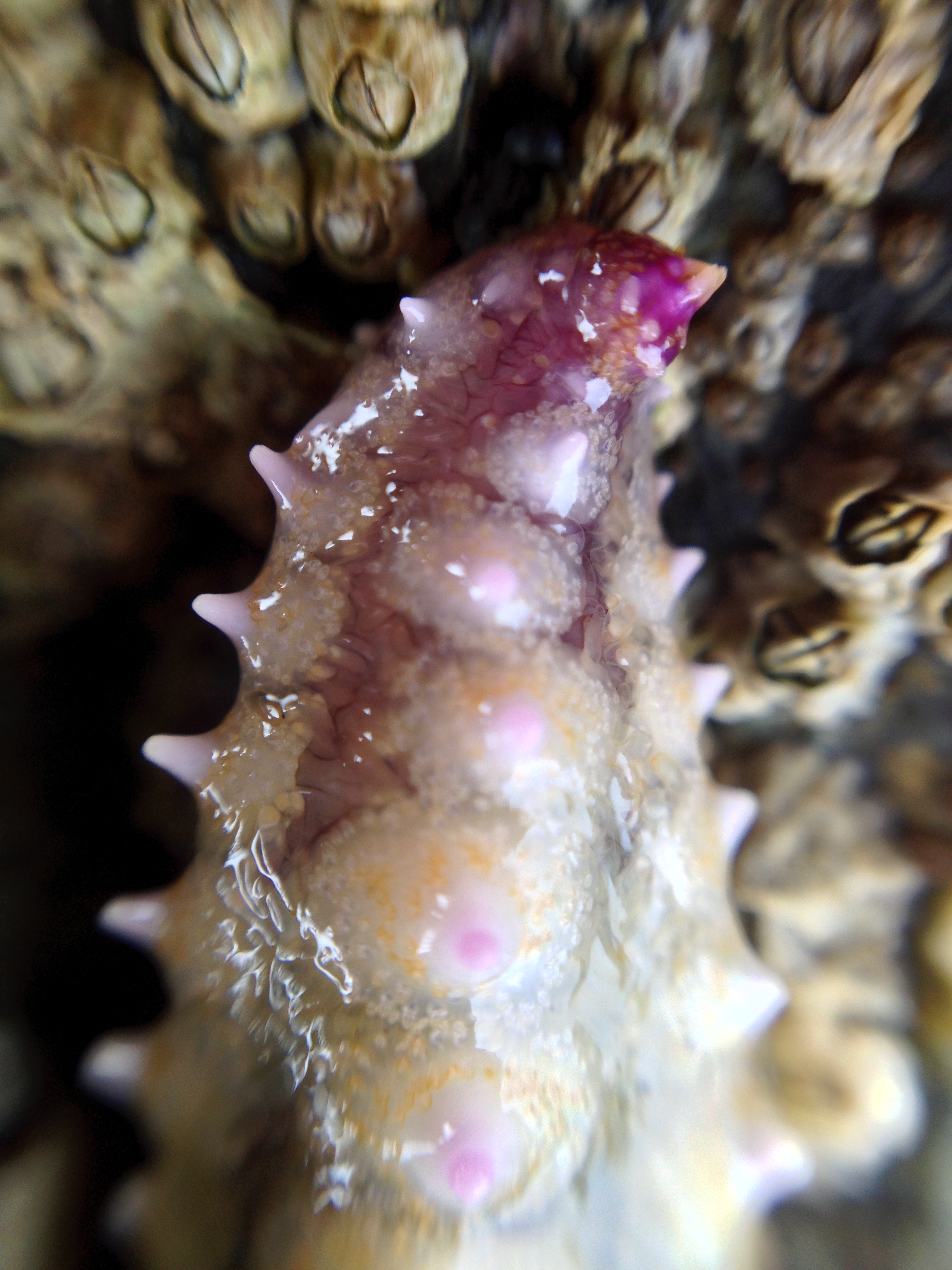
I found the Common starfish Asterias rubens and especially the Spiny starfish Marthasterias glacialis to be very common this time of year:
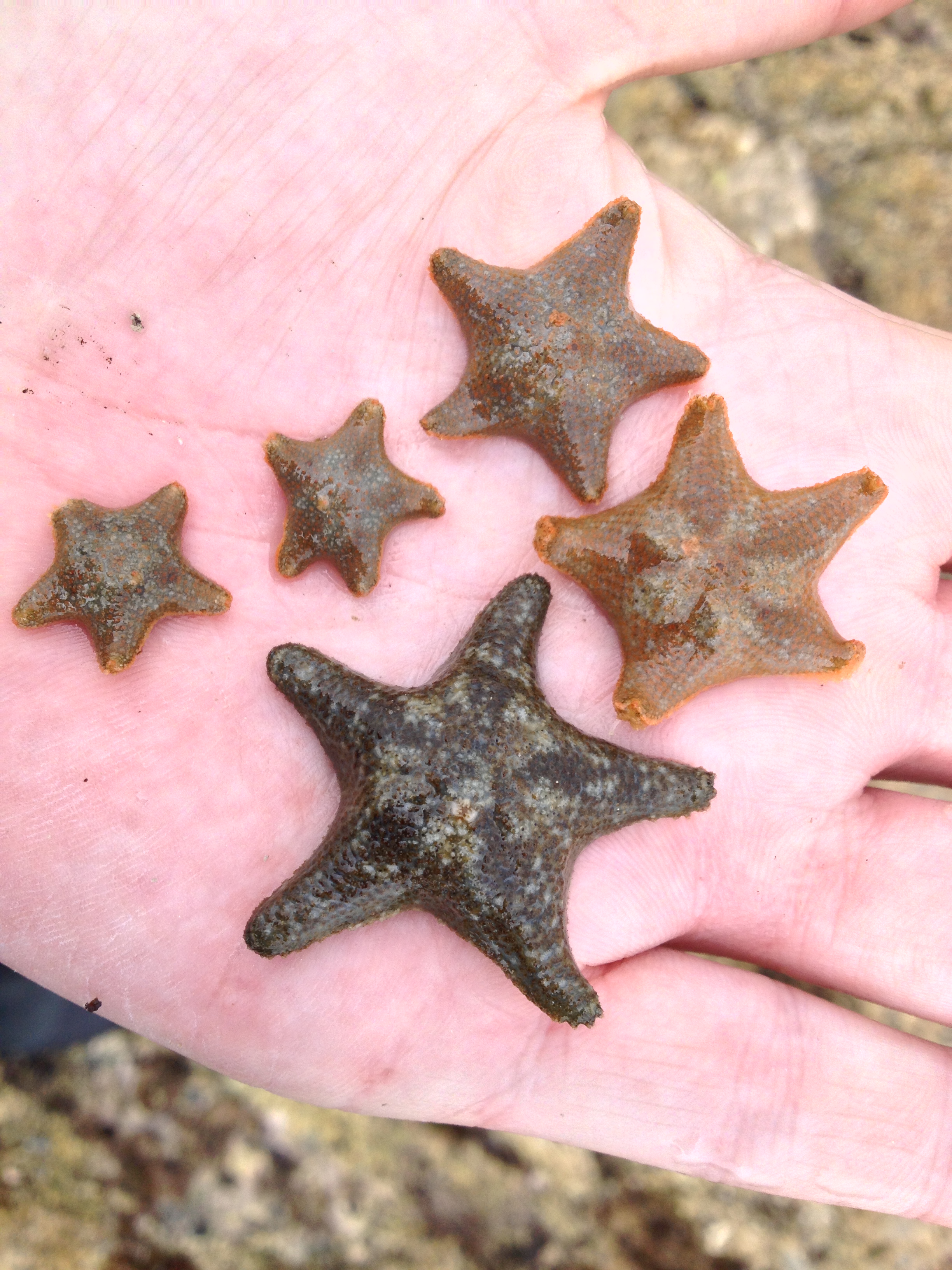
The abundant Cushion star Asterina gibbosa:
I hope to soon post about the aquarium again!
taking my iPhone underwater
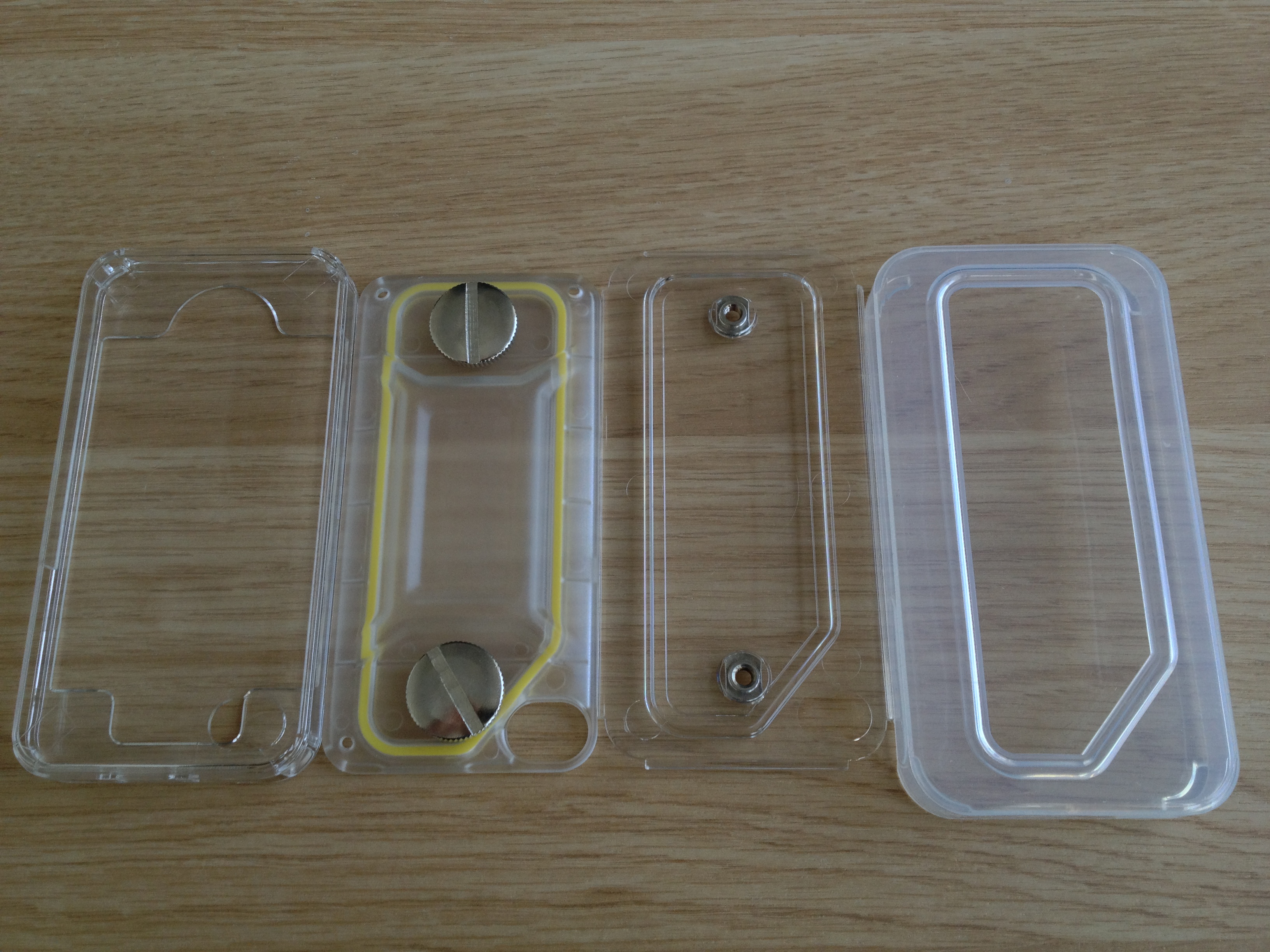
Two weeks ago I went snorkeling with colleague Chris (his hands can be seen in a picture in the previous post) as we figured making a pact would speed up the process of getting in the water. Spring has been so-so and sticking your head beneath the surface was a bit painful but in the end we stayed in for 45 minutes or so. Unfortunately the visibility was very bad. The sea was almost like a soup: you could feel the algae streaming down your face. However, lots of small jellyfish could be seen and occasionally a wrasse darting off. In slightly deeper water, the seaweeds were dominated by Oarweed or Tangle Laminaria digitata. Seaweed diversity seemed much higher in the shallows and the bright light green of the Sea lettuce, the pink of the Harpoon weed and the blue of the Bushy rainbow wrack looked quite amazing. Last week I went back by myself during a lunch break with the audacious plan of taking some underwater pictures with my iPhone. There are quite a lot of (cheap) underwater housings for iPhones nowadays of which I had bought one recently (the ‘amphibian waterproof case’). I tried it out holding it under a tap with distilled water (if it would leak there would not be any damaging salts at least) and that seemed to work. I later saw a patch of moisture but this was minimal condensation that did not seem to any harm. The case:
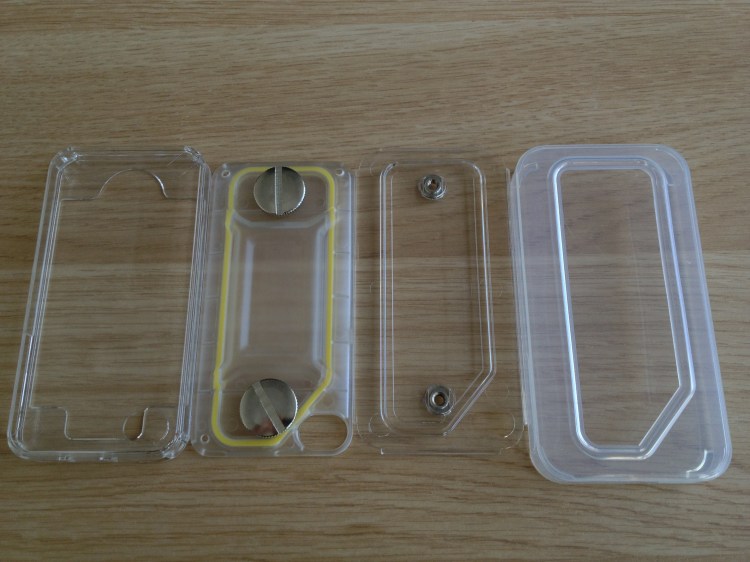
The water seemed quite a bit less cold the second time around and the visibility was slightly better as well. However, Castle beach is exposed and the wave action results in a lot of debris (such as pieces of dead seaweed). Also, it seemed that some of the seaweeds were already ‘over the hill’; the Harpoon weed often seemed discolored for instance and not that pretty anymore. I have noticed the proliferation and die back of some seaweeds before and it makes sense that there is some seasonal succession (I will keep tabs on the growth of the different species month-by-month in an excel spreadsheet). It should have come as no surprise that my plan of taking crisp, brightly colored underwater pictures with my iPhone in a flimsy case turned out to result in blurry, out of focus and badly composed shots, but it was still a bit disappointing. Some of the least crap ones:
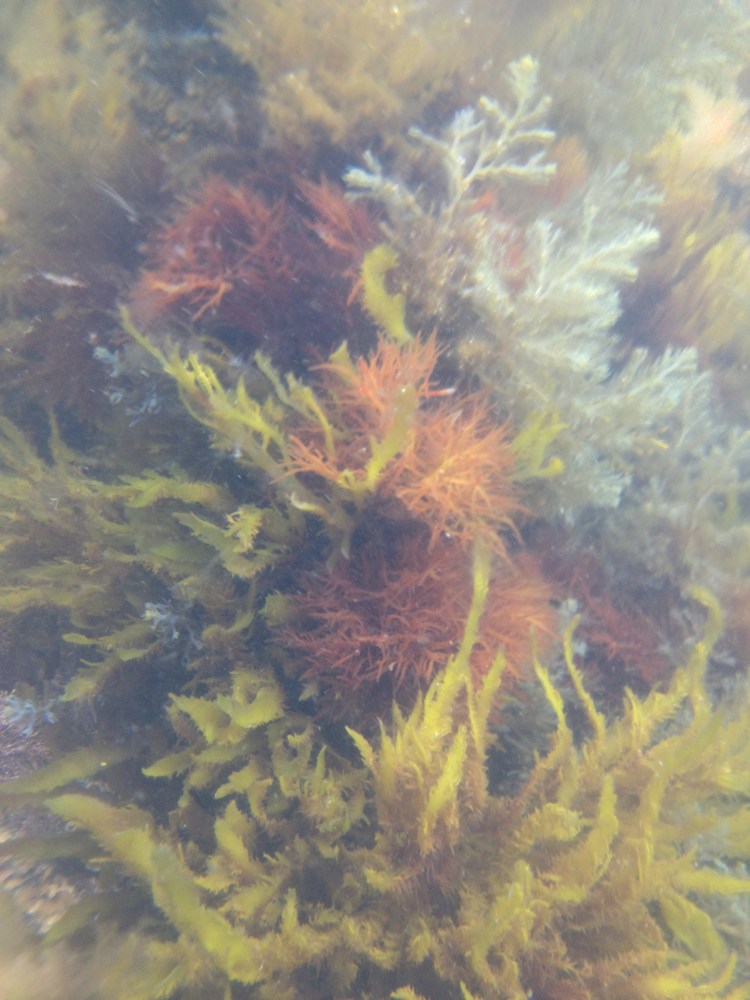
It was quite neat to sea mermaids purses (ray or shark egg cases): bright white and fat (i.e. alive) instead of the black and empty wrinkled ones you find on the beach. I have no idea what species they are but they seemed relatively common and I only found them attached to my favorite, the Bushy rainbow wrack Cystoseira tamariscifolia. *edit, most probably eggs of the Nursehound (or Bull huss) Scyliorhinus stellaris.* I also tried some quick shots in the rock pools as the water is more clear there, but the pictures did not turn out to be too great in there either:
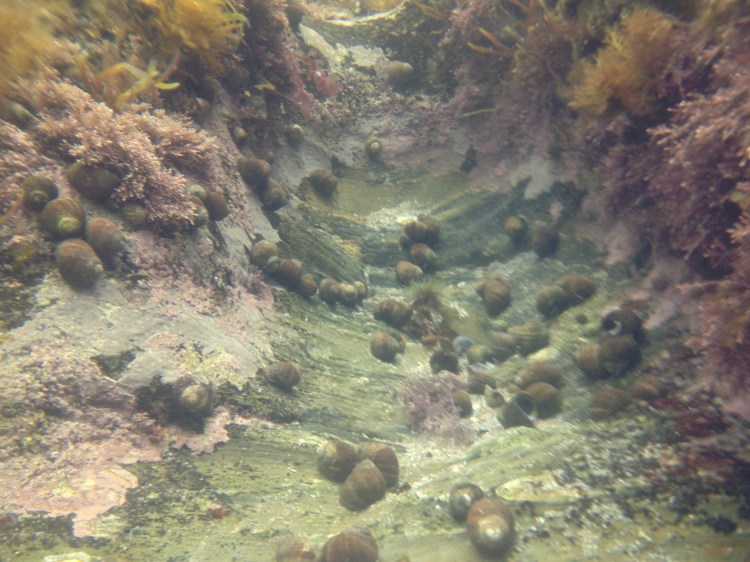
Although quite cheap and -knock on wood- safe, the iPhone case is not a substitute for a real underwater camera. All pictures turned out quite hazy (although this was certainly also due to the bad water conditions). At times it is hard to operate the touch pad and there isn’t a cord to attach it to your wrist which makes the experience a bit less relaxed. I have a Panasonic Lumix that can go 10 meters deep and an old Canon Powershot with an underwater housing which seem to do better (although neither of them in turn can be compared to a SLR in an underwater housing). I will try to explicitly compare some shots with these cameras soon. Next time I go snorkeling I will also try a less exposed spot where visibility will hopefully be better.