miniature species

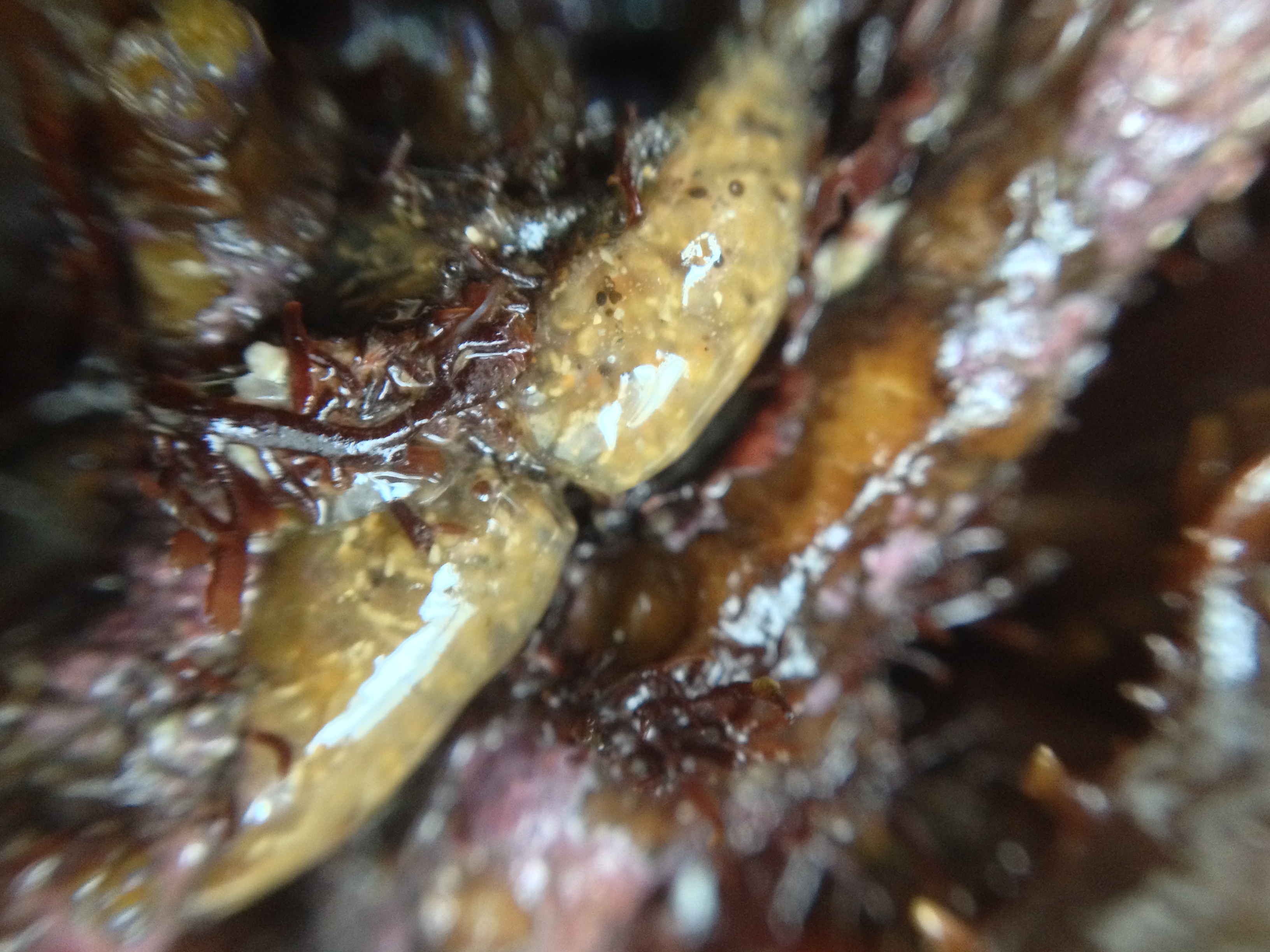
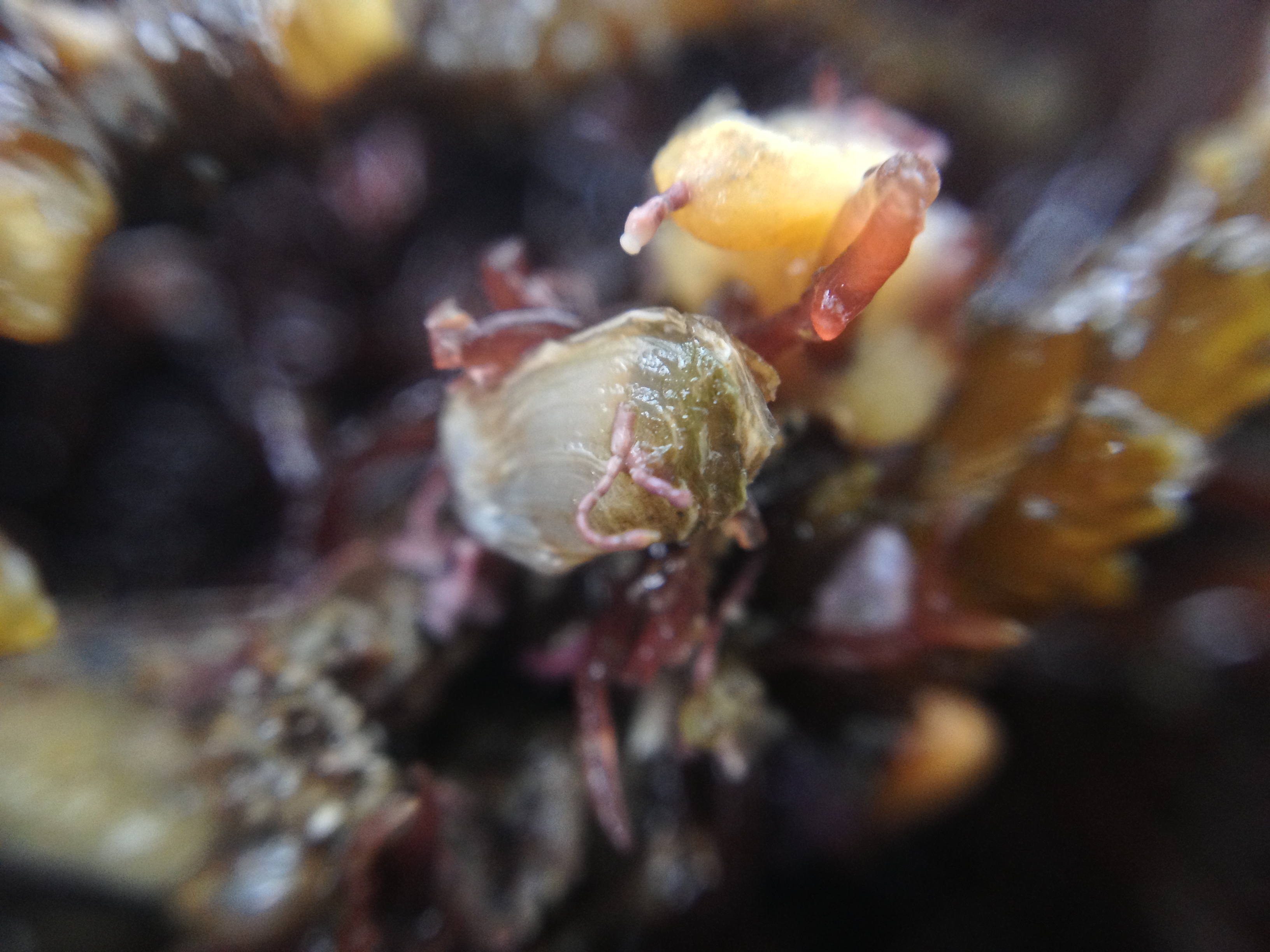
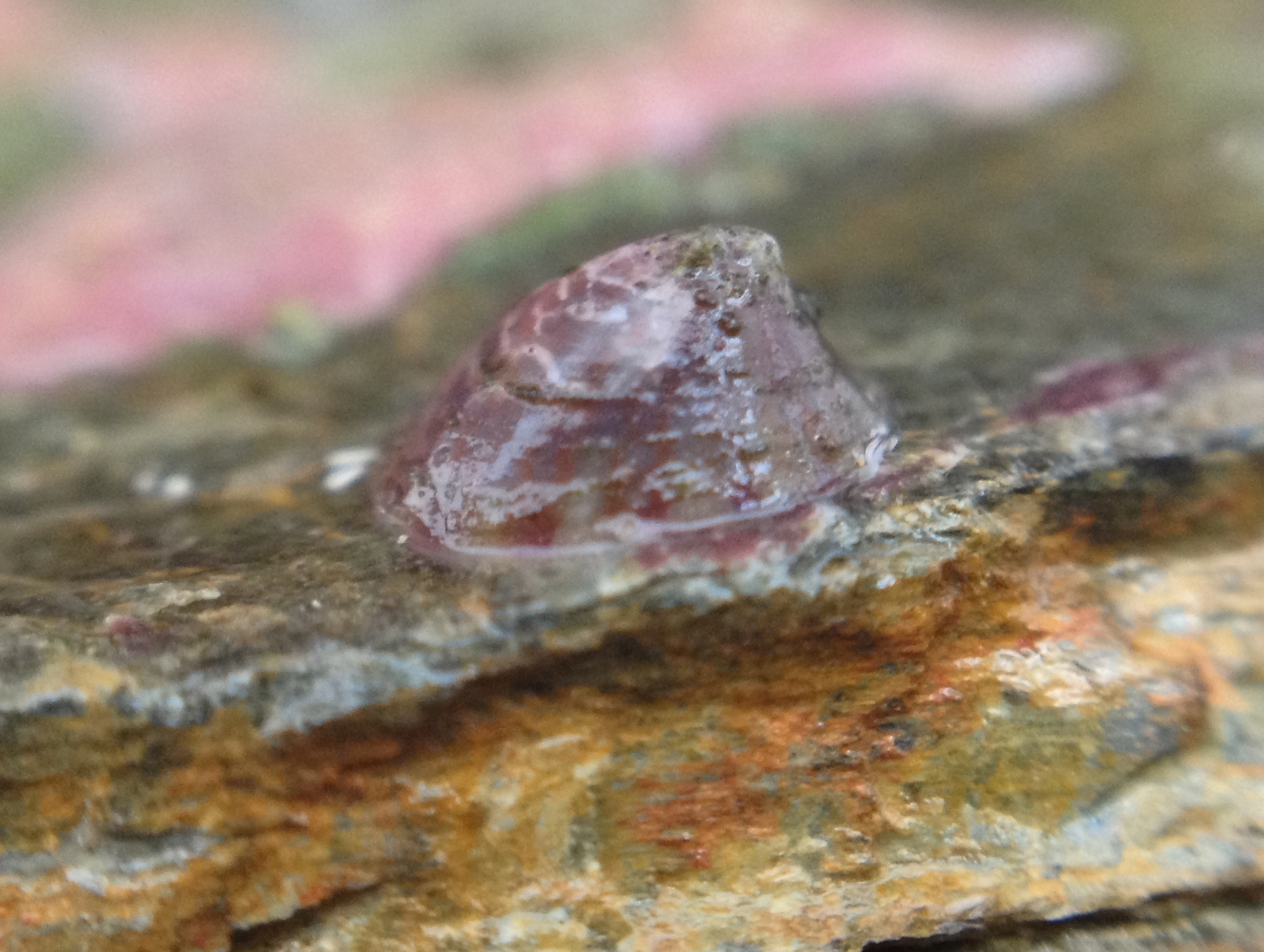
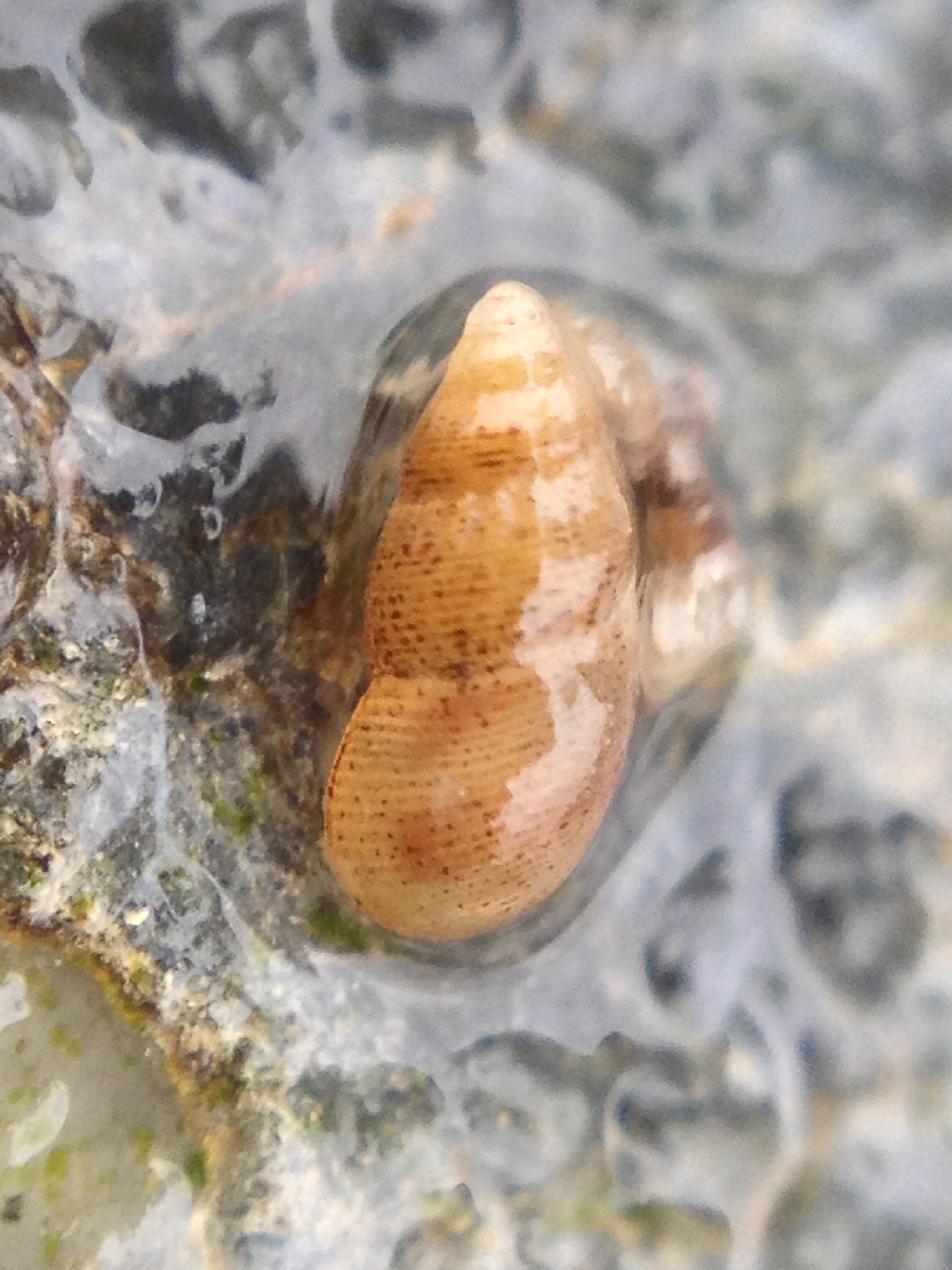
I usually head down straight to the lowest reaches of the shore when rock pooling, but when there is a neap tide and a lot of inshore wind as there was this weekend, you have to make do with turning rocks higher up the shore. Although biodiversity is lower, there are some species that are only found there (see for instance this recent post) and so it is actually nice to have a look there for a change. The very first rock turned over actually had a couple of interesting inhabitants underneath it. Another lifer, the tiny gastropod mollusc Onoba semicostata (surrounded by a couple of even tinier Rissoa parva), very quickly identified by members from the British Marine Mollusca facebook group:

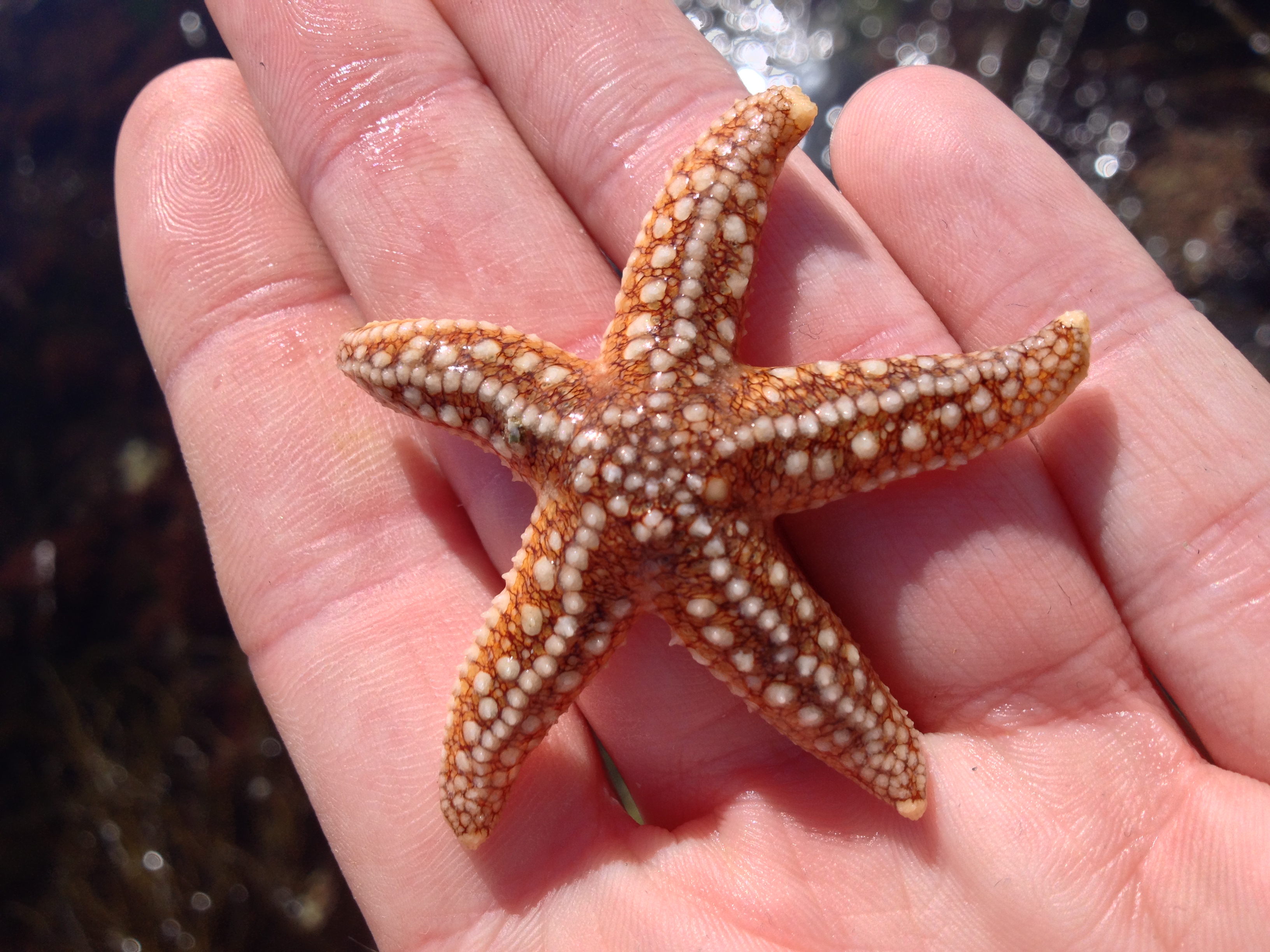
IMG_8352The same rock had a number of the tiny (< 1 cm) Cushion star species Asterina phylactica on it as well. It is prettier than the common Cushion star Asterina gibbosa (one of my favourite aquarium species), but perhaps a bit too small to be an option for the tank.

IMG_8354

IMG_8375 - Copy

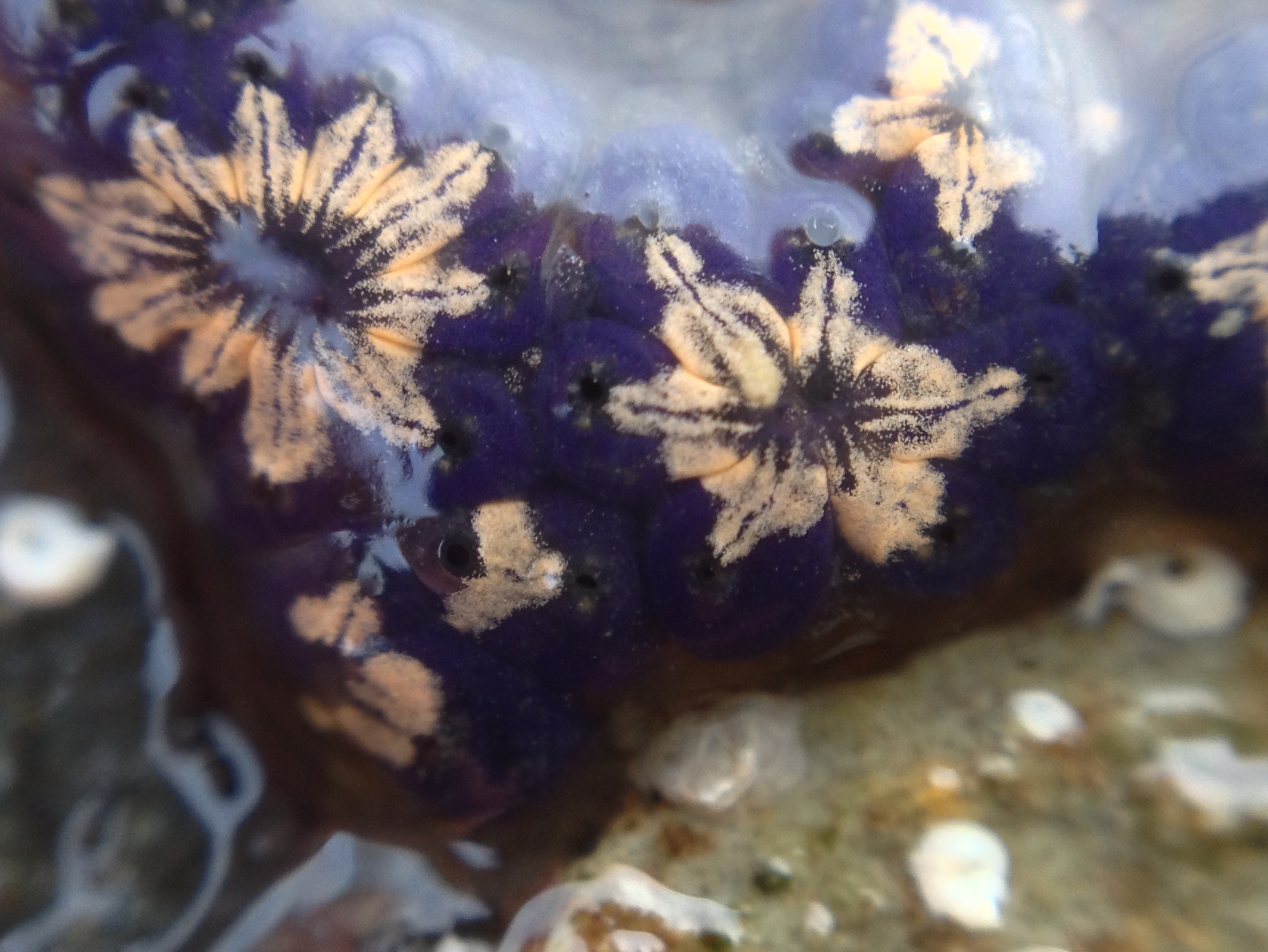
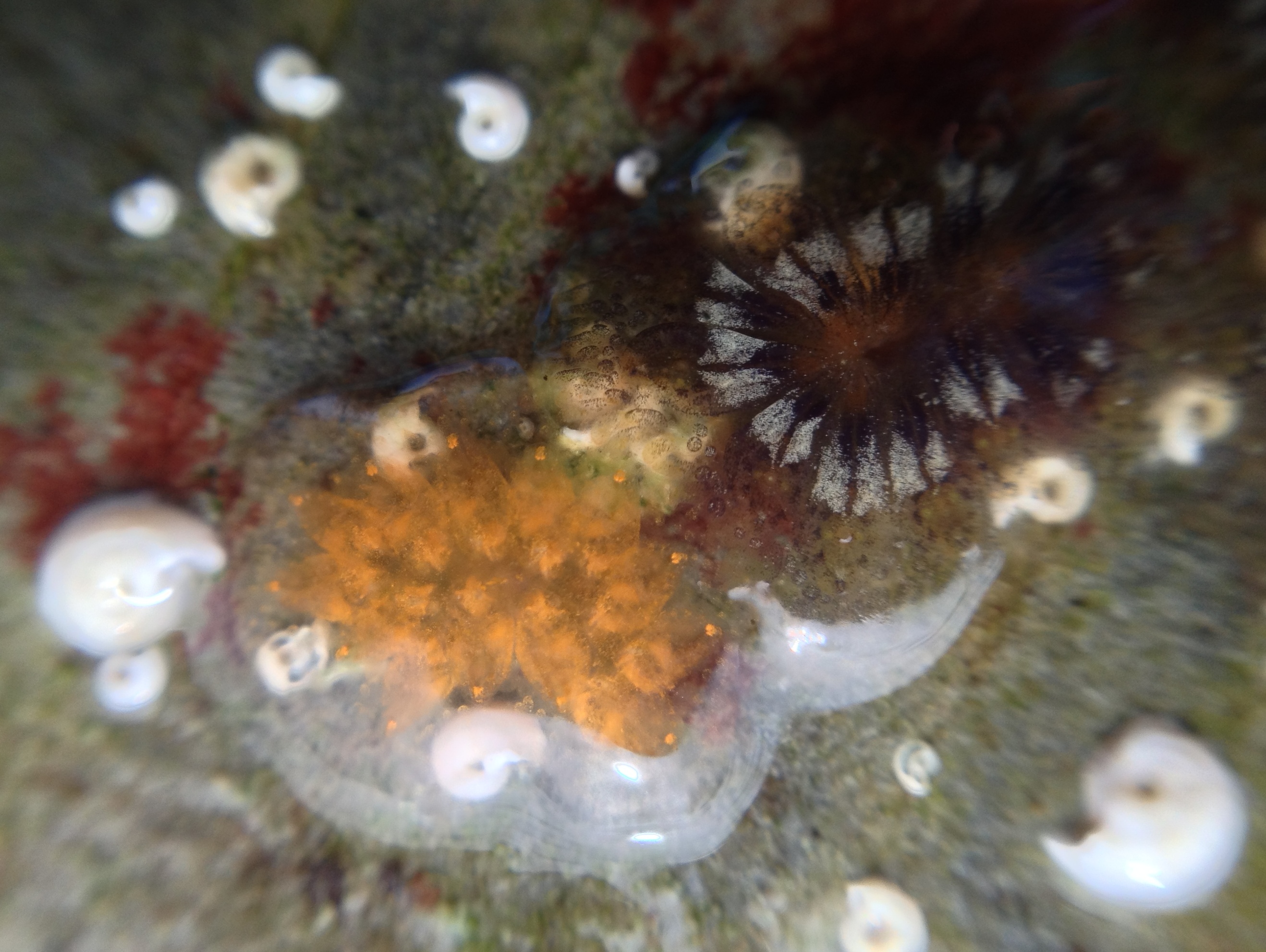
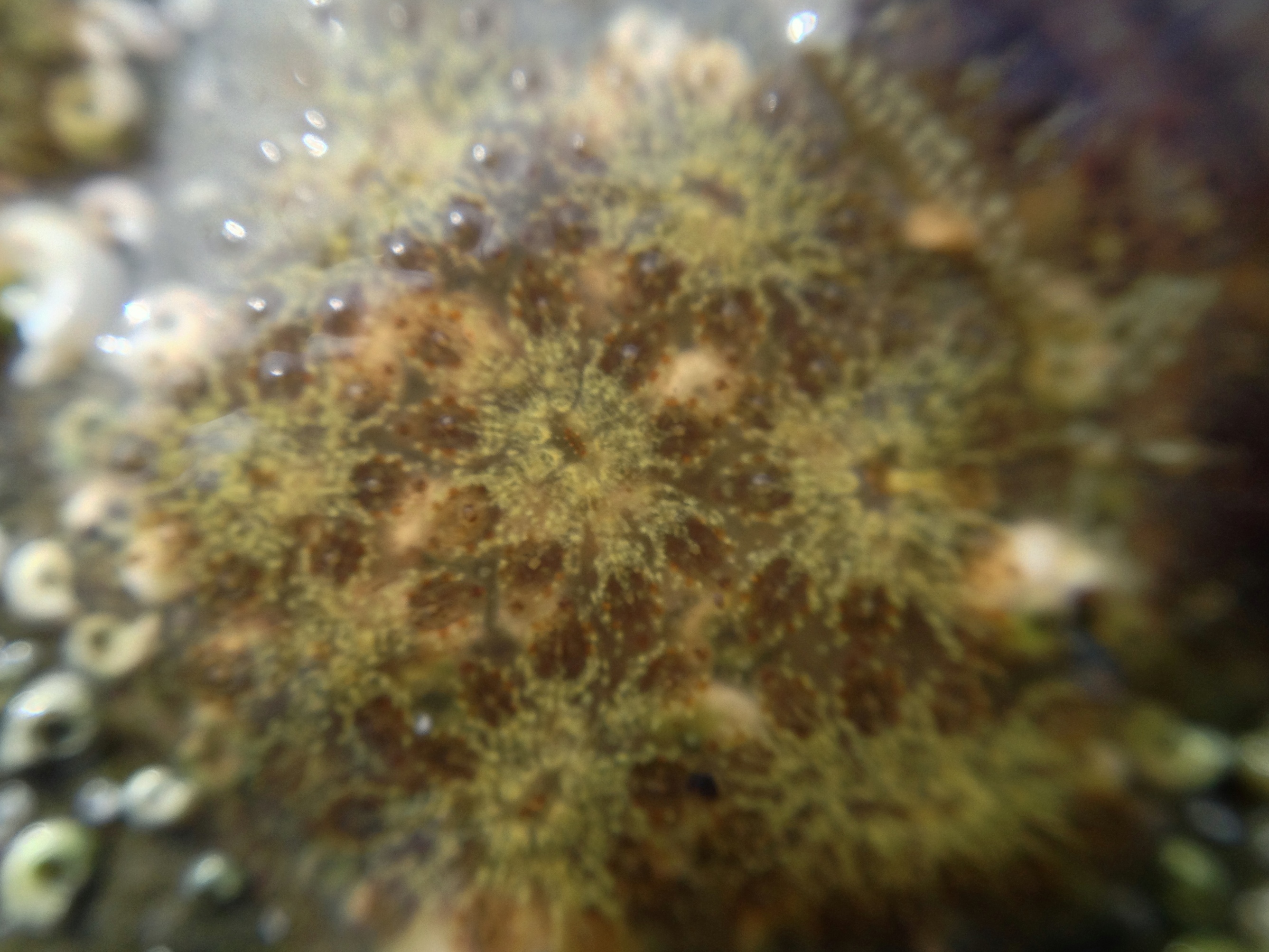
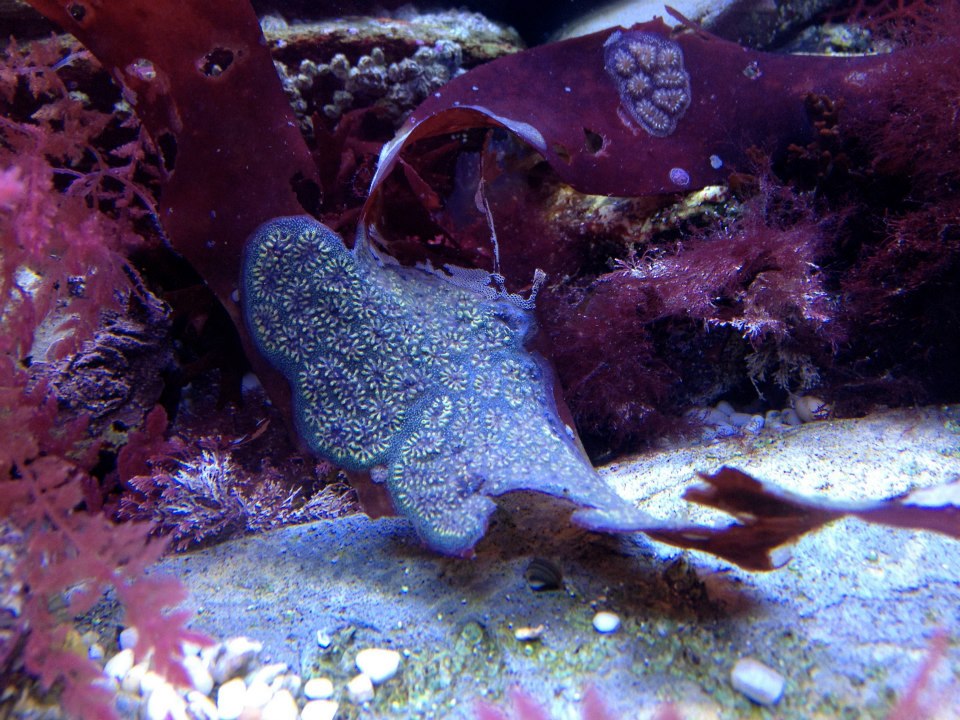
One other beautiful species, the colonial tunicate Botryllus schlosseri, this is a nice blue/purple one:

IMG_8381

tunicate tangle

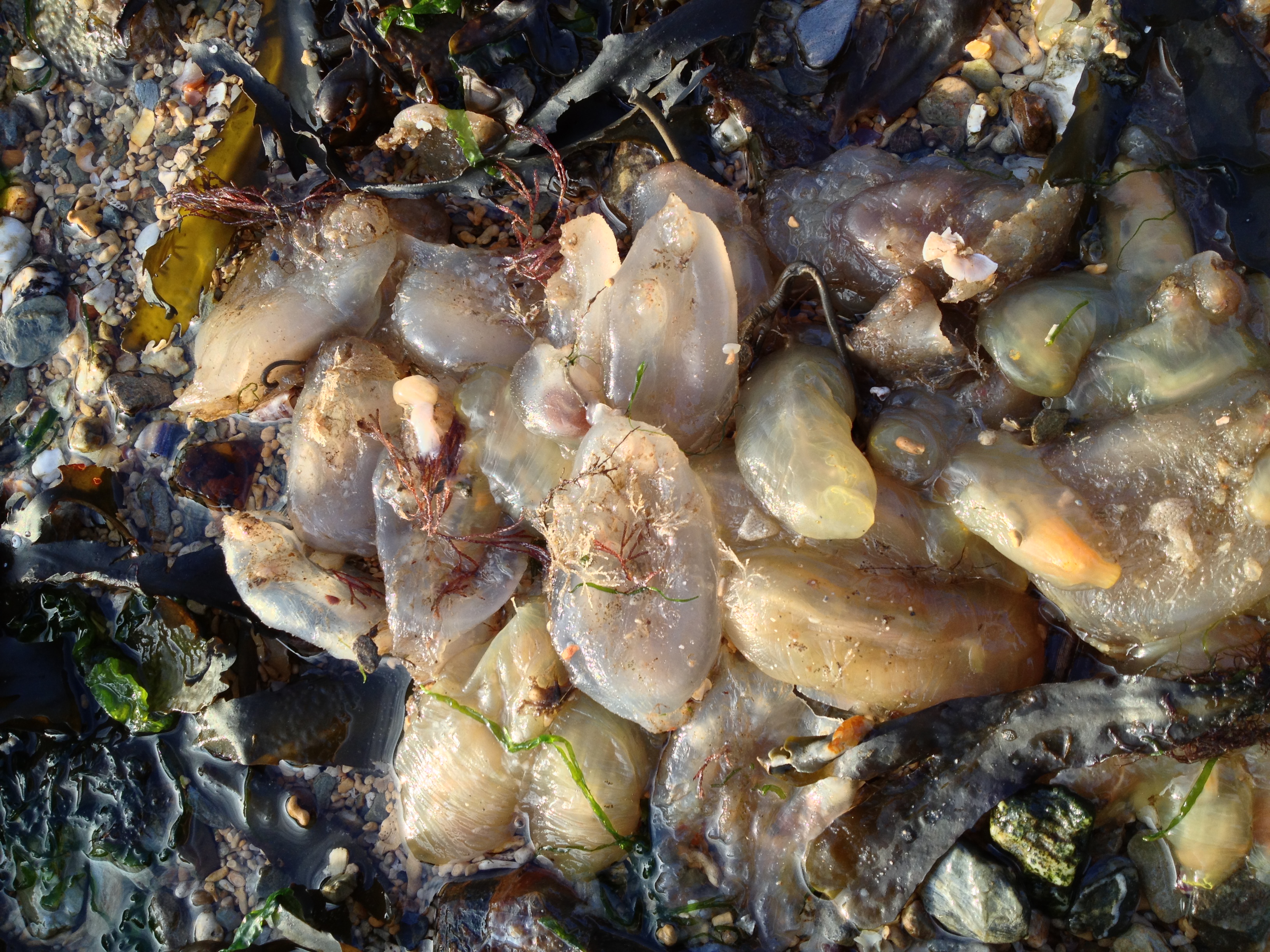
This weekend I found a lot of washed up tunicates on the beach in Flushing. I should have taken a closer look at the spot to try to identify them. However, my friends at the British Marine Life Study Society facebook page pointed out that it is likely a mix of Ciona intestinalis, Corella eumyota and Ascidiella aspersa.

IMG_6115

animals that did not do that well in my aquarium…

A while back I wrote two posts on my personal top ten animals for the (unchilled) aquarium (here and here). Of course, there were also organisms that were not such a success. Animals can be unsuited for the aquarium for many reasons, and of course this depends on the size of aquarium, the combination of animals and what you define by ‘unsuited’; so please keep in mind that the following is a personal account!

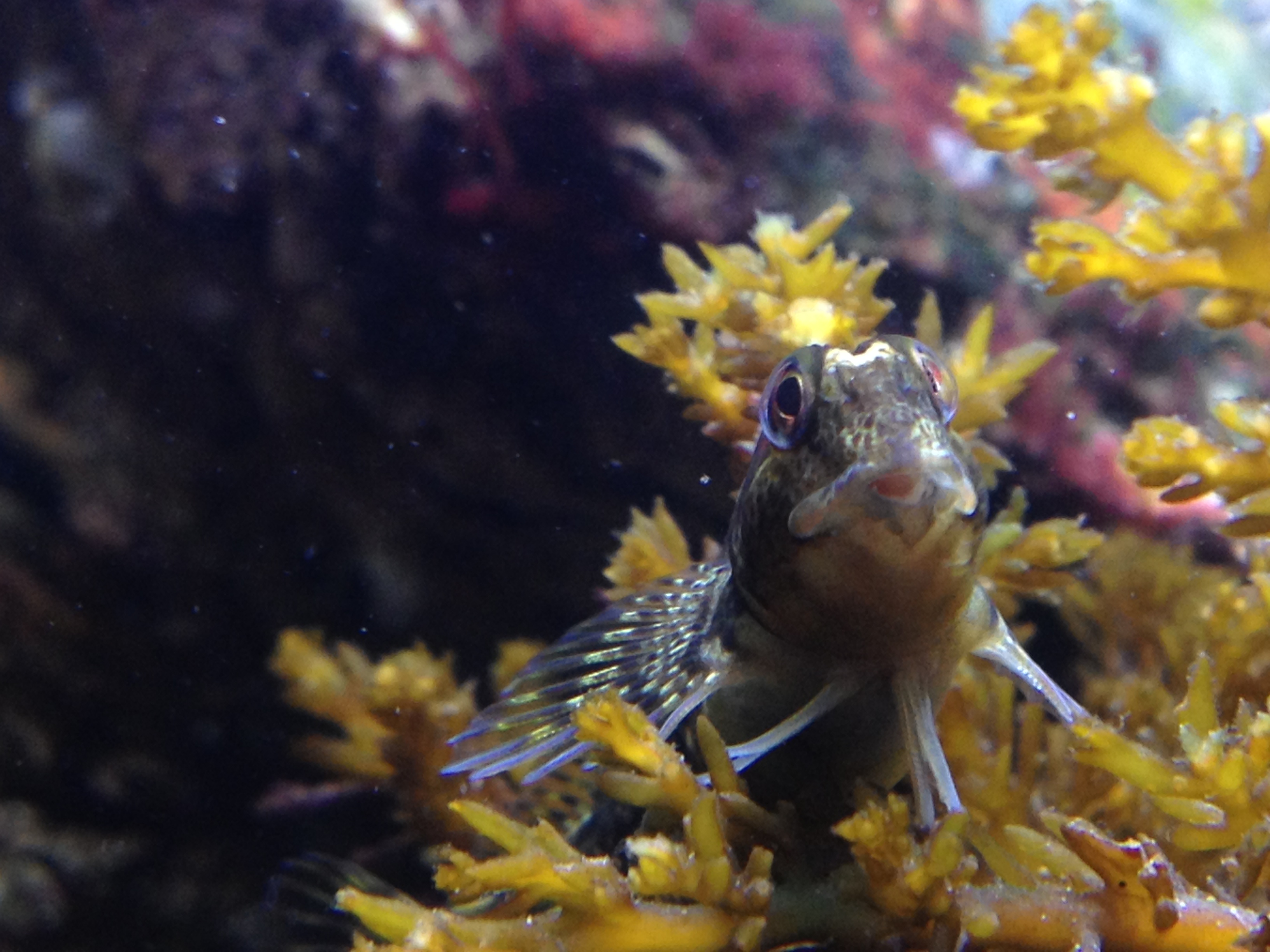
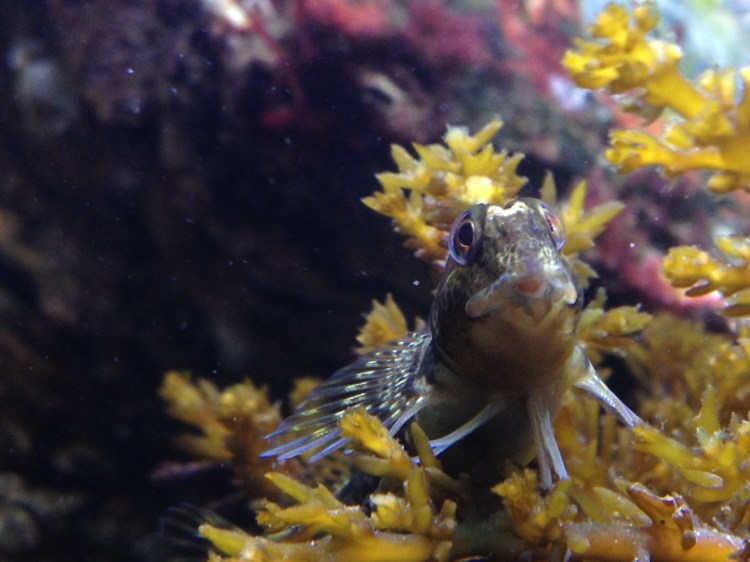
Aggressive species: Another reasons that makes animals unsuitable for a community tank is that they are bullish. (Animals becoming too big is not a real problem for the native aquarium as you can release them again and replace with smaller individuals.) Crabs often get rowdy for instance. I kept a small (5 cm carapace width) Edible crab Cancer pagurus for a little while (his name was Barry). It would bury (Barry!) itself during the day, but as soon as the lights turned off it would go about and rearrange the tank. Rocks weighing over a kilo were knocked against the glass and I found a Cushion star cut in two. It was quite an operation to remove it from the tank using a net (but during all that rummaging I interestingly saw bioluminescence in the tank which was very cool). Shannies like to feed on snails and hermit crabs and so in a relatively small aquarium at least, so sometimes you have to choose between one or the other:
IMG_2240

Truly littoral species: I had a couple of limpets Patella vulgata in the aquarium that just sat in the same place on the glass for months. At this time, algal growth was a problem, so I should have known if they had moved during the day or night by the tracks they would have made but they did not move a millimeter. The animals seemed a bit thinner in their shell, but seemingly they can survive for very long periods without food. Not being able to emerge from the water as they do normally seems to be a big problem for these animals.

Secretive species: Other animals simply are too shy or live underneath rocks; no point really in putting them in the aquarium if you cannot see them. This happened with Broad-clawed porcelain crabs, a Shore rockling and also a Shore clingfish (although hidden, all of these animals did survive for a long time). I have seen Brittle stars in a Mediterranean aquarium but the ones found in the intertidal here tend to live under rocks and I never saw one back in the aquarium. A Sand star Astropecten irregularis quickly buried itself in the gravel:

IMG_5177

Filter feeders: I quickly realized that filter feeders, mussels or tunicates for example, were very difficult. There simply were not enough algae growing in the water to feed them (unfortunately, at times there were plenty of algae growing on the rocks and on the glass). One way to keep filter feeders is to separately cultivate algae for food. A really nice blog describing such a project can be found here. Another solution might be to feed these animals with artificial plankton, which is available commercially. This requires very good skimming to get rid of excess nutrients though. Both options I find too cumbersome at the moment. Having said all this, one filter feeder managed to survive for many months in my aquarium: the variegated scallop.

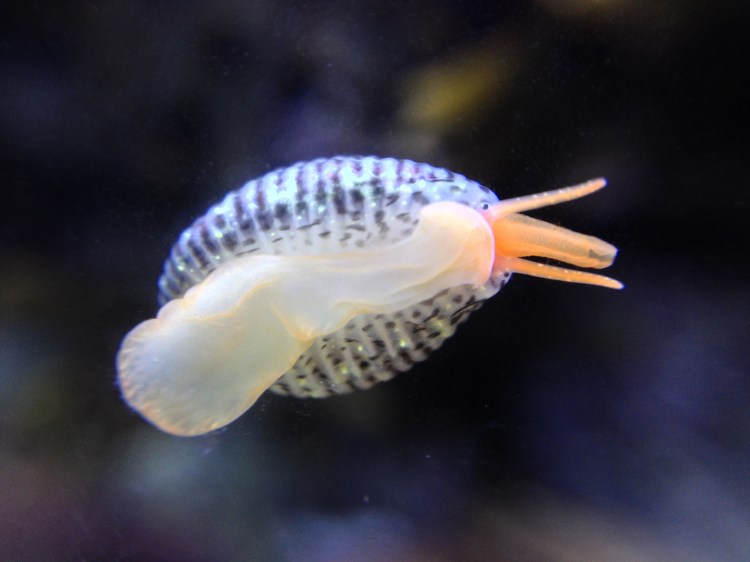
Other fussy eaters: Worm pipefish did OK in the aquarium, but that was probably because I regularly brought in new seaweeds housing fresh zooplankton. Unlike Mullet, Gobies or Blennies, I have never seen them take frozen food and therefore I will not keep them again until I can provide them regularly with live brineshrimp or similar. Snakelocks anemones always did well in the aquarium, but Beadlet and Strawberry anemones didn’t (they actually did not die but seem to shrink rather than grow over time). The former are able to grow because of their symbiosis with photosynthesizing algae and so do not rely as much on food. I must say that the latter two  species are probably relatively easy to keep when you make the effort to regularly dunk a piece of dead prawn on them. The European cowrie Trivia monacha feeds on tunicates which I had trouble keeping alive and so they are unfortunately not an option yet:
IMG_0987

Unknown reasons: On a few occasions a species just died and I had no idea why. The only thing this taught me was to not try that species again. This happened to a Common starfish Asterias rubens:

IMG_2835

tunicate time

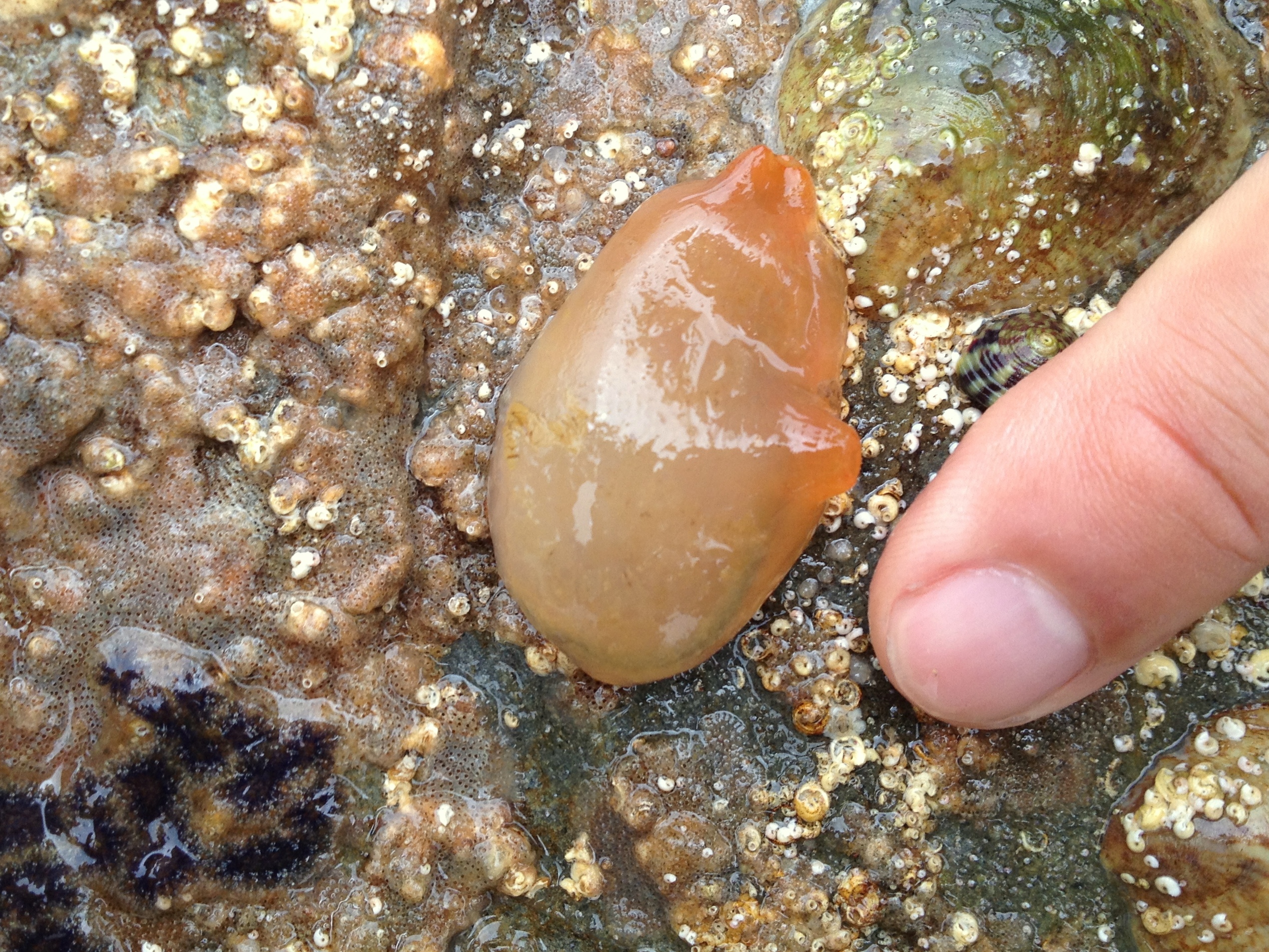
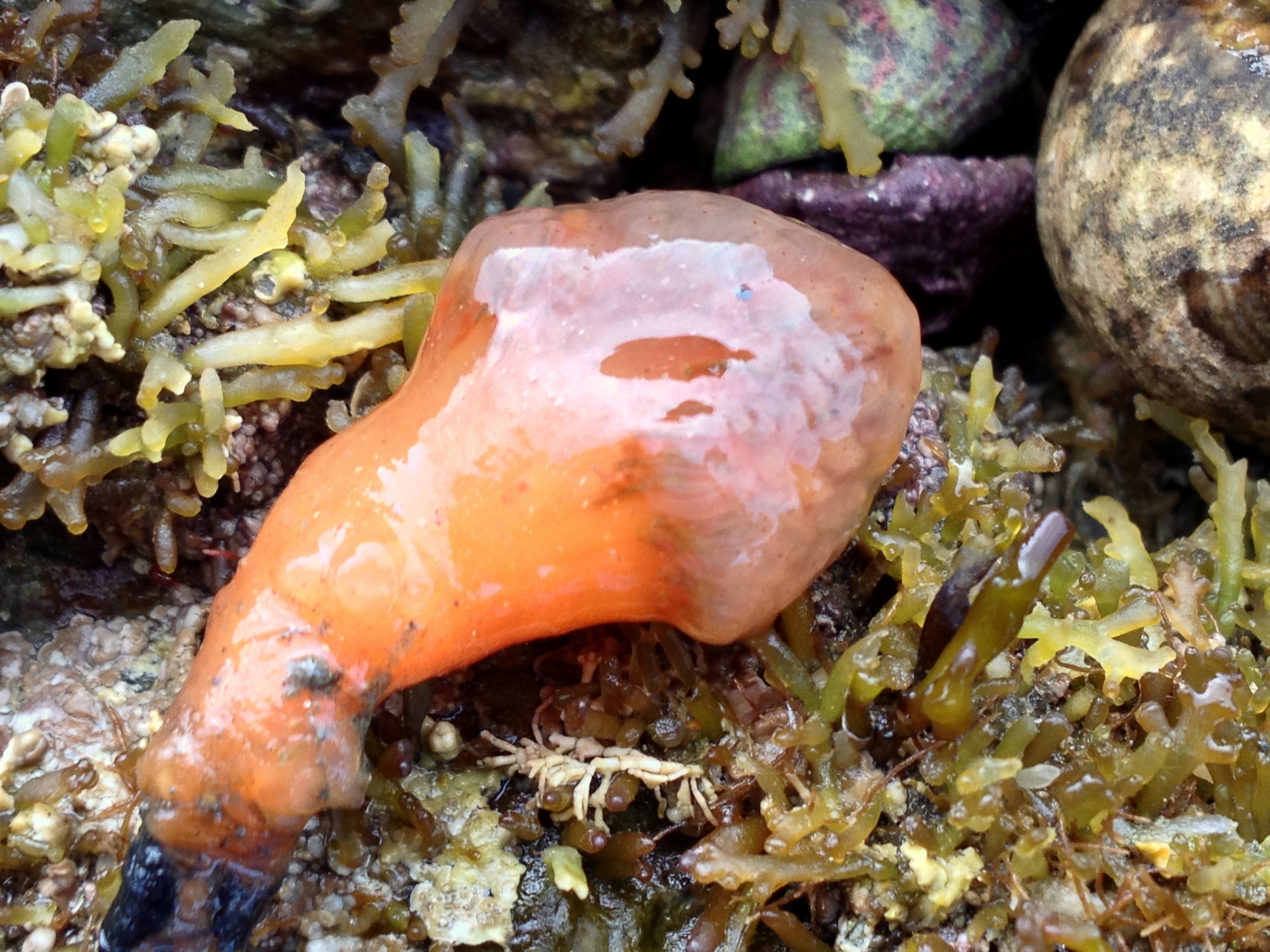
After being abroad a couple of times this summer (Slovenia, France 1 2 3 and The Netherlands), I have started rock pooling in Falmouth and Flushing again. Things have noticeably changed since the spring, most prominent being the recent abundance of all kinds of sea squirts (tunicates). They are everywhere, and some of them I have not seen before. The solitary sea squirt Corella eumyota is very common, with smaller individuals a translucent white and larger individuals more orange:

IMG_4986

My personal favourites the colonial Botryllus (in the above picture bottom left among the bryozoans) and Botrylloides are also very abundant at the moment. I should measure the width of a population on a recognizable, large rock and go back to check how fast they grow actually. Below a picture of both species growing side by side:

IMG_5243

Some more Botryllus schlosseri pictures demonstrating the variability in colour (the Botrylloides leachi here look all the same):

IMG_5253

IMG_5257

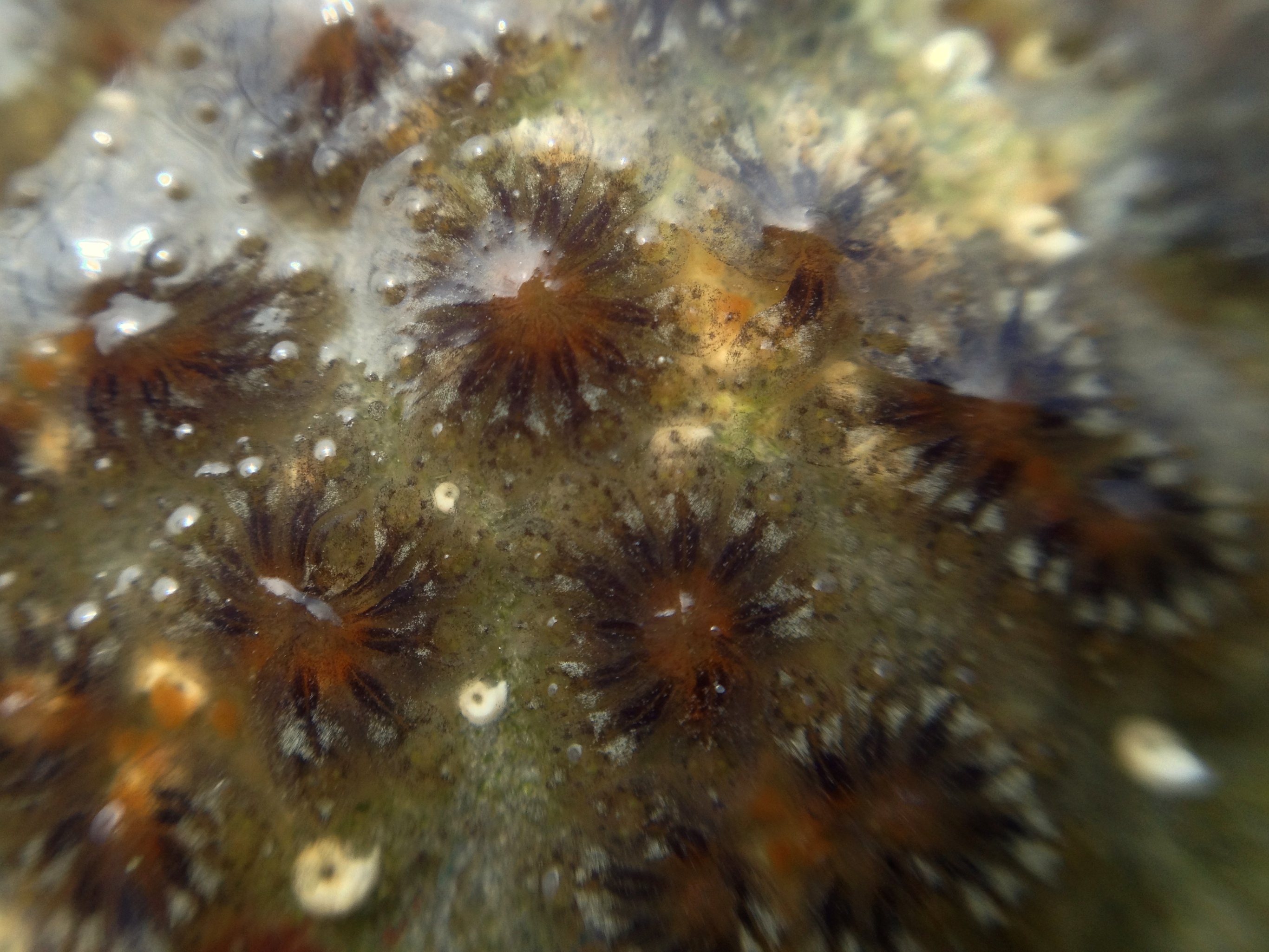
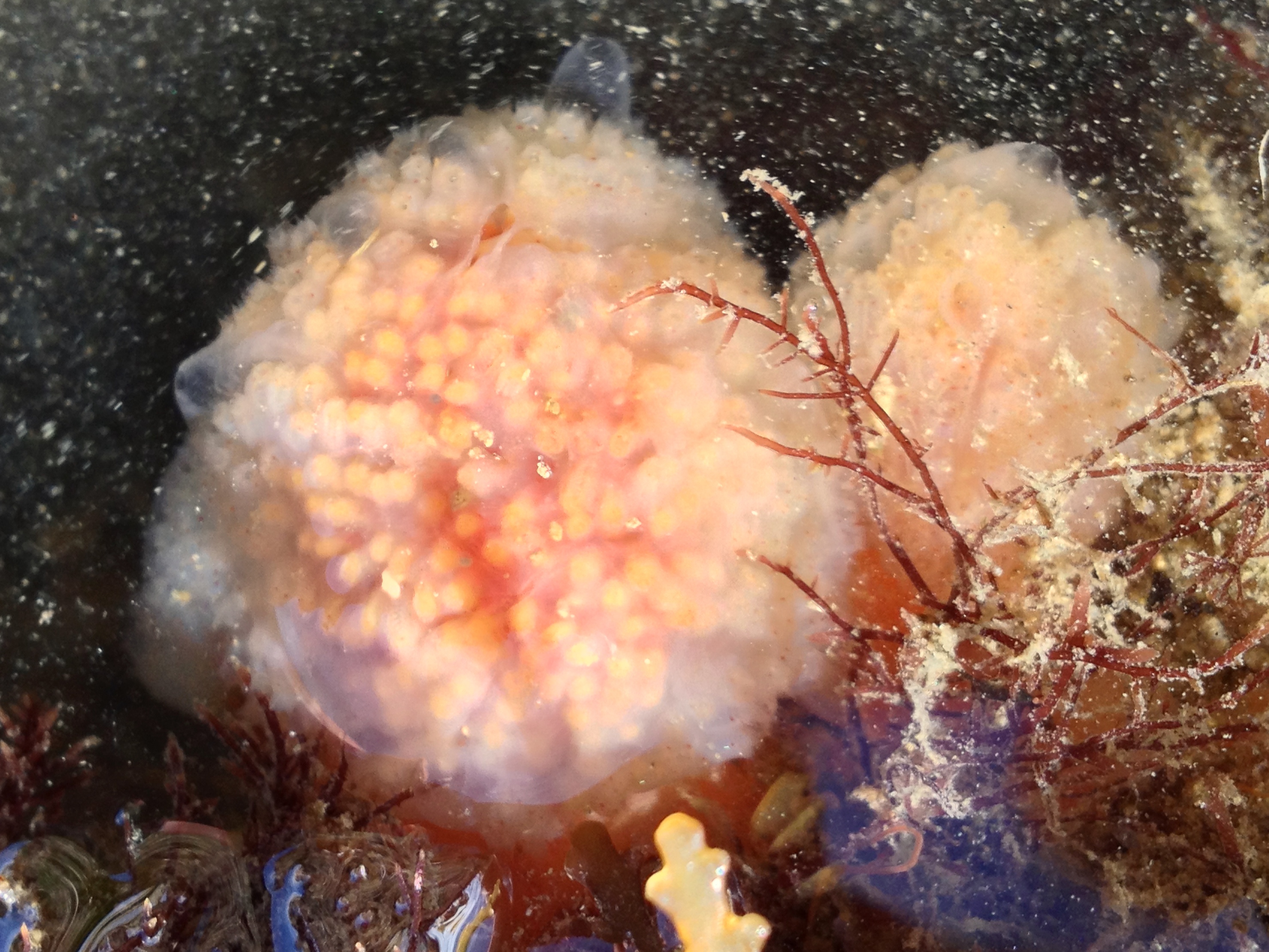
A species that I had not noticed before and is growing in every rock pool in Flushing at the moment is the orange Morchellium argum, which grows as a colony as does Botryllus or Botrylloides but in a rather different way. A colony consists of a stalked club with individual zooids protruding from the ‘head’:

IMG_5236

IMG_5271

Botrylloides leachi

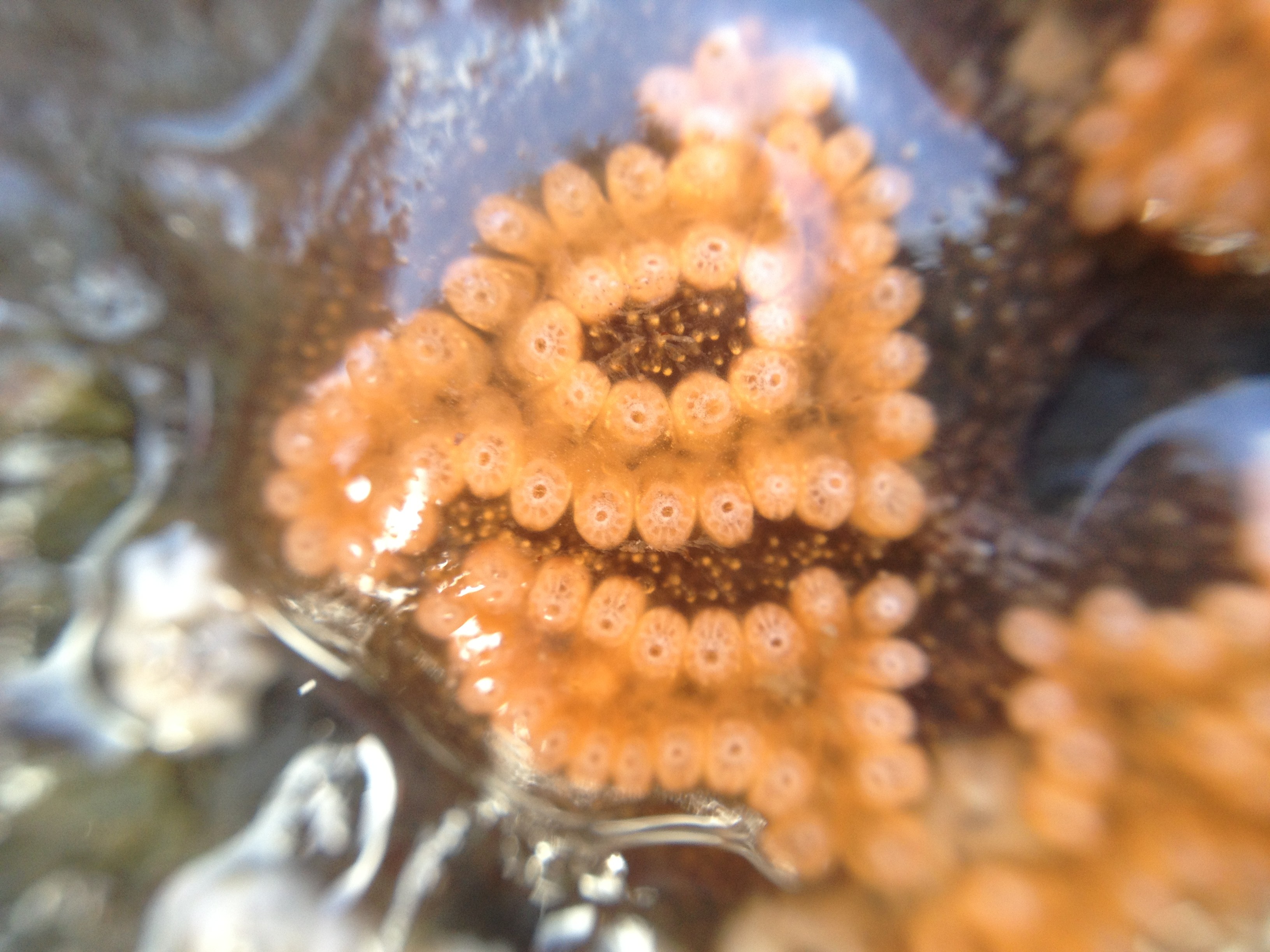
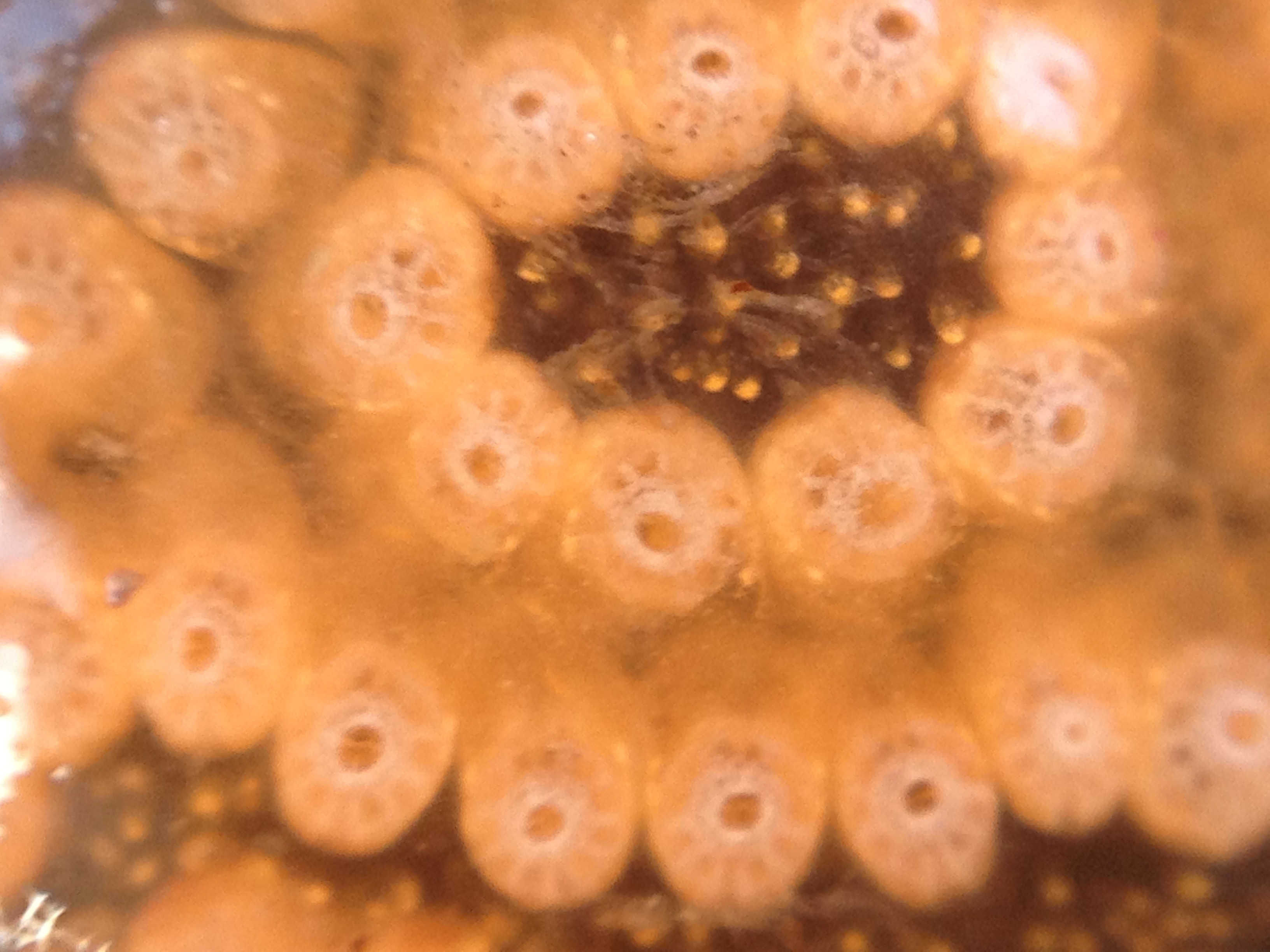
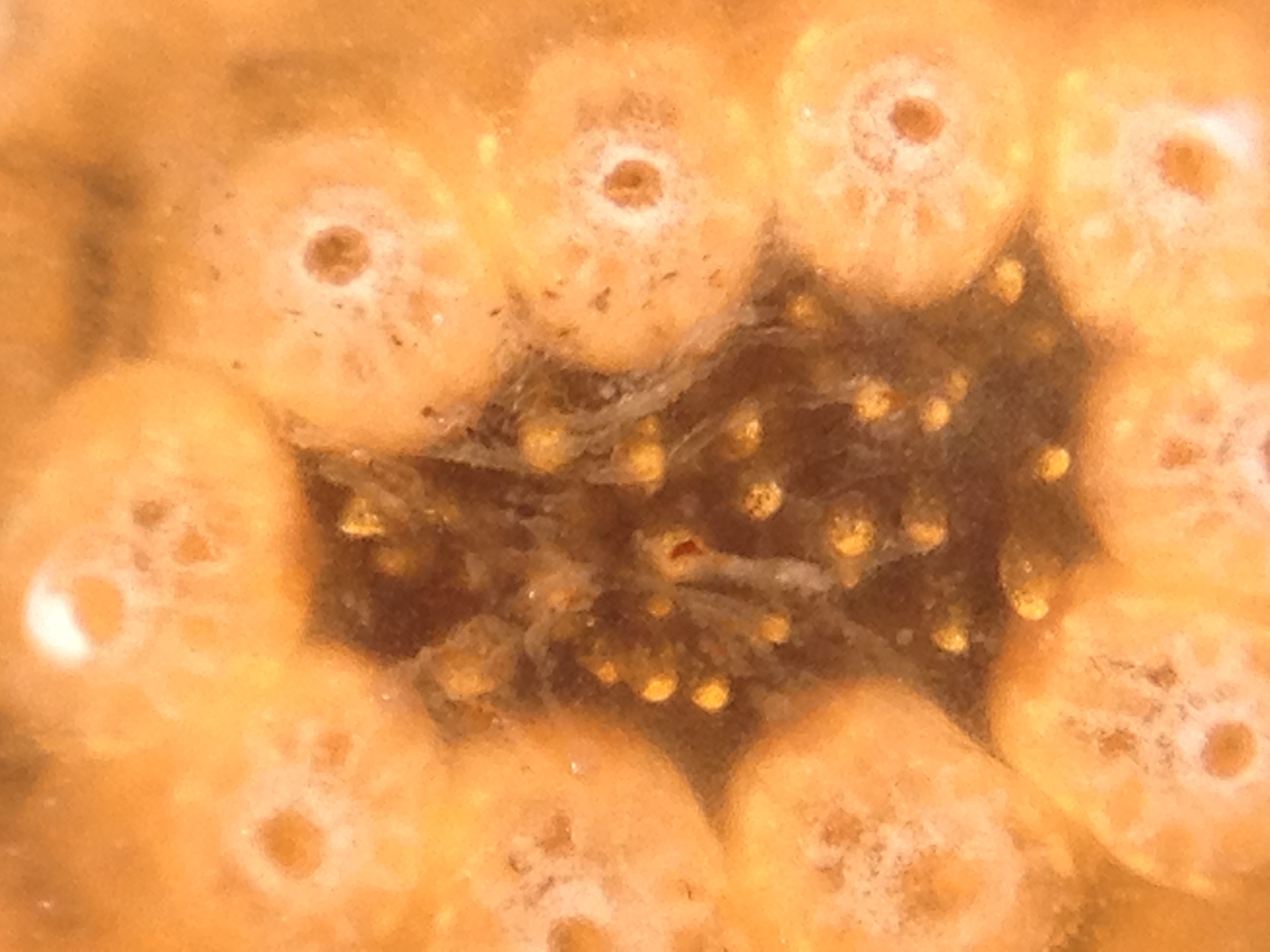
One of the most beautiful organisms growing on the rocky shore: the colonial ascidian Botrylloides leachi (it does not have a common name). This is a type of Tunicate. The colony is embedded in a gelatinous but hard test, which is unusual to the touch. The test contains strings of individual tunicates (zooids); you can see each has a siphon on the top, water enters here, and is filtered by a mucus-net that is eaten along with the filtered microbes. Filtered water exits from a shared siphon in the middle of the colony. I am not sure what the yellow ‘stiles’ are, but suspect that they are budding zoids. In the related species Botryllus schlosseri (I will post some pictures of this species in another post), a model system for research, each zoid is resorbed in the test and replaced by a newly bud zoid on a weekly basis.

IMG_1112

IMG_1114

IMG_1121

P.S. In hindsight, this might be B. violaceus (see here)

Chlamys varia

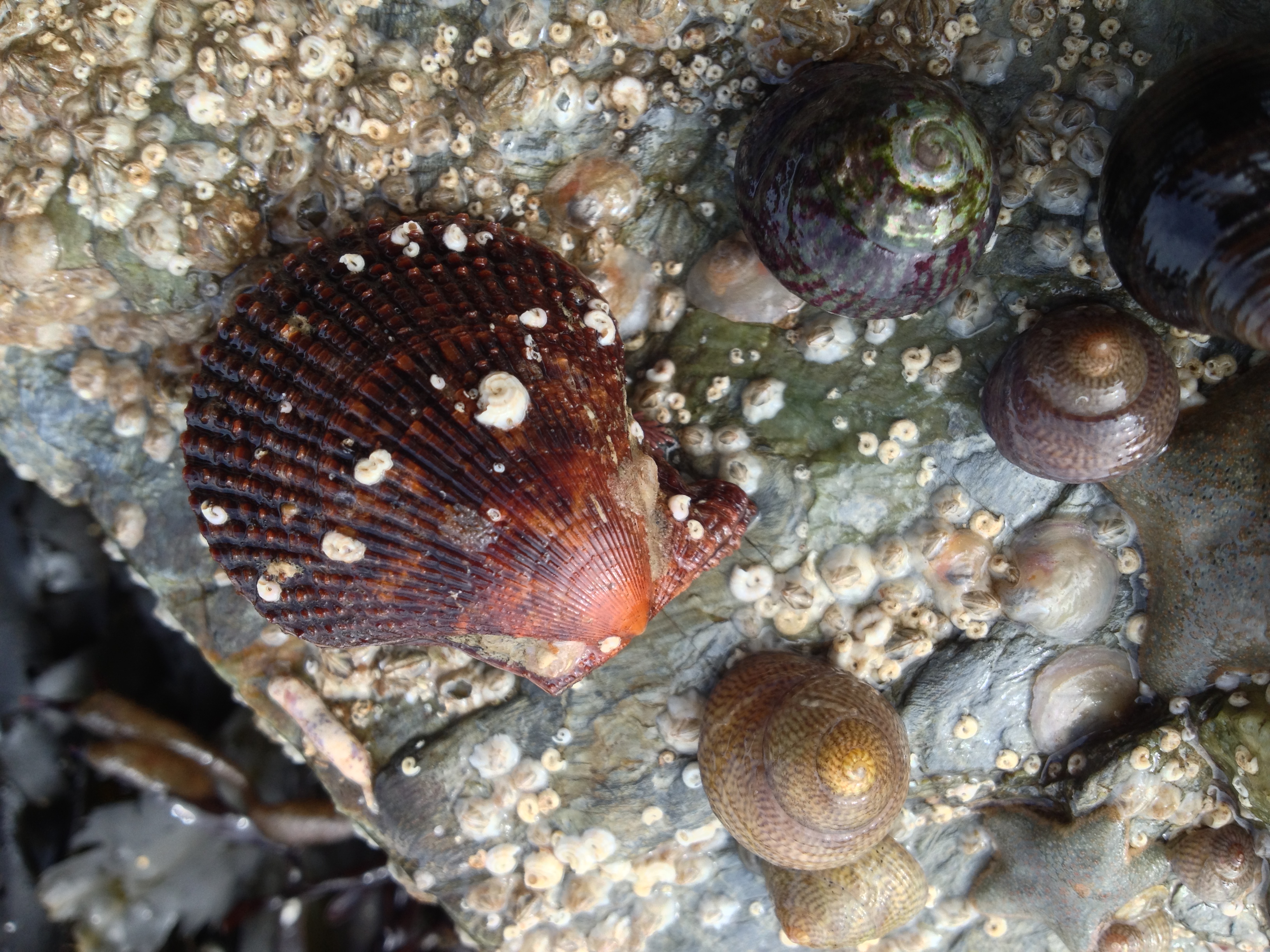
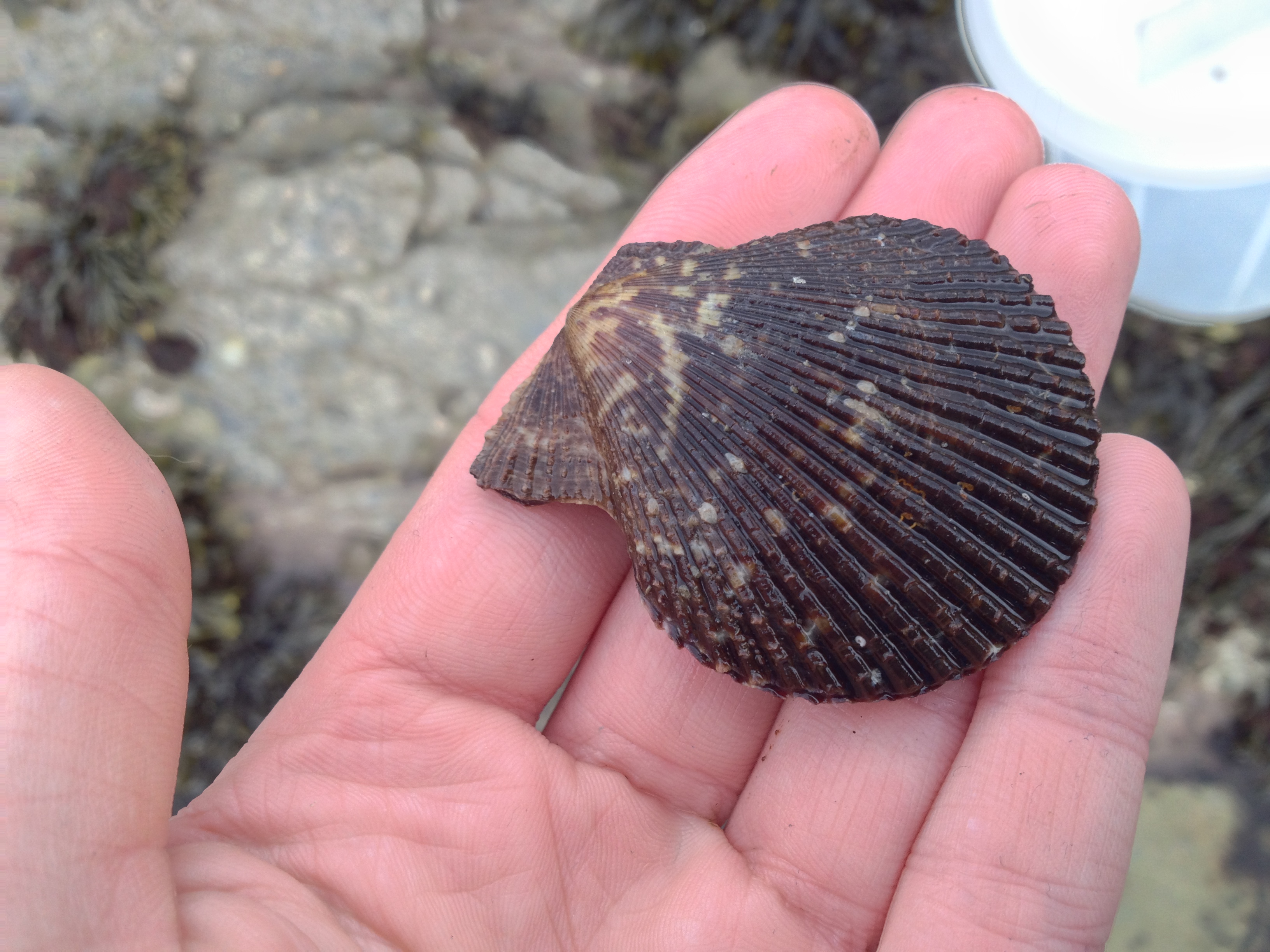
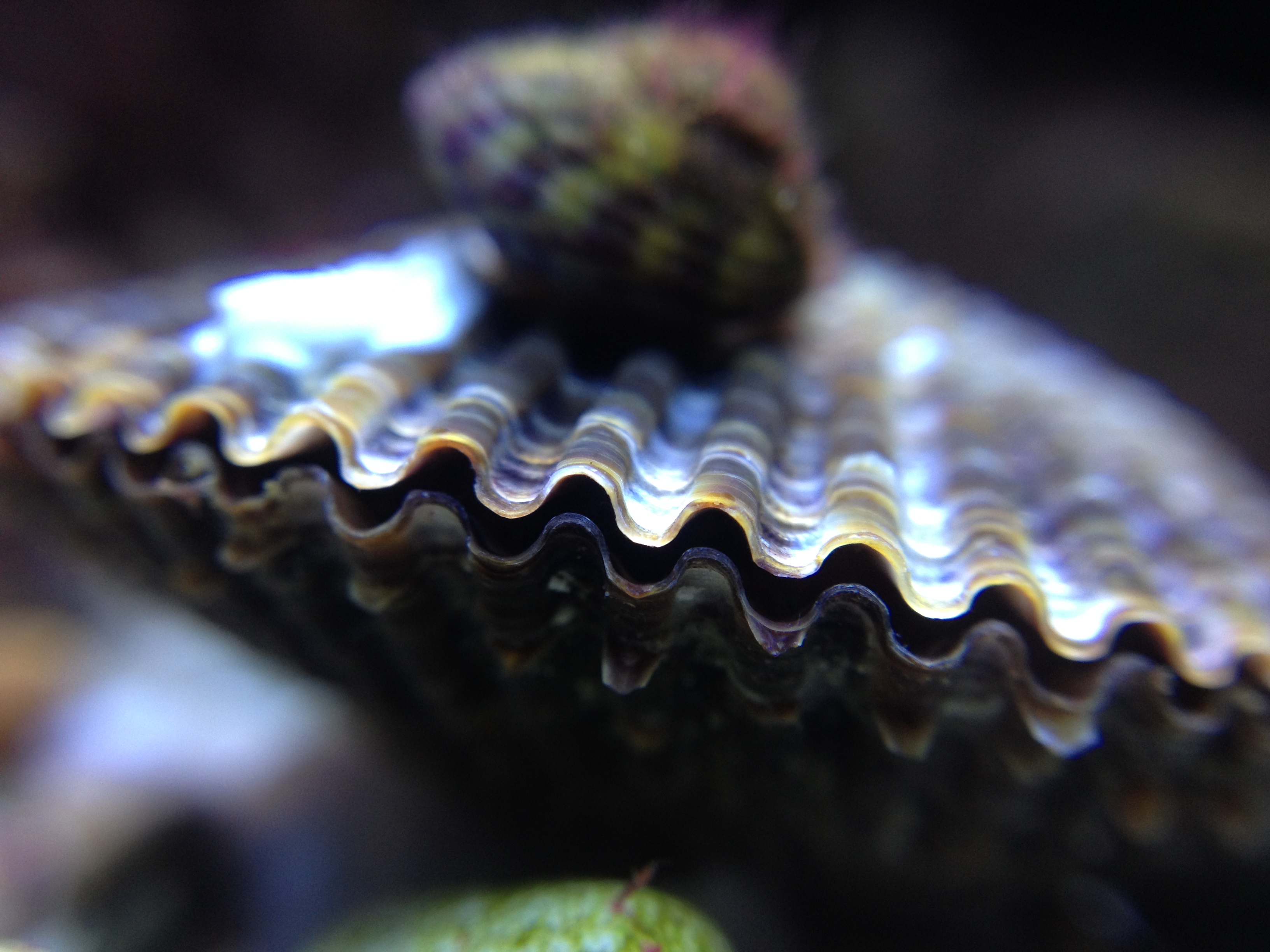
The Variegated scallop Chlamys varia is quite common here; it is often purple, but it can be orange, red or yellow as well. Below a purple-red one I found under a rock covered in some Spirorbis spirorbis (calcified worms) and surrounded by Cushion stars, Grey and Flat top shells and Periwinkles:

IMG_2620

A big one:

IMG_2774

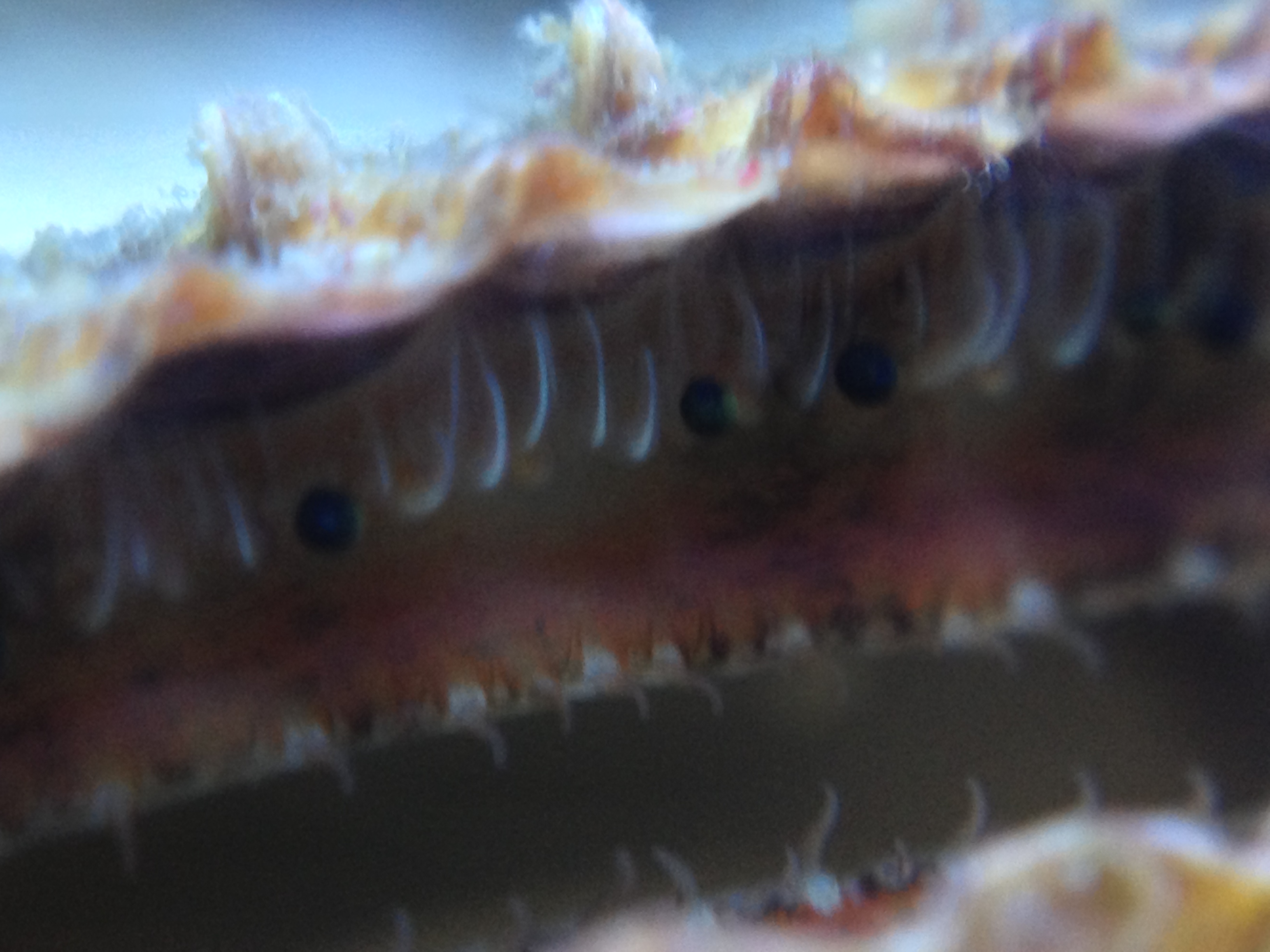
This scallop attaches itself to rocks with byssus threads but is able to move around quite a bit as well. I have had two in the aquarium for a couple of months, longer than any other bivalve I’ve tried, but in the end they died anyway. It is hard to keep filter feeders; algae tend to thrive in aquaria, but usually in their attached- rather than planktonic form. I have not had luck with tunicates either and I won’t try any new filter feeders until I have found a proper way to feed them. On one forum, I was recommended a form of artificial plankton that is commonly used for corals which could be interesting. However, this will require a lot of skimming to get rid of the non-eaten food. I’ll therefore focus on experimenting with seaweeds for now. Below two close-ups of a Variegated scallop in the aquarium. Scallops have rows of beady eyes along their mantle, this can be seen in the the second picture:

IMG_0746

IMG_1273

rock pooling from the comfort of my home

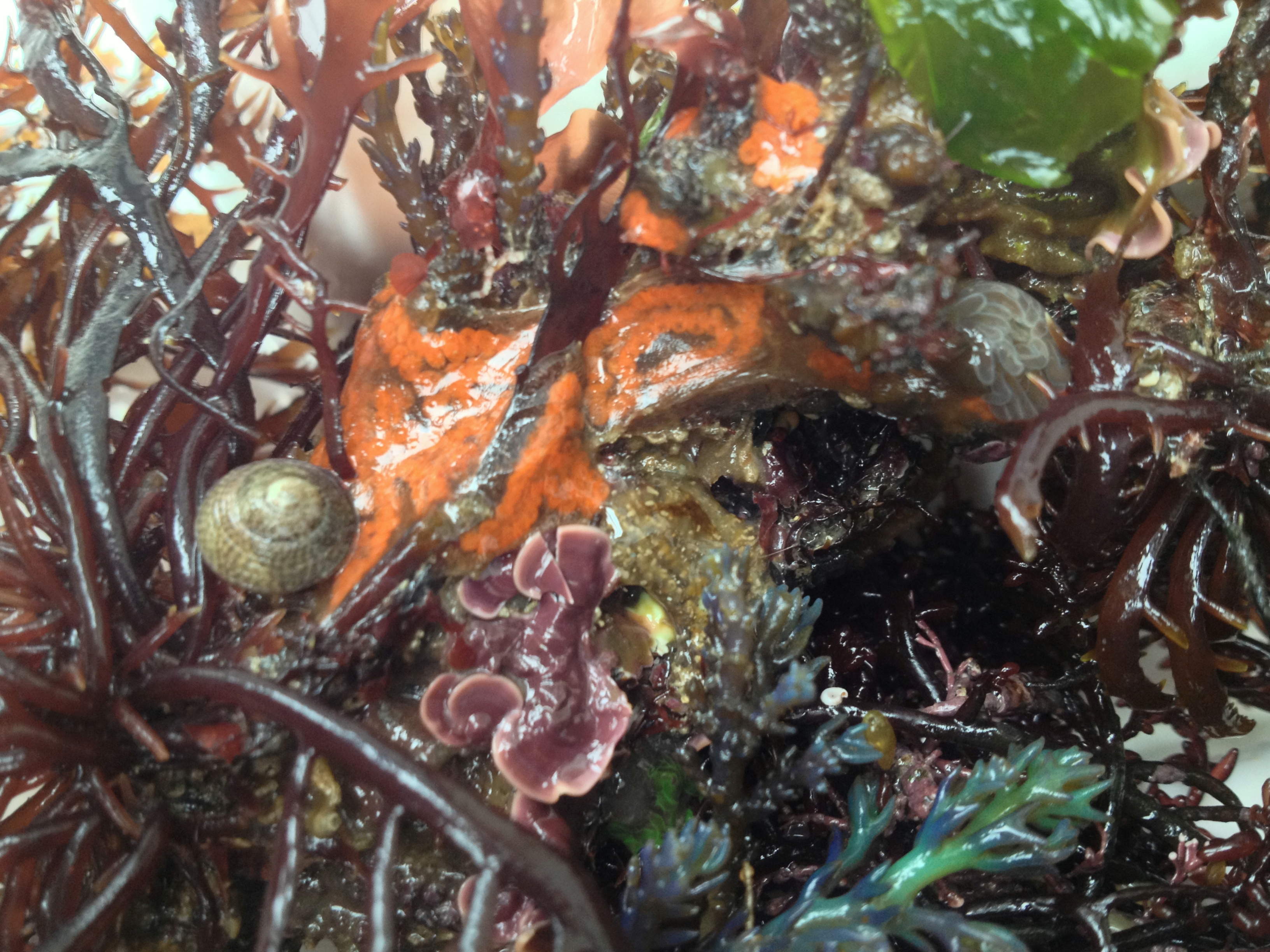
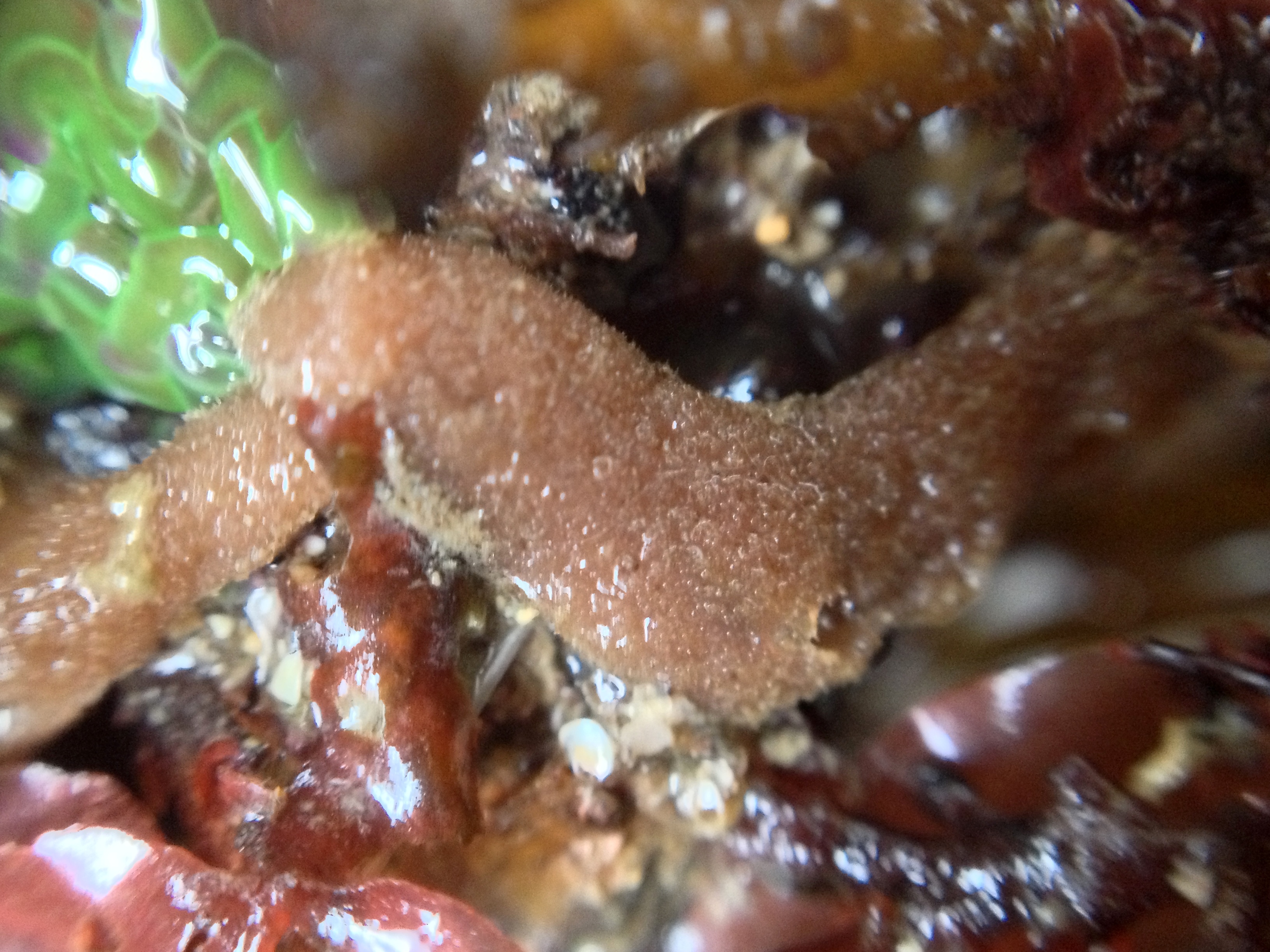
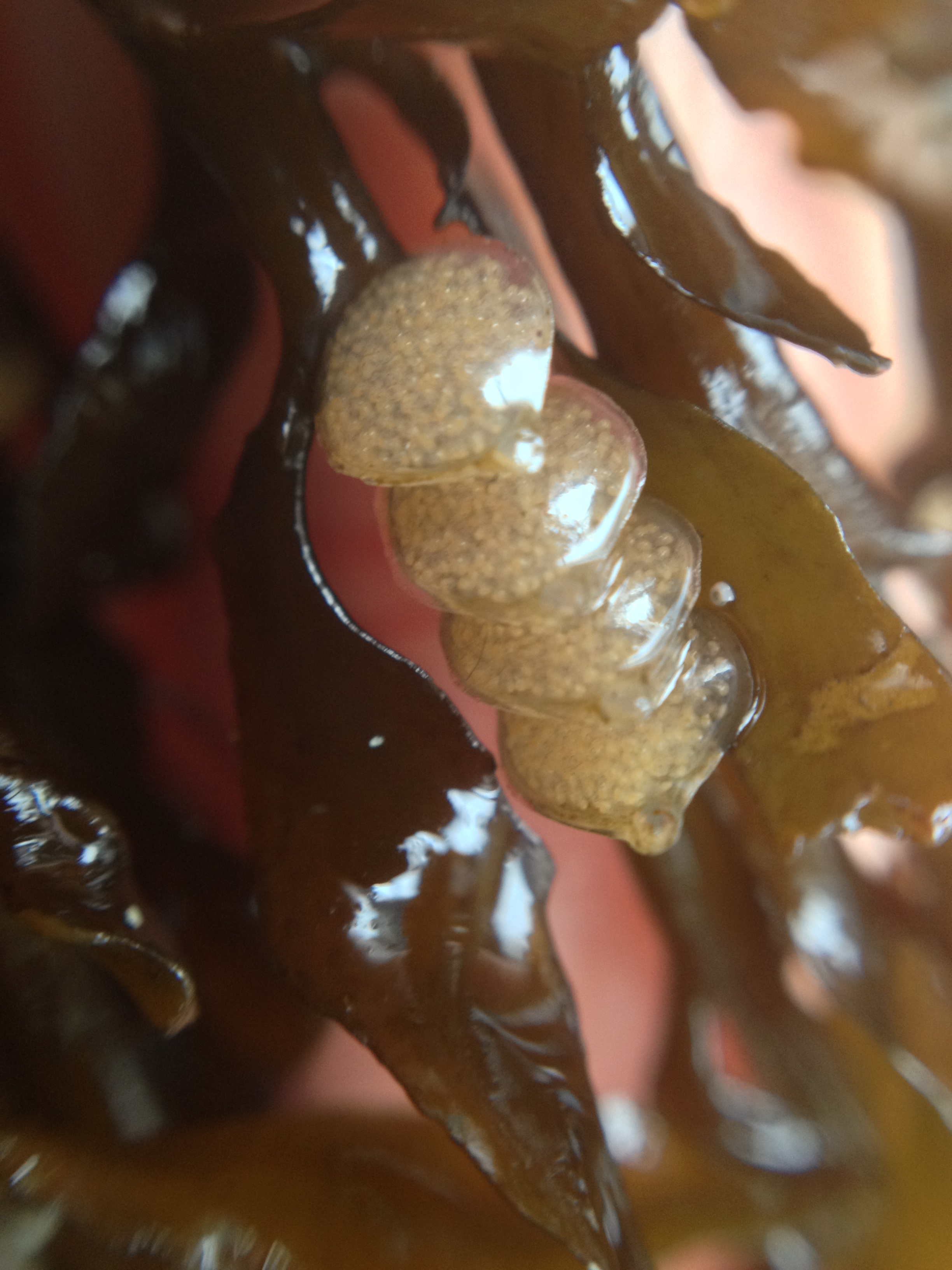
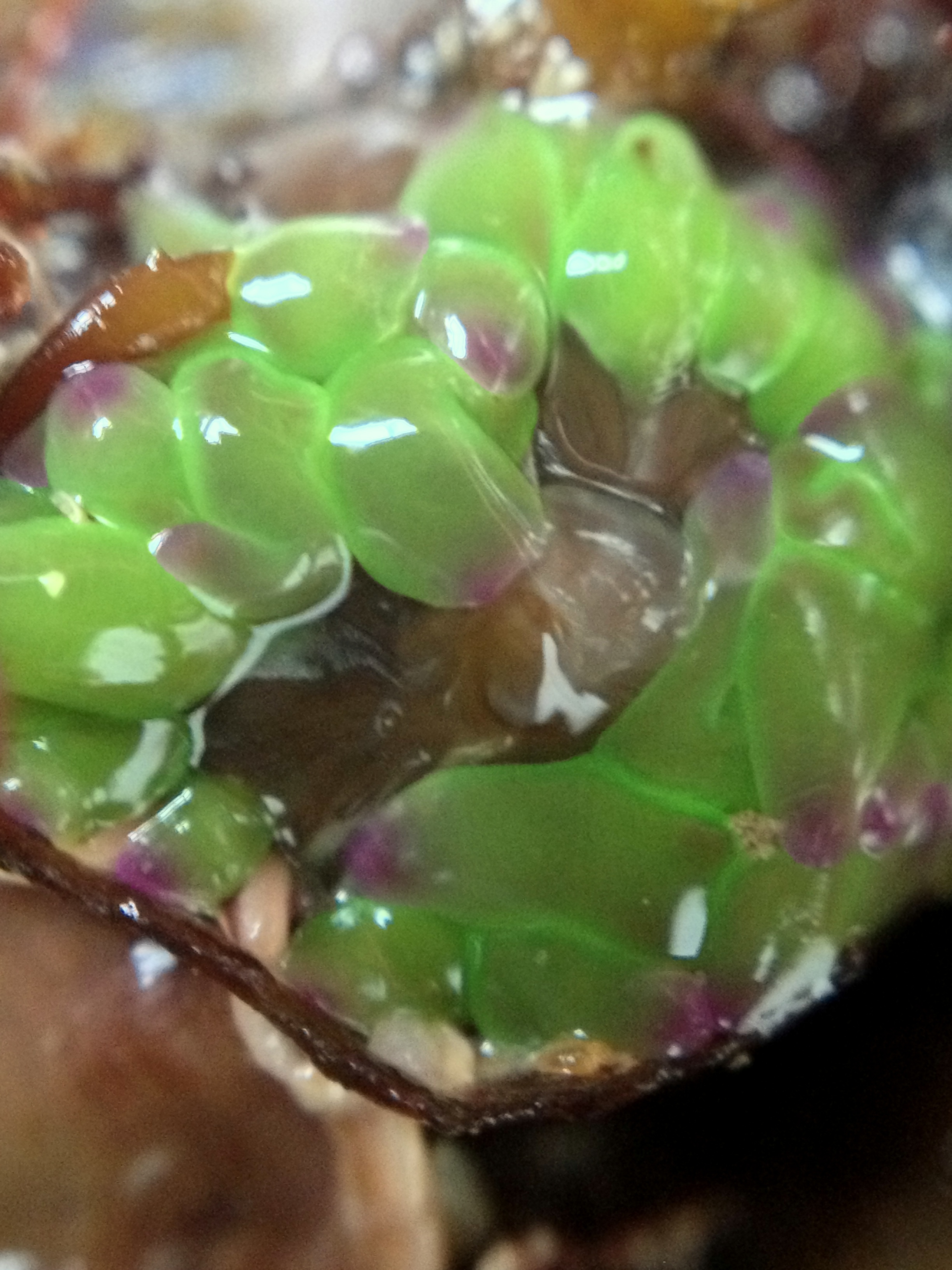
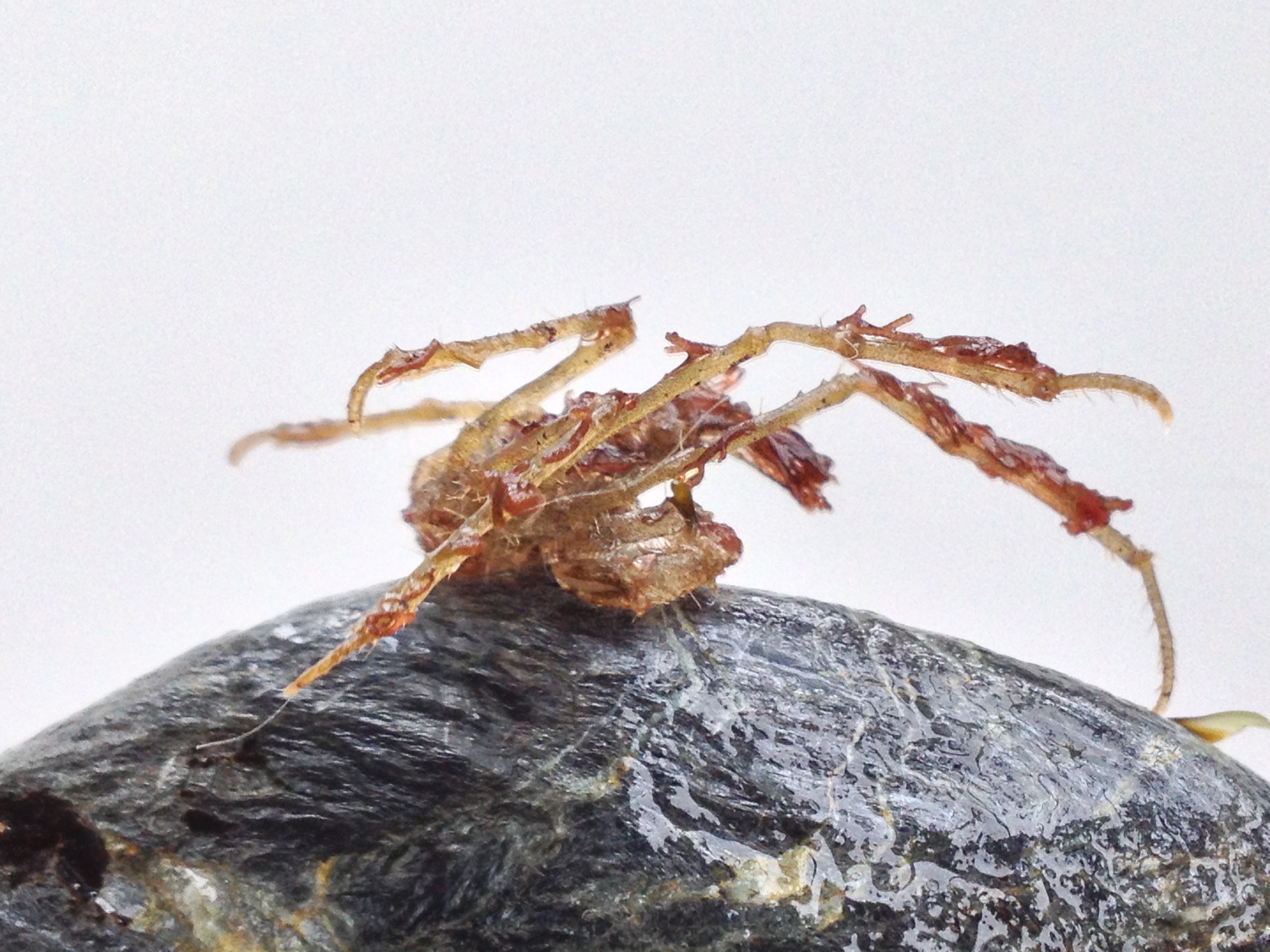
It was too cold and windy to spend a lot of time on the beach, so I took a closer look at my seaweed catch back home. I was amazed at the diversity of organisms growing amidst the weeds. A lot of them are easily overlooked when rock pooling as you need some time (and preferably a comfortable seat) to find them. Below Bushy rainbow wrack with epiphytic False eyelash weed and Pink plates Mesophyllum lichenoides (I will not give the Latin names of species described in preceding posts for brevity). Some bright green sea lettuce Ulva, a grey topshell Gibbula cineraria, a snakelocks anemone Anemonia viridis and in the middle a bright orange colony of the tunicate Botrylloides leachi: IMG_1804I found many large Breadcrumb sponges Halichondria panicea but the picture I took did not turn out to be in focus. I do not know what the organism below is, perhaps a bryozoan (please feel free to comment!). IMG_1816I am not sure what this is either! IMG_1796Dog whelk Nucella lapillus eggs (I now also notice a tiny brittle star in the middle): IMG_1835Egg cases of the thick-lipped dog whelk Hinia incrassata: IMG_1758A small snakelocks anemone; interestingly enough all of these were the green variant (with purple tips) and there were none of the pinkish ones. I have read some interesting notes about aggressive behaviors between the two types, something to look into for a future post. IMG_1807A Marbled Crenella Modiolarca tumida, a tiny bivalve typical of seaweed holdfasts: IMG_1776A tiny White tortoiseshell limpet Tectura virginea: IMG_1782I saw something creeping out of the seaweeds on the floor out of the corner of my eye: a small Long-legged spider crab Macropodia rostrata. This species adorns itself with seaweeds for camouflage: IMG_1870

IMG_1878

introduction

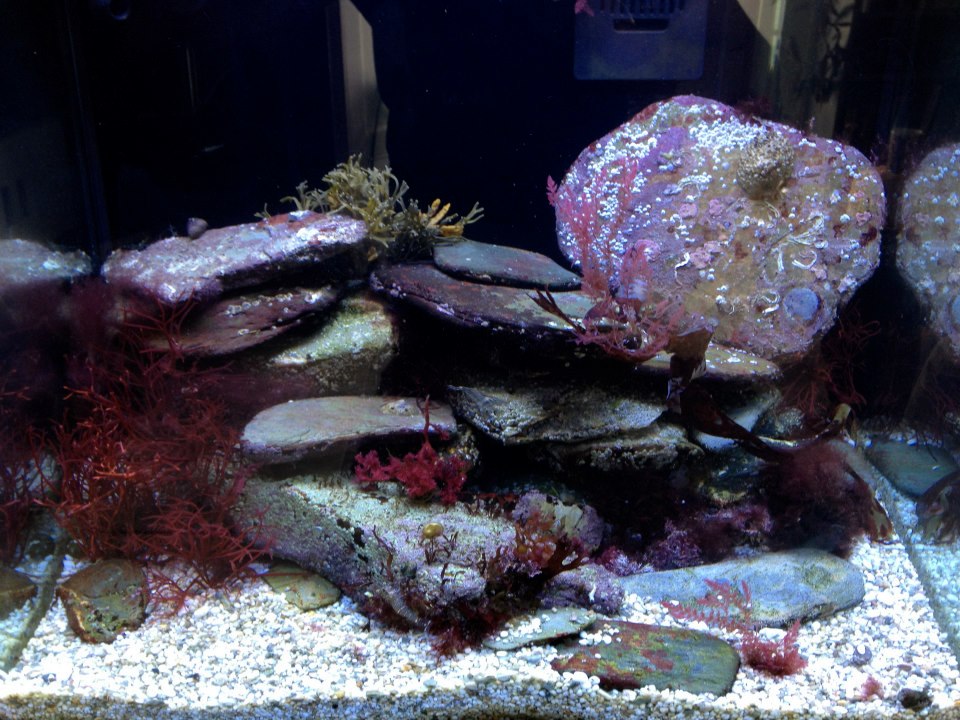
Hello! For the last half year or so, I have been messing with a marine aquarium housing sea weeds and critters collected from local rock pools here in Cornwall. I thought it would be fun to blog about my aquarium project, especially after I discovered that it is quite easy to take nice aquarium pictures using an iPhone (which I found nearly impossible using a standard digital camera). After doing some internet research, I settled on a Red Sea Max 130D ‘plug-and-play’ aquarium (I will post about the actual tank later). I could not find much information on the web on temperate marine tanks, especially ones without a chiller or a sump. and few of those seem to focus on seaweeds. So who knows I may have found a niche. Below I have posted some pictures from when I was setting it up last year:

424667_10152068098300046_1201564886_n

Half a bucket of gravel collected from a nearby beach, RO water taken home from the lab where I work (carried back 2×10 L at the time, the tank is 130 L) mixed with a free bucket of sea salt that came with the tank. Few sea weeds and not too many rocks. I have since replaced the rocks with bigger ones; most critters are benthic and you do not want to have too much ‘open water’ around with nothing in it. Although too bare, I do like the purple look of this set-up, which has since disappeared because of inevitable algae taking over from the purple crustose seaweeds.

580087_10152068098840046_64888663_n

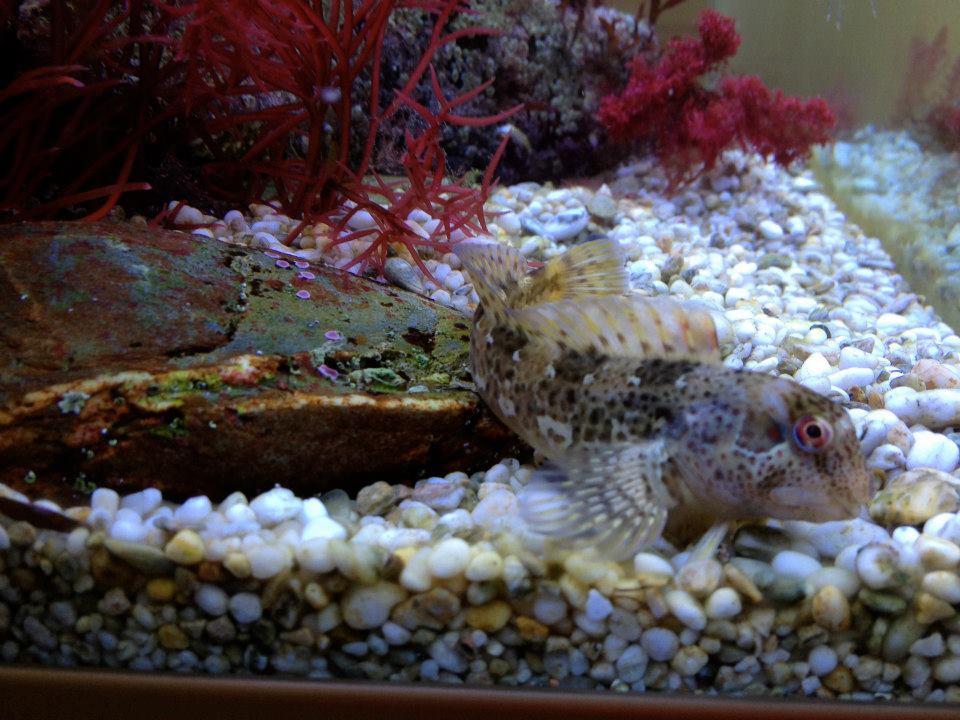
A shanny Lipophrys pholis, this is a very common fish around here that can easily be picked up when turning stones at low tide. The branched seaweed on the left is Solier’s red string weed Solieria chordalis; in the back on the right there is a little pluck of Berry wart cress Sphaerococcus coronopifolius.

394229_10152068099165046_1256579628_n

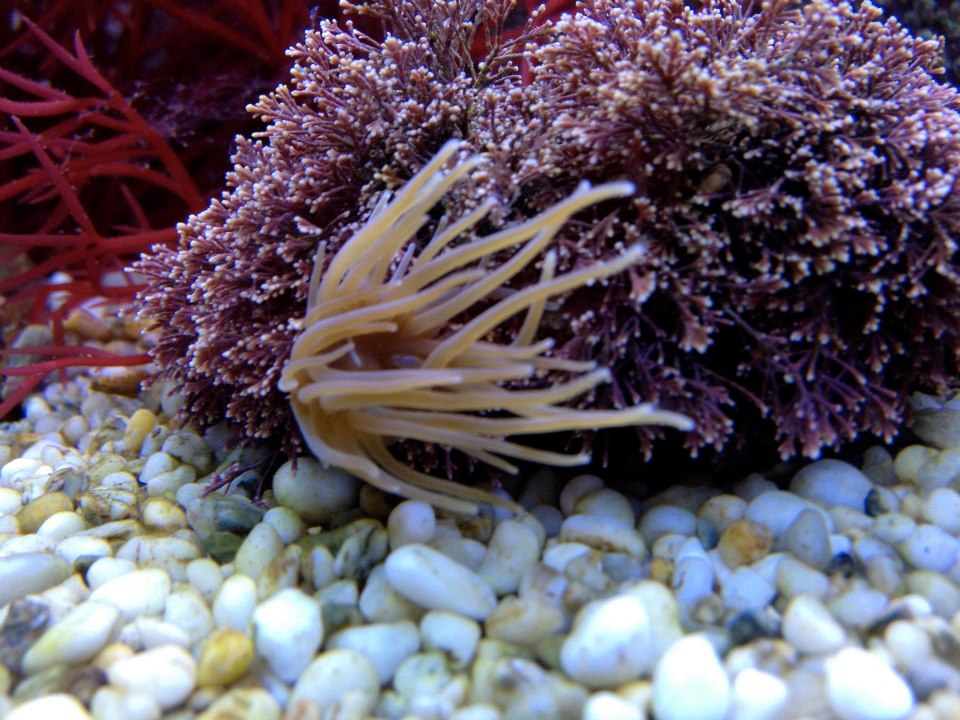
A snakelocks anemone Anemonia viridis. Behind it some Slender-beaded coral weed Jania rubens. This weed died off quite quickly; first it turned a bright orange, then white.

301290_10152068097775046_741170255_n

The Star ascidian Botryllus schlosseri, a colony-forming tunicate. It did not survive for too long, but that might just have been because the particular broad-leaved red seaweed they grew on are very popular with prawns and hermit crabs. What animals and sea weeds do well has been trial and error. I might compile a list of ‘easy’ species and ones to avoid at some point.