All right then, another post with me fiddling around photographing seaweeds. Composition remains difficult; the next four photographs illustrate this. The diversity of colours and shapes compensate somewhat for it though. I think that a wide-angle lens is crucial to get better pictures: you can get close to the subject (important, as the water is not always crystal clear) whilst still getting a ‘panoramic’ view. Cameras such as the Sony RX100 in an underwater housing can be combined with such lenses (‘wet lenses’ which go on the housing rather than in). Camera, housing and a macro and wide-angle lens will set me back £1000 or so though, so maybe not. In any case there is still plenty room for improvement with the simple Canon Powershot, preventing overexposure for instance. I use Picasa to add some contrast, crop and straighten btw.

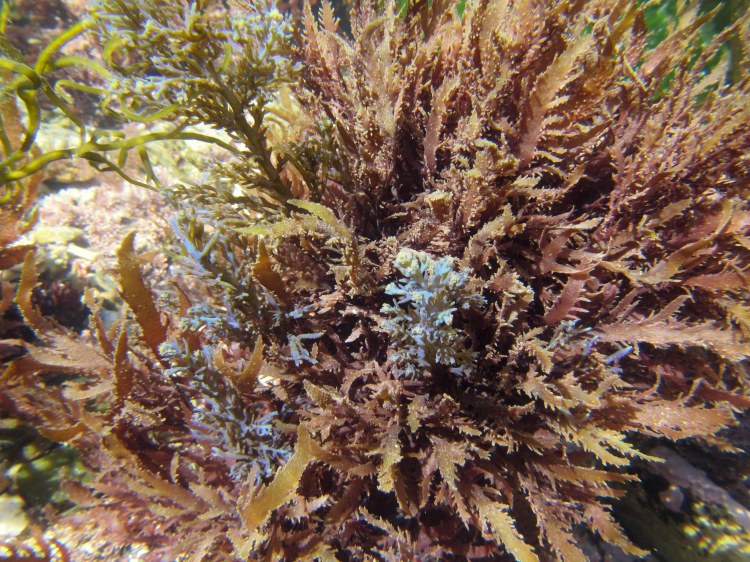
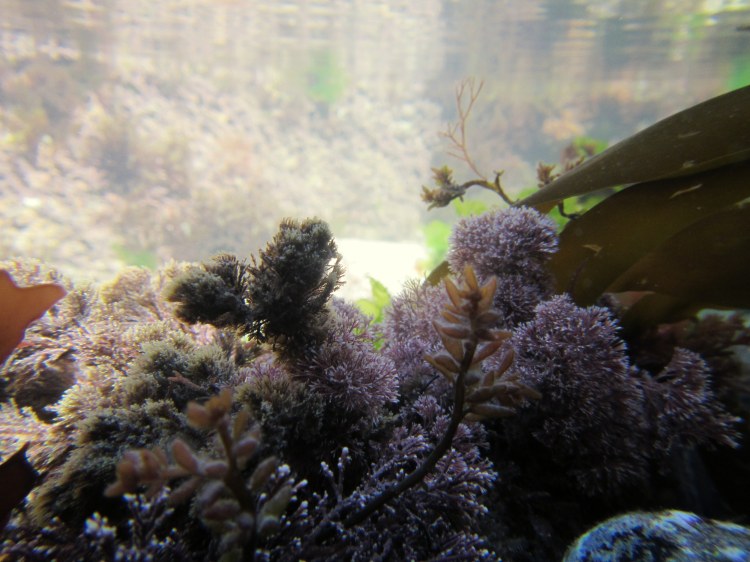
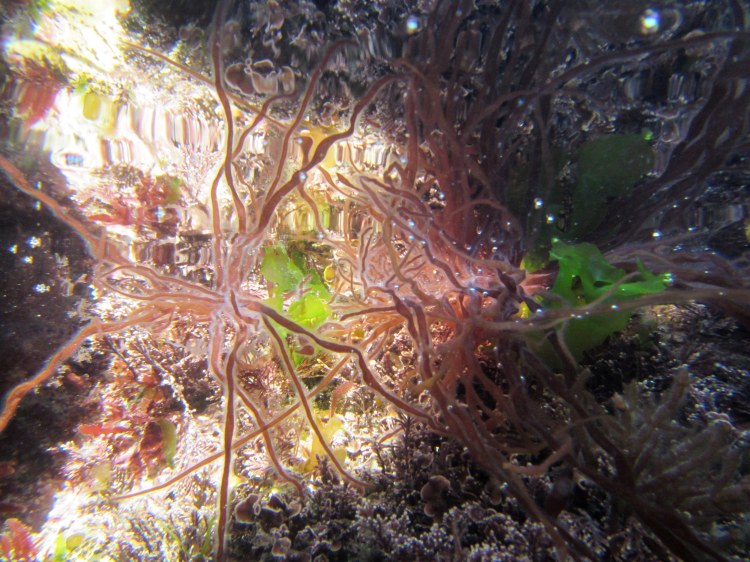
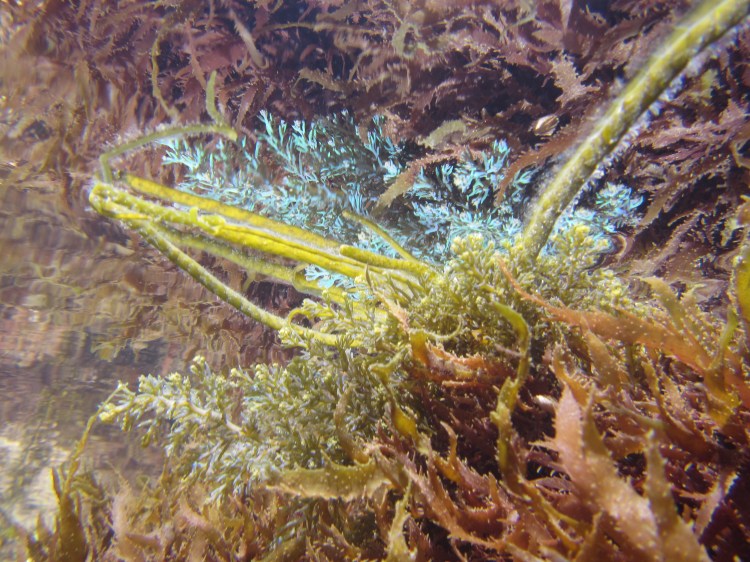
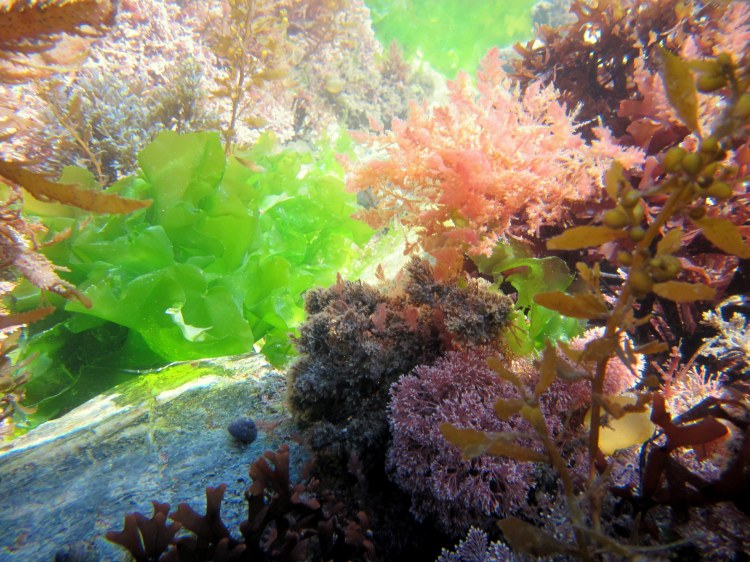
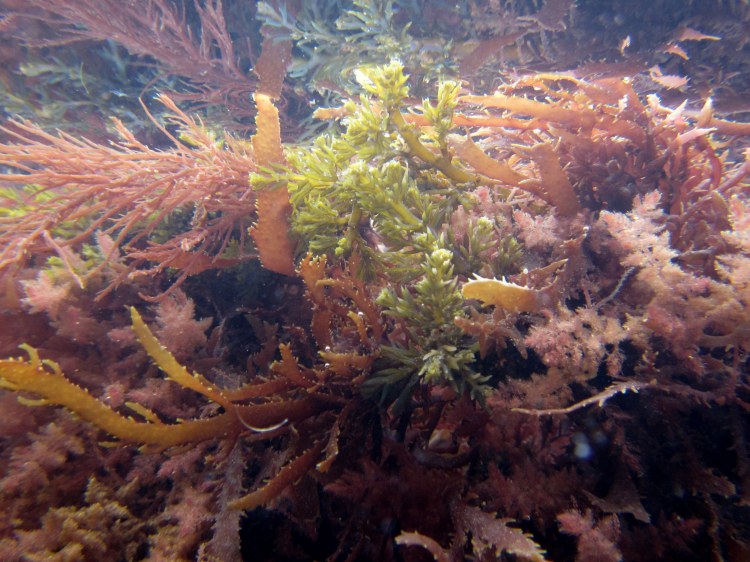
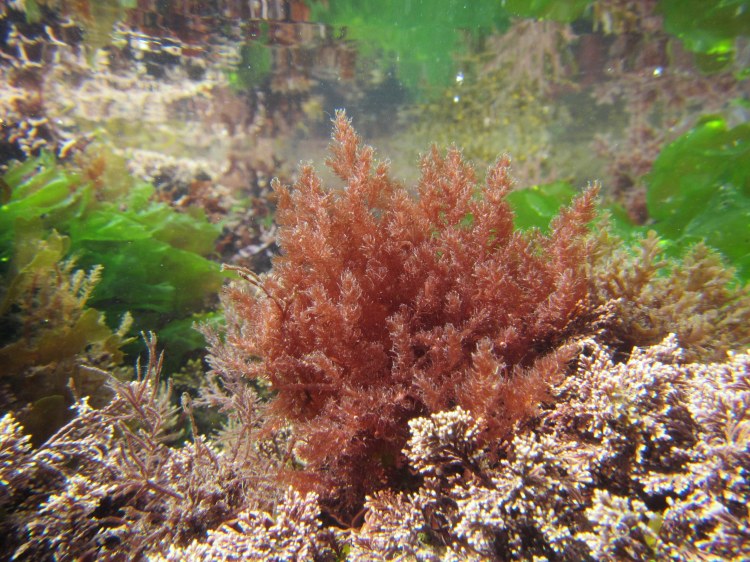
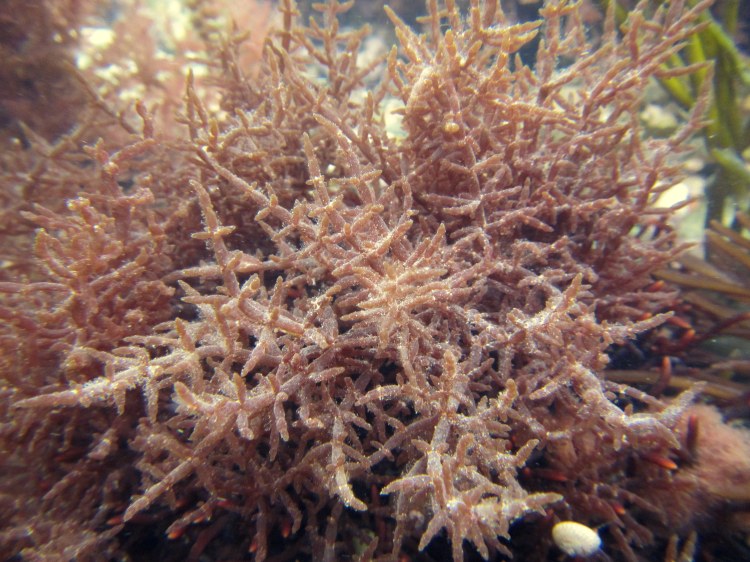
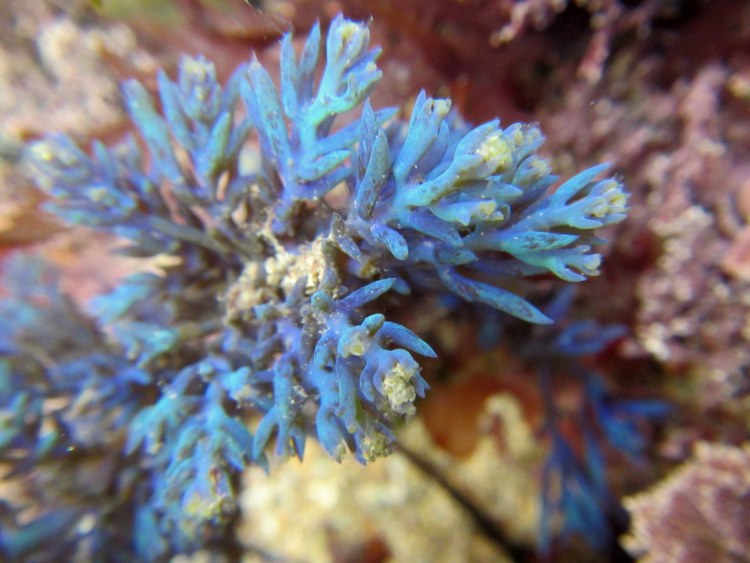
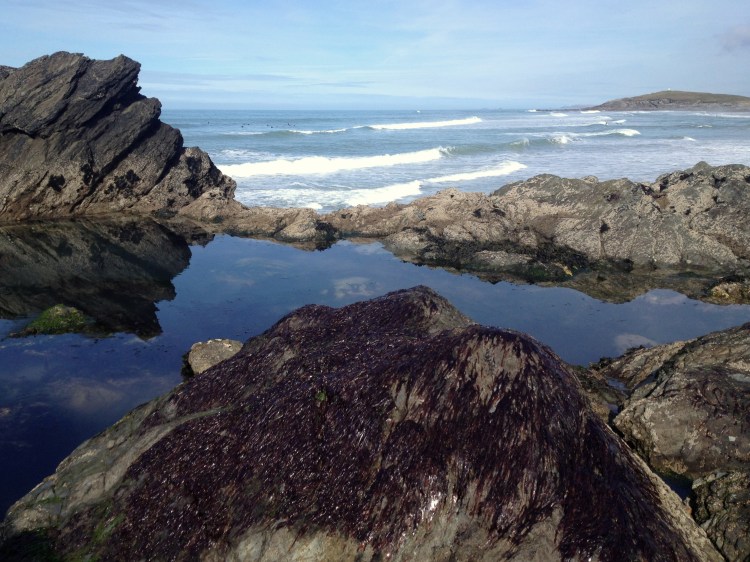
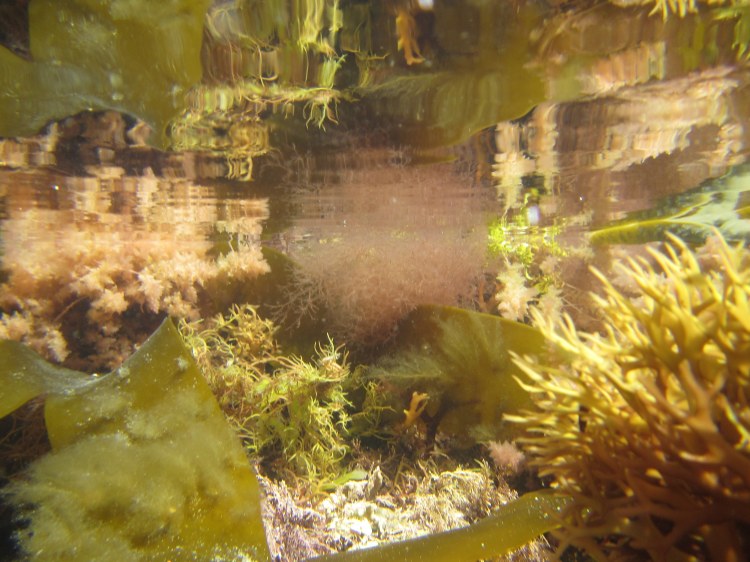
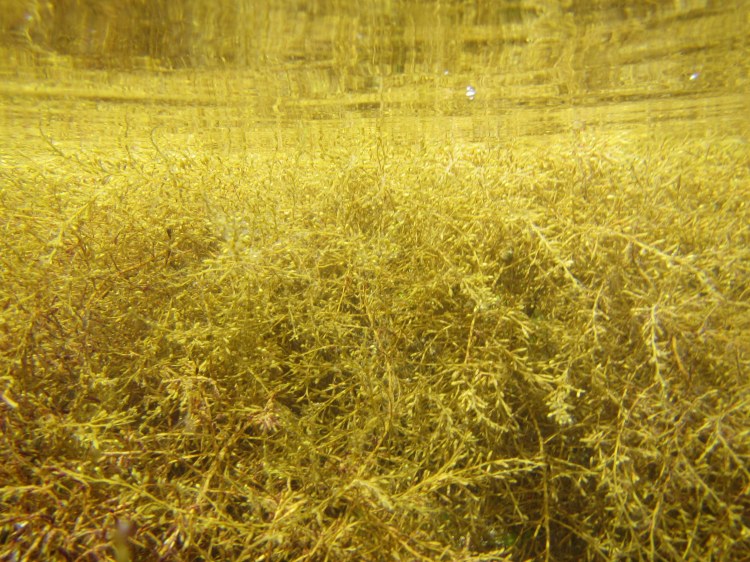
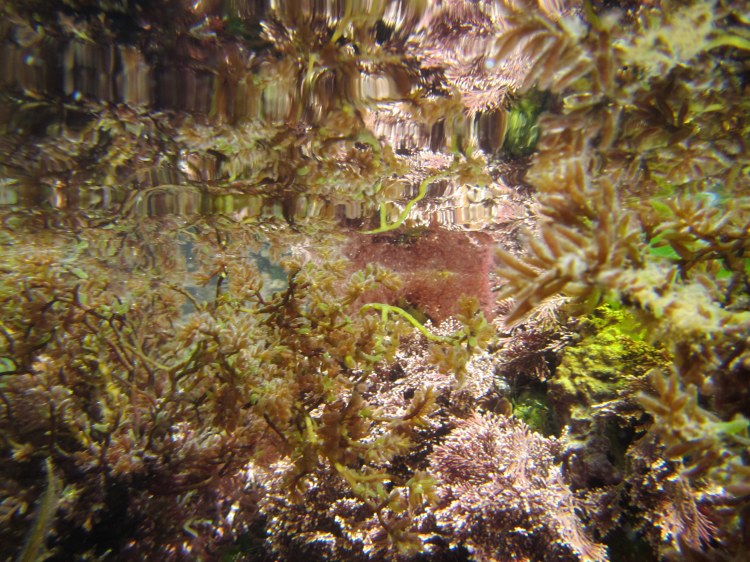 Photographing through gulleys to create some depth makes things a bit more interesting (first picture). The second picture shows an overexposed background and a dark foreground but if properly exposed and in focus this sort of shot could be nice. Shots that are half reflection make things psychedelic and quite cool. This effect works well for Dumont’s tubular weed Dumontia contorta which is common highest up the shore (third picture). It is challenging to capture the beautiful blue-green colour of the Bushy rainbow wrack Cystoseira tamariscifolia as it is caused by iridescence, i.e. physical surface properties (see this old blog post from my work blog for some more info). It thus depends on the angle of view whether these beautiful colours can be seen. In the fourth picture you can see that the seaweed is a dull brown, but its reflection underneath the water surface does reveal the blue colour. The last picture demonstartes the different colours and textures well, but it is overexposed unfortunately.
Category Archives: rock pooling
photographing seaweeds with a Canon Powershot part III
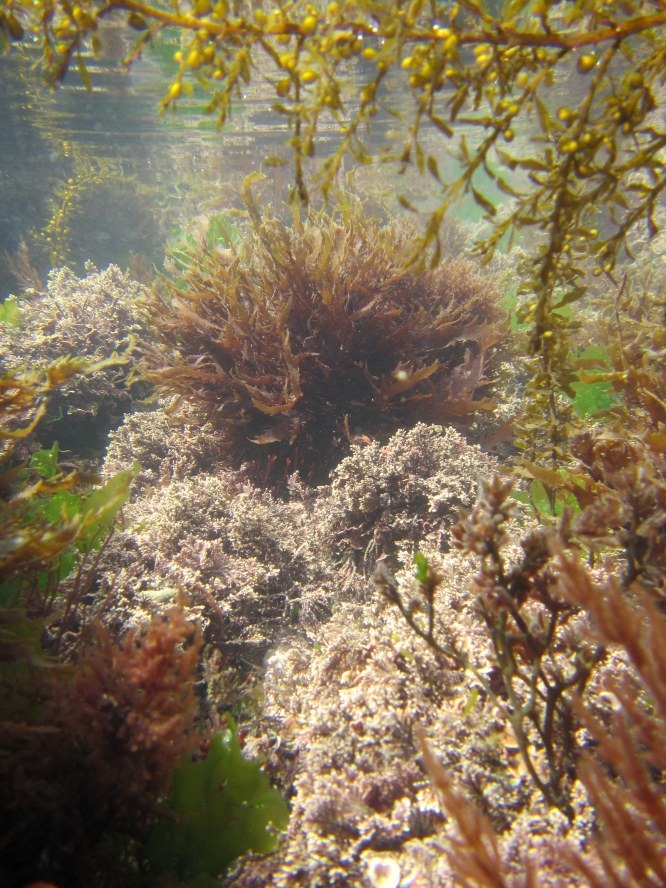 Another couple of sessions trying to take seaweed photo’s. A couple of seaweed species are really thriving at the moment, one is False eyelash weed Calliblepharis jubata in the middle of the picture above. In the picture below a couple of other species, Irish moss Chondrus crispus in the foreground, Discoid forkweed Polyides rotundus on the left, Black scourweed Ahnfeltia plicata on the right, with some Red grape weed Gastroclonium ovatum at the top. Below that two ‘miscellanious’ pictures and after that some photos of individual species: the photo that turned out best was of Bonnemaison’s hook weed Bonnemaisonia hamifera, an invasive species from the Pacific. After that Juicy whorl weed Chylocladia verticilliata, a Plocamium species and my favourite, the Bushy rainbow wrack Cystoseira tamariscifolia.


Pentire
 Three weeks back I had to pick someone up from Newquay airport and decided that it would be a good idea to combine that with some rock pooling action on the North Coast. I was told that the Pentire end of Fistral Beach was a good spot for Dahlia anemones and so the decision was made. Unfortunately I did not find any anemones, but it was a beautiful day nonetheless. The relatively few North coast sites I have explored all seem a bit barren in comparison to the South coast: more exposed, with sand meeting scoured rocks, leaving only hardy seaweeds, mussels and beadlet anemones to cling on. I need to spend some more time to find the right spots that’s for sure. The top of the cliff contained some rock pools, but they were quite milky due to the recent weather. They were full of the beautiful Brown tuning fork weed Bifurcata bifurcata (as I was on an anemone hunt, I was hasty and most photos did not come out especially nice, so see this old post for a nice photo of this species). The rocks were very slippery due to the (edible) Laver seaweed Porphyra (front of the next picture).
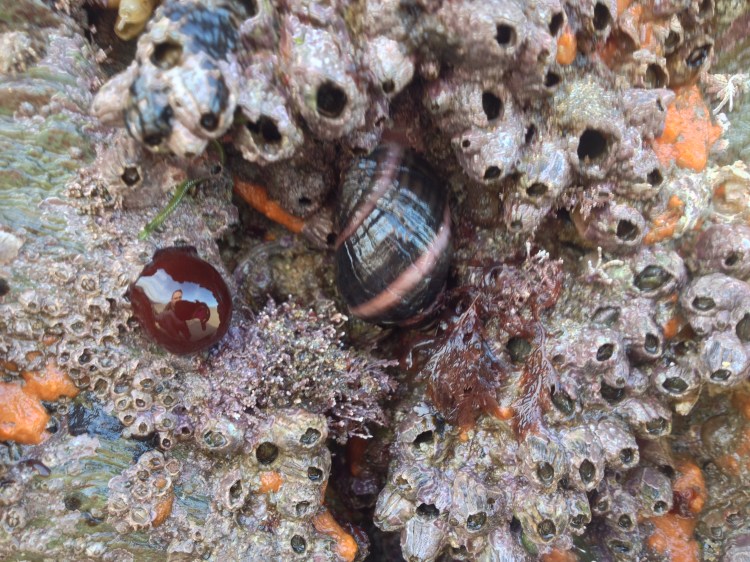
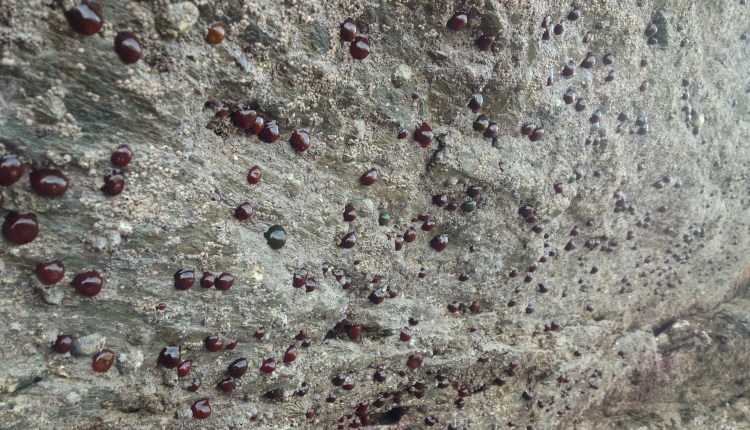
 At the base of the cliffs were some gullies, the largest of which is locally known by the rather grandiose name ‘Cave of Dreams’. No major finds here, but it was nice to see the many colour varieties of the Dog whelk Nucella lapillus (egg clusters in the background). The second photo is an especially pretty specimen; I only later noticed the green worm (probably Eulalia viridis) and the reflection in the beadlet anemone of me holding my iPhone! Beadlets are super common here. It is interesting that this species has two main colour varieties (red and green), just like the Snakelocks anemone (green and purplish) and the Plumose anemone (white and orange). This might be a coincidence but I find it intriguing. Lastly, some Sea pink or Thrift Armeria maritima.

photographing seaweeds with a Canon Powershot part II
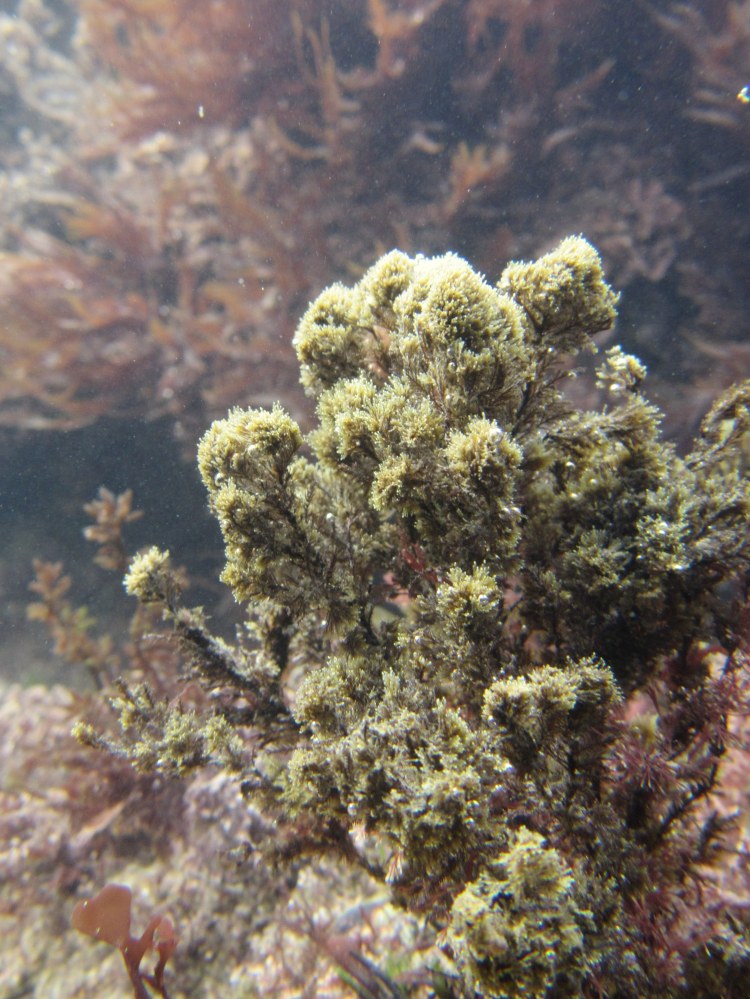
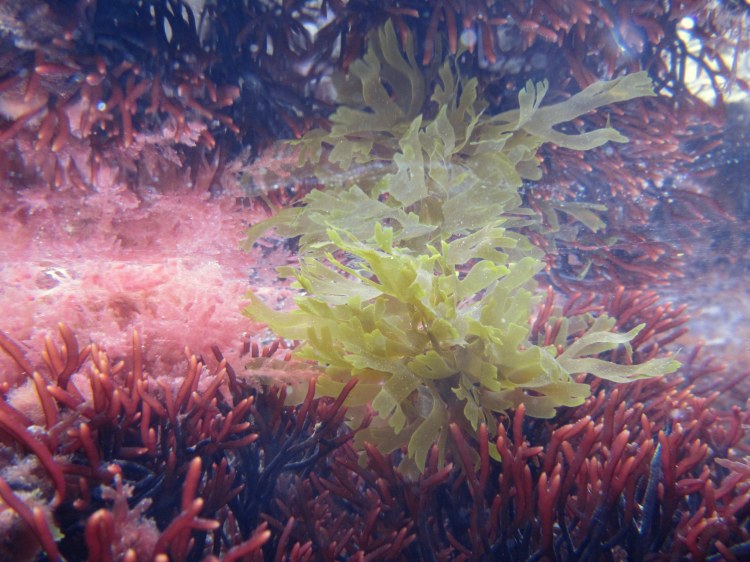
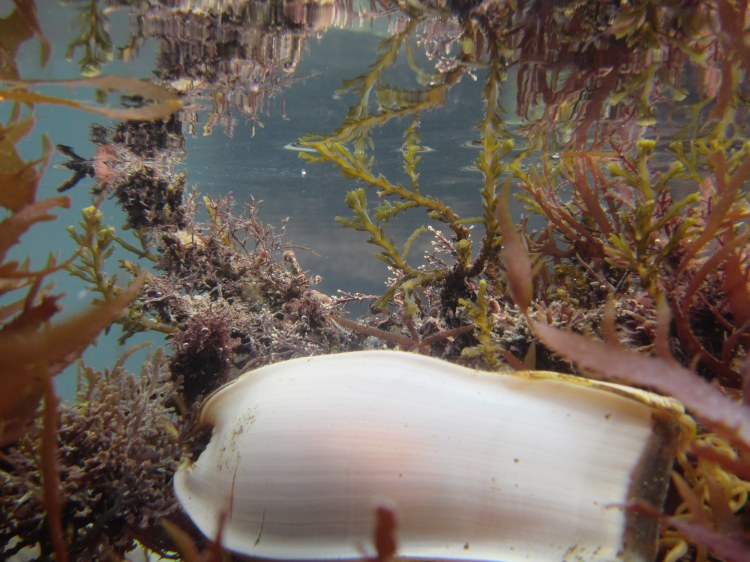
This friday, I tried my hand at some more underwater rock pool photography with my point-and-shoot Canon Powershot (see also here and here). This is both rewarding as the colours of seaweeds are so vivid and the textures so varied, and frustrating, as I cannot use the viewfinder and even if I could, lots of shots would be much better using a wider-angle lens. Also, I am often kicking up silt with my wellies and the nicest shots often are just out of reach. So next time, I should really photograph whilst snorkelling. (It would be great to use an SLR in an underwaterhousing. I bought a much cheaper and much more cumbersome ‘underwater-camera bag‘ without remembering that my old, not-so-frequently-used-anymore Canon EOS 400D does not have a viewfinder. I am afraid this will make the experience less, not more, fun…) Anyway, the trick for now is to take many pics and hope some turn out all right. I like the ones with a water surface reflection best. The nicest one was a snakelocks anemone among corraline algae. Next, what is may or may not be Sea flax weed Stypocaulon scoparium. After that, the brown Divided net weed Dictyota dichotoma growing inbetween Discoid fork weed Polyides rotundus, a Bull huss/Nursehound/Large-spotted dogfish Scyliorhinus stellaris mermaid’s purse and a Spiny starfish Marthasterias glacialis. Probably more photos soon as the pools look by far the best in early spring.

random rock pool pics
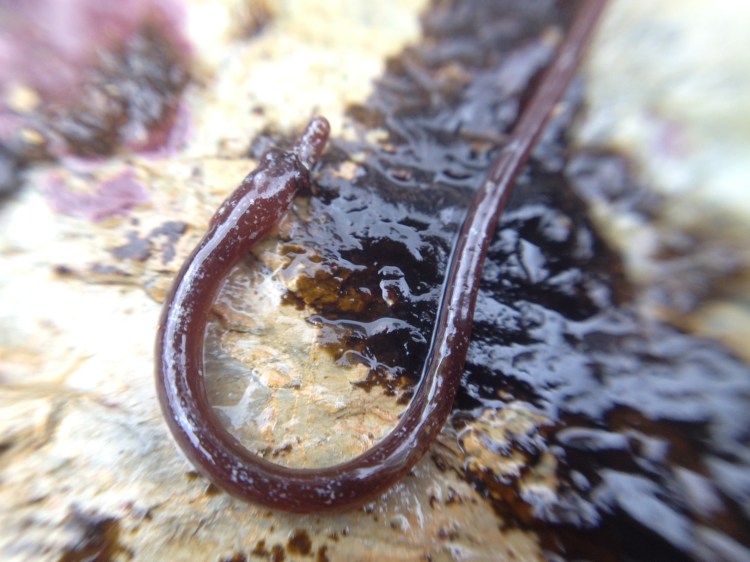
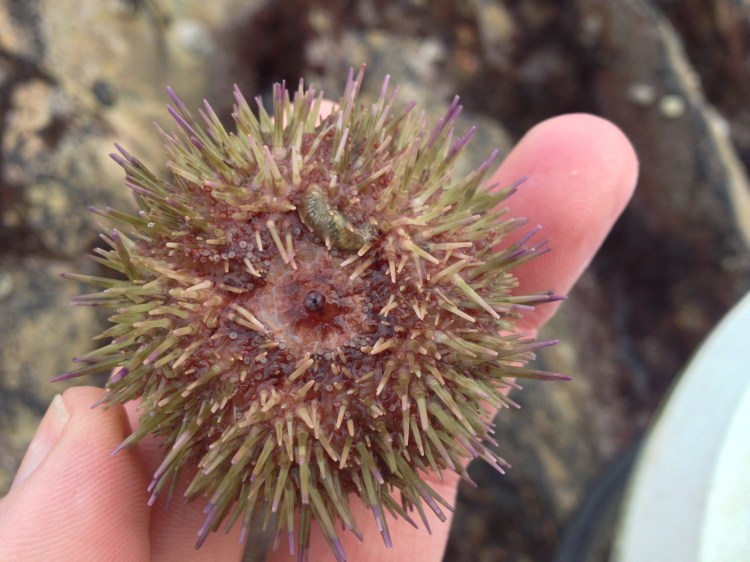
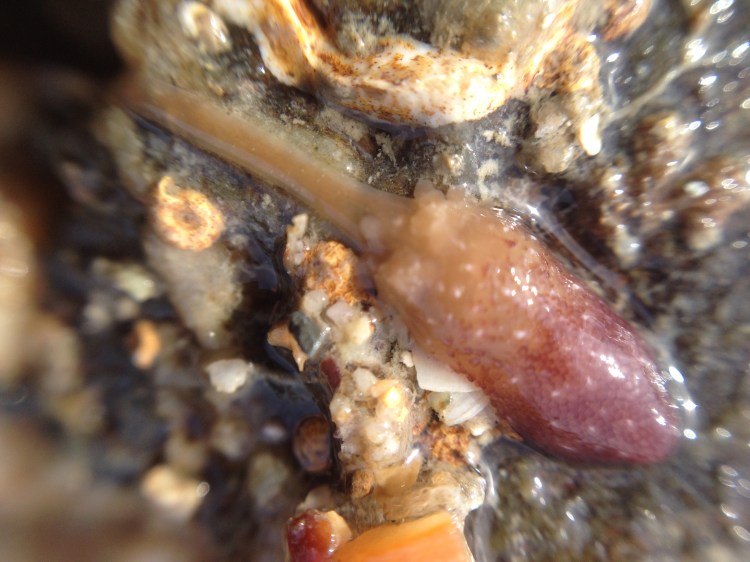
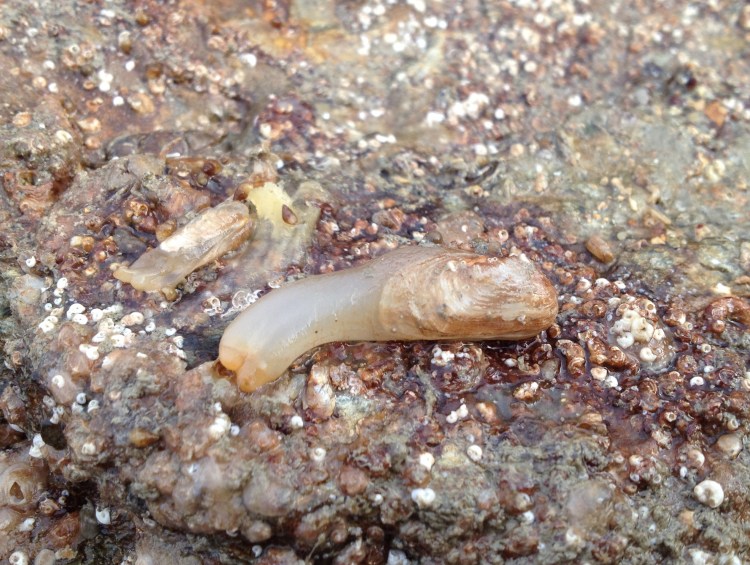
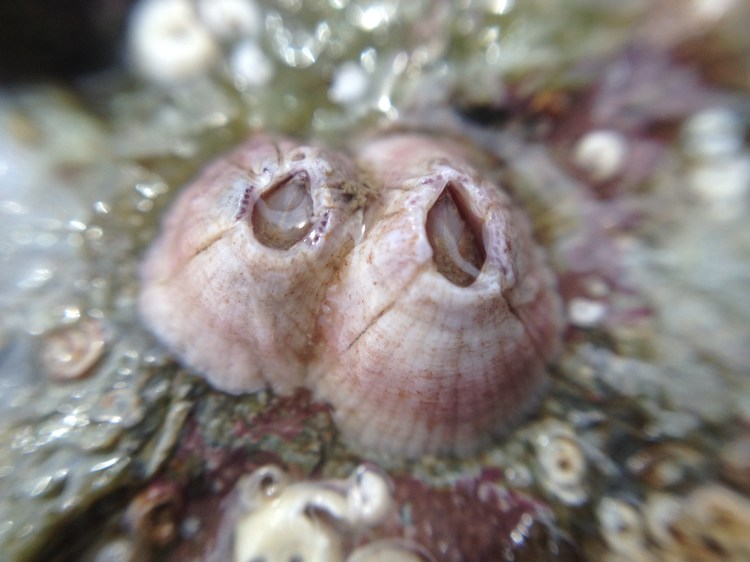
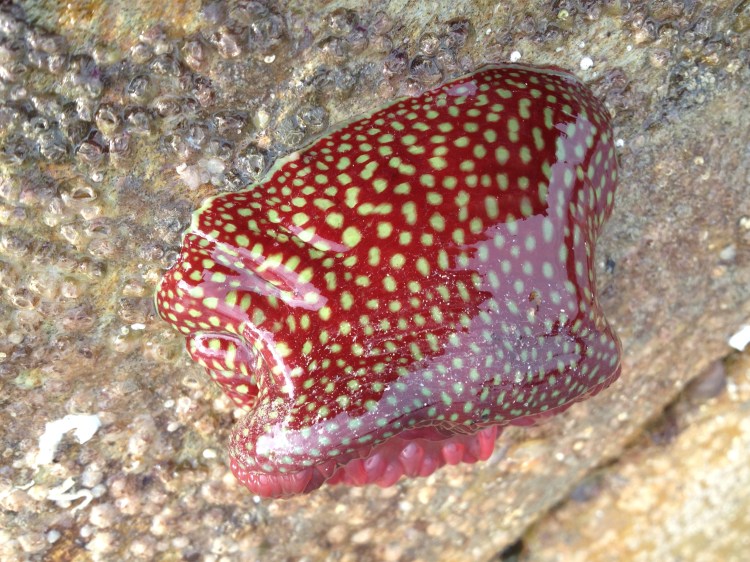
The weather has been generally awful so far this year and so I have not been out much. However it is March already so at least a small blog post is in order! There are loads of Worm pipefish Nerophis lumbriciformis around, some of the males carrying eggs (see also the blog header and the ‘about’ section). I found my smallest one yet. Next up a Sea urchin Psammechinus miliaris with what is probably the parasitic (or commensal?) polychaete worm Flabelligera affinis (thanks David Fenwick). After that, a slighlty out of focus shot of the hydroid Candelabrum cocksii. A few of these small individuals were sat under the first rock I turned over; I reckoned they were some type of spoon worm but they are something very different, thanks again David Fenwick, see for his much better photographs of this weird little thing here. Next the Wrinkled rock borer Hiatella arctica with siphon extended and the pretty acorn barnacle Balanus perforatus. Finally a picture of the Strawberry anemone Actinia fragacea, quite common and pretty, but I do not think I have ever posted a picture of it on the blog before. (All pics taken at Castle Beach in Falmouth btw.) I have three in my tank and it is high time for an aquarium update as well. I hope to go out tomorrow and the weekend as the tides are very low so watch this space!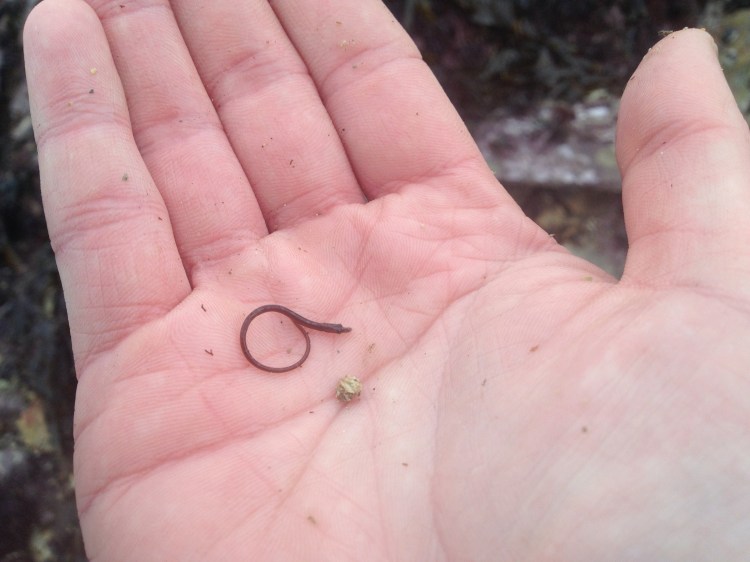
Leftover Pics
When going out rock pooling, I always take my iPhone and Canon Powershot (for underwater use) and take at least a couple of photos. Because of a lack of time, or because a single good photo is not enough for a new post, not everything ends up on the blog. Now I have some free time, I picked a couple of unused photos made this year that seem blog-worthy. First up, In realized only what I had found on the beach at St. Ives when leafing through the The Essential Guide to Beachcombing and the Strandline: a Seabeard! This hydroid, Nemertesia antennina, grows as stiff colonies protruding from a matted base and occasionally washes up on shore. It looks a bit plant-like; at the time I did not have the opportunity to have a closer look and just snapped a quick photo. Next a Lesser sandeel Ammodytes tobianus found at Gylly beach. I always see them when snorkeling or diving (see here) but this was a good opportunity to see one up close (I get excited when I spot a dead fish on the beach (see also here) and I am not afraid to admit it!). 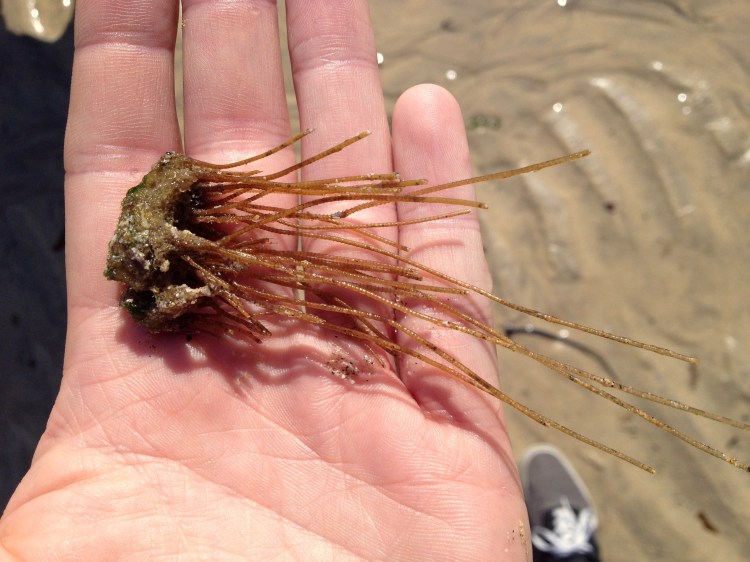

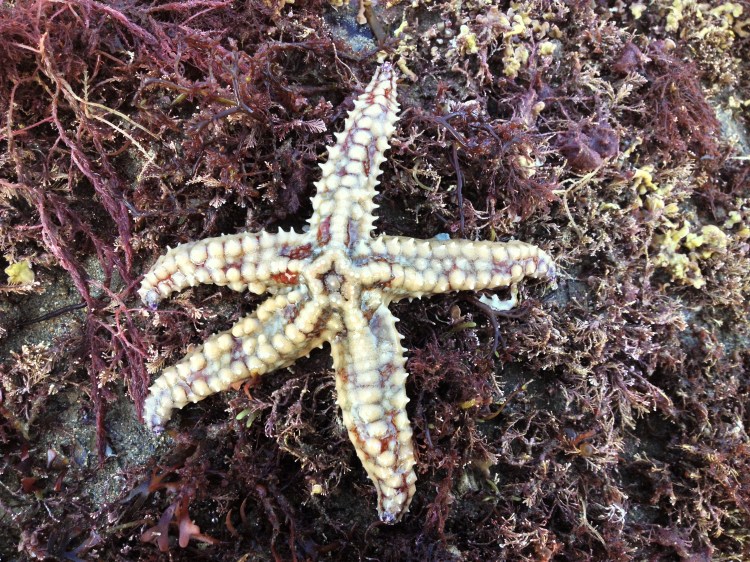
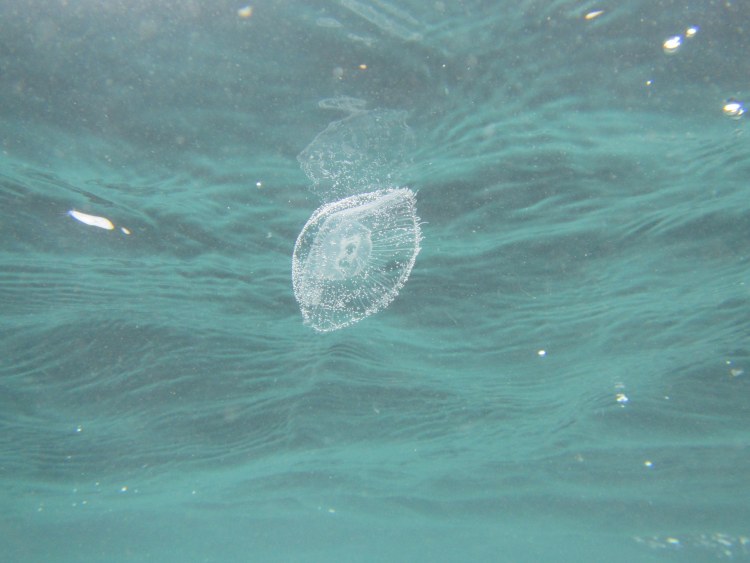
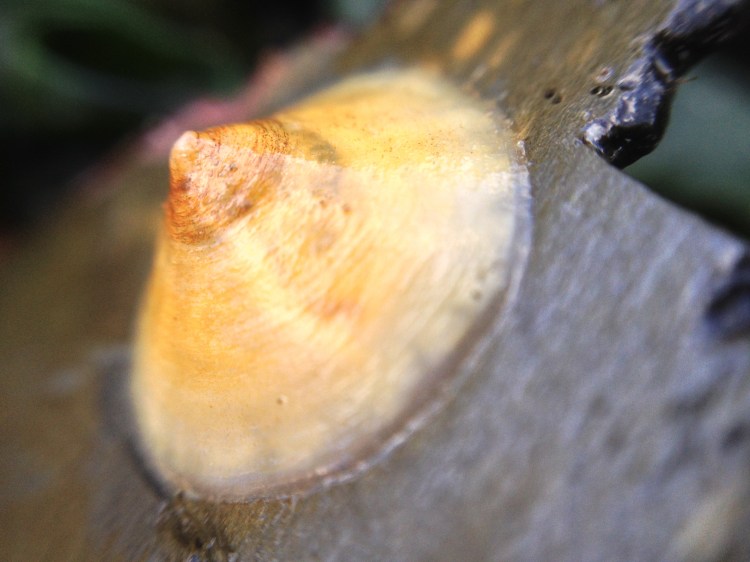
 Following are two colour varieties of the Spiny starfish Marthasterias glacialis, a Common brittlestar Ophiothrix fragilis and a shot of an Aequorea forskalea (or maybe A. vitrina) jellyfish. Next the gastropod mollusc Chinaman’s hat Calyptraea chinensis. I went back to Mylor marina for some pontooning recently but not much was growing; the only thing that stood out was the luxuriant sponge growth (I am not sure of the species, perhaps Halichondria).

 And of course some seaweed pictures. By iPhone: Under tongue weed Hypoglossum hypoglossoides in Flushing, Black scour weed Ahnfeltia plicata in St. Agnes and a photo showing a variety of wracks all colonizing the same patch (Flushing): Serrated wrack Fucus serratus, Spiraled wrack Fucus spiralis, Bladderwrack Fucus vesiculosis and Egg wrack Ascophylum nodosum. Next some Canon Powershot underwater pics (see also this post and this one): a random rock pool picture of mostly decaying seaweed, a closeup of my favourite the Bushy rainbow wrack Cystoseira tamariscifolia and a shot of Wireweed Sargassum muticum that has completely taken over a pool. Finally an SLR photo of a rock pool at Gylly beach with large Cystoseira baccata plants (middle, Wireweed on the left).




a tiny rock pool
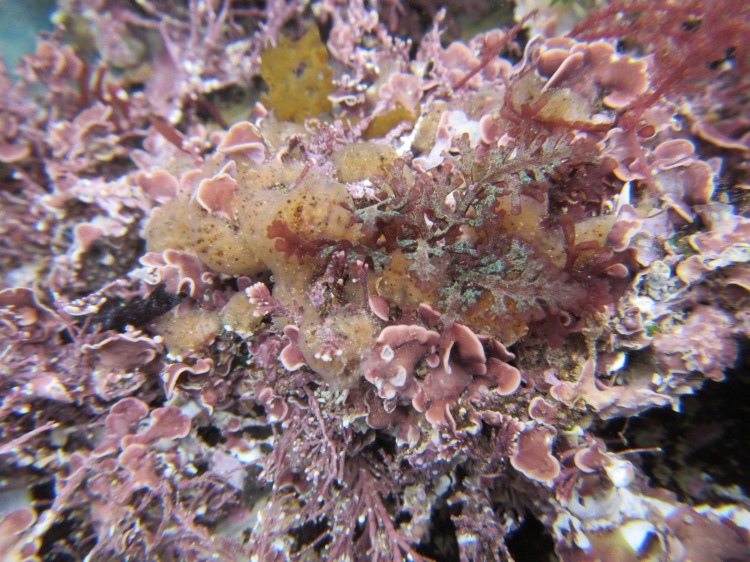
Last weekend I went down to Gylly Beach in Falmouth for a bit of rock pooling. However, the tide was not very low (especially with the inshore wind) and the weather was crap. Moreover, I could not find anything that I had not seen many times before; although rock pool life is very biodiverse, there have started to be dimishing returns when looking for non-microscopic organisms. Clambering over yet another rock, I decided to stop and play around with my Canon Powershot instead. I focused on a tiny pool (around two by four feet) completely covered in corraline algae. 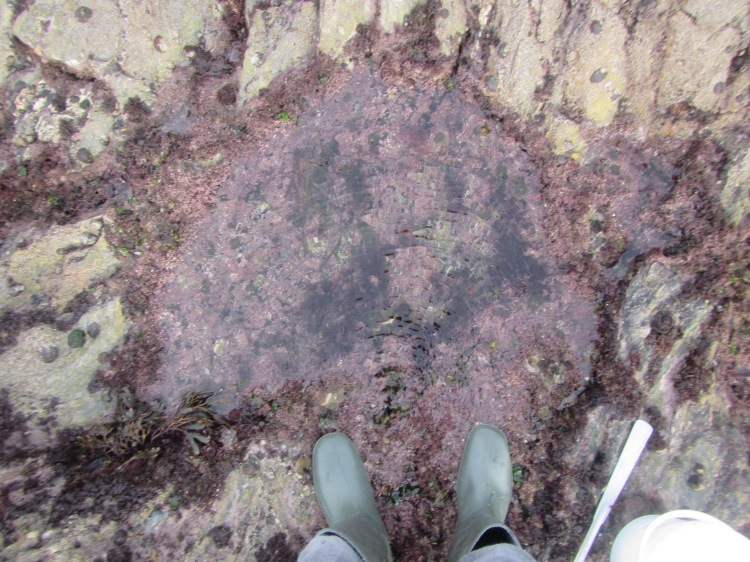 It does not look like much but taking the time for a carefully look was really rewarding. It is tricky to take photographs without being able to see the viewfinder though. My strategy has been to just take loads of pictures and hope some of them work out. The miniature underwater landscape was really beautiful. Pink plates Mesophyllum lichenoides made up the largest proportion of corraline algae (some bearing ‘reproductive conceptacles’). Another species is Corallina officinalis or Common coral weed (third photo). I had some Corallina growing in my aquarium at some point, but it grew very slowly and has now disappeared. Being able to create the right conditions for coralline algae to thrive in a coldwater aquarium would be fantastic, but I have not seen any evidence of anyone being able to cover their aquarium in them yet. (I have tried ‘planting’ Corallina and although it looked very nice at first (fifth pic), these seaweeds quickly died off, turning orange and then white (second pic).)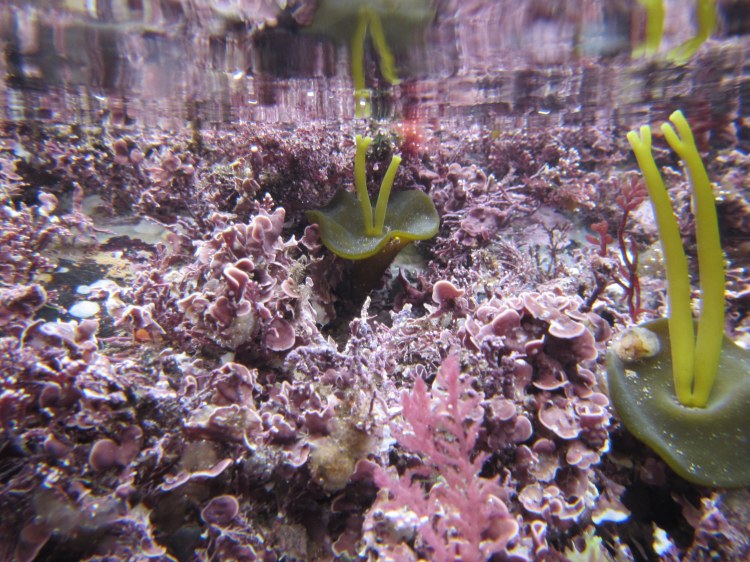
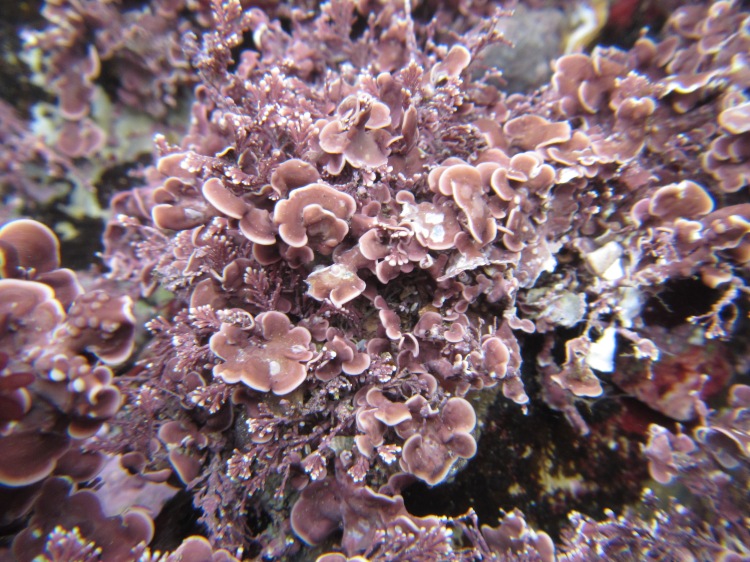
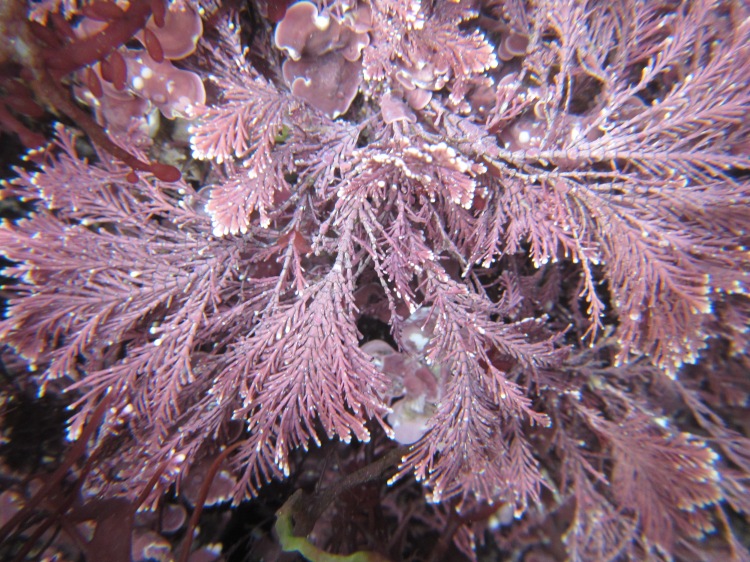 Some other seaweed species were present as well; Irish moss and Harpoonweed (not pictured), False eyelash weed Calliblepharis jubata occurred in multiple patches, Rhodophyllis divaricata?, an Osmundea species and Red grape weed Gastroclonium ovatum. There were also a few brown seaweeds, the characteristic Thong (or Spaghetti) weed Himanthalia elongata buttons and the invasive (and pervasive) Wireweed Sargassum muticum.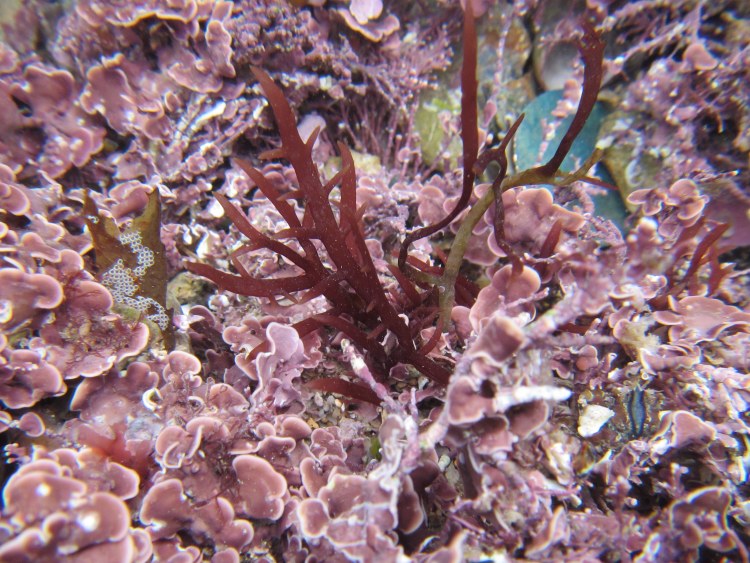
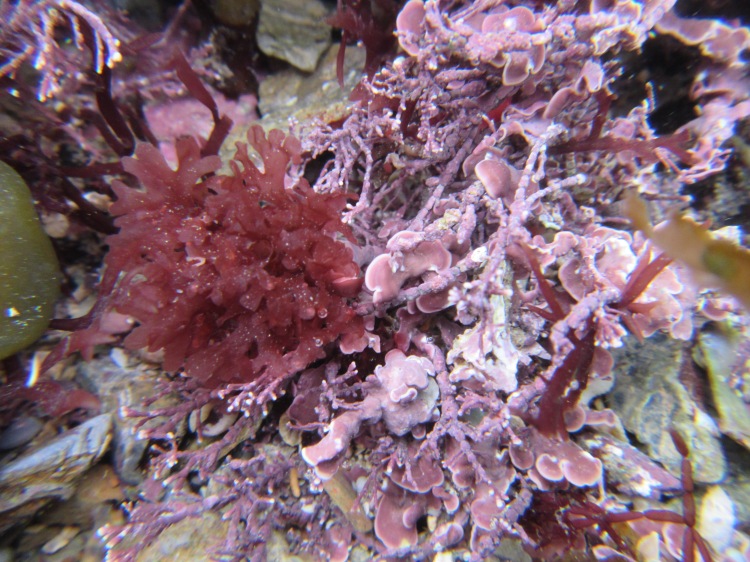

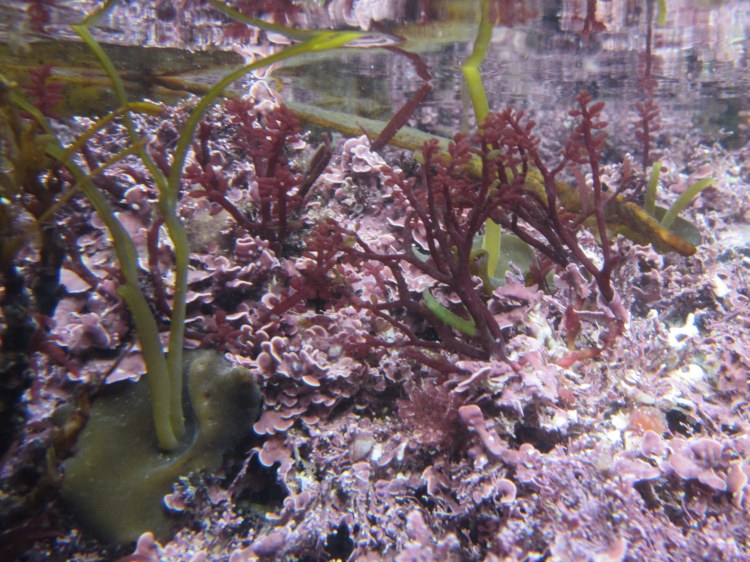
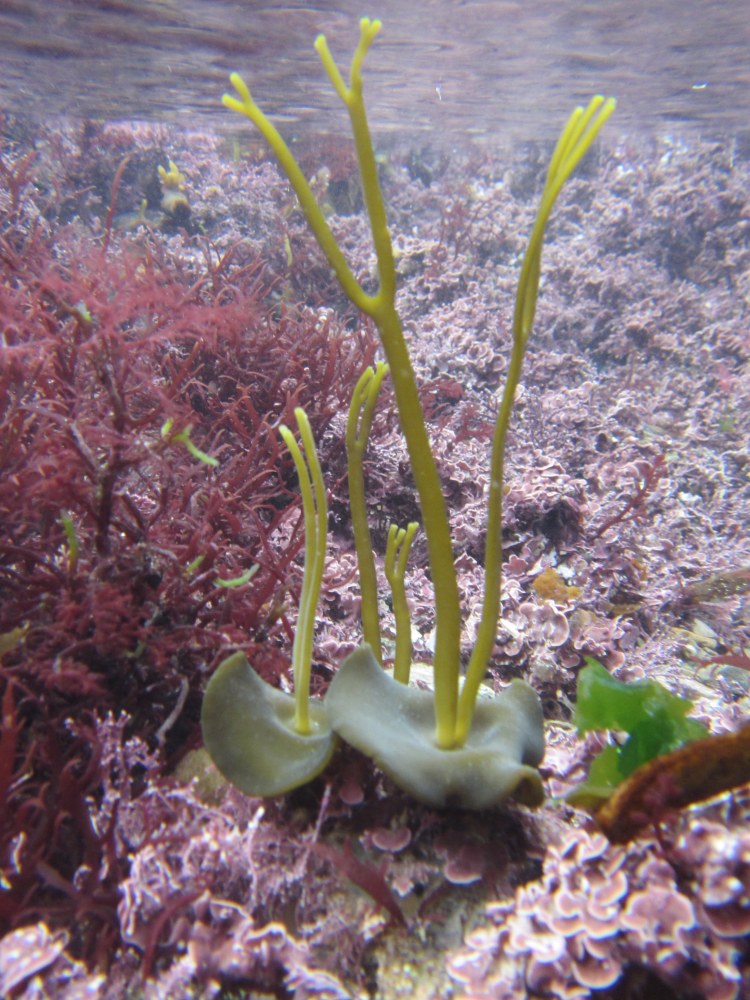
 I did not spot too many animals, although I am sure there is an enormous hidden diversity present among the seaweeds. I noticed a red-white Dahlia anemone Urticina felina as well as some patches of a colonial brown tunicate. I’d like to go back soon and take some more pictures, with my Canon powershot or with my GoPro. I have an SLR as well that I have not been using lately as my iPhone is such a good camera and hassle-free. SLR underwater housings are really expensive, but I recently discovered that there are quite cheap waterproof SLR bags available which might be an option to try to take higher quality photos (in rock pools, I would not go diving or snorkeling with them). It would be very cool to try to make panorama pictures of rock pools, especially when taking one each month in the same spot to capture seasonality. More seaweed photos, Canon powershot or otherwise, to follow soon!
A superlow tide at St. Michael’s Mount
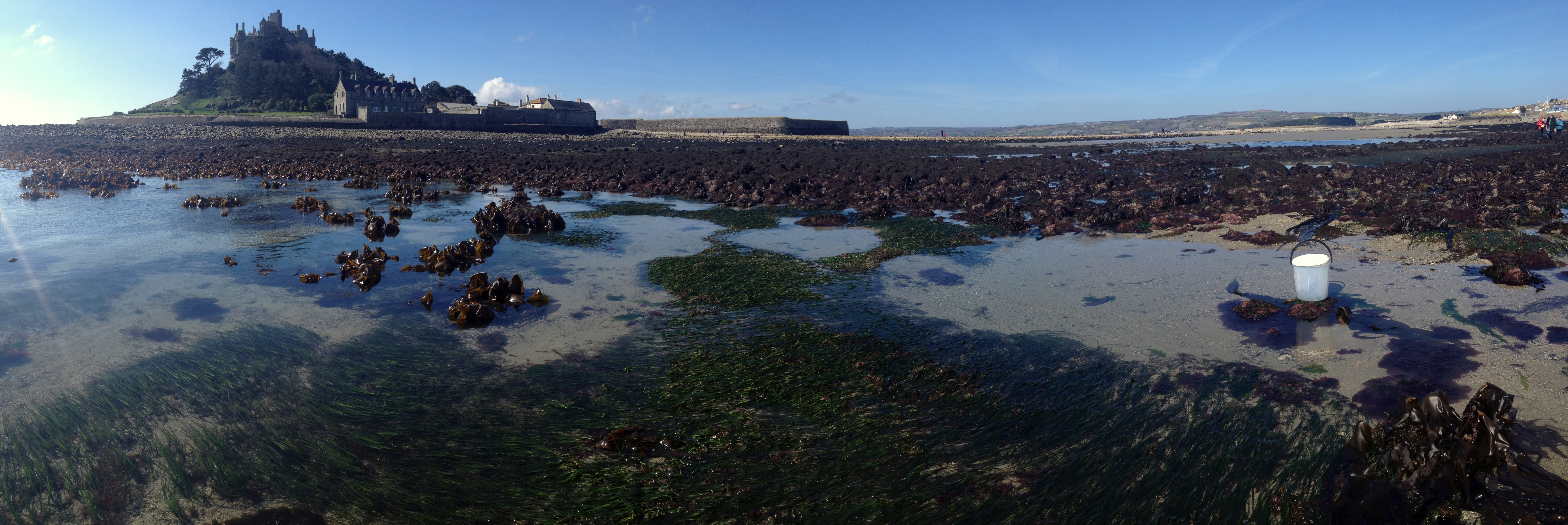 The lowest tide of the century so far, on a Saturday, with beautiful weather and on a stunning location: what could go wrong? Very little! St. Michael’s Mount, Marazion, Mount’s Bay is one of the most beautiful spots in Cornwall and an excellent site for rock pooling with a mixture of eelgrass beds, rocks and sandy expanses. I felt like a kid in a candy shop: wanting to turn every stone, photograph every seaweed and inspect every gully before the tide would come back in. I needed to collect some more Clawed fork weed Furcellaria lumbricalis for a cool student project. That was abundant so easy to sort. Chock full of Pheasant shells Tricolia pullus. One other amazing thing was that the place was littered with Bull huss Scyliorhinus stellaris (a.k.a. Nursehound, a.k.a. Large-spotted dogfish) mermaids purses. Mount’s bay is an important breeding ground for these sharks. The yolk was easy to spot, but the embryo’s still to small to be seen. There were loads of pretty seaweeds gently waving among the eelgrass in the crystal clear water. I saw a bright green Chameleon prawn swimming about, but the picture I took was a bit underwhelming.
I had met up with David Fenwick, so could get all species identified on the spot. Very striking was a great amount of small, fuzzy pink seaweed balls: Falkenbergia, the tetrasporophyte stage of the Harpoon weed Asparagopsis armata (it looks so different from the gametophyte stage, see some old posts, that it was long considered a separate species). Also, a picture of Bushy rainbow wrack Cystoseira tamariscifolia, simply because one cannot post too many pictures of Bushy rainbow wrack….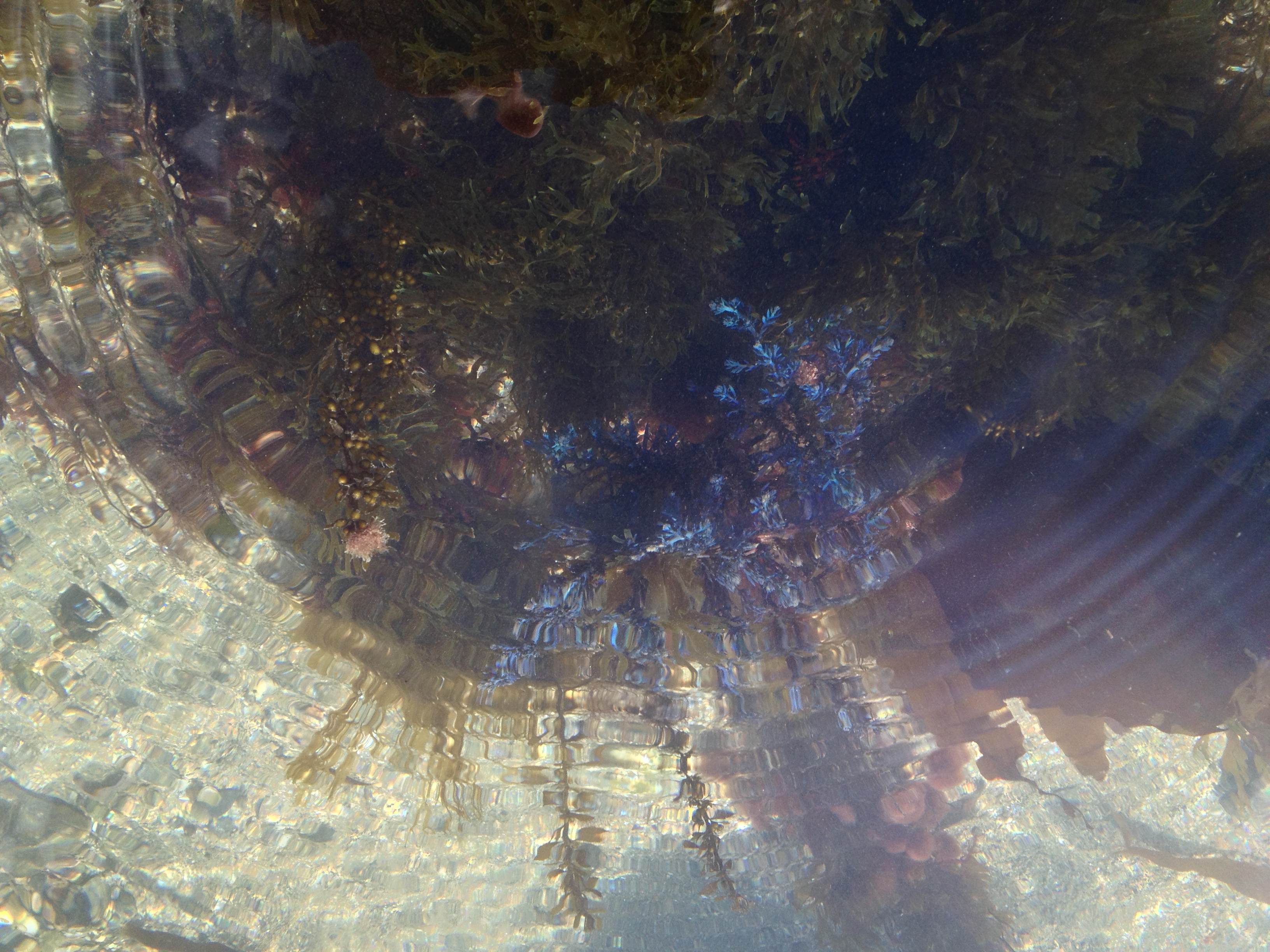
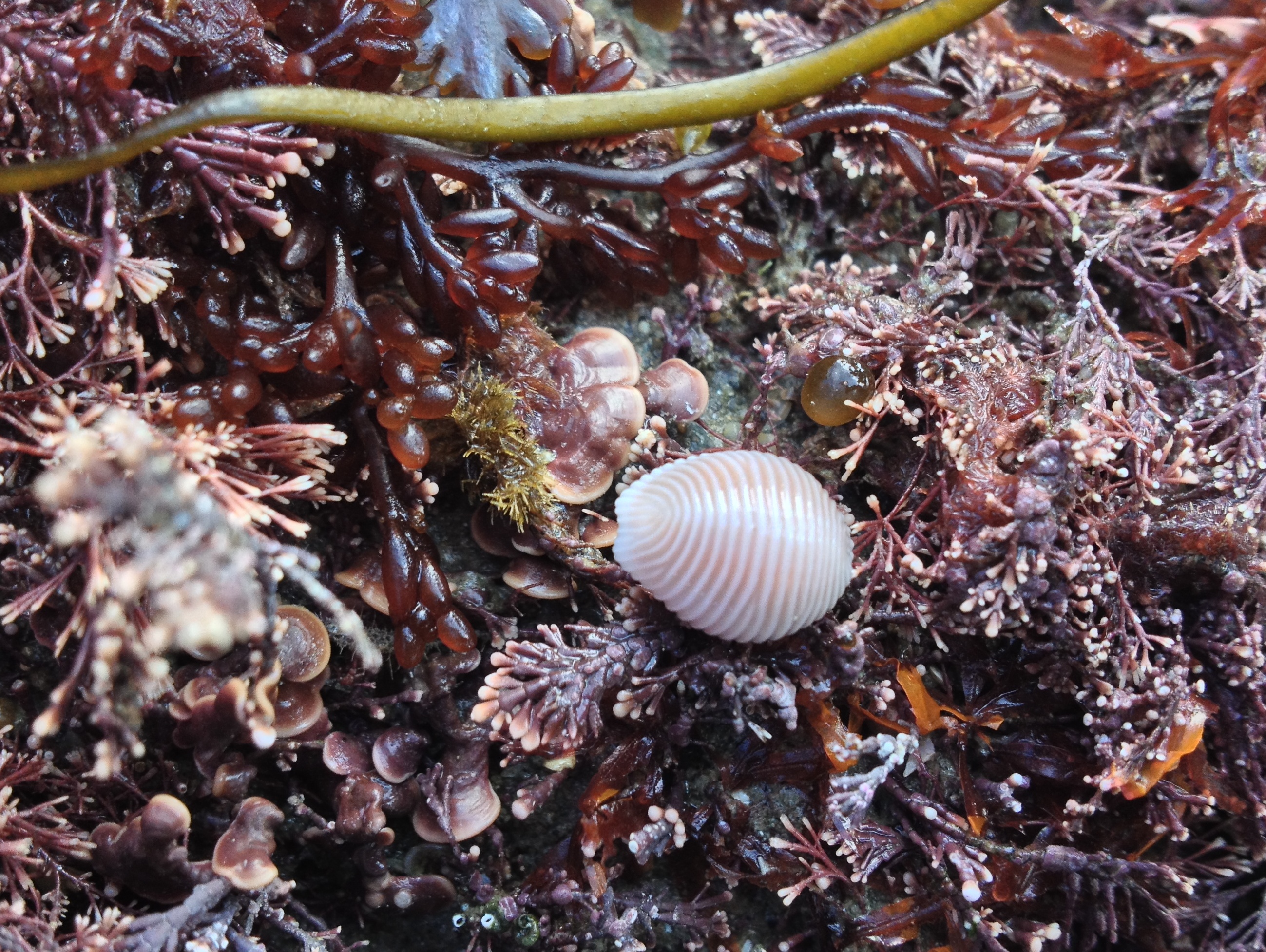
Some invertebrates: the large scale worm Alentia gelatinosa, a Strawberry worm Eupolymnia nebulosa larger still, a tiny hermit crab Anapagurus hyndmanni and the Arctic cowrie Trivia arctica: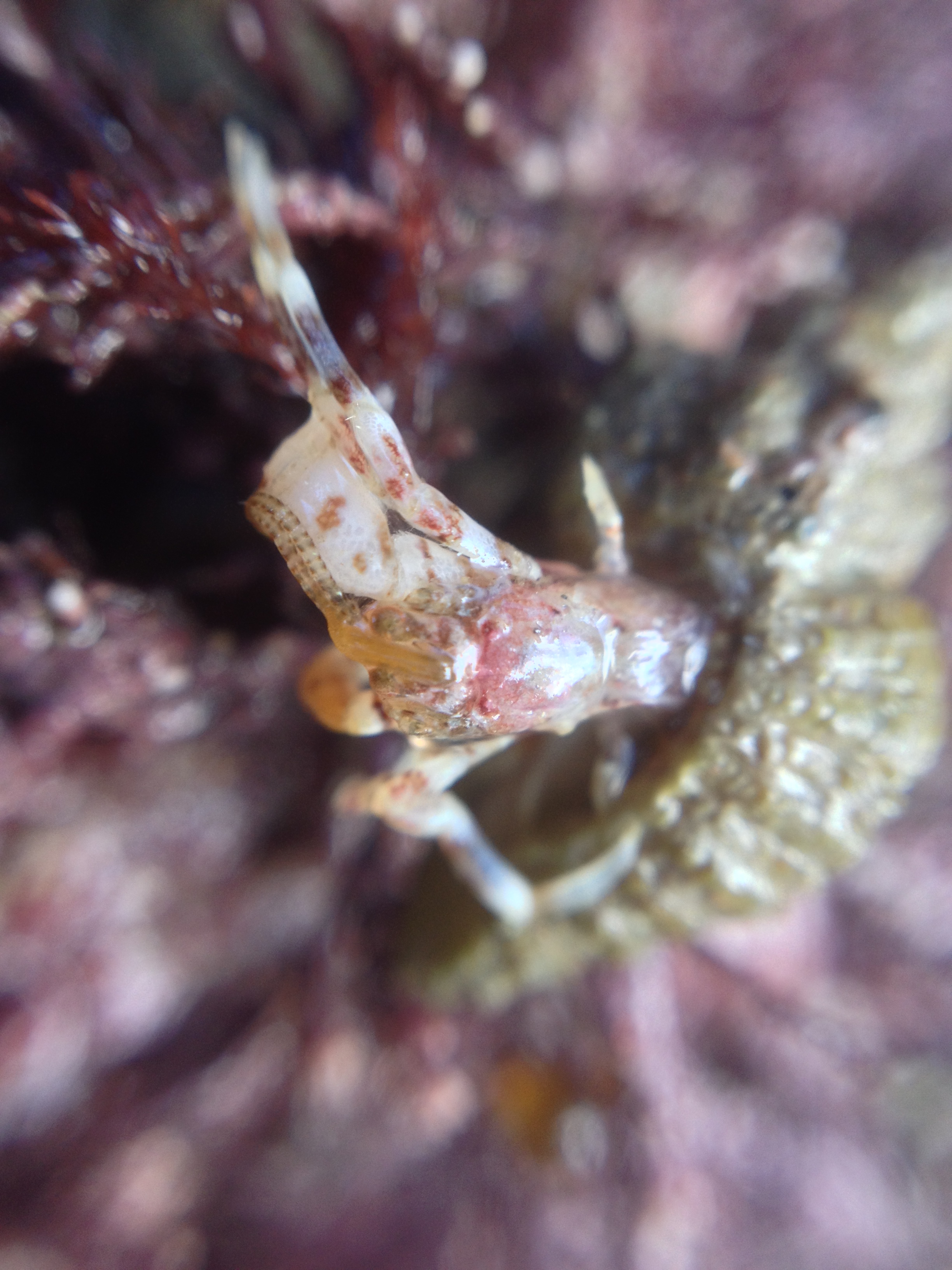
The find of the day (the month probably) was a Little cuttlefish Sepiola atlantica. This picture is crap, but David has made some stunning photos back in his lab and they will appear sometime soon on his aphotomarine site I am sure.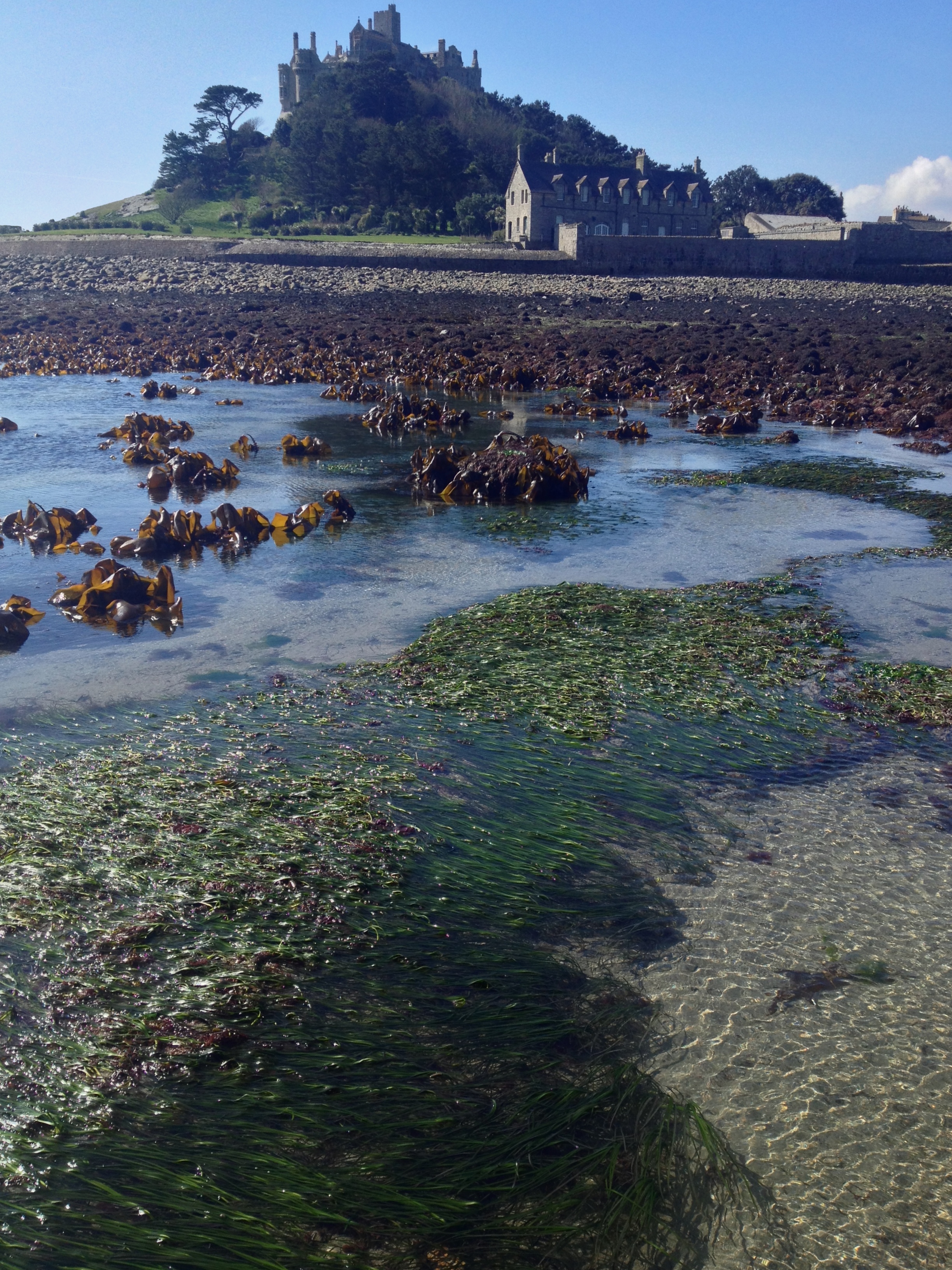
a very low tide at Falmouth part 1
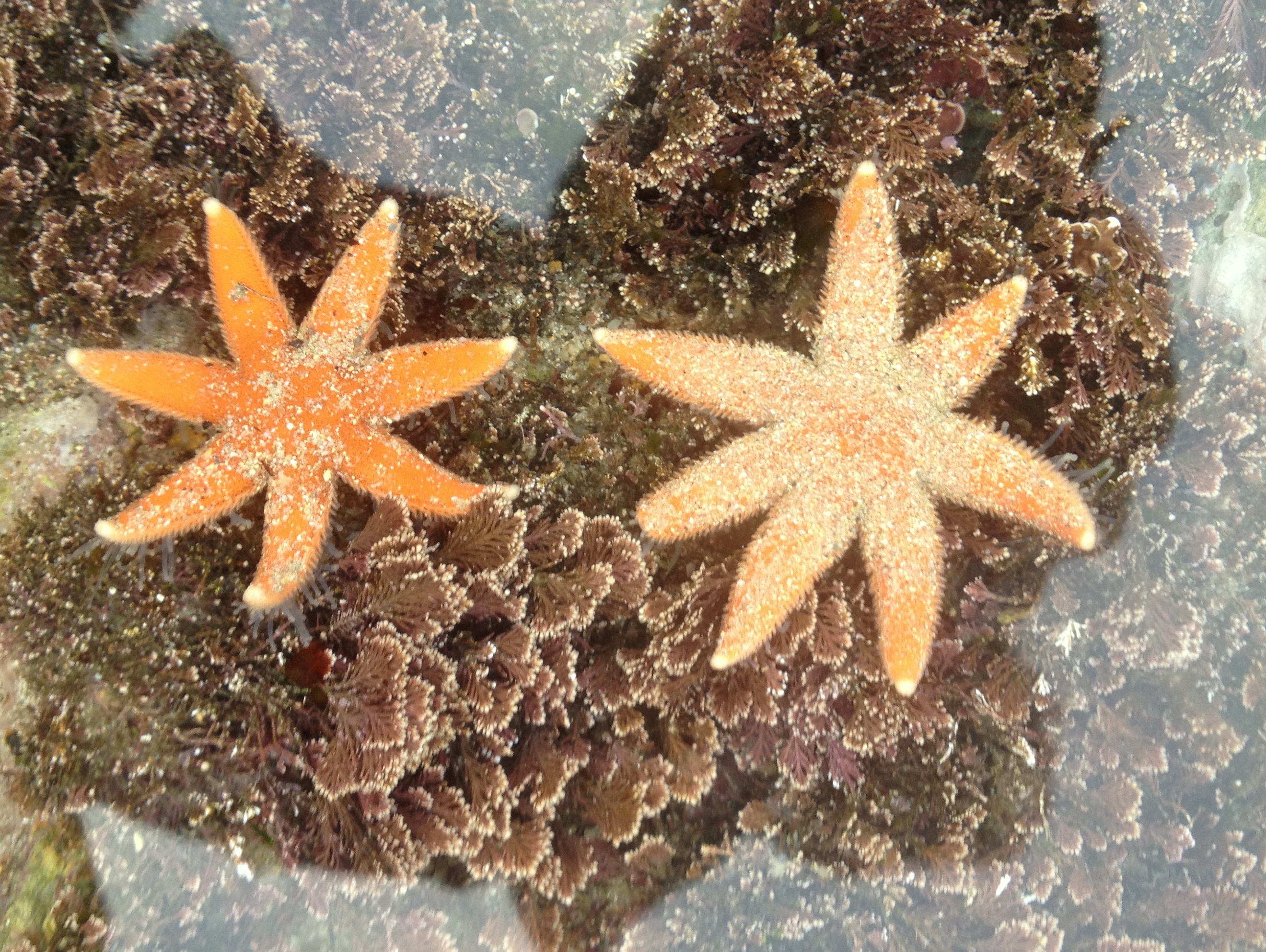
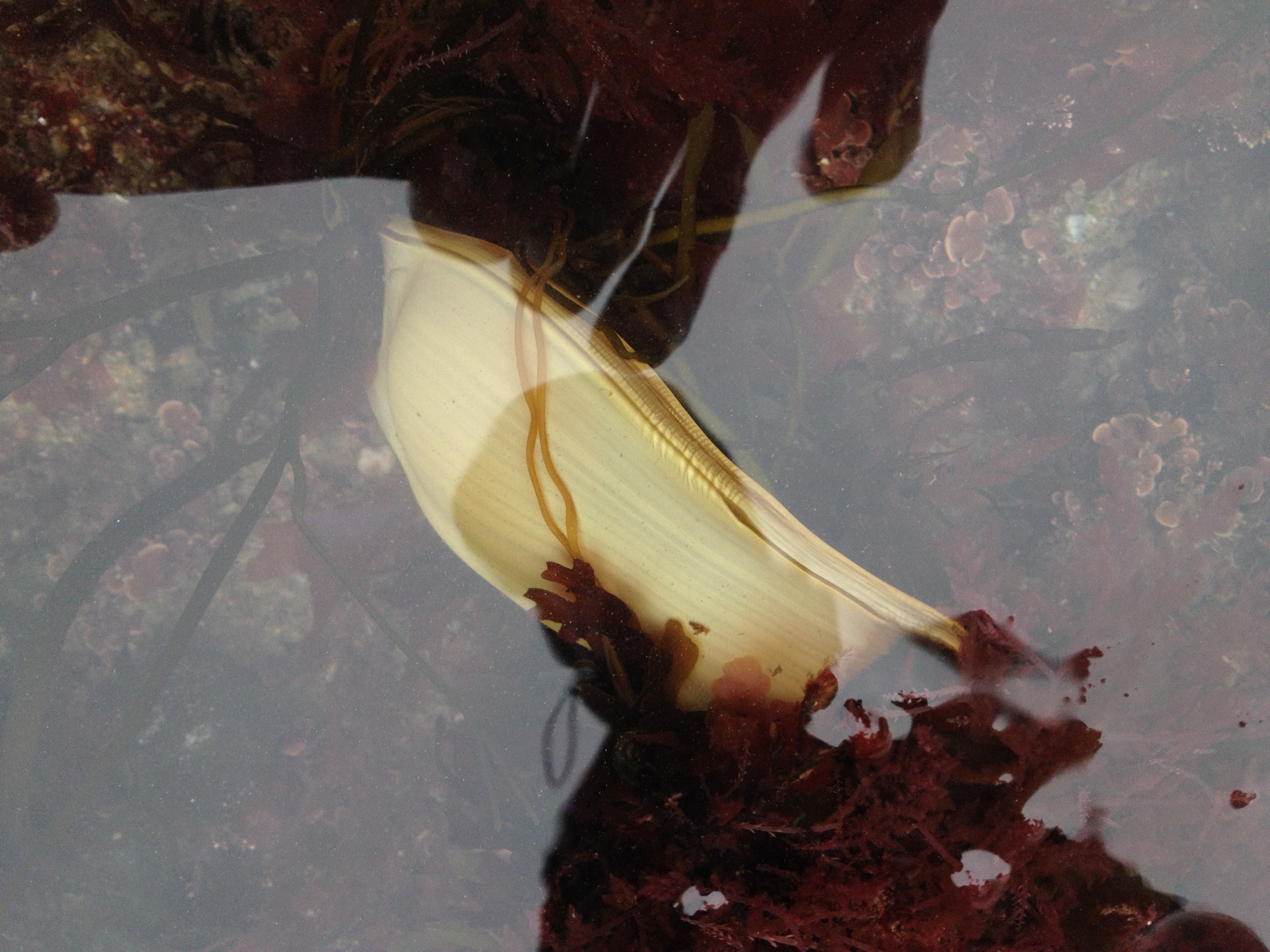
Low tides over the weekend, see the previous post for the trip on Saturday in Flushing. On Sunday the wind resulted in the water being swept up quite high on the shore unfortunately (the next very good tide I will make sure to check the wind a bit better, probably would have been a good idea to have gone to the north coast). Also the rain made swiping my iPhone very difficult and I was absolutely drenched. Luckily I had already taken a long lunch break on Friday when it was sunny! As I found a good number of species I will divide them up over two short posts instead of a very long one. In this post some species that have featured before, but that I now have taken better pictures of: a Shore clingfish (or Cornish sucker) Lepadogaster lepadogaster, a particularly purple Spiny starfish Marthasterias glacialis, a particularly orange Painted topshell Calliostoma zizyphinum as well as a close-up of the ‘normal’ colour variety, Blue-rayed limpets Helcion pellucidum, Seven-armed starfish Luidia ciliaris and a Bull huss (Nursehound shark) Scyliorhinus stellaris mermaids purse. Nice colours all around: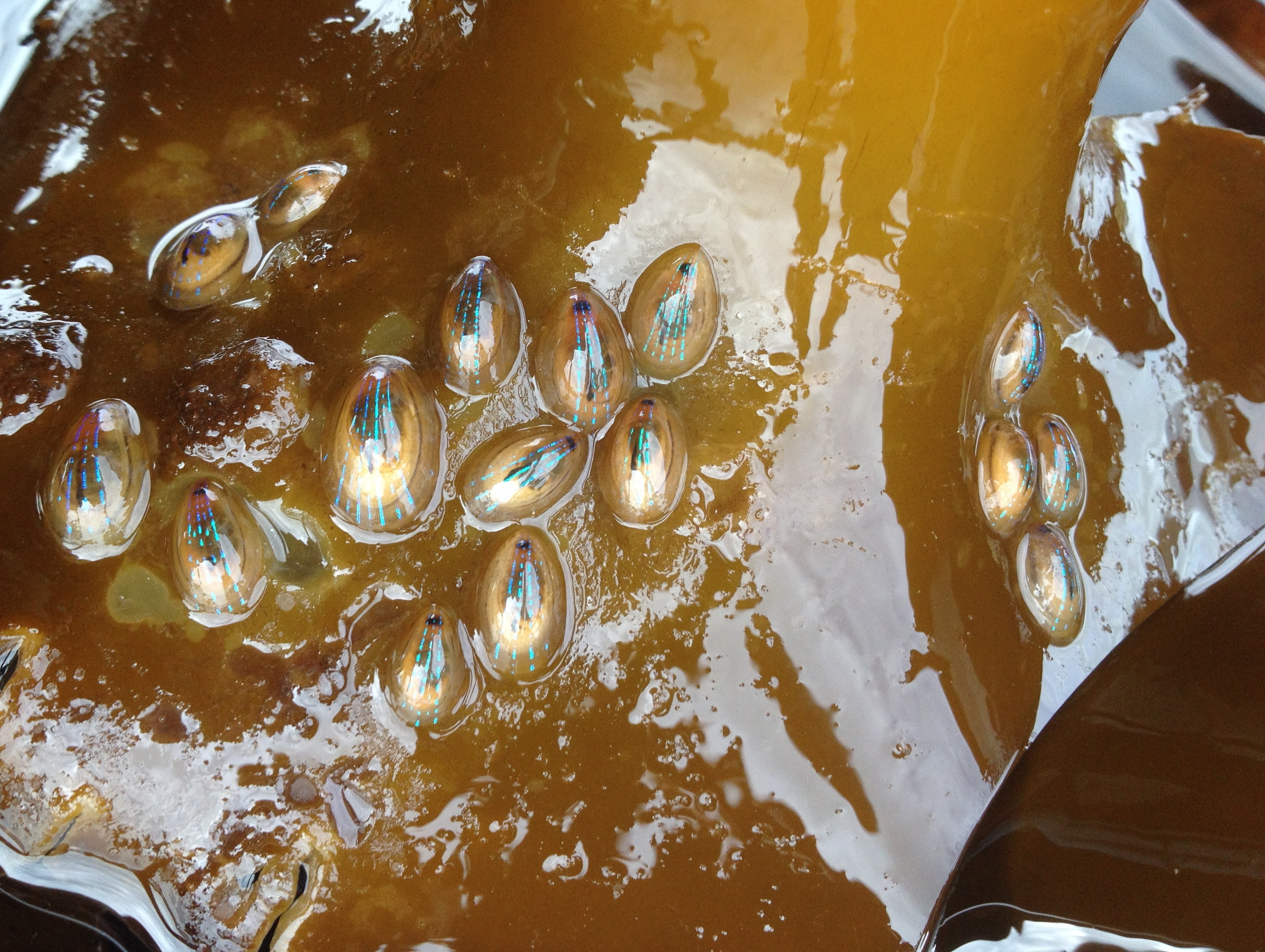
a very low tide at Flushing
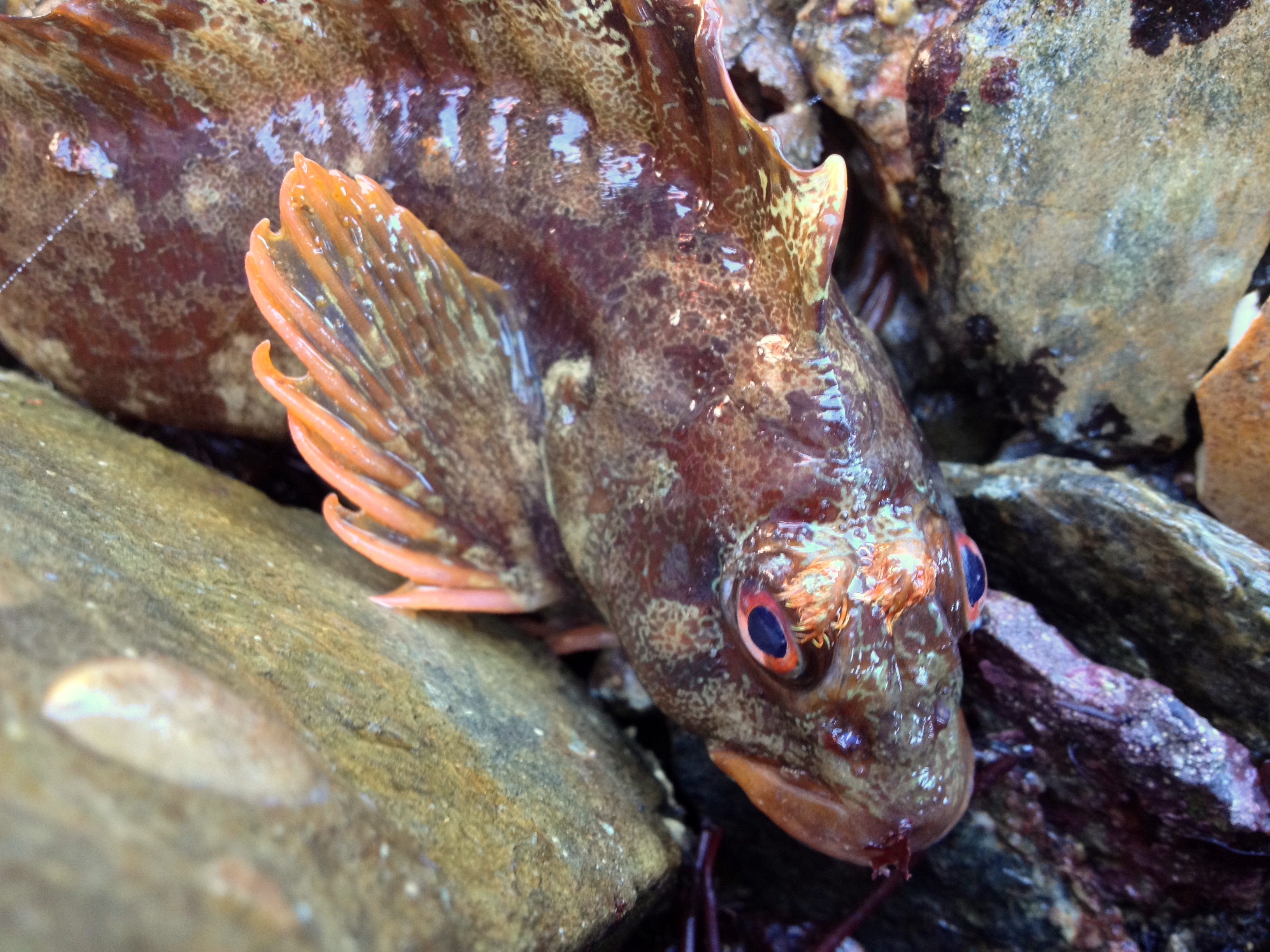
I made some pics last weekend when low tide wasn’t very low, but since this weekend the tides hit record lows I will first post about these finds. First up, the sheltered estuarine conditions in Penryn river in Flushing, opposite Falmouth’s port. The conditions are silty, with lots of sponges, tunicates, variegated scallops, sea lemons, European cowries and enormous amounts of Squat lobsters (see also this old post). With the tide this low, we were able to see some other stuff as well. The water went as low as the Eelgrass: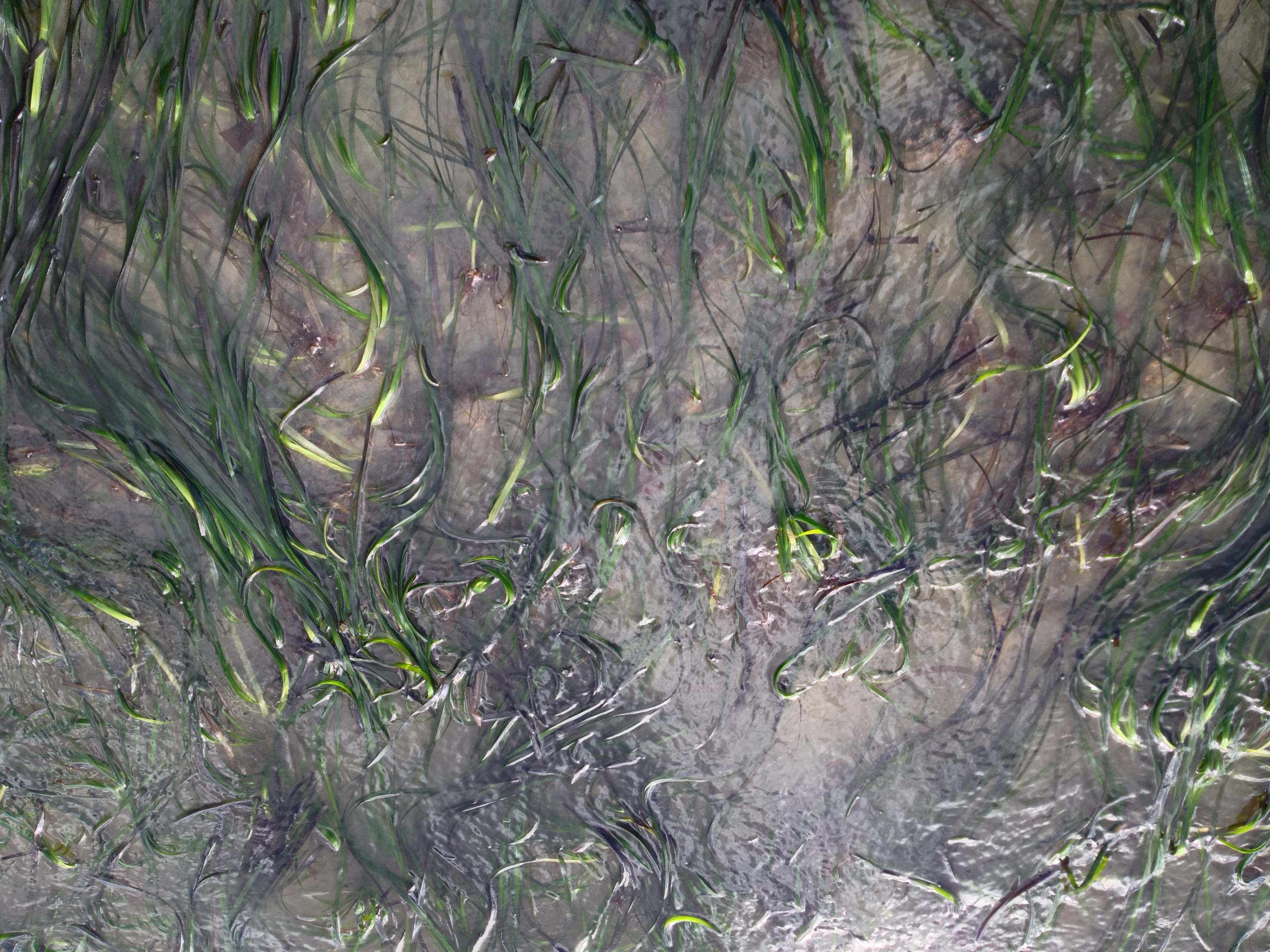 Shannys, Rock gobies, Rockling, Worm pipefish and (to a lesser extent) Butterfish are easy to find in Flushing. Today we saw for the first time two Connemara clingfish Lepadogaster candollei (first pic). Next a Rock goby Gobius paganellus. We also saw many large Tompot blennies Parablennius gattorugine which live subtidally and only now could be seen:
The real surprise of the afternoon was a juvenile Common lobster Homarus vulgaris. All in all a very succesful trip!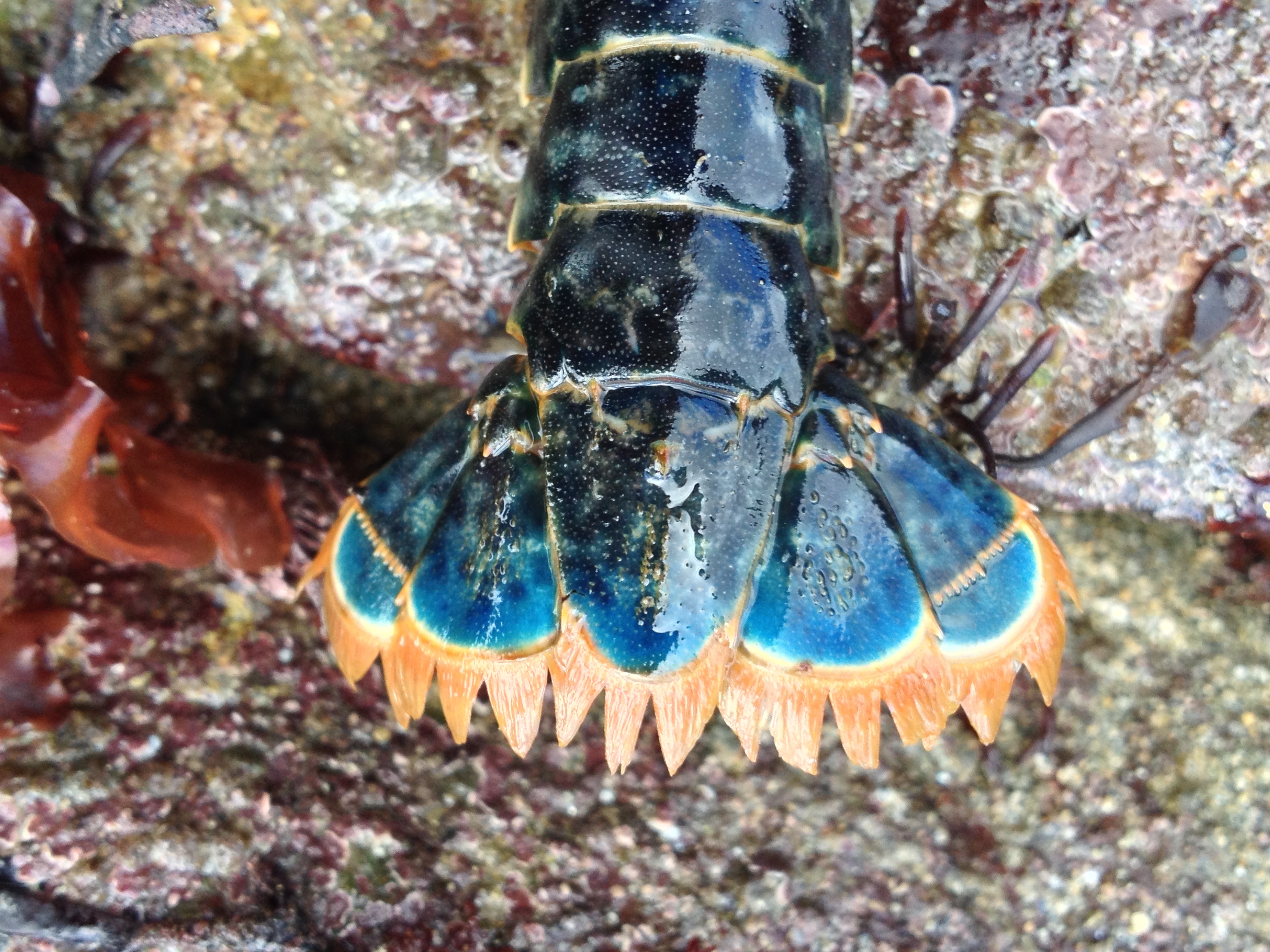
 An Bollenessor