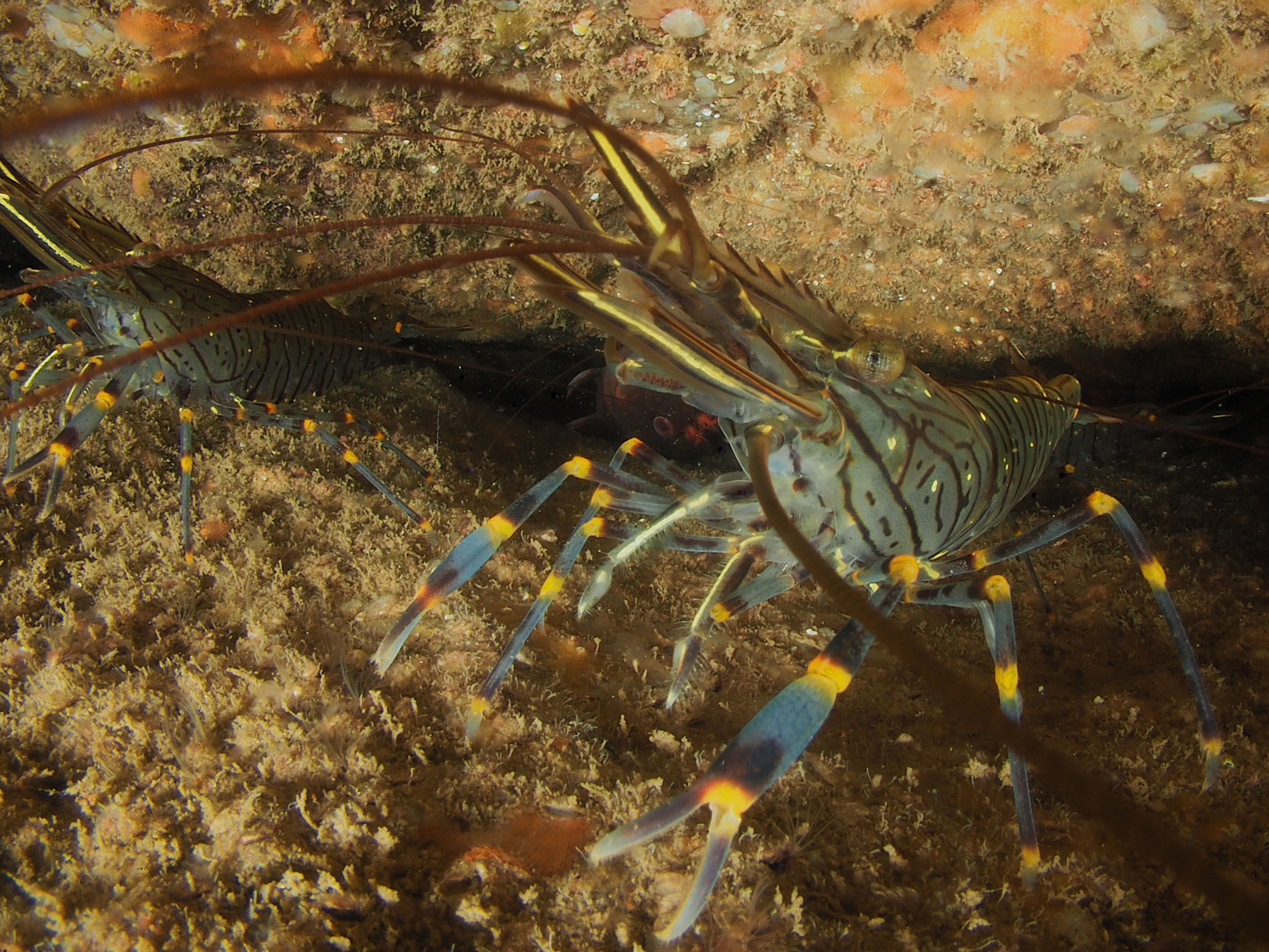
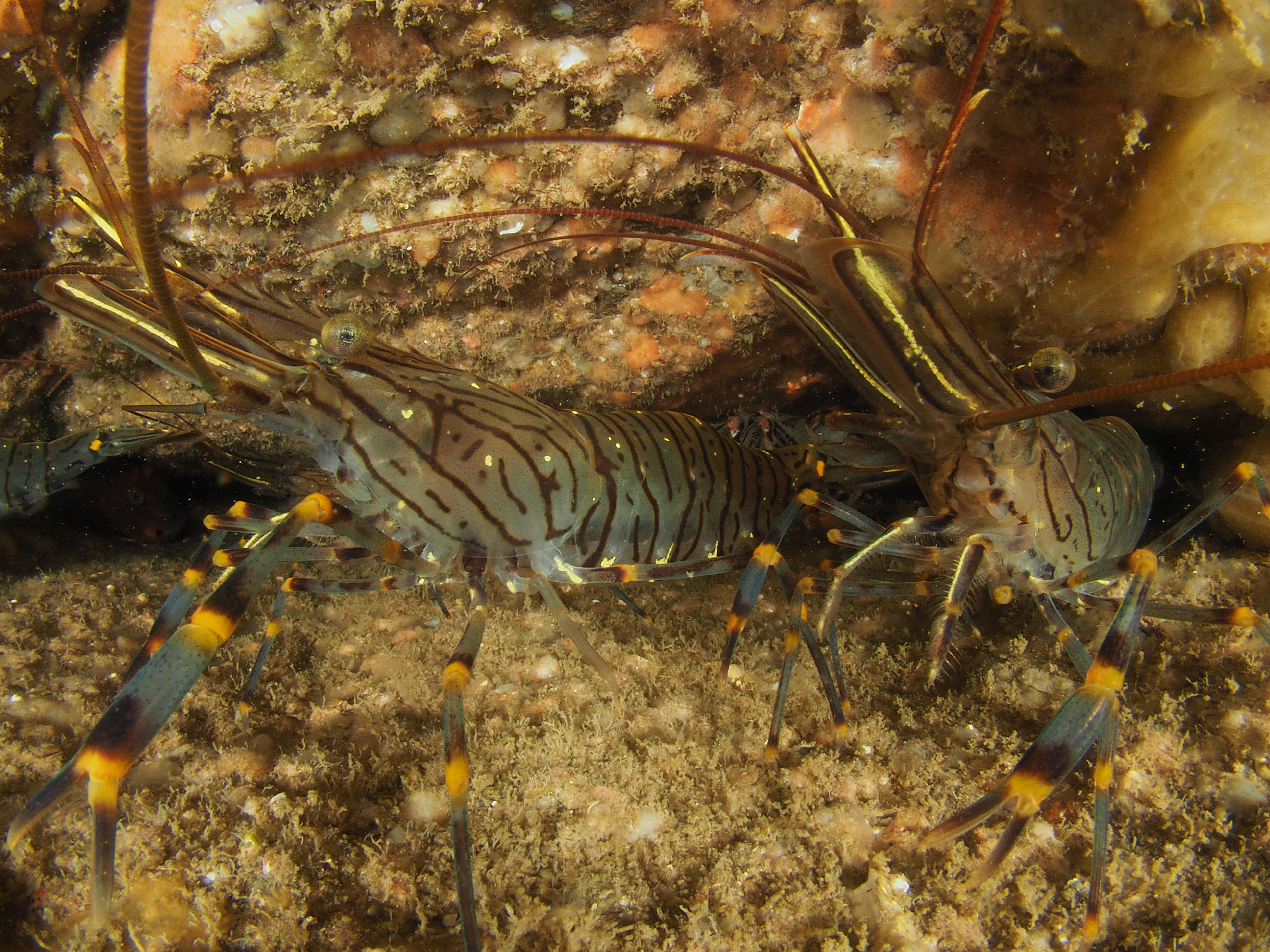
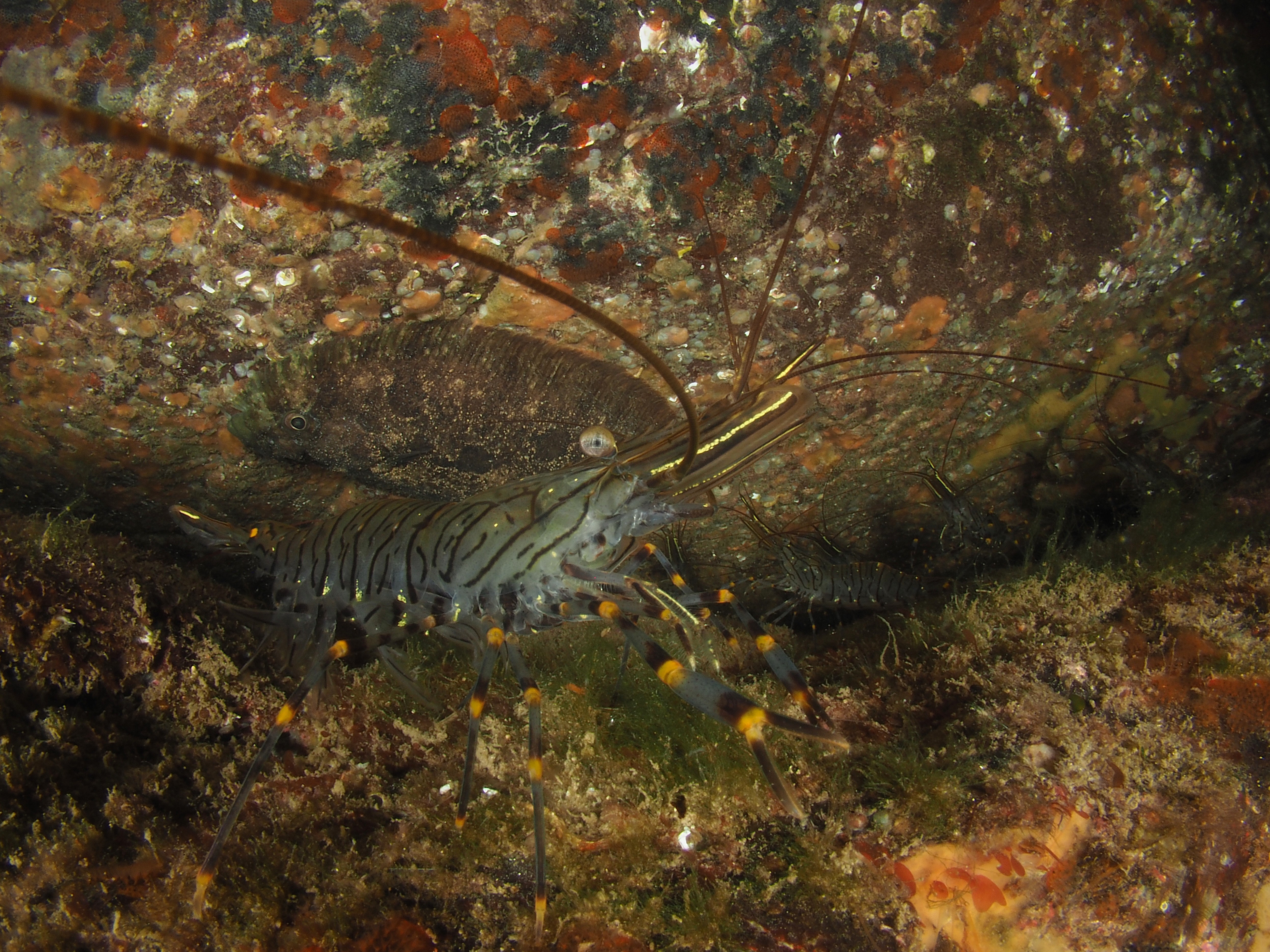
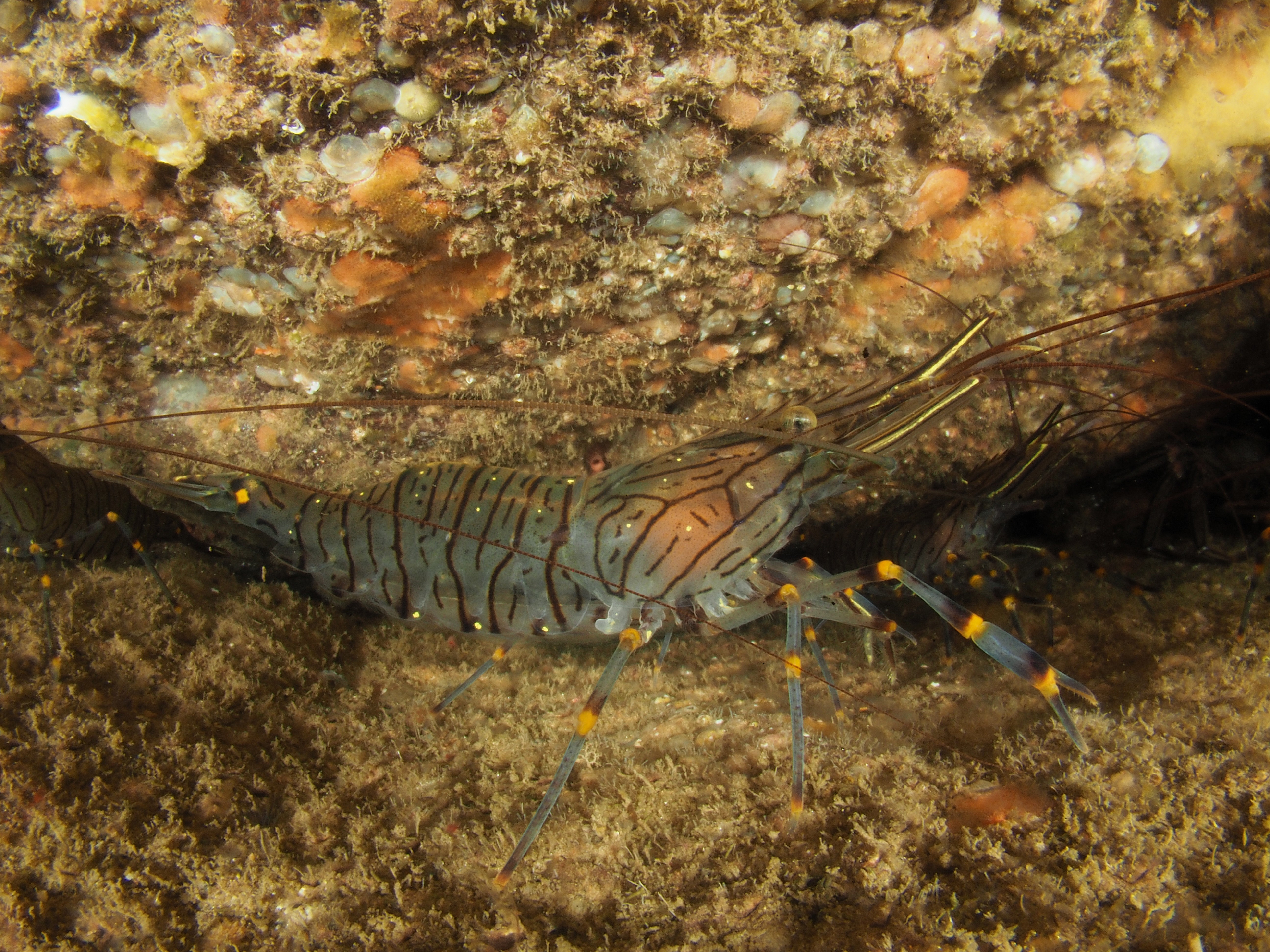
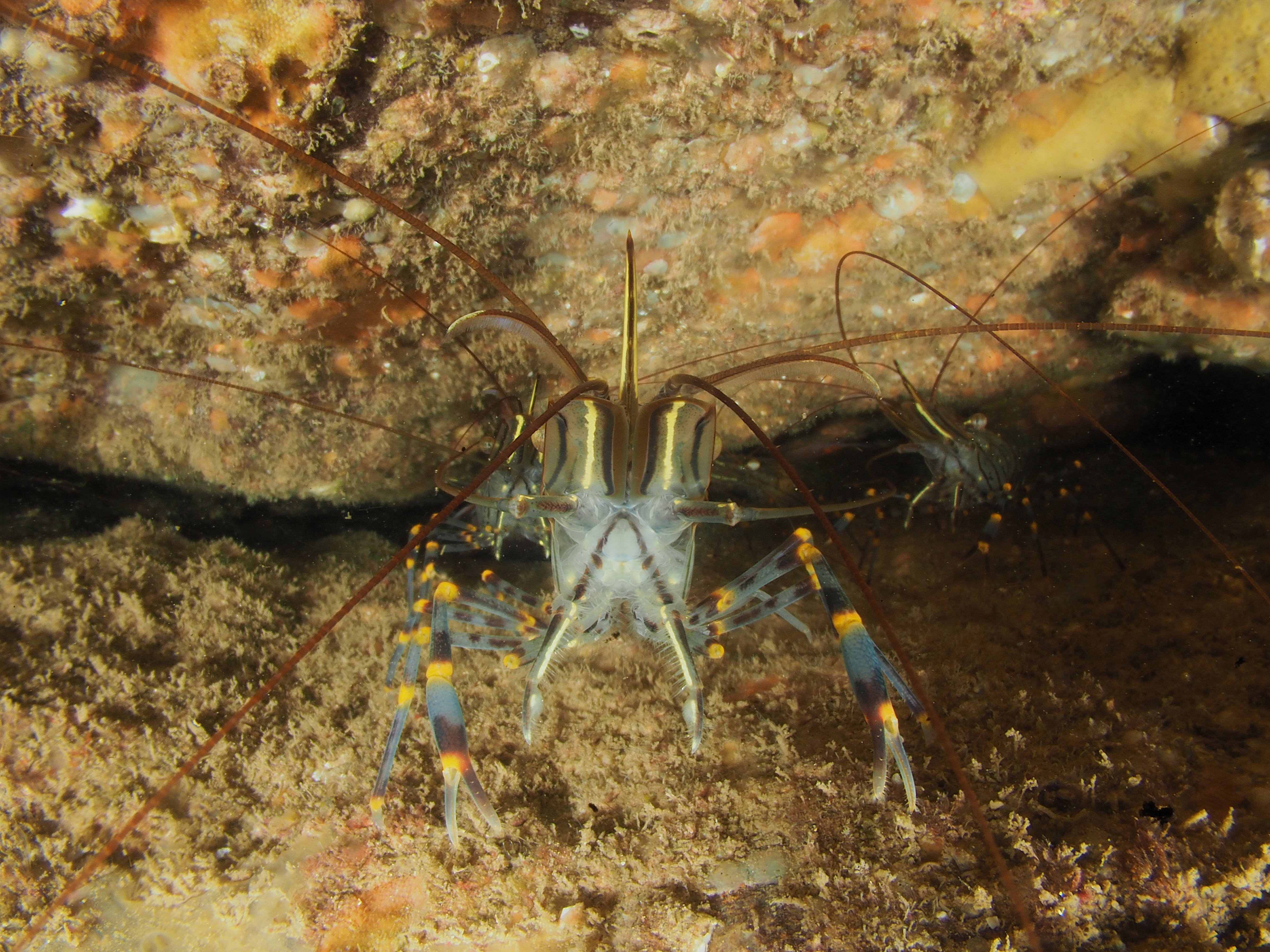
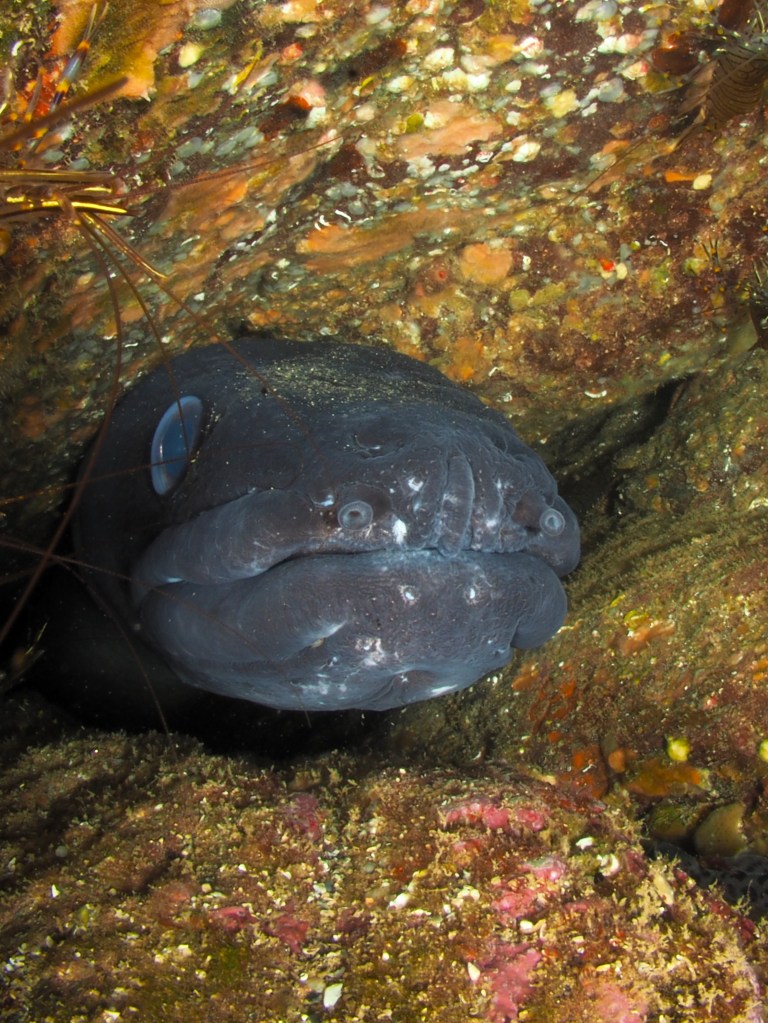
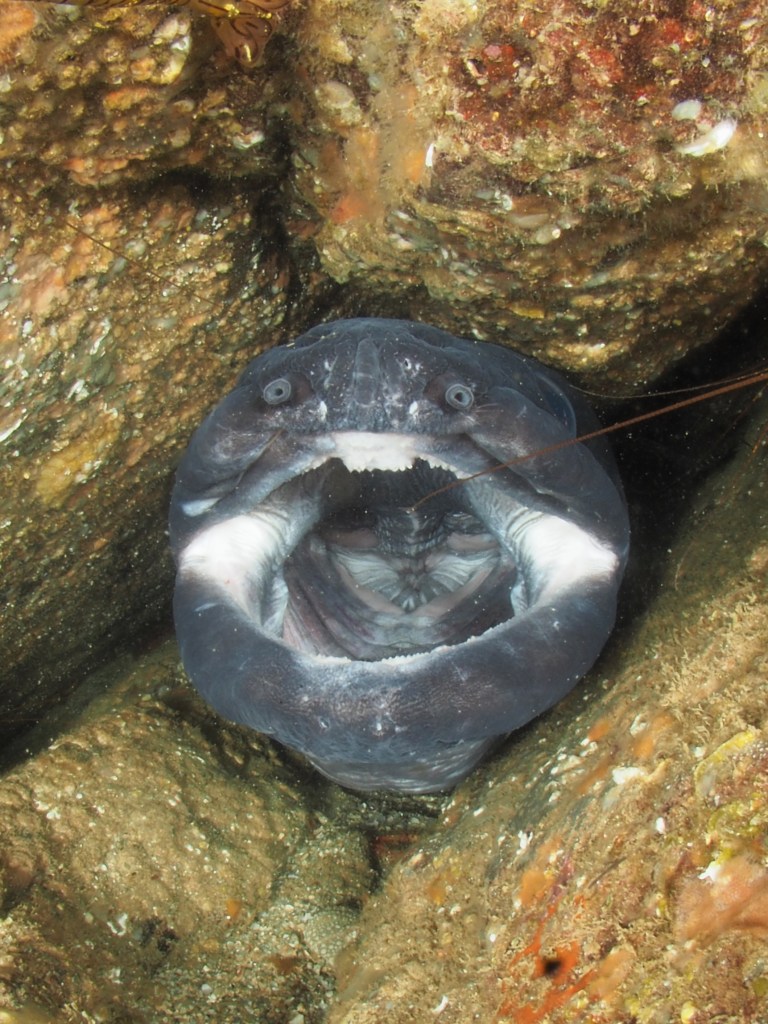
At my local shoredive site Silver Steps here in Falmouth, there is a crack in the rocks, maybe three meters long and not very deep, that is home to an array of interesting species. I have posted pics from this spot before, for instance that of a big conger eel (which has since left it’s hidey-hole, perhaps it swam off to reproduce and die in the Mid-Atlantic?). Anyway, I visited again this week and tried close-up shots with my macrowide angle probe lens. The prawns are much bigger here in the rock pools, but I am not sure if they are Paleamon serratus or P. elegans, as this requires a closer look at the serrations on the rostrum. Regardless of species name, they are stunningly beautiful animals with their blue and yellow legs and black-striped carapace.
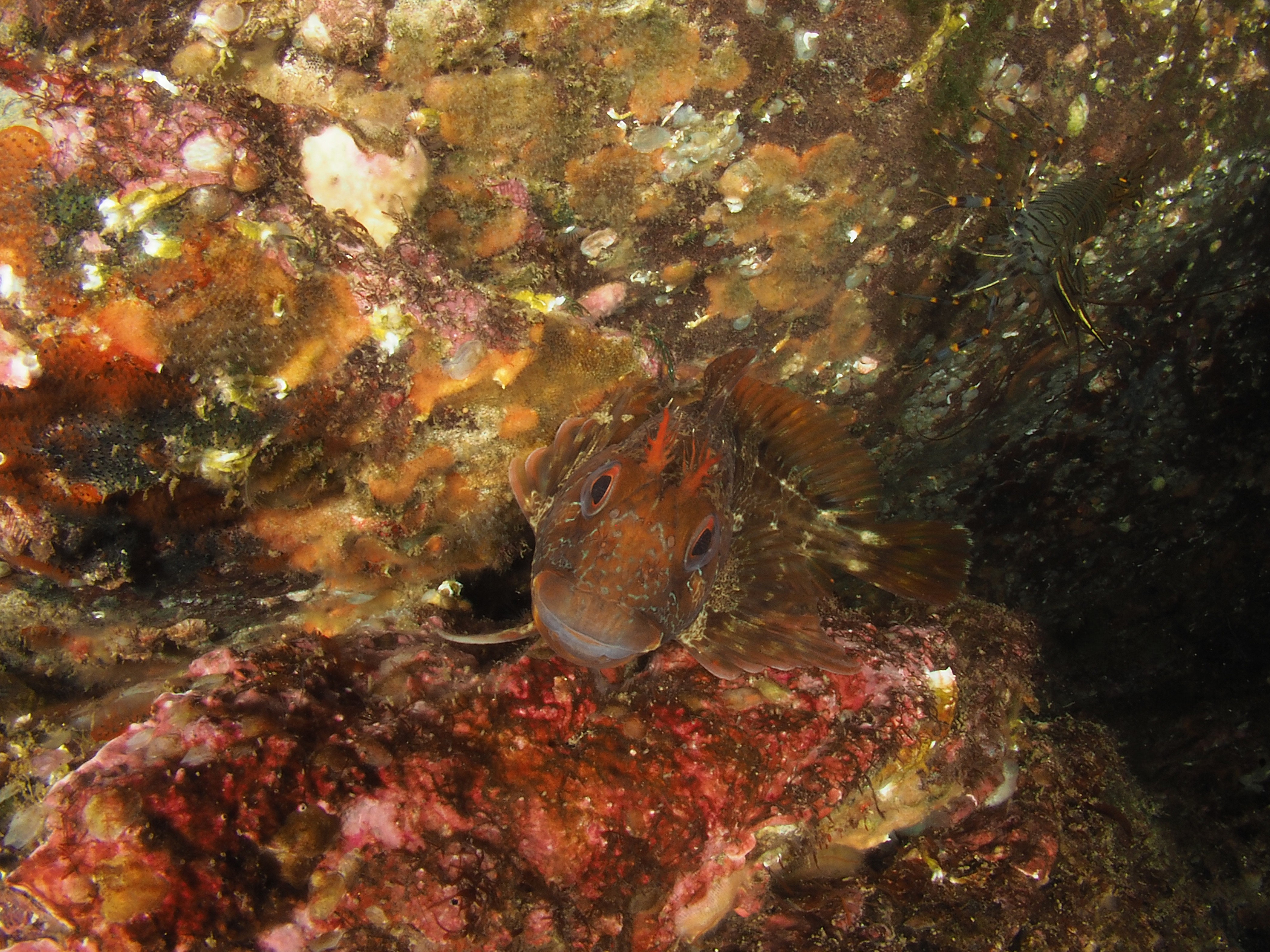
Some more pics below (notice that in some another animal is lurking in the background!). Some species are easier to photograph than others, clingfish are very shy for instance. Anyway, there are some more ideas I have, for instance trying to capture multiple species in one frame and post about them in ‘The Crack pt2.’!
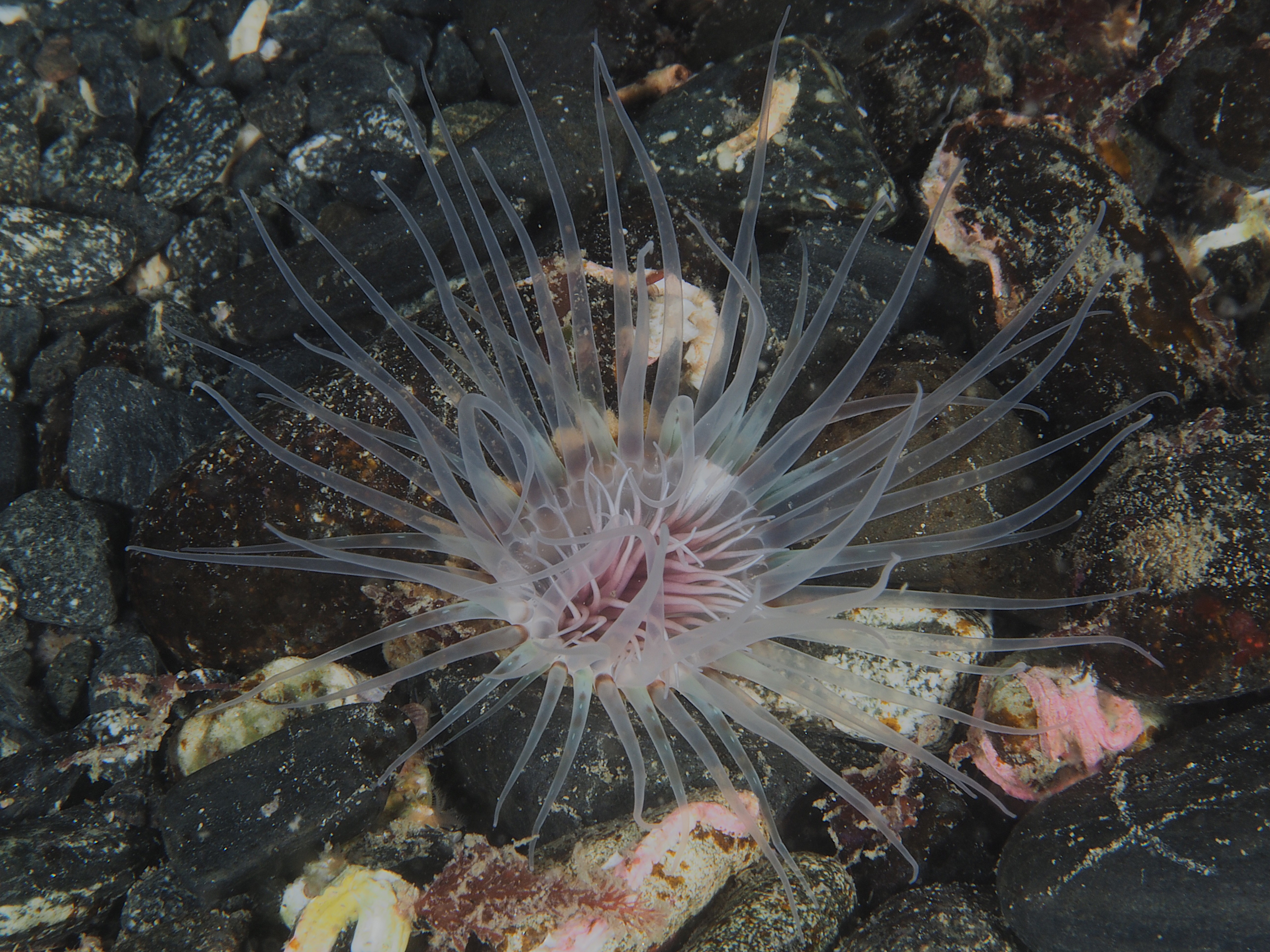
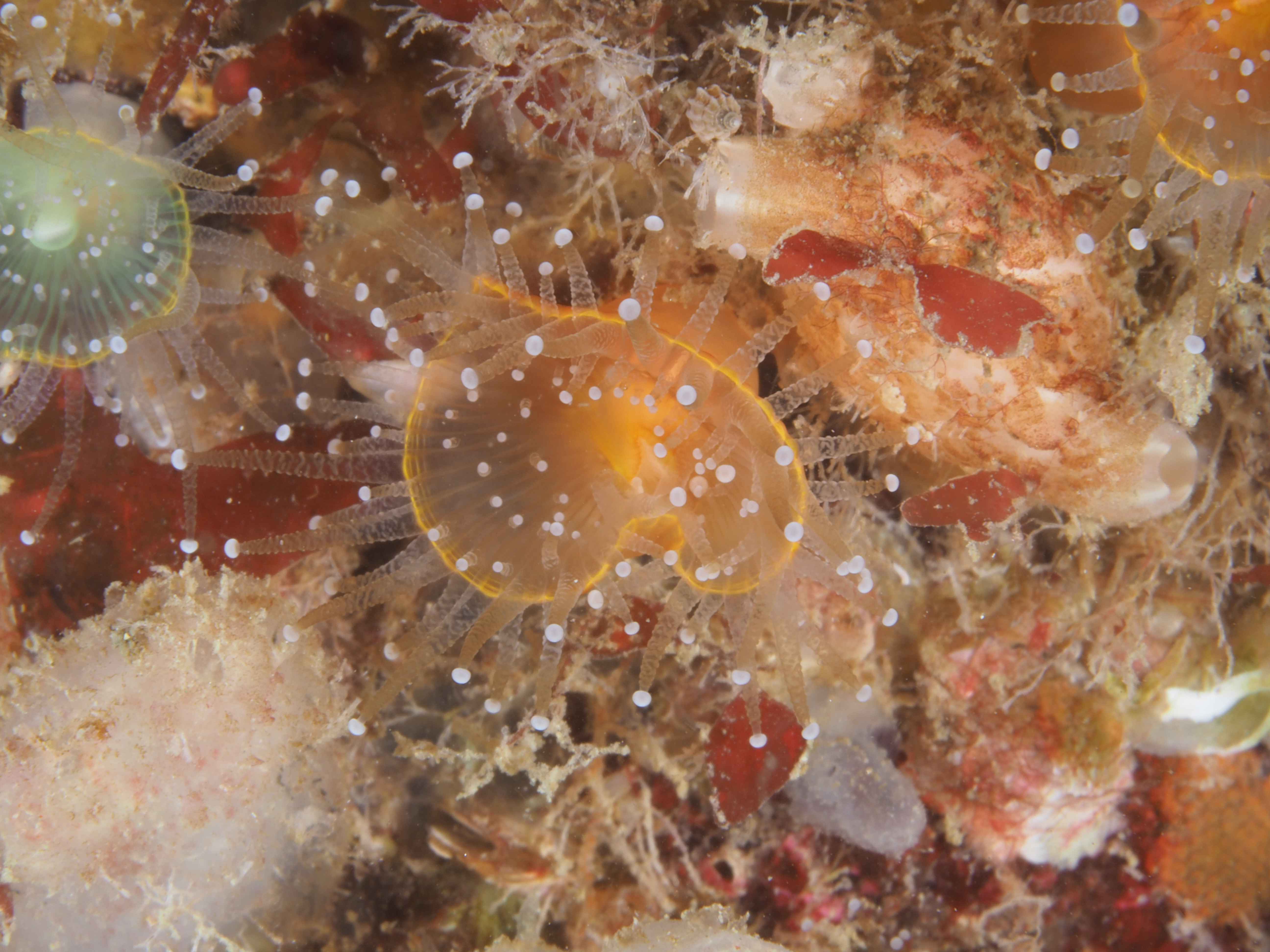
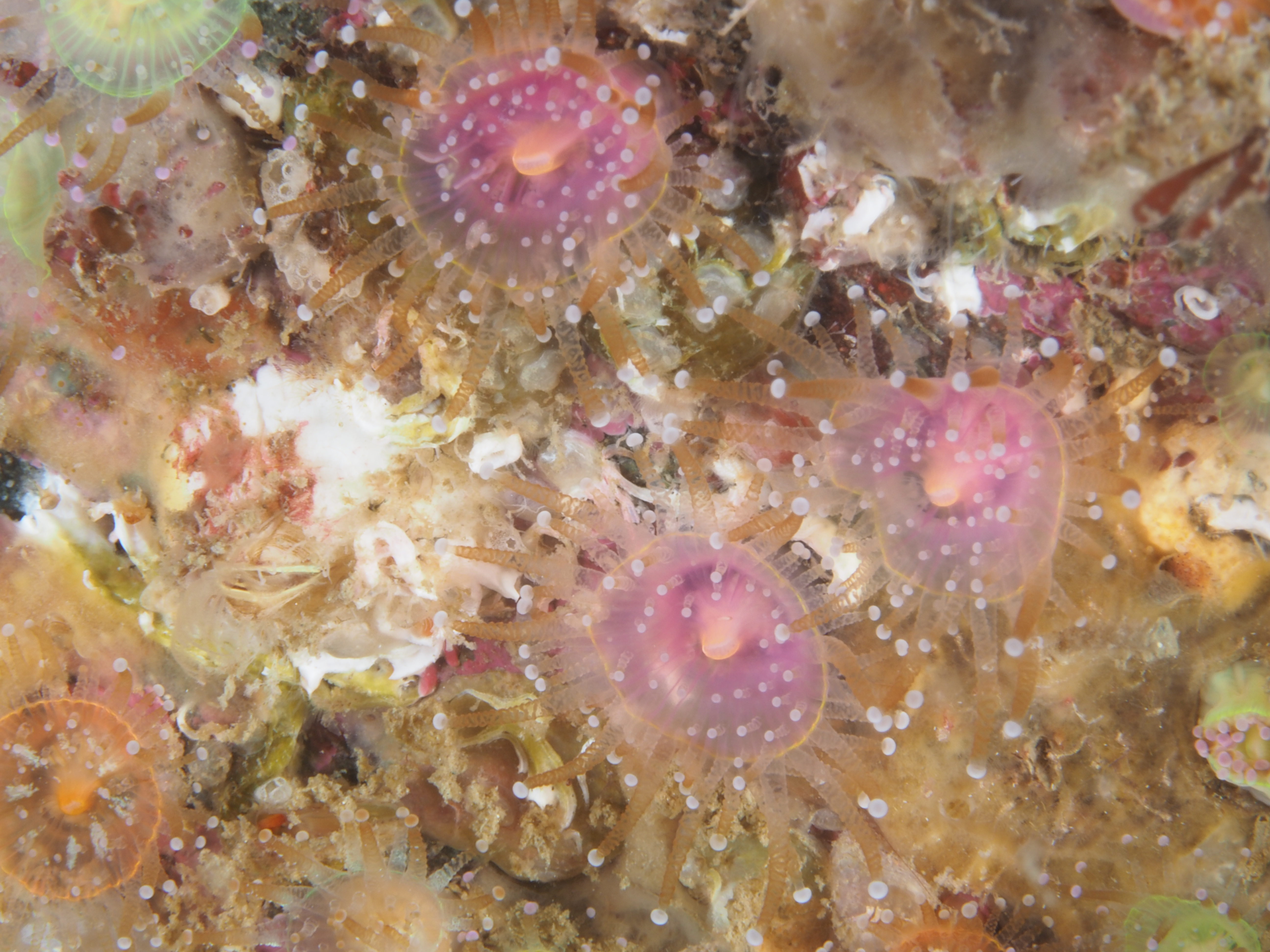
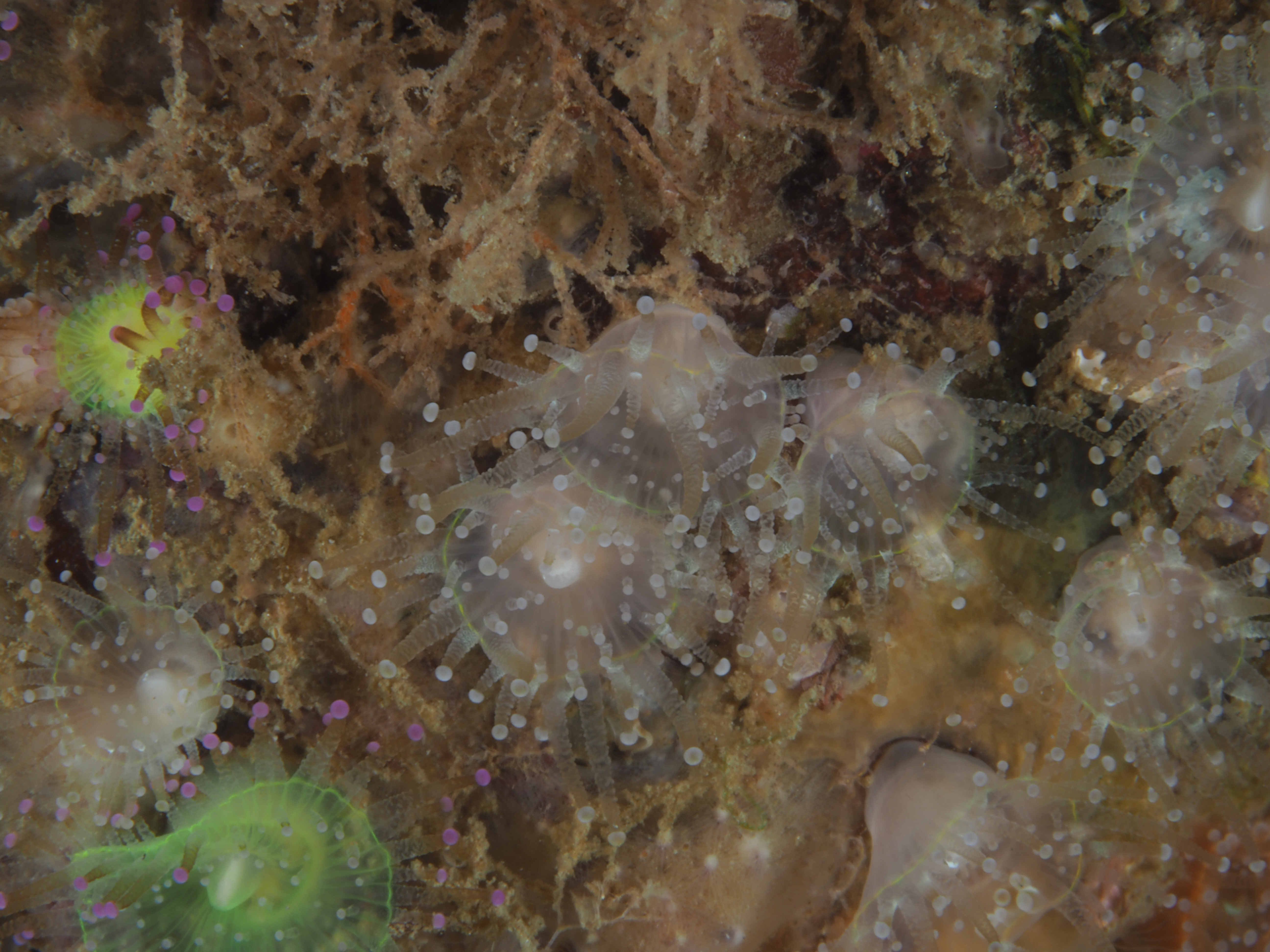
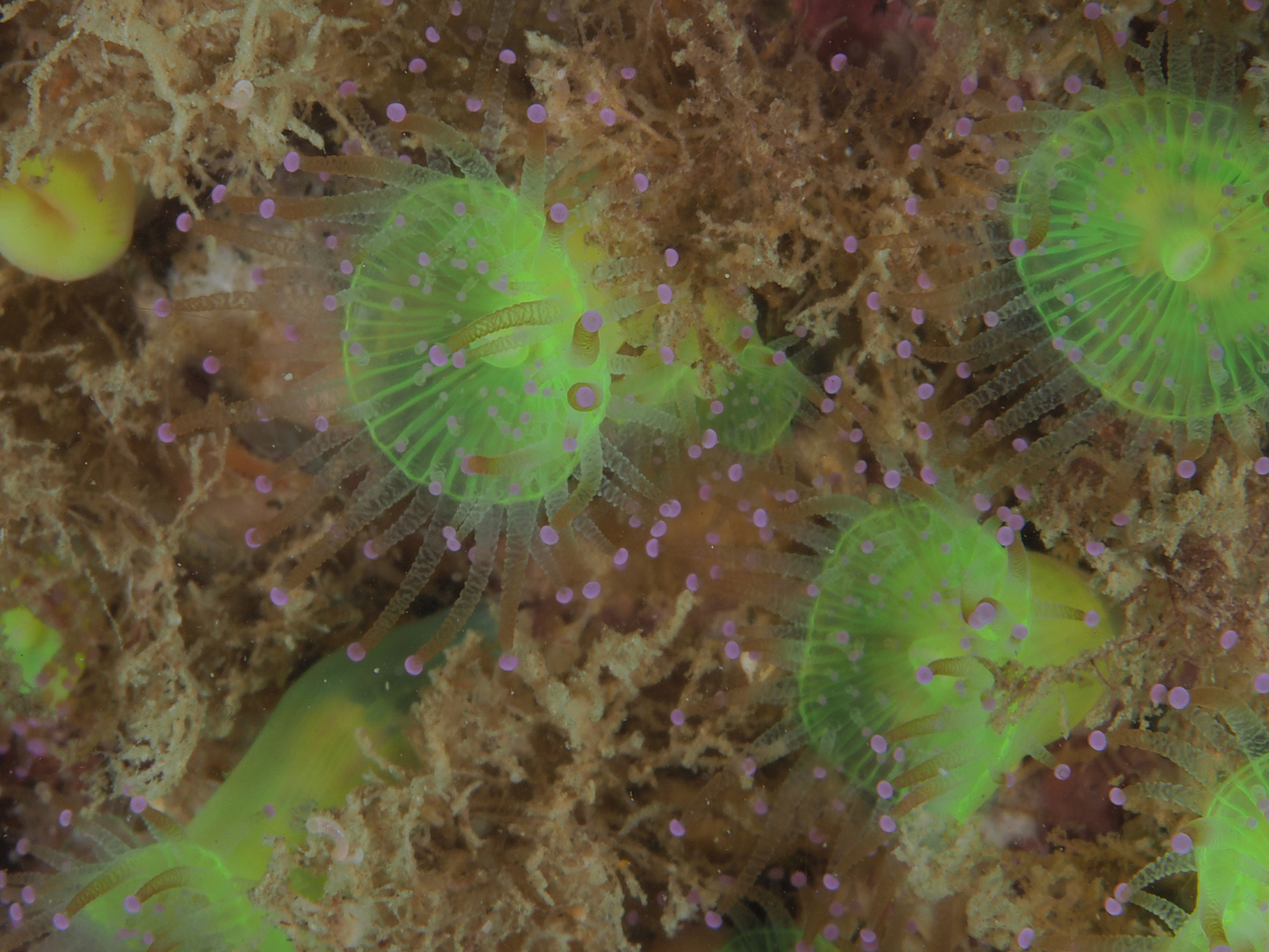
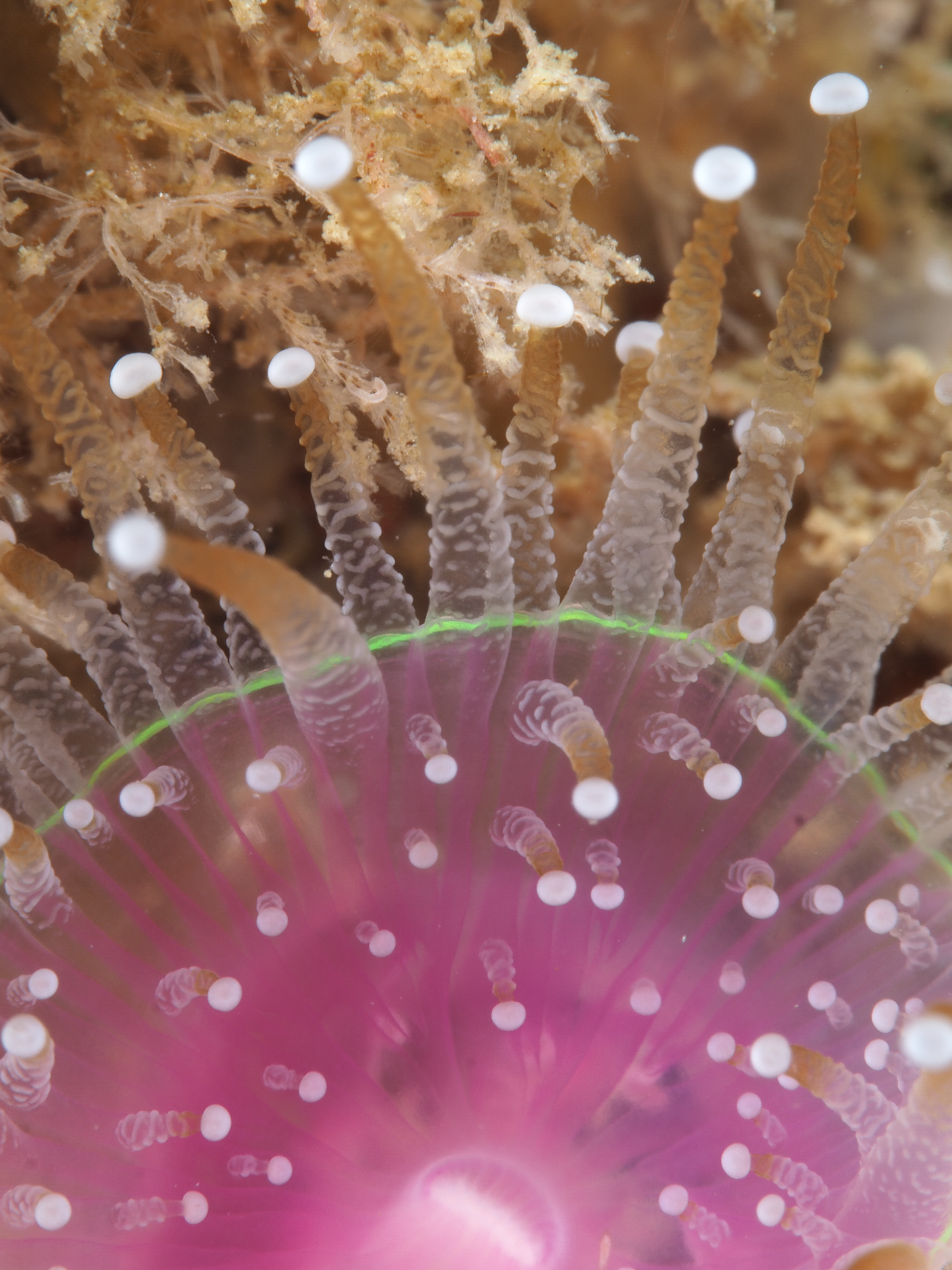
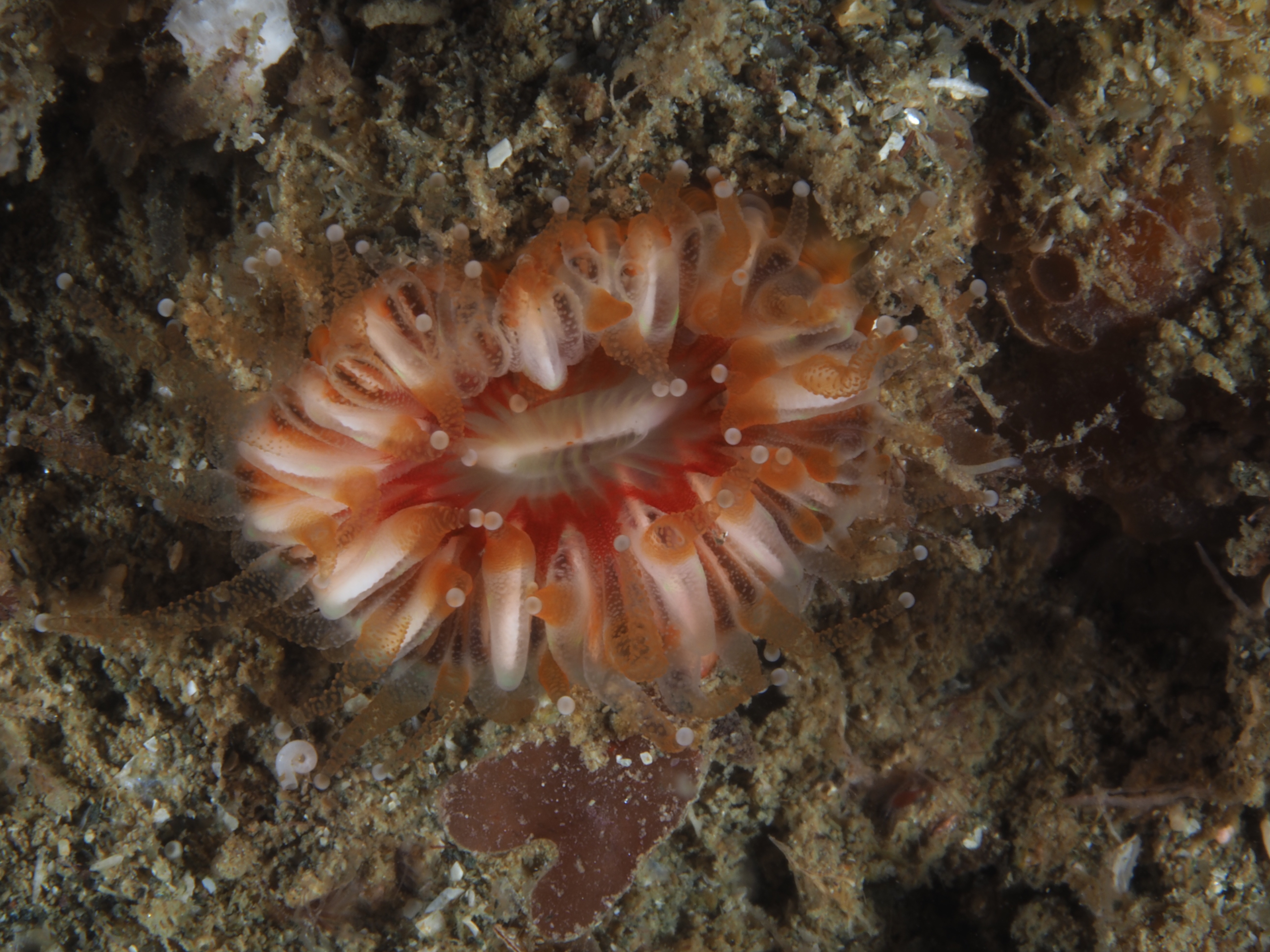
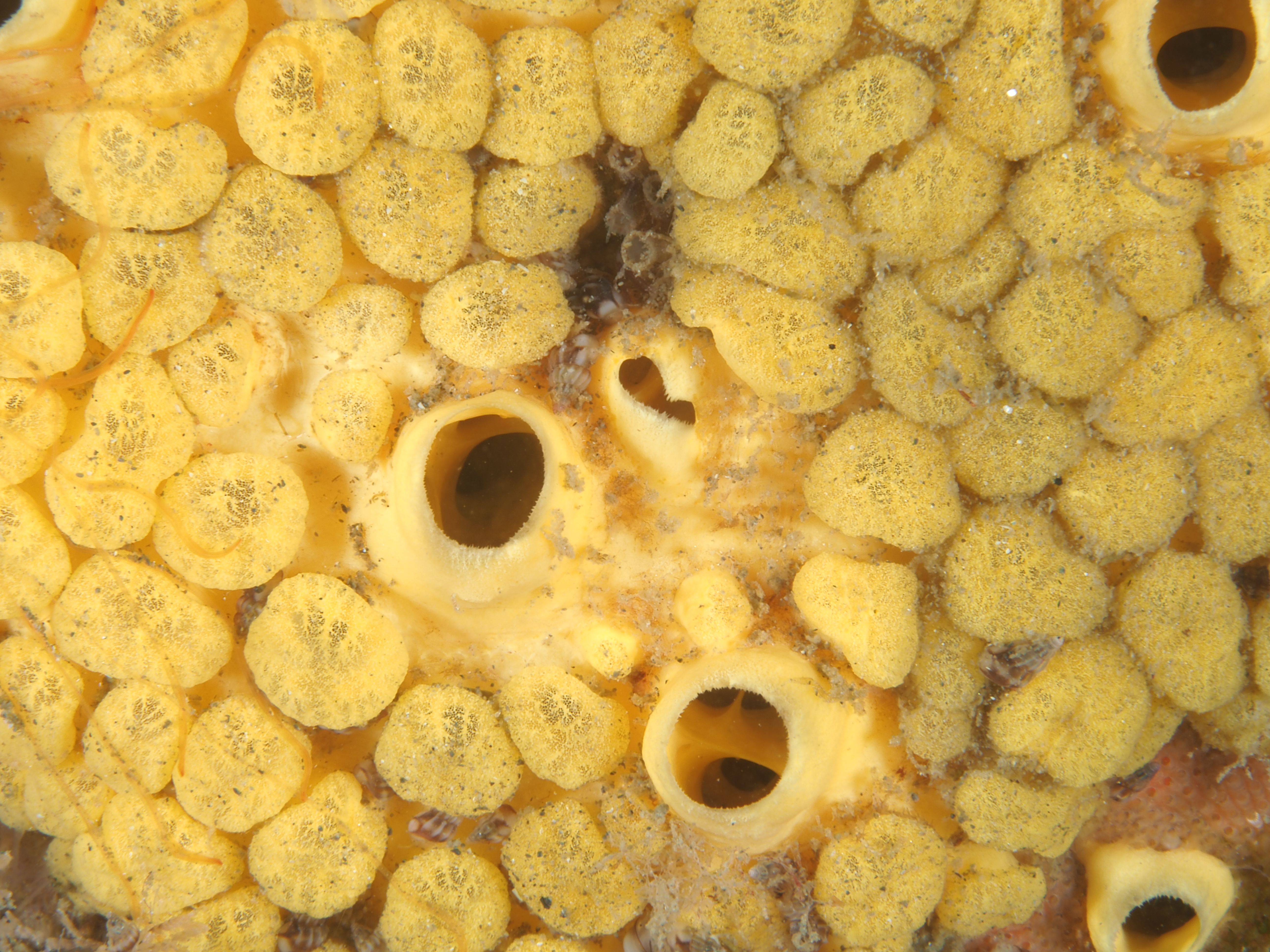
A few weeks back I drove to one of the UKs more well-known divesites, Porthkerris, about 50 minutes away, for two dives. I had only been there once before, also for two dives (not worth going all the way for just the one) when I did my PADI Advanced Open Water (I just realised that I forgot to blog about that at the time…). The pebbly shore here leads to the Drawna Rocks and it is one of the few places in Cornwall that a shoredive can get you a bit deeper than 10 meters (maybe 18 at a high tide). This allows me to see some critters that are not present at my usual haunt Silver Steps in Falmouth. One example is the North Sea Tube Anemone (Synarachnactis lloydii) above. The black pebbles are quite striking, and also a very different background then what I am used to. For the first dive I took my macro lens, as it was quite choppy, and my expectations of the viz were low (which turned out to be correct!). I practiced a bit on the Jewel Anemones (Corynactis viridis) which come in a range of beautiful colours: orange, yellow, pink, white and green. I also took a shot of a Devonshire Cupcoral (Caryophyllia smithii) which is a solitary hard coral and some detail of a boring sponge (Cliona celata), including Rissoa parva snails I later noticed (they are everywhere in the rockpools too).
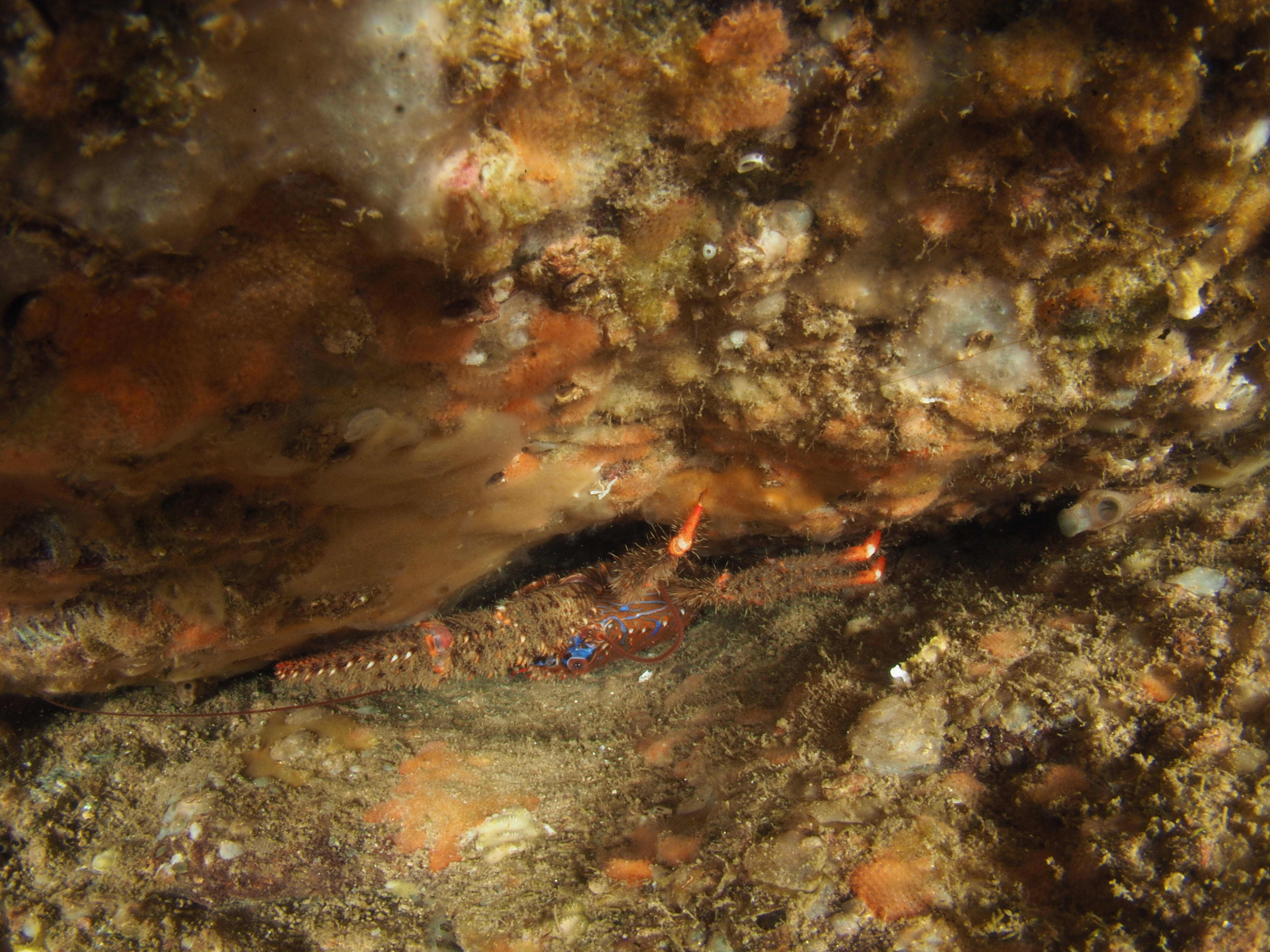
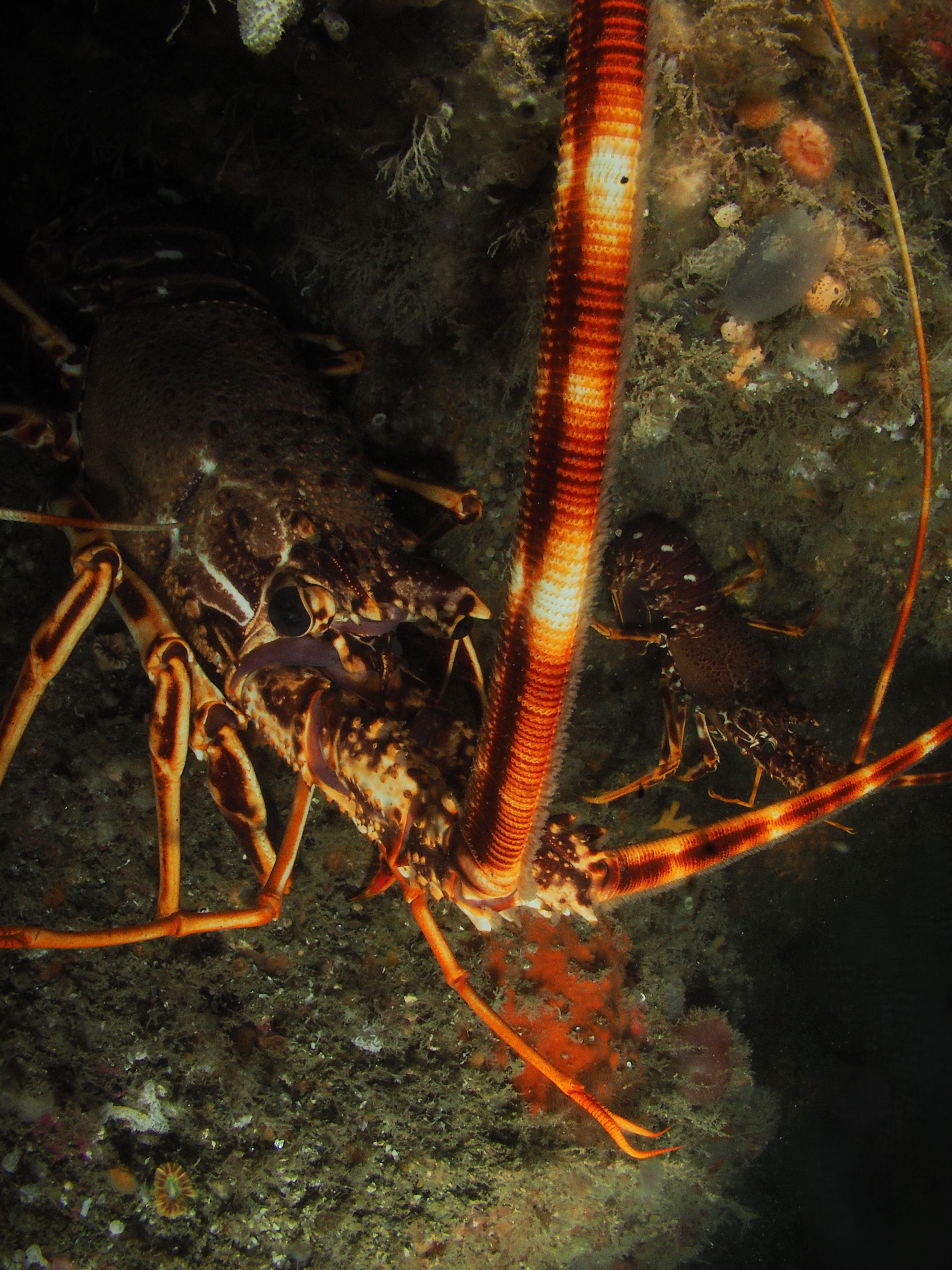
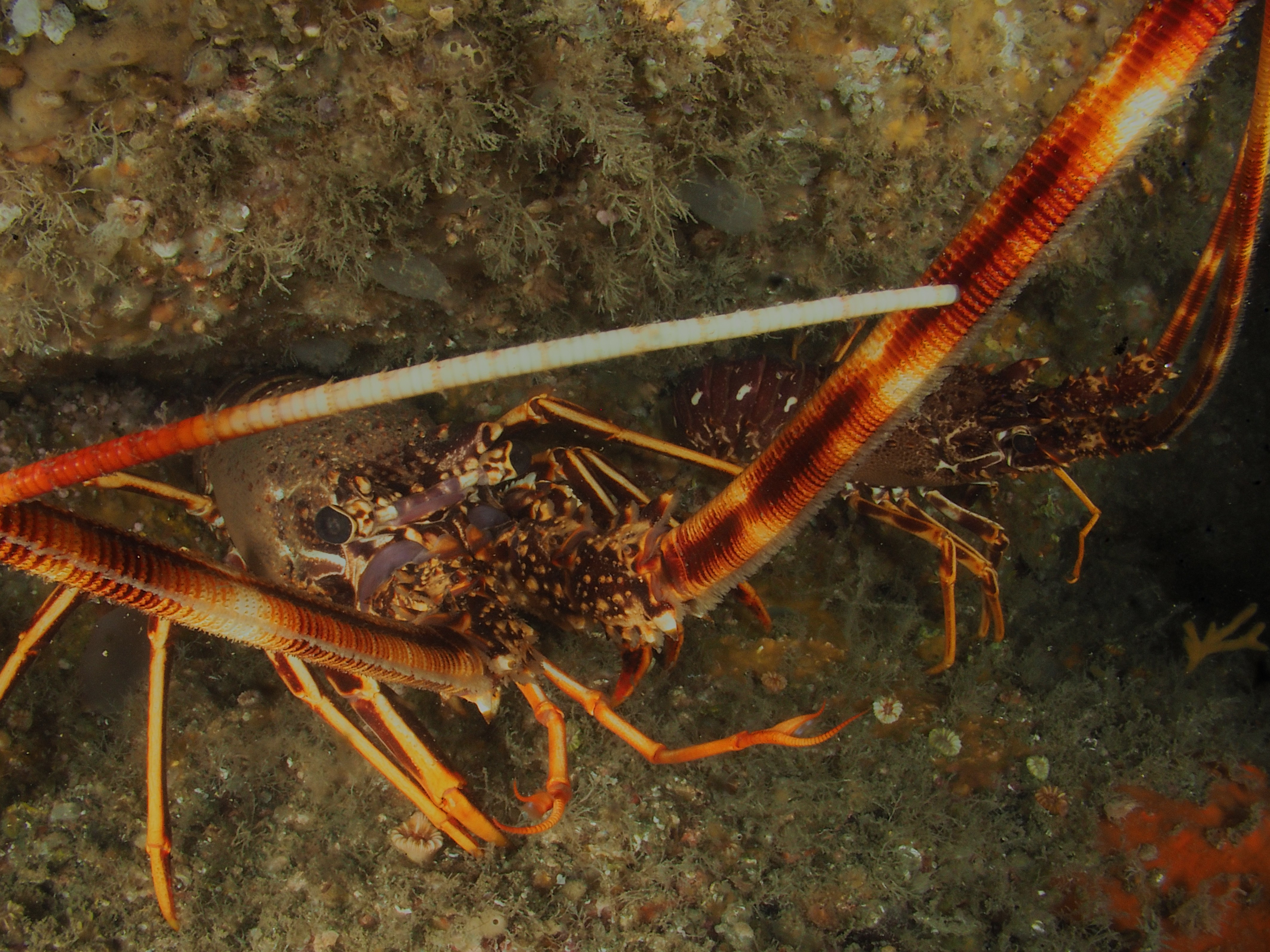
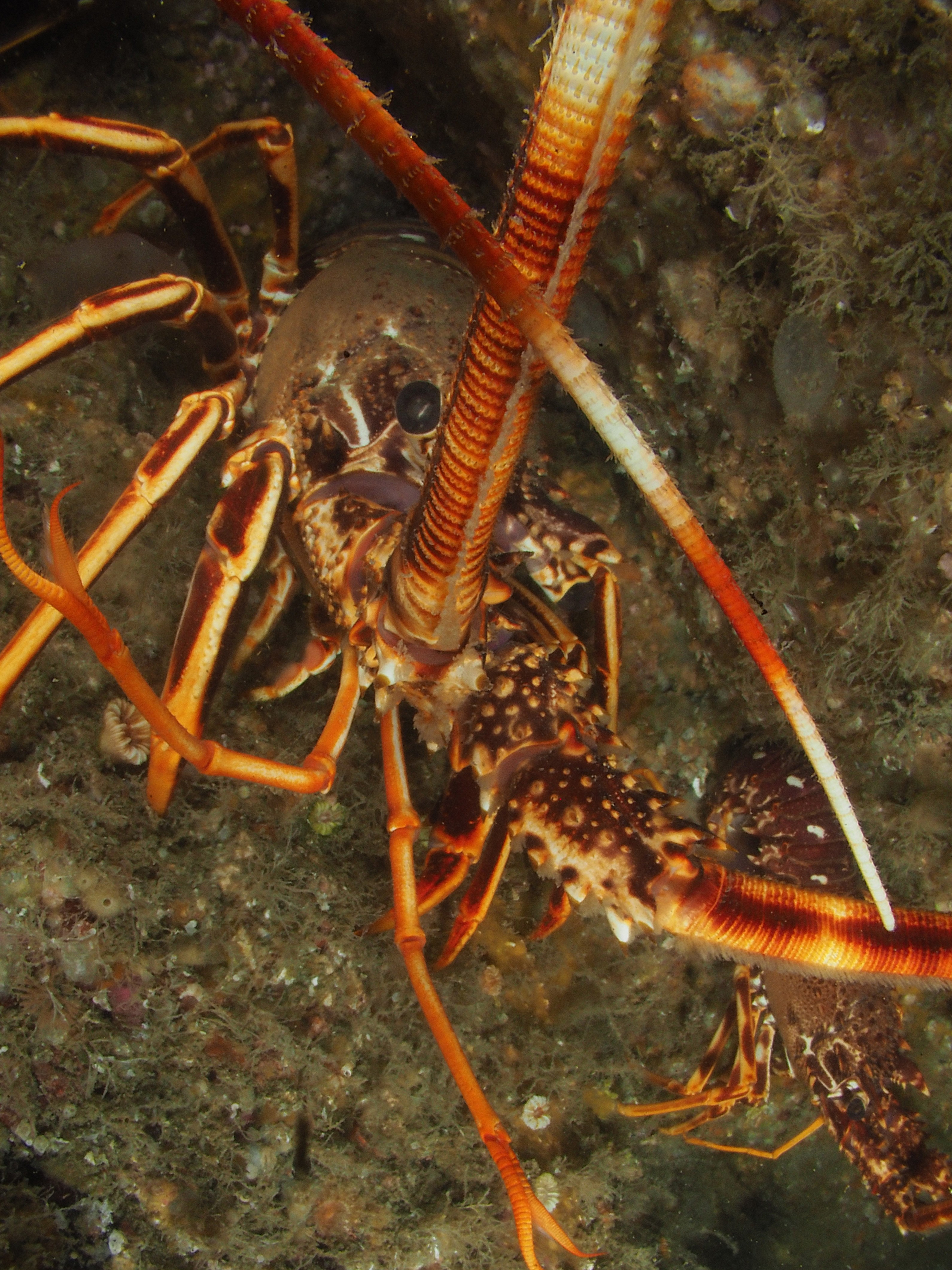
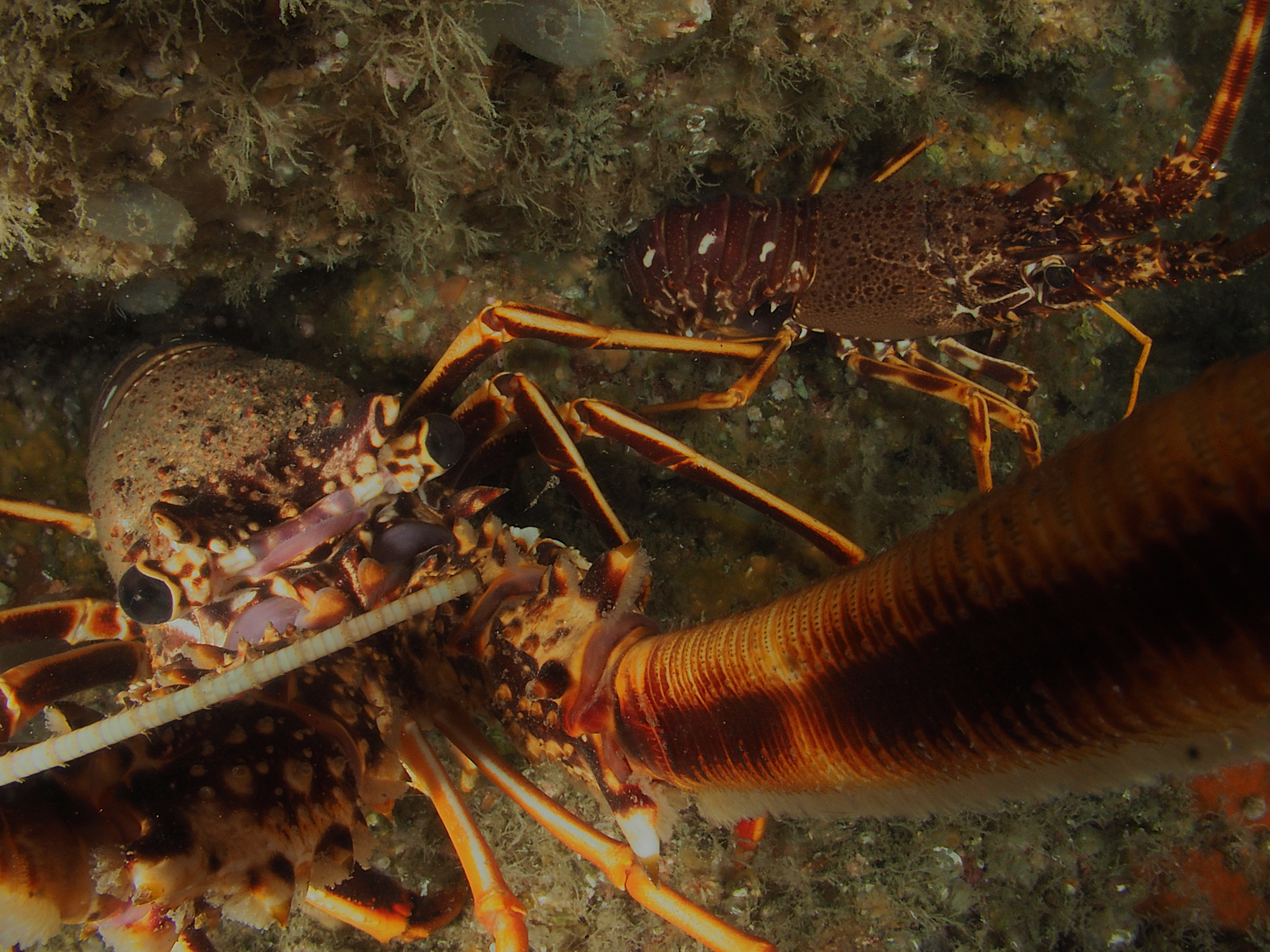
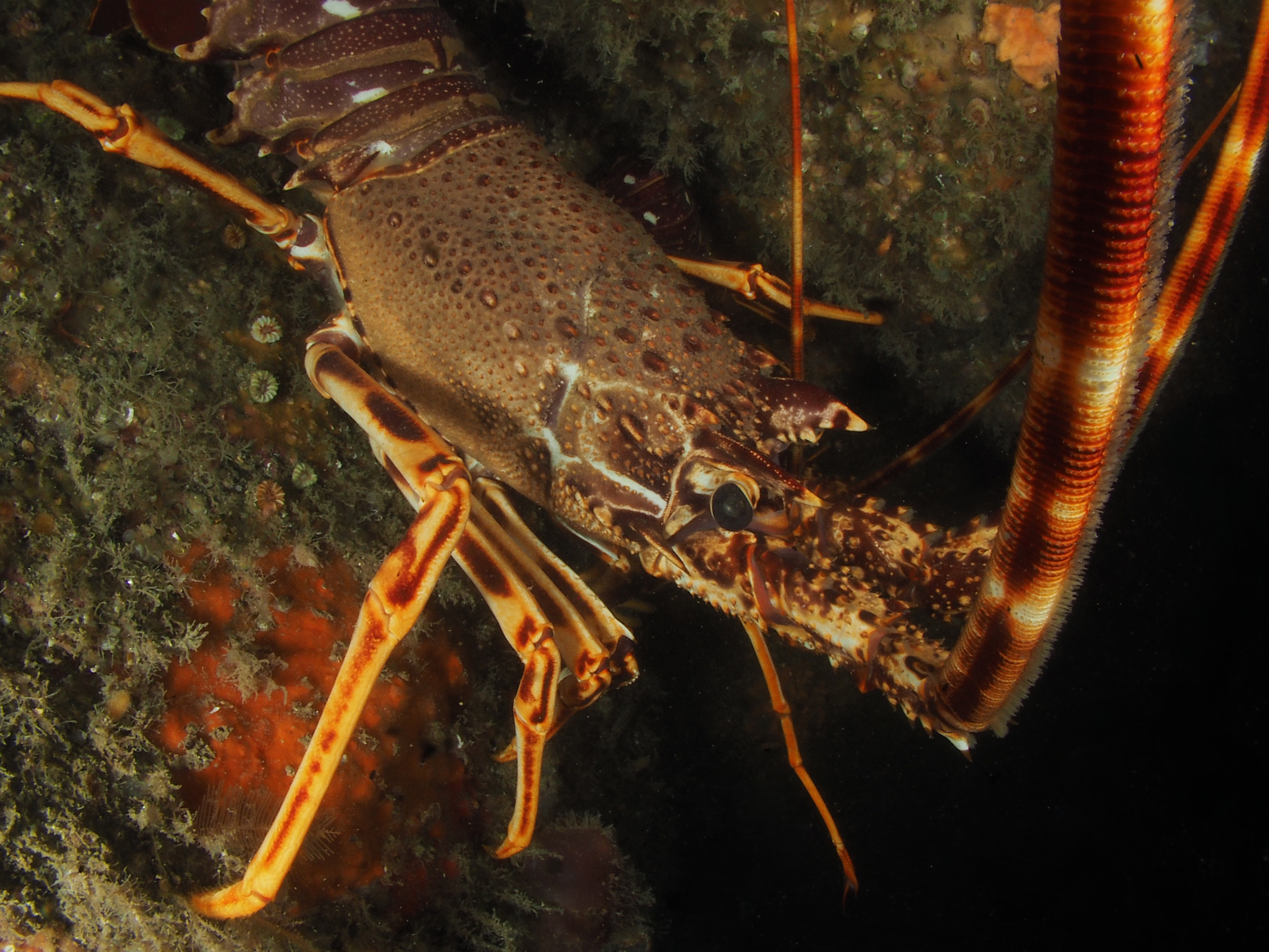
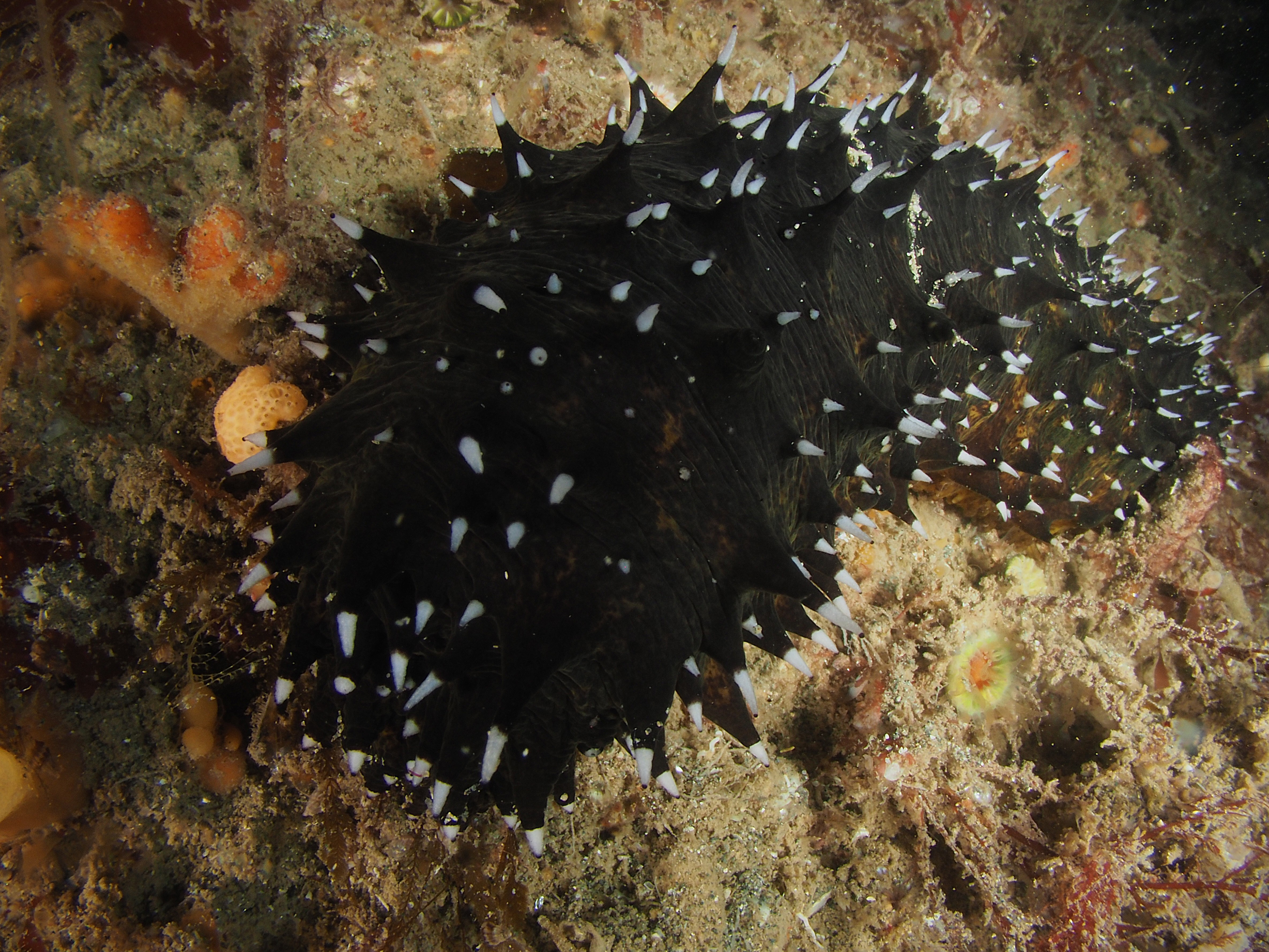
For the second dive I took my weird probe lens to bother some of the Spiny Lobsters (Palinurus elegans). Finally, a Cottonspinner (Holothuria forskali), what a beaut!
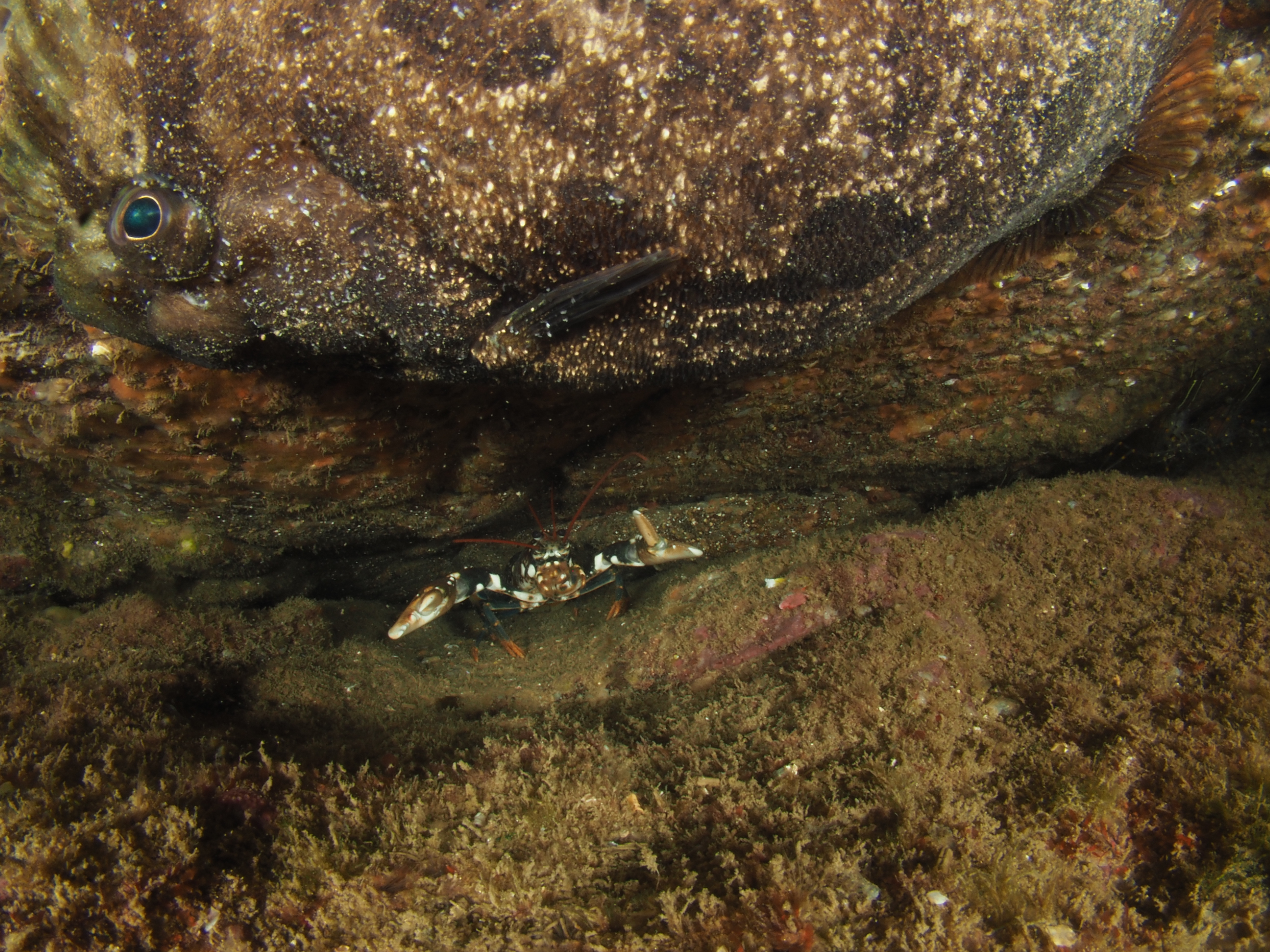
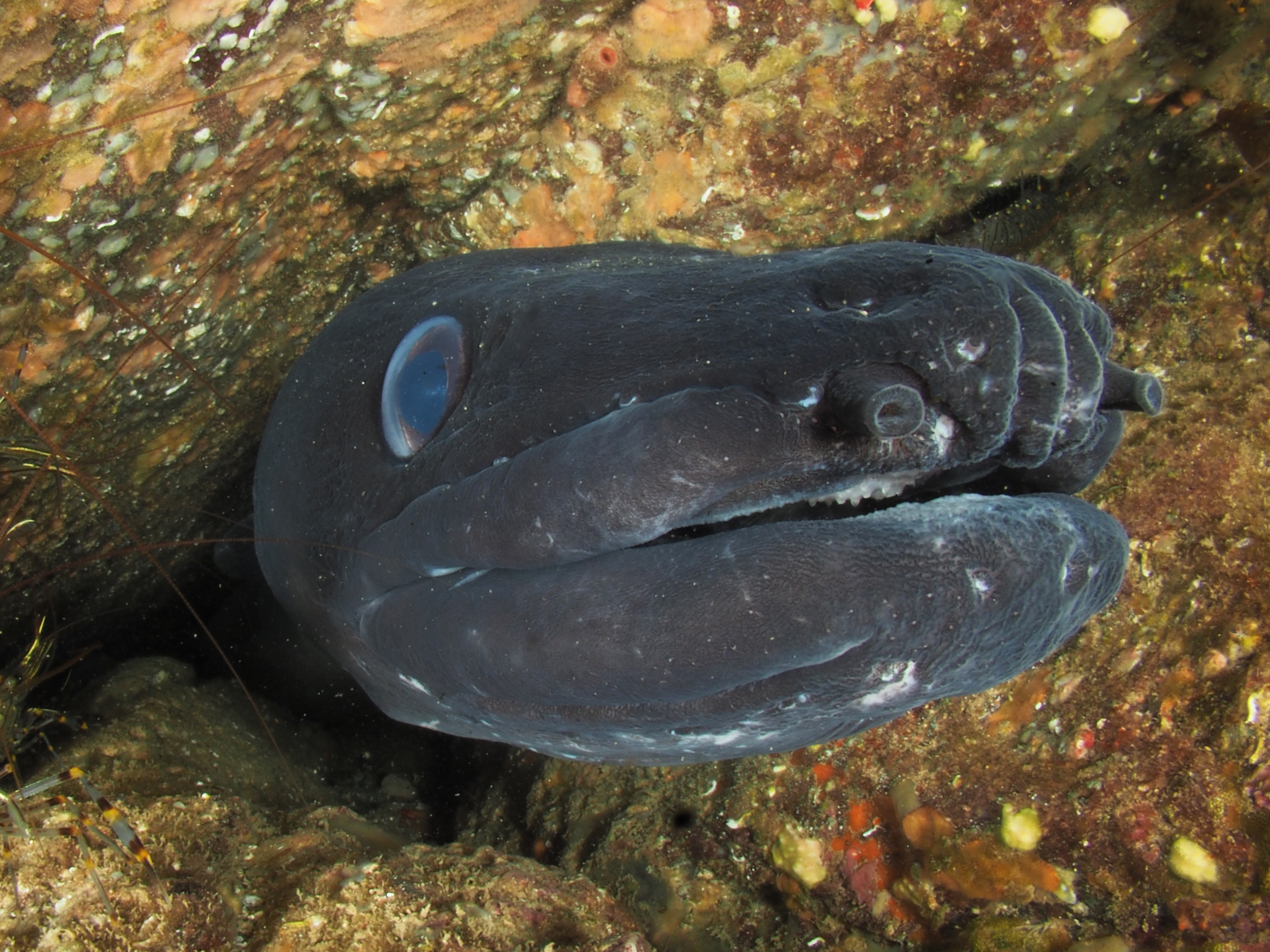
It is almost February so it is high time for the first 2025 post! I have quite some photos left from last year and I thought a fish photo-dump might be a nice idea. My local shoredive site ‘Silver Steps’ has quite a diversity of fish; however, I have only ever seriously tried to photograph benthic species as the pelagic swimmers are just to difficult to capture, even just for ID purposes. A shame, as I have seen some interesting Seabream species last year (Gilthead Seabream, schools of juveniles that might be Axillary, or Red Seabream and even a Common Two-Banded Seabream) and the wrasse species are very characterful (and I have seen others take great photos of them). Anyway, first up is a Conger Eel (Conger conger) I often visit. Quite menacing, although probably not as big as it looks. I always find it in its lair, probably only coming out at night to hunt (having said that occasionally I do see free-swimming congers during the day). It is always surrounded by big prawns who do not seem to be on the menu somehow, but must be protected from other predators this way.
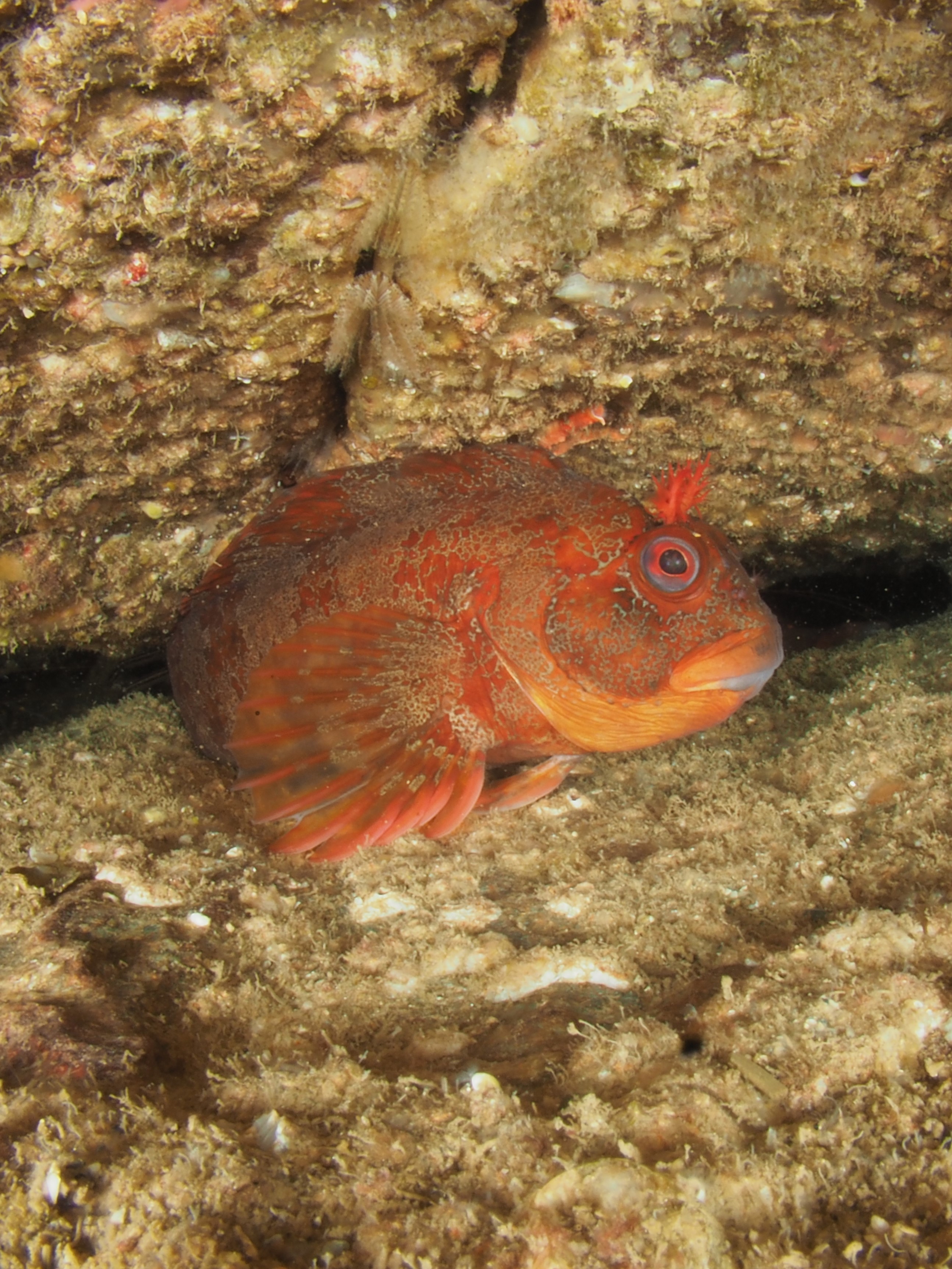
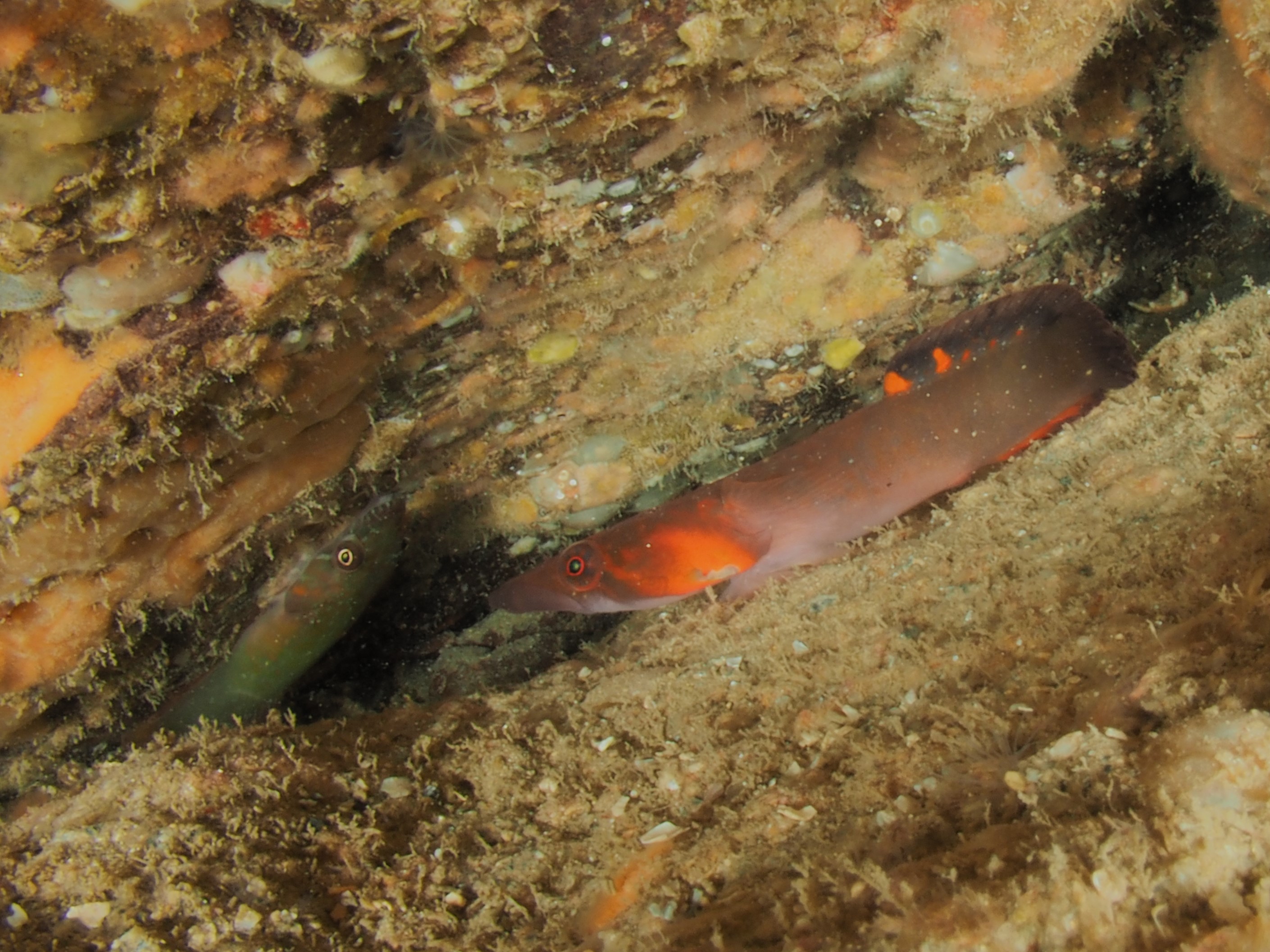
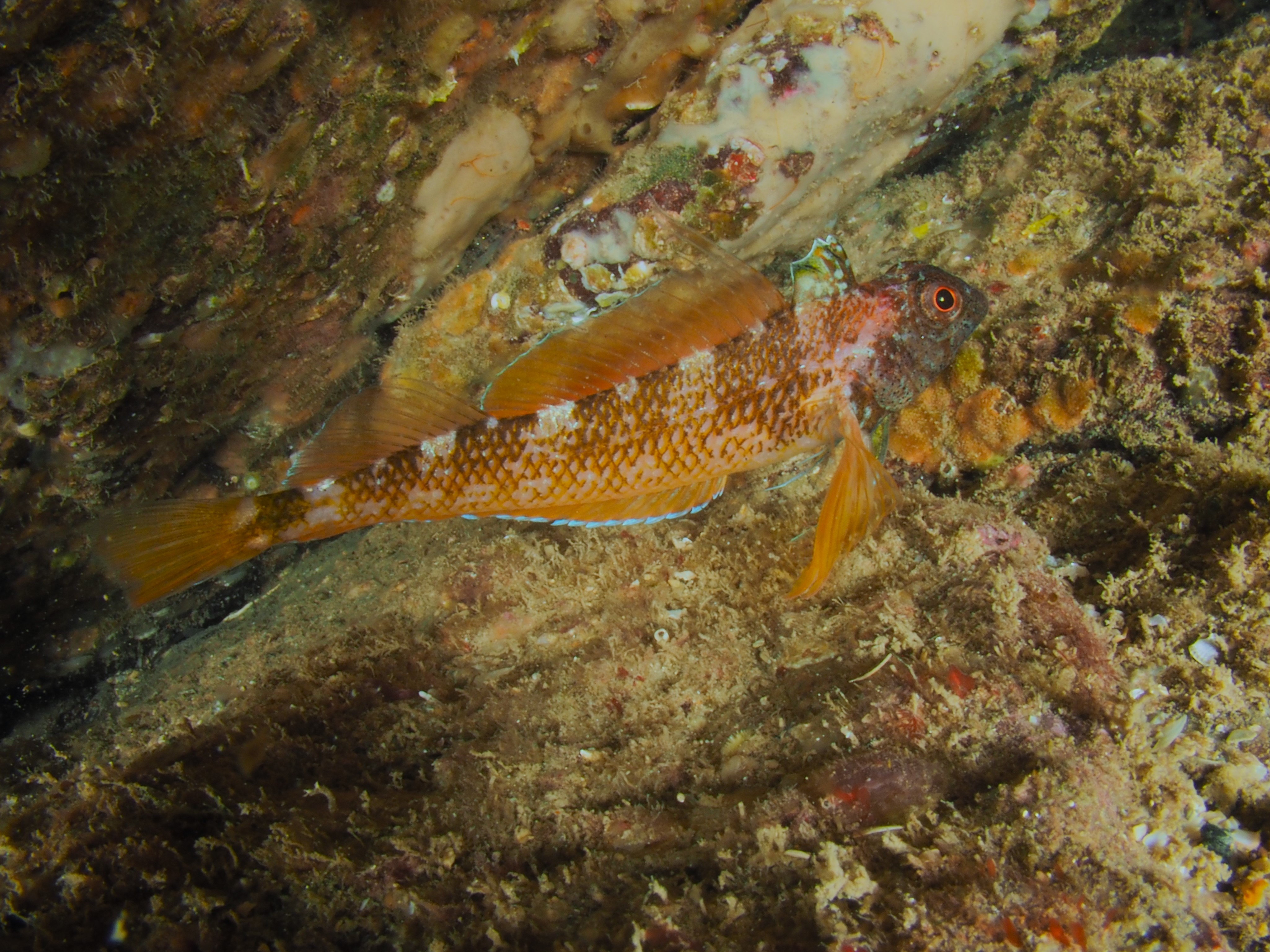
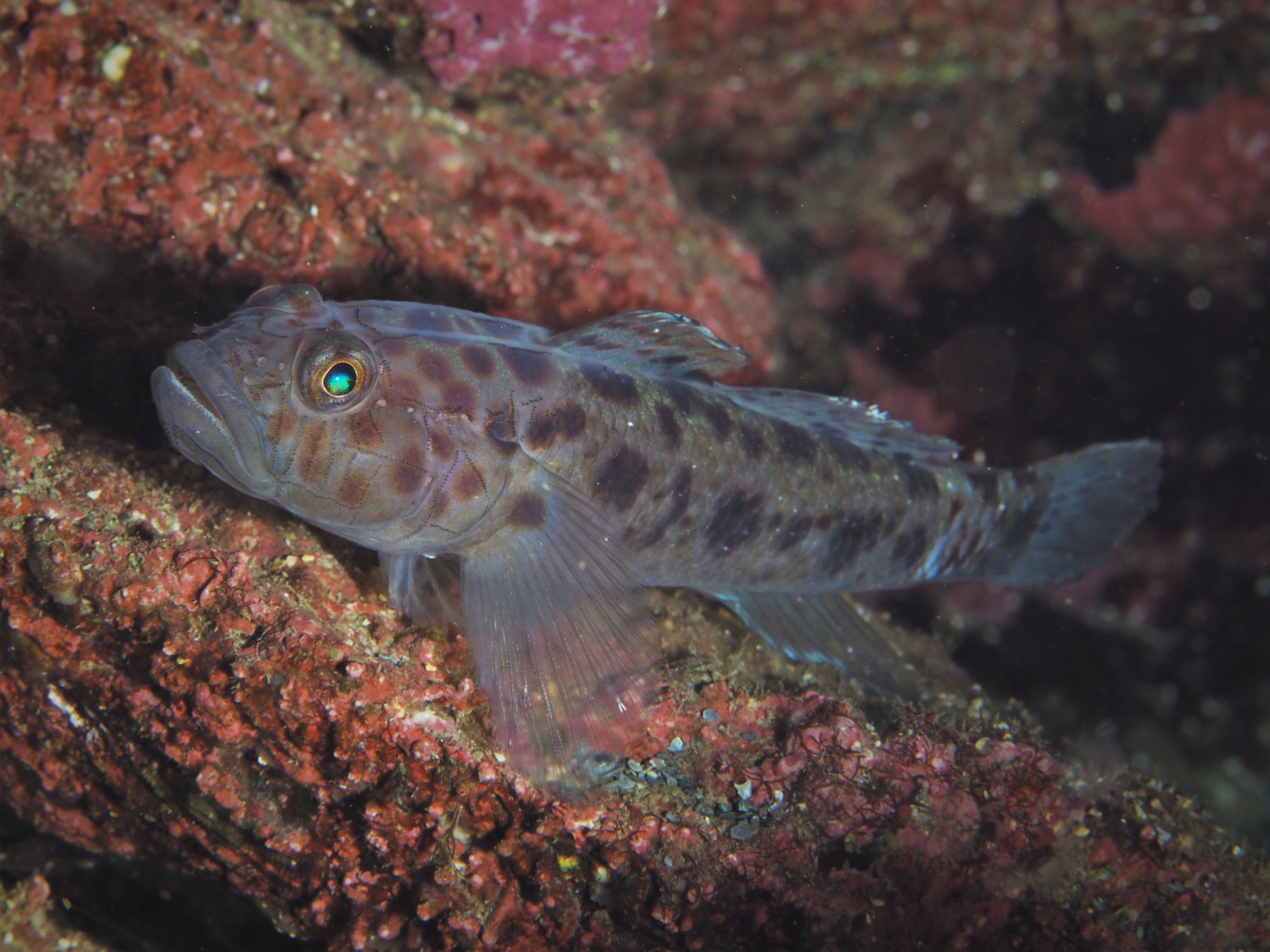
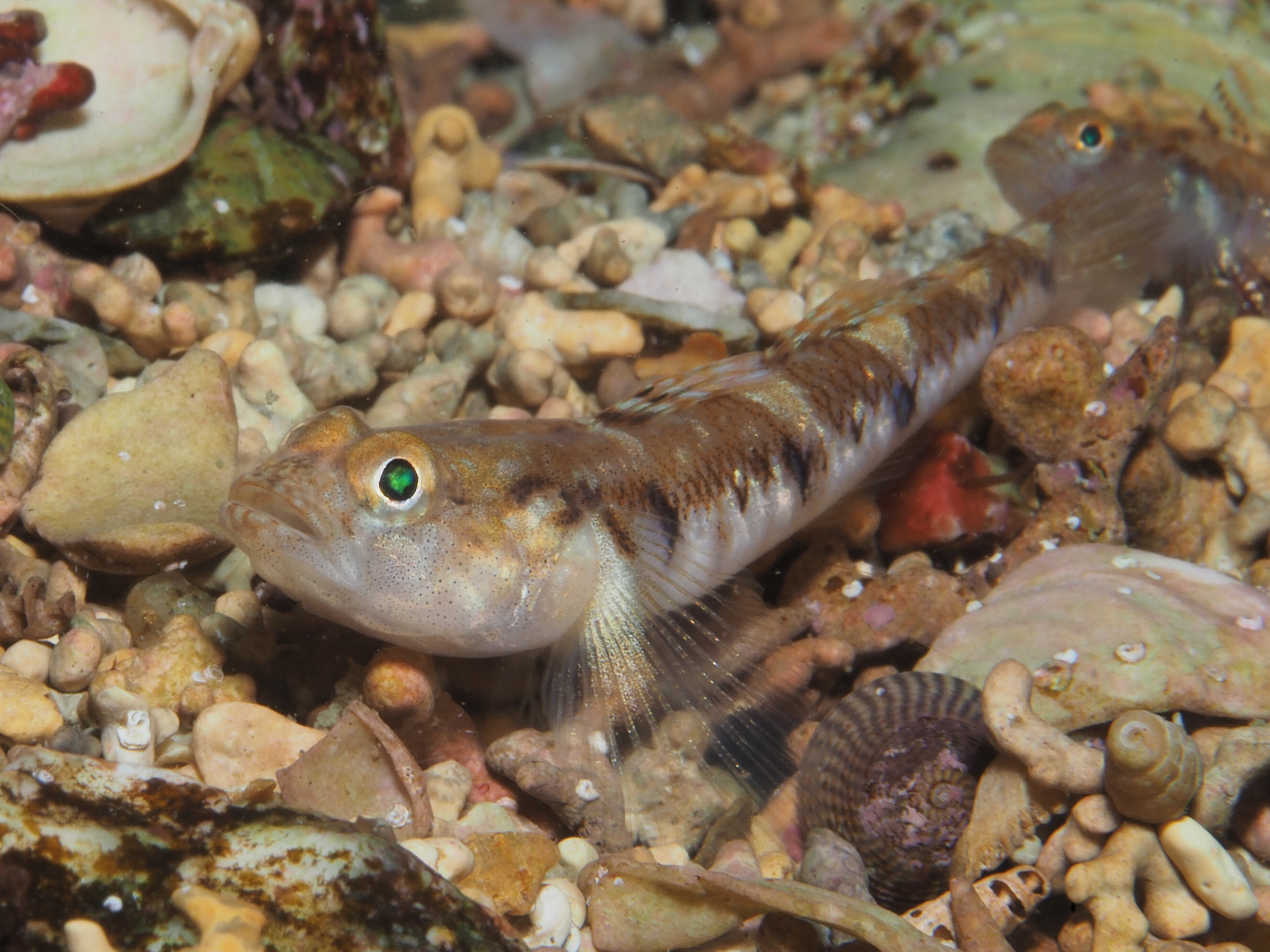
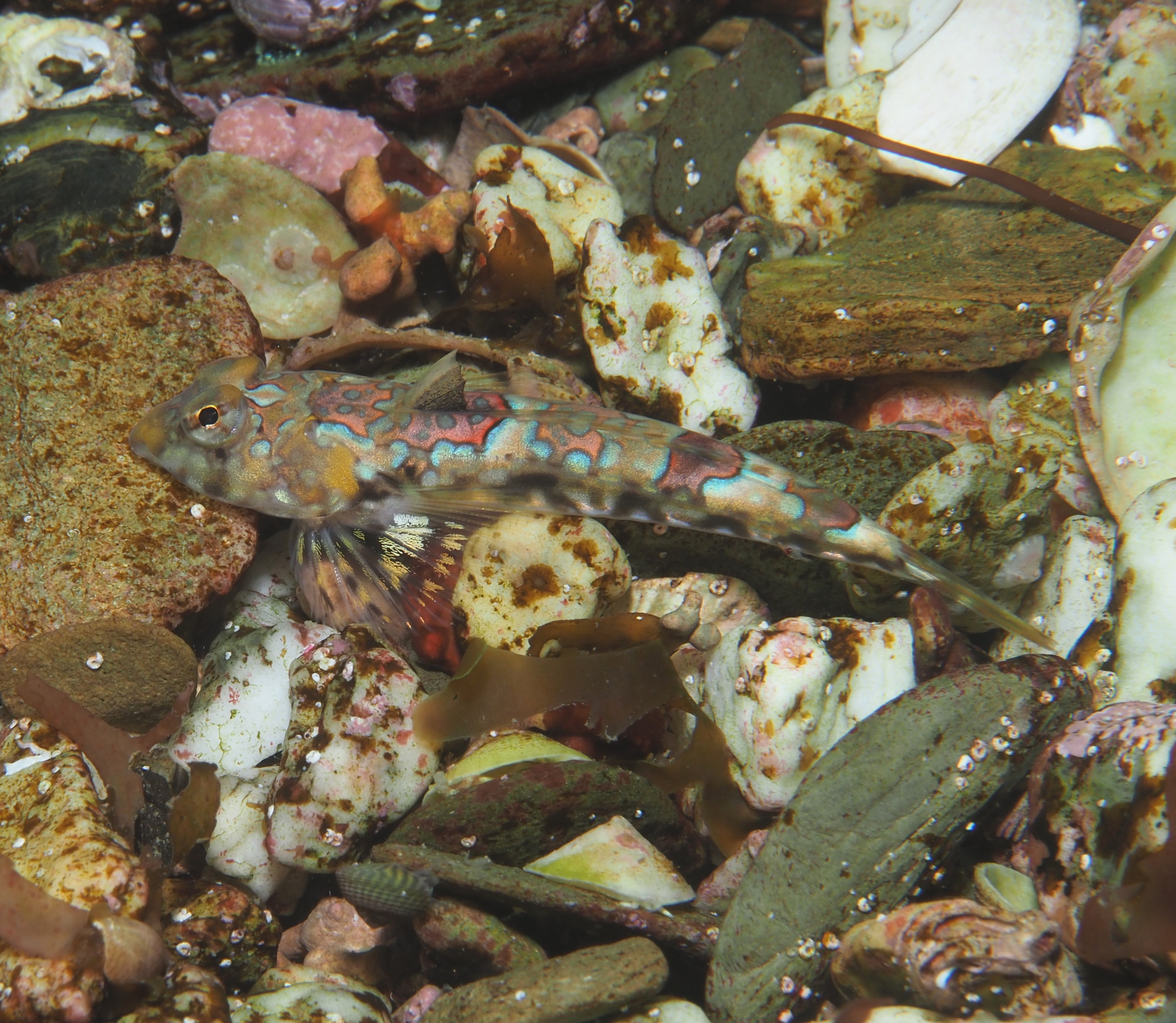
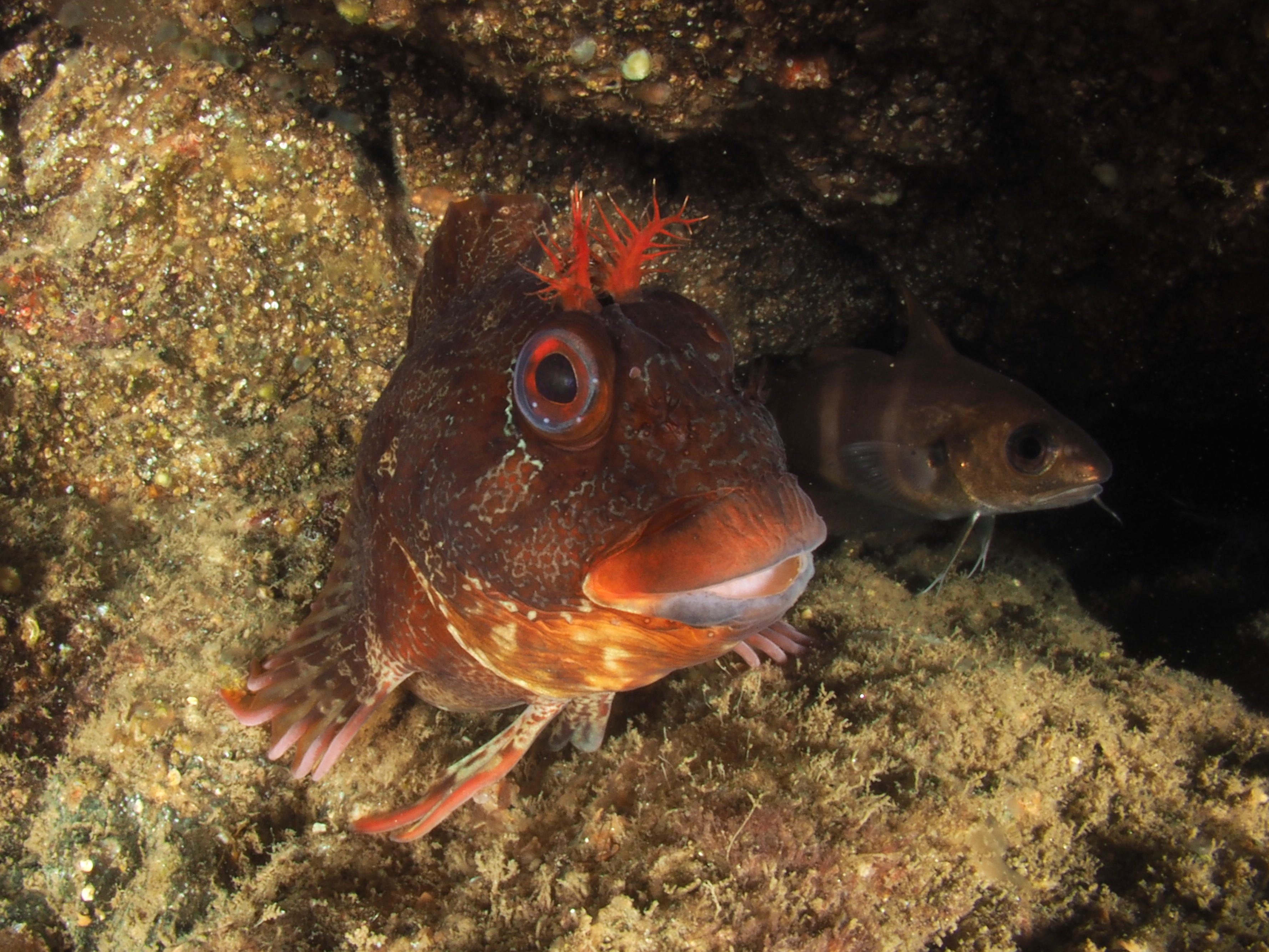
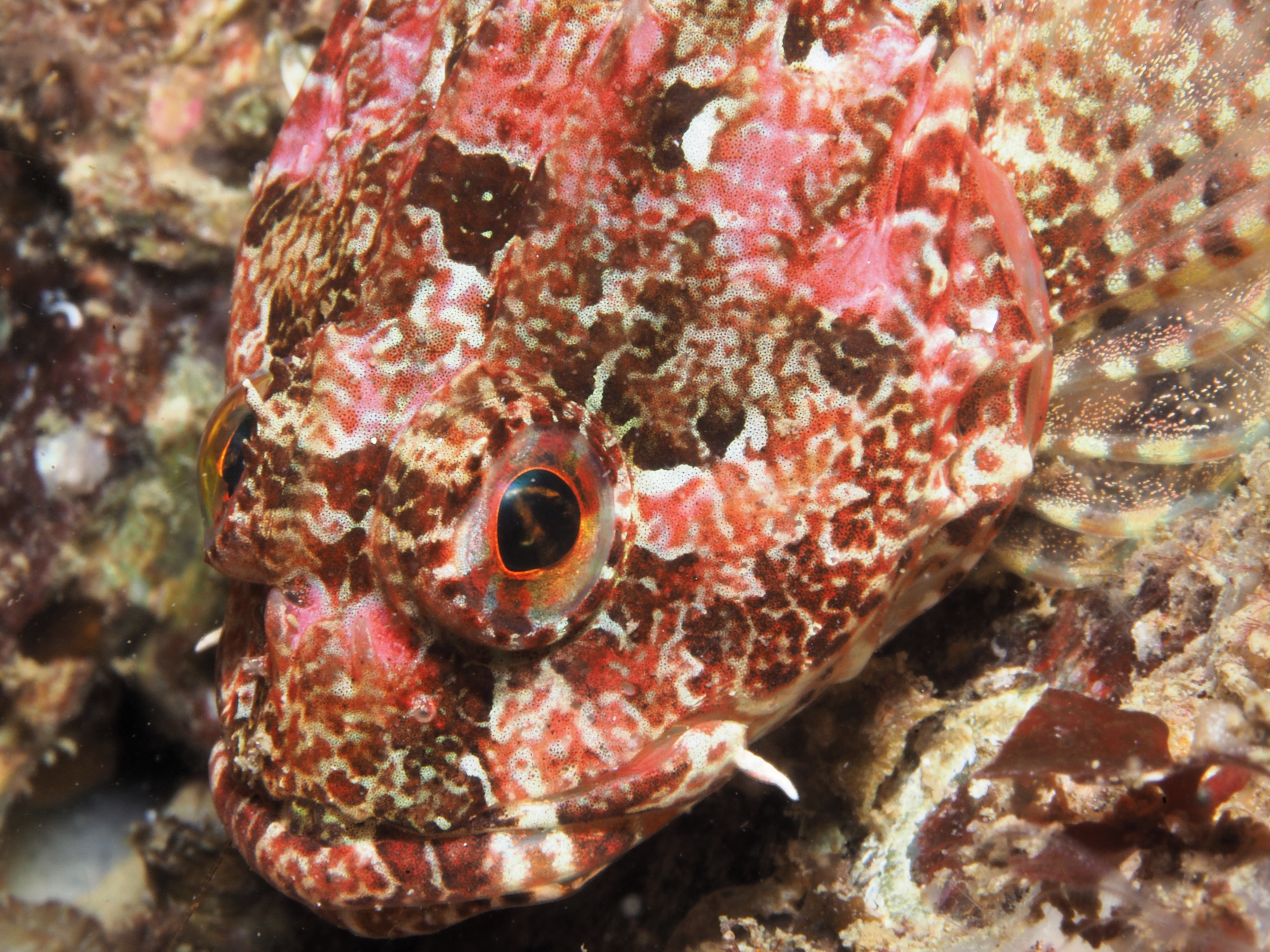
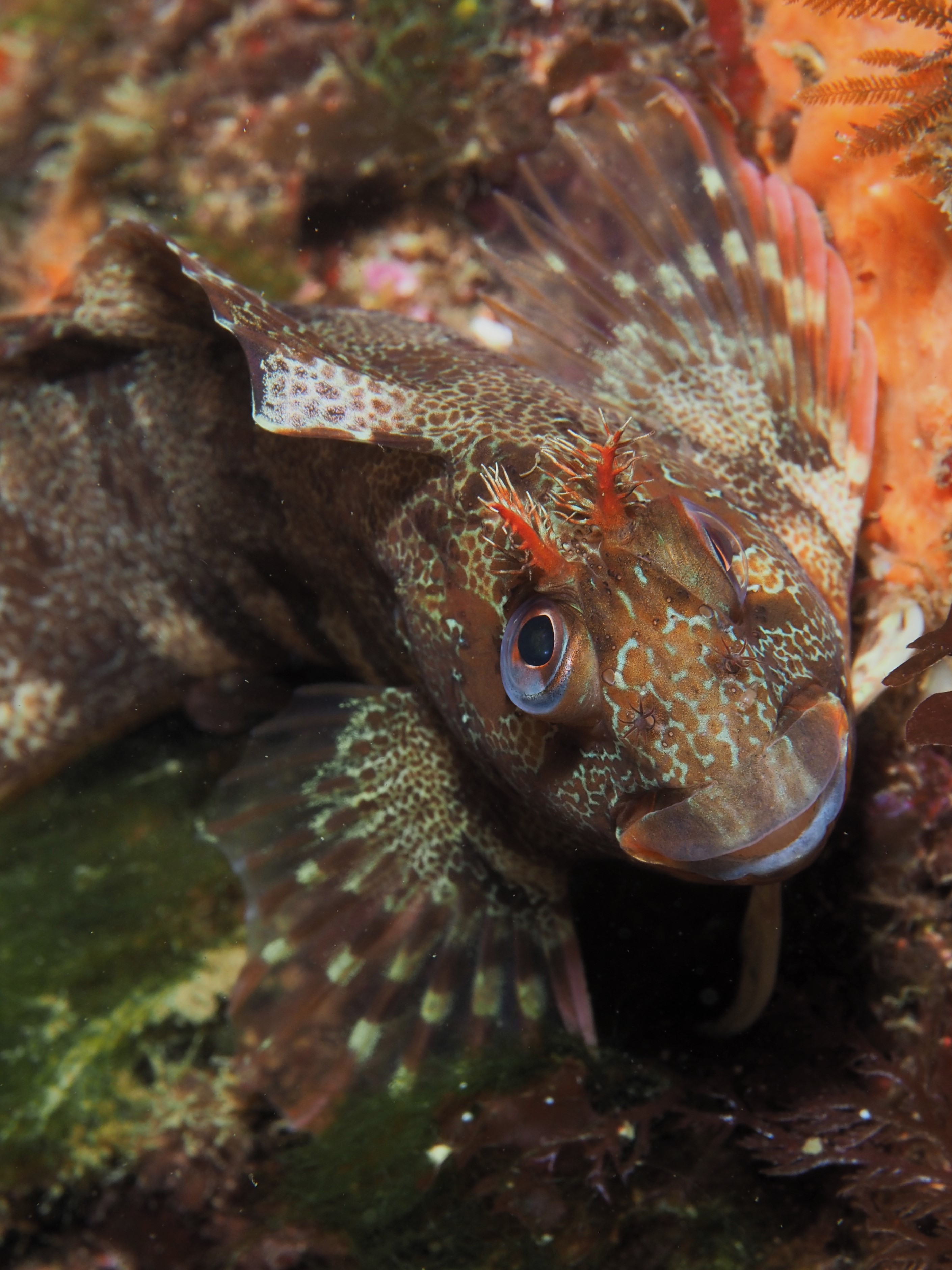
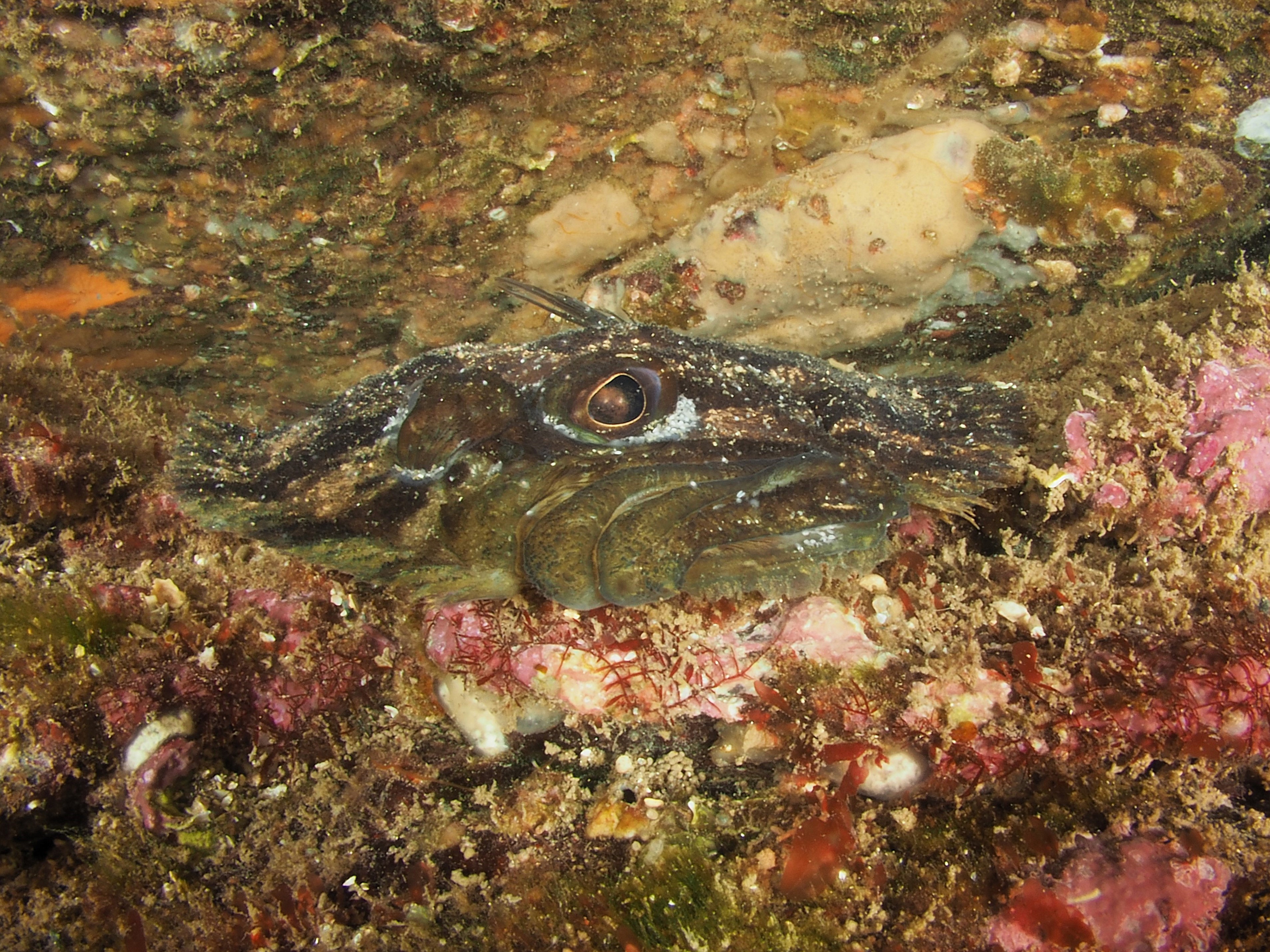
Below photos of various smaller fish hiding in the rock cracks (click for names on the pictures).
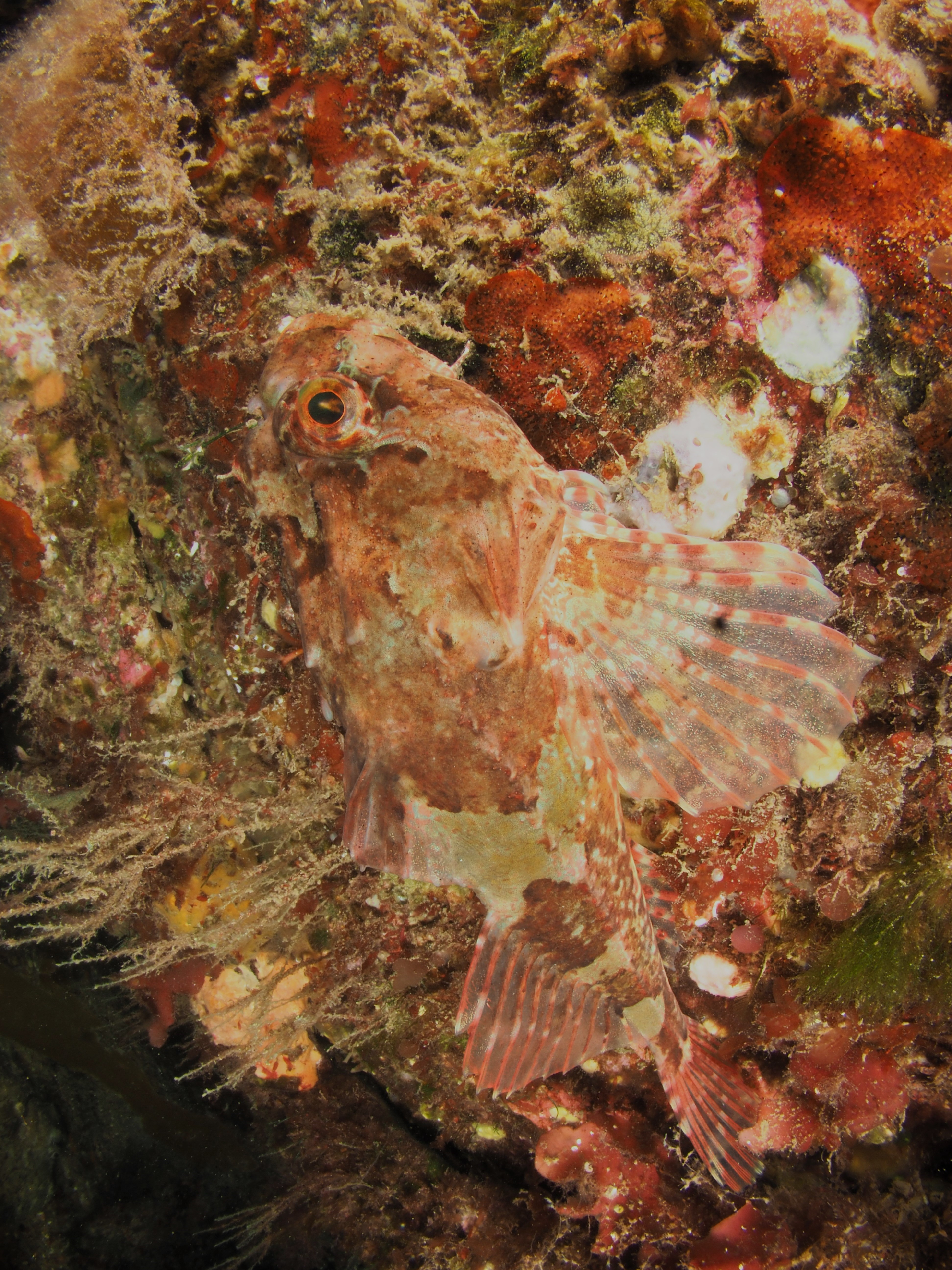
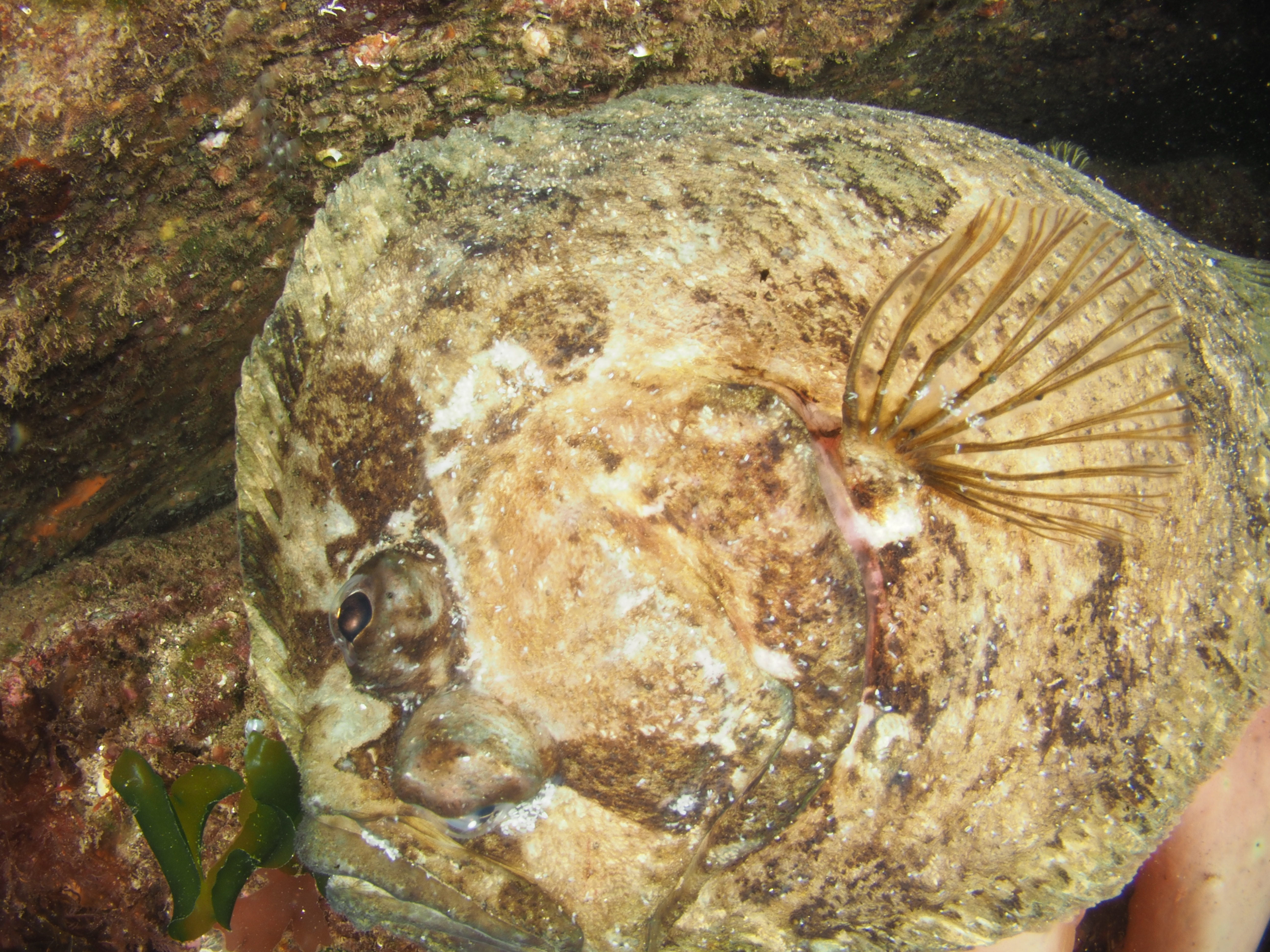
Finally a favourite of mine: the Topknot (Zeugopterus punctatus). Not quite nailed the shot yet – maybe this year!
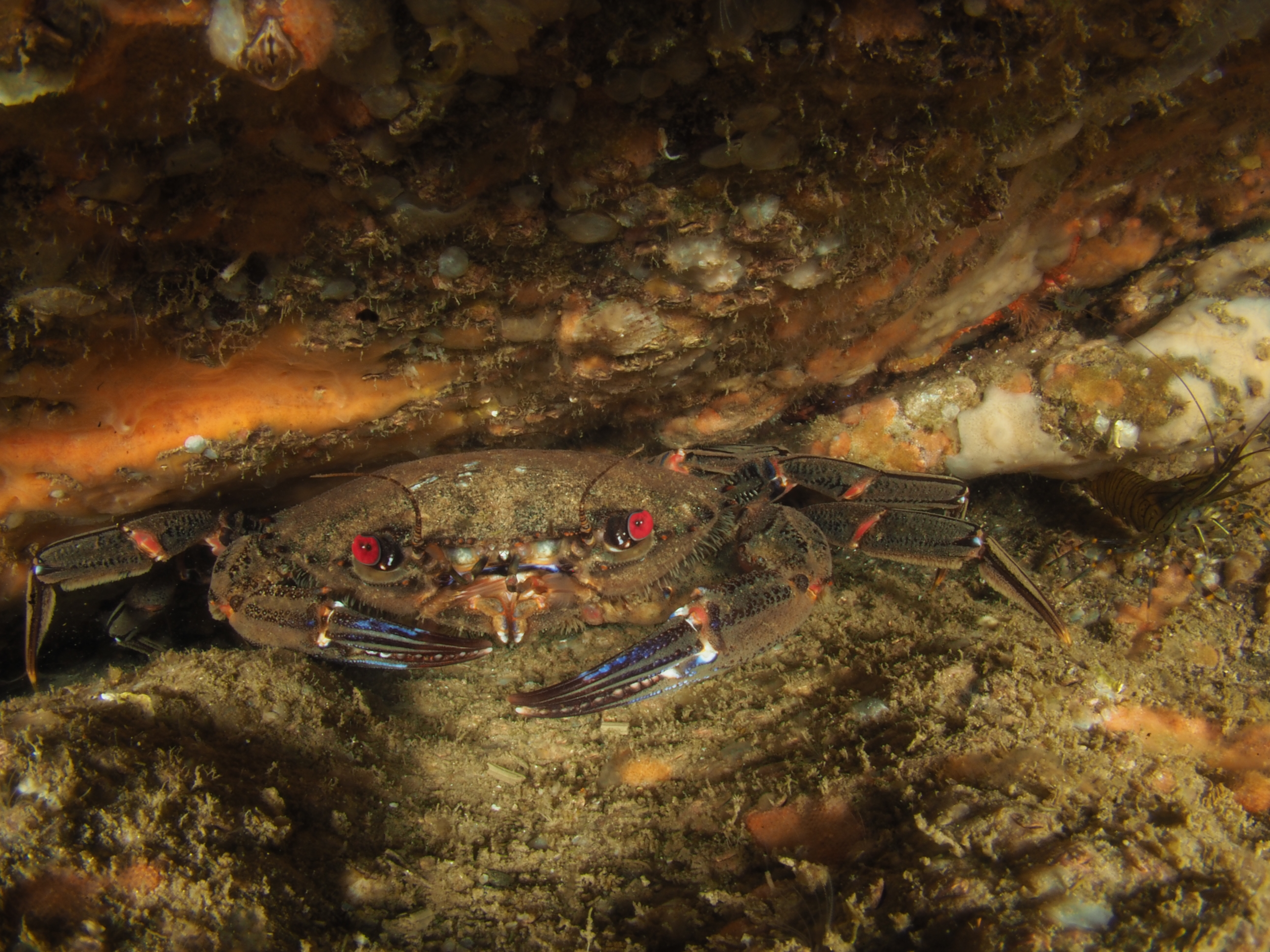
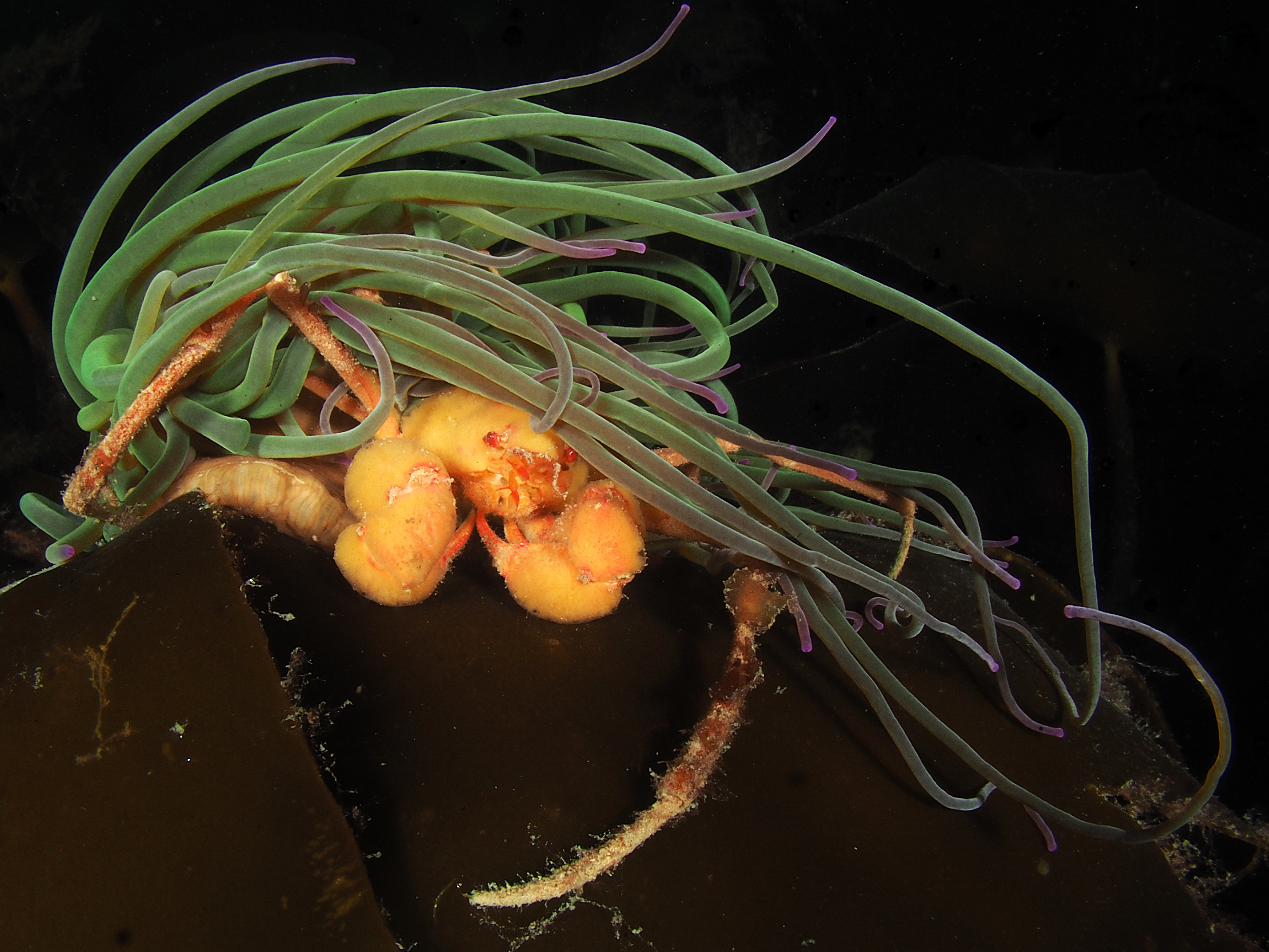
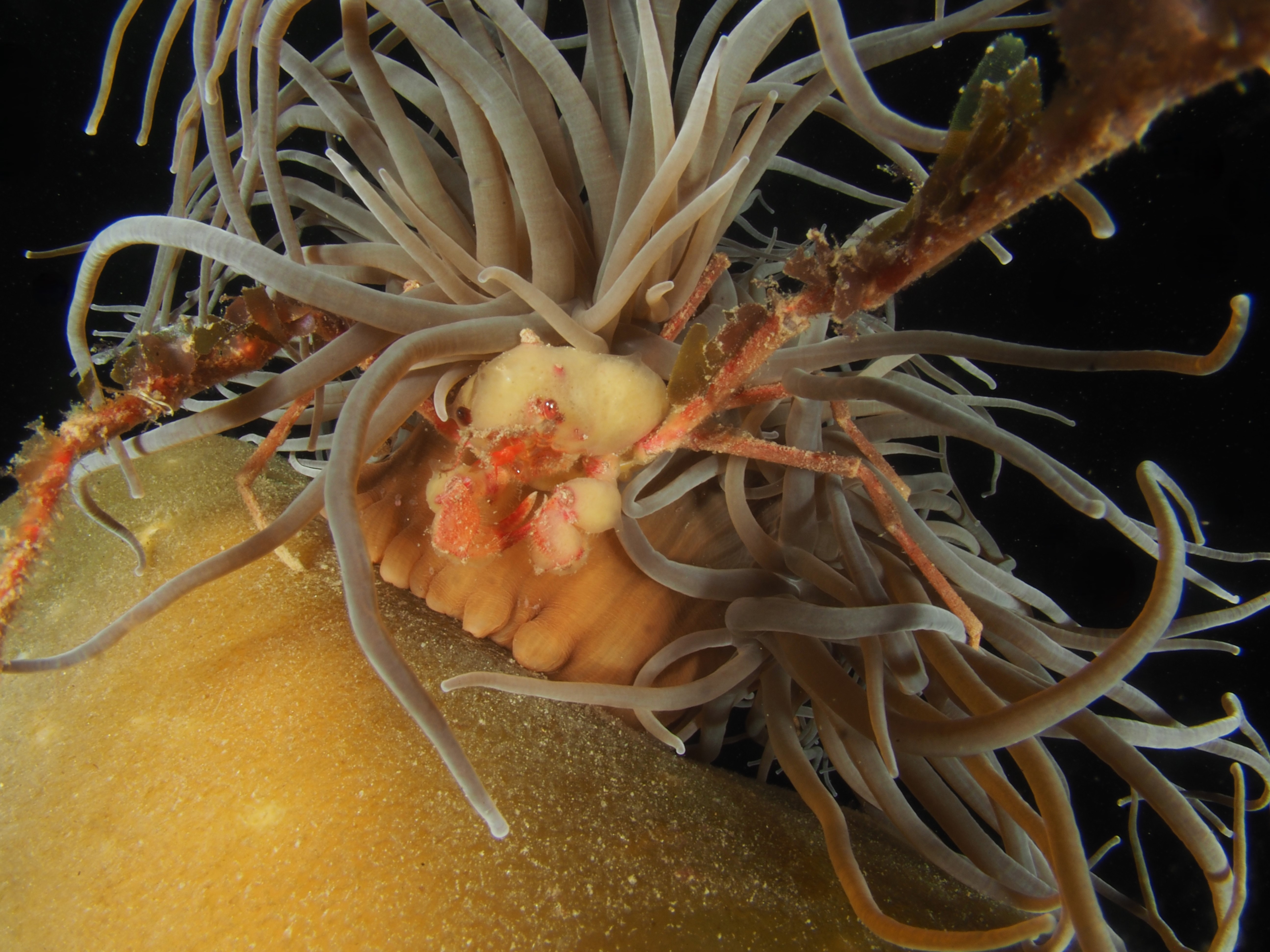
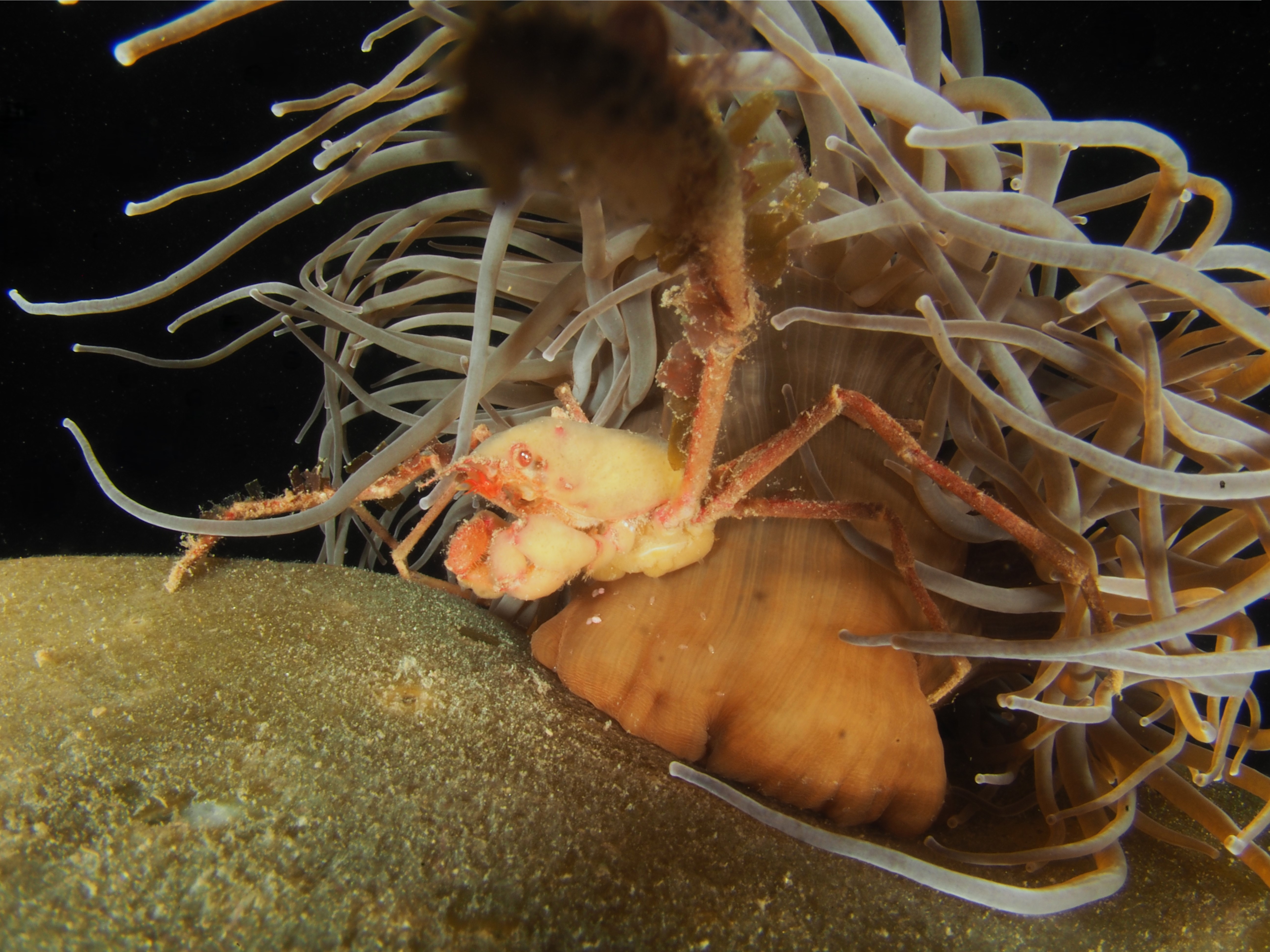
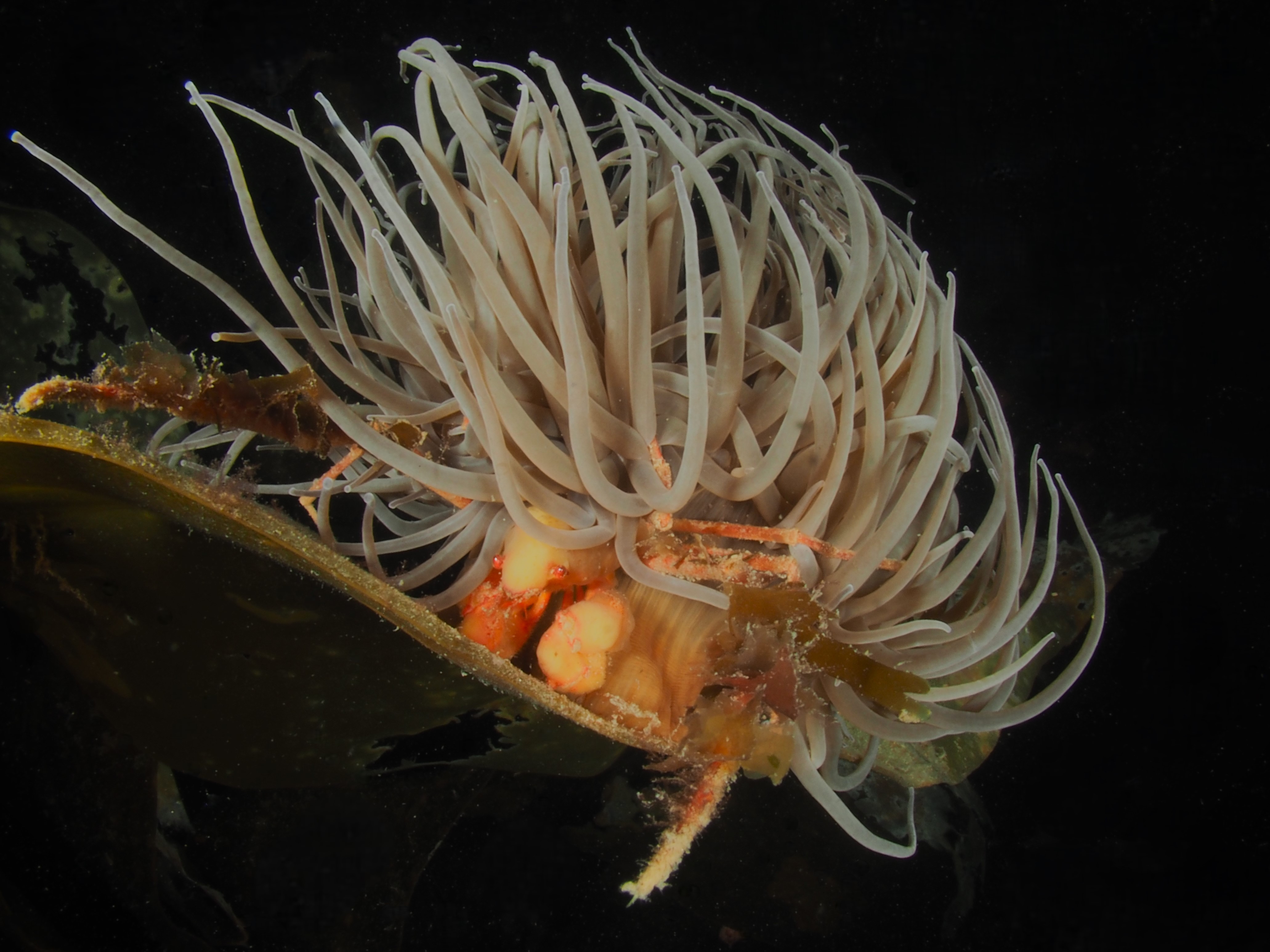
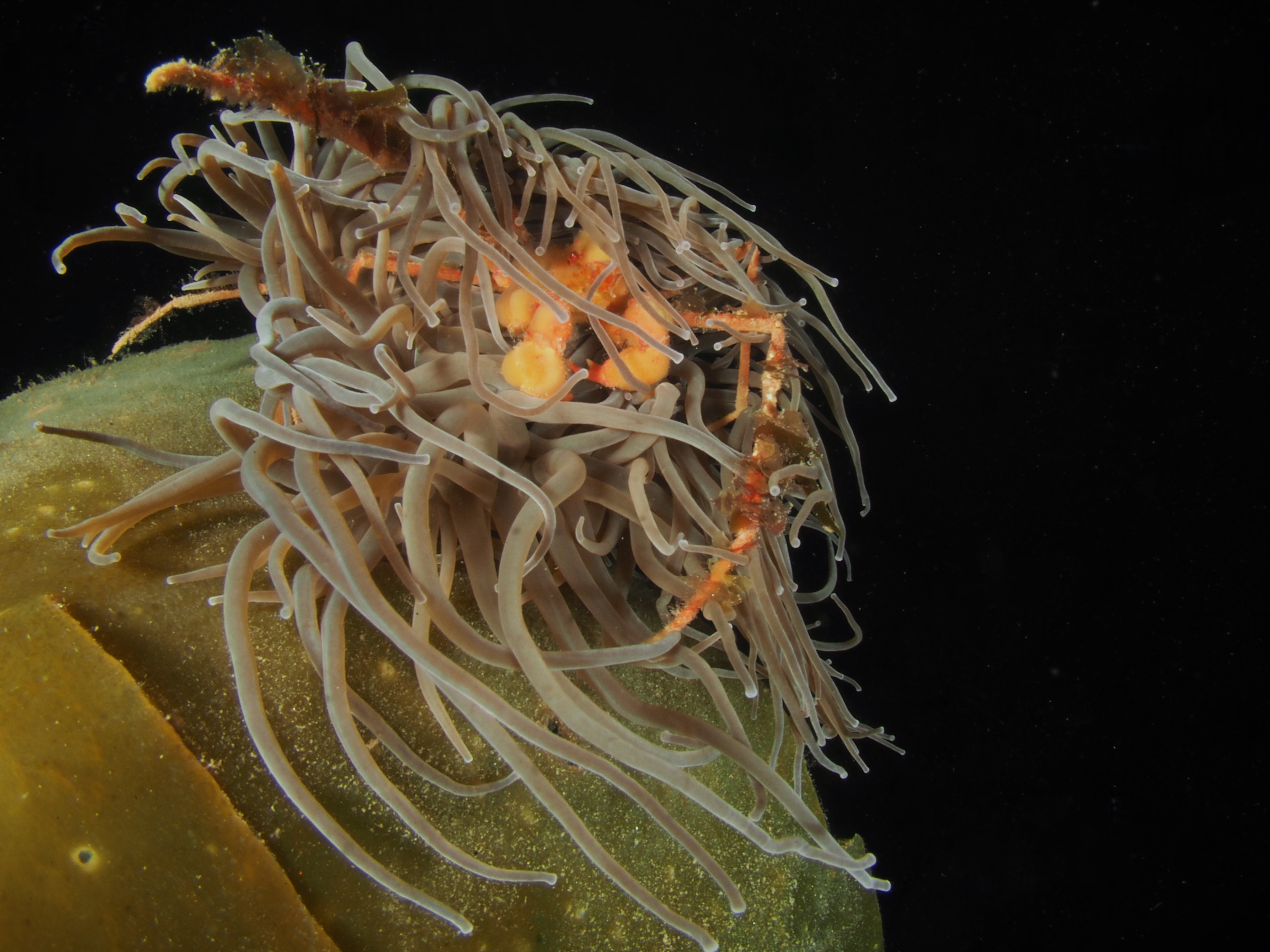
I recently posted on the Crustaceans inhabiting my local shore dive site Silver Steps (see here), but left out one species: the Scorpion Spider Crab (Inachus spp.), which deserves a post on its own. I have blogged about this crab before (see here), specifically in the context of ‘macro-wide angle’ for which this species, perched on- or under a snakelocks anemone, is ideally suited. My previous efforts were based on an affordable inon wetlens, but I have since bought a super-duper nauticam lens. Although very good at macro-wide angle, this lens lets in very little light, which basically gives you three options: 1) lie on some bright white coral sand in the Maldives and shoot upwards to the sun at midday (so actually not really an option), 2) increasingly compromise the exposure triangle to keep a blueish/greenish background (higher ISO>more noise, lower shutterspeed>more camera shake, greater aperture>smaller depth of field), or 3) keep all settings in a ‘normal’ range, resulting in a foreground lit up by strobes on maximum output, but a black background (only if you are shooting critters in rock crevices you can get both fore- and background well-exposed, as strobe light has something to bounce back from – see for some examples the Crustaceans post). I quite like the clean black background and dislike bluer, but grainier images, so have mainly tried option 3. Hopefully, next year in summer I can try going for some blue background shots. Sorry if this blog is occasionally turning into a photography borefest by the way, but I have been really getting into that stuff! ;-). Anyway, these scorpion spider crab pics have turned out quite nicely.
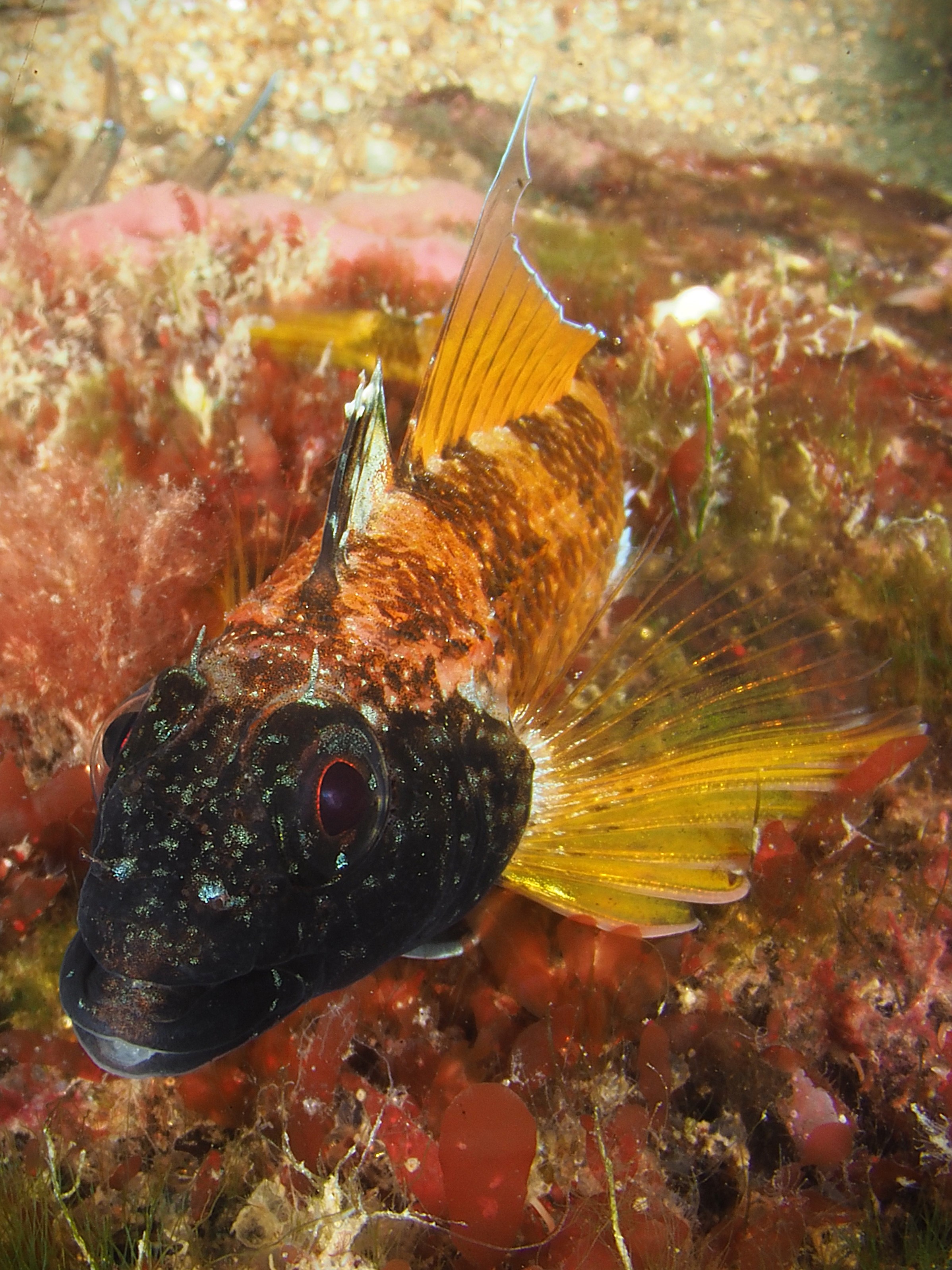
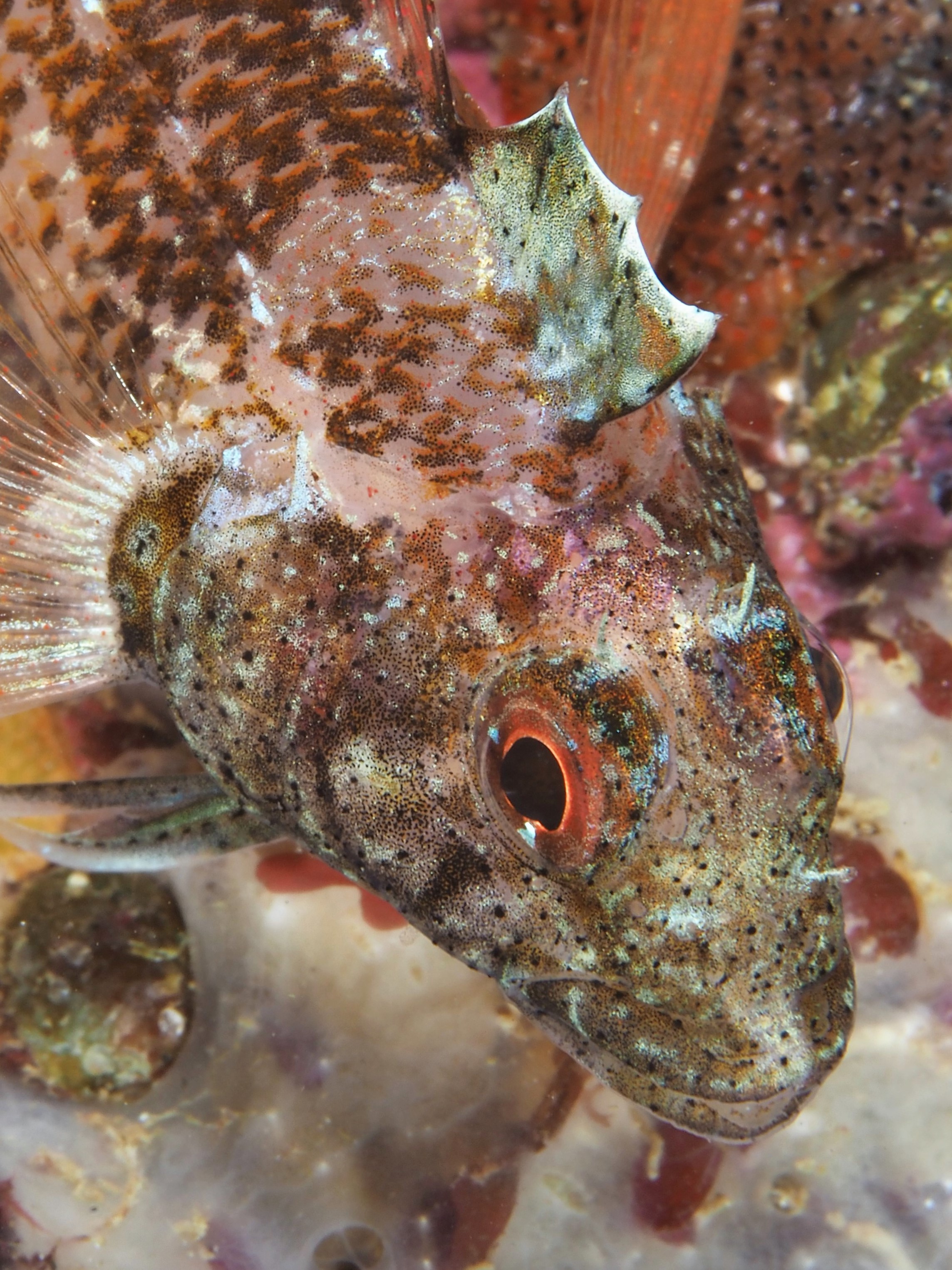
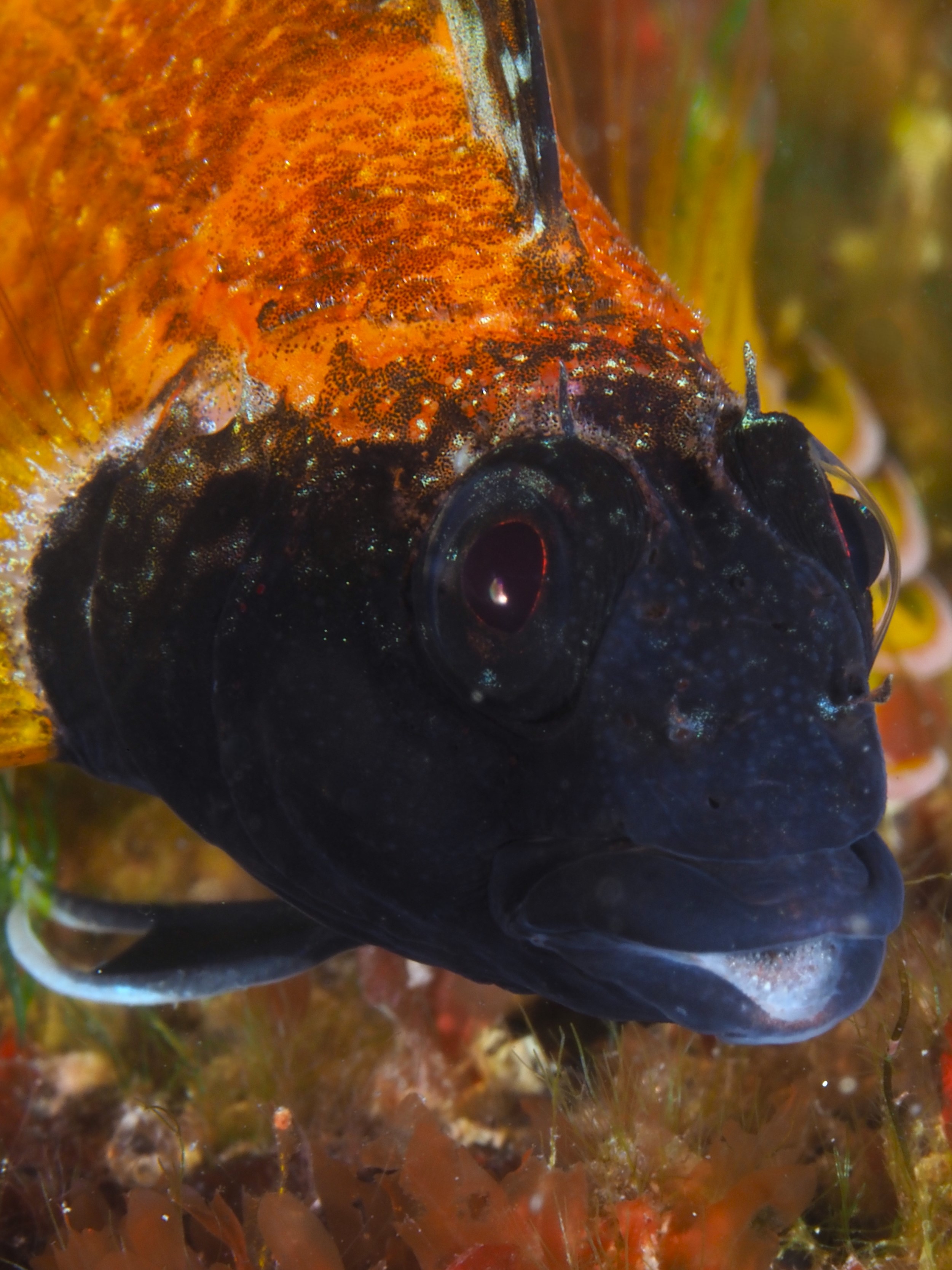
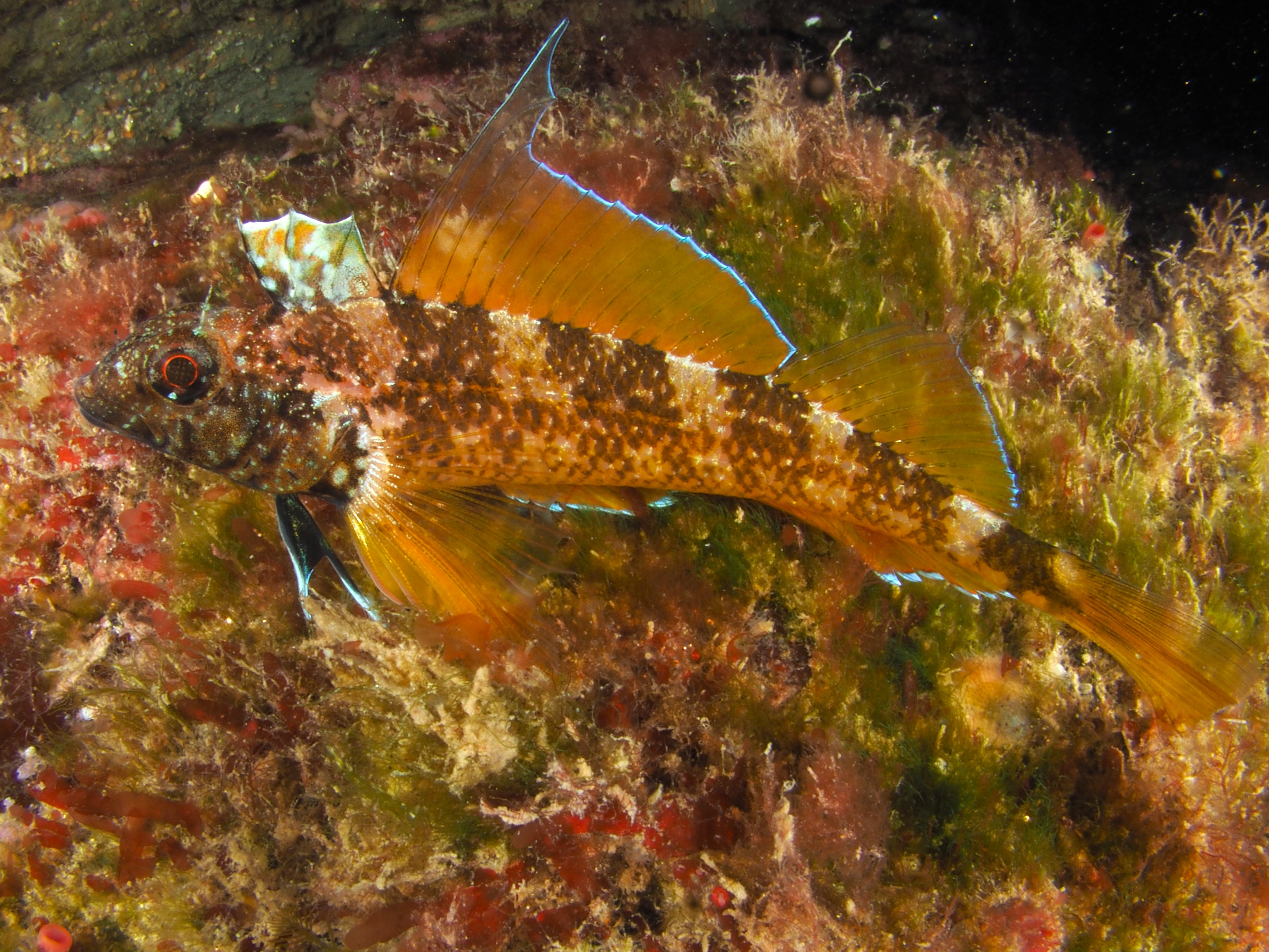
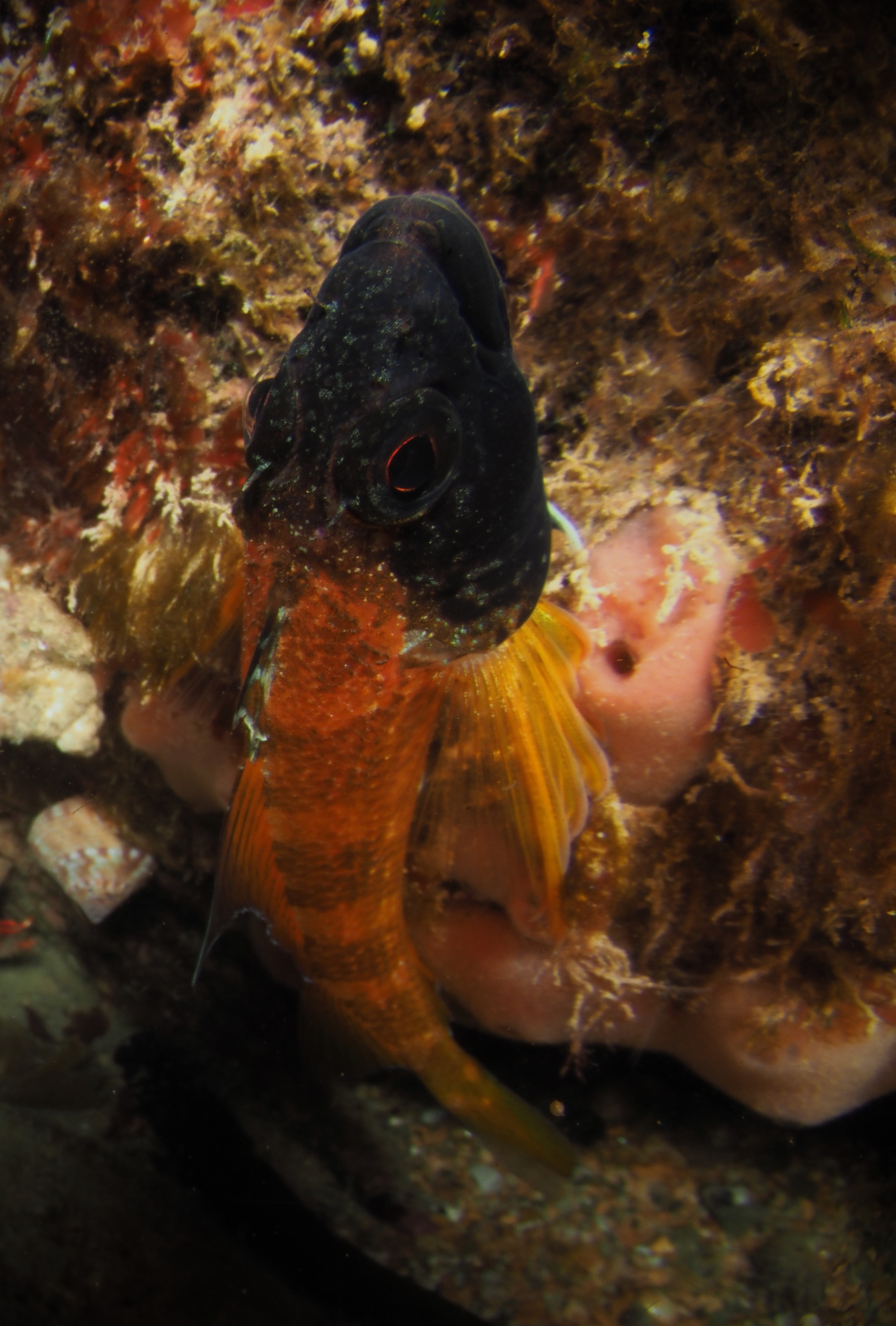
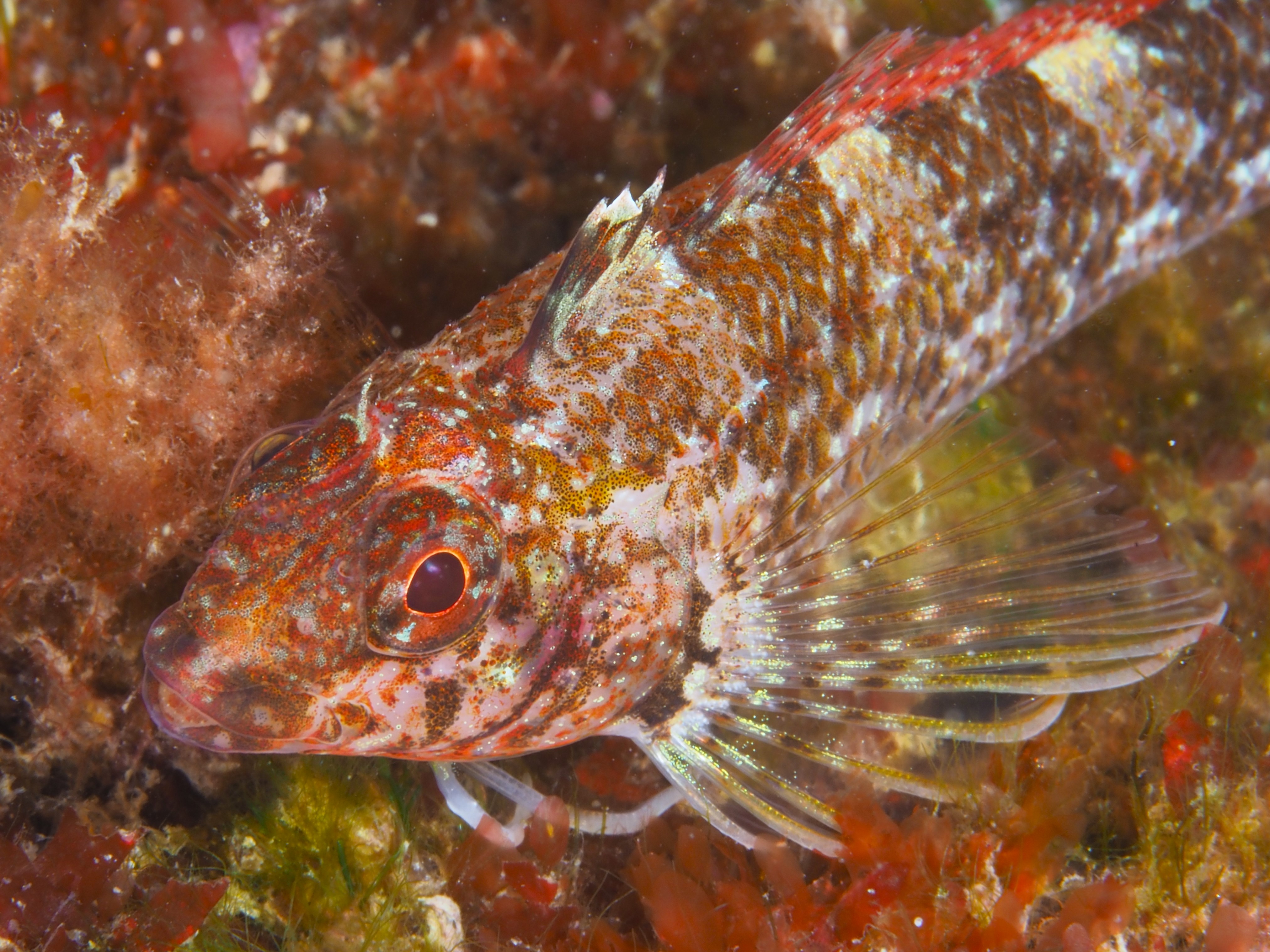
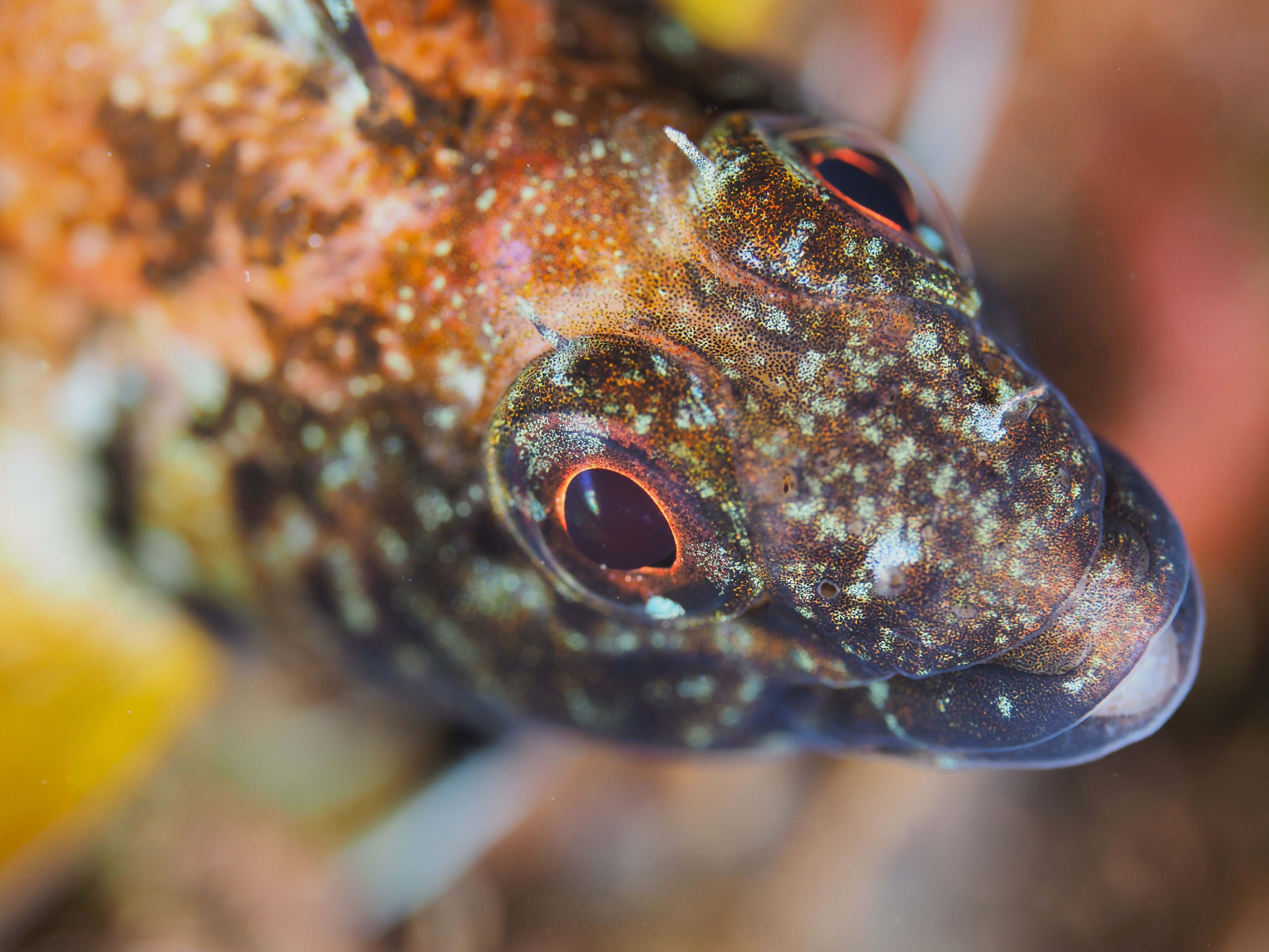
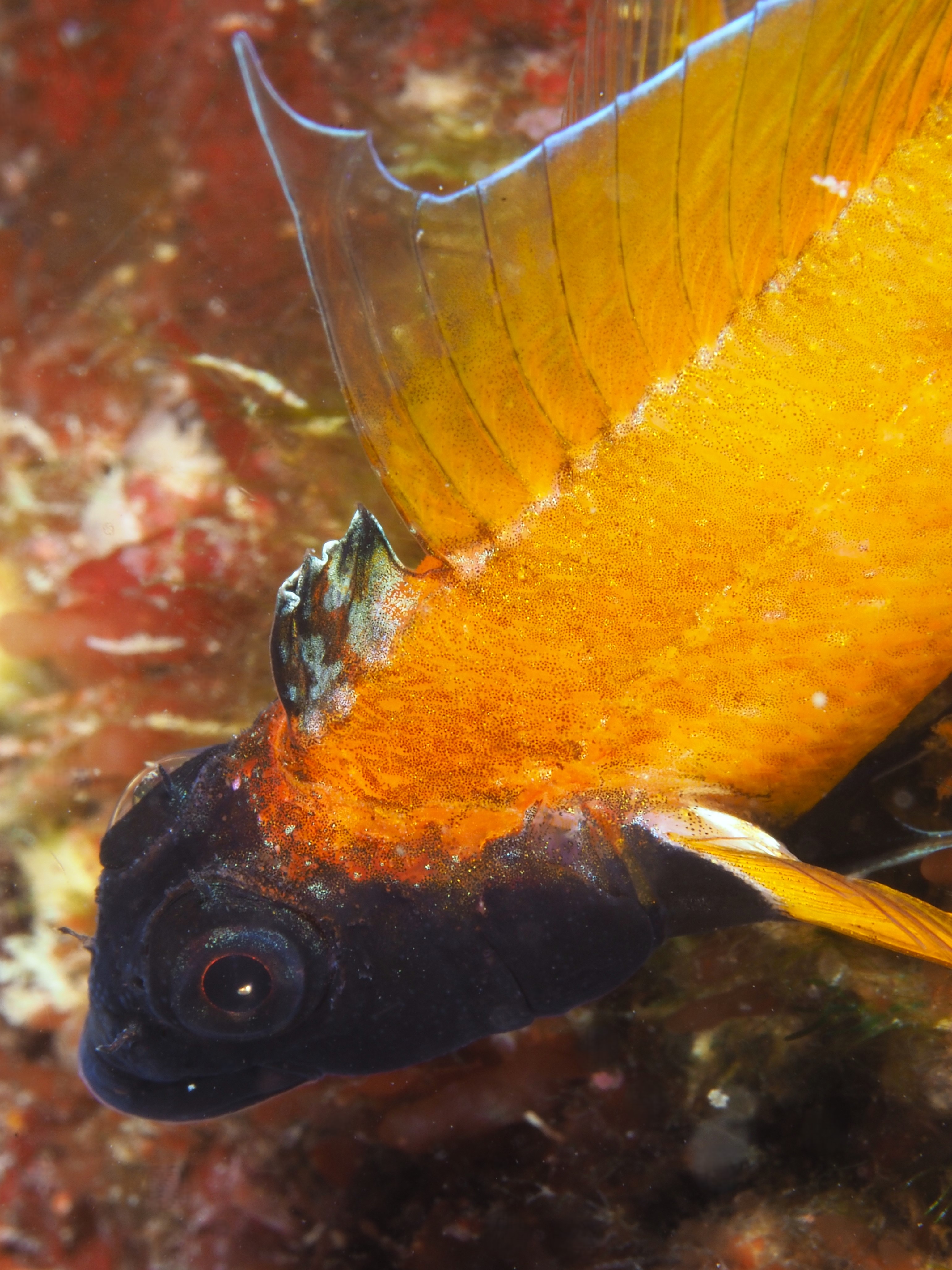
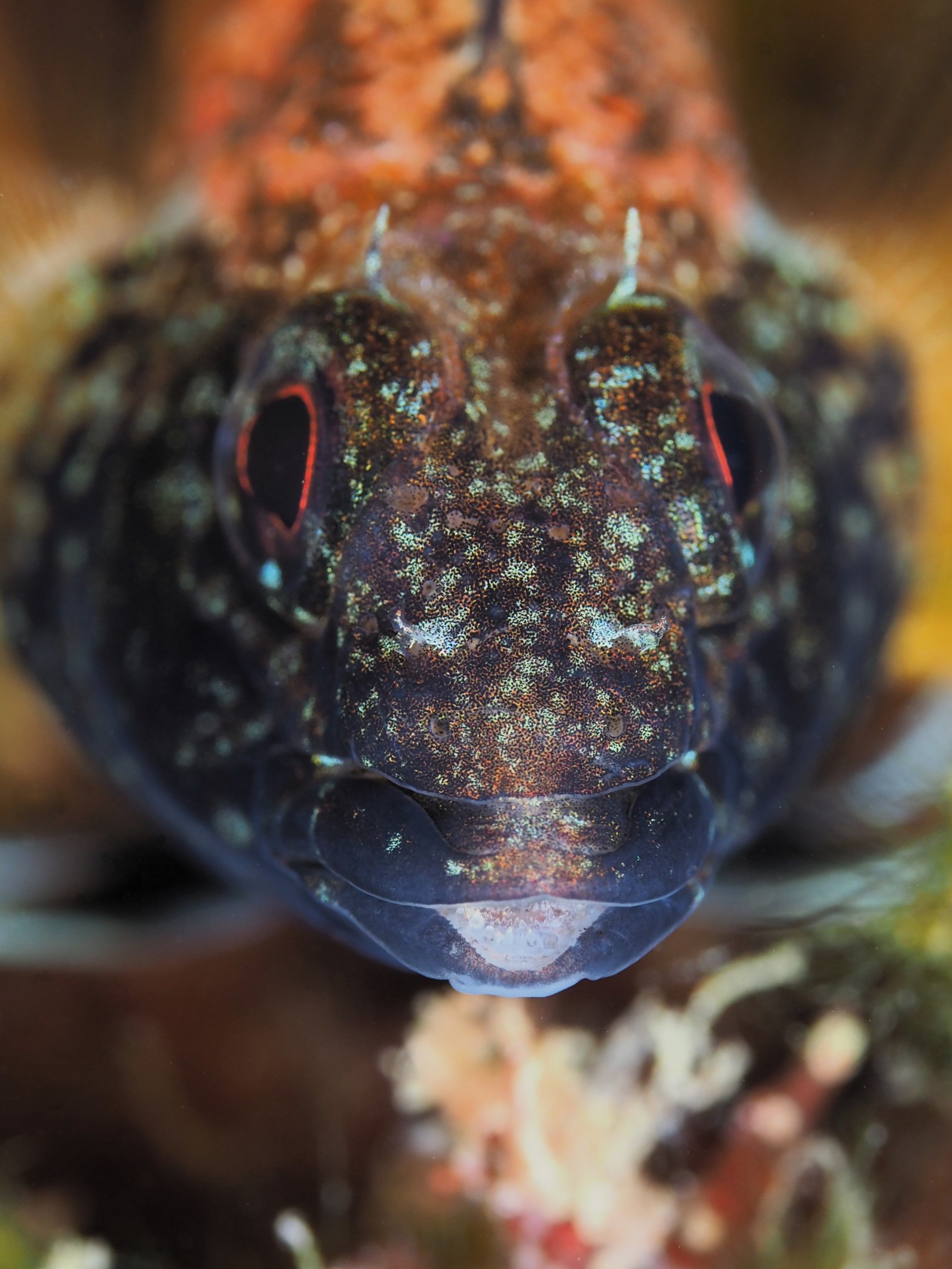
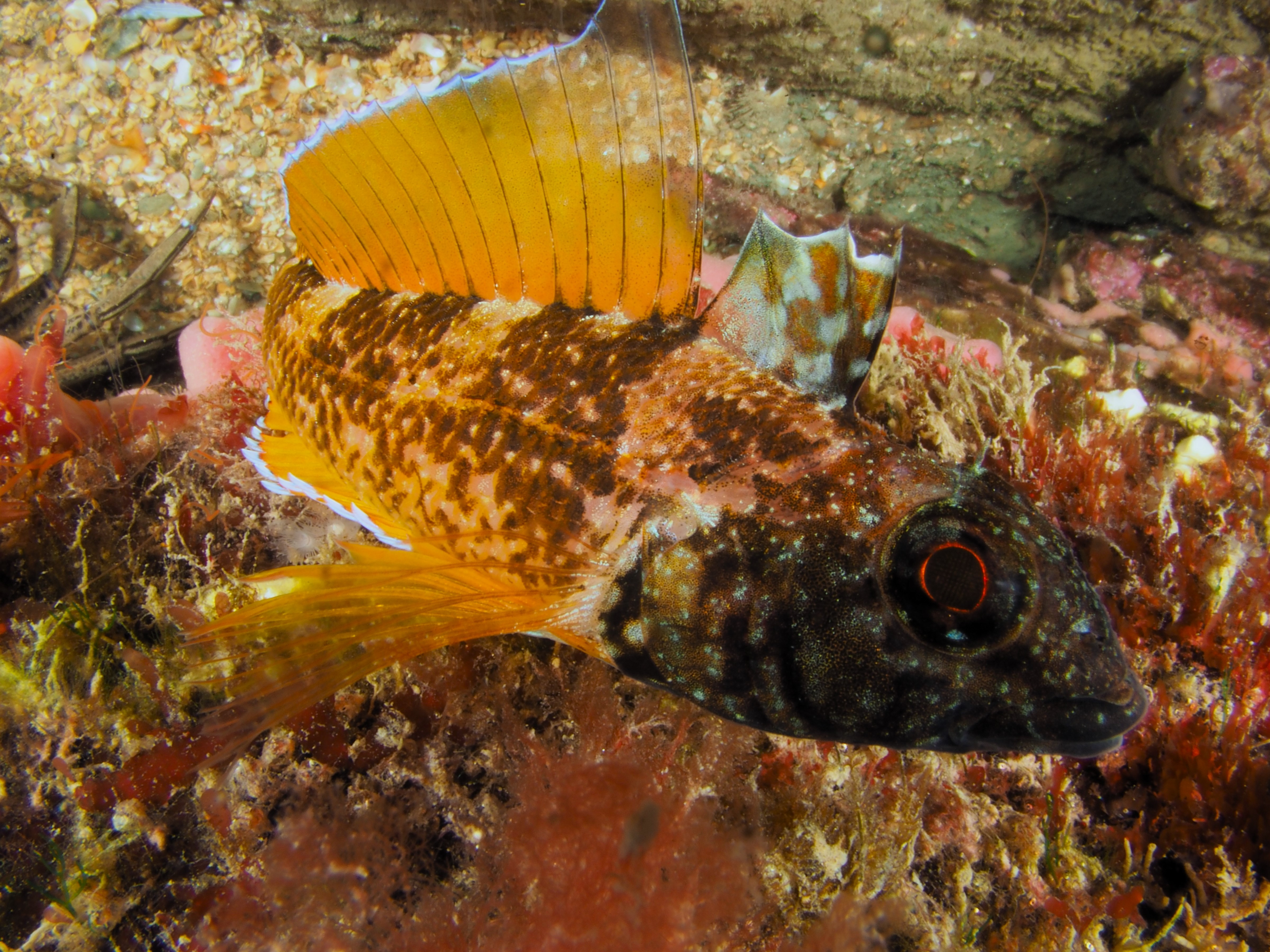
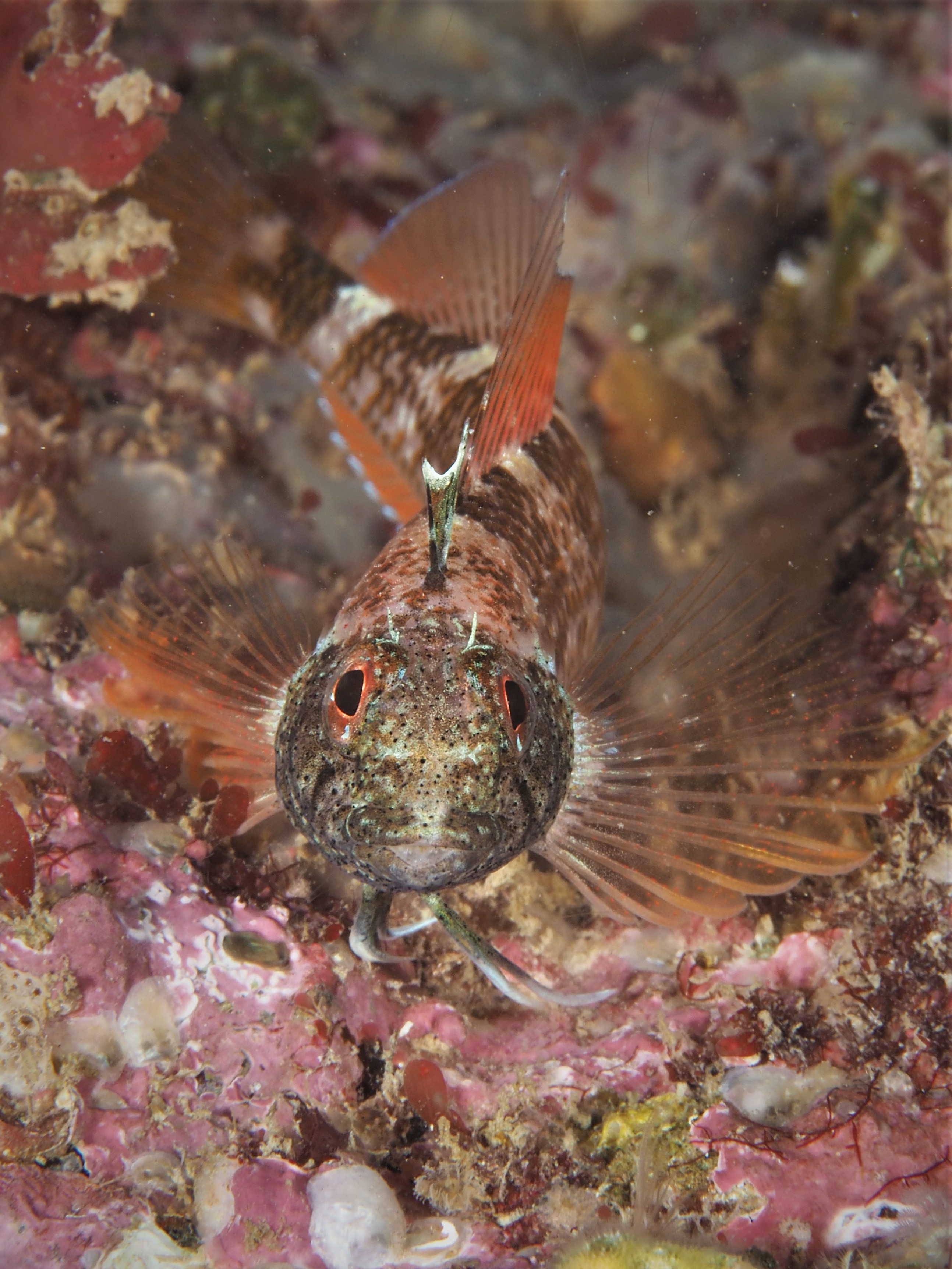
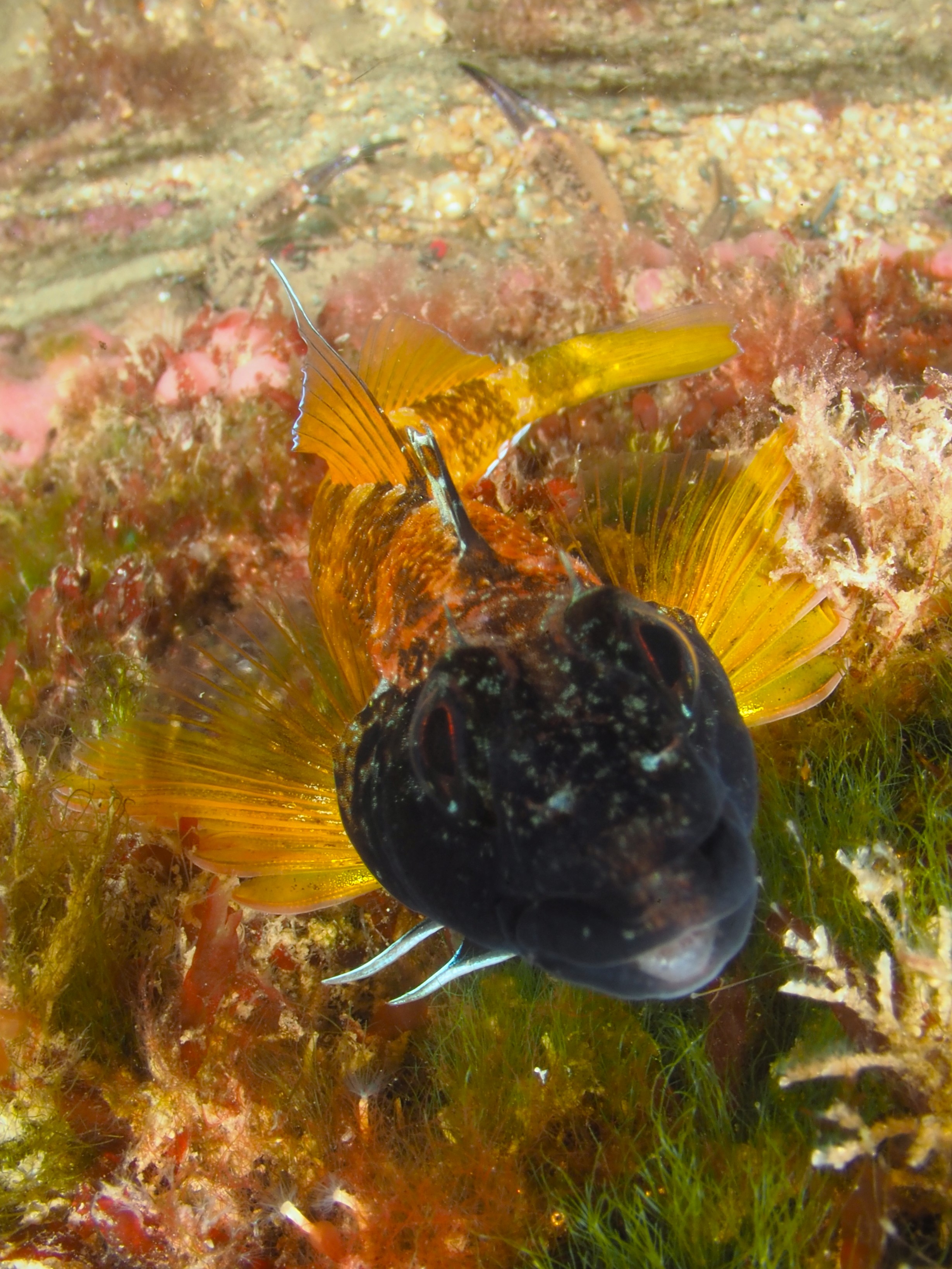
Dear reader, it has been a while! With the weather taking a turn for the worse, I thought it would be high time to start updating the blog again. I have taken more photos this year than ever before, and actually have dived my local shore site “Silver Steps” in Falmouth ‘to death’, so now have plenty of material. I’d thought I start with a post on one of my favourite fish, the Black-faced Blenny (Tripterygion delaisi). This is a beautiful little fish (a triple-fin blenny, not a ‘true’ blenny) that lives under rock overhangs, usually perched upside down. Breeding males are bright yellow with a black head and an electric blue edged dorsal fin, while females and males outside of the breeding season have a mottled brown-white coloration (which is equally beautiful testified by the pic on the top right). These fish (especially the females) are skittish and also require a bit of contortion to photograph under the overhangs but it is more than worth it! Below a photo-dump of fish shots taken with my 60mm macro lens and a combination of that lens and a superduper macro-wide-angle wetlens (details of which I am bound to bore you with in coming posts!).
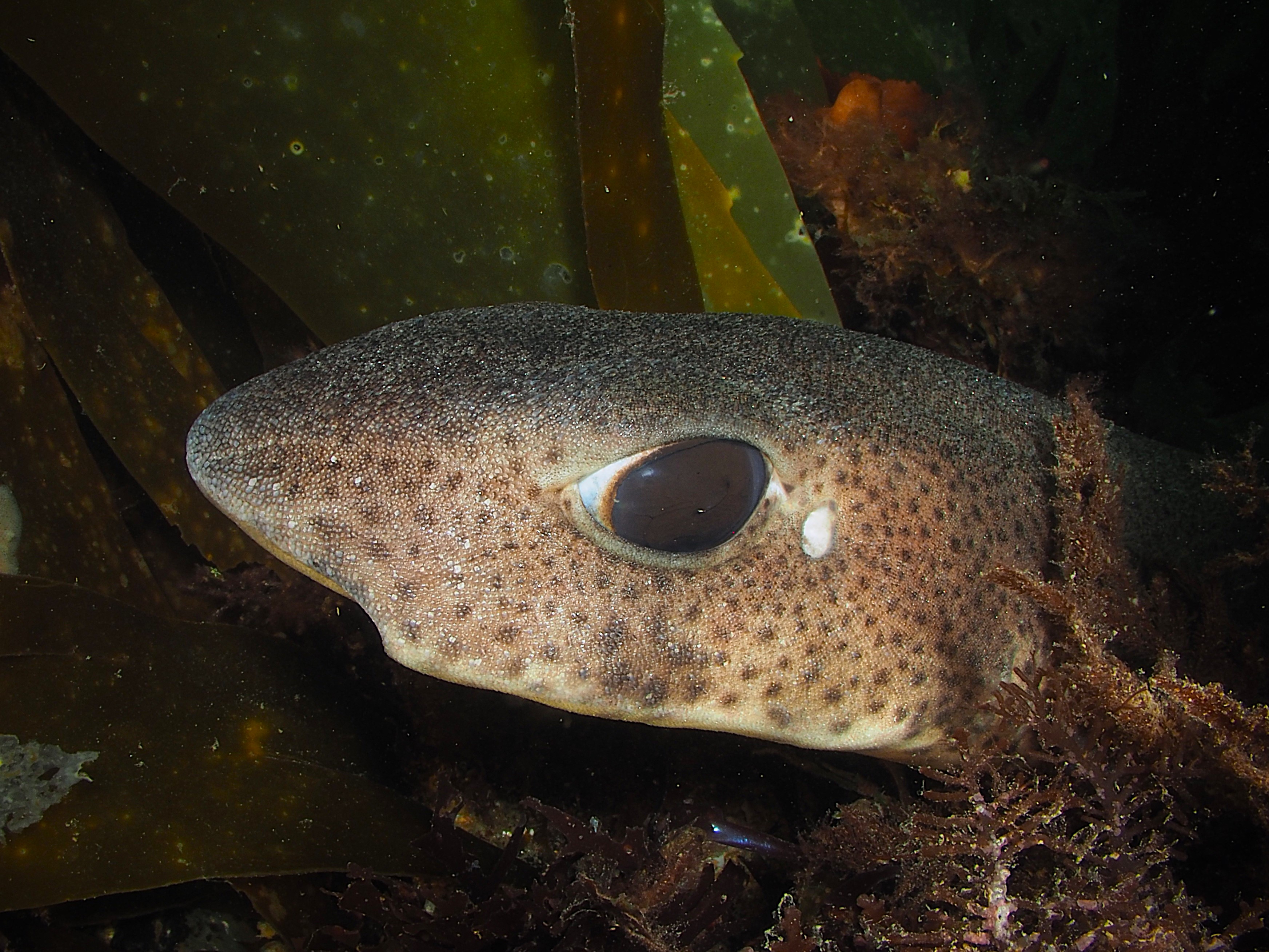
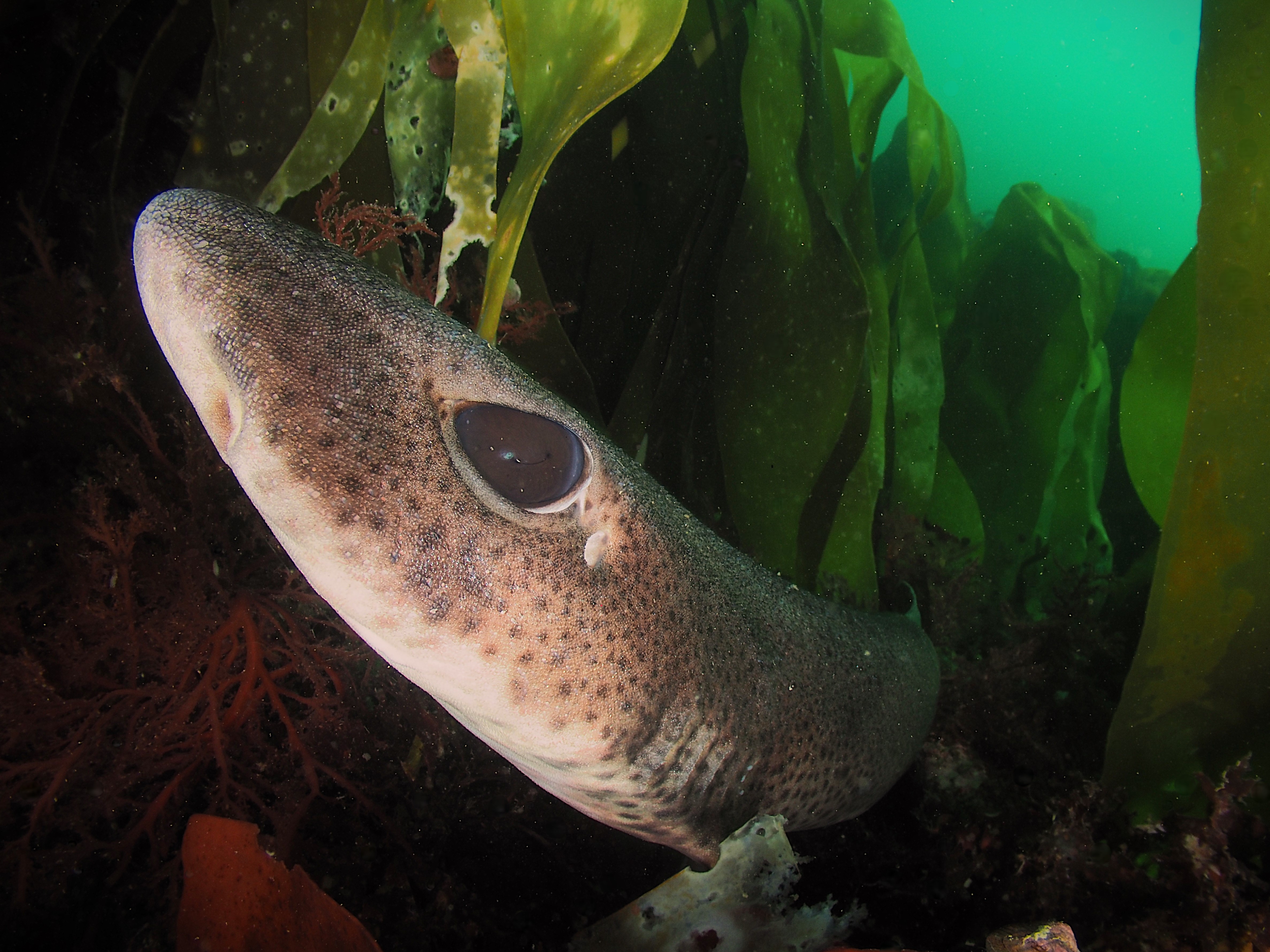
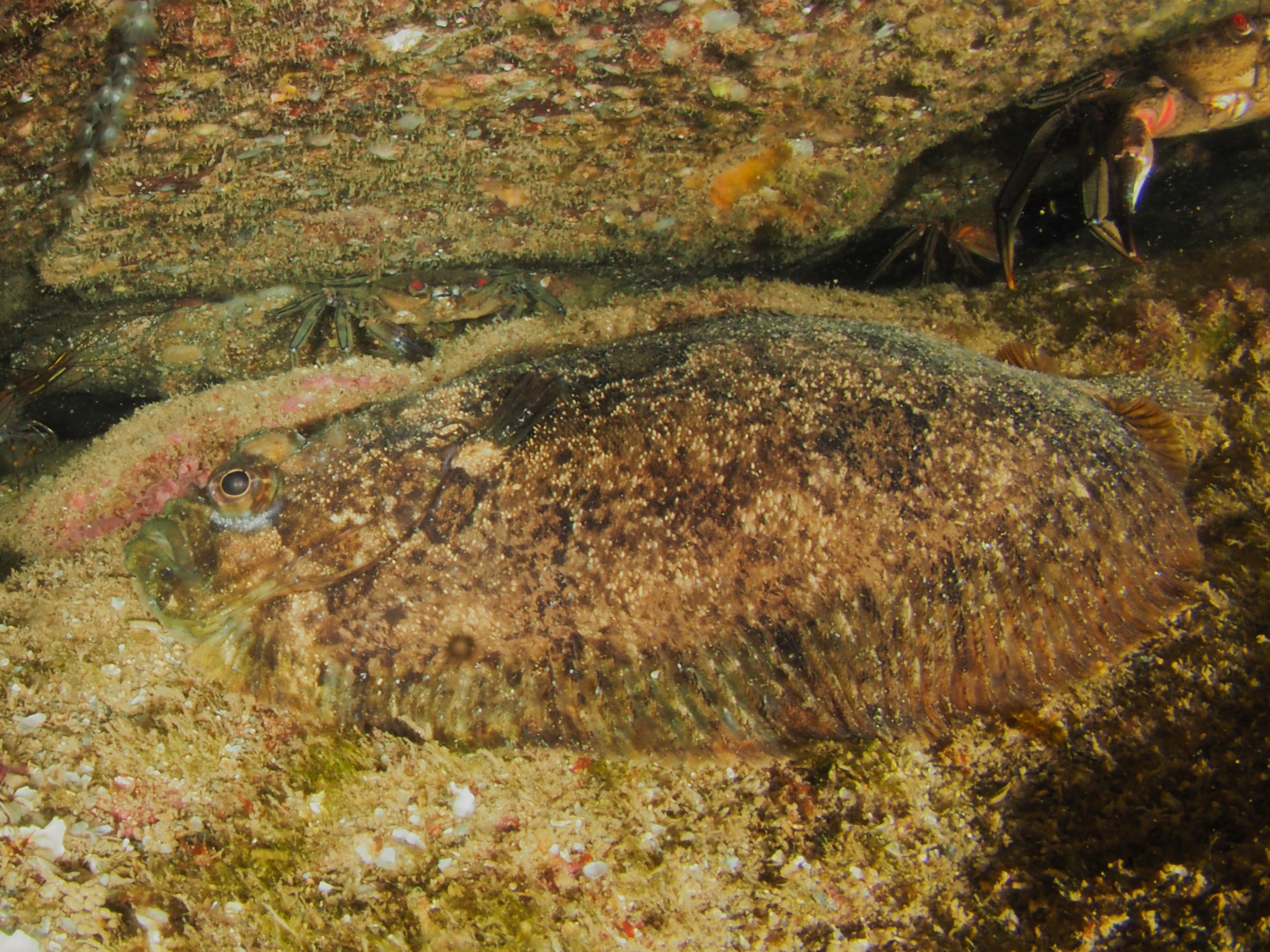
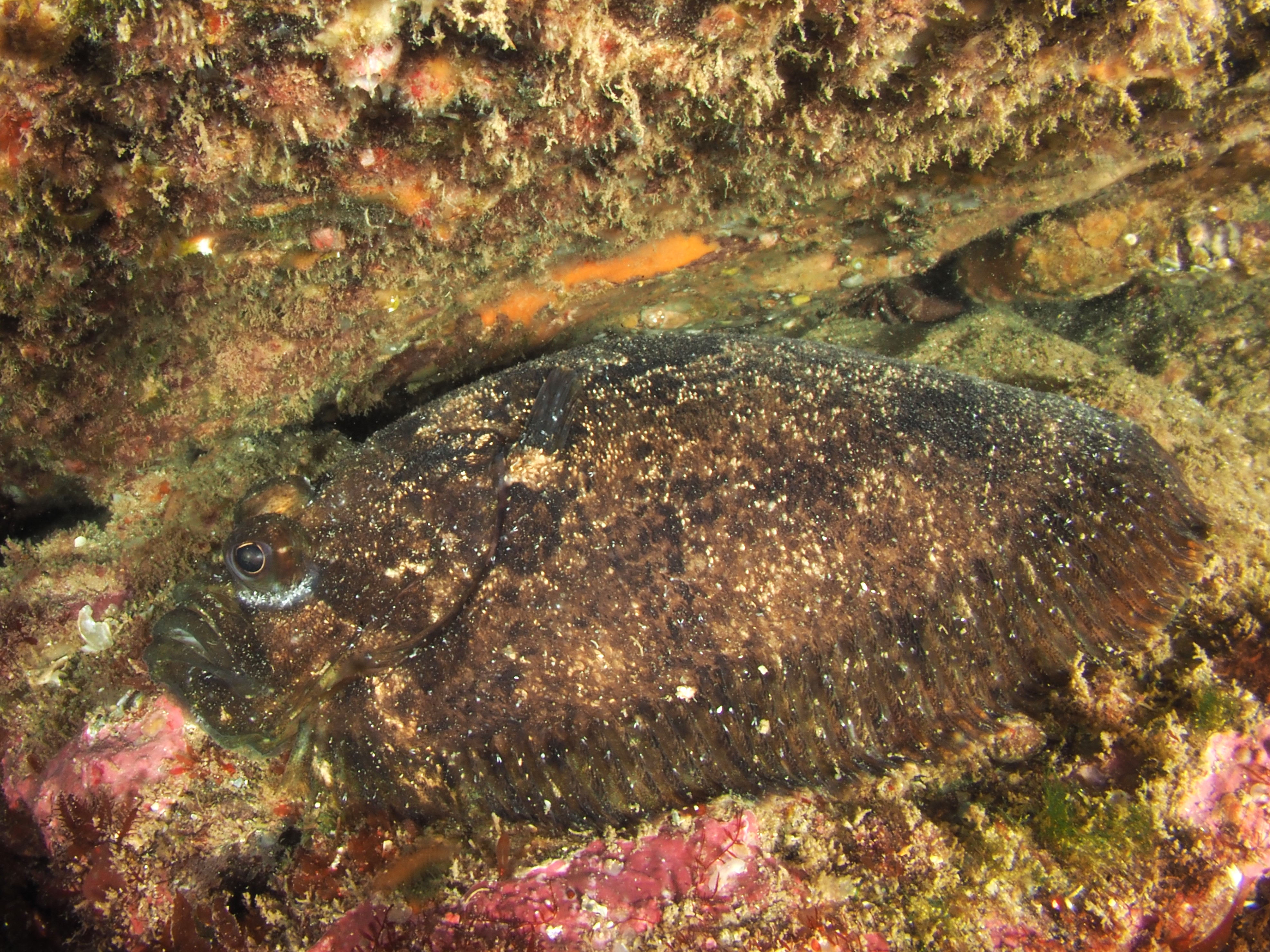

 An Bollenessor