miniature species

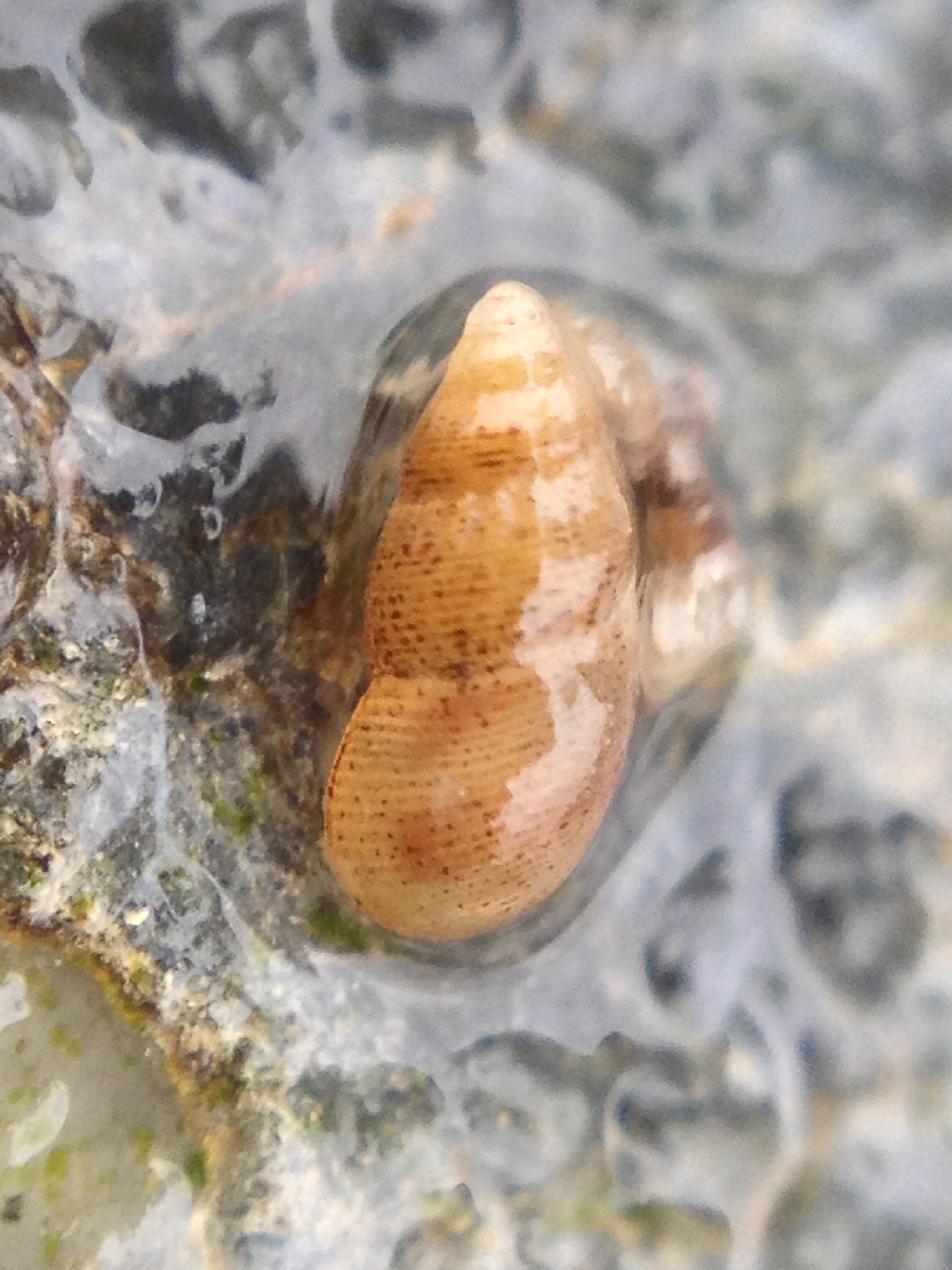
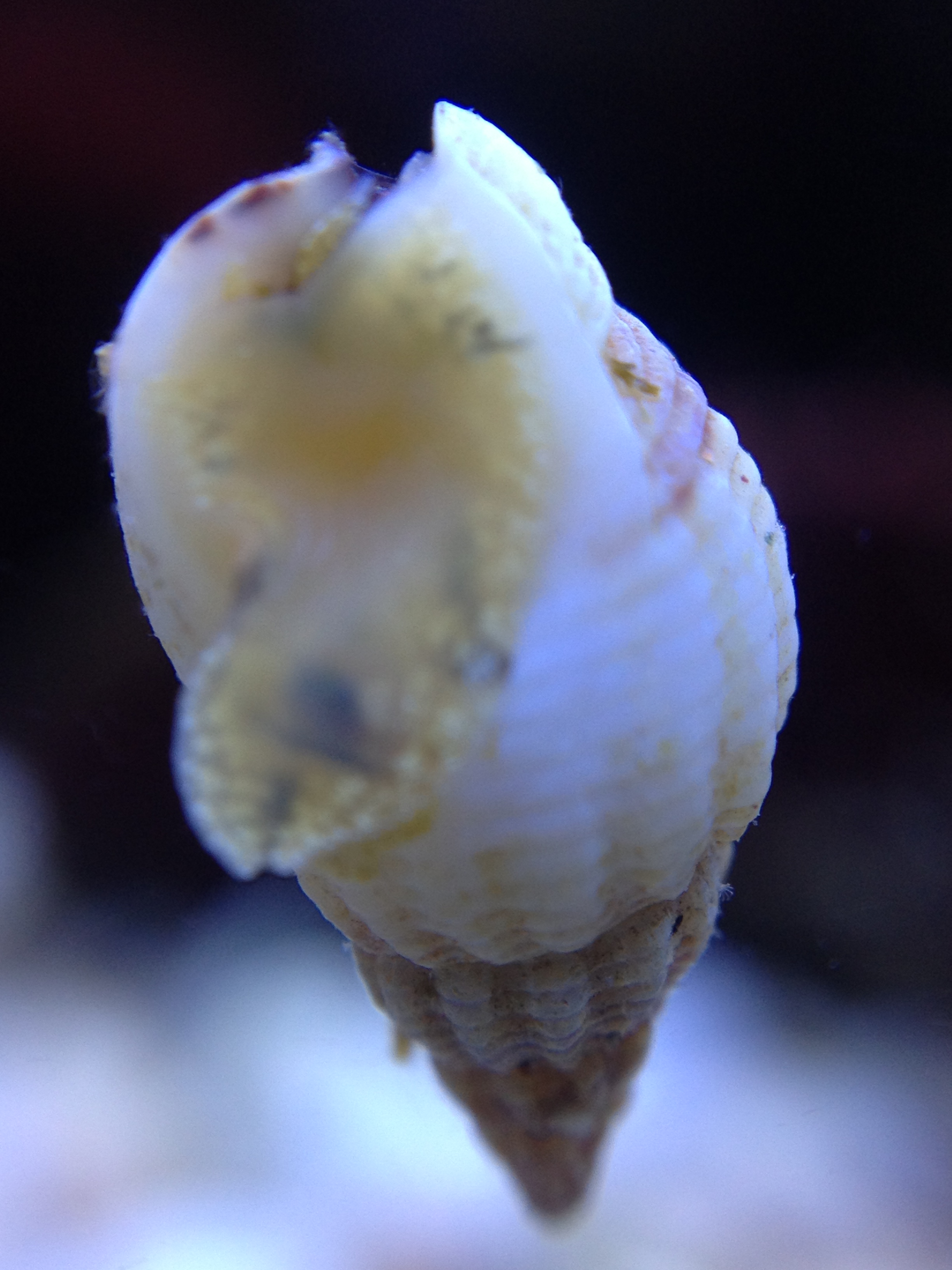
I usually head down straight to the lowest reaches of the shore when rock pooling, but when there is a neap tide and a lot of inshore wind as there was this weekend, you have to make do with turning rocks higher up the shore. Although biodiversity is lower, there are some species that are only found there (see for instance this recent post) and so it is actually nice to have a look there for a change. The very first rock turned over actually had a couple of interesting inhabitants underneath it. Another lifer, the tiny gastropod mollusc Onoba semicostata (surrounded by a couple of even tinier Rissoa parva), very quickly identified by members from the British Marine Mollusca facebook group:

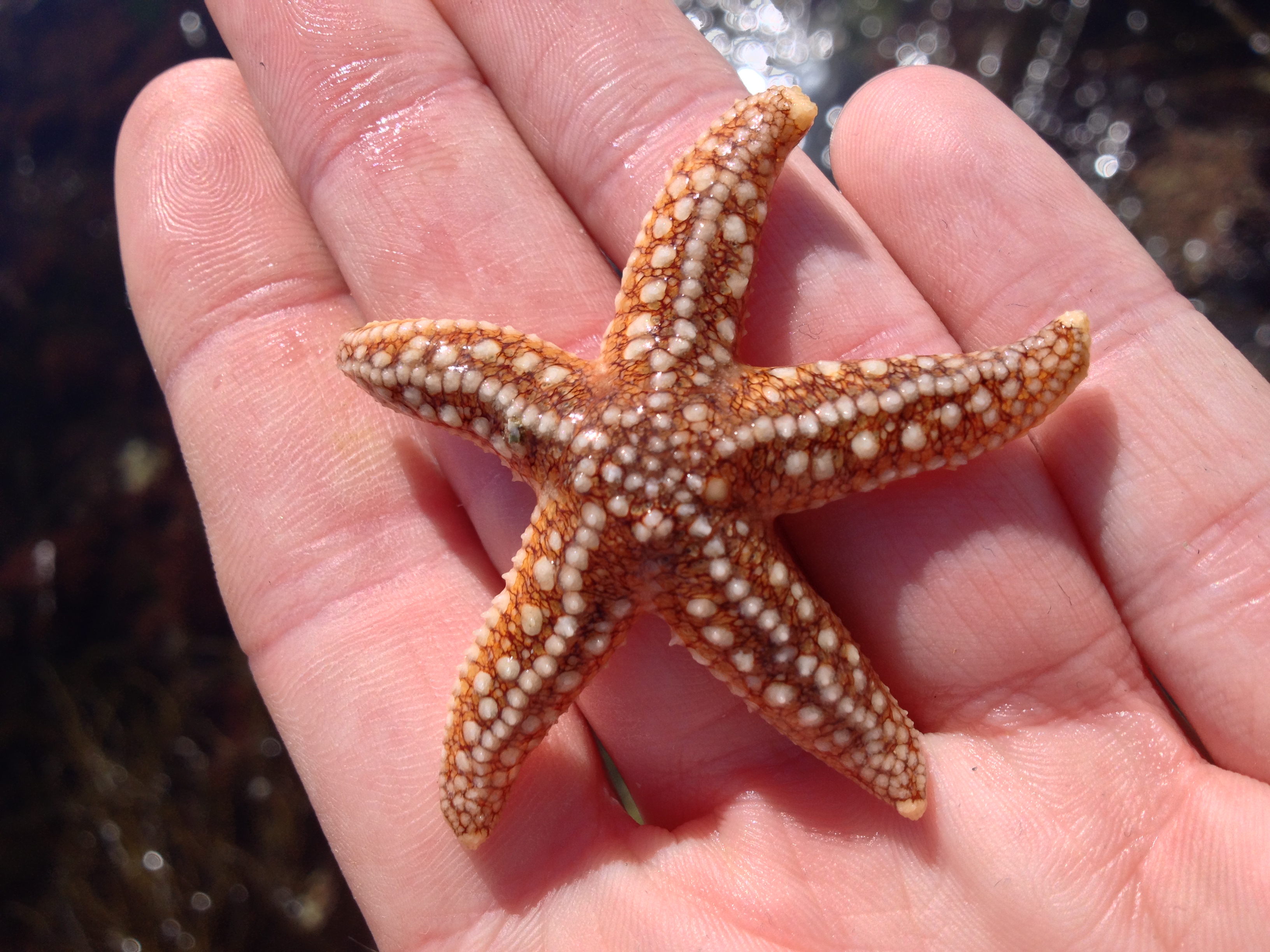
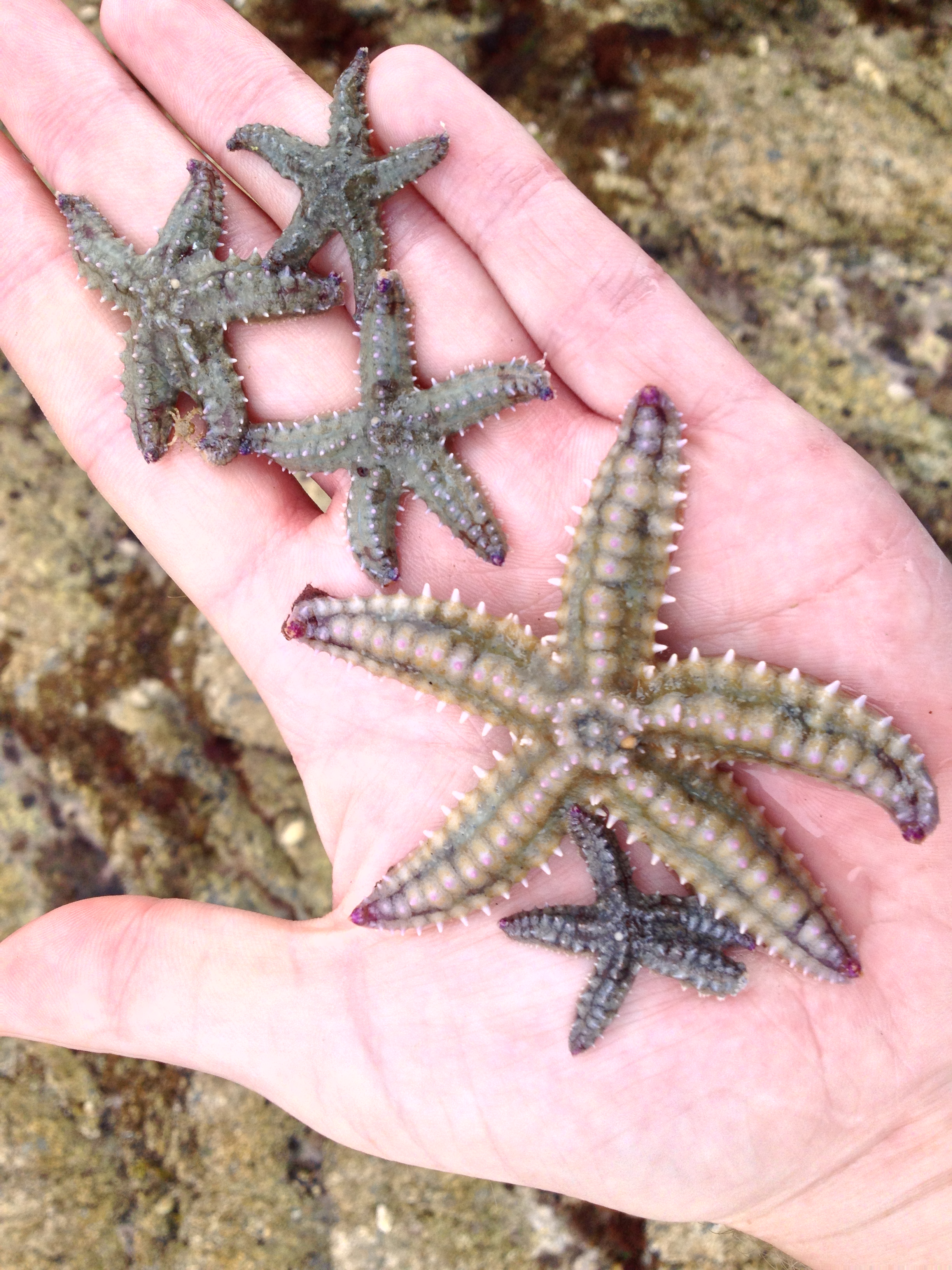
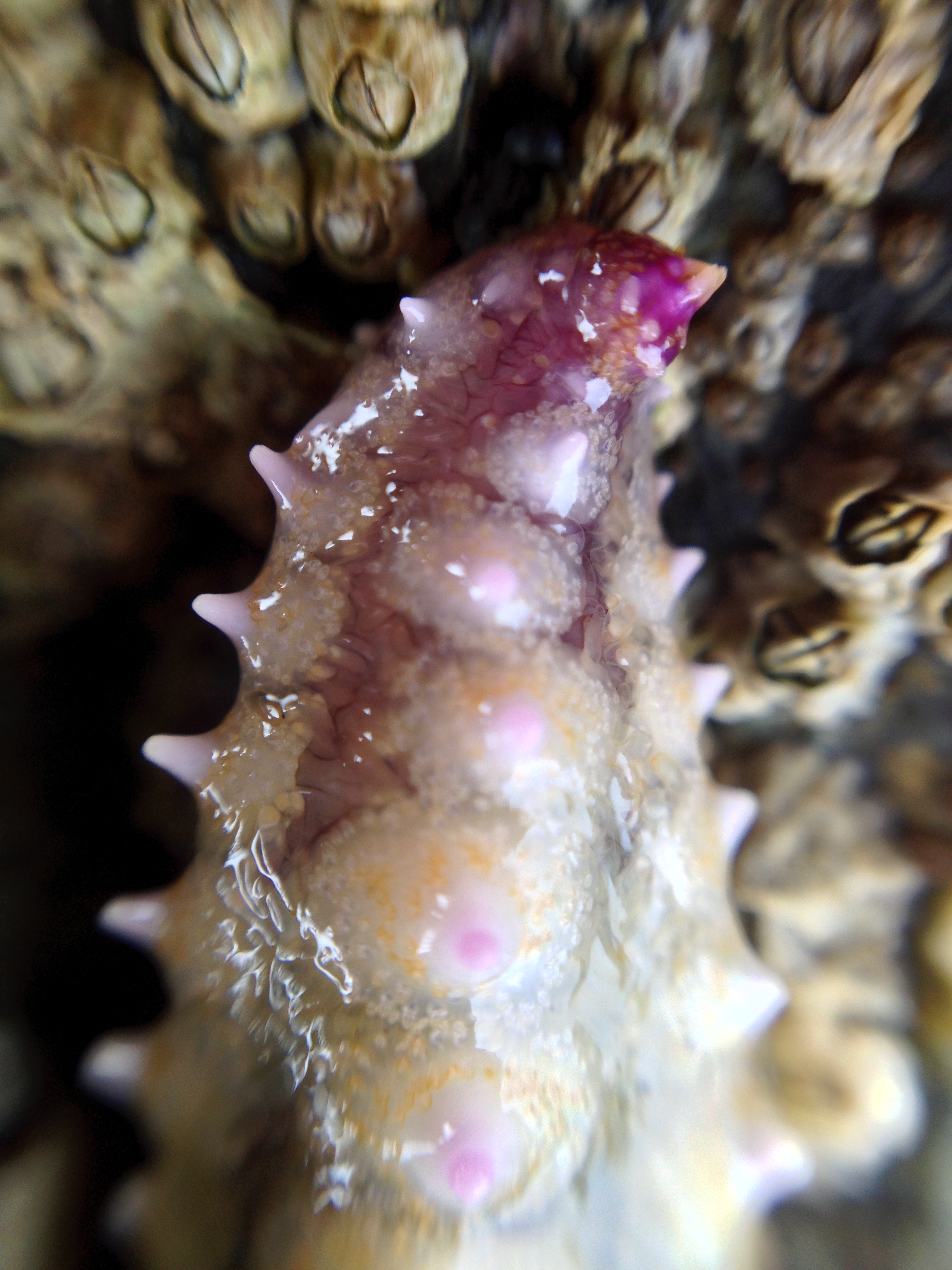
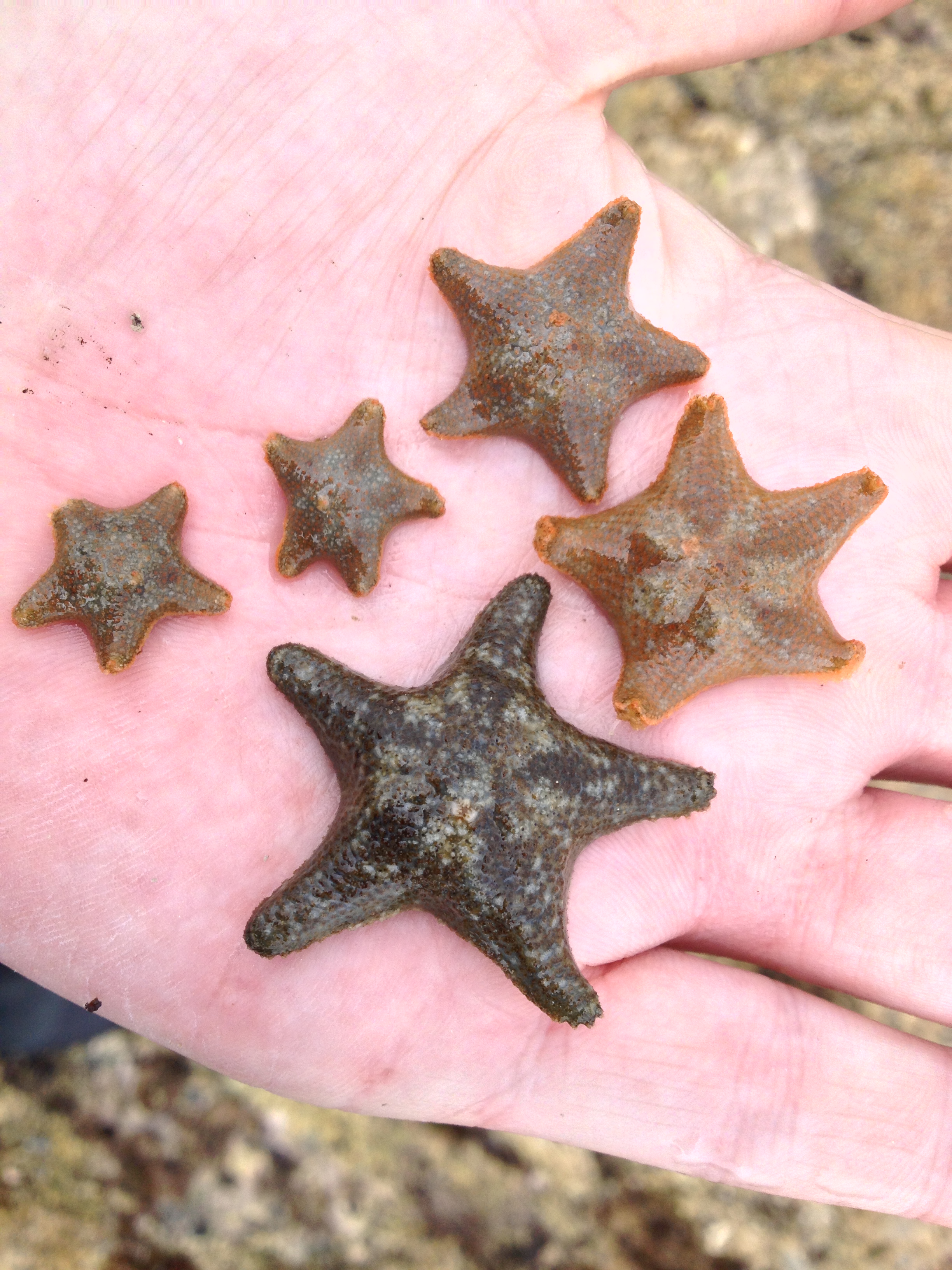
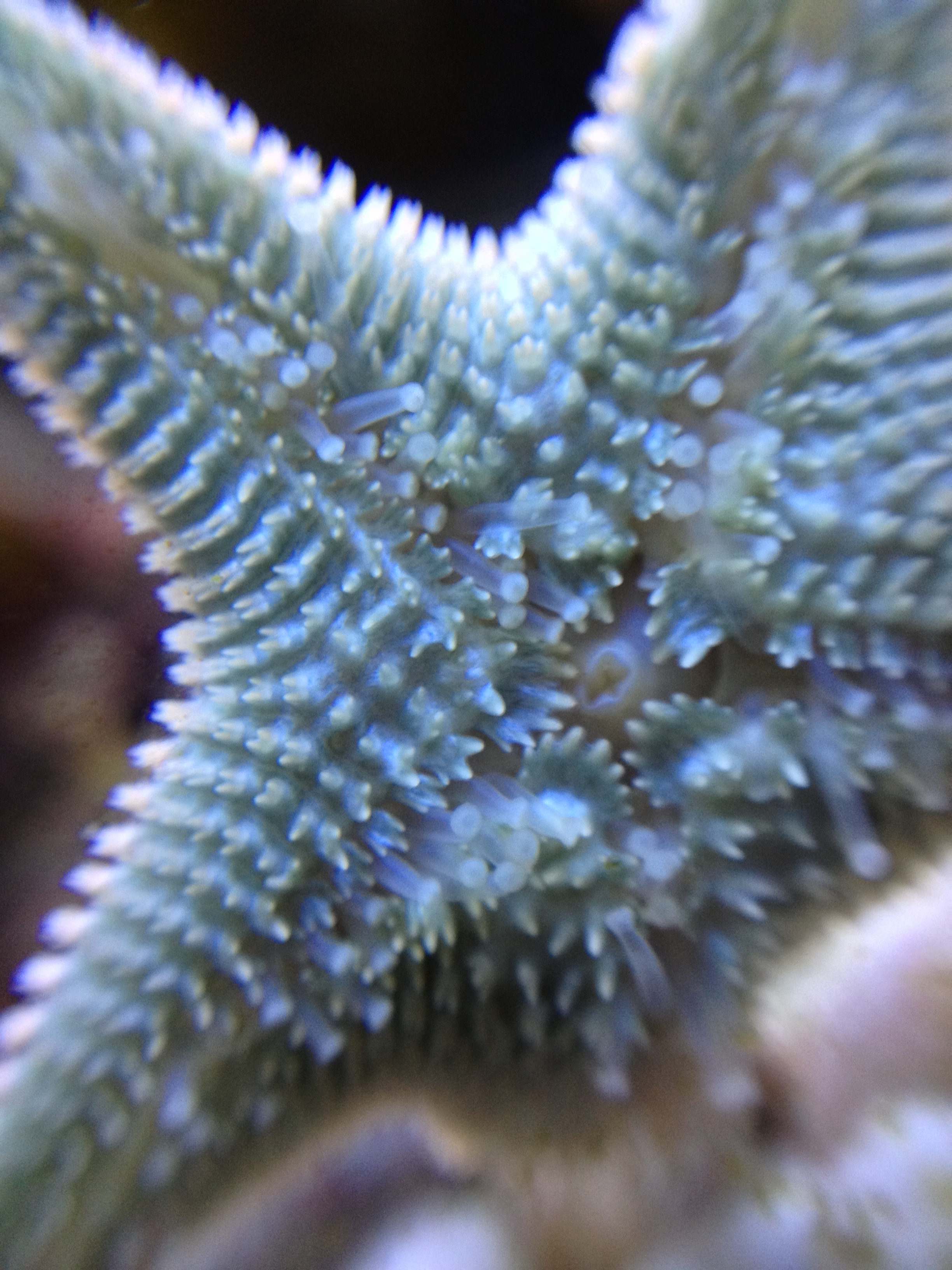
IMG_8352The same rock had a number of the tiny (< 1 cm) Cushion star species Asterina phylactica on it as well. It is prettier than the common Cushion star Asterina gibbosa (one of my favourite aquarium species), but perhaps a bit too small to be an option for the tank.

IMG_8354

IMG_8375 - Copy

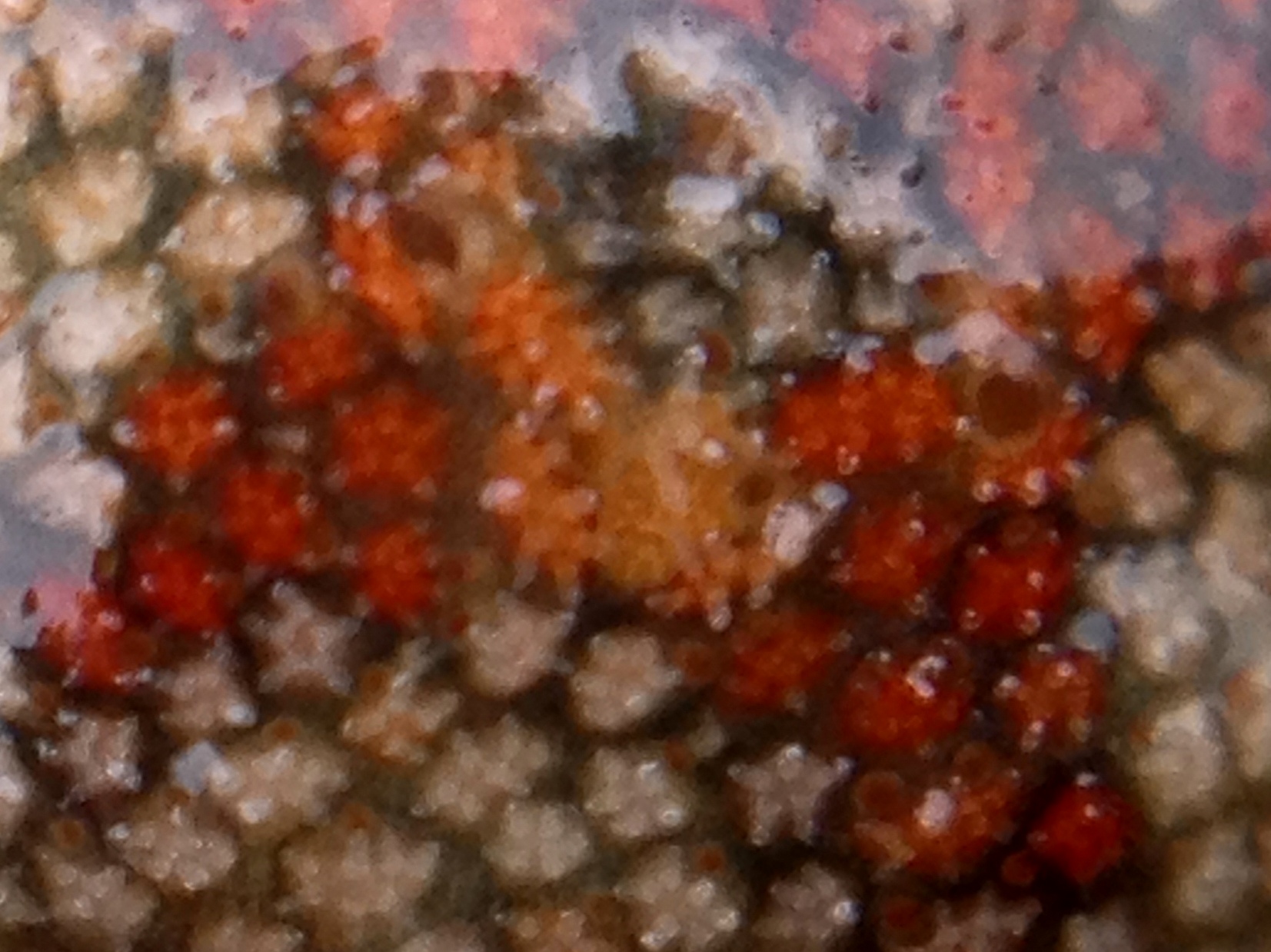
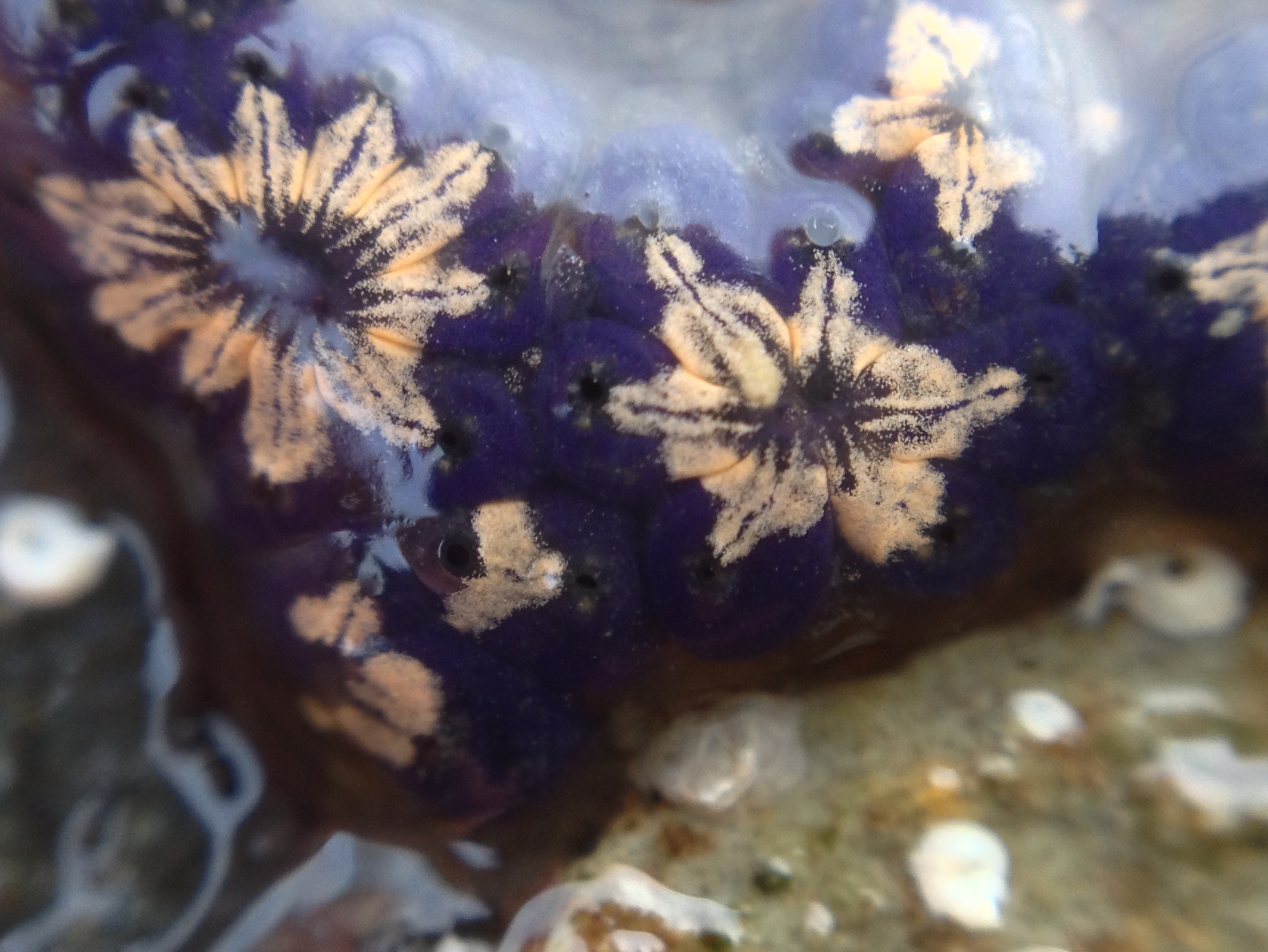
One other beautiful species, the colonial tunicate Botryllus schlosseri, this is a nice blue/purple one:

IMG_8381

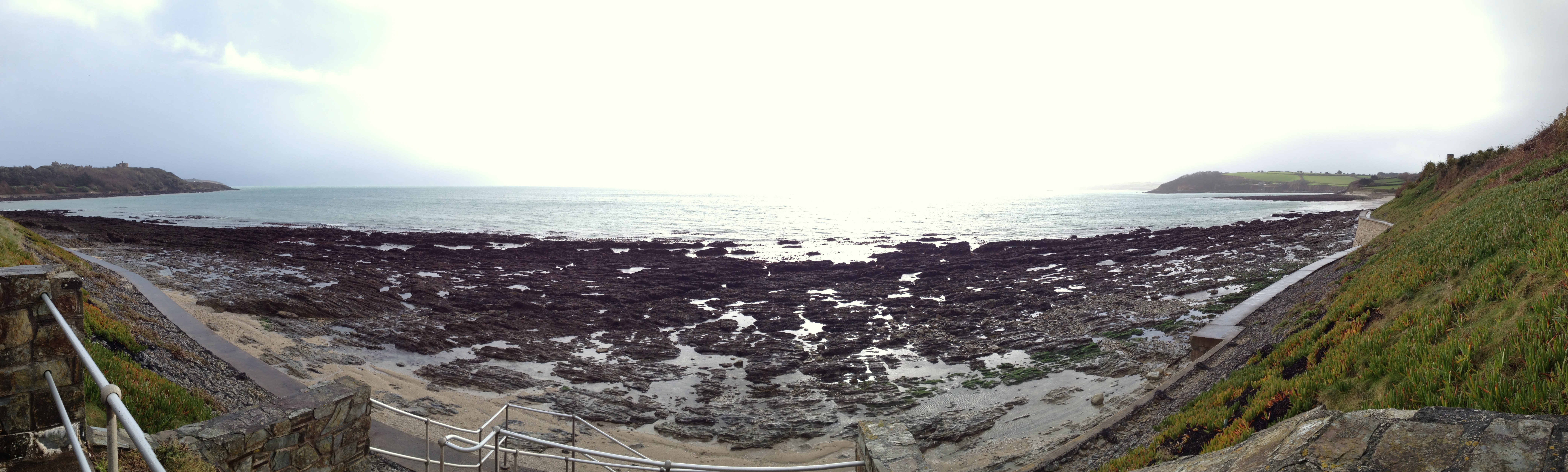
a very low tide at Castle beach

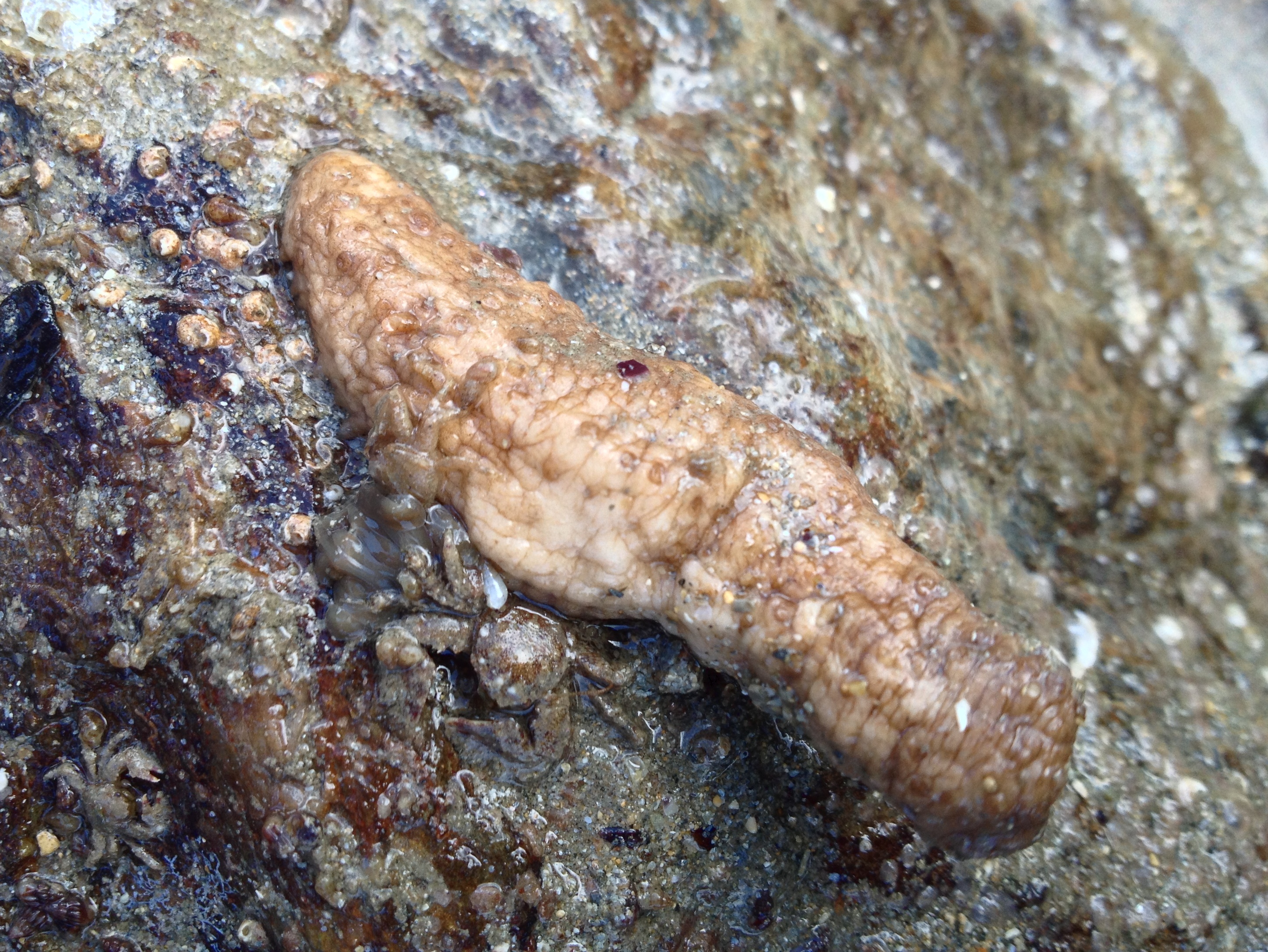
IMG_7884There were exceptionally low tides this weekend so I was quite stoked to get out and find some new species in what is normally the subtidal. It was raining and even hailing quite a bit but we were on a mission! Fortunately, the sun came out later and my jeans could dry up. Sea urchins are not common in the rock pools that are usually accessible at low tide, but they are quite common a little deeper. The same goes for Sea cucumbers. These are hardly ever pretty but the following species is ugly even in holothurian terms. According to David Fenwick it is a Pawsonia saxicola (I have seen a prettier incarnation before):

IMG_7900I noticed a little gastropod which looked vaguely familiar on a Pawsonia when checking my pictures. I could identify it as a Eulimida species in my old Poppe and Goto ‘European Seashells’ book, which also mentioned that many species in this family parasitize echinoderms so that fitted. David Fenwick’s excellent site Aphotomarine has great pictures of pretty much all species occurring here in the Southwest, including a much better one of this Vitreolina philippi Melanella sp (identified through David’s correspondence with Jakov Prkic). David has also just launched a website dedicated to Stalked jellyfish: stauromedusa which looks amazing.

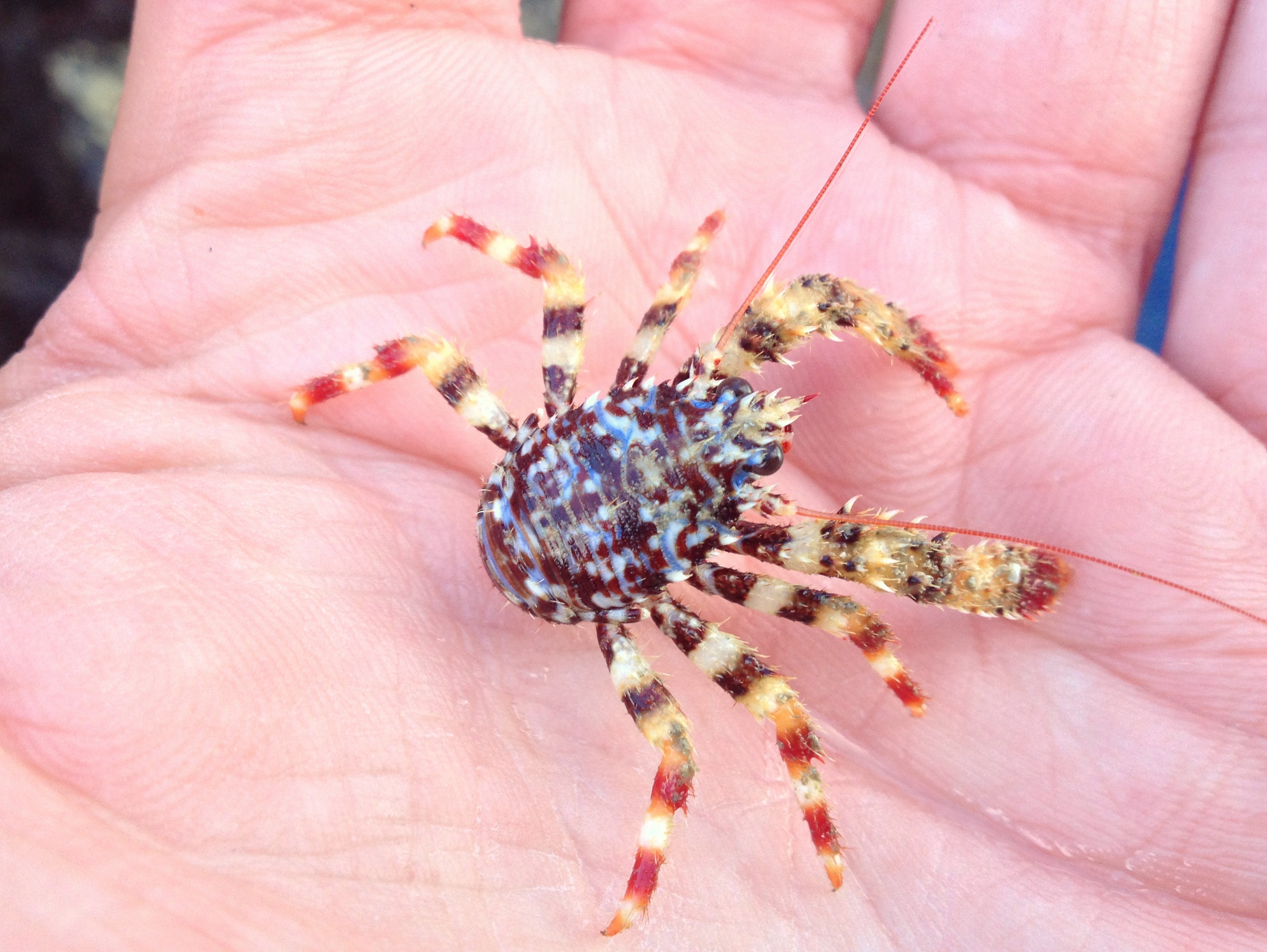
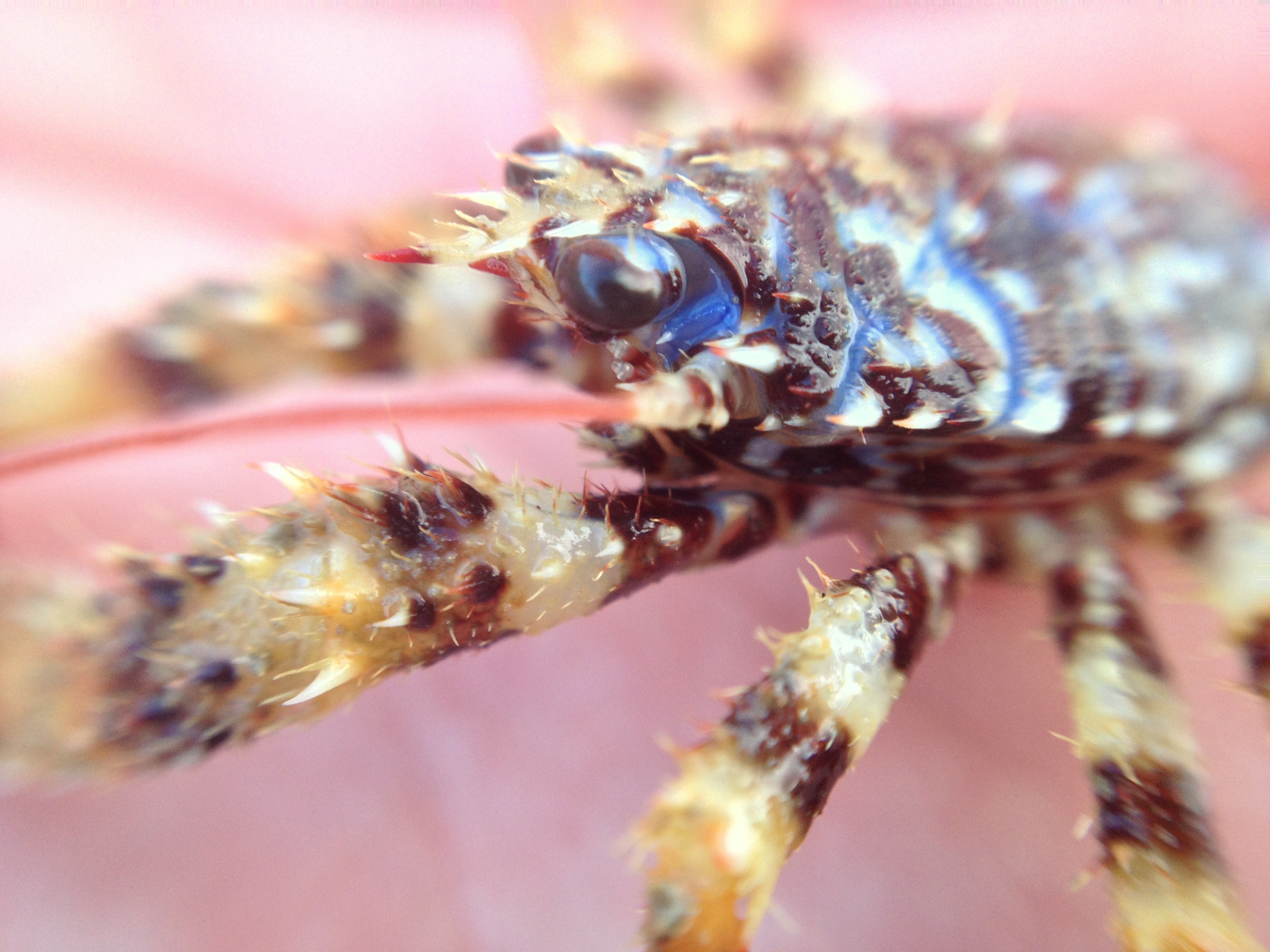
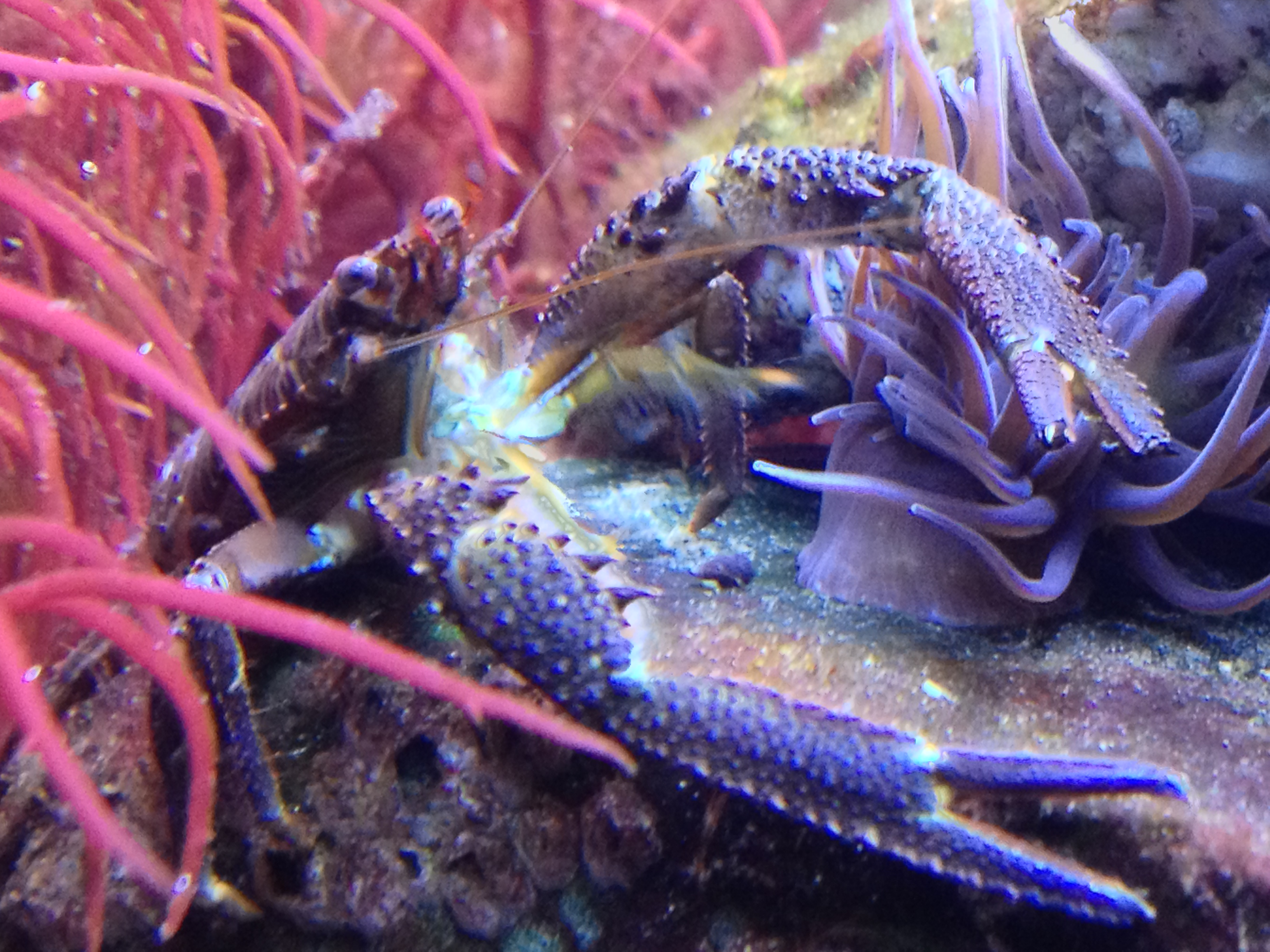
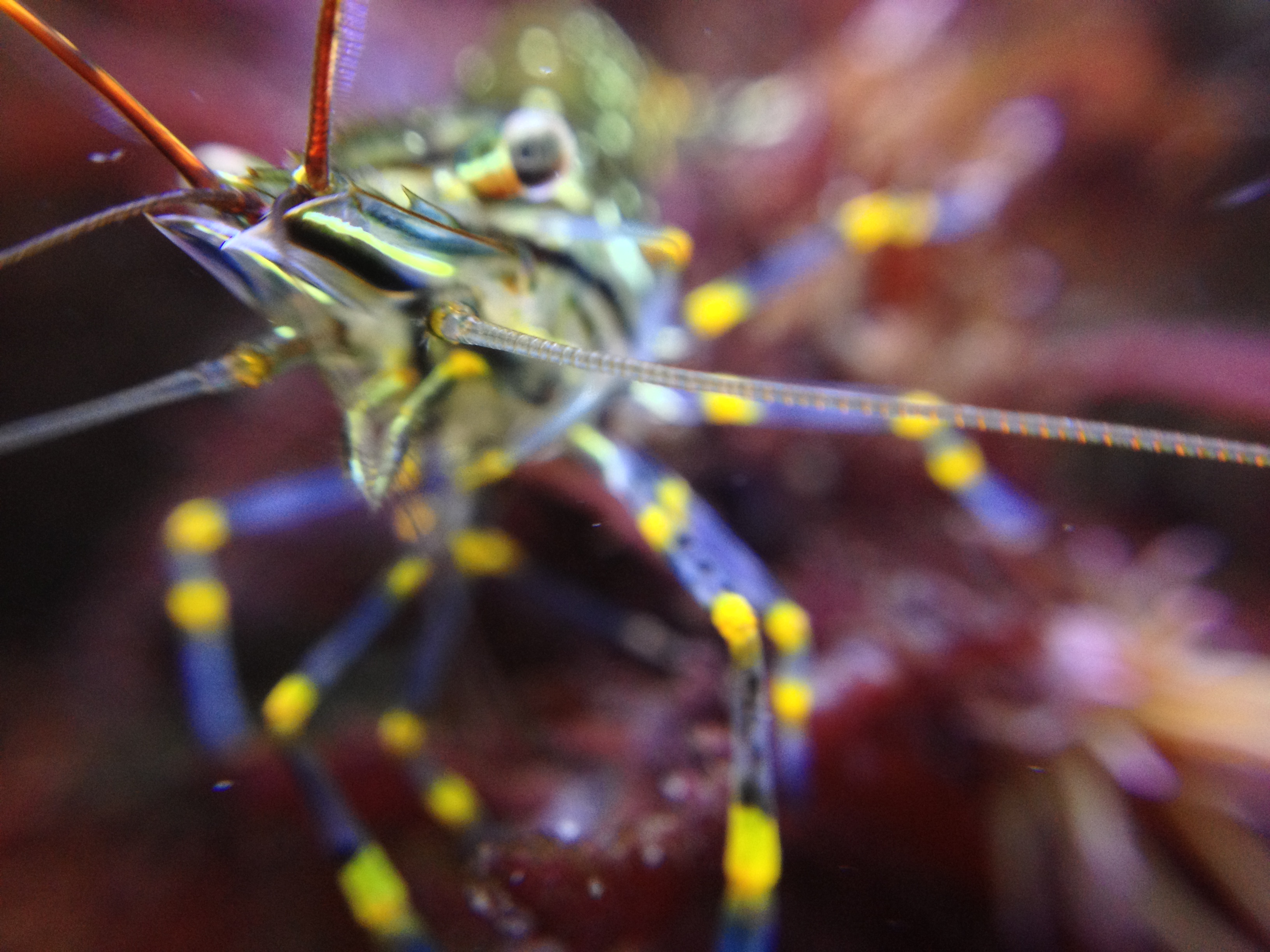
IMG_7891 - CopyAt the end of the ‘session’ I glanced something red, white and blue; a colour combination that I had seen only on photographs before. It was a single, juvenile Spiny squat lobster Galathea strigosa:

IMG_7998

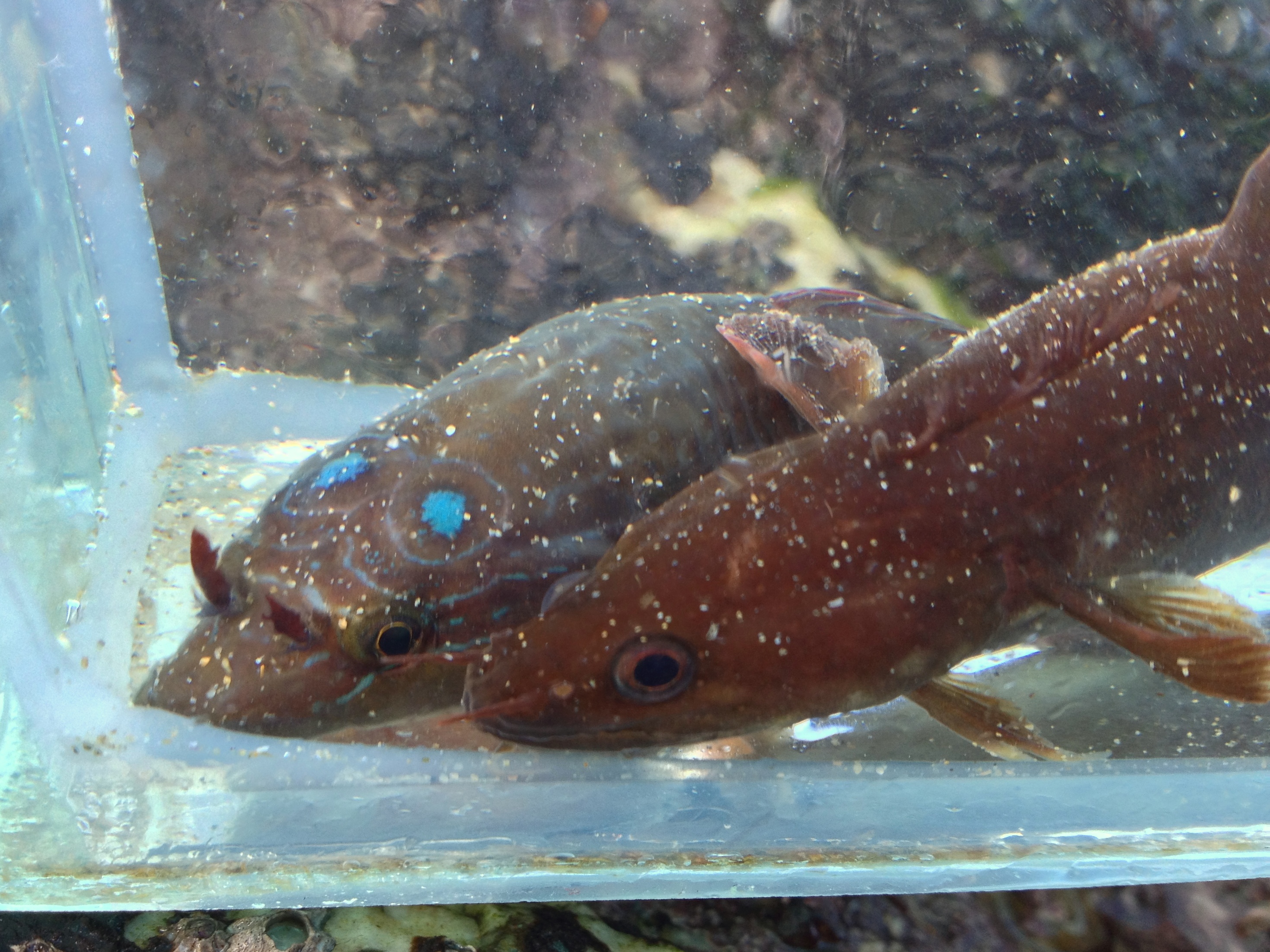
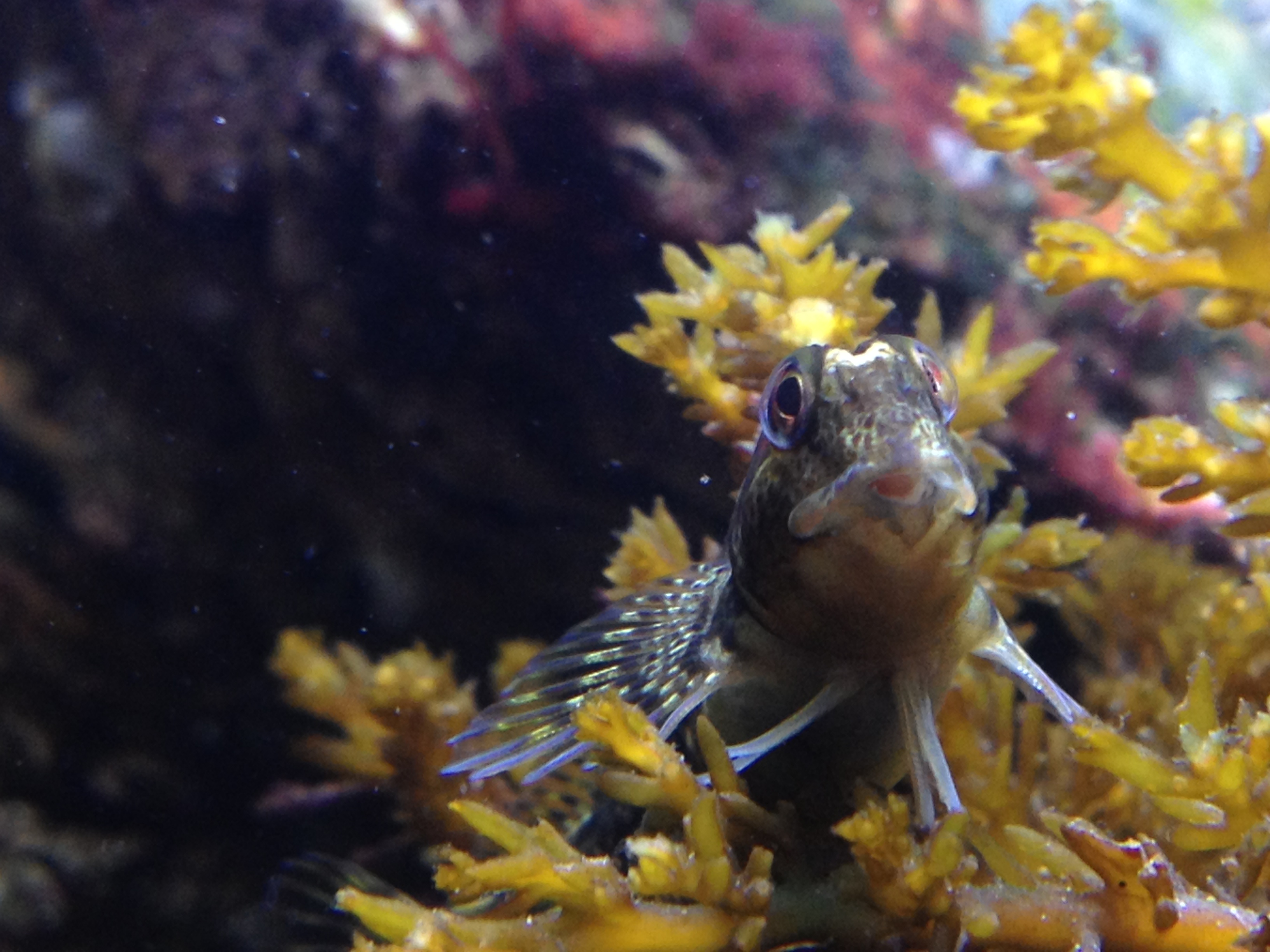
IMG_8010A lot of usual suspects were found as well of course, here a Cornish sucker Lepadogaster lepadogaster and a Shore rockling Gaidropsarus mediterraneus:

IMG_7925The rockling has a groove in front of its dorsal fin filled with hairlike fin rays that are continuously beating. Finally, not a very good picture but I’ve posted it because this is the longest animal in Britain: the Bootlace worm Lineus longissimus can grow up to 10 meters!

IMG_7901

new year’s resolutions

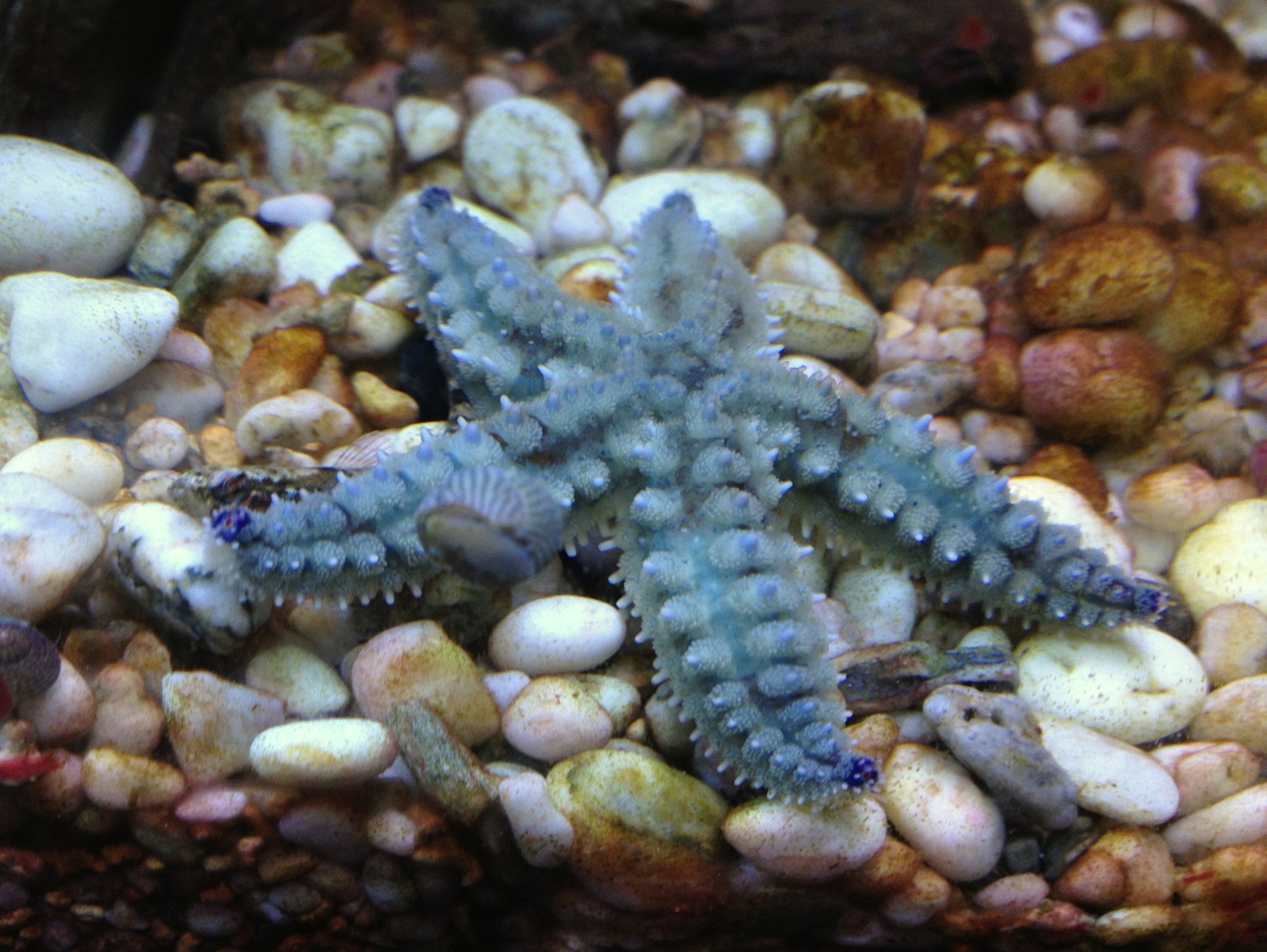
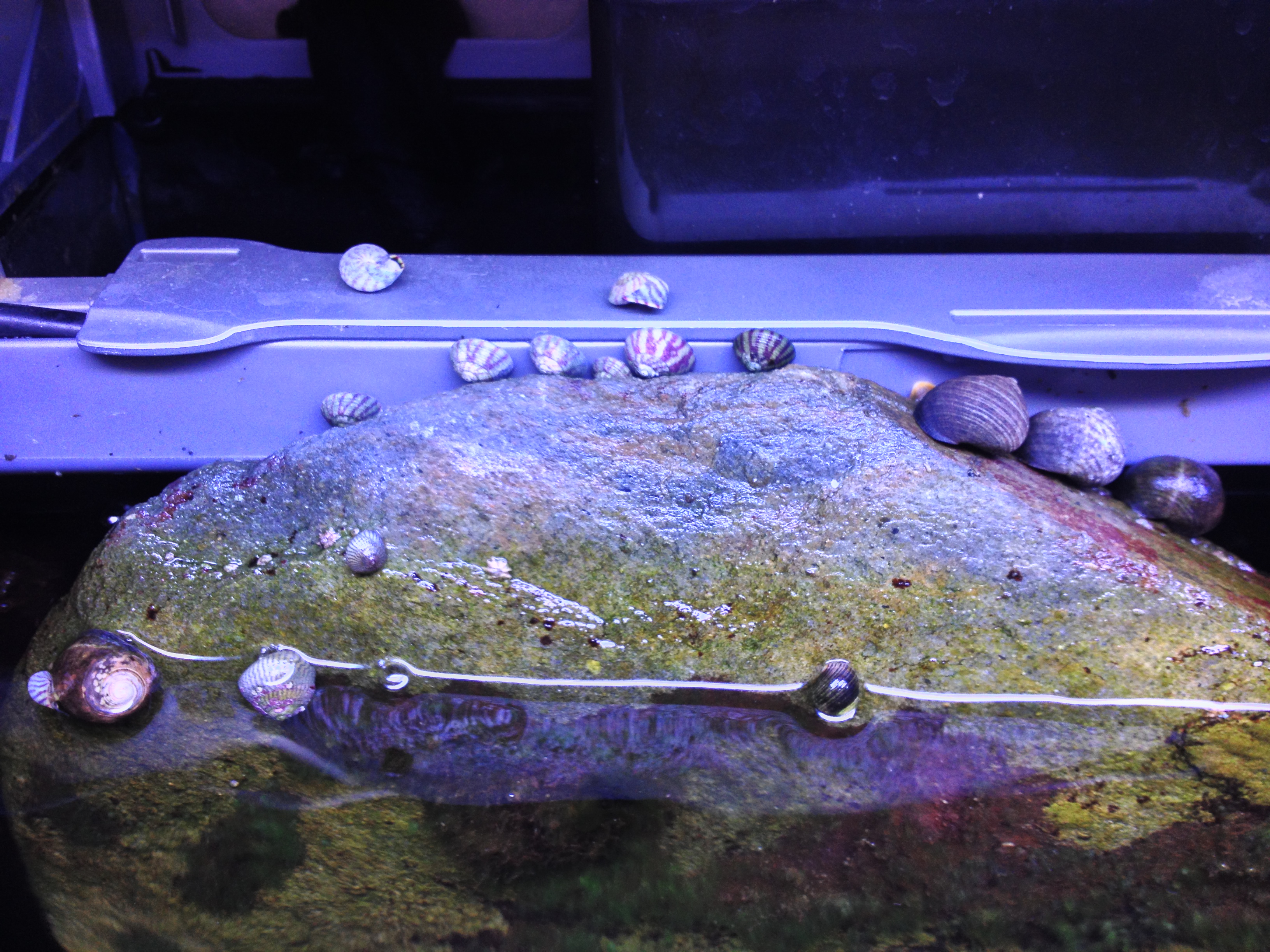
It has been a while since I last posted about the aquarium, mainly because I had a problem with algae and did not like the look of the tank in general. Combined with being away for two weeks over the holiday season, I decided to remove the rocks and most animals from the tank. Only left are some snails, Cushion stars and a Spiny starfish (who seems to do fine except for being less brightly coloured than when I caught it). The snails made a good start and cleaned up a lot of algae but it was too little too late. Also, (non Spiny starfish-related) mortality was quite high. Of all snails, the periwinkles fared least well (as I had noticed on earlier occasions); the Grey top shells seemed to do best. A main problem is that the snails move out of the water and often die there. Grey top shells can be found in the intertidal but are also common in the subtidal and so might be more suitable for the aquarium.

IMG_6789IMG_6869


Anyway, time for a fresh start in the new year. I have decided to buy a chiller (and pump), mainly so I can switch off the noisy hood fans, but also because a more natural temperature regime might help keeping some of the more difficult species (see eg here and here). I have trawled the internet to find recommendations for the least noisy chiller but to no avail. I will stick with a more expensive brand and hope for the best. I will also invest in LED lighting. LED lights give a nice shimmer effect, generate less heat, use less electricity, need less replacement and are more easily dimmable. I’ve found this interesting Red Sea Max 130D retrofit kit:solderless_rsm130_dimmable__09721.1361404356.640.640I will need to buy a separate dimmer and probably will have to ask my local sparky for help fitting it in the hood but it seems like a good investment. I’d like to supplement white LEDs appropiate for shallow water with some blue ones so I’ll be able to get a deeper water feel as well. This week I saw an inspirational aquarium back in Blijdorp Zoo in Rotterdam: a deep water reef with gorgonians, many brittle stars, Boar fish (or Zulu fish) Capros aper, Snipe fish Macrorhamphosus scolopax and John Dory Zeus faber. A crap photo:

IMG_7186

However, I will go for a more brightly lit seaweed aquarium first. I will switch to finer gravel and reduce the amount of rocks to improve water flow. This time I will also focus more on fish. Marius has a great picture of a Two-spotted goby Gobiusculus flavescens in his Irish rock pool aquarium here and I definitely want to have a couple of these (I had a tiny one recently but it was eaten by one of the Snakelocks…). The other fish I definitely want to have is a bright green juvenile Ballan wrasse Labrus bergylta (although the other species are pretty too):

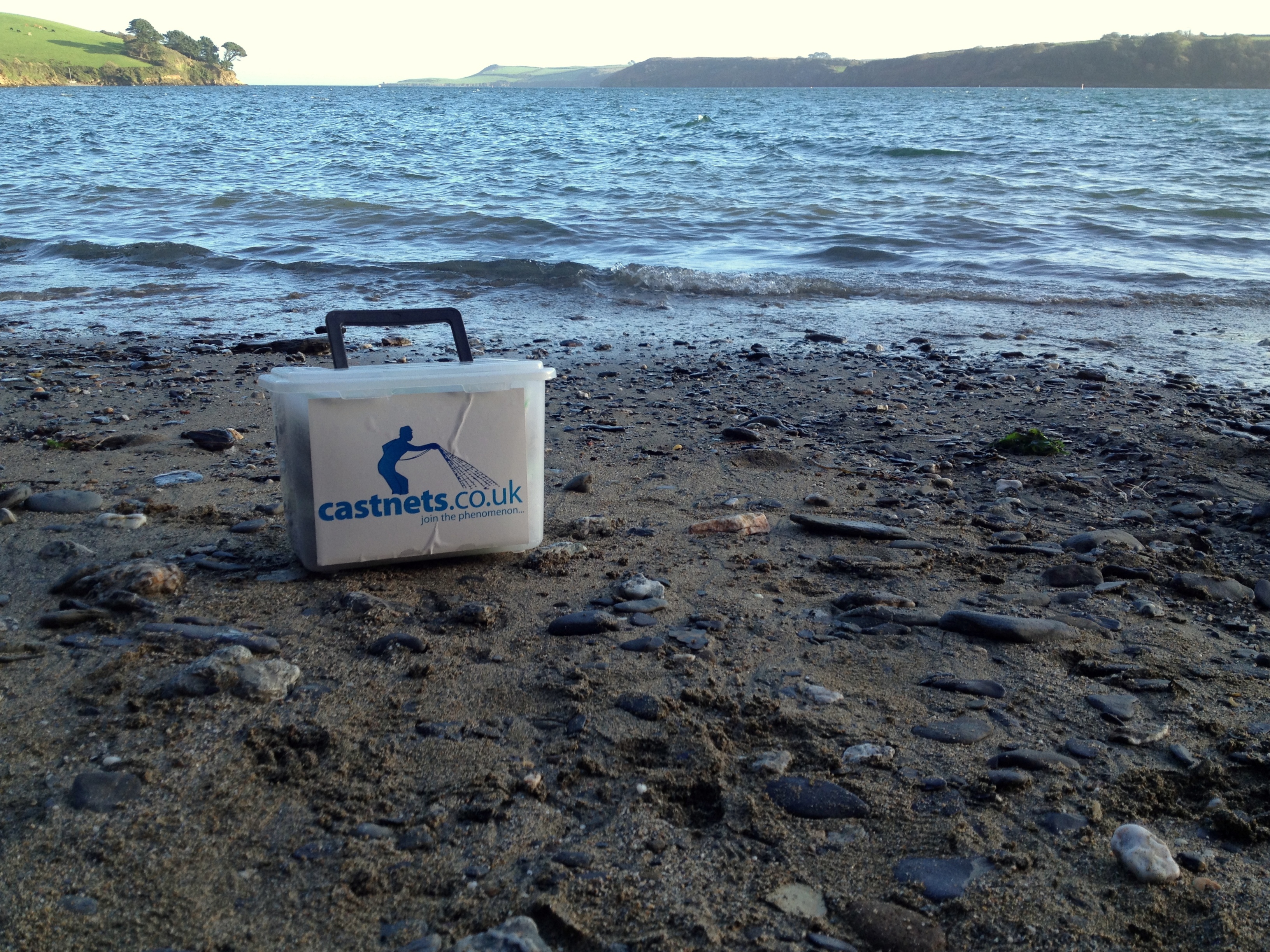
wrasseSmall wrasse can be caught using a hand net but I reckoned it would be easier using a cast net. After my first trial run with such a net in the Helford river a while back I am not so sure though: loads of leaves and twigs but no fish. Youtube has hundreds and hundreds of ‘how to throw a cast net’ videos but these all use slightly different techniques which sometimes involve a throw whilst holding the led line between the teeth… Anyway, I’ll have to practice!

IMG_6346

sea gherkin

Another ‘lifer’ yesterday: a Sea gherkin Pawsonia saxicola, at Castle Beach in Falmouth. It is a small sea cucumber (a relative of the Cushion star next to it); a very cool find indeed!

IMG_6745

The main aim though was to collect more snails to help out in the grazing project. This was pretty easy of course. I collected a couple more Painted top shells Calliostoma zizyphinum and many, mainly juvenile, Grey top shells Gibbula umbilicalis. I also picked up a beautiful small Spiny starfish Marthasterias glacialis; this fellow will go after the snails but as long as the predation is not too severe that will be OK, let’s see. Finally, using my little aquarium net, I went after some fish high up the shore and caught a tiny Two-spotted goby Gobiusculus flavescens. I need to catch a bunch more of those, hope to post about that soon

animals that did not do that well in my aquarium…

A while back I wrote two posts on my personal top ten animals for the (unchilled) aquarium (here and here). Of course, there were also organisms that were not such a success. Animals can be unsuited for the aquarium for many reasons, and of course this depends on the size of aquarium, the combination of animals and what you define by ‘unsuited’; so please keep in mind that the following is a personal account!

Aggressive species: Another reasons that makes animals unsuitable for a community tank is that they are bullish. (Animals becoming too big is not a real problem for the native aquarium as you can release them again and replace with smaller individuals.) Crabs often get rowdy for instance. I kept a small (5 cm carapace width) Edible crab Cancer pagurus for a little while (his name was Barry). It would bury (Barry!) itself during the day, but as soon as the lights turned off it would go about and rearrange the tank. Rocks weighing over a kilo were knocked against the glass and I found a Cushion star cut in two. It was quite an operation to remove it from the tank using a net (but during all that rummaging I interestingly saw bioluminescence in the tank which was very cool). Shannies like to feed on snails and hermit crabs and so in a relatively small aquarium at least, so sometimes you have to choose between one or the other:

IMG_2240

Truly littoral species: I had a couple of limpets Patella vulgata in the aquarium that just sat in the same place on the glass for months. At this time, algal growth was a problem, so I should have known if they had moved during the day or night by the tracks they would have made but they did not move a millimeter. The animals seemed a bit thinner in their shell, but seemingly they can survive for very long periods without food. Not being able to emerge from the water as they do normally seems to be a big problem for these animals.

Secretive species: Other animals simply are too shy or live underneath rocks; no point really in putting them in the aquarium if you cannot see them. This happened with Broad-clawed porcelain crabs, a Shore rockling and also a Shore clingfish (although hidden, all of these animals did survive for a long time). I have seen Brittle stars in a Mediterranean aquarium but the ones found in the intertidal here tend to live under rocks and I never saw one back in the aquarium. A Sand star Astropecten irregularis quickly buried itself in the gravel:

IMG_5177

Filter feeders: I quickly realized that filter feeders, mussels or tunicates for example, were very difficult. There simply were not enough algae growing in the water to feed them (unfortunately, at times there were plenty of algae growing on the rocks and on the glass). One way to keep filter feeders is to separately cultivate algae for food. A really nice blog describing such a project can be found here. Another solution might be to feed these animals with artificial plankton, which is available commercially. This requires very good skimming to get rid of excess nutrients though. Both options I find too cumbersome at the moment. Having said all this, one filter feeder managed to survive for many months in my aquarium: the variegated scallop.

Other fussy eaters: Worm pipefish did OK in the aquarium, but that was probably because I regularly brought in new seaweeds housing fresh zooplankton. Unlike Mullet, Gobies or Blennies, I have never seen them take frozen food and therefore I will not keep them again until I can provide them regularly with live brineshrimp or similar. Snakelocks anemones always did well in the aquarium, but Beadlet and Strawberry anemones didn’t (they actually did not die but seem to shrink rather than grow over time). The former are able to grow because of their symbiosis with photosynthesizing algae and so do not rely as much on food. I must say that the latter two  species are probably relatively easy to keep when you make the effort to regularly dunk a piece of dead prawn on them. The European cowrie Trivia monacha feeds on tunicates which I had trouble keeping alive and so they are unfortunately not an option yet:

IMG_0987

Unknown reasons: On a few occasions a species just died and I had no idea why. The only thing this taught me was to not try that species again. This happened to a Common starfish Asterias rubens:

IMG_2835

Three echinoderms

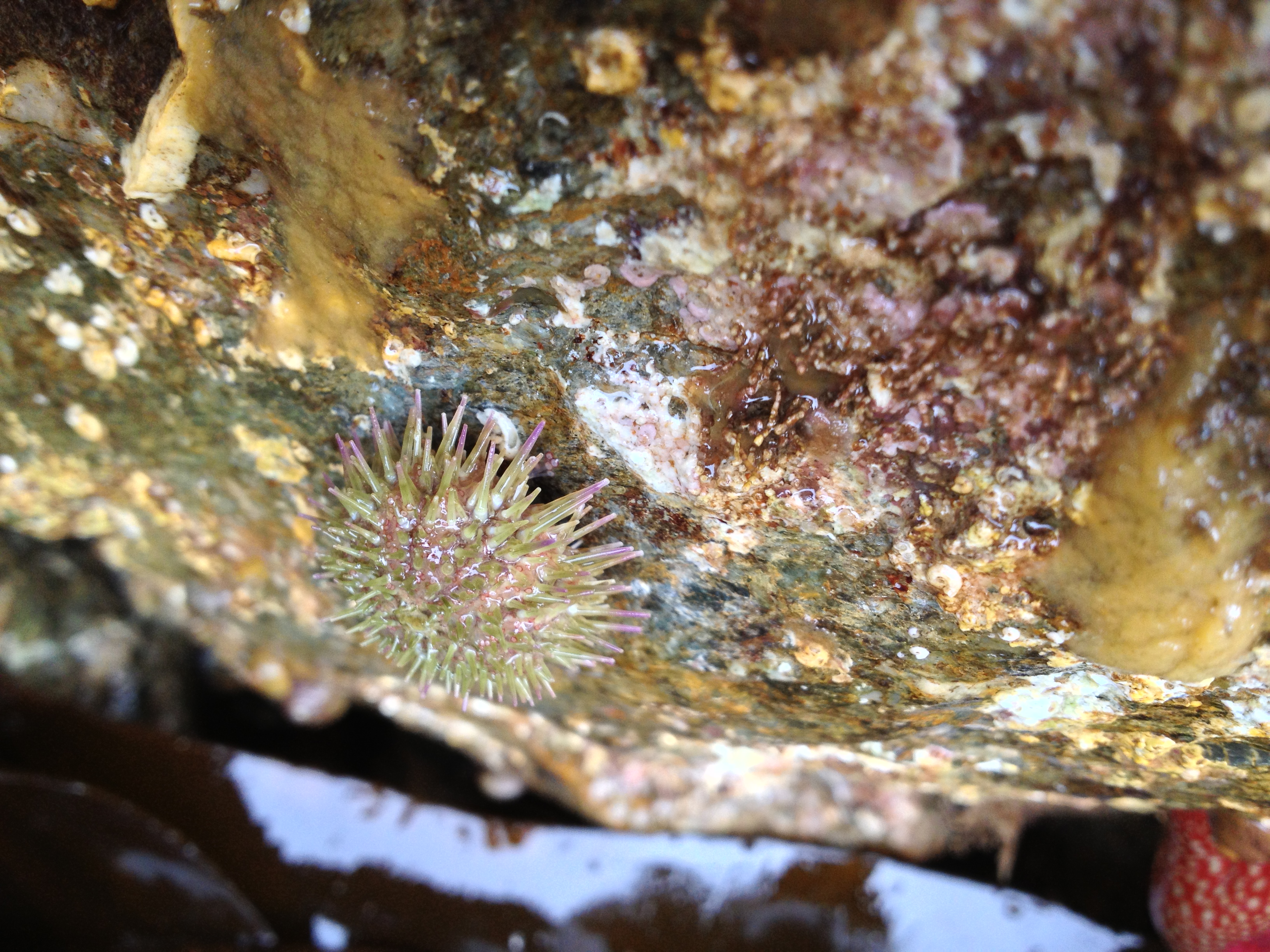
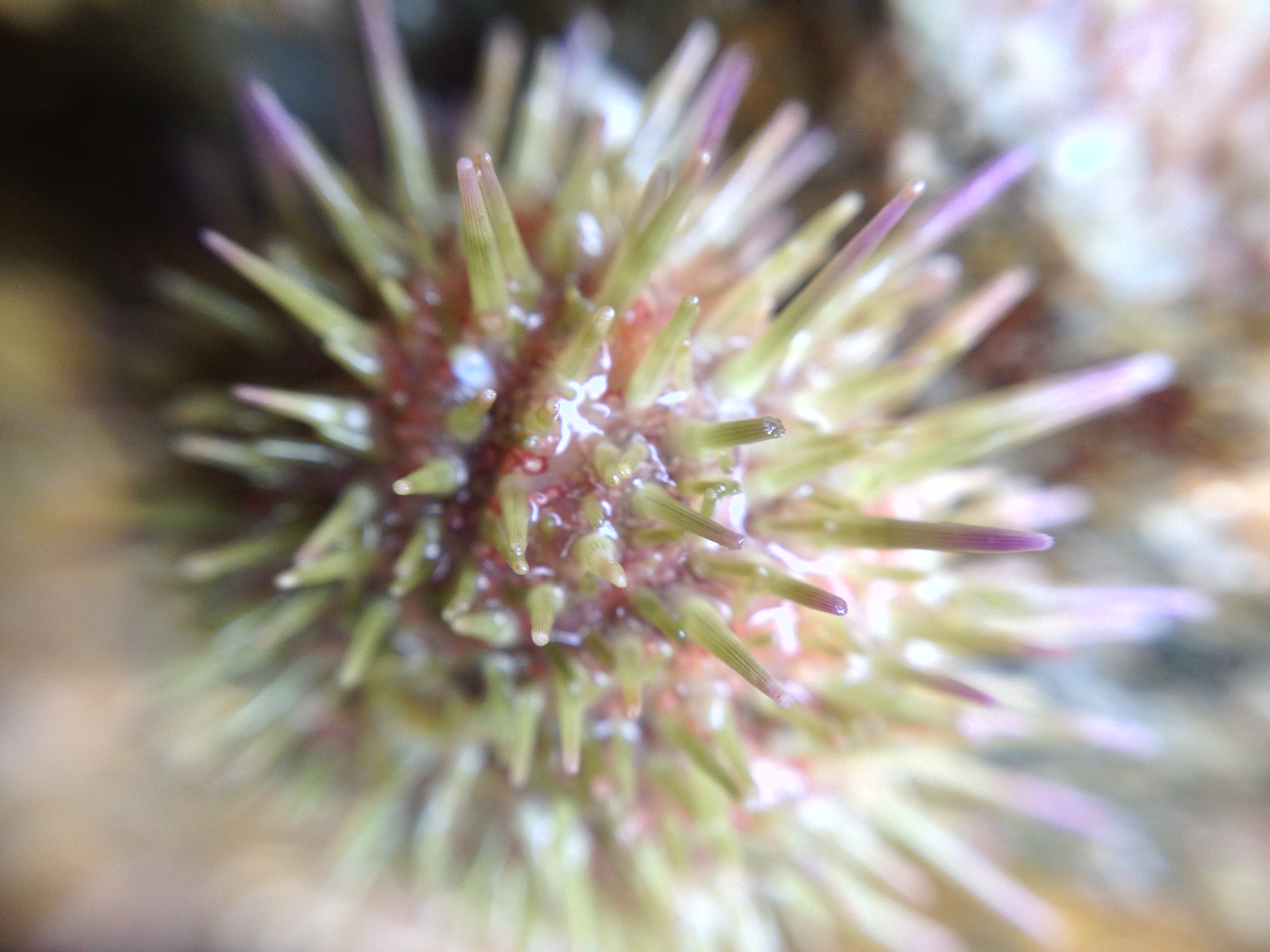
I have been traveling quite a bit over summer but now I am back and hope to soon kick start my aquarium (it just has sand and some cushion stars in it at the moment). I have already gone out rock pooling again a couple of times. For the very first time I have found a sea urchin at Castle Beach in Falmouth, a little Psammechinus miliaris:

IMG_5938

IMG_5935 - Copy

I found the Common starfish Asterias rubens and especially the Spiny starfish Marthasterias glacialis to be very common this time of year:

IMG_5916

IMG_5929

The abundant Cushion star Asterina gibbosa:

IMG_5911

I hope to soon post about the aquarium again!

Two starfish videos

I have started a youtube ‘An Bollenessor’ account to be able to embed some of my short iPhone videos here*. First my favourite the Cushion star Asterina gibbosa. My aquarium is more or less empty at the moment, but I still have five of these around. A short movie made with my olloclip macrolens showing how these little starfish move about using their tube feet:

I went out snorkeling yesterday in the mouth of the Helford river (in the rain). A very beautiful spot, I’ll post some pictures of it when I am back and it is sunny. It was high tide and the visibility was bad so I had to dive five meters or so to have a closer look at the Seagrass. I did not see that much but I did spot a Sand star Astropecten irregularis for the very first time. A very beautiful starfish with purple tips and very long tube feet. I took it home and placed it in the aquarium, after which it did what it does best: digging itself in:

*= I use Microsoft Moviemaker to upload files, so had to use my Microsoft account in addition to my Google account, a bit of a hassle. Anyway, it should be easier next time now everything has been set up. For the next videos I will make sure to clean the glass. I probably also should buy a gorillapod to keep my phone still.

top ten animals for the unchilled aquarium: 5 – 1

OK, part two of my list of fun and easy species to keep in an unchilled native marine aquarium (see here for numbers 10-6). I will later post about species to avoid, and of course also about easy seaweeds to keep.

5: juvenile crabs

IMG_2331

Crabs are active and interesting to watch, however, in a community tank they should not be too large as they can be quite destructive as well. Juvenile Shore crabs Carcinus maenas are an option, or a variety of crab species that stay small, such as Pirimela denticulata (I am not too sure what species the above pictured crab is, but it is still doing well four months after collecting it).

4: Squat Lobster Galathea squamifera

IMG_0094

Squat lobsters Galathea squamifera can be a bit shy but are entertaining to watch as they scuttle about. Very common under rocks in silty areas.

3: Snakelocks Anemone Anemonia viridis

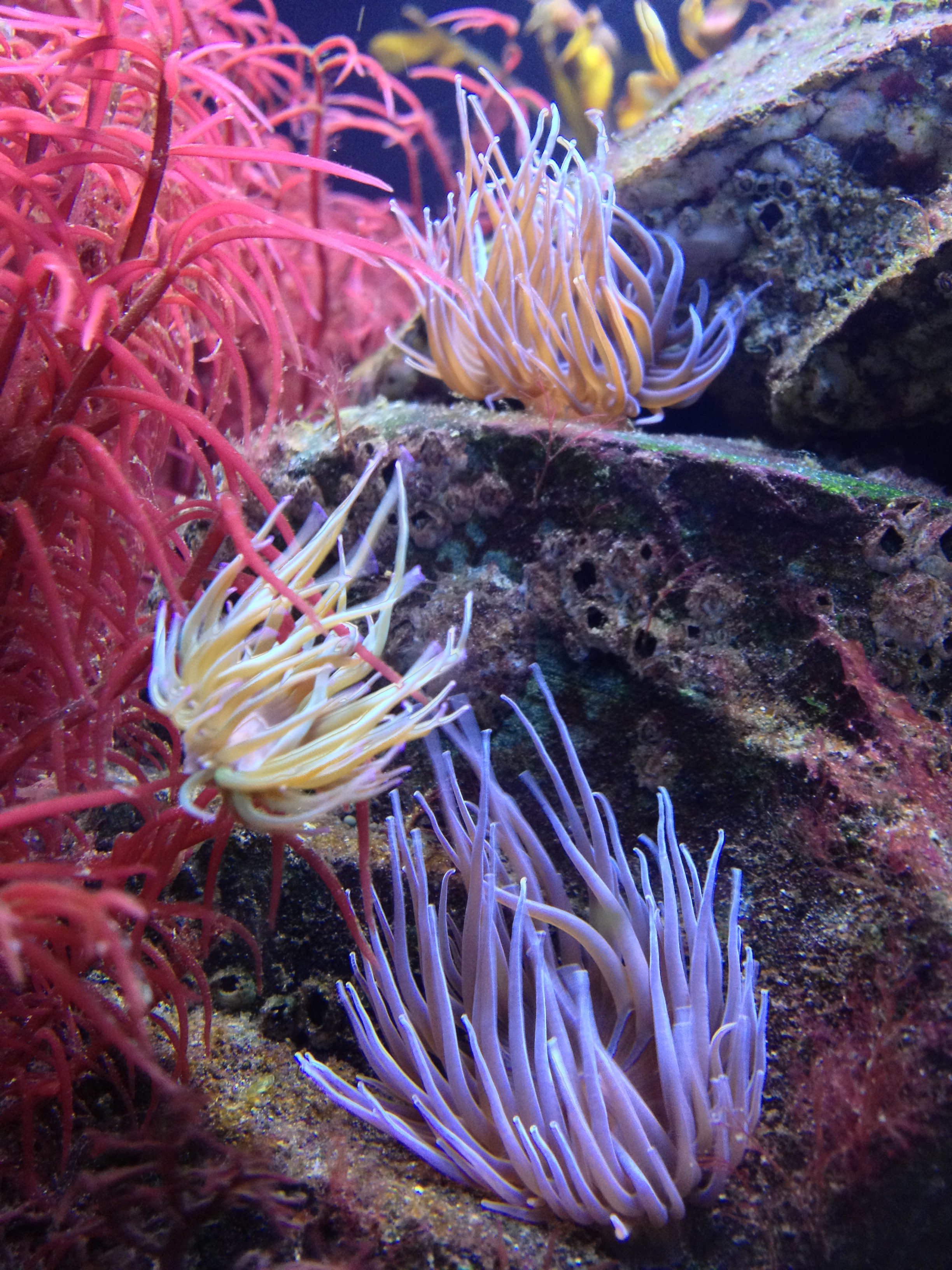
IMG_0102Very pretty and common anemones that are easy to keep. Beadlet anemones Actinia equina and Strawberry anemones Actinia fragacea survived in my aquarium as well but they seemed to shrink a bit over time rather than grow and these species can retract their tentacles which looks less nice. I did not specifically feed my anemones by dropping artemia or food pellets on them. The photosynthetic capabilities of Snakelocks anemones due to their algal symbionts probably makes it easier for them to thrive when food is relatively scarce. Beware for the tentacles of larger individuals though, as they can sting!

IMG_1333

2: Common prawn Palaemon serratus

IMG_2392

Prawns* have been a rage in tropical freshwater aquariums for years but people forget that there are very pretty ones right in our seas. I must admit I have not got round to checking rostrum (the ‘nose’) structures to differentiate between several closely related Palaemon species, but I think I have the Common prawn. They are always foraging and flock to any new object in the aquarium to check for edible bits. If the pumps are switched off they will swim and compete with the fish for food.

* or shrimp, these two names can mean different things in different English-speaking countries. In other languages ,like my native language Dutch, we only have a single word (garnaal) for these critters

1: Cushion star Asterina gibbosa

IMG_0356My numbers 2, 3 and 4 could have been number 1 as well, but I ended up picking the very common Cushion Star. Although grey and just an inch in size, these quintessential rock pool inhabitants are active, hardy and just plain cool!

top ten animals for the unchilled aquarium: 10 – 6

As the aquarium is currently in a state of limbo, I thought it would be fun to take a look at the critters that have been most rewarding to keep in the year or so I’ve had my aquarium. Based on my personal experience, I have made an, admittedly completely arbitrary, top 10 of animals for a Cornish (or North-Western European) marine aquarium. I picked animals that were both easy to collect (i.e. common), easy to keep (not requiring live food and resistant to water temperatures up to 25C) and fun to watch. Here goes with the first part of the list!

10: Netted dogwhelk Hinia reticulata

IMG_0748

Not the prettiest of molluscs maybe, but very easy to find and very easy to keep. Burrowing in sand, and moving surprisingly fast over the bottom when smelling food. Their smaller (and prettier) cousins the Thicklipped dogwhelk Hinia incrassata never survived for long in my unchilled tank.

9: Common hermit crab Pagurus bernhardus

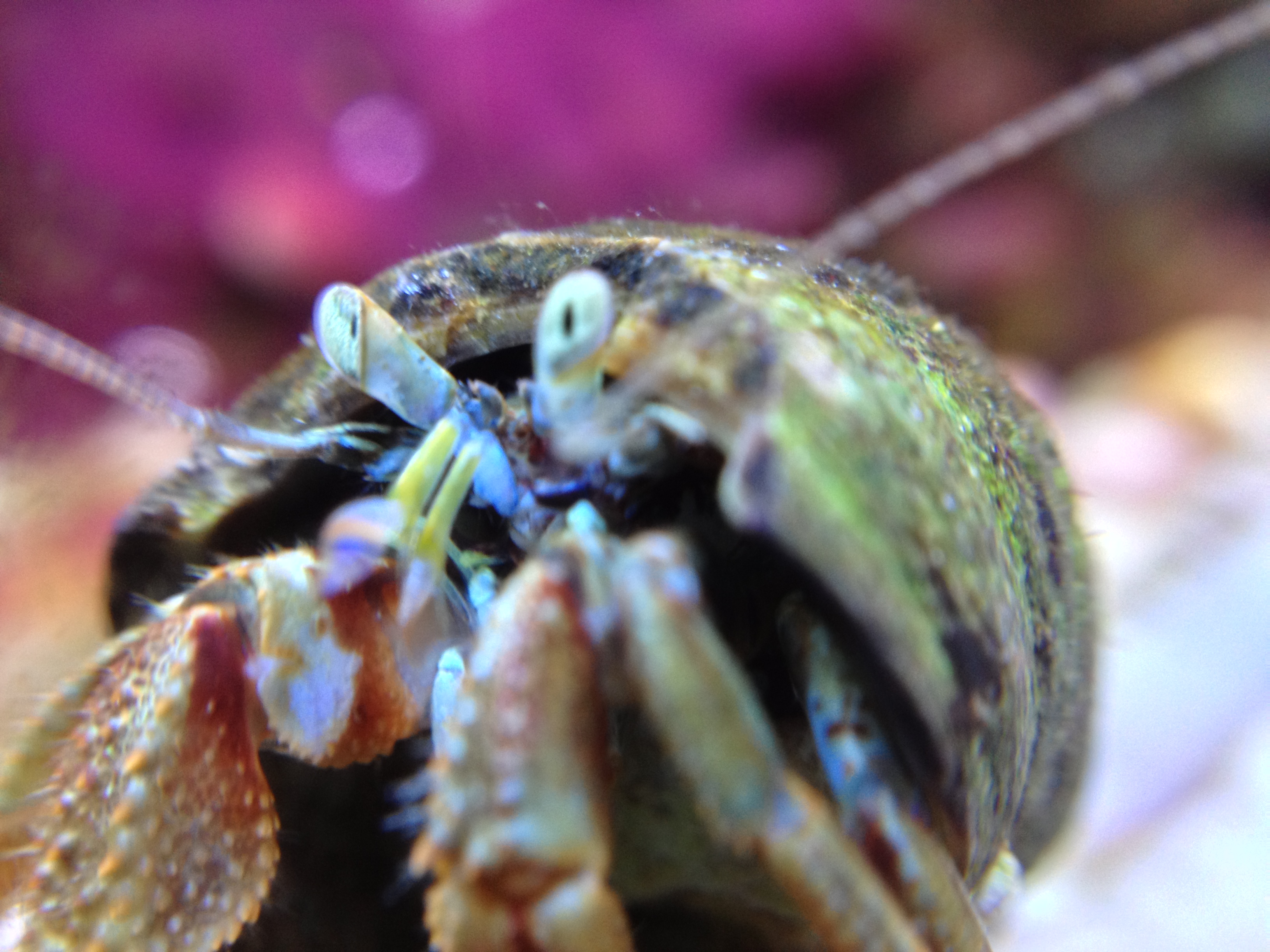
IMG_1020Hermit crabs are especially fun to watch scurrying about. Mine never really lasted very long but that is probably because of predation by blennies and gobies (see below)….

8: Shanny Lipophrys pholis (or Rock goby Gobius paganellus)

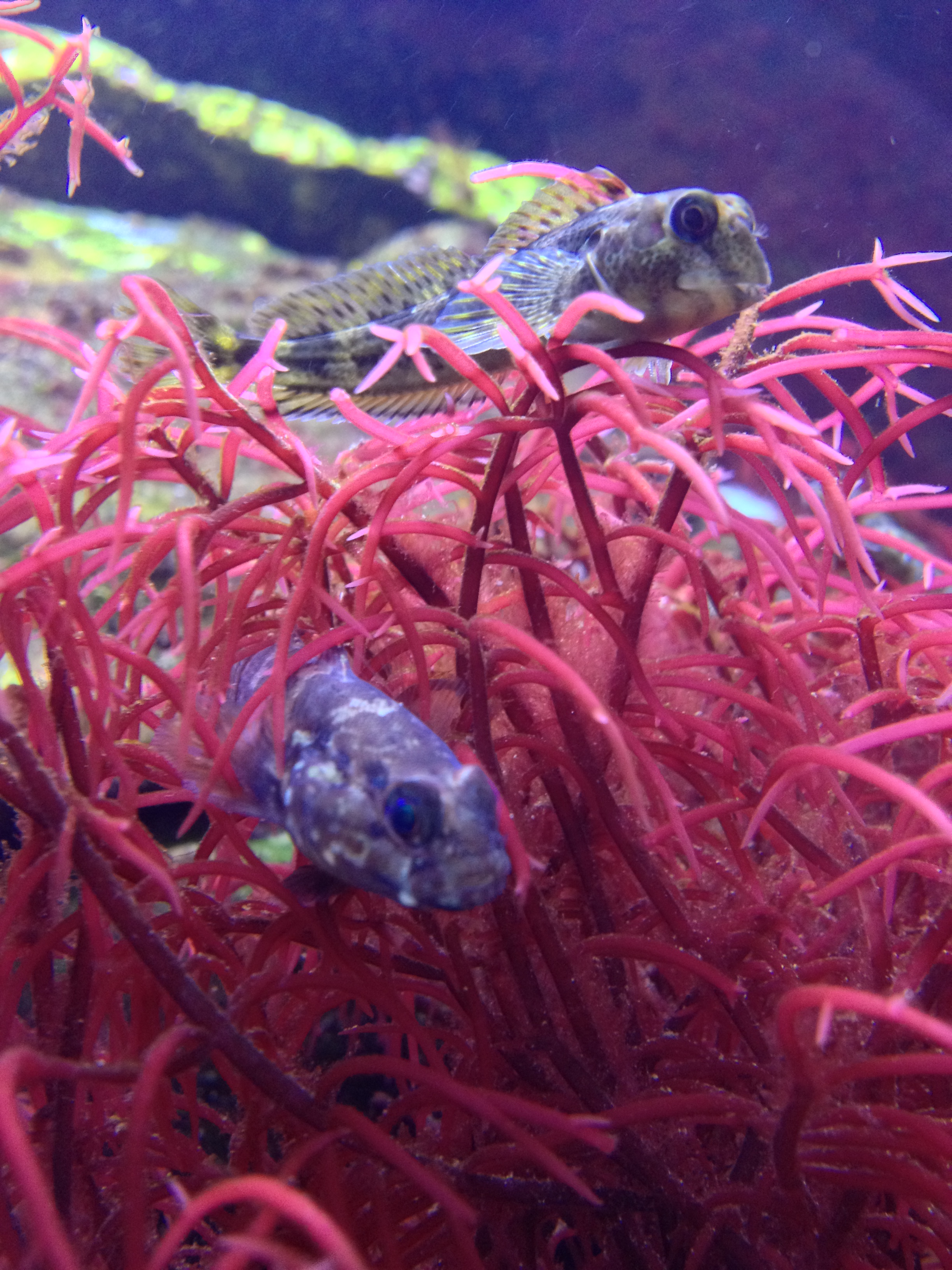
IMG_0203Shannies are probably the most common fish to find in rock pools. They are very easy to keep, their coloration is not particularly vivid but not dull either and they are quite active. The only downside is that they prey on molluscs and other small critters. Feeding them a bit more might prevent this, but especially the rock gobies are so voracious that I doubt that (one was so swollen I thought it was dying, until I realized that it had gorged itself on defrosted artemia…). Montagu’s blenny Coryphoblennius galerita is prettier and smaller than the shanny but much harder to find (see this post for experiences with other fish species).

7. Thicklip grey mullet Chelon labrosus

IMG_0675

Most rock pool inhabitants live on or near the rocks, but it looks nice if the aquarium also have some fish swimming in the water column. Mullet are very common, and small individuals form nice silvery schools (which are almost impossible to photograph as you can see). They don’t really interact with the other tank inhabitants.

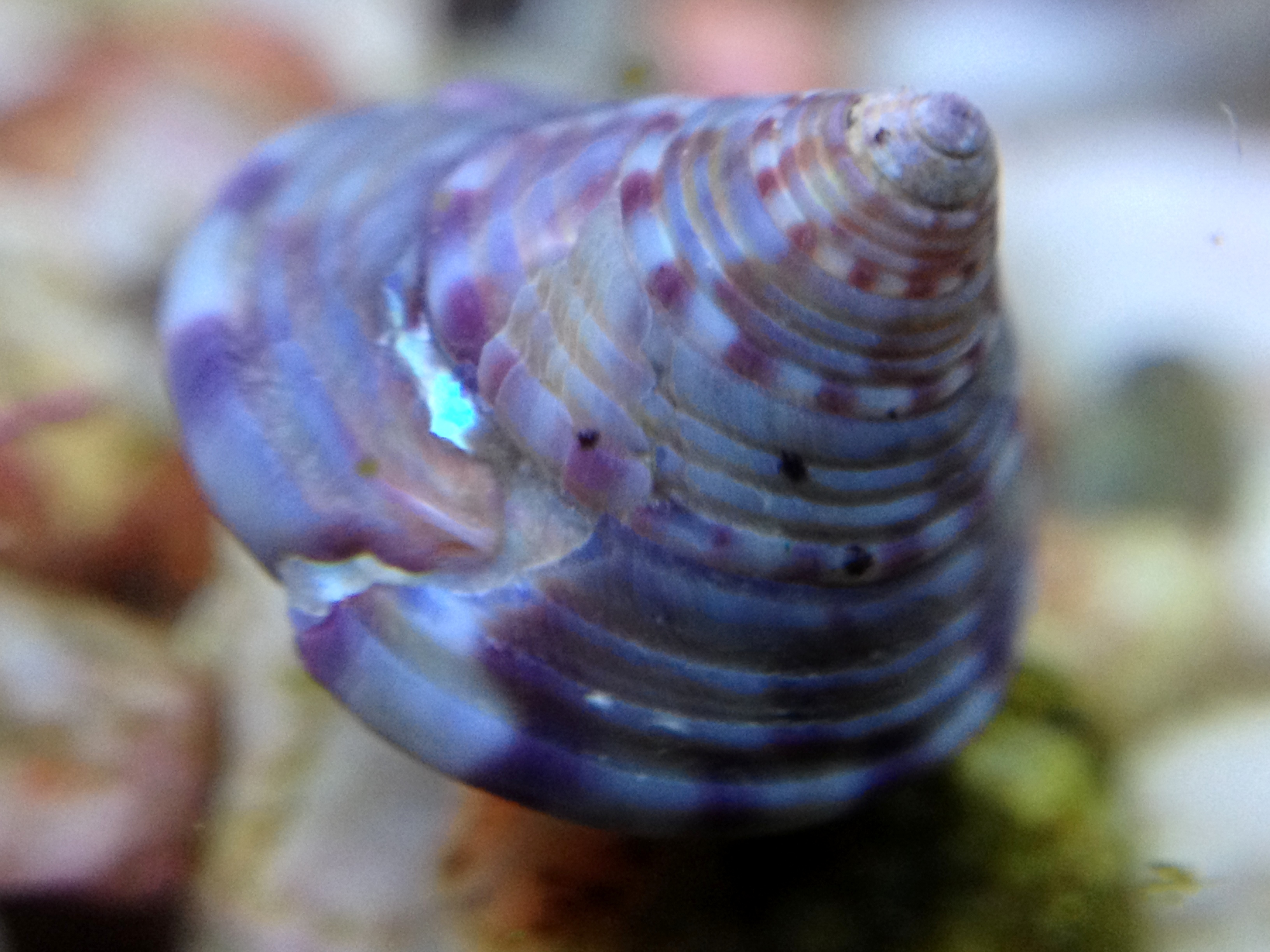
6: Painted top shell Calliostoma zizyphinum

IMG_1949

One of my favorite local molluscs: a bright purple shell with an orange colored snail inside. Shells are never covered with algae as the snail wipes it clean with its foot (the shell can still be damaged of course as seen in this individual).

The next post will feature the top 5 of animals for the unchilled aquarium.

Piran aquarium

I have a love/hate relationship with public aquariums: love because I am a bit aquarium-mad, and hate because quite a lot of them really are disappointing. Of course, I know all too well that it is not easy to create (and maintain) good-looking aquariums. Also, the paying public needs to be pleased and it wants to see ‘nemo’s’ and sharks which often results in the same sets of standard tanks. Although I do understand the need to educate the public, I am quite allergic to all kinds of video installations and boring props taking up space that could have been filled with tanks. I am not even talking about walkways decorated with fake polyurethane caverns or ornamental treasure chests in tanks…

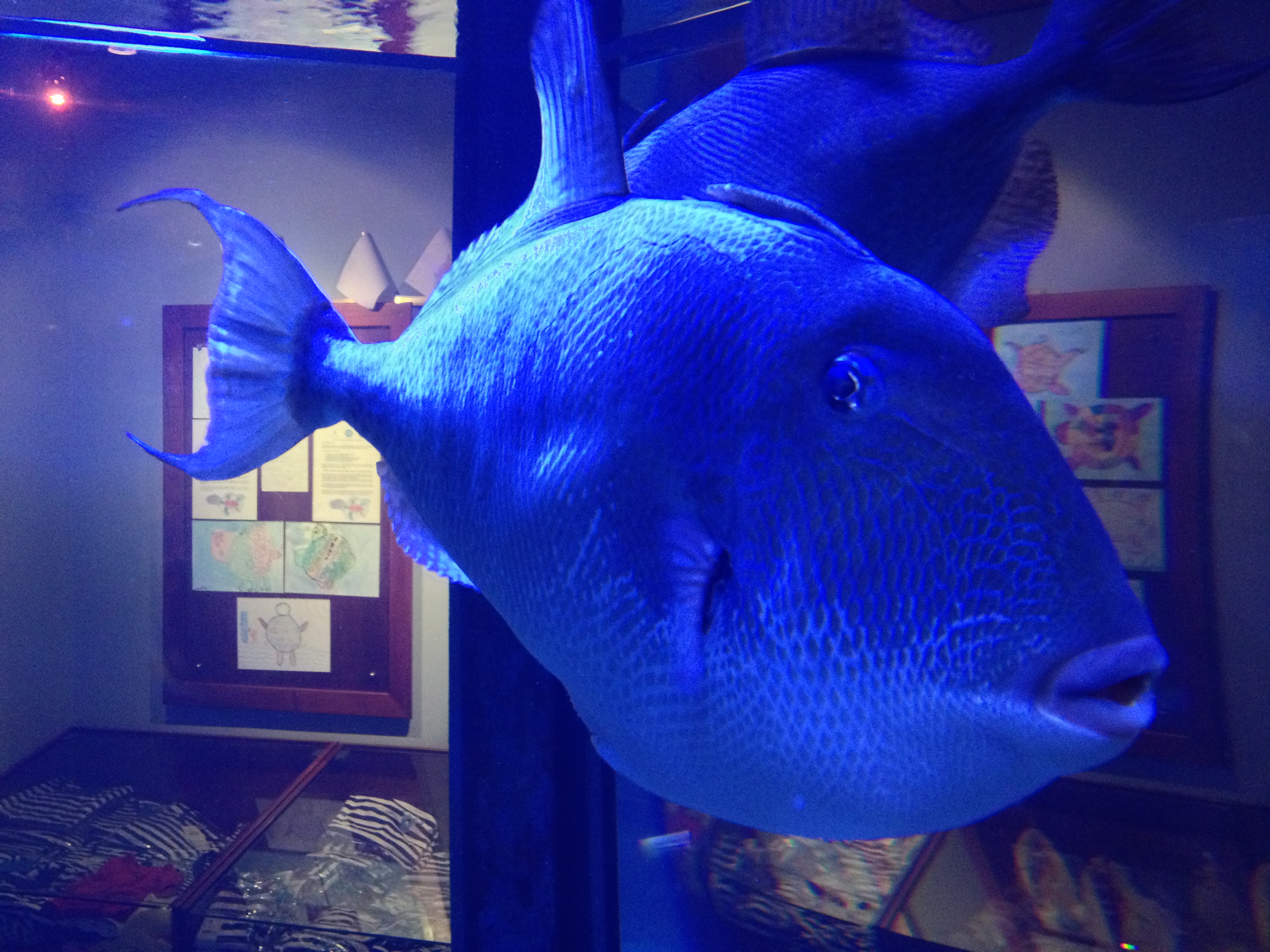
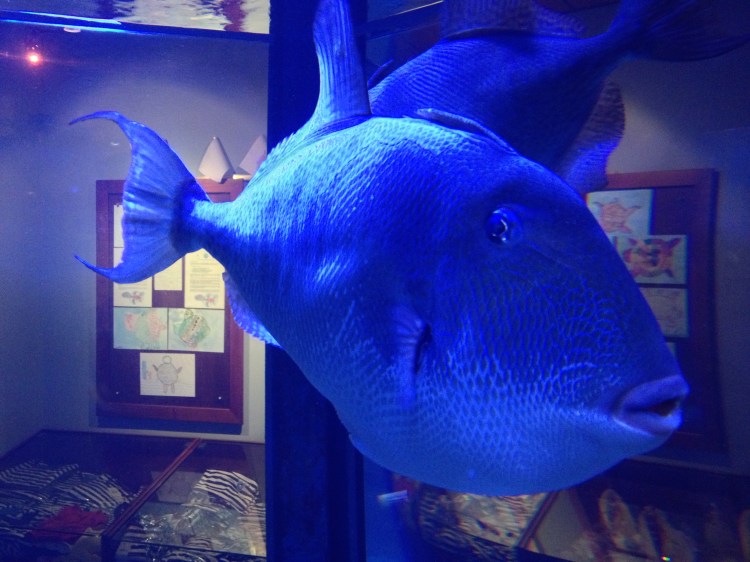
I try to visit public aquariums whenever possible and from now on will review them on this blog, specifically highlighting the smaller, temperate saltwater tanks that could serve as inspiration. Last week I was in Slovenia for work and a short holiday and passed by the lovely town of Piran which has a small (about 10 large and 10 small tanks) public aquarium, all with local animals. Here is one funky looking tank housing some writhing moray eels and Grey triggerfish Balistus capriscus, the latter also present in Cornish seas:

IMG_4321

IMG_4393

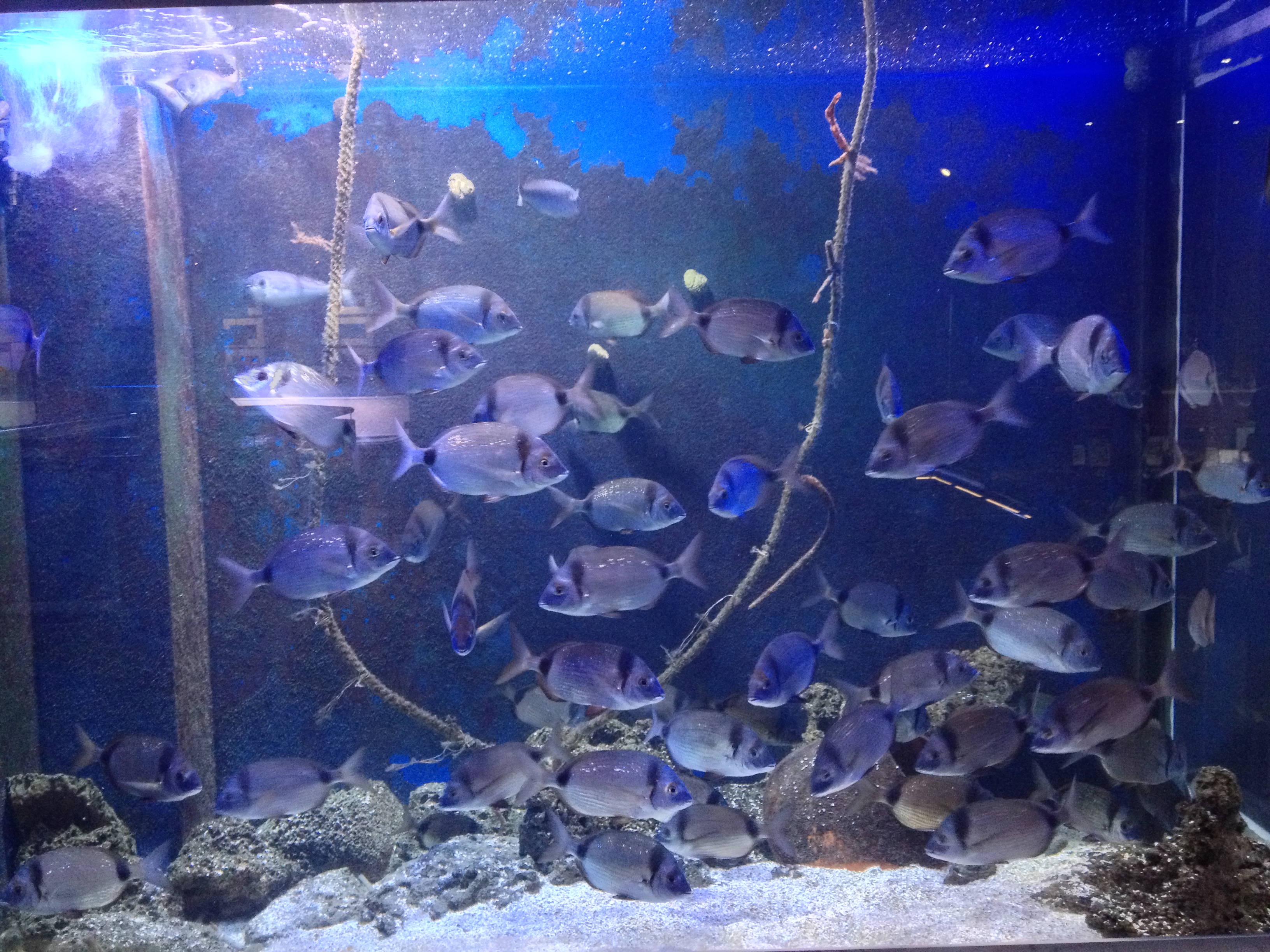
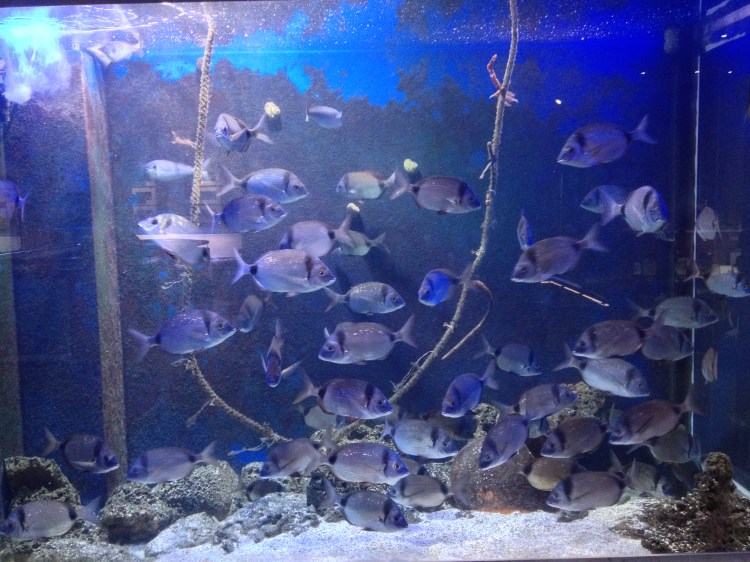
I am not so sure about larger-sized Mediterranean Sea aquariums, as there is not a lot of potential to make them visually appealing: some rocks and the odd human implement as decoration and the fish are often not overly spectacular (see the Two-banded bream Diplodus vulgaris below). If I were to go for a large, non-planted rock tank, I would try my hand at an African Great Lake aquarium instead, with the fish being more diverse, more interesting and more beautifully colored.
IMG_4330

 One of the largest fish on display was the Leerfish Lichia Amia. It was a shame to see such a large pelagic fish in a tank with its head completely deformed due to it bumping against the glass:

IMG_4369

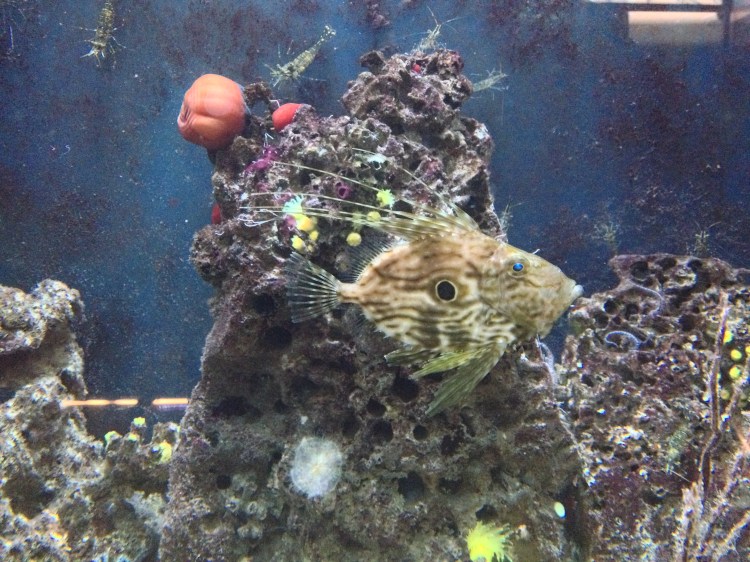
I was most interested in the smaller aquariums. These housed some species that can also be found in Cornwall, such as the Tompot blenny Parablennius gattorugine and the fantastic John Dory Zeus faber (which occurs around the globe):

IMG_4349

IMG_4384

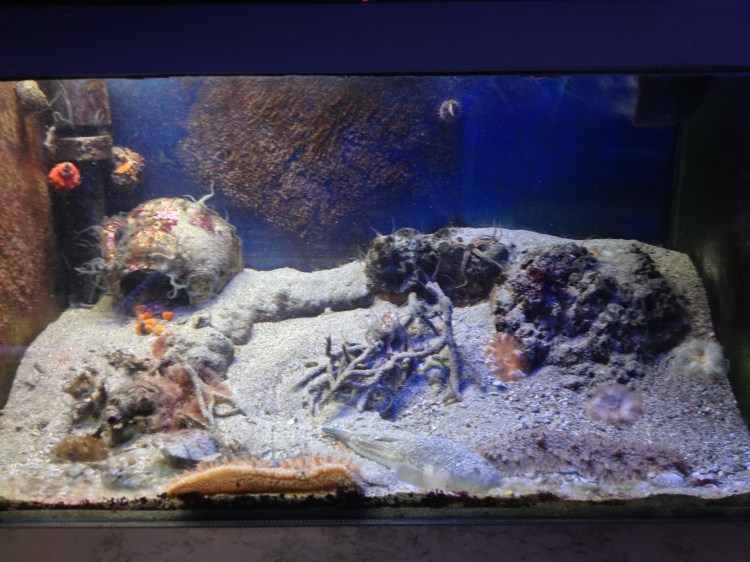
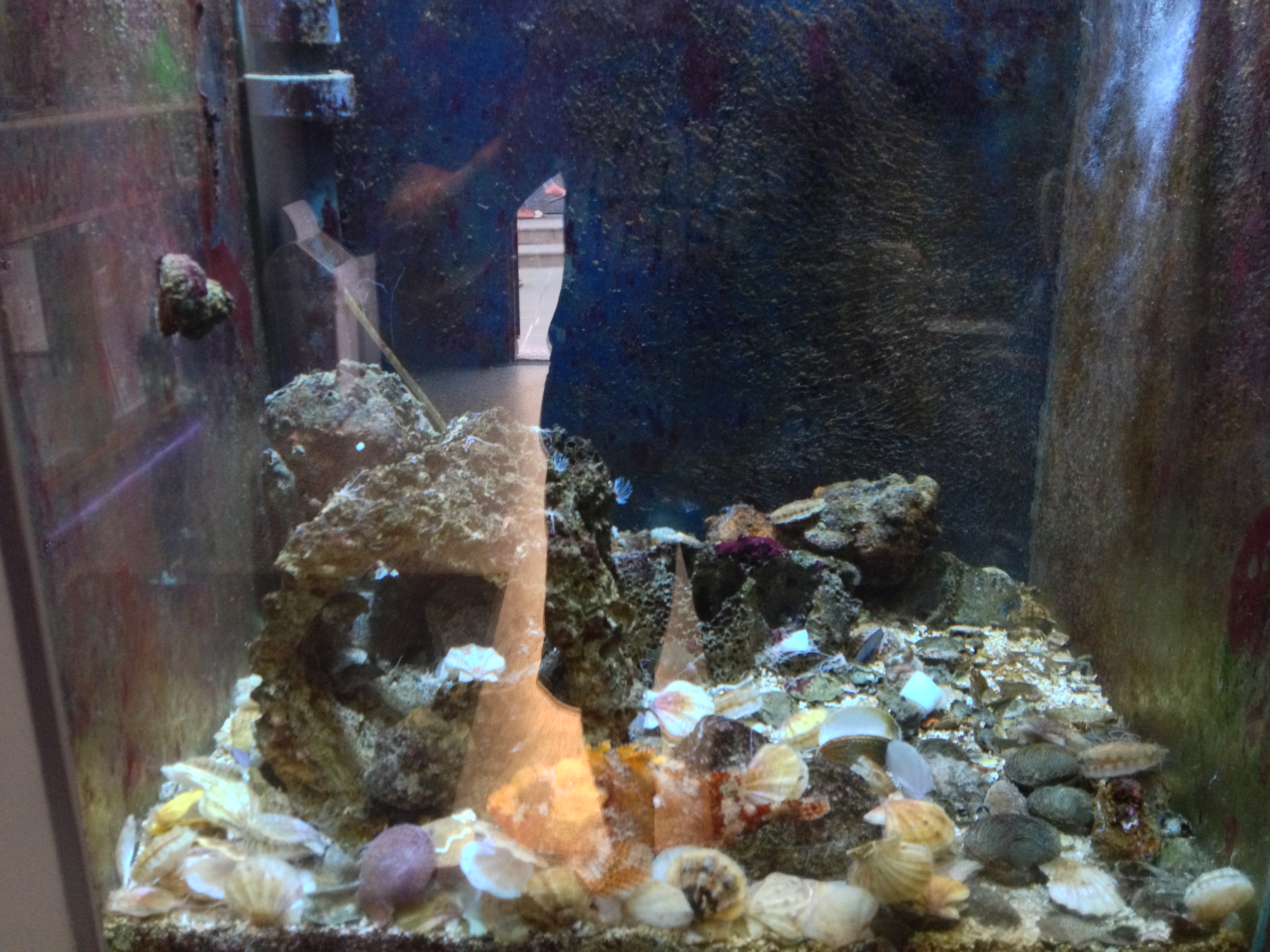
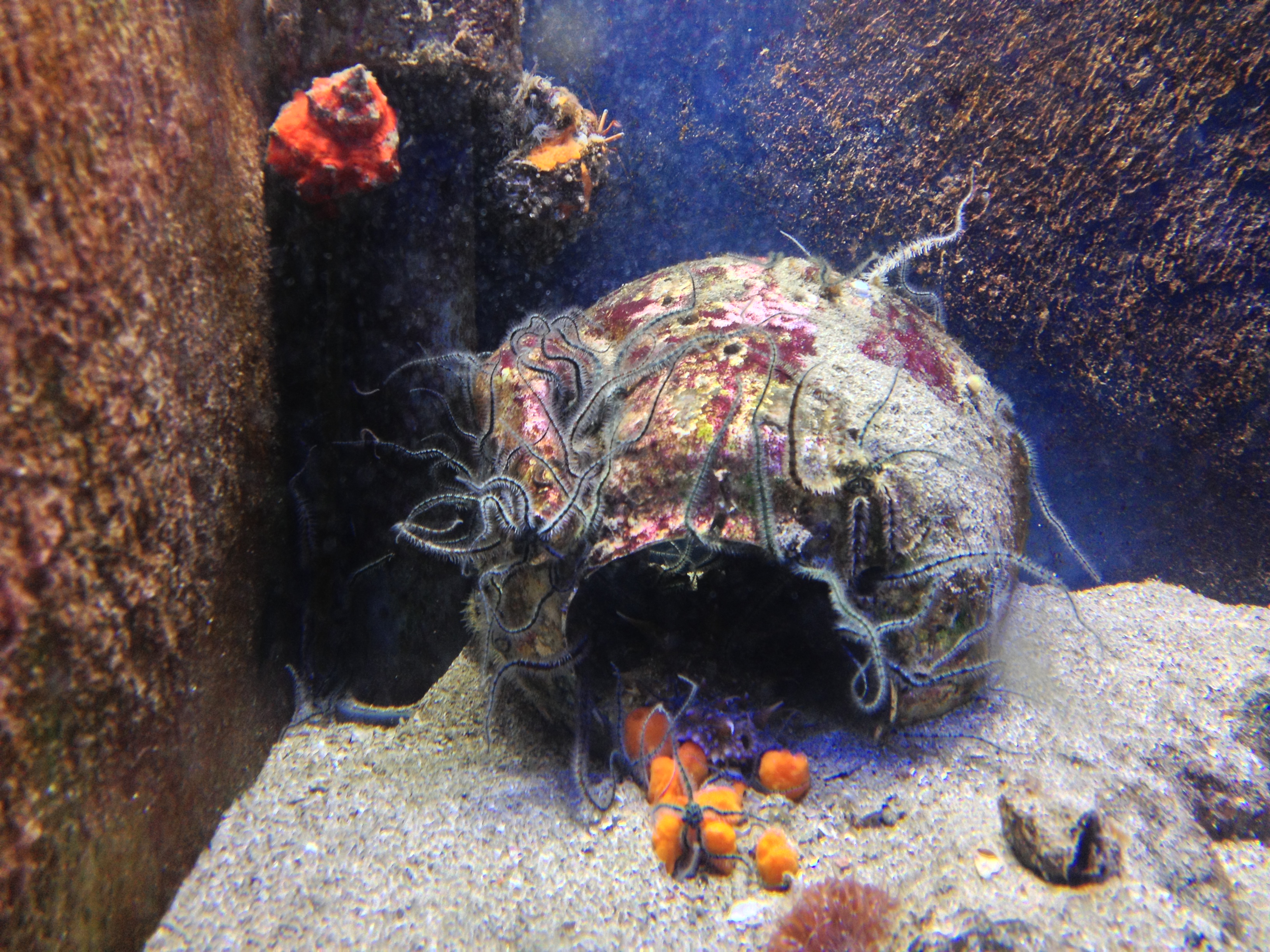
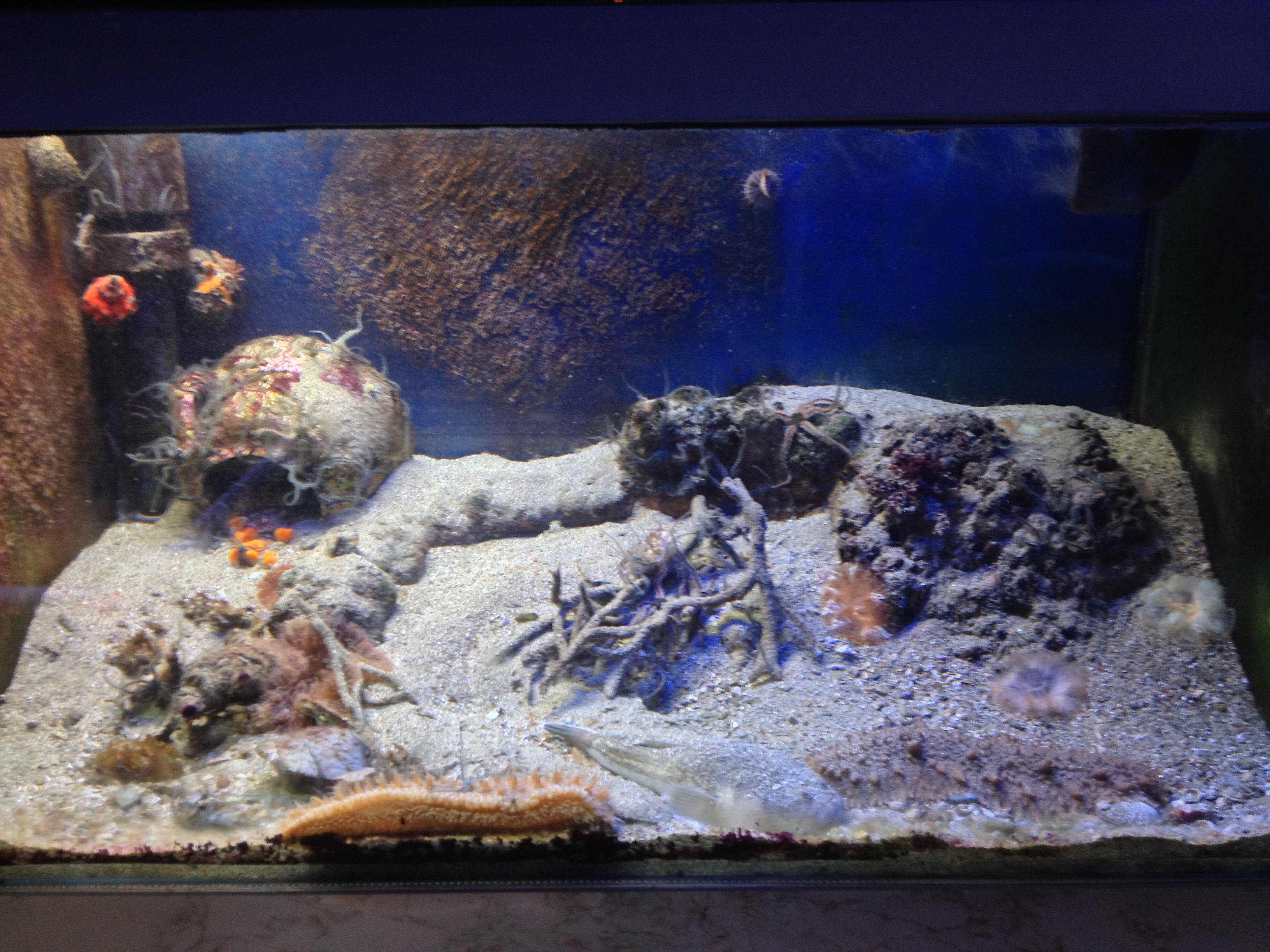
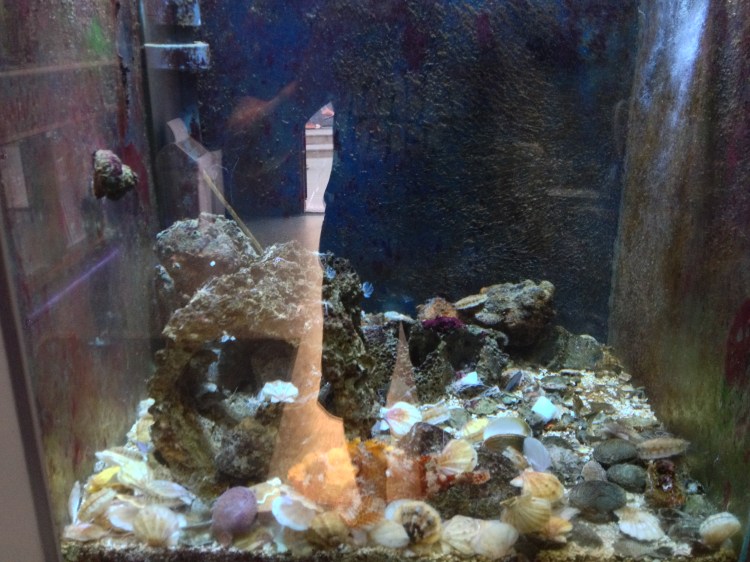
Some of the small aquariums were quite sweet. No seaweeds to speak of (although I saw some Ball algae Codium bursa) but lots of nice invertebrates such as sea cucumbers, clams, whelks, sponges, anemones as well as a variety of fish:
IMG_4314

IMG_4360

IMG_4358

Especially amazing was the stony coral Astroides calycularis:

 IMG_4376

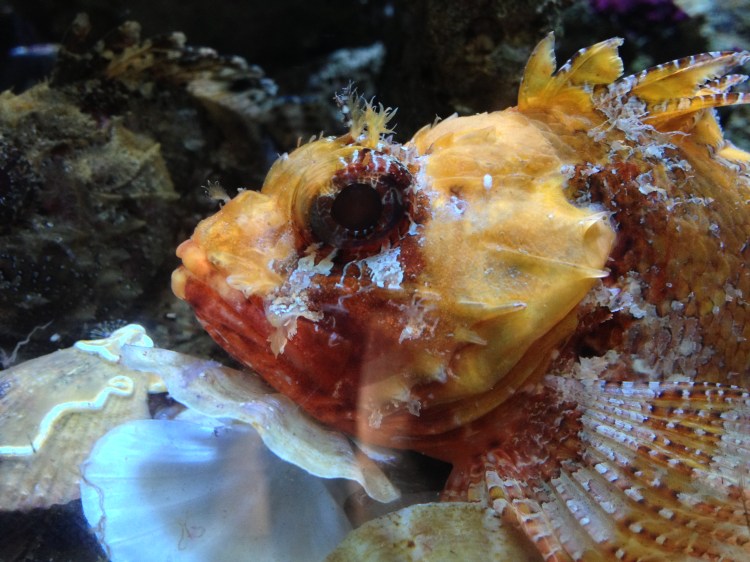
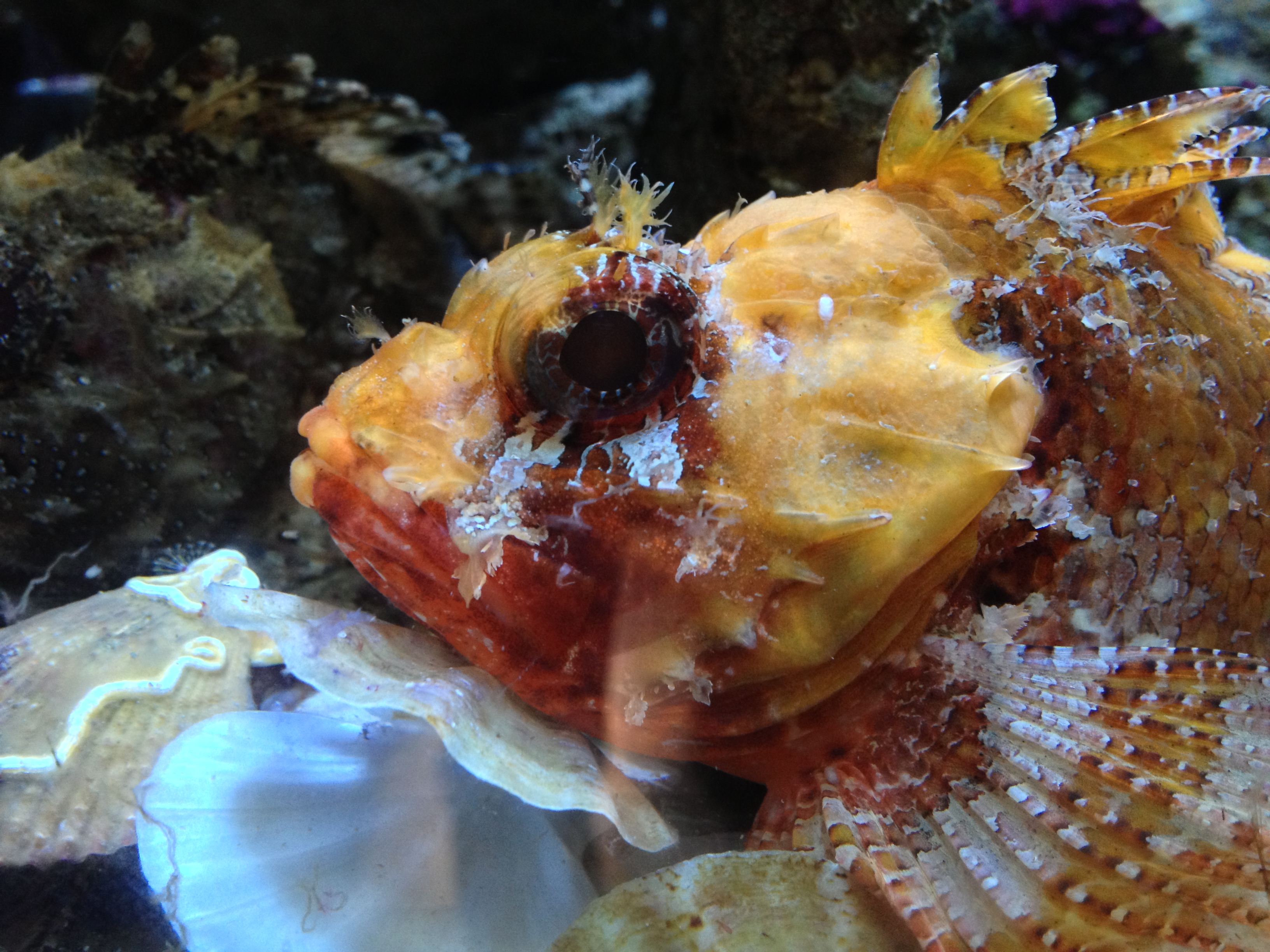
A Small rockfish Scorpaena notata:

IMG_4315

All in all an interesting little visit (I had to rush a bit taking pics as the rest of the family is not as keen on ‘the mysteries of the deep’ as I am…). Lots of types of invertebrates that I would like to try to keep such as sea cucumbers, but for the moment I will focus on seaweeds. I had no time to have a proper look at the rocks outside (the Mediterranean has very small tide differences anyway) and I had not even brought my snorkel. From the glances I got, the Adriatic coast did not have much on the Cornish coast though!