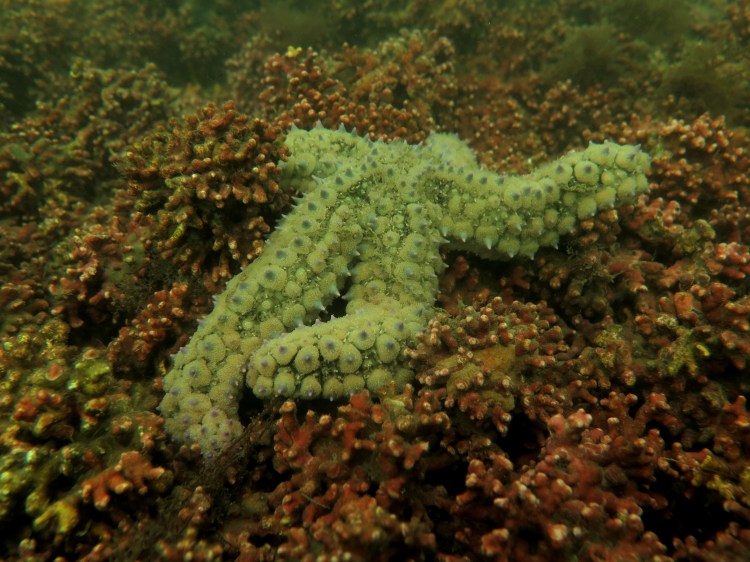
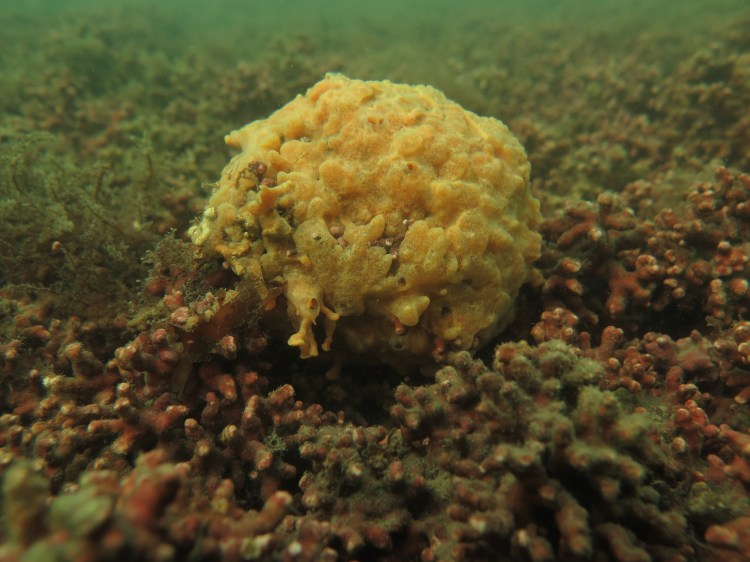
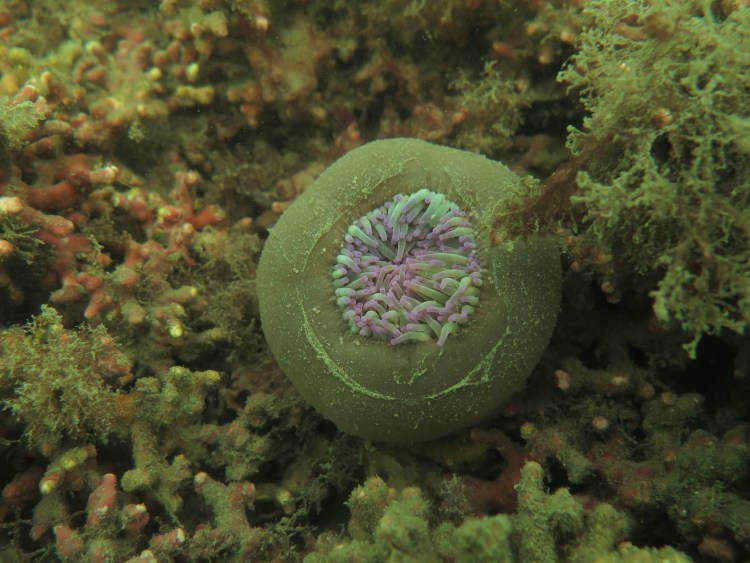
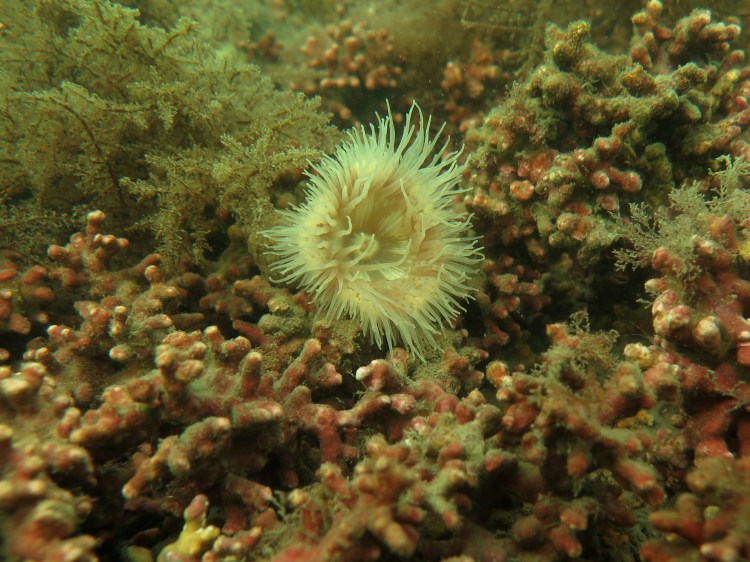
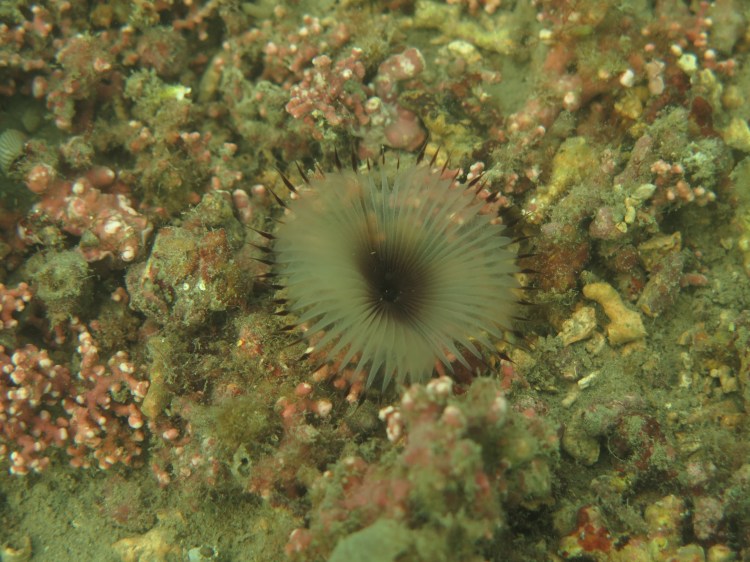
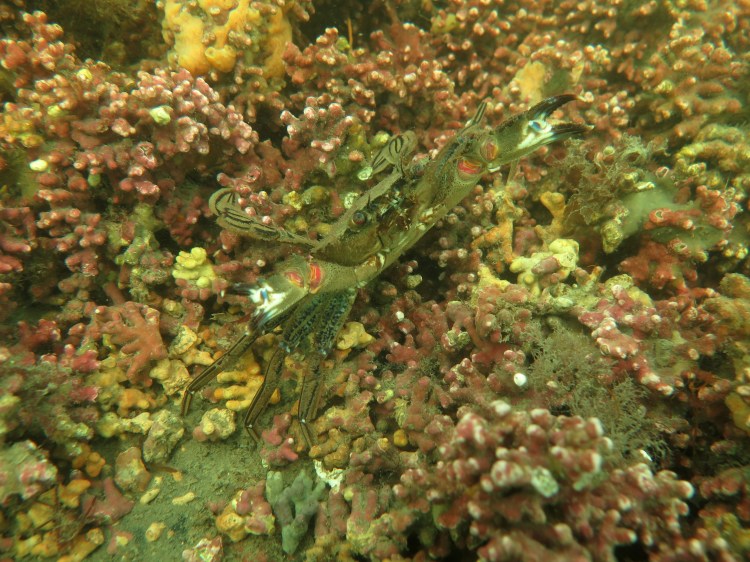
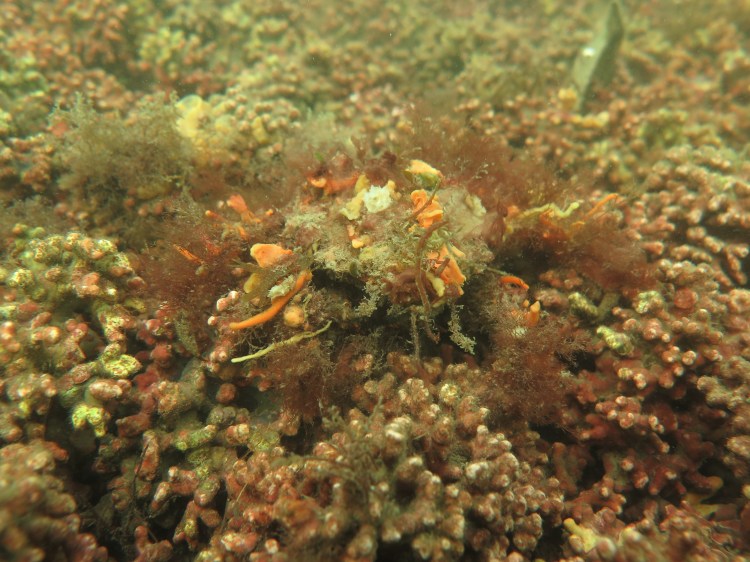
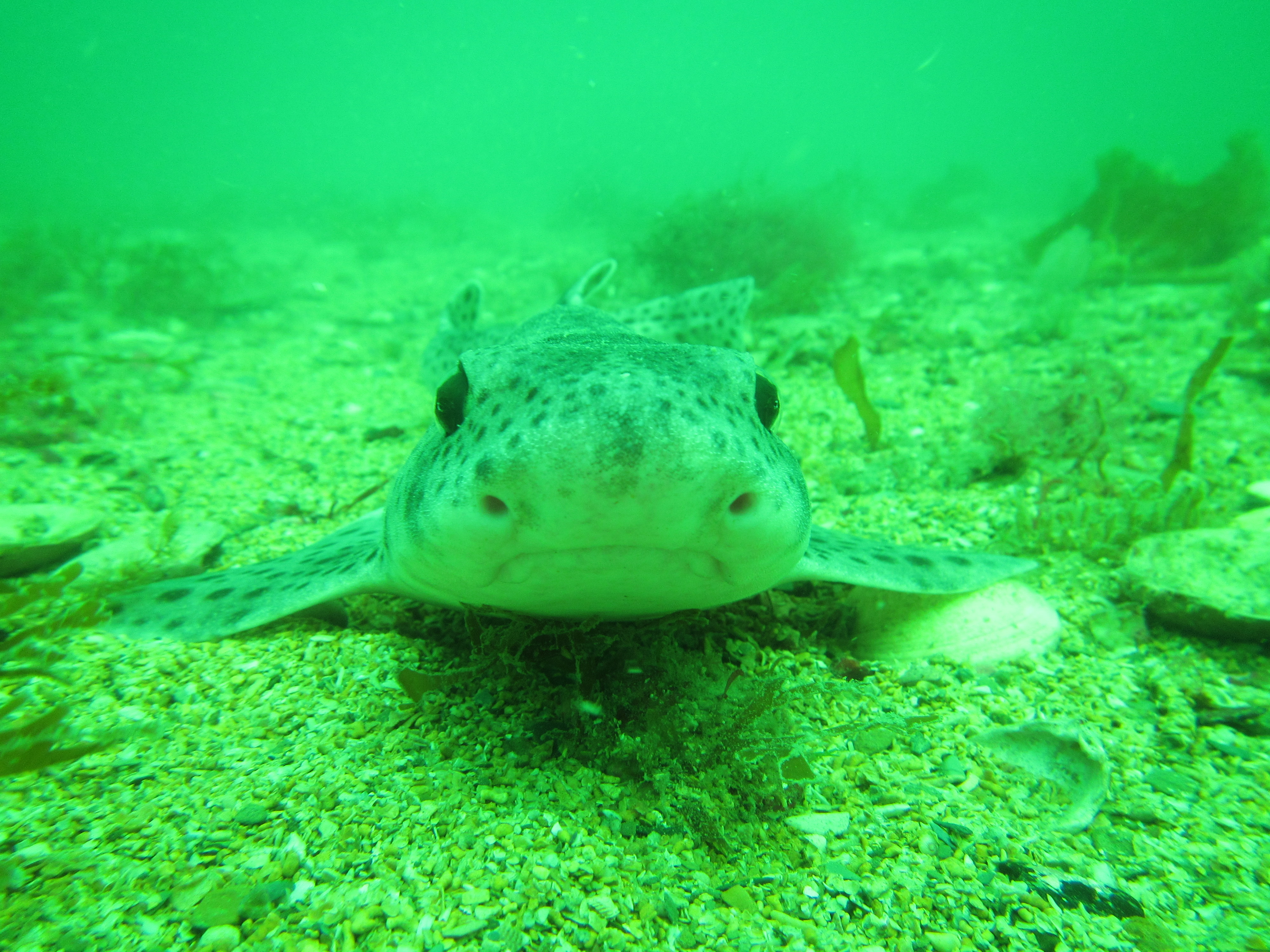
Last Wednesday I went for a sneaky worktime dive across the Fal estuary on the Maerl beds between St Just in Roseland and St Mawes. Maerl is a slow growing, calcified type of seaweed (looks more like coral) which forms a unique and quite rare habitat, see these older posts. The water was 17°C so nice and comfortable and it was probably the shallowest dive I’ve ever done, no deeper than 3 meters. I took my new Canon G16 in a Fantasea housing and went all semi-pro by adjusting the white balance first (not that I had a go at any other settings…). I was really pleased with the results, a world of difference to the Canon D30. The beds are an expanse of maerl nodules with very little to break it up, no rocks, no sand, just the occasional old bottle and so it is hard to get any exciting angles. Still there is always something to see. In order: a baby Smallspotted catshark Scyliorhinus canicula, a Spiny starfish Marthasterias glacialis, a (breadcrumb?) sponge, a closed-up Snakelocks anemone Anemonia viridis (a rare sight), a Parasitic anemone Calliactis parasitica, a Fan worm Myxicola infundibulum, a Harbour crab Liocarcinus depurator, a Velvet swimming crab Necora puber and a very well-camouflaged Spider crab Maja squinado.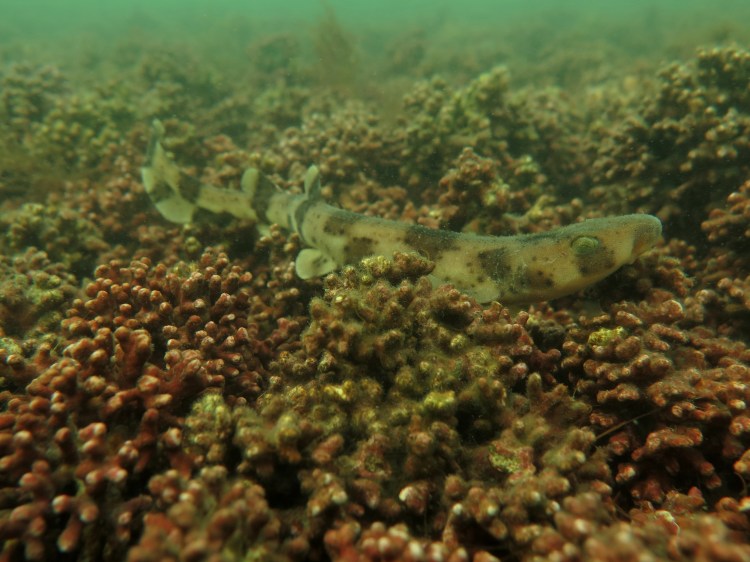

Category Archives: echinoderms
photographing seaweeds with a Canon Powershot part II
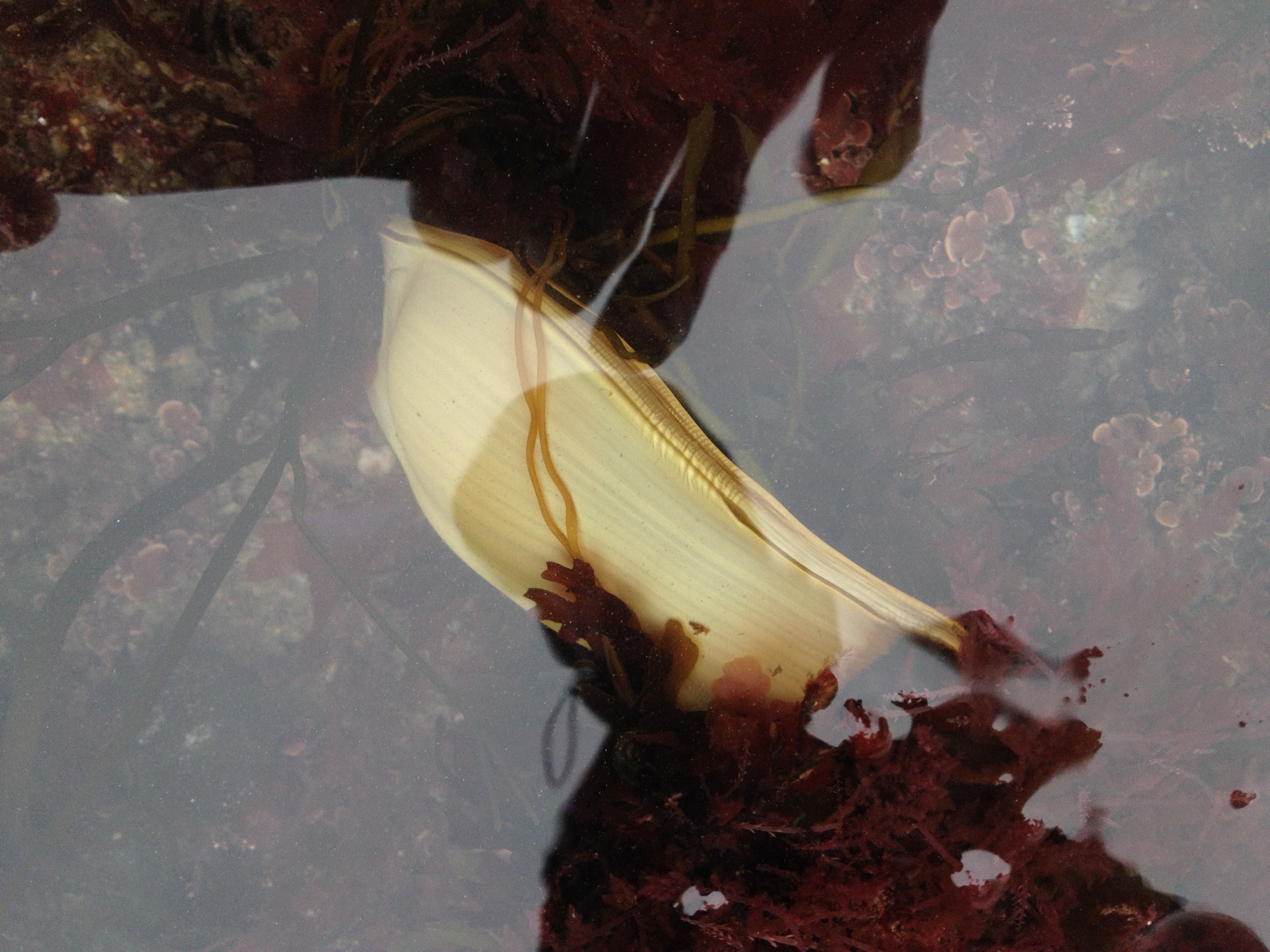
This friday, I tried my hand at some more underwater rock pool photography with my point-and-shoot Canon Powershot (see also here and here). This is both rewarding as the colours of seaweeds are so vivid and the textures so varied, and frustrating, as I cannot use the viewfinder and even if I could, lots of shots would be much better using a wider-angle lens. Also, I am often kicking up silt with my wellies and the nicest shots often are just out of reach. So next time, I should really photograph whilst snorkelling. (It would be great to use an SLR in an underwaterhousing. I bought a much cheaper and much more cumbersome ‘underwater-camera bag‘ without remembering that my old, not-so-frequently-used-anymore Canon EOS 400D does not have a viewfinder. I am afraid this will make the experience less, not more, fun…) Anyway, the trick for now is to take many pics and hope some turn out all right. I like the ones with a water surface reflection best. The nicest one was a snakelocks anemone among corraline algae. Next, what is may or may not be Sea flax weed Stypocaulon scoparium. After that, the brown Divided net weed Dictyota dichotoma growing inbetween Discoid fork weed Polyides rotundus, a Bull huss/Nursehound/Large-spotted dogfish Scyliorhinus stellaris mermaid’s purse and a Spiny starfish Marthasterias glacialis. Probably more photos soon as the pools look by far the best in early spring.
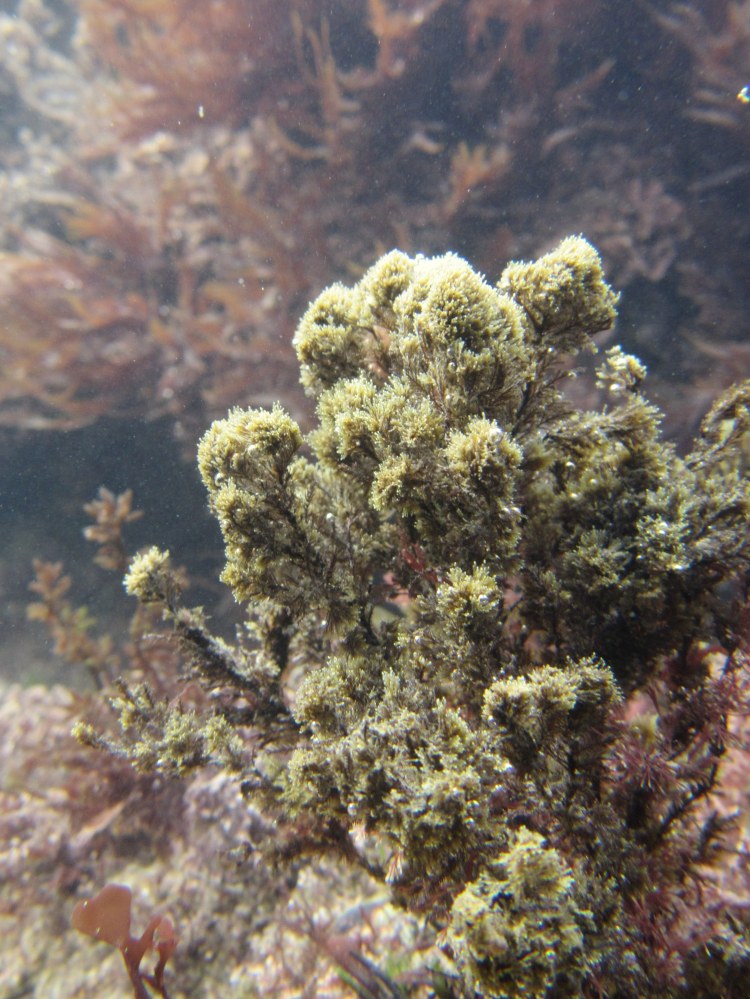
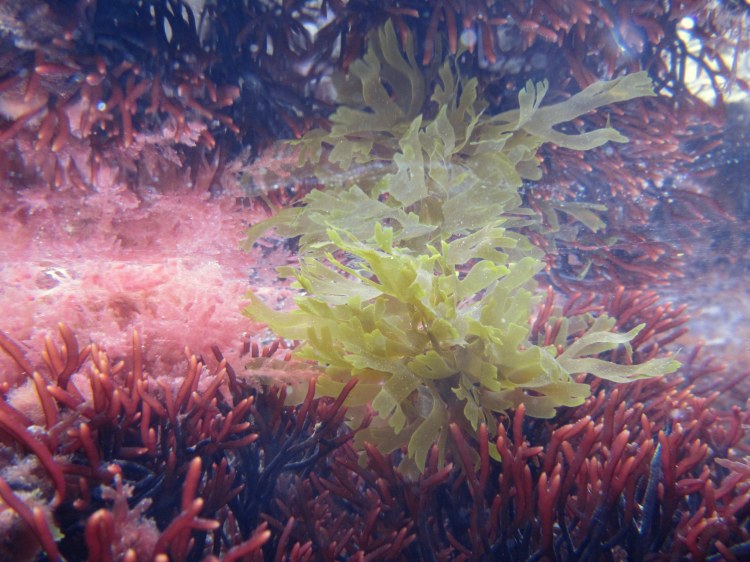
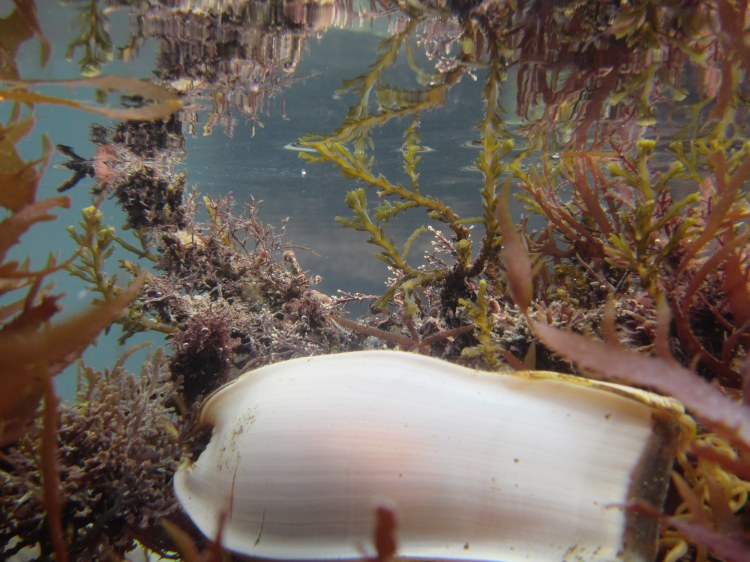

random rock pool pics
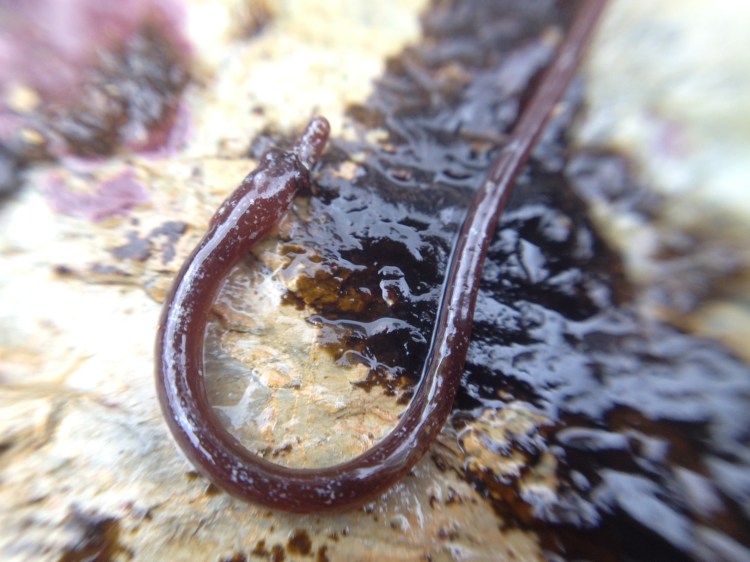
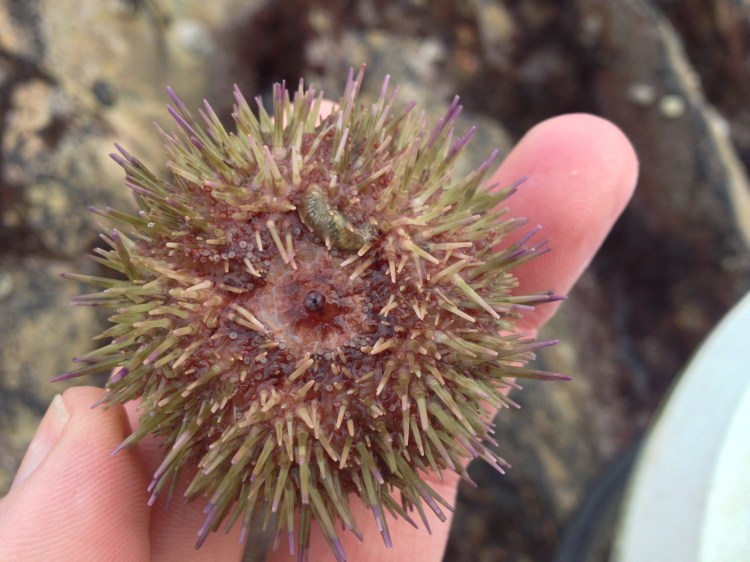
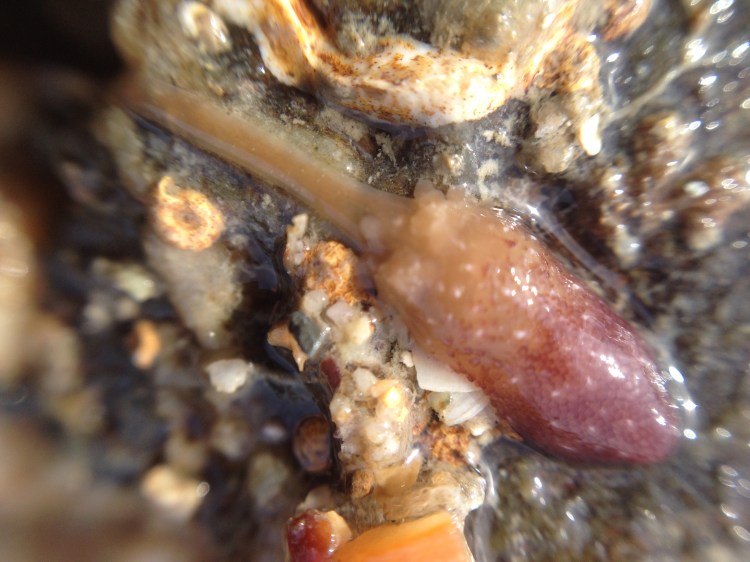
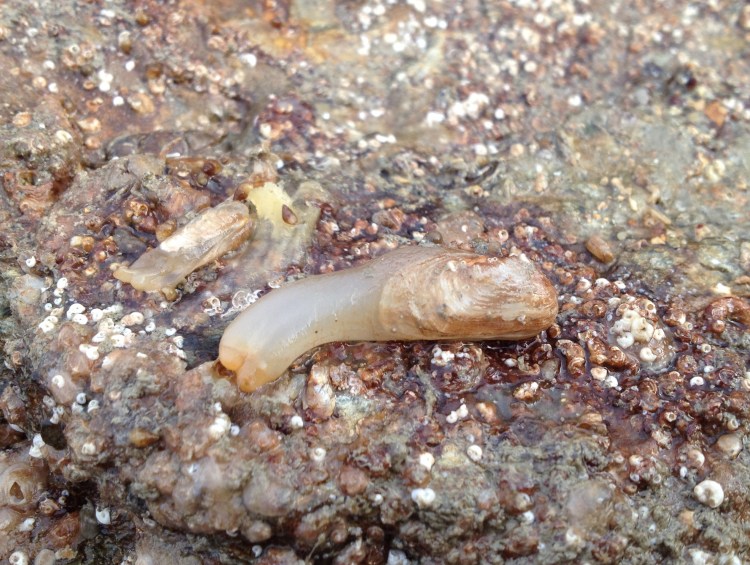
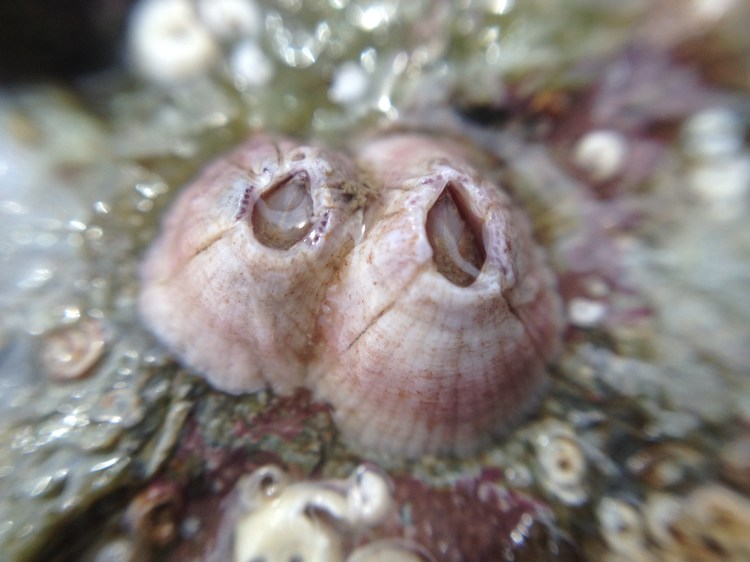
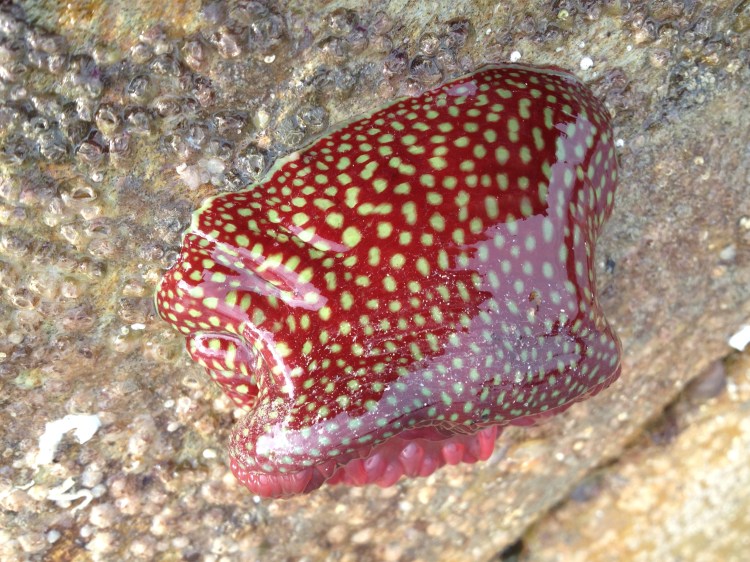
The weather has been generally awful so far this year and so I have not been out much. However it is March already so at least a small blog post is in order! There are loads of Worm pipefish Nerophis lumbriciformis around, some of the males carrying eggs (see also the blog header and the ‘about’ section). I found my smallest one yet. Next up a Sea urchin Psammechinus miliaris with what is probably the parasitic (or commensal?) polychaete worm Flabelligera affinis (thanks David Fenwick). After that, a slighlty out of focus shot of the hydroid Candelabrum cocksii. A few of these small individuals were sat under the first rock I turned over; I reckoned they were some type of spoon worm but they are something very different, thanks again David Fenwick, see for his much better photographs of this weird little thing here. Next the Wrinkled rock borer Hiatella arctica with siphon extended and the pretty acorn barnacle Balanus perforatus. Finally a picture of the Strawberry anemone Actinia fragacea, quite common and pretty, but I do not think I have ever posted a picture of it on the blog before. (All pics taken at Castle Beach in Falmouth btw.) I have three in my tank and it is high time for an aquarium update as well. I hope to go out tomorrow and the weekend as the tides are very low so watch this space!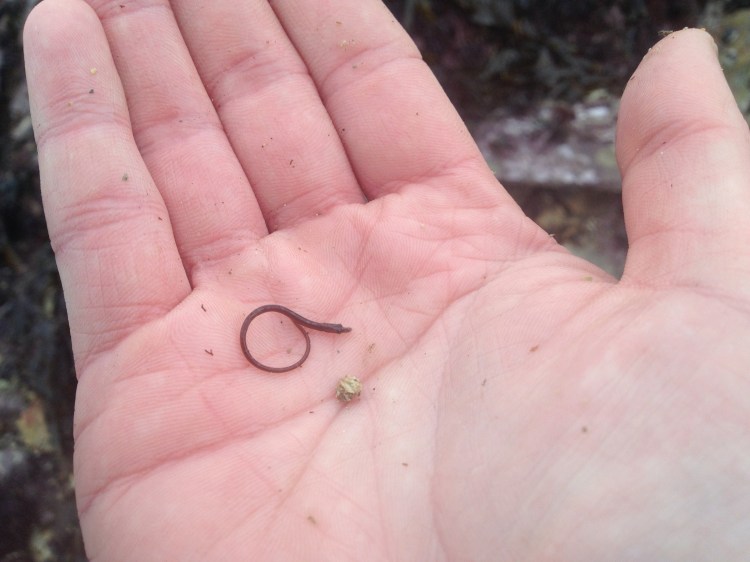
Leftover Pics
When going out rock pooling, I always take my iPhone and Canon Powershot (for underwater use) and take at least a couple of photos. Because of a lack of time, or because a single good photo is not enough for a new post, not everything ends up on the blog. Now I have some free time, I picked a couple of unused photos made this year that seem blog-worthy. First up, In realized only what I had found on the beach at St. Ives when leafing through the The Essential Guide to Beachcombing and the Strandline: a Seabeard! This hydroid, Nemertesia antennina, grows as stiff colonies protruding from a matted base and occasionally washes up on shore. It looks a bit plant-like; at the time I did not have the opportunity to have a closer look and just snapped a quick photo. Next a Lesser sandeel Ammodytes tobianus found at Gylly beach. I always see them when snorkeling or diving (see here) but this was a good opportunity to see one up close (I get excited when I spot a dead fish on the beach (see also here) and I am not afraid to admit it!). 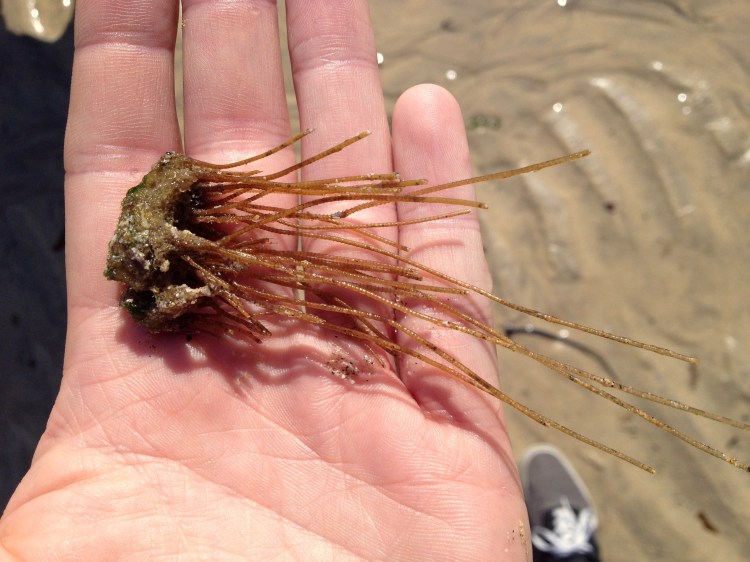

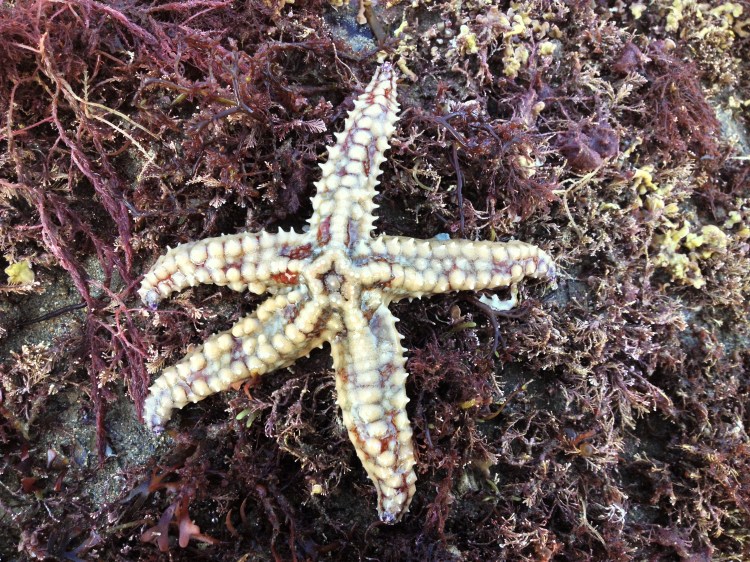
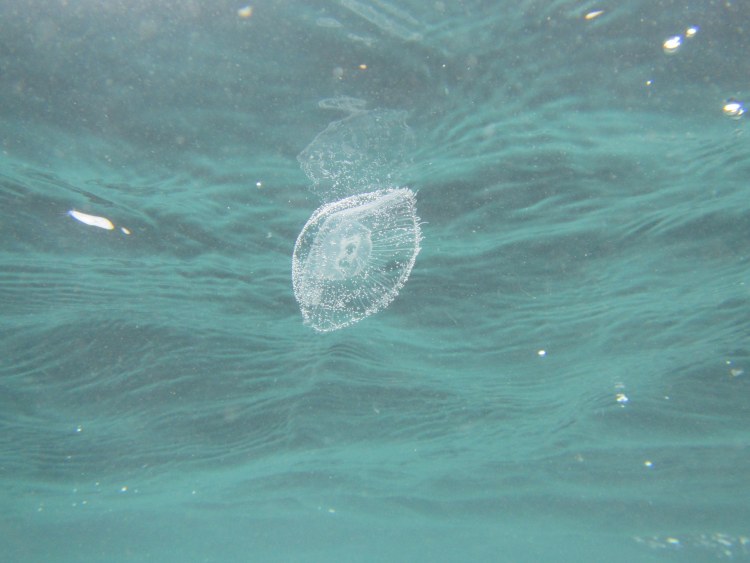
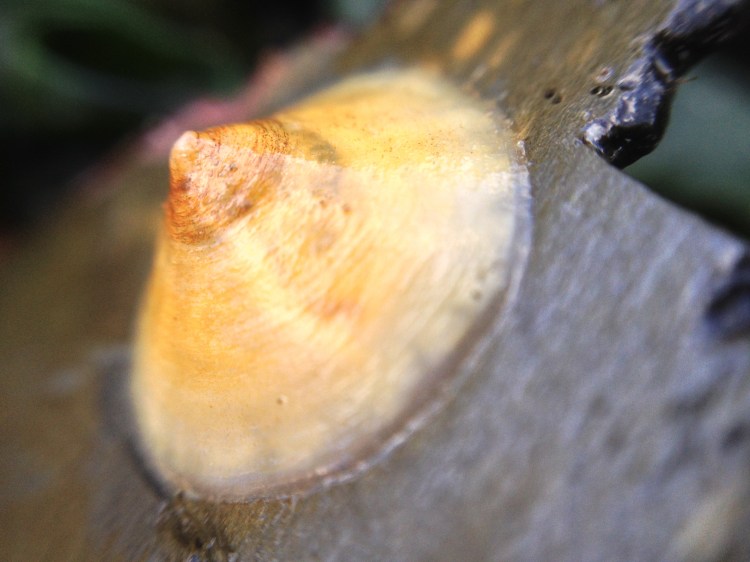
 Following are two colour varieties of the Spiny starfish Marthasterias glacialis, a Common brittlestar Ophiothrix fragilis and a shot of an Aequorea forskalea (or maybe A. vitrina) jellyfish. Next the gastropod mollusc Chinaman’s hat Calyptraea chinensis. I went back to Mylor marina for some pontooning recently but not much was growing; the only thing that stood out was the luxuriant sponge growth (I am not sure of the species, perhaps Halichondria).

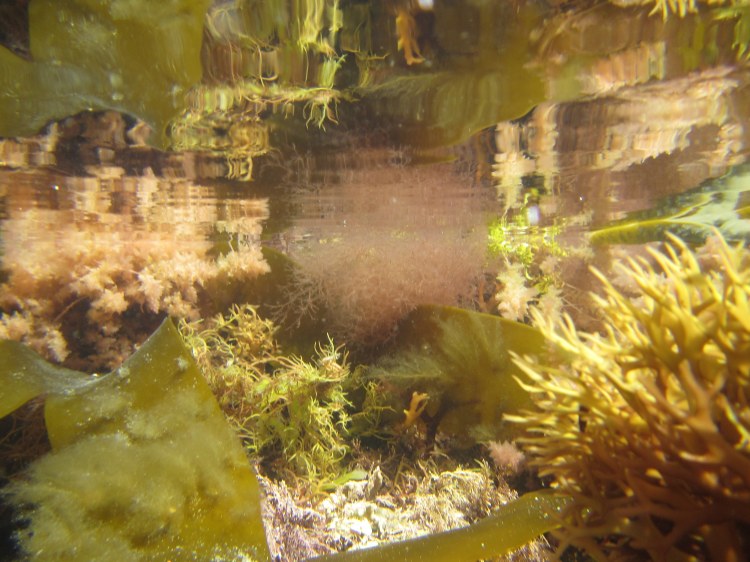
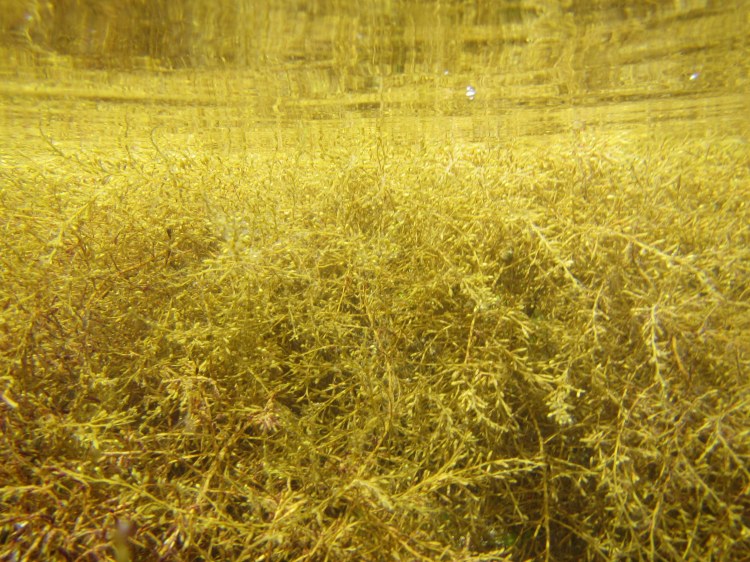
 And of course some seaweed pictures. By iPhone: Under tongue weed Hypoglossum hypoglossoides in Flushing, Black scour weed Ahnfeltia plicata in St. Agnes and a photo showing a variety of wracks all colonizing the same patch (Flushing): Serrated wrack Fucus serratus, Spiraled wrack Fucus spiralis, Bladderwrack Fucus vesiculosis and Egg wrack Ascophylum nodosum. Next some Canon Powershot underwater pics (see also this post and this one): a random rock pool picture of mostly decaying seaweed, a closeup of my favourite the Bushy rainbow wrack Cystoseira tamariscifolia and a shot of Wireweed Sargassum muticum that has completely taken over a pool. Finally an SLR photo of a rock pool at Gylly beach with large Cystoseira baccata plants (middle, Wireweed on the left).




Diving the mouth of the Helford
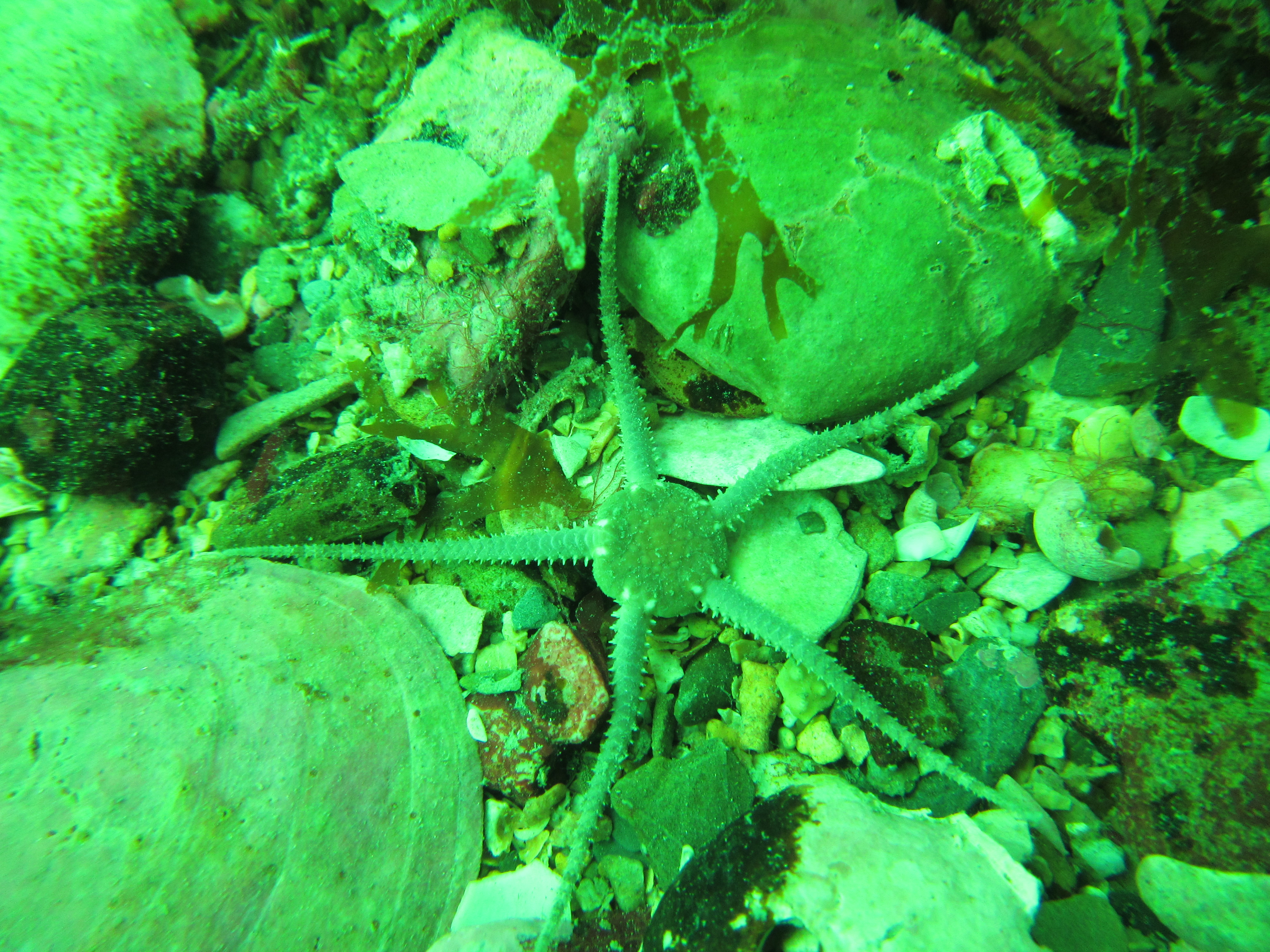
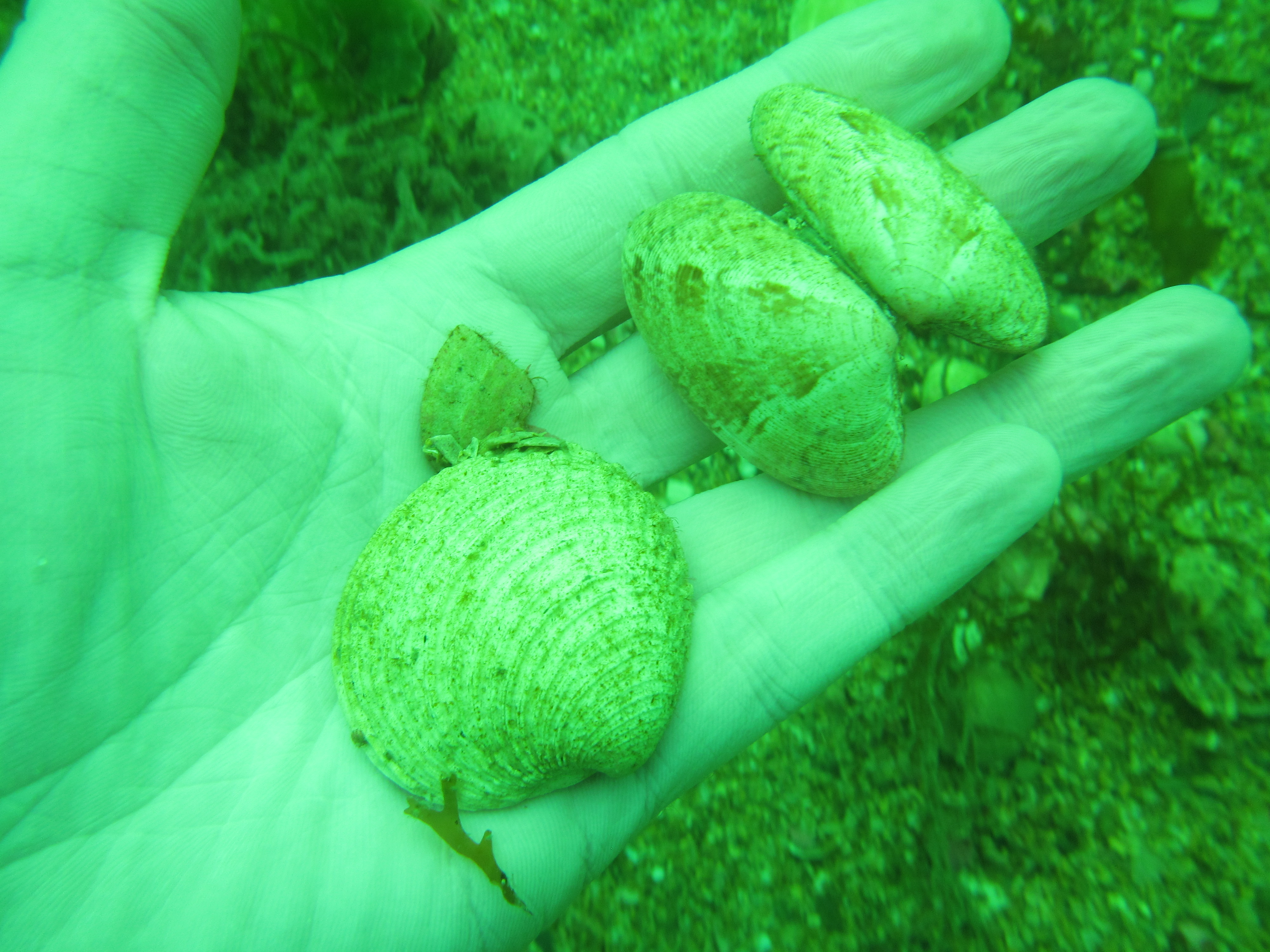
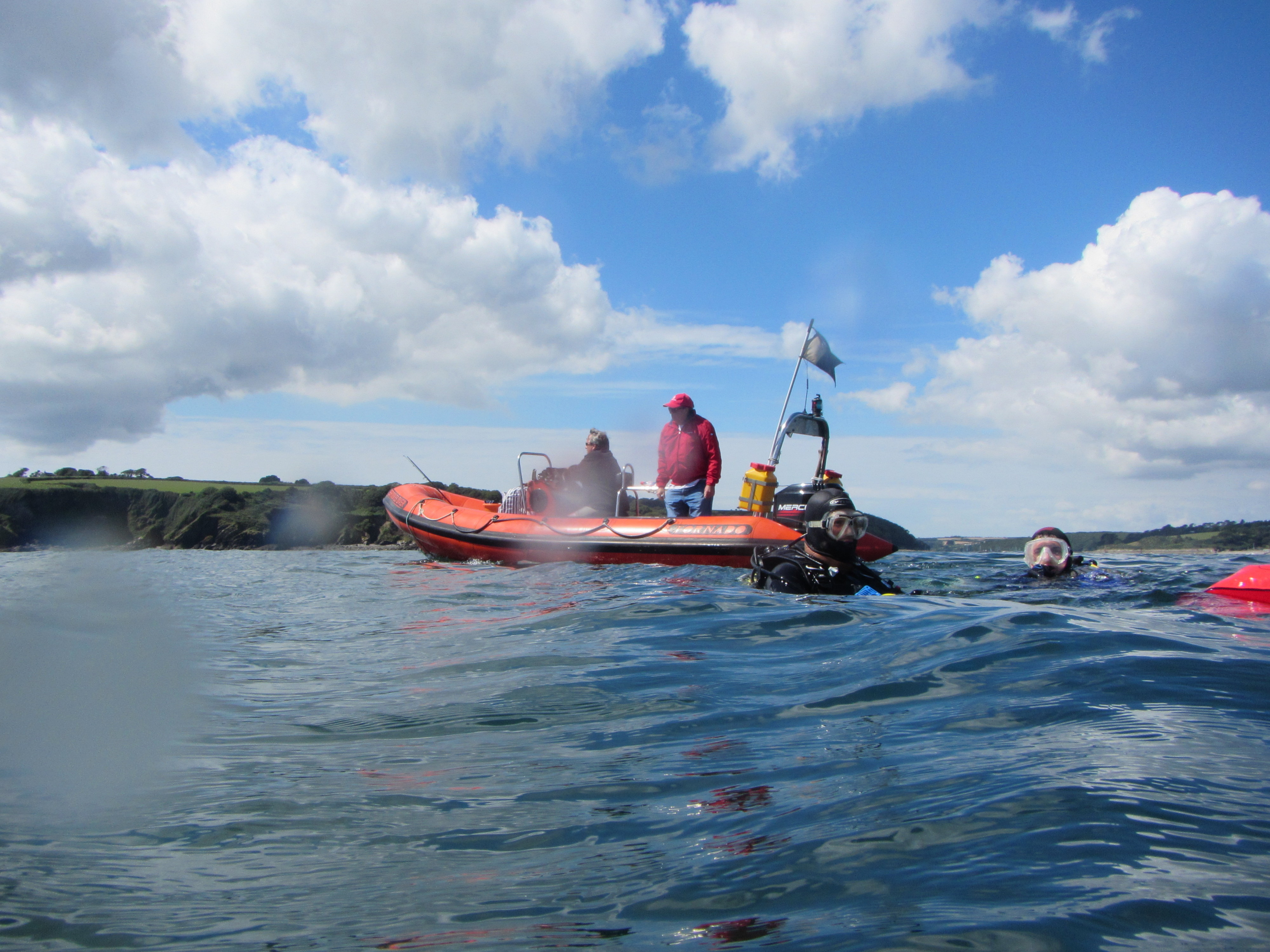
A quick post on a dive a couple of weeks ago, my first boat dive in Cornwall. Four divers left from Loe Beach in Feock on the Fal Estuary to find the wreck of the Rock Island Bridge at the mouth of the Helford River. On our way we saw a Harbour porpoise which was a first for me, great! The mouth of the Helford is only slightly deeper (nine meters) than it is off Grebe Beach where we usually dive. There is no eelgrass here, just some Divided net weed Dictyota dichotoma and very large Sugar kelp Saccharina latissima lying flat on the bottom. The seabed is an expanse of gravel covered with quite a lot of bivalves: Great scallop Pecten maximus, Rayed artemis Dosinia exoleta, Norway cockle Laevicardium crassum, Dog cockle Glycymeris glycymeris, Common ottershell Lutraria lutraria, Warty venus Venus verrucosa, Pullet carpet shell Tapes corrugata and Hardshell clam Mercenaria mercenaria amongst them. Next time I will collect shells so I can take a good picture of all of them back on land. The place was swarming with starfish feeding on these bivalves, I’d say 90% Common starfish and 10% Spiny starfish. Below a Common starfish Asterias rubens feeding on a clam, a small brittlestar Amphipholis squamata and a Warty venus and Pullet carpet shell.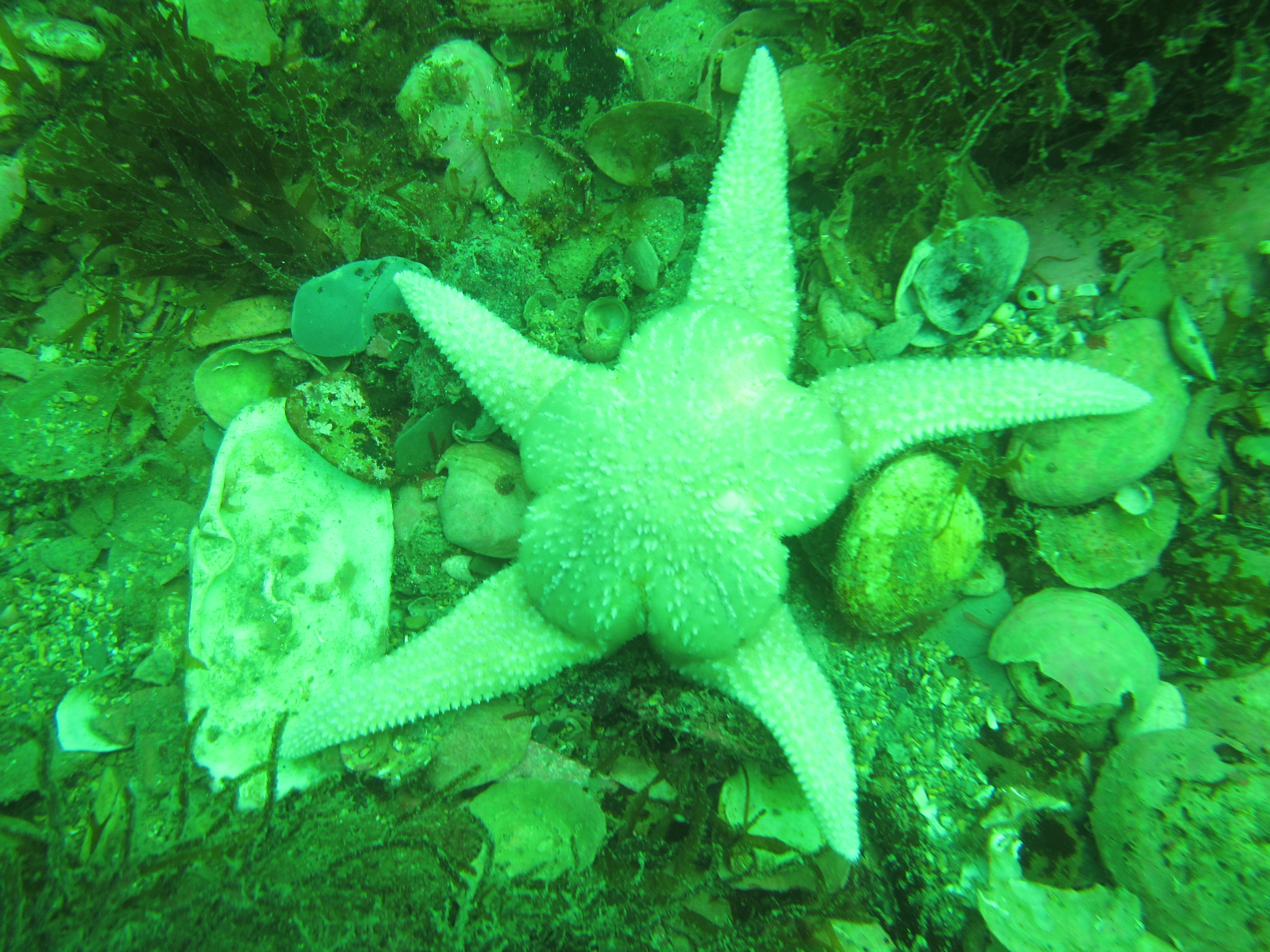
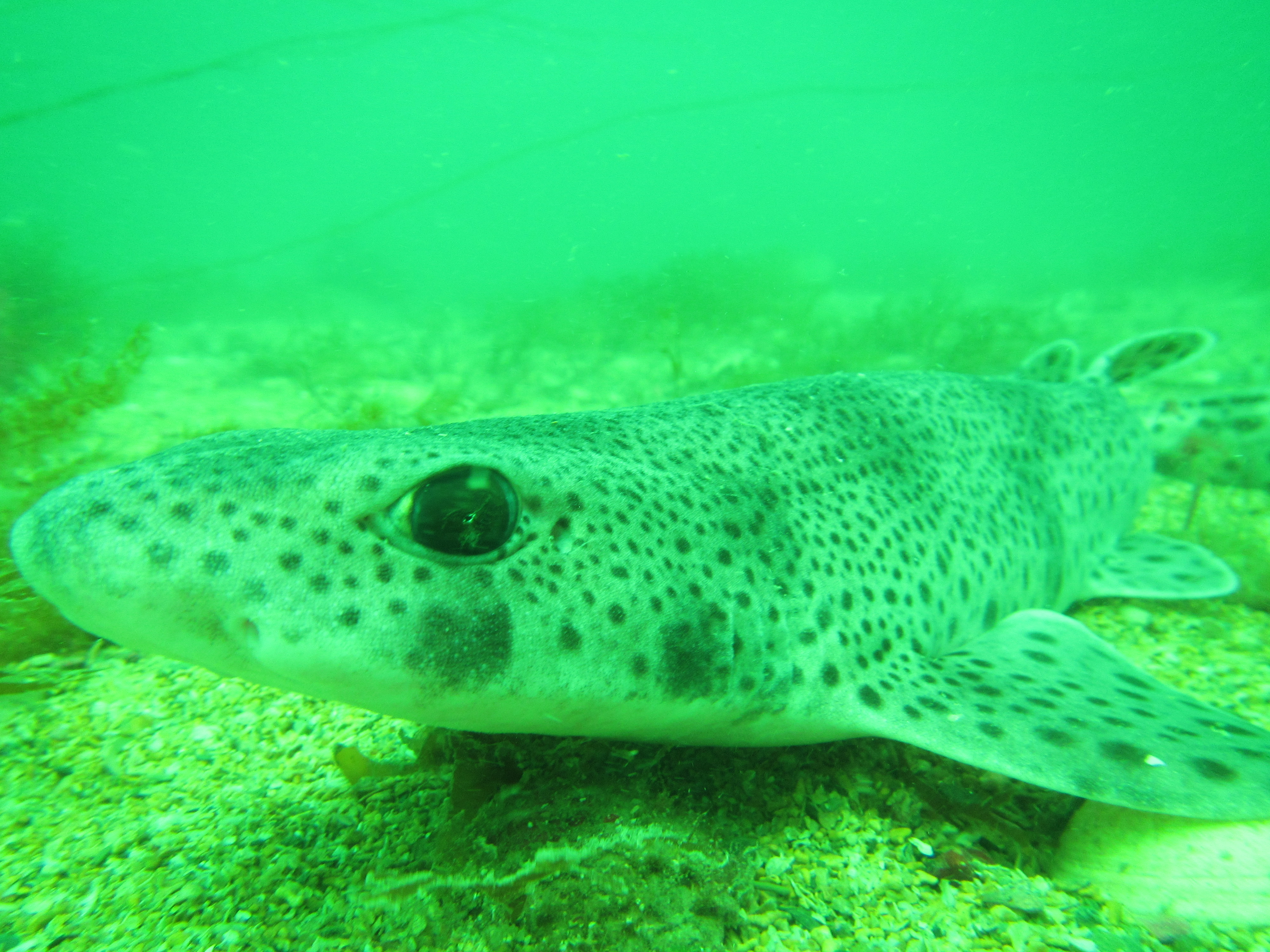
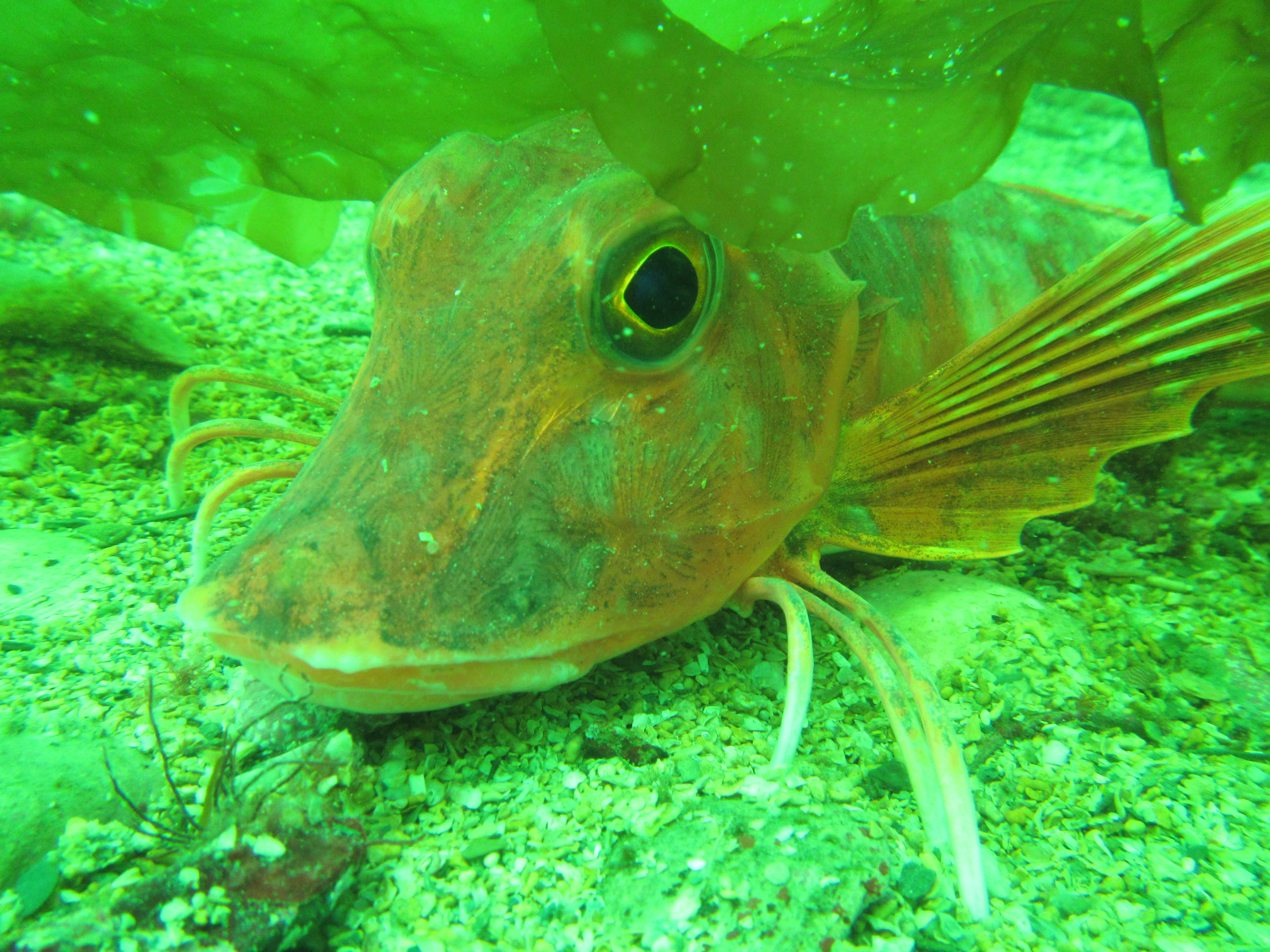
 Although the seabed was relatively featureless and we did not manage to find the wreckage, it was fun to watch the Thornback rays Raya clavata (including a large individual with distinctive black headmarkings) and the many Small-spotted catsharks (or dogfish) Scyliorhinus canicula which are very easy to approach. We also saw a Red gurnard Aspitrigla cuculus (see also this old post). However, it is high time we are going to explore some other, deeper dive sites. With the weather deteriorating, I hope we can find some more good days to dive this year though!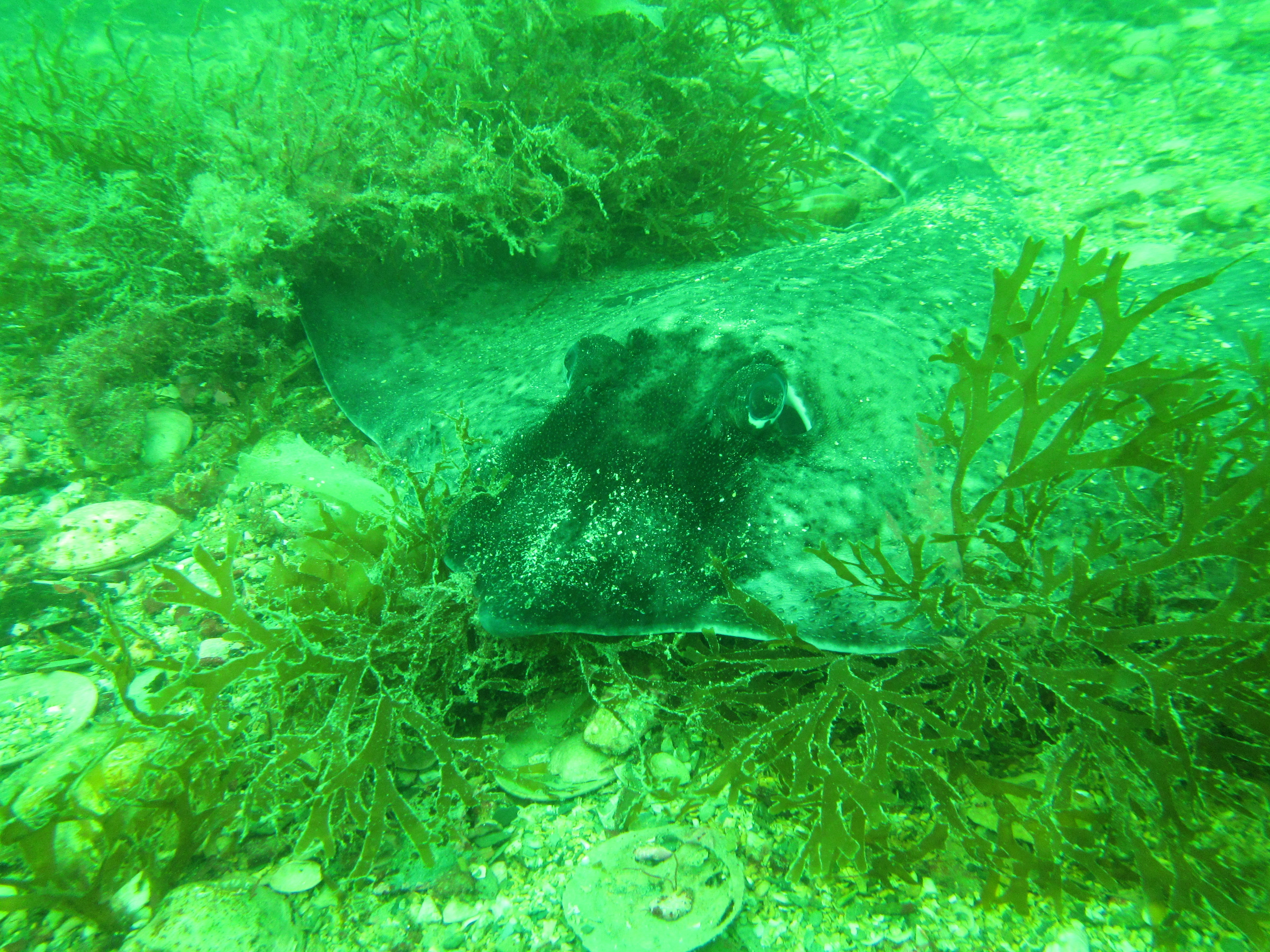
aquarium update 12
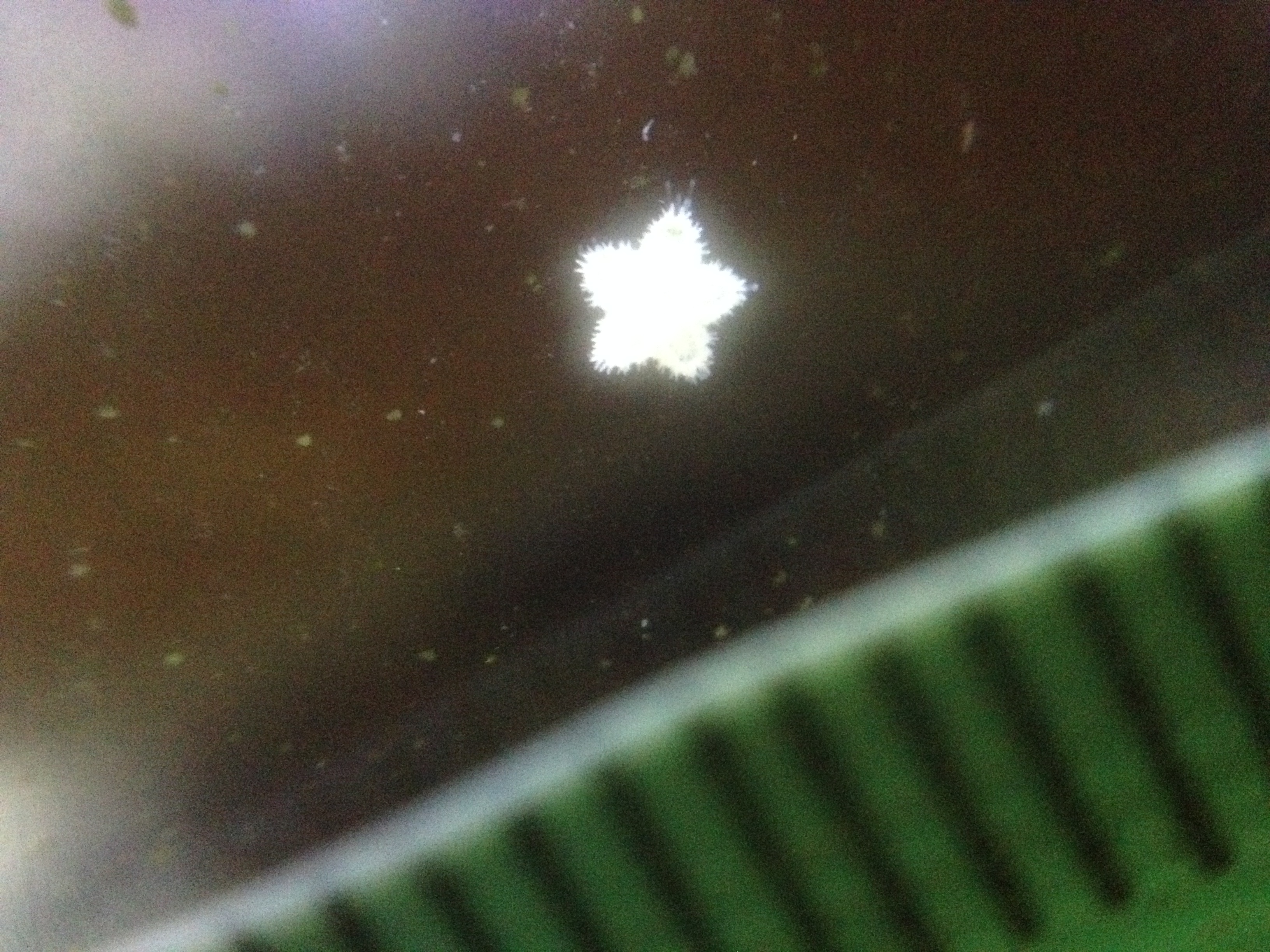
It has been a while since I last posted an aquarium update; I have been a bit busy and have not done much with the tank recently. I have not done any water changes, never use the skimmer but have had zero algae because I have kept the light level low. I have experimented a bit with various seaweeds but nothing thrived. The Chrysemenia was doing well growing on the Tunze pump but disappeared overnight. Kelp always does well when attached to the pump. The tank is still a bit bare so no ‘full tank shot’ but some inhabitants below. I collected some Parasitic anemones Calliactis parasitica attached to an empty shell figuring that a not so pretty species might be actually quite hardy. Turns out they just stayed a bit limp and I therefore returned them to the sea. The Tompot blenny is a real character, very alert and always hungry. If you stick your finger in the water he immediately comes and nips it. The small scallop remarkably survived over the summer (remarkably because there is almost nothing to filter from the water) but the hungry Tompot ate it in the end (like most other snails). As the snails were not going to last long anyway, I introduced two small Common starfish Asterias rubens and two small Spiny starfish Marthasterias glacialis. They are usually hidden but that makes it extra fun when you spot one. The Cushion star Asterina gibbosa of course remain unperturbed and are always on the prowl. I noticed a tiny offspring (<2 mm).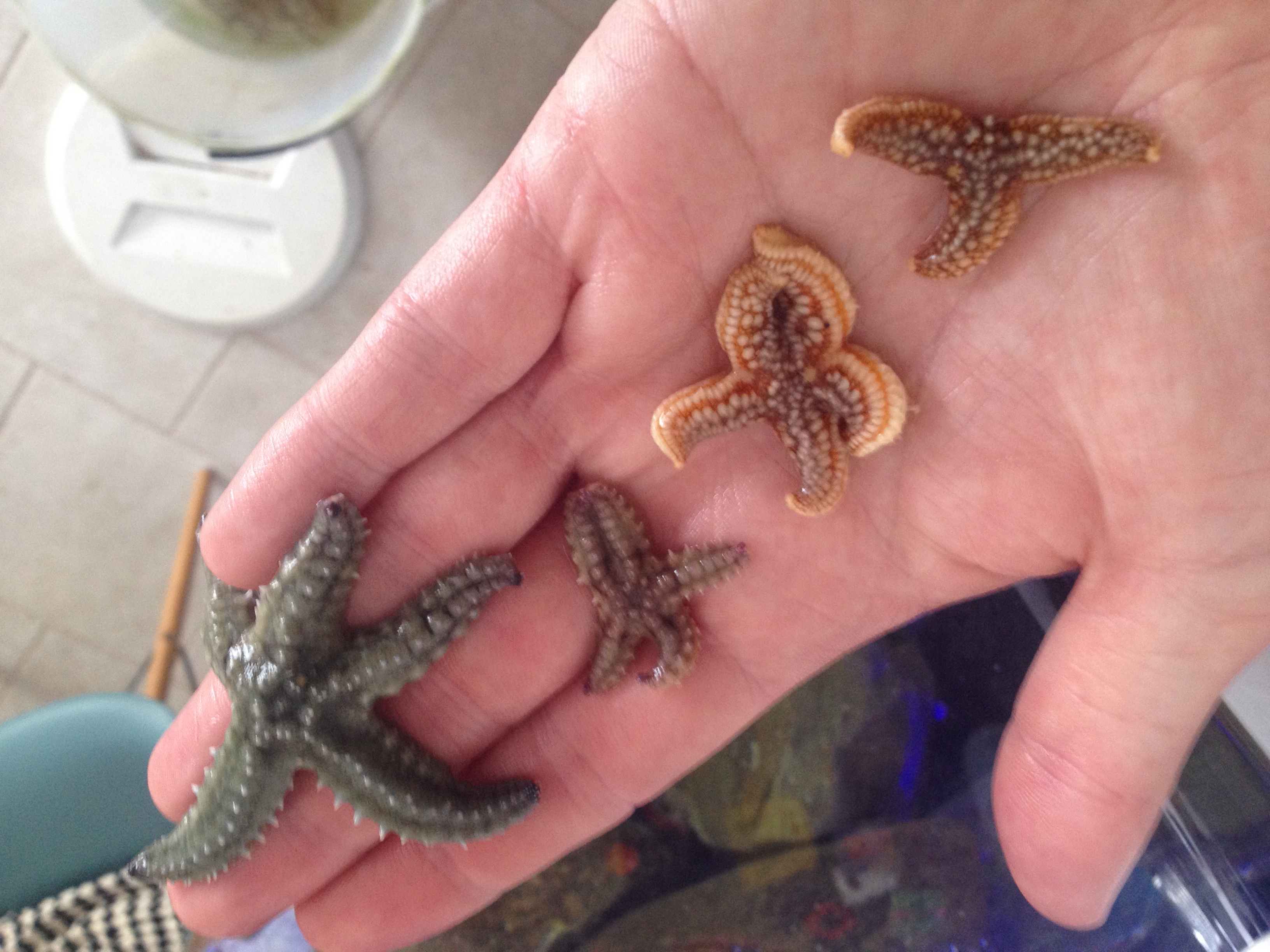
a very low tide at Falmouth part 1
Low tides over the weekend, see the previous post for the trip on Saturday in Flushing. On Sunday the wind resulted in the water being swept up quite high on the shore unfortunately (the next very good tide I will make sure to check the wind a bit better, probably would have been a good idea to have gone to the north coast). Also the rain made swiping my iPhone very difficult and I was absolutely drenched. Luckily I had already taken a long lunch break on Friday when it was sunny! As I found a good number of species I will divide them up over two short posts instead of a very long one. In this post some species that have featured before, but that I now have taken better pictures of: a Shore clingfish (or Cornish sucker) Lepadogaster lepadogaster, a particularly purple Spiny starfish Marthasterias glacialis, a particularly orange Painted topshell Calliostoma zizyphinum as well as a close-up of the ‘normal’ colour variety, Blue-rayed limpets Helcion pellucidum, Seven-armed starfish Luidia ciliaris and a Bull huss (Nursehound shark) Scyliorhinus stellaris mermaids purse. Nice colours all around: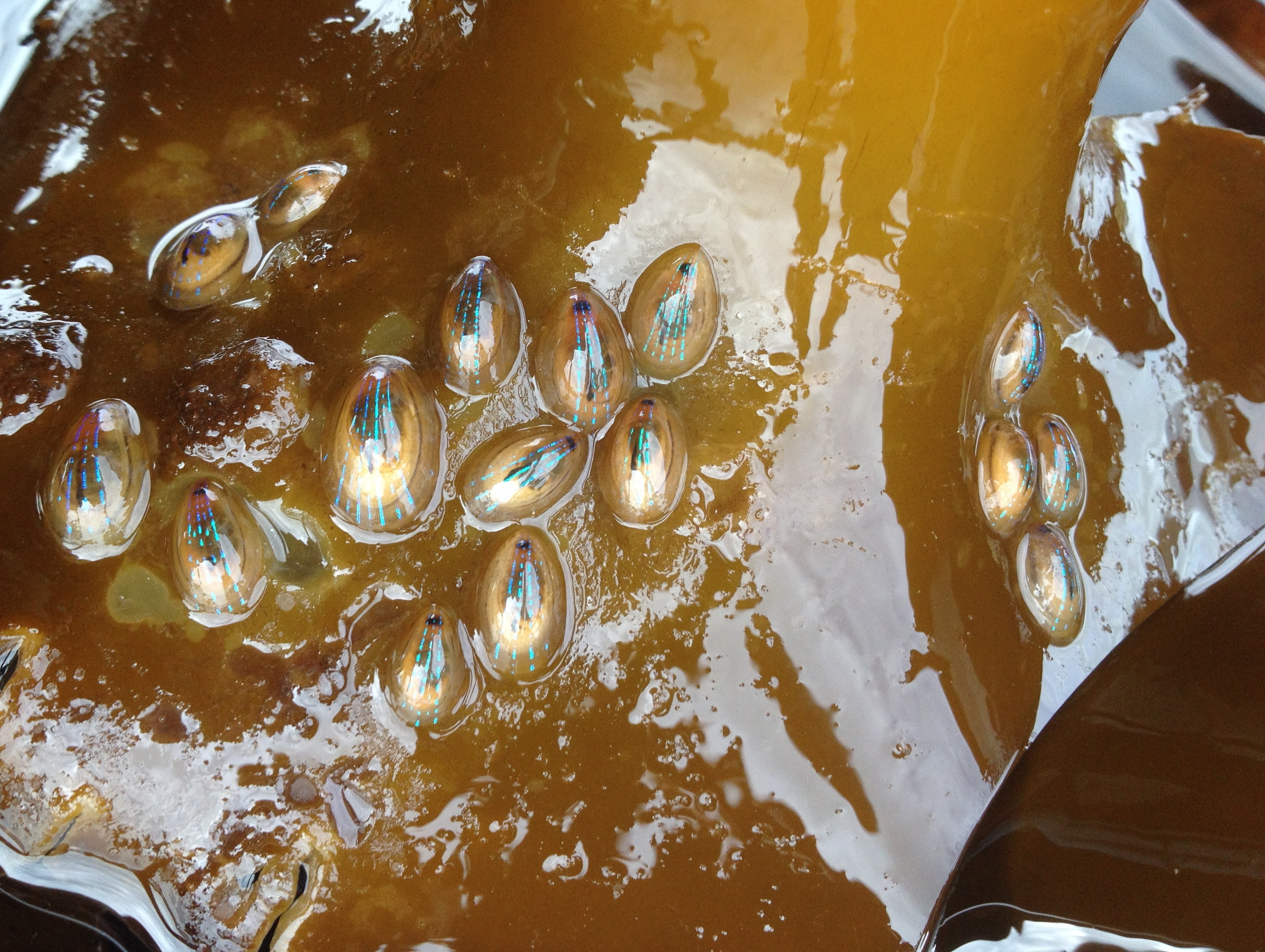
Aquarium Update 9
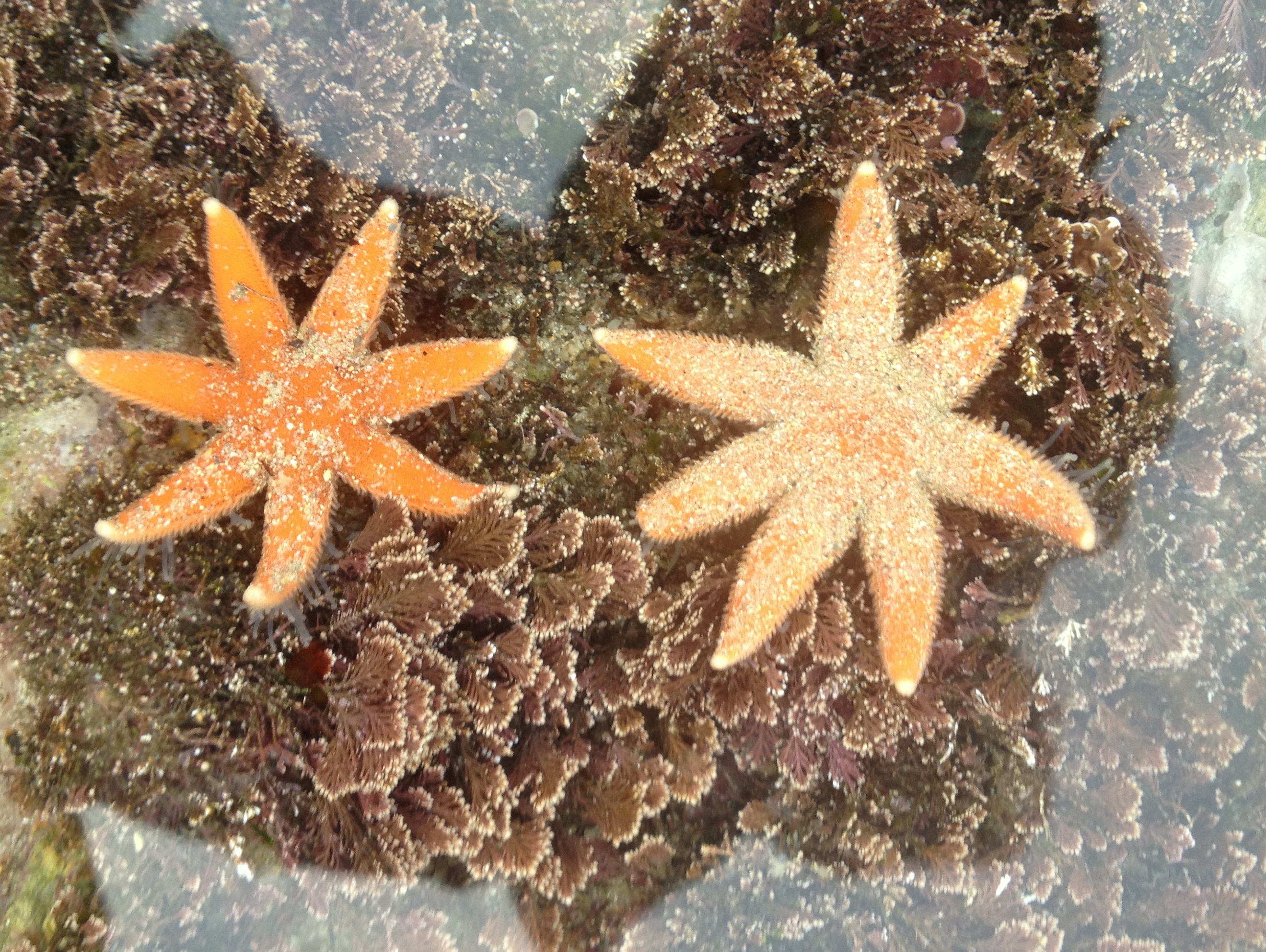
I have not done much with the aquarium recently. The algae are under control after reducing light levels and times. The Chrysymenia weed is growing everywhere and not looking too pretty. I will have to replace some rocks to get rid of them. My only fish is a Common goby Pomatoschistus microps, who eats bits of shrimp out of my hand. It also attacks Grey topshells when it is hungry. I would like to have have some Goldsinny wrasse and Mullet as they are beautiful and do not seem to fall prey to the Snakelocks anemones, but these species are difficult to catch. I will collect a couple of squat lobsters as they are very entertaining to watch. Ideally Spiny squat lobster Galathea strigosa, as they are among the most nicely coloured animals to be found here. They are not common in the intertidal, although they might be common subtidally (I noticed one in a picture I took of some Bispira volutacornis worms recently). The Goby with a full belly: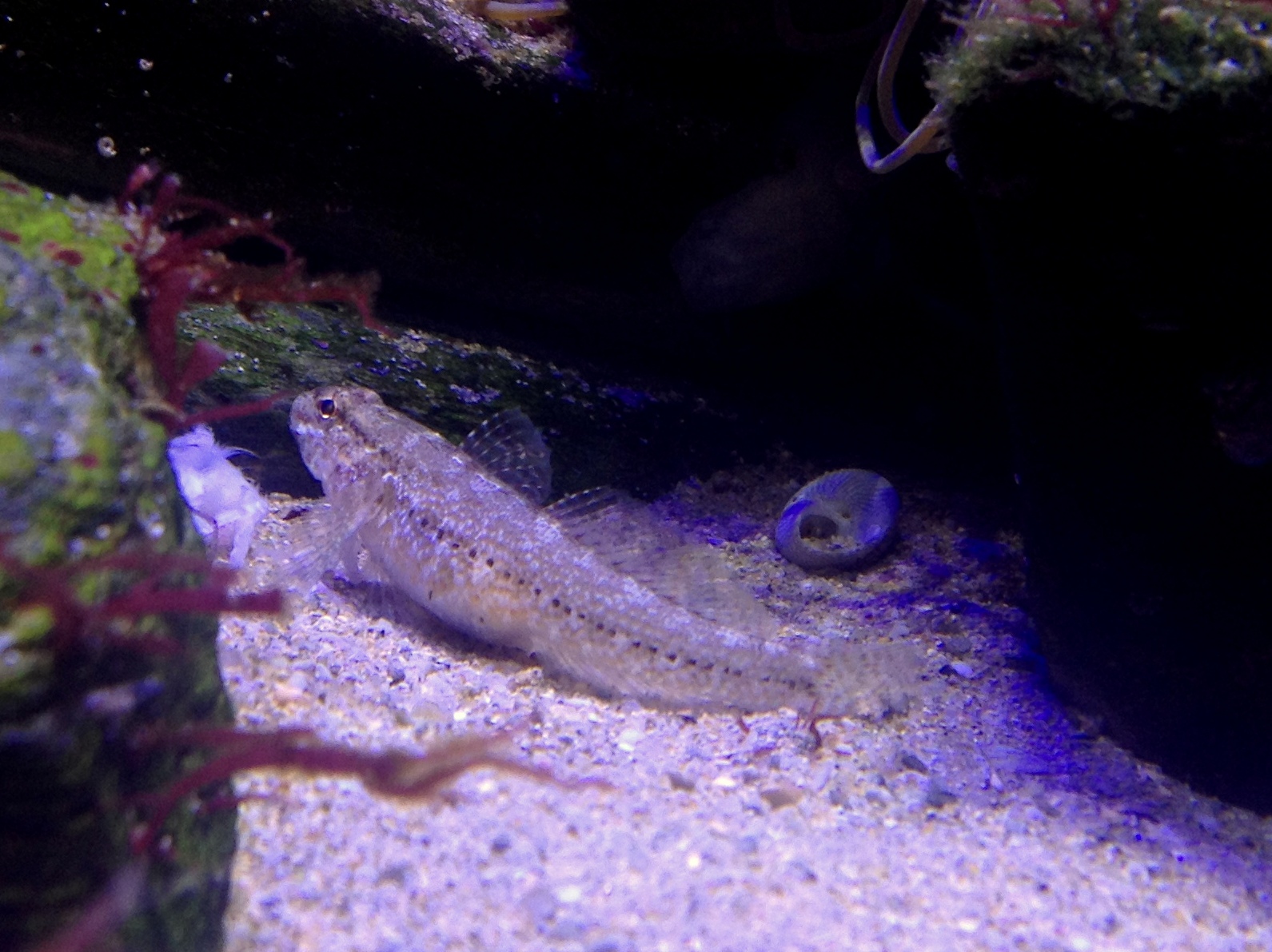 So for now just a little inventory. Molluscs: Turban- Grey- and Purple topshells, a Sting winkle, Thicklipped- and Reticulated whelks and assorted Periwinkles. Crustaceans: Common prawns and Hermit crabs. Anemones: Beadlet-, Strawberry-, Plumose- and Snakelock anemones and a Red Speckled Anemone. Echinoderms: one Sea urchin, a bunch of Cushion stars, the odd Brittlestar and a nice Seven-armed starfish Luidia ciliaris that I recently found in a rock pool on Castle Beach. This species can grow up to 60 cms and hunts for other echinoderms, let’s see what happens!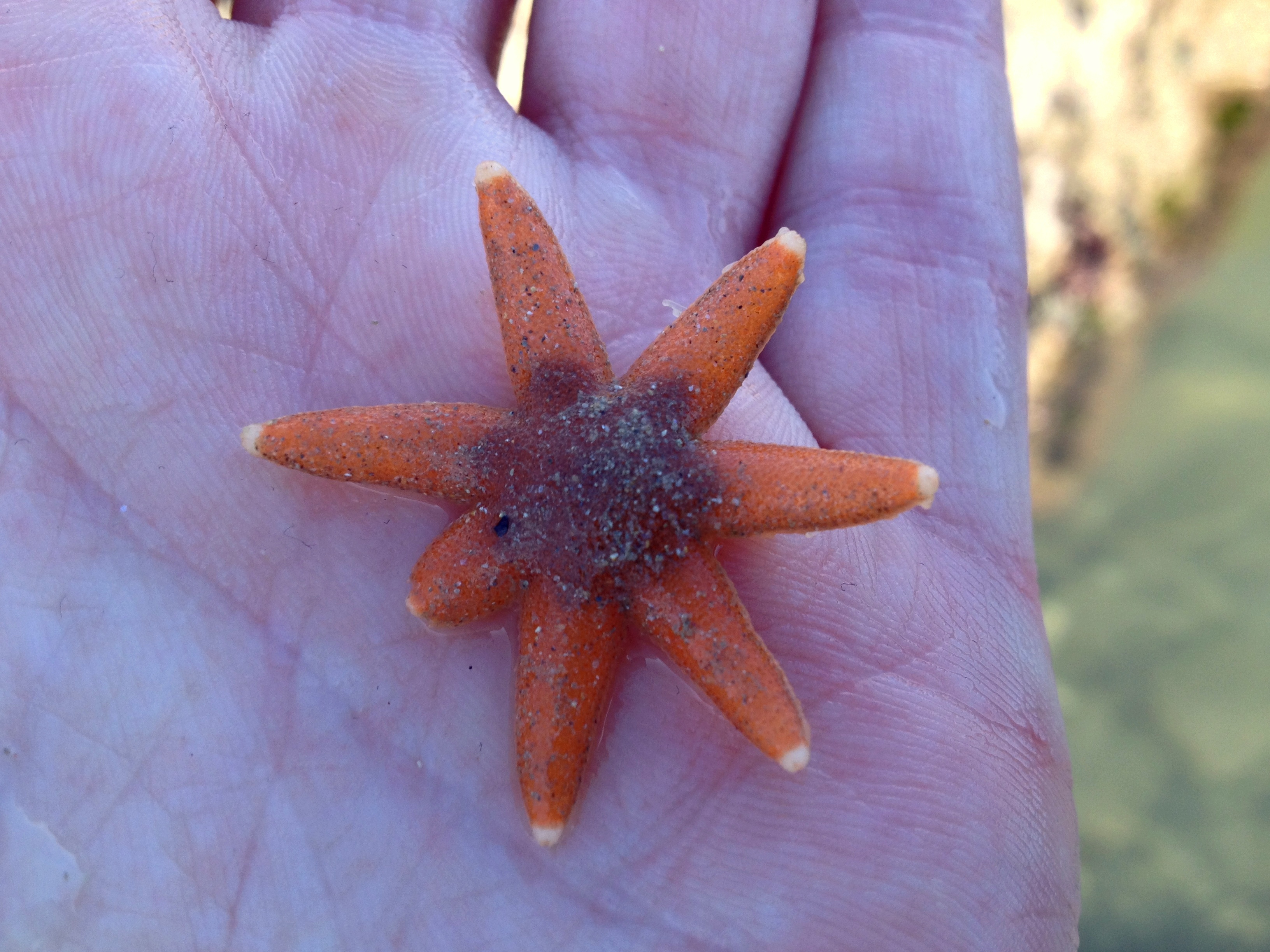
Aquarium Update 8
Another long time without a post. A lot has happened to the aquarium and some of what I post here is already outdated, but here goes. My Daisy anemone has buried itself and has not resurfaced but the Red-speckled anemone is growing well. I found the Dahlia anemone I was looking for, but lately it has been pestered by a Purple top shell, which has left a scar on its column, I hope it survives. The most dramatic event was that the Snakelocks anemone managed to kill my Sea scorpion (but not eat it, it was too large). This must have happened when I removed some of the rocks, startling it and make it swim in the wrong direction: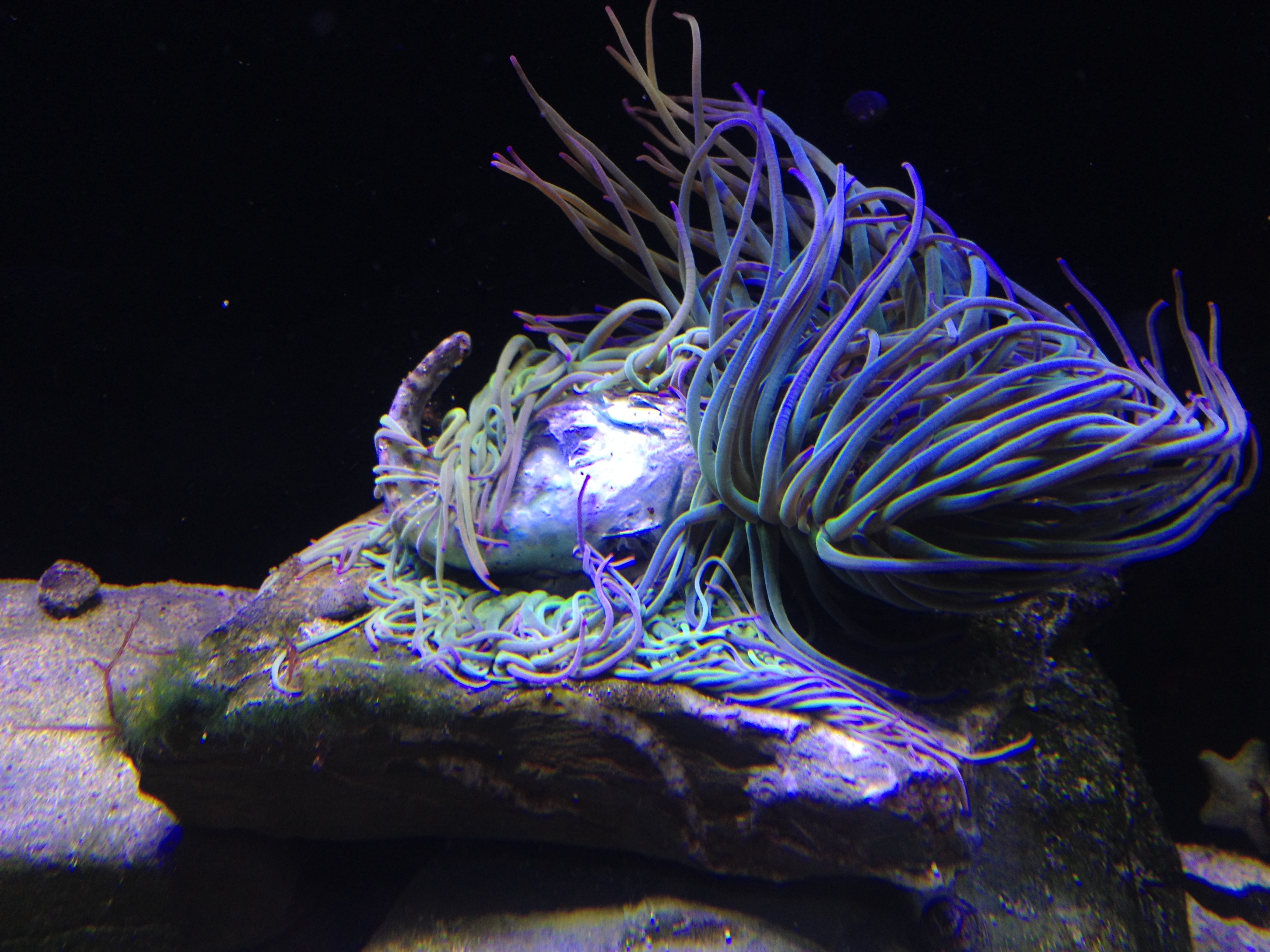 Poor thing (although it had eaten 22 of my mullet so it works both ways I guess…). The good thing was that I could try keeping some other fish again. Using my net, I caught some Two-spotted gobies as well as a Common goby Pomatoschistus microps (I think, there are some very similar species) and a Goldsinny wrasse Ctenolabrus rupestris. The total tally from netting off the Flushing quay is now eleven fish species, not bad. The Goldsinny swims around the tank a lot and does some digging; it seems to be a more interesting fish to watch than the Corkwing:
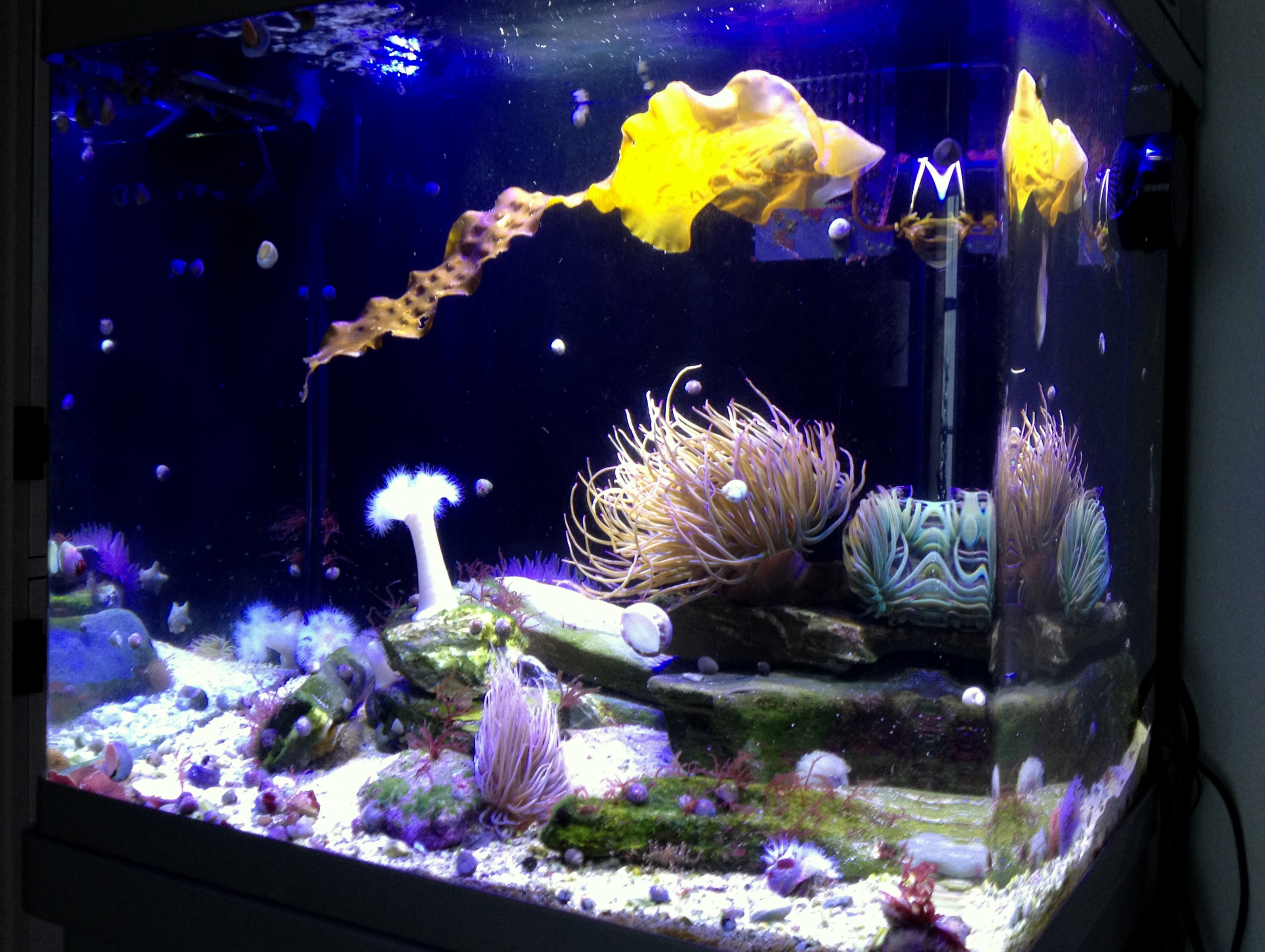
The Plumose anemones Metridium senile are strange, they can be all shrivelled up for days, be short and squat or all extended. Here three pics of the same individual: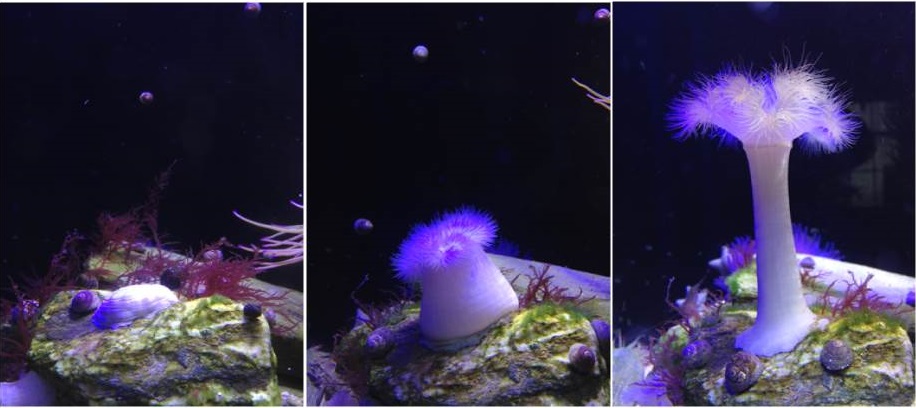 The Turban top shells Gibbula magus are very nice to watch (the Grey topshell Gibbula cinerarea gives a sense of scale). I found a Sea urchin Psammechinus miliaris and decided to try it out. It spends half its time under the gravel and pops up here and there with shells and pebbles attached to it. Let’s see what it does! Lastly a picture of the tank. I had attached a young Sugar kelp Saccharina latissima to the tunze pump with an elastic band and now it has attached itself to the plastic.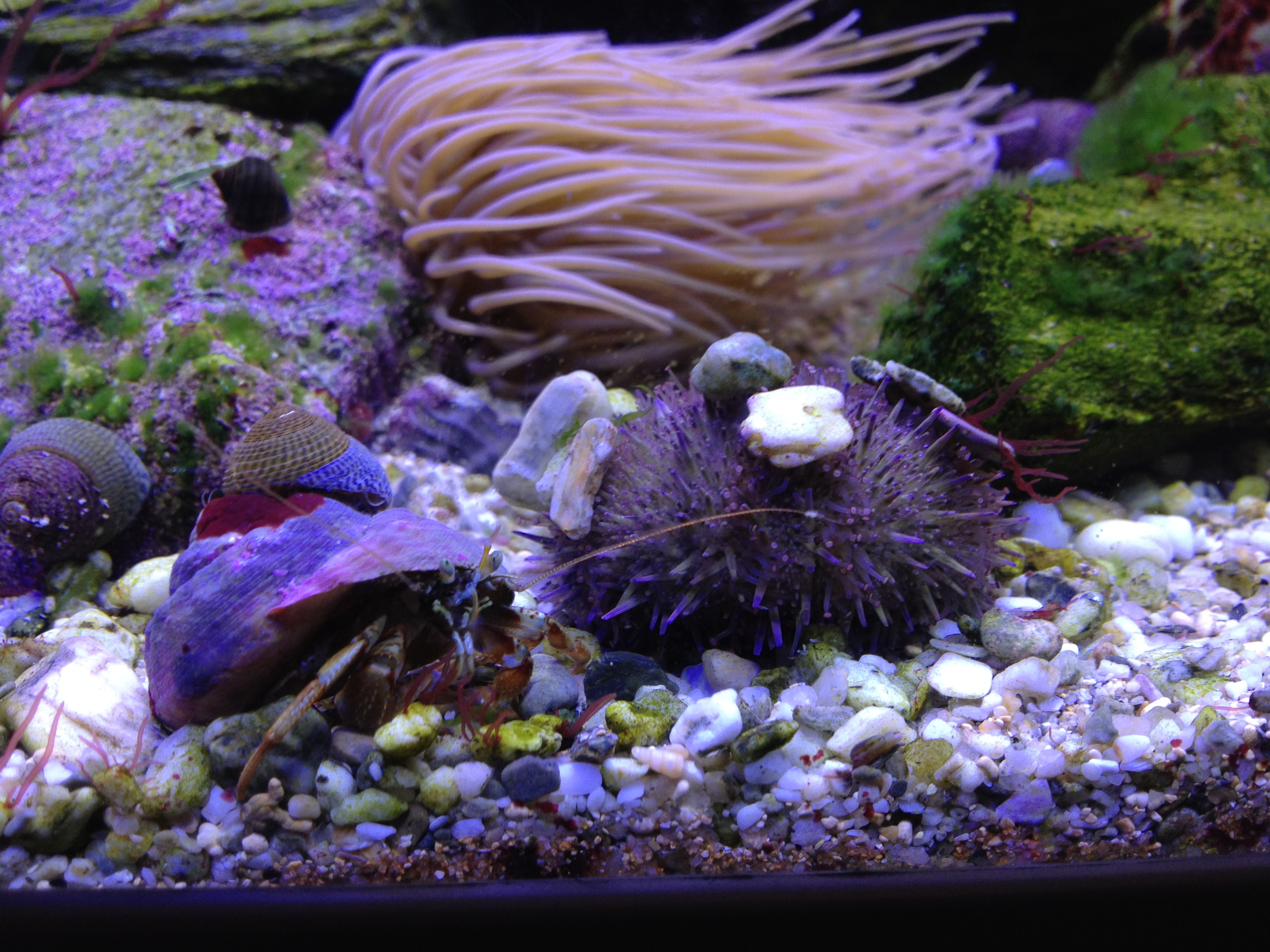
diving at Silver Steps
I am really getting back into this diving thing! Last week, I made another trip to Seaways Dive Centre in Penryn to rent some gear (£25 for 24 hrs) and go out with dive buddy Chris. First a dive at the end of the day at low tide at Silver Steps in Falmouth. A great encounter a minute after we got in with a cuttlefish:
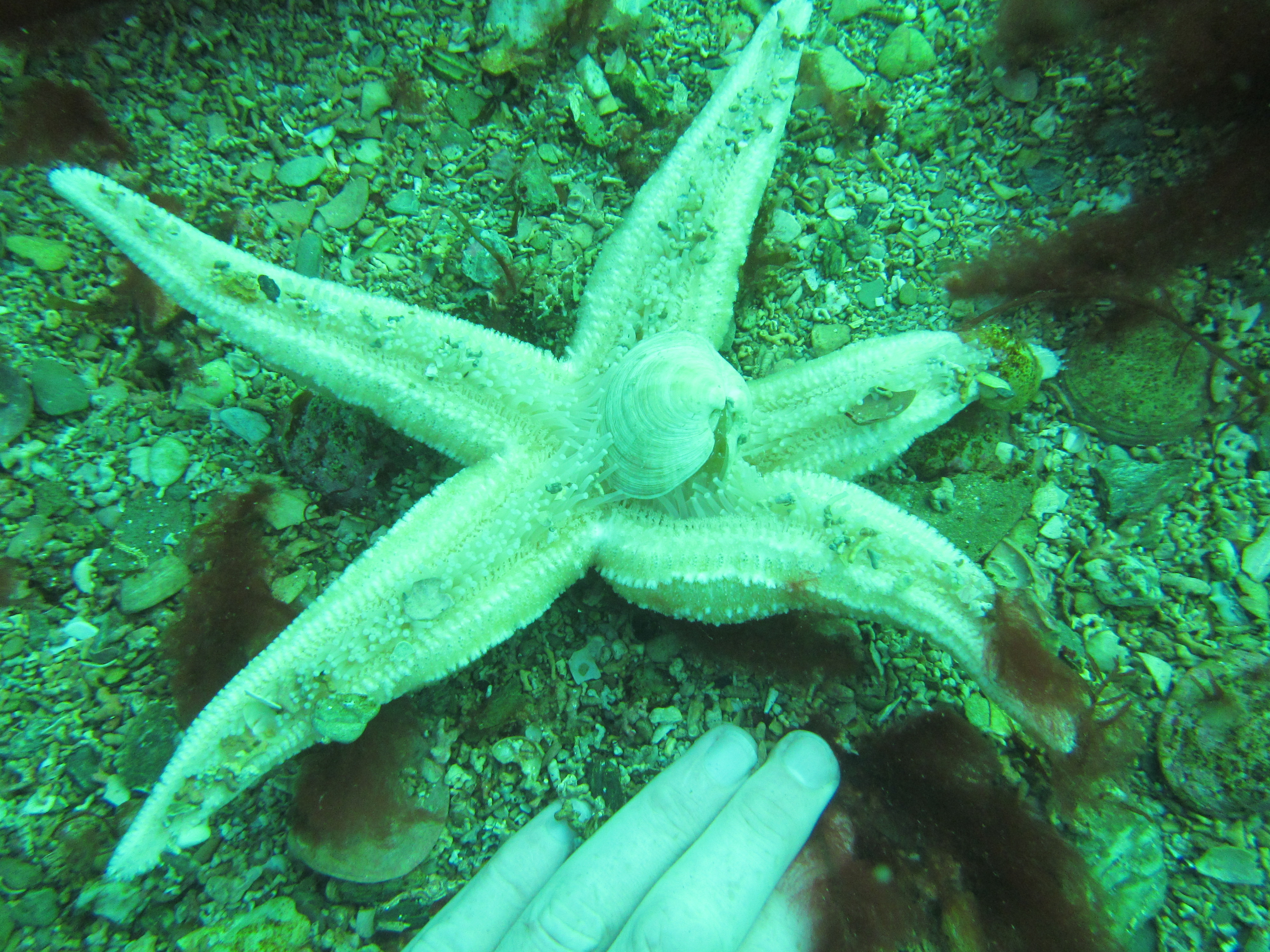
We then set out over the gravel beds towards the open sea. A pretty barren affair, with lots of decaying seaweed. Mainly Spiny and Common starfish and Pulled carpet shell Tapes corrugata, Warty venus Venus verrucosa and Rayed Artemis Dosinia exolata. A picture of the latter being eaten by a common starfish:
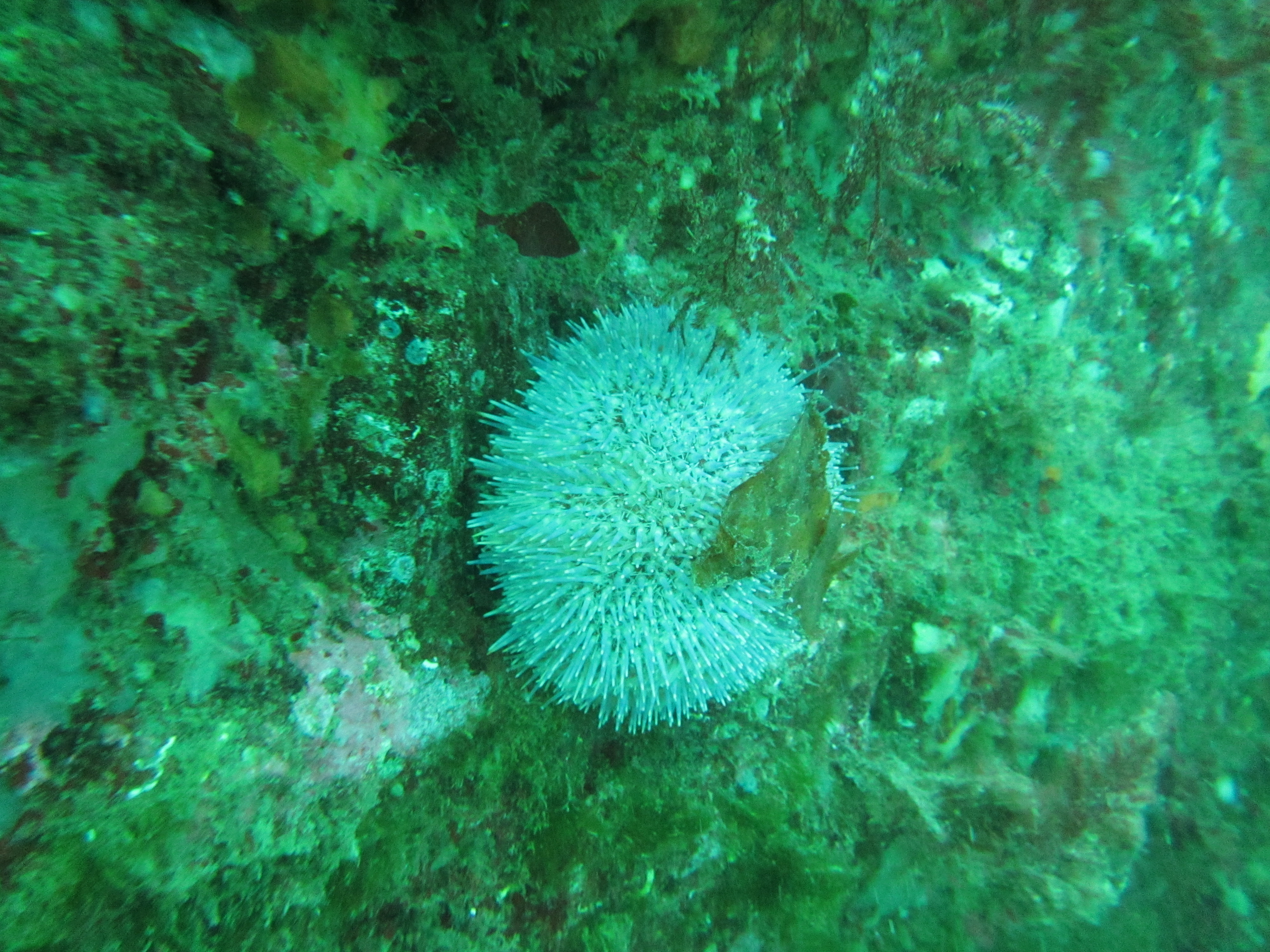
Turban top shells Gibbula magus were on my list to get for the aquarium and I noticed that this species is extremely common (several per square meter) so I took a bunch home. The shells look pretty beaten up with lots of stuff growing on ’em but I think they are pretty cool; truly subtidal so no risk of them creeping out of the tank: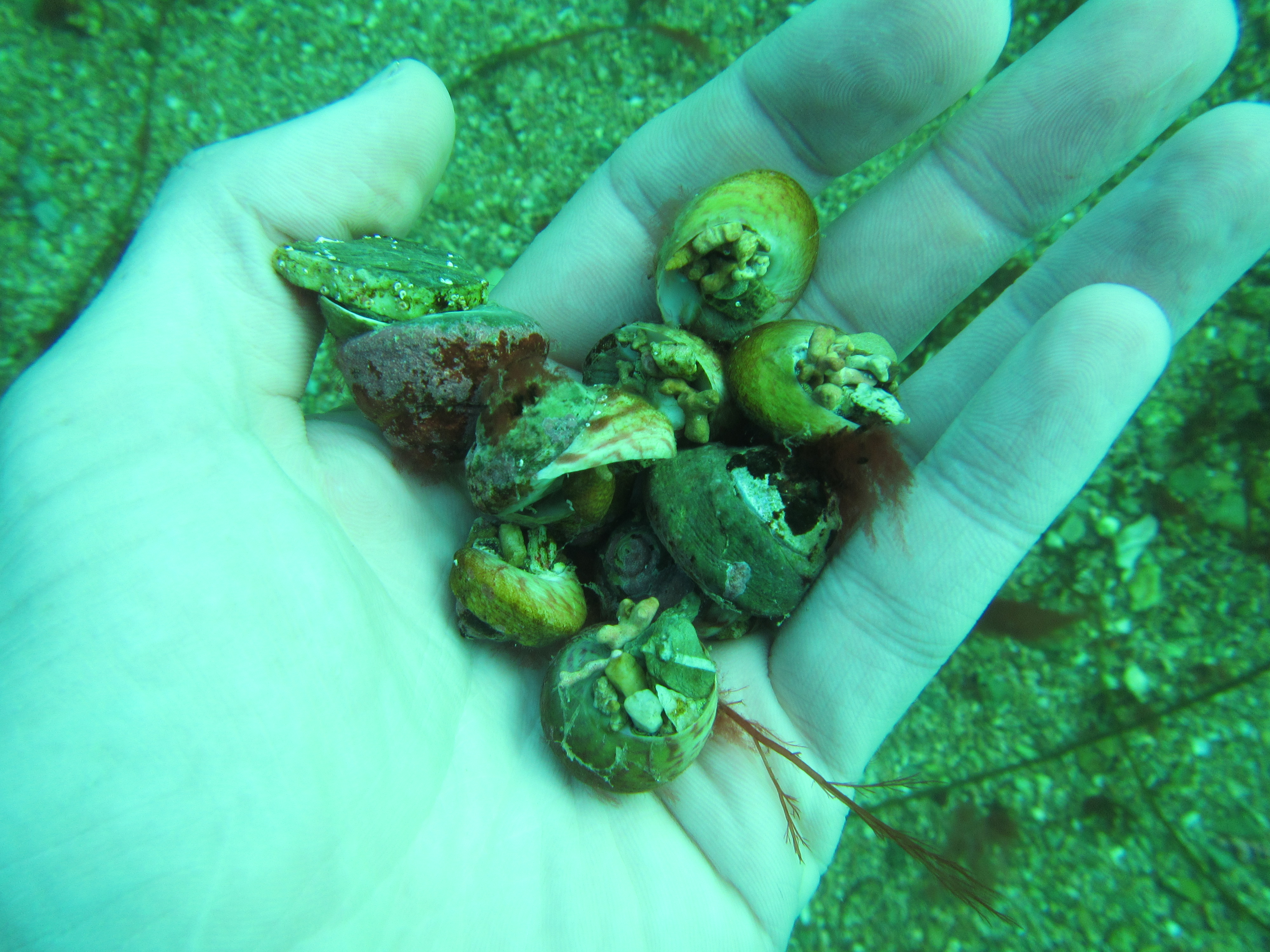 We then made it back to the rocky coast and found a nice gully with overhanging rocks with lots of interesting critters. One little cove was home to ten or so shy Leopard-spotted gobies (I plan to go back with my GoPro and leave it there filming for half an hour to pick it up later). We found a big lobster Homarus vulgaris, a beautiful Bispira volutacornis worm (I have already posted pics of these species recently and I will try to show more self-restrainst from now on and not keep posting similar photos). Also for the first time some large Edible sea urchins Echinus esculentus. Probably a really common species when you dive a little deeper but the very first time I saw it. Have to practice a bit more with the new Canon Powershot D30 as I am not completely convinced about its qualities yet (I did not bother to post-process any of the pics btw).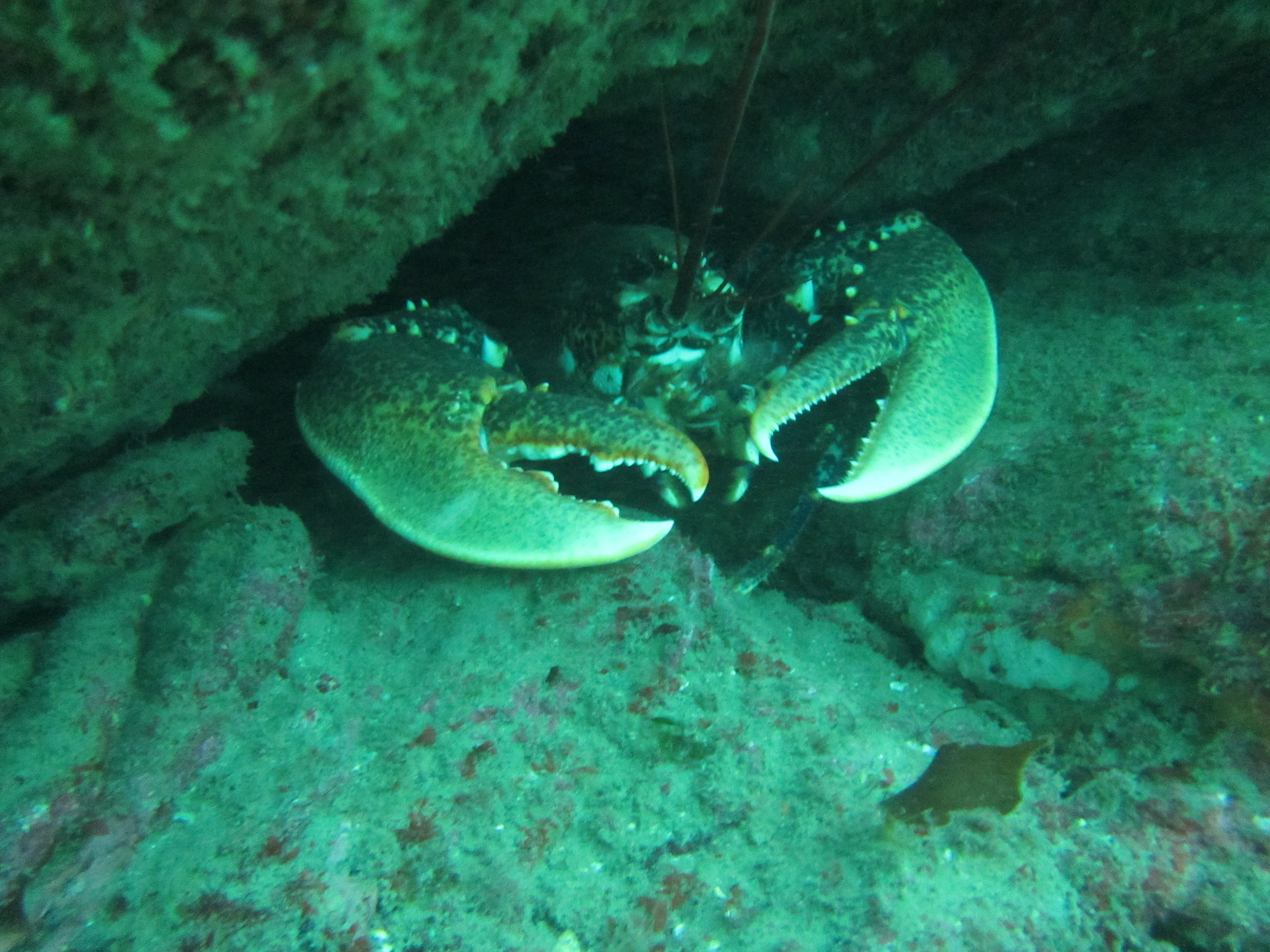
 An Bollenessor