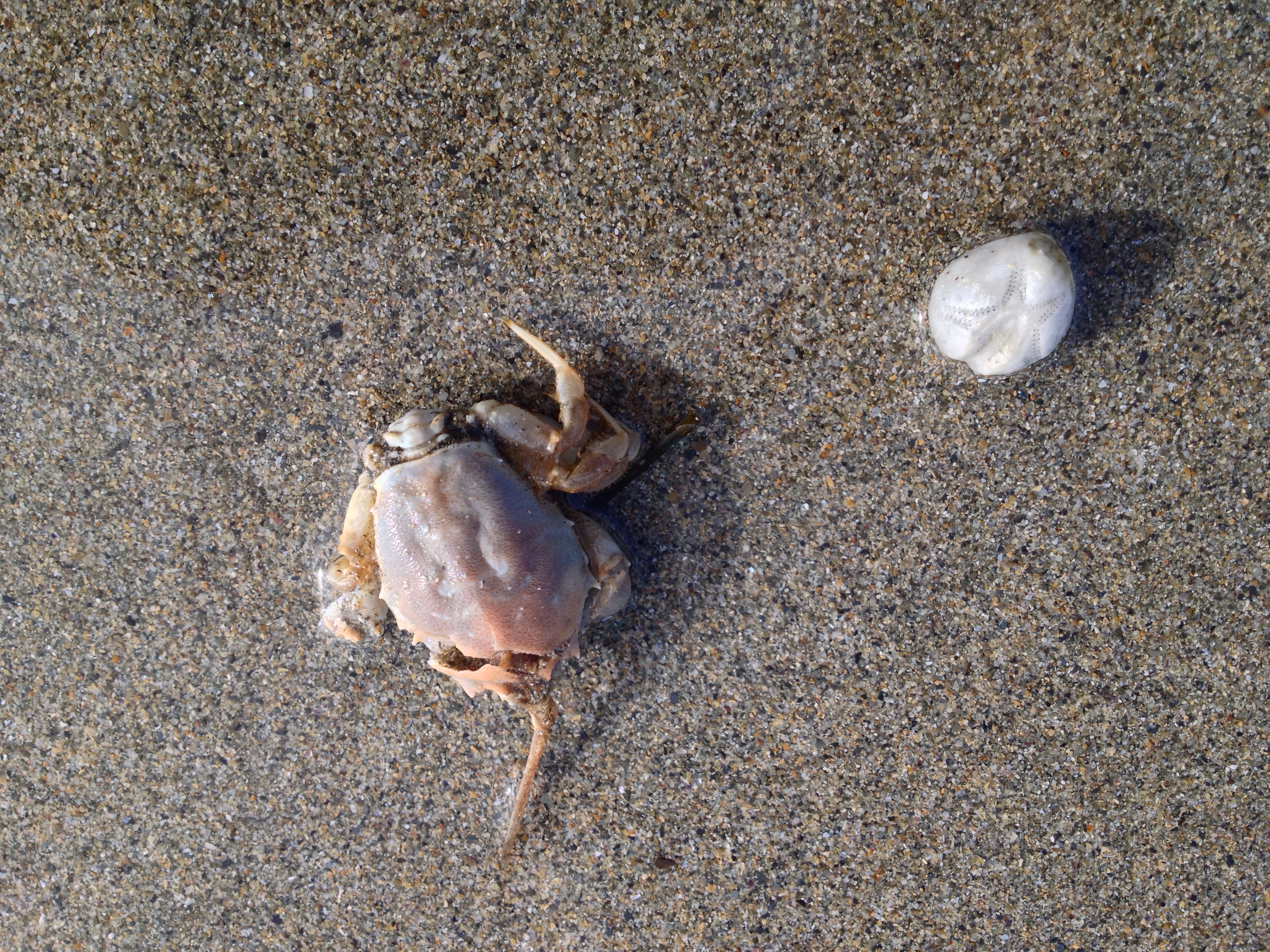
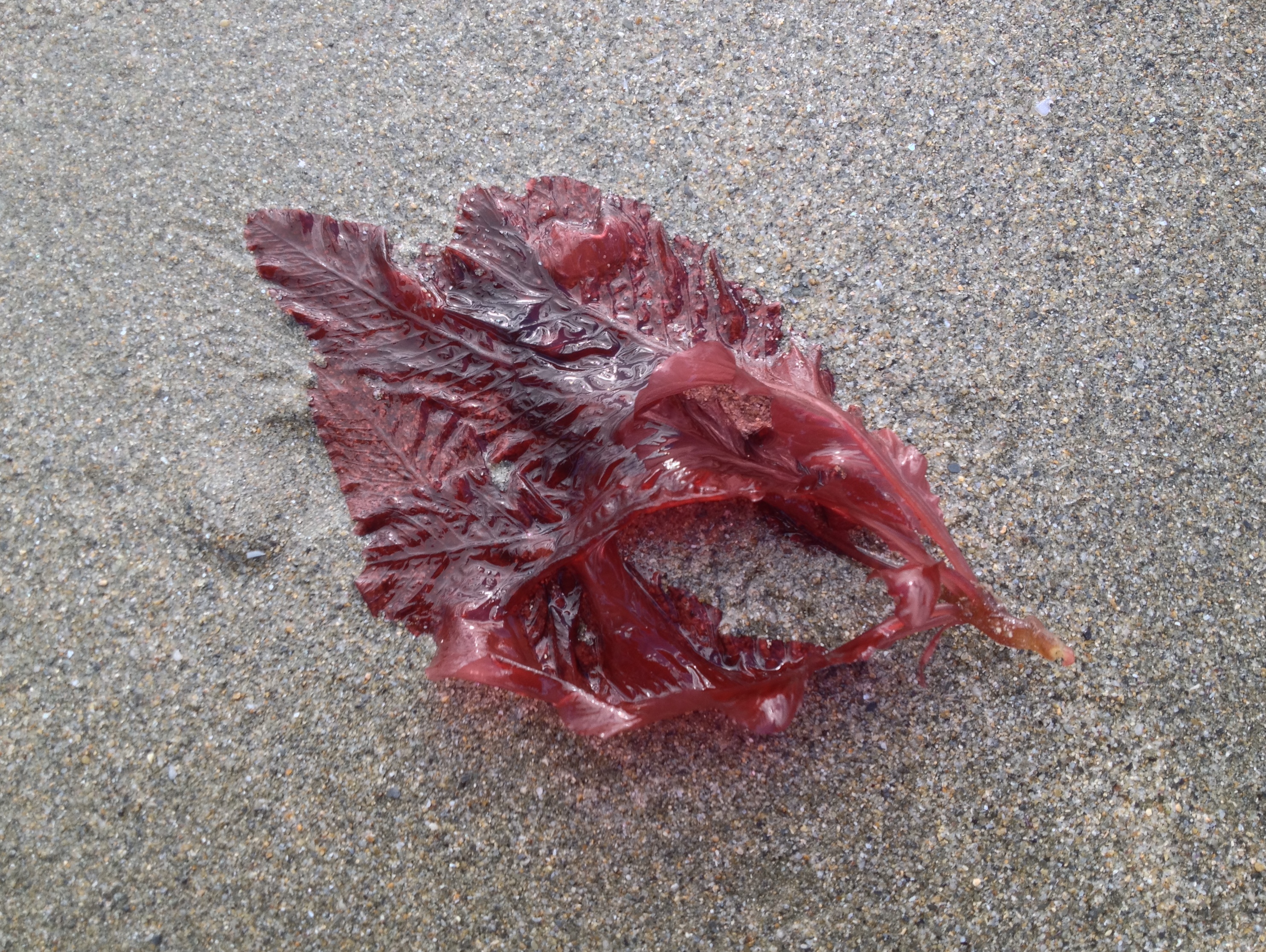
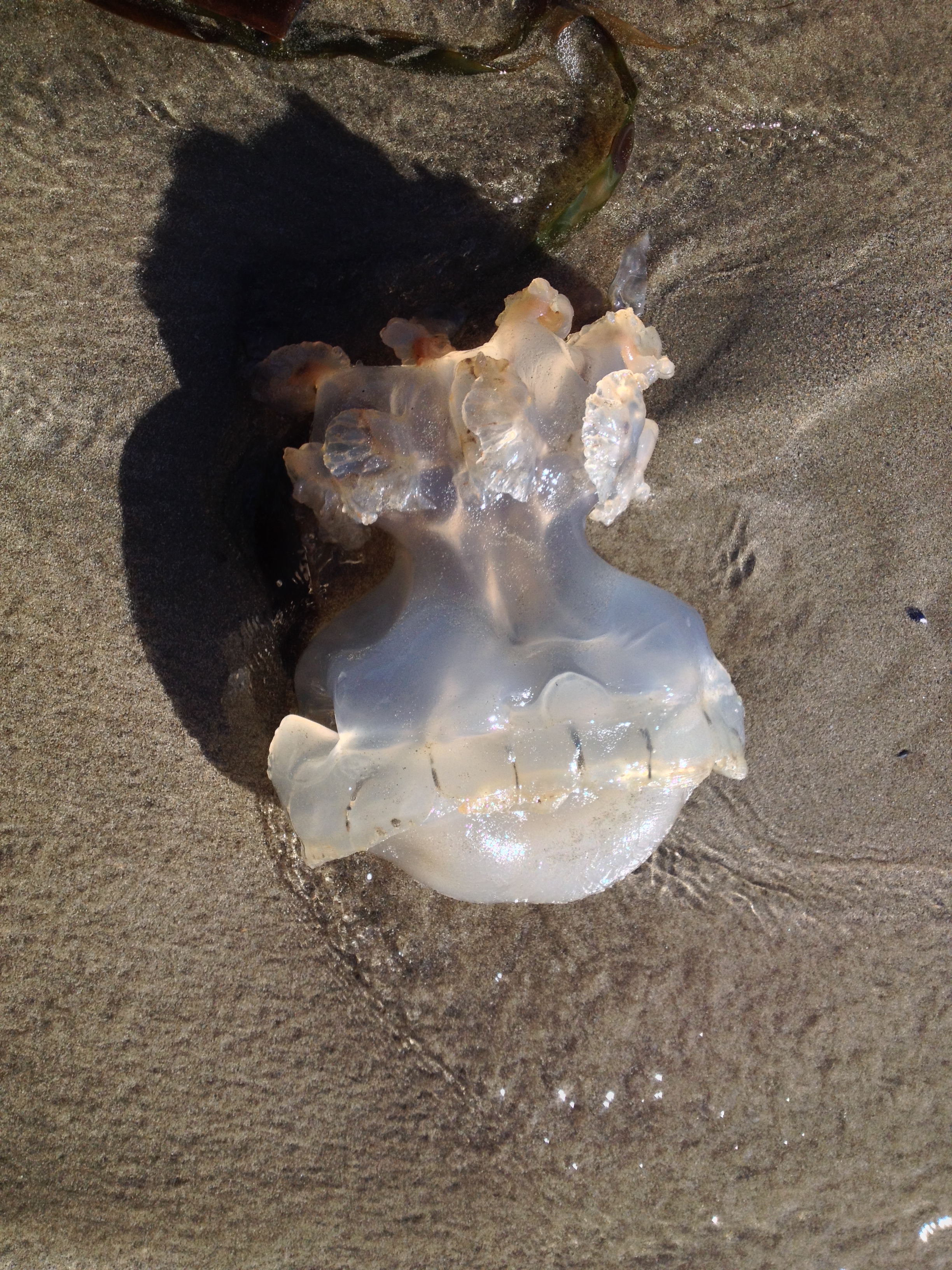
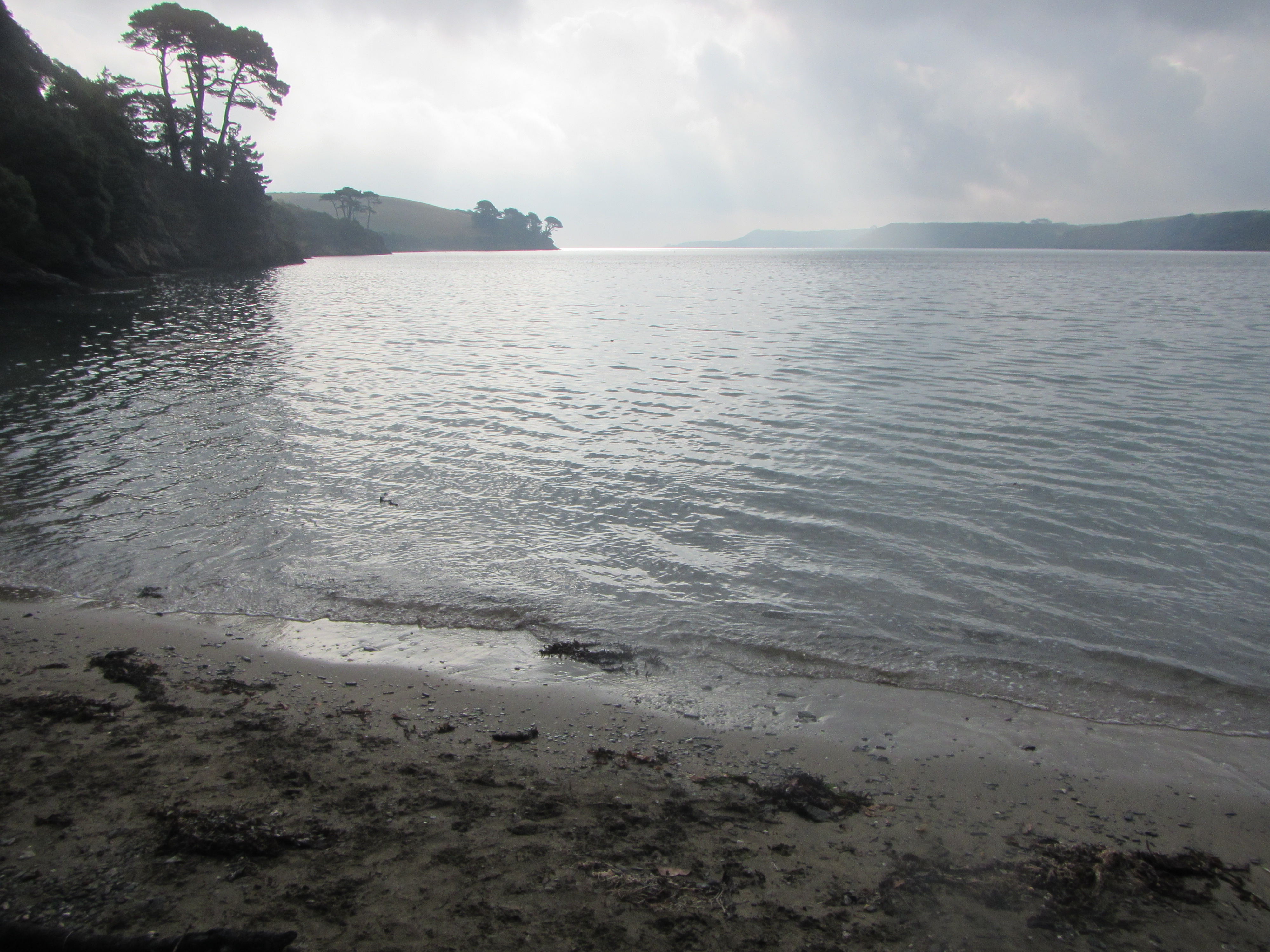
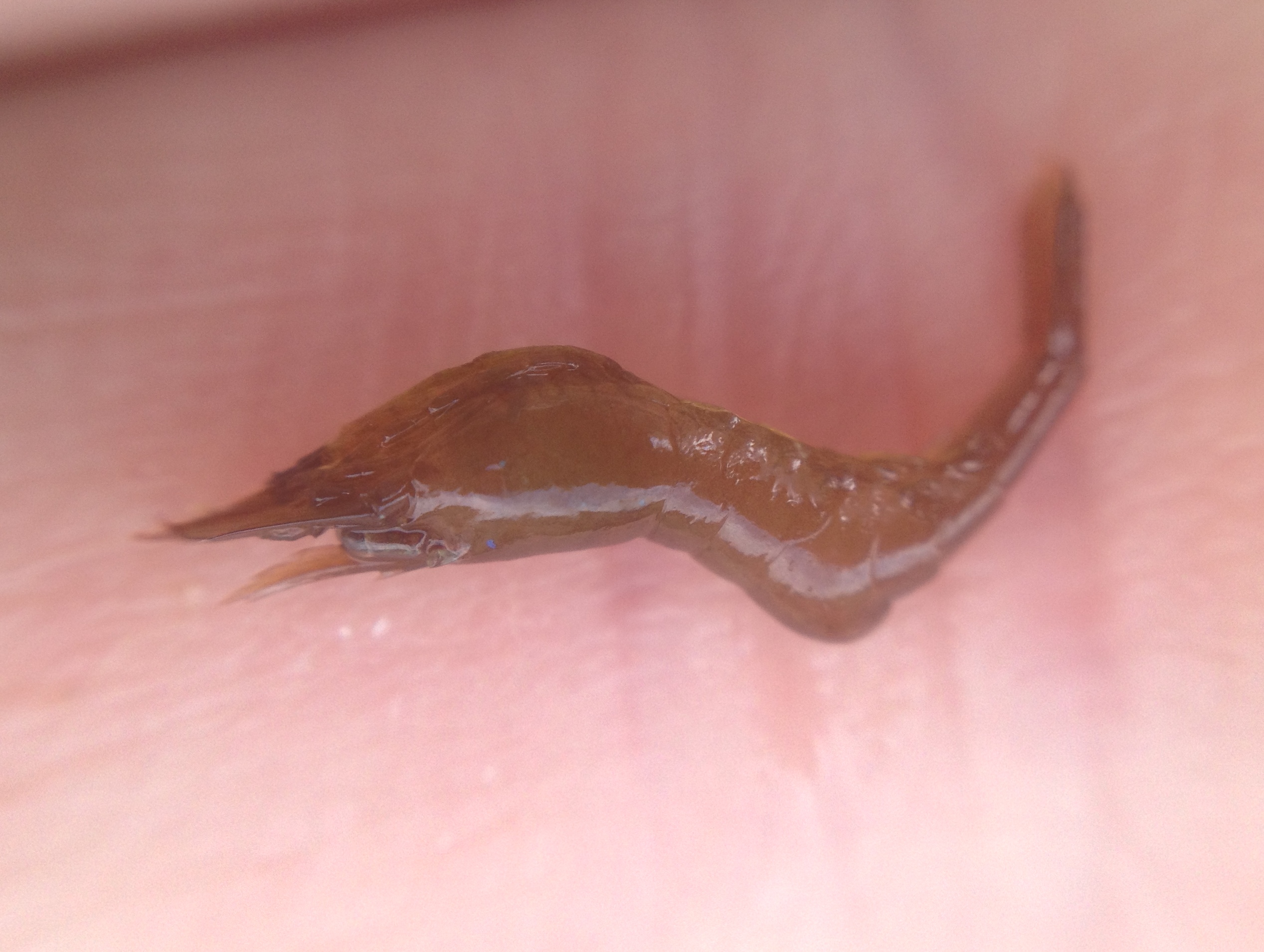
Back at Carne Beach on the Roseland Peninsula. No time for a good rock pooling session, but a nice walk along the beach revealed some nice surprises. Amongst the Laver and Furbellows lay Common starfish, Pod razorshells, Striped venus, Banded wedge shells and Rayed trough shells. A first: the Masked crab Corystes cassivelaunus (a female): common offshore buried in the sand, and usually only seen when washed up dead on the shore as is the case here (next to it a Sea apple). Also a beautiful piece of Sea beach (or Sea oak? the margins seem not ruffled enough though…). Finally, a Barrel jellyfish Rhizostoma pulmo, remarkably firm and heavy. This is a small one, about 20 cm across; 40 cm is normal and occasionally they grow to more than a meter in diameter, making it the largest jellyfish species in British waters.
Category Archives: crustaceans
a very low tide at Falmouth part 2
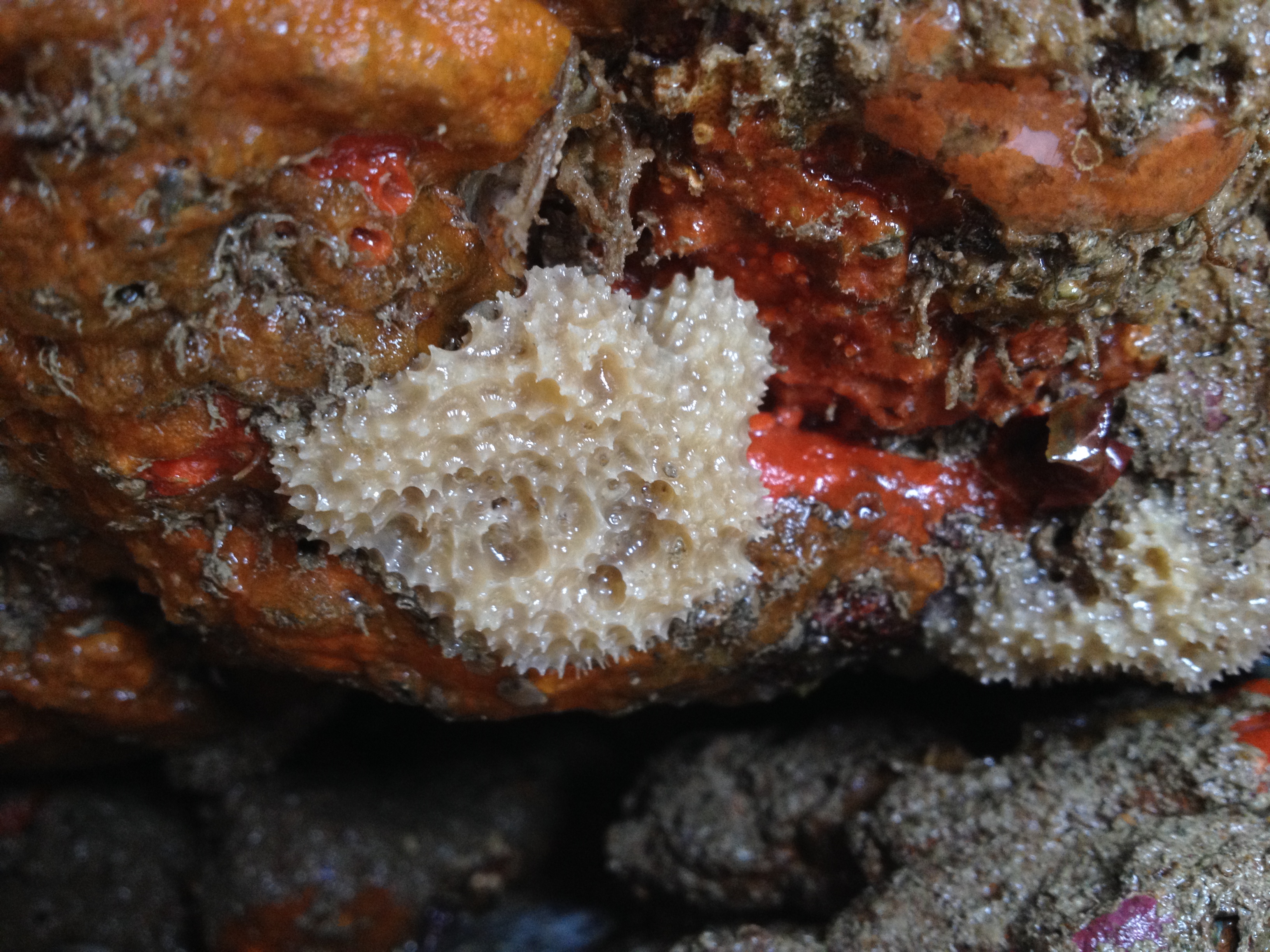
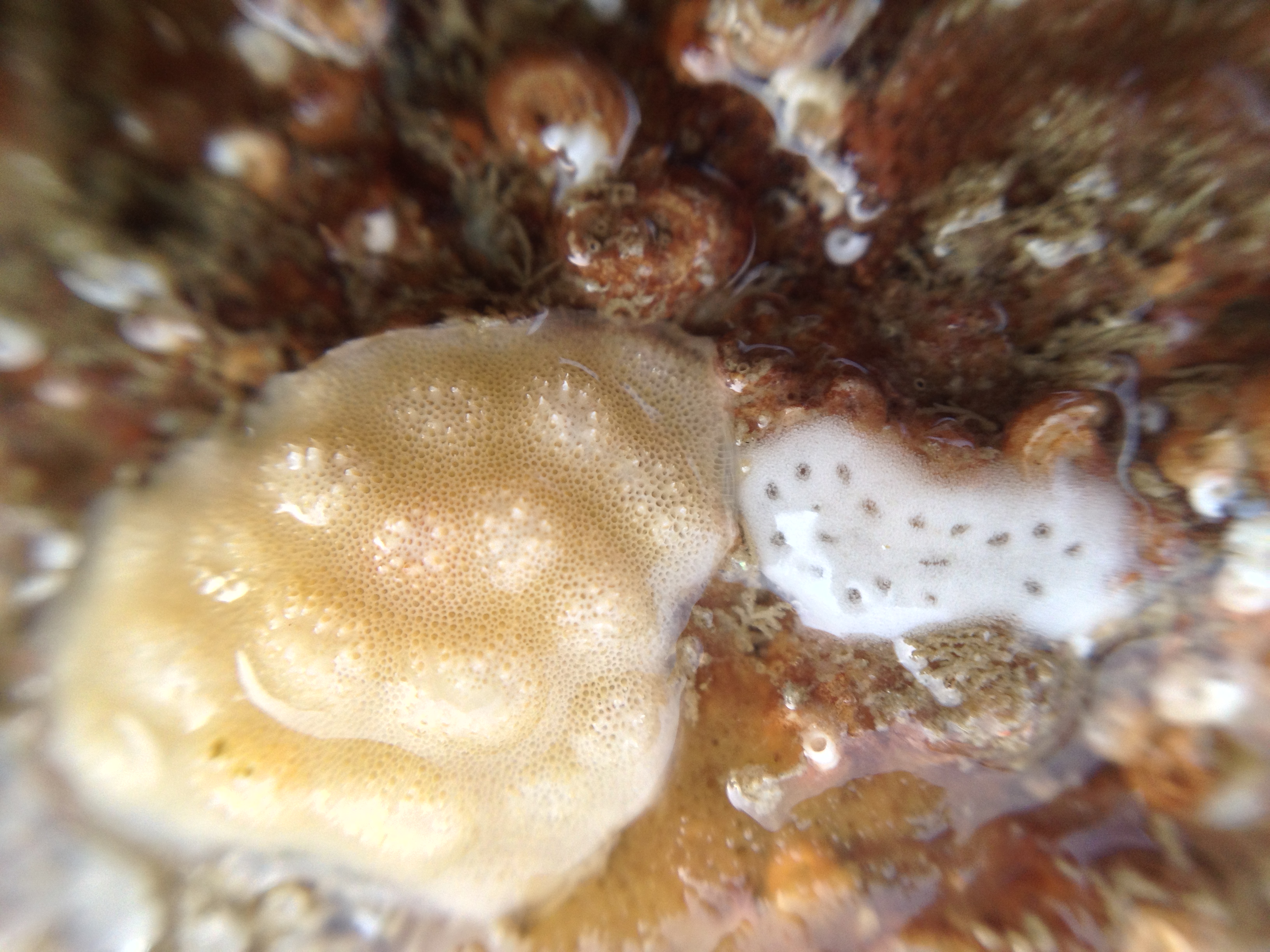
On to some of the more tricky species to identify. The rock overhangs, the home of the Painted top shells, are covered in sponges, tunicates and bryozoans. These are organisms I need to spend some more time on, as they are diverse, pretty and easy to photograph (they do not scurry away or give any macro depth-of-field problems). First two pictures of the large, nicely textured sponge Ophlispongia papilla. After that, the cream-coloured sponge Dysidea fragilis and the yellow sponge Aplysilla sulfurea. Side-by-side the bryozoan Disporella hispidata and what might be the sponge Clathrina coriacea.
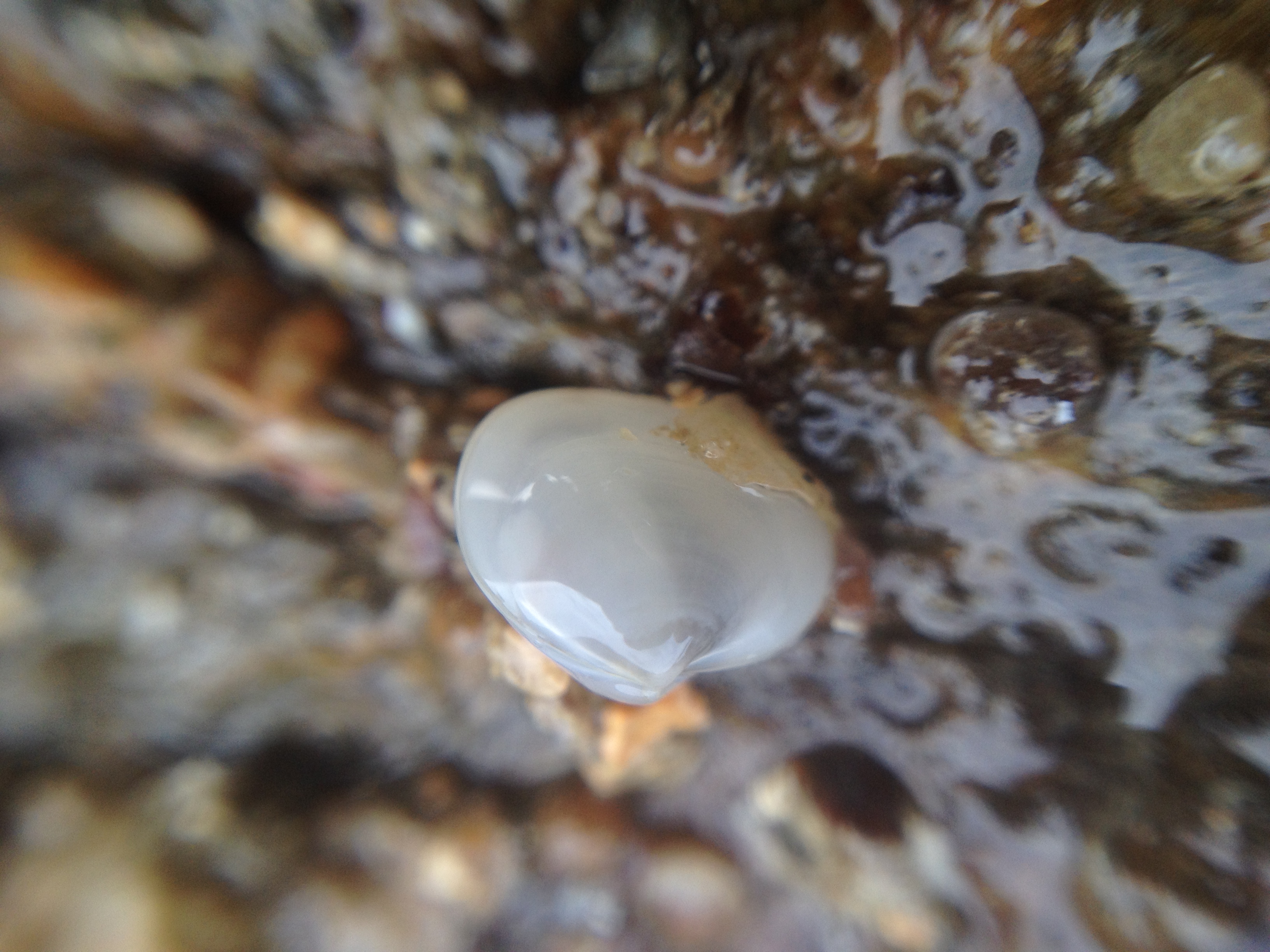
There were quite a lot of other sponges and bryozoans to see as well, so I’ll definitely investigate more the next low tide. Some other species: the tiny polychaete worm Euphrosine foliosa (first two pics). Next, Chaetopterus variopedatus, a quite large polychaete worm (thanks to David Fenwick for the ID), a tiny glossy bivalve Kellia suborbicularis (thanks to David again) and what is probably a Chameleon prawn Hippolyte varians.
a very low tide at Flushing
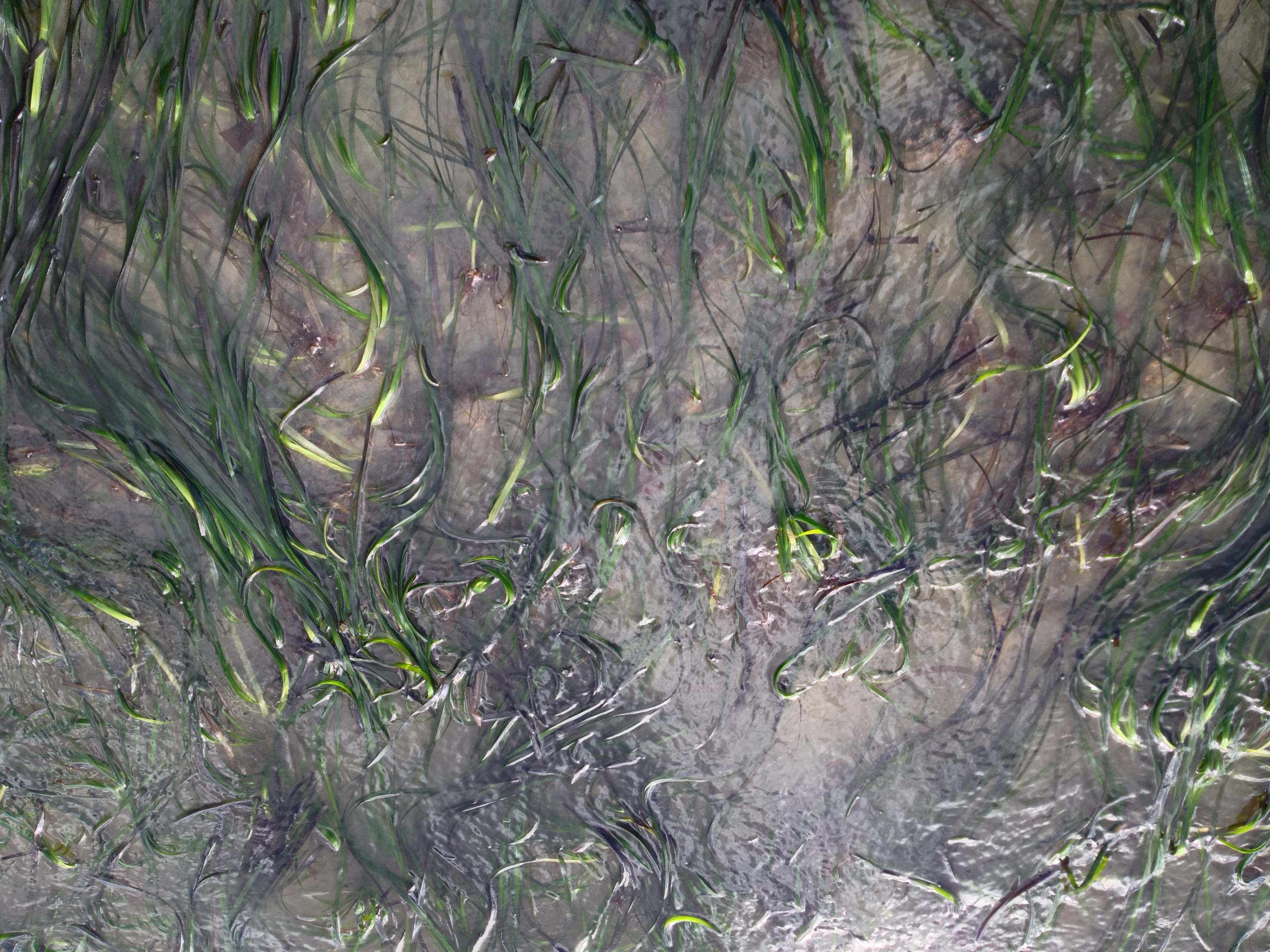
I made some pics last weekend when low tide wasn’t very low, but since this weekend the tides hit record lows I will first post about these finds. First up, the sheltered estuarine conditions in Penryn river in Flushing, opposite Falmouth’s port. The conditions are silty, with lots of sponges, tunicates, variegated scallops, sea lemons, European cowries and enormous amounts of Squat lobsters (see also this old post). With the tide this low, we were able to see some other stuff as well. The water went as low as the Eelgrass:
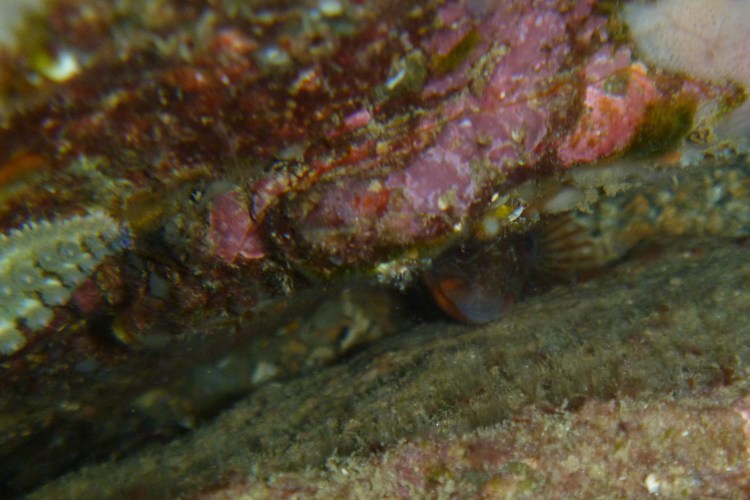
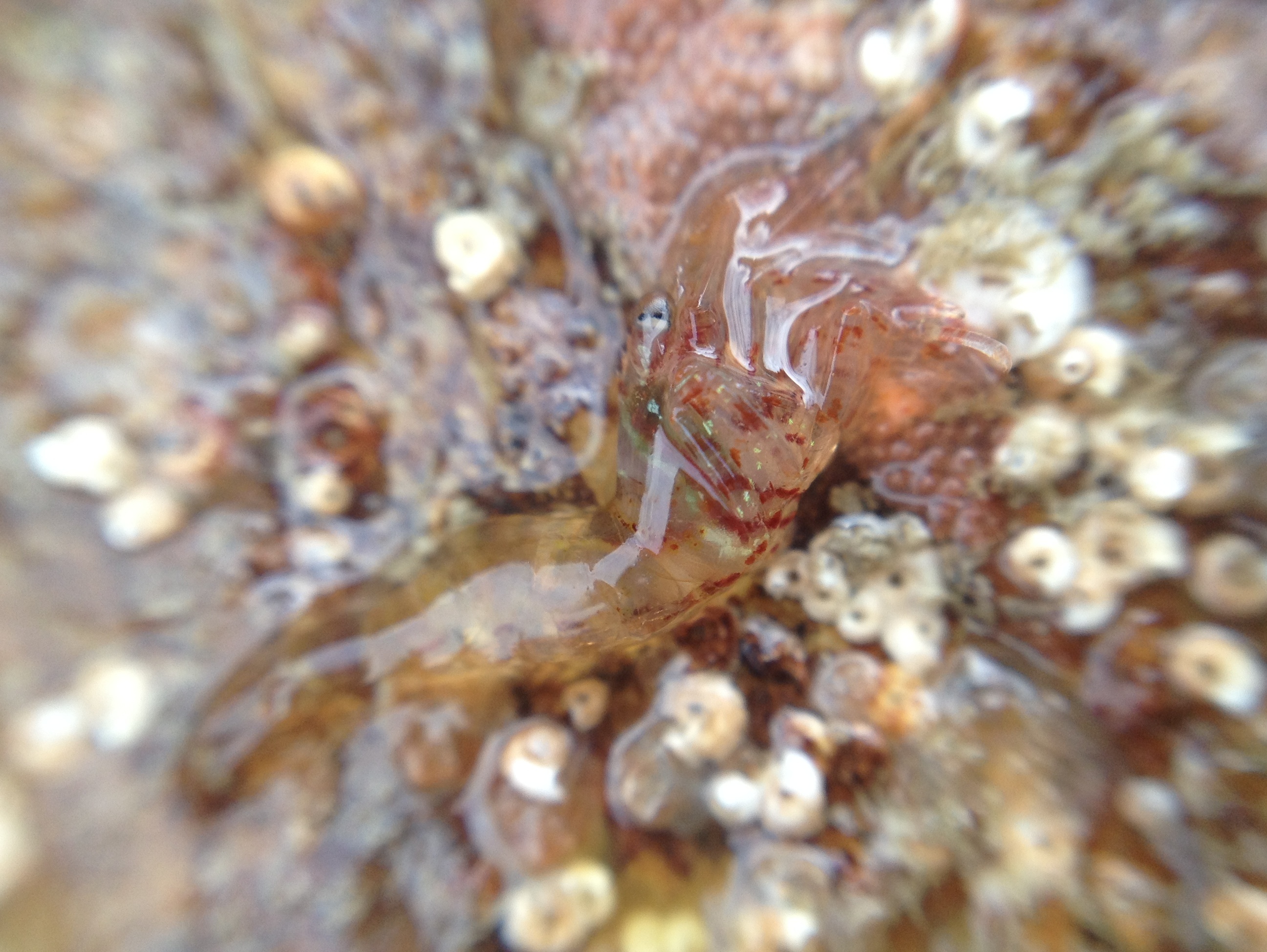
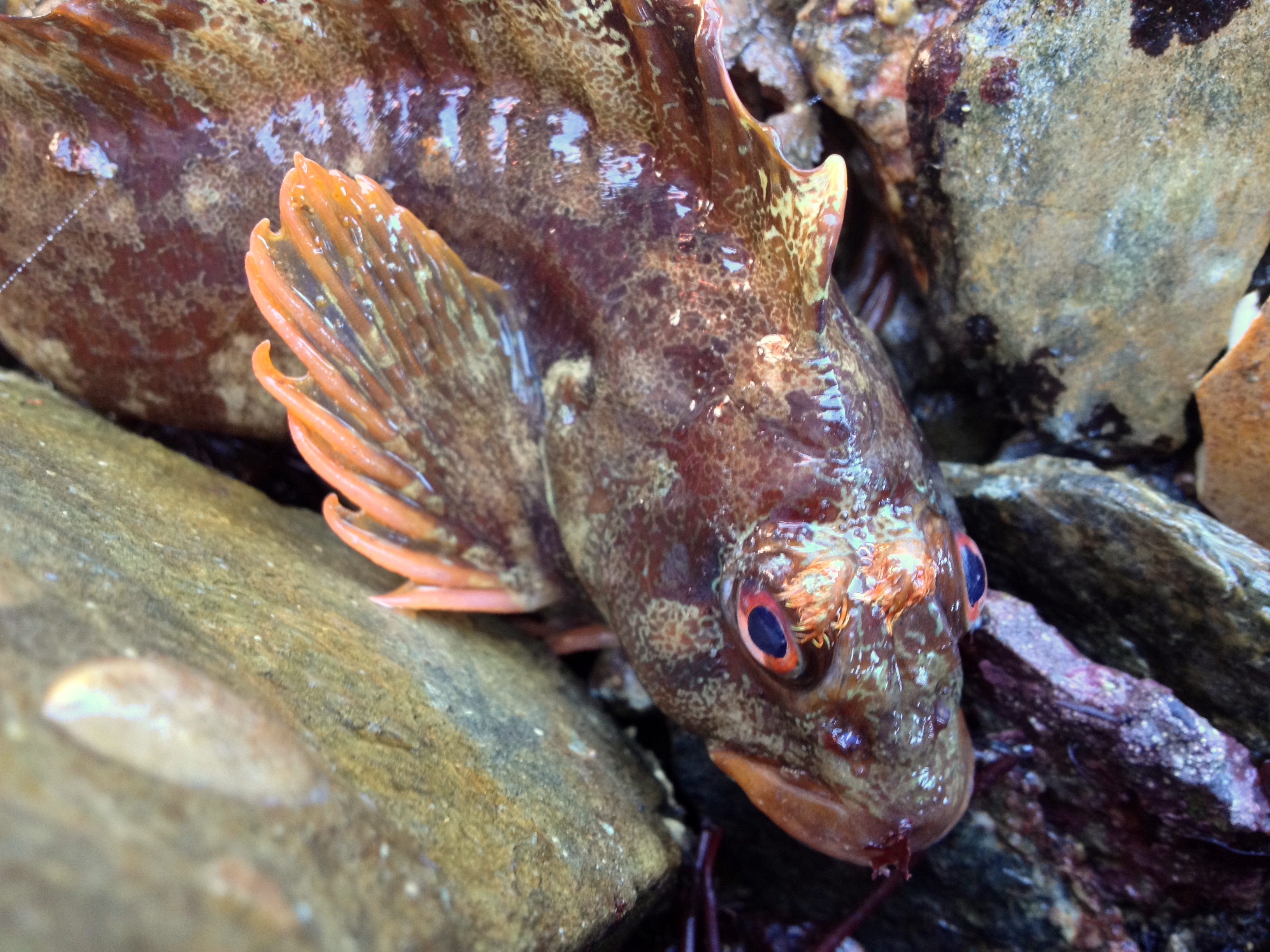
Shannys, Rock gobies, Rockling, Worm pipefish and (to a lesser extent) Butterfish are easy to find in Flushing. Today we saw for the first time two Connemara clingfish Lepadogaster candollei (first pic). Next a Rock goby Gobius paganellus. We also saw many large Tompot blennies Parablennius gattorugine which live subtidally and only now could be seen:
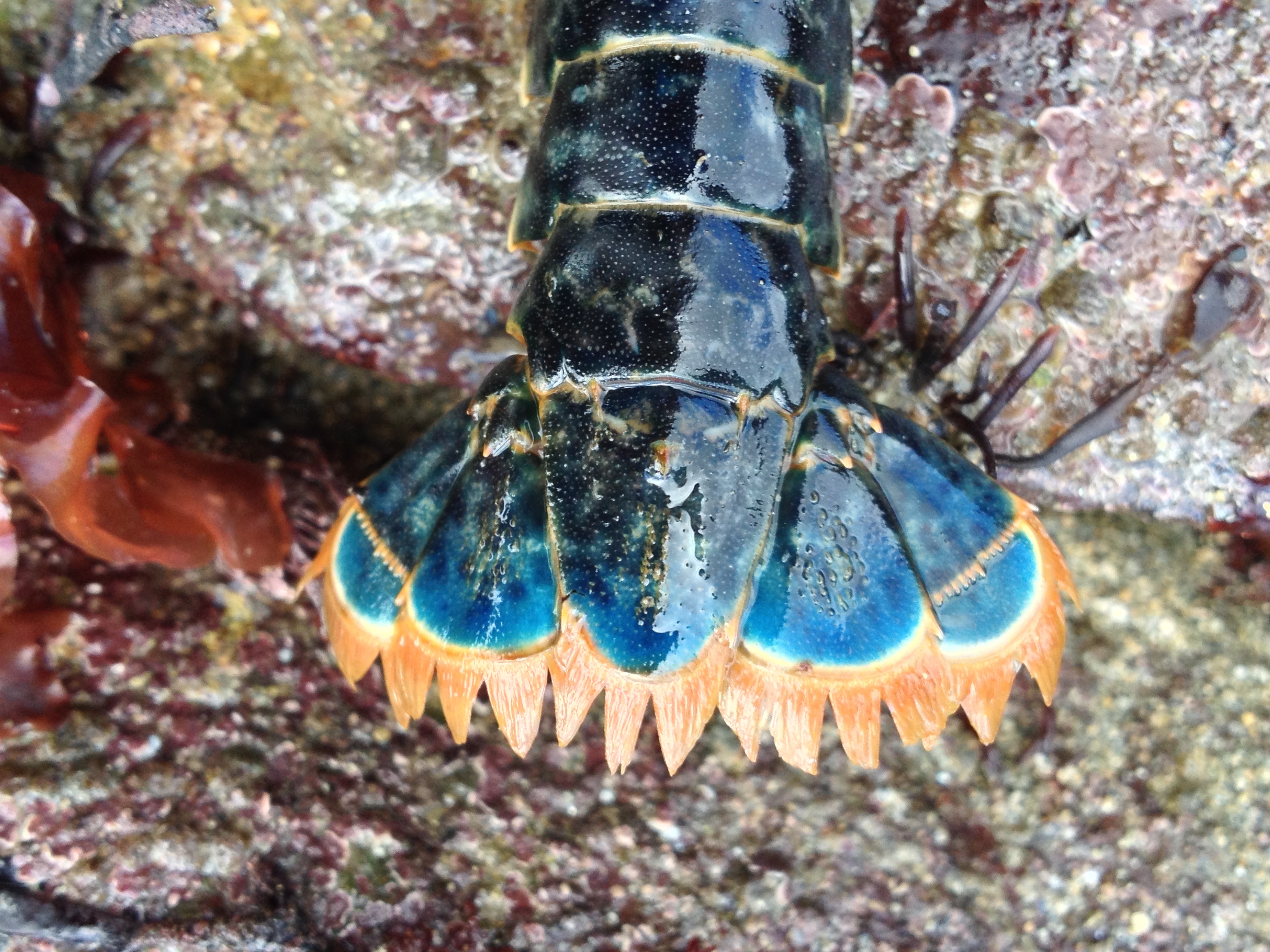
The real surprise of the afternoon was a juvenile Common lobster Homarus vulgaris. All in all a very succesful trip!
Aquarium Update 9
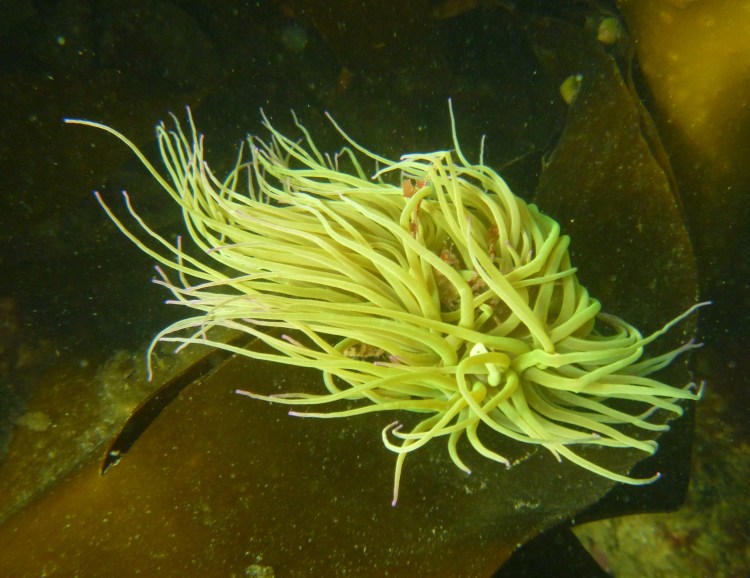
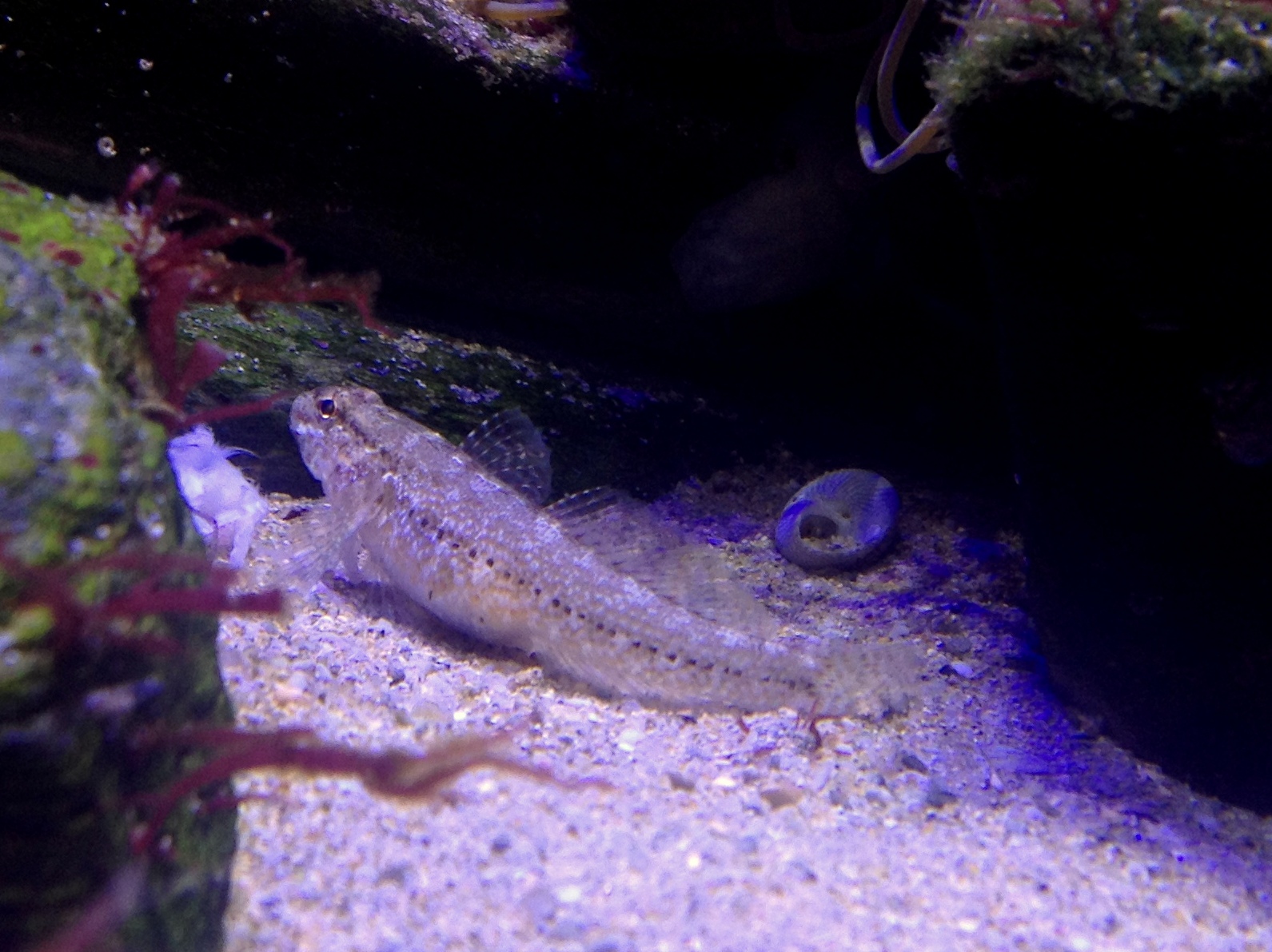
I have not done much with the aquarium recently. The algae are under control after reducing light levels and times. The Chrysymenia weed is growing everywhere and not looking too pretty. I will have to replace some rocks to get rid of them. My only fish is a Common goby Pomatoschistus microps, who eats bits of shrimp out of my hand. It also attacks Grey topshells when it is hungry. I would like to have have some Goldsinny wrasse and Mullet as they are beautiful and do not seem to fall prey to the Snakelocks anemones, but these species are difficult to catch. I will collect a couple of squat lobsters as they are very entertaining to watch. Ideally Spiny squat lobster Galathea strigosa, as they are among the most nicely coloured animals to be found here. They are not common in the intertidal, although they might be common subtidally (I noticed one in a picture I took of some Bispira volutacornis worms recently). The Goby with a full belly:
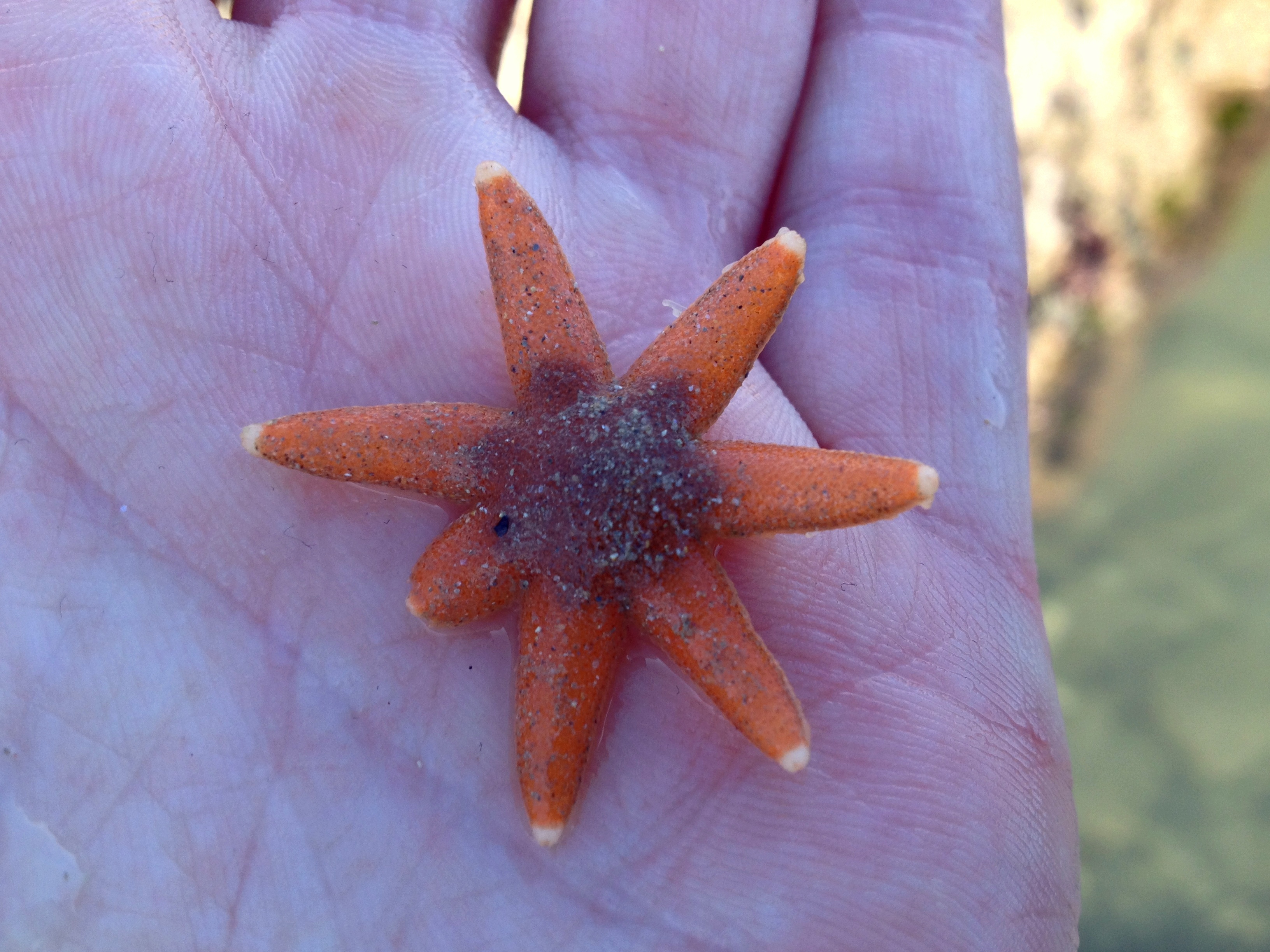
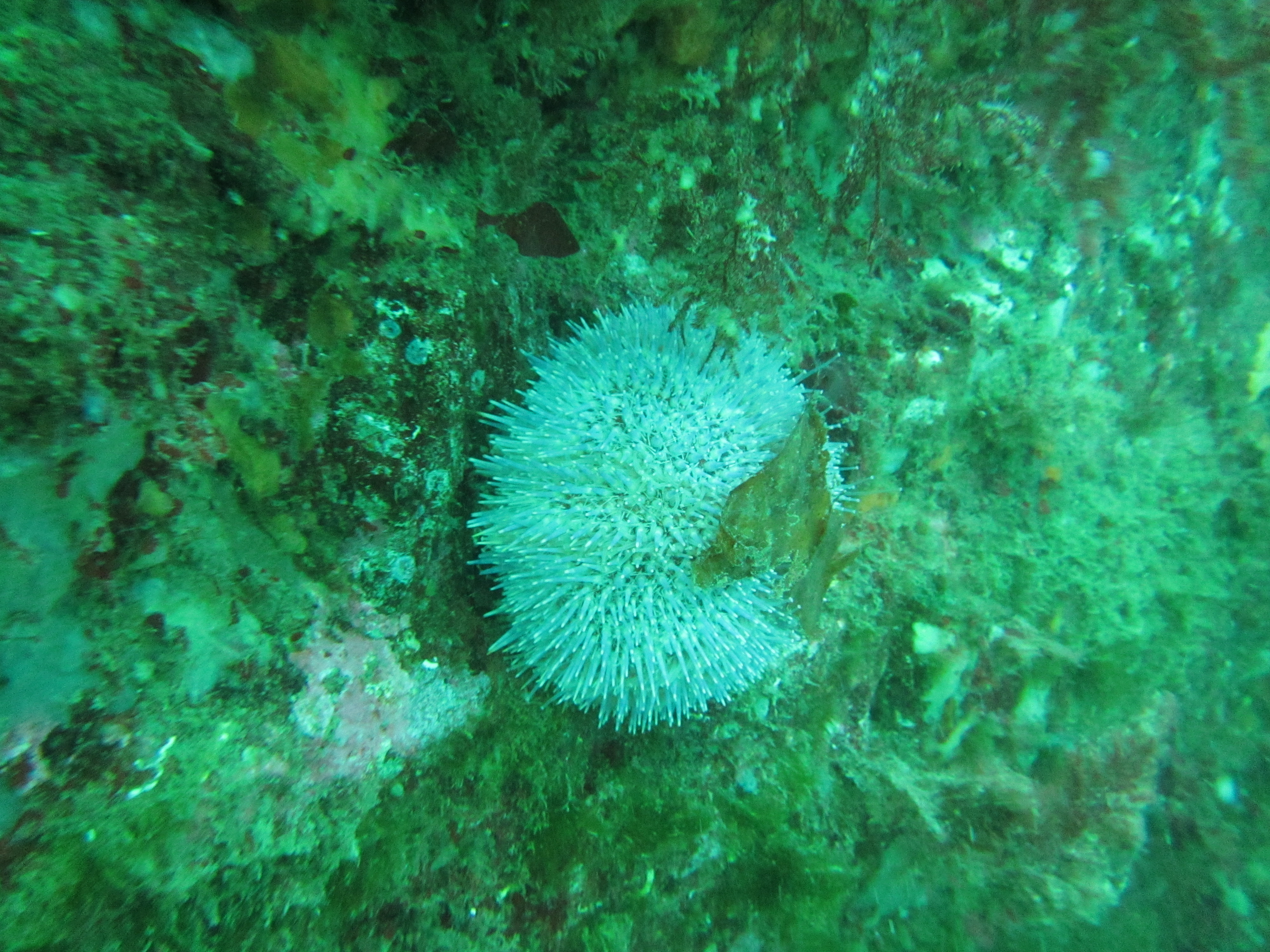
So for now just a little inventory. Molluscs: Turban- Grey- and Purple topshells, a Sting winkle, Thicklipped- and Reticulated whelks and assorted Periwinkles. Crustaceans: Common prawns and Hermit crabs. Anemones: Beadlet-, Strawberry-, Plumose- and Snakelock anemones and a Red Speckled Anemone. Echinoderms: one Sea urchin, a bunch of Cushion stars, the odd Brittlestar and a nice Seven-armed starfish Luidia ciliaris that I recently found in a rock pool on Castle Beach. This species can grow up to 60 cms and hunts for other echinoderms, let’s see what happens!
Perfect Camouflage
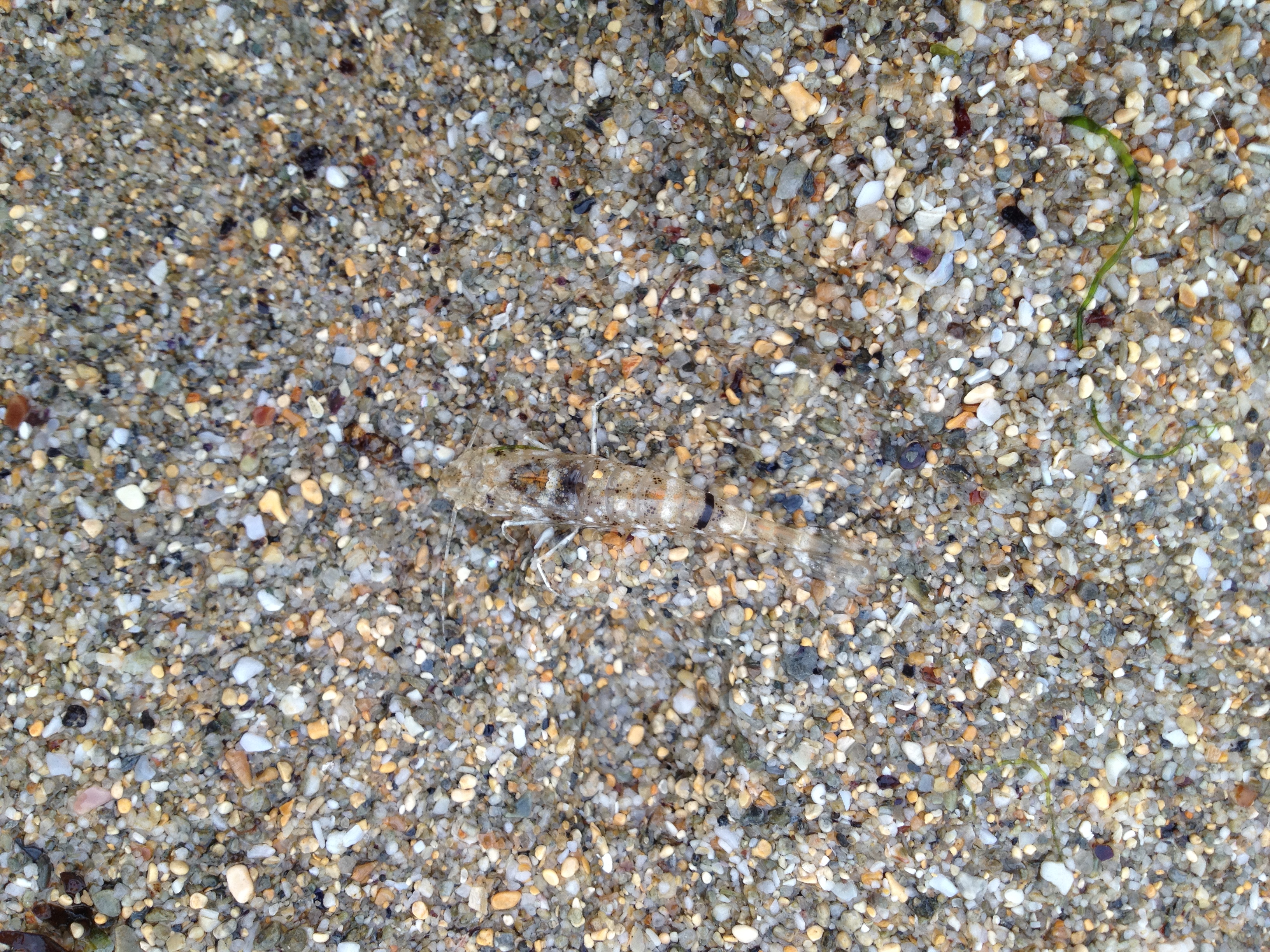
I had an old picture lying around from when I was playing with my GoPro at Castle Beach in Falmouth (see here). It features one of the most common and least glamourous denizens of the British coast, but I still think is worth a quick post. The Brown shrimp Crangon crangon lives on and in sand and is perfectly camouflaged. I have cropped the first picture in case you can’t even spot it. I have not explored what is living on sandy beaches that much yet, as there is so much to see in the rock pools, but I will definitely have to go back out when the weather turns for the better! 
diving in the Helford Passage
A new location for the second dive: Helford Passage between Falmouth and the Lizard Peninsula. This is a shallow, sheltered creek with a sandy bottom and eelgrass beds and can only be dived (well) at high tide. A good site to spot Thornback rays Raja clavata we heard and we were indeed lucky to find several of them. We entered the water at Grebe Beach next to Durgan:
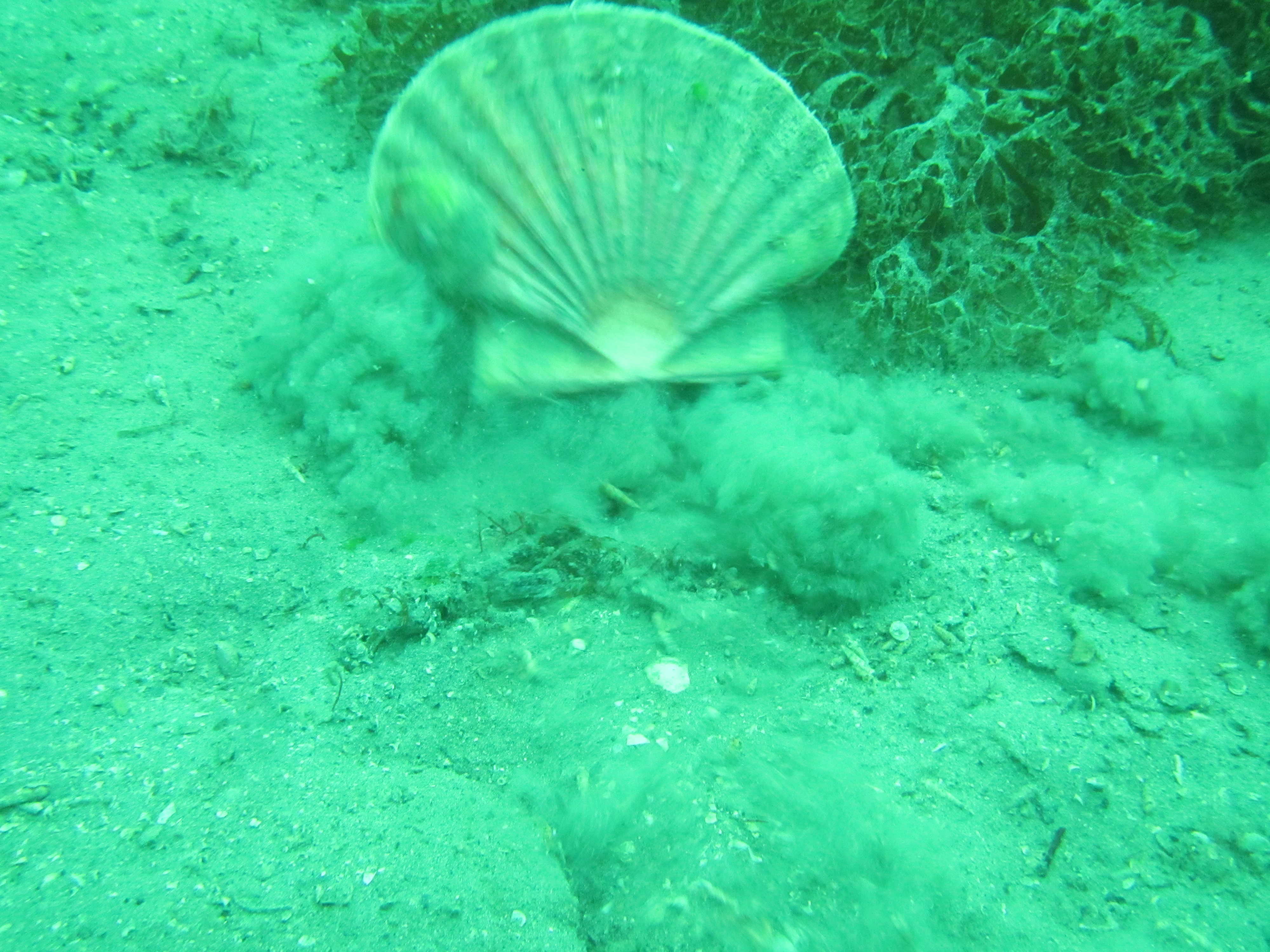
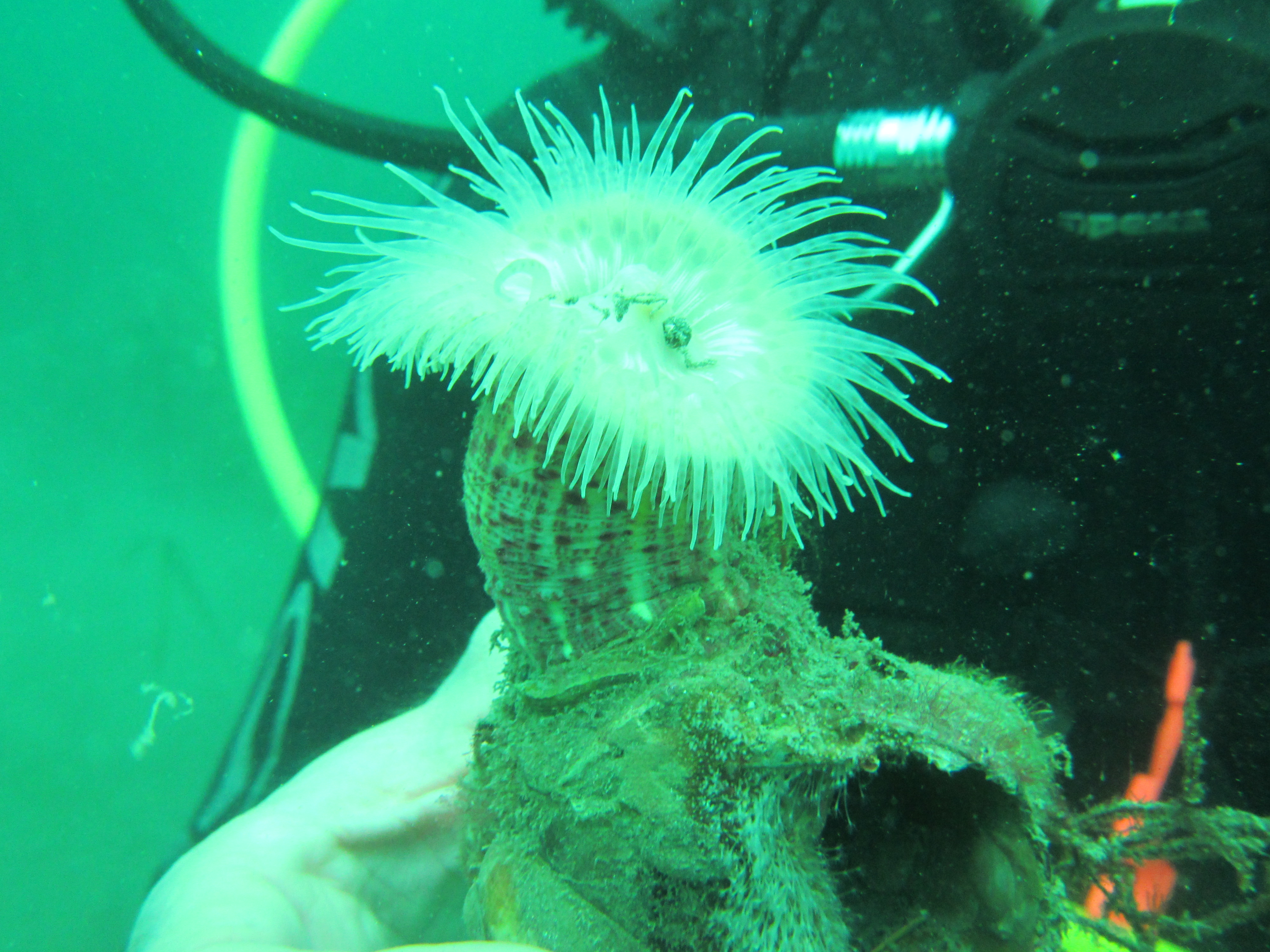
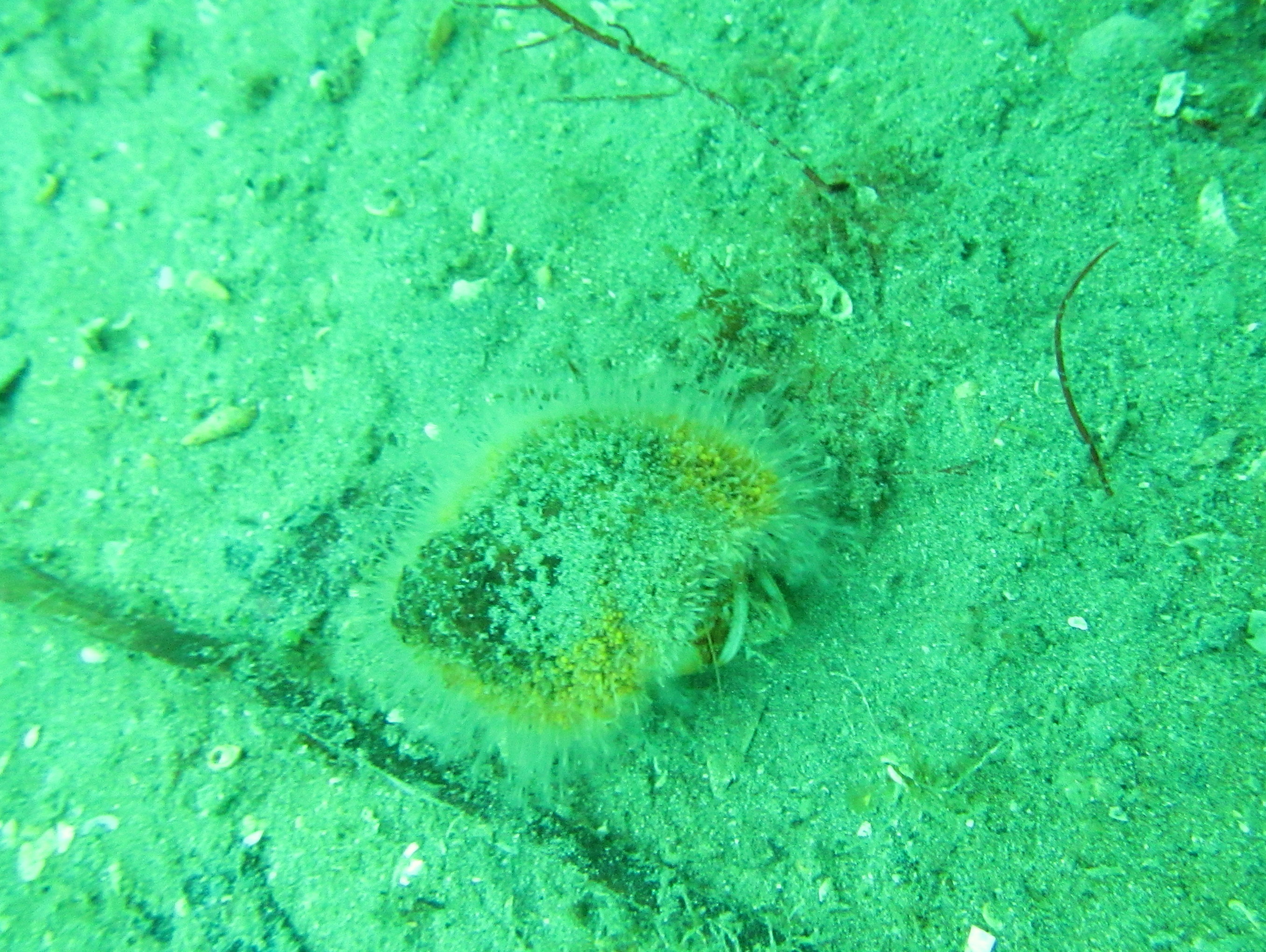
Again, we spotted some cuttlefish, which are not very shy at all. What was very cool were Great scallops Pecten maximus lying around and swimming away for a bit by opening and closing the shell, I will try to film that next time. Many Turban top shells and some large heremit crabs with one or more Parasitic anemones Calliactic parasitica on top. The shells of smaller hermit crabs were covered in the hydroid Hydractinia echinata:
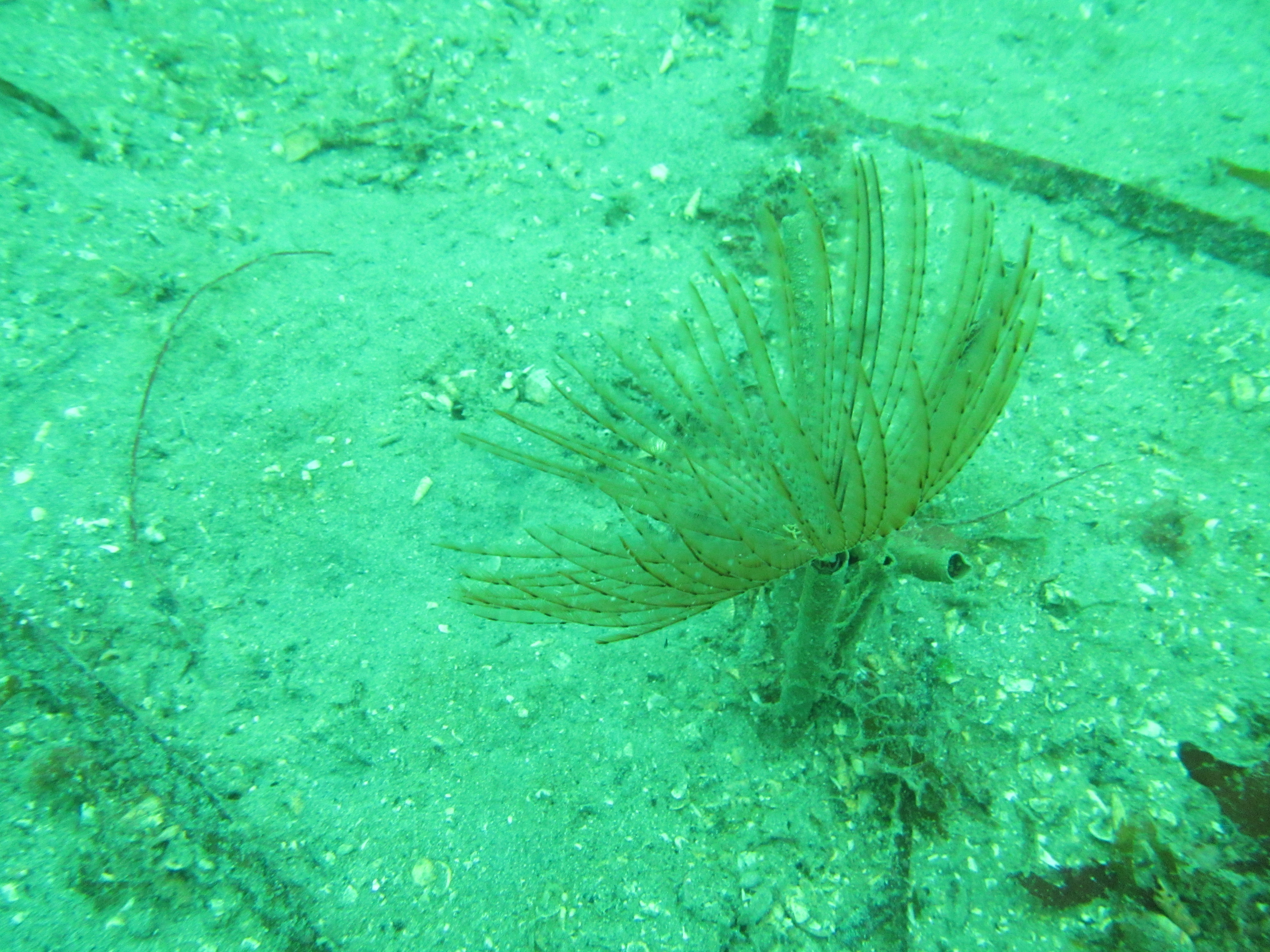
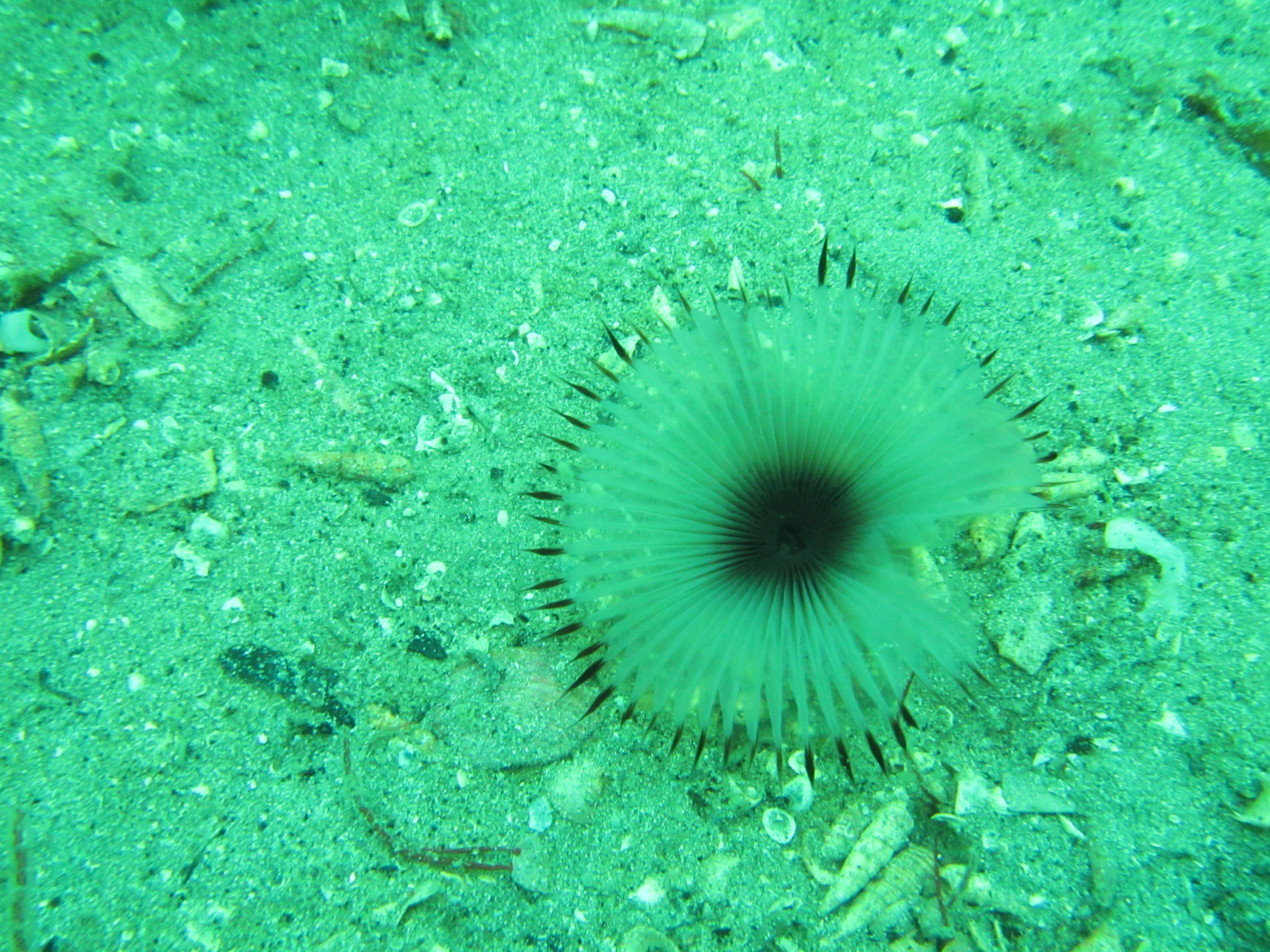
We got to about nine meters depth (near the buoy) and found a large concrete block. Scattered among it lay the remains of crabs and in a hole dug underneath the snout of a Conger eel poked out. As I had to get close for a better look, I stirred up too much sediment and so I do not have a good picture but I will definitely like to go back and have a better look! Interesting was an old crab pot covered in sea squirts (mainly Morchellium) which was swarming with Leach’s spider crabs Inachus phalangium. Normally they sit under a Snakelocks anemone but there were none attached to the pot, strange. Very common were large Peacock Worms Sabella pavonina and Fan worms Myxicola infundibulum:
diving at Silver Steps
I am really getting back into this diving thing! Last week, I made another trip to Seaways Dive Centre in Penryn to rent some gear (£25 for 24 hrs) and go out with dive buddy Chris. First a dive at the end of the day at low tide at Silver Steps in Falmouth. A great encounter a minute after we got in with a cuttlefish:
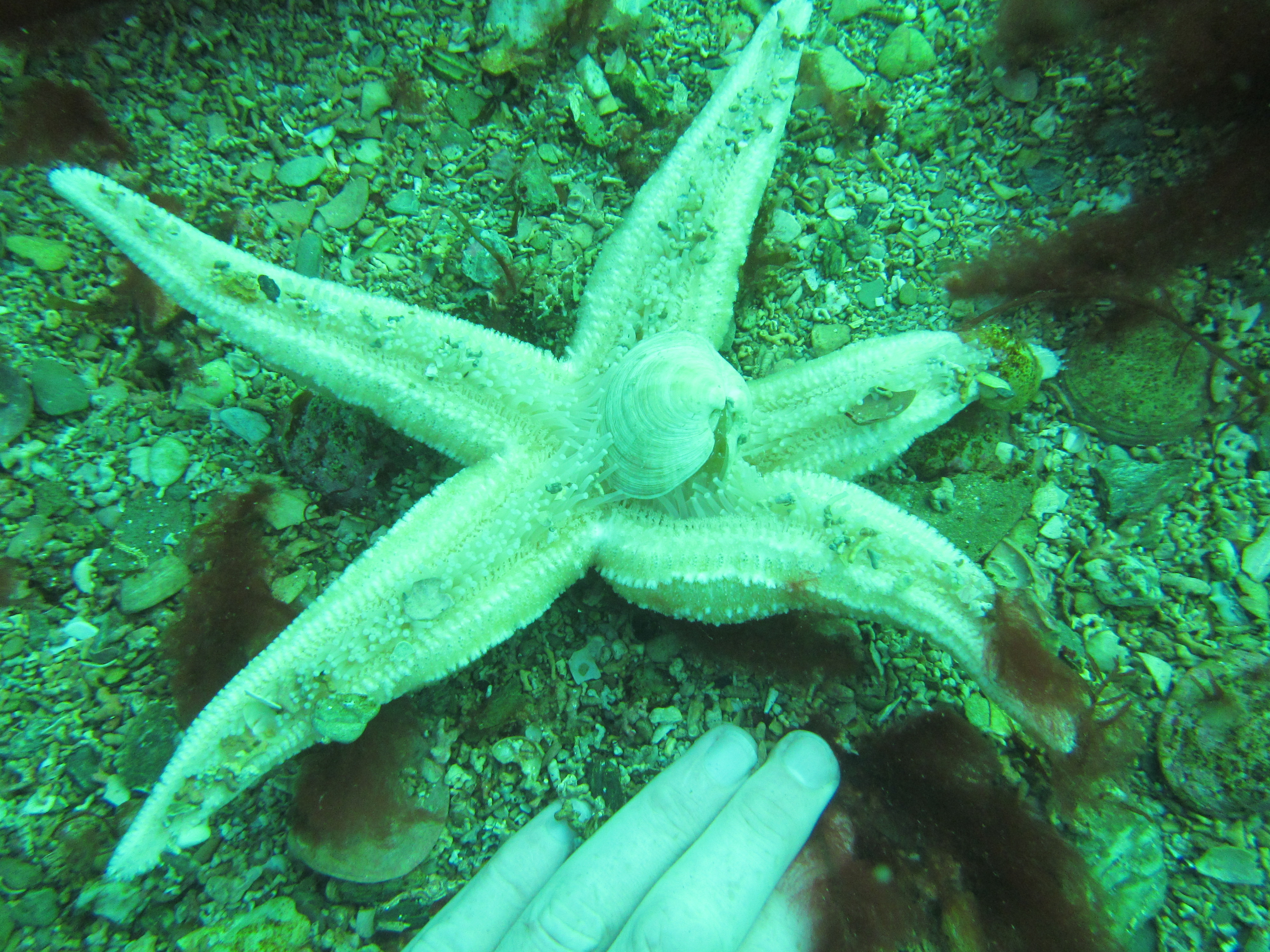
We then set out over the gravel beds towards the open sea. A pretty barren affair, with lots of decaying seaweed. Mainly Spiny and Common starfish and Pulled carpet shell Tapes corrugata, Warty venus Venus verrucosa and Rayed Artemis Dosinia exolata. A picture of the latter being eaten by a common starfish:
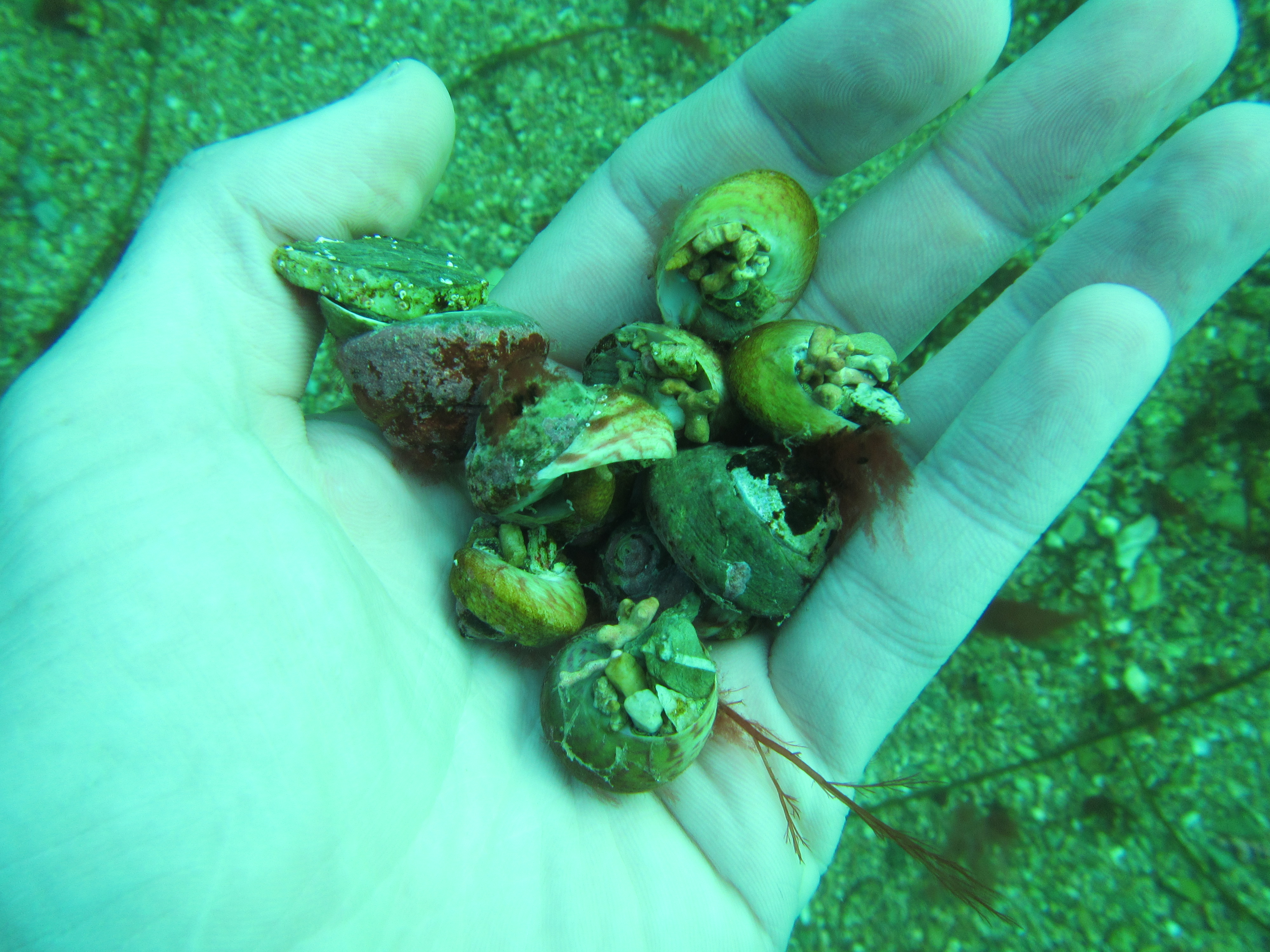
Turban top shells Gibbula magus were on my list to get for the aquarium and I noticed that this species is extremely common (several per square meter) so I took a bunch home. The shells look pretty beaten up with lots of stuff growing on ’em but I think they are pretty cool; truly subtidal so no risk of them creeping out of the tank:
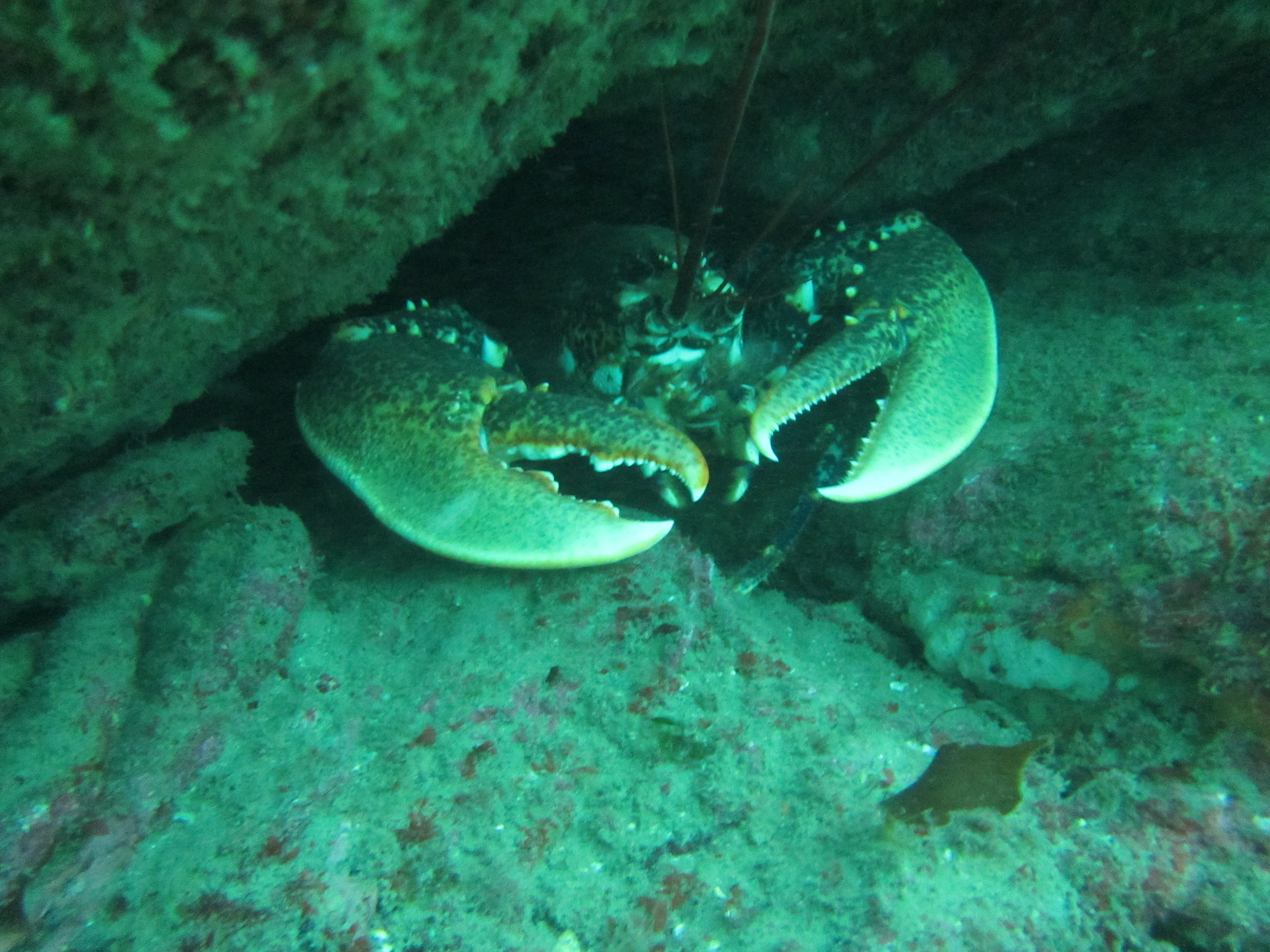
We then made it back to the rocky coast and found a nice gully with overhanging rocks with lots of interesting critters. One little cove was home to ten or so shy Leopard-spotted gobies (I plan to go back with my GoPro and leave it there filming for half an hour to pick it up later). We found a big lobster Homarus vulgaris, a beautiful Bispira volutacornis worm (I have already posted pics of these species recently and I will try to show more self-restrainst from now on and not keep posting similar photos). Also for the first time some large Edible sea urchins Echinus esculentus. Probably a really common species when you dive a little deeper but the very first time I saw it. Have to practice a bit more with the new Canon Powershot D30 as I am not completely convinced about its qualities yet (I did not bother to post-process any of the pics btw). 
more netting from the quay
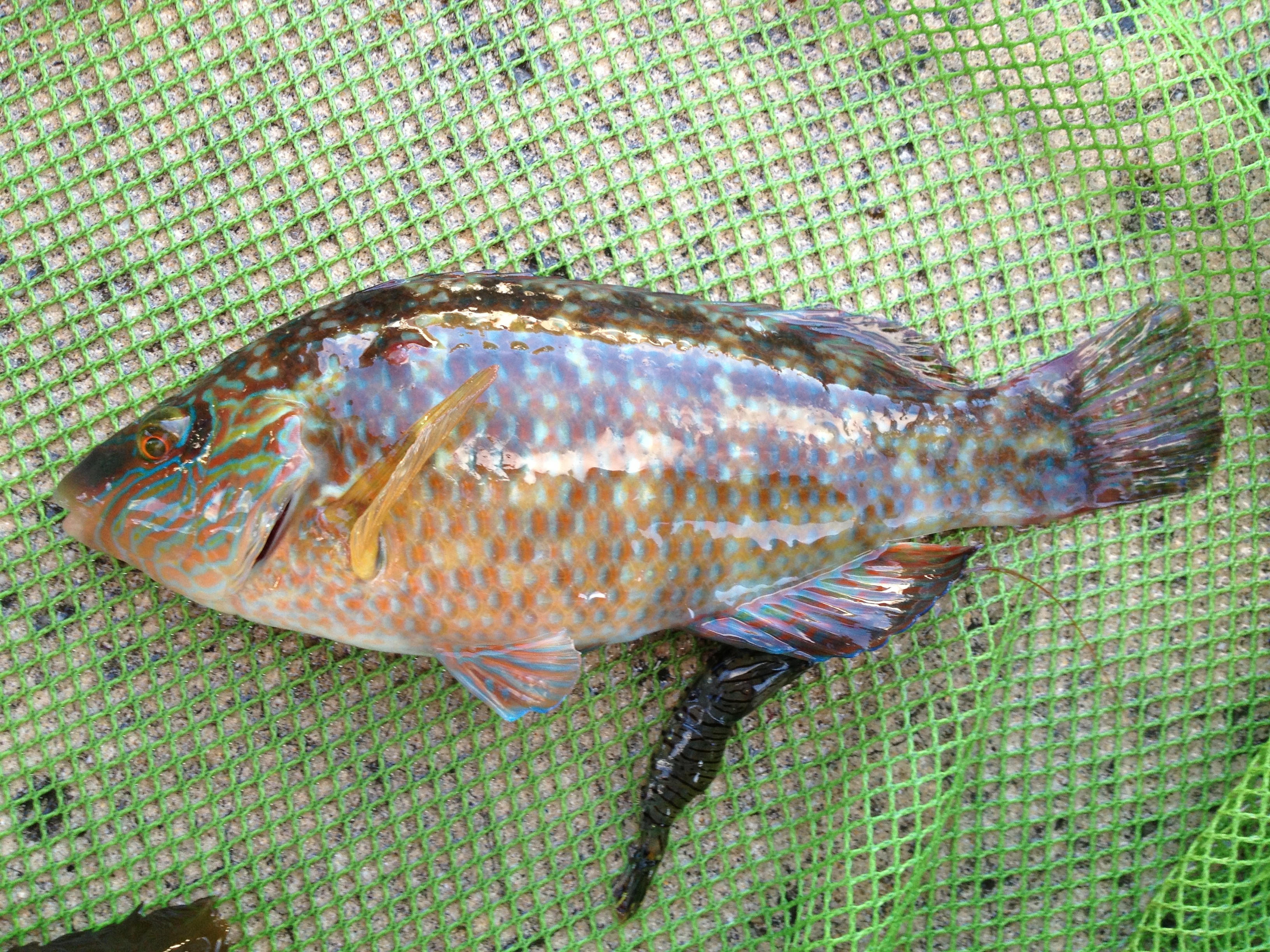
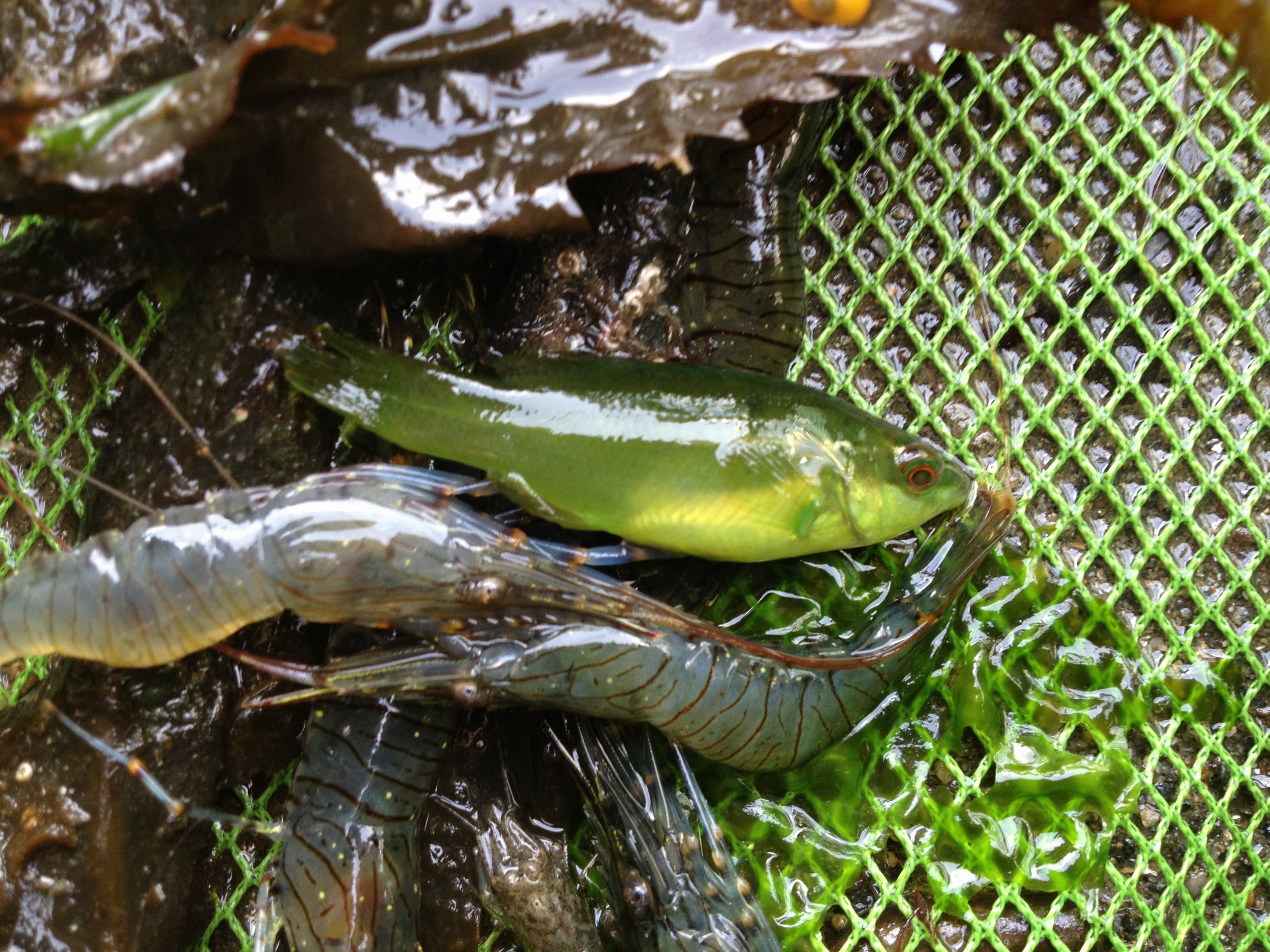
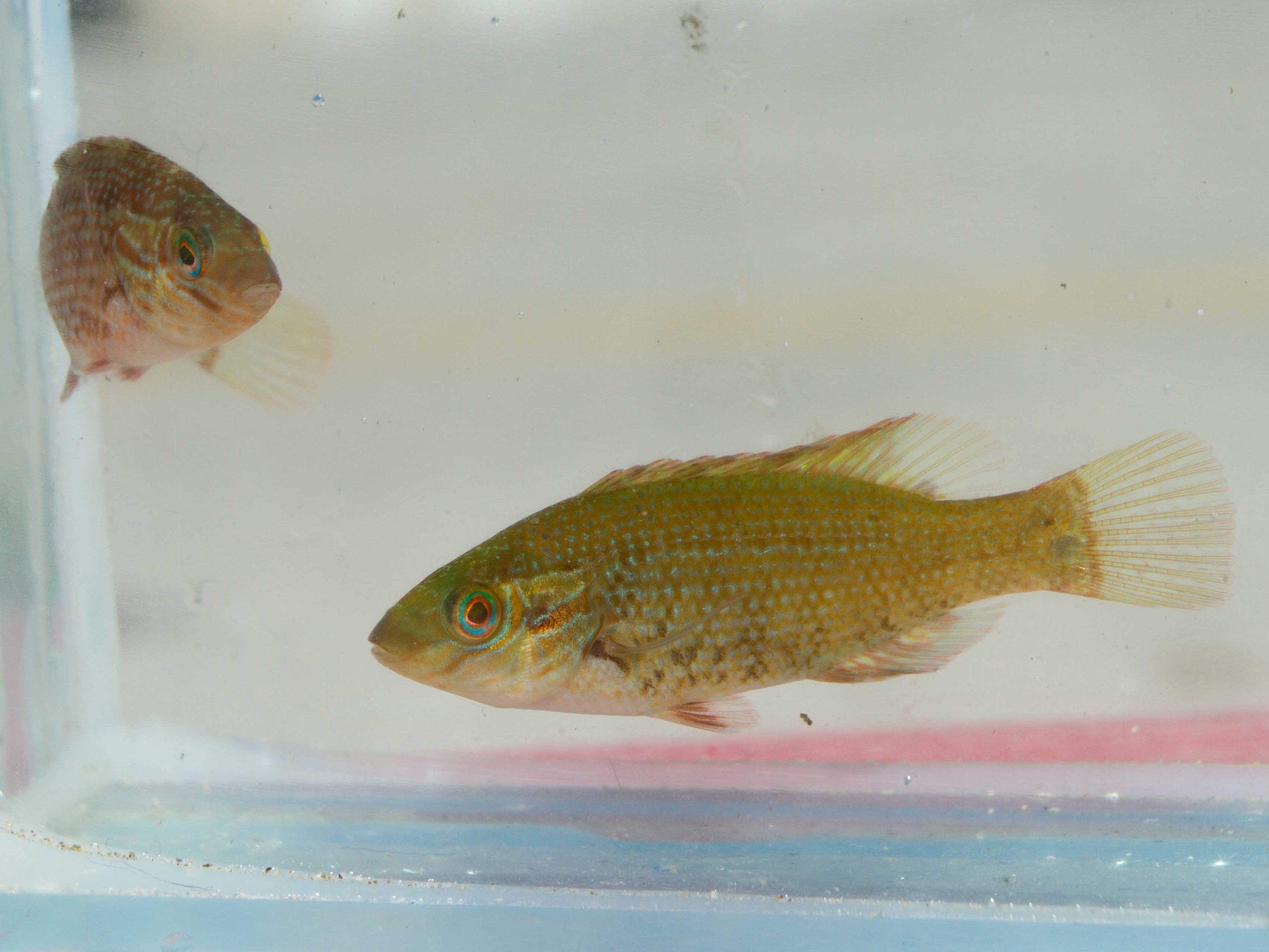
In a recent post I showed some pictures of fish I caught off the quay in Flushing. I have since quite regularly scraped the sides of the quay with my net and netted a bunch more species. No good pictures of the Shanny, Rock Goby and Two-spotted goby yet, but here are some OK pictures of other species (I do not like to keep the fish too long out of the water so it is a bit rushed). Besides many juvenile individuals, occasionally I catch an adult Corkwing wrasse Symphodus melops. I have only once I managed to cath a bright green juvenile Ballan wrasse Labrus bergylta:
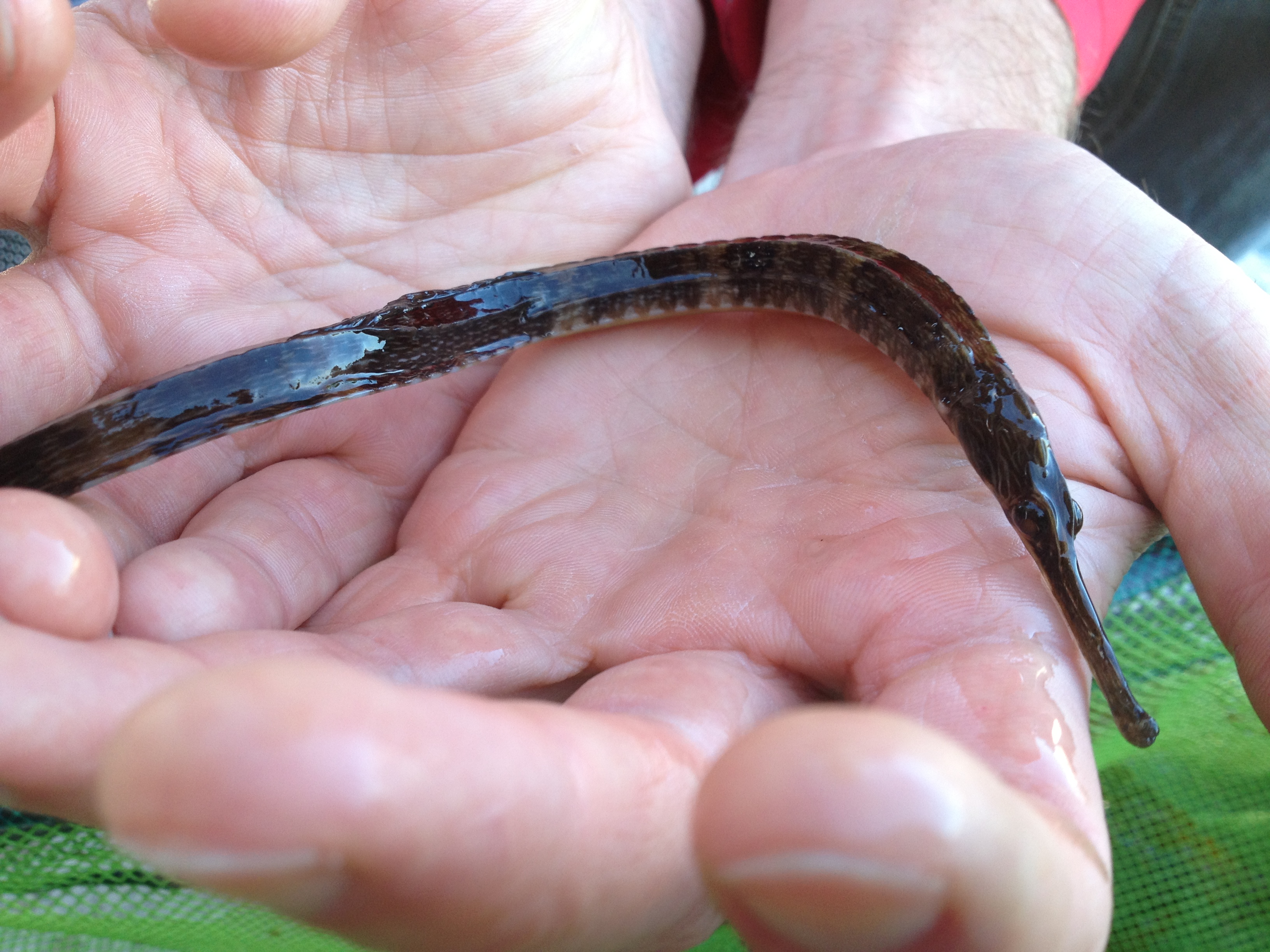
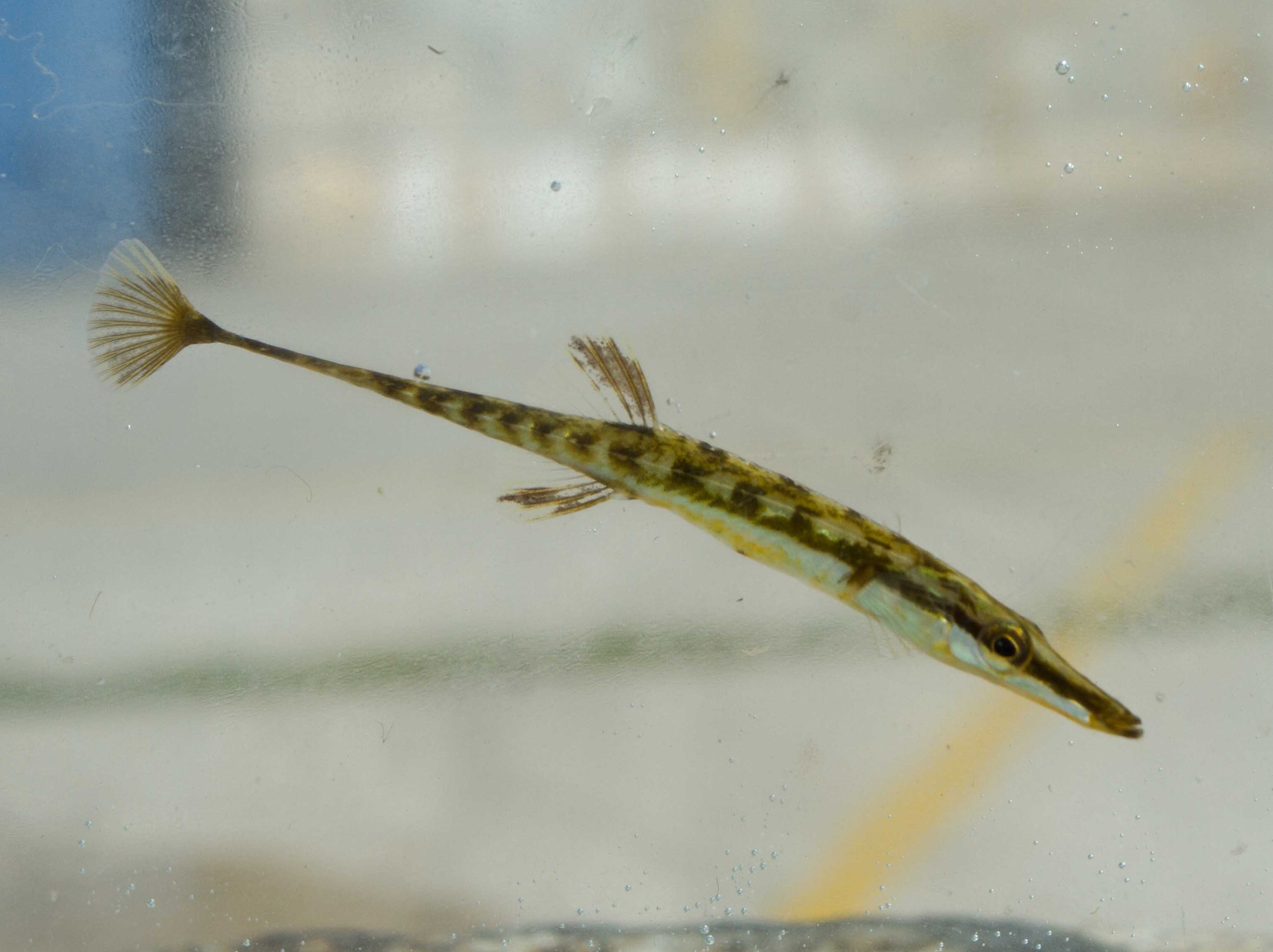
Twice I have caught a Sea scorpion Taurulus bubalis, they look a bit like gremlins. Once I caught a Greater pipefish Syngnathus acus, very cool:
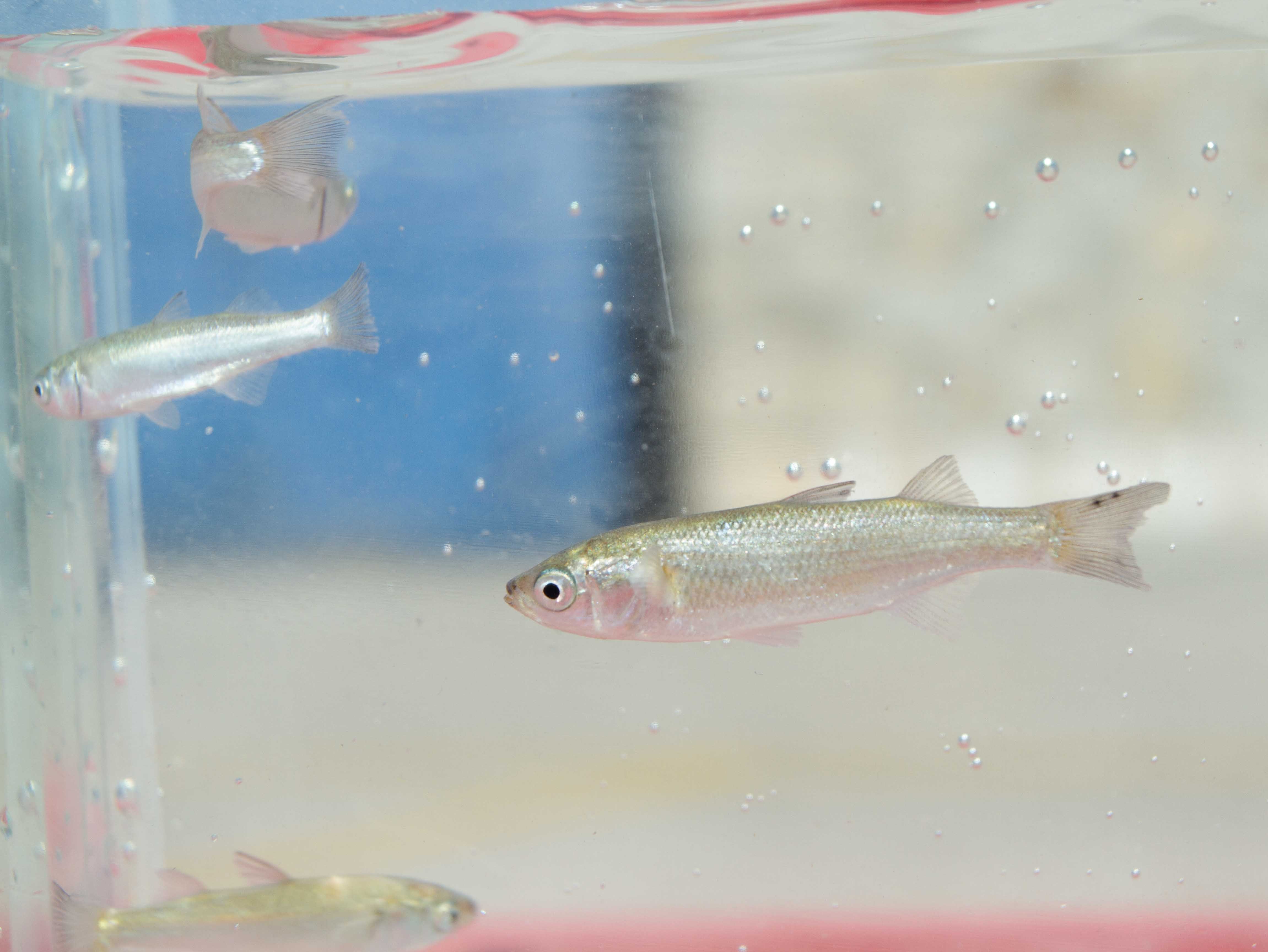
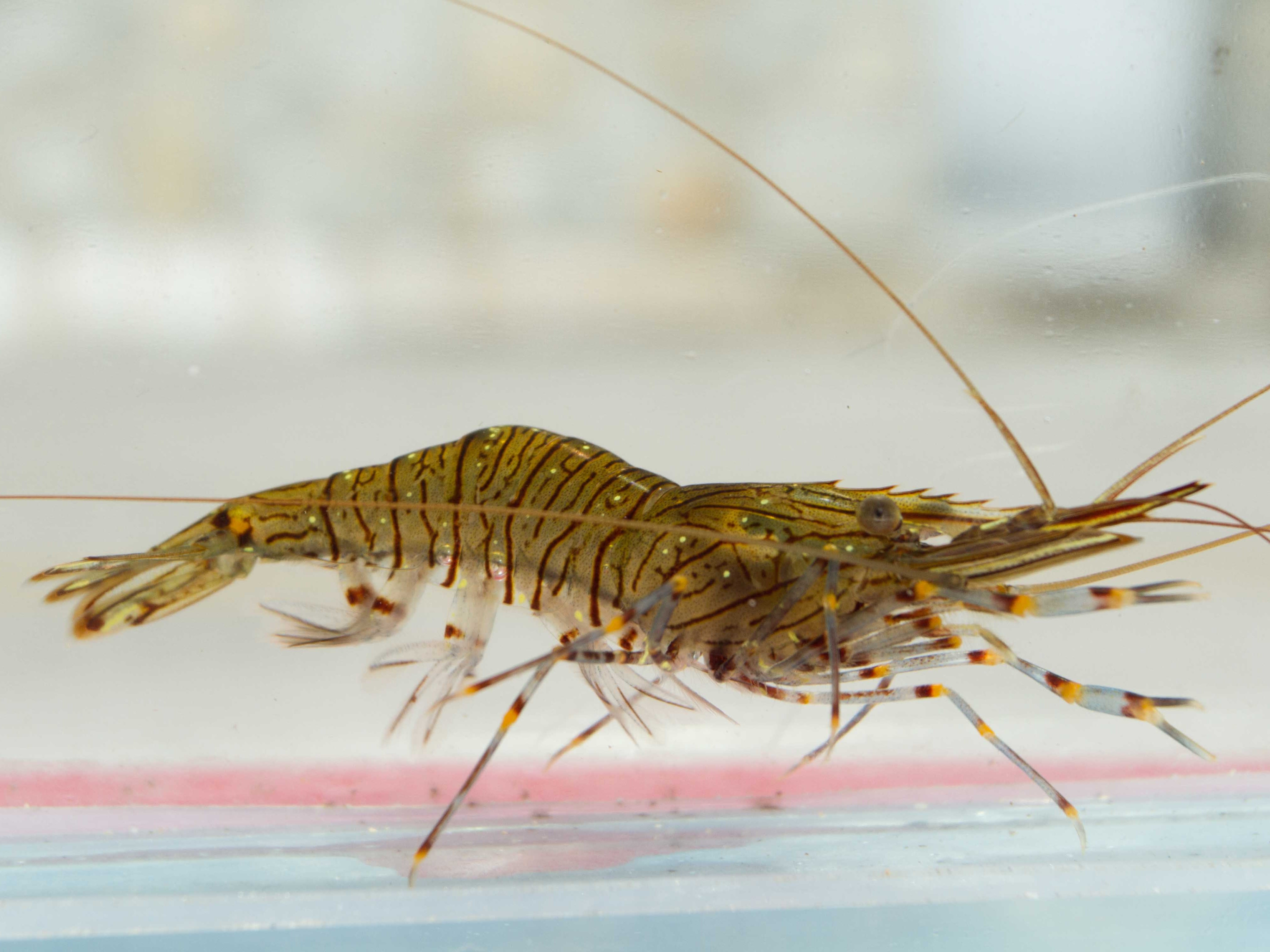
My friend Thor is a very good photographer with a very good camera and he made some great pictures of fish in the cuvet this week. Two Corkwings, a Fifteen-spined stickleback Spinachia spinachia, some Thick-lipped (probably) grey mullet Chelon labrosus. The latter are more difficult to catch as they are in open water and the net has a small mesh size. As a bonus the most common catch, a Common prawn Palaemon serratus:
Snorkelling at Silver Steps Part I
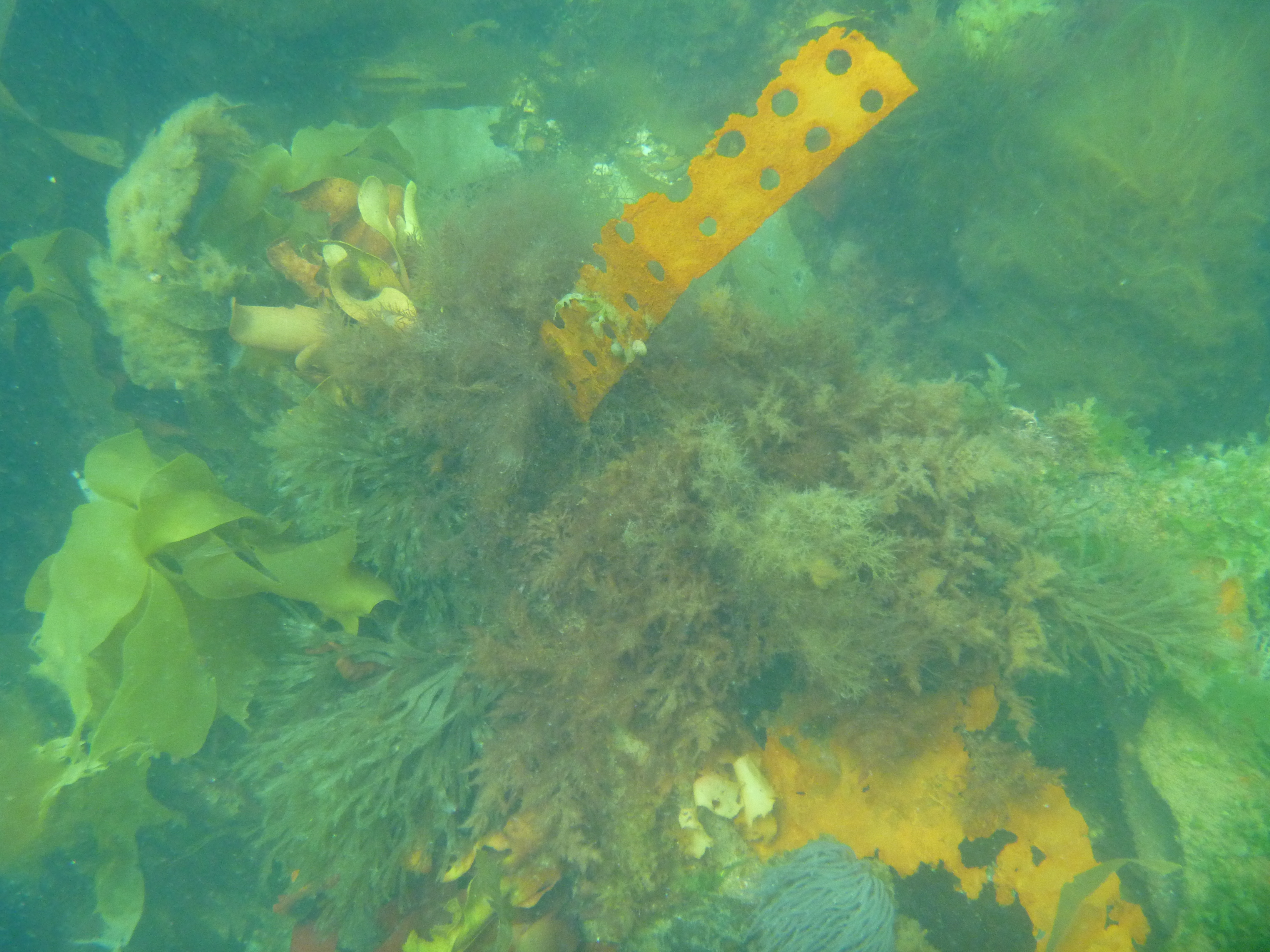
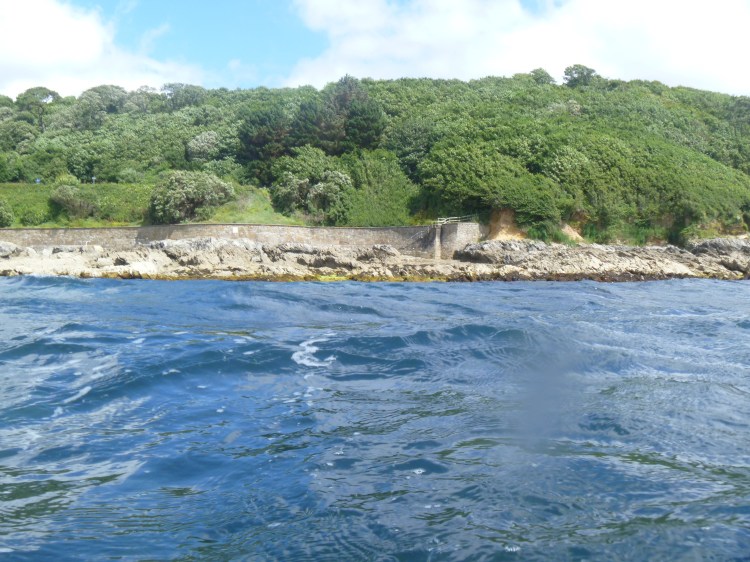
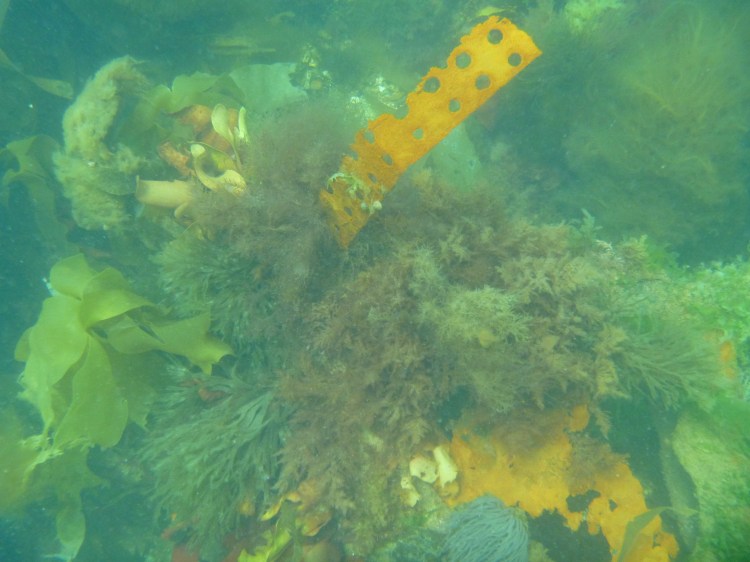
High time for a snorkel, and few better places in the area than ‘Silver Steps’, between Castle Beach and Pendennis Point in Falmouth. I took my little Lumix camera (goes up to 10 meters deep, no optical zoom) with me to take some sub-standard pics (all other photos on the blog are taken with my iPhone). This site is a mix of rocks covered in kelp and gravel and even the remains of two U-Boats (they are no longer recognisable as such though, see here for more specifics on these and other wrecks off Falmouth). There is always something to see: schools of Smelt chased by Sand eels, hovering Two-spotted gobies, Corkwing and Ballan wrasse, Spiny starfish and loads of seaweeds. In fact, there was so much to see that I have divided the pictures over two posts. First a photo of the site and some of the U-Boat wreckage:
We were in for a nice surprise: a good-sized John Dory Zeus faber at around seven meters depth. I have posted a very nice picture from my first and only dive in Cornwall courtesy of Charlotte Sams, but here a short, jittery video as well:
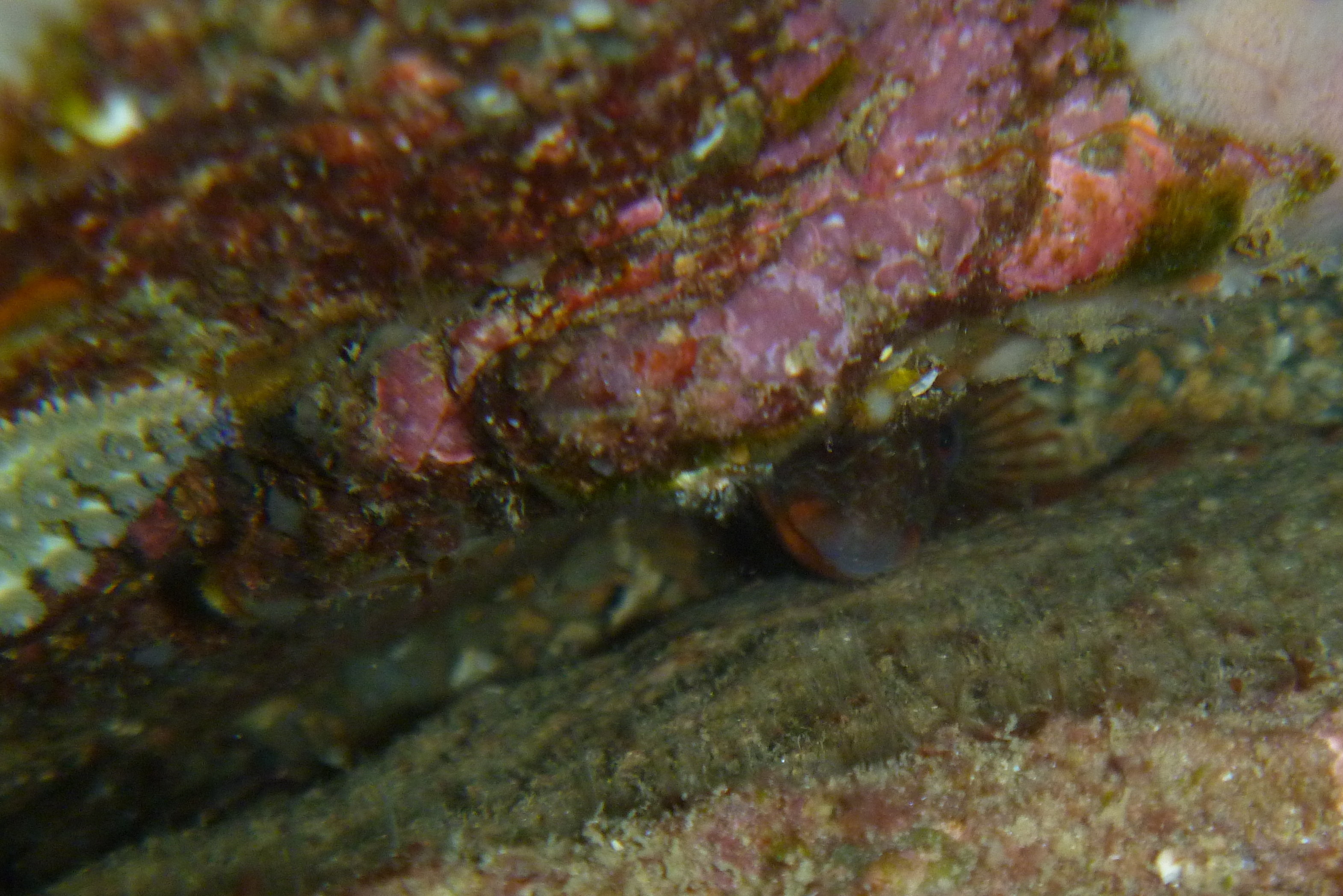
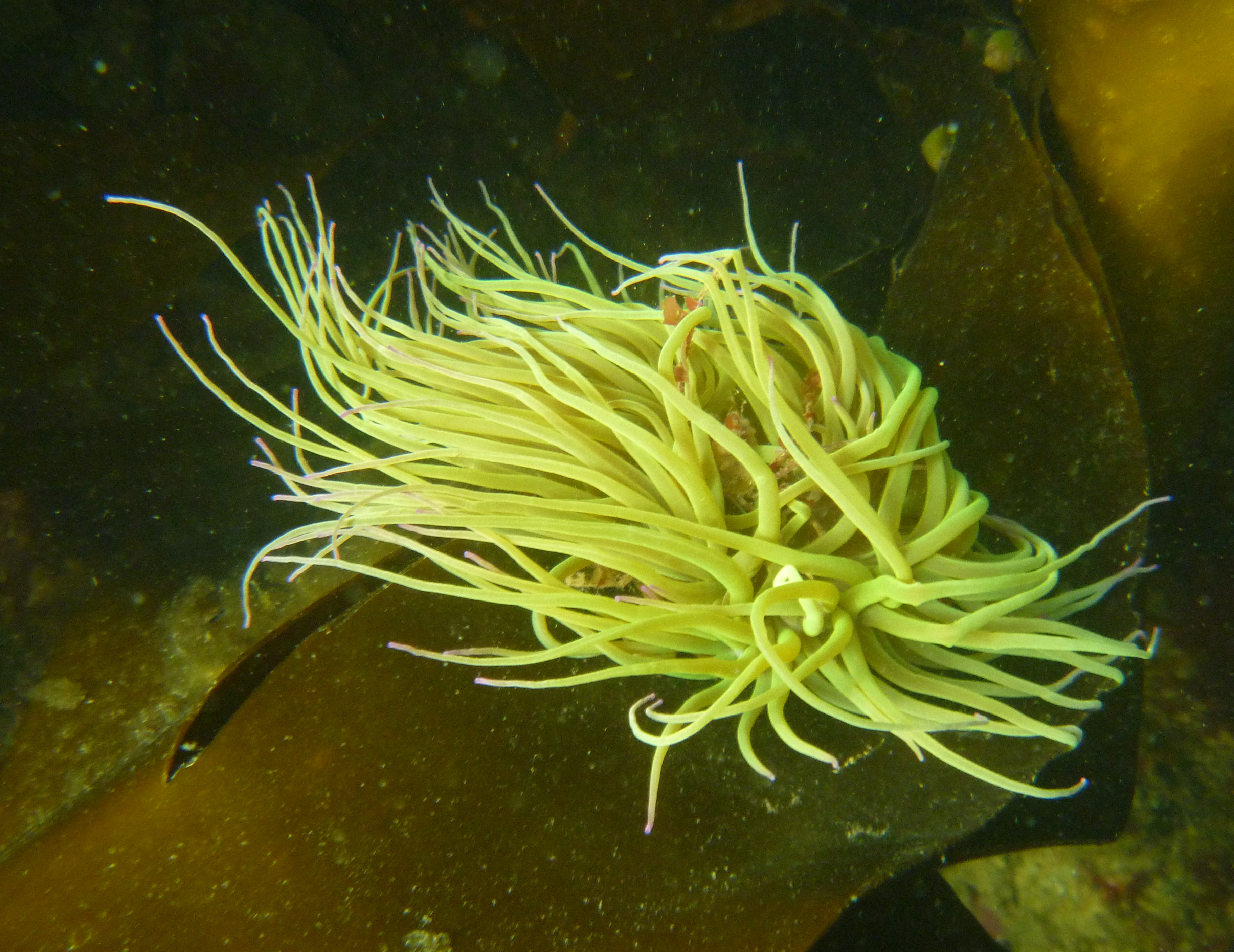
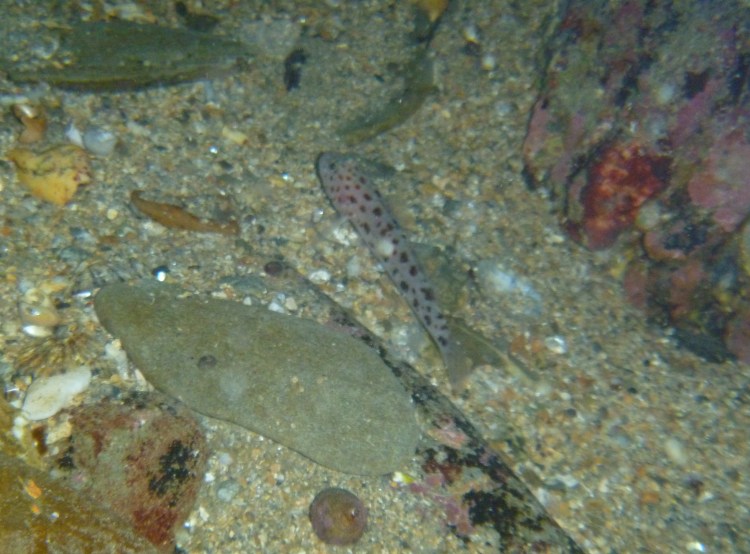
Anyway, a perhaps even nicer find were Leopard-spotted gobies Thorogobius ephippiatus. Some sources make it seem like this is a rare species only ever encountered by divers, but it is actually not uncommon and we saw them at two meters down (the tide was low though). It is a shy species that lives under ledges, burying between the rock and the gravel. The picture is crap but also proof I am not lying. The next picture is of a Tompot blenny Parablennius gattorugine peeking from a crack in the rocks. Large snakelocks anemones are everywhere on the kelp, and although a month ago I saw none, many of them again housed commensal Leach’s spider crabs Inachus phalangium. (These anemones and crabs do well in the aquarium btw, see here.) It would be interesting to know if these crabs arrive from deeper waters or just grow up really fast.
More Scummy Pools
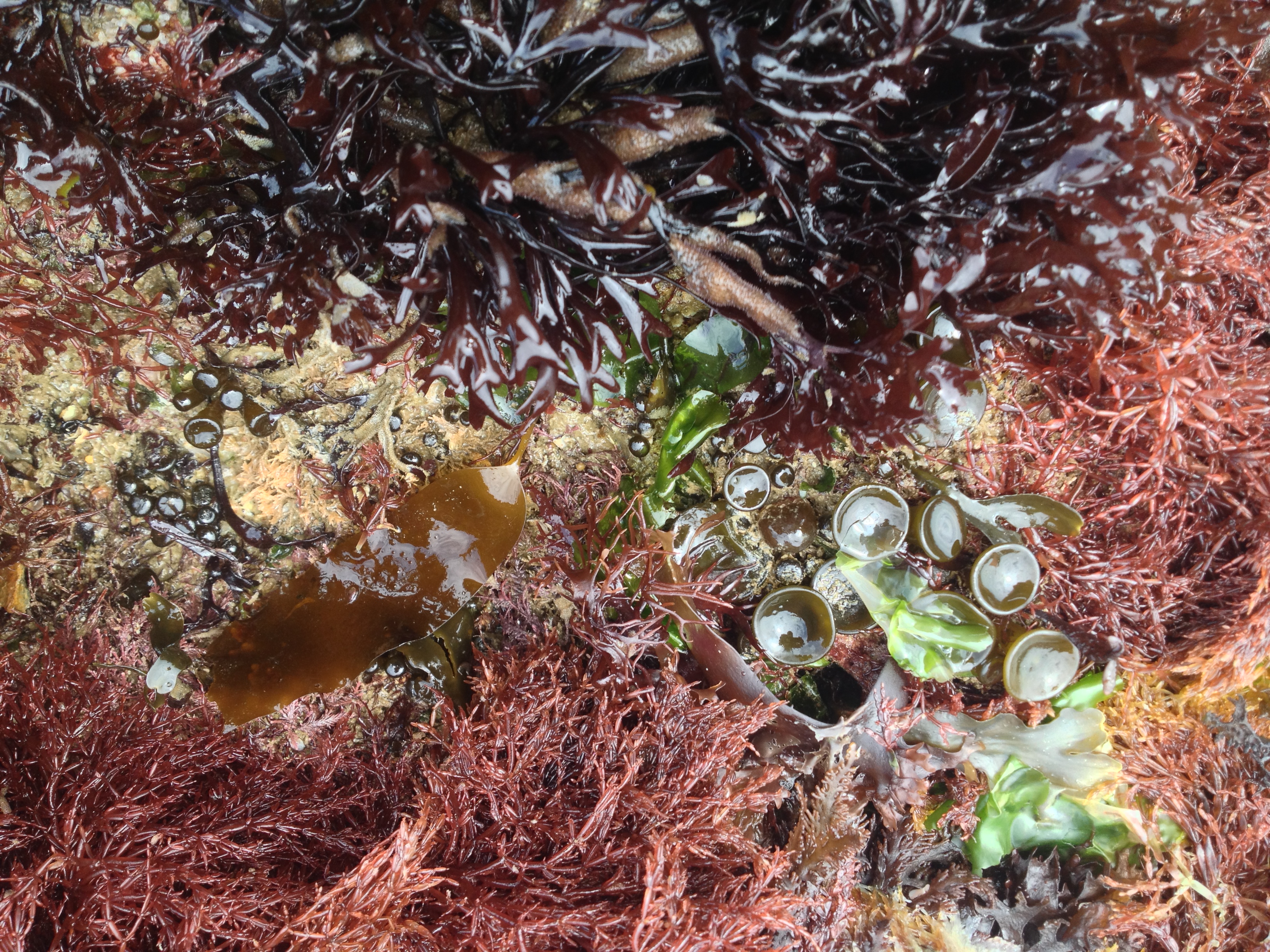
As in Falmouth, the rock pools in Flushing are not looking that great at the moment. Lots of the Corallina has turned white/died (although the clumps in my tank are still their normal purple!). Of course, many species were still thriving, Grape pip weed Mastocarpus stellatus (top), Bunny ears Lomentaria articulata (bottom), new Thong weed Himanthalia elongata ‘buttons’ and a young blade of kelp along with some green Ulva:
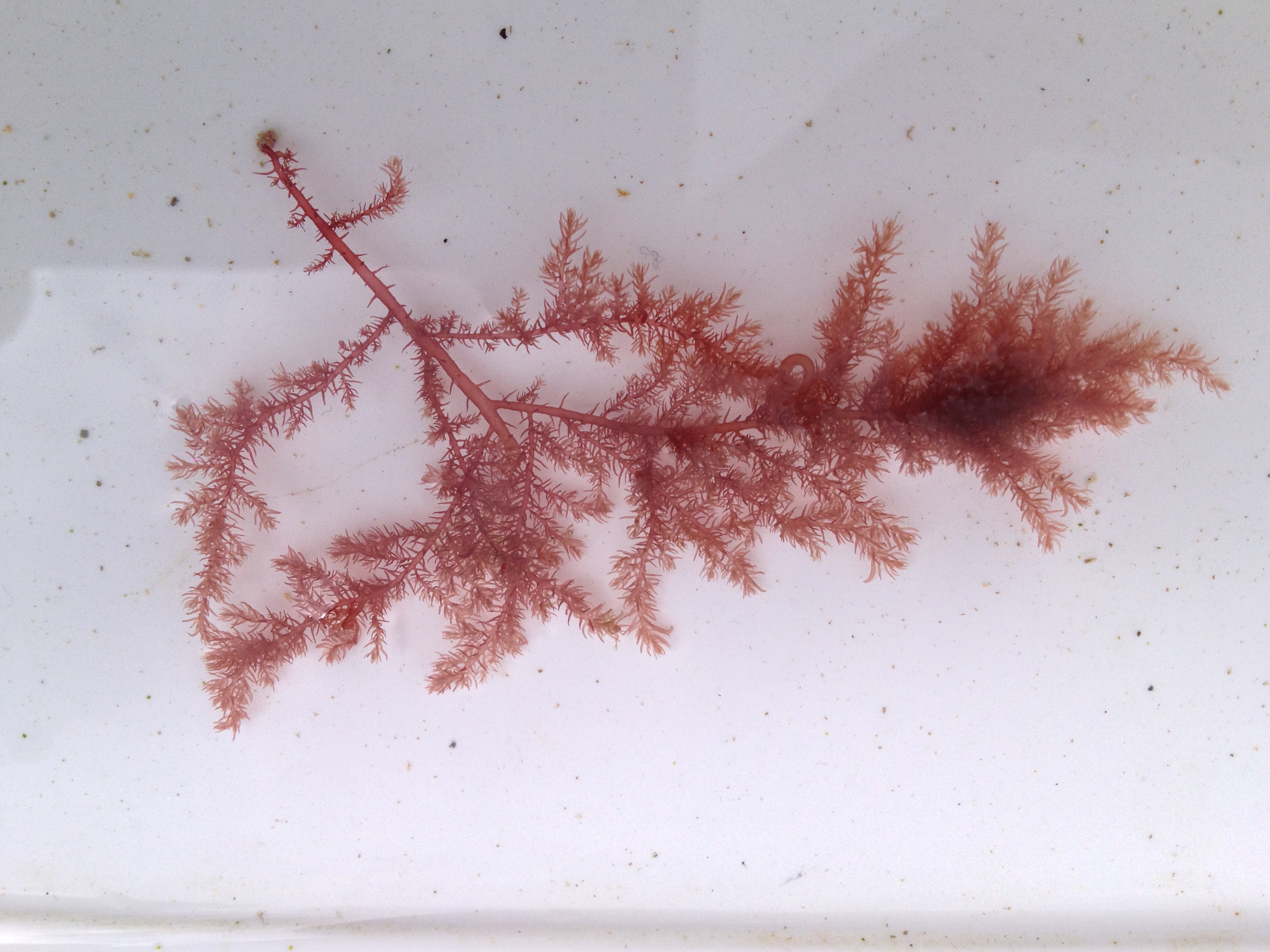
Among the seaweeds that were thriving was Slimy whip weed Chordaria flagelliformis (I am by no means a seaweed expert and I might be wrong about this, please comment if I am!) and also the beautiful Harpoon weed Asparagospis armata growing as an epiphyte on some darker coloured False eyelash weed. Harpoon weed is invasive and so a good candidate to do well int he aquarium (as most invasive species are quite opportunistic and not too finnicky). It died off in the tank before, but I decided to bring some home to try again now I have a chiller.
Another tangling invasive species: Bonnemaison’s hook weed Bonnemaisonia hamifera (a characteristic curved hook can be seen in the top-middle):
Loads more seaweeds to be found but I will save those for another time. All kinds of tunicates pop up in spring, some of them pretty (see for instance here), some of them less so. For instance the invasive species, the Leathery sea squirt Styela clava and an out-of-focus photo of a second, large (>10 cm) species that did not get a lot of response on the NE Atlantic Tunicata FaceBook group. Aplidium nordmanni was offered, see here for a much smaller version of that species. Not a looker either in any case!
I brought my little aquarium net and found many juvenile (<1 cm) fish as well as Mysis shrimp. The fish look like gobies but it is hard to see. They were completely translucent and so you can see what this one just ate. I should take some bits of seaweed home to see what comes crawling and swimming out under a little USB microscope (quite easy to make little videos). It is hard to come up with decent images squatting and squinting on a slippery rock with a salt-encrusted mobile phone!