Last weekend I went for a snorkel of Silver Steps at Pendennis Point in Falmouth. Visibility was bad because of the plankton bloom, but this also meant that I could admire the many small jellies floating about. Very hard to get a good shot of these though; might be worthwhile to collect some in a beaker and photograph them in my cuvet back on land next time. My eye was drawn to a giant Barrel jellyfish struggling against the rocks, but then I noticed something a lot cooler: the beautiful nudibranch Facelina auriculata. I was so eager to get in to the water that I had forgotten to put my weight belt on so it was a struggle to dive down and hold still for a macroshot, but this one is relatively sharp (if you want to see beautiful pictures of native nudibranchs I recommend joining the NE Atlantic Nudibranch facebook group). Also spotted the large and beautiful flatworm Prostheceraeus vittatus but did not manage to get a shot, will go back this weekend to try to find them both again!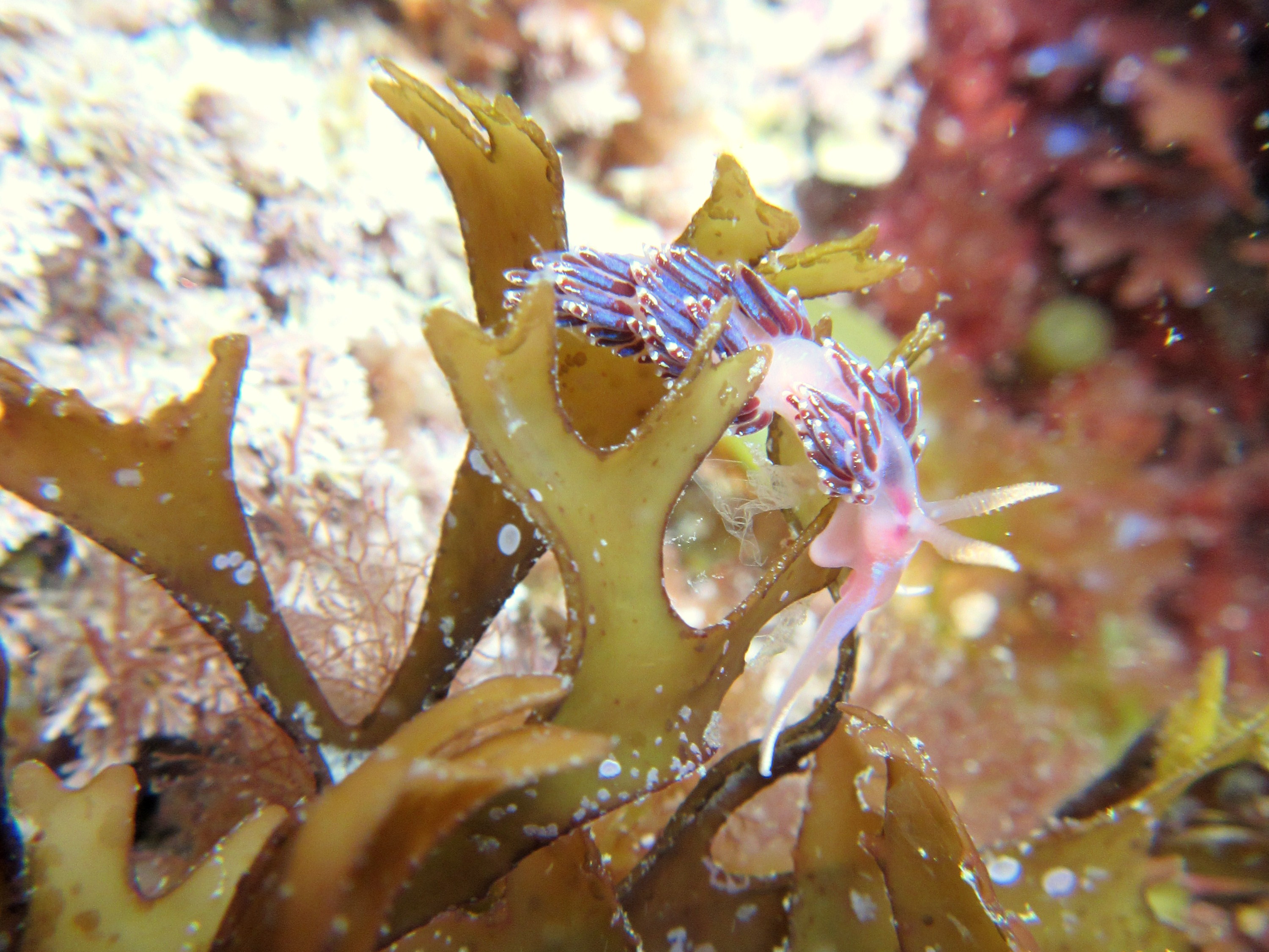
Category Archives: Canon Powershot D30
More Pontooning
Went back today for some more peering from the pontoons in Mylor Bridge marina. Besides the Thicklipped mullet and Two-spotted gobies, small schools of Sand smelt Atherina presbyter were out and about. A short clip of this silvery, pretty fish made using the Canon Powershot 30D and after that a clip made with a GoPro 3+ (not in HD as it was my 2nd, free upload)):
(Annoying that wordpress makes the 2nd clip smaller!) I managed to find back the single 1 cm Elegant anemone Sagartia elegans mentioned in the last post but again was unable to remove it; seems like this species knowns how to attach itself a bit better than do Plumose anemones. I noticed that besides the tunicates, sponges, bivalves (mussels and oysters), seaweeds, anemones and peacock worms, hydroids and bryozoans are also very abundant. I still have to educate myself a bit about these groups. The peacock worms would be beautiful for the aquarium. Although they would be easy to dislodge, it would be problematic to fasten them to something again. Maybe I’ll find a small object with some attached when I’m diving that I could take back some time (frozen artemia might be too big for them to eat, so I would need to look at artifical plankton products for food).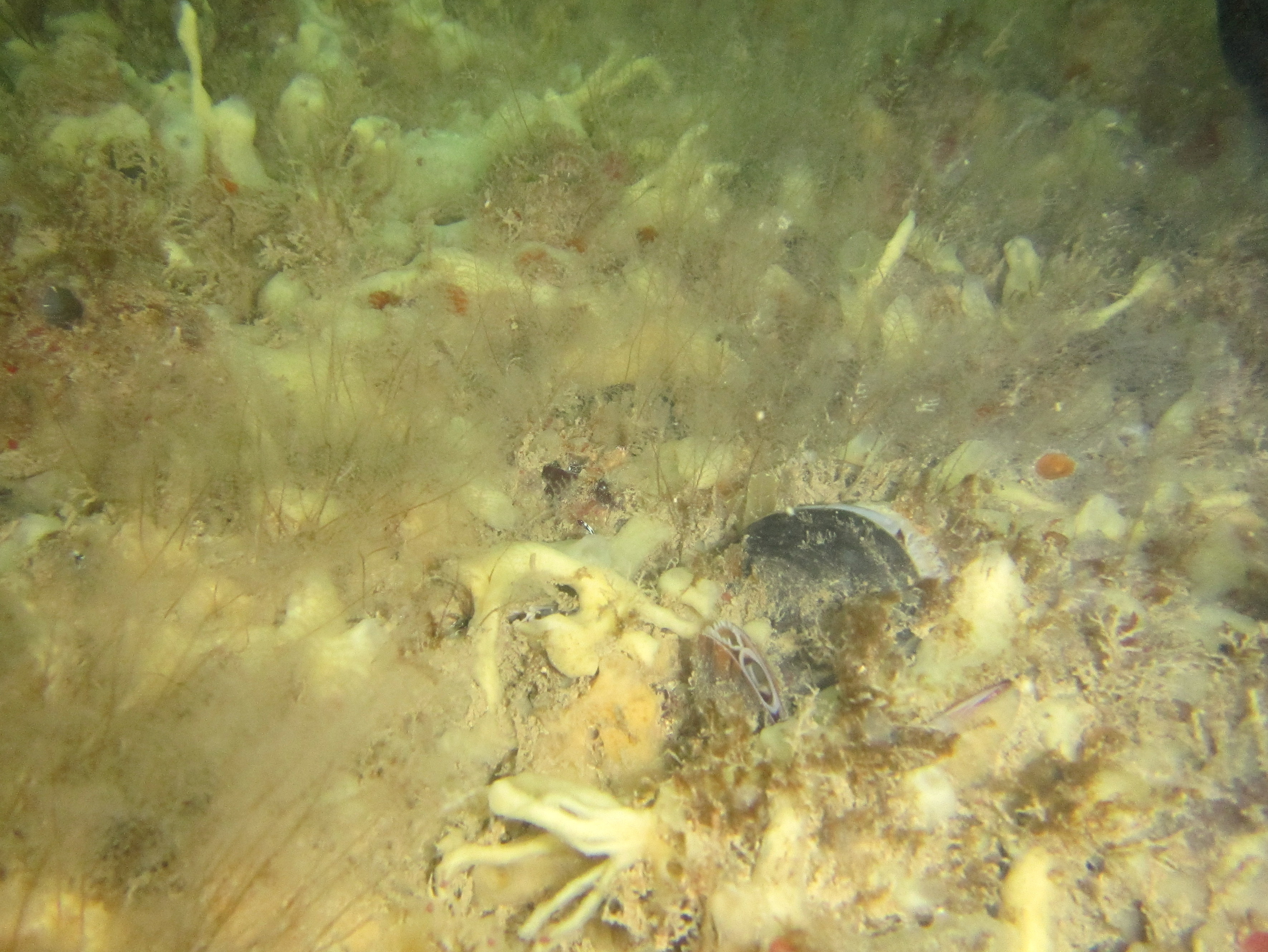
Pontooning
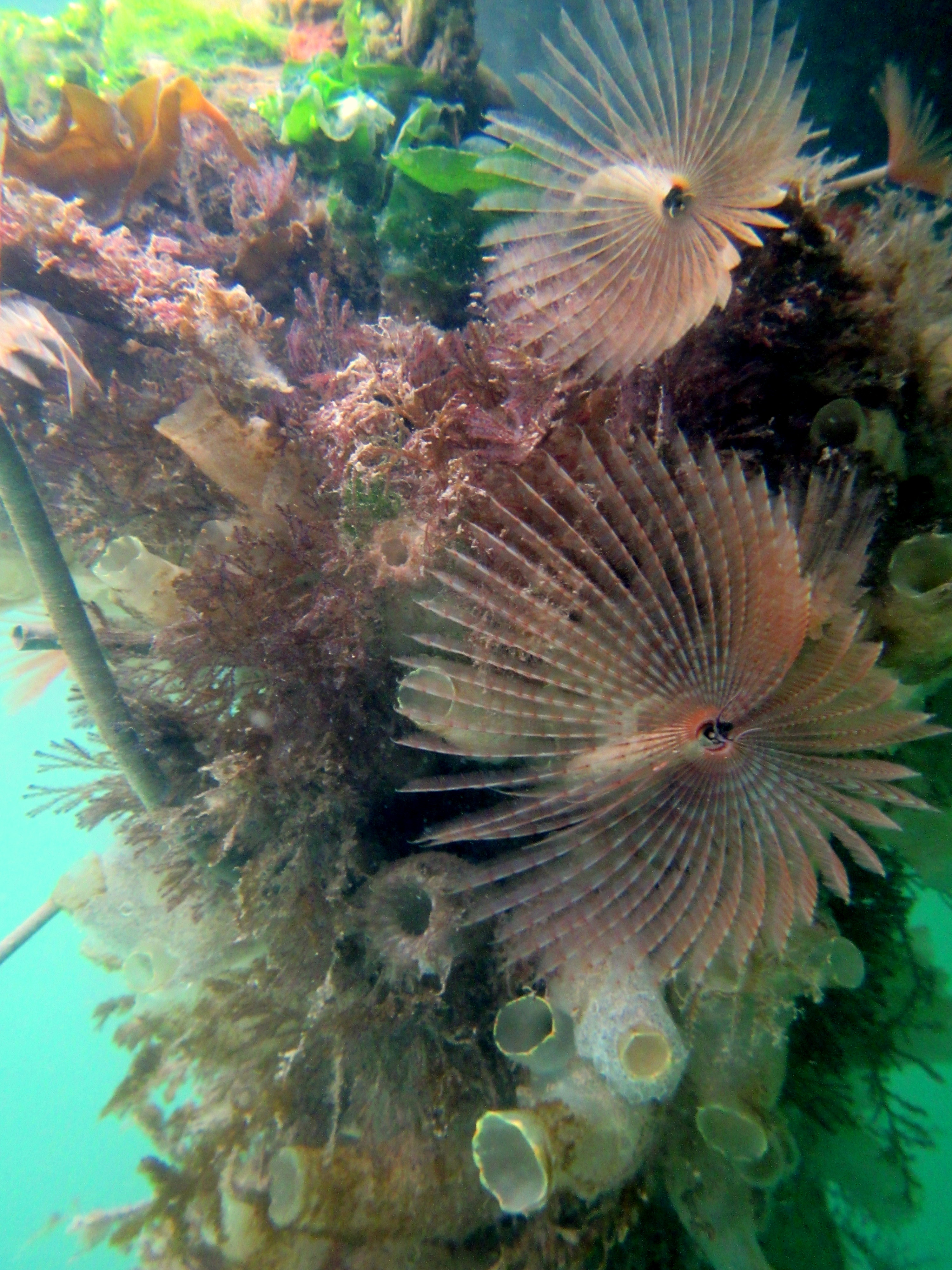
Unfortunately, the weather turned before I had another opportunity to go diving (or snorkeling). The wind and rain have reduced visibility too much and so I’ll have to wait half a year or so before conditions improve….too bad! I missed the low tides recently as well. However, today there was time for a bit of ‘pontooning’, i.e. lying flat on a pontoon and staring at the creatures attached to it. It is quite convenient as it is not dependent on tides and the communities are very different from that of rock pools. There is a very large marina at nearby Mylor Bridge that I had visited before in summer. There was a bit more life then (schools of mysid shrimp, more seaweeds, more tunicates) but it is still looking nice now. I used my iPhone to take pictures before, but holding it above the water was tricky and did not produce good results so I brought my new Canon Powershot instead (still not easy to take pictures as at the same time I had to prevent my two-year old son falling in the water). The bulk of the biomass hanging from the pontoons consists of tunicates (mainly Ciona intestinalis). Small Plumose anemones Metridium senile are common (more about those in the next aquarium update), as well as the sponge Sycon ciliatum. I even found a small Elegant anemone Sagartia elegans (var. venusta). The invasive Bryozoan Bugula neritina is very common; it looks a bit like seaweed even though it is an animal (see here for a description). Finally, the Peacock worm Sabella pavonina is common (and very striking). Just two pictures below as the rest was subpar; I have to go back on my own sometime soon maybe.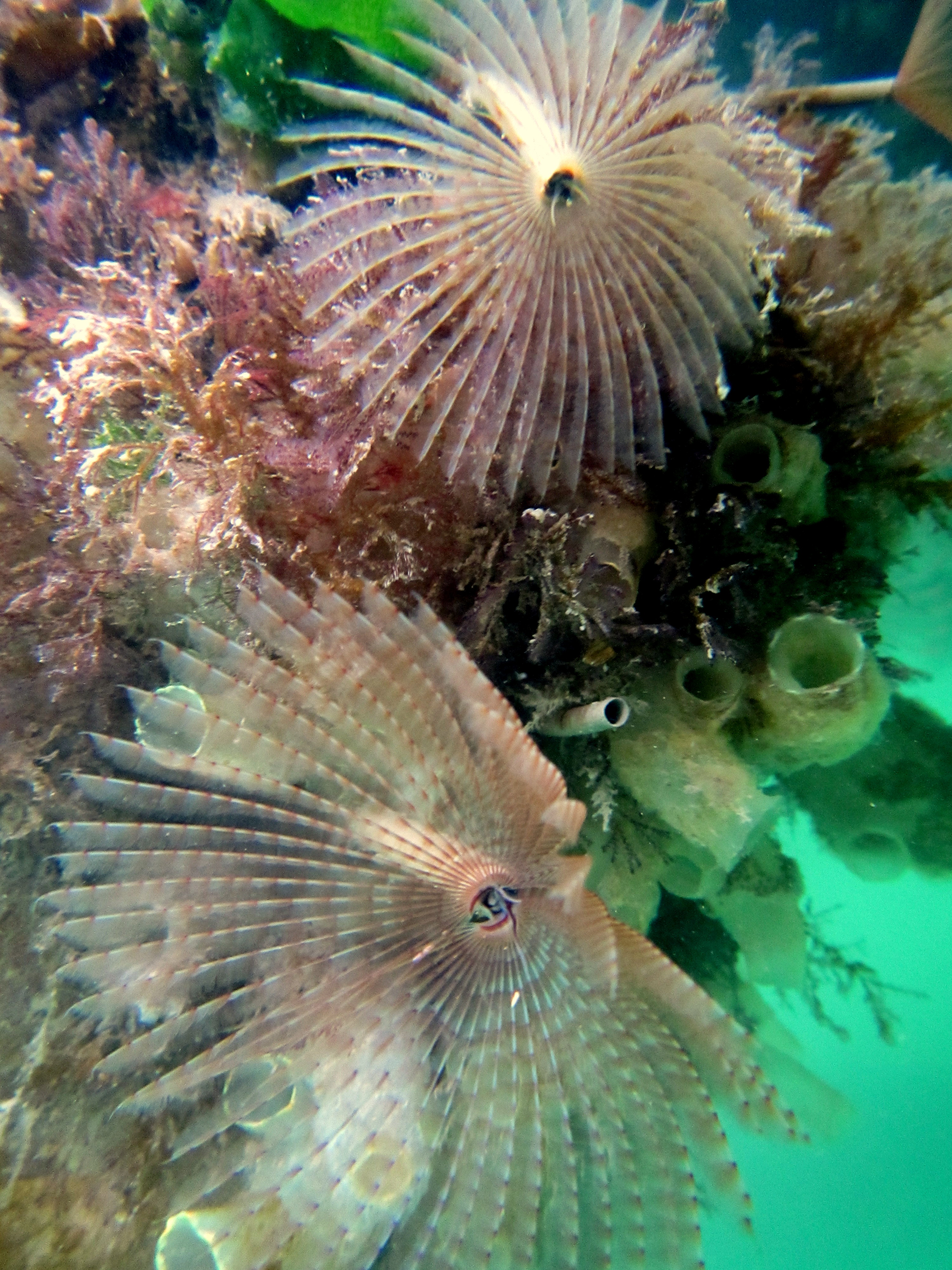
diving in the Helford Passage
A new location for the second dive: Helford Passage between Falmouth and the Lizard Peninsula. This is a shallow, sheltered creek with a sandy bottom and eelgrass beds and can only be dived (well) at high tide. A good site to spot Thornback rays Raja clavata we heard and we were indeed lucky to find several of them. We entered the water at Grebe Beach next to Durgan: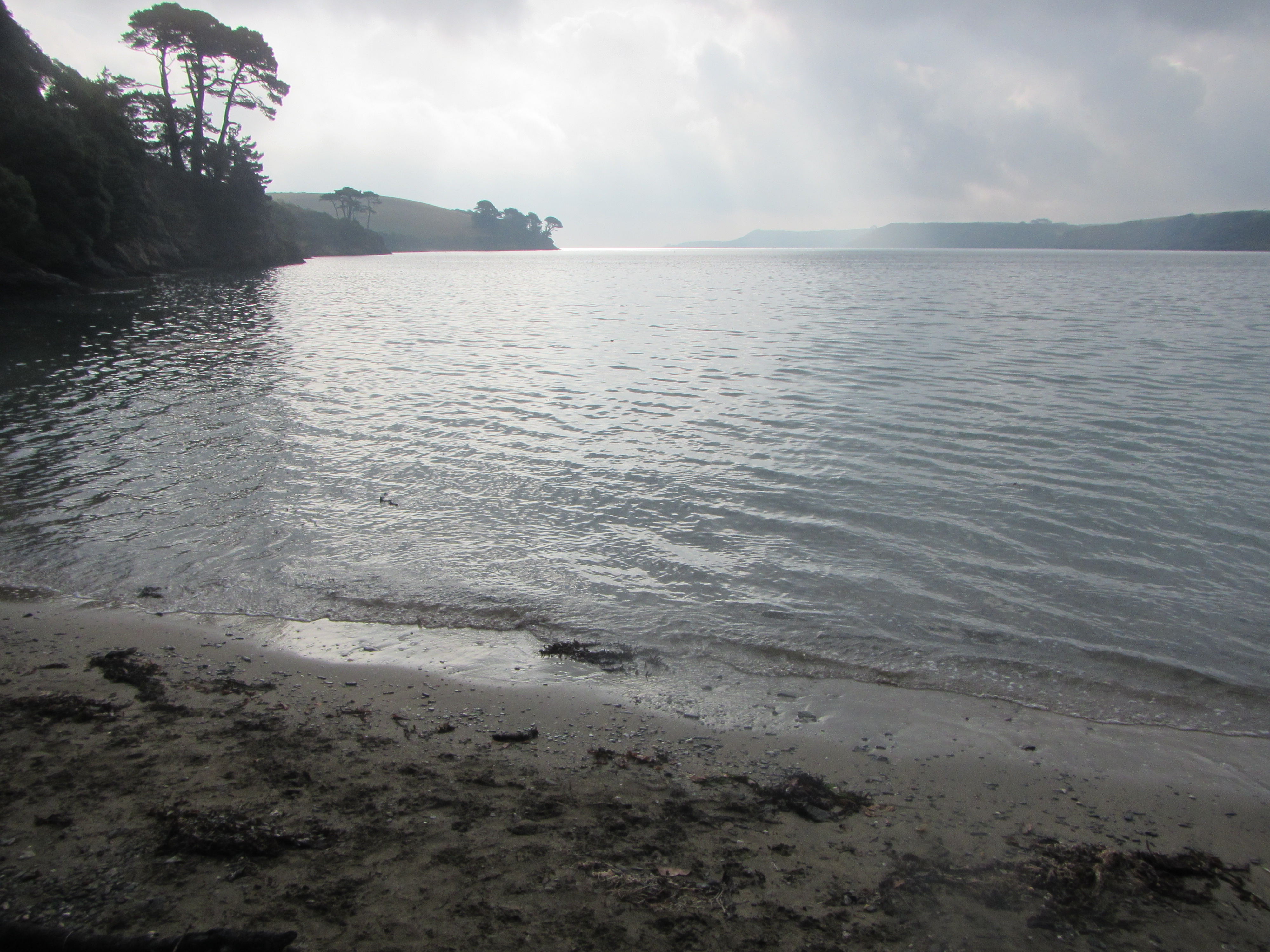
Again, we spotted some cuttlefish, which are not very shy at all. What was very cool were Great scallops Pecten maximus lying around and swimming away for a bit by opening and closing the shell, I will try to film that next time. Many Turban top shells and some large heremit crabs with one or more Parasitic anemones Calliactic parasitica on top. The shells of smaller hermit crabs were covered in the hydroid Hydractinia echinata: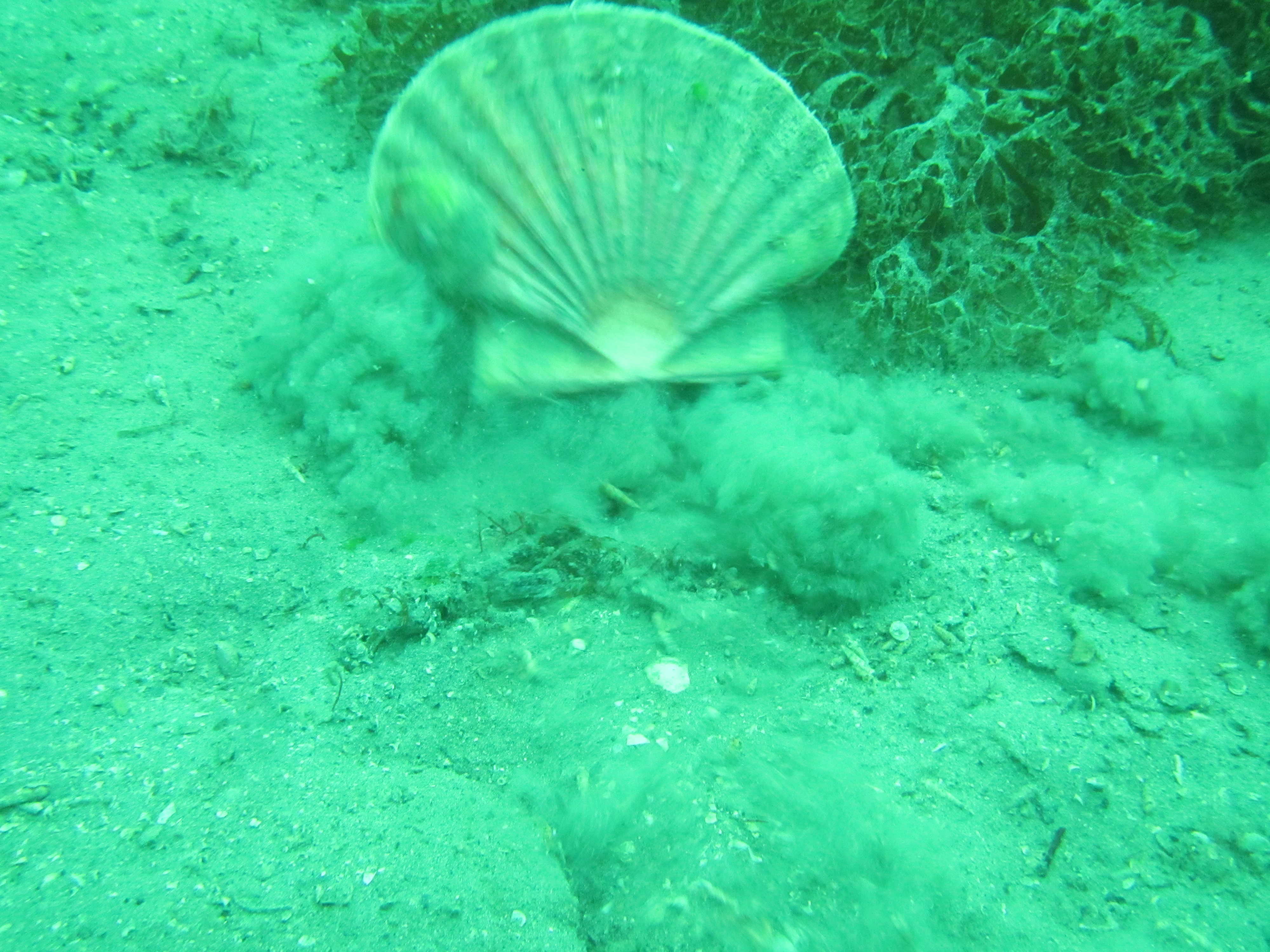
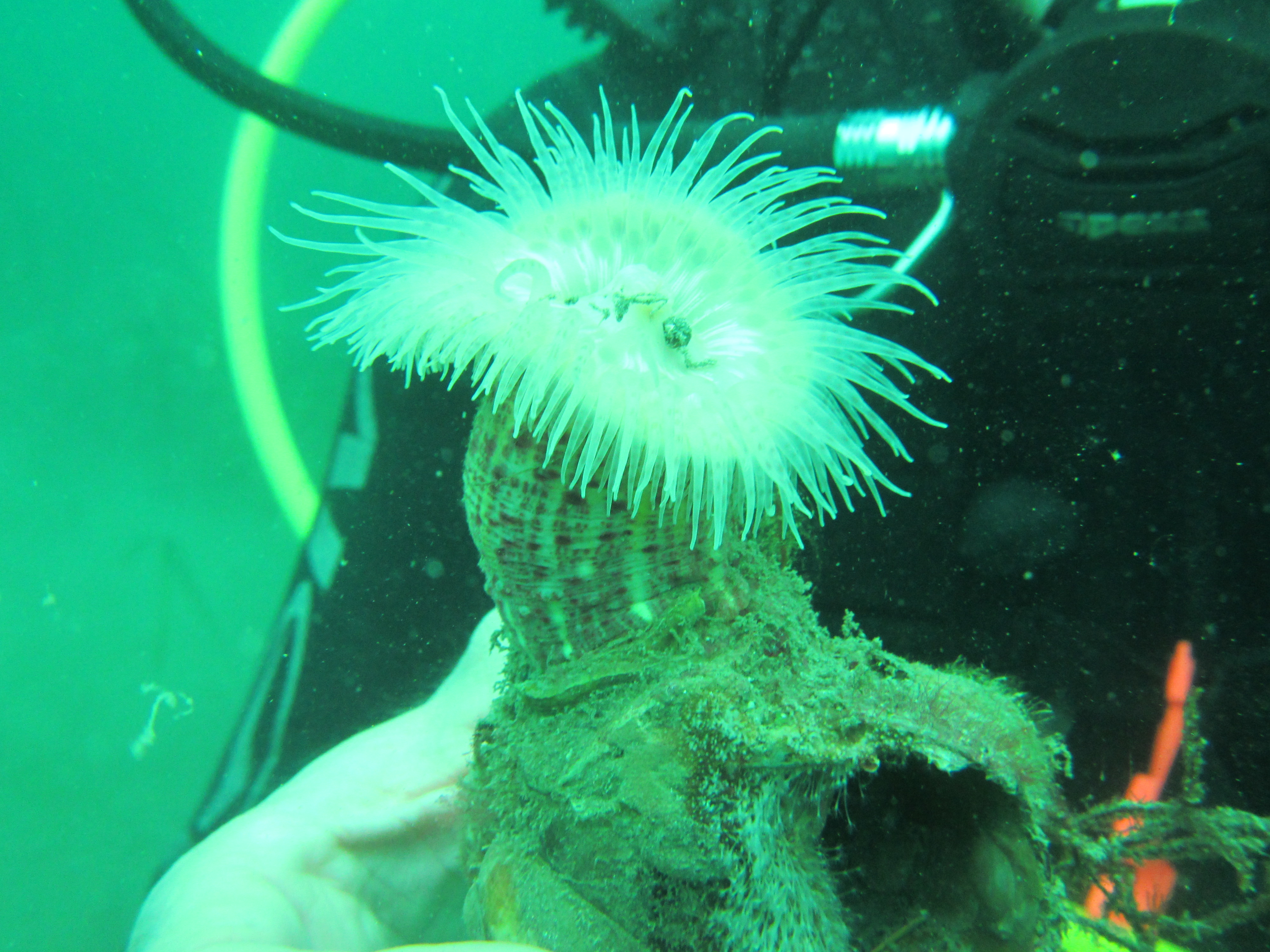
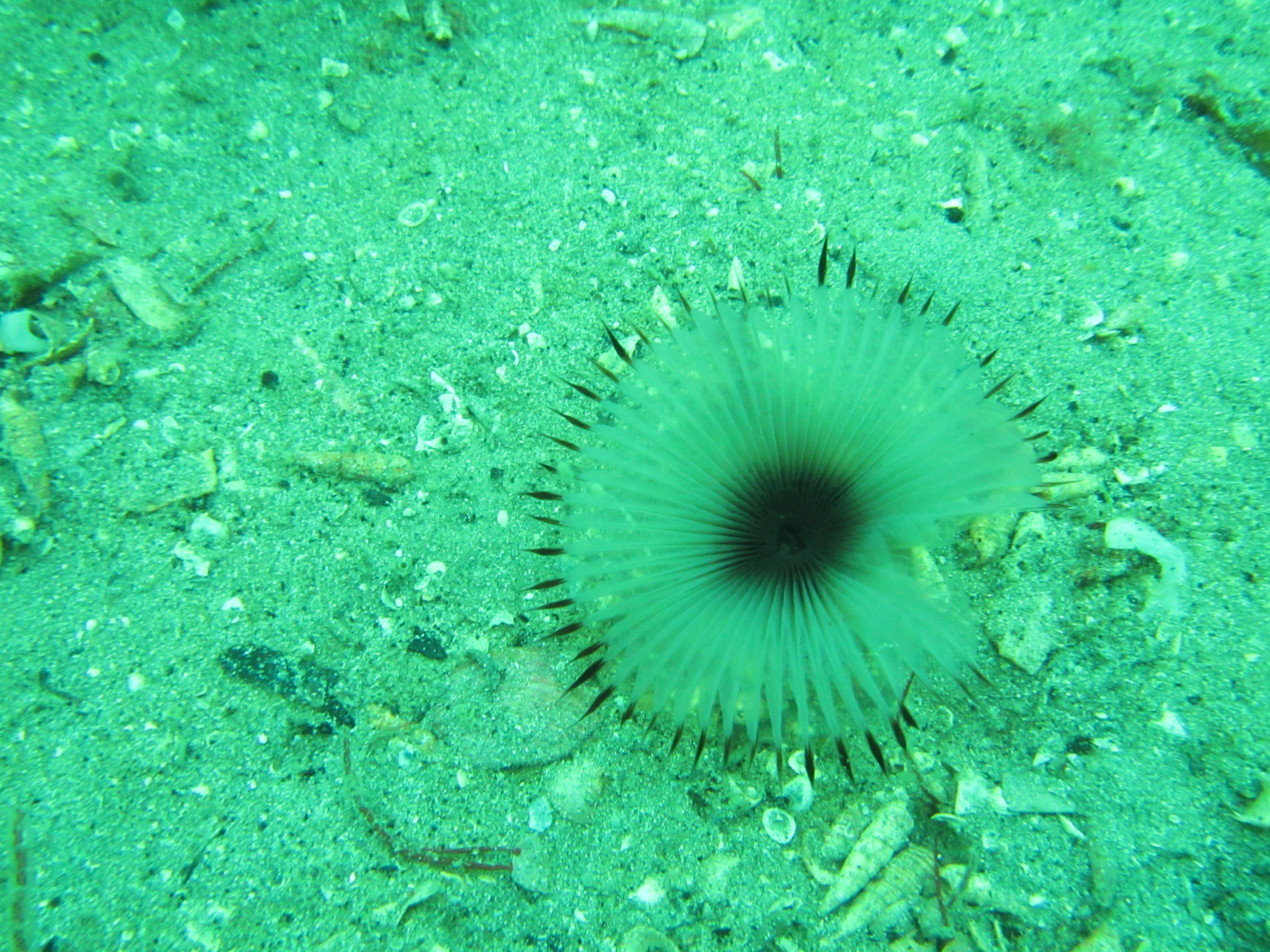
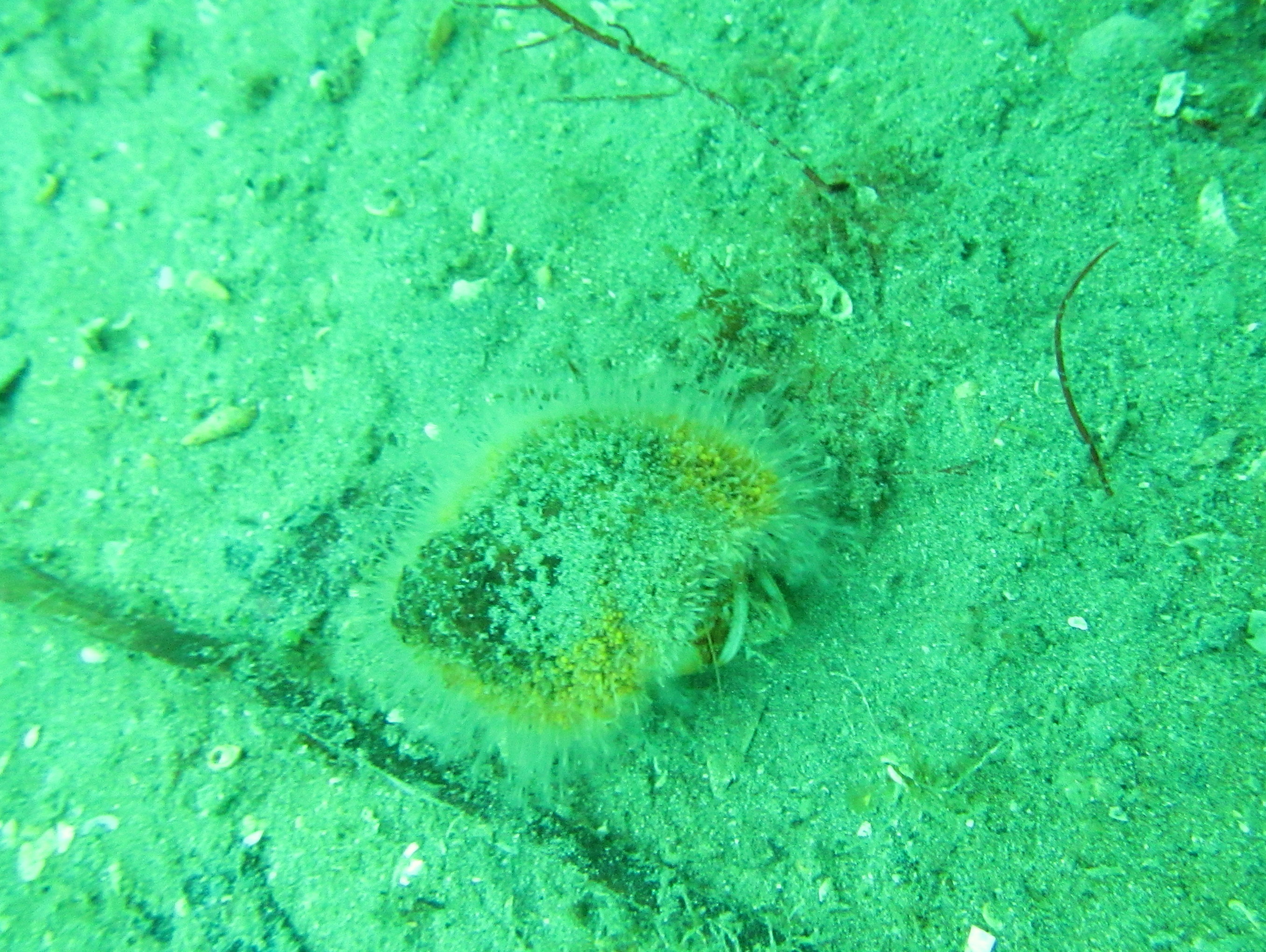 We got to about nine meters depth (near the buoy) and found a large concrete block. Scattered among it lay the remains of crabs and in a hole dug underneath the snout of a Conger eel poked out. As I had to get close for a better look, I stirred up too much sediment and so I do not have a good picture but I will definitely like to go back and have a better look! Interesting was an old crab pot covered in sea squirts (mainly Morchellium) which was swarming with Leach’s spider crabs Inachus phalangium. Normally they sit under a Snakelocks anemone but there were none attached to the pot, strange. Very common were large Peacock Worms Sabella pavonina and Fan worms Myxicola infundibulum: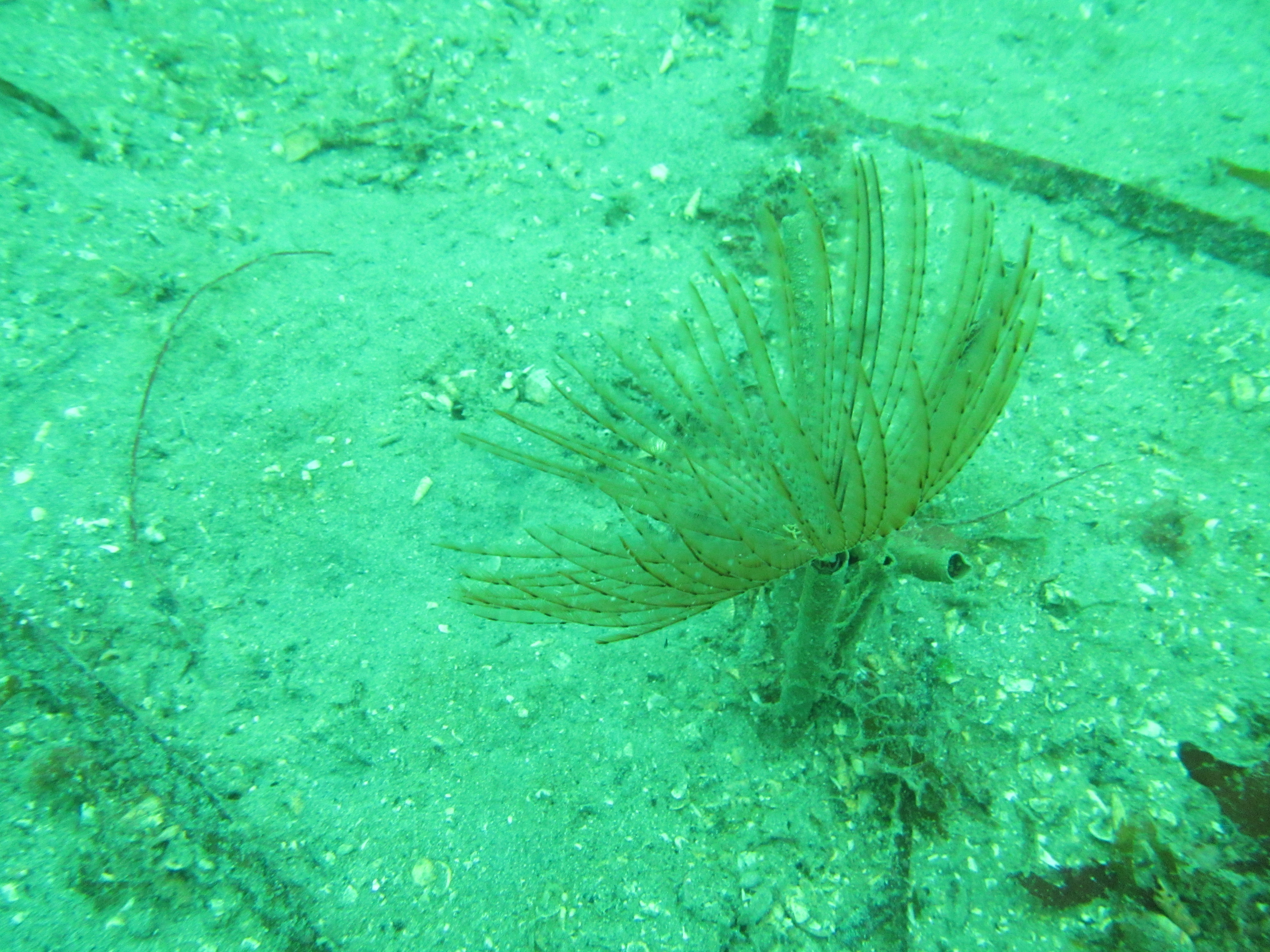
diving at Silver Steps
I am really getting back into this diving thing! Last week, I made another trip to Seaways Dive Centre in Penryn to rent some gear (£25 for 24 hrs) and go out with dive buddy Chris. First a dive at the end of the day at low tide at Silver Steps in Falmouth. A great encounter a minute after we got in with a cuttlefish:
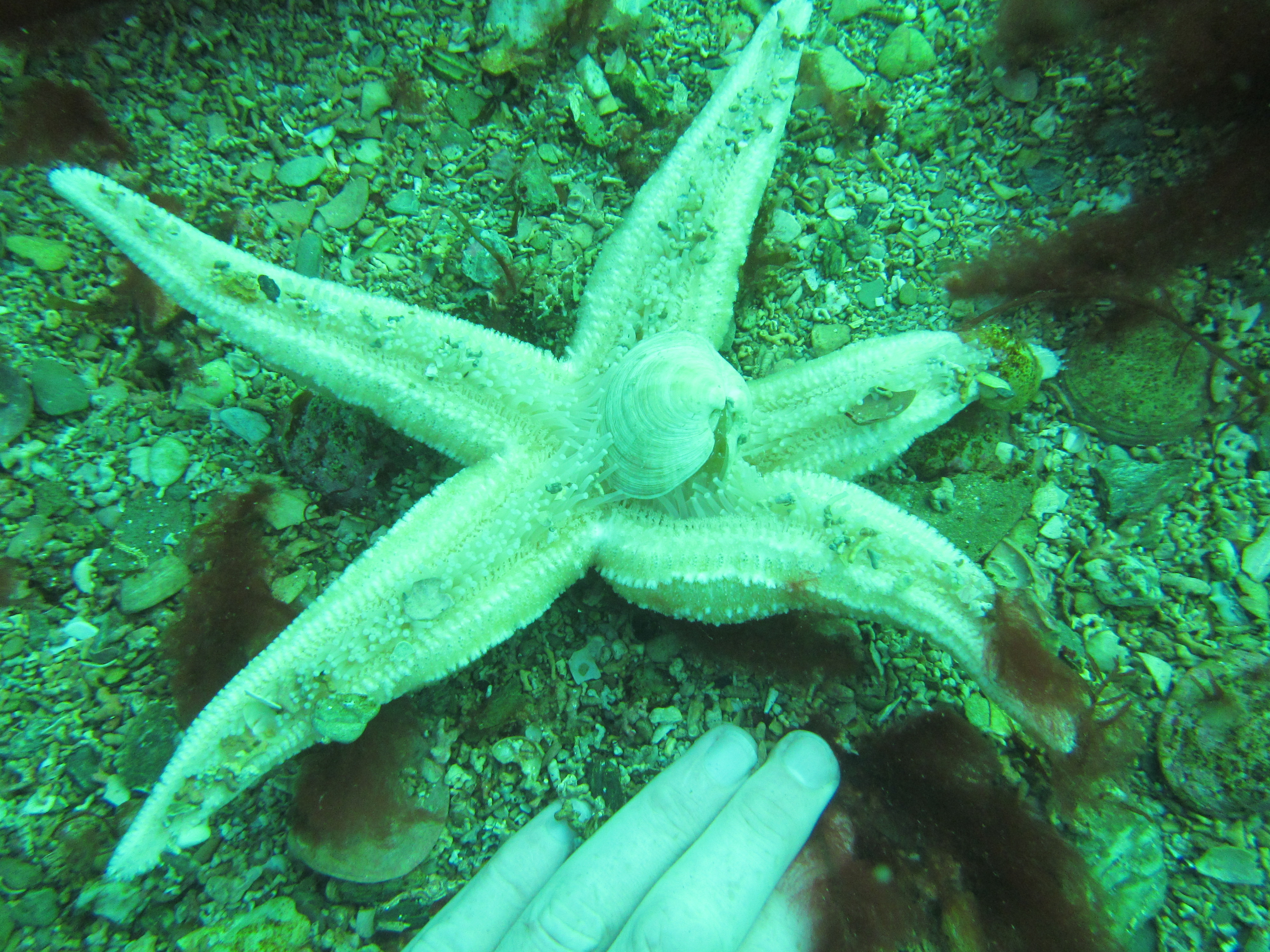
We then set out over the gravel beds towards the open sea. A pretty barren affair, with lots of decaying seaweed. Mainly Spiny and Common starfish and Pulled carpet shell Tapes corrugata, Warty venus Venus verrucosa and Rayed Artemis Dosinia exolata. A picture of the latter being eaten by a common starfish:
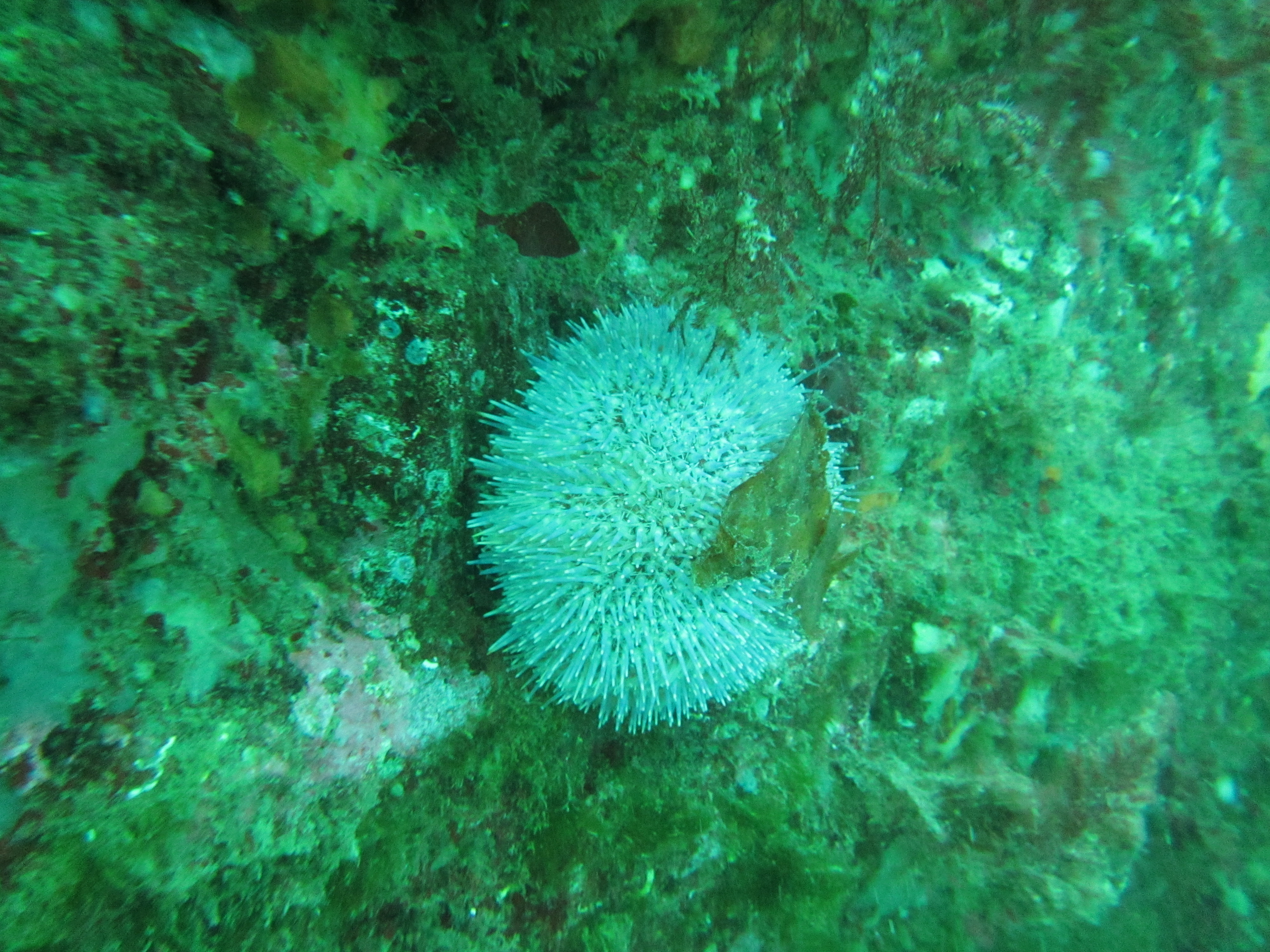
Turban top shells Gibbula magus were on my list to get for the aquarium and I noticed that this species is extremely common (several per square meter) so I took a bunch home. The shells look pretty beaten up with lots of stuff growing on ’em but I think they are pretty cool; truly subtidal so no risk of them creeping out of the tank: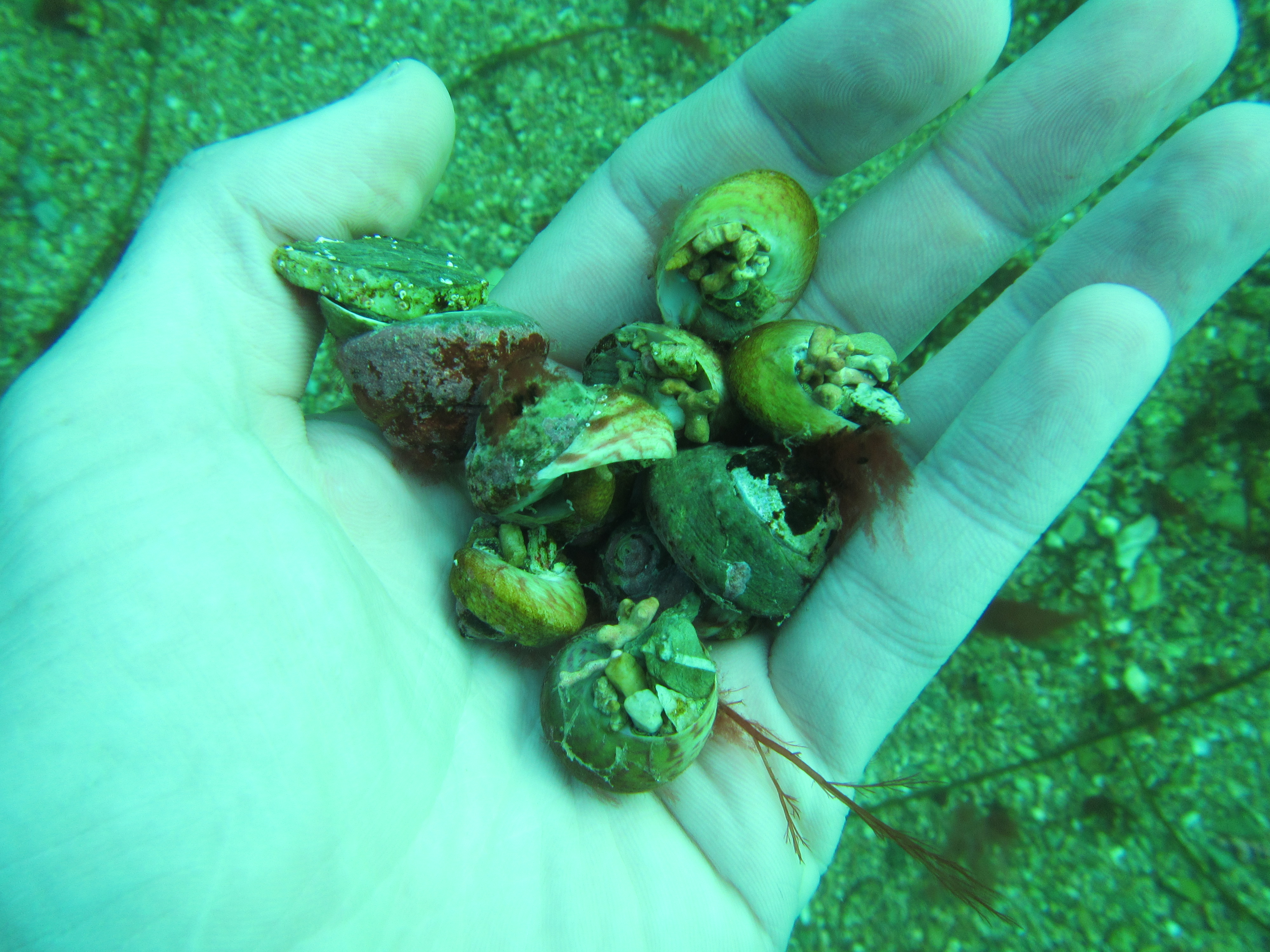 We then made it back to the rocky coast and found a nice gully with overhanging rocks with lots of interesting critters. One little cove was home to ten or so shy Leopard-spotted gobies (I plan to go back with my GoPro and leave it there filming for half an hour to pick it up later). We found a big lobster Homarus vulgaris, a beautiful Bispira volutacornis worm (I have already posted pics of these species recently and I will try to show more self-restrainst from now on and not keep posting similar photos). Also for the first time some large Edible sea urchins Echinus esculentus. Probably a really common species when you dive a little deeper but the very first time I saw it. Have to practice a bit more with the new Canon Powershot D30 as I am not completely convinced about its qualities yet (I did not bother to post-process any of the pics btw).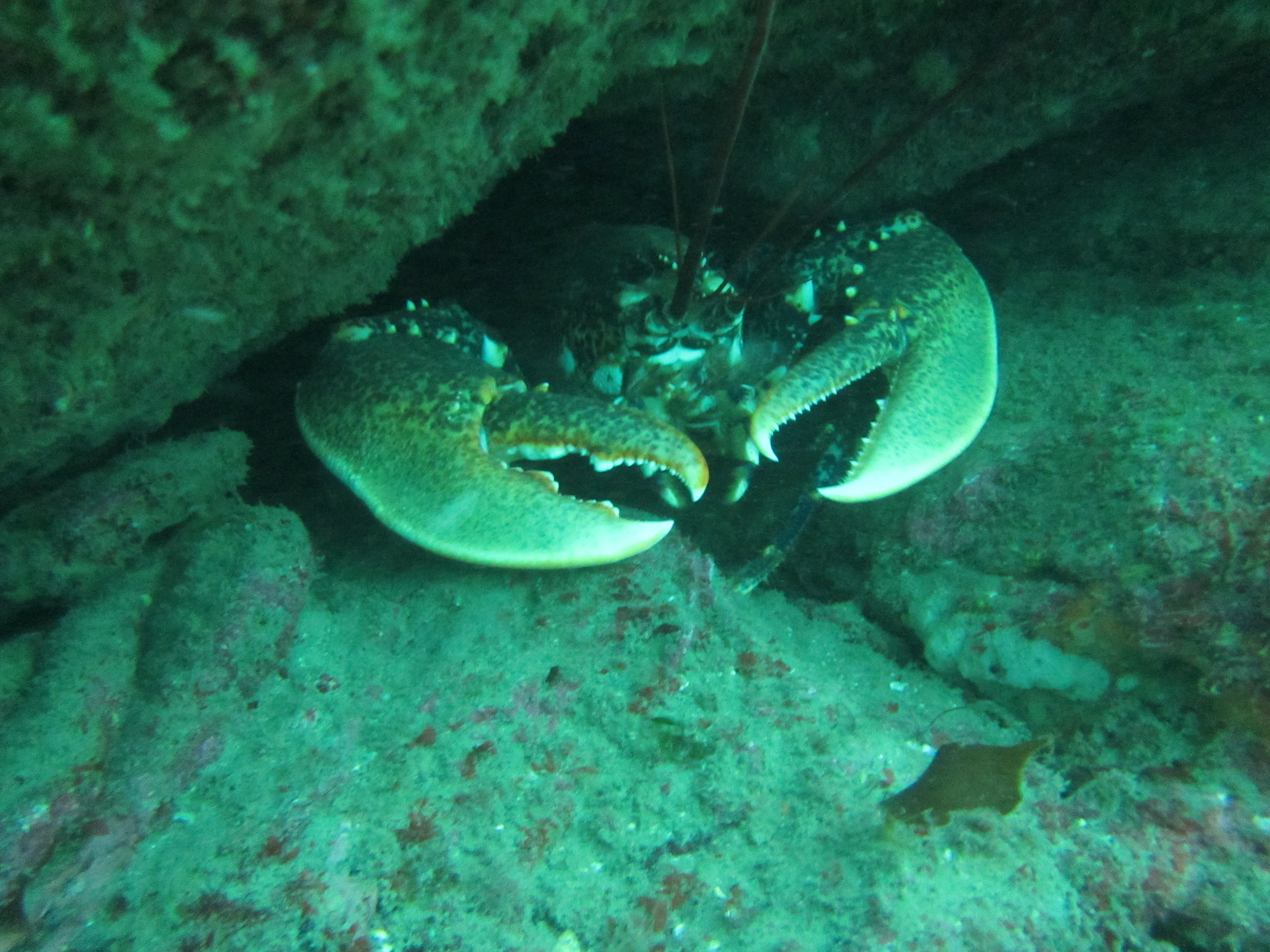
new camera: Canon Powershot D30
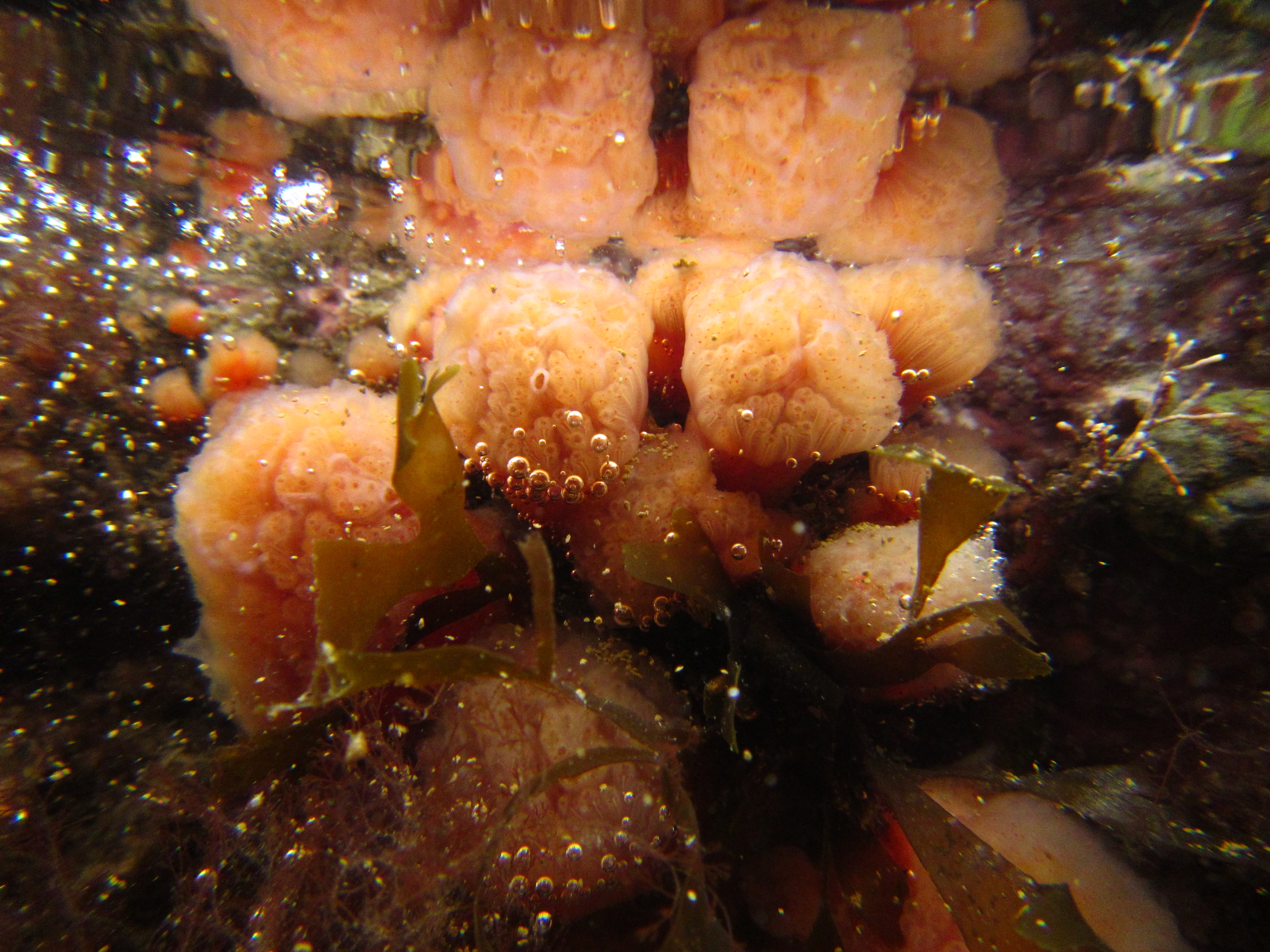
As I drowned my Panasonic Lumix (some pics here) and as my Canon Powershot in an underwater housing (some pics here) is quite cumbersome (forgetting the option of taking my iPhone underwater), I decided to buy a new point-and-shoot underwater camera. All major brands have a rugged (shock-, dust- and water-proof) option and needless to say each has their pro’s and cons. I decided for the Canon Powershot D30 because I know and like the brand and because it goes deepest (24 meters) which would mean I could take in on any future dives. I later read (tip: don’t read more reviews after you have ordered) that the aperture is relatively small (bad for low light (UK underwater) environments) and that it had not been updated significantly from the previous version…so it is not all great. In general, point-and-shoot camera’s won’t give you super great images (although sometimes you strike lucky). However, there is a VERY large price gap between these camera’s and SLRs in housings (with lights). Check here for a nice Beginner’s Guide to Underwater Photography. I tried out the camera just for a little bit as I did not have much time. I went rock pooling which meant I could not look through the viewfinder for any underwater pics. The pools at the moment are dominated by brownish fuzzy algae which do not look great and it was overcast, so conditions were not ideal. Here a snap of Morchellium argum, a colonial tunicate that is common at the moment:
 Two pics for comparison with the iPhone of a Dog whelk Nucella lapillus laying eggs. I will probably still stick with the iPhone for above-water pictures as I prefer tapping the screen to focus as well as having the olloclip macro option. Also, the colours seem more vivid, although to be fair I need some more time to play around with the Canon. iPhone first, Canon second: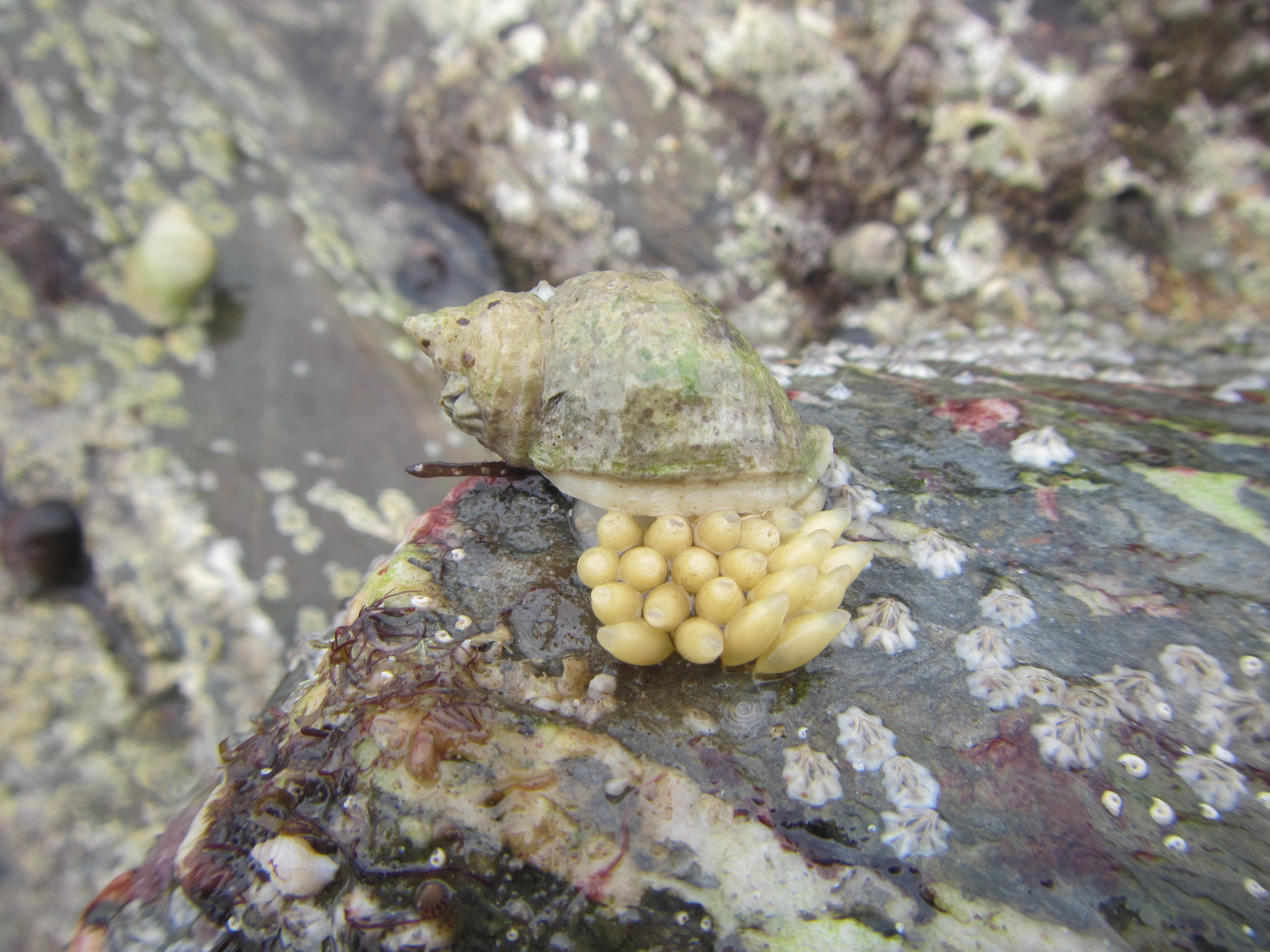
 An Bollenessor