During an otherwise uneventful macro-dive at Silver Steps this week I looked under a small rock overhang around 8 meters deep and noticed an unusual little fish. At first glance it resembled a Tompot Blenny (see pic of a showboating individual below), only darker, more skittish and, upon closer inspection, with much smaller tentacles on top of the head. I knew this must be a Variable (or Ringneck) Blenny, Parablennius pilicornis, as we’d seen many of them on holiday on the Basque coast this summer. It is a southerly species that was first recorded in Britain in 2007 but is increasingly spotted. Not a first for Cornwall, but there are still few observations and so I have recorded it on iNaturalist (making it available for later inclusion on the NBN Atlas, the UK’s largest repository of publicly available biodiversity data). Another warmer water species joining our shores due to climate change…
Last Friday I had a really enjoyable rockpool/snorkeling trip with my rockpool buddy David Fenwick (see his website aphotomarine for all your marine ID questions). Dave suggested we go far west, down to Sennen Cove where he knew about some interesting mini sea caves with jewel anemones and other things to explore. That is what we did, see the photo below!
Jewel anemones were indeed found in this spot….the water was too shallow to take a good photo though. I therefore jumped in the water where at first I got a bit seasick of all the waving Furbelows kelp. The water was noticeably colder than on the South Coast too. I discovered a nice deep gully with a whole variety of sea anemones growing on the vertical rock face. Orange, purple and green Jewel Anemones (Corynactis viridis) were common from 6 meters deep (at low tide). Very tricky for this middle-aged man to take good photos on one breath though! I was stumped by one white anemone but as Dave pointed out it looked like a Dahlia Anemone (Urticina felina) (and multiple ‘normally’ coloured individuals lived nearby so that makes sense). Finally a Sandalled Anemone (Actinothoe sphyrodeta) (my photos of the White-striped Anemone Anthothoe albocincta were unfortunately out of focus).
We had a blast and David found a Nemertean worm which might be new to the UK, or even new to science! It will find its way to aphotomarine eventually I am sure (check for ribbon worms here). I certainly like to go back snorkeling here some (windstill, swell-less) time.
I recently bought (2ndhand) scuba gear and did a refresher dive; with the nice weather this week it was high time to get back under the waves and take some photos! I dived Thu/Fri/Sat at the main local shoredive site ‘Silver Steps‘. I went in by myself, but with a maximum depth of around 10 meters and good conditions this is not risky. The dives did not disappoint, the viz was excellent! Although I spotted cuttlefish every dive, I still opted for the macro lens, as I suspected I could not get great shots of them with my fisheye lens at 1.5 meter distance (I might have been wrong!). Instead of heading out to sea as some divers do, I always stick to the gullies by the rocks, diving below the kelp to see what happens beneath the rocky overhangs. There are three usual suspects hiding there, each with a very different personality. First, Leopard Spotted Gobies (Thorogobius ephippiatus) inhabit cracks in the rocks and are quite shy:
Second, Tompot Blennies (Parablennius gattorugine) are extremely inquisitive, often coming very close to check out what is going on in front of their domain:
Third, Black-face Blennies (which are not true blennies but triple fins) that only ever live under overhangs, usually head-down. I did not see males in breeding colours (black face, yellow body) but this colour form is even prettier I think:
When inspecting the rock walls carpeted in sponges, seasquirts, algae, worms and other things, I kept my eyes out for nudibranchs. Apart from a tiny crested aeolis, I spotted a good number of Discodoris rosi, busy mating and laying eggs. This species has only been observed in the UK for a decade or so but the population now is booming, with many reports coming in from all over Cornwall:
All in all a great enjoyable three dives! Silvery schools of sandeels and sprat/herring, many wrasse, cuttlefish, small and very big lobsters and a greater pipefish were also spotted. Unfortunately the weather has made a turn for the worse this week, however, there are still a few diveable months left this year…
A quick post, again of macro shots on-land using the cygnustech diffuser. A Montagu’s Blenny (Coryphoblennius galerita) and a Shanny (Lipophrys pholis) (check its teeth, it is a combtooth blenny). Due to the recent storm I did not venture into the water but had a wander down the shore here in Flushing. The fish were gently placed on some wet seaweed where they lay still before hopping back in their rockpool. The diffuser really gives the photos a moody atmosphere! I hope one day I can find a Tompot blenny on a very low tide to complete the set.
A trip to one of our favourite places today: Kynance Cove on the Lizard Peninsula. The weather was such that snorkeling was a big no, but after some wind and rain, luckily the sun came out for a bit (which it should, it is July!). I took some macro shots of the rocks at low tide using my new Cygnustech diffuser. This contraption makes the flash light much less harsh, and is pretty much essential when taking (non-natural light) macro shots. This is one of the best diffusers out there and I can highly recommended it (are plenty of reviews are available online). Some of the shots were taken with the Raynox DCR-250 macro attachment in front of the macro lens for a little bit of extra magnification.
Anyway, there is not a lot of animal diversity on this battered coast of green and red serpentine rock: barnacles, dog whelks, mussels and limpets mainly. Above a selection of photos highlighting some small Dog Whelks (Nucella lapillus). This predatory species can come in many more colour varieties than we found today (see here for example). The limpets are either the Common Limpet (Patella vulgata) or the Blackfooted Limpet (P. depressa); you need to be able to see the animal to be sure. The barnacles are Montagu’s Stellate Barnacles (Chthamalus montagui) (I might have this wrong; I must confess I never really gave barnacles the attention they deserve). Not too spectacular but you gotta try something when you cannot take photos underwater!
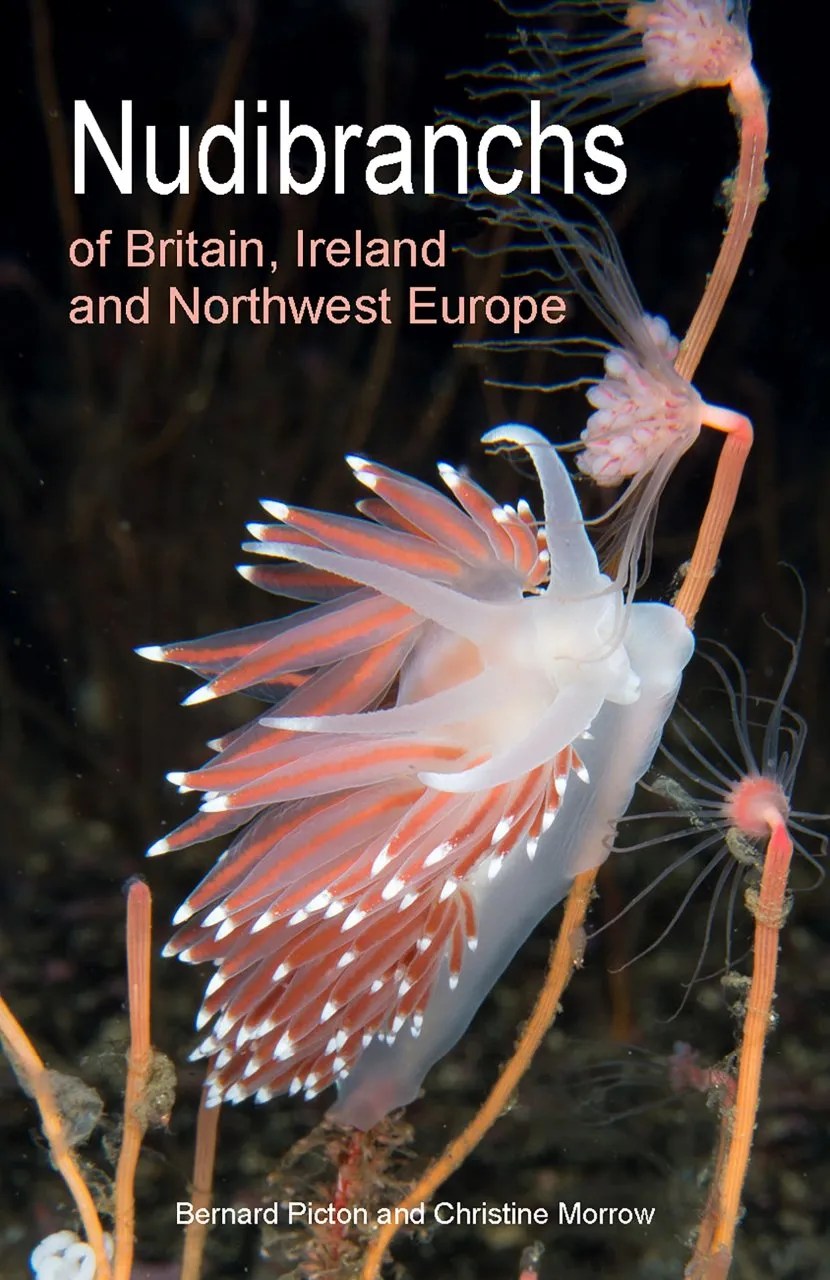
Last week I had a very special delivery in the post: the second edition of Nudibranchs of Britain, Ireland and Northwest Europe by Picton and Morrow (available HERE amongst other (web)shops). I received a free copy because I contributed photos for two not so commonly encountered egg-eating seaslugs: Calma glaucoides and Calma gobioophaga. I was really chuffed with this, as apart from the authors, many real experts contributed photos (including Cornwall’s very own David ‘aphotomarine‘ Fenwick). Although sea slugs might seem ‘niche’ to some, they are among the prettiest and most diverse marine creatures and I am sure many divers, snorkelers and rockpoolers (and readers of this blog) will really enjoy this book (see also this review)!
The funny thing is that I have actually not taken many photos of nudibranchs at all…. I have only been serious about macro (and in the possession of strobes that actually work…) for a few years but moreover, I am not very good at finding them! This publication has really spurred me on to go look for nudibranchs and learn more about them though. What is also exciting is that I bought (secondhand) scuba kit a few weeks ago, so i will be able to go back to diving and see a wider range of things. Now if only the wind dies down!
The Sea Hares (Aplysia punctata) are still out in force. They are great characters, with faces like Star Wars extras, crawling over seaweeds and each other. Here another batch of pictures!
When the viz is bad, I take my macrolens (sometimes with the Nauticam CMC-1 wetlens for a bit of extra magnification) out to the pools. Sometimes I stick to the surface of rocks and seaweeds (to look for stalked jellyfish for instance), but other times I turn over rocks under water to see what hides beneath. Quite a lot! There are larger animals, such as Topknots and different types of crabs (and Worm pipefish as pictured here) but mainly they are quite small (around a centimetre or even less). See the selection below (Tricolia, Bittium and Limacia were not from under rocks but I had to make the grid fit!).
Just a really quick post featuring two characters I encountered last week. Above a Topknot (Zeugopterus punctatus), a little (<10 cm) flatfish. Below a Seahare (Aplysia punctata), an ophistobranch mollusc which is enjoying a bit of a population boom at the moment. Been in a bit more lately with so-so results but hope to post more soon.
Sorry for you non-photography geeks, this is a short post about a lens, the “Panasonic H-X09E Lumix LEICA DG SUMMILUX 9mm F1.7 Lens” to be precise… During the spell of bad weather I was practically forced to browse, and yes, spend money on photo gear. I had long wanted a lens suitable both for landscape and street photography, but especially one that allowed me to focus on say a reptile or amphibian and still have the habitat in the background. A fisheye lens can do this a bit (see the previous post), but on land it results in distortions that just look unnatural. This is a lens that can do the job, as it has a minimum focusing distance of about 10 cm – resulting not in real macro shots but being able to come pretty close, combined with a wide angle background. After having it taken out this weekend for the first time I must say I am really happy with it.
The bank holiday Monday warranted a morning visit to one of our favourite haunts Windmill Farm to do some ‘herping’. Adders and slow worms were found after lifting up corrugated iron sheets, but they slithered off before I could take any good shots. However, there was a toad that sat nice and still so I was able to take multiple shots, camera in one hand, diffuser in the other. For a first try, I was pretty happy with the result. Next, we took a walk from nearby Lizard Point to Housel Bay. The weather was absolutely glorious, with many wild flowers on the cliffs and fulmars, choughs and pipits flying around. The water was blue and crystal clear – you could see the seals swimming underwater! A small part of me was cursing that I was not in the water myself to take photos, but it was a fantastic day on land too.
P.S. annoyed that the Windows photo software straightening tool is not very precise – the horizon is not straight!