Moody Macro

A quick post with some finds from a recent walk on the shores of Flushing, specifically above-water (‘topside’) macro shots with a diffuser. This always leads to my subjects turning out with subdued grey and brown tones, but that is OK. A velvet crab, the amphipod Cymodoce truncata (looks a bit like a trilobite!), a worm pipefish covered in a film of water with some more shots (with descriptions) at the end.

Two Fish in Flushing

Continuing the theme from the two last posts with some ‘topside’ photos of rockpools. We had a very low tide recently which called for some rockpooling on our local shore here in Flushing. We looked (as always) for anything that we could find, but trying to get some ‘close-focus-wide-angle’ pics of fish with the Panasonic Leica 9mm lens was the main aim. Above a Male Tompot guarding eggs (see pic below) as well as a male Connemara Clingfish (no eggs spotted), recognizable by the bright red cheek markings. I have not been underwater very much, but have a bunch of macro photos of snails and stalked jellyfish that I will put on the blog next. (And remember, I post more frequently on instagram: @an_bollenessor!)

Rockpools from the top

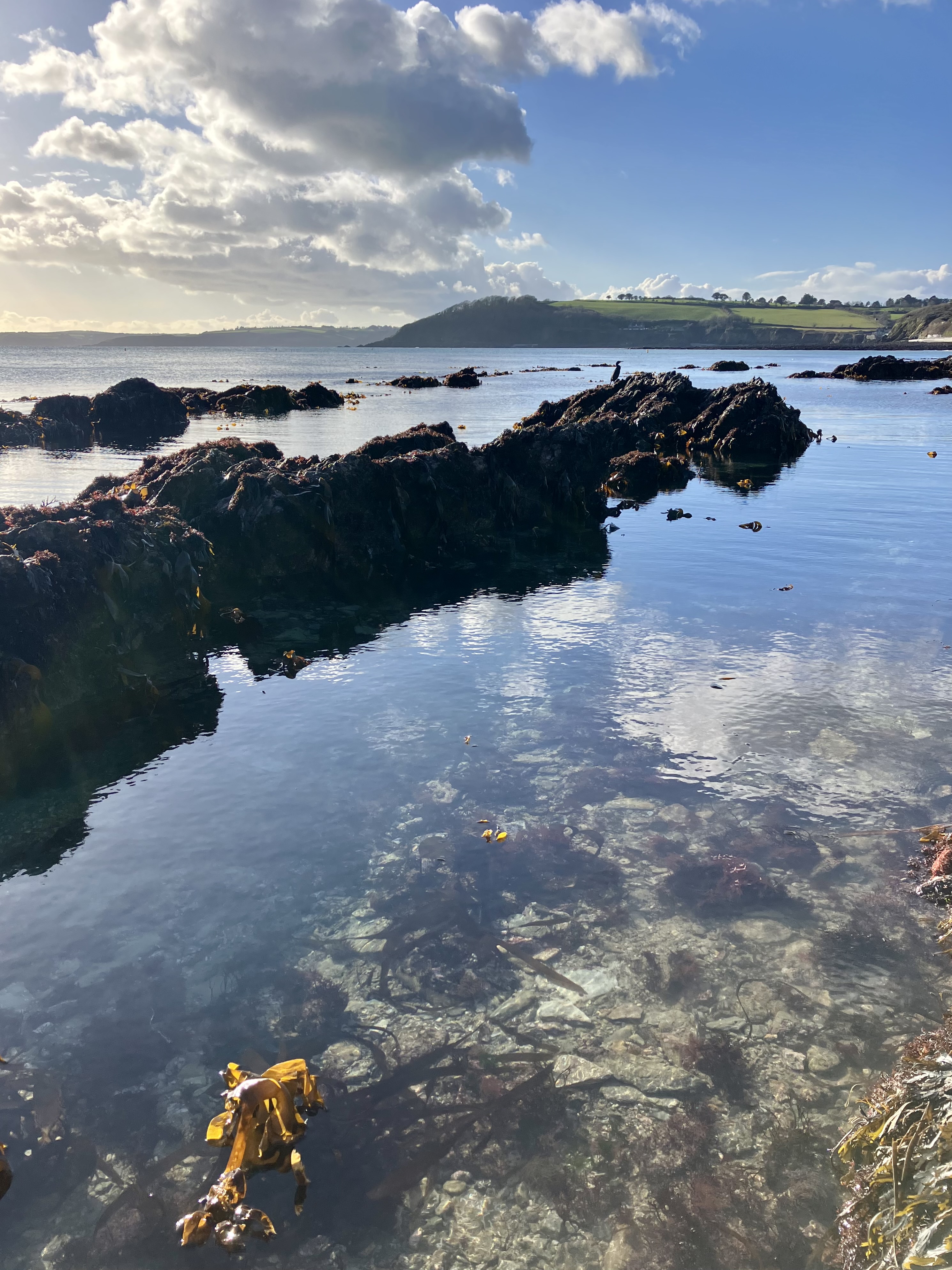
I tried my hand today at taking photos of rock pools above water – tricky! I used my Leica wide angle lens with a polarizing filter and a handheld strobe in a diffuser. It was fun playing around, although felt my back after an hour or so trying! It is difficult to keep the reflection of the flash out of the shot. The tide was not low so these are small, mid-shore pools dominated by coralline algae and some (fine) red seaweeds. Beadlet and snakelocks anemones, limpets, periwinkles, thick- and purple topshells are the most common animals. Some sunshine and blue sky – let’s see when I can try my hand at underwater photos again!

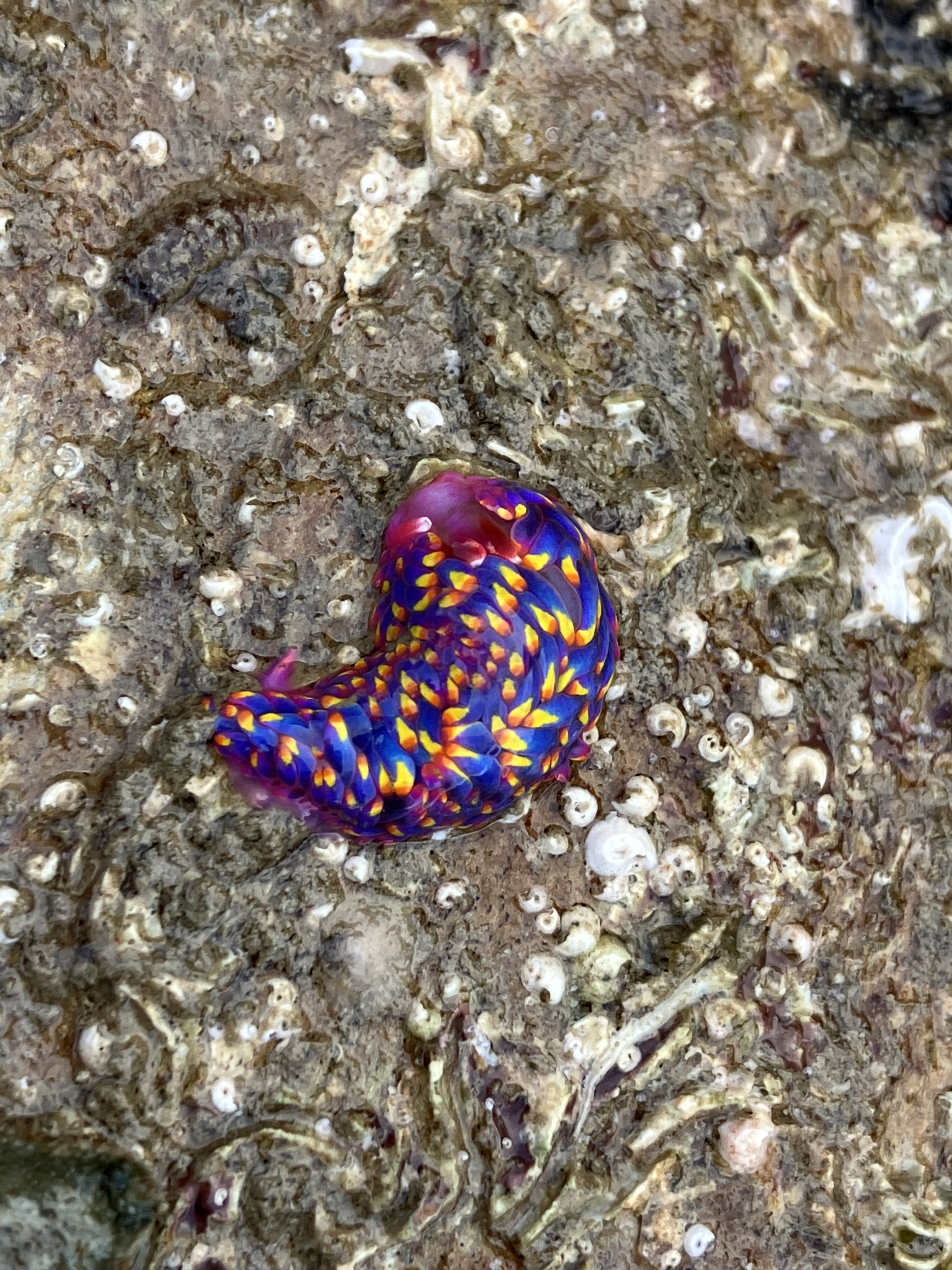
P.S. two extra pics taken a day later (without flash) near Bream Cove featuring an anemone-eating Aeolidia nudibranch.

Fish Portraits

Last weekend the weather was rubbish but the tide was low, and so we went over to our local beach in Flushing for some rock pooling. I did not bring the underwater housing, but just the macro lens and my cygnustech diffuser. Above a little clingfish – this could either be a Two-spotted or a Small-headed Clingfish; they are very hard to tell apart if they are not breeding males (see pic below for scale, I had to use the extra magnification of the Raynox clip-on lens for this one). Below three other fish species: a Tompot Blenny, a Common Blenny (or Shanny) and a Montagu’s Blenny (which is from an earlier post, but I wanted to complete the set here).

Two fish portraits

A quick post, again of macro shots on-land using the cygnustech diffuser. A Montagu’s Blenny (Coryphoblennius galerita) and a Shanny (Lipophrys pholis) (check its teeth, it is a combtooth blenny). Due to the recent storm I did not venture into the water but had a wander down the shore here in Flushing. The fish were gently placed on some wet seaweed where they lay still before hopping back in their rockpool. The diffuser really gives the photos a moody atmosphere! I hope one day I can find a Tompot blenny on a very low tide to complete the set.

Rockpooling on St. Martins

Although St. Martins does not seem to have any rockpools, the beach that was nearest to us (called ‘Lawrences’) has a stretch of rocks lying on the sand that can be turned over at low tide, and so we did! A nice find was a small Sevenarmed Starfish Luidia ciliaris (these can grow up to half a meter across, although you will not find them that size in rockpools). We also found a Bootlace Worm Lineus longissimus, which is (probably) the longest animal on the planet. These nermertean worms secrete a powerful toxin in their mucus, but luckily for us it affects arthropods and not mammals. They are not very rare btw, I see them here in Flushing and Falmouth too. It was about 5 meters long (without stretching it), but they can grow ten times the size of this! In the second photo you can see it in its natural habitat, under a rock, with some photobombing crabs and worm pipefish. Another cool find was a juvenile Conger Eel Conger conger. Otherwise we found the usual suspects, lots of crabs and a bunch of fish, see for a small selection below.

Rockpooling in Flushing

The wind has picked up and will ruin any chances of getting good seaweed shots this week. Too bad, but what can you do? A bit of rockpooling I guess. I took my son out to our local beach in Flushing where the rocks gently slope into Penryn River. Although there are no ‘proper’ rockpools, low tide gives access to a mixture of maerl sand and rocks that can be turned over. It is silty and definitely not very pretty, but there is always something to find. It was an especially good weekend for finding fish, seeing Shannies, Tompot blennies, Rock gobies, Gunnels, Worm Pipefish, Shore Rocklings and a tiny Eel, as well as Sea Scorpion eggs. (One Shanny was quite big and proceeded to bite my son’s hand; he was very brave and we slowly put it back.)

Invertebrates were plentiful too. The main mollusc here is the Variegated Scallop Chlamys varia, which is attached underneath every single rock. We found our smallest Great Scallop Pecten maximus as well. We found some Sea lemons Archidoris pseudoargus and lots of Yellow-plumed Sea slugs Berthella plumula (which apparently can secrete sulphuric acid when disturbed…). A small selection of what we found below, all pics taken with an Iphone.

Rockpooling in Flushing

Some pics from today at Flushing Beach. Above, a pair of Green shore crabs Carcinus maenas, below two Furrowed crabs Xantho hydrophilus. (I probably should have gone for a whole crab series, as I saw several other common species…) Instead I took loads of random photos, of things that were 150 mm to things that were only 5 mm, with varying success. For instance of a Painted Topshell Calliostoma zizyphinum on the invasive Bryozoan Watersipora subatra. Also the underside of the urchin Psammechinus miliaris, showing its mouth (Aristotle’s Lantern). Photobombing top left is the commensal worm Flabelligera affinis (which I noticed as well the last time I took a version of this picture). Bit random but it was fun practicing. It actually is more difficult to take photos abovewater compared to underwater due to the glistening and the awkward position kneeling on wet gravel/rocks. Next time I might try a tripod (ideally remote flash would be used but I do not think I am going to invest in that). Btw, if you are on instagram, I also post pics as @an_bollenessor.

more macro rockpooling

Another quick, brisk trip to the rocky shore in my village of Flushing today to practice my macro photography with the 60mm lens. I used the highest F-stop, varied the output of the flash and let the camera decide the shutterspeed and ISO. I did not find anything too special, but the very common organisms are just as pretty as the rarer species. Above and below juveniles of the Flat topshell Gibbula umbilicalis and the Grey topshell Gibbula cineraria on pink encrusting algae. Still not quite used to not having optical zoom as with my old Canon Powershot but quite happy with the shots, especially as all were hand-held. As I am lazy, these are JPEGs with some  tweaking using Windows photoviewer.

Below a Black-footed limpet Patella depressa, a more ‘atmospheric’ shot of a periwinkle, might be the ‘normal’ Littorina littorea but not 100% sure, and a baby Edible crab Cancer pagurus. Really looking forward to go into the water again, but not only is it still cold and grey, it is very windy and choppy so bad viz. Probably another rockpooling post next weekend!

Underwater Fluorescence

It has been three months since the last blog post so high time for an update. I have not been out much as the weather has been grim. In fact, the photos in this post are one year old! I bought a blue LED light for fluorescence photography which has been gaining popularity in recent years. Many organisms and fluoresce (i.e. absorb light and emit it at a longer wavelength), although the function of this is generally not well-understood (perhaps in some cases it might not even have a function and just be a byproduct). Coral reefs can especially be spectacularly fluorescent but the cold waters of the UK harbour a variety of fluorescent organisms too, most notably anemones and corals, see here for great marine fluorescence photos from Scotland by James Lynott. Anyway, I bought my light and a yellow barrier filter (which serves to let the emitted fluorescent light through but not the blue light) to be held in front of the camera housing, as well as a headset barrier filter from a very knowledgable German chap here; his site contains a lot useful information for those interested in the background and applications of this type of photography (see also here, here and here). The photography is very tricky: the ISO needs to be bumped up in the dark which results in a lot of noise. The dark also requires long shutterspeeds which results in shaky images. A large aperture for more light is best, but since the subjects are usually small this results in suboptimal depth of field.  I have only been out twice last January, and only whilst rockpooling (I have not done a single nightdive or nightsnorkel in Cornwall and I am not overly tempted to do so!). The very shallow rockpools high up at Castle Beach in Falmouth reveal some fluorescent animals, including hermit crabs but I focused on anemones. Snakelocks are big and very fluorescent (the green ones, the grey variety is not, although it does emit red light via its symbionts) but not common high up the shore. Hardly visible normally due to their small size and inconspicous colours, red-speckled anemones, daisy anemones and gem anemones become apparent using a blue light (in fact, this method is use to study tiny coral recruits in the tropics). The top photo shows two green gem anemones Aulactinia verrucosa (with red and purple coralline algae in the background). The anemones are very small (2 cm max) and I used my CMC-1 wetlens on my Canon G16. The other two photos show Daisy anemones Cereus pedunculatus. I only later noticed the tiny anemone babies (this is a livebearing species). I hope when the rain and wind disappear and the evenings still start early to go out again and post some more photos. Also, I have bought both a new camera and a new aquarium so I have plenty more to post about!